#74.2 The Springbank Whisky School

Barley on my mind
(day 1, Monday)


TL; DR: First day of the Springbank Whisky School, so exciting! We spent most of the day in the malting floor – shovelling, grubbing and turning barley while understanding all the steps before milling. We were also treated to a walking tour to discover the sites of the many lost distilleries in Campbeltown!

(missed Part 1?)

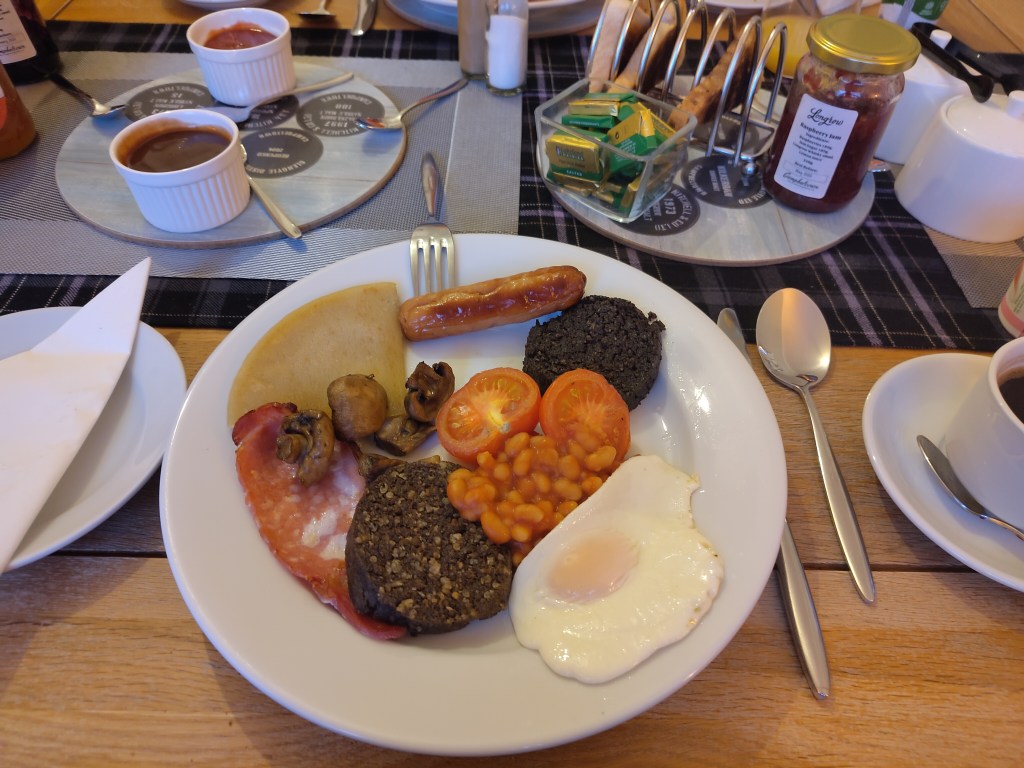
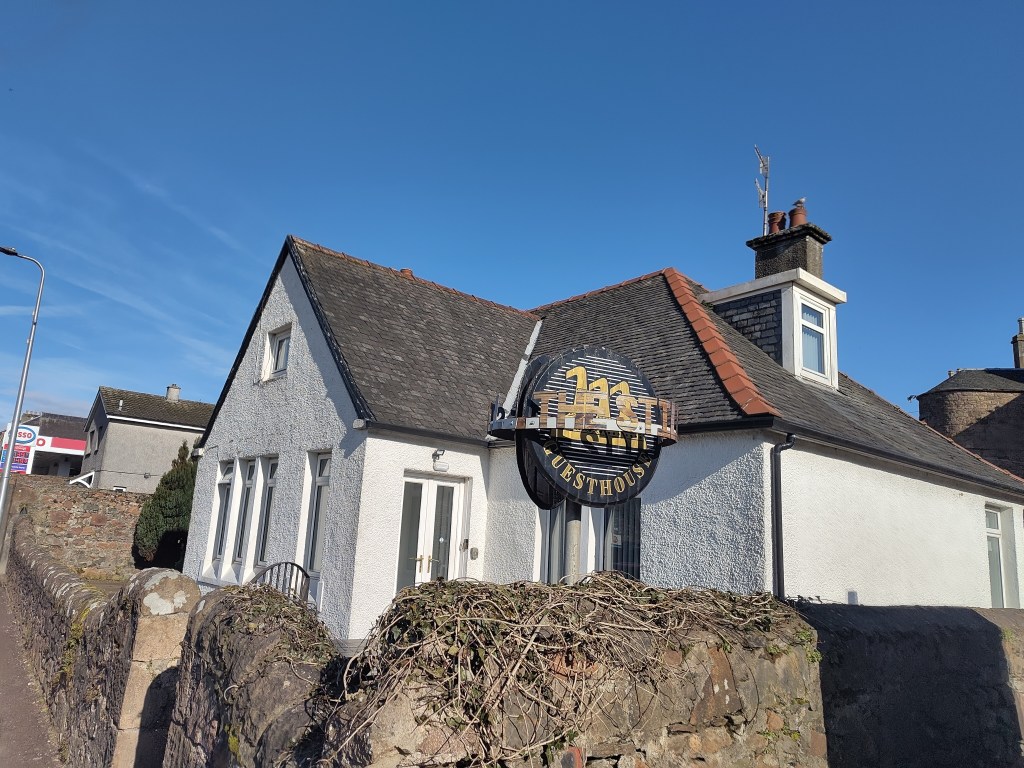
On the Monday morning, we woke up early but excited: it was the first day of the Springbank Whisky School! A shower, then breakfast in the dining room: a full Scottish fried up by the lovely Marie, but also some fruits, yogurt, and toasted bread. It was a big plate, and as per usual Gianluigi helped Teresa clean it up! At 8am sharp Donald walked us from the Still Guesthouse to the distillery (only 5 minutes or so away).

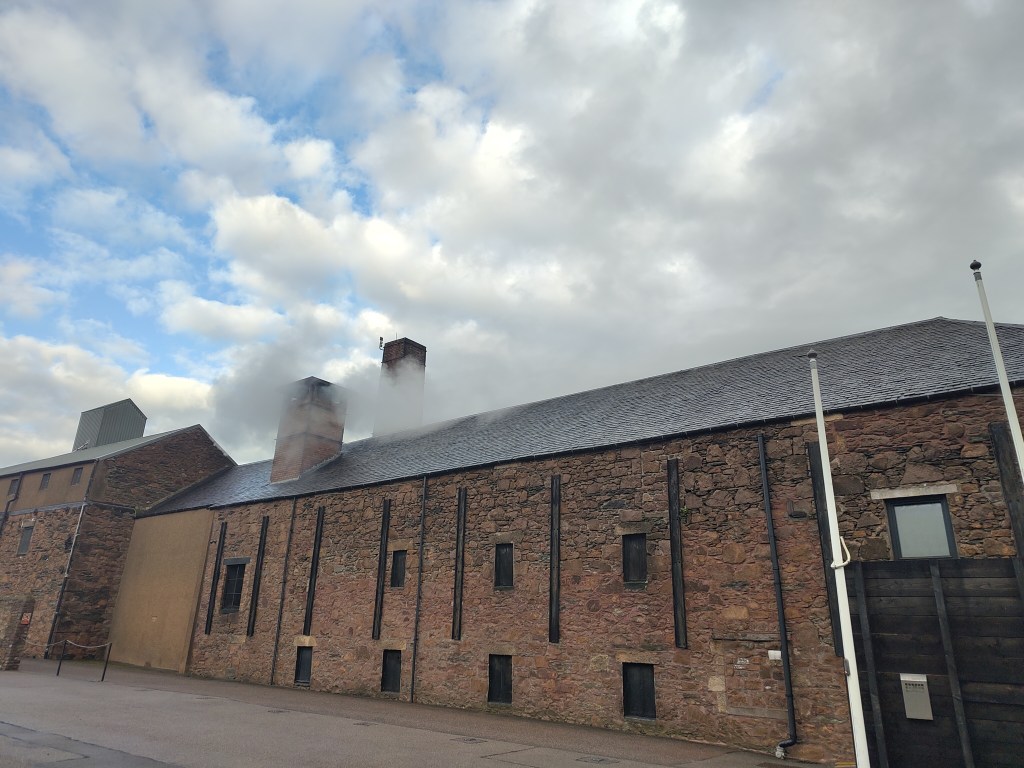
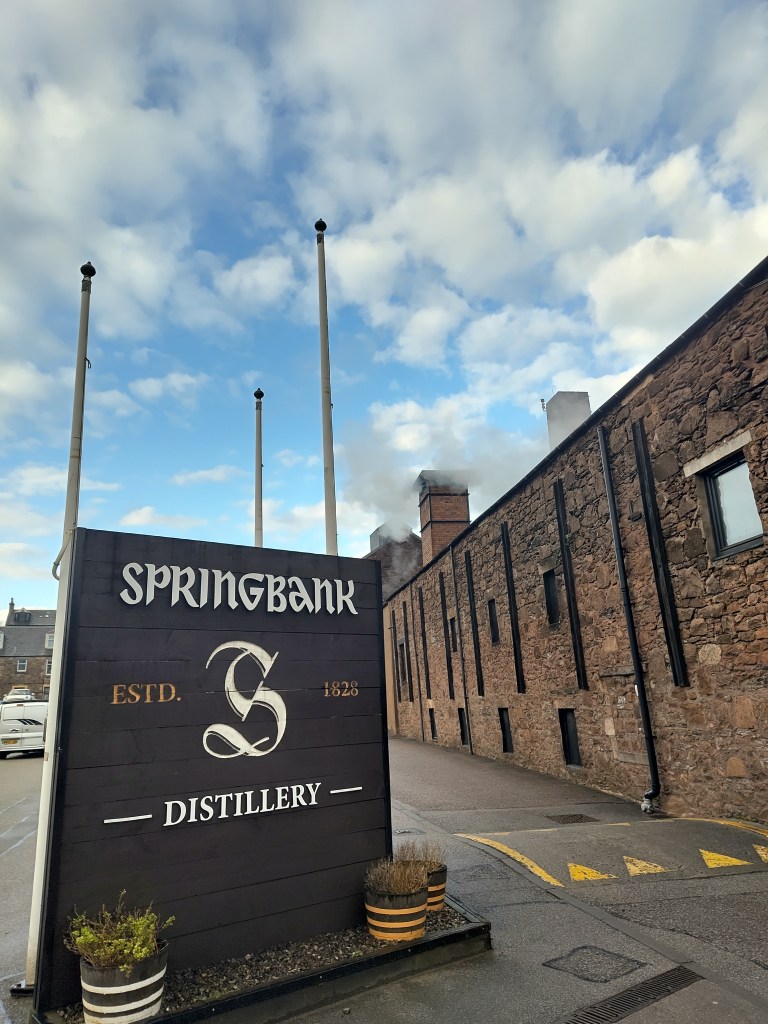
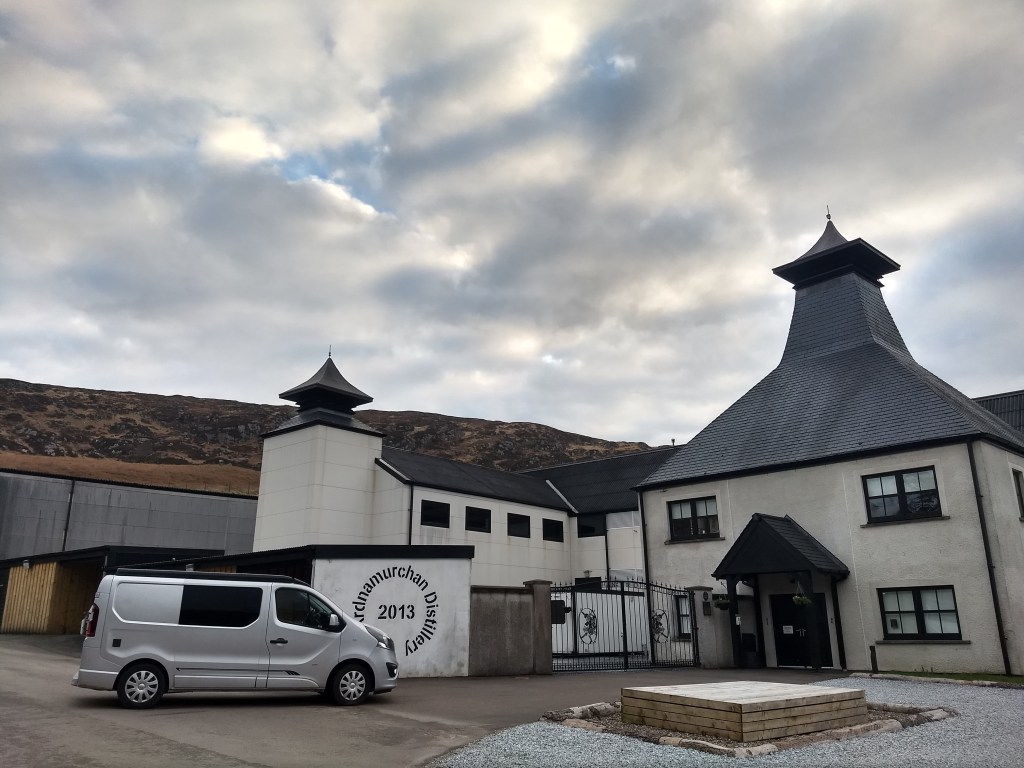
While arriving we saw (and smelled) grey peat smoke coming from the distillery kiln chimney: maybe no pope were made on that day, but still a very good sign! We met the distillery manager Gavin introduced himself and the school, gave us some study material, and briefly showed us around: first our lockers in the staff room, then a brief distillery tour.

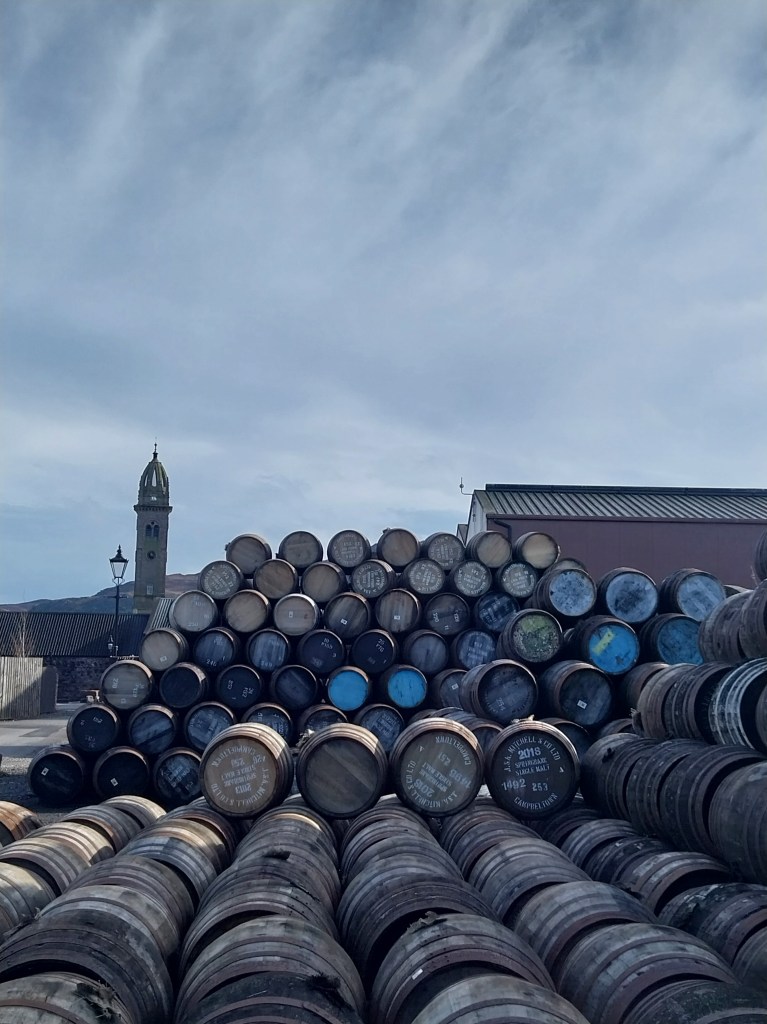
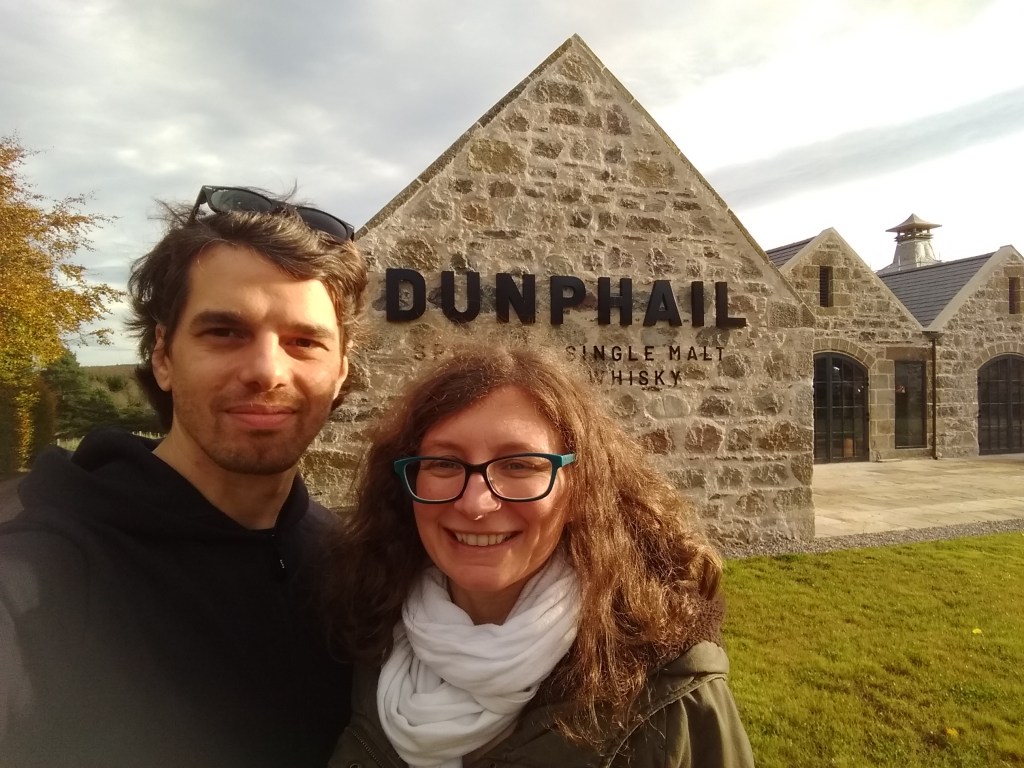
But soon after, it was time for us to get โ€œseriousโ€ andโ€ฆShovel barley! (We’ll spare you the jingle that Gianluigi came up with, but yes, there was a jingle about shovelling barley.) A little premise here: malting is a key part of Springbankโ€™s production: for a long time, they were the only distillery where every step was done on site, from malting to bottling. Now Dunphail distillery (in Speyside) is also malting 100% of the barley on site, while other distilleries are at 10%-30% (Kilchoman, Laphroaig, and Bowmore on Islay, Benriach and Balvenie in Speyside, Glen Garioch in the East Highlands โ€“ we might have missed some). Most of the Scottish distilleries source malt from maltsters (or send theirs to be malted elsewhere, like Ballindalloch, Bruichladdich or Daftmill). For Springbank, the decision to keep malting in-house was not by accident, as for a period between 1960 and 1992 they also sourced it outside. It was Hadley G. Wright, the former chairman of J&A Mitchell (sadly passed away in 2023), who decided to bring it back to create more jobs for the Campbeltown community.

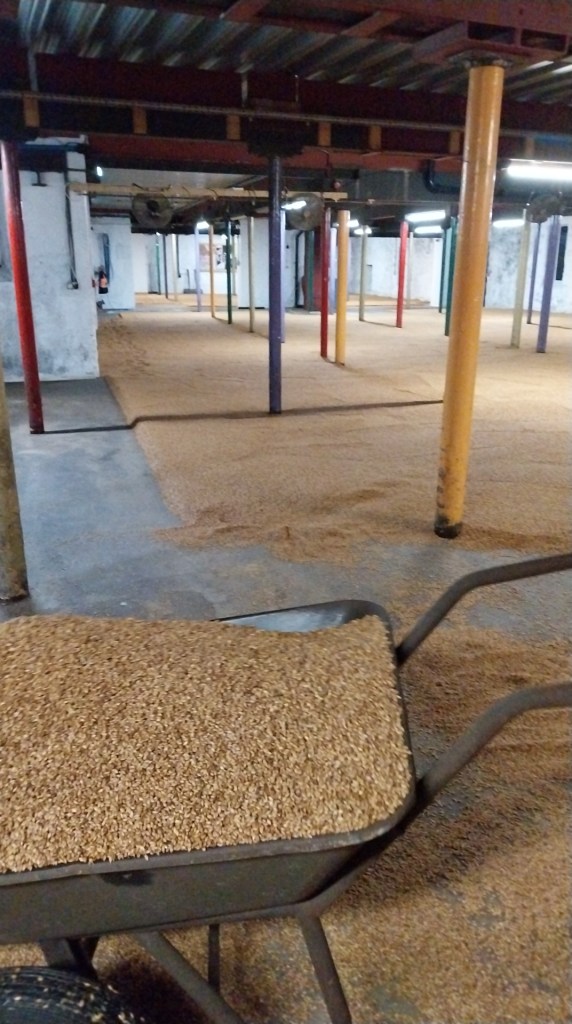
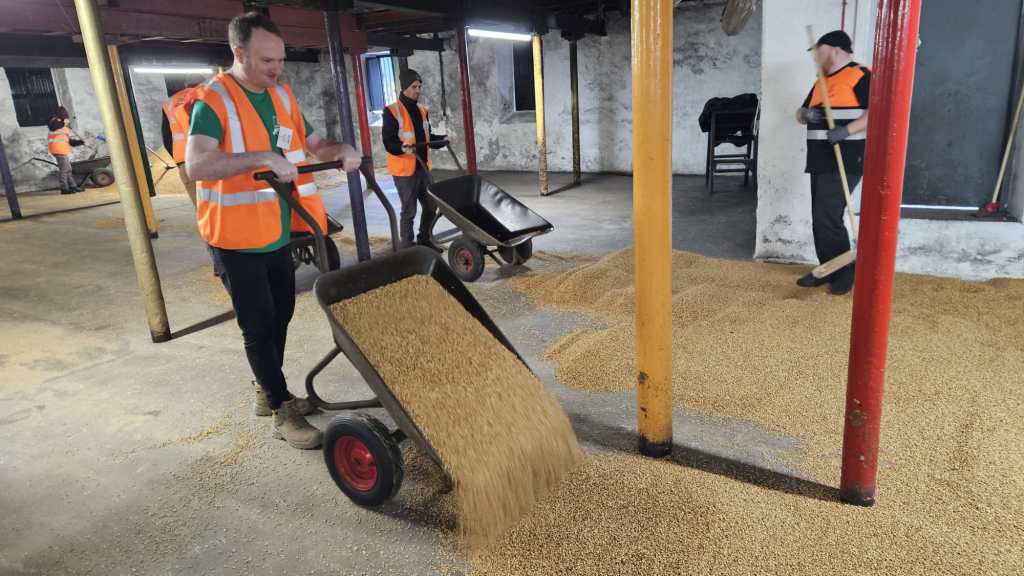
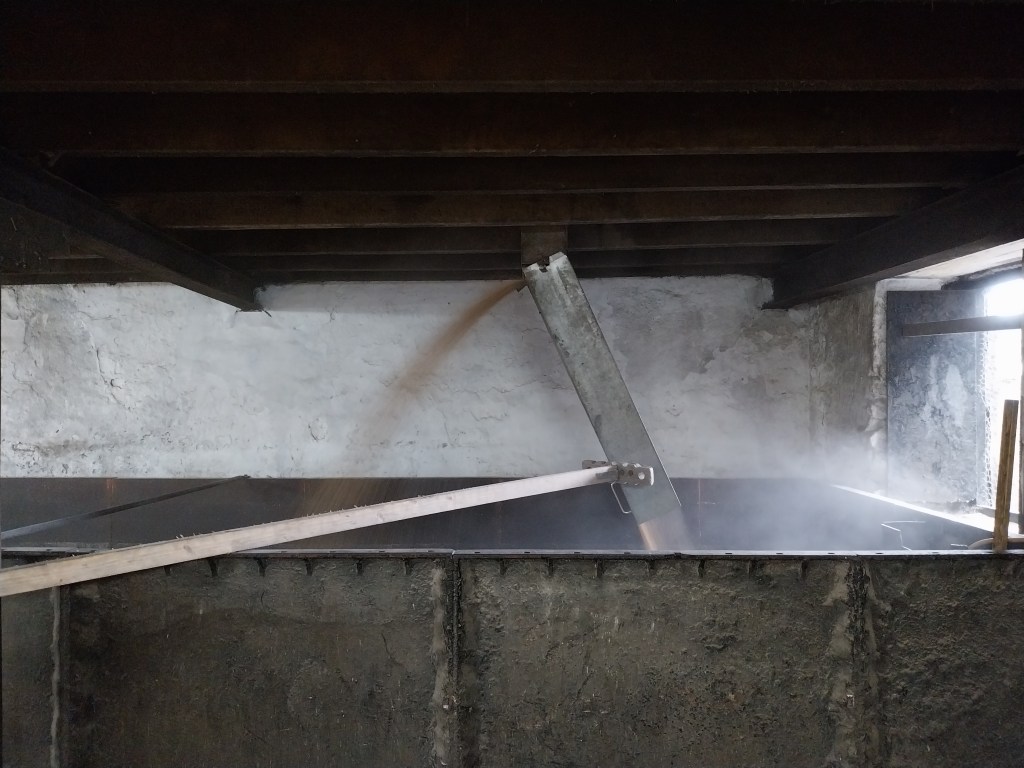
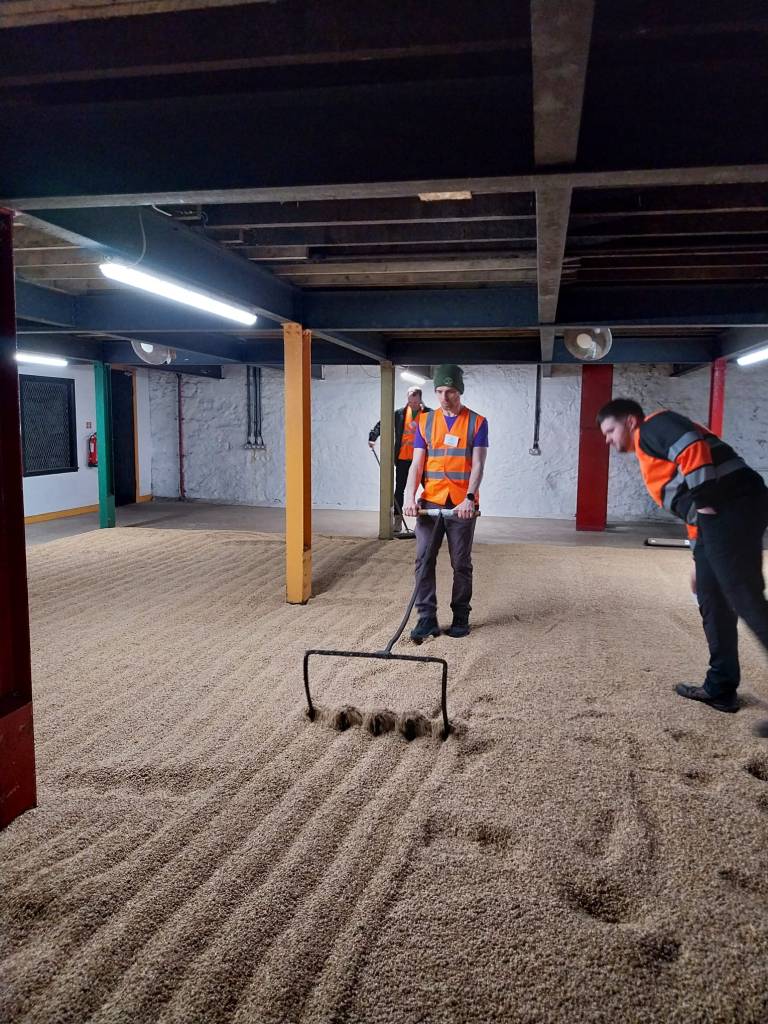
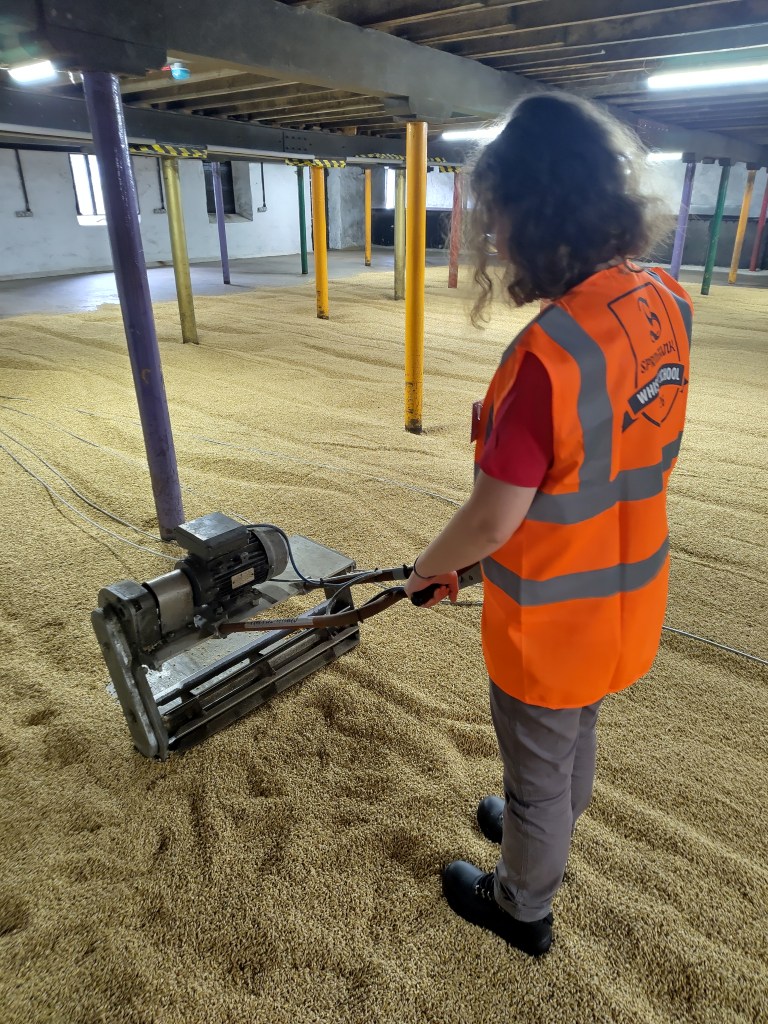
Malting starts by taking the green barley from the bins where the lorries unload it. When ready, it is transported with a conveyer belt through three hatches into the steep tank (13 tons if it goes to the slightly larger lower malting floor, 10 tons if it goes to the upper malting floor), where it is soaked with water for 14 hours. Water is then drained, and after 12 hours the barley is soaked again for another 14 hours. After draining, it is shovelled through another hatch if it goes to the lower malting floor, or shovelled outside the steep if it stays on the upper floor. That day we were on the lower malting floor, and a pile of wet barley was waiting for us, ready to be spread. So, for about 30-40 minutes, we shovelled barley on to wheelbarrows, that we then used to spread it on the floor, under the supervision of Joey and John, who levelled out the most uneven bits. Being five (plus the staff) doing it, it went quickly, and it was already time for the 10am break, when we gathered at the washback bar for a hot drink and some sweet treats.

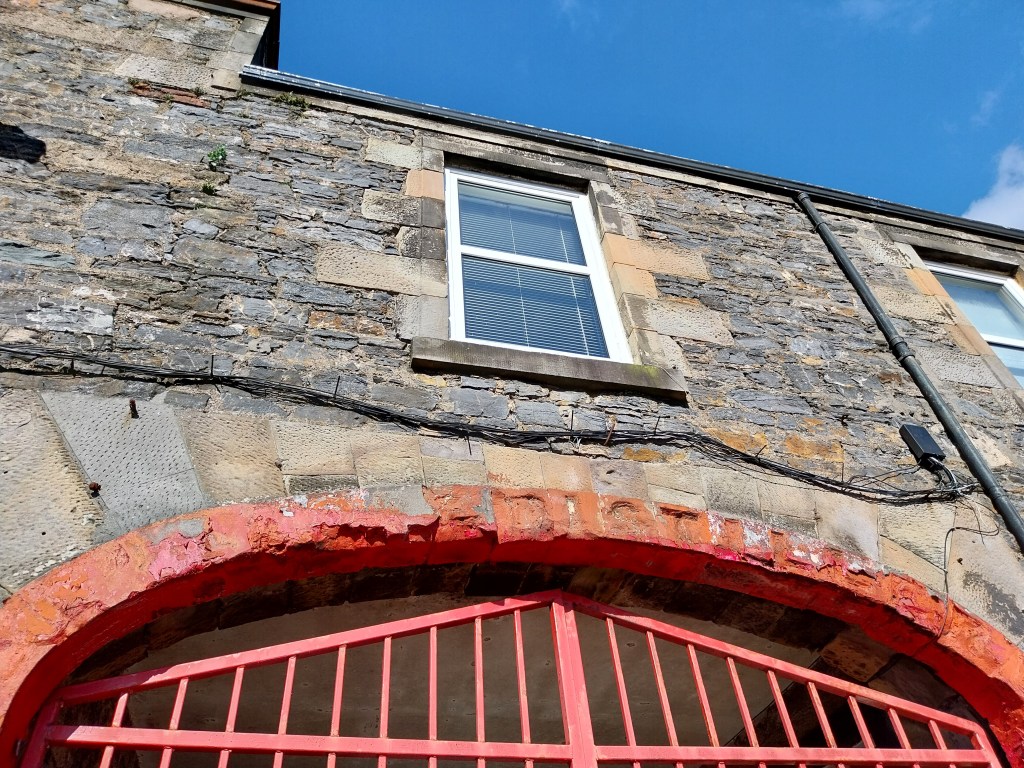
The second activity of the day was a walking tour with Findlay, hunting down the sites of lost distilleries. Having read David Stirkโ€™s Whiskypolis book recently, Gianluigi was already acquainted with the story of the 30-odd distilleries that used to be in town. Only two survived all the shocks of the late 19th and early 20th centuries, that led to many closures in the 1920s and 1930s. The two are obviously Glen Scotia (formerly only Scotia) and Springbank, while Glengyle was resurrected in 2004 by J&A Mitchell in order for Campbeltown to retain its official whisky region status. And weโ€™re happy for that, as Kilkerran (the brand name under which they sell Glengyleโ€™s whisky, as the name is owned by another company) is a tremendous dram! Two other old distillery names live on as Springbank variants: Longrow, heavily peated and double distilled), and Hazelburn, unpeated and triple distilled. Some of the spots gave it away that there used to be a distillery โ€“ for example, Benmore is a now the name of the street, but you can still see half of its pagoda roof and the name on the old gate.

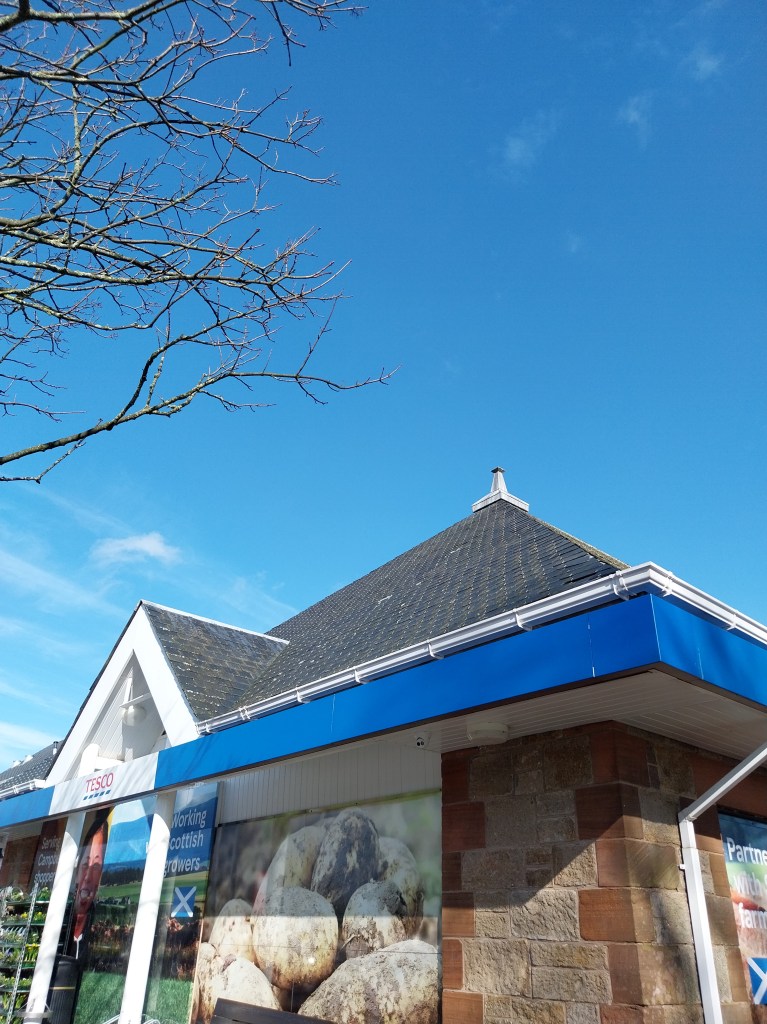
Some others were less straightforward to spot, like the site of Lochead distillery, which is now home toโ€ฆa Tesco. Apparently, when they had their application approved by the Argyll and Bute Council, they were supposed to include in the architecture something that hinted at the fact that there used to be a distillery, so they came up with โ€œpagodasโ€ on the roof. Pardon our French, but they look a bit shite. The old Hazelburn distillery is, instead, one of the best-preserved buildings. Some warehouses of Glen Nevis also survived. Nice touch, during the tour we also popped into Glen Scotia, where we said โ€œhiโ€ to Greg, who gave us the excellent Warehouse Tasting back in December.

After the tour, it was time for lunch back at the Still Guesthouse: scotch pie, keeping it traditional. Common theme for the whole week: the food was delicious, we were (happily) spoiled! Anyway, after the one-hour lunch break, we were split in two groups, Graham and the two of us in one, and Robert and Stephen in the other. While Robert and Stephen went on to look at mashing, fermenting and distilling, we went back to the maltings, where the staff showed us all the nitty and gritty of what is done there. First, we watched the steep tank being filled in with barley, and how it gets evened out. To see how the steep tank gets filled with water, we had to wait for the next morning.

Anyway, once spread on the floor, the barley is turned every four hours to keep it aerated and break up rootlets. The three of us got to turn a few rows of barley with both the grubber (manual) and the turner (electric). Every step and relevant information is noted down on paper registers, things like when the barley is turned, temperature, humidity, etc. It was quite exciting to see some old registers going back many years!

The team then took us outside in the internal courtyard, where they keep both wet and dry (under a shed) peat, and where the old oil tanker still lays, which was used before they switched to natural gas. Back inside, we went up to the last floor, which is not used to spread malt, but to store the barley from two local farms (wink, wink) waiting to be processed. Itโ€™s also where we could see the top of the malt bins (and a conveyer belt!).

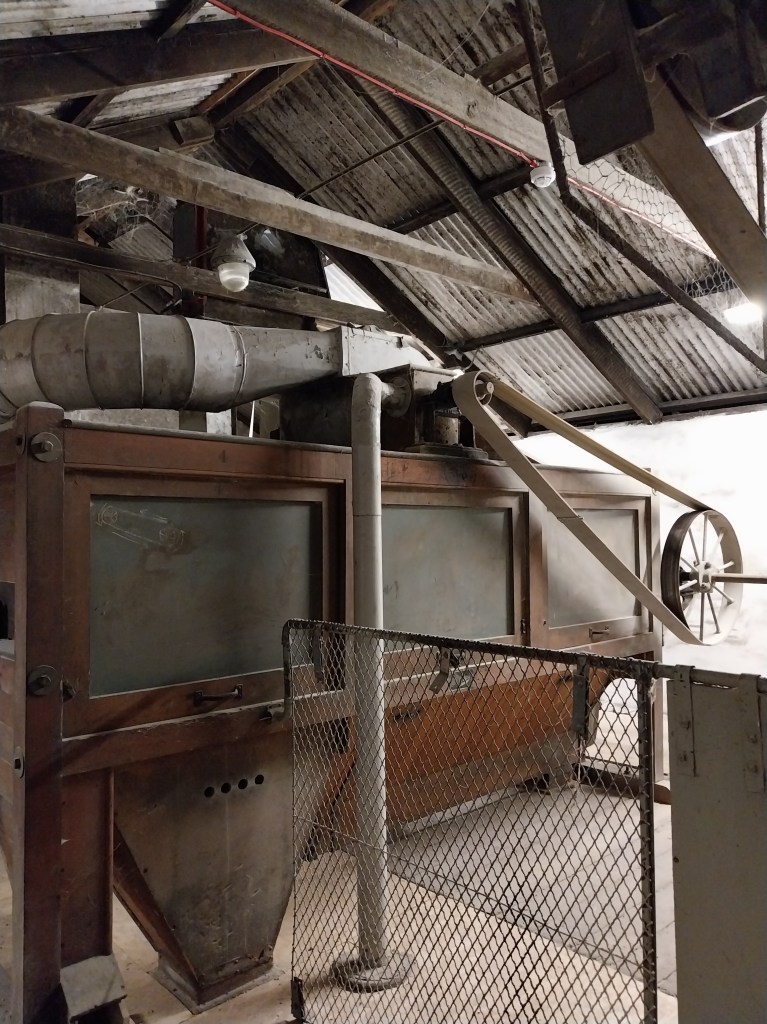
We then checked out the destoner above the Porteus mill, a very old piece of equipment in a wooden box, which weighs the malt to send to the mill in 25kg โ€œcoupsโ€. All very nerdy details, and of course we loved it!

With that, our first day was over. While the afternoon was a bit slow, it was a solid start of the school, and we were looking forward to the second day! We went back to the guesthouse, where Sandra had cooked us a delicious dinner, chicken Balmoral with fava beans and mashes, followed by a trifle: we still dream about it! We then had a couple of drams with Stephen and Robert in the sitting room, before retiring to our rooms.

Stay tuned to know more about our second day! Until then, slร inte!


Springbank Whisky School

Link: https://www.springbank.scot/whisky-school/


#74.1 The Springbank Whisky School

Getting ready to go!
(prologue)

ย 

TL; DR: Sooner than expected, we had to get ready for something that had been on our wish list for a long time โ€“ the Springbank Whisky School. We were so excited for this once-in-life opportunity! This is just an introductory blog post to our intense week in the wee toon, more (much more) to come.ย 

A few weeks ago, back in March (2026, for you reading from the future!), we ticked off one of the whisky experiences in our bucket list: the Springbank Whisky School! In a few words (but many more are about to come), itโ€™s an intensive week at the distillery, โ€˜workingโ€™ and learning everything about the nitty and gritty of their production, from malting the green barley, to sliding bottles in a cardboard box, ready to be shipped anywhere. With a few drams in between, obviously. Obviously a heaven for Springbank lovers, but overall an experience that attracts many whisky nerds and enthusiasts from everywhere.

We found out about the school during the pandemic, but at the time it was closed, for obvious reasons. Gianluigi first enquired back in November 2022, after they restarted, but we were told that after losing those two years, the queue was estimated to be seven years long! Fair enough, we were ready to wait until 2029, and that was just to join the waiting list. But then, very suddenly, in October 2025 we received an email from the distillery: they were reopening the waiting list. We signed up right away, again expecting to finally do the school towards the end of 2026 or even in 2027. But that wasnโ€™t the case, possibly because (as we learned later) after the pandemic they moved from running it 10 weeks a year to 20 weeks, halving the waiting times. When the confirmation email arrived, asking us to choose three potential terms, we realised that we could do it as early as February/March 2026: only a few months away, such a nice surprise! And so we did, we selected the second week of March, to avoid a clash with the Fife Whisky and Independent Spirit festivals. Soon after, our good pal Stephen from the Edinburgh Whisky Group, a massive Springbank fan also on the waiting list, managed to book for the same week: โ€œlos tres amigosโ€ going to Campbeltown, yay!

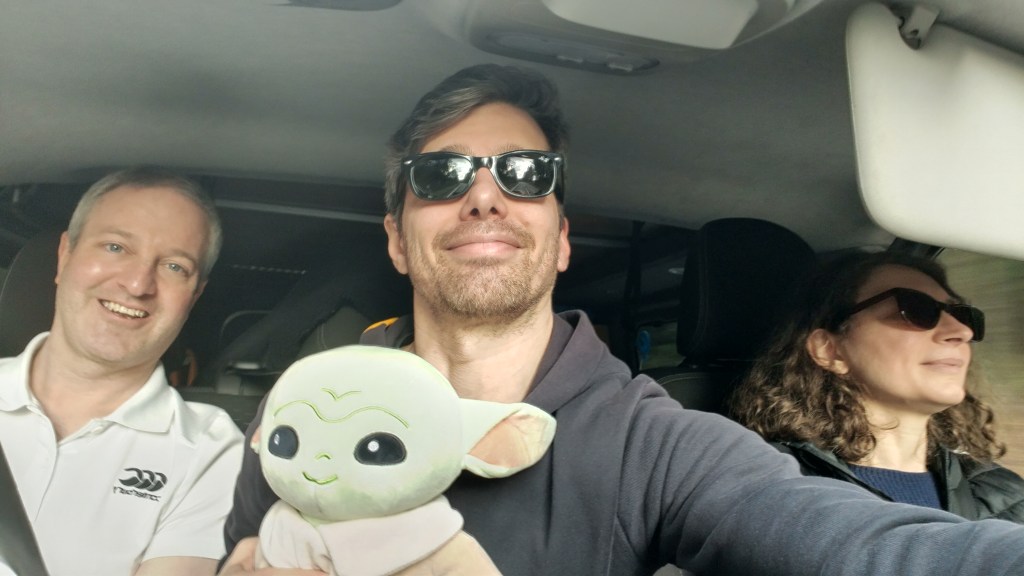
The adventure started on a sunny Sunday afternoon, when we slowly left Edinburgh towards Glasgow, where we picked up Stephen who was visiting friends. We met him at the CostCo petrol station, so in the meanwhile we filled the tank (the diesel was โ€œonlyโ€ ยฃ1.349 per litre thenโ€ฆ.It seems so long ago!). We then swiftly left Glasgow and drove to Campbeltown, aiming to check in just before dinner. The Whisky School includes accommodation in the lovely Still Guesthouse (owned by J&A Mitchell and used by staff visiting the wee toon), a few minutes walking from the distillery, in front of the Co-Op supermarket.

The school normally hosts 6-7 attendees per week. However, when we arrived, we realised that in our term weโ€™d only be five: the three of us, Robert and Graham. Robert is from California, but he used to live in Scotland, where he obtained the master in Brewing and Distilling at Herriot Watt University and then worked at Fierce Brewery, before moving back to the US. Heโ€™d flown all the way from San Jose to attend the school (and for a following trip to Islay)! Much closer to home, Graham lives and works in Glasgow, but since his wife is from Campbeltown, he stayed with the in-laws. Not the first time weโ€™d met him, as we were already introduced to each other at the Fife Whisky Festival the previous weekend.

Stephen and Robert were given two rooms on the ground floor (the โ€œ15โ€ and the โ€œ12โ€), while we shared one of the three rooms upstairs (the โ€œSingle caskโ€). While the rooms downstairs had a shower, ours didnโ€™t, but since we were the only two people upstairs, we still had the one bathroom to ourselves. There is also an annex, but obviously nobody used it during our term.

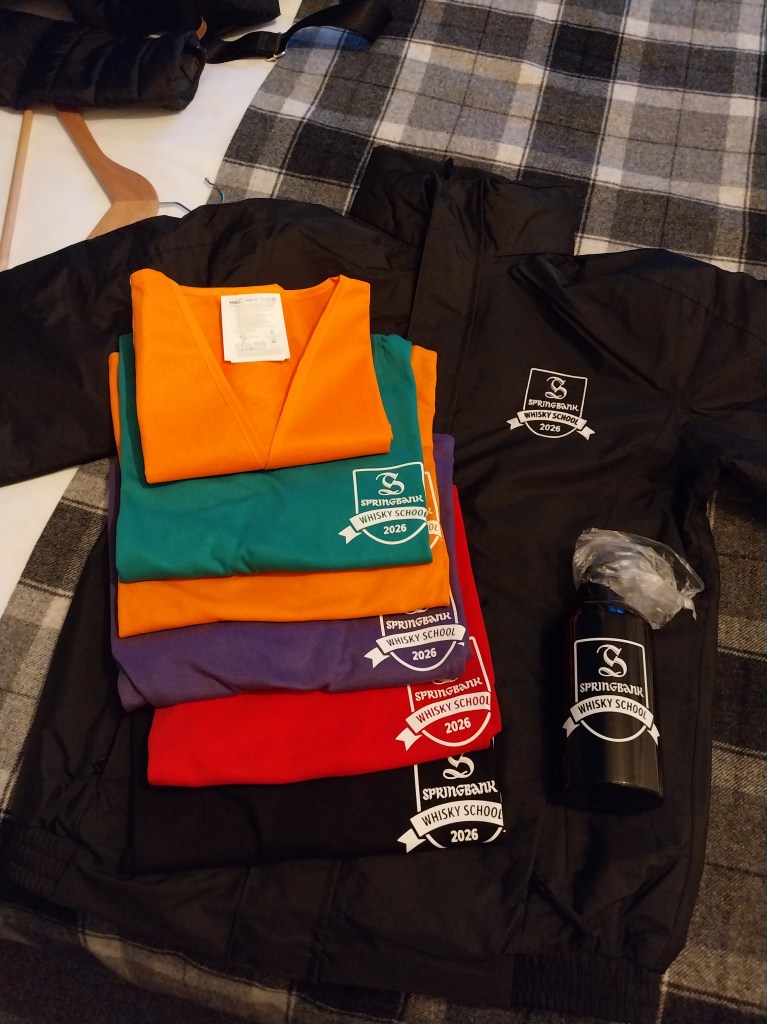
In the room, we found the gear provided by Springbank: a set of five t-shirts (orange, red, green, purple and black), a black jacket and a high-vis vest. On the initial form the smallest size was a unisex S (which fits Gianluigi), but they were super kind to get a XS set of t-shirts and jacket for Teresa (who is a tiny lady). After the school the high-vis vest are in the van, donโ€™t know how good of an idea this is, since the big mark on the back with โ€œ2026 Springbank Whisky Schoolโ€. A thing we had to get ourselves were the safety boots: we both got some hybrid models with all the safety requirements, but that could be used for hiking as well. Our old hiking shoes were long done (Teresaโ€™s died last year on Ben Nevis), so we killed two birds with one stone.

All meals from Monday morning to Friday lunchtime are also provided by the school, and it is a fixed menu (obviously taking into account food allergies or diets) for the three meals. So, on our arrival on Sunday evening we had to get food somewhere, and the obvious choice for us was the Ardshiel Hotel. After a tasty meal and a pint, we went back to the guesthouse, where we met Robert.

We had a dram all together in the cosy sitting room, where a bottle of Campbeltown Loch blended malt (46%) and a Seven Star blended scotch (46%) were left for us to enjoy. We also found a liquor cabinet in the kitchen, where previous guests had left a bottle of Longrow from the distilleryโ€™s shop demijohn (that gets constantly refilled, in a solera-ish fashion), and some other liquors/spirits. Good find and nice way to โ€˜connectโ€™ with students from previous terms (weโ€™d also leave some of our samples for students after us), but we all concurred that it wasnโ€™t a good night for dramming given the big start the day after. We soon went to bed to get a good rest before properly starting the adventure on the next day!

Stay tuned for the rest of the adventure! Until then, slร inte!


Springbank Whisky School

Link: https://www.springbank.scot/whisky-school/


#43 Cask finish DIY

Diary of an experiment


TL; DR: Have you tried to finish your own whisky in a wine cask? Well, we did, and although we already knew, we could see how hard it is. While the result was not great, we definitely learned a few things. 

This post is going to be different from others, as we wonโ€™t tell you about a distillery visit, nor a trip, nor a tasting. Weโ€™ll talk about an experiment we did recently – still a journey, if you wish.

The idea came after some thoughts on whisky maturation in casks that previously held wine. It took a while to us to realise this is a controversial topic. At first, we didnโ€™t give it much thought as it felt it was just part of the broader โ€œwineโ€ category (including Sherry, Port, Madeira, etc.), but then we noticed many whisky enthusiasts think wine cask maturation is a separate thing, often perceived as badโ€ฆ so whatโ€™s the deal with red/white wines? We had amazing drams matured in wine casks (Arran Amarone, to name a popular one, but also a stunning Glen Garioch 19y fully matured in an ex-Bordeaux cask tried at the distillery, or the Glen Moray 10 Elgin Limited Edition, finished in ex-Chardonnay casks). Let alone the STR (shaved/toasted/re-charred) casks made popular by the late Jim Swan: some can deliver a lot of flavour in a short time, which is particulatly crucial for new distilleries. However, we also had some very โ€œmehโ€ wine-matured whiskies (we wonโ€™t name names here), dull at best, so we totally get the scepticism of some.

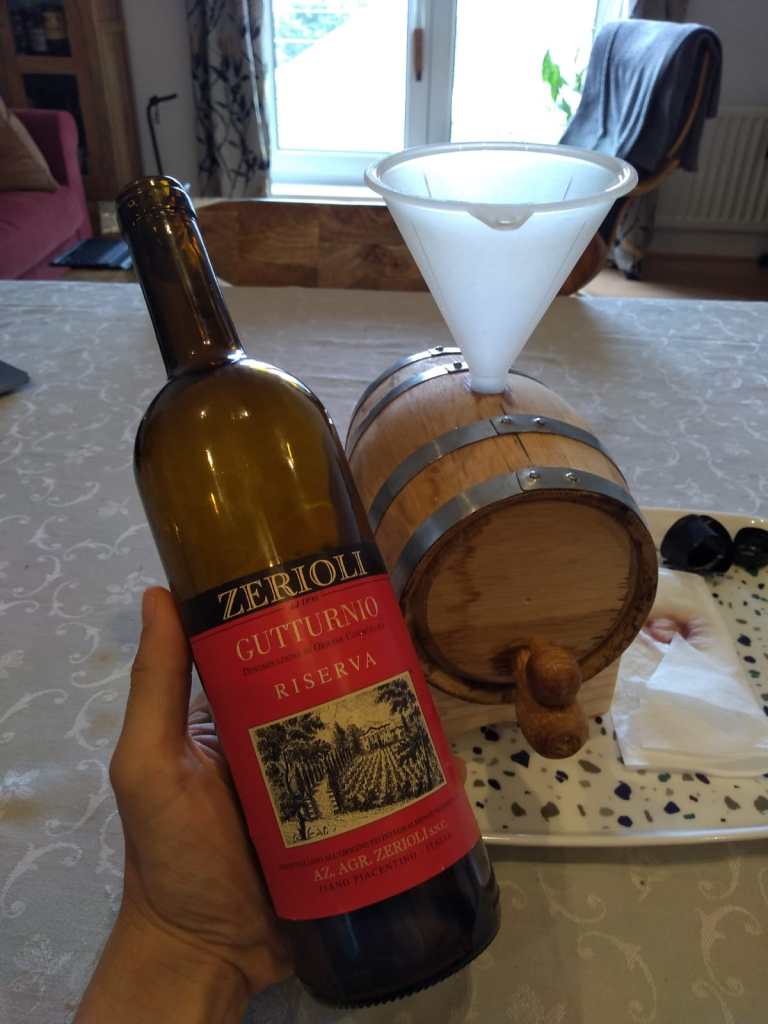
A taste of Gianluigi’s home, Gutturnio wine.

Probably our Italian upbringings sparked further curiosity on the topic, so we did a bit of research and noticed that while maturation in casks such as Amarone, Barolo and Cabernet-Sauvignon is fairly common nowadays, lesser known red wines arenโ€™t a thing (yet). One wine in particular seems to be overlooked: Gutturnio. Typical from Piacenzaโ€™s province (Gianluigiโ€™s hometown), it is a mix of Barbera and Bonarda grapes, and comes either fizzy or still (โ€œsuperioreโ€). A thick red wine, that goes well with the greasy local cuisine, quality-wise you can find the cheapos from supermarkets, up to several tenths-of-euros per bottle. We wondered for a while, then, after a conversation with Woody and Megan from Woodrowโ€™s of Edinburgh, we decided to give it a try and start an experiment.

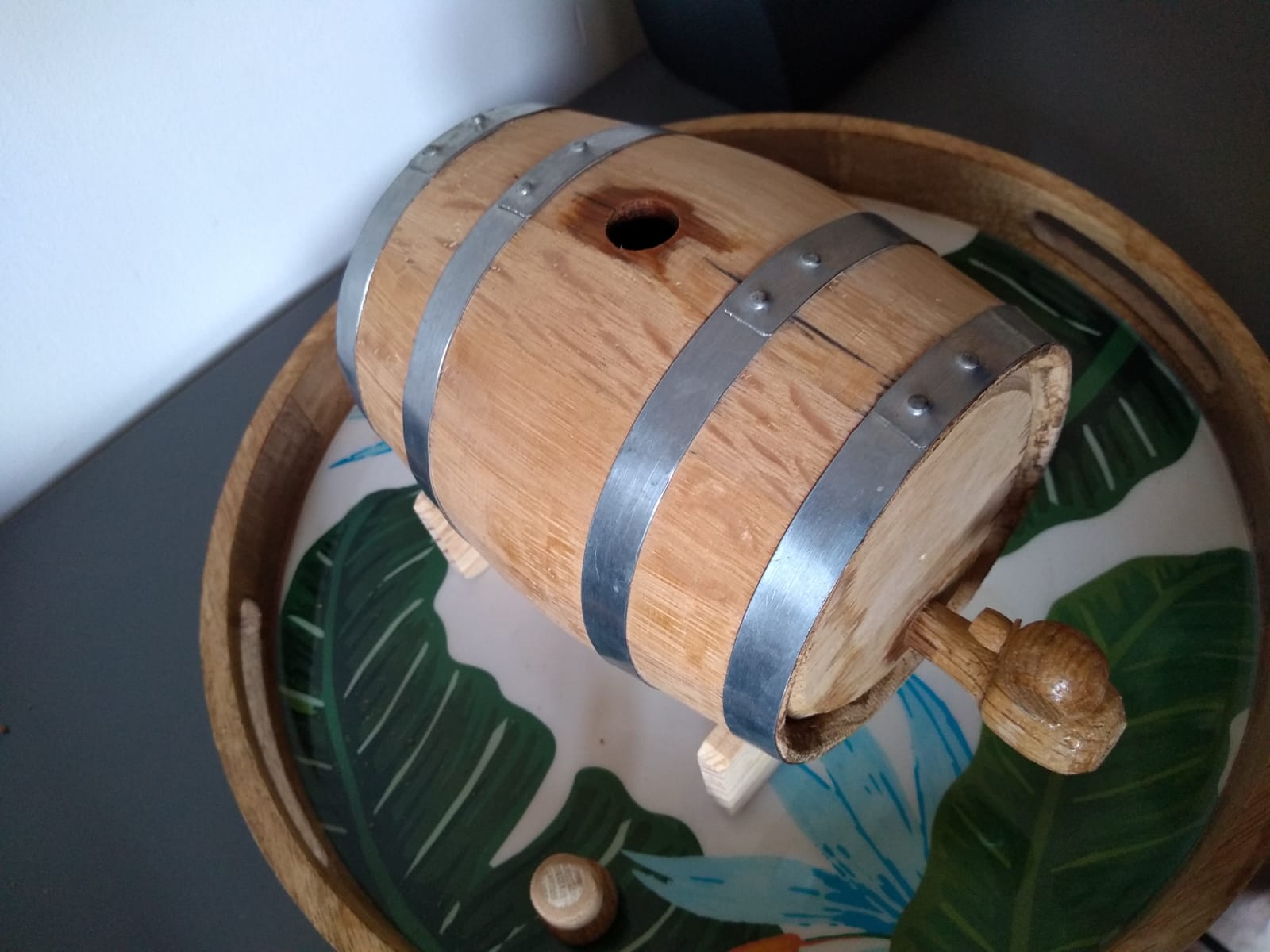
We asked some friends about to visit us to bring over a bottle of Gutturnio, Gutturnio Zerioli Riserva (later on Gianluigiโ€™s brother would challenge this choice as not great, but hey ho) and then we bought a 1-litre virgin oak cask (American oak, Q. alba) from Master of Malt (where it was cheaper, if you exclude some suspicious vendors on Ebay). On the 26th of August 2023 we filled the wee cask with 75cl of wine, and left it in there for a bit over 3 months.

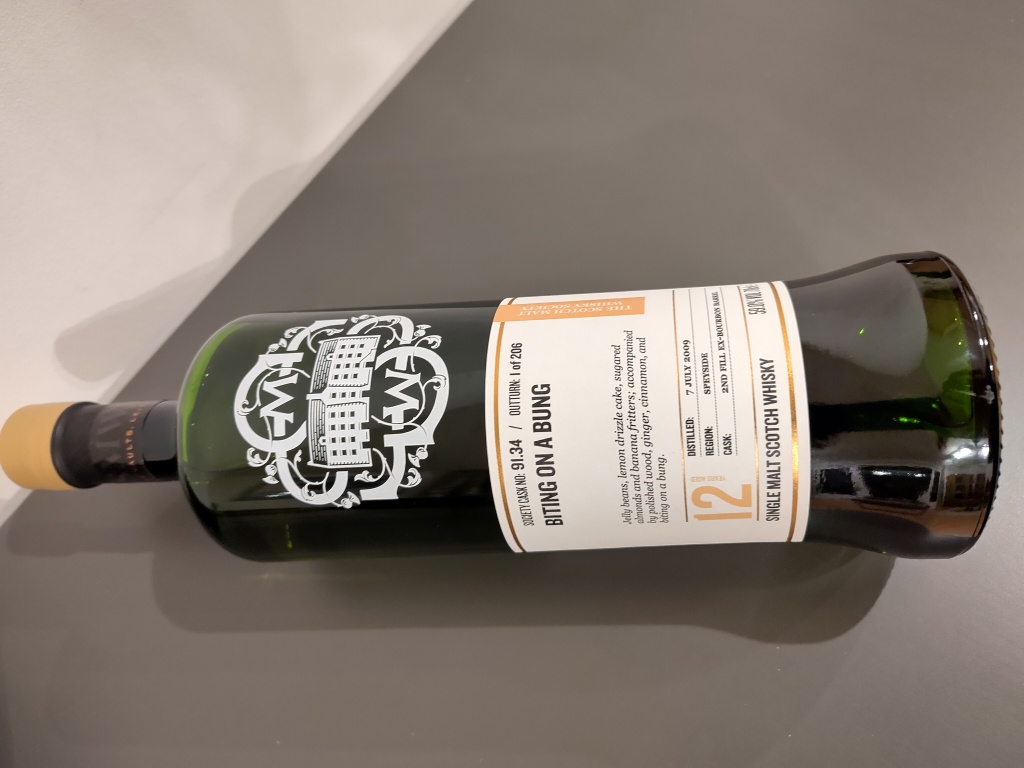
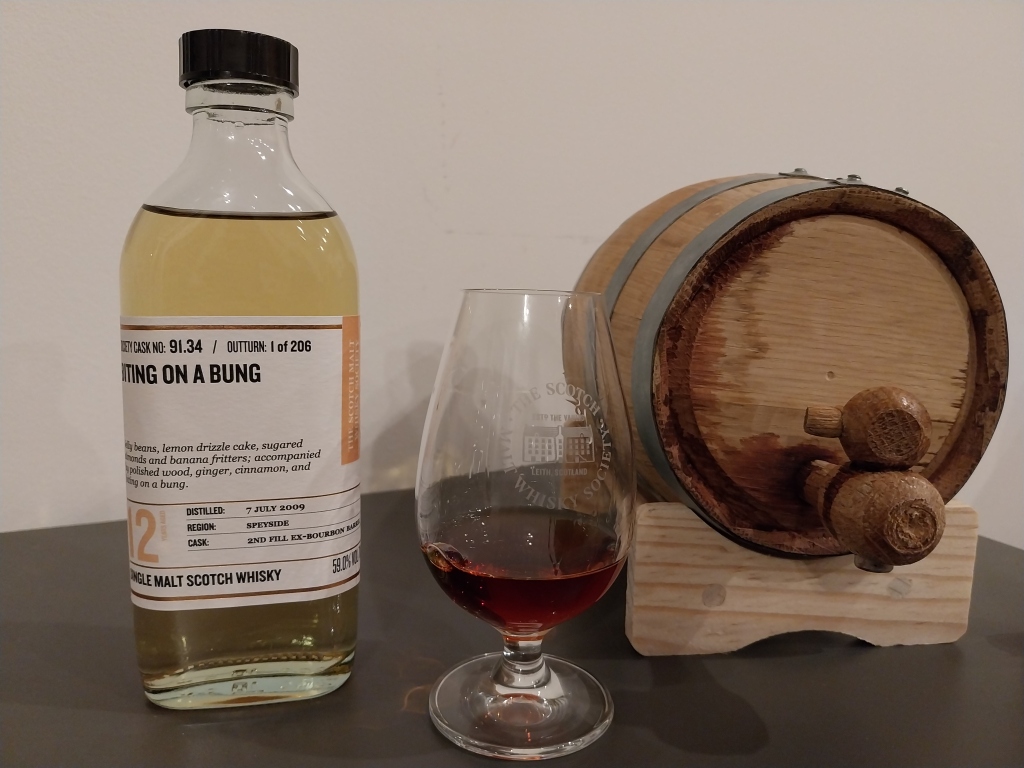
While the cask was seasoning hidden away in a cupboard (turning it from time to time), we chose our dram. We wanted something without much cask influence, so we aimed for second-fill (or more) ex-bourbon casks. Living in Edinburgh made things easier, as we could access the two Scotch Malt Whisky Society venues, although it wasnโ€™t easy to find a whisky available both to try and purchase. We still managed to taste 6 or 7 bottlings from various distilleries, and the final choice fell on a 12-year-old Dufftown (distillery that we had the chance to walk past in our first trip to Speyside, but never properly visited), called Biting on a Bung (91.34), distilled on the 7th of July 2009 and bottled at 59.0% abv.

On the 5th of December, we disgorged the wine. To our surprise the cask was soaked – of the 75cl of wine weโ€™d put in, only 35cl came out! We knew that some absorption would happen, but not to this extent!

What was left of the entire bottle!

On the same day, we filled the cask with the whisky while leaving 20cl to ourselves, in case we messed things up (spoiler alert, we did). We didnโ€™t have a timeline in mind, we just wanted to try the whisky at different times, but here one miscalculation: we went back to Italy two weeks for Christmas, leaving it unchecked for probably too long. When we came back, we took a sample right away: a lot of colour (copper red), some typical red-wine notes on the nose (tannins and red berries), but very metallic on the palate. We hoped these metallic notes would disappear with some more time in the wood, but they didnโ€™t, so in early March, exactly 3 months after filling the cask, we disgorged it and, again, only 30cl of whisky came out (another 20cl of liquid absorbed) – 30cl of โ€˜metallic liquidโ€™, clearly not a success.

We followed up the experiment, this time not with a proper whisky but with spirit from our infinity bottle: despite leaving it in the wee cask for only a couple of weeks, the same unpleasant notes re-appeared (although not so much absorption this time). Oh well.

So, what did we learn out of this experiment? How to waste a good half-litre of whisky? Definitely, but not only that. We already thought it must be hard to properly finish a whisky in the right cask for the right amount of time, but we were surprised by how easy it is to mess up (well, probably the small size just accelerated the process)!

We made a list of variables to consider:

  1. The cask! After so many distillery visits, we know wood quality is key (but tbh we didnโ€™t feel like investing big for our random experiment)
  2. Time to season the cask with wine (maybe too much?)
  3. Time to finish the whisky (again, too much?)
  4. Climate conditions (our flat is very very dry, but thereโ€™s not much we can doโ€ฆ)
  5. Whisky robustness (maybe it was a too delicate one for this kind of experiment?)
  6. Quality of the wineโ€ฆor even the type of wine?

So many variablesโ€ฆitโ€™s really hard to wrap our heads around it, although we could sum up all these variables into one: experience, i.e. really knowing what youโ€™re doing. We clearly didnโ€™t, but thankfully this is not what weโ€™re doing for a living. Nonetheless, it was fun! Whatโ€™s next? Currently the cask is empty, but weโ€™ll try to fill it soon to avoid it to dry too muchโ€ฆwith, maybe, rum? Another wine? Let us know if you have any ideas!

Until next time, slainte.


#37 Farewell to 2023

A year full of whisky trips… and more!


TL; DR: Itโ€™s December, perfect time for some reflections on the year thatโ€™s about to end. Another year full of awesome whisky trips, not only in Scotland: 31 distillery visits, of which 27 seen for the first time!

We are quickly approaching the end of the year, so itโ€™s the perfect time to reflect on the year that has been, of course whisky-wise. As weโ€™re writing, we already travelled back to Italy to celebrate Christmas with our families. Itโ€™s around 15 degrees Celsius here, so the atmosphere doesn’t quite call for a dram by the fire, but weโ€™ll try to make the best of it anyway, eheh.

Even more than in 2022, this year we felt like the pandemic was a gone memory (despite Covid is still among us, and it will be for long): travels resumed in full force, Edinburgh is busier than ever, and so it was travelling around Scotland. The big novelty in our life was the campervan, Mr Vantastic, which allowed us to travel a bit more on the wild side, without worrying about reserving accommodations (which in the meantime became quite expensive) or planning too much in advance.

For our summer holidays we went on a big road trip down to Wales, to discover this beautiful country and its whisky scene. Except for a couple of producers, with Penderyn being the main one, the Welsh whisky industry is still in its infancy and mostly populated by craft distillers, but itโ€™s nonetheless promising. While travelling to Wales, we also stopped by a couple of English distilleriesWhite Peaks stood out, definitely a hidden gem.

A hidden gem in Derbyshire, White Peaks.

Also, we couldnโ€™t help but going to Speyside again, this time for the Spirit of Speyside festival, a different experience (not in a bad way) compared to our beloved Fife Whisky Festival and Whisky Fringe (which we attended this year too). We had great time, and visited a number of distilleries that are usually closed to the public.

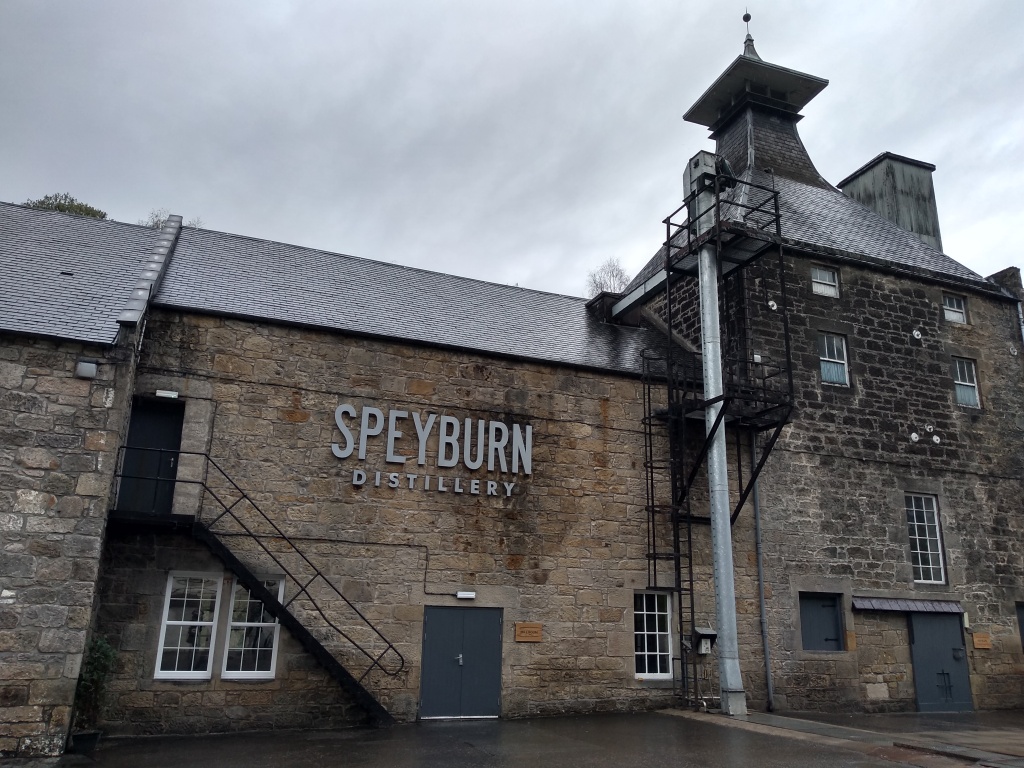
Mortlach, Linkwood and Dailuaine were fantastic, in spite of the entry price, and so it was Speyburn, but good news: the latter is now open to the public! Now every whisky enthusiast can visit and check out their old drum maltings: a piece of industrial history! We briefly stopped in Speyside again later in the year on our way to the Highlands, to visit a couple of new distilleries: Ballindalloch and Dunphail. The first one had just released their first single malt, while the latter had just filled their first batch of casksโ€ฆHistory in the making!

The Highlands were the destination of the Edinburgh Whisky Group annual trip. In Dornoch, Phil from Thompson Brothers gave us a quick tour of their craft distillery. Then, we visited other local distilleries, two for the first time (Glenmorangie and Balblair), and Clynelish for the second time (blog posts about all this coming soon). This was not the only one we visited for a second time this year. In early February we had a very wet trip to the West Highlands to revisit Ardnamurchan and Tobermory. Moreover, in August we did a Warehouse Tasting at Deanston with a couple of friends from Italy. Gianluigi even went on a solo trip to Campbeltown in December, to use a couple of remaining leave days from work and take advantage of his Cadenhead Club membership by getting a free warehouse tasting: a string of awesome drams, including a spectacular 9y old Staoisha (Bunnahabhain) finished in an ex-Amontillado sherry cask.

We did a lot of things, but also missed a few opportunities: first, we wanted to go back to Islay, but we couldnโ€™t make it, too busy with work. Then we missed the Dramathon due to a flood risk in Aberlour (this year we were supposed to run the 10k only), as well as the Roy Aqvavitae Blind Challenge, this time because of a terrible cold weโ€™d caught.

Leaving whisky trips on a side, it seemed to us that the number of tastings happening around Edinburgh has grown exponentially. We had great fun with Justine from Kask Whisky, now doing her monthly tastings at the Lind and Lime gin distillery, conveniently near home. One of the highlights of this year was definitely the Glen Mhor tasting, on the 40th anniversary of its closing, organised by Jason and Mark/Jolly Toper. Other great ones were the Woodrow’s of Edinburgh tasting at the Palmerston, organised by our pal Murray, and some tastings at Kilderkin and at Bacco Wine.

Whisky tasting next door.

On the bad side, we noticed the sharp increase in bottle prices. It was interesting to follow a recent vPub from Roy, where he showed that for some products the growth was mostly in line with inflation. However, this was for core/standard releases. We still feel that, instead, some independent bottlers and some producers are โ€œtaking the pissโ€, for a lack of a better term, particularly in relation to single cask and limited releases. Among these, the Scotch Malt Whisky Society bottle prices increased substantially, which resulted in us buying almost zero bottles and going only a few times to the venues compared to previous years. We have to say, though, that food at Queen St is still awesome, and the renovated Vaults look great.

One of the few bottles we bought from the SMWS was for our cask experiment: we got a 1-litre American Oak cask (virgin), which we seasoned with Gutturnio red wine (a typical red wine from Piacenzaโ€™s province) for 3 months, and it is now holding a very tasty 12y Dufftownโ€ฆIn 2024 we will find out if itโ€™s turning into pish or is actually drinkable.

After plenty of distillery visits and more than a handful of tastings this year, weโ€™re already planning for next year trips with Mr Vantastic …Islay & Jura? More English distilleries? The Western Hebridies? Back to Speyside? We shall see, but nonetheless, we are already looking forward to it! Now is the time to rest and enjoy some time with our families, hoping that you are doing the same, wherever you are. Possibly, with a good dram in your hand.

Until next year, slainte, and have a great New Year!


#27.5 Speycation

The one when we made it to 70 distilleries


TL;DR: And finally, we got to 70 distilleries! The lucky one was the Cairn, a new and very modern distillery in the Cairngorms, right outside Grantown on Spey. We went back to Edinburgh the day after, but only after a visit to Dunphail distillery, at the time still a building site. 

(missed Part 4/Part 3/Part 2/Part 1?)

Sunday was a long day, we started with Glendronach, followed by a Chivas Regal tasting at Strathisla. In the last post we left you off on the bus, as we were leaving Keith. The last (and final) activity of the day, was a visit to a new distillery (spoiler: it wonโ€™t be the newest in this post): the Cairn. It is located in a very beautiful flat spot in the Cairngorms Park, and the building concept is to โ€œmixโ€ with the landscape. It is owned by Gordon & MacPhail (remember the first tasting of the holiday?), and because itโ€™s inside a national park, there are no warehouses on site, they are at Benromach distillery, in Forres (also owned by G&M).

We arrived there 20-30 minutes late on the schedule, it was almost dark outside, but the team were very kindly waiting for us (they will be rewarded, at the end…wink, wink). The building is very modern, almost futuristic, substantially departing from what youโ€™d expect from a typical Speyside distillery. Here the group split in two: some only had drams at the bar, while others (including us) toured the distillery.

By wondering around it, we could see how everything is computerised, so they can run the production with minimal effort. The tour guide, John, was very nice: he took this job recently after a past in the ski industry. Gianluigi (who used to enjoy skiing before rugby took his ACL awayโ€ฆtwice) chatted with him a bit about Dolomites ski locations – there are some truly memorable tracks over there!
The touristy part of the distillery, including the video, was a bit cheesy (do they really need a clock to mark how long are we away from a 10-year Cairn whisky?), but thankfully not as much as others we visited in the past.

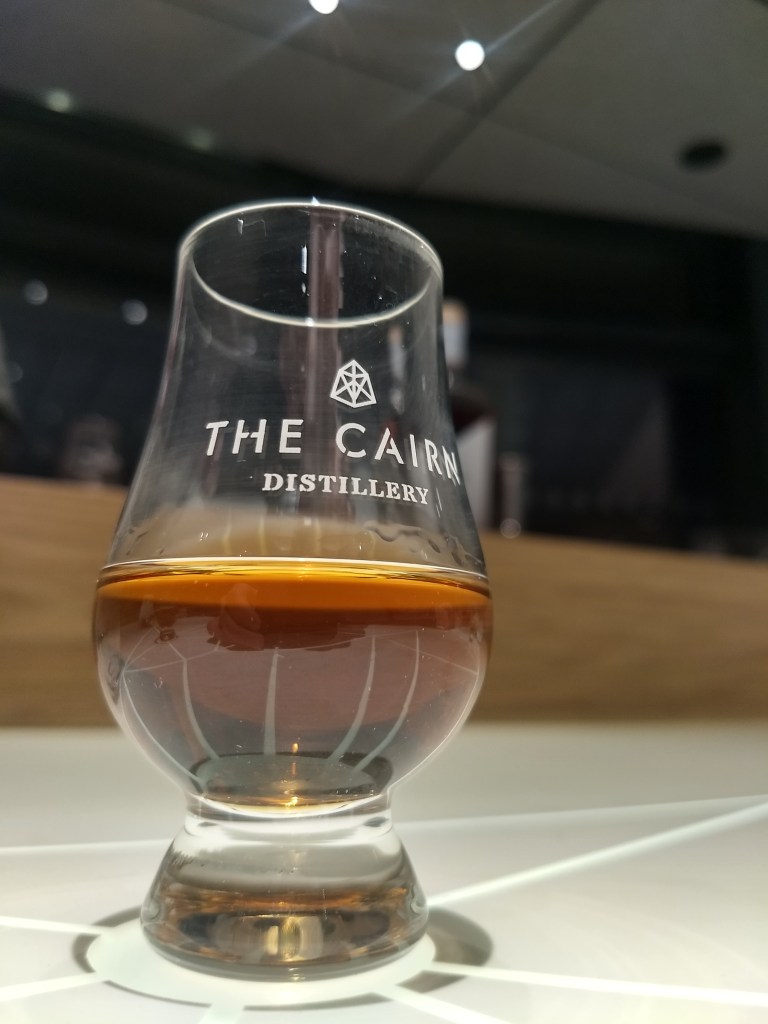
A nice dram ๐Ÿ™‚

After the tour we had two drams, both from the range of CRN 57 (57 being the latitude) blended malts, the 12y and 18y. They are bottled at 43%, which at our arrival discouraged us, but we have to admit they are both quite good, in particular the 18y. As a matter of fact, we brought back a bottle of it to share with Gianluigiโ€™s family at Christmas: velvety and easy drinking, chocolate and dried fruit notes, the perfect dram for such an occasion (full disclosure: in Teresaโ€™s family almost no one drinks alcohol, hence no bottle). The range is only available at the distillery, and it is completed by a 25y (43%) and a 30y (51.1%). They were (and hopefully still are) all very well priced, and in fact almost everyone bought a bottle, and quite a few 30y were sold (proving that the distilleries who didnโ€™t reply to our visit requests definitely missed out!).

Celebration time!

The Cairn is the 70th distillery we visited (well, 71st for Teresa, ahah): hooray! To celebrate we had bought a bottle the day before, a very rare independently bottled Tamnavulin from the Connoisseurs Choice range (by G&M), which we shared with the gang on the bus. We chose it because it ticked all the boxes: cask strength, not chill-filtered, not artificially coloured, 14y of age, full maturation in a refill bourbon barrel, which makes the distillery character emerge (unlike the many Tamnavulin offerings in supermarkets). Creamy, light fruit, vanilla: a great clean and crisp dram! This confirmed our theory, that most scotch single malt distilleries can produce great whisky, and if things go wrong it is usually at bottlingโ€ฆ
Back to the hotel, because it was late, we all had dinner at the Fayre Brewer, next door from the hotel. One of our pals, Mark, was disgusted by Gianluigiโ€™s choice to have mashed potatoes instead of chips with his battered fish. That brought lot of laughs, and we even found a name: THE FISHY MASHY! Oh well, that might resemble what we feel as Italians when they put weird toppings ion the pizza!!!

An almost ready distillery, yay!

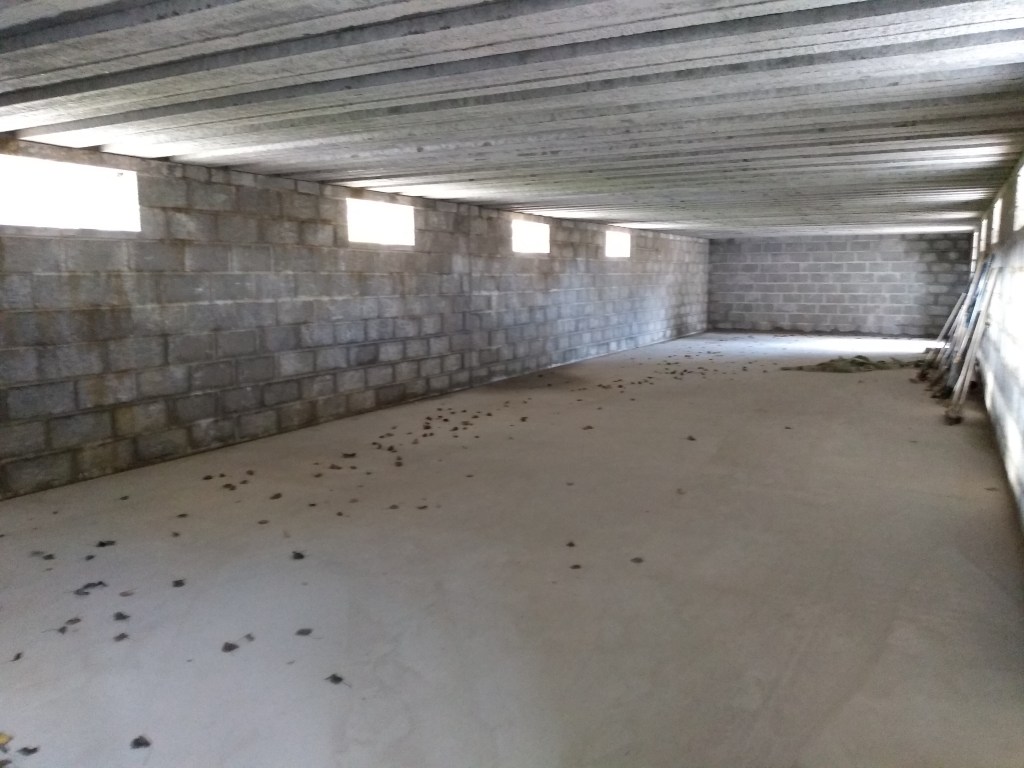
Well, thatโ€™s all for our Speycationโ€ฆoh no, wait! Justine the maverick didnโ€™t leave anything untried, so we had an activity for the Monday morning, on the way back to Edinburgh: the visit to the Dunphail distillery! This is located in, you guess where, Dunphail, just a few miles south of Forres. It is owned by the same company owning the very successful London boutique distillery Bimber. At the time, it was being built: we visited a construction site or โ€œthe embryoโ€ of a distillery, if we want to be poetic. We were greeted by Dariusz, who started showing us around. The buildings, which used to be an old farm, were renovated already, and about to be completed (well, structurally speaking): the main distillery building, the malting floor (more about this later) and the shop/visitor centre. A warehouse was there already, where at the time they were keeping their equipment.

The future malting floor, so exciting!

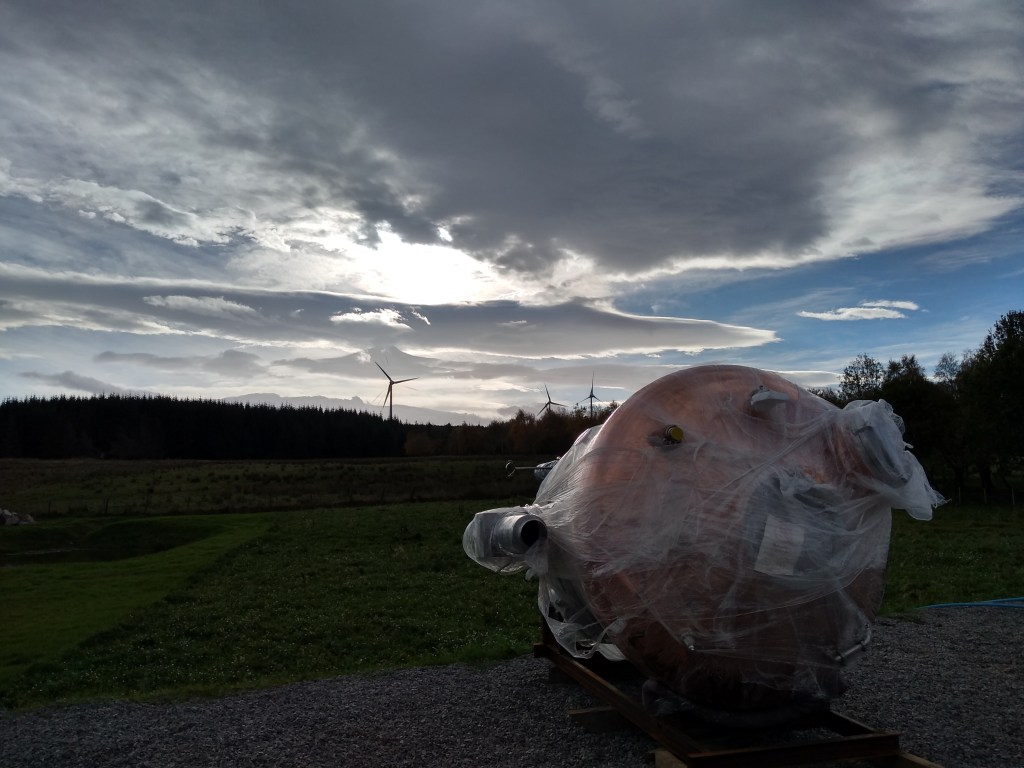
There are many reasons to be excited about this project. First, they will have their own malting floor. Considering the current malt shortage (in particular peated malt) this is a very smart move, and they plan to produce both peated and unpeated malt. In the main distillery building, the equipment was about to be fitted inside. They aim for long fermentation (hurray!), and there are going to be three stills: two wash stills (first distillation) and a directly fired spirit still. The reason for the two wash stills is that a single one was too big to fit inside the farmhouse building. At the time, however, the equipment was laying around so we could take a sneak peek at it. We really canโ€™t wait to visit the distillery and try their new-make spirit!

A still to be…

After this, we all said โ€œgoodbyeโ€ to each other and everyone left towards Edinburgh. It was a very different experience compared to visiting distilleries on our own. While on the one hand we didnโ€™t have much time to explore the area as we usually do, the tours and tastings with such a good bunch of people were definitely much more fun and (because the knowledge of the crowd is always bigger than the individualsโ€™ one) more interesting. We are really looking forward to the next Edinburgh Whisky Group trip.

Until next time, slainte!

The Cairn Explorer Experience

Price: ยฃ25.00 pp (October 2022)

Duration: 1hr 30min

Tasting: 2 drams, CRN57 blended malt 12y (43%) and 18y (43%)

Target: Anyone, but whisky geeks might appreciate it more

Value for money: Good

Highlights: the distillery setting

Distillery Exclusives: all the CRN57 blended malt range, 12y (43%), 18y (43%), 25y (43%), 30y (51.9%)

Recommended: only if curious to visit a modern and totally automated distillery

Link: https://www.thecairndistillery.com/


Dunphail Distillery*

Link: https://www.dunphaildistillery.com/

*No summary because it is not open yet!

#24.2 Dramming in Dublin

Back to Dublin after the storm: the Dublin Liberties Distillery


TL;DR: A much awaited reunion with two friends became a perfect opportunity for Teresa to visit another fairly new distillery in Dublin: The Dublin Liberties. But before then, we explored Irish whiskey from home.ย 

(missed Part 1?)

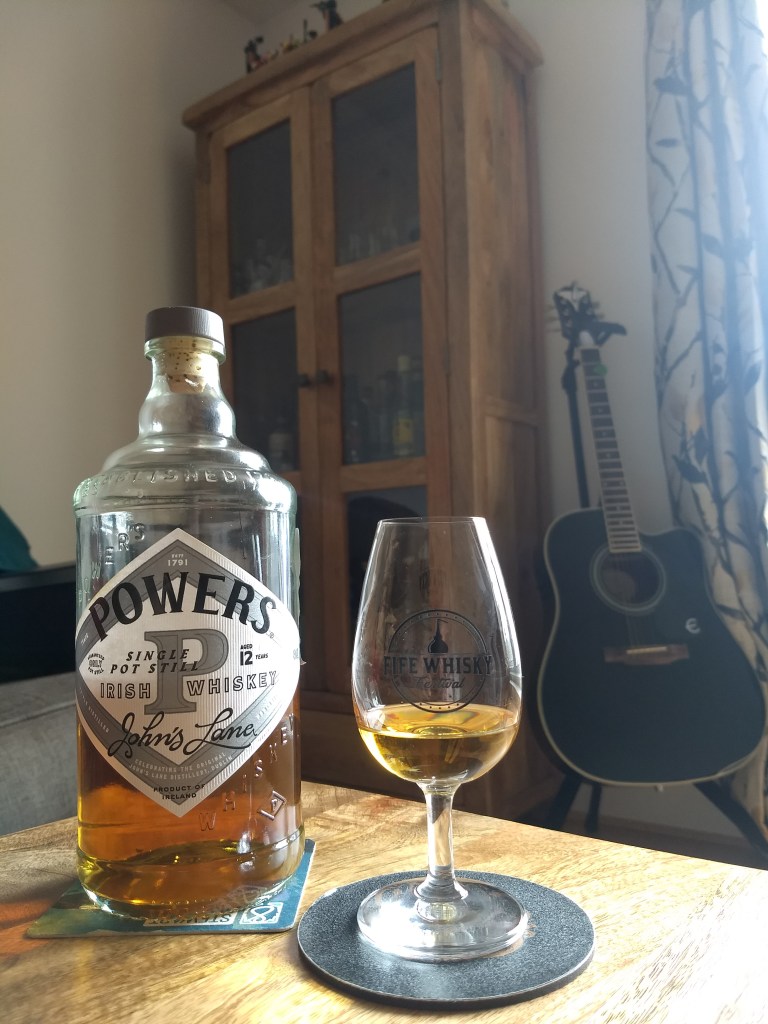
Soon after our weekend in Dublin in 2020, we found ourselves stuck at home, unfortunately not baking much. However, during this unfortunate period, we started digging a bit more into Irish whiskey (well, into all things whisky to be fair). We got our first bottle of Redbreast 12, and in spite of the 40% ABV, we loved every drop of it. We also got a big Irish whiskey tasting for the Belfast Whiskey 2020. There were supposed to be a bit more than a dozen dram, finally they were 19 (it took ages to finish them allโ€ฆ) and among many forgettable drams, we found some quite nice ones (Dingle Single Malt, Sliabh Liam Dark Silkie, Dunville Three Crowns). Later that year, an Irish whiskey tasting was organised by Justine and Connor for the Edinburgh Whisky Group, and this time we found another true gem: Powers John Lane 12y, now one of our favourites. And we didnโ€™t replace the bottle, but Jameson Black Barrel was an easy sipper for a while (weโ€™d be very curious to try the cask strength version).

Oh yes, we like you… who would have said an Irish dram would be so tropical?!?

So, one bit at a time, we started navigating the world of Irish Whiskey, although to be honest we are still confused and a bit annoyed about one thing: sourcing. Well, not the sourcing in itself, which we have no problem whatsoever with, but the fact that many of the new distilleries donโ€™t make it clear on the label when their spirit is sourced from another distillery (at the other end of the spectrum, an excellent example of transparency was the Raasay โ€œWhile We Waitโ€ expression, very clear indeed!).

It is with this background knowledge that I (Teresa) went to Dublin for the third time in less than three years. Only a good reason could bring me back to a nice, but still quite expensive city.

No, that’s not the reason I went back to Dublin, but could have been.

The reason was indeed really good, a reunion with two old friends back in August 2022. The plan was very simple: just a chilled-out weekend to enjoy the city, good food and, most of all, some time together, with not much sightseeing involved. My two friends are not much, or better, not at all into whiskey (yes, I have friends that donโ€™t like it!), so any whiskey-related activity was also out of question. Nonetheless, the evening we spent in Temple Bar and its surroundings, I couldnโ€™t resist the โ€œIrish whiskey callingโ€, so I had a Redbreast 12y and a Yellow Spot. Both quite pricey (from memory between 12 and 15 euros for a 25ml dram), most likely because we were in a very touristy area (so my fault, really).

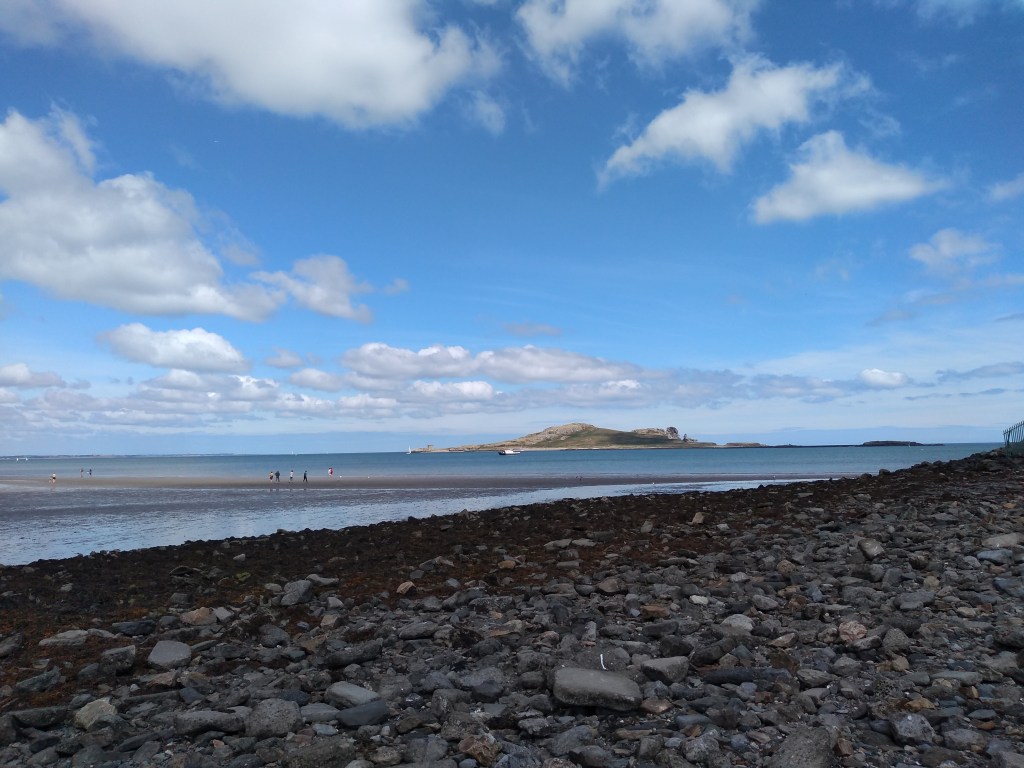
A stroll in sunny Howth.

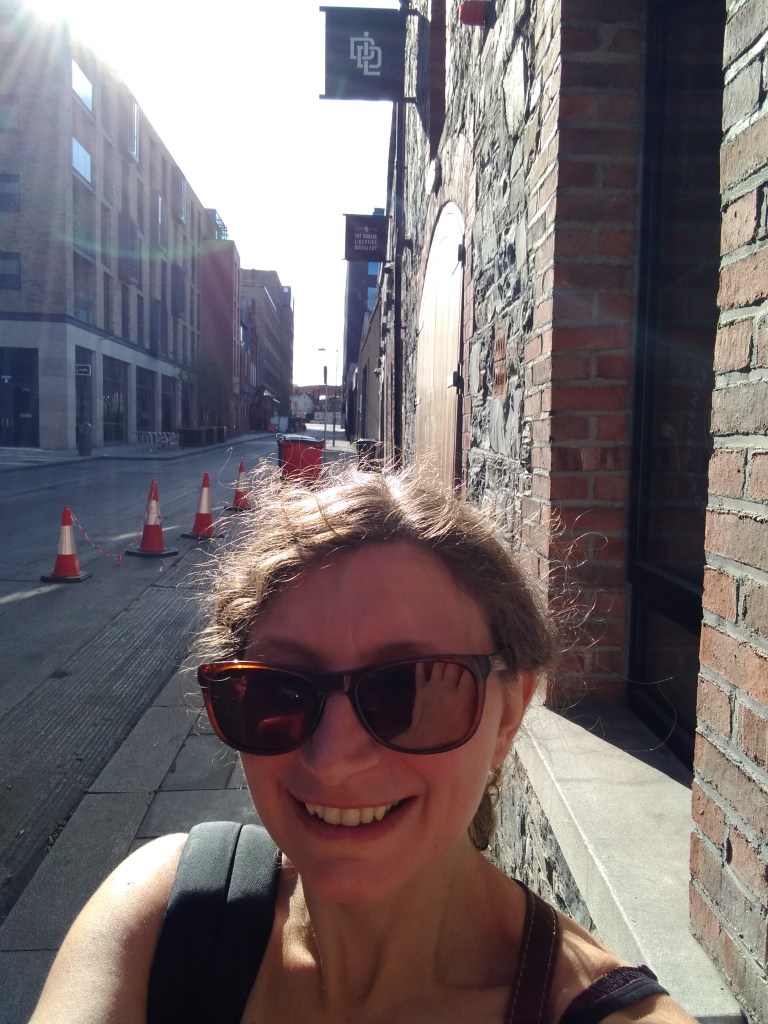
The two days went really fast and, after a morning in sunny Howth, it was already time for my two friends to head towards the airport. Not for me, because my flight back to Edinburgh was late in the evening, so I still had a few hours to spend in the cityโ€ฆThat called for a distillery visit, of course! It was still very sunny, so I decided to walk to my destination, the Dublin Liberties distillery, where I had booked the last tour of the day (just in time!). At first, I wasnโ€™t even sure I was in the right place, the neighbourhood looked very residential to me, and indeed I was already angry at myself for giving Gianluigi more evidence to laugh at my lack of orientation skills, but then I saw a small signโ€ฆI was at the distillery, phew!

Arrived at the distillery, such a relief!

While waiting for the tour to start, I browsed the shop: whiskey of course (but again no checked luggage, so I didnโ€™t really pay attention to the bottles on display), the usual merchandise, but also a good selection of whisky books.

The tour started in a small room where the guide gave a brief introduction and made us (i.e. myself and three Americans) watch a video about the troubled history of the Liberties neighbourhood, including the famous 1875 whiskey fire. Such a young distillery (it started producing in 2019) doesnโ€™t have much of its own history, so I found it quite clever to devote the first part of the tour to the roots of Irish whiskey in general. And all this while sipping a dram of Honeycomb liqueur (if memory serves me well), a bit sweet for my taste but nice touch!

That’s informative!

Another nice touch was the information about where barley is malted (Cork), and about the location of the warehouses (Wexford) โ€“ in most tours you normally get this level of detail only if you ask. We then moved to production โ€“ mashtun, stainless still washbacks and of course the still room, where I found out that the distillery has a capacity of 700,000 litres of alcohol per year. Not huge, but still more than I expected. Unfortunately my more geeky questions (like about the cut) werenโ€™t answered, which made me realise that knowledge of whisky production wasnโ€™t really the strength of our young guide. She was still entertaining, so overall an enjoyable tour.

The still room.

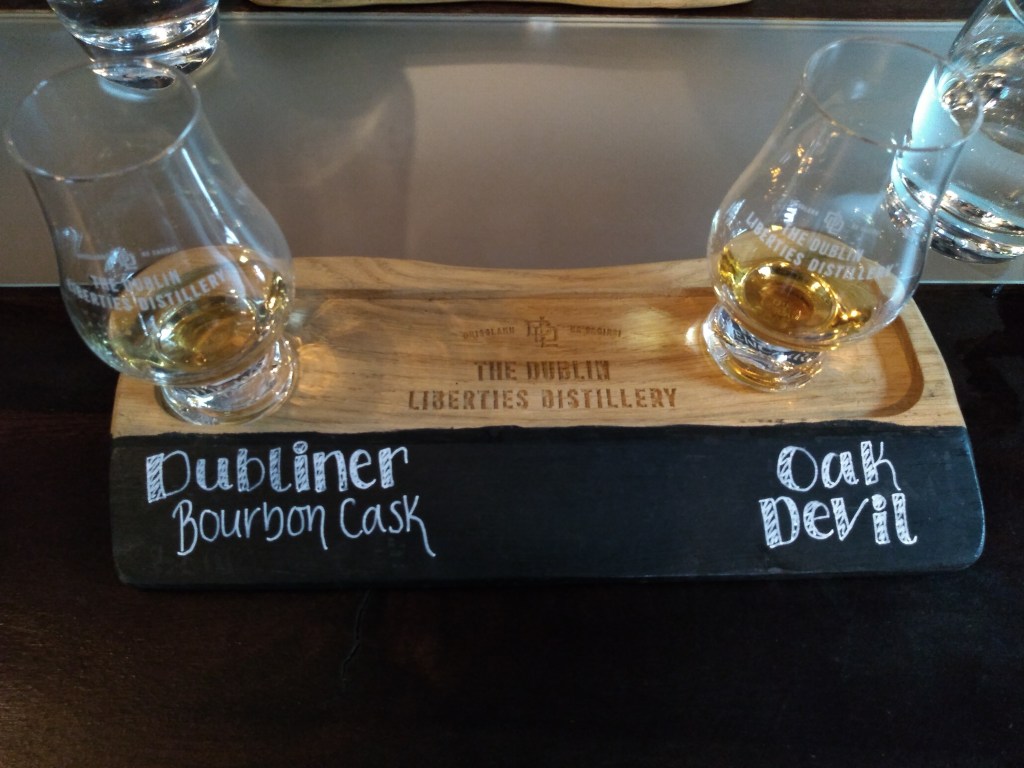
Finally, the tasting, which happened in the beautiful bar in a relaxed atmosphere. The two drams were two whiskeys, most likely sourced from other Irish distilleries (I didnโ€™t ask), the Dubliner (3yr, 40%) and the Devil Oak (single malt, 5y, 46%, a bit confusing that they have also a blend with the same name, more prevalent). Probably because of the young age, none of them was particularly memorable, but I was surprised by how the Dubliner was very drinkable.

A blend and a single malt whiskey.

Back at the shop, out of guilt for my ignorance, I bought an Irish whiskey guide and made my way to the airport, where I found the perfect souvenir: a bottle of Yellow Spot, at a price (60โ‚ฌ) that was almost too good to be true, compared with the 70-80 pounds we usually see it in Scottish shops.

Overall, nice to keep our exploration of Irish whiskey going. Until next time, Slรกinte!


The Dublin Liberties Distillery Tour

Price: 18 euros (weekend tour, August 2022, 16 euros on weekdays)

Duration: 1hr

Tasting: 3 drams, Dubliner Honeycomb Whiskey Liqueur (30%), Dubliners Blended Whiskey 3y (40%, likely sourced but not 100% sure), The Liberties Oak Devil Single Malt 5y (46%, NCF, NC, sourced)

Target: Anyone, but geared towards tourists and novices

Value for money: Good

Highlights: The history of Liberties covered in depth and the friendly staff

Recommended: Yes if youโ€™re a tourist or youโ€™re bagging distilleries, no if youโ€™re an expert

Link: https://thedld.com/


#24.1 Dramming in Dublin

A whiskey weekend before the storm: Teeling & Roe & Co.


TL;DR: In January 2020, we visited friends in Dublin, so why not check out a couple of distilleries in the meanwhile? We chose two among the many newbies, Teeling, in the Liberties neighbourhood, and Roe & Co, a new Diageo distillery close to the iconic Guinness brewery! 

In our blog, so far, we talked about our whisk(e)y adventures in Kentucky, England, Canada and, of course, Scotland. You might have noticed an important gap, which is the object of this and the next blog post: Ireland!

Gianluigi had actually visited Ireland, mostly Dublin, a few times way before his whisky journey started, while for Teresa the first time came when we went there to celebrate 2019  New Year with two friends from the US. At that point, we were already into whiskey (and whisky), but in our heads Dublin = Jameson, so thatโ€™s what we went for: the Jameson Experience in Bow Street, where the old distillery was. It was a nice experience for newbies, and it was very interesting to compare scotch (Johnnie Walker), American (Jack Danielsโ€ฆ) and Irish whiskey (Jameson, of course). For sure, at the time we were not aware of the troubled history of Irish whiskey: after the trade block with the Commonwealth countries as a consequence of the Irish Independence war, and prohibition in the USA, Irish whiskey saw a decline which led the biggest producers (Powers, Cork Distillers and Jameson) to join forces and form the Irish Distillers company, while moving production to the New Middleton distillery, in Cork, in 1971. For many years, only two distilleries were active in Ireland: the aforementioned Middleton and Bushmills, in Ulster.

Recent years saw a renaissance of Irish whiskey, however. First, in 1987, John Teeling acquired and converted an old potato processing plant into the third Irish working distillery: Cooley. More recently, a number of distilleries throughout the island popped up, including a handful in Dublin.

It is in this context that we started to sniff around. The occasion was a weekend at the end of January 2020, when Covid was already a thing but hopes were that, like the SARS-CoV-1 in 2003, it would have been a limited outbreakโ€ฆso naรฏve! We went back to Dublin to visit a friend of Gianluigi who was working at the UCD, and a former Teresa’s advisor from New Zealand. When we looked at the available tours we spotted four distilleries: the Liberties, Pearse Lyons, Roe & Co. and Teeling. Being unfamiliar with all of these brands, we chose the latter two, almost randomly.

First Irish whiskey distillery visit: Teeling.

It was a sunny Saturday morning, when we arrived in the Liberties, a former industrial neighbourhood. This is home to both the Liberties (more on this next week) and Teeling distilleries. The latter was founded in 2015 by Jack and Stephen Teeling, the sons of the founder of Cooley, now owner of the Great Northern Distillery, in County Louth, the former Harp beer brewery converted into a distillery in 2015. In hindsight, visiting Teeling first made sense as it is the first new whiskey distillery in Dublin in over 100 years, and the first operating since Jameson and Powers moved to Cork.

The three stills (made in Italy!)

The building is quite modern, and itโ€™s obvious that they built the distillery with tourists in mind: everything is spacious and feels ready to accommodate big groups. They are quite a sizeable distillery too, with half-million litres of alcohol per annum. They produce many different styles of whiskey: single grain, single malt, single pot still and the typical Irish unaged spirits (Poitin), all bottled at 46%, except the latter which goes up to around 50-52%. Their main expression Is the Small Batch, made with malt and grain whisky. The tour was nice, nothing particular to note, except that the three stills (most Irish whiskeys are tripled distilled) come from an Italian firm, Frilli, and they are named after the ownersโ€™ daughters (which now we cannot recallโ€ฆit was 3 years ago!). The tour ended with a visit to the on-site warehouse, where some of the first casks filled are stored.

After the tour, we got a 4-dram tasting: the Small Batch, the Single Malt, the Single Pot-still and a distillery exclusive. It was very interesting to try them all together, a comparison between very different styles of whiskey! At the bar, we also tried one of their special releases of the time, the Brabazon vol. 2, a sourced whiskey finished in ex-Port cask and bottled at 49.5% abv, very different from the others!

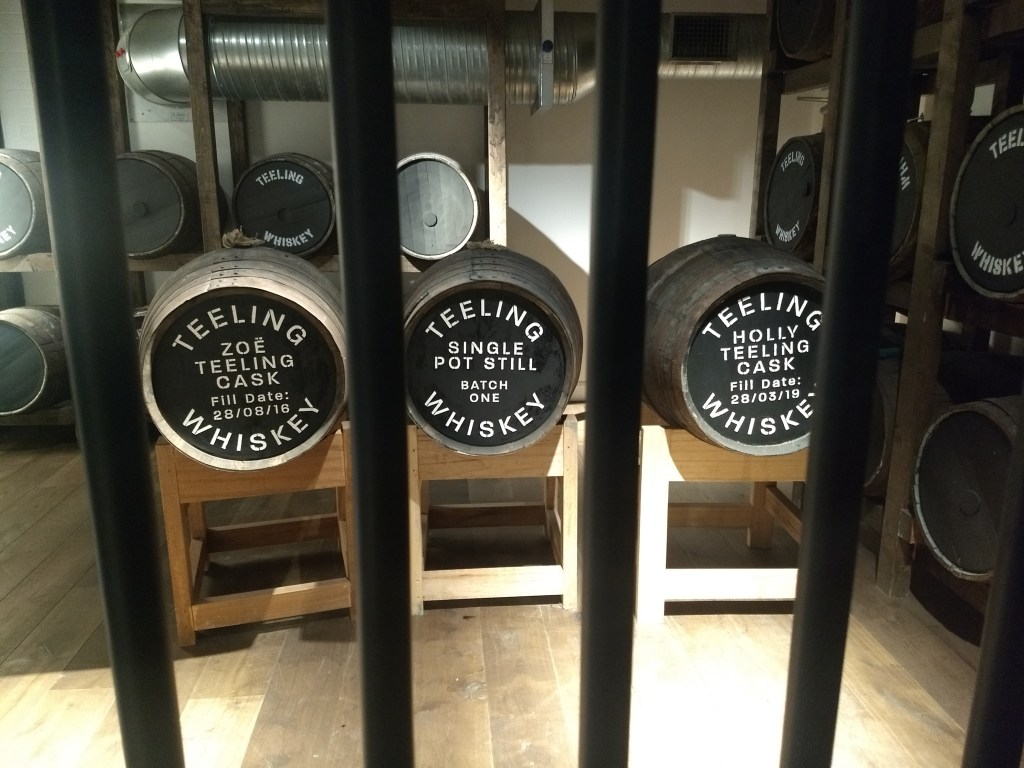
Caged casks.

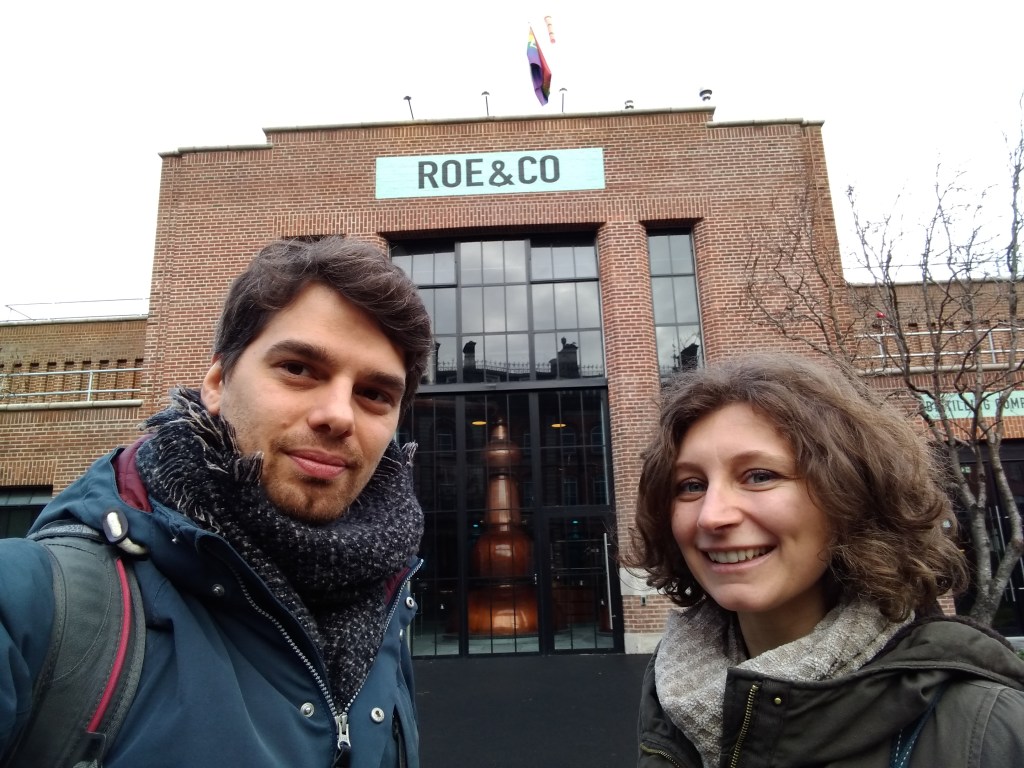
The following day, much cloudier, was Roe & Coโ€™s turn, very close to the Guinness St James Gate Brewery. The name is inspired by George Roe & Co, the owner of the old Thomas Street Distillery. This used to be a massive distillery around the late 1800s, just a stone throw away from the brewery, with over 2 million gallons of single pot still whiskey produced per year. It was closed in 1926, following the aforementioned crisis of Irish whiskey. The new Roe & Co distillery was built by Diageo in the old brewery powerhouse, and started producing in 2019. It is a very beautiful old industrial brick building, with big windows that make it possible to see the still room from outside. Next to the building, there is a tower with a green dome and a pear tree (which inspired the distilleryโ€™s logo).

Second day, second distillery: Roe & Co.

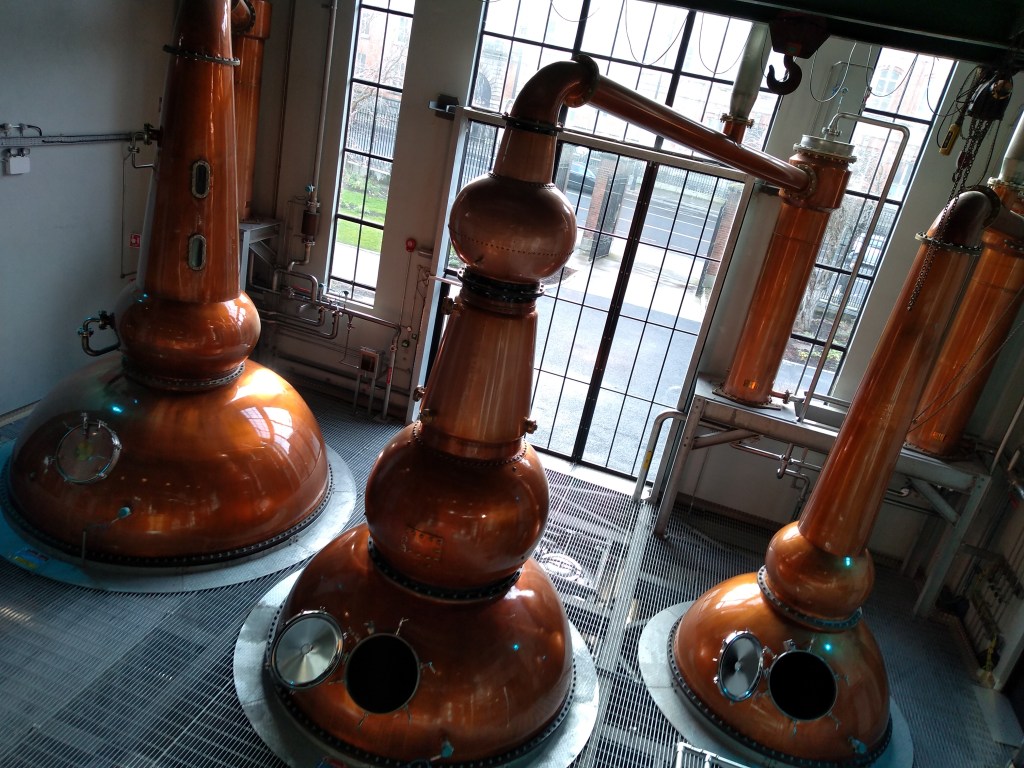
Production is characterised by a closed mash-tun with a copper lid, a few (we cannot remember how many) wooden washbacks, and three stills of different shapes. Again, this distillery too has been clearly built with visitors in mind, so the spaces are quite open, and the bar is near the still room. After visiting the production, the guide brought us to a fancy showroom with a big table, where there was a wooden box for each of us. Inside the box, a few aromas and other stuff for a sort of sensorial experience (honestly, the least favourite part of the tour).

Beautiful still room!

Afterwards, we went to a blending room, where the guide gave us a brief but informative introduction to mixology before we mixed our own cocktails. While we are far from being whisk(e)y purists (once in a while we like a good whisk(e)y-based cocktail), weโ€™re not big fans of this โ€œwhisk(e)y as a mixerโ€ thing that has been pushed so much by big companies like Diageo. However, we have to say that this experience was really interesting, definitely a plus of this tour.

Mixology newbies.

Finally, at the bar we had a sip of the Roe & Co whiskey, a blend made with malt and grain whiskeys from undisclosed Irish distilleries: a nice dram (45%, not-chill filtered, NAS). We also tried an ex-Port cask finished Roe & Co, another blend (if we recall correctly), a bit more robust, but we couldnโ€™t get it because we had no checked luggage. Oh well.

We felt this trip to Dublin was just a first, tiny taste of the Irish whiskey wolrd, and indeed we were left more curious than when we had arrived. Since then, we have tried some very interesting expressions, and itโ€™s nice to see the Irish whiskey scene being revamped. For more about this, stay tuned until next week, Slรกinte!


Jameson Bow St. Whiskey Experience
Link: https://www.jamesonwhiskey.com/en-gb/visit-our-distilleries/jameson-bow-street-distillery-tour/

Teeling Distillery
Link: https://www.teelingwhiskey.com/

Roe & Co. Distillery
Link: https://www.roeandcowhiskey.com/


#22 Goodbye 2022, see you soon 2023

A very dramming year


TL;DR: As usual this period gives us a chance to reflect on the year about to end. It has been an intense one for us, particularly the second half. Whisky-wise, we had some very fantastic experiences, some disappointing, and a few average ones. While we are looking forward to โ€œdramming aroundโ€ in 2023, here our 2022 highlights.  

Aaaandโ€ฆItโ€™s December, and we are finally on holidays. By the time you will be reading this, another Christmas will have just passed, we hope you had a great day of celebrations with your loved ones, and that you are now bloated and relaxing on Boxing Day (or St. Stephen, as it is known in Italy).

Because of our jobs, we both arrived at the end of the year very tired. However, it was also a year full of fantastic whisky experiences, that we hope to repeat next year. In 2022, we visited 19 (Gianluigi) and 20 (Teresa) new distilleries (17 in Scotland and one in England together, Gianluigi visited one in Canada, Teresa one in Ireland and one in England). We also had the chance to revisit some good old acquaintances, like GlenAllachie and Deanston (amongst our favourites). We were able to go to Orkney (hurray!) to catch up with both Scapa (aye!) and Highland Park (nay!).

Sheep grazing with Scapa in the back.

And, finally (FINALLY), we visited Islay for the first time, after our March 2020 trip was cancelled by you-know-what. What a crazy holiday that one, our rented campervan broke down on day 1, half-hour away from the ferry terminal. Although we had to get last-minute accommodations and move around by taxi, we managed anyway! And what a visit, we have to say that whisky tourism on Islay is something really different. Take the Laphroaig tour for example, the token system to pick the drams for your tasting at the end makes it much more flexible than most of the other tours, so that can be enjoyed by both novices and experts. Moreover, Bunnahabhain (best warehouse tasting everโ€ฆjust the bottling prices a bit too steep), Lagavulin, and Kilchoman rewarded us travelling there by including no-core range drams, all limited ones, which made the experience truly special. We wished other distilleries on far-away islands would do the sameโ€ฆ We canโ€™t wait to go back to Islay, to catch up with the other distilleries, and revisit some.

Moments before the best warehouse tasting ever.

Other than Islay we had some incredible whisky experiences, like the Deanston Winter Fest (coming up soon in the blog), or the GlenAllachie tour during the โ€œSpeycationโ€ (coming up soon too).

Deanston WinterFest: that’s happiness after three tastings.

This word was brilliantly created by our friend Cath, and greatly implemented byย  Justine (Kask Whisky): over the weekend we visited 5 distilleries (+ 1 being built) and did a few tastings, including one in the now closed Coleburn distillery, and one in the Strathislaโ€™s warehouse. A couple of weeks earlier, we were again in Speyside for the Dramathon, and of course we visited (or revisited) a few distilleries: Glenfarclas (new visit), Glen Grant and Glen Garioch on the way back (both revisits).

The direct-fired Glen Garioch spirit still.

Some of the tours we did were OK, a bit standard but nothing to complain about: weโ€™d say that usually you get what you pay for. Disappointments came from distillery-exclusive bottling prices. In some cases, instead of rewarding you for visiting the distillery (and already paying for a tasting or a tour), they put a 20-30 quid premium on those. Not nice. The only distillery experience that was really a disappointment and we regret paying for was Highland Park. Despite avoiding the basic tour (ยฃ30, already not cheap) we opted for the improved one (ยฃ75, the most expensive tour we did so far) to be denied any dram of distillery exclusives or other limited bottlings, and just taste the core range which we could have done in Edinburgh anytime. An expensive tourist trap, we wonโ€™t go back there (sorry James, you were a superstar guide though!).

A nice but waaaaay to pricey Blair Athol (ยฃ120!!!).

With the Covid19 restrictions behind our back, we could attend our very first whisky festivals, the Fife whisky festival in March and the Whisky Fringe in August – we had a lot of fun, let’s see if it’ll be the same with bigger events.

Enjoying a break between the two Fife Whisky Festival sessions.

In-person tastings came back too. We did a few organised by our friend Justine, of course, as well as others by Mark, Murray (both at Kilderkin) and Colin at Tipsy Midgie. We had some cracking drams, including a 20y Dutch single malt from Zuidam, a fantastic Doorlyโ€™s rum (from Foursquare distillery) and some cracking Daftmill-s and Bruichladdich-s. Also, SMWS events came back, including our favourites: Outturns and Distillery Visits (an event where you can taste whiskies brought by a distillery representative together with some provided by the SMWS). This year we did the Glen Moray distillery visit with Iain Allan connected remotely and the Distell one (Deanston/Tobermory) with the very funny Brendan McCarron: both cracking events with awesome whiskies! Gianluigi also decided to become an Aqvavite Youtube Channel Patreon: Royโ€™s content and entertainment are really priceless, and this was long overdue. We also attended a very funny blind tasting in Glasgow where we finally met all those whisky folks weโ€™d only seen on screen until then.

Awesome Aquavitae event in Glasgow!!!

By writing this up, we realised 2022 was intense not only because of work, but because of whisky too! We hope to bag more distilleries in 2023, although weโ€™ll probably try to be more selective when picking tours and experiences. We are also starting to organise whisky tastings: the first will be towards the end February and will be Port-cask related (we got the idea during our fantastic trip in Portugalโ€ฆtickets here), but the following ones will involve bottles we picked up in our travels, not necessarily at distilleries, ehehโ€ฆStay tuned! Overall, itโ€™s still a very long way to become whisky geeks, but weโ€™ve learned a lot this year and we hope to continue the trend!

Not just whisky for us…coming to a tasting soon!

Happy holidays and see you next year! Slainte!


#19.1 Dramming around Orkney

A visit to Scapa distillery


TL; DR: We were finally able to visit Orkney and its malt distilleries. First off, Scapa, home of quite a โ€œmysteriousโ€ single malt, that we learned to appreciate during an in-depth distillery tour and a great tasting of mostly single cask expressions. Definitely a must-go for whisky fans visiting Orkney! 

In summer 2021, we had carefully planned a trip to the North of Scotland, including a few days on Orkney, which we were very eager to visit. For various reasons (actually, one reason, guess which one!) we had to cancel it. The occasion to catch up presented itself this year thanks to a couple of friends from Parma, Roberto and Cecilia (and their wee one, Flora). They wanted to visit the Highlands since their first visit in 2019, but things happened in between. This year they finally made it, and halfway into their holiday we joined them in Inverness and continued together: direction, Orkney!

We travelled in a campervan, which was meant to be an adventure. It was indeed, although with way more midges than expected: that was our first unfortunate discovery of the holiday: the Northeast coast is full of midges, almost as much as in the West, at least around Thurso where we spent the first night.

On the way to Thurso, where midges were waiting for us!

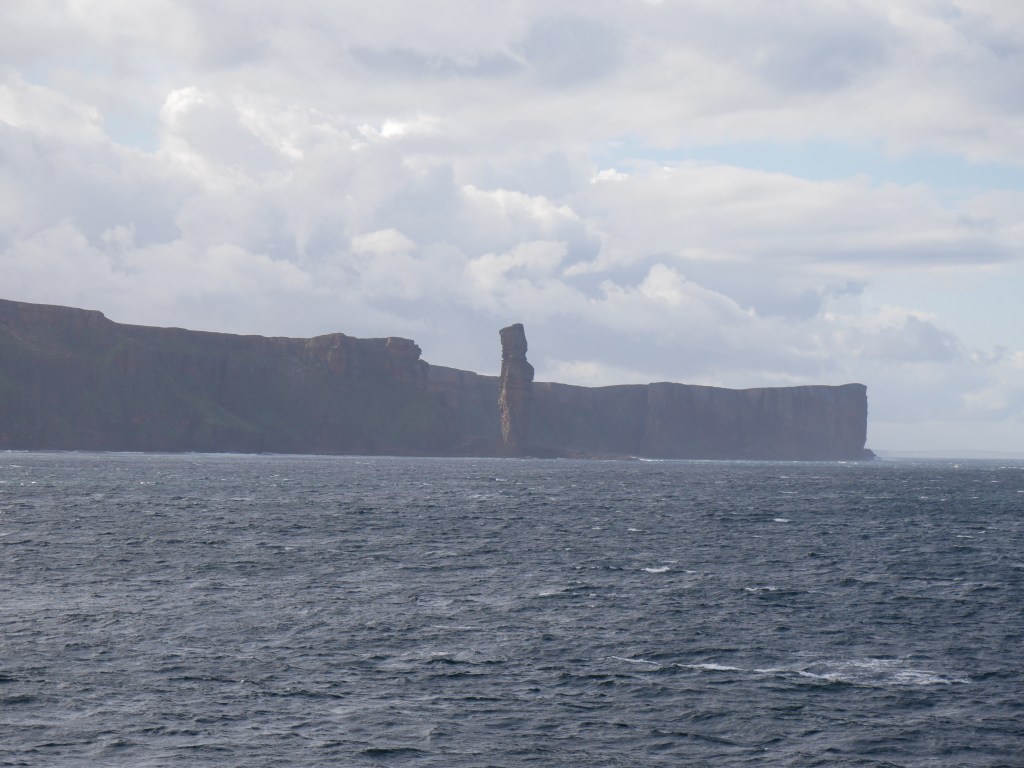
We woke up early however, and not for the midges, our ferry from Thurso to Stromness was around 8am. The cafe on the boat had a very Scottish menu, which meant a roll-based second breakfast. The view was quite spectacular, in particular we could admire the Old Man of Hoy during the cross.

The (misty) Old Man of Hoy.

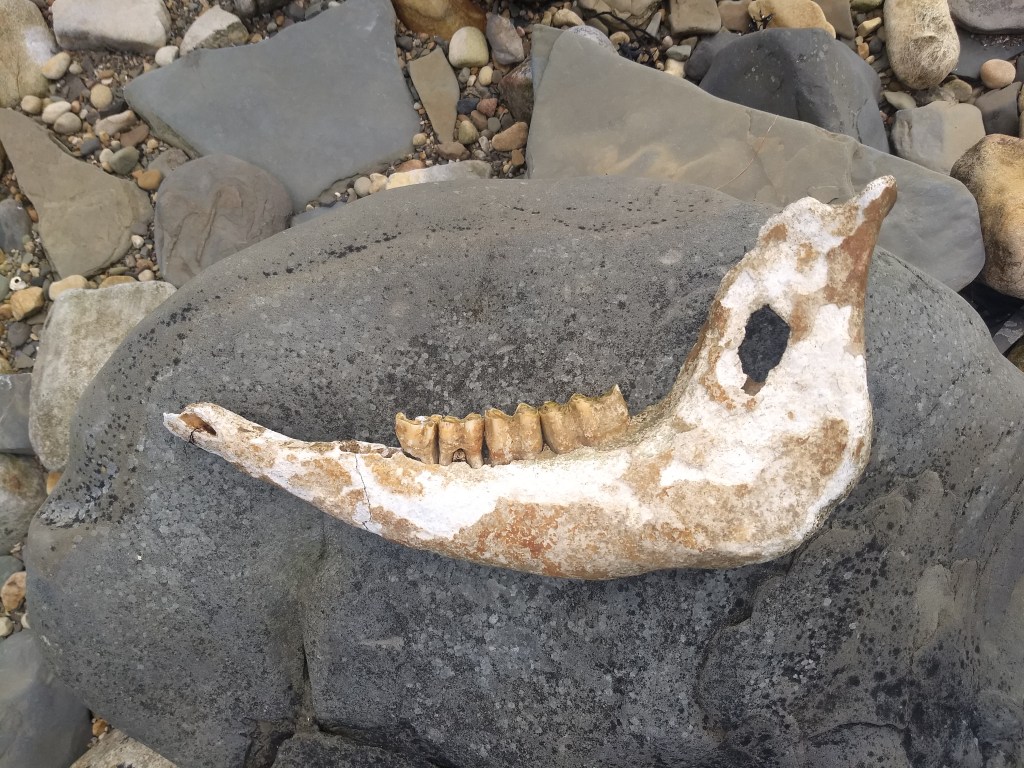
Once on the island, we explored the village of Stromness. It looked like a very peaceful place, and not overwhelmingly touristy. After the stroll we had a quick lunch in a cafe and drove towards East, direction Orphir, where we stopped for a walk to the beach, taking advantage of the nice weather. On the beach we found half a jaw of some animalโ€ฆcow? Sheep? Seal? And, more worrying, some dead birds, likely because of avian influenza. This wasnโ€™t the only time during the holiday, it happened later at the Brough of Birsay and at Dingyshowe beaches.

Peaceful Stromness.

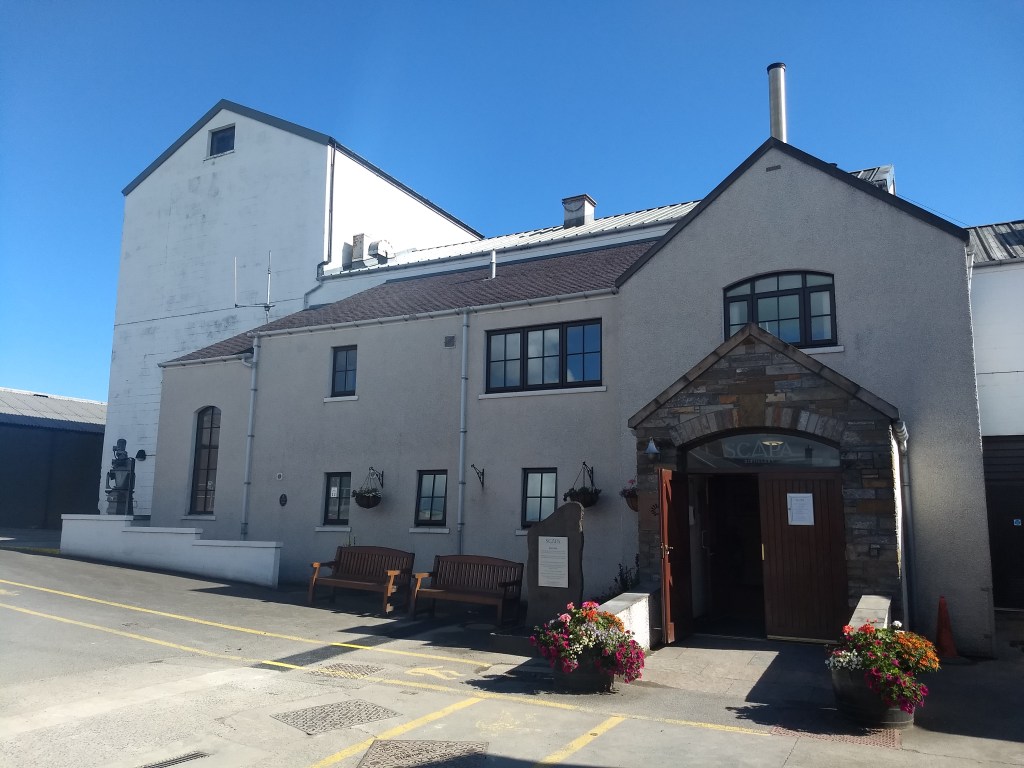
Moving on, it was finally time for our first visit to an Orcadian distillery, Scapa, right outside the “capital”, Kirkwall! Before the tour, Scapa was quite a โ€œmysteriousโ€ single malt to us: until then, we were only aware of two official bottlings, the Skiren and the Glansa, the latter finished in ex-peated casks (since the distillery belongs to Chivas Brothers, we guess Allt-A Bhainne). We also never came across an expression from independent bottlers (the SMWS has a code for Scapa, #17, but as far as we know no recent bottlings).

Gianluigi exploring Orphir beach…
…Look what we found!

Our friends dropped us at the visitor centre, where the tour guide Maria Letizia warmly welcomed us. Because she is Italian, she gave us a personalised tour in Italian, the very first time for us! The distillery is going through some renovations. They’re building a new tasting room, making sure it’s not pointing towards a certain buoy in the Scapa Flow. Maria Letizia explained that this is a sign of respect, because that’s the place where the Royal Oak, a ship with about 800 novices in training, mostly teenagers, was sunk by a German submarine during WW2, which was lucky enough to get to the Flow avoiding all old ships positioned as hurdles.

Scapa distillery, here we are!

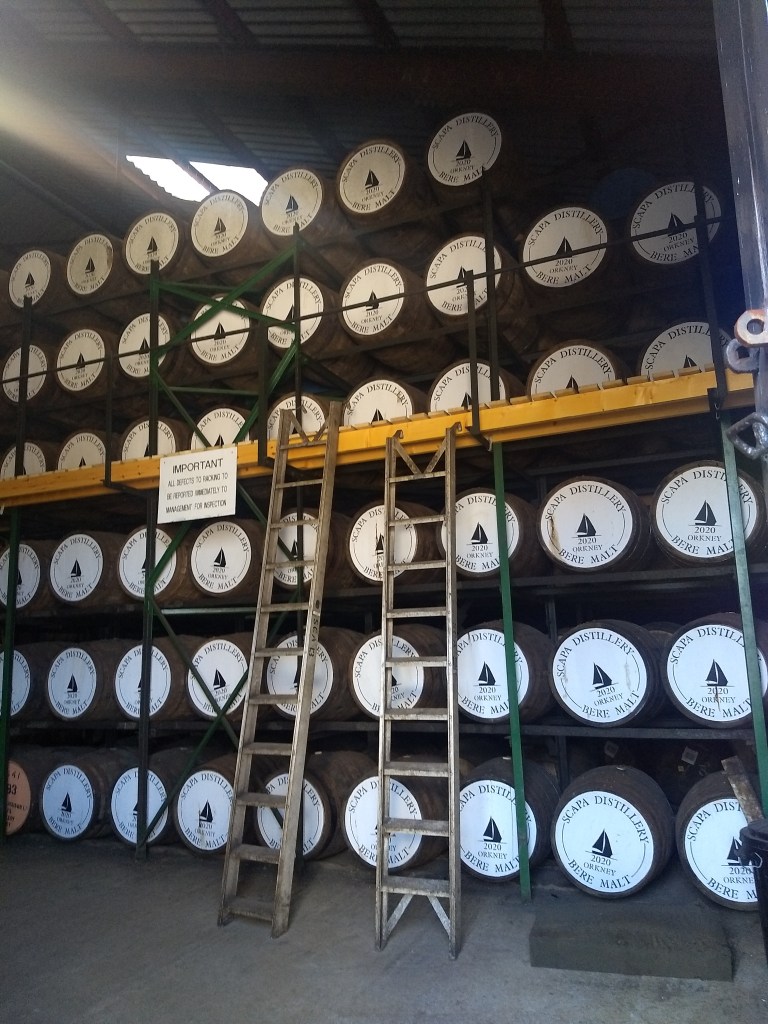
After this quite sad historical anecdote, the tour moved on as usual: we got told the history of the distillery, which was founded in 1885, and partially destroyed in 1919 by a fire. More recently, in 1994, it was mothballed and for a few years, personnel from the neighbouring Highland Park were turning it on for a few weeks every year to make sure that everything was still working. They get all the malted barley from the mainland, totally unpeated, and that was from the foundation in our understanding, which is very uncommon for an Island distillery. Unfortunately, we couldnโ€™t take any photos in the production area, so we cannot show you a very peculiar detail: their wash still is a Lomond still, similar to the Ugly Betty at Bruichladdich (which is used for gin, however). They also donโ€™t have any filling station, so the newmake spirit is stored into tankers and transported to Glasgow to be put in casks, at 63.5% if first-fill casks, while at a higher strength, 68.8%, if refills. Some of these return back to the island, together with casks from other Chivasโ€™ distilleries, to mature on site. We could take a sneak peek at the warehouses, but photos from the outside only.

The warehouse.

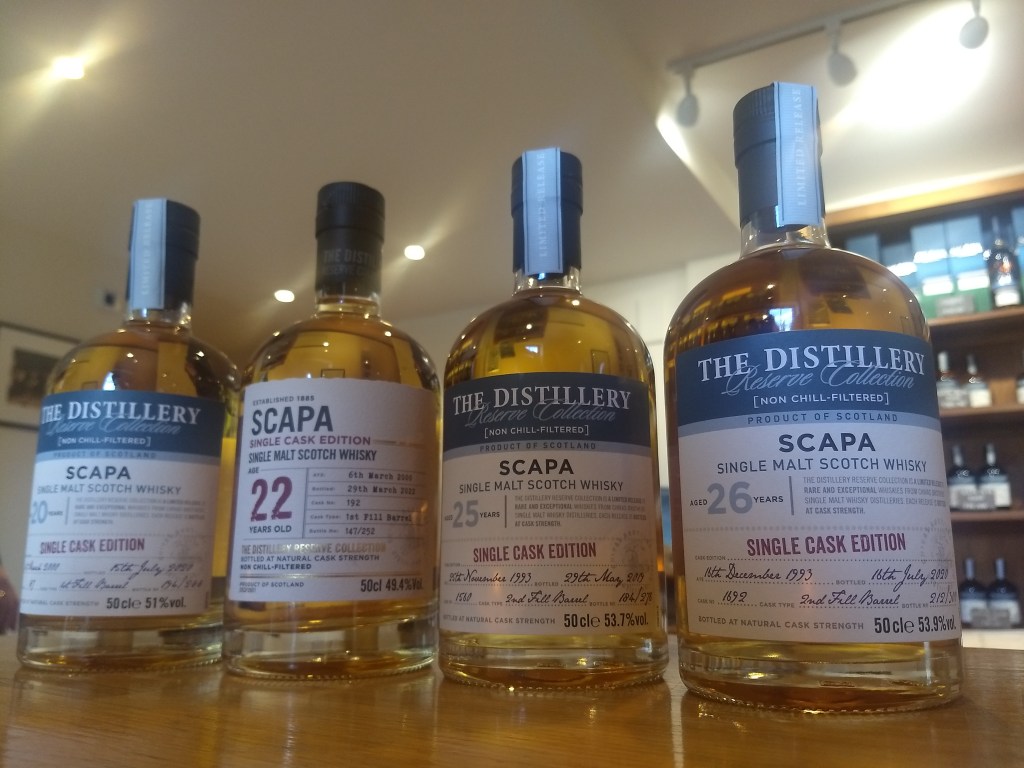
Back to the visitor centre, everything was ready for the tasting. When we booked the tour (which alone was 5 quids only!!!), we could choose three tastings: the Land (a core range expression and 3 from the 10-16y range, ยฃ30), the Sea (four drams from the 15-19y range, ยฃ35) and the Air (four drams from the above 20y range, ยฃ45). These tastings were not bookable from the website, which only offers 3 unspecified drams forยฃ25, we had learned about them by contacting the distillery via email. Except for the two core range expressions, all the other ones are available as 50cl bottles, as is typical of Chivas Brothersโ€™ distilleries. Like the ones we saw in the other distilleries, they are a bit pricey too – company policy.

The delicious Air tasting.

We chose the fancier ones, Sea and Air, although in the first one we decided to include two drams below 15y (more approachable price-wise). All very tasty drams, in particular a couple of sherry cask matured ones (very cask forward, though). In general, we found the distillery character very citrusy, oily, crispy and honey/vanilla forward. They were all single casks, except an 18y, a marriage of 5 ex-bourbon barrels from the small production of 2000, when the distillery was run for a few days by Highland Park operators.

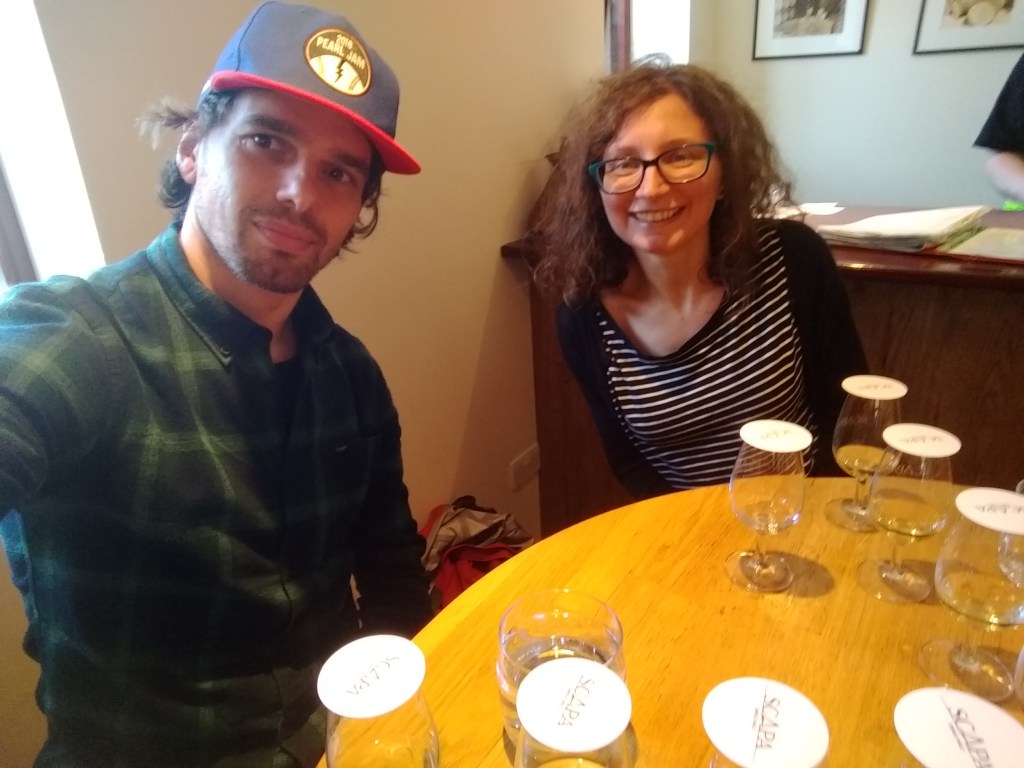
Sooo curious about this tasting!

We were very happy to finally get to know this distillery and its character. After dinner, we tried the two core range expressions, Skiren and Glansa, which we had tasted a long time before. Quite inoffensive sweet drams, definitely not comparable with the juicy and tasty ones we had had earlier at the distillery. Just a shame Chivas donโ€™t bottle more geek-forward expressions at a reasonable price (donโ€™t have to be all single casks, btw).

The night ended at the Kirkwall camping, trying to avoid the midges. Stay tuned for the second and last part of this trip!


Scapa Tour and Tasting

Price: ยฃ5 tour (August 2022) + tasting (ยฃ25 3 drams, bookable online in the summer season; ยฃ30 Land 1 dram from the core range and 3 distillery bottlings 10-16y; ยฃ35 Sea 4 distillery bottlings 15-19y; ยฃ45 Air 4 distillery bottlings 20+y)

Duration: 1-1.5 hours

Tasting: depending on tasting choice and available expressions

Target: anyone really, the experience can be easily customised

Value for money: very good

Highlights: the still room and the Lomond still

Recommended: YES!

Link: https://www.scapawhisky.com/


#18 Two festivals adventures

Festival!


TL;DR: With the relaxation of Covid restrictions (thanks vaccines!), public events started coming back, including whisky festivals! In 2022 we attended a couple of wee ones, the Fife Whisky Festival in March and the Whisky Fringe in August. In both cases, we are already looking forward to the next editions!

Until a few years ago, the word โ€œfestivalโ€ meant a very specific situation to us: (mostly) summer, a few thousand people around, and music blasting your ears. Northern Italy wasnโ€™t short of these events, so during our teenage and 20s we indulged in what the national and international rock scene offered. Fast forward a few years, we are still going to concerts, even to international festivals, despite the older age making it more difficult: sleeping in a tent in our mid-20s was feasible, doing it in our mid-30s, it just wonโ€™t happen again (thanks a lot, Bluetooth speakers!).

Us going to festivals before getting into whisky!

In the meantime, we collected a new hobby: whisky! As you probably know if you read this blog, we started by visiting distilleries around US and Scotland. We have been enjoying the usually remote location of many distilleries, and the often intimate type of experience. Thatโ€™s why, when first heard about whisky festivals, we weren’t too convinced. This changed in 2019, when we learned about a couple of them that seemed a great opportunity to know more about our beloved amber liquid.

After missing out on a couple of events in 2019 (Whisky Fringe was already sold-out when we learned about it) and 2020 (we only managed to attend a Fife Whisky Festival side-event at Kingsbarns distillery), the time of our first whisky festival finally arrived, in March 2022: the Fife Whisky Festival, for real! Because of our friendship with one of the organizers (Kask Whisky Justine), we were recruited as volunteers to help out during the day. The festival actually started the evening before, with a dinner at the Lindores Abbey distillery.

Welcome cocktails on the way at Lindores Abbey…
…followed by a welcome dram.

A very tasty 3-course dinner, entertained by the radio host Vic Galloway (to note, heโ€™s curating a very interesting podcast for the Scotch Malt Whisky Society, tasting drams with guests from the Scottish artist scene and pairing them with music). The dinner was accompanied by four tasty drams: a wine-matured Lindores, the Glen Scotia Victoriana, a 25y Glenfarclas, and finally a peated Kilchoman, UK exclusive batch 3, each one presented by one of the respective distillery ambassadors.

Archived the dinner, the day of the festival arrived, at the Corn Exchange in Cupar. We were given aprons and instructions: we were going to be at the door, Gianluigi scanning tickets (with Kath, a friend from the Edinburgh Whisky Group) and Teresa putting bracelets and giving away scratch cards (with Kathโ€™s partner, Craig) to get the chance to buy one of the festival bottles, a single cask Lindores Abbey and a highly sought-after single cask Daftmill. The scratch card was actually a very smart move by the organisers, because it avoided tons of chancers going straight to the shop and buying a limited edition bottle to be put on auctions. Of course, someone complained, but there is no remedy against self-entitlement and selfishnessโ€ฆor is there?

Hard life volunteering ๐Ÿ˜›

After the entrance operation, our task was to set up the room for the two masterclasses, Mackmyra and Loch Lomond. During these, we could do little breaks, which we exploited to taste a couple of drams each. We spent the rest of the session walking around the stands assisting brand ambassadors and chatting with friends.

All set for the master class!

At the end of the first session, we and the other volunteers quickly cleaned everything up, and had a little lunch break. This is when Justine brought in the mystical fudge donuts: a beast of a dessert, probably hundreds of Kcal per bite. After checking that everyone had one, Gianluigi decided to show his true animal nature and ate a second one.

Happy two-fudge-donut guy.

The second session went almost as smoothly as the first one: a few more drunken fellas, but fortunately no one outrageously pished. Overall we loved the atmosphere, so relaxed and friendly, it was a great day that we are looking forward to repeating.


A few months went by, until we got to the middle of August. Gianluigi had just come back from a conference in Canada (and a distillery trip he managed to sneak in, wink wink), just in time to attend the Whisky Fringe. โ€œJustโ€: his flight from Toronto landed in Edinburgh around 9am. Fortunately, the festival location, the beautiful Mansfield Traquair, is only about 30 minutes walking from Leith, and the festival was starting at 2pm. After an abundant brunch and a bit of unpacking, we were on our way to the festival.

Ready to taste whisky!

The number of participants for each session was limited to 500, which seems a lot, but because of the festival layout on different floors, and the space around, never really felt very crowded. The first stand we hit was the Uncle Nearest one. We were already aware of their fascinating history (Green Nearest was the person, at the time enslaved, who taught Jack Daniels how to distill). We tried two of their Tennessee whiskies, both quite delicious. We then went to say hi to our friends at Ardnamurchan (Gianluigi is part of their AD/Ventures club), and to taste one of their fabulous drams. We met several friends, some from the Edinburgh Whisky Group, some from past tastings, some just friends. Feature of the festival, a half-time dram: at 4pm, each person could choose a special dram from one of the stands. Gianluigi went for a 16y Port Charlotte from Thompson Brothers, Teresa for an old Glen Moray, both very tasty!

Blurred picture (ooops) of Uncle Nearest whiskeys.

Choosing what to buy with our 10-quid voucher was hard, of course you canโ€™t get all the delicious Thompson Brothers’, Glenallachie’s, Springbank’s/Kilkerran’s, Ardnamurchan’s at once. We finally opted for a bottle of White Heather 15, a stunning blended scotch from the Glenallachie company, very different from most whiskies we tried, and which we had been after for a while. The night ended with a meal with some friends at the Leith Depot, and a last dram at Nauticus.

Both experiences challenged our prejudice of whisky festivals being messy and noisy. They were both quite relaxed, lively experiences, where we could enjoy some delicious drams (well, not so many at the Fife Whisky Festival, as we were helping out) without spending lot of time queuing. We already signed up to help at the 2023 Fife Whisky Festival, and we will keep an eye on the Whisky Fringe tickets. Are we ready for bigger events? Not really sure, but who knows. 

Until next time, slainte!


Whisky Festivals Links

https://www.fifewhiskyfestival.com/
https://www.royalmilewhiskies.com/whisky-fringe/