#74.6 The Springbank Whisky School

Everything comes to an end
(day 5, Friday, and epilogue)


TL; DR: The final day at the whisky school was Teresa’s birthday and exam day: an open-book test marked by Findlay Ross himself, followed by awards from the distillery manager Gavin and a celebratory lunch in the Washback Bar. The post wraps up with our reflections on the experience: a unique, hands-on look at an old-school distillery, with great people. 

(missed Part 5/Part 4/Part 3/Part 2/Part 1?)

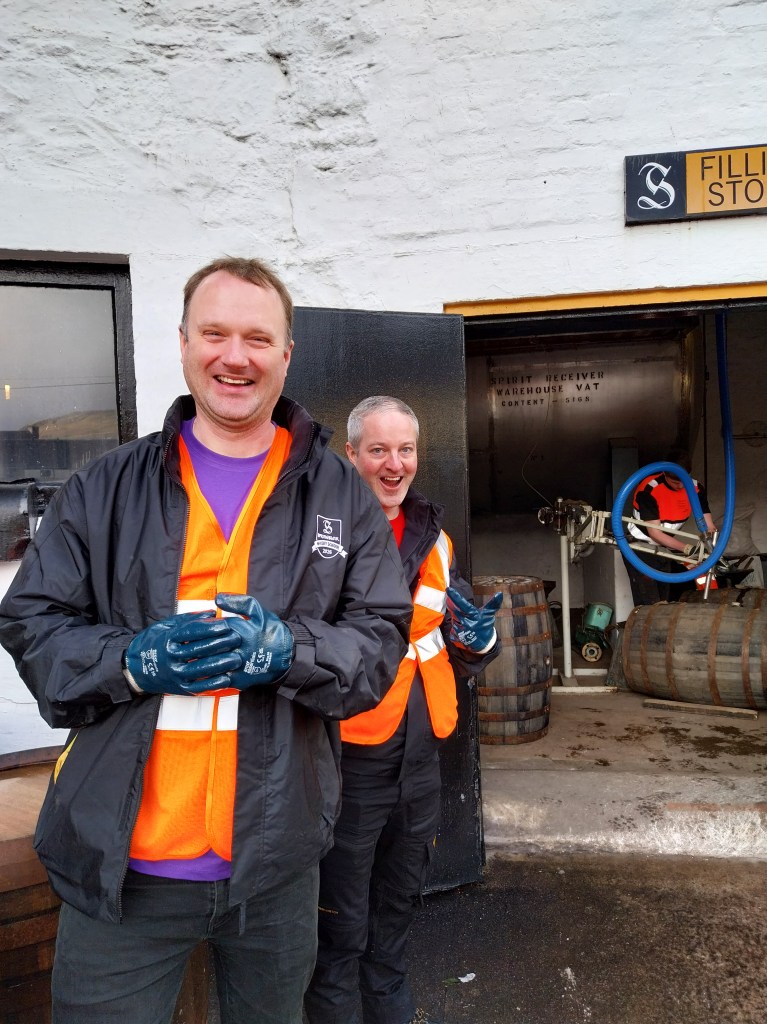
The very last day, Friday, was Teresaโ€™s birthday! (And yes, there was a cake involved thanks to Marie) Different to the previous days, we had a late (full Scottish) breakfast (8am instead of 7am), then cleared our room by 10am and showed up at the distillery for the exam at 10.30. It was an open book exam, so not too difficult, and Findlay Ross himself came to mark our tests. Obviously, we took the chance to ask him some nerdy questions. On reflection, itโ€™s a shame that a Q&A with him was not included in the overall experience, that would have been uber-nerdy! But we can also see the challenges in doing it given how busy he must be.

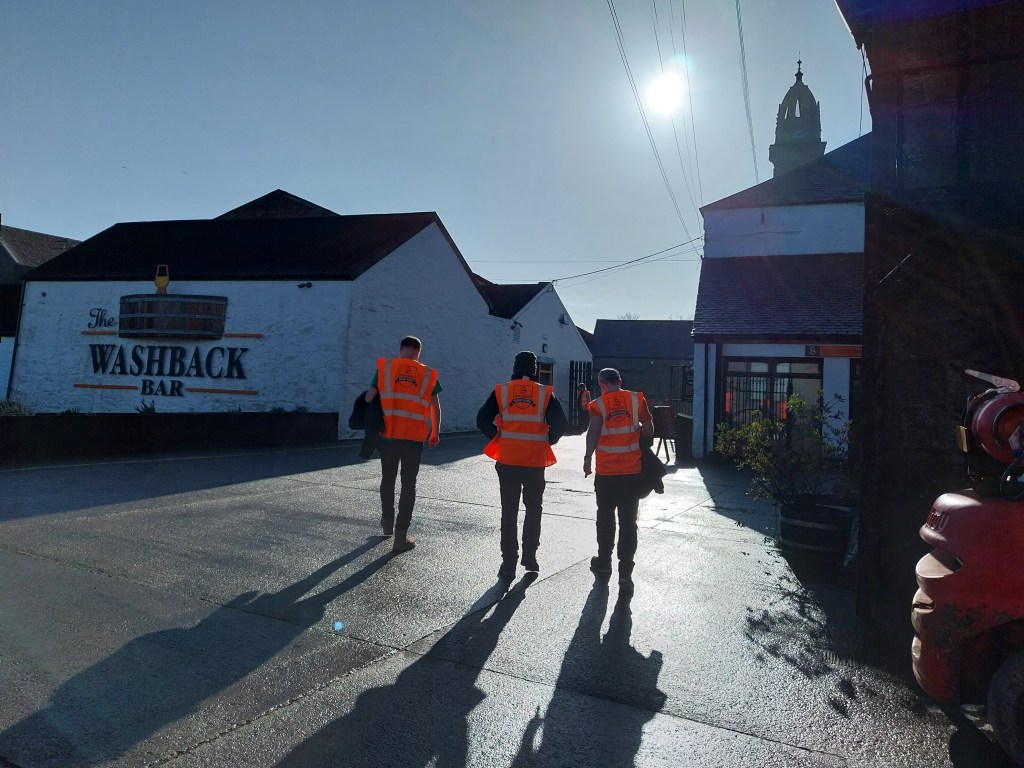
Anyway, everyone scored more or less close to the maximum (including those who didnโ€™t read some questions in full, lol) so after that, we headed to the Washback Bar and got our awards from the distillery manager Gavin (wonder if we can write that on our Linkedin profileโ€ฆ), together with the self-blended bottles. Teresa got an extra 20cl bottle of her choice for winning the Scholar of the Week award, โ€œfor her determination in rolling the casksโ€. She also got a dram from our good pal Aly, who was there waiting for the next tour. Not a bad birthday!
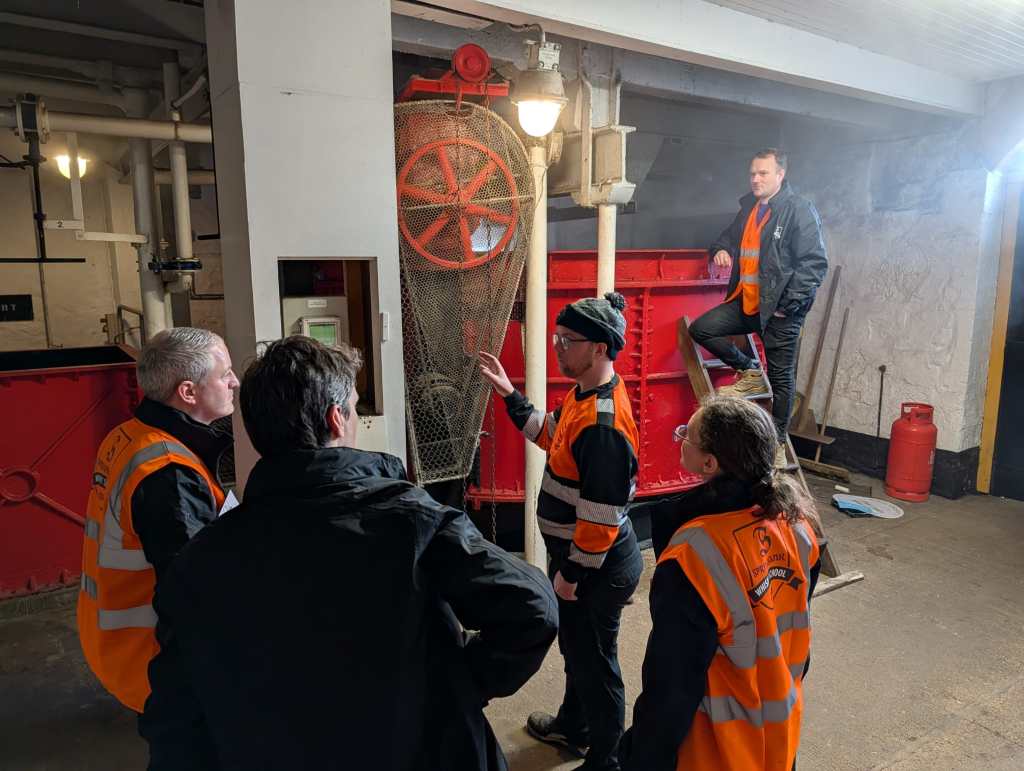
We had lunch all together with Gavin, a cold platter with three types of salmon, cheese, oatcakes and other bites (thanks again Donald for the tasty haggis mini-rolls!). Another nice touch, they gave us the list of available cage bottles, and if we could buy up to two per person, avoiding the usual scrum in the morning before the shop opened. We werenโ€™t greedy, so we just picked up one each: a Longrow and a Springbank. Actually, we got a third one for Gianluigiโ€™s brother, who always appreciates some cage juice! After a wonder in the bottling hall (where the equipment was getting moved to the new building) and a couple of extra drams kindly poured by Chris, we got a goodbye pint with the others at Feathers before leaving the Wee Toon, feeling grateful but also a bit sad.
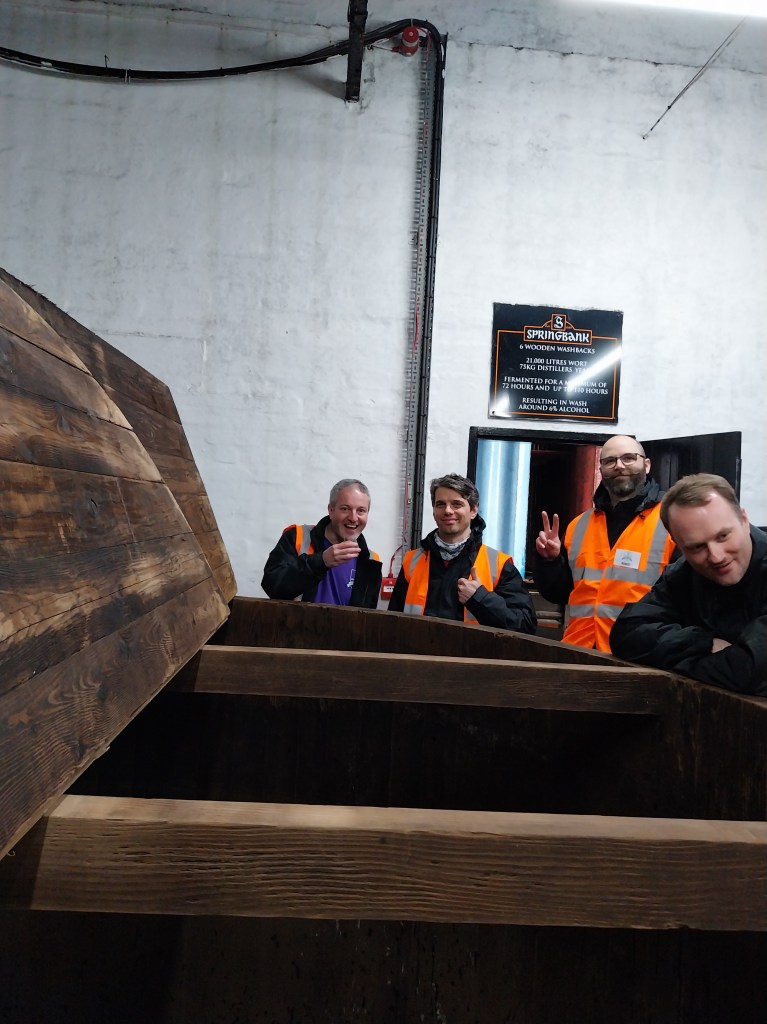
What. A. Week. That. Was. We are wrapping the write-up of the whisky school a couple of months after the fact, after some other trips to London, Orkney and Speyside. Importantly, we had time to reflect on what we did and how this experience fits in the context of our whisky experience and knowledge (avoiding hard to use the word โ€œjourneyโ€ here, eww!) and of whisky hospitality more generally. Based on our experience up to now, it is going to be hard to match the Springbank Whisky School.
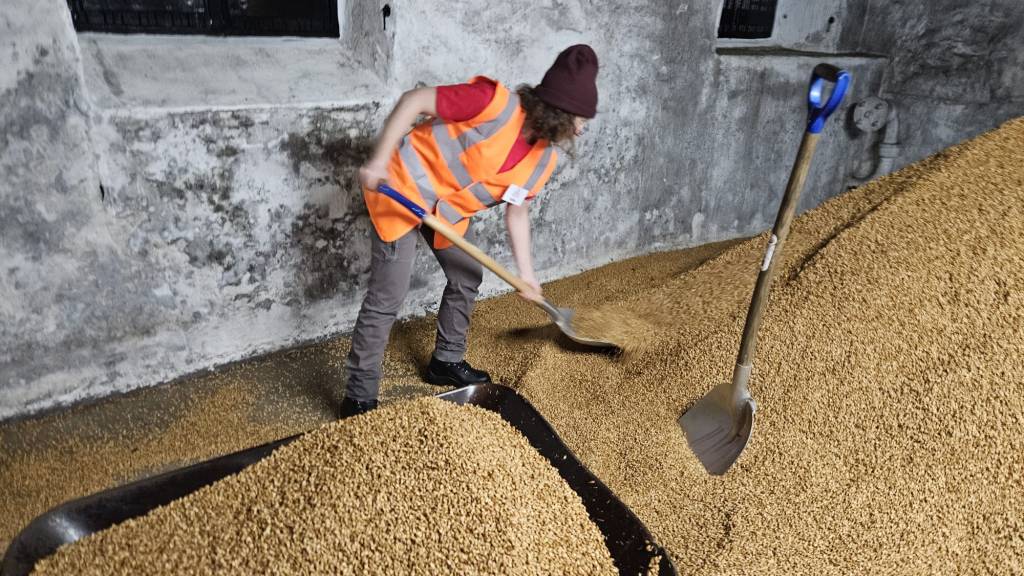
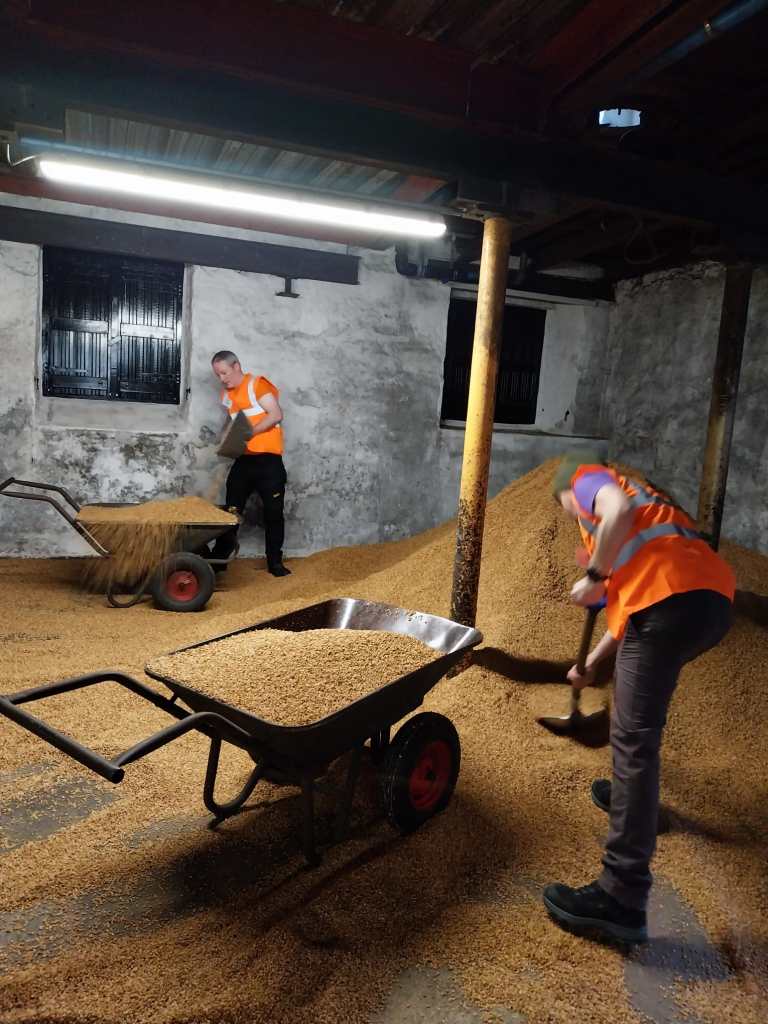
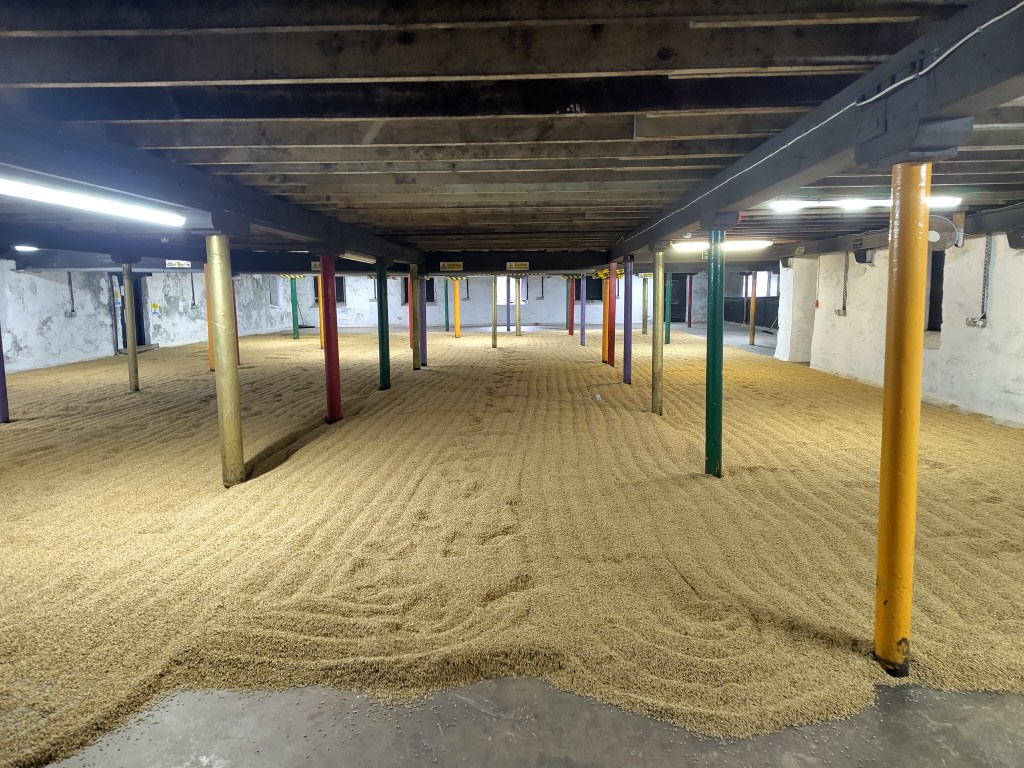
The malting floor was a highlight…

First, it is a unique learning experience. We could see first hand how the distillery day-to-day operation looks like, with its challenges and peculiarities, the fast-paced moments and the slower ones. Many distilleries are fully or partially automated, where operators can stop everything from a computer keyboard. Definitely not the case for Springbankโ€™s (or Glengyle), where we felt that the almost 200-year history still contributes to what is produced now, and to what will be made by future generations. Also, one week of intensive learning and โ€œlivingโ€ a distillery is not the same as visiting a place more than once โ€“ we got a lot of knowledge from our many distillery tours and tastings, but itโ€™s only during this week that we understood and appreciated certain nuances of whisky making (please donโ€™t take it as we now feel we know everything, quite the opposite if anything).
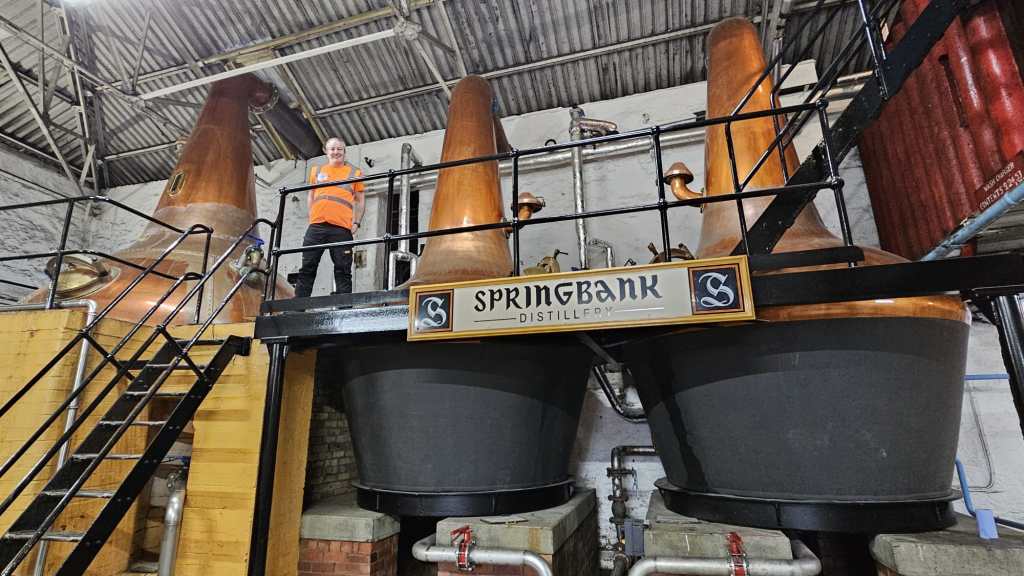
Second, we think that there is no other place like Springbank. We donโ€™t want to sound too cheesy, but in a world where the most important thing seems to be shareholdersโ€™ returns, they decided to keep their own pace, and not to overstretch or up their prices by taking advantage of the pandemic frenzy that hit the world of whisky. Instead, contrary to many, theyโ€™re playing the long game. Yes, they almost doubled production around 2018 (before that, they were alternating malting and production), but they didnโ€™t go crazy like other companies trying to add X million-litre-per-annum capacity, only to mothball other distilleries sometime later, with the consequent loss of jobs in often rural areas. Providing over 100 jobs in a remote place like Campbeltown is one of their prides, and it should be. So, for us, touching that reality for a week was really special and difficult to replicate, let alone that not all companies would allow a half-dozen geeks to roam around production for 20 weeks a year (for a price, more on that later).
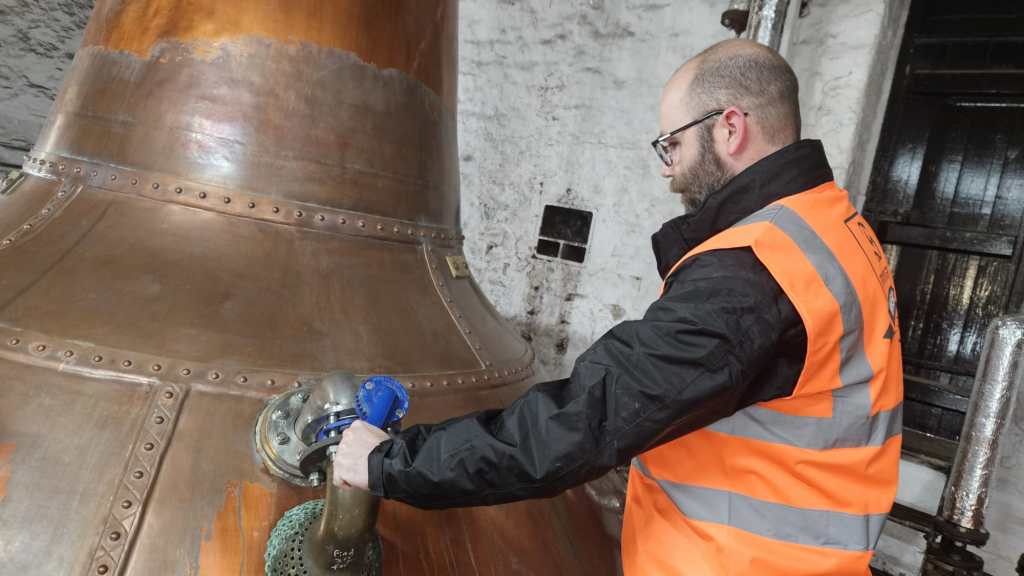
Third, but not less important, the people we met, both the other โ€œstudentsโ€ and the staff. Itโ€™s easy to bond with people sharing the same enthusiasm for whisky as you, so somehow we expected (and hoped) to get along with the other students, but we also couldnโ€™t exclude the possibility of meeting absolute jerks or simply someone we wouldnโ€™t connect with. We were lucky to spend the week with very nice and fun guys like Graham, Robert and Stephen, and hopefully weโ€™ll reunite as a group at some point (at a future Campbeltown malt festival maybe?). As for the staff, their patience dealing with us and their efforts to make sure we got the most out of the time with them were genuinely impressive. We were most likely an impediment to their work more than anything else but still, everybody made us feel welcome, and it was great to hear peopleโ€™s stories (for example, in shocking news to us, it turns out that many of the staff donโ€™t like whisky). 

So now, the elephant in the room: it is a very expensive experience, or at least, that was how we felt at over two grands per person. Something we really appreciated, though, was Springbank management not trying to sell it as an โ€œultimate luxuryโ€, โ€œpremiumโ€ or whatever crap other companies are coming up with to try justifying their greediness, so to actively exclude whisky fans and tourists alike from visiting some distilleries (more rants coming on the blog soon probably). On the face of it, it did feel a bit overpriced, but at the same time we think it must be complicated (aka costly) to comply with all the legal requirements (including insurance) that can make the school happenโ€ฆAnd let alone the time the staff take to show us around, explain processes and answer questions, plus the tastings and the tours, and the whole full-pension for a week. Also, as we said, we are not sure how much we really helped, except Teresa with her cask rolling determination, of course! Obviously, it is not like a tour you would do every year, and probably not even every other or so. For us, it was more of a lifetime experience, a gift to ourselves, and it really was a great one!
So, here the important questions: in hindsight, would we still do it? Absolutely! Would we recommend it? If youโ€™re a whisky enthusiast, and can spare enough time and money, definitely! Would we repeat it? Probably not, but maybe in a couple of decades (when enough changes might accumulate). Something we would do at some point, maybe for a special occasion, is the Barley to Bottle tour, which includes some of the fun activities of the school (an in-depth tour, the warehouse tasting and the blending session) and lasts five hours โ€œonlyโ€. One of the many things we like about Springbank is that they offer a wide range of experiences, with tour prices starting from as little as ยฃ12 up to a lot: there really is something for everyone, from the casual tourist to the experienced whisky geek. And by attending any of these experiences, you will only increase the appreciation for their work!

That was a long one, we hope you enjoyed it! Next time something lighter, or maybe a rant, stay tuned to know! Until then, slร inte!


Springbank Whisky School

Link: https://www.springbank.scot/whisky-school/

#74.5 The Springbank Whisky School

From production to
the blending lab
(day 4, Thursday)


TL; DR: Day four at whisky school was a busy one. We spent the morning in production – mashing, fermenting and distilling Longrow, plus chatting with the operators. The afternoon brought cask regauging in the warehouse, a tour of Glengyle distillery (where we had a stunning 20y triple-distilled dram), and finally a blend-your-own Springbank session. 

(missed Part 4/Part 3/Part 2/Part 1?)

We wonโ€™t lie, after the many drams we had on Wednesday, on Thursday morning we didnโ€™t wake up fresh as summer flowers. But weโ€™d seen worse, and it wasnโ€™t something that a good shower and a tasty breakfast couldnโ€™t fix: that morning we had pancakes with crispy bacon, another favourite of ours. It was the last โ€œworkingโ€ day of the whisky school, and we were eager as ever to learn as much as possible.

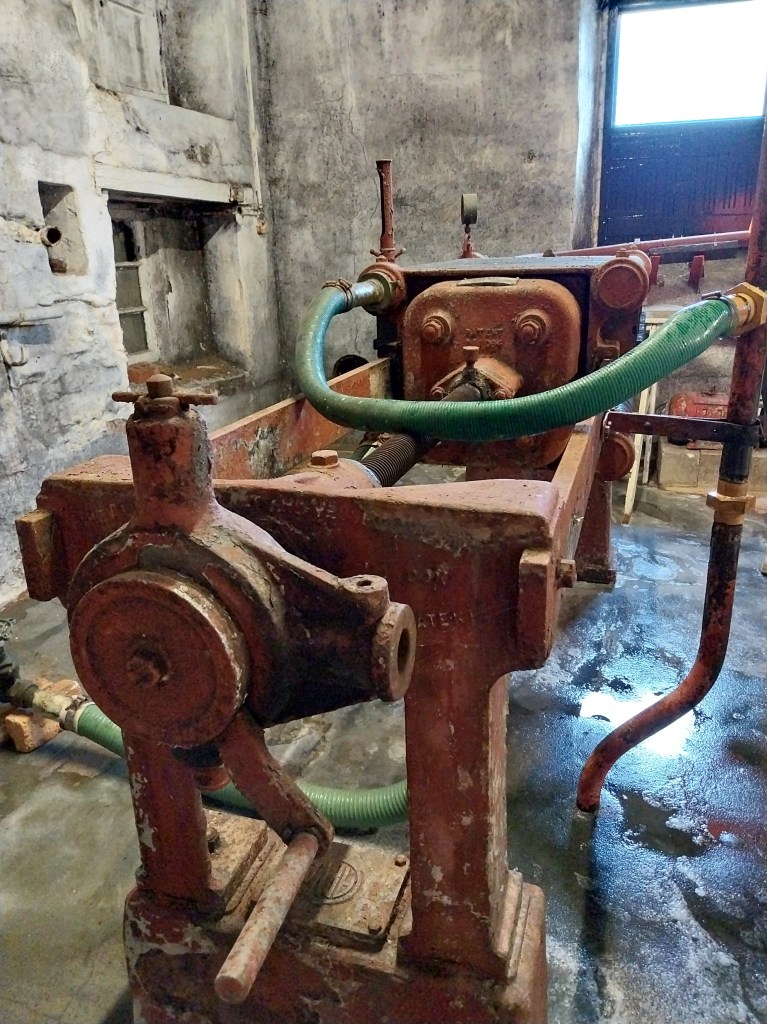
Our group (us and Graham) spent the morning in production – mashing, fermenting and distilling. The operators on shift are always two, and they run all three processes. Daniel showed us around and, to start with, he introduced us to the paraflow, an โ€œancientโ€ heat exchanger that had been there for decades, but still going strong (to a maintenance guy surprise, we heard).

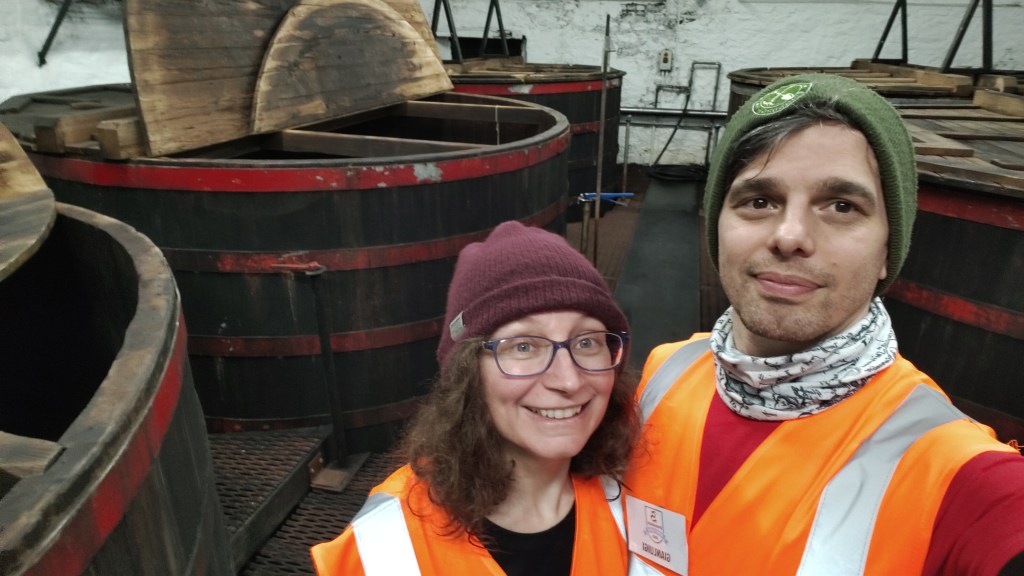
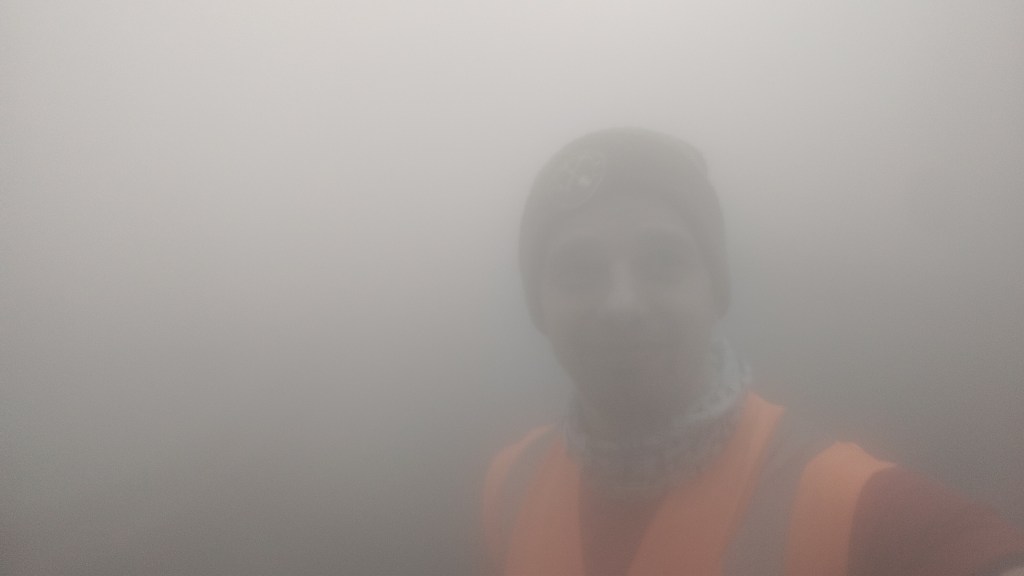
We also assisted the filling of a washback with wort, and we could throw in the yeast, which comes in 25kg bags (they use three per mash). Then, they steamed clean another washback, and after that the room was very foggy, like a steam room in a spa.

They rely on a combination of shorter (not really short, 72 hours) and longer fermentation (110 hours), depending on whether it goes through the weekend or not. The result is a wash about 6%abv strength, which is lower compared to most distilleries we visited: usually we are told between 8% and 10%. Probably this is due to the really manual, old-fashion production, which might carry some inefficiencies as Robert pointed out (he has a degree in brewing and distilling). However, it is most likely part of what gives Springbank its unique character, and to us it makes a lot of sense that management think it twice before deciding to change anything.

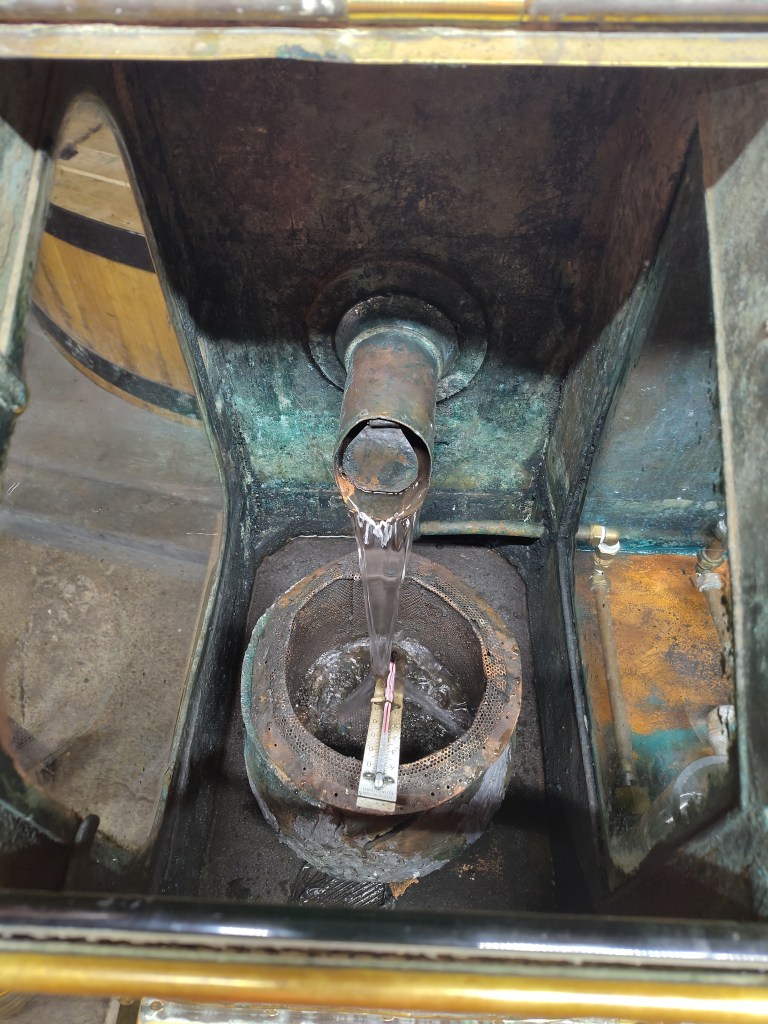
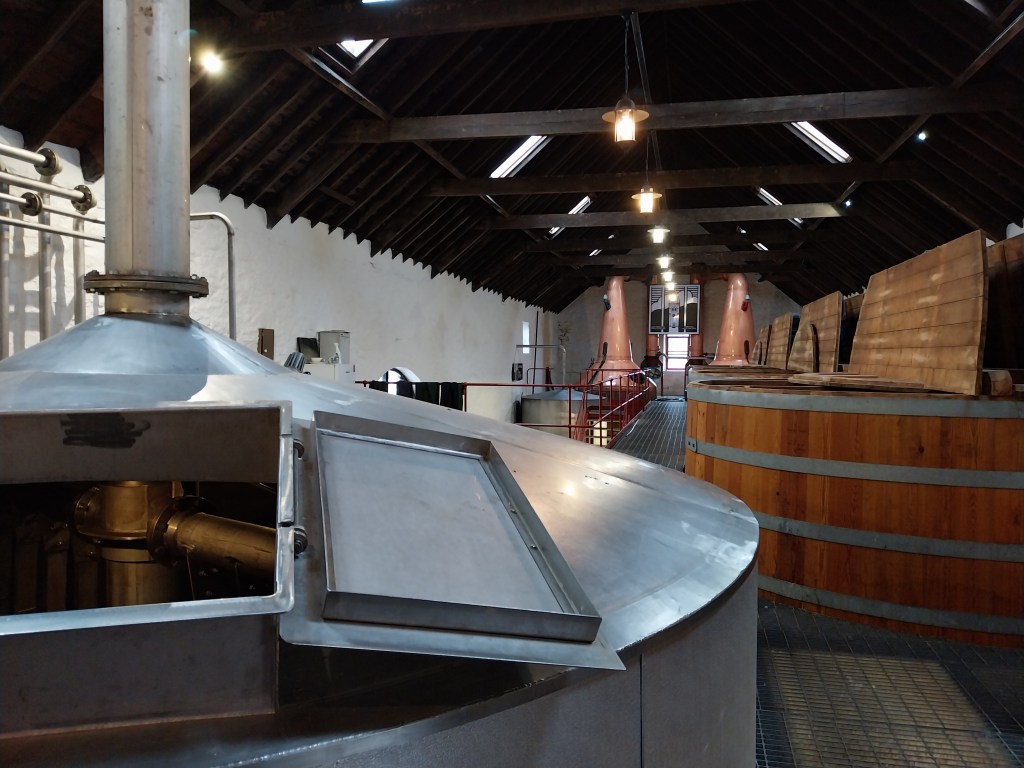
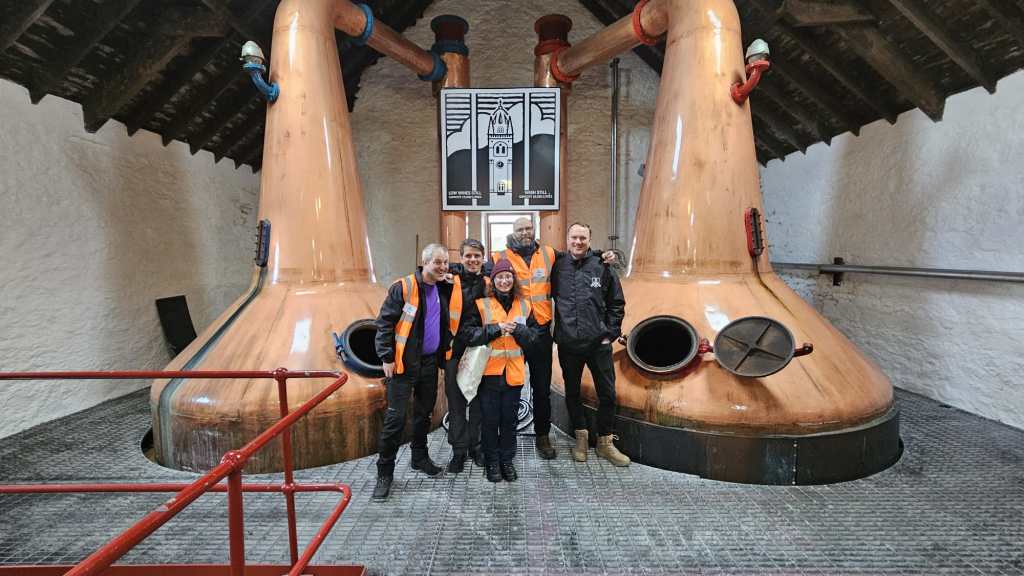
The operators also showed us how they take the alcohol strength reading during distillation, using the hydrometer and the thermometer – after years of experience, they know exactly when to start taking these readings. At that point, the wash still was running (the first distillation), so they told us to go back in the afternoon to possibly have a sip of the newmake spirit coming off the second distillation. That day they were producing Longrow newmake spirit, so a traditional Scottish double distillation. Longrowโ€™s second distillation usually happens in the last of the three stills, the one with the worm tub condenser, while the middle one has a shell-and-tube one and is used less often for Longrow. When they produce Hazelburn, the spirit is distilled three times and each still is used once, while when they distil Springbank, they go for 2.5 distillations, where part of the second distillation is redistilled in the third still (but itโ€™s a bit more complicated than that).

You can tell the morning was more about watching than working, so there was plenty of time for a chat with the staff. We talked about how some people come from abroad to apply for a job there, and how the distillery offers great job opportunities, especially in a rural area like Kintyre. The operators also shared some of the anecdotes from past terms of the whisky school, including some nasty but clumsy attempts to steal newmake from the safe and others that we wonโ€™t share to avoid spoilers (and possibly disappointment).

At noon we were back at the guesthouse for lunch, where Donald had prepared chicken pasta with garlic bread. As Italians, we are always wary when we get pasta, but we have to say that it was delicious.

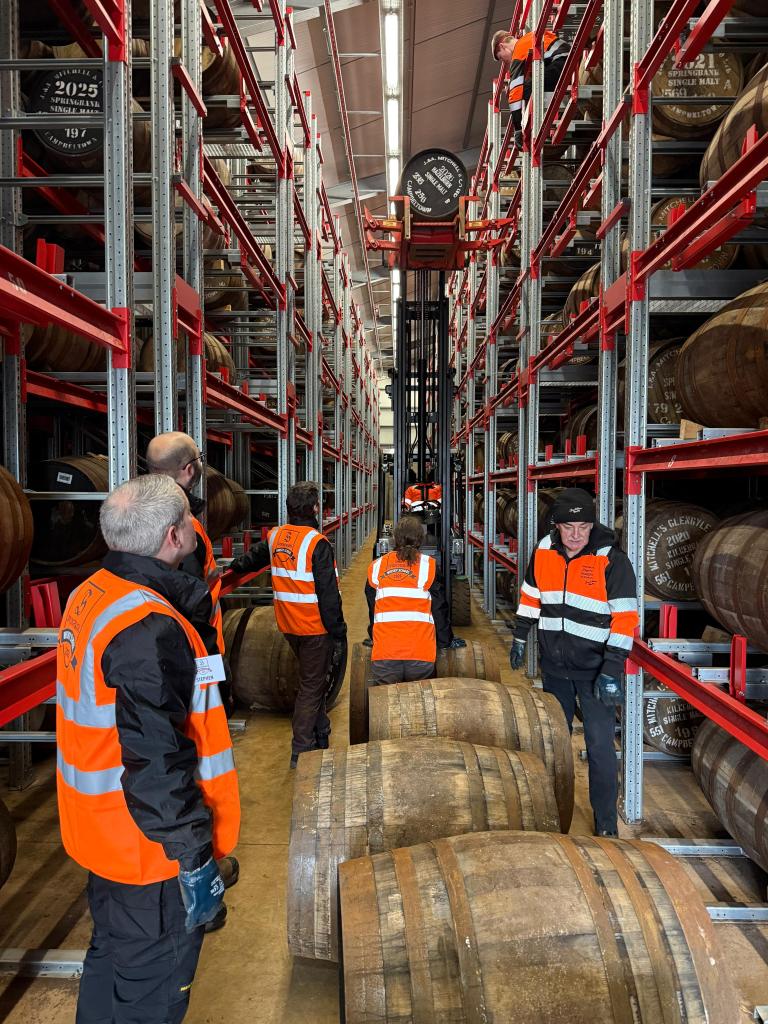
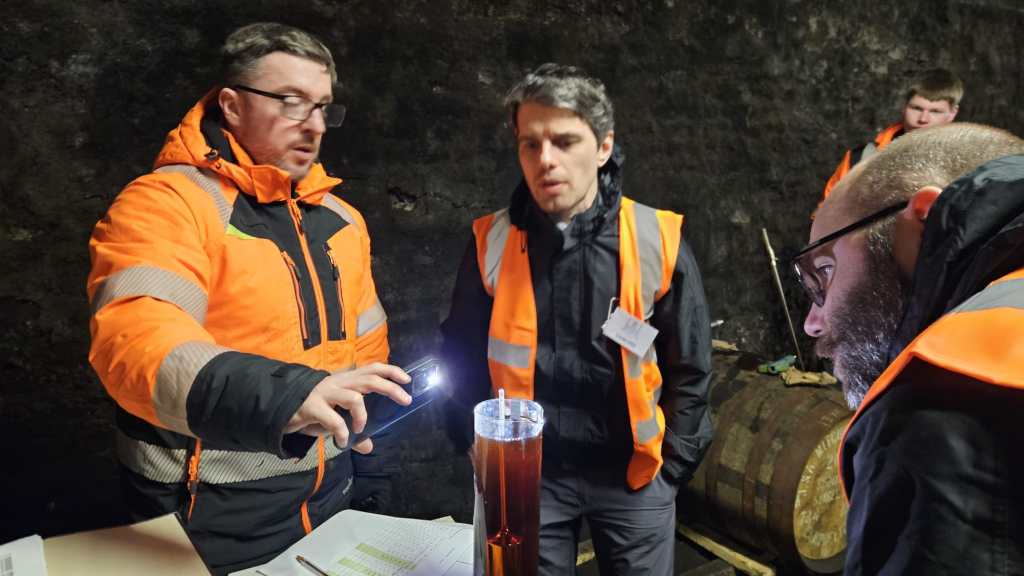
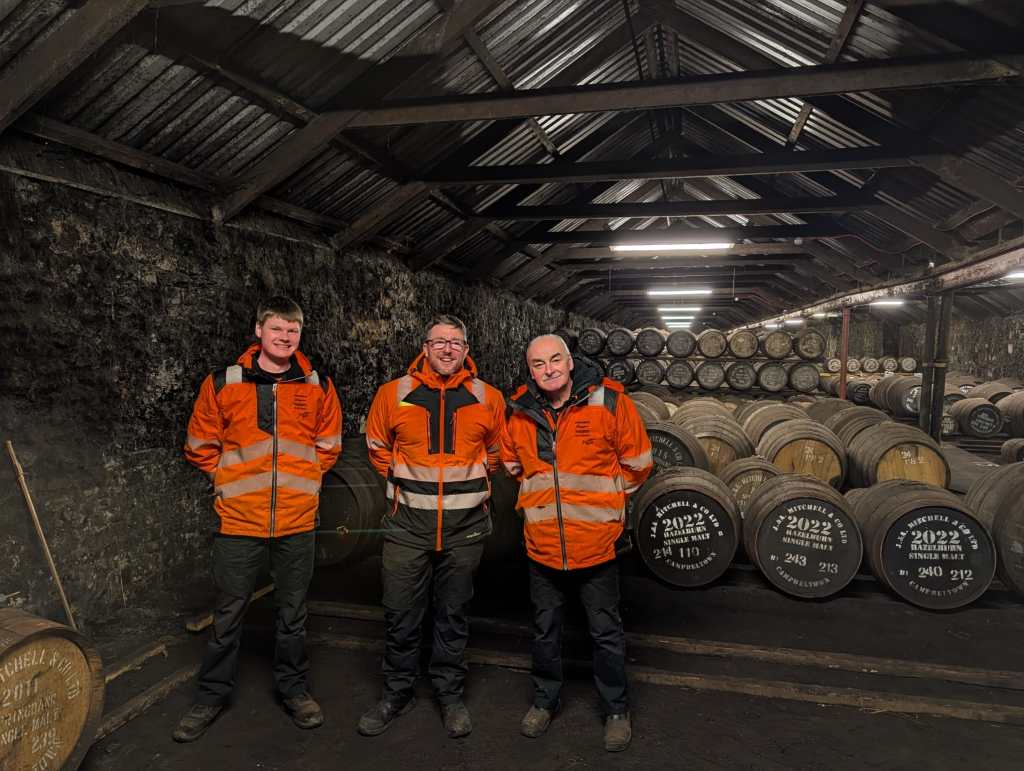
Back at the distillery, the afternoon was busy. First, the courtyard team showed us how to regauge a cask: this is the process of checking the volume of the spirit left in the cask and its strength, and it usually happens once in a while or when the cask is about to be used for a release. In our case, they used a โ€œsacrificialโ€ cask in Warehouse 3, that undergoes regauging every time there is a school term: a 14/15y (vintage 2011) 1st fill American oak sherry hogshead. They showed us how to meansure the volume with a stick, and how to take the strength with beker, hydrometer and thermometer. The scientific effort was rewarded with a sip of the malt: dense and delicious stuff, typical sherried Springbank!

Fun fact, we were in the warehouse with wee Andrew and John, respectively the youngest and oldest of the distillery staff. With Robert there too, we basically had three generations working together, with knowledge passed down!

After the regauging, Ben picked us up and took us to Glengyle for a tour. Active three months a year, Glengyle produces Kilkerran malt (the name Glengyle is owned by another company) and is a modern distillery. It was re-built in 2004 by J&A Mitchell to raise the number of Campbeltown from two to three, so that the Scotch Whisky Association wouldnโ€™t take away the regional status to the town. That was because, at that time, the Lowlands had only three distilleries: Glenkinchie, Auchentoshan and Bladnoch. Now Fife alone (within the Lowlands) has 7 (!), and the whole region almost 30 plus a few grain distilleries: how things change!

Back to Glengyle, the original distillery was built in 1872 by another branch of the Mitchell family, but like many others closed around the mid-1920s. The current one is similar to many others we visited throughout the years, but with a few interesting facts: a Bobby mill donated by Craigellachie when they replaced theirs, a 4.5ton mashtun, four wooden washbacks (filled from the top, as opposed to Springbankโ€™s ones that are filled from the bottom), stills from the silent Ben Wyvis distillery (not to be mistaken with the recent Glen Wyvis). Except for the mill, every piece of equipment is in the same big space. Most of the production is double distilled and lightly peated as per their signature style, but they also produce unpeated and heavily peated expressions, again double distilled. Moreover, they get to fill a few dozens of casks with triple distilled unpeated newmake spirit. Near the stills, Ben made us try the newmake spirit and a dram of an almost 20y old triple distilled (from an ex-bourbon cask), which was a tropical fruit-bomb (and our favourite every time we did the Kilkerran Warehouse tastingโ€ฆA pity they recently increased the price of for the 35cl bottle from ยฃ60 to ยฃ80). That was unexpected, such a nice surprise!

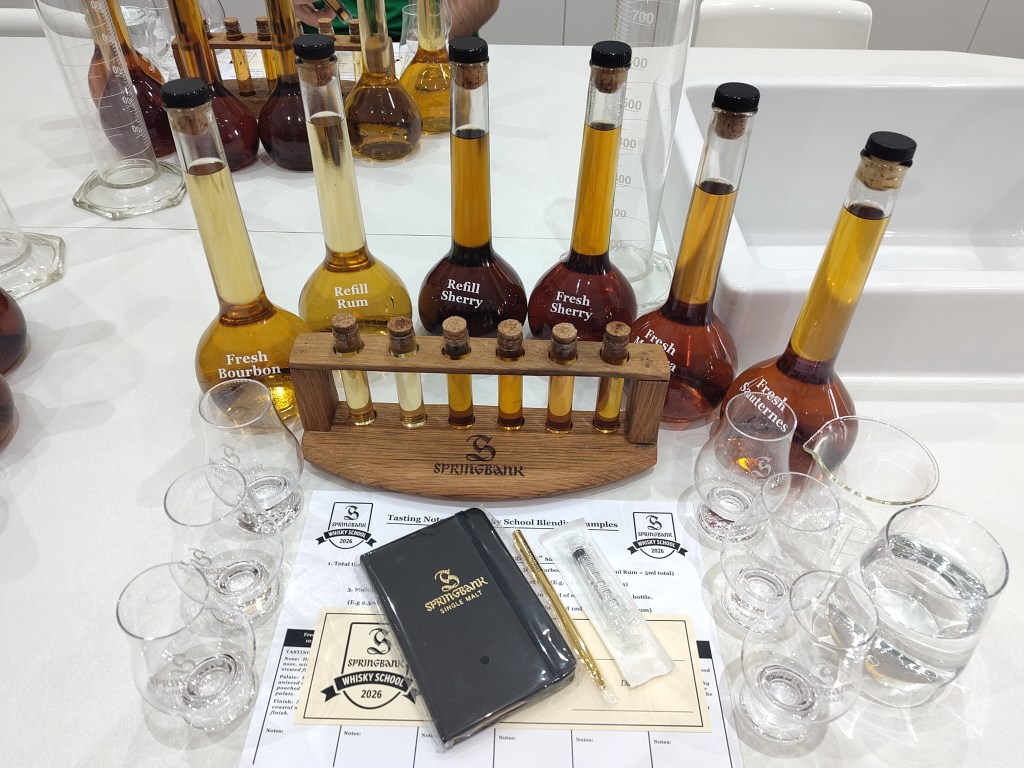
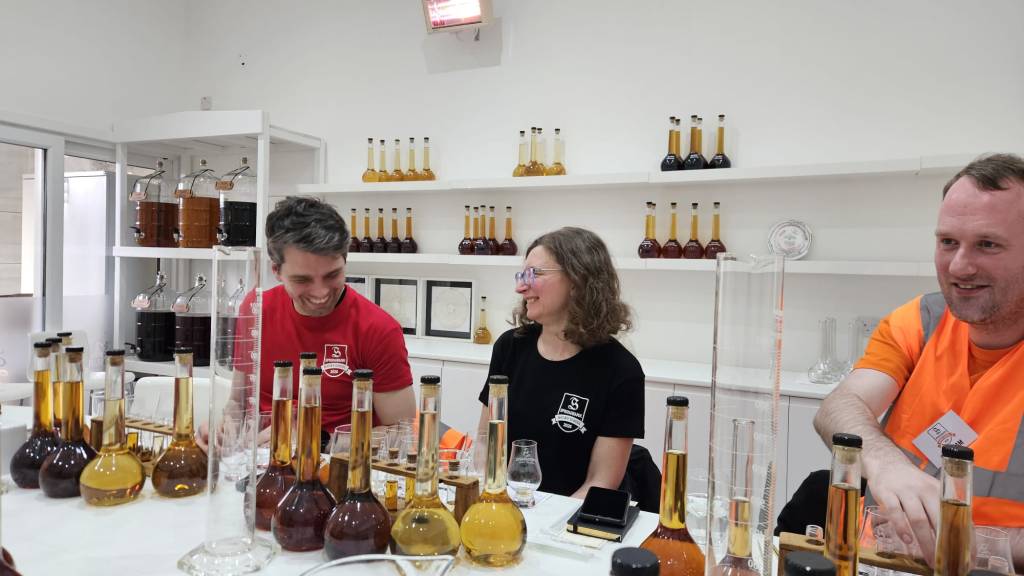
We were already quite happy with the activities of the day, but we still had one to go before dinner: a blend-your-own Springbank experience with Donald, where each of us had to make a 70cl blend from 6 different expressions: a 10y 1st fill ex-bourbon cask, a 10y refill ex-rum cask, a 13y refill ex-Sherry cask, an 11y 1st fill Sherry cask, a 8y 1st fill Madeira cask and finally a 7y 1st fill Sauternes cask. The rules were at least two expressions and no more than 50cl from one (it was how much we had available of each component).

Long time ago (in 2019) we had done a similar experience at Strathisla distillery – blending together five whiskies from the Chivas Brothers/Pernod Ricard range. The results were dire: we opened both 20cl bottles in 2020 during the pandemic, we hated them and so we ended up using them for either cooking or for highballs. So, while excited we were also worried about the resultโ€ฆThis time, however, we were โ€œless cluelessโ€ than last time. We started by looking for a suitable base for the blend. The ex-bourbon (the obvious candidate) was very maritime, the rum was the smokiest one, the refill sherry was very dry, while the 1st fill sherry was (again) a classic sherried Springbank, akin to the 15y from the core range. The Madeira was the sweetest one, and finally the Sauternes was (as expected) weird. Teresa used four expressions, while Gianluigi ended up using them all for a challenge (which took substantially more trials and time than for the others, to everyoneโ€™s amusement), with the Sauternes used like youโ€™d use the fish sauce in a curry, just a dash to enhance the flavour. We wonโ€™t give away our recipes (muahahaha!), but we are hoping to use both bottles in a tasting with the Edinburgh Whisky Group at some point (keep an eye on our social media, Instagram and Substack).

It was a great day of โ€œworkโ€, which ended with another tasty meal (chili con carne and cheese board) and a couple of half pints at one of our favourite pubs in town, the Fiddlersโ€™ Inn.

Stay tuned for (finally) the last post of this long series! Until then, slร inte!


Springbank Whisky School

Link: https://www.springbank.scot/whisky-school/