#75.3 Return to Orkney

A distillery on Kirkwall waterfront: Orkney

ย 

TL; DR: Second distillery of the day was the Orkney Distillery, right on the Kirkwall waterfront. Production was paused for an upgrade, but the distiller Steven walked us through the entire process. Then a generous tasting with Tony, a proper industry veteran: newmake, a “solera” cask, two blended malts, and an undisclosed Orkney 14 yr. Well worth an afternoon.ย 

(Missed Part 2/Part 1?)

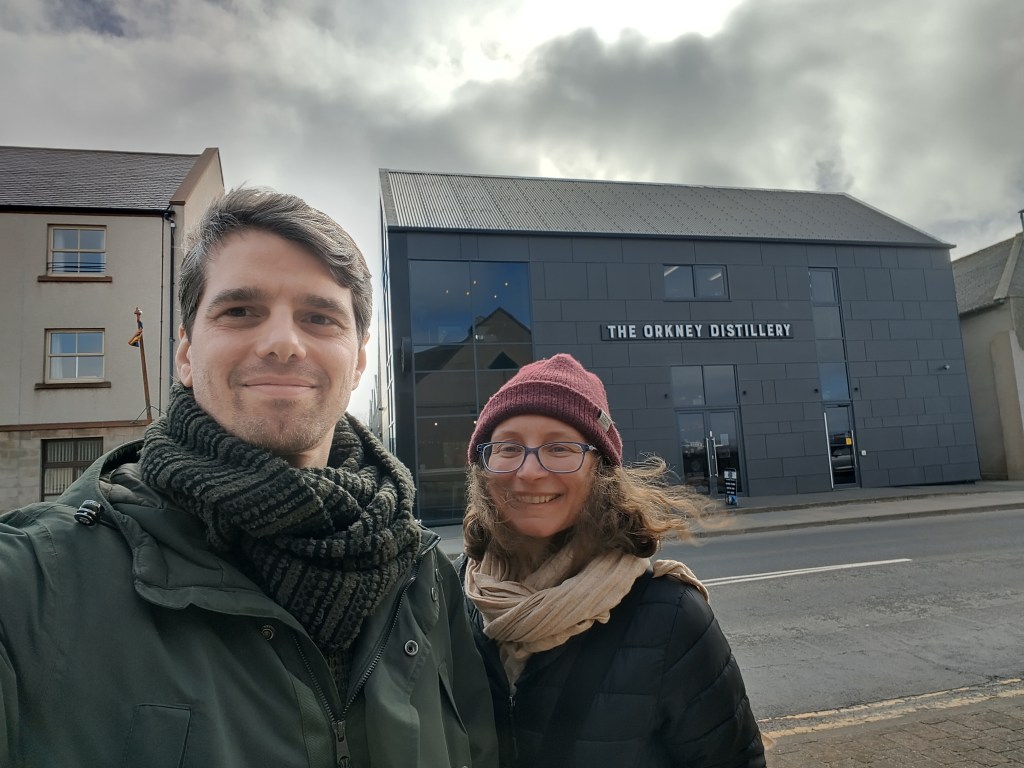
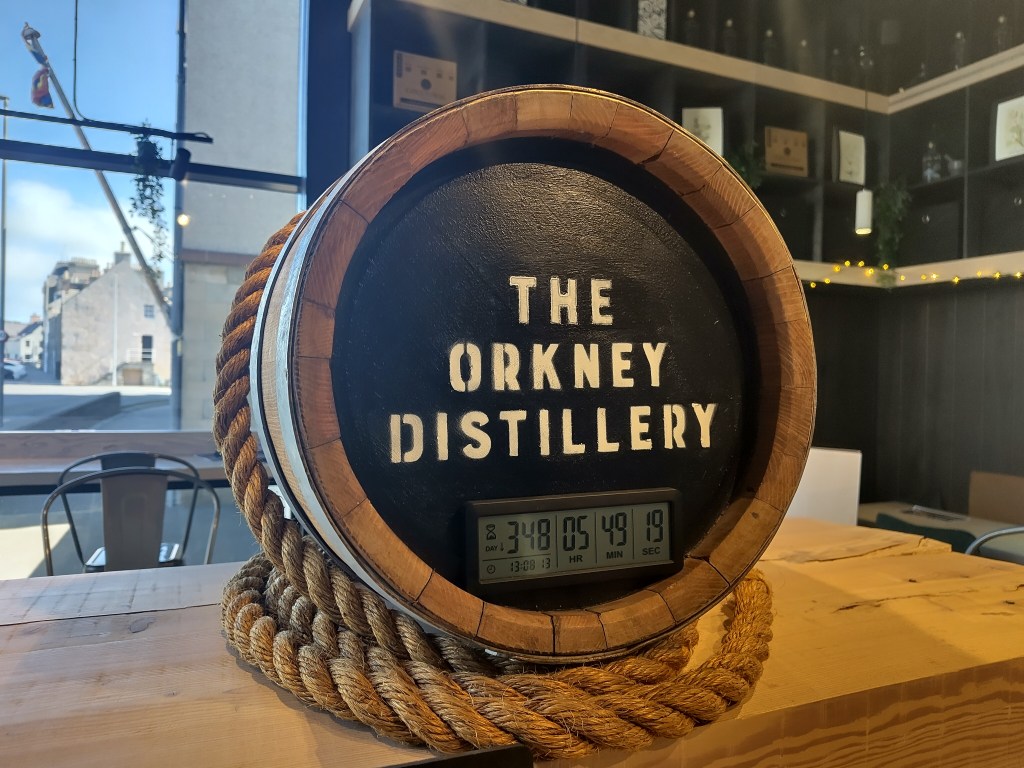
Soon after the end of the tour at Deerness, we drove back to Kirkwall. The tour at the Orkney Distillery was starting at 1pm, so we had just enough time to point Gianluigi’s parents towards St Magnus Cathedral and the town centre. We’d arranged for them to explore Kirkwall while we visited the distillery, which sits on the waterfront, not far from the pier. We’d already had a peek into the bar and shop back in 2022, but they weren’t making whisky then. The venue was as we remembered it: a large room, dark and industrial in style, with a long, well-stocked bar. The distillery is open most days, with the whisky tour at 1pm (back in April it wasn’t running at weekends) and two gin tours, at 11am and 2.30pm.
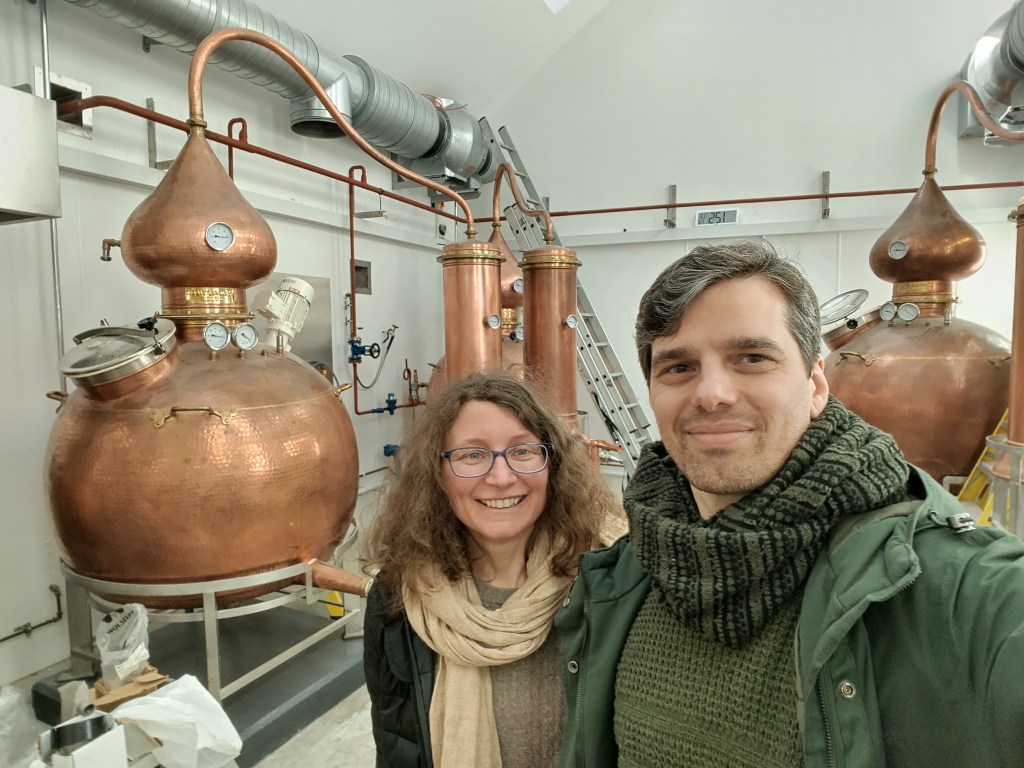
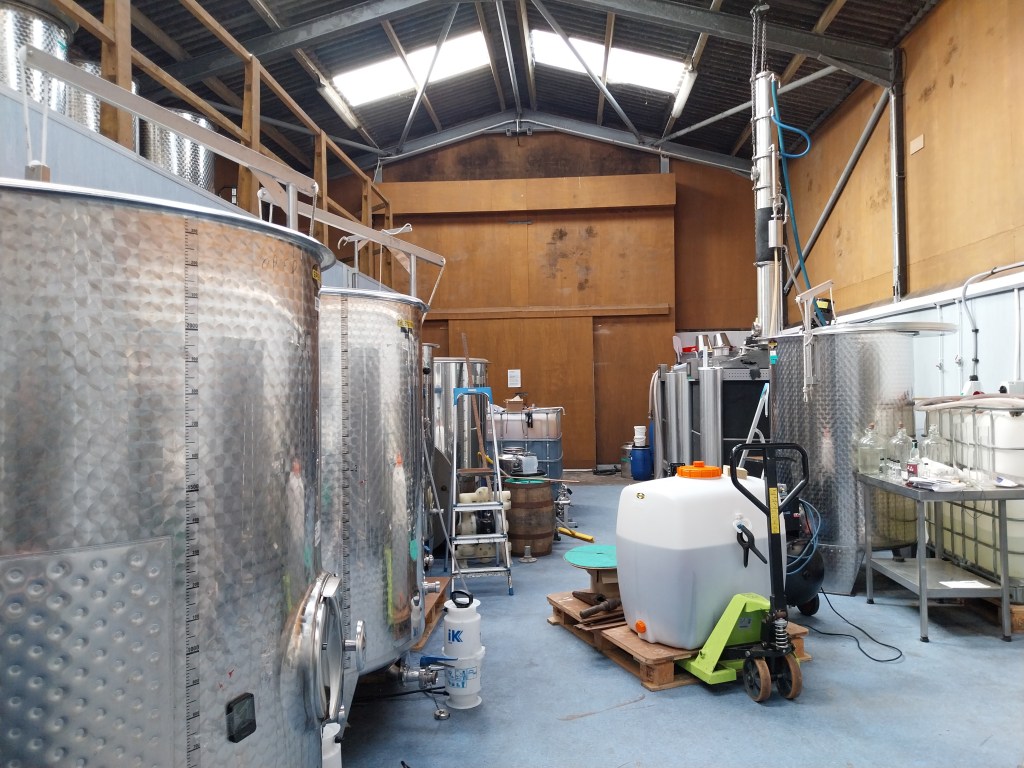
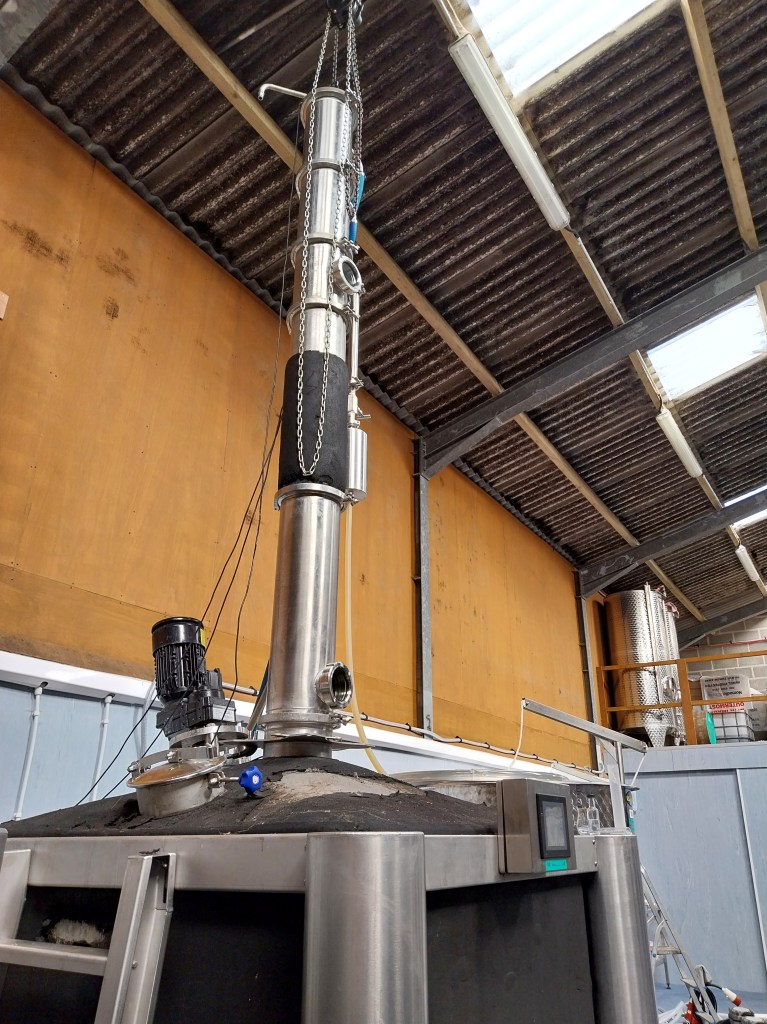
The usual guide had called in sick that day, so we got the tour from Steven, the distiller, while the tasting would be with Tony, one of the directors. As Steven started to show us around, we realised production was on hold: they were installing new equipment that would allow a greater output. The old 200l spirit still, for example, was being replaced by a 2,000l one, which will let them produce 200 litres a day, i.e. the equivalent of a standard American barrel. This comes quite early in their “whisky history”, as they only started producing newmake two and a half years ago, towards the end of 2023.

Going back to where production starts: they don’t have a mill in-house, so they buy pre-milled malted barley from Crisp in 25kg bags, including the brewers’ variety Maris Otter. They produce two types of newmake spirit, which differ mostly in the mash composition. The unpeated spirit uses four bags of brewers’ malt and four of distillers’ malt per mash, while the peated one is made with two bags of heavily peated malt (80ppm), three of distillers’ and two of brewers’. They’re considering installing the machinery to do their own malting, but if so, that’s for the future.
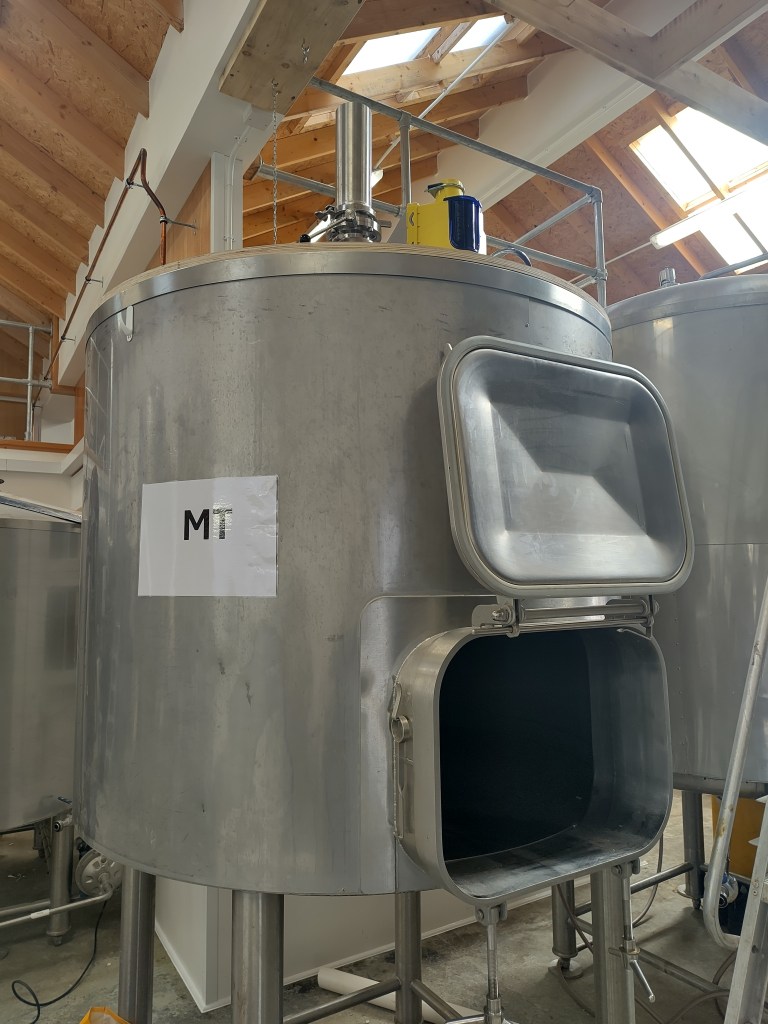
They use Kirkwall tap water, warmed to 73ยฐC in a 2,500l heating tank, which takes about eight hours. Mashing with the first water takes about an hour, and the temperature is raised to 77ยฐC, which is necessary to denature certain enzymes (we couldn’t recall which ones). At the end of mashing they obtain 1,800 litres of wort, fermented for four days, then split into two lots of 900 litres, each distilled in one of the two wash stills. The low wines come off at 28-29% abv and are distilled again in the spirit still (see above). After discarding the foreshots for 20 minutes, they collect the spirit from 73.5% down to 59.4% abv, quite a wide cut!
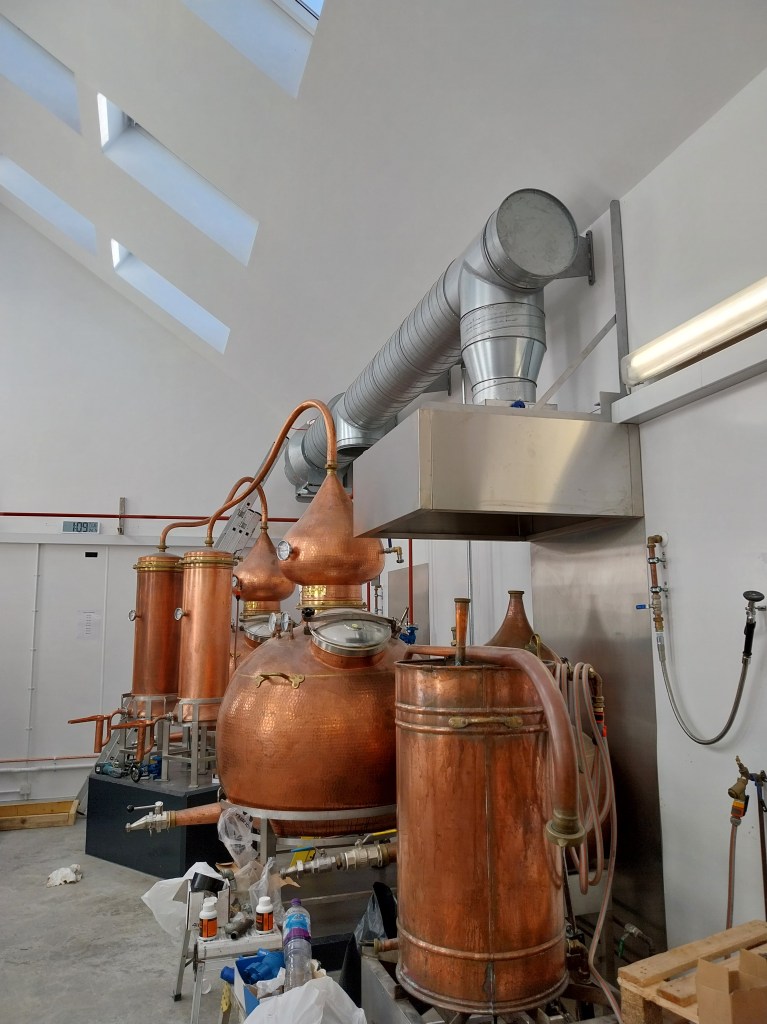
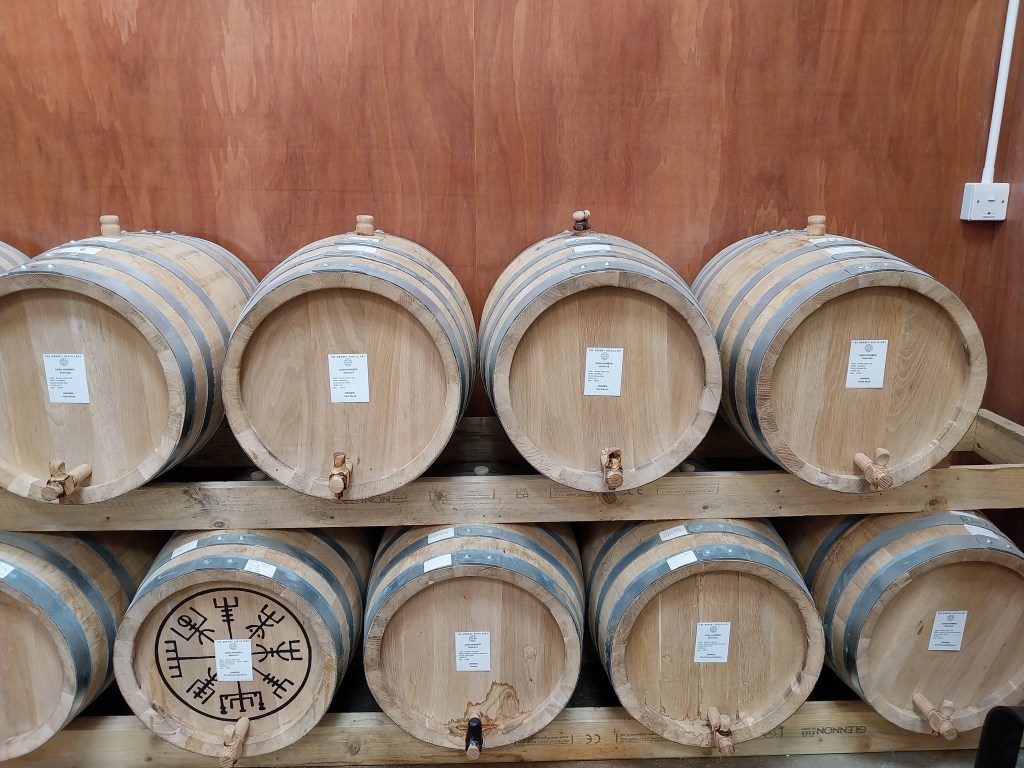
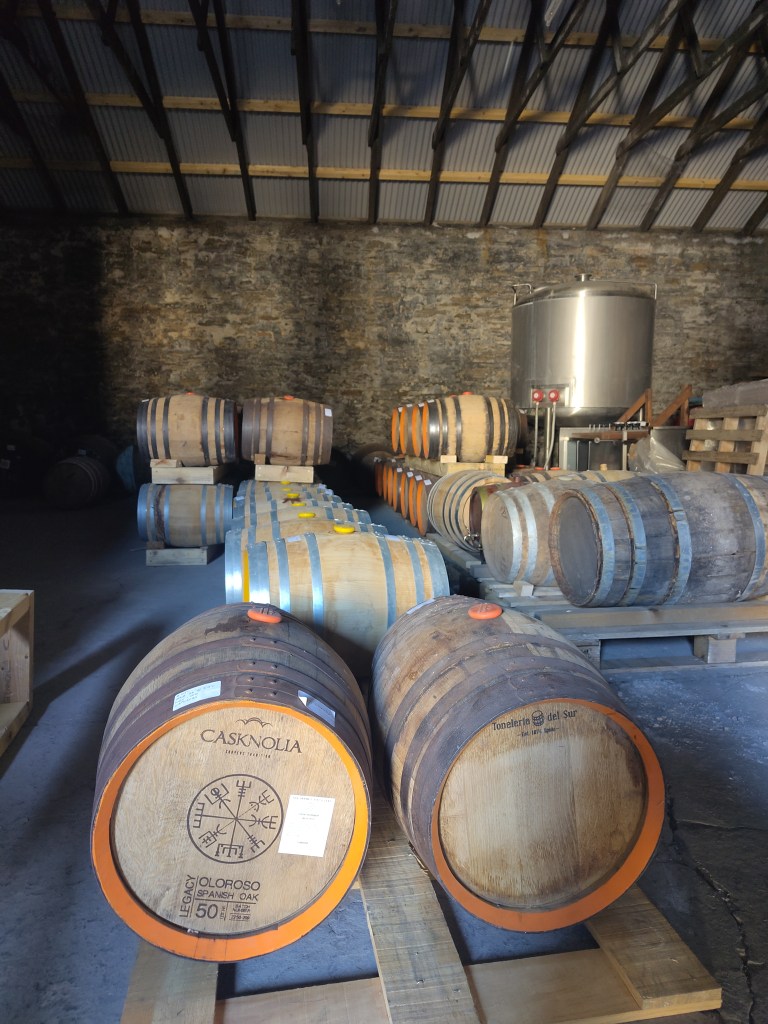
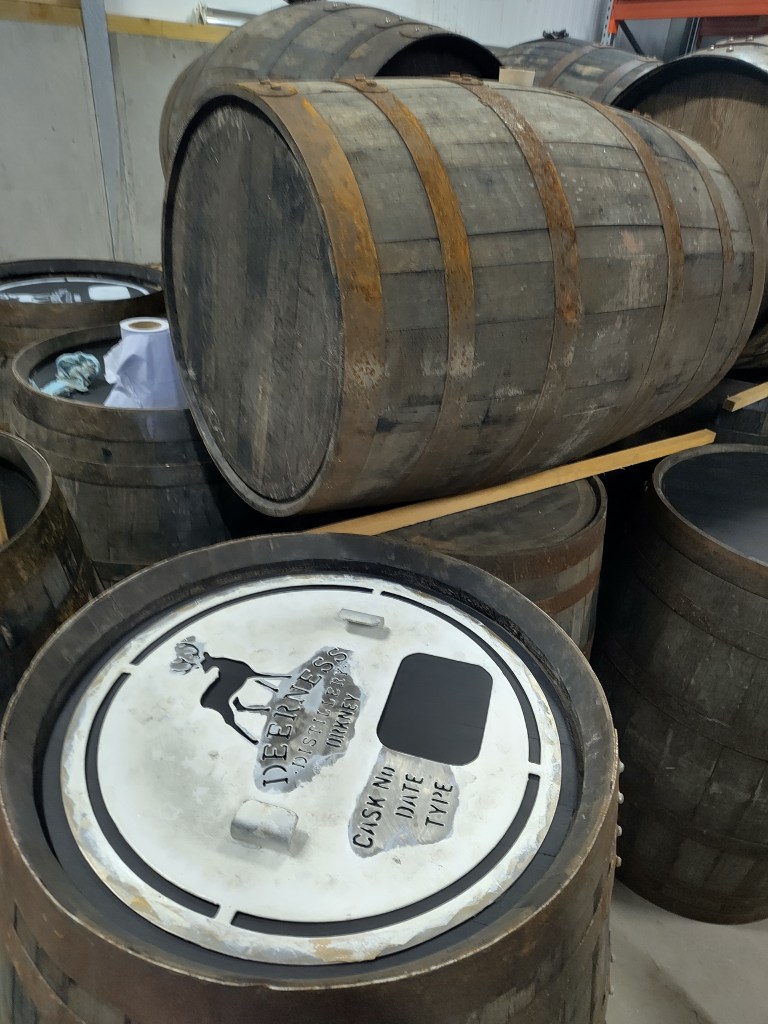
So far they’ve filled a lot of small casks, including 50l virgin oak from Serbia, but also 100l casks of both French and American oak, currently resting in the warehouse behind the distillery.
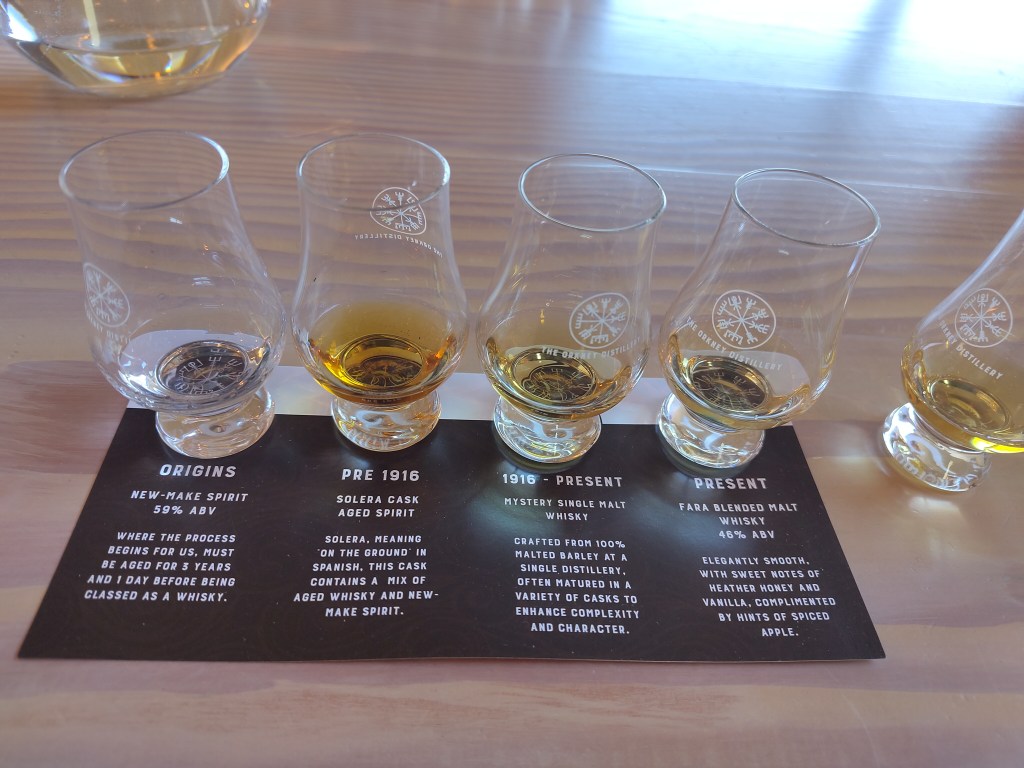
For the tasting we went up to the tasting room above the bar, very bright (the sunny day helped!) and overlooking the waterfront, where Tony was waiting for us. After pouring us some Orkney newmake spirit (slightly diluted, at 59%), he gave a comprehensive overview of the history of whisky. This ultimately served to introduce the second dram: aged malt spirit, not yet whisky, drawn from a “solera cask” they keep in the bar and constantly top up with newmake as they draw from it. (For our friend Lenka and the other sherry people: we know it isn’t a real solera system, eheh.) The idea is to replicate the casks of spirit held in old taverns and inns, which is how whisky was drunk at the time, before industrialisation and the rules that followed. Then it was the turn of the two blended malts they produce and sell in the shop: Fara (unpeated, 47%) and Rysa (peated, 46%), with malts coming mostly from the Highlands and Speyside, both very well made and interesting. The final dram was a cask sample of a heavily peated 14yr from an “undisclosed Orkney” distillery (wink, wink): also very good!
Overall, it was refreshing to see such a well-crafted line-up. With a bit of effort, even distilleries that don’t have their own whisky yet can put together an interesting set of drams and tell an engaging story. This is unlike others in the industry that do the bare minimum despite having the means to offer a much better tasting experience (Rosebank, maybe?).
While talking to Tony, we found out that he’s a veteran of the industry: he previously set up Strathearn distillery, before it was taken over by Douglas Laing. He also knows more about the Italian whisky scene than we do. And of course, when you put a fountain of knowledge like Tony together with two whisky enthusiasts like us, the chat could have gone on forever, haha. But it was time to leave and rejoin the old folks in the town centre.

Overall, another very interesting distillery to visit, easy to reach and worthwhile for non-whisky people as well. The new equipment will give them more flexibility, not just greater volume. We wonder how the spirit will change as a result, though given how young the distillery is, there’s still plenty of time for them to find their own character. Based on the newmake we tried, we’re now very curious about the whisky maturing in virgin Serbian oak, once it’s ready.

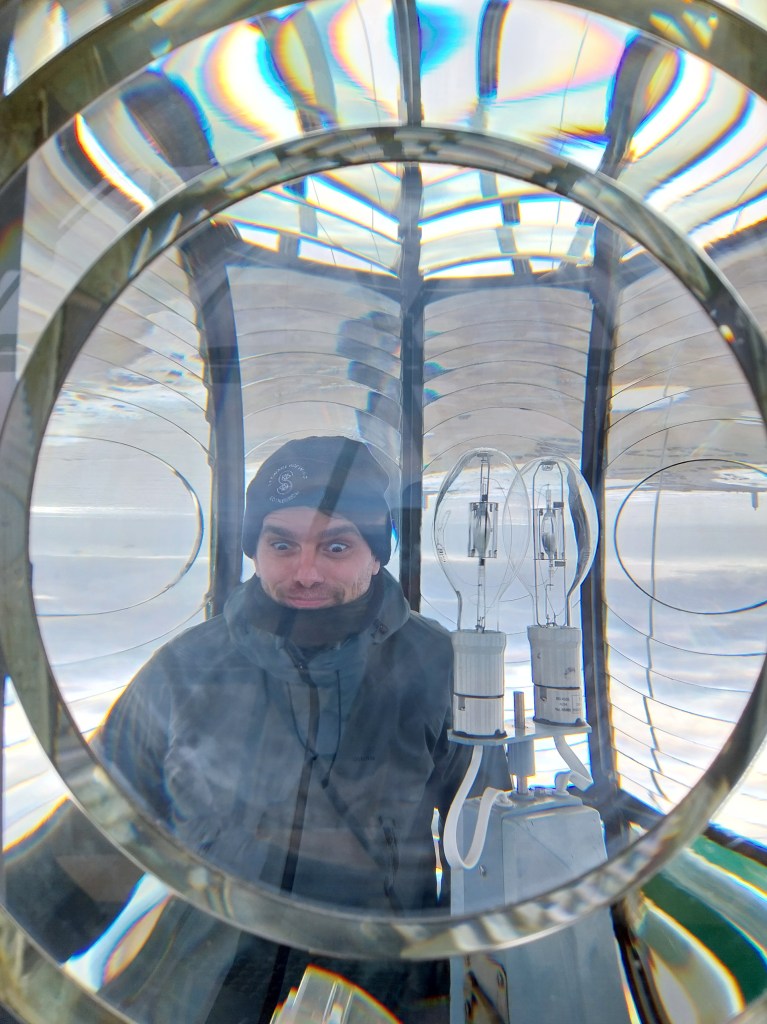
We spent the rest of the holiday doing almost exclusively non-whisky things: the Neolithic sites (Skara Brae is always great!) and villages like Stromness, very cute. We also spent time on a couple of other islands, the remote North Ronaldsay that we reached on a very tiny plane (the lighthouse is worth a visit) and the closer Hoy (fantastic landscape, and the Scapa Flow Museum was great too, albeit sad).
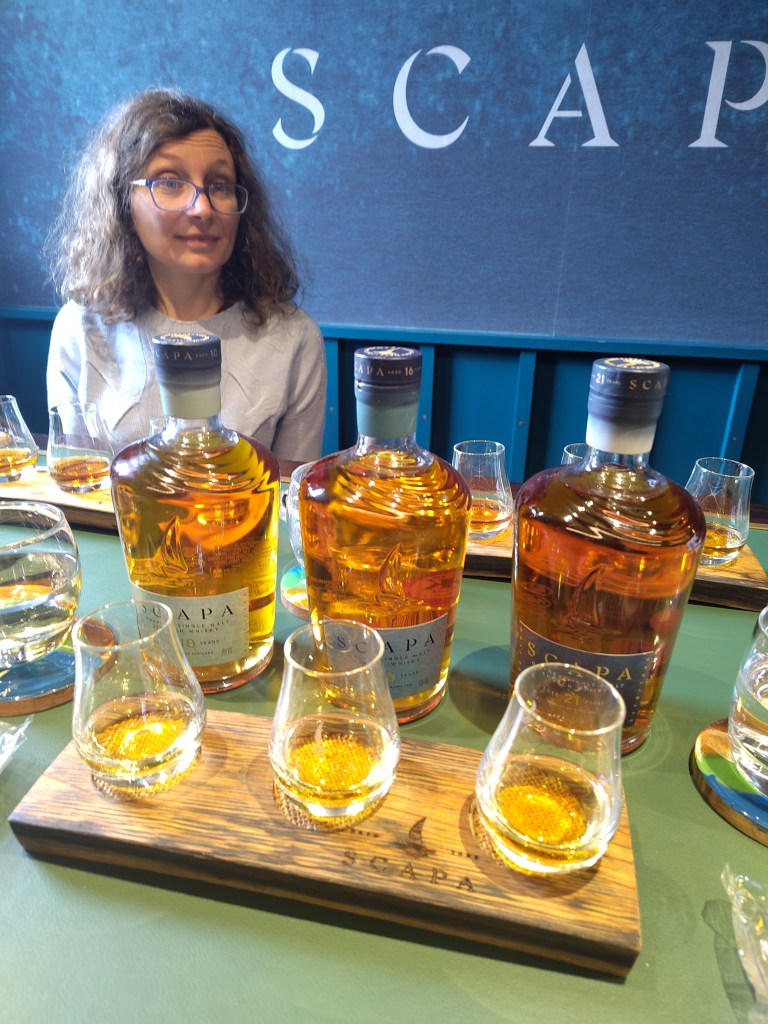
The night before leaving we had a tasting at Scapa distillery with Caterina and Fabrizio, as they prefer unpeated whisky. We couldn’t use the new tasting room (the “Noust”), which is only for people taking a tour, but the staff were lovely anyway: they served us our flights in an almost secluded space next to the shop, separated by curtains, where we could enjoy some great drams at our own pace. And yes, we can confirm that Scapa is one of the most underrated distilleries out there.
The tasting was followed by dinner at The Foveran, not too far from Scapa but still requiring a taxi ride: the food was fantastic, definitely the best we found on the islands. Our second time on Orkney did not disappoint. If anything, it made us want to go back again.

And that’s all for this trip: we’ll take a few weeks’ break from the blog, but we’ll be back with yet another Speyside story! Until then, slร inte!


Orkney Distillery Whisky Tour and Tasting

Price: ยฃ36.75.00 pp (April 2026)

Duration: 1hr 15mins (on the website, it was more 1hr 30min for us)

Tasting: 5 drams, Orkney newmake spirit (59%), “Solera cask” aged spirit (unknown%), Orkney single malt (undisclosed Orkney, ex-bourbon), Fara blended malt (NAS, 47%), Fara peated blended malt (NAS, 46%)

Target: everyone

Value for money: good

Highlights: interesting production process

Recommended: the tour at 1pm is a bit hard to fit in, but if you can make it, definitely

Link: https://www.orkneydistilling.com/

#75.2 Return to Orkney

Deerness: the remote peninsula of the remote island


TL; DR: Back on Orkney, and two new whisky distilleries have opened since our first visit in 2022. First up: Deerness, out on a windswept peninsula east of Kirkwall. Stuart, former engineer and co-founder, told us about the history of the family-run distillery and their ambitious plans for on-site malting and off-grid biogas. The tasting started with their new-make, then leaned on Orkney whisky more broadly, a very nice touch. 

(Missed Part 1?)

As you have probably gathered from the title of this series (and from our previous posts, if you’re an old reader), it’s not our first time on Orkney. The first time we went up there, the obvious choice was to visit the two historic distilleries on the island (yes, in this case it is “island”, as they’re both on Orkney Mainland): Highland Park and Scapa, which were the only ones back in 2022. Since then, two more distilleries have started producing whisky: Deerness Distillery and the Orkney Distillery, both on the Mainland. They both began with gin, like many other craft distilleries around Scotland, and that’s about the end of their similarities: the former sits in a very remote part of the island and also houses a cafรฉ and restaurant, while the latter is on the Kirkwall waterfront and has a whisky and cocktail bar. We decided to visit both on the same day, so as to avoid leaving Gianluigi’s parents on their own twice. Because of tour availability, that turned out to be the Tuesday, our second day on the archipelago.

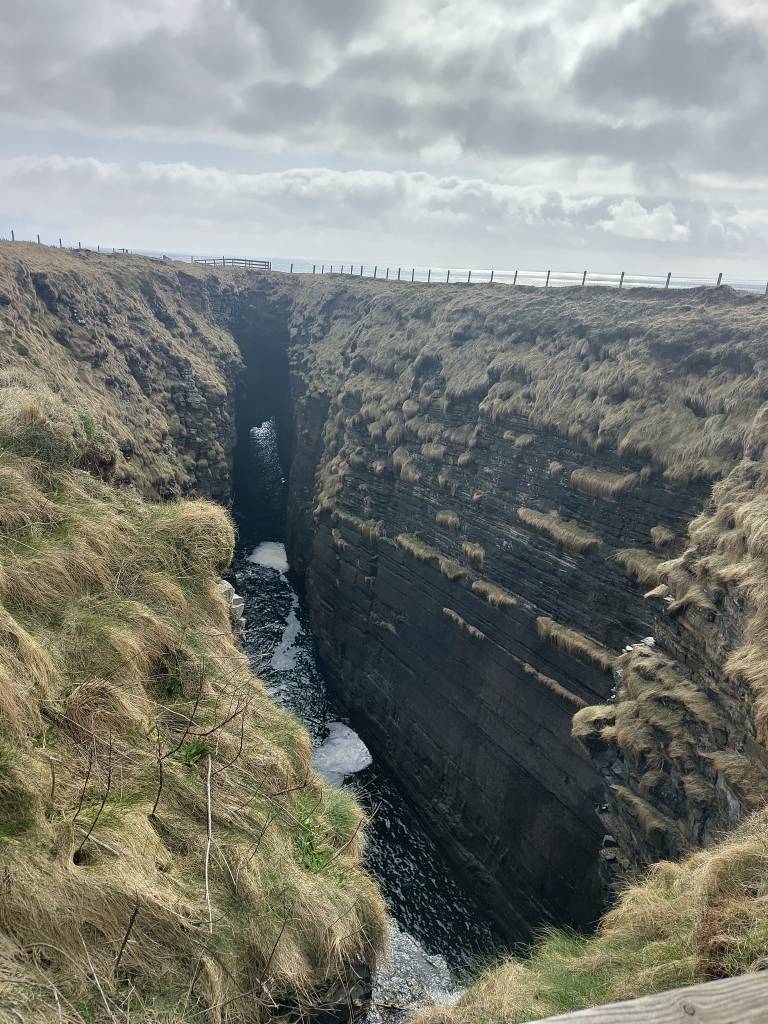
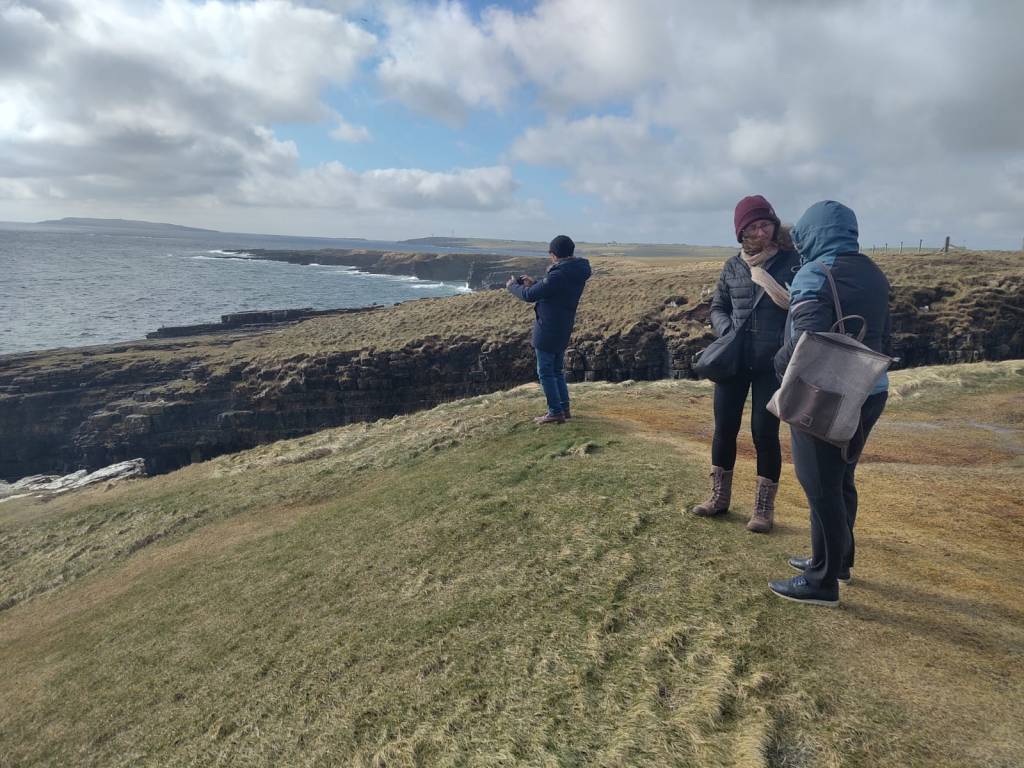
We started with Deerness Distillery, on the peninsula of the same name (from the Old Norse “dyrnes”, meaning “animal headland”), as they offer morning tours. It’s on the east side of Orkney, about a 20-minute drive from Kirkwall, attached to the rest of the island by a narrow isthmus, in places less than 150 metres wide. We left early, because before the distillery we wanted to see the Gloup, a spectacular collapsed sea cave, with a dramatic view over the North Sea. It was quite windy and soon it started raining, so we stayed just long enough for a little wander along the nearby cliff, and we didn’t make it to the Brough, half a kilometre north, where some old ruins are. Instead, we went to the Mull Head visitor centre, a small space with information about the local flora and fauna.

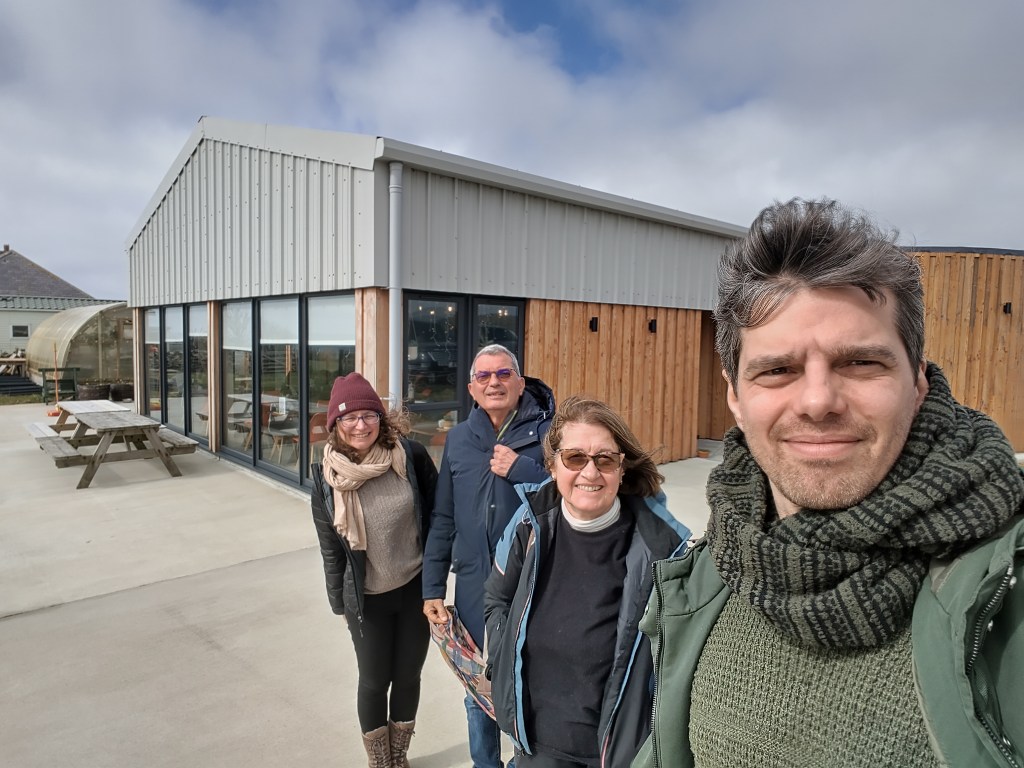
The distillery is only about a five-minute drive from there, back on the road to Kirkwall. We checked in, dropped Caterina and Fabrizio at the cafรฉ, and paid the remaining ยฃ10 per person of the reservation, on top of the ยฃ20pp we’d paid online (ยฃ20 is the price for the gin tour and tasting; the extra tenner for the whisky tour has to be paid once you’re there). Our guide was Stuart, a former engineer and, better still, one of the two founders. The other is Adelle, a pharmacist and Stuart’s wife; together they moved to Orkney and started the business in 2016. First they set up a gin, vodka and liqueur distillery, sourcing local botanicals but also building their own greenhouse to grow plants that wouldn’t normally survive up there. The business expanded quickly, and so did the staff: they’ve gone from two (the founders) to 18, which is impressive in less than ten years. Their daughter Jasmin now leads the Dashing Deer Kitchen, the cafรฉ/restaurant serving hot dishes between 11am and 3pm, and with a bar with an extensive list of cocktails and mocktails. The cafรฉ is a lovely space with wide windows overlooking the peninsula, a big window onto the still room, and a shop selling local products (including their spirits) in a corner next to the counter.

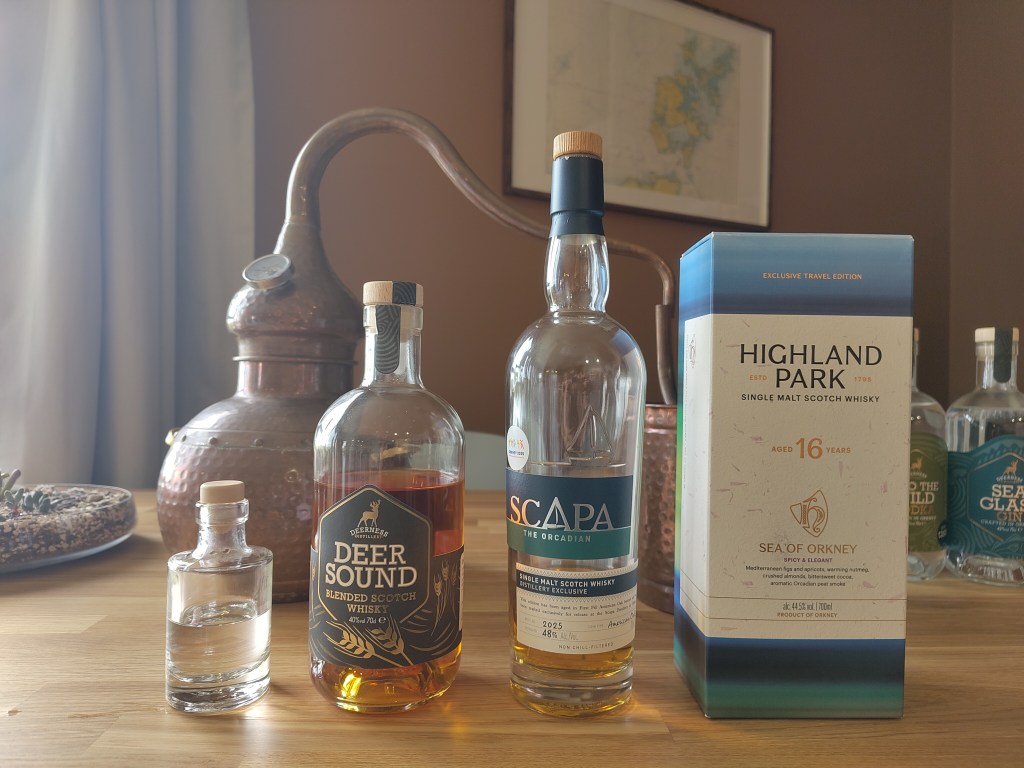
Stuart first took us to another building next door: we thought it was a small warehouse, but it turned out to be a spacious, bright tasting room, again with big windows over the landscape. There he told us the history of the business, and we had our tasting. It started with a sip of the Deerness newmake spirit (63.5% abv), a very nice touch, followed by their “house” blended Scotch, Deer Sound (NAS, 40%). The latter comes from Ian Macleod Distillers: it’s 70% grain whisky, and most of the malt share (about 85%) is matured in sherry casks. It’s an inoffensive, sweet blend, probably fit for the purpose of having a whisky to sell while waiting for their own. Then we (well, Teresa) had a couple of drams from local distilleries: first a delicious Scapa (NAS, 48%), bottled for the 2025 Island Games and a vatting of ex-bourbon casks, and then a lightly peated Highland Park 16 (44%, in the new packaging). These two drams were also an opportunity for Stuart to stress the very collaborative, friendly relationship they have with both distilleries, which was good to hear.

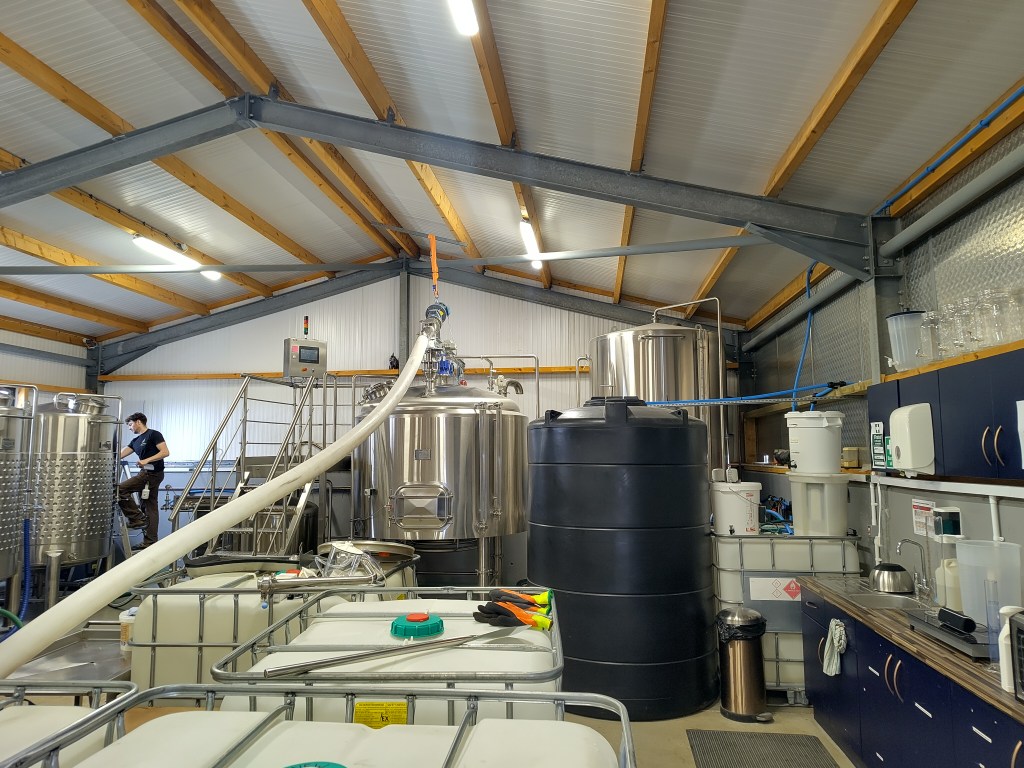
We then moved to production (including bottling and labelling), in the same building as the cafรฉ. Stuart told us that they started whisky production in 2025. The malt is currently sourced from Crisp, grown in Aberdeenshire and bought pre-milled in 25kg bags of Laureate and Concerto varieties. They use two bags of 50ppm peated malt in every mash, with the rest fully unpeated. Their plan, however, is to acquire drum malting equipment (we picture it as a big tumble drier!) so as to malt locally grown barley on site. They use two waters for mashing, and the wort is then moved to one of the washbacks for a three- to four-day fermentation with Pinnacle dry yeast.

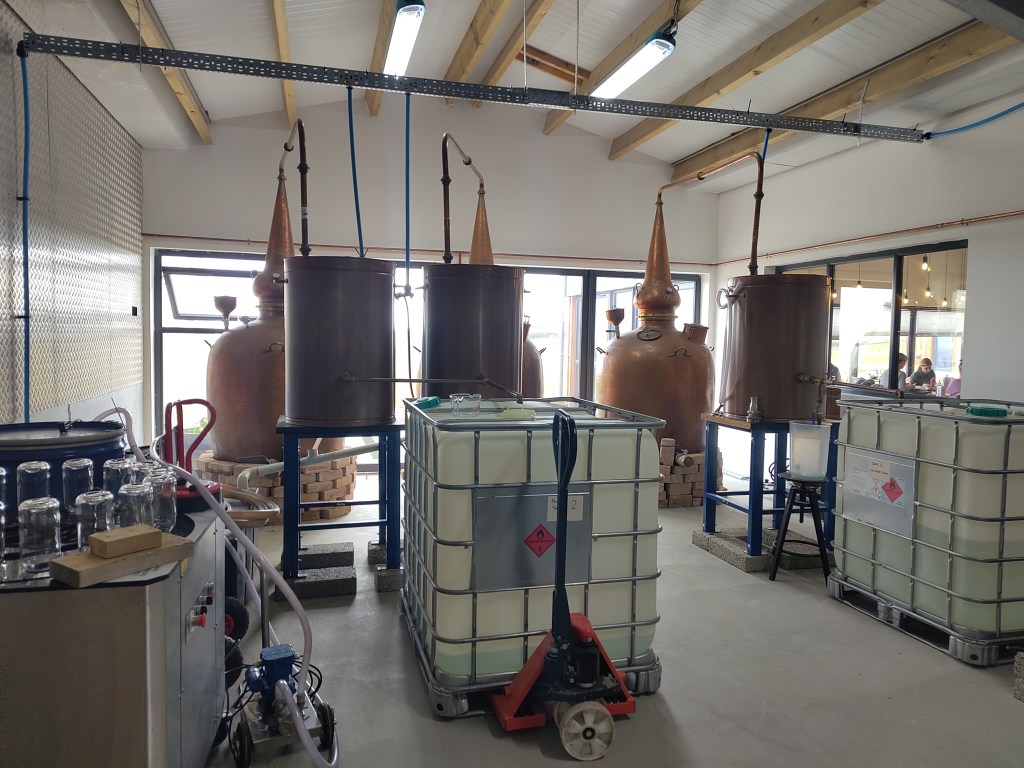
They have two wash stills and one spirit still, all directly fired with propane, and separate stills for gin and vodka. They can produce about a cask a day (the lower cut is 60%; we didn’t catch the upper). They have expansion plans here too: new, larger stills, with the old ones repurposed to distil spirit from ancient grains (Bere barley, possibly?). They’re also planning to go off-grid with biogas, which they would obtain (at least partially) from the draff.

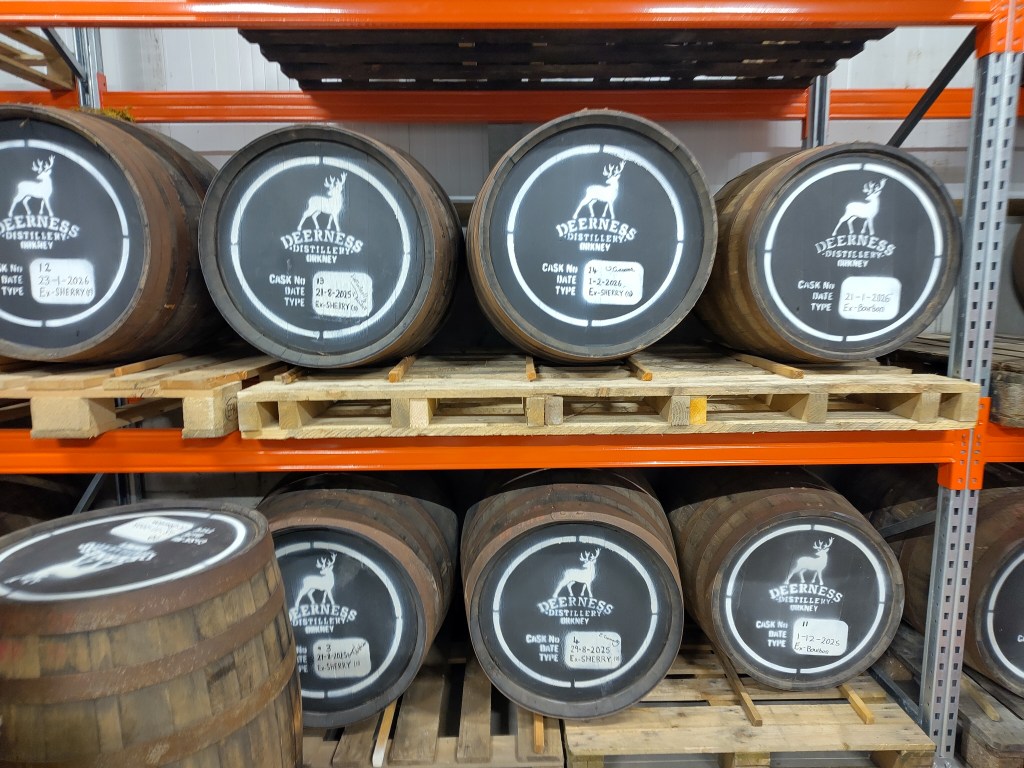
The casks are stored in a shed attached to the distillery (concrete floor, casks stacked four high), mostly American oak ex-bourbon barrels and sherry-seasoned hogsheads, but some wine casks as well.

After another chat with Stuart, the tour ended and we rescued Caterina and Fabrizio from the cafรฉ, though not before having an Americano and a tasty cake ourselves! It was a truly lovely tour: Stuart’s contagious enthusiasm made it obvious how their vision is coming to life, with a particular eye on sustainability. The tasting was entertaining too (we loved the Scapa Distillery Exclusive!), and since they couldn’t yet offer a full line-up of their own whisky, we really appreciated that they focused more broadly on Orkney whisky instead. A touch that’s been a bit lost at many of the new distilleries we’ve visited.

Stay tuned for the second tour of the day (and the last of this trip!). Until then, slร inte!


Deerness Distillery Whisky Tour and Tasting

Price: ยฃ30.00 pp (April 2026)

Duration: 1hr 30min

Tasting: Deerness newmake spirit (63.5%), Deer Sound Blended Scotch (40%), Scapa Distillery Exclusive Orkney Island Games 2025 (NAS, 48%, 1st fill American Oak casks), Highland Park 16 โ€œSea of Orkneyโ€ (44.5%)

Target: everyone

Value for money: good

Highlights: great location and cafรฉ

Recommended: yes, especially if you can fit in a meal

Link: https://www.deernessdistillery.com/


#75.1 Return to Orkney

Tasting tots at J. Gow


TL; DR: We took Gianluigi’s parents to Orkney last April, driving north from Edinburgh and ferrying across from Gills Bay. The highlight of the first day on Orkney was J. Gow, the island’s rum distillery on Lamb Holm, where Collin showed us around: molasses from the Central and South America, different fermentations (including with local orchid yeast), and a warehouse full of interesting casks. During the tasting, the 8yr Hidden Depth single cask stole the show, really delicious!ย 

After moving here just over eight years ago, we can finally say it out loud: Scotland is a pretty great place to live! And when family visits, it’s easy to pick somewhere spectacular to take them, and for us it’s a great chance to visit (or revisit) some lovely places. That was the case last April, when Gianluigi’s parents, Caterina and Fabrizio, came to visit us for just over a week. Except for that one time in 2020 (odd, we know), they usually come for just a long weekend, often with a Six Nations game in between, so there’s never much chance to take them around. This year, since they visited a bit later and for longer, we decided to take them to the Orkney Islands! Tucked off the north coast of Scotland, the islands have a growing spirits and beer scene, and a landscape like nowhere else. We’d gone up there with our friends Roberto, Cecilia and their daughter Flora back in 2022, we found the place pretty special, and obviously we made the most of it with a (very good) tour at Scapa and a (rather disappointing) one at Highland Park.

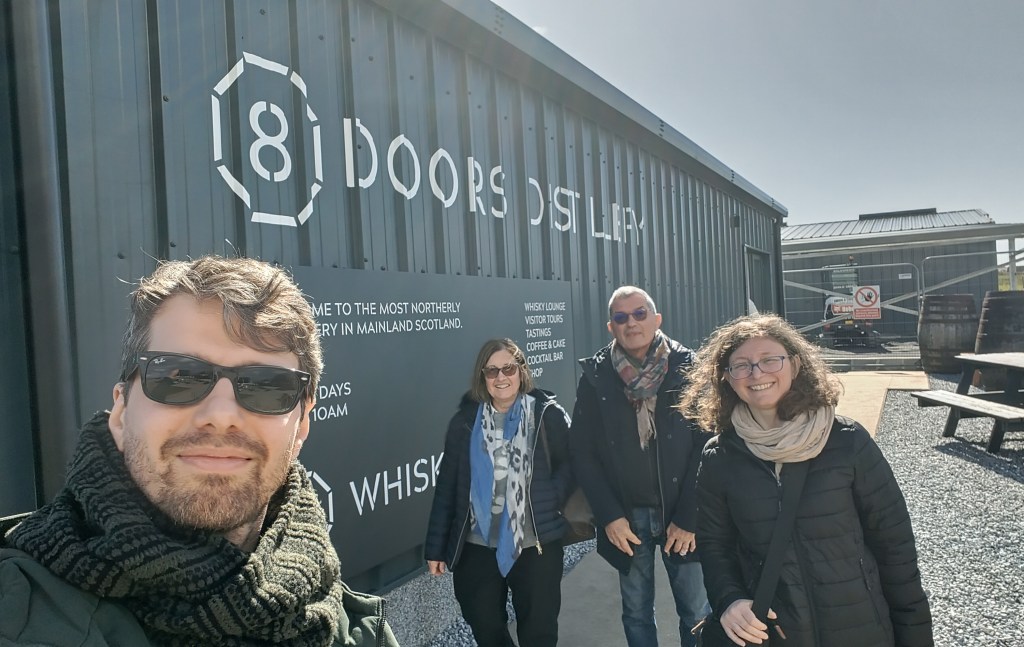
Anyway, we picked Caterina and Fabrizio up at Edinburgh airport on a Sunday after lunch and drove straight north. By dinner time we’d arrived at Tain, where we’d spend the night, them in a B&B, us parked in front of a nice beach. We had a lovely dinner at the Morangie Hotel (a typical pub menu, with fish and chips, curry, burgers and so on), one of those old-style cosy hotel-restaurants with carpet everywhere and fireplaces in every room. They were all unlit, though, waiting for the next cold season. The next day we woke up early, and before collecting them from the B&B we refilled the tank and got a good pie at Harry Gow (the coffee was debatable, though). We were soon on the road again, heading to John O’Groats, as our ferry was leaving from nearby Gills Bay. We briefly stopped at 8 Doors Distillery for a coffee in their visitor centre, which has a spectacular view over the Pentland Firth, and to say “hi” to Ryan, the distillery manager, whom we met last year and who was happy to show us the latest news and innovations. We had lunch on the ferry: sandwiches and bits we’d brought from home, in a typical Italian fashion.

We got off the ferry at St Margaret’s Hope, a wee village tucked into a small bay, with dark grey stone houses. We explored South Ronaldsay for a bit before driving north over the Churchill Barriers to reach Orkney Mainland, passing Burray and Glimps Holm. We stopped on Lamb Holm, a tiny island with no population but two important landmarks: first, the Italian Chapel, built inside a small hangar by Italian prisoners of war during WWII. Within walking distance is the J. Gow rum distillery, and after dropping Caterina and Fabrizio at the chapel (which we had already visited in 2022), it was our turn to explore.

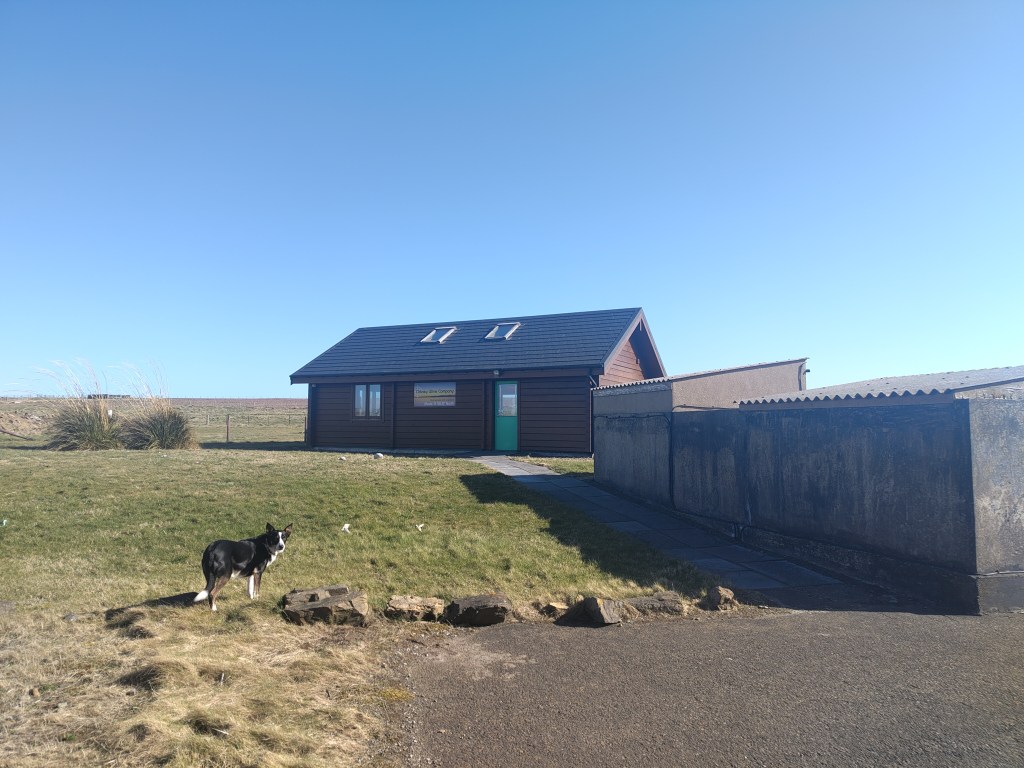
We only had a peek at the distillery back then, and not much time, so we managed just a small sip of the expressions available โ€“ now part of their core range: the Spiced Rum (40%, with spices from Orkney), Fading Light (3yr, chestnut-cask aged, 43%), and Revenge (3yr, ex-bourbon and virgin-oak casks, 43%). In the visitor centre and shop, alongside the rum, they sell merchandise (some very cool t-shirt designs, including one with a death-metal-band-style logo) and other local products. We hadn’t booked a tour, but we were lucky: Collin, the head distiller and director, and his wee border collie had time to show us around. In 2013 Collin started working at the family fruit-wine business, active since 2001. In 2017 he got a pot still and started distilling rum, adding Orkney to the map of the blooming Scottish rum scene, alongside other producers like Ninefold (Dumfries) and Matugga (Livingston). The name comes from John Gow, a short-lived pirate raised on Orkney, in Stromness, then captured and hanged (twice โ€“ the first time the rope snapped) in 1725.

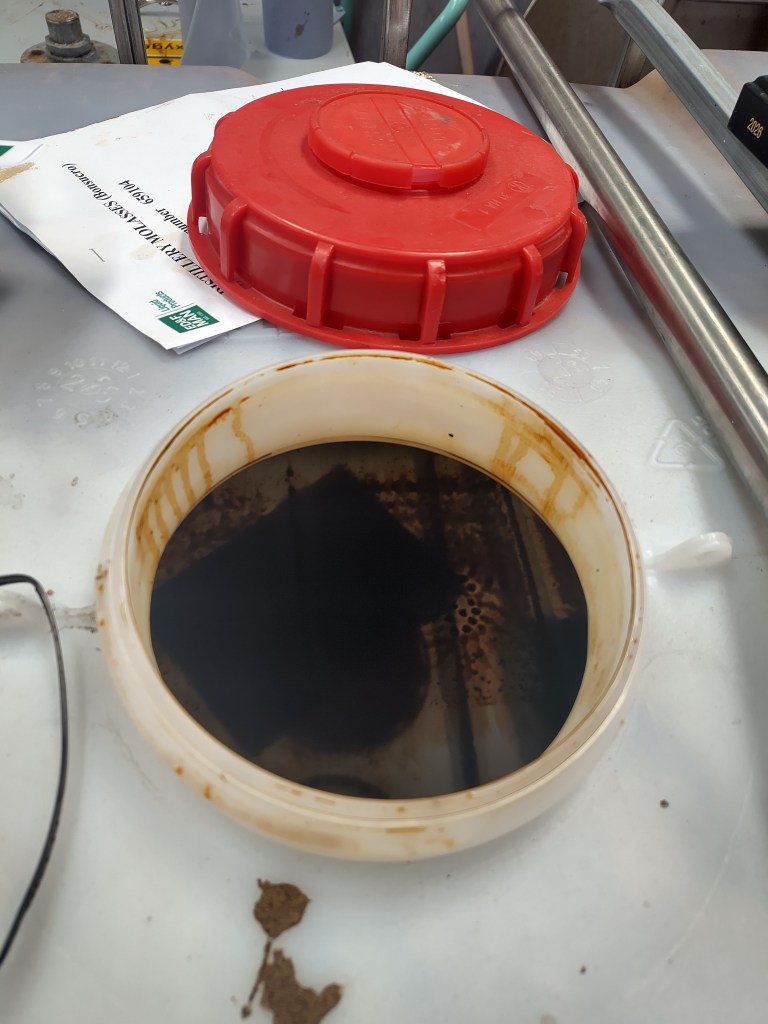
The distillery and all the production sit inside a warehouse just behind the shop, not even a minute’s walk. As with many rums, production starts with molasses, a syrup from cane-sugar refining. Because sugar cane doesn’t grow in Scotland (yet), he sources it mainly from Central and South America, but sometimes elsewhere, like Indonesia.

Fermentation is one of the key steps for adding flavour: at J. Gow it usually lasts 7 to 10 days, but for some expressions it can last up to a month, especially when yeast from local orchid flowers is used. They use a 2,000-litre iStill with a tall thin column, first without the copper rolls (for the stripping run) and then with them, to obtain about 300 litres of spirit. The residue from the stripping run is added to the next fermentation, while the pot ale goes to farmers.

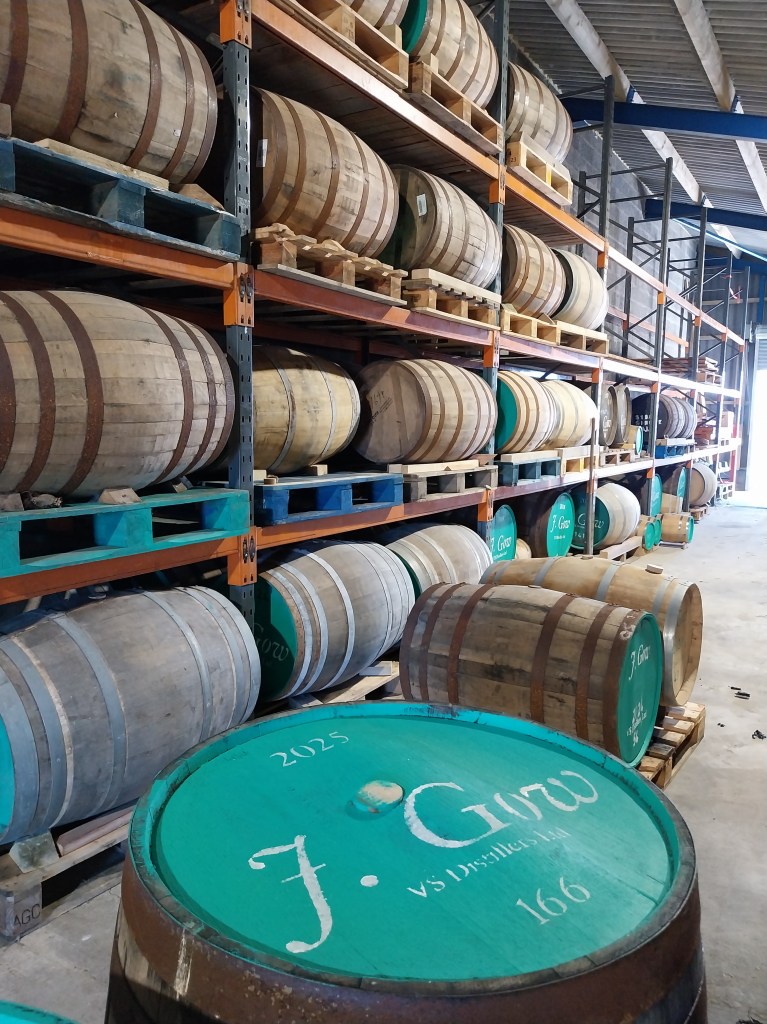
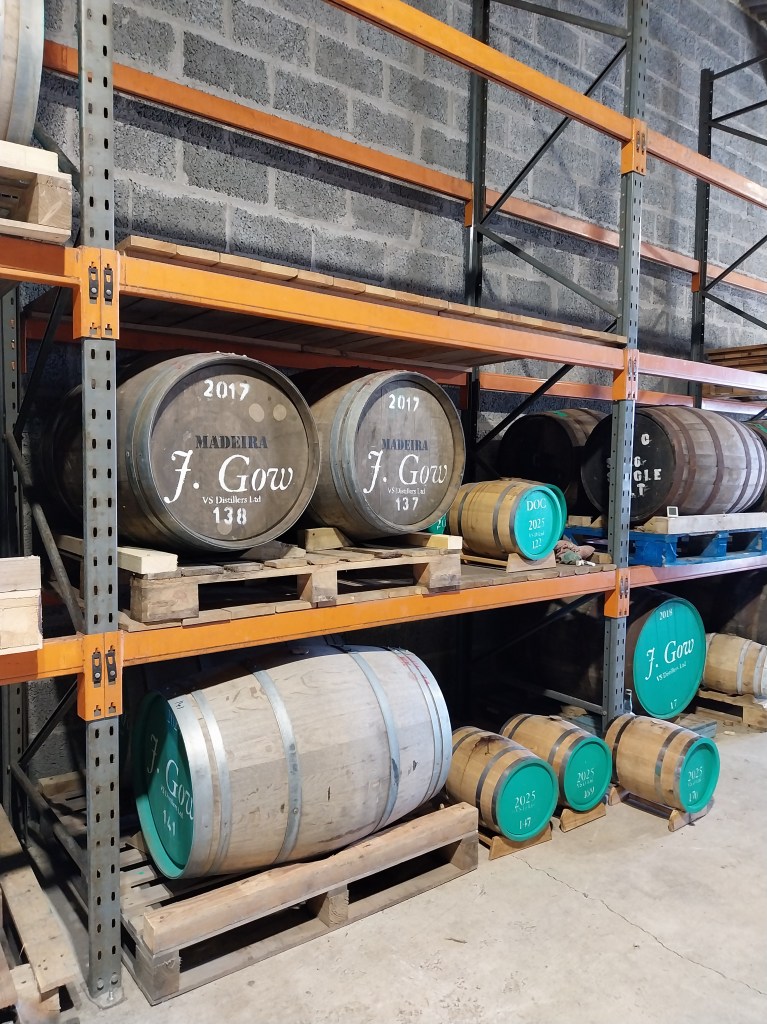
Casks are filled at distilling strength, except for some second fills, which are filled at 65% abv. The warehouse takes up one side of the main production building, and there they store a variety of woods and cask types, including many ex-bourbon and ex-wine casks, but also chestnut casks from Italy. Interesting!

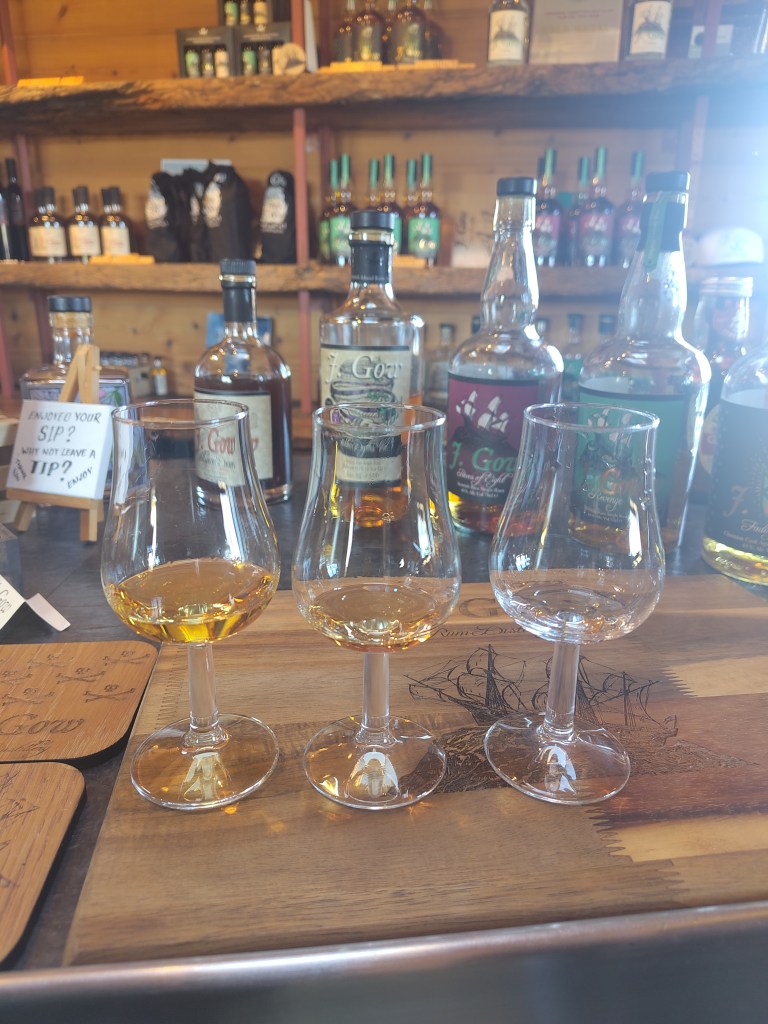
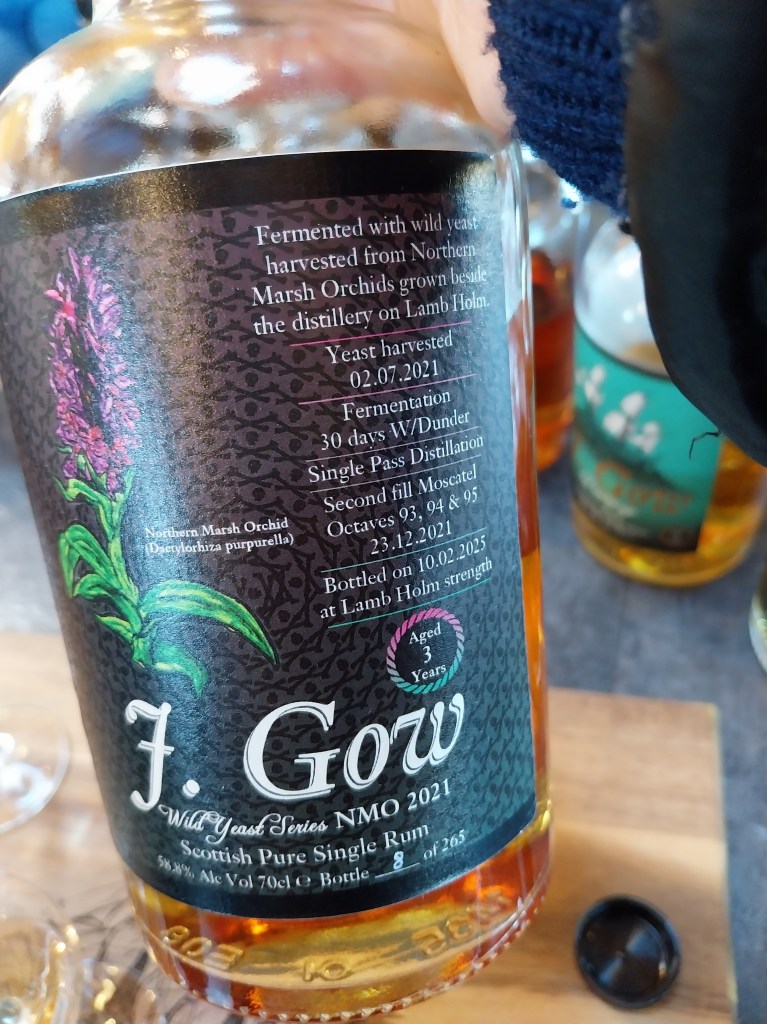
Back in the shop, we had three tots of rum. We skipped the ones we’d had last time and tried the Culverin (unaged white rum); Pieces of Eight, the new one aged in Madeira casks (very sweet and dangerously drinkable); and the third and final release in the Hidden Depth series, an 8yr single cask (truly stunning!). We also had a sip of their previous Wild Yeast Series release, using a yeast sourced from local marsh orchids growing behind the distillery: the funkiest of the bunch! They currently have a new release in this series, the Wild Yeast Series Orchweizen 2023, with different specs (different casks, abv and fermentation times).

After the distillery tour, we rejoined Caterina and Fabrizio, reached the flat we’d rented in Kirkwall, and went for dinner at The Neuk restaurant: a simple menu but very tasty dishes, and a selection of local beers (both bottled and on tap), perfect to end our long day.

We really enjoyed J. Gow: weโ€™d already visited distilleries that make rum as one of several spirits (Blackness Bay and North Point, for example), but this was our first time at one making rum exclusively. We love what Collin is doing in terms of experimentation, making a unique product whose character is embedded in the distillery’s surroundings. The Hidden Depth series is our favourite, both vol. 2 (which we had in the past, long gone now) and vol. 3, delicious stuff. We aren’t rum experts by any means, but J. Gow is one we’re keeping in the house.

Stay tuned next week for another Orkney adventure, back to whisky this time! Until then, slร inte!


J. Gow Distillery Tour

Price: ยฃ15.00 pp (April 2026)

Duration: 45min-1hr

Tasting: 4 tots of J. Gow rum, the Culverin (white rum, 50%), Pieces of Eight (8yr, ex-madeira and ex-bourbon casks, 43%), Hidden Depth Vol. 3 (8yr, single ex-bere whisky/port style cask, 50.1%) and (now released) Wild Yeast Series NMO 2021 (3yr, 2nd fill Moscatel octave, 58.8%, small batch 460 casks)

Target: everyone

Value for money: great!

Highlights: the location is pretty special

Recommended: if you like rum, itโ€™s a must-do!

Link: https://jgowrum.com/