#79.3 Dramming in Europe

Over the Alps to Langatun distillery


TL; DR: Leaving the Apennines, we headed north via Como and across the Alps to Langatun distillery in Switzerland. Head distiller Stefan showed us around their distillery in a 400-year-old granary, where brewery wort is fermented with an English ale yeast, distilled to unusually strong low wines and mostly matured in wine casks. Then on to Colmar, Strasbourg, a Belgian beer “museum” and a night at an animal sanctuary.

(Missed Part 2/Part 1?)

Day 11. After a few days in Casali di Morfasso, in the Apennines, we were (kind of) ready to start our trip back to Scotland. In the morning we drove to Piacenza, where we packed up the van for the return trip, met some more family at the last minute and had lunch with friends. We left right after, taking the motorway north towards Milan. Our first stop was the city of Como, on the lake of the same name, to visit Gianluigi’s relatives. Only a couple of hours, as it was time to hit the road again. Soon after, we crossed the border into Switzerland, driving across the Alps again and passing Lugano and Lucerne. Our stop for the night was near the village of Bรผtzberg: a stopover for small motorhomes and campervans behind a private house. It was a nice and quiet spot (although it was already dark when we arrived), and relatively cheap (โ‚ฌ/CHF 15 for the night, plus โ‚ฌ/CHF 2 each for the shower).

Day 12. In the morning, the first mission was to find a bakery, which we did, although the result was not as good as in France. Our appointment for the morning was at the Langatun distillery, in Aarwangen, near the town of Langenthal. We learned about this distillery during the pandemic, thanks to an independent bottling by That Boutique-y Whisky Company. From their website, we found out that the distillery is open to the public but that, on weekdays, the rate was CHF 350 (approx. ยฃ320 at today’s exchange rate) for a group of ten people, including a tour and a tasting. Obviously, there were fewer than ten of us, so when we got in touch, they very kindly offered to give us a quick tour for free.
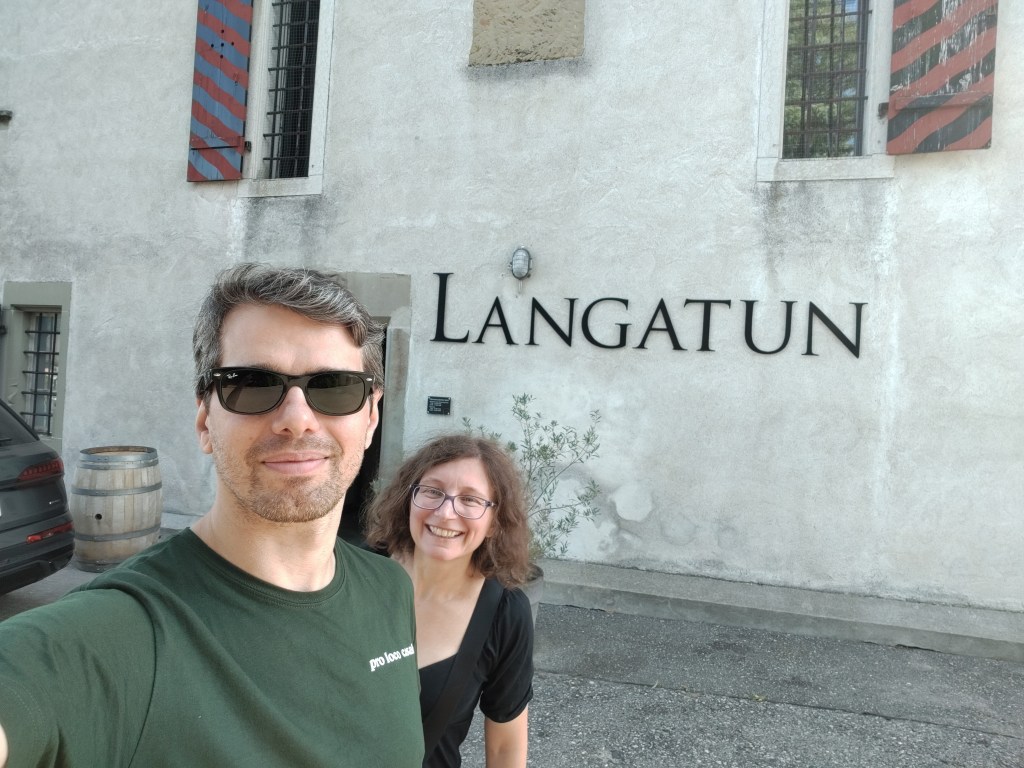
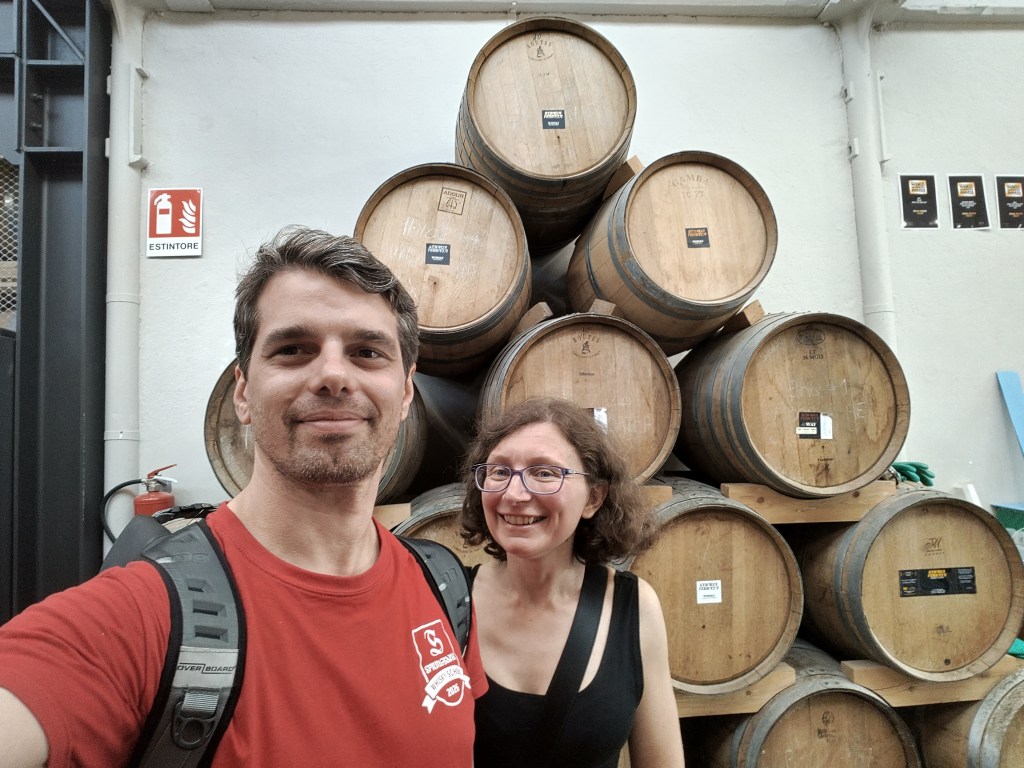
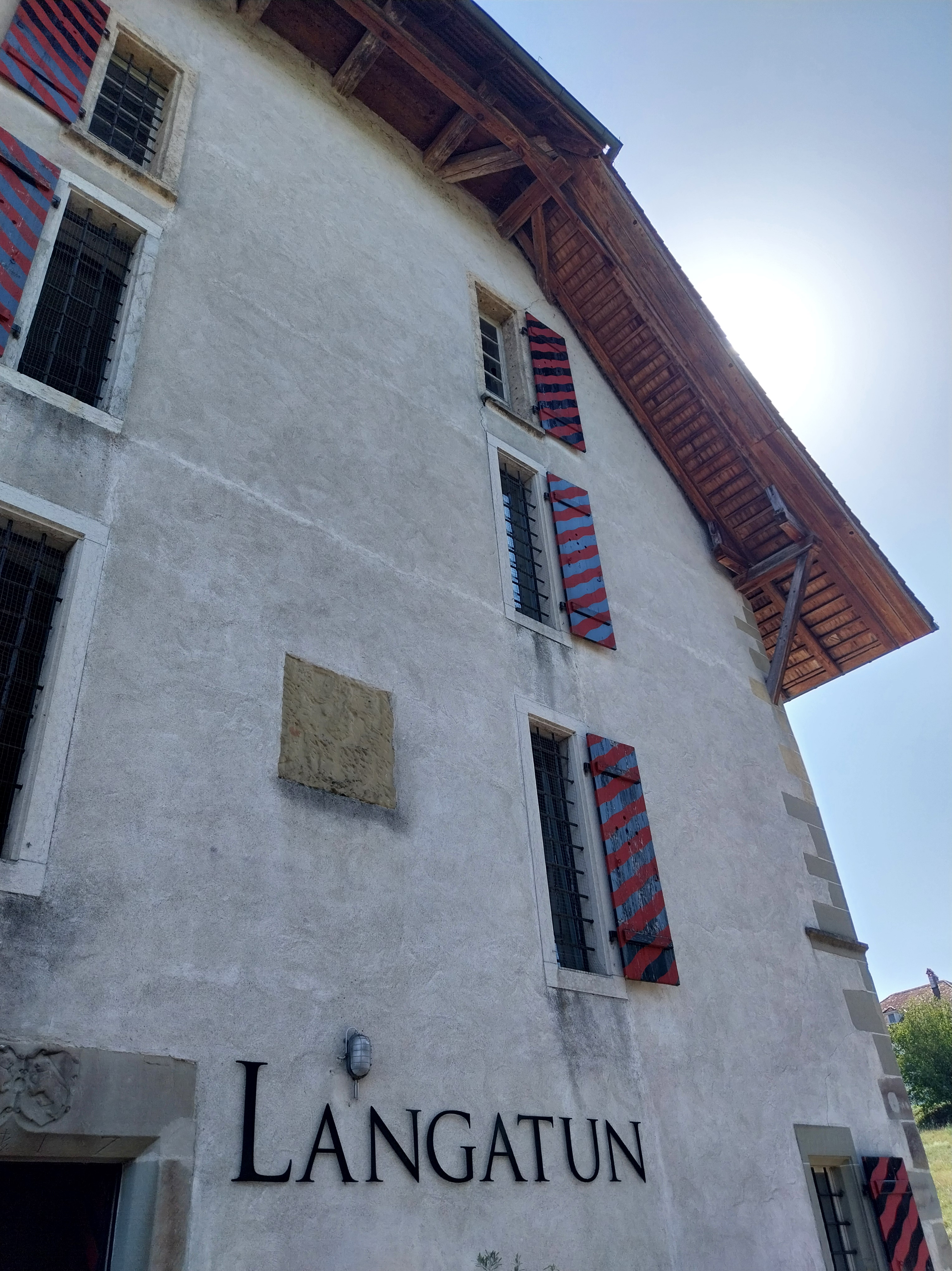
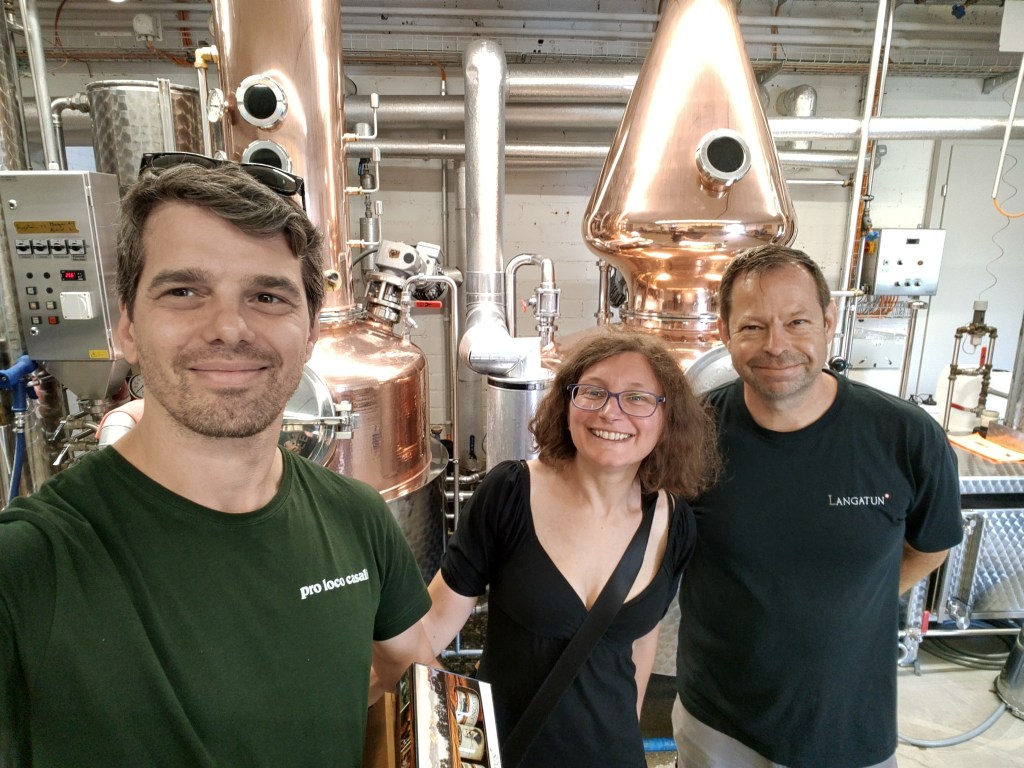
The distillery is in a very picturesque part of the village, overlooking a castle. There we met Stefan, the head distiller. He is German, has a background in brewing, and moved to Switzerland to work at Langatun. The distillery was founded in 2005, although the business dates back to 1857, when Jakob Baumberger, back in his native country after qualifying as a brewer in Munich, founded a distillery on the family farm. Two years later, he took over an older brewery in Langenthal. Fast forward 80 years: in 1939, distilling cereals and potatoes was banned because of the war, a law that, believe it or not, was only repealed in 1999!
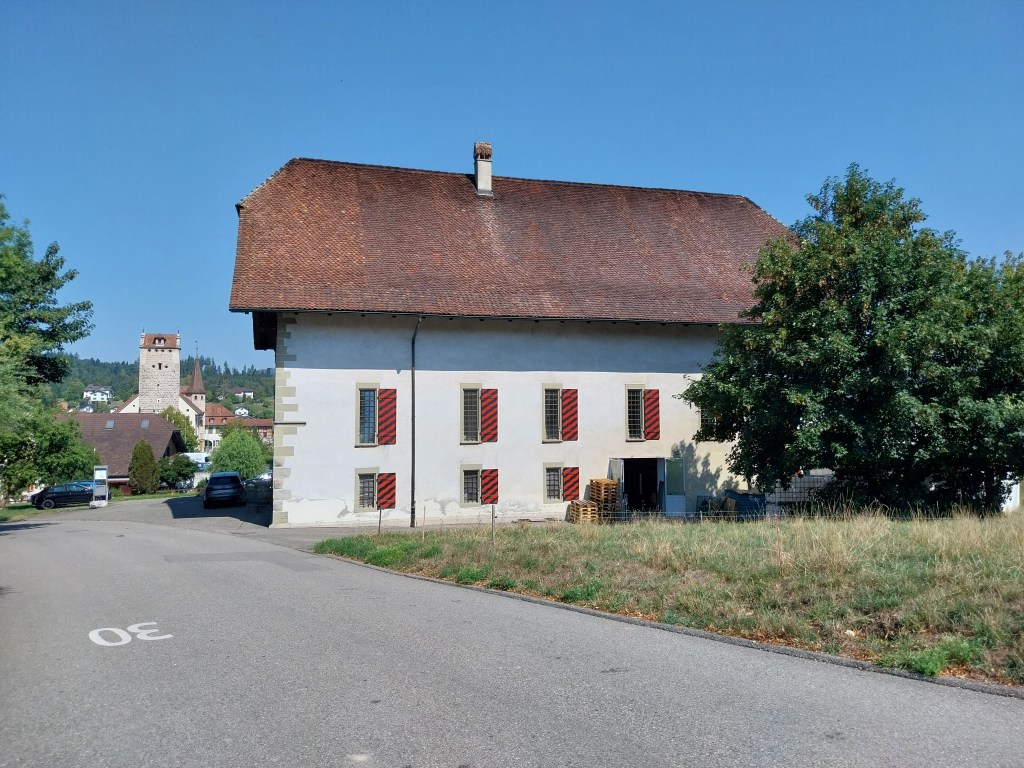
In the meantime, the distillery had been sold to a larger group, which brings us to 2005, when Hans Baumberger III, Jakob’s great-grandson, founded the current Langatun distillery, named after the old Celtic name for Langenthal. Their first single malt, Old Deer, was released in 2008. In 2014 they expanded, adding a second still, and moved the distillery to its current site: a 400-year-old granary (Kornhaus) belonging to the nearby castle in Aarwangen, on the river Aare. A third still was added in 2019, and since 2021 they have had a visitor centre, where they run tours, tastings and other events.
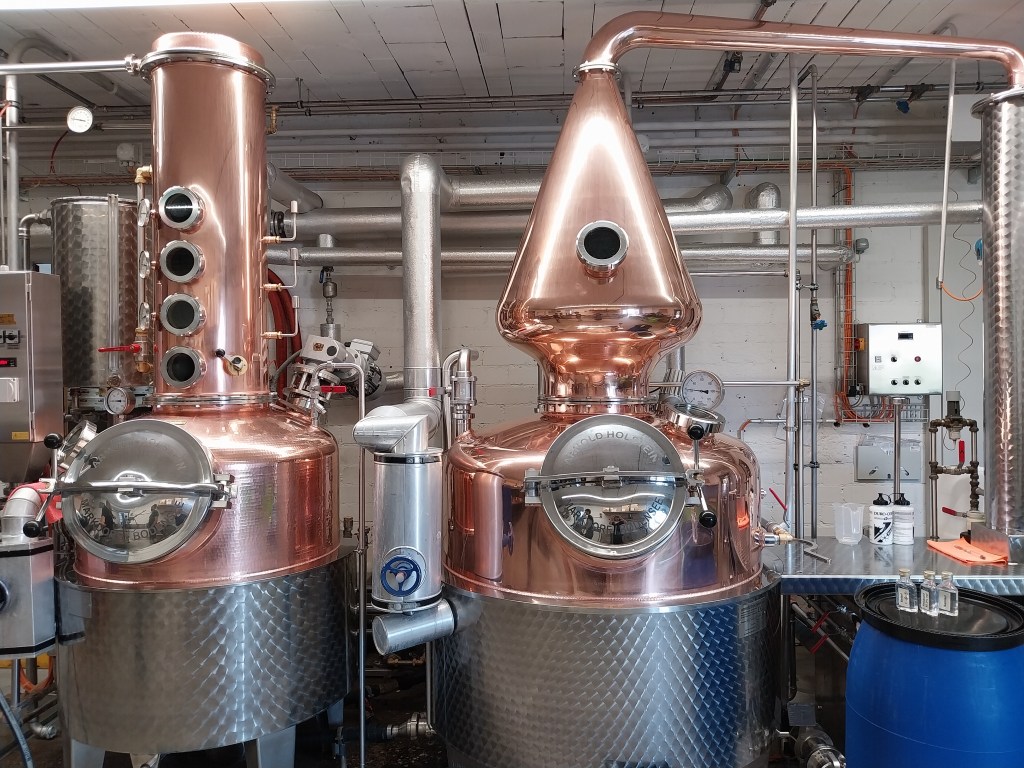
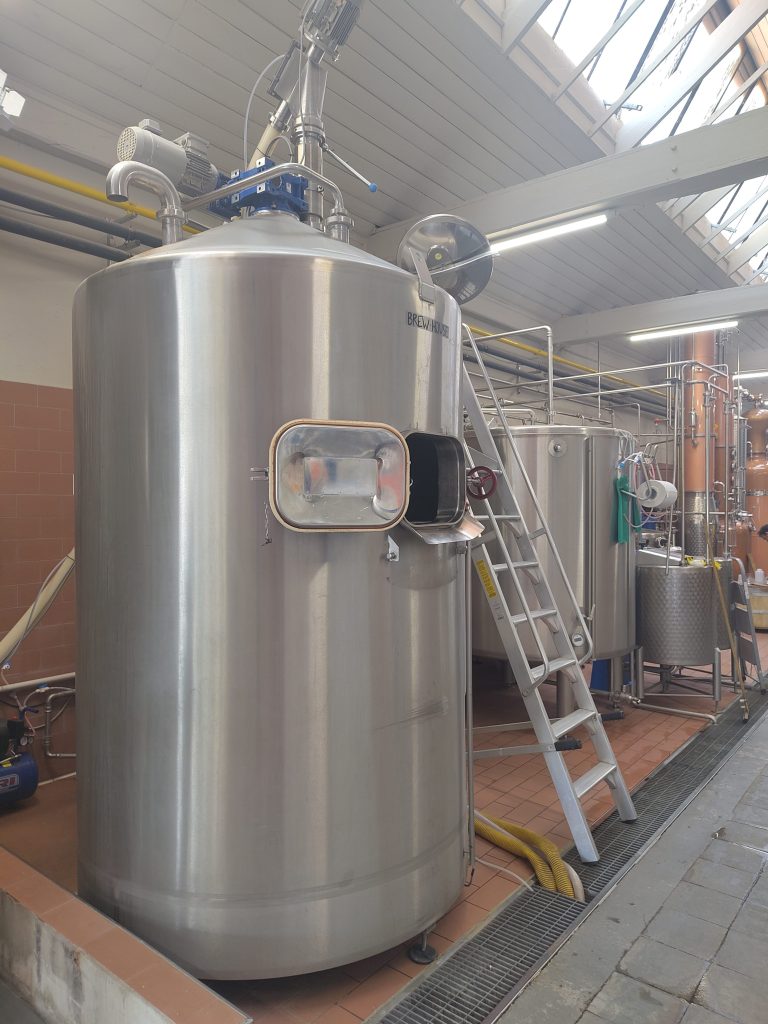
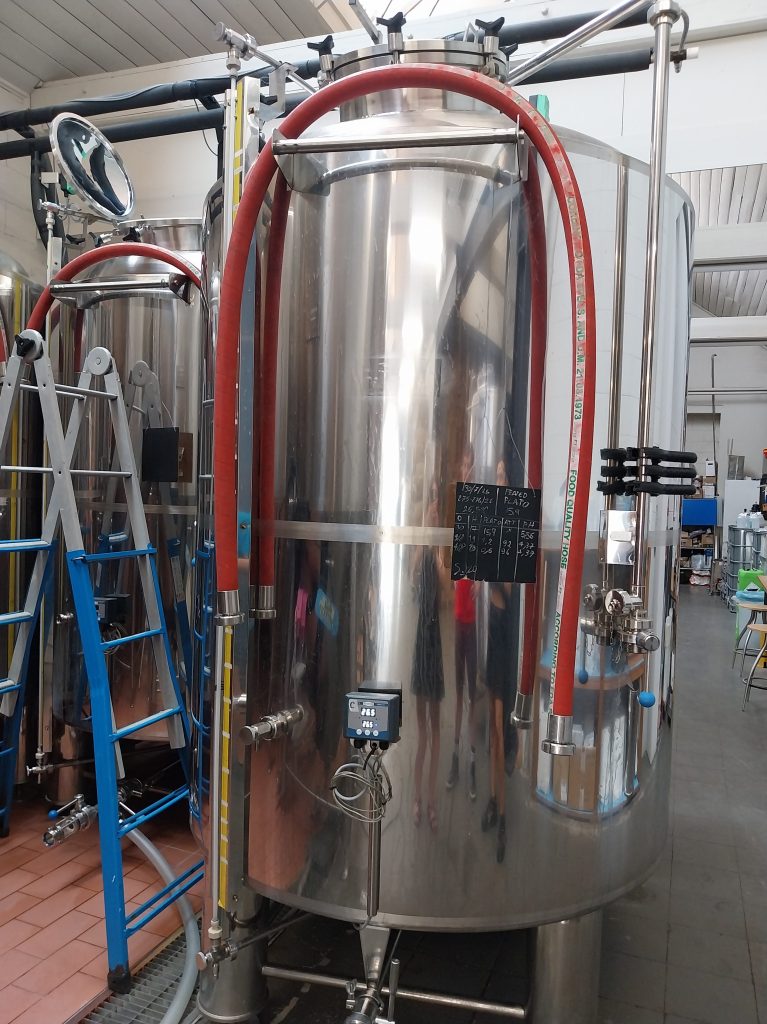
There is no malting on site. They use some peated malt from Scotland, but the main grain is two-row barley from Germany or France, with no specific variety. They also produce whiskies from other mash bills, including a rye and a “bourbon-style” whisky called “BernBon” (clever name). Mashing is done at a nearby brewery, and the wort is brought in ready for fermentation. For this, they use an old English ale yeast, which takes the wash up to 11% ABV.
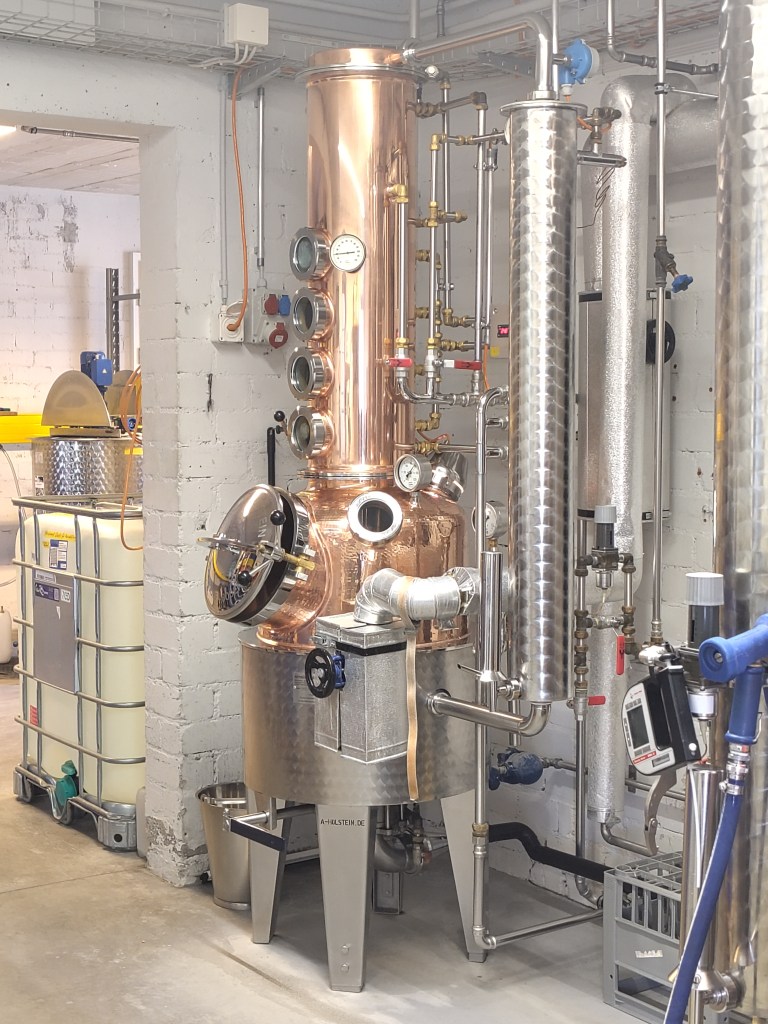
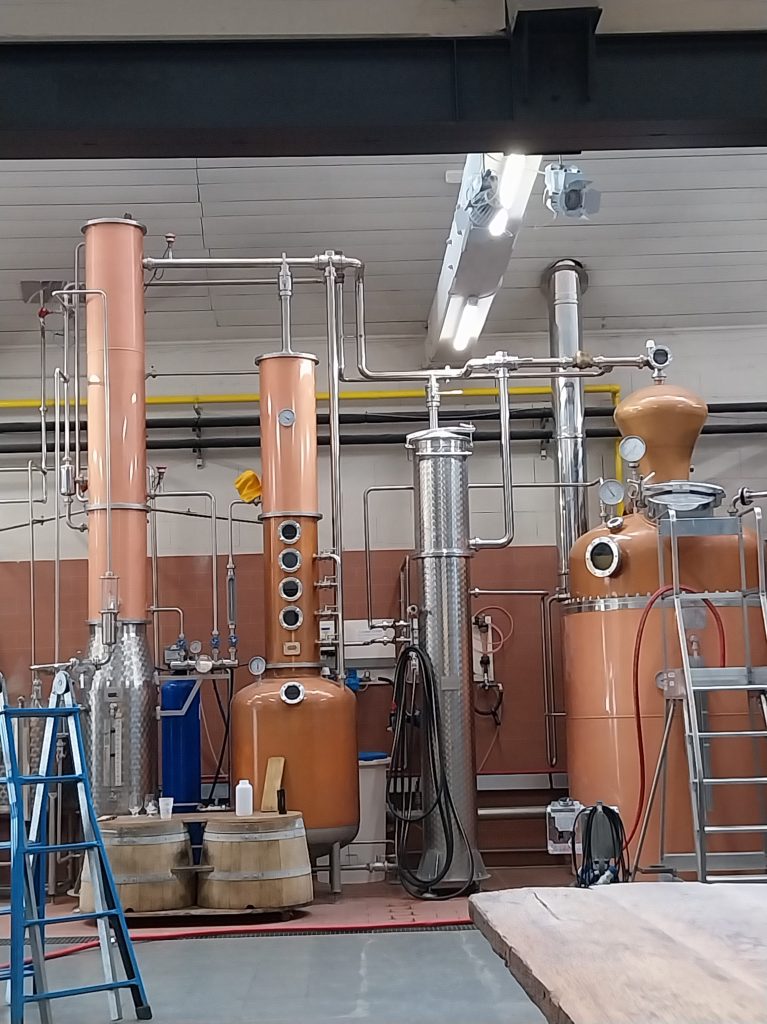
As mentioned above, they have three stills: two larger ones and a small one. For the first run, 750 litres of wash go into the still and are heated for about an hour before distillation starts. The run lasts five hours and gives about 250 litres at 35-38% ABV, much higher than the ~25% we usually hear about in Scotland. One batch is made up of two 750-litre wash charges and, in total, about 440 litres are collected from the first runs. The second run is much slower, lasting several hours, and is controlled by smell. For whisky, the plates in the second still are left open (to note, the same stills are also used for rum and gin). The heads are discarded, and the hearts cut starts at 88% ABV, giving 170 litres of spirit at 85% ABV. The tails (30 to 40 litres) are redistilled in the small still to around 40% ABV and then added back to the original batch. Their total capacity is up to about one barrique filled per day.

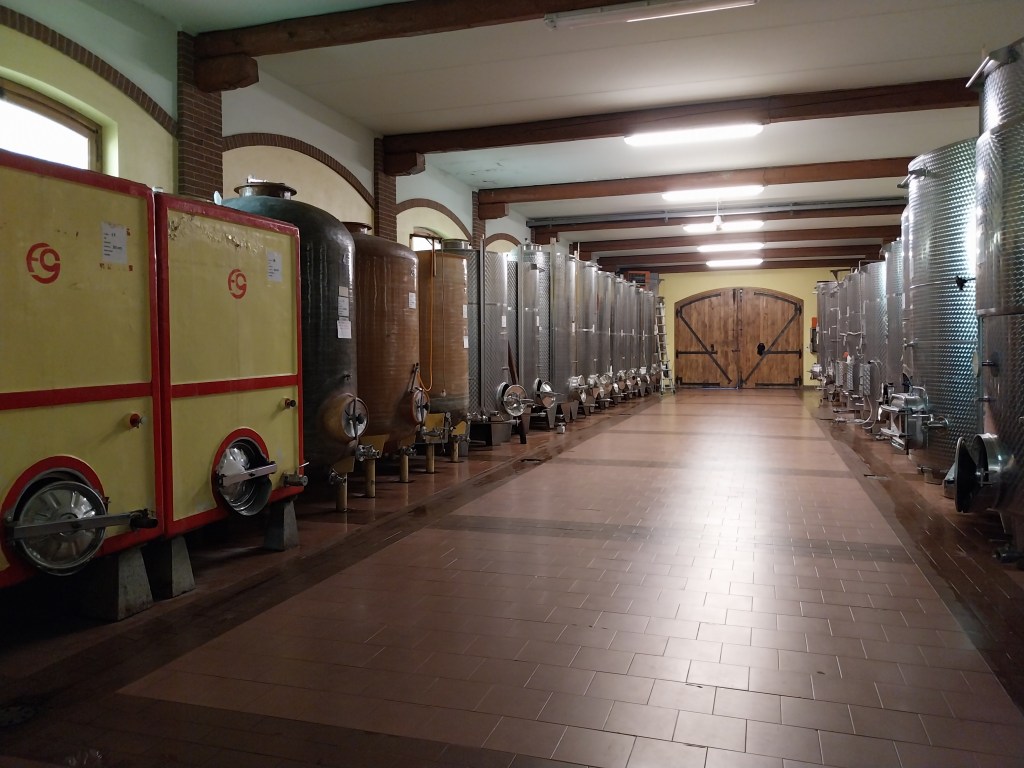
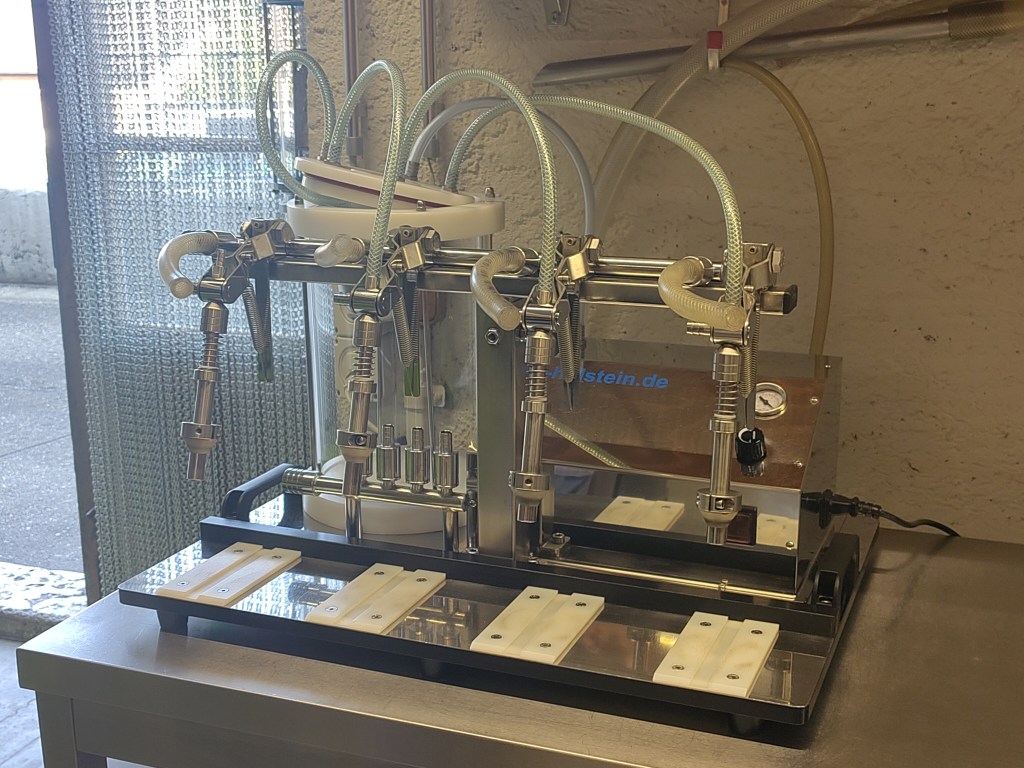
The new-make spirit is reduced to 65% ABV for filling. They mostly use wine casks of different types, e.g. Chardonnay and Pinot Noir. There aren’t enough Swiss casks, so they come from all over, including unusual countries like Armenia and Lebanon. The warehouse is in Langenthal, and standard maturation is 5-8 years. There is also a small bottling machine on site, which can handle 1,000 bottles a day.
We then moved upstairs, where they have a shop for all of their products (whisky, gin, rum and liqueurs), including a range of independently bottled Scotch single malts called the Long Vale Selection. The shop and bar are in a large but very cosy space, decorated with whisky-production equipment (both old and modern): it looks perfect for tastings and other events. There, Teresa tried a few of their single malts, starting with Old Deer, their flagship expression (the 46% version; there’s also one at 40%). Together with Old Crow and Old Wolf (both peated, the first matured in wine casks, the second in wine and sherry casks), it makes up their core range, the “Heritage Line”. Among others, she tried a single malt matured in a Nero d’Avola cask (a popular Sicilian red wine, a first for us!) and a peated one matured in Rioja red wine casks (delicious!). They have a limited age-statement range, a 12y and a 15y (both a bit pricey), and will soon bottle the first 18y Swiss single malt.
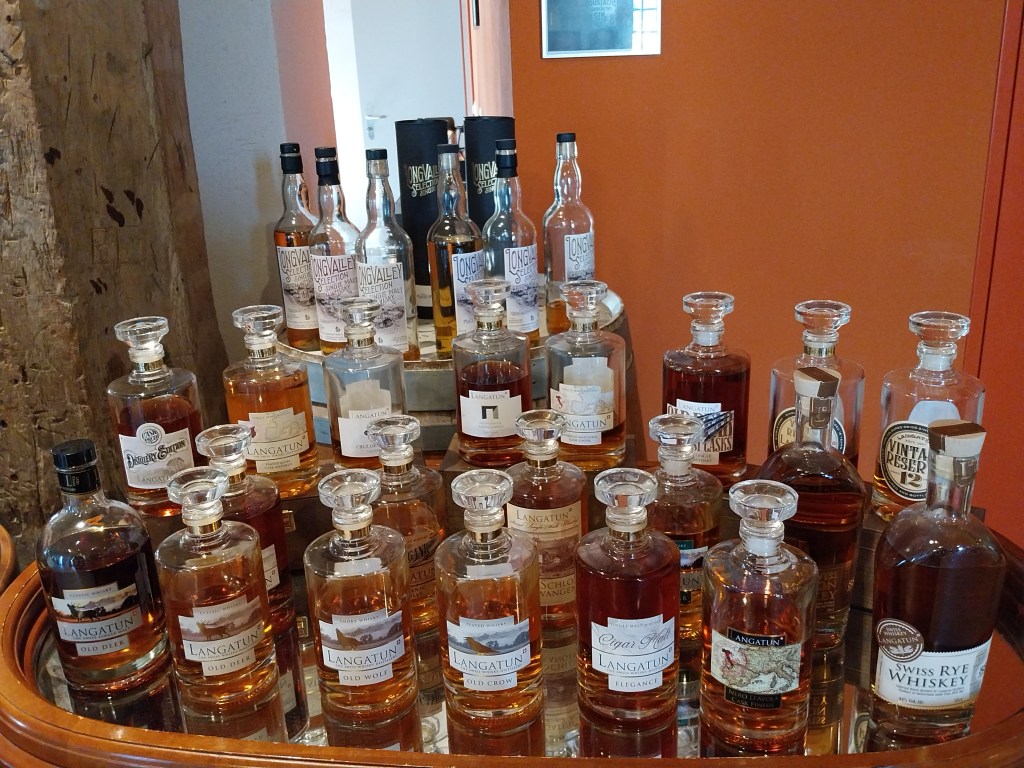
We ended up taking home a bottle of Old Bear Lost Cask, an expression with a peculiar history: it was bottled, but then the sale fell through, so the whisky was put back into cask and forgotten about, until it was rediscovered and bottled again in 2023. We also got a tasting pack of five 50ml miniatures, with the idea of doing a proper tasting once at home. Unfortunately, at the time of writing we still haven’t done it: too much whisky and only one liver (just the other day we finally got round to the driver’s drams from the Benrinnes tour we did back in May!).

Overall, we really enjoyed the tour at Langatun: again, a very different way of producing whisky from what we are used to in Scotland. Stefan was very nice, did a great job of showing us around and answered all our nerdy questions, which we really appreciated. Kudos to him! We’ll report back after our tasting of the five expressions we took home!
(If youโ€™re only interested in the whisky part, you can stop here.)

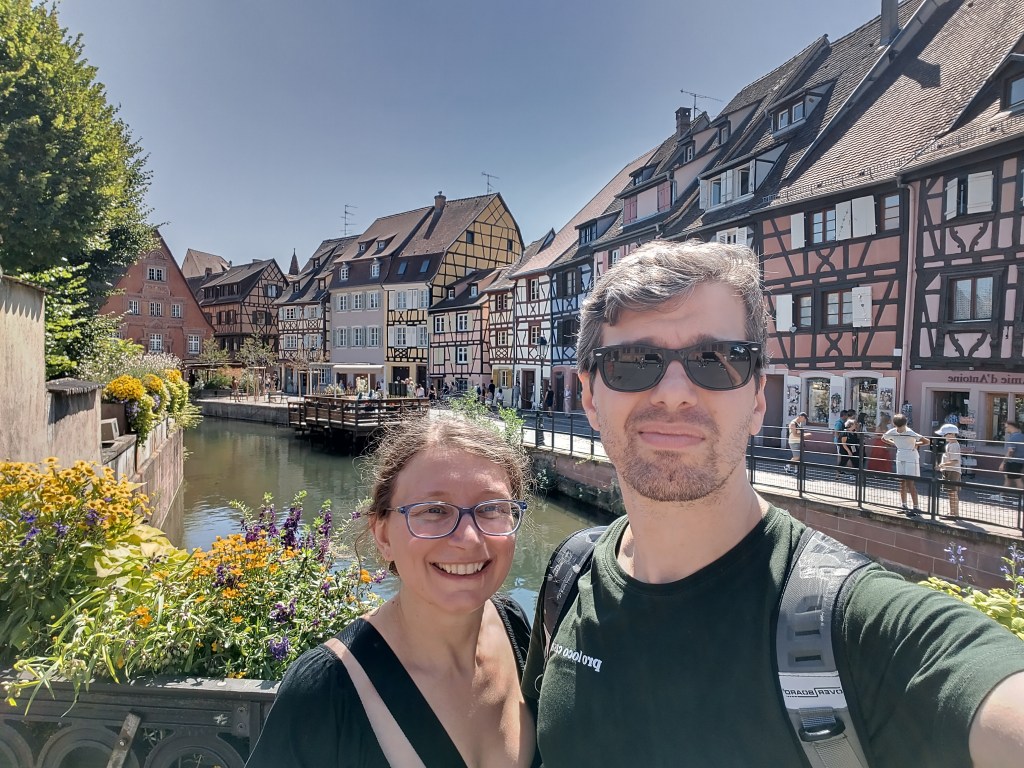
After the visit, we took the road towards Basel and crossed back into France to visit Colmar, which many friends had recommended. It is a nice town indeed, with canals and a very cute medieval centre, albeit a tad touristy. There we had a late lunch and, while it looked pricey at first, the portions were generous: Gianluigi was (unusually) not quite prepared for the amount of pork he ended up with! Everything was yummy! After a relaxed walk around the town, we headed back to the van and drove north, deciding to stay near Strasbourg but on the German side of the Rhine, in a quiet town called Kehl. There, we had a pint (of a delicious local German lager), did some grocery shopping and had a wee dinner in the campervan, before going to bed.
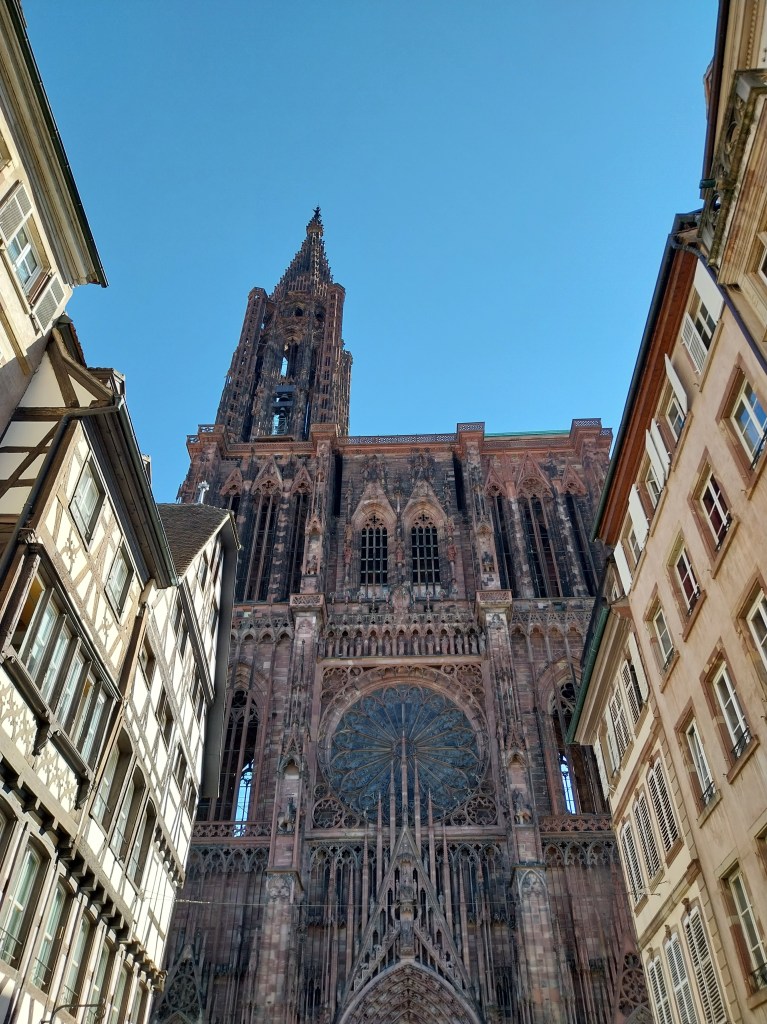
Day 13. We woke up to a sunny day, had a quick breakfast and left for Strasbourg, on the other side of the Rhine. We found a car park under the trees (to avoid getting cooked once back) near the city centre, and explored the city for a couple of hours. It was a first for Teresa, and a return for Gianluigi, albeit 24 years later! The city centre is very beautiful, with its majestic cathedral, and in general it looks like a very liveable place.
We left in the early afternoon, again driving north. Instead of taking the motorway, we took a smaller road through the Parc naturel rรฉgional des Vosges du Nord, before crossing into Germany again. After a long and toasty drive (thanks, broken AC), we crossed into Belgium near the town of St Vith, where we stopped for a quick refresh. Soon after, we stopped again at the Beer Museum, just a few kilometres down the road: it’s a bar/restaurant and bottle shop with a massive choice of Belgian beers. Fill yer boots! We would have stayed for the night, but the car park mostly accepts self-contained motorhomes, as there are no toilets or showers. We kept driving until we were near Hasselt, where we stayed at a campsite within a sanctuary for horses and other animals ran by a lovely couple: not the cleanest, but quiet, relaxing and inexpensive, so perfect for one night.
Stay tuned for the last distillery and the end of our European trip! Until then, slร inte!

Langatun Distillery Tour and Tasting

Price: free (normally CHF350.00/~GBP320.00 for a group of 10, exchange rate as of August 2026)

Duration: 1hr

Tasting: a few sips of various drams for Teresa

Target: whisky nerds

Value for money: NA as it was free for us

Highlights: the tour with Stefan

Recommended: yes

Link: https://www.langatun.ch/en/

#79.2 Dramming in Europe

Whisky from the old country


TL; DR: The Italian chapter of our summer road trip: across the Alps to Moncalieri for lunch with an old friend, then a night among Roero’s vineyards at the Filippo Gallino winery. Next, a wolf near Barbaresco and a long-overdue visit to Strada Ferrata, a pioneering Italian distillery playing with malts, yeasts and casks. Finally, family, friends and a village fair in Casali di Morfasso.

(Missed Part 1?)

This is the Italian “chapter” of our summer trip around Europe. If you’re only interested in the whisky part, go here.

Day 4. The rest area was really noisy, so when we woke up we weren’t that well rested. We soon set off towards our next destination: Moncalieri, on the outskirts of Turin. We stopped at the first boulangerie we could find to get ourselves some croissants and other tasty French goodies, and then continued straight towards the Italian border, passing Le Pied du Col and Brianรงon. The day was sunny, and the road through the Alps was quite spectacular. After crossing the border (no checks or any other shenanigans, we love Europe!), we stopped again in Cesana Torinese for a quick coffee (in what seemed to be the only open bar, judging by how busy it was). We arrived in Moncalieri just in time for lunch and, after some trouble finding a parking space, we finally met our friend Luca, who moved to Turin from Edinburgh a few years ago. We had a great lunch at Osteria La Cadrega and a nice catch-up with our friend.

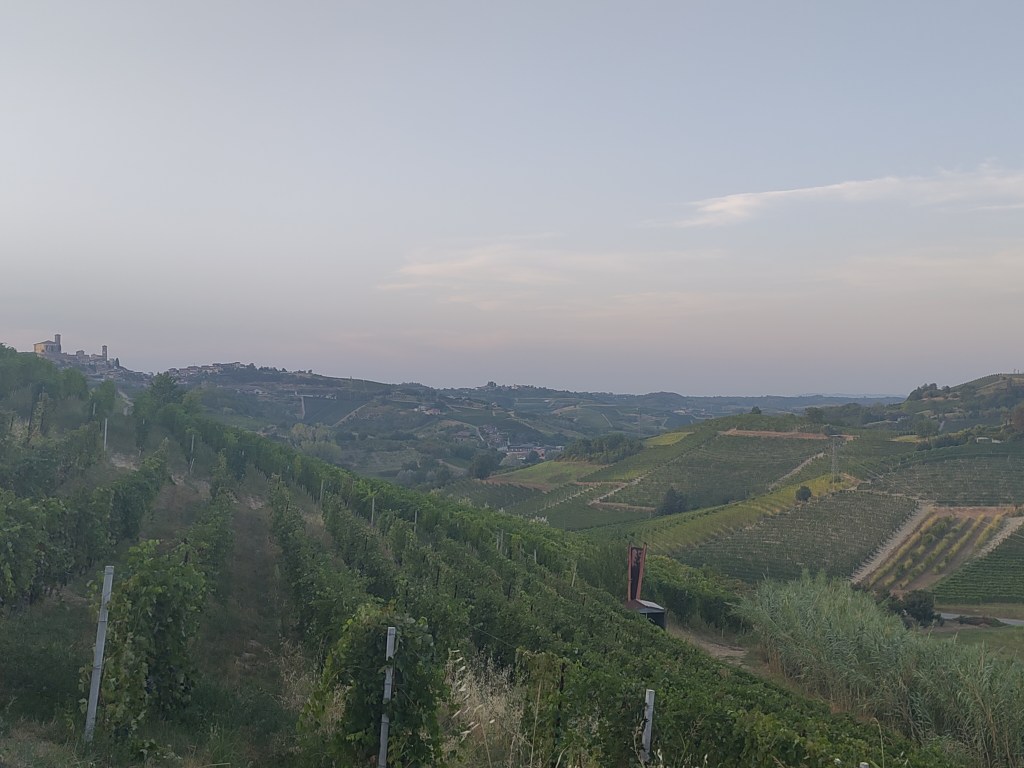
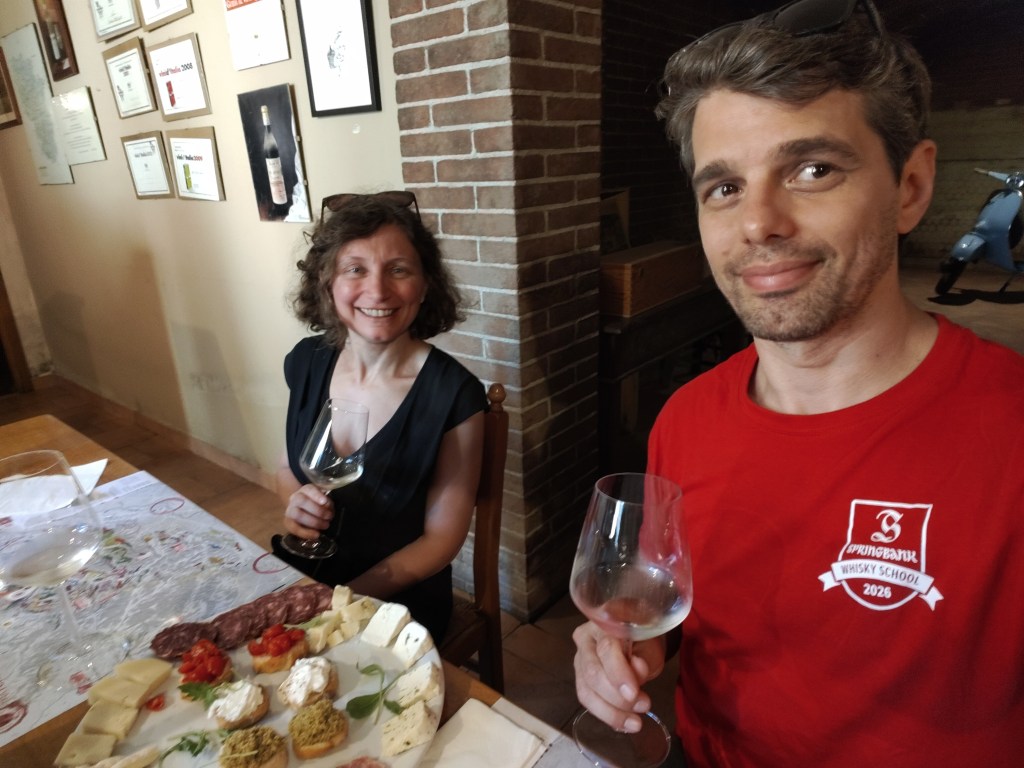
In the afternoon we set off again. Our destination for the day was Canale, roughly between the cities of Alba and Asti, about an hour away. It’s an area famous for its wine, not far from the villages of Barbaresco and Barolo, in a hilly landscape dominated by vineyards. As we found out later, the specific wine-producing area we were in is called Roero. We were staying at a historic winery called Filippo Gallino, which offers campervans and motorhomes a place to stay in exchange for booking a vineyard visit or a wine tasting. It looked almost too good to be true, but there we were: tasting some spectacular wines with nibbles, and all set for the night.

Our tour was led by Nicolรฒ, who was very nice and knowledgeable. He first took us on a quick walk through the production area, and explained how for their white wines they mainly use Arneis, a very typical local grape, along with some Riesling. For the reds, they mainly use Barbera and Nebbiolo (the wine made from the latter is simply called “Roero”), each with three bottlings that differ by vintage. Their Arneis is made with both modern and old methods, which we tried in our first A/B comparison: the old-style one won for both of us! They also branch out into a metodo classico (traditional method) brut, rosรฉ and orange wines, and a low-abv (~4.5%), very sweet red wine called Birbet (made with Brachetto grapes). We were thrilled, it was one of the highlights of the holiday and, we won’t lie, we came back with not one but two cases of wine. It was that good!

Day 5. In the morning, the car park in front of the winery was almost full: more campervans had arrived late at night (taking advantage of the winery’s hospitality). By then, Mr Vantastic was also in full sun, so we left earlier than planned. We made a small detour for an espresso in Barbaresco which, besides giving its name to the wine, is also a very nice village. On the way there we saw a wolf (!) in a vineyard; unfortunately, by the time we came back it was gone. As it was still early, we decided to stay off the motorway as we drove east, from Piedmont towards Lombardy. We stopped for lunch in a typical trattoria, Ristorante-Pizzeria Il Giardino, in Parona. There, we had a risotto with radicchio and gorgonzola, and a vitello tonnato, both delicious: heaven! They were also super quick, so we were soon back on the road towards our next destination: Distilleria Strada Ferrata, in Seregno (north of Milan).

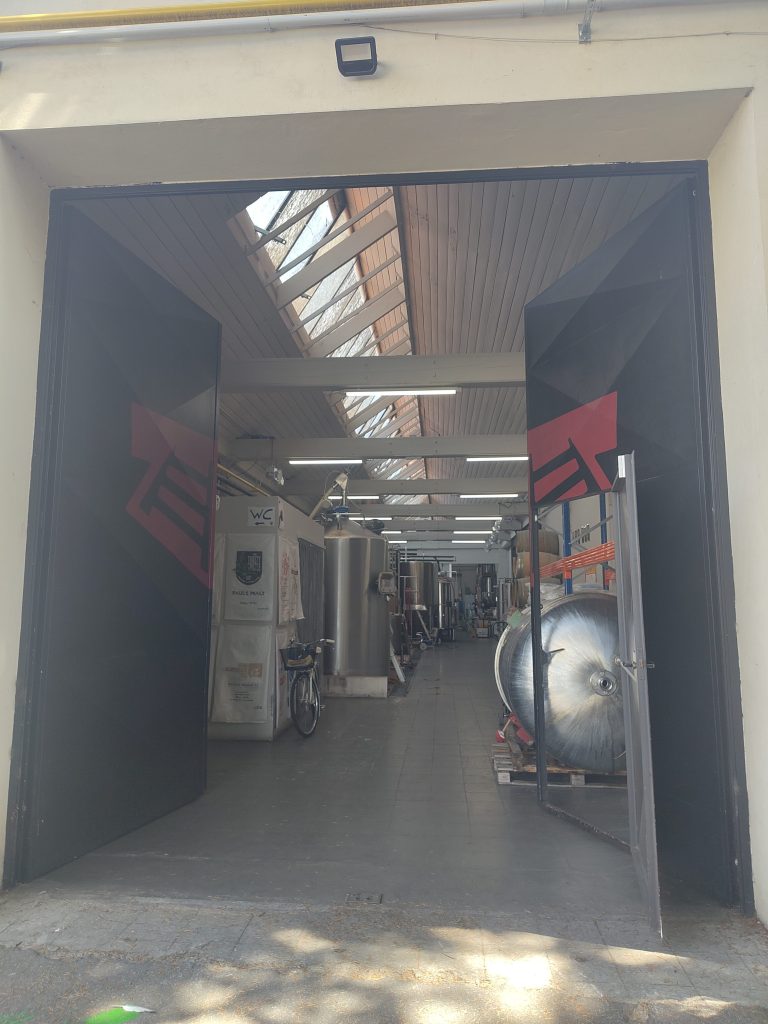
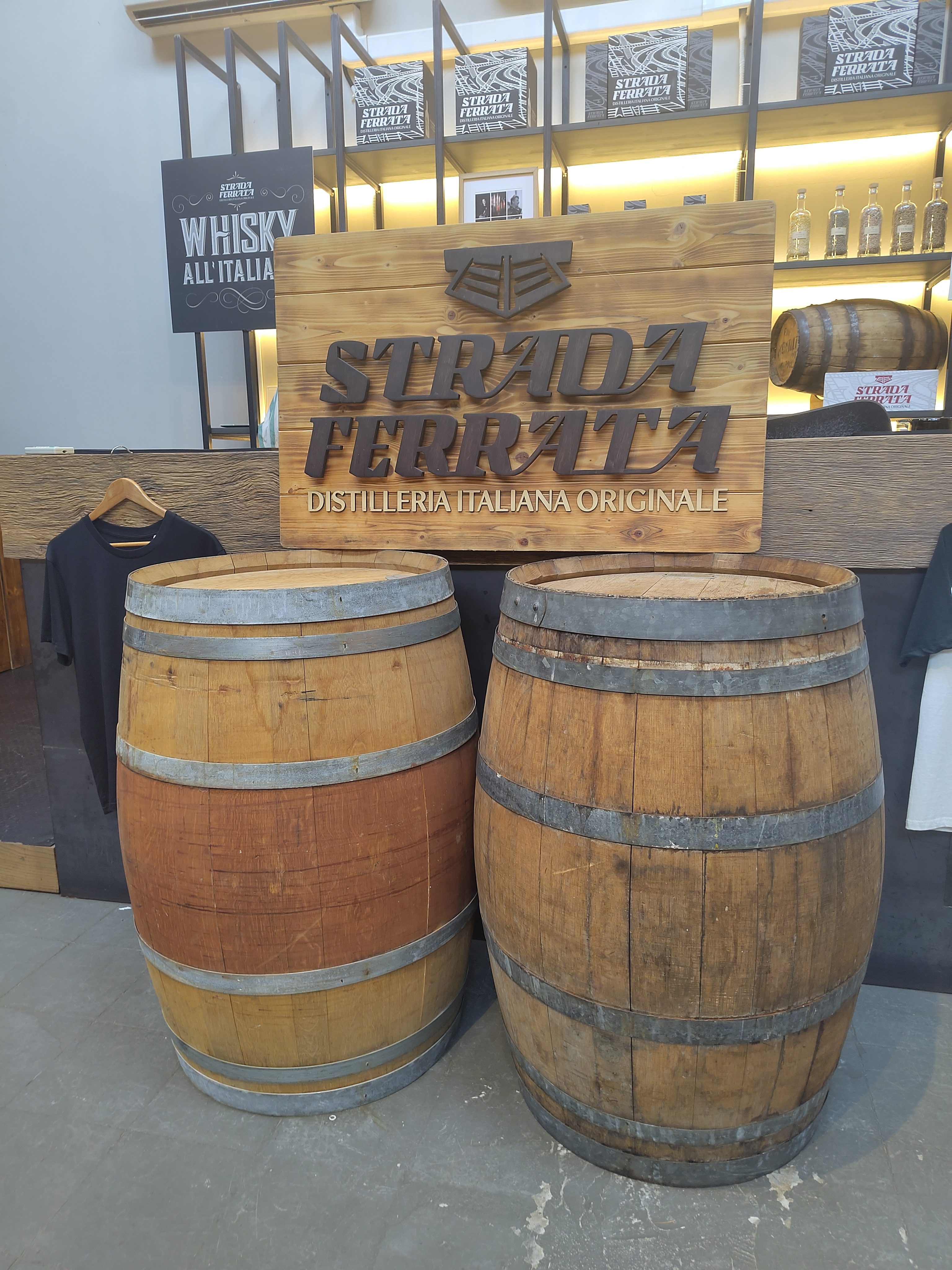
We had known about them for a while but, despite the distillery being only an hour from Gianluigi’s parents’ house, we had never managed to visit. Fortunately, that changed: earlier in the summer we got in touch with Stefano, their manager, and arranged a tour. The distillery is in a small, old industrial area alongside other small companies, including its sister business, the Railroad Brewing Co. (founded in 2013). The idea for the distillery was born in 2019, thanks to Stefano, Benni and Marco, who decided to spend some time at Whistling Andy Distillery (Montana, US) to learn the trade. They started distilling in 2021, when it was only the second Italian distillery built specifically to make whisky, the first being Puni. Now there are about 20, although some of them mainly produce other spirits, like Poli in Veneto. They have already undergone an expansion since the Disaronno Group (formerly Illva Saronno) bought a stake in the business, which allowed them to increase production and add a second, off-site warehouse.

At the distillery, we were welcomed by Barbara, who works as an operator but occasionally runs tours and tastings (Stefano was on leave). After offering us a glass of cold water (the umpteenth heatwave was in full swing!), she explained their production process to us, starting from the beginning: malted barley. They use three types of malt: Monaco (i.e. Munich-style malt, a sweet malt generally used for beer), Rauch (a German malt lightly smoked over beech wood) and a Scottish peated malt, which they get in 25kg bags. Each malt is processed separately, starting with a very modern mill that crushes the grain into grist. They do two mashes a day: each mash uses 250kg of grist and between 1,000 and 1,500 litres of water at 68ยฐC, for 35 minutes. After sparging and filtering the mash three times, they obtain about 1,000 litres of wort, which is then moved into one of their stainless steel washbacks. Each one has a capacity of 2,300 litres, but they only fill them to 1,000 litres to avoid overflows. The yeast is matched to the malt: Saison yeast for the Monaco, distilling yeast for the other two. Fermentation lasts a week and is temperature-controlled.

Mashing…

They have a bain-marie type of still, usually used for grappa. It has a main “caldera” that is charged with 1,000 litres of wash and is connected to rectifying columns with four plates, which they can turn on or off depending on the type of spirit they are producing (we interpreted this second step as the second distillation, kind of). It reminded us of Penderyn‘s Faraday stills. The foreshots (heads) cut is measured manually and usually lasts 20 minutes. They then collect the spirit cut (hearts) for between 2 and 4 hours, while the cut to exclude the feints (tails) varies depending on the malt: for the peated one, they go as low as 55% abv. On average, their new-make spirit comes off at 79-82% abv, but it is reduced to 60% for maturation. Many of their casks are held on site, but thanks to their investors they now also have the off-site warehouse. The angels’ share (i.e. evaporation) is a significant issue for them, partly because the tax agency assumes a 4% yearly rate, while the real one is usually higher. The strength generally increases during maturation because, as in other hot or continental climates, water evaporates faster than alcohol. They mature the whisky in a range of casks, from the usual bourbon and beer ones to mezcal, wine, rum, sherry, Marsala, and some odd ones like aquavit from Norway or Moscato from the Dolomites. They also have casks made from alternative woods, like acacia and cherry.

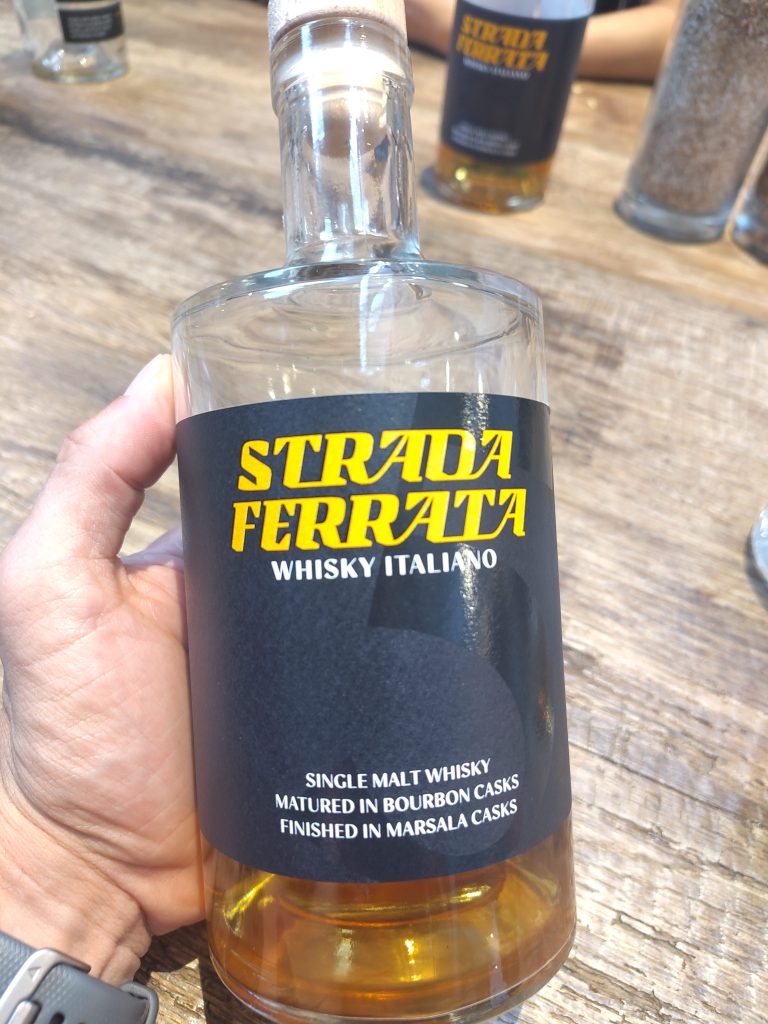
Their first single malt whisky was released in 2024: a single cask matured in an ex-beer cask, to honour the connection with the Railroad brewery. The 2nd and 3rd releases followed in 2025, the former matured in ex-bourbon and beer casks, the latter in ex-bourbon and “Moscato passito” (a sweet dessert wine) casks. These are now long sold out, so at the tasting Barbara poured us three drams: the 4th, the 5th and a preview of the 6th release. The 4th and 5th releases were both aged for 3.5 years in ex-bourbon casks and finished in semi-dry Marsala casks (one of the three types of Marsala, the others being dry and sweet). However, the 4th (45.5%) was made with Monaco malt, while the 5th (47%) was made with Scottish peated malt. The 6th release (48.2%) is instead made with Rauch malt, matured in shaved, toasted and re-charred (STR) casks, and again finished in Marsala. It is now available, having gone on sale at their birthday party on 10 October 2026.

They also now have two further releases, both labelled 7th: a Monaco malt one (47%), aged in ex-bourbon and finished in a Vin Santo “caratello” (a small cask of approx. 100 litres, so somewhere between an octave and a quarter cask), and a Rauch malt one (46.8%), aged in STR casks and also finished in a Vin Santo caratello. We also spotted a very recent Founder’s release, but we couldn’t find much information about it online.

When the tasting ended, we went back to the van and took the motorway to Gianluigi’s hometown, in Piacenza, and in the evening we caught up with family and a couple of friends.

While it was a bit of a detour for us to get to Strada Ferrata, we are super happy we made it: we loved the distillery set-up, and we also loved how they are experimenting with barley, yeast and casks to make their own product, rather than trying to replicate Scottish or other single malts. Barbara was a fantastic host, and we were impressed by her knowledge of the process and the clarity of her explanations. We ended up getting a bottle of the 4th release, as we had never had a whisky made with Monaco malt before, while the 5th and the 6th were closer to drams we’d tried elsewhere. It was a hard choice, as all three drams were tasty and, if this is the starting point, we can only wonder what longer maturation will do for their whisky!

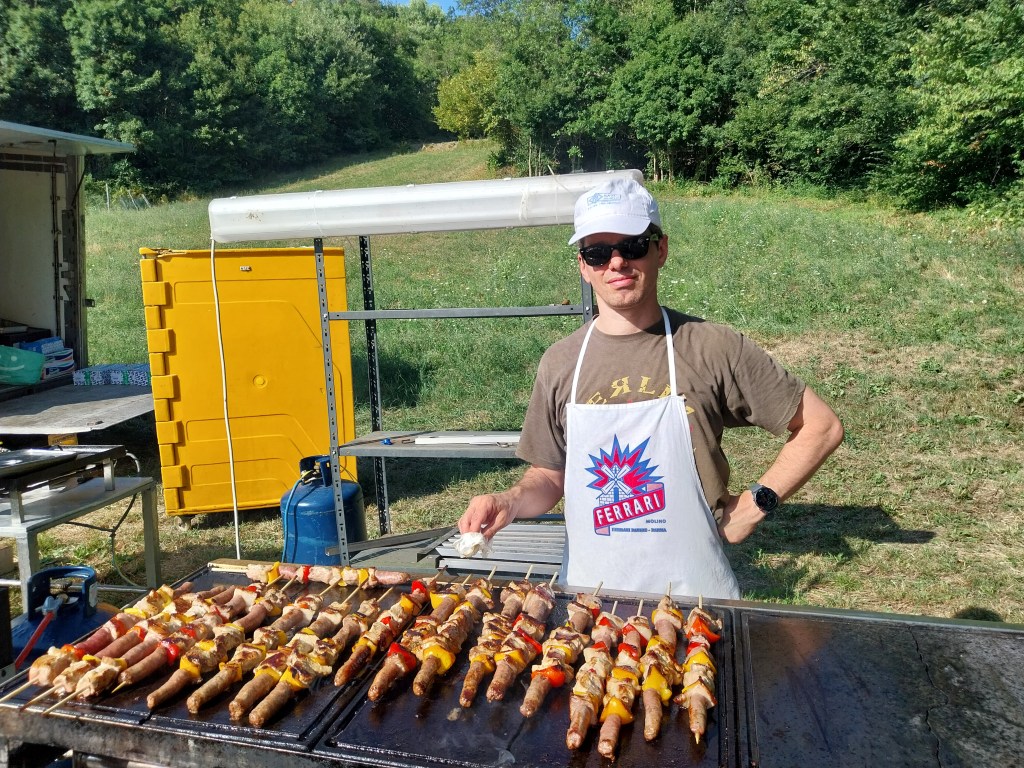
Days 6-10. After a stop at a car body shop (the engine undertray had come loose while we were in France and was hanging under Mr Vantastic), we finally reached Casali di Morfasso. We went almost straight to help set up the village fair, unfolding wooden tables and benches and doing whatever was needed.

We had a lot of fun: Gianluigi worked at the grill, while Teresa was in the kitchen, helping Edoardo (Gianluigi’s brother, who is now the “head chef”) and the rest of the gang. For Gianluigi especially, it was a chance to reconnect with family, friends and old acquaintances he rarely sees nowadays.

Stay tuned for the next blog post about our European trip! Until then, slร inte!


Strada Ferrata Distillery Tour and Tasting

Price: ยฃ25.75 pp* (โ‚ฌ30, *exchange rate as of August 2026)

Duration: 1hr 30min

Tasting: 3 drams, Strada Ferrata Single Malt 4th Release (45.5%, Monaco barley, 3.5y in bourbon barrel, 6m finish in semi-dry Marsala cask), 5th Release (47%, peated Scottish barley, 3.5y in ex-bourbon barrel, 6m finish in semi-dry Marsala cask), 6th Release (45.5%, Rauch barley, 3.5y in STR cask, 6m finish in semi-dry Marsala cask)

Target: both whisky curious and casual drinkers

Value for money: good

Highlights: the distillery set-up

Recommended: yes

Link: https://www.stradaferrata.xyz/


#79.1 Dramming in Europe

Malt whisky in the French Alps


TL; DR: This summer we packed Mr. Vantastic and set off from Leith to Gianluigi’s family village in the Italian Apennines. This post covers Canterbury (and the Foundry’s English whiskeys), Reims, a Burgundy winery and, obviously, a whisky distillery: Domaine des Hautes Glaces in the French Alps. A fantastic, in-depth experience at this organic distillery whose spirit-forward whiskies are very different to what we usually drink in Scotland. Definitely one to try.

We didn’t really have a plan for our summer holidays. Or rather, we had one, but it involved a lot of driving, and unless you’ve been living under a rock (in which case, we envy you!), you’ll have noticed how much fuel prices have gone up since the war in Iran and the invasion of Lebanon. At first we considered doing something else, but in June the ceasefire looked like it would hold, so at least fuel prices weren’t rising any further. The plan was back on: a road trip from Leith to Casali di Morfasso, the village in the Italian Apennines where Gianluigi’s family comes from. Every year the village committee (the “pro loco”) runs a non-profit fair with food and music, and this year we offered to help.

Of course, we stopped at a few points of interest along the way. This is a long post, so if you want to skip straight to the distillery visit, click here.

Days 0 and 1. We left Leith on a Friday evening after work, aiming to drive for two or three hours. Night roadworks on the A1 around Newcastle turned that into almost three and a half, but we finally stopped for the night in a car park near Bishop Auckland. The next morning we stopped briefly for breakfast, then drove straight to the Costco in Thurrock (east of London) to refuel. There we realised two things: we were well ahead of schedule, and the van’s air conditioning wasn’t working. A toasty trip lay ahead!

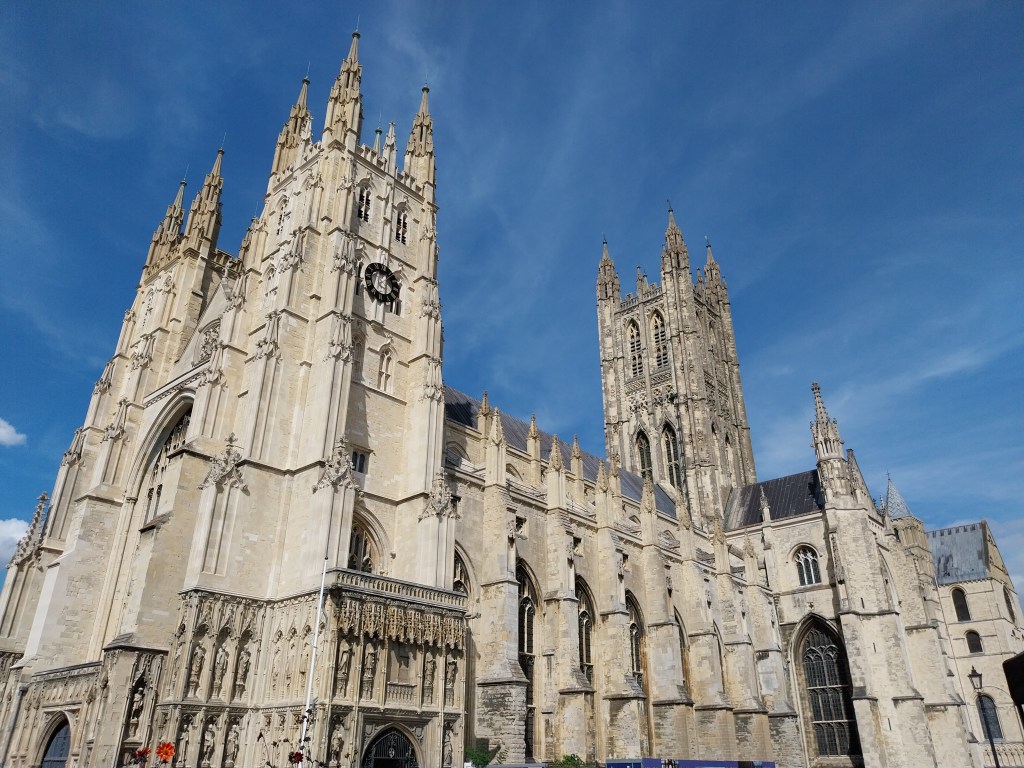
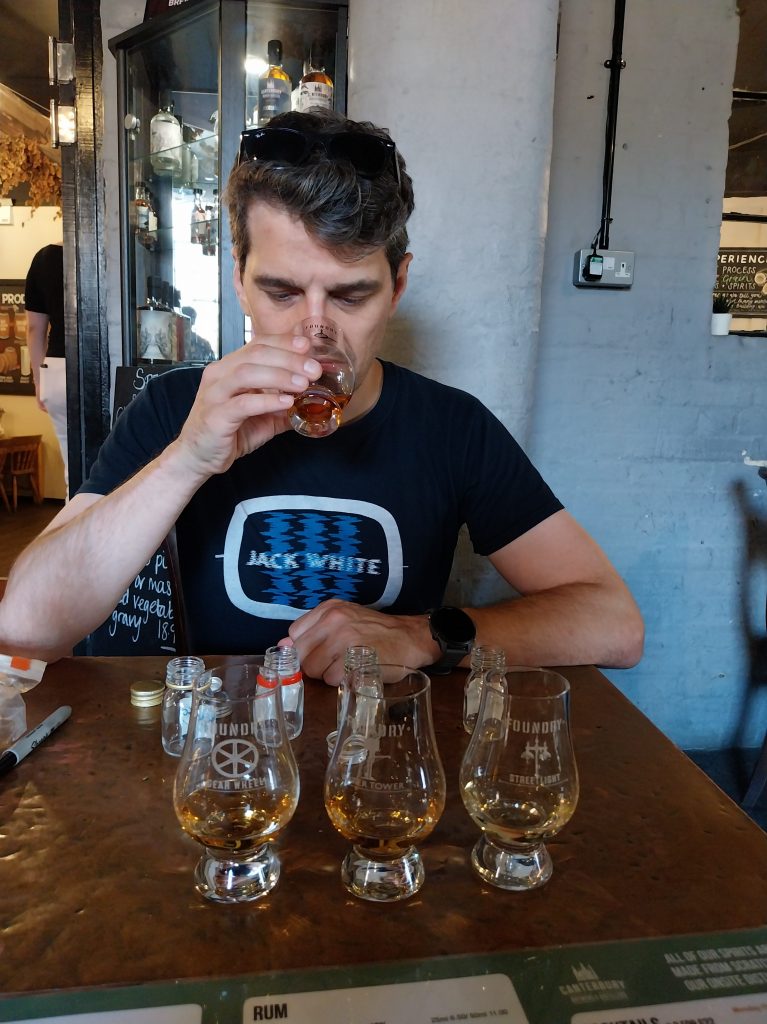
We used the spare time for a walk around Canterbury, a quick look at the main landmarks (the cathedral, strictly from the outside) and a half pint at the Foundry Brewpub. As well as a pub and brewery, the Foundry is a distillery, producing a range of whiskeys (with an “e”, as on their menus and website). Unfortunately we didn’t have time for a proper tour or tasting, but we bought a few drams to try later in the trip, all made with English grain. The first was the Clock Face Three Grain (45% abv), made with malted barley, rye and corn, aged for two years in ex-bourbon casks and finished for one year in virgin English oak. Then the Gear Wheel Corn Whiskey (43%) and the Water Tower Rye Whiskey (45%), each from a single virgin American oak barrel, with mash bills of 51% corn and 51% rye respectively (the rest barley). And finally the Streetlight Single Malt (44%), matured in ex-bourbon casks.

Even with the Canterbury stop, we made an earlier ferry from Dover to Calais. That gave us time for dinner at a restaurant in Saint-Omer on our way to Reims, where we spent the night.

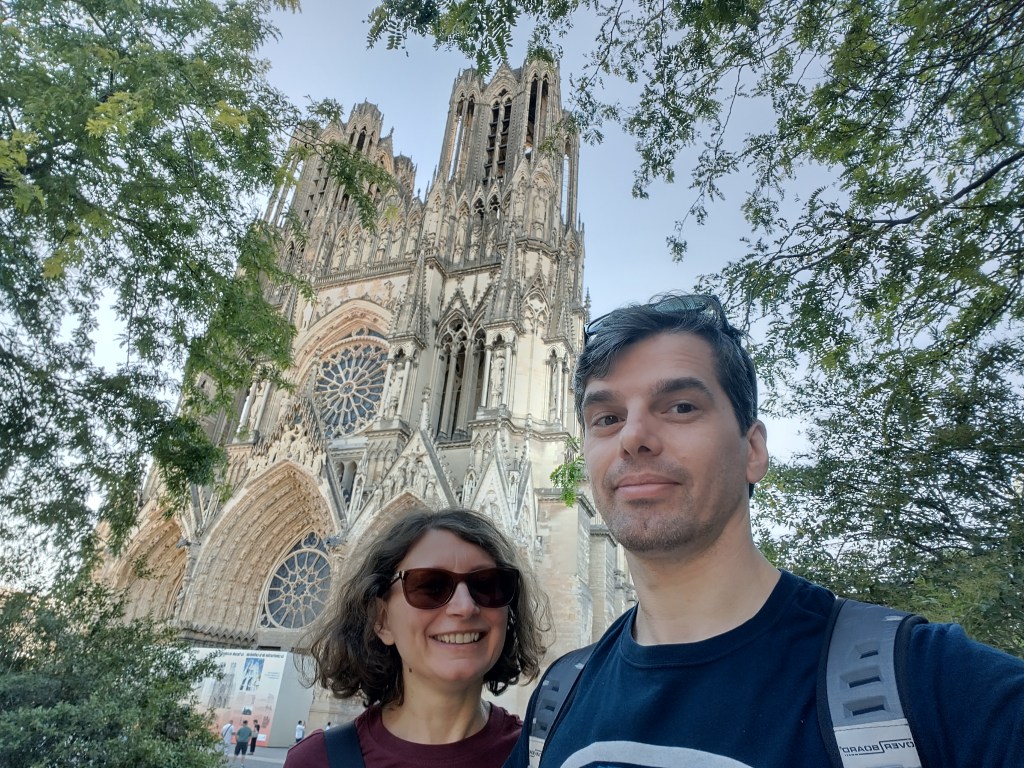
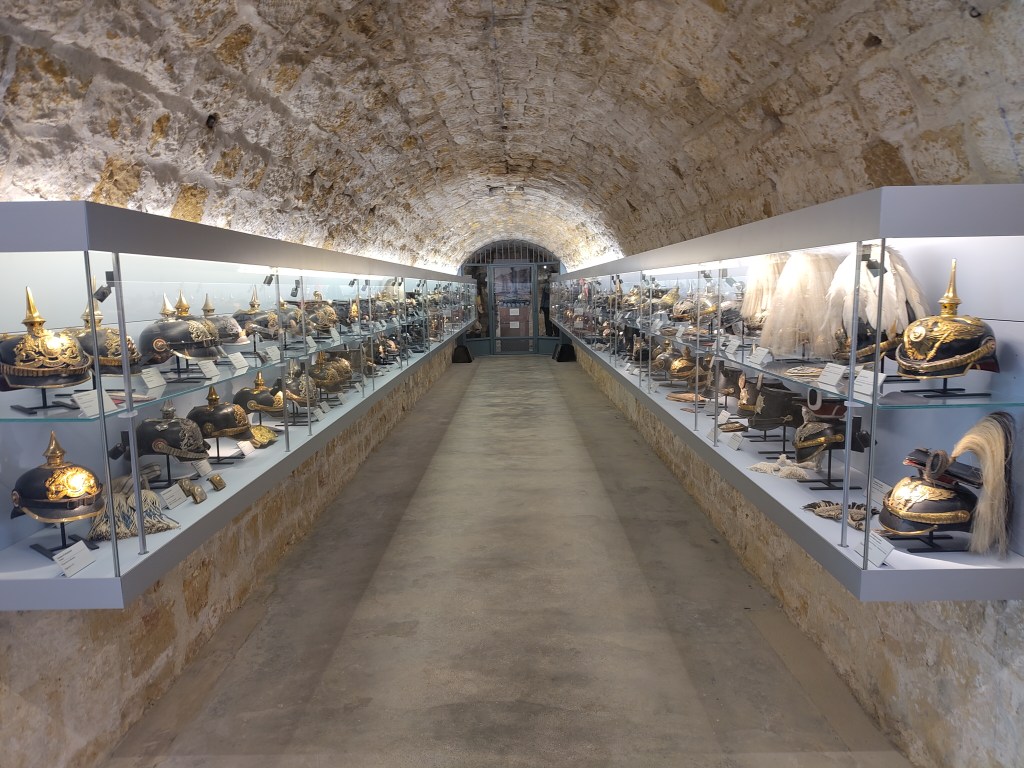
Day 2. First things first: as soon as we woke up, we found a boulangerie and filled our boots! As well as croissants and a baguette, we got some savouries, all for the incredible price of โ‚ฌ11. We spent the morning in Reims, visiting the majestic cathedral and, just outside the city, the Musรฉe du Fort de la Pompelle, which covers World War I (and the years before it).

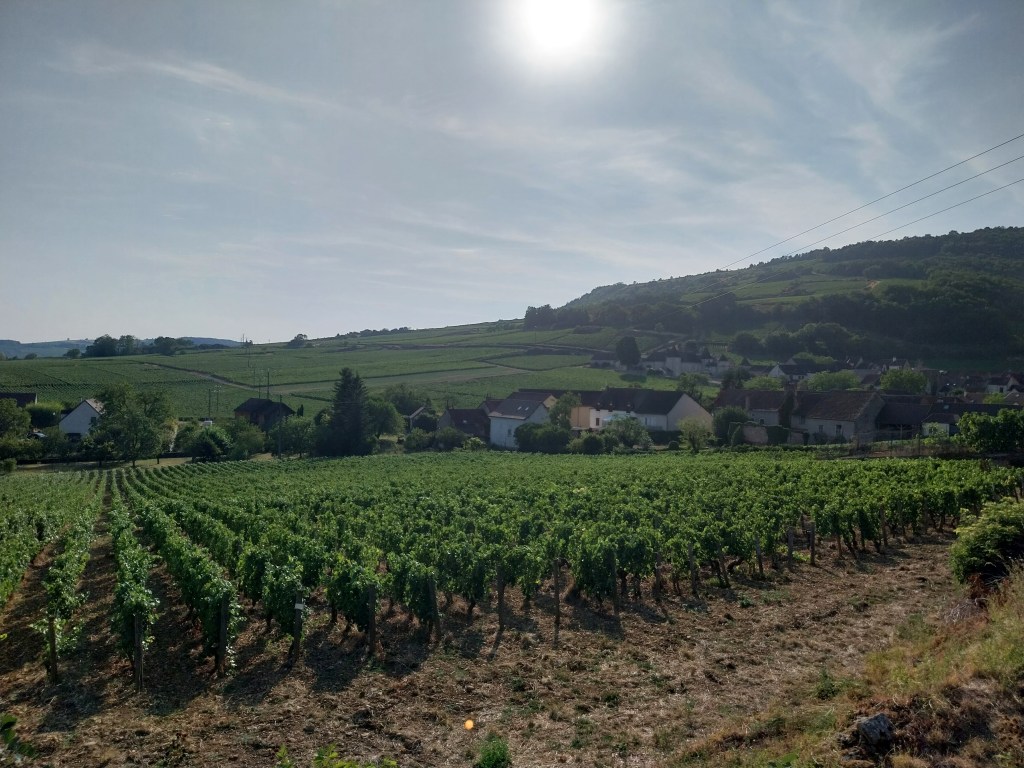
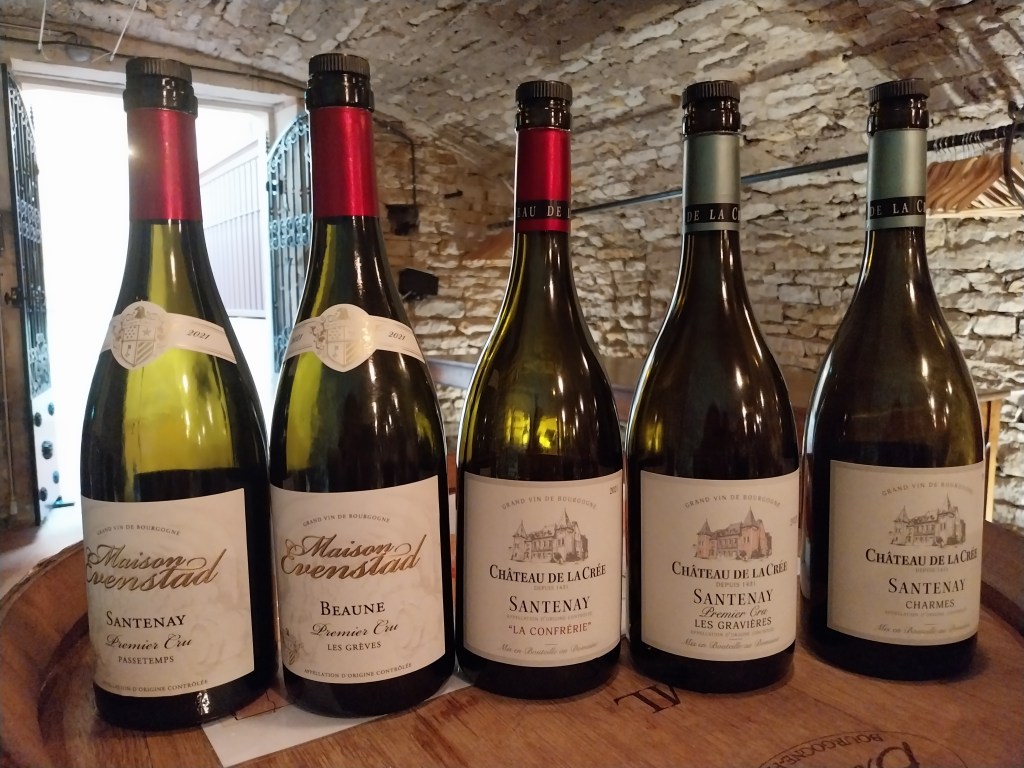
Afterwards we drove straight to our next stop in Burgundy, and that’s when the heat really started cooking us. We had booked a campsite in Santenay, in the heart of the wine region, so how could we miss a winery visit? We couldn’t. We chose Chรขteau de la Crรฉe, a 20-minute uphill walk from the campsite through very pleasant farmland.

The visit was very informative. We started with the history: the chรขteau was built in the 15th century and bought in 2015 by the Norwegian Evenstad family, who already owned a successful winery in Oregon. We also learned that Burgundy is divided into five sub-regions, from north to south: Cรดte de Nuits, Cรดte de Beaune, Cรดte Chalonnaise, Mรขconnais and Beaujolais (Beaujolais and Chablis wines generally use their own, more local appellations). The main grapes are Chardonnay for whites and Pinot Noir for reds, with some Gamay and Aligotรฉ. While the guide explained all this, we walked from the chรขteau to the vineyard behind it, then down into the cellars (now used only for visits). There the guide talked about the difference soil makes to a wine, and showed us soil cores from their different parcels, which are scattered around the area.

At the tasting we tried two whites and three reds, and realised that “wine people” can be far cringier than “whisky people”โ€ฆWe felt very sorry for the guide, who did a fantastic job. Back at the campsite there were pizza and beer food trucks that evening, so we were sorted!

Day 3. The next morning we left fairly early (after an unmissable boulangerie stop) and drove south, first towards Lyon and then Grenoble. Our destination was an hour beyond the city: the village of Cornillon-en-Triรจves. As we got closer, the landscape turned first hilly and then properly mountainous. We left the motorway soon after Grenoble to save a few euros (French motorways are fantastic, but pricey!) and carried on along smaller roads. We parked Mr. Vantastic (under a tree!) somewhere we could have spent the night if needed, about a 20-minute walk (uphill, again) from the distillery: Domaine des Hautes Glaces.

At the distillery shop we met Manon, who we’d been emailing. She welcomed us into the very cosy visitor centre, then started the tour (just the three of us) in the courtyard with the distillery’s history. The idea came from Frรฉdรฉric Revol in the early 2000s: he wanted to make an organic French whisky focused on grain, terroir and the mountains. The distillery was founded in 2009, when he also bought a farm at the nearby Col Accarias, although the first runs used grain borrowed from neighbouring farms. At the time it was only the sixth whisky distillery in France; now there are over 160! In 2017 Rรฉmy Cointreau bought a stake, and that investment allowed them to buy the “Domaine” (the estate). This former monastery now houses the visitor centre and accommodation for staff in training.

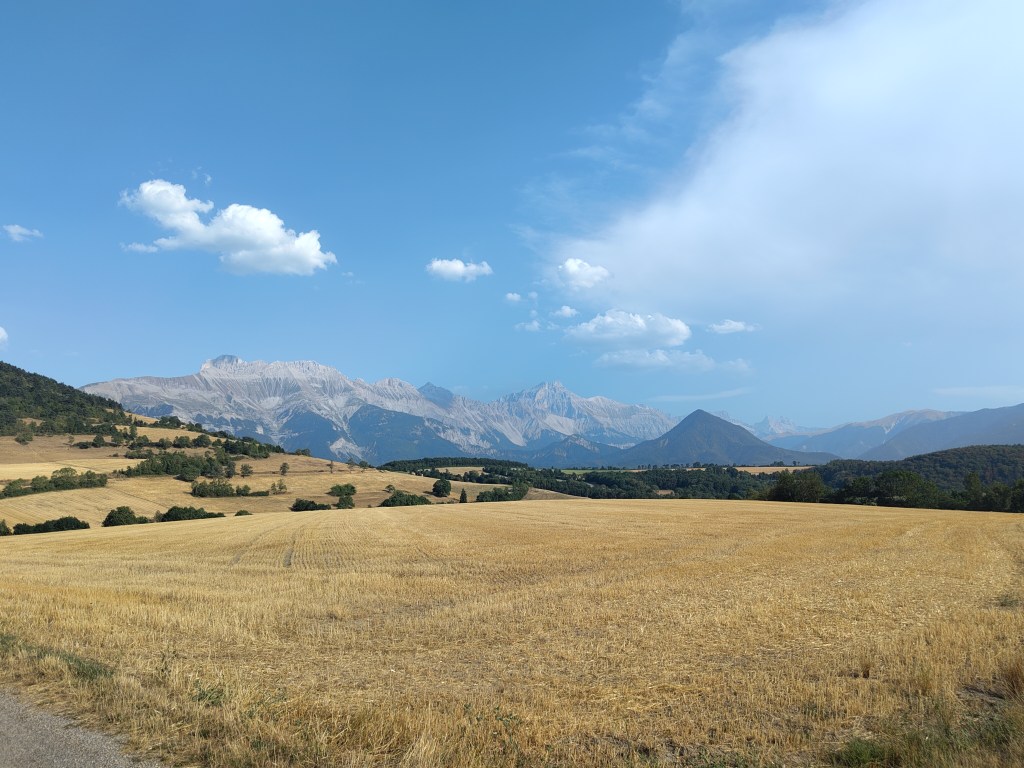
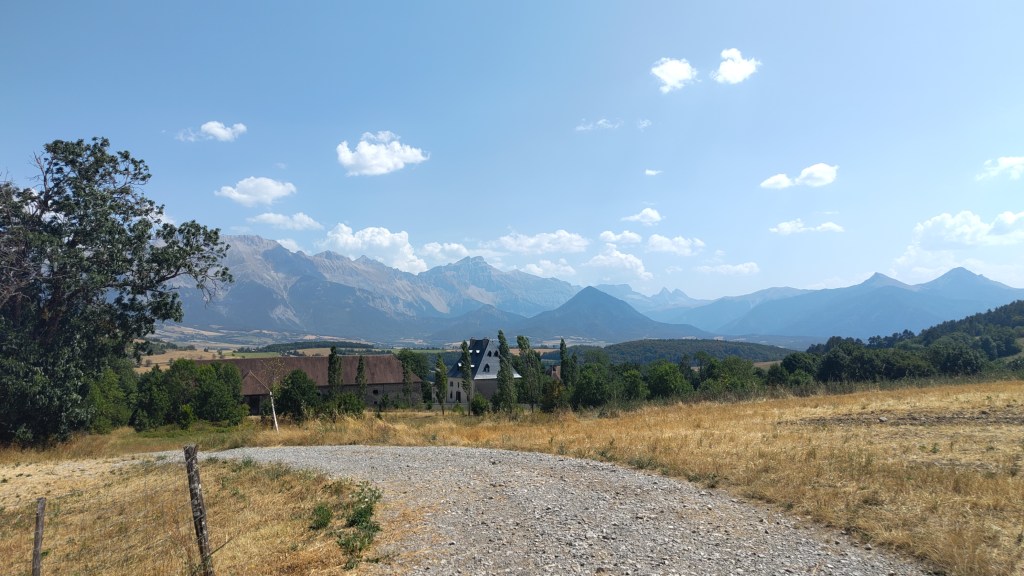
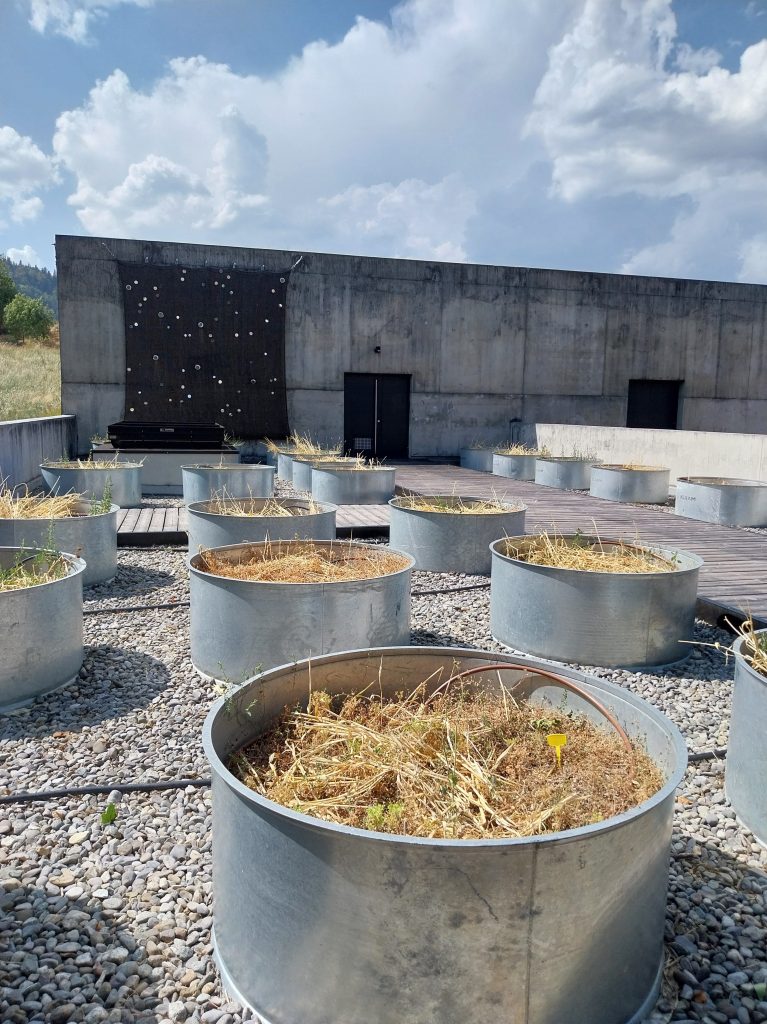
During the introduction, Manon took us up to a field on the hill just behind the distillery, with a spectacular view of the surrounding mountains. As well as their own fields, they rely on a cooperative of farmers, all within 20 km of the distillery and all farming organically: the fields aren’t ploughed, and they use regenerative practices and crop rotation. They grow five cereals: barley, rye, oats and two types of spelt. The specific varieties (including heritage grains) are chosen by agronomists and trialled in nurseries to make sure they grow well in the area. Yields are about 3 tonnes per hectare, roughly a third of what non-organic farming usually gets (8-10 tonnes). All grain is kept separate by cereal and variety, field and harvest year. It was also refreshing not to hear the “b” word*, which many other organic spirits producers unfortunately attach to their practices (usually unchallenged by journalists). (* Don’t worry, “b” stands for biodynamic here.)

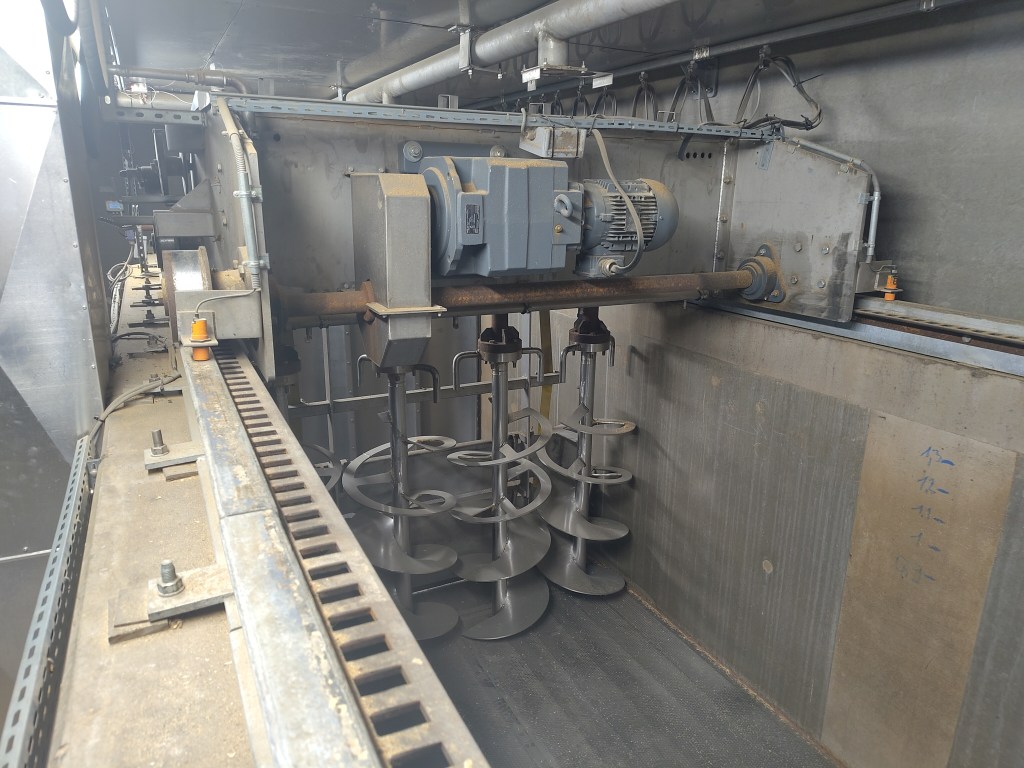
Part of the grain is malted by an external maltster, Malting Pot, in Savoie, and part on site. Their in-house malting machine was new to us: a long, narrow open tank holding 8 tonnes of grain at a time, turned by two large screws that travel back and forth along it. Steeping lasts two days and raises the moisture from 11-12% to 47%. Hot air at 50ยฐC then brings it back down to about 20%, and final kilning at 80ยฐC takes it to 5%, so the malt can be stored for a long time.

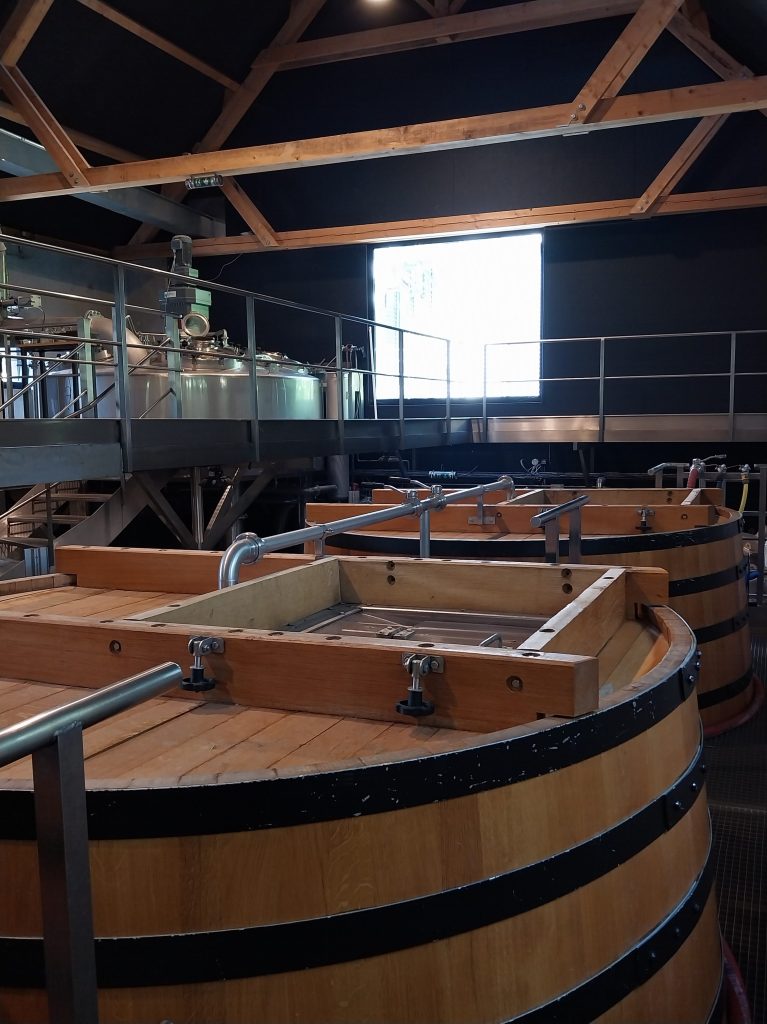
The rest of the production process shows clear Scottish inspiration. They have a 1950s Boby mill (bought second-hand, of course), and mill similarly to many Scotch distilleries. The exception is rye, where they adjust the husk/grit/flour ratio to avoid a stuck mash. Two tonnes of grist go into the mashtun with 10,000 litres of water, and mashing (three waters) takes a full day. For fermentation they use a local wild yeast, cultivated in a lab and kept in refrigerated tanks because it’s very temperature-sensitive. Fermentation takes 140-160 hours in one of three washbacks.

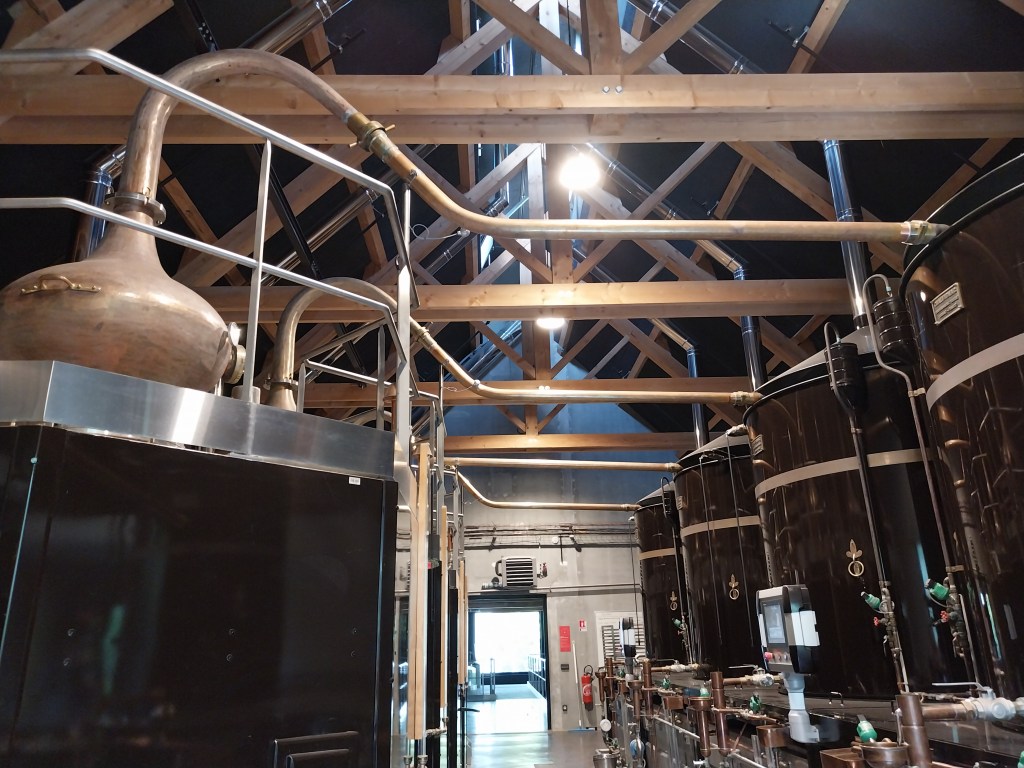
Distillation is where they depart from Scotland. They have four directly fired, Cognac-style 2,500-litre stills with worm tubs, heated with biomass from the nearby woodland. The first distillation gives about 750 litres of low wines at 30% abv. The second, with the foreshots and feints of previous runs added, gives only about 250 litres of hearts. The cut is made roughly between 70% and 65% abv, by smell and taste, even though the stills have electronic monitoring. They mostly double distil, except for the rye eau-de-vie Vulson, which is triple distilled.

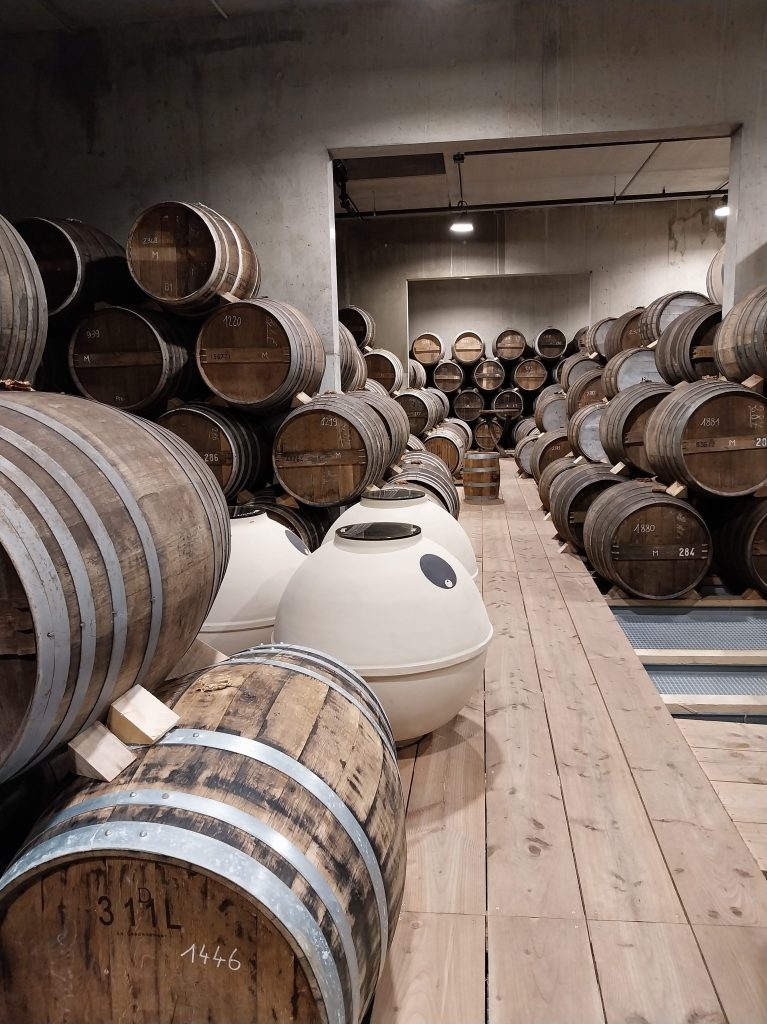
They can produce up to 35,000 litres of pure alcohol a year, similar to Scottish craft distilleries like Dornoch (not a random comparison, as you’ll see later), though they currently make less. On site they can store about 2,400 casks, 80-90% of them used Cognac casks. As we understood it, the aim is a spirit-forward whisky that shows off the differences between soils and grain varieties, and a well-used cask does just that. Other casks include some from Rรฉmy Cointreau’s other distilleries (Bruichladdich on Islay and Westland in Washington State), some from organic wine producers, and a few ex-bourbon casks, mostly for independent bottlers, La Maison du Whisky in particular. There are no sherry casks, though there are some Maury wine casks, and a few clay pots, another first for us! Their angels’ share is about 4% a year, double the Scottish average of around 2%. They also reduce “fractionally”, adding water a little at a time depending on how the flavour develops. This is common practice in Cognac and Armagnac, and we suspect it may help keep the spirit’s oiliness and thicker mouthfeel.

After the warehouse and a quick peek at the lab and bottling room, it was time for the tasting back at the visitor centre. We had five drams each (very small measures): three from the core range (“Les Intemporelles”) and two limited editions of our choice (“Les Exploratoires”). We agreed with Manon that we’d each pick different ones, so we could try more expressions between us.

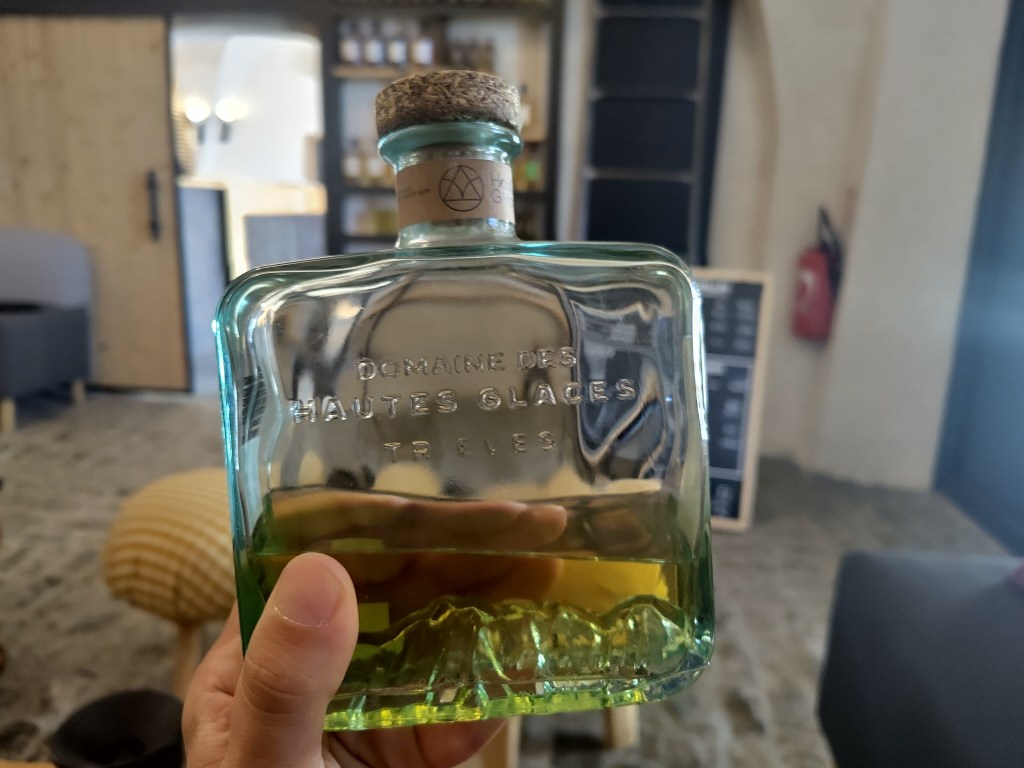
She poured the first dram from their very recognisable square bottle (which, to be honest, looks a bit like a perfume bottle). It was one of their flagships, Indigรจne (44%), a single malt made with a solera-like system: casks are added to a large vat from time to time, so the whisky inside could be anywhere between 5 and 12 years old. The second, also from the core range, was Caryops (42.6%), a blend of all five grains (mostly barley and rye) made with the same system. Both are matured in French casks, including Cognac, Armagnac, wine and virgin oak. Of the two, we preferred Indigรจne.

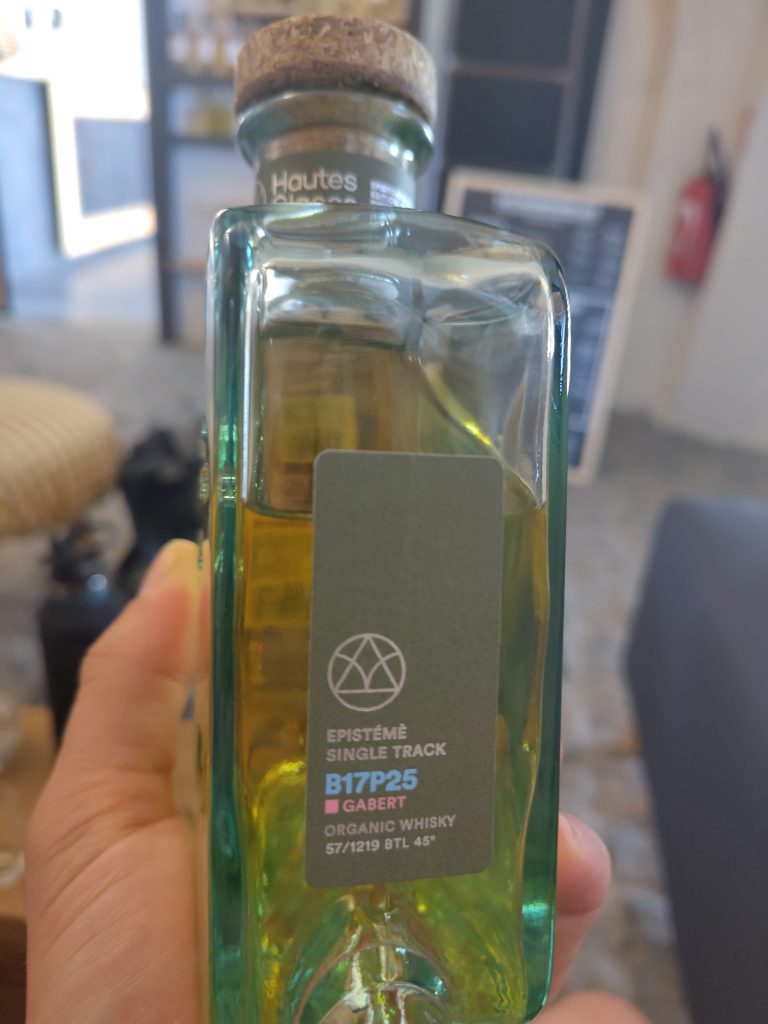
The third and fourth were single-farm expressions, both matured in Cognac casks and labelled B17P25: “B” for barley, “17” for the 2017 harvest and “25” for bottled in 2025. One was from barley grown on the Gabert plot, the other on the Vulson plot. The difference was obvious, and the Gabert won for both of us: fruitier and more cereal-forward, while the Vulson was slightly more herbaceous. Next came a rye whisky, R20W26 (48%), matured in Cognac casks and finished in French virgin oak. Then the XO#4 (47%), “extra old” in Cognac and Armagnac terms, matured for 14 years in Cognac casks. It’s a very good dram, but a bit too spicy on price (โ‚ฌ190 for 50 cl). We finished with the rye eau-de-vie Vulson (43%): triple distilled, unaged and somehow smoky, which puzzled us! Gianluigi in particular loved it.

The visit at the Domaine Des Hautes Glaces was a real treat! Manon’s tour was fantastic, and we loved the distillery: its location, its ethos and the care they put into making whisky. Given that, and the scale they work at, we think their slightly above-average prices are more than justified (except perhaps the XO). Flavour-wise, it’s a real departure from the Scottish malts we’re used to: very grain-forward. The closest comparison we can think of is probably Dornoch. Definitely one to try, and we’ll be back if we’re ever in the area again!

Back at the van we had a quick bite before getting back on the road. We drove towards Grenoble, skipping the motorway for the D1091. After a couple of failed attempts to find a campsite, we stopped at a sheltered (but unexpectedly noisy!) rest area along the road just before Les Deux Alpes.

Stay tuned for the rest of the trip and three more European distilleries! Until then, slร inte!


Domaine Des Hautes Glaces Tour and Tasting

Price: ยฃ64.70 pp (โ‚ฌ150 for the group, *exchange rate as of August 2026)

Duration: 2hr 30min

Tasting: 5 drams, Indigรจne single malt (44%, French oak casks, “solera”, โ‚ฌ68 for 50cl); Caryops (42.6%, five cereals meld, French oak casks, โ‚ฌ89); B17P25 Gabert single malt (45%, single farm, cognac cask, โ‚ฌ85); B17P25 Vulson single malt (45%, single farm, cognac cask, โ‚ฌ89); R20W26 (48%, all rye whisky, cognac cask and virgin French oak finish, โ‚ฌ83); XO #4 (47%, 14y, single malt, single estate, โ‚ฌ190); Vulson (43%, triple distilled 100% rye Eau de vie, โ‚ฌ55)

Distillery Exclusives: some of their single estate listed above (Gabert and Vulson single malt)

Target: whisky explorers, but anyone really

Value for money: very good, especially if you can share the cost of the group experience with more people

Highlights: both the distillery and the landscape were pretty amazing

Recommended: yes

Link: https://hautesglaces.com/en