Another Diageo workhorse: Benrinnes
TL; DR: Day two of Spirit of Speyside 2026 started with a relaxing morning at Moray Leisure Centre, then the Dufftown Whisky Fair and a fun Dewar’s Aperitivo by the Spey. Monday brought a rare tour of 200-year-old Benrinnes, Diageo’s rich-and-heavy workhorse, with a nerdy tasting in the still room. A great experience, but at £100 a head, still hard to call great value for casual drinkers.
(Missed Part 1?)
Our second day at the Spirit of Speyside 2026 festival started with a non-whisky activity. As this is our fourth year running, we only have a handful of distilleries left to visit (check out our visits in 2023, 2024 and 2025), so on Sunday morning we had a relaxing time at the Moray Leisure Centre, in Elgin, taking advantage of their sauna, steam bath and jacuzzi.
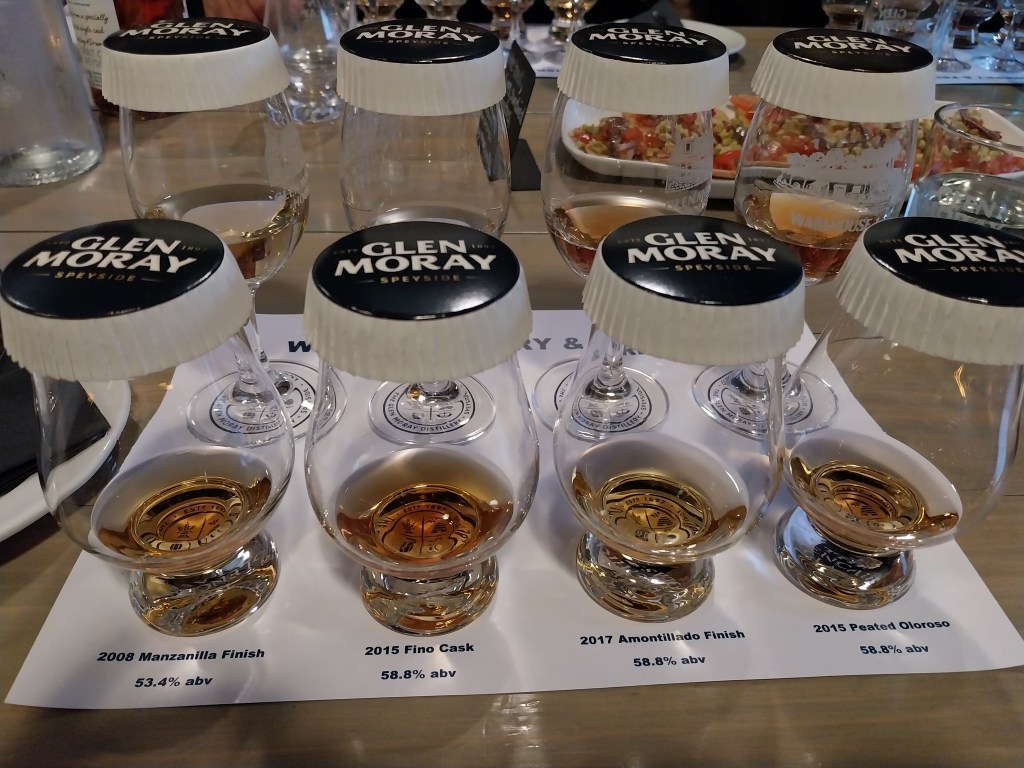
After a couple of hours there, we felt smooth and relaxed enough to drive to Craigellachie and then get a cab to Dufftown for the Whisky Fair: it is like a “festival within the festival” organised by the local community (including our pals Sue and Gordon), mostly showcasing independent bottlers and small producers.

Sue and Drambo, always nice to meet you!

Whisky and banter.
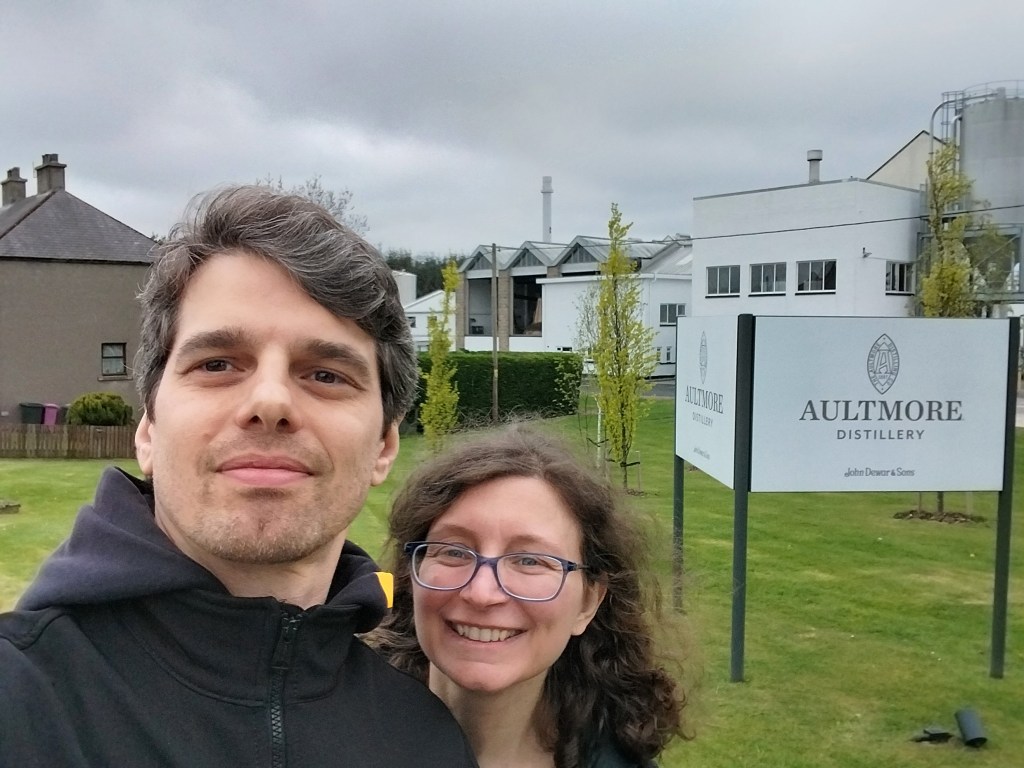
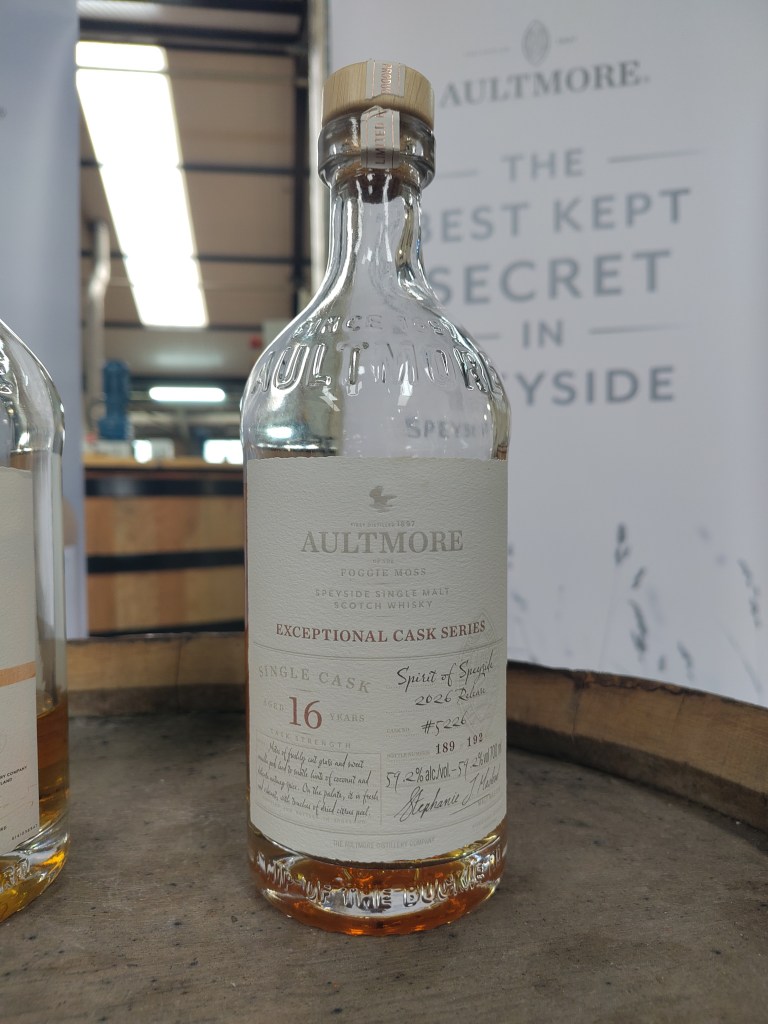
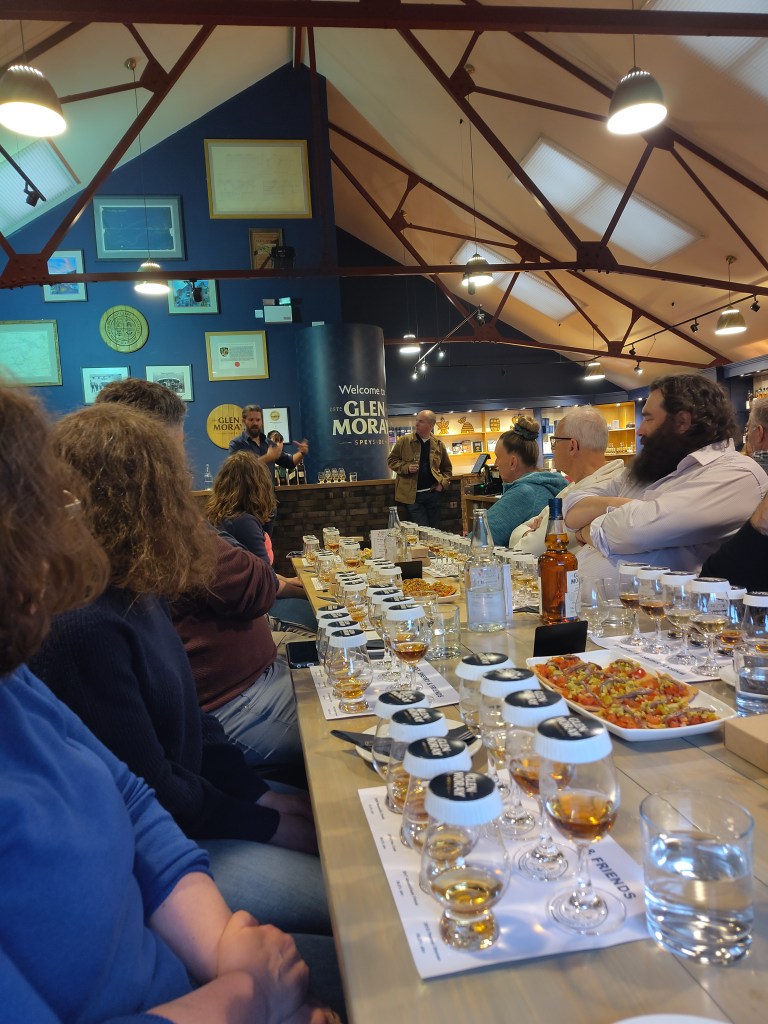
There are many very tasty drams (plus, the revenue goes to charity), and a glass, a snack and a hot drink are included in the £38 (plus £1.33 fee) ticket: win-win-win! When that was over, we took a cab back to Craigellachie to attend another event organised by the Dewar’s dream team: the Aperitivo at the Old Craigellachie Bridge, on the Spey. There we had three great drams: the Craigellachie and Aultmore Spirit of Speyside bottlings, and a Craigellachie 37yr. Again, great fun and value for money (only £7.76 inc. fee!): this is one to keep an eye on for next year too. After a long (maybe too long, someone would argue) session with friends in a whisky bar in Craigellachie, we went to sleep in our van, which we had parked in a small car park near the Fiddich water.

Nice location for an aperitivo…

…and what an aperitivo!
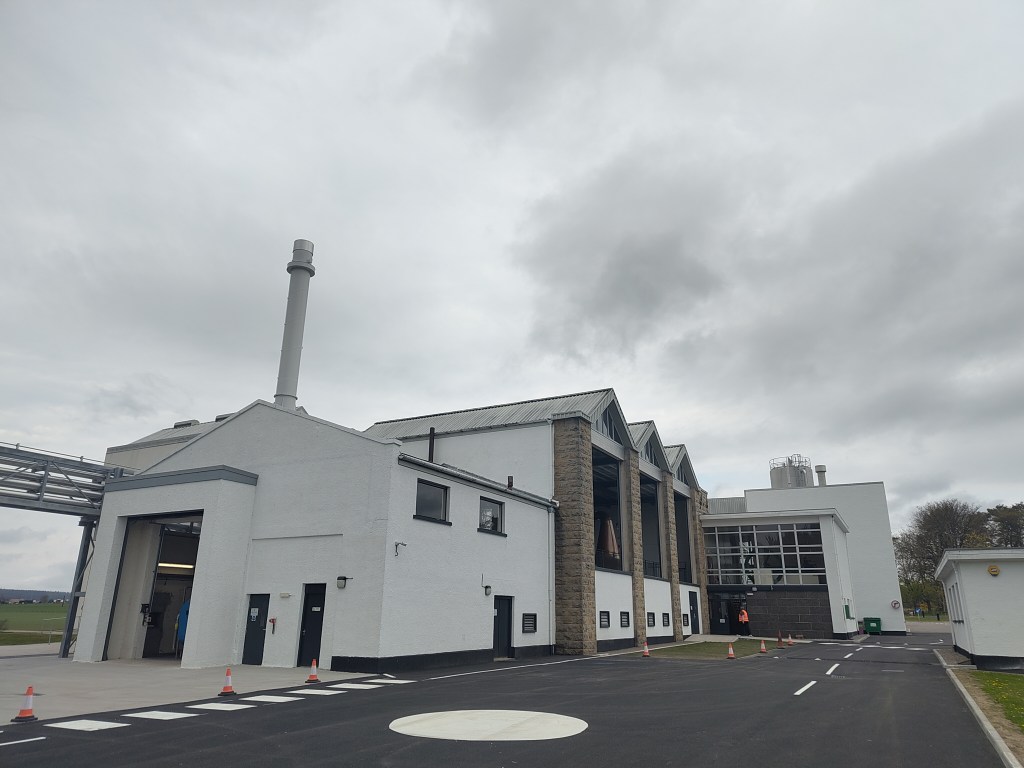
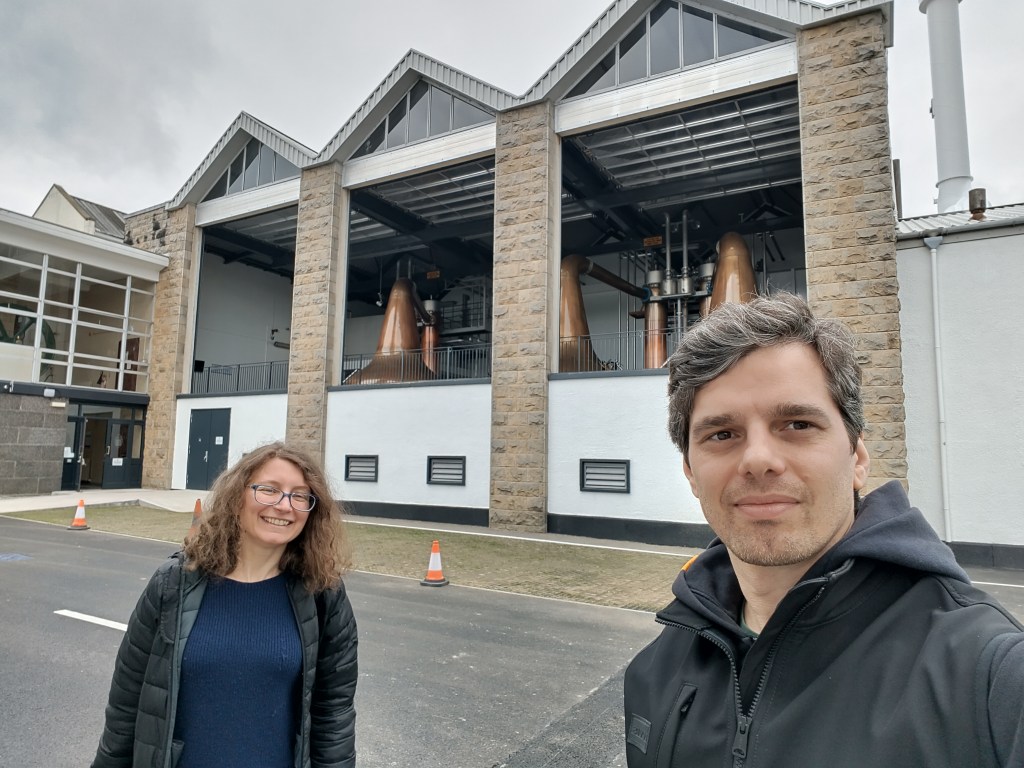
On Monday morning, we took advantage of the bank holiday for one last distillery visit: Benrinnes distillery, at the bottom of the namesake mountain (which we had climbed on a sunny morning in 2024!). They are renowned for producing a heavy and rich spirit, which we can confirm thanks to some Watt Whisky and Cadenhead’s bottlings we got on our last two trips to Campbeltown (the former finished in an Armagnac cask, the latter in Madeira). Thus, we were looking forward to this visit! The distillery is 200 years old (!!) and today is one of Diageo‘s workhorses. As it is usually closed to the public, the tour was given by Georgina, a distillery operator, together with Scott (manager) and Ben, who usually works at Talisker. The distillery was destroyed and rebuilt twice, first after a flood (1829) and then after a fire (1896). Other notable dates are 1964, when Saladin boxes were installed to malt the barley (they are still there, but in a building we couldn’t visit, and were used until 1984), and 1966, when they doubled their capacity. While listening to the history of the distillery, they gave us a dram of Benrinnes 15yr Flora & Fauna: a nice touch.

Not beautiful, but somehow charming.
Nowadays, they use unpeated malt, mainly from Muntons in England: mostly Laureate variety, but sometimes they change depending on availability. For example, they recently processed a batch of a Scandinavian Viking Malt (that’s the name of the company, we learned). The distillery has 12 malt bins, working in six pairs, each one with a 40-tonne capacity, which are filled by deliveries of 27.5 tonnes at a time. From the bins, a conveyor belt takes the malt to a Buhler destoner installed in 2023, before it’s milled by the Porteus mill in “coups” of 25kg at a time. Each batch is made of 8.5 tonnes of malt and takes about four hours to mill. The husk/grit/flour ratio of the grist is the usual 20/70/10, and it is measured by an electronic shaker.

A relatively new destoner.
The distillery processes 12 mashes a week (working five days), although their maximum capacity would allow for 21. In each mash, the first 36,500 litres of water are added to the semi-lauter mashtun at 64°C, while the remaining 30,000 litres of water are added over a longer period of time from 64°C to 84°C. In this way they don’t have separate second and third waters, and this process is now common to many Diageo distilleries. The wort resulting from one mash is moved to one of the eight washbacks, and it is cooled to 16°C (although sometimes they discuss whether to leave it at 16.5°C) before 200/210 litres of liquid Mauri yeast are added. The fermentation time is linked to the production cycle: currently, they do nine “short” (63 hours) and three “long” (110 hours) fermentations.

Where the fermentation magic happens.
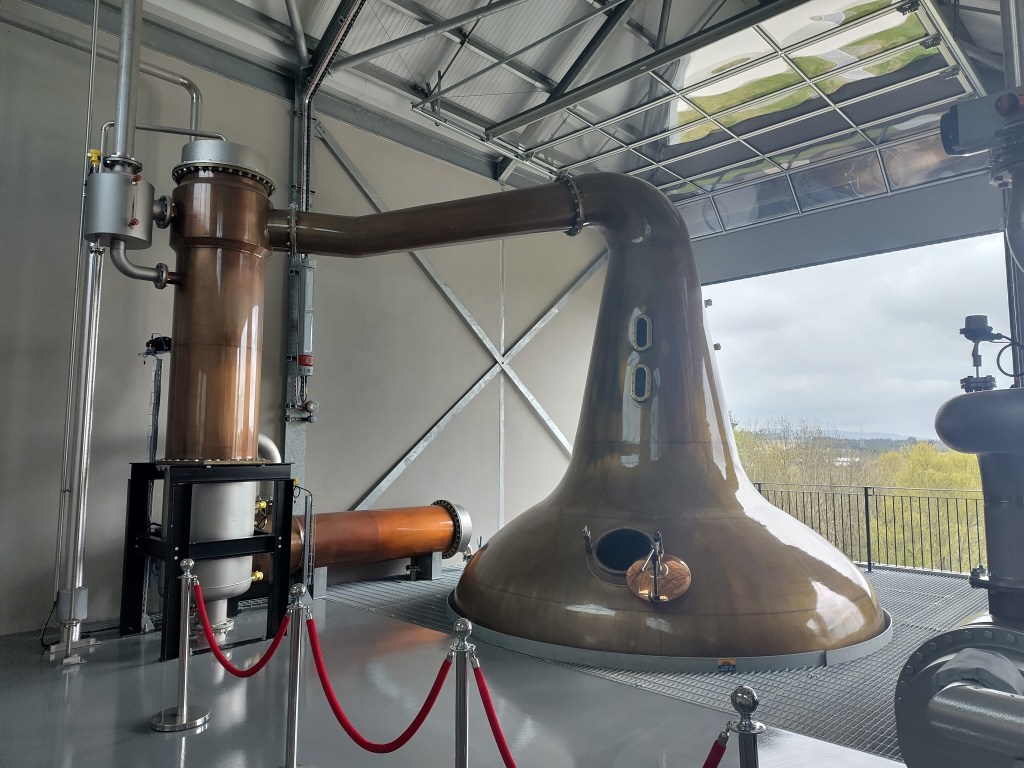
The fermented wash is pumped into the wash charger, before being double distilled. Low wines come out of the two wash stills at 21-23% abv, and they are charged into one of the four spirit stills: #1 and #3 are slightly smaller (4,500 litres) while the other two are larger (6,500 litres). Foreshots run for 10-15 minutes, then the spirit for around an hour and a half, and the feints for two hours. Cuts are done by hand, and the lower one goes down to 58%, picking up some heavy compounds that probably give Benrinnes its characteristic body. An interesting fact is that until 2007 they had partial triple distillation, but when they automated the distillery, they moved to the classic double distillation. The stills are heated by steam coils running on gas, and each one is equipped with a worm-tub condenser placed outside the distillery. Obviously, this requires a lot of water, which is then released into the burn after being cooled down to a maximum of 5°C. Fun fact: in spite of the filters, they found fish in the tubs, which they released (if found alive).

Lot of ongoing work in the still room.

Worm tubs, and Benrinnes in the background.
The distillery used to have cooperage and warehouse teams, and although they don’t fill casks on site anymore, they still have the equipment to do so, including the scales to weigh the casks. They also have fewer warehouses now, as warehouses 1 to 11 were taken down. We didn’t visit any warehouse, but we had a tasting in the still room, which was nice. We started with a 21yr Special Release 2024 (52.4%), then moved on to three cask samples: a 14yr (52.4%) matured in an ex-wine cask, a 22yr (51.7%) matured in a “column still rum” cask, and finally a 26yr (55.0%) matured in an experimental charred cask. An extremely interesting and nerdy line-up!

A tasting for nerds, yay!
With that, the experience was over: we then had some lunch in Aberlour, at the usual Gather’n Café, before slowly driving back to Leith. As we’ve written many times, every time we’ve had a tour with a distillery’s staff, it has always been a great and geeky experience, and the enthusiasm they have for what they do is truly refreshing! This tour was no exception, with Georgina and the team doing a fantastic job showing us around, explaining the nerdy details and answering the even nerdier questions. There is a “but” though, which is what we discussed last week at length: despite being within our budget, the £100 tours at Diageo’s distilleries are too expensive in our opinion, and it taints the experience. On the good side, the value has improved compared to the previous year, as the dram selection is definitely better curated (it was the same in 2025 at Glendullan and Inchgower, albeit at the latter they gave us very stingy measures – some were not even 1cl). Despite this, the experience is not great value for money, and it is really hard to recommend it to more casual fans and drinkers.
That’s all for this week! Stay tuned for something on the West coast (of Scotland, not California)! Until then, slàinte!
Benrinnes Spirit of Speyside Tour
Price: £103.50 pp (May 2026, inc. fee)
Duration: 2hrs
Tasting: Benrinnes 15yr “Flora & Fauna” (43%), 21yr Special Release 2024 (52.4%), cask sample 14yr (52.4%, ex wine cask), cask sample 22yr (51.7%, column still rum cask), cask sample 26yr (55.0%, experimental charred cask)
Target: whisky geeks and distillery baggers
Value for money: not great
Highlights: the amazing staff
Recommended: if it was cheaper, definitely
Link: https://www.spiritofspeyside.com/