#74.2 The Springbank Whisky School

Barley on my mind
(day 1, Monday)


TL; DR: First day of the Springbank Whisky School, so exciting! We spent most of the day in the malting floor – shovelling, grubbing and turning barley while understanding all the steps before milling. We were also treated to a walking tour to discover the sites of the many lost distilleries in Campbeltown!

(missed Part 1?)

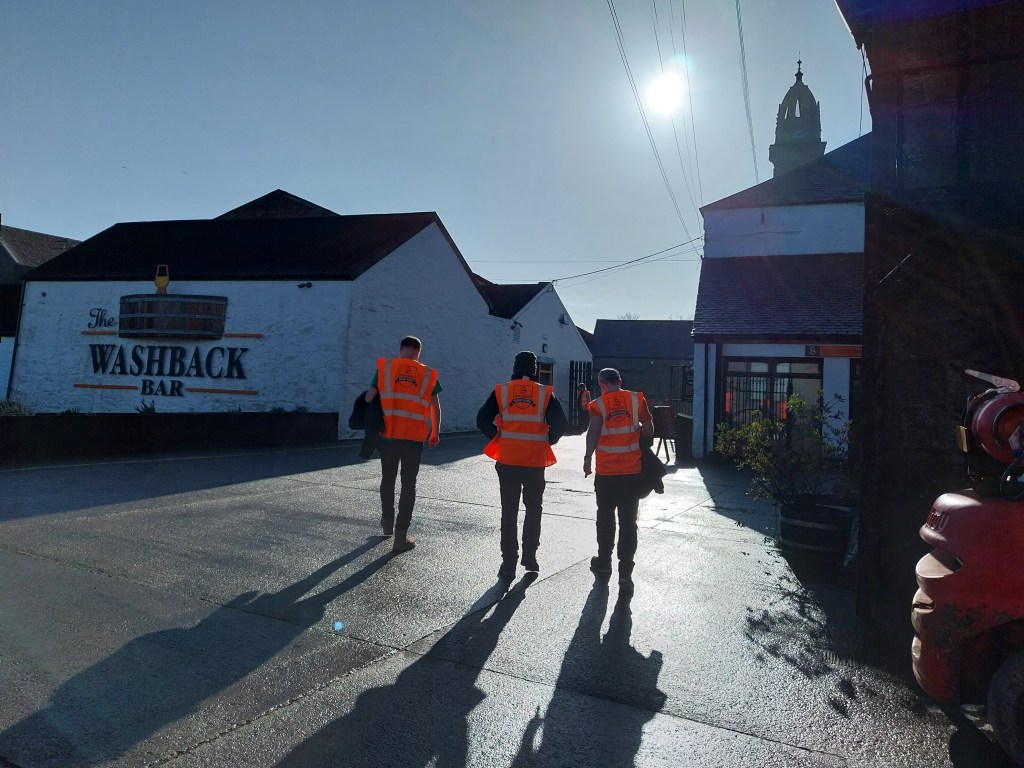
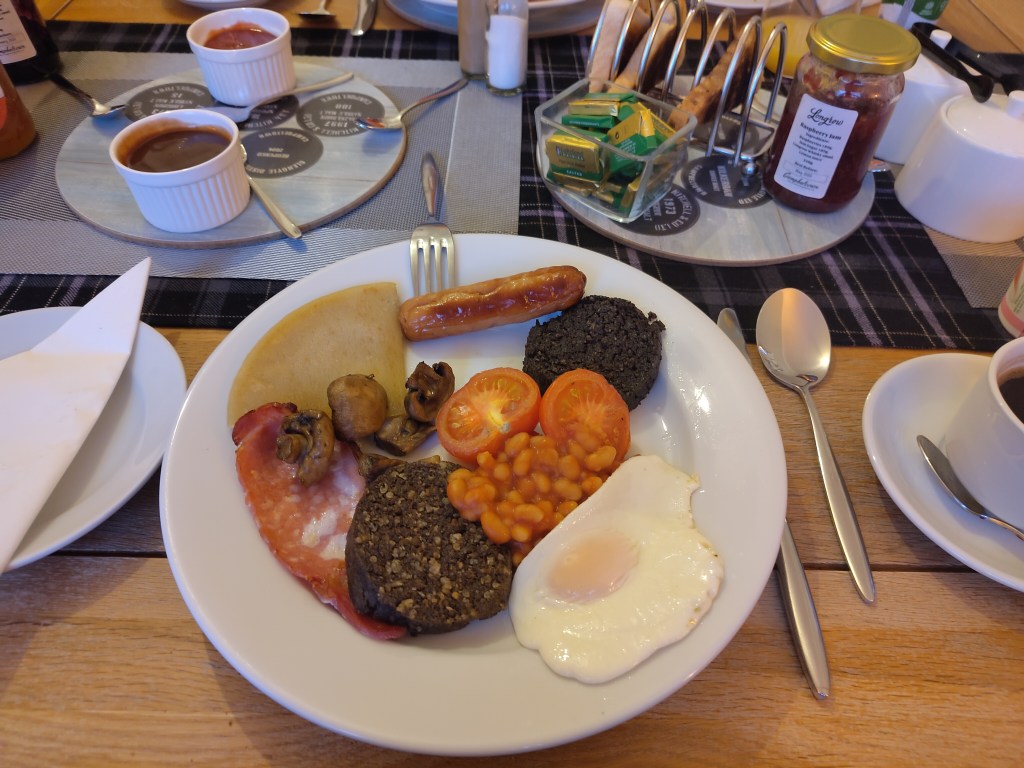
On the Monday morning, we woke up early but excited: it was the first day of the Springbank Whisky School! A shower, then breakfast in the dining room: a full Scottish fried up by the lovely Marie, but also some fruits, yogurt, and toasted bread. It was a big plate, and as per usual Gianluigi helped Teresa clean it up! At 8am sharp Donald walked us from the Still Guesthouse to the distillery (only 5 minutes or so away).

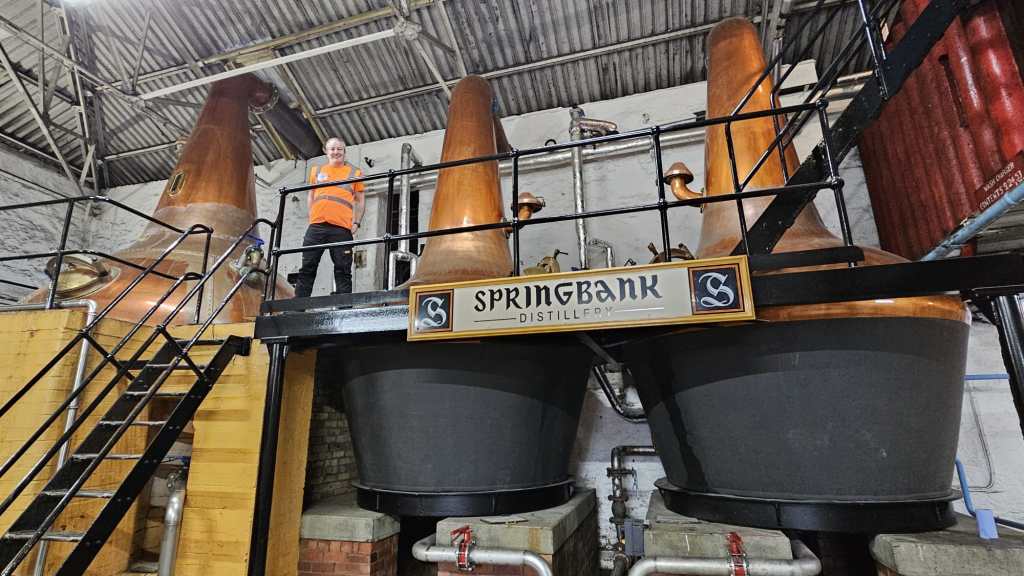
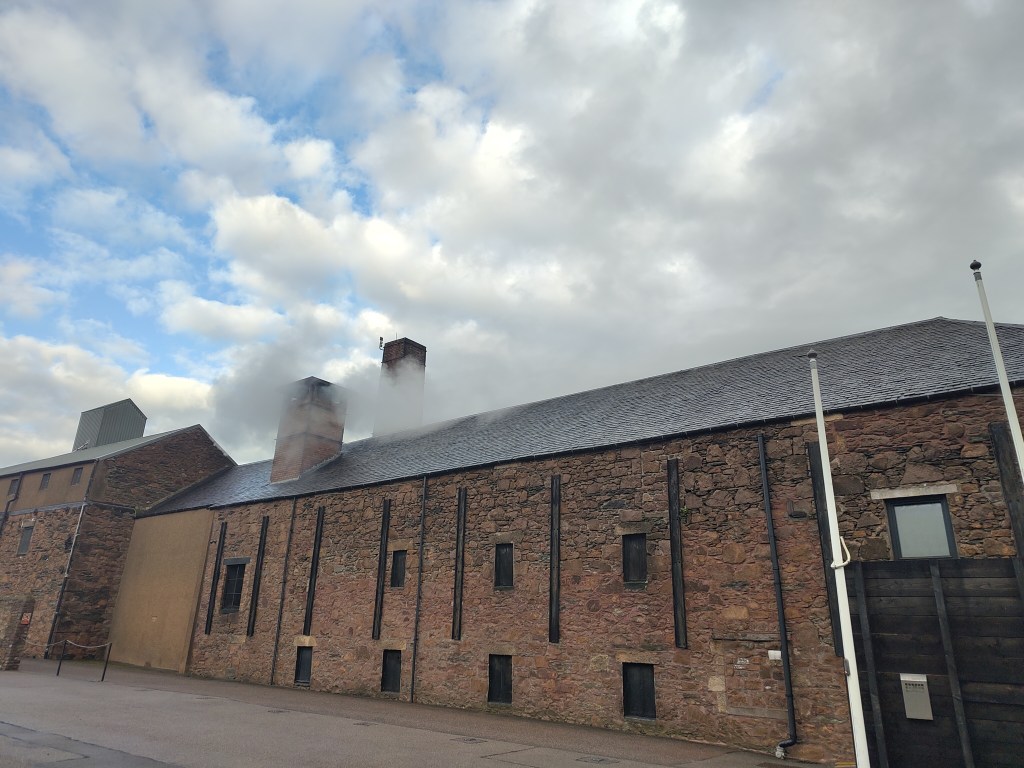
While arriving we saw (and smelled) grey peat smoke coming from the distillery kiln chimney: maybe no pope were made on that day, but still a very good sign! We met the distillery manager Gavin introduced himself and the school, gave us some study material, and briefly showed us around: first our lockers in the staff room, then a brief distillery tour.

But soon after, it was time for us to get โ€œseriousโ€ andโ€ฆShovel barley! (We’ll spare you the jingle that Gianluigi came up with, but yes, there was a jingle about shovelling barley.) A little premise here: malting is a key part of Springbankโ€™s production: for a long time, they were the only distillery where every step was done on site, from malting to bottling. Now Dunphail distillery (in Speyside) is also malting 100% of the barley on site, while other distilleries are at 10%-30% (Kilchoman, Laphroaig, and Bowmore on Islay, Benriach and Balvenie in Speyside, Glen Garioch in the East Highlands โ€“ we might have missed some). Most of the Scottish distilleries source malt from maltsters (or send theirs to be malted elsewhere, like Ballindalloch, Bruichladdich or Daftmill). For Springbank, the decision to keep malting in-house was not by accident, as for a period between 1960 and 1992 they also sourced it outside. It was Hadley G. Wright, the former chairman of J&A Mitchell (sadly passed away in 2023), who decided to bring it back to create more jobs for the Campbeltown community.

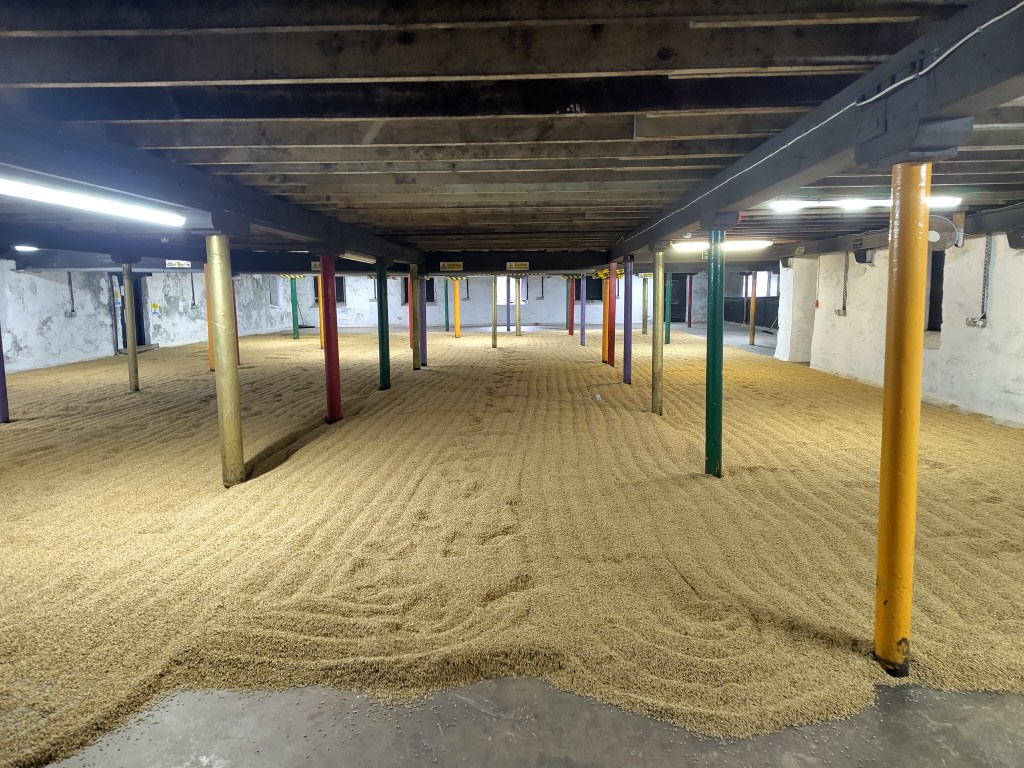
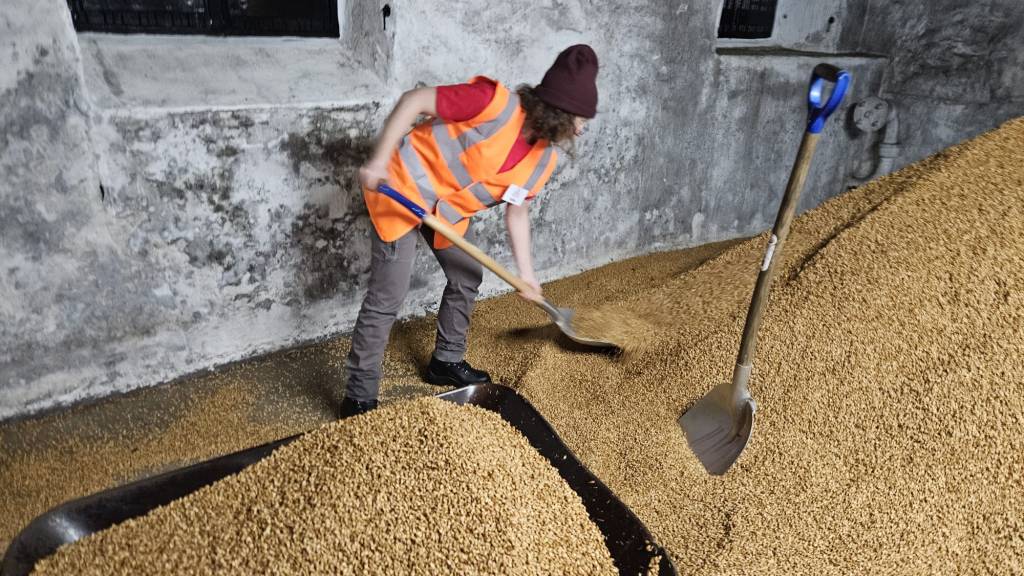
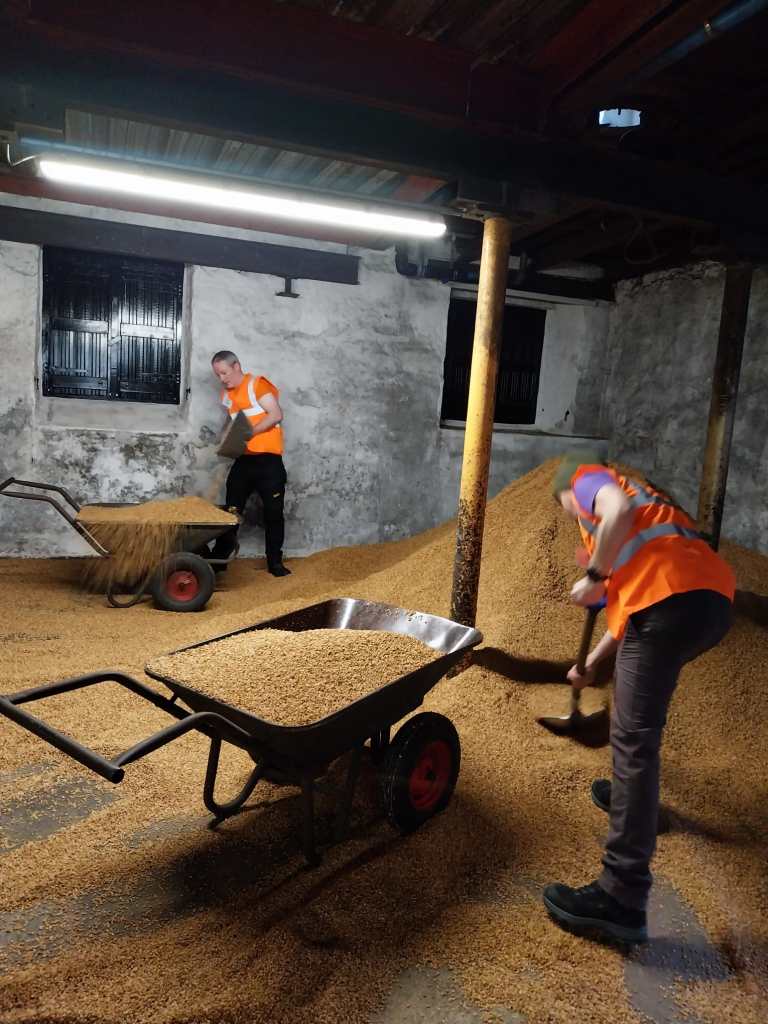
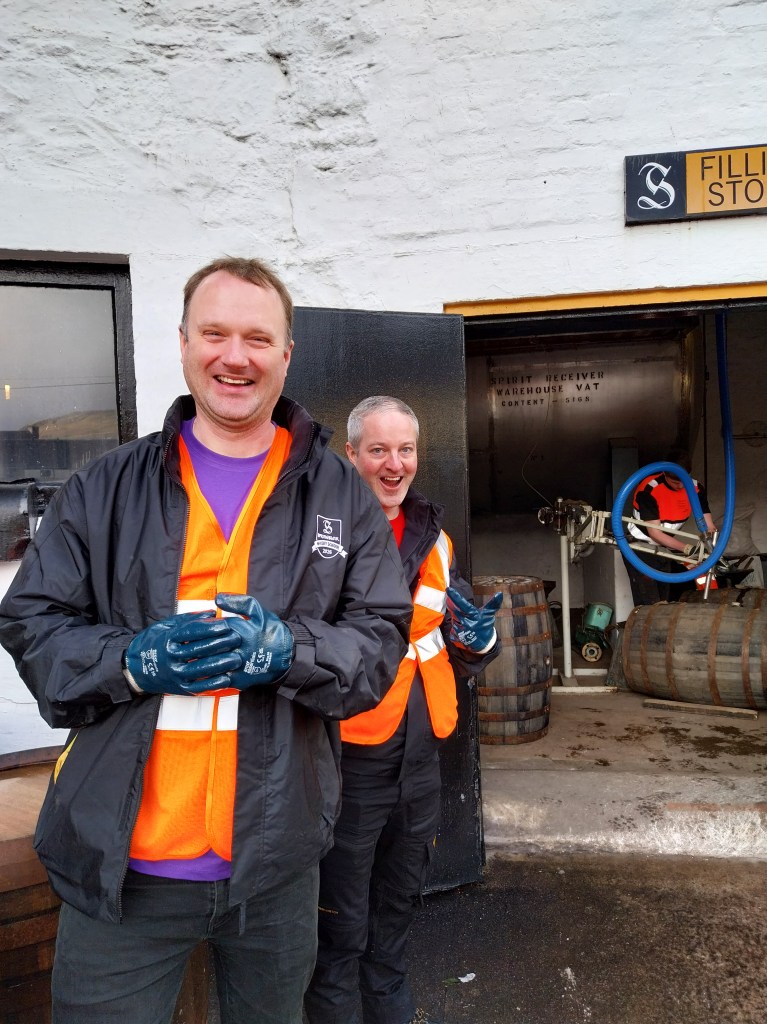
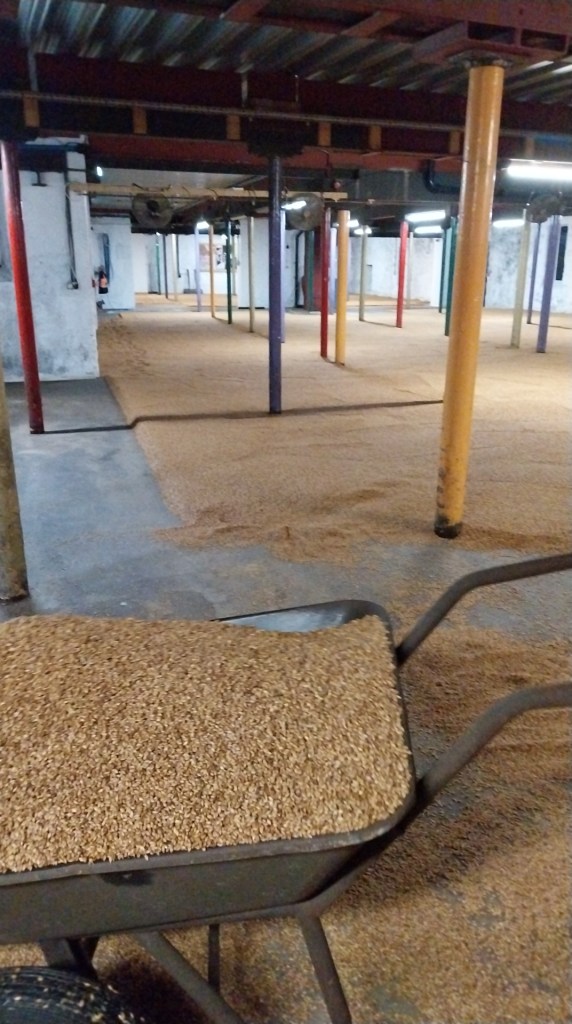
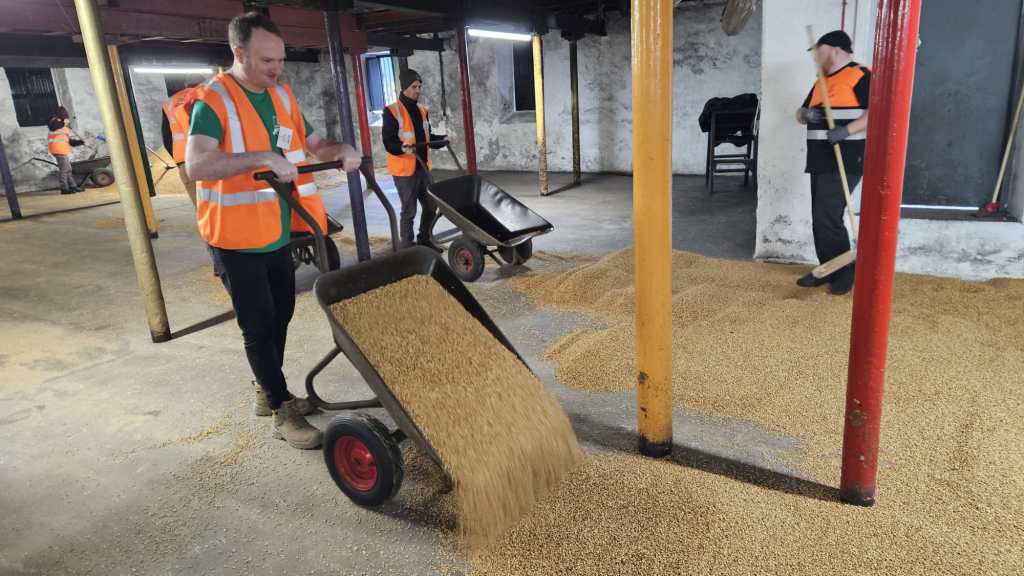
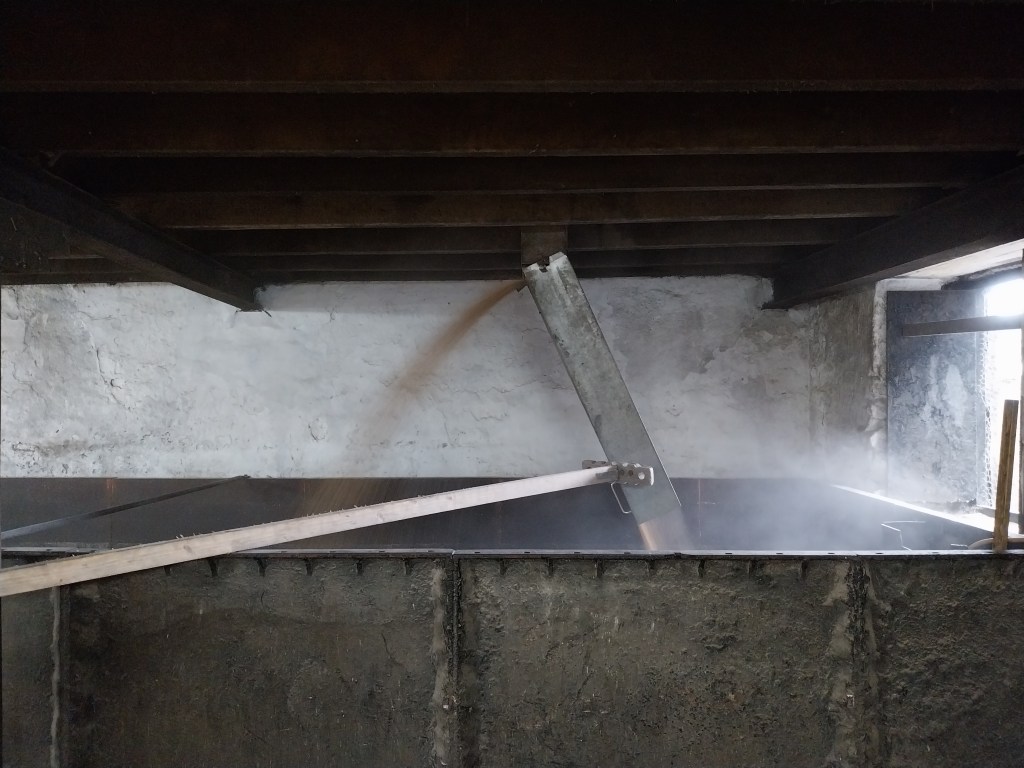
Malting starts by taking the green barley from the bins where the lorries unload it. When ready, it is transported with a conveyer belt through three hatches into the steep tank (13 tons if it goes to the slightly larger lower malting floor, 10 tons if it goes to the upper malting floor), where it is soaked with water for 14 hours. Water is then drained, and after 12 hours the barley is soaked again for another 14 hours. After draining, it is shovelled through another hatch if it goes to the lower malting floor, or shovelled outside the steep if it stays on the upper floor. That day we were on the lower malting floor, and a pile of wet barley was waiting for us, ready to be spread. So, for about 30-40 minutes, we shovelled barley on to wheelbarrows, that we then used to spread it on the floor, under the supervision of Joey and John, who levelled out the most uneven bits. Being five (plus the staff) doing it, it went quickly, and it was already time for the 10am break, when we gathered at the washback bar for a hot drink and some sweet treats.

The second activity of the day was a walking tour with Findlay, hunting down the sites of lost distilleries. Having read David Stirkโ€™s Whiskypolis book recently, Gianluigi was already acquainted with the story of the 30-odd distilleries that used to be in town. Only two survived all the shocks of the late 19th and early 20th centuries, that led to many closures in the 1920s and 1930s. The two are obviously Glen Scotia (formerly only Scotia) and Springbank, while Glengyle was resurrected in 2004 by J&A Mitchell in order for Campbeltown to retain its official whisky region status. And weโ€™re happy for that, as Kilkerran (the brand name under which they sell Glengyleโ€™s whisky, as the name is owned by another company) is a tremendous dram! Two other old distillery names live on as Springbank variants: Longrow, heavily peated and double distilled), and Hazelburn, unpeated and triple distilled. Some of the spots gave it away that there used to be a distillery โ€“ for example, Benmore is a now the name of the street, but you can still see half of its pagoda roof and the name on the old gate.

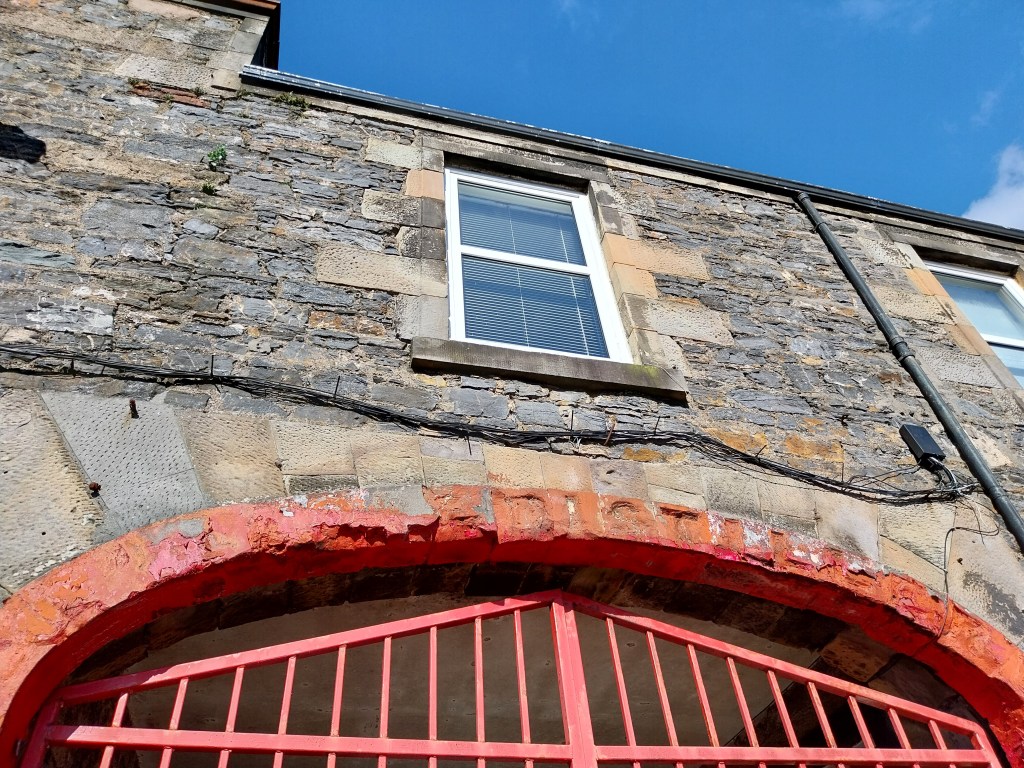
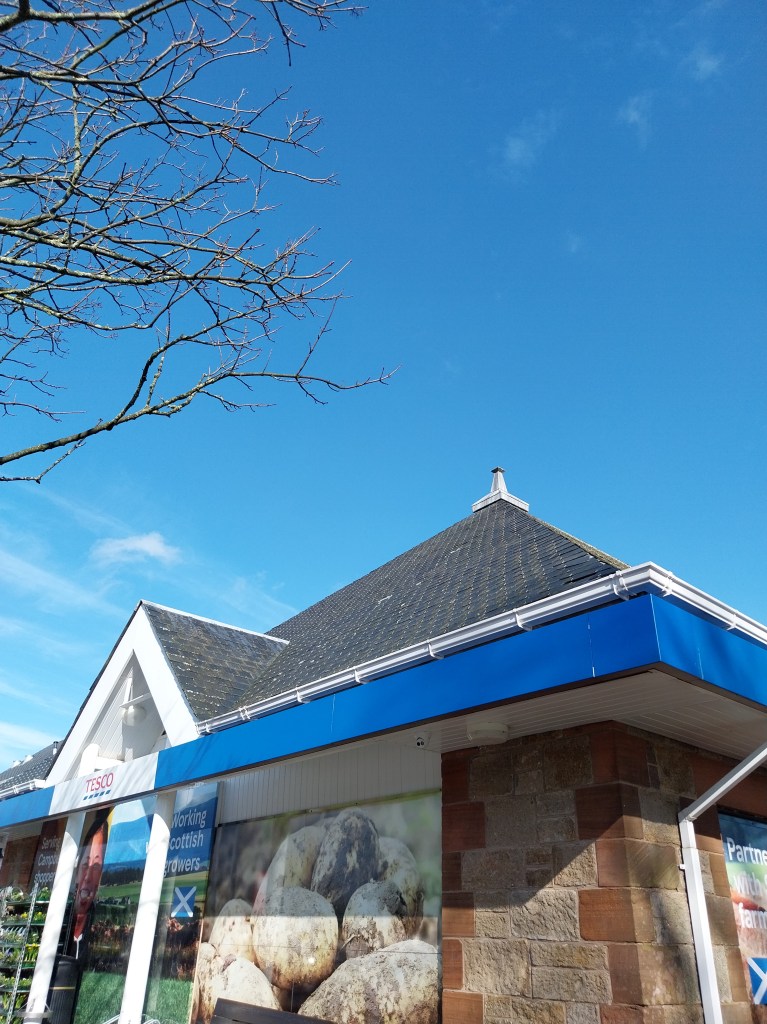
Some others were less straightforward to spot, like the site of Lochead distillery, which is now home toโ€ฆa Tesco. Apparently, when they had their application approved by the Argyll and Bute Council, they were supposed to include in the architecture something that hinted at the fact that there used to be a distillery, so they came up with โ€œpagodasโ€ on the roof. Pardon our French, but they look a bit shite. The old Hazelburn distillery is, instead, one of the best-preserved buildings. Some warehouses of Glen Nevis also survived. Nice touch, during the tour we also popped into Glen Scotia, where we said โ€œhiโ€ to Greg, who gave us the excellent Warehouse Tasting back in December.

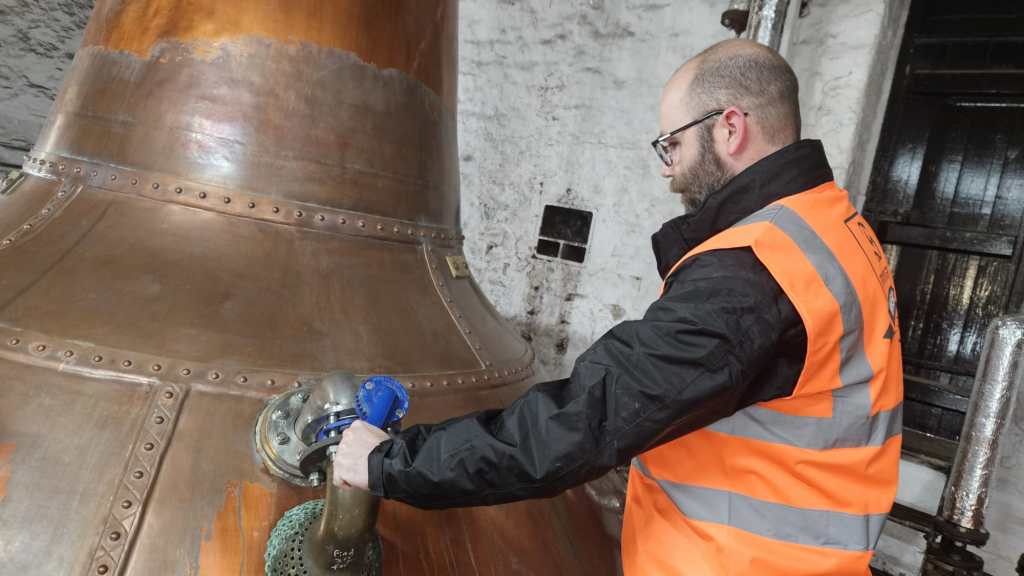
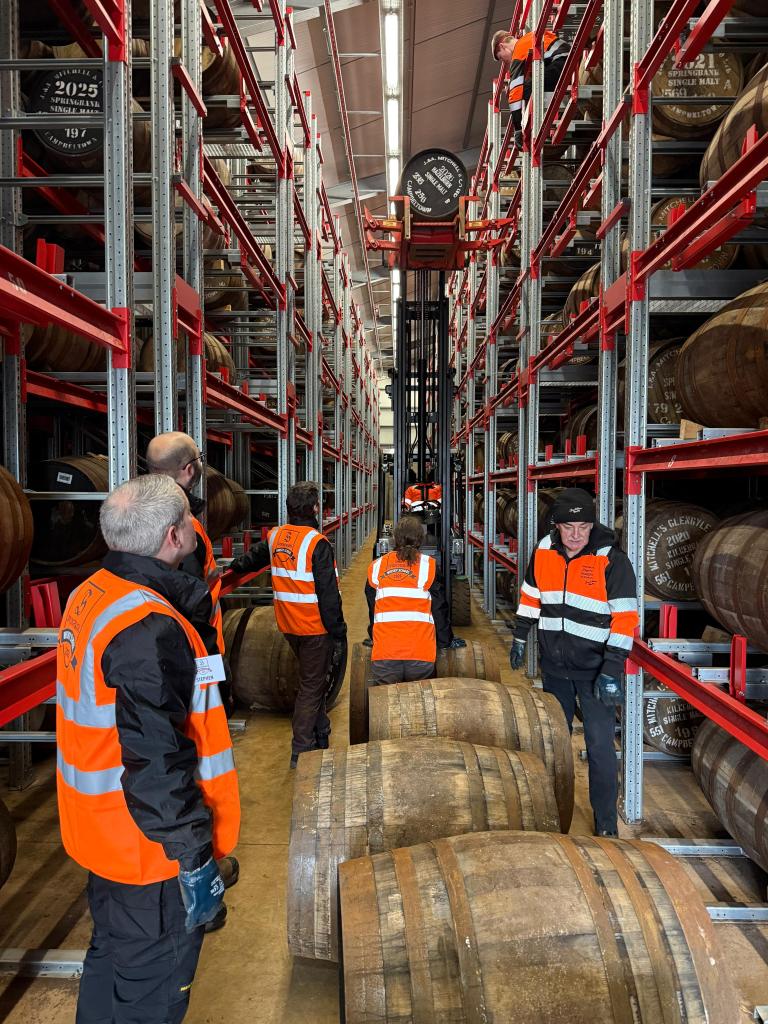
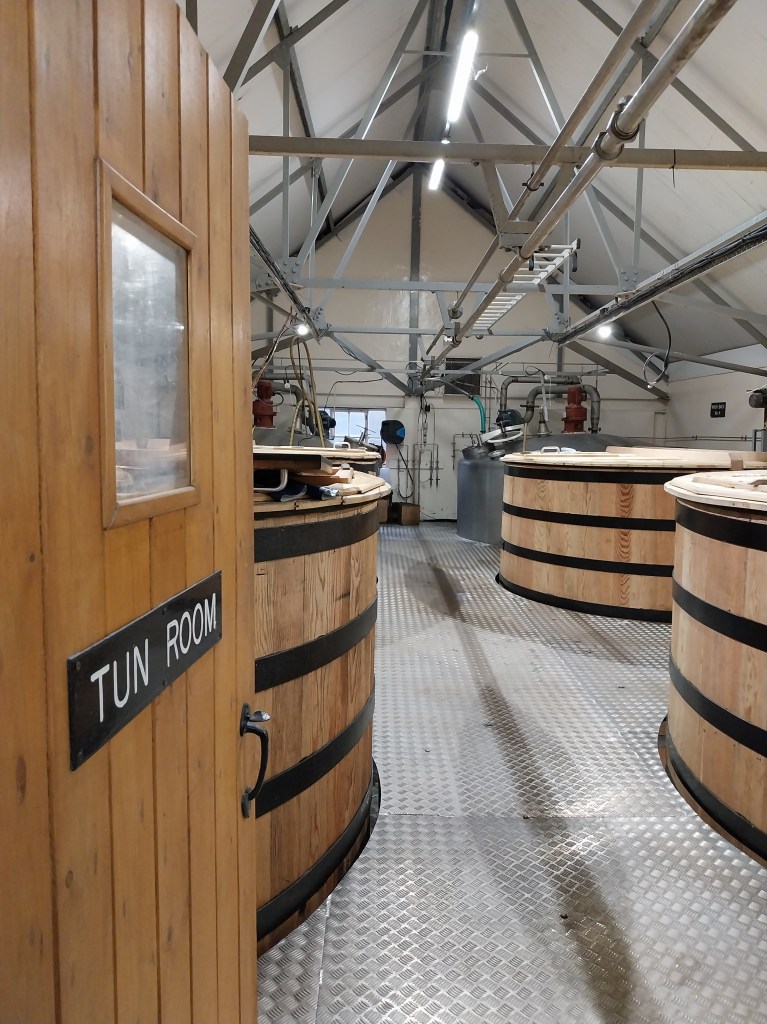
After the tour, it was time for lunch back at the Still Guesthouse: scotch pie, keeping it traditional. Common theme for the whole week: the food was delicious, we were (happily) spoiled! Anyway, after the one-hour lunch break, we were split in two groups, Graham and the two of us in one, and Robert and Stephen in the other. While Robert and Stephen went on to look at mashing, fermenting and distilling, we went back to the maltings, where the staff showed us all the nitty and gritty of what is done there. First, we watched the steep tank being filled in with barley, and how it gets evened out. To see how the steep tank gets filled with water, we had to wait for the next morning.

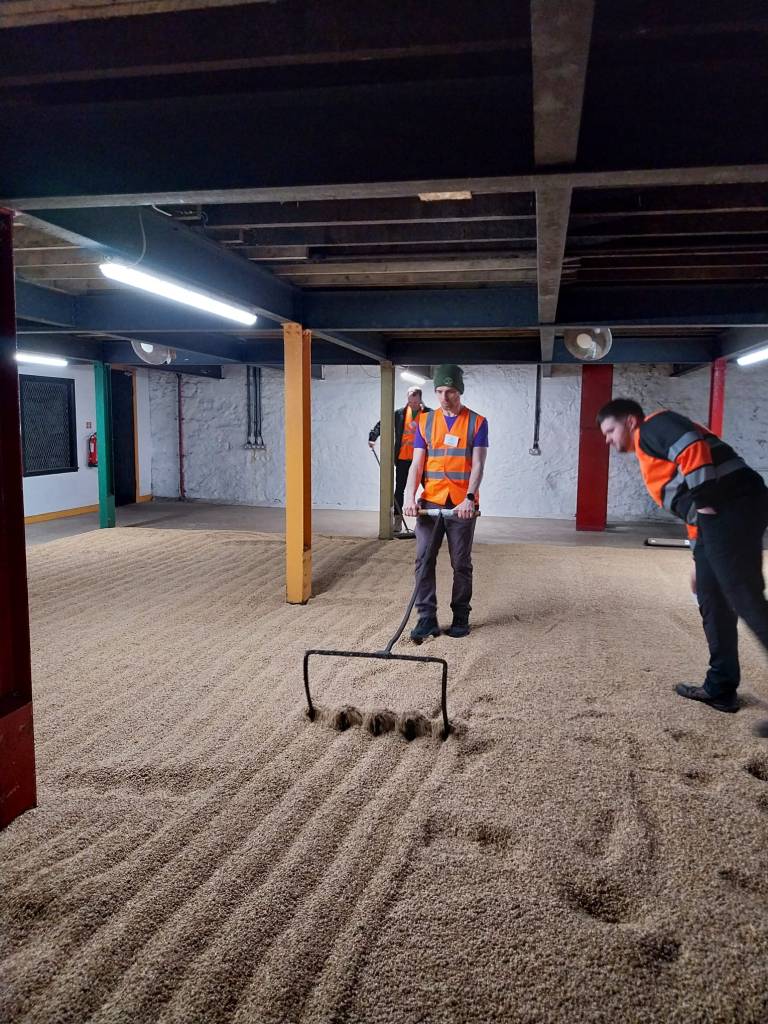
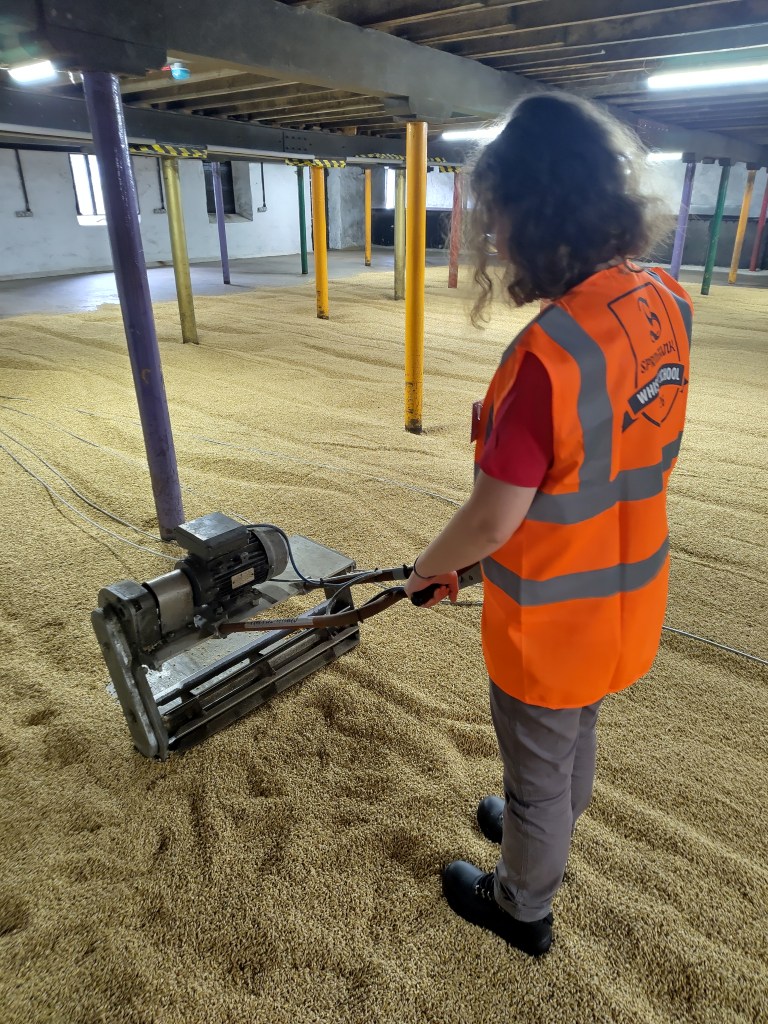
Anyway, once spread on the floor, the barley is turned every four hours to keep it aerated and break up rootlets. The three of us got to turn a few rows of barley with both the grubber (manual) and the turner (electric). Every step and relevant information is noted down on paper registers, things like when the barley is turned, temperature, humidity, etc. It was quite exciting to see some old registers going back many years!

The team then took us outside in the internal courtyard, where they keep both wet and dry (under a shed) peat, and where the old oil tanker still lays, which was used before they switched to natural gas. Back inside, we went up to the last floor, which is not used to spread malt, but to store the barley from two local farms (wink, wink) waiting to be processed. Itโ€™s also where we could see the top of the malt bins (and a conveyer belt!).

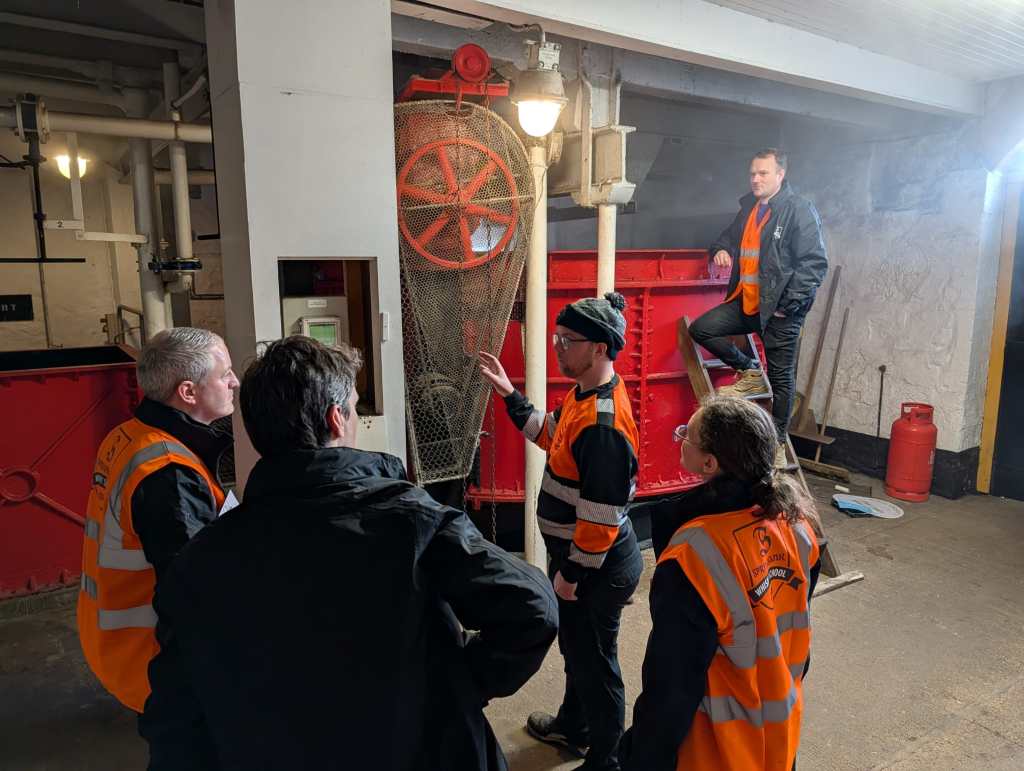
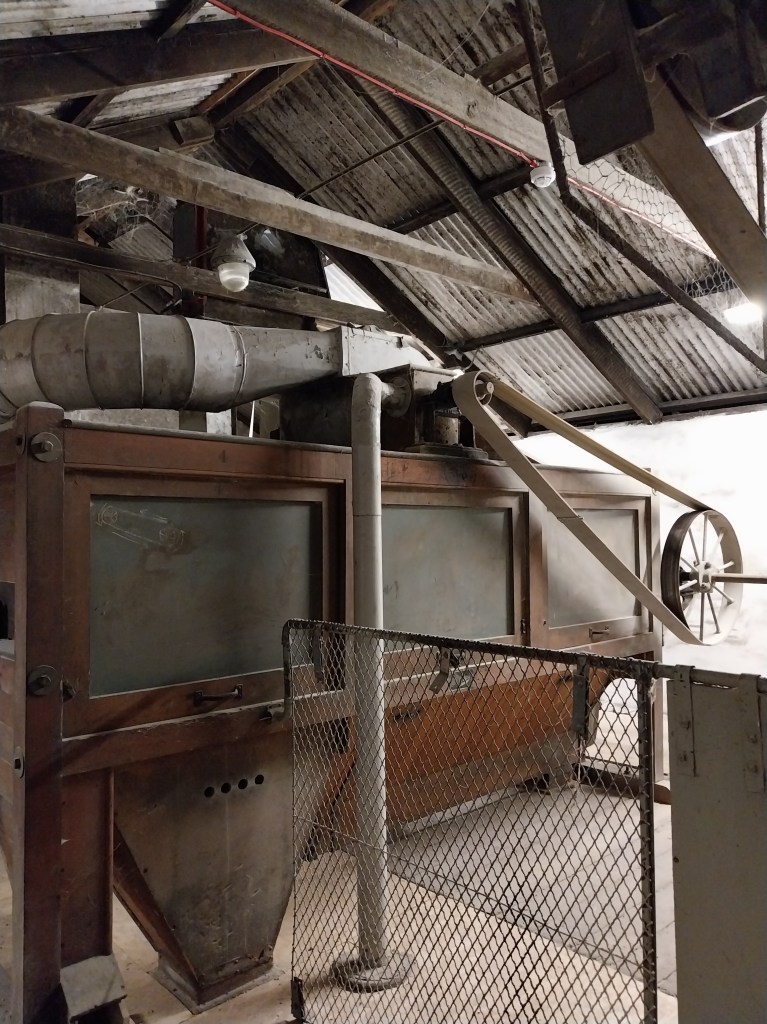
We then checked out the destoner above the Porteus mill, a very old piece of equipment in a wooden box, which weighs the malt to send to the mill in 25kg โ€œcoupsโ€. All very nerdy details, and of course we loved it!

With that, our first day was over. While the afternoon was a bit slow, it was a solid start of the school, and we were looking forward to the second day! We went back to the guesthouse, where Sandra had cooked us a delicious dinner, chicken Balmoral with fava beans and mashes, followed by a trifle: we still dream about it! We then had a couple of drams with Stephen and Robert in the sitting room, before retiring to our rooms.

Stay tuned to know more about our second day! Until then, slร inte!


Springbank Whisky School

Link: https://www.springbank.scot/whisky-school/


#71.3 The North-eastern Highlands

Lost in Brechin: Glencadam distillery


TL; DR: Another weekend, another trip to the northeast, destination: Brechin, home to Glencadam distillery! They just opened a new visitor centre after a substantial upgrade, and it is very cozy and charming: well done! We enjoyed the basic but informative tour, and a warm and hearty soup afterwards.ย 

(missed Part 2/Part 1?)

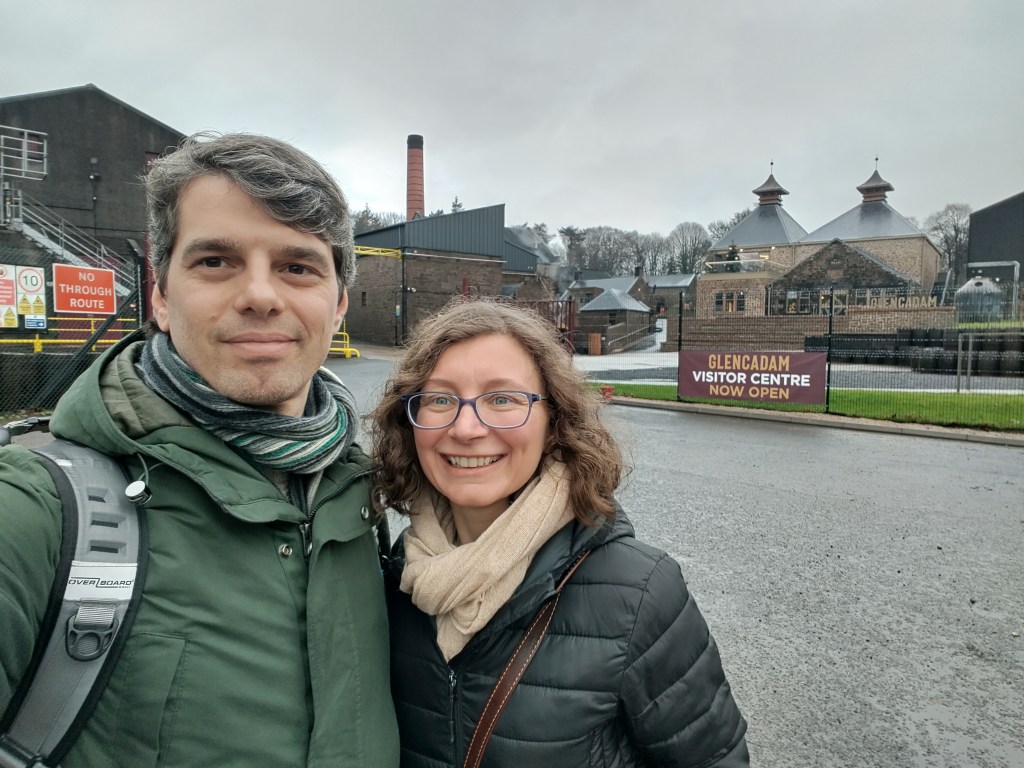
The weekend after our trip to Royal Brackla it was time again to hit the road with Mr Vantastic. And again, our destination was the northeast of Scotland. This time we had two distilleries to visit, so we stayed away for the night, hoping not to freeze. We left Leith mid-morning, the weather was not as good as during our trip to Royal Brackla, but not as wet as the one to Glenglassaugh: overcast and some rain here and there. We didnโ€™t stop for lunch, as weโ€™d prepared two sandwiches with the delicious rock salt and rosemary focaccia from Lidl: when itโ€™s fresh, truly good stuff! Our first stop was Glencadam distillery, in Brechin. We arrived in town at around 1.30pm, but we parked away from the distillery, in what was marked as a potential stopover for the night. It is near the river South Esk but it didnโ€™t look that great, so we postponed the decision to after the tour. It took us about 20 minutes to cross the town, walk alongside a football ground and a cemetery, to then arrive at the distillery.

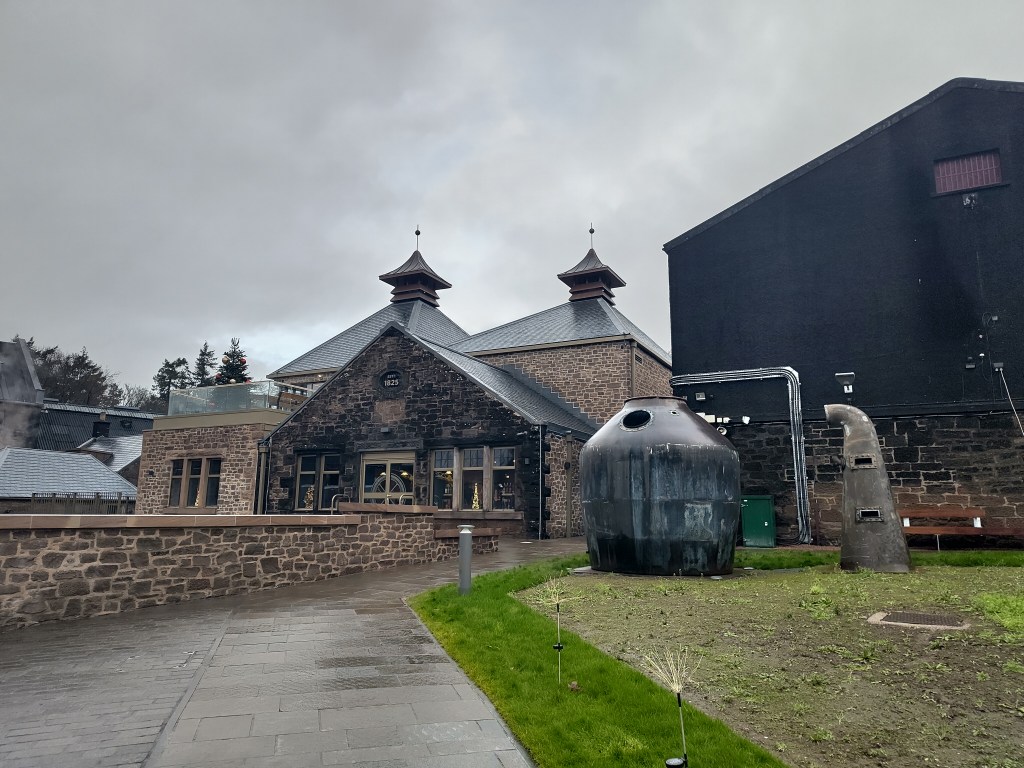
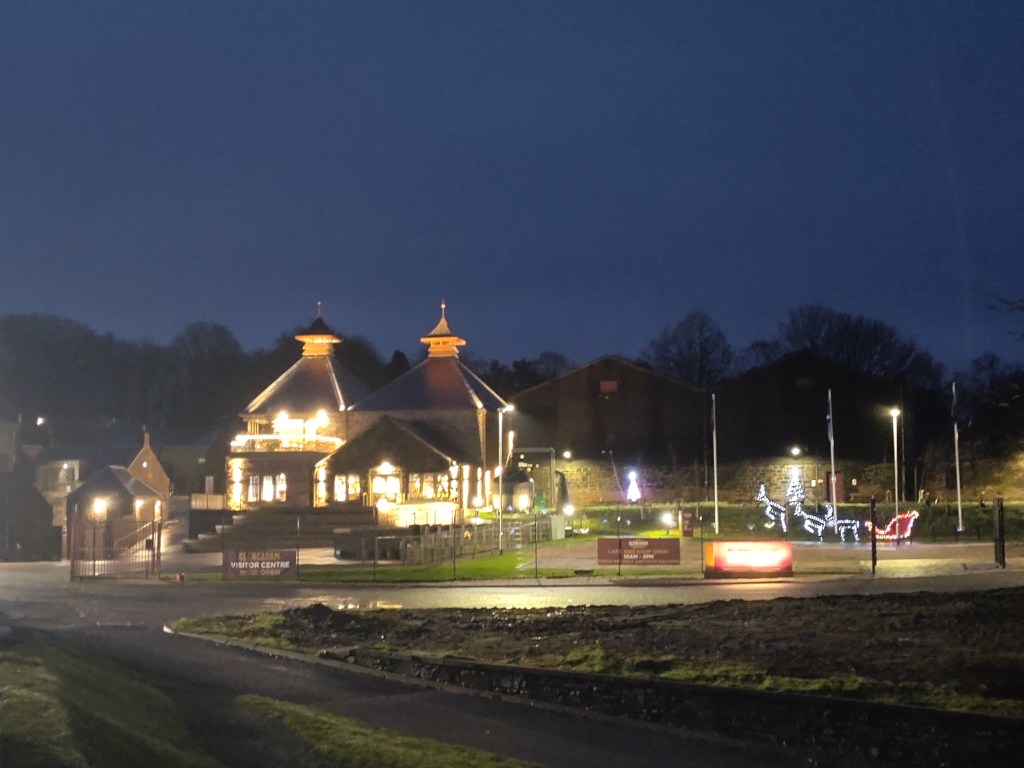
Glencadam has been on our radar for a while, as their single malts became very popular among whisky enthusiasts: other than delicious, many of their expressions (except for a couple available in supermarkets) are naturally presented (non-chill filtered and natural colour), and mostly well priced: if you havenโ€™t tried it yet, get a bottle of the 10-year-old, great stuff! After the pandemic the distillery has been mostly closed to public, with tours only available on Tuesdays and Thursdays, previous direct contact, but for a short period of time. When they closed again (to visitors, the distillery was still in production), it was for an important reason: works started to build a visitor centre, including a cafe and a dram bar. It was also to celebrate their 200th anniversary, so an opening was expected in 2025. Almost at the end, but they finally opened in November! As we arrived, we noticed the all new and tidy exterior, with an old still used as decoration and, given the period, a couple of cask-stave made Christmas trees.

In the visitor centre we were welcomed by Michael, the manager, an old acquaintance as he used to work at Kingsbarn distillery, and we met him many times at the Fife Whisky Festival. While waiting for the tour to start, we browsed the shop: other than the known expressions, everything was set up for a couple of bottle-your-own bottlings, but they were not available yet.

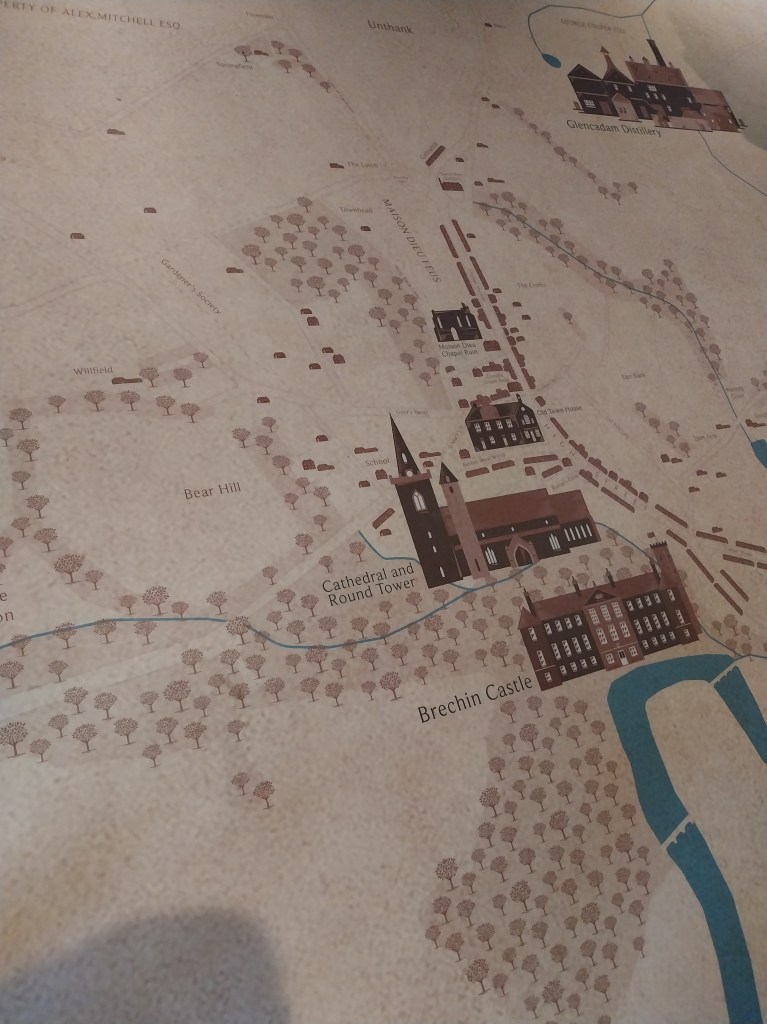
Our guide was Brian Townsend, local from Brechin, the whisky historian who wrote Scotch Missed, a book about lost distilleries (here a review by Kate Watt, of Watt Whisky independent bottler). It was us and another two couples on the tour, which started in a room with panels about the history of the distillery and a big map of Brechin on the floor. The distillery was founded in 1825 by George Cooper, who sold it only two years later. Between the mid-1800s and the early 1900s it changed hands a few times, until it was purchased by Hiram Walker in 1954, which in turn was acquired by Allied Domecq in 1987. The distillery was mothballed in 2000, but finally bought by Angus Dundee, the current owner, in 2003. The history and a high-level explanation of how whisky is made was covered (possibly too extensively) in an exhibition with a series of videos that preceded the actual tour of production.

Going into the nerdy production details, they get 30 tons of fully unpeated barley three times a week mainly from Bairds, sometimes from Crisp: in both cases, they aim for Scottish barley. The mill, built in the 1920s, was acquired in 1965 and produces grist with the usual components split (husk/grit/flour 20/70/10). Five tons of grist are added to each mash, first with 20,000 litres of water at 65ยฐC, then another 8,500 litre for the second water, and finally the third water (another 20,000 litres) captures the remaining sugars and is used as first water in the next mash. The draff is collected by local farmers once or twice a day, to feed cattle. Of the six washbacks, only two are made of stainless steel, but they will be replaced next year by Oregon pine ones, like the other four.

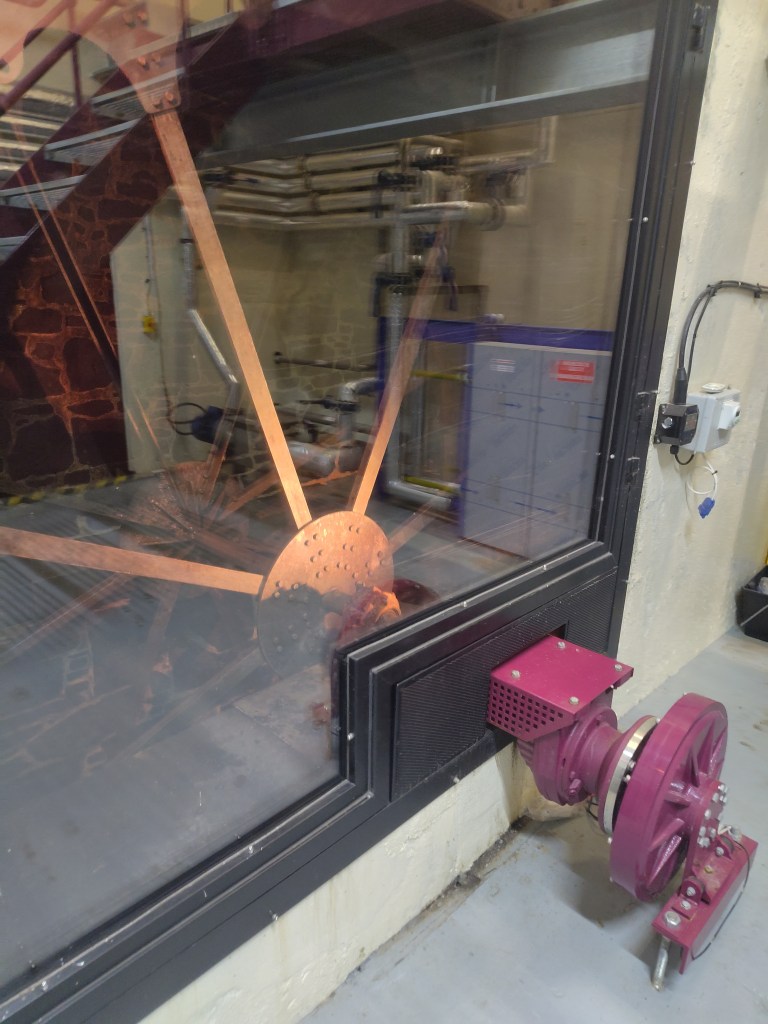
Another improvement was to get the water wheel to generate some of the electricity, replacing the original one dating back to 1824-25 that worked for over a century. The new one can be observed behind glass. Instead, a feature that is gone forever, is the original Doig ventilator, aka the pagoda, which was destroyed in a fire.

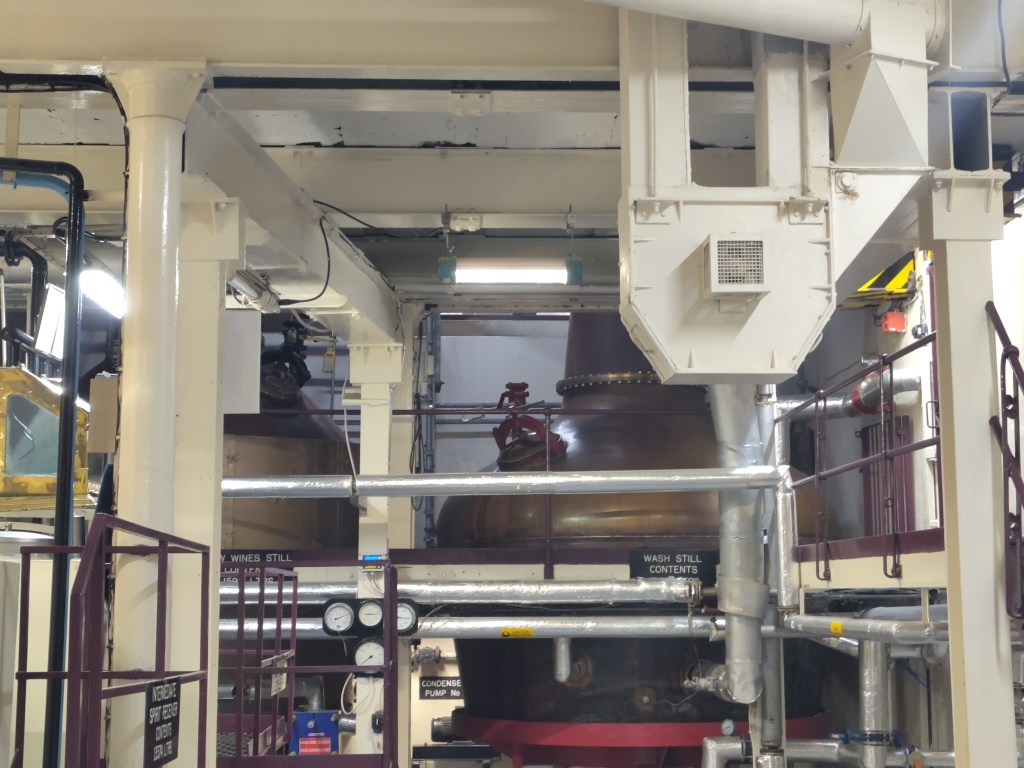
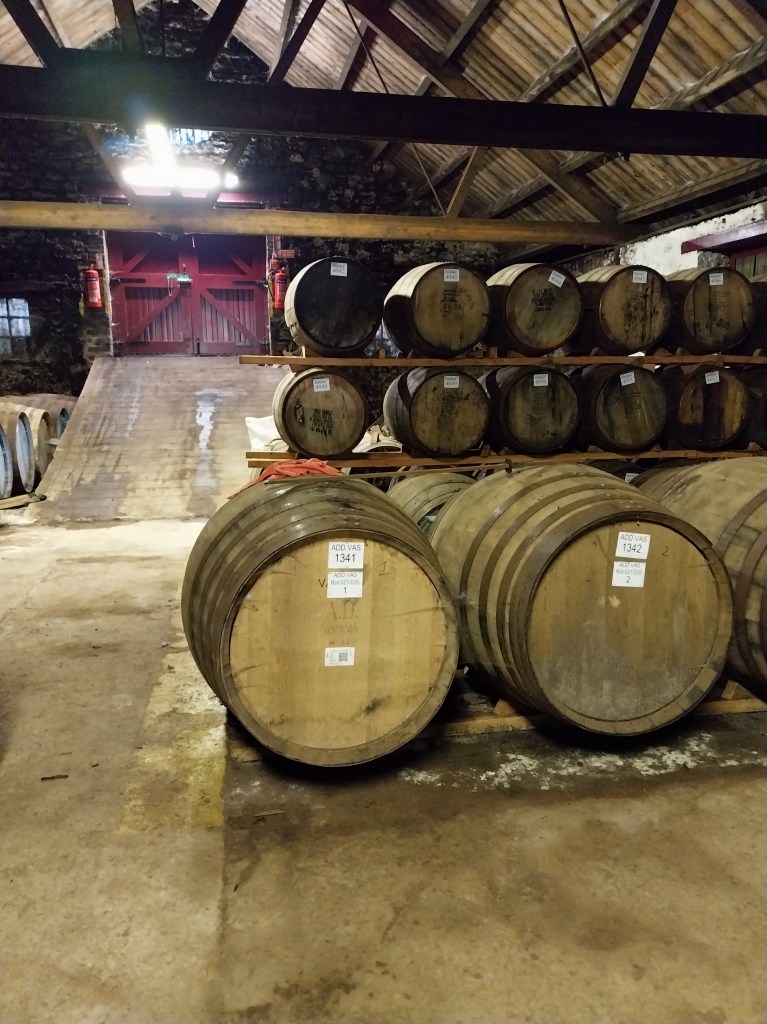
Back to production, we learned that fermentation lasts 48 hours, a short one, and is triggered by 13kg of distillersโ€™ yeast. They only have one pair of stills, and in the second distillation, they start collecting the spirit after 10 minutes of foreshots (we didnโ€™t get the cut points though). Coming out of the still room, we were in a small yard where the draff truck comes in, and from there we reached one of the six warehouses on site, to the right of the visitor centre. Two of these are dunnage style and date back to the 1800s, while three are from the 1950s and one is a modern racked warehouse.

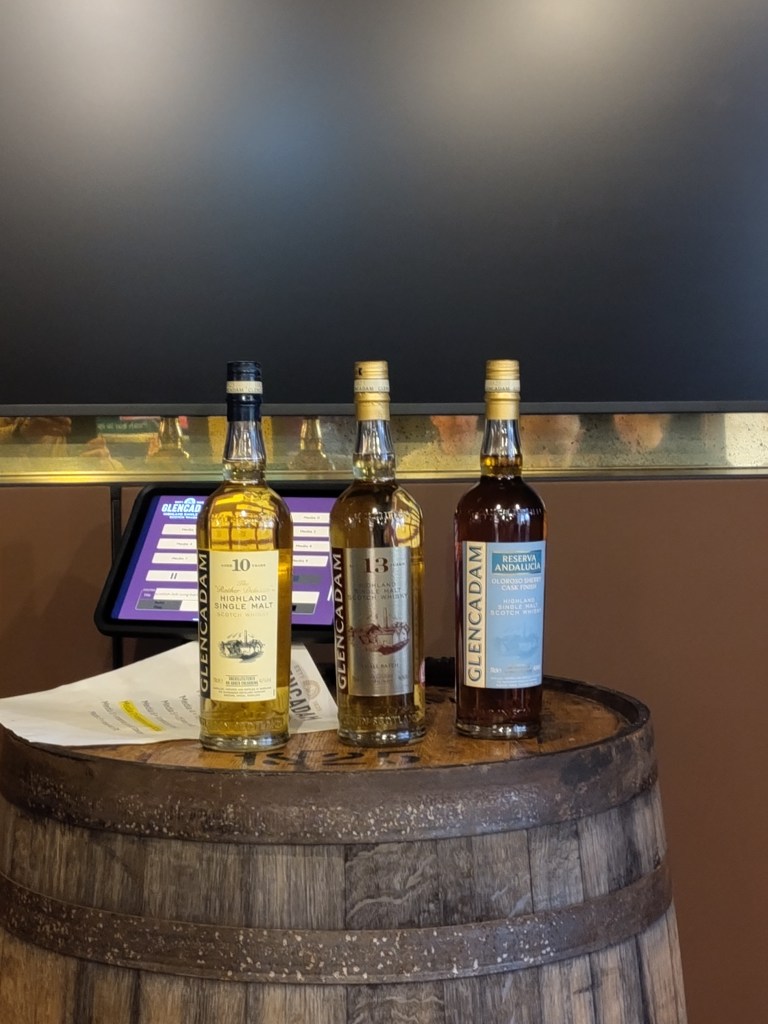
It was then time to go back to the visitor centre for the tasting: we had three drams in front of us, the Glencadam 10y (46%, fully ex-bourbon casks), its bigger brother 13y (46%, same casks), and the Reserva Andalucia, a non-age statement expression finished for a year in ex-sherry casks (46%). Recently, this became part of a series of many cask finishes expressions (white Port, tawny Port, Amarone, PX sherry, etc). It was a basic tasting, but enjoyable nonethelessโ€ฆWhen we were about to finish, Micheal brought us another dram: a 17y โ€œtriple Portโ€ cask, a nice and delicious touch!

After the tasting, we went upstairs to the cafe for a warm soup, but Gianluigi got tempted by the dram bar (they have most Glencadam and Tomintoul expressions available) and got another dram (a delicious 15y finished in Madeira wine cask, 46%). It was a very pleasant moment, the cafe is a very cozy space to relax with bites and drams. Because in the meanwhile weโ€™d decided to leave Brechin, we didnโ€™t indulged in more drams at the bar (hopefully next time), and we left the premise, not before getting a signed copy of Brianโ€™s book.

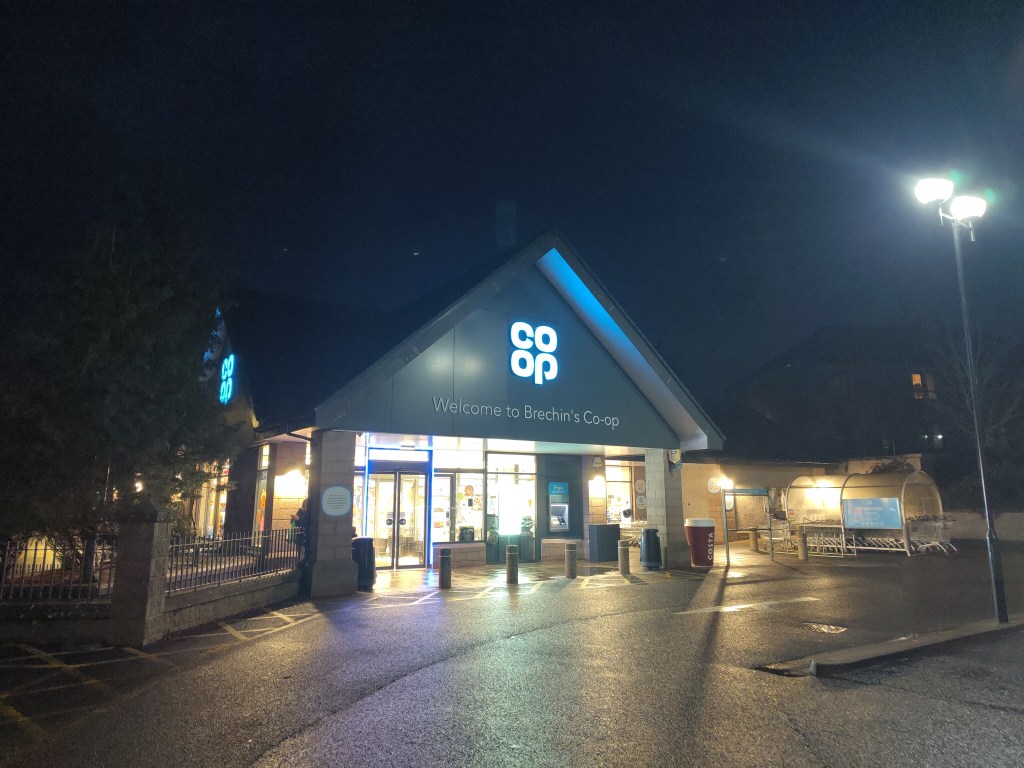
We walked a bit around Brechin, but it was dark already and the visit to the cathedral was not that satisfying. We visited the site where the North Port (or Brechin) distillery used to be, now a CoOp (*sad trumpet*). We left town and arrived at the Cock and Bull pub, north of Aberdeen, a pub that lets campervans stay if a meal is consumed there. Despite arriving early (not even 6pm) they sent us away asking to come back at 8pm. We did, but we had to wait almost another hour to order as they admitted that they thought we wouldnโ€™t come back (in spite of us leaving our names for a table). What a shite way to treat customers, probably we wonโ€™t be back.

Overall, our visit at Glencadam distillery was very good, we had a nice time. The new visitor centre looks great, and while the experience we chose was very basic, especially the tasting, it was interesting nonetheless (to note, they offer a pricier experience, maybe next time). Weโ€™d definitely suggest visiting the distillery to friends, in particular for those early into their whisky journey. The only thing we didnโ€™t like was the pricing of the bottles in the shop: above retail, including some shops on the Royal Mile (obviously weโ€™re not considering the big online retailers), but in general everything beyond the core range was slightly pricy, with no discounts available to those taking the tour. It always puzzles us how some producers seem to punish instead of rewarding the enthusiasts making the effort to travel to the distillery.

Stay tuned for the last tour around the northeast of Scotland, coming next week! Until then, slร inte!


The GlenCadam Distillery Tour

Price: ยฃ23.58 pp (ยฃ22.50 + fee, December 2025)

Duration: 1hr 30min

Tasting: 3 drams, Glencadam 10y (46%), Glencadam 13y (46%), Reserva Andalucia (NAS, 46%)

Target: everyone

Value for money: very good

Highlights: the cafe above the visitor centre

Recommended: yes

Link: https://www.glencadamwhisky.com/

#59 Another Tuscan detour

In the land of Brunello


TL; DR: While in Rome, do as the Romans do…while in Tuscany, go visit a winery. This time we went to Fattoria dei Barbi, in the land of Brunello di Montalcino. In this magnificent landscape, we learned about how Brunello is made during the visit of the historical cellar, and we tried some great wines.

One of the best things about our whisky journey is the renovated pleasure that now comes with eating or drinking in general. This is because of the continuous focus on aromas and flavours during whisky tastings, which slowly but constantly enhanced our senses of smell and taste. This didnโ€™t happen in isolation though: during a 2018 trip in Thailand (no whisky stories there), we attended a cooking class which opened our minds in terms of spices use and flavour pairings. Over time, having a meal, a cup of coffee, or a pint, or even a walk in a meadow or in a wood have become much more pleasant experiences (and no worries, we donโ€™t eat meadowsโ€ฆusually).

And here we come to wine: because of our Italian upbringing, many people assume we are good at the โ€œwine thingโ€ although, spoiler alert, we are definitely not. This is despite wine being homemade within our families, by Teresaโ€™s grandfather and Gianluigi great-grandfather. Also, being brought up in Italy meant that wine was often on the table at dinner and during weekends. And, while we know the basics and we have our preferences (generally bold red wines that go well with meat, better if they spent some time in wood), we never went down this rabbit hole. Ironically, this started to come around (slowly) thanks to whisky: in 2021 we visited a winery in Tuscany because we learned that Glenallachie finished a whisky in casks from that winery: Grattamacco. As for fortified wines, we went to a few port houses in our 2022 holiday in Porto. We also indulged in some winery visits and tastings in Australia last year. Still not experts, but definitely more โ€œflavour curiousโ€.

Not a bad weather for a two-day trip.

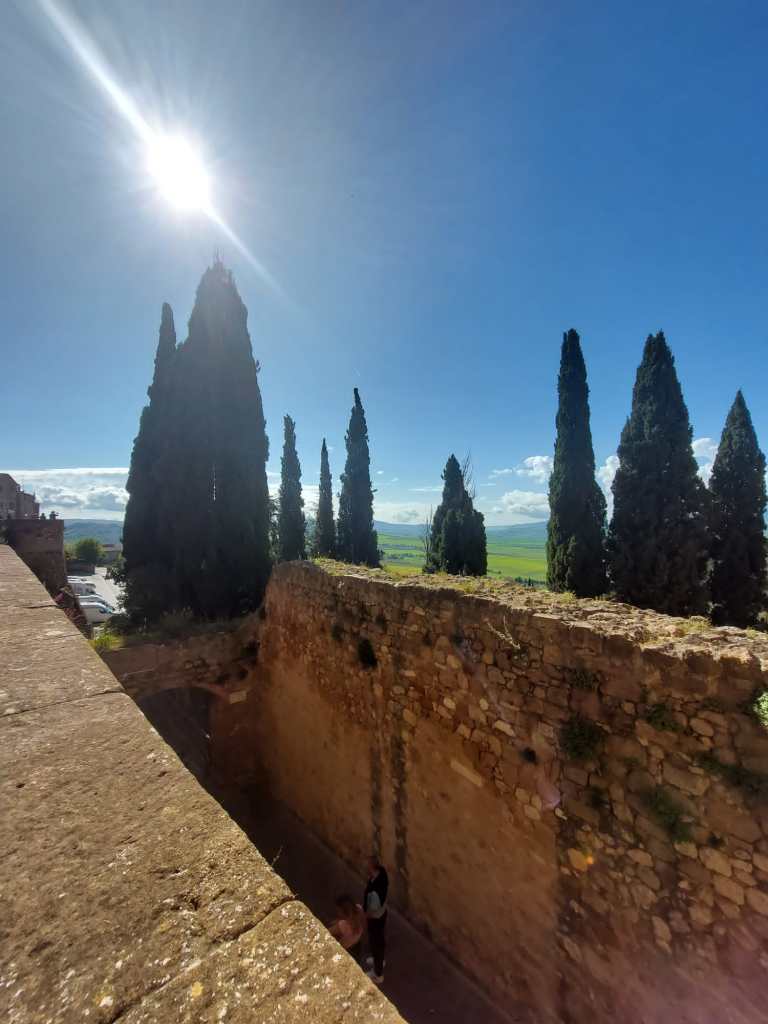
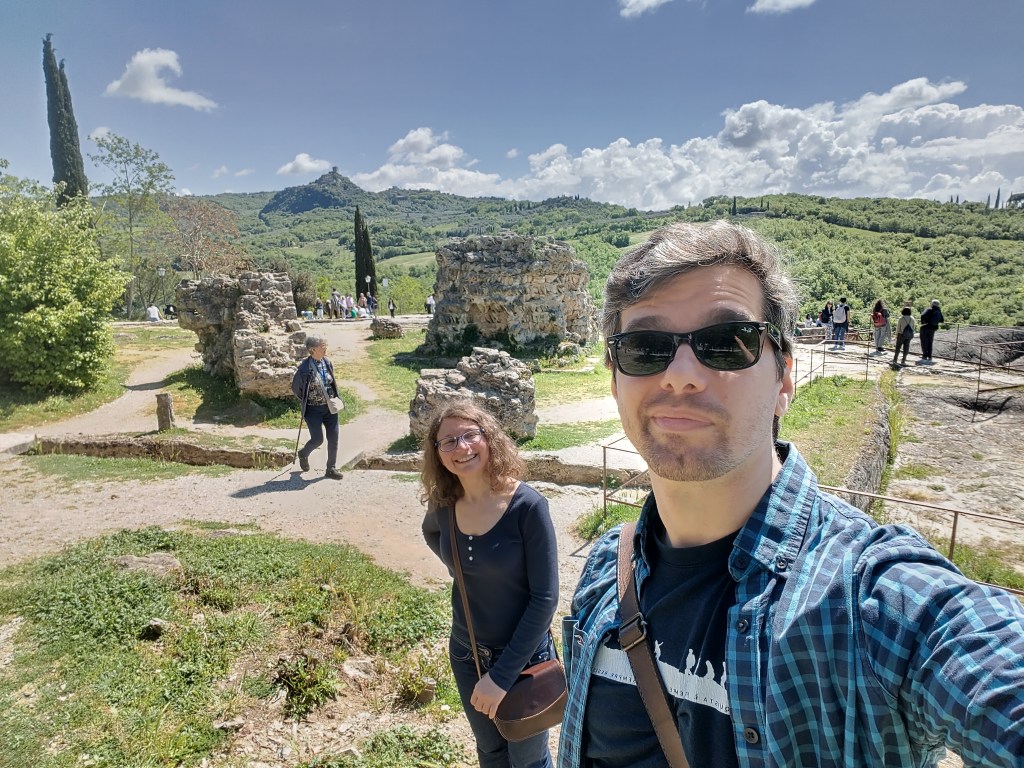
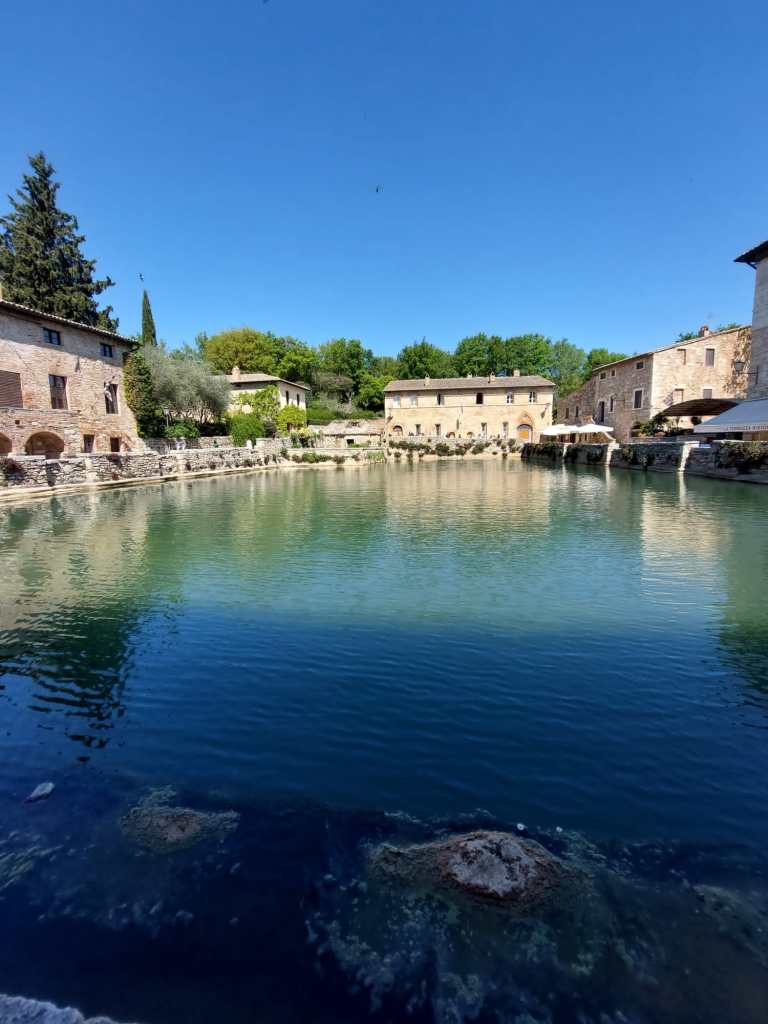
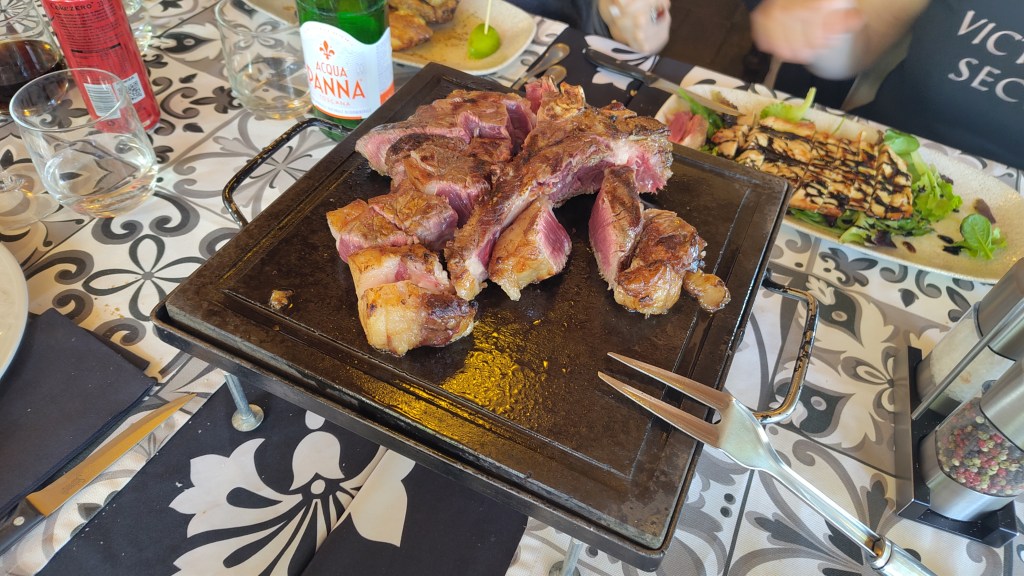
So, whatโ€™s better than improving our wine knowledge by visiting a winery in Tuscany? The occasion came in April this year (2025), for Teresaโ€™s mother birthday: together with her sisters, she organised a two-day trip to Val dโ€™Orcia, one of those places that look like a classic Tuscany postcard (wait, it is a Tuscany postcard!) – smooth rolling hills, small medieval towns on top of them, vineyards and meadows (again, not eaten). We left Florence early, and by mid-morning we were in Pienza: a town famous for its pecorino cheese (one of many), and contrary to others, purposedly (re)built by Pope Pius II in 1462, to reflect the ideals of the Renaissance. We then visited the charming Bagno Vignoni (a village famous for a very old spa), before stopping for lunch nearby, where we (meaning Teresa and Gianluigi) shared a very tasty 1.2kg โ€œBistecca Fiorentinaโ€.

In the afternoon, we drove towards Montalcino, the hometown of the renowned Brunello of Montalcino wine. Until a while ago we never heard of a Brunello cask finished whisky, but the independent bottler Ferg & Harris recently close this gap.

Back to wine, the winery we chose was Fattoria dei Barbi – the tour was quite cheap, only โ‚ฌ10 for the winery visit, while for the tasting we could pick (beforehand) between a few options: we chose a basic tasting (โ‚ฌ25, four wines from the basic range) and an upgraded one (โ‚ฌ35, focused on Brunello). The winery is very pretty, hidden from the main road and surrounded by woodland and, obviously, vineyards.

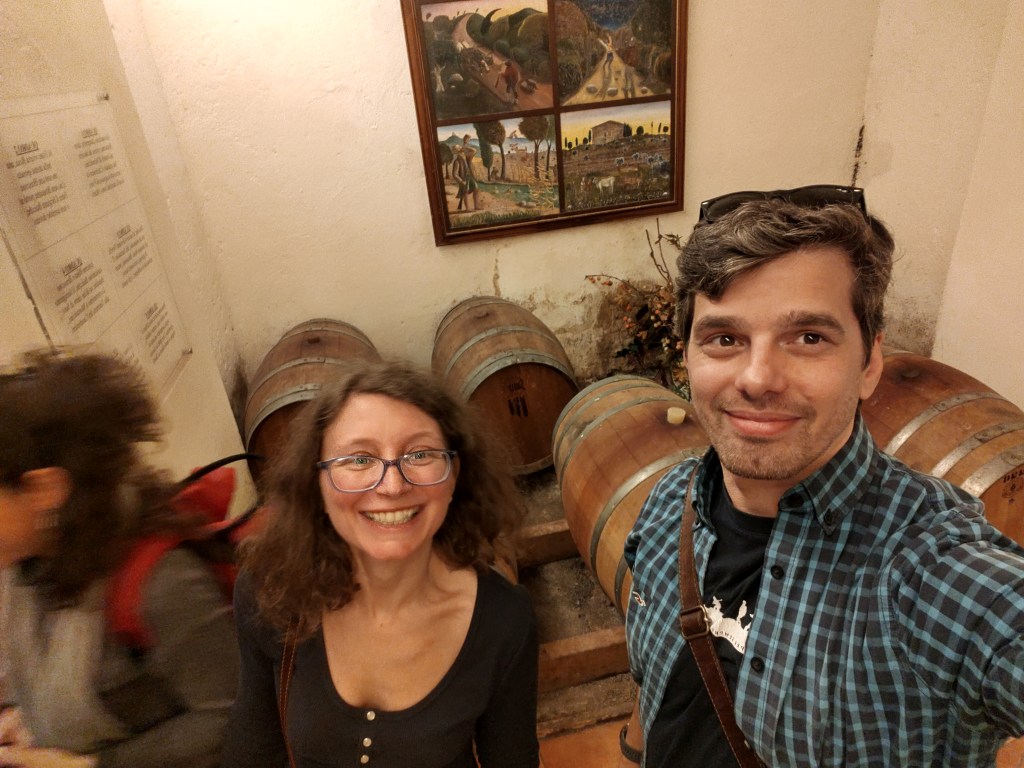
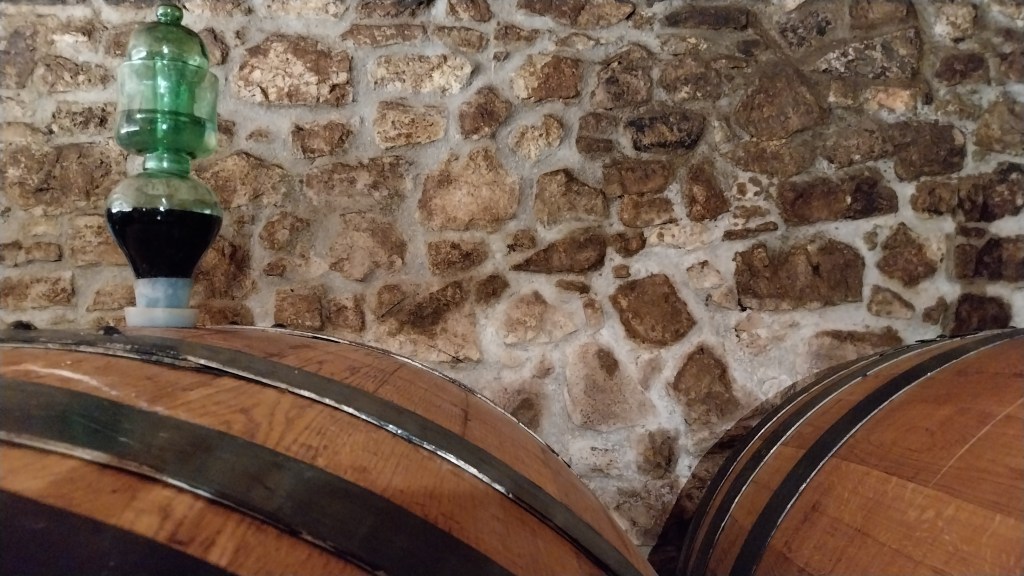
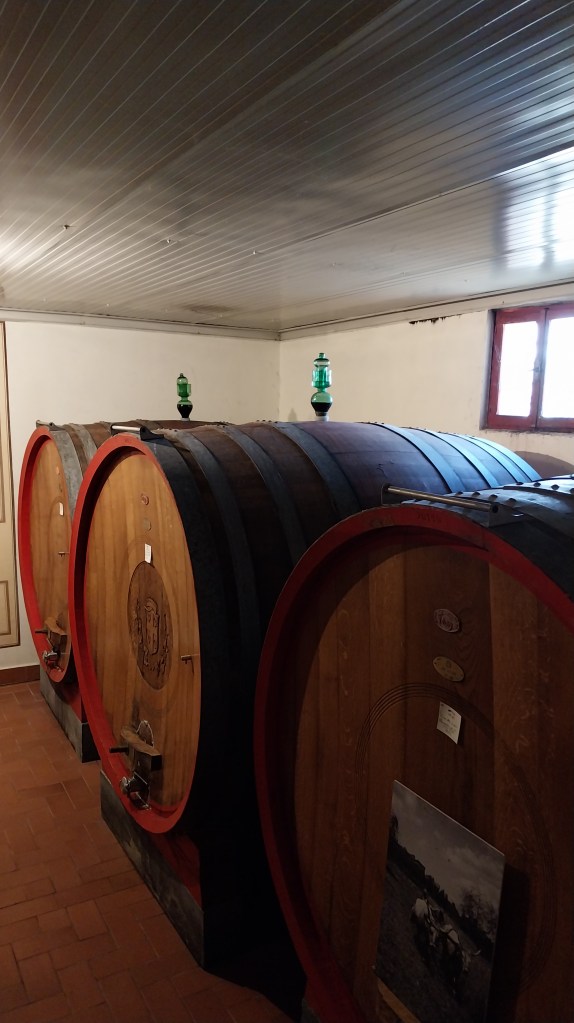
The tour started in the shop, from which we could access the historical cellar, a series of connected rooms full of big barrels for fermentation and maturation. Interestingly, these barrels had a โ€˜tappo colmatoreโ€™ on top, a Leonardo Da Vinci invention, a lid to verify the level of liquid in the barrel and to allow the release of gas that might generate during maturation.

While moving from one room to the next one, our guide covered the history of the Colombiniโ€™s family, owners of the estate for centuries. Originally a farm, wine making became prevalent in the 1800s thanks to Pio Colombini, one of the producers who started bottling Brunello instead of selling casks to grocers (โ€˜vinaiโ€™). His son Giovanni expanded the business and made it one of the first to sell Brunello overseas. But what makes a wine a Brunello? The rules were set in the 1980s, but in a nutshell, it needs to be 100% โ€˜Sangiovese grossoโ€™ grapes, and the wine needs to age at least 5 years, of which at least two in oak barrels (mostly French oak) and at least 4 months in the bottle (the remaining time is usually spent in big wooden vats, with the above mentioned โ€˜tappo colmatoreโ€™). Similarly, for the Brunello Riserva the years are six, with 6 months spent in bottle (the rest is similar).

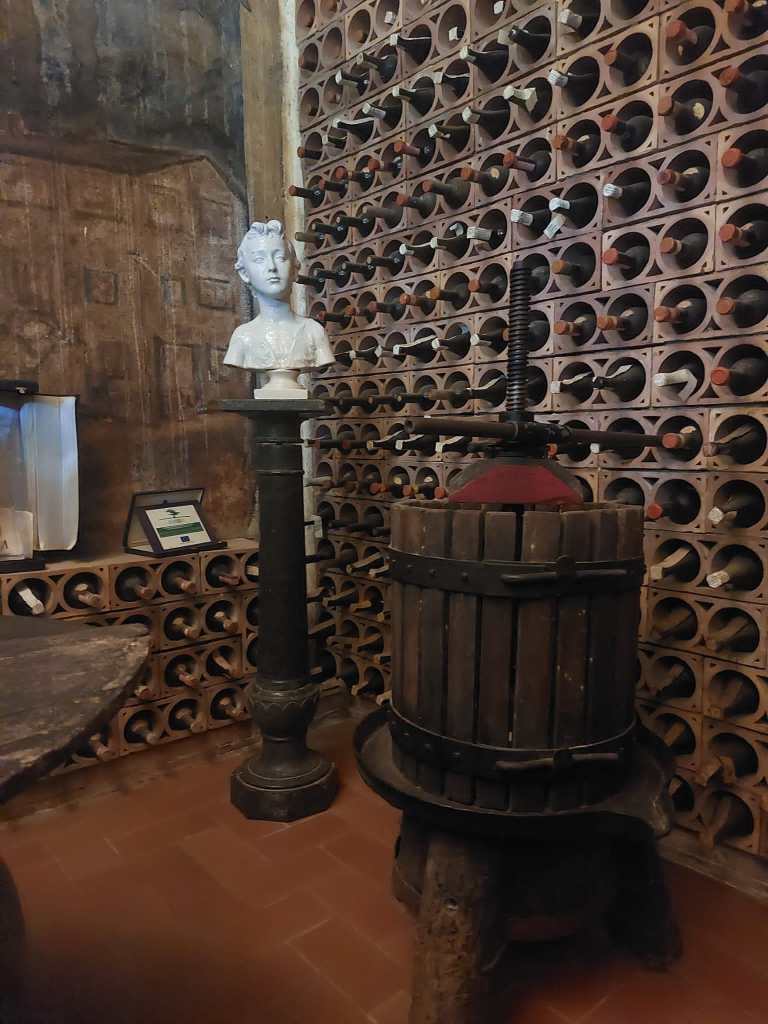
We didnโ€™t get too geeky on the tour, so we donโ€™t have many technical details to share, but listening to family stories while admiring the old cellar was a great experience. The wine cellar was spectacular, with bottles of all vintages (including our birth years, sob). Some you could buy, but you needed to enquire, and they might decide not to sell anyway. However, the guide admitted that many of those might probably be well past their best, and now they are just collectible items.

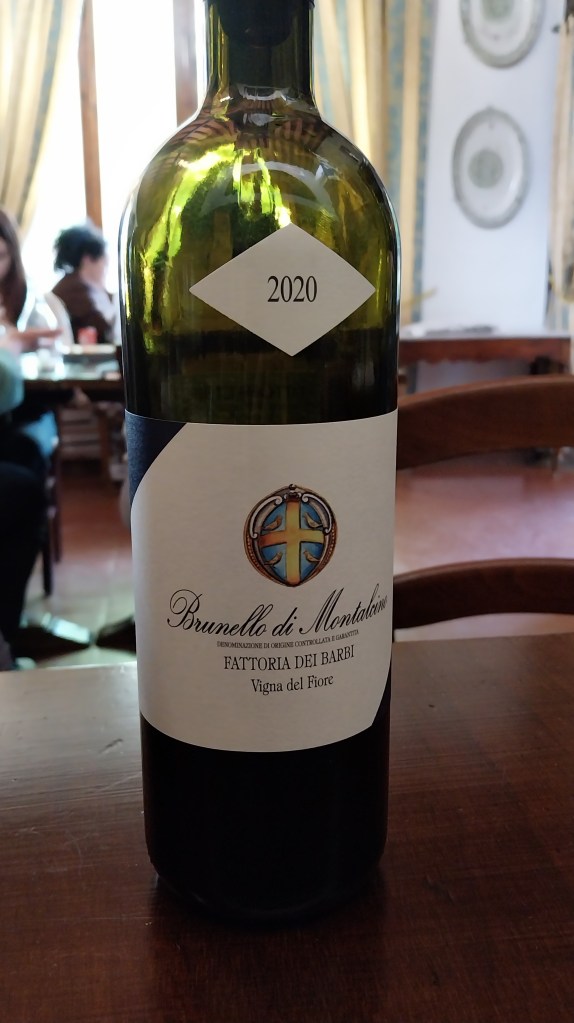
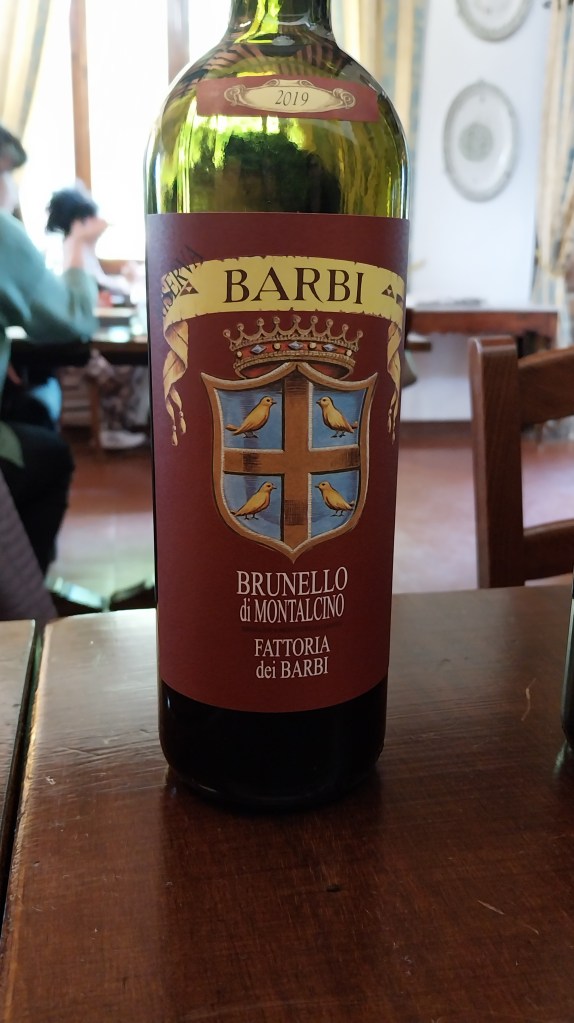
The tour came to an end, and we went to the next building, the bar and tasting room. The basic flight showcased a wide range of products: we started with a white wine, Vermentino dei Barbi (vintage 2023), then moved to a โ€œtable wineโ€ called Brusco dei Barbi (2020, 90% Sangiovese and the remainder a variety of grapes). The third wine was their Rosso di Montalcino (2023, 100% Sangiovese grape but not a Brunello). The crescendo ended with their main product, the Brunello di Montalcino (2019, blue label), honestly another level compared to the previous three. The other flight was focused on Brunello, and it took where the previous one left off with the Brunello di Montalcino, followed by another Brunello, single vineyard, called Vigna dei Fiori (2020, white label) which was great, and finally with the Brunello Riserva (2019, red label), truly stunning. We loved the combination of oak and fruitiness in those last three wines.

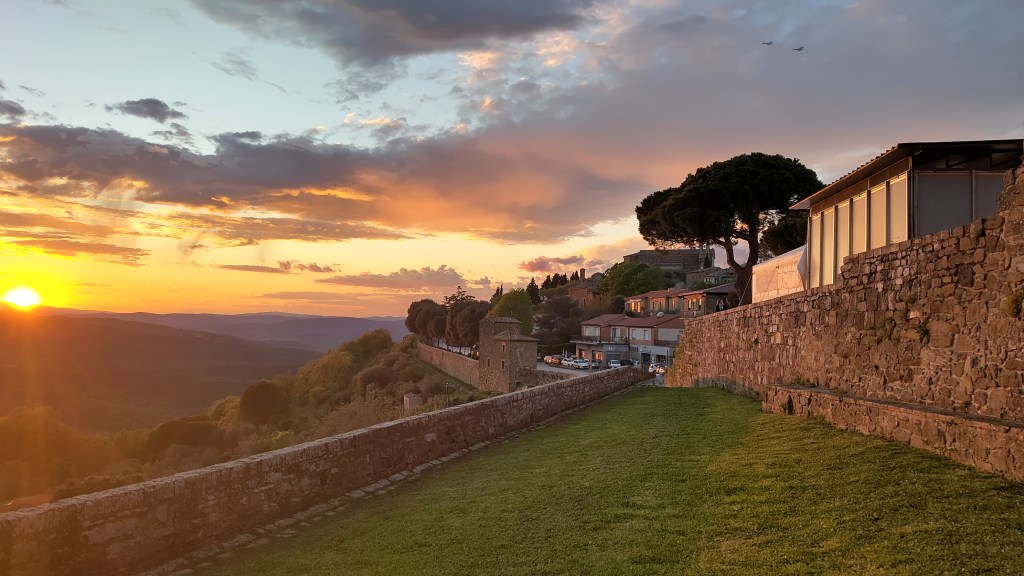
After the winery, we drove to Montalcino, the village, another beautiful โ€œTuscany-postcardโ€ village, where we had a walk under a light rain and a gloomy sky, before a half pint in a local Circolo Arci (and from this, you can tell weโ€™ve been living in Scotland for a long time) and the walk back to the flat booked for the night.

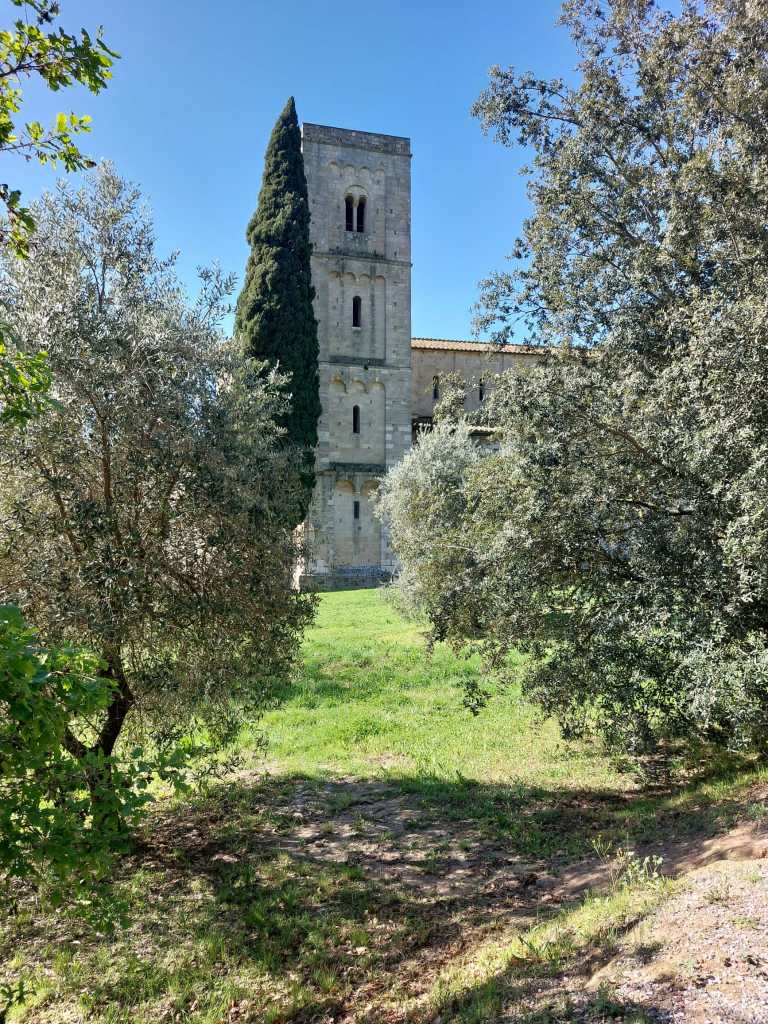
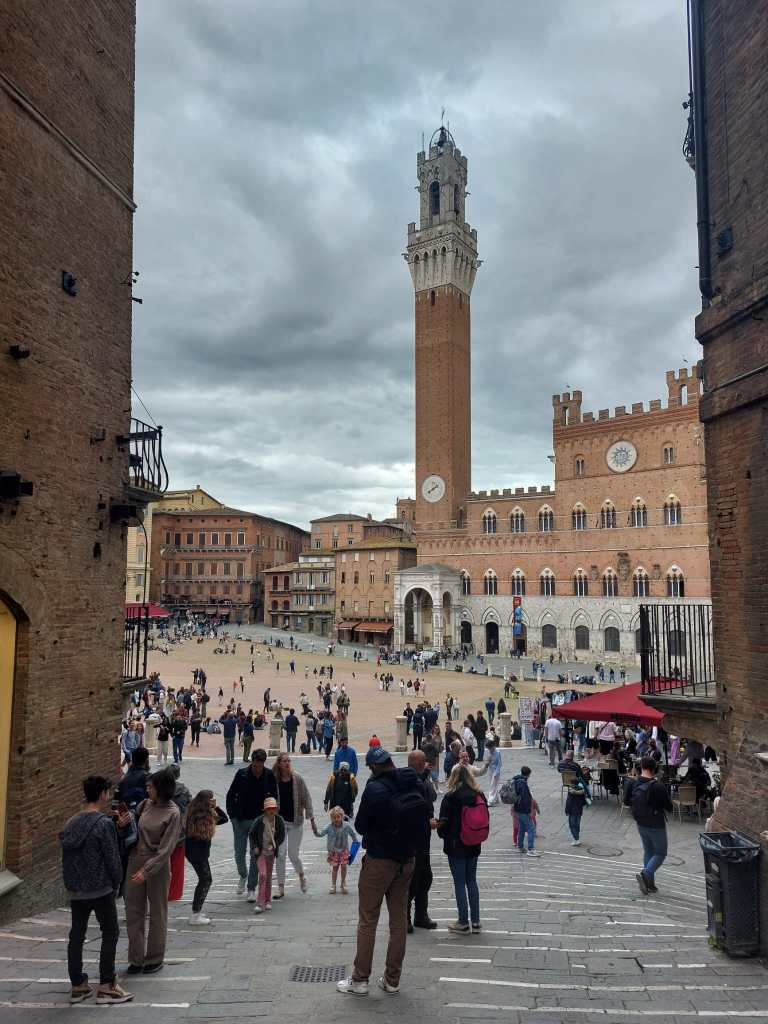
The next day, we spent some time at the Santโ€™Antimo Abbey, before driving to Siena for a stroll in this beautiful (albeit quite touristy) city, and lunch. From there, we went back to Florence.

And so, this is our latest โ€œmalternativeโ€ exploration, again in the esoteric world of wine. Overall, the visit was not as good as the one at Grattamacco of a few years back (maybe because this one was less intimate), but it was still very interesting and informative. The trio of Brunello’s was great though, something really worth to dig into for all the flavour-driven people.

We should say โ€˜saluteโ€™, but we keep our tradition instead, so, until next time, slainte!


Fattoria dei Barbi wine tour and tasting

Price: โ‚ฌ10.00 pp (April 25) + โ‚ฌ20.00/โ‚ฌ35.00 for the tasting

Duration: 1hr (+ tasting at your own pace)

Tasting: the regular one, Vermentino, Brusco dei Barbi, Rosso di Montalcino, and Brunello di Montalcino; the advanced one, Brunello di Montalcino, Brunello di Montalcino Vigna del Fiore, and Brunello di Montalcino Riserva (vintage may change)

Target: everyone

Value for money: good

Highlights: the historical cellar

Recommended: we havenโ€™t visited any other local wineries, but we had a good time

Link: https://www.fattoriadeibarbi.it/