Over the Alps to Langatun distillery
TL; DR: Leaving the Apennines, we headed north via Como and across the Alps to Langatun distillery in Switzerland. Head distiller Stefan showed us around their distillery in a 400-year-old granary, where brewery wort is fermented with an English ale yeast, distilled to unusually strong low wines and mostly matured in wine casks. Then on to Colmar, Strasbourg, a Belgian beer “museum” and a night at an animal sanctuary.
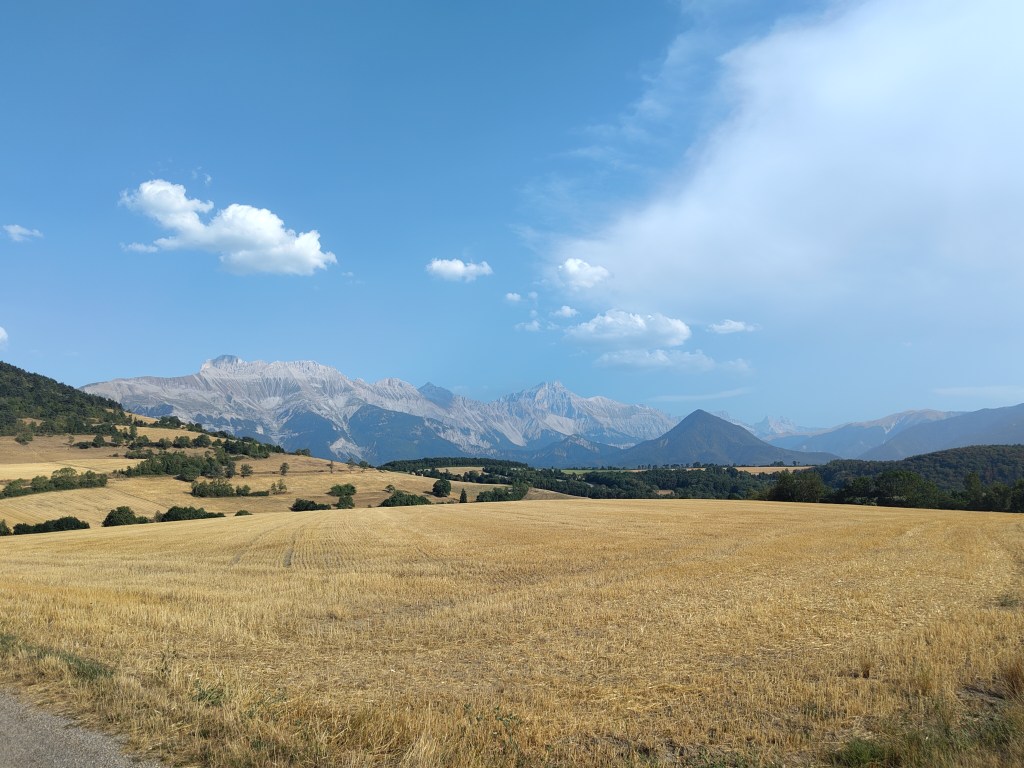
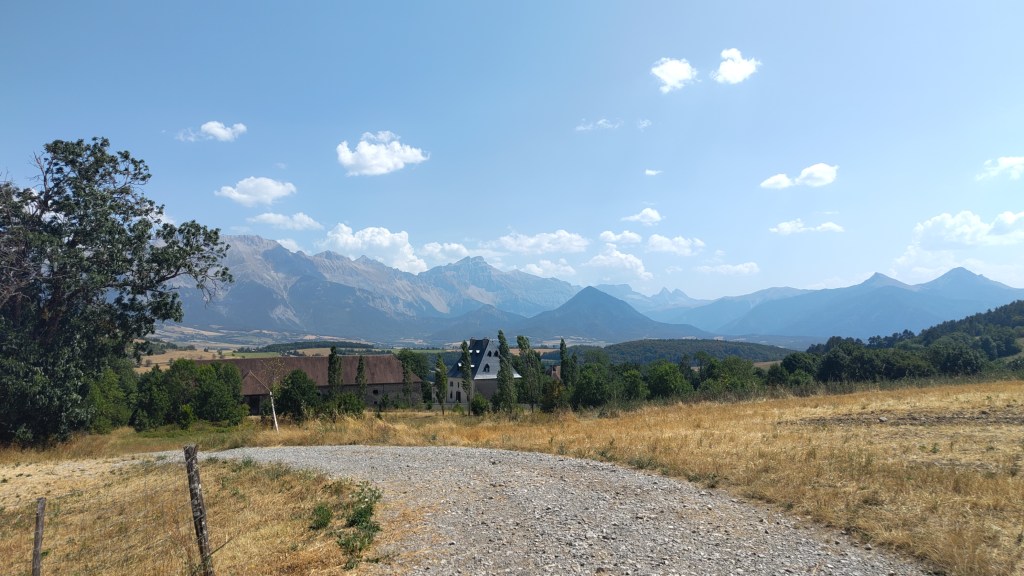
Day 11. After a few days in Casali di Morfasso, in the Apennines, we were (kind of) ready to start our trip back to Scotland. In the morning we drove to Piacenza, where we packed up the van for the return trip, met some more family at the last minute and had lunch with friends. We left right after, taking the motorway north towards Milan. Our first stop was the city of Como, on the lake of the same name, to visit Gianluigi’s relatives. Only a couple of hours, as it was time to hit the road again. Soon after, we crossed the border into Switzerland, driving across the Alps again and passing Lugano and Lucerne. Our stop for the night was near the village of Bützberg: a stopover for small motorhomes and campervans behind a private house. It was a nice and quiet spot (although it was already dark when we arrived), and relatively cheap (€/CHF 15 for the night, plus €/CHF 2 each for the shower).
Day 12. In the morning, the first mission was to find a bakery, which we did, although the result was not as good as in France. Our appointment for the morning was at the Langatun distillery, in Aarwangen, near the town of Langenthal. We learned about this distillery during the pandemic, thanks to an independent bottling by That Boutique-y Whisky Company. From their website, we found out that the distillery is open to the public but that, on weekdays, the rate was CHF 350 (approx. £320 at today’s exchange rate) for a group of ten people, including a tour and a tasting. Obviously, there were fewer than ten of us, so when we got in touch, they very kindly offered to give us a quick tour for free.
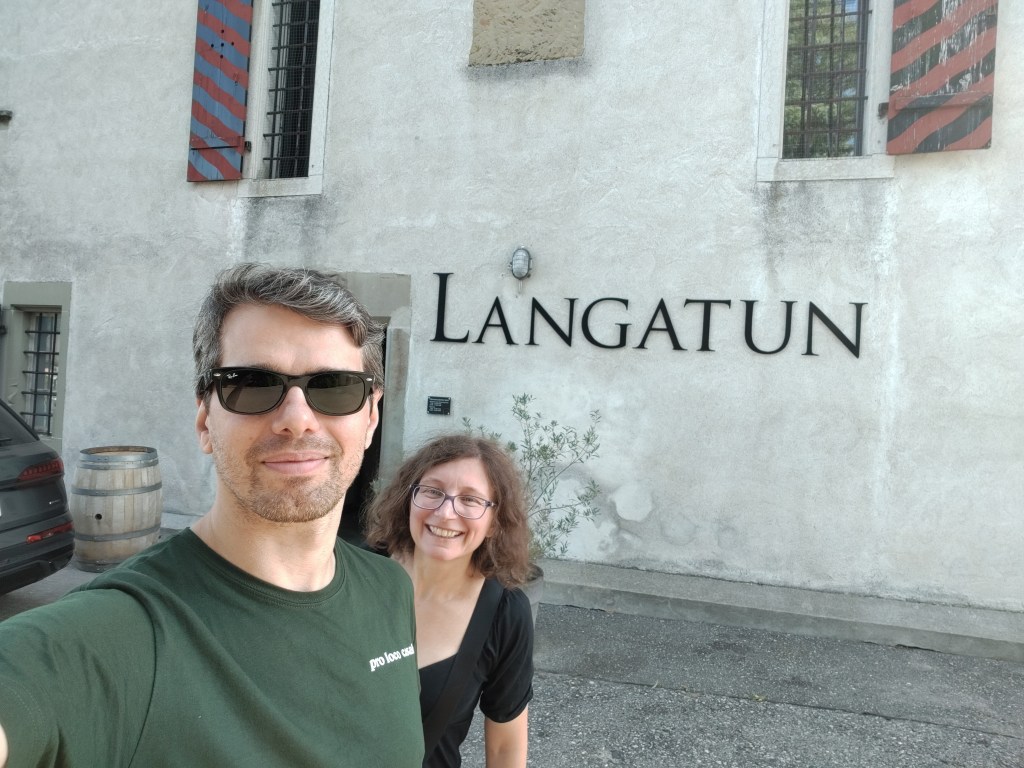
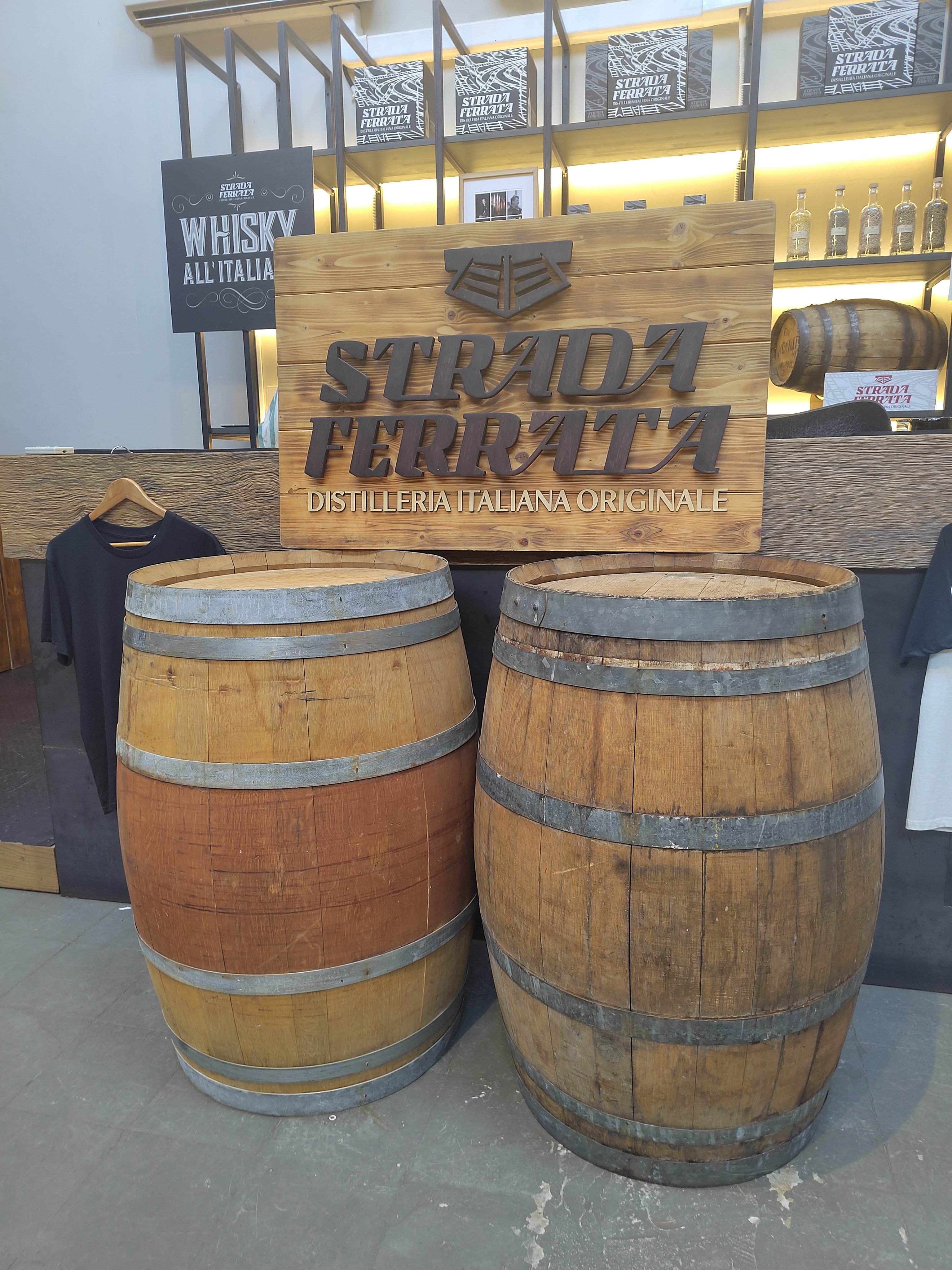
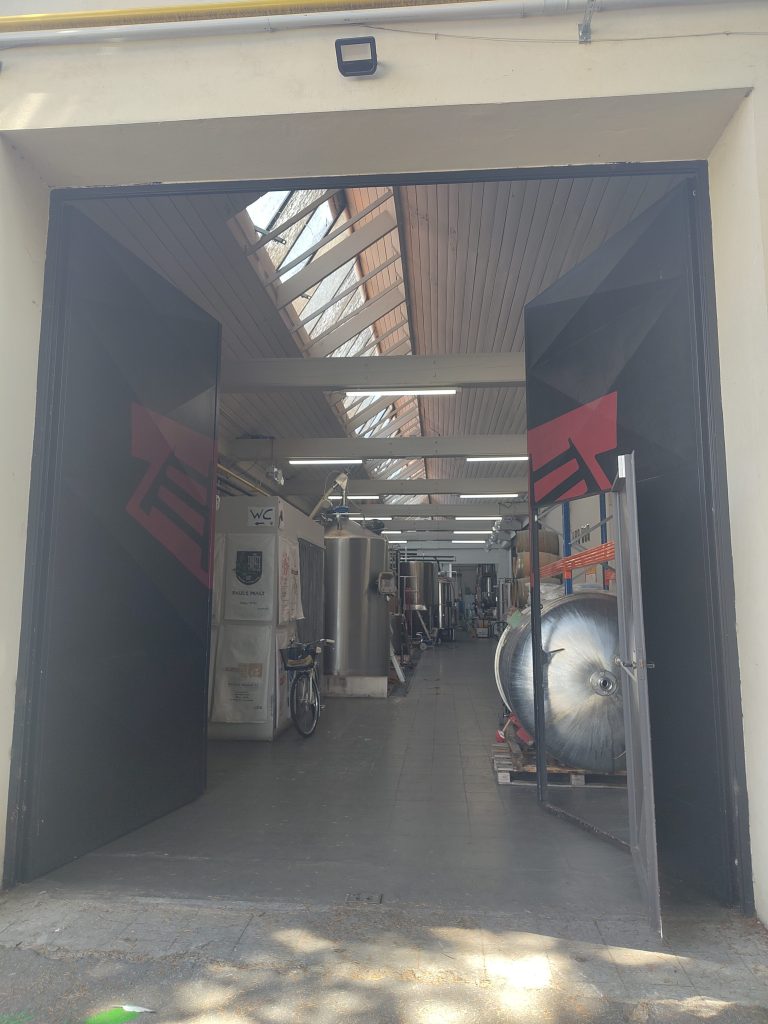
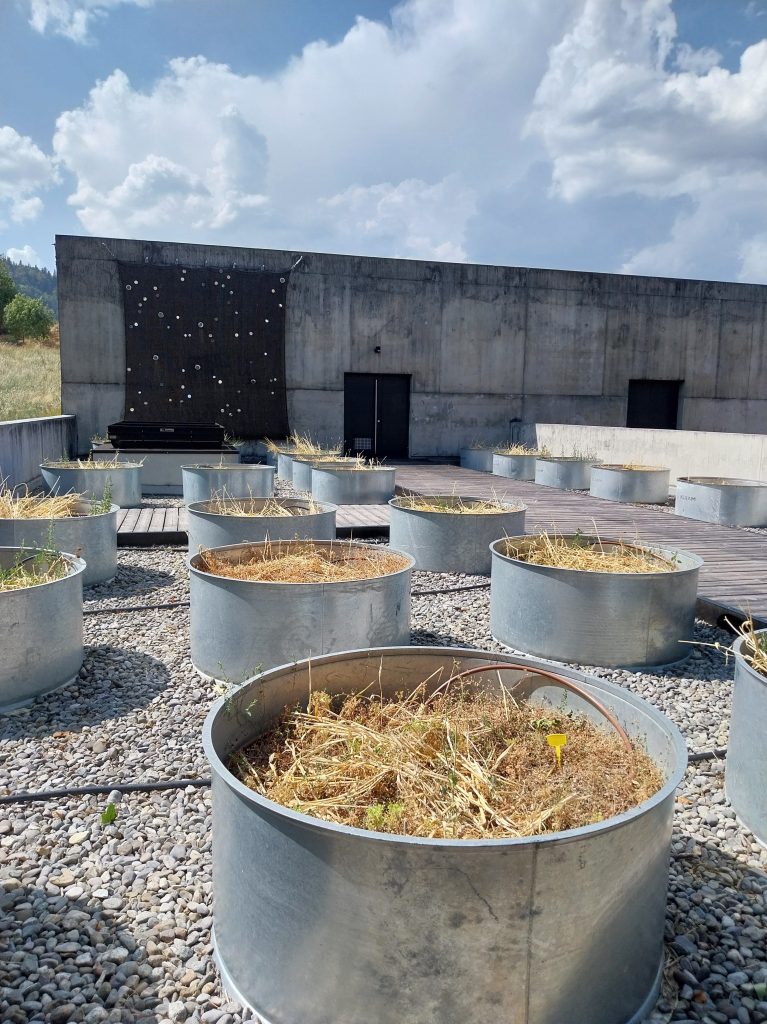
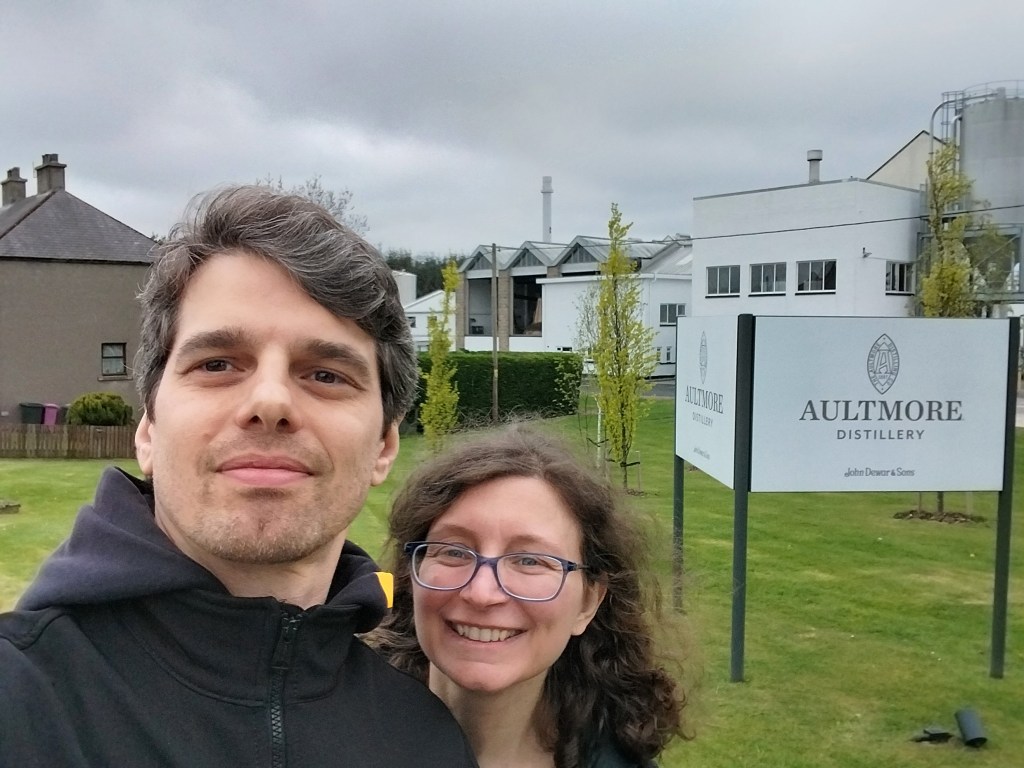
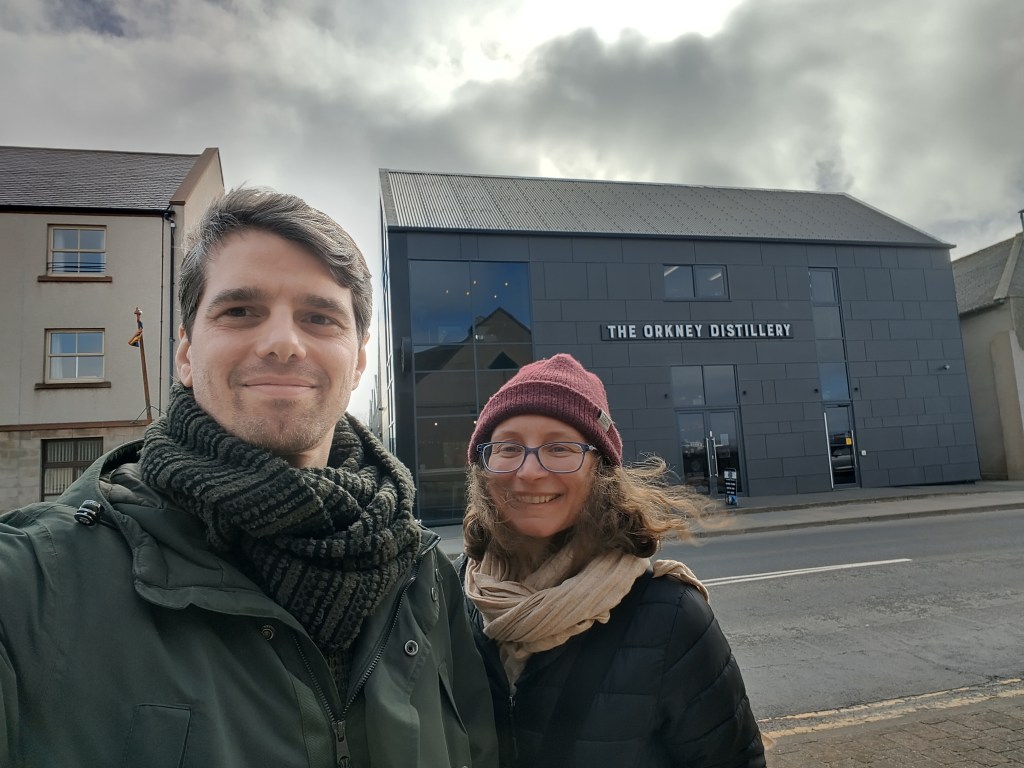
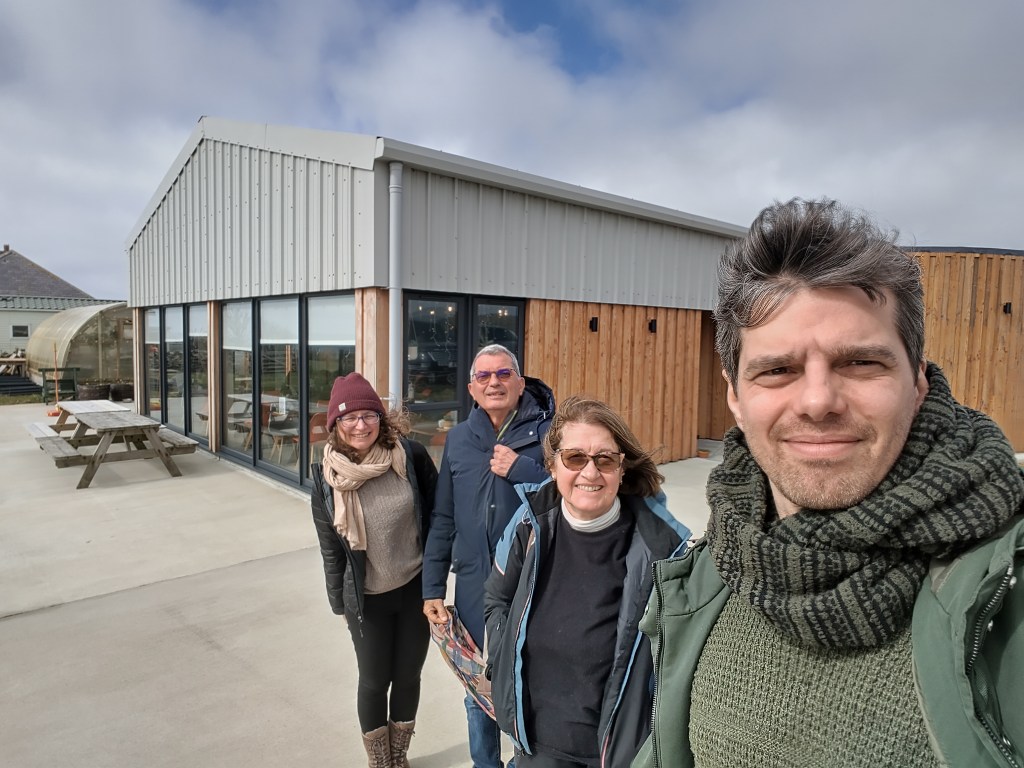
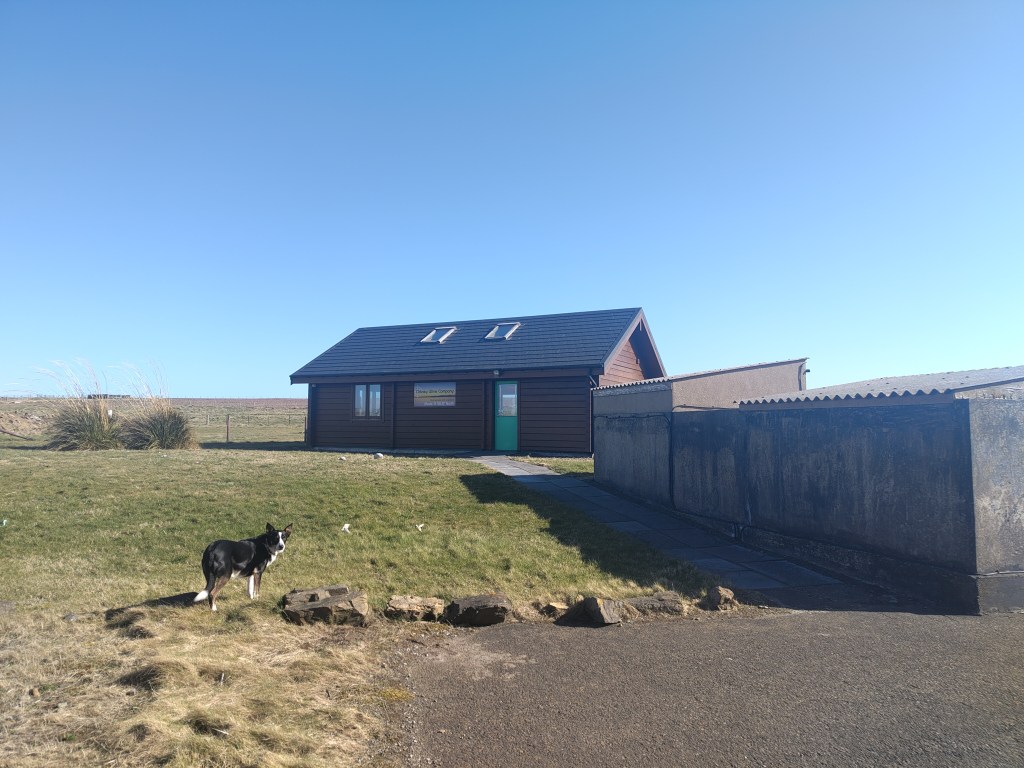
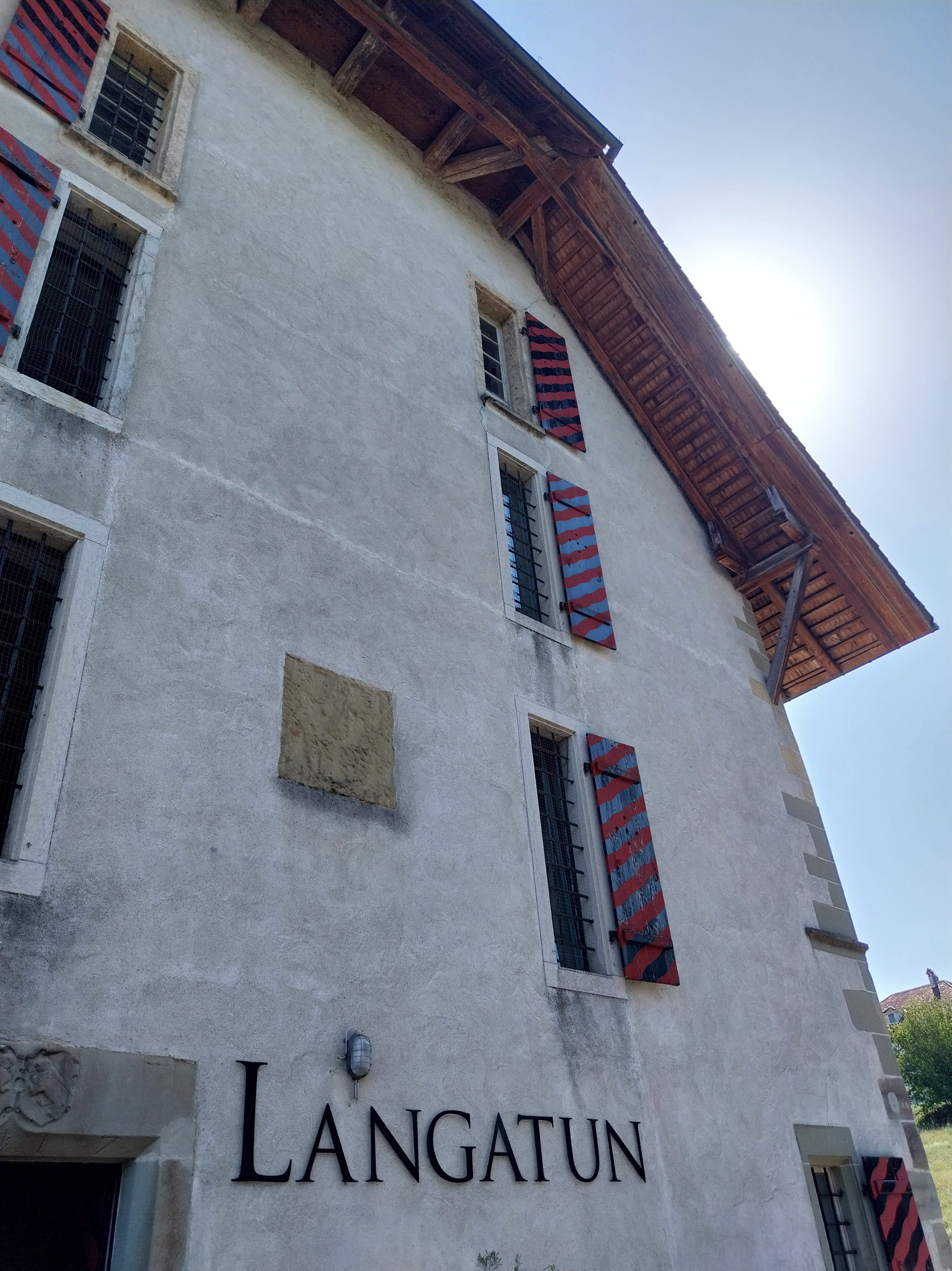
We’re definitely in the right place…
The distillery is in a very picturesque part of the village, overlooking a castle. There we met Stefan, the head distiller. He is German, has a background in brewing, and moved to Switzerland to work at Langatun. The distillery was founded in 2005, although the business dates back to 1857, when Jakob Baumberger, back in his native country after qualifying as a brewer in Munich, founded a distillery on the family farm. Two years later, he took over an older brewery in Langenthal. Fast forward 80 years: in 1939, distilling cereals and potatoes was banned because of the war, a law that, believe it or not, was only repealed in 1999!
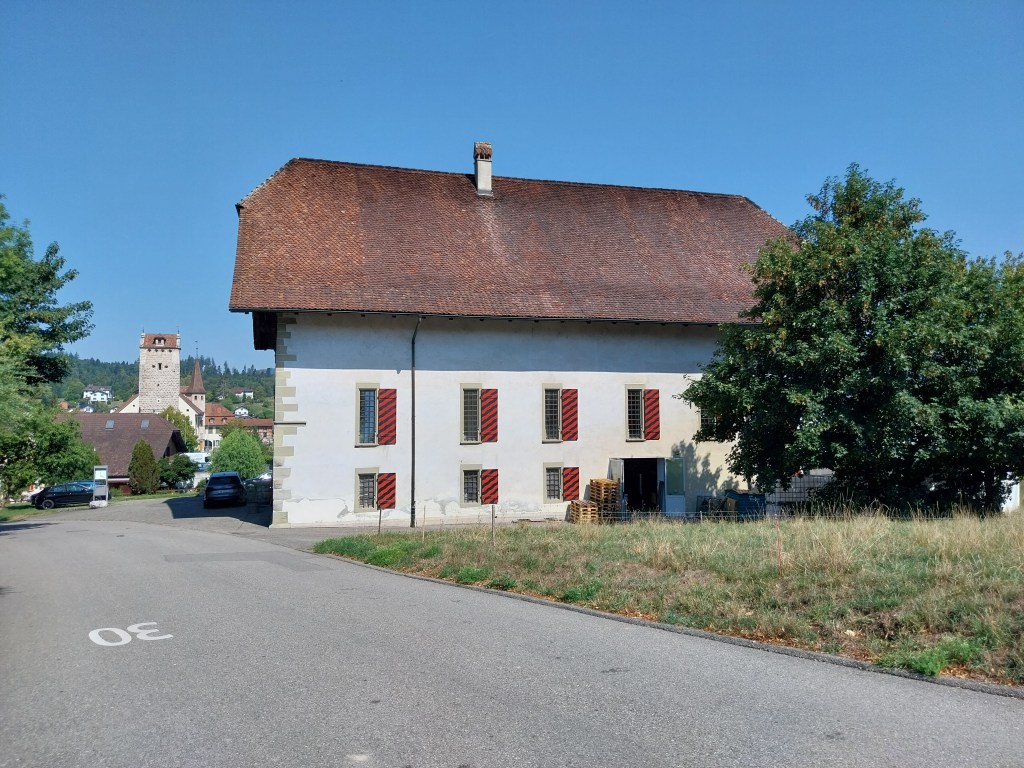
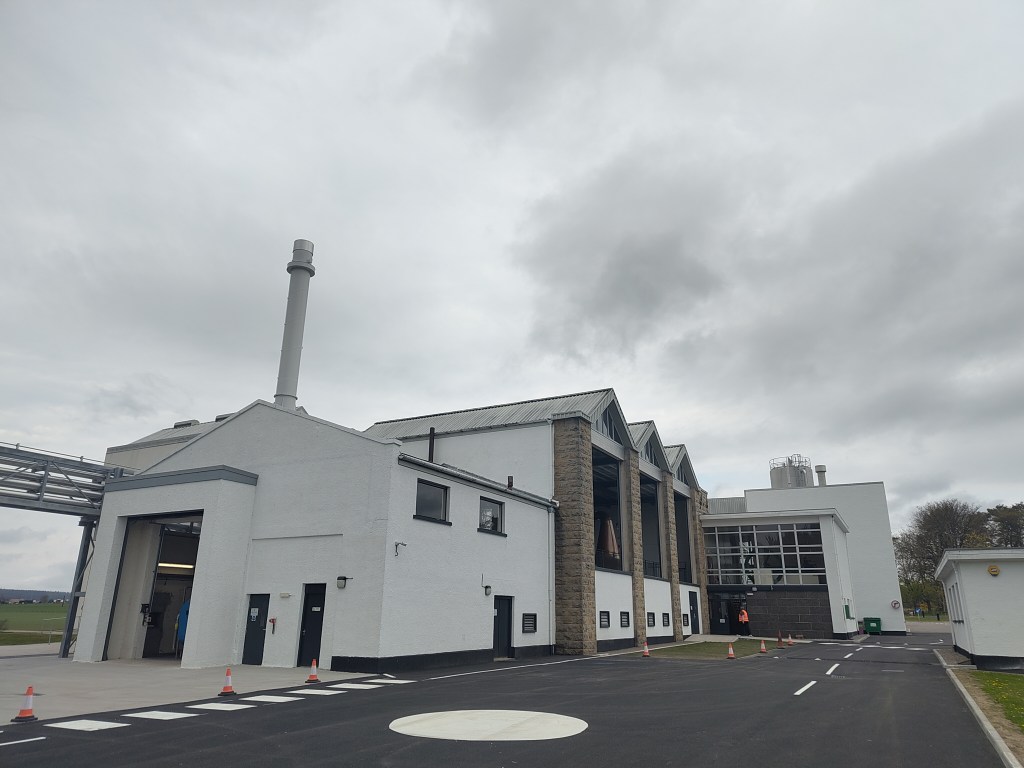
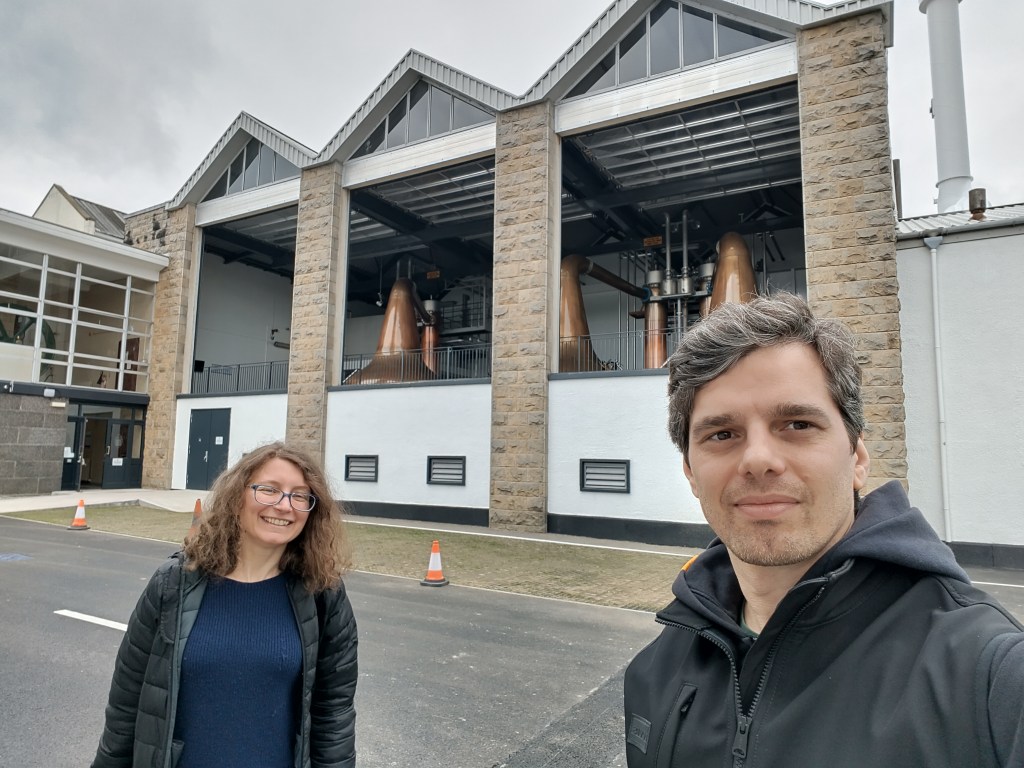
…Although you wouldn’t guess this is a distillery.
In the meantime, the distillery had been sold to a larger group, which brings us to 2005, when Hans Baumberger III, Jakob’s great-grandson, founded the current Langatun distillery, named after the old Celtic name for Langenthal. Their first single malt, Old Deer, was released in 2008. In 2014 they expanded, adding a second still, and moved the distillery to its current site: a 400-year-old granary (Kornhaus) belonging to the nearby castle in Aarwangen, on the river Aare. A third still was added in 2019, and since 2021 they have had a visitor centre, where they run tours, tastings and other events.
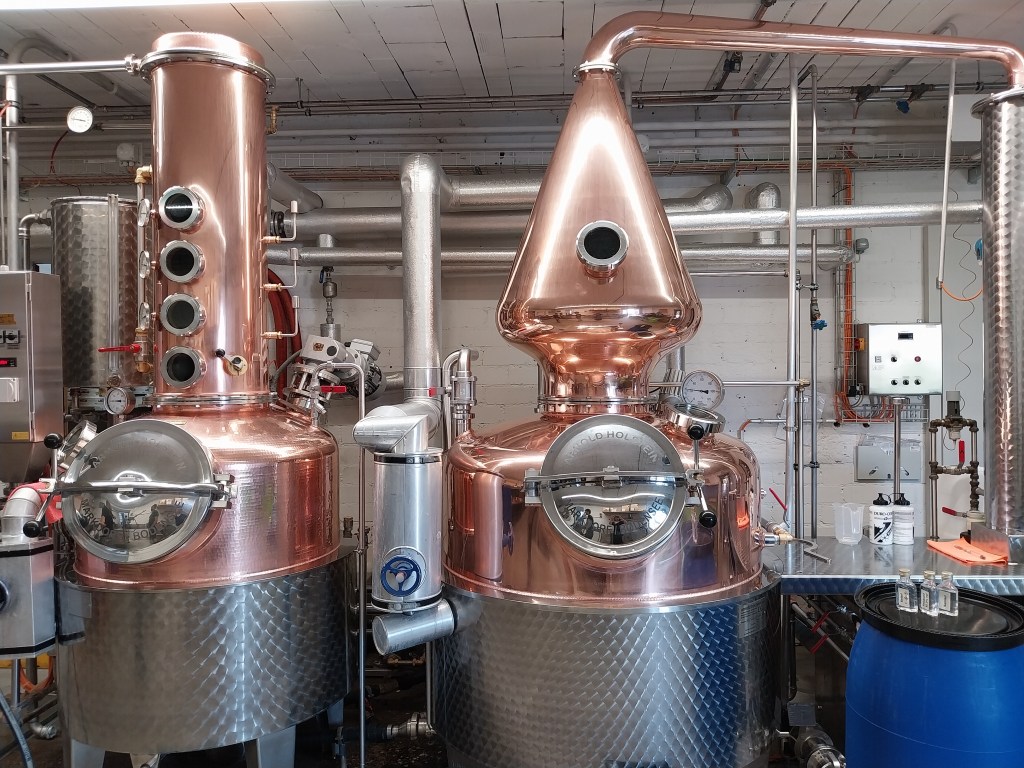
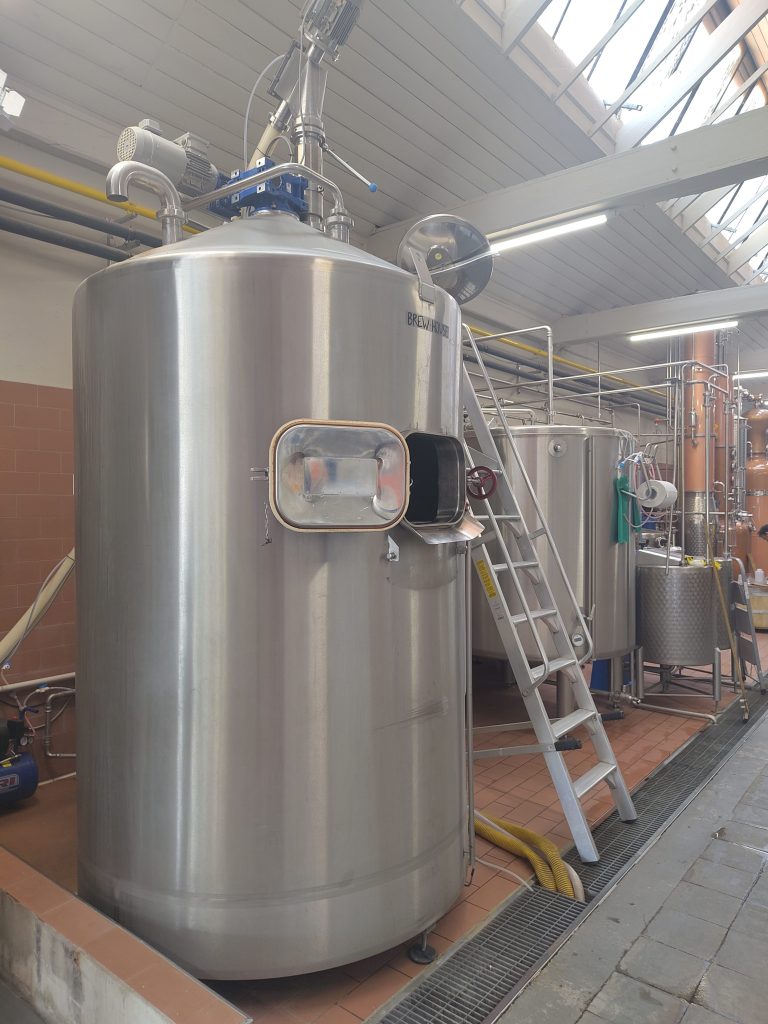
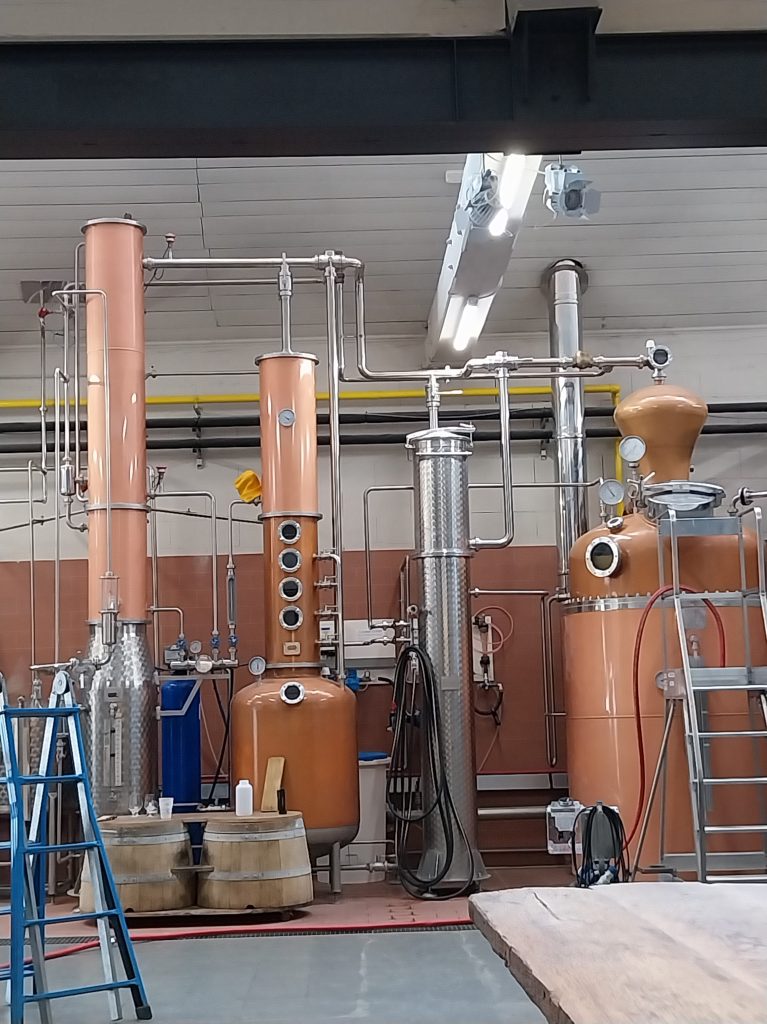
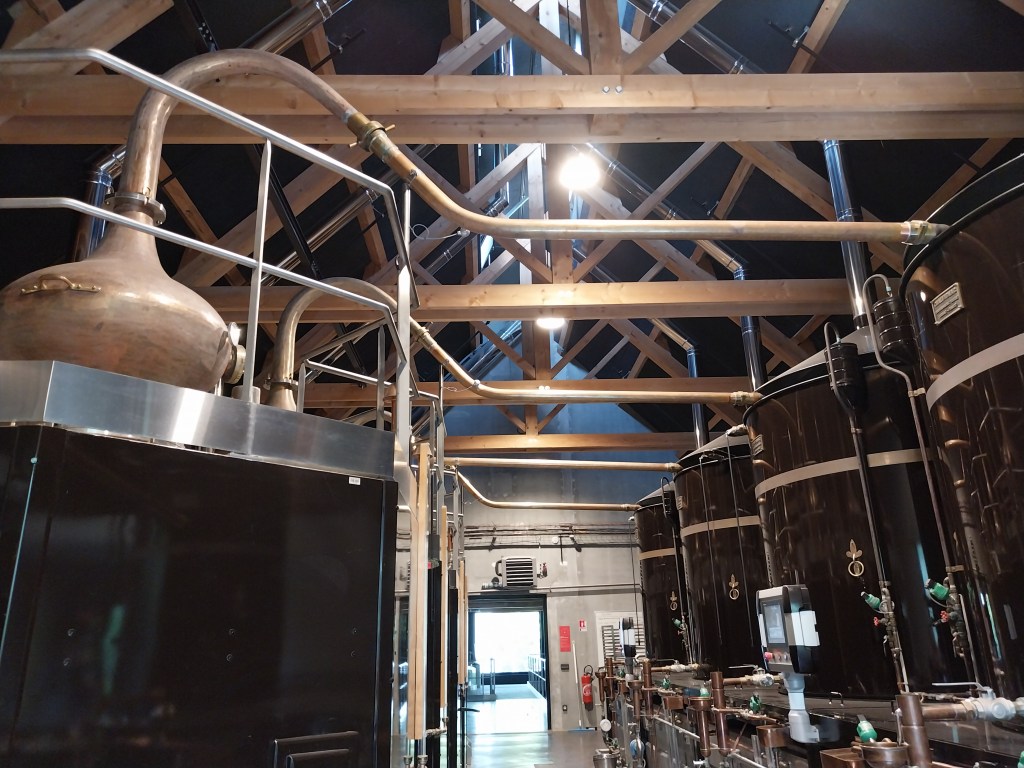
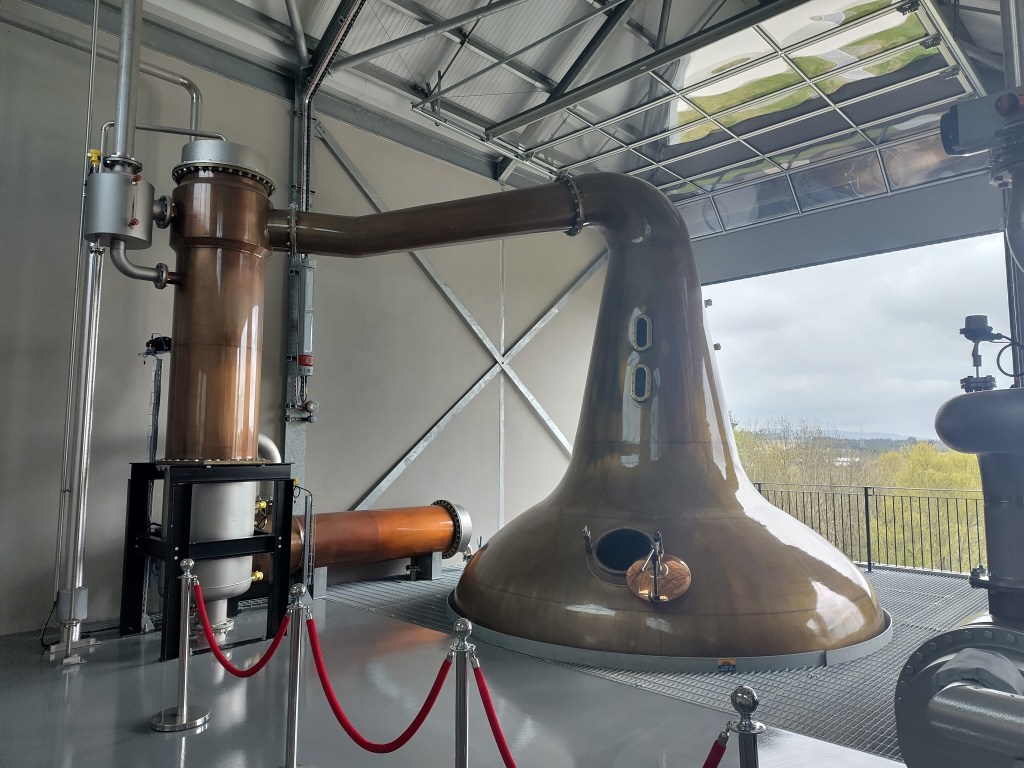
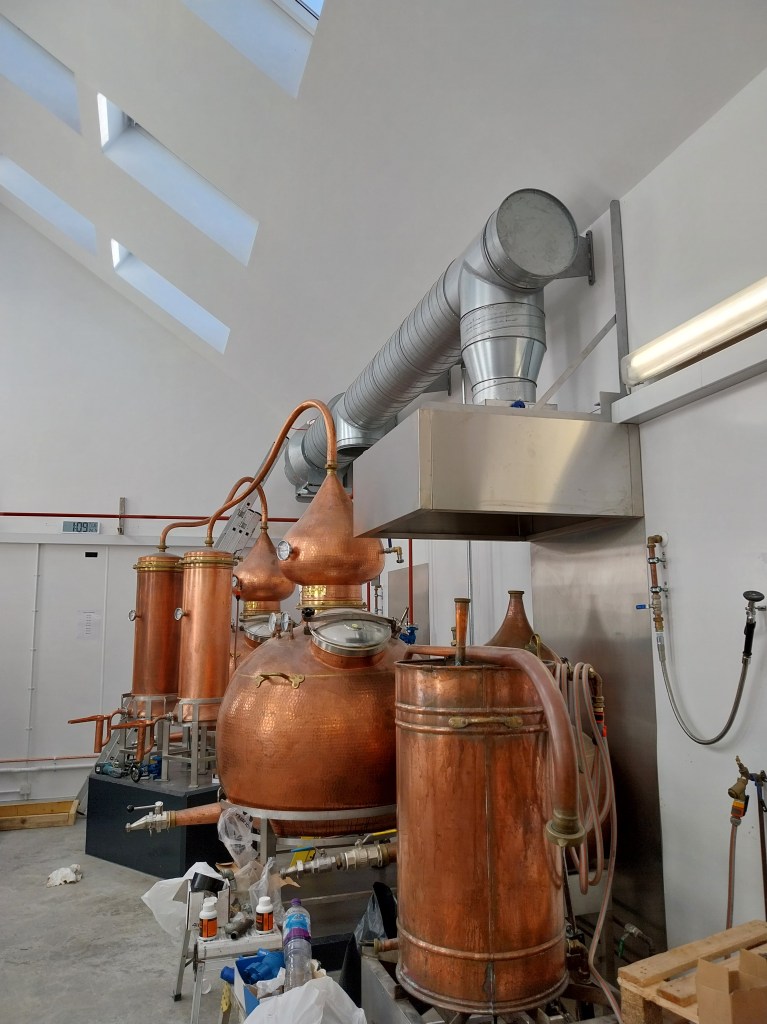
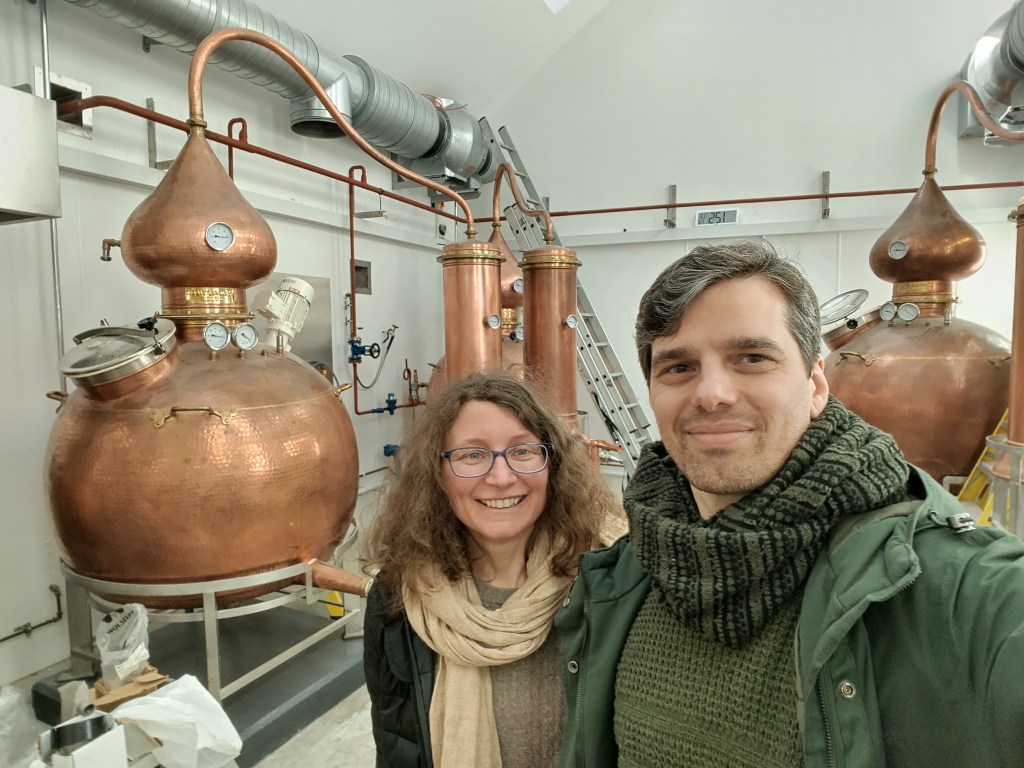
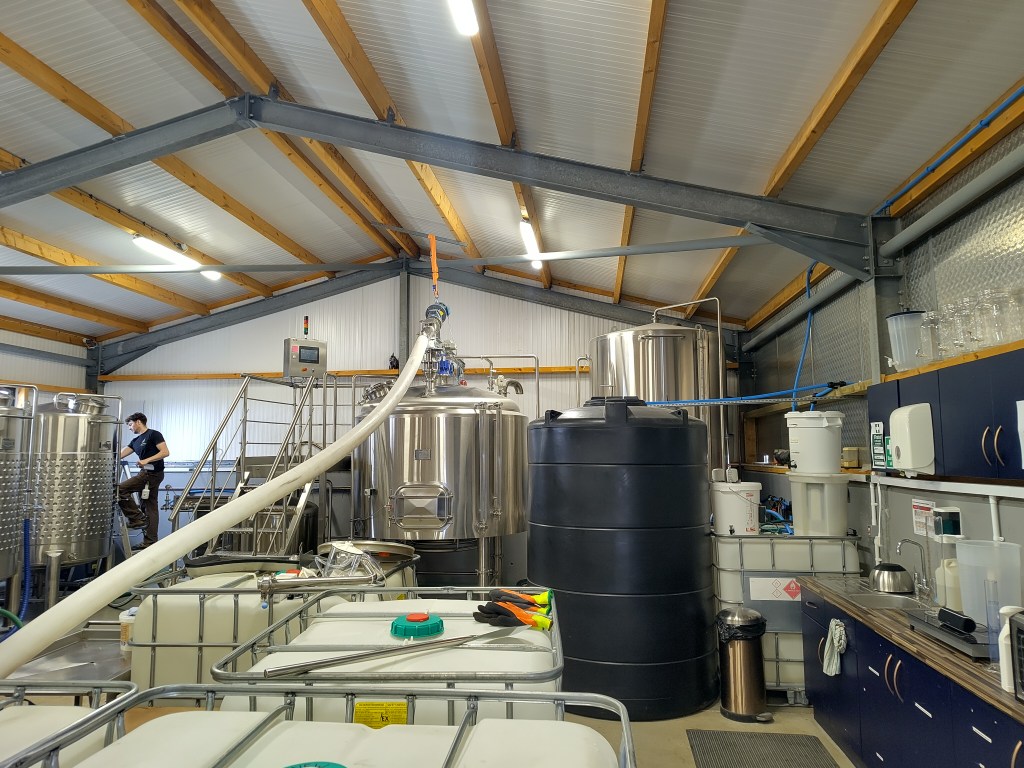
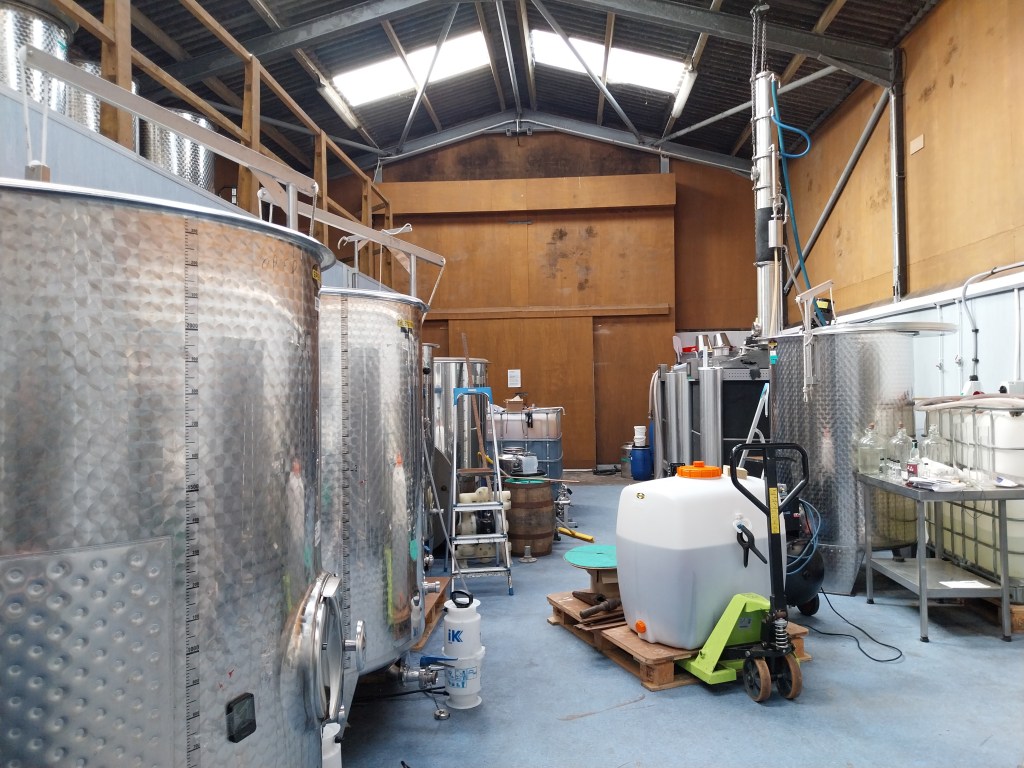
The big stills are not that big after all.
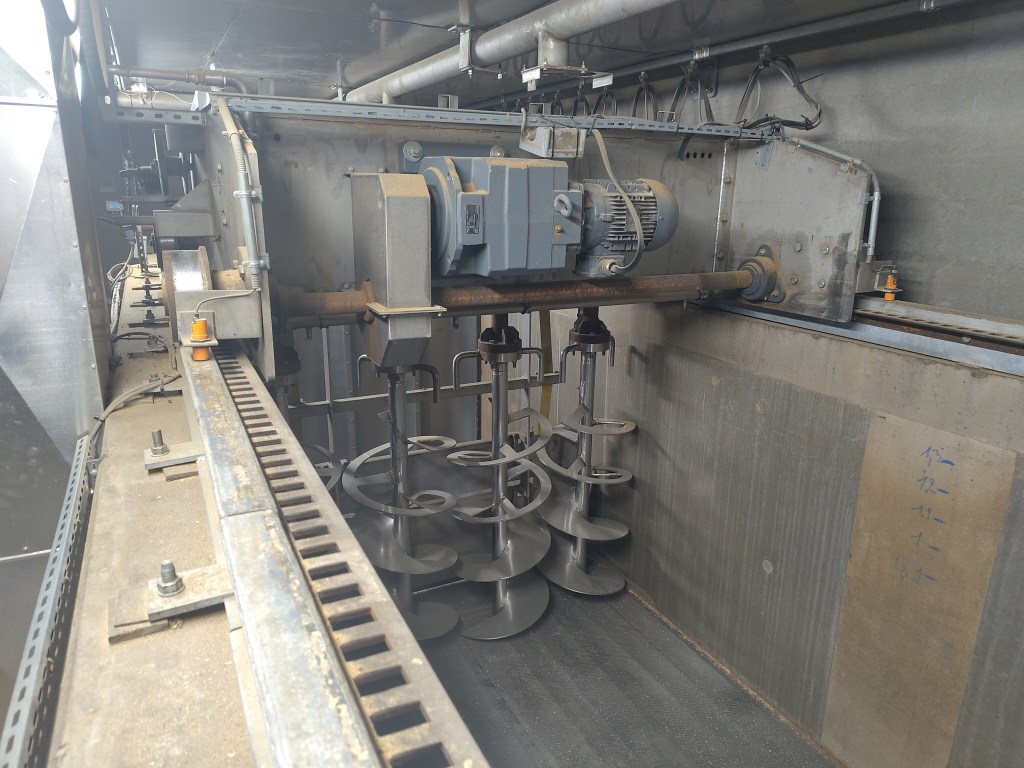
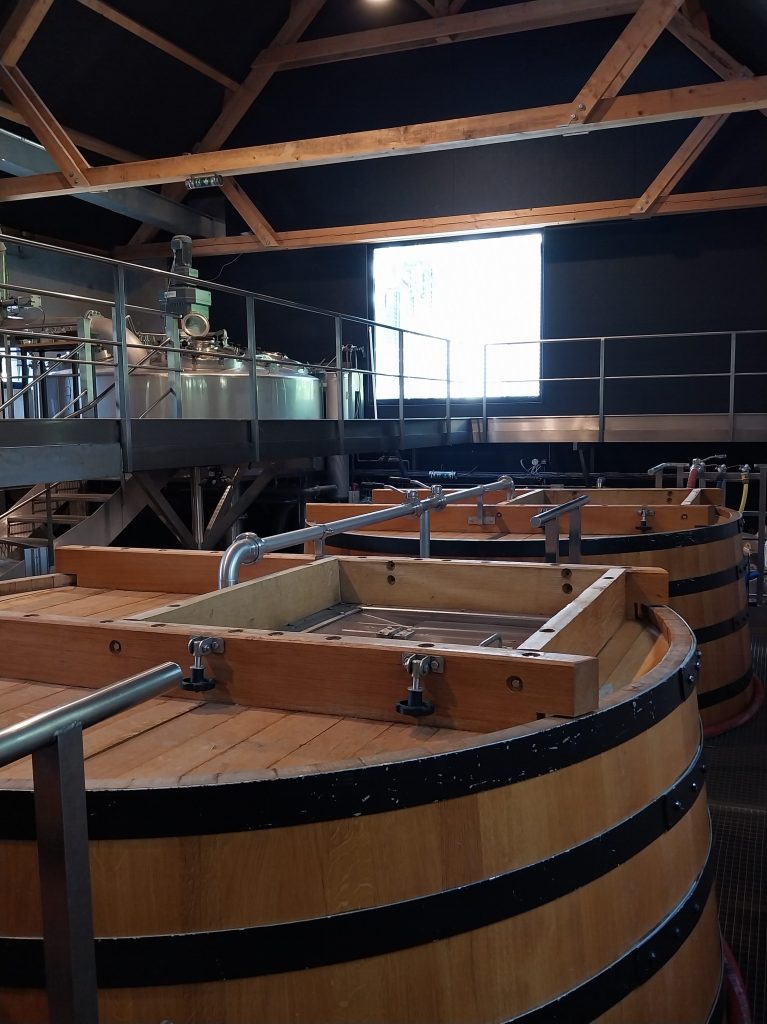
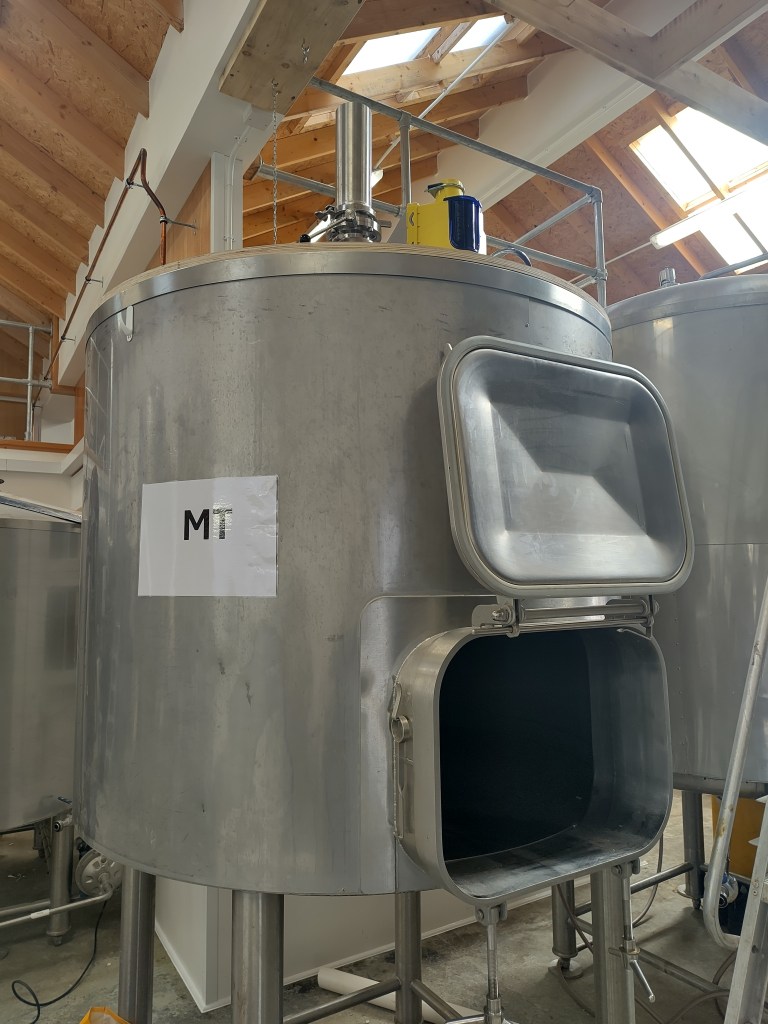
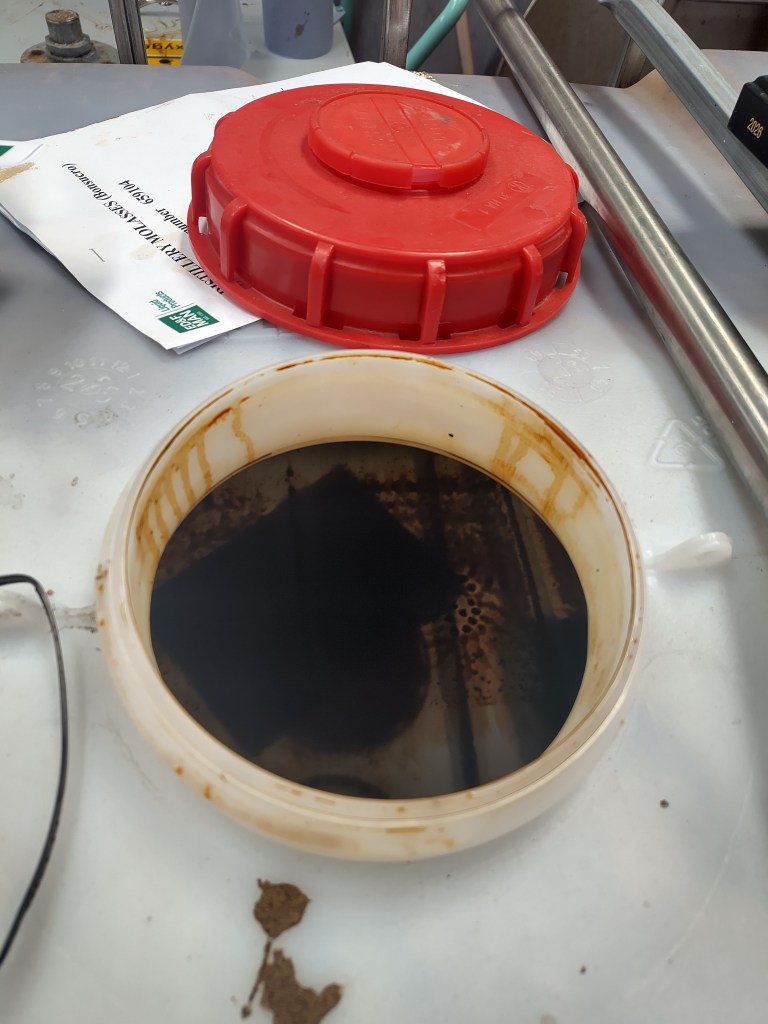
There is no malting on site. They use some peated malt from Scotland, but the main grain is two-row barley from Germany or France, with no specific variety. They also produce whiskies from other mash bills, including a rye and a “bourbon-style” whisky called “BernBon” (clever name). Mashing is done at a nearby brewery, and the wort is brought in ready for fermentation. For this, they use an old English ale yeast, which takes the wash up to 11% ABV.
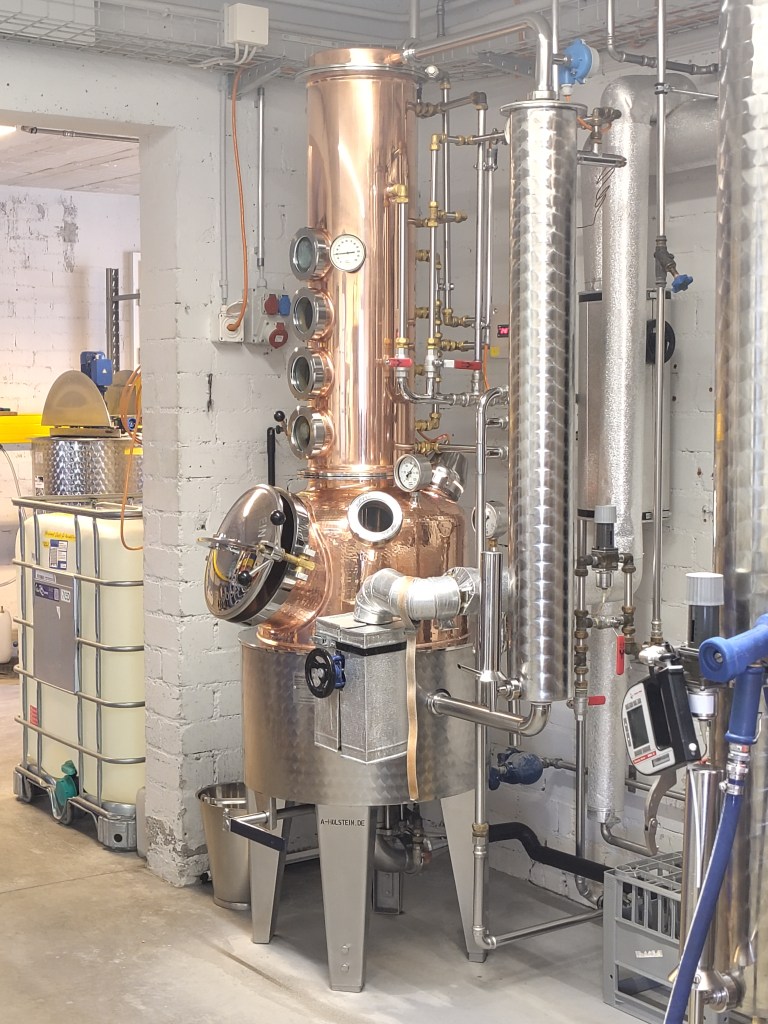
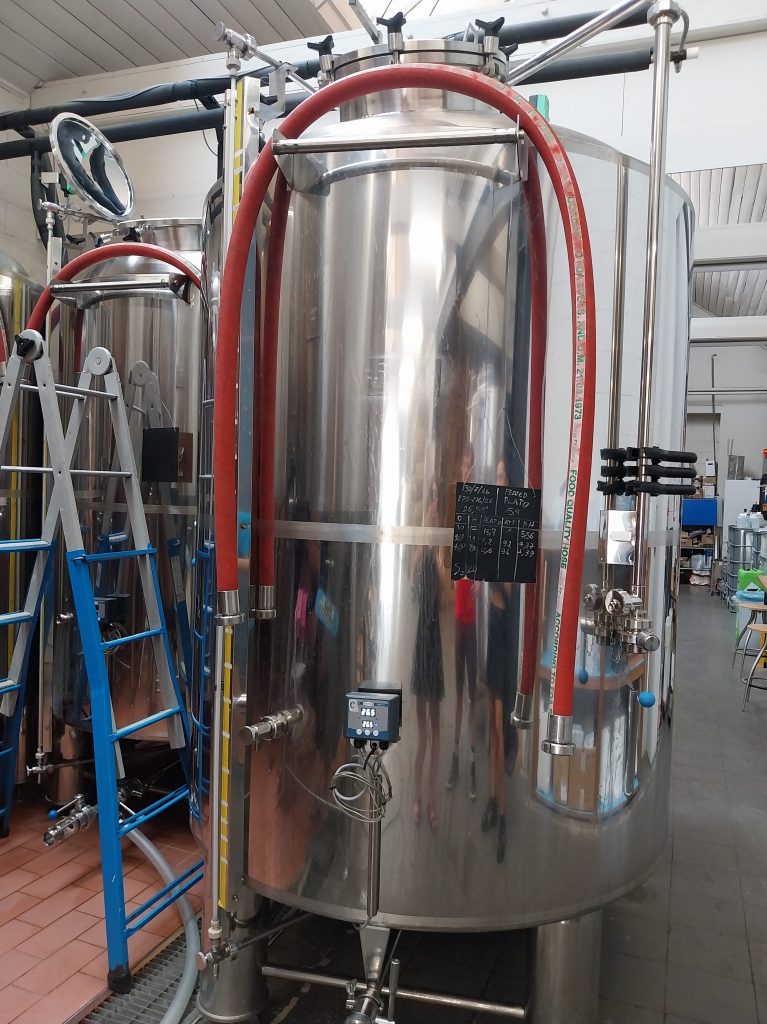
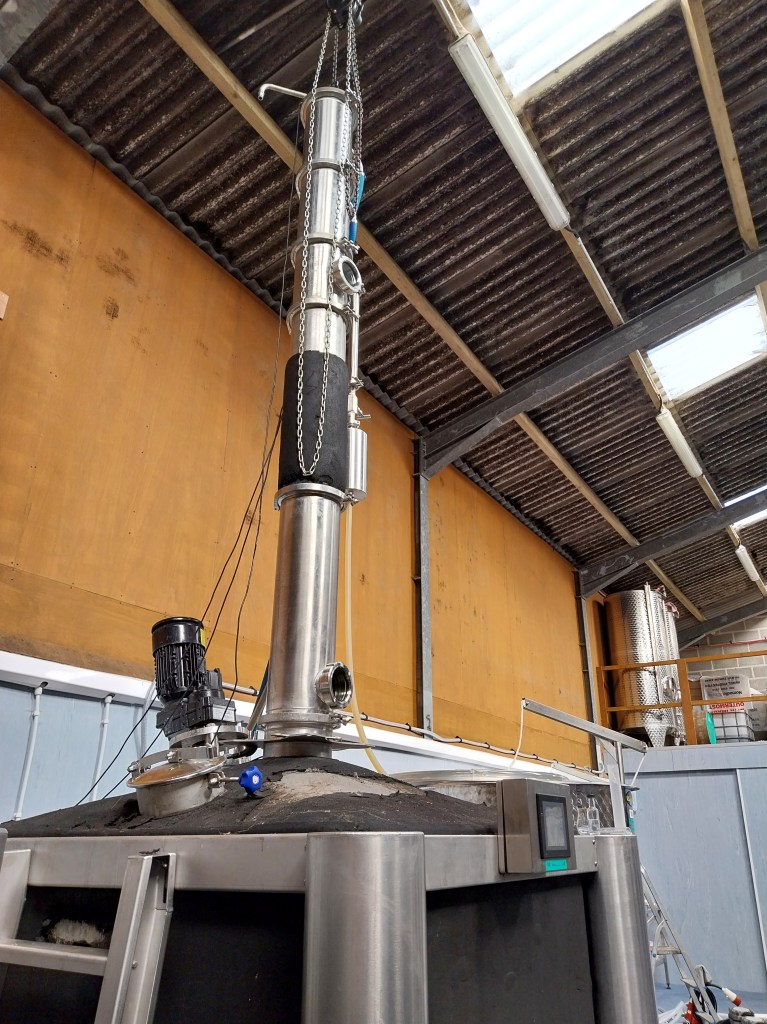
Here the wee one.
As mentioned above, they have three stills: two larger ones and a small one. For the first run, 750 litres of wash go into the still and are heated for about an hour before distillation starts. The run lasts five hours and gives about 250 litres at 35-38% ABV, much higher than the ~25% we usually hear about in Scotland. One batch is made up of two 750-litre wash charges and, in total, about 440 litres are collected from the first runs. The second run is much slower, lasting several hours, and is controlled by smell. For whisky, the plates in the second still are left open (to note, the same stills are also used for rum and gin). The heads are discarded, and the hearts cut starts at 88% ABV, giving 170 litres of spirit at 85% ABV. The tails (30 to 40 litres) are redistilled in the small still to around 40% ABV and then added back to the original batch. Their total capacity is up to about one barrique filled per day.
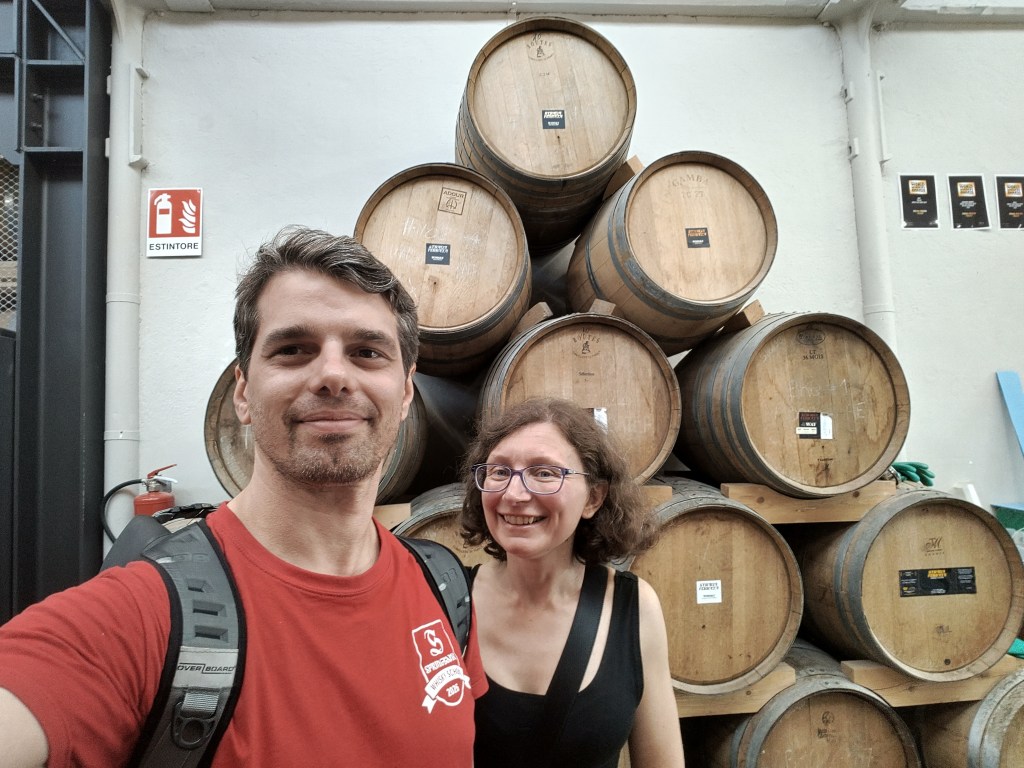
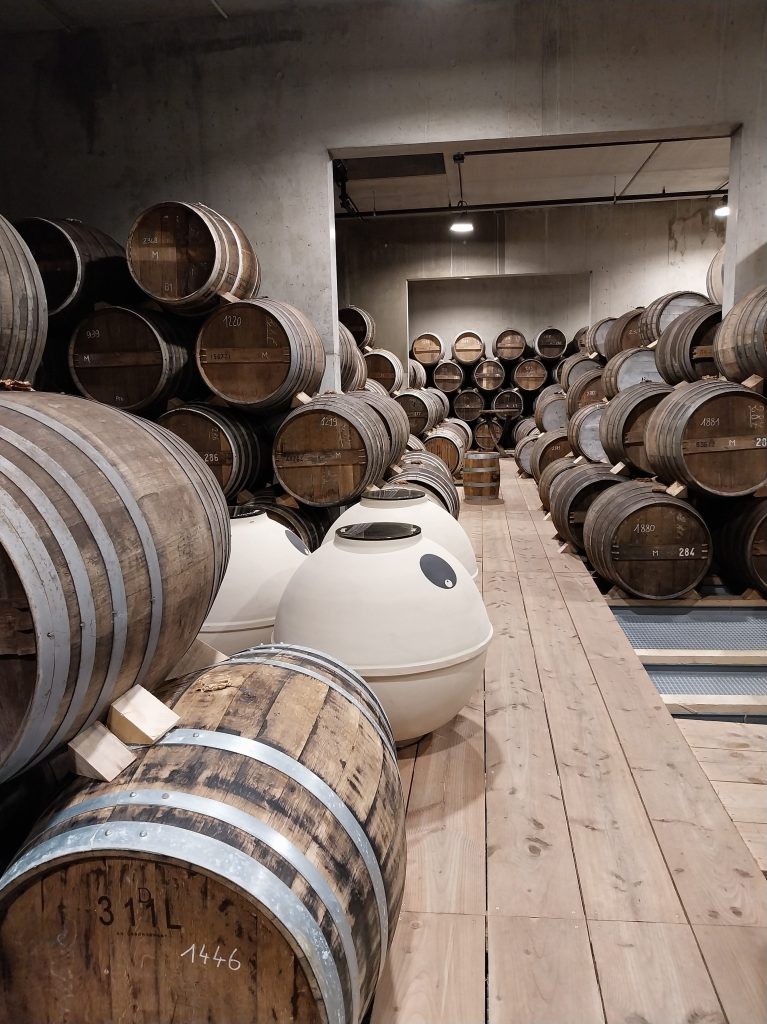
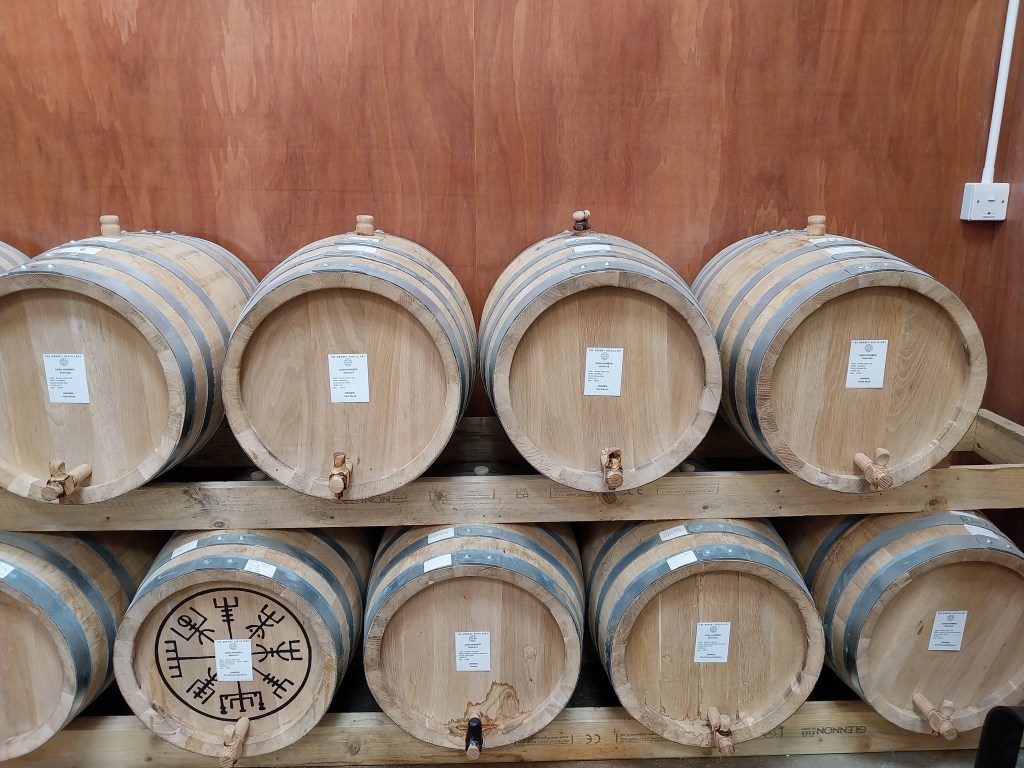
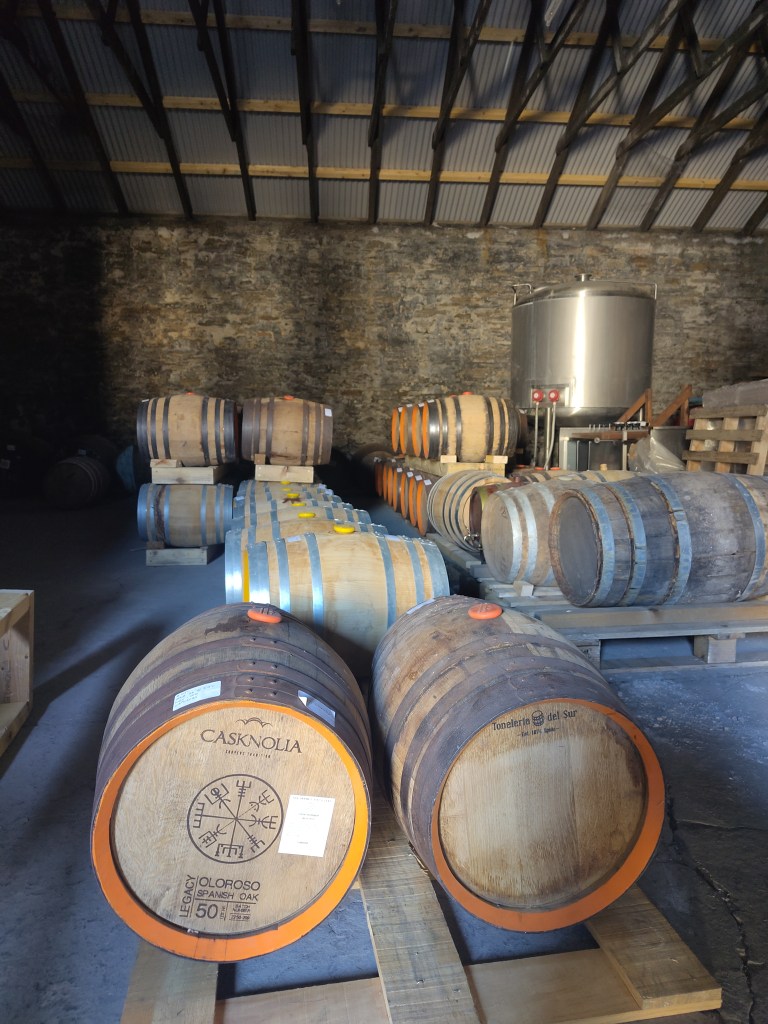
The new-make spirit is reduced to 65% ABV for filling. They mostly use wine casks of different types, e.g. Chardonnay and Pinot Noir. There aren’t enough Swiss casks, so they come from all over, including unusual countries like Armenia and Lebanon. The warehouse is in Langenthal, and standard maturation is 5-8 years. There is also a small bottling machine on site, which can handle 1,000 bottles a day.
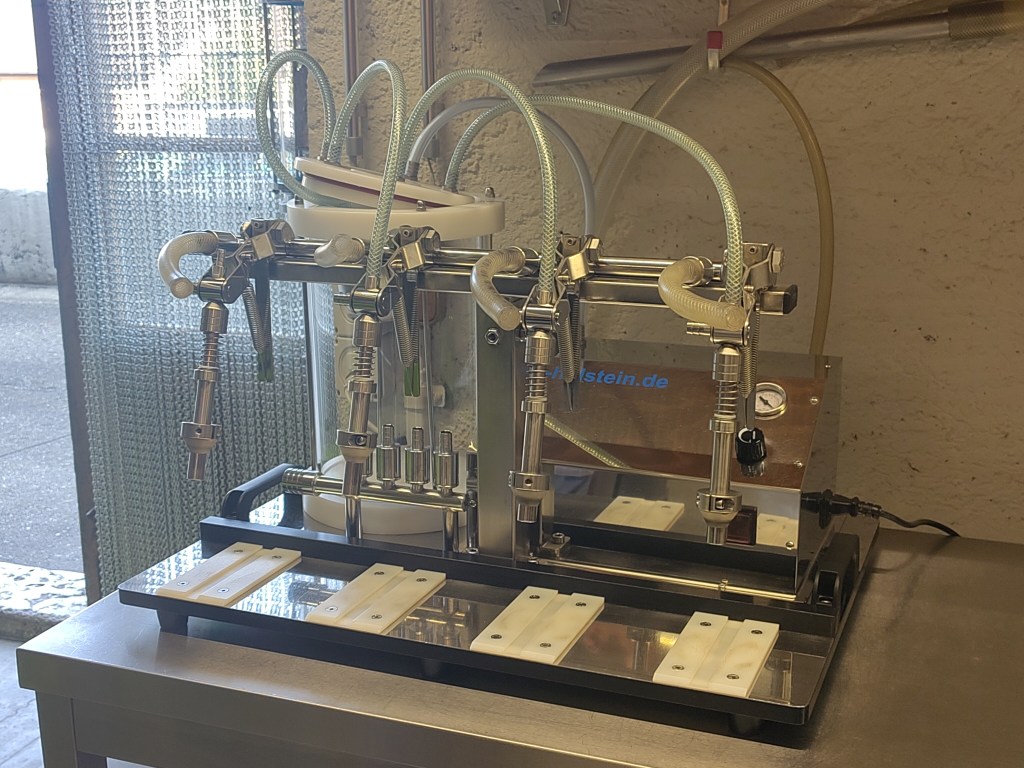
A small bottling operation.
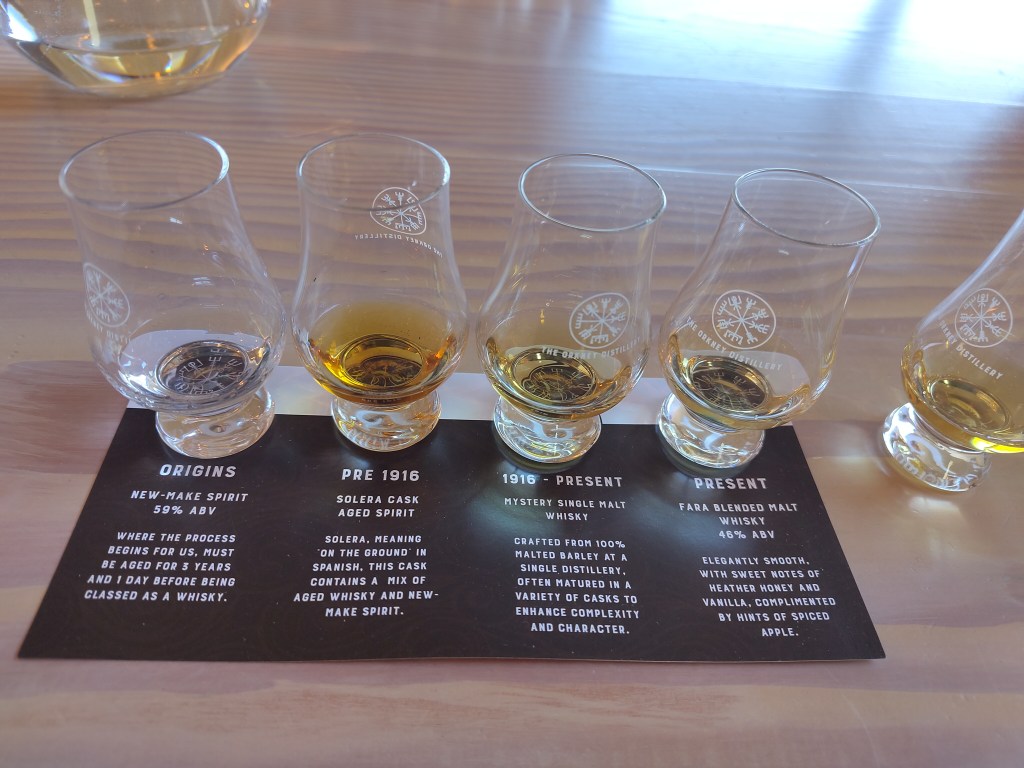
We then moved upstairs, where they have a shop for all of their products (whisky, gin, rum and liqueurs), including a range of independently bottled Scotch single malts called the Long Vale Selection. The shop and bar are in a large but very cosy space, decorated with whisky-production equipment (both old and modern): it looks perfect for tastings and other events. There, Teresa tried a few of their single malts, starting with Old Deer, their flagship expression (the 46% version; there’s also one at 40%). Together with Old Crow and Old Wolf (both peated, the first matured in wine casks, the second in wine and sherry casks), it makes up their core range, the “Heritage Line”. Among others, she tried a single malt matured in a Nero d’Avola cask (a popular Sicilian red wine, a first for us!) and a peated one matured in Rioja red wine casks (delicious!). They have a limited age-statement range, a 12y and a 15y (both a bit pricey), and will soon bottle the first 18y Swiss single malt.
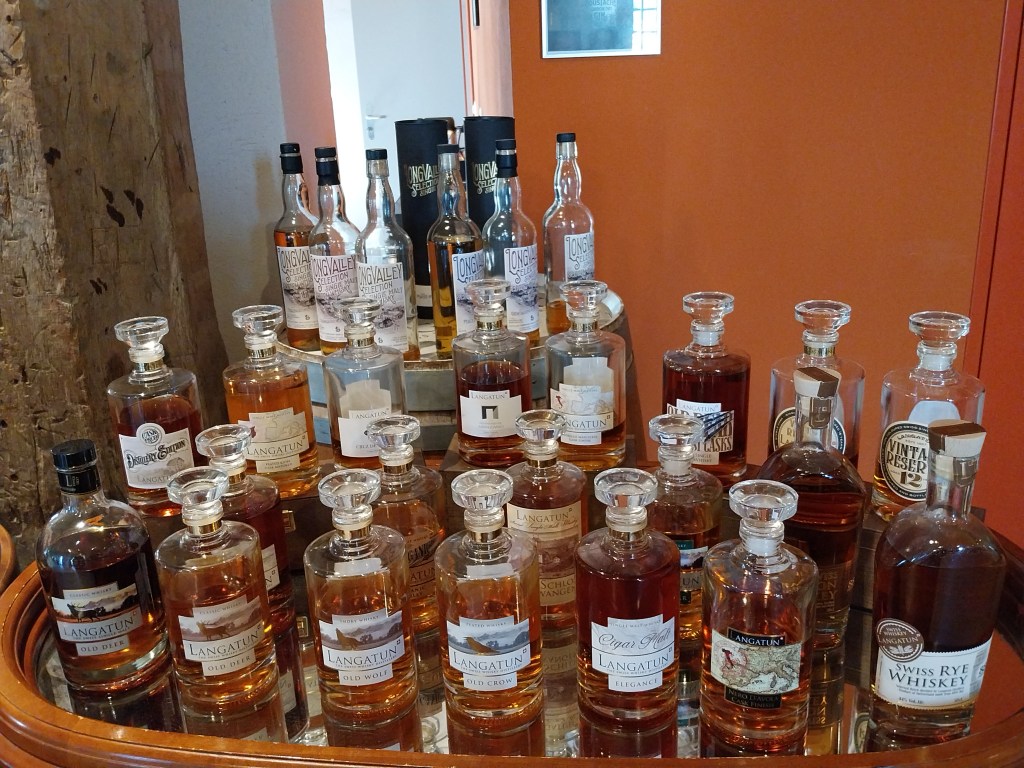
Loads of things to try!
We ended up taking home a bottle of Old Bear Lost Cask, an expression with a peculiar history: it was bottled, but then the sale fell through, so the whisky was put back into cask and forgotten about, until it was rediscovered and bottled again in 2023. We also got a tasting pack of five 50ml miniatures, with the idea of doing a proper tasting once at home. Unfortunately, at the time of writing we still haven’t done it: too much whisky and only one liver (just the other day we finally got round to the driver’s drams from the Benrinnes tour we did back in May!).
Overall, we really enjoyed the tour at Langatun: again, a very different way of producing whisky from what we are used to in Scotland. Stefan was very nice, did a great job of showing us around and answered all our nerdy questions, which we really appreciated. Kudos to him! We’ll report back after our tasting of the five expressions we took home!
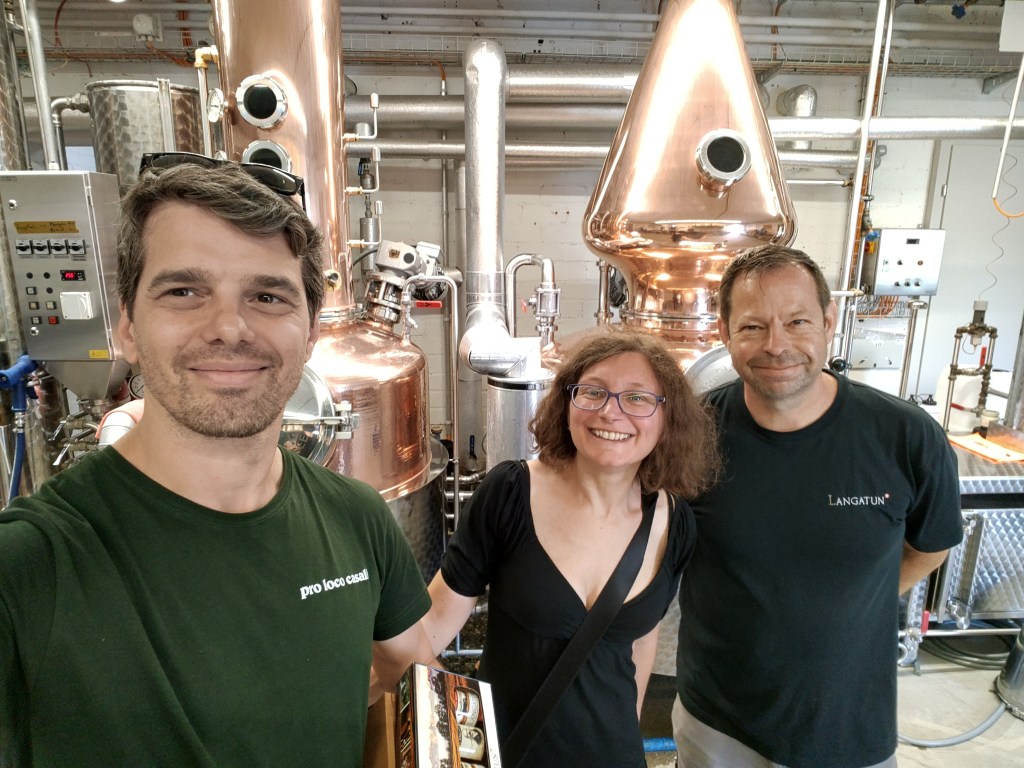
Thank you, Stefan!
(If you’re only interested in the whisky part, you can stop here.)
After the visit, we took the road towards Basel and crossed back into France to visit Colmar, which many friends had recommended. It is a nice town indeed, with canals and a very cute medieval centre, albeit a tad touristy. There we had a late lunch and, while it looked pricey at first, the portions were generous: Gianluigi was (unusually) not quite prepared for the amount of pork he ended up with! Everything was yummy! After a relaxed walk around the town, we headed back to the van and drove north, deciding to stay near Strasbourg but on the German side of the Rhine, in a quiet town called Kehl. There, we had a pint (of a delicious local German lager), did some grocery shopping and had a wee dinner in the campervan, before going to bed.
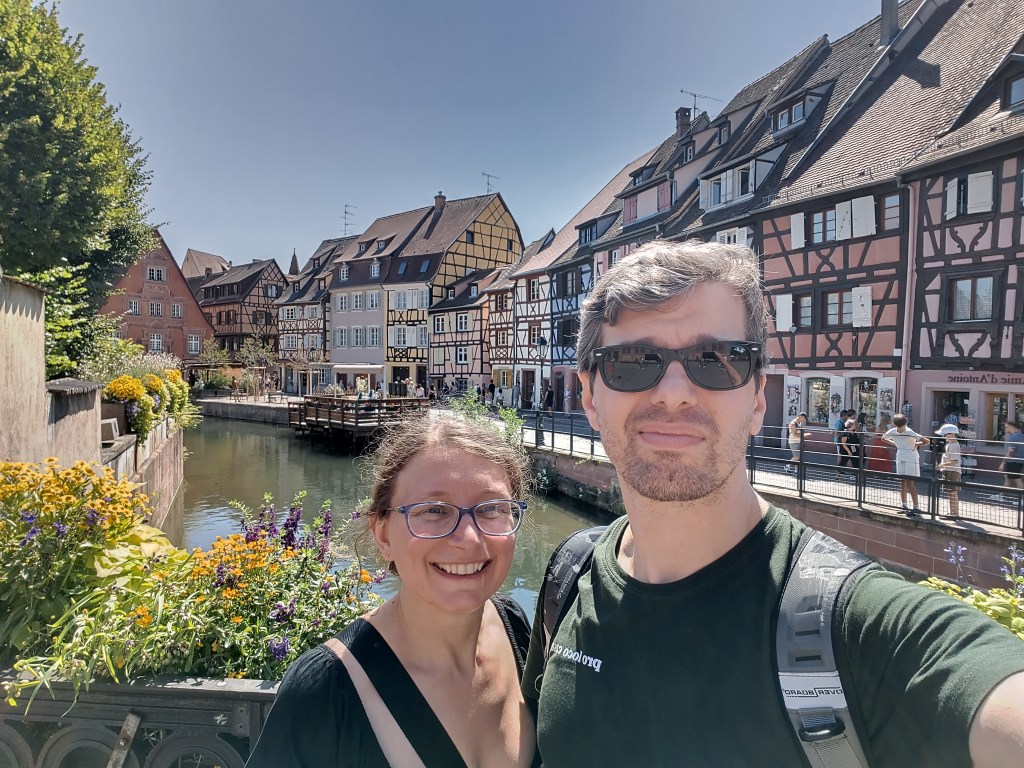
Charming Colmar.
Day 13. We woke up to a sunny day, had a quick breakfast and left for Strasbourg, on the other side of the Rhine. We found a car park under the trees (to avoid getting cooked once back) near the city centre, and explored the city for a couple of hours. It was a first for Teresa, and a return for Gianluigi, albeit 24 years later! The city centre is very beautiful, with its majestic cathedral, and in general it looks like a very liveable place.
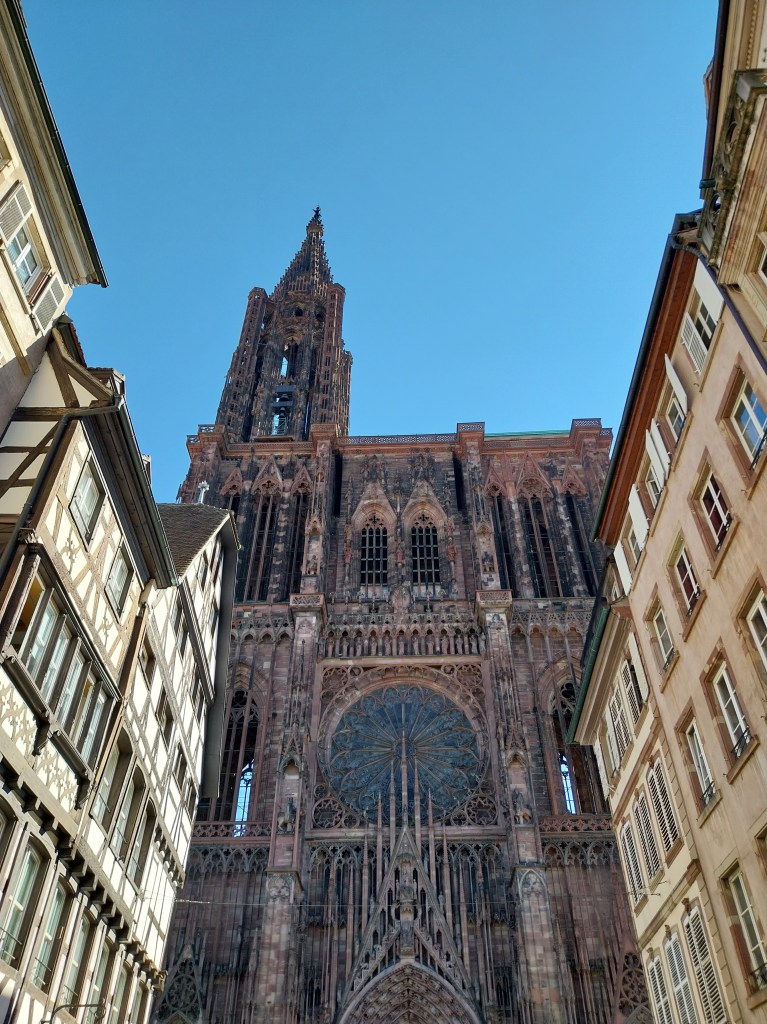
The impressive Strasbourg cathedral.
We left in the early afternoon, again driving north. Instead of taking the motorway, we took a smaller road through the Parc naturel régional des Vosges du Nord, before crossing into Germany again. After a long and toasty drive (thanks, broken AC), we crossed into Belgium near the town of St Vith, where we stopped for a quick refresh. Soon after, we stopped again at the Beer Museum, just a few kilometres down the road: it’s a bar/restaurant and bottle shop with a massive choice of Belgian beers. Fill yer boots! We would have stayed for the night, but the car park mostly accepts self-contained motorhomes, as there are no toilets or showers. We kept driving until we were near Hasselt, where we stayed at a campsite within a sanctuary for horses and other animals ran by a lovely couple: not the cleanest, but quiet, relaxing and inexpensive, so perfect for one night.
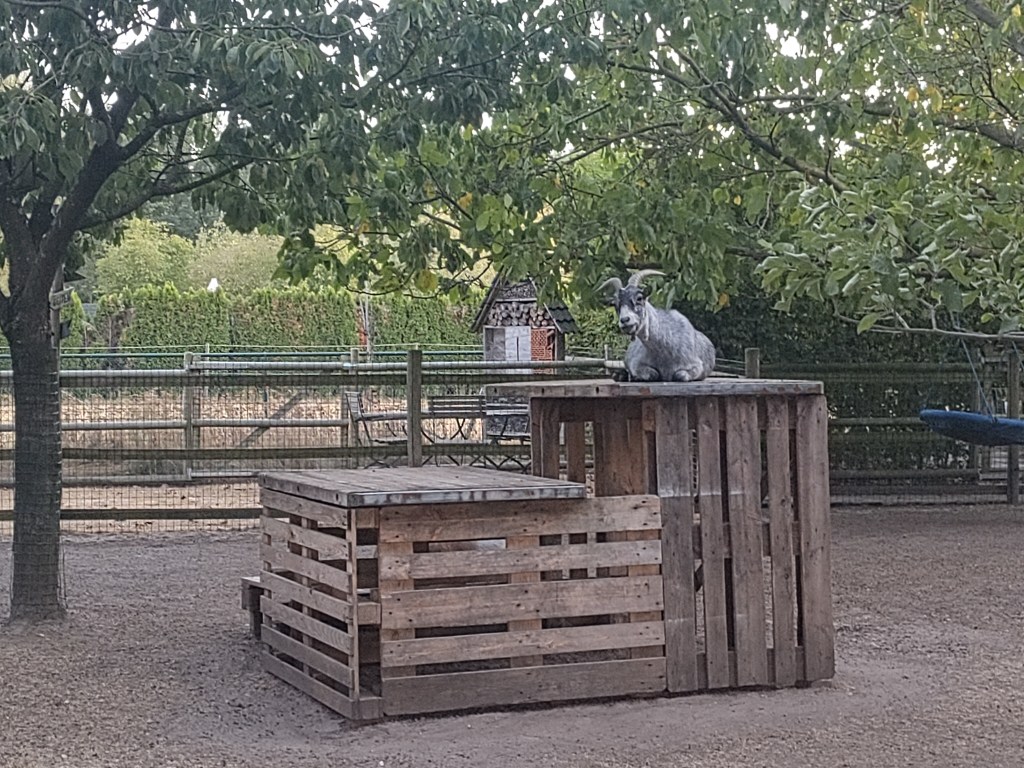
See you next time!
Stay tuned for the last distillery and the end of our European trip! Until then, slàinte!
Langatun Distillery Tour and Tasting
Price: free (normally CHF350.00/~GBP320.00 for a group of 10, exchange rate as of August 2026)
Duration: 1hr
Tasting: a few sips of various drams for Teresa
Target: whisky nerds
Value for money: NA as it was free for us
Highlights: the tour with Stefan
Recommended: yes
Link: https://www.langatun.ch/en/