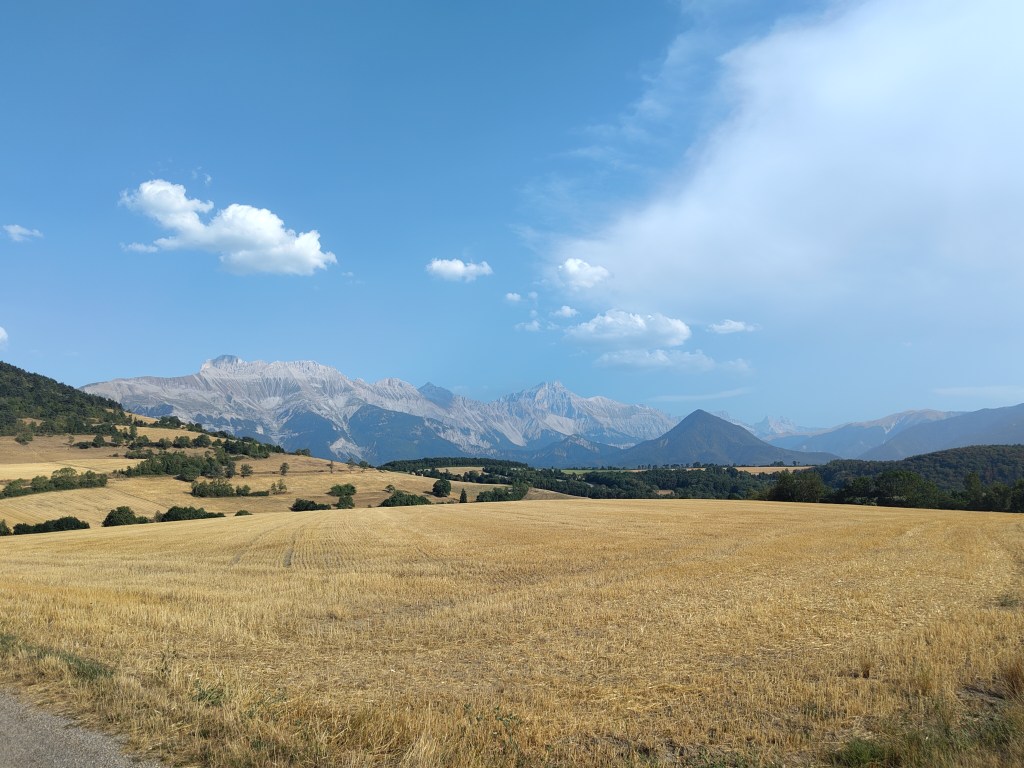
Malt whisky in the French Alps
TL; DR: This summer we packed Mr. Vantastic and set off from Leith to Gianluigi’s family village in the Italian Apennines. This post covers Canterbury (and the Foundry’s English whiskeys), Reims, a Burgundy winery and, obviously, a whisky distillery: Domaine des Hautes Glaces in the French Alps. A fantastic, in-depth experience at this organic distillery whose spirit-forward whiskies are very different to what we usually drink in Scotland. Definitely one to try.
We didn’t really have a plan for our summer holidays. Or rather, we had one, but it involved a lot of driving, and unless you’ve been living under a rock (in which case, we envy you!), you’ll have noticed how much fuel prices have gone up since the war in Iran and the invasion of Lebanon. At first we considered doing something else, but in June the ceasefire looked like it would hold, so at least fuel prices weren’t rising any further. The plan was back on: a road trip from Leith to Casali di Morfasso, the village in the Italian Apennines where Gianluigi’s family comes from. Every year the village committee (the “pro loco”) runs a non-profit fair with food and music, and this year we offered to help.
Of course, we stopped at a few points of interest along the way. This is a long post, so if you want to skip straight to the distillery visit, click here.
Days 0 and 1. We left Leith on a Friday evening after work, aiming to drive for two or three hours. Night roadworks on the A1 around Newcastle turned that into almost three and a half, but we finally stopped for the night in a car park near Bishop Auckland. The next morning we stopped briefly for breakfast, then drove straight to the Costco in Thurrock (east of London) to refuel. There we realised two things: we were well ahead of schedule, and the van’s air conditioning wasn’t working. A toasty trip lay ahead!
We used the spare time for a walk around Canterbury, a quick look at the main landmarks (the cathedral, strictly from the outside) and a half pint at the Foundry Brewpub. As well as a pub and brewery, the Foundry is a distillery, producing a range of whiskeys (with an “e”, as on their menus and website). Unfortunately we didn’t have time for a proper tour or tasting, but we bought a few drams to try later in the trip, all made with English grain. The first was the Clock Face Three Grain (45% abv), made with malted barley, rye and corn, aged for two years in ex-bourbon casks and finished for one year in virgin English oak. Then the Gear Wheel Corn Whiskey (43%) and the Water Tower Rye Whiskey (45%), each from a single virgin American oak barrel, with mash bills of 51% corn and 51% rye respectively (the rest barley). And finally the Streetlight Single Malt (44%), matured in ex-bourbon casks.
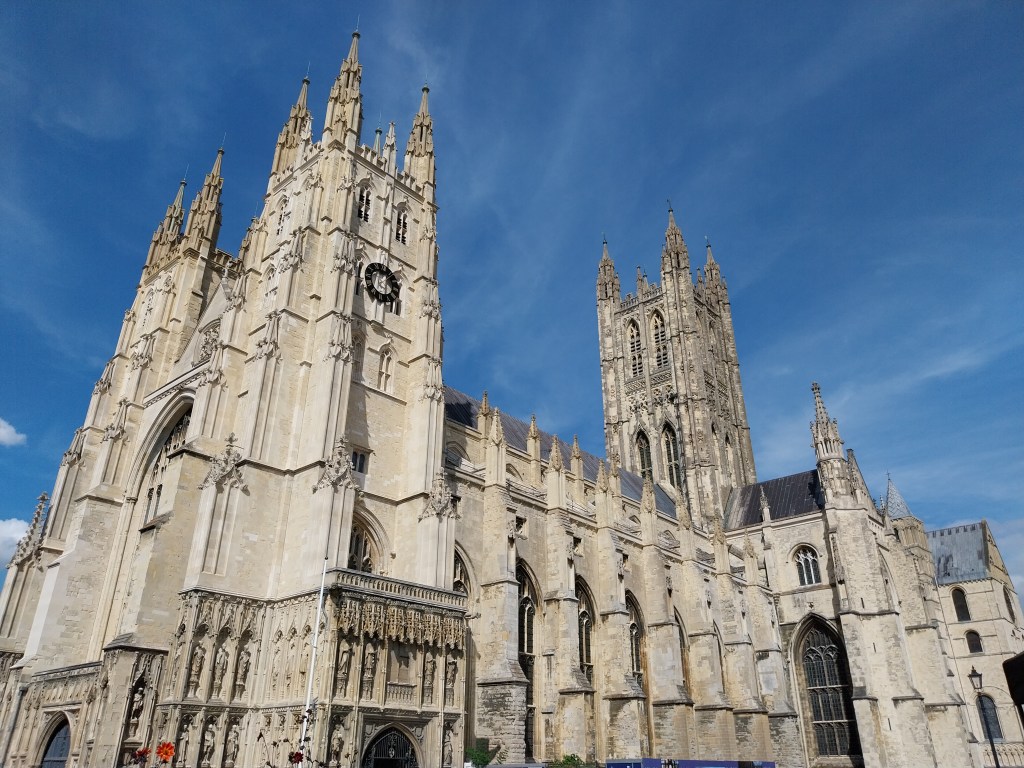
The sacred side of Canterbury…
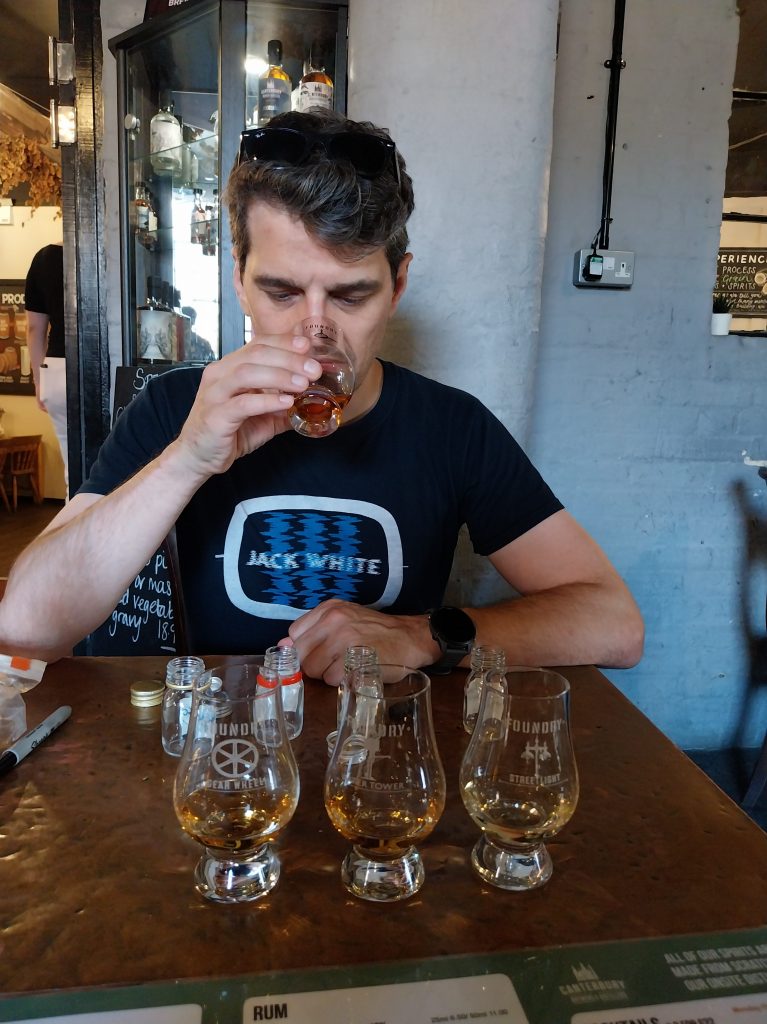
…and the less sacred side.
Even with the Canterbury stop, we made an earlier ferry from Dover to Calais. That gave us time for dinner at a restaurant in Saint-Omer on our way to Reims, where we spent the night.
Day 2. First things first: as soon as we woke up, we found a boulangerie and filled our boots! As well as croissants and a baguette, we got some savouries, all for the incredible price of €11. We spent the morning in Reims, visiting the majestic cathedral and, just outside the city, the Musée du Fort de la Pompelle, which covers World War I (and the years before it).
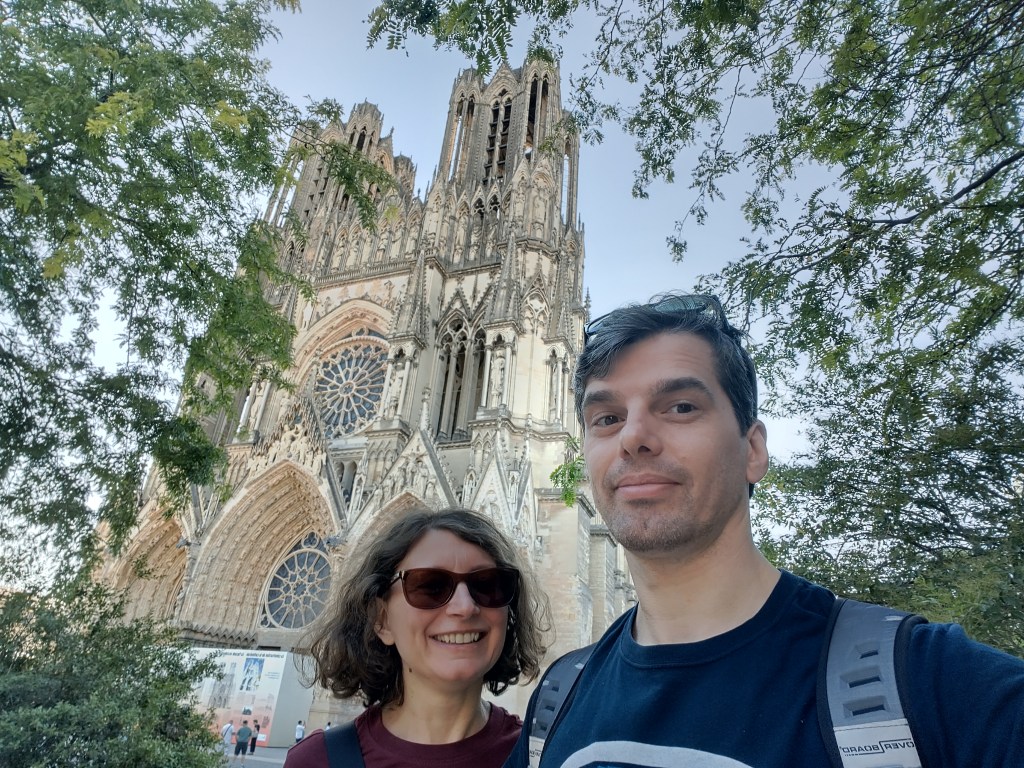
The second cathedral of the trip, Reims.
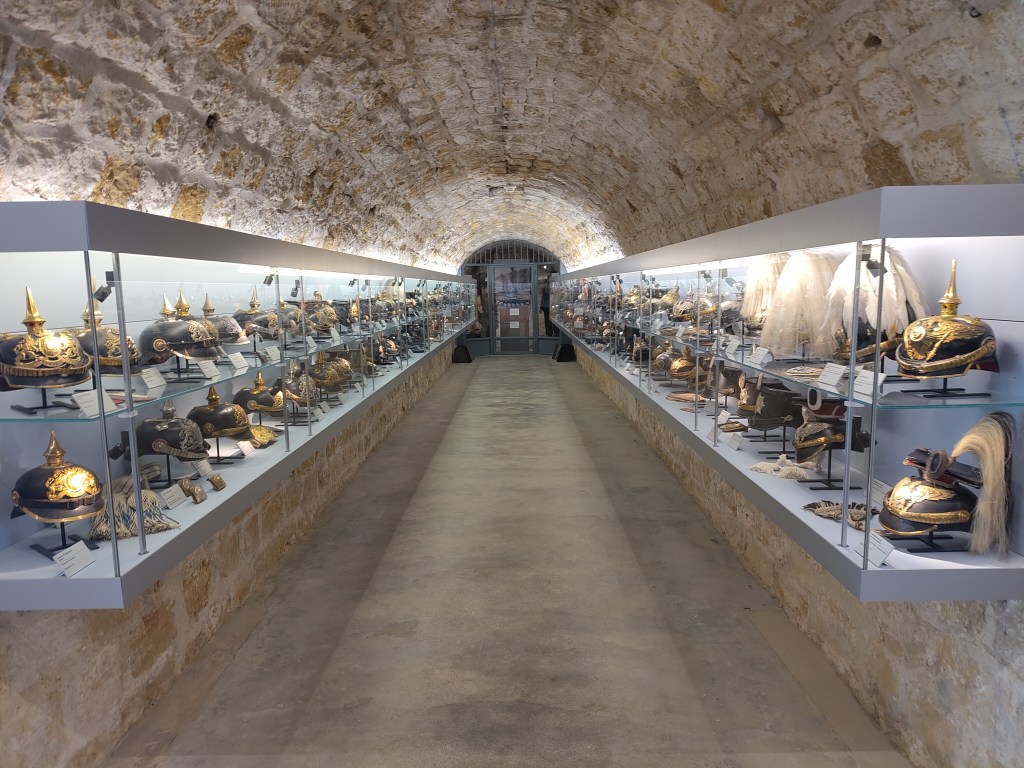
Deep into history.
Afterwards we drove straight to our next stop in Burgundy, and that’s when the heat really started cooking us. We had booked a campsite in Santenay, in the heart of the wine region, so how could we miss a winery visit? We couldn’t. We chose Château de la Crée, a 20-minute uphill walk from the campsite through very pleasant farmland.
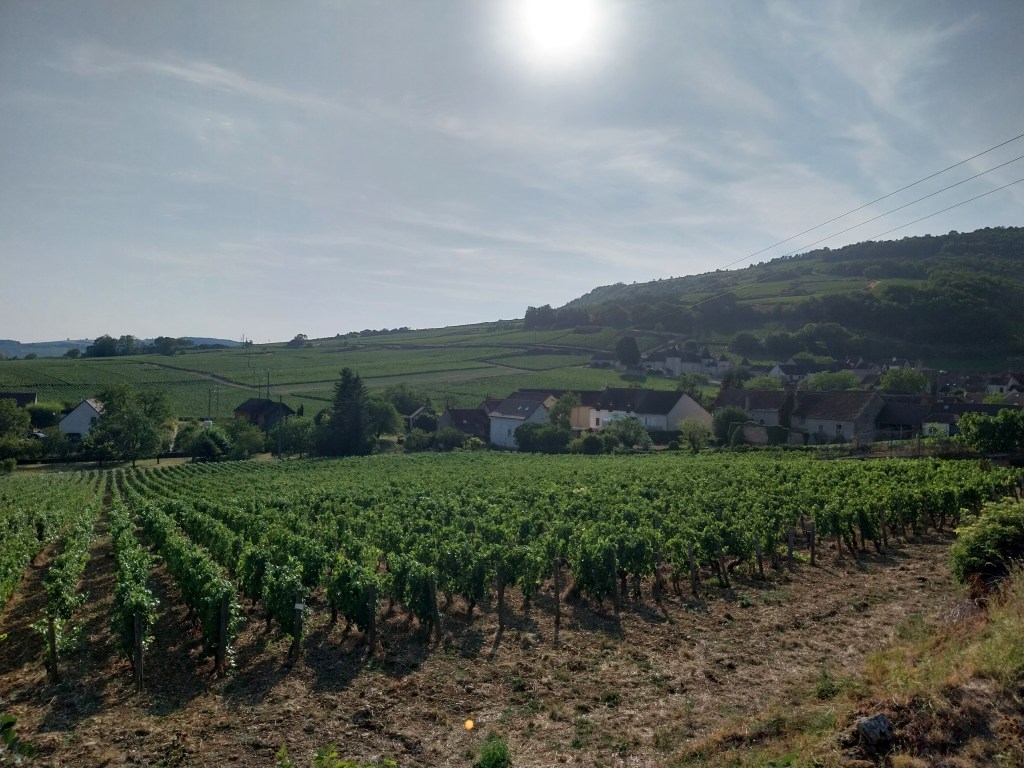
A different landscape…
The visit was very informative. We started with the history: the château was built in the 15th century and bought in 2015 by the Norwegian Evenstad family, who already owned a successful winery in Oregon. We also learned that Burgundy is divided into five sub-regions, from north to south: Côte de Nuits, Côte de Beaune, Côte Chalonnaise, Mâconnais and Beaujolais (Beaujolais and Chablis wines generally use their own, more local appellations). The main grapes are Chardonnay for whites and Pinot Noir for reds, with some Gamay and Aligoté. While the guide explained all this, we walked from the château to the vineyard behind it, then down into the cellars (now used only for visits). There the guide talked about the difference soil makes to a wine, and showed us soil cores from their different parcels, which are scattered around the area.
At the tasting we tried two whites and three reds, and realised that “wine people” can be far cringier than “whisky people”…We felt very sorry for the guide, who did a fantastic job. Back at the campsite there were pizza and beer food trucks that evening, so we were sorted!
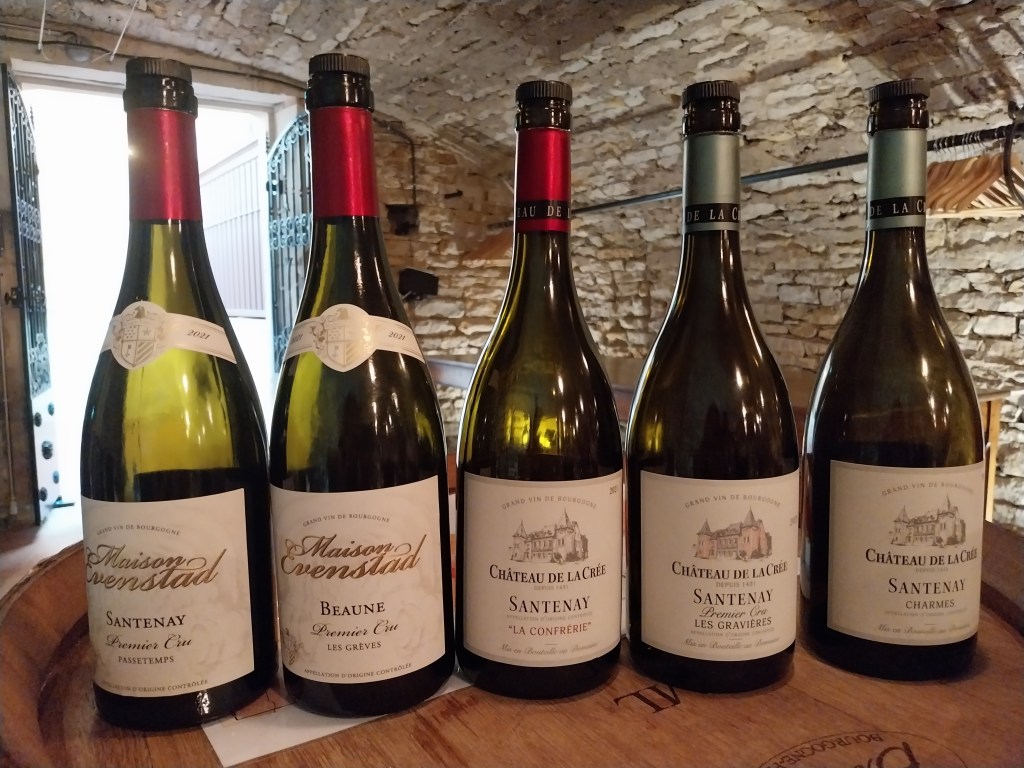
…and a different tasting, for a change.
Day 3. The next morning we left fairly early (after an unmissable boulangerie stop) and drove south, first towards Lyon and then Grenoble. Our destination was an hour beyond the city: the village of Cornillon-en-Trièves. As we got closer, the landscape turned first hilly and then properly mountainous. We left the motorway soon after Grenoble to save a few euros (French motorways are fantastic, but pricey!) and carried on along smaller roads. We parked Mr. Vantastic (under a tree!) somewhere we could have spent the night if needed, about a 20-minute walk (uphill, again) from the distillery: Domaine des Hautes Glaces.
At the distillery shop we met Manon, who we’d been emailing. She welcomed us into the very cosy visitor centre, then started the tour (just the three of us) in the courtyard with the distillery’s history. The idea came from Frédéric Revol in the early 2000s: he wanted to make an organic French whisky focused on grain, terroir and the mountains. The distillery was founded in 2009, when he also bought a farm at the nearby Col Accarias, although the first runs used grain borrowed from neighbouring farms. At the time it was only the sixth whisky distillery in France; now there are over 160! In 2017 Rémy Cointreau bought a stake, and that investment allowed them to buy the “Domaine” (the estate). This former monastery now houses the visitor centre and accommodation for staff in training.
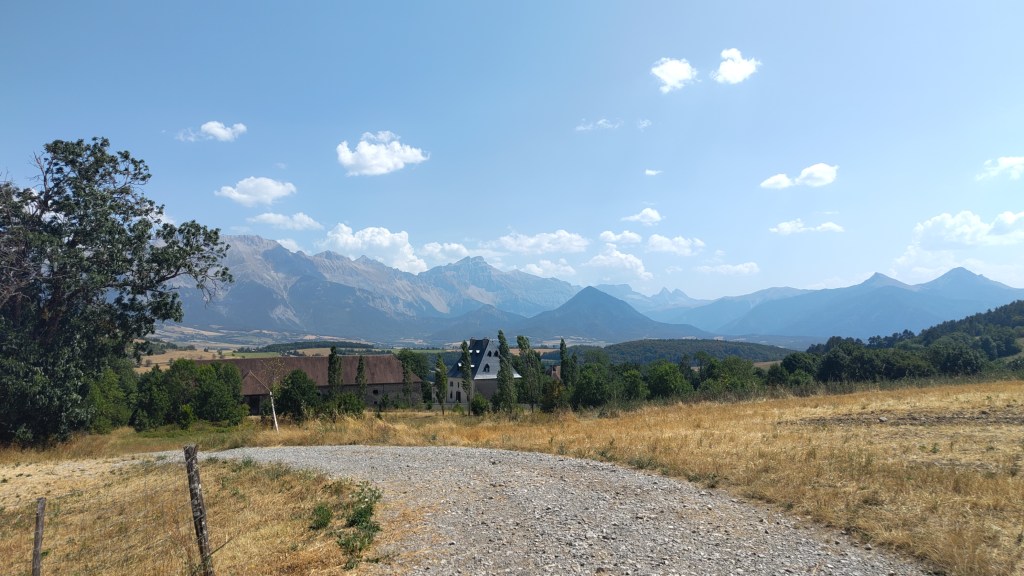
Such a beautiful spot for a distillery.
During the introduction, Manon took us up to a field on the hill just behind the distillery, with a spectacular view of the surrounding mountains. As well as their own fields, they rely on a cooperative of farmers, all within 20 km of the distillery and all farming organically: the fields aren’t ploughed, and they use regenerative practices and crop rotation. They grow five cereals: barley, rye, oats and two types of spelt. The specific varieties (including heritage grains) are chosen by agronomists and trialled in nurseries to make sure they grow well in the area. Yields are about 3 tonnes per hectare, roughly a third of what non-organic farming usually gets (8-10 tonnes). All grain is kept separate by cereal and variety, field and harvest year. It was also refreshing not to hear the “b” word*, which many other organic spirits producers unfortunately attach to their practices (usually unchallenged by journalists). (* Don’t worry, “b” stands for biodynamic here.)
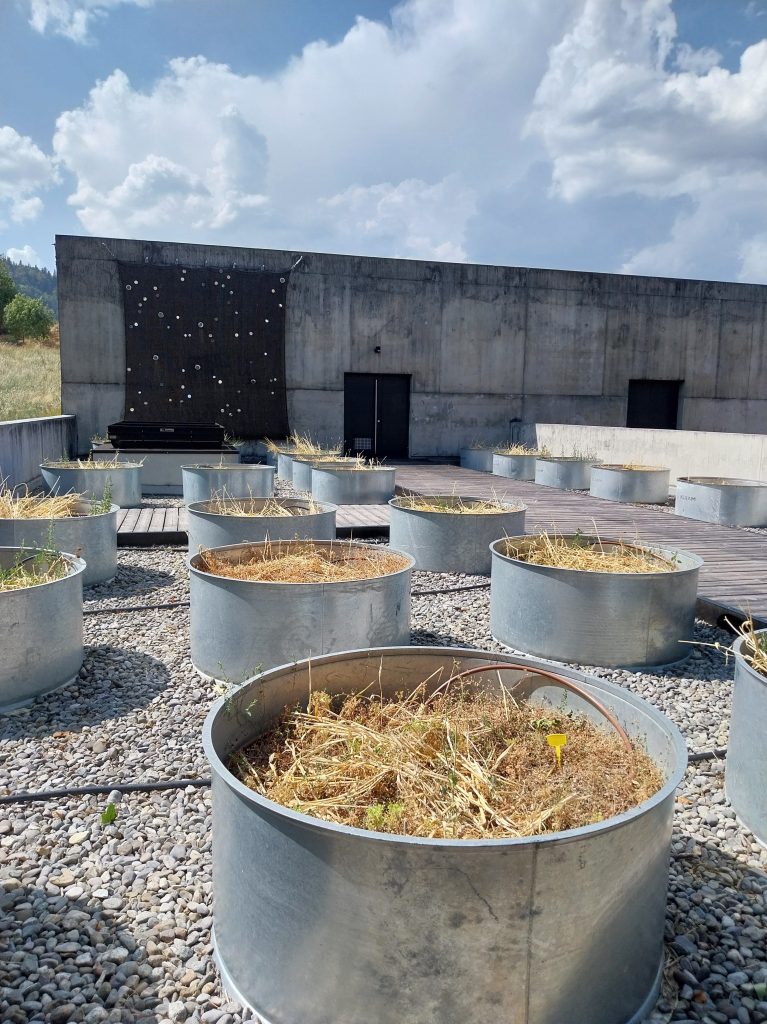
The “nursery”, aka grain experiments.
Part of the grain is malted by an external maltster, Malting Pot, in Savoie, and part on site. Their in-house malting machine was new to us: a long, narrow open tank holding 8 tonnes of grain at a time, turned by two large screws that travel back and forth along it. Steeping lasts two days and raises the moisture from 11-12% to 47%. Hot air at 50°C then brings it back down to about 20%, and final kilning at 80°C takes it to 5%, so the malt can be stored for a long time.
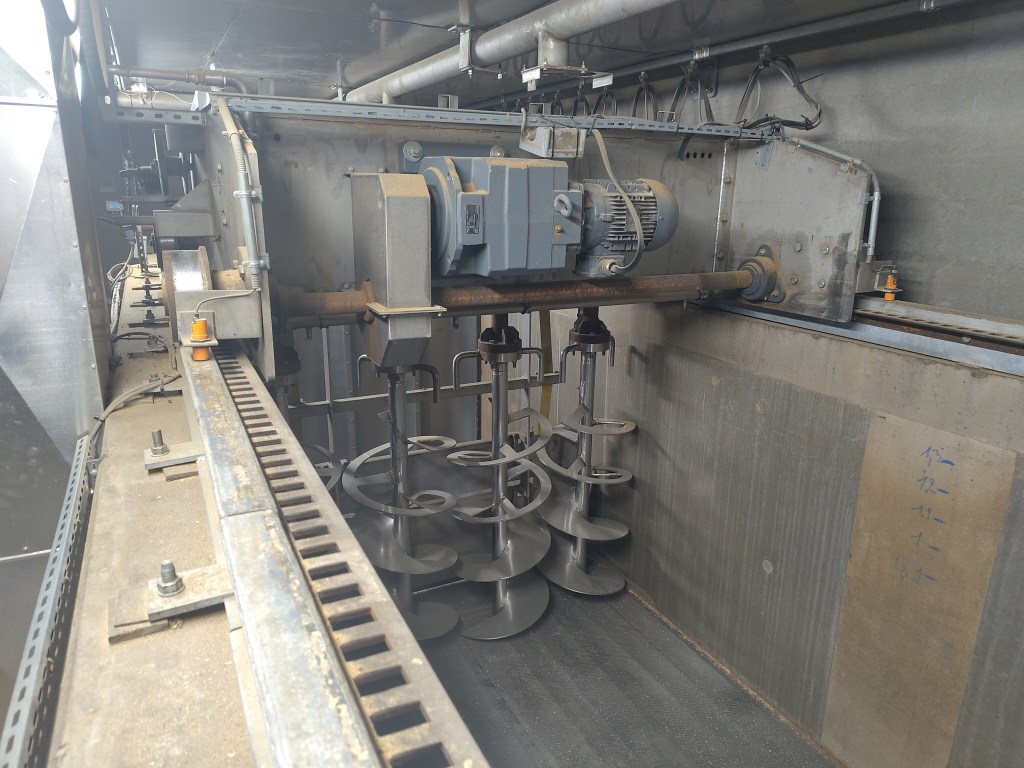
Never seen this type of malting equipment, very interesting!
The rest of the production process shows clear Scottish inspiration. They have a 1950s Boby mill (bought second-hand, of course), and mill similarly to many Scotch distilleries. The exception is rye, where they adjust the husk/grit/flour ratio to avoid a stuck mash. Two tonnes of grist go into the mashtun with 10,000 litres of water, and mashing (three waters) takes a full day. For fermentation they use a local wild yeast, cultivated in a lab and kept in refrigerated tanks because it’s very temperature-sensitive. Fermentation takes 140-160 hours in one of three washbacks.
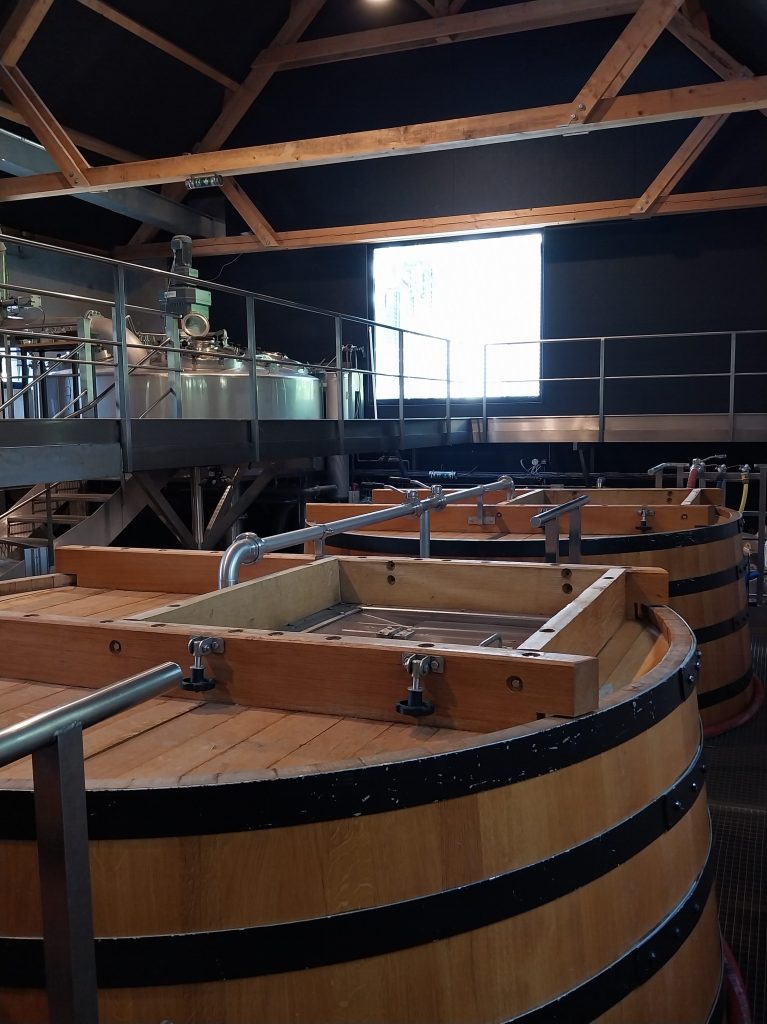
This part of production was more familiar to us.
Distillation is where they depart from Scotland. They have four directly fired, Cognac-style 2,500-litre stills with worm tubs, heated with biomass from the nearby woodland. The first distillation gives about 750 litres of low wines at 30% abv. The second, with the foreshots and feints of previous runs added, gives only about 250 litres of hearts. The cut is made roughly between 70% and 65% abv, by smell and taste, even though the stills have electronic monitoring. They mostly double distil, except for the rye eau-de-vie Vulson, which is triple distilled.
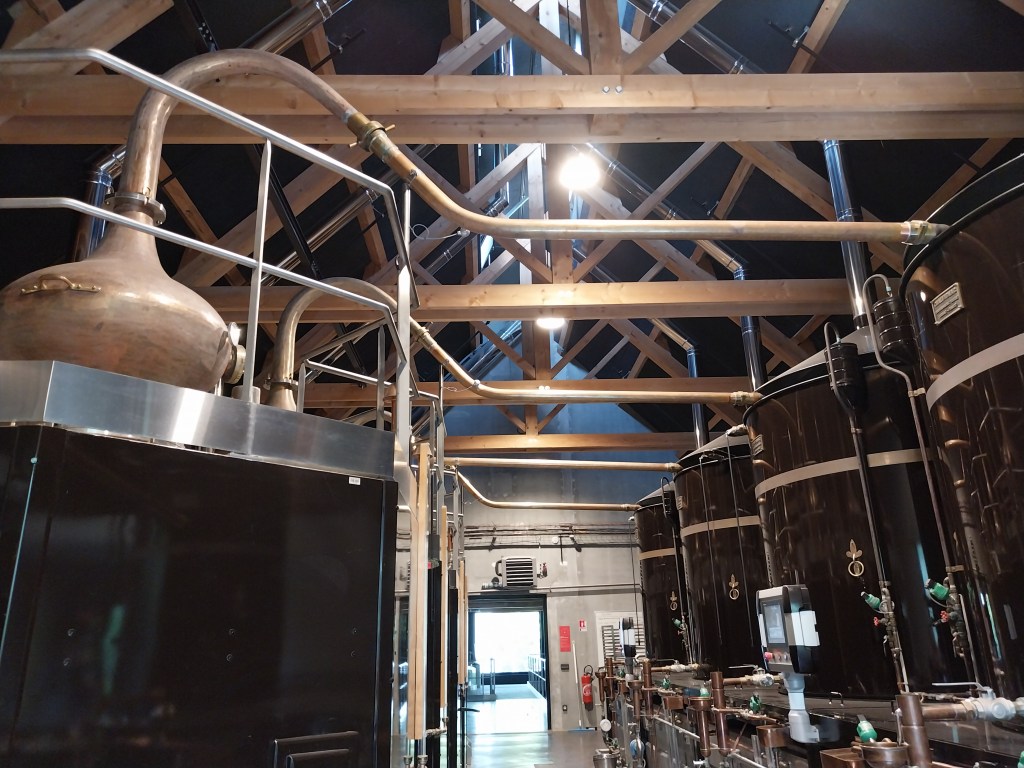
Back to something different in the still room.
They can produce up to 35,000 litres of pure alcohol a year, similar to Scottish craft distilleries like Dornoch (not a random comparison, as you’ll see later), though they currently make less. On site they can store about 2,400 casks, 80-90% of them used Cognac casks. As we understood it, the aim is a spirit-forward whisky that shows off the differences between soils and grain varieties, and a well-used cask does just that. Other casks include some from Rémy Cointreau’s other distilleries (Bruichladdich on Islay and Westland in Washington State), some from organic wine producers, and a few ex-bourbon casks, mostly for independent bottlers, La Maison du Whisky in particular. There are no sherry casks, though there are some Maury wine casks, and a few clay pots, another first for us! Their angels’ share is about 4% a year, double the Scottish average of around 2%. They also reduce “fractionally”, adding water a little at a time depending on how the flavour develops. This is common practice in Cognac and Armagnac, and we suspect it may help keep the spirit’s oiliness and thicker mouthfeel.
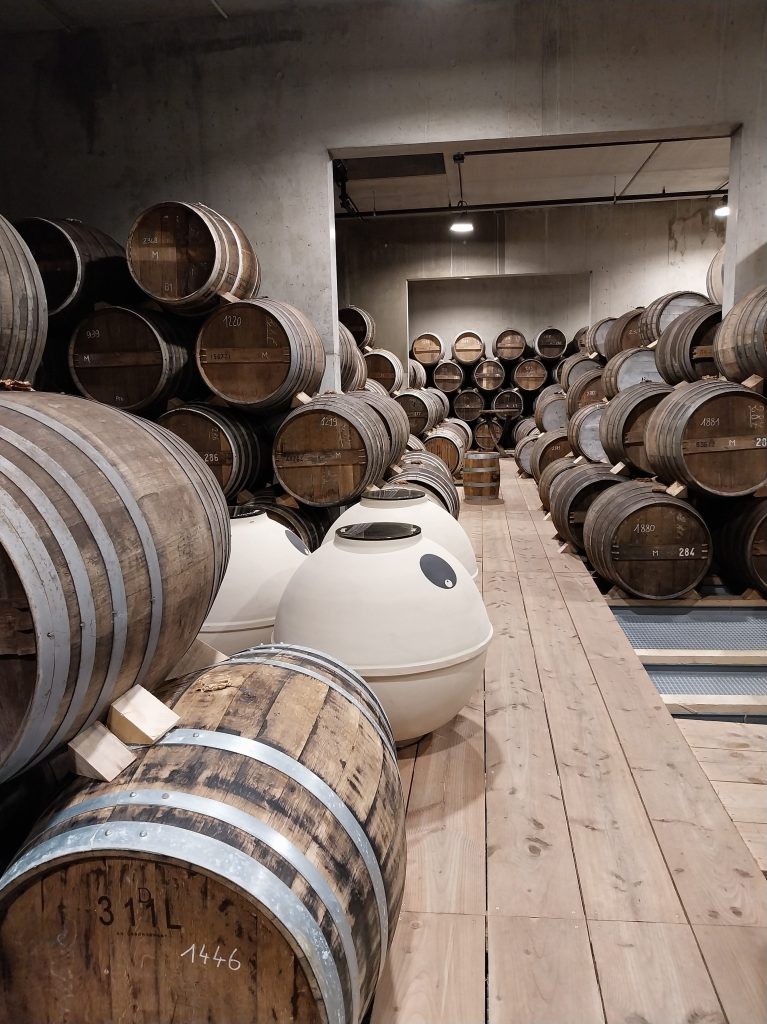
Spot what you can’t do in a warehouse in Scotland.
After the warehouse and a quick peek at the lab and bottling room, it was time for the tasting back at the visitor centre. We had five drams each (very small measures): three from the core range (“Les Intemporelles”) and two limited editions of our choice (“Les Exploratoires”). We agreed with Manon that we’d each pick different ones, so we could try more expressions between us.
She poured the first dram from their very recognisable square bottle (which, to be honest, looks a bit like a perfume bottle). It was one of their flagships, Indigène (44%), a single malt made with a solera-like system: casks are added to a large vat from time to time, so the whisky inside could be anywhere between 5 and 12 years old. The second, also from the core range, was Caryops (42.6%), a blend of all five grains (mostly barley and rye) made with the same system. Both are matured in French casks, including Cognac, Armagnac, wine and virgin oak. Of the two, we preferred Indigène.
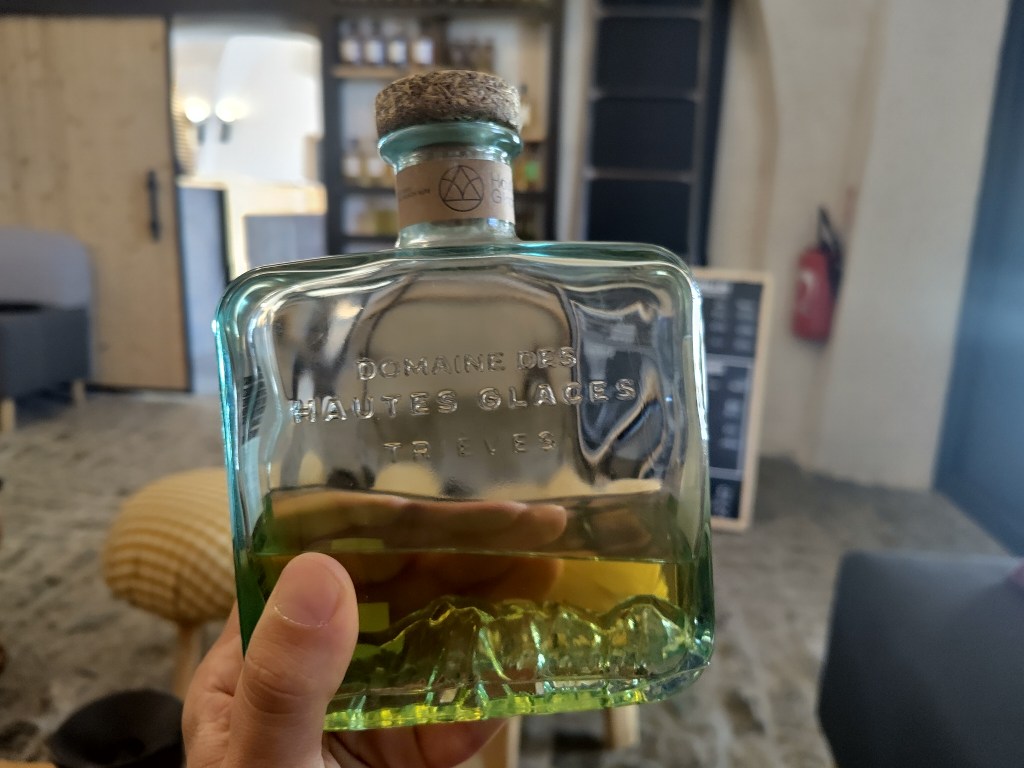
A lot of thought in every detail. Did you know that the cork is made of draff?
The third and fourth were single-farm expressions, both matured in Cognac casks and labelled B17P25: “B” for barley, “17” for the 2017 harvest and “25” for bottled in 2025. One was from barley grown on the Gabert plot, the other on the Vulson plot. The difference was obvious, and the Gabert won for both of us: fruitier and more cereal-forward, while the Vulson was slightly more herbaceous. Next came a rye whisky, R20W26 (48%), matured in Cognac casks and finished in French virgin oak. Then the XO#4 (47%), “extra old” in Cognac and Armagnac terms, matured for 14 years in Cognac casks. It’s a very good dram, but a bit too spicy on price (€190 for 50 cl). We finished with the rye eau-de-vie Vulson (43%): triple distilled, unaged and somehow smoky, which puzzled us! Gianluigi in particular loved it.
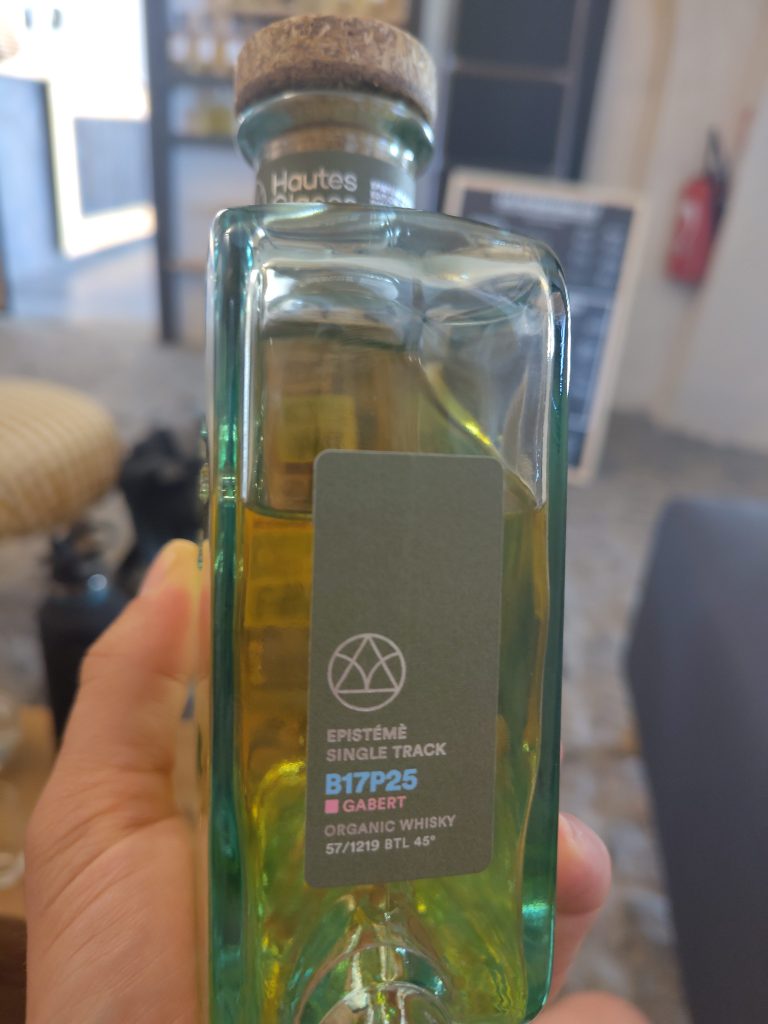
Bad picture of a delicious dram.
The visit at the Domaine Des Hautes Glaces was a real treat! Manon’s tour was fantastic, and we loved the distillery: its location, its ethos and the care they put into making whisky. Given that, and the scale they work at, we think their slightly above-average prices are more than justified (except perhaps the XO). Flavour-wise, it’s a real departure from the Scottish malts we’re used to: very grain-forward. The closest comparison we can think of is probably Dornoch. Definitely one to try, and we’ll be back if we’re ever in the area again!
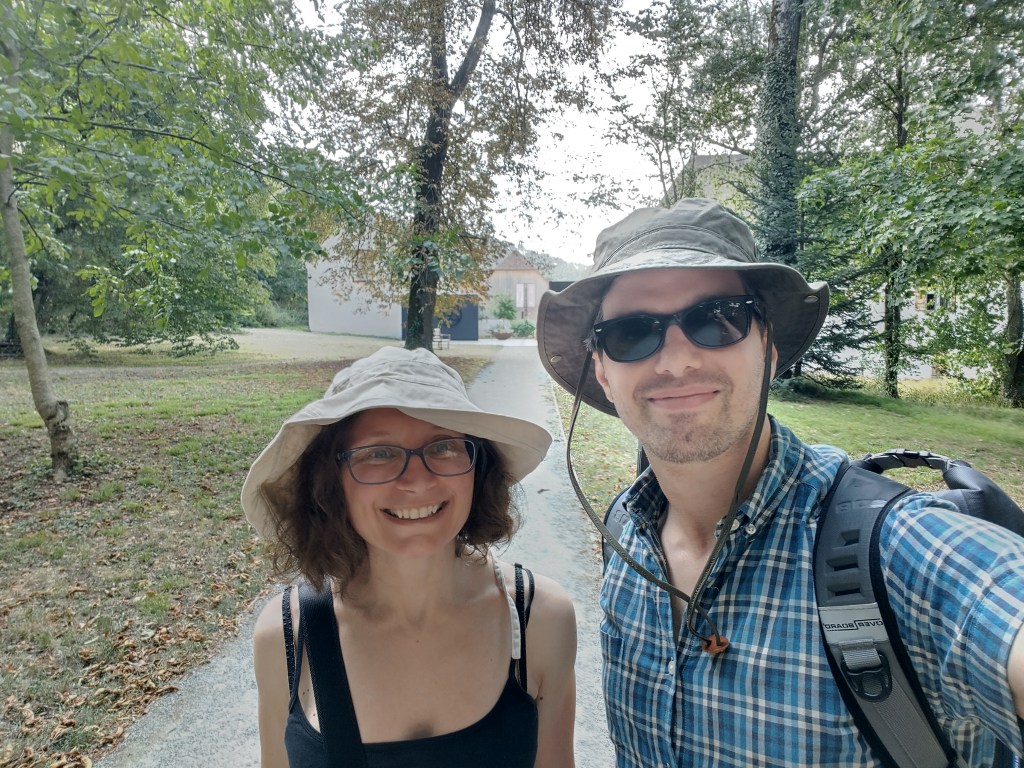
Such a great distillery visit, thank you!
Back at the van we had a quick bite before getting back on the road. We drove towards Grenoble, skipping the motorway for the D1091. After a couple of failed attempts to find a campsite, we stopped at a sheltered (but unexpectedly noisy!) rest area along the road just before Les Deux Alpes.
Stay tuned for the rest of the trip and three more European distilleries! Until then, slàinte!
Domaine Des Hautes Glaces Tour and Tasting
Price: £64.70 pp (€150 for the group, *exchange rate as of August 2026)
Duration: 2hr 30min
Tasting: 5 drams, Indigène single malt (44%, French oak casks, “solera”, €68 for 50cl); Caryops (42.6%, five cereals meld, French oak casks, €89); B17P25 Gabert single malt (45%, single farm, cognac cask, €85); B17P25 Vulson single malt (45%, single farm, cognac cask, €89); R20W26 (48%, all rye whisky, cognac cask and virgin French oak finish, €83); XO #4 (47%, 14y, single malt, single estate, €190); Vulson (43%, triple distilled 100% rye Eau de vie, €55)
Distillery Exclusives: some of their single estate listed above (Gabert and Vulson single malt)
Target: whisky explorers, but anyone really
Value for money: very good, especially if you can share the cost of the group experience with more people
Highlights: both the distillery and the landscape were pretty amazing
Recommended: yes
Link: https://hautesglaces.com/en

