Whisky from the old country
TL; DR: The Italian chapter of our summer road trip: across the Alps to Moncalieri for lunch with an old friend, then a night among Roero’s vineyards at the Filippo Gallino winery. Next, a wolf near Barbaresco and a long-overdue visit to Strada Ferrata, a pioneering Italian distillery playing with malts, yeasts and casks. Finally, family, friends and a village fair in Casali di Morfasso.
(Missed Part 1?)
This is the Italian “chapter” of our summer trip around Europe. If you’re only interested in the whisky part, go here.
Day 4. The rest area was really noisy, so when we woke up we weren’t that well rested. We soon set off towards our next destination: Moncalieri, on the outskirts of Turin. We stopped at the first boulangerie we could find to get ourselves some croissants and other tasty French goodies, and then continued straight towards the Italian border, passing Le Pied du Col and Briançon. The day was sunny, and the road through the Alps was quite spectacular. After crossing the border (no checks or any other shenanigans, we love Europe!), we stopped again in Cesana Torinese for a quick coffee (in what seemed to be the only open bar, judging by how busy it was). We arrived in Moncalieri just in time for lunch and, after some trouble finding a parking space, we finally met our friend Luca, who moved to Turin from Edinburgh a few years ago. We had a great lunch at Osteria La Cadrega and a nice catch-up with our friend.
In the afternoon we set off again. Our destination for the day was Canale, roughly between the cities of Alba and Asti, about an hour away. It’s an area famous for its wine, not far from the villages of Barbaresco and Barolo, in a hilly landscape dominated by vineyards. As we found out later, the specific wine-producing area we were in is called Roero. We were staying at a historic winery called Filippo Gallino, which offers campervans and motorhomes a place to stay in exchange for booking a vineyard visit or a wine tasting. It looked almost too good to be true, but there we were: tasting some spectacular wines with nibbles, and all set for the night.
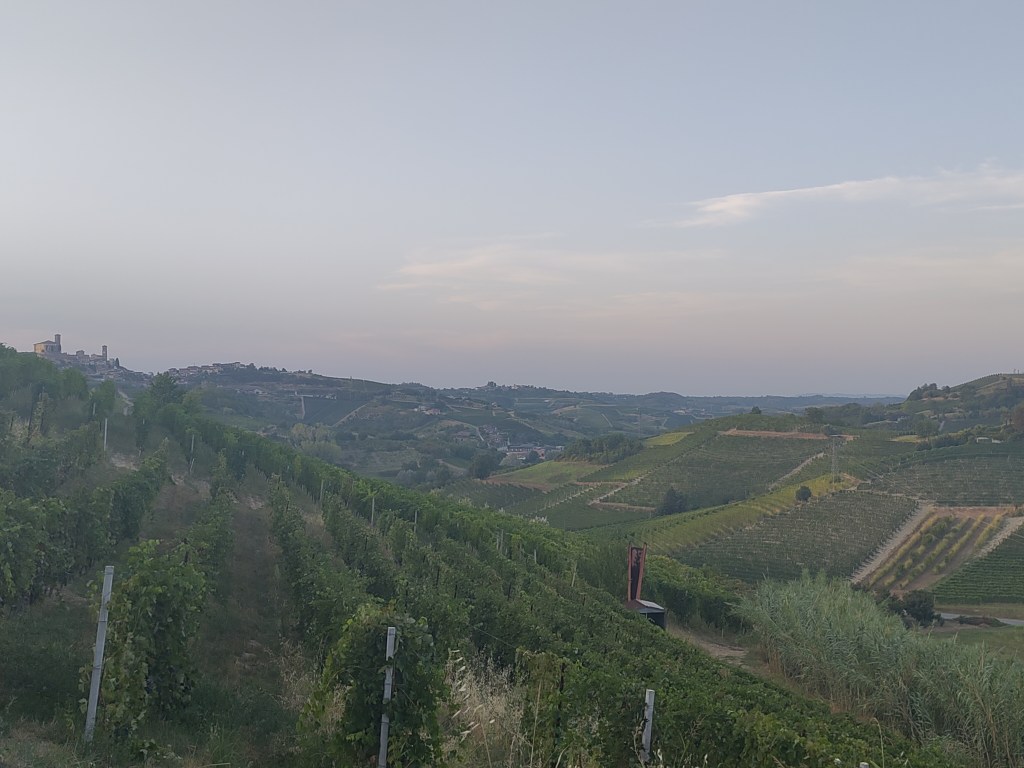
Not bad as a spot for the night.
Our tour was led by Nicolò, who was very nice and knowledgeable. He first took us on a quick walk through the production area, and explained how for their white wines they mainly use Arneis, a very typical local grape, along with some Riesling. For the reds, they mainly use Barbera and Nebbiolo (the wine made from the latter is simply called “Roero”), each with three bottlings that differ by vintage. Their Arneis is made with both modern and old methods, which we tried in our first A/B comparison: the old-style one won for both of us! They also branch out into a metodo classico (traditional method) brut, rosé and orange wines, and a low-abv (~4.5%), very sweet red wine called Birbet (made with Brachetto grapes). We were thrilled, it was one of the highlights of the holiday and, we won’t lie, we came back with not one but two cases of wine. It was that good!
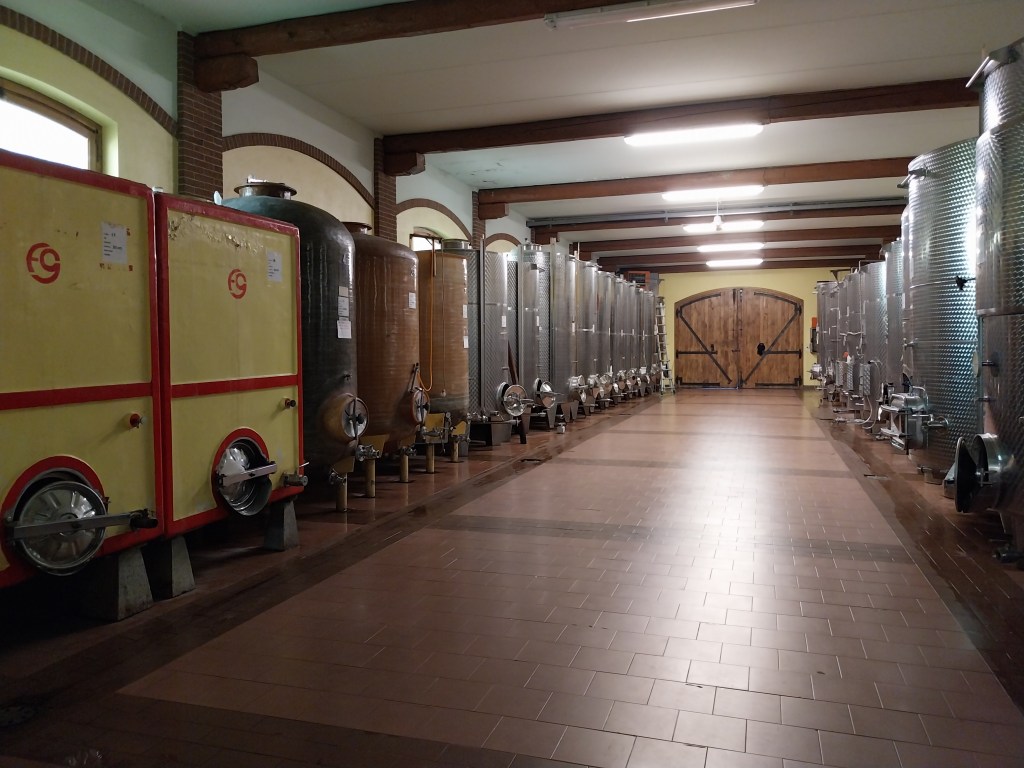
A quick tour of production…
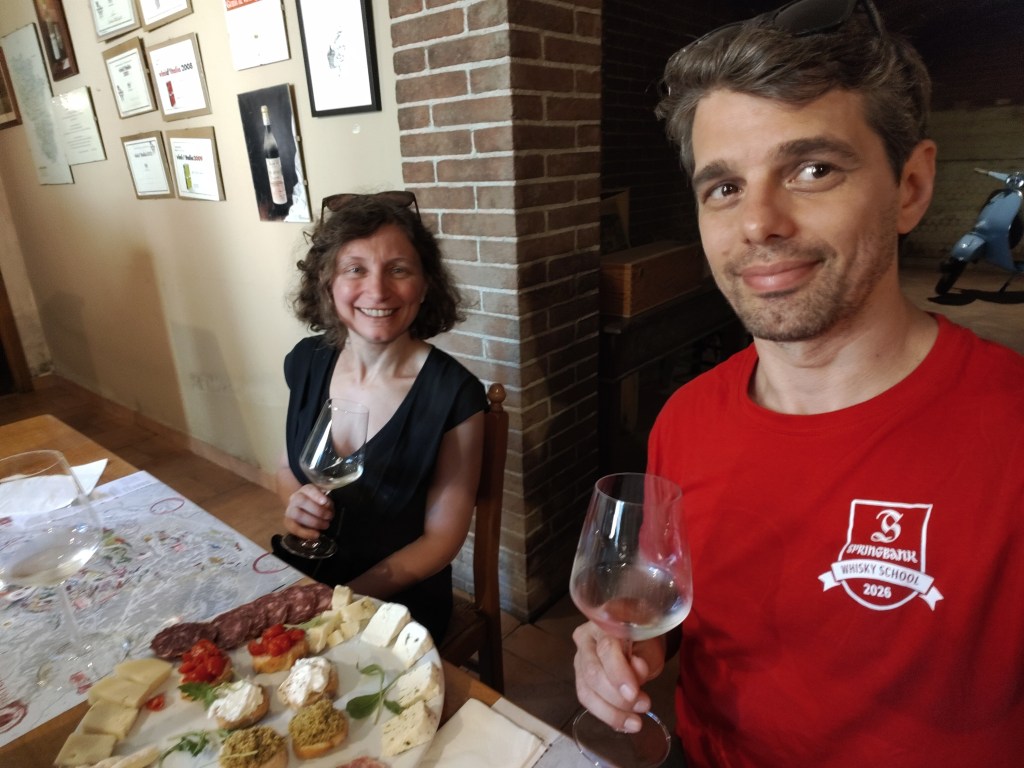
…to get here!
Day 5. In the morning, the car park in front of the winery was almost full: more campervans had arrived late at night (taking advantage of the winery’s hospitality). By then, Mr Vantastic was also in full sun, so we left earlier than planned. We made a small detour for an espresso in Barbaresco which, besides giving its name to the wine, is also a very nice village. On the way there we saw a wolf (!) in a vineyard; unfortunately, by the time we came back it was gone. As it was still early, we decided to stay off the motorway as we drove east, from Piedmont towards Lombardy. We stopped for lunch in a typical trattoria, Ristorante-Pizzeria Il Giardino, in Parona. There, we had a risotto with radicchio and gorgonzola, and a vitello tonnato, both delicious: heaven! They were also super quick, so we were soon back on the road towards our next destination: Distilleria Strada Ferrata, in Seregno (north of Milan).
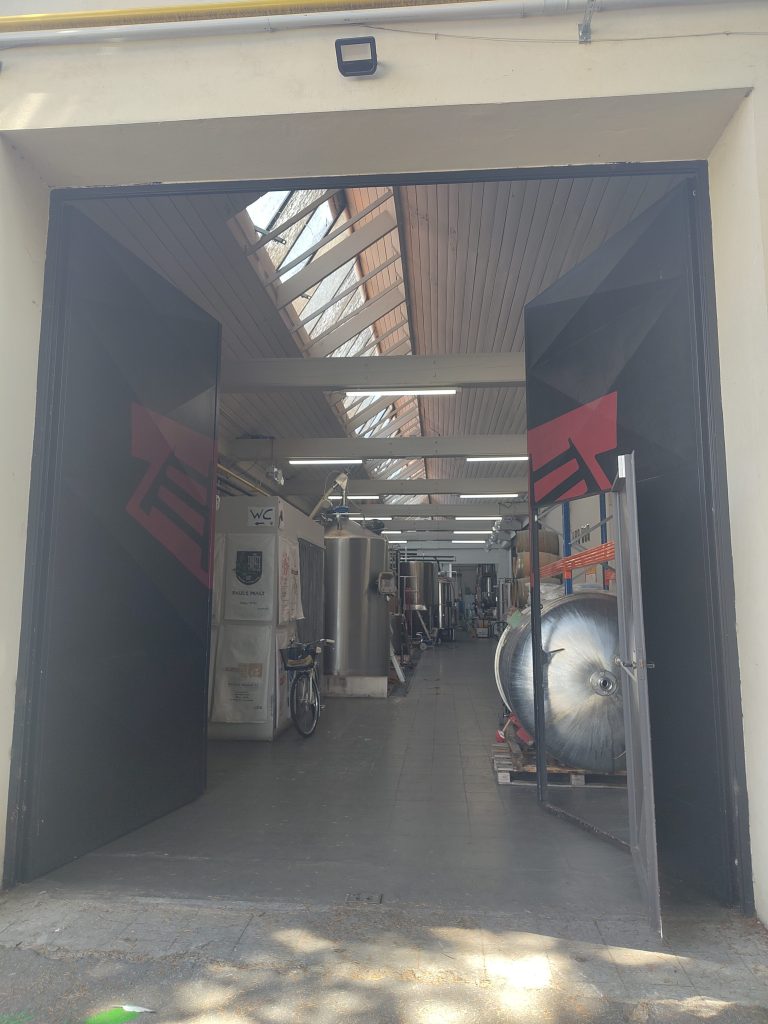
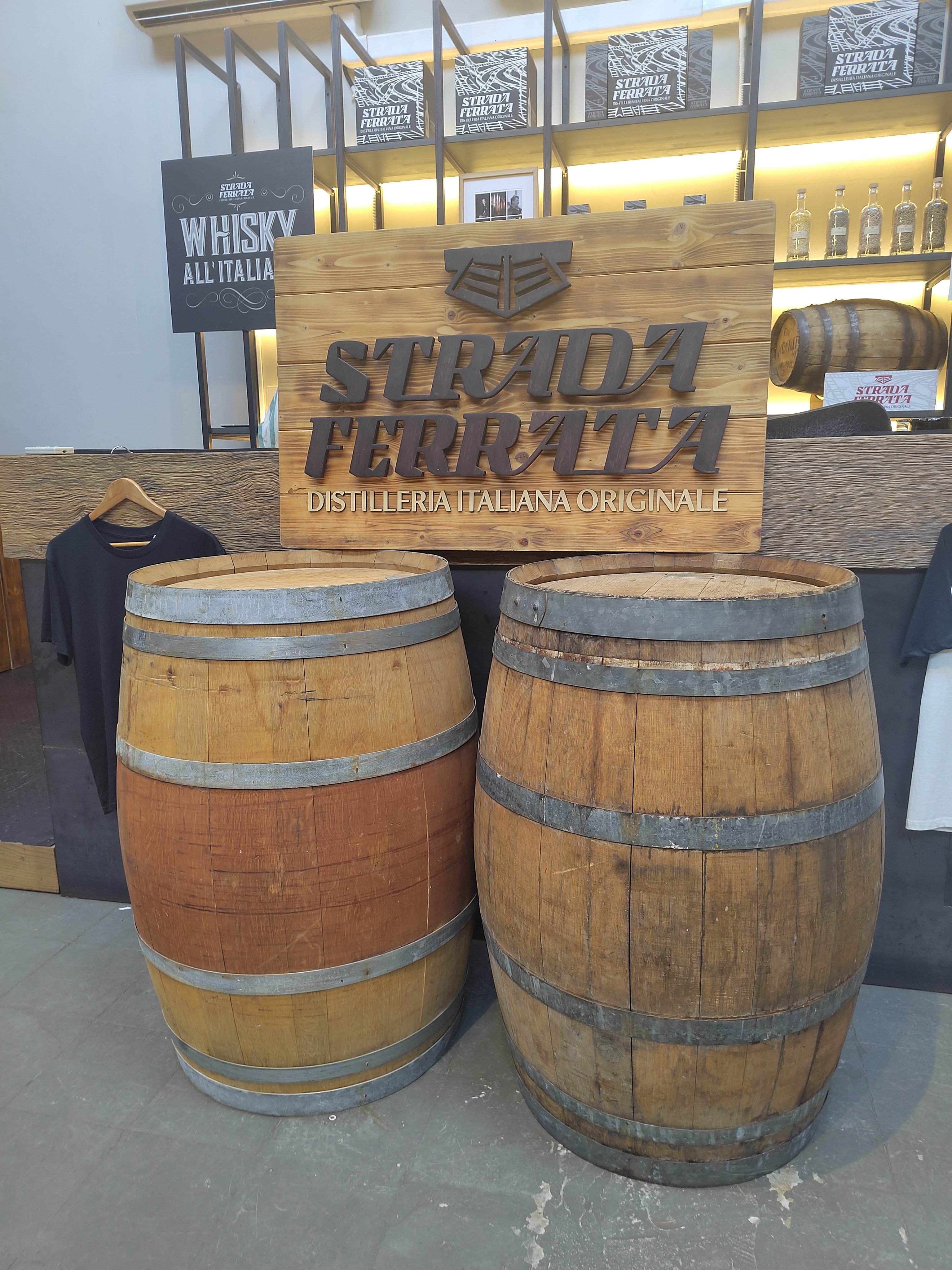
We weren’t 100% sure this was the right place…
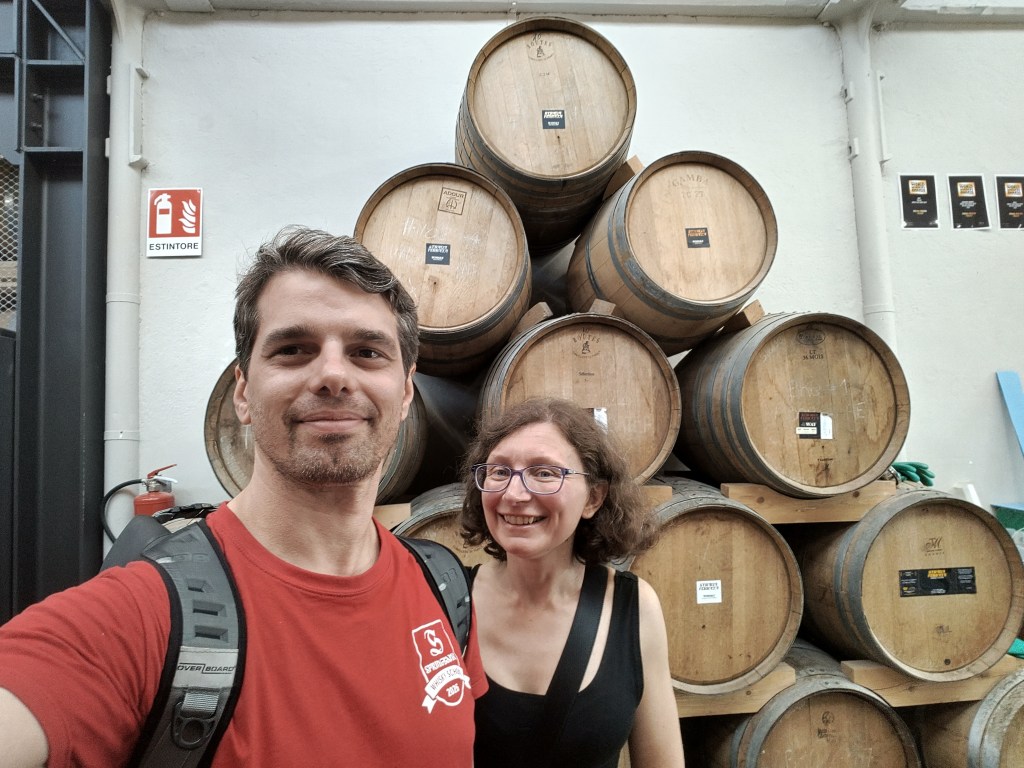
…but it was, yay!
We had known about them for a while but, despite the distillery being only an hour from Gianluigi’s parents’ house, we had never managed to visit. Fortunately, that changed: earlier in the summer we got in touch with Stefano, their manager, and arranged a tour. The distillery is in a small, old industrial area alongside other small companies, including its sister business, the Railroad Brewing Co. (founded in 2013). The idea for the distillery was born in 2019, thanks to Stefano, Benni and Marco, who decided to spend some time at Whistling Andy Distillery (Montana, US) to learn the trade. They started distilling in 2021, when it was only the second Italian distillery built specifically to make whisky, the first being Puni. Now there are about 20, although some of them mainly produce other spirits, like Poli in Veneto. They have already undergone an expansion since the Disaronno Group (formerly Illva Saronno) bought a stake in the business, which allowed them to increase production and add a second, off-site warehouse.
At the distillery, we were welcomed by Barbara, who works as an operator but occasionally runs tours and tastings (Stefano was on leave). After offering us a glass of cold water (the umpteenth heatwave was in full swing!), she explained their production process to us, starting from the beginning: malted barley. They use three types of malt: Monaco (i.e. Munich-style malt, a sweet malt generally used for beer), Rauch (a German malt lightly smoked over beech wood) and a Scottish peated malt, which they get in 25kg bags. Each malt is processed separately, starting with a very modern mill that crushes the grain into grist. They do two mashes a day: each mash uses 250kg of grist and between 1,000 and 1,500 litres of water at 68°C, for 35 minutes. After sparging and filtering the mash three times, they obtain about 1,000 litres of wort, which is then moved into one of their stainless steel washbacks. Each one has a capacity of 2,300 litres, but they only fill them to 1,000 litres to avoid overflows. The yeast is matched to the malt: Saison yeast for the Monaco, distilling yeast for the other two. Fermentation lasts a week and is temperature-controlled.
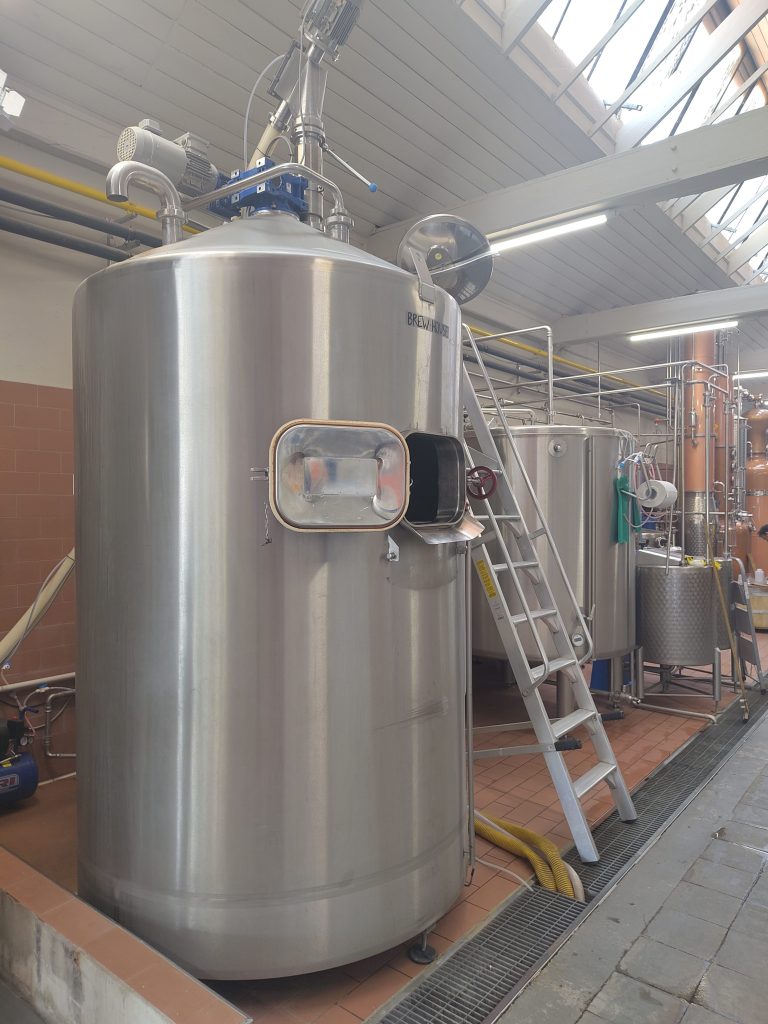
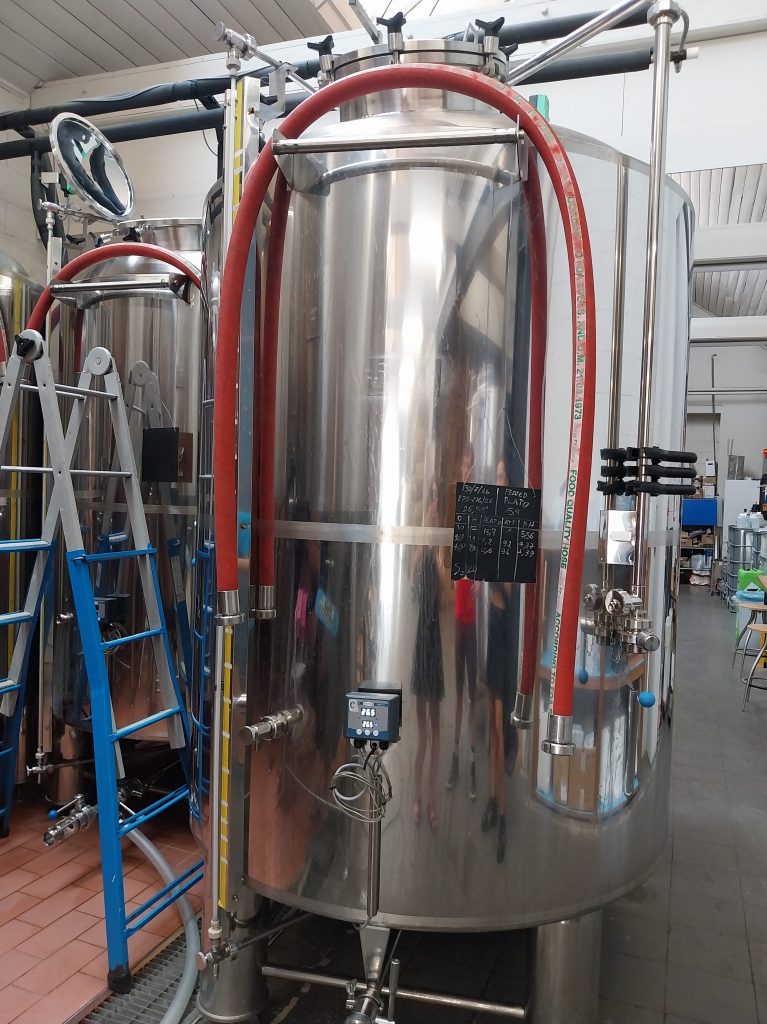
Fermenting…
They have a bain-marie type of still, usually used for grappa. It has a main “caldera” that is charged with 1,000 litres of wash and is connected to rectifying columns with four plates, which they can turn on or off depending on the type of spirit they are producing (we interpreted this second step as the second distillation, kind of). It reminded us of Penderyn‘s Faraday stills. The foreshots (heads) cut is measured manually and usually lasts 20 minutes. They then collect the spirit cut (hearts) for between 2 and 4 hours, while the cut to exclude the feints (tails) varies depending on the malt: for the peated one, they go as low as 55% abv. On average, their new-make spirit comes off at 79-82% abv, but it is reduced to 60% for maturation. Many of their casks are held on site, but thanks to their investors they now also have the off-site warehouse. The angels’ share (i.e. evaporation) is a significant issue for them, partly because the tax agency assumes a 4% yearly rate, while the real one is usually higher. The strength generally increases during maturation because, as in other hot or continental climates, water evaporates faster than alcohol. They mature the whisky in a range of casks, from the usual bourbon and beer ones to mezcal, wine, rum, sherry, Marsala, and some odd ones like aquavit from Norway or Moscato from the Dolomites. They also have casks made from alternative woods, like acacia and cherry.
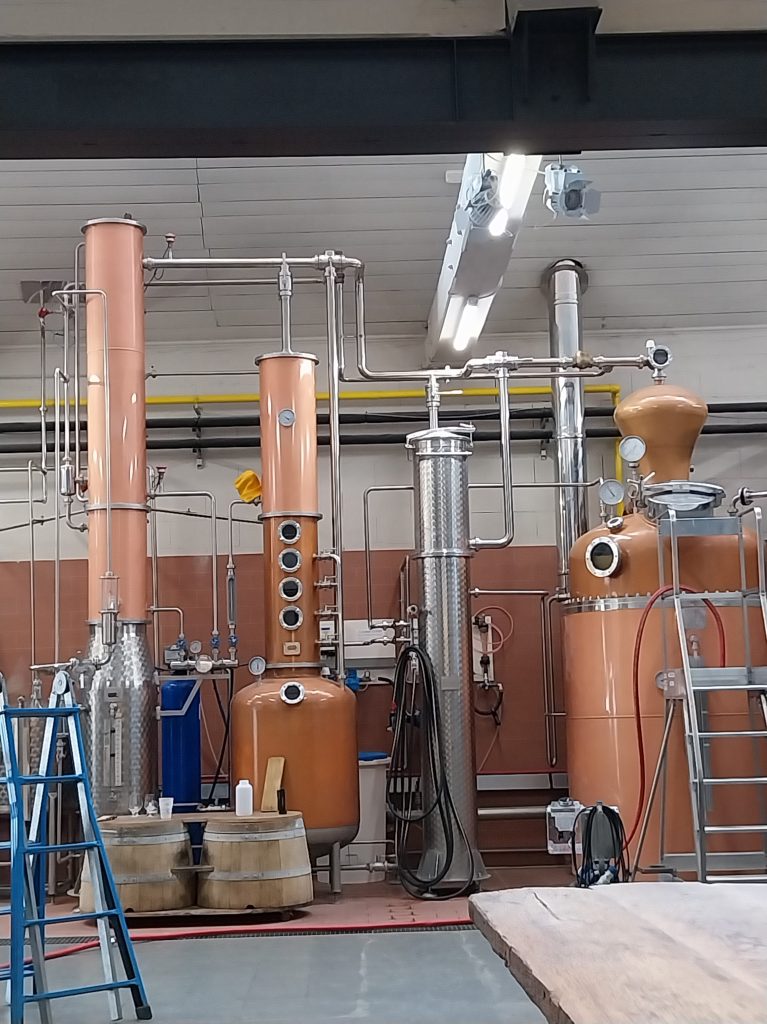
…and distilling. This is very different to what we’re used to!
Their first single malt whisky was released in 2024: a single cask matured in an ex-beer cask, to honour the connection with the Railroad brewery. The 2nd and 3rd releases followed in 2025, the former matured in ex-bourbon and beer casks, the latter in ex-bourbon and “Moscato passito” (a sweet dessert wine) casks. These are now long sold out, so at the tasting Barbara poured us three drams: the 4th, the 5th and a preview of the 6th release. The 4th and 5th releases were both aged for 3.5 years in ex-bourbon casks and finished in semi-dry Marsala casks (one of the three types of Marsala, the others being dry and sweet). However, the 4th (45.5%) was made with Monaco malt, while the 5th (47%) was made with Scottish peated malt. The 6th release (48.2%) is instead made with Rauch malt, matured in shaved, toasted and re-charred (STR) casks, and again finished in Marsala. It is now available, having gone on sale at their birthday party on 10 October 2026.
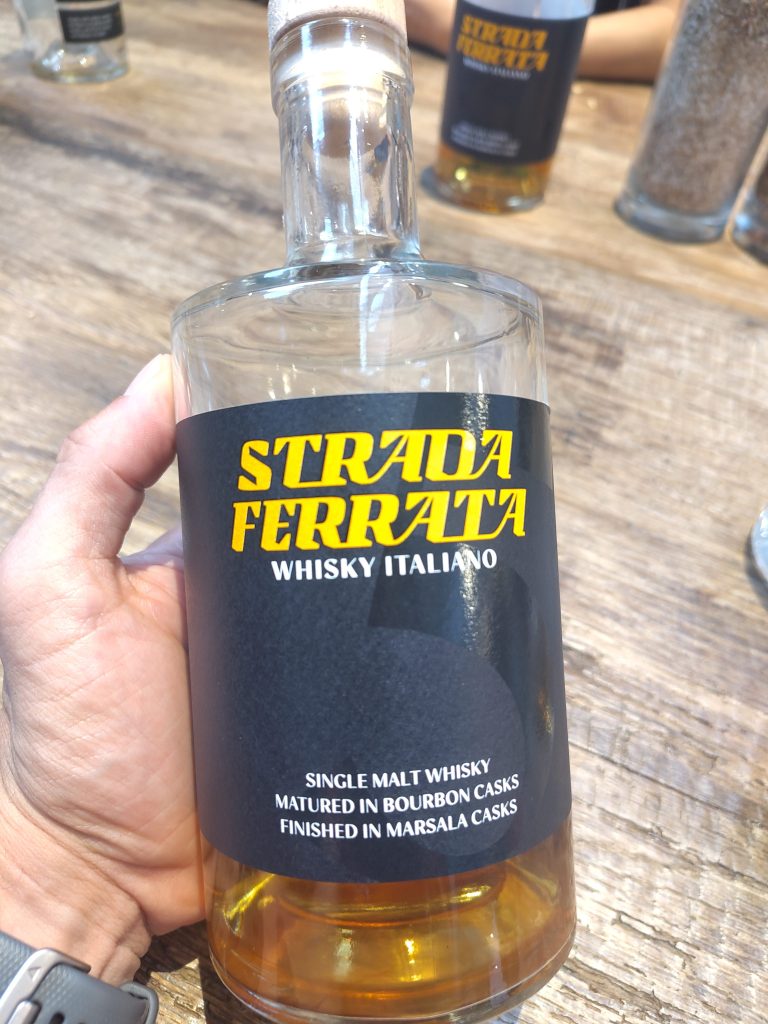
Delicious 5th release, a peated whisky.
They also now have two further releases, both labelled 7th: a Monaco malt one (47%), aged in ex-bourbon and finished in a Vin Santo “caratello” (a small cask of approx. 100 litres, so somewhere between an octave and a quarter cask), and a Rauch malt one (46.8%), aged in STR casks and also finished in a Vin Santo caratello. We also spotted a very recent Founder’s release, but we couldn’t find much information about it online.
When the tasting ended, we went back to the van and took the motorway to Gianluigi’s hometown, in Piacenza, and in the evening we caught up with family and a couple of friends.
While it was a bit of a detour for us to get to Strada Ferrata, we are super happy we made it: we loved the distillery set-up, and we also loved how they are experimenting with barley, yeast and casks to make their own product, rather than trying to replicate Scottish or other single malts. Barbara was a fantastic host, and we were impressed by her knowledge of the process and the clarity of her explanations. We ended up getting a bottle of the 4th release, as we had never had a whisky made with Monaco malt before, while the 5th and the 6th were closer to drams we’d tried elsewhere. It was a hard choice, as all three drams were tasty and, if this is the starting point, we can only wonder what longer maturation will do for their whisky!
Days 6-10. After a stop at a car body shop (the engine undertray had come loose while we were in France and was hanging under Mr Vantastic), we finally reached Casali di Morfasso. We went almost straight to help set up the village fair, unfolding wooden tables and benches and doing whatever was needed.
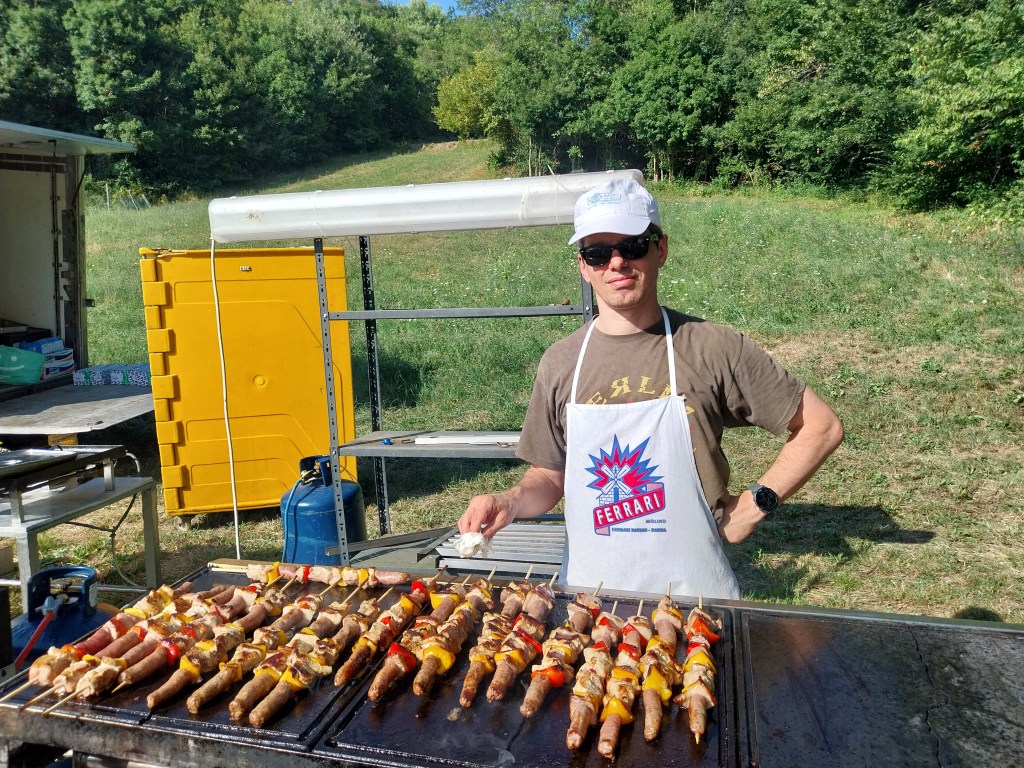
Grill duty taken seriously.
We had a lot of fun: Gianluigi worked at the grill, while Teresa was in the kitchen, helping Edoardo (Gianluigi’s brother, who is now the “head chef”) and the rest of the gang. For Gianluigi especially, it was a chance to reconnect with family, friends and old acquaintances he rarely sees nowadays.
Stay tuned for the next blog post about our European trip! Until then, slàinte!
Strada Ferrata Distillery Tour and Tasting
Price: £25.75 pp* (€30, *exchange rate as of August 2026)
Duration: 1hr 30min
Tasting: 3 drams, Strada Ferrata Single Malt 4th Release (45.5%, Monaco barley, 3.5y in bourbon barrel, 6m finish in semi-dry Marsala cask), 5th Release (47%, peated Scottish barley, 3.5y in ex-bourbon barrel, 6m finish in semi-dry Marsala cask), 6th Release (45.5%, Rauch barley, 3.5y in STR cask, 6m finish in semi-dry Marsala cask)
Target: both whisky curious and casual drinkers
Value for money: good
Highlights: the distillery set-up
Recommended: yes
Link: https://www.stradaferrata.xyz/

