#75.3 Return to Orkney

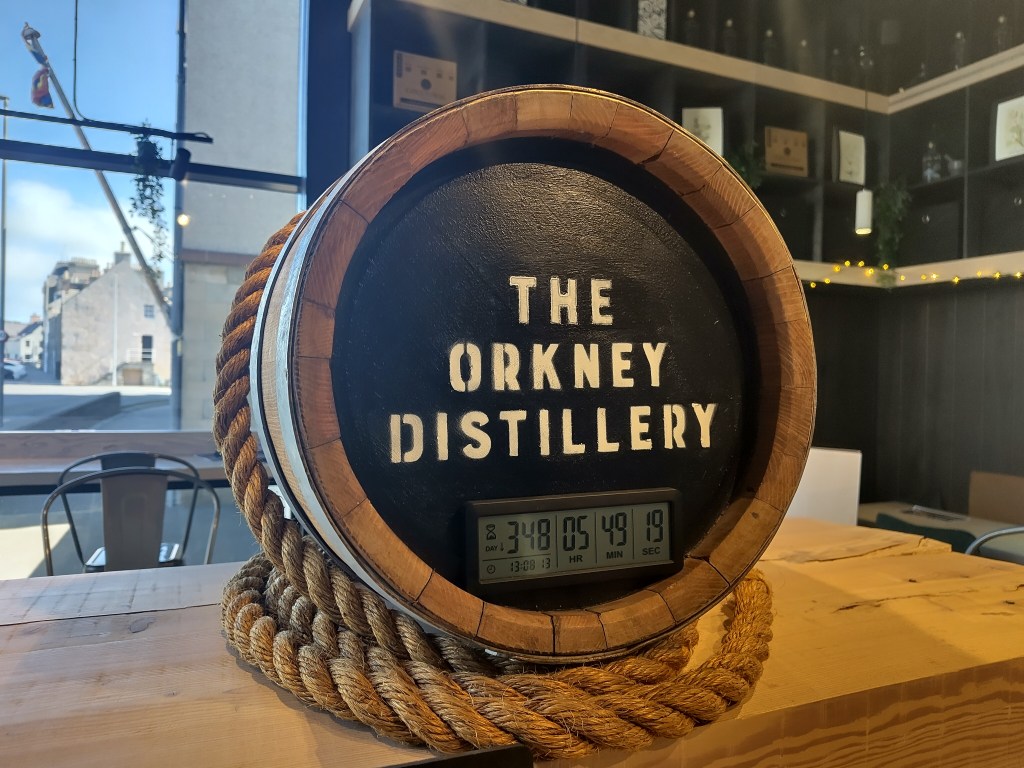
A distillery on Kirkwall waterfront: Orkney

ย 

TL; DR: Second distillery of the day was the Orkney Distillery, right on the Kirkwall waterfront. Production was paused for an upgrade, but the distiller Steven walked us through the entire process. Then a generous tasting with Tony, a proper industry veteran: newmake, a “solera” cask, two blended malts, and an undisclosed Orkney 14 yr. Well worth an afternoon.ย 

(Missed Part 2/Part 1?)

Soon after the end of the tour at Deerness, we drove back to Kirkwall. The tour at the Orkney Distillery was starting at 1pm, so we had just enough time to point Gianluigi’s parents towards St Magnus Cathedral and the town centre. We’d arranged for them to explore Kirkwall while we visited the distillery, which sits on the waterfront, not far from the pier. We’d already had a peek into the bar and shop back in 2022, but they weren’t making whisky then. The venue was as we remembered it: a large room, dark and industrial in style, with a long, well-stocked bar. The distillery is open most days, with the whisky tour at 1pm (back in April it wasn’t running at weekends) and two gin tours, at 11am and 2.30pm.
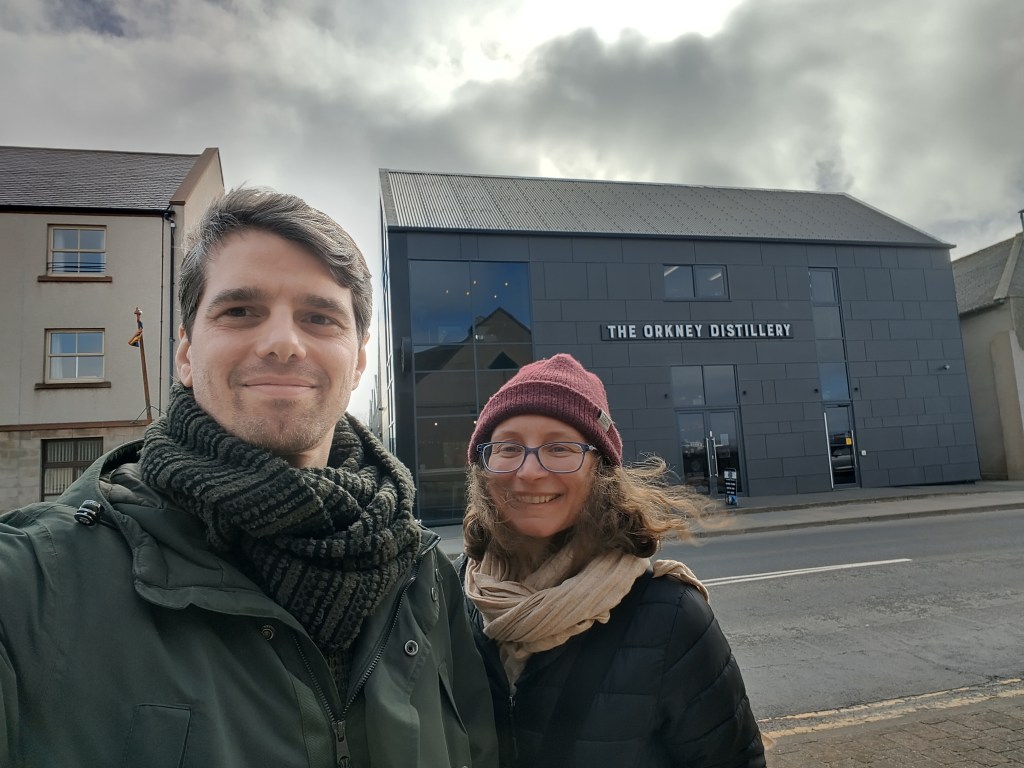
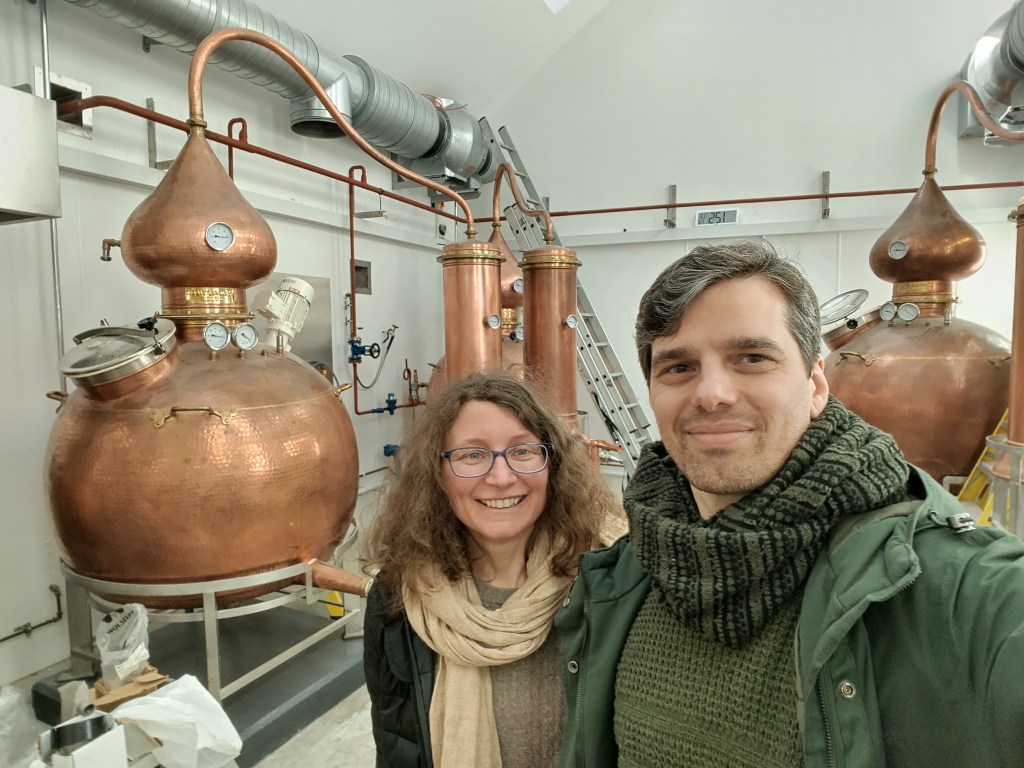
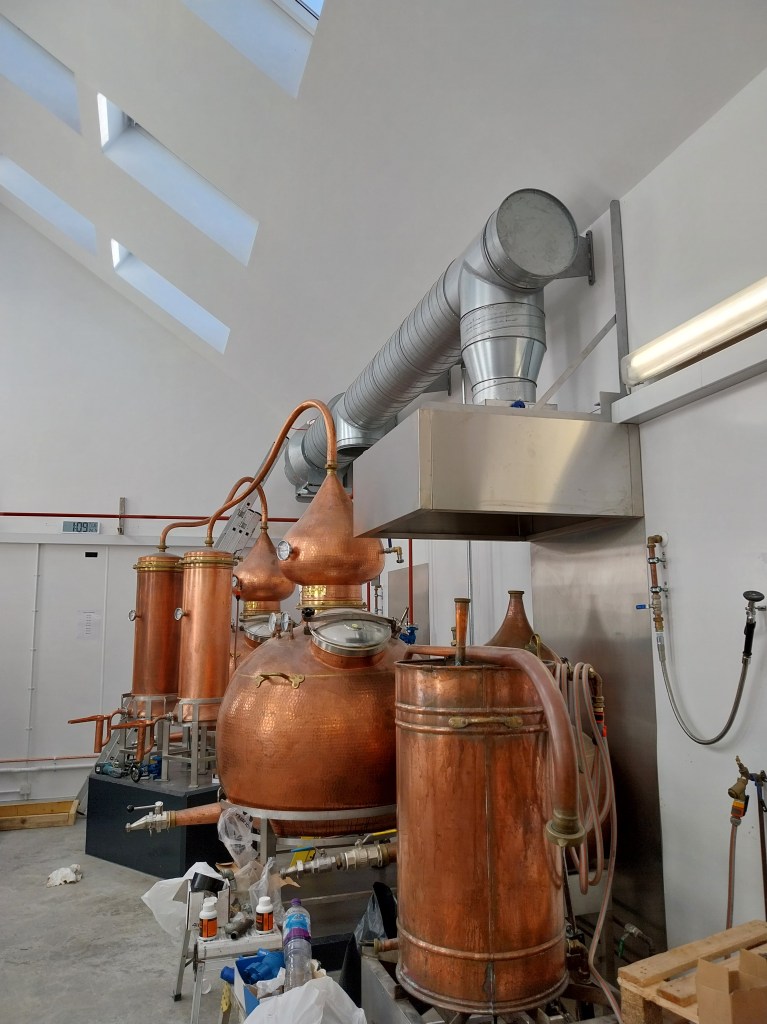
The usual guide had called in sick that day, so we got the tour from Steven, the distiller, while the tasting would be with Tony, one of the directors. As Steven started to show us around, we realised production was on hold: they were installing new equipment that would allow a greater output. The old 200l spirit still, for example, was being replaced by a 2,000l one, which will let them produce 200 litres a day, i.e. the equivalent of a standard American barrel. This comes quite early in their “whisky history”, as they only started producing newmake two and a half years ago, towards the end of 2023.

Going back to where production starts: they don’t have a mill in-house, so they buy pre-milled malted barley from Crisp in 25kg bags, including the brewers’ variety Maris Otter. They produce two types of newmake spirit, which differ mostly in the mash composition. The unpeated spirit uses four bags of brewers’ malt and four of distillers’ malt per mash, while the peated one is made with two bags of heavily peated malt (80ppm), three of distillers’ and two of brewers’. They’re considering installing the machinery to do their own malting, but if so, that’s for the future.
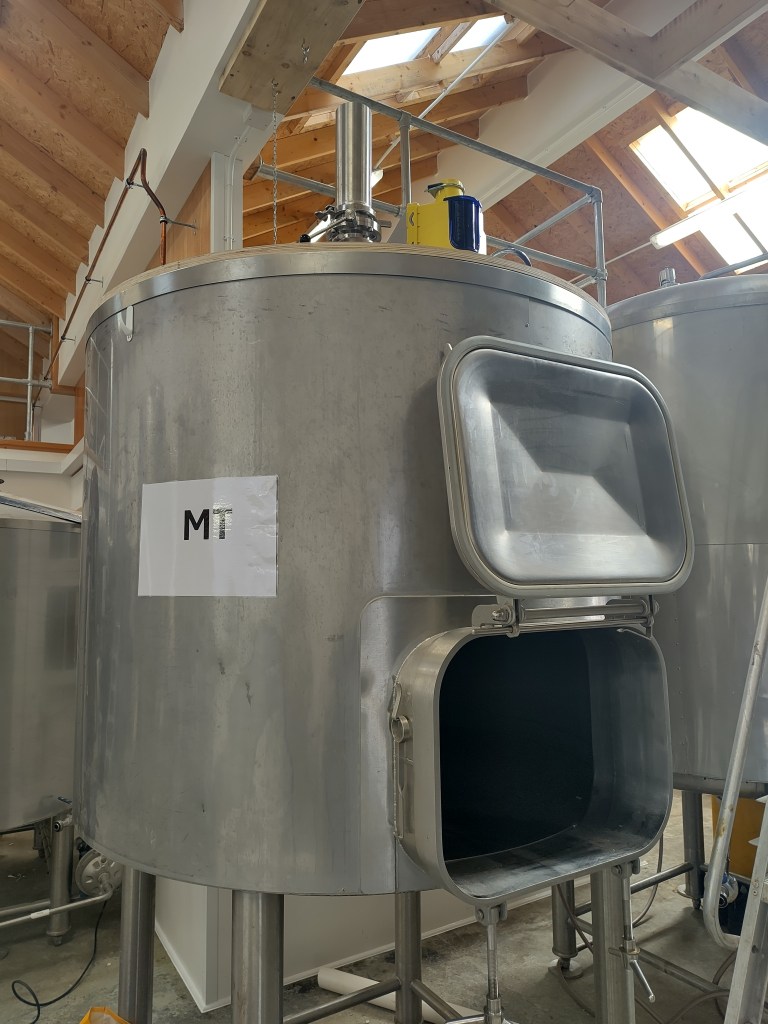
They use Kirkwall tap water, warmed to 73ยฐC in a 2,500l heating tank, which takes about eight hours. Mashing with the first water takes about an hour, and the temperature is raised to 77ยฐC, which is necessary to denature certain enzymes (we couldn’t recall which ones). At the end of mashing they obtain 1,800 litres of wort, fermented for four days, then split into two lots of 900 litres, each distilled in one of the two wash stills. The low wines come off at 28-29% abv and are distilled again in the spirit still (see above). After discarding the foreshots for 20 minutes, they collect the spirit from 73.5% down to 59.4% abv, quite a wide cut!
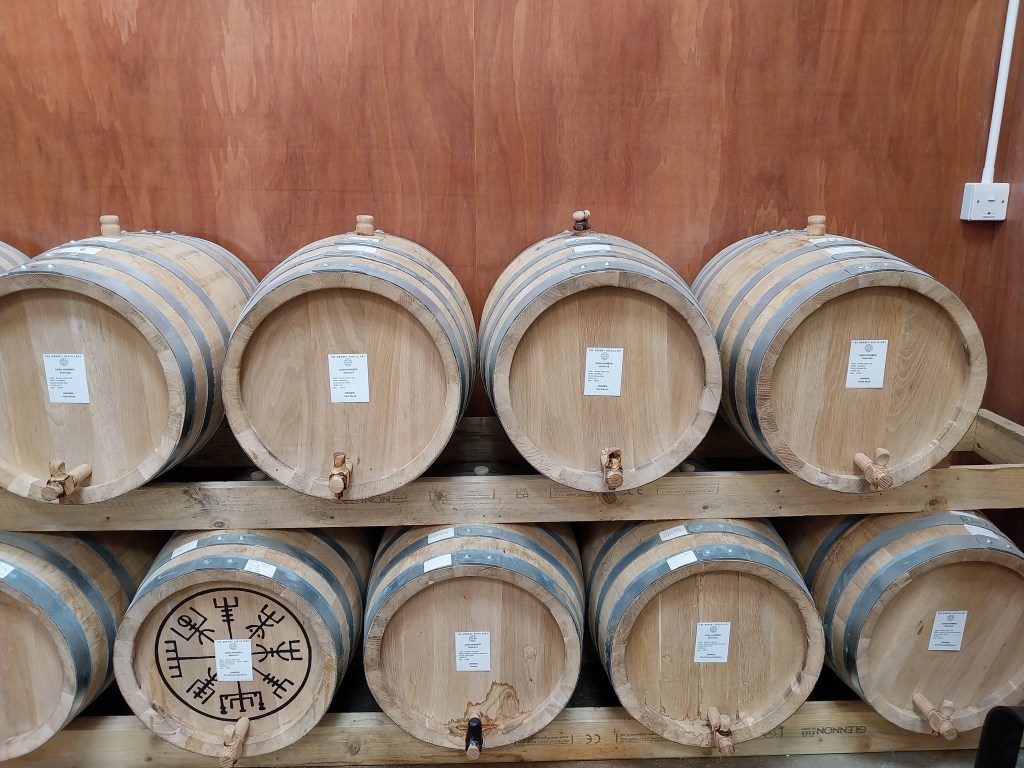
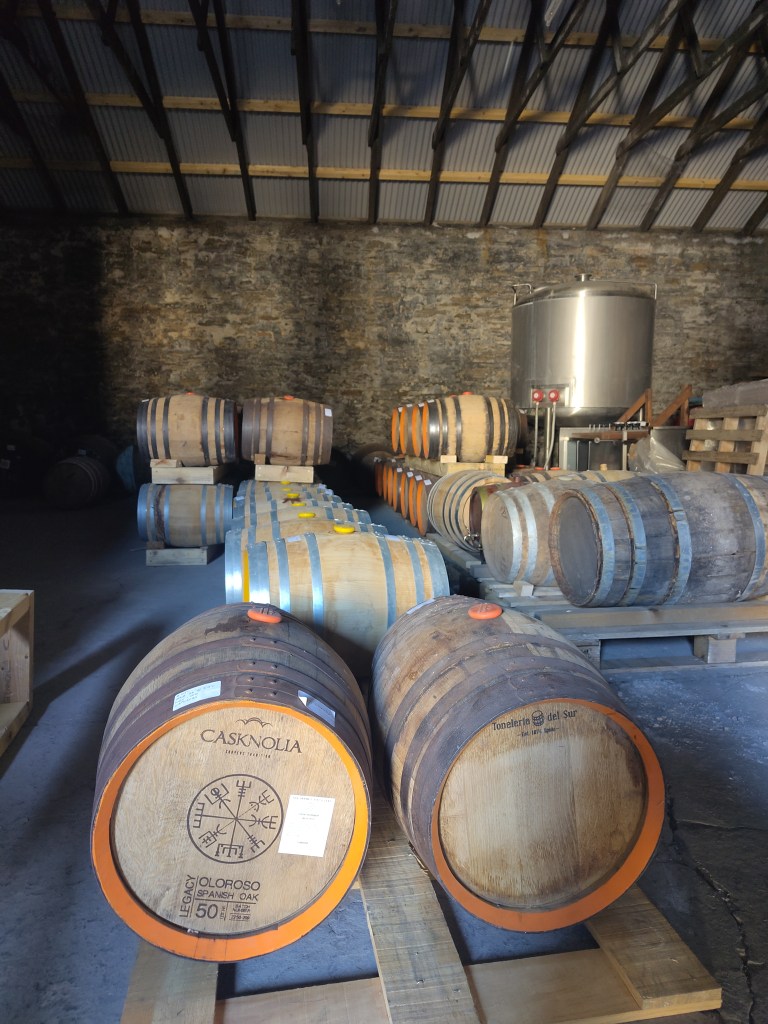
So far they’ve filled a lot of small casks, including 50l virgin oak from Serbia, but also 100l casks of both French and American oak, currently resting in the warehouse behind the distillery.
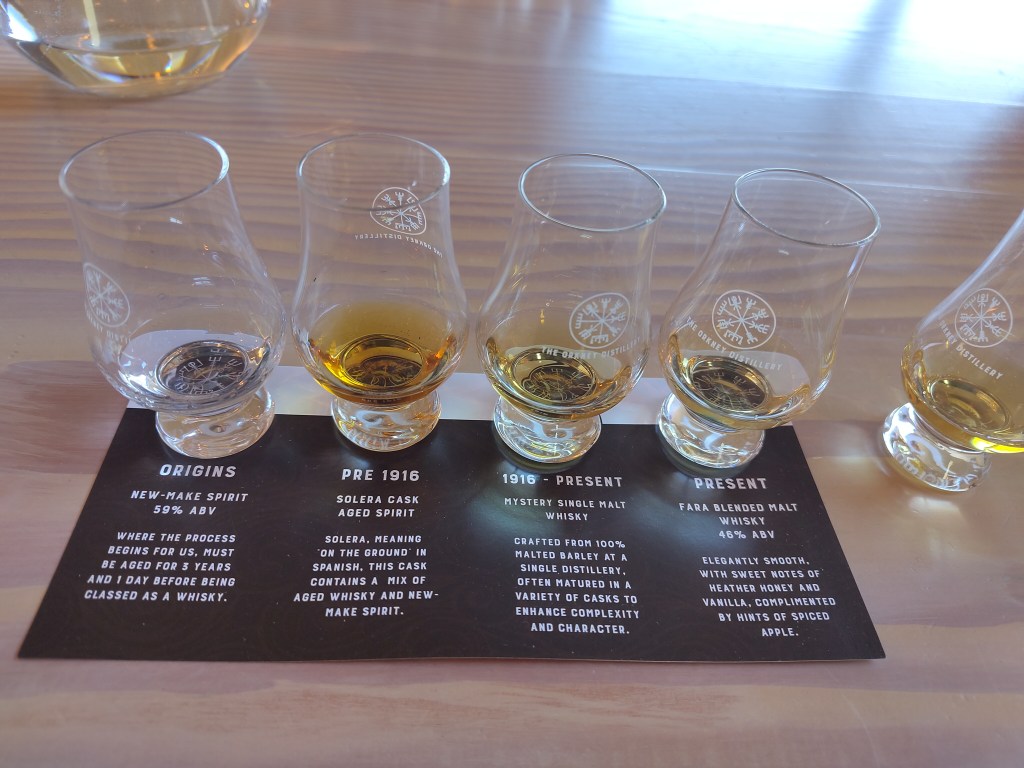
For the tasting we went up to the tasting room above the bar, very bright (the sunny day helped!) and overlooking the waterfront, where Tony was waiting for us. After pouring us some Orkney newmake spirit (slightly diluted, at 59%), he gave a comprehensive overview of the history of whisky. This ultimately served to introduce the second dram: aged malt spirit, not yet whisky, drawn from a “solera cask” they keep in the bar and constantly top up with newmake as they draw from it. (For our friend Lenka and the other sherry people: we know it isn’t a real solera system, eheh.) The idea is to replicate the casks of spirit held in old taverns and inns, which is how whisky was drunk at the time, before industrialisation and the rules that followed. Then it was the turn of the two blended malts they produce and sell in the shop: Fara (unpeated, 47%) and Rysa (peated, 46%), with malts coming mostly from the Highlands and Speyside, both very well made and interesting. The final dram was a cask sample of a heavily peated 14yr from an “undisclosed Orkney” distillery (wink, wink): also very good!
Overall, it was refreshing to see such a well-crafted line-up. With a bit of effort, even distilleries that don’t have their own whisky yet can put together an interesting set of drams and tell an engaging story. This is unlike others in the industry that do the bare minimum despite having the means to offer a much better tasting experience (Rosebank, maybe?).
While talking to Tony, we found out that he’s a veteran of the industry: he previously set up Strathearn distillery, before it was taken over by Douglas Laing. He also knows more about the Italian whisky scene than we do. And of course, when you put a fountain of knowledge like Tony together with two whisky enthusiasts like us, the chat could have gone on forever, haha. But it was time to leave and rejoin the old folks in the town centre.

Overall, another very interesting distillery to visit, easy to reach and worthwhile for non-whisky people as well. The new equipment will give them more flexibility, not just greater volume. We wonder how the spirit will change as a result, though given how young the distillery is, there’s still plenty of time for them to find their own character. Based on the newmake we tried, we’re now very curious about the whisky maturing in virgin Serbian oak, once it’s ready.

We spent the rest of the holiday doing almost exclusively non-whisky things: the Neolithic sites (Skara Brae is always great!) and villages like Stromness, very cute. We also spent time on a couple of other islands, the remote North Ronaldsay that we reached on a very tiny plane (the lighthouse is worth a visit) and the closer Hoy (fantastic landscape, and the Scapa Flow Museum was great too, albeit sad).
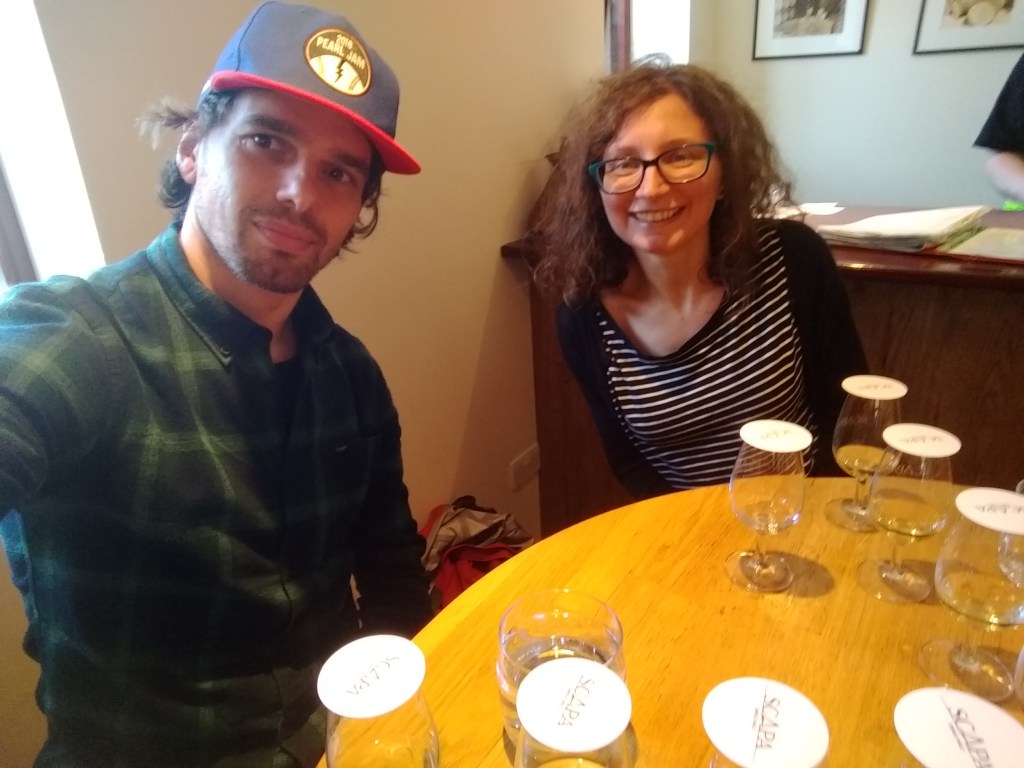
The night before leaving we had a tasting at Scapa distillery with Caterina and Fabrizio, as they prefer unpeated whisky. We couldn’t use the new tasting room (the “Noust”), which is only for people taking a tour, but the staff were lovely anyway: they served us our flights in an almost secluded space next to the shop, separated by curtains, where we could enjoy some great drams at our own pace. And yes, we can confirm that Scapa is one of the most underrated distilleries out there.
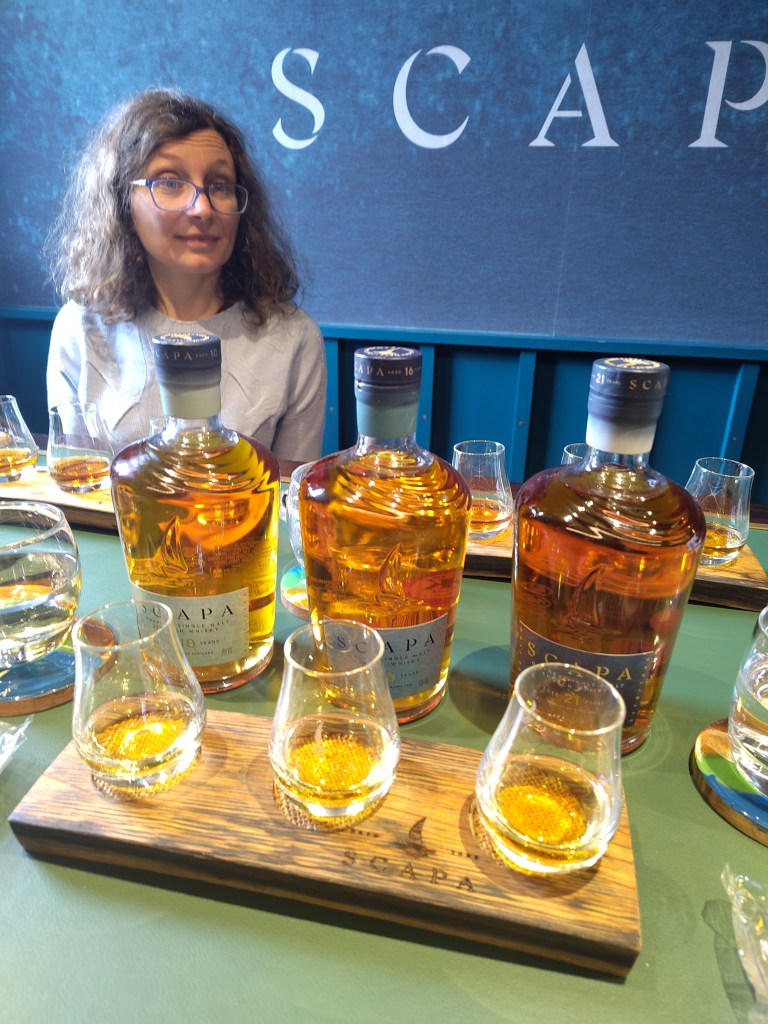
The tasting was followed by dinner at The Foveran, not too far from Scapa but still requiring a taxi ride: the food was fantastic, definitely the best we found on the islands. Our second time on Orkney did not disappoint. If anything, it made us want to go back again.

And that’s all for this trip: we’ll take a few weeks’ break from the blog, but we’ll be back with yet another Speyside story! Until then, slร inte!


Orkney Distillery Whisky Tour and Tasting

Price: ยฃ36.75.00 pp (April 2026)

Duration: 1hr 15mins (on the website, it was more 1hr 30min for us)

Tasting: 5 drams, Orkney newmake spirit (59%), “Solera cask” aged spirit (unknown%), Orkney single malt (undisclosed Orkney, ex-bourbon), Fara blended malt (NAS, 47%), Fara peated blended malt (NAS, 46%)

Target: everyone

Value for money: good

Highlights: interesting production process

Recommended: the tour at 1pm is a bit hard to fit in, but if you can make it, definitely

Link: https://www.orkneydistilling.com/


#19.2 Dramming Around Orkney

The other side of Kirkwall


TL; DR: The second day on Orkney was dedicated to visiting historical sites like the Ring of Brodgar and the incredible village of Skara Brae. On the third day, we finally managed to visit Highland Park distillery. It was a very interesting and in-depth tour (mostly thanks to the outstanding guide, James), however followed by a disappointing tasting, which made the overall experience mostly a tourist trap. 

(missed Part 1?)

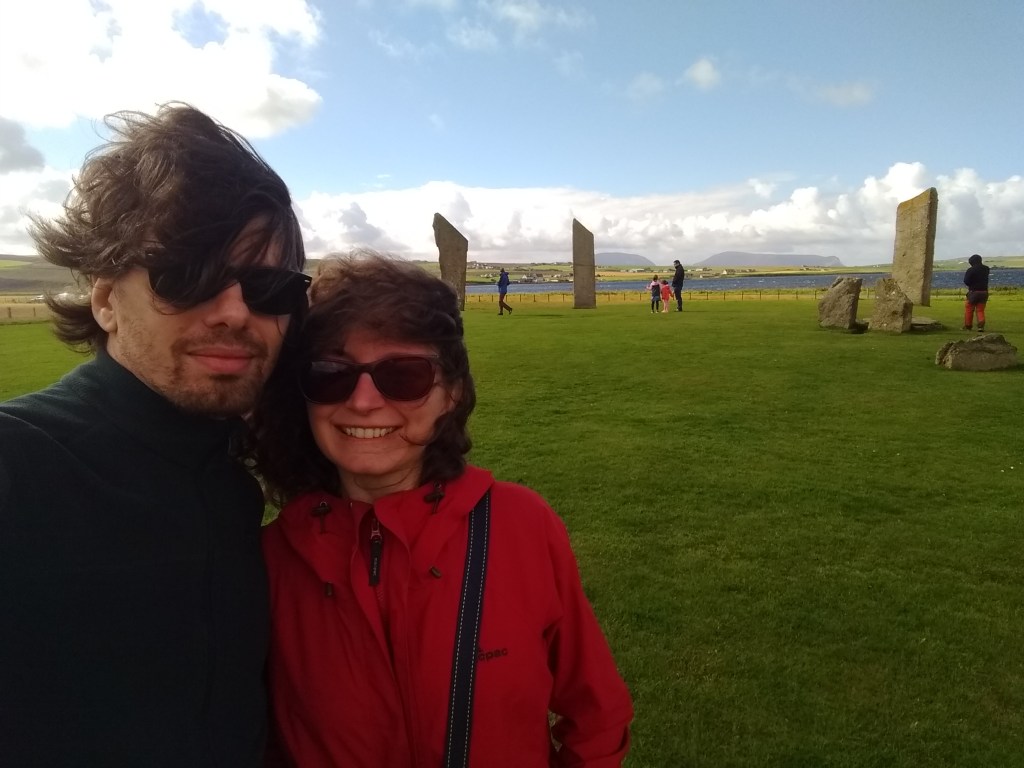
On the second day on Orkney, we decided to put on hold our whisky curiosity and focus on the history of the island instead. After a brief run to the foot of Wideford hill, shower and breakfast, we left the camping westward. First, we visited the quite spectacular standing stones of Stenness and the Ring of Brodgar. Fortunately, it was a sunny day, albeit very windy, we even spotted a sunbathing seal!

Wind and stones at Stenness.

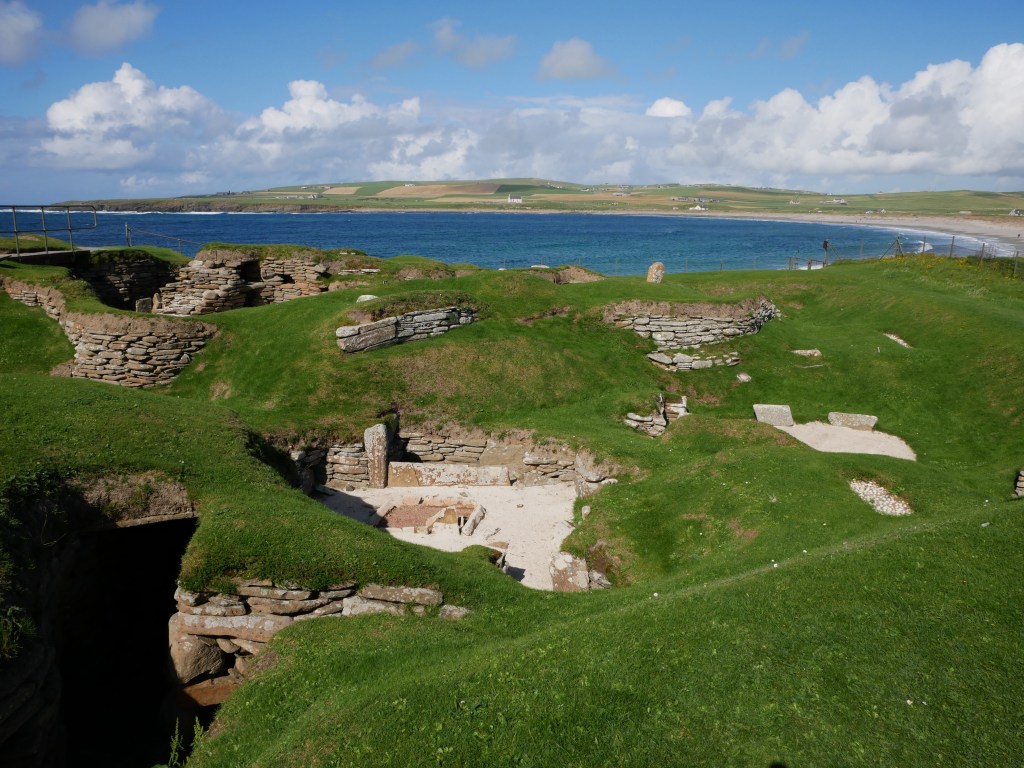
Around lunch, we moved on to Skara Brae. This is one of the sites we liked the most in Scotland, so far. Reading about the discovery of this 5,000-year old village was very interesting, as well as finding out about all the insights on the life of our ancestors. Being a nice day, we also took advantage of the splendid view on the beach just behind the site. After our visit, we drove first to the nearby Orkney brewery, not in time to enjoy a beer there but still in time to buy some for dinner. This was after a stop at Birsay beach, where the splendid landscape was saddened by the presence of a half-dozen dead seabirds: avian flu striking again. Back at the camping, it was grilling time! The only thing we did not account for was the number of midges assaulting us: the food intake was barely enough to compensate for the blood loss (sorry, we like to be dramaticโ€ฆ)!

The magnificent Skara Brae.
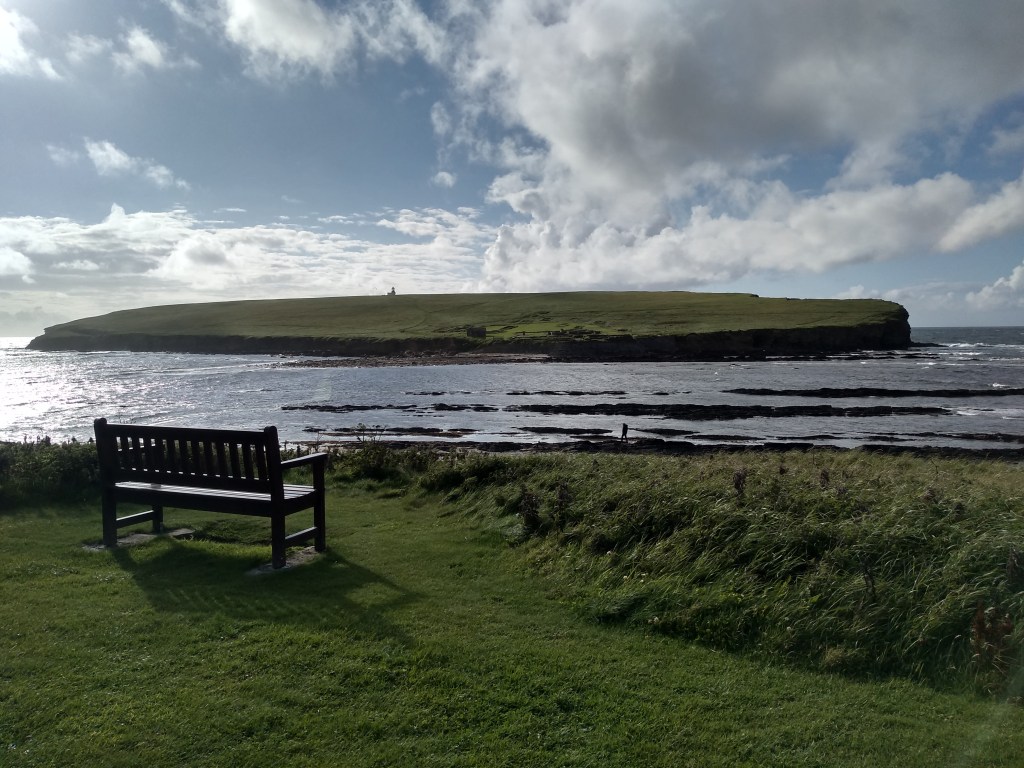
Romantic view of the Brough of Birsay.

On the third day, it was finally Highland Park time. Our friends Roberto and Cecilia are not whisky nerds, but they enjoy a dram once in a while, so they were very keen to visit the distillery. Because kids below a certain age are not allowed, we had to do the tour in two shifts so that there’d always be someone with the wee one: first, Teresa and Gianluigi, later Roberto and Cecilia. Our friends opted for the basic (but not cheap) one: Honour and Pride (and prejudice?) experience (30 quid, 3 drams). After excluding the two high-end offers (eye-watering price of 125 and 325 quid), we chose the upgraded Wild Harmony Experience, 75 quid with 5 drams, placing it as one of the most expensive tours we ever didโ€ฆ actually THE most expensive (unfortunately, the price jumped from 60 to 75 around May). Because of this, and of the history of the distillery, we had great expectations.

Two happy kids in front of a candy shop.

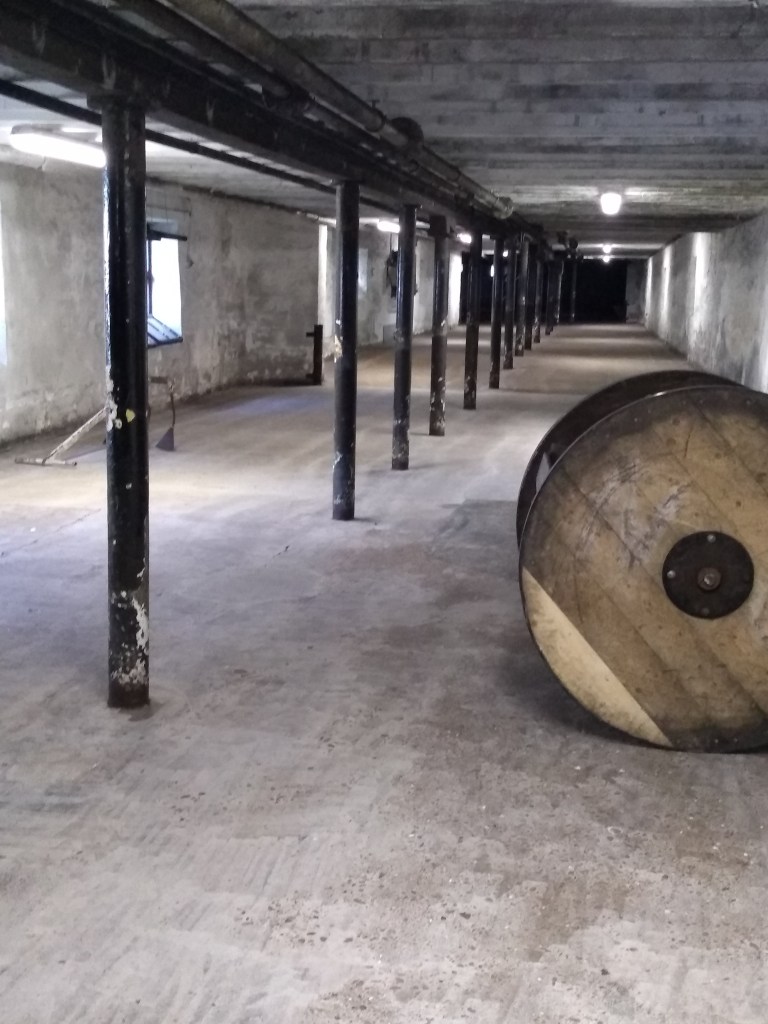
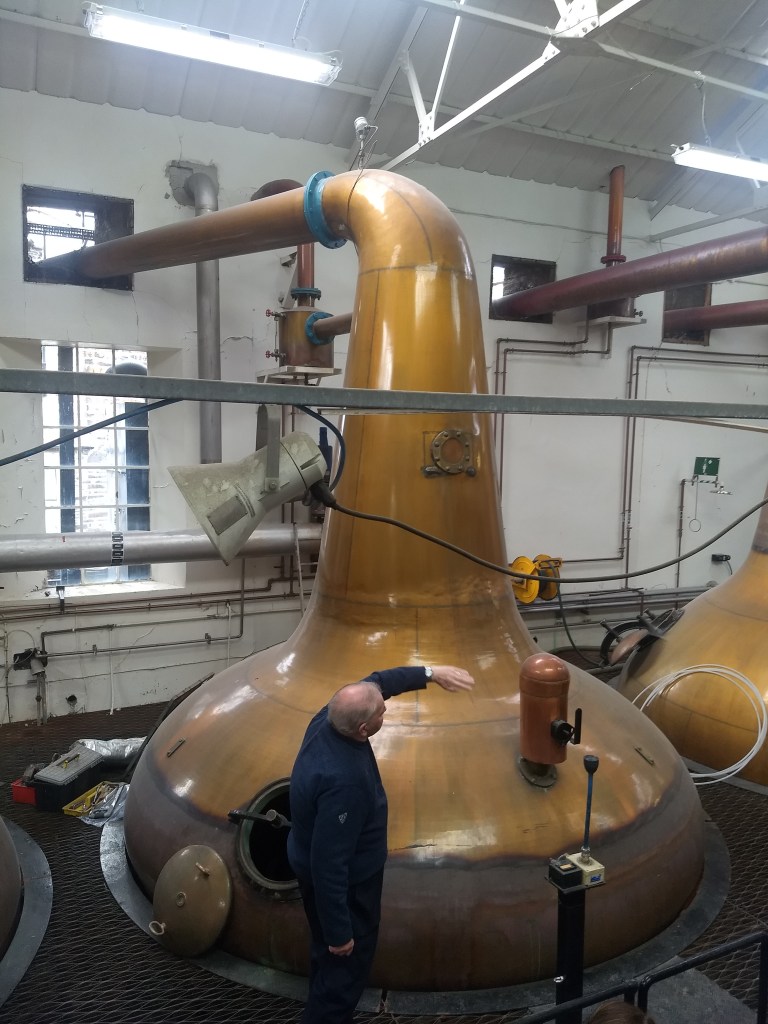
They picked us up at the St. Magnus cathedral, in Kirkwall centre, saving us the 15-20 mins walk to the distilleryโ€™s gate. Our tour guide was James, a true whisky geek and expert, who didnโ€™t limit himself to answering all the questions, but went above and beyond to provide more context and deeper explanations. The tour started with a short video, during which we tasted their most basic expression, the HP 10y (40%, chill filtered, but according to them not artificially coloured, available in supermarkets). After that, we moved on to the distillery, starting with the malting floor: similar to other distilleries we visited (so far Laphroaig, Kilchoman, Glen Garioch, Benriach and Balvenie), they malt some of their barley in house (about 20%), using peat from Orkney, resulting in a quite distinctive flavour compared to Islay or Highland peat.

The malting floor.

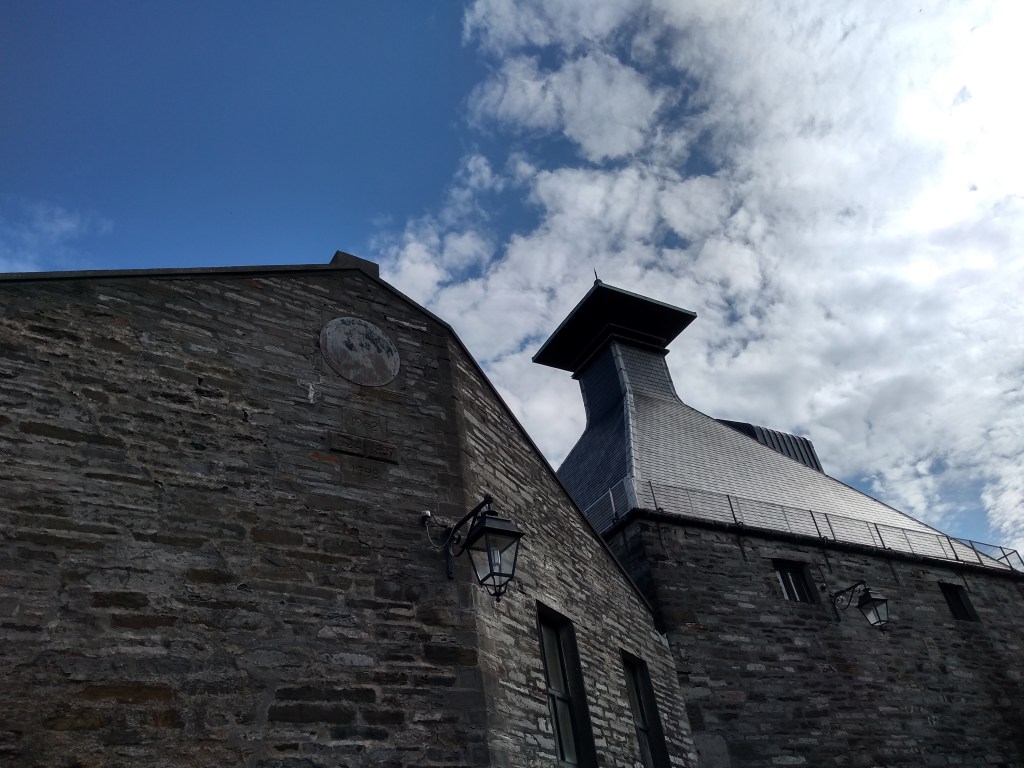
The distillery has a very interesting history, and a curious layout, almost like a tiny village. It was founded in 1798 and now it belongs to the Edrington group, with a production of 2.5 millions litre per annum. They used to fill almost exclusively ex-sherry cask, although now they have several ex-bourbon cask expressions (the 10y, 15y and the Full Volume).

The excellent tour guide James explaining us Highland Park distillation.

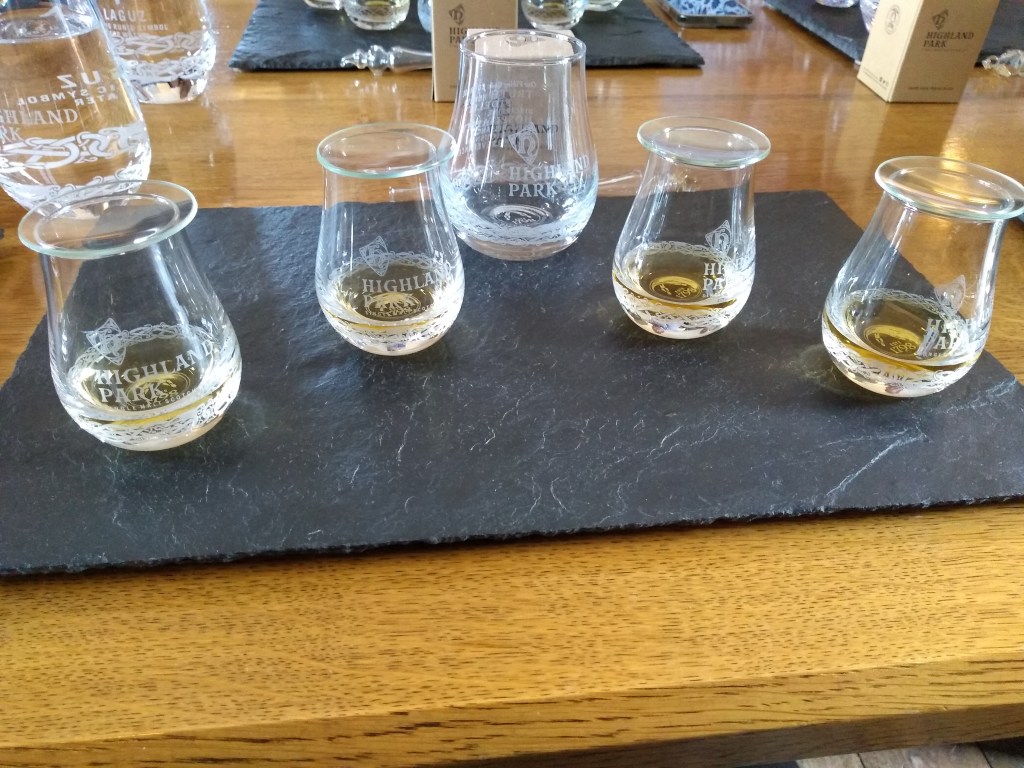
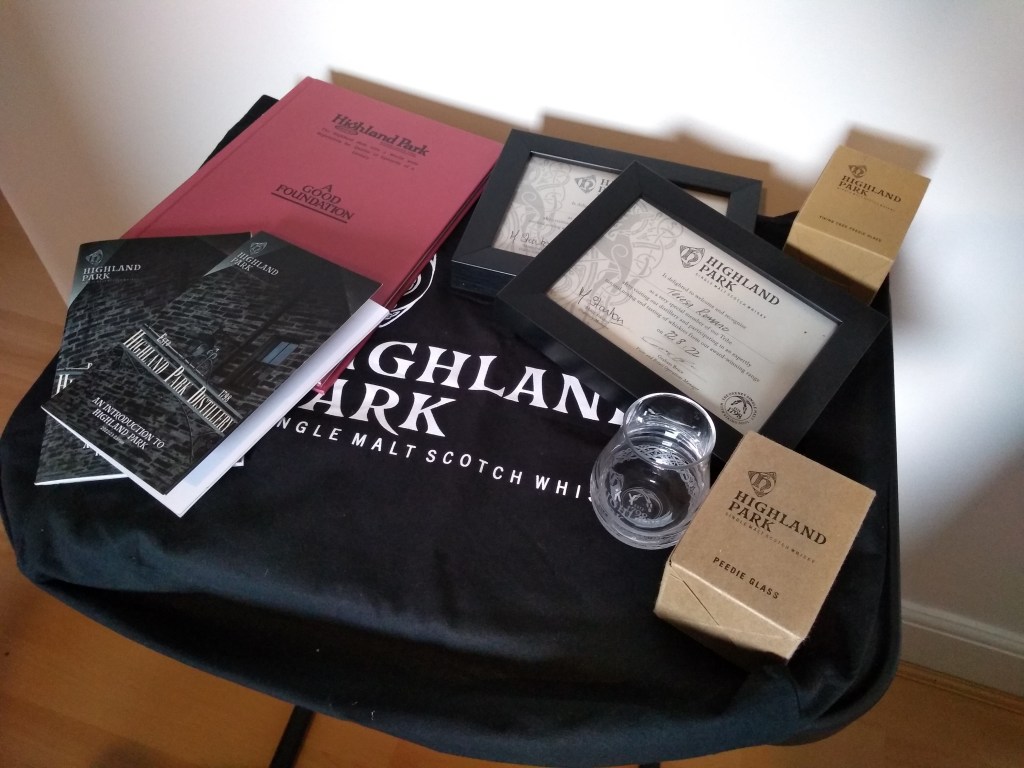
The tasting took place in the Eunson room, named after the founder, above the visitor centre. To our surprise, the line-up was actually the core range: the widely available 12y (40% abv), the new 15y in the ceramic bottle (44% abv), the 18y (43% abv), and the 21y (2019 bottling, 46% abv). Except for the 21y, which was really good (but unfortunately overpriced at 240 pound), the others were OK drams: not dislikeable, but quite inoffensive as well. At the end, they gave us a bunch of (quite unnecessary) gifts: other than the usual glass, a booklet about the distillery (OK as well we guessโ€ฆbut what are we going to do with two of these?), the (n-th) tote bag and a postcard-size frame with a tour attendance certificate (probably more of a gullibility certificate for having spent 75 quid each on this tour).

The core range tasting.

We were hopeful until the end, but nope: no distillery exclusive or limited bottling in the tasting. Back to the shop, we spotted a couple of interesting expressions that we thought could be a good buy: a 10y bottled at 46% (ambassador choice) and a cask strength bottled to raise money for a local rowing club, both around the ยฃ60 mark. We didnโ€™t even bother to ask for the distillery exclusive: 170 quid for a 14y cask strength seemed a bit ridiculous (at the SMWS you can them for less than half of this), while the Full Volume at ยฃ80 was definitely overpriced for a non-age statement whisky (probably you pay for the Marshall amplifier shaped boxโ€ฆGianlugi always preferred Orange and Fender). We asked if we could purchase a dram of the two. We were told it was not allowed because they are an off-sale only (soโ€ฆwhat about the 5 drams they had just given us? Mystery), but we could try them at the shop in Kirkwall. Once down at the shop, they said the same, but that we could try at the Kirkwall Hotelโ€™s bar. At the hotel, of course, they did not have those 2 drams. We went back to the shop, asking them again, but no chance we could try.

Outside the distillery.

(rant mode: on)

We like to be positive in our posts, but seriously: how detached from reality do you have to be to think that whisky enthusiasts would prefer the bag of cra…ehm, unnecessary gifts to, for example, some more limited/special drams?

We usually like vertical tastings, but in this case it was very poor value for money. We were OK with getting the 12y, as it is their flagship, but the inclusion of the 10y as well was not great, as it is a mostly supermarket release (please donโ€™t misinterpret us: the single malt selection in most supermarkets in Scotland is far better than some liquor shops in other countries, we just found strange to get that after travelling all the way to distillery). Not only the tour was super-expensive for no apparent reason (no samples from the cask, or distillery bottling, or some limited-edition release) but the fact that you couldnโ€™t try try any other drams at the distillery nor at the shop was almost ridiculous. We believe that the only reason they can get away with it is the hordes of tourists from the cruise ships, which guarantee them some cash flow no-matter-what.

Highland’s Park bunch of (mostly) “unnecessary” gifts…definitely not worth 75 quid!

Ironically, the more basic tour was definitely better value for money: our friends did a very similar tour (albeit, not with James), and they still got to try the 12y and 18y, but instead of the 10y they got the Full Volume release. So, if you want to tick off Highland Park from the distillery list, the Honour and Pride tour is the one to go for.  

As for the whisky itself, thanks to the SMWS, Cadenheadโ€™s, Watt Whisky and other independent bottlers, we know how good Highland Park can be, so the offer at the distillery was a bit disappointing. This is a shame for all the nice people working there, first and foremost the guide James, which was one of the best ones we ever had.

(rant mode: off)

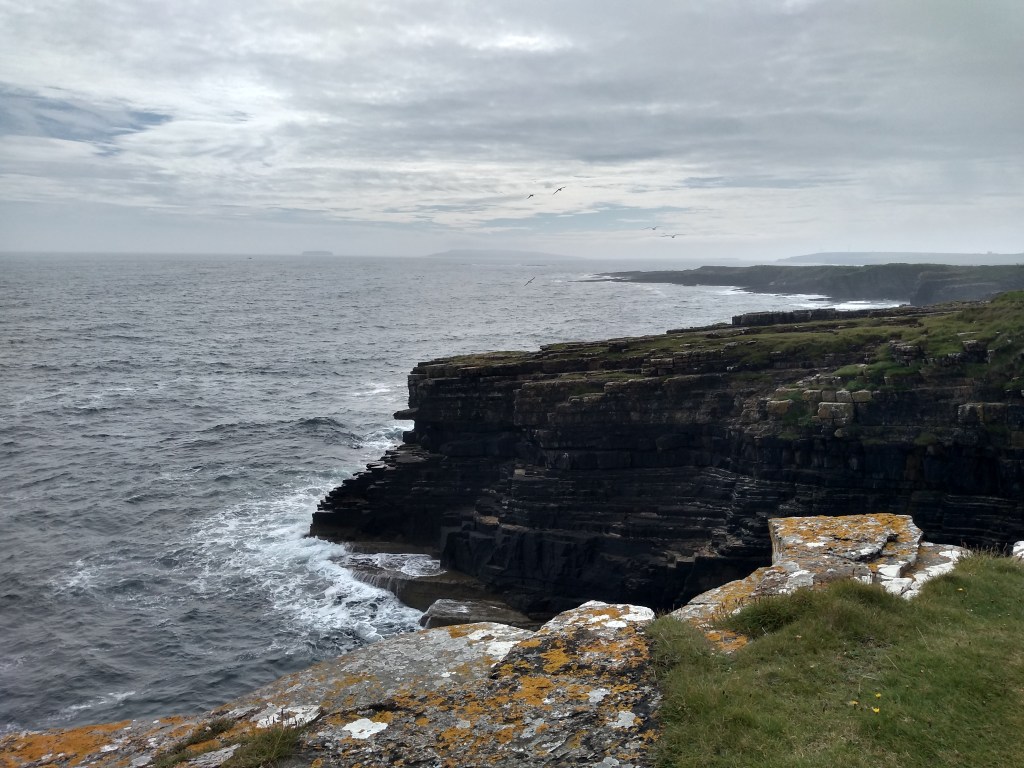
Dramatic cliff at the Gloup!

Anyway, not being able to buy a bottle at Highland Park left us with a problem: no Orcadian whisky for the rest of the trip! Gianluigi solved the situation by getting a Douglas Laing blended malt Rock Island form the local CoOp: not only very tasty (and not-chill filtered and bottled at 46%), but also with some Highland Park in it, so 2 birds with one stone and a great value for money!

The day after we explored the east: a wee coffee break at the Deerness gin distillery (soon to produce single malt), a stroll in the Gloup reserve, and a stop at the J Gow rum distillery, on our way to the Italian Chapel. We went to the shop, and guess what: they let us try their (quite delicious) rums before buying!

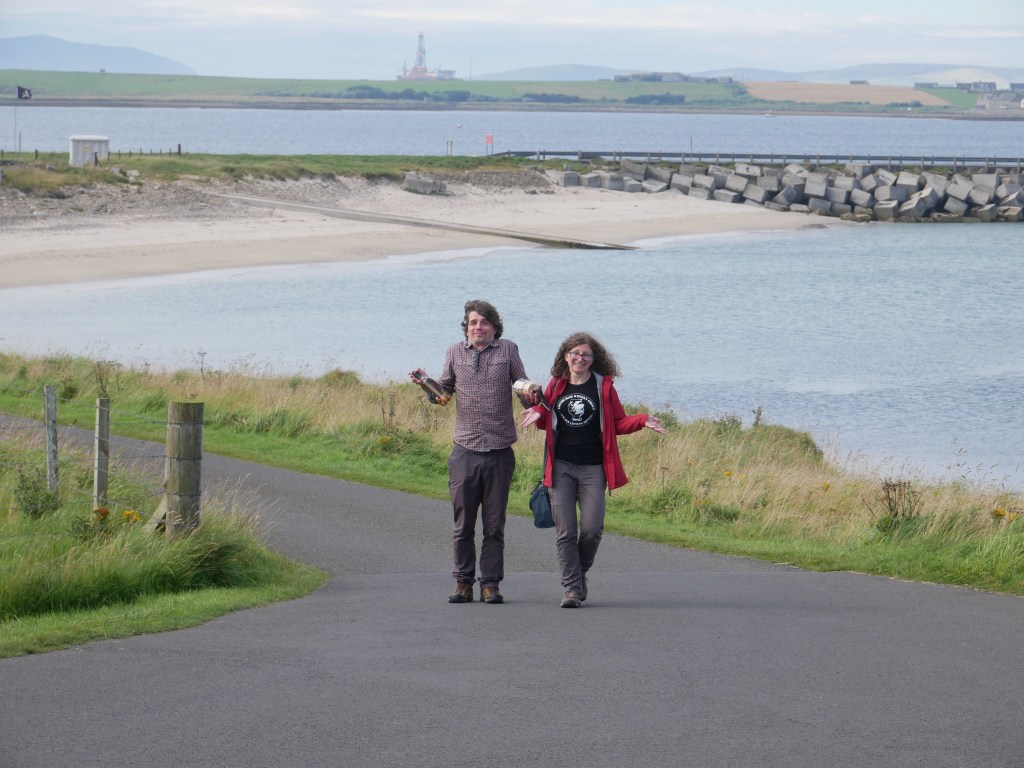
Oooops, we bought some rum!

We really liked Orkney: we expected a quieter and eerie place, more similar to some areas in the north of the Highlands with mosses and peat bogs. Instead, it turned out to be a lovely, very rural landscape. Next time weโ€™ll definitely try to cross to the other islands as well, but for a first taste it was a great visit!

Until next time, slainte!


Highland Park: A Wild Harmony Experience

Price: ยฃ75.00 pp (August 2022)

Duration: 2h

Tasting: 5 drams from the core range, 10y (40% abv) 12y (40% abv), 15y (44% abv), 18y (43% abv), and 21y (2019 bottling, 46% abv), probably all chill-filtered (but according to our guide, no artificial colour added)

Target: Gullible whisky enthusiasts

Value for money: Quite bad

Highlights: our guide James was outstanding, chapeu!

Things we did not like: see rant above

Distillery exclusive: 14y single cask (ยฃ170)

Recommended: NO!

Link: https://www.highlandparkwhisky.com/en

Bonus: Highland Park Honour and Pride Experience (thanks to Roberto and Cecilia)

Price: ยฃ30 (August 2022)

Duration: 1h 15m

Tasting: 3 drams, Full Volume (48% abv NAS), 12y (40% abv) and 18y (43% abv)

Value for money: Acceptable

Target:
Everyone

Recommended: Only if you want to visit the distillery really badly


#19.1 Dramming around Orkney

A visit to Scapa distillery


TL; DR: We were finally able to visit Orkney and its malt distilleries. First off, Scapa, home of quite a โ€œmysteriousโ€ single malt, that we learned to appreciate during an in-depth distillery tour and a great tasting of mostly single cask expressions. Definitely a must-go for whisky fans visiting Orkney! 

In summer 2021, we had carefully planned a trip to the North of Scotland, including a few days on Orkney, which we were very eager to visit. For various reasons (actually, one reason, guess which one!) we had to cancel it. The occasion to catch up presented itself this year thanks to a couple of friends from Parma, Roberto and Cecilia (and their wee one, Flora). They wanted to visit the Highlands since their first visit in 2019, but things happened in between. This year they finally made it, and halfway into their holiday we joined them in Inverness and continued together: direction, Orkney!

We travelled in a campervan, which was meant to be an adventure. It was indeed, although with way more midges than expected: that was our first unfortunate discovery of the holiday: the Northeast coast is full of midges, almost as much as in the West, at least around Thurso where we spent the first night.

On the way to Thurso, where midges were waiting for us!

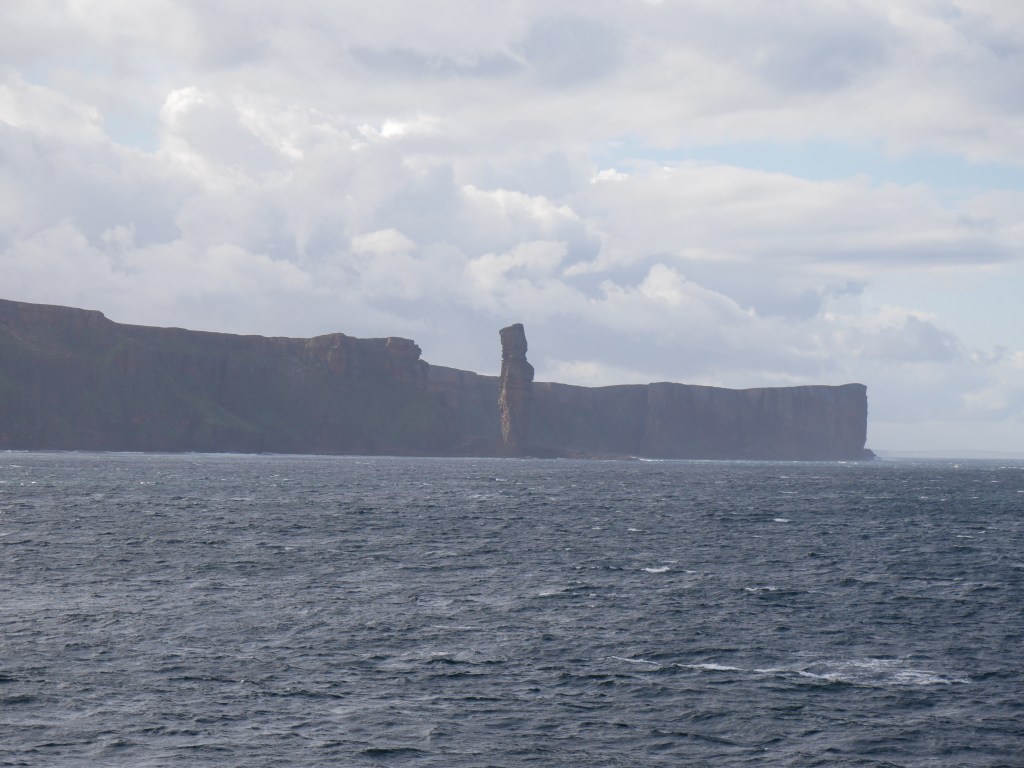
We woke up early however, and not for the midges, our ferry from Thurso to Stromness was around 8am. The cafe on the boat had a very Scottish menu, which meant a roll-based second breakfast. The view was quite spectacular, in particular we could admire the Old Man of Hoy during the cross.

The (misty) Old Man of Hoy.

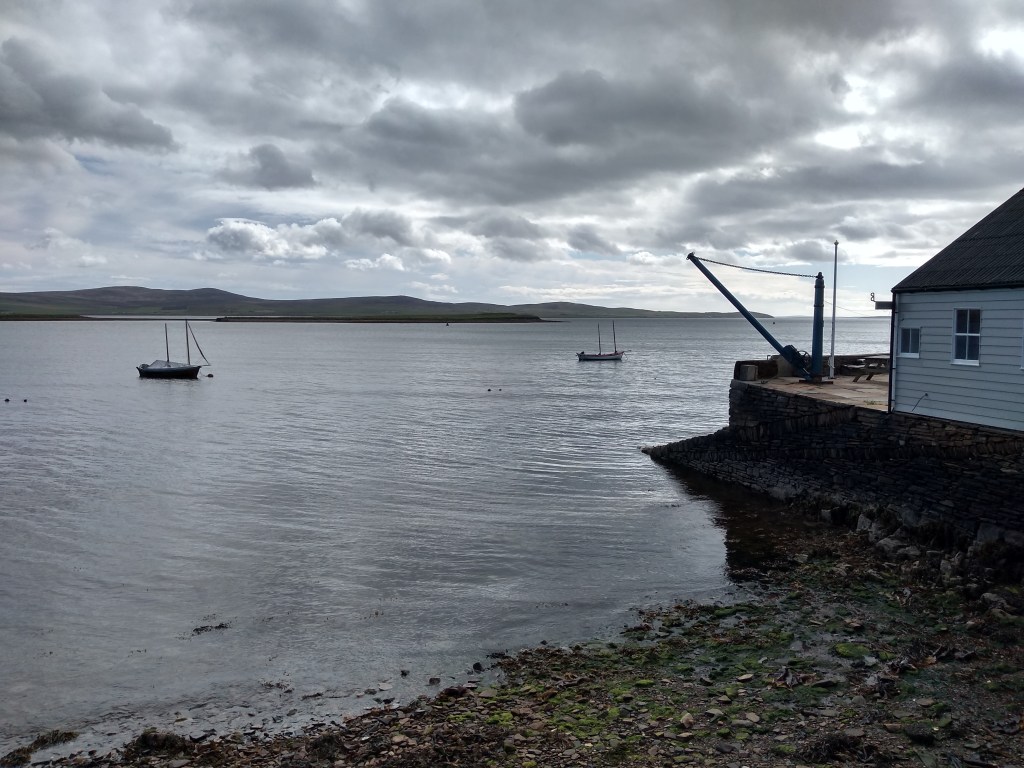
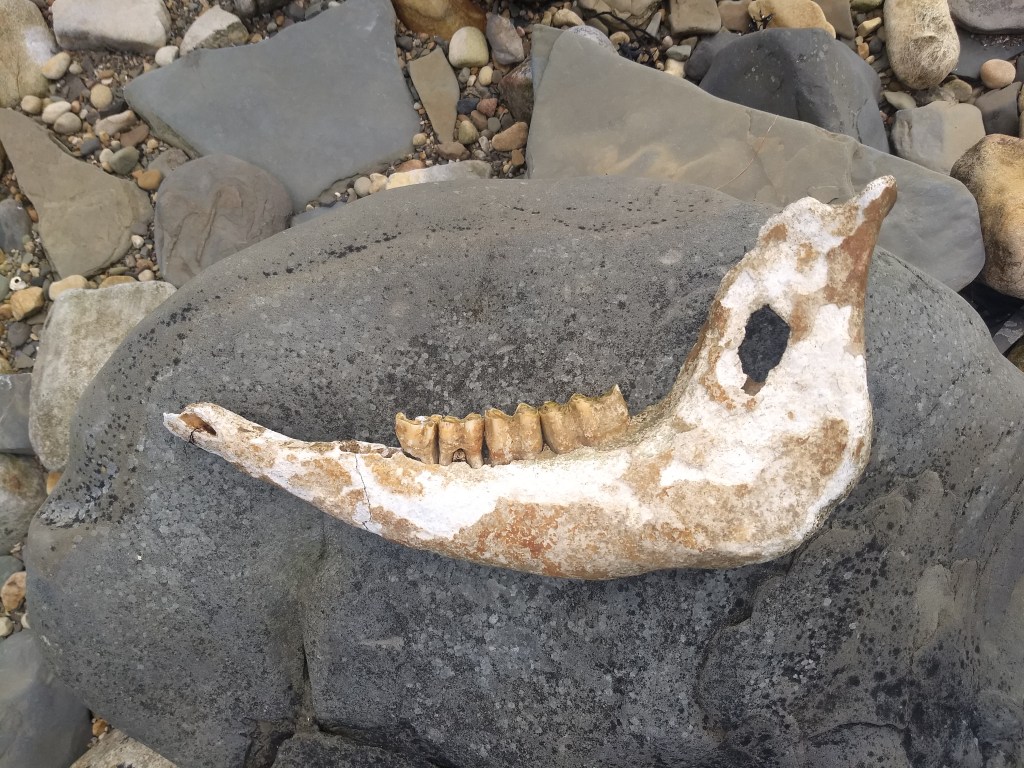
Once on the island, we explored the village of Stromness. It looked like a very peaceful place, and not overwhelmingly touristy. After the stroll we had a quick lunch in a cafe and drove towards East, direction Orphir, where we stopped for a walk to the beach, taking advantage of the nice weather. On the beach we found half a jaw of some animalโ€ฆcow? Sheep? Seal? And, more worrying, some dead birds, likely because of avian influenza. This wasnโ€™t the only time during the holiday, it happened later at the Brough of Birsay and at Dingyshowe beaches.

Peaceful Stromness.

Moving on, it was finally time for our first visit to an Orcadian distillery, Scapa, right outside the “capital”, Kirkwall! Before the tour, Scapa was quite a โ€œmysteriousโ€ single malt to us: until then, we were only aware of two official bottlings, the Skiren and the Glansa, the latter finished in ex-peated casks (since the distillery belongs to Chivas Brothers, we guess Allt-A Bhainne). We also never came across an expression from independent bottlers (the SMWS has a code for Scapa, #17, but as far as we know no recent bottlings).

Gianluigi exploring Orphir beach…
…Look what we found!

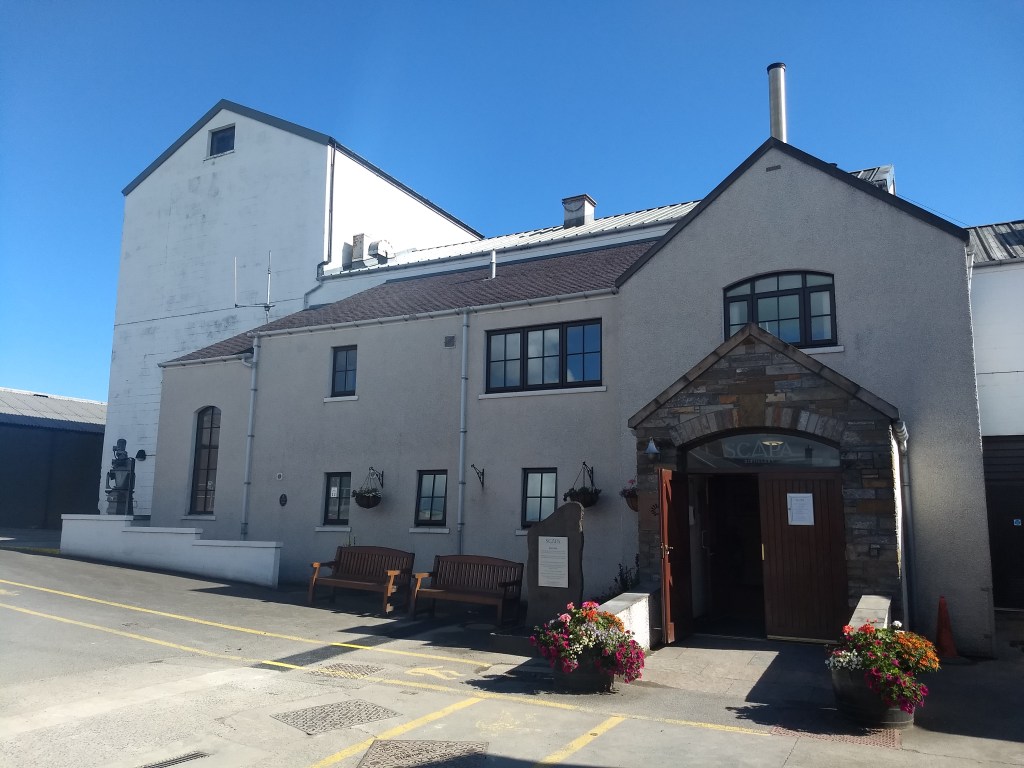
Our friends dropped us at the visitor centre, where the tour guide Maria Letizia warmly welcomed us. Because she is Italian, she gave us a personalised tour in Italian, the very first time for us! The distillery is going through some renovations. They’re building a new tasting room, making sure it’s not pointing towards a certain buoy in the Scapa Flow. Maria Letizia explained that this is a sign of respect, because that’s the place where the Royal Oak, a ship with about 800 novices in training, mostly teenagers, was sunk by a German submarine during WW2, which was lucky enough to get to the Flow avoiding all old ships positioned as hurdles.

Scapa distillery, here we are!

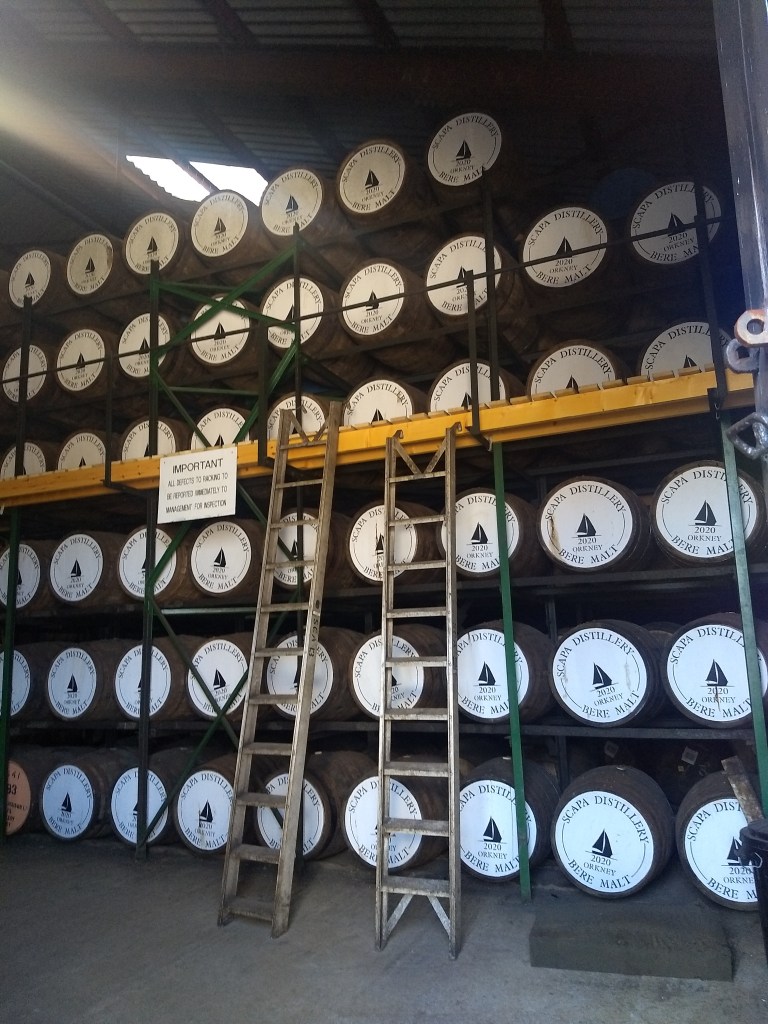
After this quite sad historical anecdote, the tour moved on as usual: we got told the history of the distillery, which was founded in 1885, and partially destroyed in 1919 by a fire. More recently, in 1994, it was mothballed and for a few years, personnel from the neighbouring Highland Park were turning it on for a few weeks every year to make sure that everything was still working. They get all the malted barley from the mainland, totally unpeated, and that was from the foundation in our understanding, which is very uncommon for an Island distillery. Unfortunately, we couldnโ€™t take any photos in the production area, so we cannot show you a very peculiar detail: their wash still is a Lomond still, similar to the Ugly Betty at Bruichladdich (which is used for gin, however). They also donโ€™t have any filling station, so the newmake spirit is stored into tankers and transported to Glasgow to be put in casks, at 63.5% if first-fill casks, while at a higher strength, 68.8%, if refills. Some of these return back to the island, together with casks from other Chivasโ€™ distilleries, to mature on site. We could take a sneak peek at the warehouses, but photos from the outside only.

The warehouse.

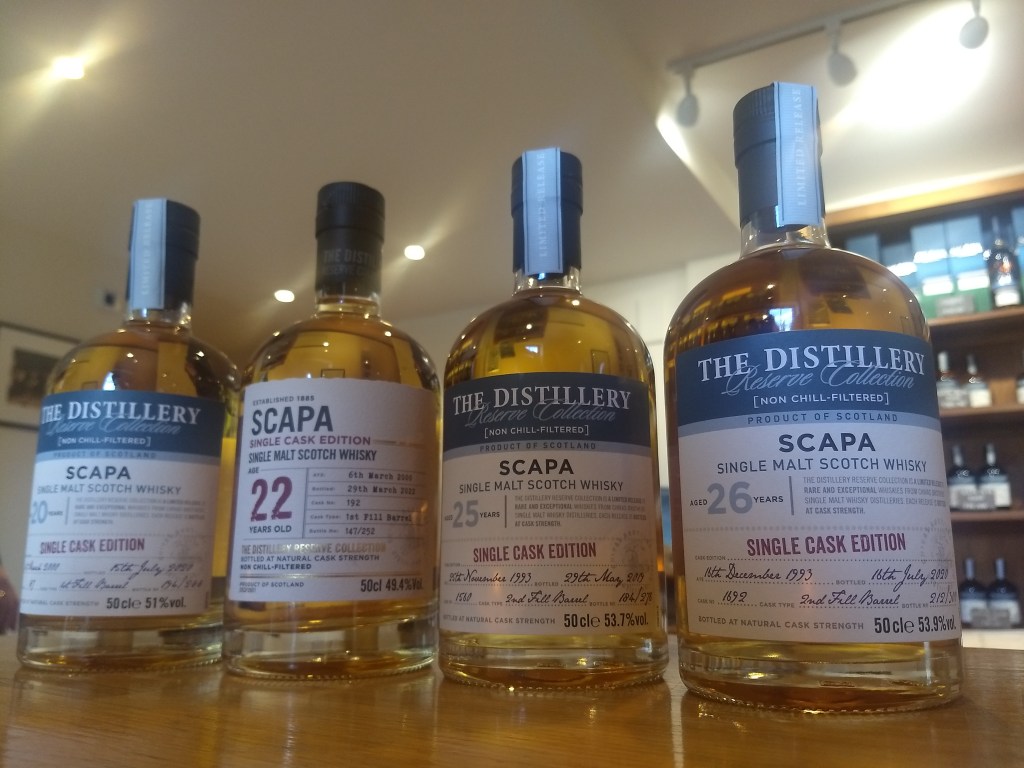
Back to the visitor centre, everything was ready for the tasting. When we booked the tour (which alone was 5 quids only!!!), we could choose three tastings: the Land (a core range expression and 3 from the 10-16y range, ยฃ30), the Sea (four drams from the 15-19y range, ยฃ35) and the Air (four drams from the above 20y range, ยฃ45). These tastings were not bookable from the website, which only offers 3 unspecified drams forยฃ25, we had learned about them by contacting the distillery via email. Except for the two core range expressions, all the other ones are available as 50cl bottles, as is typical of Chivas Brothersโ€™ distilleries. Like the ones we saw in the other distilleries, they are a bit pricey too – company policy.

The delicious Air tasting.

We chose the fancier ones, Sea and Air, although in the first one we decided to include two drams below 15y (more approachable price-wise). All very tasty drams, in particular a couple of sherry cask matured ones (very cask forward, though). In general, we found the distillery character very citrusy, oily, crispy and honey/vanilla forward. They were all single casks, except an 18y, a marriage of 5 ex-bourbon barrels from the small production of 2000, when the distillery was run for a few days by Highland Park operators.

Sooo curious about this tasting!

We were very happy to finally get to know this distillery and its character. After dinner, we tried the two core range expressions, Skiren and Glansa, which we had tasted a long time before. Quite inoffensive sweet drams, definitely not comparable with the juicy and tasty ones we had had earlier at the distillery. Just a shame Chivas donโ€™t bottle more geek-forward expressions at a reasonable price (donโ€™t have to be all single casks, btw).

The night ended at the Kirkwall camping, trying to avoid the midges. Stay tuned for the second and last part of this trip!


Scapa Tour and Tasting

Price: ยฃ5 tour (August 2022) + tasting (ยฃ25 3 drams, bookable online in the summer season; ยฃ30 Land 1 dram from the core range and 3 distillery bottlings 10-16y; ยฃ35 Sea 4 distillery bottlings 15-19y; ยฃ45 Air 4 distillery bottlings 20+y)

Duration: 1-1.5 hours

Tasting: depending on tasting choice and available expressions

Target: anyone really, the experience can be easily customised

Value for money: very good

Highlights: the still room and the Lomond still

Recommended: YES!

Link: https://www.scapawhisky.com/