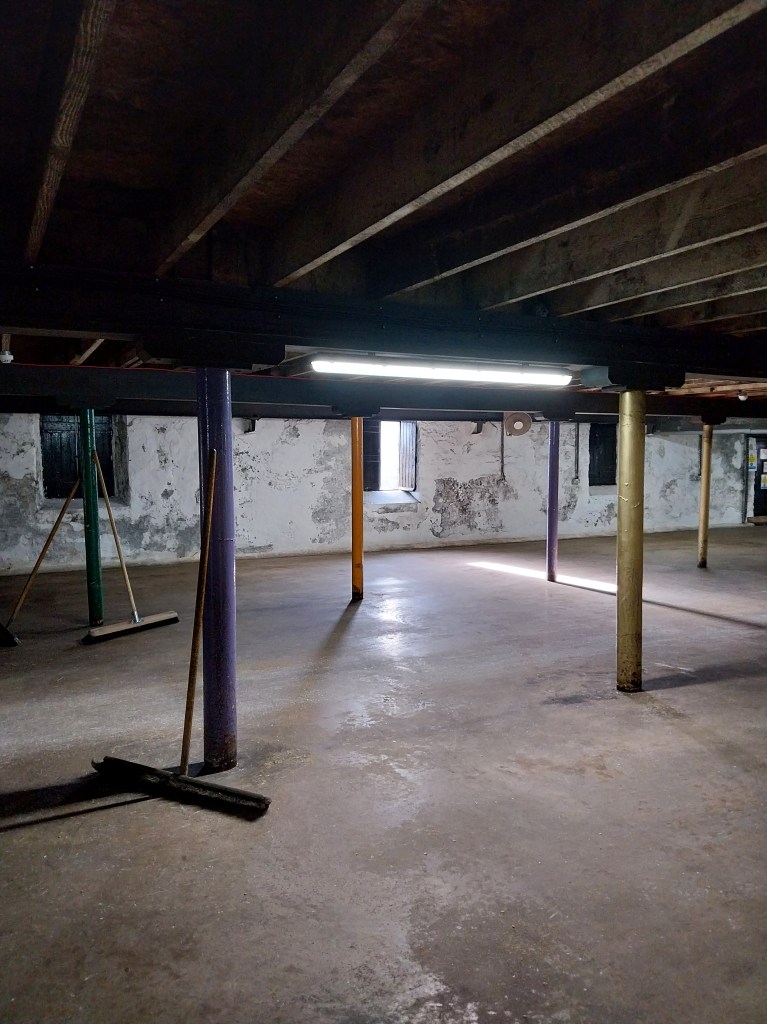
Back to shovelling!
(day 3, Wednesday)
TL; DR: Day three at whisky school started with shovelling barley destined for Springbank production into the kiln, followed by helping out packing Kilkerran Heavily Peated on the soon-to-be-moved bottling line. The reward was an incredible Springbank warehouse tasting with David, featuring a 1990 Springbank and gorgeous old Hazelburn and Longrow. Dinner at the guesthouse ended with an unforgettable cheesecake, then a fun Watt Whisky tasting capped off the evening.
(missed Part 3/Part 2/Part 1?)
On Wednesday morning (day 3 of the school) the weather looked “meh” with an overcast sky. Thankfully it improved during the day. Breakfast was again the full Scottish, and again Gianluigi “had” to help Teresa finish it (she’d then ask for a reduced portion for the Friday, Gianluigi didn’t). While preparing for the day, we realised how little it took to get into a new routine. We also realised that our grand plans to go for a run before the school had already gone right “oot the windae”, so our running shoes had come just for a trip.
Morning clouds.
At 8.00am, we went straight to the malting floor, as there was more shovelling for us! First, we shovelled the barley from the floor into wheelbarrows, to then put it down a hatch where, thanks to a conveyor belt, it was moved into the kiln. When we were finished with that, the team took us inside the kiln, where we spread the barley evenly with our shovels, and turned it slightly to make sure air and smoke could pass through. That barley, in fact, was going to be used to produce Springbank – in this case, the kilning starts with 6 hours of peat smoke, followed by 48 hours of hot air (powered with a gas burner). The way the barley is dried up indicates what it’s going to be used for: for example, 30 hours of hot air for Hazelburn, and instead 48 hours of peat smoke for Longrow. Kilkerran is the same as Springbank (so, lightly peated). However, the malt for the unpeated Kilkerran, the base of their blended malt Campbeltown Loch, and the heavily peated Kilkerran are sourced elsewhere.
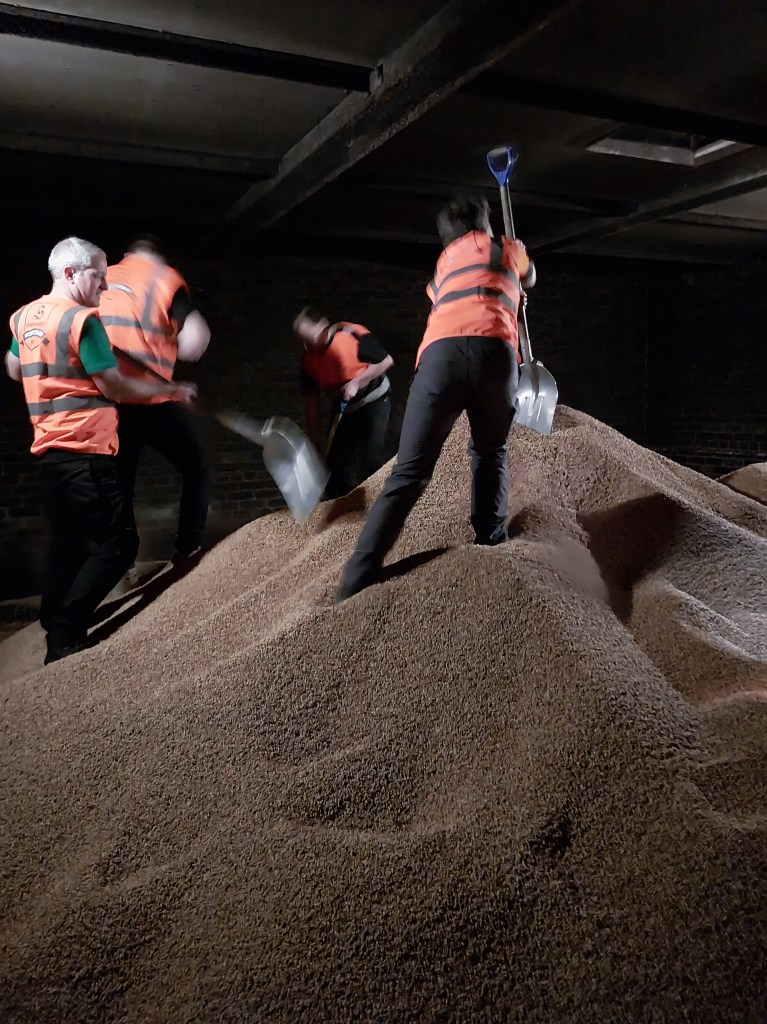
Climbing the barley mountain in the kiln.
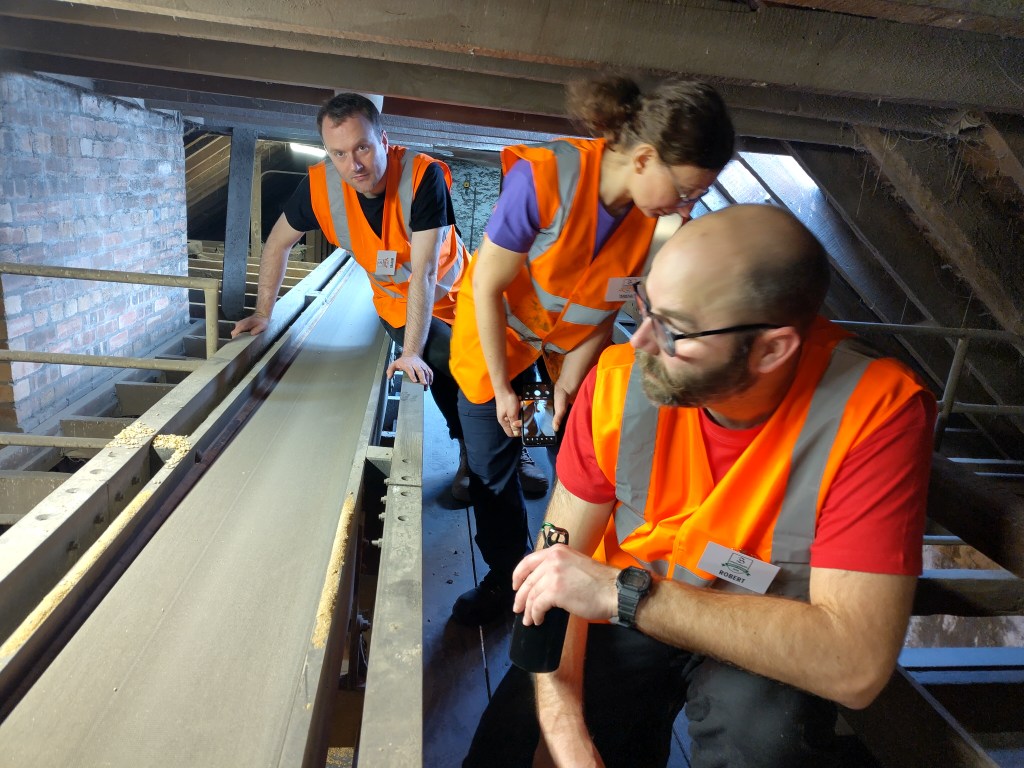
Only the conveyor belt was ready for this picture.
Throughout the year, they start with Hazelburn, followed by Longrow and then Springbank, until they close the distillery to switch to producing Kilkerran at Glengyle for the last 3 months. When we were there, they were malting barley for Springbank, filling Hazelburn newmake spirit into casks, distilling Longrow, and bottling Kilkerran, so in a sense (a veeeeeeery loose sense), we contributed to the production of all four main malts!
After the break, the group divided again. Graham and the two of us went to the bottling hall (next to the parking lot) to assist the team with boxing. At first, Graham was putting protective cardboard squares around the neck of bottles, Gianluigi was putting the bottles inside the box, and Teresa was helping piling the boxes into pallets. They were bottling the next batch of Kilkerran Heavily peated, which is a batch of a few thousand bottles. One cool thing they do with batches (so, excluding single casks) is to marry them in a large vat first, to then re-rack the married whisky into well used casks for 6 months to allow the liquid to settle. These casks are quite recognisable as their end is black, with only a few numbers on them. After the 6 months, these casks are emptied into another vatting tank, which is connected with the bottling line. They have two bottling lines, one automatic (for all the bottles with the classic Springbank/Kilkerran/Campbeltown Loch shape) and the other one semi-automatic, for all the bottles with alternative shapes (Cadenhead’s dumpy square, tall square “olive oil” style, and a couple of different tall round, at least). To make things easier, they told us that they will move soon to another shape of bottle for all Cadenhead’s and Springbank Society bottlings.
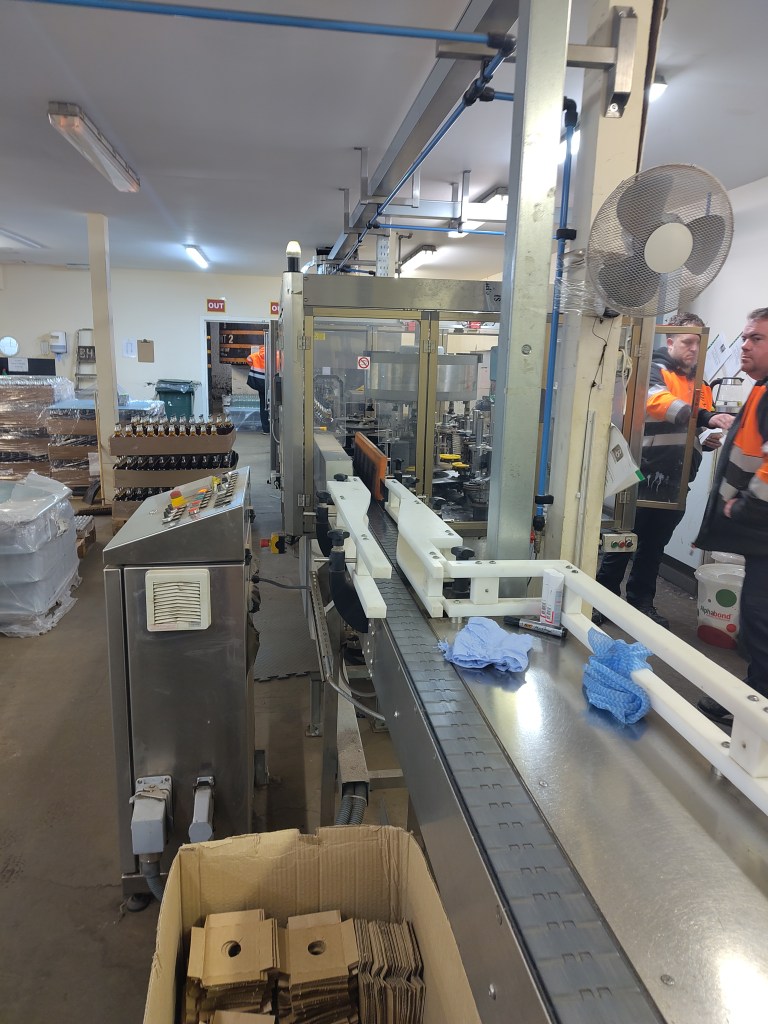
The automatic bottling line.
Work on the bottling line was briefly interrupted at 10.50am, when we went back to the maltings to see the kiln being lit: almost like the crossing of the wildebeests in the Serengeti!
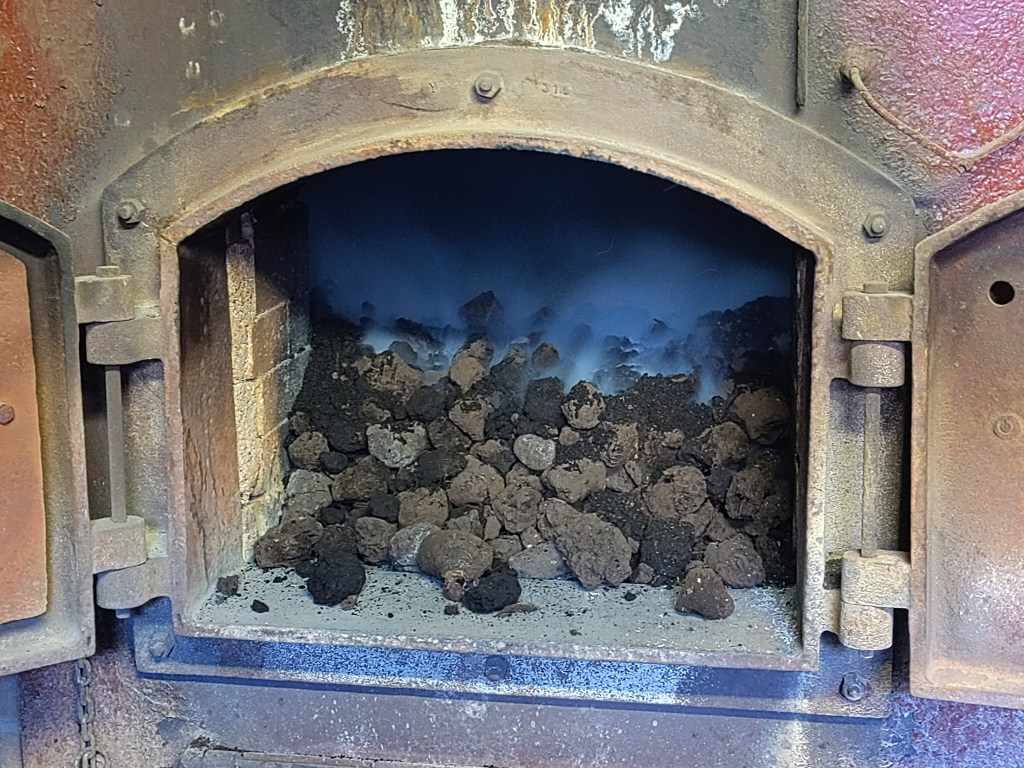
And the peat is on.
At noon we walked back to the Still Guesthouse, where Donald had prepared us a chicken burger with potato wedges and salad, again very much appreciated (how many favourites can we have??). Back to the bottling line, we assisted the staff on the line for a wee while, until Chris showed us around the bottling hall. We were the last school term to “work” in the old bottling line, as the works for the new one were almost complete, and the lines were going to be moved to the new building at the end of the week. The old building is going back to be a maturation warehouse. We could sense the bottling team felt both emotional and excited about the move.
Chris also showed us where they store labels, boxes and bottles, and how the whisky is filtered three times before going into the bottles. Once the pallets are done and full with boxes, they are transported with a forklift to the dispatch point, which is also going to be moved to the new bottling hall. Like the old bottling hall, this building (between Springbank and Glengyle distilleries) is also going to become a warehouse – you can tell they are in need of warehousing space.
At some point, Chris very kindly allowed us to grab some drams, leftovers from previous bottlings. We were also given the chance to disgorge a vatting cask of the Kilkerran Heavily Peated into the larger vat and, while we were at it, try a sip of the whisky. So nice of them!
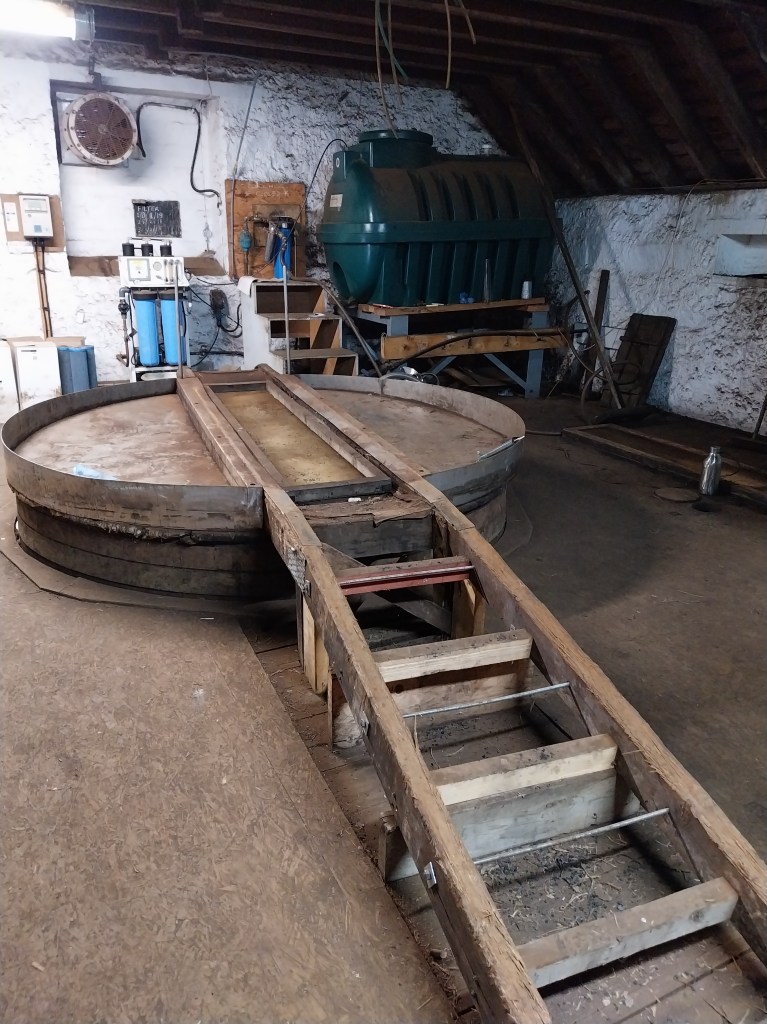
Where casks are disgorged.
The last activity of the day was a great reward for the shovelling (we guess), a Springbank warehouse tasting, reserved for attendees of either the Whisky School or the Barley to Bottle long-day premium tour (£250.00). We walked into Warehouse #3 together with David, the sales director, who hosted the tasting. The first three drams were quite spectacular, first a 2001 Hazelburn, matured in a refill cask (natural abv ~48-49%), followed by a 1990 (!!!) Springbank from a refill ex-bourbon hogshead (41.6%), and finally a 2001 Longrow from a 3rd fill ex-bourbon hogshead (we missed the abv). Finally, a younger Longrow, only 4-year-old, from a Virgin oak octave cask: definitely punchier compared to the three balanced and soft tropical drams we had before. During the tasting, David talked about the challenges of selling Springbank in an ever-hungry market, so to maintain it available for fans while also trying to slowly expand. All this while making sure that supplies are used as intended (for drinking) and not hoarded by collectors, as much as possible at least. In the current market this is probably a good problem to have, but we can definitely see how it must require a lot of effort, and we cheer them for doing so!
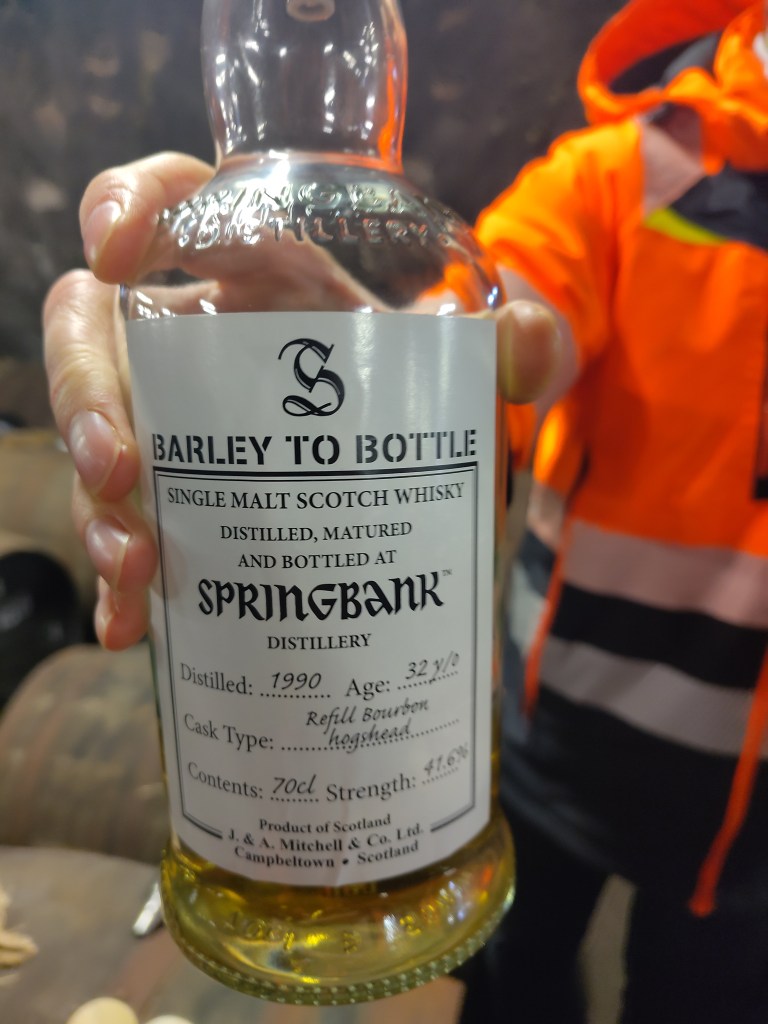
A superb dram.
After the tasting we had some spare time before dinner, so we went to the Cadenhead’s Tasting Room to use the extra dram voucher we’d gotten the day before at the warehouse tasting. Dinner was salmon fillet, followed by another incredible dessert: one of the best cheesecakes we ever had! So, good that Gianluigi had two (!!), which Sandra took as a compliment (and indeed it was, still dreaming about that cake!). (Side note, Teresa is no longer amazed at how much Gianluigi can eat, but it was funny to see the others genuinely impressed by the performance.)
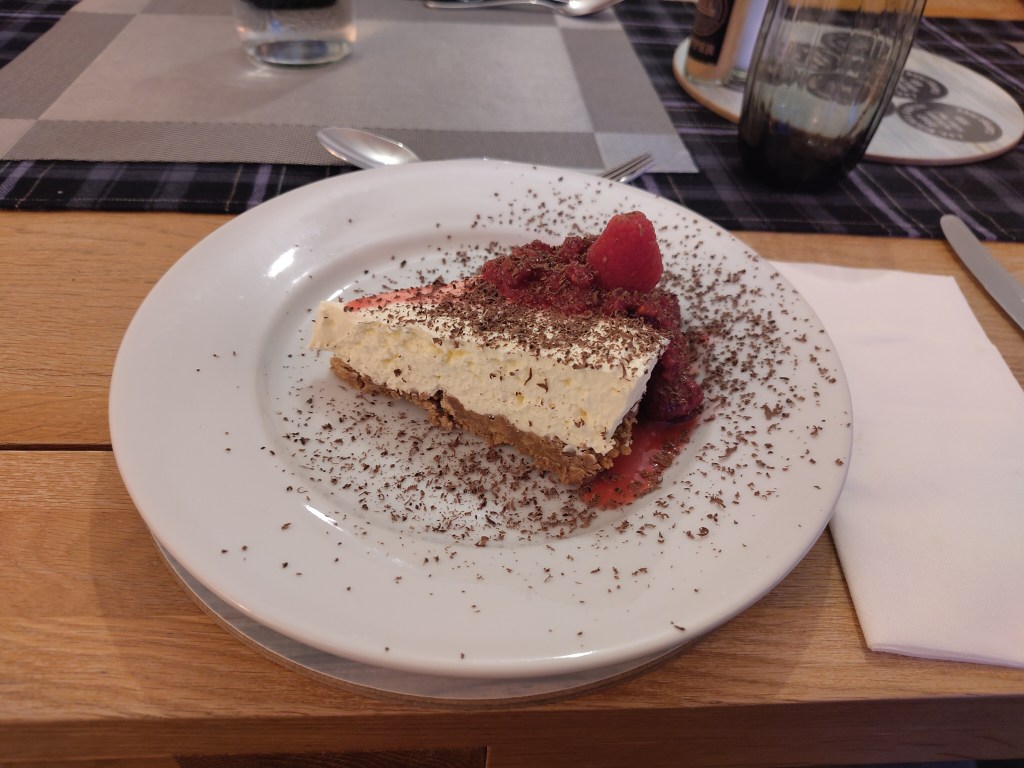
The unforgettable.
After dinner, we joined Graham, Andrew and his wife, and other visitors for a Watt Whisky tasting with Mark, at their shop near the Feathers Inn. It was a 6-dram tasting, very much Mark’s style, with a lot of delicious ex-bourbon cask Speysiders, but also a great “tea-spooned” Campbeltown blended malt (i.e. Glen Scotia), and a final peaty-sherry bomb, a 6y Staoisha (from Bunnahabhain distillery).
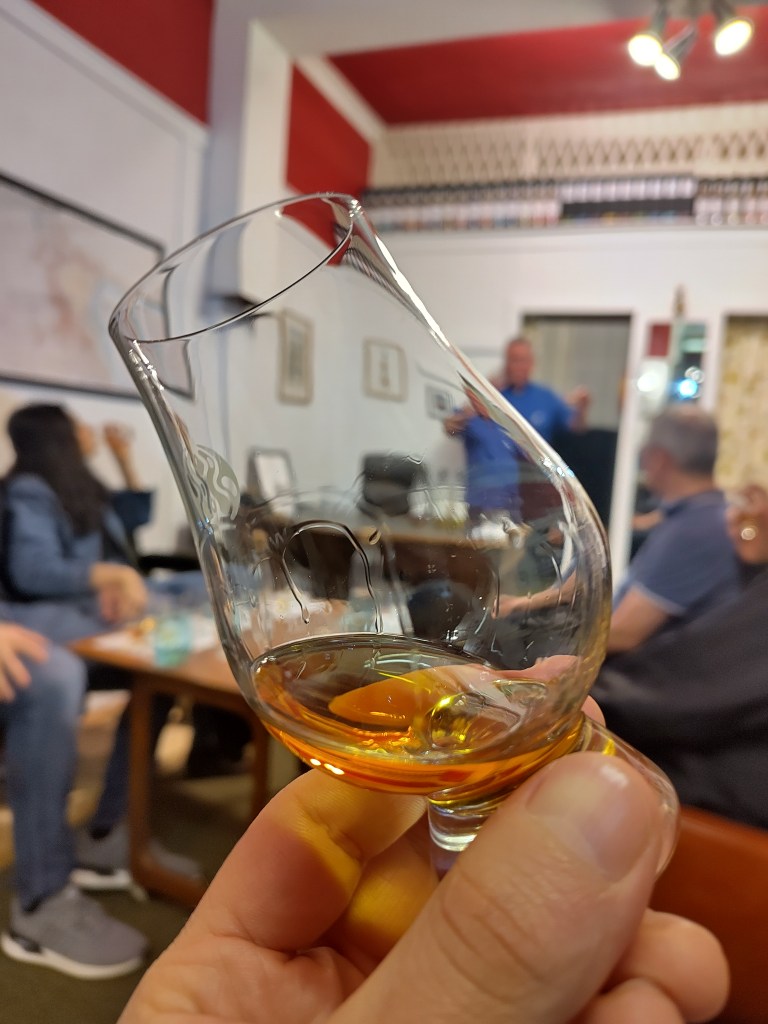
Great end to a great day.
After the tasting (and an extra dram or two), we briefly stopped at the Feathers Inn and soon went to sleep, amazed again by the quality of whisky you can find in the Wee Toon!
Coming next week, another post about the Springbank Whisky School! Until then, slàinte!
Springbank Whisky School
Link: https://www.springbank.scot/whisky-school/

