#31.7 Spirit of Speyside 2023

Speyburn uncovered!


TL;DR: Another visit to a (thenโ€ฆ) closed-to-public distillery: Speyburn. In 125 years it was open for the first time during the 2023 Spirit of Speyside. A great visit, their own old drum maltings were a highlight, a jump back in time! 

(missed Part 6/Part 5/Part 4/Part 3/Part 2/Part 1?)

From Dufftown to Rothes itโ€™s barely a 15-minute drive, so we could take it easy and stop for a coffee and a soup, to warm up in the cold and rainy day. We then soon arrived at the Speyburn parking lot: in spite of being hidden from the main road, we knew exactly where to go, as during one of the many trips to Speyside we drove on the road just in front, from where the distillery could be admired in all its beauty.

Speyburn is not among the most well-known single malts, although it can now count on the presence on some supermarket shelves (the Bradan Orach and the 10y). They are owned by Inver House (which is in turn owned by Thai Bev, guess where theyโ€™re fromโ€ฆ) together with other four single malt distilleries, two in the Northern Highlands (Pultney and Balblair), another in Speyside (Balmenach) and Knockdhu (producing the AnCnoc whisky) in the Eastern Highlands. We previously only had one bottle of Speyburn, from the Scotch Malt Whisky Society: a 9y old from a refill bourbon. We got it by chance when buying a pack of three bottles during the pandemic, with the Speyburn being the one we were less excited about: it ended up being the best of the trio! Spicy at first, with time in an opened bottle the oxidation played its part, and the whisky mellowed down and became a fruity deliciousness. At this point, it goes without saying we were very curious to know more about Speyburn!

As we parked, we were warmly welcomed by the distillery manager Euan and the global ambassador Stuart (who we knew from some Aqvavitae’s vPubs), who walked us to the visitor centre to check in. Compared to the other โ€œusually closed to publicโ€ distilleries, they seemed to be way more prepared: there was a proper shop (not just a pop-up like at Dailuaine and Mortlach), with bottles and merchandising displayed on the shelves, and also a brand-new bar with big tables, where the tasting would have taken place after the visit inside the production. Weโ€™ll come back on this point.

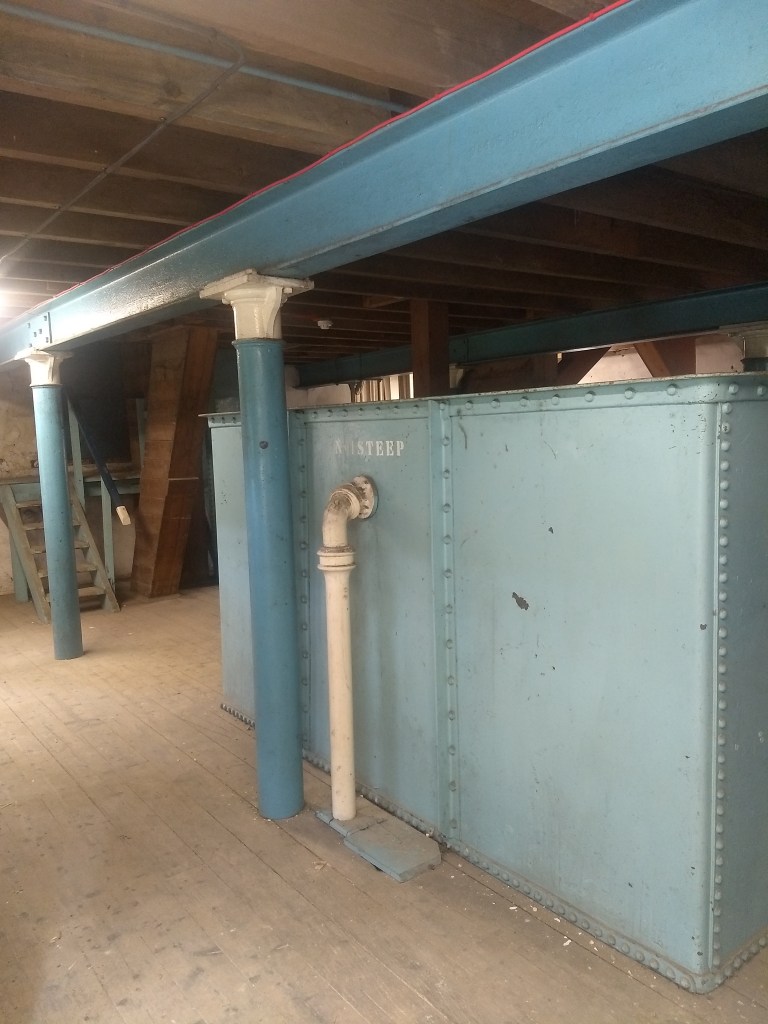
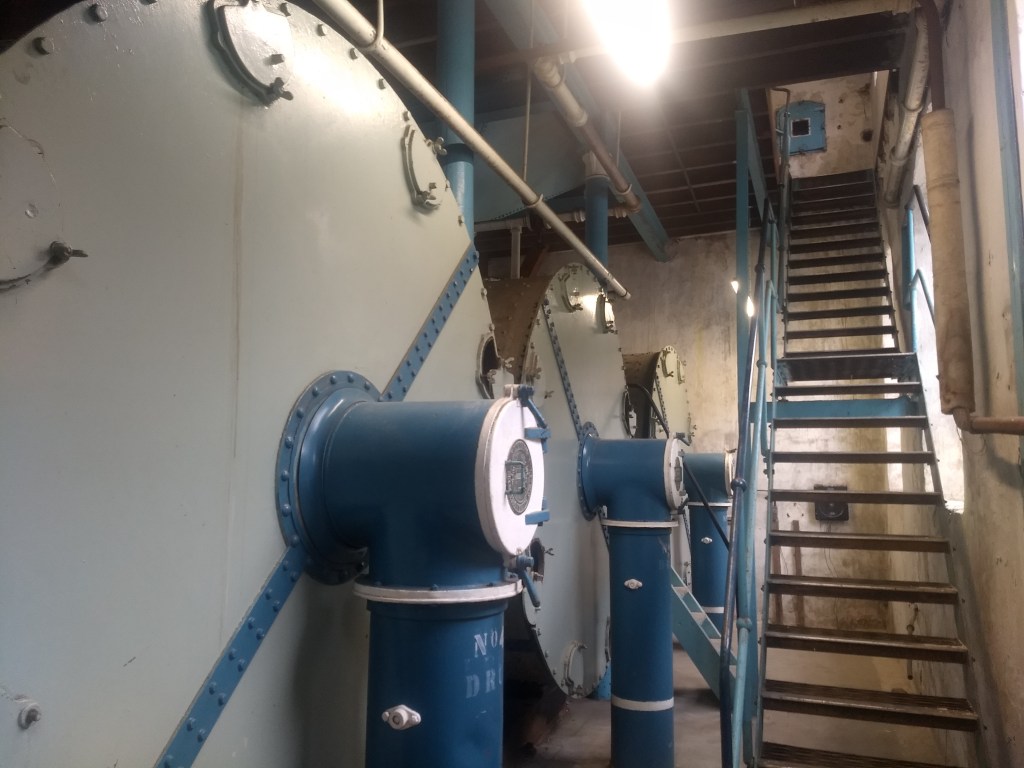
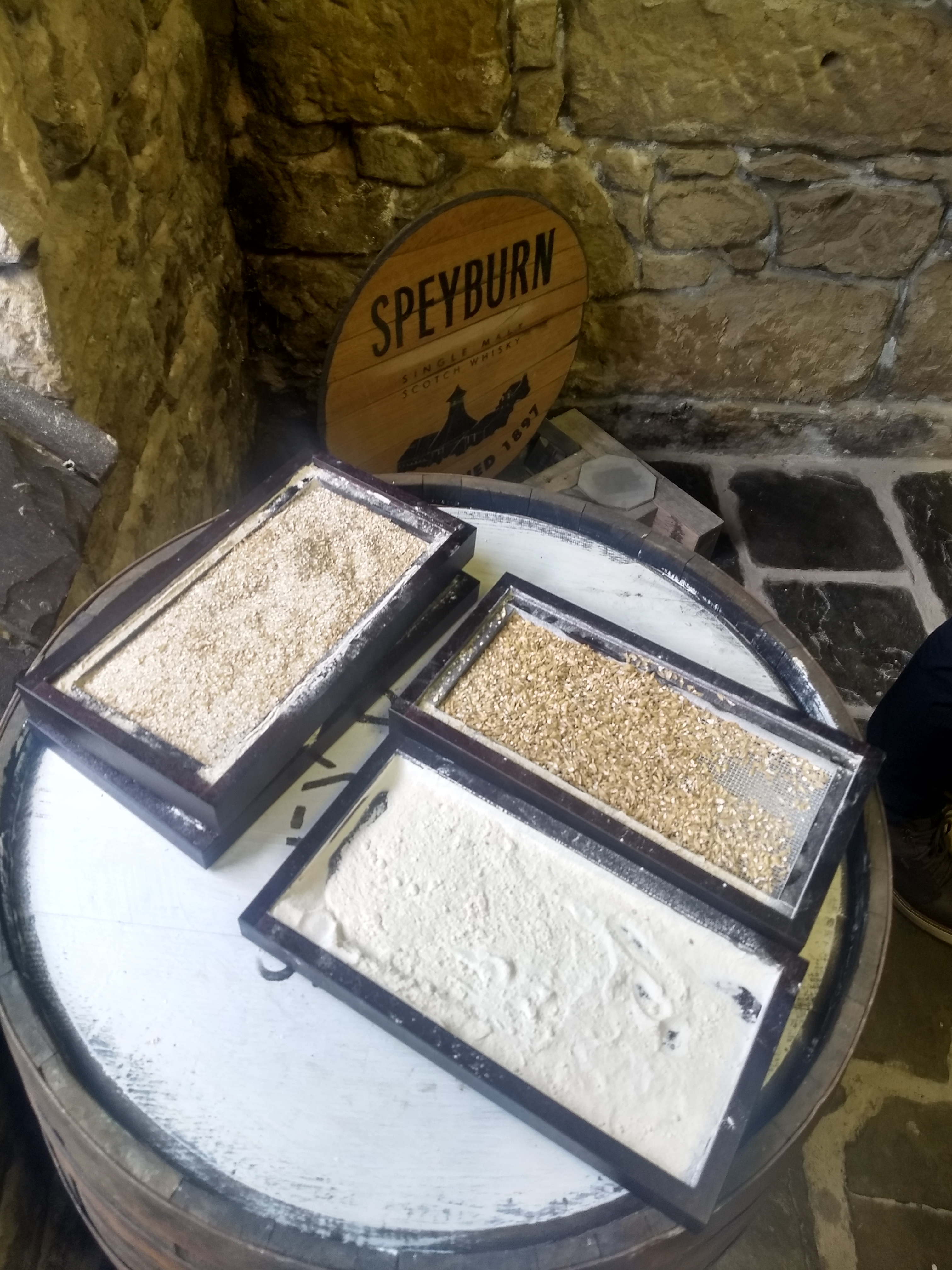
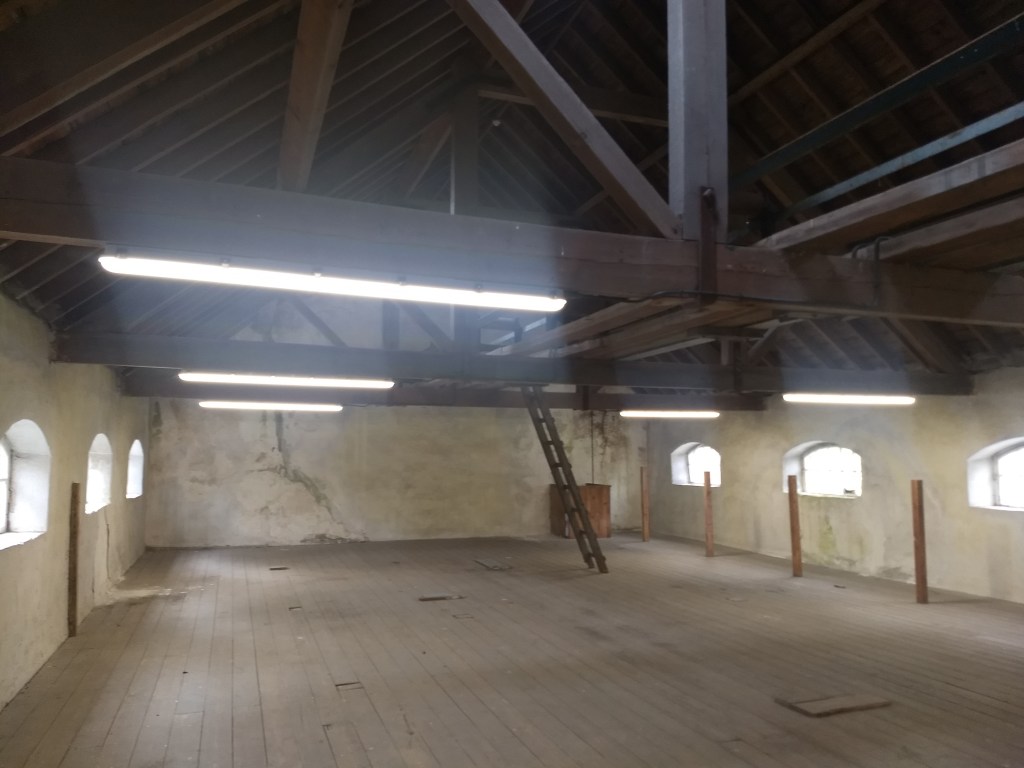
The tour started with some history in the courtyard: the distillery was founded in 1897, and the architect was the famous Charles Doig, who brought the pagoda roofs into the game. This became one of the iconic features of Scotch whisky distilleries, to the extent that distillers in other countries started copying it. It is also on the road signs in Speyside and elsewhere: if you see a white pagoda on a brown background, there must be a distillery close by! The original function was the kilnโ€™s ventilator, as at the time most distilleries were malting their own barley, Speyburn included. A crucial difference, however, early on they installed one of the few on-site drum maltings. They havenโ€™t been used in almost 60 years (after a sudden stop in 1967 following the stop of the near railway the year before), but they are still preserved for nerdy visitors to admire. And in fact, the first part of the tour was dedicated to this unique feature of the distillery.
Time travelling part 2: the steeping tanks.

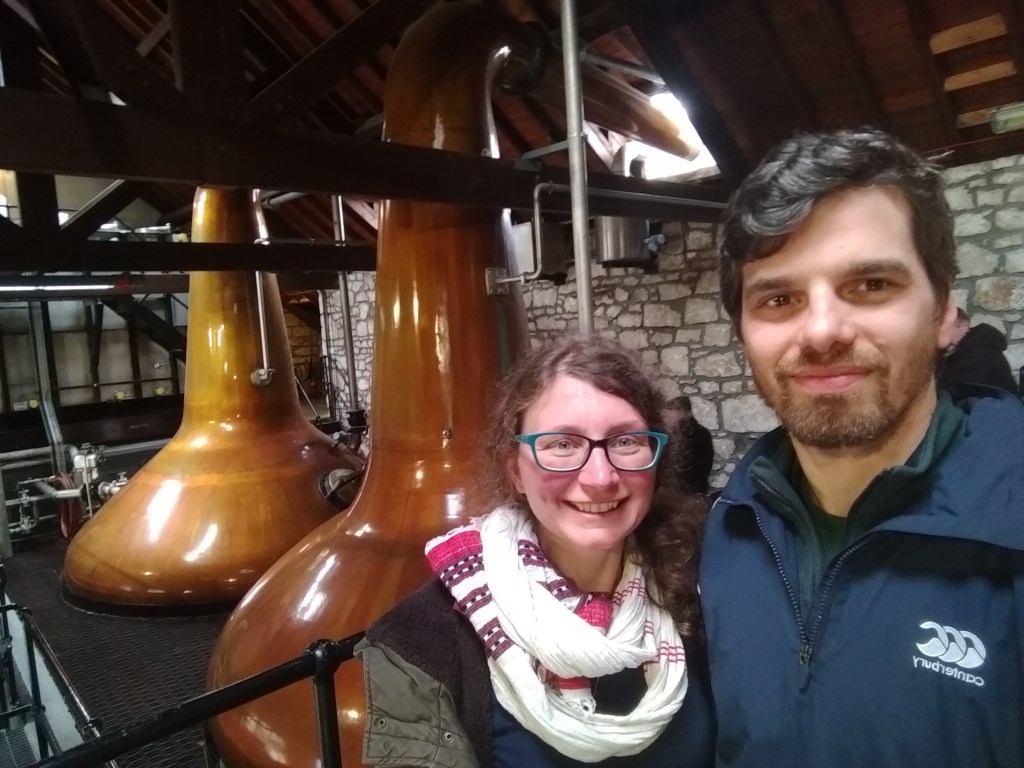
Euan and Stuart explained us that the place has been made accessible only recently, as testified by the new woodwork to allow people inside: it was like taking a walk in the past. The malting was working on different floors, the top one was where the barley was laid out, steeping tanks at the middle one, while the drums (think of huge tumble driersโ€ฆkind of) on the ground floor. One thing we found interesting was the completely different story compared to the usual one: smaller on-site drum maltings, and similarly Saladin boxes, were intermediate stages between the two extremes that are usually talked about during distillery visits (and on blogs, etc.), the (highly romanticised) labour intensive and not so efficient malting floor, and the modern highly efficient industrial-scale maltings. So fascinating to see what was in between!

We jumped back to the present, moving to the mill room, and from there through the usual layout of the modern plant: the closed stainless-steel mashtun, and the wooden washbacks, where we could sip a bit of their semi-cloudy 72hr-fermented wash (always an experience). One interesting feature is the combination of both shell-and-tube, of which one is horizontal, and two wormtubs condensers (132m in total). The former condenses liquid from the wash still, while the latter two from the spirit-stills, from which they take a cut between 72 and 64% abv. With only 3 stills they manage to produce about four millions of litres of alcohol per year: they get this incredible volume by working 24/7. There is a catwalk on the wormtubs, which are located outside, where we spent a couple of minutesโ€ฆ.we wonder if in Speyside the weather gets warm enough to tempt some people to jump in them.
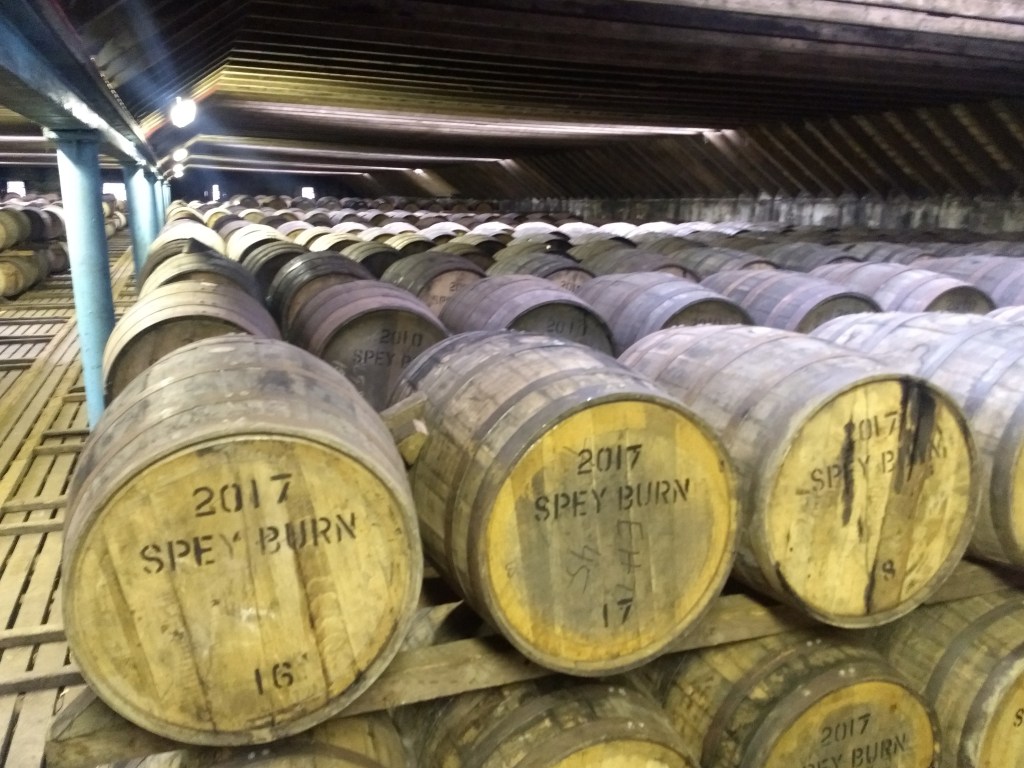
We soon checked out the warehouse, where a surprise was waiting for us: nope, unfortunately we didnโ€™t sample some casks (we were hopeful, considering the hefty 80 quid tickets), but it was almost as good: we had a sample of their 125th Anniversary release, a single cask bottling from a 2nd fill ex-bourbon barrel vintage 2007, similar in style to the one we had but much more balanced, tropical and creamy. A truly delicious dram, probably the best one we tried during the festival.
The last part of the experience was the tasting of their core range, back at the bar. We had four generous drams of their non-age statement (NAS, but they told us it should be about 7-8y) expression Bradan Orach (40%abv, refill ex-bourbon), the 10y (again kind of introductory, 40%, 90% ex-bourbon and 10% ex-sherry casks, mostly second fill), but finally the two gems: the 15y (ex-bourbon before a 2-3y finish in ex-sherry Miguel Martinez casks) and the 18y (14y in ex-bourbon casks, then 4y in second fill oloroso casks), both 46%, natural colour and not chill-filtered. They were both super tasty: Gianluigi preferred the former, Teresa (as most people on the tour) the latter.
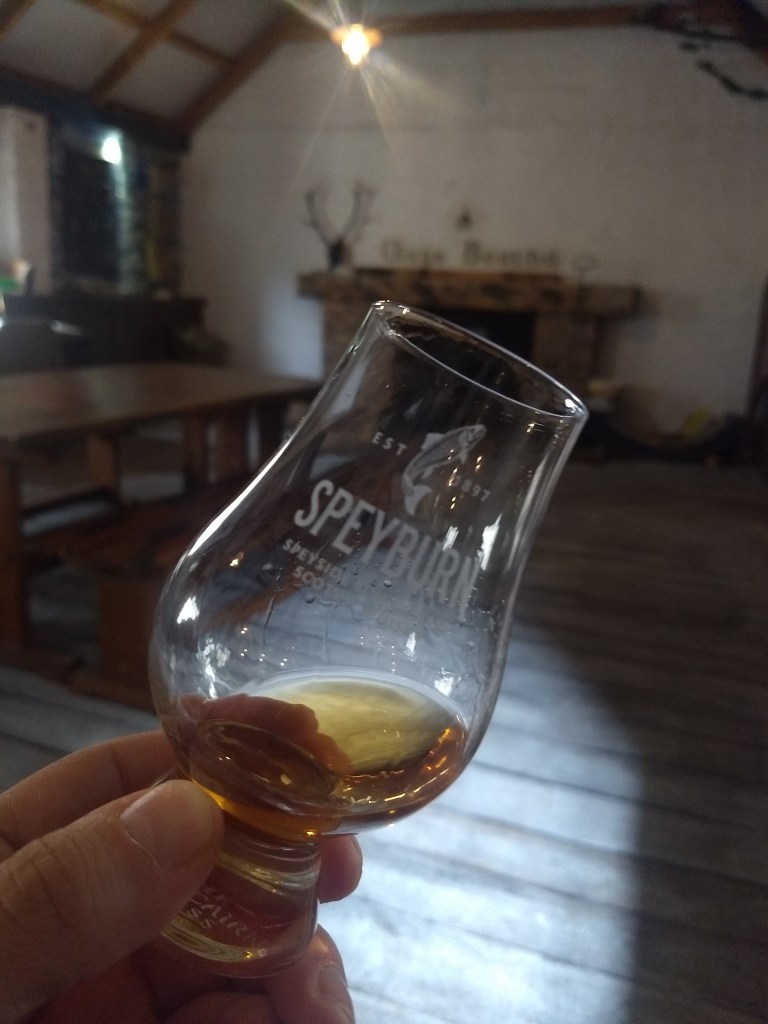
You can’t really tell from this picture how nice the bar is…

At this point youโ€™ll be wondering: wait a minute, if they are only open occasionally, how come they have a bar for tastings and a nice shop? Well, as a matter of fact, before the festival weโ€™ve been told by a birdie that Speyburn might have been preparing to open to visitors permanently. At the Spirit of Speyside 2023 they won the award as โ€œbest new experienceโ€ and this might have given the company the nudge to open permanently (although, more realistically it was already planned and not depending on the awardโ€ฆ). Bottom line is that, good news: starting August 2023 (coincidentally the time of writing), you can visit them and go check their very fascinating old drum maltings for the very reasonable price of ยฃ20 (see the link below).

So, overall, it was a great visit (one weโ€™d do again), and as we said earlier, a true deep-dive into the history of whisky production in Speyside. A bit pricey maybe, but at least the tasting was generous (5 healthy drams and a taste of the newmake), unlike some other we visited for the same price.
For the evening we drove first to Aberlour for a chit-chat with Matteo at the Speyside Whisky Shop (from which he just moved on as we are writing), and then to Dufftown where we spent the night. We parked near the Mortlach Hall, which was super quiet. We had dinner at the Commercial Hotel, which has moved the restaurant to the former function hall, together with some tasty Three Ships South-African malts (produced at the James Sedgwick Distillery), very rare to find in Scotland. Not that we were bored of Speyside malts, but it was good to try something different! Slainte!


The Speybirn Distillery Tour (Spirit of Speyside)

Price: ยฃ80.00 pp (April 2023, but now – August 2023 – they’re open to the public and it’s ยฃ20.00)

Duration: 2hr

Tasting: 5 drams, Speyburn 125th Anniversary (vintage 2007, 15y, refill ex-bourbon barrel, 62.6%, NC, NCF), Bradan Orach (40%), 10y (40%), 15y (46%, NC, NCF) and 18y (46%, NC, NCF)

Target: whisky enthusiasts

Value for money: not great

Highlights: the old drum malting equipment

Recommended: better than others, but still hard to justify at this price

Links: https://www.speyburn.com/, https://www.spiritofspeyside.com/


#31.5 Spirit of Speyside 2023

To Forres and back to Rothes: Benromach & Forsyths


TL;DR: A nice day, started with an early visit at the Benromach distillery, which produces one of our favourite malts. Then, quickly back to the heart of Speyside, Rothes, for a visit at the Forsyths copperworks, to check out how they create the stills where the magic happens! 

(missed Part 4/Part 3/Part 2/Part 1?)

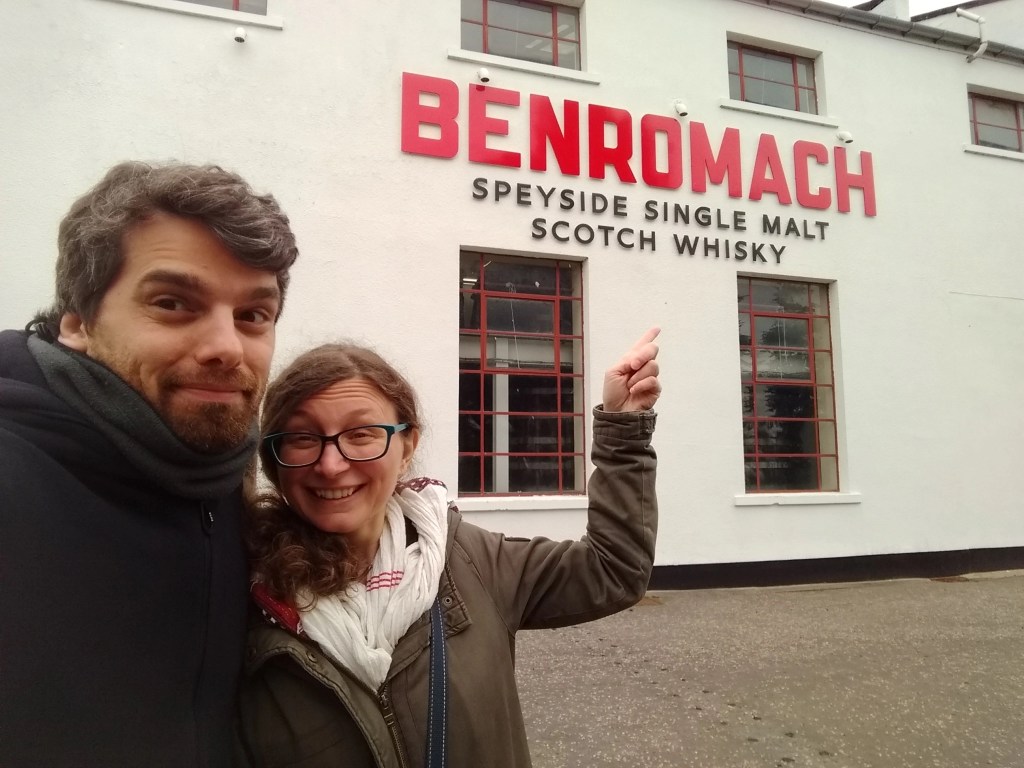
Say what you want, but compared to wild camping, we always wake up more rested in a camping. This time was no different, and although the sky was still overcast, it wasnโ€™t raining. We fixed ourselves breakfast, fruit and eggs with bacon. We mostly cook breakfast when we sleep in a camping (much easier to do the dishes afterwards). No coffee though: we had run out, ouch! Anyway, we left as soon as we could, direction Forres. This is a nice town between Inverness and Elgin, the red chimney of the Benromach distillery can be seen from the motorway crossing the town. The drive was easy, not much traffic around. Because we were early, we were determined to get a much needed coffee. Unfortunately, we drove to the distillery not finding any, so we had to go back until the centre, and by the time we were back we were barely on time for the tour.

We checked in with our guide, Gale, before starting the tour: she is an ex-police officer, at her first experiences as a tour guide. The distillery is much smaller than we thought: it was funded in 1898, and after a few phases (it was owned by DCL for a while, as testified by their โ€œFlora and Faunaโ€ release), it was bought by Gordon & MacPhail (G&M) in 1993. They restarted production in 1997, and since then they never stopped. We couldnโ€™t take pictures in the production area, but if youโ€™re curious you can find a virtual tour on their website here. The tour was very basic (it was free!) and Gale was in training, which is fair enough. It was very informative, nonetheless. Similar to many family owned distilleries, they work from Monday to Friday, doing 18 runs.

They donโ€™t have a Porteus mill, but a smaller brewery mill. Another peculiarity is their four Scottish larch washbacks (inside the building), while the other nine stainless-steal ones are outside, and their fermentation time is between 70 and 120 hours. Surprisingly, they only have a pair of stills which are directly fired with gas, and their distillation heart goes into a wooden spirit receiver. Warehouses are behind the production building. These warehouses also store casks from the G&M independent bottler side, and from the Cairn. The latter is a newly built distillery (which we visited during our Speycation) by the same company, and because it sits inside a national park, there can’t be warehouses on site.

Back at the visitor centre, Gale gave us two drams each, the Benromach 10y and 15y: both quite nice, in spite of the 43% abv. Unfortunately, we couldnโ€™t check out other expressions, as they are not allowed to sell other whiskies by the dram. We purchased one of their cask strength releases, only to find it 10 quid cheaper in another whisky shop later (well, the tour was free, so karma evened things out). Overall, it was a nice visit, but we would like to go back for one of their experiences geared towards whisky connoisseurs, as we know their stuff can be sublime!

Back in the van, we headed towards Rothes (again having a sandwich while driving), directly to the Forsyths parking lot. This was the first time we visited a copperworks. And not a random one, one of the most popular, creating the stills for many of our beloved distilleries, in Scotland and beyond. They are so popular that they own The Station Hotel and Restaurant on site (and dram bar of course), where we had a well-deserved delicious dinner after our 2021 Dramathon. Also, not being a distillery (nor a cooperage), we didnโ€™t quite know what to expect.

The visit didnโ€™t start with a tour, but with a tasting, at least for half of the many attendants (around 50-60-ish?). We were presented with 8 small drams (10 or 15 ml we believe), for a blind tasting. We had to judge them without knowing anything but the age bracket: two 12y and under, two 13-20y, two 21y and over (although there were mistakes in the tasting mats, as these two categories were marked as 13-17y and 18y and over), and two non-age statement (NAS). For each pair we had to decide the best of the two, and the best overall. A very nice โ€œtasteโ€ on how hard is to judge a whisky. They didnโ€™t tell us what they were right away, but they published the results here a few weeks later. Of course, one of the oldest drams was the overall favourite: 25y Glenlivet Single Cask.

Once done with the tasting, we moved outside where we were divided in two groups and started a guided tour of the site. They showed us the machine used to cut copper sheets, and the machine to roll them into the required cylinders or cones. Also, a machine that automatically welds pieces together, with the flame from both sides (doing a job in a few hours that would take a person more than a day). Notably, part of the warehouses used to belong to Caperdonich distillery (built to be Glen Grant #2), closed in 2002 and demolished almost a decade later to make space for other warehouses.

…and a Laphroaig still.

It was a very interesting experience overall, only flaw was that it was a bit of a random tour walking around the courtyard and pointing to machines and equipment as we saw them, not exactly following the order with which stills and condensers are made during production. But oh well, we would do it again, definitely. Definitely on the nerdy side as an experience, but it was still quite fascinating to see so many finished and unfinished stills and condensers in one place.

A still half-way…

After the tour, we jumped back on the van, and drove first to Aberlour, where we stopped at the Speyside Whisky Shop. We found out that the owner, Matteo, is Italian, so we had a good chat with him, about whisky of course.

We later had a half-pint at the Aberlour Hotel pub (one of our favourite stops in the area), not before stopping to the local CoOp to buy coffee. Back to the camping, we cooked dinner, and in spite of the cloudy and cold weather, enjoyed one last pint outside at the end of a fine whisky day.


The Benromach Distillery Tour (Spirit of Speyside)

Price: free (April 2023, Spirit of Speyside 2023, the regular tour is ยฃ10.00)

Duration: 1hr

Tasting: 2 drams, Benromach 10y and 15y (both 43%)

Target: whisky curious and tourists

Value for money: great of course, it would be very good even at ยฃ10/15

Highlights: the manual settings

Recommended: yes!

Link: https://www.benromach.com/, https://www.spiritofspeyside.com/

#31.1 Spirit of Speyside 2023

To the mill on the hill


TL;DR: This year we finally managed to go to the Spirit of Speyside Festival! We were very excited because during this event, some distilleries usually closed to the public open their doors. We started with a very well known one (especially if you buy whisky in supermarkets too): Tamnavulin!

Among the regional events or festivals, there was one that we were eager to attend. Nope, not the Feis Ile: while some tastings look fantastic, the idea of so many people on such a small island (Islay) makes us feel claustrophobic. Not the Campbeltown Malt Festival either, more or less for the same reason. Donโ€™t get us wrong, it would be great to attend both of them at some point, letโ€™s just say that we donโ€™t feel ready yet.

So, by exclusion (and of course, because of the title of this post), by now youโ€™ll have guessed that we are talking about the Spirit of Speyside. It is a huge festival, lasting one week, with plenty of events happening in the constellation of villages and distilleries that form the biggest whisky region (not in size, but in volume produced). Other than the obviously expected tastings at various venues (hotels, bars, distilleries, warehouses, shops, etc.) and distillery tours, there are runs, whisky fairs, bonfires, walks, truck tripsโ€ฆReally a plethora of whisky-related activities. If you know what our trips (and thus blog) are about, you probably stopped at โ€œdistillery toursโ€, wondering which ones we visited this time. And youโ€™ll be right, one of the beauties of this festival is that many distilleries that are normally closed to the public (at the moment at least), open their doors to visitors just for these few days. Because most of the experiences are not cheap, we decided to focus our attention on these (but not exclusively).

Because the booking system on the website is not the most straightforward nor really smart, and because of the huge crowd trying to buy tickets as they came out, we had to change our plan twice because some tours were sold out at our preferred time/date. We came out with a decent plan anyway, although that meant driving around a bit more than we would have liked. We intended to stay away 4 days, but because of some late addition, we ended up with 5 days, Thursday to Monday! Hurray!

When the day came, we left very early in the morning, mostly to avoid the traffic outgoing the city (one of the few down sides of leaving in Leith, it takes 30-40 minutes to leave the city independently of where we want to go). There wasnโ€™t much traffic on route, and once arrived in Perth, instead of following the A9, we drove straight up through the Cairngorms, always gifting nice views. The first appointment in this trip was in the village of Tomnavoulin, of course at the Tamnavulin distillery. This one, at the moment, is only open during the festival, they donโ€™t have a bar nor shop nor visitor centre. So, because we were half-hour early, we kept driving towards Glenlivet distillery, to have a peek at nearby Blairfindy Castle. One day weโ€™ll have a rant about the loose definition of โ€œcastleโ€ in Scotland, but this one looked nice enough (a very small one, it wasnโ€™t possible to enter). Because it started raining (of course), we quickly went back to the van and drove back to Tamnavulin.

The wee Blairfindy castle.

The distillery (built during the mid-20th century whisky boom, in 1966) is quite a popular one, mostly because of their presence on supermarkets shelves. As a matter of fact, the Tamnavulin double cask was Gianluigiโ€™s second whisky purchase after he moved to Scotland, for a โ€œwhoopingโ€ 20 quid. Other than this expression, youโ€™ll easily find the Sherry cask finish, a range of red wine cask finishes (it seems they have different wines finishes in different supermarkets, French Cabernet Sauvignon at Morrison and Asda, German Pinot Noir at Tesco, Spanish Grenache at Sainsbury). More recently, they added a Sauvignon Blanc cask finish. As you can imagine, to support this heavy supermarket presence the distillery is quite big, with a capacity of 4 million litres per annum of alcohol. In spite of this huge production, they lack expressions suited to more experienced drinkers, with everything being bottled at 40% (and probably artificially coloured with E150 and chill filtered). This, together with the fact that it is super rare among independent bottlers, made us even more curious to visit this โ€œworkhorseโ€ distillery.

As we arrived, we checked in just outside the gates with Anne Marie, who usually works at Dalmore distillery (another one of the Whyte and Mackay group, together with Tamnavulin, Jura, Fettercairn and Invergordon grain distillery). The tour started there, outside the gates, with Leon (distillery manager) and others from the team. First, we walked down to a path outside the gate, to reach an old mill: Tamnavulin is the Gaelic for โ€œmill on the hillโ€ indeed! Inside, the old mill had that โ€œAlps cottageโ€ feeling, and currently it is not used. It used to be a visitor centre, which closed in 1997, two years after the distillery was mothballed (1995). When they restarted production in 2007, the visitor centre was not revived, although we understood it might be in the plans. We were served a small cocktail there, with a fruit soda and Tamnavulin Double Cask (for Gianluigi only apple soda, driver duties).

…next to a much more charming old mill.

After the mill, we walked back to the gate and then behind the distillery, where malted barley comes in from three different places. The actual mill is not an old Portheus, rather a much modern Buhler, from Switzerland. As usual, we followed production, so next we went to the mashtun room, where Leon showed us how they check the wort cloudiness: they aim for a clear one. We walked through the nine stainless steel washbacks (around 52hr maturation, longer on weekends) and the six stills. In the still room, we couldnโ€™t take pictures but we could take a tiny sip of the newmake, nice touch!

Next, we checked out the filling store, and finally we entered a big warehouse, where some of their stock (together with other spirit from the Whyte & Mackay portfolio) is resting. First, we were given a cask sample: a refill bourbon barrel from 2007, the first year of production after they restarted. It was a very nice dram, clean and fruity, very similar to the only independently bottled Tamnavulin we have tried so far, from Gordon and Macphailโ€™s Connoisseur Choice range (bought to celebrate our 70th distillery visit during the Speycation, and one of the few we ever saw around). Then, we tried three of their usually bottlings (see below) paired with amazing chocolates (that Gianluigi could try!).

Overall, it was a very satisfying visit, and definitely good value for money. Very interesting was the mill, and we would definitely go back for another peek when and if they reopen the visitor centre. The whisky was OK, quite inoffensive, a quintessential โ€œsupermarket dramโ€. We hope that, similarly to what happened at Fettercairn Warehouses bottlings, the company will decide to bring out some more interesting expressions, aimed to whisky enthusiasts, although we wonโ€™t hold our breath. Having tried two delicious cask strength expressions now, in our opinion the potential is definitely there.


Tamnavulin Tour (Spirit of Speyside)

Price: ยฃ30.00 pp (April 2023)

Duration: 2hr

Tasting: a cocktail and 4 drams, cask sampled (2007 vintage, refill ex-bourbon barrel, cask strength), ex-Sherry cask finish (NA, 40%), ex-Sauvignon Blanc cask finish (NAS, 40%) and ex-French Cabernet Sauvignon finish (NAS, 40%), the last three paired with delicious chocolate

Target: whisky enthusiasts and curious

Value for money: very good

Highlights: the mill and the cask sample

Recommended: yes

Link: https://www.tamnavulinwhisky.com/