#59 Another Tuscan detour

In the land of Brunello


TL; DR: While in Rome, do as the Romans do…while in Tuscany, go visit a winery. This time we went to Fattoria dei Barbi, in the land of Brunello di Montalcino. In this magnificent landscape, we learned about how Brunello is made during the visit of the historical cellar, and we tried some great wines.

One of the best things about our whisky journey is the renovated pleasure that now comes with eating or drinking in general. This is because of the continuous focus on aromas and flavours during whisky tastings, which slowly but constantly enhanced our senses of smell and taste. This didn’t happen in isolation though: during a 2018 trip in Thailand (no whisky stories there), we attended a cooking class which opened our minds in terms of spices use and flavour pairings. Over time, having a meal, a cup of coffee, or a pint, or even a walk in a meadow or in a wood have become much more pleasant experiences (and no worries, we don’t eat meadows…usually).

And here we come to wine: because of our Italian upbringing, many people assume we are good at the “wine thing” although, spoiler alert, we are definitely not. This is despite wine being homemade within our families, by Teresa’s grandfather and Gianluigi great-grandfather. Also, being brought up in Italy meant that wine was often on the table at dinner and during weekends. And, while we know the basics and we have our preferences (generally bold red wines that go well with meat, better if they spent some time in wood), we never went down this rabbit hole. Ironically, this started to come around (slowly) thanks to whisky: in 2021 we visited a winery in Tuscany because we learned that Glenallachie finished a whisky in casks from that winery: Grattamacco. As for fortified wines, we went to a few port houses in our 2022 holiday in Porto. We also indulged in some winery visits and tastings in Australia last year. Still not experts, but definitely more “flavour curious”.

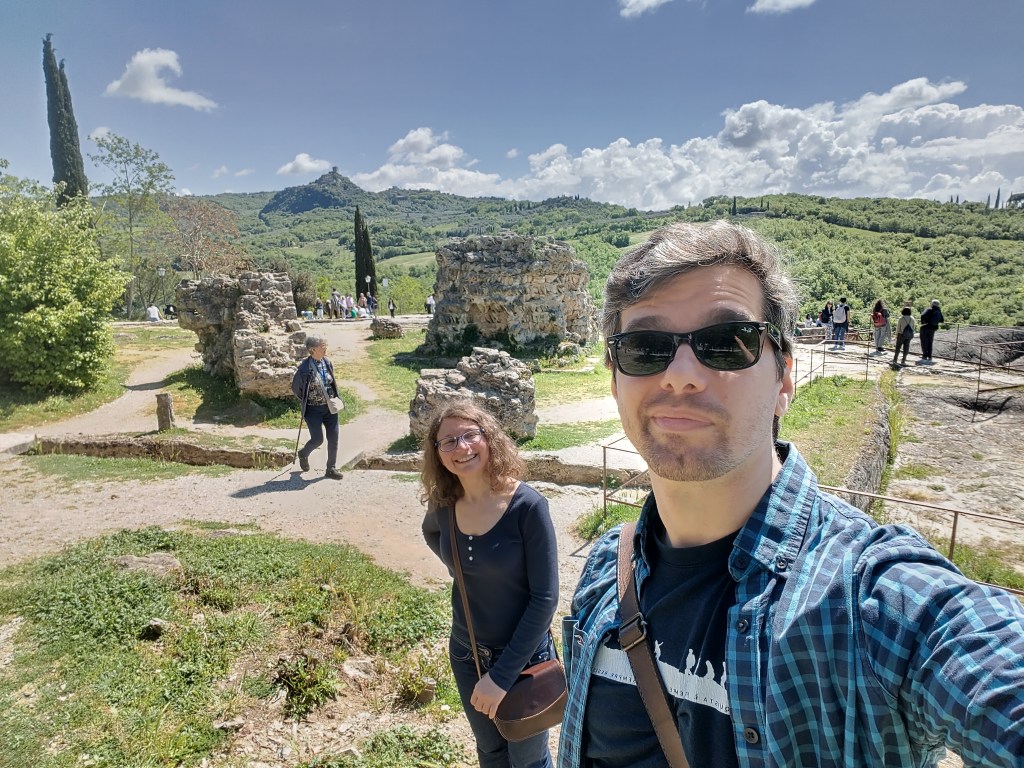
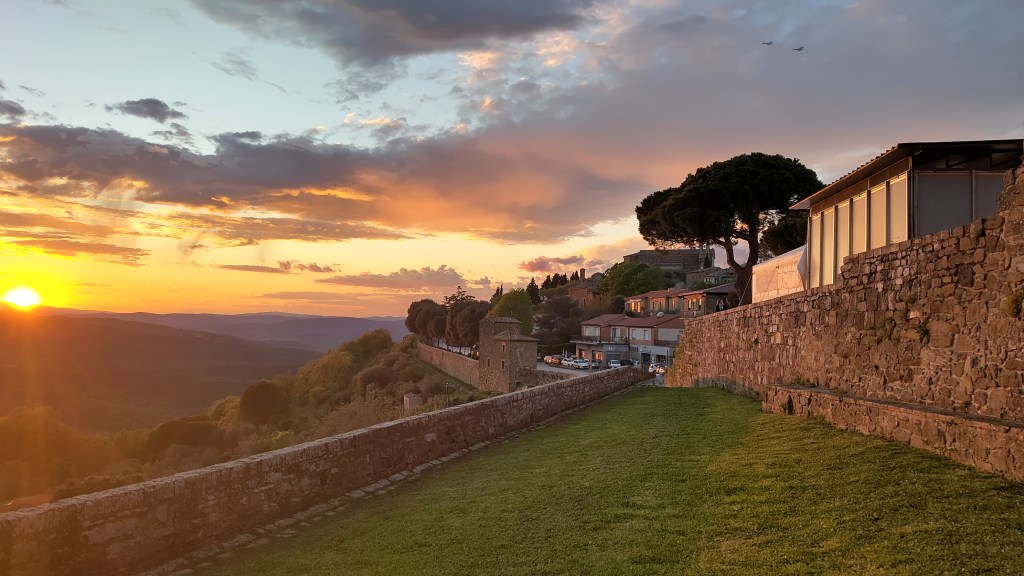
Not a bad weather for a two-day trip.

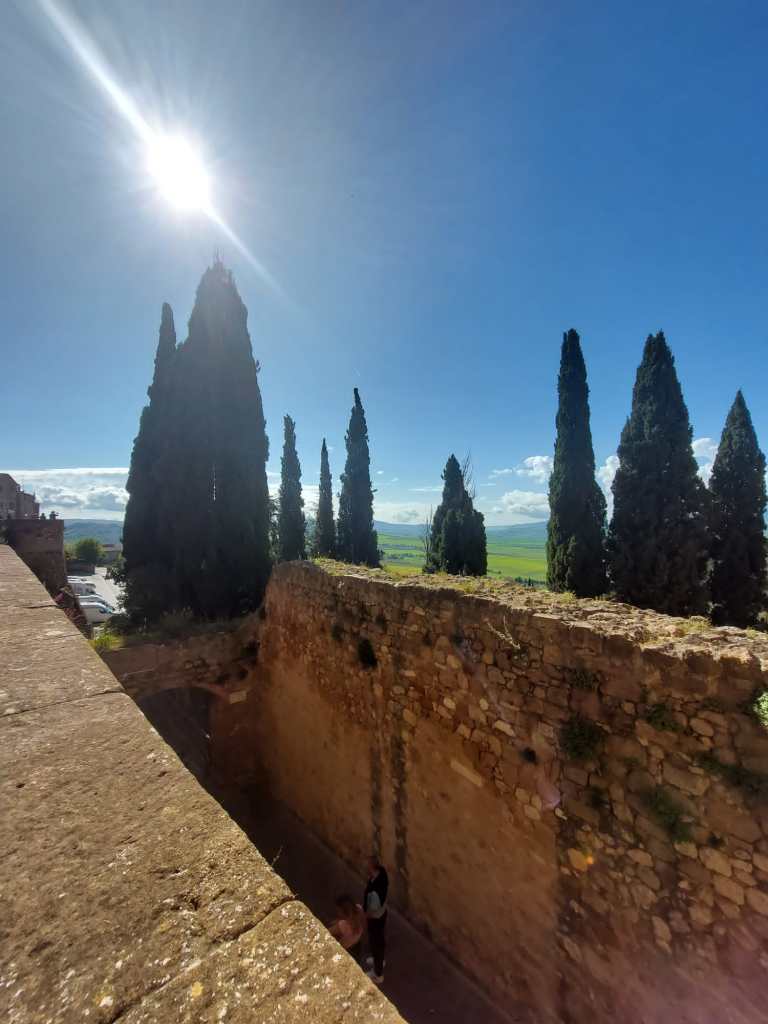
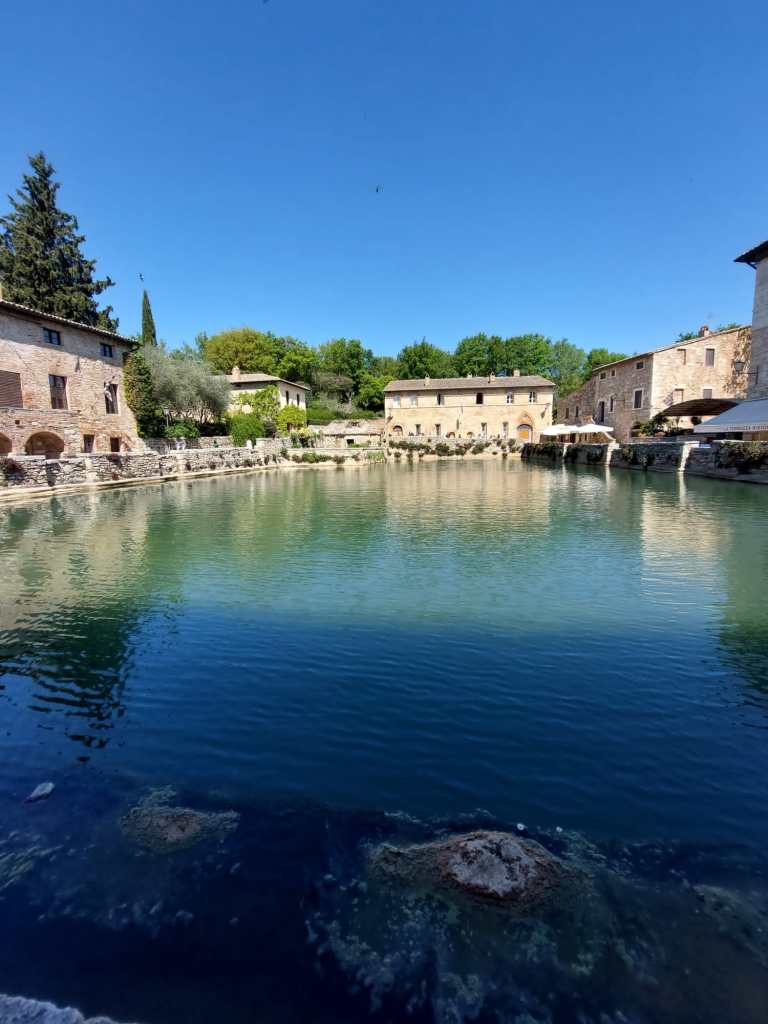
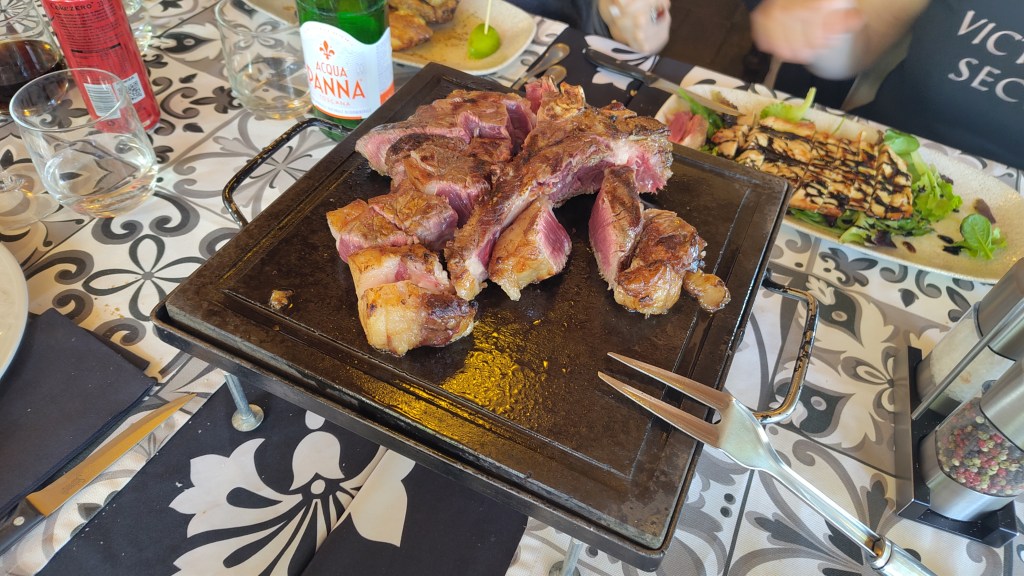
So, what’s better than improving our wine knowledge by visiting a winery in Tuscany? The occasion came in April this year (2025), for Teresa’s mother birthday: together with her sisters, she organised a two-day trip to Val d’Orcia, one of those places that look like a classic Tuscany postcard (wait, it is a Tuscany postcard!) – smooth rolling hills, small medieval towns on top of them, vineyards and meadows (again, not eaten). We left Florence early, and by mid-morning we were in Pienza: a town famous for its pecorino cheese (one of many), and contrary to others, purposedly (re)built by Pope Pius II in 1462, to reflect the ideals of the Renaissance. We then visited the charming Bagno Vignoni (a village famous for a very old spa), before stopping for lunch nearby, where we (meaning Teresa and Gianluigi) shared a very tasty 1.2kg “Bistecca Fiorentina”.

In the afternoon, we drove towards Montalcino, the hometown of the renowned Brunello of Montalcino wine. Until a while ago we never heard of a Brunello cask finished whisky, but the independent bottler Ferg & Harris recently close this gap.

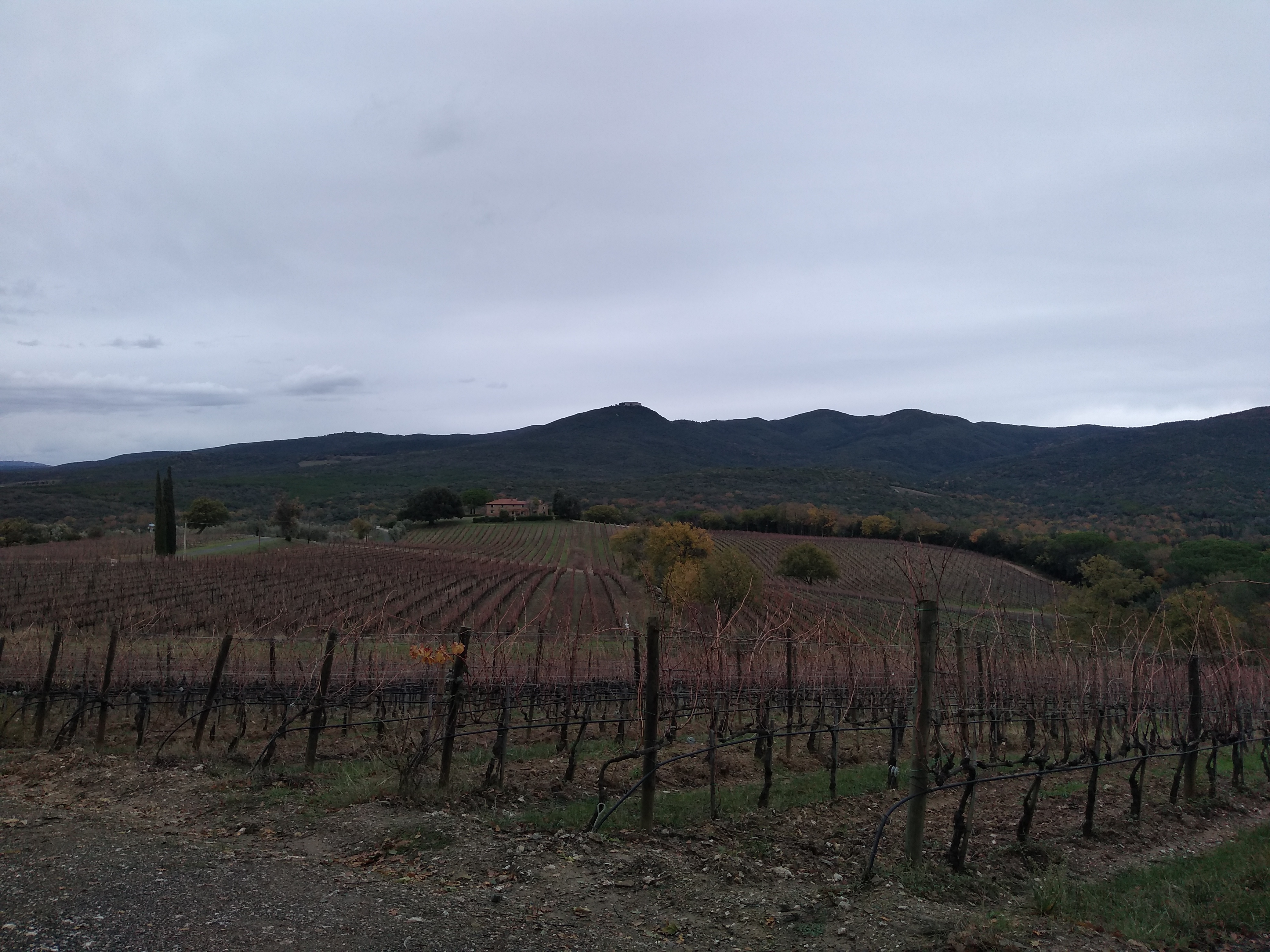
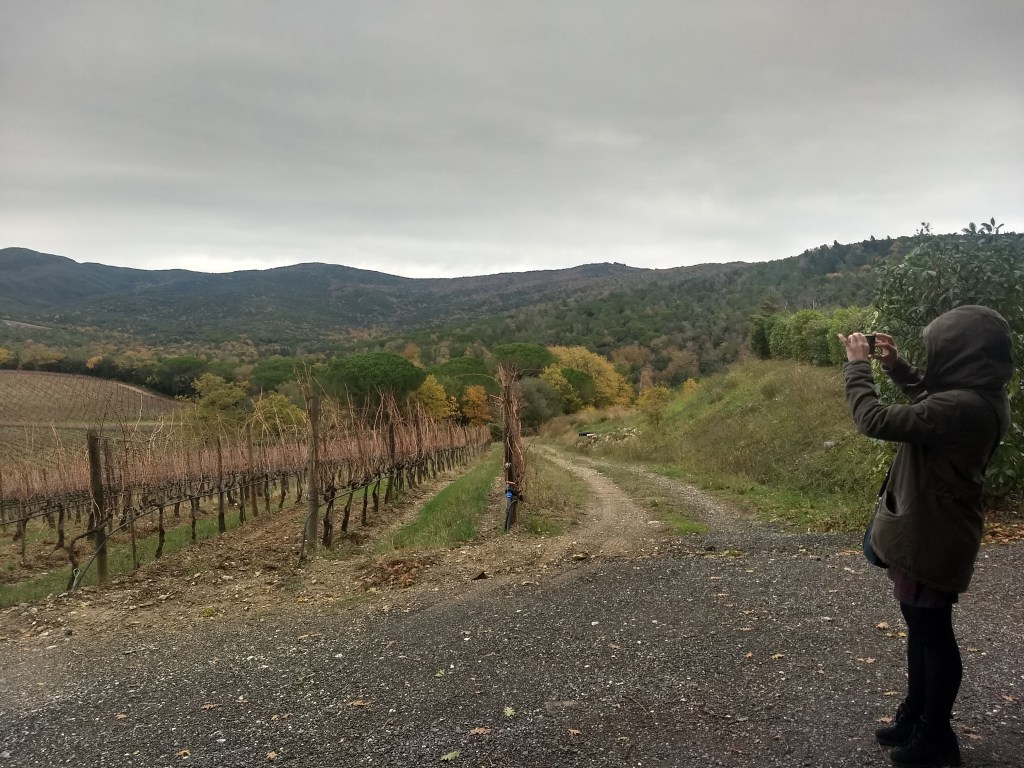
Back to wine, the winery we chose was Fattoria dei Barbi – the tour was quite cheap, only €10 for the winery visit, while for the tasting we could pick (beforehand) between a few options: we chose a basic tasting (€25, four wines from the basic range) and an upgraded one (€35, focused on Brunello). The winery is very pretty, hidden from the main road and surrounded by woodland and, obviously, vineyards.

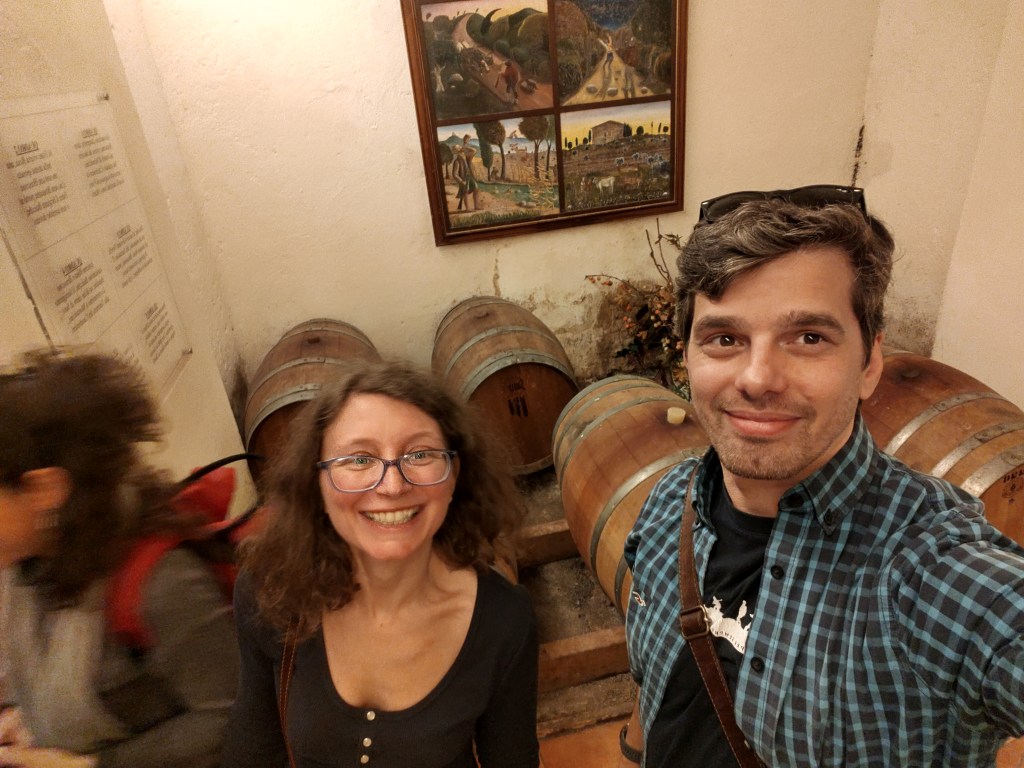
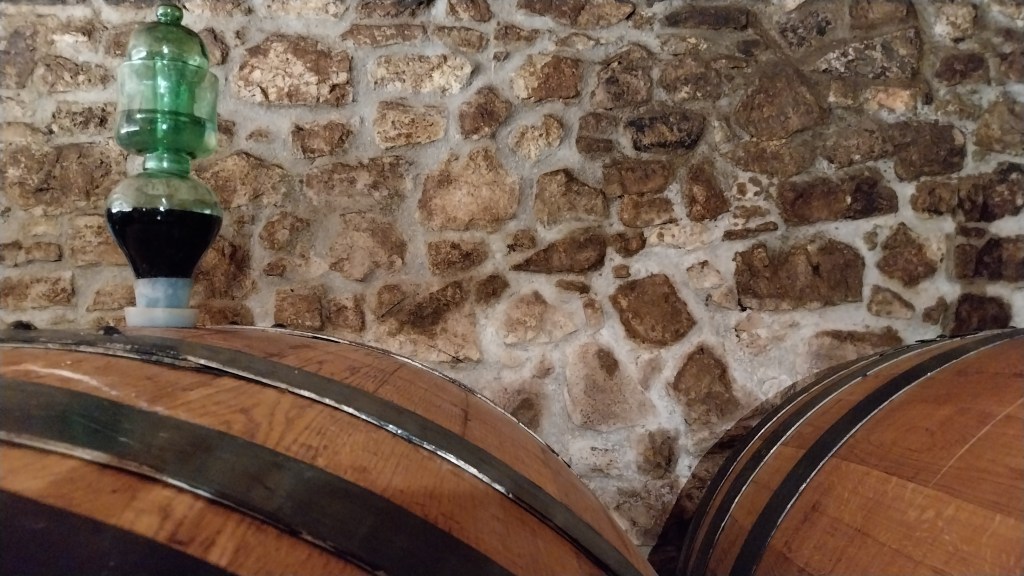
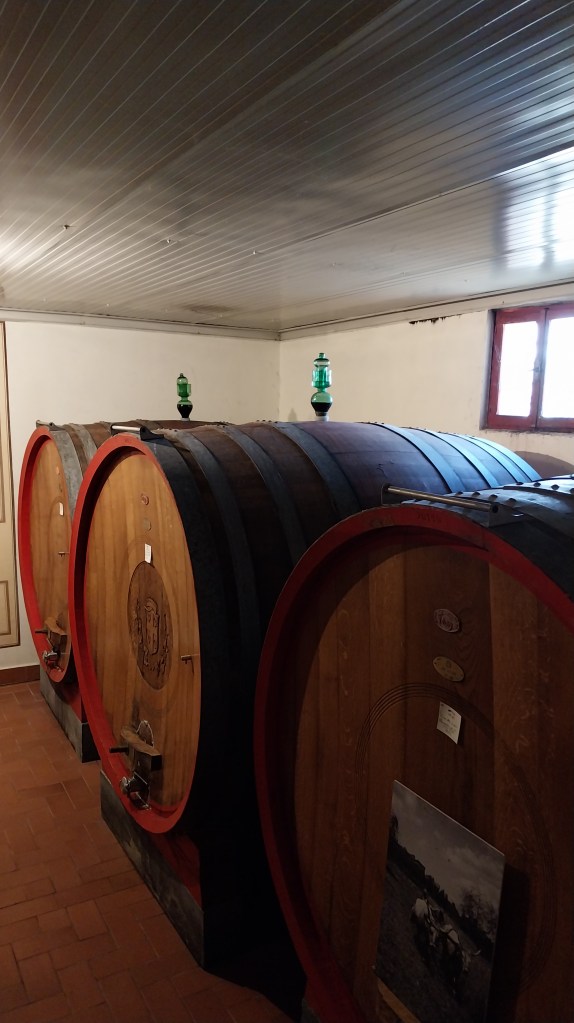
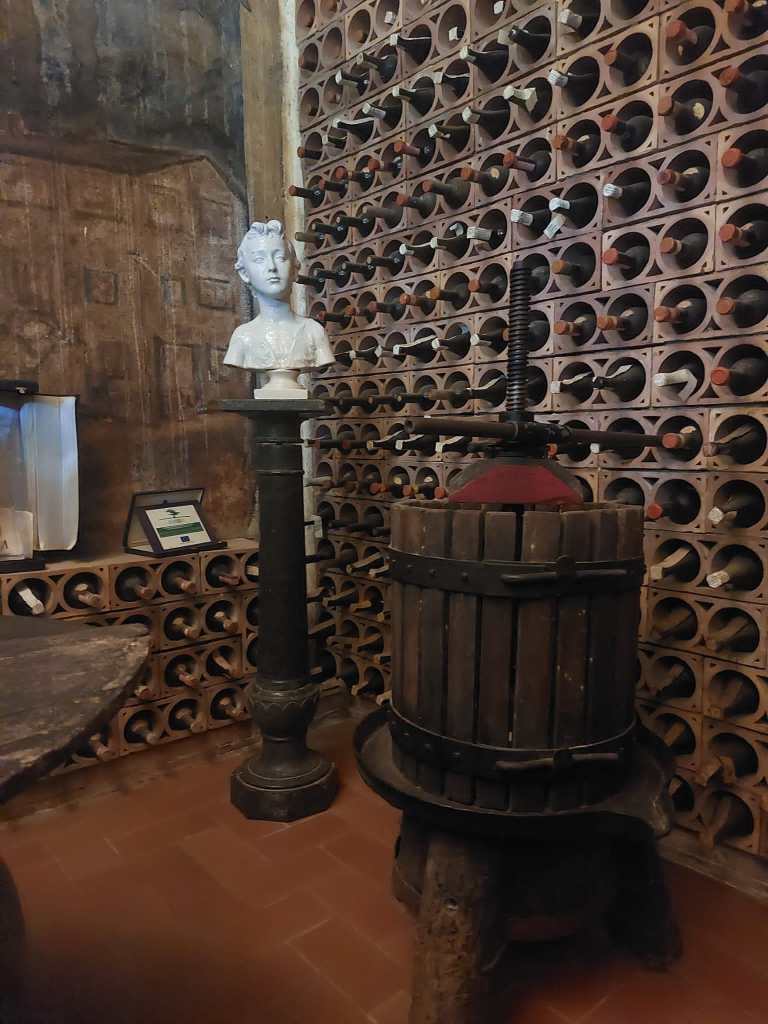
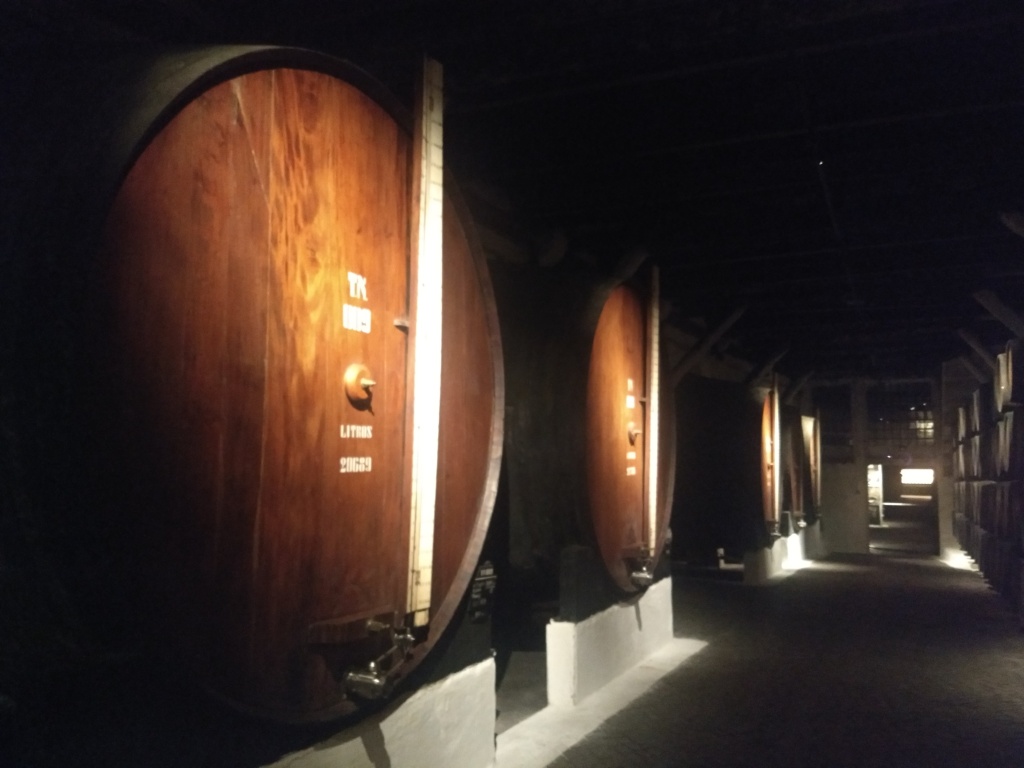
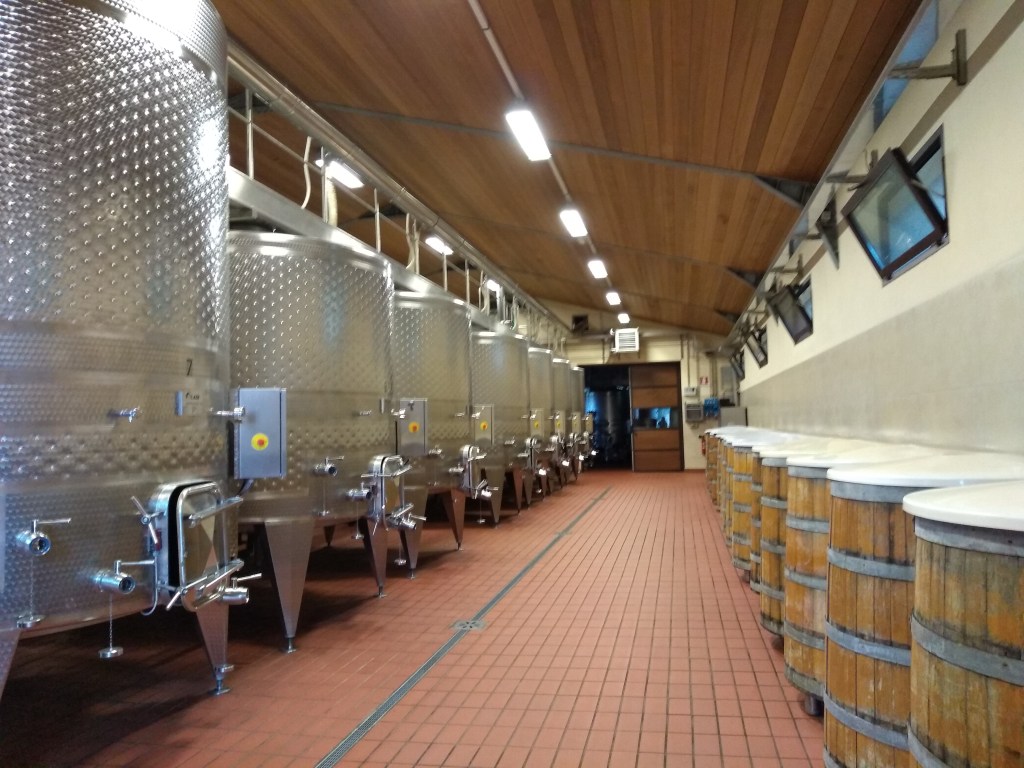
The tour started in the shop, from which we could access the historical cellar, a series of connected rooms full of big barrels for fermentation and maturation. Interestingly, these barrels had a ‘tappo colmatore’ on top, a Leonardo Da Vinci invention, a lid to verify the level of liquid in the barrel and to allow the release of gas that might generate during maturation.

While moving from one room to the next one, our guide covered the history of the Colombini’s family, owners of the estate for centuries. Originally a farm, wine making became prevalent in the 1800s thanks to Pio Colombini, one of the producers who started bottling Brunello instead of selling casks to grocers (‘vinai’). His son Giovanni expanded the business and made it one of the first to sell Brunello overseas. But what makes a wine a Brunello? The rules were set in the 1980s, but in a nutshell, it needs to be 100% ‘Sangiovese grosso’ grapes, and the wine needs to age at least 5 years, of which at least two in oak barrels (mostly French oak) and at least 4 months in the bottle (the remaining time is usually spent in big wooden vats, with the above mentioned ‘tappo colmatore’). Similarly, for the Brunello Riserva the years are six, with 6 months spent in bottle (the rest is similar).

We didn’t get too geeky on the tour, so we don’t have many technical details to share, but listening to family stories while admiring the old cellar was a great experience. The wine cellar was spectacular, with bottles of all vintages (including our birth years, sob). Some you could buy, but you needed to enquire, and they might decide not to sell anyway. However, the guide admitted that many of those might probably be well past their best, and now they are just collectible items.

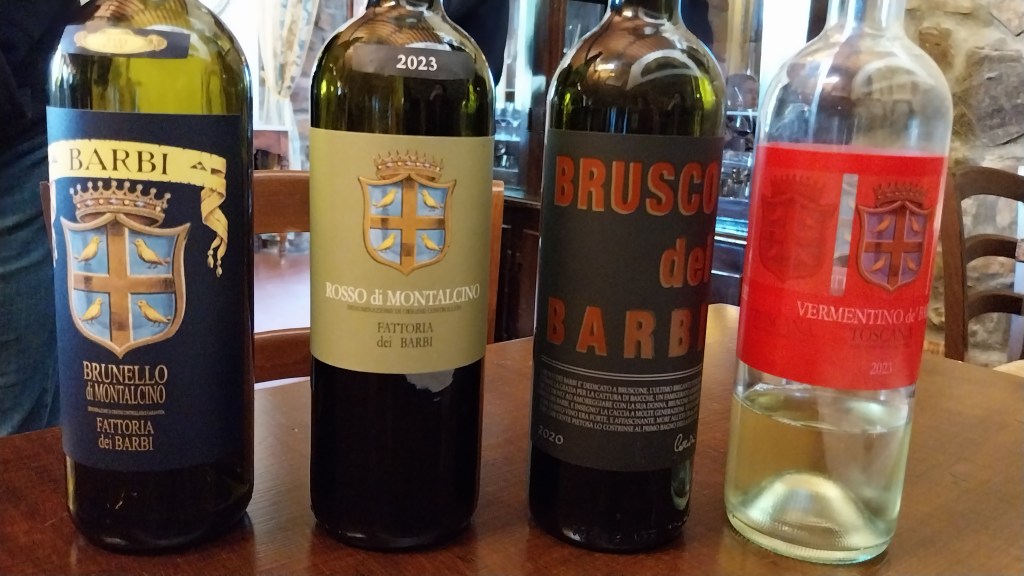
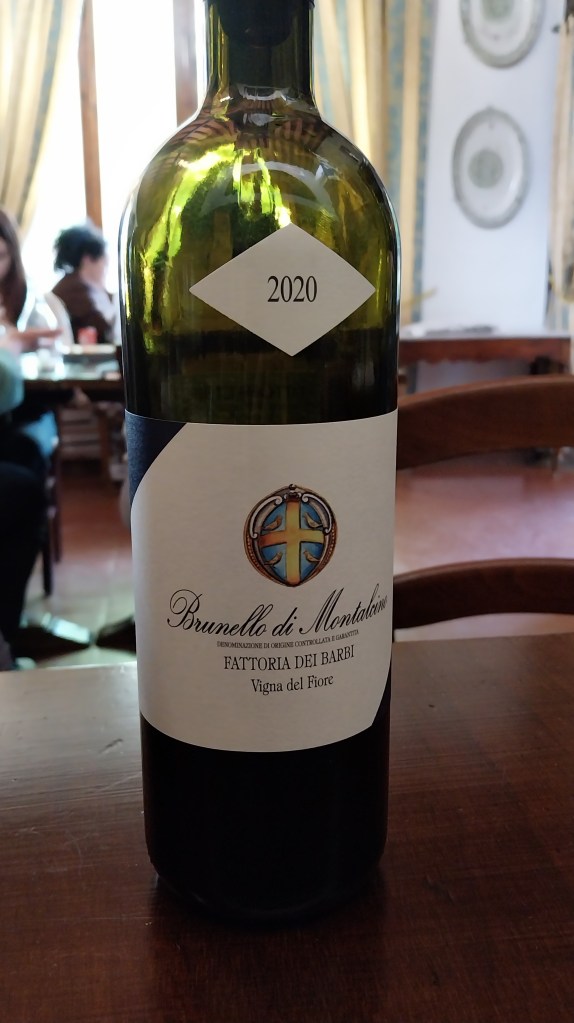
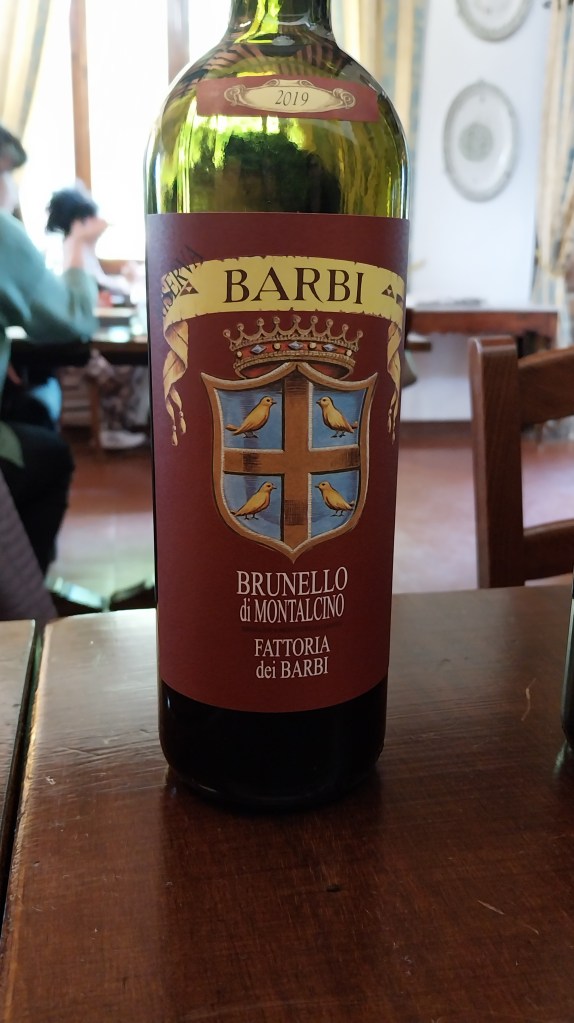
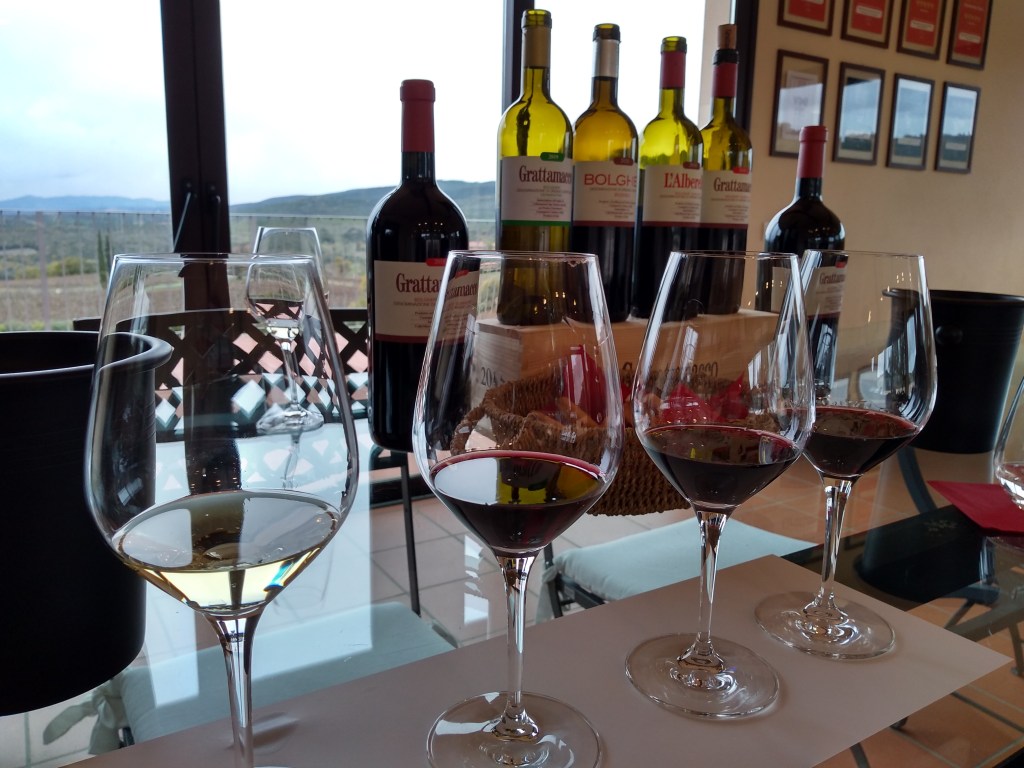
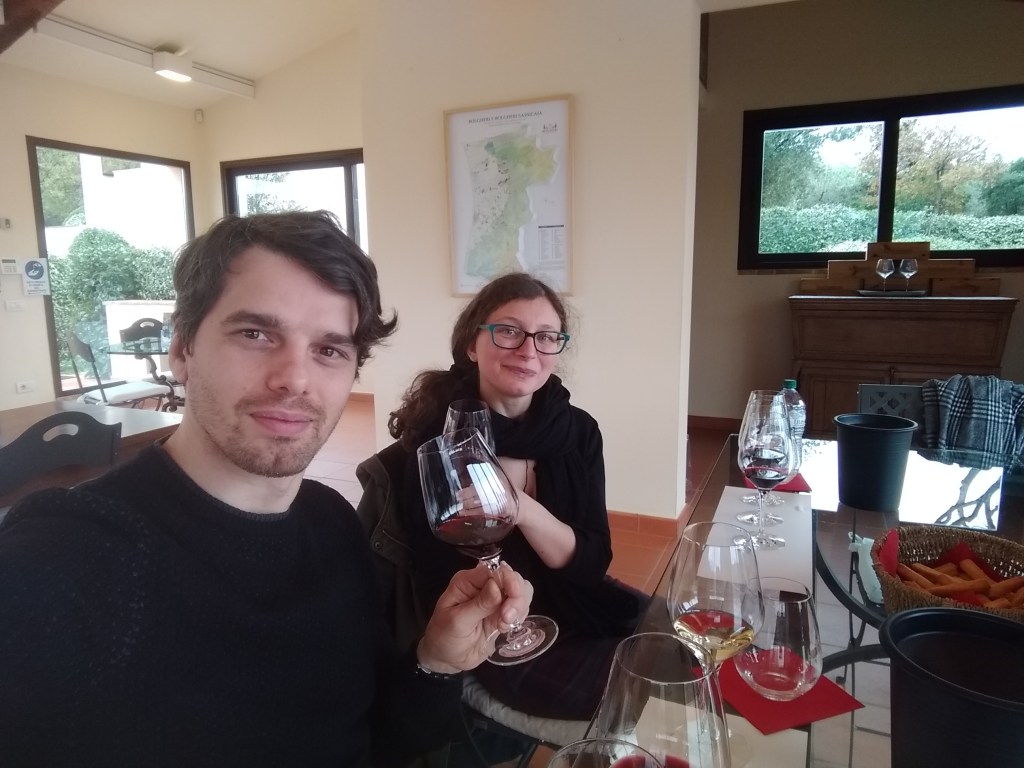
The tour came to an end, and we went to the next building, the bar and tasting room. The basic flight showcased a wide range of products: we started with a white wine, Vermentino dei Barbi (vintage 2023), then moved to a “table wine” called Brusco dei Barbi (2020, 90% Sangiovese and the remainder a variety of grapes). The third wine was their Rosso di Montalcino (2023, 100% Sangiovese grape but not a Brunello). The crescendo ended with their main product, the Brunello di Montalcino (2019, blue label), honestly another level compared to the previous three. The other flight was focused on Brunello, and it took where the previous one left off with the Brunello di Montalcino, followed by another Brunello, single vineyard, called Vigna dei Fiori (2020, white label) which was great, and finally with the Brunello Riserva (2019, red label), truly stunning. We loved the combination of oak and fruitiness in those last three wines.

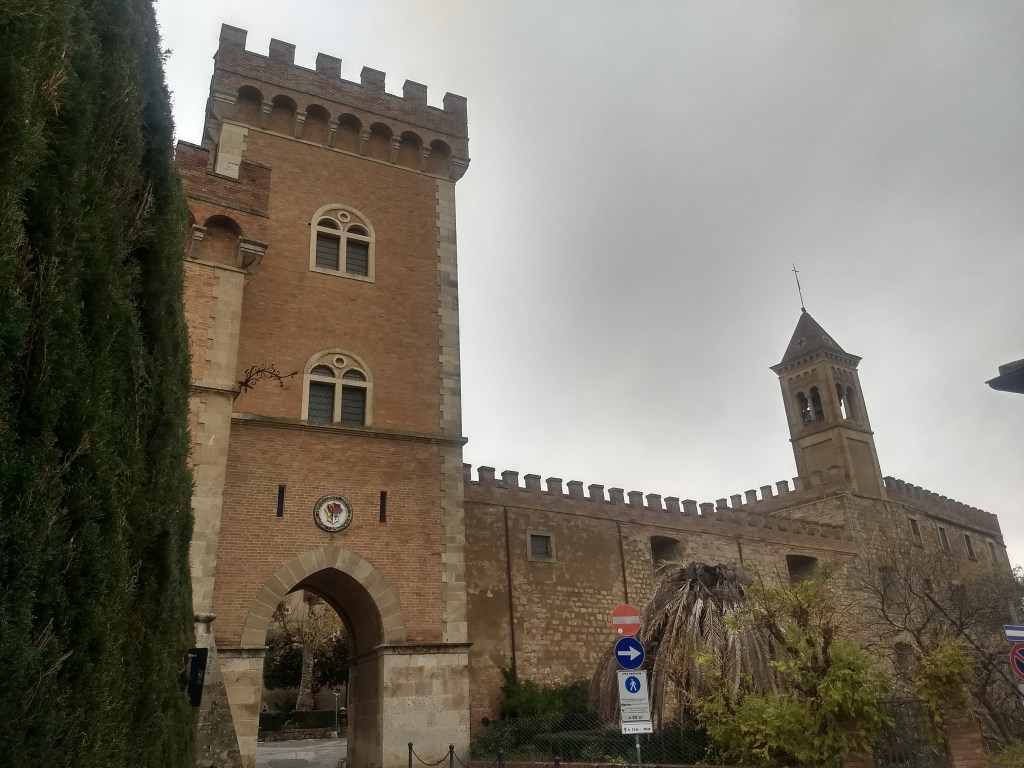
After the winery, we drove to Montalcino, the village, another beautiful “Tuscany-postcard” village, where we had a walk under a light rain and a gloomy sky, before a half pint in a local Circolo Arci (and from this, you can tell we’ve been living in Scotland for a long time) and the walk back to the flat booked for the night.

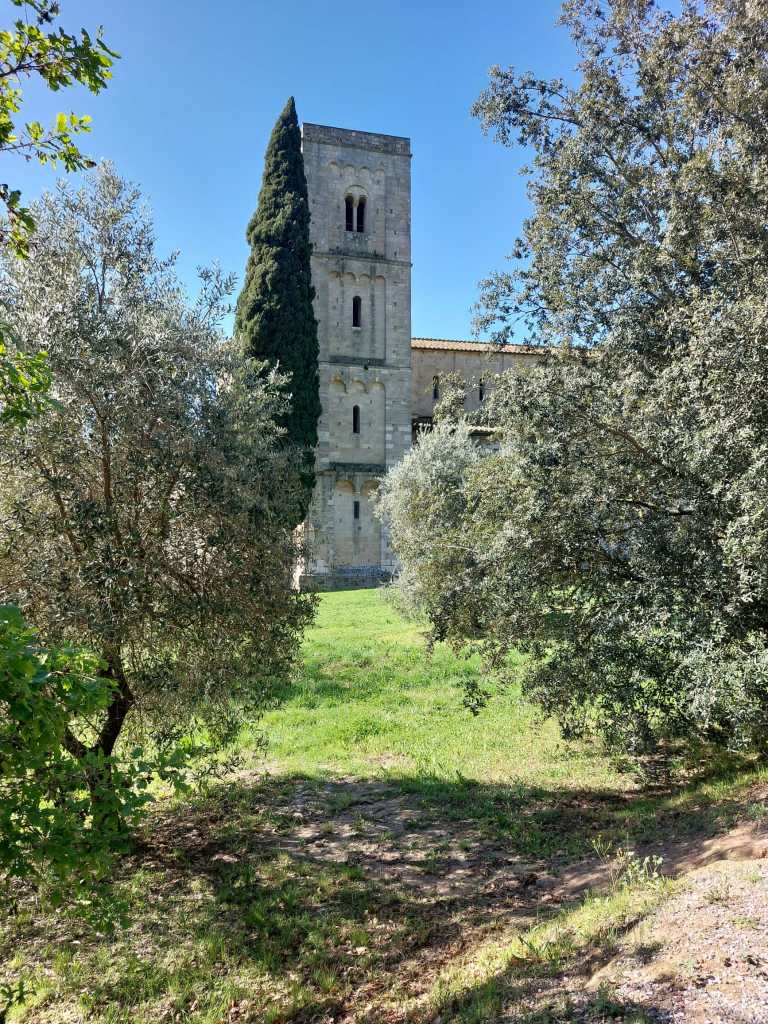
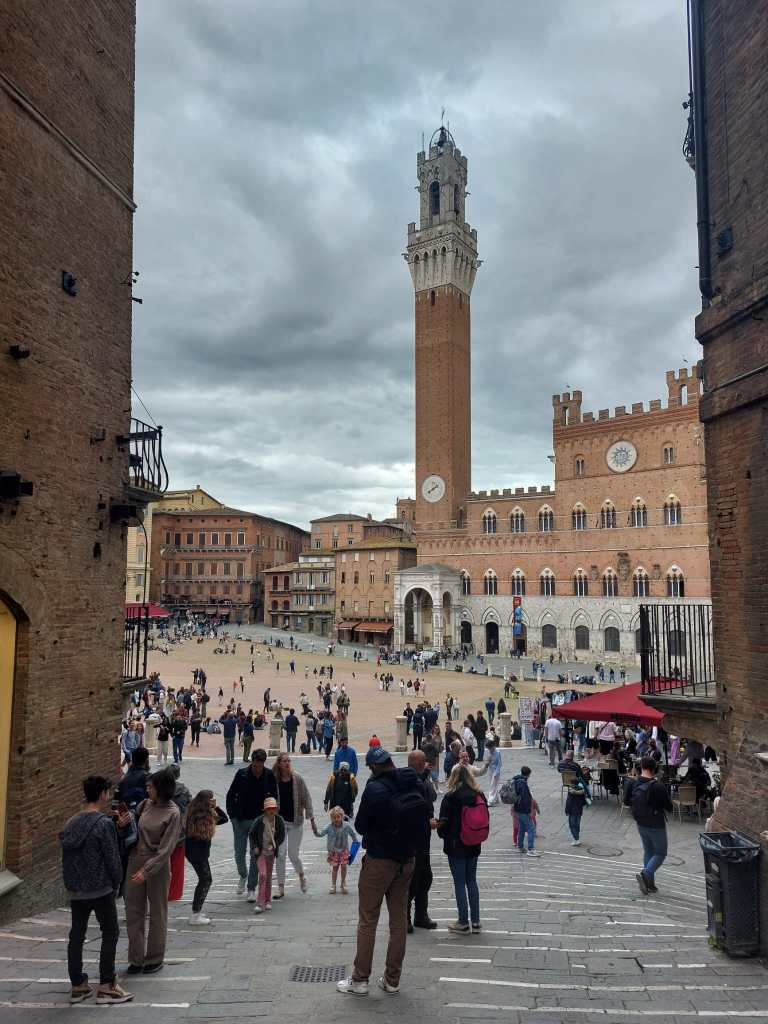
The next day, we spent some time at the Sant’Antimo Abbey, before driving to Siena for a stroll in this beautiful (albeit quite touristy) city, and lunch. From there, we went back to Florence.

And so, this is our latest “malternative” exploration, again in the esoteric world of wine. Overall, the visit was not as good as the one at Grattamacco of a few years back (maybe because this one was less intimate), but it was still very interesting and informative. The trio of Brunello’s was great though, something really worth to dig into for all the flavour-driven people.

We should say ‘salute’, but we keep our tradition instead, so, until next time, slainte!


Fattoria dei Barbi wine tour and tasting

Price: €10.00 pp (April 25) + €20.00/€35.00 for the tasting

Duration: 1hr (+ tasting at your own pace)

Tasting: the regular one, Vermentino, Brusco dei Barbi, Rosso di Montalcino, and Brunello di Montalcino; the advanced one, Brunello di Montalcino, Brunello di Montalcino Vigna del Fiore, and Brunello di Montalcino Riserva (vintage may change)

Target: everyone

Value for money: good

Highlights: the historical cellar

Recommended: we haven’t visited any other local wineries, but we had a good time

Link: https://www.fattoriadeibarbi.it/


#56.5 Dramming Down Under

A hidden gem in Southern Australia: Fleurieu


TL; DR: The drive on the Great Ocean Road was really great, plenty of beautiful landscapes and some nice wildlife. Before getting to Adelaide though, we did one last stop in Goolwa, to visit Fleurieu distillery. Another craft family business, we learned how they went from brewing to distilling, and had a taste of their amazing malts. 

(missed Part 4/Part 3/Part 2/Part 1?)

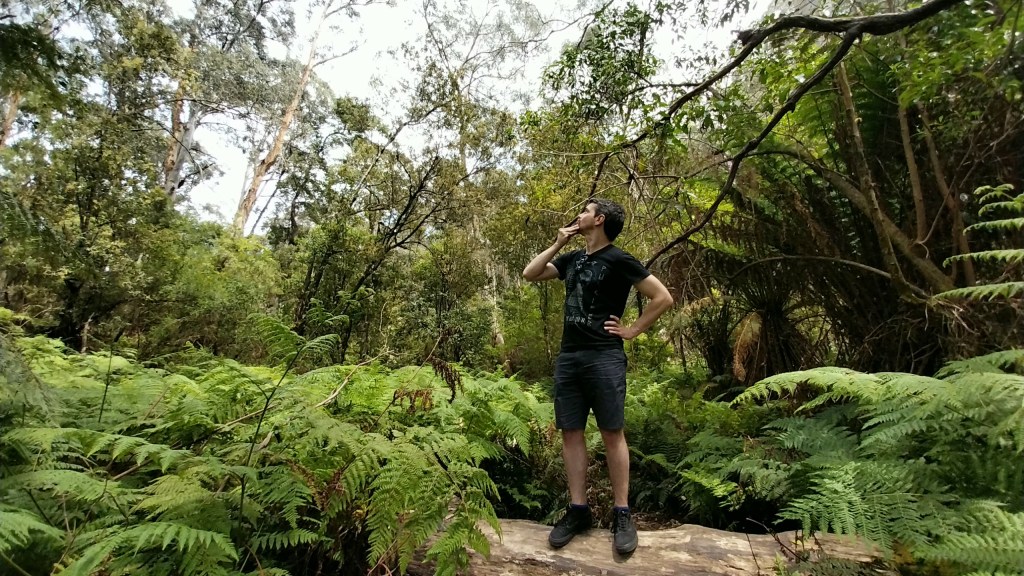
This post starts with us on the road again, specifically on the Great Ocean Road, which stretches from Melbourne to Warrnambool. We did a few stops along the way: Lorne, for breakfast at a nice café and art gallery called QDOS, the Kennett River Koala Walk (where, despite the name, we almost didn’t see a koala on a tree), the stunning Cape Otway lighthouse, the famous 12 Apostoles, and past Port Campbell, for a quick swim in the Southern Ocean before stopping in Portland for the night.

The next day the weather was not great, so we kept driving along the coast and visited a few other villages (Beachport, Robe, Meningie) before crossing the river Murray at Wellington, with the small boat watched by a flock of resting pelicans. Pelicans were not the first encounter of the day, as during the drive an emu and a kangaroo crossed the road! After the very short crossing, we drove through Langhorne Creek and Currency Creek wine regions (not stopping this time), straight to Goolwa, just about one hour away from Adelaide, on the Fleurieu Peninsula. This is a nice wee town, next to the estuary of the Murray river.

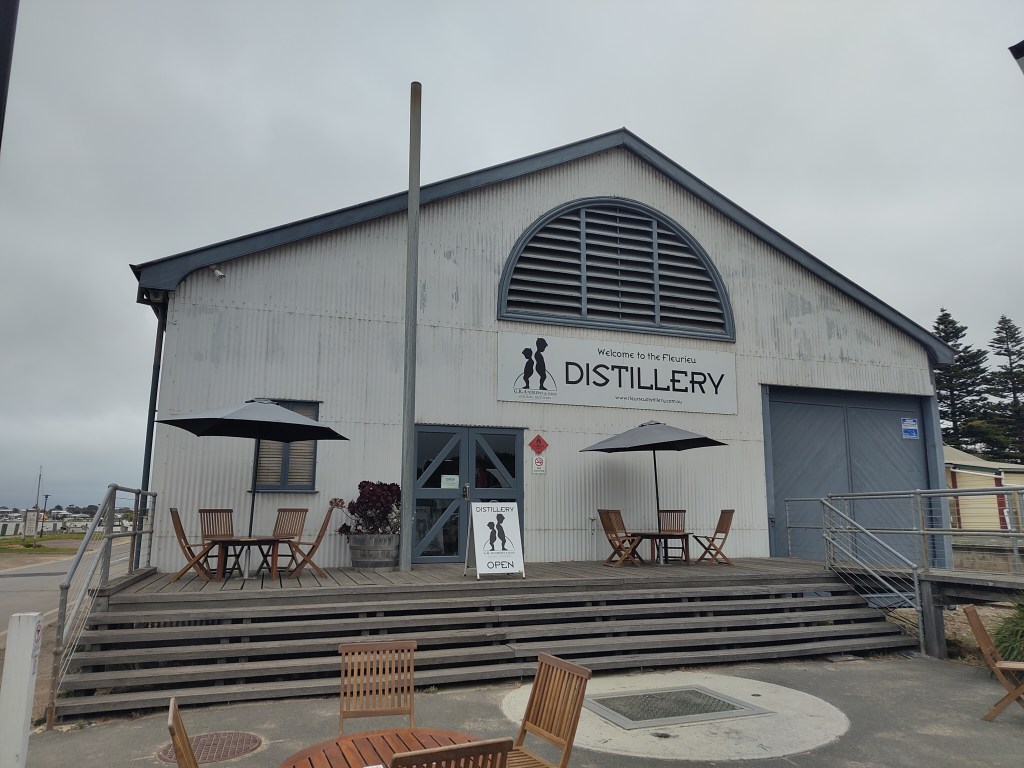
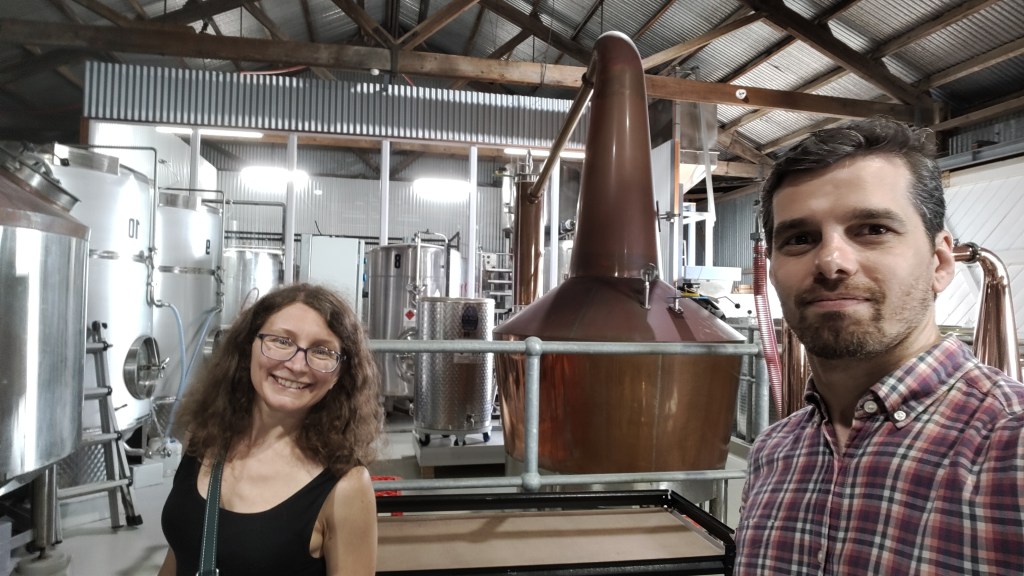
The next morning we went for a run (the only one we did together in Australia), first along the river and then to the beach, and back to the motel. We were excited, because we had an appointment at a distillery, the last one of our holiday: Fleurieu. The distillery is on the riverside, in a listed building next to the train tracks (reasons why they cannot expand). We learned about them while visiting Melbourne’s whisky bars, and when we realised that they were almost on our itinerary, we contacted them and asked if we could visit. Gareth, one of the founders and head distiller, very kindly agreed and gave us an appointment for half hour before the bar would open to the public – nice gesture! Before the distillery, Gareth and his wife Angela were running the Steam Exchange brewery, founded in 2004, and located in the same building they are still using. However, after the boom of craft brewing, they decided to move to whisky, to differentiate themselves from the crowd. They started planning this change back in 2013, and for a while they produced both whisky and beer. They later phased out beer, which is now produced by another company on commission, using their recipes.

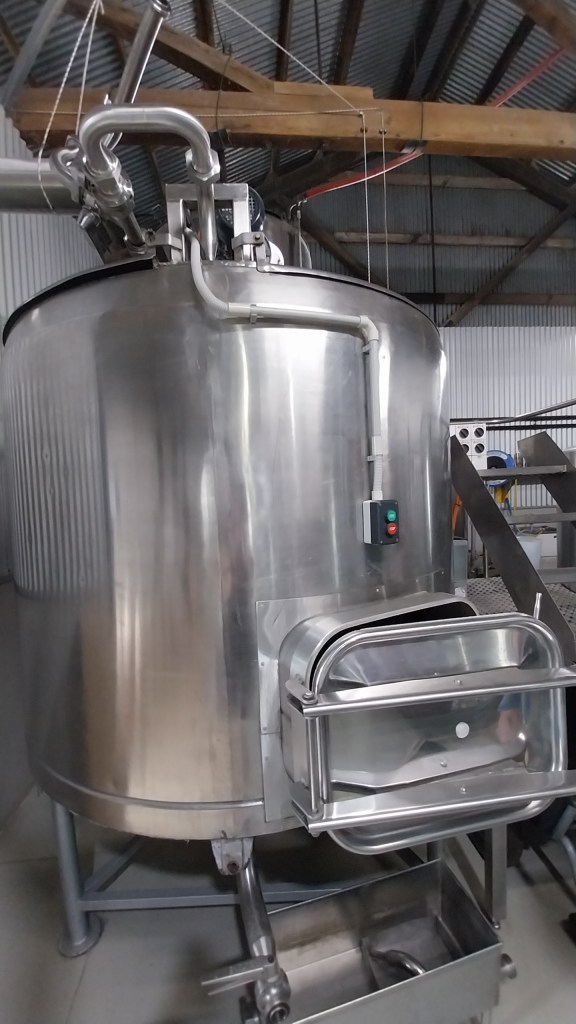
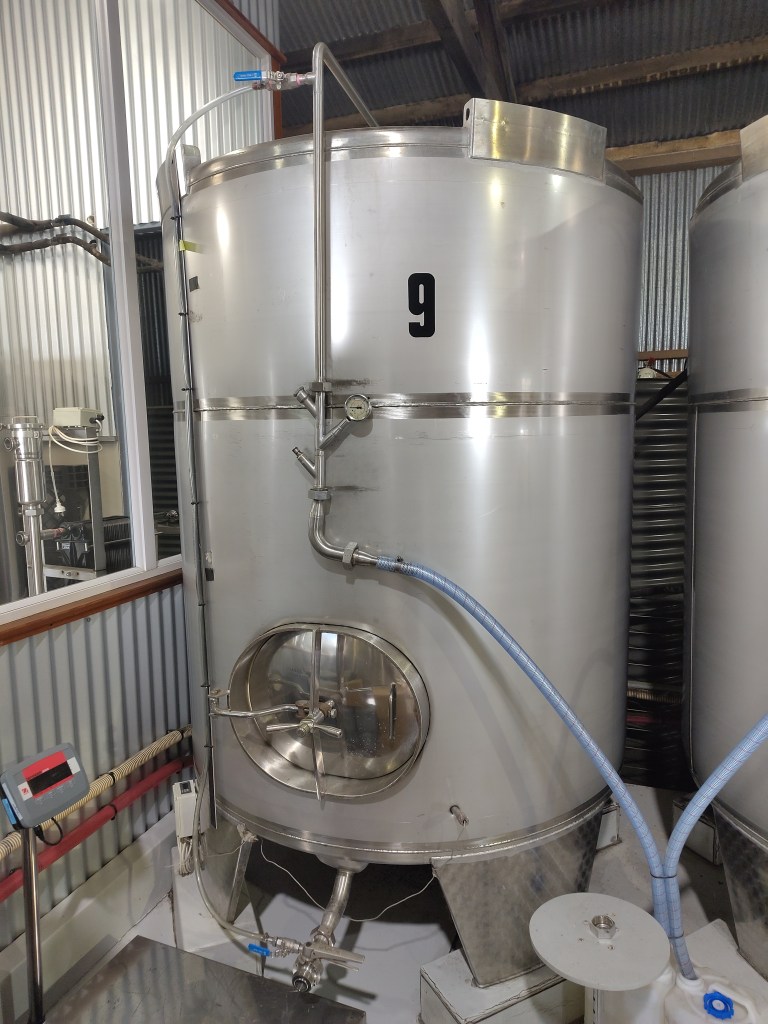
As Gareth welcomed us, he delved into the features of their whisky production. They start from local aqueduct water, which goes through a 10,000 carbon filter to clean it before mashing. The mashtuns used to be manual (they have two small ones), but then they added a mechanic stirring system. They aim for a clear wort, which is then passed down to one of the shallow fermenters, together with brewer’s yeast (some of their brewers’ heritage remains). In between these stages, they use a portable heat exchanger, to recover the heat lost from taking down the wash temperature to allow yeast to do its job under the best conditions. Fermentation lasts at least 8 days, once again a very long one! They use the “double drop” fermentation technique, which allows for a second fermentation – this is a brewing technique we are not too familiar with, definitely first time we heard about it in a distilling context.

The fermented wash is then transferred into the 3,600-litre wash still, and then to the 1,200-litre spirit still, both coming from Tasmania. To charge the spirit still, they use 600 litres of low wines from the previous wash still run, 300 litres of tails from the previous distillation and 300 litres of water. The first distillation is mostly run at night, to save energy; similarly, the second usually starts around 5am, and by 8am they are ready to take the cuts, done according to taste. Just before their silent season (December to January, when the weather is too hot), they produce some peated spirit, while they make unpeated spirit during the rest of the year.

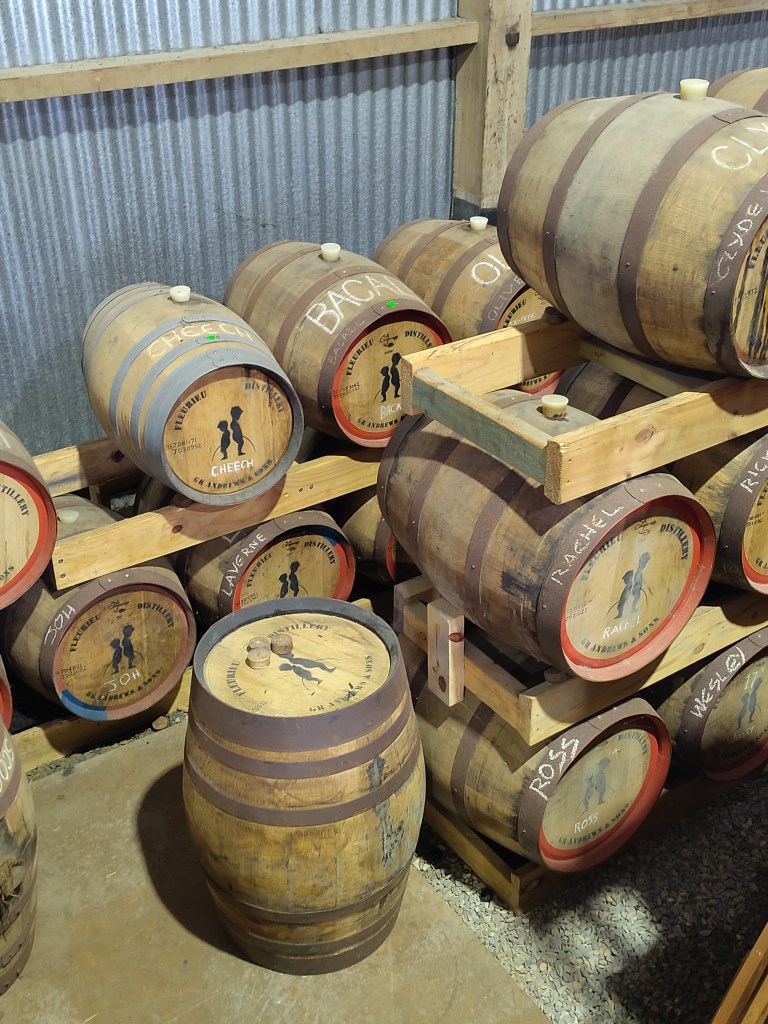
The cask filling strength is very similar to most Scottish distilleries, 63.4%abv, and in contrast to most of the other Australian distilleries but, again, similarly to Scotland, the abv goes down in this corner of the world. That’s because of the humid climate, influenced by the Southern Ocean. They fill many types of casks: ex-bourbon, Apera, Australian tawny, and of various sizes (we noticed a number of smaller size casks around). One practice that showed us their care for details: if they see that a cask is too active, they rerack the spirit (or whisky) into a less active cask, to slow the maturation process and allow a mellower maturation. This is because climate is still hotter than places like Scotland or Ireland, thus some casks might give too much too quickly.

Finally, it was time to try some drams. We started with “Never a dull moment”: this is a vatting of Apera casks named after women in their families. Yes, every cask has a name, including some American oak casks named after United States presidents (until the 60s, then it became too controversial). This expression is a small batch (1,320 bottles, bottled at 47.6%abv). Small batches is what they mostly do, sometimes taking only part of certain casks. Another thing denoting their attention to detail, if you ask us. Moreover, despite some lower abvs, none of their whiskies are chill filtered or artificially coloured.

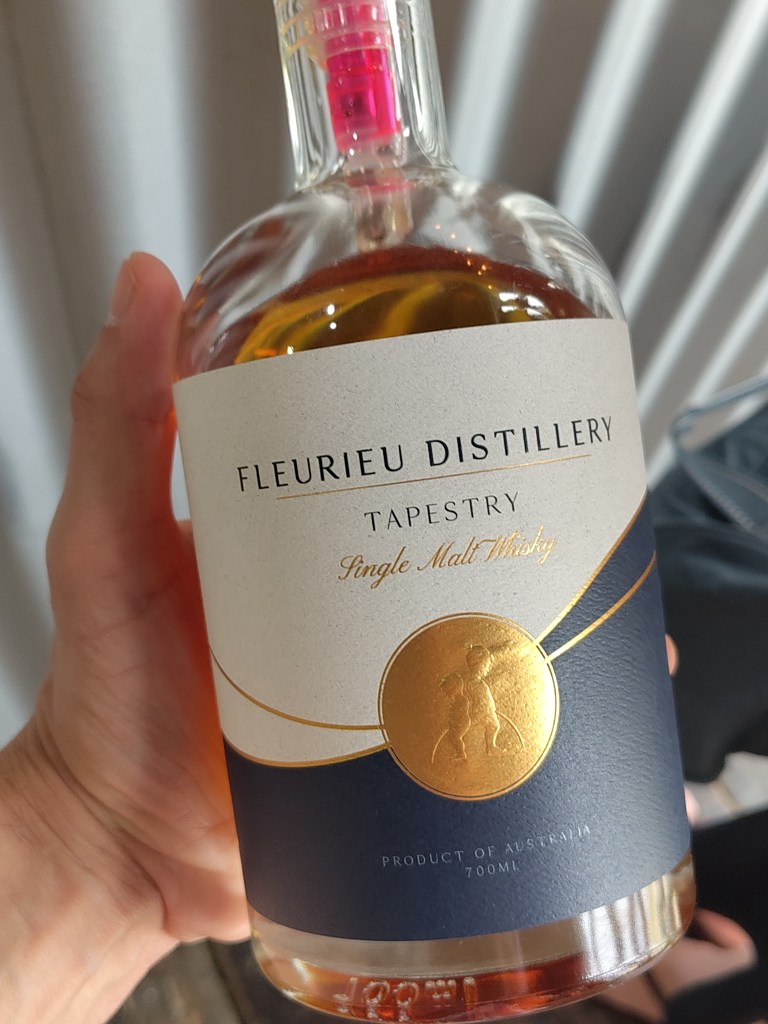
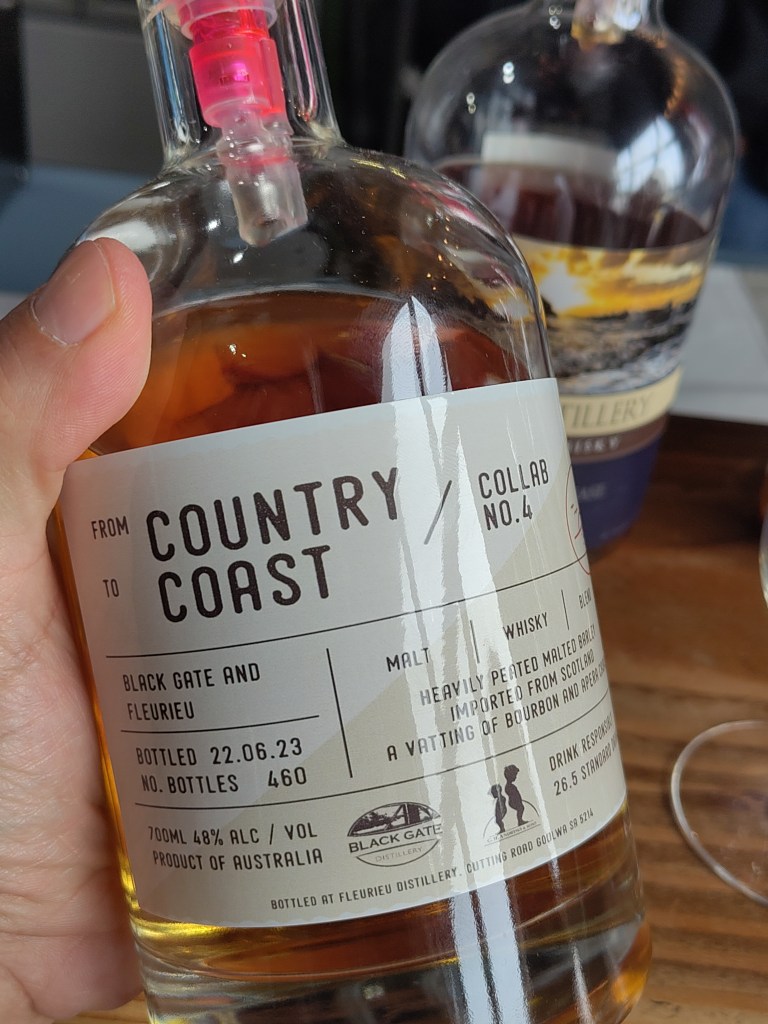
Anyway, moving on, the second dram was “Tapestry” (850 bottles at 45.2%), a mix of ex-bourbon and Apera casks. We then tried their first release, dating a few years back, in 2017: a Port cask whisky matured (600 bottles, 52%). Finally, we tried two editions of their blended malt collaboration with another craft distillery, Black Gate, from New South Wales. The bottling is called From Country to Coast, we tried Edition 4 (460 bottles, 48%, already tried back in Melbourne) and Edition 5 (240 bottles, 46%). We liked Edition 4 the most, but unfortunately it was not available to buy (which probably saved us a second bottle purchase, after Tapestry).

We loved the whisky we tried at Fleurieu, definitely among the best of the holiday, and Gareth’s friendliness wa the cherry on the top. We also loved the attention to detail they put in everything they do, just a shame finding their whisky here in Scotland is so hard (the only bottling we found is this one, hefty!).

After leaving the distillery, we had some food and drove to Adelaide. We stopped briefly to say hi to a fellow barfly who was on shift in a liquor store that day. It’s always great to chat to whisky nerds during our trips!

Adelaide is a lovely city, a shame we stayed for only a day and a half. After that, we visited the Barossa and Eden Valleys (while we were there…amazing wines!), before the long drive back to Melbourne through the stunning Grampians National Park. There, we got a flight to Uluru, where we spent a few days before heading back home: definitely one of the highlights of our holiday (despite no whiskies there…we won’t put too many pictures here).

In general, the whisky scene in mainland Australia (we left Tasmania for another time) really surprised us, we had some amazing drams down under! But what we loved the most is the ethos and how people really care about what they’re doing there.

Stay tuned for some festival action, this time in Scotland, coming in a couple of weeks! Until next time, slainte!


Fleurieu Distillery Tour

Price: free (November 2024)

Duration: 1hr 30min

Tasting: Never a Dull Moment (vat of Apera casks, 47.6%), Tapestry (ex-bourbon and Apera casks, 45.2%), First release 3yr Port Cask (52%), From Country to Coast Edition 4 and 5 (blended malt, 48% and 46%)

Target: everyone, but whisky geeks especially

Value for money: NA

Highlights: the drams were really good

Recommended: a must visit if you are in the area!

Link: https://fleurieudistillery.com.au

#43 Cask finish DIY

Diary of an experiment


TL; DR: Have you tried to finish your own whisky in a wine cask? Well, we did, and although we already knew, we could see how hard it is. While the result was not great, we definitely learned a few things. 

This post is going to be different from others, as we won’t tell you about a distillery visit, nor a trip, nor a tasting. We’ll talk about an experiment we did recently – still a journey, if you wish.

The idea came after some thoughts on whisky maturation in casks that previously held wine. It took a while to us to realise this is a controversial topic. At first, we didn’t give it much thought as it felt it was just part of the broader “wine” category (including Sherry, Port, Madeira, etc.), but then we noticed many whisky enthusiasts think wine cask maturation is a separate thing, often perceived as bad… so what’s the deal with red/white wines? We had amazing drams matured in wine casks (Arran Amarone, to name a popular one, but also a stunning Glen Garioch 19y fully matured in an ex-Bordeaux cask tried at the distillery, or the Glen Moray 10 Elgin Limited Edition, finished in ex-Chardonnay casks). Let alone the STR (shaved/toasted/re-charred) casks made popular by the late Jim Swan: some can deliver a lot of flavour in a short time, which is particulatly crucial for new distilleries. However, we also had some very “meh” wine-matured whiskies (we won’t name names here), dull at best, so we totally get the scepticism of some.

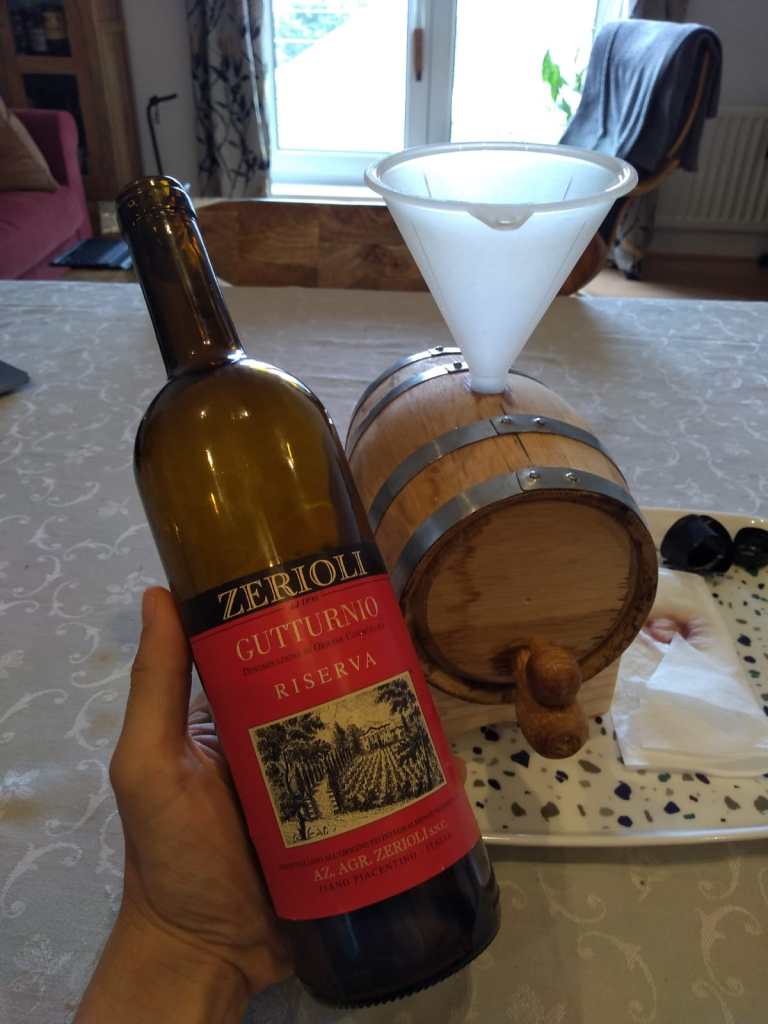
A taste of Gianluigi’s home, Gutturnio wine.

Probably our Italian upbringings sparked further curiosity on the topic, so we did a bit of research and noticed that while maturation in casks such as Amarone, Barolo and Cabernet-Sauvignon is fairly common nowadays, lesser known red wines aren’t a thing (yet). One wine in particular seems to be overlooked: Gutturnio. Typical from Piacenza’s province (Gianluigi’s hometown), it is a mix of Barbera and Bonarda grapes, and comes either fizzy or still (“superiore”). A thick red wine, that goes well with the greasy local cuisine, quality-wise you can find the cheapos from supermarkets, up to several tenths-of-euros per bottle. We wondered for a while, then, after a conversation with Woody and Megan from Woodrow’s of Edinburgh, we decided to give it a try and start an experiment.

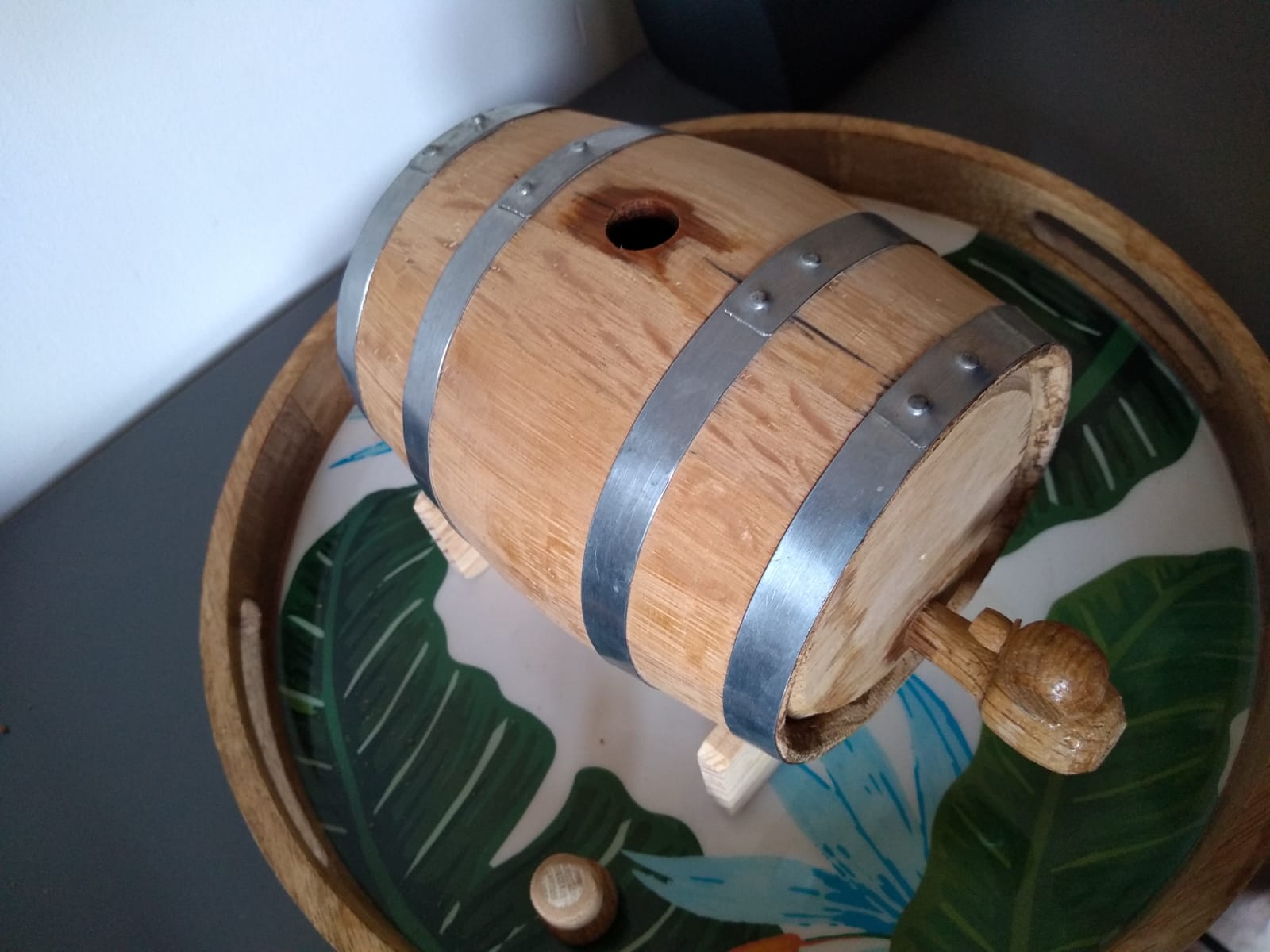
We asked some friends about to visit us to bring over a bottle of Gutturnio, Gutturnio Zerioli Riserva (later on Gianluigi’s brother would challenge this choice as not great, but hey ho) and then we bought a 1-litre virgin oak cask (American oak, Q. alba) from Master of Malt (where it was cheaper, if you exclude some suspicious vendors on Ebay). On the 26th of August 2023 we filled the wee cask with 75cl of wine, and left it in there for a bit over 3 months.

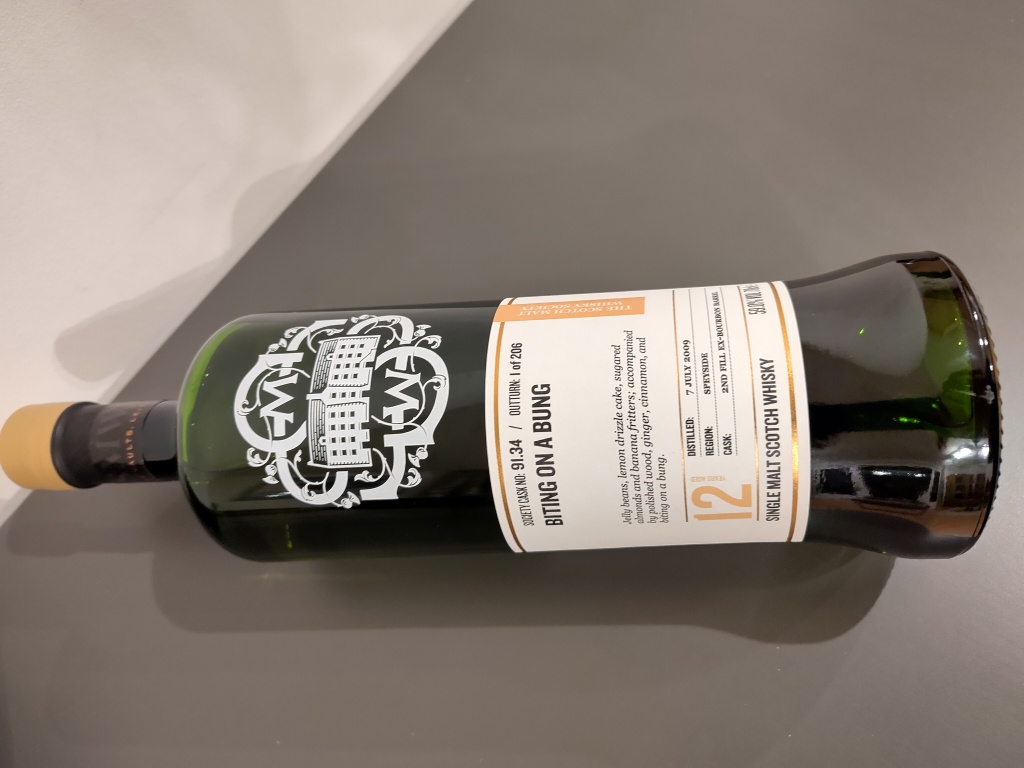
While the cask was seasoning hidden away in a cupboard (turning it from time to time), we chose our dram. We wanted something without much cask influence, so we aimed for second-fill (or more) ex-bourbon casks. Living in Edinburgh made things easier, as we could access the two Scotch Malt Whisky Society venues, although it wasn’t easy to find a whisky available both to try and purchase. We still managed to taste 6 or 7 bottlings from various distilleries, and the final choice fell on a 12-year-old Dufftown (distillery that we had the chance to walk past in our first trip to Speyside, but never properly visited), called Biting on a Bung (91.34), distilled on the 7th of July 2009 and bottled at 59.0% abv.

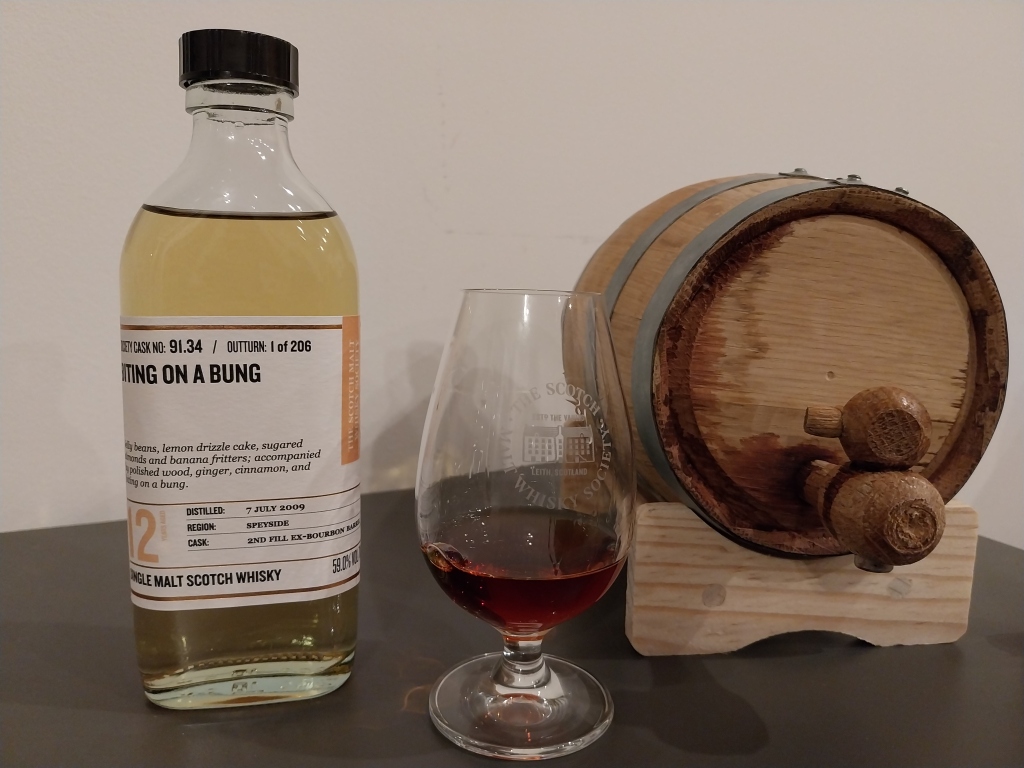
On the 5th of December, we disgorged the wine. To our surprise the cask was soaked – of the 75cl of wine we’d put in, only 35cl came out! We knew that some absorption would happen, but not to this extent!

What was left of the entire bottle!

On the same day, we filled the cask with the whisky while leaving 20cl to ourselves, in case we messed things up (spoiler alert, we did). We didn’t have a timeline in mind, we just wanted to try the whisky at different times, but here one miscalculation: we went back to Italy two weeks for Christmas, leaving it unchecked for probably too long. When we came back, we took a sample right away: a lot of colour (copper red), some typical red-wine notes on the nose (tannins and red berries), but very metallic on the palate. We hoped these metallic notes would disappear with some more time in the wood, but they didn’t, so in early March, exactly 3 months after filling the cask, we disgorged it and, again, only 30cl of whisky came out (another 20cl of liquid absorbed) – 30cl of ‘metallic liquid’, clearly not a success.

We followed up the experiment, this time not with a proper whisky but with spirit from our infinity bottle: despite leaving it in the wee cask for only a couple of weeks, the same unpleasant notes re-appeared (although not so much absorption this time). Oh well.

So, what did we learn out of this experiment? How to waste a good half-litre of whisky? Definitely, but not only that. We already thought it must be hard to properly finish a whisky in the right cask for the right amount of time, but we were surprised by how easy it is to mess up (well, probably the small size just accelerated the process)!

We made a list of variables to consider:

  1. The cask! After so many distillery visits, we know wood quality is key (but tbh we didn’t feel like investing big for our random experiment)
  2. Time to season the cask with wine (maybe too much?)
  3. Time to finish the whisky (again, too much?)
  4. Climate conditions (our flat is very very dry, but there’s not much we can do…)
  5. Whisky robustness (maybe it was a too delicate one for this kind of experiment?)
  6. Quality of the wine…or even the type of wine?

So many variables…it’s really hard to wrap our heads around it, although we could sum up all these variables into one: experience, i.e. really knowing what you’re doing. We clearly didn’t, but thankfully this is not what we’re doing for a living. Nonetheless, it was fun! What’s next? Currently the cask is empty, but we’ll try to fill it soon to avoid it to dry too much…with, maybe, rum? Another wine? Let us know if you have any ideas!

Until next time, slainte.


#15.2 Exploring Port(ugal)

Taking the country road


Moving away from the city, we visited the magnificent Avelada vineyard on the hills near Penafiel! 

(missed Part 1?)

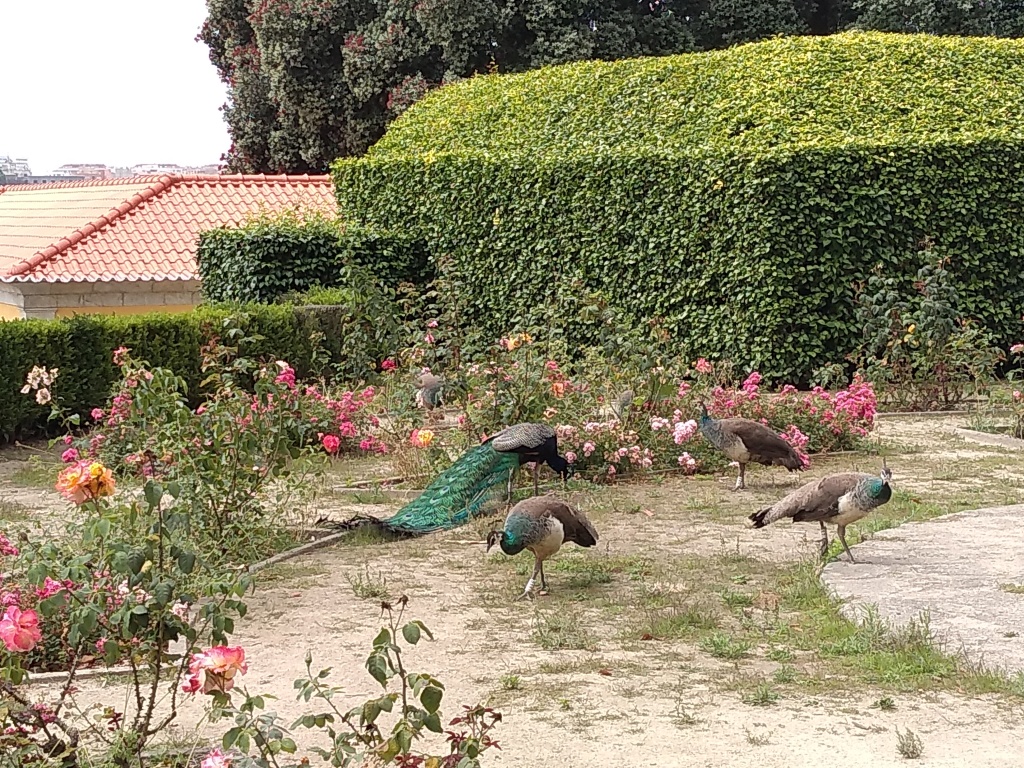
In the morning we woke up a bit dizzy, but nothing that the abundant and delicious Serra do Pilar B&B breakfast couldn’t fix, bravo to them. We spent the morning visiting parts of town we hadn’t seen the day before, the Jardins do Palacio de Cristal among them (loads of peacocks, and for some reason, chickens). Right after lunch we went to pick up the car near the airport, and then we left the city to go to Penafiel, the village where the wedding was.

Four peacocks in a single picture, that’s a record.

The village is about 40 minutes from the airport, which gave us enough time in the afternoon to visit the Quinta da Aveleda vineyard, in the Vinho verde DOC area. The Quinta was funded by Manoel Pedro Guedes about 150 years ago, and has been with the same family for 5 generations. They own at least four vineyards in Portugal, one of them in the Douro region as well. They produce many types of wine, Port and brandy. The vineyard is adjacent to a huge and really beautiful Victorian garden, full of stories and anecdotes about the family. We were surprised to find a statue of the green men inside, other than the peacocks (again…noisy, but still better than Leith’s out-of-control seagulls).

Victorian gardens at Quinta da Aveleda.

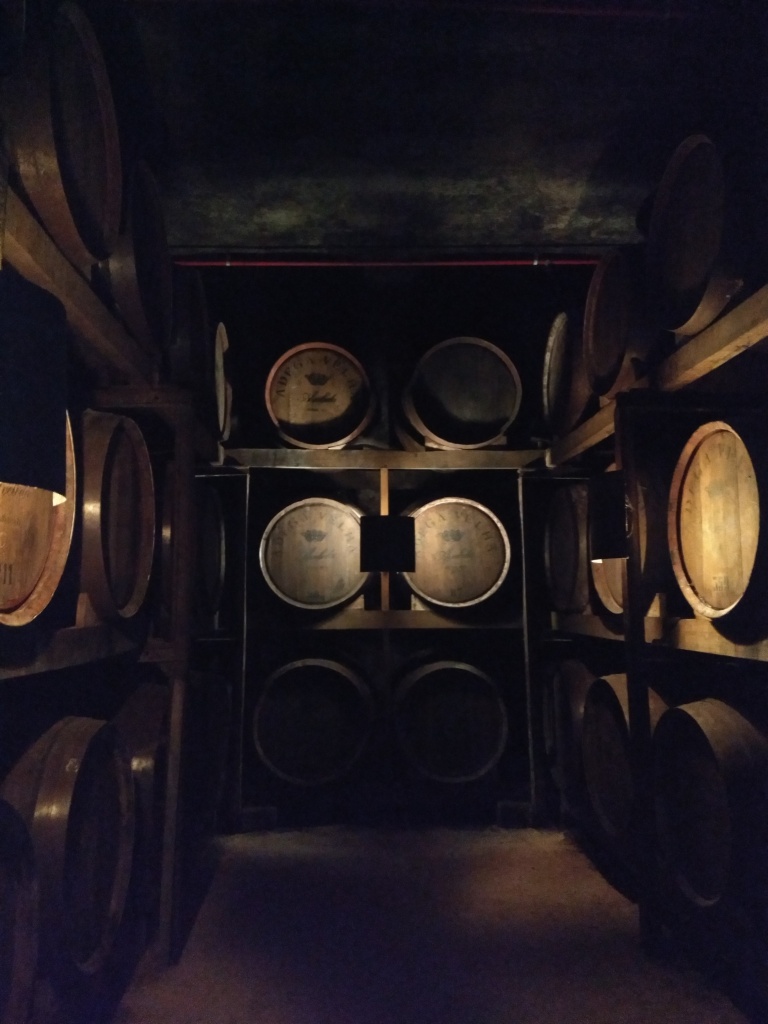
After visiting the estate and mostly the garden, the guide conducted us in the warehouse where they mature brandy: curious Gianluigi asked, but none of these casks are shipped to Scotland afterwards (d’oh!), although some of their brandy is finished in former Port casks. The tasting comprised 3 glasses of wine: a vinho verde, a white wine from the Bairrada region and a red from the Douro Valley. The latter two were quite exquisite, but we took the first with us: it had some very unusual and interesting citrousy notes, and we could totally see it paired with grilled squids or Scottish scallops. Plus, it was the local one so it made more sense. We also got a tasting box of their brandys (the 5y, 12y and 30y), something we were very curious about (not tried yet, we’ll let you know!).

A small warehouse.
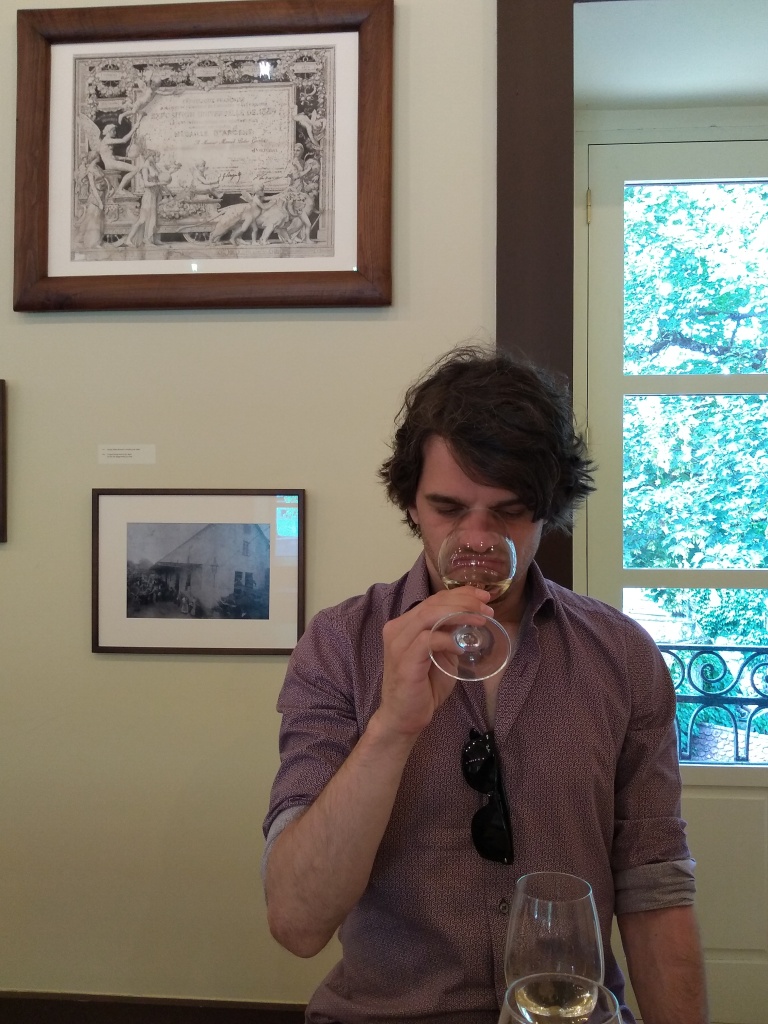
Gianluigi trying to come up with non-whisky tasting notes.

In the evening we had a pre-wedding party with the young attending the wedding, and with “young” meaning 30 to 40 more or less. It was very nice to see Paul and Nelly, Gianluigi hadn’t seen them for a few years, and for Teresa it was the first time.

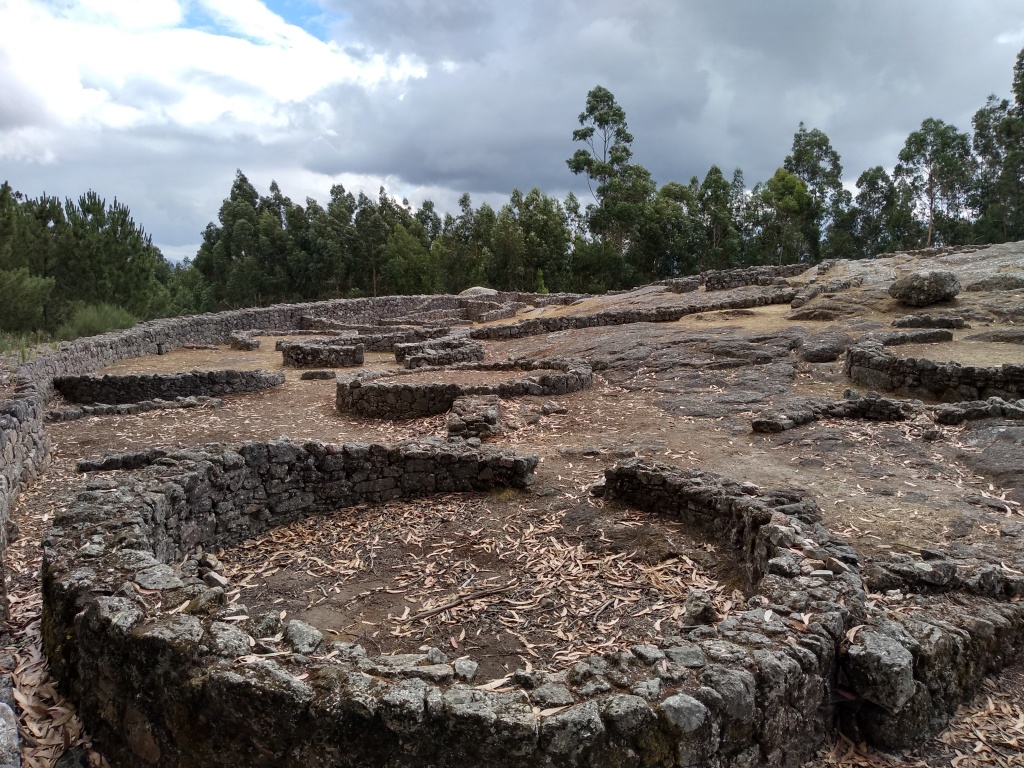
The wedding was at 4pm on the day after, so we had all the morning to treat us as…old people. We went to a thermal pool near Penafiel, and afterwards to the Castro of Monte Mozinho, a Roman archaeological site.

An unimpressive picture of an impressive archaeological site.

The wedding was celebrated in an old monastery, followed by a luscious dinner at a close by estate and a lot of partying. At the end we tried a J&B blended scotch 15y at the bar, which wasn’t as bad as we expected. It was not the first blended scotch we saw in Portugal with an unusual age statement: Grant’s 8y, J&B 15y, William Lawson 12y, other than the Old Parr (12y), which are not sold at all in Scotland. We were very restrained with drinking, so in the morning we woke up refreshed and we could drive straight to Porto to return the car. The airport, the centre of the city, Vila Nova de Gaia and the train stations are all very well connected by a quick subway train, which allowed us to carve out another couple of hours in the city. Do you really need to ask what we did?

Ooops, we did it again!

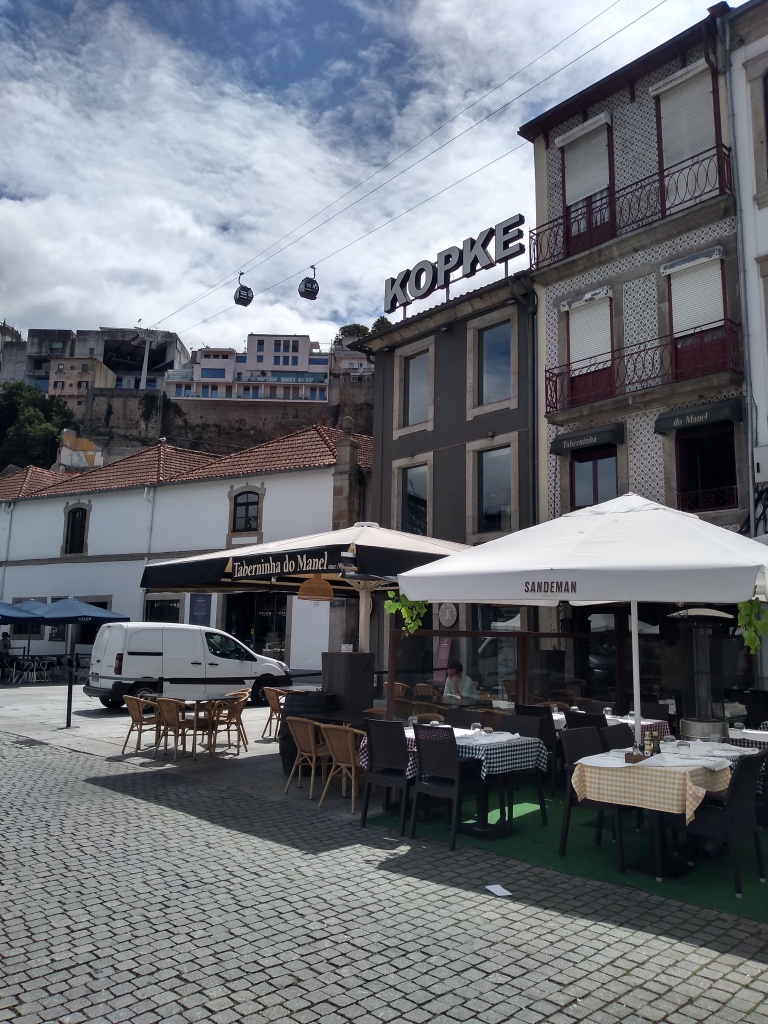
This time we went to Kopke (randomly chosen because Gianluigi found an unopened bottle of it in his late grandmother’s basement). They had no warehouse there, but we could choose over a range of tastings in their three-story venue. We chose a nicer one, which started with a dry white port: this is a variant to the regular whites, with the aguardente being added later during formation, after 7-8 days, so the sugars are almost gone (hence “dry”): we found it much better than the regular whites. Then we had a 2004 vintage ruby, a 10y white and two delicious tawny-s, a 20y and a 1978 Colehita. All paired with chocolate, which was a plus!

Delicious tasting at Kopke.

We finally took a train to Lisbon, where we spent the last few days of the holiday, trying wines and sightseeing. The city is a must visit if you’re around Europe (although we liked Porto better!). We walked a lot and did the ‘classics’: went to Belem for its famous tower and monastery and for its even more famous pasteleria, got lost in the charming Alfama neighbourhood, checked out as many miradouros (viewpoints) as possible, and even squeezed in half a day at the beach in Cascais. All this while enjoying great meat and seafood. Wine-wise, we found out that the area near the capital is home of great reds as well, some as good as the Douro Valley ones.

A windy day…
…followed by another windy day.
And just the night before going back home, another excellent wine!

So, the mystery: where do ruby port casks come from? We asked a few times, even the guy at Kopke couldn’t reply. Our best guess is that they are seasoned with ruby port, similar to what they do with sherry in the majority of cases today. We couldn’t really understand if ruby ports could be matured in small casks instead of large vats, maybe for smaller producers? No clue. We will post updates, if we find out! [August 2022 update: a whisky expert told us that yes, ruby port casks are seasoned casks.]

Port can be an excellent type of cask to mature or finish whisky, although still a try-before-buying for us. Similar to what we did when we visited Grattamacco in Tuscany, understanding a bit more the drink that contributes to give a certain character to the casks was very interesting, and we are happy to share some of the little knowledge we acquired with you!

Until the next time, slainte!


Visit to the Quinta de Aveleda and its Gardens, Premium Tasting

Price: 40.00 Euros pp (June 2022)

Duration: 1h 30m

Tasting: Vinho verde Parcela do Convento 2019, Douro Superior Vinhas do Sabor 2018, Arco d’Aguieira 2018

Target: tourists and gardens lovers

Value for money: Ok

Highlights: the Victorian gardens

Link: https://www.aveleda.com/en


Kopke Tasting

Price: 43.00 Euros pp (June 2022)

Duration: 45m

Tasting: dry white port, 2004 vintage ruby, 10y white, 20y tawny, 1978 Coheita

Target: tourists and port wine lovers

Value for money: very good

Highlights: the 1978 Colheita

Link: https://kopke1638.com/

#15.1 Exploring Port(ugal)

So, Port, eh?


With the excuse of attending a wedding, we travelled to Porto, where we were initiated to the magic of Port wines…and many others! 

(Read this already? Go to Part 2!)

This story began many years ago, in 2007, in Madrid. Gianluigi is a young fella, just moved there to study for a few months. Coming from a small and prude city in northern Italy, the bright and incredibly alive 5-million people metropolis provided a life changing experience. After a few unsuccessful attempts to find a room, he stumbled on this ad in a local newspaper: not close to the Autonoma University, but close to the city centre and to Malasaña…oh well, you can’t have it all. It’s here that he met Nelly and Paul, two of his eight (!!!) roommates. Nelly and Paul are French, but she’s from a Portuguese family, so fast-forward 15 years, and here they are: celebrating their wedding in a town half an hour away from Porto. Of course, having witnessed the happy couple beginnings, Gianluigi couldn’t turn down the invitation to the wedding!

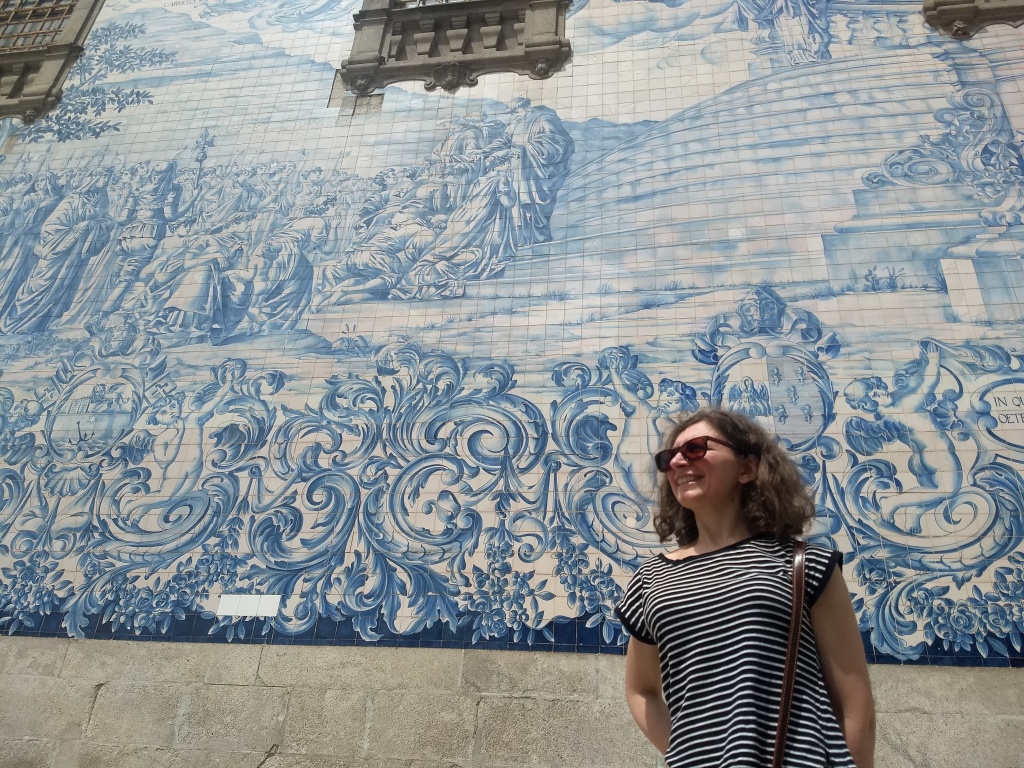
It’s all about tiles here.
It’s all about tiles, part 2.

Porto is an outstanding city, a mix of new and old buildings, lively and bright, despite the intermittent clouds. The Douro river splits the city in two, we stayed in the south side which is called Vila Nova de Gaia, where all the Port houses are, as you can very easily guess: their names are written in huge characters on top of buildings and warehouses.

Happy people with port houses behind.

Before our scotch whisky epiphany, fortified wines were not our thing. However, after finding out that casks previously used or seasoned with sherry, Porto, and other wines are used to mature or finish whisky, our curiosity grew. So, obviously heading to Porto was the perfect occasion to start our exploration of Port and other Portuguese wines. After a morning spent strolling in the charming streets of the city centre, we booked a visit to Sandeman for the early afternoon, one of the most known Port houses (as we guessed by looking at various advertisements around the city).

Play ‘where is Sandeman’.

It was founded by a Scotsman actually, George Sandeman, at the of the 18th century, with the first offices based in London. To our surprise, Port wine came to be in a much more recent era than we thought, as a consequence of the many Anglo-French wars which prevented French wines to be shipped to Britain. In order to conserve the wines for transportation, they started cutting them with aguardente vinica, grapes’ high abv spirit (~70% abv neutral grape spirit). Since this is done during fermentation (normally after four to five days), the wine retains a lot of sugars, giving more sweetness than most other wines. Going back to Sandeman, they are selling both Ports and sherry, and in fact their mascot, the Don, has both a Portuguese student cape and a Spanish hat. The tour was a bit touristy and cheesy, but very informative nonetheless.

Sandeman warehouse. Wanna play ‘where is Sandeman’ again?

We understood that there are three main types of Port: White, Ruby and Tawny. In all cases the grapes have to come from the Douro Valley Wine region, and the wine used to be transported to Vila Nova de Gaia with those typical dark and slim wooden boats, called rebelos.

Rebelos.

The difference between white and red ports (both ruby and tawny) is the same as for regular wines. White ports are usually light and crispy, used for mixing as well. They spend 2-3 years in large vats (made of concrete or wood), before being filtered and bottled. Ruby ports go through a very similar process, a few years in vats and then in bottle. However, there are two other categories: the Late Bottle Vintage (LBV) and the Vintage. The former comes from a distinguished vintage, and is bottled after 4-6 years. The latter is from an exceptional vintage, and is bottled without being filtered, allowing the fermentation process to continue in the bottle. Vintage ports can mature for decades in the bottle, although once they are open, they don’t last long. The LBV and the Vintage samples need to be submitted to and approved by the Instituto dos Vinhos do Douro e do Porto. Finally, Tawny ports are matured in European oak casks, and not in large vats, before being bottled. Most of them have an age statement indicating the average age of the wines. An exception are Colheitas, which are from a single vintage year, and aged for a minimum of 7 years. Easy, eh? There are other categories, like Rose ports (technically ruby, but with limited skin contact for a lighter colour), but these are the main ones we tried.

Those are big vats!

In Sandeman’s warehouse we were shown some huge vats made from wood (European oak), that could contain up to several thousand litres of maturing wine, as well as very ancient vintage bottles, and many casks maturing tawny-s. The tasting included five samples: the Fine White and ruby Founder’s Reserve, the Vintage 2018 and two tawny-s (the Imperial Reserve and the 10 years old). To our palate the latter two were much better than the others, probably because of the woodiness which we are used to because of whisky. We decided to try the 20 and 30 years old by the glass: we couldn’t believe that a measure of the 30y was only 13 euros!

Timidly approaching…
…our very first Port tasting!

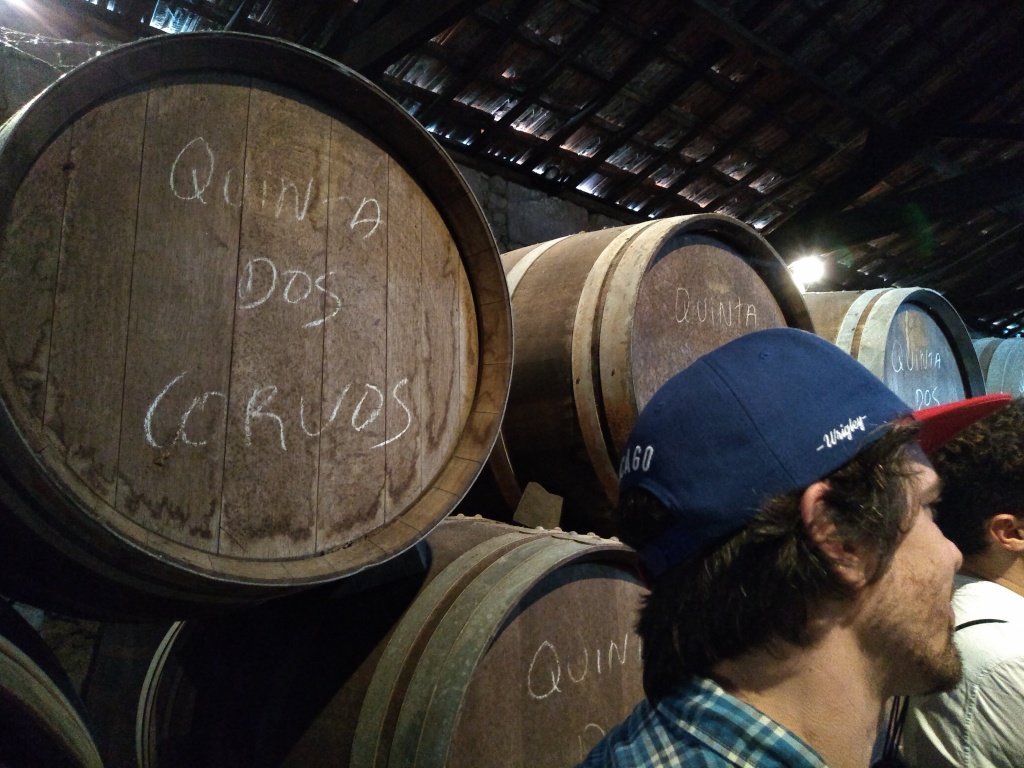
After Sandeman, the plan was to visit another port house, but a smaller and less known one. Serendipity stroke: right before the previous visit we were given a flyer for the Quinta dos Corvos, a few hundred meters away. They are a much smaller operation, and all their wine comes from a single estate (quinta means “estate”). The tour guide was extremely well prepared, she explained to us that they tend to focus on red more than white. Also, most of their Ports are aged. We found out that aged whites are as good as tawny-s, although while the latter tend to turn lighter over time, the former turn darker. We even tried the “grappa” they add during fermentation, but to be honest it wasn’t a memorable experience.

Keeping learning about Port at Quinta dos Corvos.
That was interesting…

For a day it was more than enough, so we had dinner and went back to the B&B, happy to have learned something new…with a little mystery, however: since ruby ports are matured in large vats and them bottled, where do the ruby port casks used in whisky come from? We honestly still don’t know the answer, but for a couple of guesses wait for the next chapter of this story. Slainte!


Sandeman 1790 Tour

Price: 23.00 Euros pp (June 2022)

Duration: 1h 30m

Tasting: Fine White Port, Ruby Founder’s Reserve, Vintage 2018, Tawny Imperial Reserve, Tawny 10y (all around 19-20%)

Target: tourists and curious

Value for money: very good

Highlights: the warehouse and the cellars

Link: https://www.sandeman.com/


Quinta dos Corvos Guided Tour

Price: 10.00 Euros pp (June 2022)

Duration: 30-40min

Tasting: White Port and 10y Red Port (both around 19-20%)

Target: tourists and curious

Value for money: very good

Highlights: the friendly guide that made us try their ‘grappa’

Link: https://www.quintadoscorvos.pt/index.php

#4 Tales from a Tuscan detour


Wine not?


For the first time we visited a winery in the Bolgheri area in Tuscany…with a Scottish connection!

Because of you know what, we haven’t visited our families for over a year, skipping the Italian Christmas for the very first time in 2020. Almost unforgivable!

This year, we made up by staying over a month between Piacenza (in the Emilia-Romagna region) and Florence. Both areas are famous (well, one more than the other…) for great food (of course, the lesser famous is the one with better food…Teresa might disagree with this statement) and delicious wine. This makes visiting our families even nicer. The only problem is the lack of whisky distilleries, with the next whisky trip planned weeks ahead. Nonetheless, we found a way to keep our palate trained with a different kind of experience.

In scotch whisky, red wine cask finishes are a relatively recent trend. Surfing the web, we realised that for more experienced whisky aficionados this might be still an unusual, and not always welcome, finish/maturation. Instead, for people like us that have been into whisk(e)y for a few years only, this feels pretty normal. Indeed, we were able to connect more easily with many red wine cask finished drams, such as the Arran Amarone cask, the Port Charlotte MRC, the Ledaig Sinclair Rioja finish or the Longrow Red(s). In our experience, French wine casks seem to be the most prevalent, but we are seeing more and more Italian wine casks.

The Bolgheri village gate.

Two drams that recently surprised us came from GlenAllachie: the first was a widely distributed 11y single malt, bottled at 48%; the second was again 11y, but cask strength and only available at the distillery (click here for more about that trip!). Both were finished in red wine casks from the Grattamacco winery, located on the hills in the Bolgheri area (Livorno Province), an officially recognized wine geographical denomination. In recent years (well, recent in “scotch time”) Bolgheri wine has become really popular, with over 60 wineries now active in the area. All of this just to say that one morning we woke up and said: “Why don’t we just try to check that out?” “Wine not?” (wink-wink).
So there we go! We booked a tour, took the car and drove! We left Florence quite early and after a quick stop for gas and to allow Gianluigi a second breakfast with a delicious pistachio custard croissant, we were on our way to discover a new place! The ride was almost two hours but quite smooth, in fact we arrived early. We thought about taking a walk, but after realising how frickin’ cold it was, we just rang the winery’s bell.

Taking pictures of the vineyard while freezing.

Michela, our guide, was already waiting for us. After our vaccination passes’ check, the visit started in the tasting room, which featured an amazing view on the hills and the Tirreno sea. Michela told us the story of the winery, which was founded in the late 70s by a guy from Lombardy, and sold in 2002 to the Colle Massari company. Compared to other wineries in the area, the estate is at a slightly higher altitude (around 2-300m on the sea level), therefore with a slightly different micro-climate.

The fermenting vats of the Grattamacco winery

After the introduction, we moved to the main production building. They harvest several grapes: Cabernet-Sauvignon (which is the main component of their red wines), Cabernet-Franc, Sangiovese, Merlot and Vermentino. Grapes are mechanically soft-pressed and cleaned to get the must, which is fermented in two types of vessel: metal big tanks or wooden 500 litres open vats (which smell great!). Then, we visited the cellar, where the casks are stored, divided by vintage. All casks are from the Taransaud tonnellerie (cooperage) and are of course made of French oak (Quercus robur)…the smell down there was amazing too! We could also take a look at what Michela called “the library”, where all the vintage bottles (starting from the early 80s) are stored. They use the casks up to four times, before selling them to other smaller wineries or to distilleries to make awesome whiskies (like the GlenAllachie). The vinaccia (leftover of the wine production) is sent to a distillery in Veneto region to produce Grattamacco grappa, and they also grow olives to produce olive oil.

The cellar.

And now, the wine tasting. First off, a white wine, made 100% with Vermentino grapes. We were both pleasantly surprised by how good it was (both not huge fans of white wines, but this one…WOW!). Second, the Bolgheri Rosso, made with four grape varieties (Cabernet-Sauvignon, Cabernet-Franc, Sangiovese and Merlot), fermented in the metal tanks, and aged 5-6 months. The third and fourth were the stars of the tasting: l’Alberello, single vineyard (less than 2 hectares, Cabernet-Sauvignon and Cabernet-Franc grapes) and aged for almost 18 months. Finally, the long awaited Grattamacco: fermented in oak vats, aged 18 months, mostly Cabernet-sauvignon (~65%) with an addition of Merlot and Sangiovese, with the percentages varying each year. These two wines were both sublime, and it was really hard to decide which one was the best! Anyway, thanks to this visit we sorted out a number of Christmas gifts.

The tasting!

Before going back to Florence, we had a nice lunch in a nearby restaurant (an “agriristoro”, actually), with delicious local food: wild-boar and beef roast. We slowly drove to the (quite small) Bolgheri village, where we took a walk, had a coffee and another glass of wine for the non-driver (Gianluigi): the mighty Sassicaia (mighty also for the price).

Definitely happy to try something different!


Overall, this was an amazing day and no less fun than the trips we usually do, the ones where we end up saying: “we should do this again asap!”! Being our first winery, we felt like total newbies again, but it was a great educational experience (btw, please correct us if we wrote anything wrong!). We have learned so much about this amazing nectar which has been on our families’ tables since we were kids. And the wine spoke for itself!


Grattamacco Winery Tour and Tasting

Price: 35.00 EUR pp (December 2021)

Tasting: 4 glasses of wine – Grattamacco Vermentino (white), Bolgheri Rosso (red), L’Alberello DOC single vineyard (red), Grattamacco Bolgheri (red)

Target: anyone

Value for money: looked good to us, but we can’t really tell as this was our very first winery tour

Highlights: the view from the tasting room, the tour in the cellar and the wines…pretty much everything!

Things we did not like: nothing

Link: https://www.collemassariwines.it/estates/grattamacco/