#16 A Canadian single malt with a Scottish soul

Visiting Glenora Distillery


TL;DR: Gianluigi went on a work trip to Nova Scotia, Canada, and sneaked in a visit to the first single malt distillery in North America: Glenora! Although a bit expensive (compared to Scotland prices) the visit was definitely worth it and the whisky had its own very fruity character. If you find yourself in the area, itโ€™s strongly suggested. 

(This post is written in first person by Gianluigi, since he was the only one on this trip)

In the academic world, one of the last things to come back after Covid were in-person international conferences, of course. Hundreds of researchers coming from all over the world and staying together in closed spaces for a week, what could go wrong?!? In my field of study, infectious diseases epidemiology, people have been particular cautiousโ€ฆguess why. So after 2020 and 2021 without meetings, in August 2022 I finally went to my first in-person conference in Halifax, a quite touristy city in Nova Scotia, on the Atlantic coast of Canada.

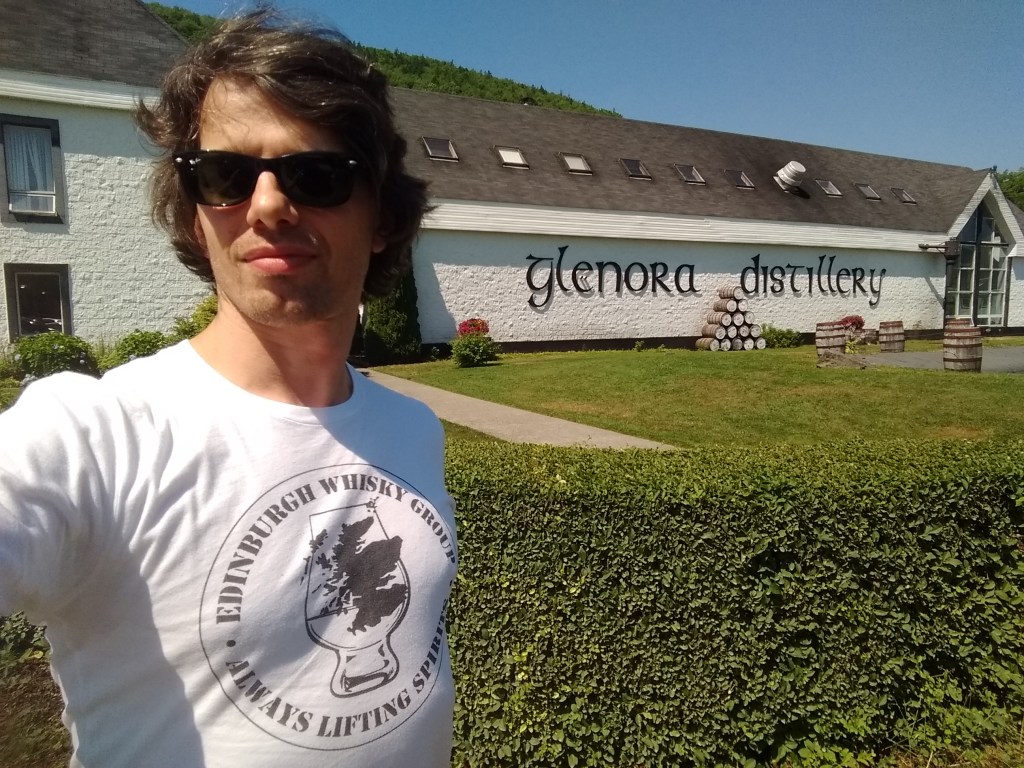
Once flight and accommodation were booked, I looked for activities to do in the couple of days before the conference. And what I really mean, is โ€œwhisky activitiesโ€, or even better โ€œwhisky distilleries to visitโ€. I found out that Nova Scotia has some relative recent ones (Caldera, Authentic Seacoast, among others), but the one that grabbed my attention was Glenora Distillery, located in Cape Breton Island, the north of Nova Scotia province. The mighty David taking down the Scotch Whisky Association (SWA) Goliath.

Slowly getting there…

For those who donโ€™t know the story: Glenora Distillery was founded by Bruce Jardine, a local entrepreneur, and it was the first North-American single malt distillery, during a time when distilleries in Scotland were still shutting down following the whisky loch. He decided to go back to his Scottish roots, and start producing the most iconic Scottish product in a province literally called โ€œNew Scotlandโ€. He moved for over a year in Scotland to learn the nitty and gritty about distilling, in particular at Bowmore, and after coming back to Nova Scotia he acquired the land and built the distillery. After an unfortunate start which saw the distillery change owner twice, in 2000 they released their first single malt (an 8-year old), the Glen Breton Rare. Proudly advertising it as the โ€œonly/first single malt in Canada/North Americaโ€ didnโ€™t prevent the SWA to sue them over the use of the world โ€œGlenโ€. But well, they are literally located in a โ€œglenโ€, and the village is called Glenville. After 9 years of trials and appeals, they had the last word and could keep the โ€œGlenโ€.

Almost there…

So, you could understand my excitement to visit them! However, the visit almost didnโ€™t happen, because of the shortage of cars for rental in the whole region. That meant zero cars available at the airport, despite looking 4 months ahead. After bothering a number of people through emails (taxi/shuttle companies, Nova Scotia tourist service, hotels, etc.), I was about to give up the trip, but then I decided to try Turo. This is a company that hires private car, like Goboony does for campervan, but they arenโ€™t a scam like the latter. So, I booked a car, not cheap but what the hell, when will I be in the area again?

Unfortunately, another challenge was behind the corner: the disastrous situation of Toronto International airport, where I had my layover, which I learned a mere 10 days before the trip. And in fact, my first flight was almost 2 hours late, but the second was 75 minutes late as well, so I didnโ€™t lose the coincidence. This meant to change the time of the rented car pick up though, and when I called the owner to ask him to come later, he blathered some excuse and said he wasnโ€™t allowed to hire cars anymore. I called Turo, which very professionally (unlike Goboony, sorry if I stress this but they are really terrible) provided me a different car and covered most of the price difference. So, finally, at 9.20pm local time, I was on a car directed to a B&B not too far from the airport.

Finally there!

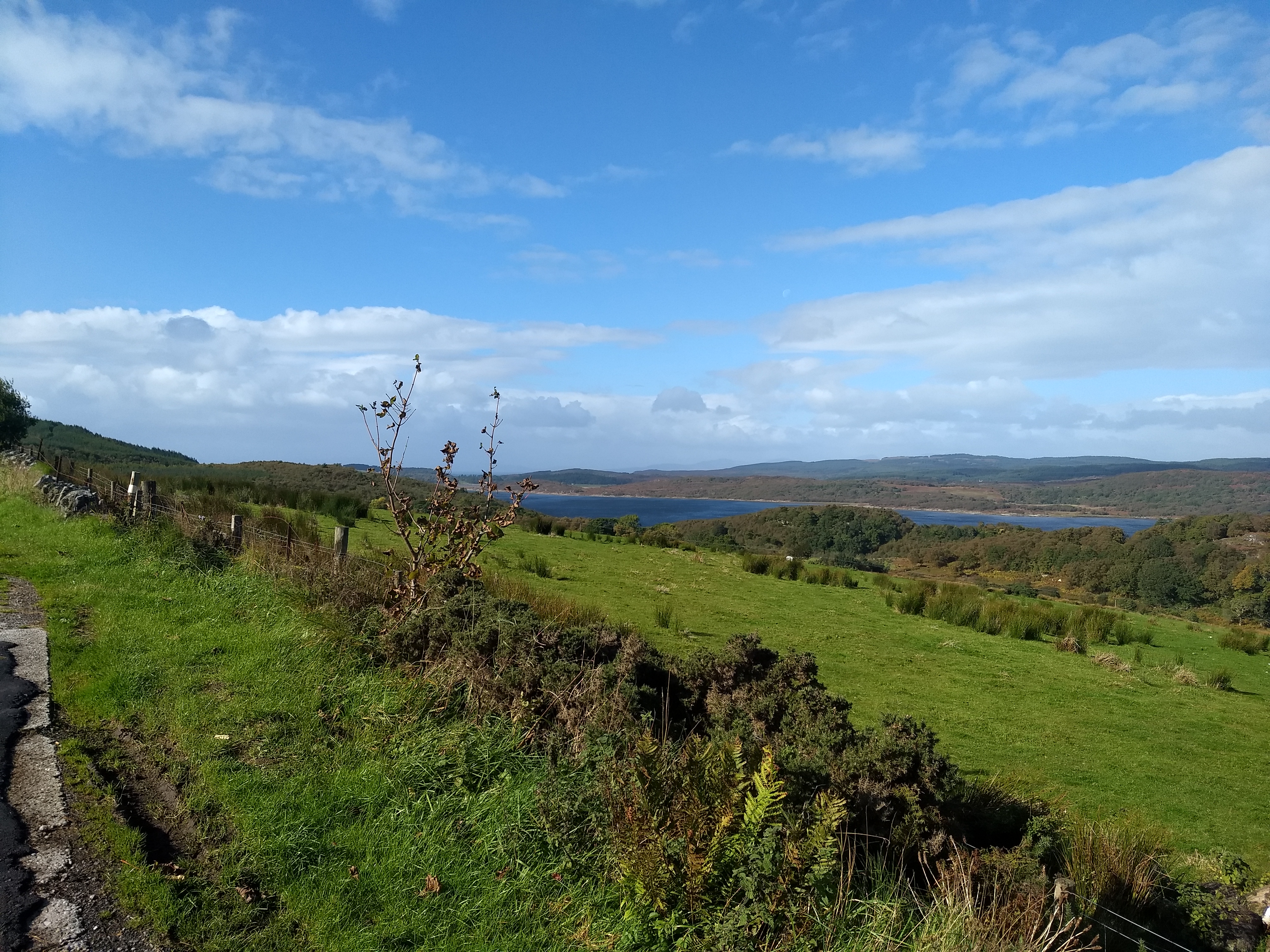
Because of the jet lag, I woke up quite early, and after a good breakfast I was already on my way to Cape Breton Island. I arrived at the site around 2.30pm, ready to check in for the night: I didnโ€™t tell you already, but at Glenora they have a hotel on site and a lodge just up the road, where I stayed. They also run a pub and a fine dining restaurant on site, so I was all sorted. The distillery offers two tours, the regular (CAD 7.00 + taxes, one dram) and the VIP, which I signed up for.

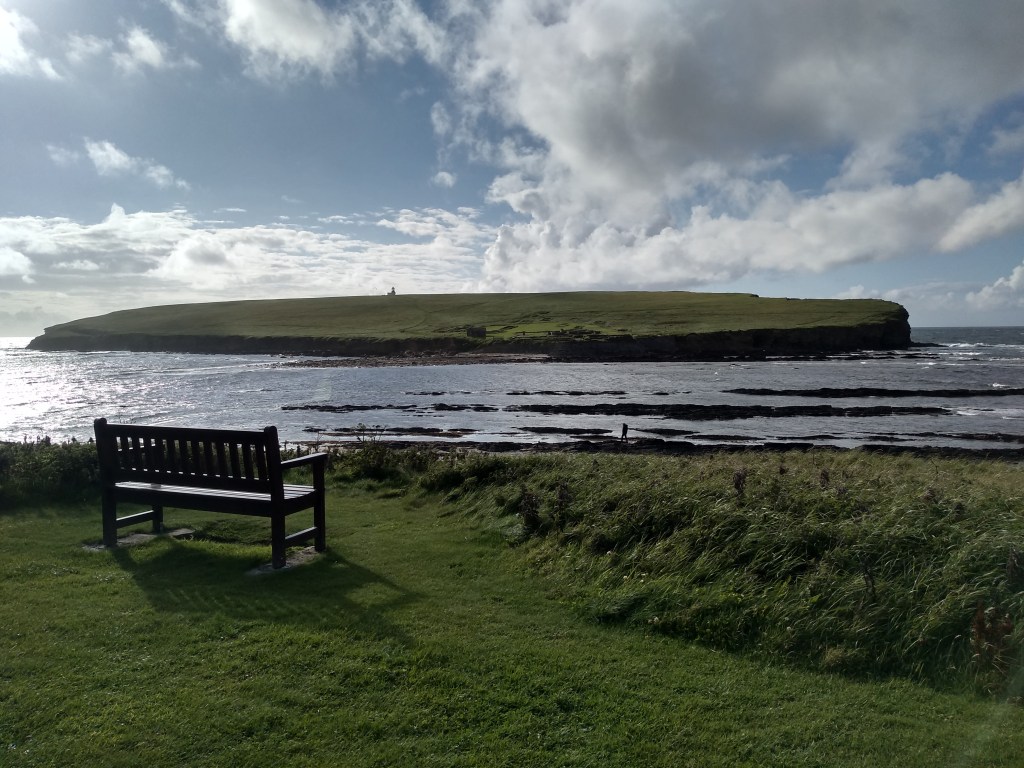
The tour started at 3pm, and it was conducted by Donnie, the manager of the hospitality side of the business. He is a huge malt whisky fan, so the tour was extremely entertaining and all the information really in depth. We started outside the shop building near the stream where they source their water from (first time I am bothered by bugs during a distillery tour).

The source wee stream.

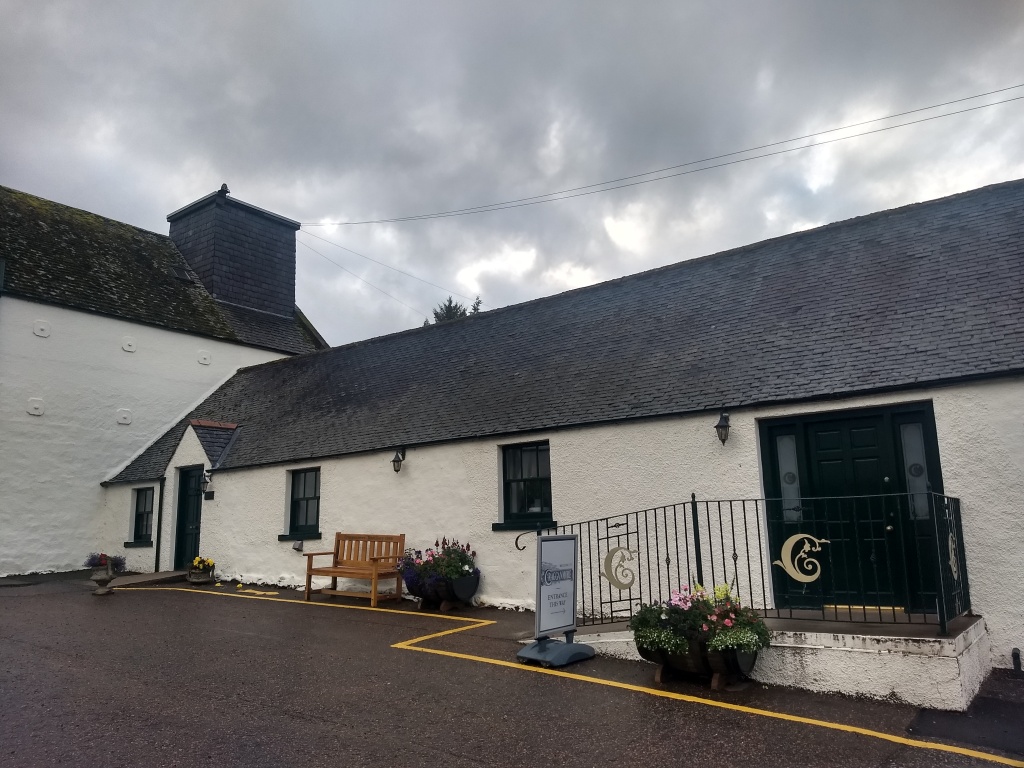
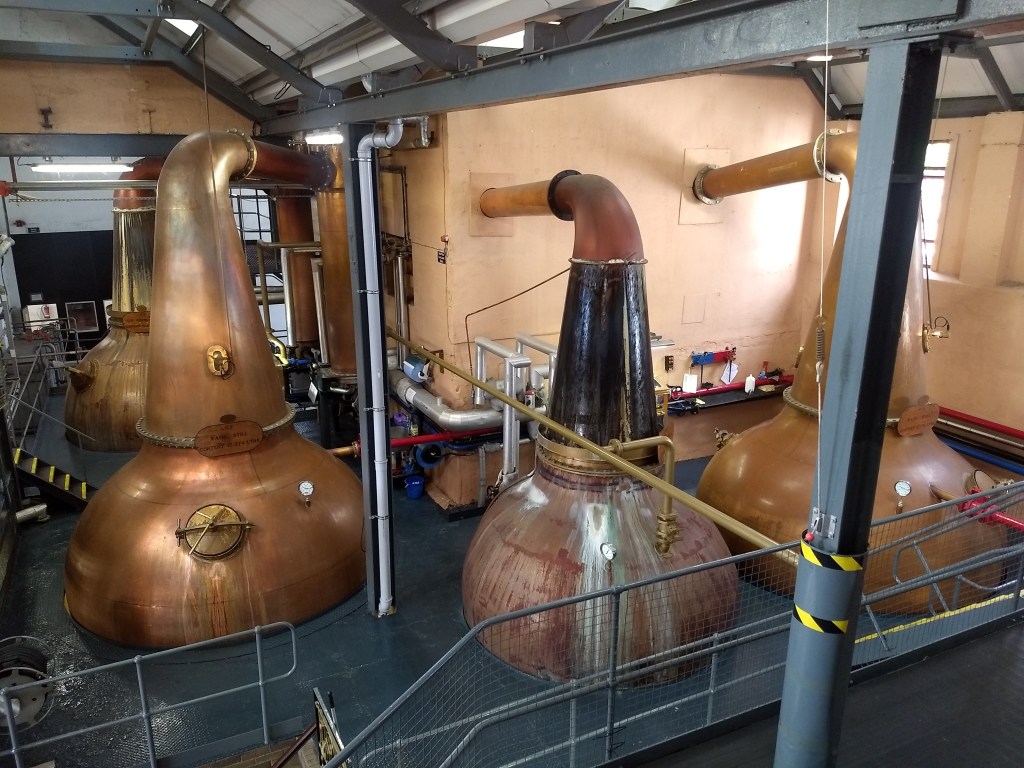
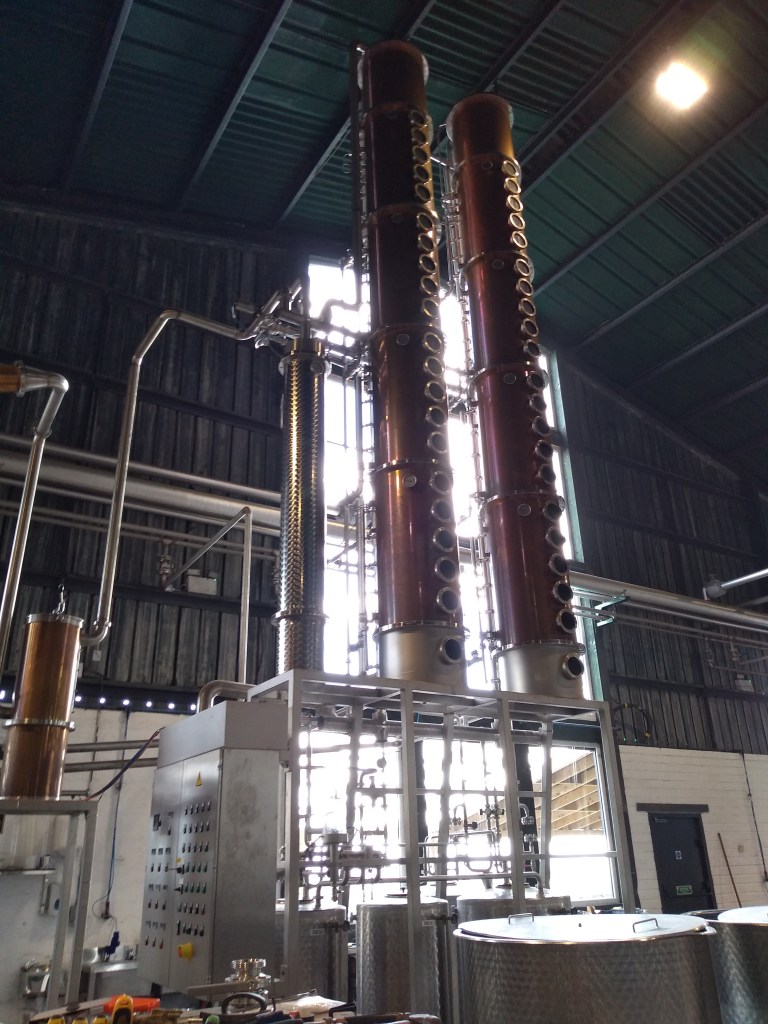
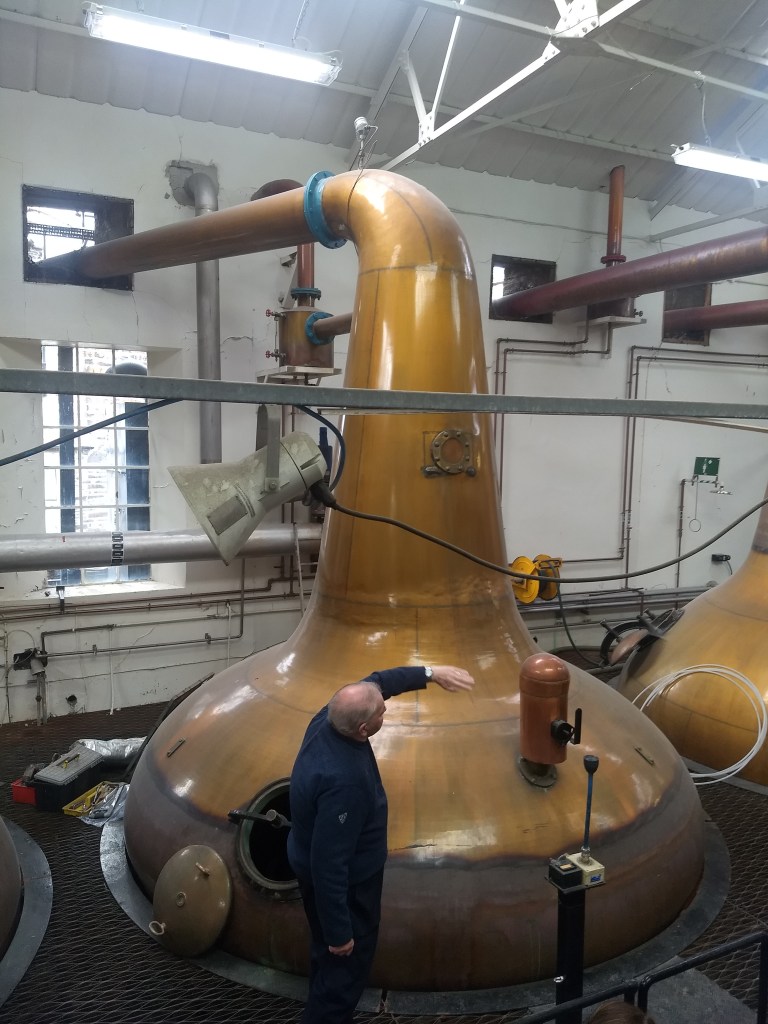
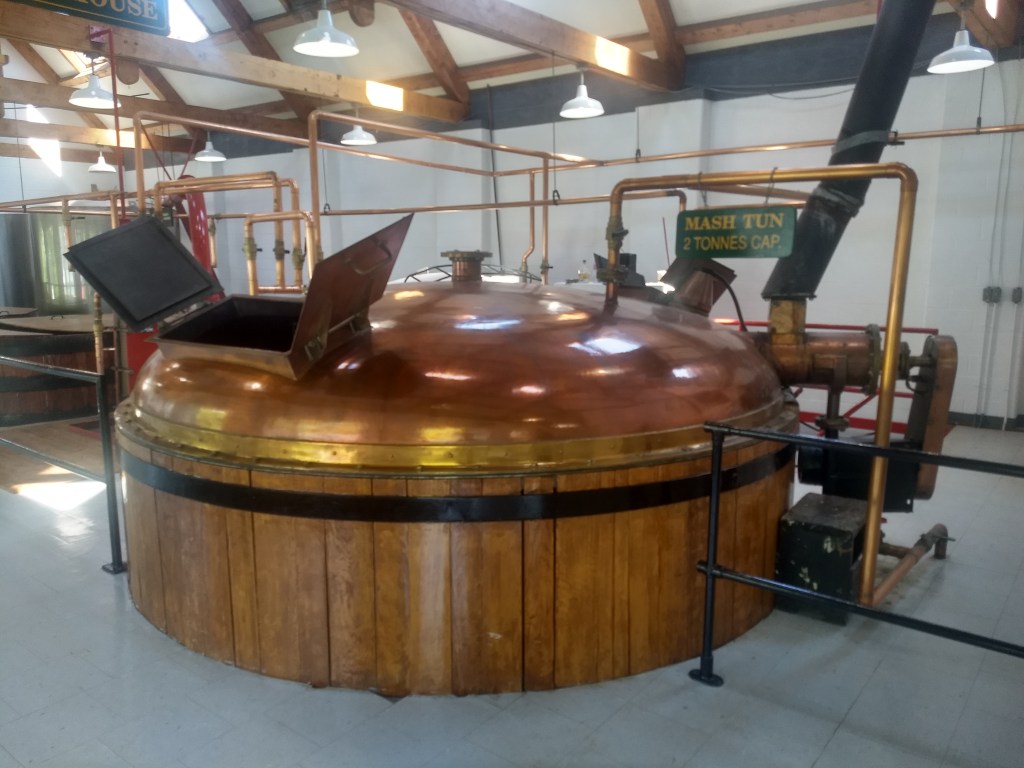
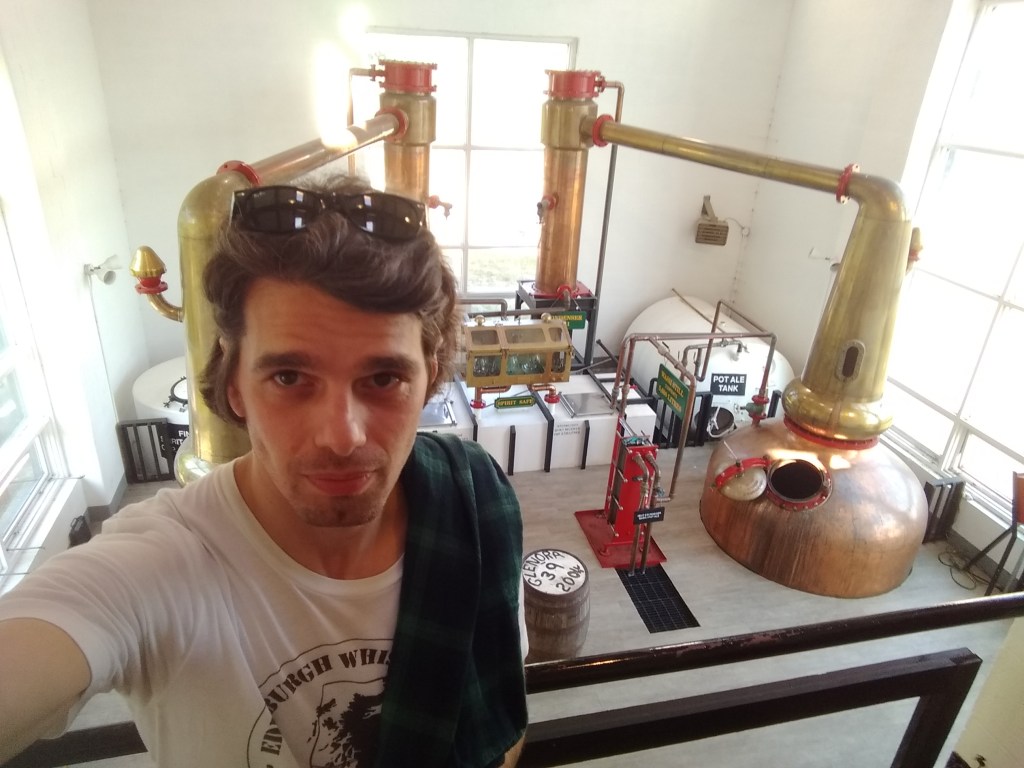
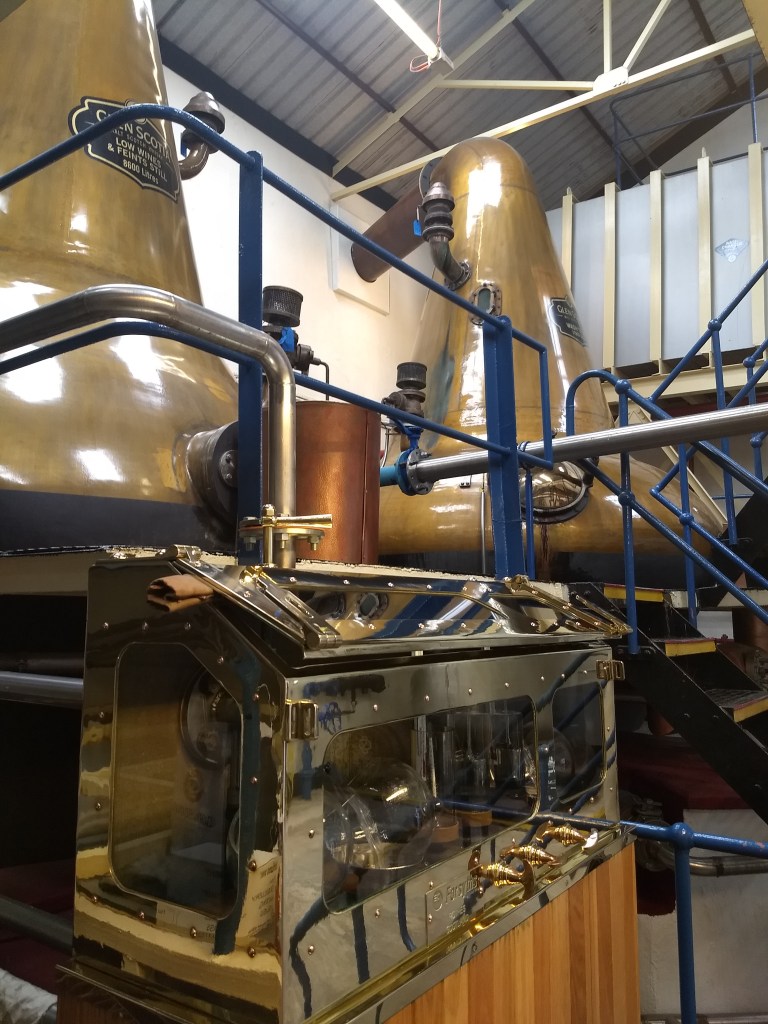
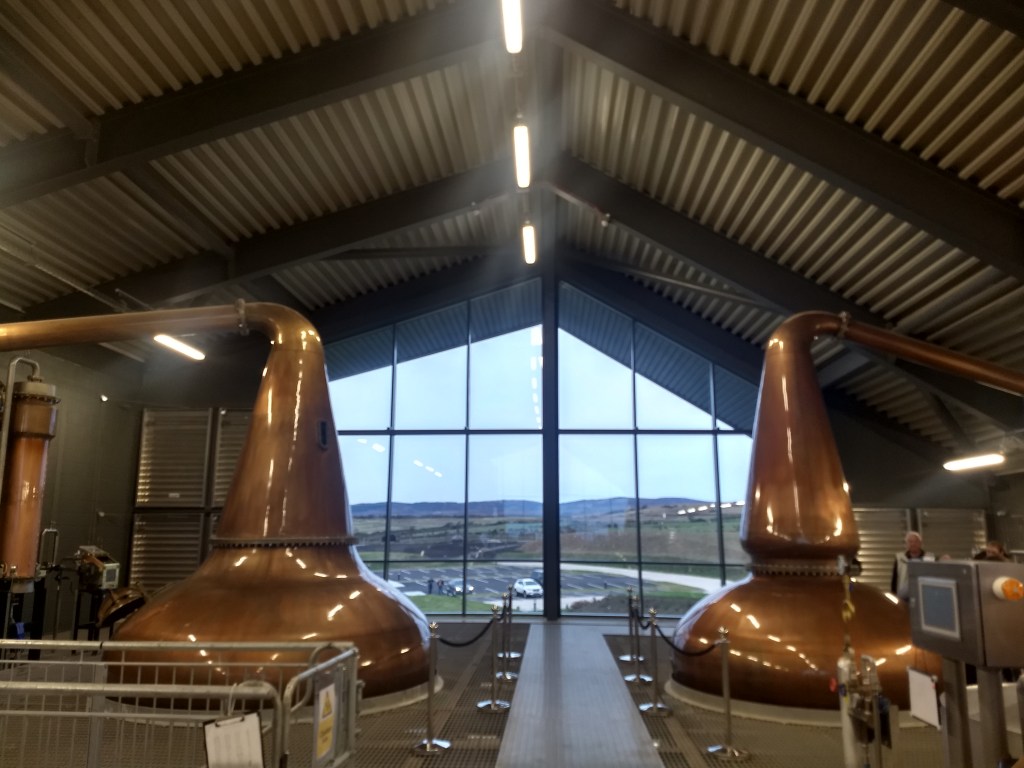
The shop is topped by a pagoda roof, but it is just for aesthetic purposes and was never meant to be a kiln. In fact they source their malted barley from Sasquetwchan, but until the early 2000s they were buying it inScotland (some peated as well). My visit happened in their silent season, which goes from the late spring to the Fall, and during which they mostly run the hospitality side. For this reason their production is currently about 50,000 mlpa, although Donnie later told me that they could easily crank it up. All their equipment came from Scotland, including the two Forsyths stills. Differently to many distilleries, the wash and spirit still are of the same size, approximately 5,600 litres. A particular difference is that they fill their barrels with 70% newmake spirit, unlike the greatest majority of distilleries we visited which fill at the standard 63.5%.

Scottish equipment on Canadian soil.
The still I’m hiding looks the same as the other one, I promise!

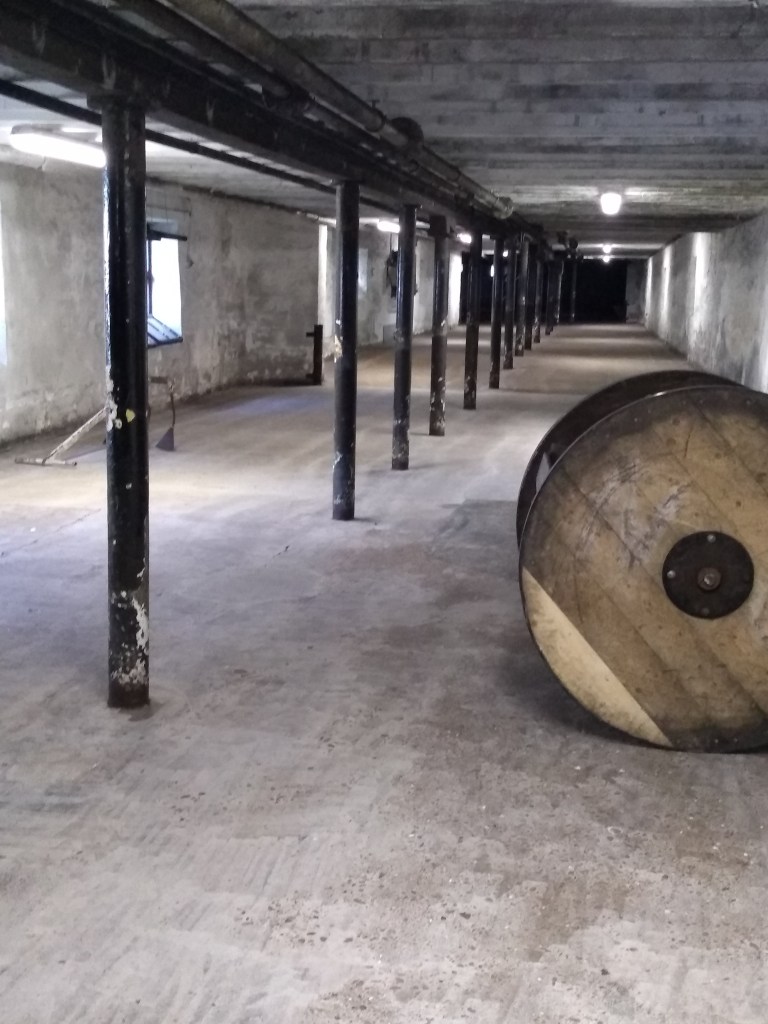
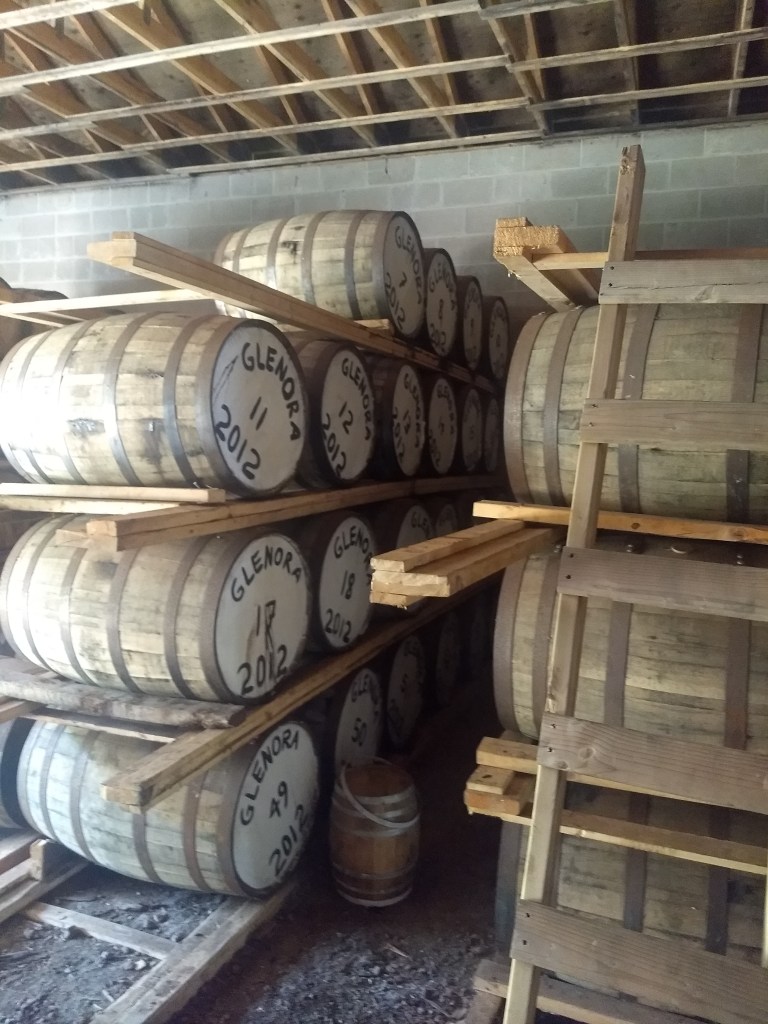
We moved to the dunnage warehouse, one of their three, and for the first time the air was warm and humid instead of cold and humid: what a difference! Donnie explained us their maturation process: they source the barrels from Kentucky (we could see many Buffalo Traceโ€™s ones) and they rarely mature for less than 10 years. Apparently they donโ€™t re-use them, so all their barrels are first fill ex-bourbon. They had used sherry and other casks in the past, but for very specific releases. We tried one sample from the cask of a 26y/o, which was very creamy and quite fruity, in particular after adding water (collected from the stream!): after 26 years it was still 64%! Donnie said their angelsโ€™ share (the % lost to evaporation) is still 2%, similar to Scotland, although with huge seasonal variation. They bottle everything on site, without adding artificial colouring nor chill filtering.

The dunnage warehouse.

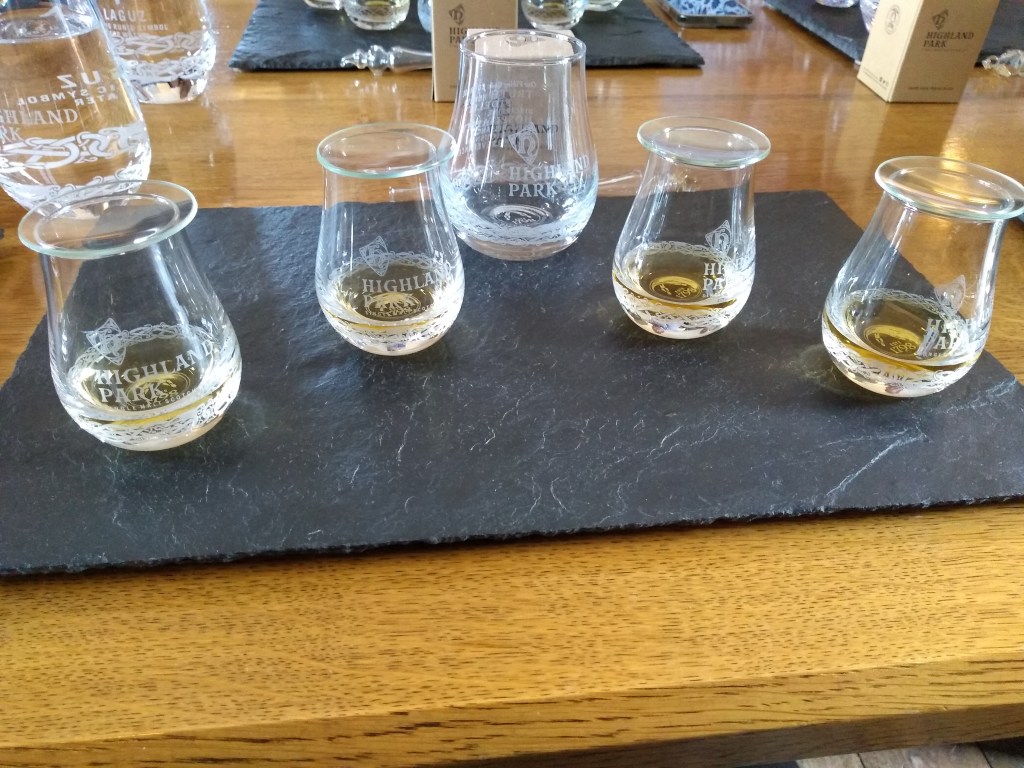
We moved the tasting room, near the restaurant, where 5 drams were ready in front of us: we started with the newmake spirit (at 70%!), which after the 64% in the warehouse wasnโ€™t too hard to drink, followed by the Battle of the Glen, a very sweet and balanced 15y (43%) celebrative of the victory of the trial vs. the SWA. We moved on to the 12y Ice (43%), finished for a short time (average 3 months) in ice wine casks. I was totally unaware about ice wine before this tasting: it is wine made with grapes harvested in February, and the frozen water allows the sugar to be retained to make a very sweet dessert wine (I bought a 5cl at the airport, Iโ€™m very curious to try it!). They also have 10y and 15y cask strength versions of the Ice in 25cl bottles (the latter available at the Halifax Airport). The final two drams were distillery casks: a peated 18y old, still made with Scottish barley, and an unpeated 12y, both cask strength. These two were the standout of the line-up, in particular the peated one.

Happy kid with the tasting.

As I was by myself, Donnie joined me over dinner for a nice chat, where I bought another couple of their drams (they were selling by the half-ounce, 15 ml): their main expression (the Glen Breton Rare 10y, 43%), and the 14y, which was truly delicious (still 43%). Not too late, we called it a day and a driver took me to the lodge.

I was very satisfied with the visit to Glenora, it was a very different experience to our usual trips around Scotland. Being a very touristy area, and isolated from other whisky distilleries, I could see how this makes them more of a tourist attraction, almost a โ€œboutique distilleryโ€, if you want. I could fully appreciate how good their single malt can be though, starting from one of the best newmake spirits I tried so far. The hot/cold maturation process definitely influences the whisky compared to most Scottish malts, but probably other factors are important too, like filling the barrels at 70%. I am really having a hard time comparing their prices with other tours or other whiskies, as during the whole time I spent in Nova Scotia, I felt that the cost of living is just much higher. Nonetheless, if you are travelling to the area or nearby, as I did, it is a must-do experience for any whisky lover.
Until next time, slainte!


Glenora VIP Tour and Tasting

Price: CAD 125.00 pp + taxes (total CAD 143.75, August 2022)

Duration: 2-3 hours

Tasting: in the warehouse, sample from the cask (26y, ex-bourbon barrel); in the tasting room, new make spirit (70%), the Battle of the Glen (15y, 43%, *NC, NCF), ICE 12y (43%, NC, NCF), Barrel #67 2010 (12y, 59%, NC, NCF), Barrel #132 2004 (12y, 59.0%, NC, NCF)

Target: whisky lovers and geeks

Value for money: Good+

Highlights: everything

Distillery Exclusive: Barrel #67 2010, Barrel #132 2004 (see above, CAD 125/375 for 25/75cl), Barrel #129 1995 (27y, 65.4%, NC, NCF, CAD 250/750 for 25/75cl)

Link: https://www.glenoradistillery.com/

*NC: not artificially coloured, NCF: non chill-filtered
+at the time of the visit 1 GBP = 1.55 CAD. If compared to Scottish distilleries tours it was pricey, but after a few days in Nova Scotia and on Cape Breton Island I think that it reflects the high prices in the province.


#14 A taste of Campbeltown

Dramming Around moves to Scotland

Our first whisky trip in Scotland: couldnโ€™t have been anywhere else!ย 

(For a more in depth Campbeltown experience go here: Cadenheadโ€™s Warehouse tasting, Kintyre Gin and Watt Whisky tastings, Springbank/Glengyle visits and Glen Scotia tasting)
September 2018, still the beginning of our life in Scotland: Gianluigi had moved about a year earlier, Teresa not even 4 months. We were coming out our first Fringe as Edinburghers (although someone would use another term), festival that we appreciated but despised at the same time, as the city can become very hard to live in August.

We wanted to have a weekend break somewhere, but for a few weeks we were stuck exploring options, undecided. Then a thought crossed our minds: why donโ€™t we go to that placeโ€ฆthe one that is a whisky region by itselfโ€ฆwhatโ€™s its nameโ€ฆCampbeltown!

As we used to do for our weekends away back in Illinois, we rented a car, and booked a random accommodation on Booking.com (at the time we were not aware of the Ardshiel Hotel), and the holiday was set! The program was very easy: travelling on Friday, Saturday in Campbeltown, and on Sunday weโ€™d visit Oban and travel back to Edinburgh. We had no idea what was expecting us! At the time we hadnโ€™t visited any distillery in Scotlandโ€ฆtogether: Gianluigi had visited Glengoyne as a side event of a conference he had attended a couple of months before in Glasgow. Unfortunately, the experience was far from great: too many people and one tiny dram.

So, when the day came, Teresa went to work in Glasgow as usual, while Gianluigi picked up the rental car and picked her up for lunch. We followed Teresaโ€™s colleagues suggestions and drove westward instead of north. So, we crossed the sea on ferries twice: first from Gourock to Dunoon, and after crossing the Argyll, from Portavadie to Tarbert, to finally drive down the Kintyre peninsula.

On our way to Campbeltown.

Even if this is not the most popular part of the West Coast, we found most landscapes truly beautiful, and particularly peaceful. We arrived at our hotel quite late, and Gianluigi had to finish off a bit of work. We hadnโ€™t realised how early restaurants were closing in Campbeltown, so we almost missed dinner time. Fortunately, a nearby restaurant allowed us in, at the condition we ordered quickly, which we did, as we were super-hungry (unfortunately, when we were back in 2021 we saw that itโ€™s closed). The night ended with a pint at the hotelโ€™s bar.

After a generous breakfast, we left the hotel to check out Campbeltown. The day wasnโ€™t great (overcast but not rainy), and we just walked around. Someone would describe the town as a bit run down, but to us the atmosphere was relaxing and cosy, almost intimate and melancholic, one that you can only find in far-away villages like this.

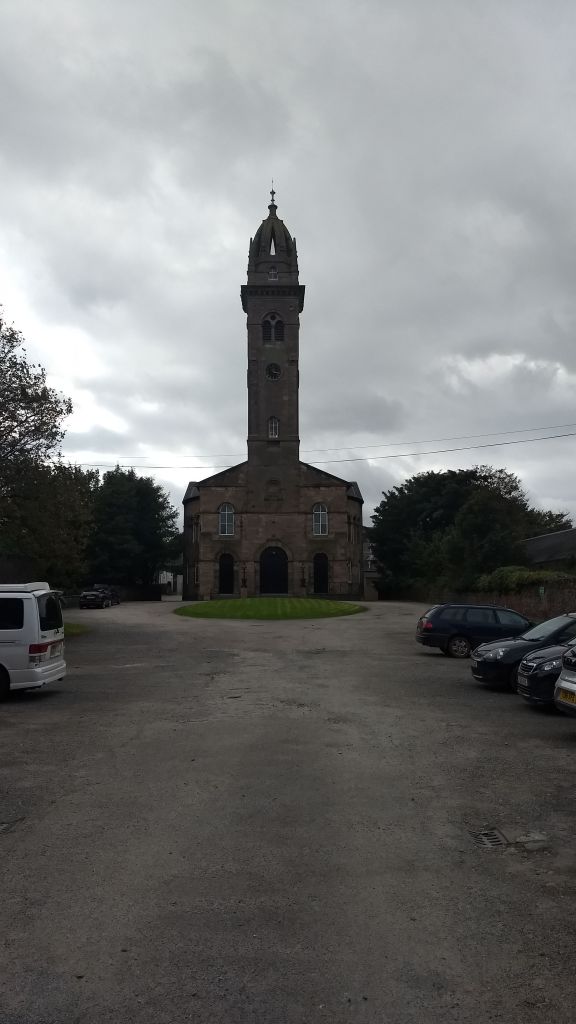
That tower bell looks familiar…

The first appointment of the morning was at Glen Scotia Distillery, but when we arrived, everything was closed. We waited a bit puzzled, checking emails and times meanwhile. Suddenly, a man came out of the production gate, asking if one of us was Gianluigi. He was one of the distillers, Archie, who told us that the designed guide was sick and couldnโ€™t give us the tour. However, if that was OK with us, Archie would be the guide for the two of us, although sometimes he would have needed to go check the stills. Moreover, the tour was free as an apology for the inconvenient. We couldnโ€™t believe our ears, of course it was OK with us!!! The tour was really in depth, and the fact that a distiller was our guide made it really invaluable. Even the tasting was very generous: a wee taste of the new-make spirit, then the Double Cask, the 15y, the Campbeltown Festival 2018 (finished in Ruby Port casks), and the Victoriana. Unfortunately, the shop was closed as well (the sick tour guide was running the shop too), so we bought something later at Cadenheadโ€™s.

The beauty of Glen Scotia still room.

After the tour, we had a quick but tasty bite at Cafรฉ Bluebell, and we then proceeded to the afternoon activity: the Cadenheadโ€™s Warehouse Tasting. At the time we werenโ€™t as nerdy as we are today, so we decided to skip the Springbank or Glengyle distillery tours in favour of a tasting: we werenโ€™t even aware of all the frenzy around Springbank yet. Moreover, at first, the concept of an independent bottler was not the easiest to grasp: why should a distillery sell its product to an intermediary? Now it is so obvious, and we are grateful for that: the variety of whisky that some independent bottlers can offer is truly astonishing, and without them we wouldnโ€™t be able to get our Miltonduffโ€™s, Glen Elginโ€™s, Glentauchersโ€™, Glen Speyโ€™s, Mannochmoreโ€™s, and all the other ones that are rarely bottled by their owners.

A relaxing landscape…

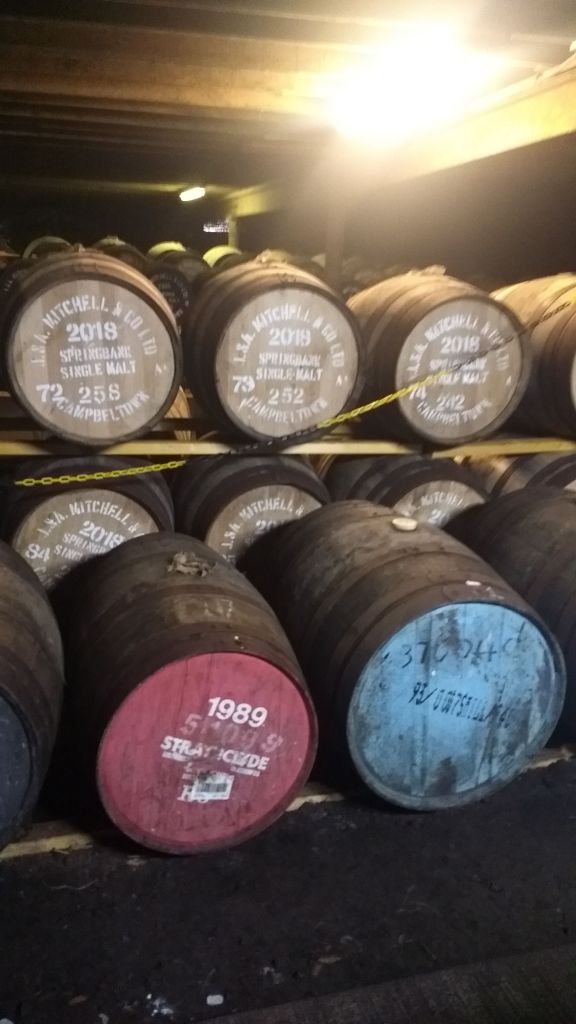
As a matter of fact, it didnโ€™t take long to appreciate the great work that Cadenheadโ€™s do. In the warehouse, a sizeable line-up of casks was waiting for us. We donโ€™t remember much, but in the bunch there were a Strathclyde grain (there are pictures), a Longrow 11y, a Paul John, definitely a speysider, someone said a Lagavulin (probably a Caol Ila) and a 10y rum from Darsa distillery, in Guatemala. We ended up taking the rum and the Longrow, but all the drams were truly delicious. Not surprisingly, weโ€™re in the Cadenheadโ€™s club now!

Old and new delicious stuff!

At the end of the tasting we were kind of tipsy (ehmโ€ฆ), so we decided to leave the bottles at the hotel and have dinner in the most far-away restaurant we could reach walking, on the other side of the harbour (which is now closed tooโ€ฆare we bringing bad luck??). We went back to the hotel, not before having an extra dram, the last one in Campbeltownโ€ฆfor now.


The Sunday morning was again overcast turning to rain, so we checked out and started driving south, towards the Mull of Kintyre (โ€œOh mist rolling in from the sea, my desire is always to be hereโ€โ€ฆ), to finish our exploration of the peninsula.

Slightly better weather on the way from Campbeltown to Oban!

Then we drove north, towards Oban, the last stop in our trip. Although the sun came out while driving, it started pouring rain as soon as we parked in Oban (experiencing the 4-season in day). Oban is a nice village but looked a bit too touristy for us (and indeed we havenโ€™t been back yet, unlike Campbeltown). The tour at the distillery was nice but a bit dull, probably it suffered in comparison to the previous day experiences. Still, it was interesting to see how this distillery, unlike many others, is nestled in the village, with no space for potential expansions. At the end of the tour we were given a dram of the flagship, the Oban 14y, and one of the Oban Little Bay. We ended up not buying anything, as even then we were aware that distillery prices sometimes are not competitive. We would have bought a bottle a few months later.

Oban right in the middle of the flavour map.

As a baptism into scotch distillery visiting, we couldnโ€™t ask for more: a magic place, and magic whisky. With the pandemic and all we werenโ€™t able to go back to Campbeltown for a while, so when we managed to do it in 2021, it was a very welcome return, with more whisky knowledge and experience in the pocket! Now it’s time to plan our third tripโ€ฆ 2023?


Links

Glen Scotia Distillery: https://www.glenscotia.com/
Cadenheadโ€™s: https://experience.cadenhead.scot/
Oban Distillery: https://www.malts.com/en-gb/distilleries/oban


#13 A weekend on the Isle of Arran

Arran, the beautiful


Back in 2019, when you didnโ€™t have to sell a kidney to rent a car, we organised a last-minute weekend on the iconic Isle of Arran. 

The Autumn of 2019 was a very different time. Thinking of that period makes us feel a bit naรฏve and unaware, a bit like pigeons pecking on the road before being run over by a bus.

Things were different also regarding our whisky journey. It had started, but it was still at a larval stage. We had already visited a few distilleries in the US back in 2016 and 2017, in Campbeltown (a year earlier) and up in the Highlands (a few months earlier). We were still in our first year of SMWS membership, and we had barely just found out about their awesome tastings in the city venues. A few months earlier Gianluigi had found out about Mark Gillespieโ€™s WhiskyCast, which became the soundtrack for his runs on the Pentlands. The idea of starting a blog wasnโ€™t there yet. So, we were getting there, slowly but steadily. Things were definitely moving at a much slower pace with respect to the pandemic first wave when, ironically, our knowledge and awareness sped up quite a bit.

Ready to go!

It’s in this context that one day, we decided on a whim to book a mid-November weekend on the isle of Arran. At the time renting a car was much cheaper, so we got a compact (we are quite compact ourselves), we booked one night in a B&B (it wasnโ€™t exactly high-season) and, more importantly, the tours to two distilleries: Lagg and Lochranza! These distilleries are both owned by the Isle of Arran Distillers Ltd. While Lagg was very new at the time, we were already familiar with the Lochranza’s Arran 10yr, having tried it once or twice in bars before. To be completely honest, we hadnโ€™t connected with it right away. We think it was (past tense, very important!) because, as beginners, we were chasing big and bold flavours such as peat or heavily sherry influence, rather than gentle and balanced drams like Arran or Deanston. Nevertheless, it sparked enough curiosity to jump in a car and get to see them!

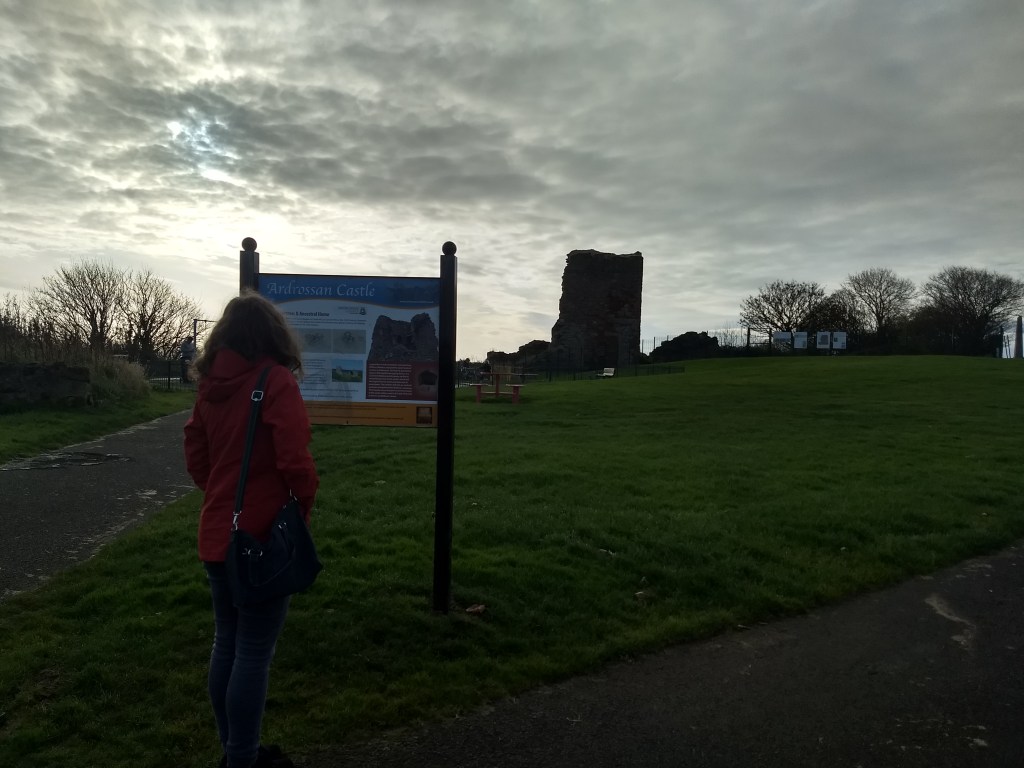
Teresa studying Ardrossan Castle’s ruins.

The drive from Edinburgh to Ardrossan on a Saturday morning was easy and smooth, not too much traffic. We stopped briefly to check out the Ardrossan Castle ruins (not much is left, to be honest), before getting to the pier. On the boat, we got that melancholic feeling of visiting an off-season tourist destination. And indeed it is, as many people from the mainland, Glaswegians in particular, choose it for their holidays.

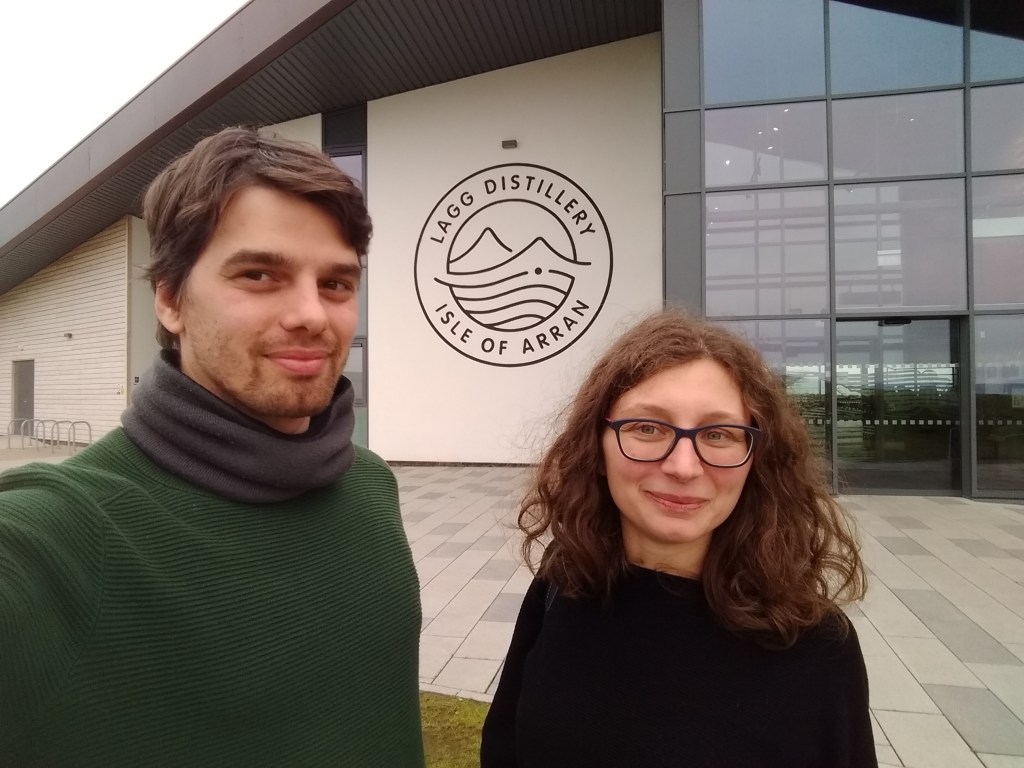
The Isle of Arran is called โ€œScotland in miniatureโ€, because of the very different landscapes in the north, resembling the Highlands, and the south, more similar to the Lowlands. It is roughly shaped like an oval and its main roads draw an โ€œ8โ€, which we intended to drive all along to explore the island. So, as we landed in Brodick, we drove first north, then west, then towards the south-west corner of the island where Lagg is located. This distillery was very new at the time, they had started producing only a few months earlier. They focus on peated spirit, and while their single malt was not available of course (it still isnโ€™t at the time of writing), the available peated range Machrie Moor was produced at the Lochranza distillery.

Inexperienced whisky enthusiasts at Lagg distillery.

The building is beautiful, with the shop on the ground floor and a good cafรฉ upstairs from which we could see young orchards (we found out later that they were planning to produce cider). Before starting the tour, we admired old pictures showing how life on the island used to be. Then the guide welcomed us and, after covering the history of the distillery and the island, made us try the new make โ€“ that was a nice surprise! The tour of the production was good and fairly short, mostly because everything was in one large room, one of the first (but definitely not last) times we had seen this.

Lagg stills.

From the big window behind the mashtun, the view on the sea was just stunning. In the tasting room, we tried some Machrie Moor (the main expression and the cask strength), but the guide also kindly gave us a wee sip of the sherry-finished Fingalโ€™s Cut.

Sorry you can’t see the sea behind the mashtun!

Tired but happy, we took the south road to Whiting Bay, had dinner and, finally, a couple of drams in a bar before going to bed.


It was very sunny when we woke up in the morning. This and a generous breakfast with sea view put us in a very good mood, and we were ready to explore the island! We decided to take full advantage of the nice weather and go for a short hike. We first drove along the coast to get to a car-park where we could take the path to Machrie Moor (yes, itโ€™s not just whisky).

Encounters on the path to Machrie Moor.

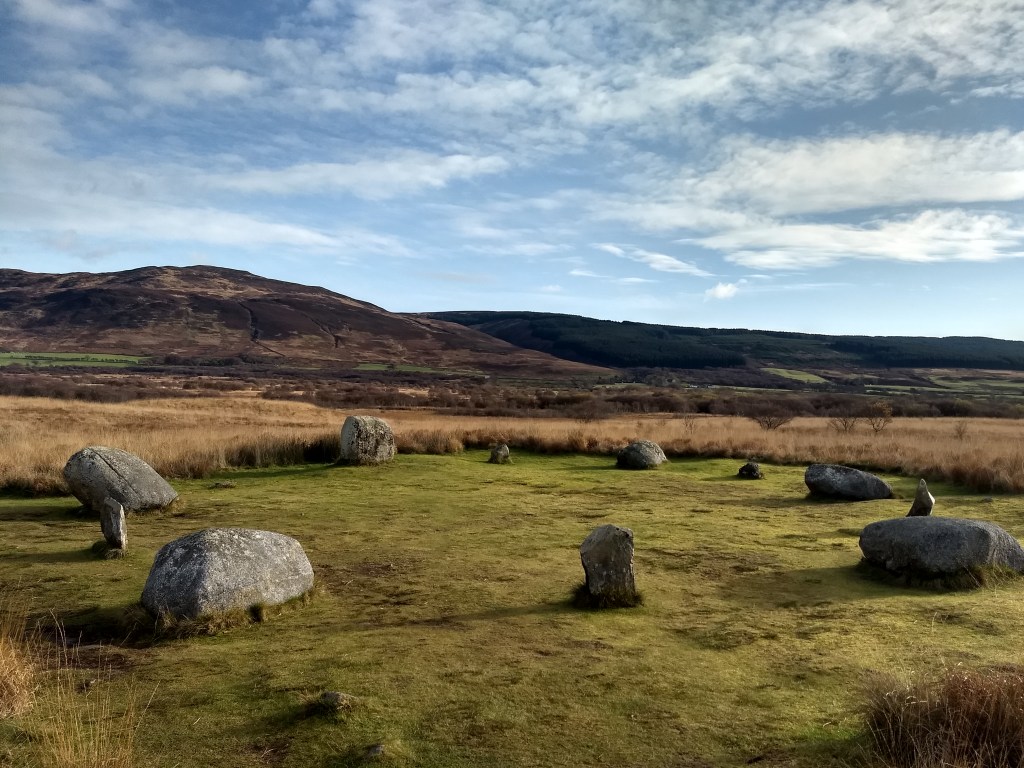
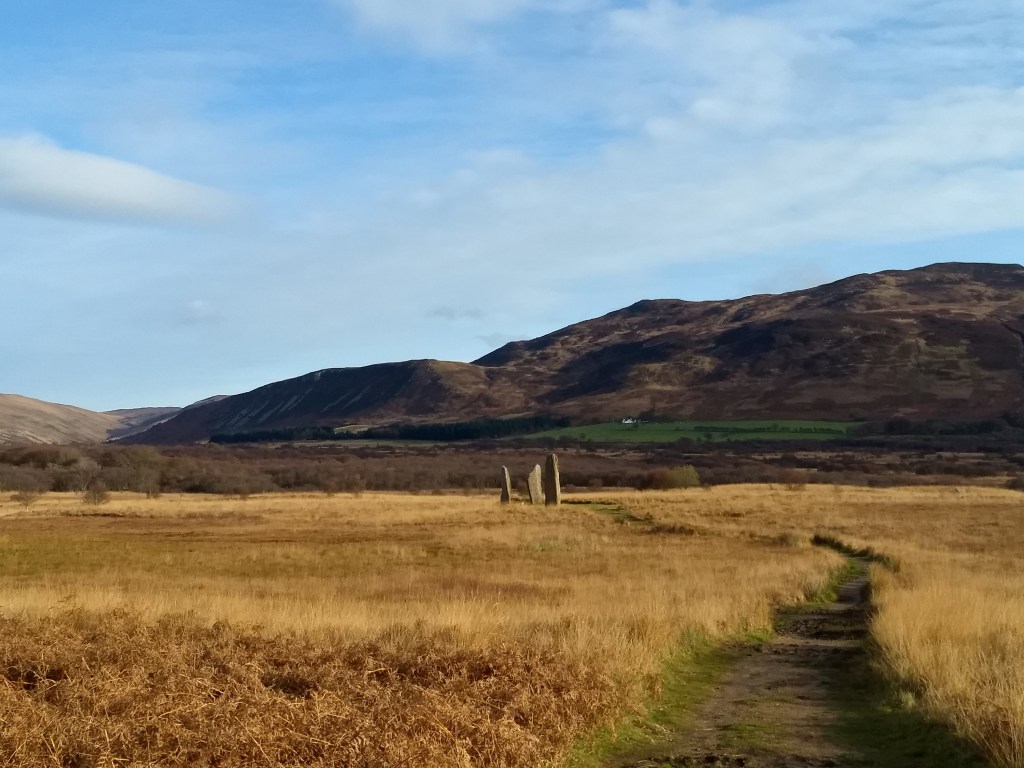
The walk was easy and the landscape just beautiful, and at that stage it was so warm that we took our jackets off (who said that the weather is always bad in November?!?). It was fascinating to walk around the archaeological site dating to between 3500 and 1500 BC and admire the circle and standing stones.

Circle stones…
…and standing stones.

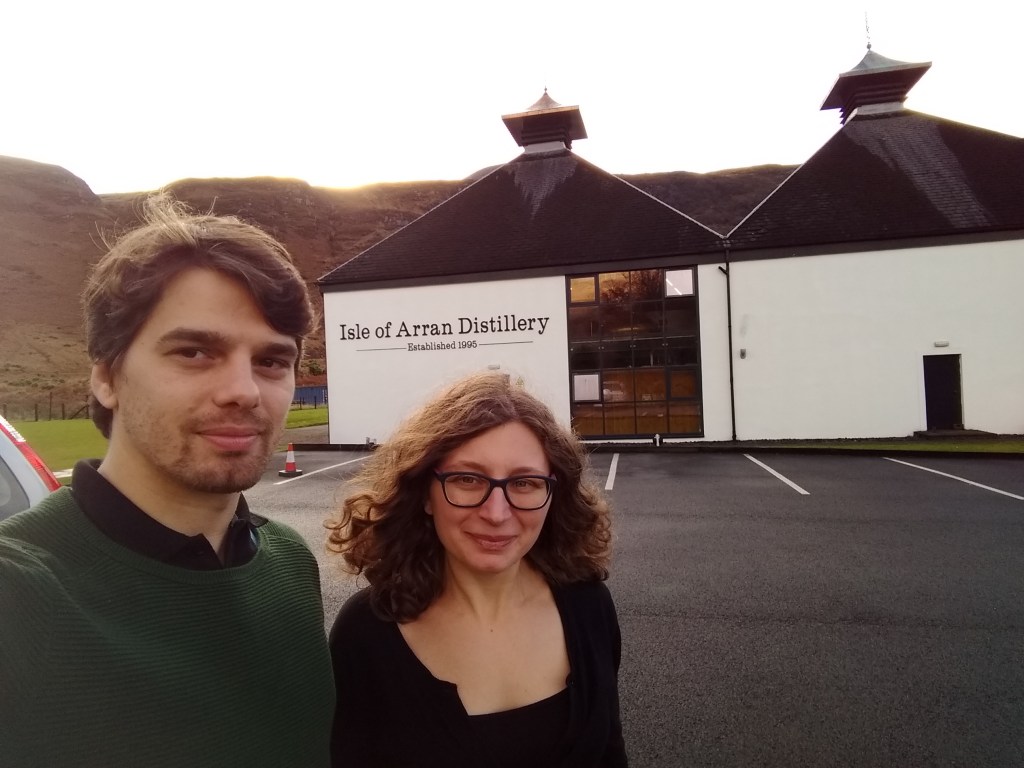
Back in the car, we headed north towards the last stop of the day, Lochranza distillery. Formerly known as the Isle of Arran Distillery, it can be considered the trailblazing distillery in this new golden age of Scotch whisky, dating back to 1995. Other than being the first to open on the island in a very long time, it was built in a period when, elsewhere in Scotland, some distilleries were still being decommissioned or demolished following the whisky loch of the 80s.

The same inexperience whisky enthusiasts at Lochranza distillery.

The visit started with a short video about the history of the distillery, its connection with the location and a bit about production. While watching the video, we enjoyed a dram of Arran 10yr. After that, our guide Richard gave us a very entertaining, informative tour. He also spent some time in the courtyard to show us the variety of casks they use, thanks to which we finally started to understand the difference between barrel, hogshead, butt, etc. (again, it was the early days of our whisky journey).

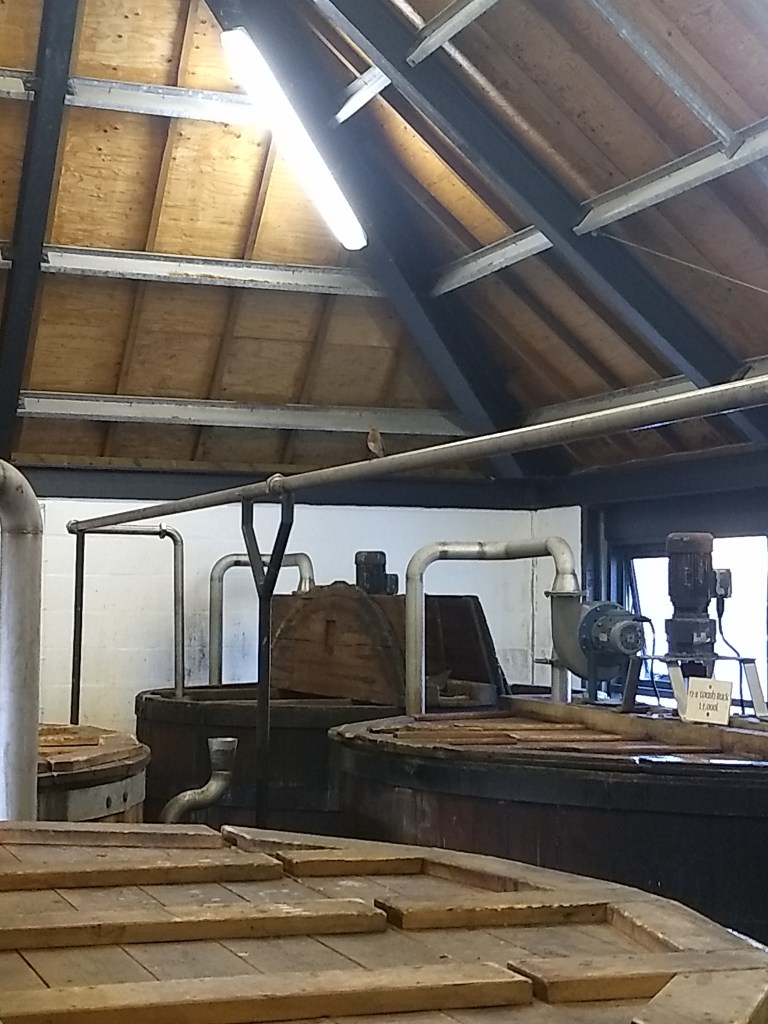
Washbacks at Lochranza distillery… and a wee guest!

At the bar, we were given a sip of their cream liqueur (great gift for non-whisky drinkers), but then we separated from the rest of the group to do a more in-depth tasting. We enjoyed having the tasting room all to ourselves while Richard talked us through an excellent selection of drams: Amarone and Port finishes, Bodega (sherry finish), the Bothy (ex-bourbon quarter cask finished), 18yrโ€ฆ.

After the tasting (and the purchaseโ€ฆ), we sat at a table outside the distillery for a bite (Italian salami, cheese and bread), with Richard joining us for a few minutes. We would have stayed more, but it was time to get the ferry back to mainland.

And there it happened, we connected with Arran whiskies, confirming how a good distillery experience can make a difference: now we always have an Arran on our shelf! The quarter-cask expression also made us realise how good bourbon-matured casks can be, a type of flavour that since then we have been chasing more and more!

Beautiful Arran, weโ€™ll be back.  


Links :
(No distillery box because we visited these distilleries more than two years ago.)

https://www.laggwhisky.com

https://www.arranwhisky.com


#12.5 From Islay with love

Back to mainland… Au revoir, Islay (Epilogue)


A straight return to Leith and some reflections about our first trip to Islay. 

(missed Day 3, Day 2, Day 1 or the Prologue?)

We woke up a bit sad: we werenโ€™t on Islay anymore. The night before we had made good use of the disposable grill (in the parking lotโ€ฆ) and, exhausted, went straight to bed. After breakfast we called AA right away, still puzzled about what to do with the campervan. Another guy came, again from the super helpful Stag Garage, and helped us turn the van on. One objective now: drive straight to Edinburgh, without turning it off! It looked like one of those challenges in the old ads of Amaro Montenegro (at least the ones on Italian TV), but we could do it, fuel was enough. And yes, we made it: four hours later we successfully drove it to a garage in Leith previously agreed with the owner, stopping only once for a leak and once for Teresa to unload our stuff (Gianluigi stayed in the vanโ€ฆ we donโ€™t feel comfortable enough to leave a running vehicle around Leith yet)! After a celebratory coffee and pint, we finally went home.

So that was it, our very first trip to Islay, and hopefully, the first of many! It didnโ€™t go as we planned it out, and we definitely didnโ€™t like being moved from one distillery to another like cattle. We like doing things our way, and itโ€™s not just about the whisky: taking our time, exploring the roads and the places, enjoying the changing landscape and feeling the community. But setbacks happen, so we feel lucky that we still managed to somehow visit the island, at least! Anyway, visiting six distilleries in three days made us reflect on a popular topic in the whisky community: what makes a good distillery tour?

First, the tour guide, definitely. An experienced, engaging and enthusiastic guide always makes the difference, even when the distillery doesnโ€™t have much to offer (for example, because whisky is not ready yet or because the site is not the most beautiful one). We always admired the ability of a guide to set the tone of the tour depending on whether the crowd is knowledgeable or not, and to answer questions at a depth which felt just right for the audience. Most of the guides we found on the island were great, and were a big component of our experience.

This was outstanding!

Second, the type of visit matters too. We always have fun visiting production, but warehouse tastings are becoming more and more our favourite whisky experience. The trip on Islay only confirmed it: the feeling, the smell, the dampnessโ€ฆthere is really no other place like a distillery warehouse! We already did some excellent warehouse tastings before coming to Islay (Deanston, Cadenheadโ€™s twiceโ€ฆ). Among the ones we did so far, Bunnahabhain Warehouse 9 was definitely one of the best ever. Next time weโ€™d like to do the distillery tour, but weโ€™ll likely do the warehouse tasting too (yes, again!). Similarly for Lagavulin, with a slight difference: Bunnaโ€™s drams were clearly chosen as outstanding ones, all very rich and showcasing the influence of both cask and spirit; Lagavulinโ€™s drams were cleaner and spirit-forward, and this gave to the tasting a very valuable educational angle, it was like following the spirit in its maturation journey. We loved both!

Happier and more knowledgeable after the Lagavulin warehouse tasting.

We know they have warehouse tastings at Laphroaig and Bruichladdich too, but while we couldnโ€™t fit them in this trip, weโ€™ll definitely check them out next time. In both distilleries we did the โ€œregularโ€ tour, although we were pleasantly surprised because in both cases the tour was definitely whisky geek oriented, and nothing like the quite dull regular tours you can find sometimes on the mainland. Probably being in a distillery on Islay is definitely a sign of whisky-geekery, you cannot stumble there on your way to Loch Ness we guessโ€ฆ

Laphroaig malting floor.

Having a good experience definitely makes you connect deeper with a whisky, but in these two cases we already liked them both. Laphroaig was one of the drams that got Gianluigi into whisky in a first place, although now we moved away from the main range (the Select and the 10y), trying solid drams like the Lore and the Cairdeas was a pleasant discovery. The basic Bruichladdich range (Classic Laddie and Port Charlotte 10y) is very solid already, but unfortunately getting special releases or and single casks can be a bit priceyโ€ฆin particular the whole Octomore range.

Bruichladdich still.

Finally, every distillery has its own features, and even just this makes the visit worthwhile (ok ok, we accept this might only apply to enthusiasts like us). While some of the distilleries might seem similar at a first glance, ultimately they are very different in their philosophy, style and, more importantly, their malt. For example, we were very curious about Kilchoman, being one of the youngest distilleries on the island, but still built in a moment when the whisky frenzy wasnโ€™t as high as it is now. The fact that this tour was supposed to happen over two years ago only made us more eager. It did not disappoint, and we both really liked everything about the distillery, from its mix of modern and traditional features, to their philosophy. A truly farm distillery, something we hadnโ€™t seen many times.

Kilchoman warehouse…Oh the smell!

Ardnahoe tour was the only one we found a bit basic, in particular compared to the others on the island, but we have to consider that itโ€™s much harder when you are such a young operation (from 2019โ€ฆand with 2 years of pandemic in between) and donโ€™t have well aged stock to showcase. Still, it was very interesting to see a perfect example of how new distilleries are clearly built with visitors in mind. Also, their new make is very promising, so weโ€™ll look to go back after their single malt releases.

At least this time we have bad weather as an excuse for our bad Ardnahoe pictures…

The only thing a bit off was some of the crowd we encountered in a few distilleries. Itโ€™s understandable being enthusiastic, but when that becomes rudeness itโ€™s not ok: touching things youโ€™re not supposed to touch, making the party wait for you, not respecting personal space, bothering the guide with questions about other distilleries (โ€ฆwhy?), talking over the guide and reply to question directed to themโ€ฆPlease donโ€™t be that guy! We had already witnessed some of these previously, but not all at once like on Islayโ€ฆWe were a bit shocked, so shocked that we thought the whole thing was worth a bingo card! Big shout out to the guides that, kindly but firmly, kept the undisciplined visitors straight!

Here a bingo card for your leasure!

Well, we will need to go back to Islay, hopefully sooner rather than later: first to visit the other distilleries (Bowmore, Caol Ila and Ardbeg, plus the close-enough Juraโ€ฆand of course one day Port Ellen and Portintruan), and probably to revisit some. Hopefully next time things will be much smoother (not that it would take much, to be honestโ€ฆ), so weโ€™ll have a chance to have a more fulfilling experience!

As you might imagine, we are already starting to planning it out!


#12.4 From Islay with love

A day around Kildalton Riviera

(Day 3)

Our last day on Islay ended with a visit to two iconic distilleries, and checking out the resurgence of another.ย 

(missed Day 2/Day 1/Prologue/Epilogue?)

The next morning we had an early start (well, โ€œearlyโ€ considering we were on holidays), and after a good breakfast we took the bus at around 8.15. We needed to cross the island to go to Port Ellen, and the next bus would have been too late (this gives a different perspective about Edinburghโ€™s public transport serviceโ€ฆ). The ride was in two steps, Bowmore first, just enough time to take a wee pic of the distillery gate, then Port Ellen. As it was early and wasnโ€™t raining, we snooped around the newly built Port Ellen distillery before walking to Laphroaig.

We then took the โ€œThree distilleries pathโ€, a walking/cycling path from Port Ellen all the way to Ardbeg (which we didnโ€™t reach, this time). As we were walking along the building site of the Portintruan distillery (the Elixir Distillersโ€™ one) we wondered if they will rename it the โ€œFour distilleries pathโ€โ€ฆ

We were super-excited about visiting Laphroaig: it is one of the first malts we remember having and buying, a few years back, and its peat was one of the things that hooked us up to single malt. Even now, despite not connecting with all expressions, it still has a special place. The distillery layout looked very old, with the visitor centre door right next to a beach – really pretty.

When we checked in, we found out that the coffee is complimentary, hurray!!! Our guide was Caroline, and the tour obviously started from the malting floors, where they malt about 10% of their barley, and the kiln, where some of their magic (ie peat) was laying around.

The tour went through the rest of production, up to the still room, in a separate building. One of the 7 stills is definitely bigger than the others, but we were told that all the spirit produced is mixed together anyway (also the spirit produced with the sourced and their own malted barley is mixed).

In the courtyard, Caroline told us that most barrels are from Makers Mark bourbon distillery, in Kentucky, an old acquaintance of us. Another signature is the use of quarter casks, still made with American oak, but smaller in size and therefore imparting a stronger flavour to the whisky. Last stop before the tasting was the dunnage warehouse (where a tasting was going onโ€ฆhopefully weโ€™ll be able to catch that next time!) for a sneaky peak of their casks resting.

Back to the visitor centre, itโ€™s time for the tasting. Other than the lanyard and the wee glass, Caroline gave us three tokens each, which we could spend to get some of the available drams: 1 token for the regular Laphroaig 10 and the Select, 2 tokens for the 10y cask strength, etc. An opportunity to custom the tasting experience, we both thought this is very smart. We had 6 tokens between us, so we opted for the Lore (2 tokens, never tried before), the Quarter Cask (1 token, tried a long time before) and the Cairdeas 2021 bottling, finished in ex-PX casks (the only 3-token dram). At the bar, we had some light snacks and a dram from the warehouse tasting cask (the only available to try, not to buy), a 13y which spent 5y in an ex-bourbon and 8y in an ex-PX cask: really delicious!

Back on the Three distilleries path, our next and last stop was a very celebrated one (even in an American TV show): Lagavulin Distillery! Right next to the sea, and it didnโ€™t undergo any apparent rebuilding โ€“ really beautiful.

The interior is also very home-y (a friend suggested that it looks like a ship, which it definitely does!) and the shop is quite small compared to many other distilleries. Everything is there however: some distillery exclusives, some past Feis Ile and Jazz Festival bottlings, some limited releases and even the Caol Ila range (this being still closed for renovation). While waiting for the Warehouse tasting to start, we sat in a very cozy room, where among the things on display we saw a bottle of the last Malt Mill run. A guide came to pick us up (a big group of over 20 people!) and brought us to the warehouse, where Ian MacArthur was ready to start the tasting! He was very entertaining, making jokes and passing around some very tasty drams. At some point he also made some people sing, it was definitely one of our funniest tastings. The three samples from the casks were a 10y, a 12y and a 25y, all from refilled casks. This had great educational value, which allowed us to deeply appreciate the core of Lagavulin nature. The fourth was the 2021 Feis Ile bottling, 13y in ex-bourbon and finished for 5/6 months in white port, a type of finish that we encountered a couple of times recently and, so far, didnโ€™t disappoint. So, on paper the tasting was doneโ€ฆbut Ian moved on and gave us other two samples: the distillery exclusive, a NAS (a marriage of 8, 12 and 15/16y), bottled at 53.5%, and the 2018 Jazz Festival (marriage of 8, 12 and 25y, refill bourbon and sherry)โ€ฆwhat a flight of great drams!

This tasting really made clear that Diageo distilleries can actually provide great value and a great experience! Jokes aside, we had other good tastings, but this was truly an experience. At the bar we tried another few drams: the Caol Ila distillery exclusive (finished in wine, awesome!), the Lagavulin 9y Game of Thrones (compared to the first and only other time we tried it, we found it a bit dullโ€ฆ probably because of the comparison), and finally the 12y cask strength from Diageoโ€™s 2021 special release.

We left Lagavulin very happy on a bus towards Bowmore first, then to Port Askaig ferry terminal, ready (but not really) to go back to mainland. During the stop at Bowmore we had enough time to buy a disposable grill, so dinner was sorted. On the ferry we relaxed, and started to address the big elephant in the room: what to do with the campervan on the next morning.


Laphroaig Experience Tour

Price: ยฃ15.00 pp (April 2022)

Tasting: drams of choice with token systems, with wee glass and lanyard to take home. Options were: Select (40%), 10y (40%), Quarter Cask (48%), 10y Sherry Oak Finish (40%), Lore (48%), 10y Cask Strength Batch 011 (58.6%) and Cairdeas 2021 PX Casks (58.9%)

Target: casual tourists, whisky novices and enthusiasts

Value for money: Very good

Highlights: token system for drams, free coffee in the shop

Link: https://www.laphroaig.com/gb


Lagavulin Warehouse Experience

Price: ยฃ38.00 pp (April 2022)

Tasting: 10y (3rd fill European cask, 56%), 12y (2nd fill European cask, 51%), Feis Isle 2021 (13y + 5-6 months finish in white port, 56.1%), 25y (refill European cask, 52%), Distillery Exclusive (double maturation in ex-bourbon and recharred cask, 53.1%), Jazz Festival (2018)

Target: whisky enthusiasts and geeks

Value for money: Good

Distillery Exclusive: double maturation in ex-bourbon and recharred cask (53.1%)

Highlights: Iain, the bar and the relaxed atmosphere

Things we did not like: nothing really

Link: https://www.malts.com/en-row/distilleries/lagavulin

#12.3 From Islay with love

Kilchoman & Bruichladdich, here we come!

(Day 2)


Finally our plan came together and we visited a couple of very popular distilleries on the west of Islay. We got some sun too! 

(missed Day 1 or the Prologue? Or go to Day 3 or Epilogue)

In the morning,  breakfast at the Skerrols House didnโ€™t disappoint: huge and delicious! We managed to find a taxi to go to the next pair of distilleries and an accommodation for the next day, so our plan finally came together and we didnโ€™t have to take the ferry in the evening!

The taxi driver showed up a couple of minutes early, and at 10.15 we were already travelling westward towards Kilchoman. As we got closer we realised how remote the north-west of Islay is, far away from the other villages. Kilchoman visitor centre is quite large as well, with a dram bar, a cafe, and local crafts on sale. While checking-in, the receptionist chuckled when she realised that our tour had been paid โ€œpre-Covidโ€โ€ฆ. the tour started in the tasting room, where Breagh, our guide, gave a brief introduction. We soon moved to one of the best parts of the distillery, the malting floor and the kiln.

Beginning and end of whisky production.
We definitely enjoyed the surprise dram!

We learned that Kilchoman produces about 20-30% of their malted barley, with local peat coming from Loch Gorm. Here Breagh gave us a taste of their last 100% Islay Barley 2021 release, the annual expression entirely produced with their own malted barley, and quite a delicious one (but unfortunately also sold out). We moved on to the rest of production. At some point of their young history (the distillery was open in 2005) they doubled their capacity, so the two pairs of stills sit in opposite sides of the building.

Man at work and the only female on the tour.

We then visited one of the dunnage warehouses, and admired the variety of casks, colour coded depending on whether the spirit inside is from their own malted barley or not. They are one of the few Islay distilleries maturing all their stock on site, understandably so given the available space around the distillery. The only discordant note of the tour was caused by some of the crowd, which were a bit annoying and disrespectful: we couldnโ€™t believe that Breagh had to repeat more than once not to touch anything! She managed it incredibly professionally, politely but firmlyโ€ฆthe tour guide job must be really hard, especially with a certain type of crowd. Back to the tasting room, we had four drams waiting for us: Machir Bay cask strength (bottled in 2015 to celebrate their tour to Europe), the recently released UK batch #3 (a vatting of ex-bourbon, ex-sherry and ex-Sauternes casks), a Madeira matured expression, and finally the distillery exclusive, this last one finished in Marsala casks.

The tasting.

While waiting for the taxi we had a very tasty soup, and of course a couple of drams from their Comraich range, which is only sold to partner bars (or Kilchoman โ€œsanctuariesโ€).

The next stop was Bruichladdich, but before the distillery we first checked-in at the B&B, and happily realised it was a minute walking from the distillery gate. Before the tour, we got some food in the near (and only) shop. We didnโ€™t have a reservation for the night, so some backup was definitely needed. Our guide for this tour was Leslie, and while at first she seemed knowledgeable but shy, she soon revealed herself as funny and entertaining. The tour started in the courtyard, to quickly move to the mill room. No malting floor here, but apparently it is in the plans (delayed by Covid). That would be very convenient because about 52% of their barley comes from the neighbouring farms, but it is then shipped to Inverness to be malted according to their own specifications. We were surprised by how the production is still very manual, somehow contrasting with their progressive mindset on some aspects, like sustainability and cutting-edge packaging.

The open mashtun at Bruichladdich.

After checking out the open mashtun and the wooden washbacks, it was the time for the still room, where we finally met the legendary Ugly Betty! This is the Lomond still used for their gin, the Botanist, and used to be at Inverleven, a short-lived distillery in the now demolished Dumbarton grain distillery complex. In contrast with almost all other distilleries, their wash and spirits stills are very dark and not shiny at all, giving almost a steam-punk vibe!

Ugly picture of Ugly Betty.

We moved to the main warehouse, which sits in front of a yellow submarine! This is a remotely operated vehicle owned by the navy. When a fisherman rescued it close to Islay, the Bruichladdich marketing team was quick in reacting and made a special release for that, which is now very sought after. In the warehouse, we spotted the set-up for warehouse tastingsโ€ฆWe will definitely go back for that. Back to the shop, the tasting consisted in their three main single malts: the Bruichladdich (Classic Laddie), the heavily peated Port Charlotte (10y) and the Octomore 9.2. Except for the Octomore, we already knew the other two, so we decided to save them for later and try a few others: the two distillery-exclusive bottlings and the Bruichladdich Bere Barley 2011. They were all delicious, but because the half-litre bottles for the distillery exclusives were sold out, we took the Bere Barley with us. Itโ€™s the second time we try one of their whiskies made with this ancient barley strain, cultivated on Orkney, and to both of us it reminded the home-made bread baked into traditional wood-fired oven, like our respective grandmothers used to do.

The sky can be blue!

Contrary to the day before, it wasnโ€™t pishing down rain, so after the distillery we walked from Bruichladdich to Port Charlotte to get a pint and a gin tonic in one of the local bars. The walk was very nice and relaxed, even some sun came out! We tried our fortune in the only restaurant we spotted on the way, but it was booked until lateโ€ฆwe were wise to get some food at the shop. After a light dinner, a quick wash of some clothes and a couple of leftover drams, we went to bed. Finally, we slept like rocks!


Kilchoman Limited Edition Tasting & Tour

Price: ยฃ35.00 pp (April 2022…same as March 2020!)

Tasting: 100% Islay 2021 Release (during the tour), Machir Bay CS* Europe Tour 2015 (58.9%), UK Small Batch (49.1%), Madeira Cask (full hogs maturation, 5y 3 months, 50%), Distillery Exclusive Marsala cask, all NC and NCF*โ€ฆand a glencairn to take home

Target: whisky enthusiasts and geeks

Value for money: Very good

Distillery Exclusive: single cask, 8y ex-bourbon, finished 7 months in Marsala cask (54.8%, ยฃ102)

Highlights: seeing the malting floor while sipping a dram

Link: https://www.kilchomandistillery.com/


Bruichladdich Distillery Tour

Price: ยฃ10.00 pp + ยฃ1 service fee (April 2022)

Tasting: Classic Laddie (NAS, American oak, 50%), Port Charlotte 10y (1st and 2nd fill American oak, 2nf fill French wine casks, 50%), and Octomore 9.2 (5y, 4y in American oak and 1y in French oak, 58.2%), all NC, NCF*

Target: casual tourists, whisky novices and enthusiasts

Value for money: Great!

Distillery Exclusive: two fill-your own โ€“ Port Charlotte The  Distillery Valinch (SYC: 03 2009, 61.7%, ยฃ95 half litre) and 59 Robert Mceahern (single cask, ex RVS, 11y, 60.8%, ยฃ75 half litre)

Highlights: the still room and the great guide

Link: https://www.bruichladdich.com/

*NC: not artificially coloured, NCF: not chill-filtered, CS: cask strength

#11.3 Birthday in the Borderlands

Crossing the borders for the Lakes (Day 3)

First distillery visit in England, in the gorgeous Lakes District

(missed Day 2 or Day 1?)

We woke up after a resting night in our hotel in Workington. The night before we had had the chance to explore the town, but after the restaurant and a pint we decided to head back to the hotel. At that point face masks werenโ€™t mandatory anymore in England, in spite of the high Covid rates, and this wasnโ€™t making us very comfortable.

Our hotel was only half-hour away from the distillery, but we decided to take the long road and drive through the Lakes region. The road was not the easiest, long chunks of single tracks (which we got acquainted with during our trips in the Highlands) and even some very steep ones, which Cliff took like a champion! This choice, however, rewarded us, as the landscape was truly beautiful!

Snooping around the Lakes District.

While driving through the posh village of Kenswick we also understood why we couldnโ€™t find any decently priced accommodation for the night in the area. As we left the hills behind us, we entered in a very flat and smooth valley along Bassenwaite lake.

Cliff, you made it!

We were a bit ahead of schedule, so the fact that Gianluigi missed the turn (twice) for the distillery gave us the chance to explore the area even more! However, the third time is the charm (as someone would sayโ€ฆdonโ€™t know exactly whom though) and we finally arrived at the Lakes Distillery.

We learned about them a few years ago and we were both very curious about it. We had reserved the Lakes Whisky Tour at noon (hours are different now, every day at 11.30 and some days at 3.30pm), which is whisky focused. The regular tour instead includes vodka and gin production, which could be a solution if you are accompanied by non-whisky drinkers. Other options are the whisky and chocolate pairing (all Wednesdays and Saturdays at 3.30p), and the โ€œpet the alpacasโ€ experience.

Happy in the wind.

The whole site was clearly designed with visitors in mind, so while waiting for the tour to start, we had a coffee at their restaurant (which is a proper one!). We barely made it, because it was fully booked for lunch. This is something that surprised us, but considering the restrictions easing and that the distillery sits in a very touristic region, we could have expected it (so, if you want to have a meal there, booking is strongly suggested!). Our guide was Sonja, and she started the tour explaining how it took a while for the funders to find the right spot, which they found in the Victorian farmhouse where the distillery is built. The distillery opened in 2014, and theyโ€™ve been expanding their production by repurposing some of the buildings previously used for cask storage.

Yes, this used to be a farm.

We moved to a dark room where we watched a (spectacular but a bit too long) drone video following the water source of the distillery, the river Derwent, from the Sprinkling Tarn in the Lakes district to the Irish Sea in Workington (ah!). We moved to the production (where pics were not allowed), which is tightly fit in the old farm barn buildings. Here we could see something very peculiar: the spirit still has two condensers – a usual copper one and a stainless steel one. Sonja told us that it is there for experiments, it should produce a heavier new make because of the missing interaction with the copper. She also told us that none of the whisky released so far went through this condenser. The final part in the tour was in another dark room (not a warehouse, unfortunately), where we were talked through the effect of different types of wood on the whisky maturation.

Maturating whisky, maturing colour.

Afterwards Sonja led us to a different building, a beautiful house just on a wee hill behind the distillery, with the alpaca farm on the back: tasting time! After a wee pause for restroom, the tasting started with the newmake, followed by a 1 year-old dram aged in a sherry cask. This is very important to them, as the Lakes whisky style is generally very sherry/European oak forward. We moved on to a couple of their One, the line of their blended whisky, including other malts and grain whiskies from Scotland. We had the sherry and port finishes, both very drinkable (someone would say โ€œdrams for drinking, not for thinkingโ€), displaying again the ability to play with different woods. Finally, we got a dram of their last (at the time) release, the Mosaic single malt. This very rich and aromatic dram would have been clearly the highlight of the tasting, but Sonja decided to give us an extra dram: the Whiskymaker Reserve N 4, which was truly great (and sold-out, ouch).

Tasting time!

After the tasting we had a wee meal at their restaurant, but just before that we went back to the shop for a wee taste of two other Ones: the Moscatel and the Orange Wine cask finishes. While the first was more balanced, the latter had a very particular note that we havenโ€™t found anywhere else, so we went for that one. Finally, we got into the car and headed back to Leith, crossing the South of Scotland and some unexpected but amazing landscapes around Moffat and Biggar. Tipsy Teresa (she necked all of her drams, of course!) was definitely very happy for her birthday celebrationsโ€ฆwhile Gianluigi was already thinking about how to top this next year!

The house of the raising drams!

So, our first visit to an English whisky distillery happened, and it was good one indeedy! Thanks to the visit, we could see how their (former, apparently) whisky maker Dhavall Gandhi gave a very clear direction to their whisky. While definitely sherry-oriented, the drams we had were not โ€œsherry bombsโ€, and the influence was more nuanced and balanced โ€“ we both thought Dhavall is an amazing blender. For us, some whiskies to keep an eye on and, unsurprisingly, weโ€™ll likely return to visit!


The Lakes Distillery Whisky Tour

Price: ยฃ35.00 pp (March 2022)

Tasting: Lakes new make spirit, 1y malt spirit (ex-sherry cask), The One Port & Sherry finish blended whiskies (both 46.6%, NAS, NC, NCF), the Mosaic Single Malt (46.6%, NAS, NC, NCF)

Target: whisky enthusiasts and geeks

Value for money: Good

Highlights: the distillery is very beautiful and in a great spot

Link: https://www.lakesdistillery.com/


#11.2 Birthday in the Borderlands

Tripping in the South of Scotland to Annandale
(Day 2)


The second day in Dumfries & Galloway, driving from Portpatrick to the lovely Annandale distillery! 

(missed Day 1? Or go to Day 3)

The morning wasnโ€™t too cold as we went to a nearby hotel for a big breakfast. We went for a short walk on the cliff around Portpatrick, the view of the village was pretty spectacular, but the clouds prevented us to spot Irelandโ€ฆhopefully next time!

Quiet, cloudy morning in Portpatrick.

First stop in the morning, Newton Stewart. It looked as a nice, quiet village. Here we met up with Tom, a Gianluigiโ€™s former colleague and his family for coffee and cake. It was great catching up with him, since Gianluigi and Tom hadnโ€™t met in person since March 2020, despite spending a big chunk of the pandemic working together building a Covid model for Scotland.

The road between Newton Stewart and Annan was a quite different landscape compared to others in Scotland. A rug of intense green rolling hills, punctuated by cattle and sheep quietly grazing. We stopped by a smokehouse just past Creetown, on the main road, to get some of their delicious goodies. Past Dumfries, instead keeping on the main road, we drove straight south to Caerlaverock Castle. The visitor centre and the castle were closed, but it was possible to park nearby and, thanks to a sunny day, take a walk in the park. The castle looks like a proper medieval fort, including a catapult โ€œparkedโ€ in front of it as a reminder of those walls purpose. As we will learn from the Wikipedia page, this has been under siege many times, until it was abandoned in 1640.

Beautiful castle behind an even more beautiful catapult!

It took just a short half-hour drive to arrive to Annandale from the castle. As we left the car in the wide parking lot, we could admire the awesome restorations of the distillery buildings. It sits in a nice spot as well, close to a stream and surrounded by fields and woods, almost like a postcard! We checked-in at the visitor centreโ€™s shop (where we got our very first whisky lanyard!) and while waiting for the tour to start, we had a coffee at the Maltings, their cafรจ.

Checking in at Annandale.

Other than the basic tour there are other three options available, which is possible to enquire about from the website: one focused on the buildings restoration, one about the new owners journey and project, and a technical one about whisky production. Gianluigi enquired about the latter, but that week the person in charge was on annual leave, so he chose the basic tour (prices of the alternative ones are not specified on the website).

Our guide led us to the room where the tour started. While she was explaining the history of the distillery, which dates back to 1836, she gave us a first dram of a blended scotch whisky prototype (not on sale yet), a blend of North British grain whisky with their peated expression (Man Oโ€™Sword), diluted at 40%: despite the thin mouthfeel, not bad at all! The distillery was bought by the Walker family in 1893 as a source of peated single malt for their blends: their kiln used peat from local bogs, making it a pretty unique malt. Compared to other peated malts, it was also easier to transport it to Kilmarnock. The distillery was closed and dismantled in 1924, and prior to their acquisition by David Thomson and Teresa Church in the late 2000s, it was abandoned. When the renovation happened, all the equipment was new, making it another (almost) 200 years old โ€œnew distilleryโ€, similarly to Bladnoch. In the middle of the courtyard we could admire the old stillhouse buildingโ€™s base, with the two circular structures that used to host the stills.

A piece of whisky history.

The historical ties of these distillery donโ€™t end here, as they decided to name their single malts after two very important characters tied with the local and Scottish history: while their unpeated whisky is named โ€œMan Oโ€™Wordsโ€ in honor of Robert Burns, their peated one is the โ€œMan Oโ€™Swordโ€, after Robert The Bruce (and the peat doesnโ€™t come from the area anymore, but itโ€™s sourced by the Simpson maltsters).

As we moved to the production area, we spotted the similarities with other distilleries influenced by the late Dr Jim Swan (Lindores Abbey). In particular, they have a mashtun closed by a copper lid, and three stills: one wash still and two twins, slightly smaller, spirit stills.

All in one room: mashtun, washbacks and…
…Stills!

In the filling room, a poster of Doddie Wair, which filled their first peated cask. The dunnage warehouse is on two levels, and here is where we had a wee taste of their products (well, not Gianluigi as he was driving). We tasted their peated and unpeated Rascally Liquor (newmake spirit bottled at 63.5%), and their young Man Oโ€™Words and Man Oโ€™Sword from bourbon casks (unchillfiltered, natural color and cask strength). Back in the shop, we realised that all their bottling were ยฃ80-85 or over, depending on the cask type, so we opted for a tasting set of 6x5cl drams: peated and unpeated single malts in ex-bourbon, ex-sherry and STR casks, a good compromise (we still have to taste them howeverโ€ฆ). For what we could taste on that day (but also in another Kask Whisky tasting, when we had a dram of their sherry cask matured Man Oโ€™Wordsโ€ฆ and a real sherry cask, not a seasoned one) the whisky is very promising, and we are excited to see what is in their plans in the years to come!

Dunnage warehouses.

As we left the distillery Teresa wasnโ€™t aware of the next stop, and she was really clueless until we crossed the border with (cracks in the sky noise) England!!! The distillery for the next day was, of course, the Lakes distillery, but Gianluigi decided to spend the night in a town on the coast, Workington. We stayed in the very clean and tidy Hall Park Hotel, which has a bar as well, so before dinner we could watch the second half of the England-Ireland 6 Nations game from a comfy couch in our room with a pint! Sublime!

So another distillery in the sack, this time the beauty of Annandale really made the difference. We will definitely go back for another tour (hopefully the technical one), maybe in a few years when more expressions of this whisky will be available.


Annandale Distillery Tour and Tasting

Price: ยฃ20.00 pp (February 2022…But there was a discount at the time, we paid ยฃ10pp)

Tasting: Blended scotch (a blend of North British grain and their peated single malt, 40%), Rascal spirit (new make), Man Oโ€™Word & Man Oโ€™Sword (unpeated and peated, NC, NCF, CS)…and wee glass and laynard to take home

Target: everyone

Value for money: Good

Highlights: The beautiful site

Distillery Exclusive: Man Oโ€™Words and Man Oโ€™Sword single cask bottle your own vintage 2015 (CS, NCF, NC, ~ยฃ60 for a 375ml bottle)

Things we did not like: Feeling like broken records, but the bottling prices were a bit steep again

Link: https://annandaledistillery.com/


#11.1 Birthday in the Borderlands

Away to Galloway: Bladnoch Distillery (Day 1)


Another trip to discover distilleries in the Lowlands on a special occasion: Teresaโ€™s birthday.ย 

(Want to read the whole story? Go to Day 2 or Day 3)

There was one trip we aimed to do back in 2020, but because of you know what, we postponed it: Dumfries and Galloway. We heard this is a lovely region and, very important for us, home of two single malt distilleries, Annandale and Bladnoch.

This year, Gianluigi decided to catch up with this trip, and the perfect occasion was Teresaโ€™s birthday, in March. He organized the trip as a surprise, so on that Friday morning when we ignited Cliffโ€™s rowdy motor (thanks again Justine!), Teresa had no idea where we were going. As we left the city and didnโ€™t take the Fifth of Forth bridge, Teresa recognized the landscape of the M8 towards Glasgow, so she narrowed down her guesses to two: Arran or Galloway. As we turned south towards Ayrshire, she got the correct guess. Smart lady! The distillery visit of the day was at Bladnoch. Their 1817 Tour is only available on Wednesdays and Fridays at 11.30, and because Gianluigi wanted to drive on the Ayrshire coast (which is a bit longer route), we had an early start.  

Ayrshire itself is now home of at least three whisky distilleries in two production sites. One is the huge Girvan complex, owned by Willian Grant & Sons (the same company owning Glenfiddich, Balvenie and Kininvie, in Speyside) and including the Girvan grain distillery and Ailsa Bay (and for gin lovers, this is the place where Hendrickโ€™s is produced). We briefly stopped to take a picture and snoop around the site.

Nosing around Girvan…in the wind.

The third one is a new small farm distillery called Lochlea, who released their first whisky in early 2022. They donโ€™t have a visitor centre, but in some interviews on podcasts and on an article on the Whisky Magazine, they seemed to suggest they could welcome small groups of visitors, if contacted by time. That was very far from the reply they sent to Gianluigiโ€™s email, which was polite but categorical in saying that, because it is a farm distillery, there is zero chance of welcoming guests (to be honest, that was not the case when a few weeks ago it was showed on social media that they actually had bloggers/podcasters, but hey ho!). Along the coast we also drove past Cairnryan, where the ferries to Northern Ireland leave, and the nice town of Stranraer, which we pictured much smaller.

Since the day was cloudy but not rainy (yetโ€ฆ), we decided to park the car in Wigtown and reach the distillery on foot. Wigtown is a very cute village and the Scottish capital of books. The place is in fact full of bookshops where you can find both new and second-hand books. In the afternoon, after the distillery visit and lunch, we took advantage of it to enlarge our collection of Ian Rankin novels and whisky books. The walk from the village main square to the distillery was about 20 minutes long on a very quiet road through a rural landscape which weโ€™ll find very characteristic of the area.

Tour and tasting…we’re coming!

As we crossed Bladnochโ€™s doors we realised how new the visitor centre, shop, restaurant are, and we checked in right away with our tour guide, James. He used to work as a chef, until he decided to join the Bladnoch team part time as a guide for their tour and, occasionally, to prepare meals for business visitors. When the tour started he told us how everything changed when the distillery was bought by Richard Prior in 2015, in particular the distilling plant (stills, washbacks, etc.). So, it is basically a new 200 years old distillery! We moved to the mill room, where he showed us how the shuttle box is used with a scale to check that the mill grinded husk, flour and grist at the correct ratio. We made a brief stop at the closed steel mash-tun, and moved to the room with 6 wooden (Douglas Fir) washbacks. James and the operator showed us how to measure the alcohol content of the wash, before and after fermentation (very similar to what we did in our timid attempts to brew beer at home, actually).

Very sophistcated equipment…

We moved to the still room, where four shiny copper stills (two wash stills and two spirit stills) were actually working! It was very nice to see the liquid been distilled through the wash stillโ€™s little window.

What a beautiful still room!

Once in the courtyard, we could admire the old distillery building including the malting floors, that are now used as offices. James also showed us the water source, just behind the old buildings. We spent a while inside the dunnage warehouse (where we couldnโ€™t take pictures, except from outside the door). The new make spirit is maturing in a variety of casks: quarters, lot of sherry hogsheads, lot of wine barriques, bourbon, etc.

Birthday girl and the old malting floors.
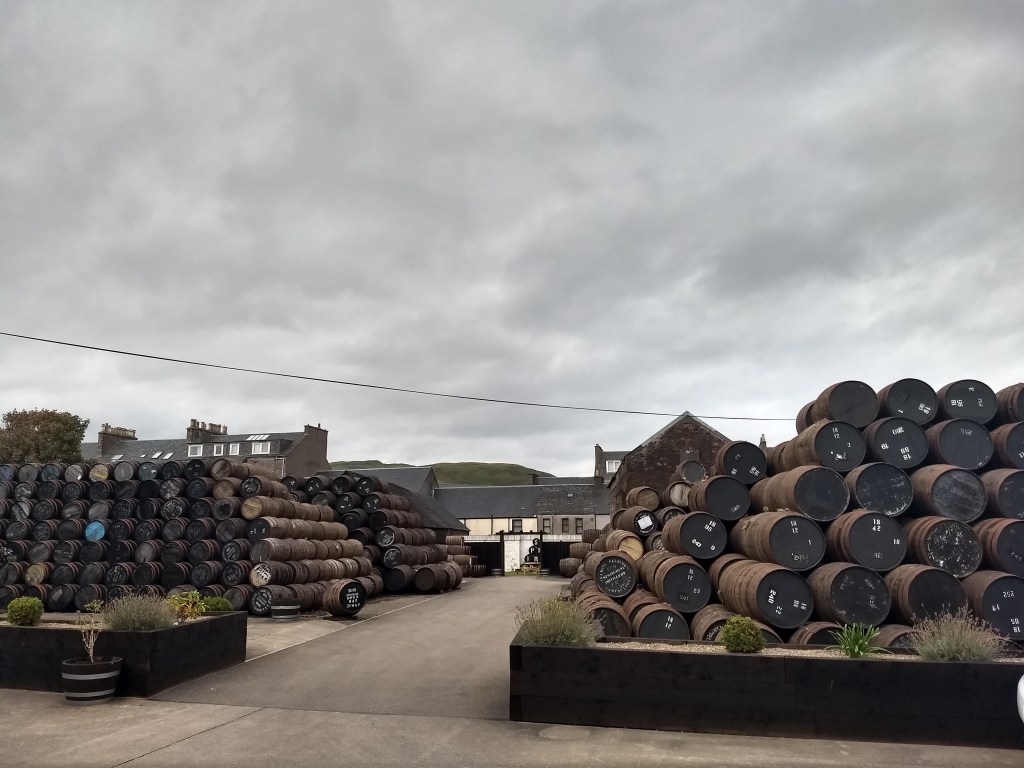
Casks, casks, and…more casks.

We finally got to the tasting room, adjacent to the shop, where 5 drams were waiting for us: the new make spirit (nice surprise!), and four of their core range expressions (see summary below). Because most of the whisky they are currently bottling comes from the previous owners, at this point in their journey they want to showcase what they can do with the range of casks available. In our opinion all the four drams were all very cask-forward and enjoyable, although not mind-blowing. The two stand-out were the 14 y/o matured in ex-oloroso sherry casks, and the 19 y/o matured in ex-PX casks, of which James gave us a wee taste at the bar. A shame the price of both was a bit too steep. After the tour we stayed for a quick meal at their nice cafรฉ: a plate of smoked duck and salmon, very good!

A (not so) wee taste of Bladnoch.

On the way back to Wigtown it started raining (sad trombone sound), so as we got into the village we sought refuge in another cafรฉ (that was Gianluigiโ€™s excuse to get another cakeโ€ฆ). After leaving Wigtown (with a few more books in the trunk) and driving around a bit we directed ourselves towards our place for the night: the Waterfront Hotel in Portpatrick. This is a quite spectacular village on the Rhinns of Galloway peninsula, right in front of Ireland (which we couldnโ€™t see because of the clouds). Our room was very โ€˜cosyโ€™ (not to say tiny), but the staff was nice enough to give us one with a spectacular sea view. We had a delicious meal at the Connorโ€™s restaurant, where we could also taste a couple of discontinued Bladnoch expressions: the 10 y/o (which Ralfy talked a lot aboutโ€ฆand in fairness, it was one of the best we tried) and the 17 y/o.

Despite not bringing any bottle with us, we were very happy to have visited Bladnoch distillery. This experience was an example how the guideโ€™s enthusiasm and knowledge can really โ€œmake the tourโ€, which otherwise could have been a very โ€˜standardโ€™ one. So, to James, Slรกinte!


Bladnoch 1817 Tour & Tasting

Price: ยฃ50.00 pp + ยฃ5 per transaction (March 2022)

Tasting: Bladnoch new make spirit (63.5%), 11y/o (46.7% , NCF, NC, ex-bourbon casks), Samsara (46.7%, NAS, NCF, NC, California wine and ex-bourbon casks), 14y/o (46.7% , NCF, NC, oloroso sherry casks), Alinta (peated, 47% , NAS, NCF, NC, 1st fill ex-bourbon and 1st fill ex-sherry casks)โ€ฆand the glencairn to take home

Target: whisky enthusiasts and geeks

Value for money: a bit pricey but the in-depth tour made up for it

Highlights: the very enthusiastic guide James and the possibility of tasting extra drams

Distillery Exclusive: single cask 2007 vintage (55.9%, ex-port pipe, NC, NCF, ยฃ170) and 2002 vintage (48.4%, ex-sherry butt, NC, NCF, ยฃ400)

Link: https://bladnoch.com/

#10.3 Whisky in Edinburgh and beyond


Dramming in
Glasgow and Fife

Another couple of distillery trips right outside Edinburgh: Clydeside and Kingsbarn

(missed Part 2 or Part 1?)

Being in a new golden era of whisky, recent years saw a plethora of new single malt distilleries being built around Scotland and the rest of the world. A few new ones are in the Lowlands. Here, distilleries opened really all over the place: in Fife (remember our trip to Lindores Abbey?), in Edinburgh (someone said Holyrood?), in the south of Scotland (ehm-ehm, Borders), and in Glasgow. One of the most recent here, is the Clydeside distillery, which opened in 2017 and started producing new make spirit in 2018. We visited it back in November 2019, at a time we were getting more and more involved into whisky. We spotted an event in the SMWS website which included the distillery tour plus tasting and bites. What else could we ask?

Coincidentally, a couple of friends of ours were visiting, so we gladly involved them in the visit (weโ€™re still unsure whether they really wanted to get involved, but they didnโ€™t say โ€œnoโ€). Being a time when people used to go every day to the office, Teresa was already in Glasgow, and the three of us reached her in the late afternoon. At the time the distillery was not quite easy to reach by public transport from the city centre, so we grabbed an Uber. The distillery building is beautiful, a mix of modern and industrial architecture, right on the side of the Clyde river (well, the distillery name kind of gave it away, I guessโ€ฆ). There is a whisky shop inside the visitor centre, with a wide selection of whiskies.

The tour was very nice, we had to translate it in Italian for our friends, so we ended up not taking any pictures (and tbh, at the time the blog idea was not there yetโ€ฆ), but we enjoyed it nonetheless. We were very happy to try the newmake spirit at the end of it. Being a SMWS one, the rest of the tasting was quite great as well, and there we could try a single grain whisky distilled a couple of days Gianluigi was born! The bites were a bit underwhelming, so to calm our hungry stomachs we had to get a (very typical late night in Glasgow) kebab when we were back in the city centre, before our train back to Edinburgh. At the time they didnโ€™t have any official release yet, but now that they have, we are waiting for the right occasion to go back to Glasgow and try something tasty!

Arriving at Kingsbarns!

Among the most prolific areas for new distilleries, Fife could almost be a region on its own now. We recently visited Lindores Abbey, but among the new distilleries we can count for Aberargie, Daftmill, Eden Mill, Inchdairnie, and Kingsbarns. We visited the latter in March 2020, right before the pandemic. The event was organized by the Fife Whisky Festival, and consisted in the projection of the Amber Light documentary, featuring Dave Broom, and the tour of the distillery. To attend this event Gianluigi had to turn down a free ticket offer for a Scotland rugby game at Murrayfield, where it was playing against France. His epidemiologist instinct suggested avoiding big crowds, since Covid was already spreading across Italy and, in his mind, it was just a matter of time for it to get to Scotland.

Reaching the distillery in a combination of train and buses turned out not being the cheapest, we ended up spending more money than what a rented car would have costed at the time. However, it paid off as the distillery is situated in a very beautiful spot of the Fife coast, nearby the sea and meters away from golf courses. The projection of the movie was not the best, due to the initial technical problems and a very low audio volume.

A very focused Teresa!

The distillery was built in 2014 on an abandoned farm originally from the 1800s, of which they retained the main structure (including the pigeon house and, as many newly built distilleries, they have a cafรฉ, where you can have food and tasty cakes. The very enthusiastic tour guide walked us through the production stages, and tested our ability to recognize flavours and aromas in a dedicated area. We understood that the intention was to release single malt at a young age, therefore commonly to others they use lots of shaved, toasted and recharred (STR) casks. They started making newmake spirit in 2015 (the first cask is exposed in the visitor centre), which we could taste at the end of the tour, together with a first core range expression, Dream to Dram (46%, ex bourbon and STR casks), and the Family Reserve: a similar expression but bottled at cask strength. The distillery is owned by the Wemyss Family, which is an independent bottler as well, so we were also offered a Velvet Fig 25y/o malt from their range. We particularly liked the Family Reserve expression, however at the time we had a 10-day trip to Islay scheduled for the end of the month, so we didnโ€™t buy it and we got a couple of Wemyss blended malts miniatures insteadโ€ฆfortunately we could find that bottle months later, since that trip to Islay never happened.

Shiny happy mashtun holding mash!

In spite of the young age, the drams we had were both very tasty. We recently attended a Kingsbarns vertical tasting at the Tipsy Midgie, in Edinburgh, which confirmed how promising their whisky is, when matured in a range of casks as well. Overall, getting to know these new distilleries is very exciting: all of them can offer a unique take on single malt, and unlike many of their older brothers, the new and family-owned ones have more freedom to experiment and provide innovation in the category. Being able to reach them (more or less) easily is definitely a big โ€œplusโ€!

Until the next adveture, stay safe and slรกinte!


Whisky Activities Links

https://www.theclydeside.com/
https://www.kingsbarnsdistillery.com/
https://smws.com/
https://www.fifewhiskyfestival.com/