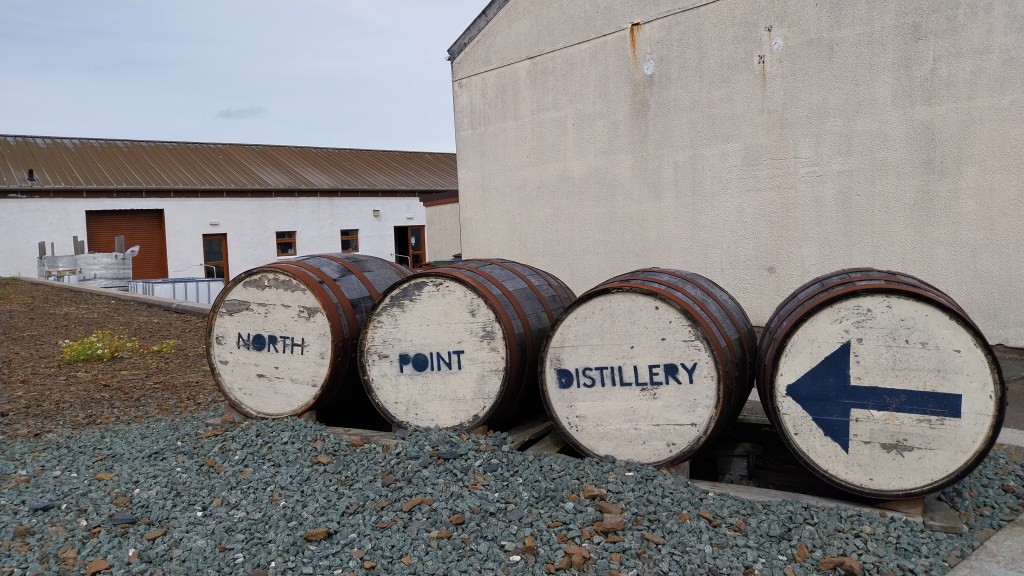
#63.4 As north as you can get (on the mainland)

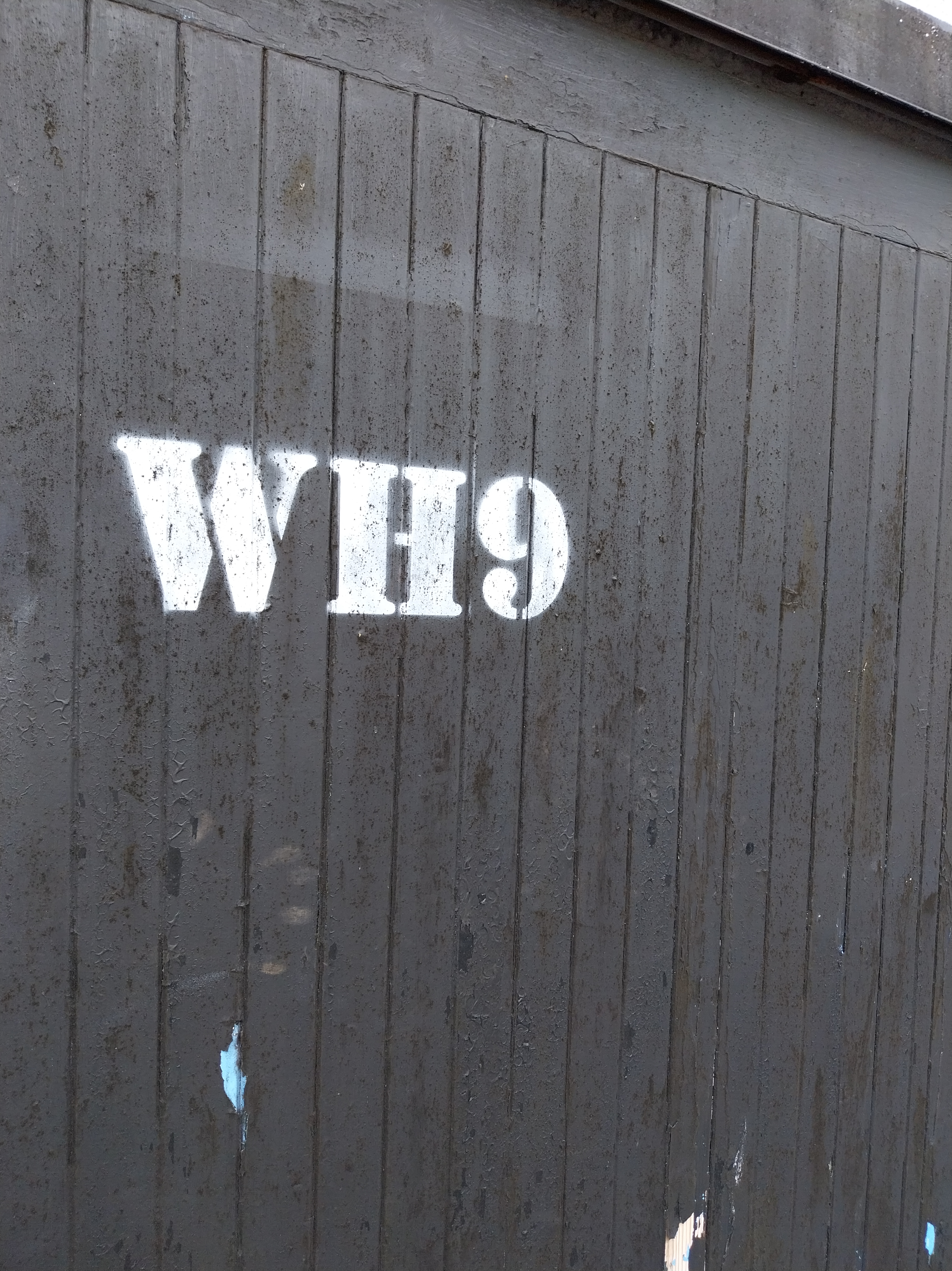
Pointing north to the bunker


TL; DR: Our final distillery visit in this North Highland trip was to another new distillery: North Point! The location is very fascinating, and during the engaging tour, Alex walked us through their process in a distinctive visit that left us excited. After the visit, we visited peat bogs, beaches, and waterfalls, an ended the trip with a cheeky visit at Tomatin. 

(missed Part 3/Part 2/Part 1?)

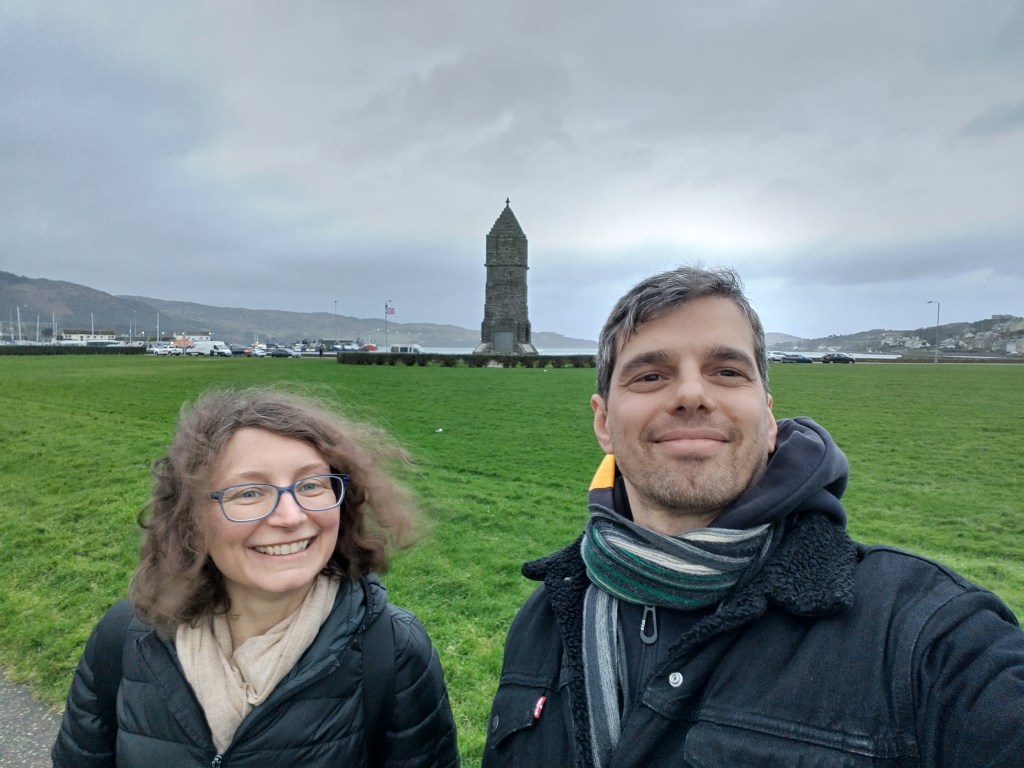
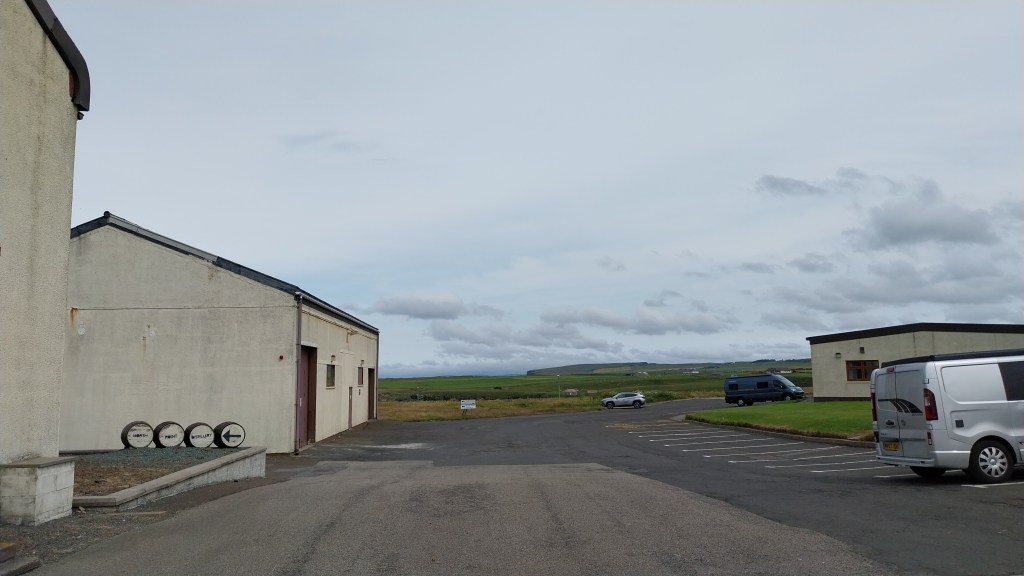
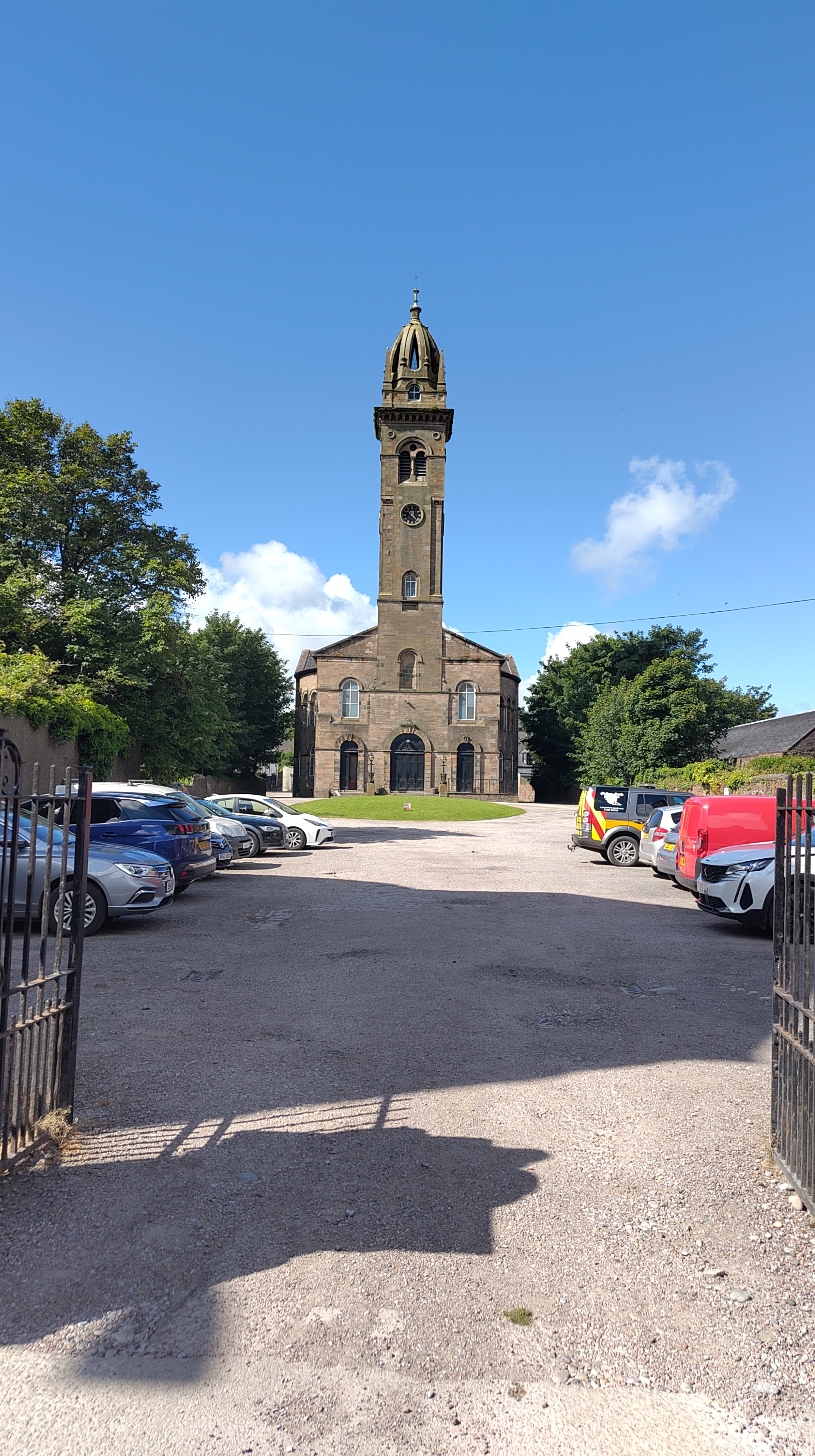
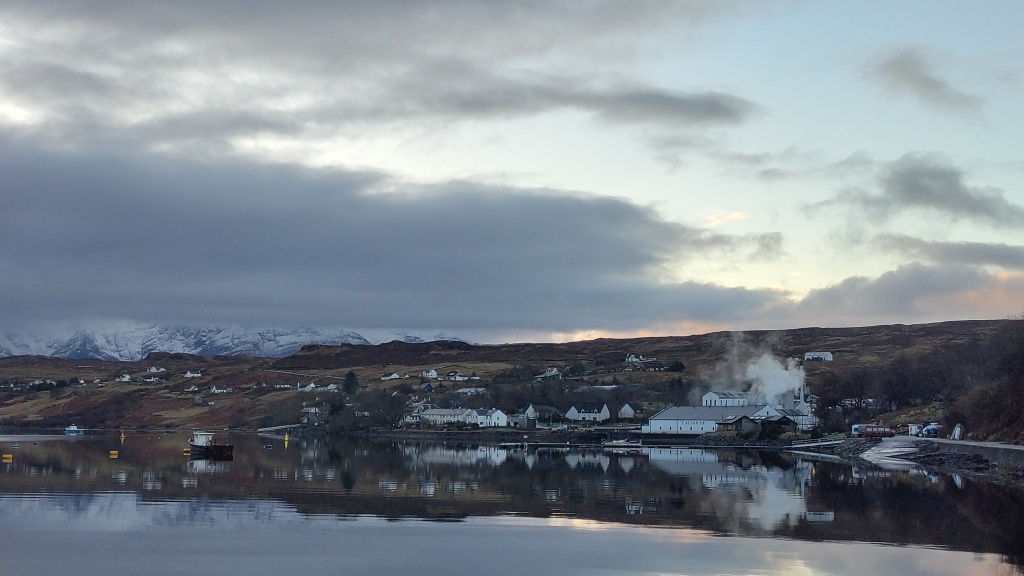
The Forss Technology Business and Energy Park is only a few minutes driving from Thurso, the access road is on the right side of the A836, if youโ€™re driving westward. As we approached it, the site looked more like a wind farm, as it’s surrounded by turbines. We’d done our homework before, and we learned that the site, built in the early 1960s, used to be a U.S. Navy radio station active during the Cold War. Not only that, but after the closure of NAVCOMMSTA Londonderry in 1977, it became crucial to monitor the North Atlantic and the North Sea until November 1992, when it ceased operation and the Americans left. The site maintained some activity because of some of the existing facilities (basketball court, bowling alley, swimming pool, baseball diamond), but then in 2003 it was transformed into a business park. And in 2020, North Point Distillery moved in!

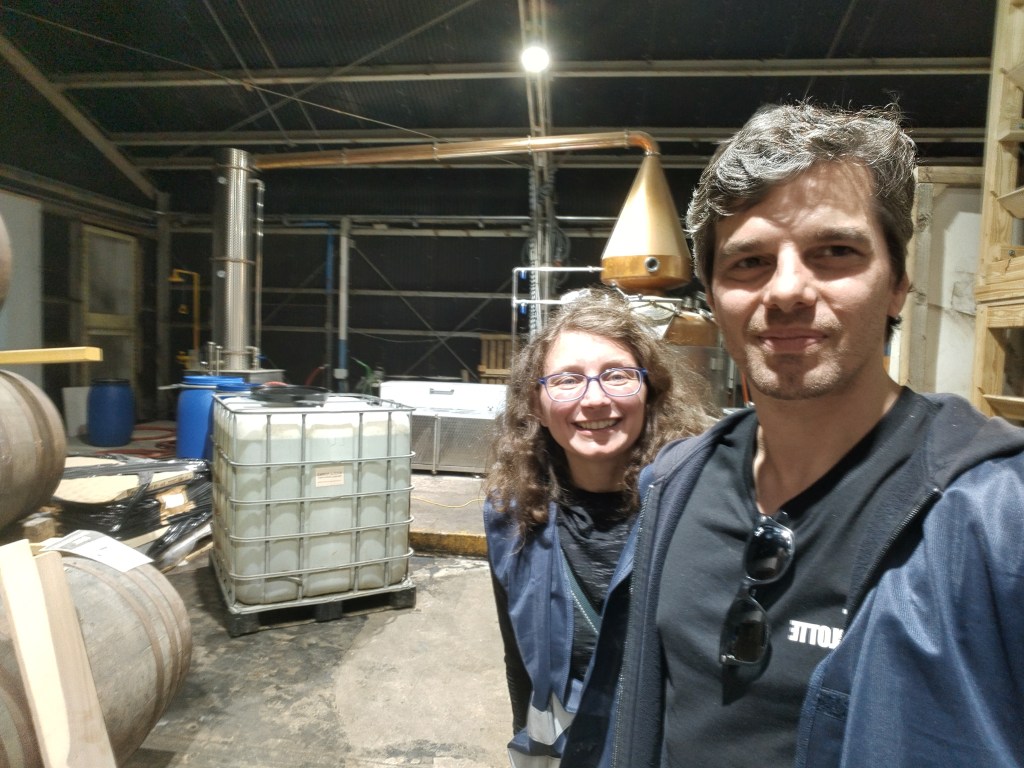
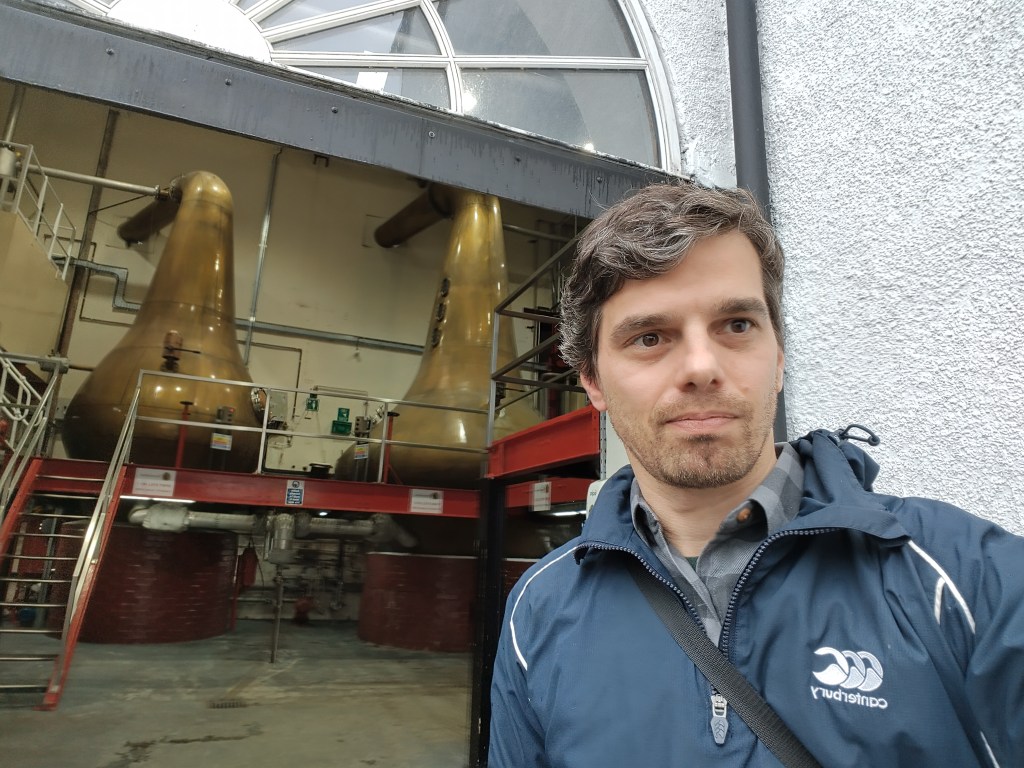
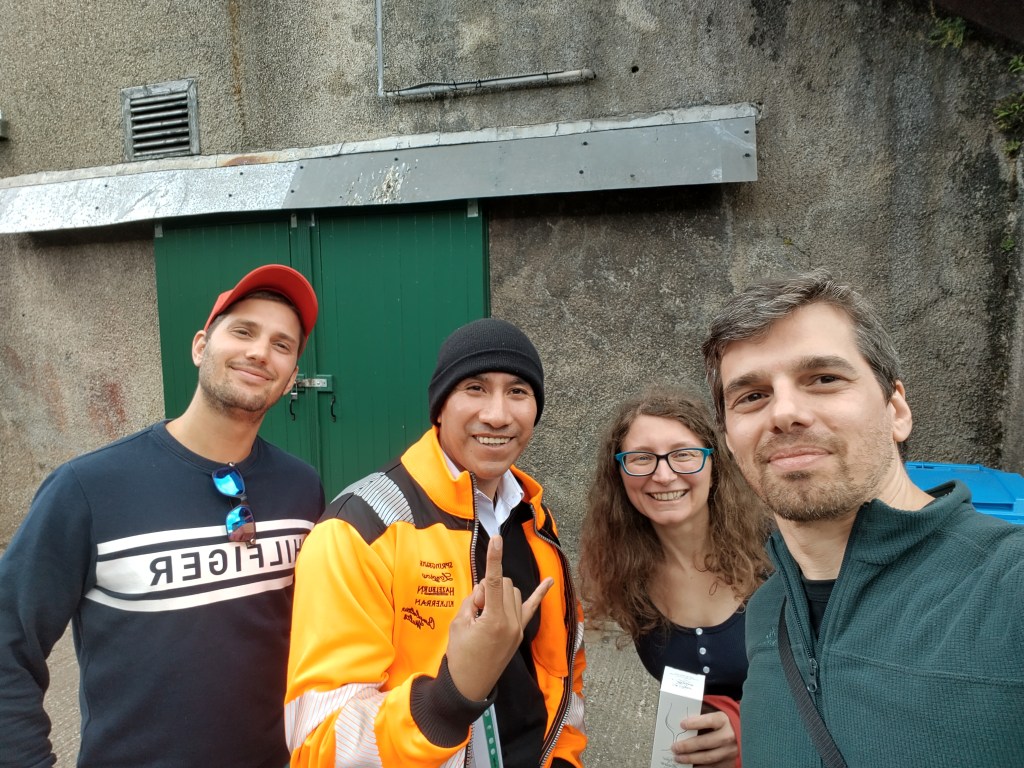
We learned about North Point because of their other spirits (more on this later), but their inclusion in the 2025 Malt Whisky Yearbook meant that they started distilling newmake spirit for whisky, sparking our curiosity. The visit almost didnโ€™t happen, because the Foundersโ€™ tour (the in-depth one, but they also have a shorter option for ยฃ12) was not scheduled on Saturdays. However, we’d noticed that the shop was open, so we got in contact and they agreed to give us a tour! This kindness is not a given, as other distilleries would have just turned us away, so many thanks to them! As we arrived Alex MacDonald, one of the founders and our guide for the afternoon, spotted us right away, and introduced himself while we entered the Murkle building. This is where their offices, shop and part of production are. Despite his surname, Alex is Canadian, and came to Scotland to play rugby. After getting an MSc in Business, he founded the distillery with Struan Mackie (native of the North Coast). The company is independently owned, and they recently obtained the B Corp Certification, to testify their effort in sustainability.

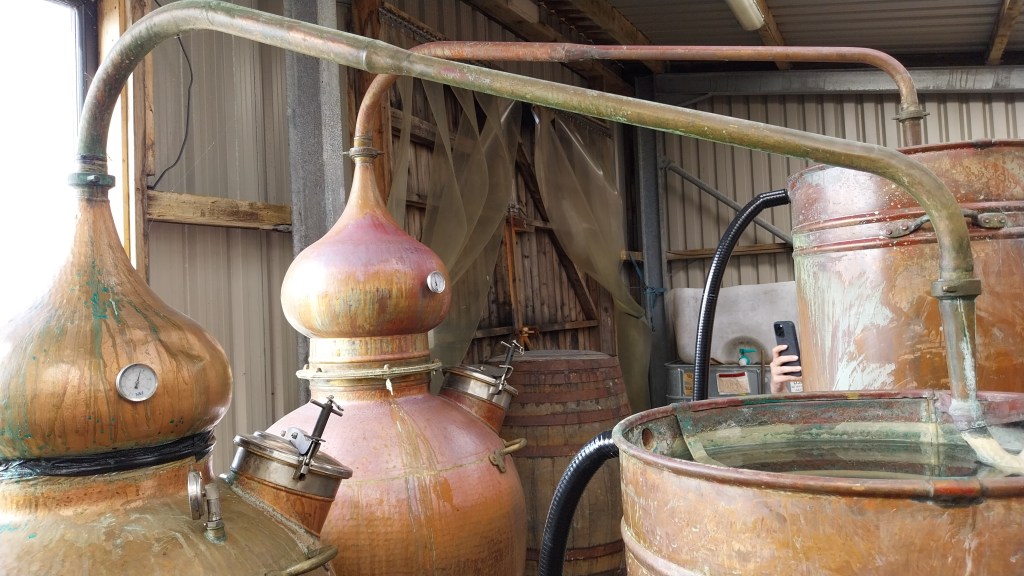
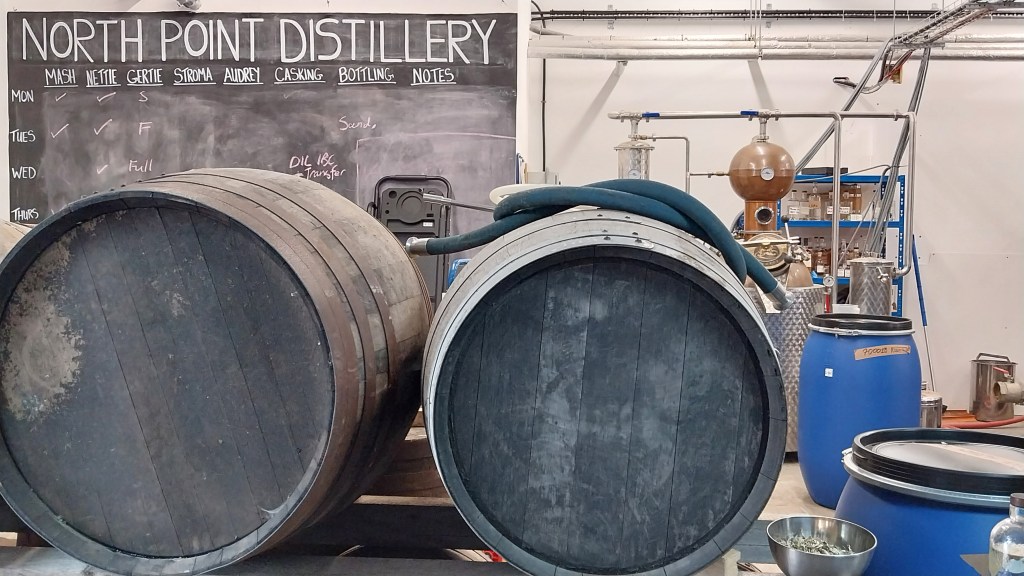
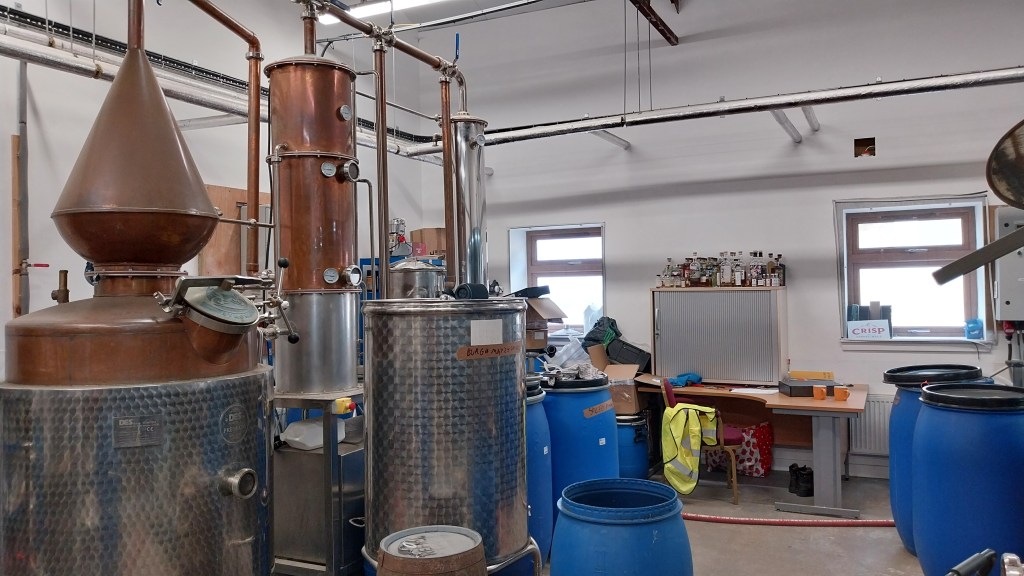
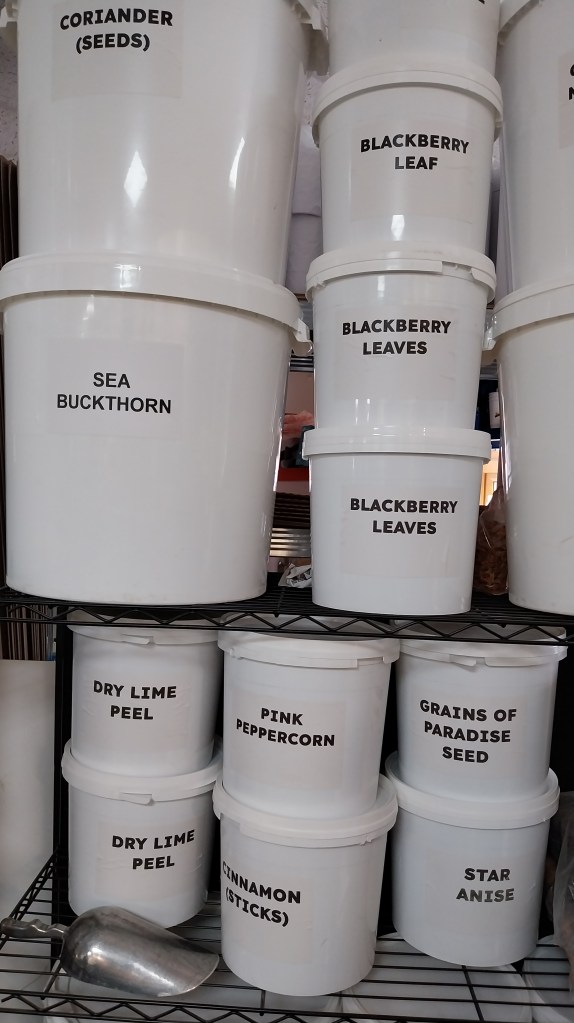
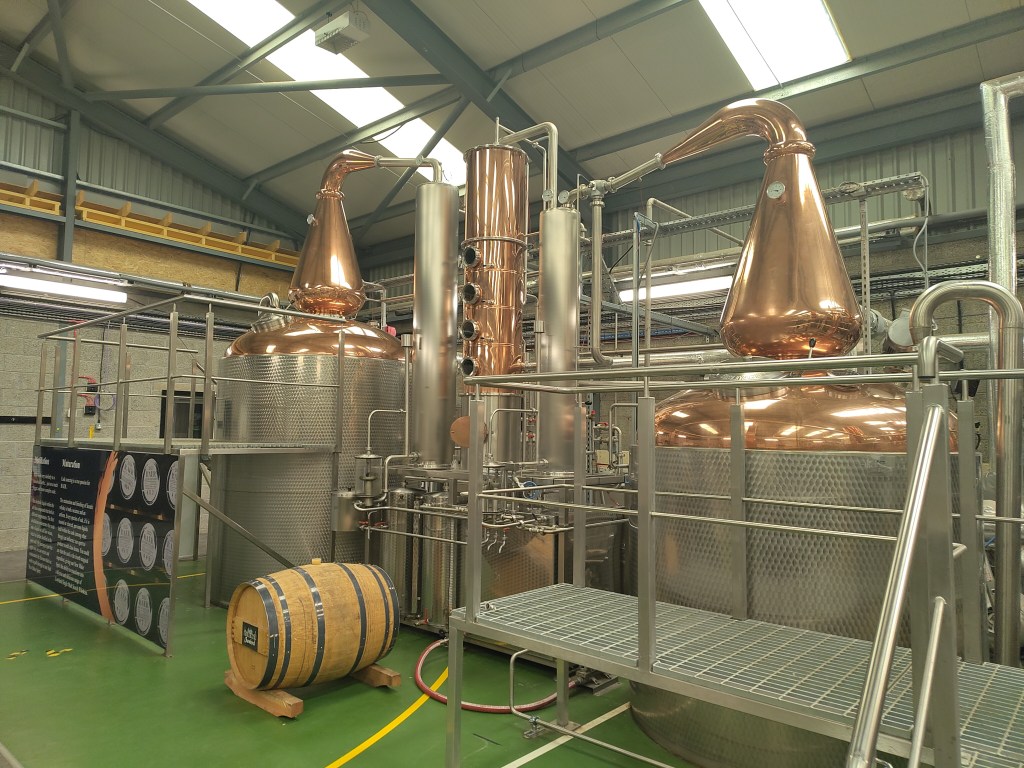
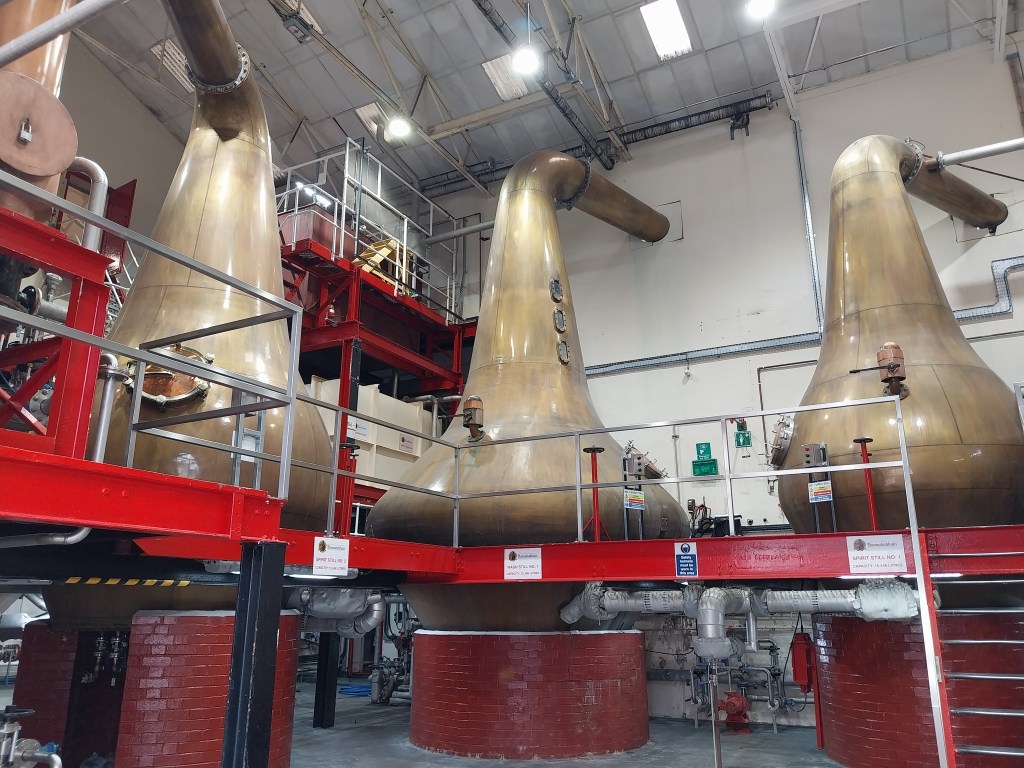
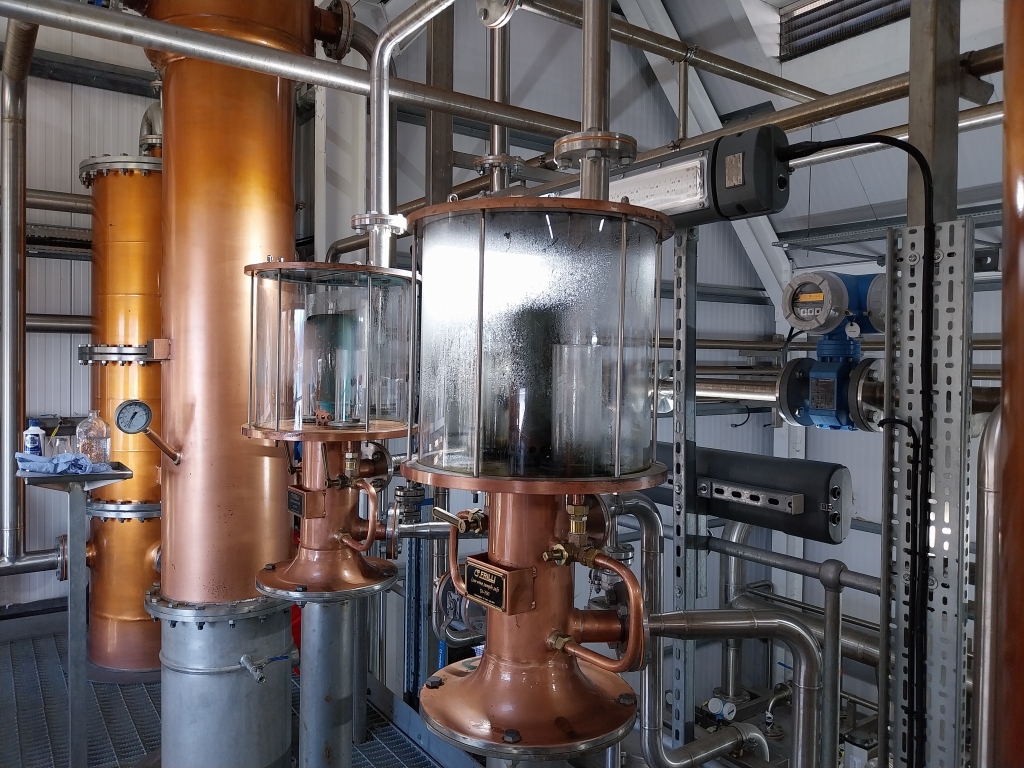
The part of production near the offices is mostly dedicated to the other spirits, although one of the whisky stills is also there. The stills are all named after members of their families (some still alive, who apparently complained) and they are custom made by a Serbian company. They are all electric, not very common in Scotland. Right in front of the stills, we could check out their massive collection of botanicals, while tasting three spirit samples each (excluding Gianluigi, the driver). They started in 2020 with one 500-litre still, Sandy Stroma, to produce their Highland Rum and their gin, and they later added Audrey, a small experimental one (for smaller batches as well, including for clients).

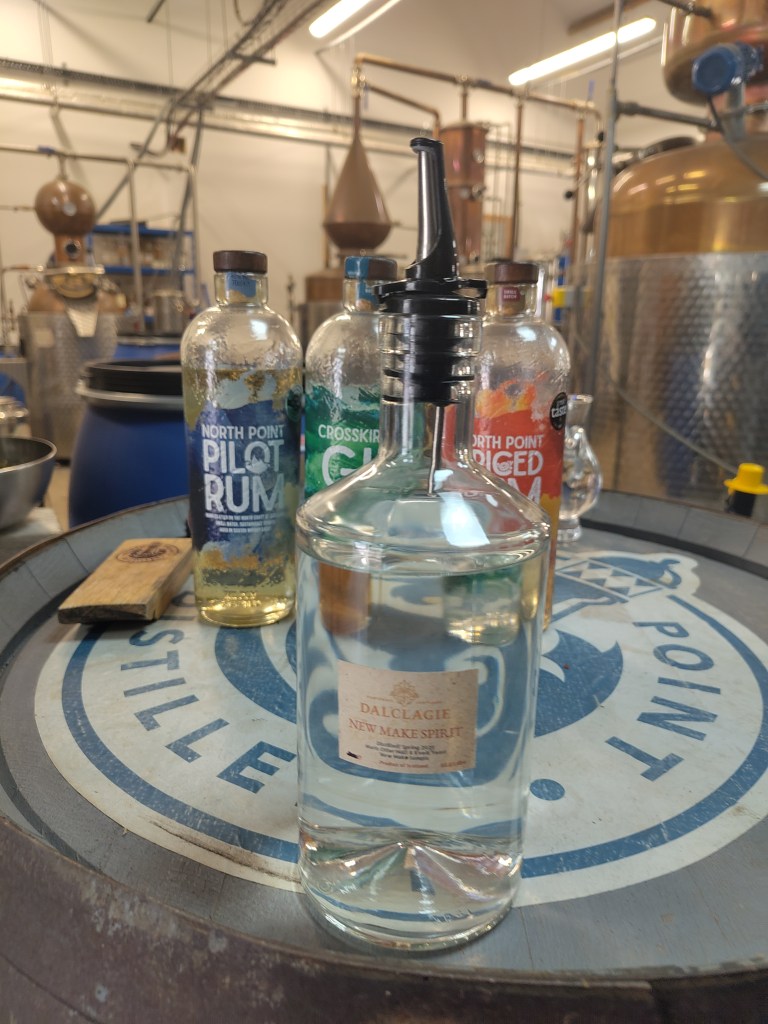
For the rum they buy molasses from Barbados, and they ferment them with Kviek Norwegian ale yeast for a week, before running it through the still. Their main product, delicate and sweet, is the Pilot Rum (aged for 1-year in ex-whisky casks), named after the pilots of the Pentland Firth, who used to guide bigger ships through those dangerous waters. They later added the Spice Rum (43%): for this, they found a recipe (including cocoa, orange, vanilla pods, and other 18 botanicals) that tries to replicate the experience of drinking rum while eating a Terryโ€™s Orange. In the same stills, they also produce the Crosskirk Bay Gin, made with juniper imported from Tuscany (because of a higher concentration in oils), Szechuan and pink peppers, and other botanicals. Edoardo particularly appreciated the gin and its oiliness, the last of the three-spirit flight.

As we were saying, one of the whisky stills is also in the same building: Gertie, the 1000-litre spirit still. While Alex explained that they obtained the license for whisky in 2021, he gave us a newmake spirit sample of what will become Dalclagie Single malt. Until 2023 they mostly did research and development, including 40+ mashbills before finding the one they wanted for their malt.

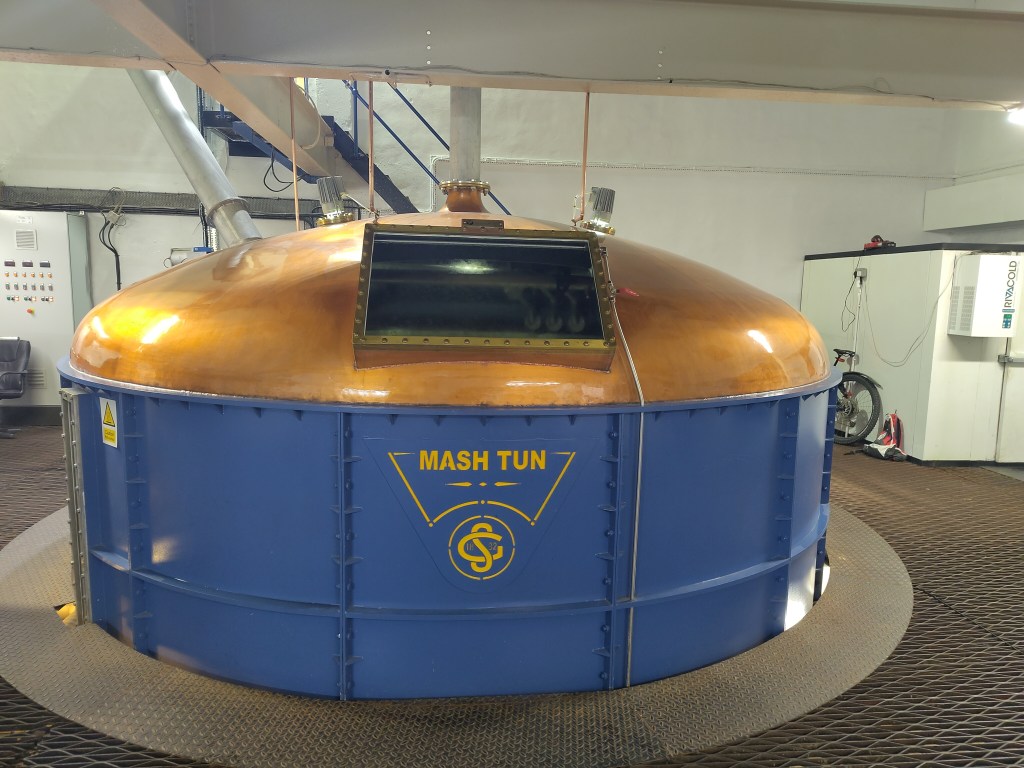
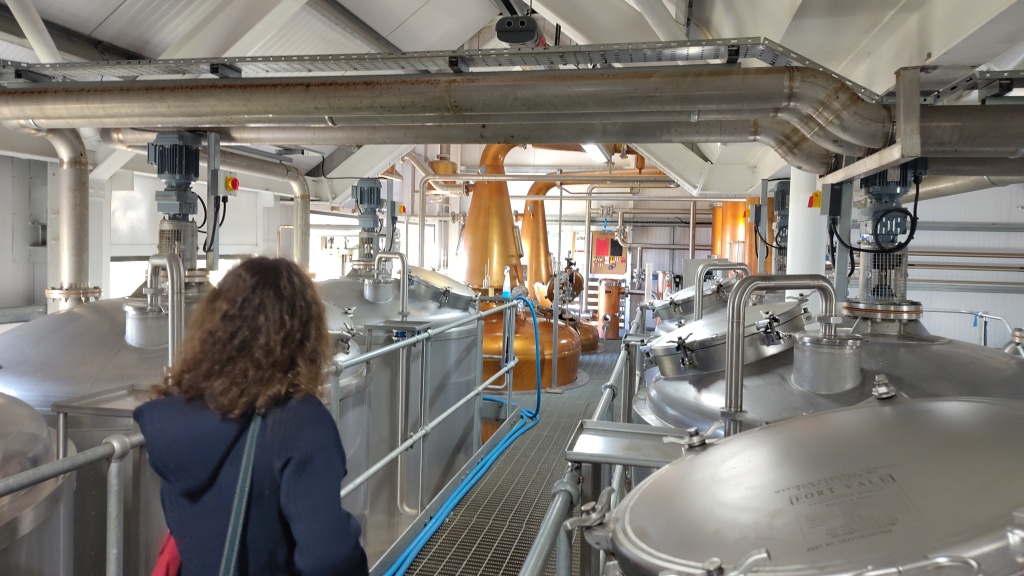
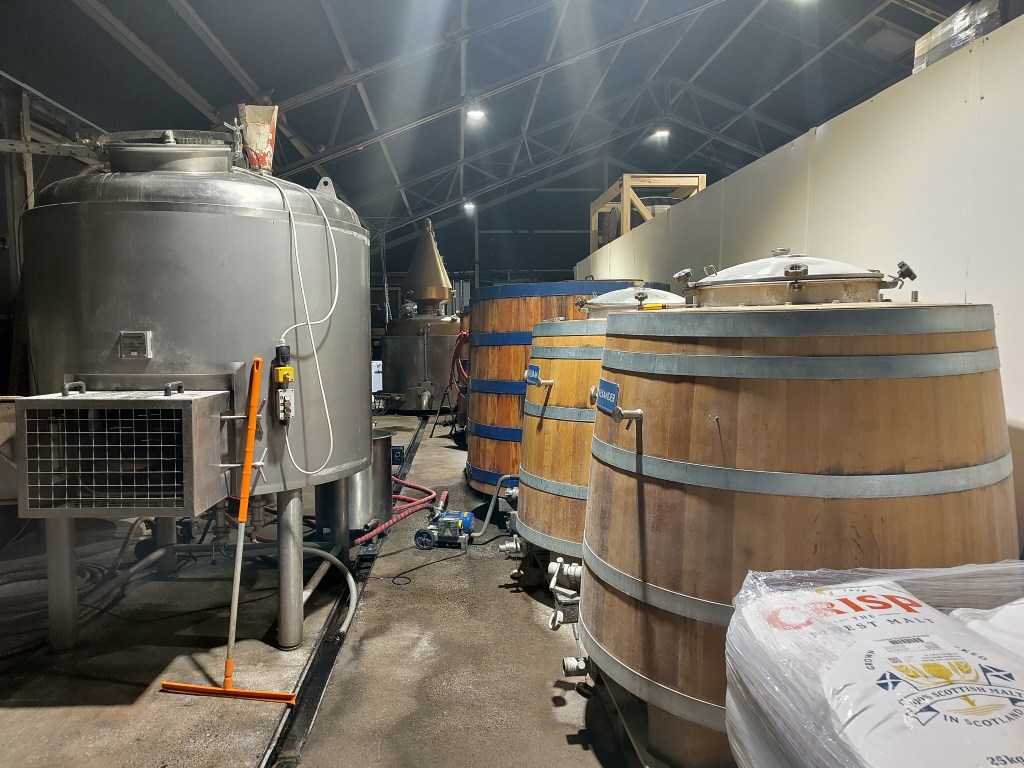
Alex then walked us to where the rest of whisky production is, inside an adjacent, much bigger building. They get pre-milled malted barley from Crisp, mostly Maris Otter, processing 4 tons every two weeks. They are still experimenting a lot, in particular around Christmas, with both barley and yeast: a fun time for their distiller Greg. They also have plans to trial some heritage โ€œbourbon-styleโ€ mash recipes. Mashing is carried out in a 2000-litre mashtun for 9 hours, while they have six wooden washbacks: two Wilhelm Elder, and four former vatting used by Diageo for the Johnny Walker Blue label (one of them is called Angus). We wondered if they were still haunted by the whisky of the ghost distilleries that went into that. After 7 to 10 days of fermentation with Kviek yeast, they finally run the first distillation in the 2000-litre wash still, Nettie.

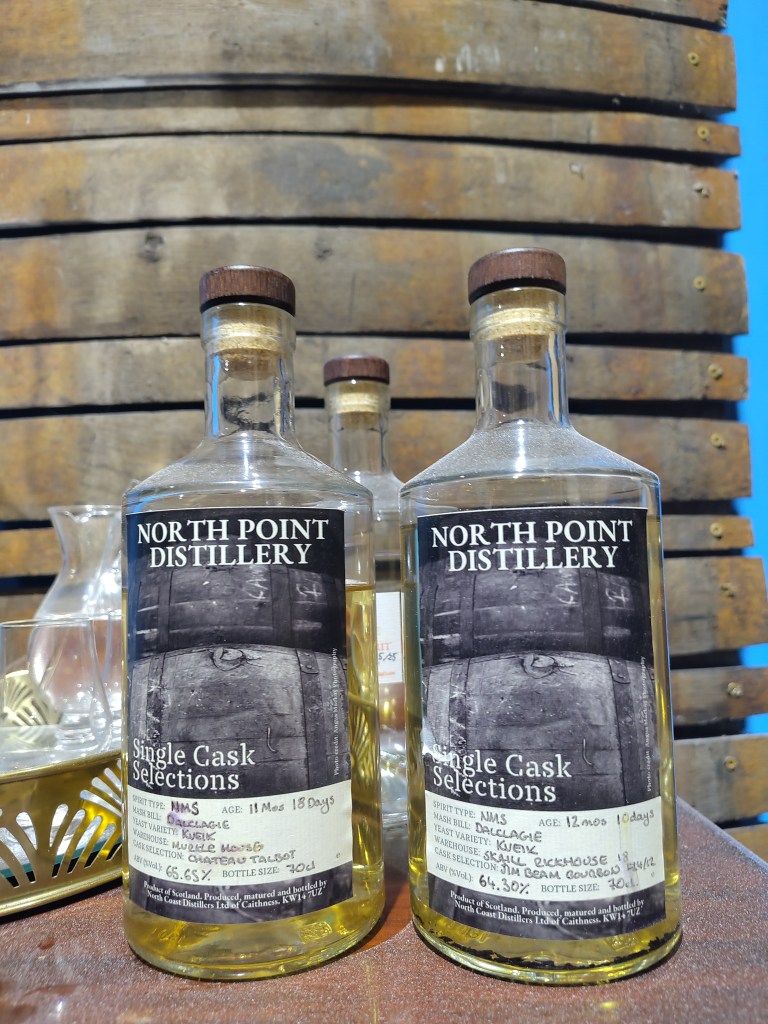
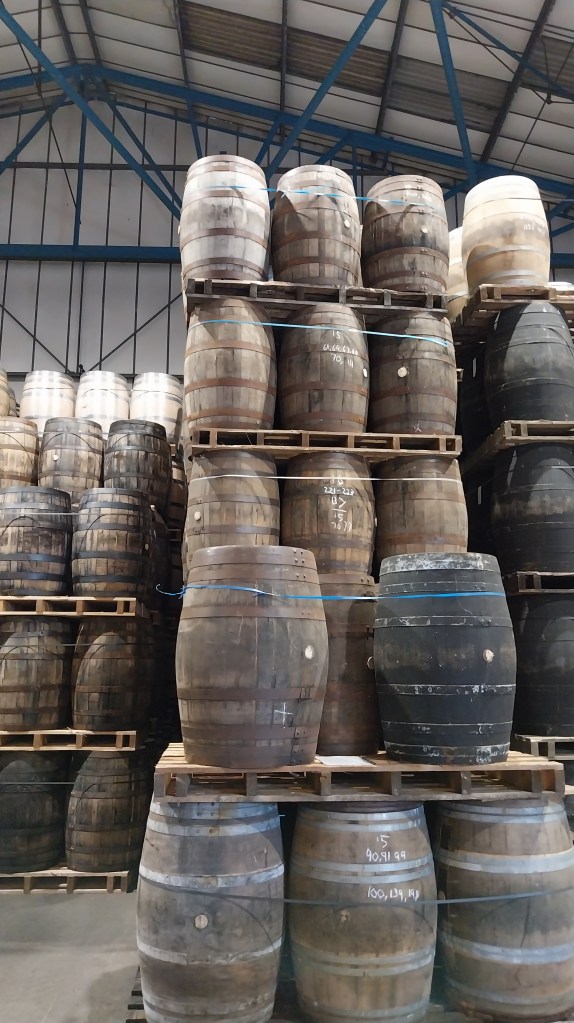
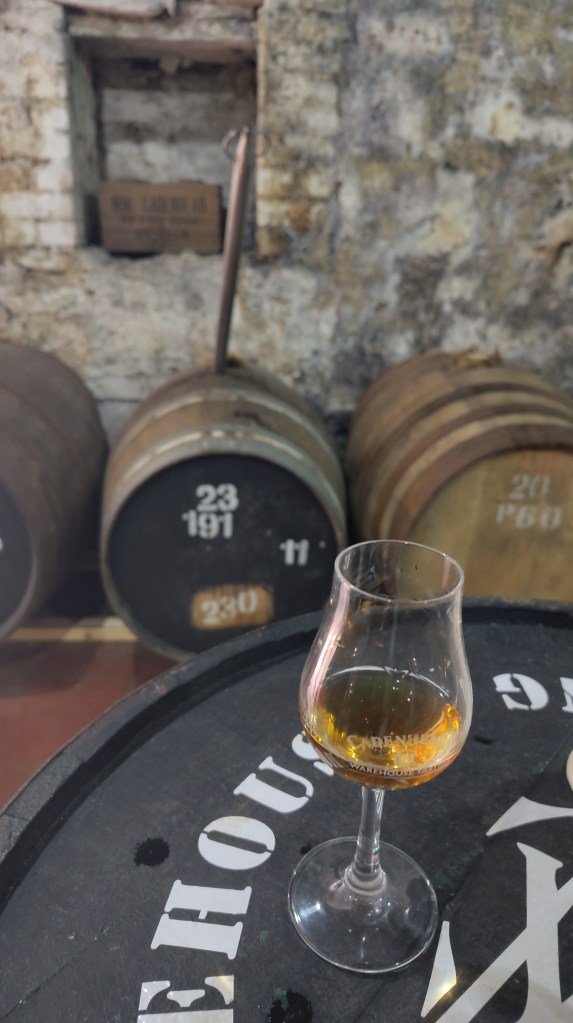
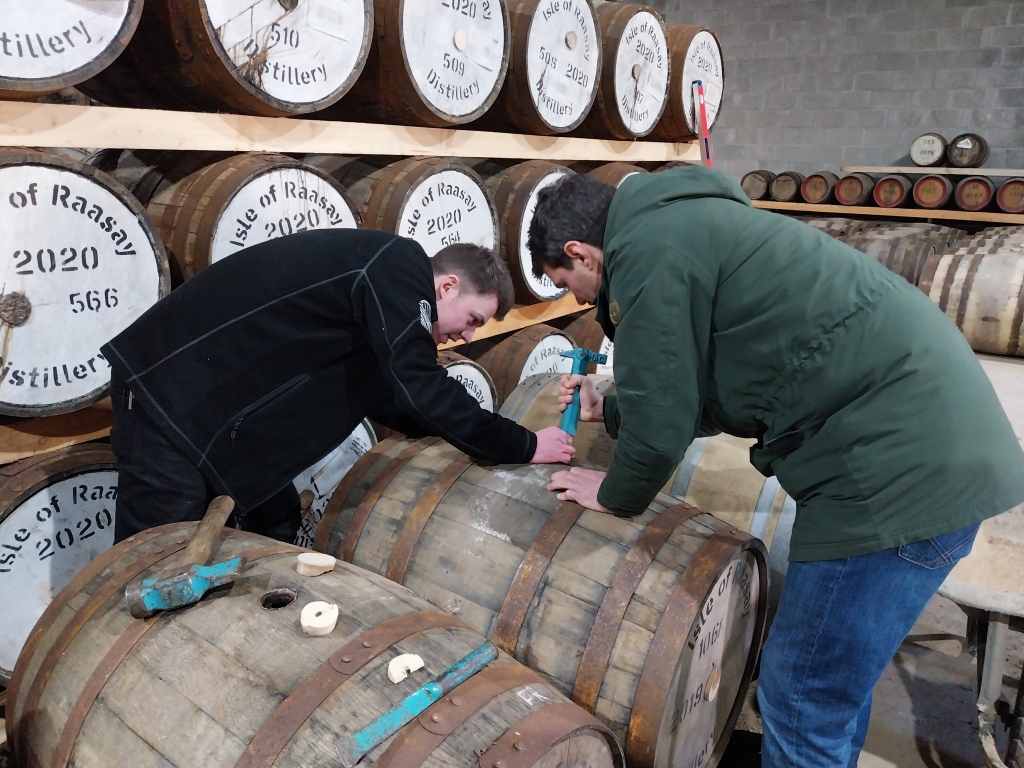
Then it is moved into the building we were in before, for the final distillation, with Gertie: cut points are always made based on aroma and taste. At the moment they store most casks (palletised) in the same main production building. Among the casks, a small cabinet with some bottles: in fact, the Foundersโ€™ experience included a sample of three aging malt spirits, one chosen by each of the co-founders, and one chosen by the distiller. Two of them were an 11-month-old Chateau Talbot red wine cask (at ~65%), and a 12-month-old ex-Jim Beam bourbon cask (~64%). Despite the young age they were very different, the first one richer, the latter carrying a lot of hints of newmake spirit. The third cask sample was not available on the day, so instead Alex treated us with a delicious E.H. Taylor Bottle-in-bond bourbon (50%abv).

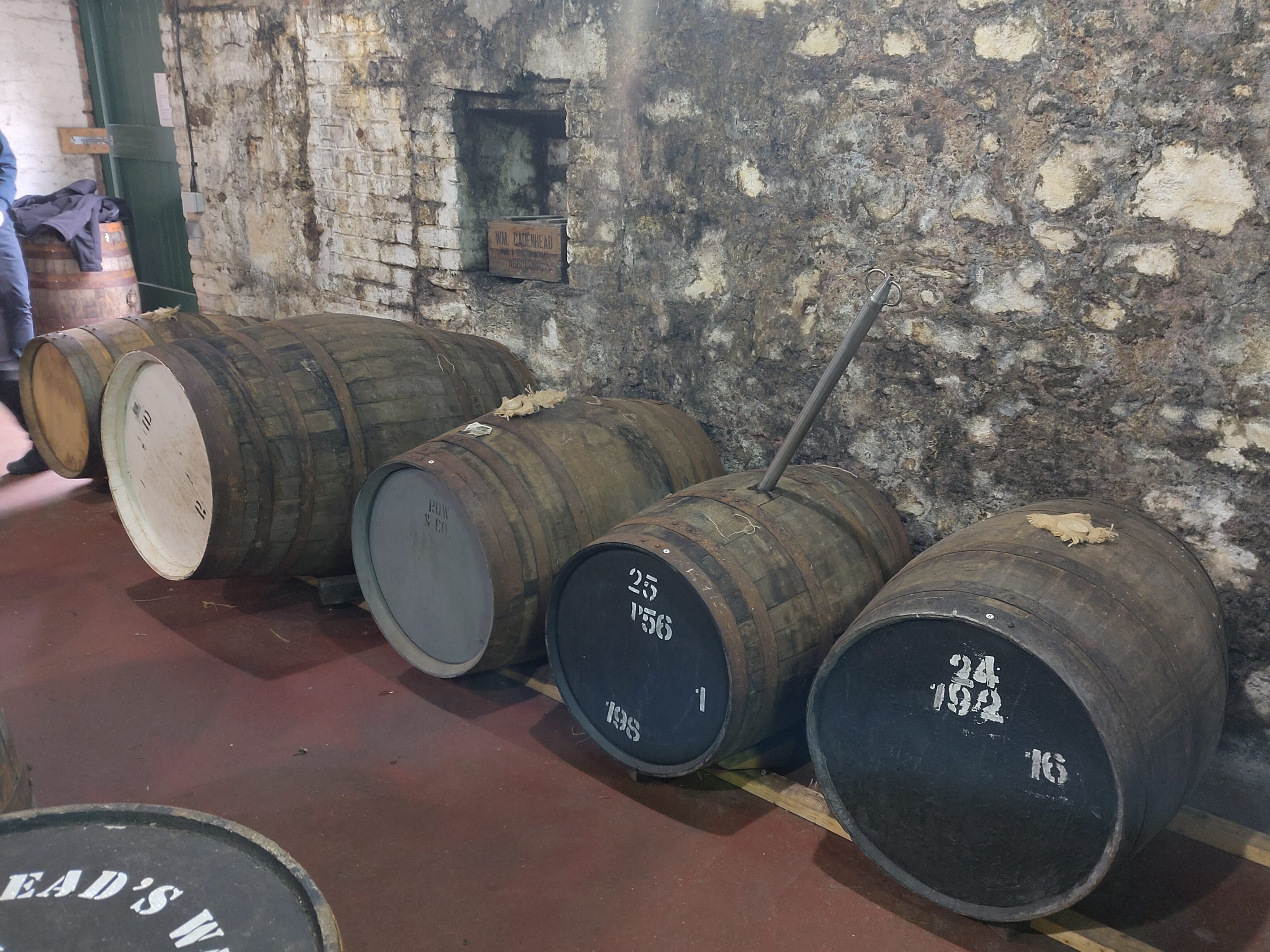
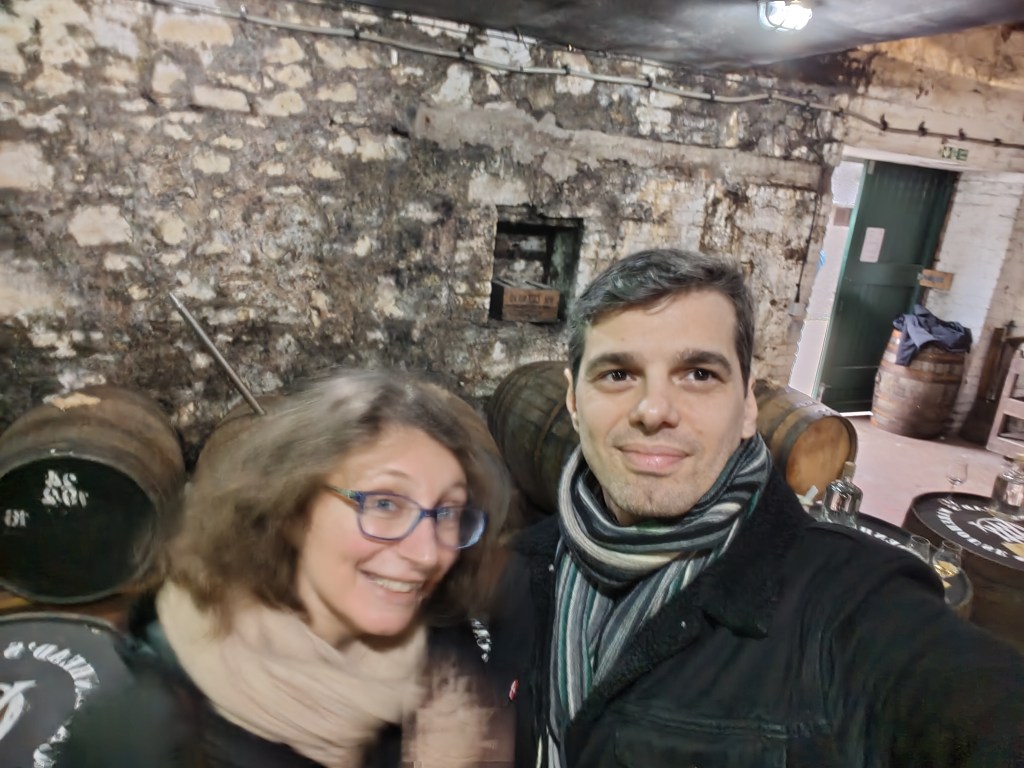
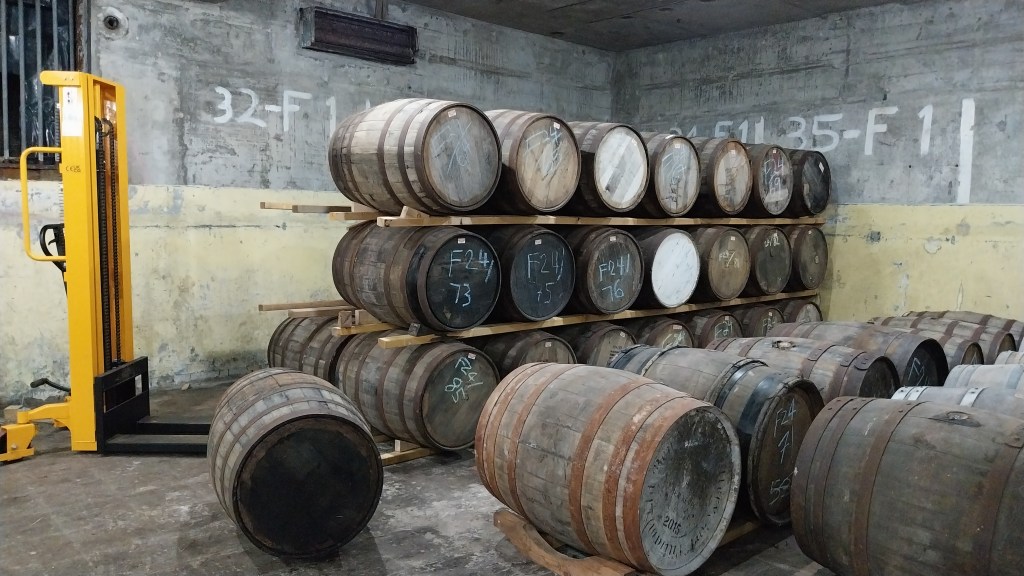
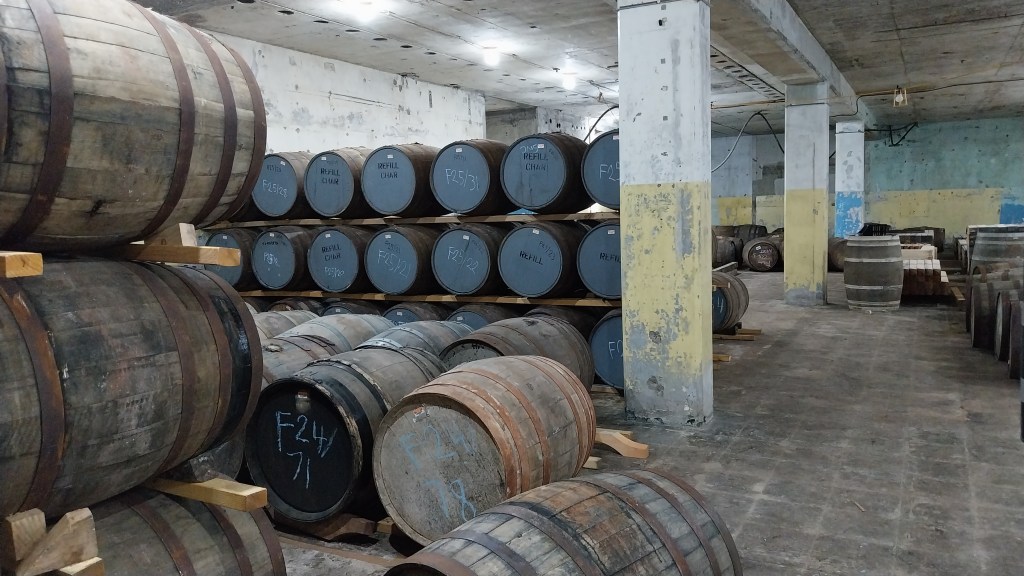
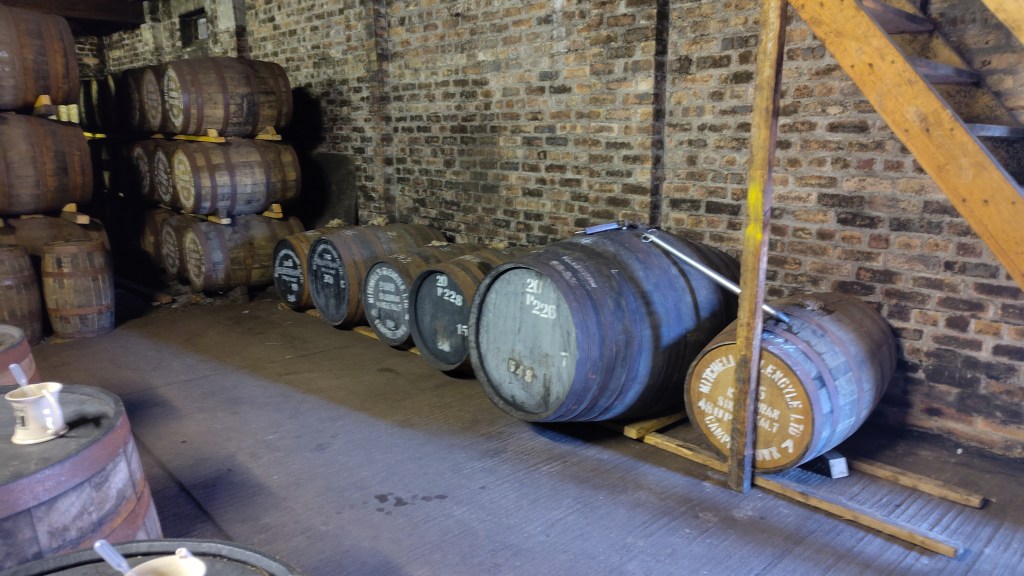
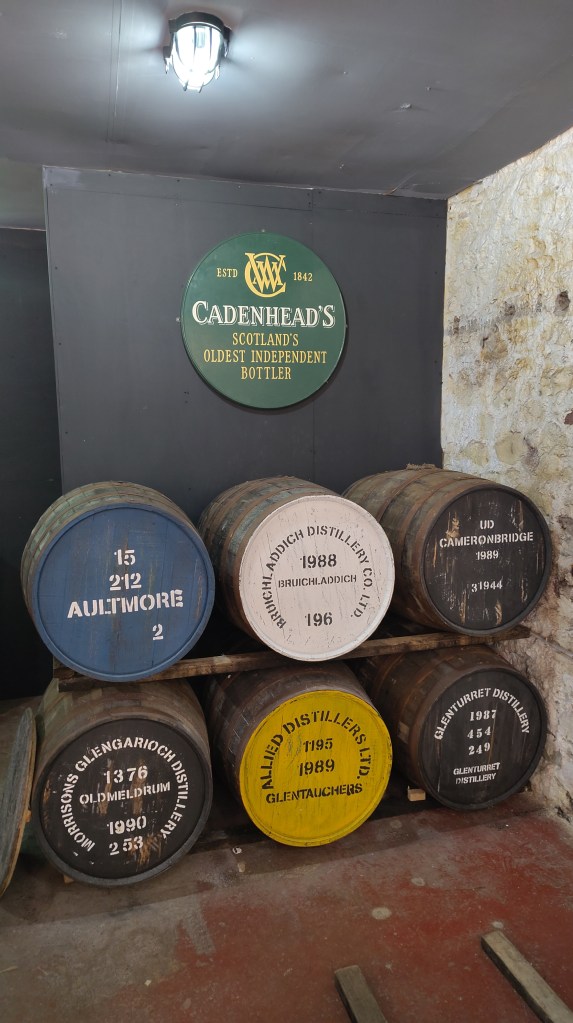
Then, before the tour ended, it was time for a surprise: a trip to the bunker. Being former military buildings, most of them come with a bunker, and they didnโ€™t let go the opportunity to use it for cask maturation (stored horizontally there). We’d never been to a bunker before, so it was a great experience, and we’re very curious to see how the whisky will mature there, compared to the main warehouse.

As we left the production/warehouse to go back where we started, Alex pointed us to some buildings they are trying to acquire for potential expansion: exciting times for them. Back at the shop we had a rugby chit chat: despite Alex used to be a hooker, Edoardo a fullback, and Gianluigi a referee, they seem to have (surprisingly) gotten along, eheh. Overall, we really enjoyed the time spent there, and Alex gave us a great tour. The project is interesting and considering how well they are doing with the current spirits, their single malt will be one to keep an eye out for. The tasting in the warehouse and the visit to the bunker were the cherry on the top, which made this tour a bit different and innovative.

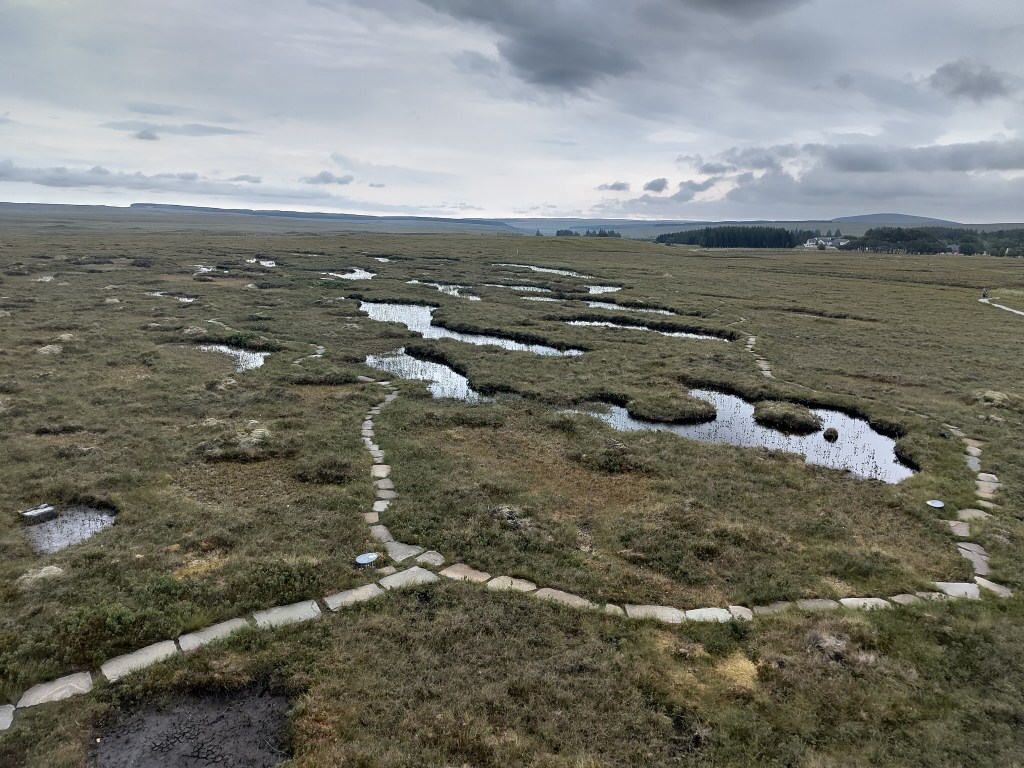
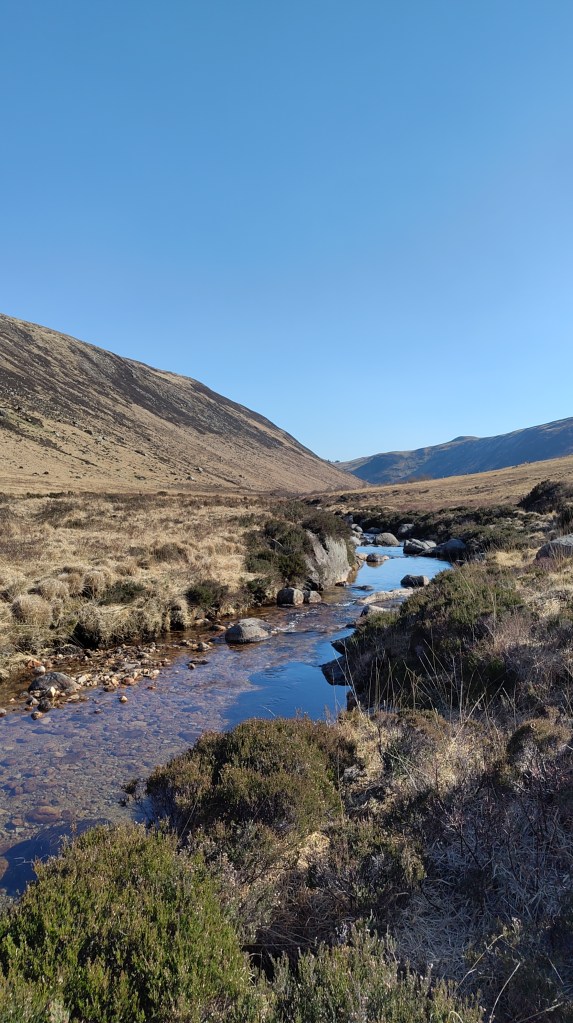
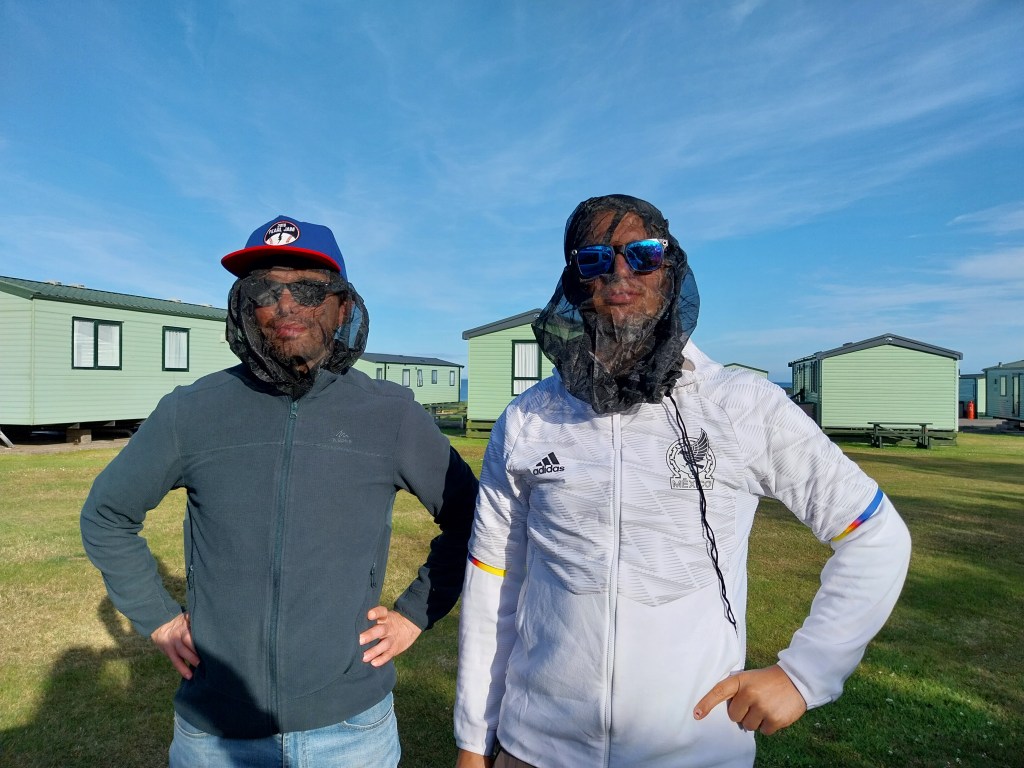
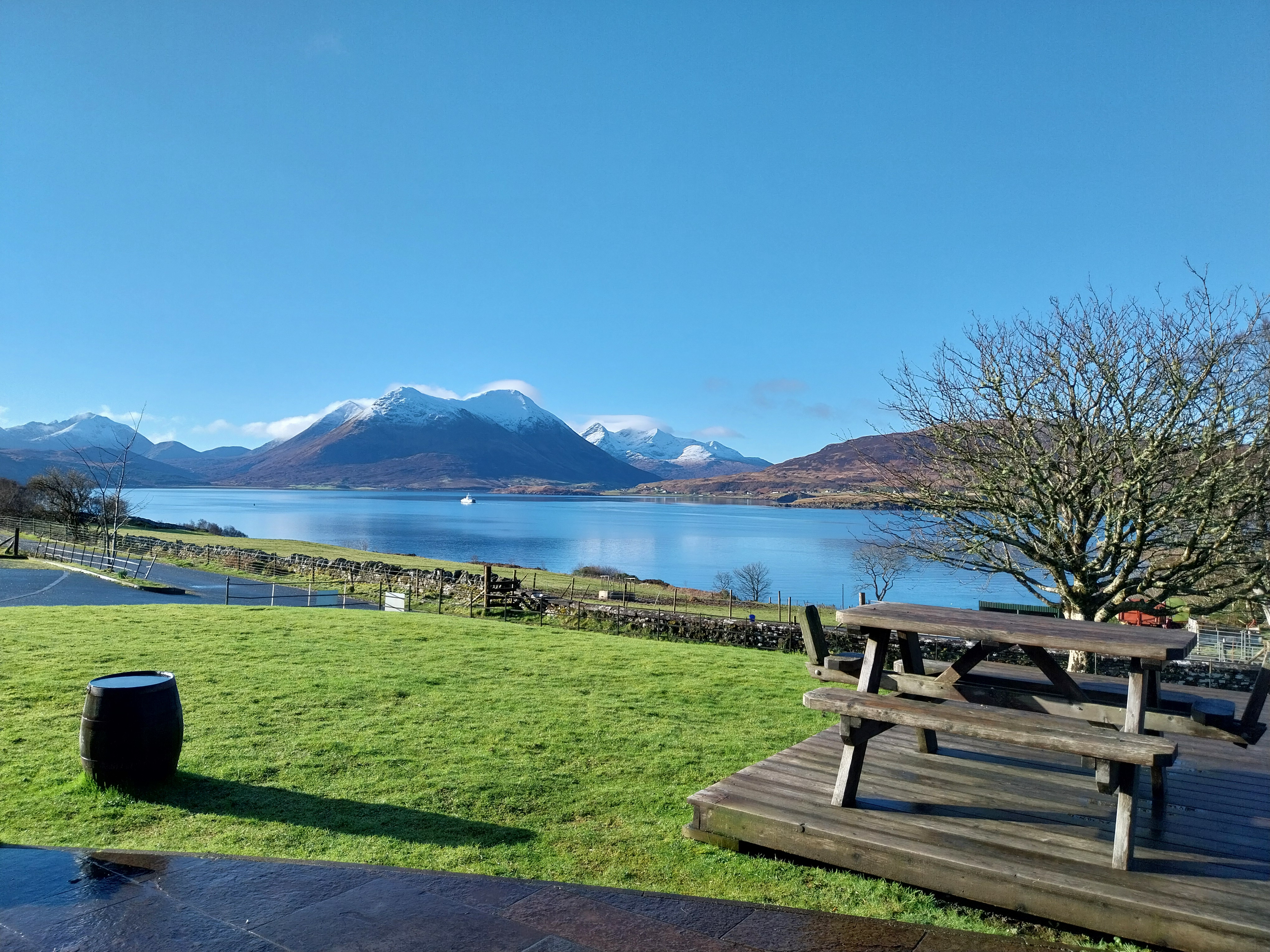
We soon left the site, under an overcast sky, driving towards the Forsinard RSPB in the Flow Country. This is a truly majestic landscape, one of the biggest peatlands in Western Europe, now a conservation area: peat bogs are more efficient than forests to capture carbon dioxide. We also got soaked by a storm, so we rested a bit inside the RSPB visitor centre, getting some warm drinks in exchange for donations, and watching the full half-hour video. Back on the road, we drove south inland, and then north-west towards Tongue. We looked for a place to stay trying to avoid the midges: we failed.

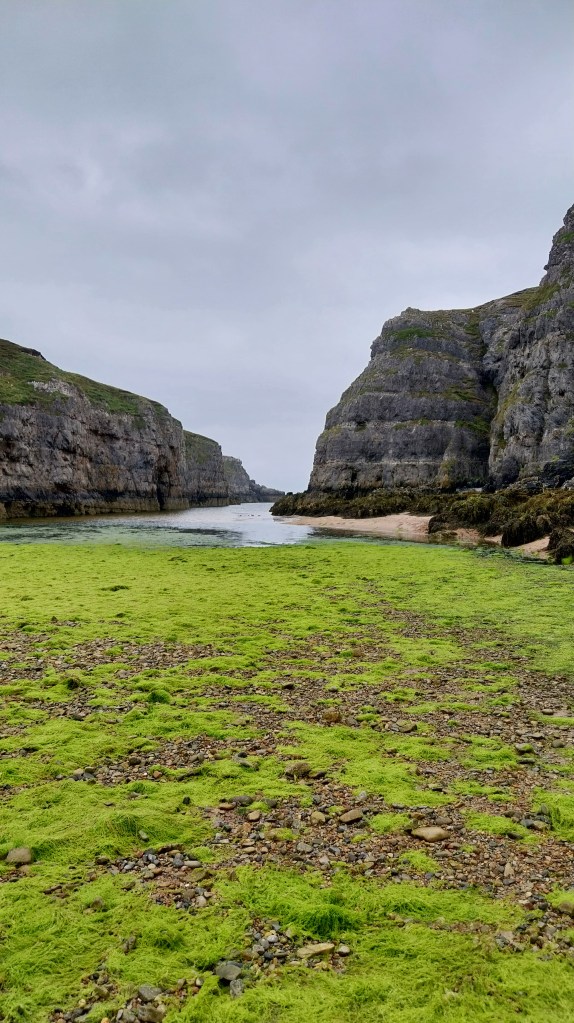
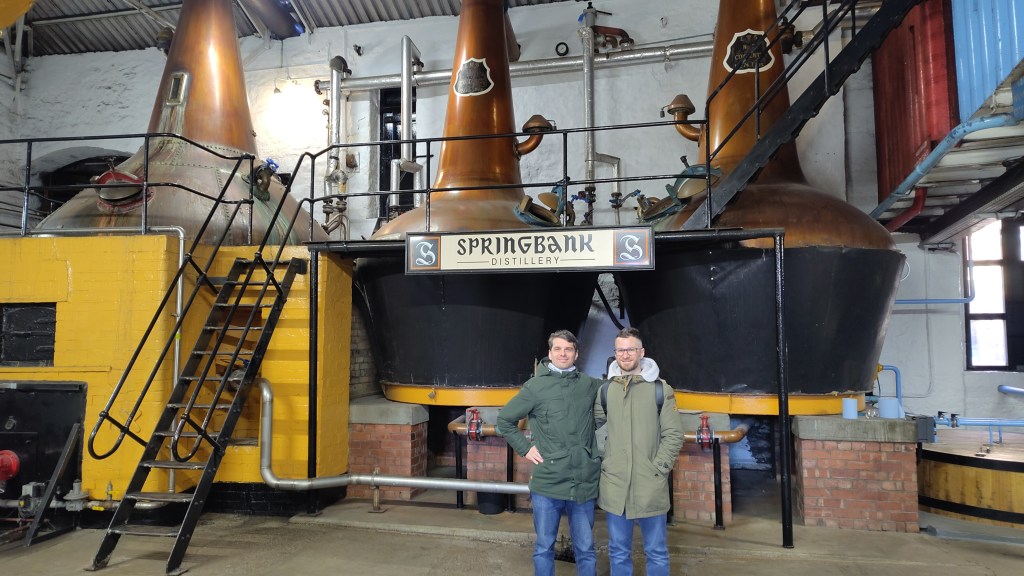
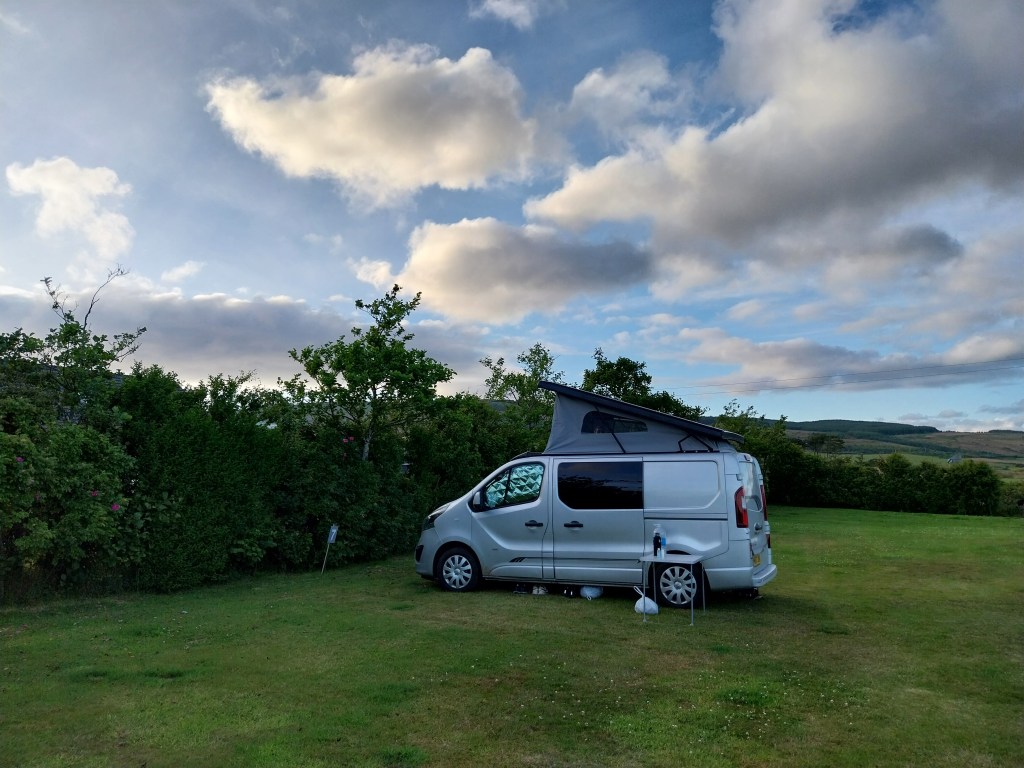
The day after we continued on the North Coast 500, stopping at the Smoo Cave and in Durness for some shopping, and then for a fantastic seafood late lunch at the Kylesku Hotel, in the namesake village. We finally stayed in a quite pricey (ยฃ50 for one night!) but scenic campsite just north of Ullapool. We managed to have dinner outside, but as soon as the wind calmed, midges came back, so we had to retreat in the campervan where we spent the night sipping some Springbank samples: one of Edoardoโ€™s favourite, so weโ€™re always sure to have some for when he comes over.

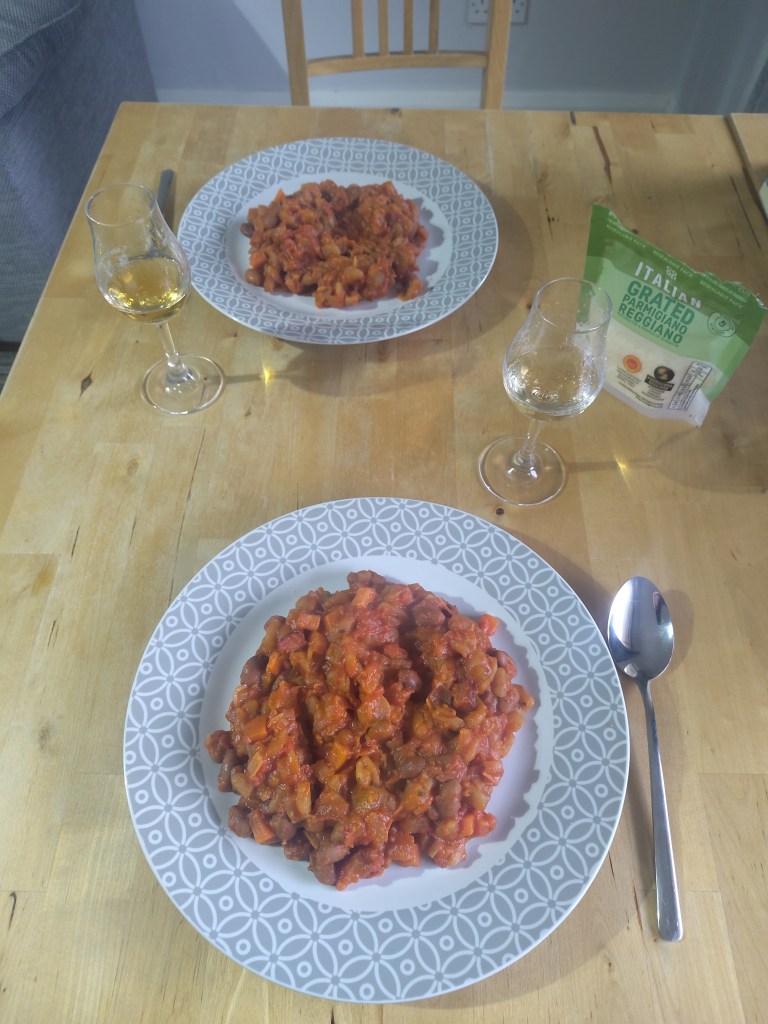
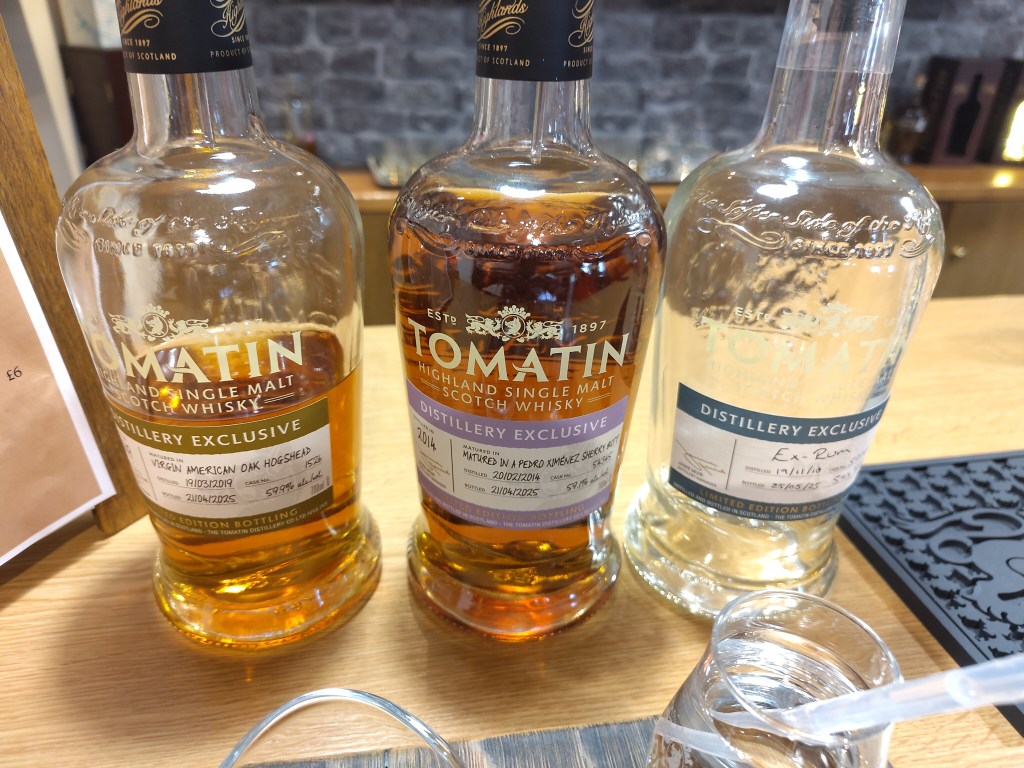
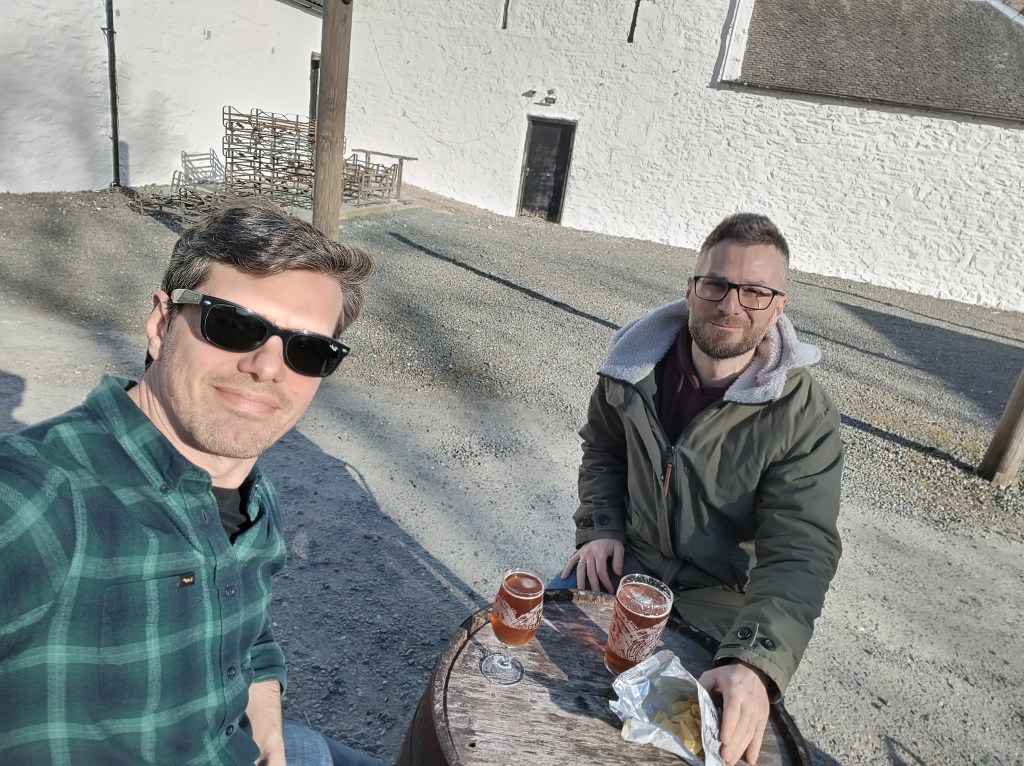
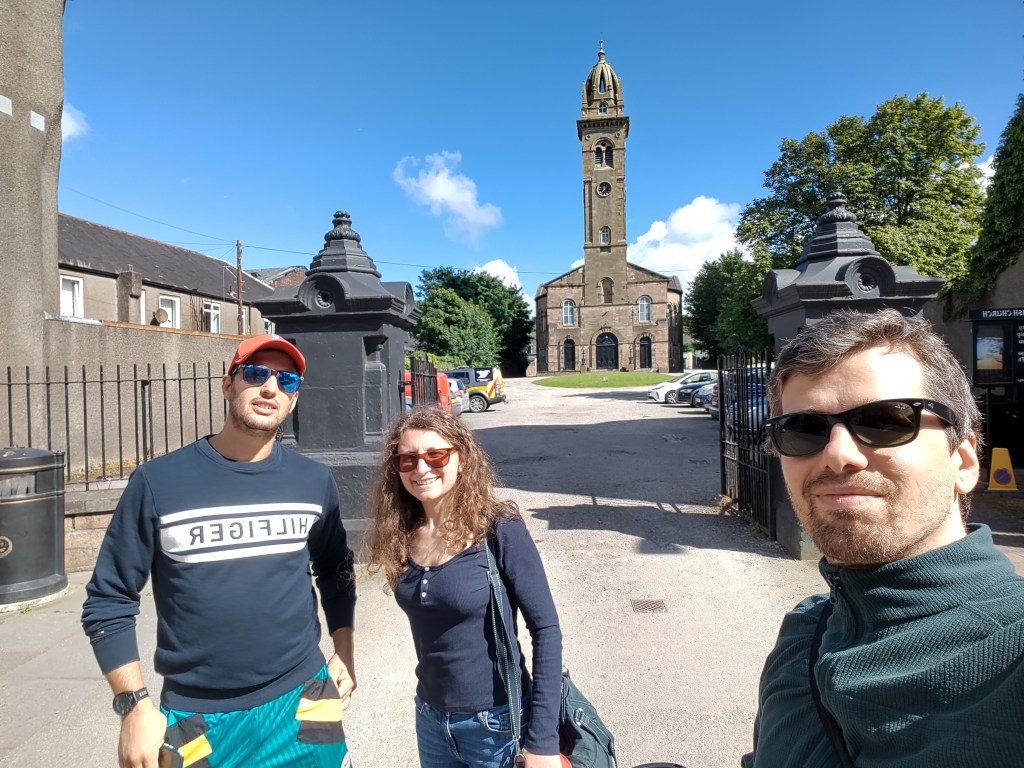
The final day, after a hot breakfast in Ullapool, we drove straight back to Edinburgh, with a stop for a walk at the Corrieshalloch Gorge (very scenic, just a shame for theโ€ฆmidges!), and a final last stop at Tomatin distillery. There, Edoardo and Gianluigi shared a flight of their bottle-your-own drams (pricey, but generally good) and one of Cu Bocan (their lightly peated malt), plus a couple of sherry expressions: the Manzanilla and the PX finished ones were particularly delicious. After that, we slowly drove back to Leith, where we arrived in time for a quiet dinner and a final dram.

First, we loved this trip, and we had a fantastic time up in the Highlands. Landscapes are fantastic, and although we had been there before, this time we really appreciated why it became so popular. Itโ€™s really a magic place. Second, the distilleries: we had a very good time up north. Apart from Pulteney, which was a bit too corporate and impersonal (not the guideโ€™s fault), Wolfburn, which was the other one well established, was just fantastic. The two new distilleries, 8 Doors and North Point, were both great as well – we were walked through the detail of their projects, and people’s passion was contagious. During both visits we could try their newmake spirit, and although someone might think that it is a given for new distilleries, after visiting a number we can say that it really isnโ€™t. Kudos to them, and weโ€™ll patiently wait for their single malt whiskies.

After a pause, weโ€™ll be back with a Fife experience! Until then, slร inte!


North Point Founders’ Tour

Price: ยฃ30.00 pp (July 2025)

Duration: 1hr (in theory, but it was longer)

Tasting: Pilot Rum (40%), Crosskirk Bay Gin (45.1%), Spiced Rum (43%), Dalclagie Newmake spirit (63,5%), 11m spirit ex-wine cask (~65%), 12m spirirt ex-bourbon cask (~65%), and we had a dram to replace the third spirit sample (not available on the day, see text)

Highlights: the bunker and the warehouse tasting

Target: whisky and spirits enthusiasts, and Cold War nerds

Value for money: good

Recommended: absolutely

Link: https://www.northpointdistillery.com/

#62 The EWG trips are back

Glasgow is hot!


TL; DR: On a hot Saturday in July the Edinburgh Whisky Group went to Glasgow for two distillery visits. First off, Glasgow distillery, for a preview on the tour that is now open for bookings. A great tour and wonderful drams! Then we visited Jackton distillery, a much younger project, which that day was hosting a nice market.ย 

After the successful trips to Campbeltown in โ€˜21, Speyside in โ€˜22 (the SpeycationTM), the Highlands in โ€˜23, and Yorkshire in โ€˜24, this year the Edinburgh Whisky Group (EWG) trip was different. For who hasnโ€™t read old posts, the EWG group was set up by Justine Hazelhurst (writer, organiser of the Fife Whisky Festival and whisky expert) on Facebook, a few years back, and during the COVID-19 pandemic it exploded to almost 500 members. Some of us started attending online tastings during lockdown, and after the group became a more restricted one (hence more manageable), some of us kept in touch and started the tradition of a whisky trip every year.

For this year (2025) we decided to do something different: not a long weekend away but one (or possibly more) day trip(s) from Edinburgh. These trips are less demanding to both organise and attend, but another reason is also a lack of new destinations. Islay is too complex for such a big group: logistics is awful on the island, you cannot reach many distilleries with public transport, and accommodation is scarce (and possibly too expensive). In the south of Scotland distilleries are too sparse, again requiring some logistic effort. A possibility was to go back to Campbeltown, ideal from many points of view, but for now we decided to skip it (maybe when weโ€™ll go back one or more new distilleries will have openedโ€ฆWho knows?).

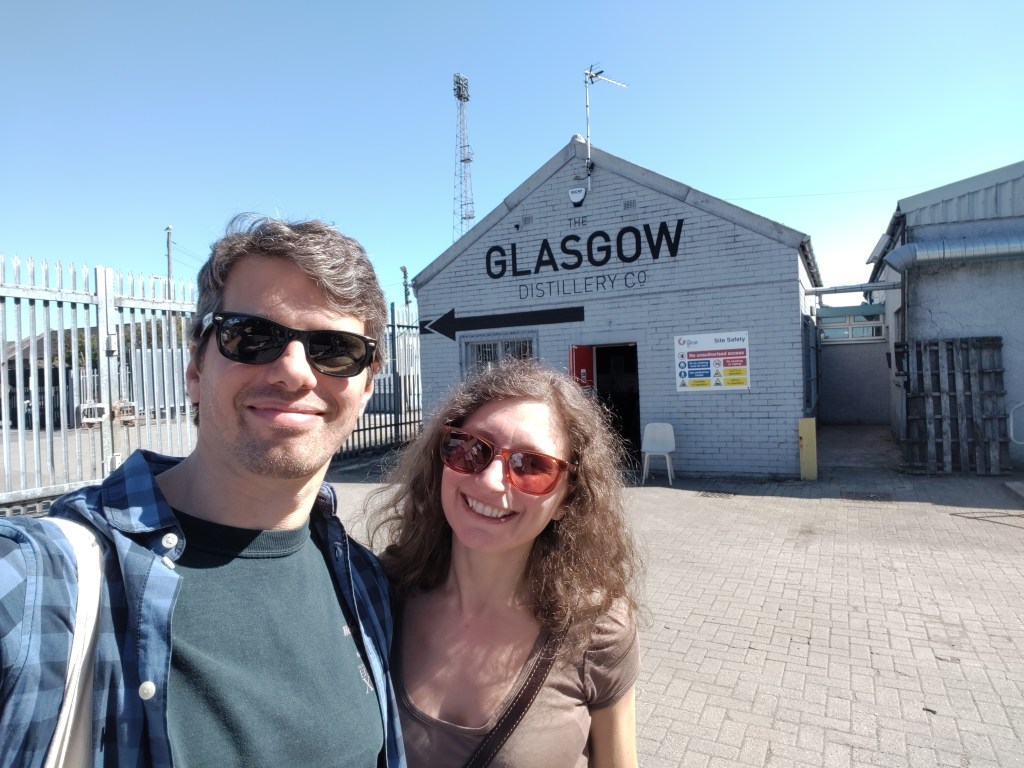
Another challenge was to find distilleries within reaching distance that not many of us have visited, which is not trivial. Two logical answers are: distilleries that are not open to public, or newโ€ฆor both! Which is kind of the case for the first distillery we visited on this trip: the Glasgow distillery. Weโ€™re writing โ€œkind of the caseโ€, because Glasgow has been around for over 10 years now and, at the time of our visit, they were about to open to the public (here for more info). Anyway, that morning we all met at Haymarket, in our case after a very nice breakfast (though a bit pricey) at the Haymarket Cafรจ, in front of the station. Around 9.30, the minibus Justine had booked arrived, and our trip officially started: it was a sunny day, and the temperature was already toasty, but nothing compared to what would happen later in the day. The drive to the distillery was uneventful and we behaved on the bus: (almost) no drams were passed around.

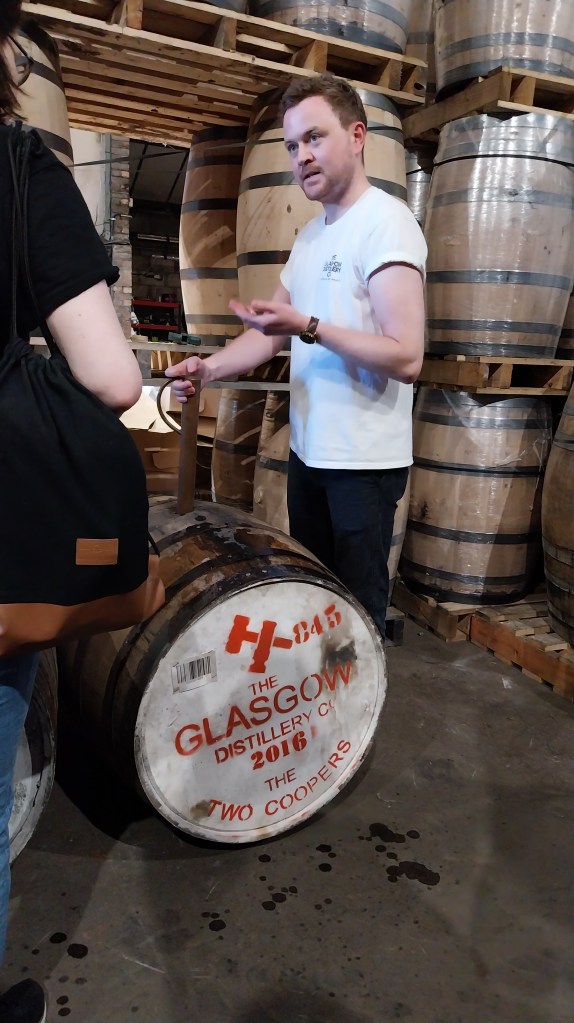
The site is located in the south of Glasgow, near the M8, not too far from IKEA and Douglas Laing (impossible to miss the Big Peat sign when driving on the M8!). As you can imagine, the distillery is on an industrial estate, and we could see why they hesitated to open it to visitors (not that we care much though). We were welcomed by Sebastian, who works in the marketing and sales team, and is also one of the blenders. After the usual health and safety instructions, he took us to the warehouse, just a few steps from the courtyard. Currently, they mainly use two buildings facing on the courtyard in a L-shape: a big warehouse (some palletised, some stacked horizontally in rows two-high) with the bottling equipment, and a production building, where the spirits are produced, including an experimental lab, equipped with a small still to do small-scale trials, and a very nice and cosy tasting room. The latter is used for their regular tours, in our understanding limited to 8 people at a time, but we were too many to fit in.

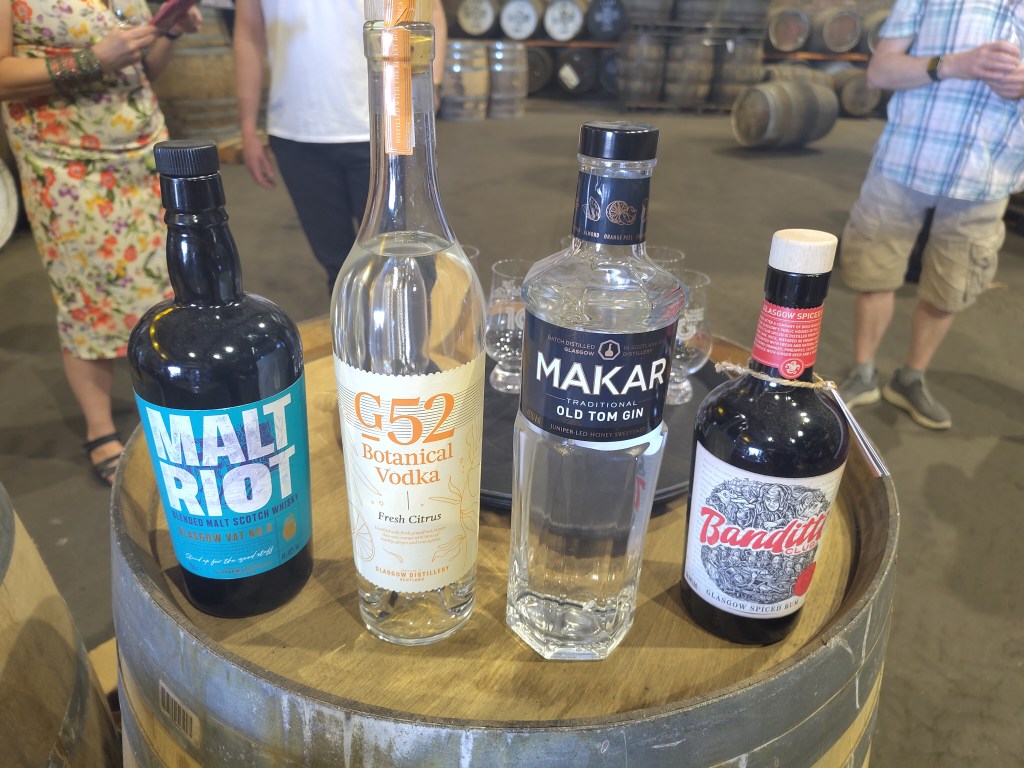
In the warehouse, we were presented with two bottle line-ups: one was their spirit range, which included the Malt Riot blended scotch (40%), the G52 botanical vodka (40%), the Makar gin (43%), and the Banditti spiced rum (44%). On the other barrel, their single malt core range, the Glasgow 1770. The name (1770) comes from the year the original Glasgow distillery was founded, which used to produce unpeated, peated and triple distilled malt whisky, until it closed in 1902. The (current) distillery founders, Mike and Liam, in 2012 decided to follow the footsteps of their predecessors and acquire the name to bring back distilling in Glasgow, at a time when only Strathclyde grain whisky distillery was operating, plus Auchentoshan in the city outskirts. Works on the site began in 2013, in 2014 they had their first product (Makar gin), and finally the first newmake spirit was distilled in 2015. Sebastian joined around that time, right after uni. Later in 2019 they doubled capacity by adding a second pair of stills.

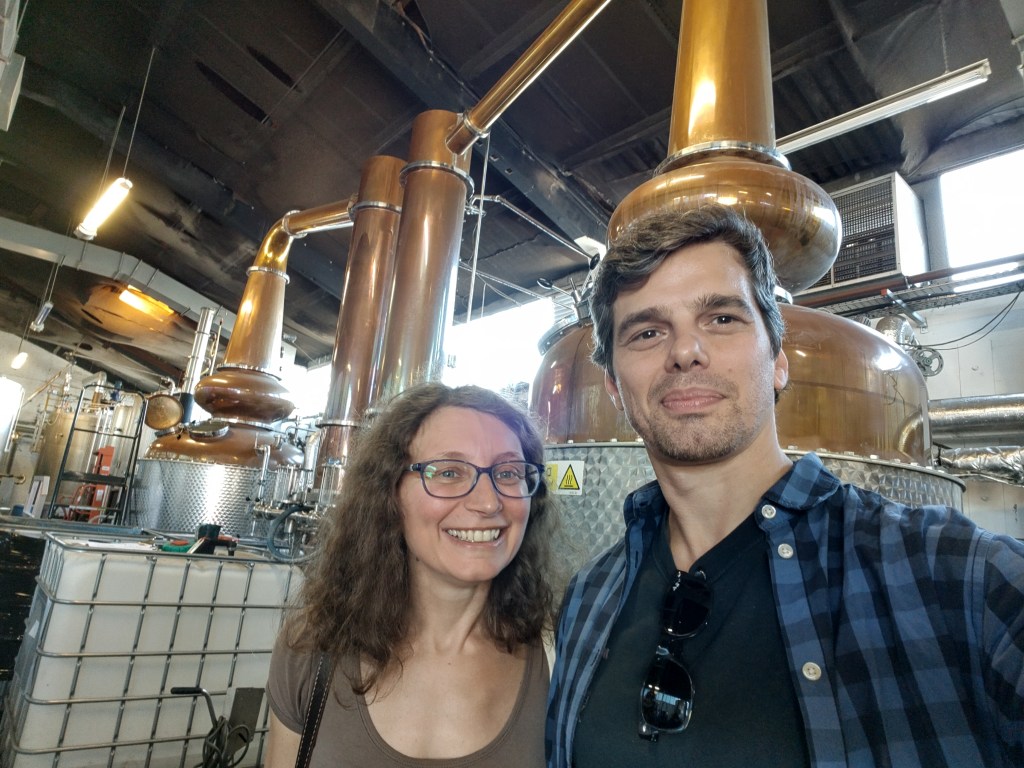
We had a taste of each of the three single malts. The Triple distilled is matured in a combination of 1st and refill ex-bourbon casks, with a touch of virgin American oak barrels. The Original starts its journey in 1st fill ex-bourbon casks, but is then finished in virgin oak casks. The Peated malt, however, is first matured in virgin oak casks and then finished for about 8 months in Pedro Ximรฉnez sherry hogsheads. Other than their core range, they also release cask strength versions of the Original and the Peated malt (we tasted the latter), and a few small batches every year: these can either be from a single cask or a vatting of few casks. Sebastian told us they are introducing a new yearly limited release, based on previous small batches that went well: for this year they picked a Ruby port cask finish. We then moved to the production building, were Sebastian first introduced Tara & Mhairi and Margaret & Francis, the two pairs of stills for whisky, and then Annie, used for gin and other spirits. Then, he took us to the catwalk above the rest of production in two groups. The others, in turn, were left to enjoy another two drams: the current Small Batch Cognac cask (6y, 58%abv, ex-bourbon and finished for over 3y on Cognac casks, both peated and unpeated malt), and the Peated Cask Strength version (same recipe as the core range one, but 60.7%).

The production water is from Loch Katherine, which is the same source as Glasgow tap water. Originally, they used to work 7 days a week (13 mashes), but because they are short of a distiller, at the moment they only work 5 (10 mashes). This translates into about 200,000 litres of alcohol per annum, but with an annual release of โ€œonlyโ€6-7,000 bottles, they are keeping a lot of stock for the coming years: playing the long game here. We didnโ€™t get to see the 27-ton malt bin (refilled twice a week) and the (four rollers) mill, as they are not in the production building. For mashing they use three rounds of water, the last one is sparged and kept for the following mash, as usual. Fermentation lasts at least 72 hours, and they use MG+ yeast for the double-distilled unpeated product, and other types of yeast for the other products. They also devote a few weeks a year for experiments. The second distillation cut depends on the type of product: 85% to 75% for the triple distilled, down to 64% for the unpeated double distilled, and 57% for the peated spirit. Casks are filled on site, but some are transferred in partnersโ€™ warehouses, while they wait to acquire more buildings. Their plan is to keep the adjacent warehouse for finishing casks only. About 20% of the casks are โ€œspecialityโ€, with the remainder being ex-bourbon, virgin oak or sherry. After the tour, we went back to the warehouse where another two drams were waiting for us, both straight from the cask: an unpeated 9y fully matured in an American oak virgin cask, and their Distillery Exclusive, a delicious peated 7y/o malt matured in a Virgin oak cask but finished in an Oloroso cask (60.9%). A great close for a great tour and a wonderful tasting!

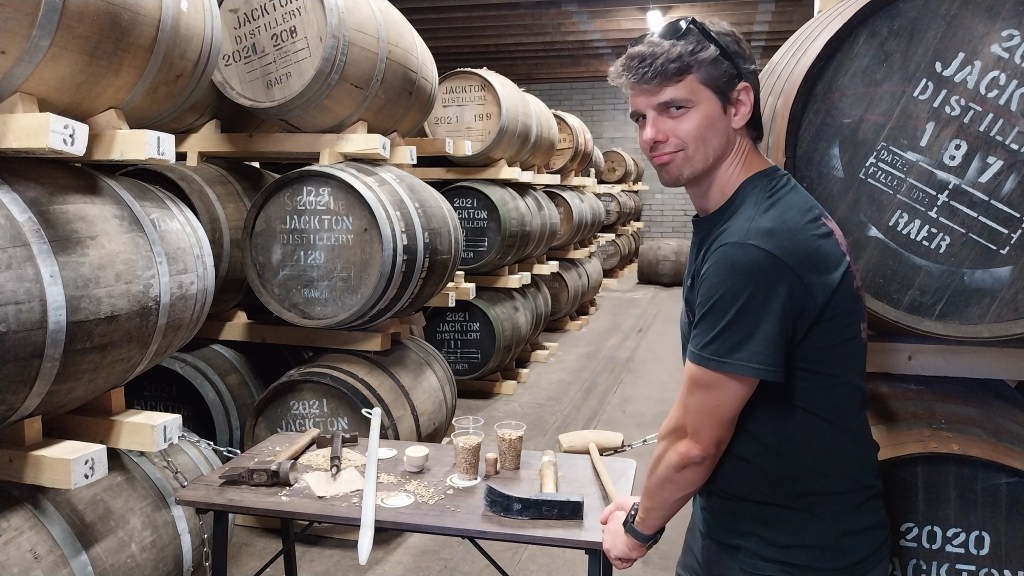
After the purchases (of course) and an extra dram we brought to share with the gang (a delicious Glasgow 5y from Fragrant Drops independent bottler) we were back on the bus. We had a quick bite (a very โ€œmehโ€ M&S sandwich for us), before we arrived at our next destination: Jackton distillery, in East Kilbride. We wonโ€™t spend much time describing the tour, since we visited them less than a year ago, and that tour was more geek oriented than this one (and again, a pity we couldn’t try their Raer blended scotch finished in French wine cases, the only one of their range bottled at 46% instead of 40%).ย Different to our first visit, there was a nice wee market at the distillery that day, with the distillery team serving gin cocktails and wine, and food carts and art craft vendors. Gianluigi, obviously, chose the fattiest cookie from the cookie vendor. But mostly, we had some refreshments, as the day became very hot in the meanwhile, and in the warehouse we were all sweating: very rare occurrence in Scotland!

Once back at Haymarket, we all shared a pint at Ryrieโ€™s (a pub we like, but because itโ€™s far away we rarely go to) before everyone went home. What a lovely day, and a lovely visit to these distilleries. While we look forward to the first Jackton single malt, we witnessed how Glasgow distillery is really upping its game, and itโ€™s no surprise that it became one of whisky aficionadosโ€™ favourites. Sebastian was a great host, and very generous with the drams! We loved the 1770 Triple Distilled, so fresh, crisp and sweet, a great dram. However, we took home the Distillery Exclusive, totally on the other side of the spectrum: smoky, rich and bold! This to show the great variety of their products: well done!

Next up a long weekend up in the Highlands, so stay tuned! Until then, slร inte!


The Glasgow Distillery Experience

Price: ยฃ45.00 pp (July 2025)

Duration: 2hr

Tasting: 7 drams, in our case they were Glasgow 1770 Triple Distilled (46%), Original (46%), Peated (46%), Peated Cask Strength (60.7%), Small Batch Cognac Cask (6y, 58%, unpeated), Virgin oak cask sample (9y, about 60%, unpeated), Distillery Exclusive Virgin Oak/Oloroso cask (7y, 60.9%, lightly peated)

Distillery Exclusive: 7y Virgin Oak/Oloroso cask single malt (ยฃ65.00)

Target: whisky enthusiasts and geeks

Value for money: very good!

Highlights: the variety and quality of single malts

Recommended: definitely

Link: https://www.glasgowdistillery.com/


Jackton Distillery Tour

Price: ยฃ35.70 pp (July 2025, it was ยฃ34.00 pp in September 2024, plus ยฃ2.04 transaction fee)

Duration: 1hr

Tasting: Raer Orginal blended scotch (40%), Rarer Oloroso finish, Amontillado finish, PX finish blended scotches (all 40%)

Target: everyone

Value for money: ok

Highlights: the nice setting and the great staff

Recommended: yes

Link: https://raer.co.uk/

#58 A trip to the West

Hopping to Arran from Campbeltown


TL; DR: I (Gianluigi) went away on a weekend to the West of Scotland with Roberto, one of my best pals. It was a great day in Campbeltown, where we paid a visit to Springbank, before indulging in a couple of warehouse tastings. Then we went to Arran, where we climbed Goatfell and visited the island (but not the distilleries).ย 

The year 2024 was full of great whisky experiences and travels: from Raasay to Speyside, from Islay (twice) to the Central Belt, and further down to Yorkshire…And a bit more down to Australia. It was also the year when one of us, namely Gianluigi, turned 40, which we celebrated with some great drams. One of his best pals Roberto turned 40 as well. Not only pals and uni mates, they also played together in bands for almost 10 years: hand and glove.

To celebrate us getting old (from now on is Gianluigi writing), Roberto decided to come to Scotland for a weekend, and I had the task to choose some whisky experiences to do together. We had to aim for something opened over the weekend, at least on the Saturday. Because of this, we excluded the Ardnamurchan peninsula, and also Skye and the North Highlands, a bit out of reach. Speyside could have been nice if more distilleries had options catered to whisky geeks (excluding Glen Moray and Glenallachie, but Teresa and I visited them a number of times already). After some thinking, the answer became obvious: Campbeltown! Easy (ish) to reach, many options to choose from on the Saturday. Teresa and I were there last year, but for the Cadenheadโ€™s Warehouse Tasting, which is always different. We havenโ€™t stepped into Springbank or another of the distilleries since 2021, so it really fit.

When the time came, I picked up Roberto at the airport on a cloudy day, and we started driving westwards. With a slight detour, I could show him some of the monuments: the Kelpies, the Stirling Castle, the Wallace monument, Deanston distillery (we didnโ€™t stop though). By then, it had turned into a very nice and sunny day. We drove up north to Callander, and approached Loch Lomond from the north, with glimpses of Highlands along the way. Once in Tarbet, we continued to Arrochar and had our first stop for a refreshment under the sun at the Fyne Ales Brewery. Dinner was booked at the George Hotel, in Inveraray, so we could chat with our pal Ivan, always a pleasure. We both had a proper venison burger for dinner, delicious! We then drove another couple of hours to find the spot we had chosen to sleep, just past Tarbert in the Kintyre peninsula.

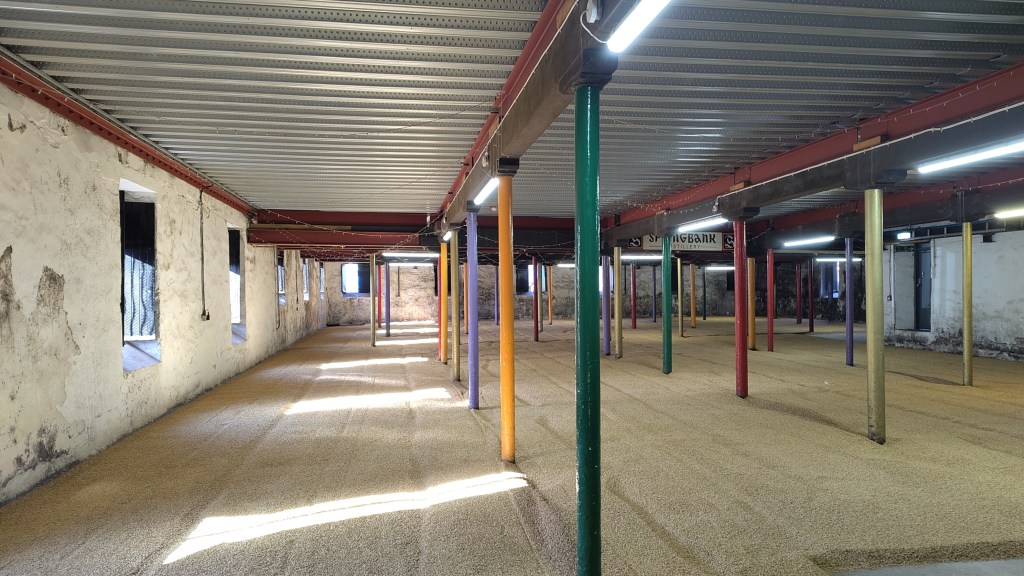
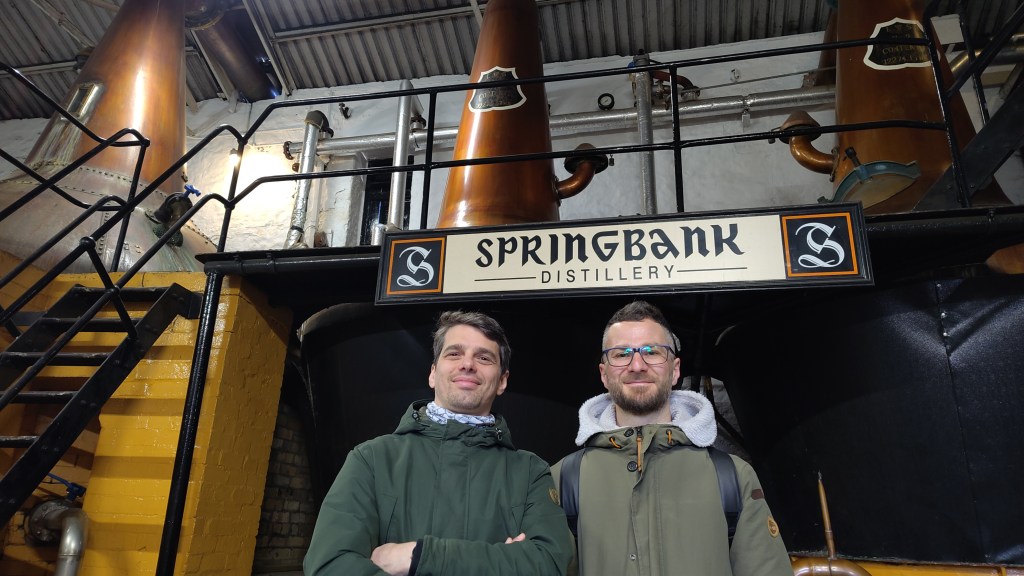
The day after was an early start: we had to be in Campbeltown by 9, so to have enough time to drop Mr Vantastic at the hotel (there are no campsites in town, so we took the comfortable way) and have a quick breakfast with a bacon roll and a coffee. Our first whisky activity of the day was before 10 (probably the only one in the whisky hospitality): the Springbank Tour. When we got at the distillery, around 9.40, there was already a line to get into the shopโ€ฆCage bottles we assumed? Our tour guide Finlay said they are used now to people queueing, eager to make a few bucks on auction sites. Hey ho. The tour started a few minutes earlier, as all the participants were already there: it was a nice tour, very informative, and Finlay only made it better with some jokes here and there. It wasnโ€™t the first distillery Roberto had visited, as in previous trips weโ€™d visited Lindores Abbey and Highland Park together, but it was the best one to showcase whisky making. He was particularly excited to see the malting floor in use (although not a unique feature in Scotland),as ย heโ€™d never seen the barley being malted before.

The tour went a bit long, so we took our drams as driver samples, and we ran to our next appointment: the Cadenheadโ€™s Warehouse tasting. It was only the two of us for the morning session at 11, and our guide was an old acquaintance: Aly! It couldnโ€™t have been better! He walked us through some of the drams, most really stunning, including an incredible Glen Moray from a bourbon barrel, and a peated Bunnahabhain from a refill butt, probably a Fino or a Manzanilla. Fortunately, we had empty sample bottles with us, that we used to store most of our dramsโ€ฆIt was going to be a long day! As the tasting ended, an extra half hour late, Aly walked us to the Cadenheadโ€™s tasting room, where we had the seventh drams (again put into sample bottles) and a delicious mushroom soup.

We went for a walk around the harbour, as it was again a magnificent day, but we felt that one soup was not enough, so we complemented the lunch with a jacked potato and a plate of nachos at the Bluebell Cafรจ. During the walk, we also went past Glen Scotia distillery – I felt a bit bad that we could not make it to such a great distillery, but unfortunately the timing of the tours was not good for us.ย 

It finally came the time for our last event of the day: the Kilkerran Warehouse tasting. It was the first time for me as well, so I was very curious. We were not alone this time, as a group of Dutch men were attending the tasting too. We started with a triple distilled whisky, then a couple of ex-bourbon cask expressions (the first one a 19y!), followed by a sherry and a Port wine matured couple, to finish with, predictably, a heavily peated one. That was quite a great exploration of Kilkerran, which is definitely one of my favourite ones. A good thing is that only half bottles are on sale, which if you ask me, is a more than enough quantity to enjoy such drams. After the tasting, we had an extra dram at the Washback bar (couldnโ€™t leave without sipping a Longrow 18, another favourite!) and then we went to properly check in to the hotel. Soon though, we walked back to the Ardshiel Hotel for dinner, where we had a yummy fish and chips.ย 

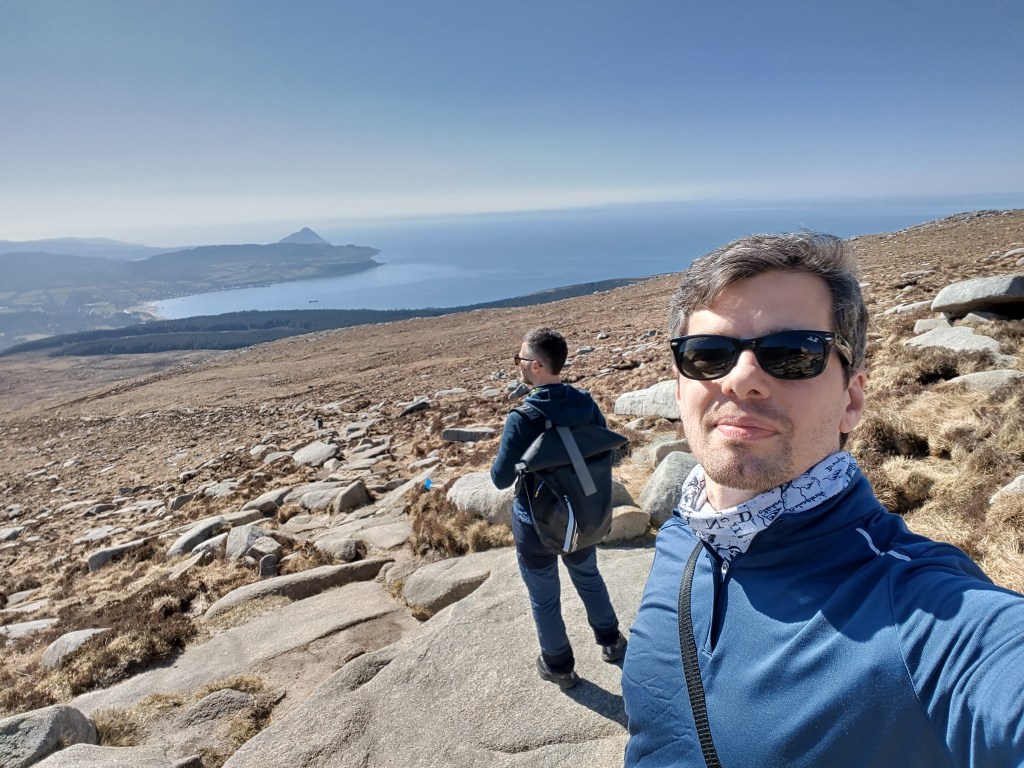
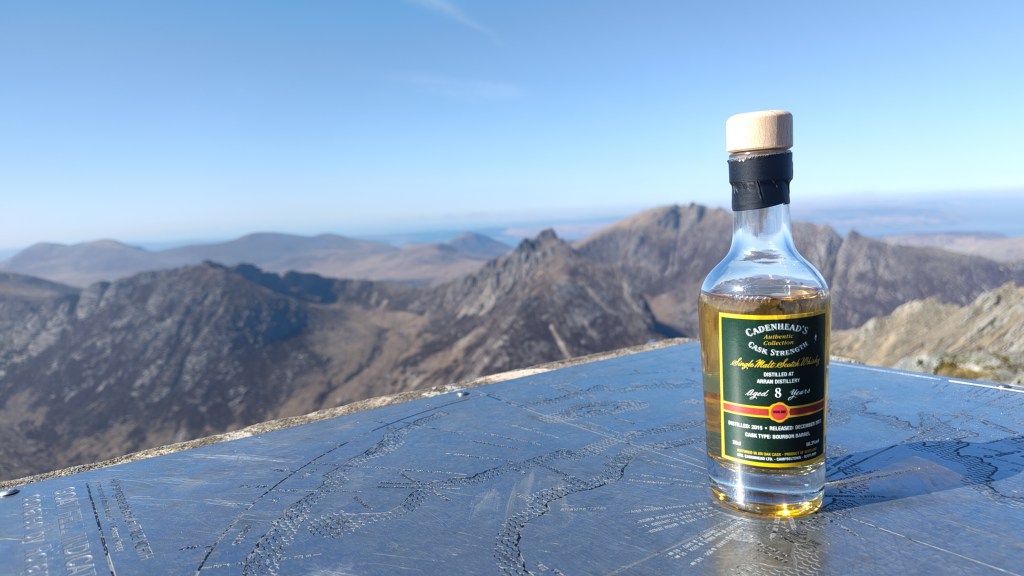
In the morning, we woke up surprisingly well (thanks, sample bottles!), and after a shower and a massive full Scottish breakfast at the hotel, we left. I didnโ€™t want to make the weekend only about whisky, I had something else in mind for the day. We drove along the east coast of Kintyre, to reach the little pier of Claonaig. From there, we sailed to on the Isle of Arran! Itโ€™s been a while since Teresa and I were there, our first and only time was in November 2019…Remember the time before the pandemic? We havenโ€™t been back since, reason why Teresa was particularly jealous of this trip! The ferry cross was only about half hour, before arriving at the pier in Lochranza. As we were there, we couldnโ€™t avoid a quick stop at the distilleryโ€ฆCould we? We stopped only for coffee and a (delicious) scone however, and a quick snoop of the shop. After that, we drove to the parking lot near Brodick, for the challenge of the day: climb Goatfell, the highest peak of the island. And it was a challenge indeed, in particular the last bit. It took us almost 2 hours through the almost 6km of the shortest path. Once at the top, we celebrated with a micro dram of a Cadenheadโ€™s Arran whisky Teresa had gifted me a while ago, truly delicious.

On our way back, we decided to take the longer path through Glen Rosaโ€ฆWe thought it would have been slightly longer, but it ended up being almost 11 km! During the walk we crossed path with many runners on a 2-day ultra marathon, we felt a bit sorry for them, as THAT was definitely a challenge. Once at the parking lot, we put our feet in the sea for a brief moment (in my case, very brief, as it was freezing), before getting some food at a nearby golf club restaurant. We drove west to find a spot, so we could enjoy the sunset with a final dram, before falling asleep to the sound of the seaโ€ฆSo poetic.

The Monday was warm and sunny, we visited the south of Arran. We started with Machrie Moor, the neolithic site with stone circles and standing stones, where we felt a bit like inside Age of Empires 1 (IYKYK). Then we drove along the coast, aiming for a coffee at Lagg distillery, but we found out it is closed on Mondays. We kept driving and stopped at the Forest of the Falls, to enjoy a coffee and a cake under the warm sun. We then walked along the beach near Kildonan Castle, and we finally drove to Brodick to catch our ferry to Troon, from which we slowly drove back to Leith.

What a great weekend that was, we were both super happy at the end of it! For Roberto, Saturday was the first time spending such a whisky-focused day, and although heโ€™s not a geek like us, he loved it. Other than the great appreciation for Springbank distillery, he liked the comparison between the two warehouse tastings. He realised how much independent bottlers can offers, while conversely it was also great to follow the โ€œjourneyโ€ of Kilkerran in different casks and at different ages. Itโ€™s always interesting to see things through the eyes of someone not so focused on whisky like us, it brought some different perspectives. We should do that more often!

Until next time, slainte!


Springbank Tour

Price: ยฃ15.00 pp (April 2025)

Duration: 1hr (more like 1hr 15min)

Tasting: 1 dram (choice between Springbank 10, Hazelburn 10 and Longrow) and a 5cl to take home

Distillery exclusives: cage bottlings

Target: everyone

Value for money: very good

Highlights: the whisky and the friendly staff

Recommended: yes!

Link: https://www.springbank.scot/


Cadenhead’s Warehouse Tasting

Price: ยฃ45.00 pp (April 2025)

Duration: 1hr (more like 1hr 3omin)

Tasting: 6 drams from the cask + 1 dram at the Cadenheadโ€™s Tasting Room

Target: whisky enthusiasts

Value for money: very good

Highlights: the drams

Recommended: yes!!

Link: https://www.springbank.scot/product/cadenheads-warehouse-tasting/

Kilkerran Warehouse Tasting

Price: ยฃ40.00 pp (April 2025)

Duration: 1hr

Tasting: 6 drams from the cask

Target: whisky enthusiasts

Value for money: great

Highlights: the drams

Recommended: yes!!!

Link: https://www.springbank.scot/product/kilkerran-warehouse-tasting/

#48.1 Islagain


Nice drams with a sour aftertaste: Bunnahabhain


TL; DR: And weโ€™re back to Islay for the second time this summer! After a quiet Friday afternoon, the next morning we had our first tasting, followed by a tour at one of our favourite distilleries: Bunnahabhain. The tasting was great as usual, but what happened afterwards was a major let down for us.ย 

Driving to Islay is always a big trip: it takes about four hours to drive from Leith to the Kennacraig ferry terminal, and then the ferry trip is another couple of hours. However, once youโ€™re on the island, you forget about all of this as the atmosphere in which youโ€™re immersed is something else. Everything slows down and there is a sense of quiet and tranquillity. Itโ€™s a strange mix between feeling energised and relaxed, with the mind finally off the million thoughts of everyday life. Maybe this a feature of all remote places.

The excuse for this trip came when our friends Glaire and Clay asked us to join them on their trip to celebrate their friendโ€™s birthday. That was a proposition too good to be true, so we happily accepted. On a Friday morning, we picked them up and started driving westward, first to Glasgow and then up along Loch Lomond, past Arrochar south-west, and along the Argyllโ€™s lochs (as we write, we can almost visualise the trip). We had a wee stop for a coffee (well, and a wee) in Inveraray, at the George Hotel. We also enjoyed their morning rolls, unbelievably tasty. A pity we didnโ€™t manage to meet our friend Ivan. The rest of the drive was uneventful, everything was on time, and we got safely to Bowmore where our friends had booked a small apartment. We parked our van not too far away and hanged out with them. In the evening, after dinner at the Lochside, we met their friends for a drink at the Duffieโ€™s, just next door. It was a nice evening but we were very tired, so after a while we just went back to sleep.

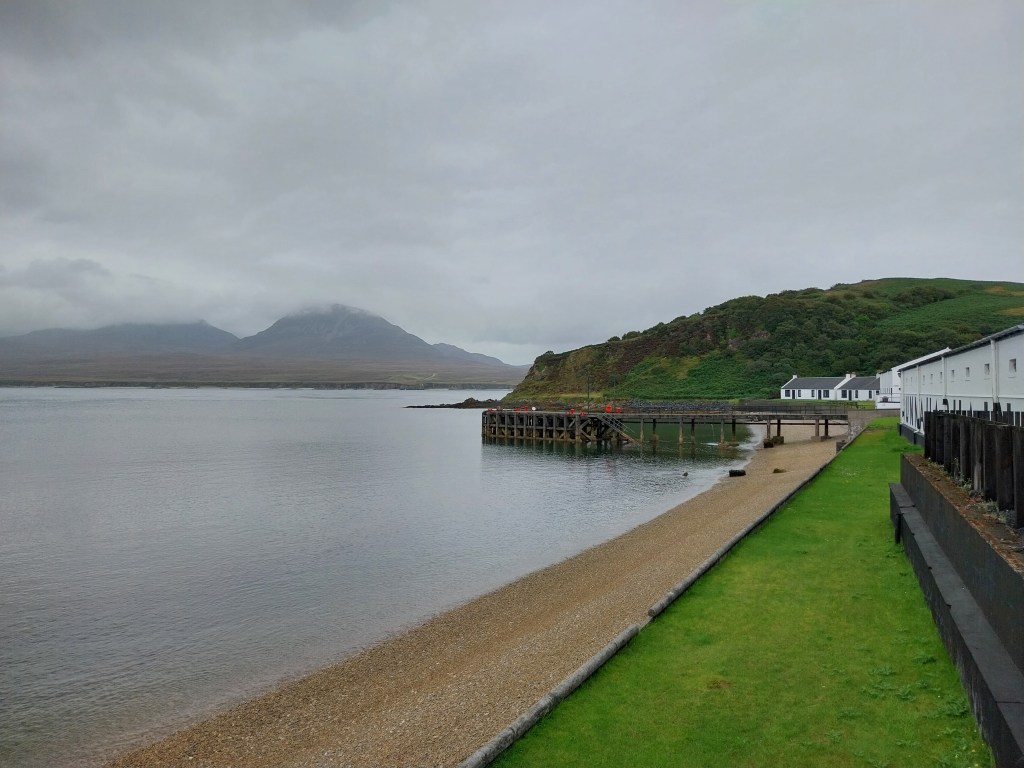
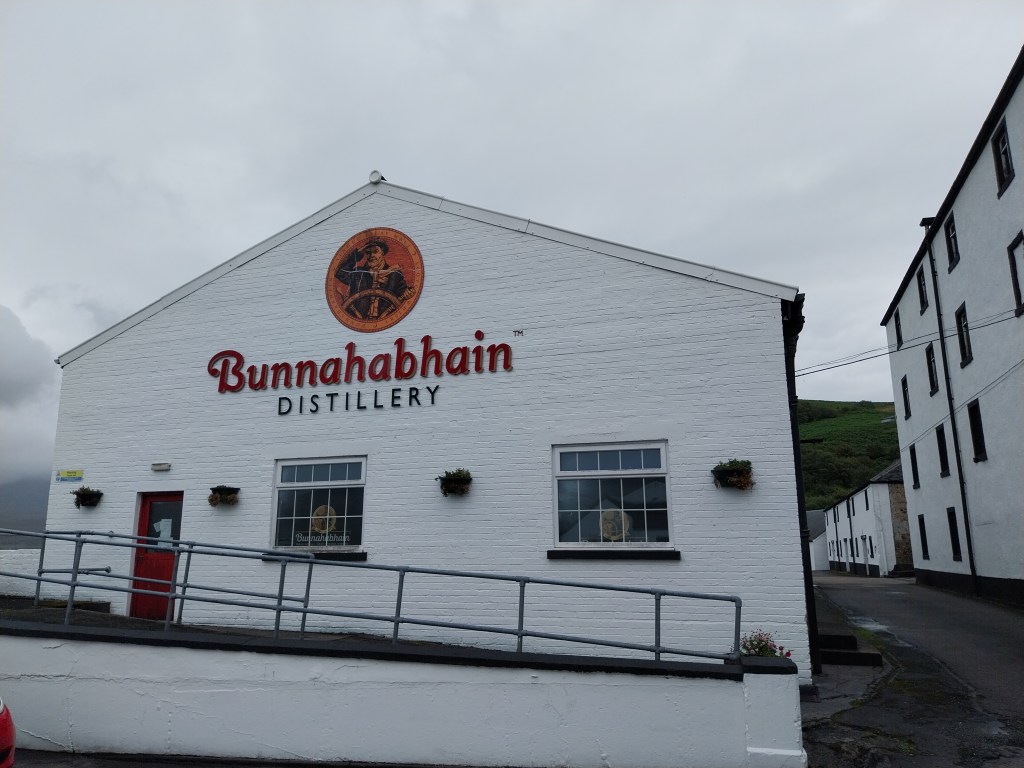
The day after we were very excited: our first time back to Bunnahabhain, after our visit in spring 2022. Bunna is one of our favourite whiskies, and it rarely disappoints us: we both love the unpeated sherried stuff, and the peated one too (itโ€™s actually one of the best peated malts in our opinion). So, the jolly party of three (Glaire skipped this one) left Bowmore on Mr Vantastic, and after a quick stop to check out the Ardnahoe shop, we got to our destination. The day was cloudy, a tad windy but not enough to keep the midges away, which in the minute we spent outside the visitor centre destroyed us!

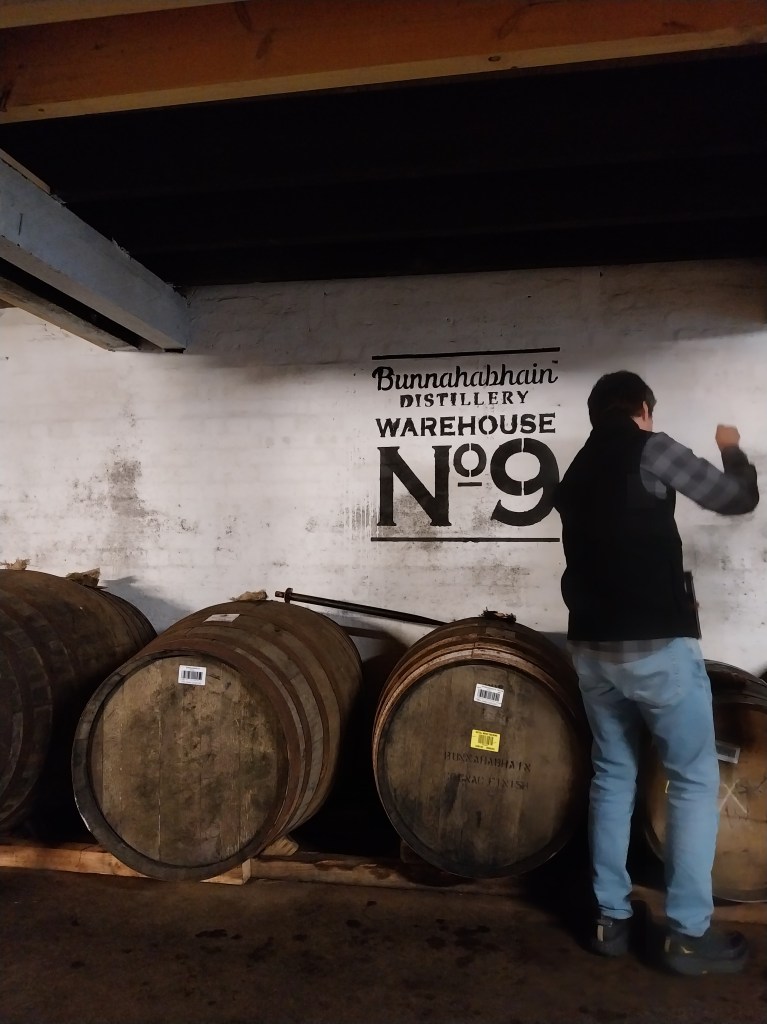
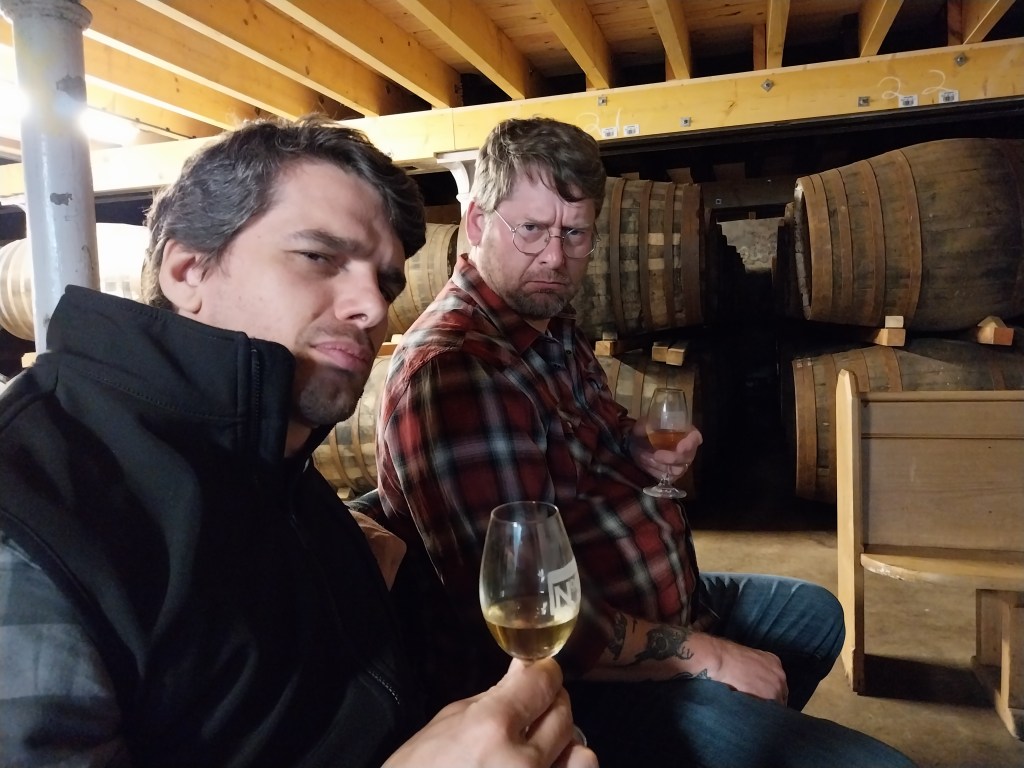
Once safely inside, we met the guide for the tasting: Matthew, which after a brief introduction walked us to Warehouse 9, the former malting floor. We were 5 people in total, so quite an intimate tour – the first time it was 13 people and felt like a crowd in comparison. The tasting was fun, as usual, Matthew was a good entertainer and very knowledgeable, and let people draw the whisky from the cask (Gianluigi tried too).

The first dram was an unpeated one, a 2007 ex-Muscat cask (16y), bottled at 53.7%. A very sweet and delicious dram. It was followed by a 2014 (9y) ex-Canasta sherry cask: this is a brand of cream sherry, which is a mix of Oloroso and PX. This dram was bottled at 58.4%, stronger at the palate as well. We moved on to the peated drams, first a 2011 vintage fully matured in a refill ex-Cognac cask (58.9%); the cask was used for a finish first, so the Cognac influence wasnโ€™t too strong. It was followed by a 2013 (10y) ex-Bordeaux red wine cask (57.9%), re-casked into this only after two years, in 2015. The last one was truly stunning, a real dirty belter of a dram.

However, here is where things went wrong. Back at the visitor centre, we were told that we could participate in the tour because weโ€™d drunk before at the tasting, and they could allow inebriated people in production. While we could see where this rule comes from (after all, we both did the 2-hour Scottish Training for Alcohol Retailers and Servers training, so we can see the logic), we really didnโ€™t expect this to happen: it wasnโ€™t written anywhere and in other distilleries (including Deanston, of the same company) we’d visited production after a tasting. There, they mentioned the T&C, which is always an โ€œout-of-jailโ€ card, but later that day we verified and that was not true (at the time, more on this later). We asked if we could have a refund, and here is the annoying part: they told us they couldnโ€™t issue any! Thus, to avoid losing ยฃ40 we decided for Teresa to go on the tour on her own (she was the driver that day, so sheโ€™d not drunk at the tasting), while Gianluigi would come back on the Monday to catch up, just before the ferry back to the mainland. The following tour description is a summary of both our tours, which were given by the same guide. They were probably in training, as both tours only covered the basics, but as we said in other occasions, you need to start somewhere.

The distillery, whose name means the Mouth of the River, was founded in 1881, originally doing peated malt, but turned to unpeated later: nowadays they do both. Their flagship malt, the Bunnahabhain 12, was first released in 1979, almost a hundred years after founding. What is really hard to wrap our head around, is that until the 60s there was no road to the distillery, so everything that went there and back was by boat, quite incredible! They have one of the iconic Porteus mills since 1964, which grinds the barley usually sourced from Simpson, on the mainland. In the resulting grist, the husk/grit/flour split is 20/70/10, as usual. It is then sent to a big mashtun (full leuter and covered by a copper lid), 8.6 tonnes at the time, where it is mashed with the usual three waters at increasing temperatures, to maximise the sugar extraction in their cloudy wort. The draff, discard from mashing, is used for their biomass plant, as opposed to many distilleries that sell or give it to farmers to feed cows.

Currently, they do 23 mashes per week, which are then moved to ferment into one of the six Oregon pine washbacks for 52 hours to reach about 8%abv. They have only one pair of stills, and during the second distillation they take a cut from 74% to 64%, discarding and redistilling the head (above the first cut point) and the tails (after the second one). After a quick nip to the warehouse and a look at the pier, we walked back to the visitor centre for the two-dram tasting. Surprisingly, there wasnโ€™t their flagship 12-year old, but a dram each of the two non-age statement expressions: Stiuireadair (unpeated), and Toiteach A Dhร  (peated). Meh.

A bit deflated, we left the distillery and drove back to Bowmore, where we had a quick meal before driving to the birthday party. There, we met some very nice people and had lot of fun, playing garden games and having delicious food. In the evening, we had a final couple of drams at our friendsโ€™ flat, before retiring in the campervan.

Honestly, this was one of the most disappointing distillery visits we had recently, which made us sad as Bunnahabhain is one of our favourite whiskies. We excused the increase in ยฃ10 for the Warehouse 9 tasting compared to 2022, although for four drams it is has became quite steep. Someone could argue that they are expensive drams, they are indeed, but the reason is that they are almost insanely priced: the 20cl bottle of the whiskies we tried ranged between ยฃ45 and ยฃ60, which is ยฃ145 to ยฃ195 for a full 70cl bottle, out of touch. Also, the choice to replace the Bunnahabhain 12 with the Stiuireadair (maybe the only bad Bunna we ever tried) in the tasting after the tour is quite a strange and cheap move. Would you imagine going to Lagavulin/Caol Ila/Ardbeg/Bruichladdich, paying for the basic tour and not getting a dram of their flagship 16/12/10/Classic Laddie? Yep, not even the Evil Empire does that.

But of course, what we really did not like was the way we were treated, and the lack of flexibility or willingness to try to fix a problem that wasn’t our fault in the first place. It’s true the staff gave Gianluigi and Clay “reparation” drams while Teresa was doing the tour, but at the same time we felt we were treated like we had done something wrong, which wasn’t true at all. At that time, it wasnโ€™t written anywhere that we couldnโ€™t do the tour after the warehouse tasting. Fortunately they recently changed the website (we wonder whether it wasn’t just us having this problem). Since the reservations were made under the same name/email, it would have costed the staff 5 minutes to touch base via email before. But what really made them unprofessional was that someone could have just told us before the tasting, when we checked in (and said weโ€™d booked both tasting and tour). We would have both got drivers drams. We later complained via email, and they promised a refund for the tours (refund still not received, at the time of writing over a month later).

To wrap up this rant: will we still drink Bunnahabhain? Definitely, itโ€™s too delicious to let go. Will we still buy from the distillery? Maybe, there are many indies out there with great Bunnas. Will we go back for another tasting or visit? Probably not for a very long time.

Stay tuned for some happier action the next day, a visit to the only Islay distillery we hadnโ€™t visited yetโ€ฆCan you guess which one? Until then, slainte!

Bunnahabhain Warehouse Tour

Price: ยฃ50.00 pp (August 2024)

Duration: 1hr 30min

Tasting: 4 drams (25ml, all natural colour and unchillfiltered), 2007, 16y, ex-Muscat cask, 53.7% (70/20cl bottles for ยฃ195/ยฃ60); 2014, 9y, ex-Canasta sherry cask, 58.4% (ยฃ145/ยฃ45); 2011 Moine (peated) fully matured in a refill ex-Cognac cask, 58.9% (ยฃ155/ยฃ55); 2013, 10y, Moine ex-Bordeaux red wine cask, 57.9% (ยฃ145/ยฃ50), and a copita to take home

Distillery Exclusive: see above

Target: whisky nerds

Value for money: a tad pricey

Highlights: Warehouse 9 is always special

Recommended: yes

Link: https://bunnahabhain.com/


Bunnahabhain Production Tour

Price: ยฃ20.00 pp (August 2024)

Duration: 1hr (almost)

Tasting: 2 drams (20ml), Bunnahabhain Stiuireadair (46.3%), Toiteach A Dhร  (46.3%)

Distillery Exclusive: see box above

Target: casual drinkers and tourists

Value for money: ok

Highlights: the still room

Recommended: if youโ€™re looking for a basic distillery tour, there are better options on the island

Link: https://bunnahabhain.com/

#46.6 The return of the smoke

One last stop in C-town


TL; DR: Back on the mainland, we indulged in a further treat before driving back home: a morning in Campbeltown. After spending the night in a camping just outside town, we drove there to get some goodies from Springbank and do a generous Cadenheadโ€™s Warehouse tasting, very well conducted by Aly. What else?

(missed Part 5/Part 4/Part 3/Part 2/Part 1?)

The ferry back from Islay was uneventful. Once on the mainland, at the junction with the A83, instead of turning left towards north, we turned right, southwards. Well, at first we actually turned north, but just because we made a mistake and Gianluigi forgot to turn on the data on his phone, so Waze couldnโ€™t help much. Anyway, our destination was Campbeltown. There were two available campsites near Campbeltown (unfortunately none in town), one in Machrianish, near the airport, and one on the east Kintyre coast, a mere 10-minute drive north of town, in Peninver. We opted for the latter, and to get there, we drove through the east coast of Kintyre. The road is a single track, much smaller compared to the faster one on the west of the peninsula. However, because it was a beautiful sunny evening, the landscape was quite spectacular, with the isle of Arran clearly visible. Around 7.30pm, we arrived at the Peninver Sands campsite: small but tidy, with campervan pitches on grass just a few dozen meters from the beach, behind a row of static caravans.

After dinner and a well-deserved shower, we had a few of the drams collected during the day. We were pleasantly surprised by the differences in the Laphroaig 10 cask strength batches (13 to 16): some more smoky, some more fruity, some harsher while others very mellow, drinking like a lesser abv whisky. We totally embraced batch variations! Unfortunately, there were midges outside, so we had to enjoy the drams in the van. Thatโ€™s the West Scotland summer curse: either crappy weather or midgesโ€ฆWhat a bummer!

The morning was sunny again, and light came in through the van windows. Edo was the first one to wake up, we followed soon after. We then had breakfast, another shower (just because) and a walk to the beach. We dipped our feet in the incredibly cold water: after a minute we felt like pins in them. Then, we drove southwards under the Kintyre morning sun. Soon after we arrived in Campbeltown, where it was easy to find parking not too far from Springbank.

That was in fact our first destination, first to check out what the cage had to offer. Edo got himself a 7y heavily peated Kilkerran matured in bourbon casks, while we got a sherried teenager Kilkerran matured in sherry (probably Oloroso) and a 9y Longrow matured in refill Palo Cortado sherry cask. Of course it is always a gamble, but a safe one: never had a bad nor an average cage dram. A few days later the former two were mentioned in Royโ€™s vPub, hinting to two memorable drams (ours arenโ€™t open yet at the time of writing, but we feel optimistic).

It was soon time for the Cadenheadโ€™s Warehouse Tasting. To our surprise, the meeting point was not the Springbank visitor centre, as the previous two times (three for Gianluigi). This was because the venue for the tasting changed (for the second time in the last few years): instead of being held in one of the warehouses behind Springbank, Cadenheadโ€™s recently acquired a building not too far from the new hub (shop and tasting room), that has been gradually converted into a warehouse dedicated to tastings.

The tasting was guided by Aly, who did a great job guiding us through the usual range of tasty drams: it was informative and entertaining. We started with a blended malt, a vatting of a 24y Glenrothes, 12y Aultmore and 14y Dalwhinnie, from an ex-bourbon barrel, bottled at 54.9% abv: a tropical deliciousness. It was followed by a few drams from fortified wine casks: 16y Glentauchers ex-Oloroso hogshead (49.4%), a 13y Glenburgie from a Madeira barrique (57.5%), an ex-Amontillado 11y Glen Garioch (58%) and an Oloroso-finished 13y Craigellachie (finished for 4 years). All these drams were very well received, although for the three of us the Glen Garioch was a notch below the others: too herbaceous and harsh. Finally, the peated dram was a Staoisha (peated Bunnahabhain) 9y at 60.4%, finished for three years in a PX-cask: delicious, only reason we didnโ€™t buy it because we have waaaaaay too many peated Bunna at home. So, after much debating we opted for the ex-Madeira Glenburgie and the tropical blend, by far the best value for money.

…with great drams.

We had our seventh dram at Cadenheadโ€™s Tasting room (Ardmore 11y ex-PX cask, Deanston 15y ex-Manzanilla, and Balblair 10y ex-rum cask for Teresa to take home, to add to the other six drams). Then, we finally had a nice big lunch at the restaurant of the Royal hotel, before going back to the Washback bar for a final dram of Springbank, whose Edo is a big fan, before finally hitting the road.

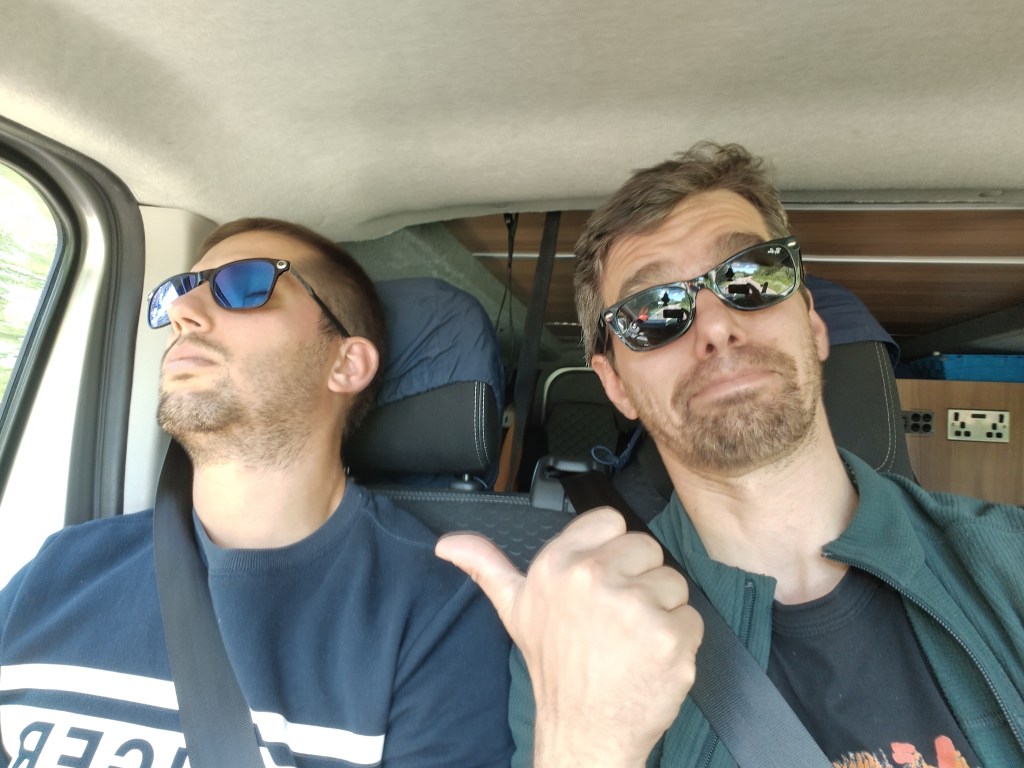
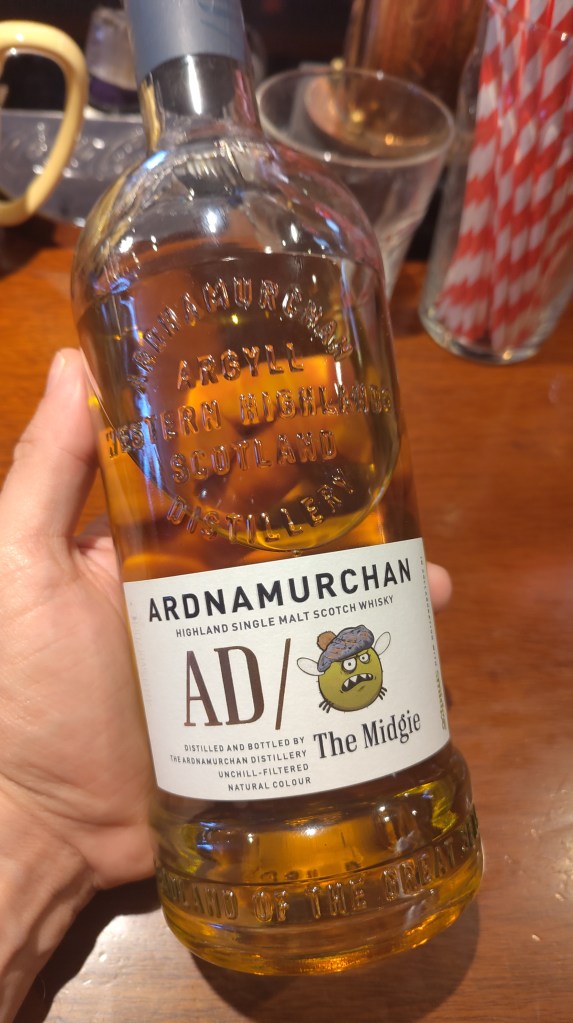
That day Teresa had the shortest straw, but the day was beautiful and sunny, and the drive was smooth. Edo and Gianluigi fell asleep for a few chunks of it. We only stopped once at Inveraray, to meet our friend Ivan who was saving some venison burgers for us, and we took the chance to try the Ardnamurchan Midgie at the George Hotel bar: a super funky and tasty dram.

Another Warehouse Tasting, another banger: we really enjoyed the range of drams, and Aly was very entertaining and fun. As we said other times, warehouse tastings are probably our favourite type of experience. There is something more when sipping drams just drawn from the cask, in the dumpy cold warehouse environment, surrounded by the “angel share” (i.e. vaporised alcohol). Similarly to our last Cadenhead’s Warehouse Tasting (two for Gianluigi), this tasting was structured and tidy, while the very first one back in 2018 was a bit more wild (and we had more samples, if we recall correctly). The concrete floor made it less dumpy as well, although thanks to this year not-so-warm summer, it was definitely chilly (and indeed Aly was very heavily dressed). Also, it’s great that Cadenhead’s are keeping it at ยฃ40 per person, which is an incredible value for money considering it includes 6 (+1 at the bar) drams. Other warehouse tastings are generally pricier, like Bunnahabhain (ยฃ50 for four drams) or Deanston (ยฃ40 for three drams). In this specific case, if we have to be really peaky, maybe the only thing that was missing was another ex-bourbon cask dram, after the first one. Anyway, with experiences like this, and the honestly priced drams, Cadenheadโ€™s is leading the way in the scotch whisky landscape. Kudos to them!

The very last dram stop.

See you in a couple of weeks for more whisky action. Until then, slainte!


Cadenhead’s Warehouse Tasting

Price: ยฃ40.00 pp (July 2024)

Duration: 1hr 30min

Tasting: 6 drams (plus a voucher for a seventh dram at the Cadenheadโ€™s Tasting Room)

Target: whisky nerds

Value for money: great

Highlights: the drams

Recommended: absolutely

Link: https://experience.cadenhead.scot/


#42.3 A weekend on Skye


Raasay, paradise


TL; DR: As we woke up on the Saturday we drove to Sconser, to take a ferry to the Isle of Raasay. We visited the distillery, where we had an amazing in-depth 3hr tour and tasting, we hiked and, the next morning, we drove around this truly amazing corner of the world. 

(missed Part 2/Part 1?)

Waking up in a place like Carbost is something else. Despite the many campervans, the morning was very quiet, and the only sounds we could hear were the waves gently crashing on the shore. After packing up the bed and before getting on the move, we walked down to the pier, to get some of the fresh (very fresh!) morning sea breeze. We left Carbost after a short stop at the public toilets in front of Talisker distillery. It didnโ€™t take long to get to Sconser, and as we were slightly early, we had time to fix ourselves a coffee with the Bialettiโ€™s moka (well, still Italians after all) before the ferry to Raasay.

It was the first time on the island for us. Although geographically close to the mainland, Raasay can only be reached from Skye. The crossing was about 20 minutes, and once there we parked at the pier, where there are also public restrooms and a 24h open waiting room. The distillery was only 10-minute walking, so we decided to just walk there and see how the day would pan out. Our plan depended on the weather: if it was nice, we would have spent the night on the island, otherwise we would have taken the last ferry. It was a glorious day, so we ended up taking the ferry the next morning.

The distillery is in Clachan, just outside Inverarish, the main village. On the way there, there is an old market/barn building, now mostly abandoned. It wonโ€™t be the first one we spot, as the current population is only about 190 people (up by 30 with respect to the 161 marked on the Raasay Single Malt bottles). At that cross we turned right, leaving the Raasay House and Hotel on the left: a huge former mansion, now a tourist centre only open in high season. The main distillery building is called the Borodale House, an old Victorian house that used to be a hotel with a pub before it was bought by the company R&B Distillers to build the distillery. Other than distillery and shop, there are also a hotel, a restaurant and a bar serving hot food until mid-afternoon.

Being the off season and a Saturday, not all tour options were available, but we found one that seemed great: the Dunnage Cask Tour, which included a tour of the distillery and the bottling plant and a warehouse tasting. As we checked in at the distillery we had a brief scare: our reservation was lost in translation, apparently someone had forgotten to mark it down. The shop manager was very cool about it though, she said there we just needed to wait a bit, and as an apology she offered us a coffee (nice touch). We waited in the bar, taking advantage of the incredible view of Skye from the big windows on a very sunny day. Gabriel, our guide, arrived about 40 minutes later (directly from home). His family moved to the island when he was a kid, and he and his brothers represent a good percentage of the 30-odd distillery workers. This is his side job, while heโ€™s studying to get a medical degree. Gianluigi wondered how his life would be different if, instead of doing chemical analyses on tomato sauce, he had worked in a distillery as a student job.

Gabriel was extremely knowledgeable, and while we visited the various stages of production in the very contained area, he provided a huge amount of information. Starting with the barley, they get 30-ton a month of it from the Kintyre peninsula, and the two strains they are using are Lauriet and Concerto. For the peated runs, they get 48ppm (part of phenols per million) barley, malted using Highland peat from the north-east of Scotland. As for the milling, their grist composition is slightly different from others, with only 9% of flour, 19% of husks, and 72% of grit. Their water source is a 60m deep borehole located behind the distillery.

Mashing happens in a big 1.1-ton stainless steel closed mashtun with the usual three waters at increasing temperature, and they aim for a cloudy worth. Linked to the 5-day production week, fermentation is between 3 and 5 days. They have six stainless steel washbacks equipped with a cooling jacket, to slow down fermentation and allow the (liquid) yeast to extract โ€œas much flavour as possibleโ€. The two stills (wash-, 5000-litre, and spirit, 3600-litre) are made by Frilli, an Italian firm from Siena (like Teeling in Ireland and Inchdairnie in Fife), and the cut they take from the second distillation is usually between 75% and 65% abv. When they do peated runs, they use the cooling jacket in the lyne arm to increase reflux and get a lightly peated spirit. The peated newmake spirit comes out at about 14ppm, which is then reduced to 7-8ppm during maturation. It was actually very informative to get to know the ppm level on the liquid, especially when many distilleries only refer to the barley specification.

The production area includes a gin still, where they run the sourced neutral grain spirit with the chosen botanicals (which, of course, we donโ€™t remember). After the production tour, we took some stairs outside the building, to get to the bottling plant, on top of the hill behind the distillery. There, Gabriel showed us the manual and automatic bottling machines, but also how lots for different markets get labelled and stored until they get shipped. Back to the main building, Gabriel took us on a jeep and drove to the warehouse.

It was the time for the tasting, but first Gabriel let us take the bungs out of the casksโ€ฆan operation that took us very long, as we are both quite clumsy, but we could finally get a taste of the yummy content. The tasting consisted of six drams, one for each component of the Raasay Single Malt, their main core expression. These whiskies are matured in ex-Rye, ex-Bordeaux red wine, and Chinquapin virgin oak casks, both unpeated and peated. We knew what to expect: during the pandemic we did an online tasting of these six components, although they were not 3-year-old yet, so technically not whisky. This time these are properly whiskies, as the vintage of the cask was 2019 for the unpeated, and 2020 for the peated ones.

We loved the peated chinquapin oak, and the unpeated ex-bordeaux and ex-rye casks – one extra confirmation that, if done properly, young whisky can be delicious too. This range is available to buy at the distillery (when we visited, not the peated ones) bottled in the Na Sia range (Gaelic for โ€œThe sixโ€). While sipping the last dram, Gabriel took us around the warehouse, and we found out that they recently started using re-fill casks (initially they used only first fill).

After the tasting we were definitely ready for some food, which we got back at the distillery while trying a nip of the bottlings available at the shop (Slaintรจ Club bottlings, Year of the Dragon and others, see below in the box).

Left the distillery, it was a very nice evening, so instead of going back to the van we decided to go for a walk to the village and then to the hill behind the distillery, Temptation Hillโ€ฆdespite the cheesy name, it was quite beautiful and very relaxing. Back at the van, we had dinner, but we soon went to bed, after such a great day.

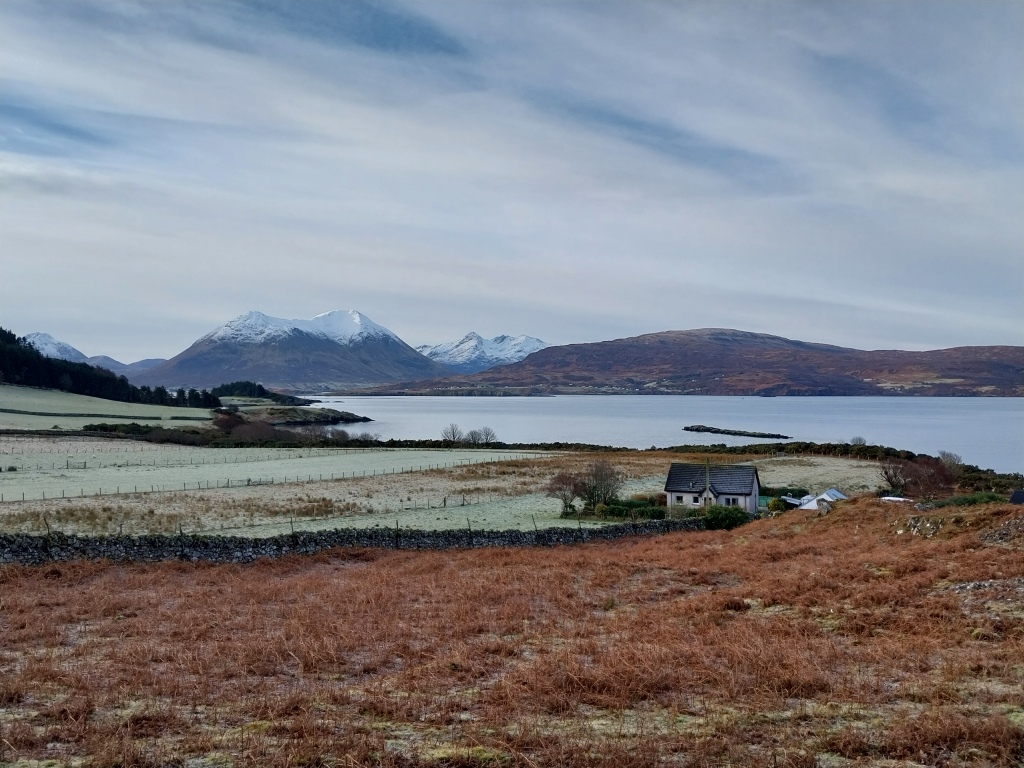
The following morning, we decided to skip the first ferry of the day to drive around the island: we probably drove along all the possible roads, talking advantage of some breath-taking landscapes – from the very north of the Island, along the mighty Callumโ€™s Road, with a very interesting story, to the south and its the old pier (and frankly, quite too many abandoned vehiclesโ€ฆ). We finally took the ferry for Skye around midday, and from there we drove almost non-stop to Leith (well, non-stop because most cafes along the road were closedโ€ฆexpect for the Apiary in Dalwhinnie, where we had some delicious cakes).  

This was one of the best experiences we had in a while, both the distillery visit (thanks Gabriel!) and the scenery. Raasay is truly a paradise that weโ€™d like to explore more, so we really canโ€™t wait to go back for a holidayโ€ฆwell, and maybe a couple of drams too!

Until next time, slainte.


Raasay Dunnage Cask Warehouse Tour

Price: ยฃ75.00 pp (February 2024)

Duration: 2-3 hr

Tasting: 6 drams from the cask, 5y cask strength unpeated ex-Rye cask, ex-Bordeaux wine cask and ex-Chinquapin oak (virgin oak), and peated ex-Rye cask, ex-Bordeaux wine cask and ex-Chinquapin oak

Distillery Exclusive: the Na Sia range (see above), Raasay Scottish Whisky Distillery of the year 2022 (4y and 10 months, finished in Quercus humboltii Colombian oak, 50.7%), Tourism Destination of the Year Celebration (4y, finished in ex-Manzanilla casks, 52%)

Target: whisky geeks

Value for money: good

Highlights: everything

Recommended: a bit pricey but totally worth it!

Link: https://raasaydistillery.com/


#37 Farewell to 2023

A year full of whisky trips… and more!


TL; DR: Itโ€™s December, perfect time for some reflections on the year thatโ€™s about to end. Another year full of awesome whisky trips, not only in Scotland: 31 distillery visits, of which 27 seen for the first time!

We are quickly approaching the end of the year, so itโ€™s the perfect time to reflect on the year that has been, of course whisky-wise. As weโ€™re writing, we already travelled back to Italy to celebrate Christmas with our families. Itโ€™s around 15 degrees Celsius here, so the atmosphere doesn’t quite call for a dram by the fire, but weโ€™ll try to make the best of it anyway, eheh.

Even more than in 2022, this year we felt like the pandemic was a gone memory (despite Covid is still among us, and it will be for long): travels resumed in full force, Edinburgh is busier than ever, and so it was travelling around Scotland. The big novelty in our life was the campervan, Mr Vantastic, which allowed us to travel a bit more on the wild side, without worrying about reserving accommodations (which in the meantime became quite expensive) or planning too much in advance.

For our summer holidays we went on a big road trip down to Wales, to discover this beautiful country and its whisky scene. Except for a couple of producers, with Penderyn being the main one, the Welsh whisky industry is still in its infancy and mostly populated by craft distillers, but itโ€™s nonetheless promising. While travelling to Wales, we also stopped by a couple of English distilleriesWhite Peaks stood out, definitely a hidden gem.

A hidden gem in Derbyshire, White Peaks.

Also, we couldnโ€™t help but going to Speyside again, this time for the Spirit of Speyside festival, a different experience (not in a bad way) compared to our beloved Fife Whisky Festival and Whisky Fringe (which we attended this year too). We had great time, and visited a number of distilleries that are usually closed to the public.

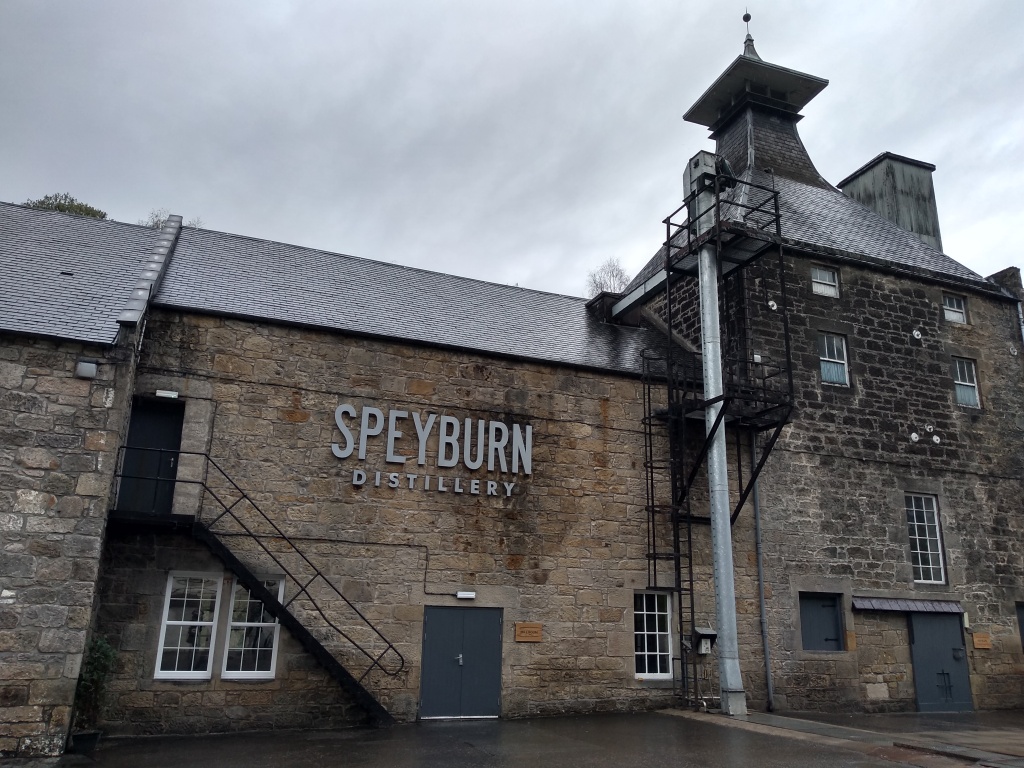
Mortlach, Linkwood and Dailuaine were fantastic, in spite of the entry price, and so it was Speyburn, but good news: the latter is now open to the public! Now every whisky enthusiast can visit and check out their old drum maltings: a piece of industrial history! We briefly stopped in Speyside again later in the year on our way to the Highlands, to visit a couple of new distilleries: Ballindalloch and Dunphail. The first one had just released their first single malt, while the latter had just filled their first batch of casksโ€ฆHistory in the making!

The Highlands were the destination of the Edinburgh Whisky Group annual trip. In Dornoch, Phil from Thompson Brothers gave us a quick tour of their craft distillery. Then, we visited other local distilleries, two for the first time (Glenmorangie and Balblair), and Clynelish for the second time (blog posts about all this coming soon). This was not the only one we visited for a second time this year. In early February we had a very wet trip to the West Highlands to revisit Ardnamurchan and Tobermory. Moreover, in August we did a Warehouse Tasting at Deanston with a couple of friends from Italy. Gianluigi even went on a solo trip to Campbeltown in December, to use a couple of remaining leave days from work and take advantage of his Cadenhead Club membership by getting a free warehouse tasting: a string of awesome drams, including a spectacular 9y old Staoisha (Bunnahabhain) finished in an ex-Amontillado sherry cask.

We did a lot of things, but also missed a few opportunities: first, we wanted to go back to Islay, but we couldnโ€™t make it, too busy with work. Then we missed the Dramathon due to a flood risk in Aberlour (this year we were supposed to run the 10k only), as well as the Roy Aqvavitae Blind Challenge, this time because of a terrible cold weโ€™d caught.

Leaving whisky trips on a side, it seemed to us that the number of tastings happening around Edinburgh has grown exponentially. We had great fun with Justine from Kask Whisky, now doing her monthly tastings at the Lind and Lime gin distillery, conveniently near home. One of the highlights of this year was definitely the Glen Mhor tasting, on the 40th anniversary of its closing, organised by Jason and Mark/Jolly Toper. Other great ones were the Woodrow’s of Edinburgh tasting at the Palmerston, organised by our pal Murray, and some tastings at Kilderkin and at Bacco Wine.

Whisky tasting next door.

On the bad side, we noticed the sharp increase in bottle prices. It was interesting to follow a recent vPub from Roy, where he showed that for some products the growth was mostly in line with inflation. However, this was for core/standard releases. We still feel that, instead, some independent bottlers and some producers are โ€œtaking the pissโ€, for a lack of a better term, particularly in relation to single cask and limited releases. Among these, the Scotch Malt Whisky Society bottle prices increased substantially, which resulted in us buying almost zero bottles and going only a few times to the venues compared to previous years. We have to say, though, that food at Queen St is still awesome, and the renovated Vaults look great.

One of the few bottles we bought from the SMWS was for our cask experiment: we got a 1-litre American Oak cask (virgin), which we seasoned with Gutturnio red wine (a typical red wine from Piacenzaโ€™s province) for 3 months, and it is now holding a very tasty 12y Dufftownโ€ฆIn 2024 we will find out if itโ€™s turning into pish or is actually drinkable.

After plenty of distillery visits and more than a handful of tastings this year, weโ€™re already planning for next year trips with Mr Vantastic …Islay & Jura? More English distilleries? The Western Hebridies? Back to Speyside? We shall see, but nonetheless, we are already looking forward to it! Now is the time to rest and enjoy some time with our families, hoping that you are doing the same, wherever you are. Possibly, with a good dram in your hand.

Until next year, slainte, and have a great New Year!


#32.1 Driving through Englandshire

A peek into White Peak Distillery


TL;DR: On the road to Wales for our summer holidays, we drove through England, and we got to two distilleries: first of the two, White Peak. We had heard great things about their whisky, but had never tried. Our visit confirmed their good reputation, and we probably had the best distillery tour outside Scotland. 

The decision on where to go for our summer holidays was quite easy. First, we wanted to use the campervan for the first time for over a long weekend, but because of some mileage limitation on our insurance we couldnโ€™t go too far, so here Ireland and Cornwall were not an option. Also, after our 2022 North of Scotland and Orkney trip, we definitely wanted to avoid midgies, so we excluded the West Coast of Scotland and Outer Hebrides too. Finally, we wanted to see something new: at this point, excluding the overpriced Lakes District, there was almost only one destination left: Wales! But to get to Wales, weโ€™d need to cross a good chunk of the country south of the border, otherwise known as Englandshire.

Not too bad honestly, the recent world-wide whisky revamp touched England as well, and there are now over 40 distilleries on the English Whisky Map. Many of them are very young, and some were born as gin distilleries and only afterwards they switched to whisky. Others, however, are now quite established, with well-matured and tasty products. We already visited two, the Lakes Distillery, in Cumbria, and Copper Rivet, in Kent.

Anyway, we left Edinburgh and, after a first stop in Leeds (to meet friends who recently became parents and their new-born kiddo), we drove straight to the first distillery we wanted to visit: White Peak. The distillery is in Derbyshire, near the Peaks District National Park, in Ambergate. It was funded by the Vaughn family, Max and Claire, in 2016, and their first single malt was released in February 2022. The chosen name for the whisky is Wireworks, because the distillery is located in a very beautiful former industrial estate on the river Derwent, a former wirework indeed! The industry complex dating back to 1876, closed in 1996: a lovely industrial revolution style building.

We were very curious to visit this distillery. We had heard good things but we hadnโ€™t had the chance to try this malt before, so here we go! Once there, we quickly checked in, but being early, we had time for a coffee and a stroll outside: a few meters away from the entrance they set up a nice summer garden, with lots of old industrial bits and bobs.

Back to the bar, we started our Warehouse Tour with Dave. He works there as a distillery manager and distiller, which was great as he gave us lots of insights! So, first off, he told us that although they make gin and rum too, the 90% of their business is the production of single malt. In contrast with the industrial revolution style budling, the equipment is very modern, and bar the stills, it looks like a modern brewery. They buy their malted barley from Crisp, and they then process it in a very modern brewing-style mill. This only applies to the unpeated malt however: the peated one, which constitutes 10% of their mash, is pre-milled. A thing in common with many distilleries is the use of three waters, from which they obtain a clear wort for a fruity character. The long fermentation, 6 days, is done with two types of yeast, dry distiller and brewerโ€™s. The latter is live yeast from the Thornbridge brewery, in particular the one used to make the Jaipur IPA. This is both to provide a twist to their flavour, and to honour the Derbyshire brewing history.

The two wee stills.

Distillation is made in two small Scottish-style copper pot stills, and the usual cut points for the heart (ie what is kept from the second distillation) are 78% and 67%, quite wide indeed! They produce more or less 10 casks per week, mostly into ex-bourbon barrels from Heaven Hill or ex-wine shaved-toasted-recharred (STR) casks. They produce about 60,000 litres of alcohol per annum, putting them in the top 5 of English malt distilleries. After trying the newmake spirit, we moved to the warehouse, just next-door. Technically not a dunnage warehouse (the industrial building original floor is concrete), although the barrels are stored horizontally in a typical dunnage way. Their โ€œangel shareโ€ (the percentage lost to evaporation) is about 10% over 3-4 years. David explained us their barrels policy, as we said, mostly ex-bourbon and STR, but with many exceptions: red-wine, Port, rum, virgin oak, etc, typical of young distilleries wanting to experiment. We also saw the casks for their next release, the Necessary Evil, in collaboration (again) with Thornbridge brewery. This year they used ex-PX casks which previously held stour beer. 

Still in the warehouse, a table with empty glasses and benches was prepared for us, for the tasting! The first dram was the Caduro, released a few days before our visit, a marriage of ex-bourbon (33%) and STR casks (67%), bottled at 46.8%. Itโ€™s a lightly peated malt, quite fruity, sweet and very tasty. The other two samples were both from the cask, a 4yr-ish ex bourbon cask filled at around 72%, and a slightly older ex American oak cask (but with French oak ends) filled at 64.5%. We have to say that they were both delicious – a shame they werenโ€™t on sale.

…a very nice tasting.

Back to the shop, as the buying queue disappeared, we asked Dave if we could try their other release: the Alter Ego (51.5%). For this, the cask make-up is similar to Caduro, but inverted (33% STR and 67% ex-bourbon barrels), and with different cut points too. It was tasty as well, but we felt that the Caduro was a bit more balanced.

The day finished with us driving towards Stratford-upon-Avon to get to the camping, to rest and get ready for another day and another distillery visit. Overall, the visit to White Peak was a great experience, probably one of the best we had recently, and for a very reasonable price. Of course, Dave was excellent, and as we said many times, doing the tour with a person involved in production is often more engaging.

Until next time, slainte!


White Peak Distillery Warehouse Tour

Price: ยฃ40.00 pp (July 2023)

Duration: 1hr 30min

Tasting: 3 drams, single cask ex-bourbon cask (4yr, filling strength 72%), single cask STR American oak cask with French oak ends (around 4.5yr, filling strength 63.5%), Caduro (46.8%abv), all not chill filtered and natural colour, and a complimentary glencairn

Target: whisky enthusiasts

Value for money: good

Highlights: the industrial site and the nerdy tour

Recommended: yes

Link: https://www.whitepeakdistillery.co.uk/

#31.1 Spirit of Speyside 2023

To the mill on the hill


TL;DR: This year we finally managed to go to the Spirit of Speyside Festival! We were very excited because during this event, some distilleries usually closed to the public open their doors. We started with a very well known one (especially if you buy whisky in supermarkets too): Tamnavulin!

Among the regional events or festivals, there was one that we were eager to attend. Nope, not the Feis Ile: while some tastings look fantastic, the idea of so many people on such a small island (Islay) makes us feel claustrophobic. Not the Campbeltown Malt Festival either, more or less for the same reason. Donโ€™t get us wrong, it would be great to attend both of them at some point, letโ€™s just say that we donโ€™t feel ready yet.

So, by exclusion (and of course, because of the title of this post), by now youโ€™ll have guessed that we are talking about the Spirit of Speyside. It is a huge festival, lasting one week, with plenty of events happening in the constellation of villages and distilleries that form the biggest whisky region (not in size, but in volume produced). Other than the obviously expected tastings at various venues (hotels, bars, distilleries, warehouses, shops, etc.) and distillery tours, there are runs, whisky fairs, bonfires, walks, truck tripsโ€ฆReally a plethora of whisky-related activities. If you know what our trips (and thus blog) are about, you probably stopped at โ€œdistillery toursโ€, wondering which ones we visited this time. And youโ€™ll be right, one of the beauties of this festival is that many distilleries that are normally closed to the public (at the moment at least), open their doors to visitors just for these few days. Because most of the experiences are not cheap, we decided to focus our attention on these (but not exclusively).

Because the booking system on the website is not the most straightforward nor really smart, and because of the huge crowd trying to buy tickets as they came out, we had to change our plan twice because some tours were sold out at our preferred time/date. We came out with a decent plan anyway, although that meant driving around a bit more than we would have liked. We intended to stay away 4 days, but because of some late addition, we ended up with 5 days, Thursday to Monday! Hurray!

When the day came, we left very early in the morning, mostly to avoid the traffic outgoing the city (one of the few down sides of leaving in Leith, it takes 30-40 minutes to leave the city independently of where we want to go). There wasnโ€™t much traffic on route, and once arrived in Perth, instead of following the A9, we drove straight up through the Cairngorms, always gifting nice views. The first appointment in this trip was in the village of Tomnavoulin, of course at the Tamnavulin distillery. This one, at the moment, is only open during the festival, they donโ€™t have a bar nor shop nor visitor centre. So, because we were half-hour early, we kept driving towards Glenlivet distillery, to have a peek at nearby Blairfindy Castle. One day weโ€™ll have a rant about the loose definition of โ€œcastleโ€ in Scotland, but this one looked nice enough (a very small one, it wasnโ€™t possible to enter). Because it started raining (of course), we quickly went back to the van and drove back to Tamnavulin.

The wee Blairfindy castle.

The distillery (built during the mid-20th century whisky boom, in 1966) is quite a popular one, mostly because of their presence on supermarkets shelves. As a matter of fact, the Tamnavulin double cask was Gianluigiโ€™s second whisky purchase after he moved to Scotland, for a โ€œwhoopingโ€ 20 quid. Other than this expression, youโ€™ll easily find the Sherry cask finish, a range of red wine cask finishes (it seems they have different wines finishes in different supermarkets, French Cabernet Sauvignon at Morrison and Asda, German Pinot Noir at Tesco, Spanish Grenache at Sainsbury). More recently, they added a Sauvignon Blanc cask finish. As you can imagine, to support this heavy supermarket presence the distillery is quite big, with a capacity of 4 million litres per annum of alcohol. In spite of this huge production, they lack expressions suited to more experienced drinkers, with everything being bottled at 40% (and probably artificially coloured with E150 and chill filtered). This, together with the fact that it is super rare among independent bottlers, made us even more curious to visit this โ€œworkhorseโ€ distillery.

As we arrived, we checked in just outside the gates with Anne Marie, who usually works at Dalmore distillery (another one of the Whyte and Mackay group, together with Tamnavulin, Jura, Fettercairn and Invergordon grain distillery). The tour started there, outside the gates, with Leon (distillery manager) and others from the team. First, we walked down to a path outside the gate, to reach an old mill: Tamnavulin is the Gaelic for โ€œmill on the hillโ€ indeed! Inside, the old mill had that โ€œAlps cottageโ€ feeling, and currently it is not used. It used to be a visitor centre, which closed in 1997, two years after the distillery was mothballed (1995). When they restarted production in 2007, the visitor centre was not revived, although we understood it might be in the plans. We were served a small cocktail there, with a fruit soda and Tamnavulin Double Cask (for Gianluigi only apple soda, driver duties).

…next to a much more charming old mill.

After the mill, we walked back to the gate and then behind the distillery, where malted barley comes in from three different places. The actual mill is not an old Portheus, rather a much modern Buhler, from Switzerland. As usual, we followed production, so next we went to the mashtun room, where Leon showed us how they check the wort cloudiness: they aim for a clear one. We walked through the nine stainless steel washbacks (around 52hr maturation, longer on weekends) and the six stills. In the still room, we couldnโ€™t take pictures but we could take a tiny sip of the newmake, nice touch!

Next, we checked out the filling store, and finally we entered a big warehouse, where some of their stock (together with other spirit from the Whyte & Mackay portfolio) is resting. First, we were given a cask sample: a refill bourbon barrel from 2007, the first year of production after they restarted. It was a very nice dram, clean and fruity, very similar to the only independently bottled Tamnavulin we have tried so far, from Gordon and Macphailโ€™s Connoisseur Choice range (bought to celebrate our 70th distillery visit during the Speycation, and one of the few we ever saw around). Then, we tried three of their usually bottlings (see below) paired with amazing chocolates (that Gianluigi could try!).

Overall, it was a very satisfying visit, and definitely good value for money. Very interesting was the mill, and we would definitely go back for another peek when and if they reopen the visitor centre. The whisky was OK, quite inoffensive, a quintessential โ€œsupermarket dramโ€. We hope that, similarly to what happened at Fettercairn Warehouses bottlings, the company will decide to bring out some more interesting expressions, aimed to whisky enthusiasts, although we wonโ€™t hold our breath. Having tried two delicious cask strength expressions now, in our opinion the potential is definitely there.


Tamnavulin Tour (Spirit of Speyside)

Price: ยฃ30.00 pp (April 2023)

Duration: 2hr

Tasting: a cocktail and 4 drams, cask sampled (2007 vintage, refill ex-bourbon barrel, cask strength), ex-Sherry cask finish (NA, 40%), ex-Sauvignon Blanc cask finish (NAS, 40%) and ex-French Cabernet Sauvignon finish (NAS, 40%), the last three paired with delicious chocolate

Target: whisky enthusiasts and curious

Value for money: very good

Highlights: the mill and the cask sample

Recommended: yes

Link: https://www.tamnavulinwhisky.com/

#27.4 Speycation

Out of Speyside and back:
Elgin-Huntly-Keith


TL;DR: Sunday was a busy day: we started off with a trip to Huntly, to check out Glendronach distillery. After the tour and a very nice (but stingy) tasting, we jumped on the bus again to go to Strathisla, a beautiful distillery where we tried some cask strength Chivas Regal. 

(missed Part 3/Part 2/Part 1?)

Sunday was a big day: not one, not two, but three distilleries! Not all of them were in Speyside though. Because of the planning issues we wrote about last week, we had to go outside, but just: Glendronach, in Huntly. This distillery is very popular although some of the recent choices they made, plus a price increase in the releases, are making them being less on geeksโ€™ radars (at least the ones we follow). Nevertheless, their stuff can be really superb โ€“ for example, when we visited the distillery in 2021, we tried some great expressions. Similar to Glenallachie, at the time it wasnโ€™t possible to do a tour of the production because of Covid, so the possibility to visit their production this time was definitely a bonus for us. 

The picturesque courtyard.

When we arrived, the weather was still very nice and sunny. They split us up in two groups, one starting off with the tasting, the other with the tour: we were in the latter. Our guide was Vicky, a very funny and knowledgeable lady who had also hosted the sherry masterclass tasting we did in August 2021. The tour started in front of a very old building in the corner on the right with respect to the road coming in. In our understanding, it is one of the first buildings on the site, with a very nice internal courtyard. There, we took a quick look at the milling room with its old malt mill. We moved to the rest of production, which is mostly located in the big windowed building right in front of the parking lot, characterised by a more modern (and not particularly nice) architecture, with the bonus that the stills can be seen from the outside. At the moment they have six stills, with the last four installed in the 60s. However, there are currently plans to have more to increase the production capacity. They have six warehouses on site – we visited one of the three dunnage, just next to the visitor centre.

The still room, from outside the room.

After the tour, the tasting was waiting for us: five drams, at Justineโ€™s request without any of their regular core range (so NOT the 12, 15, 18 and 21). We started with the Portwood (46%) and the cask strength batch 10 (58.6%). Moving on, we tried one of the distillery bottlings (or fill your own) at the time: a vintage 2012, 10y, matured in an ex-oloroso puncheon (61%, ยฃ105). The fourth dram was a 1989 vintage (29y, bottled in 2019), from an ex-PX puncheon (49.9%), while the final was the second distillery bottling: a 1993 vintage (again 29y) from an ex-oloroso puncheon (54.9%, costing an eyewatering ยฃ550). The drams were all delicious, however while decanting an extra set that was poured by mistake (to gift the bus driver) we realised that they were only 10ml measuresโ€ฆa bit stingy for the ยฃ50 we had paid. At the bar, most of us took another dram: we got one finished in virgin oak (definitely one of the strangest drams we had) and a 12y (vintage 2007) matured in ex-PX cask which was delicious.

A special tasting!

Back on the bus, we only had time to grab a meal deal at a big Tesco on the way to our next destination, Strathisla! As we arrived, we remembered how beautiful it was, one of the prettiest distilleries in our opinion. This time we didnโ€™t do a tour (which we had already done it in 2019, together with a blending experience), but a tasting of Chivas Regal, in the warehouse number 3.

Cute, sooo cute.

The guide gave us a brief introduction about the distillery and its role in being at the core of this very popular blended whisky. Chivas 12 is very popular indeed, in Italy is omnipresent at grannies/aunties houses, and it was during our trips back home that we realised that, compared to its peers (ie โ€value blended whiskiesโ€), it is actually not a bad offering. After the introduction, we moved to a caged part of the warehouse, where 5 casks were laid out. We knew these already: as part of our tour in 2019, we could choose two of them to try. These were cask strength expressions of the main Chivas Regal bottlings: the 12y, the Extra (13y), the 18y, the 25y, and the Ultis, which is a blended malt (so without a grain component). However, because of the pandemic, these casks lasted much longer, so weโ€™ve been told by the guide that we needed to add 5 years to each of them…quite a great deal!

A wee treasure in the warehouse.

The drams were all very good, the 18y (actually a 23y) very chocolatey, reminding us how blended whisky can be great. Unfortunately, none of these were on saleโ€ฆat the shop the offering was a bit pricey (as in most Pernod Ricard owned distilleries), and because we couldnโ€™t try any, we just gave it a pass. We were surprised that some bottles of 12y single grain from Strathclyde we bought after our visit in 2019 were still there: a sign of how grain whisky is underrated sometimes.

You wouldnโ€™t say we just had 5 cask-strength whiskiesโ€ฆ

Back to the bus, we finally headed to the last working distillery visit of the holiday. More about this in our next post, just a tiny clue: the distillery is in Grantown on Spey. Until next week, slainte!


Glendronach Distillery*: https://www.glendronachdistillery.com/
Strathisla Distillery โ€“ Home of Chivas*: https://www.maltwhiskydistilleries.com/strathisla/
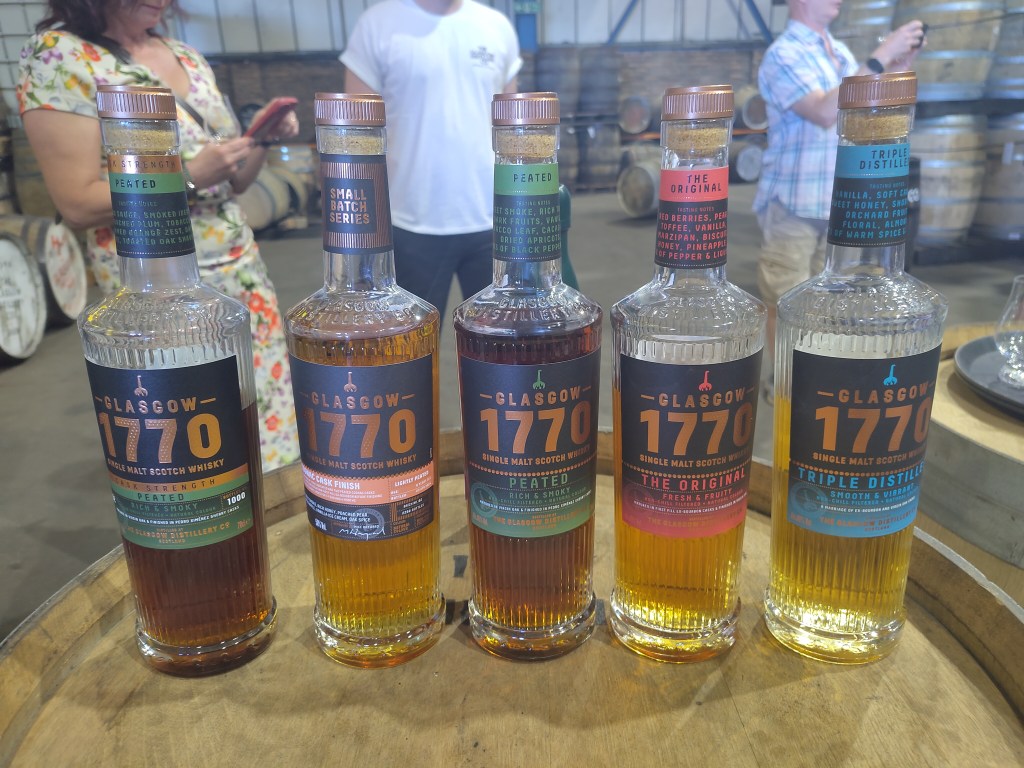
* No summaries because there experiences were bespoke