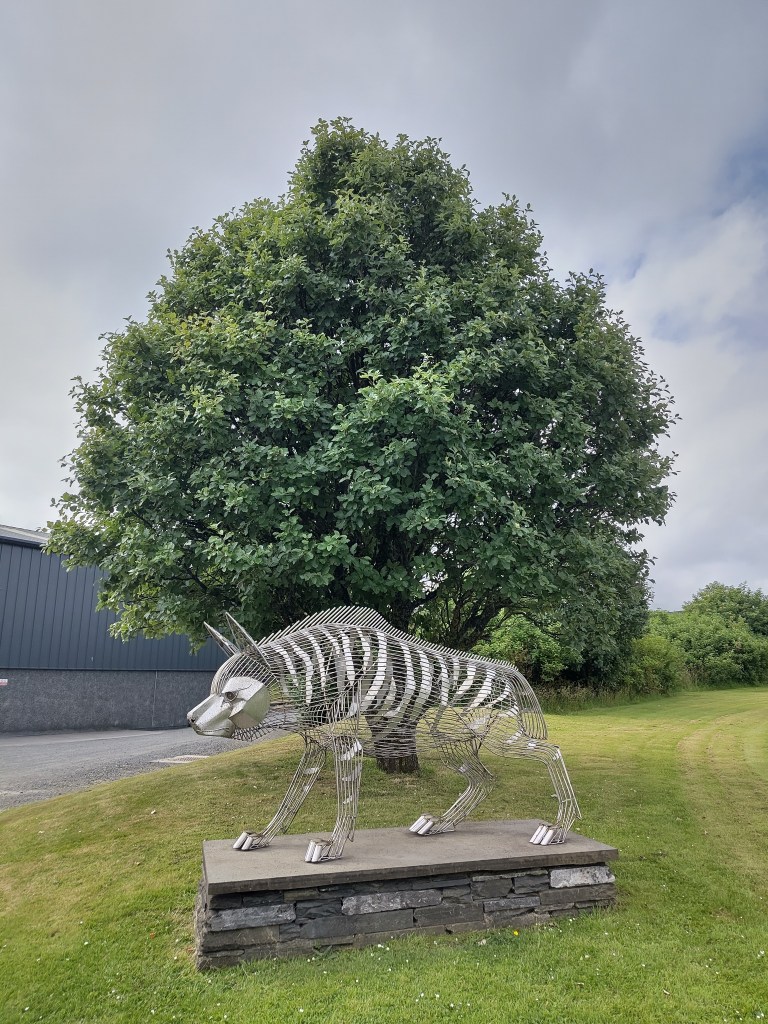
The Wolf(burn) is loose*
TL; DR: After escaping the haar in Jonh O’Groats, we arrived in Thurso for another long-due visit: Wolfburn distillery. Charlie was a very competent and knowledgeable tour guide, and we really liked the tour. The distillery is lovely, and the malts we tried were delicious: definitely one we’d happily go back to.
We woke up surrounded by the haar. A thick and pervasive fog, obviously coming from the sea. From where Mr. Vantastic was parked, we couldn’t even see the shore, a mere 100-120 meters away. We couldn’t help but think what could have meant for people a few hundred years ago, not knowing what was hiding behind a wall of fog like that: nothing maybe, or merchants, or unfortunately raiders sometimes. Nevertheless, thick fog can also provide a sense of calm and peace, like if everything is slowing down.
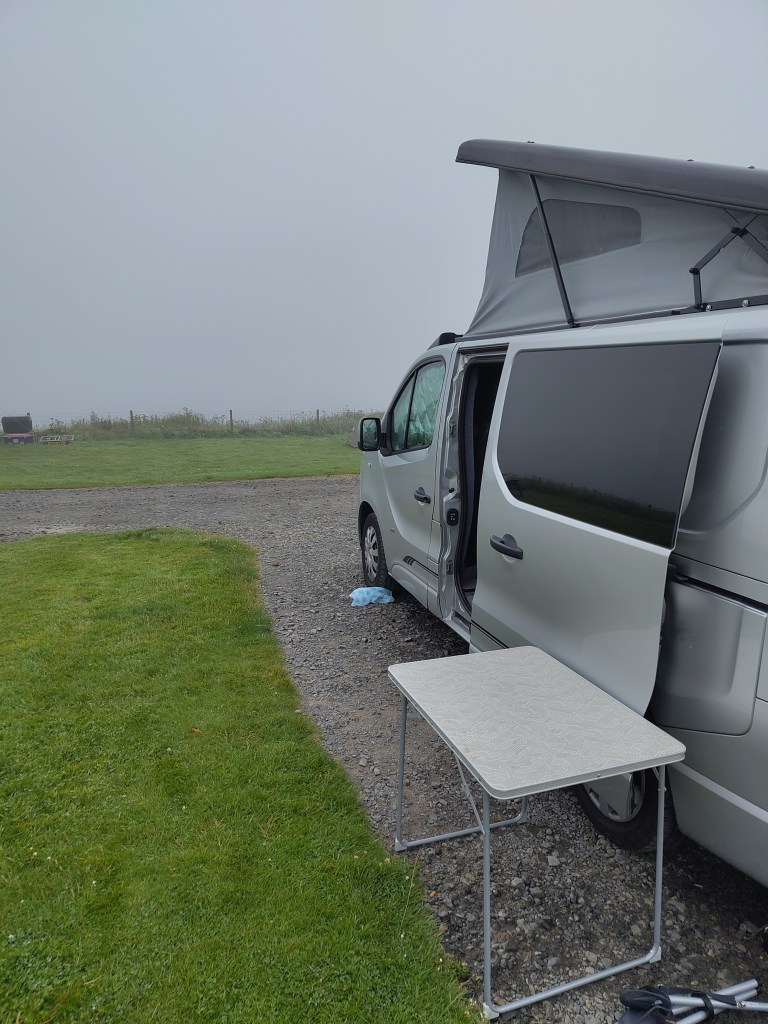
Where’s the sea?
That morning we couldn’t slow down really, as we had to shower, fix and eat breakfast, and wrap up the van by 9.15 maximum. Our first destination was about 40 minutes away, and we had to be there at 10am. Somehow we managed to do everything on time, and soon we were on the road, leaving the haar behind as we drove. During the drive we spotted a distillery to-be in the former Castletown Mill, between John O’Groats and Thurso, set up by the company behind the very popular Rock Rose gin. The single malt will be called Stannergill. The site looked under construction (we’re in July ’25), but we could see the still already positioned, so they must be not too far from completion. Another visit for another time.
The first distillery we visited that day was one of the first coming online in the new wave of the 2010s: Wolfburn distillery. They have been around for a while, and in fact their first 12y single malt was released earlier this year. The name comes from a burn that flows near the distillery, which is also their water source. There used to be an older distillery called Wolfburn located roughly in the same area, in the outskirt of Thurso, in what now is a small industrial estate. The old distillery was founded in 1821, licensed in 1823, but closed down in 1858, with all the equipment sold at auction. This was decades before Alfred Barnard visited the area, so no record of it in his book. The new distillery was founded in 2011, and was up and running in 2013. The distillery manager and master blender, Shane Fraser, had previous experience at Glenfarclas, while the two owners were new to the spirits industry. While Wolfburn single malt has been around for a while, it doesn’t seem to be too common: we’d only tried a few expressions in the 2020 lockdown during two online whisky festivals, the Summerton whisky club festival and the Belfast whiskey week. We generally liked it, in particular the peated version (Morven), but since then, we tried Wolfburn only a handful of times, so it started fading a bit from our palate. A first plan to visit the distillery failed in 2021 because of a Covid-related issue, and we couldn’t fit Caithness in the rescheduled trip. No more plans were done to visit them…Until this summer! Hurray!
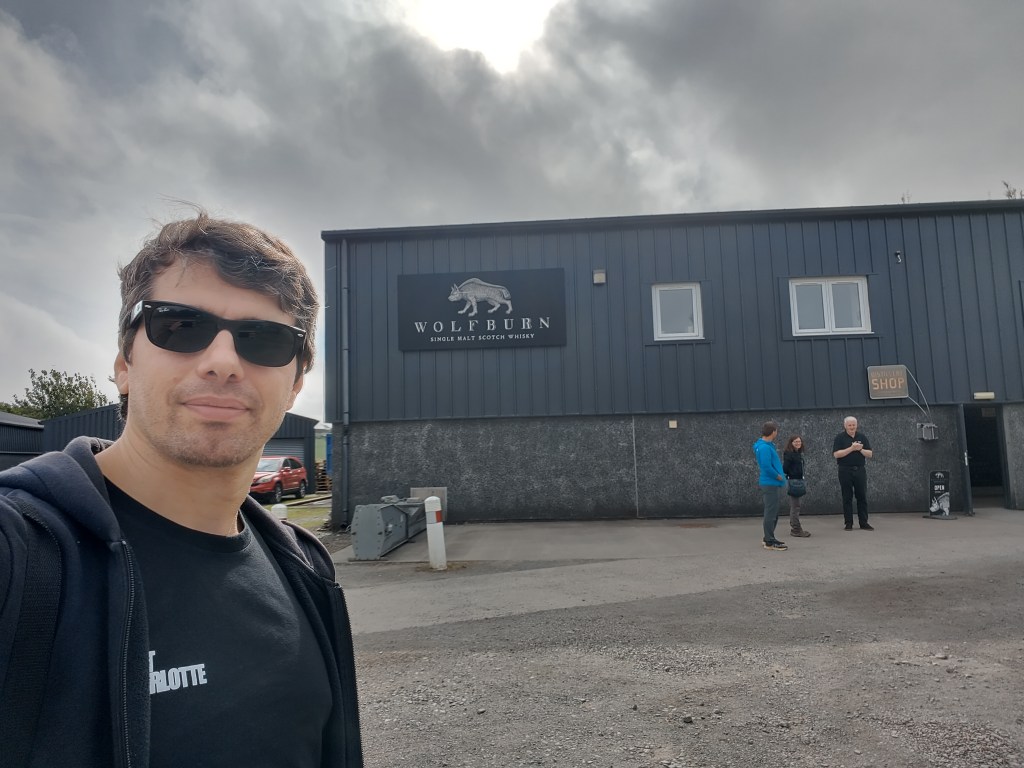
Right place, on time. Yay!
We arrived at the distillery five minutes earlier, while our soon-to-be guide Charlie was opening the visitor centre. The distillery production is in a warehouse, together with the shop and some offices. As we entered, we could spot all the equipment from the wide hall: malt bin, mill and mashtun on the left, washbacks and stills in front of us, two tanks for water and spent ale, and the shop, on the right. Fun fact, the tanks come from the demolished Caperdonich distillery, from Rothes. So, after Belgian Owl (still) and Falkirk (still and mashtun), Wolfburn is the third distillery we know of that uses equipment from the defunct Caperdonich. The plant was built by Forsyths, and it was the first project Richard Forsyths took on.
As it was just the three of us, the tour started right away, and after some background information, Charlie started describing the production process. Currently they are only producing four days a week, Monday, Tuesday, Thursday and Friday: we wondered if that is because of the current sales slowdown in the whisky market (and potential overproduction in the industry in general). At first, they only had two people working in production, now they are four, and production went from 100,000 litres per annum to 125,000.
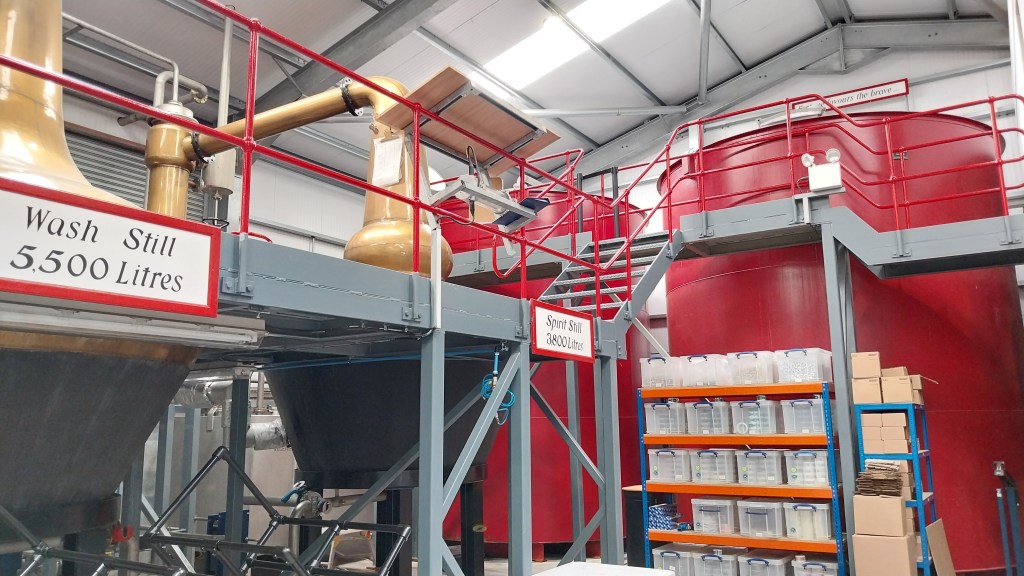
Nice view on arrival. To note the red tanks from Caperdonich.
They get the malt from Inverness, one lorry every 4 to 5 weeks while, as we said, water comes from the nearby Wolf burn. They aim for a light and floral spirit, mostly unpeated: only 3 out of 11 barley deliveries per year contain lightly peated malt to 10 ppm. To make sure not to mix peated and unpeated runs, the first distillation after their peated period (and cleaning) goes into ex-Islay quarter casks anyway. In general, they mill 1.1ton of malted barley (with the usual split for the grist, 20/70/10) and mash it (twice a day, 8 mashes a week) first with 4,000 litres of water at 64.5°C, and then with another 1,000 litre at 80°C. The third water, 4,000 litres at 90°C, is stored for the following mash. Mashing takes 5.5 hours, and at the end of the process they obtain a clear wort, and sell the draff to cattle farmers. The wort, 5,000 litres, is moved to one of the very tall washbacks: they are so tall that they don’t need defoaming.
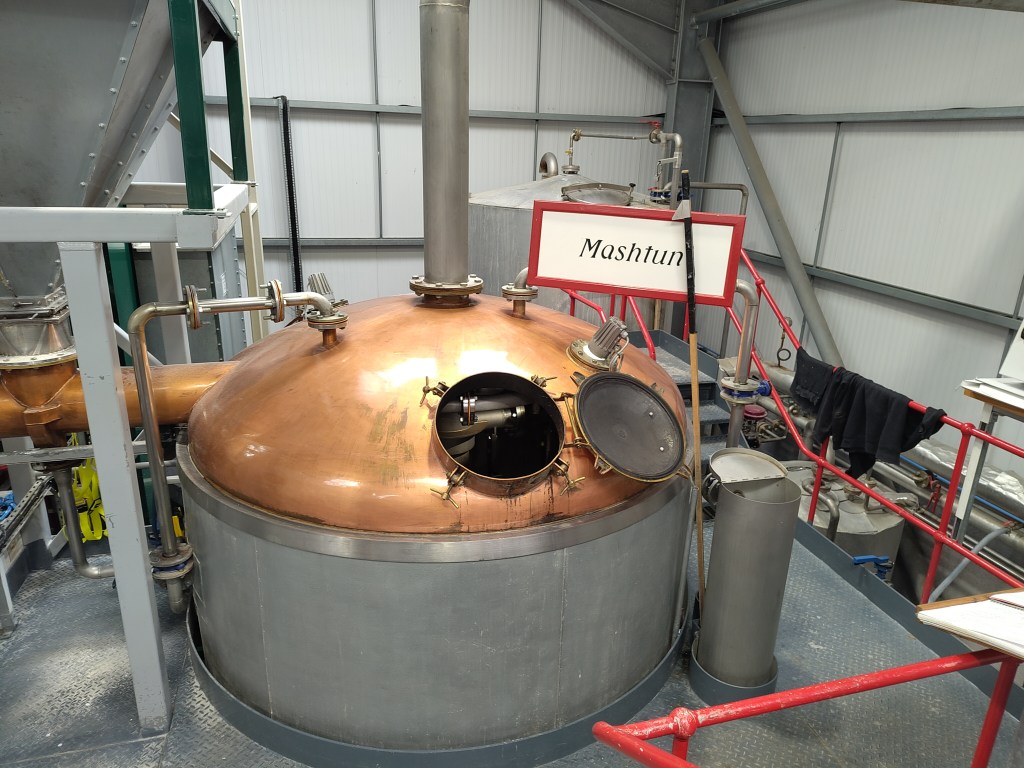
Good to see everything is signposted.
Fermentation lasts 72 hours for the Monday and Tuesday batches, while 96 for the Thursday and Friday ones (so 84 hours on average), and is kicked off using distillers’ yeast to obtain an 8.5% wash. At the end of the catwalk between the washbacks there are the two copper stills, both equipped with a steam coil inside, heated by a kerosene boiler. First distillation lasts about 5.5 hours, while the second one only 4.5 hours; during the latter, they take the spirit between 74% and 61%abv, a quite wide cut, discarding the first 40 minutes of foreshots, and the last 1.5 hours as feints.
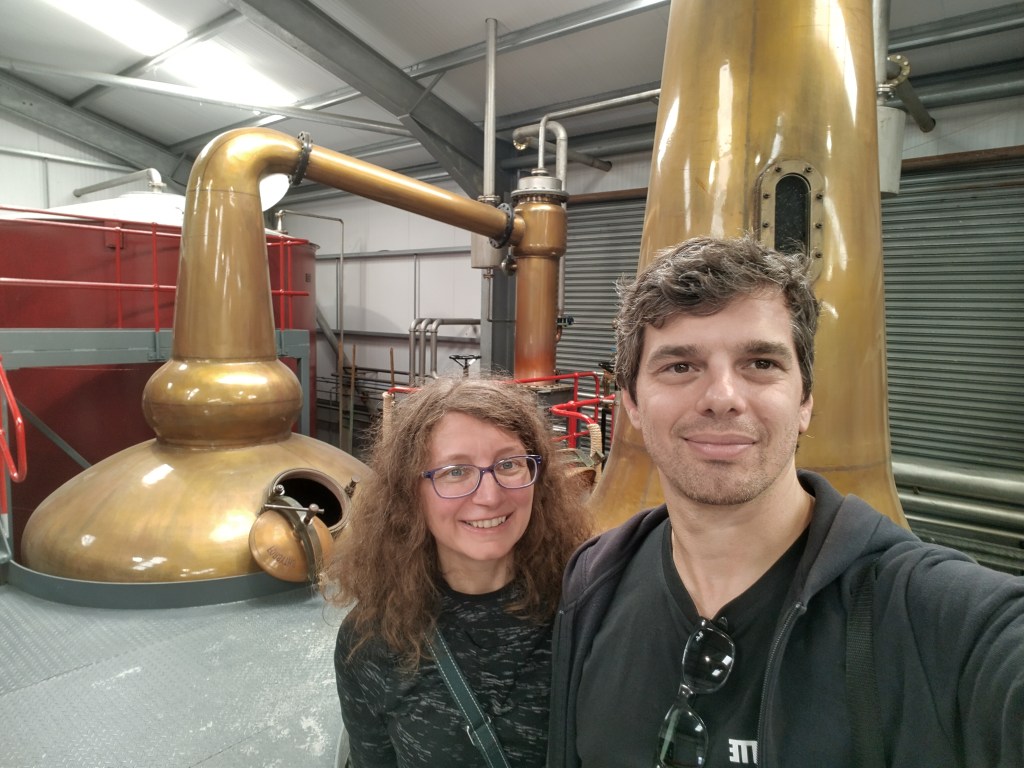
The unmissable selfie with the stills.
At that point Charlie walked us to warehouse 1, the first past the distillery, where we could see a number of different cask types and sizes, which they get from the Speyside Cooperage. Casks are stored horizontally above ground: a proper modern dunnage warehouse. He told us that warehouse 2 (the next one) is identical, while warehouse 3, on the other side, hosts the bottling plant as well (the water to reduce the abv is from the burn as well). There are two more warehouses – Charlie said that on top of the distilling history, land availability was crucial for choosing the site.
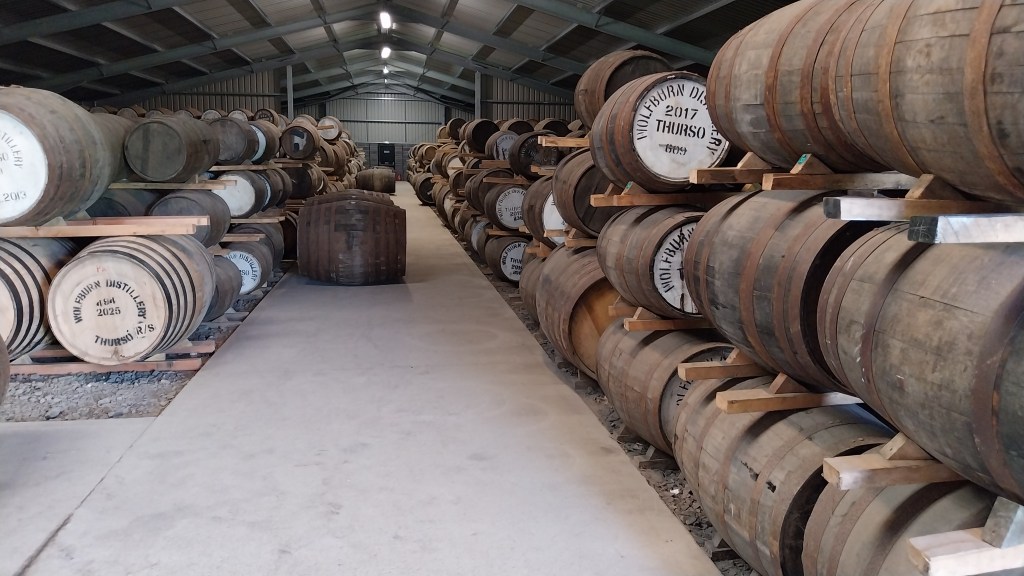
Warehouse 1, bigger than we thought.
Back to the main building, it was time for the tasting, with a branded perfect-dram glass for us to take home. The first dram was Wolfburn Aurora, made with an even split between 1st fill ex-bourbon and 2nd fill sherry casks, bottled at 46%. It’s a non-age statement whisky, similar to most of the expressions we tried, but Charlie told us that as older stock becomes available, the average age increases, and is now around 8 years. Second up, the Northland (46%, NAS but again around 8y), unpeated spirit aged in ex-Islay cask: peat is there but very subtle, so much that Edoardo bought a 20cl bottles to give to a pal who claims they don’t like peated whisky…We’re waiting for the response. The third dram, Langskip, was cask strength (57%), from 7y and 8y 1st fill ex-bourbon barrels: a floral deliciousness. The last two drams were the 10y (46%, 2nd fill Oloroso casks) and the Morven (46%, again ex-Islay casks, but peated spirit).
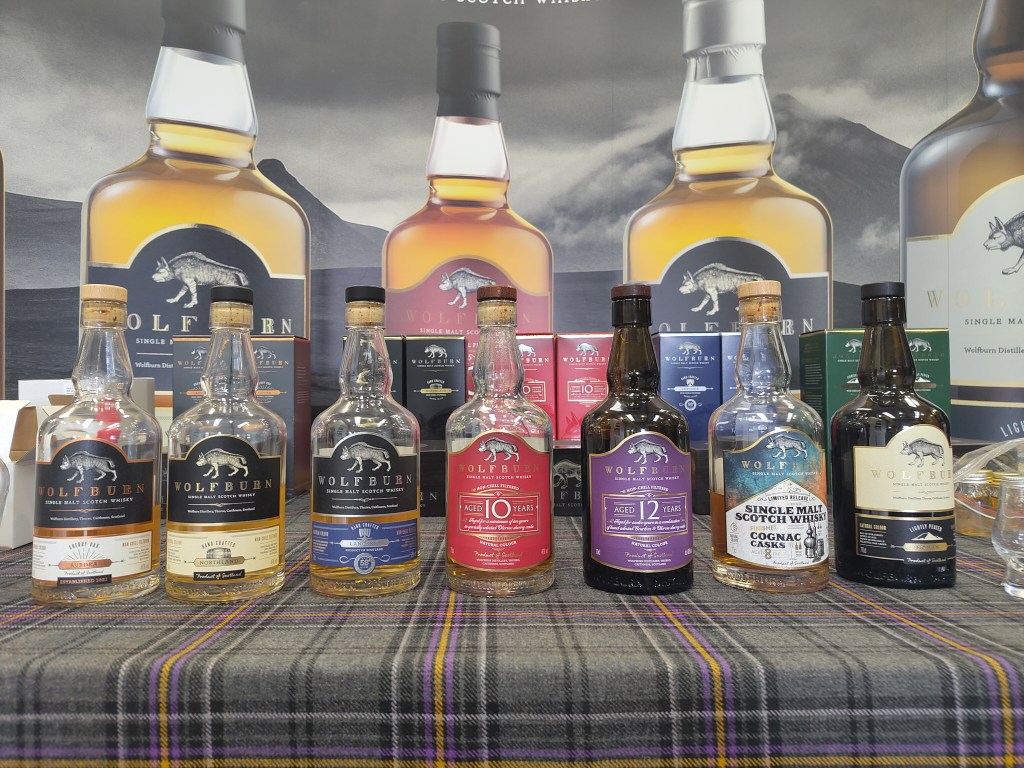
Quite the display for a delicious tasting.
In the shop they have quite a variety of bottlings, other than their core range (in 70cl and 20cl bottlings, and 5cl miniatures): the new 12y (60%ex-bourbon and 40% sherry casks), a small batch Cognac Cask (46%, finished one year in ex-Cognac cask), the Drams on The Burn (a vatting of few casks for a local festival), a couple of small batches (one ex-Rum, another cask strength) and the “fill-your-own-bottle” (details below) single-cask expression. Everything is also very well priced between £45 and £75 (for 70cl bottles), except the “fill-your-own-bottle”, which is a tenner or two too expensive in our opinion.
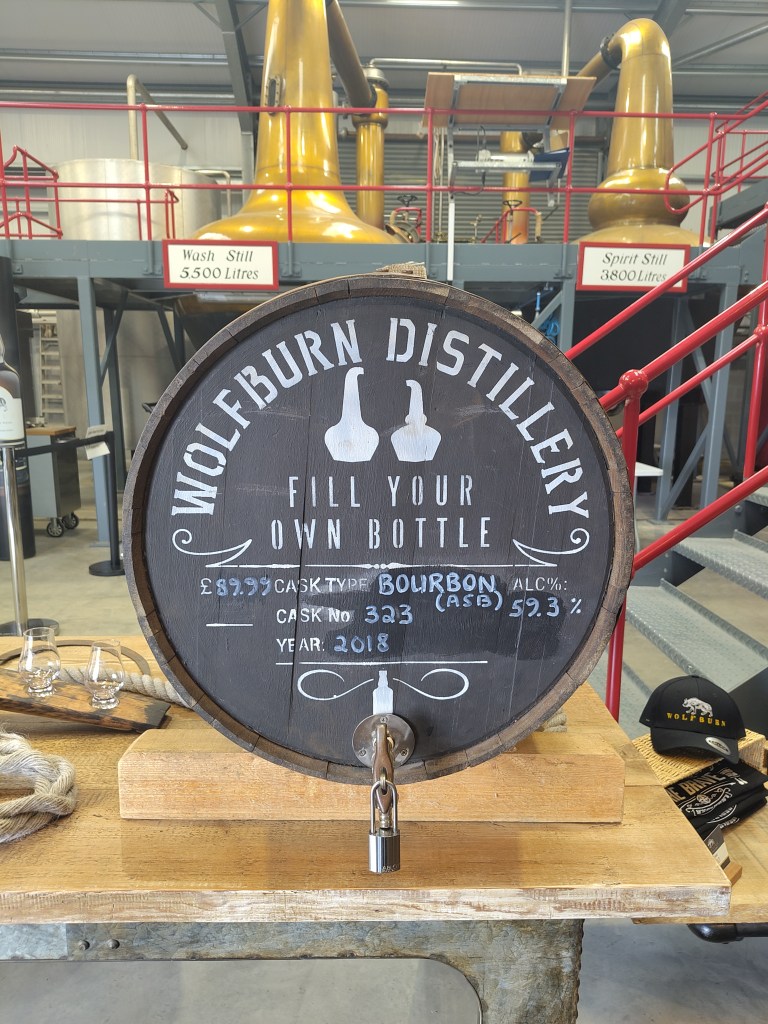
Bottle-your-own.
As the tasting ended, we quickly left, as we didn’t have much time before our next tour. We had to decide whether to go to Lidl or to try go watch the second half of the first test between Australia and the British and Irish Lions. With Gianluigi and Edoardo being rugby fans, we obviously chose the latter, and we drove back to Top Joe’s, in Thurso. They don’t do food, but we could order some tasty sandwiches from the next door Central café menu.
Overall, both the tour and the tasting at Wolfburn were great, one of the best and most satisfactory experiences we did recently in an established Scottish distillery (we’re excluding the new ones that haven’t released their own whisky yet). Charlie was an excellent guide, very knowledgeable, and very engaging too. Their range of malts is very tasty and various, and the delicate, floral (but also very fruity) spirit signature is clearly there in all the different expressions we tried. Definitely one you should keep an eye on, and if you’re in the area, go to.
Next up, the final northern distillery, but with a twist, so stay tuned! Until then, slàinte!
Wolfburn Classic Tour and Tasting
Price: £19.50 pp (£18.00 when we visited in July 2025)
Duration: 1hr 30min
Tasting: 5 drams, Wolfburn Aurora (46%, NAS), Northland (46%, NAS), Langskip (58%, NAS), 10y (46%), Morven (46%), and a perfect-dram glass to take home
Distillery exclusive: Fill-your-own-bottle 2018 ex-Bourbon cask (7y, 59.3%, £89.99)
Highlights: the tasting
Target: everyone, both occasional and seasoned drinkers
Value for money: great
Recommended: yes
Link: https://wolfburn.com/
“The hero of the gods
The crossing of the threshold
The belly of the whale
Refusal of return”
*The wolf is loose, Blood Mountain (2006), Mastodon

© imago images/Gonzales Photo/Terje Dokken
We’ll miss you Brent, crazy guitar genius.
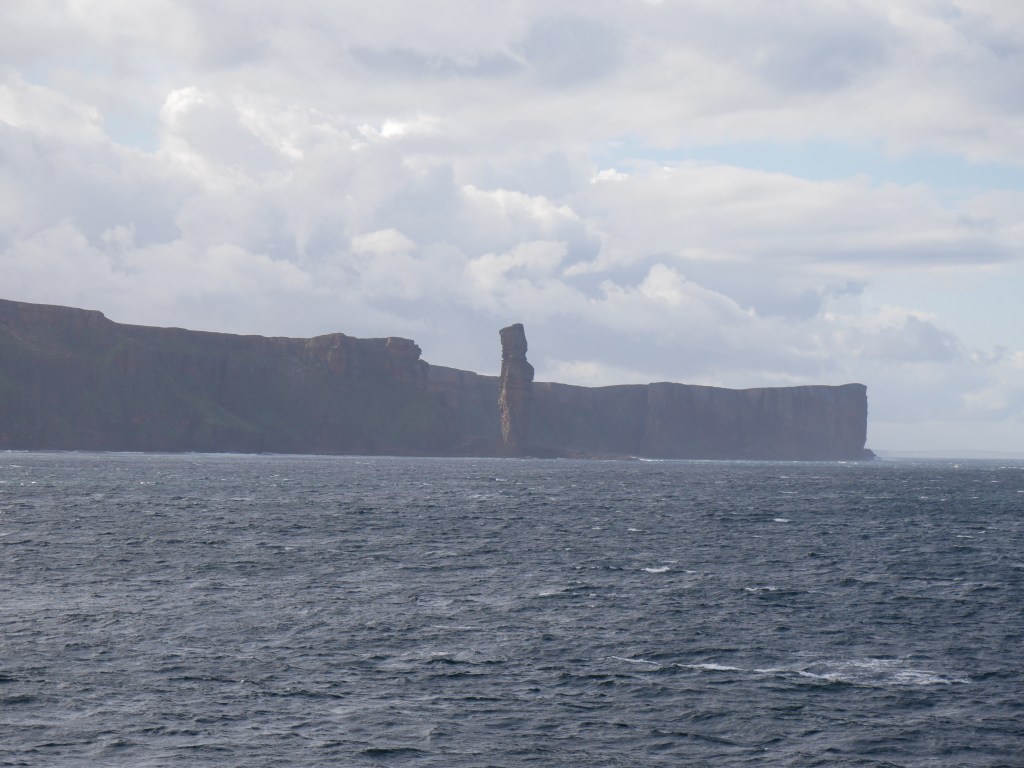

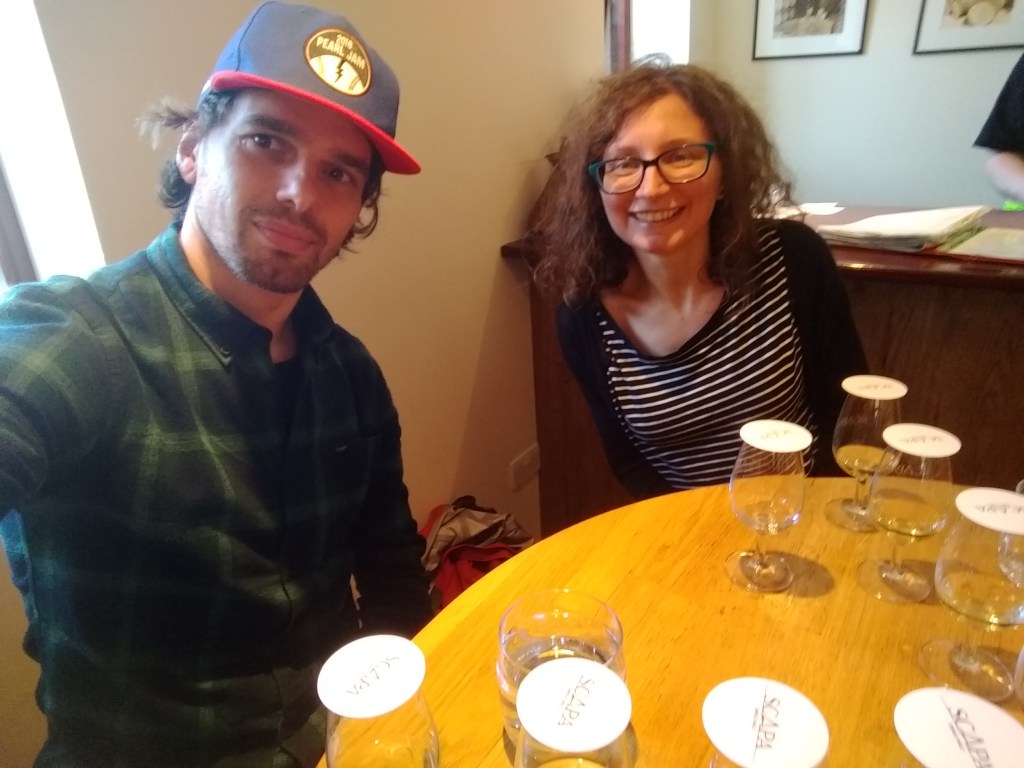
 Dramming around