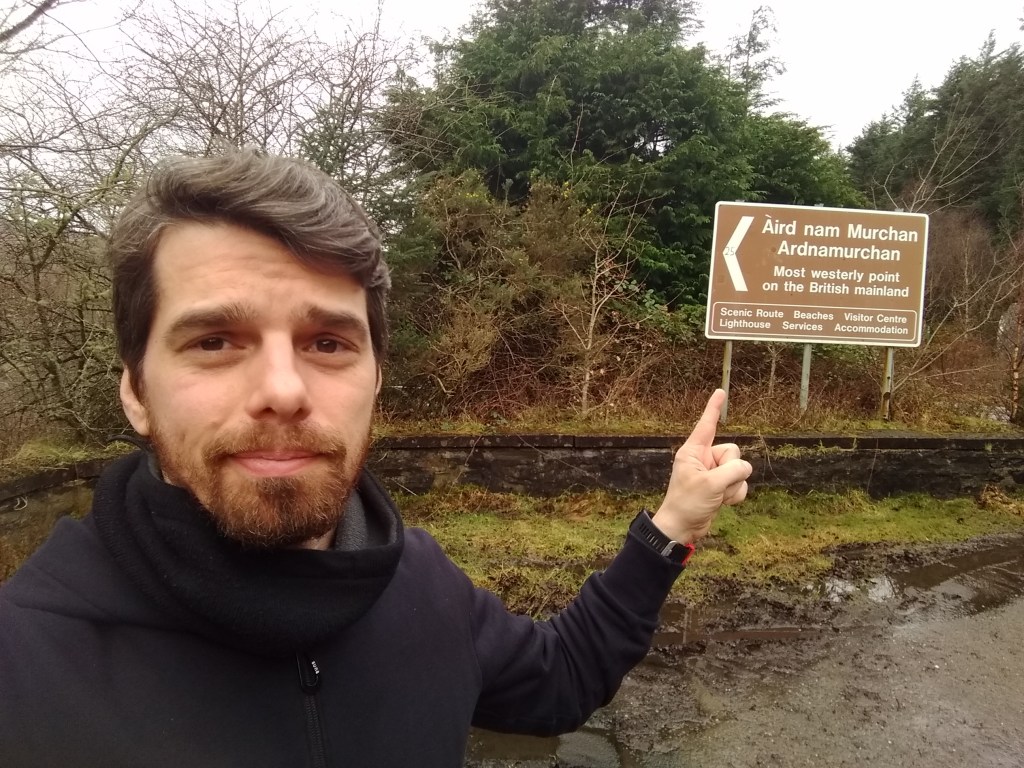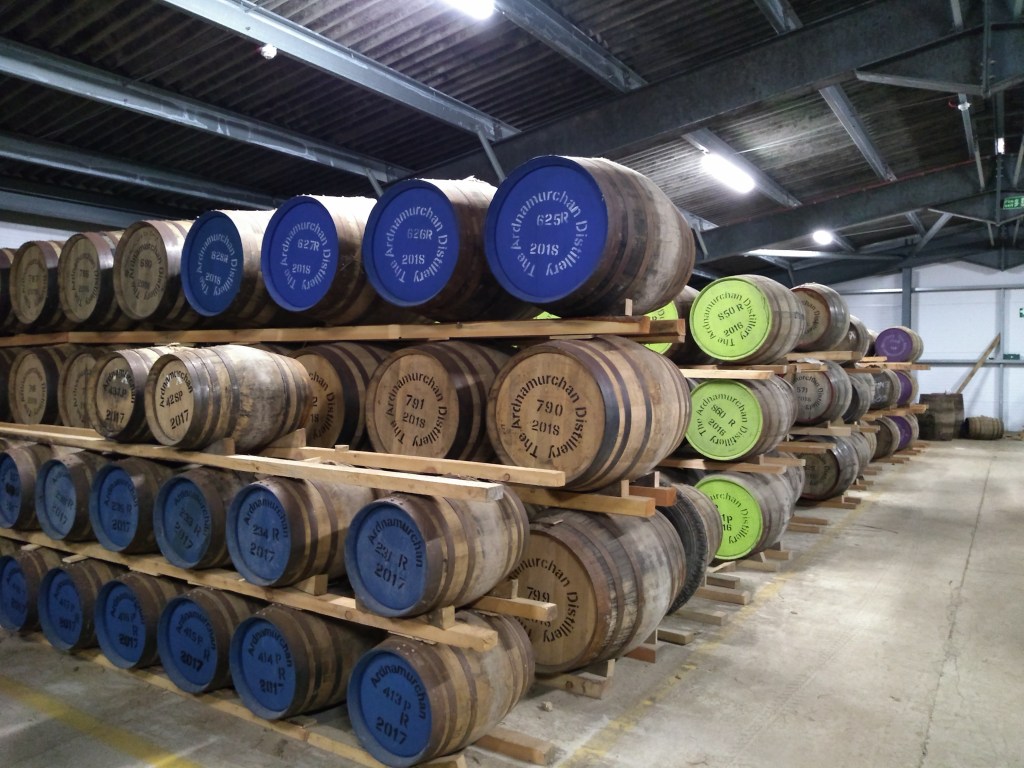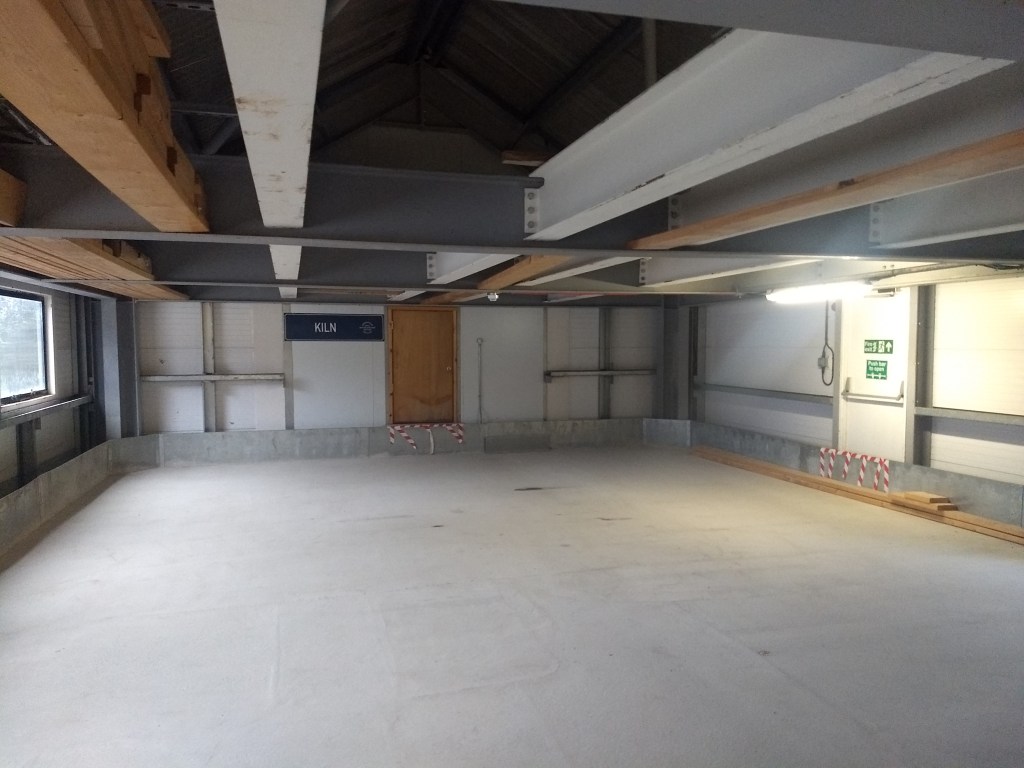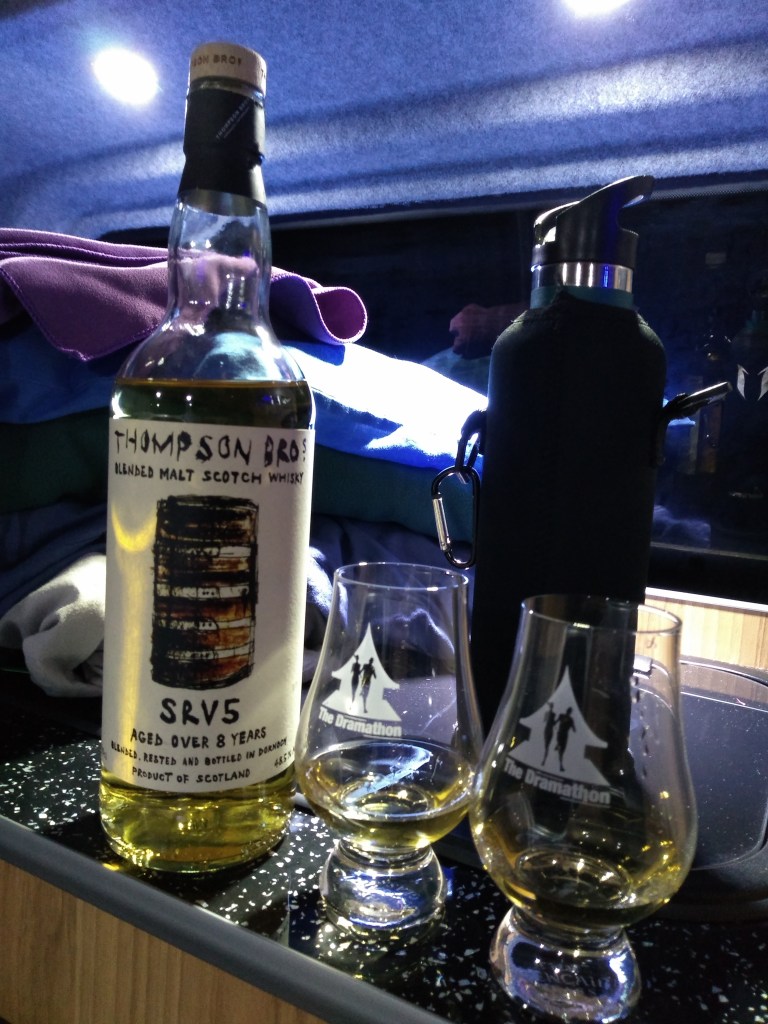
#46.4 The return of the smoke

The gentle side of the smoke: Bowmore


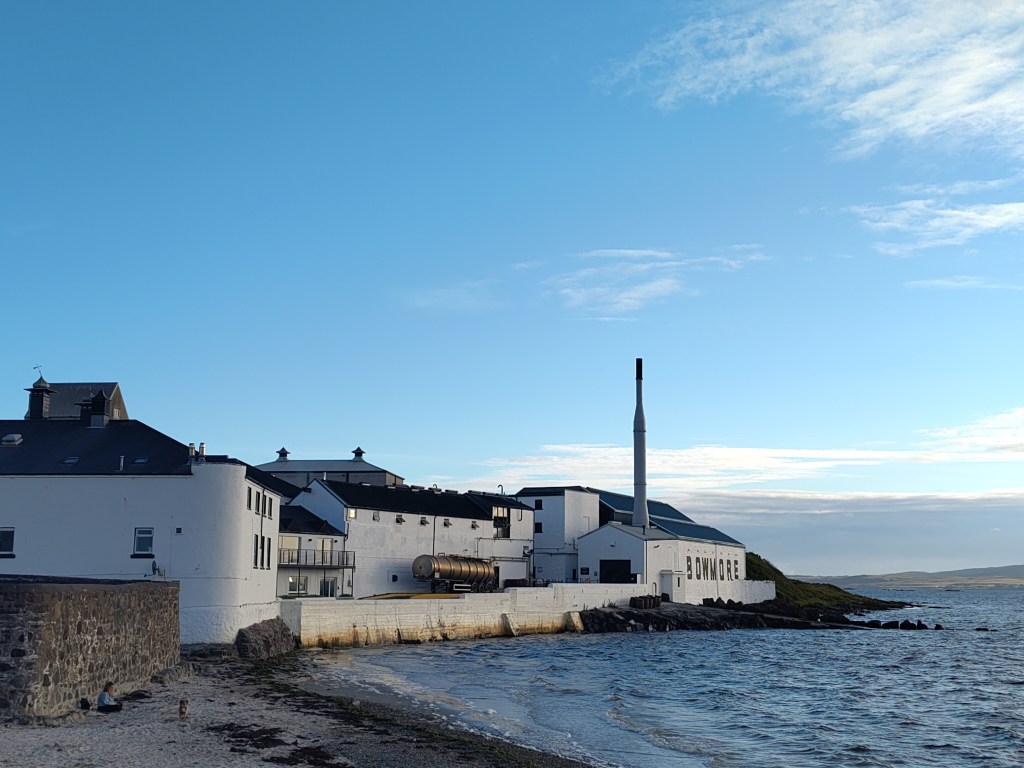
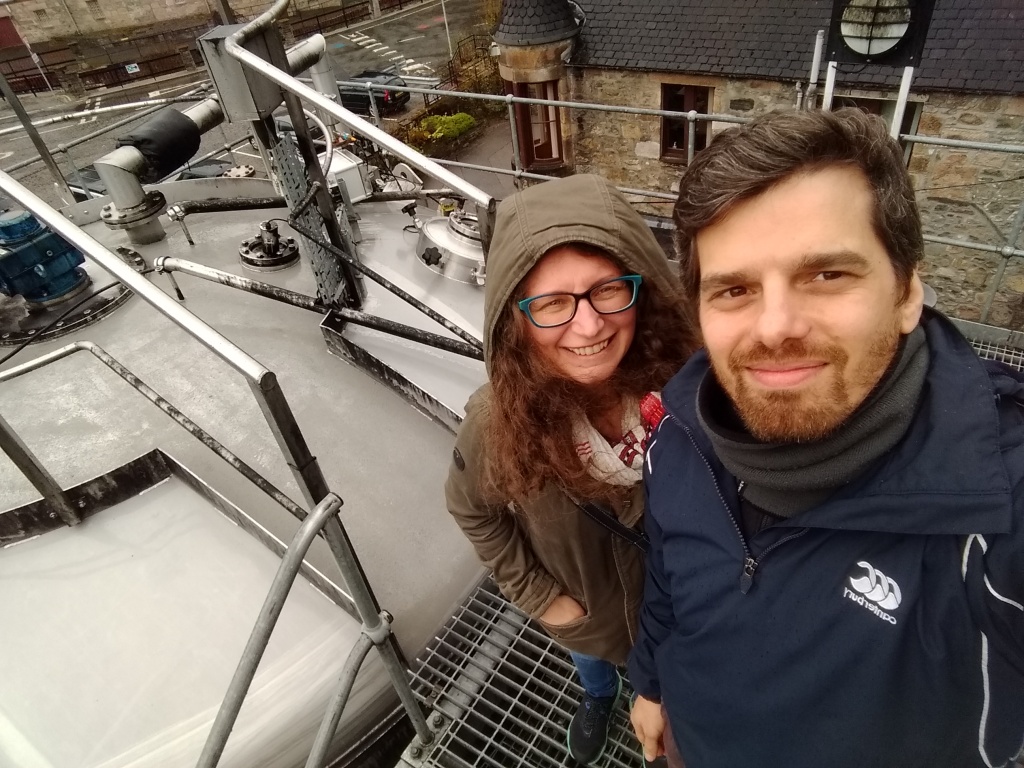
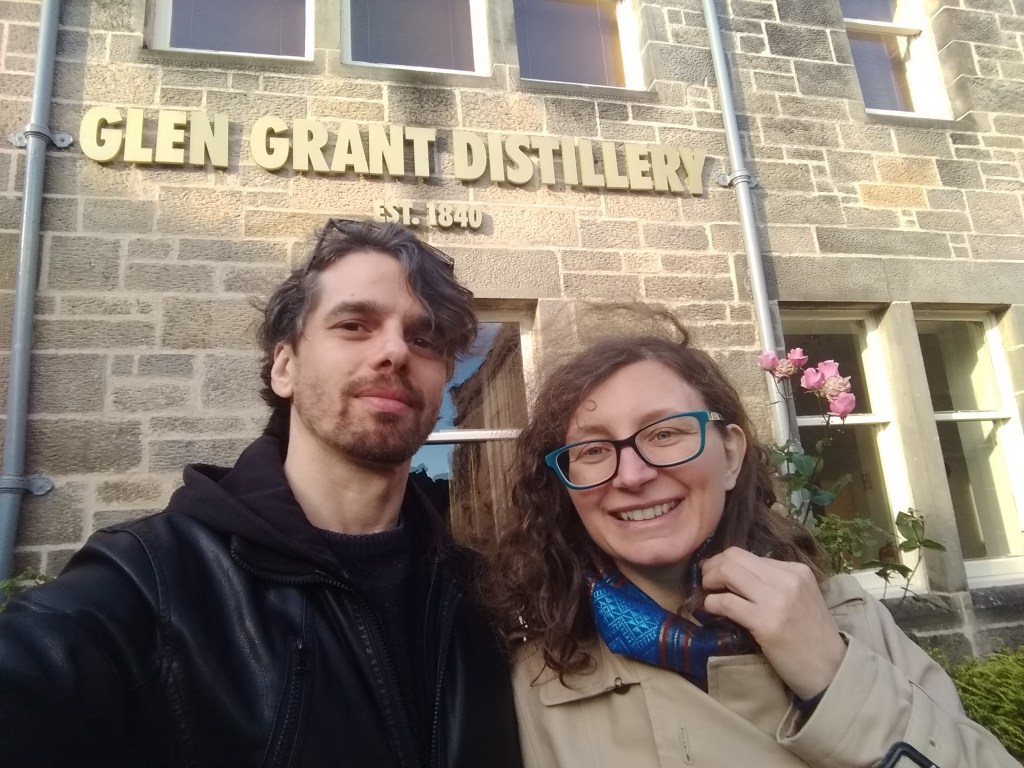
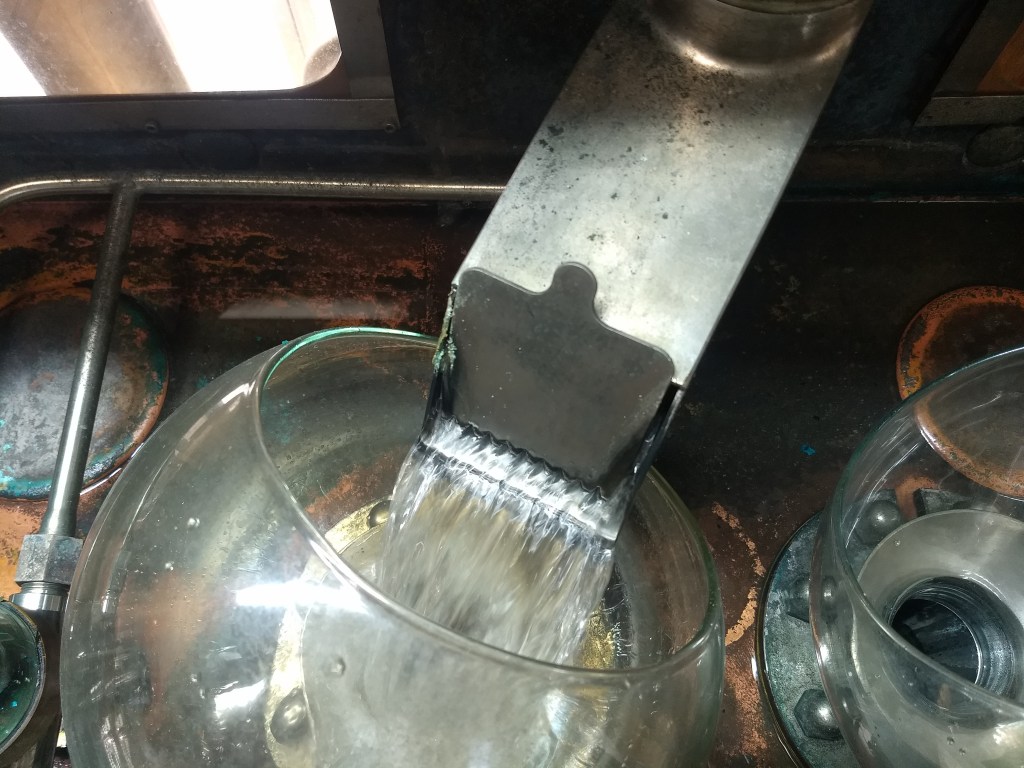
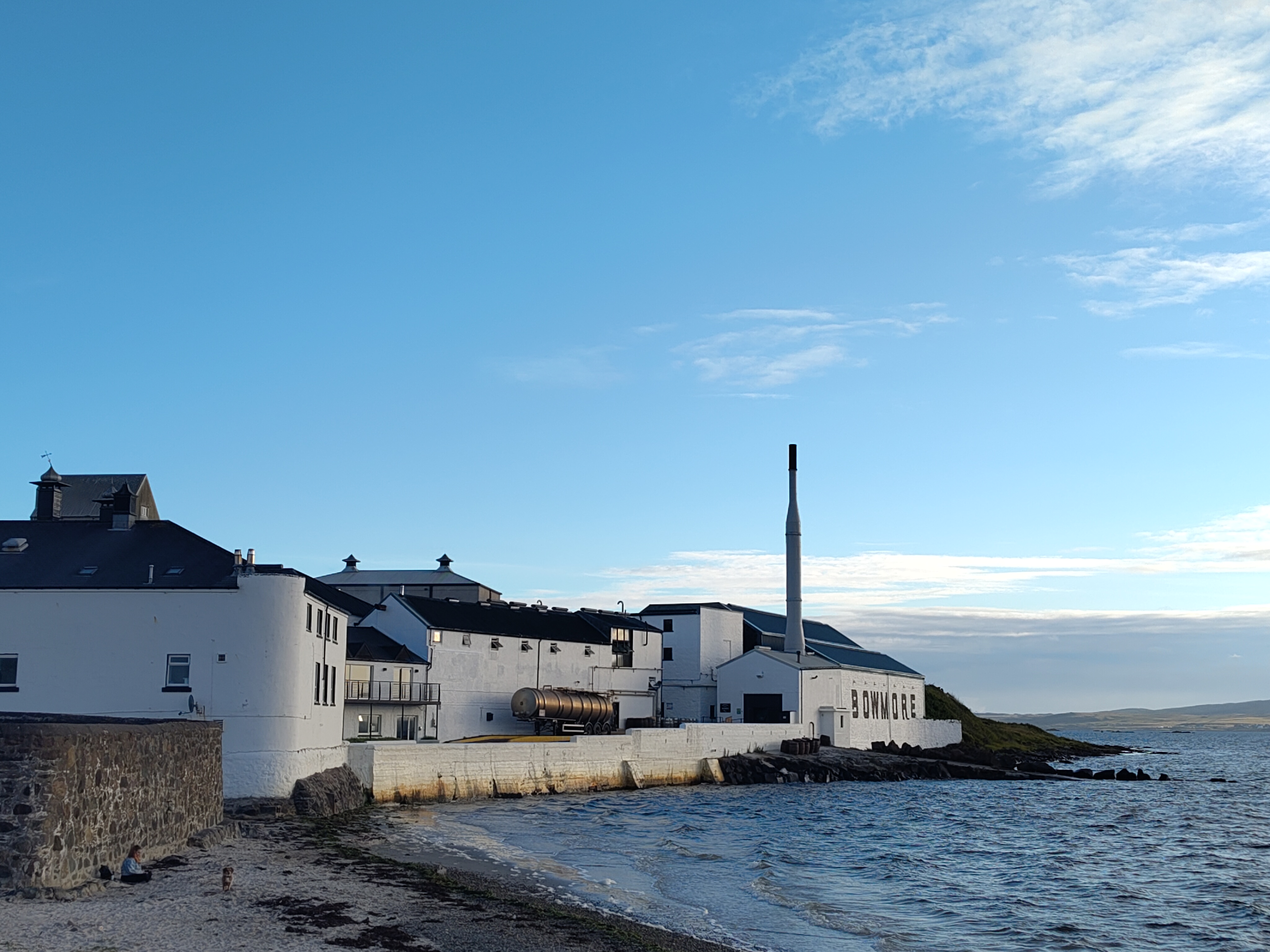
TL; DR: We visited a โ€œclassicโ€ Islay distillery: Bowmore! Located in the centre of the namesake village, itโ€™s very recognisable with its typical white buildings, directly facing the sea. The tour was extremely interesting, particularly the part around the malting floor, and it ended with two cask samples. What else?

(missed Part 3/Part 2/Part 1?)

Our plan for the day was a good one in principle, and we were looking forward to it: after returning on Islay from Jura, weโ€™d visit Finlaggan (check!) and Caol Ila distillery (check!), then drive to Bowmore for a tour at the local distillery, get a shower at the leisure centre (interesting fact: it is built in a former Bowmore distillery warehouse, and the pool is heated by the distillery), a few drams at the Bowmore Hotel and dinner at Peatzeria.

The tour at Caol Ila went quite long, so we had to drive fast to our next destination. During the tour we got bad news from Justine: the showers in Bowmoreโ€™s leisure centre were broken, so no showers for us that dayโ€ฆunless we went for a shower outside (oh well). We knew that it probably meant no shower for the day. We parked the van just outside the village, on the sea front, a very nice spot. As we were late, we had just enough time to warm up some “beefy bake”, a couple of pies and a sausage roll we bought the day before at the shop on Jura. A bit rushed, but not bad (the mince pies were particularly tasty).
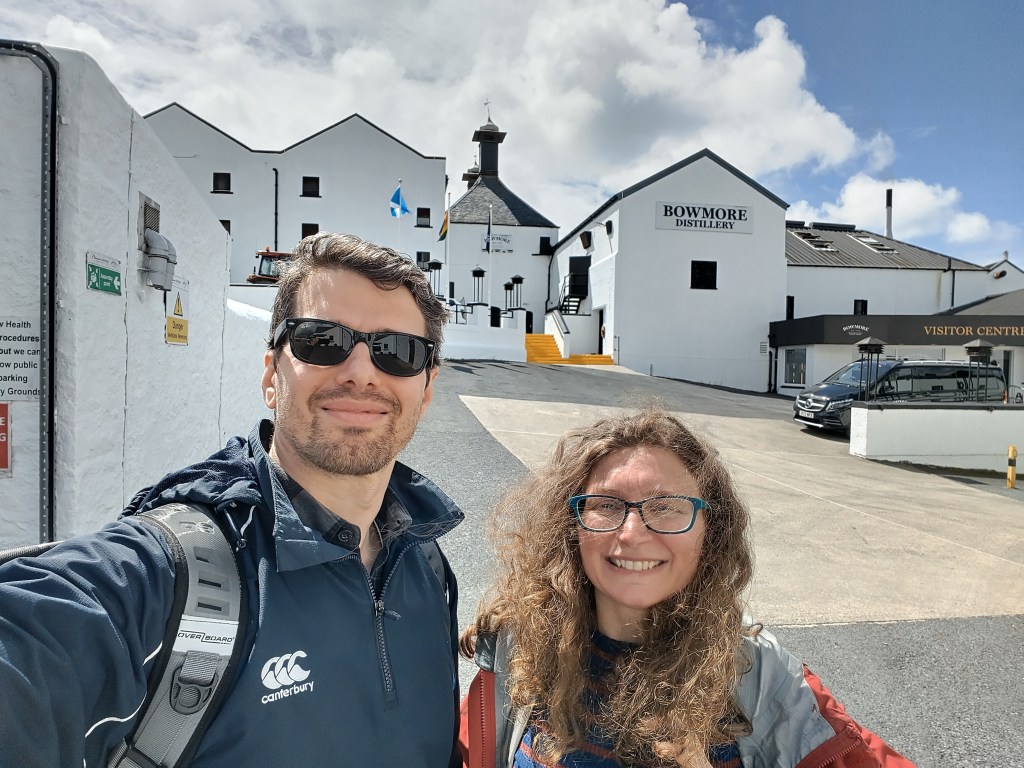
The distillery was then 10 minutes away, and it is in front of Bowmore main square. At the check-in, the staff offered to keep Gianluigiโ€™s backpack for the tour (nice of them!), and we had just enough time to peek at the shop: other than the regular expressions (Bowmore 12y, 15y, 18y, decently priced) and some travel retails, the only other expressions on sale were 20+ years old (and very pricey). We didnโ€™t have to wait long though, because our guide Margaret (25 years in the job!) gathered us and the others (mostly a group of American tourists) to start the tour.

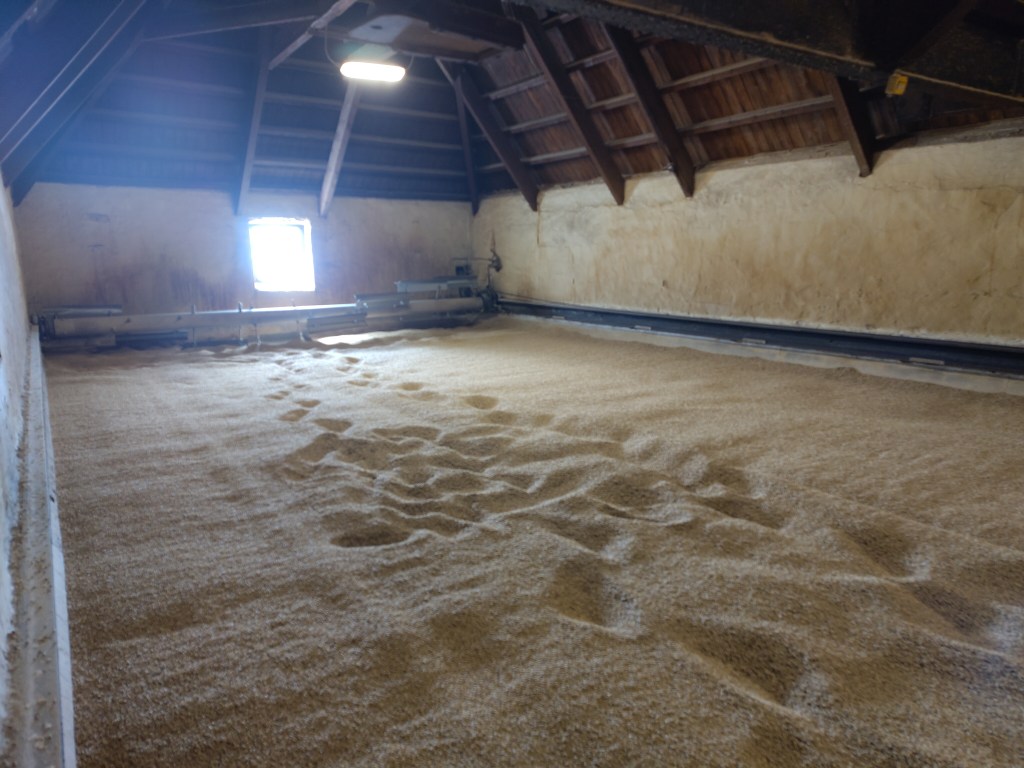
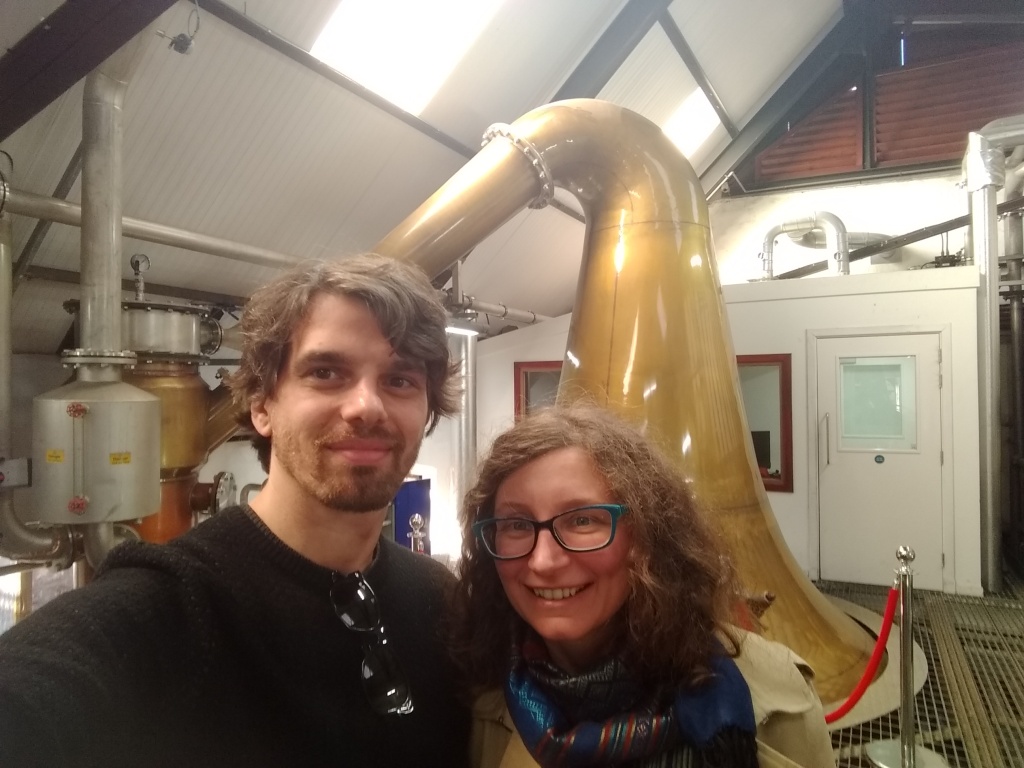
In the courtyard, she told us that the distillery is the oldest on Islay (and one of the oldest in Scotland), dating back to 1779. Similarly to Laphroaig (owned by the same company, formerly Beam Suntory, now just Suntory), they kept their malting floor, where they malt enough barley to cover 25% of their yearly 2.15 mlpa (million litres pure alcohol) production. They soak the barley for 26 hours, then they move it to one of the three malting floors with a chariot, 140kg at the time (100 times, for a total of 14 tons), and it stays there for 24 hours, after which they start turning it every 8 hours.
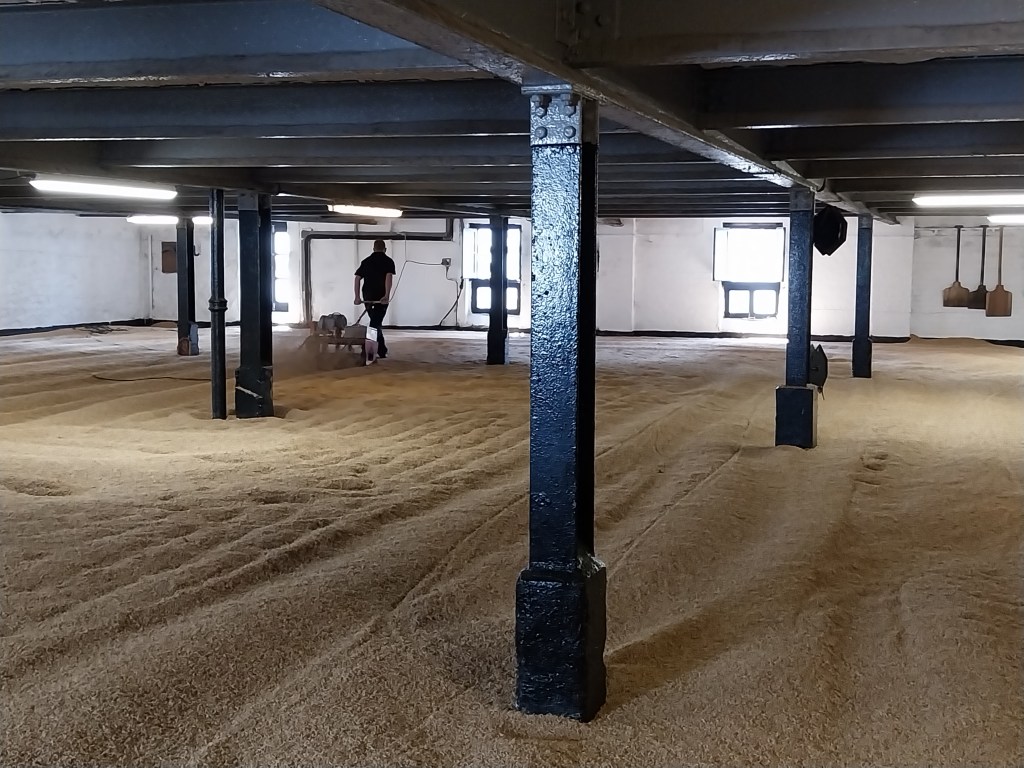
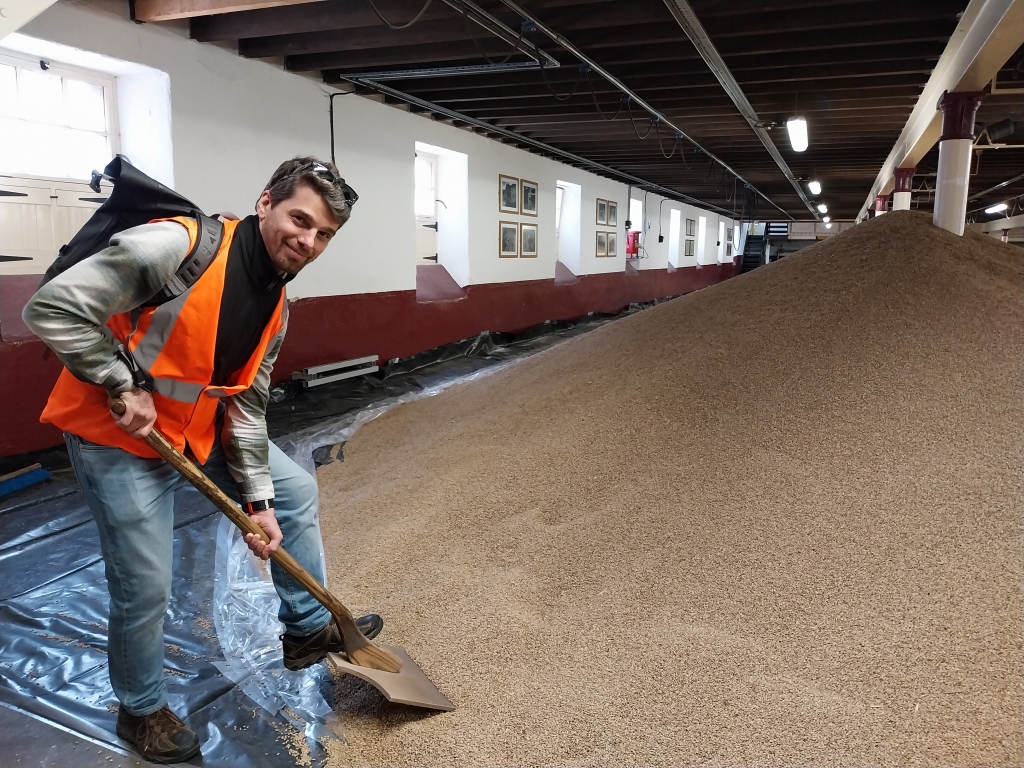
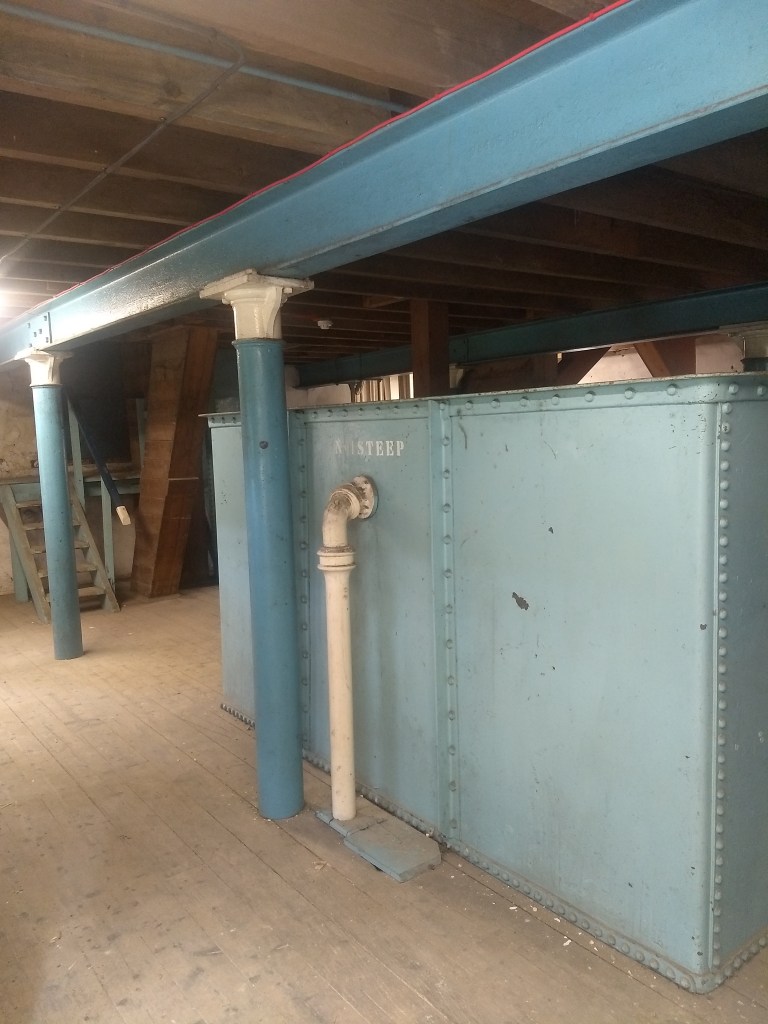
The whole process takes between 5 and 7 days, depending on the season and the barley (in our understanding, the low carbon one germinates faster). The barley is then dried in the only remaining kiln, including 10 hours with peat smoke, to reach a phenol part per million (ppm) of around 25-30. Thanks to some improvements, they moved from using 15 tons of peat per week to only 3. The kiln is run for a total of 44 hours (including the previously mentioned 10), before the malt is finally milled. To note, all the peat is machine cut and, contrary to other distilleries, theyโ€™ve been using it for 40 years. Suntory also started a peat restoration project, to achieve a sustainable peat usage, but this we knew from our first visit to Glen Garioch in October 2021. While she explained the malting process, we followed Margaret in the building, also walking on the spread barleyโ€ฆthe other attendants were eager to try a couple of runs with the rake, but we were all set (we remembered how hard it was from our visit at Dunphail).

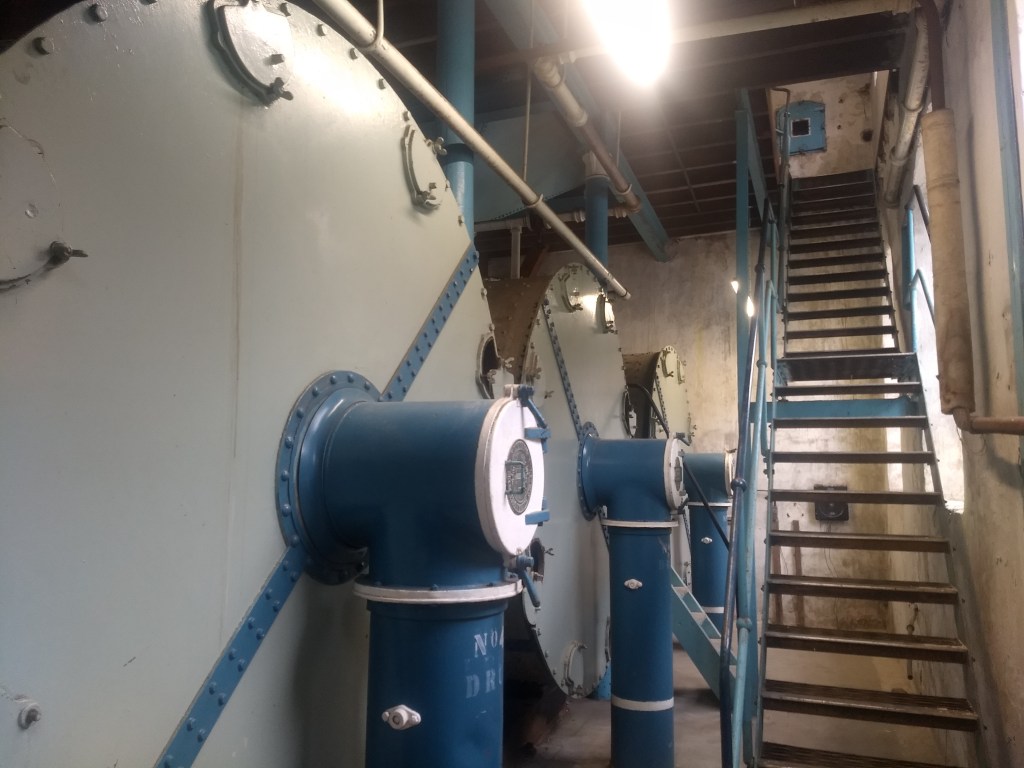
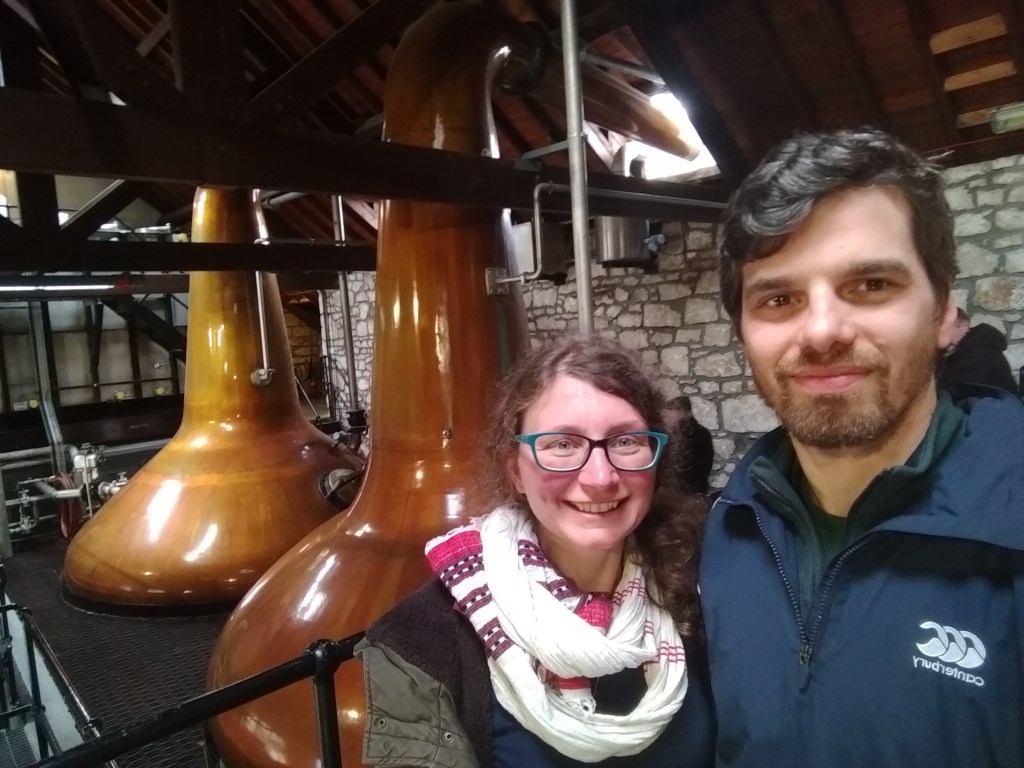
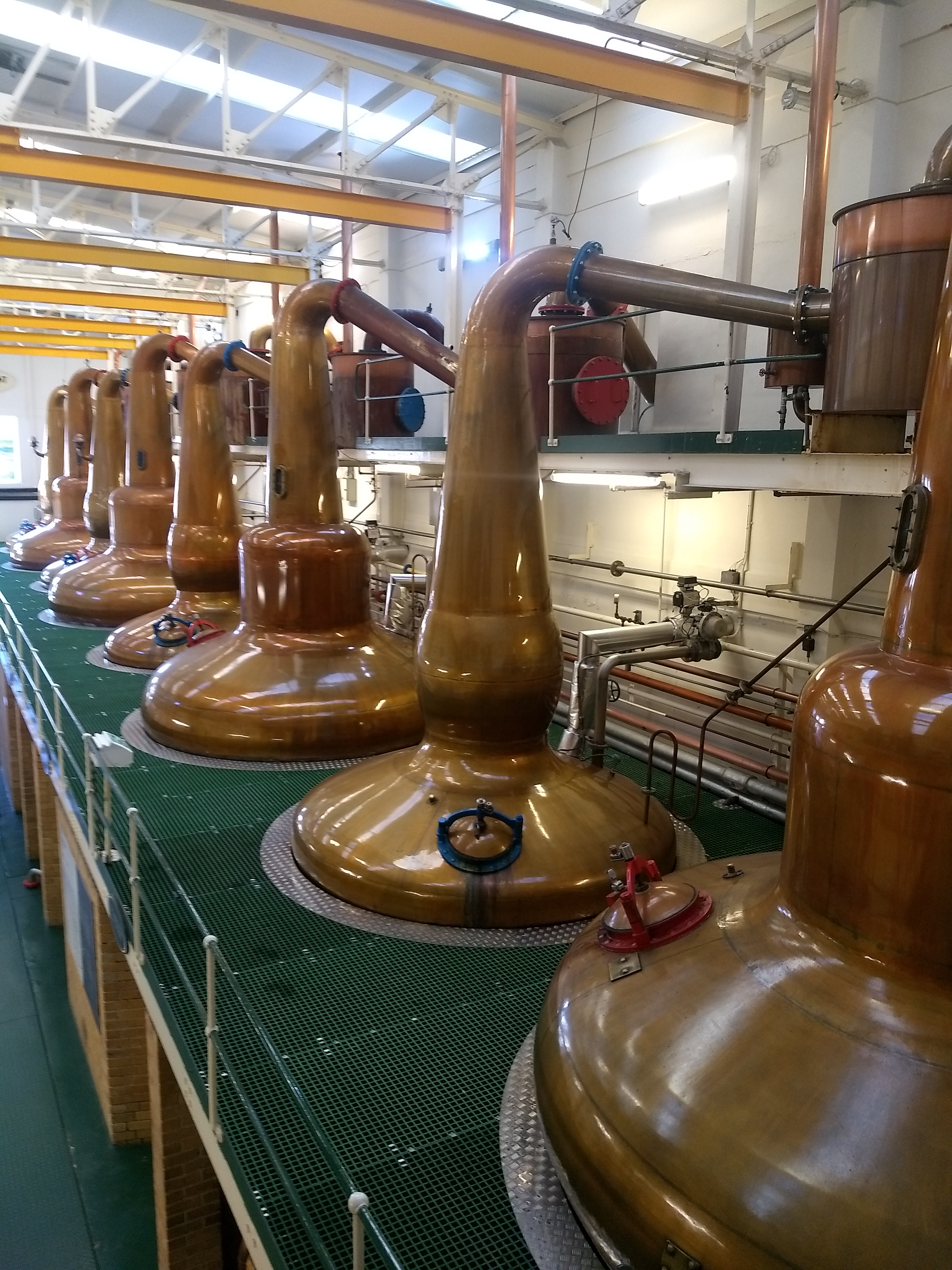
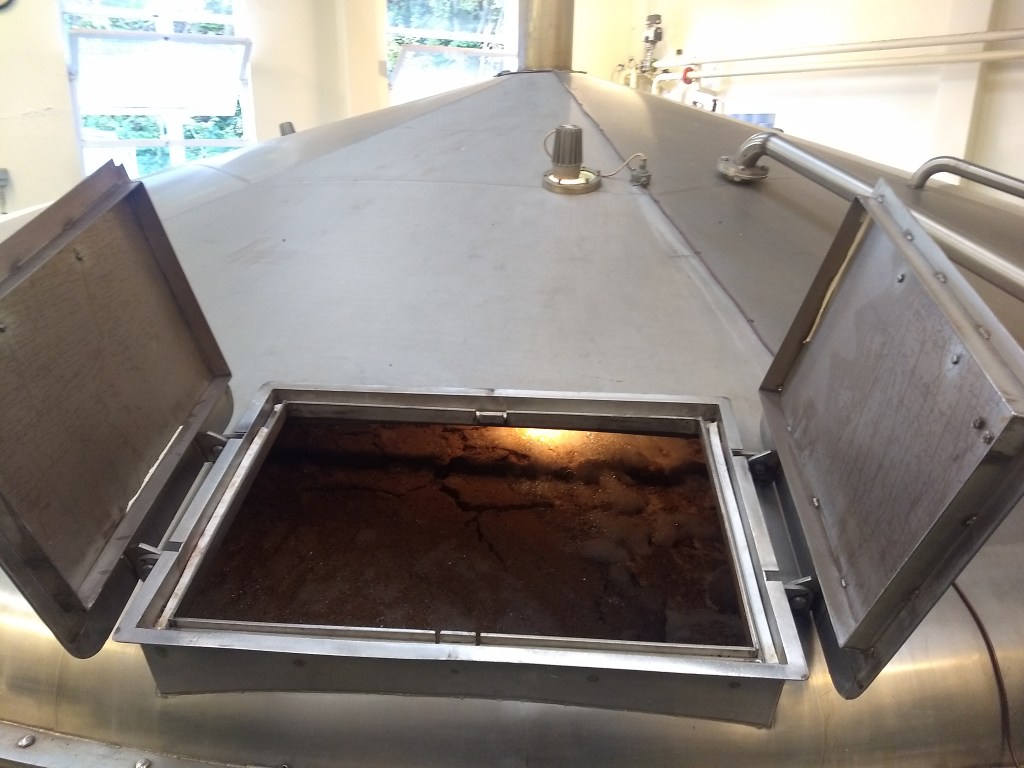
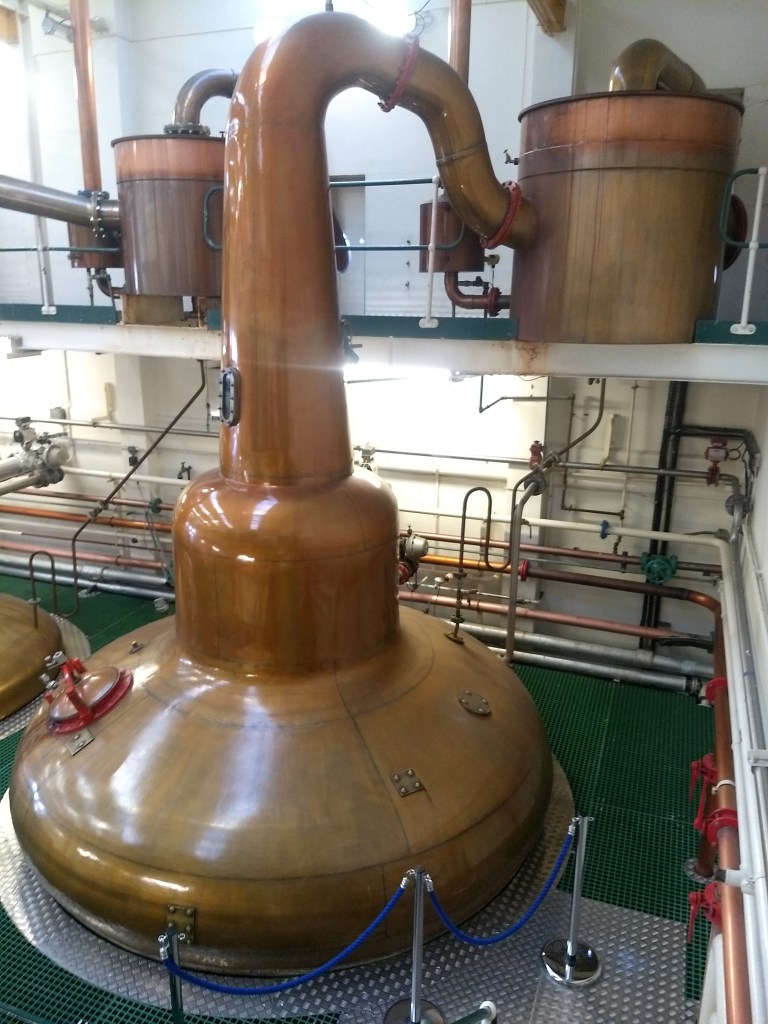
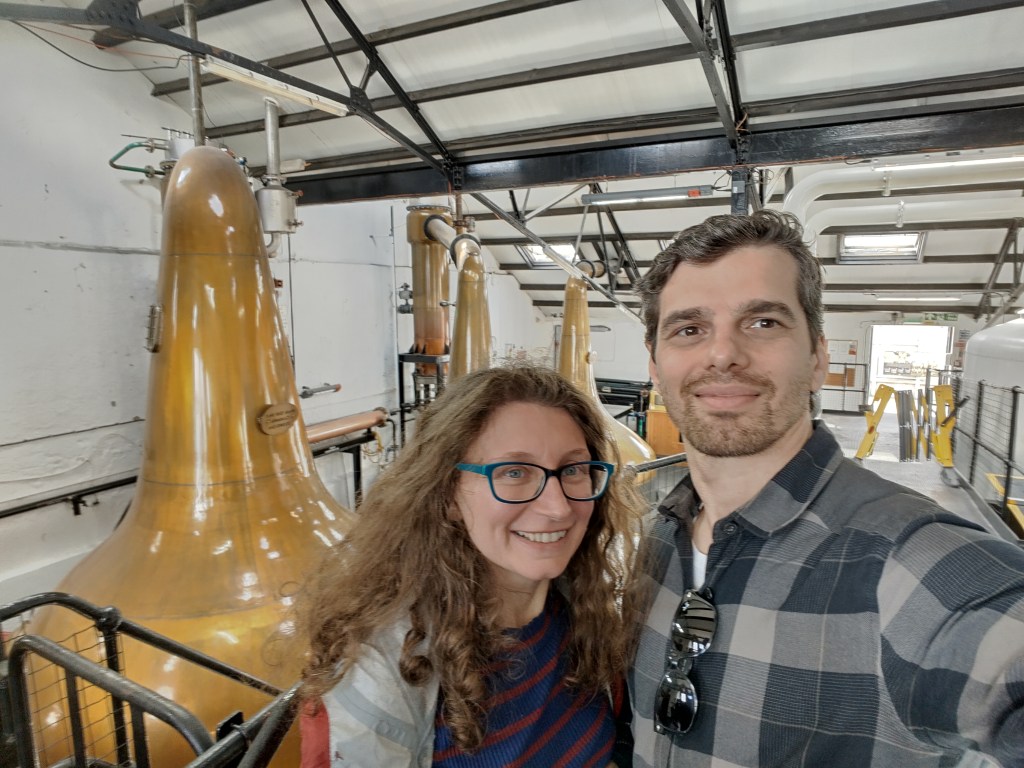
Each mash comprises 6 tons of sourced malt and 2 tons of their own, and the grist is milled to the usual split 20/70/10% between husk, grit and flour. The malt is then transferred into a semi-leuter mashtun (for over five hours), where three runs of water are added at increasing temperatures to absorb as much sugar as possible, with the third one used as first water in the following mash. Their water source is the same as in the 1800s, although with recent improvements (which we donโ€™t remember, sorry), they reduced consumption by 70%. Fermentation, kickstarted with solid yeast, takes place in one of the 7 washbacks and lasts about 70 hours. Finally, the fermented wash is distilled twice in one of the two pairs of stills, two 30,000-litre wash stills and two ~15,000 spirit stills. The spirit cut from the second distillation is between 74% and 61-60%abv.
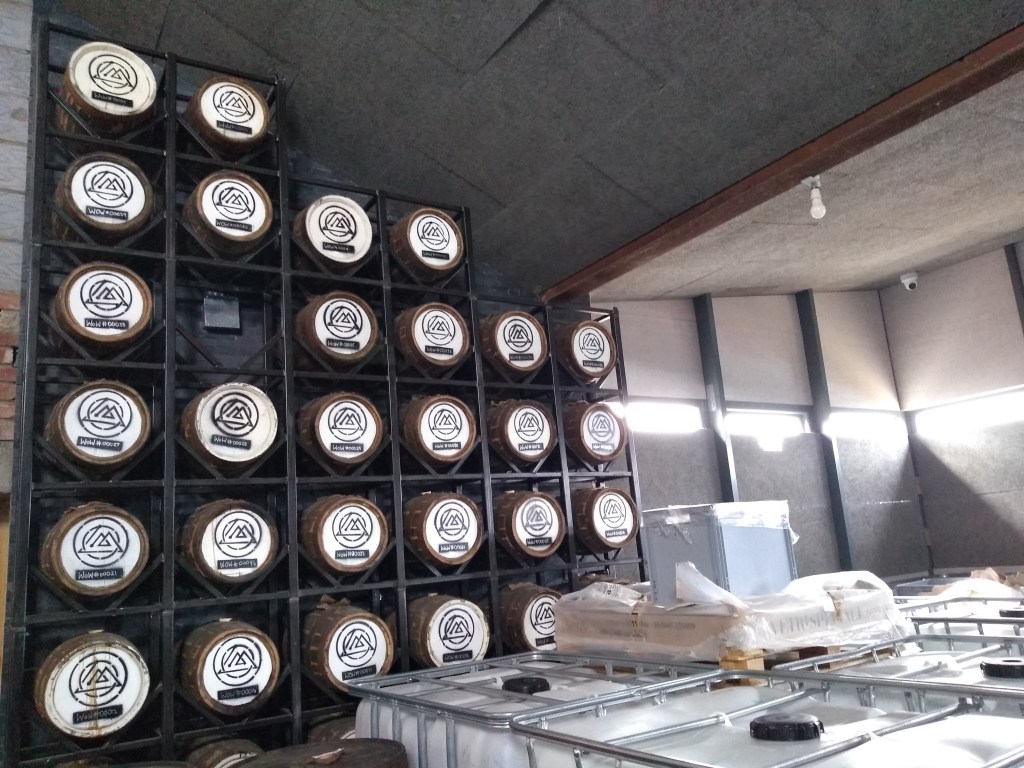
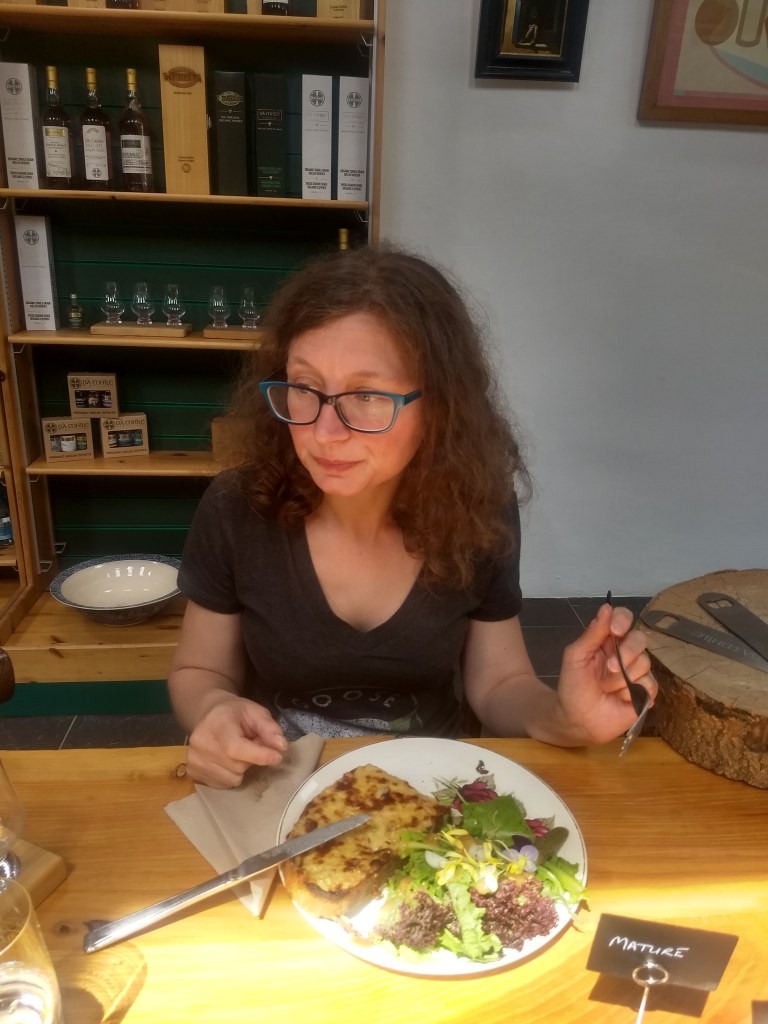
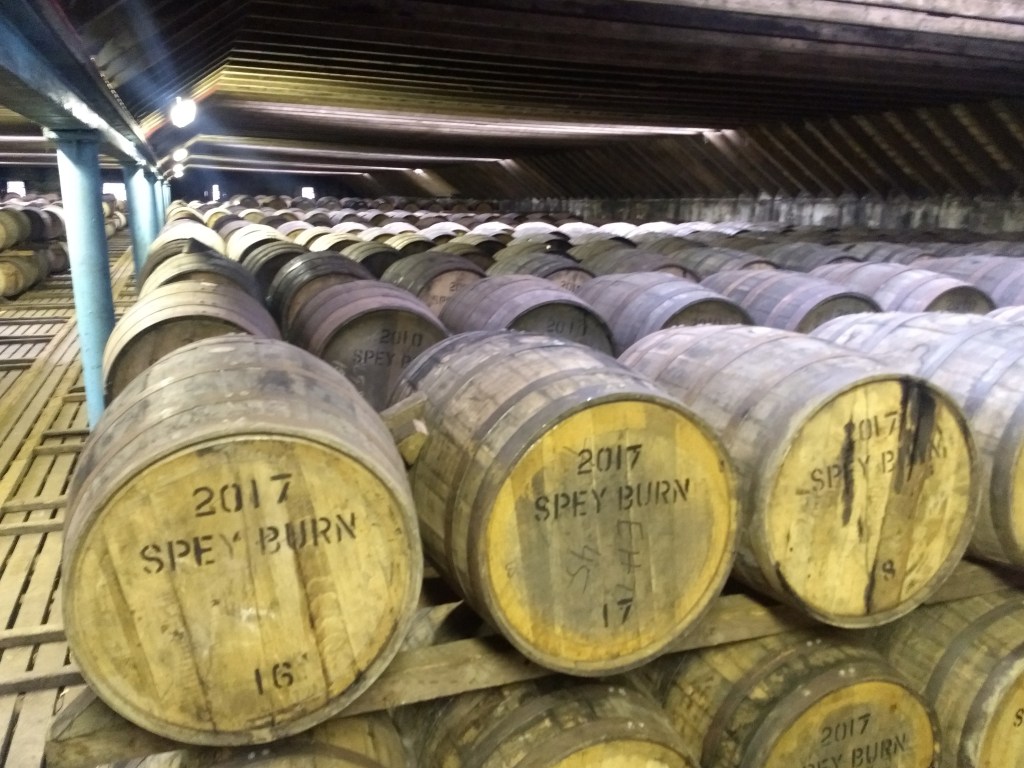
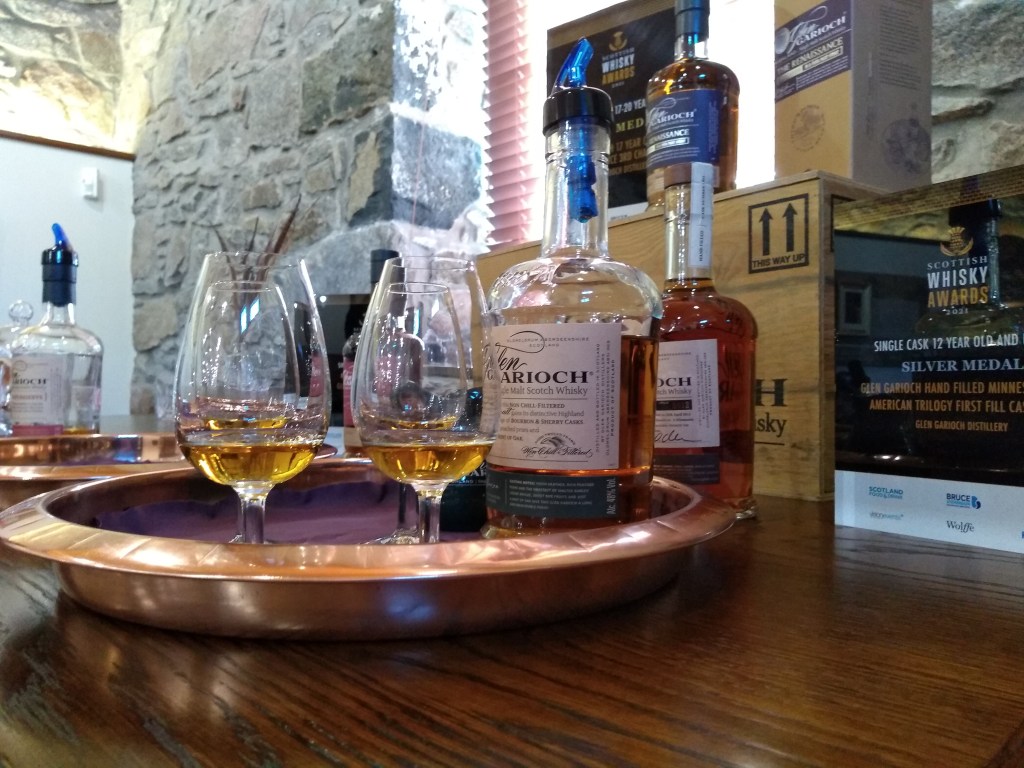
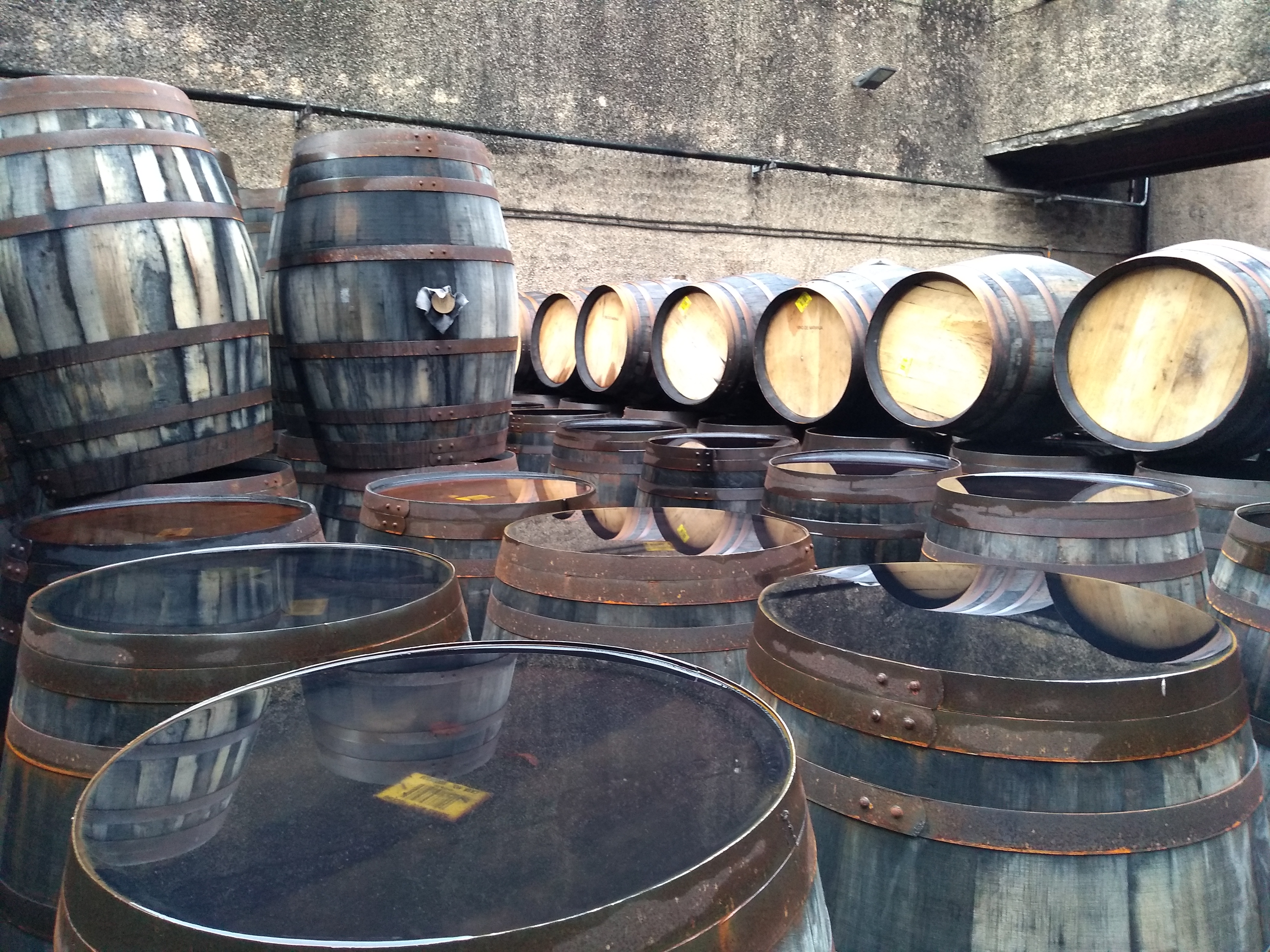
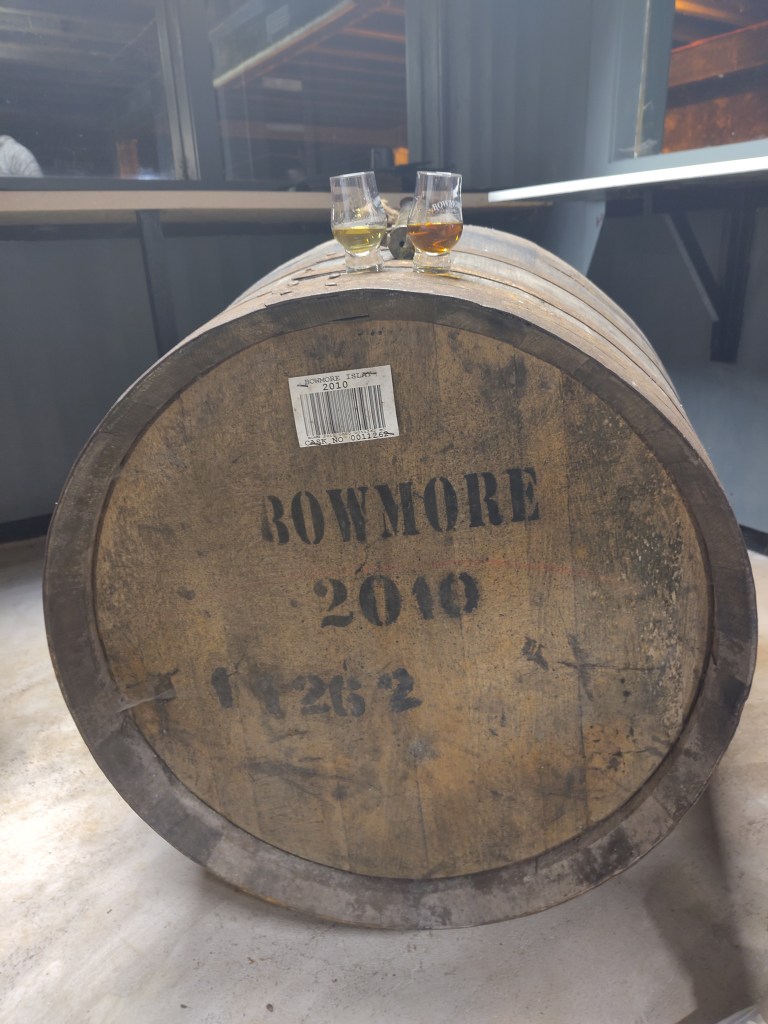
After visiting production, we went to the mythical Nยฐ1 Vaults, one of the warehouses on site, where we had the first part of the tasting. Other available experiences are the Nยฐ1 Vaults warehouse tasting (ยฃ65), which doesnโ€™t include a tour, and one that combines the tour and the warehouse tasting (ยฃ85), plus a few other very pricey ones. As we walked in, we saw two casks, a 2010 (13y) ex-bourbon barrel (54.3%) and a 2010 (again, 13y) sherry hogshead (53.6%). We had a dram from each, and they were both delicious. We got similar notes in the third dram, their core range 18y, very tasty despite the low abv (43%), which was served in the tasting bar. Nice touch, we could keep one of the two small glencairn glasses they’d given us in the warehouse.
Justine joined us at the tasting bar, while we were almost finished with our dram. As we came out, Gianluigi tried to get into the leisure centre, on the fence whether to risk the outside showersโ€ฆHowever, the centre was closed, despite being over one hour from the closing time indicated online (5.30pm). So, we decided to go back to the vans to drop some stuff, and then head towards the Bowmore Hotel bar, for a dram or two (it ended being one, prices were a bit high). It was finally time for dinner, which weโ€™d booked at the local pizzeria: the PEATzeria! While the fritto misto we had as a starter was quite tasty, the pizzas were a bit disappointing: the topping choice was clearly aimed to American tourists, and the pizzas were a bit uncooked. Because we were hungry, and well, it was still pizza, we ate without making any fuss, maybe we were just unlucky.

After dinner we moved to the bar next door, the Lochside. Drams were better priced there, so we had a few, including some stunning like the Mac Talla Rum cask 2024 Feis Ile: delicious stuff! But the day had been a long one, so we soon walked back to the vans for the night.

Anyway, the tour at Bowmore was very good, and Margaret was a great host. Even if itโ€™s not the cheaper among the basic tours on the island, because of the drams in the warehouse (plus the 18y), it was definitely worth every cent.

The only โ€œmehโ€ note was not about the distillery, rather about the facilities on Islay. It is always incredible to realise how little there is and in which conditions (the public toilets in Port Ellen, Bowmore and Jura are quite old), in particular when thinking how much money whisky brings in. Other than the Bowmore leisure centre, the only other available shower was at the Port Charlotte community centre, but only after 2pm. On the contrary, in other trips we found all-day open showers: in Tobermory (Mull) they were open from 9 to 5pm (cash only), but in Carbost, in front of Talisker distillery, the toilets/showers are open 24/7, and you can access after a card payment (and weโ€™ll have an even better story in the coming weeks!). We wonder why facilities like these are not on Islay.ย 

Stay tuned for our last distillery tour on Islay (for the moment)! Until then, slainte!


Bowmore Distillery Tour (with Cask Exclusive Tasting)

Price: ยฃ25.00 pp (July 2024)

Duration: 1hr 15min

Tasting: 3 drams, 2 samples from the cask, 2010 ex-bourbon barrel (54.3%) and 2010 ex-sherry hogshead (53.6%), Bowmore 18y (43%), and a complimentary mini glencairn

Distillery Exclusives: none

Target: whisky curious

Value for money: good

Highlights: the building and the cask samples

Recommended: pricier than other tours, but worth it

Link: https://www.bowmore.com/en


#44.1 Spirited in Speyside

Catching up Kininvie


TL; DR: May again, which means Spirit of Speyside again! And again, we tried to bag as many distillery tours as we could. First off, the mysterious Kininvie: hidden behind their stablemate Balvenie, itโ€™s a treasure to be foundโ€ฆand weโ€™ll have a pleasant surprise too! 
In the last couple of years, the Spirit of Speyside has become one of the unmissable events for us. Itโ€™s a festival, but it doesnโ€™t feel like one, probably because of the wide area the events are spread around: the whole of Speyside! There are so many events: fairs, walks, tastings, tours, even runs! Of course, for us it is a good opportunity to visit distilleries that are normally closed to public. In 2023 we managed to visit โ€œa fewโ€, this year we tried to do the same.
This year we made our long weekend a wee bit shorter: from Thursday to Sunday only, skipping the Wednesday and the Monday. It was enough, because, unlike last year, we managed to book all the distilleries we wanted to visit over 4 days! The only ones we decided to pass on were Glen Keith (the event is insanely expensive, like  north of ยฃ250โ€ฆ yes, it included Strathisla, which we visited twice already, but still a brainfart) and Glenglassaugh (the event was pricey, ยฃ200, but included visits at Benriach and Glendronach too, transport and lunchโ€ฆnot a bad deal, but still too much considering all the other visits weโ€™d planned).

The first distillery we hit this year was Kininvie, in Dufftown. It is owned by W. M. Grants, like Glenfiddich and Balvenie. Actually, weโ€™d already visited most of the distillery during our fantastic tour of Balvenie in 2021, with James. Mash-tun and washbacks are indeed in the same building as Balvenieโ€™s ones, and the mill is actually the same! This time though, we will see everything about Kininvie!

Back to the trip, we left early in the morning, as the tour was at 11am (but also to avoid the silly Edinburghโ€™s rush hour trafficโ€ฆsilly because given the size of the city, it shouldnโ€™t be like that). We also left a bit earlier because weโ€™d planned to leave the van in Craigellachie, get the bus to Dufftown, walk back to Craigellachie after the tour. Everything went according to plan, except that the bus from Craigellachie to Dufftown was, like, over 20 minutes late. No problem though, we were still able to get there in time for our tour, and in the meanwhile we had time to chat to our friend Graham Fraser, who was taking the same bus to go to Glenfiddich instead. He is a fellow vPub barfly and also a โ€œdrammer aroundโ€ like us, but more experienced, with over a 100 Scottish distilleries under his belt: impressive!

After checking in at the Balvenie visitor centre, we had a big surprise: Paul (who we met at Linkwood last year) has recently moved to Balvenie and Kininvie as production manager, and would give us the tour! He is a super nice guy, and thanks to his impressive career in whisky, also extremely knowledgeable, so we were super happy about that!

The history of Kininvie is peculiar: it was built in 1990 to supply malt for blends (Grantโ€™s and later Monkey Shoulder), instead of Glenfiddich and Balvenie, kept to be bottled as single malts. They started producing on the 4th of July of the same year, and nowadays the equipment is also used to experiment with barley and yeast strains, including running a rye campaign every year before the silent season: Paul was very excited about the freedom to experiment.

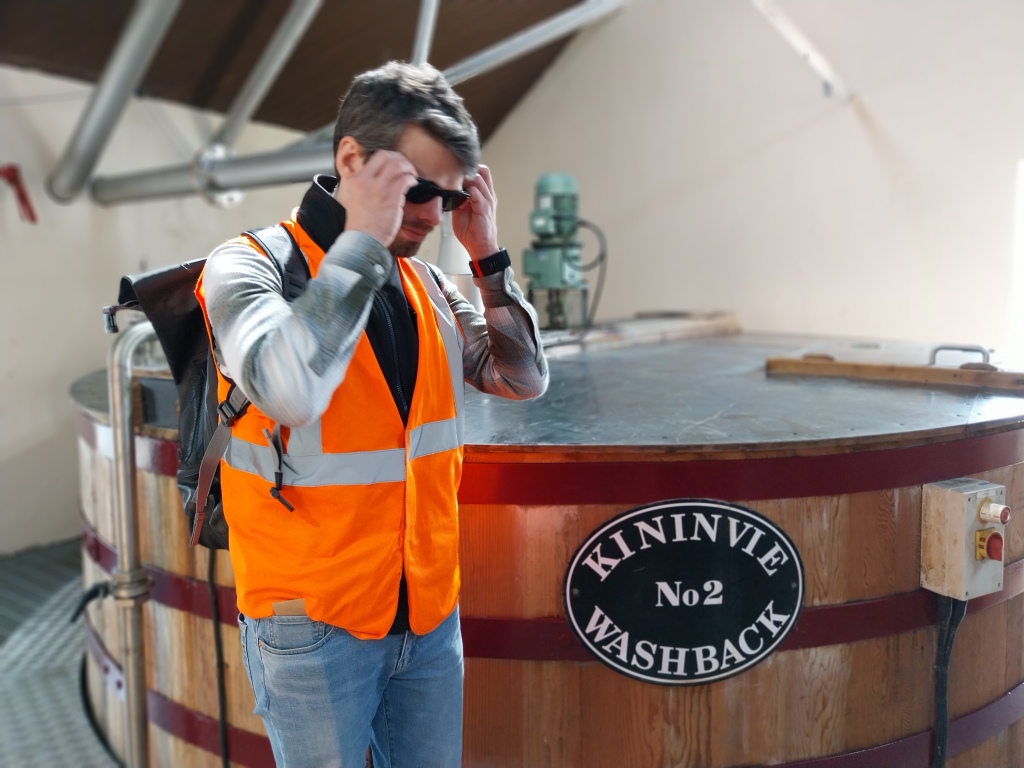
The tour started with a visit of the Balvenie malting floor and kiln, which was under repair waiting for some replacement parts. After a walk in the kiln, we moved to the main production building with mill, mash-tuns and washbacks. On average they do up to 25 mashes per week, using 240 tons of barley. When they donโ€™t experiment, the barley strains used at the moment are Sassie or a mix of Sassie and Diablo, which have mostly replaced Lauriet. The barley is mashed with the usual three waters at increasing temperatures (65, 75 and 85C). Fermentation takes place in one of the 10 wooden washbacks, next door to the Balvenieโ€™s ones. They use Mauri yeast and go for either a short fermentation (60h) to get a cereal-y cloudy wort, or a long one (over 70h) to obtain a lighter and fruitier one: the one we tried was very sweet, and Teresa picked up notes of white chocolate.

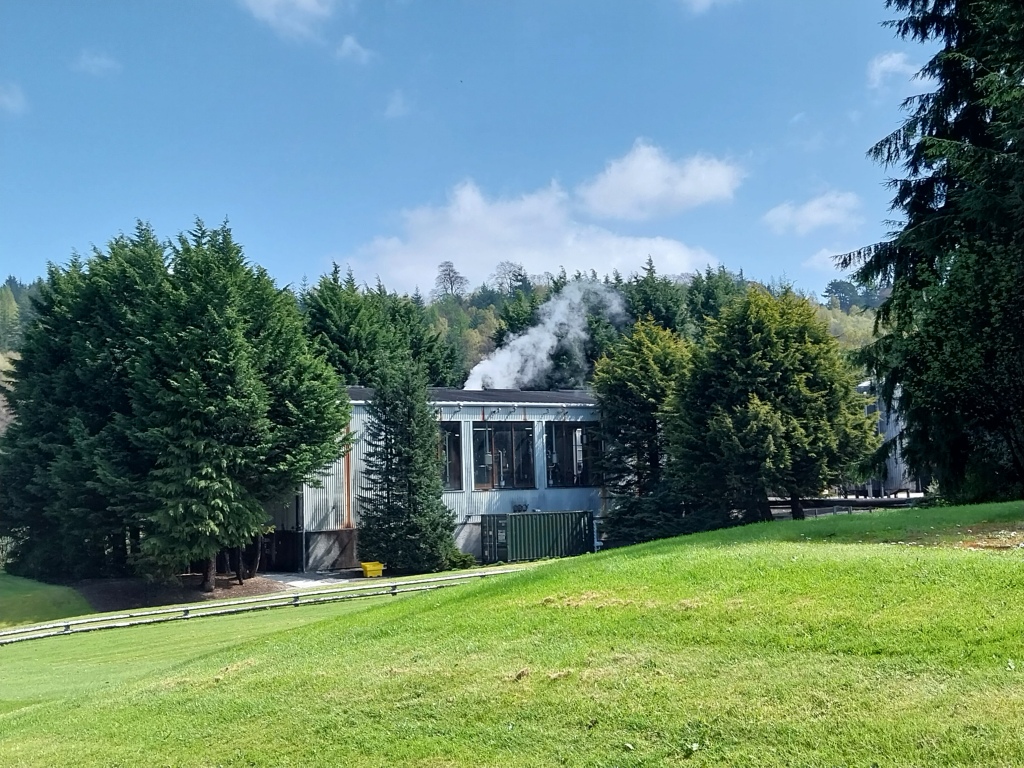
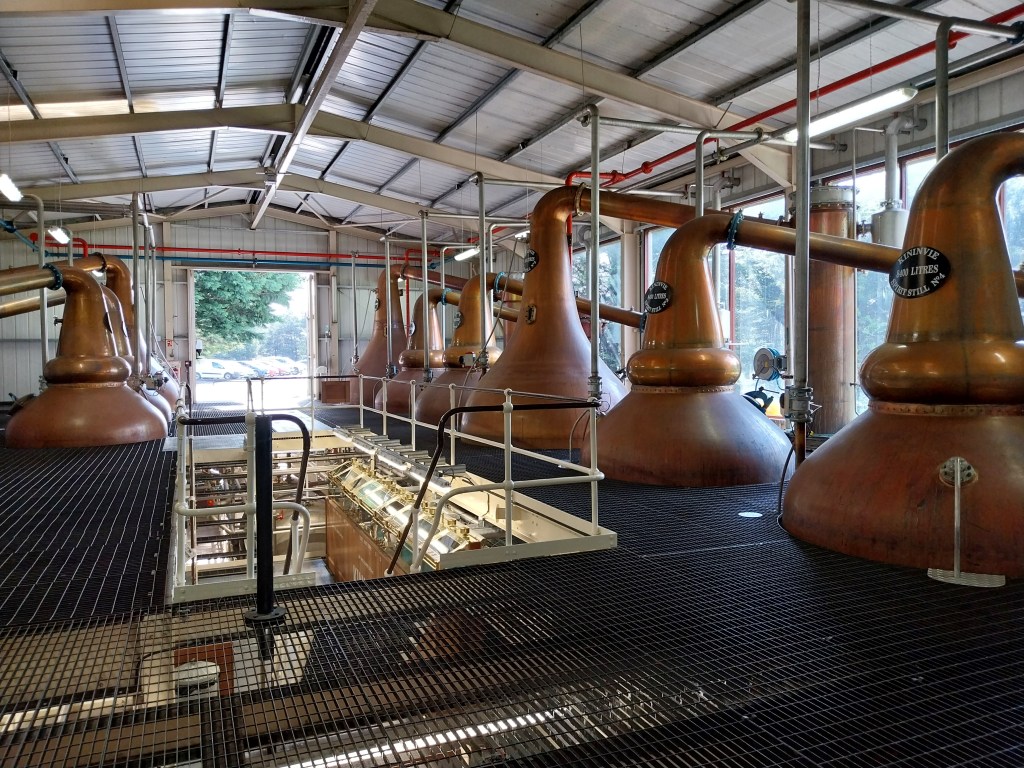
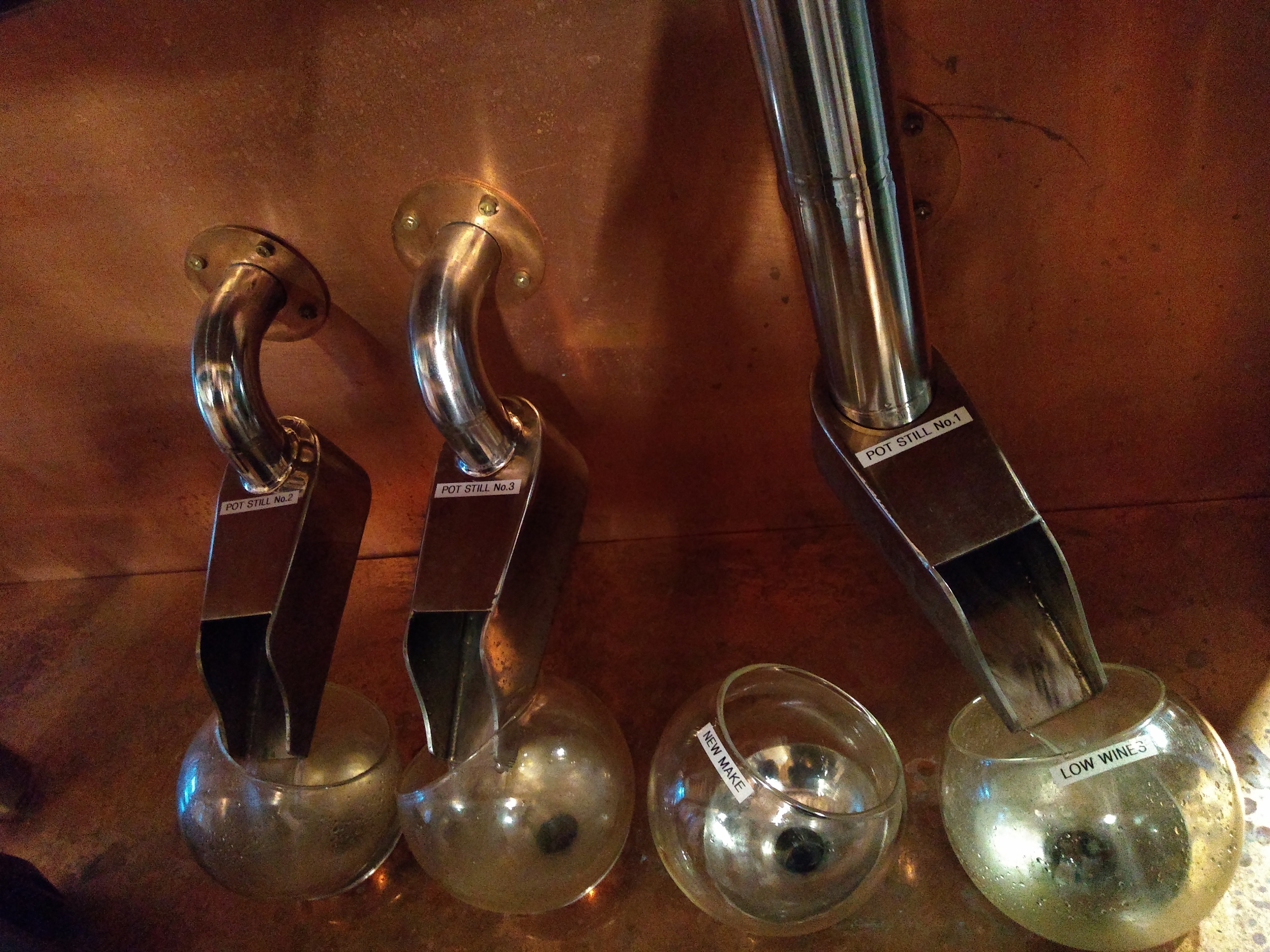
Finally, itโ€™s time to visit the still room, located in a hidden (hence the name of the tour) dedicated building behind Balvenie. They have three triples of stills (with enough space for a fourth, in case of expansion), for a total of nine. Each triplet works as a unit, with one big wash still for the first distillation and two smaller spirit stills for the second one. The cut points are very variable depending on what they are producing, but usually the second distillation takes 10 hours: 1.5 to heat up, 4.5 for heads and tails and 3 for the heart run. Once at the spirit safe (the piece of equipment used to control the cut points of the distillation run), we could try some newmake spirit, at a whooping abv of 70%! A very nice touch!

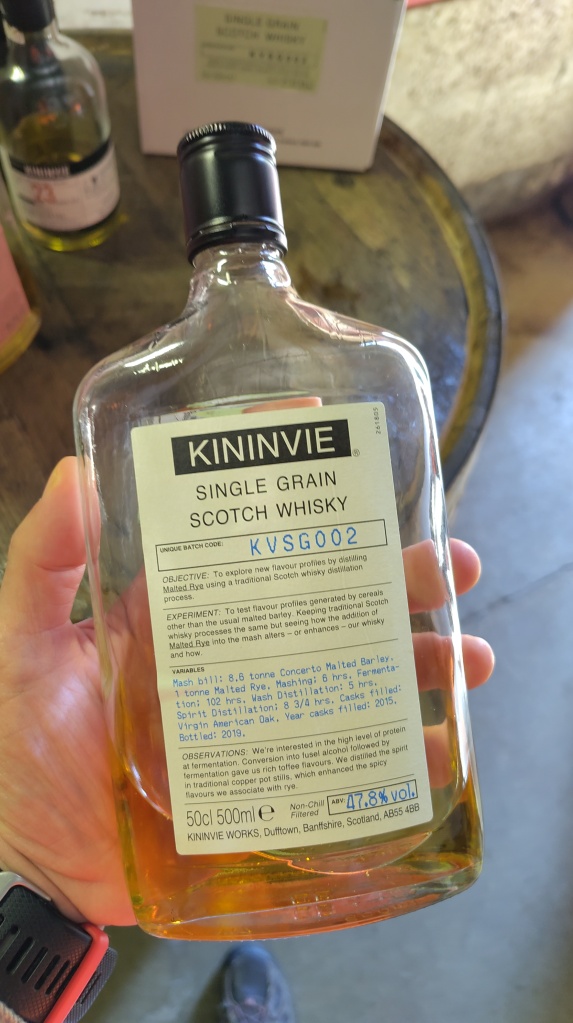
After that, we moved to one of their massive racked warehouses next door, where after a brief, nerdy chat with the warehouse manager George, we tried some drams. Kininvie releases are very rare: the only one weโ€™d tried previously was during an online event in 2020, as part of the Belfast Whisky Week: the KVSM001, a 5yr triple distilled single malt matured in ex-bourbon casks. We had like it back then, so we were now quite excited and curious about the tasting at the distillery. We started with a โ€œsingle distillery blendโ€, KVSB003: a vatting of single malt (matured in European oak casks) and single grain (matured in virgin American oak) produced at the same distillery, 4yr and bottled at 48.2% abv. The second one was a component of this blend, the single grain KVSG002: it is actually a rye whisky (although we think it wouldnโ€™t comply with the American definition of โ€œrye whiskeyโ€ because the rye part was less than 51% of the mashbill, only 1 ton malted rye vs. 8.6 ton malted barley), matured in virgin American oak, distilled in 2015 and bottled in 2019 at 47.8%. These drams were both quite interesting, but we recently find rye whisky a bit too herbaceous, particularly the ones produced in Scotland and Europe. Nonetheless, we were quite excited because the labels on the bottles provided a great deal of information, a real deal for us whisky nerds!

We really appreciate such transparency!
So many details!

We then moved to a single malt, a 23yr distilled in 1991 from a combination of hogshead and sherry butts, bottled at 42.6% (a bit weak to our palate, but nicely tropical and balanced). Finally, the gem was the cask sample: a 10-year single malt from a first refill Sherry butt at 68.4% (the cask filling strength was 70.3% abv!!!): it definitely needed water, but once it opened up it was really fantastic!

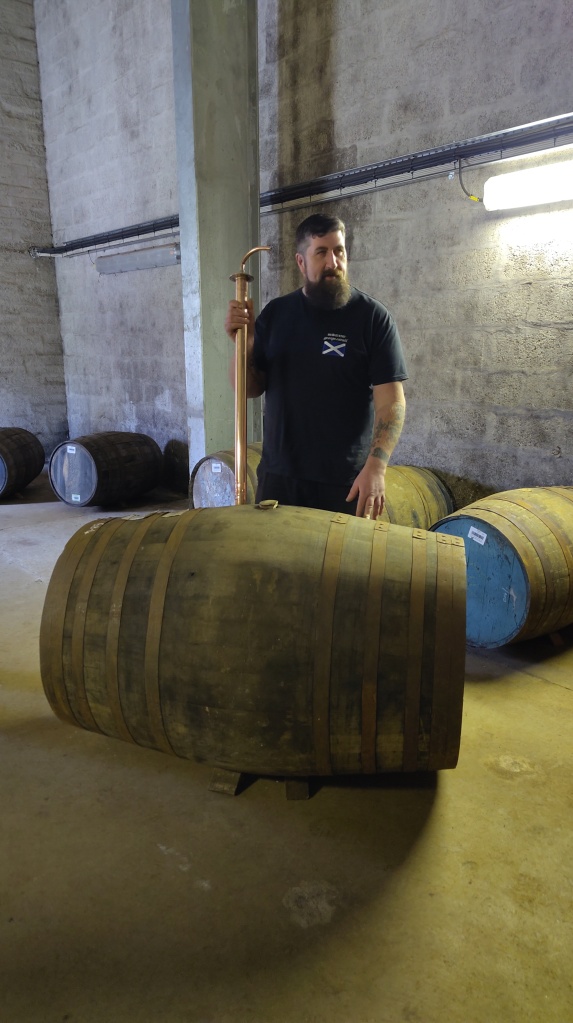
About to pour something really delicious.

And with this visit, the Spirit of Speyside festival was officially underway, starting with a bang! Like we noted last year, the staff were so happy to show us around, truly a refreshing experience, and so nice to see Paul in his new role! But it was time to move to our second whisky โ€œadventureโ€ of the day, so we quickly left the distillery on foot.

Stay tuned for more on this. Until then, slainte!


Kininvie Hidden Distillery Tour

Price: ยฃ60.00 pp (Spirit of Speyside 2024)

Duration: 2hr

Tasting: 5 drams, Kininvie single distillery blended KVSB003 (single grain rye whisky and single malt), single grain rye whisky KVSG002, Kininvie 23y Single malt, cask sample (ex-sherry cask, 10y) and newmake spirit (for details see the descriptions above)

Target: whisky nerds

Value for money: good

Highlights: the still room

Recommended: yes

Link: https://tickets.spiritofspeyside.com/sales/events/2024-festival/kininvie-hidden-distillery-tou


#38.2 Warming up for the Highlands, in Speyside

The Dunphail Distillery


TL; DR: After visiting Ballindalloch distillery (and an almost random encounter) we drove up almost until Forres, to the Dunphail distillery. We had already visited it during construction, but this time newmake spirit was flowing through their stills!

(missed Part 1?)

We left you last week at Ballindalloch, after a very satisfying visit to this new and very promising distillery. Unfortunately, the nice wee cafe behind the distillery was closed for the season, so we were about to jump back on Mr Vantastic and go look for another place for lunch. As we approached our van, however, a surprise: Post Dram Prat materialised in front of us, with our friend Justine! Sheโ€™d just popped in at the distillery to browse the shop and for lunch, but for the latter we had to regroup together. We first tried Grantown East former station, but it was closed too, so we ended up in Grantown-on-Spey. There, we had a lovely soup-and-sandwich and a chit-chat at the High Street Merchants, a very nice cafe. Justine then drove to Tomatin to join some other Edinburgh Whisky Group friends, while we had another stop before driving up north: the Dunphail Distillery.

If youโ€™ve been following us for a while this name will be familiar, as we already visited it back in October 2022. At that time, however, they were still building it, and Dariusz (founder, master distillerโ€ฆand builder!) gave us an in-depth preview of his plans. This time around, however, the distillery is fully built and, at the time of visit, theyโ€™d been filling casks for just a few weeks! Serendipity.

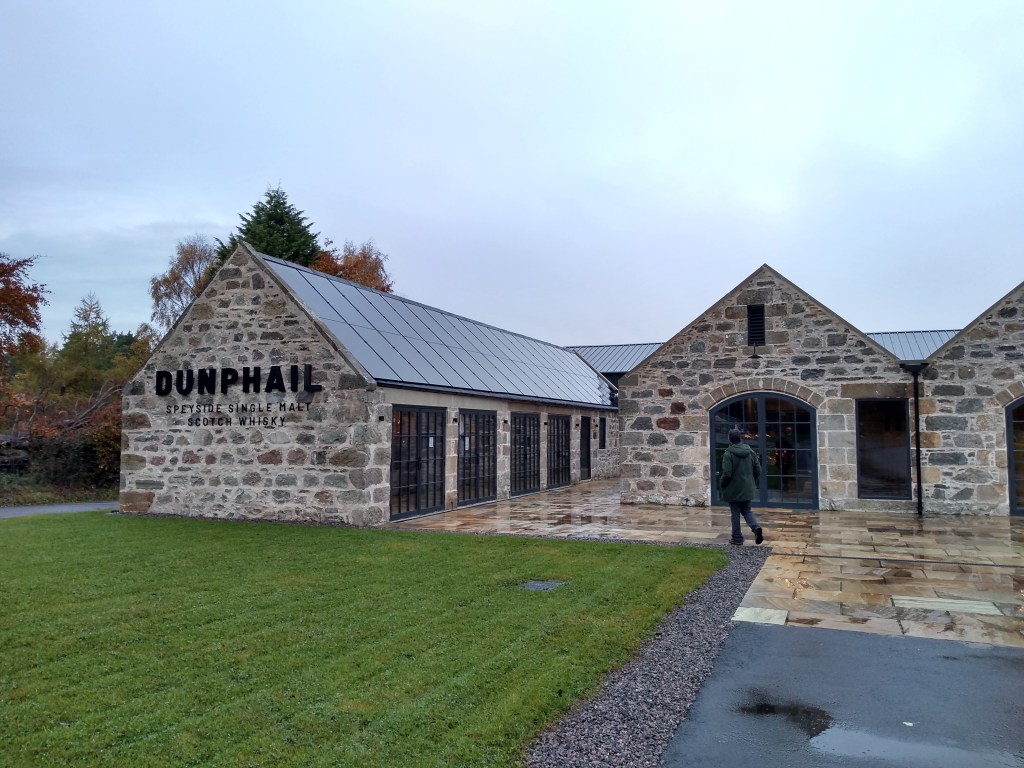
The distillery is located just off the road connecting Grantown-on-Spey to Forres, almost mid-way. We arrived at the parking mid-afternoon, we just had time for a couple of photos before going in. At the new visitor centre, Mike welcomed us with a coffee (nice touch!) and a good chat. We found out he moved to the area a few years ago, and started working at the distillery earlier in 2023, while things were getting ready to start.

Similar to other distilleries (many othersโ€ฆ the data analyst in us is starting to notice a pattern), the visitor centre and main production buildings used to be barns, while the warehouse (soon to be two) and the malting floor were purposedly built. Yes, the malting floor: a big difference between Dunphail and most new distilleries is that they are malting on site the barley, which they source from the area. At the moment they are using Lauriet and Sassy barley varieties, and the process to bring it from 42% (after steeping) to 5% humidity (after the kiln) lasts about 33 hours. They dry the barley with a combination of air, anthraciteโ€ฆand peat, so to produce both peated and unpeated newmake spirit.

Teresa earning her drams.

Mike showed us how to turn the barley by hand with a rake, and also made us try itโ€ฆ so hard, a full-body workout for sure! One of the reasons is that the rake is made heavier by a hammer attached at the base of the handle, to make it stay lower on the ground, otherwise itโ€™d unhelpfully pop up on top of the barley. This โ€˜adjustmentโ€™ was made by the staff, as this type of equipment has been out of production since industrial malting started: learning by experience at play!

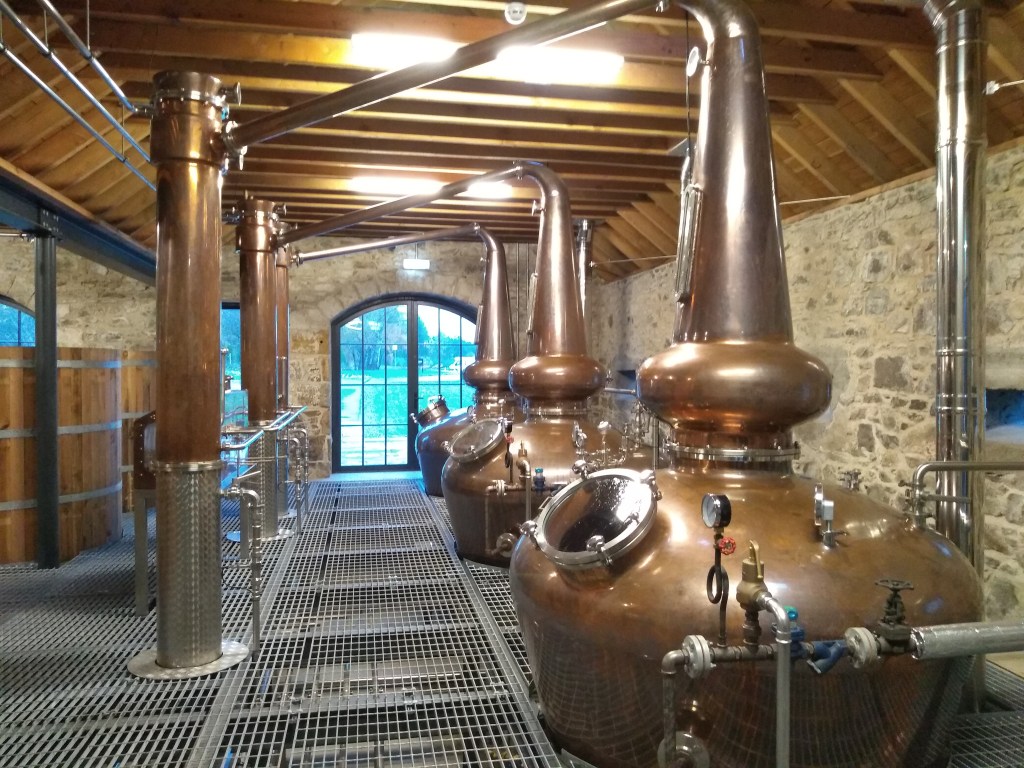
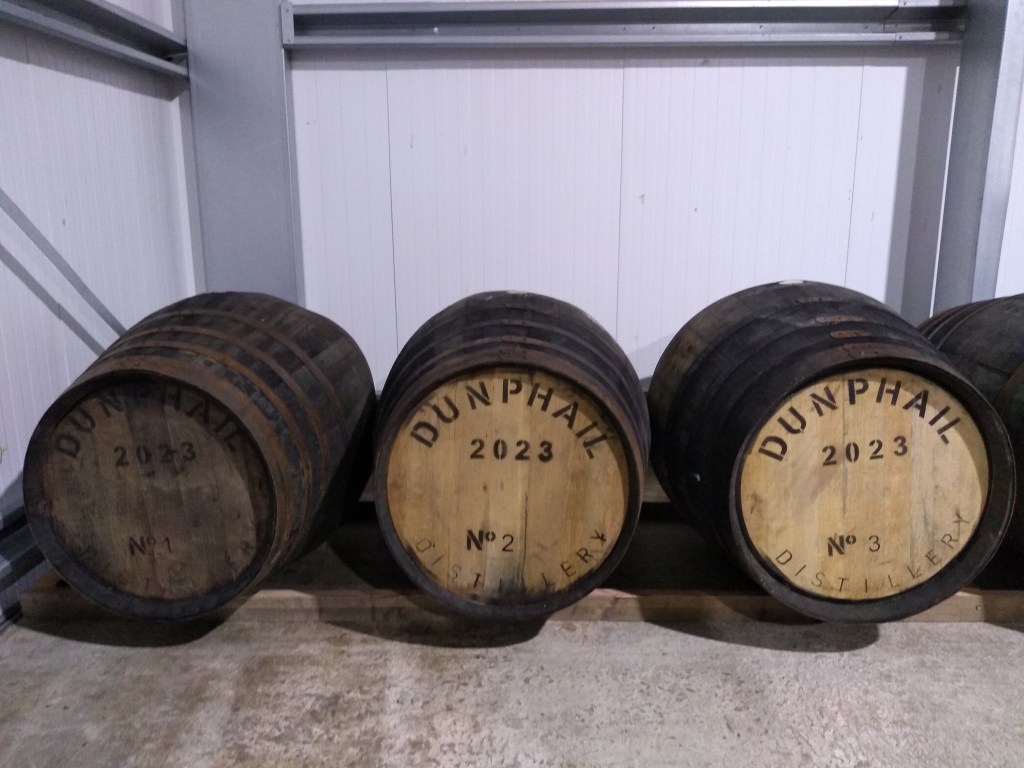
The malt is mashed one ton at the time in a semi-Leuter mashtun (3 waters at different temperatures, as usual), aiming for a clear worth, which is then moved to one of their 12 Douglas Fir washbacks for a long fermentation: 144h (6 days). The distillery is equipped with three stills (remember these?), all same size, two wash stills and one spirit still: all three are directly fired, however to save energy and improve efficiency they are initially warmed up with steam coils. They are aiming for a 200,000 litres-per-annum capacity, which is small but still reasonable production size. In the warehouse (not dunnage, the floor is concrete), we could take a look at the first batch of casks they filled: history in the making!

After the production tour we went back to the visitor centre for the tasting, where we (ehm, Teresa) tried the newmake spirit. It seems trivial for a distillery who just started production to at least make you try the newmake spirit. However, in a few instances this didnโ€™t happen, so well played Dunphail! The other drams were all scotch whiskies coming from the Dava Way range, named after the historical 38km trail from Forres to Grantown-on-Spey. They were a 13y Teaninich from a hogshead, probably ex-bourbon, a 12y Caol Ila from a hogshead, and a sublime 28y North British grain whisky from a 1st fill ex-bourbon barrel. At the visitor centre, other than merchandise, the available Dava Way bottlings were on sale, as well as some Bimber and the Apogee XII pure (blended) malt. They also had many drams to try at the bar!

Unfortunately to get to Dornoch we had an over 90-minute drive, and the Dunphail visitor centre was closing too, so we left right after the tasting. We arrived to Dornoch just in time for a nice dinner with our friends from the Edinburgh Whisky Group, and another couple of drams of course, ready for the following days adventures!

Visiting Dunphail was a great experience, a really good deep-dive into this new distillery and whisky production from green barley to newmake spirit. It was clear from how the tour was conducted by Mike that it was set up by whisky enthusiasts for whisky enthusiasts, so a must-do detour from the main roads in our opinion. We are looking forward to enjoying their single malt, when ready!

Until next time, slainte!


Dunphail Distillery Experience

Price: ยฃ30.00 pp (November 2023)

Duration: 1hr 30min

Tasting: 3 drams for their Dava Way range and the newmake spirit

Target: everyone, but particularly whisky enthusiasts and geeks

Value for money: good

Highlights: the production

Recommended: yes

Link: https://www.dunphaildistillery.com/


#33.3 The Welsh Whisky Trail (not TM)

Craft Distillers in the South West: In The Welsh Wind and Dร  Mhรฌle


TL;DR: A relaxed but at the same time full-on day in the south west of Wales. We visited two craft distilleries, In The Welsh Wind and Dร  Mhรฌle. We discovered the existence of iStills in the first one, and got to know more about organic whisky in the second oneโ€ฆBoth very interesting projects, so much information to take in! 

(missed Part 2/Part 1?)

The night at the Lleithyr Farm camping near St. Davids was quiet, and we woke up definitely very rested, with a couple of black pigs snuffling on the other side of the fence and rabbits sprinting around. At that point of the trip we had perfected our morning routine: breakfast, shower, washing dishes, and packing up. So much that soon after we were able to leave the camping towards north, along the Welsh west coastline.

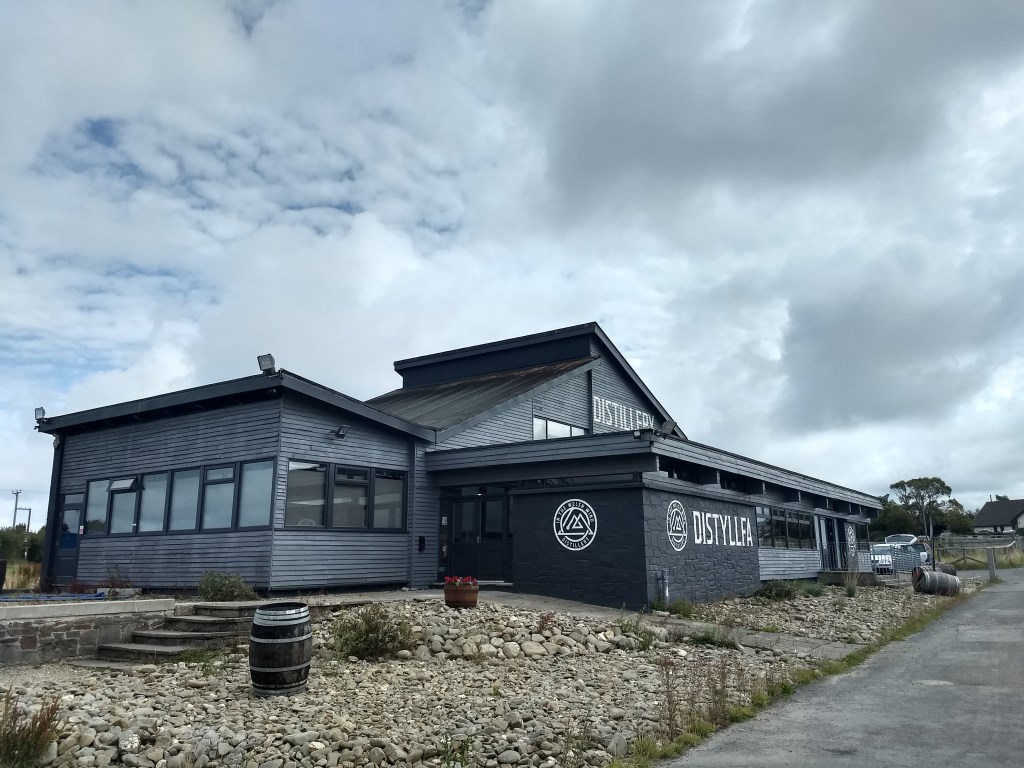
Our next stop was a new distillery: In the Welsh Wind! We were a bit ahead of schedule on the road, but we lost all of our advantage because of tractors and other heavy vehicles on a very narrow highway (also, Mr Vantastic isnโ€™t really good at overtakingโ€ฆ). The distillery is on the A487 near Tan-y-gros, very easy to spot, about five miles past Cardigan towards north, towards Aberystwyth. The building used to be a pub, now itโ€™s all painted black with their logo on the side.

Also, their neighbour is an old small carโ€ฆcollector? Dealer? Deposit? Who knows! The cars are mostly eviscerated (no engine) but painted with bright colours: very peculiar.

As we walked in the distillery, we realised that the staff were busy in a meeting, so James (the distillery manager) came to us asking to wait a couple of minutes. He came back very soon, apologising: they were having this meeting to deal with a new big customer of theirs, Tesco! 

We had chosen the โ€œTour onlyโ€ option, as we were not very interested in the gin tasting coming with the regular tour. James told us the story of the distillery: it was founded by a couple, Ellen and Alex, after a sabbatical period when they walked over 1,000 miles on the Welsh coast and the historic border. They started the distillery in 2018, making gin first, but since 2021, they lay casks down for whisky. So no whisky yet, but they aim for a first release in 2025. Besides whisky, and other than gin (under two different brands, more of that later), they make vodka and rum (mostly spiced, they had some limited wood-matured release which promptly disappeared), as well asโ€ฆmalt vinegar! That was a โ€œpandemic projectโ€, to make use of local breweryโ€™s beer that otherwise would have been wasted. This featured in some TV-shows, and the popularity that followed apparently helped put them โ€œon the mapโ€. 

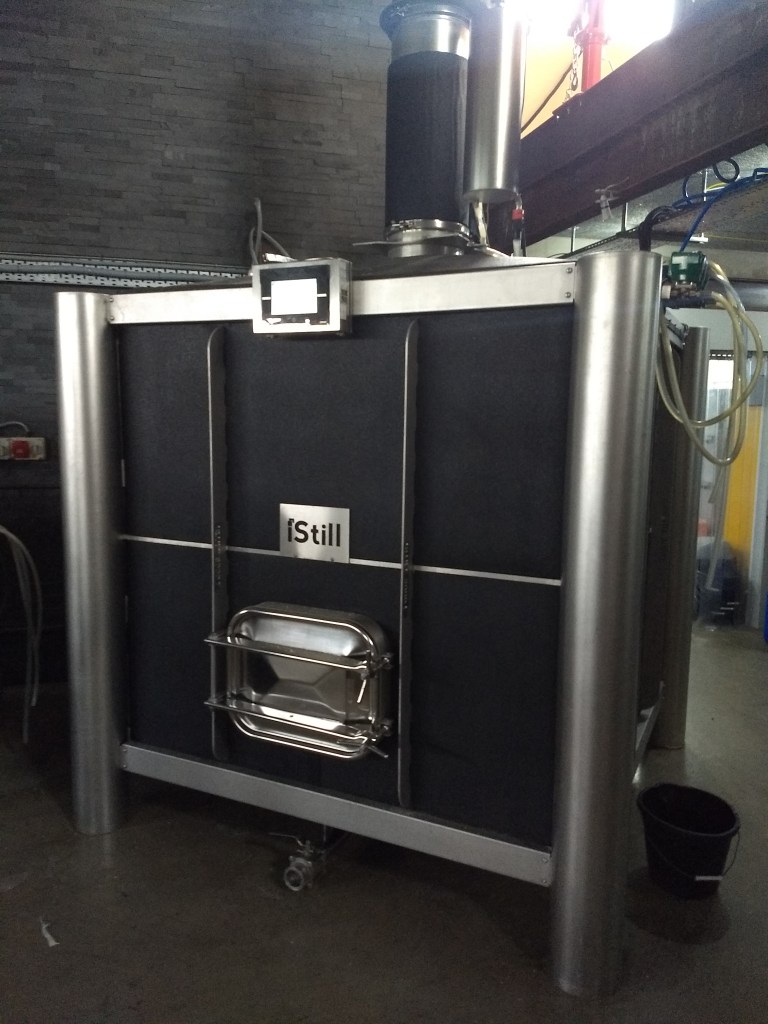
The production area is quite small, and a big part of the surface is dedicated to their own malting floor. A very important aspect is that, for the whisky, they source the barley locally, all from a 10-mile radius, and they malt it themselves (without peat). When we visited it was July, which, because of the heat, is their โ€œoff-seasonโ€, when they donโ€™t malt and donโ€™t make any whisky. Another interesting and distinctive thing is that they have two iStills (the first time we saw them!). This โ€œall-in-oneโ€ still is made by a Dutch maker, and saves on space and personnel: in our understanding, they charge it with milled barley, water and yeast, and it does the whole process, in a very efficient way. They have two iStills, one for big batches and a smaller one for experimental runs.

The iStill. Never seen anything like this!

They use these for whisky (aiming to ~80%abv in the newmake), vodka (higher abv, ~90%) and rum. The whisky is filled in the usual casks (many ex-bourbon, ex-sherry, ex-wine) diluted with local water to ~62%abv. On top of that, they also fill a lot of 30-litre casks to sell to privates (for ยฃ2,000). Some casks were stored there, although James told us they had just bought a warehouse to store most of their products. 

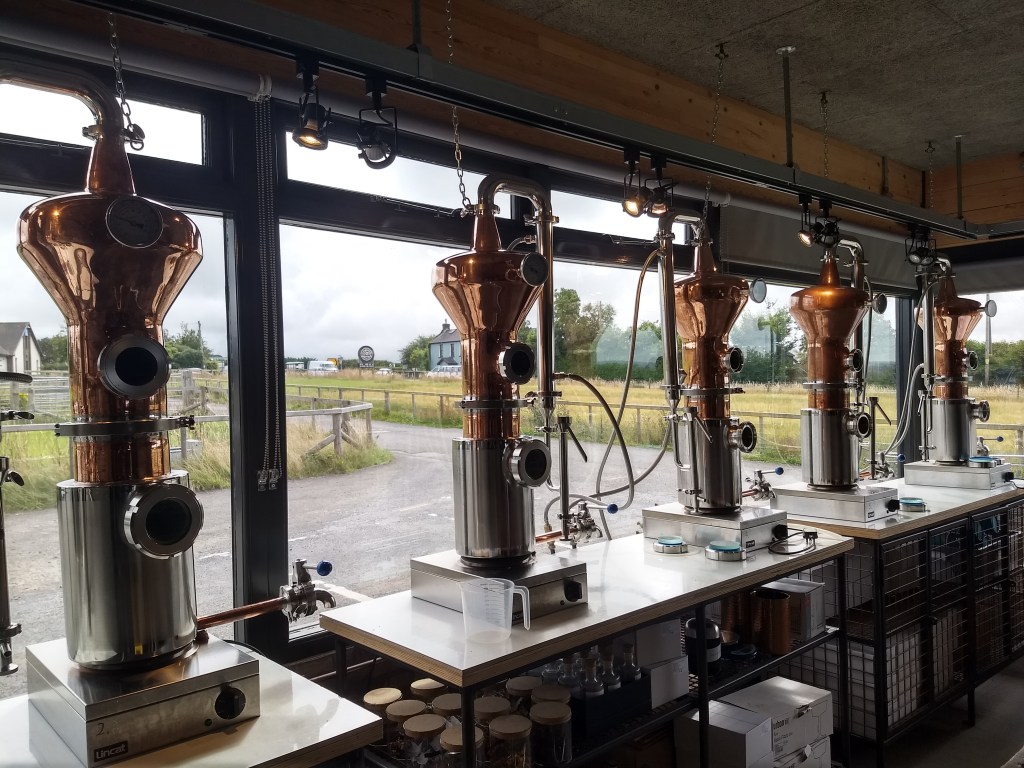
On the other side of the building, near the bar, there are the two gin stills (200 and 50 litre), and also six mini-stills. These are part of the โ€œdistill-your-ownโ€ business, where people can come and choose among the many available botanicals to make their own recipe and redistill a pre-prepared 50% neutral grain spirit. Very clever! They also sell their products to the local trade, in particular a brand called Eccentric Spirit, which they bought and resurrected (this is the one that will go to Tesco). The tour ended at the shop (which in the meantime became quite busy), with a nip of their In the Welsh Wind gins (a dry one and a Palo Cortado cask matured one), and of the whisky they source from Mackmyra distillery, in Sweden (curious choice). 

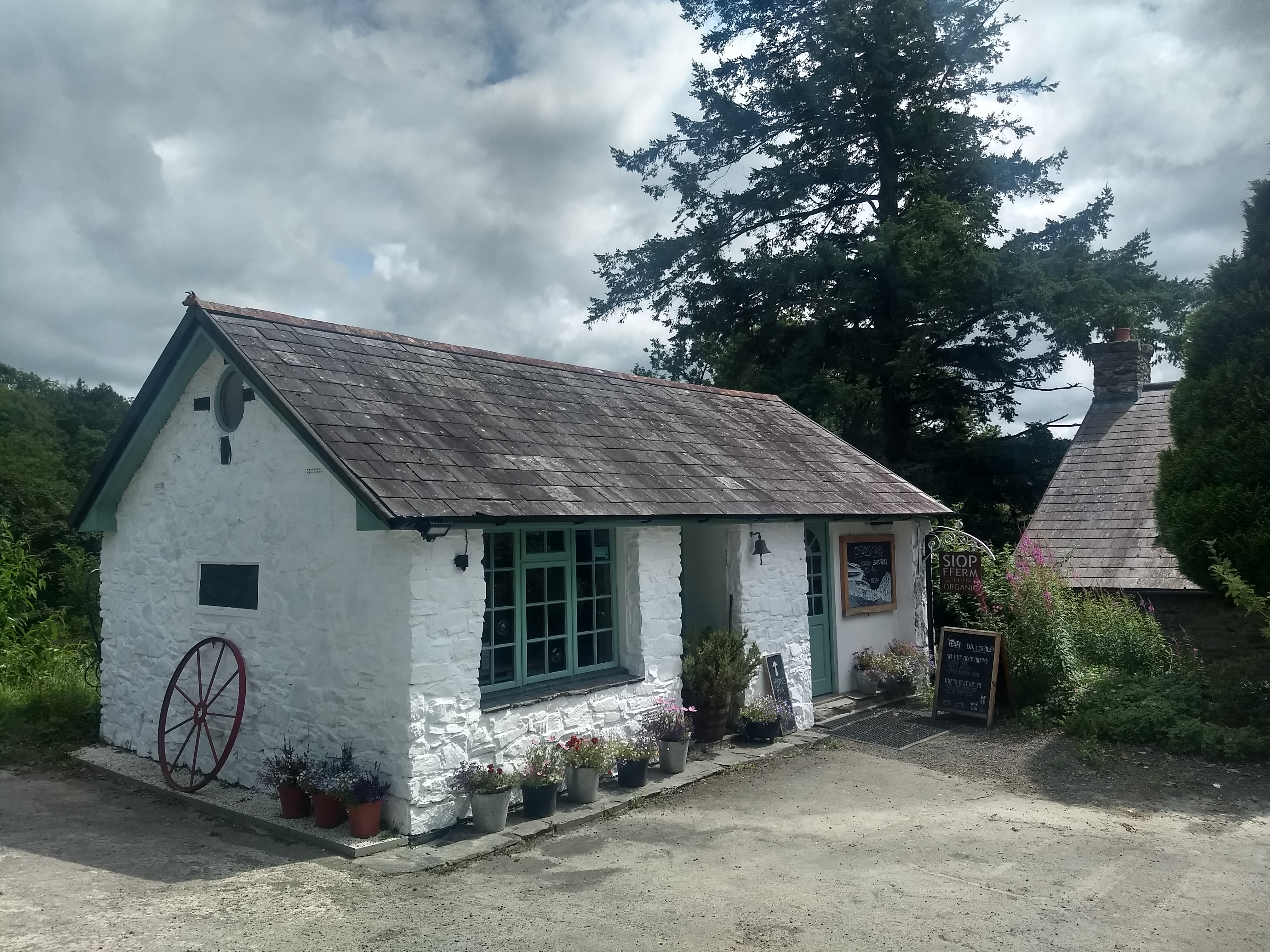
Left the distillery, we had enough time to do groceries and refuel before driving to the next one: Dร  Mhรฌle. This wee distillery is on the Glynhynod farm (in Welsh, โ€œremarkable valleyโ€), in a stunning and hidden place (it reminded Gianluigi the village where his mother grew up, Casali di Morfasso) off the A486. Although a very different business compared to the In The Welsh Wind, the ignition was somehow coming from the same place: the need for a life change. In 1981, John, Patrice and Paula moved to Wales from the Netherlands and purchased the farm, where they started organic farming and in particular organic cheese-making (named Caws Teifi). About a decade later, John went to an organic food festival and spotted a gap in the market: organic whisky. So, they farmed barley on their fields, and looked for someone to produce their organic whisky. After many โ€œno thanksโ€, someone accepted their offer: Springbank! They sent their barley to Campbeltown, where it was turned into newmake spirit by the popular distillers in 1992, and was firstly released in 2000. Although that was the only ever batch of barley produced at the farm (apparently it is not an ideal location for growing barley), they commissioned another batch of organic whisky, this time at Loch Lomond. In 2012, however, after the legalisation of craft stills, Dร  Mhรฌle purchased their own and started producing their own spirits: whisky, rum, gin, brandy, vodka and liqueurs. 

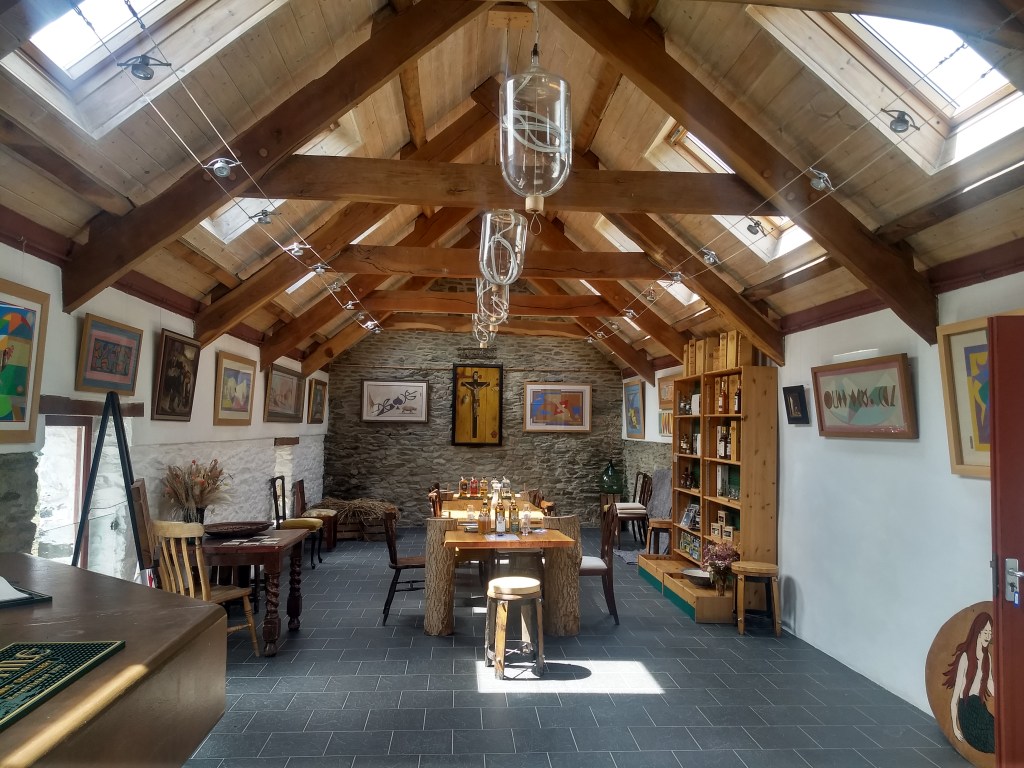
This story was told us while sitting in the lovely tasting room, resembling a mountain cottage, and equipped with a bar and shelves full of their products. The lower level of the same building is the โ€œdistilleryโ€, which consists in a 350-litre German still, with a wood-fired steam boiler. The wash is bought from a local brewery (we couldnโ€™t understand which one), which comes already fermented and ready to be distilled. After this explanation we started the tasting, with the whiskies first. The first dram was the 2023 release of their organic single malt Welsh whisky, vatting of two sherry casks (bottled at 46%abv). The second was an organic single grain Welsh whisky, released in 2022, and finished in ex-Laphroaig quarter casks, a bit smoky and tasty (46%abv). The final dram was a delicious 20 years old organic single grain Scotch whisky (again, 46%abv), from the batch they had commissioned to Loch Lomond in 2000.

After the whisky tasting, we had another one: the cheese tasting! One seasoned with nettle, one with cumin, a mature cheddar and the โ€œCeltic promiseโ€: all tasty, the latter two were delicious! Then, it was time for lunch, a Welsh rarebit, something we had never tried before.

As a final part of the tour, we went outside to check out the warehouse: a small building with concrete floor, where a few dozen casks were resting. The space is quite wide, looks like it was sized for the medium-long term, since they only fill about 22 casks per year. Finally, we visited the shop, where they sell a range of organic products: other than cheesy and boozy goodies, also meat, eggs and produce. 

Teresa and her first rarebit.

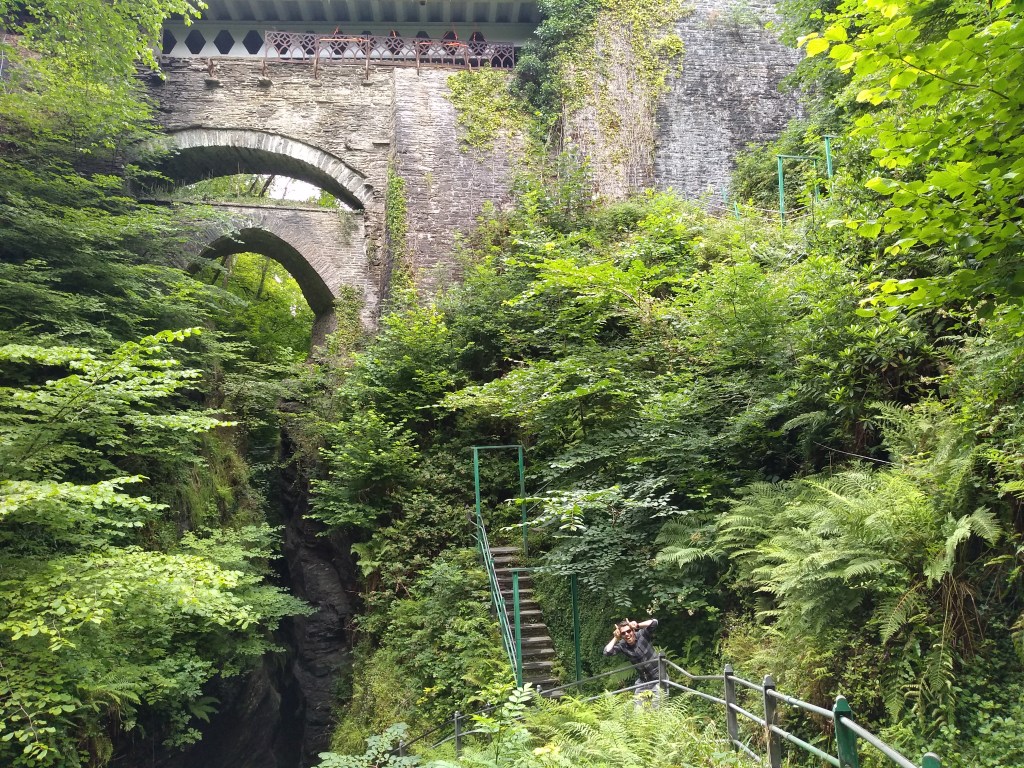
We left the distillery very happy, driving towards Aberystwyth, where we would have spent the night. Before driving into town, we did a detour to visit the Devilโ€™s Bridge, which we remembered from the Hinterland TV show (which we loved).

Once in Aberystwyth, we parked Mr. Vantastic and had a stroll in the centre. We found it very nice, and although quite small, the place gave us โ€œtownyโ€ vibes. After dinner (well, some sandwiches weโ€™d made earlier), we celebrated a day of exciting discoveries about the art of craft distilling in a lovely pub, with craft beers and live acoustic music. Slainte!  


In The Welsh Wind Tour only

Price: ยฃ8.00 pp (July 2023)

Duration: 45min

Tasting: nip of available products

Target: everyone, but still mostly gin lovers

Value for money: good

Highlights: the iStill

Recommended: yes for craft-distilling enthusiasts

Link: https://inthewelshwind.co.uk/


Dร  Mhรฌle Whisky tasting (talk, tasting and lunch)

Price: ยฃ35.00 pp (July 2023)

Duration: 1hr 30min

Tasting: 3-dram from the available range, for us it included 2023 Organic Single Malt (two ex-sherry casks vatting, 46%, natural presentation); 2022 Organic Single Grain (finished in an ex-Laphroaig quarter cask, 46%, natural presentation); 20y Loch Lomond Organic Single Grain (46%, natural presentation), and

Target: everyone, foodies in particular

Value for money: good

Highlights: the bucolic location

Recommended: yes for craft-distilling enthusiasts

Link: https://www.damhile.co.uk/

#31.7 Spirit of Speyside 2023

Speyburn uncovered!


TL;DR: Another visit to a (thenโ€ฆ) closed-to-public distillery: Speyburn. In 125 years it was open for the first time during the 2023 Spirit of Speyside. A great visit, their own old drum maltings were a highlight, a jump back in time! 

(missed Part 6/Part 5/Part 4/Part 3/Part 2/Part 1?)

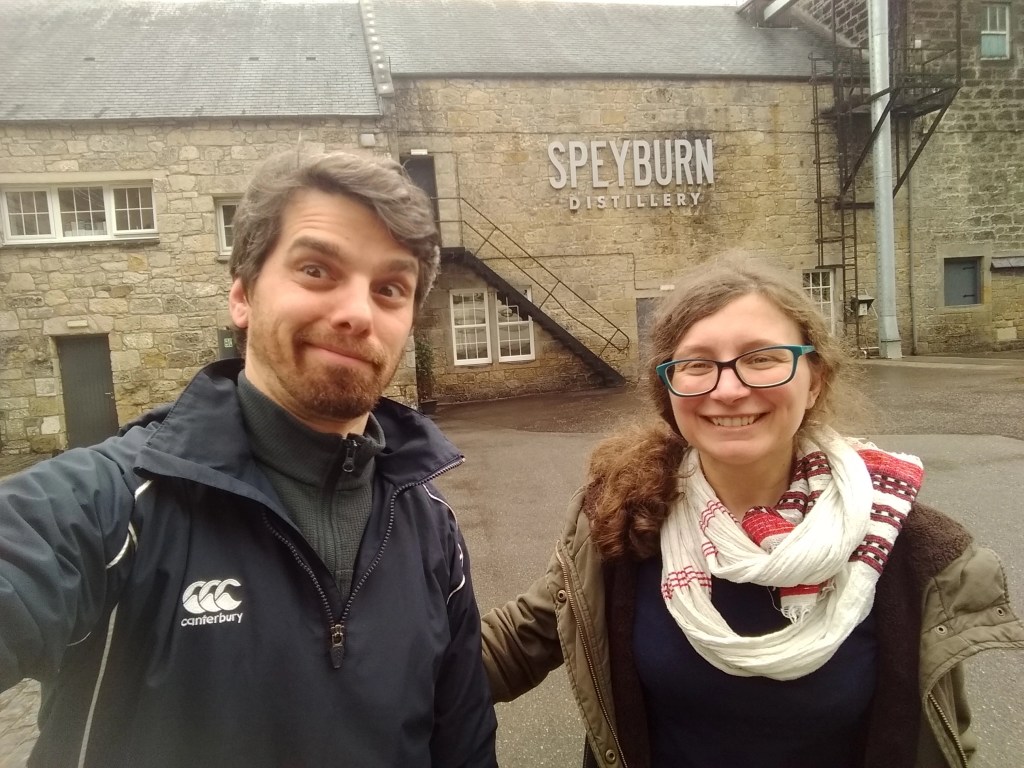
From Dufftown to Rothes itโ€™s barely a 15-minute drive, so we could take it easy and stop for a coffee and a soup, to warm up in the cold and rainy day. We then soon arrived at the Speyburn parking lot: in spite of being hidden from the main road, we knew exactly where to go, as during one of the many trips to Speyside we drove on the road just in front, from where the distillery could be admired in all its beauty.

Speyburn is not among the most well-known single malts, although it can now count on the presence on some supermarket shelves (the Bradan Orach and the 10y). They are owned by Inver House (which is in turn owned by Thai Bev, guess where theyโ€™re fromโ€ฆ) together with other four single malt distilleries, two in the Northern Highlands (Pultney and Balblair), another in Speyside (Balmenach) and Knockdhu (producing the AnCnoc whisky) in the Eastern Highlands. We previously only had one bottle of Speyburn, from the Scotch Malt Whisky Society: a 9y old from a refill bourbon. We got it by chance when buying a pack of three bottles during the pandemic, with the Speyburn being the one we were less excited about: it ended up being the best of the trio! Spicy at first, with time in an opened bottle the oxidation played its part, and the whisky mellowed down and became a fruity deliciousness. At this point, it goes without saying we were very curious to know more about Speyburn!

As we parked, we were warmly welcomed by the distillery manager Euan and the global ambassador Stuart (who we knew from some Aqvavitae’s vPubs), who walked us to the visitor centre to check in. Compared to the other โ€œusually closed to publicโ€ distilleries, they seemed to be way more prepared: there was a proper shop (not just a pop-up like at Dailuaine and Mortlach), with bottles and merchandising displayed on the shelves, and also a brand-new bar with big tables, where the tasting would have taken place after the visit inside the production. Weโ€™ll come back on this point.

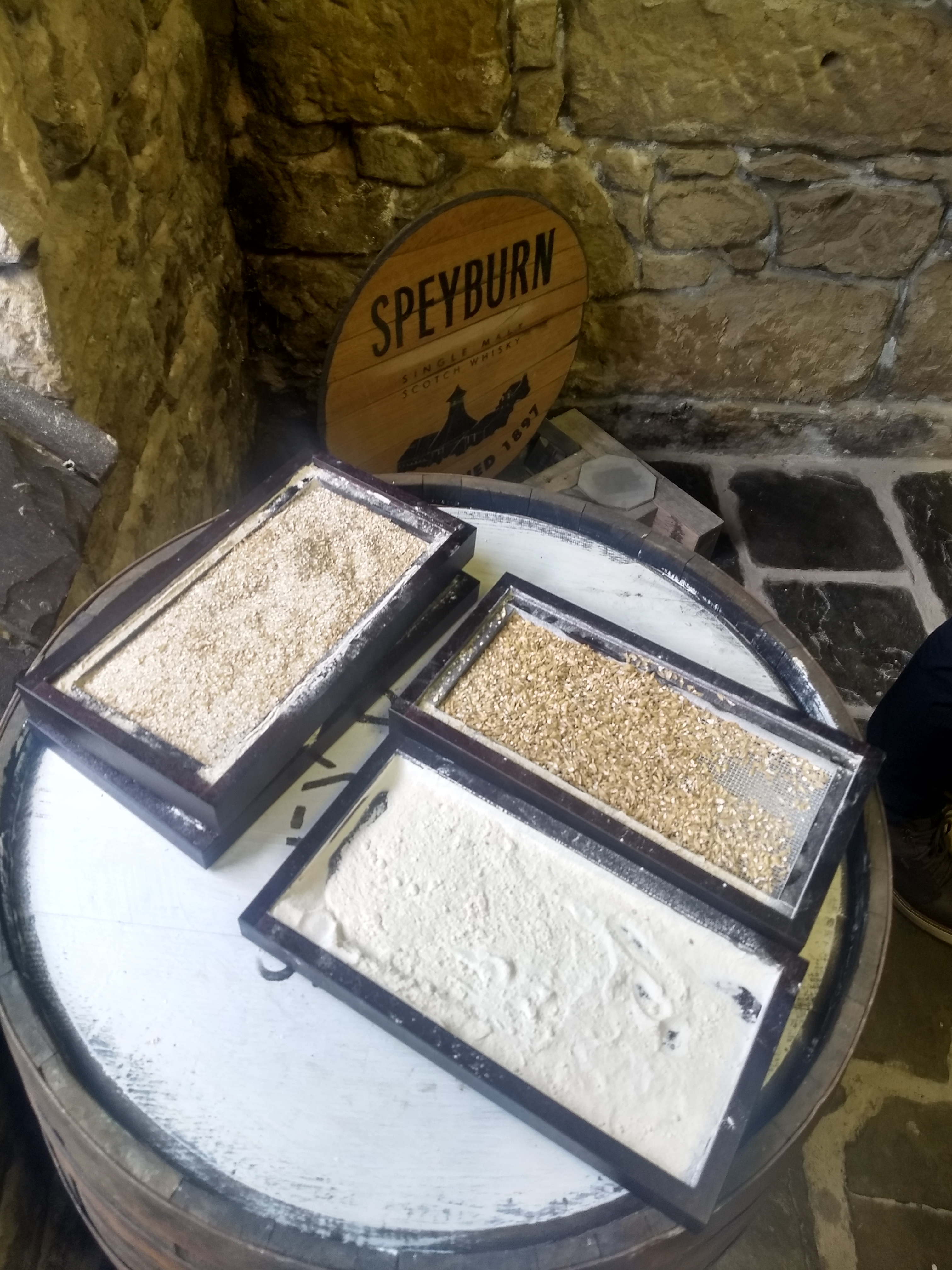
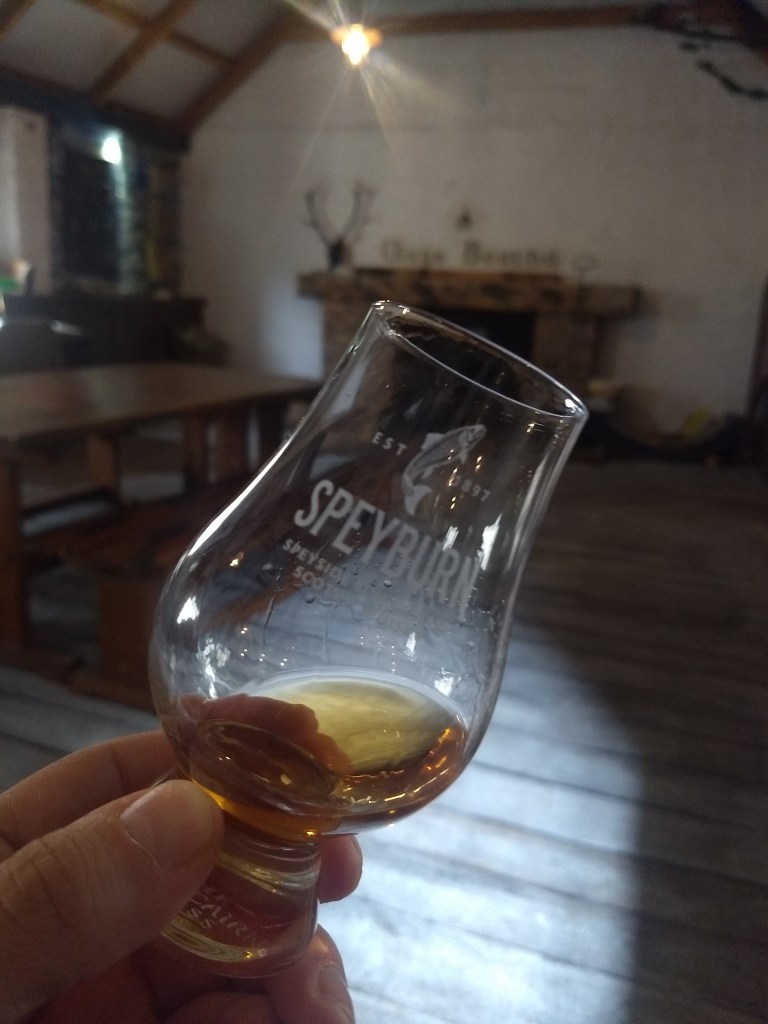
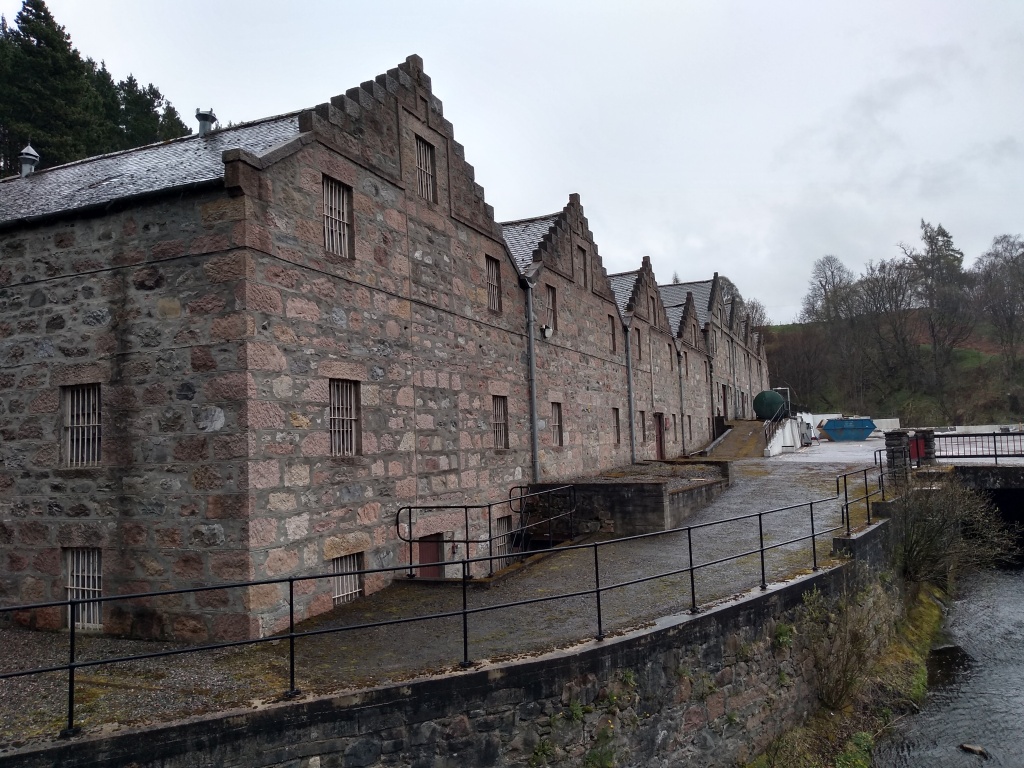
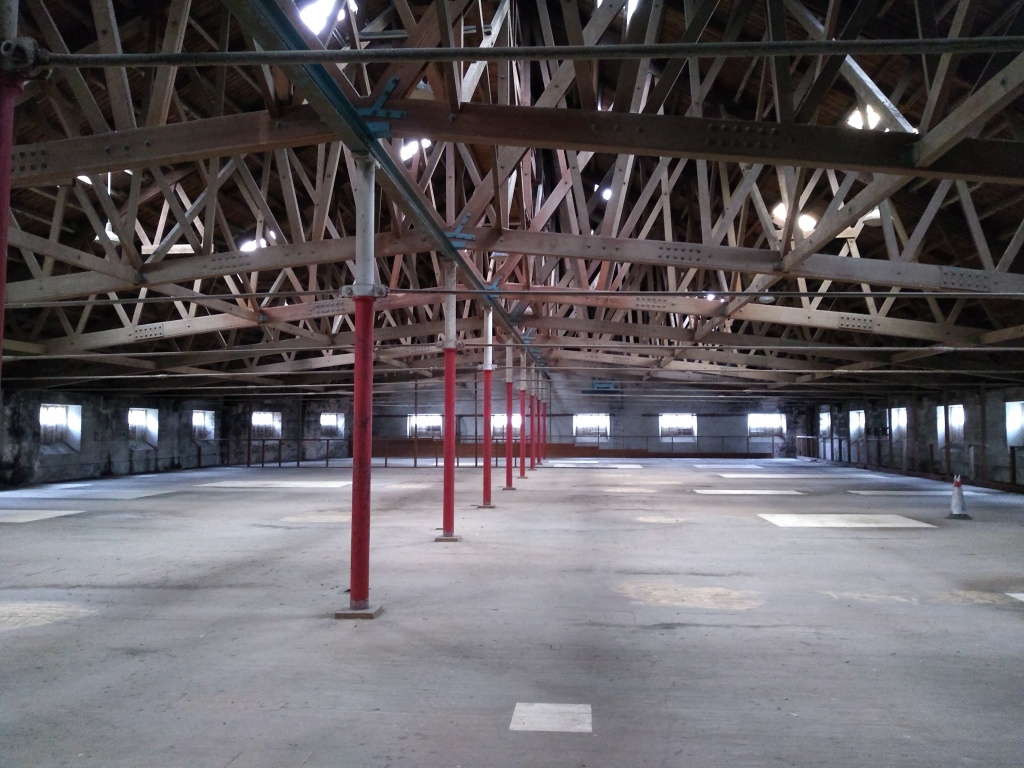
The tour started with some history in the courtyard: the distillery was founded in 1897, and the architect was the famous Charles Doig, who brought the pagoda roofs into the game. This became one of the iconic features of Scotch whisky distilleries, to the extent that distillers in other countries started copying it. It is also on the road signs in Speyside and elsewhere: if you see a white pagoda on a brown background, there must be a distillery close by! The original function was the kilnโ€™s ventilator, as at the time most distilleries were malting their own barley, Speyburn included. A crucial difference, however, early on they installed one of the few on-site drum maltings. They havenโ€™t been used in almost 60 years (after a sudden stop in 1967 following the stop of the near railway the year before), but they are still preserved for nerdy visitors to admire. And in fact, the first part of the tour was dedicated to this unique feature of the distillery.

Time travelling part 2: the steeping tanks.

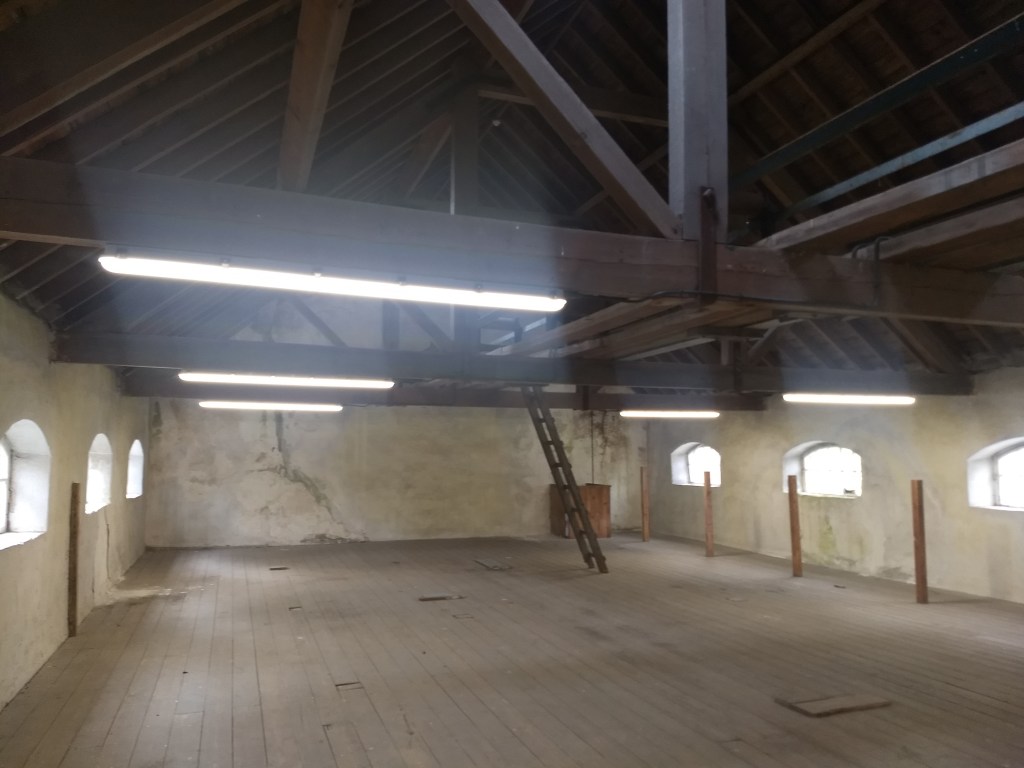
Euan and Stuart explained us that the place has been made accessible only recently, as testified by the new woodwork to allow people inside: it was like taking a walk in the past. The malting was working on different floors, the top one was where the barley was laid out, steeping tanks at the middle one, while the drums (think of huge tumble driersโ€ฆkind of) on the ground floor. One thing we found interesting was the completely different story compared to the usual one: smaller on-site drum maltings, and similarly Saladin boxes, were intermediate stages between the two extremes that are usually talked about during distillery visits (and on blogs, etc.), the (highly romanticised) labour intensive and not so efficient malting floor, and the modern highly efficient industrial-scale maltings. So fascinating to see what was in between!

We jumped back to the present, moving to the mill room, and from there through the usual layout of the modern plant: the closed stainless-steel mashtun, and the wooden washbacks, where we could sip a bit of their semi-cloudy 72hr-fermented wash (always an experience). One interesting feature is the combination of both shell-and-tube, of which one is horizontal, and two wormtubs condensers (132m in total). The former condenses liquid from the wash still, while the latter two from the spirit-stills, from which they take a cut between 72 and 64% abv. With only 3 stills they manage to produce about four millions of litres of alcohol per year: they get this incredible volume by working 24/7. There is a catwalk on the wormtubs, which are located outside, where we spent a couple of minutesโ€ฆ.we wonder if in Speyside the weather gets warm enough to tempt some people to jump in them.

We soon checked out the warehouse, where a surprise was waiting for us: nope, unfortunately we didnโ€™t sample some casks (we were hopeful, considering the hefty 80 quid tickets), but it was almost as good: we had a sample of their 125th Anniversary release, a single cask bottling from a 2nd fill ex-bourbon barrel vintage 2007, similar in style to the one we had but much more balanced, tropical and creamy. A truly delicious dram, probably the best one we tried during the festival.

The last part of the experience was the tasting of their core range, back at the bar. We had four generous drams of their non-age statement (NAS, but they told us it should be about 7-8y) expression Bradan Orach (40%abv, refill ex-bourbon), the 10y (again kind of introductory, 40%, 90% ex-bourbon and 10% ex-sherry casks, mostly second fill), but finally the two gems: the 15y (ex-bourbon before a 2-3y finish in ex-sherry Miguel Martinez casks) and the 18y (14y in ex-bourbon casks, then 4y in second fill oloroso casks), both 46%, natural colour and not chill-filtered. They were both super tasty: Gianluigi preferred the former, Teresa (as most people on the tour) the latter.

You can’t really tell from this picture how nice the bar is…

At this point youโ€™ll be wondering: wait a minute, if they are only open occasionally, how come they have a bar for tastings and a nice shop? Well, as a matter of fact, before the festival weโ€™ve been told by a birdie that Speyburn might have been preparing to open to visitors permanently. At the Spirit of Speyside 2023 they won the award as โ€œbest new experienceโ€ and this might have given the company the nudge to open permanently (although, more realistically it was already planned and not depending on the awardโ€ฆ). Bottom line is that, good news: starting August 2023 (coincidentally the time of writing), you can visit them and go check their very fascinating old drum maltings for the very reasonable price of ยฃ20 (see the link below).

So, overall, it was a great visit (one weโ€™d do again), and as we said earlier, a true deep-dive into the history of whisky production in Speyside. A bit pricey maybe, but at least the tasting was generous (5 healthy drams and a taste of the newmake), unlike some other we visited for the same price.

For the evening we drove first to Aberlour for a chit-chat with Matteo at the Speyside Whisky Shop (from which he just moved on as we are writing), and then to Dufftown where we spent the night. We parked near the Mortlach Hall, which was super quiet. We had dinner at the Commercial Hotel, which has moved the restaurant to the former function hall, together with some tasty Three Ships South-African malts (produced at the James Sedgwick Distillery), very rare to find in Scotland. Not that we were bored of Speyside malts, but it was good to try something different! Slainte!


The Speybirn Distillery Tour (Spirit of Speyside)

Price: ยฃ80.00 pp (April 2023, but now – August 2023 – they’re open to the public and it’s ยฃ20.00)

Duration: 2hr

Tasting: 5 drams, Speyburn 125th Anniversary (vintage 2007, 15y, refill ex-bourbon barrel, 62.6%, NC, NCF), Bradan Orach (40%), 10y (40%), 15y (46%, NC, NCF) and 18y (46%, NC, NCF)

Target: whisky enthusiasts

Value for money: not great

Highlights: the old drum malting equipment

Recommended: better than others, but still hard to justify at this price

Links: https://www.speyburn.com/, https://www.spiritofspeyside.com/


#31.2 Spirit of Speyside 2023

Shut it, badger!


TL;DR: Second distillery visit during the Spirit of Speyside: another workhorse, owned by Diageo this time, Dailuaine! Contrary to Tamnavulin, we know their malt mostly thanks to independent bottlers, as most of the production goes into blends. The tour was great, although it felt like visiting a distillery after a zombie apocalypse.

(missed Part 1?)

After the visit at Tamnavulin, we had only 45 minutes before our second visit of the day at another distillery usually closed to public: Dailuaine. Fortunately, the drive was only 25-ish minutes, and because we knew we were tight with time, in the morning we had prepared sandwiches, so we could have a quick lunch. Everything went fine, we drove from Tamnavulin to Ballindalloch, and before Aberlour we turned left, with the distillery being mid-way between the main road and the village of Carron. We had run through this village during the Dramathon, admiring the recently built Dalmunach distillery (on the site where Imperial used to be), but despite being the n-th time in Speyside, we had never driven there, so we didnโ€™t quite know what to expect. As we drove downhill form the A95, we found Dailuaine distillery on the left, spotting their big warehouses, almost terraced to cope with the slope. 

In the courtyard, we noted how massive is the site: the warehouses on the left, a small house (will turn out to be offices) on the right, and behind it the huge production building. As soon as we parked, a guy asked us if we were there for the tour, and because it was starting to rain, he told us to go inside and wait for him. He turned out to be Archie, the distillery manager, quite a character who made our visit unique! In the office, all visitors could sit around a table, and as we started, Archie poured some filter coffee and gave us some brownie squares – a very nice touch. He told us about his career before landing on this job, a few years before, and explained the history of the distillery. It was founded in 1852, and in 1925 it was acquired by Distillery Company Limited (or DCL, one of Diageo previous incarnations). He showed old pictures of the distillery, which testified how the staff numbers decreased over time, to the current handful of operators (2.5). Sad but understandable. He also told us that the warehouses on site are empty, quite a surprise to us given their size. 

Soon after we went back outside and started the tour. On site, there is still a dark grain plant, which until 2018, when it was closed, used to process draff and pot ale (leftovers from mashing and distilling) to make cattle feed. As we moved inside the production building, we couldnโ€™t help but notice how big the spaces are, and how empty they look too! As technology advanced, less and less space was required for the production. Also, part of it moved away, in particular malting and cask filling, as currently all the newmake spirit is put in tankers and shipped to Diageoโ€™s sites in the central belt. As a matter of fact, one of the most surprising parts was the huge malting floor, so big you could use it for a sizeable concert! They used to have Saladin boxes, a short-lived mid-20th century innovation replacing the need of hand-shovel the barley while malting, which was soon replaced by maltings drums. These big empty spaces gave us almost an eerie feeling, maybe we were influenced by The Last of Us TV series, but this really looked like a distillery in the post zombie apocalypse era. Decadent, but fascinating. 

Empty spaces apart, the production is very modern and all controlled by computers (although they still carry out manual checks). They have a closed mash-tun, 8 wooden and 2 steel washbacks (the latter outside the building), and 3 pair of pot stills (with copper shell-and-tube condensers). The distillery produces over 3 million litres of alcohol per year, placing it among the medium-big ones.

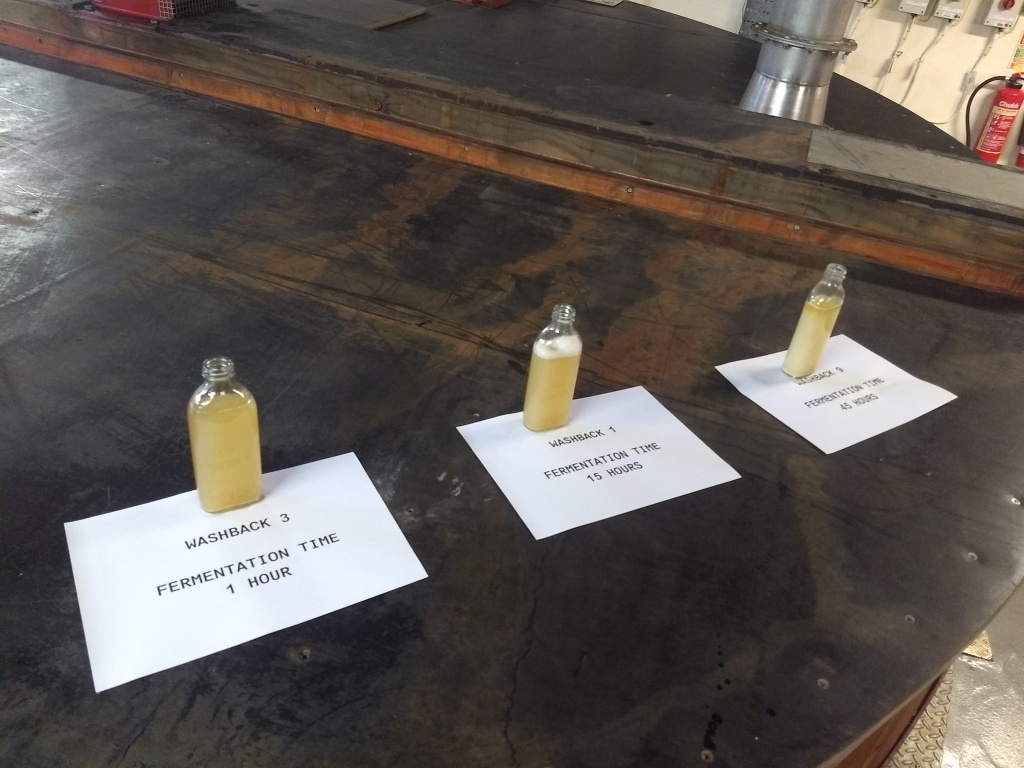
As we visited the fermentation room, Archie made us find three samples of wash for us to smell (not to drink!!), collected at different times: 1, 15 and 45 hours after fermentation started (overall fermentation is about 46 hours for a nutty style). Very nerdy and interesting. There, he was helped by Kyle, a distillery operator from Knockando distillery, deployed at Dailuaine as Knockando is currently closed. He also explained us how the system works in the stills room, answering all our (many) questions. We finally visited the โ€œfilling storeโ€, basically a tank with newmake spirit waiting for tanker truck to take it away. 

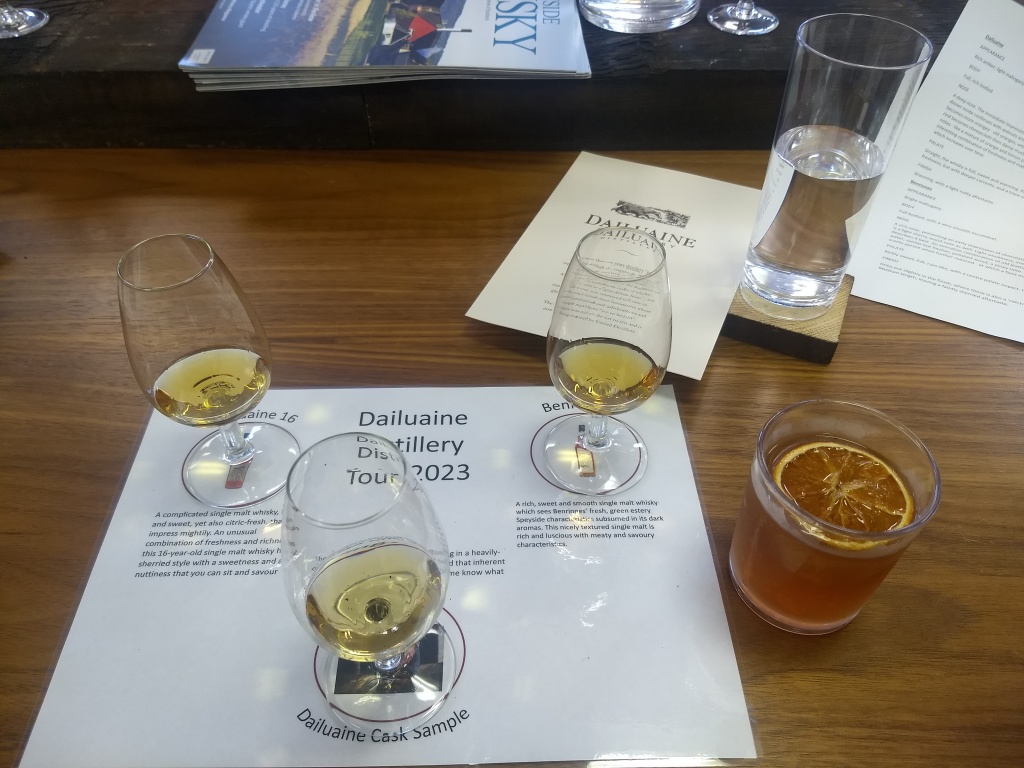
After the tour, it was time for the tasting! One of the offices was set up as a tasting room with a pop-up shop too (which turned out to be common to all Diageo distilleries we visited during the festival). As we got in, we were offered a cocktail: a variation of the Old-fashioned, made with Dailuaine 16 (of course) and orange bitters (instead of Angostura): very tasty! The drams at the tasting were three (four including the cocktail), a bit stingy for an 80-quid tour. We started with the Dailuaine 16 (43%), the Flora and Fauna bottle with the badger on the label. Second dram, another Dailuaine, a cask sample vintage 2010 usually offered in tastings at Cardhu distillery: a truly delicious dram, one of the best we tried during the festival. Finally, for some reason there was a Benrinnes 15, again from the Flora and Fauna range. 

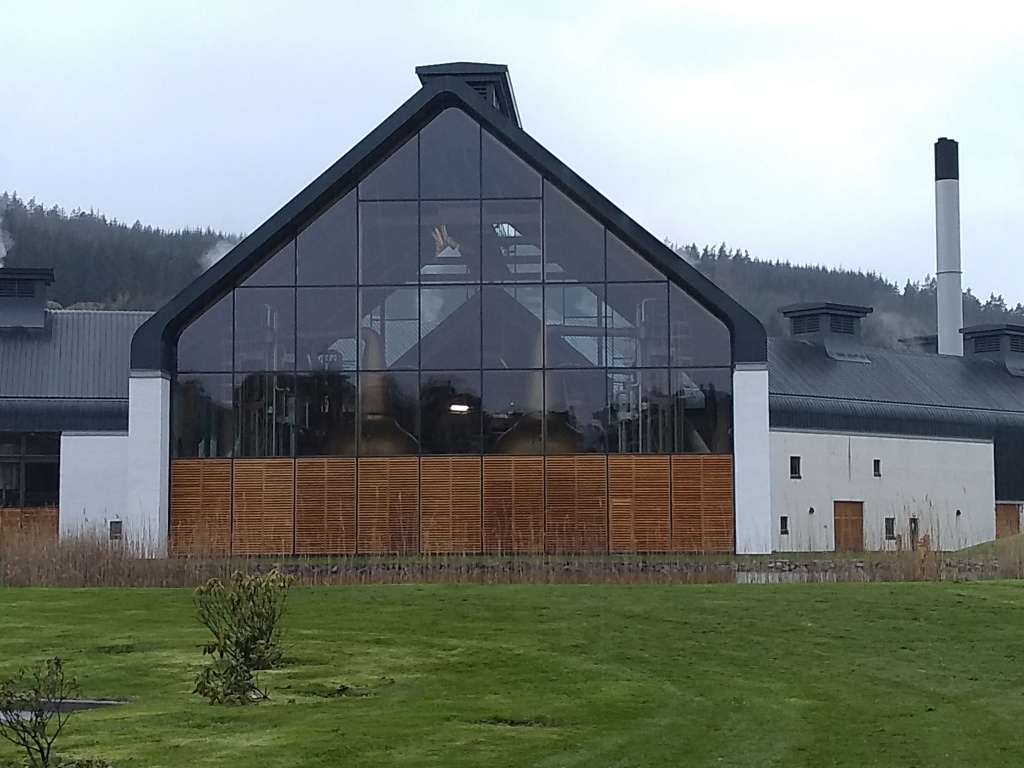
As we came out from the distillery we drove to another, Dalmunach, just to take a couple of pictures: we already knew from the glimpse while running the Dramathon, but that is a stunning one! After paying a visit to the GlenAllachie shop (we didnโ€™t have any event booked there, soโ€ฆ.), we found a spot for the night, a small parking lot near a church. The weather was a bit crappy, so we cooked something in the campervan and caught up with the drivers drams collected during the day: both the Tamnavulin and Dailuaine cask samples were quite great. 

Dailuaine distillery really impressed us, it was like experiencing tradition and progress at the same time, and Archie was truly a great host! Throughout the festival, we also noted that, there is something different about distilleries normally closed to the public compared to the others: they are not โ€œsweetenedโ€ to look like tourist attractions. The ultimate whisky nerd paradise!


Dailuaine Tour (Spirit of Speyside)

Price: ยฃ80.00 pp (April 2023)

Duration: 2hr

Tasting:  a cocktail and 3 drams, Dailuaine 16 (43%), cask sample and Benrinnes 15 (43%)

Target: whisky enthusiasts

Value for money: too pricey

Highlights: Archie was a great host!

Recommended: if you are really really keen to visit

Link: https://www.spiritofspeyside.com/
https://en.wikipedia.org/wiki/Dailuaine_distillery


#30.1 Back to the West

Ardnagain


TL;DR: After a very dry January, we are on the road again, direction: West Coastโ€ฆof Scotland, of course. It is also the first whisky trip with our new vehicle: Mr. Vantastic! First destination of the trip is an โ€œoldโ€ acquaintance, the Ardnamurchan distillery. Such a great place, a must-do for every whisky enthusiast!

The year 2023 started similarly to 2022, and 2021: dry. Not exactly the entire January, but still 4 weeks, from the 3rd to the 1st or 2nd of February. Gianluigi managed to sneak in a blood donation right before boozing again: perfect timing!

Because of this, the first whisky trip of the year couldnโ€™t be before February. We were quite impatient, mostly because of a big novelty in our life in Scotland, our first vehicle: Mr. Vantastic, the campervan! We bought this second-hand van, newly converted to campervan in December, after a 1-2 months search. Unfortunately, being December, it had to stay in the parking space for a couple of weeks while we were stuffing ourselves with food in Italy. In January, our maiden trip (to try it out) was a dry one: we went visit the Bamburgh Castle, just south of the border, inspired by The Last Kingdom series, which we thoroughly watched a few months back (โ€œI am Uthred, son of Uthredโ€!). We learned a thing: sleeping in the pop-up roof is like sleeping in a tent on top of a car, strongly advised against in early January.

Finally, February came, and we could take Mr. Vantastic out for a more serious trip: the West of Scotland, more precisely Ardnamurchan and Mull! We prepared ourselves and left on the Thursday evening after dinner, so to avoid the morning outbound road traffic from Leith. We actually drove a bit more than planned, until right past Callander. In spite of having a few more hours of sleep in the morning, we woke up quite early because of the excitement: itโ€™s the first time we were going to visit the Ardnamurchan Distillery after they released their single malt! During our previous trip, we could only try their spirit and the Adelphi blend.

The drive was quite amazing: Tyndrum, Bridge of Orchy, Glencoe, and then the short ferry crossing at Carron: actually very short, as we managed to get on the boat just a few seconds before it left the pier. After the crossing, we drove towards the Ardnamurchan peninsula, on the usual single-track road. We drove past the distillery, because we had decided to park in a spot a couple of miles ahead, where we could just spend the night or at least give us some time and a โ€œniceโ€ recovery walk after the tasting and before driving again. This was a sensible idea in theory (we felt so wise!), but weโ€™ll see how it terribly backfired. By the way, the spot is quite amazing, in front of McLeanโ€™s Nose (we were not aware of the new Adelphi blended whisky at the time), a truly stunning view: in spite of the cloud and wind, we could have stayed hours there just enjoying the landscape.

The walk to the distillery took about 35-40 minutes, but we still arrived a bit early. Julie welcomed us, and we browsed the shop for a while before DJ picked us up for the tour. In the meanwhile, we found out that there was no distillery exclusive/bottle your own because paperwork was not there yet, ouch! The curse of bureaucracy haunting us! Tour-wise, we had chosen the โ€œBehind the scenesโ€ tour, a more in depth experience compared to the one we did in 2019, and it also came with a discount because Gianluigi is member of the distillery AD/Venturers club. We were the only ones on the tour, so that meant โ€œfree question timeโ€ (sorry, DJ!).

We started in the dunnage warehouses behind the main building, on two levels. DJ explained us the (very eye-pleasing) colour coding of the casks and gave us some anticipations about future annual releases, which will join the Paul Launois, Madeira, and cask strength expressions. We then moved back to the main building, where we went through production. We hadnโ€™t forgotten how compact the distillery is, and how tiny the stills are, and the boiler fuelled with biomass from the area: all very sustainable.

Teresa admiring where some of the magic happens.

Surprise of this tour, we discovered that not both pagoda roofs are just for aesthetics: a malting floor is being set up and, at some point in the future they will malt some of their barley, with and without local peat: really looking forward to it!

DJ then walked us to the tasting room above the shop, where he started pouring us drams: first, the special for the AD/Venture club (a very nice 7y matured in an ex-bourbon barrel, the alternative was a sherried one). The three drams served as part of the tour were the Bruce-McLean bottled by Adelphi, the Paul-Launois 2021 (which we hadnโ€™t tried) and the single cask CK.339 (unpeated), all three quite amazing, so very difficult to single one out. On that day maybe the Bruce-McLean, but on another day we would have probably picked a different one.

One of our favourites.

Then the mess happened. What we did not took into consideration was the weather. On the way to the distillery, it had started raining but not that much. We thought โ€œoh well, it will go awayโ€. It didnโ€™t. Actually, by the end of the tour it was pouring down. So after the tour we waited a bit, but then we gave up and just left. Of course, by the time we were into the campervan, we were soaked. We spent the next hour drying ourselves up with the diesel-heater and fortunately we had an extra change of clothes and shoes. Teresa just before leaving Edinburgh had asked: โ€œis a second pair of shoes really necessary?โ€ Oh, yes it was.

After some hours drying and warming up, we decided to go get some food in the only local โ€œpubโ€, the Kilchoan House Hotel bar, in Kilchoan. In spite of the many options on their menu, everything is more or less deep fried, including the sausage Gianluigi ordered, to his surprise. We had a nice wee chat with some locals, although some of them soon left for an event at the community centre club. Again to our surprise, the bar was closed on the next day, which meant no Scotland-Wales 6 Nations game for us. The bartender was very nice though, she kindly allowed us to sleep in the hotel parking lot. Thanks to that we could relax and enjoy a pint.

A night cap after a tough afternoon.

Despite us almost ruining the day because of our dumbness, we had a great time again on the Ardnamurchan peninsula. The landscape is amazing as we remembered it from our trip back in 2019. There is a feeling of calm and peace when visiting such remote spots. About the distillery, they are one of the few producers we really admire, for their dedication and their ethos, and their ability to supply us with incredible single malt (and blends too!) at still reasonable prices. Their club is run properly, it is obvious that they are whisky enthusiasts and, thus, it is made for whisky enthusiasts, not just another money-making machine. We believe other companies should definitely take notes.


Ardnamurchan Behind the scenes

Price: ยฃ50.00 pp (February 2023, ยฃ35 for the AD/venturers)

Duration: 2hr

Tasting: 3 drams chosen from what available at the bar

Target: whisky enthusiasts and geeks

Value for money: good

Highlights: the walk in the warehouse

Distillery Exclusive: not available when we were there (due to delay in paperworkโ€ฆdโ€™oh!)

Recommended: even have to ask?

Link: https://www.adelphidistillery.com/


#23.2 On the run again: Dramathon 2022


Back to the Glens
(Grant and Garioch)


TL;DR: The day after the Dramathon we took advantage of being in Speyside to visit two distilleries we’d only had tastings at: Glen Grant, in Rothes, with their unique rectifiers, and Glen Garioch, in Oldmeldrum, which has been recently renovated. Both worth returning. 

(missed Part 1?)

So, after a (not so) resting sleep in Dufftown (guess why), we found ourselves with a spare Sunday (the drive home is about 3 hours only): plenty of time for some whisky stuff! Deciding which distillery to visit in Speyside and its surroundings, however, is becoming more and more difficult. Despite being the biggest single malt producing area, most distilleries are closed to the public, and a bunch of them are closed on weekends. Letโ€™s also say that we already had the opportunity to visit a few of them (ehm, ehm, ehm, ehm).

Nevertheless, because weโ€™ve been there also around Covid times, we only saw the visitor centre or the tasting room of some distilleries, so this was a good occasion to catch up with the production tours we hadnโ€™t done yet. First off: Glen Grant! Weโ€™d been there for the first time in July 2021: at the time we could only visit their marvelous Victorian gardens (if itโ€™s a beautiful day, they are worth the price of the ticket alone), have a quick tasting at the shop, and an Illy espresso at the cafรฉ (spoiler: this time the cafรฉ was closed, so no Illy, ouch!).

It’s dram o’ clock.

The distillery is owned by the Campari group, reason for the Italian flag in the courtyard: after Wild Turkey, this is the second distillery we visited from this owner. Glen Grant is in Rothes, almost in front of the famous copper still-producer Forsyth (also, where Caperdonich, nicknamed Glen Grant 2, was located). Founded in 1839, except for the modern and polished shop/visitor centre, it has maintained a classic distillery feel. A notable fact is that their master distiller, Dennis Malcom, is one of the longest serving workers in the whisky industry, with over 60 years of experience under his belt: impressive!

The guide of the day was Kirstie, very knowledgeable and professional. Since it wasnโ€™t raining, her explanation of the history started in the courtyard. We swiftly (or schwifty) moved to production, where we went through the usual path: milling, mashing (closed stainless still mashtun), and (wooden) washbacks.

Mashing in progress (looks like the first water).

Here came the interesting part: the still room. Like Glenfarclas and others, the room is separated from the rest of the production. As we walked in, we noted the curious shape of the wash stills, with a copper cylinder-ish bulge at the bottom of the neck, rather than the usual round one. The spirit stills have a classic round bulge, but the most fascinating characteristic, however, is the rectifier installed at the end of the lyne arms, looking like another small still. This was an intuition by John โ€œthe Majorโ€ Grant, who took on the business in 1972, and their purpose is to allow only the lightest vapor to be condensed. To produce a light spirit, they also set quite a short and high cut for the spirit heart: from 73% down to 68%.

Have you seen a rectifier like this before?

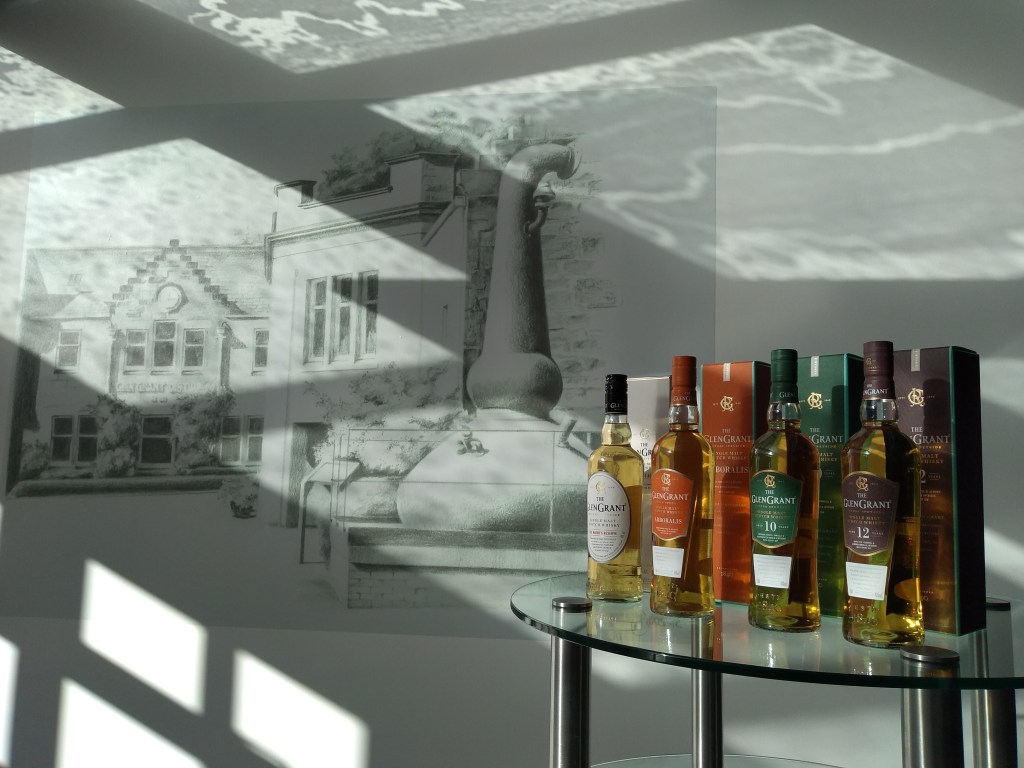
We then visited the warehouse before the self-guided tasting at the visitor centre. At the time of booking, we asked if we could pay more to upgrade our drams: not because they are bad (because they are not, in our opinion), but just because we had had the very same drams during our 2021 visit (Arboralis and 10y). Unfortunately, it wasnโ€™t possible, which was a pity because it would have been a simple but relevant improvement to the experience, in particular for more experienced drammers (other distilleries do it), but oh well.

Bottles on display (we tasted the middle ones).

After sipping (Teresa) and nosing (Gianluigi) the two drams, we went back to the car and drove towards the Aberdeenshire for the second distillery of the day. While driving we did some distillery spotting, first Glentauchers and then Strathmill, in Keith, reached after a nice short walk along the river Isla (the day was truly gorgeous!).

Not so hidden Strathmill warehouses.

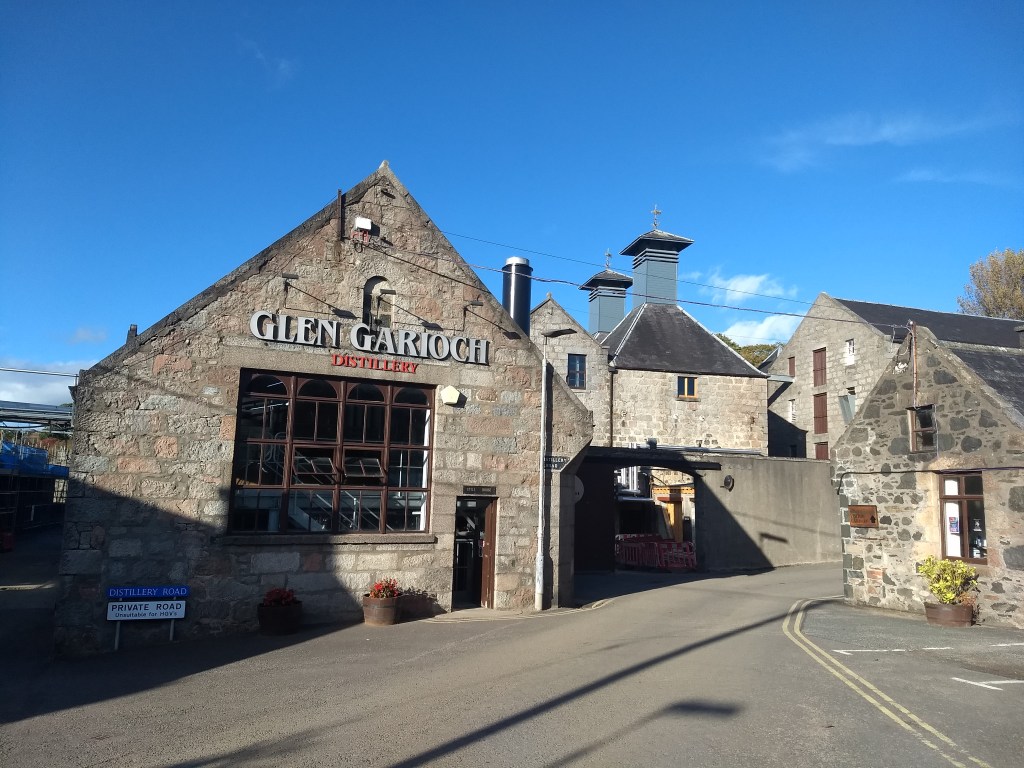
Glen Garioch is in a very different setting: even older than Glen Grant (it was founded 1797), it is almost stuck in the village of Oldmeldrum (near Inverurie): it looks like the village grew around the distillery. Funnily, it was the distillery we visited after our 2021 Dramathon as well, but at the time it wasnโ€™t possible to visit the production due to a combination of Covid safety rules and ongoing renovations, so we were quite excited about the tour!

Look what’s on Distillery Road!

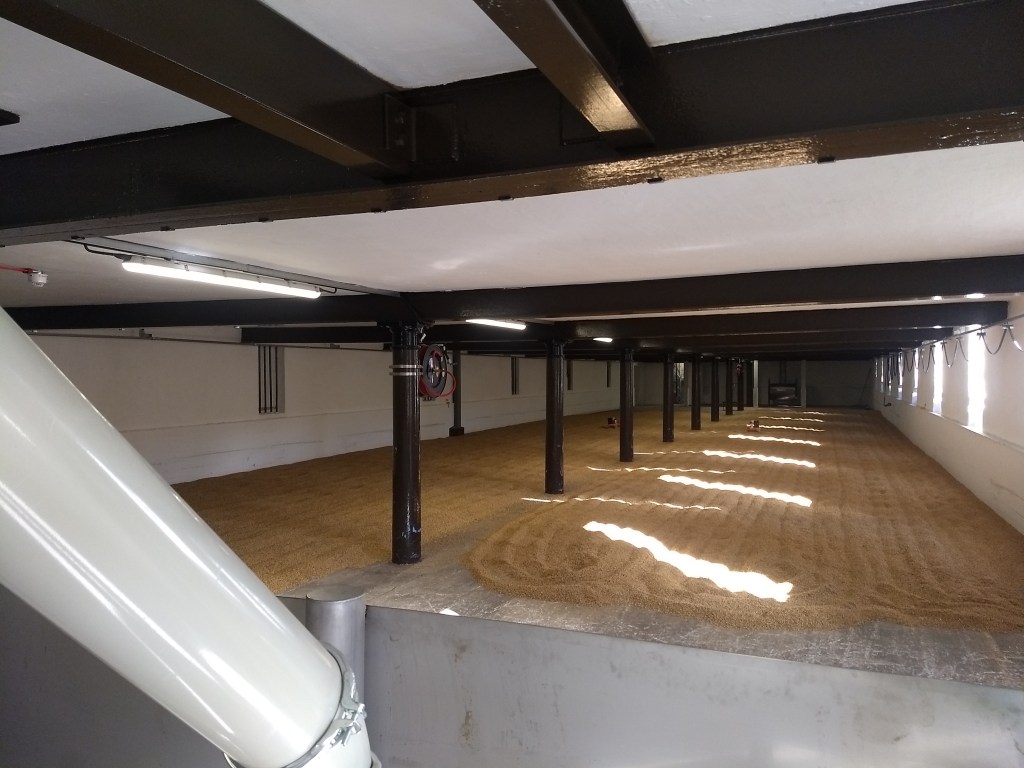
Our guide Iona started the tour from the new malting floor, one of the parts under renovation the previous year. There was one originally, but it was dismissed back in the day when industrial maltings became too convenient to be ignored. This happened across the entire industry, so that now only a handful of distilleries malt their own barley in a malting floor (Benriach, Balvenie, Kilchoman, Laphroaig, Bowmore), and to our knowledge, only Springbank/Kilkerran do it for the 100% of their production (waiting for Dunphail), so bravo Glen Garioch! They also re-introduced the use of peat in their kiln, to get peated malt from time to time.

The renovated malting floor.

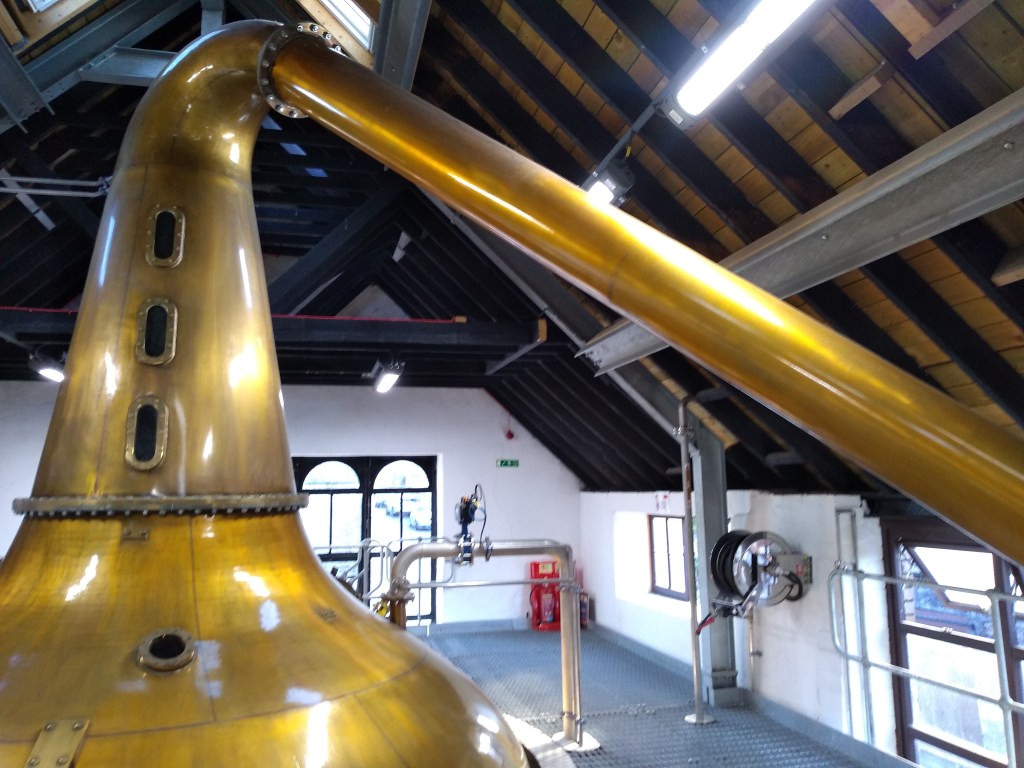
We moved on to follow the phases of whisky production: milling (classic red-painted Porteus), mashing (again, closed stainless steel mashtun), and fermenting (stainless steel washbacks). In the still room, we saw the other result of the renovations: they removed one of their three stills, and the spirit still is now directly fired (a flame is burning below, heating the still, instead of the usual steam coil inside it). Again, this modification is a step back into the past of whisky production, as direct-fire stills arenโ€™t usually as efficient as steam coils. Their cut is wide, 73% to 63%, which contributes to giving body to the spirit.

Directly fired, trust us!

This is reflected in the malts that we sipped in the tasting room, back at the visitor centre (after a wee tour in one of the warehouses). The 12y is a solid whisky, but the Foundersโ€™ Reserve (NAS) is good too. Similar to last year, the visitor centre offers a choice from their core range, the Renaissance range (a series of four expressions, the youngest 15y and the oldest 18y), the American cask trilogy (single casks sourced in Missouri, Minnesota and Kentucky), the virgin oak finish (a vatting of multiple casks), and a couple of distillery exclusives (see below).

The Spirit is flowing!

Again, another very interesting visit, to a distillery that made efforts to bring back some features of the original production. We know that, with the re-discovery of flavours in single malts, thereโ€™s a question about the effects of each part of production. While most of the flavour has been attributed to casks, now people started exploring the effect of other factors, such as malting and distilling, and doubts about more recent modernisations have arisen. For us nerds and geeks (and generally consumers), this exploration is quite exciting as it brings us a lot of new (or old?) flavours!

The tasting.

Until next time, slรกinte!


Glen Grant Tour

Price: ยฃ7.50 pp (October 2022), including the Victorian gardens

Duration: 1hr 10min

Tasting: 2 drams, Glen Grant Arboralis (NAS, 40%) and 10y (40%)

Target: Anyone, but geared towards tourists and novices

Value for money: Very good

Highlights: The still room and the rectifiers

Things we did not like: The very limited tasting optionsโ€ฆor โ€œoptionโ€

Distillery Exclusive: Glen Grant 13y (2008-2021), 56.5%, single cask (NCF, NC) 50cl for ยฃ120

Recommended: For the price, definitely yes

Link: https://www.glengrant.com/


Glen Garioch Founder’s Tour

Price: ยฃ15.00 pp (October 2022)

Duration: 1hr

Tasting: 2 drams, Foundersโ€™ Reserve (NAS, 48%, NC, NCF) and Glen Garioch 12y (48%, NC, NCF)

Target: Anyone, but whisky geeks might appreciate it more

Value for money: Good

Highlights: The new malting floor and the direct-fire stills

Distillery Exclusives: Glen Garioch 1991 (single ex-bourbon cask, 46.4%, NC, NCF, ยฃ325) and Sherry Cask 2009 (1st fill ex-sherry butt, 58.3%, NC, NCF, ยฃ130)

Recommended: Yes

Link: https://www.glengarioch.com/

#22 Goodbye 2022, see you soon 2023

A very dramming year


TL;DR: As usual this period gives us a chance to reflect on the year about to end. It has been an intense one for us, particularly the second half. Whisky-wise, we had some very fantastic experiences, some disappointing, and a few average ones. While we are looking forward to โ€œdramming aroundโ€ in 2023, here our 2022 highlights.  

Aaaandโ€ฆItโ€™s December, and we are finally on holidays. By the time you will be reading this, another Christmas will have just passed, we hope you had a great day of celebrations with your loved ones, and that you are now bloated and relaxing on Boxing Day (or St. Stephen, as it is known in Italy).

Because of our jobs, we both arrived at the end of the year very tired. However, it was also a year full of fantastic whisky experiences, that we hope to repeat next year. In 2022, we visited 19 (Gianluigi) and 20 (Teresa) new distilleries (17 in Scotland and one in England together, Gianluigi visited one in Canada, Teresa one in Ireland and one in England). We also had the chance to revisit some good old acquaintances, like GlenAllachie and Deanston (amongst our favourites). We were able to go to Orkney (hurray!) to catch up with both Scapa (aye!) and Highland Park (nay!).

Sheep grazing with Scapa in the back.

And, finally (FINALLY), we visited Islay for the first time, after our March 2020 trip was cancelled by you-know-what. What a crazy holiday that one, our rented campervan broke down on day 1, half-hour away from the ferry terminal. Although we had to get last-minute accommodations and move around by taxi, we managed anyway! And what a visit, we have to say that whisky tourism on Islay is something really different. Take the Laphroaig tour for example, the token system to pick the drams for your tasting at the end makes it much more flexible than most of the other tours, so that can be enjoyed by both novices and experts. Moreover, Bunnahabhain (best warehouse tasting everโ€ฆjust the bottling prices a bit too steep), Lagavulin, and Kilchoman rewarded us travelling there by including no-core range drams, all limited ones, which made the experience truly special. We wished other distilleries on far-away islands would do the sameโ€ฆ We canโ€™t wait to go back to Islay, to catch up with the other distilleries, and revisit some.

Moments before the best warehouse tasting ever.

Other than Islay we had some incredible whisky experiences, like the Deanston Winter Fest (coming up soon in the blog), or the GlenAllachie tour during the โ€œSpeycationโ€ (coming up soon too).

Deanston WinterFest: that’s happiness after three tastings.

This word was brilliantly created by our friend Cath, and greatly implemented byย  Justine (Kask Whisky): over the weekend we visited 5 distilleries (+ 1 being built) and did a few tastings, including one in the now closed Coleburn distillery, and one in the Strathislaโ€™s warehouse. A couple of weeks earlier, we were again in Speyside for the Dramathon, and of course we visited (or revisited) a few distilleries: Glenfarclas (new visit), Glen Grant and Glen Garioch on the way back (both revisits).

The direct-fired Glen Garioch spirit still.

Some of the tours we did were OK, a bit standard but nothing to complain about: weโ€™d say that usually you get what you pay for. Disappointments came from distillery-exclusive bottling prices. In some cases, instead of rewarding you for visiting the distillery (and already paying for a tasting or a tour), they put a 20-30 quid premium on those. Not nice. The only distillery experience that was really a disappointment and we regret paying for was Highland Park. Despite avoiding the basic tour (ยฃ30, already not cheap) we opted for the improved one (ยฃ75, the most expensive tour we did so far) to be denied any dram of distillery exclusives or other limited bottlings, and just taste the core range which we could have done in Edinburgh anytime. An expensive tourist trap, we wonโ€™t go back there (sorry James, you were a superstar guide though!).

A nice but waaaaay to pricey Blair Athol (ยฃ120!!!).

With the Covid19 restrictions behind our back, we could attend our very first whisky festivals, the Fife whisky festival in March and the Whisky Fringe in August – we had a lot of fun, let’s see if it’ll be the same with bigger events.

Enjoying a break between the two Fife Whisky Festival sessions.

In-person tastings came back too. We did a few organised by our friend Justine, of course, as well as others by Mark, Murray (both at Kilderkin) and Colin at Tipsy Midgie. We had some cracking drams, including a 20y Dutch single malt from Zuidam, a fantastic Doorlyโ€™s rum (from Foursquare distillery) and some cracking Daftmill-s and Bruichladdich-s. Also, SMWS events came back, including our favourites: Outturns and Distillery Visits (an event where you can taste whiskies brought by a distillery representative together with some provided by the SMWS). This year we did the Glen Moray distillery visit with Iain Allan connected remotely and the Distell one (Deanston/Tobermory) with the very funny Brendan McCarron: both cracking events with awesome whiskies! Gianluigi also decided to become an Aqvavite Youtube Channel Patreon: Royโ€™s content and entertainment are really priceless, and this was long overdue. We also attended a very funny blind tasting in Glasgow where we finally met all those whisky folks weโ€™d only seen on screen until then.

Awesome Aquavitae event in Glasgow!!!

By writing this up, we realised 2022 was intense not only because of work, but because of whisky too! We hope to bag more distilleries in 2023, although weโ€™ll probably try to be more selective when picking tours and experiences. We are also starting to organise whisky tastings: the first will be towards the end February and will be Port-cask related (we got the idea during our fantastic trip in Portugalโ€ฆtickets here), but the following ones will involve bottles we picked up in our travels, not necessarily at distilleries, ehehโ€ฆStay tuned! Overall, itโ€™s still a very long way to become whisky geeks, but weโ€™ve learned a lot this year and we hope to continue the trend!

Not just whisky for us…coming to a tasting soon!

Happy holidays and see you next year! Slainte!


#17.2 A first taste of Speyside

Walking and blending


TL;DR: The last two days of the trip were dedicated to less standard whisky experiences. First off, a walk through the village of Dufftown and its distilleries. On the last day, we did a blending experience at Strathisla, learning the hard way how difficult it is. Overall, definitely a great trip! 

(missed Part 1?)

The morning of the third day was quite open, so we went back to Aberlour, officially for a walk to the Linn waterfalls, behind the Aberlour distillery, but we sneaked in a second visit toโ€ฆno, not the distillery, to the Walkerโ€™s cookies shop! Just to pick up Christmas gifts for family and friends, and because Gianluigi loves cookies indeed! We had some take-away food from a local shop, before our afternoon activity: a walking tour of the 9 distilleries of Dufftown! If youโ€™re asking yourself why 9, just stick with usโ€ฆ

A cute meeting point for the walking tour.

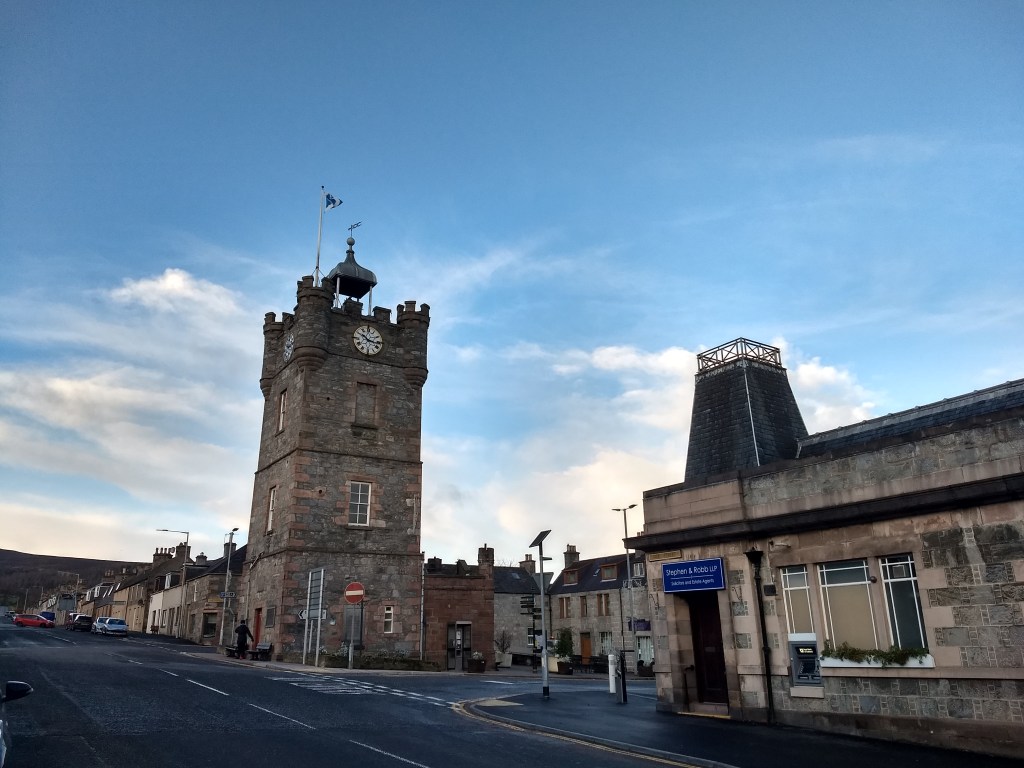
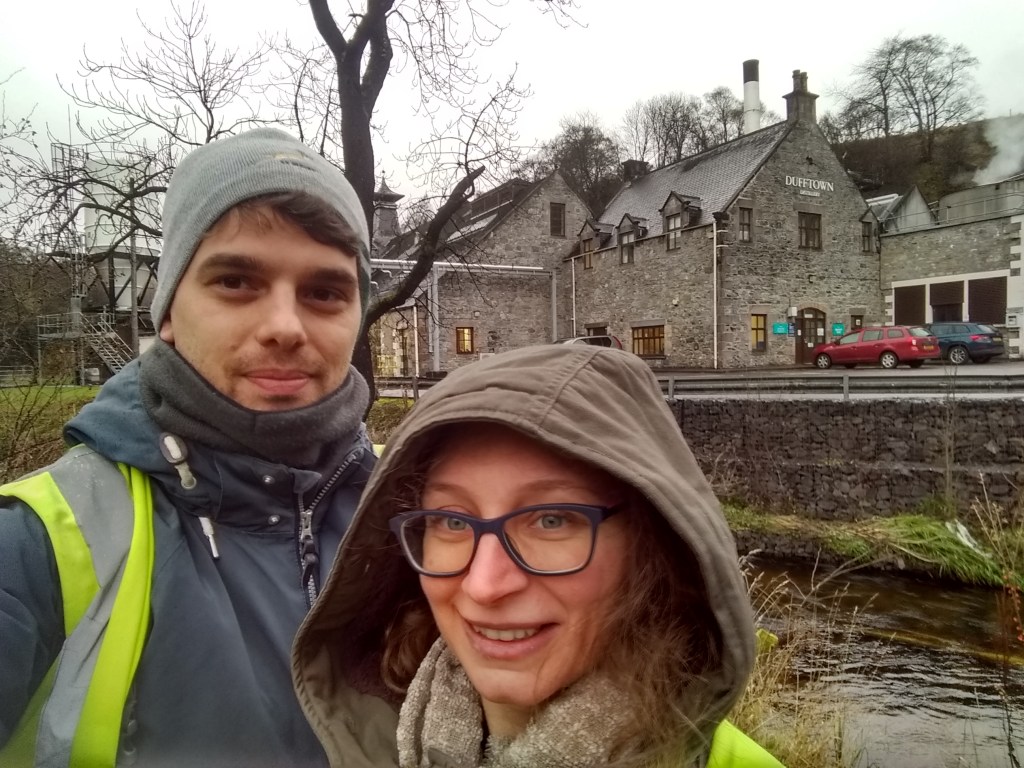
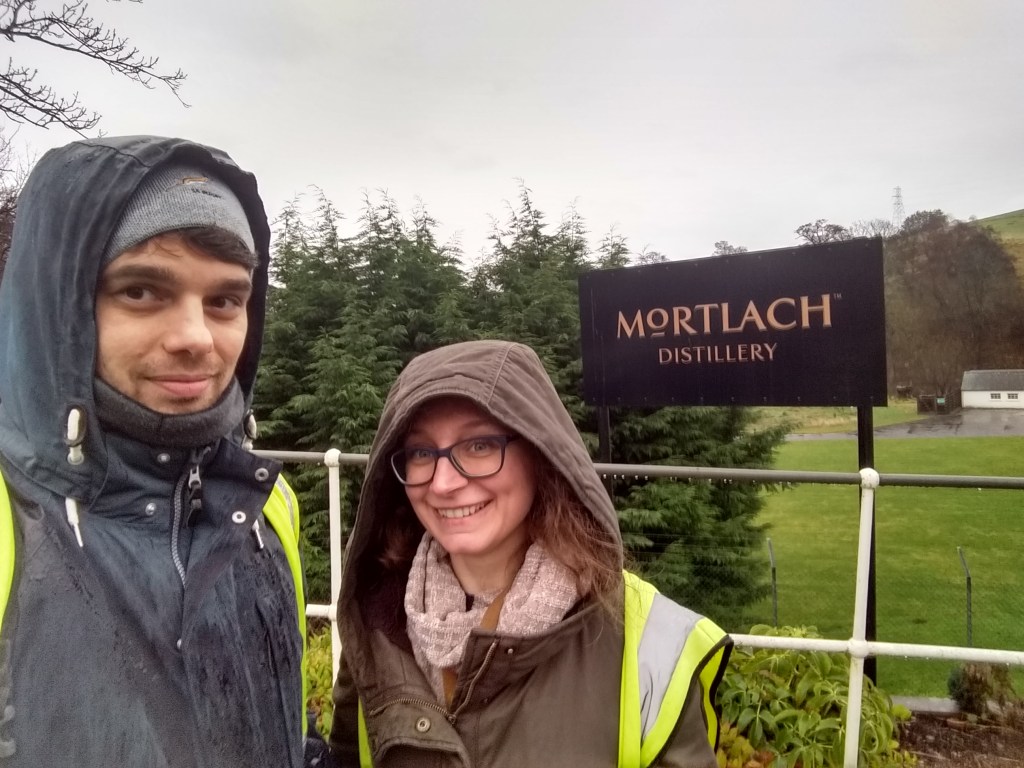
The tour was organized by Michelle, a local guide living in the village. We and another young couple met her at the clock tower. First, we walked towards her house, where she very professionally gave us a glencairn and a yellow vest: at the end of the day we were about to walk through a few whisky producing plants, most of them not open to visitors. To start with, we walked towards the site where the now demolished Pittyvaich distillery used to be (close to the Mortlach Parish Church). While looking at some of the old warehouses, Michelle poured a taste of a 25y Pittyvaich from a Diageo release. A bit down the road, we then stopped at Dufftown distillery, owned by Diageo.

Best shot at Dufftown distillery.

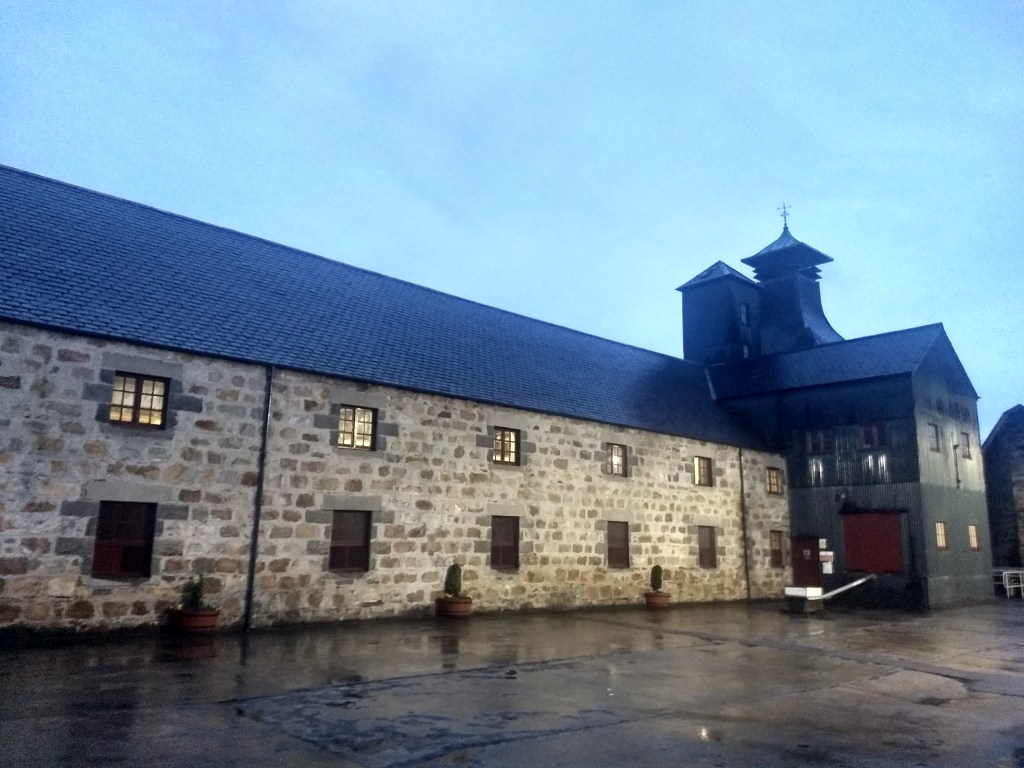
Thisย is one of the three distilleries making the Singleton (Singleton of Dufftown), sold mostly in the UK and Europe. Moving on with our tour, walking along the Dullan Water, we found the third distillery: Glendullan, another one from the Singleton series (this one distributed in North America, while the third one is from Glen Ord and is distributed in the Asian market). One exception was the House of Tully Singleton, part of the Game of Thrones range, which we had a taste of after a wee look at the still room. Next stop was a popular one, Mortlach, which we were very curious about for their quite complicated 2.71 distillation process. We saw their third still (from the outside), called the Wee Witchie, where the last 0.71 of the distillation happens (in our understanding, but not so sureโ€ฆ).

The beast of Dufftown and us.

In this case, the dram was a Gordon & MacPhail 25y from the distillery label range, paired with homemade shortbreads, which were fantastic! It took a bit to get to the next stop, this time walking along the Foiddich. During the walk Michelle showed us the building where another silent distillery was, Parkmore, closed too long ago to get a sip. We were already acquainted with the next working one, Glenfiddich, but not the next ones: Kininvie and Balvenie.

Balvenie, the beautiful.

Unfortunately, during this trip we hadnโ€™t managed to book the latter (although we caught up almost a couple of years later), so we were very curious to see it. As we walked past the malting floor, we saw smoke coming out of it, meaning it was working! Michelle was very excited as well, she had seen it only a dozen of times. We walked past Kininvie still room (the mashtun and washbacks are at Balvenie). The final distillery was another silent one, Convalmore, now used as warehouses. This is where Michelleโ€™s husband was waiting for us in a van to bring us back (it was quite dark at that stage). It was a great experience, a bit different from a regular distillery visit, definitely worth it! We ended up having dinner at the Commercial Hotel and, again, a couple of drams at the Seven Stills.


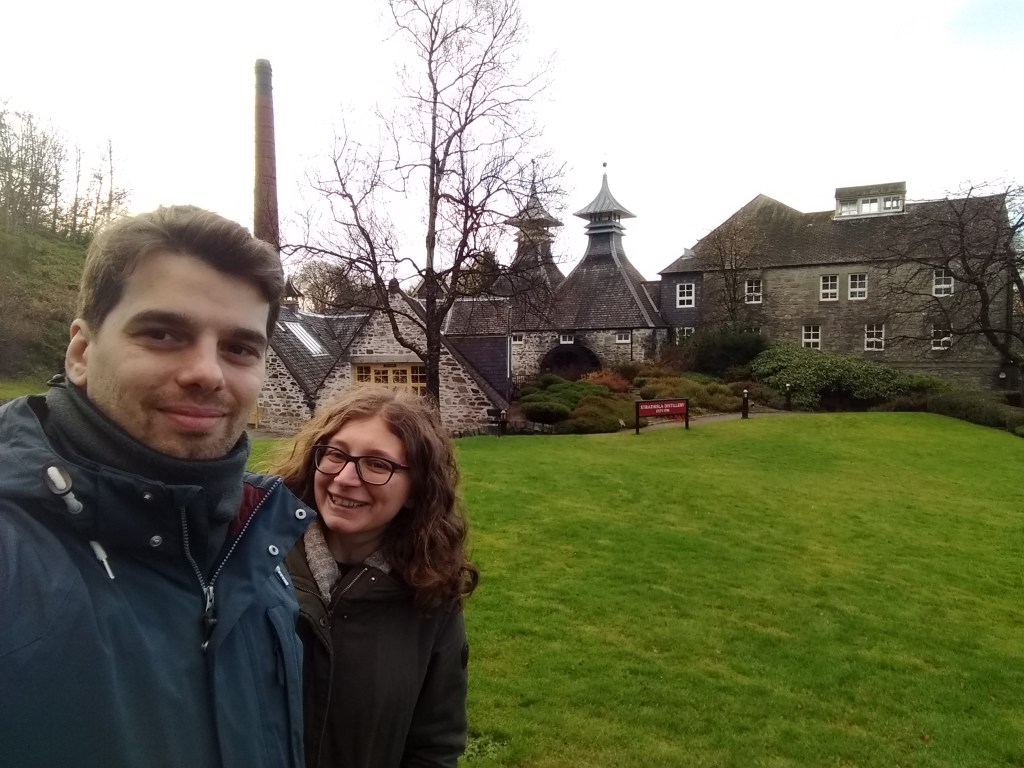
Sunday was the last day of our wee holiday. We had a very nice conversation with Linda and her partner, who drove us to Keith for the last whisky activity of the long weekend: Strathisla. The distillery looks very pretty, in particular as you walk in from the parking through the courtyard. Like Aberlour, it is owned by Chivas Brothers (a subsidiary of Pernod Ricard), and it is the core malt of one of their most popular brands, Chivas Regal. The 12 year old expression is present in almost all auntiesโ€™ and grandmothersโ€™ houses back in Italy too.

Iconic Strathisla.

For this tour, Teresa picked something different: the blending experience. So, after the tour of the distillery and the warehouses (where we had a dram of Chivas straight from the cask), we were guided to the blending room. It looked like a fancy version of a high school chemistry lab, with all the glass equipment, but instead of burners there were bottles of whisky. Our task was to create a blend of 5 whiskies: fruity (Strathisla), citrusy (Glen Keith), smoky (Allt Aโ€™Bhaine), creamy (Longmorn) and floral (Strathclyde, a grain whisky distilled in Glasgow). Of course, as we were making it, it was like: โ€œitโ€™s going to be super tastyโ€, but when a few months later we opened our 20cl souvenir bottle of our very own blends, it clearly was kind of crappy. Well, blending is more of an art, and the blenders job is definitely one of the hardest in the sector! Definitely a fun activity though, although we both agreed that one time was plenty.

As we came out, we had over an hour to wait at the Keith โ€œstationโ€ (a porch) for the train to Aberdeen. We couldnโ€™t really walk around because of the backpacks and the heavy rain, so we just sneaked in a walk to Glen Keith distillery, right in front of Strathisla.

Glen Keith distillery under the rain.

On the train back we came up with the idea of a whisky blog. It would have taken over a year to kickstart it, but this trip is the culprit! It substantially improved our knowledge and made us even more enthusiastic about scotch whisky. Speyside is one of those places where every time we visit, we say to each other: โ€œwe should get a house here”. This was the first trip to this magical region, with many more just about to come!

Until the next story, slainte!


Strathisla Distillery Tours
https://www.maltwhiskydistilleries.com/strathisla/

Michelle’s Dufftown Distilleries Walk
https://www.dufftown.co.uk/prov_attr_detail.php?id=153

(Because this trip happened almost 3 years ago, we are not compiling the distillery visit evaluation box.)