#55.1 All drams great and small

The Top of the Wold and the Spirit of Yorkshire


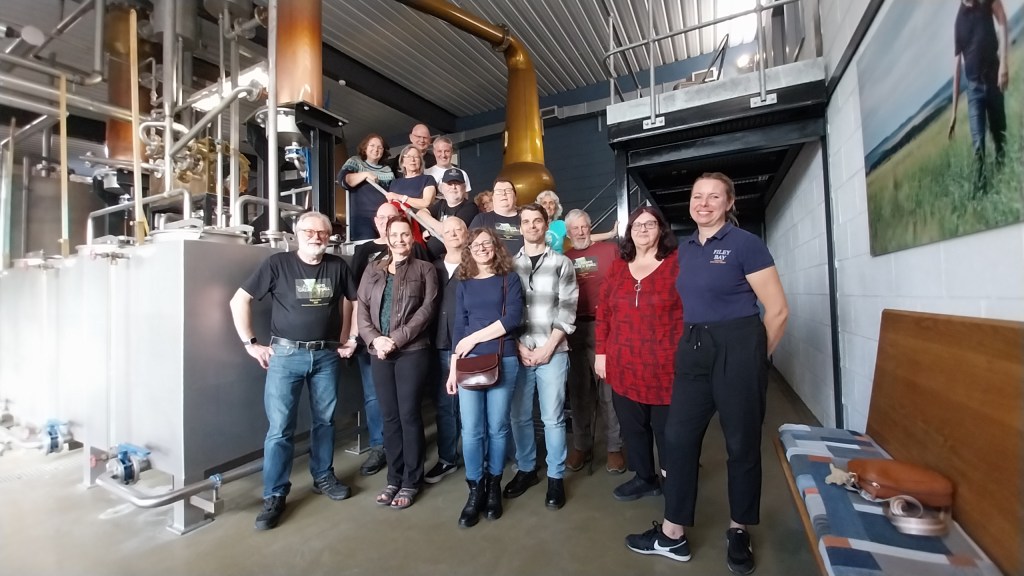
TL; DR: This year the jolly gang of the Edinburgh Whisky Group chose a controversial destination for the annual trip: Yorkshire, in England! Plenty of distilleries and other destinations, starting from one of the most celebrated English whisky distilleries: the Spirit of Yorkshire! The tour(s) and tasting exceeded our expectations: this distillery is a strongly suggested destination for whisky lovers!ย 

With the start of the autumn (or fall, for those of you on the other side of the pond), it was time again for the Edinburgh Whisky Group annual trip. Our first destination was Campbeltown, in 2021: plenty of whisky activities, all at walking distance from each other, just perfect. The trips that followed, Speyside in 2022 and Northern Highlands in 2023, were logistically harder to organise for Justine, as they required getting a coach, and playing Tetris with the various distilleriesโ€™ availability. One thing Justine had to face, despite her huge effort and the number of distilleries in those areas, was the unwillingness of many to accommodate a large group (with exceptions, such as Glen Moray and Glenallachie), open their doors for the ones usually closed to visitors (again some exceptions, like Dornoch), or just arrange something different for usโ€ฆIn some cases even replying to emails seemed to be too big of an effort!

For the 2024 trip, Justine had a great idea up her sleeves: going south of the border, to England! Specifically, to Yorkshire. English whisky has seen a renaissance in the past decade, going from one distillery (The English distillery, in East Anglia), to a few tenths, as testified by the ever changing map maintained by Cooper King (a caveat though, some of them are gin distilleries possibly laying cask of newmake spirit, so take this number with a pinch of saltโ€ฆNevertheless, 55 is quite impressive!). We had already โ€œdrammed aroundโ€ England, with visits to the Lakes Distillery (March โ€™22), Copper Rivet (October โ€™22), White Peaks, and Cotswolds (both July โ€™23), with White Peaks being the most impressive, in terms of location, quality of the whisky and, last but not least, company ethos. Because weโ€™d enjoyed these โ€˜tastersโ€™, we were quite curious of this deep dive in the English whisky scene, so when October came, we were really excited!

We left Leith on the Thursday night, sleeping half-way between there and the โ€œbase campโ€ of our trip, the Piebald Inn, in Hunmamby. This is a quite famous hotel and restaurant, in particular for the number (and quality) of their piesโ€ฆAlthough Gianluigi was a bit disappointed when he learned that the Quarter Horse or the Chestnut Horse pies were not really made with horsemeat, dโ€™oh! We got there in the morning, just in time for the group meet-up. For our first day, we had a brewery and a distillery tour: Wold Top Brewery and Spirit of Yorkshire Distillery, both owned by the Mellor family.

We started from the brewery, called Wold Top because Wolds are the hills where the brewery is located (itโ€™s not a typo!). We got there by taxi, and as we settled in the brewery visitor centre and bar, they offered us a half pint (with a pint glass to keep), nice welcome! Sam, our guide, put on a well-made video about the brewery history. It was founded in 2003 by Tom and Gill Mellor on their farm, and it’s currently run by their daughter Kate and her husband Alex. Knowing that this part of Yorkshire is ideal to grow brewersโ€™ and distillersโ€™ barley, and realising that the farm sits on a great water source, they decided to cut the middleman and start producing their own beer, farm-to-glass. At first the biggest issue was distribution (they started with farmers markets), because of the remoteness of the area. In 2008 they installed their own bottling plant, and in 2012 and 2016 they expanded with new kits and started doing contract brews as well. For a while, the location could also be hired as a wedding venue, but that stopped a few years ago. In 2016, they also started distilling, but weโ€™ll talk more about that later. For the beer, they mainly use Lauriet barley, which is sent to Muntons for malting. The barley is malted to eight different โ€œcoloursโ€, but sometimes they also use wheat and, more rarely, corn. They use over 40 varieties of hops from all over the world.

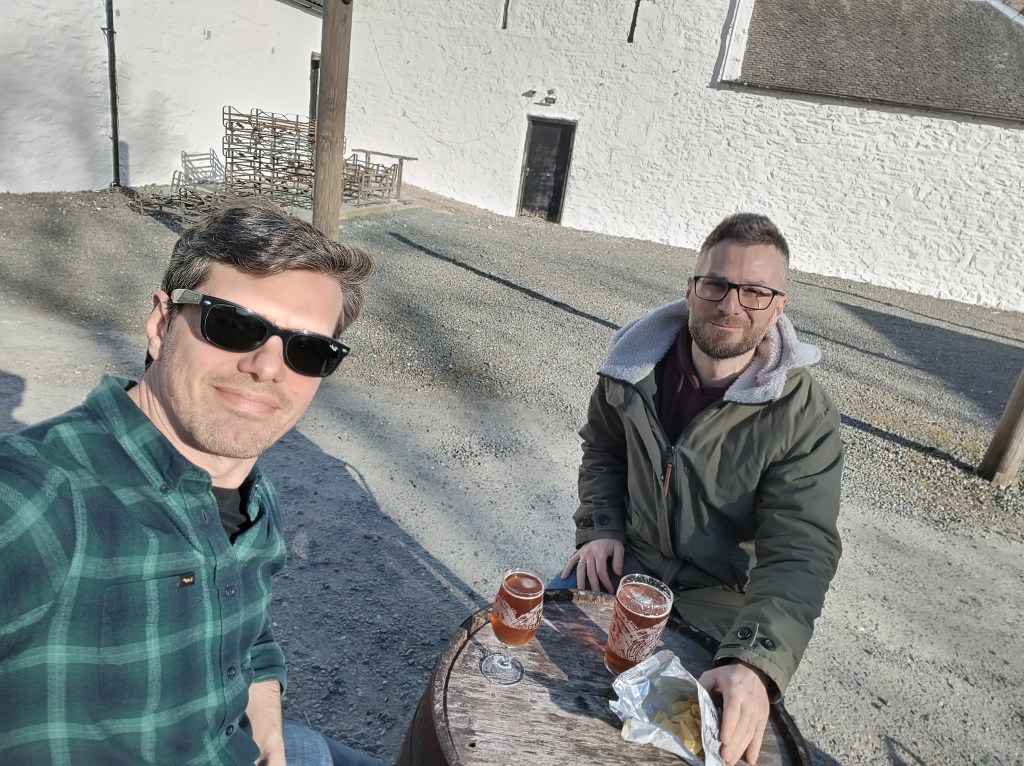
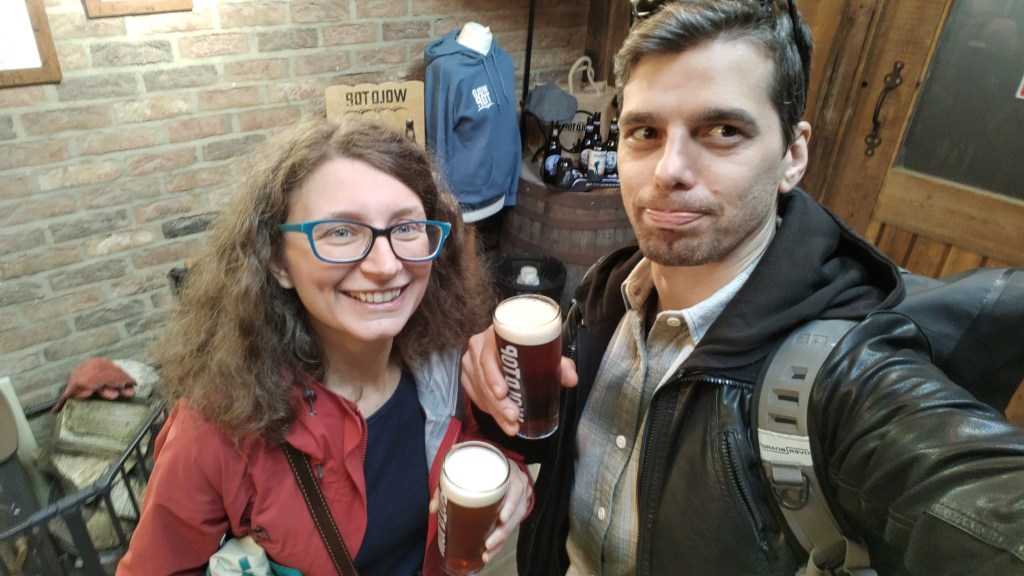
A welcome half pint, nice!

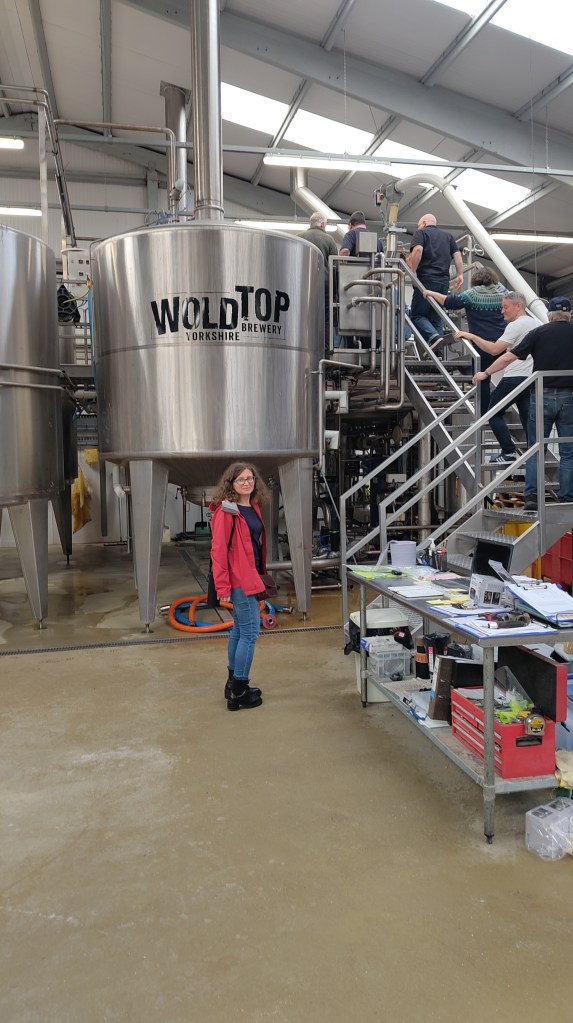
After the video, we moved to the production area next door, also used as an extension for their events (and indeed, decorations from the October Fest were still hanging around). In this location they produce both the beer and the fermented wash for the distillery. After checking out the modern malt mill, we climbed a stair to get on top of a catwalk and check out the mushtuns, including the kettle to boil the beer (one of the main differences between making beer and whisky, beside the addition of hops), where the beer wash is boiled for 75 minutes. Next to the catwalk, the stainless steel washbacks for fermentation. The beer is kept in conditioning tanks for 2 to 4 weeks before going straight into casks (i.e. unfiltered), then chilled, filtered and finally put into kegs or bottles. We headed back to the (cosy) bar for another half pint, while our pal Stephen (after asking permission to the staff) served us a dram of a Filey Bay single malt finished in a Wold Top beer barrel (Ex-IPA finish, Whisky Exchange exclusive bottled for the 2024 Whisky Show, 51.5%) – a preview of what was about to come.

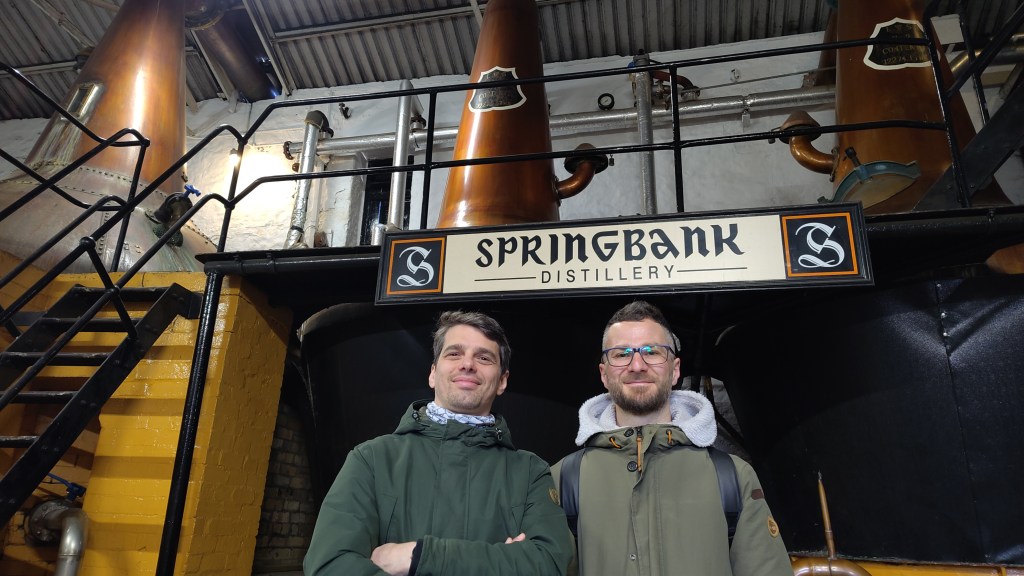
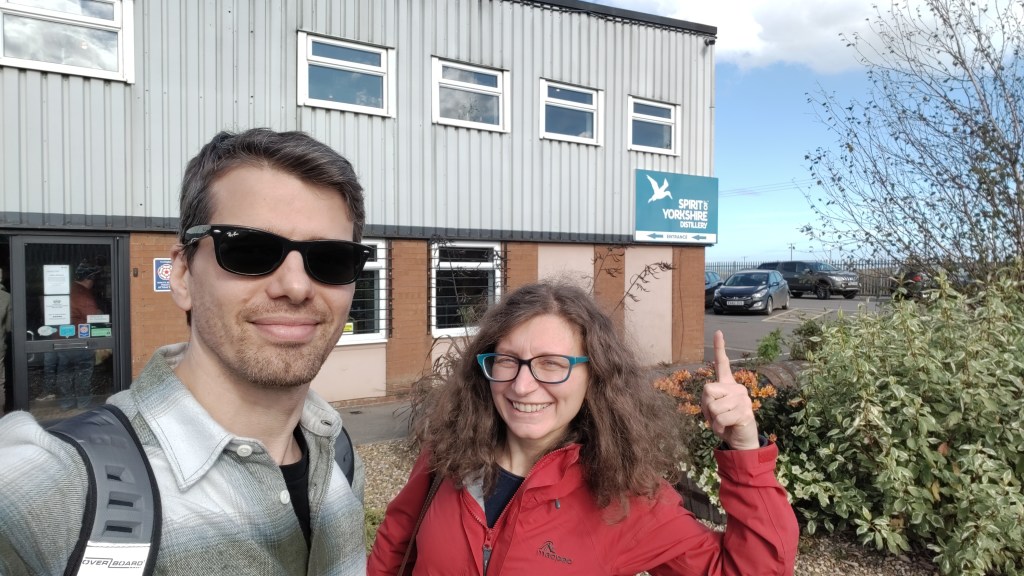
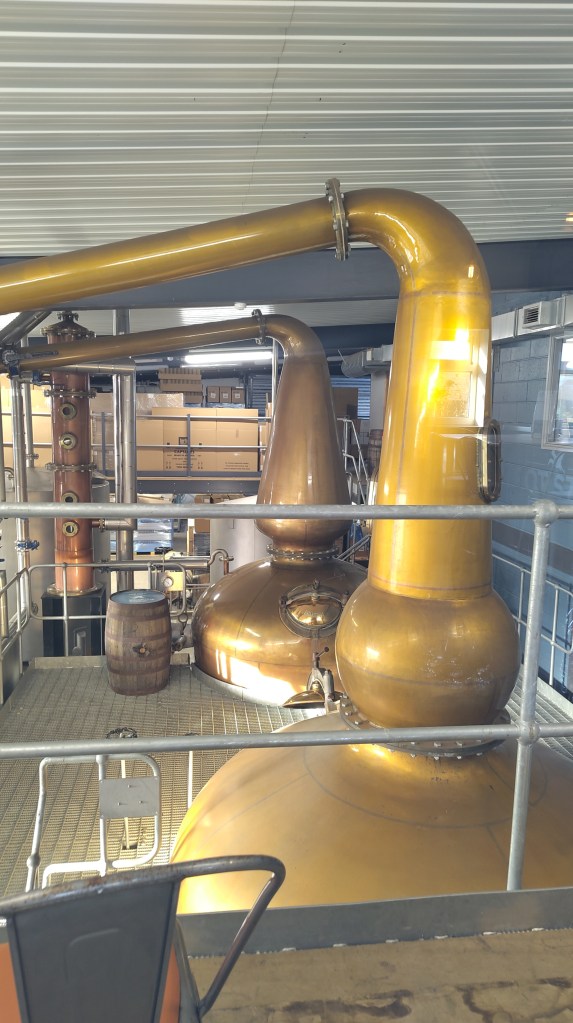
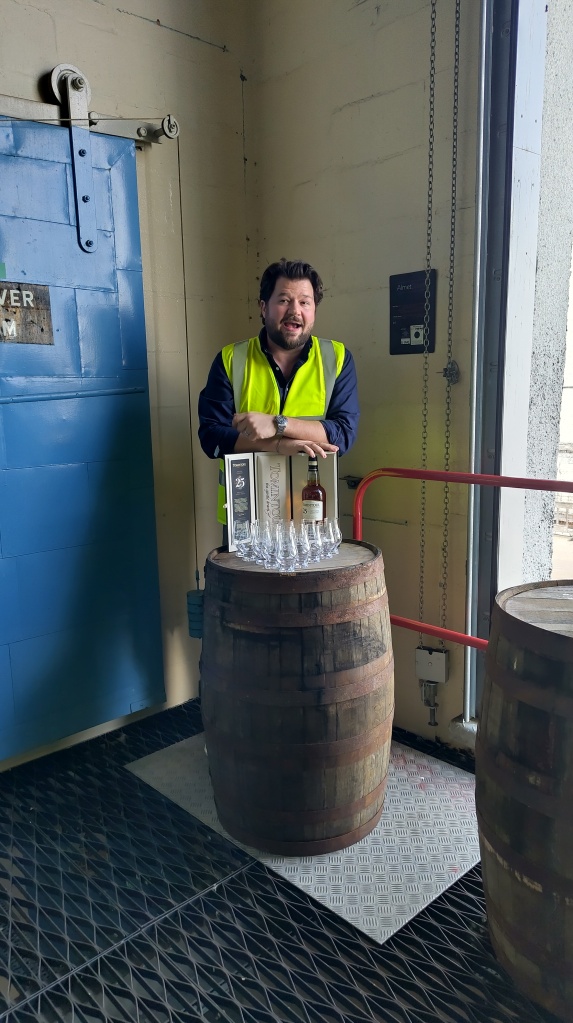
We headed back to Hunmamby (again by taxi), to the Spirit of Yorkshire distillery. The building is in a small industrial estate, and other than distilling they also have a shop and a bar/cafรฉ (The Pot Still) overlooking the still room. We had tables booked for lunch, and after the (nice) meal, we started the tour with our guide Justina. She gave us a welcome dram (the Flagship) while telling us the history of the distillery, which was built in 2016 and opened to visitors in 2017, with many options for tours and tastings.

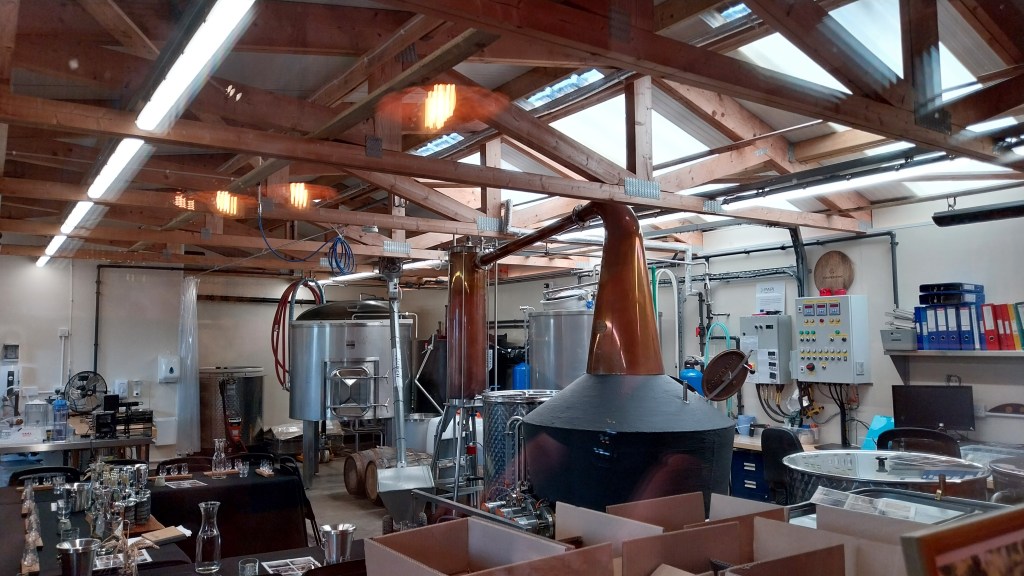
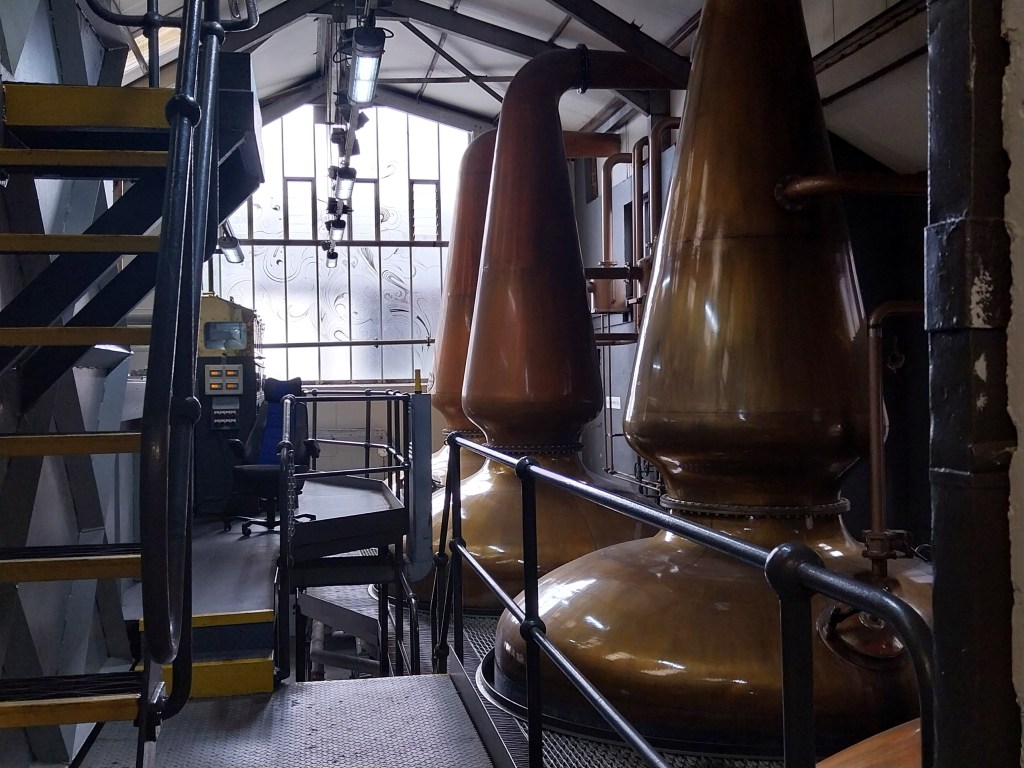
The fermented wash comes twice a week from the brewery on a tractor, 20,000 litres in total. For the whisky, they usually use Concerto barley in spring, and Vessel in winter. Fermentation lasts 75 to 95 hours, and the yeast is added twice, at different temperatures (two types of yeast, we missed which varieties though). The first pot still holds 5,000 litres, which are reduced to 1,700 after the first distillation. The second pot still is 3,500 litres, and after 10-15 minutes of foreshots, they collect 500 litres of spirit for about 1-1.5 hours, with cuts between 77-76% and 69% abv. Here is the novelty, they also have a small column still, which they use for 6 months a year in tandem with the pot still. For the column still, the 400 litres cut is taken between 86 and 85%. This system, as for many other new distilleries, was suggested by the late Dr Jim Swan, and because we are in England, and the grain used is barley, they can call it single malt whisky. The newmake spirits from the column and pot stills are put into casks separately, and then blended before bottling to get the required flavour profile: their flagship product is 50/50 column and pot still whisky, and it is fractionally married aiming for consistency; everything else they produce is made in small batches.

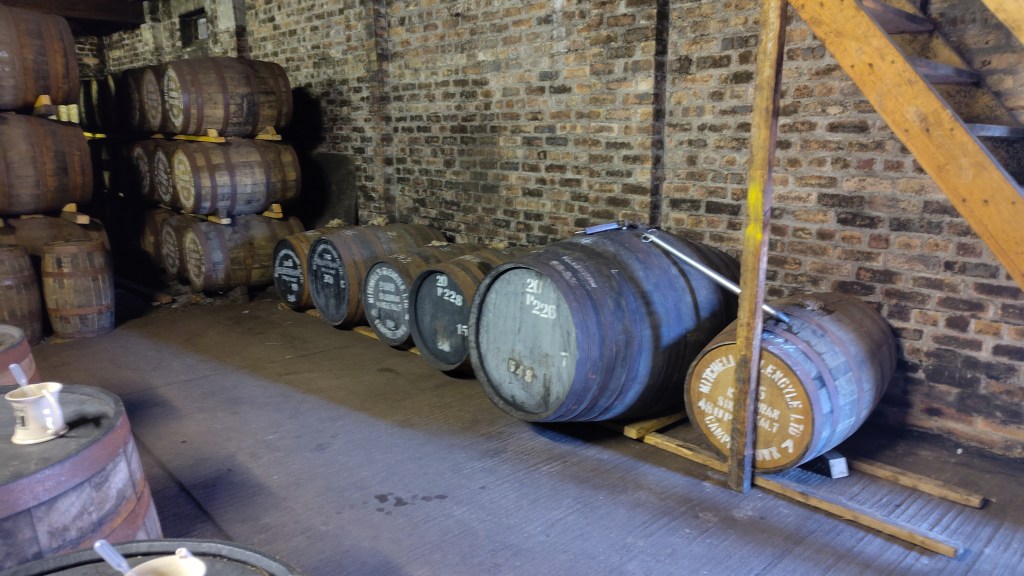
The full capacity would be 450,000 litres of alcohol per year, but their usual production is between 12 casks per week (about 82,000 litres) which are stored in a bonded warehouse off site, but near the farm. Casks are then moved back to the distillery for bottling, in their new automated bottling line, able to make 600 bottles per hour. Everything is non-chill filtered and no colouring is added.

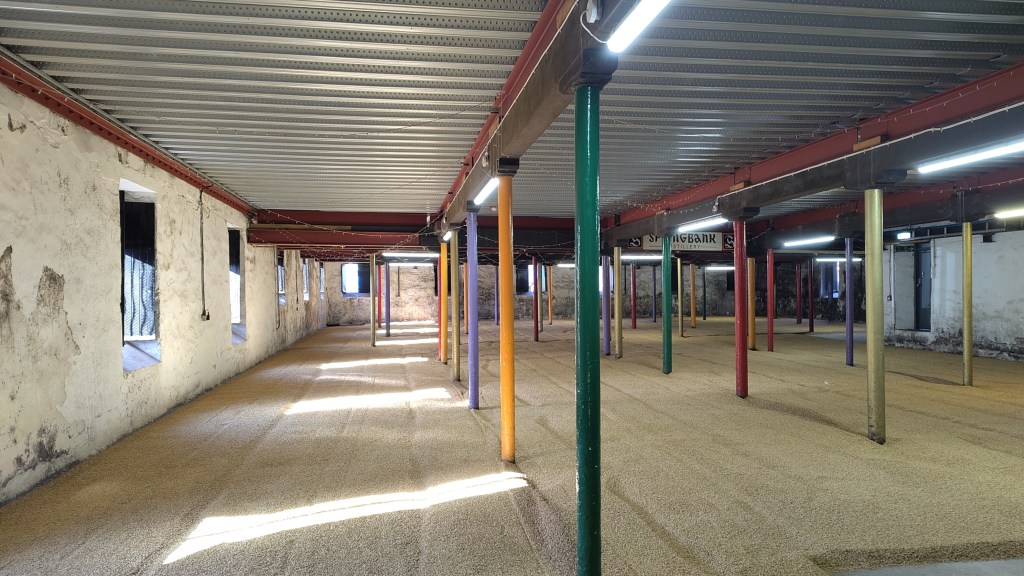
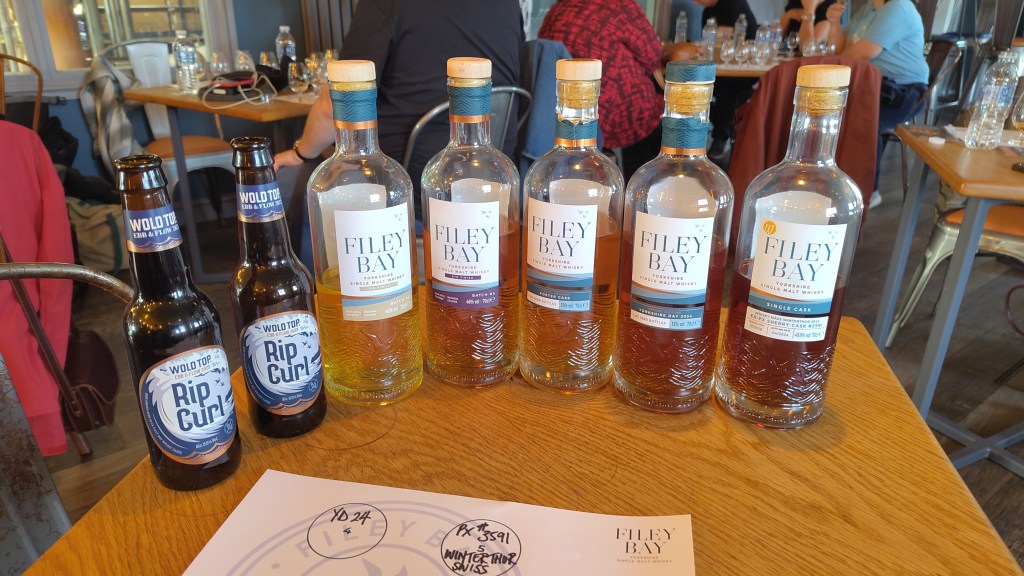
After the very comprehensive tour, for the tasting we went back to the cafe, which they closed for the occasion. We explored their current range of single malts and variety of cask they use, including two expressions from beer casks (full tasting description below). At the shop they offered us another nip of things we might want to try (peated and Moscatel cask finish for us, to complete their range). Happy, we then headed back to the Pie Bald Inn.

It was a great visit, we learned how things can be done differently compared to Scotch whisky, and still obtain a great result in such a short time (first release was in 2019 only) – the distillery is not even 10 years old! The array of whiskies we tried was very interesting, showcasing a great variety of flavours.

Stay tuned with us for more English whisky action! Until the next time, slainte!


Wold Top Brewery Tour + Spirit of Yorkshire Distillery Tour

Price: ยฃ12.50 pp + ยฃ30.00 (October 2024, our experience was a combination of the Brewery and Distillery tour, ยฃ25.00, and the Distillery tour & Deep Dive tasting, ยฃ30.00)

Duration: 1hr 30min + 2hrs

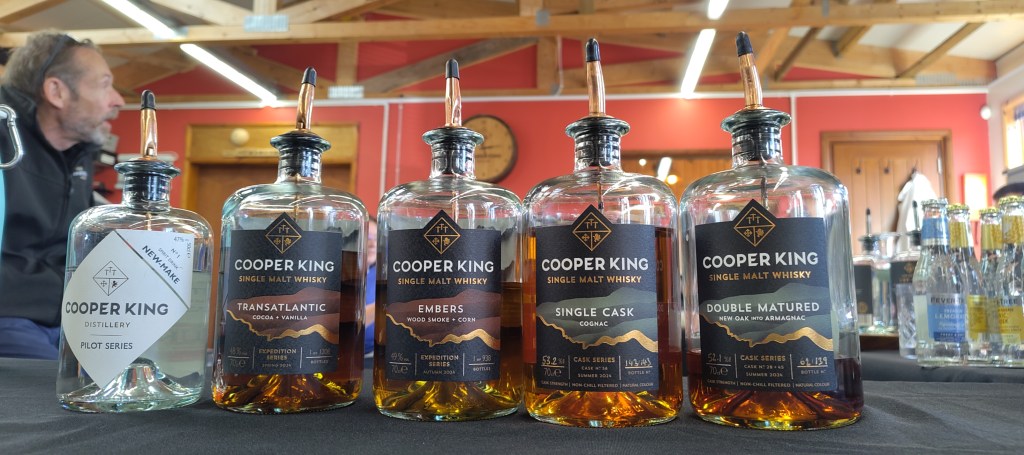
Tasting: 2 half pints of choice at the brewery and 6 Filey Bay drams at the distillery: the Flagship (46%, NAS, ยฃ55); IPA finish Batch 2 (46%, 6-7 months finish in a barrel that hold an IPA for 7-8 months, ยฃ65), STR Batch 4 (46%, finished for 7-8 months, ยฃ65); Porter Cask (50%, similar to their flagship, but finished for over a year in barrel that held Rip Curl porter for 14 months, sold out); Yorkshire Special Release 2024 (55%, matured in STR, then re-casked in ex-Madeira, ex-Sherry and finally virgin oak casks, ยฃ95); and a single cask bottled for the whisky marked (49.9% cask strength!, fully matured in ex-PX casks, distilled in December 2018, bottled in 2024)

Distillery exclusive: the Yorkshire Special Release 2024 (see above)

Target: beer and whisky enthusiasts

Value for money: very good

Highlights: the whisky and the welcoming staff

Recommended: absolutely

Link: https://www.woldtopbrewery.co.uk/, https://www.spiritofyorkshire.com/

#48.1 Islagain


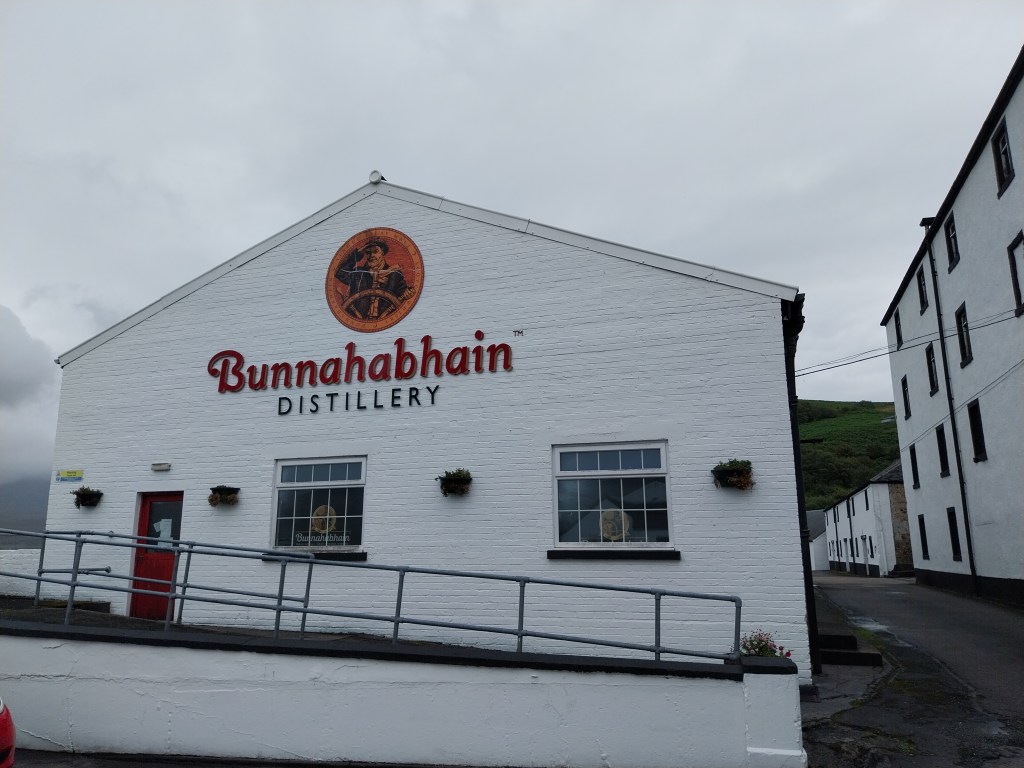
Nice drams with a sour aftertaste: Bunnahabhain


TL; DR: And weโ€™re back to Islay for the second time this summer! After a quiet Friday afternoon, the next morning we had our first tasting, followed by a tour at one of our favourite distilleries: Bunnahabhain. The tasting was great as usual, but what happened afterwards was a major let down for us.ย 

Driving to Islay is always a big trip: it takes about four hours to drive from Leith to the Kennacraig ferry terminal, and then the ferry trip is another couple of hours. However, once youโ€™re on the island, you forget about all of this as the atmosphere in which youโ€™re immersed is something else. Everything slows down and there is a sense of quiet and tranquillity. Itโ€™s a strange mix between feeling energised and relaxed, with the mind finally off the million thoughts of everyday life. Maybe this a feature of all remote places.

The excuse for this trip came when our friends Glaire and Clay asked us to join them on their trip to celebrate their friendโ€™s birthday. That was a proposition too good to be true, so we happily accepted. On a Friday morning, we picked them up and started driving westward, first to Glasgow and then up along Loch Lomond, past Arrochar south-west, and along the Argyllโ€™s lochs (as we write, we can almost visualise the trip). We had a wee stop for a coffee (well, and a wee) in Inveraray, at the George Hotel. We also enjoyed their morning rolls, unbelievably tasty. A pity we didnโ€™t manage to meet our friend Ivan. The rest of the drive was uneventful, everything was on time, and we got safely to Bowmore where our friends had booked a small apartment. We parked our van not too far away and hanged out with them. In the evening, after dinner at the Lochside, we met their friends for a drink at the Duffieโ€™s, just next door. It was a nice evening but we were very tired, so after a while we just went back to sleep.

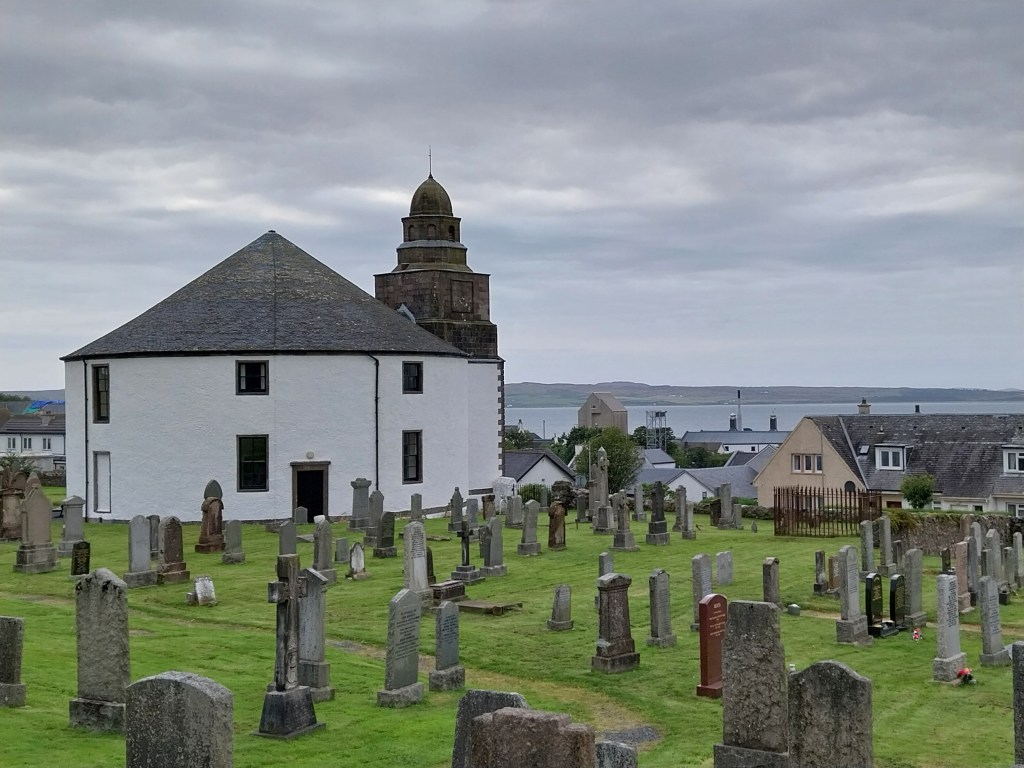
The day after we were very excited: our first time back to Bunnahabhain, after our visit in spring 2022. Bunna is one of our favourite whiskies, and it rarely disappoints us: we both love the unpeated sherried stuff, and the peated one too (itโ€™s actually one of the best peated malts in our opinion). So, the jolly party of three (Glaire skipped this one) left Bowmore on Mr Vantastic, and after a quick stop to check out the Ardnahoe shop, we got to our destination. The day was cloudy, a tad windy but not enough to keep the midges away, which in the minute we spent outside the visitor centre destroyed us!

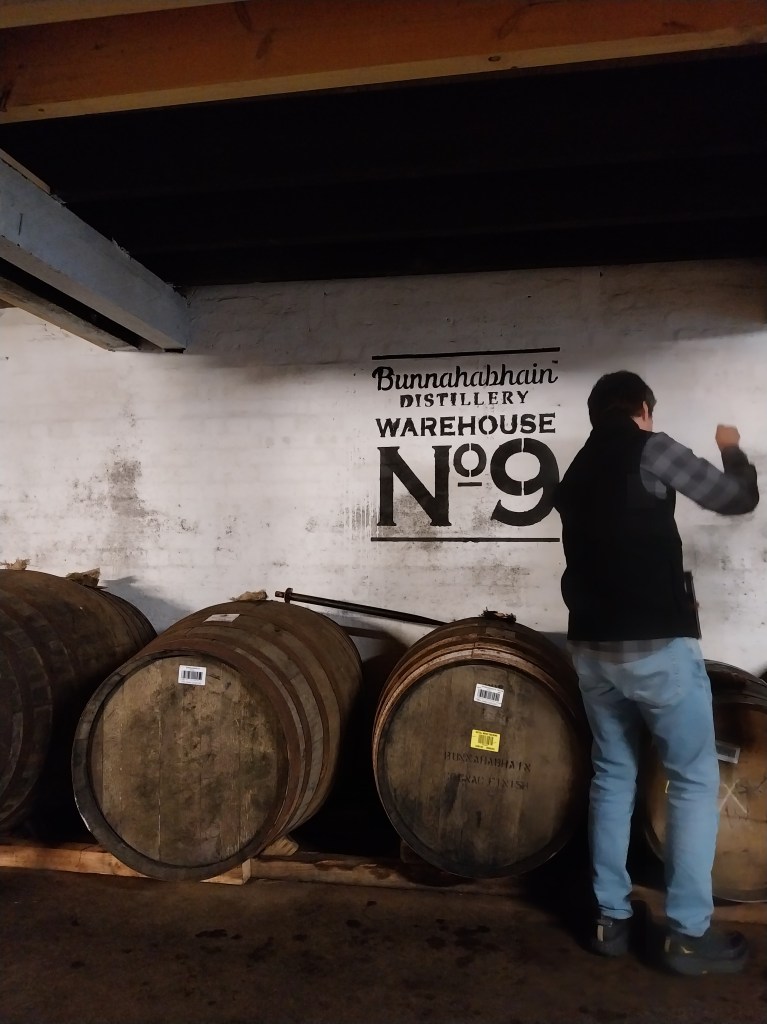
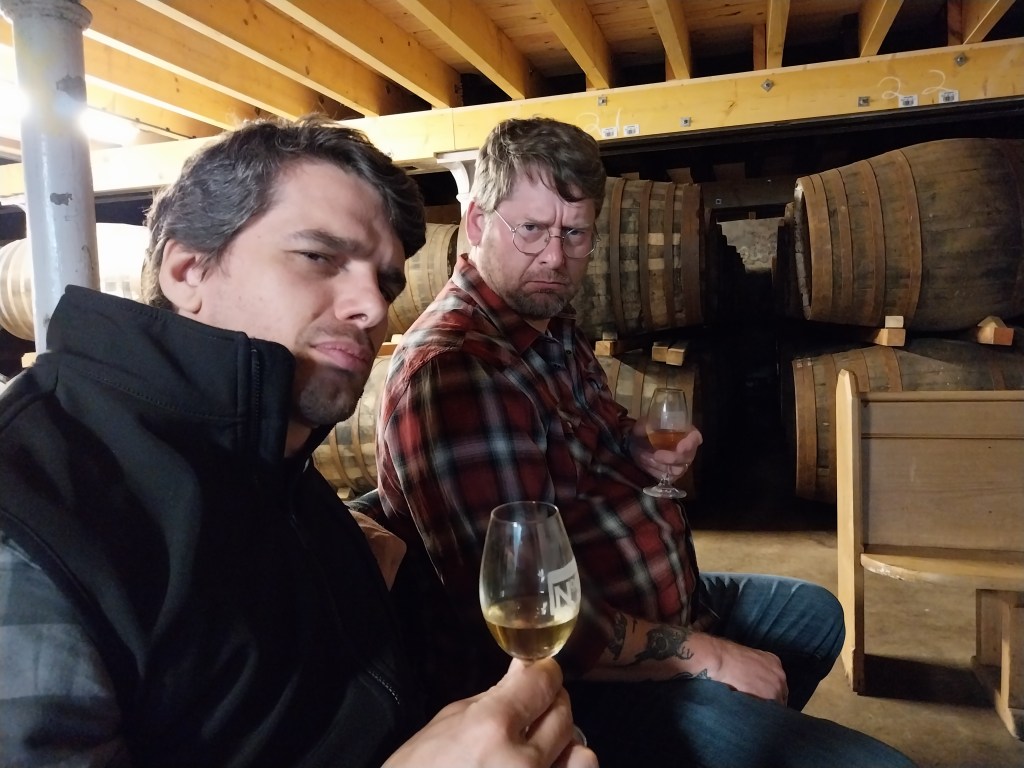
Once safely inside, we met the guide for the tasting: Matthew, which after a brief introduction walked us to Warehouse 9, the former malting floor. We were 5 people in total, so quite an intimate tour – the first time it was 13 people and felt like a crowd in comparison. The tasting was fun, as usual, Matthew was a good entertainer and very knowledgeable, and let people draw the whisky from the cask (Gianluigi tried too).

The first dram was an unpeated one, a 2007 ex-Muscat cask (16y), bottled at 53.7%. A very sweet and delicious dram. It was followed by a 2014 (9y) ex-Canasta sherry cask: this is a brand of cream sherry, which is a mix of Oloroso and PX. This dram was bottled at 58.4%, stronger at the palate as well. We moved on to the peated drams, first a 2011 vintage fully matured in a refill ex-Cognac cask (58.9%); the cask was used for a finish first, so the Cognac influence wasnโ€™t too strong. It was followed by a 2013 (10y) ex-Bordeaux red wine cask (57.9%), re-casked into this only after two years, in 2015. The last one was truly stunning, a real dirty belter of a dram.

However, here is where things went wrong. Back at the visitor centre, we were told that we could participate in the tour because weโ€™d drunk before at the tasting, and they could allow inebriated people in production. While we could see where this rule comes from (after all, we both did the 2-hour Scottish Training for Alcohol Retailers and Servers training, so we can see the logic), we really didnโ€™t expect this to happen: it wasnโ€™t written anywhere and in other distilleries (including Deanston, of the same company) we’d visited production after a tasting. There, they mentioned the T&C, which is always an โ€œout-of-jailโ€ card, but later that day we verified and that was not true (at the time, more on this later). We asked if we could have a refund, and here is the annoying part: they told us they couldnโ€™t issue any! Thus, to avoid losing ยฃ40 we decided for Teresa to go on the tour on her own (she was the driver that day, so sheโ€™d not drunk at the tasting), while Gianluigi would come back on the Monday to catch up, just before the ferry back to the mainland. The following tour description is a summary of both our tours, which were given by the same guide. They were probably in training, as both tours only covered the basics, but as we said in other occasions, you need to start somewhere.

The distillery, whose name means the Mouth of the River, was founded in 1881, originally doing peated malt, but turned to unpeated later: nowadays they do both. Their flagship malt, the Bunnahabhain 12, was first released in 1979, almost a hundred years after founding. What is really hard to wrap our head around, is that until the 60s there was no road to the distillery, so everything that went there and back was by boat, quite incredible! They have one of the iconic Porteus mills since 1964, which grinds the barley usually sourced from Simpson, on the mainland. In the resulting grist, the husk/grit/flour split is 20/70/10, as usual. It is then sent to a big mashtun (full leuter and covered by a copper lid), 8.6 tonnes at the time, where it is mashed with the usual three waters at increasing temperatures, to maximise the sugar extraction in their cloudy wort. The draff, discard from mashing, is used for their biomass plant, as opposed to many distilleries that sell or give it to farmers to feed cows.

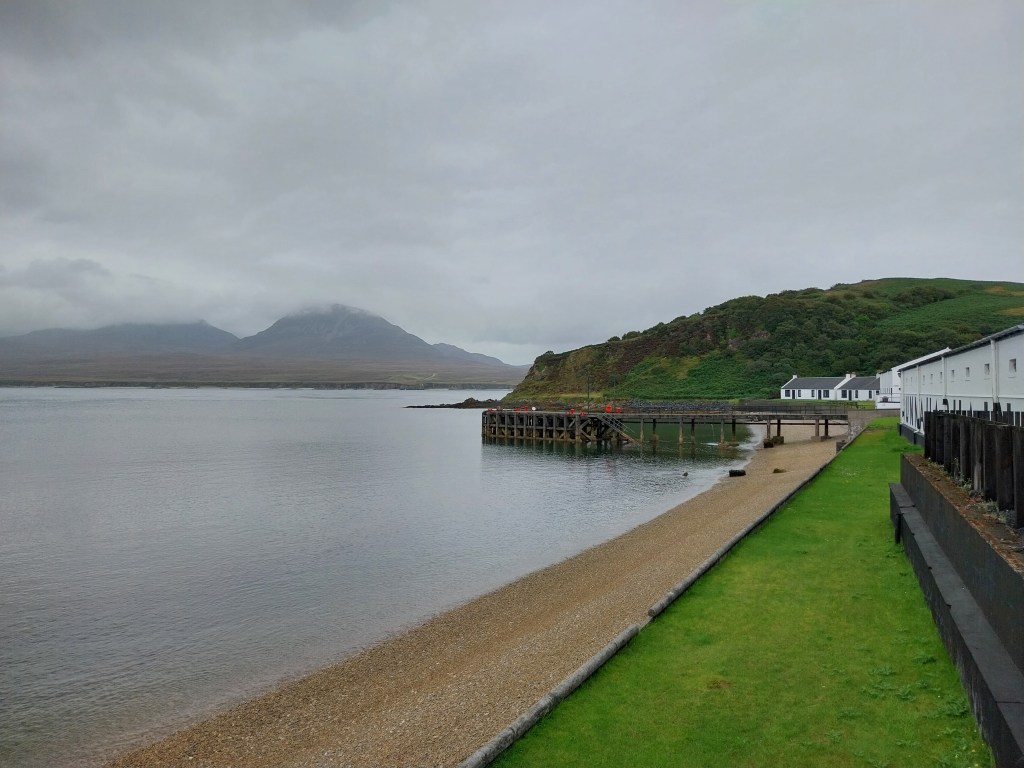
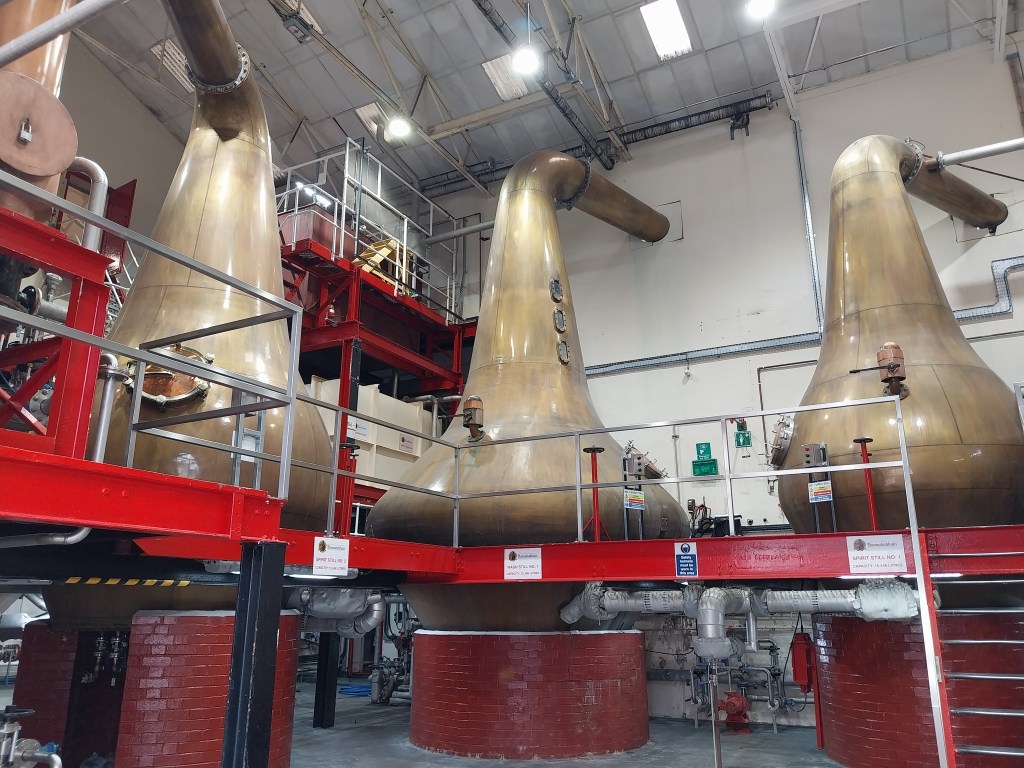
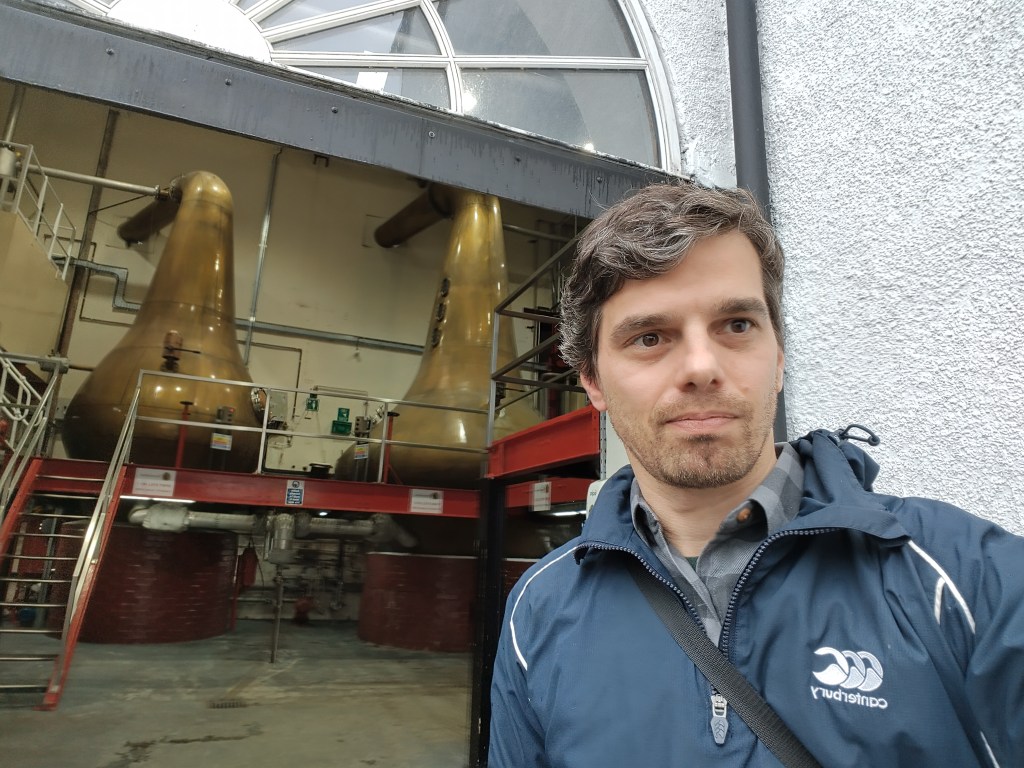
Currently, they do 23 mashes per week, which are then moved to ferment into one of the six Oregon pine washbacks for 52 hours to reach about 8%abv. They have only one pair of stills, and during the second distillation they take a cut from 74% to 64%, discarding and redistilling the head (above the first cut point) and the tails (after the second one). After a quick nip to the warehouse and a look at the pier, we walked back to the visitor centre for the two-dram tasting. Surprisingly, there wasnโ€™t their flagship 12-year old, but a dram each of the two non-age statement expressions: Stiuireadair (unpeated), and Toiteach A Dhร  (peated). Meh.

A bit deflated, we left the distillery and drove back to Bowmore, where we had a quick meal before driving to the birthday party. There, we met some very nice people and had lot of fun, playing garden games and having delicious food. In the evening, we had a final couple of drams at our friendsโ€™ flat, before retiring in the campervan.

Honestly, this was one of the most disappointing distillery visits we had recently, which made us sad as Bunnahabhain is one of our favourite whiskies. We excused the increase in ยฃ10 for the Warehouse 9 tasting compared to 2022, although for four drams it is has became quite steep. Someone could argue that they are expensive drams, they are indeed, but the reason is that they are almost insanely priced: the 20cl bottle of the whiskies we tried ranged between ยฃ45 and ยฃ60, which is ยฃ145 to ยฃ195 for a full 70cl bottle, out of touch. Also, the choice to replace the Bunnahabhain 12 with the Stiuireadair (maybe the only bad Bunna we ever tried) in the tasting after the tour is quite a strange and cheap move. Would you imagine going to Lagavulin/Caol Ila/Ardbeg/Bruichladdich, paying for the basic tour and not getting a dram of their flagship 16/12/10/Classic Laddie? Yep, not even the Evil Empire does that.

But of course, what we really did not like was the way we were treated, and the lack of flexibility or willingness to try to fix a problem that wasn’t our fault in the first place. It’s true the staff gave Gianluigi and Clay “reparation” drams while Teresa was doing the tour, but at the same time we felt we were treated like we had done something wrong, which wasn’t true at all. At that time, it wasnโ€™t written anywhere that we couldnโ€™t do the tour after the warehouse tasting. Fortunately they recently changed the website (we wonder whether it wasn’t just us having this problem). Since the reservations were made under the same name/email, it would have costed the staff 5 minutes to touch base via email before. But what really made them unprofessional was that someone could have just told us before the tasting, when we checked in (and said weโ€™d booked both tasting and tour). We would have both got drivers drams. We later complained via email, and they promised a refund for the tours (refund still not received, at the time of writing over a month later).

To wrap up this rant: will we still drink Bunnahabhain? Definitely, itโ€™s too delicious to let go. Will we still buy from the distillery? Maybe, there are many indies out there with great Bunnas. Will we go back for another tasting or visit? Probably not for a very long time.

Stay tuned for some happier action the next day, a visit to the only Islay distillery we hadnโ€™t visited yetโ€ฆCan you guess which one? Until then, slainte!

Bunnahabhain Warehouse Tour

Price: ยฃ50.00 pp (August 2024)

Duration: 1hr 30min

Tasting: 4 drams (25ml, all natural colour and unchillfiltered), 2007, 16y, ex-Muscat cask, 53.7% (70/20cl bottles for ยฃ195/ยฃ60); 2014, 9y, ex-Canasta sherry cask, 58.4% (ยฃ145/ยฃ45); 2011 Moine (peated) fully matured in a refill ex-Cognac cask, 58.9% (ยฃ155/ยฃ55); 2013, 10y, Moine ex-Bordeaux red wine cask, 57.9% (ยฃ145/ยฃ50), and a copita to take home

Distillery Exclusive: see above

Target: whisky nerds

Value for money: a tad pricey

Highlights: Warehouse 9 is always special

Recommended: yes

Link: https://bunnahabhain.com/


Bunnahabhain Production Tour

Price: ยฃ20.00 pp (August 2024)

Duration: 1hr (almost)

Tasting: 2 drams (20ml), Bunnahabhain Stiuireadair (46.3%), Toiteach A Dhร  (46.3%)

Distillery Exclusive: see box above

Target: casual drinkers and tourists

Value for money: ok

Highlights: the still room

Recommended: if youโ€™re looking for a basic distillery tour, there are better options on the island

Link: https://bunnahabhain.com/

#46.6 The return of the smoke

One last stop in C-town


TL; DR: Back on the mainland, we indulged in a further treat before driving back home: a morning in Campbeltown. After spending the night in a camping just outside town, we drove there to get some goodies from Springbank and do a generous Cadenheadโ€™s Warehouse tasting, very well conducted by Aly. What else?

(missed Part 5/Part 4/Part 3/Part 2/Part 1?)

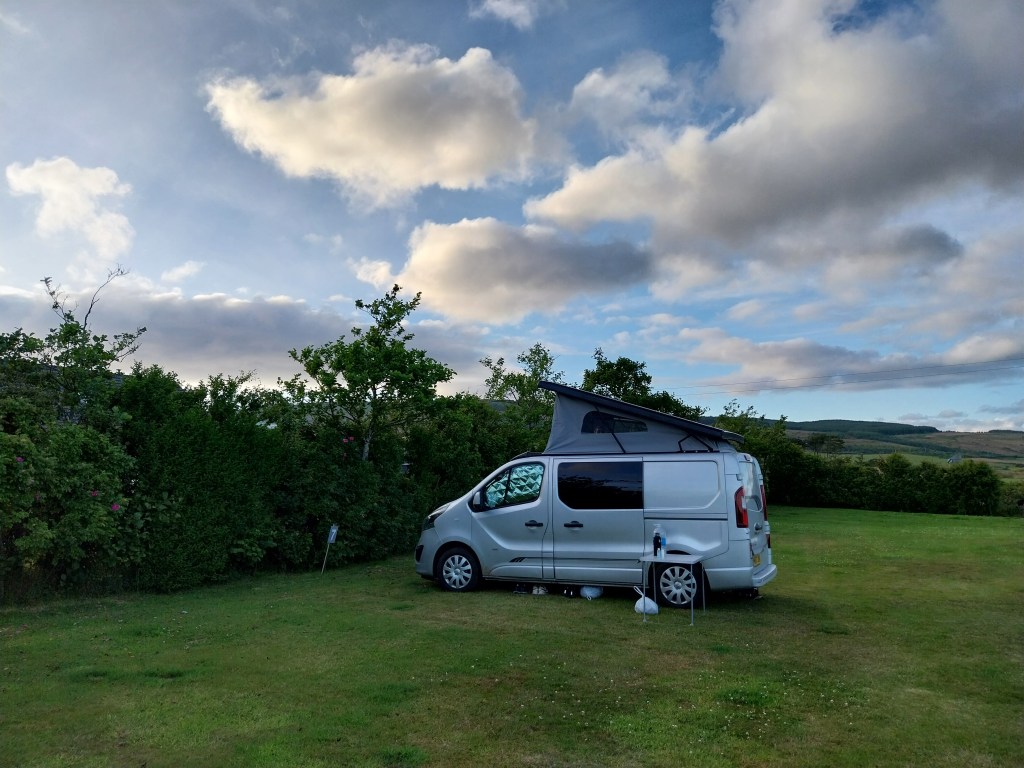
The ferry back from Islay was uneventful. Once on the mainland, at the junction with the A83, instead of turning left towards north, we turned right, southwards. Well, at first we actually turned north, but just because we made a mistake and Gianluigi forgot to turn on the data on his phone, so Waze couldnโ€™t help much. Anyway, our destination was Campbeltown. There were two available campsites near Campbeltown (unfortunately none in town), one in Machrianish, near the airport, and one on the east Kintyre coast, a mere 10-minute drive north of town, in Peninver. We opted for the latter, and to get there, we drove through the east coast of Kintyre. The road is a single track, much smaller compared to the faster one on the west of the peninsula. However, because it was a beautiful sunny evening, the landscape was quite spectacular, with the isle of Arran clearly visible. Around 7.30pm, we arrived at the Peninver Sands campsite: small but tidy, with campervan pitches on grass just a few dozen meters from the beach, behind a row of static caravans.

After dinner and a well-deserved shower, we had a few of the drams collected during the day. We were pleasantly surprised by the differences in the Laphroaig 10 cask strength batches (13 to 16): some more smoky, some more fruity, some harsher while others very mellow, drinking like a lesser abv whisky. We totally embraced batch variations! Unfortunately, there were midges outside, so we had to enjoy the drams in the van. Thatโ€™s the West Scotland summer curse: either crappy weather or midgesโ€ฆWhat a bummer!

The morning was sunny again, and light came in through the van windows. Edo was the first one to wake up, we followed soon after. We then had breakfast, another shower (just because) and a walk to the beach. We dipped our feet in the incredibly cold water: after a minute we felt like pins in them. Then, we drove southwards under the Kintyre morning sun. Soon after we arrived in Campbeltown, where it was easy to find parking not too far from Springbank.

That was in fact our first destination, first to check out what the cage had to offer. Edo got himself a 7y heavily peated Kilkerran matured in bourbon casks, while we got a sherried teenager Kilkerran matured in sherry (probably Oloroso) and a 9y Longrow matured in refill Palo Cortado sherry cask. Of course it is always a gamble, but a safe one: never had a bad nor an average cage dram. A few days later the former two were mentioned in Royโ€™s vPub, hinting to two memorable drams (ours arenโ€™t open yet at the time of writing, but we feel optimistic).

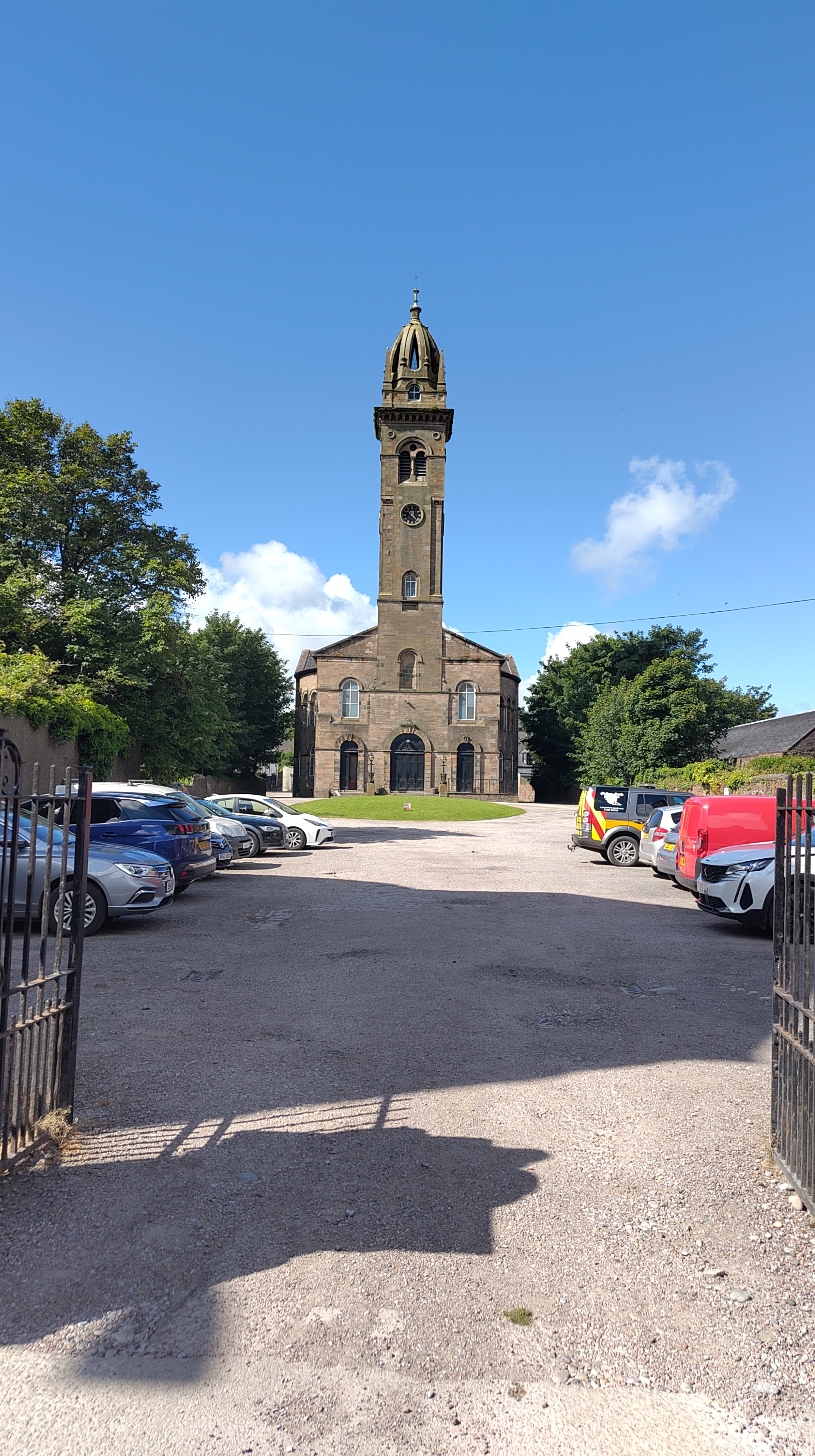
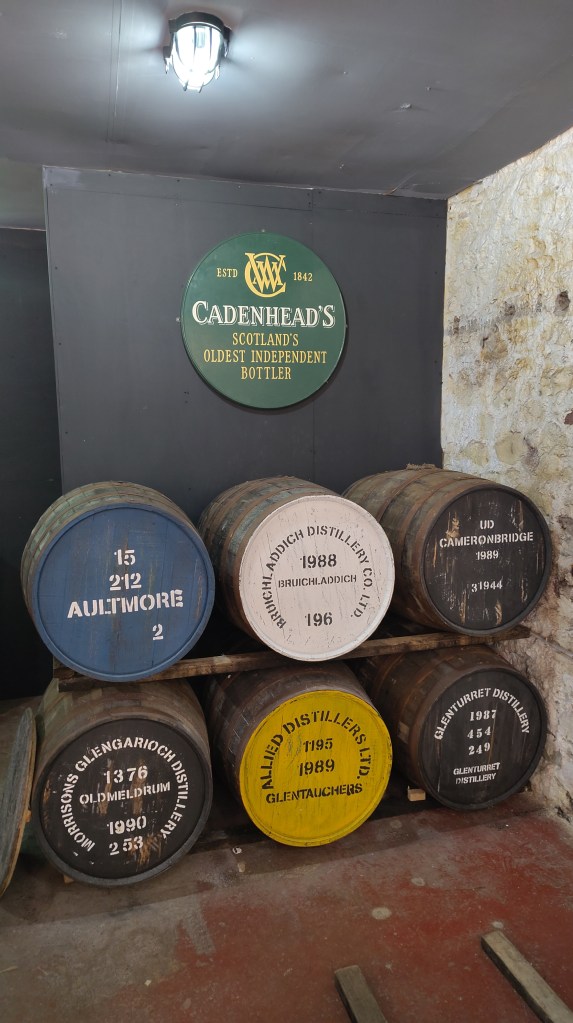
It was soon time for the Cadenheadโ€™s Warehouse Tasting. To our surprise, the meeting point was not the Springbank visitor centre, as the previous two times (three for Gianluigi). This was because the venue for the tasting changed (for the second time in the last few years): instead of being held in one of the warehouses behind Springbank, Cadenheadโ€™s recently acquired a building not too far from the new hub (shop and tasting room), that has been gradually converted into a warehouse dedicated to tastings.

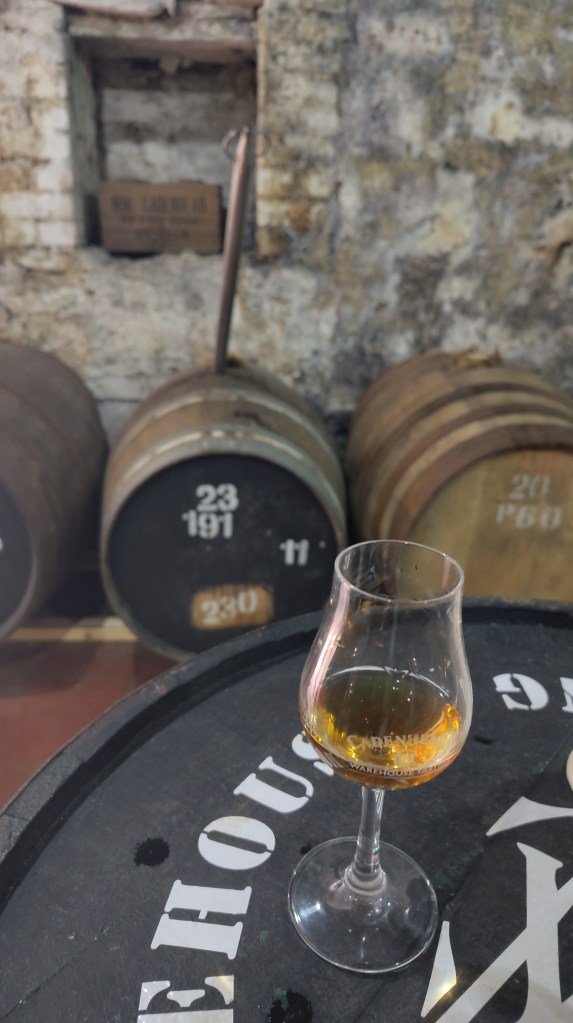
The tasting was guided by Aly, who did a great job guiding us through the usual range of tasty drams: it was informative and entertaining. We started with a blended malt, a vatting of a 24y Glenrothes, 12y Aultmore and 14y Dalwhinnie, from an ex-bourbon barrel, bottled at 54.9% abv: a tropical deliciousness. It was followed by a few drams from fortified wine casks: 16y Glentauchers ex-Oloroso hogshead (49.4%), a 13y Glenburgie from a Madeira barrique (57.5%), an ex-Amontillado 11y Glen Garioch (58%) and an Oloroso-finished 13y Craigellachie (finished for 4 years). All these drams were very well received, although for the three of us the Glen Garioch was a notch below the others: too herbaceous and harsh. Finally, the peated dram was a Staoisha (peated Bunnahabhain) 9y at 60.4%, finished for three years in a PX-cask: delicious, only reason we didnโ€™t buy it because we have waaaaaay too many peated Bunna at home. So, after much debating we opted for the ex-Madeira Glenburgie and the tropical blend, by far the best value for money.

…with great drams.

We had our seventh dram at Cadenheadโ€™s Tasting room (Ardmore 11y ex-PX cask, Deanston 15y ex-Manzanilla, and Balblair 10y ex-rum cask for Teresa to take home, to add to the other six drams). Then, we finally had a nice big lunch at the restaurant of the Royal hotel, before going back to the Washback bar for a final dram of Springbank, whose Edo is a big fan, before finally hitting the road.

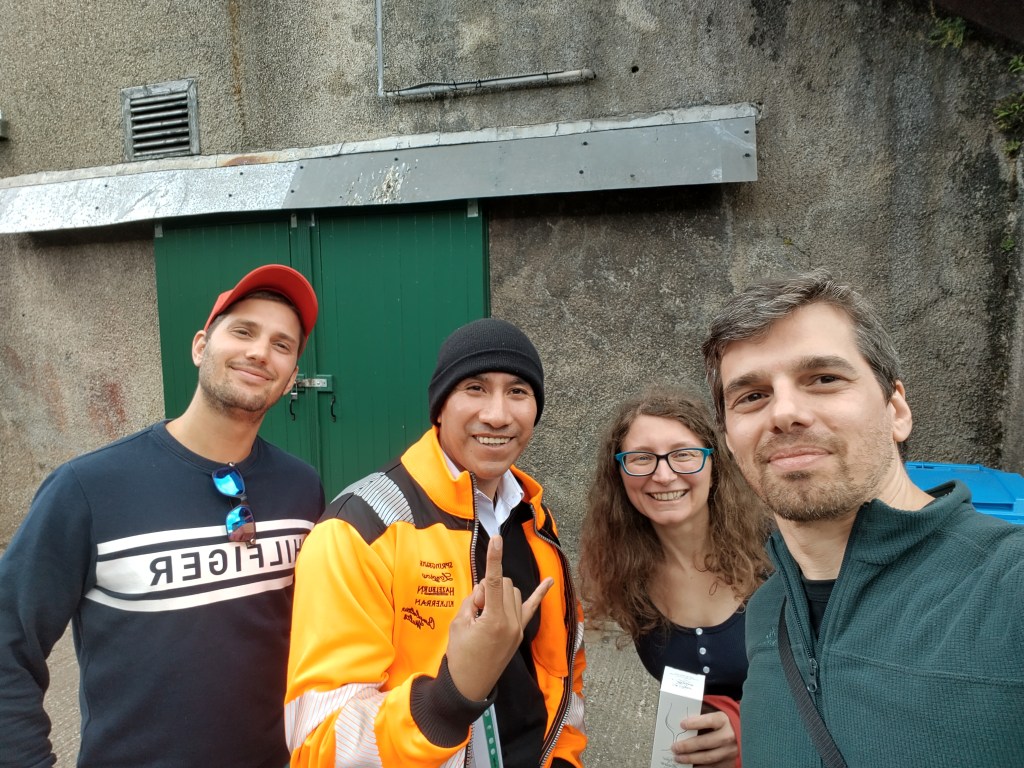
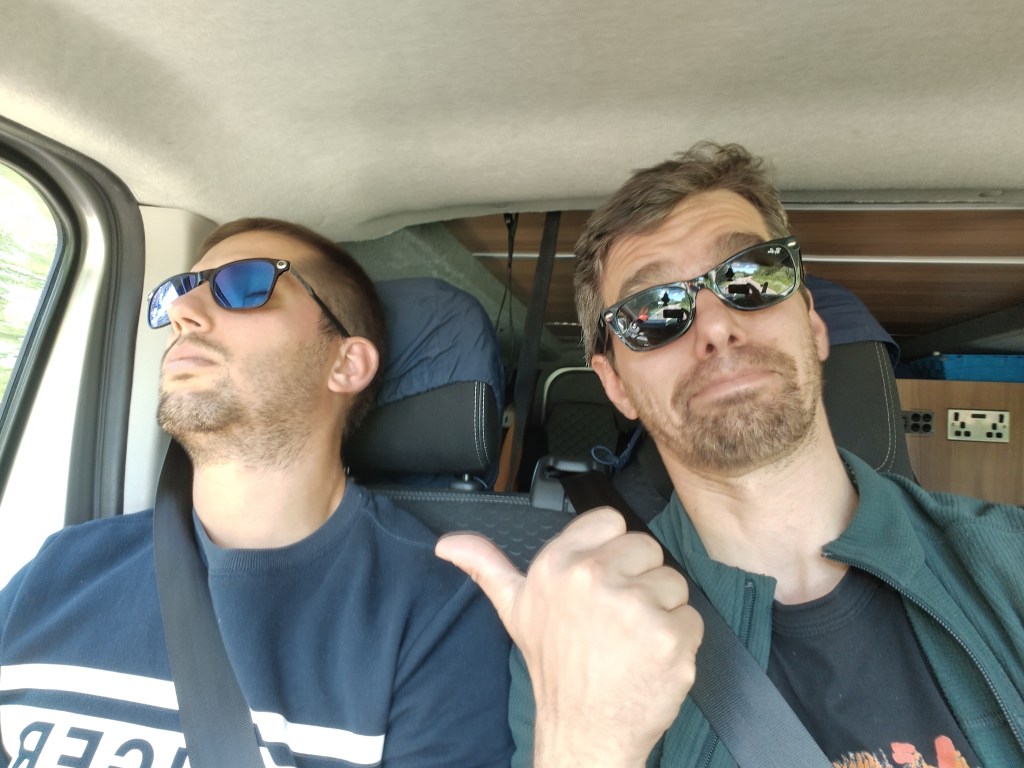
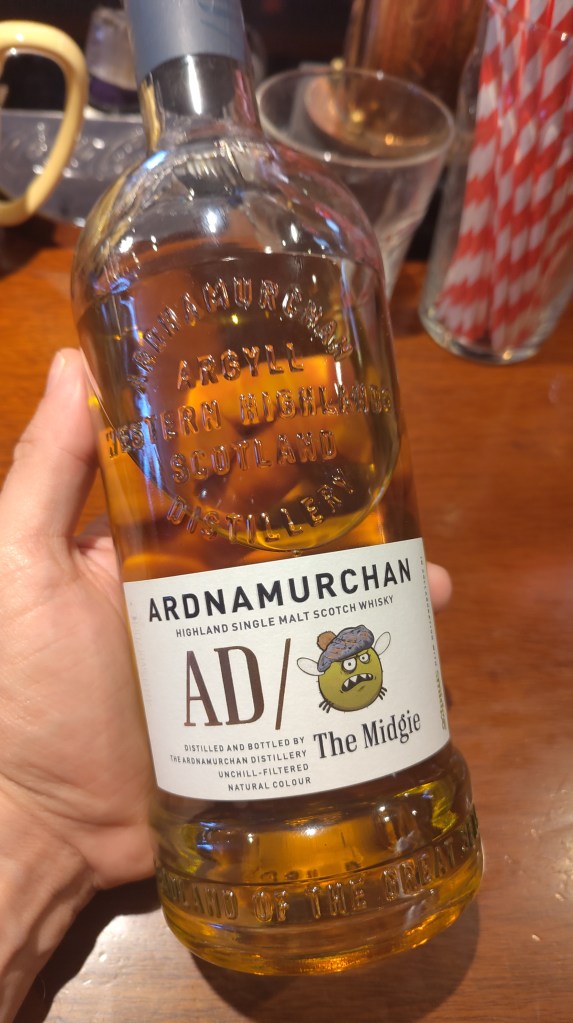
That day Teresa had the shortest straw, but the day was beautiful and sunny, and the drive was smooth. Edo and Gianluigi fell asleep for a few chunks of it. We only stopped once at Inveraray, to meet our friend Ivan who was saving some venison burgers for us, and we took the chance to try the Ardnamurchan Midgie at the George Hotel bar: a super funky and tasty dram.

Another Warehouse Tasting, another banger: we really enjoyed the range of drams, and Aly was very entertaining and fun. As we said other times, warehouse tastings are probably our favourite type of experience. There is something more when sipping drams just drawn from the cask, in the dumpy cold warehouse environment, surrounded by the “angel share” (i.e. vaporised alcohol). Similarly to our last Cadenhead’s Warehouse Tasting (two for Gianluigi), this tasting was structured and tidy, while the very first one back in 2018 was a bit more wild (and we had more samples, if we recall correctly). The concrete floor made it less dumpy as well, although thanks to this year not-so-warm summer, it was definitely chilly (and indeed Aly was very heavily dressed). Also, it’s great that Cadenhead’s are keeping it at ยฃ40 per person, which is an incredible value for money considering it includes 6 (+1 at the bar) drams. Other warehouse tastings are generally pricier, like Bunnahabhain (ยฃ50 for four drams) or Deanston (ยฃ40 for three drams). In this specific case, if we have to be really peaky, maybe the only thing that was missing was another ex-bourbon cask dram, after the first one. Anyway, with experiences like this, and the honestly priced drams, Cadenheadโ€™s is leading the way in the scotch whisky landscape. Kudos to them!

The very last dram stop.

See you in a couple of weeks for more whisky action. Until then, slainte!


Cadenhead’s Warehouse Tasting

Price: ยฃ40.00 pp (July 2024)

Duration: 1hr 30min

Tasting: 6 drams (plus a voucher for a seventh dram at the Cadenheadโ€™s Tasting Room)

Target: whisky nerds

Value for money: great

Highlights: the drams

Recommended: absolutely

Link: https://experience.cadenhead.scot/


#46.4 The return of the smoke

The gentle side of the smoke: Bowmore


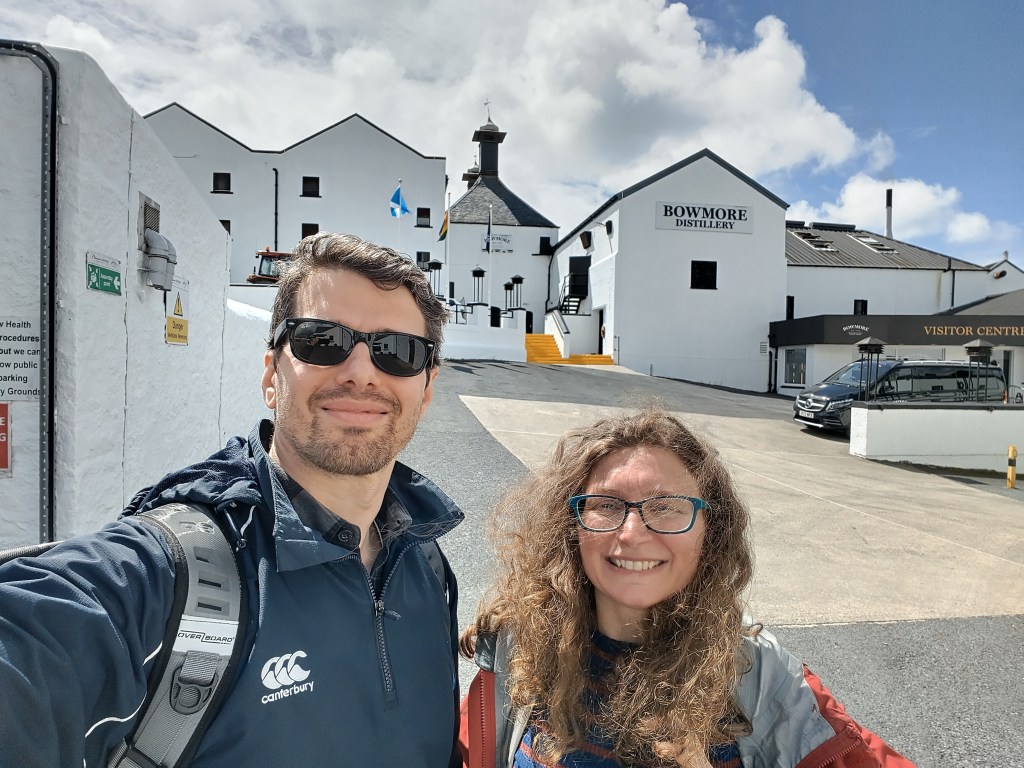
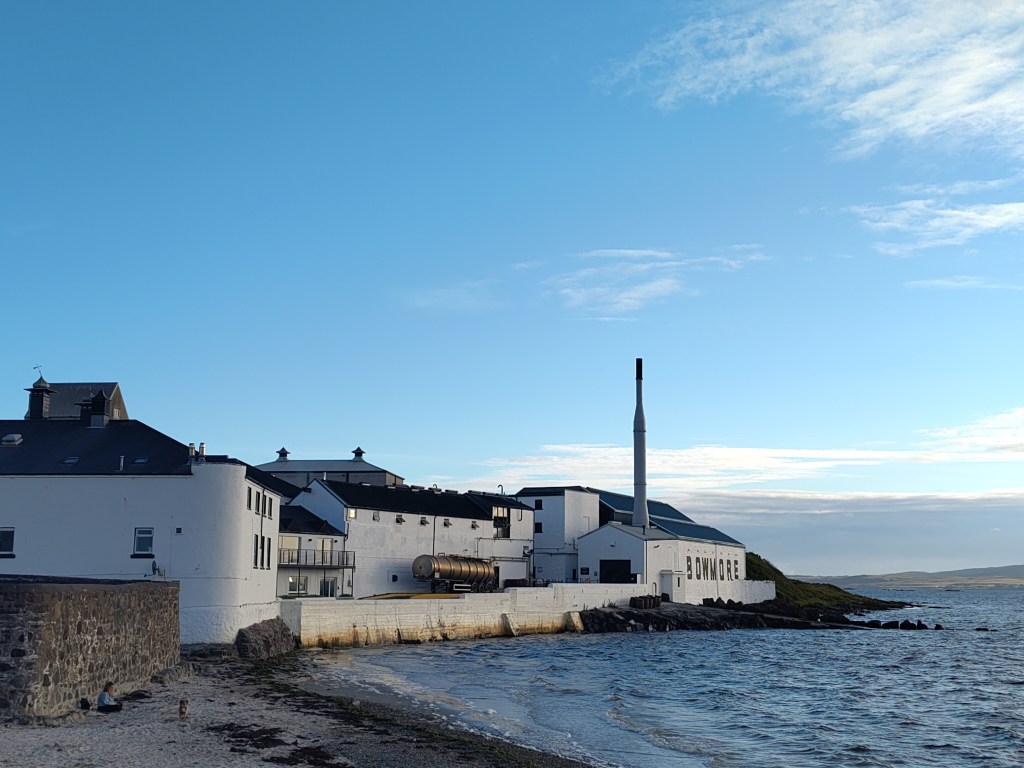
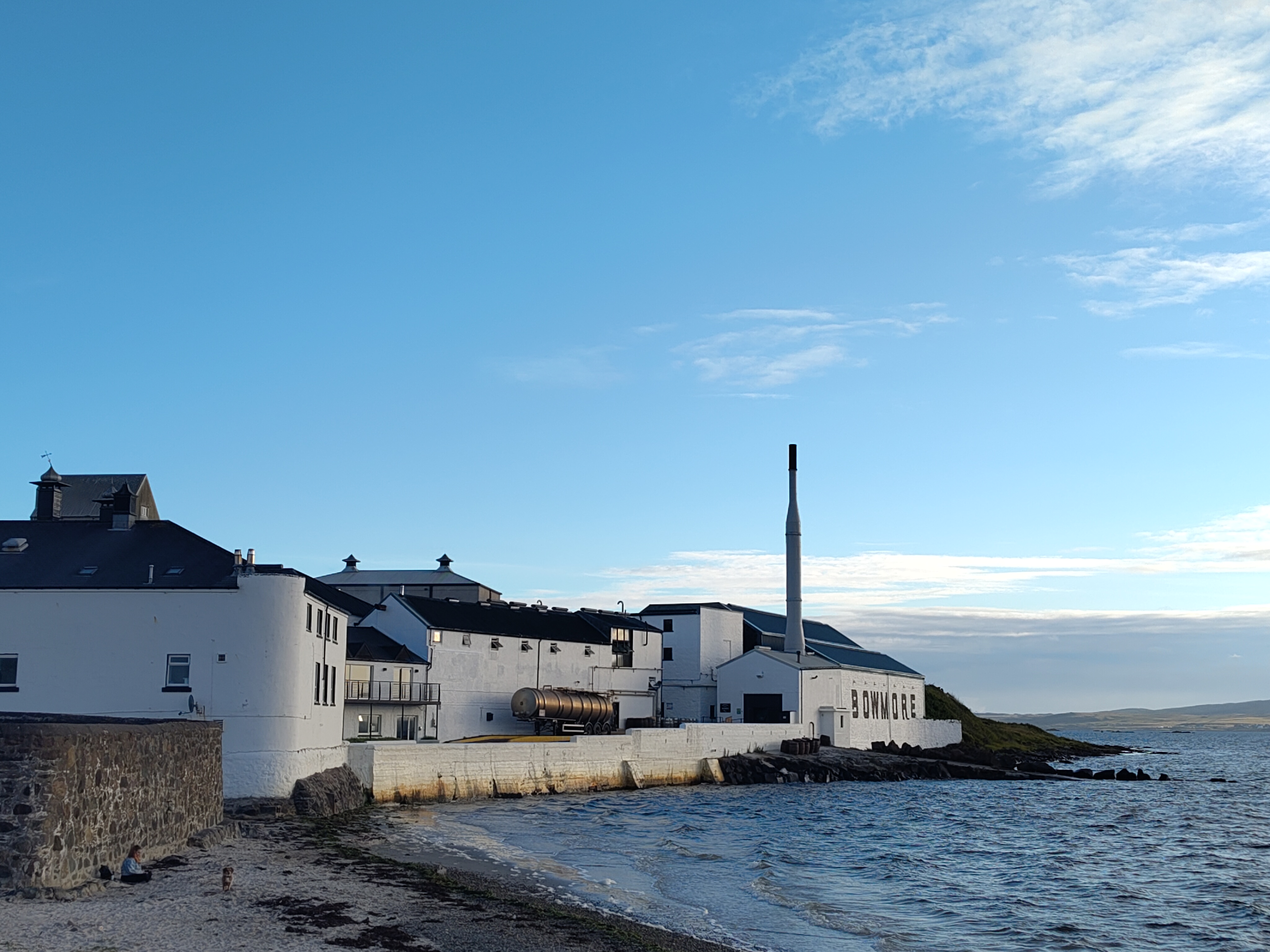
TL; DR: We visited a โ€œclassicโ€ Islay distillery: Bowmore! Located in the centre of the namesake village, itโ€™s very recognisable with its typical white buildings, directly facing the sea. The tour was extremely interesting, particularly the part around the malting floor, and it ended with two cask samples. What else?

(missed Part 3/Part 2/Part 1?)

Our plan for the day was a good one in principle, and we were looking forward to it: after returning on Islay from Jura, weโ€™d visit Finlaggan (check!) and Caol Ila distillery (check!), then drive to Bowmore for a tour at the local distillery, get a shower at the leisure centre (interesting fact: it is built in a former Bowmore distillery warehouse, and the pool is heated by the distillery), a few drams at the Bowmore Hotel and dinner at Peatzeria.

The tour at Caol Ila went quite long, so we had to drive fast to our next destination. During the tour we got bad news from Justine: the showers in Bowmoreโ€™s leisure centre were broken, so no showers for us that dayโ€ฆunless we went for a shower outside (oh well). We knew that it probably meant no shower for the day. We parked the van just outside the village, on the sea front, a very nice spot. As we were late, we had just enough time to warm up some “beefy bake”, a couple of pies and a sausage roll we bought the day before at the shop on Jura. A bit rushed, but not bad (the mince pies were particularly tasty).

The distillery was then 10 minutes away, and it is in front of Bowmore main square. At the check-in, the staff offered to keep Gianluigiโ€™s backpack for the tour (nice of them!), and we had just enough time to peek at the shop: other than the regular expressions (Bowmore 12y, 15y, 18y, decently priced) and some travel retails, the only other expressions on sale were 20+ years old (and very pricey). We didnโ€™t have to wait long though, because our guide Margaret (25 years in the job!) gathered us and the others (mostly a group of American tourists) to start the tour.

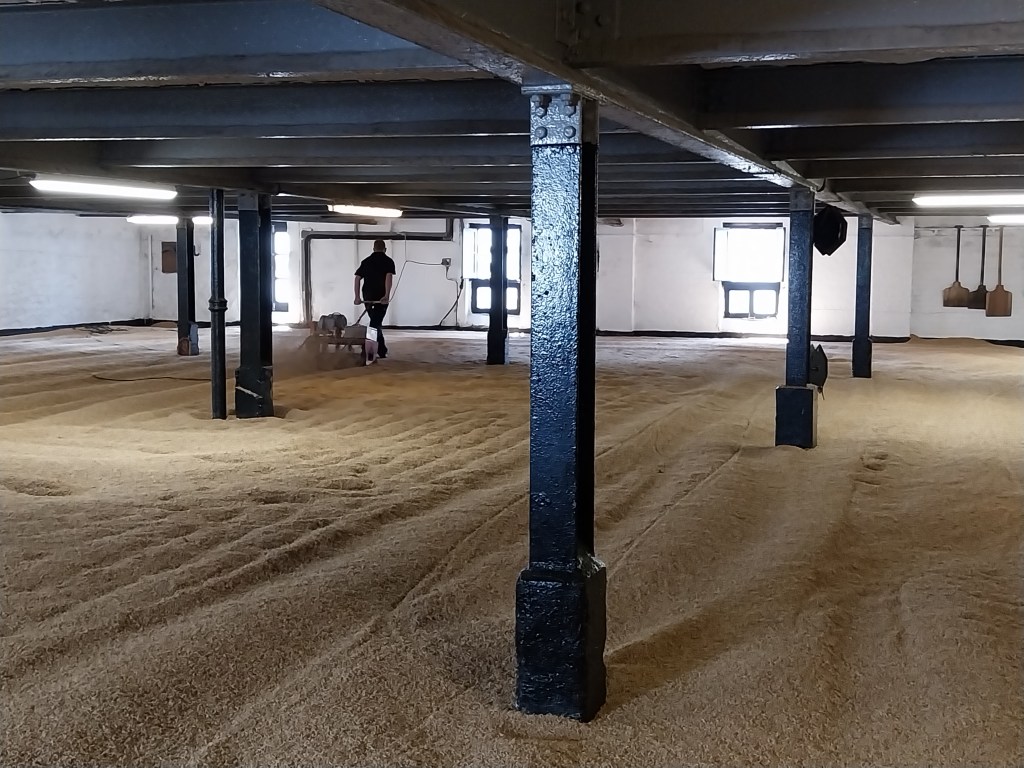
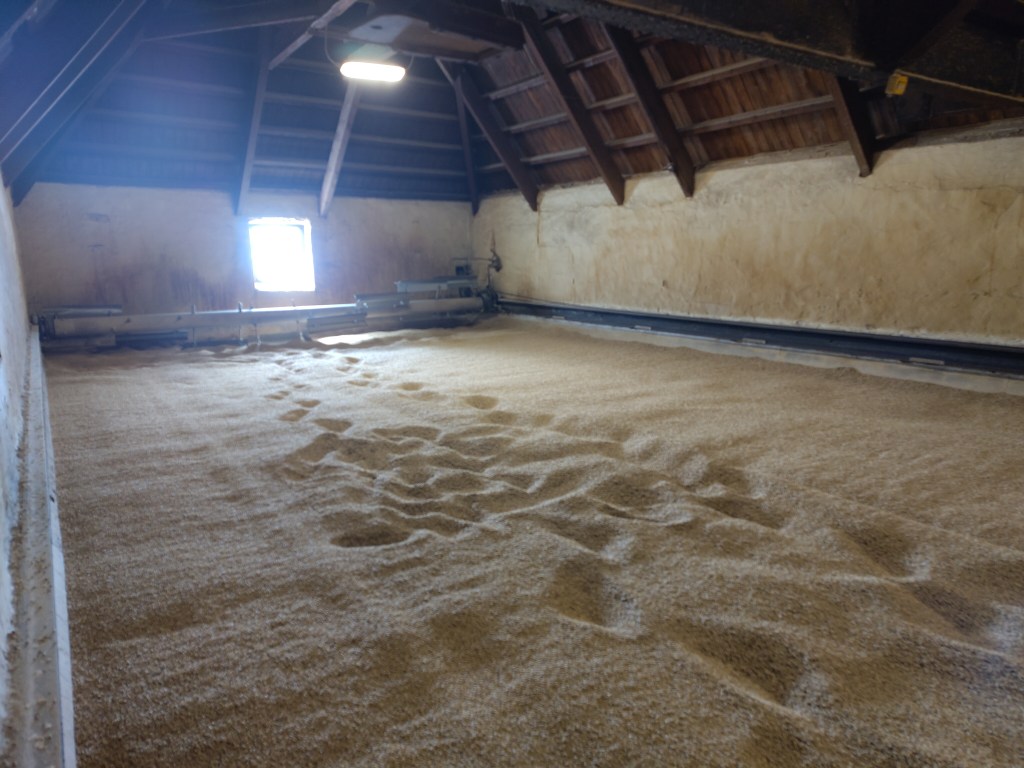
In the courtyard, she told us that the distillery is the oldest on Islay (and one of the oldest in Scotland), dating back to 1779. Similarly to Laphroaig (owned by the same company, formerly Beam Suntory, now just Suntory), they kept their malting floor, where they malt enough barley to cover 25% of their yearly 2.15 mlpa (million litres pure alcohol) production. They soak the barley for 26 hours, then they move it to one of the three malting floors with a chariot, 140kg at the time (100 times, for a total of 14 tons), and it stays there for 24 hours, after which they start turning it every 8 hours.

The whole process takes between 5 and 7 days, depending on the season and the barley (in our understanding, the low carbon one germinates faster). The barley is then dried in the only remaining kiln, including 10 hours with peat smoke, to reach a phenol part per million (ppm) of around 25-30. Thanks to some improvements, they moved from using 15 tons of peat per week to only 3. The kiln is run for a total of 44 hours (including the previously mentioned 10), before the malt is finally milled. To note, all the peat is machine cut and, contrary to other distilleries, theyโ€™ve been using it for 40 years. Suntory also started a peat restoration project, to achieve a sustainable peat usage, but this we knew from our first visit to Glen Garioch in October 2021. While she explained the malting process, we followed Margaret in the building, also walking on the spread barleyโ€ฆthe other attendants were eager to try a couple of runs with the rake, but we were all set (we remembered how hard it was from our visit at Dunphail).

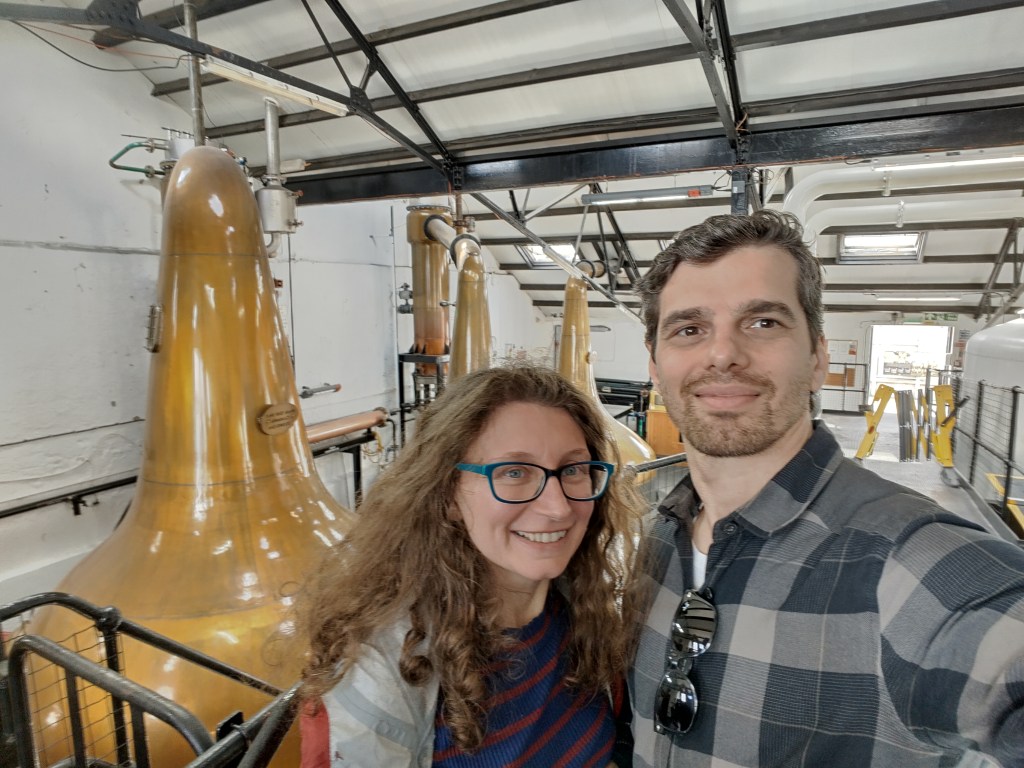
Each mash comprises 6 tons of sourced malt and 2 tons of their own, and the grist is milled to the usual split 20/70/10% between husk, grit and flour. The malt is then transferred into a semi-leuter mashtun (for over five hours), where three runs of water are added at increasing temperatures to absorb as much sugar as possible, with the third one used as first water in the following mash. Their water source is the same as in the 1800s, although with recent improvements (which we donโ€™t remember, sorry), they reduced consumption by 70%. Fermentation, kickstarted with solid yeast, takes place in one of the 7 washbacks and lasts about 70 hours. Finally, the fermented wash is distilled twice in one of the two pairs of stills, two 30,000-litre wash stills and two ~15,000 spirit stills. The spirit cut from the second distillation is between 74% and 61-60%abv.

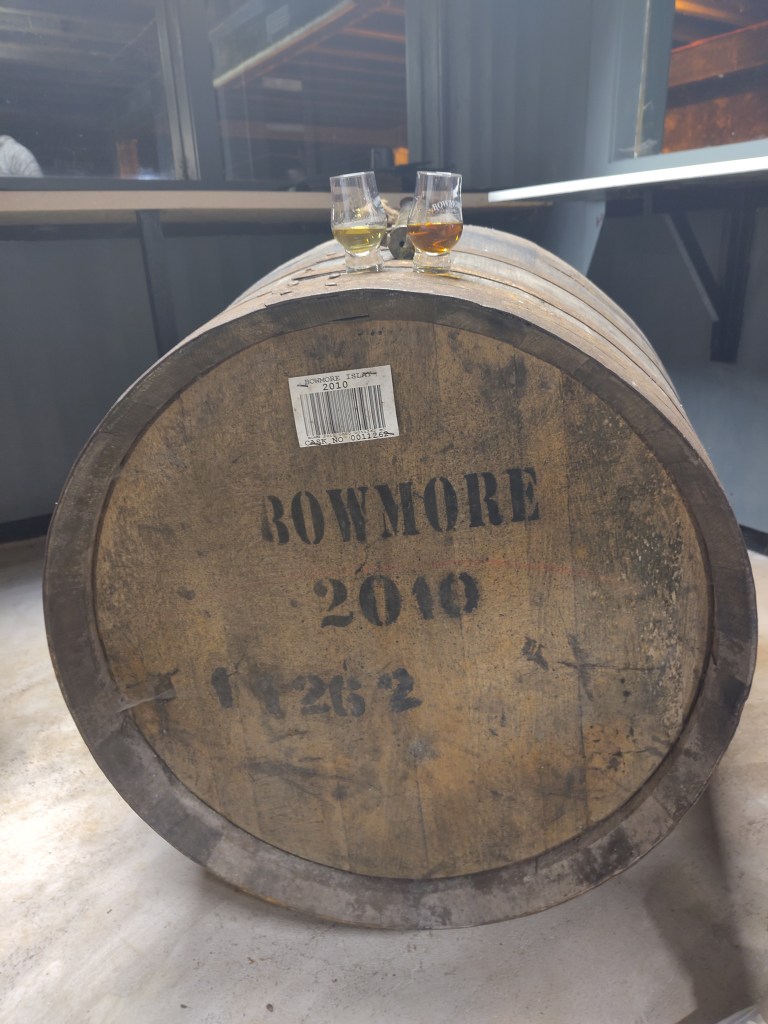
After visiting production, we went to the mythical Nยฐ1 Vaults, one of the warehouses on site, where we had the first part of the tasting. Other available experiences are the Nยฐ1 Vaults warehouse tasting (ยฃ65), which doesnโ€™t include a tour, and one that combines the tour and the warehouse tasting (ยฃ85), plus a few other very pricey ones. As we walked in, we saw two casks, a 2010 (13y) ex-bourbon barrel (54.3%) and a 2010 (again, 13y) sherry hogshead (53.6%). We had a dram from each, and they were both delicious. We got similar notes in the third dram, their core range 18y, very tasty despite the low abv (43%), which was served in the tasting bar. Nice touch, we could keep one of the two small glencairn glasses they’d given us in the warehouse.

Justine joined us at the tasting bar, while we were almost finished with our dram. As we came out, Gianluigi tried to get into the leisure centre, on the fence whether to risk the outside showersโ€ฆHowever, the centre was closed, despite being over one hour from the closing time indicated online (5.30pm). So, we decided to go back to the vans to drop some stuff, and then head towards the Bowmore Hotel bar, for a dram or two (it ended being one, prices were a bit high). It was finally time for dinner, which weโ€™d booked at the local pizzeria: the PEATzeria! While the fritto misto we had as a starter was quite tasty, the pizzas were a bit disappointing: the topping choice was clearly aimed to American tourists, and the pizzas were a bit uncooked. Because we were hungry, and well, it was still pizza, we ate without making any fuss, maybe we were just unlucky.

After dinner we moved to the bar next door, the Lochside. Drams were better priced there, so we had a few, including some stunning like the Mac Talla Rum cask 2024 Feis Ile: delicious stuff! But the day had been a long one, so we soon walked back to the vans for the night.

Anyway, the tour at Bowmore was very good, and Margaret was a great host. Even if itโ€™s not the cheaper among the basic tours on the island, because of the drams in the warehouse (plus the 18y), it was definitely worth every cent.

The only โ€œmehโ€ note was not about the distillery, rather about the facilities on Islay. It is always incredible to realise how little there is and in which conditions (the public toilets in Port Ellen, Bowmore and Jura are quite old), in particular when thinking how much money whisky brings in. Other than the Bowmore leisure centre, the only other available shower was at the Port Charlotte community centre, but only after 2pm. On the contrary, in other trips we found all-day open showers: in Tobermory (Mull) they were open from 9 to 5pm (cash only), but in Carbost, in front of Talisker distillery, the toilets/showers are open 24/7, and you can access after a card payment (and weโ€™ll have an even better story in the coming weeks!). We wonder why facilities like these are not on Islay.ย 

Stay tuned for our last distillery tour on Islay (for the moment)! Until then, slainte!


Bowmore Distillery Tour (with Cask Exclusive Tasting)

Price: ยฃ25.00 pp (July 2024)

Duration: 1hr 15min

Tasting: 3 drams, 2 samples from the cask, 2010 ex-bourbon barrel (54.3%) and 2010 ex-sherry hogshead (53.6%), Bowmore 18y (43%), and a complimentary mini glencairn

Distillery Exclusives: none

Target: whisky curious

Value for money: good

Highlights: the building and the cask samples

Recommended: pricier than other tours, but worth it

Link: https://www.bowmore.com/en


#46.2 The return of the smoke

Off to Jura


TL; DR: After Port Ellen, we drove to Port Askaig to catch the Feolin ferry to Jura. Very different landscape here, except for the main settlement it feels very remote. The Jura distillery is tucked between the hill and the sea. Despite its not great reputation, we had some very good drams, and a great time overall.

(missed Part 1?)

The tour at Port Ellen overran slightly, about 10-15 minutes, which eroded the time we had to get to Port Askaig to catch the Feolin ferry and get to our next destination: the Isle of Jura. We sprinted in the vans, us first and Justine behind, and got there at the exact time it was scheduled to leave, just to see the ferry leavingโ€ฆto our surprise, as it doesnโ€™t happen often with Scottish and British public transport to be so on time. We were so close to make it that we joked about โ€œStarsky and Hutch-ingโ€ our way into the boat with a sprint, but it would have been a big ask to Mr. Vantastic. Oh well, the next ferry was only an hour later, still on time for our tour. We started fixing ourselves some foodโ€ฆbut the ferry came back right away, and the staff decided for an extra trip (probably they needed it to accommodate two big lorries coming the other way). While Gianluigi drove on the ferry and then from the pier to Craighouse (the main settlement on the island), Teresa and Edo were holding the half-cooked food in the back (thankfully there are no pictures of this clumsy moment).

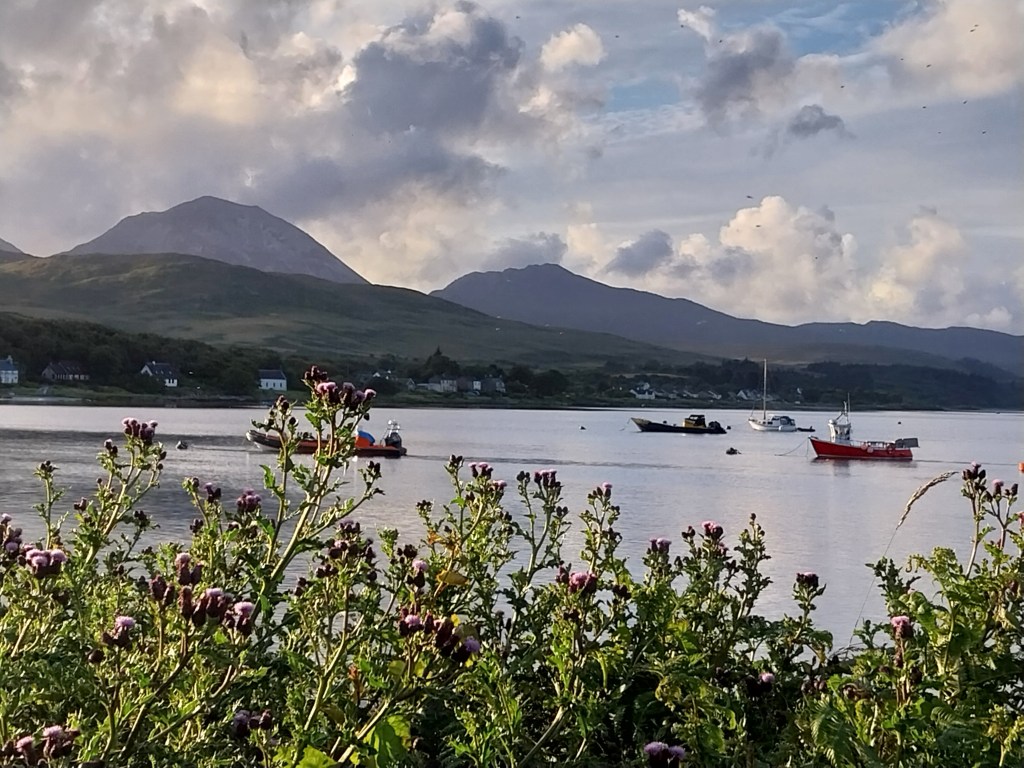
The landscape looked different from Islay: more trees, less buildings, and the presence of the two Paps (the hills that can be seen from the north-eastern side of Islay) is certainly very notable. Fun fact, on the island there are more deer than people (nowadays about 250). Jura is also famous for being the place where Orwell wrote his masterpiece 1984.

Anyway, once in Craighouse, we parked the vans in a nice spot Justine had found, behind a multipurpose warehouse (including the Deer Island Rum distillery, closed unfortunately) and next to an old pier. A great spot, quiet and with some tables and benches tooโ€ฆ just a shame that as soon as the wind calmed down, midges appeared to torment us. We just had time to walk to the Antlers Bistro for a coffee before going to Jura distillery for the tour.

The visitor centre is quite small, only a small entrance hall and a wee shop. Other than some merchandise and their full range of whiskies, they also have some special editions, a couple of distillery casks, bottlings, and the travel retail range. The guide for the day was Fiona, a local who has worked there for many years. She walked us through the shop and some offices to the courtyard, where she started introducing the distillery history, from its establishment (1810) to the first license (1831), and the troubled late 19th and early 20th century, when it closed. In 1960, the distillery was acquired by Charles Mackinlay & Co (of the famous Mackinley blend), rebuilt and extended, and in 1963 they restarted distilling. Since then, the distillery has never stopped producing (except for maintenance of course), not even during the whisky loch (when they just reduced production to 3 days per week).

Their main malt supplier is Crisp, mainly Sassie and Lauriet, and they do heavily peated runs four weeks per year. The mill, a classic Porteous, was bought second hand in 1963, and never changed since. Their grist ratios are a bit different compared to others, with 15% flour, 25% husk and only 60% of grit. They do 28 5-ton mashes per week, working 24/7, and use the typical three waters at increasing temperatures (64.5, 75 and 85ยฐC) in a semi-leuter mashtun. Each washback (six in total, all stainless steel) takes two full mashes, to which they add 150kg of Mauri yeast, left fermenting for about 60 hours. The two pairs of stills are heated by steam coils and used for a typical double distillation (7 hours the first one, 8 the second one), with a cut between 72% and 64% abv. Some casks are filled on site, usually the ones destined to stay in one of the four warehouses on the island (total capacity of 24,500 casks), while all the vatting and bottling (including re-racking for finishes) happens at Whyte and Mackayโ€™s mainland sites in Invergordon and Grangemouth. To note, they recently demolished part of a warehouse to make space for a biomass boiler, so to decrease their environmental impact.

After the tour, it was finally time for the tasting! A few words here: Jura whiskies, despite being best sellers in the UK, tend not to have the greatest reputation among whisky enthusiasts. Sales are probably driven by the notable number of expressions available at supermarkets (the Bourbon Cask, formerly known as โ€œJourneyโ€, the 10y, 12y, 14y Rye Cask, Seven Woods, Rum Cask, Red Wine Cask, Pale Ale Caskโ€ฆhave we forgotten any?), so well played to them. But quality-wise? Well, letโ€™s say that in our opinion itโ€™s not the best whisky you can find, not even for the money probably (when on sale, these expressions can be quite cheap). We had one bottle of Jura Journey a few years ago and tried very few independently bottled whiskies (maybe 2 or 3), so we were very curious to taste other expressions and didnโ€™t really know what to expect. This is why, when we booked this tour, we went for the extended, fancier tasting.

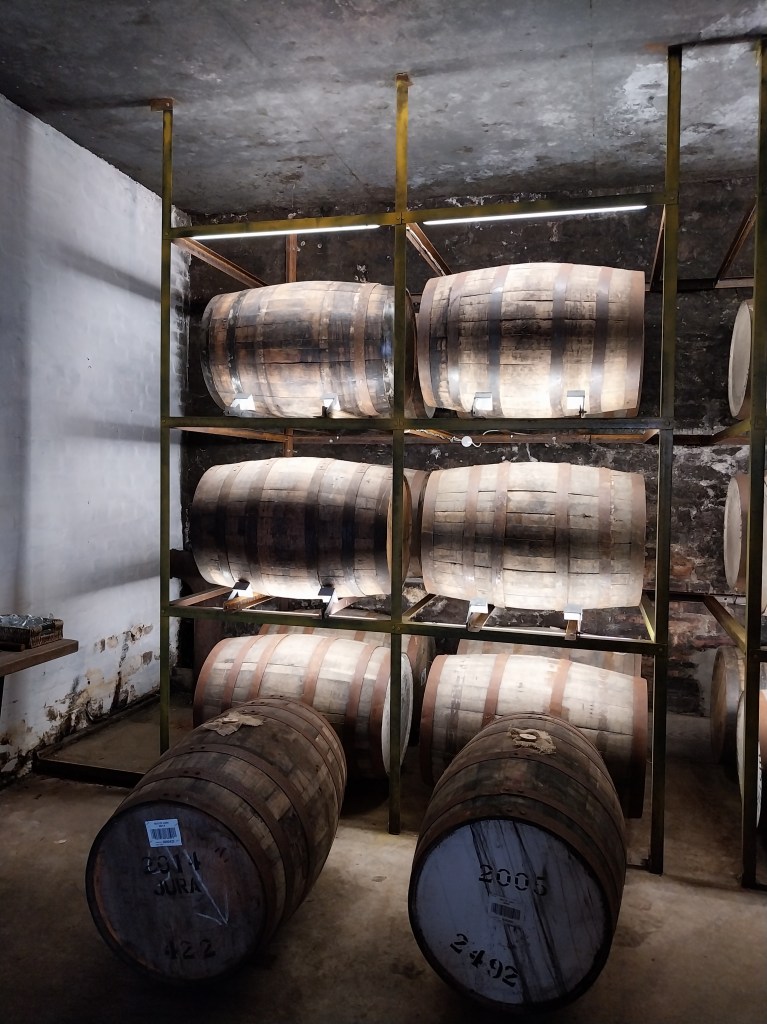
A micro-warehouse for the tasting.

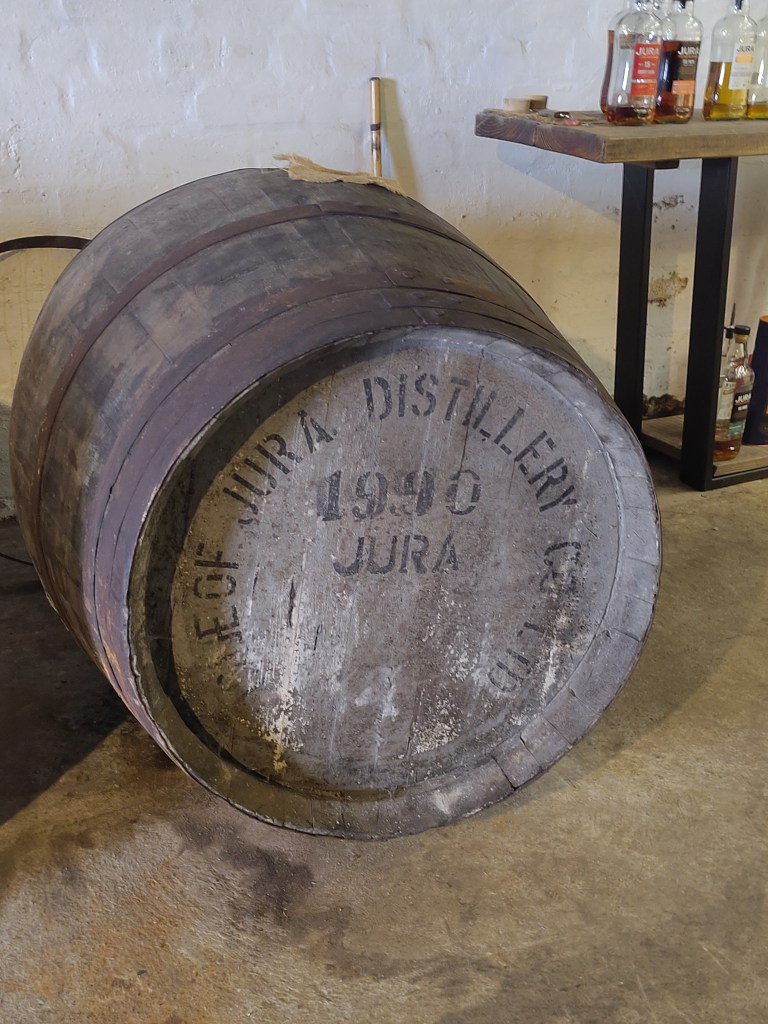
The tasting was set up in a dedicated warehouse-ish space (a damp room with a few dozen casks). Because weโ€™d already parked for the night, we could all drink, yay! First dram, a 15y whisky finished for 1-2 years in oloroso sherry (42.8%), bottled for the south-east Asian market. Very sweet, a good start but not our thing (and the colour was suspiciously dark, which made sense given the target market). The second dram was definitely better, a travel retail 19y โ€œThe Papsโ€ (45.6%), finished in a PX sherry butt (40 years old!). However, the third dram was the one where things started to get serious. It was a distillery cask, 1st fill ex-bourbon barrel, vintage 2016 (7.5y) and bottled at 60% – a very fruity dram, not too hot despite the high abv, and it took water very well too. The fourth dram was another distillery cask, same cask but a bit older (vintage 2008, 15y) at a slightly lower abv (55.5%), a very nice dram too. Finally, we had a choice between an unpeated 33y (distilled 1990, bottled in 2023) from a PX hogshead (44.8%), and an 18y heavily peated ex-bourbon barrel (distilled 2005, bottled 2023) at 53.7% – being four of us, we got two of each and we shared. They were both delicious in their own very different way.

…with this one quite delicious.

After the distillery we went for dinner at the Jura Hotel. Our attempt to enjoy a pre-dinner pint outside lasted about 3 minutes, before the midges swarmed and made us run for a table inside. We had good time, good food, tasty pints and, worth noting, we found very clean bathrooms and strong Wi-Fi too! We soon retired to our campervans, to enjoy a last dram before a good night sleep (no wind this time!).

Overall, we loved the visit and the tasting, and Fiona was a great host, so money totally well spent. During the tasting we realised Jura can produce very tasty whisky, so probably the issue with their range is downstream. What is a bit strange, to us, is that all the supermarket expressions (all well below 46%, probably chill-filtered and with E15Oa too) seem to be aimed for the casual or novice drinker, none of them targets non-beginners. Other distilleries/brands (Glen Scotia, Loch Lomond, Laphroaig, Pultney, Tomatin, just to name a few) tend to target a wider range of drinkers, itโ€™d be interesting to understand what drives Juraโ€™s different approach.

Stay tuned for our time back on Islay! Until then, slainte!


Jura Distillery Exclusives Tour

Price: ยฃ50.00 pp (July 2024)

Duration: 2hr

Tasting: 5 drams, Jura 15 Sherry cask East Asia exclusive (42.8%); 19y The Paps travel retail (45.6%); Distillery cask 7y (60%); Distillery cask 15y (55.5%); choice between 33y ex-PX cask (44.8%) and 19y heavily peated ex-bourbon cask (53.7%), and a complimentary glencairn

Distillery Exclusives: Distillery cask ex-Bourbon 7y (60%, ยฃ90.00); Distillery cask ex-Bourbon 15y (55.5%, ยฃ120.00)

Target: whisky geeks

Value for money: good

Highlights: the island and the tasting

Recommended: if you want to try some good Juraโ€™s, definitely!

Link: https://www.jurawhisky.com/en/


#44.3 Spirited in Speyside

From Ben Rinnes to Tomintoul


TL; DR: Another sunny day in Speyside, so we finally did what weโ€™d wanted to do for a long time: climb Ben Rinnes! In the afternoon we visited Tomintoul, attending a Spirit of Speyside tour and (quite generous) tasting. We were not very familiar with this malt, which turned out to be a very solid and sweet Speysider!

(missed Part 2/Part 1?)

We woke up well rested, under the trees and with birds chirping all around us. We had breakfast in our van: coffee, yogurt, fruits, and we indulged in a couple of cookies as well. Again, it was a magnificent sunny day, so we could go ahead with our plan: go for a walk before starting our whisky activities.

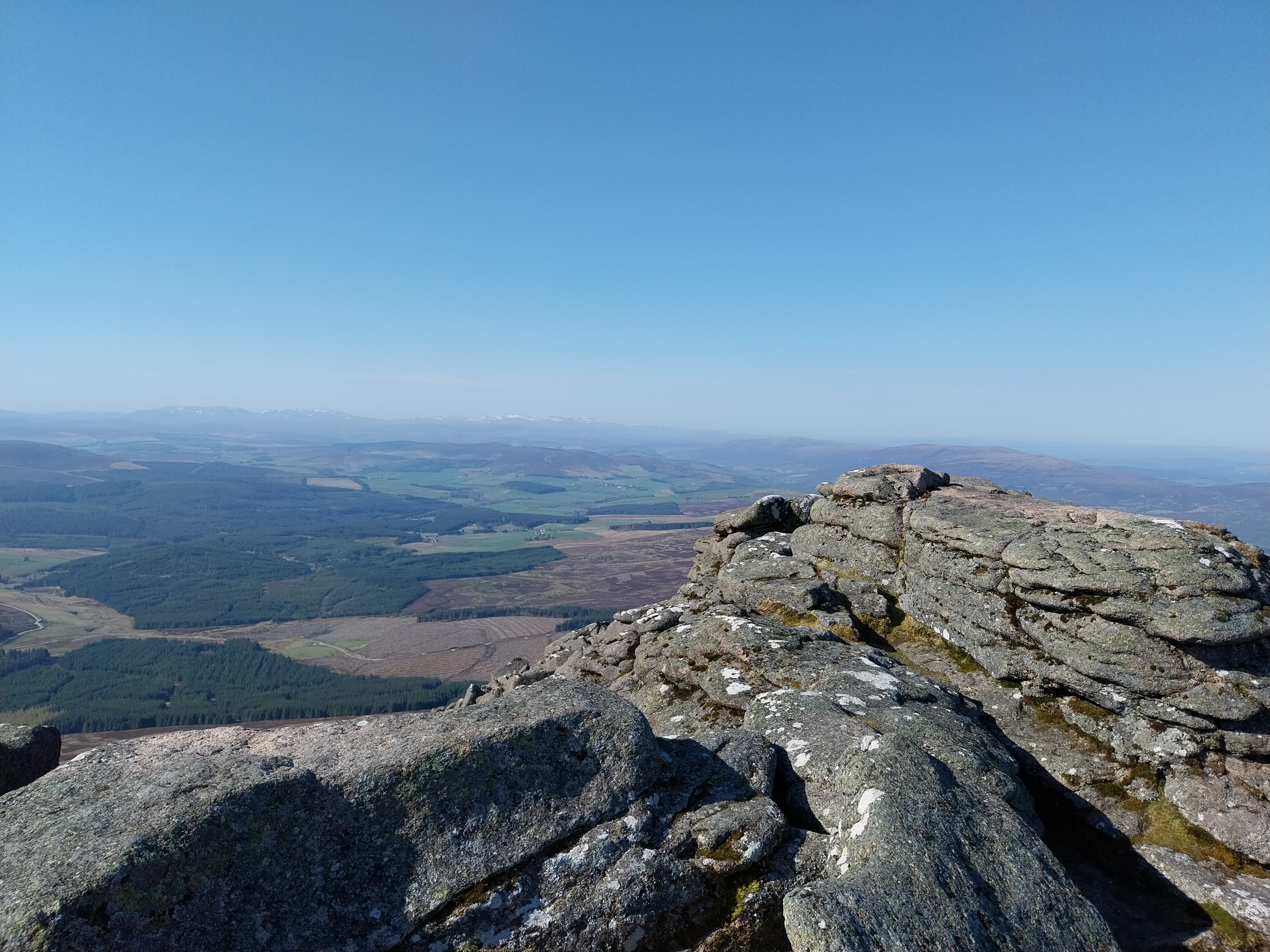
Weโ€™d decided to climb Ben Rinnes, the hill in the middle of Speyside, whose slopes provide water to many distilleries around it. It was not a long walk, less than 8km, but it was quite steep, a 550-metre ascent in total from the parking lot to the top of the hill. We started early, around 8.30am, when not many others were hiking (we only met about 4-5 people while going up). The climb started quite uphill right away, and the ascent was interrupted by a couple of short plateaus, before the last climb of more than 300 metres.

Once on top, though, we got rewarded, as the view is quite amazing. As were going up, on our left, we spotted a distillery very close to the top โ€“ we guessed Benrinnes but we were wrong, it was Allt aโ€™Bhainne. Others could be seen (well, mostly the vapours) once on the top. Our plans to have a snack at the top were ruined by the strong wind, so we quickly started descending back to the parking lot. We bumped into a lot of people, probably because of the time, although the sky was clouded when we got to the van. On the Walk Highlands website the hike (back and forth) was estimated around 3-4 hours, but it took us only 2, so we had some spare time!

Back in the van, we started looking for a place for coffee and a bite, possibly in the direction of our next destination, Tomintoul. We were unlucky at first: some cafes were still closed until summer, some were opening later in the day. We were saved by Bike Glenlivet, a cafรจ inside an outdoor centre, less than 10 minutes past the distillery. There we could enjoy a sandwich and, past midday, a warm soup.

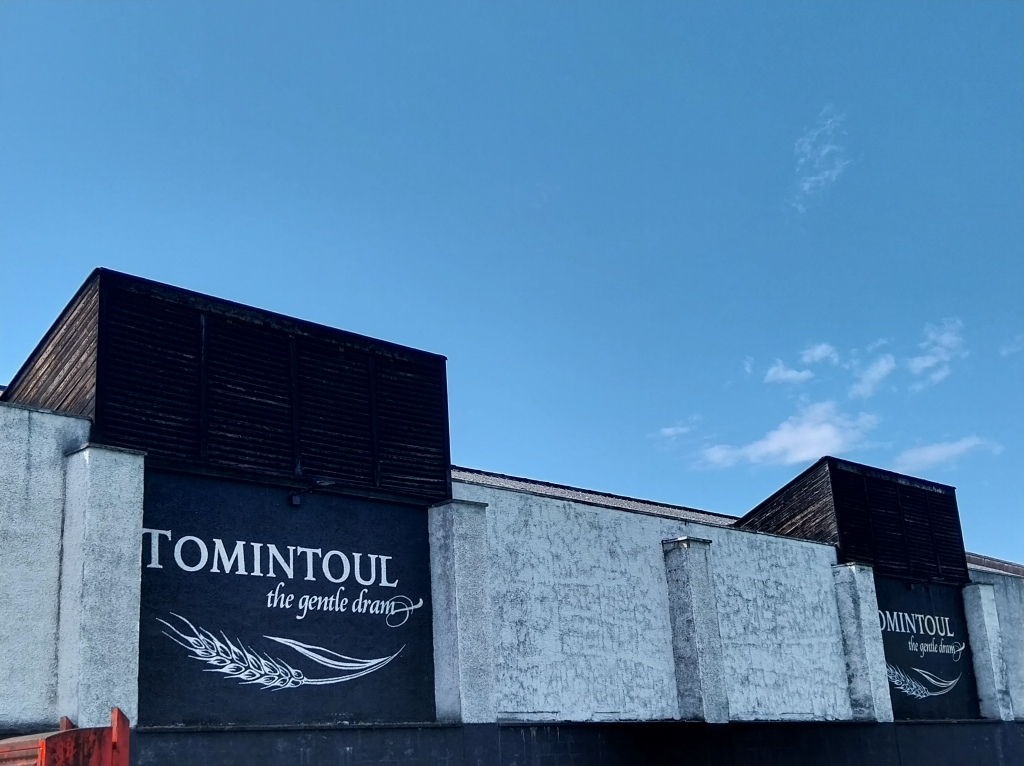
We arrived at Tomintoul distillery a few minutes early, just the time to park, take some photos and check in. The distillery is tucked at the bottom of a woody hill, along the road, with another hill in front of it: we were told later that during the heather flowering season it becomes all purple, which is why purple is one of the flag colours.

The visitor centre actually consists in a room with the shop and a big table for tastings. Fun fact: in the room there is also a giant bottle (over 100 litres!) of Tomintoul 14: the Guinness World Record holder for biggest whisky bottle, in our understanding. The distillery is usually open to public, but their regular tours are on Mondays, Tuesdays and Thursdays, making it a bit hard to schedule a visit. This was one of the reasons to visit them during the Spirit of Speyside, the other being that we were not very familiar with their whisky, so an enhanced event could have made us know them betterโ€ฆand it did, indeed!

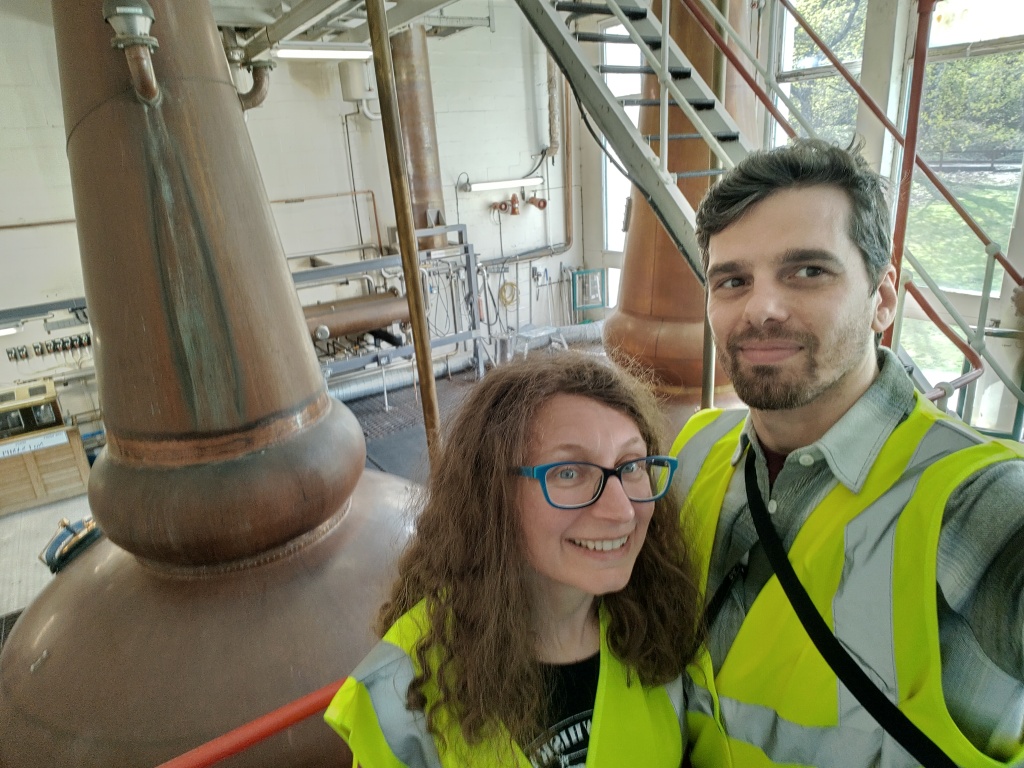
Teresa losing the ‘who’s the tallest’ contest again.

The tour was hosted by Rob, the distillery manager, and Iain, the master blender who gave us a dram of their 16yr (40%abv), one of their flagship expressions. We always appreciate the tours where they give you a dram at the beginning, well done! The distillery was founded in 1964, so it is โ€œyoungโ€ compared to their peers, and they produce unpeated (marketed as Tomintoul), lightly peated (peated Tomintoul) and heavily peated (Old Ballantruan) single malt. The latter takes name from the spring where they source water. The peated run lasts about 6 weeks per year, much less compared to the 40 weeks of the unpeated one. They use Crisp malt, which is stored in 8 malt bins before processing through a dresser and the classic Porteus mill. The grist is then moved 12.2 tons at a time to the mashtun, with 48,000 litres of water at 65ยฐC, followed by the usual two other waters at increasing temperature, to maximise the sugar intake.

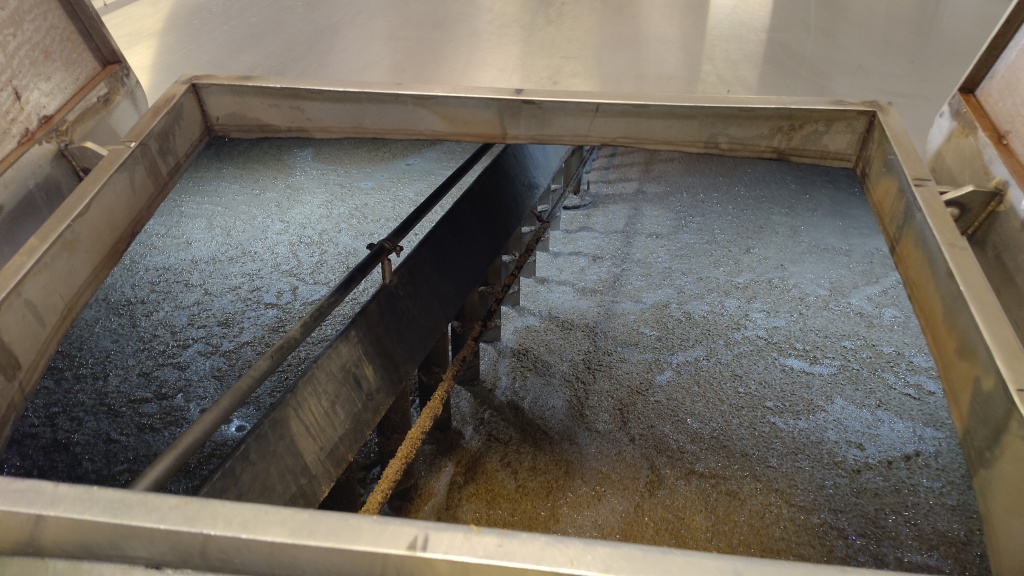
Once the wort (clear after the first water, cloudier after the second) is cooled down to 20ยฐC, it is moved to one of the 6 washbacks, where they add solid distillersโ€™ yeast. Fermentation lasts about 60 hours, then the wash is distilled in one of the two wash stills, and then again in one of the spirit stills. Cut points are usually from 72% to 61.8%, and it takes more or less two hours. Originally the distillery had only two stills, the second pair was added in 1974. Rob showed us one of the byproducts of the first distillation, a syrup with almost 0% alcohol, which is sold to farmers.

Tall stills.

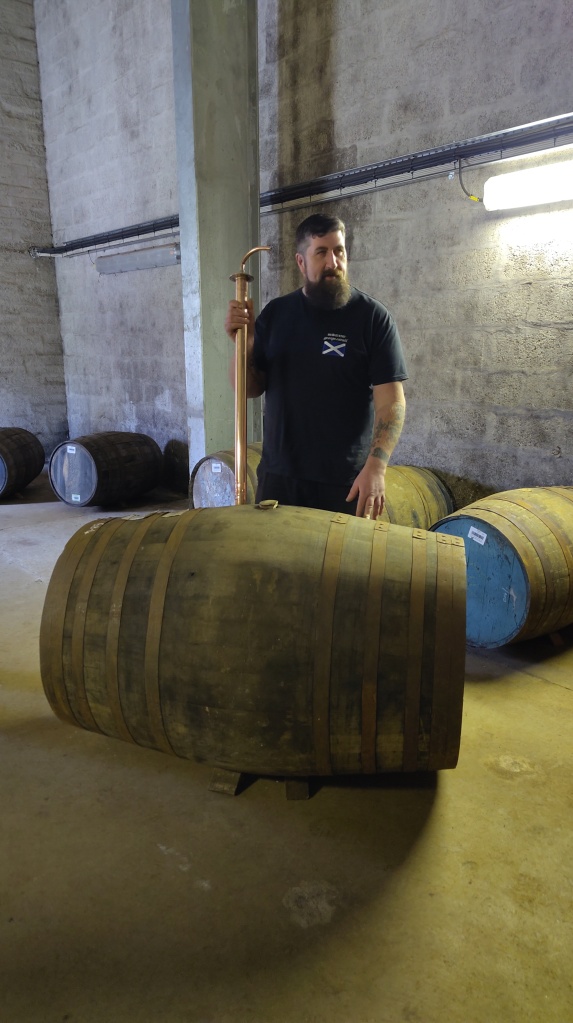
Still in the still room (pun sort of intended), Iain joined us again, this time to give us a dram of the 25yr (43%), a very sweet and delicious one! We then visited one of the warehouses, a racked one (the most common from the distilleries built in that era). They can store up to 150,000 casks on site, while the rest is shipped to the main site in the Lowlands. There, Iain demonstrated us the use of a (leaky!) copper dog, although the whisky inside it came from a bottle, not straight from a cask: a single cask from a Bordeaux wine barrique, vintage 2008 (14yr), bottled at 60.7%.

A 25yr dram after visiting the still room. Nice surprise!

We headed back to the visitor centre for the remainder of the tasting: first, a couple of Madeira matured expressions, a 15yr limited release (46%) and a single hogshead from 1998, bottled in 2022 at 24 years of age (50.2%). The next dram was their Cigar Malt, a quite delicious sherry cask matured expression, lightly peated, and very solid despite the 43% strength (a shame it was a bit pricey). We finished with an Old Ballantruan from the core range: the 15yr (the other two are the non-age statement and the 10yr, all bottled at 50%): a sweet and smoky dram. At that point, a group of Spanish who were on the tour (one of them was a London-based employee of Angus-Dundee, the distillery owners) brought out some Jamon Iberico, which paired perfectly with the last two drams!

We left the distillery very happy (not just because of the drams, Gianluigi was dry!), taking one of their bottle with us: as most of their core range is bottled at 40% or 43% and the limited expressions were a bit pricey, the perfect one for was the 14yr: not only unchill-filtered and bottled at 46%, but also from ex-bourbon casks, which in our opinion is the best type of cask to grasp the distillery character.

We arrived at our destination, the Parkmore Cottage and Camping in Dufftown, where our friend Justine (from Kask Whisky) was waiting for us. We had a beer, dinner and a few drams with her, to conclude the day on a high. And what a great day was that, first the climb to Ben Rinnes, and then Tomintoul. With 7 drams their tour was one of the most generous as well (compared to higher priced tours with less than half of the dramsโ€ฆ), giving us a chance to fully appreciate the potential of their very solid and fruity (gentle, as they like saying) whisky.

Stay tuned to know about our day at another Speyside whisky distilleryโ€ฆuntil then, slainte!


Tomintoul Distillery: Behind the Scenes Tour and Tasting

Price: ยฃ70.00 pp (Spirit of Speyside 2024)

Duration: 2hrs (actually, almost 3!)

Tasting: Tomintoul 16yr (40%), Tomintoul 25yr (43%), single cask from a Bordeaux wine barrique (2008, 14yr, 60.7%), Madeira 15yr limited release (46%), Madeira single hogshead (1998, 24 yr, 50.2%), Cigar Malt (43%), 15yr Old Ballantruan (50%)

Target: whisky geeks

Value for money: very good!

Highlights: the tasting (including drams during the tour)

Recommended: yes

Link: https://tours.tomintoulwhisky.com/


#44.1 Spirited in Speyside

Catching up Kininvie


TL; DR: May again, which means Spirit of Speyside again! And again, we tried to bag as many distillery tours as we could. First off, the mysterious Kininvie: hidden behind their stablemate Balvenie, itโ€™s a treasure to be foundโ€ฆand weโ€™ll have a pleasant surprise too! 

In the last couple of years, the Spirit of Speyside has become one of the unmissable events for us. Itโ€™s a festival, but it doesnโ€™t feel like one, probably because of the wide area the events are spread around: the whole of Speyside! There are so many events: fairs, walks, tastings, tours, even runs! Of course, for us it is a good opportunity to visit distilleries that are normally closed to public. In 2023 we managed to visit โ€œa fewโ€, this year we tried to do the same.

This year we made our long weekend a wee bit shorter: from Thursday to Sunday only, skipping the Wednesday and the Monday. It was enough, because, unlike last year, we managed to book all the distilleries we wanted to visit over 4 days! The only ones we decided to pass on were Glen Keith (the event is insanely expensive, like  north of ยฃ250โ€ฆ yes, it included Strathisla, which we visited twice already, but still a brainfart) and Glenglassaugh (the event was pricey, ยฃ200, but included visits at Benriach and Glendronach too, transport and lunchโ€ฆnot a bad deal, but still too much considering all the other visits weโ€™d planned).

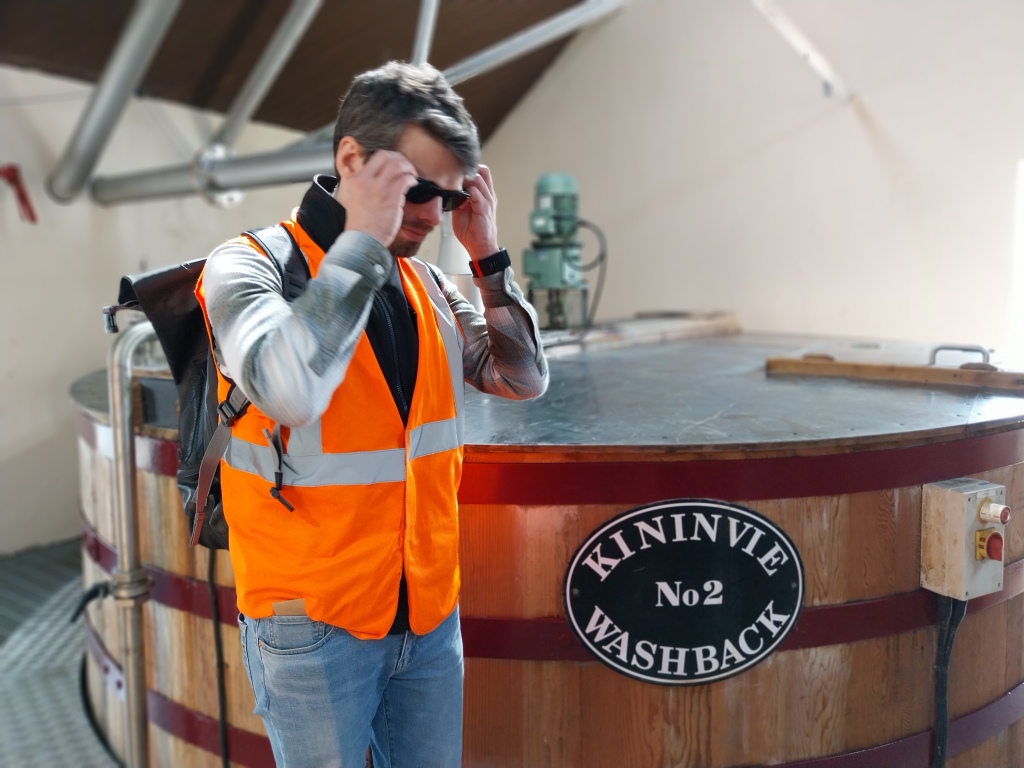
The first distillery we hit this year was Kininvie, in Dufftown. It is owned by W. M. Grants, like Glenfiddich and Balvenie. Actually, weโ€™d already visited most of the distillery during our fantastic tour of Balvenie in 2021, with James. Mash-tun and washbacks are indeed in the same building as Balvenieโ€™s ones, and the mill is actually the same! This time though, we will see everything about Kininvie!

Back to the trip, we left early in the morning, as the tour was at 11am (but also to avoid the silly Edinburghโ€™s rush hour trafficโ€ฆsilly because given the size of the city, it shouldnโ€™t be like that). We also left a bit earlier because weโ€™d planned to leave the van in Craigellachie, get the bus to Dufftown, walk back to Craigellachie after the tour. Everything went according to plan, except that the bus from Craigellachie to Dufftown was, like, over 20 minutes late. No problem though, we were still able to get there in time for our tour, and in the meanwhile we had time to chat to our friend Graham Fraser, who was taking the same bus to go to Glenfiddich instead. He is a fellow vPub barfly and also a โ€œdrammer aroundโ€ like us, but more experienced, with over a 100 Scottish distilleries under his belt: impressive!

After checking in at the Balvenie visitor centre, we had a big surprise: Paul (who we met at Linkwood last year) has recently moved to Balvenie and Kininvie as production manager, and would give us the tour! He is a super nice guy, and thanks to his impressive career in whisky, also extremely knowledgeable, so we were super happy about that!

The history of Kininvie is peculiar: it was built in 1990 to supply malt for blends (Grantโ€™s and later Monkey Shoulder), instead of Glenfiddich and Balvenie, kept to be bottled as single malts. They started producing on the 4th of July of the same year, and nowadays the equipment is also used to experiment with barley and yeast strains, including running a rye campaign every year before the silent season: Paul was very excited about the freedom to experiment.

The tour started with a visit of the Balvenie malting floor and kiln, which was under repair waiting for some replacement parts. After a walk in the kiln, we moved to the main production building with mill, mash-tuns and washbacks. On average they do up to 25 mashes per week, using 240 tons of barley. When they donโ€™t experiment, the barley strains used at the moment are Sassie or a mix of Sassie and Diablo, which have mostly replaced Lauriet. The barley is mashed with the usual three waters at increasing temperatures (65, 75 and 85C). Fermentation takes place in one of the 10 wooden washbacks, next door to the Balvenieโ€™s ones. They use Mauri yeast and go for either a short fermentation (60h) to get a cereal-y cloudy wort, or a long one (over 70h) to obtain a lighter and fruitier one: the one we tried was very sweet, and Teresa picked up notes of white chocolate.

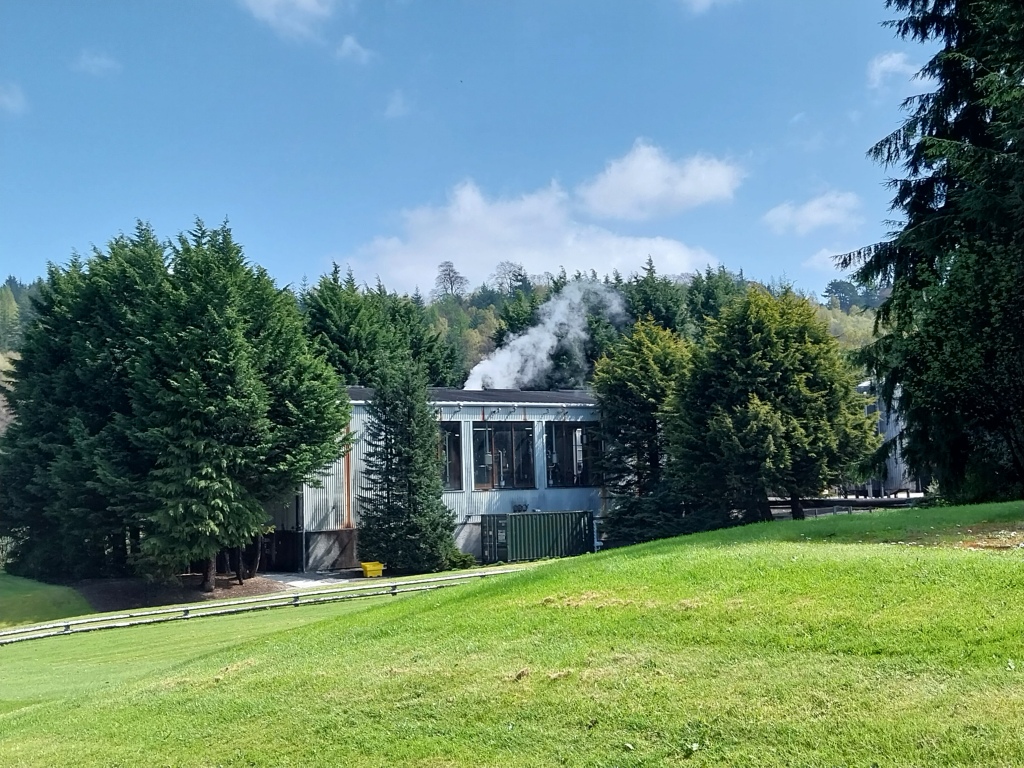
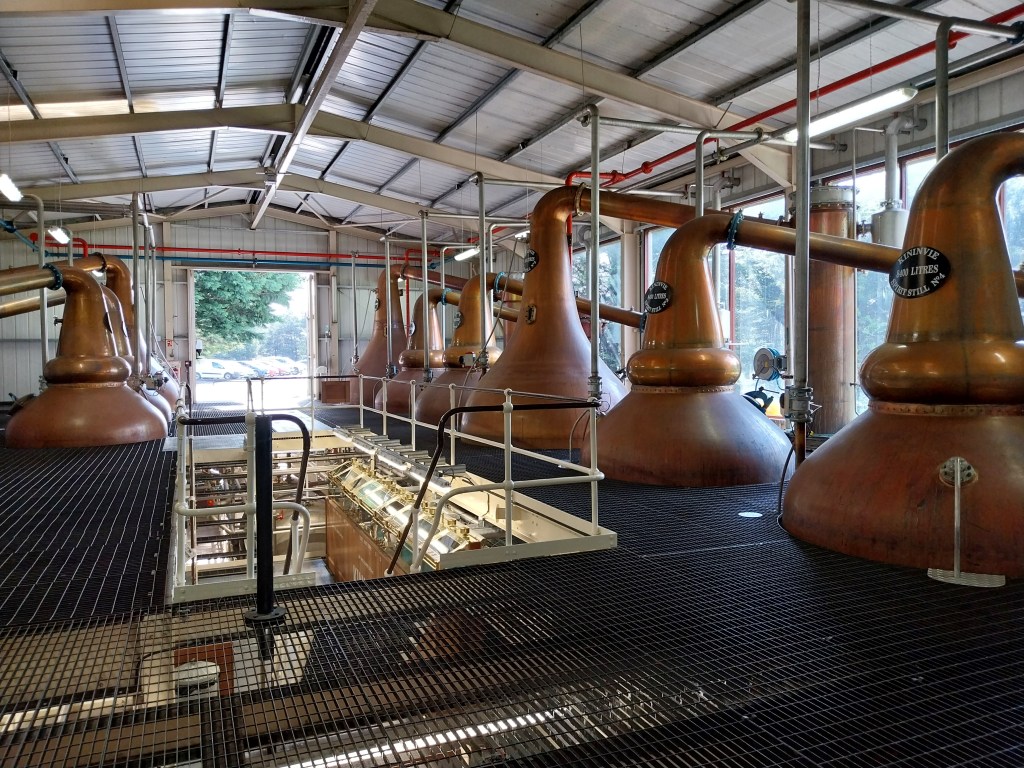
Finally, itโ€™s time to visit the still room, located in a hidden (hence the name of the tour) dedicated building behind Balvenie. They have three triples of stills (with enough space for a fourth, in case of expansion), for a total of nine. Each triplet works as a unit, with one big wash still for the first distillation and two smaller spirit stills for the second one. The cut points are very variable depending on what they are producing, but usually the second distillation takes 10 hours: 1.5 to heat up, 4.5 for heads and tails and 3 for the heart run. Once at the spirit safe (the piece of equipment used to control the cut points of the distillation run), we could try some newmake spirit, at a whooping abv of 70%! A very nice touch!

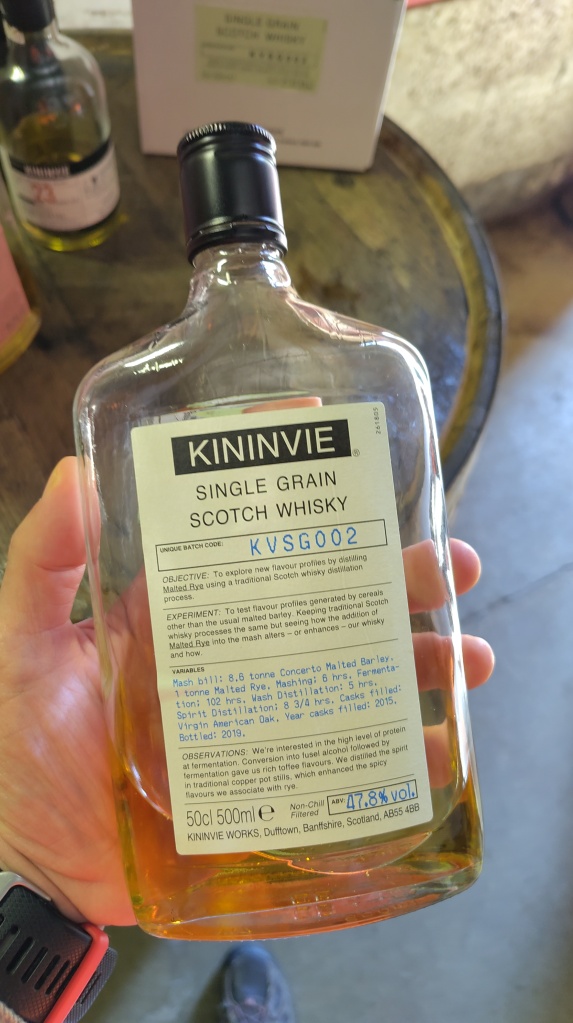
After that, we moved to one of their massive racked warehouses next door, where after a brief, nerdy chat with the warehouse manager George, we tried some drams. Kininvie releases are very rare: the only one weโ€™d tried previously was during an online event in 2020, as part of the Belfast Whisky Week: the KVSM001, a 5yr triple distilled single malt matured in ex-bourbon casks. We had like it back then, so we were now quite excited and curious about the tasting at the distillery. We started with a โ€œsingle distillery blendโ€, KVSB003: a vatting of single malt (matured in European oak casks) and single grain (matured in virgin American oak) produced at the same distillery, 4yr and bottled at 48.2% abv. The second one was a component of this blend, the single grain KVSG002: it is actually a rye whisky (although we think it wouldnโ€™t comply with the American definition of โ€œrye whiskeyโ€ because the rye part was less than 51% of the mashbill, only 1 ton malted rye vs. 8.6 ton malted barley), matured in virgin American oak, distilled in 2015 and bottled in 2019 at 47.8%. These drams were both quite interesting, but we recently find rye whisky a bit too herbaceous, particularly the ones produced in Scotland and Europe. Nonetheless, we were quite excited because the labels on the bottles provided a great deal of information, a real deal for us whisky nerds!

We really appreciate such transparency!
So many details!

We then moved to a single malt, a 23yr distilled in 1991 from a combination of hogshead and sherry butts, bottled at 42.6% (a bit weak to our palate, but nicely tropical and balanced). Finally, the gem was the cask sample: a 10-year single malt from a first refill Sherry butt at 68.4% (the cask filling strength was 70.3% abv!!!): it definitely needed water, but once it opened up it was really fantastic!

About to pour something really delicious.

And with this visit, the Spirit of Speyside festival was officially underway, starting with a bang! Like we noted last year, the staff were so happy to show us around, truly a refreshing experience, and so nice to see Paul in his new role! But it was time to move to our second whisky โ€œadventureโ€ of the day, so we quickly left the distillery on foot.

Stay tuned for more on this. Until then, slainte!


Kininvie Hidden Distillery Tour

Price: ยฃ60.00 pp (Spirit of Speyside 2024)

Duration: 2hr

Tasting: 5 drams, Kininvie single distillery blended KVSB003 (single grain rye whisky and single malt), single grain rye whisky KVSG002, Kininvie 23y Single malt, cask sample (ex-sherry cask, 10y) and newmake spirit (for details see the descriptions above)

Target: whisky nerds

Value for money: good

Highlights: the still room

Recommended: yes

Link: https://tickets.spiritofspeyside.com/sales/events/2024-festival/kininvie-hidden-distillery-tou


#43 Cask finish DIY

Diary of an experiment


TL; DR: Have you tried to finish your own whisky in a wine cask? Well, we did, and although we already knew, we could see how hard it is. While the result was not great, we definitely learned a few things. 

This post is going to be different from others, as we wonโ€™t tell you about a distillery visit, nor a trip, nor a tasting. Weโ€™ll talk about an experiment we did recently – still a journey, if you wish.

The idea came after some thoughts on whisky maturation in casks that previously held wine. It took a while to us to realise this is a controversial topic. At first, we didnโ€™t give it much thought as it felt it was just part of the broader โ€œwineโ€ category (including Sherry, Port, Madeira, etc.), but then we noticed many whisky enthusiasts think wine cask maturation is a separate thing, often perceived as badโ€ฆ so whatโ€™s the deal with red/white wines? We had amazing drams matured in wine casks (Arran Amarone, to name a popular one, but also a stunning Glen Garioch 19y fully matured in an ex-Bordeaux cask tried at the distillery, or the Glen Moray 10 Elgin Limited Edition, finished in ex-Chardonnay casks). Let alone the STR (shaved/toasted/re-charred) casks made popular by the late Jim Swan: some can deliver a lot of flavour in a short time, which is particulatly crucial for new distilleries. However, we also had some very โ€œmehโ€ wine-matured whiskies (we wonโ€™t name names here), dull at best, so we totally get the scepticism of some.

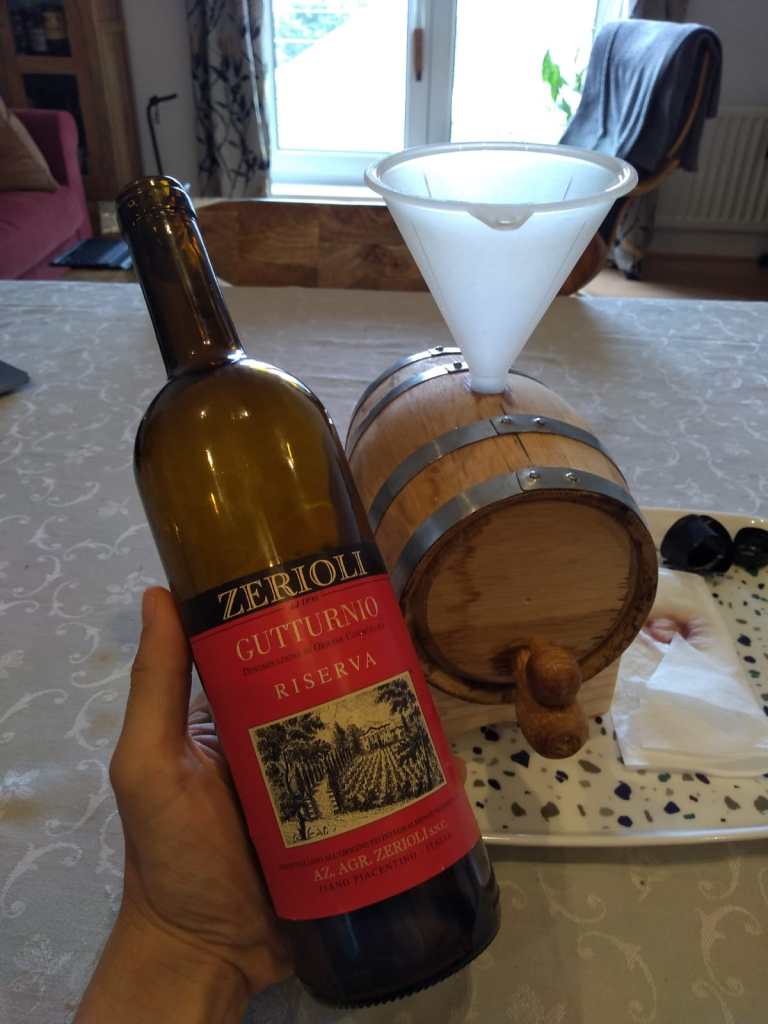
A taste of Gianluigi’s home, Gutturnio wine.

Probably our Italian upbringings sparked further curiosity on the topic, so we did a bit of research and noticed that while maturation in casks such as Amarone, Barolo and Cabernet-Sauvignon is fairly common nowadays, lesser known red wines arenโ€™t a thing (yet). One wine in particular seems to be overlooked: Gutturnio. Typical from Piacenzaโ€™s province (Gianluigiโ€™s hometown), it is a mix of Barbera and Bonarda grapes, and comes either fizzy or still (โ€œsuperioreโ€). A thick red wine, that goes well with the greasy local cuisine, quality-wise you can find the cheapos from supermarkets, up to several tenths-of-euros per bottle. We wondered for a while, then, after a conversation with Woody and Megan from Woodrowโ€™s of Edinburgh, we decided to give it a try and start an experiment.

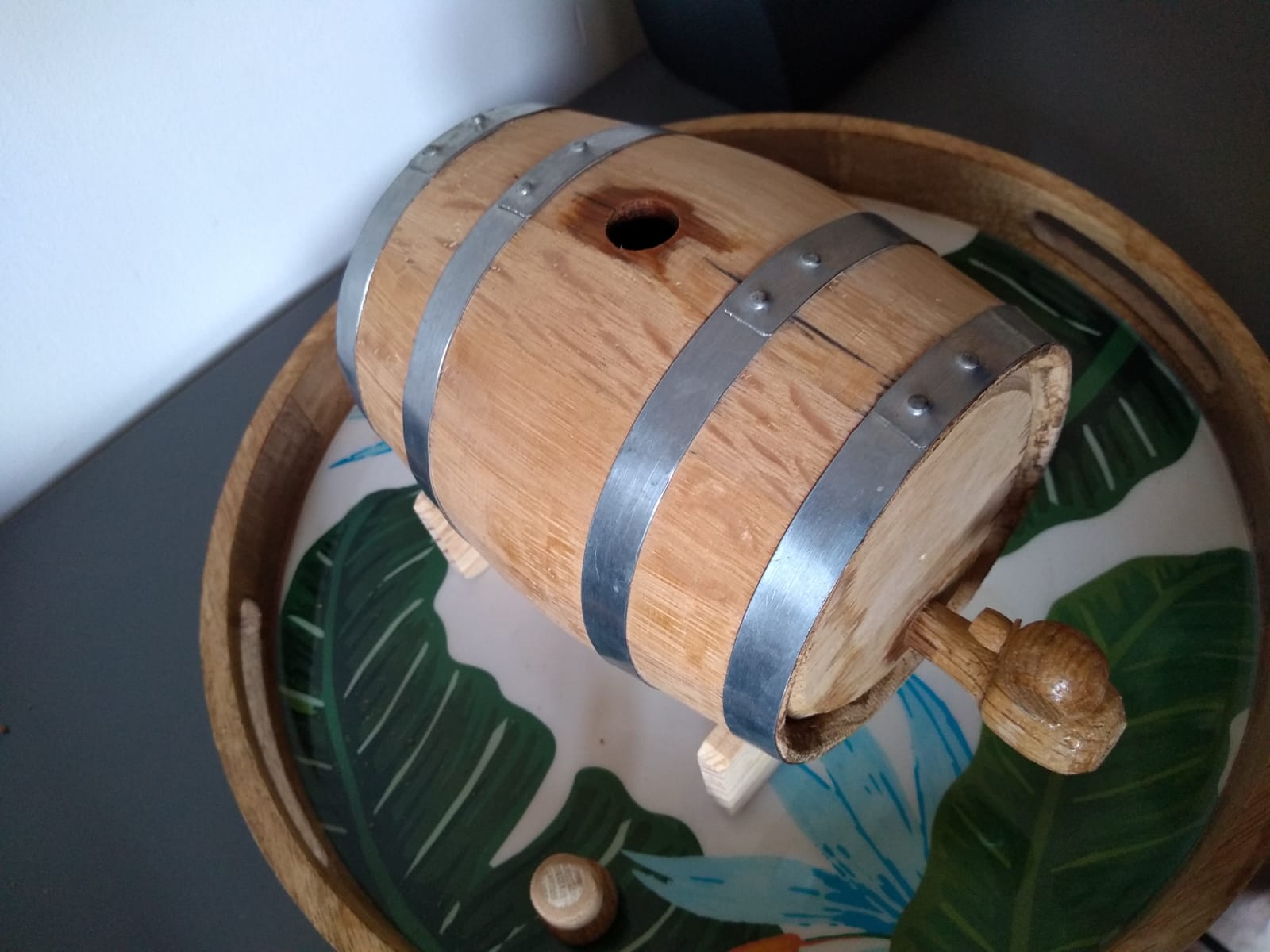
We asked some friends about to visit us to bring over a bottle of Gutturnio, Gutturnio Zerioli Riserva (later on Gianluigiโ€™s brother would challenge this choice as not great, but hey ho) and then we bought a 1-litre virgin oak cask (American oak, Q. alba) from Master of Malt (where it was cheaper, if you exclude some suspicious vendors on Ebay). On the 26th of August 2023 we filled the wee cask with 75cl of wine, and left it in there for a bit over 3 months.

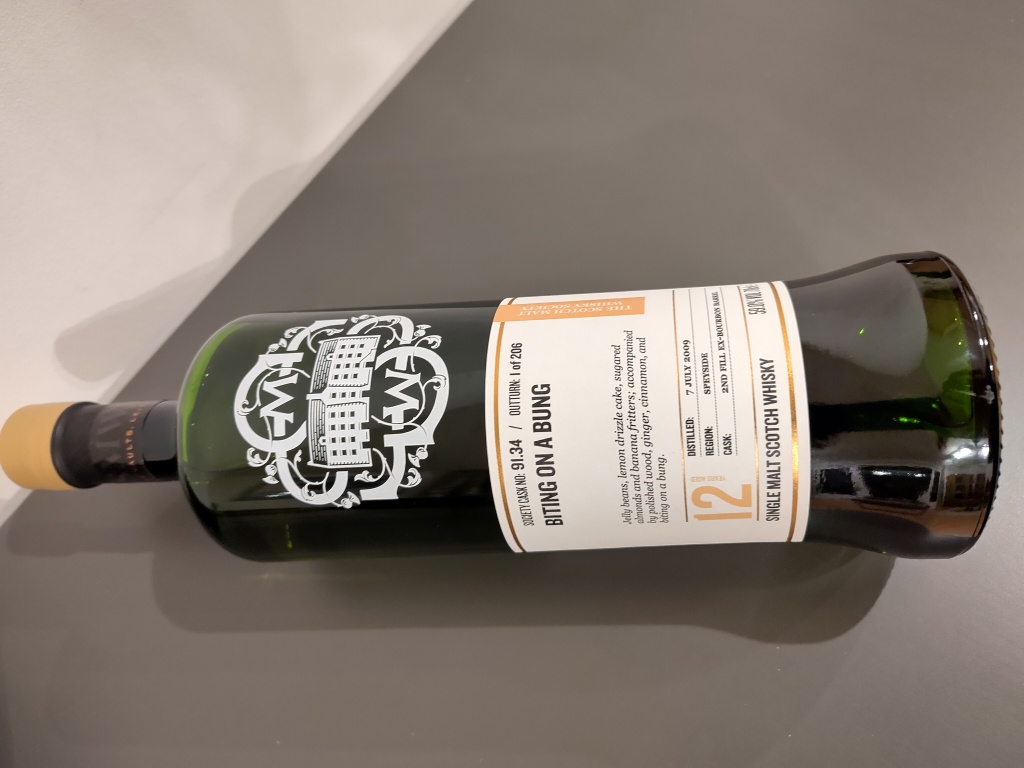
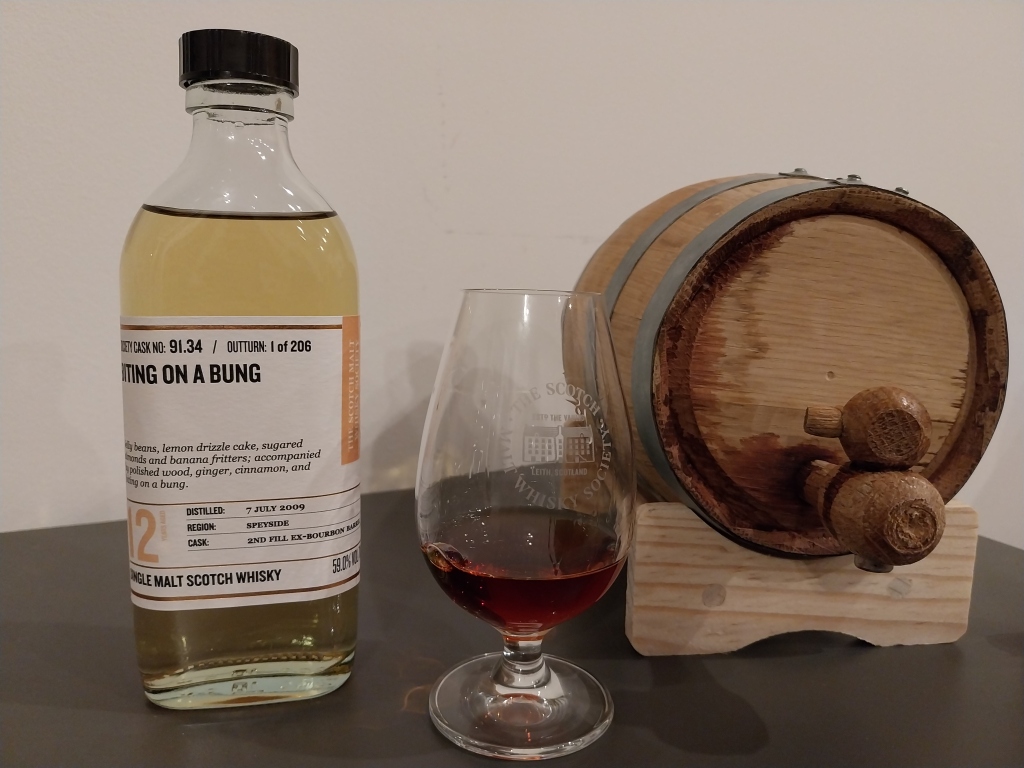
While the cask was seasoning hidden away in a cupboard (turning it from time to time), we chose our dram. We wanted something without much cask influence, so we aimed for second-fill (or more) ex-bourbon casks. Living in Edinburgh made things easier, as we could access the two Scotch Malt Whisky Society venues, although it wasnโ€™t easy to find a whisky available both to try and purchase. We still managed to taste 6 or 7 bottlings from various distilleries, and the final choice fell on a 12-year-old Dufftown (distillery that we had the chance to walk past in our first trip to Speyside, but never properly visited), called Biting on a Bung (91.34), distilled on the 7th of July 2009 and bottled at 59.0% abv.

On the 5th of December, we disgorged the wine. To our surprise the cask was soaked – of the 75cl of wine weโ€™d put in, only 35cl came out! We knew that some absorption would happen, but not to this extent!

What was left of the entire bottle!

On the same day, we filled the cask with the whisky while leaving 20cl to ourselves, in case we messed things up (spoiler alert, we did). We didnโ€™t have a timeline in mind, we just wanted to try the whisky at different times, but here one miscalculation: we went back to Italy two weeks for Christmas, leaving it unchecked for probably too long. When we came back, we took a sample right away: a lot of colour (copper red), some typical red-wine notes on the nose (tannins and red berries), but very metallic on the palate. We hoped these metallic notes would disappear with some more time in the wood, but they didnโ€™t, so in early March, exactly 3 months after filling the cask, we disgorged it and, again, only 30cl of whisky came out (another 20cl of liquid absorbed) – 30cl of โ€˜metallic liquidโ€™, clearly not a success.

We followed up the experiment, this time not with a proper whisky but with spirit from our infinity bottle: despite leaving it in the wee cask for only a couple of weeks, the same unpleasant notes re-appeared (although not so much absorption this time). Oh well.

So, what did we learn out of this experiment? How to waste a good half-litre of whisky? Definitely, but not only that. We already thought it must be hard to properly finish a whisky in the right cask for the right amount of time, but we were surprised by how easy it is to mess up (well, probably the small size just accelerated the process)!

We made a list of variables to consider:

  1. The cask! After so many distillery visits, we know wood quality is key (but tbh we didnโ€™t feel like investing big for our random experiment)
  2. Time to season the cask with wine (maybe too much?)
  3. Time to finish the whisky (again, too much?)
  4. Climate conditions (our flat is very very dry, but thereโ€™s not much we can doโ€ฆ)
  5. Whisky robustness (maybe it was a too delicate one for this kind of experiment?)
  6. Quality of the wineโ€ฆor even the type of wine?

So many variablesโ€ฆitโ€™s really hard to wrap our heads around it, although we could sum up all these variables into one: experience, i.e. really knowing what youโ€™re doing. We clearly didnโ€™t, but thankfully this is not what weโ€™re doing for a living. Nonetheless, it was fun! Whatโ€™s next? Currently the cask is empty, but weโ€™ll try to fill it soon to avoid it to dry too muchโ€ฆwith, maybe, rum? Another wine? Let us know if you have any ideas!

Until next time, slainte.


#42.3 A weekend on Skye


Raasay, paradise


TL; DR: As we woke up on the Saturday we drove to Sconser, to take a ferry to the Isle of Raasay. We visited the distillery, where we had an amazing in-depth 3hr tour and tasting, we hiked and, the next morning, we drove around this truly amazing corner of the world. 

(missed Part 2/Part 1?)

Waking up in a place like Carbost is something else. Despite the many campervans, the morning was very quiet, and the only sounds we could hear were the waves gently crashing on the shore. After packing up the bed and before getting on the move, we walked down to the pier, to get some of the fresh (very fresh!) morning sea breeze. We left Carbost after a short stop at the public toilets in front of Talisker distillery. It didnโ€™t take long to get to Sconser, and as we were slightly early, we had time to fix ourselves a coffee with the Bialettiโ€™s moka (well, still Italians after all) before the ferry to Raasay.

It was the first time on the island for us. Although geographically close to the mainland, Raasay can only be reached from Skye. The crossing was about 20 minutes, and once there we parked at the pier, where there are also public restrooms and a 24h open waiting room. The distillery was only 10-minute walking, so we decided to just walk there and see how the day would pan out. Our plan depended on the weather: if it was nice, we would have spent the night on the island, otherwise we would have taken the last ferry. It was a glorious day, so we ended up taking the ferry the next morning.

The distillery is in Clachan, just outside Inverarish, the main village. On the way there, there is an old market/barn building, now mostly abandoned. It wonโ€™t be the first one we spot, as the current population is only about 190 people (up by 30 with respect to the 161 marked on the Raasay Single Malt bottles). At that cross we turned right, leaving the Raasay House and Hotel on the left: a huge former mansion, now a tourist centre only open in high season. The main distillery building is called the Borodale House, an old Victorian house that used to be a hotel with a pub before it was bought by the company R&B Distillers to build the distillery. Other than distillery and shop, there are also a hotel, a restaurant and a bar serving hot food until mid-afternoon.

Being the off season and a Saturday, not all tour options were available, but we found one that seemed great: the Dunnage Cask Tour, which included a tour of the distillery and the bottling plant and a warehouse tasting. As we checked in at the distillery we had a brief scare: our reservation was lost in translation, apparently someone had forgotten to mark it down. The shop manager was very cool about it though, she said there we just needed to wait a bit, and as an apology she offered us a coffee (nice touch). We waited in the bar, taking advantage of the incredible view of Skye from the big windows on a very sunny day. Gabriel, our guide, arrived about 40 minutes later (directly from home). His family moved to the island when he was a kid, and he and his brothers represent a good percentage of the 30-odd distillery workers. This is his side job, while heโ€™s studying to get a medical degree. Gianluigi wondered how his life would be different if, instead of doing chemical analyses on tomato sauce, he had worked in a distillery as a student job.

Gabriel was extremely knowledgeable, and while we visited the various stages of production in the very contained area, he provided a huge amount of information. Starting with the barley, they get 30-ton a month of it from the Kintyre peninsula, and the two strains they are using are Lauriet and Concerto. For the peated runs, they get 48ppm (part of phenols per million) barley, malted using Highland peat from the north-east of Scotland. As for the milling, their grist composition is slightly different from others, with only 9% of flour, 19% of husks, and 72% of grit. Their water source is a 60m deep borehole located behind the distillery.

Mashing happens in a big 1.1-ton stainless steel closed mashtun with the usual three waters at increasing temperature, and they aim for a cloudy worth. Linked to the 5-day production week, fermentation is between 3 and 5 days. They have six stainless steel washbacks equipped with a cooling jacket, to slow down fermentation and allow the (liquid) yeast to extract โ€œas much flavour as possibleโ€. The two stills (wash-, 5000-litre, and spirit, 3600-litre) are made by Frilli, an Italian firm from Siena (like Teeling in Ireland and Inchdairnie in Fife), and the cut they take from the second distillation is usually between 75% and 65% abv. When they do peated runs, they use the cooling jacket in the lyne arm to increase reflux and get a lightly peated spirit. The peated newmake spirit comes out at about 14ppm, which is then reduced to 7-8ppm during maturation. It was actually very informative to get to know the ppm level on the liquid, especially when many distilleries only refer to the barley specification.

The production area includes a gin still, where they run the sourced neutral grain spirit with the chosen botanicals (which, of course, we donโ€™t remember). After the production tour, we took some stairs outside the building, to get to the bottling plant, on top of the hill behind the distillery. There, Gabriel showed us the manual and automatic bottling machines, but also how lots for different markets get labelled and stored until they get shipped. Back to the main building, Gabriel took us on a jeep and drove to the warehouse.

It was the time for the tasting, but first Gabriel let us take the bungs out of the casksโ€ฆan operation that took us very long, as we are both quite clumsy, but we could finally get a taste of the yummy content. The tasting consisted of six drams, one for each component of the Raasay Single Malt, their main core expression. These whiskies are matured in ex-Rye, ex-Bordeaux red wine, and Chinquapin virgin oak casks, both unpeated and peated. We knew what to expect: during the pandemic we did an online tasting of these six components, although they were not 3-year-old yet, so technically not whisky. This time these are properly whiskies, as the vintage of the cask was 2019 for the unpeated, and 2020 for the peated ones.

We loved the peated chinquapin oak, and the unpeated ex-bordeaux and ex-rye casks – one extra confirmation that, if done properly, young whisky can be delicious too. This range is available to buy at the distillery (when we visited, not the peated ones) bottled in the Na Sia range (Gaelic for โ€œThe sixโ€). While sipping the last dram, Gabriel took us around the warehouse, and we found out that they recently started using re-fill casks (initially they used only first fill).

After the tasting we were definitely ready for some food, which we got back at the distillery while trying a nip of the bottlings available at the shop (Slaintรจ Club bottlings, Year of the Dragon and others, see below in the box).

Left the distillery, it was a very nice evening, so instead of going back to the van we decided to go for a walk to the village and then to the hill behind the distillery, Temptation Hillโ€ฆdespite the cheesy name, it was quite beautiful and very relaxing. Back at the van, we had dinner, but we soon went to bed, after such a great day.

The following morning, we decided to skip the first ferry of the day to drive around the island: we probably drove along all the possible roads, talking advantage of some breath-taking landscapes – from the very north of the Island, along the mighty Callumโ€™s Road, with a very interesting story, to the south and its the old pier (and frankly, quite too many abandoned vehiclesโ€ฆ). We finally took the ferry for Skye around midday, and from there we drove almost non-stop to Leith (well, non-stop because most cafes along the road were closedโ€ฆexpect for the Apiary in Dalwhinnie, where we had some delicious cakes).  

This was one of the best experiences we had in a while, both the distillery visit (thanks Gabriel!) and the scenery. Raasay is truly a paradise that weโ€™d like to explore more, so we really canโ€™t wait to go back for a holidayโ€ฆwell, and maybe a couple of drams too!

Until next time, slainte.


Raasay Dunnage Cask Warehouse Tour

Price: ยฃ75.00 pp (February 2024)

Duration: 2-3 hr

Tasting: 6 drams from the cask, 5y cask strength unpeated ex-Rye cask, ex-Bordeaux wine cask and ex-Chinquapin oak (virgin oak), and peated ex-Rye cask, ex-Bordeaux wine cask and ex-Chinquapin oak

Distillery Exclusive: the Na Sia range (see above), Raasay Scottish Whisky Distillery of the year 2022 (4y and 10 months, finished in Quercus humboltii Colombian oak, 50.7%), Tourism Destination of the Year Celebration (4y, finished in ex-Manzanilla casks, 52%)

Target: whisky geeks

Value for money: good

Highlights: everything

Recommended: a bit pricey but totally worth it!

Link: https://raasaydistillery.com/


#39.4 The Highlander Trip

A quiz, a tasting and a distillery visit


TL; DR: Saturday was a โ€œrestโ€ day, after three distillery visits (actually five in two days!). However, we still had some whisky activities scheduled: a whisky-themed quiz and a tasting at the Carnegie Whisky Cellars. It was a great day, and it was followed by a visit (re-visit for us) at Clynelish on the Sunday. 

(missed Part 3/Part 2/Part 1?)

On Saturday we woke up not that rested: Teresaโ€™s cough was getting worse, the humidity inside Mr. Vantastic not helping. Gianluigi wasnโ€™t at his 100% either, with a bit of hangover hanging there. In normal conditions we would have got a warm drink and a good breakfast right away, but unfortunately Dornoch is a bit of a ghost town before 9-10, so we couldnโ€™t find an open cafรจ nearby, nor open public restrooms. Eventually, the latter opened (thankfully). A few minutes later we met Justine, and took a walk to the beach with her.

It was a very sunny day, not that cold, and Gianluigi even dipped his feet in the North Sea waters. We walked back to the village, where we could take a quick shower at our friends AirBnB. As a โ€œthank youโ€ Gianluigi went to the Harry Gow Bakery and got yummy morning rolls for everyone! Teresa felt adventurous and tried the macaroni pie – better than expected, although not sure sheโ€™ll have it again.

There were no distillery visits scheduled for the day, it was like a rest day, but weโ€™d have had an early evening tasting at the Carnegie Whisky Cellars shop, and a very fun activity was waiting for us before then: a whisky quiz! It was our friend Charlie, a whisky enthusiast more seasoned than us, to organise it. As a location, we went to the Dornoch Castle Whisky bar. Space was a bit narrow, so we were all around the same long table and with little chance to mix: we ended up in the same team, the Home Office (because of our working from home patterns, but also as a political mockery). We had a lot of fun, but we didnโ€™t win: we tried to gamble our last round for a high reward, but we didnโ€™t make it to the top. Afterwards, we went to the Cocoa Mountain to get a warm (and yummy) chocolate. Unfortunately, Teresa kept getting worse, so we decided to get a hotel for the night instead of sleeping in the campervan. Because this was a last-minute decision, we had to scramble back, and we ended up being late for the tastingโ€ฆdโ€™oh! Fortunately, our pals were all very understanding.

The Carnegie Whisky Cellars is a shop on the main street in Dornoch, on the same block as the castle. It is run by Michael, the manager, who started there in 2016, and by his assistant David. Beside the shop, there is a very nice room with low ceiling (ehm, the cellar?), and a long table around which we had the tasting. It was a very good one, Michaelโ€™s knowledge was impressive, and the choice of drams hit the spot. The lineup started with an old Haig blend, followed by a delicious Thompson Brothers Teaninich (bottled for the shop), a single cask 21y Braveal, a cask strength Campbeltown blended malt Gauldrons (probably mostly Glen Scotia), and two cask samples, one from a local distillery (donโ€™t know if we can disclose it, but it wasnโ€™t Dornoch) and another one from a Campbeltown distillery. While Gianluigi enjoyed his drams, Teresa mostly saved them as she wasnโ€™t feeling well, so after the tasting she went back to the hotel to rest. She revisited the tasting recently, and she loved it as well! Gianluigi instead joined the others for a very nice dinner at Greens (just next to the shop), followed by drams at the Dornoch Castle Whisky bar, and a final pint at the Coach House, before joining Teresa back at the hotel. 

In the morning we were both feeling much better, and as soon as we could we had our breakfast (Scottish full, of course) at the hotel, where we said goodbye to our pals Fiona and Mike, who left soon after. We met with the rest of the gang in the main square, but we didnโ€™t join them on the minibus: we were both working the day after, so the plan was to drive back to Leith straight after the visit at Clynelish distillery

The joys of foldable chairs.

This was the second time there for us, with the first in May 2021 right after the lockdown. While we really like the whisky, the distillery visit was a bit of a bummer: too expensive and too focused on Johnnie Walker (you can read about it here). Fortunately, things changed since then, they have various experiences, and we chose the Production Tour and Premium Tasting, more suited to whisky enthusiasts (ยฃ30). The others are the Flavour Journey (sounds very Johnnie Walker-esque, ยฃ19), the Express Tasting (ยฃ15) and the Premium Tasting (ยฃ65).

The guide for the tour was Shirley, and she was way more knowledgeable than the guide we had in 2021 (to be fair, we are now more knowledgeable too). The tour scheme was the usual, although it was a lot richer in information. They get their malt from Glen Ord maltings, unless Talisker is in high demand, in which case they get it from Buckie. The mill (as usual, Porteus) is the only piece of equipment they didnโ€™t refurbish in 2016, and they set the usual 20/70/10 split in the grist (husk/grit/flour). With the mashing (common to many Diageo distillery, two waters: raising the first one from 62ยฐC to 84ยฐC) they aim for a very clear wort, which then undergoes about 80-85 hours of fermentation.

An empty mashtun.

They recently changed yeast strain, they now use Lalamond. They only do unpeated whisky, but for their neighbour distillery Brora, the peat comes from near Montrose. The stills are a copy of the original 1960s ones, replaced in 2016, and they are fired with steam produced with oil and gas. Similar to our previous tour, however, we couldnโ€™t visit the warehouse (itโ€™s in the Brora areaโ€ฆ). Anyway, most of the whisky is shipped away in tankers.

The tasting was supposed to be 3 drams, but because we were a big group, Justine managed to negotiate an extra one (yay!). We had the tasting in the bar upstairs, with a magnificent view down towards the sea. Today it was Teresaโ€™s time to enjoy her drams, Gianluigi behind the wheel. We started with the Clynelish 14y (the flagship!), followed by the Distillers Edition, finished in Oloroso Seco for 6 months (we had a bottle of this). It was followed by the Distillery Exclusive, a non-age statement, full ex-bourbon matured whisky bottled at 48% – no mention or colouring or chill-filtering, but given the colour, we think it is unlikely they used caramel colourant. It was good, but not ยฃ105 good (this was batch 2, batch 1 in 2021 was ***only*** ยฃ90). Finally, we tried the Four Corners of Scotland, a bottling they made to celebrate four iconic distilleries (together with Caol Ila, Cardhu and Glenkinchie) for making Johnnie Walker. Again, quite good but at over ยฃ200, insanely priced. A shame these prices, but hey ho, life goes on. 

Anyway, we were happy with this distillery visit, much happier than after the first time. Nonetheless, excluding Fridayโ€™s tour de force, the real highlights of the couple of days were the whisky quiz (thanks Charlie) and the tasting at the Carnegie Whisky Cellars. Some very good memories to bring home, which is where we headed afterwards, not before a stop in Inverness.

Stay tuned, and until next time, Slainte!


Clynelish Production Tour and Premium Tasting

Price: ยฃ30.00 pp (November 2023)

Duration: 1hr 30min

Tasting: 3 (+1) drams, Clynelish 14y (46%), Distillers Edition (vintage 2006, bottled 2021, 46%, Oloroso finish), Distillery Exclusive (NAS, 48%), Four Corners of Scotland 16y (49.3%)

Distillery exclusive: NAS (48%), mostly ex-bourbon cask

Target: everyone

Value for money: good, definitely better value than the flavour journey we did in 2021

Highlights: the bar/tasting room and the view from it

Recommended: yes

Link: https://www.malts.com/en-gb/distilleries/clynelish