#52 Rosebank Distillery

28 (+2) years later


TL; DR: Nope, not a post zombie-apocalypse story here, but the distillery we visited this time really came back from the dead: Rosebank. On a gloomy Saturday morning we paid it a visit: it was very interesting, we were particularly intrigued by how they rebuilt the distillery. The tour was a bit โ€œcorporateโ€, but hey ho, you cannot win them all. 

Yes, some things, entities if you want, come back from the dead for real. No, we are not talking about zombies, ghosts (or elseโ€ฆ), of course. In the last few years, we witnessed a number of distilleries being rebuilt, after being closed for decades. Most of them were closed because of a company strategy, following the downturn in whisky in the 1980s. Many of them were outdated at the time, like Brora, or not very highly regarded, like Port Ellen. We could add Annandale to the mix, although the original one was closed much earlier, in 1927.

Anyway, the protagonist of todayโ€™s post is another one, located in the Central belt: Rosebank. While Brora and Port Ellen have been rebuilt by the same company that closed them down (DCL/Diageo), in 2017 Rosebank was bought by Ian McLeods distillers (owners of Glengoyne and Tamdhu, plus a number of blends), who decided to rebuild it. After years of construction, in 2023 newmake spirit was flowing through its stills once again.
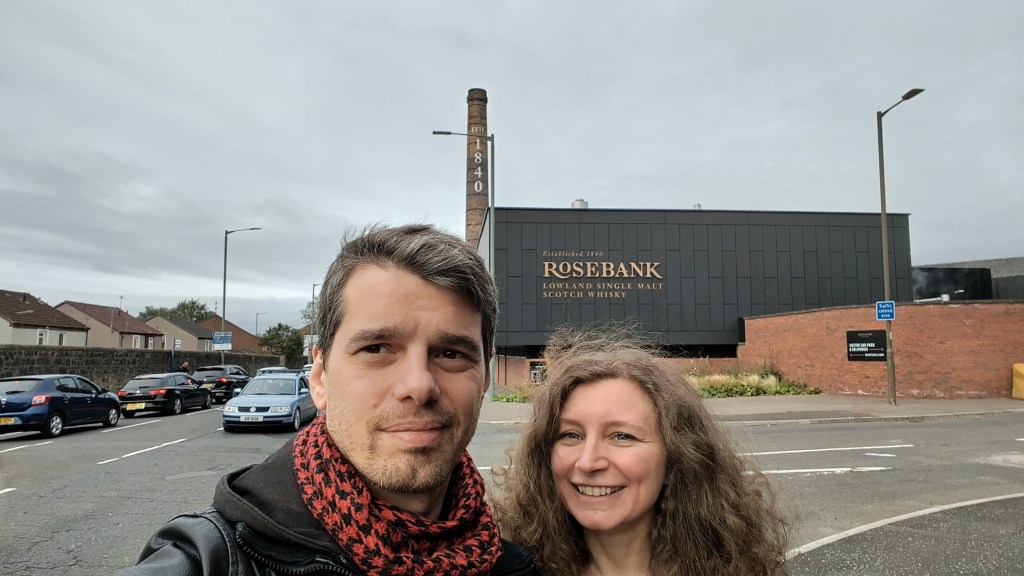
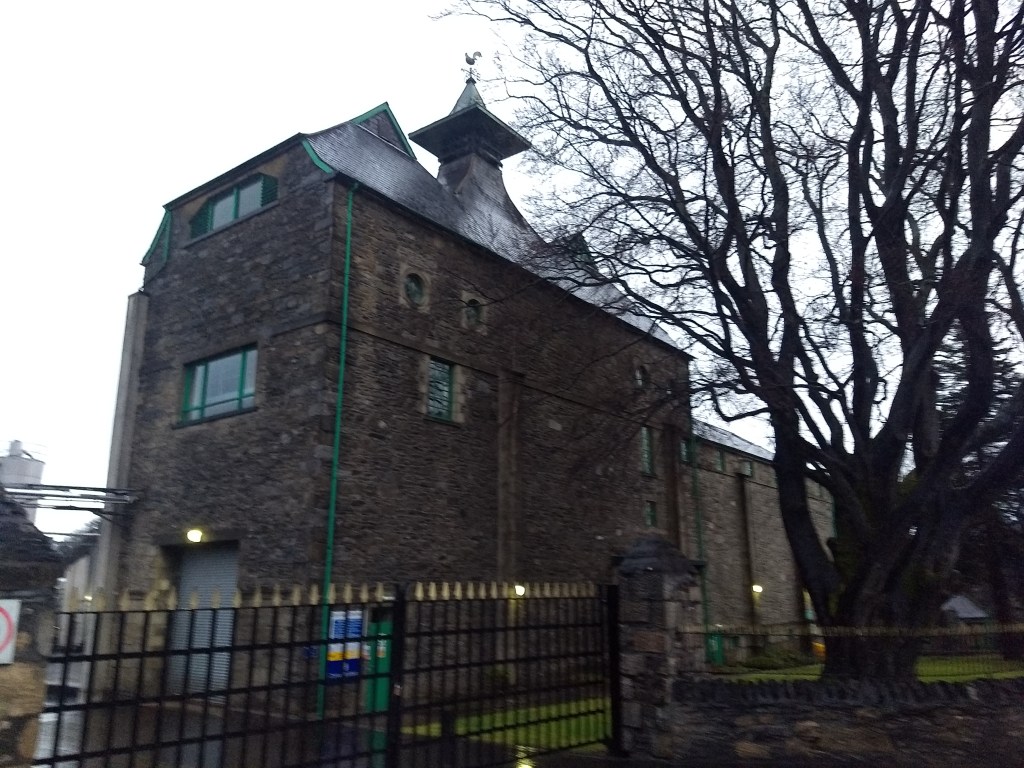
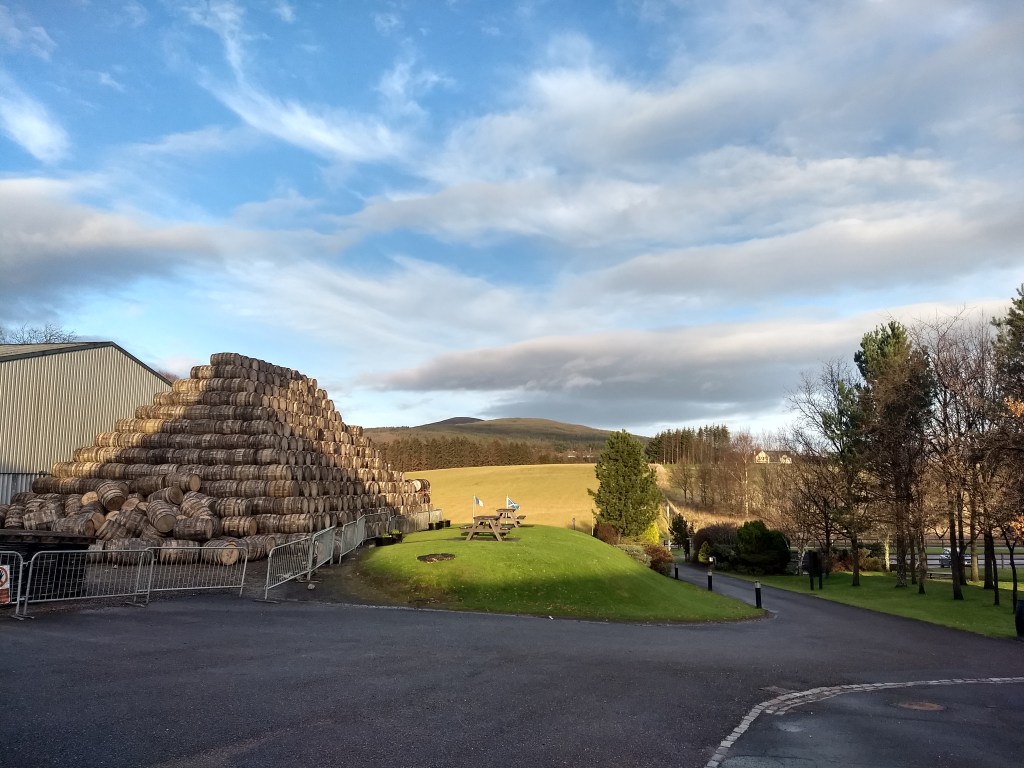
Earlier this year (2024), they also opened to the public. We didnโ€™t go right away – being relatively close and easy to get to for us, we could wait. The perfect occasion came in September: Roy Aquavitae organised the โ€œBarflies gatheringโ€ in Glasgow (or Leg-fest IIโ€ฆIYKYK). The event started in the early afternoon, so instead of taking the train straight to Glasgow, we did a cheeky detour to Falkirk. The train ride from Waverley to Falkirk was quick, less than 45 minutes, and from Falkirk High station it was only a 20-minute walk to the distillery (well, according to Google, turned out to be closer to 15 minutes). We arrived at Rosebank distillery a few minutes earlier, enough time to take a few pictures, a nip to the loo, and check the building from the outside. From afar, the distillery looks like a black block, except for the very recognisable chimney. Getting closer, we realised that it is a beautiful building, very tastefully done, with a big window in the stillroom. The entrance to the visitor centre, though, reminded us of some hotels. The visitor centre also looks like an hotel lobby, while the shop is more akin to a high street boutique.
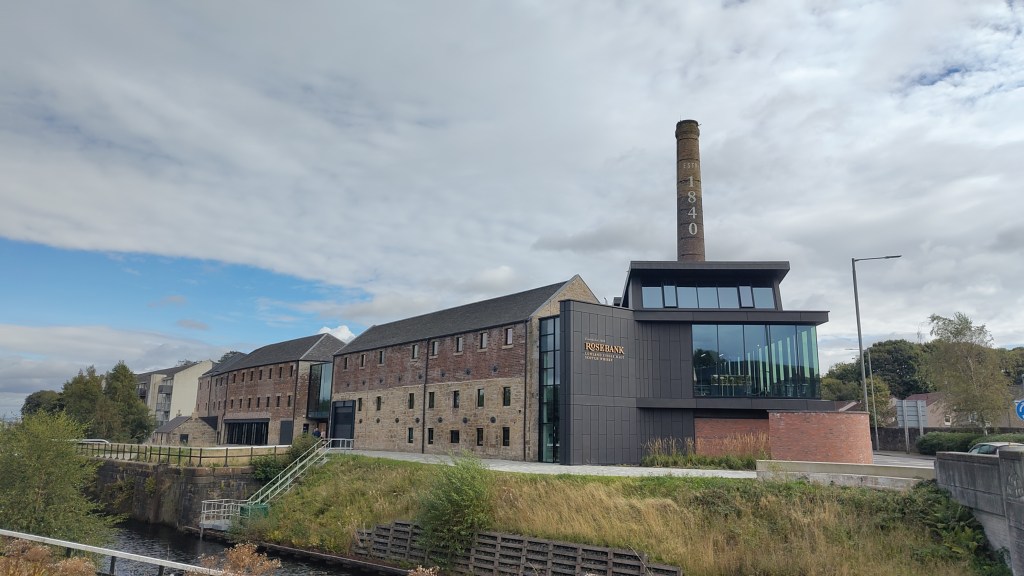
Our guide for the day was Jack, a nice young fella, but clearly following a script probably set up by management. We started with a visit to the old warehouse, in the same building as the visitor centre (in part still a warehouse). Most of the wood finish around there and the rest of the distillery was reclaimed wood from the old buildings. We watched a video explaining the history of the distillery. It is located near the Clyde canal, very close to a lock as well. The cottage for the lock keeper is still in existence: it is now part of the distillery, used as storage previously. Very funnily, it was found out that, somehow, contractors installed a tap bringing spirit directly from the old distillery! Another curiosity was that, in the past, when water from the worm tub condenser was put back into the canal without cooling it (which now environmental regulations donโ€™t allow), locals were enjoying a swim in the warm water.
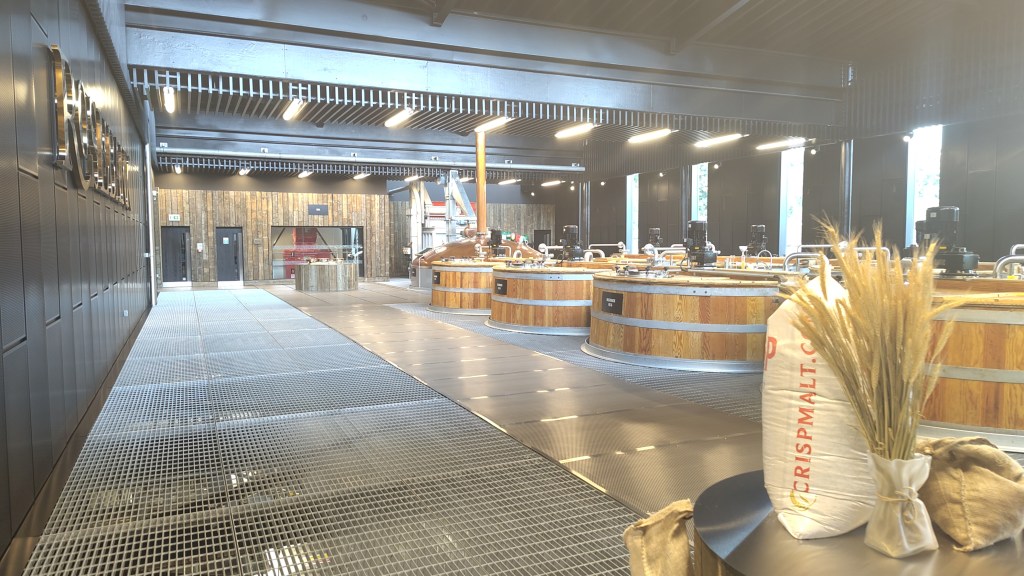
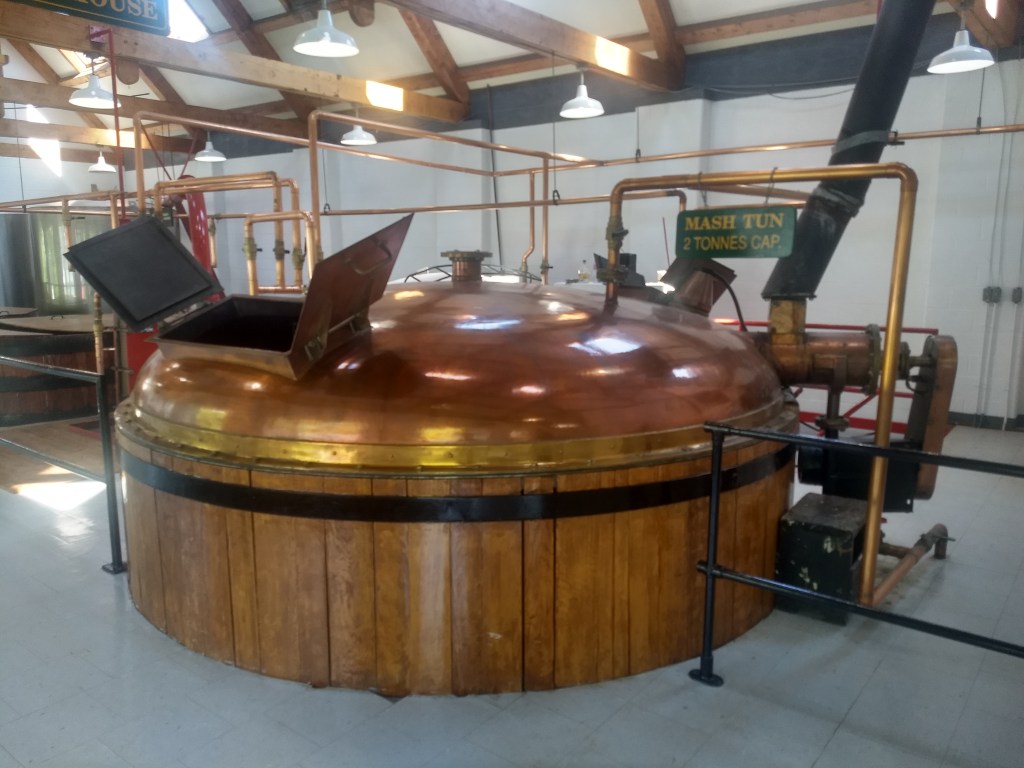
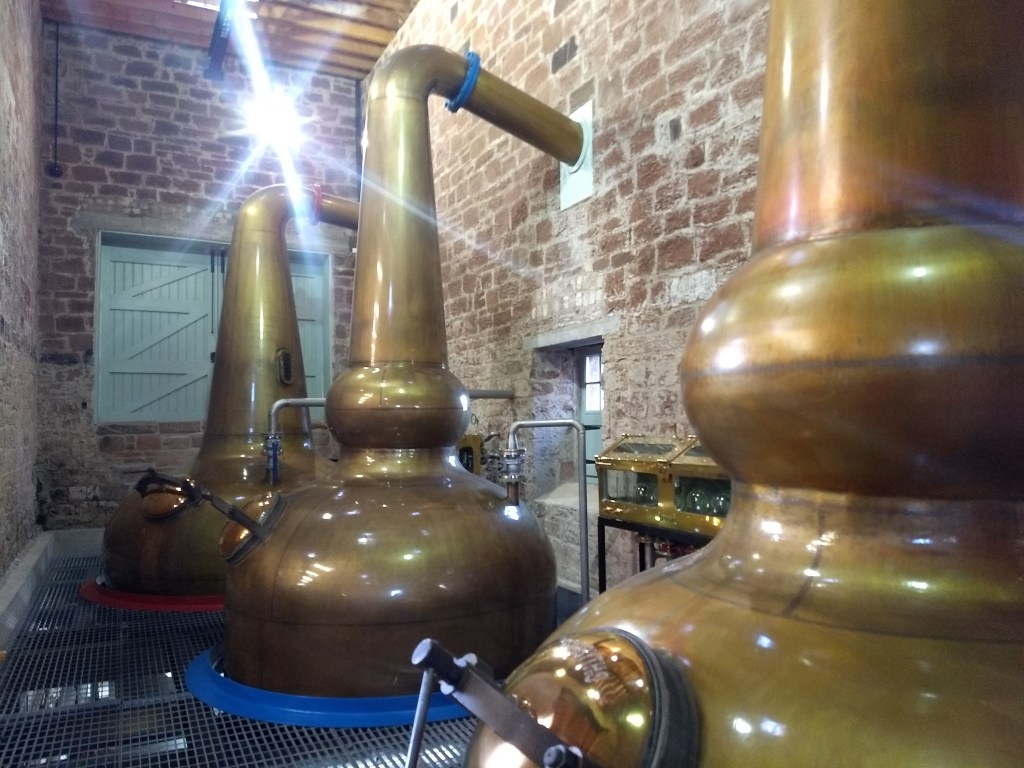
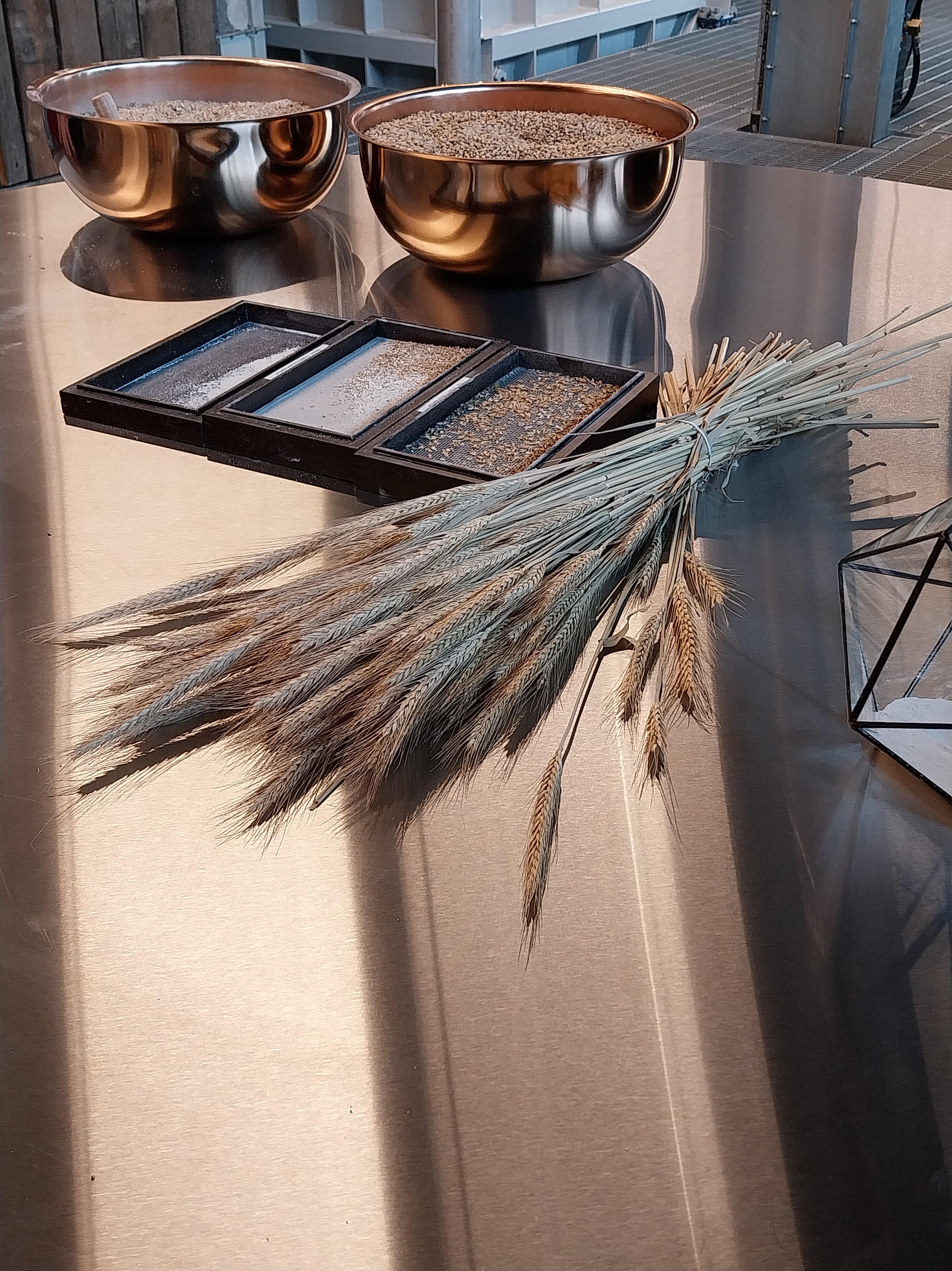
The equipment was completely refurbished, as nothing had remained of the old distillery. The production space is quite wide, probably to accommodate a potential future expansion. The Porteus mill dates back to 1933, and it was previously located at Port Ellen distillery. Malted barley is sourced from Crisp, in Alloa, and they get 28 tons twice a week (apparently, the variety can change). The mill produces a grist with a slightly higher percentage of husk (22% instead of the usual 20%), thus lower in grit (68% instead of 70%), and the usual flour (10%). The mash takes 3.2 tons of malt, to which they add the first water, 10,000 litres at 68ยฐC. It is followed by the second water, 5,000 litres at 80ยฐC, while the final one (used for the next mash) is around 90ยฐC. They do 17 mashes per week, each taking about 6 hours in total. Here Jack gave us a barley sugar candy: it was nice touch, being foreigner, we finally understood what people mean when this comes up as a tasting note!
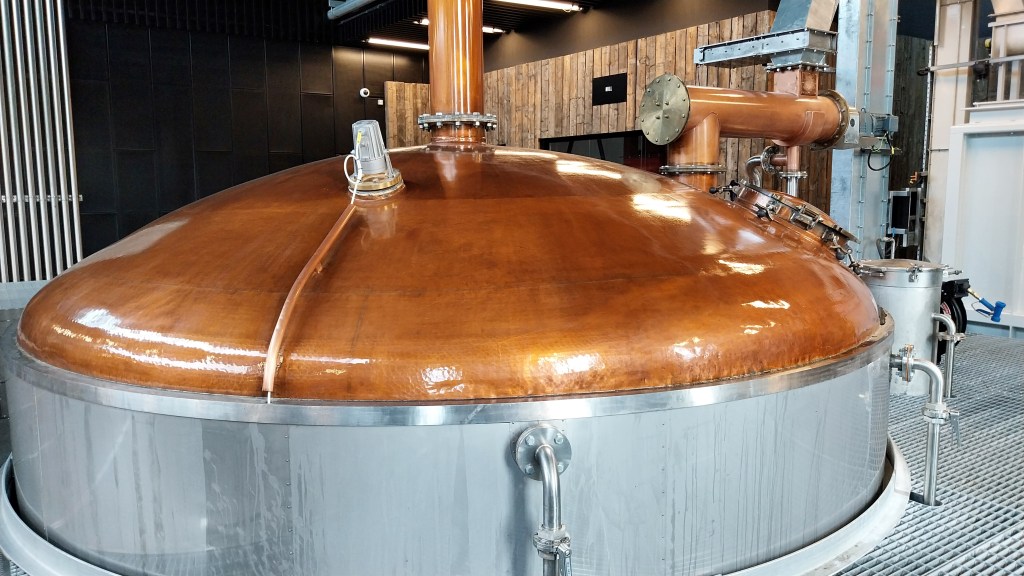
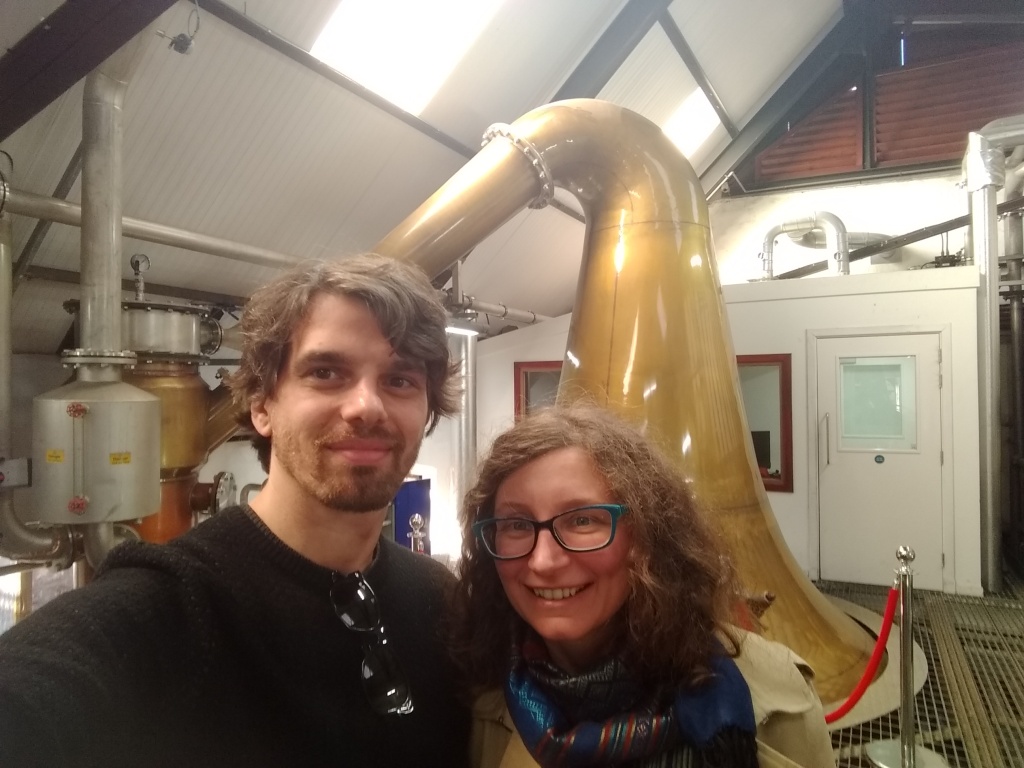
The resulting wort is moved to one of the 8 washbacks, where it is fermented for 62 hours, using distillersโ€™ yeast. But it is with distillation that Rosebank brings something special: it is a triple distillation, and they use worm tub condensers, a unique combination of these features. The first distillation is very similar to the usual first distillation in Scottish distilleries. The second one, in the intermediate still, is divided in two cuts, the first sent for the third and final distillation, one sent back to be redistilled (the low wines below 1%). The last distillation, in the spirit still, produces 1,700 litres of spirit between 82% and 69% abv, on average 77%. Jack sprayed our wrists with newmake, which was very floral, reminding us of lavender. We finally visited the remaining bonded warehouse on site, which only held about 100 casks. Among these, both the eldest (1989) and the youngest (1993) of the old distillery.

Finally, we did a tasting in the Clyde Tasting Room, a very cozy space. Having bought the regular tour (ยฃ25), we got to try the newmake spirit and a dram of Tamdhu and Glengoyne, both 12 (both 43%: despite this reduction, Tamdhu was still very viscous and not watery: amazing how it takes reduction so much better than Glengoyne). Unfortunately, no old Rosebank: that one (together with an upgrade to Tamdhu and Glengoyne 15 as well) comes with the upgraded tour, for the upgraded cost of ยฃ95. By reading the description on their website, we got the impression that the two tours are actually very similar, meaning the Rosebank dram costs ยฃ70: a bit too much for the one dram.

As the tour finished, we quickly walked to the closest station to get the train to Glasgow. There, we had an awesome time, getting to know a bunch of barflies from all over the place (some came from Canada!), and hanging out with whisky pals (including Ally from Cadenheadโ€™s). The dinner at Rishiโ€™s Indian restaurant organised by Roy was fantastic, as well as the drams shared at the Bon Accord. We even met Ralfy, the legend himself! His videos really helped to keep us sane during the pandemic, as well as enhancing our whisky curiosity. What a day, on the train back to Edinburgh we were tired but very happy.
This is the last of our Central belt distillery tours for now, we closed with the most popular among those four. Overall, the visit at Rosebank was fine, but too corporate for our taste. Unfortunately it seems that Ian McLeods is going toward premiumisation of their products, but kudos to them to set a reasonable option to visit the distillery (Brora anyone?) and check this piece of whisky history coming back to life. We just hope that in a few years, when Rosebank single malt will be back on the shelf, itโ€™s going to sell for a reasonable price. With the industry going towards overproduction, however, sometimes we ask ourselves whether reopening these celebrated distilleries doesnโ€™t hide some nostalgia element, of people struggling to let go of the past. But well, we love the current whisky variety, so the more the merrierโ€ฆ. hopefully?

Until the next time, slainte!


Rosebank Distillery Reawakening

Price: ยฃ25.00 pp (September 2024), plus ยฃ2.50 transaction fee

Duration: 1hr

Tasting: Rosebank newmake spirit (63.5%), Glengoyne 12 (43%), Tamdhu (43%)

Target: everyone

Value for money: ok

Highlights: the history of the distillery

Recommended: for historical reasons

Link: https://www.rosebank.com/

#24.2 Dramming in Dublin

Back to Dublin after the storm: the Dublin Liberties Distillery


TL;DR: A much awaited reunion with two friends became a perfect opportunity for Teresa to visit another fairly new distillery in Dublin: The Dublin Liberties. But before then, we explored Irish whiskey from home.ย 

(missed Part 1?)

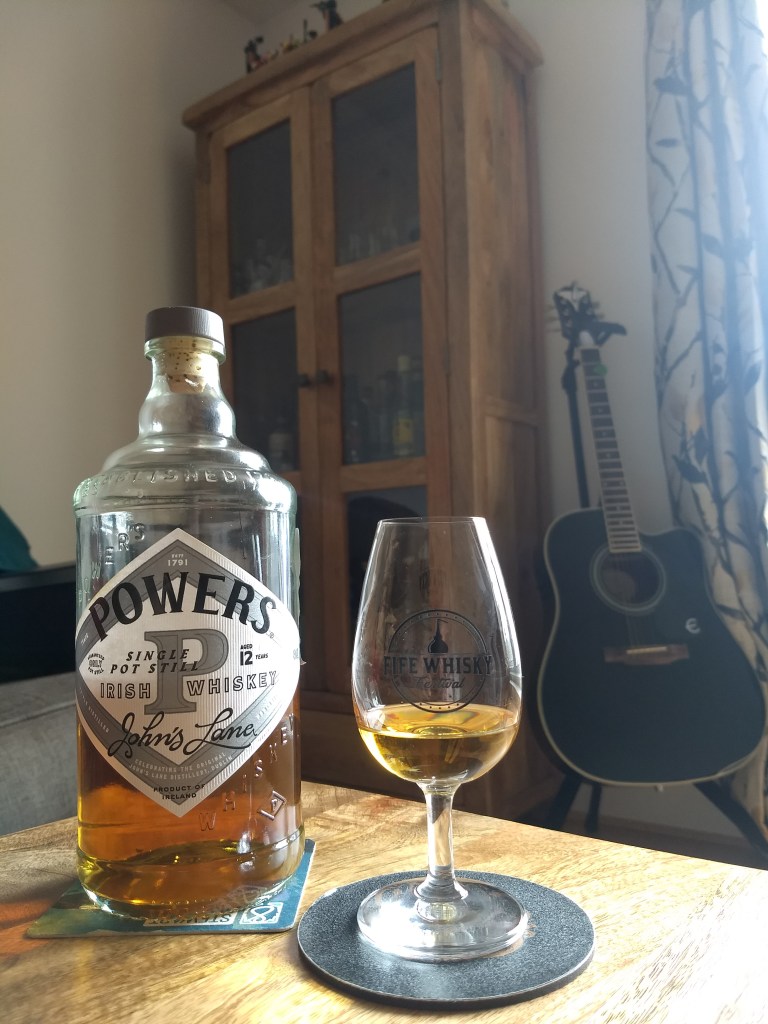
Soon after our weekend in Dublin in 2020, we found ourselves stuck at home, unfortunately not baking much. However, during this unfortunate period, we started digging a bit more into Irish whiskey (well, into all things whisky to be fair). We got our first bottle of Redbreast 12, and in spite of the 40% ABV, we loved every drop of it. We also got a big Irish whiskey tasting for the Belfast Whiskey 2020. There were supposed to be a bit more than a dozen dram, finally they were 19 (it took ages to finish them allโ€ฆ) and among many forgettable drams, we found some quite nice ones (Dingle Single Malt, Sliabh Liam Dark Silkie, Dunville Three Crowns). Later that year, an Irish whiskey tasting was organised by Justine and Connor for the Edinburgh Whisky Group, and this time we found another true gem: Powers John Lane 12y, now one of our favourites. And we didnโ€™t replace the bottle, but Jameson Black Barrel was an easy sipper for a while (weโ€™d be very curious to try the cask strength version).

Oh yes, we like you… who would have said an Irish dram would be so tropical?!?

So, one bit at a time, we started navigating the world of Irish Whiskey, although to be honest we are still confused and a bit annoyed about one thing: sourcing. Well, not the sourcing in itself, which we have no problem whatsoever with, but the fact that many of the new distilleries donโ€™t make it clear on the label when their spirit is sourced from another distillery (at the other end of the spectrum, an excellent example of transparency was the Raasay โ€œWhile We Waitโ€ expression, very clear indeed!).

It is with this background knowledge that I (Teresa) went to Dublin for the third time in less than three years. Only a good reason could bring me back to a nice, but still quite expensive city.

No, that’s not the reason I went back to Dublin, but could have been.

The reason was indeed really good, a reunion with two old friends back in August 2022. The plan was very simple: just a chilled-out weekend to enjoy the city, good food and, most of all, some time together, with not much sightseeing involved. My two friends are not much, or better, not at all into whiskey (yes, I have friends that donโ€™t like it!), so any whiskey-related activity was also out of question. Nonetheless, the evening we spent in Temple Bar and its surroundings, I couldnโ€™t resist the โ€œIrish whiskey callingโ€, so I had a Redbreast 12y and a Yellow Spot. Both quite pricey (from memory between 12 and 15 euros for a 25ml dram), most likely because we were in a very touristy area (so my fault, really).

A stroll in sunny Howth.

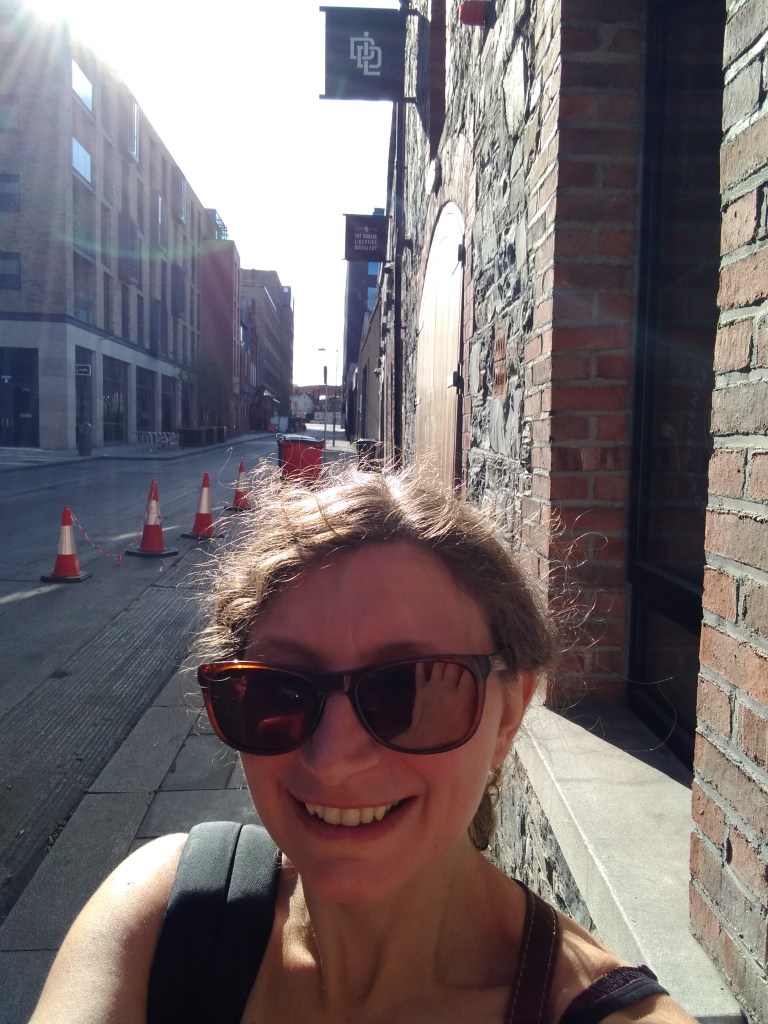
The two days went really fast and, after a morning in sunny Howth, it was already time for my two friends to head towards the airport. Not for me, because my flight back to Edinburgh was late in the evening, so I still had a few hours to spend in the cityโ€ฆThat called for a distillery visit, of course! It was still very sunny, so I decided to walk to my destination, the Dublin Liberties distillery, where I had booked the last tour of the day (just in time!). At first, I wasnโ€™t even sure I was in the right place, the neighbourhood looked very residential to me, and indeed I was already angry at myself for giving Gianluigi more evidence to laugh at my lack of orientation skills, but then I saw a small signโ€ฆI was at the distillery, phew!

Arrived at the distillery, such a relief!

While waiting for the tour to start, I browsed the shop: whiskey of course (but again no checked luggage, so I didnโ€™t really pay attention to the bottles on display), the usual merchandise, but also a good selection of whisky books.

The tour started in a small room where the guide gave a brief introduction and made us (i.e. myself and three Americans) watch a video about the troubled history of the Liberties neighbourhood, including the famous 1875 whiskey fire. Such a young distillery (it started producing in 2019) doesnโ€™t have much of its own history, so I found it quite clever to devote the first part of the tour to the roots of Irish whiskey in general. And all this while sipping a dram of Honeycomb liqueur (if memory serves me well), a bit sweet for my taste but nice touch!

That’s informative!

Another nice touch was the information about where barley is malted (Cork), and about the location of the warehouses (Wexford) โ€“ in most tours you normally get this level of detail only if you ask. We then moved to production โ€“ mashtun, stainless still washbacks and of course the still room, where I found out that the distillery has a capacity of 700,000 litres of alcohol per year. Not huge, but still more than I expected. Unfortunately my more geeky questions (like about the cut) werenโ€™t answered, which made me realise that knowledge of whisky production wasnโ€™t really the strength of our young guide. She was still entertaining, so overall an enjoyable tour.

The still room.

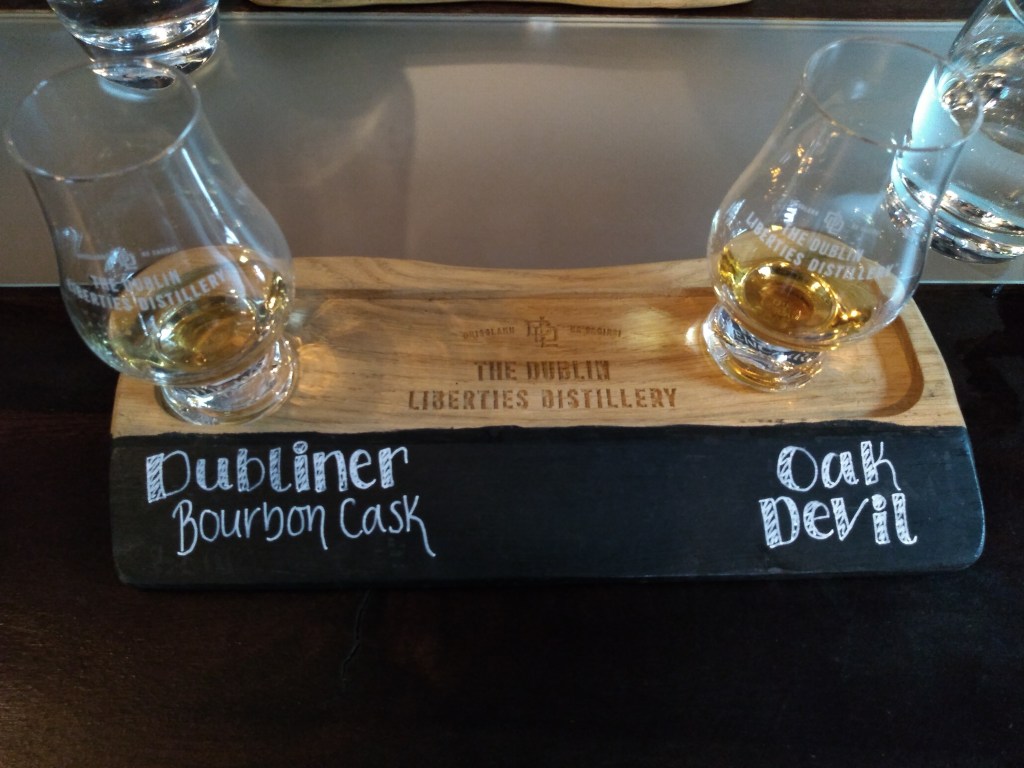
Finally, the tasting, which happened in the beautiful bar in a relaxed atmosphere. The two drams were two whiskeys, most likely sourced from other Irish distilleries (I didnโ€™t ask), the Dubliner (3yr, 40%) and the Devil Oak (single malt, 5y, 46%, a bit confusing that they have also a blend with the same name, more prevalent). Probably because of the young age, none of them was particularly memorable, but I was surprised by how the Dubliner was very drinkable.

A blend and a single malt whiskey.

Back at the shop, out of guilt for my ignorance, I bought an Irish whiskey guide and made my way to the airport, where I found the perfect souvenir: a bottle of Yellow Spot, at a price (60โ‚ฌ) that was almost too good to be true, compared with the 70-80 pounds we usually see it in Scottish shops.

Overall, nice to keep our exploration of Irish whiskey going. Until next time, Slรกinte!


The Dublin Liberties Distillery Tour

Price: 18 euros (weekend tour, August 2022, 16 euros on weekdays)

Duration: 1hr

Tasting: 3 drams, Dubliner Honeycomb Whiskey Liqueur (30%), Dubliners Blended Whiskey 3y (40%, likely sourced but not 100% sure), The Liberties Oak Devil Single Malt 5y (46%, NCF, NC, sourced)

Target: Anyone, but geared towards tourists and novices

Value for money: Good

Highlights: The history of Liberties covered in depth and the friendly staff

Recommended: Yes if youโ€™re a tourist or youโ€™re bagging distilleries, no if youโ€™re an expert

Link: https://thedld.com/

#24.1 Dramming in Dublin

A whiskey weekend before the storm: Teeling & Roe & Co.


TL;DR: In January 2020, we visited friends in Dublin, so why not check out a couple of distilleries in the meanwhile? We chose two among the many newbies, Teeling, in the Liberties neighbourhood, and Roe & Co, a new Diageo distillery close to the iconic Guinness brewery! 

In our blog, so far, we talked about our whisk(e)y adventures in Kentucky, England, Canada and, of course, Scotland. You might have noticed an important gap, which is the object of this and the next blog post: Ireland!

Gianluigi had actually visited Ireland, mostly Dublin, a few times way before his whisky journey started, while for Teresa the first time came when we went there to celebrate 2019  New Year with two friends from the US. At that point, we were already into whiskey (and whisky), but in our heads Dublin = Jameson, so thatโ€™s what we went for: the Jameson Experience in Bow Street, where the old distillery was. It was a nice experience for newbies, and it was very interesting to compare scotch (Johnnie Walker), American (Jack Danielsโ€ฆ) and Irish whiskey (Jameson, of course). For sure, at the time we were not aware of the troubled history of Irish whiskey: after the trade block with the Commonwealth countries as a consequence of the Irish Independence war, and prohibition in the USA, Irish whiskey saw a decline which led the biggest producers (Powers, Cork Distillers and Jameson) to join forces and form the Irish Distillers company, while moving production to the New Middleton distillery, in Cork, in 1971. For many years, only two distilleries were active in Ireland: the aforementioned Middleton and Bushmills, in Ulster.

Recent years saw a renaissance of Irish whiskey, however. First, in 1987, John Teeling acquired and converted an old potato processing plant into the third Irish working distillery: Cooley. More recently, a number of distilleries throughout the island popped up, including a handful in Dublin.

It is in this context that we started to sniff around. The occasion was a weekend at the end of January 2020, when Covid was already a thing but hopes were that, like the SARS-CoV-1 in 2003, it would have been a limited outbreakโ€ฆso naรฏve! We went back to Dublin to visit a friend of Gianluigi who was working at the UCD, and a former Teresa’s advisor from New Zealand. When we looked at the available tours we spotted four distilleries: the Liberties, Pearse Lyons, Roe & Co. and Teeling. Being unfamiliar with all of these brands, we chose the latter two, almost randomly.

First Irish whiskey distillery visit: Teeling.

It was a sunny Saturday morning, when we arrived in the Liberties, a former industrial neighbourhood. This is home to both the Liberties (more on this next week) and Teeling distilleries. The latter was founded in 2015 by Jack and Stephen Teeling, the sons of the founder of Cooley, now owner of the Great Northern Distillery, in County Louth, the former Harp beer brewery converted into a distillery in 2015. In hindsight, visiting Teeling first made sense as it is the first new whiskey distillery in Dublin in over 100 years, and the first operating since Jameson and Powers moved to Cork.

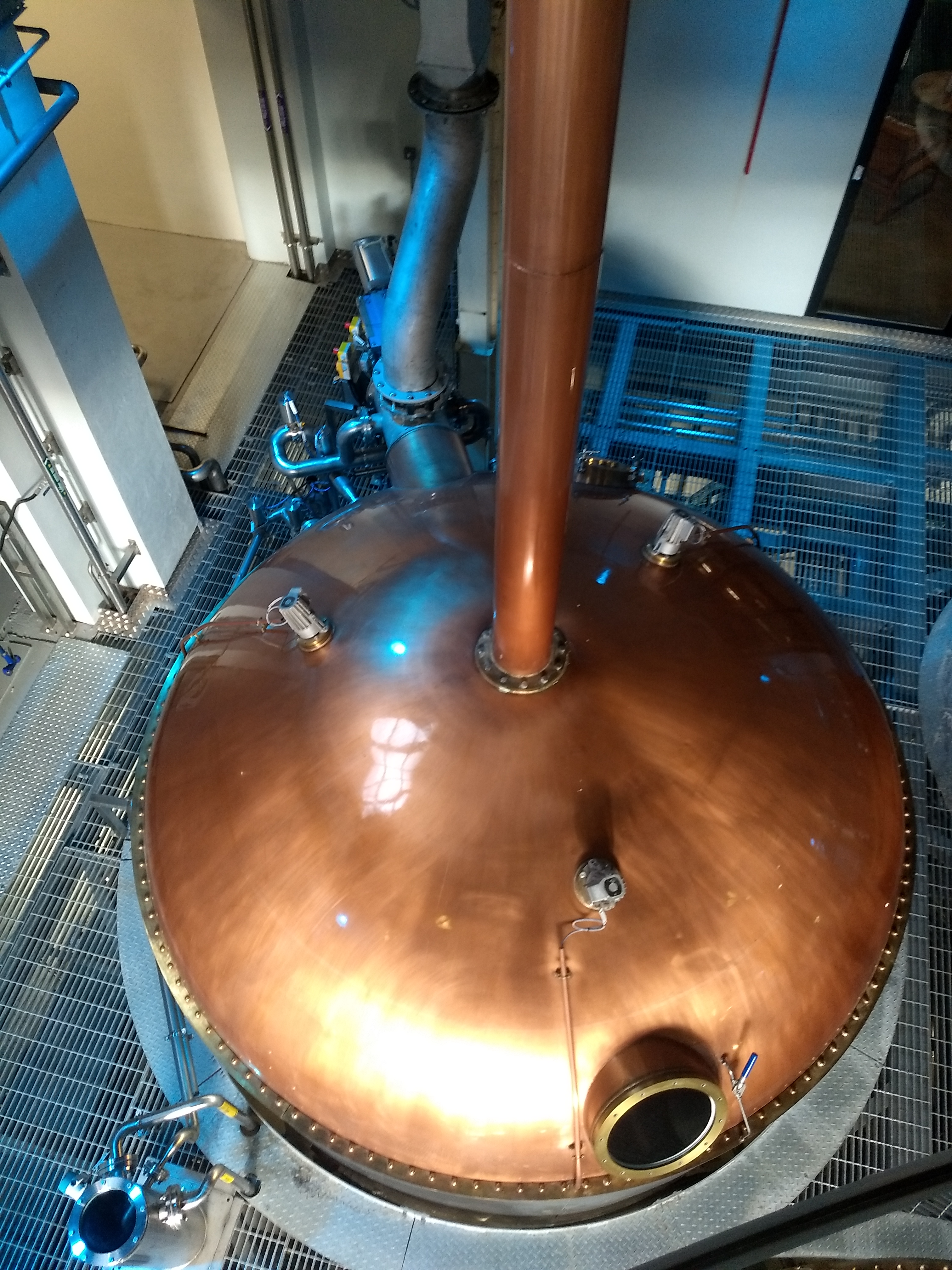
The three stills (made in Italy!)

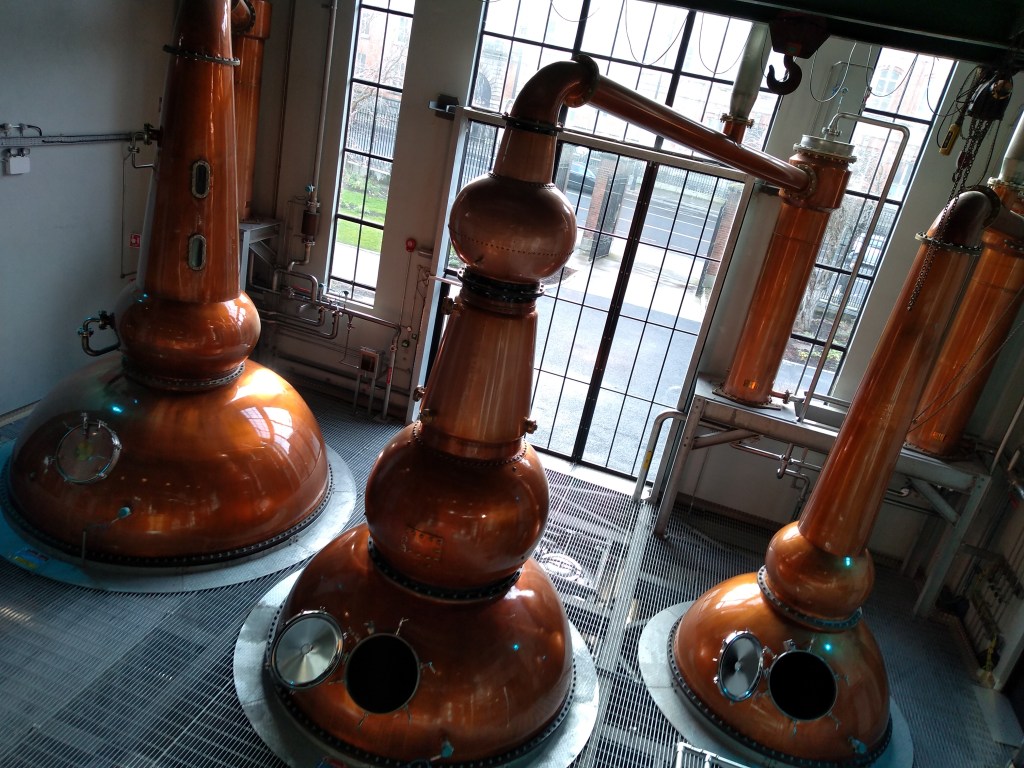
The building is quite modern, and itโ€™s obvious that they built the distillery with tourists in mind: everything is spacious and feels ready to accommodate big groups. They are quite a sizeable distillery too, with half-million litres of alcohol per annum. They produce many different styles of whiskey: single grain, single malt, single pot still and the typical Irish unaged spirits (Poitin), all bottled at 46%, except the latter which goes up to around 50-52%. Their main expression Is the Small Batch, made with malt and grain whisky. The tour was nice, nothing particular to note, except that the three stills (most Irish whiskeys are tripled distilled) come from an Italian firm, Frilli, and they are named after the ownersโ€™ daughters (which now we cannot recallโ€ฆit was 3 years ago!). The tour ended with a visit to the on-site warehouse, where some of the first casks filled are stored.

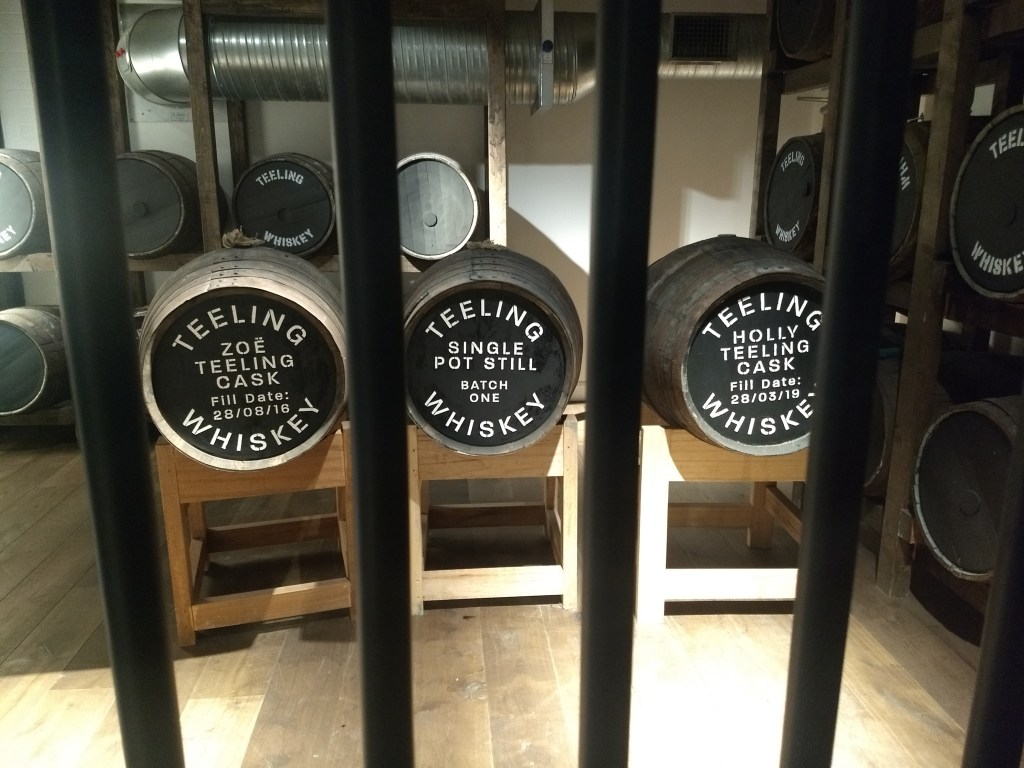
After the tour, we got a 4-dram tasting: the Small Batch, the Single Malt, the Single Pot-still and a distillery exclusive. It was very interesting to try them all together, a comparison between very different styles of whiskey! At the bar, we also tried one of their special releases of the time, the Brabazon vol. 2, a sourced whiskey finished in ex-Port cask and bottled at 49.5% abv, very different from the others!

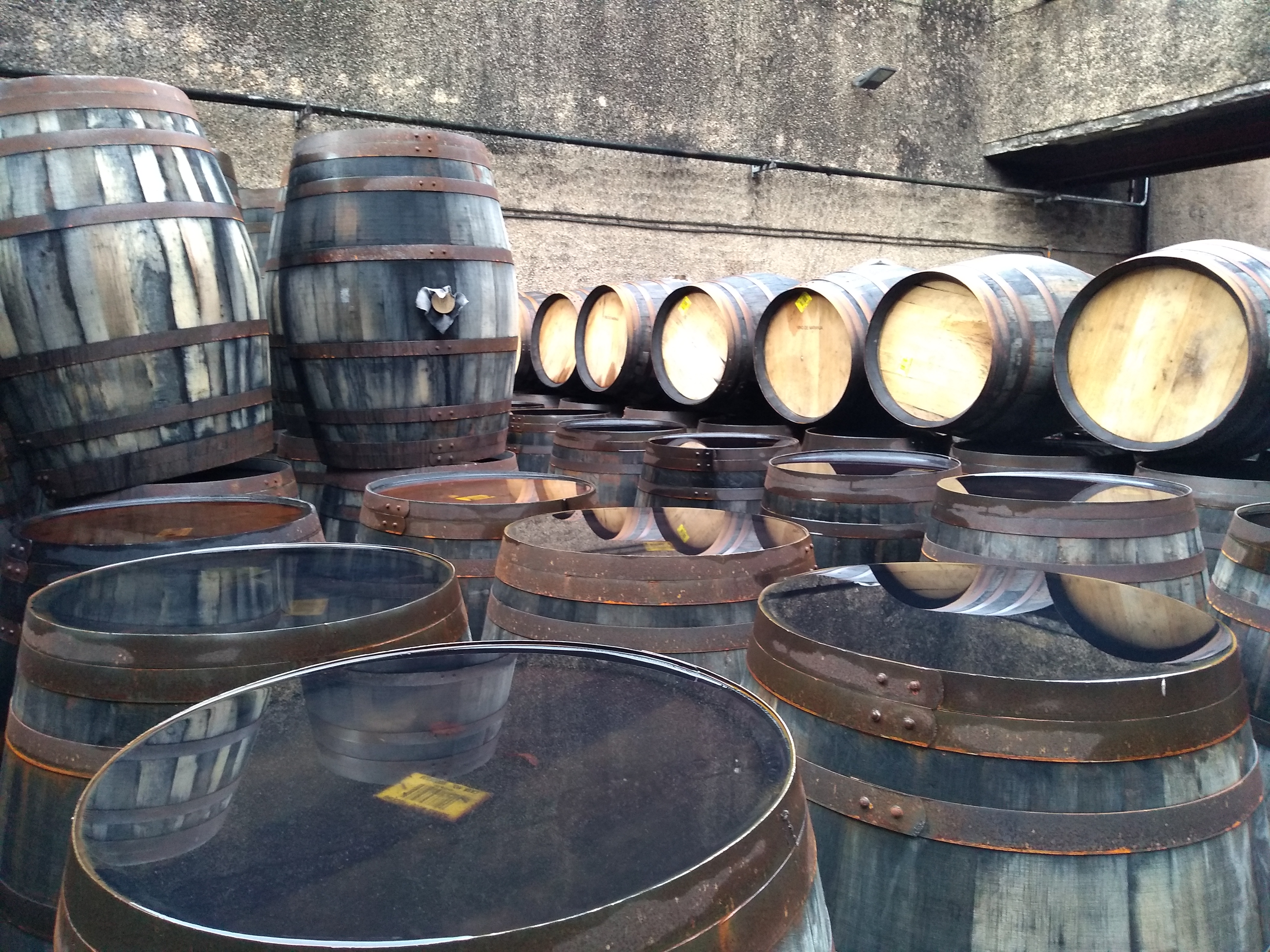
Caged casks.

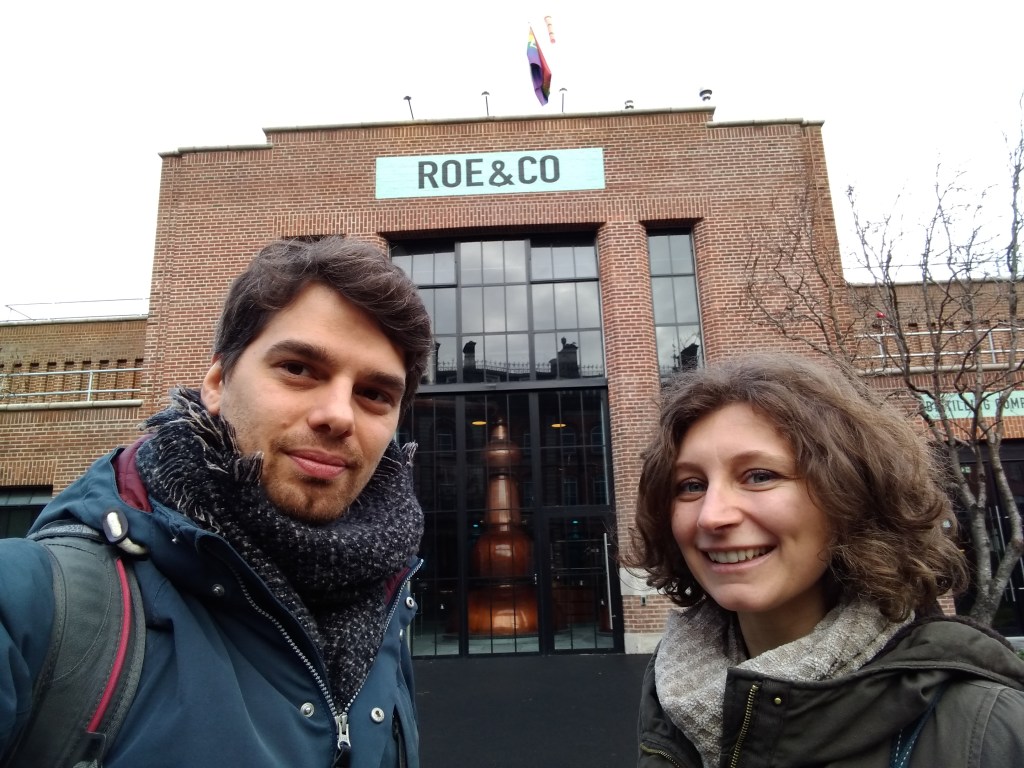
The following day, much cloudier, was Roe & Coโ€™s turn, very close to the Guinness St James Gate Brewery. The name is inspired by George Roe & Co, the owner of the old Thomas Street Distillery. This used to be a massive distillery around the late 1800s, just a stone throw away from the brewery, with over 2 million gallons of single pot still whiskey produced per year. It was closed in 1926, following the aforementioned crisis of Irish whiskey. The new Roe & Co distillery was built by Diageo in the old brewery powerhouse, and started producing in 2019. It is a very beautiful old industrial brick building, with big windows that make it possible to see the still room from outside. Next to the building, there is a tower with a green dome and a pear tree (which inspired the distilleryโ€™s logo).

Second day, second distillery: Roe & Co.

Production is characterised by a closed mash-tun with a copper lid, a few (we cannot remember how many) wooden washbacks, and three stills of different shapes. Again, this distillery too has been clearly built with visitors in mind, so the spaces are quite open, and the bar is near the still room. After visiting the production, the guide brought us to a fancy showroom with a big table, where there was a wooden box for each of us. Inside the box, a few aromas and other stuff for a sort of sensorial experience (honestly, the least favourite part of the tour).

Beautiful still room!

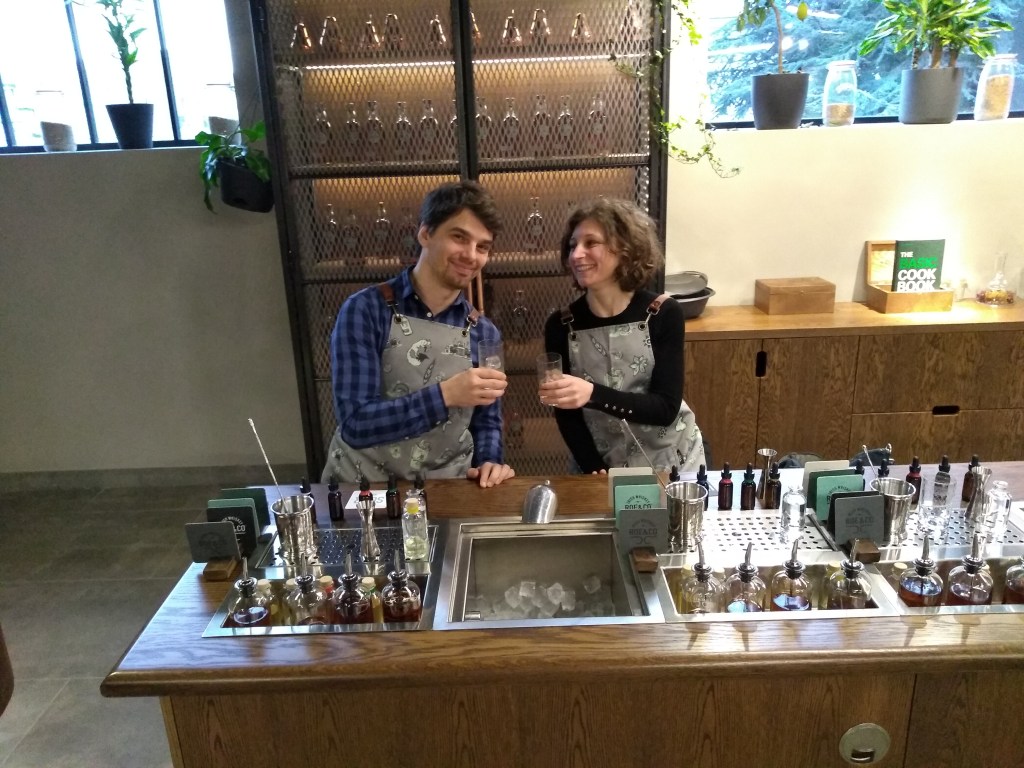
Afterwards, we went to a blending room, where the guide gave us a brief but informative introduction to mixology before we mixed our own cocktails. While we are far from being whisk(e)y purists (once in a while we like a good whisk(e)y-based cocktail), weโ€™re not big fans of this โ€œwhisk(e)y as a mixerโ€ thing that has been pushed so much by big companies like Diageo. However, we have to say that this experience was really interesting, definitely a plus of this tour.

Mixology newbies.

Finally, at the bar we had a sip of the Roe & Co whiskey, a blend made with malt and grain whiskeys from undisclosed Irish distilleries: a nice dram (45%, not-chill filtered, NAS). We also tried an ex-Port cask finished Roe & Co, another blend (if we recall correctly), a bit more robust, but we couldnโ€™t get it because we had no checked luggage. Oh well.

We felt this trip to Dublin was just a first, tiny taste of the Irish whiskey wolrd, and indeed we were left more curious than when we had arrived. Since then, we have tried some very interesting expressions, and itโ€™s nice to see the Irish whiskey scene being revamped. For more about this, stay tuned until next week, Slรกinte!


Jameson Bow St. Whiskey Experience
Link: https://www.jamesonwhiskey.com/en-gb/visit-our-distilleries/jameson-bow-street-distillery-tour/

Teeling Distillery
Link: https://www.teelingwhiskey.com/
Roe & Co. Distillery
Link: https://www.roeandcowhiskey.com/

#22 Goodbye 2022, see you soon 2023

A very dramming year


TL;DR: As usual this period gives us a chance to reflect on the year about to end. It has been an intense one for us, particularly the second half. Whisky-wise, we had some very fantastic experiences, some disappointing, and a few average ones. While we are looking forward to โ€œdramming aroundโ€ in 2023, here our 2022 highlights.  

Aaaandโ€ฆItโ€™s December, and we are finally on holidays. By the time you will be reading this, another Christmas will have just passed, we hope you had a great day of celebrations with your loved ones, and that you are now bloated and relaxing on Boxing Day (or St. Stephen, as it is known in Italy).

Because of our jobs, we both arrived at the end of the year very tired. However, it was also a year full of fantastic whisky experiences, that we hope to repeat next year. In 2022, we visited 19 (Gianluigi) and 20 (Teresa) new distilleries (17 in Scotland and one in England together, Gianluigi visited one in Canada, Teresa one in Ireland and one in England). We also had the chance to revisit some good old acquaintances, like GlenAllachie and Deanston (amongst our favourites). We were able to go to Orkney (hurray!) to catch up with both Scapa (aye!) and Highland Park (nay!).

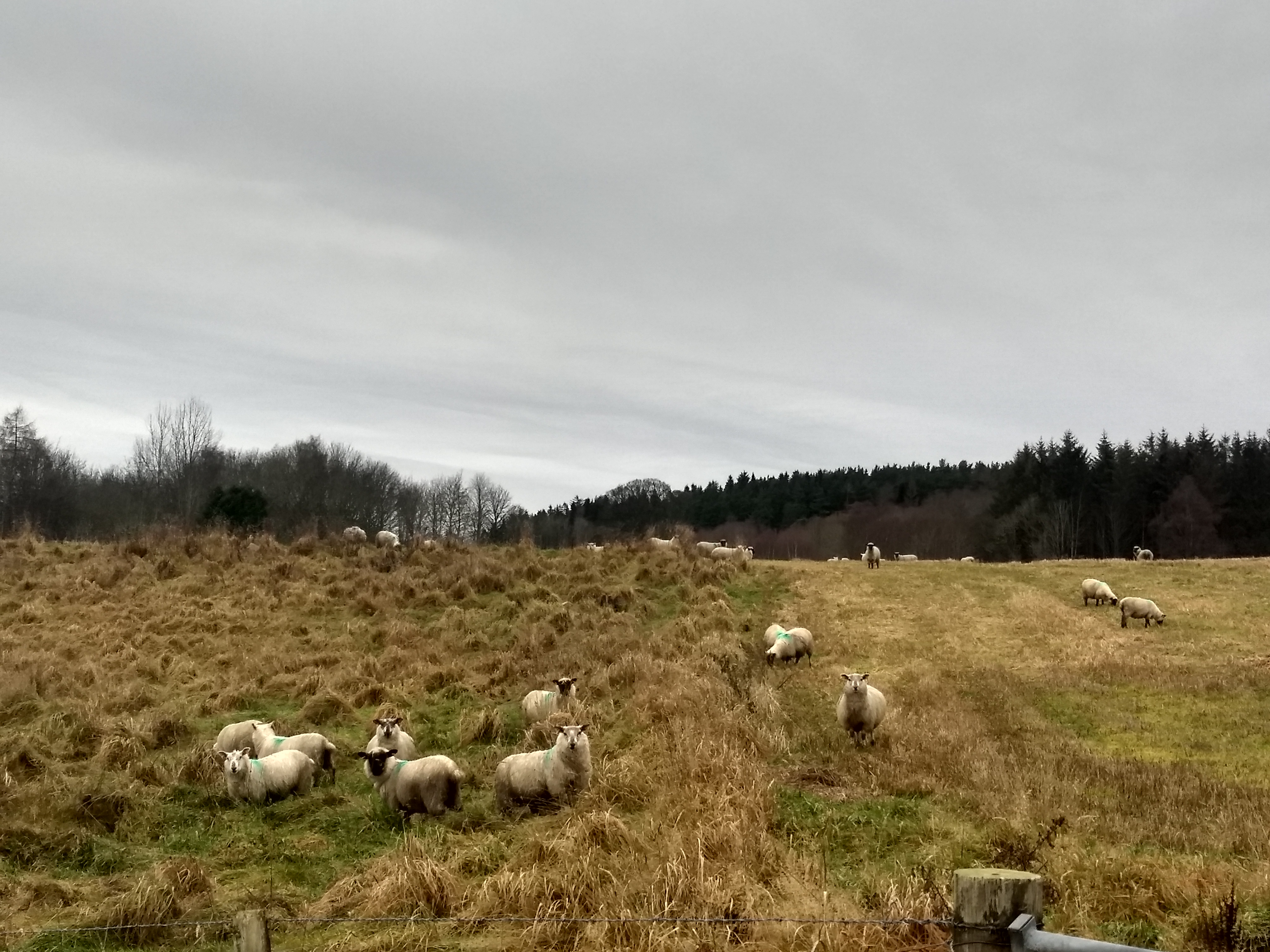
Sheep grazing with Scapa in the back.

And, finally (FINALLY), we visited Islay for the first time, after our March 2020 trip was cancelled by you-know-what. What a crazy holiday that one, our rented campervan broke down on day 1, half-hour away from the ferry terminal. Although we had to get last-minute accommodations and move around by taxi, we managed anyway! And what a visit, we have to say that whisky tourism on Islay is something really different. Take the Laphroaig tour for example, the token system to pick the drams for your tasting at the end makes it much more flexible than most of the other tours, so that can be enjoyed by both novices and experts. Moreover, Bunnahabhain (best warehouse tasting everโ€ฆjust the bottling prices a bit too steep), Lagavulin, and Kilchoman rewarded us travelling there by including no-core range drams, all limited ones, which made the experience truly special. We wished other distilleries on far-away islands would do the sameโ€ฆ We canโ€™t wait to go back to Islay, to catch up with the other distilleries, and revisit some.

Moments before the best warehouse tasting ever.

Other than Islay we had some incredible whisky experiences, like the Deanston Winter Fest (coming up soon in the blog), or the GlenAllachie tour during the โ€œSpeycationโ€ (coming up soon too).

Deanston WinterFest: that’s happiness after three tastings.

This word was brilliantly created by our friend Cath, and greatly implemented byย  Justine (Kask Whisky): over the weekend we visited 5 distilleries (+ 1 being built) and did a few tastings, including one in the now closed Coleburn distillery, and one in the Strathislaโ€™s warehouse. A couple of weeks earlier, we were again in Speyside for the Dramathon, and of course we visited (or revisited) a few distilleries: Glenfarclas (new visit), Glen Grant and Glen Garioch on the way back (both revisits).

The direct-fired Glen Garioch spirit still.

Some of the tours we did were OK, a bit standard but nothing to complain about: weโ€™d say that usually you get what you pay for. Disappointments came from distillery-exclusive bottling prices. In some cases, instead of rewarding you for visiting the distillery (and already paying for a tasting or a tour), they put a 20-30 quid premium on those. Not nice. The only distillery experience that was really a disappointment and we regret paying for was Highland Park. Despite avoiding the basic tour (ยฃ30, already not cheap) we opted for the improved one (ยฃ75, the most expensive tour we did so far) to be denied any dram of distillery exclusives or other limited bottlings, and just taste the core range which we could have done in Edinburgh anytime. An expensive tourist trap, we wonโ€™t go back there (sorry James, you were a superstar guide though!).

A nice but waaaaay to pricey Blair Athol (ยฃ120!!!).

With the Covid19 restrictions behind our back, we could attend our very first whisky festivals, the Fife whisky festival in March and the Whisky Fringe in August – we had a lot of fun, let’s see if it’ll be the same with bigger events.

Enjoying a break between the two Fife Whisky Festival sessions.

In-person tastings came back too. We did a few organised by our friend Justine, of course, as well as others by Mark, Murray (both at Kilderkin) and Colin at Tipsy Midgie. We had some cracking drams, including a 20y Dutch single malt from Zuidam, a fantastic Doorlyโ€™s rum (from Foursquare distillery) and some cracking Daftmill-s and Bruichladdich-s. Also, SMWS events came back, including our favourites: Outturns and Distillery Visits (an event where you can taste whiskies brought by a distillery representative together with some provided by the SMWS). This year we did the Glen Moray distillery visit with Iain Allan connected remotely and the Distell one (Deanston/Tobermory) with the very funny Brendan McCarron: both cracking events with awesome whiskies! Gianluigi also decided to become an Aqvavite Youtube Channel Patreon: Royโ€™s content and entertainment are really priceless, and this was long overdue. We also attended a very funny blind tasting in Glasgow where we finally met all those whisky folks weโ€™d only seen on screen until then.

Awesome Aquavitae event in Glasgow!!!

By writing this up, we realised 2022 was intense not only because of work, but because of whisky too! We hope to bag more distilleries in 2023, although weโ€™ll probably try to be more selective when picking tours and experiences. We are also starting to organise whisky tastings: the first will be towards the end February and will be Port-cask related (we got the idea during our fantastic trip in Portugalโ€ฆtickets here), but the following ones will involve bottles we picked up in our travels, not necessarily at distilleries, ehehโ€ฆStay tuned! Overall, itโ€™s still a very long way to become whisky geeks, but weโ€™ve learned a lot this year and we hope to continue the trend!

Not just whisky for us…coming to a tasting soon!

Happy holidays and see you next year! Slainte!


#19.1 Dramming around Orkney

A visit to Scapa distillery


TL; DR: We were finally able to visit Orkney and its malt distilleries. First off, Scapa, home of quite a โ€œmysteriousโ€ single malt, that we learned to appreciate during an in-depth distillery tour and a great tasting of mostly single cask expressions. Definitely a must-go for whisky fans visiting Orkney! 

In summer 2021, we had carefully planned a trip to the North of Scotland, including a few days on Orkney, which we were very eager to visit. For various reasons (actually, one reason, guess which one!) we had to cancel it. The occasion to catch up presented itself this year thanks to a couple of friends from Parma, Roberto and Cecilia (and their wee one, Flora). They wanted to visit the Highlands since their first visit in 2019, but things happened in between. This year they finally made it, and halfway into their holiday we joined them in Inverness and continued together: direction, Orkney!

We travelled in a campervan, which was meant to be an adventure. It was indeed, although with way more midges than expected: that was our first unfortunate discovery of the holiday: the Northeast coast is full of midges, almost as much as in the West, at least around Thurso where we spent the first night.

On the way to Thurso, where midges were waiting for us!

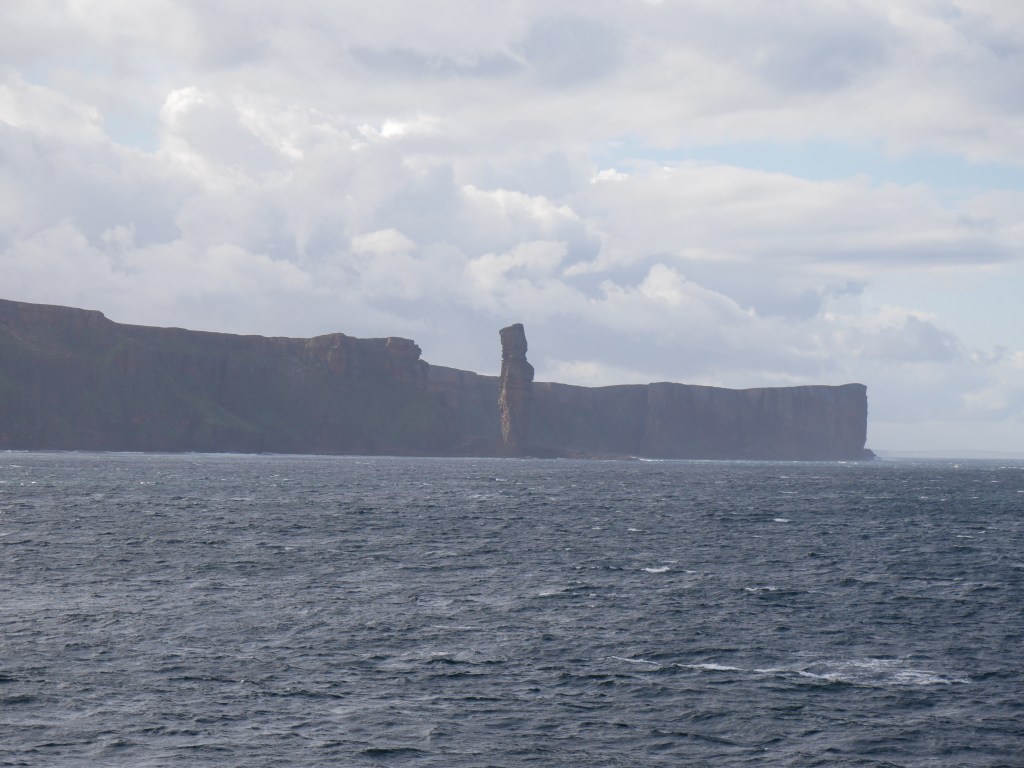
We woke up early however, and not for the midges, our ferry from Thurso to Stromness was around 8am. The cafe on the boat had a very Scottish menu, which meant a roll-based second breakfast. The view was quite spectacular, in particular we could admire the Old Man of Hoy during the cross.

The (misty) Old Man of Hoy.

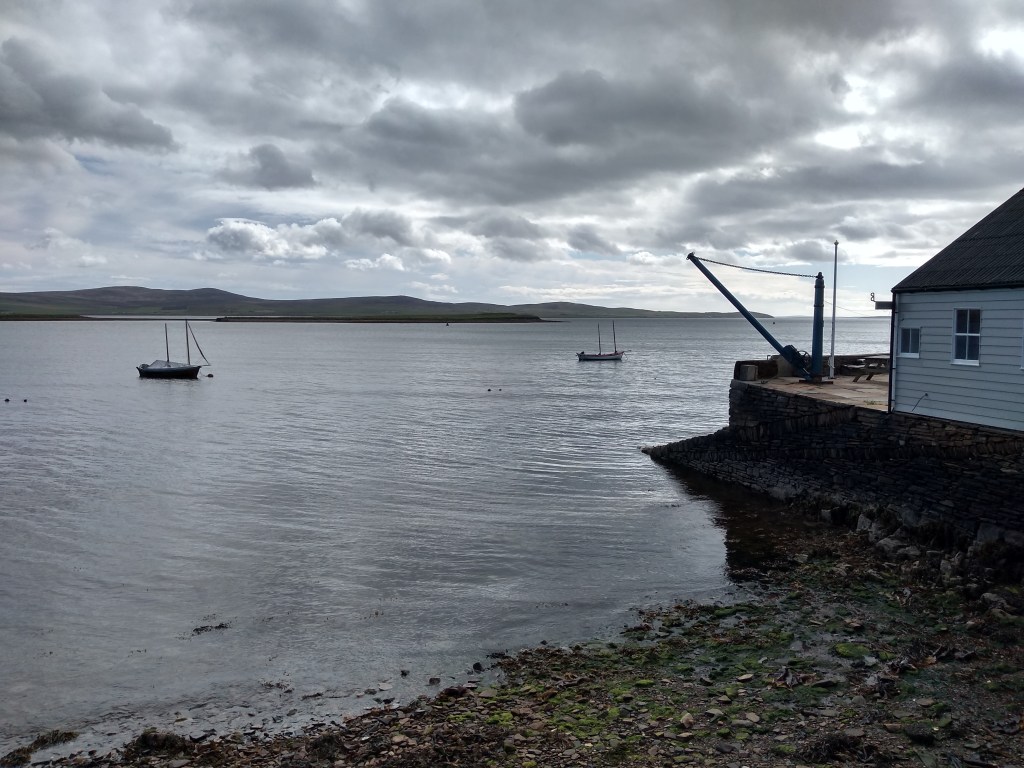
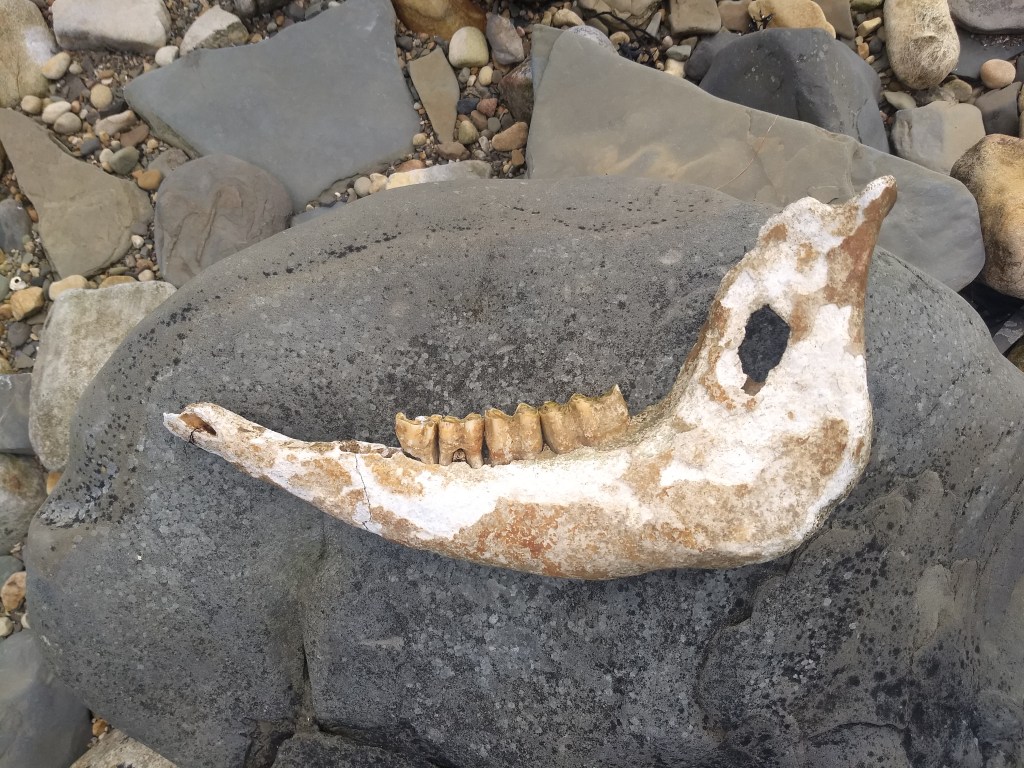
Once on the island, we explored the village of Stromness. It looked like a very peaceful place, and not overwhelmingly touristy. After the stroll we had a quick lunch in a cafe and drove towards East, direction Orphir, where we stopped for a walk to the beach, taking advantage of the nice weather. On the beach we found half a jaw of some animalโ€ฆcow? Sheep? Seal? And, more worrying, some dead birds, likely because of avian influenza. This wasnโ€™t the only time during the holiday, it happened later at the Brough of Birsay and at Dingyshowe beaches.

Peaceful Stromness.

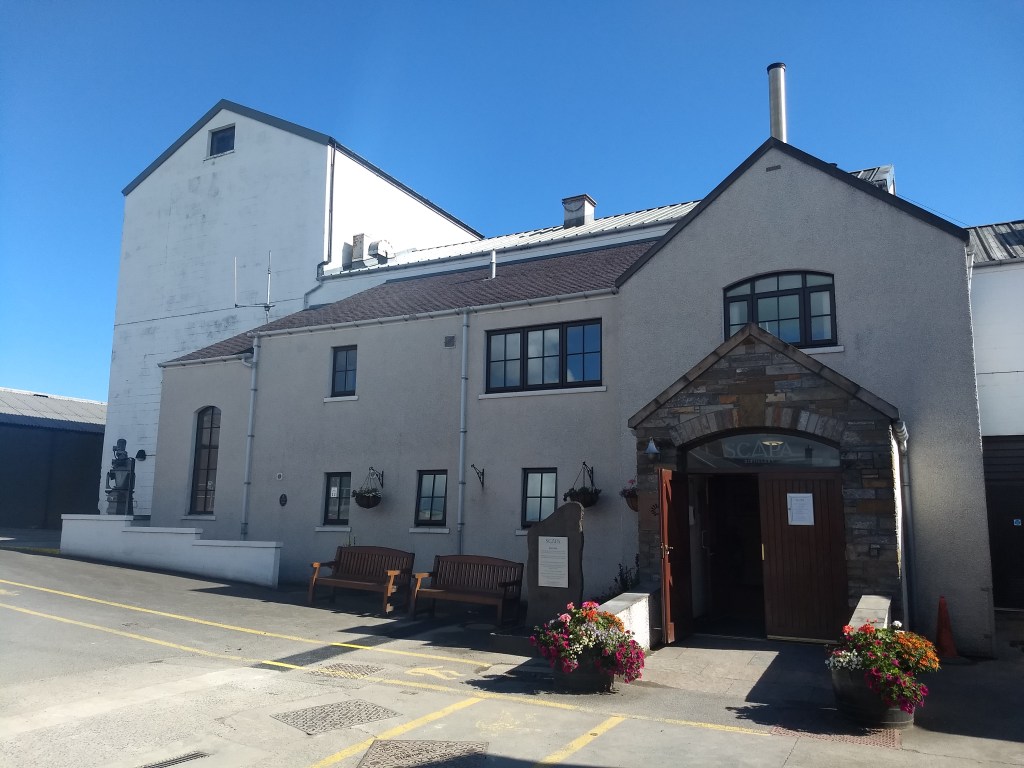
Moving on, it was finally time for our first visit to an Orcadian distillery, Scapa, right outside the “capital”, Kirkwall! Before the tour, Scapa was quite a โ€œmysteriousโ€ single malt to us: until then, we were only aware of two official bottlings, the Skiren and the Glansa, the latter finished in ex-peated casks (since the distillery belongs to Chivas Brothers, we guess Allt-A Bhainne). We also never came across an expression from independent bottlers (the SMWS has a code for Scapa, #17, but as far as we know no recent bottlings).

Gianluigi exploring Orphir beach…
…Look what we found!

Our friends dropped us at the visitor centre, where the tour guide Maria Letizia warmly welcomed us. Because she is Italian, she gave us a personalised tour in Italian, the very first time for us! The distillery is going through some renovations. They’re building a new tasting room, making sure it’s not pointing towards a certain buoy in the Scapa Flow. Maria Letizia explained that this is a sign of respect, because that’s the place where the Royal Oak, a ship with about 800 novices in training, mostly teenagers, was sunk by a German submarine during WW2, which was lucky enough to get to the Flow avoiding all old ships positioned as hurdles.

Scapa distillery, here we are!

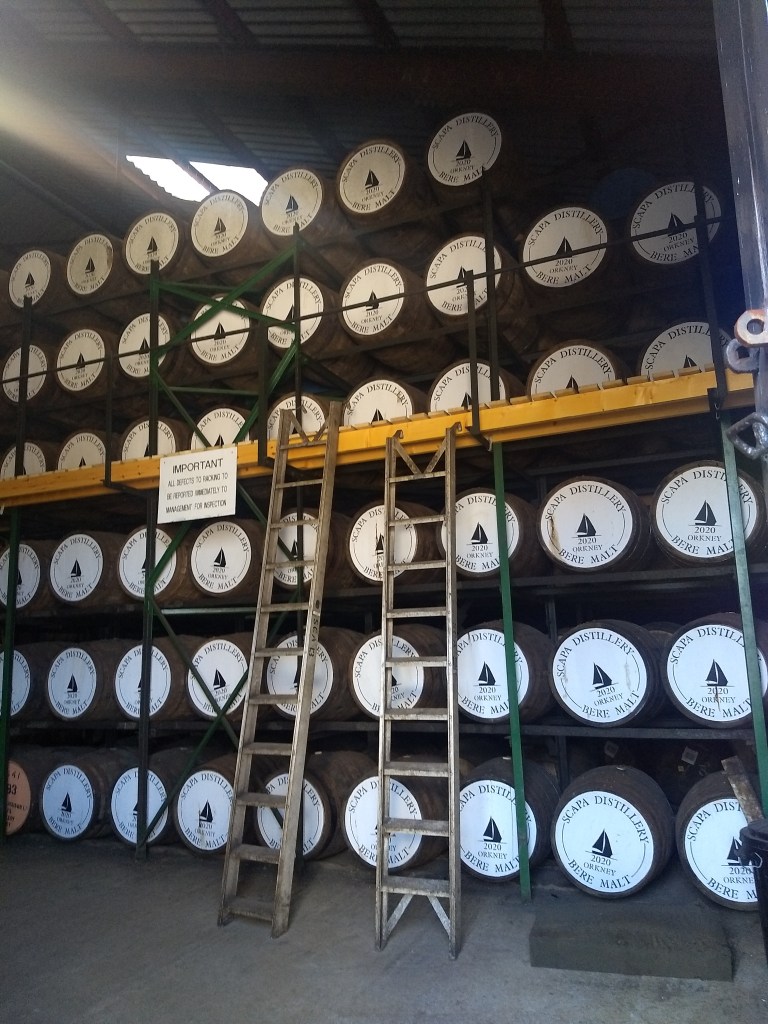
After this quite sad historical anecdote, the tour moved on as usual: we got told the history of the distillery, which was founded in 1885, and partially destroyed in 1919 by a fire. More recently, in 1994, it was mothballed and for a few years, personnel from the neighbouring Highland Park were turning it on for a few weeks every year to make sure that everything was still working. They get all the malted barley from the mainland, totally unpeated, and that was from the foundation in our understanding, which is very uncommon for an Island distillery. Unfortunately, we couldnโ€™t take any photos in the production area, so we cannot show you a very peculiar detail: their wash still is a Lomond still, similar to the Ugly Betty at Bruichladdich (which is used for gin, however). They also donโ€™t have any filling station, so the newmake spirit is stored into tankers and transported to Glasgow to be put in casks, at 63.5% if first-fill casks, while at a higher strength, 68.8%, if refills. Some of these return back to the island, together with casks from other Chivasโ€™ distilleries, to mature on site. We could take a sneak peek at the warehouses, but photos from the outside only.

The warehouse.

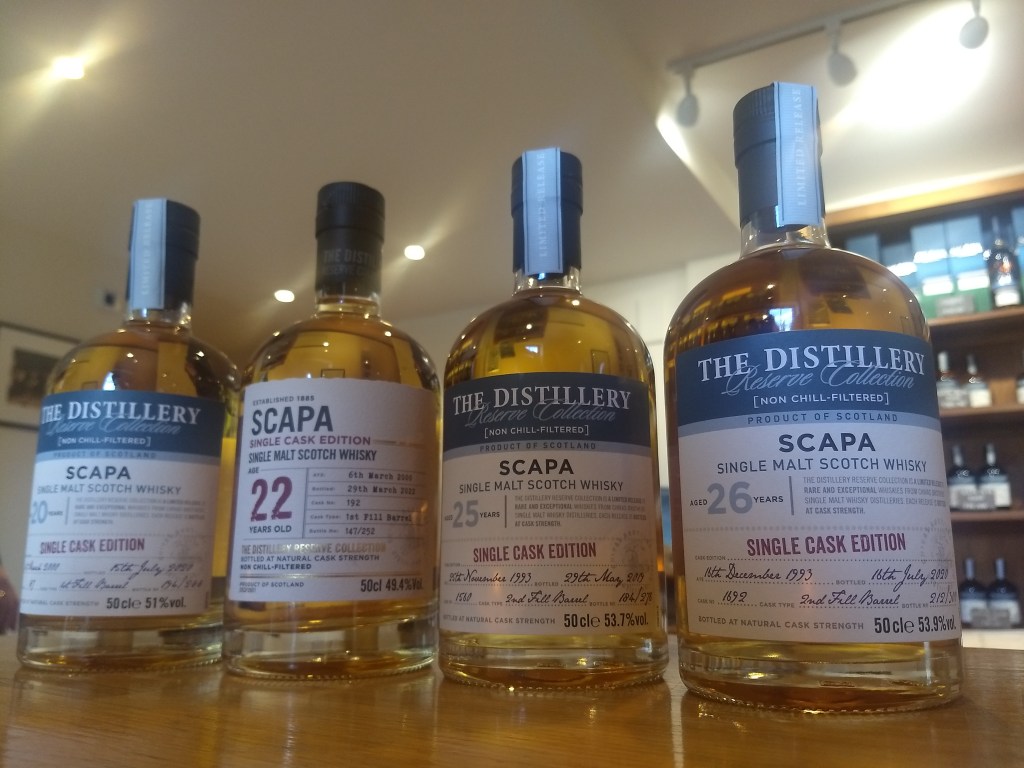
Back to the visitor centre, everything was ready for the tasting. When we booked the tour (which alone was 5 quids only!!!), we could choose three tastings: the Land (a core range expression and 3 from the 10-16y range, ยฃ30), the Sea (four drams from the 15-19y range, ยฃ35) and the Air (four drams from the above 20y range, ยฃ45). These tastings were not bookable from the website, which only offers 3 unspecified drams forยฃ25, we had learned about them by contacting the distillery via email. Except for the two core range expressions, all the other ones are available as 50cl bottles, as is typical of Chivas Brothersโ€™ distilleries. Like the ones we saw in the other distilleries, they are a bit pricey too – company policy.

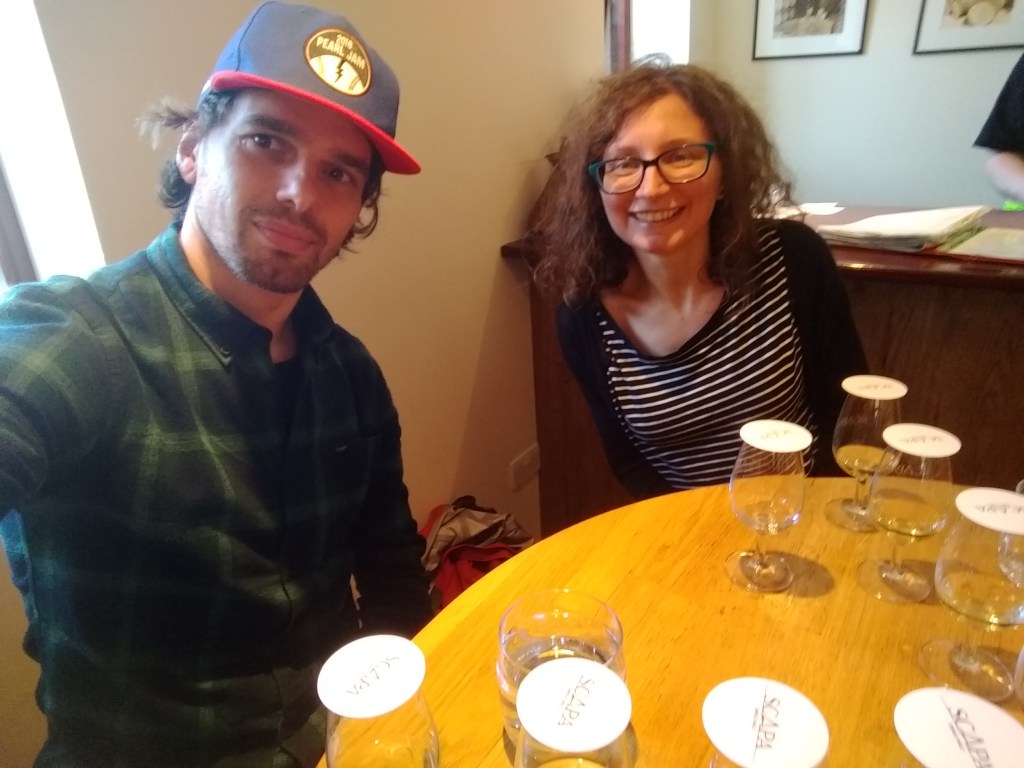
The delicious Air tasting.

We chose the fancier ones, Sea and Air, although in the first one we decided to include two drams below 15y (more approachable price-wise). All very tasty drams, in particular a couple of sherry cask matured ones (very cask forward, though). In general, we found the distillery character very citrusy, oily, crispy and honey/vanilla forward. They were all single casks, except an 18y, a marriage of 5 ex-bourbon barrels from the small production of 2000, when the distillery was run for a few days by Highland Park operators.

Sooo curious about this tasting!

We were very happy to finally get to know this distillery and its character. After dinner, we tried the two core range expressions, Skiren and Glansa, which we had tasted a long time before. Quite inoffensive sweet drams, definitely not comparable with the juicy and tasty ones we had had earlier at the distillery. Just a shame Chivas donโ€™t bottle more geek-forward expressions at a reasonable price (donโ€™t have to be all single casks, btw).

The night ended at the Kirkwall camping, trying to avoid the midges. Stay tuned for the second and last part of this trip!


Scapa Tour and Tasting

Price: ยฃ5 tour (August 2022) + tasting (ยฃ25 3 drams, bookable online in the summer season; ยฃ30 Land 1 dram from the core range and 3 distillery bottlings 10-16y; ยฃ35 Sea 4 distillery bottlings 15-19y; ยฃ45 Air 4 distillery bottlings 20+y)

Duration: 1-1.5 hours

Tasting: depending on tasting choice and available expressions

Target: anyone really, the experience can be easily customised

Value for money: very good

Highlights: the still room and the Lomond still

Recommended: YES!

Link: https://www.scapawhisky.com/

#17.2 A first taste of Speyside

Walking and blending


TL;DR: The last two days of the trip were dedicated to less standard whisky experiences. First off, a walk through the village of Dufftown and its distilleries. On the last day, we did a blending experience at Strathisla, learning the hard way how difficult it is. Overall, definitely a great trip! 

(missed Part 1?)

The morning of the third day was quite open, so we went back to Aberlour, officially for a walk to the Linn waterfalls, behind the Aberlour distillery, but we sneaked in a second visit toโ€ฆno, not the distillery, to the Walkerโ€™s cookies shop! Just to pick up Christmas gifts for family and friends, and because Gianluigi loves cookies indeed! We had some take-away food from a local shop, before our afternoon activity: a walking tour of the 9 distilleries of Dufftown! If youโ€™re asking yourself why 9, just stick with usโ€ฆ

A cute meeting point for the walking tour.

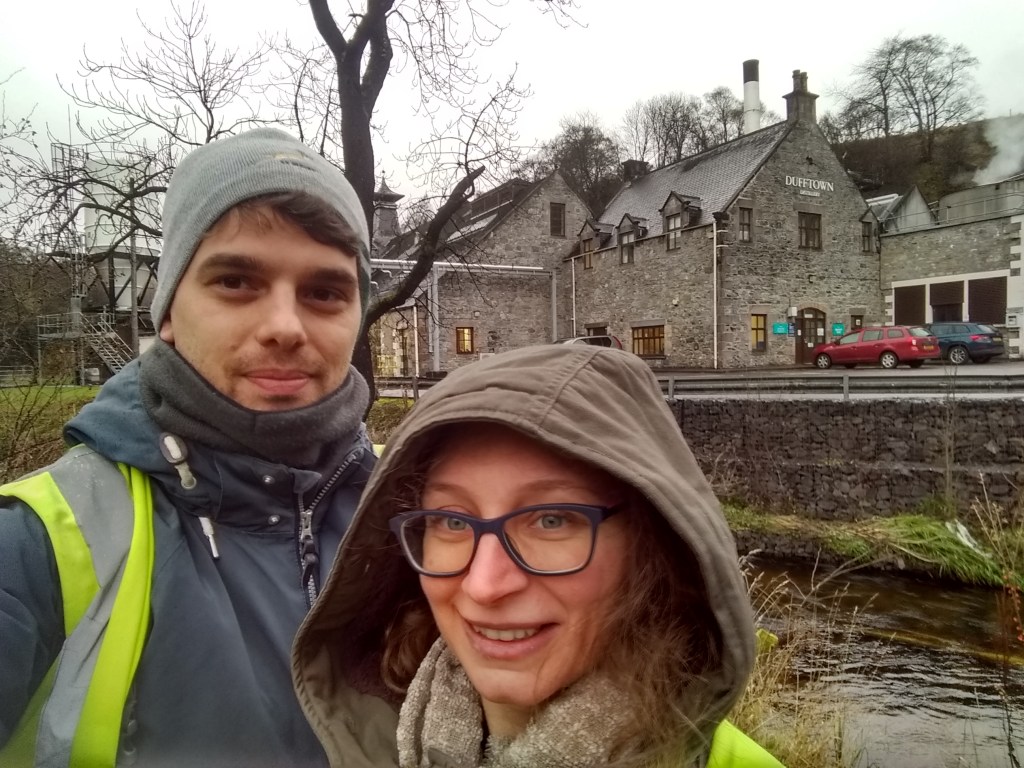
The tour was organized by Michelle, a local guide living in the village. We and another young couple met her at the clock tower. First, we walked towards her house, where she very professionally gave us a glencairn and a yellow vest: at the end of the day we were about to walk through a few whisky producing plants, most of them not open to visitors. To start with, we walked towards the site where the now demolished Pittyvaich distillery used to be (close to the Mortlach Parish Church). While looking at some of the old warehouses, Michelle poured a taste of a 25y Pittyvaich from a Diageo release. A bit down the road, we then stopped at Dufftown distillery, owned by Diageo.

Best shot at Dufftown distillery.

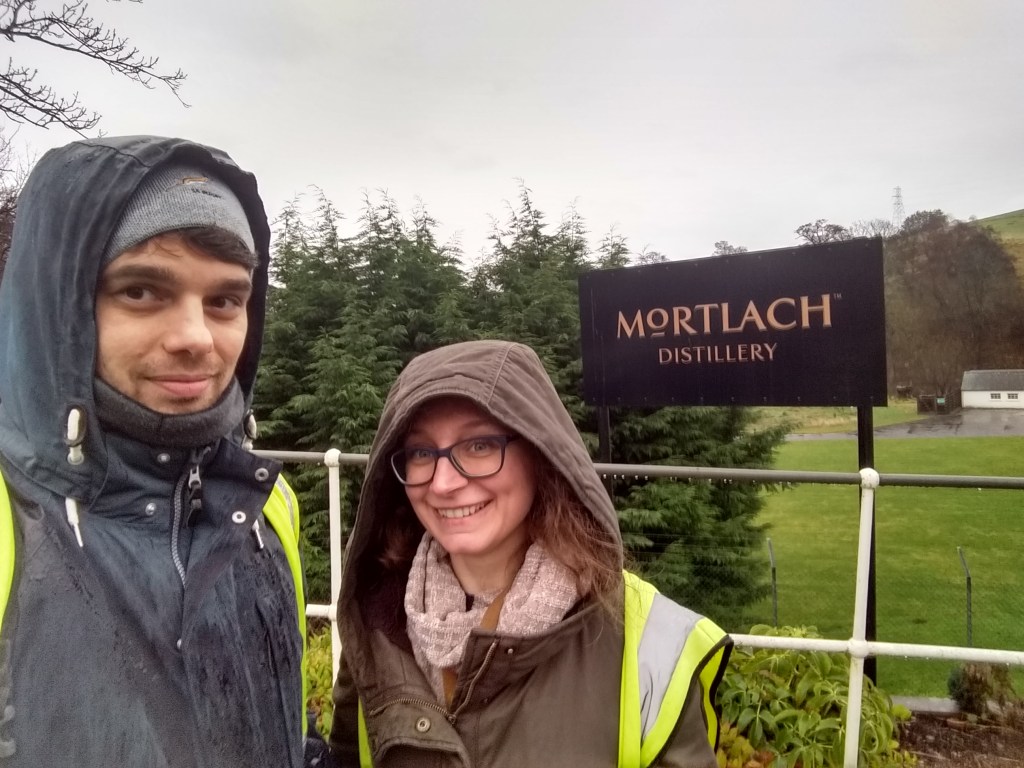
Thisย is one of the three distilleries making the Singleton (Singleton of Dufftown), sold mostly in the UK and Europe. Moving on with our tour, walking along the Dullan Water, we found the third distillery: Glendullan, another one from the Singleton series (this one distributed in North America, while the third one is from Glen Ord and is distributed in the Asian market). One exception was the House of Tully Singleton, part of the Game of Thrones range, which we had a taste of after a wee look at the still room. Next stop was a popular one, Mortlach, which we were very curious about for their quite complicated 2.71 distillation process. We saw their third still (from the outside), called the Wee Witchie, where the last 0.71 of the distillation happens (in our understanding, but not so sureโ€ฆ).

The beast of Dufftown and us.

In this case, the dram was a Gordon & MacPhail 25y from the distillery label range, paired with homemade shortbreads, which were fantastic! It took a bit to get to the next stop, this time walking along the Foiddich. During the walk Michelle showed us the building where another silent distillery was, Parkmore, closed too long ago to get a sip. We were already acquainted with the next working one, Glenfiddich, but not the next ones: Kininvie and Balvenie.

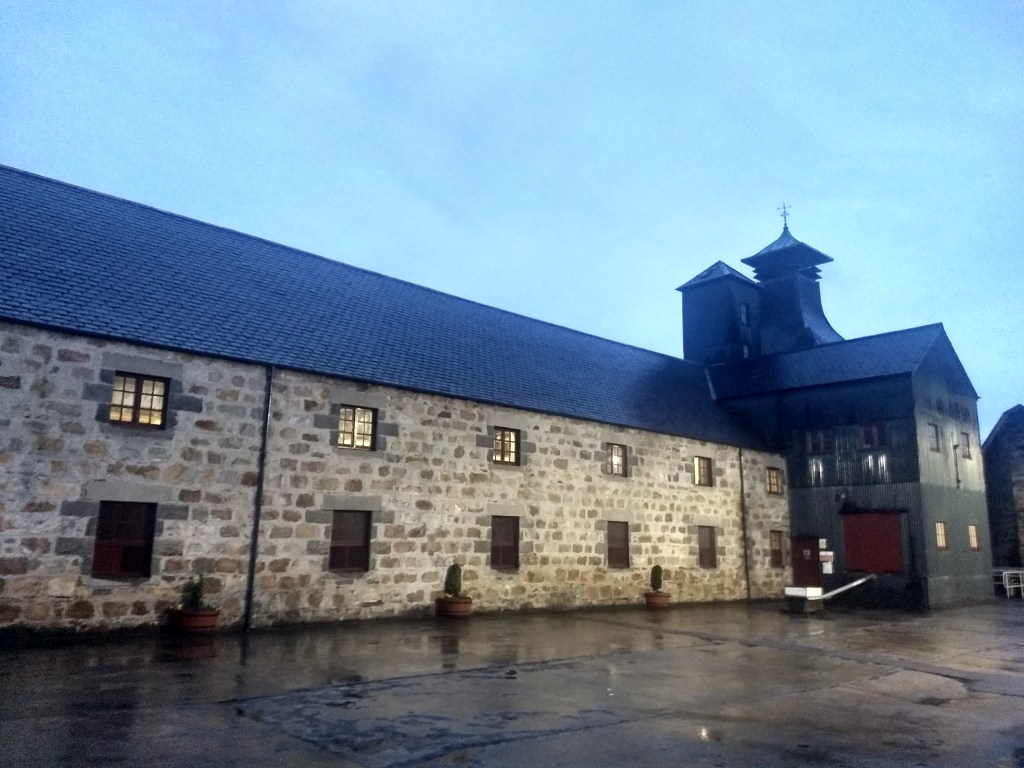
Balvenie, the beautiful.

Unfortunately, during this trip we hadnโ€™t managed to book the latter (although we caught up almost a couple of years later), so we were very curious to see it. As we walked past the malting floor, we saw smoke coming out of it, meaning it was working! Michelle was very excited as well, she had seen it only a dozen of times. We walked past Kininvie still room (the mashtun and washbacks are at Balvenie). The final distillery was another silent one, Convalmore, now used as warehouses. This is where Michelleโ€™s husband was waiting for us in a van to bring us back (it was quite dark at that stage). It was a great experience, a bit different from a regular distillery visit, definitely worth it! We ended up having dinner at the Commercial Hotel and, again, a couple of drams at the Seven Stills.


Sunday was the last day of our wee holiday. We had a very nice conversation with Linda and her partner, who drove us to Keith for the last whisky activity of the long weekend: Strathisla. The distillery looks very pretty, in particular as you walk in from the parking through the courtyard. Like Aberlour, it is owned by Chivas Brothers (a subsidiary of Pernod Ricard), and it is the core malt of one of their most popular brands, Chivas Regal. The 12 year old expression is present in almost all auntiesโ€™ and grandmothersโ€™ houses back in Italy too.

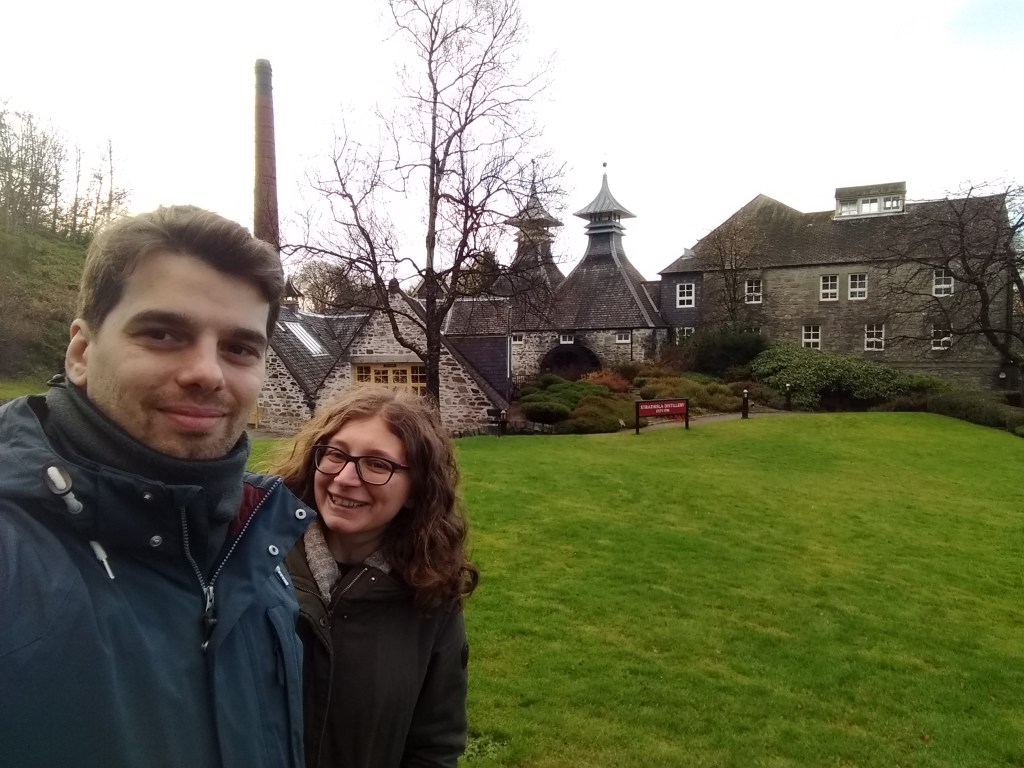
Iconic Strathisla.

For this tour, Teresa picked something different: the blending experience. So, after the tour of the distillery and the warehouses (where we had a dram of Chivas straight from the cask), we were guided to the blending room. It looked like a fancy version of a high school chemistry lab, with all the glass equipment, but instead of burners there were bottles of whisky. Our task was to create a blend of 5 whiskies: fruity (Strathisla), citrusy (Glen Keith), smoky (Allt Aโ€™Bhaine), creamy (Longmorn) and floral (Strathclyde, a grain whisky distilled in Glasgow). Of course, as we were making it, it was like: โ€œitโ€™s going to be super tastyโ€, but when a few months later we opened our 20cl souvenir bottle of our very own blends, it clearly was kind of crappy. Well, blending is more of an art, and the blenders job is definitely one of the hardest in the sector! Definitely a fun activity though, although we both agreed that one time was plenty.

As we came out, we had over an hour to wait at the Keith โ€œstationโ€ (a porch) for the train to Aberdeen. We couldnโ€™t really walk around because of the backpacks and the heavy rain, so we just sneaked in a walk to Glen Keith distillery, right in front of Strathisla.

Glen Keith distillery under the rain.

On the train back we came up with the idea of a whisky blog. It would have taken over a year to kickstart it, but this trip is the culprit! It substantially improved our knowledge and made us even more enthusiastic about scotch whisky. Speyside is one of those places where every time we visit, we say to each other: โ€œwe should get a house here”. This was the first trip to this magical region, with many more just about to come!

Until the next story, slainte!


Strathisla Distillery Tours
https://www.maltwhiskydistilleries.com/strathisla/
Michelle’s Dufftown Distilleries Walk
https://www.dufftown.co.uk/prov_attr_detail.php?id=153

(Because this trip happened almost 3 years ago, we are not compiling the distillery visit evaluation box.)


#17.1 A first taste of Speyside

A birthday surprise


TL;DR: in December 2019 Teresa organised a surprise weekend for Gianluigiโ€™s birthday, so we travelled to Speyside for the first time. One of the few times we travelled by train, it wasnโ€™t easy to reach all the places we wanted. Nevertheless, in the first couple of days, we managed to visit four distilleries in Elgin, Aberlour and Dufftown.ย 

2019 was a weird year for us. Because of an intense period at work, Gianluigi could take very few leave days throughout the year. But it was also the year where something changed for us about whisky: we became members of the Scotch Malt Whisky Society, we started listening to whisky podcasts, reading books, and visiting distilleries more often. So, when December arrived, going off on a wee whisky holiday was a very easy decision to take. It was also Teresa’s gift to Gianluigi for his birthdayโ€ฆso for him the destination was a surprise!

In the morning, first train to Aberdeen, then another one to Elgin, so Speyside, which weโ€™d never been before! This is home to over 50 distilleries, without doubts the biggest producing single malt whisky region. Although not all of them are open to visitors, a good bunch are. Which ones then? Still a mystery to Gianluigi.

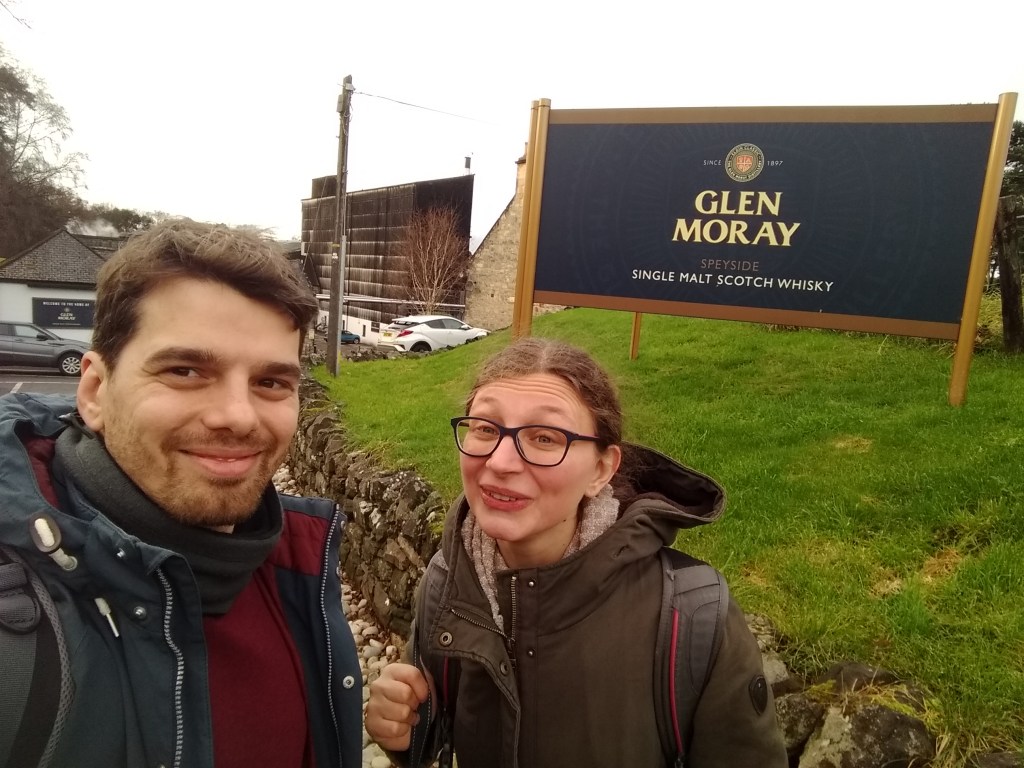
Happy faces, and we were not even drunk!

The first distillery was only a 20-minute walk from Elgin train station: Glen Moray. We are now very fond of this one, probably underrated because of their entry-level expressions available in supermarkets. Thanks to a few very tasty SMWS bottlings, however, at the time we had already started to appreciate it, so Gianluigi was very happy! Because of time constraints we only did a tutored tasting at the distilleryโ€™s cafรฉ. We chose different flights, the travel retail (with the Elgin Heritage NAS, 12y and 15y, but all bottled at 48% and not chill-filtered) and the distillery casks (2008 ex-rye cask finish, 2001 2nd fill ex-oloroso, 2014 peated ex-gamay cask). We loved these expressions, in particular the 12y in the travel retail range and the 2008 Rye cask finish, but we felt it was too early in our trip to buy anything (much regretted decision).

Glen Moray tasting.

From there, we took a cab to another distillery, completely unknown to us: Benriach. Together with its sisters GlenDronach and Glenglassaugh, it had been recently sold to Brown-Foreman (aka Jack Daniel’s).

After seeing a malting floor for the first time.

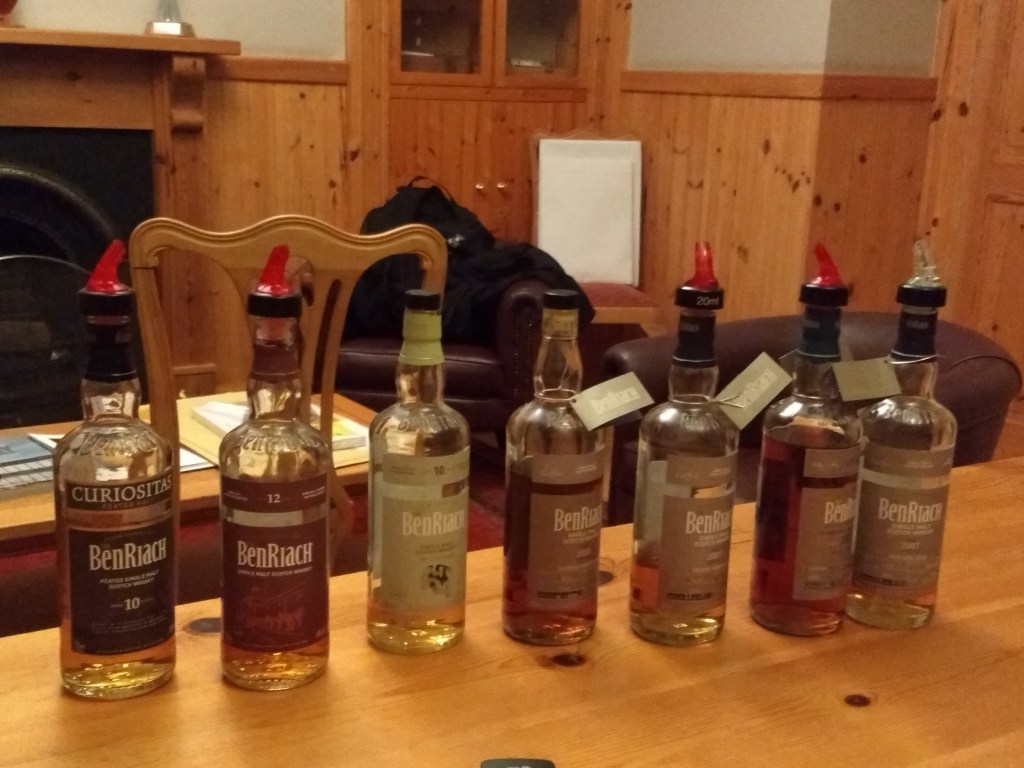
At the time the visitor centre was just a small room with a couple of sofas, table and chairs, and a small shop. The tour was intimate (only 6) and quite in depth. We were guided throughout production, including their malting floor (first time we visited one), and we tasted the wash (someone said: โ€œlike a bland and watery beer, basically an English aleโ€). It was before the revamp of their core range, so we tried their 10y, 10y peated (Curiositas), the magnificent 12y triple-sherry cask, and the travel retail 10y triple distilled (of which we were able to grab a bottle only a few months ago), and another couple of older distillery exclusive expressions, including a peated ex-port cask. Truly a great tasting!

What a line-up at Benriach!

By the end of the tasting, it was dark outside (Decemberโ€ฆ), and we almost missed the last bus to go to our final destination for the day. Fortunately the driver saw us waving at him in the dark. We arrived in Dufftown, where we stayed at the Conval House, a lovely B&B run by the very kind Linda. After the check-in, we had dinner at the Stuart Arms (not open anymore) and a couple of final drams at the Seven Stills.


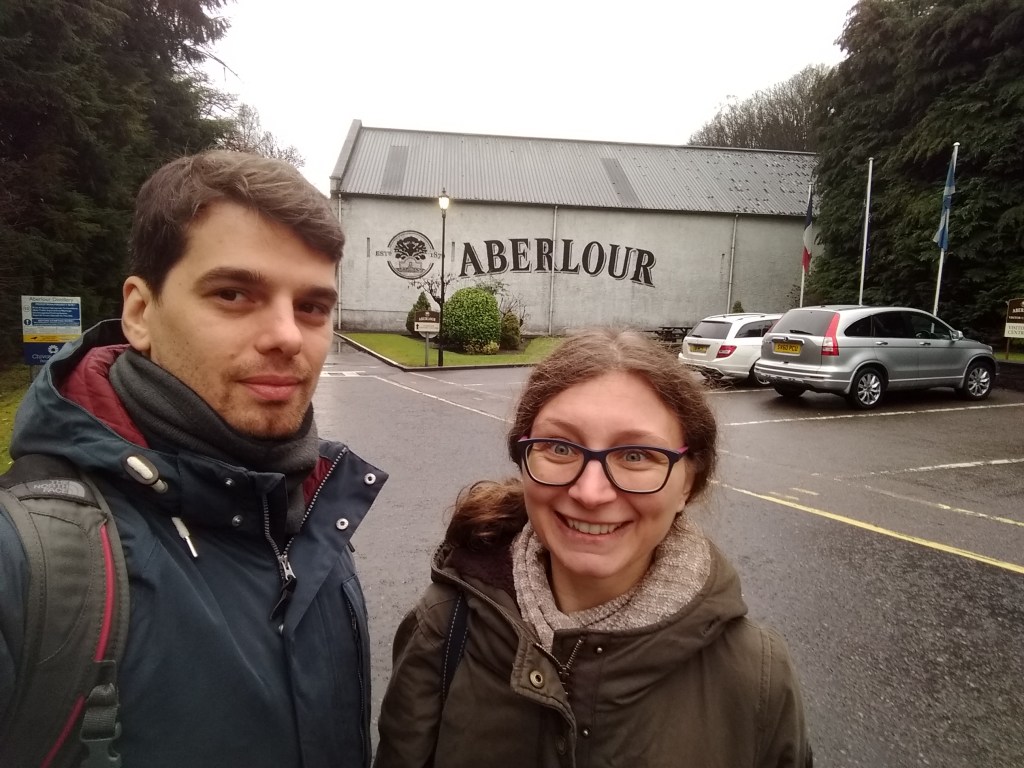
The next day we woke up a bit dizzy, how so? (wink, wink). This didnโ€™t prevent us to move on with our mission, and after breakfast, Linda generously drove us to the next distillery: Aberlour, in the near village ofโ€ฆ Aberlour!

Ready to start day 2.

It was just us on the tour, definitely not high season for them. The guide gave us a dram straight away (the 12y), which we enjoyed before another really in depth tour. The distillery sits in a marvellous location, surrounded by woods and near the Linn Falls waterfall.

Linn Falls waterfall.

Again, the final tasting was quite generous, with samples of the newmake spirit, the 16y, the Casg Annamh, and two 14y single cask, one from an ex-bourbon barrel and another from an ex-sherry butt. Unfortunately the Aโ€™Bunadh, which we hadnโ€™t tried yet, was not in the line-up, but we would have caught up later that day.

After a quick stop at the Walkerโ€™s cookies shop in Aberlour, we caught the bus, next stop: the Speyside Cooperage. It was a very cool experience, and very different from a distillery. To be honest, the guide did not say much (a bit shy?), but was available to reply any questions. However, as whisky novices we didnโ€™t have that many. The walk in the production area was very interesting: we could admire the toasting process and the coopers doing their magic rebuilding the casks.

The sky is blue above the Speyside Cooperage.

Finally, the last stop for the day: the Glenfiddich distillery. This is a massive operation with a capacity of over 22 million litres of alcohol per year. The tour started with an introduction video. After that, we parted from another quite large group of people, as only the two of us went for the in-depth tour. It was the first time we visited a distillery of that size: the two huge lines of stills striked us!

So many stills at Glenfiddich!

At the end of the tour and after a wee look at the bottling line, we were ready for thetasting. We had the 12y, the 15y, the Project XX (the best of the bunch, in our opinion), the Fire and Cane, the 18y and finally the 21y rum finish. When we visited the warehouses we could try a tiny sip of the 15y cask strength form one of their huge solera-style vatting tubs – very tasty but pricey (at the time 120 quids at the visitor centre).

Our day ended with a nice dinner at A Taste of Speyside restaurant (now unfortunately closed), and another dram, only one this time (the Aberlour Aโ€™Bunadh) at the Seven Stills. What an intense day!


Distillery (tours) links

https://www.glenmoray.com/our-distillery
https://www.benriachdistillery.com/en-gb/distillery-tours/
https://www.maltwhiskydistilleries.com/aberlour/
https://www.glenfiddich.com/en-gb/distillery

Speyside cooperage
https://www.speysidecooperage.co.uk/tours.php

(Because this trip happened almost 3 years ago, we are not compiling the distillery visit evaluation box.)


#16 A Canadian single malt with a Scottish soul

Visiting Glenora Distillery


TL;DR: Gianluigi went on a work trip to Nova Scotia, Canada, and sneaked in a visit to the first single malt distillery in North America: Glenora! Although a bit expensive (compared to Scotland prices) the visit was definitely worth it and the whisky had its own very fruity character. If you find yourself in the area, itโ€™s strongly suggested. 

(This post is written in first person by Gianluigi, since he was the only one on this trip)

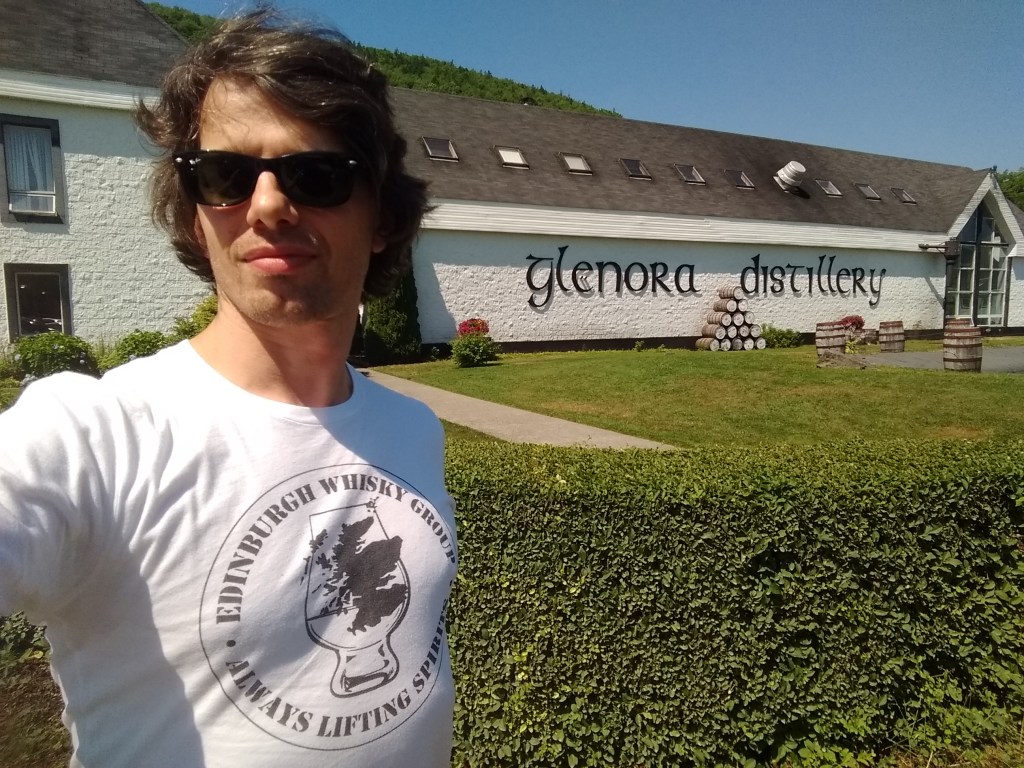
In the academic world, one of the last things to come back after Covid were in-person international conferences, of course. Hundreds of researchers coming from all over the world and staying together in closed spaces for a week, what could go wrong?!? In my field of study, infectious diseases epidemiology, people have been particular cautiousโ€ฆguess why. So after 2020 and 2021 without meetings, in August 2022 I finally went to my first in-person conference in Halifax, a quite touristy city in Nova Scotia, on the Atlantic coast of Canada.

Once flight and accommodation were booked, I looked for activities to do in the couple of days before the conference. And what I really mean, is โ€œwhisky activitiesโ€, or even better โ€œwhisky distilleries to visitโ€. I found out that Nova Scotia has some relative recent ones (Caldera, Authentic Seacoast, among others), but the one that grabbed my attention was Glenora Distillery, located in Cape Breton Island, the north of Nova Scotia province. The mighty David taking down the Scotch Whisky Association (SWA) Goliath.

Slowly getting there…

For those who donโ€™t know the story: Glenora Distillery was founded by Bruce Jardine, a local entrepreneur, and it was the first North-American single malt distillery, during a time when distilleries in Scotland were still shutting down following the whisky loch. He decided to go back to his Scottish roots, and start producing the most iconic Scottish product in a province literally called โ€œNew Scotlandโ€. He moved for over a year in Scotland to learn the nitty and gritty about distilling, in particular at Bowmore, and after coming back to Nova Scotia he acquired the land and built the distillery. After an unfortunate start which saw the distillery change owner twice, in 2000 they released their first single malt (an 8-year old), the Glen Breton Rare. Proudly advertising it as the โ€œonly/first single malt in Canada/North Americaโ€ didnโ€™t prevent the SWA to sue them over the use of the world โ€œGlenโ€. But well, they are literally located in a โ€œglenโ€, and the village is called Glenville. After 9 years of trials and appeals, they had the last word and could keep the โ€œGlenโ€.

Almost there…

So, you could understand my excitement to visit them! However, the visit almost didnโ€™t happen, because of the shortage of cars for rental in the whole region. That meant zero cars available at the airport, despite looking 4 months ahead. After bothering a number of people through emails (taxi/shuttle companies, Nova Scotia tourist service, hotels, etc.), I was about to give up the trip, but then I decided to try Turo. This is a company that hires private car, like Goboony does for campervan, but they arenโ€™t a scam like the latter. So, I booked a car, not cheap but what the hell, when will I be in the area again?

Unfortunately, another challenge was behind the corner: the disastrous situation of Toronto International airport, where I had my layover, which I learned a mere 10 days before the trip. And in fact, my first flight was almost 2 hours late, but the second was 75 minutes late as well, so I didnโ€™t lose the coincidence. This meant to change the time of the rented car pick up though, and when I called the owner to ask him to come later, he blathered some excuse and said he wasnโ€™t allowed to hire cars anymore. I called Turo, which very professionally (unlike Goboony, sorry if I stress this but they are really terrible) provided me a different car and covered most of the price difference. So, finally, at 9.20pm local time, I was on a car directed to a B&B not too far from the airport.

Finally there!

Because of the jet lag, I woke up quite early, and after a good breakfast I was already on my way to Cape Breton Island. I arrived at the site around 2.30pm, ready to check in for the night: I didnโ€™t tell you already, but at Glenora they have a hotel on site and a lodge just up the road, where I stayed. They also run a pub and a fine dining restaurant on site, so I was all sorted. The distillery offers two tours, the regular (CAD 7.00 + taxes, one dram) and the VIP, which I signed up for.

The tour started at 3pm, and it was conducted by Donnie, the manager of the hospitality side of the business. He is a huge malt whisky fan, so the tour was extremely entertaining and all the information really in depth. We started outside the shop building near the stream where they source their water from (first time I am bothered by bugs during a distillery tour).

The source wee stream.

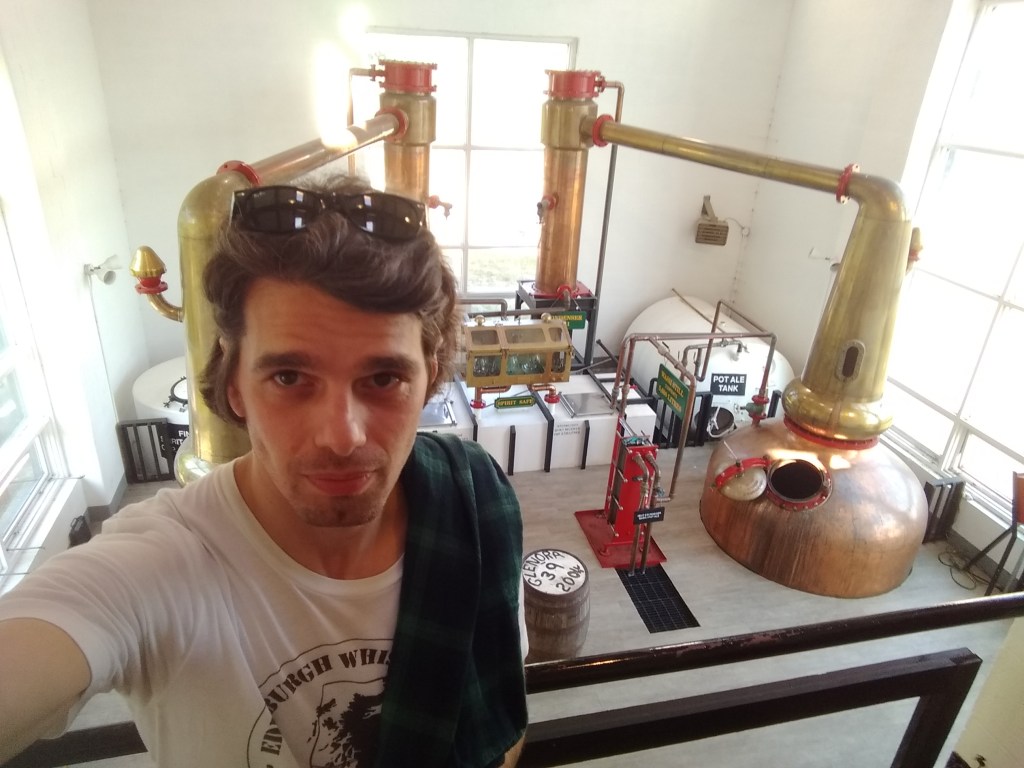
The shop is topped by a pagoda roof, but it is just for aesthetic purposes and was never meant to be a kiln. In fact they source their malted barley from Sasquetwchan, but until the early 2000s they were buying it inScotland (some peated as well). My visit happened in their silent season, which goes from the late spring to the Fall, and during which they mostly run the hospitality side. For this reason their production is currently about 50,000 mlpa, although Donnie later told me that they could easily crank it up. All their equipment came from Scotland, including the two Forsyths stills. Differently to many distilleries, the wash and spirit still are of the same size, approximately 5,600 litres. A particular difference is that they fill their barrels with 70% newmake spirit, unlike the greatest majority of distilleries we visited which fill at the standard 63.5%.

Scottish equipment on Canadian soil.
The still I’m hiding looks the same as the other one, I promise!

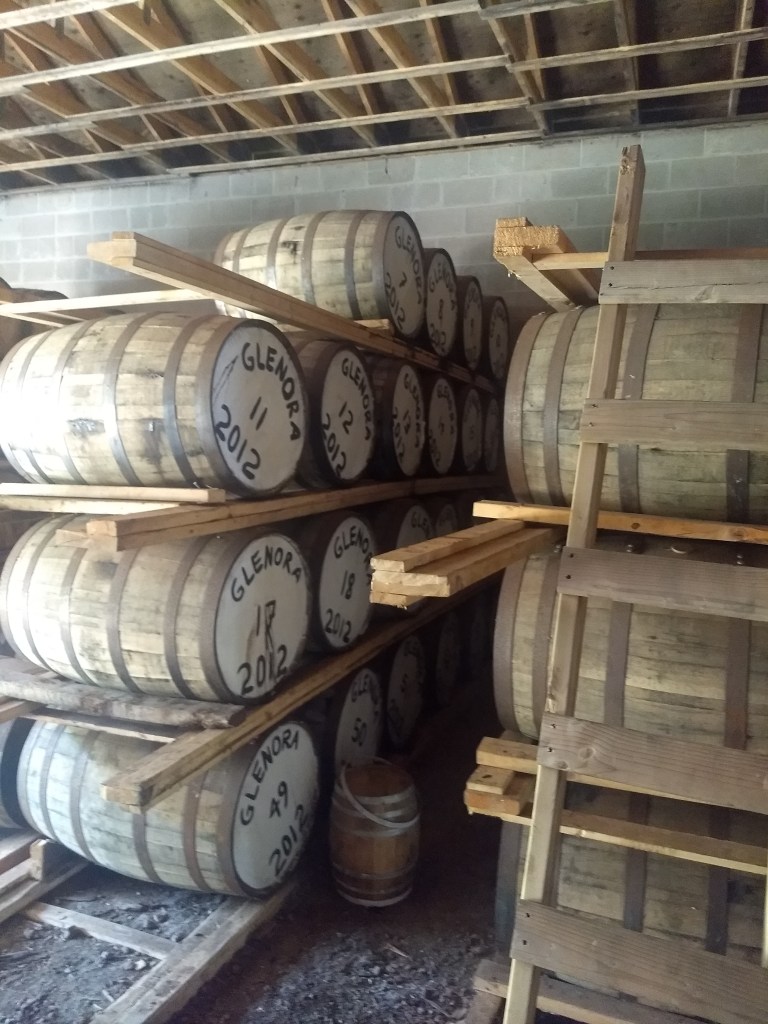
We moved to the dunnage warehouse, one of their three, and for the first time the air was warm and humid instead of cold and humid: what a difference! Donnie explained us their maturation process: they source the barrels from Kentucky (we could see many Buffalo Traceโ€™s ones) and they rarely mature for less than 10 years. Apparently they donโ€™t re-use them, so all their barrels are first fill ex-bourbon. They had used sherry and other casks in the past, but for very specific releases. We tried one sample from the cask of a 26y/o, which was very creamy and quite fruity, in particular after adding water (collected from the stream!): after 26 years it was still 64%! Donnie said their angelsโ€™ share (the % lost to evaporation) is still 2%, similar to Scotland, although with huge seasonal variation. They bottle everything on site, without adding artificial colouring nor chill filtering.

The dunnage warehouse.

We moved the tasting room, near the restaurant, where 5 drams were ready in front of us: we started with the newmake spirit (at 70%!), which after the 64% in the warehouse wasnโ€™t too hard to drink, followed by the Battle of the Glen, a very sweet and balanced 15y (43%) celebrative of the victory of the trial vs. the SWA. We moved on to the 12y Ice (43%), finished for a short time (average 3 months) in ice wine casks. I was totally unaware about ice wine before this tasting: it is wine made with grapes harvested in February, and the frozen water allows the sugar to be retained to make a very sweet dessert wine (I bought a 5cl at the airport, Iโ€™m very curious to try it!). They also have 10y and 15y cask strength versions of the Ice in 25cl bottles (the latter available at the Halifax Airport). The final two drams were distillery casks: a peated 18y old, still made with Scottish barley, and an unpeated 12y, both cask strength. These two were the standout of the line-up, in particular the peated one.

Happy kid with the tasting.

As I was by myself, Donnie joined me over dinner for a nice chat, where I bought another couple of their drams (they were selling by the half-ounce, 15 ml): their main expression (the Glen Breton Rare 10y, 43%), and the 14y, which was truly delicious (still 43%). Not too late, we called it a day and a driver took me to the lodge.

I was very satisfied with the visit to Glenora, it was a very different experience to our usual trips around Scotland. Being a very touristy area, and isolated from other whisky distilleries, I could see how this makes them more of a tourist attraction, almost a โ€œboutique distilleryโ€, if you want. I could fully appreciate how good their single malt can be though, starting from one of the best newmake spirits I tried so far. The hot/cold maturation process definitely influences the whisky compared to most Scottish malts, but probably other factors are important too, like filling the barrels at 70%. I am really having a hard time comparing their prices with other tours or other whiskies, as during the whole time I spent in Nova Scotia, I felt that the cost of living is just much higher. Nonetheless, if you are travelling to the area or nearby, as I did, it is a must-do experience for any whisky lover.

Until next time, slainte!


Glenora VIP Tour and Tasting

Price: CAD 125.00 pp + taxes (total CAD 143.75, August 2022)

Duration: 2-3 hours

Tasting: in the warehouse, sample from the cask (26y, ex-bourbon barrel); in the tasting room, new make spirit (70%), the Battle of the Glen (15y, 43%, *NC, NCF), ICE 12y (43%, NC, NCF), Barrel #67 2010 (12y, 59%, NC, NCF), Barrel #132 2004 (12y, 59.0%, NC, NCF)

Target: whisky lovers and geeks

Value for money: Good+

Highlights: everything

Distillery Exclusive: Barrel #67 2010, Barrel #132 2004 (see above, CAD 125/375 for 25/75cl), Barrel #129 1995 (27y, 65.4%, NC, NCF, CAD 250/750 for 25/75cl)

Link: https://www.glenoradistillery.com/

*NC: not artificially coloured, NCF: non chill-filtered
+at the time of the visit 1 GBP = 1.55 CAD. If compared to Scottish distilleries tours it was pricey, but after a few days in Nova Scotia and on Cape Breton Island I think that it reflects the high prices in the province.


#11.2 Birthday in the Borderlands

Tripping in the South of Scotland to Annandale
(Day 2)


The second day in Dumfries & Galloway, driving from Portpatrick to the lovely Annandale distillery! 

(missed Day 1? Or go to Day 3)

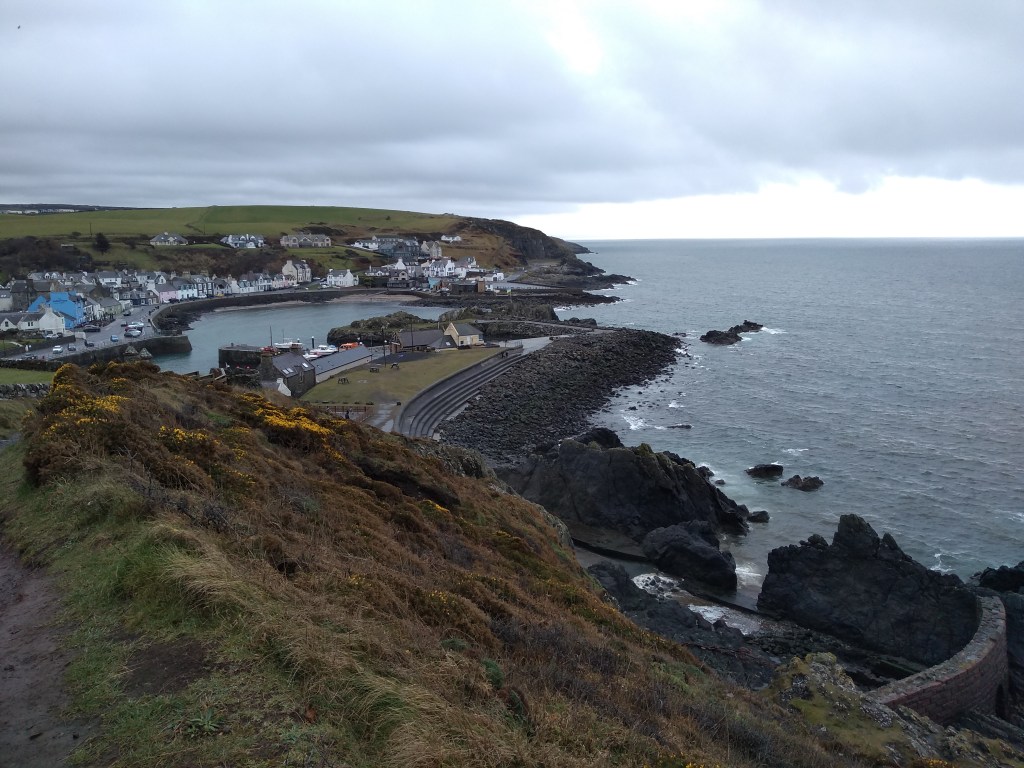
The morning wasnโ€™t too cold as we went to a nearby hotel for a big breakfast. We went for a short walk on the cliff around Portpatrick, the view of the village was pretty spectacular, but the clouds prevented us to spot Irelandโ€ฆhopefully next time!

Quiet, cloudy morning in Portpatrick.

First stop in the morning, Newton Stewart. It looked as a nice, quiet village. Here we met up with Tom, a Gianluigiโ€™s former colleague and his family for coffee and cake. It was great catching up with him, since Gianluigi and Tom hadnโ€™t met in person since March 2020, despite spending a big chunk of the pandemic working together building a Covid model for Scotland.

The road between Newton Stewart and Annan was a quite different landscape compared to others in Scotland. A rug of intense green rolling hills, punctuated by cattle and sheep quietly grazing. We stopped by a smokehouse just past Creetown, on the main road, to get some of their delicious goodies. Past Dumfries, instead keeping on the main road, we drove straight south to Caerlaverock Castle. The visitor centre and the castle were closed, but it was possible to park nearby and, thanks to a sunny day, take a walk in the park. The castle looks like a proper medieval fort, including a catapult โ€œparkedโ€ in front of it as a reminder of those walls purpose. As we will learn from the Wikipedia page, this has been under siege many times, until it was abandoned in 1640.

Beautiful castle behind an even more beautiful catapult!

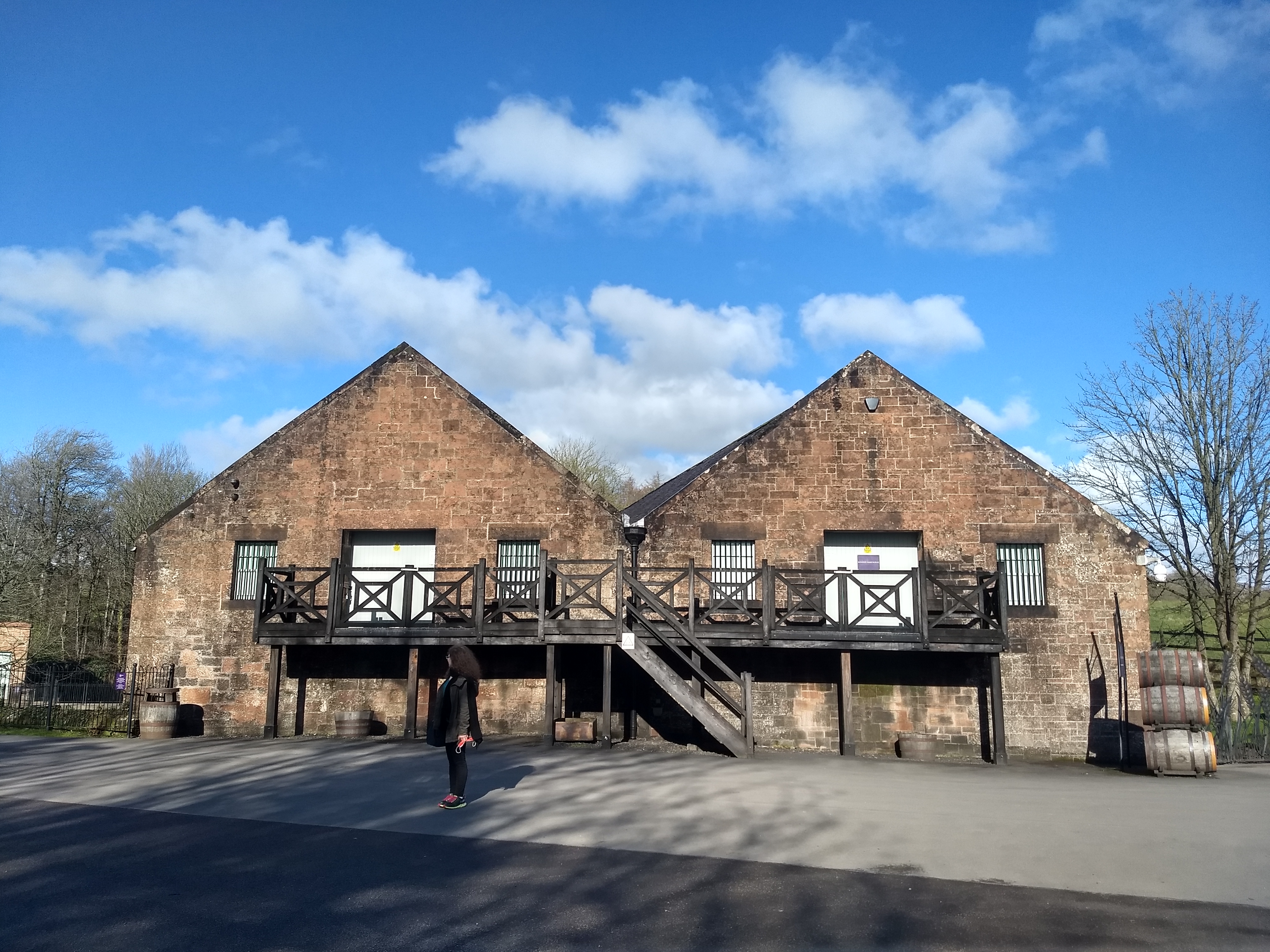
It took just a short half-hour drive to arrive to Annandale from the castle. As we left the car in the wide parking lot, we could admire the awesome restorations of the distillery buildings. It sits in a nice spot as well, close to a stream and surrounded by fields and woods, almost like a postcard! We checked-in at the visitor centreโ€™s shop (where we got our very first whisky lanyard!) and while waiting for the tour to start, we had a coffee at the Maltings, their cafรจ.

Checking in at Annandale.

Other than the basic tour there are other three options available, which is possible to enquire about from the website: one focused on the buildings restoration, one about the new owners journey and project, and a technical one about whisky production. Gianluigi enquired about the latter, but that week the person in charge was on annual leave, so he chose the basic tour (prices of the alternative ones are not specified on the website).

Our guide led us to the room where the tour started. While she was explaining the history of the distillery, which dates back to 1836, she gave us a first dram of a blended scotch whisky prototype (not on sale yet), a blend of North British grain whisky with their peated expression (Man Oโ€™Sword), diluted at 40%: despite the thin mouthfeel, not bad at all! The distillery was bought by the Walker family in 1893 as a source of peated single malt for their blends: their kiln used peat from local bogs, making it a pretty unique malt. Compared to other peated malts, it was also easier to transport it to Kilmarnock. The distillery was closed and dismantled in 1924, and prior to their acquisition by David Thomson and Teresa Church in the late 2000s, it was abandoned. When the renovation happened, all the equipment was new, making it another (almost) 200 years old โ€œnew distilleryโ€, similarly to Bladnoch. In the middle of the courtyard we could admire the old stillhouse buildingโ€™s base, with the two circular structures that used to host the stills.

A piece of whisky history.

The historical ties of these distillery donโ€™t end here, as they decided to name their single malts after two very important characters tied with the local and Scottish history: while their unpeated whisky is named โ€œMan Oโ€™Wordsโ€ in honor of Robert Burns, their peated one is the โ€œMan Oโ€™Swordโ€, after Robert The Bruce (and the peat doesnโ€™t come from the area anymore, but itโ€™s sourced by the Simpson maltsters).

As we moved to the production area, we spotted the similarities with other distilleries influenced by the late Dr Jim Swan (Lindores Abbey). In particular, they have a mashtun closed by a copper lid, and three stills: one wash still and two twins, slightly smaller, spirit stills.

All in one room: mashtun, washbacks and…
…Stills!

In the filling room, a poster of Doddie Wair, which filled their first peated cask. The dunnage warehouse is on two levels, and here is where we had a wee taste of their products (well, not Gianluigi as he was driving). We tasted their peated and unpeated Rascally Liquor (newmake spirit bottled at 63.5%), and their young Man Oโ€™Words and Man Oโ€™Sword from bourbon casks (unchillfiltered, natural color and cask strength). Back in the shop, we realised that all their bottling were ยฃ80-85 or over, depending on the cask type, so we opted for a tasting set of 6x5cl drams: peated and unpeated single malts in ex-bourbon, ex-sherry and STR casks, a good compromise (we still have to taste them howeverโ€ฆ). For what we could taste on that day (but also in another Kask Whisky tasting, when we had a dram of their sherry cask matured Man Oโ€™Wordsโ€ฆ and a real sherry cask, not a seasoned one) the whisky is very promising, and we are excited to see what is in their plans in the years to come!

Dunnage warehouses.

As we left the distillery Teresa wasnโ€™t aware of the next stop, and she was really clueless until we crossed the border with (cracks in the sky noise) England!!! The distillery for the next day was, of course, the Lakes distillery, but Gianluigi decided to spend the night in a town on the coast, Workington. We stayed in the very clean and tidy Hall Park Hotel, which has a bar as well, so before dinner we could watch the second half of the England-Ireland 6 Nations game from a comfy couch in our room with a pint! Sublime!

So another distillery in the sack, this time the beauty of Annandale really made the difference. We will definitely go back for another tour (hopefully the technical one), maybe in a few years when more expressions of this whisky will be available.


Annandale Distillery Tour and Tasting

Price: ยฃ20.00 pp (February 2022…But there was a discount at the time, we paid ยฃ10pp)

Tasting: Blended scotch (a blend of North British grain and their peated single malt, 40%), Rascal spirit (new make), Man Oโ€™Word & Man Oโ€™Sword (unpeated and peated, NC, NCF, CS)…and wee glass and laynard to take home

Target: everyone

Value for money: Good

Highlights: The beautiful site

Distillery Exclusive: Man Oโ€™Words and Man Oโ€™Sword single cask bottle your own vintage 2015 (CS, NCF, NC, ~ยฃ60 for a 375ml bottle)

Things we did not like: Feeling like broken records, but the bottling prices were a bit steep again

Link: https://annandaledistillery.com/


#10.4 Whisky in Edinburgh and beyond


Lost and found distilleries in the Lowlands


A Sunday trip with Justine around the Lowlands looking for lost distilleries (this time, requiring a car and a very knowledgeable friend!) 

(Missed the other trips in and around Edinburgh? Here they are: One/Two/Three)

There was a time when the Lowlands had less than a handful of single malt distilleries left, mainly Auchentoshan, in Glasgow, and Glenkinchie, near Edinburgh. Until it was purchased by Richard Prior in 2015, Bladnoch had a very tormented history, with many stop-and-go. Other very popular distilleries closed during the whisky loch, such as Rosebank (closed in 1993), Littlemill (1992), Inverleven (1991), and St. Magdalene (1983). While the first is in the process of being rebuilt, the other ones are gone forever.

Many grain distilleries experienced a very similar fate. During the whisky loch and in later years Caledonian (closed in 1988), Cambus (1993, now Diageoโ€™s cooperage), Dumbarton (2002), and Port Dundas (2011) closed down, while the production got progressively concentrated in the few remaining, like Cameronbridge (Fife), North British (Edinburgh), Strathclyde (Glasgow), Starlaw (Livingston), and Girvan (Ayrshire).

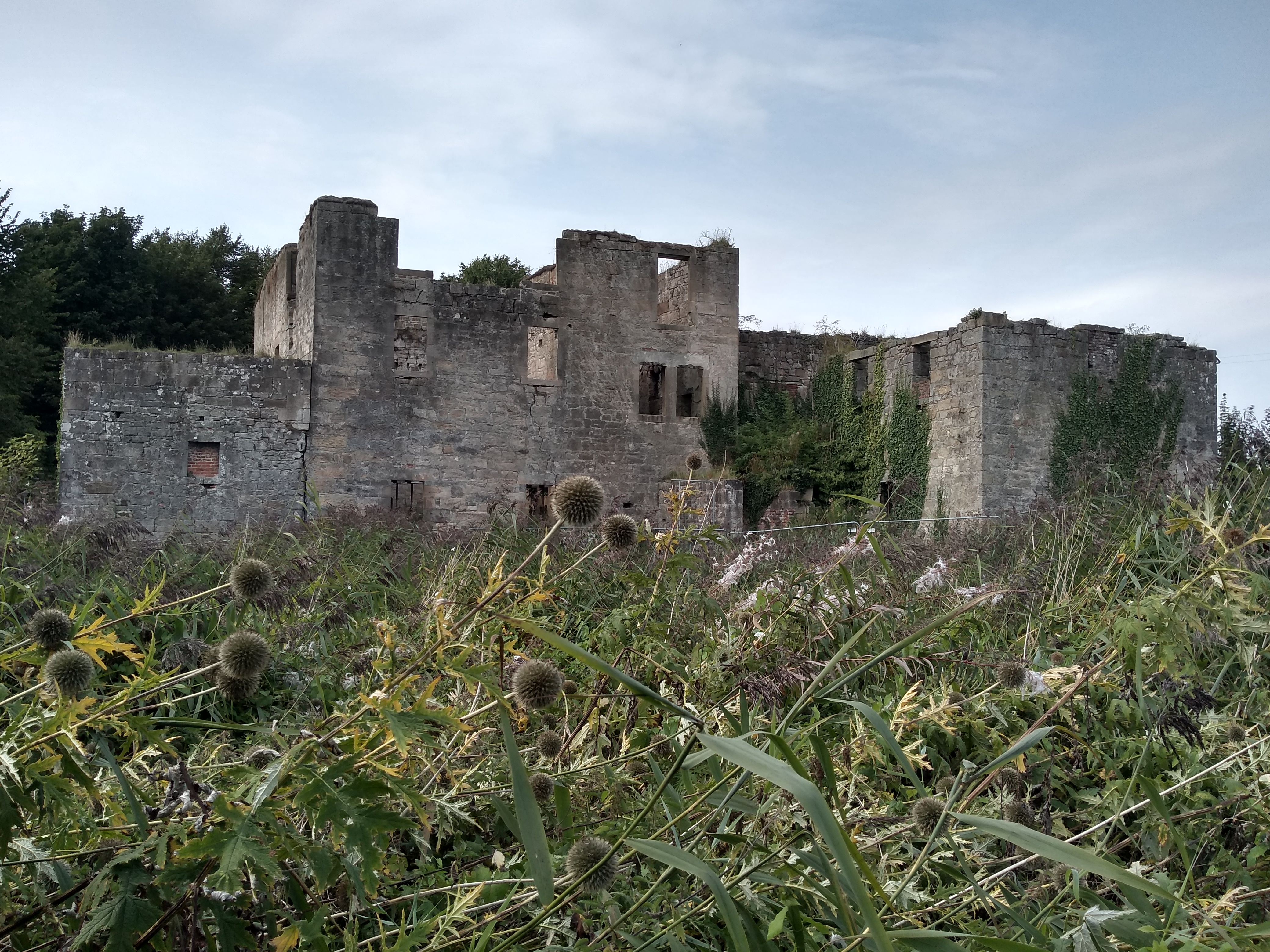
Scottish whisky went through several ups and downs in its history, and already during the 19th century saw massive plants closing down. One of these was the Kennetpans distillery, near Alloa.

Hidden sign of a hidden story.

This distillery was funded by the Steins family in the first half of the 1700s, and was followed a few decades later by the Kilbagie distillery. The two plants were massive for the time. They were connected by a canal and a railway, and were the first exporting bulk spirit outside of Scotland. The family was related through marriage to the Haig, of Cameronbridge, and the Jamesons, of the famous Irish whiskey. Following an increase in duties on spirit in the late 1780s and after a bribe attempt, John Stein and his family fell in disgrace, and the Kennetpans distillery was sequestered, sold, and finally closed in 1825, probably made obsolete by the invention of the Coffey column still. For you history buffs, there is a great website dedicated to Kennetpans (see here or below).

We were totally unaware of this โ€œancientโ€ history, until a Sunday in September 2021 when our friend Justine (Kask Whisky) proposed to go there. Had already done our weekend run, we happily joined her! The site is a few km from the village, kind of in the middle of nowhere. We left the car a few hundred meters away, and we slowly explored what is left of the building. It was not possible to get very close because of safety fences, and the thick vegetation partially covered the building. However, it was possible to get a sense of the size of the plant, which at the time must have been massive indeed! As it was still early afternoon, and having being lucky with a very sunny and warm day, we decided to stay a bit in the area and take our exploration further.

Lost distilleries, theory and practice.

The trend of distilleries shutting down slowed down in the late 1990s and it was actually reverted in the 2000s, in particular for single malt distilleries. In 2007 the gigantic Ailsa Bay distillery was commissioned and built in just 9 months (12 millions of alcohol liters per annum produced). This is owned by Grant & Sons and is on the same site as the Girvan grain distillery. Almost a decade later, it was followed by a plethora of new distilleries, opening all over the place south of the Highland line. We already talked about a few of those, such as Holyrood (Edinburgh, 2019), and the Borders (Hawick, 2017). Another one, the Falkirk distillery, had been in plans for almost a decade, and in 2020 finally started producing spirit. We drove there, and we were able to take a few pictures from the gate. We found the building quite beautiful, with the few remaining works mostly limited to the parking lot. We are definitely looking forward to visit it!

Open soon to visitors, please!

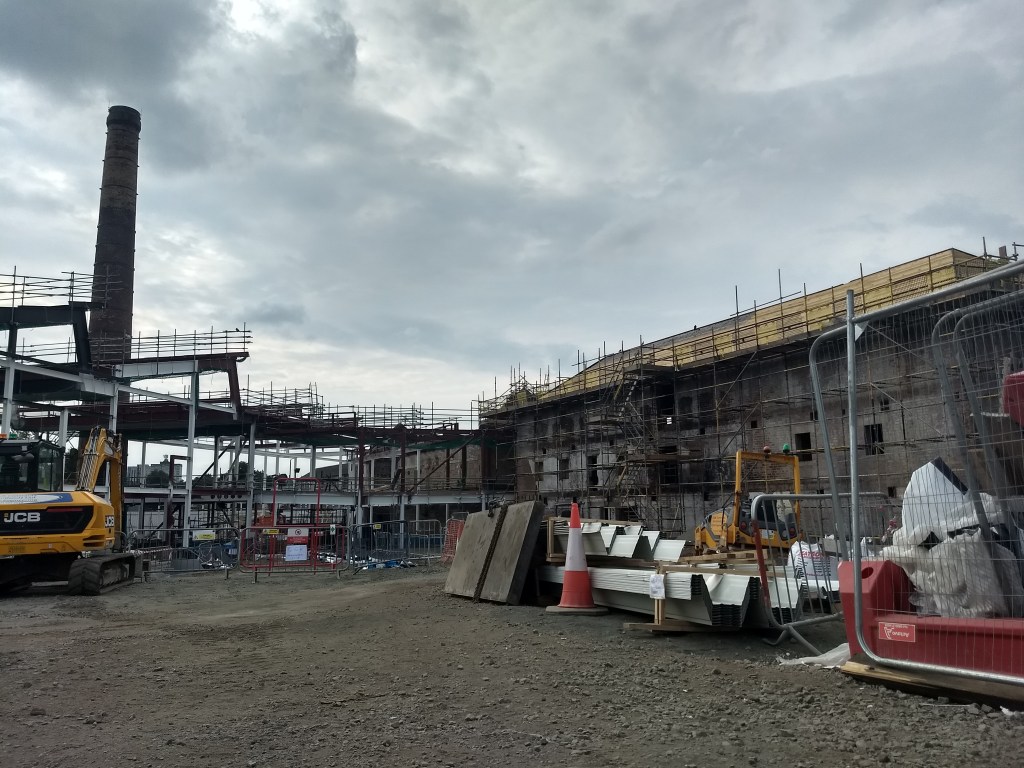
Not far from there, another distillery that will be firing its stills soon is the missed Rosebank, still in Falkirk. Ian McLeod (already owners of Glengoyne and Tamdhu) purchased the trade mark back in 2017 together with some old stocks, and the construction is happening as we write. On that day we could just see the skeleton of the building, which didnโ€™t look much like a distillery yet. Now works are well ahead, as you can see from their social media accounts.

Rosebank or…when whisky makes building sites interesting.

Fourth and last stop of the day was the old St. Magdalene distillery, in Linlithgow. It closed down in 1983 and, similarly to Caledonia and Dean distilleries in Edinburgh, was made into flats a decade later. However, the structure of the building, including the pagoda roof and the warehouse, is still admirable from the street. Being in Linlithgow, we decided to stop at Du Vin Bouchers, a very nice wine and whisky bar, for cheese and drams. The bar is very cosy, and the choice of whiskies is excellent, in particular from the Dram Fool independent bottler range. They also host Jolly Toper tastings. As the day was getting to an end, Justine slowly drove us back to Leith, ending this day full of whisky history!

A bunch of flats that used to be St. Magdalene distillery.

Thinking about all this whisky history, made of ups and downs, and of spirit first flowing, then stopping, and now flowing again, many questions popped in our heads. One is, how many of these new distilleries would survive a potential whisky loch? How many distilleries are too many? And, once maturity is reached, will these spirits be different enough for each to find their ecological niche in the whisky landscape? These questions are just food for thoughts right now, and they are not definitely ours to answer. At the moment we feel extremely lucky to witness a new golden era of whisky, and being spoiled for choice! Long live the Lowlands malt, slainte!


Links:

https://www.kaskwhisky.com/

http://www.kennetpans.info/

https://www.falkirkdistillery.com/

https://www.rosebank.com/