#54 Another whisky year under our belt

What a 2024 it was!


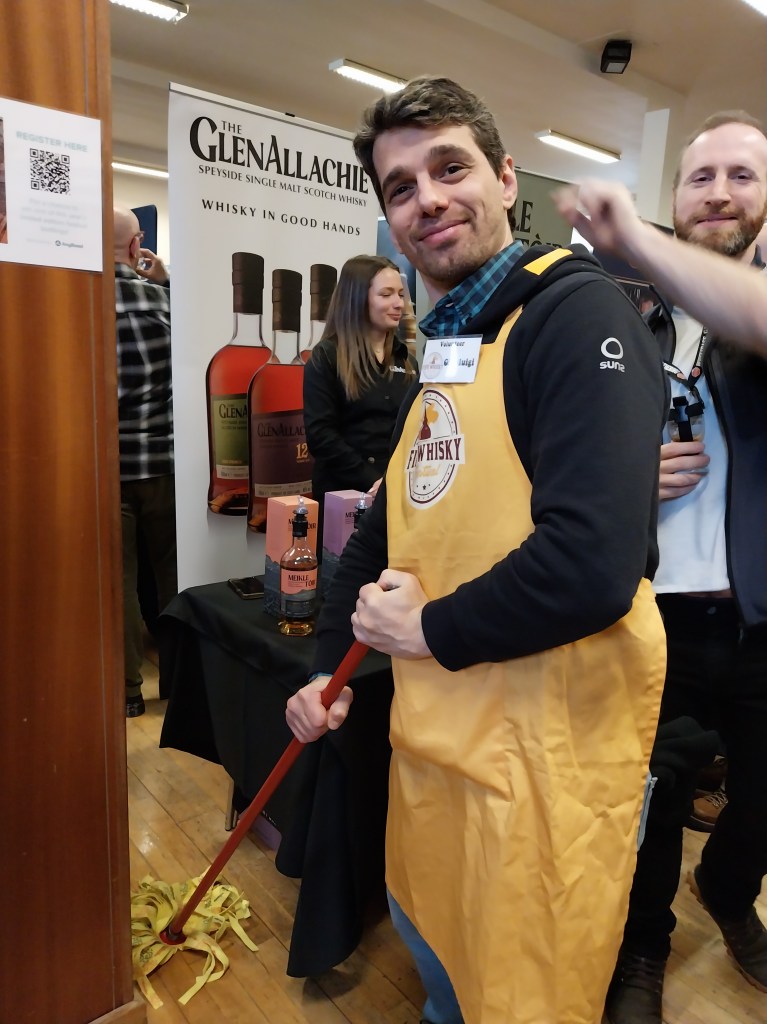
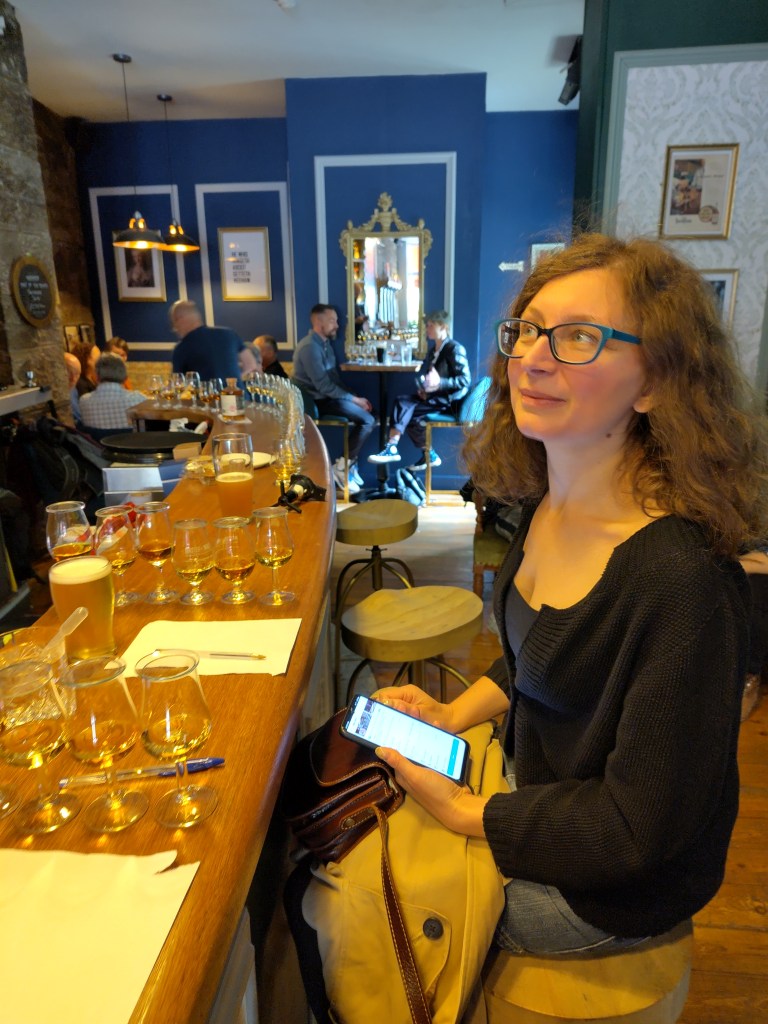
TL; DR: The recap of our whisky year: 33 distillery visits, 28 visited for the first time, and 9 not in Scotland (a record for us?)! Also, 5 festivals attended (3 as volunteers), and 1 non-whisky focused. But more importantly, a lot of drams with a lot of friends, who really made our year special!ย 

Another year about to end, we hope you are enjoying these last few very mild days (at least, mild in the Central Belt) of the year with some good drams, possibly in a cozy room, by a nice wood fire. For us it’s like that, minus the wood fire.

These quieter days come with some reflections and thoughts, as is usual for this period. Nowadays we give for granted these recurring events like New year, but it being established on January 1st has more to do with cultural traditions coming from ancient Rome, rather than astronomical events. This said, the fewer hours of light (particularly at higher latitudes like in Scotland) bring some natural peace and tranquillity, helped by things slowing down due to most people being on holiday.

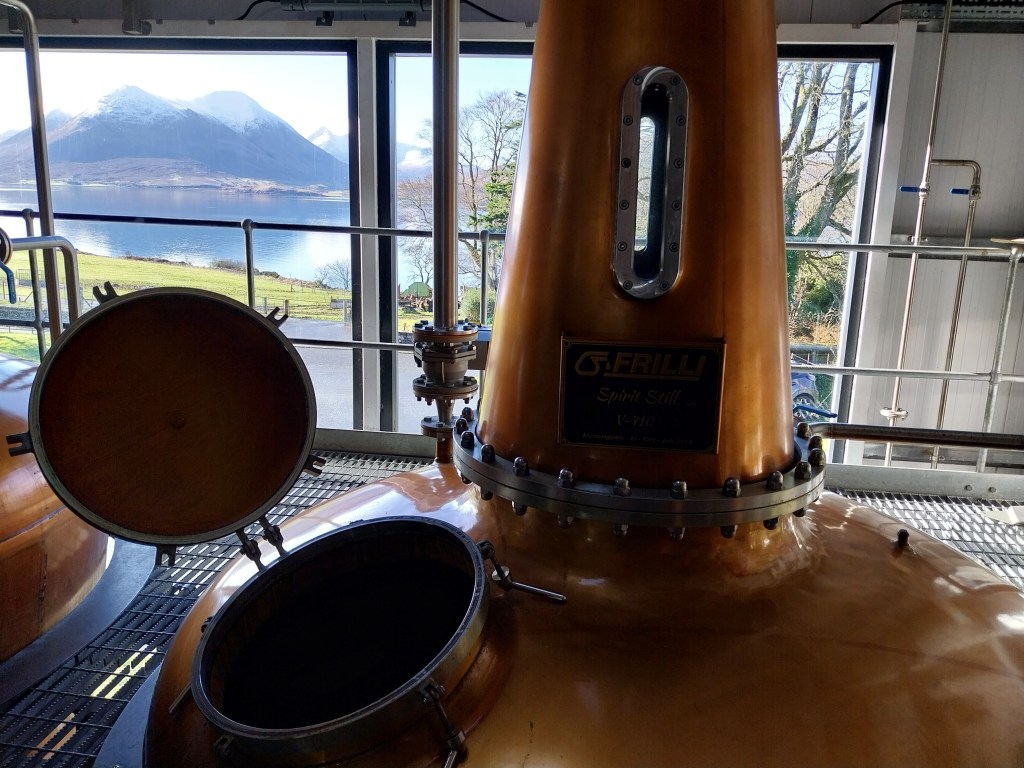
This year has been another good one: we visited over 30 distilleries, most of them for the first time. We started with a bang during our usual trip around February, this year on Skye and Raasay. The latter in particular was quite spectacular – the 3-hour tour at the distillery and at the warehouse was great, but it was also amazing to drive around this pearl of an island, definitely one of the best we visited so far. That weekend also marked our appearance in Royโ€™s Aqvavitae vPub, as Italian guests in a 6-Nation themed blind tasting (which we both horribly failed). We had so much fun, it was one of the whisky highlights of the year!

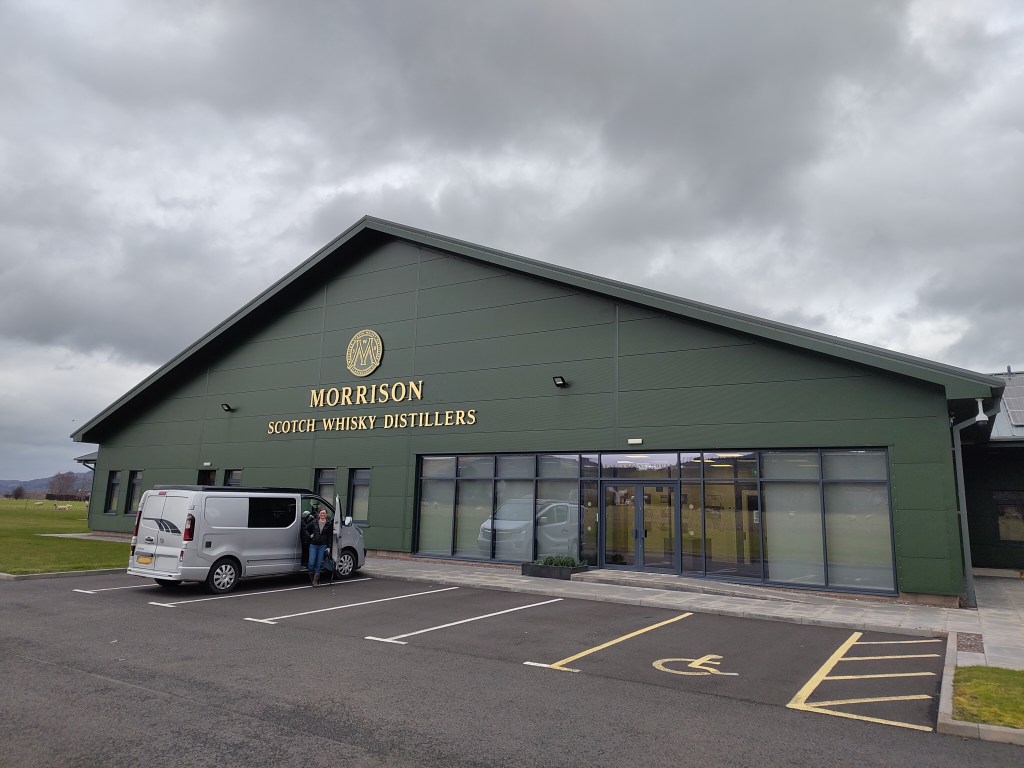
A few weeks later, we visited Aberargie distillery, in Fife, thanks to an event organised by the Fife Whisky Festival crew. The distillery, which hasnโ€™t released any single malt yet, is run by the Morrison Distillers Company, who also own very tasty brands like the sherried blended malts Old Perth, the Islay single malts Mac-Talla, and Carn Mor range (usually single casks or small batches). The Mac-Talla Mara (cask strength edition) was Teresaโ€™s whisky of the year.

The next appointment was, for the second year in a row, the Spirit of Speyside Festival. This festival is great because it includes visits to some distilleries that are usually closed to public – this year we visited Auchroisk, Tormore, Craighellachie, and Kininvie (where we met our friend Paul, who used to work at Linkwood and other Diageo distilleries). We also attended the Whisky Fair, a mini-festival at the Mortlach Memorial Hall in the familiar Dufftown, and a very fun and nerdy Start Wars themed tasting at Glen Moray!

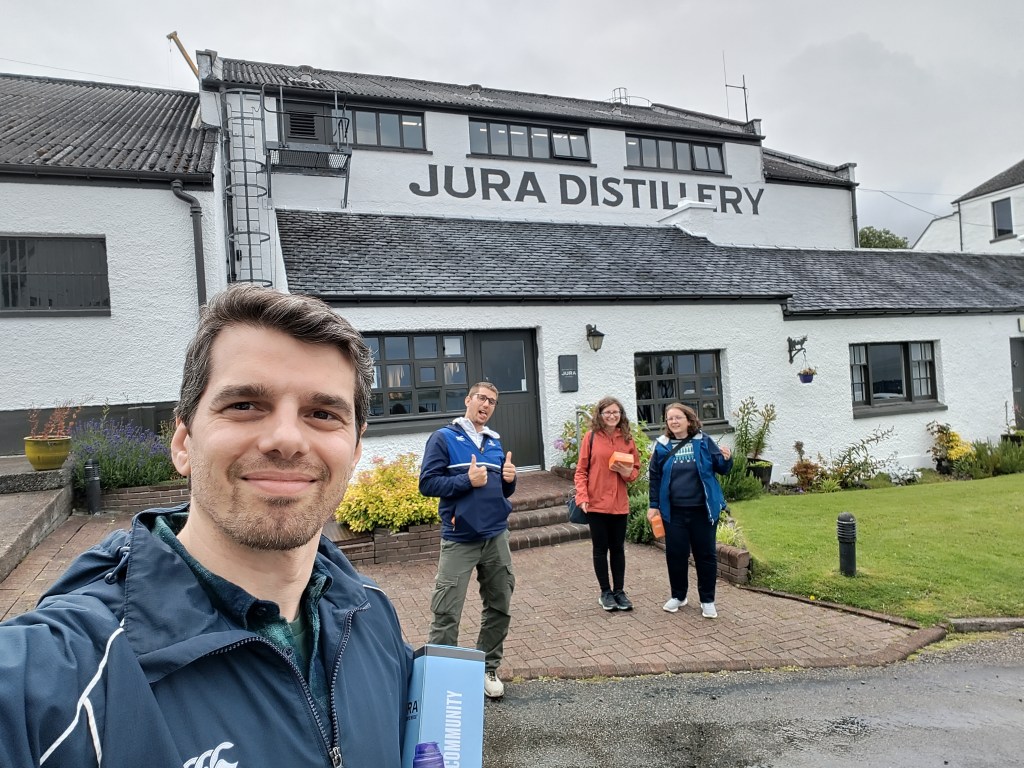
In the summer we managed to visit Islay twice, first with our pal Justine and Gianluigiโ€™s brother Edoardo, and then with our pals Clay and Glaire. Between the two visits, we managed to finish visiting all distilleries on the island, including Jura (another awesome location weโ€™d like to go back to) and the newly reopened Port Ellen, during one of their monthly open days (spoiler, you donโ€™t get any dram, but the visit is free). After the first trip, we also somehow managed to sneak in a visit to Campbeltown, for a cheeky Cadenheadโ€™s Warehouse tastingโ€ฆWhat else?

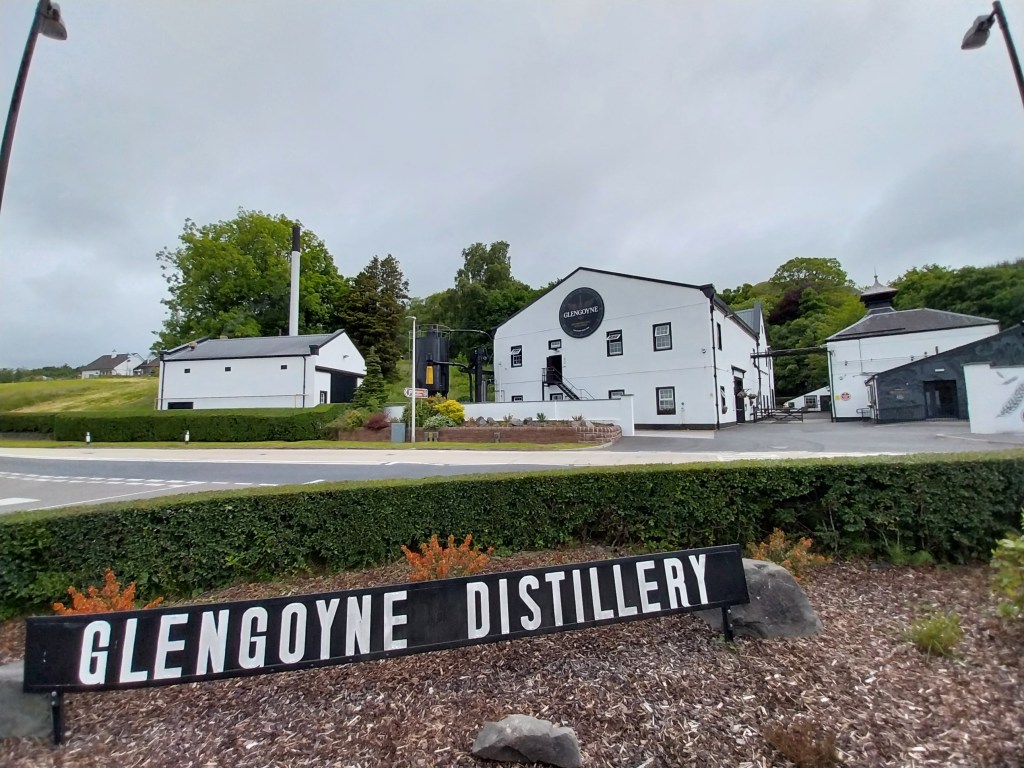
During the nice season we also visited a handful of distilleries around the Central Belt, including the newly reopened Rosebank, Crafty in Galloway and Glengoyne (Teresa had never visited production before) in the southern Highlands, almost all single-day trips. Edoardo was back in October to run the Dramathon, and in that weekend we visited production at Glenlivet, and had a tasting at Glenallachie, with our friend Sue pouring some super tasty drams!

Our yearly trip with our pals from the Edinburgh Whisky Group was inโ€ฆEngland! Yorkshire precisely, where we visited three distilleries, two breweries, and a tasting room in Scarabourgh (The Distillerโ€™s Lounge, also likely harbouring the most complete English whisky collection). Our longest holiday was in Australia, where we visited five distilleries and three wineries. We wonโ€™t talk much about these trips here as we still have to write the blog posts, but we were surprised by the quality of some of the whiskies we tried, particularly in Australia, but mostly by the incredible hospitality. In Yorkshire, all the distilleries offered in-depth tastings for (relatively) cheap, and they went above and beyond to accommodate our 15-people group. Similarly, in Australia some of the visits were arranged at the very last minute, but still, everyone was happy to show us around and was very welcoming. In our opinion, thatโ€™s something that the Scottish whisky tourism in general needs to learn, or maybe re-learn? In the past, with the EWG we struggled to find activities, we almost needed to beg for a chance to spend our money in some distilleries. Both in Yorkshire and Australia, things were so effortless that it left us wondering if Scotland is resting on its laurels.

A good opportunity to meet nice whisky people are whisky festivals, in particular the small ones! The year started with Funky Booze, organised in January by our pal Francesco, right here in town: small sized, very focused on Edinburgh companies, with a funk band playing in the background. It was very fun, with a younger and more diverse crowd compared to most festivals. March was the month of the unmissable Fife Whisky Festival, third time in a row for us volunteering there. The team behind this festival organised another event in October, for the first time with a different name and location: the Borderlands Whisky Festival, in Lockerbie. In August we attended the Whisky Fringe for the third time as well, almost in Leith, and earlier in the year (March) the same company organised the Drinkmonger Spirits Festival, in the same location: it was fun to try different spirits for once, we were impressed with some of the rums and Mezcals.

It was a very busy year also for tastings. Edinburghโ€™s offer is huge, with many tastings representing a great value for money. Markโ€™s Jolly Toper tastings, now happening at different locations and no longer at Kilderkin, are a good example. The Belfry pub is also hosting many tastings, for example the ones of the newly formed Edinburgh Drammerโ€™s Club (IG profile here), a new whisky club inspired by the Glasgow Whisky Club. Gianluigi attended the initial meeting, but other commitments got on the wayโ€ฆLetโ€™s see if we manage next year. Other great tastings were the Springbank Society new releases early in the year, Robโ€™s (aka Quasidrams and Marshall Spirits) Adelphi tasting at the Worldโ€™s End, and Murrayโ€™s (aka One Malt at a Time) Springbank, again at the Belfry.

Weโ€™re looking forward to next year: no detailed plans for now, but weโ€™ll definitely go back to the Fife Whisky Festival and, depending on the events, weโ€™ll likely attend the Spirit of Speyside again. On our wish list there are the northern Highlands, particularly the area around Wick and Thurso, and the Outer Hebrides, which would be quite exciting (they look quite spectacular, not just because of whisky, of course). But mostly, weโ€™re looking forward to having drams with the new people weโ€™re going to meet, as well as with our many pals around Scotland: that is what really makes whisky a great experience!

So, until the next year, slainte mhath!


#45.1 Stepping over the (Highland) line!

An old acquaintance, Glengoyne


TL; DR: We took advantage of a free weekend to get on the van and go for a night away in the (not so wild) wilderness. The next morning, we visited Glengoyne distillery: a very nice tour, although very basic, which ended in a lovely tasting room with some very tasty drams! 

In recent months we had been quite busy, for various reasons: friends visiting, visiting friends, unfortunately work as wellโ€ฆ so, except for the Spirit of Speyside weekend, weโ€™ve not enjoyed much our van. In early June though, we had a weekend with no commitments, so wedecided to spend a night out, not too far away, in the area between Stirling, Glasgow and the Trossachs. This area sits across the Highland Line (roughly, very roughly following the Highland Boundary Fault), which historically was used to separate the taxing regime of whisky producers in the Lowlands and Highlands: we basically spent the weekend crossing it back and forth!

Weโ€™re not new to the area: back in February, we’d spent a lovely evening in Fintry, together with our friend Justine, having a meal at the Fintry Inn, followed by a few nice drams from the Uncharted Whisky Co independent bottler, which has strong ties with the pub (in our understanding, itโ€™s also their tasting room). This time, we aimed for another pub that welcomes campervans, the Pirn Inn in Balfron. The drive was uneventful, but when we got there, we realised they didnโ€™t have a kitchen: dโ€™oh! So, we had to go find food. First, we tried the Old Mill in Killearn, but it was super-busy (in part because of a beer fair they had on for the weekend). Moving on, second time charme: the Clachan Inn in Drymen. We were lucky: it was very busy, which surprised us, before realising it is on the West Highland Way, already swarmed with hikers this time of the year. They found us a table at the bar to be shared temporarily with a couple waiting for their table at the restaurant: we had a nice chat, and as the man was a dairy farmer, Gianluigi asked some questions about farms management and diseasesโ€ฆprofessional bias. After dinner, we quickly drove back to the Pirn Inn, where we had a last pint and a dram (Bunna 12 never disappoints!), before going to sleep.

An ugly glimpse of a much more beautiful spot.

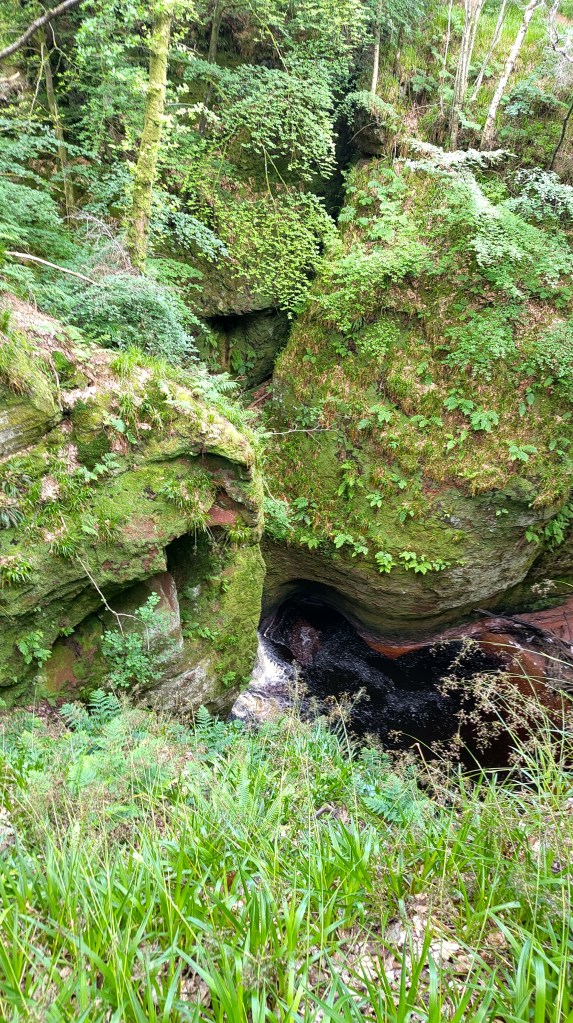
In the morning, the sky was cloudy. We woke up rested, and we somehow managed to avoid midges invading the van, probably thanks to the previous night breeze. We tried to look for an open cafรจ, but we were unluckyโ€ฆ so after a stop for the loo, we drove towards our first destination: the Devilโ€™s Pulpit. The Carnock Burn goes through a very beautiful gorge, all green and brown. Youโ€™d almost expect to find something like this in a tropical jungle, rather than in the Southern Highlands (or Lowlands?). The parking spot can only take three cars (if well parked), so we left Mr Vantastic at a bigger lay-by at the cross of the A809-B834 roads, from where we had to walk no more than 10-15 minutes to find ourselves at the top of the gorge. It was very nice, although we were slightly upset by the amount of garbage found all over the place: from the lay-by, to the side of the road, and in the gorge itself: how can people be so inconsiderate?

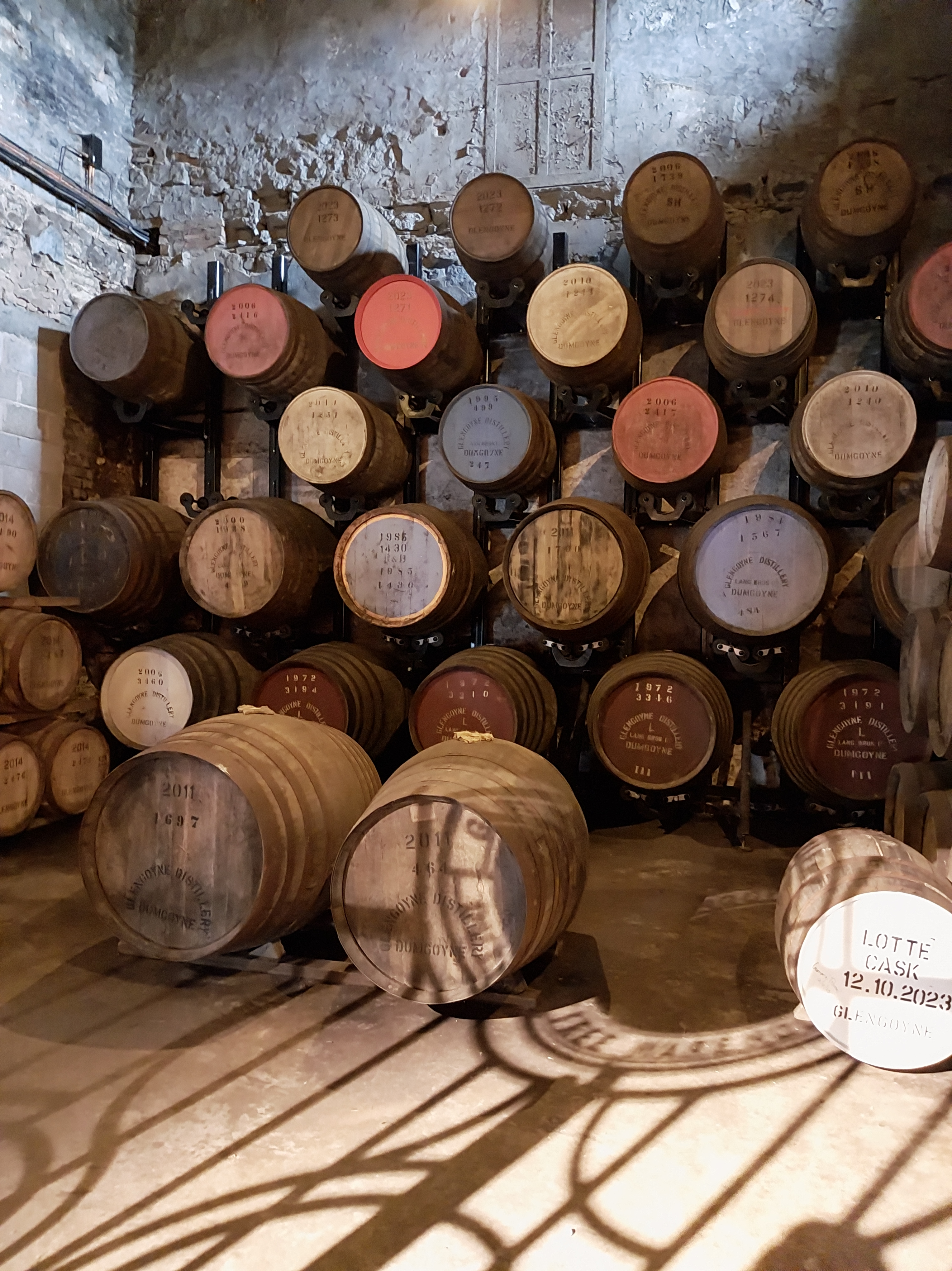
Back to the van, it was time to drive to our next destination: Glengoyne distillery (with a brief stop at the Turnip The Beet for tasty coffee and snacks). Glengoyne is an old acquaintance , as we visited it during the pandemic years (can we say that?) in summer 2021, but at the time we couldnโ€™t tour production because of COVID19 of courseโ€ฆand the waterfall was empty too! Gianluigi had also visited it as part of a networking event after a conference he attended in Glasgow in 2018: too many people, it wasnโ€™t such a memorable experience.

We parked on the south side of the road, which together with their warehouses, is in the Lowlands: the road is the boundary, apparently. Thus, as you can guess, the distillery is in the Highlands. It is owned by Ian McLeodโ€™s Distillers, together with Tamdhu, the newly rebuilt Rosebank, and a the soon to-be-built Laggan Bay, on Islay (in our understanding they also have acquired a single malt distillery in India). As we came out the parking, a hostess pointed us to the check-in for the tour, which started a few minutes earlier in the courtyard. Our tour guide was Diane, โ€œfae Glasgowโ€, and the other two people on the tour were a father-and-son couple from Canada.

In a small exposition room, Diane explained us that the distillery has always been Scottish owned since its foundation and licensing in 1833. It must be one of the few among the old ones, we reckon. Glengoyne means โ€œthe valley of the geeseโ€, and it is located in Dumgoyne (โ€œthe hill of the geeseโ€), hence why you can find this bird on the label.

We quickly moved to production, which is fairly standard. First, Diane showed us a destoner dating back to 1912 and the mill, which we couldnโ€™t take a picture of. The barley varieties they use are mainly Sassy and Lauriet, although one week a year they use Golden Promise, all coming from the East of Scotland.

A shiny mashtun.

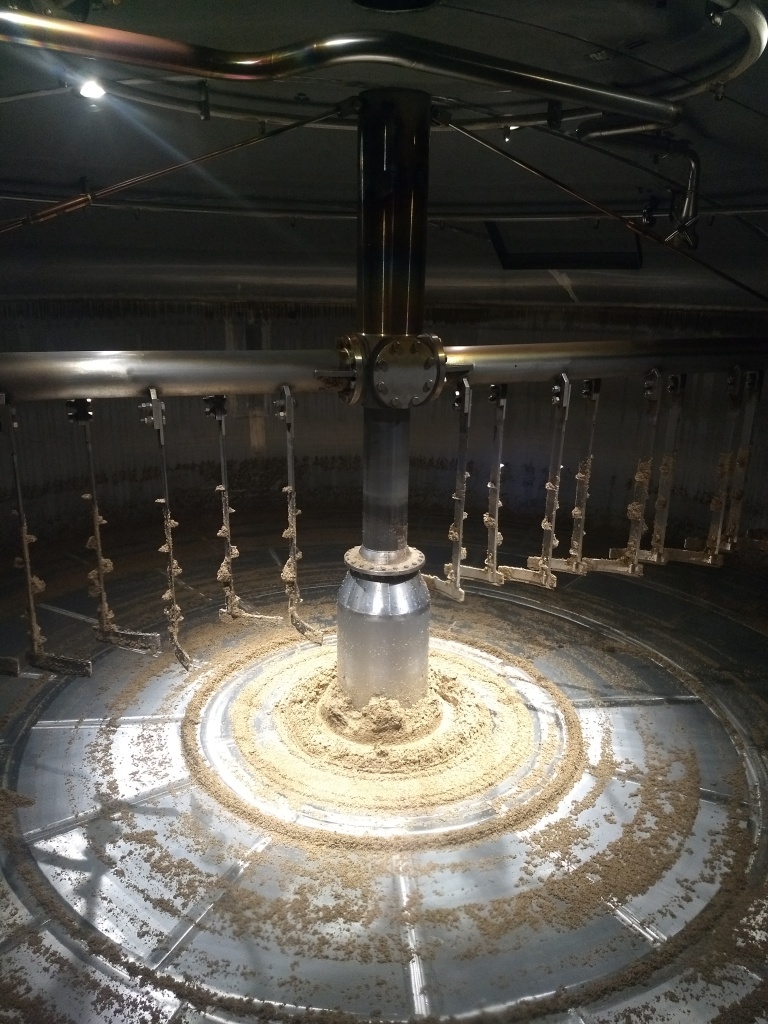
The mashtun has a copper lid, and it takes 16,000 litres of water at 63.5ยฐC for the first water, followed by the usual two waters at higher temperatures to maximise the sugar absorption during mashing. Fermentation takes place in one of the six Douglas Fir wood washbacks and lasts about 56 hours, a rather short one. The newmake spirit is obtained after a usual double-distillation process, first in a wash still (16,000 litres), to get to ~20% abv (from their 8-9% wash) and then in one of the two spirit stills (5,000 litres each). Their cut points for the spirit run (what it is going into casks) are generally from 75% to 65%, and the cut is taken only after 3-5 minutes of foreshots.

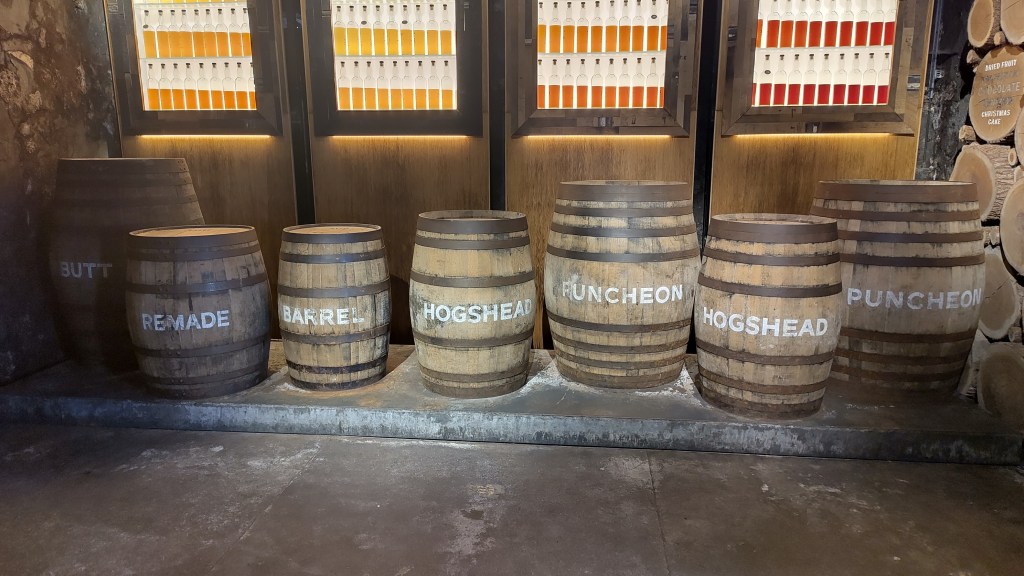
After production, we visited Warehouse 1, next to the production building (not on the other side of the road): quite small, they mostly made a maturation exhibition out of it, where transparent bottles containing spirit and whisky at different stages of maturation are showed, together with the different types of casks and wood. A very interesting bit for more inexperienced visitors. Diane soon after walked us to the Managerโ€™s Cottage, where there is a very nice and relaxing tasting space, with sofas, comfy chairs and fireplaces (they were off while we were there, otherwise we could have easily taken a nap).

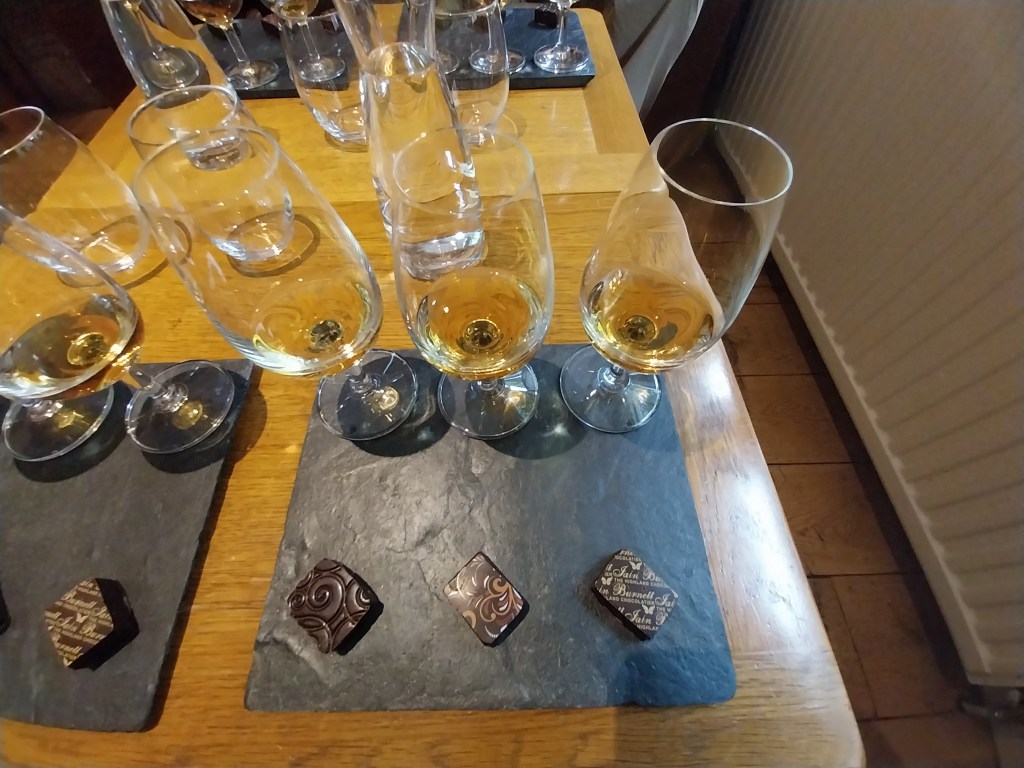
The tasting was ready for us: 3 drams from the core range paired with one chocolate each, from the Highland Chocolatier. First off, the 12y, bottled at 43% and matured in a combination of first-fill European oak (ex-sherry we thinkโ€ฆ20% of the total), first fill American oak ex-bourbon (20%), and not better specified refill casks (60%). Quite nice and bright. The second dram was the 18y, again bottled at 43%, but with a different composition: less refill (50%) and ex-bourbon (15%) casks, and more first-fill European oak casks (35%). This brought definitely more dark-fruity notes and richness, although not as rich and decadent as the last dram. This was a 21y, fully matured in first-fill European oak casks.

Overall the visit was nice, geared towards less whisky knowledgeable visitors though. The best part was the tasting – while we were a bit sceptical because of the low abv, these were delicious and not watery at all. A shame their prices are a bit higher than expected (in particular in the shop, and even taking into account the discount for visitors doing a tour or a tasting), which is probably the main reason we havenโ€™t connected so much with this distillery so far. However, the velvety and soothing quality of these drams was not lost on us, and we think they are perfect to share with family and friends less used to higher strength drams than us. So who knows, maybe one coming in the future?

Stay tuned for the rest of our trip, this time definitely below the Highland line! Until then, slainte!


Glengoyne Collection Tour and Tasting

Price: ยฃ35.00 pp (June 2024, plus ยฃ3.50 booking fee per transaction)

Duration: 1hr 30min

Tasting:3 drams, Glengoyne 12 (43%), Glengoyne 18 (43%) and Glengoyne 21 (43%)

Highlights: the tasting room

Distillery exclusive: Glengoyne Distillery Cask, ex-Port, 14y (56%, distilled 14/04/2010, ยฃ200…!)

Target: the whisky curious

Value for money: good

Recommended: yes

Link: https://www.glengoyne.com/


#40 A last stop on the banks of river Ness

Uile Bheist


TL; DR: After a long whisky weekend in the Highlands, it was time to get home. However, on the Sunday afternoon, we had time for a last stop at Uile Bheist, in Inverness. Very interesting operation, as itโ€™s both a brewery and a distillery. Too early for the single malt, but we could still sip two of their ales.

Our Highlander trip was about to end: we left Clynelish distillery while our pals were still enjoying the drams provided. It was still a very nice and sunny day, and maybe because it was a Sunday afternoon in early November, the A9 towards Inverness was not very busy and the drive was quiet and relaxing. We were approaching Inverness quite early (and Teresa was recovering from her sickness), so we took a swift decision: make a last stop before getting home. Destination: Uile Bheist distillery, in Inverness, one of the newest kids on the block. 

A key feature is the artwork by the artist Ken Taylor (already famous for the many collaborations with rock bands), picturing creatures from old Scottish tales: we found them very well drawn and captivating. โ€œUilebheistโ€ itself means โ€œmonsterโ€ in Scottish Gaelic. 

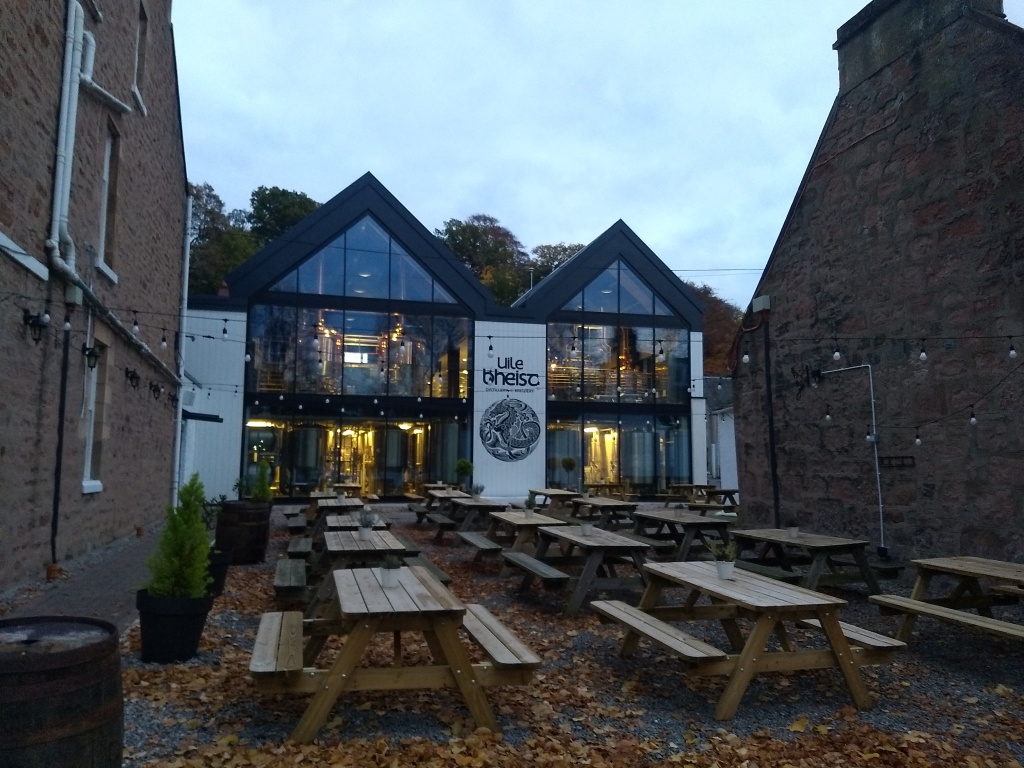
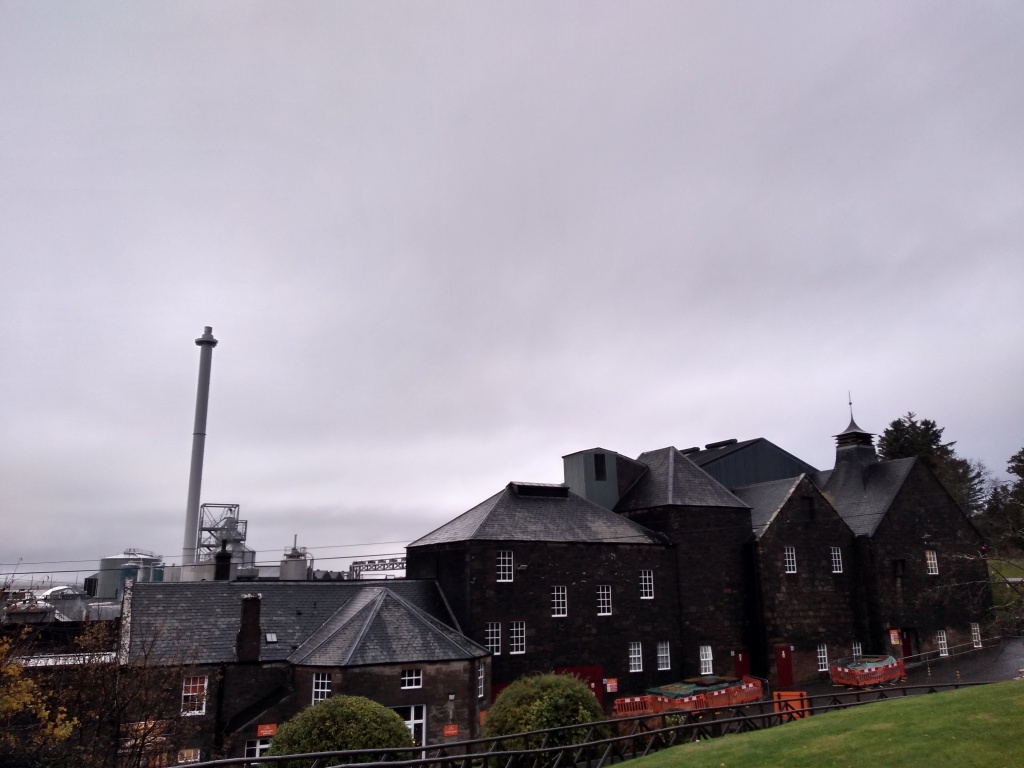
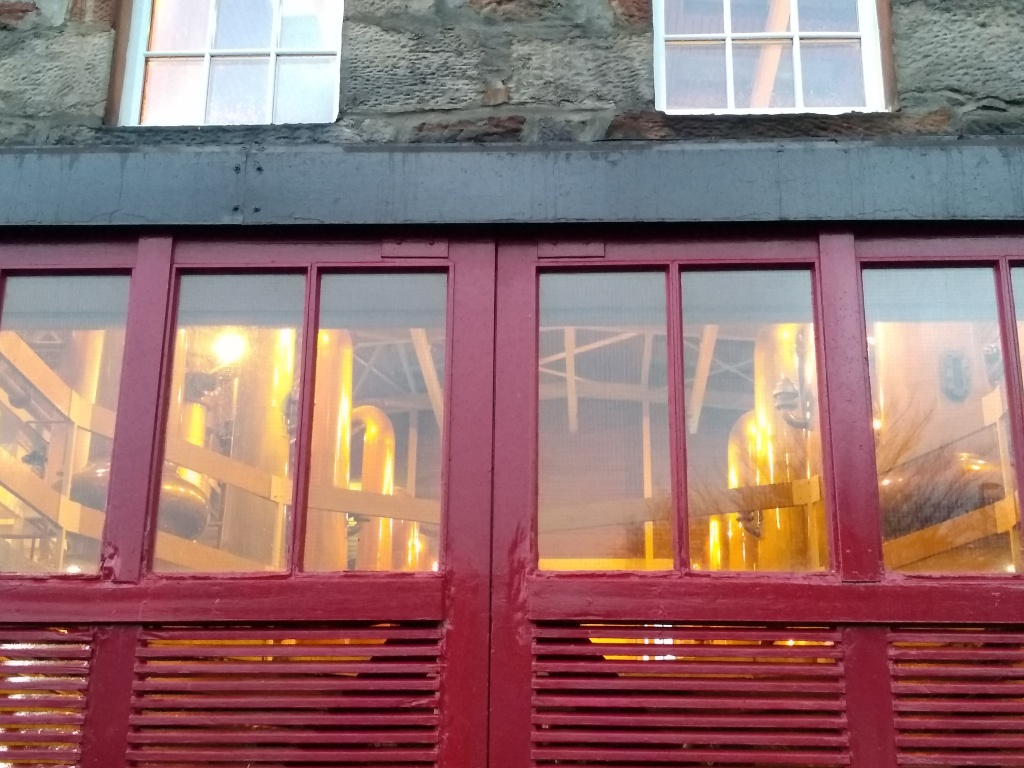
The distillery is located on the banks of the river Ness (duh!), and the entrance is in the same building as a hotel called Glen Mhor (but nope, itโ€™s not the site of the former Glen Mohr distillery, actually at opposite site of the river). As a matter of fact, the founders of the distillery (Jon and Victoria Erasmus) opened their hotel in the mid 2000s first, and added a brewery in 2014. The distillery is the most recent part of their business, with the first newmake spirit distilled in April 2023. It is also the first distillery to open in Inverness in 130 years, and the first to produce whisky since Glen Albyn, Glen Mhor and Millburn closed in the mid-1980s. The beer garden is visible from the street, as well as the distillery building just behind, with the two stills making a triumphant appearance behind the glass windows. 

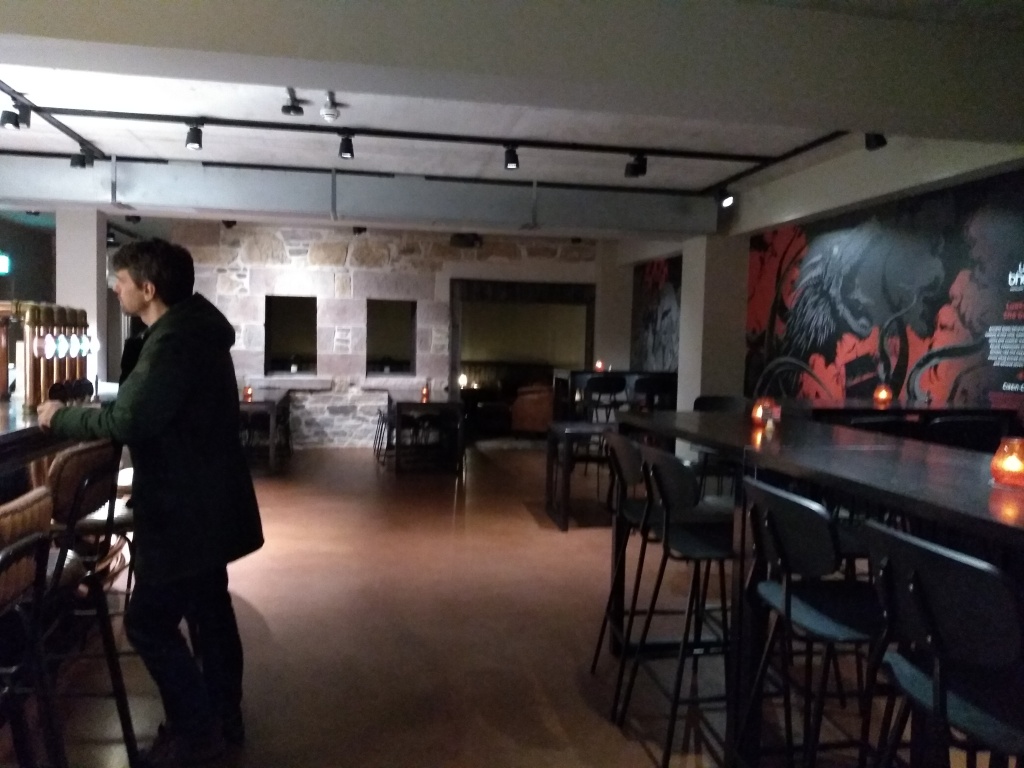
The place is quite dark but cosy, pub-style (a partial excuse for our terrible pictures too) and in line with the artwork. And in fact, because they are a brewery as well, their main room is organised exactly like a pub: a long bar, many malts behind the bartendersโ€™ back, and their beers on tap, named after the creatures: a lager (Uile Bheist), a stout (Dark Horse), a session ale (Highland Storm), an unfiltered (White Witch), and a pale ale (Forest Dweller). We would have never remembered the names, if it wasnโ€™t for the association with the different beer typesโ€ฆClever!

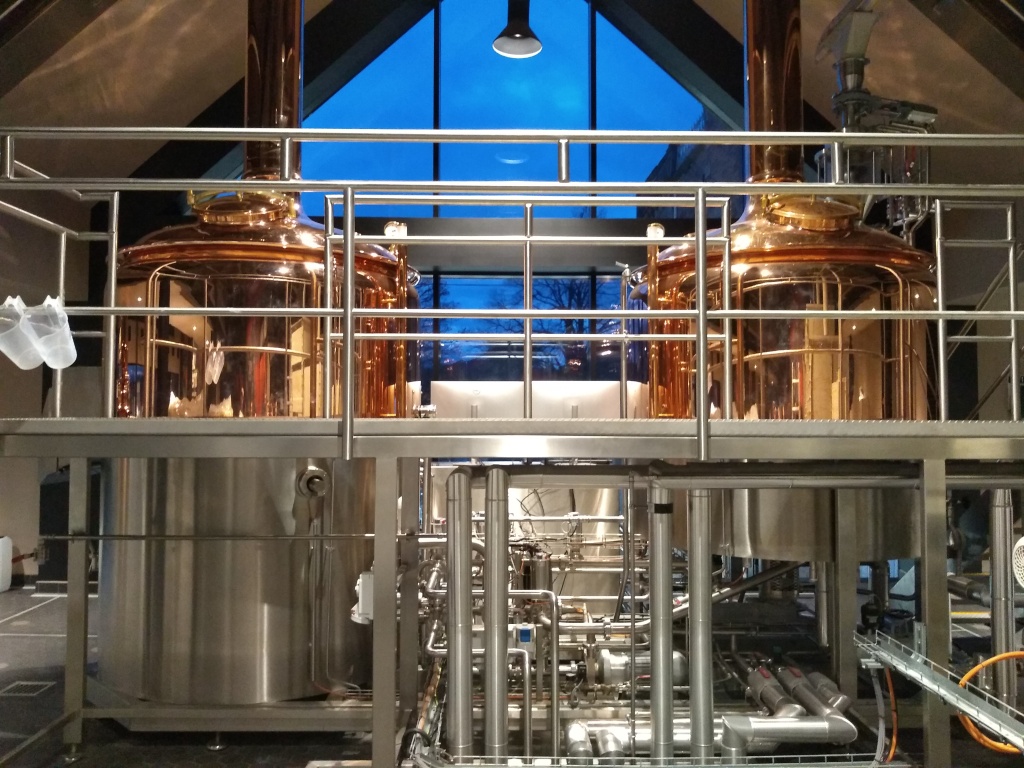
The tour guide for the day was Louis, on training because it was one of his first whisky tours, shadowed by Amy. We entered the production area from a door at the end of the bar, and we climbed the stairs right away. We were soon in the main production room, where all the machinery is: a very modern mill, the mashtun (1.5 tonnes, near the one used for brewing), the washbacks (4 stainless steel), the stills (1000-litre wash still and 500-litre spirit still). The space was completed by a small lounge for visitors. There, they showed us an intuitive schematic of the production plant, including a description of how they get energy –  solar panels and shallow water.

Like many new distilleries, sustainability was in their mind when the plant was designed. Fermentation lasts between 72 and 96 hours, and they take the spirit at around 70% (they didnโ€™t know the precise cuts). The newmake is then transported to their warehouses in Forres to be put into casks. 

Next, we moved to the lower level, mostly dedicated to beer production: 8 fermentation tanks, and the machine to carbonate with nitrogen and fill the kegs (plus a small bottling line). Back to the bar, it was time for a small tasting: their newmake spirit (which is available to buy in half-litre bottles) and a blended malt they produced (quite tasty!). Teresa also sipped half pint of their lager, as well as Gianluigiโ€™s half pint of pale ale. Very tasty. Unfortunately, at the moment they only sell kegs, so we couldnโ€™t buy any of the beers.

Teresa and the kegs.

We have to say, we really liked this operation, the first โ€œbrewstilleryโ€ (as Amy suggested during the tour) we visited. Because we donโ€™t know Inverness very well, we are planning a weekend there in the near future, and we will definitely go back to Uile Bheist to try more of their beers and enjoy the pubโ€™s cozy atmosphere. We are also very curious about their malt, since the newmake spirit was above average compared to others. For that, though, weโ€™ll have to wait a while. 

A surprisingly interesting blended malt.

This was the perfect epilogue for a very nice whisky weekend, although not the luckiest health-wise. For the records, as expected Gianluigi got the same bug as Teresa two days later, and for more than a couple of days he was KO. It wasnโ€™t Covid (got the month before), it probably wasnโ€™t fluโ€ฆA mystery. Unfortunately, this caused us to miss Roy Aqvavitae blind tasting in Glasgow the following weekend too. But thatโ€™s all gone now, while the memory of such a fun weekend with our pals will stay with us for a long time.

Until next time, slainte!


Uile Bheist Discovery Tour

Price: ยฃ35.00 pp (November 2023)

Duration: 1hr+

Tasting: 2 drams (newmake spirit and Colpach Blended Malt, 46%) and 1 half pint of beer

Distillery Exclusive: Colpach blended malt (ยฃ50)

Target: anyone who likes both whisky and beer (or one of the two)

Value for money: ok

Highlights: the location and the pub

Recommended: if you’re visiting Inverness, definitely!

Link: https://www.uilebheist.com/


#39.4 The Highlander Trip

A quiz, a tasting and a distillery visit


TL; DR: Saturday was a โ€œrestโ€ day, after three distillery visits (actually five in two days!). However, we still had some whisky activities scheduled: a whisky-themed quiz and a tasting at the Carnegie Whisky Cellars. It was a great day, and it was followed by a visit (re-visit for us) at Clynelish on the Sunday. 

(missed Part 3/Part 2/Part 1?)

On Saturday we woke up not that rested: Teresaโ€™s cough was getting worse, the humidity inside Mr. Vantastic not helping. Gianluigi wasnโ€™t at his 100% either, with a bit of hangover hanging there. In normal conditions we would have got a warm drink and a good breakfast right away, but unfortunately Dornoch is a bit of a ghost town before 9-10, so we couldnโ€™t find an open cafรจ nearby, nor open public restrooms. Eventually, the latter opened (thankfully). A few minutes later we met Justine, and took a walk to the beach with her.

It was a very sunny day, not that cold, and Gianluigi even dipped his feet in the North Sea waters. We walked back to the village, where we could take a quick shower at our friends AirBnB. As a โ€œthank youโ€ Gianluigi went to the Harry Gow Bakery and got yummy morning rolls for everyone! Teresa felt adventurous and tried the macaroni pie – better than expected, although not sure sheโ€™ll have it again.

There were no distillery visits scheduled for the day, it was like a rest day, but weโ€™d have had an early evening tasting at the Carnegie Whisky Cellars shop, and a very fun activity was waiting for us before then: a whisky quiz! It was our friend Charlie, a whisky enthusiast more seasoned than us, to organise it. As a location, we went to the Dornoch Castle Whisky bar. Space was a bit narrow, so we were all around the same long table and with little chance to mix: we ended up in the same team, the Home Office (because of our working from home patterns, but also as a political mockery). We had a lot of fun, but we didnโ€™t win: we tried to gamble our last round for a high reward, but we didnโ€™t make it to the top. Afterwards, we went to the Cocoa Mountain to get a warm (and yummy) chocolate. Unfortunately, Teresa kept getting worse, so we decided to get a hotel for the night instead of sleeping in the campervan. Because this was a last-minute decision, we had to scramble back, and we ended up being late for the tastingโ€ฆdโ€™oh! Fortunately, our pals were all very understanding.

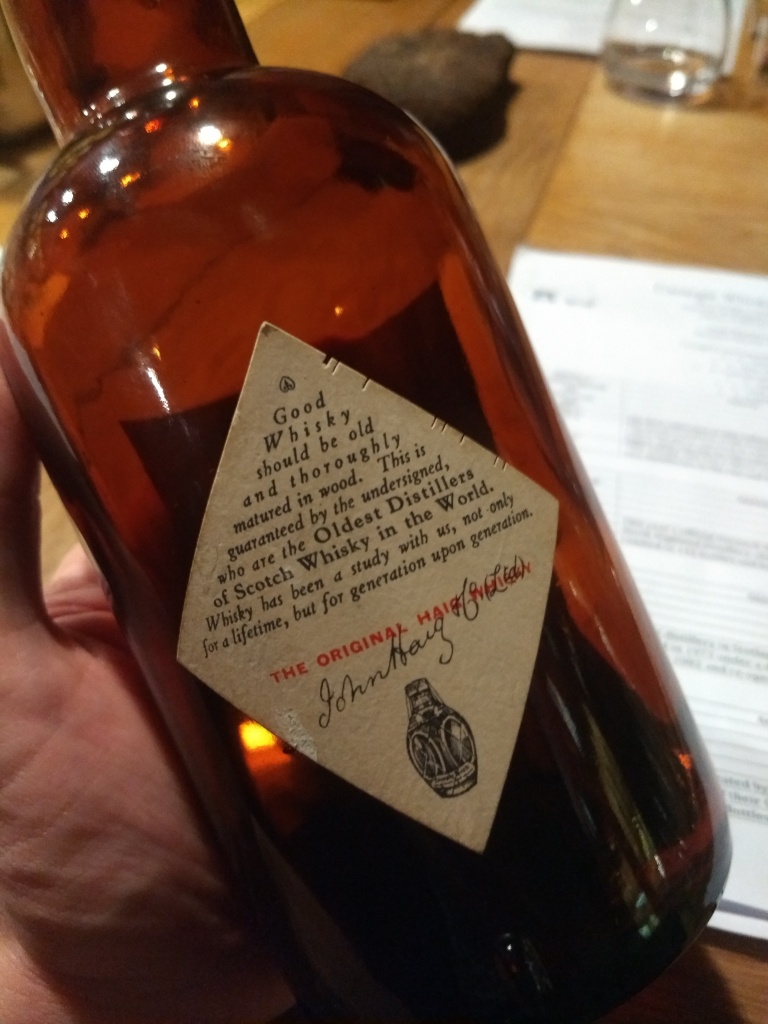
The Carnegie Whisky Cellars is a shop on the main street in Dornoch, on the same block as the castle. It is run by Michael, the manager, who started there in 2016, and by his assistant David. Beside the shop, there is a very nice room with low ceiling (ehm, the cellar?), and a long table around which we had the tasting. It was a very good one, Michaelโ€™s knowledge was impressive, and the choice of drams hit the spot. The lineup started with an old Haig blend, followed by a delicious Thompson Brothers Teaninich (bottled for the shop), a single cask 21y Braveal, a cask strength Campbeltown blended malt Gauldrons (probably mostly Glen Scotia), and two cask samples, one from a local distillery (donโ€™t know if we can disclose it, but it wasnโ€™t Dornoch) and another one from a Campbeltown distillery. While Gianluigi enjoyed his drams, Teresa mostly saved them as she wasnโ€™t feeling well, so after the tasting she went back to the hotel to rest. She revisited the tasting recently, and she loved it as well! Gianluigi instead joined the others for a very nice dinner at Greens (just next to the shop), followed by drams at the Dornoch Castle Whisky bar, and a final pint at the Coach House, before joining Teresa back at the hotel. 

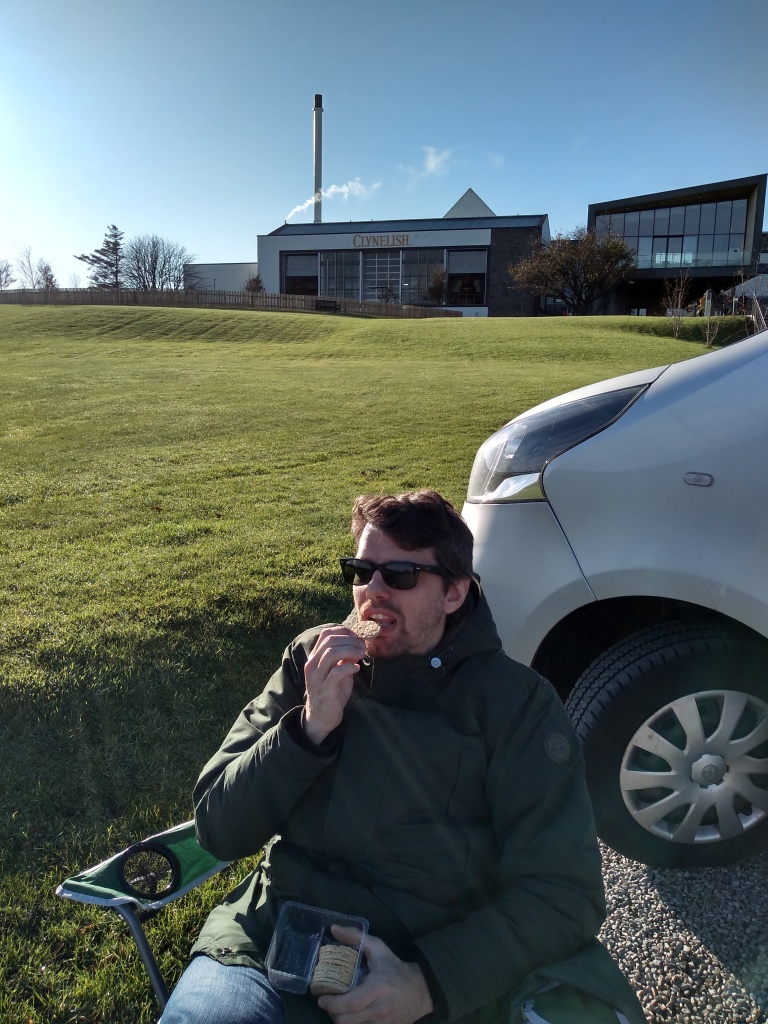
In the morning we were both feeling much better, and as soon as we could we had our breakfast (Scottish full, of course) at the hotel, where we said goodbye to our pals Fiona and Mike, who left soon after. We met with the rest of the gang in the main square, but we didnโ€™t join them on the minibus: we were both working the day after, so the plan was to drive back to Leith straight after the visit at Clynelish distillery

The joys of foldable chairs.

This was the second time there for us, with the first in May 2021 right after the lockdown. While we really like the whisky, the distillery visit was a bit of a bummer: too expensive and too focused on Johnnie Walker (you can read about it here). Fortunately, things changed since then, they have various experiences, and we chose the Production Tour and Premium Tasting, more suited to whisky enthusiasts (ยฃ30). The others are the Flavour Journey (sounds very Johnnie Walker-esque, ยฃ19), the Express Tasting (ยฃ15) and the Premium Tasting (ยฃ65).

The guide for the tour was Shirley, and she was way more knowledgeable than the guide we had in 2021 (to be fair, we are now more knowledgeable too). The tour scheme was the usual, although it was a lot richer in information. They get their malt from Glen Ord maltings, unless Talisker is in high demand, in which case they get it from Buckie. The mill (as usual, Porteus) is the only piece of equipment they didnโ€™t refurbish in 2016, and they set the usual 20/70/10 split in the grist (husk/grit/flour). With the mashing (common to many Diageo distillery, two waters: raising the first one from 62ยฐC to 84ยฐC) they aim for a very clear wort, which then undergoes about 80-85 hours of fermentation.

An empty mashtun.

They recently changed yeast strain, they now use Lalamond. They only do unpeated whisky, but for their neighbour distillery Brora, the peat comes from near Montrose. The stills are a copy of the original 1960s ones, replaced in 2016, and they are fired with steam produced with oil and gas. Similar to our previous tour, however, we couldnโ€™t visit the warehouse (itโ€™s in the Brora areaโ€ฆ). Anyway, most of the whisky is shipped away in tankers.

The tasting was supposed to be 3 drams, but because we were a big group, Justine managed to negotiate an extra one (yay!). We had the tasting in the bar upstairs, with a magnificent view down towards the sea. Today it was Teresaโ€™s time to enjoy her drams, Gianluigi behind the wheel. We started with the Clynelish 14y (the flagship!), followed by the Distillers Edition, finished in Oloroso Seco for 6 months (we had a bottle of this). It was followed by the Distillery Exclusive, a non-age statement, full ex-bourbon matured whisky bottled at 48% – no mention or colouring or chill-filtering, but given the colour, we think it is unlikely they used caramel colourant. It was good, but not ยฃ105 good (this was batch 2, batch 1 in 2021 was ***only*** ยฃ90). Finally, we tried the Four Corners of Scotland, a bottling they made to celebrate four iconic distilleries (together with Caol Ila, Cardhu and Glenkinchie) for making Johnnie Walker. Again, quite good but at over ยฃ200, insanely priced. A shame these prices, but hey ho, life goes on. 

Anyway, we were happy with this distillery visit, much happier than after the first time. Nonetheless, excluding Fridayโ€™s tour de force, the real highlights of the couple of days were the whisky quiz (thanks Charlie) and the tasting at the Carnegie Whisky Cellars. Some very good memories to bring home, which is where we headed afterwards, not before a stop in Inverness.

Stay tuned, and until next time, Slainte!


Clynelish Production Tour and Premium Tasting

Price: ยฃ30.00 pp (November 2023)

Duration: 1hr 30min

Tasting: 3 (+1) drams, Clynelish 14y (46%), Distillers Edition (vintage 2006, bottled 2021, 46%, Oloroso finish), Distillery Exclusive (NAS, 48%), Four Corners of Scotland 16y (49.3%)

Distillery exclusive: NAS (48%), mostly ex-bourbon cask

Target: everyone

Value for money: good, definitely better value than the flavour journey we did in 2021

Highlights: the bar/tasting room and the view from it

Recommended: yes

Link: https://www.malts.com/en-gb/distilleries/clynelish


#39.3 The Highlander Trip

Down the neck of the giraffe


TL; DR: Third and final distillery of the day (not of the trip), Glenmorangie. The behemoth of the north, producing one of the best-selling malts, a visit weโ€™d postponed for some time. A visit weโ€™ll remember as one of the funniest we had in a while.

(missed Part 2/Part 1?)

The tour and tasting at Balblair ended under a heavy rain. We were quick in jumping back on the bus, which drove us to the next distillery: Glenmorangie! The distillery is located next to the A9 just passed Tain (you canโ€™t see it from the highway), a mere 10 minutes away from Balblair. Weโ€™d never had the chance to visit it before, despite driving past it more than a few times. 

Despite its popularity, we havenโ€™t tried many Glenmorangie expressions. Probably one of the reasons is that it doesnโ€™t appear often at independent bottlers, and when it does it usually carries a high price premium (unless itโ€™s marked as โ€œsecret Highlandsโ€, of course). Other than the omnipresent 10y โ€œthe Originalโ€, we tried the 12y Lasanta (sherry cask finished) and 14y Quinta Ruban (Port cask finished) in a tasting back in 2020, both solid. About other popular expressions, we recently tried the 18y – delicious and very drinkable (the 43% ABV helped), while because of our lack of enthusiasm for Sauternes finishes in general, we never gave a chance to โ€œthe Nectarโ€, the expression formerly known as Nectar Dโ€™Or. We also tasted the โ€œA Tale of Cakeโ€ (Tokaj wine finish) in a tasting, sweet but truly delicious, but until our distillery visit that was the only one in the โ€œA Tale ofโ€ฆโ€ range weโ€™d tried. To note, not long ago, Glenmorangie have also brought up a โ€œBarrel Selectโ€ range, including expressions finished in Malaga, Cognac, Palo Cortado, Amontillado, and more recently Calvados (and similar to the โ€œA Tale ofโ€ฆโ€ range, originally priced around ยฃ75-80).

Anyway, back to the trip! The driver left us in the parking lot, from which the 7-mlpa size of the distillery can be fully appreciated. We took a few pics, and then we started walking down a short path to the visitor centre, which is in front of the main distillery building, on the other side of a small lane. There is also an orange giraffe statue on the path: it is associated to the brand because of the height of Glenmorangie pot stills, the tallest in Scotland. These are considered to contribute to the lightness of this spirit by allowing only light molecules to climb up the tall stillsโ€™ necks and leap over to the lyne arms and the condensers. 

Contrary to Balblair, the visitor centre is very brightly lighted, almost like an airport duty free and, in general, it felt very โ€œcorporateโ€. On display, other than the usual merchandise, there were most of their recent bottlings, but also some older expressions: we spotted some bottles of the โ€œA Tales of Cakeโ€, priced at ยฃ350 (the RRP in 2020 was ยฃ75!). Needless to say, they stayed on the shelf. 

The charm of old buildings.

We were given a few minutes to check the shop and for a neep in the loo, after which our guide Lewis walked us outside the visitor centre and into the distillery building to start the tour. We gathered in a small room (which we filled quite quickly), where a very expensive Renovo bike made with some leftover wood from old casks was displayed, for a short introduction. We immediately realised Lewis was a great character, definitely one of the most entertaining guides we had in recent years. He quickly picked up that we were whisky nerds, so instead of describing all the phases of production (which all of us knewโ€ฆprobably too well) he sat back and replied to all our gazillion questions with a very dry humour. When he was asked โ€œwhat about the 12 men of Tain?โ€ (in front of a picture of them on the wall) he answered โ€œwell, they were 12โ€ฆand they came from Tainโ€. 

Because of this, and because pictures were not allowed inside the distillery, we donโ€™t have many notes about Glenmorangie. The tour inside was quite standard – milling, mashing, and fermenting – but we could try the wort, a nice touch. The still room is really huge, almost looking like a cathedral. After that, we went back to the courtyard, where we could look at (but unfortunately not go inside) the Lighthouse: a new small fully equipped distillery next to the old one, where Dr Bill Lumsden, the Head of Distillation for both Glenmorangie and Ardbeg (one of the great innovators in current times) can run small batches and experiments. The building in itself is very beautiful, and somehow fits nicely next to the old buildings. 

We can see why they called it the Lighthouse.

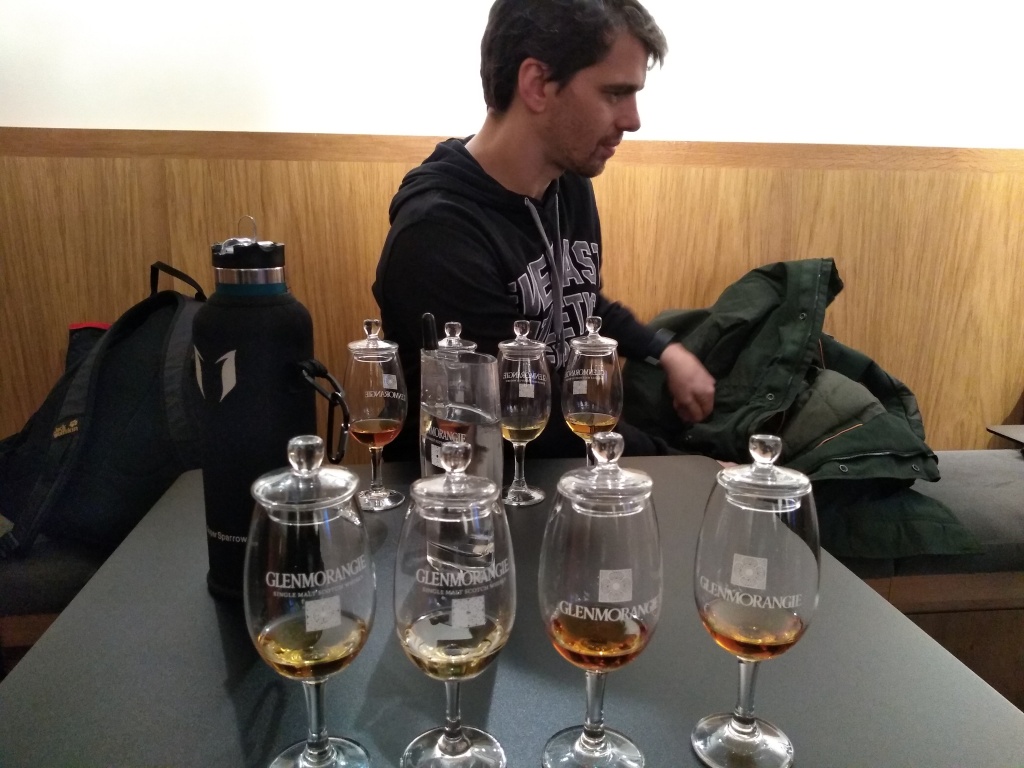
After wee look at a warehouse, it was finally time for the tasting, prepared in a room just behind the visitor centre. It was a bespoke tasting, so to minimise the chances that someone already had some of the drams, our friend Justine (who organised the trip) chose one recent expression and 3 distillery exclusives. We started with the last of the โ€œA Tale ofโ€ releases, โ€œA Tale of Tokyoโ€ (46%), finished in Mizunara oak. It was good but not memorable: all the whiskies finished in Mizunara oak that we tried (3 or 4) were interesting but thatโ€™s it, not something weโ€™d go for. The other three drams were sublime: two single casks, one matured in a custom oak barrel and one in red wine, and the last a vatting of two ex-Pedro Ximenex sherry casks. Really great drams, just a shame that the price tag was a bit too high for us. 

Lewis humour (well, and these last three whiskies) made our tour at Glenmorangie quite unique, and it didnโ€™t feel corporate at all (which some of us were worried about). Experiences like this are the ones that really stay in our memory, and we are so grateful for.  

We left the distillery empty-handed, but very happy nonetheless, and after a brief bus drive to Dornoch, it was time for dinner, after which we went back to the van for a good sleep (spoiler: it was not!).

Stay tuned to hear about it, and until next week, Slainte!


Glenmorangie Tour & Bespoke Tasting

Price: ยฃ65.00 pp (November 2023)

Duration: 1hr 30min

Tasting: 4 drams, Tales of Tokyo (46%, NAS), Distillery Managerโ€™s Selection (2nd fill custom cask, 56.1%), Distillery Exclusive Release Cask 12835 (12y, vintage 2006, bottled 2019, ex-red wine cask, 55.1%), Distillery Exclusive Release Cask 1784 (16y, vintage 2003, bottled 2019, PX sherry, 55%)

Distillery Exclusives: see above

Target: everyone

Value for money: pricey, but at least we tried something new

Highlights: Lewis really made this tour memorable

Recommended: yes

Link: https://www.glenmorangie.com/


#39.2 The Highlander Trip

In the footsteps of the Angel’s Share


TL; DR: A classic highlander both in terms of malt produced (fruity and honeyed) and appearance: it definitely looks like a Scottish whisky distillery a very good AI algorithm would draw. 

(missed Part 1?)

The bus picked us up at the Dornoch Whisky shop. It was a 20-seater, more than enough for the 15 of us. During the wee ride on the wee bus we had a wee lunch (ok, weโ€™re stopping itโ€ฆ), sandwiches prepared earlier in the van, complemented by our pal Johnโ€™s homemade Scottish tablet, which heโ€™d prepared using local malts, as usual. The drive to Balblair (yes, that’s where we were headed!) was quite uneventful in the gloomy day, a very Scottish rain was falling over us. To be honest, we didnโ€™t expect anything different when deciding to visit the Highlands in November. 

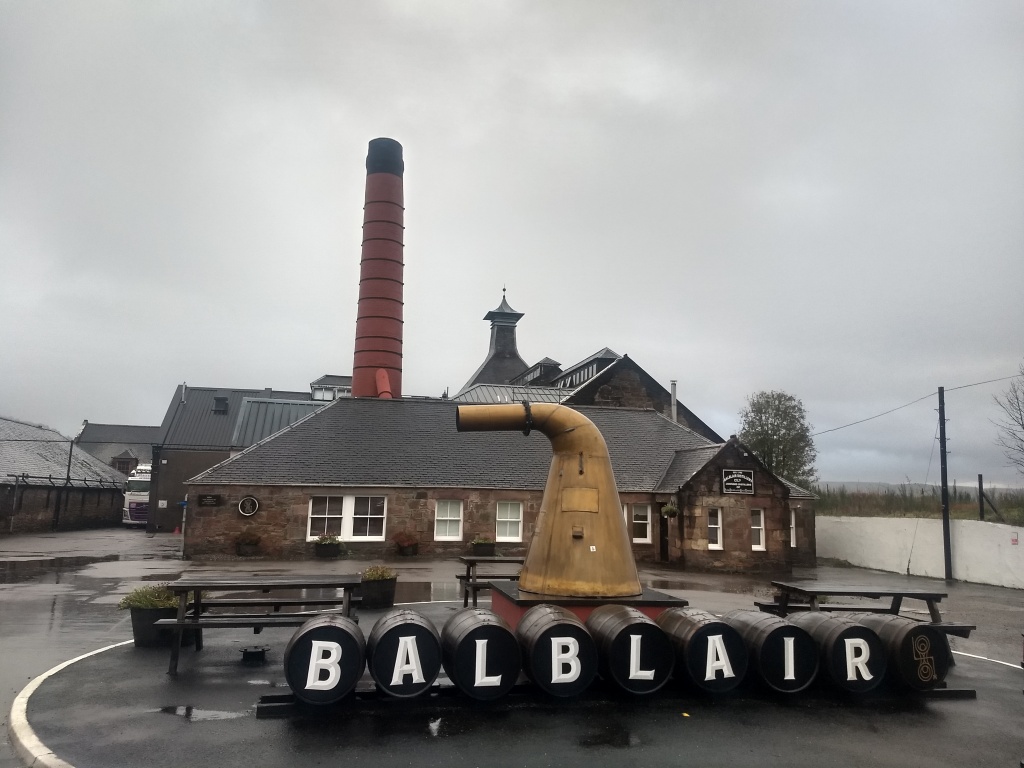
As we approached Balblair it was pishing doon! The distillery is very picturesque: typical Highlandsโ€™ barren hills on the background, it is a combination of low dark buildings (including many warehouses) with a tall red chimney emerging in the middle. In the parking lot there is a shiny copper still behind a row of black barrels with the distilleryโ€™s name written on. The distillery was chosen to feature in the movie The Angelโ€™s Share, by Ken Loach. They shot here some of the scenes during the auction of a rare whisky cask from Malt Mill, with Charles McLean playing himself, under a different name of course (for the records, others scenes were filmed in the warehouse of the distillery we visited most timesโ€ฆcan you guess which? Here the link in case you want the answer). Although the movie probably isnโ€™t the best among Loachโ€™s filmography, for once itโ€™s one a bit less depressing, and genuinely funny at times. 

The Balblair distillery was built in 1790, one of the oldest in Scotland, and is now owned by Inverhouse (together with Speyburn, Pultney, Knocdhu/Ancnoc and Balmenach), whose parent company (ThaiBev) also owns the wicked Hong Thong โ€˜whiskyโ€™ (which btw we bought during a boring evening in Thailand years ago, such a mistake!). Despite not being new, this is not a brand we were very familiar with. Before our visit, weโ€™d only tried two core expressions (12 and maybe 15), a 10y Gordon&MacPhail Gianluigiโ€™s parents bought during a 2015 family trip in Scotland (just about a year before the whisky bug bit us), one from the Scotch Malt Whisky Society and the one weโ€™d bought that same morning from Thompson Brothers. Overall not many, and we tried them at very different times, which is not ideal to form an opinion on the distillery character. Also, because we got into whisky in the last 5-6 years only, we missed the period when Balblair used to have a vintage core range instead of an age-stated one, so we are alien to the debate on which was better. 

The visitor centre looked recently renewed, nice and tidy, with a low ceiling and dimmed lights. There were a few bottlings (unfortunately mostly overpriced) and some branded merchandise on display, with the counter on the right, and the tasting room and toilettes on the left. Gianluigi remembers this last detail, as he lingered a bit so when he got to the tasting room everyone was waiting for himโ€ฆ.Ooops. The guide for the day was Nigel, who turned out to be a competent guide when replying to all the numerous questions (kudos). However, we felt that at times he was pushing it too much, providing some unsolicited political opinions. After a brief introductory video, we moved to production, where we couldnโ€™t take pictures, sadly.

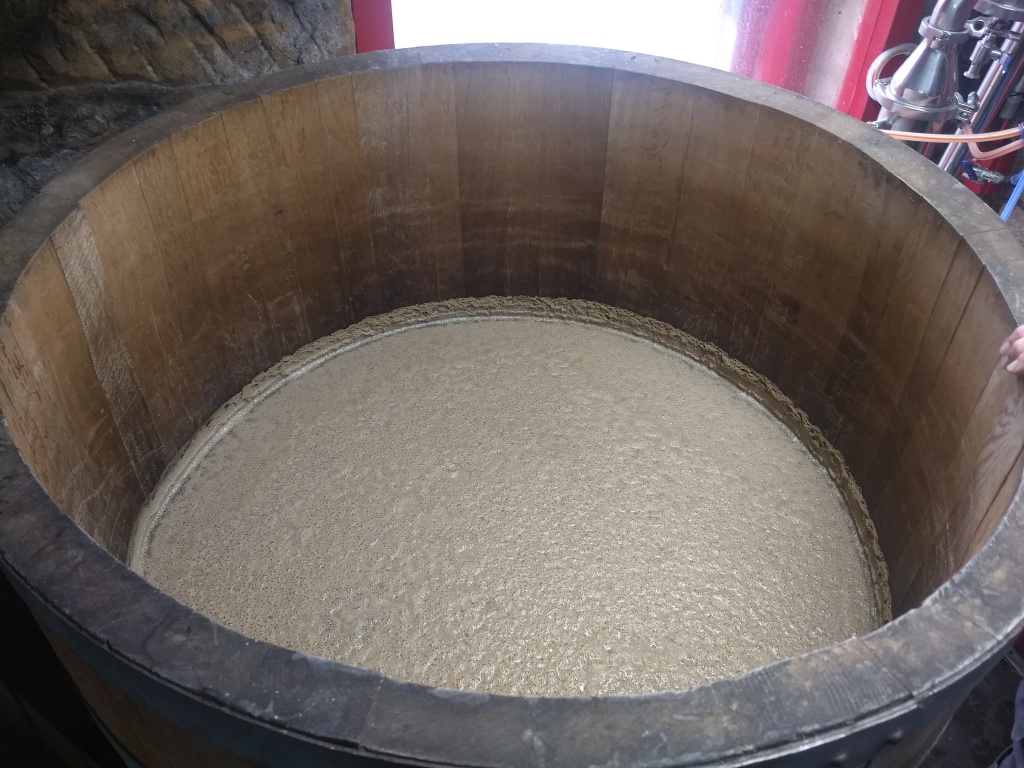
They source barley from the area (40 miles radius), which for the current production of 1.5 million litres of pure alcohol per year is not trivial (full capacity is a little higher, 1.8mlpa). Their water source is located 4-5 miles away, near the hills. Compared to other distilleries, they aim for a higher percentage of husk in the milling process, 30% instead of the usual 20%, with less grist (60% compared to 70%) and the usual share of flour (10%). They are equipped with a semi-Lauter mashtun (three waters), from which they get an unfiltered cloudy wort, and 6 Oregon pine washbacks of 23,000-litre capacity. They usually fill the washbacks with 9,000 litres of wort only, and fermentation lasts around 60 hours. 

Balblair logo.

They have a pair of shiny copper stills, and until the 70s they used to have wormtubs, then replaced by tube-and-shell condensers. A laser system checks when to take the cut from the spirit still, between 69% abv and 59.9%. In our understanding, most of the production is sent to Chivas in tankers. They used to keep about 10% on site, but now more given the success of their single malt (and of single malt in general) they increased the share. The newmake is filled into casks (mostly barrels) at 68% (which considering their cut, seems high). 

Work in progress in the warehouse.

As the production tour ended, we moved back into the visitor centre for the tasting, and to avoid the even heavier rain. The line-up consisted of 4 drams, 3 from the core range plus the distillery bottle-your-own. It was a solid line-up: only the 12y (ex-bourbon cask only) to many of us seemed a bit bland, although well priced. Both the 15y and 18y (both finished in sherry casks) were very good, as well as the very juicy (and buttery, toffee, honeyd) distillery bottle-your-own, just a shame for the prices (the 15y just below ยฃ100, the latter two well north of it).

Overall, it was a nice distillery visit, quite standard, and the tasting was a nice overview on Balblair whisky style, which definitely helped us put it finally on the map, flavour-wise. 

Stay tuned to hear more about this whisky day, and until next week, Slainte!


Balblair Signature Tour

Price: ยฃ45.00 pp (November 2023)

Duration: 1hr 30min

Tasting: 4 drams, Balblair 12y, 15y and 18y, plus the distillery exclusive bottle-your-own (see below)

Target: everyone

Value for money: Ok

Distillery Exclusive: vintage 2007(~15y), ex-bourbon barrel, 51.6%, cask #422 (ยฃ130.00)

Highlights: the picturesque location and buildings

Recommended: the distillery is beautiful, but there might be better value-for-money tours not far away

Link: https://www.balblair.com/


#39.1 The Highlander Trip

A craft distillery in the castle backyard


TL; DR: After visiting Campbeltown and Speyside, this time the Edinburgh Whisky Group travelled to the Highlands, main base Dornoch. No better way to kick off the trip with a visit to the local distillery! 

During the 2020 and 2021 lockdowns, one thing that helped us maintain some sort of mental health was the great whisky community we found online, and in particular the Edinburgh Whisky Group founded by Justine on Facebook. A hard core of us kept in touch even after things eased off, and towards the end of 2021, when travels were allowed again and distilleries slowly reopened, we organised a trip all together, the Campbeltown Jolly! It was a success, so we repeated it about a year later with the Speycation

For the third year, in 2023, after some thinking and discarding some options like a day trip in Pitlochry (Edradour still closed and too many of us had already visited Blair Athol) and a weekend on Islay (too complicated and probably expensive), the selected destination was the Highlands, with the brilliant name Highlander, who wants to dram forever? (our pal Charlie even made a logo to print on t-shirts). We were going to be based in Dornoch, and the trip combined distillery visits, whisky tastings, and a very fun whisky-themed quiz (Charlie was on top of this too!). 

On our way to Dornoch we took the chance to visit two Speyisde distilleries (Ballindalloch and Dunphail, both definitely worth a visit!), but then we met up with the rest of the troops directly in Dornoch. For us one big issue was the lack of an open campsite in Dornoch or in the vicinity (we had to contact Visit Dornoch to ask where we could park our campervan without causing any trouble). Unfortunately, this is the issue when visiting the Highlands in the off season, as weโ€™d already found earlier in the year when we went to Ardnamurchan in February. On the one hand, itโ€™s really great to be able to appreciate incredible places and landscapes in peace and without the (sometimes) swarm of summer tourists, but on the other hand many services including campsites (despite the easier maintenance) are closed, making it challenging, at times. 

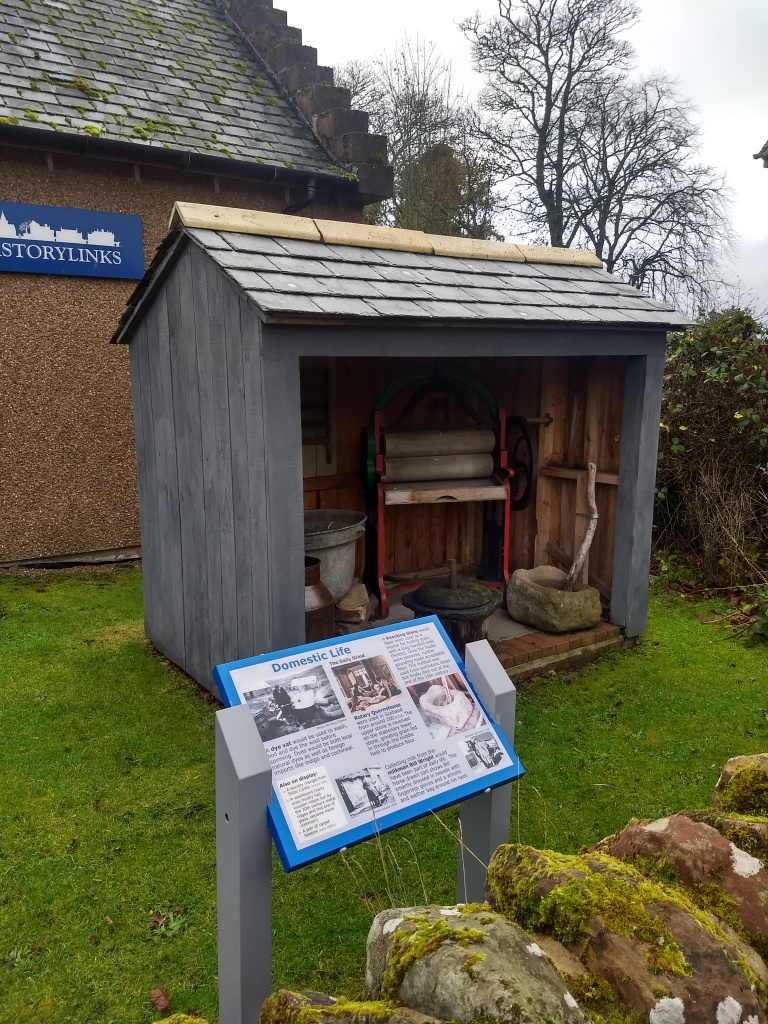
Things you can do while in Dornoch – the Historylinks museum.

After a fun evening with the others at the Eagle Hotel (also restaurant and pub), we woke up In the morning not that rested, because of a cold weโ€™d caught a couple of days before the trip: campervan + cold, not a great combination. We had to catch up, however, because it was going to be a long day: not one, not two, but three distillery visits, yay! We fixed ourselves a nice breakfast in the campervan, and it was soon time for the first visit: the very local Dornoch Distillery, founded by the Thompson brothers Phil and Simon in 2016.

At the moment the distillery is just behind the Dornoch Castle Hotel (at the time of writing also property of Phil and Simon, who took it over from their parents), and near the Historylinks museum. It is a shed that used to be a fire station, more or less same size as the Stirling distillery, but without the barโ€ฆIntriguing! So small, that we had to divide the group in two, we were in the second shift. When it was our time to go, Phil Thompson let us inside: everything is very carefully placed to give the operators enough space to move.

There are a 300kg stainless steel semi-lauter mashtun, six (!!) wooden fermenter vessels and two beautiful copper pot stills from Portugal (1,000-litre and 600-litre). There is also a 2,000-litre iStill, which is used as the wash container before distillation, or for gin production (here Phil stressed out how long it does take to clean it after gin to avoid any trace of gin going into the newmake spirit for whiskyโ€ฆA care that we wish other craft distillers would have as well!).

At the moment they are using an ancient variety of barley called Marie Otter, which according to them provides less yield but more flavour compared to other varieties because of the higher protein content. Fermentation lasts seven days, with liquid yeast (it used to be brewerโ€™s yeast), and they leave the top open to allow natural yeasts to play their part as well. The stills are electrically heated, although they use steam coils to pre-heat for a more efficient process. Their capacity is a little more than a hogshead (so north of 150-ish liters) per week, and when we were there, the abv at the end of the last distillationโ€™s heart collection was 66.9%. 

In case you were still doubting this is a craft operation. It definitely is!

Probably one of the most geeky distillery visits so far, Philโ€™s knowledge of and passion for whisky making are impressive. His patience is impressive too, we asked so many questions! Overall, it was very interesting to see how their vision of traditional whisky making translated into practice. Also, we were very happy to have had the chance to visit the distillery shed before the big changes ahead. Indeed, the Thompson brothers have been recently granted permission to build a new distillery nearby, which will improve their capacity and include a visitor centre and a shop. This is a very exciting development, and given their flavour-forward thinking in each step of production, we can only imagine what they will be able to do with an improved capacity! 

Done with the visit, we moved to the shop, which is about 8 minutes walking north from the distillery. The shop is closed on weekends, and because we were leaving on the Sunday, if we wanted to get something from them now it was the time. We were lucky to find one of the last bottles of their recent Canadian Single Grain matured in in Sherry casks, for a Christmas gift, while for us we bought a โ€œsecretโ€ Highland weโ€™d tried before, very delicious in our opinion. The distillery it comes from would have been the next one on this trip. 

Stay tuned to hear about it, and until next week, Slainte!


Bespoke Dornoch Distillery Visit
Link: https://www.thompsonbrosdistillers.com/


#37 Farewell to 2023

A year full of whisky trips… and more!


TL; DR: Itโ€™s December, perfect time for some reflections on the year thatโ€™s about to end. Another year full of awesome whisky trips, not only in Scotland: 31 distillery visits, of which 27 seen for the first time!

We are quickly approaching the end of the year, so itโ€™s the perfect time to reflect on the year that has been, of course whisky-wise. As weโ€™re writing, we already travelled back to Italy to celebrate Christmas with our families. Itโ€™s around 15 degrees Celsius here, so the atmosphere doesn’t quite call for a dram by the fire, but weโ€™ll try to make the best of it anyway, eheh.

Even more than in 2022, this year we felt like the pandemic was a gone memory (despite Covid is still among us, and it will be for long): travels resumed in full force, Edinburgh is busier than ever, and so it was travelling around Scotland. The big novelty in our life was the campervan, Mr Vantastic, which allowed us to travel a bit more on the wild side, without worrying about reserving accommodations (which in the meantime became quite expensive) or planning too much in advance.

For our summer holidays we went on a big road trip down to Wales, to discover this beautiful country and its whisky scene. Except for a couple of producers, with Penderyn being the main one, the Welsh whisky industry is still in its infancy and mostly populated by craft distillers, but itโ€™s nonetheless promising. While travelling to Wales, we also stopped by a couple of English distilleriesWhite Peaks stood out, definitely a hidden gem.

A hidden gem in Derbyshire, White Peaks.

Also, we couldnโ€™t help but going to Speyside again, this time for the Spirit of Speyside festival, a different experience (not in a bad way) compared to our beloved Fife Whisky Festival and Whisky Fringe (which we attended this year too). We had great time, and visited a number of distilleries that are usually closed to the public.

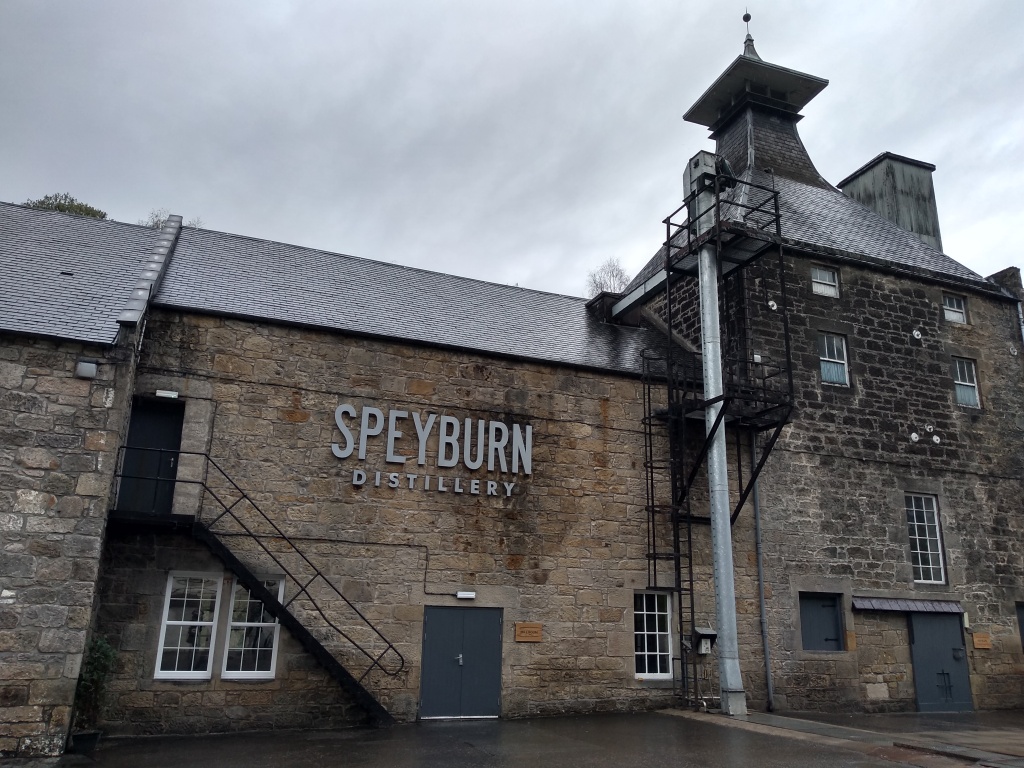
Mortlach, Linkwood and Dailuaine were fantastic, in spite of the entry price, and so it was Speyburn, but good news: the latter is now open to the public! Now every whisky enthusiast can visit and check out their old drum maltings: a piece of industrial history! We briefly stopped in Speyside again later in the year on our way to the Highlands, to visit a couple of new distilleries: Ballindalloch and Dunphail. The first one had just released their first single malt, while the latter had just filled their first batch of casksโ€ฆHistory in the making!

The Highlands were the destination of the Edinburgh Whisky Group annual trip. In Dornoch, Phil from Thompson Brothers gave us a quick tour of their craft distillery. Then, we visited other local distilleries, two for the first time (Glenmorangie and Balblair), and Clynelish for the second time (blog posts about all this coming soon). This was not the only one we visited for a second time this year. In early February we had a very wet trip to the West Highlands to revisit Ardnamurchan and Tobermory. Moreover, in August we did a Warehouse Tasting at Deanston with a couple of friends from Italy. Gianluigi even went on a solo trip to Campbeltown in December, to use a couple of remaining leave days from work and take advantage of his Cadenhead Club membership by getting a free warehouse tasting: a string of awesome drams, including a spectacular 9y old Staoisha (Bunnahabhain) finished in an ex-Amontillado sherry cask.

We did a lot of things, but also missed a few opportunities: first, we wanted to go back to Islay, but we couldnโ€™t make it, too busy with work. Then we missed the Dramathon due to a flood risk in Aberlour (this year we were supposed to run the 10k only), as well as the Roy Aqvavitae Blind Challenge, this time because of a terrible cold weโ€™d caught.

Leaving whisky trips on a side, it seemed to us that the number of tastings happening around Edinburgh has grown exponentially. We had great fun with Justine from Kask Whisky, now doing her monthly tastings at the Lind and Lime gin distillery, conveniently near home. One of the highlights of this year was definitely the Glen Mhor tasting, on the 40th anniversary of its closing, organised by Jason and Mark/Jolly Toper. Other great ones were the Woodrow’s of Edinburgh tasting at the Palmerston, organised by our pal Murray, and some tastings at Kilderkin and at Bacco Wine.

Whisky tasting next door.

On the bad side, we noticed the sharp increase in bottle prices. It was interesting to follow a recent vPub from Roy, where he showed that for some products the growth was mostly in line with inflation. However, this was for core/standard releases. We still feel that, instead, some independent bottlers and some producers are โ€œtaking the pissโ€, for a lack of a better term, particularly in relation to single cask and limited releases. Among these, the Scotch Malt Whisky Society bottle prices increased substantially, which resulted in us buying almost zero bottles and going only a few times to the venues compared to previous years. We have to say, though, that food at Queen St is still awesome, and the renovated Vaults look great.

One of the few bottles we bought from the SMWS was for our cask experiment: we got a 1-litre American Oak cask (virgin), which we seasoned with Gutturnio red wine (a typical red wine from Piacenzaโ€™s province) for 3 months, and it is now holding a very tasty 12y Dufftownโ€ฆIn 2024 we will find out if itโ€™s turning into pish or is actually drinkable.

After plenty of distillery visits and more than a handful of tastings this year, weโ€™re already planning for next year trips with Mr Vantastic …Islay & Jura? More English distilleries? The Western Hebridies? Back to Speyside? We shall see, but nonetheless, we are already looking forward to it! Now is the time to rest and enjoy some time with our families, hoping that you are doing the same, wherever you are. Possibly, with a good dram in your hand.

Until next year, slainte, and have a great New Year!


#36 The Stirling Distillery

Distilling underneath the castle


TL; DR: Very gloomy Sunday afternoon, we decided for a last-minute distillery visit not far from Edinburgh: the Stirling Distillery. Very close to the Stirling Castle, they distilled only gin until very recently, when they added malt whisky (well, newmake spirit for now) to their portfolio. 

Most of our trips (in particularly whisky trips) are carefully planned in advance, mainly because of the popularity of distillery visits nowadays. Of course, we donโ€™t want to risk travelling to a distillery and being told theyโ€™re fully booked, it happened once during a non-whisky trip and it was disappointing. Careful planning also helps because Scotland is not the easiest country to travel, with ferries, single track roads, etcโ€ฆAnd before we got Mr Vantastic, finding reasonably priced last-minute accommodation was always a challenge.

Sometimes though, we can still sneak in a last-minute whisky trip, and this was the case of todayโ€™s story. On a Sunday at the end of October weโ€™d planned to take the van and go somewhere for a walk. However, as usual when we plan outdoor activities, the weather was dire: dark, gloomy, rainy (we should probably just buy waterproof walking gear at this pointโ€ฆ). So, instead, we went to a new whisky distillery: the Stirling Distillery!

This is one of the newest whisky distilleries in Scotland, and as the name reveals, itโ€™s in Stirling, on the same hill that leads to the magnificent Stirling Castle (one of the most interesting to visit, and where Kings of Scotland stayed until the end of 1500s). Unlike many others, the distillery has not been talked much about in the whisky world, itโ€™s not even mentioned in the very comprehensive Malt Whisky Yearbook 2024, despite the notable feature of starting distilling whisky in the town of Stirling for the first time after more than 170 years. We can think of two possible reasons for this: first, itโ€™s tiny, definitely a craft operation (see later for more details). Second, and more importantly, owners June and Cameron conceived it as a gin distillery in the first place, all the way back in 2015, with the aim to โ€œreflect the Stirlingshire countrysideโ€ in their gin, and only very recently they moved to new make spirit.

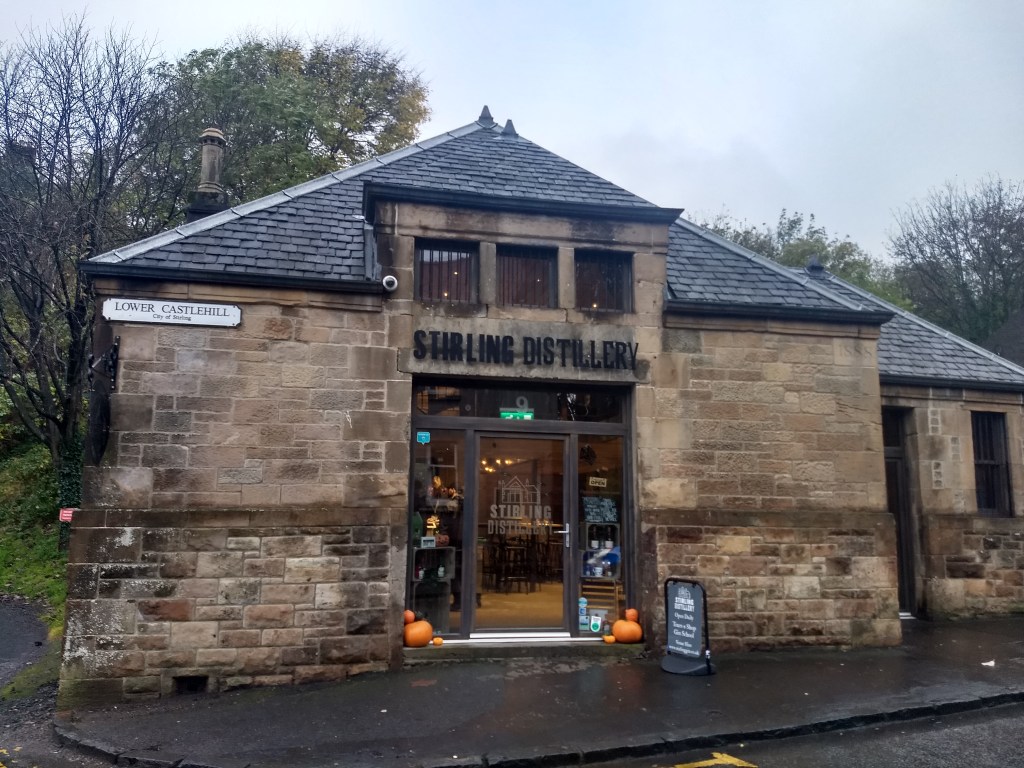
So there we are, under a dire weather, after an almost-hour drive from Leith. The stone building is very beautiful, we will soon find out that it was called โ€œthe Old Smiddyโ€. Built in 1888, funnily enough it used to be a church temperance hall and a blacksmith. The distillery moved there in 2018, although they also have a warehouse and gin production in the Stirling outskirts. They have two experiences, one dedicated to gin and one to whisky, with the latter being very new as whisky production had only started 2-3 weeks before our visit. They also offer a gin school for ยฃ90 (or for ยฃ140 for the couple, quite unusual to find such discounts in the Scottish whisky landscape).

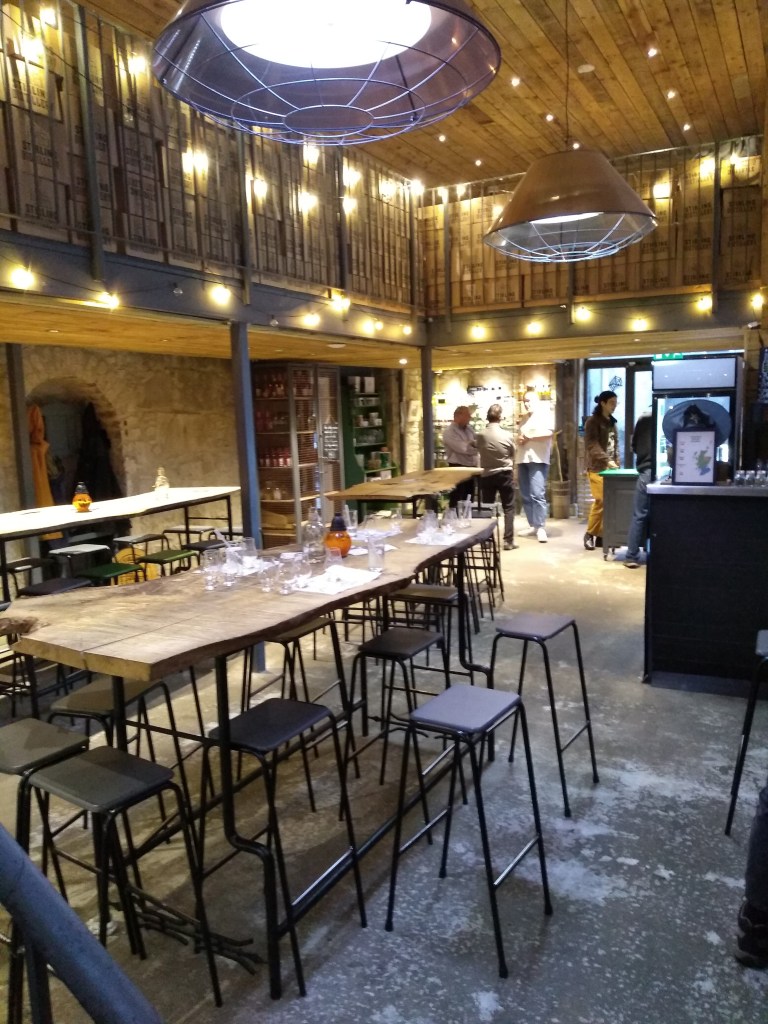
…and inside!

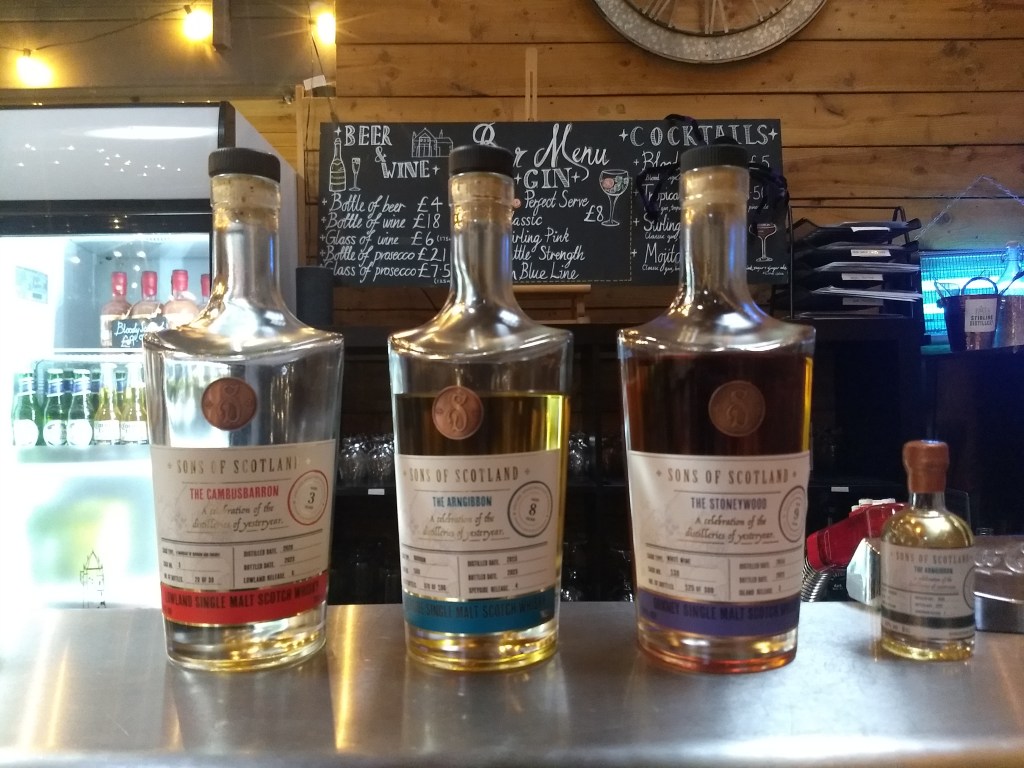
The building is very beautiful inside too, with low lights creating a very peaceful atmosphere. On the right side there is the shop, and on the left the bar, offering a variety of beverages (including soft drinks). There is also a mezzanine where we didnโ€™t go, it looked like an office/warehouse space. The guide for the day, Kiran, told us he was mostly into gin and cocktails, and that was one of his first whisky tastings. When all visitors had checked in, we started the tasting, which included four single malts from their independently bottled range called Sons of Scotland (all non-chill filtered, not artificially coloured and bottled at 50%).

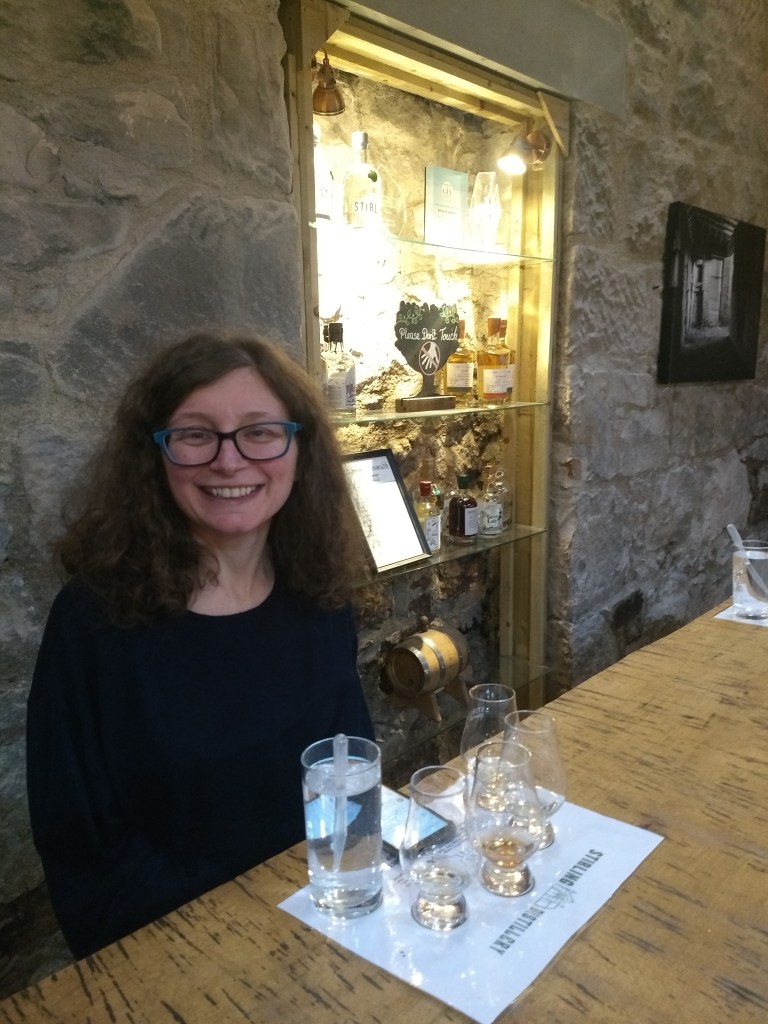
Guess who’s not driving today.

The expressions we (well, Teresa) tried are named after historical distilleries near Stirling. The first (*) was the Cambusbarron (batch 3), a 3y Lowlands whisky (vintage 2020) matured in a combination of ex-bourbon and ex-sherry casks. The second dram was the Arngibbon (batch 4), an 8y Speysider (vintage 2015) matured in ex-bourbon casks. Then we tried the Stoneywood 9y, an Orkney whisky (vintage 2014, we still wonder which distillery this was from), finished or fully matured (we didnโ€™t get it) in ex-white wine casks (batch 3). Finally, we tried a previous batch of the Arngibbon (batch 3), a 14y Speysider matured in ex-bourbon and ex-sherry hogsheads (vintage 2008). Overall a nice string of drams, with the Orkney one being definitely the most interesting.

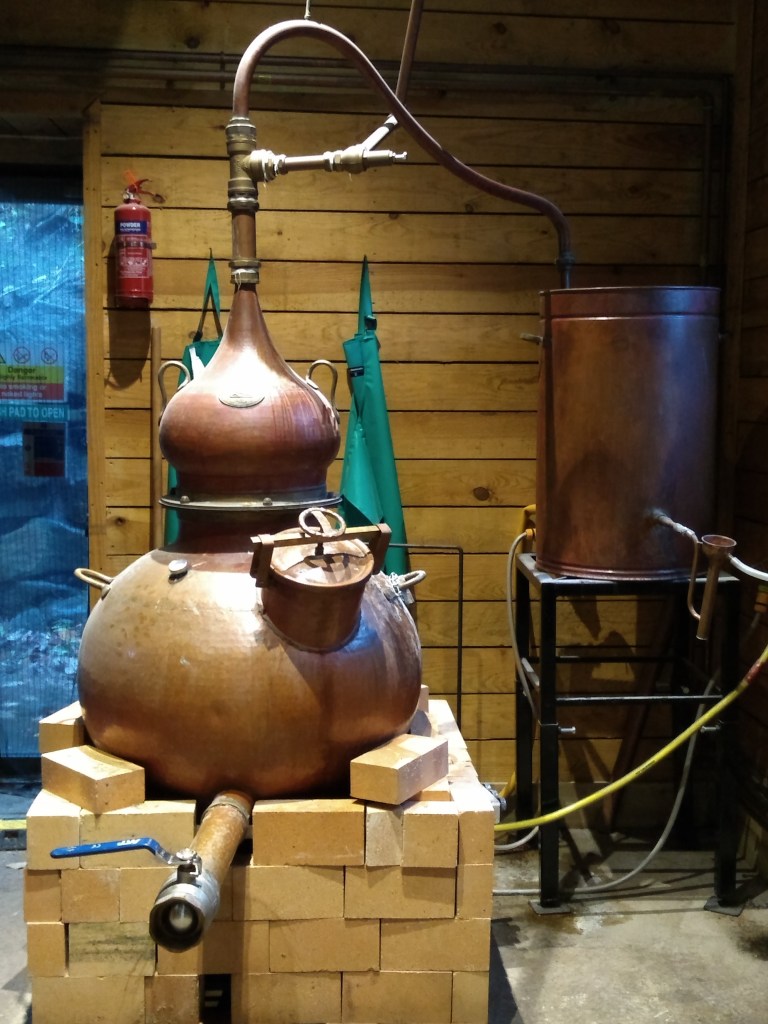
After the tasting, Kiran showed us the whisky production, which is entirely happening in a separate part of the building, all in the same relatively small room! They buy malted barley grist (pre-milled), which they mash on site stirring by hand. Then they move it into two fermentation vessels, where it ferments for 4 days (96 hours approximately, they use distillerโ€™s yeast). They finally distill it twice in the same 170-litre copper pot still, a very beautiful Portuguese still, named Flora after Juneโ€™s mother. The spirit comes out at 70%abv, and it is first put into plastic jugs, only later transferred in casks at the warehouse for maturing. Edit (April 2024): they later installed a second still, to fully comply with the SWA regulations.

The wee distillery shed.

At the time they were producing the newmake to fill the casks for their King James Collection: six casks of different type (bourbon, sherry, rum, etc.) which will be released biannually starting in 2027. They also have a cask sale programme, from 55-litre Firkin to 250-litre hogsheads. They aim for a production of 10,000 litres of alcohol per year, which would put them as the smallest distillery in Scotland (currently the smallest are Dornoch and Moffat, with 12,000 litres each).

And here is Flora.

Some distilleries we visited started gin production as a way to get quick cash (for example Borders, Cotswolds and Holyrood), but they knew from the beginning they mainly wanted to do whisky. Stirling (and others like In the Welsh Wind or Deerness) on the other hand, started with gin, and decided to add whisky along the way. This is definitely reflected in Stirling distilleryโ€™s size and equipment, which makes them a truly craft operation. As we couldnโ€™t try their newmake spirit, we cannot really say much more at this stage, but this left us very curious for the future. Hopefully weโ€™ll come back to try it, or try their single malt too.

Until next time, slainte!


Stirling Distillery Whisky Experience

Price: ยฃ25.00 pp (October 2023, ยฃ12.00 for drivers + ยฃ1.85 fee)

Duration: 1hr

Tasting: four drams from their Sons of Scotland independent bottler range, depending on availability (see * for description)

Target: everyone

Value for money: ok

Highlights: the bar and the distilling “shed”

Recommended: if youโ€™re visiting Stirling and have some spare time, definitely, otherwise we’d suggest waiting for their single malt

Link: https://stirlingdistillery.com/


#30.2 Back to the West

A deep dive in Tobermory


TL;DR: After we (somehow) managed to dry up, the morning after we left the campervan in Kilchoan and hopped on a ferry to Tobermory. Some important business there: shower, lunch, and a visit to Tobermory distillery! That was so nice that we almost missed the return ferryโ€ฆ

(missed Part 1?)

We woke up on Saturday morning, almost dry. Before preparing breakfast, we drove to the Kilchoan ferry pier, as we didnโ€™t want to take advantage of the Kilchoan Hotel ladyโ€™s kindness more than necessary. The original plan would have seen us taking the ferry to Mull, visiting the distillery, and then taking the return ferry to the mainland from Craignure to Oban. However, because we loved the peninsula so much, we changed the plan: we took the ferry on foot, and we would return back to Kilchoan with the last ferry of the day.

The weather was much better, still a bit cloudy but sunny at times, very windy. We had a nice breakfast outside, with the salty sea-breeze hitting us. Before the ferry, we managed to wash the dishes, tidy up the campervan, and prepare a backpack with a change of clothes and towels. This was because in Tobermory, near the aquarium, there are public showers. Unfortunately, this time of the year both campsites in Kilchoan and Tobermory are closed, and a third one in Kilchoan doesnโ€™t have toilettes and showers (only for motorhomes, we guess?). Hence, a shower was really needed (FYI, there should be showers at the Kilchoan community centre too, but they do short hours: opened after we took the ferry to Mull, and closed before we were back).

The ferry crossing was fast, slightly more than half hour, after which we found ourselves walking on the Tobermory pier. At the aquarium, which was closed, showers were available indeed! But first we had to go back to the local Coop to get coins. What a feeling, to be clean again! Gianluigi even managed to wash his hair and dry himself up with the hairdryer: cosy! Before our distillery visit we had to get lunch though. We chose one of the restaurants on the pier, between the aquarium and the distillery, the MacGochans. Food was OK, although very abundant: we left over half pizza, which we brought with us. 

Finally, distillery time! We were very excited, we had visited Tobermory in summer 2019, but we couldnโ€™t see production because renovation works were going on. Not this time though, and after a quick check-in, we were in one of the distilleryโ€™s courtyards. We chose the โ€œalternativeโ€ Warehouse 1 experience: because there were renovations in the warehouse (apparently still now, at the time of writing), weโ€™d get a distillery tour instead, before the tasting at the visitor centre. Our guide for the day was Robert, new in the whisky industry, and previously working as a shoe-maker. We liked his approach, a bit different from the usual one: he introduced himself and asked about us, to create a connection, so that during the tour he was โ€œtailoringโ€ the experience to make it more personal. A very nice touch. 

The distillery is one of the oldest, built in 1798, and they produce two main single malts: Tobermory (unpeated) and Ledaig (peated). Production used to be split 50/50, but the master distiller, Brendan McCarron, at an event we attended in December 2022 said that they are going to change it and focus mostly on the Ledaig side. As usual, we went through production like a grain of barley: milling (very old malt mill), mashing (very new mashtun), fermenting (wooden washbacks) and distilling (2 pairs of shiny stills).

All rooms were very narrow, reflecting the little space available to build the distillery. Robert pointed us to a building on the other side of the road, which used to be a warehouse, now flats (almost like being in Leith!). Nowadays, they have only little warehouse space on the island, and most stock is matured on mainland together with stocks from the other sister distilleries, Bunnahabhain and Deanston (both among our favourites). 

After a quick look at the courtyard, we headed back to the visitor centre and started the tasting of the selected distillery casks: first off, a couple of Tobermoryโ€™s, a 2012 ex-bourbon one and a sublime 1995 ex-Manzanilla (although it spent more or less half of its life in an ex-bourbon hogshead before). The Ledaigโ€™s didnโ€™t disappoint either, an ex-bourbon matured (also 2012) and a 2009 finished in a French red wine cask. There is something about Ledaig (and other peated malts) in red wine casks that we like a lot, and we loved this one very much (we took it over a similarly priced 19y ex-oloroso, which we tried a nip of). Like our 2019 visit, the tasting was great overall, and we just would have liked to have some more time to hang around and try more things (we still managed to try a lot, thanks Robert!).

Unfortunately, the time for the last ferry came (actually, we almost missed it), so we sailed back to the Ardnamurchan peninsula with our ransack: a bottled of Ledaig and half pizza. Only off-note of the evening, we realised that the time of sensible deals for Distell bottlings outside the core range is definitely gone, in particular for the distillery exclusives (and this is reinforced by some Deanston bottlings prices we saw floating around the web recently, like ยฃ50 for a 10y 20cl bottle!). A shame, but hey ho, weโ€™ll pick something else. 

Back at the van, we picked up our (no more) wet shoes from under the vehicle, where we had placed them to dry, and left. We took advantage of the last hour or so of light (sunshine would be an overstatement) to visit the lighthouse. It is a magnificent place, that we loved at first sight. We could have just spent hours there, but the day was ending (painfully soon, but hey, itโ€™s Scotland in February!), and it was not permitted to stay there for the night. On the way back we detoured to Sanna beach, but it was already dark to walk there, and all the potential spots for the night along the road were already busy. We then drove back to the spot facing McLeanโ€™s nose, for a nice sleep. 

Find us in the picture!

In the morning, after breakfast we were soon on the road towards Edinburgh. The roads were very quiet, and the villages too: we didnโ€™t find anything open to get a coffee, just the automatic machine at the little store in Strontian. Only then we realised: we have a moka, coffee, and a stove on the van! What a coupled of dum-dums! Back on the road, we drove to Corran, took the ferry, but instead of driving towards Glencoe, we turned left to Fort Williams, and we decided to take the road towards Spean Bridge. We stopped there for a quick meal, and then drove on the A86 towards Dalwhinnie. So, once we were there, why not a quick stop? Just enough time to go to the loo and get half dram of their distillery exclusive and bottled-your-own (overpriced both by the dram, ยฃ10 each, and by the bottle, respectively ยฃ90 for a non-age statement at 48% and ยฃ125 for a 12y cask strength, 53.6%), with the other half in the sample bottle for Teresa (she had picked the short straw this time) to enjoy at home. 

So, our first whisky adventure with the Mr. Vantastic was almost a success, bar the unwanted shower we got on the Friday. That taught us two things: check the weather more carefully (in particular in February on the Highlands), and be ready to change your plan quickly. Clearly, a steep learning curve. Slainte! 


Tobermory (alternative) Warehouse 1 Experience

Price: ยฃ40.00 pp (February 2023)

Duration: 1hr (in theory!)

Tasting: 4 drams, 2 Tobermory’s (2012 ex-bourbon cask, 1995 ex-Manzanilla double matured) and 2 Ledaig’s (2012 ex-bourbon cask and 2009 ex-French wine cask)

Target: whisky enthusiasts and geeks

Value for money: good

Highlights: the drams were spectacular

Distillery Exclusives: the 4 mentioned above, plus other bottles from casks of previous tours

Recommended: yes

Link: https://tobermorydistillery.com/