#56.5 Dramming Down Under

A hidden gem in Southern Australia: Fleurieu


TL; DR: The drive on the Great Ocean Road was really great, plenty of beautiful landscapes and some nice wildlife. Before getting to Adelaide though, we did one last stop in Goolwa, to visit Fleurieu distillery. Another craft family business, we learned how they went from brewing to distilling, and had a taste of their amazing malts.ย 

(missed Part 4/Part 3/Part 2/Part 1?)

This post starts with us on the road again, specifically on the Great Ocean Road, which stretches from Melbourne to Warrnambool. We did a few stops along the way: Lorne, for breakfast at a nice cafรฉ and art gallery called QDOS, the Kennett River Koala Walk (where, despite the name, we almost didnโ€™t see a koala on a tree), the stunning Cape Otway lighthouse, the famous 12 Apostoles, and past Port Campbell, for a quick swim in the Southern Ocean before stopping in Portland for the night.
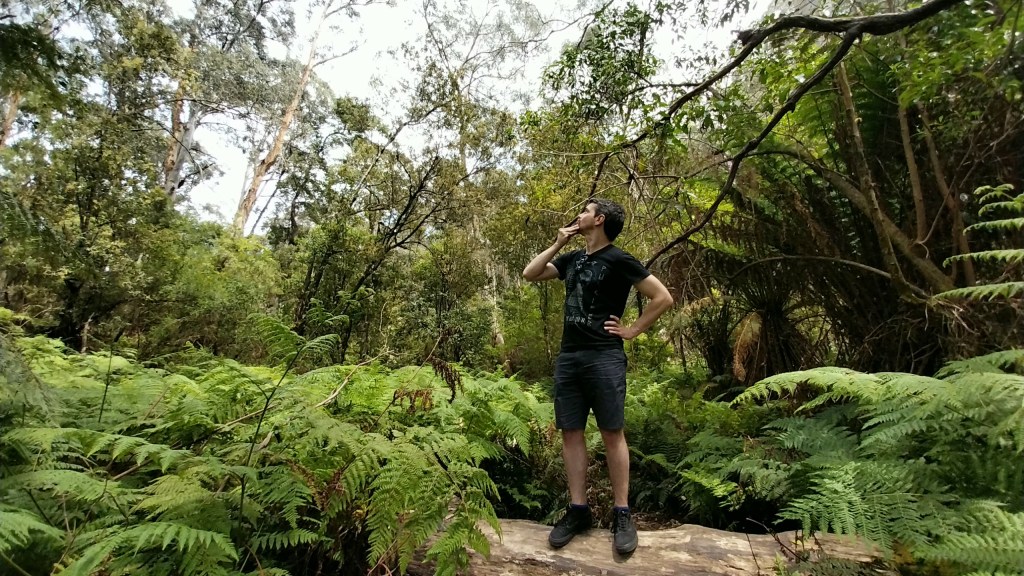
The next day the weather was not great, so we kept driving along the coast and visited a few other villages (Beachport, Robe, Meningie) before crossing the river Murray at Wellington, with the small boat watched by a flock of resting pelicans. Pelicans were not the first encounter of the day, as during the drive an emu and a kangaroo crossed the road! After the very short crossing, we drove through Langhorne Creek and Currency Creek wine regions (not stopping this time), straight to Goolwa, just about one hour away from Adelaide, on the Fleurieu Peninsula. This is a nice wee town, next to the estuary of the Murray river.
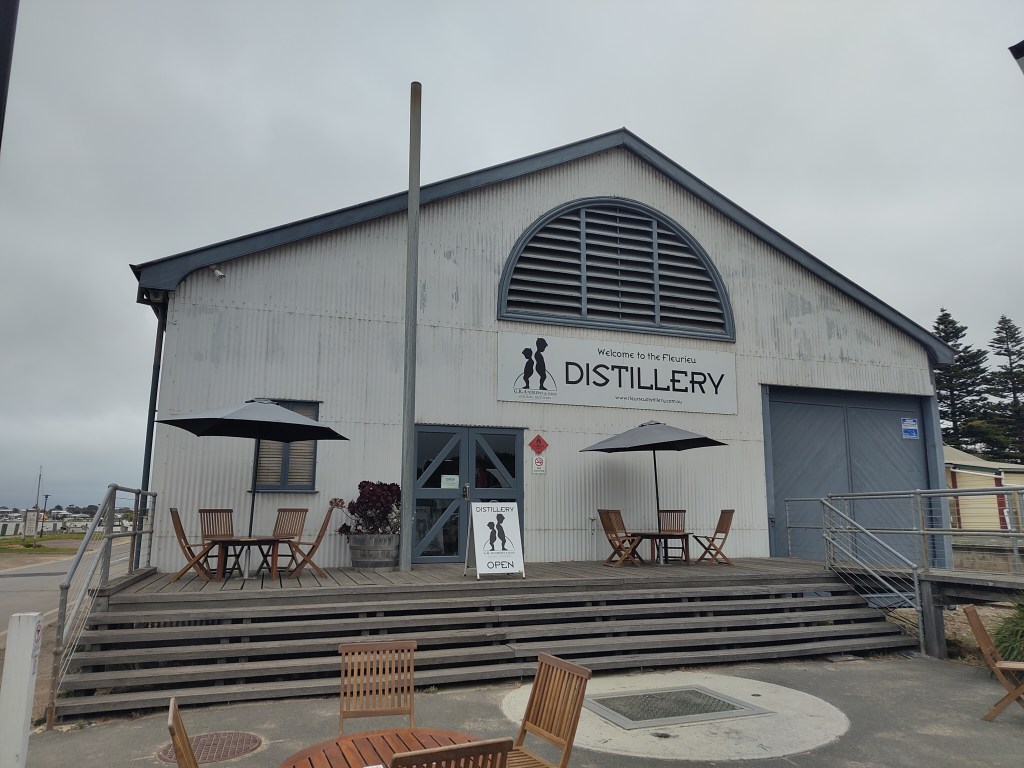
The next morning we went for a run (the only one we did together in Australia), first along the river and then to the beach, and back to the motel. We were excited, because we had an appointment at a distillery, the last one of our holiday: Fleurieu. The distillery is on the riverside, in a listed building next to the train tracks (reasons why they cannot expand). We learned about them while visiting Melbourneโ€™s whisky bars, and when we realised that they were almost on our itinerary, we contacted them and asked if we could visit. Gareth, one of the founders and head distiller, very kindly agreed and gave us an appointment for half hour before the bar would open to the public โ€“ nice gesture! Before the distillery, Gareth and his wife Angela were running the Steam Exchange brewery, founded in 2004, and located in the same building they are still using. However, after the boom of craft brewing, they decided to move to whisky, to differentiate themselves from the crowd. They started planning this change back in 2013, and for a while they produced both whisky and beer. They later phased out beer, which is now produced by another company on commission, using their recipes.

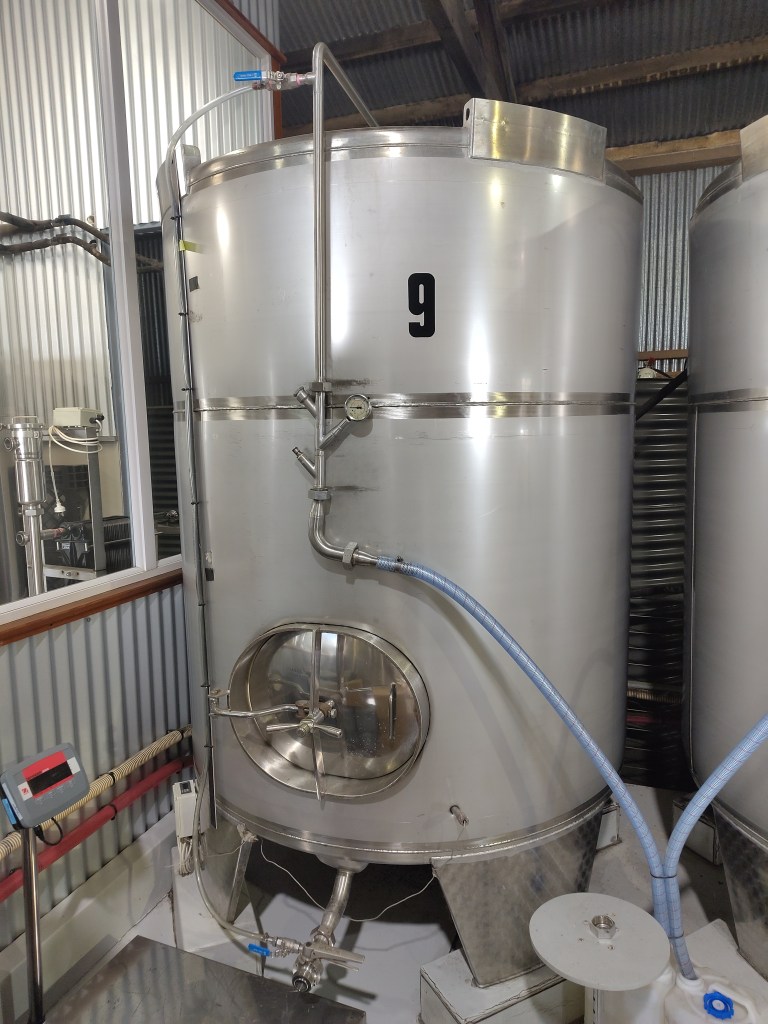
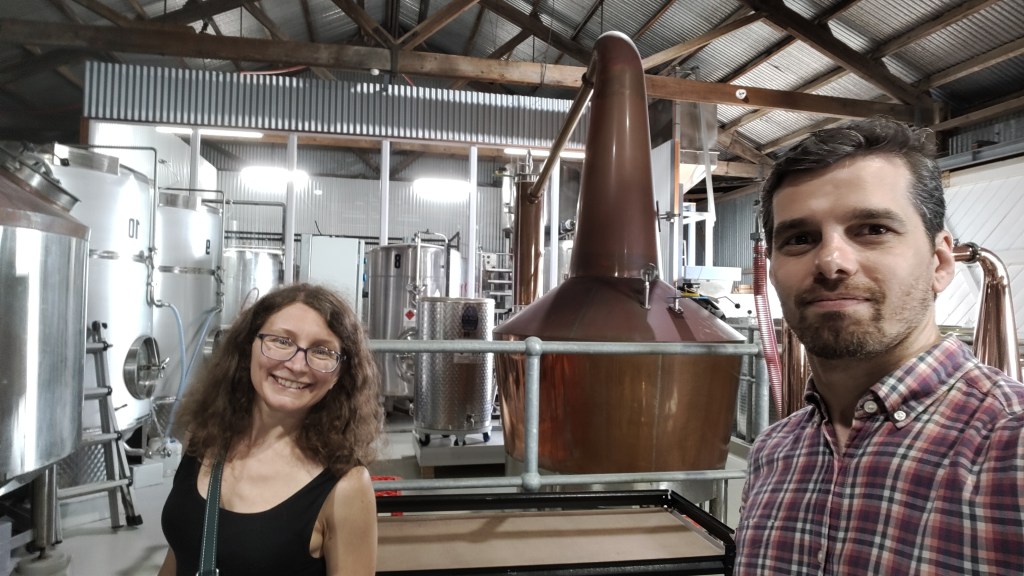
As Gareth welcomed us, he delved into the features of their whisky production. They start from local aqueduct water, which goes through a 10,000 carbon filter to clean it before mashing. The mashtuns used to be manual (they have two small ones), but then they added a mechanic stirring system. They aim for a clear wort, which is then passed down to one of the shallow fermenters, together with brewerโ€™s yeast (some of their brewersโ€™ heritage remains). In between these stages, they use a portable heat exchanger, to recover the heat lost from taking down the wash temperature to allow yeast to do its job under the best conditions. Fermentation lasts at least 8 days, once again a very long one! They use the โ€œdouble dropโ€ fermentation technique, which allows for a second fermentation – this is a brewing technique we are not too familiar with, definitely first time we heard about it in a distilling context.
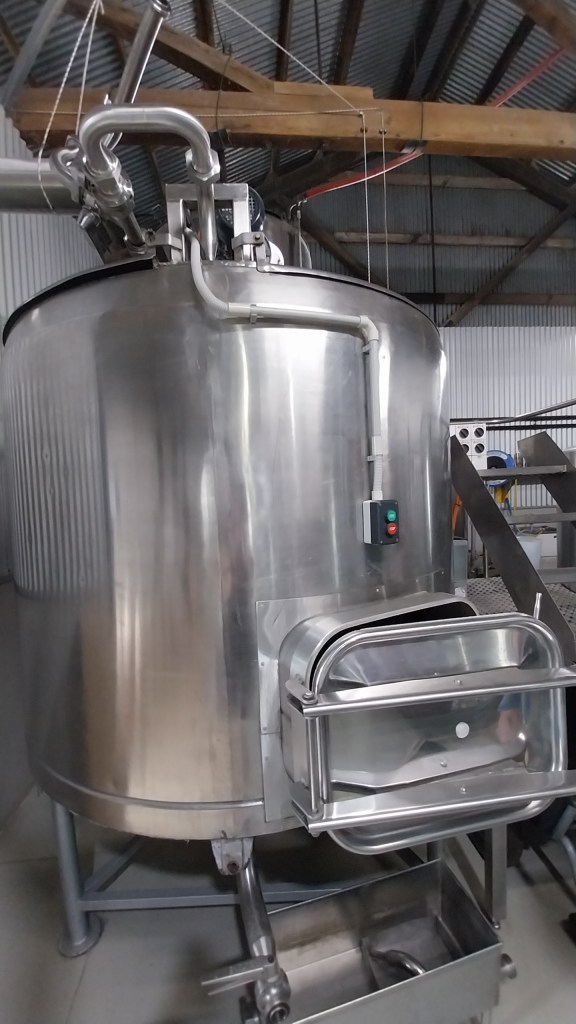
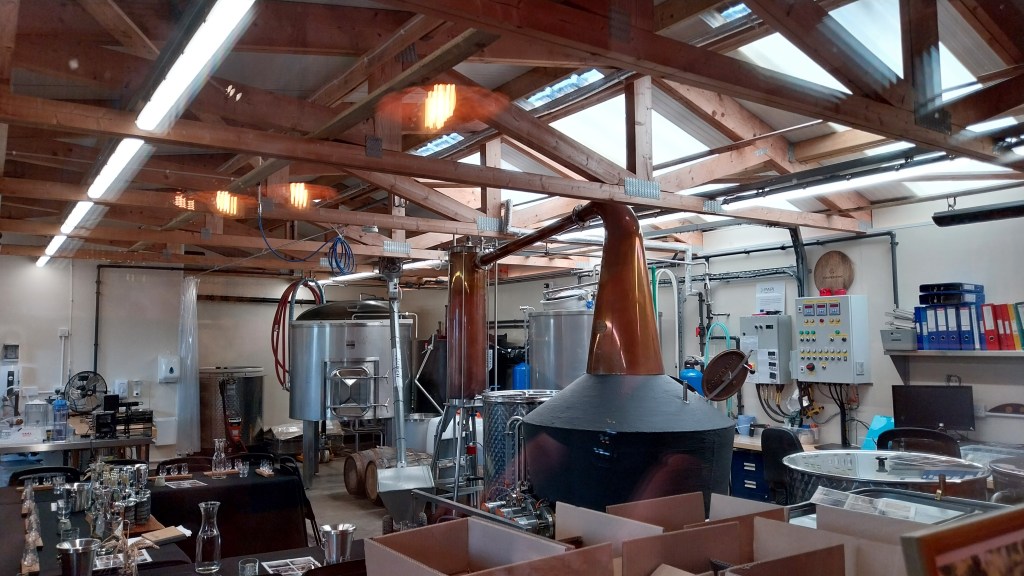
The fermented wash is then transferred into the 3,600-litre wash still, and then to the 1,200-litre spirit still, both coming from Tasmania. To charge the spirit still, they use 600 litres of low wines from the previous wash still run, 300 litres of tails from the previous distillation and 300 litres of water. The first distillation is mostly run at night, to save energy; similarly, the second usually starts around 5am, and by 8am they are ready to take the cuts, done according to taste. Just before their silent season (December to January, when the weather is too hot), they produce some peated spirit, while they make unpeated spirit during the rest of the year.
The cask filling strength is very similar to most Scottish distilleries, 63.4%abv, and in contrast to most of the other Australian distilleries but, again, similarly to Scotland, the abv goes down in this corner of the world. Thatโ€™s because of the humid climate, influenced by the Southern Ocean. They fill many types of casks: ex-bourbon, Apera, Australian tawny, and of various sizes (we noticed a number of smaller size casks around). One practice that showed us their care for details: if they see that a cask is too active, they rerack the spirit (or whisky) into a less active cask, to slow the maturation process and allow a mellower maturation. This is because climate is still hotter than places like Scotland or Ireland, thus some casks might give too much too quickly.
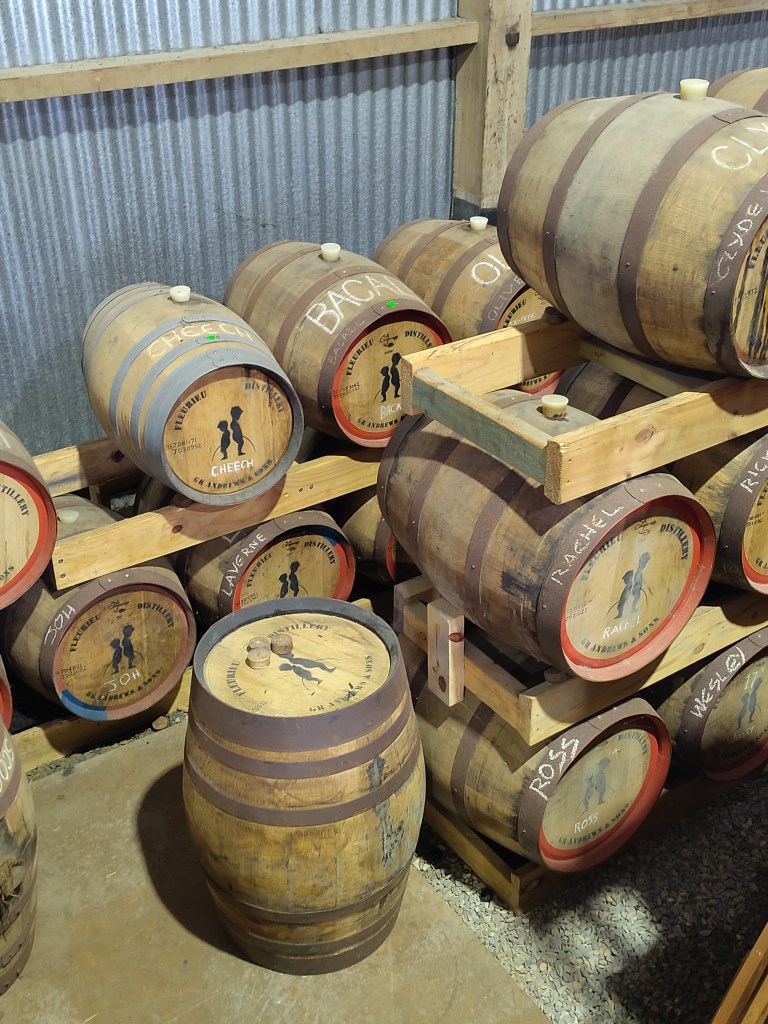
Finally, it was time to try some drams. We started with โ€œNever a dull momentโ€: this is a vatting of Apera casks named after women in their families. Yes, every cask has a name, including some American oak casks named after United States presidents (until the 60s, then it became too controversial). This expression is a small batch (1,320 bottles, bottled at 47.6%abv). Small batches is what they mostly do, sometimes taking only part of certain casks. Another thing denoting their attention to detail, if you ask us. Moreover, despite some lower abvs, none of their whiskies are chill filtered or artificially coloured.

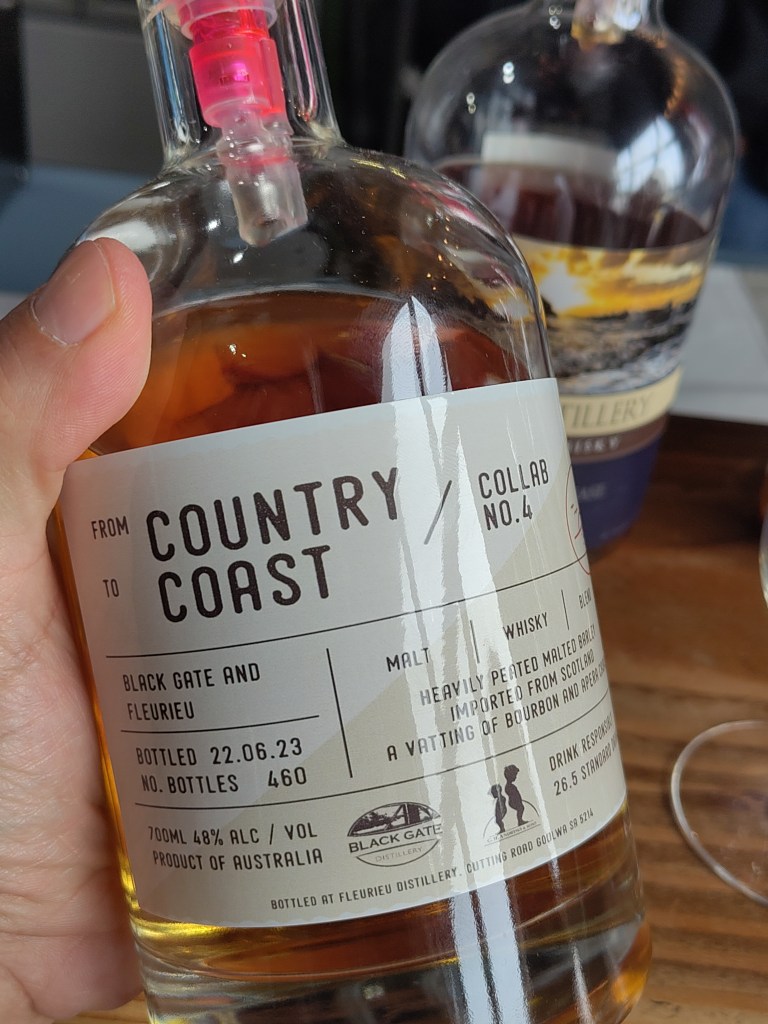
Anyway, moving on, the second dram was โ€œTapestryโ€ (850 bottles at 45.2%), a mix of ex-bourbon and Apera casks. We then tried their first release, dating a few years back, in 2017: a Port cask whisky matured (600 bottles, 52%). Finally, we tried two editions of their blended malt collaboration with another craft distillery, Black Gate, from New South Wales. The bottling is called From Country to Coast, we tried Edition 4 (460 bottles, 48%, already tried back in Melbourne) and Edition 5 (240 bottles, 46%). We liked Edition 4 the most, but unfortunately it was not available to buy (which probably saved us a second bottle purchase, after Tapestry).
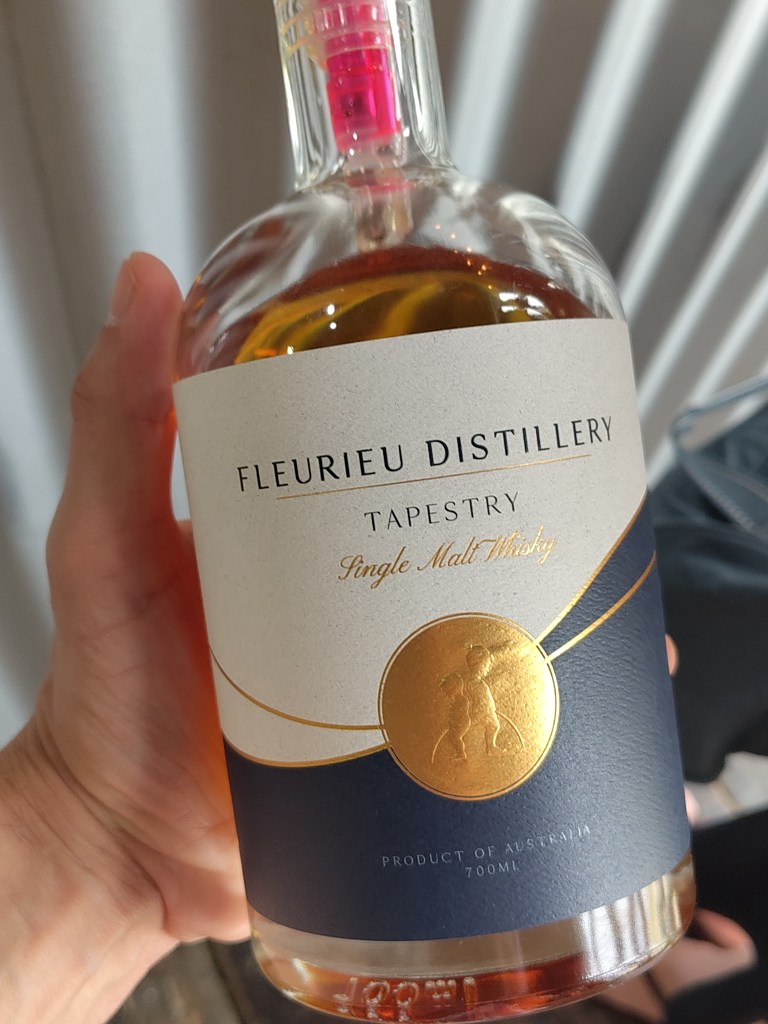
We loved the whisky we tried at Fleurieu, definitely among the best of the holiday, and Gareth’s friendliness wa the cherry on the top. We also loved the attention to detail they put in everything they do, just a shame finding their whisky here in Scotland is so hard (the only bottling we found is this one, hefty!).

After leaving the distillery, we had some food and drove to Adelaide. We stopped briefly to say hi to a fellow barfly who was on shift in a liquor store that day. Itโ€™s always great to chat to whisky nerds during our trips!

Adelaide is a lovely city, a shame we stayed for only a day and a half. After that, we visited the Barossa and Eden Valleys (while we were thereโ€ฆamazing wines!), before the long drive back to Melbourne through the stunning Grampians National Park. There, we got a flight to Uluru, where we spent a few days before heading back home: definitely one of the highlights of our holiday (despite no whiskies thereโ€ฆwe wonโ€™t put too many pictures here).

In general, the whisky scene in mainland Australia (we left Tasmania for another time) really surprised us, we had some amazing drams down under! But what we loved the most is the ethos and how people really care about what theyโ€™re doing there.

Stay tuned for some festival action, this time in Scotland, coming in a couple of weeks! Until next time, slainte!


Fleurieu Distillery Tour

Price: free (November 2024)

Duration: 1hr 30min

Tasting: Never a Dull Moment (vat of Apera casks, 47.6%), Tapestry (ex-bourbon and Apera casks, 45.2%), First release 3yr Port Cask (52%), From Country to Coast Edition 4 and 5 (blended malt, 48% and 46%)

Target: everyone, but whisky geeks especially

Value for money: NA

Highlights: the drams were really good

Recommended: a must visit if you are in the area!

Link: https://fleurieudistillery.com.au
#55.3 All drams great and small

An English malt with a Tasmanian twist and an eye for sustainability


TL; DR: From Ellers Farm, we went directly to another distillery: Cooper King. Inspired by Tasmanian craft distilleries, they produce other spirits other than single malt, with a very interesting set up. And, everything is done in the most sustainable way possible, kudos! After the visit, we went to Brew York, for a tour, dinner, and a quiz! 

(missed Part 2/Part 1?)

After the visit at Ellers Farm, we jumped back on the minibus. Our next destination was only about half hour away driving north-west, approximately 13 km north from the city of York, in the village of Sutton-on-Forest. The distillery is called Cooper King, just outside the village. It was founded by Abbie and Chris, a couple who got the inspiration while travelling in Australia and visiting local distilleries. The distillery is named after Charles Cooper King, Chrisโ€™ great-great-grandfather. The main building is just a few meters from the gravel parking lot, and it harbours a bar/shop and production. There is also a nice wee garden outside, with wooden tables and benches, which we took advantage of after the tour. It was a nice sunny day!

We were welcomed by Mark, tour guide and assistant distiller. Like others, he came on board as a crowdfunder. At some point (in our understanding) the two founders Abbie and Chris asked who among the crowdfunders wanted to be more involved, and Mark answered the call. We could clearly see his passion for the project. He explained that, in 2014, Abbie and Chris, once a biochemist and an architect, moved to Australia to travel, and started working as fruit pickers. Then, they went to Tasmania, and after getting in contact with Sullivanโ€™s Cove and Lark, they decided to go back to England and produce a Tasmanian-style whisky. Back in Yorkshire, they bought the land thanks to a crowdfunding, as well as a 900-litre pot still (Neilson) straight from Australia.

Another principle they had in mind when setting up the distillery was sustainability. The electricity comes from renewable sources, of which 60% is produced on site with solar panels: this contributed to make them the first net-zero distillery in England. They also have a programme for planting trees and restoring woodland and wildflowers habitat for each bottle they sell. Moreover, they chose lighter bottles, and offer refills at the distillery, for a few quid less.

Production-wise, they use Maris Otter barley malted in middle England. They pre-heat the small mashtun before mashing the malt. After that, the remaining draff goes out to local farmers to feed cows. Fermentation takes place in a 1750-litre plastic vessel (usually only half full to avoid foam accidents) and lasts seven days. Both distillations happen in the same still, which is different to what we saw in all the Scottish distilleries we visited so far. At first, Neilson the still was heated externally, but to make the process more efficient it was sent to Scotland for modifications and is now internally heated and insulated.

The wash gets distilled to 25% abv, while the heart of the second distillation comes out on average at 75%, before getting diluted by filtered tap-water. Needless to say, everything in the distillery is very manual, except for the gin and vodka very modern cold-distillation machines (which take only about 10% of energy compared to a classic copper pot distillation).

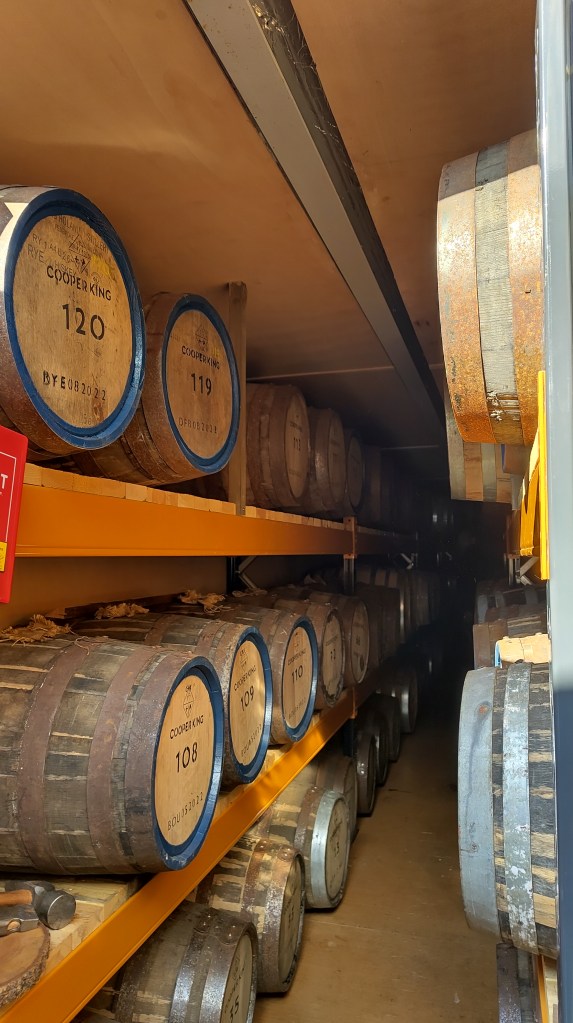
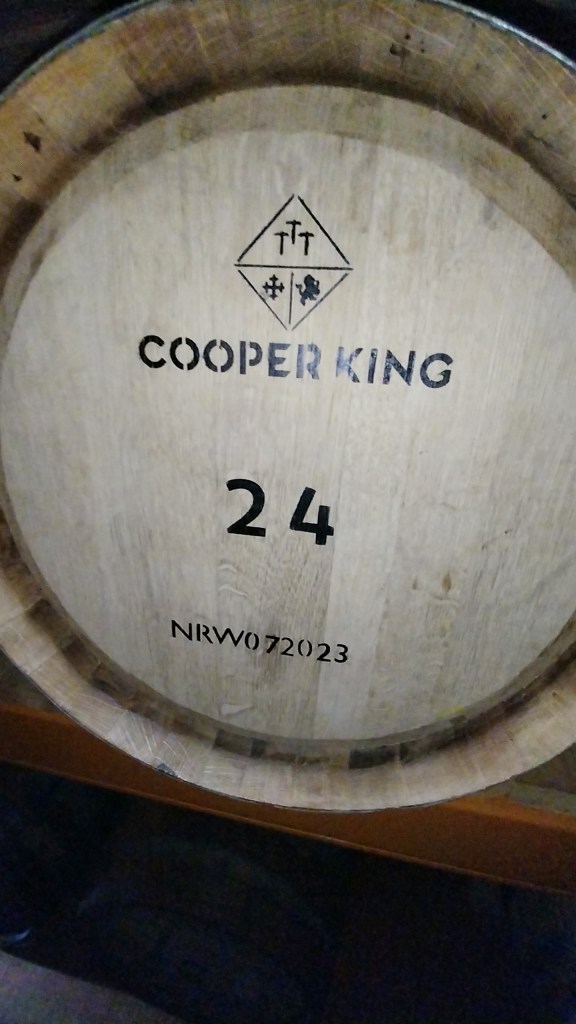
They use a variety of casks from all over the world, and their main American cask supplier is the Garrison Brothers distillery, in Texas. Casks are kept in a safe container behind the distillery, while waiting to get a proper warehouse. They started distilling newmake spirit in 2018, and their first whisky was released in October 2023, about a year before our visit.

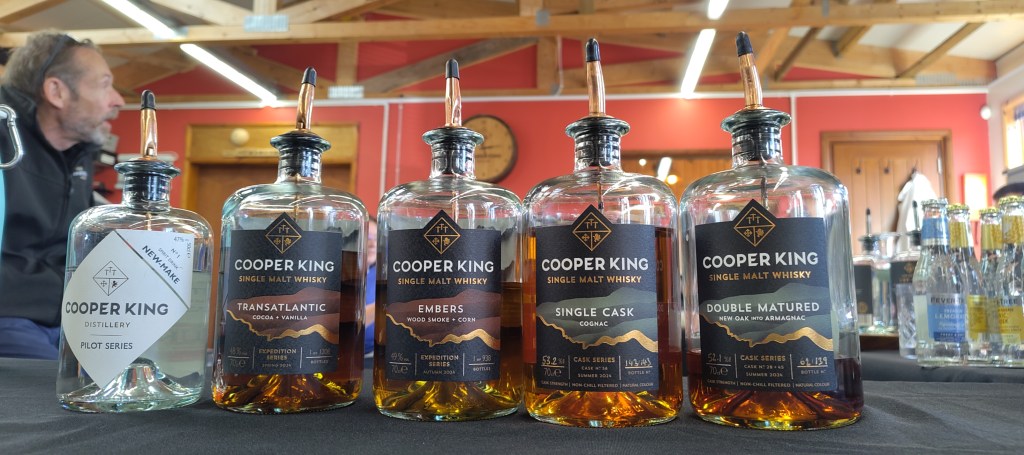
While we were outside checking out the casks, another member of staff set up the tasting in the main production room, which also serves as a tasting location. First, we went through five liquors and gins (see below), but as itโ€™s not really our focus, we wonโ€™t spend many words on it. We were really interested in their whiskies. The first one was not exactly that: a newmake spirit, from the โ€œPilot Seriesโ€ and bottled at 47%. It was followed by two single malts from their โ€œExpedition Seriesโ€, Transatlantic (ex-bourbon and ex-wine casks, 48%), and Embers (charred ex-bourbon casks, 49%). Then, two single casks: first, an ex-Cognac matured single malt, bottled at the 53.2% natural cask strength; second, a dram first matured in virgin oak casks, then re-racked into an ex-Armagnac cask, again cask strength at 52.1%. The evaporation (or โ€œangel shareโ€) is higher compared to Scotland, about 4%, which combined with other specific conditions, might cause the abv to be lower for such young whisky. Overall, we could tell the degree of experimentation at this distillery is high.

After the tasting we had a few minutes to spend in the sunny patio, sipping on our leftover drinks, before getting back on the mini-bus. We headed towards York, precisely the Brew York Brewery. Despite the city location is not their main production facility anymore (that one is in Yorkโ€™s outskirts), itโ€™s still a massive place. We did a production tour (ยฃ15, including four tastes) and then had dinner there (they do a range of Asian-inspired dishes, which were delicious, albeit heavy on spring onion). Unfortunately, the place was too noisy for the next scheduled activity, a whisky-based quiz, so we had to move to a quieter pub nearby. The quiz, organised by our whisky veteran pal Charlie, was great fun, and we went back to base all very happy.

What a great afternoon and evening we had! At that time, we had tried very few craft Australian whiskies (and even less Tasmanian ones), so the link between them and Cooper King was not evident to us. At the time of writing however (after a serendipitous trip to Australiaโ€ฆStay tuned in the coming weeks for more), the connection is quite obvious: we spotted a very typical herbaceous note in Cooper King drams, the same we found in most whiskies down under. Overall, itโ€™s a very interesting project, which we are very glad we got to know more of.

Next up, another Yorkshire whisky day, but not a distillery! Until next time, slainte!


Cooper King Distillery Bespoke Tour

Price: ยฃ20.00 pp (October 2024)

Duration: 1hr 30min

Tasting: 5 spirits (Dry Gin, 42%; Herb Gin, 40%; Smoked+Spice Dry Gin, 41%; Black Cardamom Vodka, 40%; Berry+Basil liqueur, 25%) and 4 drams: Transatlantic (48%, ex-bourbon and ex-wine, 1208 bottles), Embers (ex-bourbon, 49%, 938 bottles), ex-Cognac matured single cask (53.2%), virgin oak/ex-Armagnac cask (52.1%)

Target: whisky and spirit enthusiasts

Value for money: very good

Highlights: the distillery set up

Recommended: yes

Link: https://www.cooperkingdistillery.co.uk/


#55.1 All drams great and small

The Top of the Wold and the Spirit of Yorkshire


TL; DR: This year the jolly gang of the Edinburgh Whisky Group chose a controversial destination for the annual trip: Yorkshire, in England! Plenty of distilleries and other destinations, starting from one of the most celebrated English whisky distilleries: the Spirit of Yorkshire! The tour(s) and tasting exceeded our expectations: this distillery is a strongly suggested destination for whisky lovers!ย 

With the start of the autumn (or fall, for those of you on the other side of the pond), it was time again for the Edinburgh Whisky Group annual trip. Our first destination was Campbeltown, in 2021: plenty of whisky activities, all at walking distance from each other, just perfect. The trips that followed, Speyside in 2022 and Northern Highlands in 2023, were logistically harder to organise for Justine, as they required getting a coach, and playing Tetris with the various distilleriesโ€™ availability. One thing Justine had to face, despite her huge effort and the number of distilleries in those areas, was the unwillingness of many to accommodate a large group (with exceptions, such as Glen Moray and Glenallachie), open their doors for the ones usually closed to visitors (again some exceptions, like Dornoch), or just arrange something different for usโ€ฆIn some cases even replying to emails seemed to be too big of an effort!
For the 2024 trip, Justine had a great idea up her sleeves: going south of the border, to England! Specifically, to Yorkshire. English whisky has seen a renaissance in the past decade, going from one distillery (The English distillery, in East Anglia), to a few tenths, as testified by the ever changing map maintained by Cooper King (a caveat though, some of them are gin distilleries possibly laying cask of newmake spirit, so take this number with a pinch of saltโ€ฆNevertheless, 55 is quite impressive!). We had already โ€œdrammed aroundโ€ England, with visits to the Lakes Distillery (March โ€™22), Copper Rivet (October โ€™22), White Peaks, and Cotswolds (both July โ€™23), with White Peaks being the most impressive, in terms of location, quality of the whisky and, last but not least, company ethos. Because weโ€™d enjoyed these โ€˜tastersโ€™, we were quite curious of this deep dive in the English whisky scene, so when October came, we were really excited!

We left Leith on the Thursday night, sleeping half-way between there and the โ€œbase campโ€ of our trip, the Piebald Inn, in Hunmamby. This is a quite famous hotel and restaurant, in particular for the number (and quality) of their piesโ€ฆAlthough Gianluigi was a bit disappointed when he learned that the Quarter Horse or the Chestnut Horse pies were not really made with horsemeat, dโ€™oh! We got there in the morning, just in time for the group meet-up. For our first day, we had a brewery and a distillery tour: Wold Top Brewery and Spirit of Yorkshire Distillery, both owned by the Mellor family.

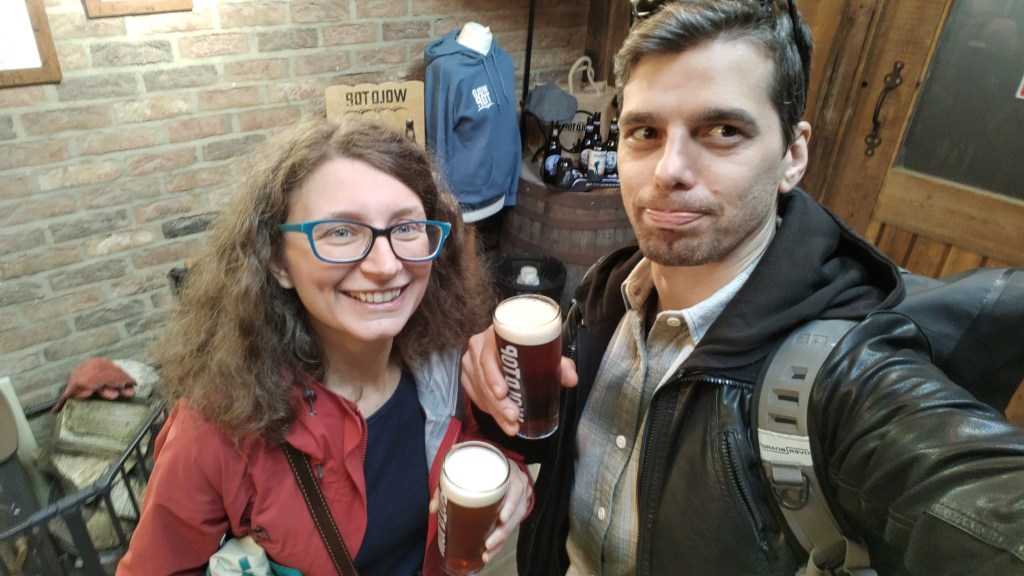
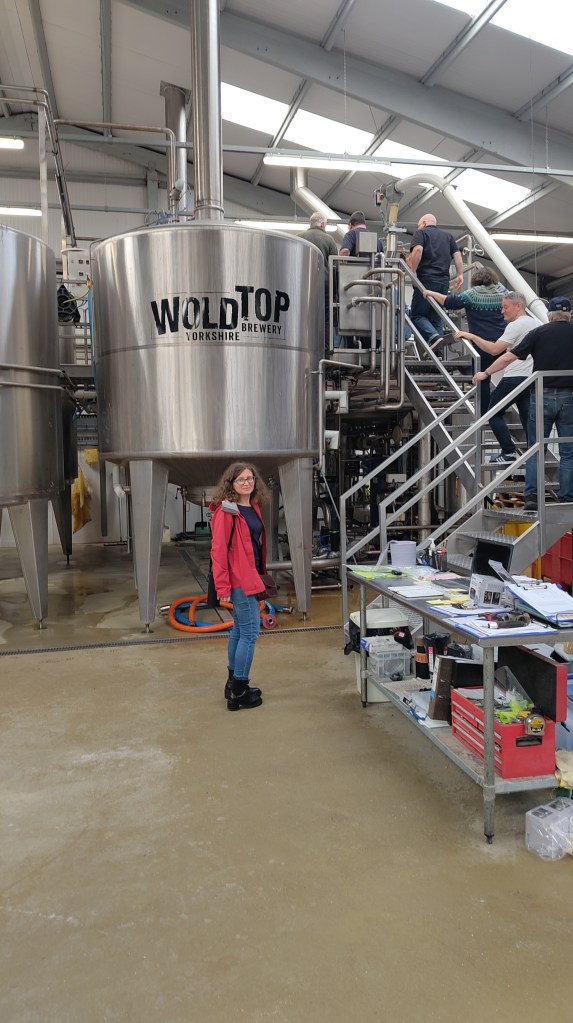
We started from the brewery, called Wold Top because Wolds are the hills where the brewery is located (itโ€™s not a typo!). We got there by taxi, and as we settled in the brewery visitor centre and bar, they offered us a half pint (with a pint glass to keep), nice welcome! Sam, our guide, put on a well-made video about the brewery history. It was founded in 2003 by Tom and Gill Mellor on their farm, and it’s currently run by their daughter Kate and her husband Alex. Knowing that this part of Yorkshire is ideal to grow brewersโ€™ and distillersโ€™ barley, and realising that the farm sits on a great water source, they decided to cut the middleman and start producing their own beer, farm-to-glass. At first the biggest issue was distribution (they started with farmers markets), because of the remoteness of the area. In 2008 they installed their own bottling plant, and in 2012 and 2016 they expanded with new kits and started doing contract brews as well. For a while, the location could also be hired as a wedding venue, but that stopped a few years ago. In 2016, they also started distilling, but weโ€™ll talk more about that later. For the beer, they mainly use Lauriet barley, which is sent to Muntons for malting. The barley is malted to eight different โ€œcoloursโ€, but sometimes they also use wheat and, more rarely, corn. They use over 40 varieties of hops from all over the world.

A welcome half pint, nice!

After the video, we moved to the production area next door, also used as an extension for their events (and indeed, decorations from the October Fest were still hanging around). In this location they produce both the beer and the fermented wash for the distillery. After checking out the modern malt mill, we climbed a stair to get on top of a catwalk and check out the mushtuns, including the kettle to boil the beer (one of the main differences between making beer and whisky, beside the addition of hops), where the beer wash is boiled for 75 minutes. Next to the catwalk, the stainless steel washbacks for fermentation. The beer is kept in conditioning tanks for 2 to 4 weeks before going straight into casks (i.e. unfiltered), then chilled, filtered and finally put into kegs or bottles. We headed back to the (cosy) bar for another half pint, while our pal Stephen (after asking permission to the staff) served us a dram of a Filey Bay single malt finished in a Wold Top beer barrel (Ex-IPA finish, Whisky Exchange exclusive bottled for the 2024 Whisky Show, 51.5%) – a preview of what was about to come.

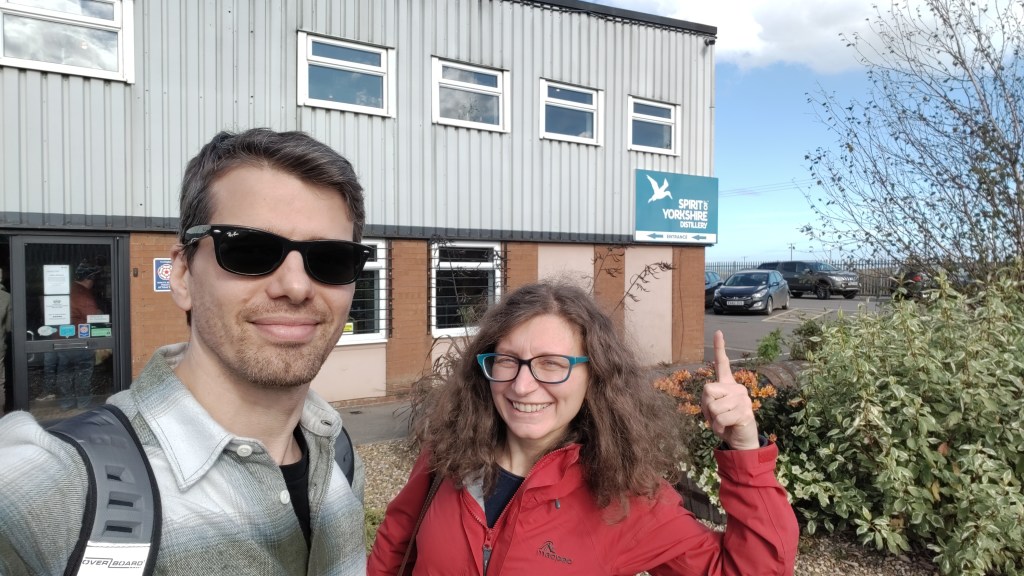
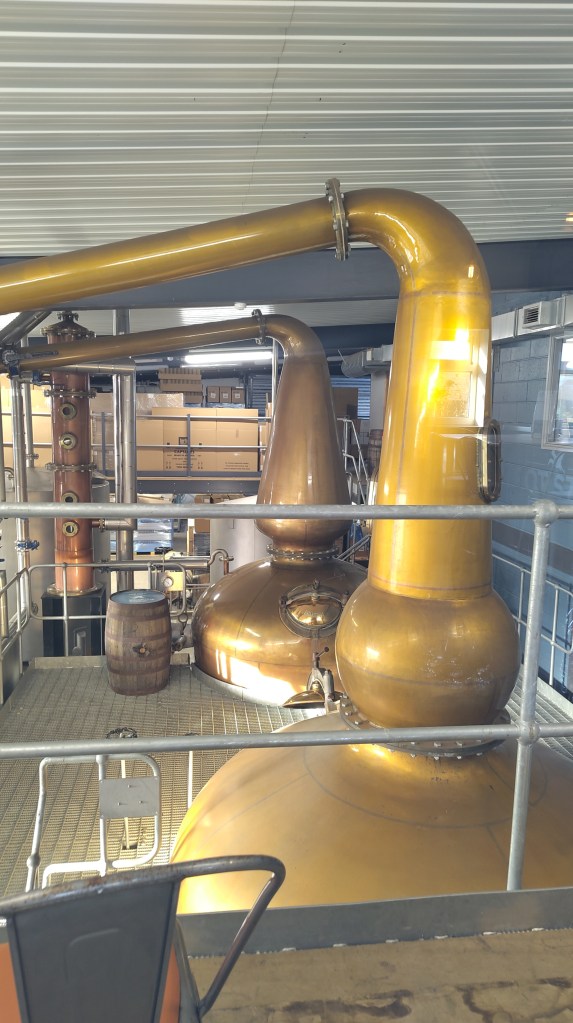
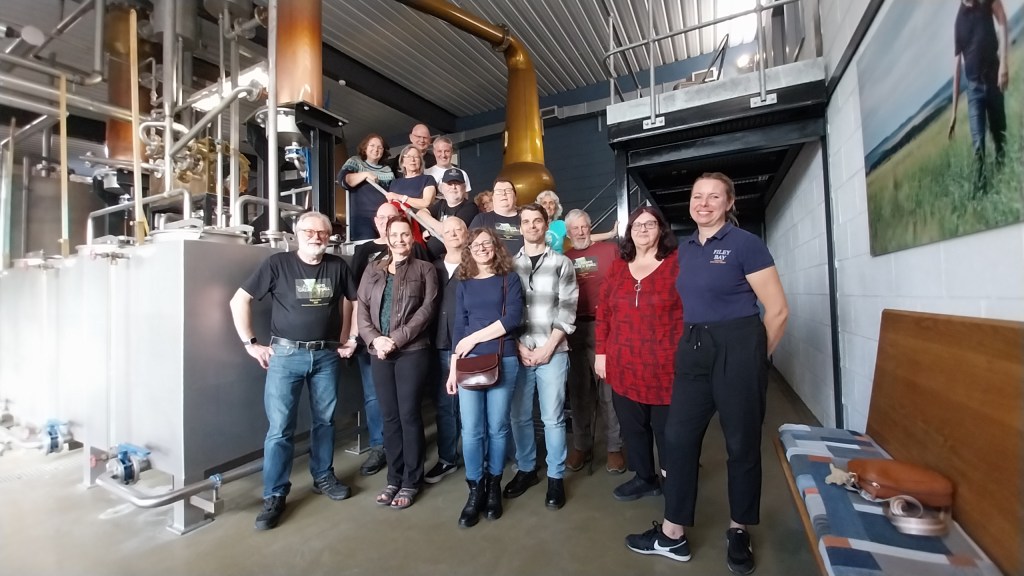
We headed back to Hunmamby (again by taxi), to the Spirit of Yorkshire distillery. The building is in a small industrial estate, and other than distilling they also have a shop and a bar/cafรฉ (The Pot Still) overlooking the still room. We had tables booked for lunch, and after the (nice) meal, we started the tour with our guide Justina. She gave us a welcome dram (the Flagship) while telling us the history of the distillery, which was built in 2016 and opened to visitors in 2017, with many options for tours and tastings.

The fermented wash comes twice a week from the brewery on a tractor, 20,000 litres in total. For the whisky, they usually use Concerto barley in spring, and Vessel in winter. Fermentation lasts 75 to 95 hours, and the yeast is added twice, at different temperatures (two types of yeast, we missed which varieties though). The first pot still holds 5,000 litres, which are reduced to 1,700 after the first distillation. The second pot still is 3,500 litres, and after 10-15 minutes of foreshots, they collect 500 litres of spirit for about 1-1.5 hours, with cuts between 77-76% and 69% abv. Here is the novelty, they also have a small column still, which they use for 6 months a year in tandem with the pot still. For the column still, the 400 litres cut is taken between 86 and 85%. This system, as for many other new distilleries, was suggested by the late Dr Jim Swan, and because we are in England, and the grain used is barley, they can call it single malt whisky. The newmake spirits from the column and pot stills are put into casks separately, and then blended before bottling to get the required flavour profile: their flagship product is 50/50 column and pot still whisky, and it is fractionally married aiming for consistency; everything else they produce is made in small batches.

The full capacity would be 450,000 litres of alcohol per year, but their usual production is between 12 casks per week (about 82,000 litres) which are stored in a bonded warehouse off site, but near the farm. Casks are then moved back to the distillery for bottling, in their new automated bottling line, able to make 600 bottles per hour. Everything is non-chill filtered and no colouring is added.

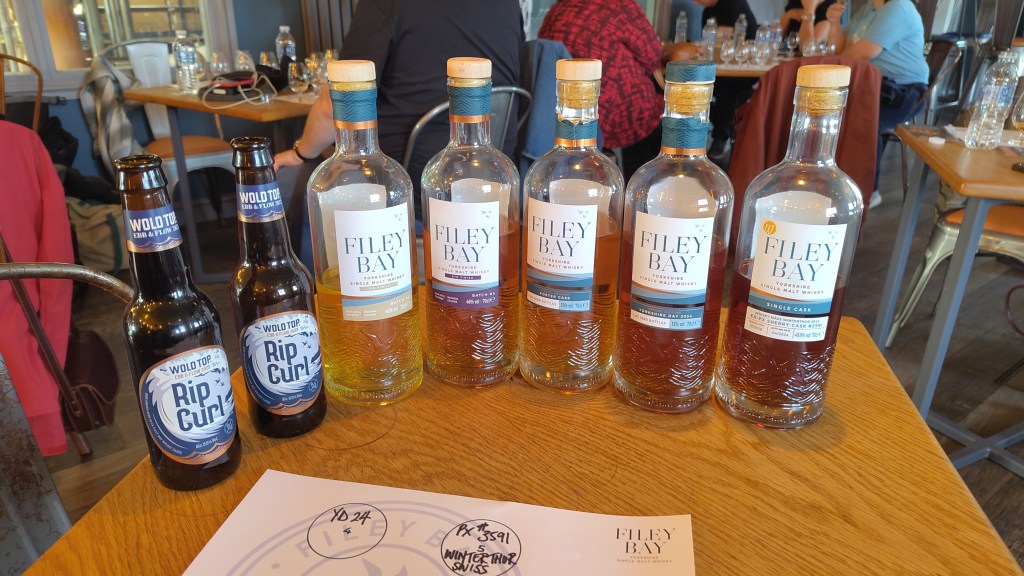
After the very comprehensive tour, for the tasting we went back to the cafe, which they closed for the occasion. We explored their current range of single malts and variety of cask they use, including two expressions from beer casks (full tasting description below). At the shop they offered us another nip of things we might want to try (peated and Moscatel cask finish for us, to complete their range). Happy, we then headed back to the Pie Bald Inn.

It was a great visit, we learned how things can be done differently compared to Scotch whisky, and still obtain a great result in such a short time (first release was in 2019 only) – the distillery is not even 10 years old! The array of whiskies we tried was very interesting, showcasing a great variety of flavours.

Stay tuned with us for more English whisky action! Until the next time, slainte!


Wold Top Brewery Tour + Spirit of Yorkshire Distillery Tour

Price: ยฃ12.50 pp + ยฃ30.00 (October 2024, our experience was a combination of the Brewery and Distillery tour, ยฃ25.00, and the Distillery tour & Deep Dive tasting, ยฃ30.00)

Duration: 1hr 30min + 2hrs

Tasting: 2 half pints of choice at the brewery and 6 Filey Bay drams at the distillery: the Flagship (46%, NAS, ยฃ55); IPA finish Batch 2 (46%, 6-7 months finish in a barrel that hold an IPA for 7-8 months, ยฃ65), STR Batch 4 (46%, finished for 7-8 months, ยฃ65); Porter Cask (50%, similar to their flagship, but finished for over a year in barrel that held Rip Curl porter for 14 months, sold out); Yorkshire Special Release 2024 (55%, matured in STR, then re-casked in ex-Madeira, ex-Sherry and finally virgin oak casks, ยฃ95); and a single cask bottled for the whisky marked (49.9% cask strength!, fully matured in ex-PX casks, distilled in December 2018, bottled in 2024)

Distillery exclusive: the Yorkshire Special Release 2024 (see above)

Target: beer and whisky enthusiasts

Value for money: very good

Highlights: the whisky and the welcoming staff

Recommended: absolutely

Link: https://www.woldtopbrewery.co.uk/, https://www.spiritofyorkshire.com/


#40 A last stop on the banks of river Ness

Uile Bheist


TL; DR: After a long whisky weekend in the Highlands, it was time to get home. However, on the Sunday afternoon, we had time for a last stop at Uile Bheist, in Inverness. Very interesting operation, as itโ€™s both a brewery and a distillery. Too early for the single malt, but we could still sip two of their ales.

Our Highlander trip was about to end: we left Clynelish distillery while our pals were still enjoying the drams provided. It was still a very nice and sunny day, and maybe because it was a Sunday afternoon in early November, the A9 towards Inverness was not very busy and the drive was quiet and relaxing. We were approaching Inverness quite early (and Teresa was recovering from her sickness), so we took a swift decision: make a last stop before getting home. Destination: Uile Bheist distillery, in Inverness, one of the newest kids on the block. 

A key feature is the artwork by the artist Ken Taylor (already famous for the many collaborations with rock bands), picturing creatures from old Scottish tales: we found them very well drawn and captivating. โ€œUilebheistโ€ itself means โ€œmonsterโ€ in Scottish Gaelic. 

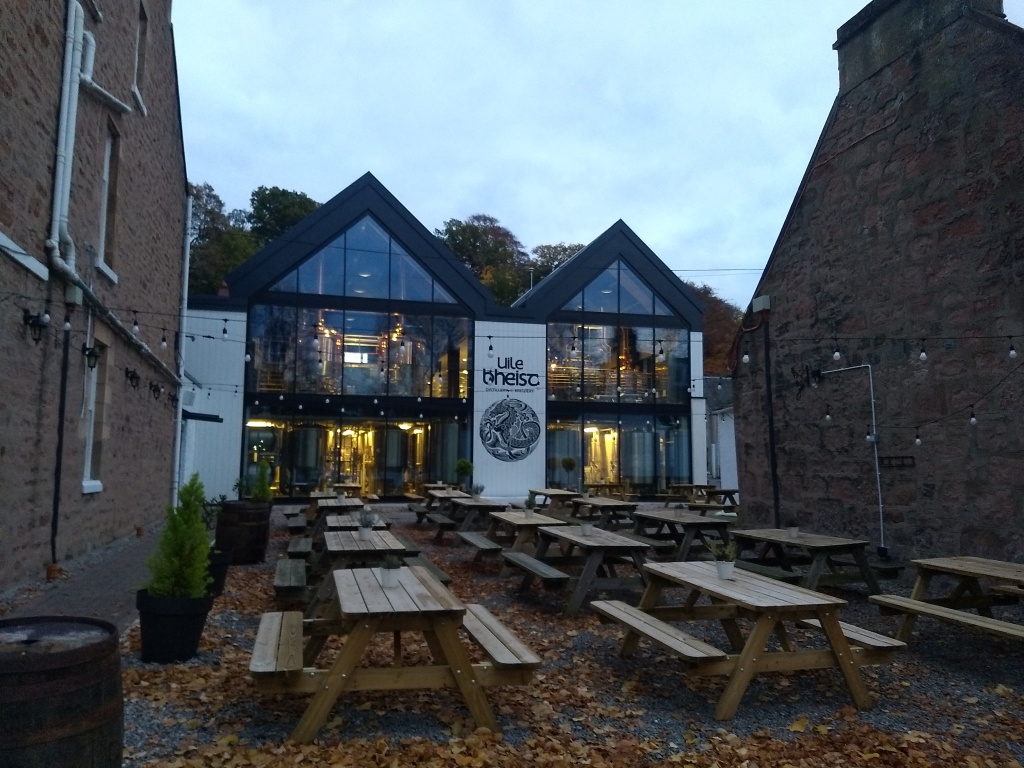
The distillery is located on the banks of the river Ness (duh!), and the entrance is in the same building as a hotel called Glen Mhor (but nope, itโ€™s not the site of the former Glen Mohr distillery, actually at opposite site of the river). As a matter of fact, the founders of the distillery (Jon and Victoria Erasmus) opened their hotel in the mid 2000s first, and added a brewery in 2014. The distillery is the most recent part of their business, with the first newmake spirit distilled in April 2023. It is also the first distillery to open in Inverness in 130 years, and the first to produce whisky since Glen Albyn, Glen Mhor and Millburn closed in the mid-1980s. The beer garden is visible from the street, as well as the distillery building just behind, with the two stills making a triumphant appearance behind the glass windows. 

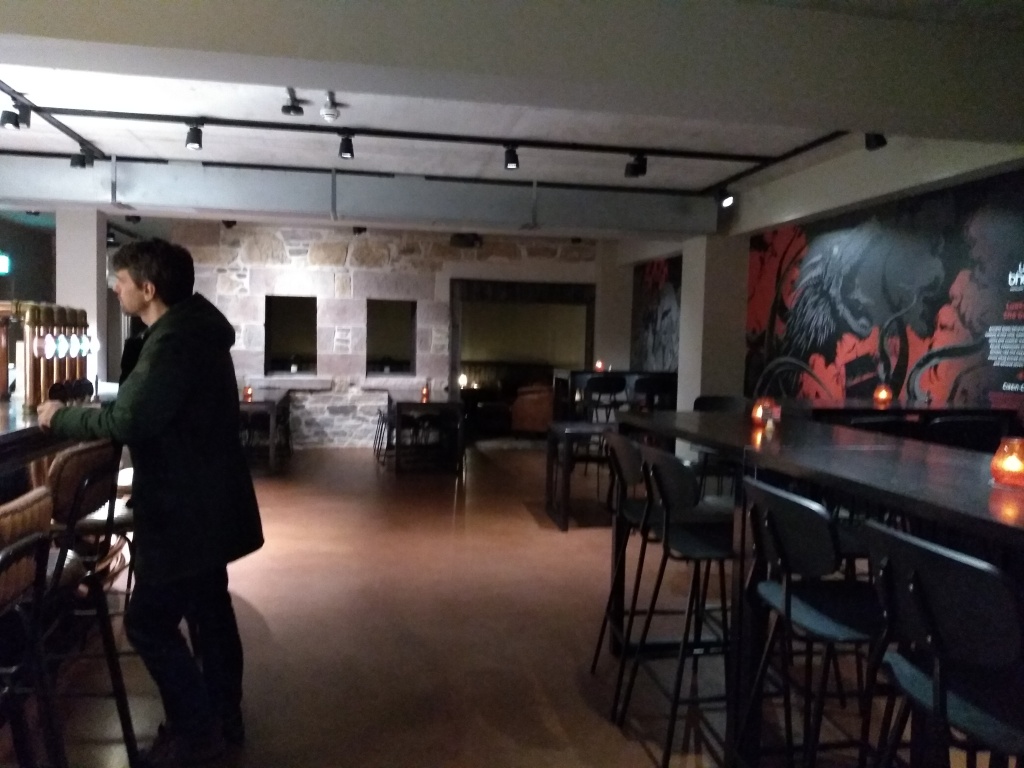
The place is quite dark but cosy, pub-style (a partial excuse for our terrible pictures too) and in line with the artwork. And in fact, because they are a brewery as well, their main room is organised exactly like a pub: a long bar, many malts behind the bartendersโ€™ back, and their beers on tap, named after the creatures: a lager (Uile Bheist), a stout (Dark Horse), a session ale (Highland Storm), an unfiltered (White Witch), and a pale ale (Forest Dweller). We would have never remembered the names, if it wasnโ€™t for the association with the different beer typesโ€ฆClever!

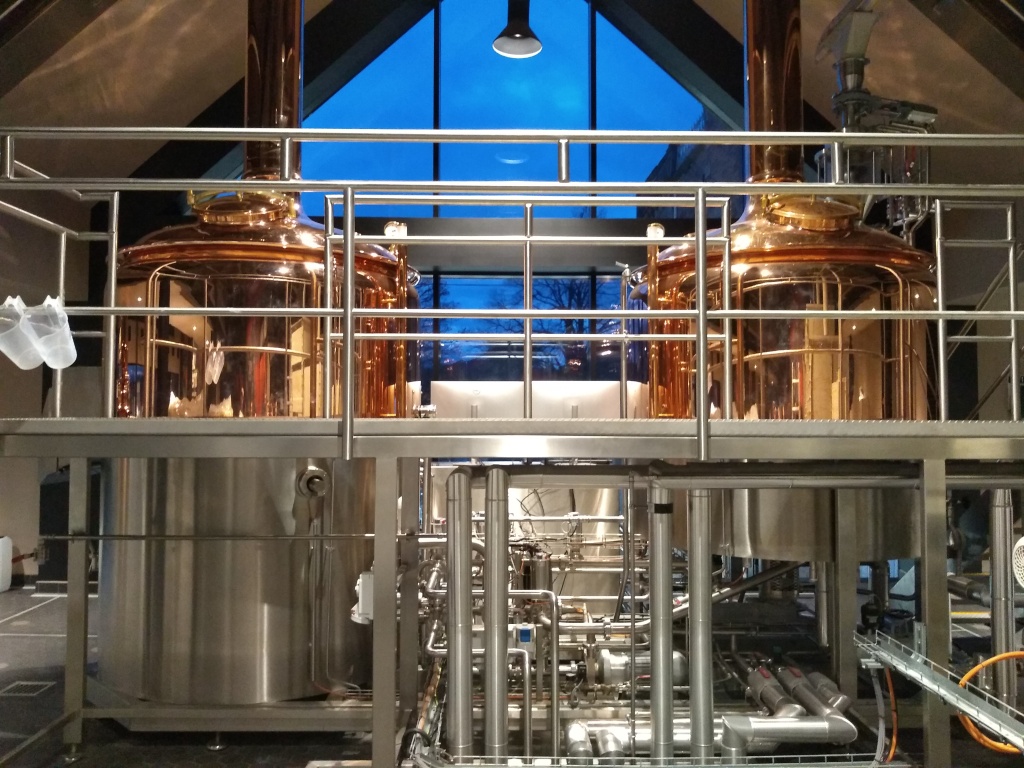
The tour guide for the day was Louis, on training because it was one of his first whisky tours, shadowed by Amy. We entered the production area from a door at the end of the bar, and we climbed the stairs right away. We were soon in the main production room, where all the machinery is: a very modern mill, the mashtun (1.5 tonnes, near the one used for brewing), the washbacks (4 stainless steel), the stills (1000-litre wash still and 500-litre spirit still). The space was completed by a small lounge for visitors. There, they showed us an intuitive schematic of the production plant, including a description of how they get energy –  solar panels and shallow water.

Like many new distilleries, sustainability was in their mind when the plant was designed. Fermentation lasts between 72 and 96 hours, and they take the spirit at around 70% (they didnโ€™t know the precise cuts). The newmake is then transported to their warehouses in Forres to be put into casks. 

Next, we moved to the lower level, mostly dedicated to beer production: 8 fermentation tanks, and the machine to carbonate with nitrogen and fill the kegs (plus a small bottling line). Back to the bar, it was time for a small tasting: their newmake spirit (which is available to buy in half-litre bottles) and a blended malt they produced (quite tasty!). Teresa also sipped half pint of their lager, as well as Gianluigiโ€™s half pint of pale ale. Very tasty. Unfortunately, at the moment they only sell kegs, so we couldnโ€™t buy any of the beers.

Teresa and the kegs.

We have to say, we really liked this operation, the first โ€œbrewstilleryโ€ (as Amy suggested during the tour) we visited. Because we donโ€™t know Inverness very well, we are planning a weekend there in the near future, and we will definitely go back to Uile Bheist to try more of their beers and enjoy the pubโ€™s cozy atmosphere. We are also very curious about their malt, since the newmake spirit was above average compared to others. For that, though, weโ€™ll have to wait a while. 

A surprisingly interesting blended malt.

This was the perfect epilogue for a very nice whisky weekend, although not the luckiest health-wise. For the records, as expected Gianluigi got the same bug as Teresa two days later, and for more than a couple of days he was KO. It wasnโ€™t Covid (got the month before), it probably wasnโ€™t fluโ€ฆA mystery. Unfortunately, this caused us to miss Roy Aqvavitae blind tasting in Glasgow the following weekend too. But thatโ€™s all gone now, while the memory of such a fun weekend with our pals will stay with us for a long time.

Until next time, slainte!


Uile Bheist Discovery Tour

Price: ยฃ35.00 pp (November 2023)

Duration: 1hr+

Tasting: 2 drams (newmake spirit and Colpach Blended Malt, 46%) and 1 half pint of beer

Distillery Exclusive: Colpach blended malt (ยฃ50)

Target: anyone who likes both whisky and beer (or one of the two)

Value for money: ok

Highlights: the location and the pub

Recommended: if you’re visiting Inverness, definitely!

Link: https://www.uilebheist.com/


#32.1 Driving through Englandshire

A peek into White Peak Distillery


TL;DR: On the road to Wales for our summer holidays, we drove through England, and we got to two distilleries: first of the two, White Peak. We had heard great things about their whisky, but had never tried. Our visit confirmed their good reputation, and we probably had the best distillery tour outside Scotland. 

The decision on where to go for our summer holidays was quite easy. First, we wanted to use the campervan for the first time for over a long weekend, but because of some mileage limitation on our insurance we couldnโ€™t go too far, so here Ireland and Cornwall were not an option. Also, after our 2022 North of Scotland and Orkney trip, we definitely wanted to avoid midgies, so we excluded the West Coast of Scotland and Outer Hebrides too. Finally, we wanted to see something new: at this point, excluding the overpriced Lakes District, there was almost only one destination left: Wales! But to get to Wales, weโ€™d need to cross a good chunk of the country south of the border, otherwise known as Englandshire.

Not too bad honestly, the recent world-wide whisky revamp touched England as well, and there are now over 40 distilleries on the English Whisky Map. Many of them are very young, and some were born as gin distilleries and only afterwards they switched to whisky. Others, however, are now quite established, with well-matured and tasty products. We already visited two, the Lakes Distillery, in Cumbria, and Copper Rivet, in Kent.

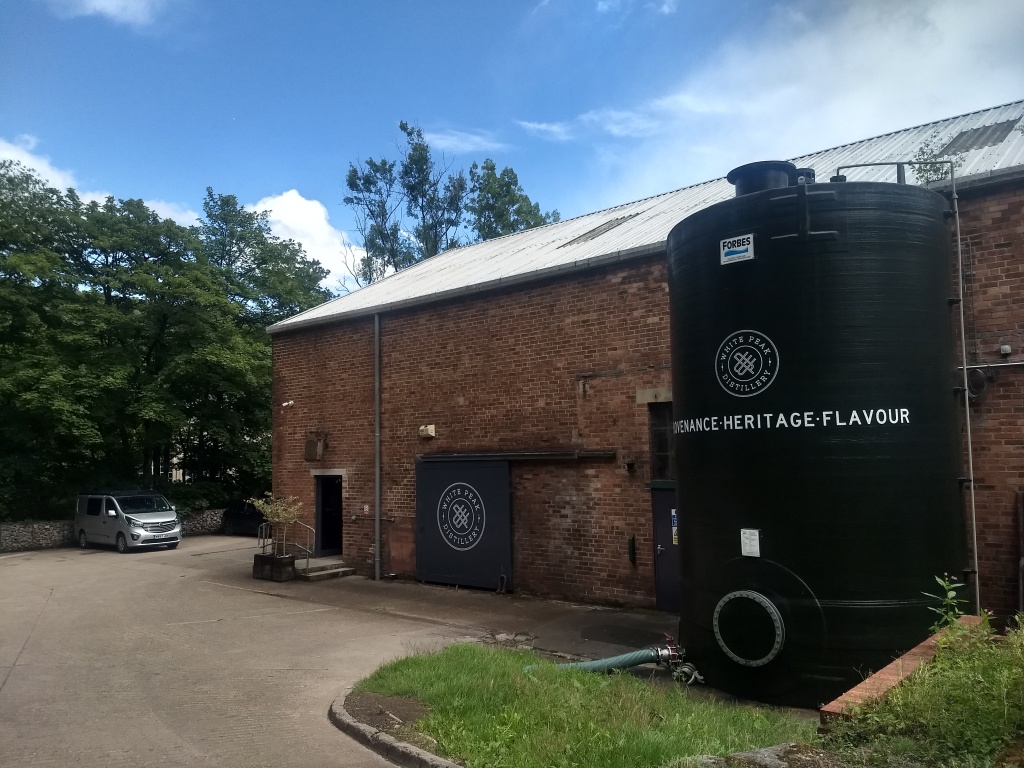
Anyway, we left Edinburgh and, after a first stop in Leeds (to meet friends who recently became parents and their new-born kiddo), we drove straight to the first distillery we wanted to visit: White Peak. The distillery is in Derbyshire, near the Peaks District National Park, in Ambergate. It was funded by the Vaughn family, Max and Claire, in 2016, and their first single malt was released in February 2022. The chosen name for the whisky is Wireworks, because the distillery is located in a very beautiful former industrial estate on the river Derwent, a former wirework indeed! The industry complex dating back to 1876, closed in 1996: a lovely industrial revolution style building.

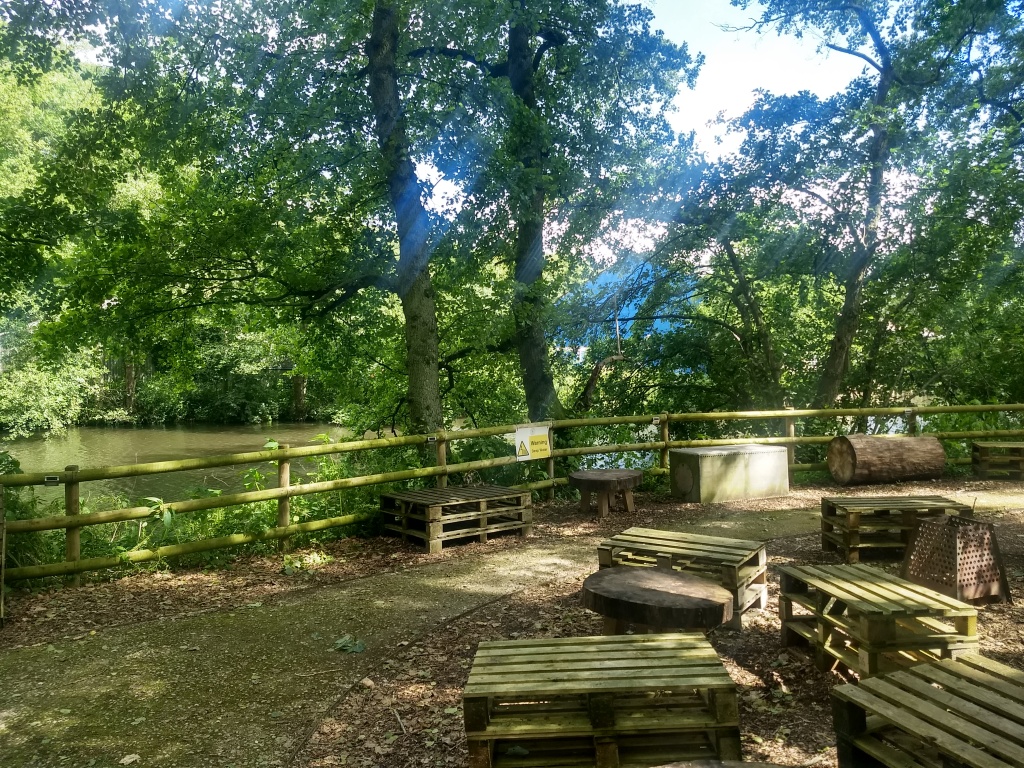
We were very curious to visit this distillery. We had heard good things but we hadnโ€™t had the chance to try this malt before, so here we go! Once there, we quickly checked in, but being early, we had time for a coffee and a stroll outside: a few meters away from the entrance they set up a nice summer garden, with lots of old industrial bits and bobs.

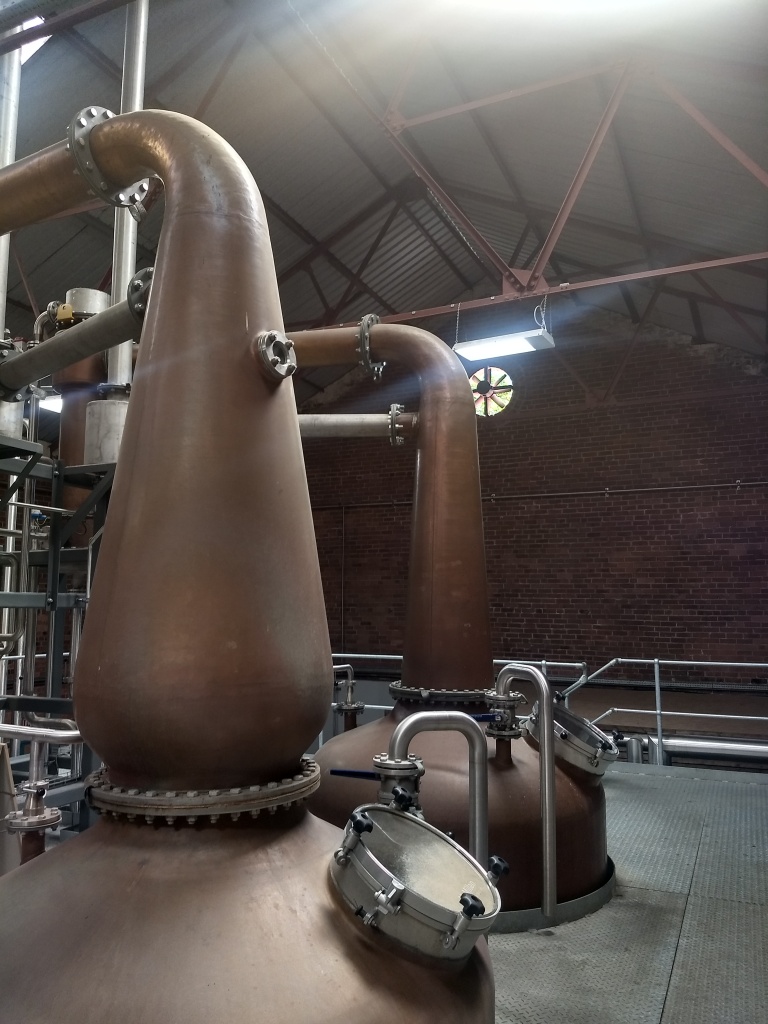
Back to the bar, we started our Warehouse Tour with Dave. He works there as a distillery manager and distiller, which was great as he gave us lots of insights! So, first off, he told us that although they make gin and rum too, the 90% of their business is the production of single malt. In contrast with the industrial revolution style budling, the equipment is very modern, and bar the stills, it looks like a modern brewery. They buy their malted barley from Crisp, and they then process it in a very modern brewing-style mill. This only applies to the unpeated malt however: the peated one, which constitutes 10% of their mash, is pre-milled. A thing in common with many distilleries is the use of three waters, from which they obtain a clear wort for a fruity character. The long fermentation, 6 days, is done with two types of yeast, dry distiller and brewerโ€™s. The latter is live yeast from the Thornbridge brewery, in particular the one used to make the Jaipur IPA. This is both to provide a twist to their flavour, and to honour the Derbyshire brewing history.

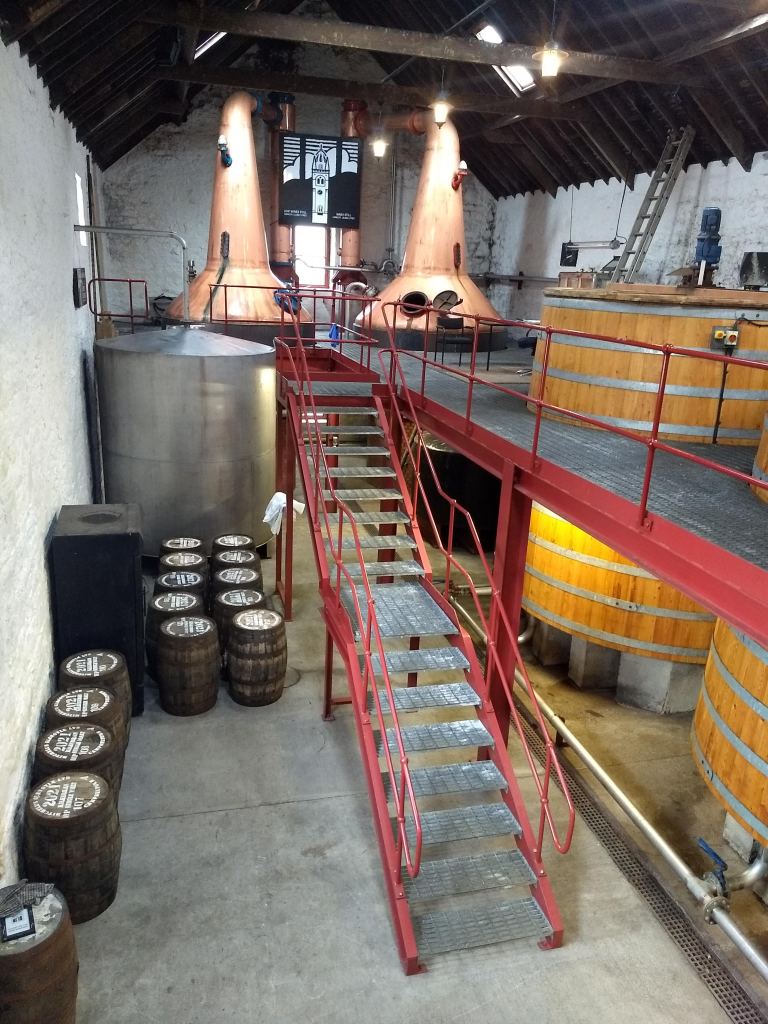
The two wee stills.

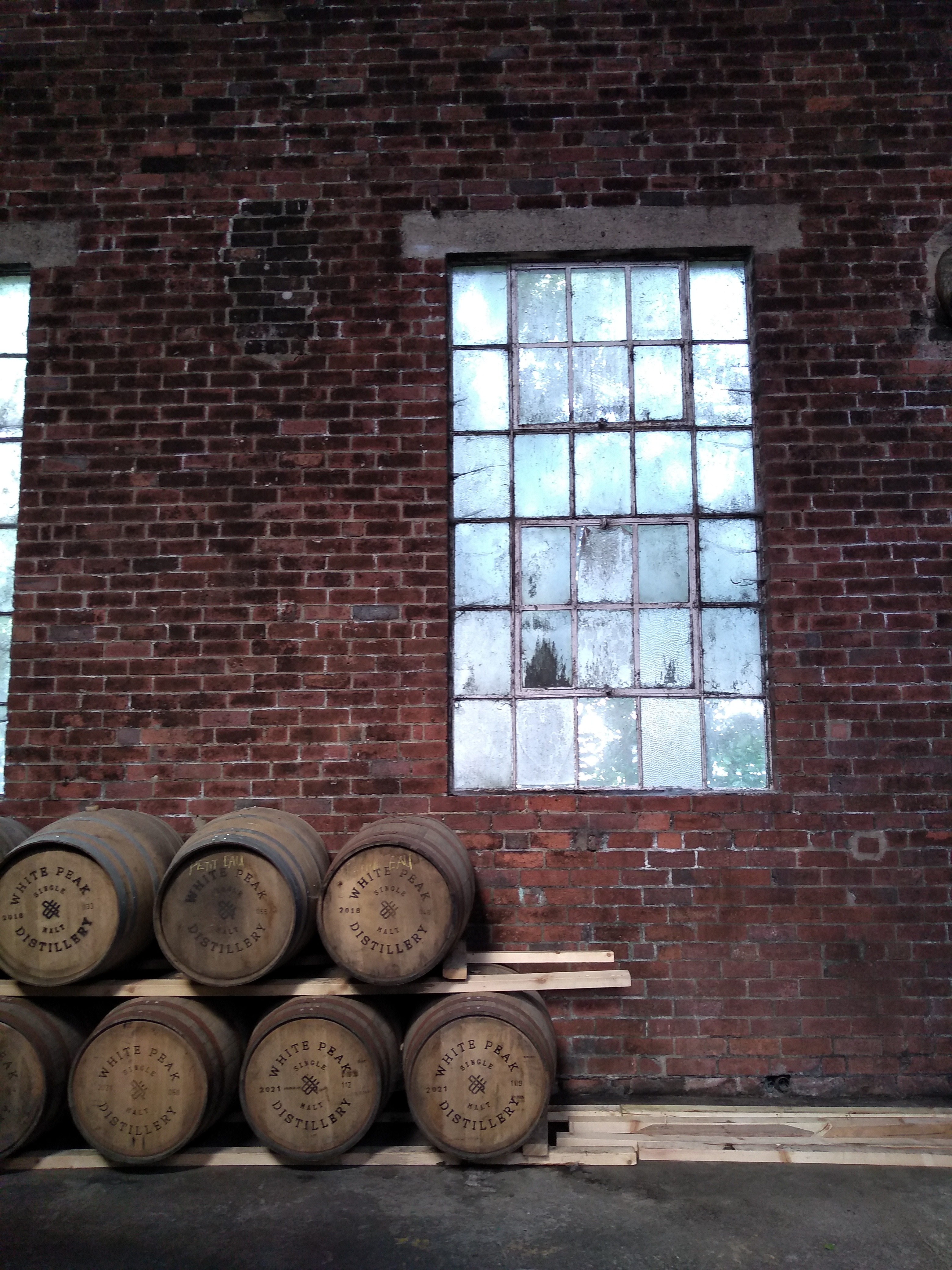
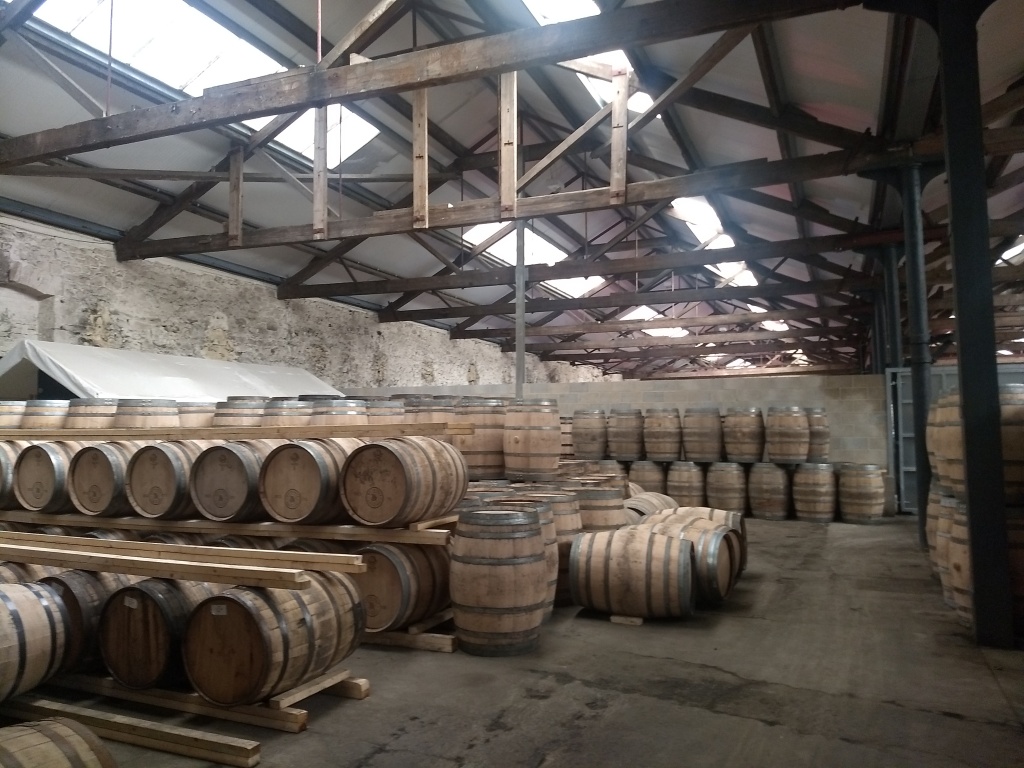
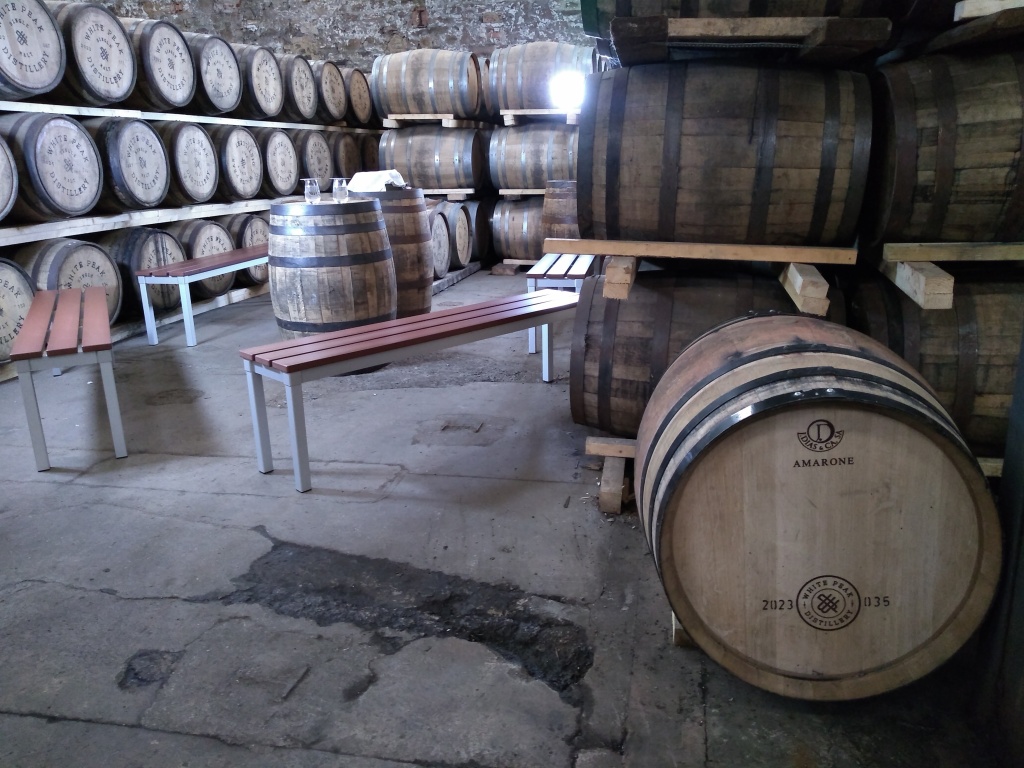
Distillation is made in two small Scottish-style copper pot stills, and the usual cut points for the heart (ie what is kept from the second distillation) are 78% and 67%, quite wide indeed! They produce more or less 10 casks per week, mostly into ex-bourbon barrels from Heaven Hill or ex-wine shaved-toasted-recharred (STR) casks. They produce about 60,000 litres of alcohol per annum, putting them in the top 5 of English malt distilleries. After trying the newmake spirit, we moved to the warehouse, just next-door. Technically not a dunnage warehouse (the industrial building original floor is concrete), although the barrels are stored horizontally in a typical dunnage way. Their โ€œangel shareโ€ (the percentage lost to evaporation) is about 10% over 3-4 years. David explained us their barrels policy, as we said, mostly ex-bourbon and STR, but with many exceptions: red-wine, Port, rum, virgin oak, etc, typical of young distilleries wanting to experiment. We also saw the casks for their next release, the Necessary Evil, in collaboration (again) with Thornbridge brewery. This year they used ex-PX casks which previously held stour beer. 

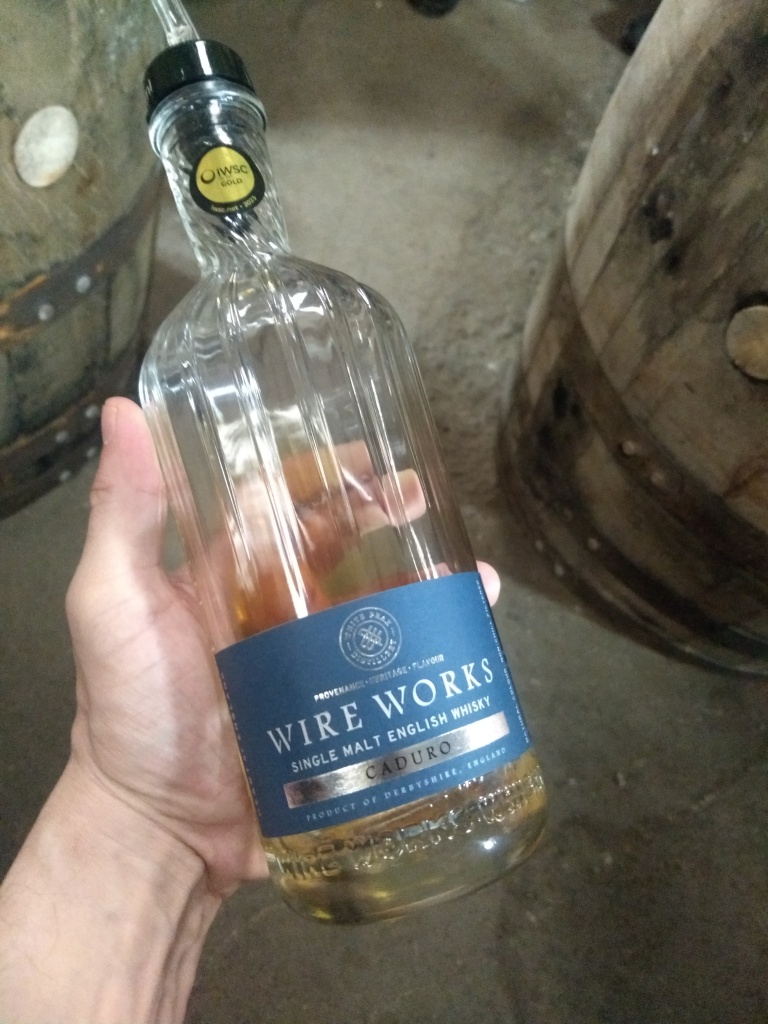
Still in the warehouse, a table with empty glasses and benches was prepared for us, for the tasting! The first dram was the Caduro, released a few days before our visit, a marriage of ex-bourbon (33%) and STR casks (67%), bottled at 46.8%. Itโ€™s a lightly peated malt, quite fruity, sweet and very tasty. The other two samples were both from the cask, a 4yr-ish ex bourbon cask filled at around 72%, and a slightly older ex American oak cask (but with French oak ends) filled at 64.5%. We have to say that they were both delicious – a shame they werenโ€™t on sale.

…a very nice tasting.

Back to the shop, as the buying queue disappeared, we asked Dave if we could try their other release: the Alter Ego (51.5%). For this, the cask make-up is similar to Caduro, but inverted (33% STR and 67% ex-bourbon barrels), and with different cut points too. It was tasty as well, but we felt that the Caduro was a bit more balanced.

The day finished with us driving towards Stratford-upon-Avon to get to the camping, to rest and get ready for another day and another distillery visit. Overall, the visit to White Peak was a great experience, probably one of the best we had recently, and for a very reasonable price. Of course, Dave was excellent, and as we said many times, doing the tour with a person involved in production is often more engaging.

Until next time, slainte!


White Peak Distillery Warehouse Tour

Price: ยฃ40.00 pp (July 2023)

Duration: 1hr 30min

Tasting: 3 drams, single cask ex-bourbon cask (4yr, filling strength 72%), single cask STR American oak cask with French oak ends (around 4.5yr, filling strength 63.5%), Caduro (46.8%abv), all not chill filtered and natural colour, and a complimentary glencairn

Target: whisky enthusiasts

Value for money: good

Highlights: the industrial site and the nerdy tour

Recommended: yes

Link: https://www.whitepeakdistillery.co.uk/

#3.3 Campbeltown Loch, I wish you were whisky!

How things are done!
(Day 3 & 4)


A day at Springbank and Glengyle distilleries, plus a Glen Scotia tasting. 

(missed Day 2 or Day 1?)

And finally itโ€™s the Springbank-Glengyle day! During our first trip here, back in 2018, we only visited Glen Scotia and opted for the Cadenheadโ€™s Warehouse tour instead of the Mitchellโ€™s company distilleriesโ€ฆwhat did we miss! Fortunately, the folks at Springbank were nice enough to offer us a tour on a Saturday, which is normally closed (many thanks to Mary for that), and a tasting at their newly build Washback (spoiler: the bar is made of an actual wooden washback!).

Dry peat and wet peat!

Since we were the only group, we could tour the distilleries all together. First off, Springbank. We started off with the malting facility, which they still do 100% on their own (and we realised how this is the bottleneck of their production size, but also their strength). There was barley drying on the malting floor, one of the first times we actually saw this stage of the process happening live. Of course, it is all done like in the old times, and as a testimony of this there was also a hi-fi system (go 90s!) to keep the workers company.

The Springbank mashtun.

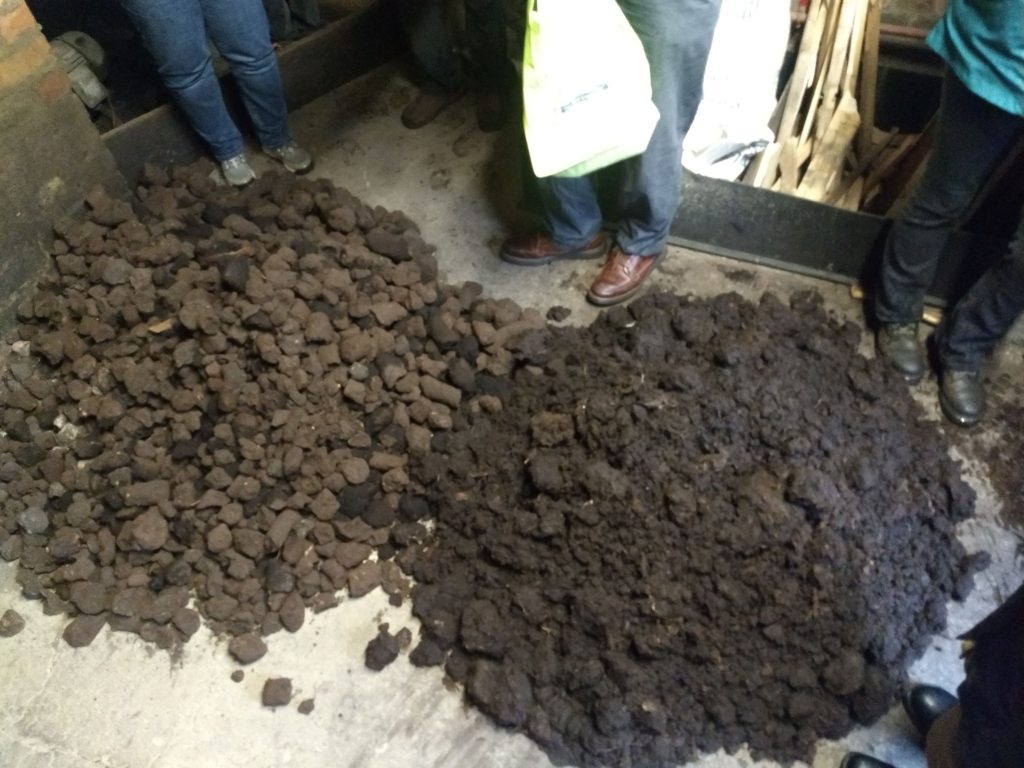
Moving outside, another thing new to us: a pile of dry peat and one of wet peat. The knowledgeable Mary told us that they are used in a slightly different way depending on the product they are producing. The kiln is run for 30h with hot air when they are producing the unpeated Hazelburn (10% of their production), for 6h with peat and 30h with hot air for Springbank (80% of their production), and up to 48h with peat smoke for the (quite heavily) peated Longrow (another 10% of the production).

In case you need a recap about distillation.

Moving to the next production stages, the mashtuns, (actual) washbacks and stills, we could again see how hands-on are all the processes here: no computers, everything very manual. In a world moving too fast, it is comforting to find a place where time seems to slow down, and where people definitely take their time to do things. And rightly so, since their bottlings normally fly off the shelves like pigeons after a gunshot. Next up, the warehouse, which is of course the best smelling place of the distillery, as alwaysโ€ฆeheh.

Dreamland!

Glengyle brought us back to slightly more modern times. Opened in 2004, one of the reasons being to circumvent a rule of the SWA (Scotch Whisky Association) which wouldnโ€™t allow to call an area a whisky region with only 2 distilleries. The stills came from the defunct Ben Wyvis distillery, dismantled in 1977. The distillery looked more โ€œconventionalโ€, although still way less automated than many distilleries we visited, which looked like they could be run by computersโ€ฆmaybe in a dystopian future that will happen and the machines will take control on humanity by poisoning the booze! Donโ€™t worry, we are not becoming sci-fi writers, and going back to Glengyle distillery we could spot the window which inspired the Kilkerran Single Malt logo: a selfie was a must!

Glengyle, or the second distillery tour in less than two hours.

At the Washback bar we picked a Hazelburn and a Longrow flights, since they included drams we were not very familiar with. Both awesome, in particular the former: the Hazelburn Cognac SC knocked our socks off! And among the latter, the (at the time) just released Longrow 18 was outstanding.

The smile only a flight of Hazelburns can give you!

After a few extra drams, the party moved to another bar, were we took turns wearing a โ€œ90s Meg Ryanโ€ wigโ€ฆWe’ll spare you the pictures! We had dinner at Number 42 – great food quality (probably one of the best fish&chips tried so far), although not ideal combination of small portions and high prices. The night still ended on a high after a few drams at the Ardshiel.


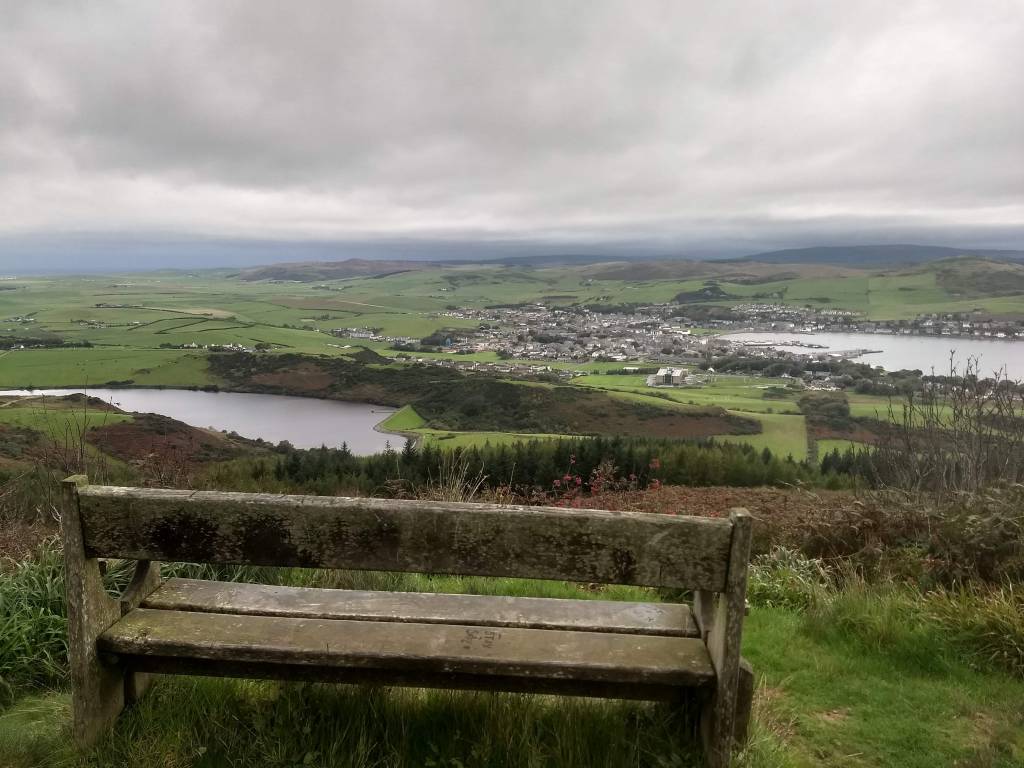
On the last day we had a free morning. Many (including Teresa after a run and a shower) joined Justine in a lost distilleries’ hunt – Benmore, Argyll and so many others! Meanwhile, in preparation for the upcoming half marathon, Gianluigi went for a 24k run on the hills around the town. Fortunately, the weather wasnโ€™t too bad, so he could actually take some (far from decent) pictures!

A bench overlooking Campbeltown.

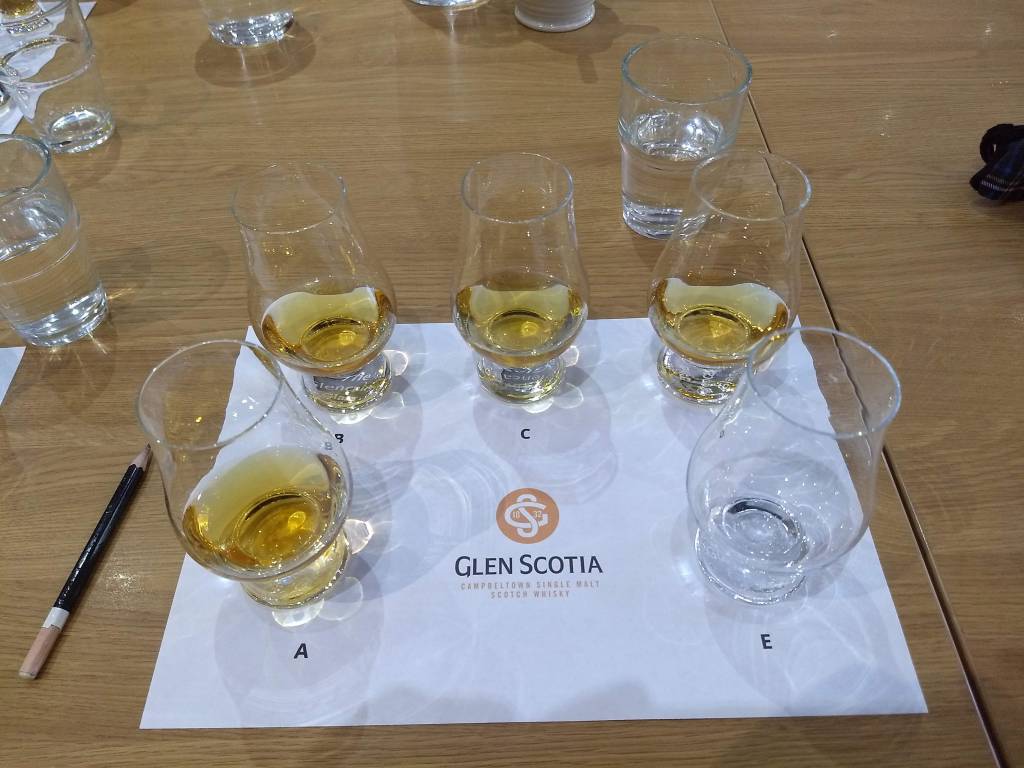
In the afternoon we attended the last event of the trip, a Glen Scotia tasting with Ian MacAlister at the Ardshiel Hotel. We started with the 10y, a very new bottling destined to grocery stores. This is why it is bottled at a 40% abv, like their other NAS supermarket release, the Campbeltown Harbour. Similar to this, and in spite of the 40%, it is a quite drinkable sweet dram, very well engineered for a broader audience. The other three drams – Warehouseman’s Edition (2005 recharred American oak finished in first fill oloroso, 56.2%), Single Cask Shop Bottling (2013 highly peated 1st fill bourbon, 61.4%) and Master Distillers Edition (2002 refill American oak hothead, 57.3%) – were all outstanding, with the Single Cask Shop Bottling being the one we liked the most. At this point, Ian surprised us with two more drams. The first one was a 2002 single-cask refill PX, which he (and us) loved – too bad there isn’t enough for a bottling, it was quite unique! The second was their new festive bottling, a 12y cask strength which has spent some time in heavily charred and oloroso casks, frankly delicious!

Last but not least: the Glen Scotia tasting!

We were all quite happy (wellโ€ฆyou know), and the party naturally moved to the Ardshiel bar, with Ian staying with us for a couple of pints and many chats. Dinner was booked there as well: delicious and again great service, strongly suggested! Back to the bar, our friend Cath started playing the guitar and singing. At some point Gianluigi was invited to play the guitar, but it was not a great success since Tool and Mastodon songs are not quite as sing-along songs as he would think, who knew! He somehow managed to remember Donโ€™t look back in anger and Everlong to accompany Cath solid effort, before passing the guitar back to her. Probably because of the many drams, we went to bed quite early, although it felt like 1am!

The day after was smooth, returning back to Edinburgh with only a quick stop at Fyne Ales to grab a few of their sour beers, with anything notable happening. As a first group trip, we really enjoyed it. And it was awesome to spend time with people sharing our same whisky passion and which up to now we had mostly met on Zoom. Going to Campbeltown again was great, and put back in perspective how whisky can (and should) be enjoyed at a slower pace, after all the FOMO and online hysteria which went crazy during the pandemic. Canโ€™t wait to go back!


Springbank Tour

Price: ยฃ10.00 pp (October 2021)

Tasting: a 20ml of Springbank 10 and a 50ml of Springbank Distillery Visitors bottling (NAS 46%), and a sampler glass

Target: everyone, literally!

Value for money: Great

Highlights: the malting floors

Things we did not like: nothing

Link: http://springbank.scot/


Glengyle Tour

Price: ยฃ10.00 pp (October 2021)

Tasting: a 20ml of Kilkerran 12 and a 50ml of Kilkerran Distillery Visitors bottling (NAS 46%), and a sampler glass

Target: everyone, literally!

Value for money: Great

Highlights: the malting, but the distillery overall

Things we did not like: nothing

Link: https://kilkerran.scot/

Glen Scotia Tasting*

*Since this was a bespoke tasting, we won’t make a summary card.

Link: https://www.glenscotia.com/