Lost in Brechin: Glencadam distillery
TL; DR: Another weekend, another trip to the northeast, destination: Brechin, home to Glencadam distillery! They just opened a new visitor centre after a substantial upgrade, and it is very cozy and charming: well done! We enjoyed the basic but informative tour, and a warm and hearty soup afterwards.
The weekend after our trip to Royal Brackla it was time again to hit the road with Mr Vantastic. And again, our destination was the northeast of Scotland. This time we had two distilleries to visit, so we stayed away for the night, hoping not to freeze. We left Leith mid-morning, the weather was not as good as during our trip to Royal Brackla, but not as wet as the one to Glenglassaugh: overcast and some rain here and there. We didn’t stop for lunch, as we’d prepared two sandwiches with the delicious rock salt and rosemary focaccia from Lidl: when it’s fresh, truly good stuff! Our first stop was Glencadam distillery, in Brechin. We arrived in town at around 1.30pm, but we parked away from the distillery, in what was marked as a potential stopover for the night. It is near the river South Esk but it didn’t look that great, so we postponed the decision to after the tour. It took us about 20 minutes to cross the town, walk alongside a football ground and a cemetery, to then arrive at the distillery.
Glencadam has been on our radar for a while, as their single malts became very popular among whisky enthusiasts: other than delicious, many of their expressions (except for a couple available in supermarkets) are naturally presented (non-chill filtered and natural colour), and mostly well priced: if you haven’t tried it yet, get a bottle of the 10-year-old, great stuff! After the pandemic the distillery has been mostly closed to public, with tours only available on Tuesdays and Thursdays, previous direct contact, but for a short period of time. When they closed again (to visitors, the distillery was still in production), it was for an important reason: works started to build a visitor centre, including a cafe and a dram bar. It was also to celebrate their 200th anniversary, so an opening was expected in 2025. Almost at the end, but they finally opened in November! As we arrived, we noticed the all new and tidy exterior, with an old still used as decoration and, given the period, a couple of cask-stave made Christmas trees.
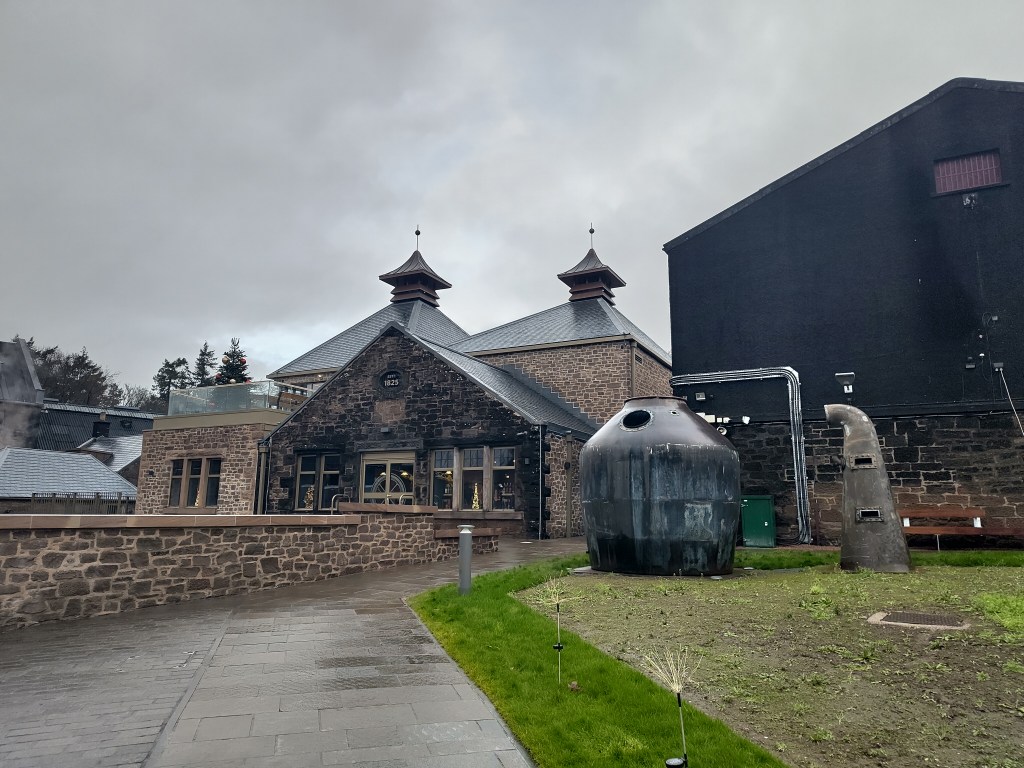
Reward after a wee walk in the cold, Glencadam distillery.
In the visitor centre we were welcomed by Michael, the manager, an old acquaintance as he used to work at Kingsbarn distillery, and we met him many times at the Fife Whisky Festival. While waiting for the tour to start, we browsed the shop: other than the known expressions, everything was set up for a couple of bottle-your-own bottlings, but they were not available yet.
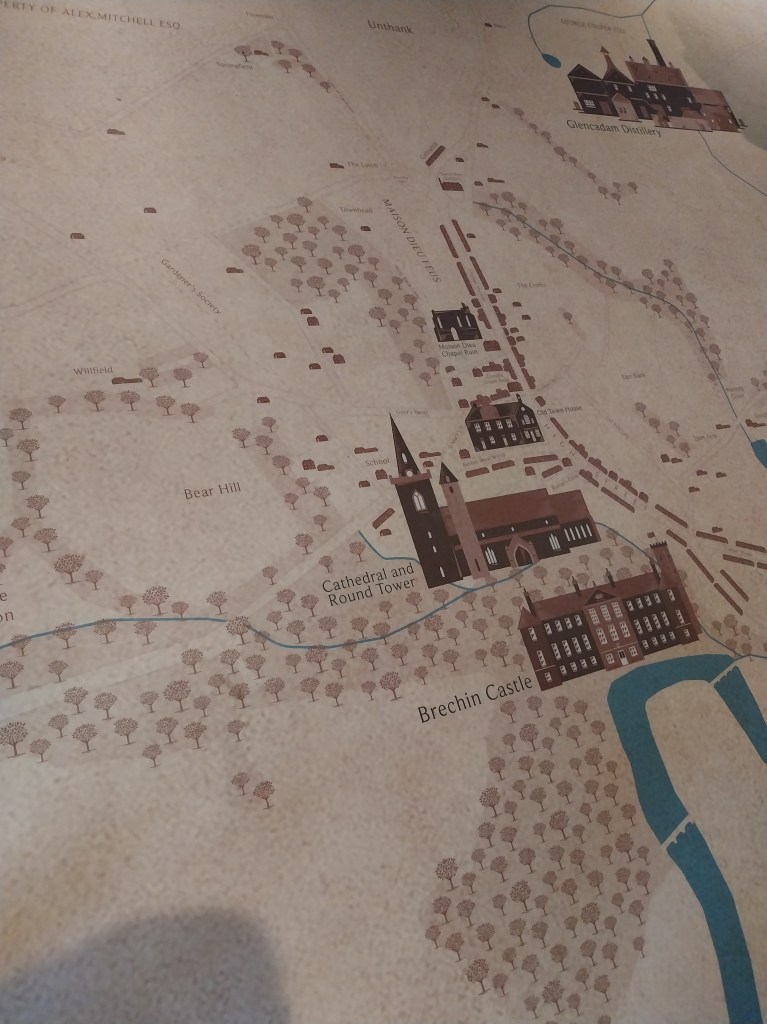
Our guide was Brian Townsend, local from Brechin, the whisky historian who wrote Scotch Missed, a book about lost distilleries (here a review by Kate Watt, of Watt Whisky independent bottler). It was us and another two couples on the tour, which started in a room with panels about the history of the distillery and a big map of Brechin on the floor. The distillery was founded in 1825 by George Cooper, who sold it only two years later. Between the mid-1800s and the early 1900s it changed hands a few times, until it was purchased by Hiram Walker in 1954, which in turn was acquired by Allied Domecq in 1987. The distillery was mothballed in 2000, but finally bought by Angus Dundee, the current owner, in 2003. The history and a high-level explanation of how whisky is made was covered (possibly too extensively) in an exhibition with a series of videos that preceded the actual tour of production.
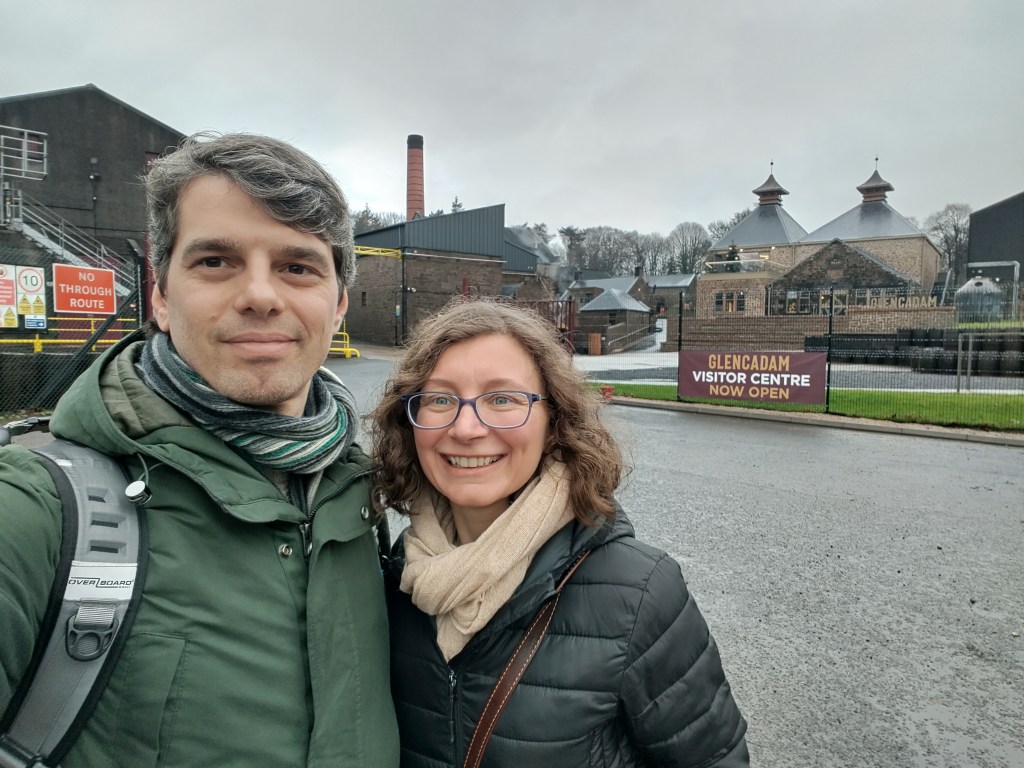
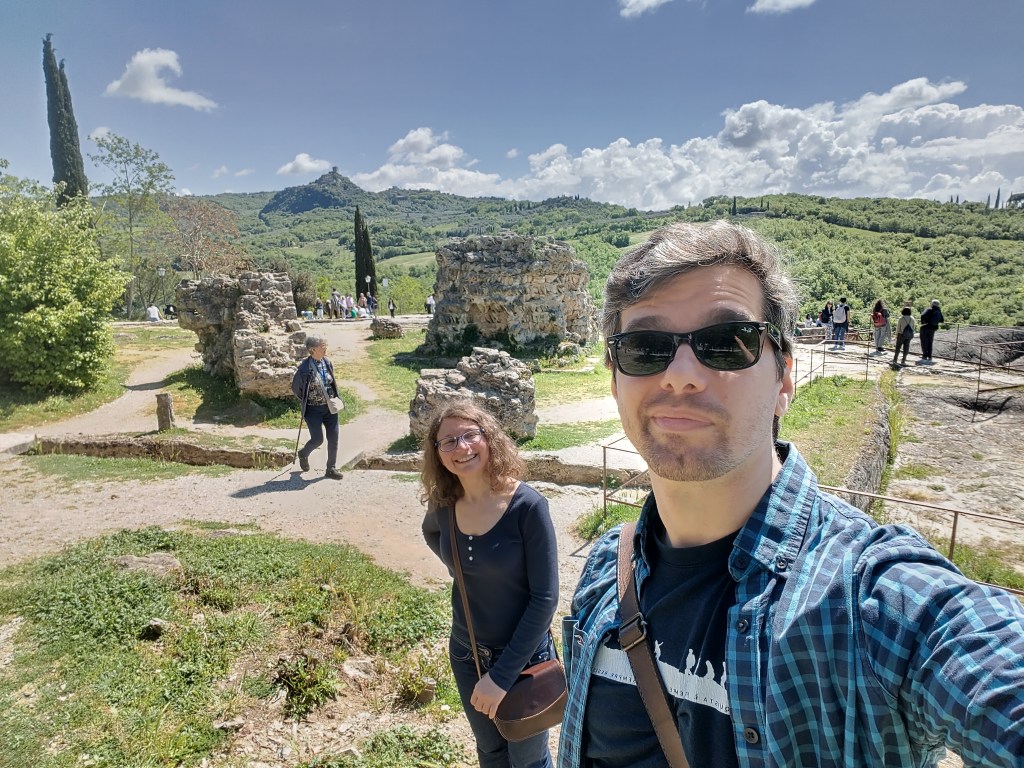
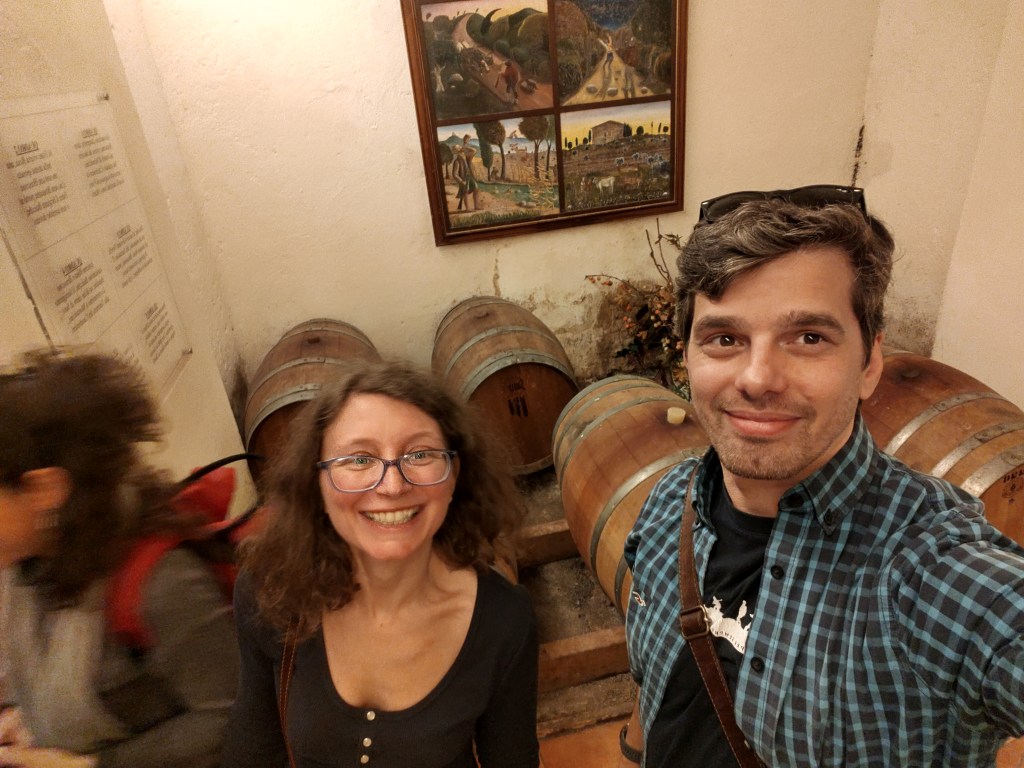
We didn’t take pictures in the exhibition area, so you get us instead.
Going into the nerdy production details, they get 30 tons of fully unpeated barley three times a week mainly from Bairds, sometimes from Crisp: in both cases, they aim for Scottish barley. The mill, built in the 1920s, was acquired in 1965 and produces grist with the usual components split (husk/grit/flour 20/70/10). Five tons of grist are added to each mash, first with 20,000 litres of water at 65°C, then another 8,500 litre for the second water, and finally the third water (another 20,000 litres) captures the remaining sugars and is used as first water in the next mash. The draff is collected by local farmers once or twice a day, to feed cattle. Of the six washbacks, only two are made of stainless steel, but they will be replaced next year by Oregon pine ones, like the other four.
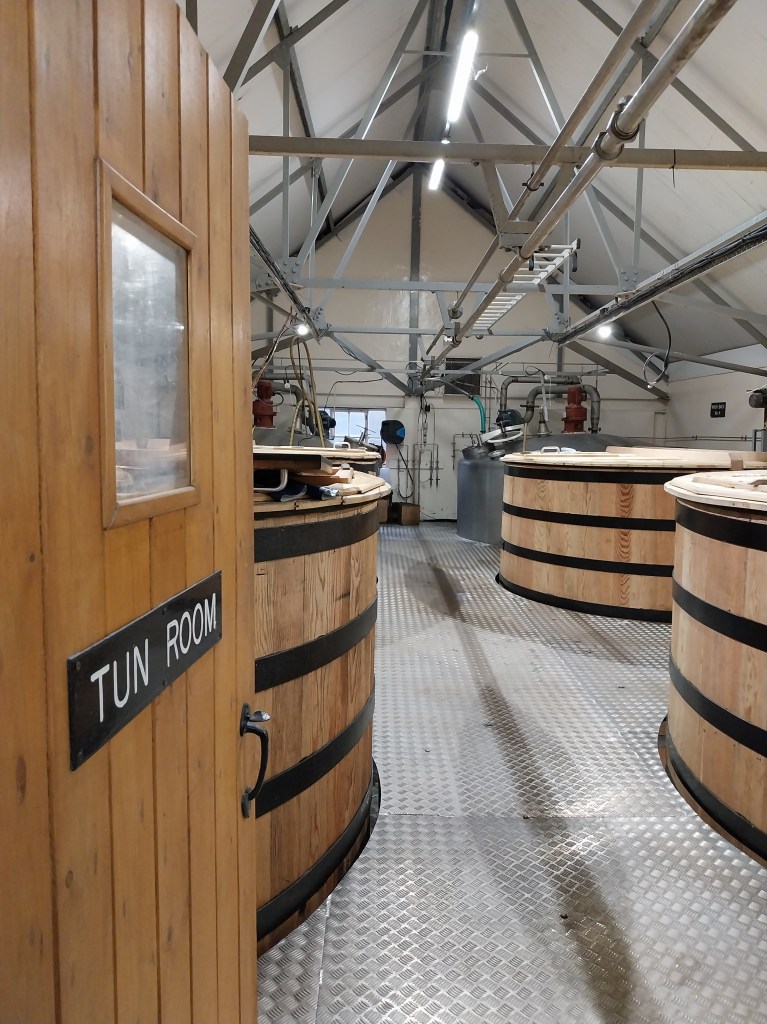
Oregon pine and stainless steel washbacks.
Another improvement was to get the water wheel to generate some of the electricity, replacing the original one dating back to 1824-25 that worked for over a century. The new one can be observed behind glass. Instead, a feature that is gone forever, is the original Doig ventilator, aka the pagoda, which was destroyed in a fire.
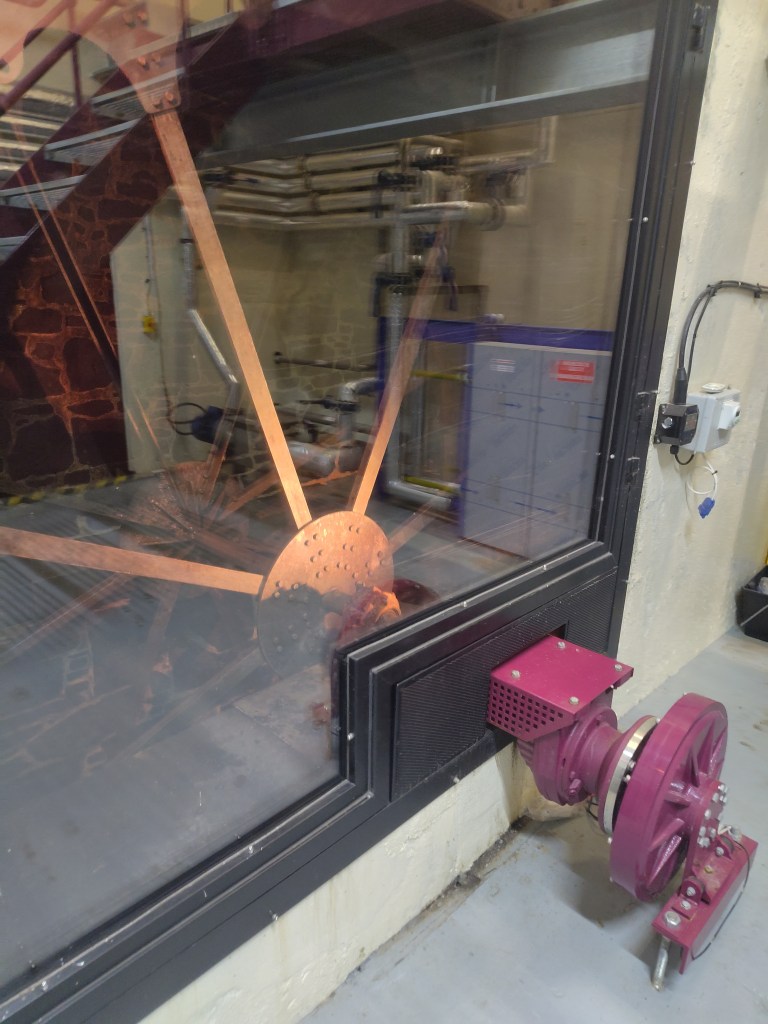
Can’t see much of the whater wheel behind the glass.
Back to production, we learned that fermentation lasts 48 hours, a short one, and is triggered by 13kg of distillers’ yeast. They only have one pair of stills, and in the second distillation, they start collecting the spirit after 10 minutes of foreshots (we didn’t get the cut points though). Coming out of the still room, we were in a small yard where the draff truck comes in, and from there we reached one of the six warehouses on site, to the right of the visitor centre. Two of these are dunnage style and date back to the 1800s, while three are from the 1950s and one is a modern racked warehouse.
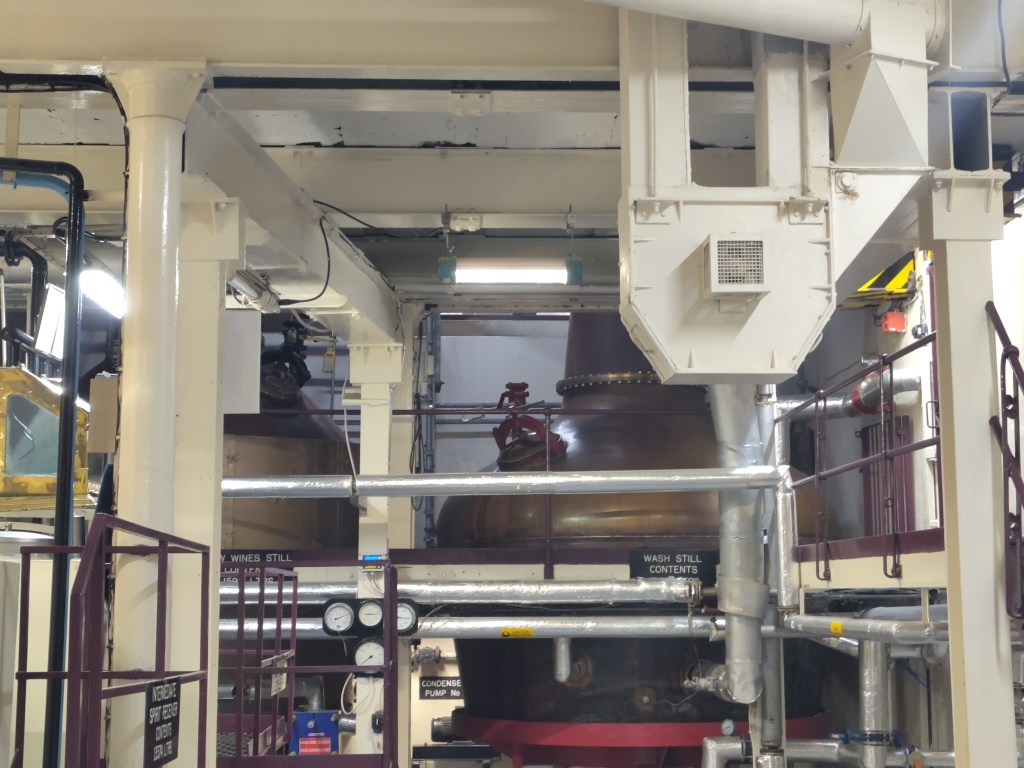
A glimpse of the still room from the outside (no pitcures allowed inside).
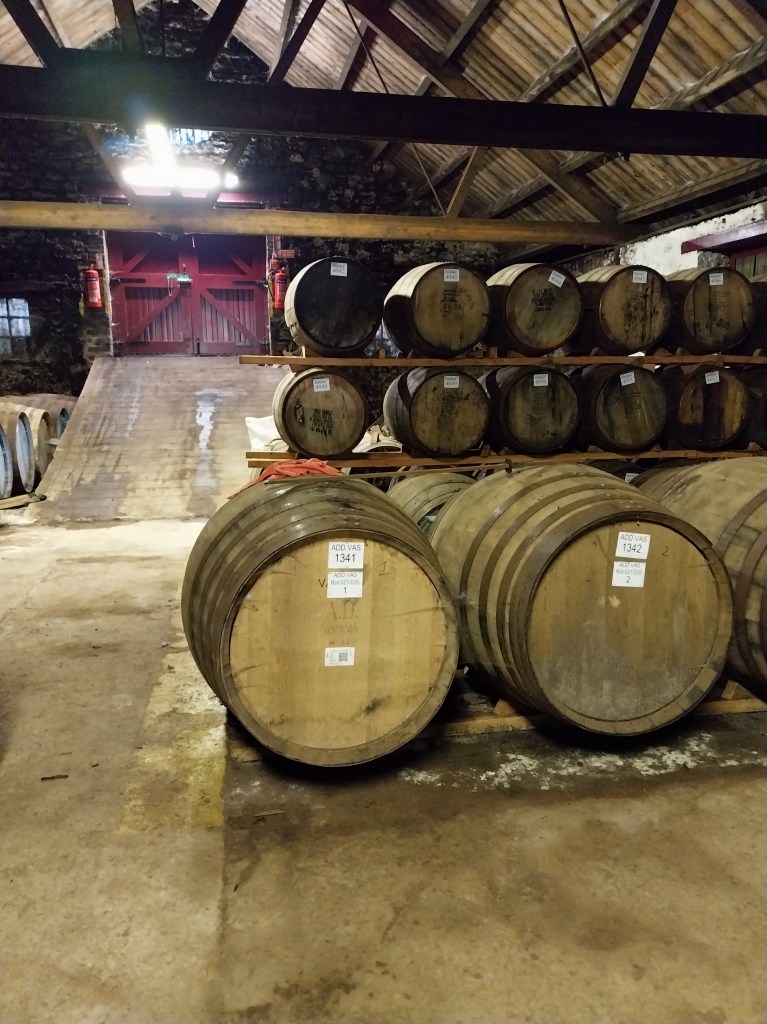
Charming dunnage warehouse.
It was then time to go back to the visitor centre for the tasting: we had three drams in front of us, the Glencadam 10y (46%, fully ex-bourbon casks), its bigger brother 13y (46%, same casks), and the Reserva Andalucia, a non-age statement expression finished for a year in ex-sherry casks (46%). Recently, this became part of a series of many cask finishes expressions (white Port, tawny Port, Amarone, PX sherry, etc). It was a basic tasting, but enjoyable nonetheless…When we were about to finish, Micheal brought us another dram: a 17y “triple Port” cask, a nice and delicious touch!
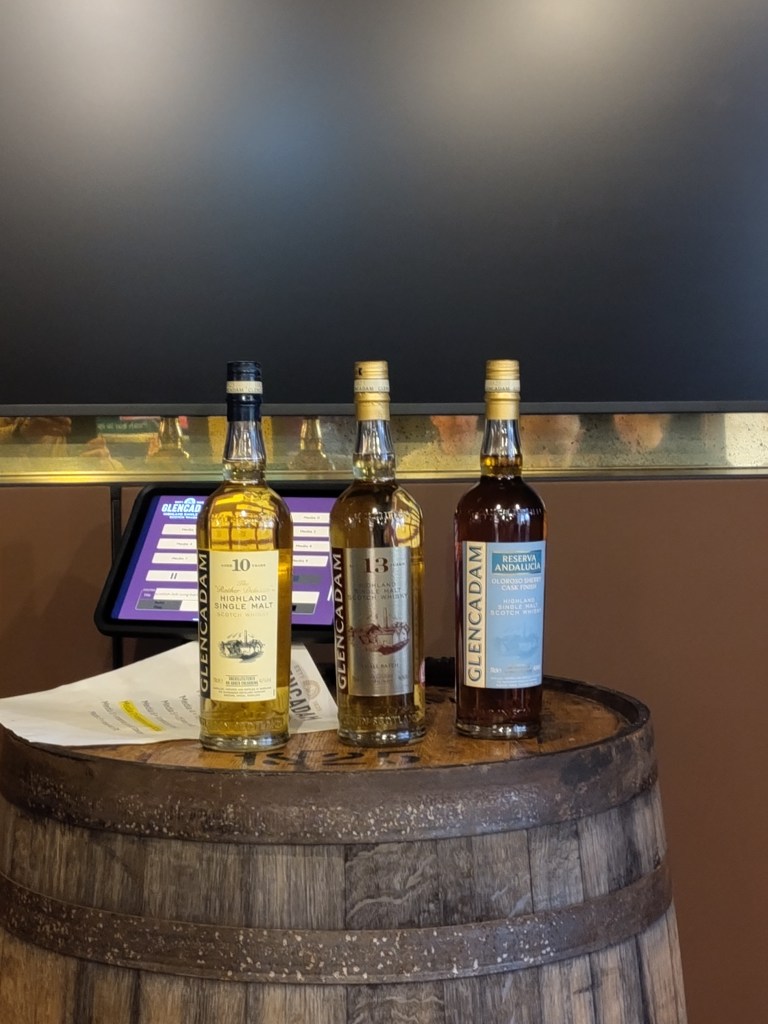
A solid, wee lineup.
After the tasting, we went upstairs to the cafe for a warm soup, but Gianluigi got tempted by the dram bar (they have most Glencadam and Tomintoul expressions available) and got another dram (a delicious 15y finished in Madeira wine cask, 46%). It was a very pleasant moment, the cafe is a very cozy space to relax with bites and drams. Because in the meanwhile we’d decided to leave Brechin, we didn’t indulged in more drams at the bar (hopefully next time), and we left the premise, not before getting a signed copy of Brian’s book.
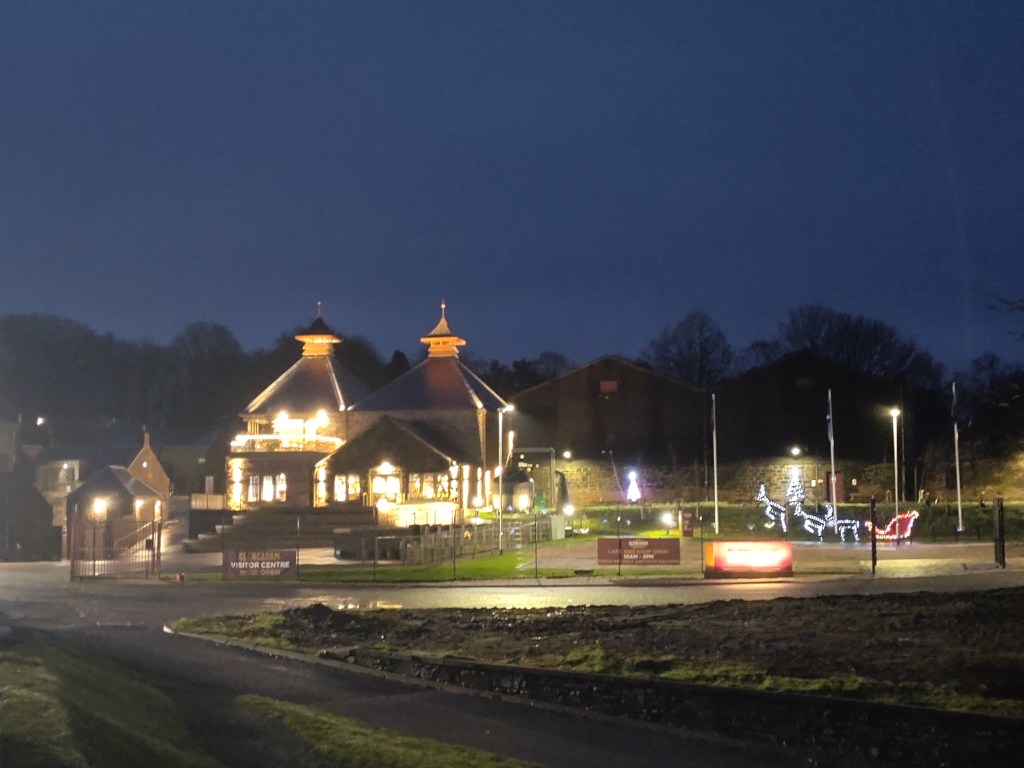
Christmasy atmosphere at the distillery.
We walked a bit around Brechin, but it was dark already and the visit to the cathedral was not that satisfying. We visited the site where the North Port (or Brechin) distillery used to be, now a CoOp (*sad trumpet*). We left town and arrived at the Cock and Bull pub, north of Aberdeen, a pub that lets campervans stay if a meal is consumed there. Despite arriving early (not even 6pm) they sent us away asking to come back at 8pm. We did, but we had to wait almost another hour to order as they admitted that they thought we wouldn’t come back (in spite of us leaving our names for a table). What a shite way to treat customers, probably we won’t be back.
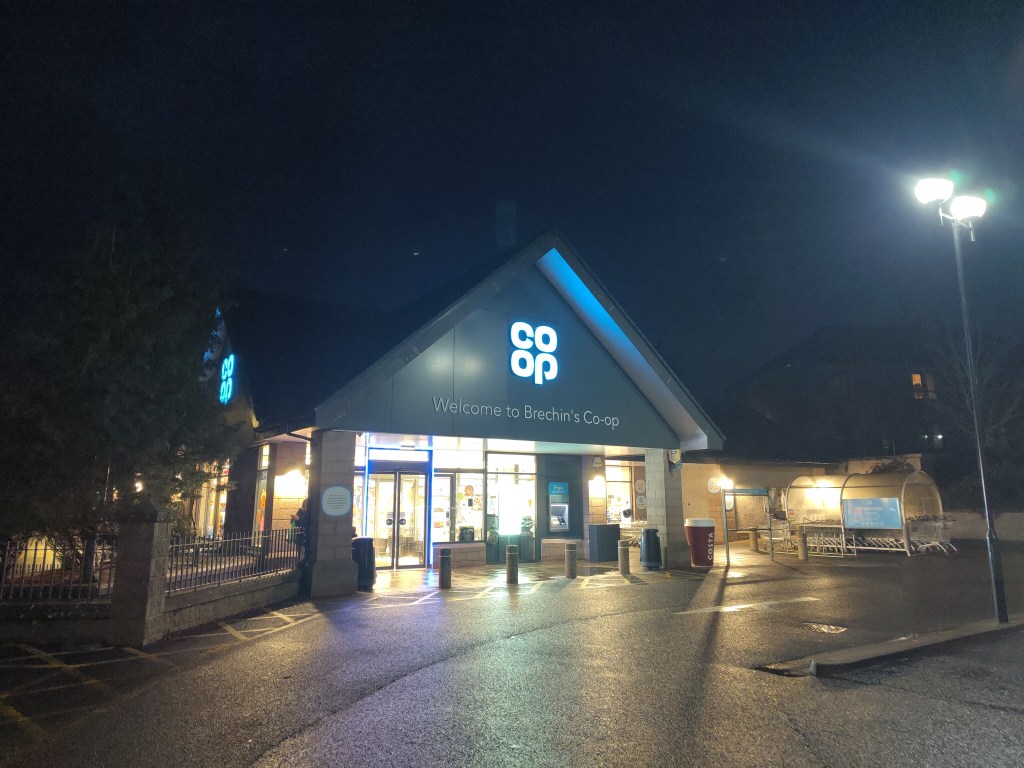
What used to be North Port distillery.
Overall, our visit at Glencadam distillery was very good, we had a nice time. The new visitor centre looks great, and while the experience we chose was very basic, especially the tasting, it was interesting nonetheless (to note, they offer a pricier experience, maybe next time). We’d definitely suggest visiting the distillery to friends, in particular for those early into their whisky journey. The only thing we didn’t like was the pricing of the bottles in the shop: above retail, including some shops on the Royal Mile (obviously we’re not considering the big online retailers), but in general everything beyond the core range was slightly pricy, with no discounts available to those taking the tour. It always puzzles us how some producers seem to punish instead of rewarding the enthusiasts making the effort to travel to the distillery.
Stay tuned for the last tour around the northeast of Scotland, coming next week! Until then, slàinte!
The GlenCadam Distillery Tour
Price: £23.58 pp (£22.50 + fee, December 2025)
Duration: 1hr 30min
Tasting: 3 drams, Glencadam 10y (46%), Glencadam 13y (46%), Reserva Andalucia (NAS, 46%)
Target: everyone
Value for money: very good
Highlights: the cafe above the visitor centre
Recommended: yes
Link: https://www.glencadamwhisky.com/

 Dramming around