#46.3 The return of the smoke

Islay’s Juggernaut: Caol Ila


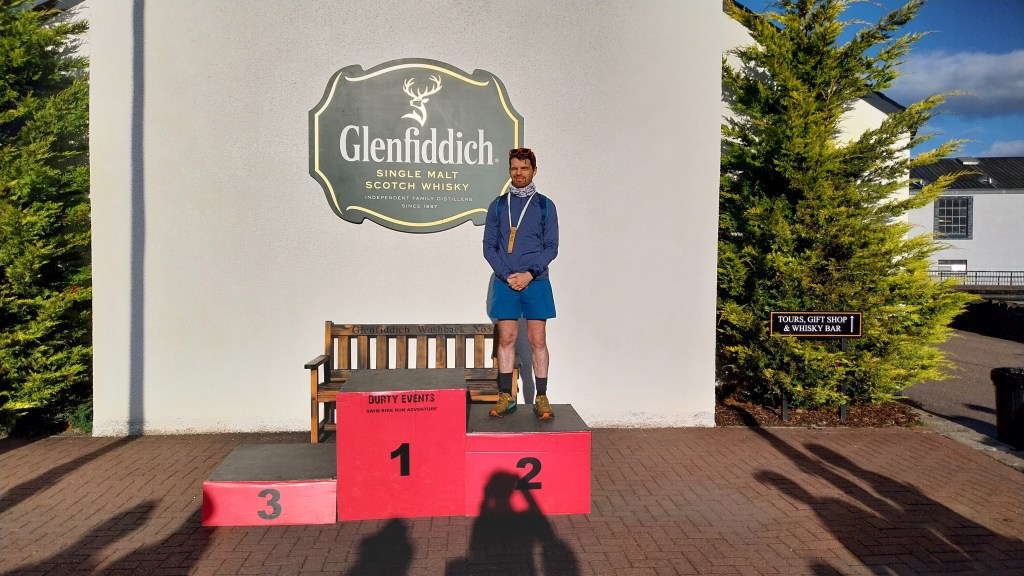
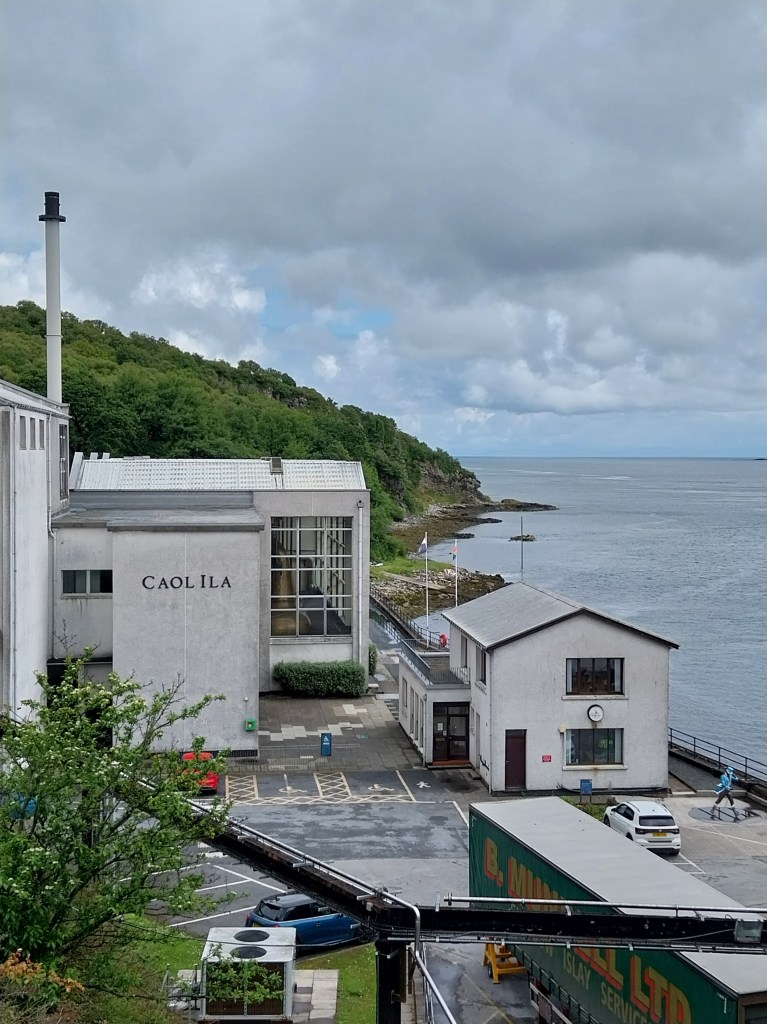
TL; DR: Back on Islay, we first visited Finlaggan, the site of the castle of the Lords of the Isles, in the middle of a loch: a charming place. We then drove to Caol Ila distillery for the first visit of the day. Itโ€™s the biggest on Islay, recently renovated, definitely worth visiting on a good day for the view from the tasting room.

(missed Part 2/Part 1?)

We rarely sleep past 8am in the campervan, but this was one of the rare occasions. A combination of cozy and nice temperature, and not too much light (also thanks to a truck protecting us from direct sunlight!). We felt well rested, and after a nip at the loos (public toilets were just on the other side of the very narrow street), we had breakfast. There wasnโ€™t enough time to do anything else, so we jumped in the vans and managed to take the first available Caolin Ferry back to Islay.

Caol Ila distillery is very close to the Port Askaig pier, and we had over an hour before the tour. Instead of hanging around, together with Justine we decided to visit Finlaggan, less than 10 minutes up the road towards Bowmore, with the last bit on a single-track road.

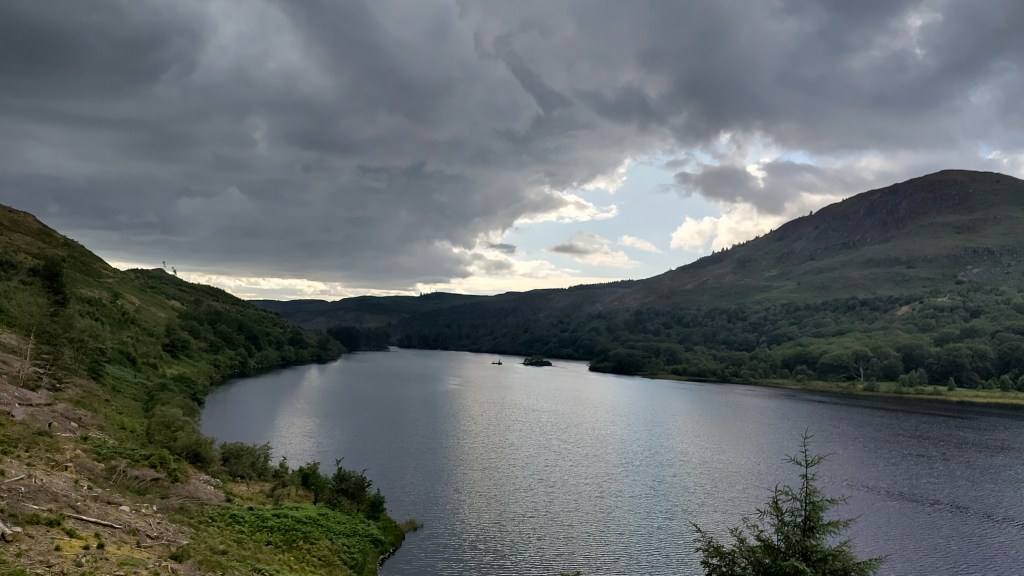
This is the historic seat of the Lords of the Isles, the ancient rulers of the area, before it was absorbed by the Scottish crown. Itโ€™s in the middle of Loch Finlaggan, just a few minutes walking from the visitor centre (still closed when we arrived). There used to be a castle/fortified house there, built over different centuries, but the ruins we can see today are from the 13th century. Itโ€™s a very beautiful and quiet place, definitely worth a visit if you have some time to spare. While we were visiting the site, the visitor centre opened, but we didnโ€™t have time to check it out: it was time to go visit Caol Ila distillery.

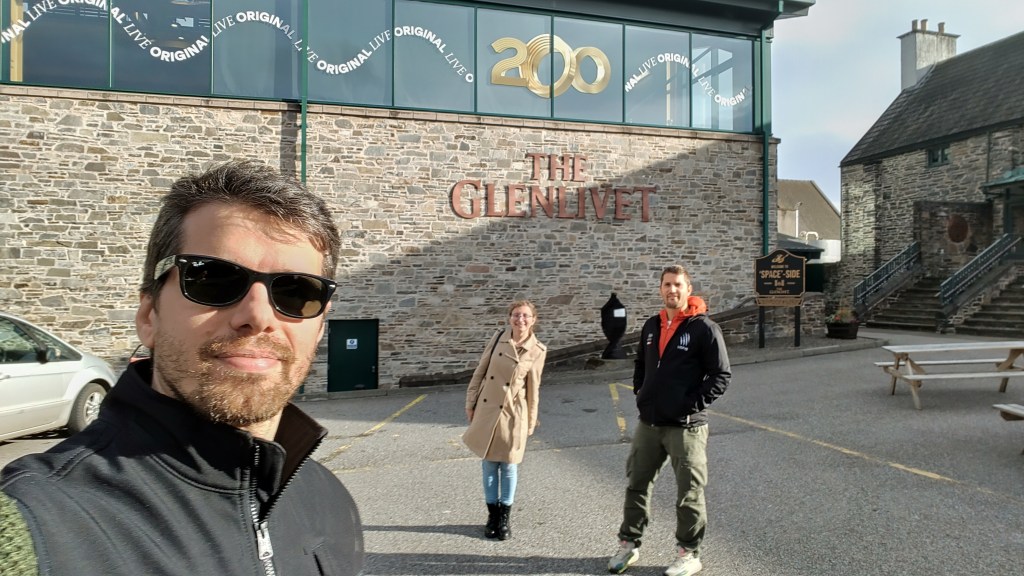
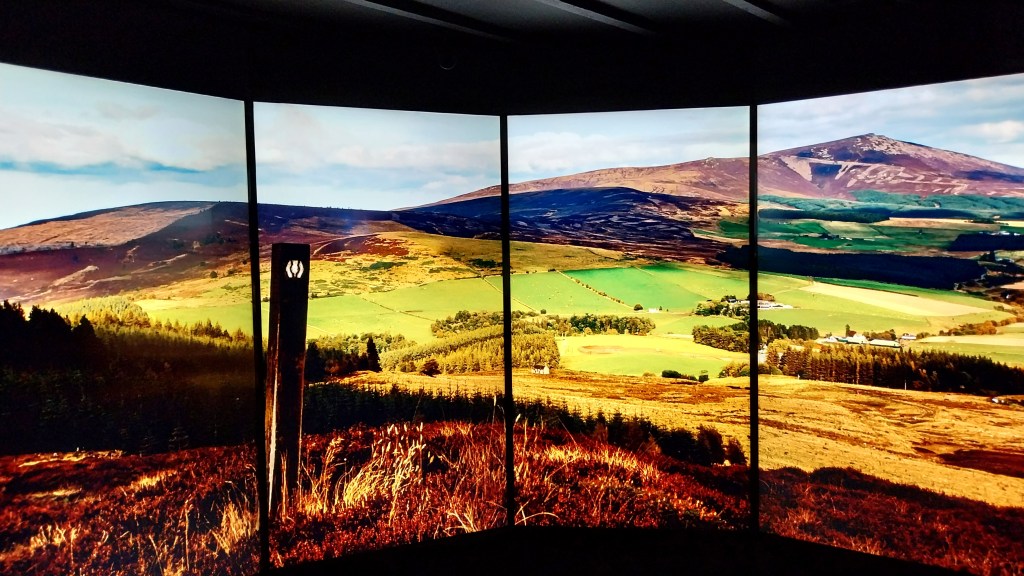
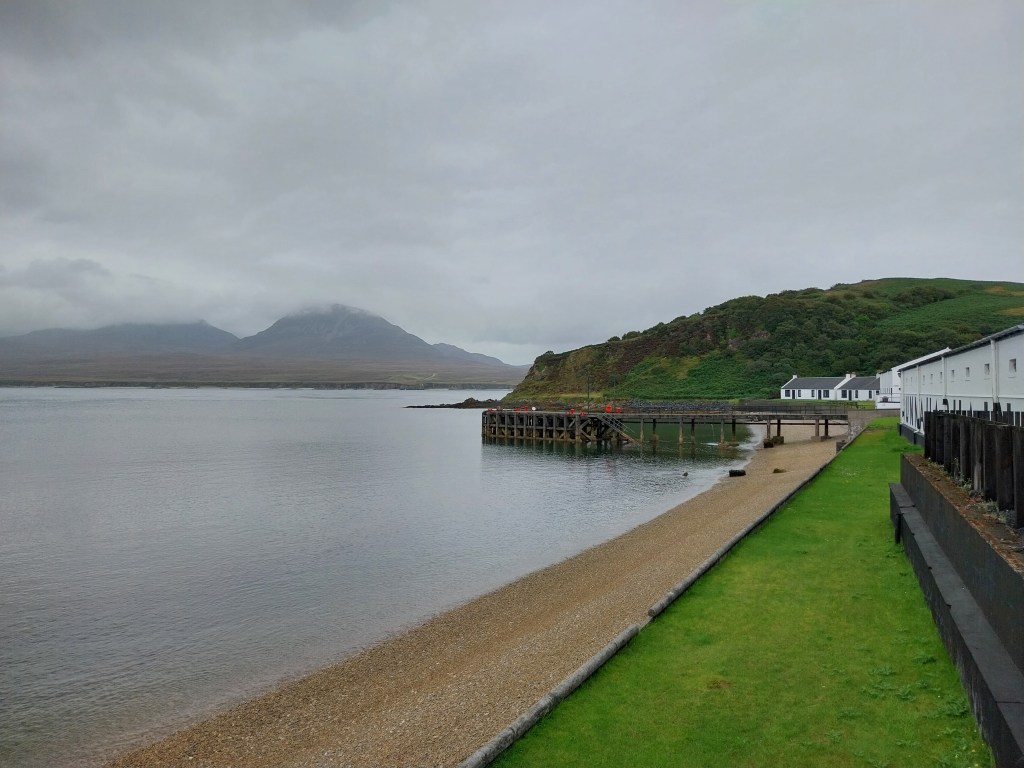
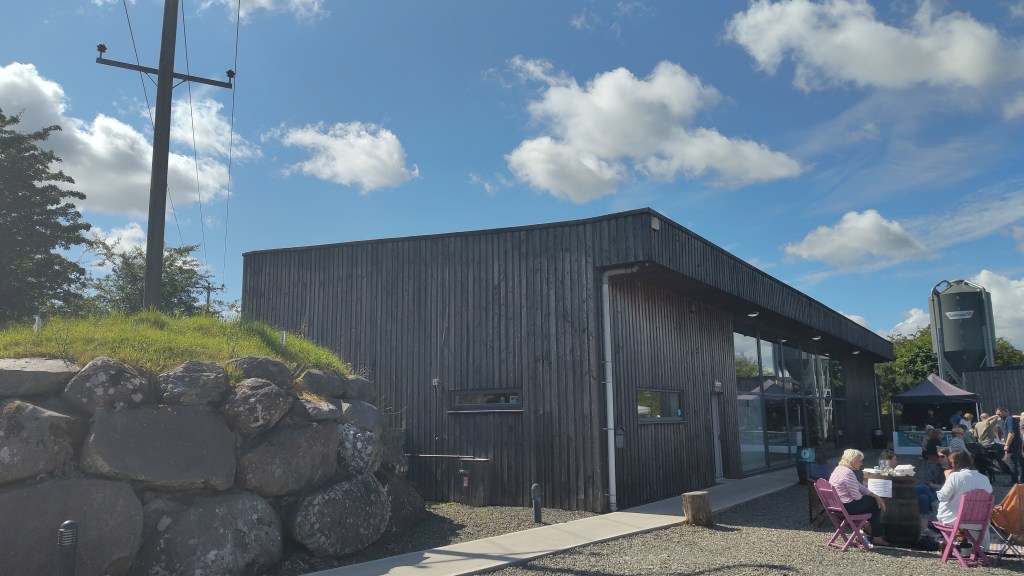
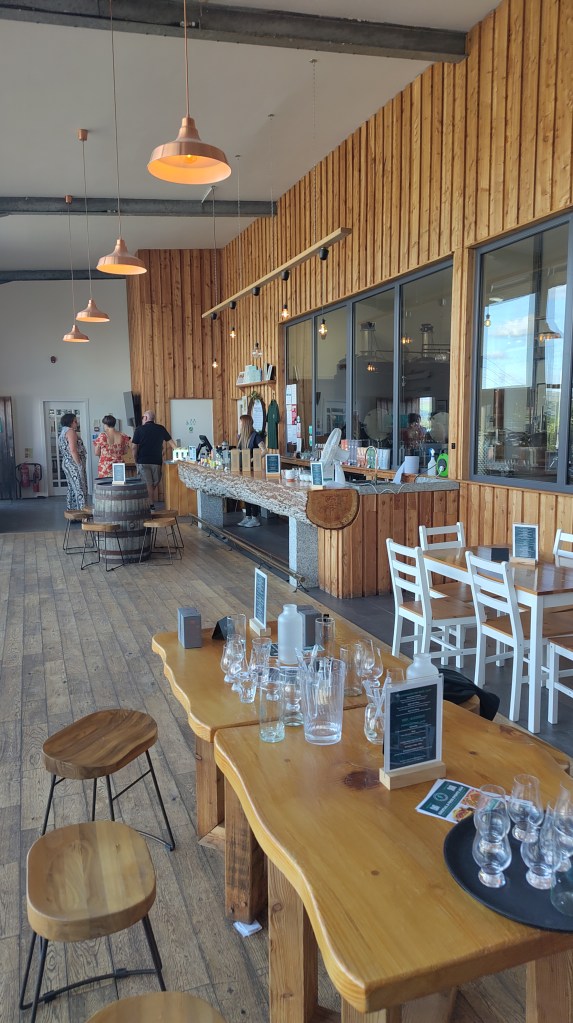
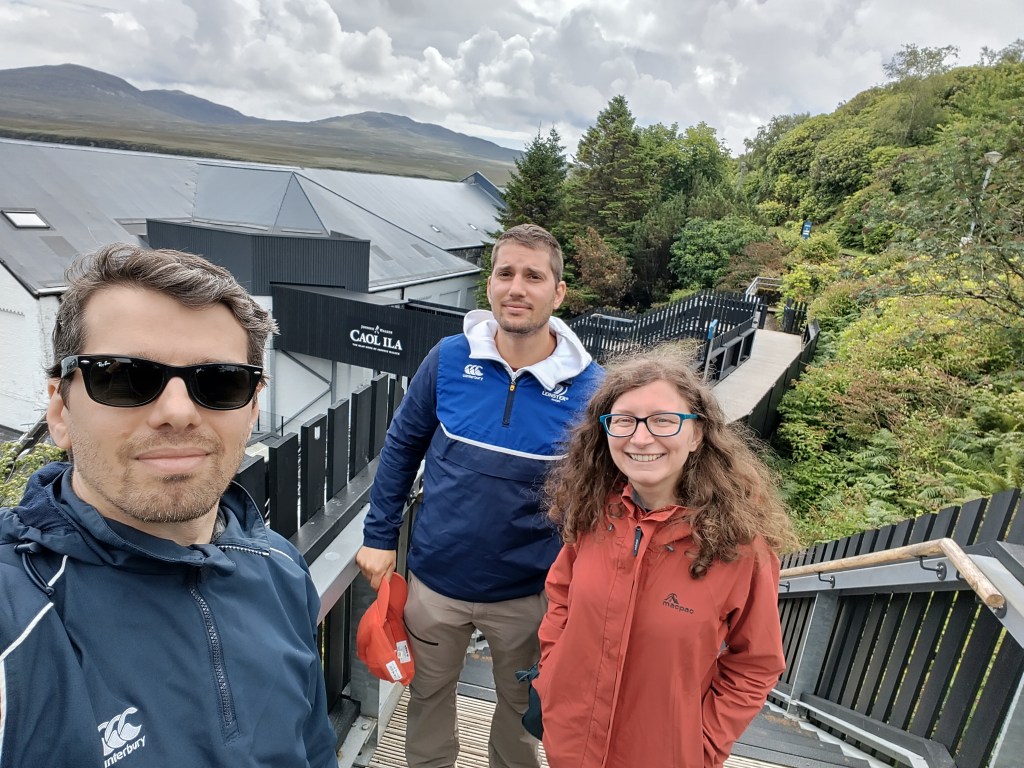
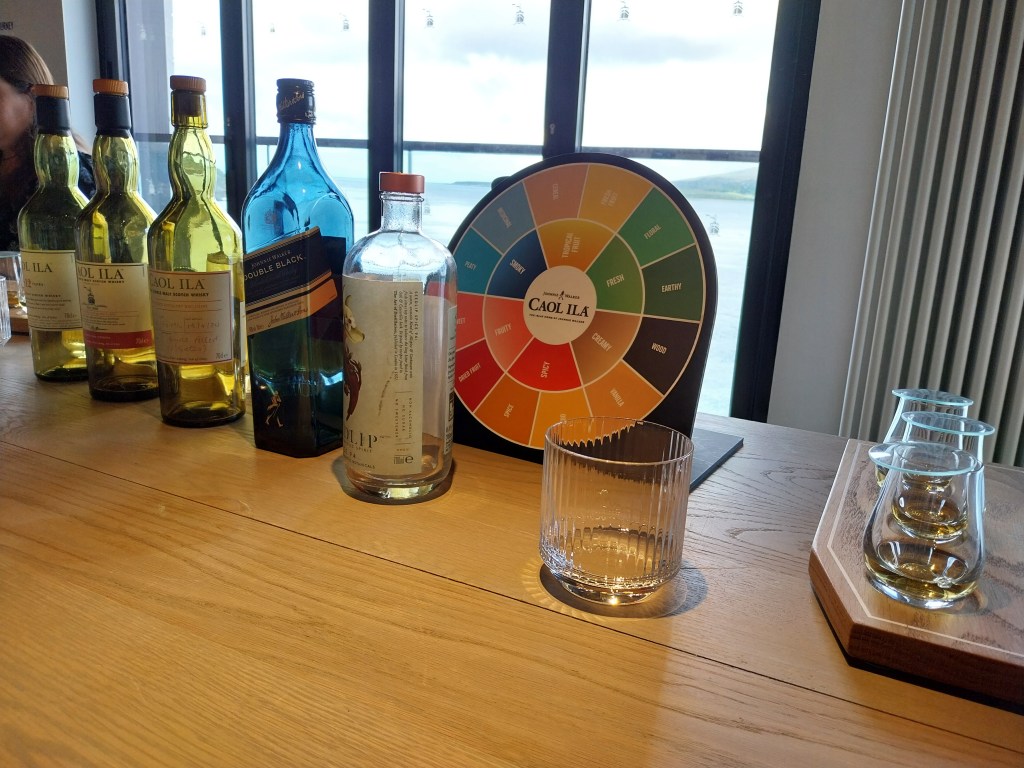
It took just a few minutes to drive back from Finlaggan, after which we left Mr Vantastic in the new parking lot, next to the electric vehiclesโ€™ charging points. From there, we walked on a very nice wooden footbridge to enter the new visitor centre, from which you get some very nice views of the production site and the Paps of Jura (to note, for accessibility you can drive closer to the building). The visitor centre is โ€œcarvedโ€ inside a warehouse, of which they sacrificed a portion for visitors. Itโ€™s clearly new, with a typical Diageoโ€™s style shop, not as nice as the Lagavulin one, but fortunately without that airport duty-free look as Taliskerโ€™s. At the bottom of the shop, there is a very long bar, and behind it, the โ€œtasting roomโ€: a few tables in front of a very large glass window with a magnificent view. On that day, the sunshine definitely made the experience memorable!

As we walked in, they offered us a welcome dram: a choice between the blended malt Johnny Walker Islay Origin (a blend of Lagavulin and Caol Ila) and the Caol Ila 14y Four Corners of Scotland (the expression they brought in, together with Cardhu, Glenkinchie and Clynelish ones, to celebrate the โ€œJohnny Walkerโ€-ification of these distilleries). A few minutes later, we gathered at the tour starting point with our guide. Our guide was very new to the job (apparently ours was their second tour ever), so it wasnโ€™t the most informative of the experiences: oh well, everyone needs to start somewhere (and we complemented the info with the Malt Whisky Yearbook 2024)!

We started in a room one floor below the visitor centre with a nosing experience of some aromas (as far as we remember, peat, supposed-sweet, sea and maritime spice?). It was followed by an 8-minute video about the history of the distillery and the crucial role it plays in DCL/Diageoโ€™s blends, accompanied by animations on a relief map, with wee boats moving from Islay to the mainland and back. There was also a very informative wall display, with the parallel histories of Caol Ila and Johnny Walker. Overall, we felt this introductory part was a bit too long (slightly over half an hour), to the point that Gianluigi started doubting that thereโ€™d be a tour of production!

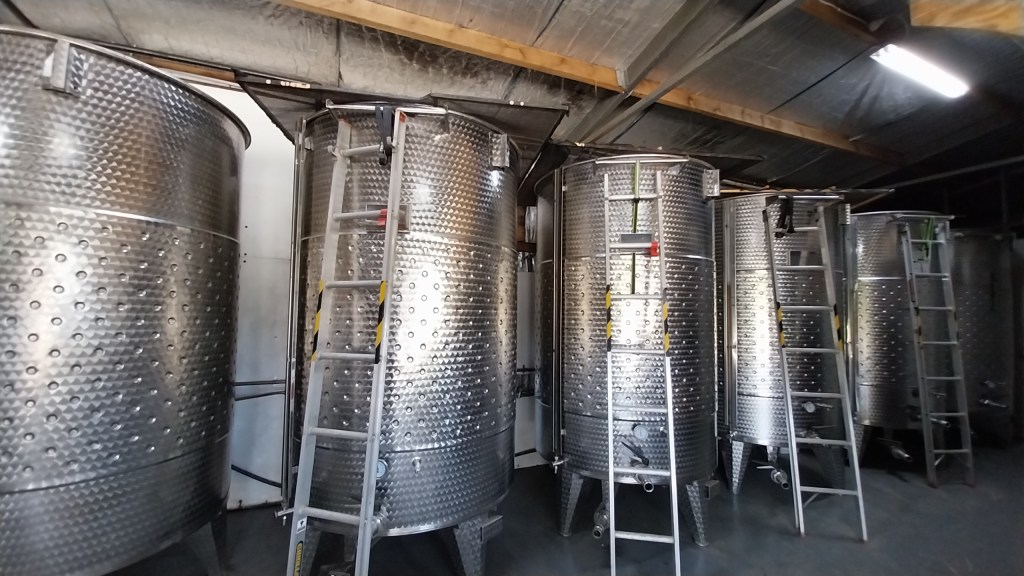
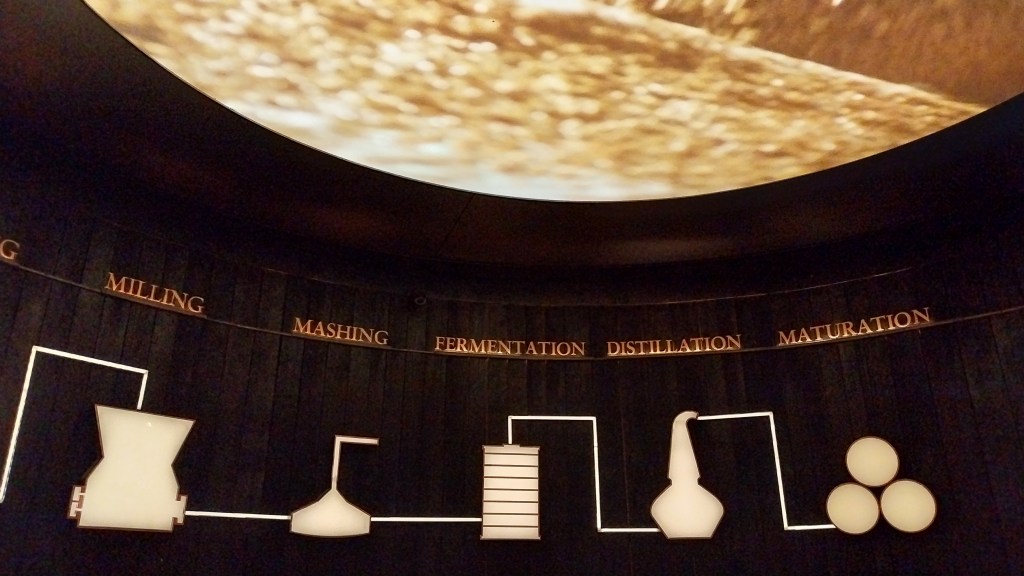
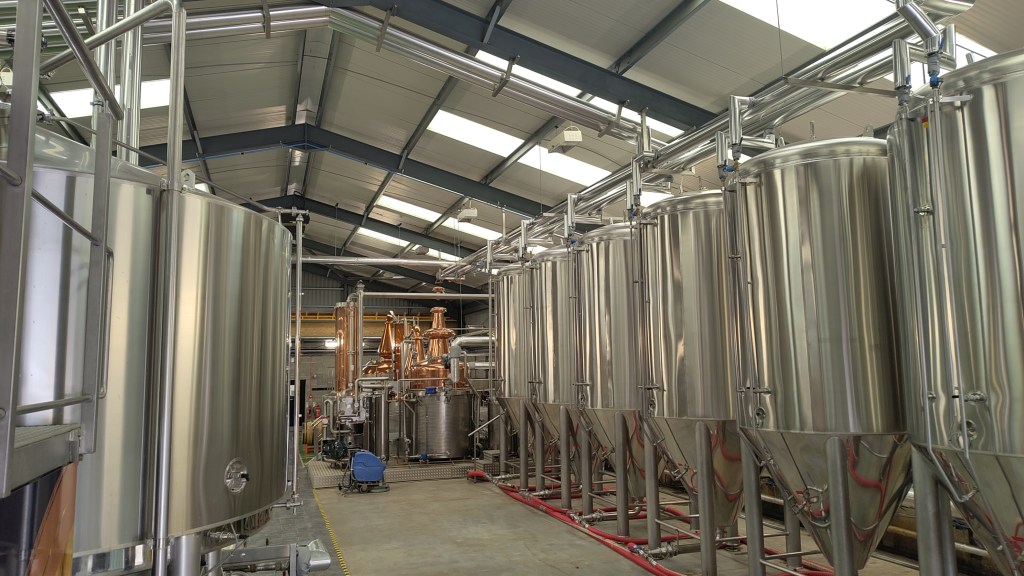
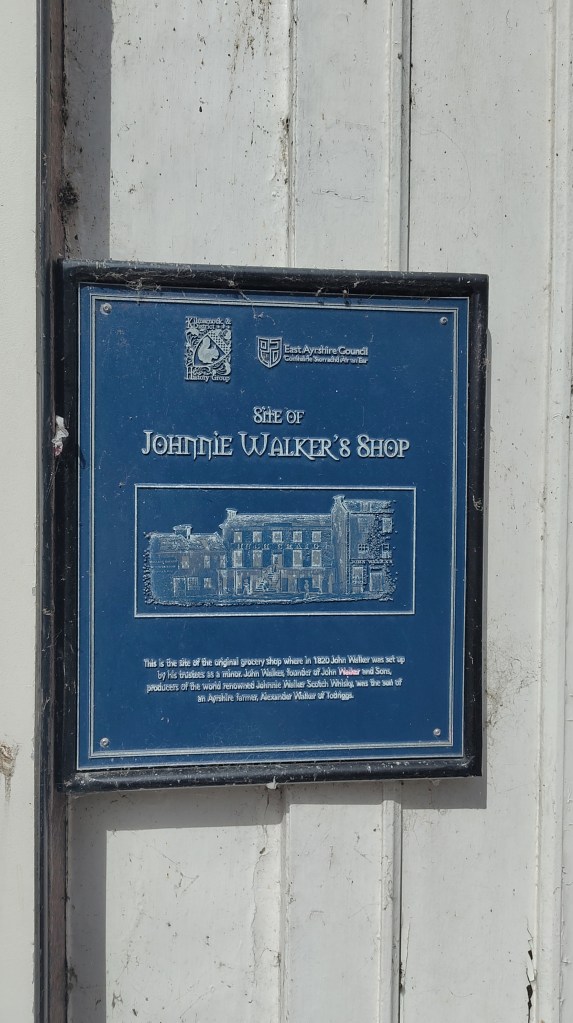
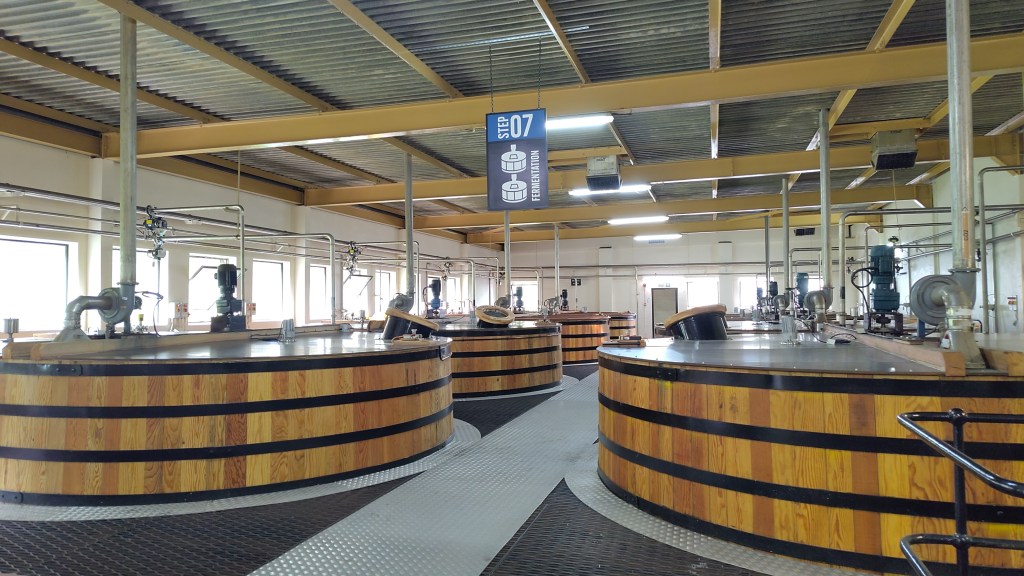
It was included indeed: we went down the stairs, crossed a courtyard to the distillery building, walking past the usual Johnny Walker statue and the old visitor centre (a small office on the ground floor). First, we visited the mill room, where a Porteus mill has been grinding malted barley since 1979, when the distillery was rebuilt. The husk/grit/flour split in the grist is the usual 20/70/10%, and the grist is then moved to the full Leuter mashtun for a slow mashing process to obtain a clear wort. They are equipped with eight wooden washbacks and two stainless steel ones, where fermentation lasts around 55-60 hours. This space, where mashtun and washbcks are, is very clean and tidy and looks very similar to other Diageo distilleries, including a table where all the processes are showcased โ€œin miniatureโ€.

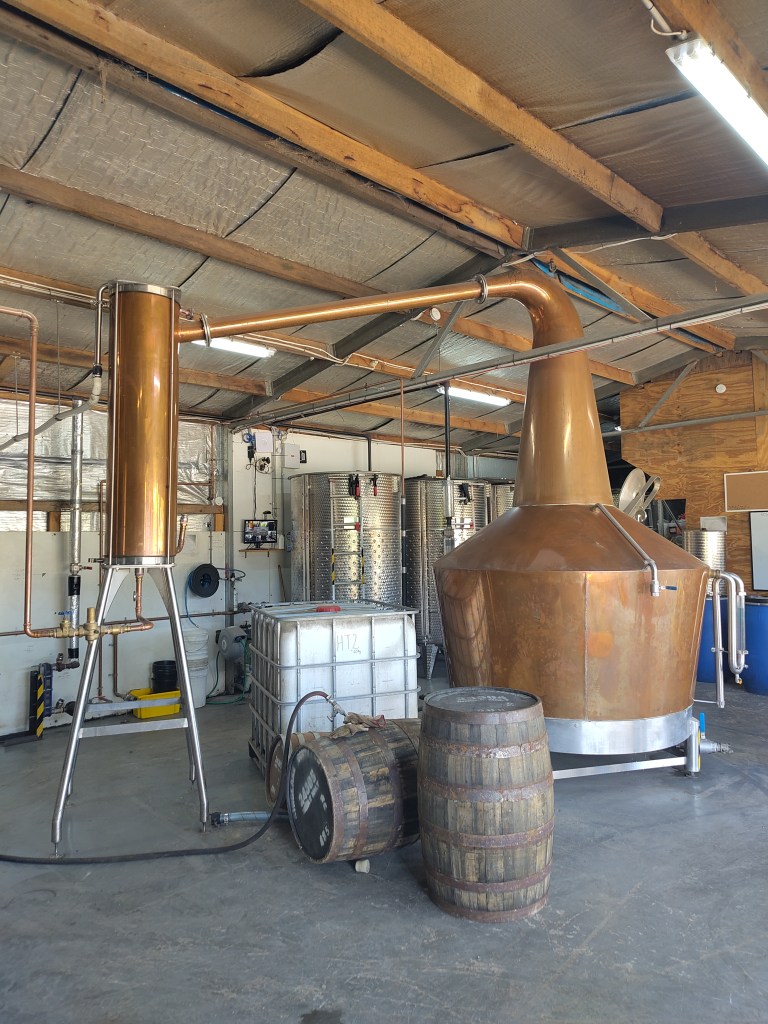
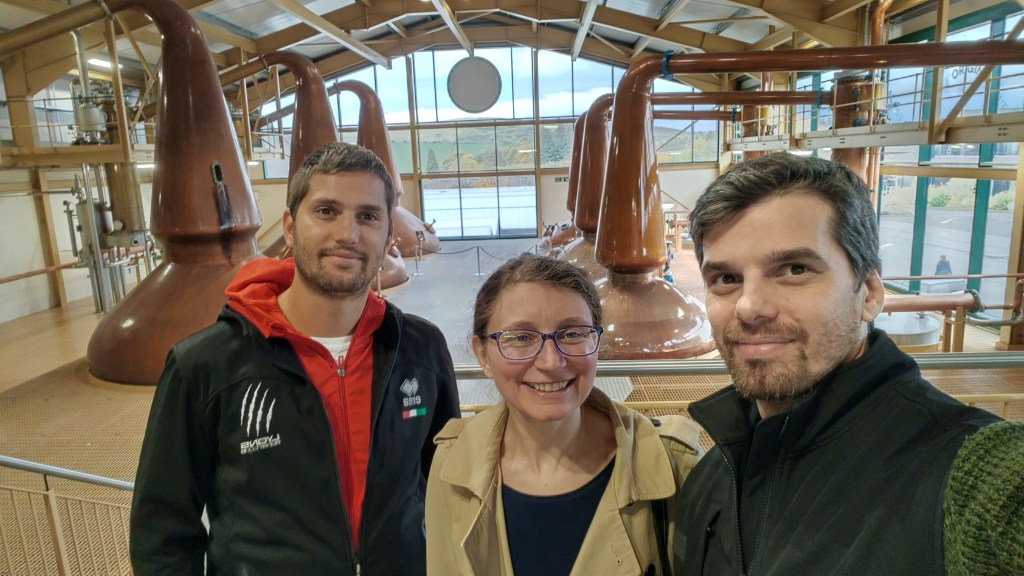
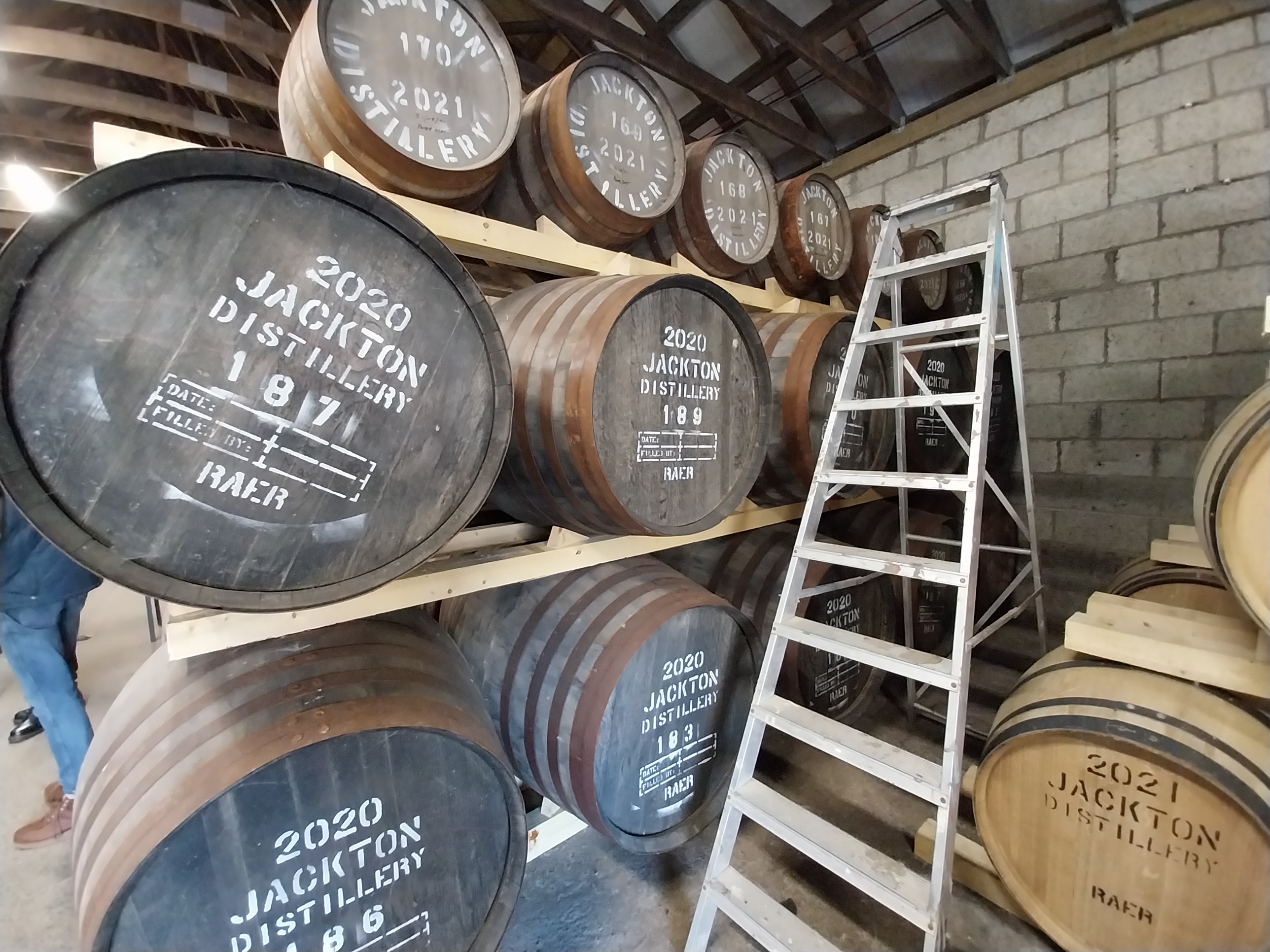
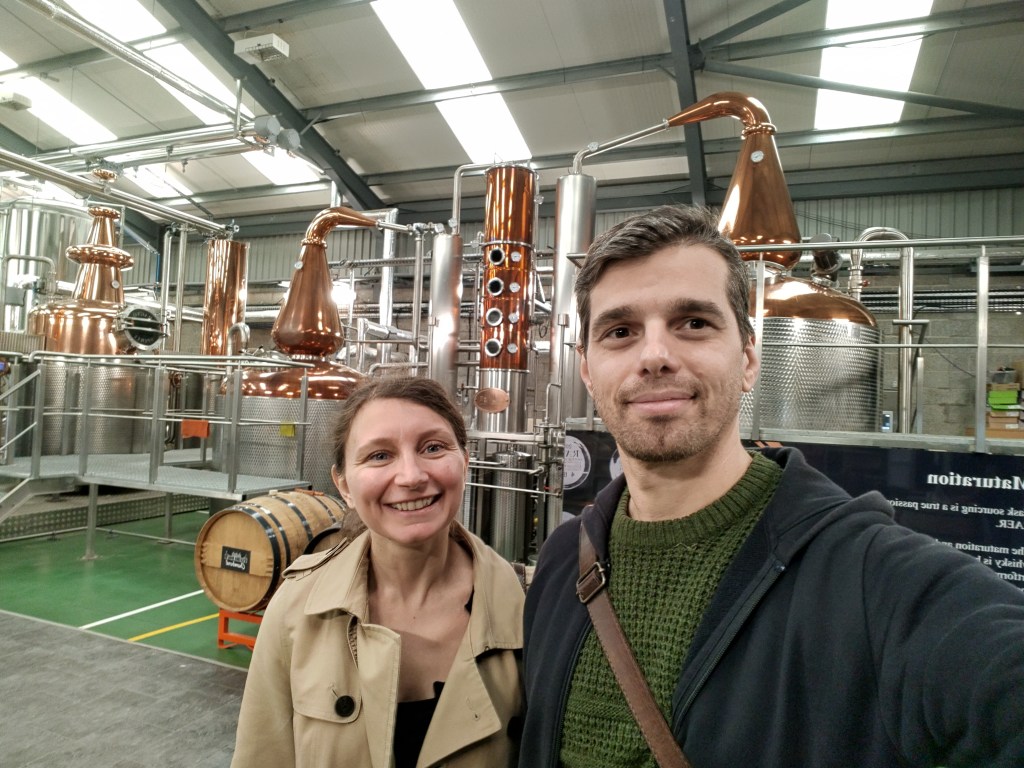
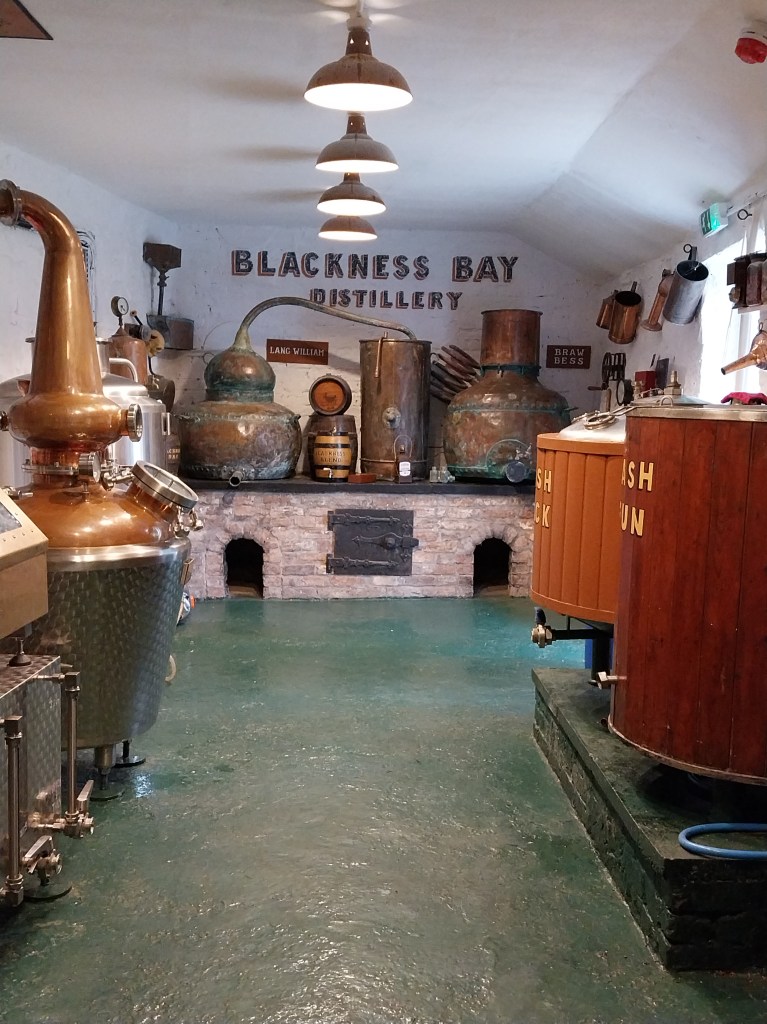
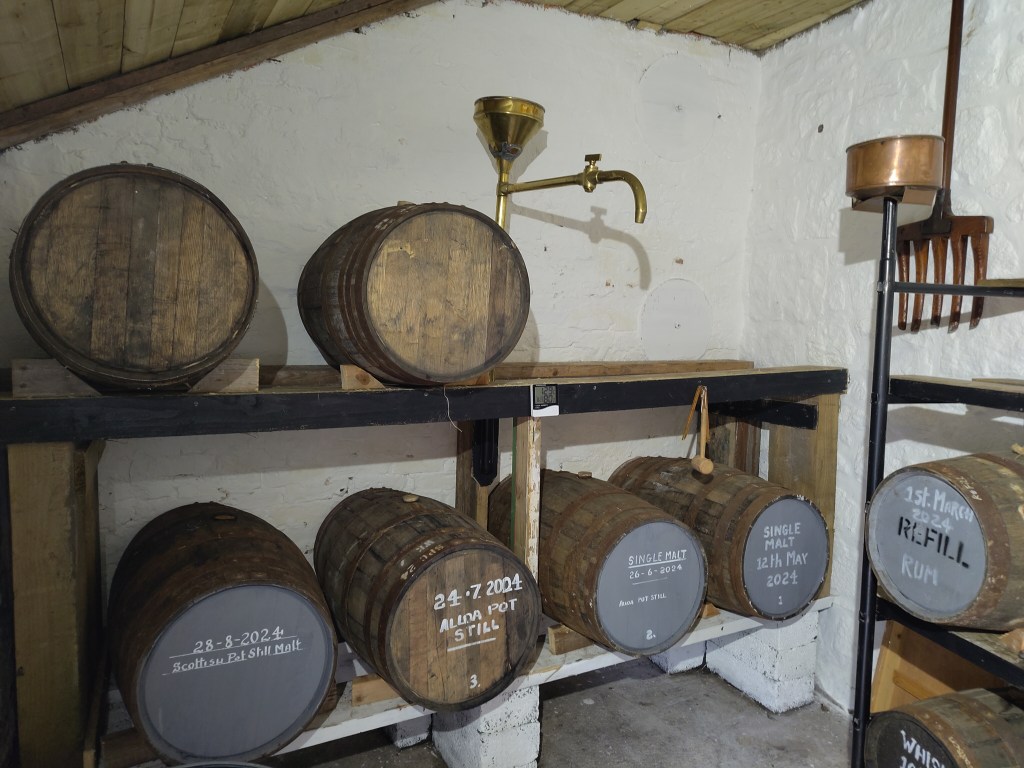
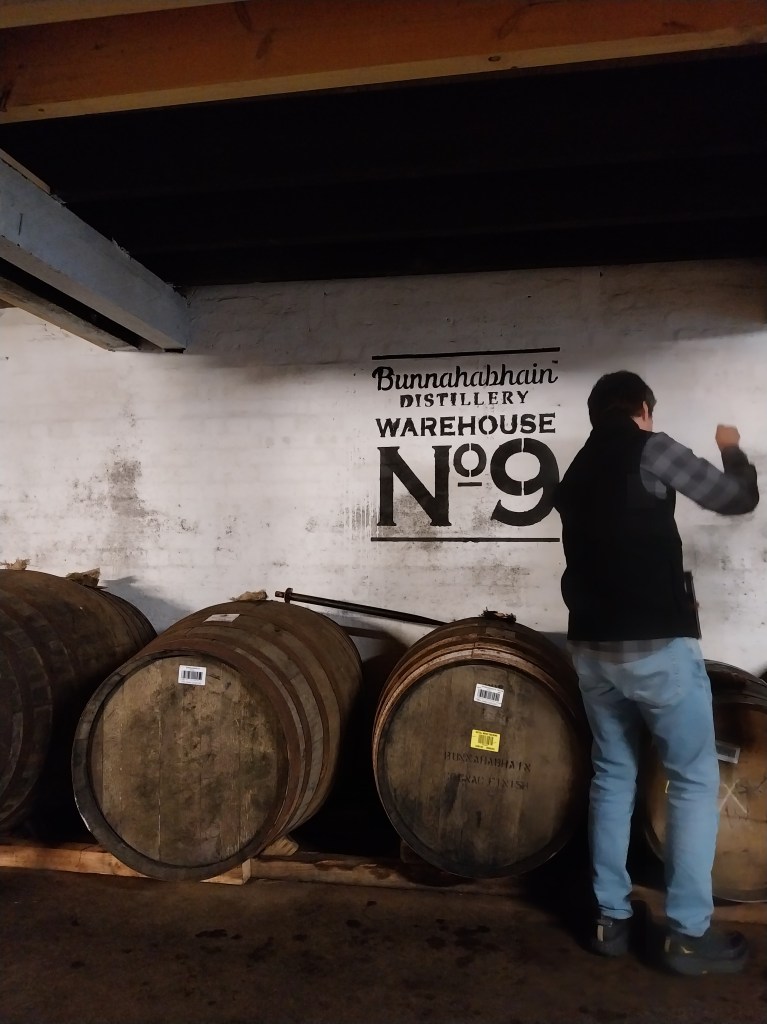
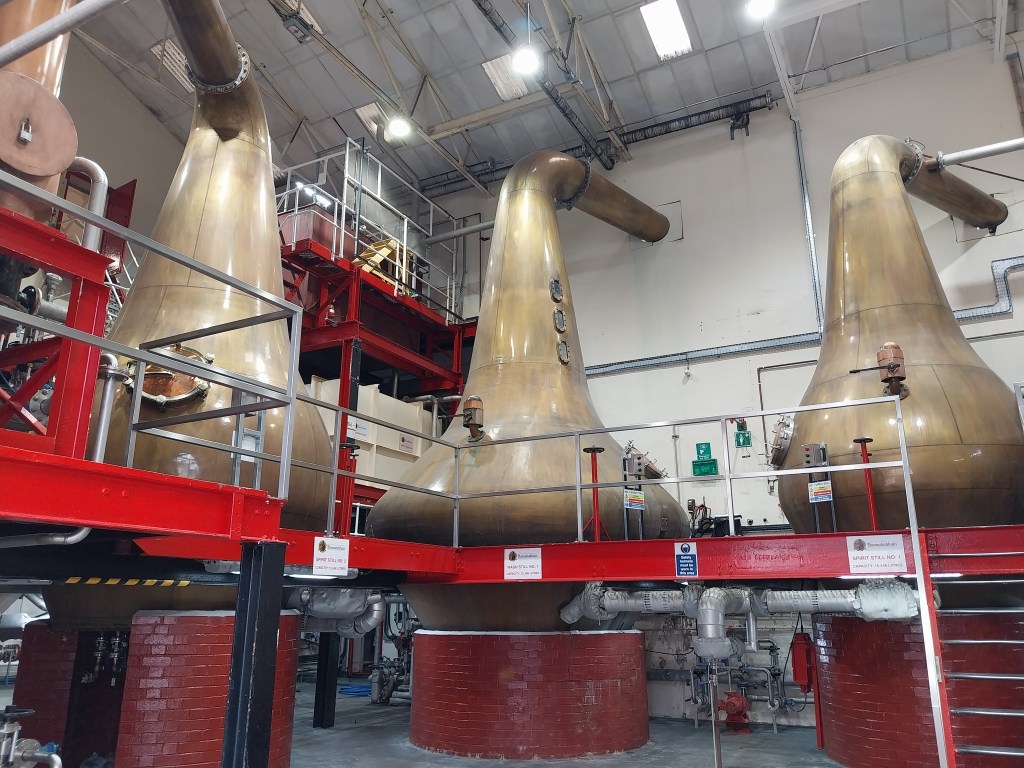
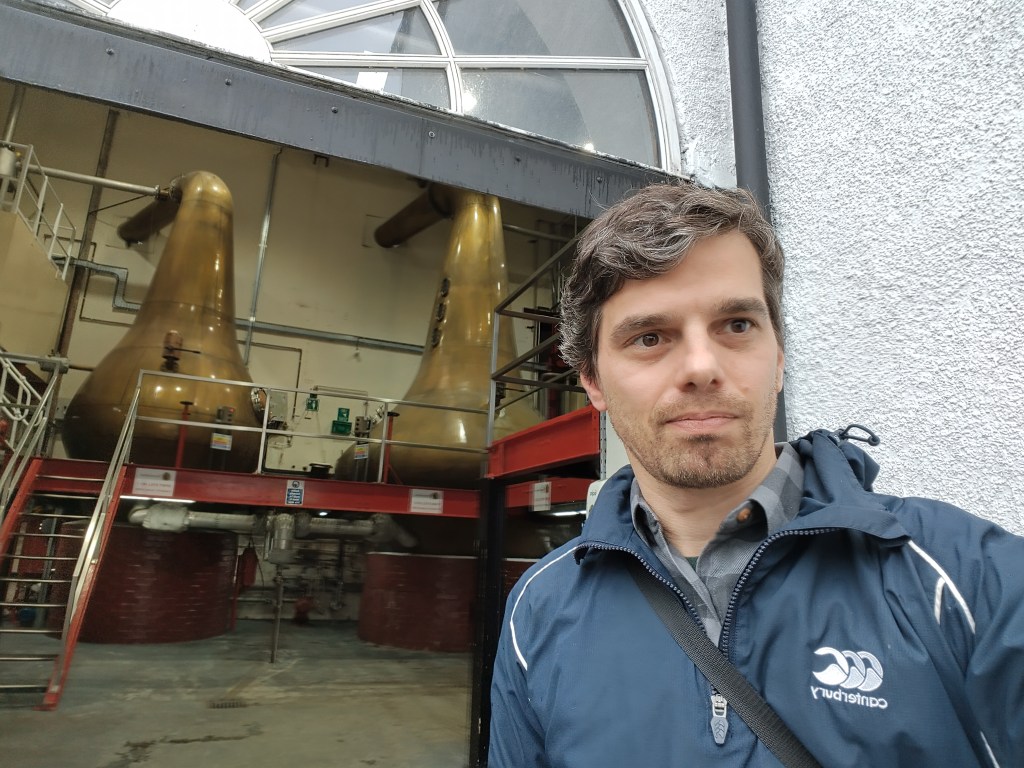
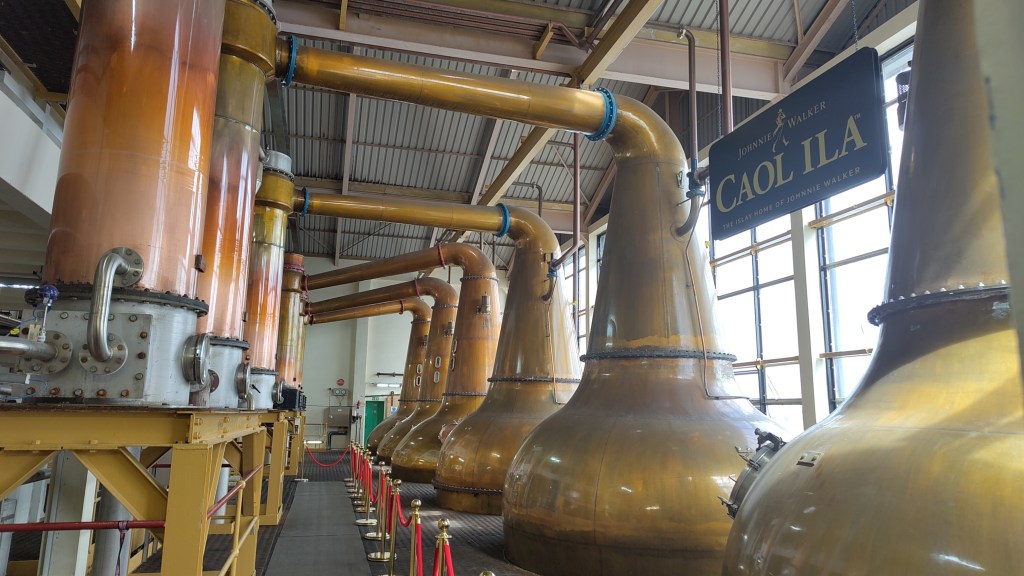
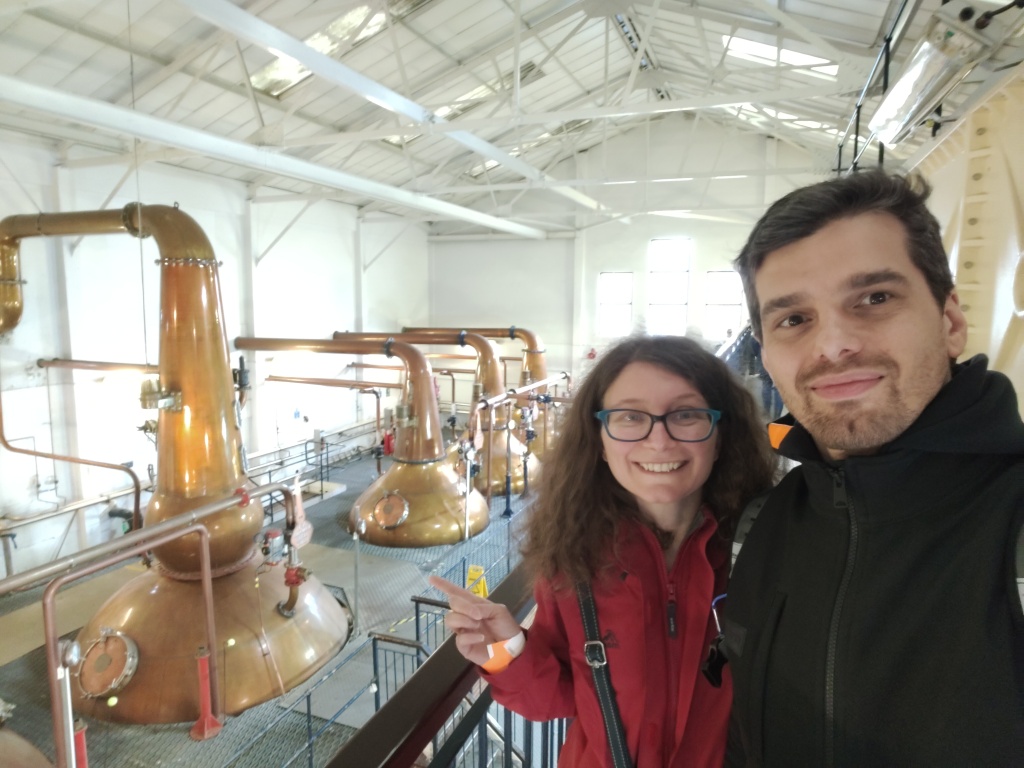
The still room is quite spectacular, with six stills aligned next to the glass windows. Of course, three of them are wash stills, for the first distillation (with descending lyne arms) and three are spirit stills, with straight lyne arms for the second distillation. After this, we went back to the warehouse/visitor centre, and we visited a part of the warehouse that is half-way between the two: many casks are still lying there, but the space is mainly used for other visits or tastings. There, we got to smell a few different casks from the bunghole.

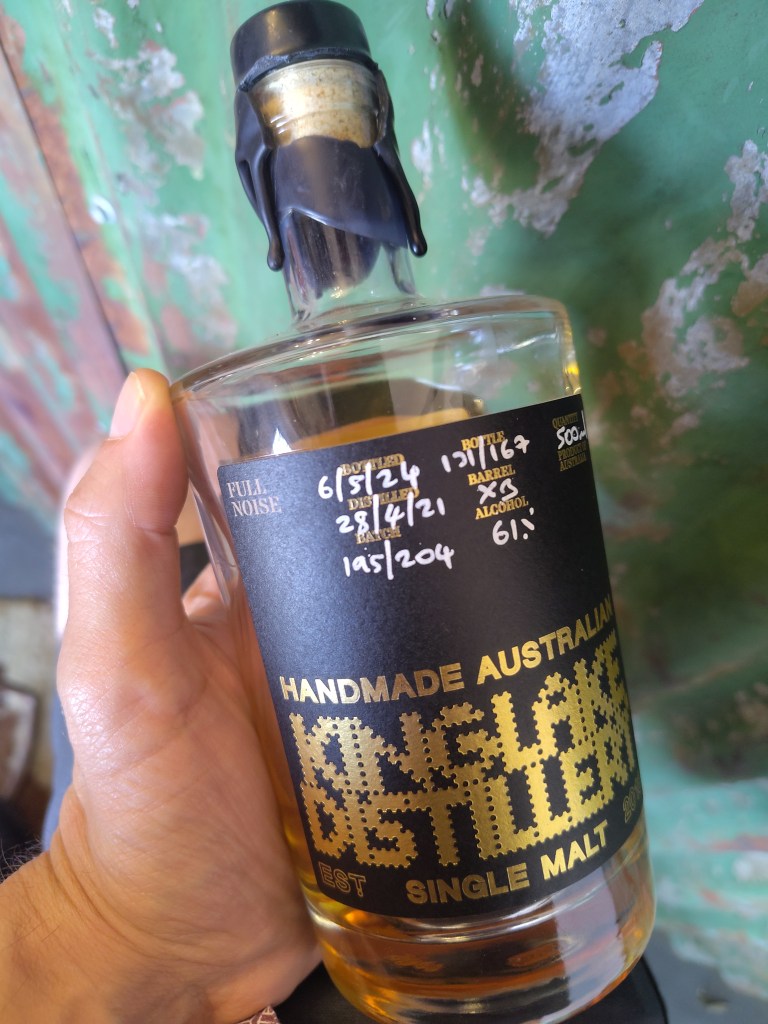
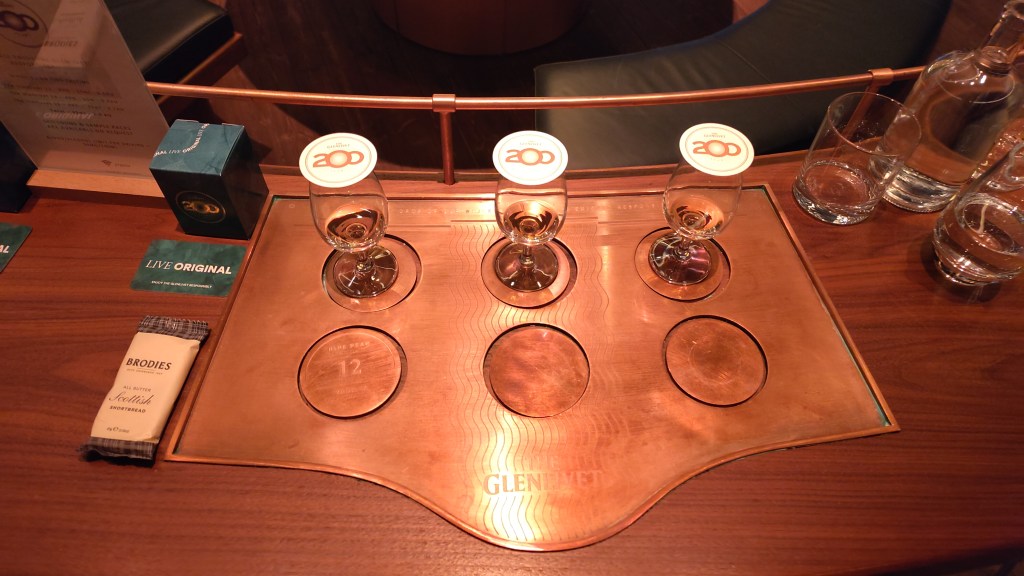
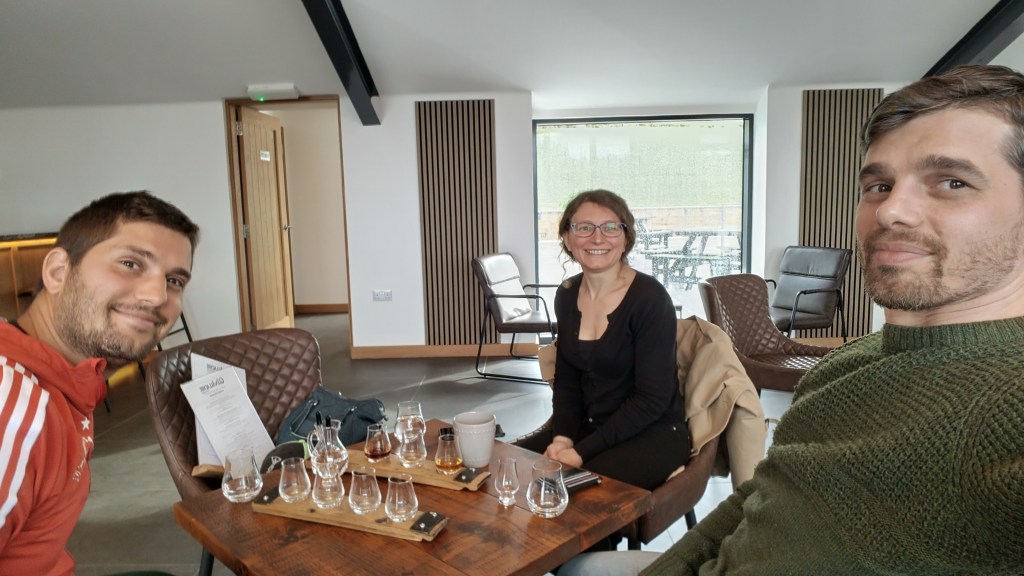
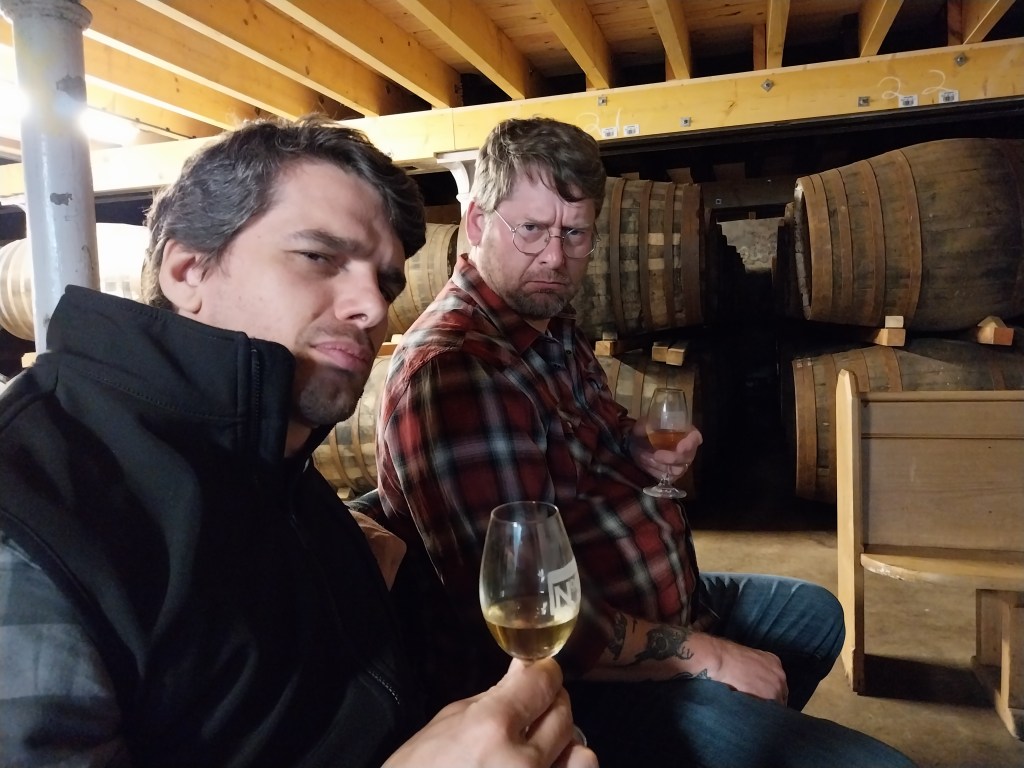
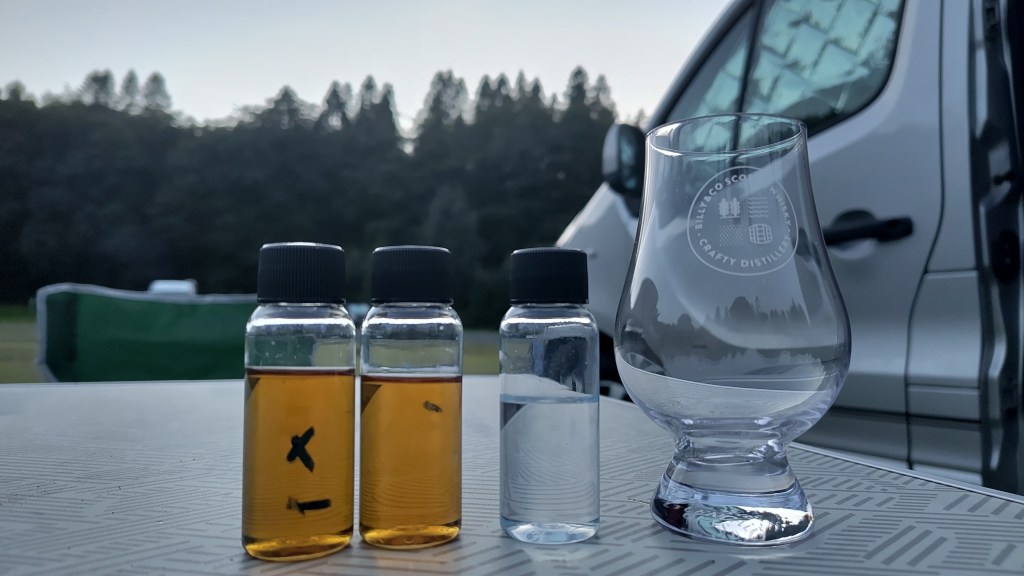
Finally, it was time for the tasting, in the area the back of the bar. We knew the drill, 3x15ml drams, drivers package ready to be filled with a small funnel, and a cocktail (the alcohol-free version for Gianluigi was based on a smoky tea, quite interesting, while for the others the base was Johnny Walker Black Label 12y). We got there a bit late, so by the time the tour was supposed to end, the guide had just finished to introduce the drams (and in fact, they left us to sip on our own). We started with the Caol Ila 12y, the distillery flagship: there is a reason why this distillery is called โ€œMr Consistentโ€, as even this widely available expression (watered down to 43% and probably chill-filtered) is a nice one. The next two were the two expressions only available at the distillery: the Distillery Exclusive and the Bottle-your-own (see below for specs). Both yummy, as usual, although they were way too pricey for what they are.

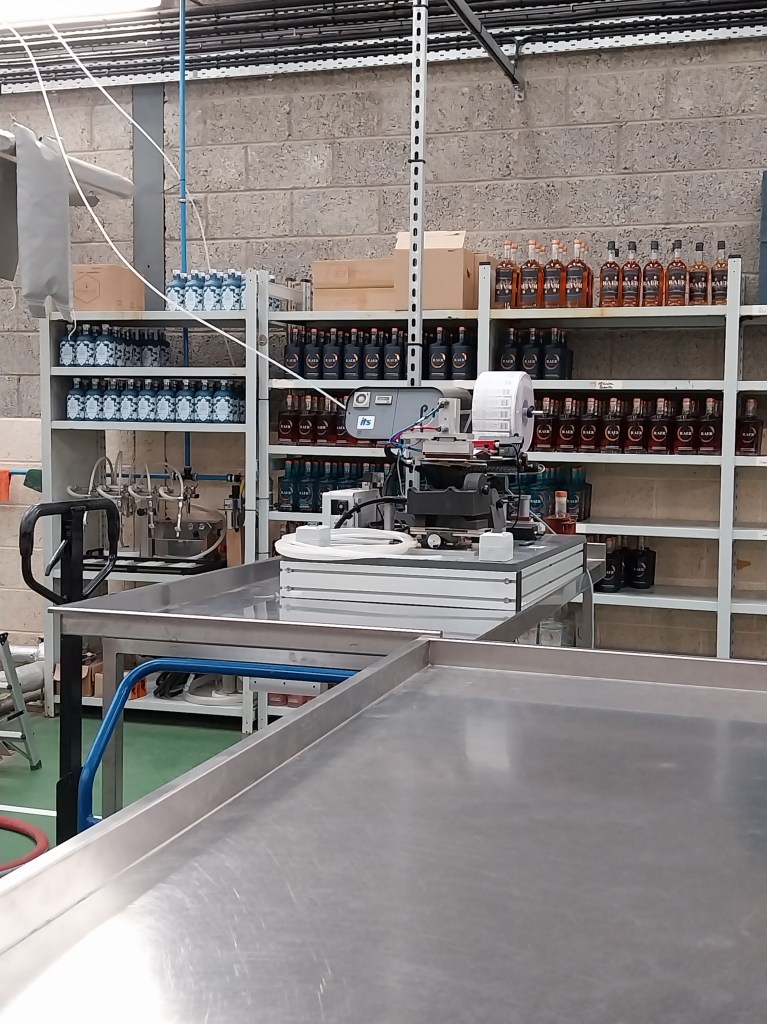
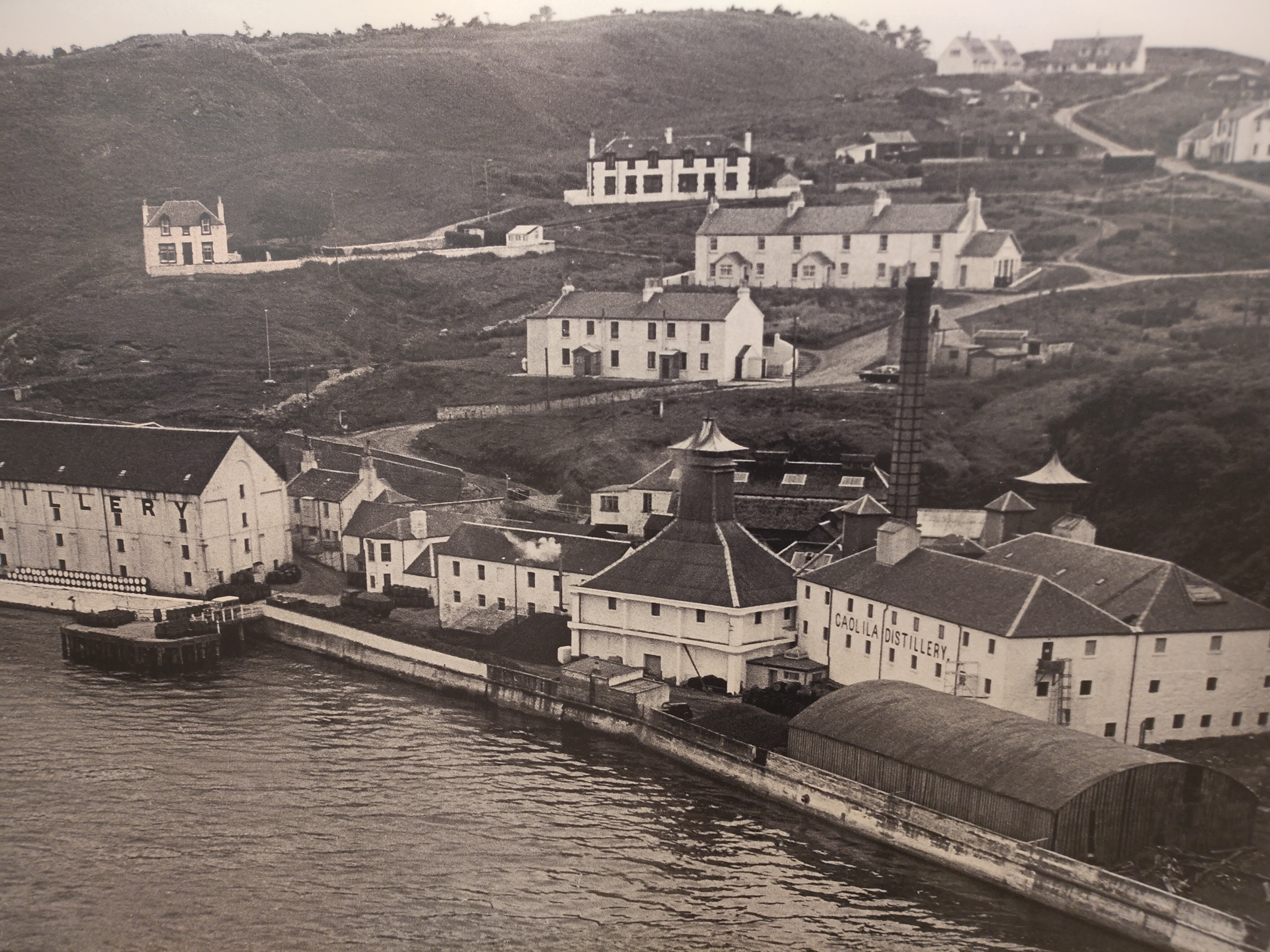
Caol Ila is by far the biggest distillery on Islay, with 6.5 million of alcohol litre per annum production, and because of this it tends to be one of the go-to peated expressions for independent bottlers, at much more reasonable prices. As a confirmation, the last three Feis Ile bottlings (2022, 2023 and 2024) were available at the shop, literally gathering dust. For example, the 2024 expression is a 13y sold at ยฃ185 – who would buy it considering that indies Caol Ila’s of similar age sell for about half that price?

Once Teresa and Edo finished their drams, we had to leave very quickly, as we didnโ€™t have all the time we thought we’d have before the next visit, and we needed to get lunch too! Anyway, it was nice to finally get to see Caol Ila: probably, among Diageoโ€™s whiskies, it is the one we drank the most throughout the years. Also, this was the only Diageo distillery we hadnโ€™t visited yet (among the ones open to the public, plus Mortlach, Linkwood, Dailuaine and Auchroisk) โ€“ a six-year journey since we started with Oban in 2018. Of course, Brora is still missing – do you think theyโ€™ll will allow us in with a discount since we visited all the other ones???

Coming next, another of Islayโ€™s classic: Bowmore! Until then, slainte!


Caol Ila Flavour Journey Tour

Price: ยฃ21.00 pp (July 2024)

Duration: 1hr 30min

Tasting: a welcome dram, choice between Johnny Walker 12y Islay Origin blended malt (42%) and Caol Ila 14y Four Corners of Scotland (53%), plus 3 drams at the end, Caol Ila 12y (43%), Distillery Exclusive (NAS, first and refill ex-bourbon and first fill re-charred California red wine, 57.4%) and Fill-your-own batch 2023/003 (10y, 1st fill ex-bourbon cask, 55.1%)

Distillery Exclusives: Distillery Exclusive Caol Ila (NAS, 47.4%, ยฃ100) and Fill-your-own batch 2023/003 (10y, 55.1%, ยฃ130)

Target: tourists and beginners

Value for money: good

Highlights: the tasting room facing the sound of Islay and Jura

Recommended: only if youโ€™re really keen, but we think there are better options on the island for a standard tour (the view makes it worth though)

Link: https://www.malts.com/en-gb/distilleries/caol-Ila


#45.1 Stepping over the (Highland) line!

An old acquaintance, Glengoyne


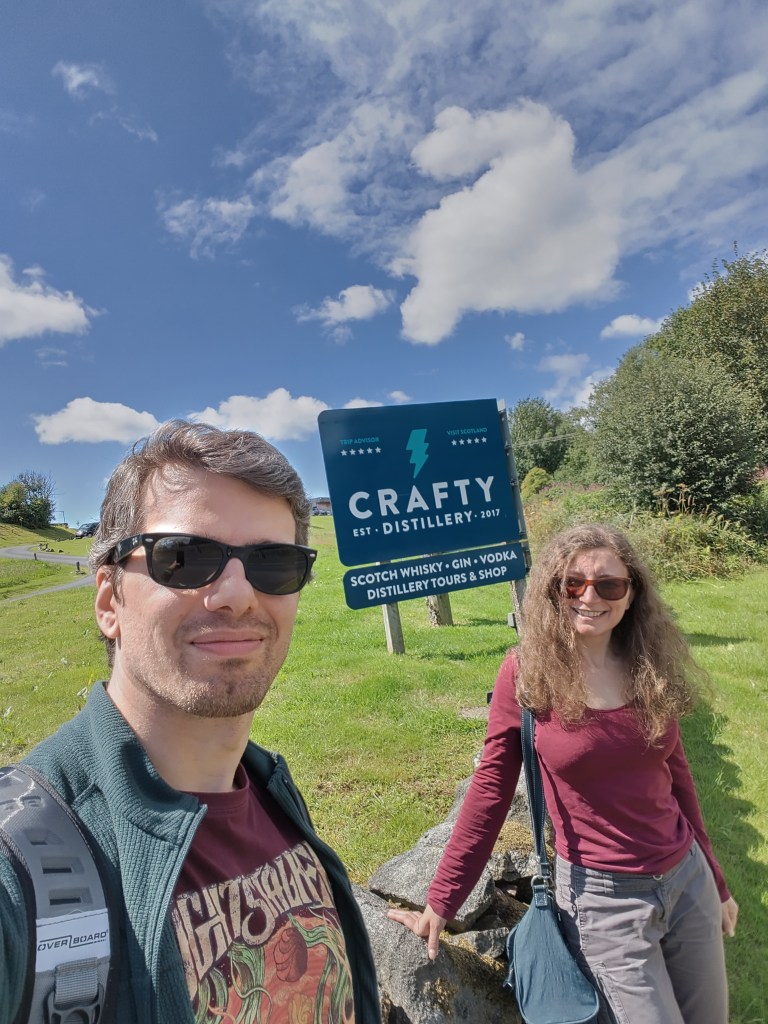
TL; DR: We took advantage of a free weekend to get on the van and go for a night away in the (not so wild) wilderness. The next morning, we visited Glengoyne distillery: a very nice tour, although very basic, which ended in a lovely tasting room with some very tasty drams! 

In recent months we had been quite busy, for various reasons: friends visiting, visiting friends, unfortunately work as wellโ€ฆ so, except for the Spirit of Speyside weekend, weโ€™ve not enjoyed much our van. In early June though, we had a weekend with no commitments, so wedecided to spend a night out, not too far away, in the area between Stirling, Glasgow and the Trossachs. This area sits across the Highland Line (roughly, very roughly following the Highland Boundary Fault), which historically was used to separate the taxing regime of whisky producers in the Lowlands and Highlands: we basically spent the weekend crossing it back and forth!

Weโ€™re not new to the area: back in February, we’d spent a lovely evening in Fintry, together with our friend Justine, having a meal at the Fintry Inn, followed by a few nice drams from the Uncharted Whisky Co independent bottler, which has strong ties with the pub (in our understanding, itโ€™s also their tasting room). This time, we aimed for another pub that welcomes campervans, the Pirn Inn in Balfron. The drive was uneventful, but when we got there, we realised they didnโ€™t have a kitchen: dโ€™oh! So, we had to go find food. First, we tried the Old Mill in Killearn, but it was super-busy (in part because of a beer fair they had on for the weekend). Moving on, second time charme: the Clachan Inn in Drymen. We were lucky: it was very busy, which surprised us, before realising it is on the West Highland Way, already swarmed with hikers this time of the year. They found us a table at the bar to be shared temporarily with a couple waiting for their table at the restaurant: we had a nice chat, and as the man was a dairy farmer, Gianluigi asked some questions about farms management and diseasesโ€ฆprofessional bias. After dinner, we quickly drove back to the Pirn Inn, where we had a last pint and a dram (Bunna 12 never disappoints!), before going to sleep.

An ugly glimpse of a much more beautiful spot.

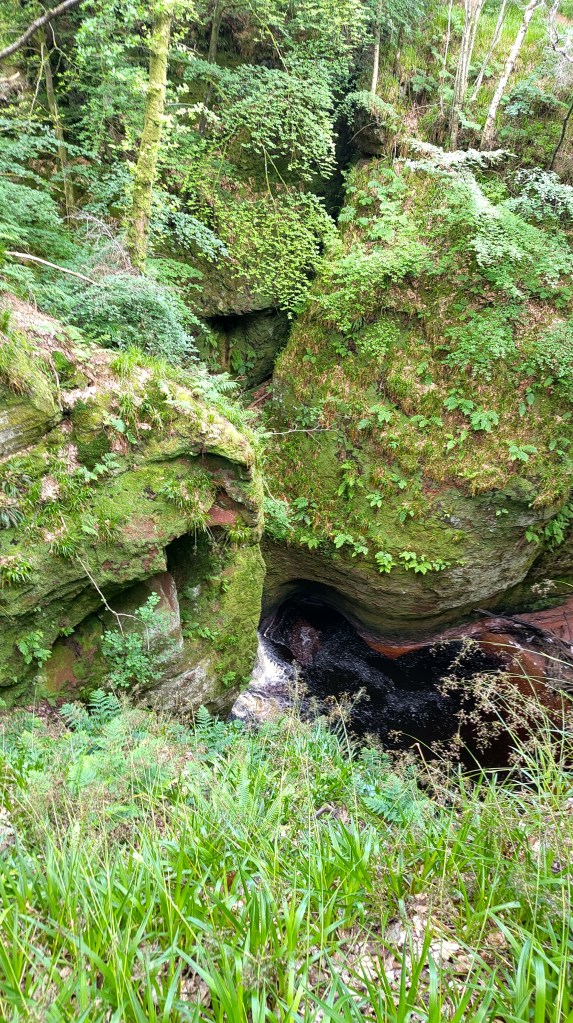
In the morning, the sky was cloudy. We woke up rested, and we somehow managed to avoid midges invading the van, probably thanks to the previous night breeze. We tried to look for an open cafรจ, but we were unluckyโ€ฆ so after a stop for the loo, we drove towards our first destination: the Devilโ€™s Pulpit. The Carnock Burn goes through a very beautiful gorge, all green and brown. Youโ€™d almost expect to find something like this in a tropical jungle, rather than in the Southern Highlands (or Lowlands?). The parking spot can only take three cars (if well parked), so we left Mr Vantastic at a bigger lay-by at the cross of the A809-B834 roads, from where we had to walk no more than 10-15 minutes to find ourselves at the top of the gorge. It was very nice, although we were slightly upset by the amount of garbage found all over the place: from the lay-by, to the side of the road, and in the gorge itself: how can people be so inconsiderate?

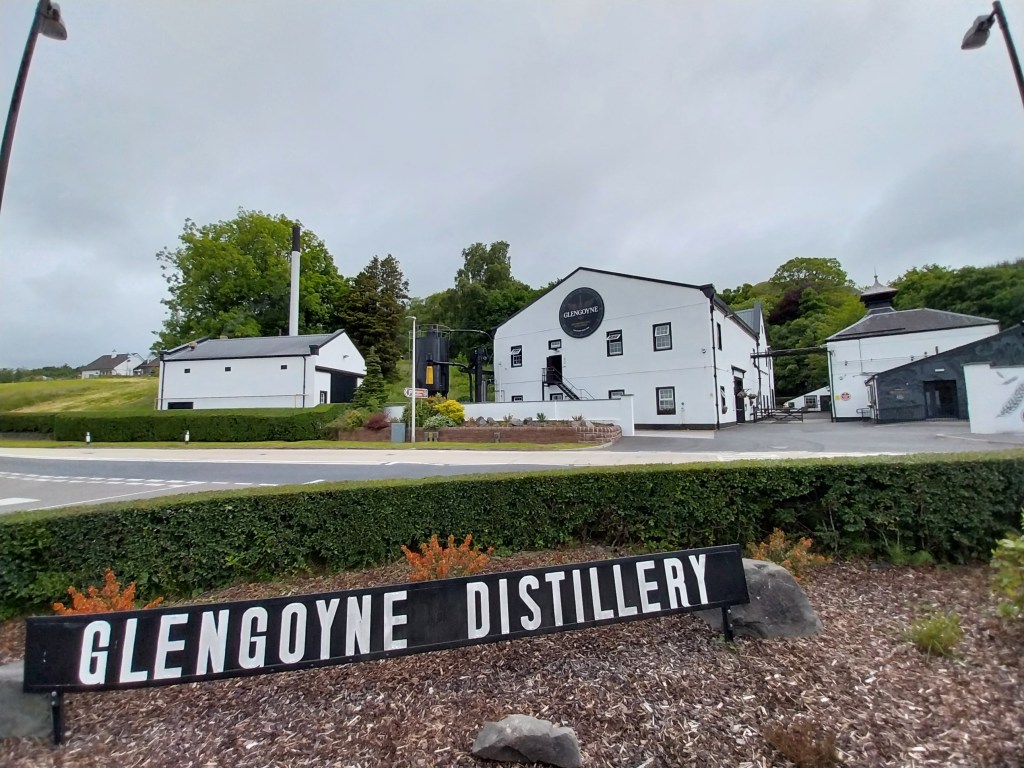
Back to the van, it was time to drive to our next destination: Glengoyne distillery (with a brief stop at the Turnip The Beet for tasty coffee and snacks). Glengoyne is an old acquaintance , as we visited it during the pandemic years (can we say that?) in summer 2021, but at the time we couldnโ€™t tour production because of COVID19 of courseโ€ฆand the waterfall was empty too! Gianluigi had also visited it as part of a networking event after a conference he attended in Glasgow in 2018: too many people, it wasnโ€™t such a memorable experience.

We parked on the south side of the road, which together with their warehouses, is in the Lowlands: the road is the boundary, apparently. Thus, as you can guess, the distillery is in the Highlands. It is owned by Ian McLeodโ€™s Distillers, together with Tamdhu, the newly rebuilt Rosebank, and a the soon to-be-built Laggan Bay, on Islay (in our understanding they also have acquired a single malt distillery in India). As we came out the parking, a hostess pointed us to the check-in for the tour, which started a few minutes earlier in the courtyard. Our tour guide was Diane, โ€œfae Glasgowโ€, and the other two people on the tour were a father-and-son couple from Canada.

In a small exposition room, Diane explained us that the distillery has always been Scottish owned since its foundation and licensing in 1833. It must be one of the few among the old ones, we reckon. Glengoyne means โ€œthe valley of the geeseโ€, and it is located in Dumgoyne (โ€œthe hill of the geeseโ€), hence why you can find this bird on the label.

We quickly moved to production, which is fairly standard. First, Diane showed us a destoner dating back to 1912 and the mill, which we couldnโ€™t take a picture of. The barley varieties they use are mainly Sassy and Lauriet, although one week a year they use Golden Promise, all coming from the East of Scotland.

A shiny mashtun.

The mashtun has a copper lid, and it takes 16,000 litres of water at 63.5ยฐC for the first water, followed by the usual two waters at higher temperatures to maximise the sugar absorption during mashing. Fermentation takes place in one of the six Douglas Fir wood washbacks and lasts about 56 hours, a rather short one. The newmake spirit is obtained after a usual double-distillation process, first in a wash still (16,000 litres), to get to ~20% abv (from their 8-9% wash) and then in one of the two spirit stills (5,000 litres each). Their cut points for the spirit run (what it is going into casks) are generally from 75% to 65%, and the cut is taken only after 3-5 minutes of foreshots.

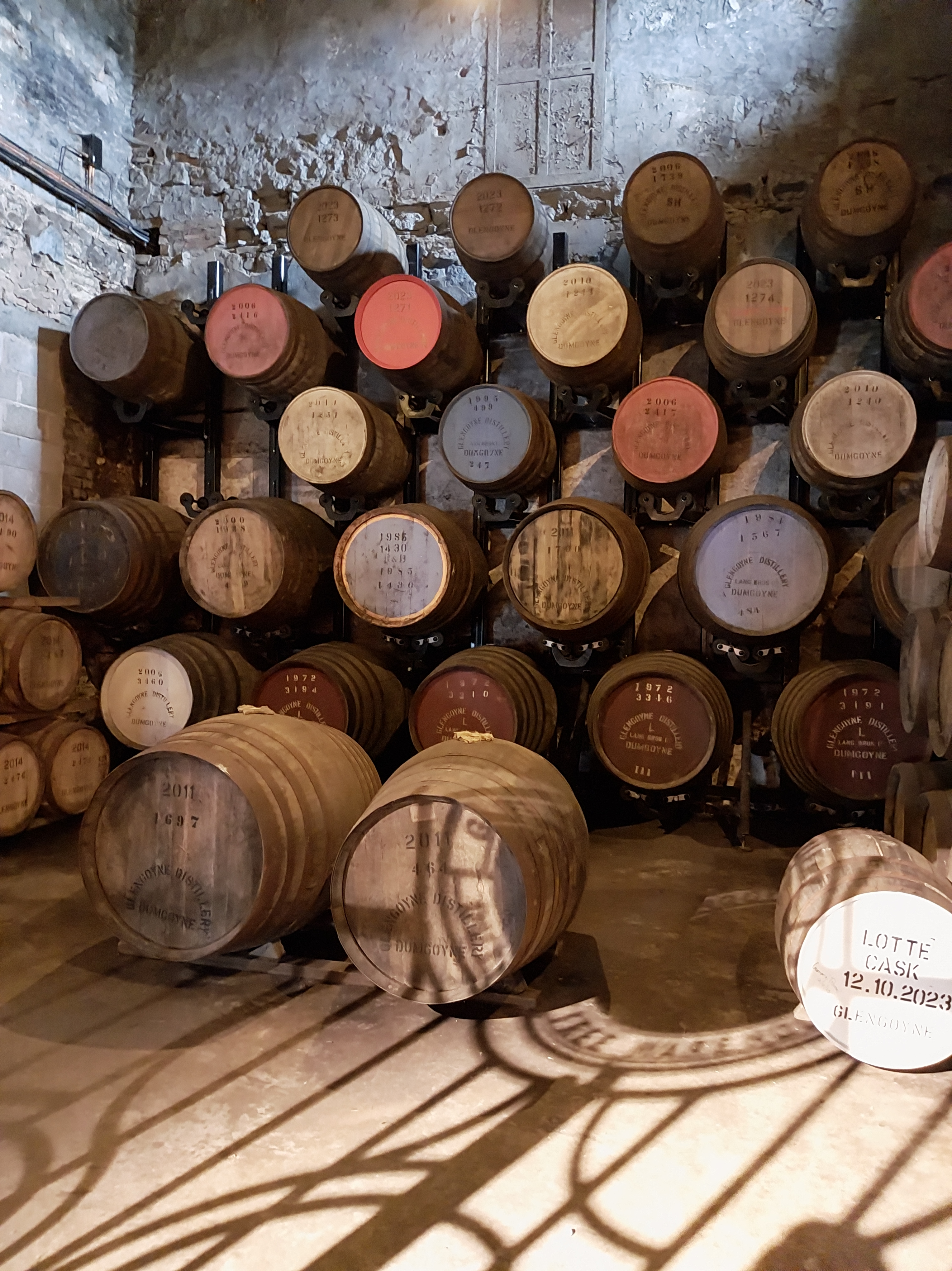
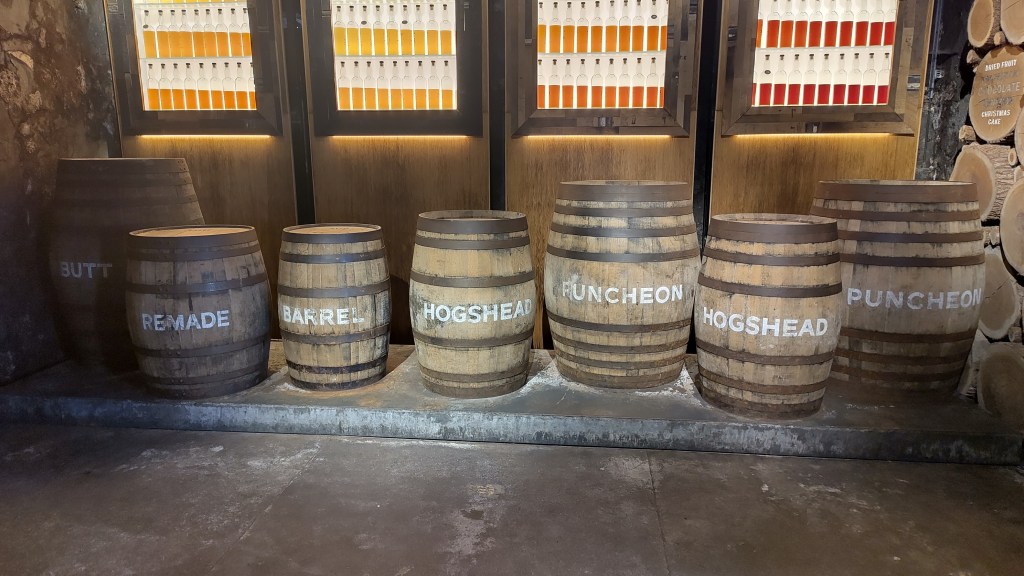
After production, we visited Warehouse 1, next to the production building (not on the other side of the road): quite small, they mostly made a maturation exhibition out of it, where transparent bottles containing spirit and whisky at different stages of maturation are showed, together with the different types of casks and wood. A very interesting bit for more inexperienced visitors. Diane soon after walked us to the Managerโ€™s Cottage, where there is a very nice and relaxing tasting space, with sofas, comfy chairs and fireplaces (they were off while we were there, otherwise we could have easily taken a nap).

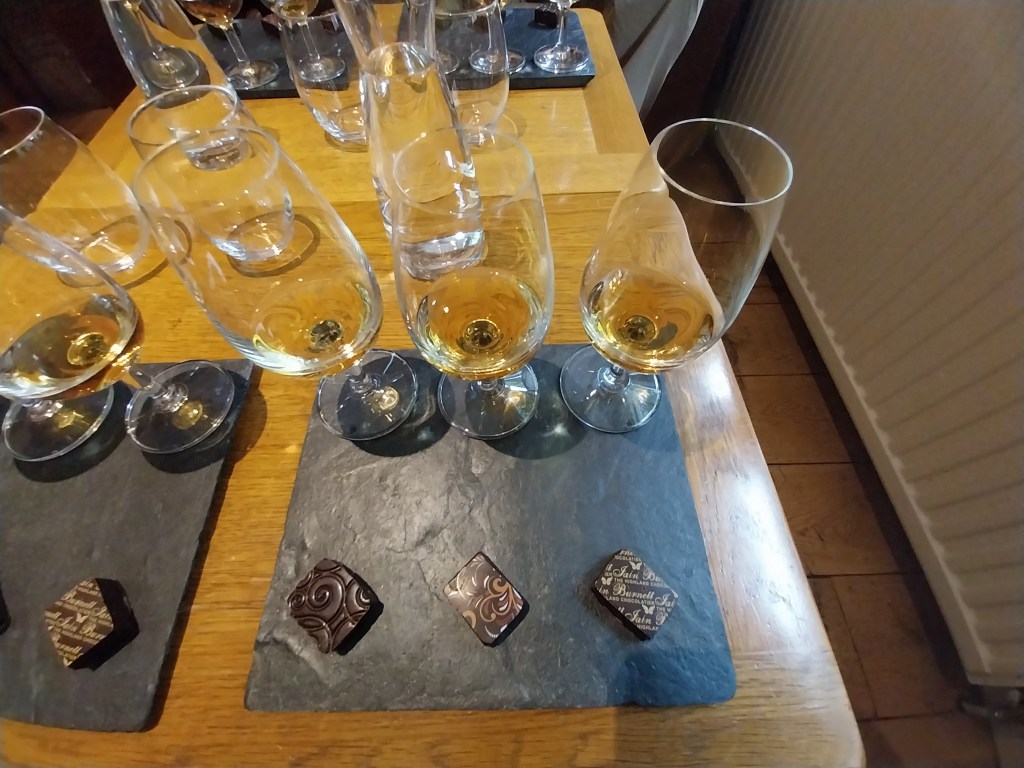
The tasting was ready for us: 3 drams from the core range paired with one chocolate each, from the Highland Chocolatier. First off, the 12y, bottled at 43% and matured in a combination of first-fill European oak (ex-sherry we thinkโ€ฆ20% of the total), first fill American oak ex-bourbon (20%), and not better specified refill casks (60%). Quite nice and bright. The second dram was the 18y, again bottled at 43%, but with a different composition: less refill (50%) and ex-bourbon (15%) casks, and more first-fill European oak casks (35%). This brought definitely more dark-fruity notes and richness, although not as rich and decadent as the last dram. This was a 21y, fully matured in first-fill European oak casks.

Overall the visit was nice, geared towards less whisky knowledgeable visitors though. The best part was the tasting – while we were a bit sceptical because of the low abv, these were delicious and not watery at all. A shame their prices are a bit higher than expected (in particular in the shop, and even taking into account the discount for visitors doing a tour or a tasting), which is probably the main reason we havenโ€™t connected so much with this distillery so far. However, the velvety and soothing quality of these drams was not lost on us, and we think they are perfect to share with family and friends less used to higher strength drams than us. So who knows, maybe one coming in the future?

Stay tuned for the rest of our trip, this time definitely below the Highland line! Until then, slainte!


Glengoyne Collection Tour and Tasting

Price: ยฃ35.00 pp (June 2024, plus ยฃ3.50 booking fee per transaction)

Duration: 1hr 30min

Tasting:3 drams, Glengoyne 12 (43%), Glengoyne 18 (43%) and Glengoyne 21 (43%)

Highlights: the tasting room

Distillery exclusive: Glengoyne Distillery Cask, ex-Port, 14y (56%, distilled 14/04/2010, ยฃ200…!)

Target: the whisky curious

Value for money: good

Recommended: yes

Link: https://www.glengoyne.com/

#43 Cask finish DIY

Diary of an experiment


TL; DR: Have you tried to finish your own whisky in a wine cask? Well, we did, and although we already knew, we could see how hard it is. While the result was not great, we definitely learned a few things. 

This post is going to be different from others, as we wonโ€™t tell you about a distillery visit, nor a trip, nor a tasting. Weโ€™ll talk about an experiment we did recently – still a journey, if you wish.

The idea came after some thoughts on whisky maturation in casks that previously held wine. It took a while to us to realise this is a controversial topic. At first, we didnโ€™t give it much thought as it felt it was just part of the broader โ€œwineโ€ category (including Sherry, Port, Madeira, etc.), but then we noticed many whisky enthusiasts think wine cask maturation is a separate thing, often perceived as badโ€ฆ so whatโ€™s the deal with red/white wines? We had amazing drams matured in wine casks (Arran Amarone, to name a popular one, but also a stunning Glen Garioch 19y fully matured in an ex-Bordeaux cask tried at the distillery, or the Glen Moray 10 Elgin Limited Edition, finished in ex-Chardonnay casks). Let alone the STR (shaved/toasted/re-charred) casks made popular by the late Jim Swan: some can deliver a lot of flavour in a short time, which is particulatly crucial for new distilleries. However, we also had some very โ€œmehโ€ wine-matured whiskies (we wonโ€™t name names here), dull at best, so we totally get the scepticism of some.

A taste of Gianluigi’s home, Gutturnio wine.

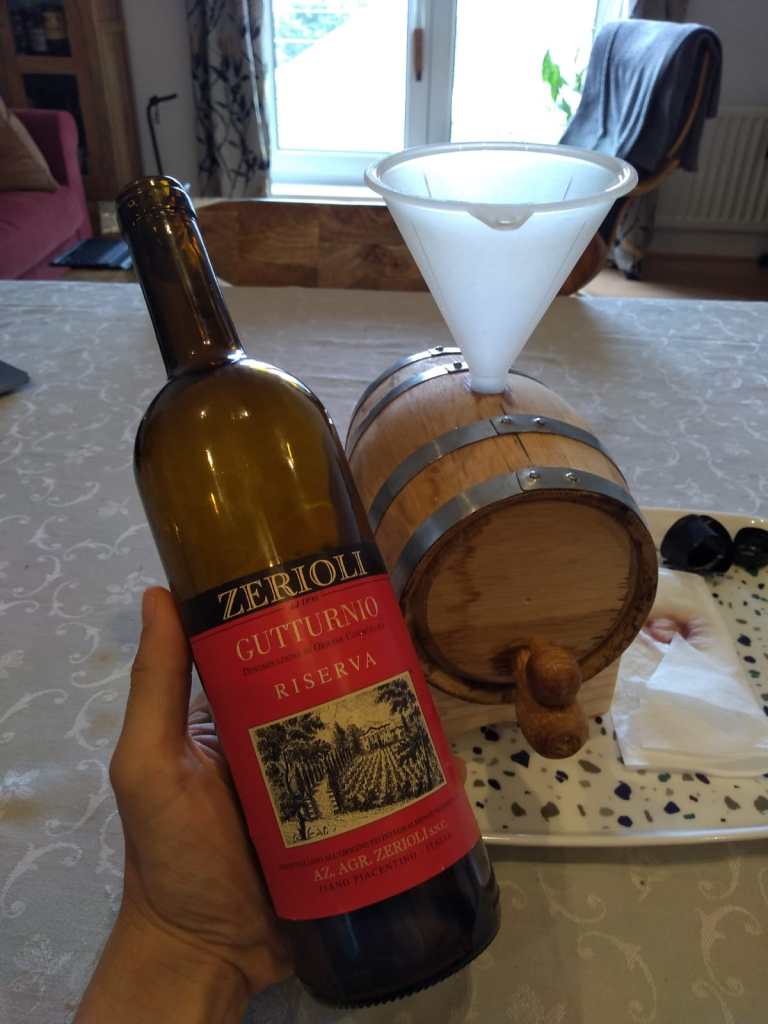
Probably our Italian upbringings sparked further curiosity on the topic, so we did a bit of research and noticed that while maturation in casks such as Amarone, Barolo and Cabernet-Sauvignon is fairly common nowadays, lesser known red wines arenโ€™t a thing (yet). One wine in particular seems to be overlooked: Gutturnio. Typical from Piacenzaโ€™s province (Gianluigiโ€™s hometown), it is a mix of Barbera and Bonarda grapes, and comes either fizzy or still (โ€œsuperioreโ€). A thick red wine, that goes well with the greasy local cuisine, quality-wise you can find the cheapos from supermarkets, up to several tenths-of-euros per bottle. We wondered for a while, then, after a conversation with Woody and Megan from Woodrowโ€™s of Edinburgh, we decided to give it a try and start an experiment.

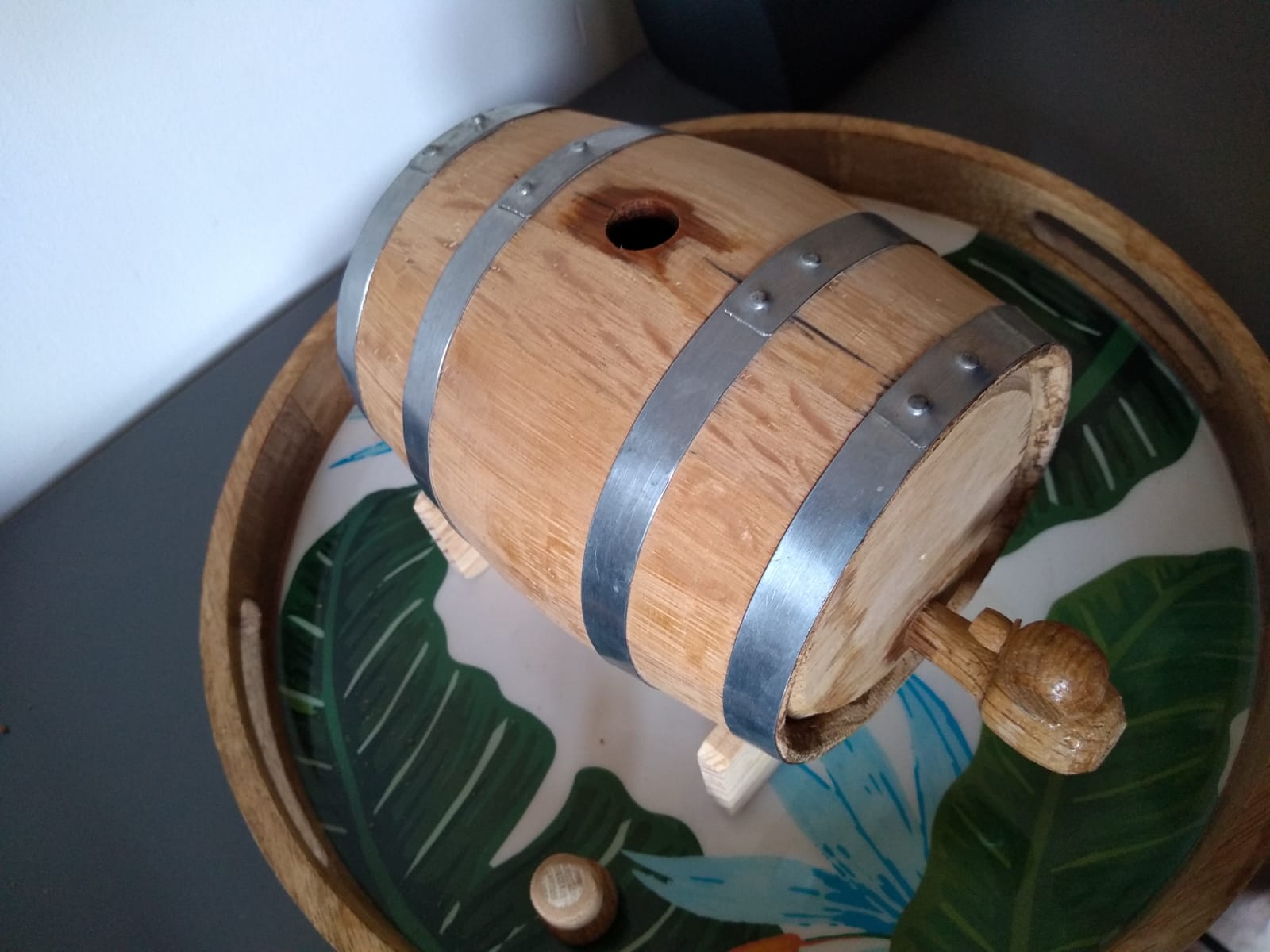
We asked some friends about to visit us to bring over a bottle of Gutturnio, Gutturnio Zerioli Riserva (later on Gianluigiโ€™s brother would challenge this choice as not great, but hey ho) and then we bought a 1-litre virgin oak cask (American oak, Q. alba) from Master of Malt (where it was cheaper, if you exclude some suspicious vendors on Ebay). On the 26th of August 2023 we filled the wee cask with 75cl of wine, and left it in there for a bit over 3 months.

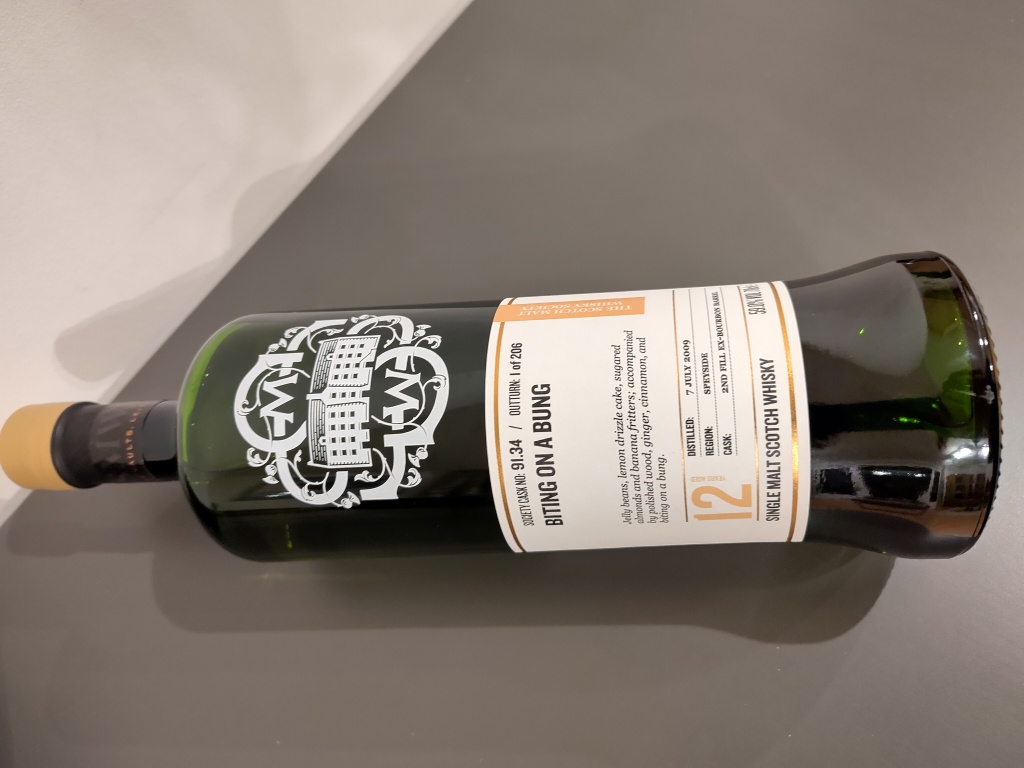
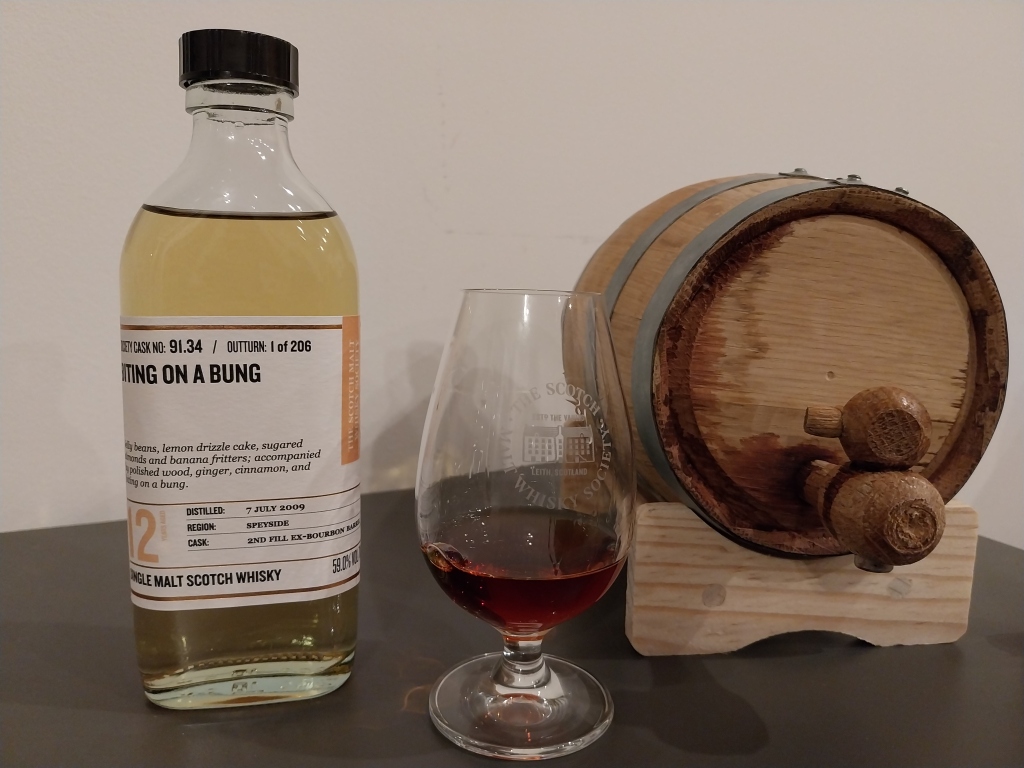
While the cask was seasoning hidden away in a cupboard (turning it from time to time), we chose our dram. We wanted something without much cask influence, so we aimed for second-fill (or more) ex-bourbon casks. Living in Edinburgh made things easier, as we could access the two Scotch Malt Whisky Society venues, although it wasnโ€™t easy to find a whisky available both to try and purchase. We still managed to taste 6 or 7 bottlings from various distilleries, and the final choice fell on a 12-year-old Dufftown (distillery that we had the chance to walk past in our first trip to Speyside, but never properly visited), called Biting on a Bung (91.34), distilled on the 7th of July 2009 and bottled at 59.0% abv.

On the 5th of December, we disgorged the wine. To our surprise the cask was soaked – of the 75cl of wine weโ€™d put in, only 35cl came out! We knew that some absorption would happen, but not to this extent!

What was left of the entire bottle!

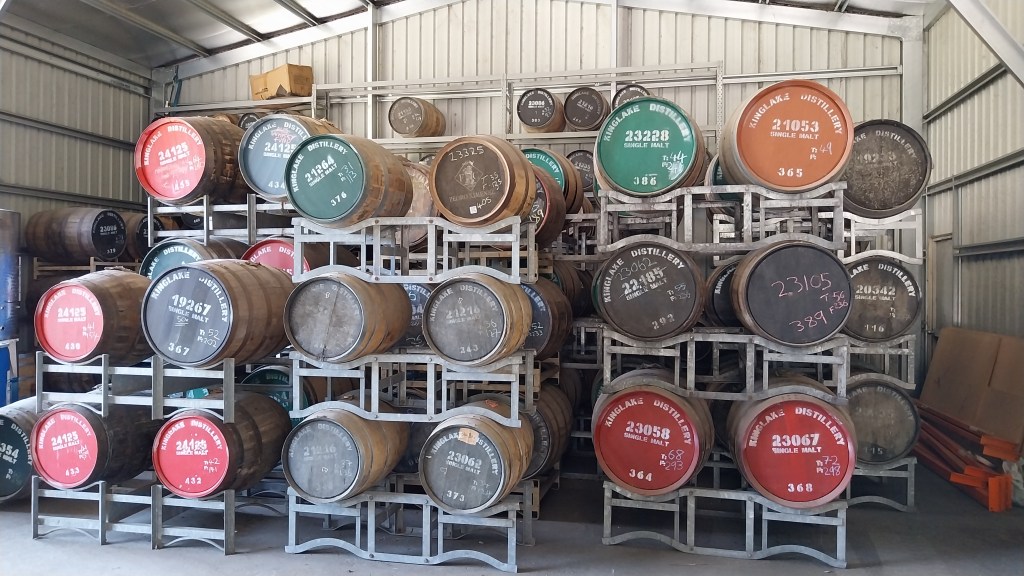
On the same day, we filled the cask with the whisky while leaving 20cl to ourselves, in case we messed things up (spoiler alert, we did). We didnโ€™t have a timeline in mind, we just wanted to try the whisky at different times, but here one miscalculation: we went back to Italy two weeks for Christmas, leaving it unchecked for probably too long. When we came back, we took a sample right away: a lot of colour (copper red), some typical red-wine notes on the nose (tannins and red berries), but very metallic on the palate. We hoped these metallic notes would disappear with some more time in the wood, but they didnโ€™t, so in early March, exactly 3 months after filling the cask, we disgorged it and, again, only 30cl of whisky came out (another 20cl of liquid absorbed) – 30cl of โ€˜metallic liquidโ€™, clearly not a success.

We followed up the experiment, this time not with a proper whisky but with spirit from our infinity bottle: despite leaving it in the wee cask for only a couple of weeks, the same unpleasant notes re-appeared (although not so much absorption this time). Oh well.

So, what did we learn out of this experiment? How to waste a good half-litre of whisky? Definitely, but not only that. We already thought it must be hard to properly finish a whisky in the right cask for the right amount of time, but we were surprised by how easy it is to mess up (well, probably the small size just accelerated the process)!

We made a list of variables to consider:

  1. The cask! After so many distillery visits, we know wood quality is key (but tbh we didnโ€™t feel like investing big for our random experiment)
  2. Time to season the cask with wine (maybe too much?)
  3. Time to finish the whisky (again, too much?)
  4. Climate conditions (our flat is very very dry, but thereโ€™s not much we can doโ€ฆ)
  5. Whisky robustness (maybe it was a too delicate one for this kind of experiment?)
  6. Quality of the wineโ€ฆor even the type of wine?

So many variablesโ€ฆitโ€™s really hard to wrap our heads around it, although we could sum up all these variables into one: experience, i.e. really knowing what youโ€™re doing. We clearly didnโ€™t, but thankfully this is not what weโ€™re doing for a living. Nonetheless, it was fun! Whatโ€™s next? Currently the cask is empty, but weโ€™ll try to fill it soon to avoid it to dry too muchโ€ฆwith, maybe, rum? Another wine? Let us know if you have any ideas!

Until next time, slainte.


#42.2 A weekend on Skye


Talisker distillery, second attempt


TL; DR: After the visit at Torabhaig, we drove north-west towards Carbost for the second distillery tour of the day, Talisker. A slightly less corporate experience than we expected, in a really beautiful spot. 

(missed Part 1?)

As we came out of Torabhaig distillery, the weather was slightly nicer: still no breaks in the clouds (those will come later), but at least it wasnโ€™t raining anymore. We gave ourselves just the time for couple of pictures, before quickly jumping on Mr. Vantastic and starting to drive north-west, back towards the main road. We did one stop in the very picturesque village of Isleornsay, near the sea, to visit the shop of the Gaelic Whisky company, Prร ban na Linne. It is a small independent bottler, which we learned about when a few years ago a friend gifted us a bottle of Mac Na Mara rum cask finish blended whisky. The Mac Na Mara range also also includes the expressions Classic, Madeira finish and Port finish, all bottled at 40% and non chill-filtered. They also offer another blended scotch, Tรจ Bheag (40%, non chill-filtered and high proportion of malt whisky), and the Poit Dhubh blended malt range (8y, 12y and 21y), all 43% and, again, non chill-filtered. After browsing the shop (where they also sell gin, food, and souvenirs), we took a Poit Dhubh trio miniatures (which we still have to try).

Back on the road, it didnโ€™t take us much to get to our final destination for the day: Carbost, home of Talisker distillery. We had a sound plan: park at the Carbost pier (where we could spend the night at the cost of ยฃ10.00 in the honesty box), visit the distillery and then dinner at the Old Inn.

We knew the road already, as it wasnโ€™t our first time there: weโ€™ve been there when we visited Skye in the summer of 2020, with Gianluigiโ€™s parents, during that short time window where international flights were weirdly allowed without much complication. Back then, we drove to Carbost after a stroll at the Fairy Pools, where we learned that midgies donโ€™t care for long-sleeve t-shirts. By pure coincidence, the night before weโ€™d found out that Talisker was reopening the next day, and that you could book a visit if you โ€œcalled or wrote an emailโ€. We tried to call several times, but in a typical Diageo disorganised shenanigans it turned out they were only replying to emails (with such short notice, we would have bet the other way round to be honest). So no distillery visit then, but we enjoyed anyway the view and the nice afternoon in the village, before driving back to Portree. This time, however, we are ready to rock!

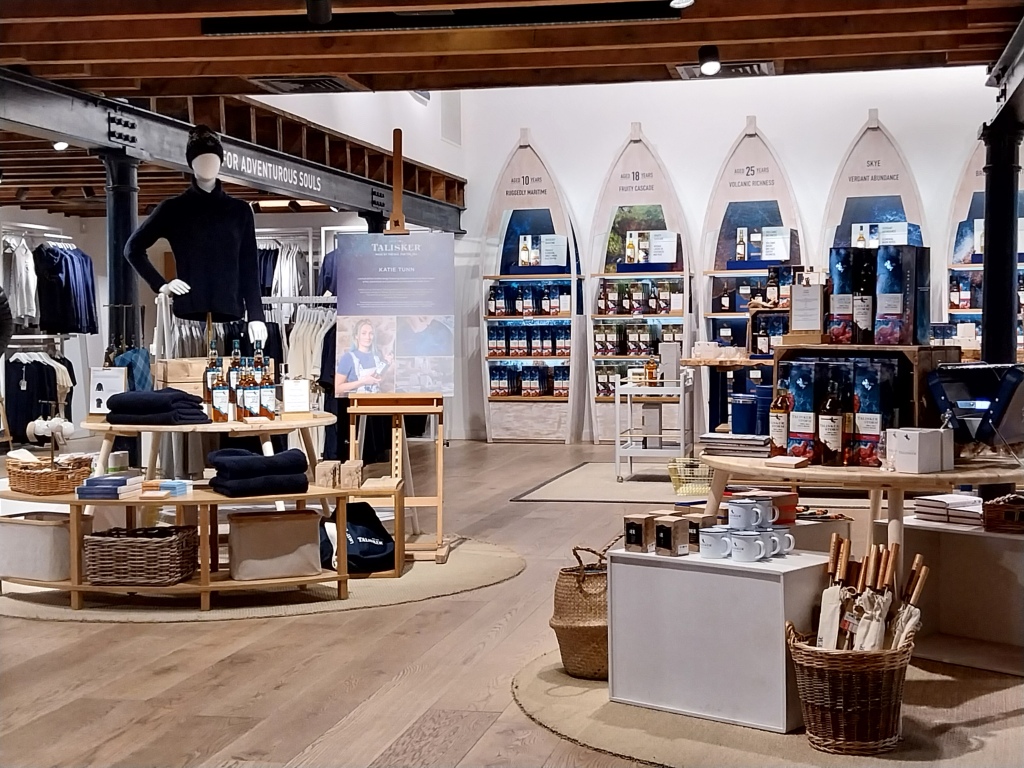
We parked the van at the pier, nor far from another van (and by the time we went to sleep, eight campervans were parked there despite the sign said max 5โ€ฆguess why โ€œcampervanistasโ€ are not very welcome in some places). Next to the distillery we noted a new building, right on the shore: a wooden cottage-ish building, which would have looked more appropriate in a skiing station. Weโ€™ll later find out that it is a fairly new space, part of the visitor centre renovaions, and includes a bar and a pop-up restaurant. After the usual selfies and photos, we checked in at the visitor centre. It is quite spacious and modern, with a round fireplace in the middle of it: again, that makes you feel like in a skiing resort hotel, but itโ€™s cosy, nonetheless. In contrast, the shop area was super bright, almost looking like an airport duty free or a department store.

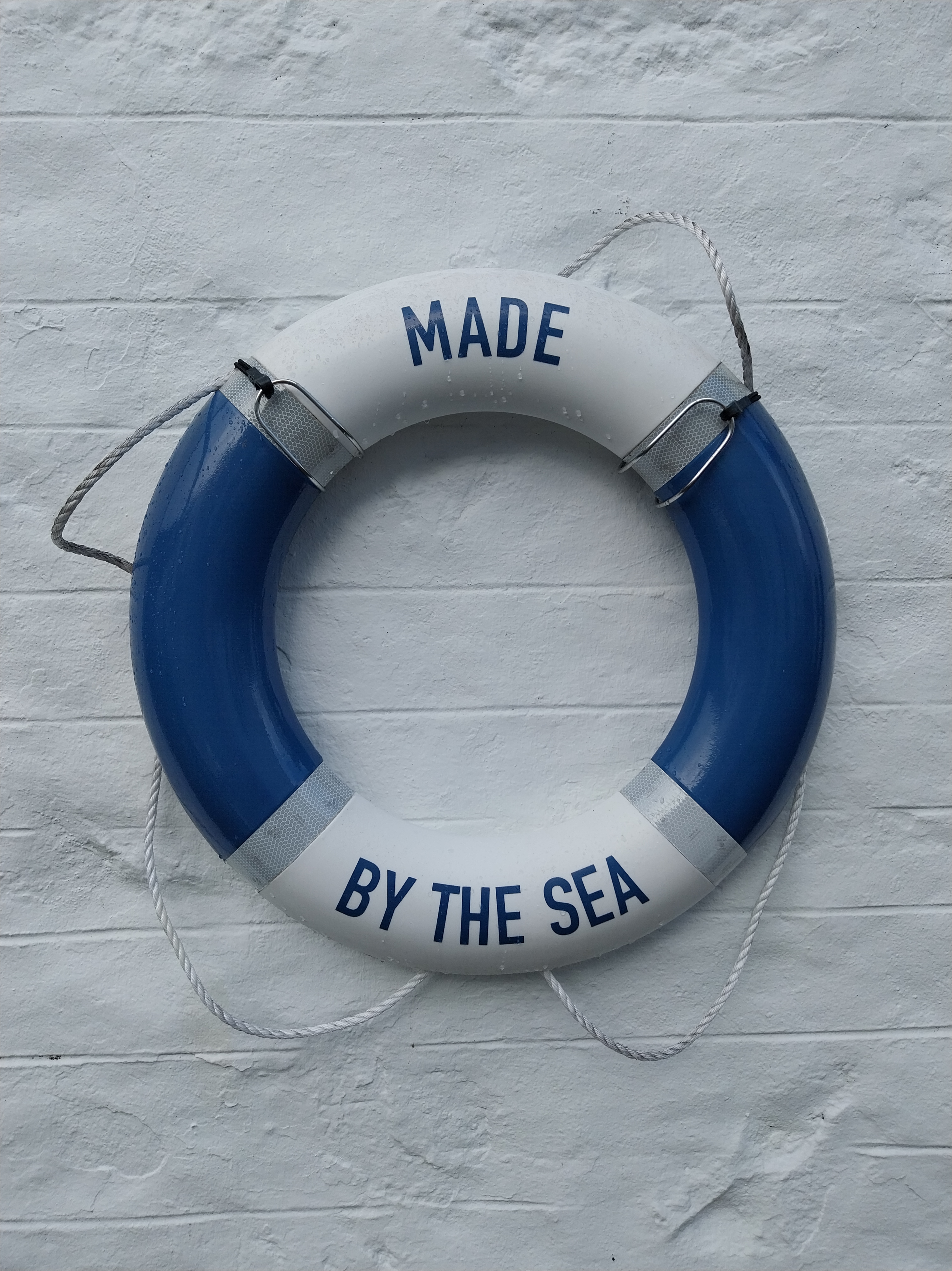
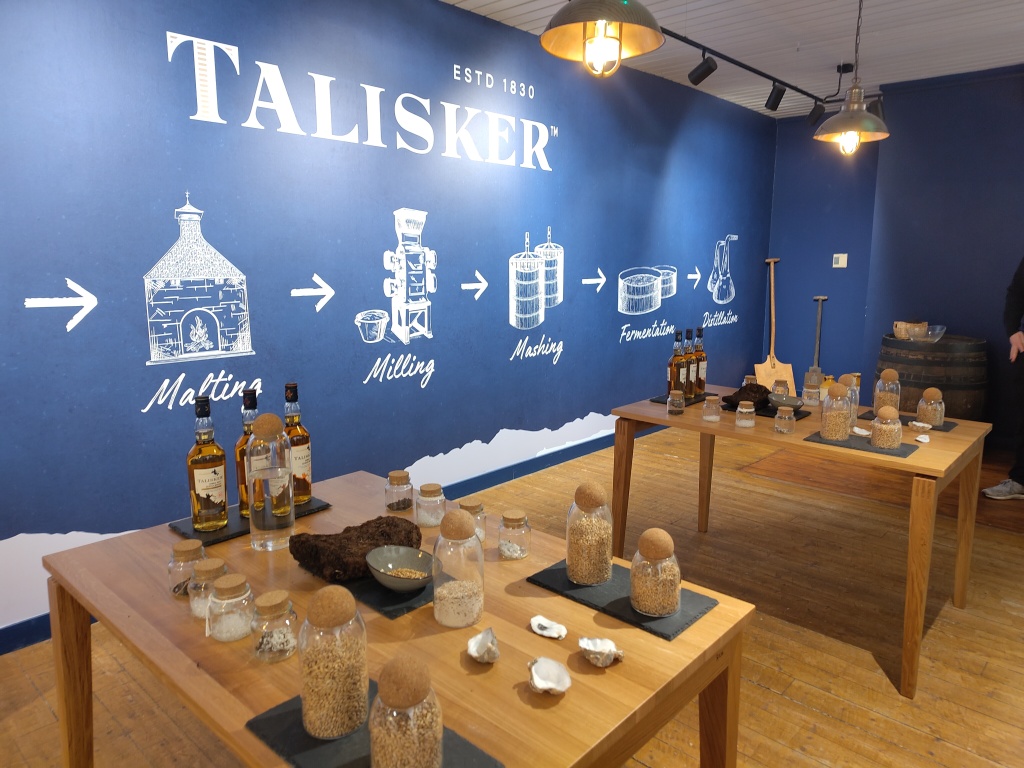
The guide for the day was Florian, who despite the heavily scripted tour, made lot of efforts to make it personal, with some dad jokes but also some โ€œtell-like-it-isโ€ moments. One we appreciated: โ€œโ€™made by the seaโ€™ is marketing language for โ€˜manufactured in the proximity of the seaโ€™โ€. Kudos. He gathered us around near the entrance when the time came, starting with the usual safety instructions. In spite being only February, the tour looked fully booked, which surprised us. We left the visitor centre to enter the production building. First, a โ€œdemonstrationโ€ room where Florian explained the basics of whisky distillation, showed us some peat, and where we could smell some elements associated with the most typical Talisker aromas: pepper, salt and honeycomb.

Florian also showed us the barley they use, lightly peated, mostly from the Black Isle on the east coast, and malted at Glen Ord maltings. Trucks come in with 30-tonnes of barley (which explains also the terrible state of the tarmac in Carbostโ€ฆalmost Edinburgh-worthy). Once there, the malt gets milled by Milly, a sturdy Porteus machine dating back to 1962.

We moved to the huge mashtun, where barley gets mashed with only two waters (one increasing temperature), similarly to many other Diageo distilleries. This is one of the industry practices to make whisky production more environmentally friendly. We couldnโ€™t visit the fermentation room (where fermentation lasts on average 72 hours but can be anywhere between 65 and 85 hours) because of the carbon dioxide level: first time since we started visiting distilleries, but better safe than sorry we guess. Thus, we moved straight to the very nice stillroom, equipped with two large wash stills for the first distillation, and three smaller spirit stills for the second. The cut they take from the second distillation is from 75% abv to 65%. 

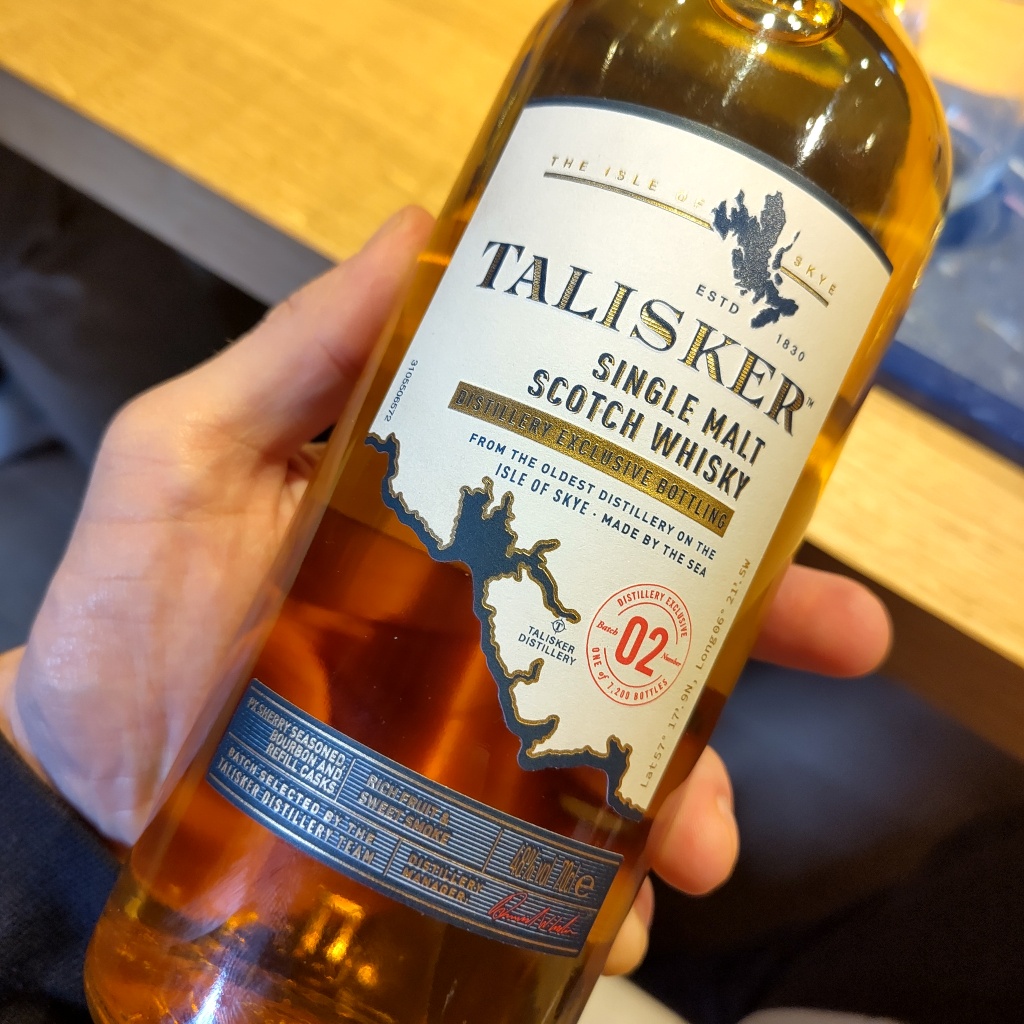
They have some warehousing space on site, but we couldnโ€™t visit it, as a matter of fact Florian told us he hadnโ€™t been in there himselfโ€ฆnot too surprisingly. Anything they produce, though, is put into tankers and shipped to be moved to casks at one of the Diageoโ€™s sites in the Central Belt. We went back to the visitor centre for the tasting, in a purpose built room just behind the bar. We started with the Talisker Storm, one of their non-age statement releases, finished in wine casks: drinkable but not memorable. We then moved on to the Talisker 10, which is a very solid dram in our opinion (some might say that itโ€™s not as good as it was X years ago, but being relatively new in our whisky journey, we have no clueโ€ฆ samples welcome, in case!). We finished with a Distillery Exclusive: this range is quite interesting (not to be confused with the Distillers Edition), as (apparently) distillery staff have some freedom in deciding what to bottle, and it is usually bottled at 48% or above (and whispers says non chill-filteredโ€ฆ). In general, across the distilleries we visited, we had some very good ones (Royal Lochnagar, Lagavulin, Cardhu) and many average ones โ€“ the Talisker DE (batch 02) we tried fell into the latter category.

Before leaving the distillery, we got a couple of drams at the bar, Port Ruighe (finished in port casks) and the Distillers Edition (this one finished in Amoroso Sherry seasoned casks), both quite nice.

After the distillery, we went straight to the Old Inn, a hotel and pub just a few steps away. The pub is very nice and cosy, despite being in a very touristy spot it maintains a โ€œlocal pubโ€ atmosphere. There we met up with Tommy, Gianluigiโ€™s former bandmate who recently moved to Skye, before having dinner and retiring to the campervan after a long, nice day.

Until next time, slainte.


Talisker Distillery Tour

Price: ยฃ20.00 pp (February 2024)

Duration: 1hr 15min

Tasting: 3 drams, Talisker 10 (45.8%), Talisker Storm (wine cask finish, 45.8%) and Talisker Distillery Exclusive (48%)

Distillery Exclusives: Talisker DE (batch 02, NAS, 48%, PX-seasoned ex-bourbon and refill casks, ยฃ105.00), Bottle-your-own (9y, 54.5%, rejuvenated ex-red wine cask -STR?-, ยฃ130.00)

Target: everyone, but mostly tourists

Value for money: good

Highlights: the scenery

Recommended: if you want to tick the box, yes

Link: https://www.malts.com/en-gb/distilleries/talisker


#39.4 The Highlander Trip

A quiz, a tasting and a distillery visit


TL; DR: Saturday was a โ€œrestโ€ day, after three distillery visits (actually five in two days!). However, we still had some whisky activities scheduled: a whisky-themed quiz and a tasting at the Carnegie Whisky Cellars. It was a great day, and it was followed by a visit (re-visit for us) at Clynelish on the Sunday. 

(missed Part 3/Part 2/Part 1?)

On Saturday we woke up not that rested: Teresaโ€™s cough was getting worse, the humidity inside Mr. Vantastic not helping. Gianluigi wasnโ€™t at his 100% either, with a bit of hangover hanging there. In normal conditions we would have got a warm drink and a good breakfast right away, but unfortunately Dornoch is a bit of a ghost town before 9-10, so we couldnโ€™t find an open cafรจ nearby, nor open public restrooms. Eventually, the latter opened (thankfully). A few minutes later we met Justine, and took a walk to the beach with her.

It was a very sunny day, not that cold, and Gianluigi even dipped his feet in the North Sea waters. We walked back to the village, where we could take a quick shower at our friends AirBnB. As a โ€œthank youโ€ Gianluigi went to the Harry Gow Bakery and got yummy morning rolls for everyone! Teresa felt adventurous and tried the macaroni pie – better than expected, although not sure sheโ€™ll have it again.

There were no distillery visits scheduled for the day, it was like a rest day, but weโ€™d have had an early evening tasting at the Carnegie Whisky Cellars shop, and a very fun activity was waiting for us before then: a whisky quiz! It was our friend Charlie, a whisky enthusiast more seasoned than us, to organise it. As a location, we went to the Dornoch Castle Whisky bar. Space was a bit narrow, so we were all around the same long table and with little chance to mix: we ended up in the same team, the Home Office (because of our working from home patterns, but also as a political mockery). We had a lot of fun, but we didnโ€™t win: we tried to gamble our last round for a high reward, but we didnโ€™t make it to the top. Afterwards, we went to the Cocoa Mountain to get a warm (and yummy) chocolate. Unfortunately, Teresa kept getting worse, so we decided to get a hotel for the night instead of sleeping in the campervan. Because this was a last-minute decision, we had to scramble back, and we ended up being late for the tastingโ€ฆdโ€™oh! Fortunately, our pals were all very understanding.

The Carnegie Whisky Cellars is a shop on the main street in Dornoch, on the same block as the castle. It is run by Michael, the manager, who started there in 2016, and by his assistant David. Beside the shop, there is a very nice room with low ceiling (ehm, the cellar?), and a long table around which we had the tasting. It was a very good one, Michaelโ€™s knowledge was impressive, and the choice of drams hit the spot. The lineup started with an old Haig blend, followed by a delicious Thompson Brothers Teaninich (bottled for the shop), a single cask 21y Braveal, a cask strength Campbeltown blended malt Gauldrons (probably mostly Glen Scotia), and two cask samples, one from a local distillery (donโ€™t know if we can disclose it, but it wasnโ€™t Dornoch) and another one from a Campbeltown distillery. While Gianluigi enjoyed his drams, Teresa mostly saved them as she wasnโ€™t feeling well, so after the tasting she went back to the hotel to rest. She revisited the tasting recently, and she loved it as well! Gianluigi instead joined the others for a very nice dinner at Greens (just next to the shop), followed by drams at the Dornoch Castle Whisky bar, and a final pint at the Coach House, before joining Teresa back at the hotel. 

In the morning we were both feeling much better, and as soon as we could we had our breakfast (Scottish full, of course) at the hotel, where we said goodbye to our pals Fiona and Mike, who left soon after. We met with the rest of the gang in the main square, but we didnโ€™t join them on the minibus: we were both working the day after, so the plan was to drive back to Leith straight after the visit at Clynelish distillery

The joys of foldable chairs.

This was the second time there for us, with the first in May 2021 right after the lockdown. While we really like the whisky, the distillery visit was a bit of a bummer: too expensive and too focused on Johnnie Walker (you can read about it here). Fortunately, things changed since then, they have various experiences, and we chose the Production Tour and Premium Tasting, more suited to whisky enthusiasts (ยฃ30). The others are the Flavour Journey (sounds very Johnnie Walker-esque, ยฃ19), the Express Tasting (ยฃ15) and the Premium Tasting (ยฃ65).

The guide for the tour was Shirley, and she was way more knowledgeable than the guide we had in 2021 (to be fair, we are now more knowledgeable too). The tour scheme was the usual, although it was a lot richer in information. They get their malt from Glen Ord maltings, unless Talisker is in high demand, in which case they get it from Buckie. The mill (as usual, Porteus) is the only piece of equipment they didnโ€™t refurbish in 2016, and they set the usual 20/70/10 split in the grist (husk/grit/flour). With the mashing (common to many Diageo distillery, two waters: raising the first one from 62ยฐC to 84ยฐC) they aim for a very clear wort, which then undergoes about 80-85 hours of fermentation.

An empty mashtun.

They recently changed yeast strain, they now use Lalamond. They only do unpeated whisky, but for their neighbour distillery Brora, the peat comes from near Montrose. The stills are a copy of the original 1960s ones, replaced in 2016, and they are fired with steam produced with oil and gas. Similar to our previous tour, however, we couldnโ€™t visit the warehouse (itโ€™s in the Brora areaโ€ฆ). Anyway, most of the whisky is shipped away in tankers.

The tasting was supposed to be 3 drams, but because we were a big group, Justine managed to negotiate an extra one (yay!). We had the tasting in the bar upstairs, with a magnificent view down towards the sea. Today it was Teresaโ€™s time to enjoy her drams, Gianluigi behind the wheel. We started with the Clynelish 14y (the flagship!), followed by the Distillers Edition, finished in Oloroso Seco for 6 months (we had a bottle of this). It was followed by the Distillery Exclusive, a non-age statement, full ex-bourbon matured whisky bottled at 48% – no mention or colouring or chill-filtering, but given the colour, we think it is unlikely they used caramel colourant. It was good, but not ยฃ105 good (this was batch 2, batch 1 in 2021 was ***only*** ยฃ90). Finally, we tried the Four Corners of Scotland, a bottling they made to celebrate four iconic distilleries (together with Caol Ila, Cardhu and Glenkinchie) for making Johnnie Walker. Again, quite good but at over ยฃ200, insanely priced. A shame these prices, but hey ho, life goes on. 

Anyway, we were happy with this distillery visit, much happier than after the first time. Nonetheless, excluding Fridayโ€™s tour de force, the real highlights of the couple of days were the whisky quiz (thanks Charlie) and the tasting at the Carnegie Whisky Cellars. Some very good memories to bring home, which is where we headed afterwards, not before a stop in Inverness.

Stay tuned, and until next time, Slainte!


Clynelish Production Tour and Premium Tasting

Price: ยฃ30.00 pp (November 2023)

Duration: 1hr 30min

Tasting: 3 (+1) drams, Clynelish 14y (46%), Distillers Edition (vintage 2006, bottled 2021, 46%, Oloroso finish), Distillery Exclusive (NAS, 48%), Four Corners of Scotland 16y (49.3%)

Distillery exclusive: NAS (48%), mostly ex-bourbon cask

Target: everyone

Value for money: good, definitely better value than the flavour journey we did in 2021

Highlights: the bar/tasting room and the view from it

Recommended: yes

Link: https://www.malts.com/en-gb/distilleries/clynelish


#39.2 The Highlander Trip

In the footsteps of the Angel’s Share


TL; DR: A classic highlander both in terms of malt produced (fruity and honeyed) and appearance: it definitely looks like a Scottish whisky distillery a very good AI algorithm would draw. 

(missed Part 1?)

The bus picked us up at the Dornoch Whisky shop. It was a 20-seater, more than enough for the 15 of us. During the wee ride on the wee bus we had a wee lunch (ok, weโ€™re stopping itโ€ฆ), sandwiches prepared earlier in the van, complemented by our pal Johnโ€™s homemade Scottish tablet, which heโ€™d prepared using local malts, as usual. The drive to Balblair (yes, that’s where we were headed!) was quite uneventful in the gloomy day, a very Scottish rain was falling over us. To be honest, we didnโ€™t expect anything different when deciding to visit the Highlands in November. 

As we approached Balblair it was pishing doon! The distillery is very picturesque: typical Highlandsโ€™ barren hills on the background, it is a combination of low dark buildings (including many warehouses) with a tall red chimney emerging in the middle. In the parking lot there is a shiny copper still behind a row of black barrels with the distilleryโ€™s name written on. The distillery was chosen to feature in the movie The Angelโ€™s Share, by Ken Loach. They shot here some of the scenes during the auction of a rare whisky cask from Malt Mill, with Charles McLean playing himself, under a different name of course (for the records, others scenes were filmed in the warehouse of the distillery we visited most timesโ€ฆcan you guess which? Here the link in case you want the answer). Although the movie probably isnโ€™t the best among Loachโ€™s filmography, for once itโ€™s one a bit less depressing, and genuinely funny at times. 

The Balblair distillery was built in 1790, one of the oldest in Scotland, and is now owned by Inverhouse (together with Speyburn, Pultney, Knocdhu/Ancnoc and Balmenach), whose parent company (ThaiBev) also owns the wicked Hong Thong โ€˜whiskyโ€™ (which btw we bought during a boring evening in Thailand years ago, such a mistake!). Despite not being new, this is not a brand we were very familiar with. Before our visit, weโ€™d only tried two core expressions (12 and maybe 15), a 10y Gordon&MacPhail Gianluigiโ€™s parents bought during a 2015 family trip in Scotland (just about a year before the whisky bug bit us), one from the Scotch Malt Whisky Society and the one weโ€™d bought that same morning from Thompson Brothers. Overall not many, and we tried them at very different times, which is not ideal to form an opinion on the distillery character. Also, because we got into whisky in the last 5-6 years only, we missed the period when Balblair used to have a vintage core range instead of an age-stated one, so we are alien to the debate on which was better. 

The visitor centre looked recently renewed, nice and tidy, with a low ceiling and dimmed lights. There were a few bottlings (unfortunately mostly overpriced) and some branded merchandise on display, with the counter on the right, and the tasting room and toilettes on the left. Gianluigi remembers this last detail, as he lingered a bit so when he got to the tasting room everyone was waiting for himโ€ฆ.Ooops. The guide for the day was Nigel, who turned out to be a competent guide when replying to all the numerous questions (kudos). However, we felt that at times he was pushing it too much, providing some unsolicited political opinions. After a brief introductory video, we moved to production, where we couldnโ€™t take pictures, sadly.

They source barley from the area (40 miles radius), which for the current production of 1.5 million litres of pure alcohol per year is not trivial (full capacity is a little higher, 1.8mlpa). Their water source is located 4-5 miles away, near the hills. Compared to other distilleries, they aim for a higher percentage of husk in the milling process, 30% instead of the usual 20%, with less grist (60% compared to 70%) and the usual share of flour (10%). They are equipped with a semi-Lauter mashtun (three waters), from which they get an unfiltered cloudy wort, and 6 Oregon pine washbacks of 23,000-litre capacity. They usually fill the washbacks with 9,000 litres of wort only, and fermentation lasts around 60 hours. 

Balblair logo.

They have a pair of shiny copper stills, and until the 70s they used to have wormtubs, then replaced by tube-and-shell condensers. A laser system checks when to take the cut from the spirit still, between 69% abv and 59.9%. In our understanding, most of the production is sent to Chivas in tankers. They used to keep about 10% on site, but now more given the success of their single malt (and of single malt in general) they increased the share. The newmake is filled into casks (mostly barrels) at 68% (which considering their cut, seems high). 

Work in progress in the warehouse.

As the production tour ended, we moved back into the visitor centre for the tasting, and to avoid the even heavier rain. The line-up consisted of 4 drams, 3 from the core range plus the distillery bottle-your-own. It was a solid line-up: only the 12y (ex-bourbon cask only) to many of us seemed a bit bland, although well priced. Both the 15y and 18y (both finished in sherry casks) were very good, as well as the very juicy (and buttery, toffee, honeyd) distillery bottle-your-own, just a shame for the prices (the 15y just below ยฃ100, the latter two well north of it).

Overall, it was a nice distillery visit, quite standard, and the tasting was a nice overview on Balblair whisky style, which definitely helped us put it finally on the map, flavour-wise. 

Stay tuned to hear more about this whisky day, and until next week, Slainte!


Balblair Signature Tour

Price: ยฃ45.00 pp (November 2023)

Duration: 1hr 30min

Tasting: 4 drams, Balblair 12y, 15y and 18y, plus the distillery exclusive bottle-your-own (see below)

Target: everyone

Value for money: Ok

Distillery Exclusive: vintage 2007(~15y), ex-bourbon barrel, 51.6%, cask #422 (ยฃ130.00)

Highlights: the picturesque location and buildings

Recommended: the distillery is beautiful, but there might be better value-for-money tours not far away

Link: https://www.balblair.com/


#39.1 The Highlander Trip

A craft distillery in the castle backyard


TL; DR: After visiting Campbeltown and Speyside, this time the Edinburgh Whisky Group travelled to the Highlands, main base Dornoch. No better way to kick off the trip with a visit to the local distillery! 

During the 2020 and 2021 lockdowns, one thing that helped us maintain some sort of mental health was the great whisky community we found online, and in particular the Edinburgh Whisky Group founded by Justine on Facebook. A hard core of us kept in touch even after things eased off, and towards the end of 2021, when travels were allowed again and distilleries slowly reopened, we organised a trip all together, the Campbeltown Jolly! It was a success, so we repeated it about a year later with the Speycation

For the third year, in 2023, after some thinking and discarding some options like a day trip in Pitlochry (Edradour still closed and too many of us had already visited Blair Athol) and a weekend on Islay (too complicated and probably expensive), the selected destination was the Highlands, with the brilliant name Highlander, who wants to dram forever? (our pal Charlie even made a logo to print on t-shirts). We were going to be based in Dornoch, and the trip combined distillery visits, whisky tastings, and a very fun whisky-themed quiz (Charlie was on top of this too!). 

On our way to Dornoch we took the chance to visit two Speyisde distilleries (Ballindalloch and Dunphail, both definitely worth a visit!), but then we met up with the rest of the troops directly in Dornoch. For us one big issue was the lack of an open campsite in Dornoch or in the vicinity (we had to contact Visit Dornoch to ask where we could park our campervan without causing any trouble). Unfortunately, this is the issue when visiting the Highlands in the off season, as weโ€™d already found earlier in the year when we went to Ardnamurchan in February. On the one hand, itโ€™s really great to be able to appreciate incredible places and landscapes in peace and without the (sometimes) swarm of summer tourists, but on the other hand many services including campsites (despite the easier maintenance) are closed, making it challenging, at times. 

Things you can do while in Dornoch – the Historylinks museum.

After a fun evening with the others at the Eagle Hotel (also restaurant and pub), we woke up In the morning not that rested, because of a cold weโ€™d caught a couple of days before the trip: campervan + cold, not a great combination. We had to catch up, however, because it was going to be a long day: not one, not two, but three distillery visits, yay! We fixed ourselves a nice breakfast in the campervan, and it was soon time for the first visit: the very local Dornoch Distillery, founded by the Thompson brothers Phil and Simon in 2016.

At the moment the distillery is just behind the Dornoch Castle Hotel (at the time of writing also property of Phil and Simon, who took it over from their parents), and near the Historylinks museum. It is a shed that used to be a fire station, more or less same size as the Stirling distillery, but without the barโ€ฆIntriguing! So small, that we had to divide the group in two, we were in the second shift. When it was our time to go, Phil Thompson let us inside: everything is very carefully placed to give the operators enough space to move.

There are a 300kg stainless steel semi-lauter mashtun, six (!!) wooden fermenter vessels and two beautiful copper pot stills from Portugal (1,000-litre and 600-litre). There is also a 2,000-litre iStill, which is used as the wash container before distillation, or for gin production (here Phil stressed out how long it does take to clean it after gin to avoid any trace of gin going into the newmake spirit for whiskyโ€ฆA care that we wish other craft distillers would have as well!).

At the moment they are using an ancient variety of barley called Marie Otter, which according to them provides less yield but more flavour compared to other varieties because of the higher protein content. Fermentation lasts seven days, with liquid yeast (it used to be brewerโ€™s yeast), and they leave the top open to allow natural yeasts to play their part as well. The stills are electrically heated, although they use steam coils to pre-heat for a more efficient process. Their capacity is a little more than a hogshead (so north of 150-ish liters) per week, and when we were there, the abv at the end of the last distillationโ€™s heart collection was 66.9%. 

In case you were still doubting this is a craft operation. It definitely is!

Probably one of the most geeky distillery visits so far, Philโ€™s knowledge of and passion for whisky making are impressive. His patience is impressive too, we asked so many questions! Overall, it was very interesting to see how their vision of traditional whisky making translated into practice. Also, we were very happy to have had the chance to visit the distillery shed before the big changes ahead. Indeed, the Thompson brothers have been recently granted permission to build a new distillery nearby, which will improve their capacity and include a visitor centre and a shop. This is a very exciting development, and given their flavour-forward thinking in each step of production, we can only imagine what they will be able to do with an improved capacity! 

Done with the visit, we moved to the shop, which is about 8 minutes walking north from the distillery. The shop is closed on weekends, and because we were leaving on the Sunday, if we wanted to get something from them now it was the time. We were lucky to find one of the last bottles of their recent Canadian Single Grain matured in in Sherry casks, for a Christmas gift, while for us we bought a โ€œsecretโ€ Highland weโ€™d tried before, very delicious in our opinion. The distillery it comes from would have been the next one on this trip. 

Stay tuned to hear about it, and until next week, Slainte!


Bespoke Dornoch Distillery Visit
Link: https://www.thompsonbrosdistillers.com/


#38.2 Warming up for the Highlands, in Speyside

The Dunphail Distillery


TL; DR: After visiting Ballindalloch distillery (and an almost random encounter) we drove up almost until Forres, to the Dunphail distillery. We had already visited it during construction, but this time newmake spirit was flowing through their stills!

(missed Part 1?)

We left you last week at Ballindalloch, after a very satisfying visit to this new and very promising distillery. Unfortunately, the nice wee cafe behind the distillery was closed for the season, so we were about to jump back on Mr Vantastic and go look for another place for lunch. As we approached our van, however, a surprise: Post Dram Prat materialised in front of us, with our friend Justine! Sheโ€™d just popped in at the distillery to browse the shop and for lunch, but for the latter we had to regroup together. We first tried Grantown East former station, but it was closed too, so we ended up in Grantown-on-Spey. There, we had a lovely soup-and-sandwich and a chit-chat at the High Street Merchants, a very nice cafe. Justine then drove to Tomatin to join some other Edinburgh Whisky Group friends, while we had another stop before driving up north: the Dunphail Distillery.

If youโ€™ve been following us for a while this name will be familiar, as we already visited it back in October 2022. At that time, however, they were still building it, and Dariusz (founder, master distillerโ€ฆand builder!) gave us an in-depth preview of his plans. This time around, however, the distillery is fully built and, at the time of visit, theyโ€™d been filling casks for just a few weeks! Serendipity.

The distillery is located just off the road connecting Grantown-on-Spey to Forres, almost mid-way. We arrived at the parking mid-afternoon, we just had time for a couple of photos before going in. At the new visitor centre, Mike welcomed us with a coffee (nice touch!) and a good chat. We found out he moved to the area a few years ago, and started working at the distillery earlier in 2023, while things were getting ready to start.

Similar to other distilleries (many othersโ€ฆ the data analyst in us is starting to notice a pattern), the visitor centre and main production buildings used to be barns, while the warehouse (soon to be two) and the malting floor were purposedly built. Yes, the malting floor: a big difference between Dunphail and most new distilleries is that they are malting on site the barley, which they source from the area. At the moment they are using Lauriet and Sassy barley varieties, and the process to bring it from 42% (after steeping) to 5% humidity (after the kiln) lasts about 33 hours. They dry the barley with a combination of air, anthraciteโ€ฆand peat, so to produce both peated and unpeated newmake spirit.

Teresa earning her drams.

Mike showed us how to turn the barley by hand with a rake, and also made us try itโ€ฆ so hard, a full-body workout for sure! One of the reasons is that the rake is made heavier by a hammer attached at the base of the handle, to make it stay lower on the ground, otherwise itโ€™d unhelpfully pop up on top of the barley. This โ€˜adjustmentโ€™ was made by the staff, as this type of equipment has been out of production since industrial malting started: learning by experience at play!

The malt is mashed one ton at the time in a semi-Leuter mashtun (3 waters at different temperatures, as usual), aiming for a clear worth, which is then moved to one of their 12 Douglas Fir washbacks for a long fermentation: 144h (6 days). The distillery is equipped with three stills (remember these?), all same size, two wash stills and one spirit still: all three are directly fired, however to save energy and improve efficiency they are initially warmed up with steam coils. They are aiming for a 200,000 litres-per-annum capacity, which is small but still reasonable production size. In the warehouse (not dunnage, the floor is concrete), we could take a look at the first batch of casks they filled: history in the making!

After the production tour we went back to the visitor centre for the tasting, where we (ehm, Teresa) tried the newmake spirit. It seems trivial for a distillery who just started production to at least make you try the newmake spirit. However, in a few instances this didnโ€™t happen, so well played Dunphail! The other drams were all scotch whiskies coming from the Dava Way range, named after the historical 38km trail from Forres to Grantown-on-Spey. They were a 13y Teaninich from a hogshead, probably ex-bourbon, a 12y Caol Ila from a hogshead, and a sublime 28y North British grain whisky from a 1st fill ex-bourbon barrel. At the visitor centre, other than merchandise, the available Dava Way bottlings were on sale, as well as some Bimber and the Apogee XII pure (blended) malt. They also had many drams to try at the bar!

Unfortunately to get to Dornoch we had an over 90-minute drive, and the Dunphail visitor centre was closing too, so we left right after the tasting. We arrived to Dornoch just in time for a nice dinner with our friends from the Edinburgh Whisky Group, and another couple of drams of course, ready for the following days adventures!

Visiting Dunphail was a great experience, a really good deep-dive into this new distillery and whisky production from green barley to newmake spirit. It was clear from how the tour was conducted by Mike that it was set up by whisky enthusiasts for whisky enthusiasts, so a must-do detour from the main roads in our opinion. We are looking forward to enjoying their single malt, when ready!

Until next time, slainte!


Dunphail Distillery Experience

Price: ยฃ30.00 pp (November 2023)

Duration: 1hr 30min

Tasting: 3 drams for their Dava Way range and the newmake spirit

Target: everyone, but particularly whisky enthusiasts and geeks

Value for money: good

Highlights: the production

Recommended: yes

Link: https://www.dunphaildistillery.com/


#38.1 Warming up for the Highlands, in Speyside

The Ballindalloch Distillery


TL; DR: On our way to the Northern Highlands, we couldnโ€™t help but stop in Speyside for a couple of visits. First off, a distillery weโ€™d driven past several times but yet to visit: Ballindalloch. Bonus, when we visited theyโ€™d just released their first few bottlings! 

Important things first: happy New Year! We hope you are well rested after the Christmas and New Year holidays, and had plenty of good drams. We absolutely did – our (Italian) Christmas dram was a very tasty Glen Moray 18y (47.3%) grabbed at the airport, while as a last dram of 2023 and first dram of 2024 we chose the delicious Kilchoman 100% Islay 10th Edition (bottled in 2020, 50%). We are looking forward to another year of tasty drams to share with you, lovely lot!

Back to 2023, one of our last whisky trips was in early November, with the mighty Edinburgh Whisky Group, organised by the mightier Justine from Kask Whisky. After the Campbeltown Jolly (2021) and the Speycation (2022), it was time for the Highlands: Who Wants to Dram Forever? โ€œHighlandsโ€ is quite a broad whisky region (both in terms of area and flavour), we chose the North, and we were based in Dornoch. Of course, to get there you need to take the A9 (unless you go for some insane detour), and the A9 does run kind of close to Speyside as wellโ€ฆso why not doing a quick detour on the way there?

And it goes without saying, we detoured indeedy. We decided to visit two distilleries, both quite new, starting with Ballindalloch. Weโ€™d driven past the this distillery many many times during our multiple Speyside holidays, and once we even stopped for lunch at the cafe just behind it. The distillery was founded in 2014 by the Macpherson-Grant family, who owns the entire estate with the castle (where theyโ€™ve been living since 1546!), pastures and barley fields. Before becoming a distillery in 2011, the building was a run-down farm originally built in 1848.

At the time of our visit, they offered various tours (now they changed a bit), but the only one available on the day weโ€™d be there (Thursday) was quite pricey (ยฃ75pp), as it included old drams from Cragganmore casks (a distillery to which the family is linked). We asked if we could do the simpler (and cheaper, ยฃ20pp) tour they were offering on Wednesdays (now it is offered most days), which included a taste of their two distillery-exclusive single malts. To our big surprise they agreed, in our experience (not only in visiting distilleries), this kind of flexibility has been rarely seen: kudos to them! Just FYI, on Thursdays they also offer an in-depth all-day experience for ยฃ275, learning from the manager and the staff. 

How an old steading can become a beautiful distillery.

The trip there was uneventful, under a grey sky, and fortunately we didnโ€™t find any road closures due to rain along our route. At the distillery, we were welcomed by Evan, who later told us he was already working for the family but in their fishing range and had very recently switched to the distillery for the off-season. Being in an old stead building, the distillery follows a square layout: the side of the visitor centre entrance is occupied by a lounge (where the tasting took place) and offices, while the remainder is mostly for production

After a brief introduction, we moved to the milling room, equipped with a modern mill. They process about 1 ton of malted barley every day, which after milling is moved to their semi-lauter mashtun, where one mash is done every day from Monday to Friday.

Mashing hard.

Every piece of equipment is clearly sized to fit into the building: as the latter is a listed building (and thus can’t be reshaped or expanded) and because of the barley provenance, expansion beyond their current production (100,000 litres of alcohol per year) is not under consideration. As a matter of fact, the barley comes from the family estate, which produces about 350 ton/year, just over their requirement for whisky production (a bit over 300), and it is sent away for malting (the only stage not happening at the distillery).

We kept walking along the buildings, and next we found the four wooden (Oregon pine) washbacks, where fermentation lasts between 92 or 140 hours (fermention over the weekend is longer, of course). Next, right in the corner, the two stills, a 5,000-litre wash-still and a 3,600-litre spirit still, connected to two wormtubs located outside the building, each one with 70m of copper tubes inside. From the second distillation, they take a cut between 75% and 68% abv. They cask everything on site, and the casks are stored in a warehouse in the courtyard. Surprisingly, their (wee) bottling line is on site too!

Finally, we went back to the lounge/tasting room for our drams. We were lucky as theyโ€™d released they first single malts just a few months before, and we could try their second batch of distillery exclusives: both cask strength and single cask, one matured in an ex-bourbon barrel and the other in an ex-sherry butt. They are both approximately 7.5 years of age (see below for more details) and very tasty for their age, not too sweet and with the robust and thick spirit character clearly coming through.

One of the two tasty drams.

At the shop, they also had their first small batch bottling, called Seven Springs Collection, Edition #1: a vatting of five ex-bourbon casks (1203 bottles in total, cask strength at 60.2%abv). Evan kindly gave us a sip, tasty but a bit up in price (ยฃ150.00). 

Overall we really liked this distillery. It looks like they paced themselves and took their time to do things, including releasing their first whisky, which was indeed more robust and tastier compared to others from fairly new distilleries. Yes, their bottlings are pricey, but considering the scale of their operation it kind of makes senseโ€ฆ? Hopefully weโ€™ll see a widely available and better priced expression soon. 


Ballindalloch Short Tour and Drams

Price: ยฃ20.00 pp (November 2023)

Duration: 45min-1hr

Tasting: 2 drams of their new distillery exclusive bottlings

Distillery Exclusives: Single Malt Distillery Exclusive ex-Bourbon barrel (distilled 21/1/2016, bottled 28/8/2023, cask 29/2015, 62.3%abv) and ex-Sherry butt (distilled 3/12/2015, bottled 28/8/2023, cask 600/2015, 62.3%abv), both 50cl at ยฃ89.00

Target: everyone

Value for money: very good

Highlights: the distillery layout and building

Recommended: yes

Link: https://www.ballindallochdistillery.com/