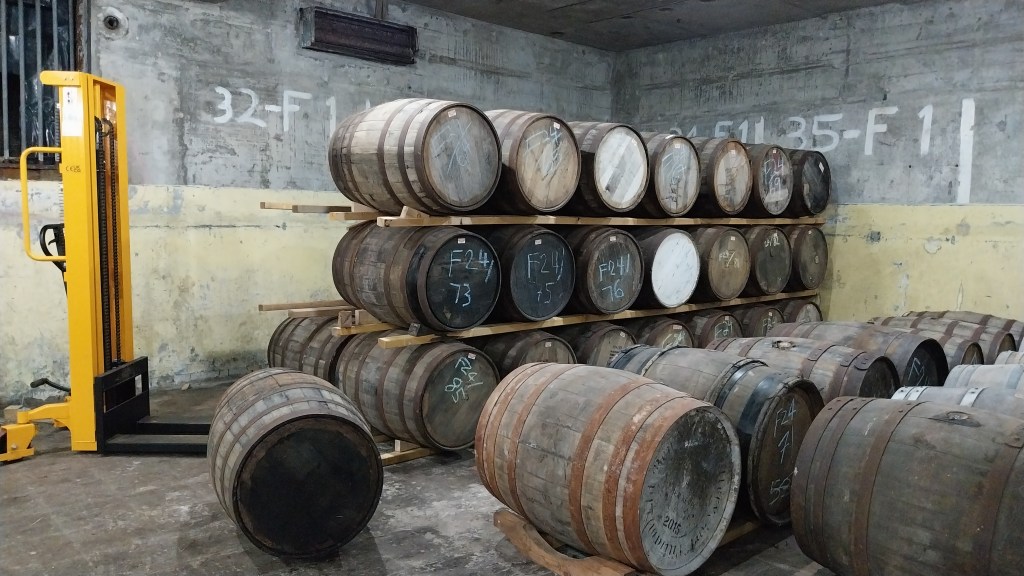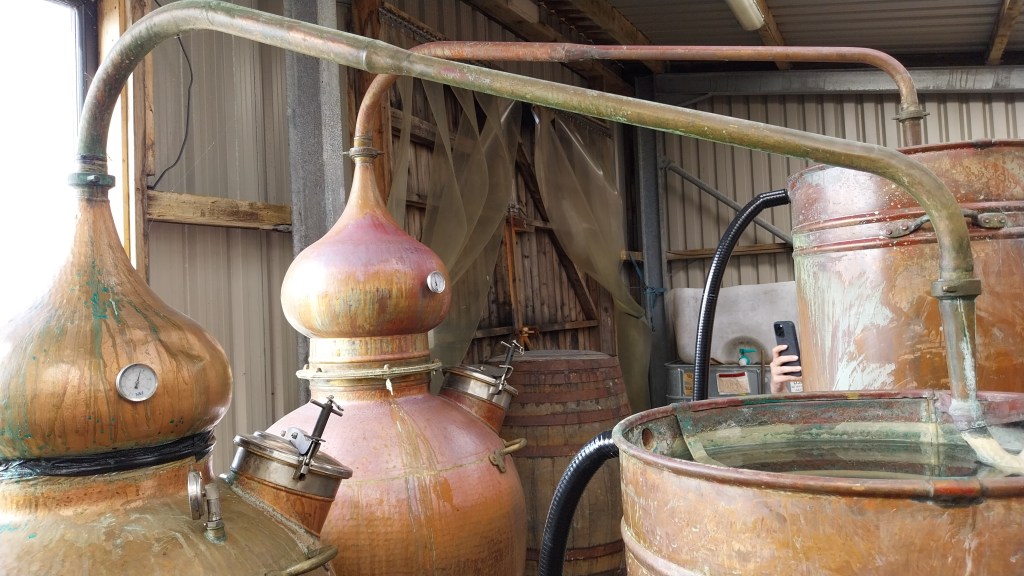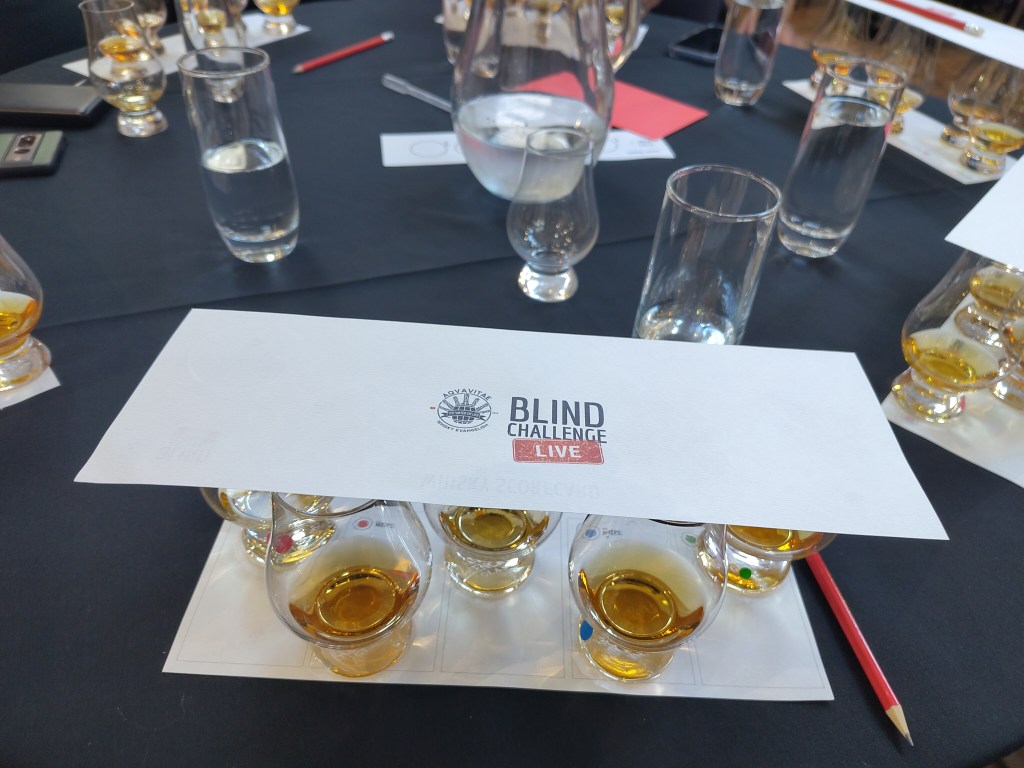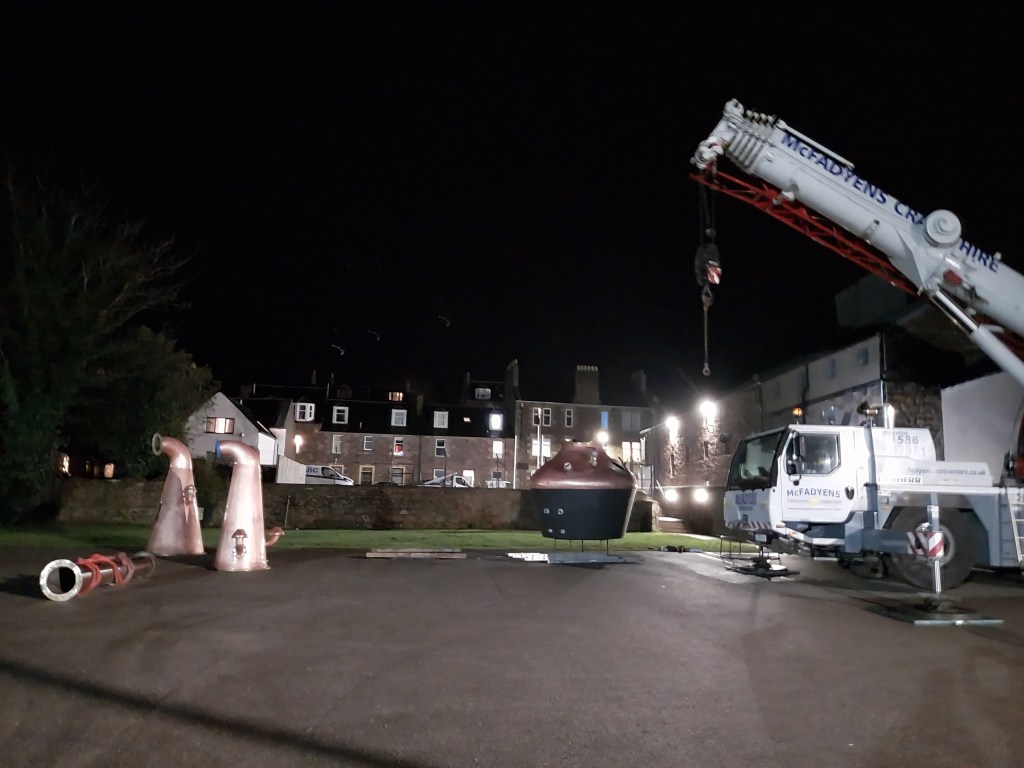
#68 Ardgowan distillery

A whisky cathedral in the west


TL; DR: Early in November we went on a day trip to the west of Glasgow, to Inverkip. Our destination was the newly built Ardgowan distillery, finally producing after a long phase of set up. A stunning, modern building that really deserves a visit.ย 

A part of Scotland that we havenโ€™t explored much is that stretch to the west of Glasgow to the west, Inverclyde. Bar the one time we went to Gourock, near Greenock, to take the ferry to Dunoon on our first trip to Campbeltown, we never really visited the area. That was about to change in early November, as we embarked on a day trip to go visit one of the newest kids on the block: Ardgowan distillery! The company was founded in 2017, with the objective to bring back distilling in the area. There used to be an Ardgowan distillery in Greenock, founded in 1896, but the site was flattened by the Nazis bombings in 1941.

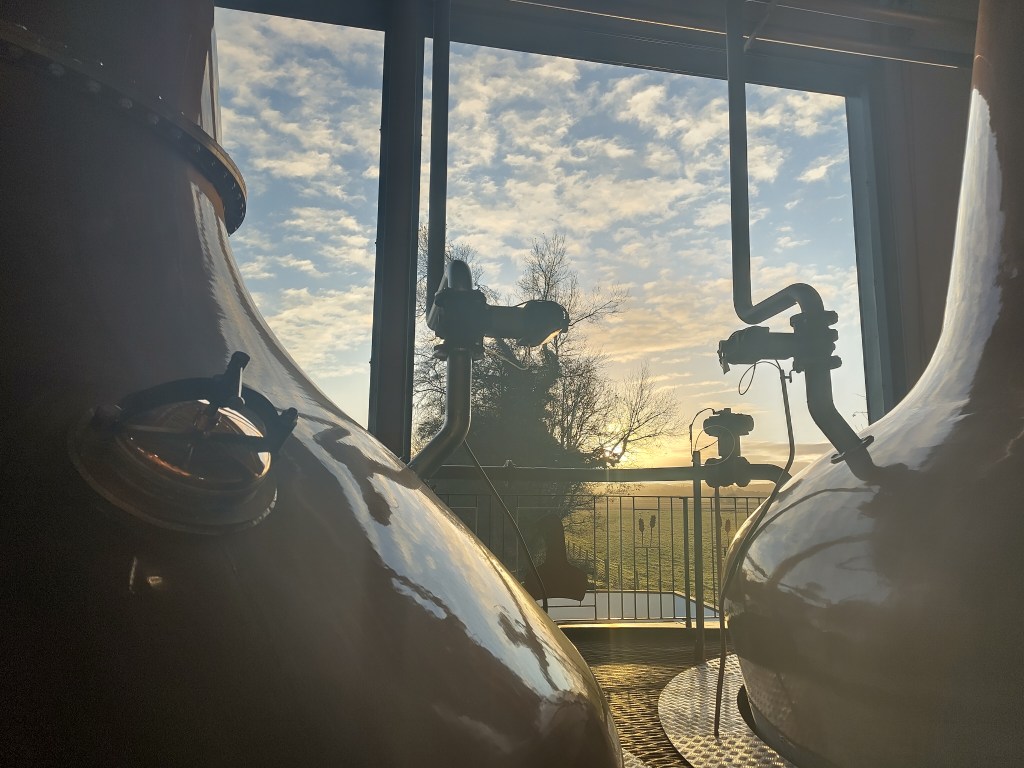
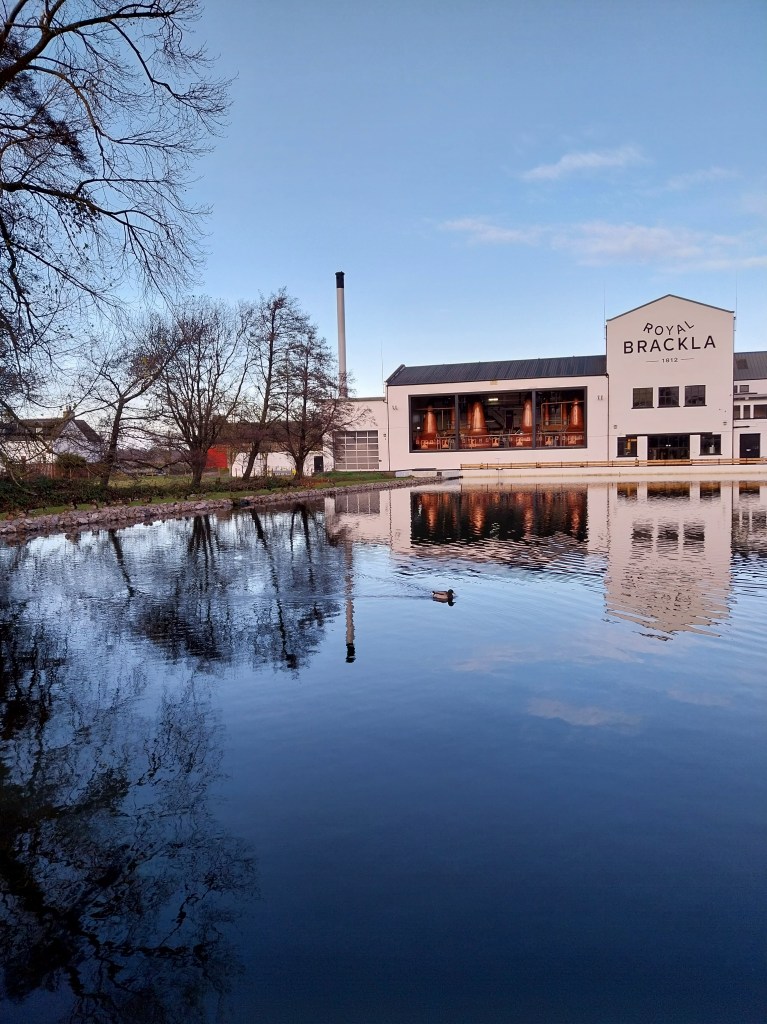
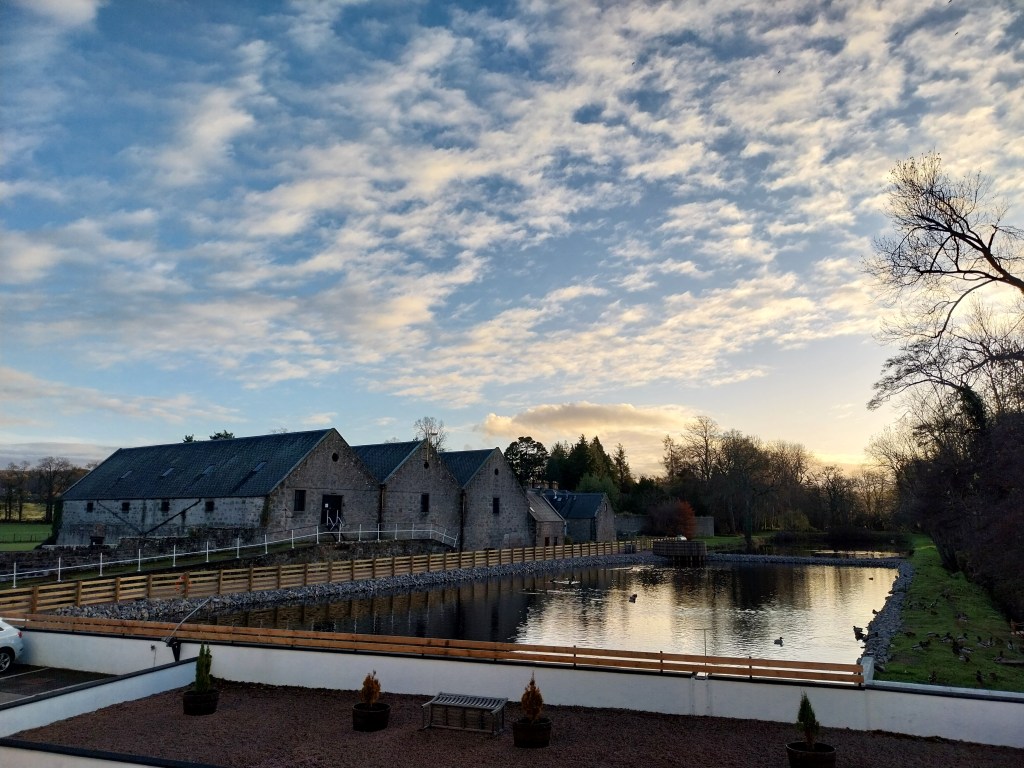
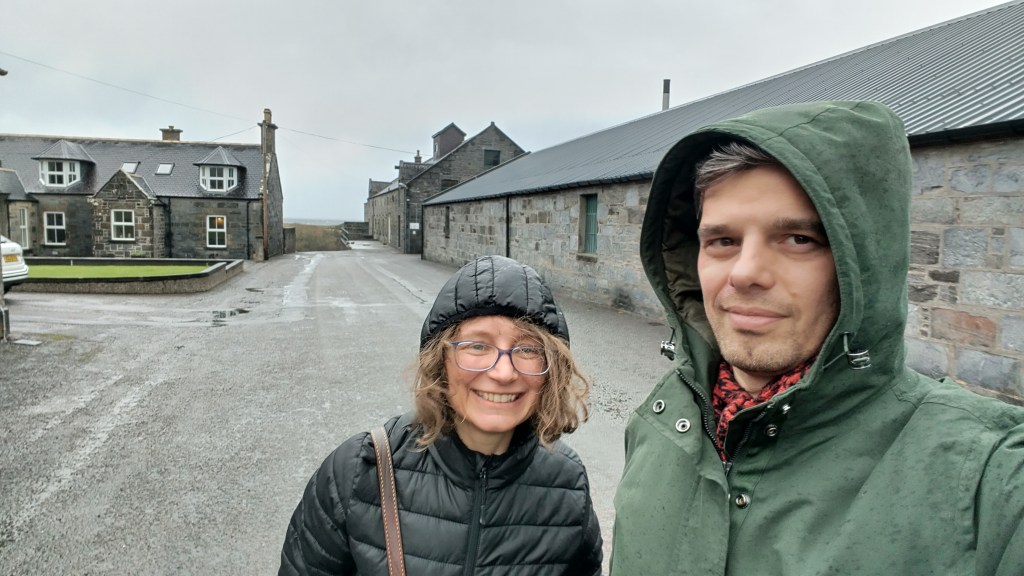
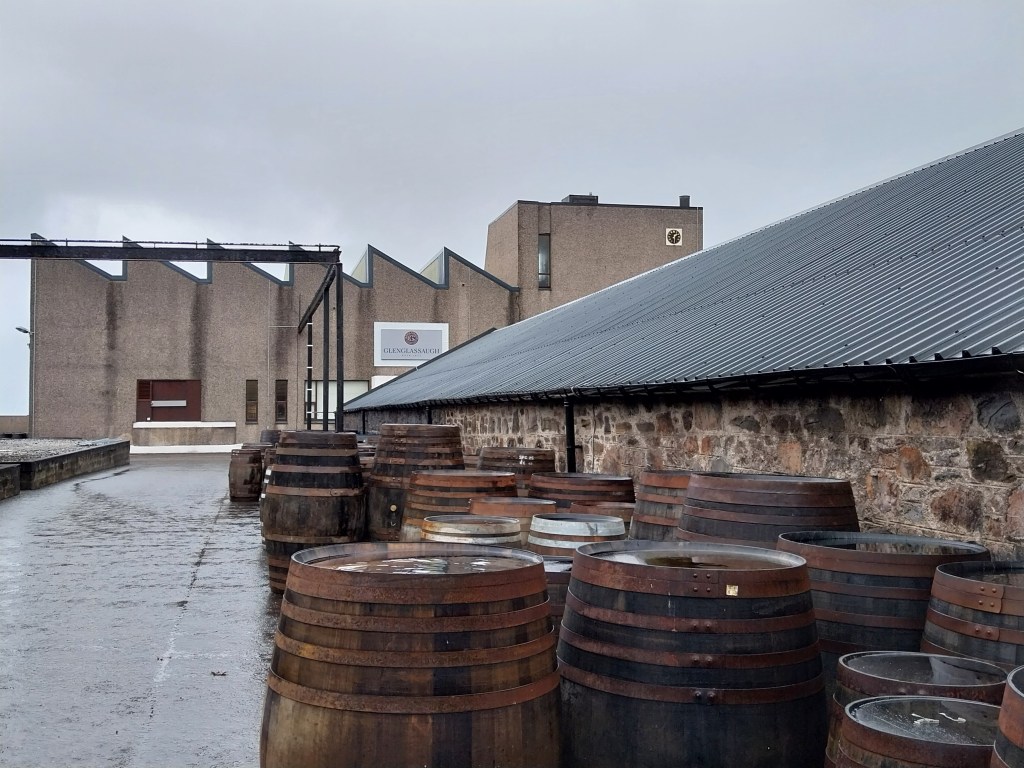
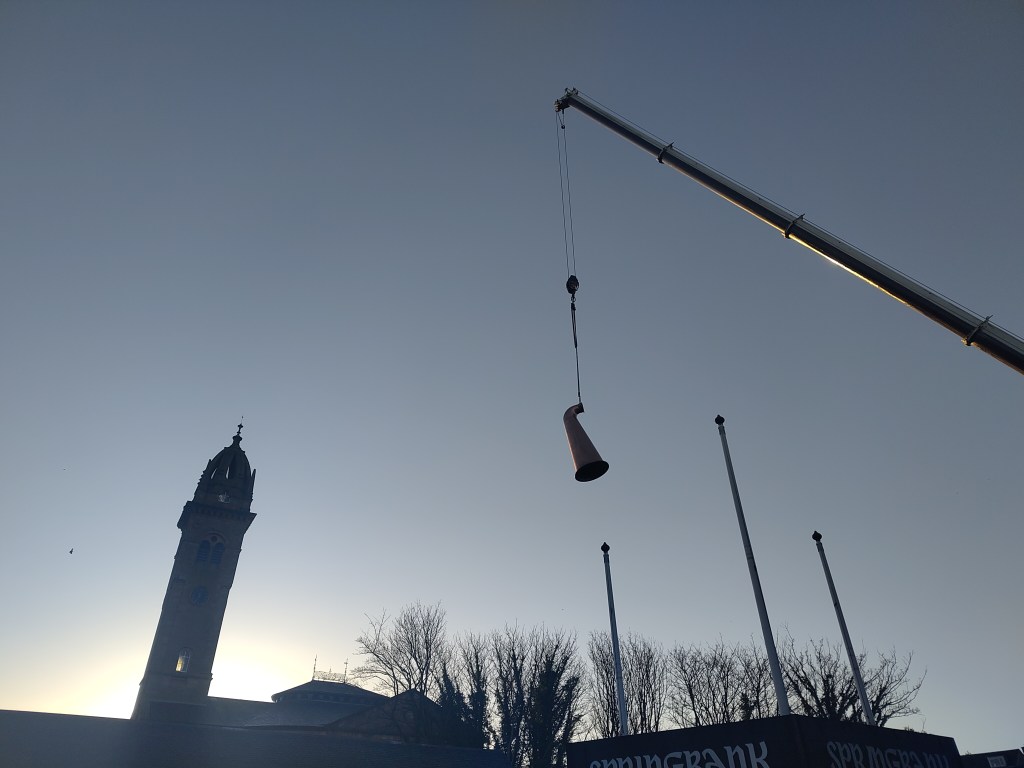
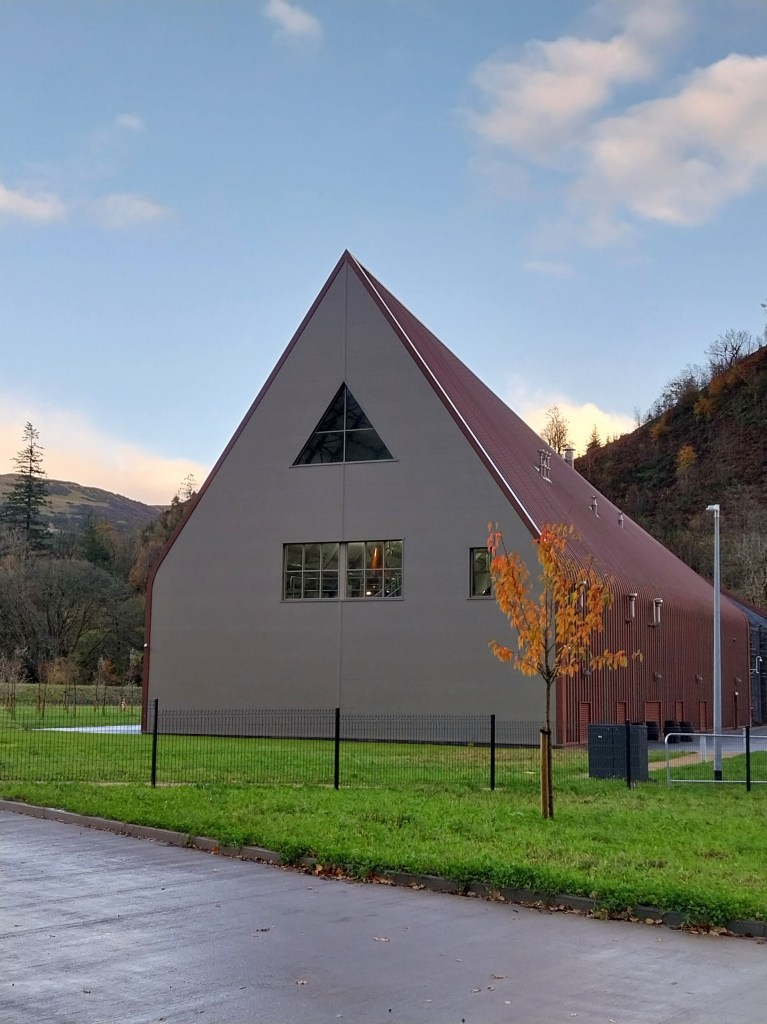
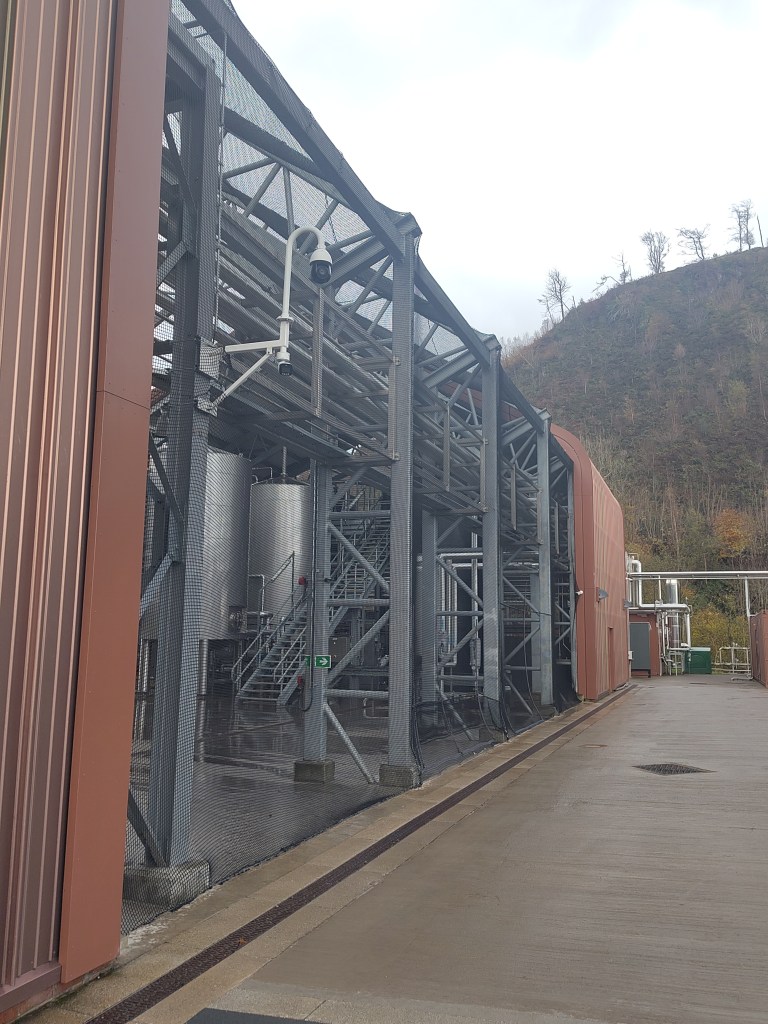
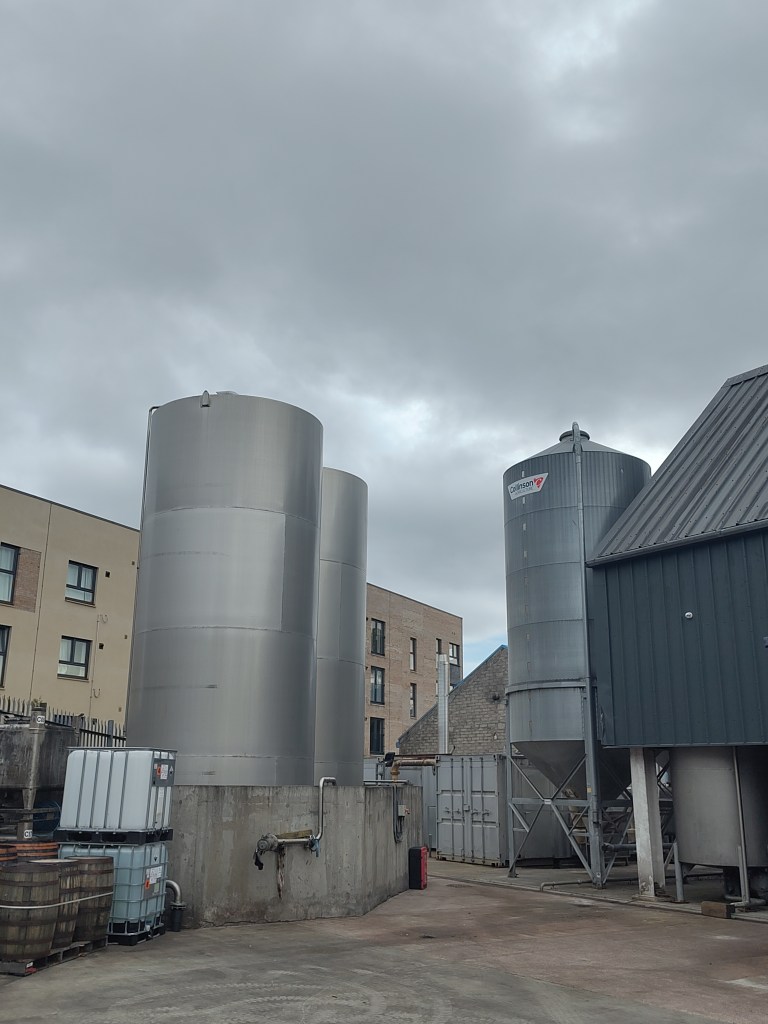
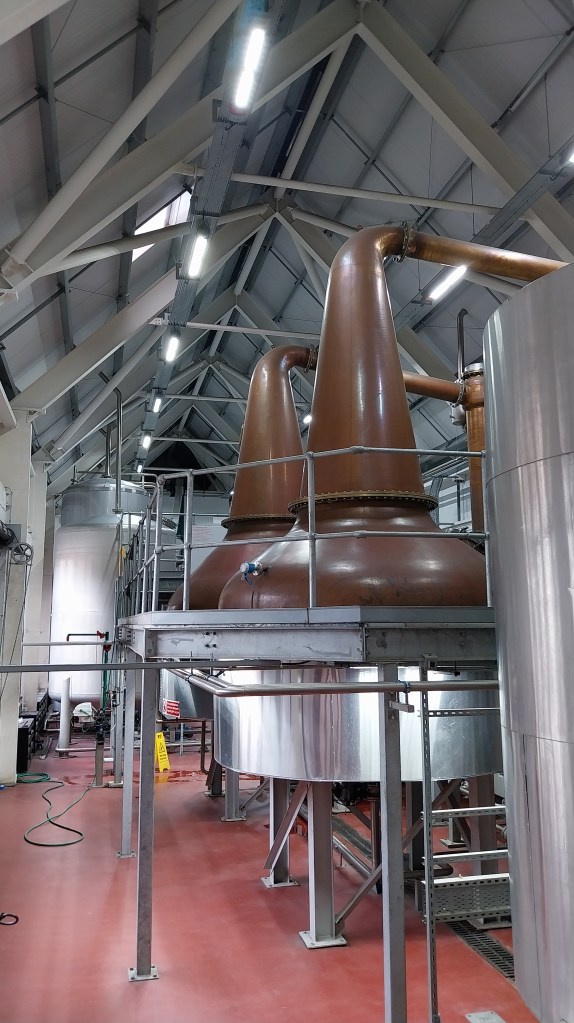
The trip was quiet and uneventful, we only stopped for a light seafood bite in a lovely wee restaurant on the coast just before Fairlie, the Catch at Fins. As usual, we arrived at the distillery a few minutes early, so we used the time to take a few pictures of the building: a stunning copper-coloured building with a sloping roof (made for the 97% of recycled aluminium), with a nordic feeling, almost like a modern art museum somewhere in Scandinavia. Weโ€™ll find out later that it was indeed inspired by the Scandinavian longhouses!

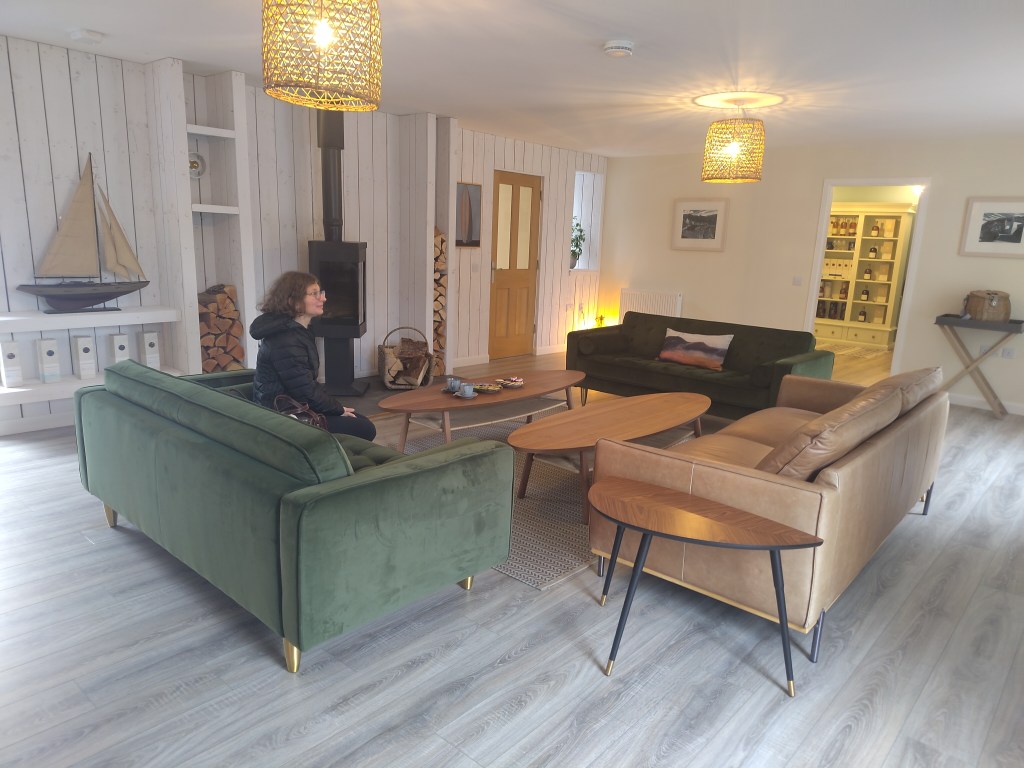
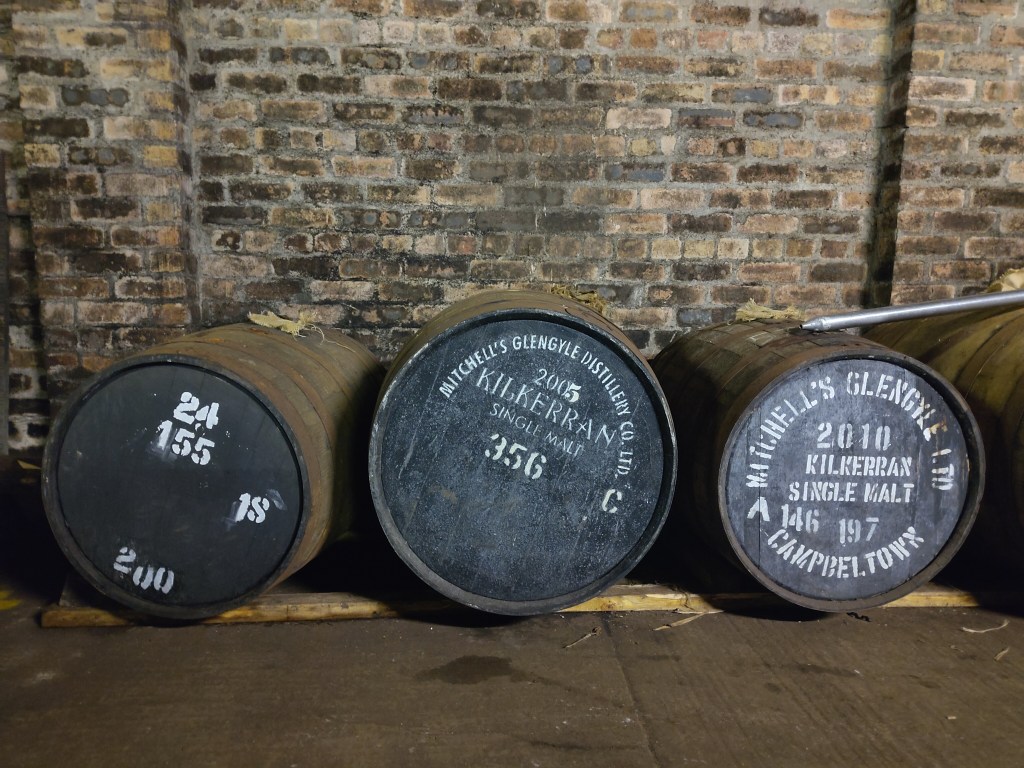
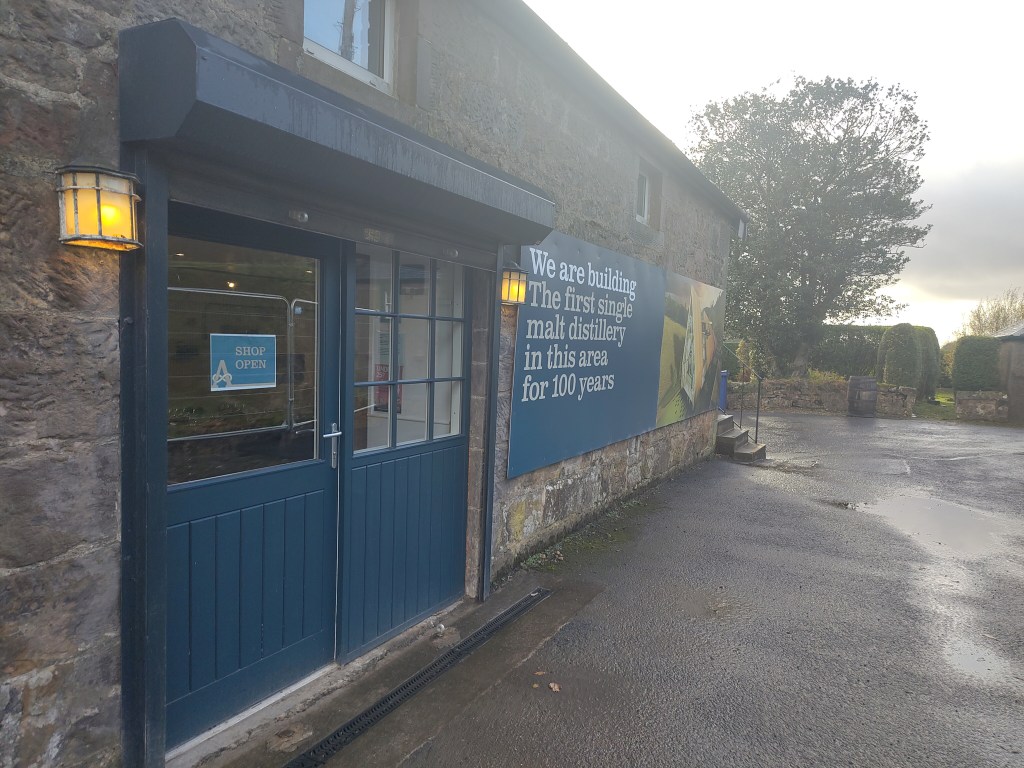
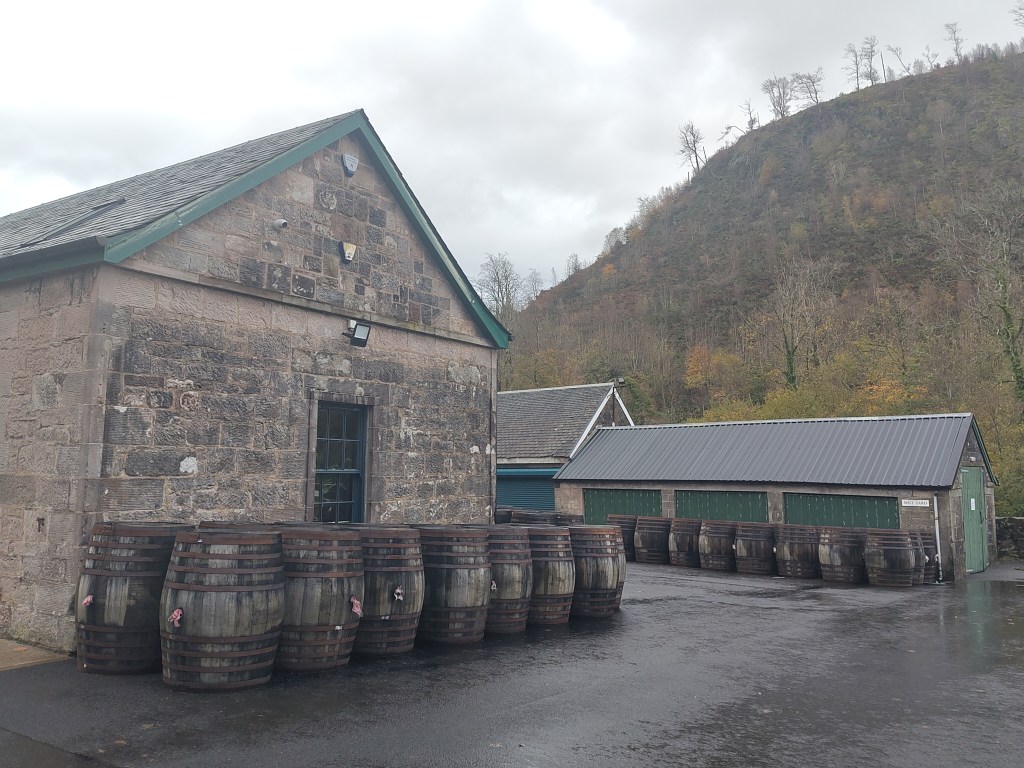
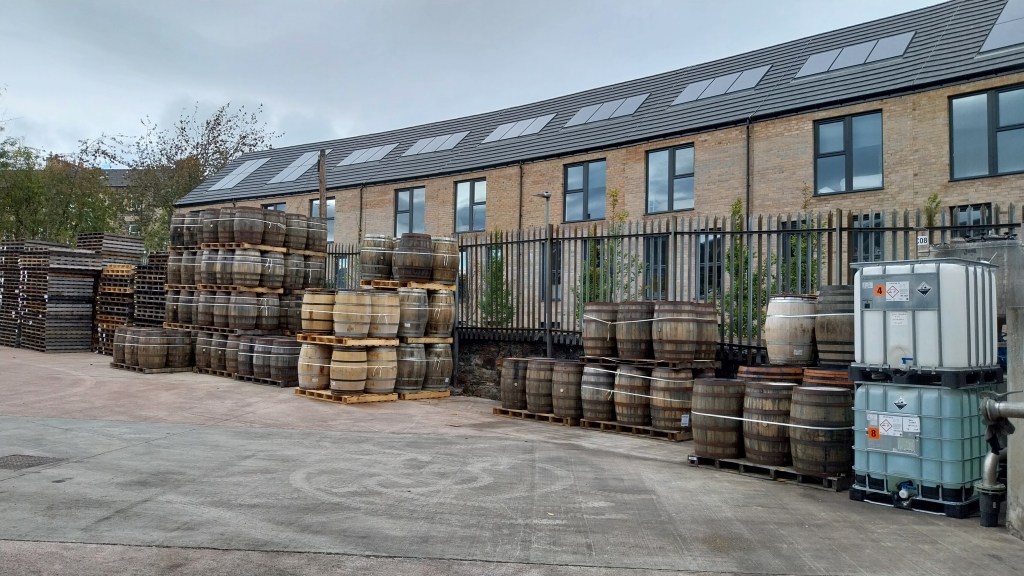
Next to it, other smaller buildings, where the visitor centre is currently located. They used to be part of a farm with horse stables, and nowadays they host gin producer Blackwoods, other than the distillery offices. Plans are to restore and turn them into a cafe, an improved visitor centre and tasting room, as well as some accommodations. Some of the buildings are used for cask storage as well.

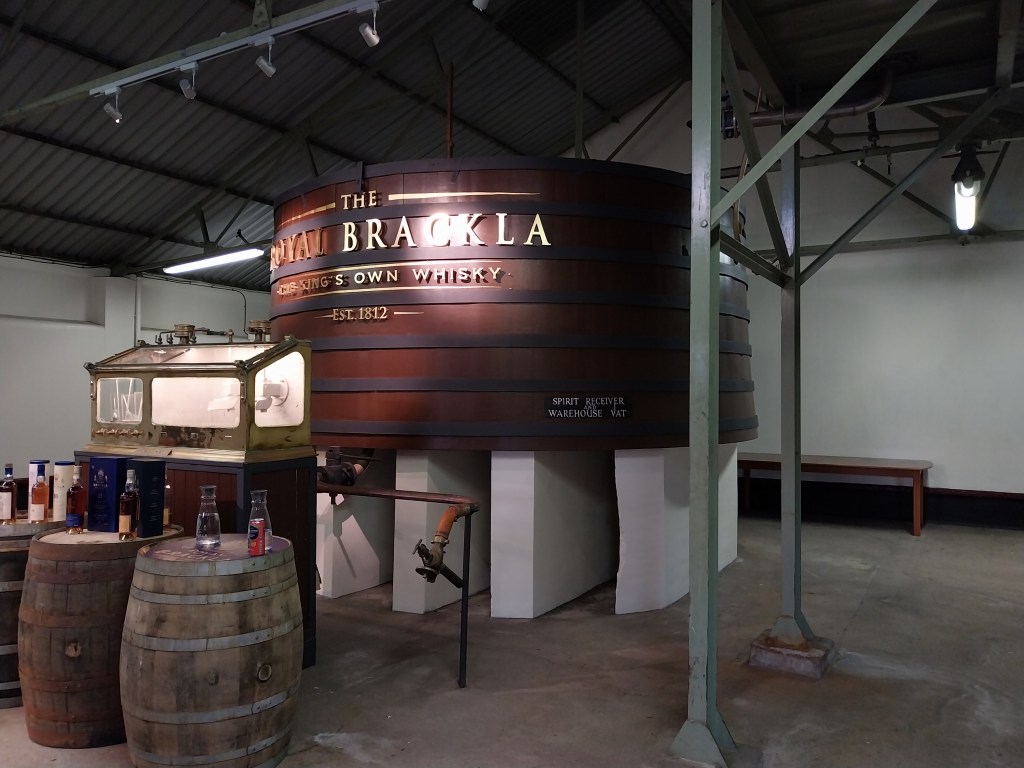
At the distillery we were welcomed by Richie and Wendy, the tour guides: Richie would be the one showing us around. While waiting for the tour to start, we looked at the bottles on display: their full Clydebuilt range, mostly sherried single malts (rigorously undisclosed, named after professions like coppersmith, riveter, sailmaker, etc.), some grain whisky and a few blends as well. They also have the whisky that has been to the South Pole (here an old article about it). Soon after the other four people attending the tour arrived, two local couples (that we think we already saw somewhereโ€ฆat a festival maybe?), and the tour started. Richie told us the story of the company and the site, including the long delays that followed the initial approval in 2017. Production finally started this year (2025), with the first cask filled on the 17th of June.

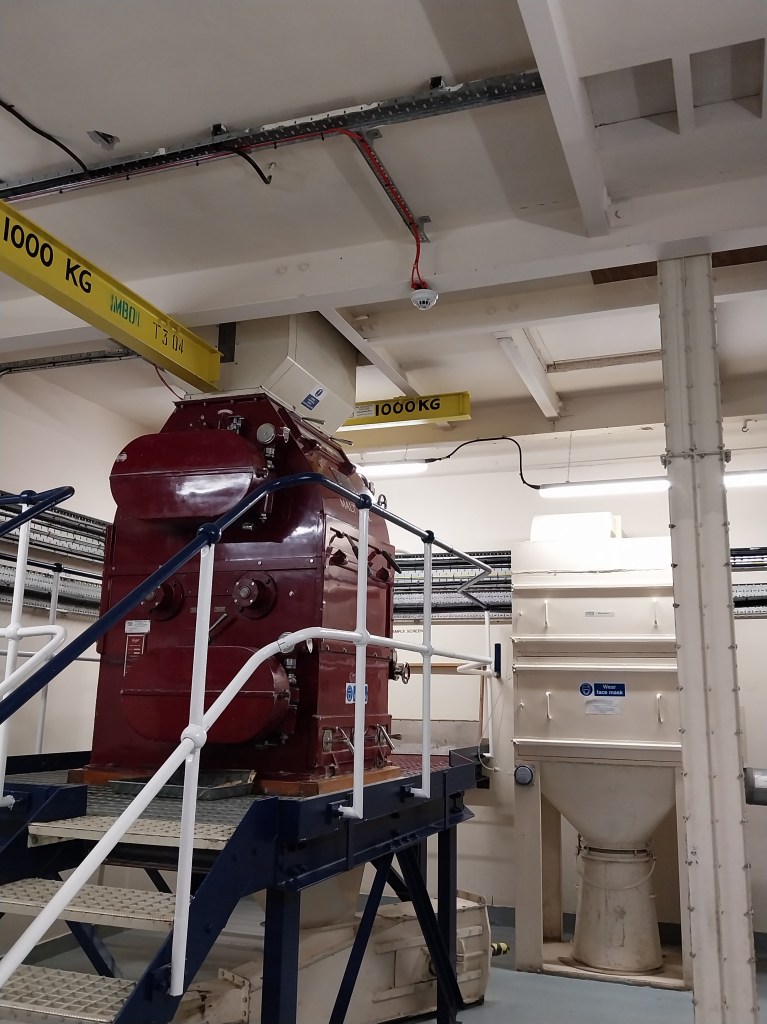
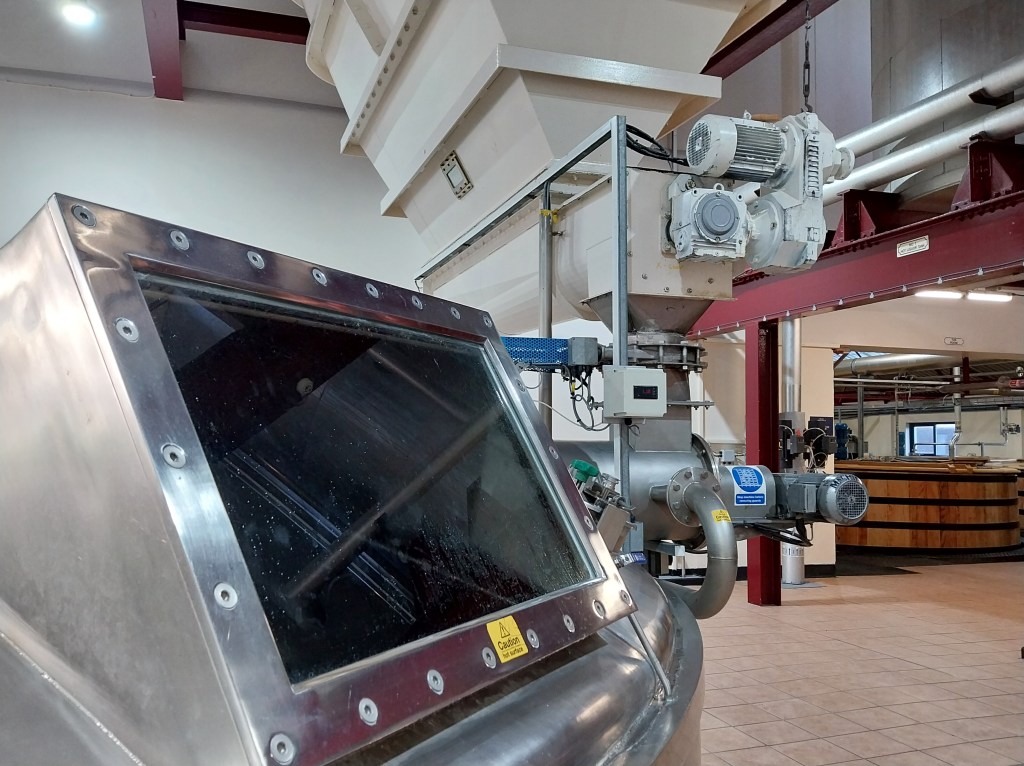
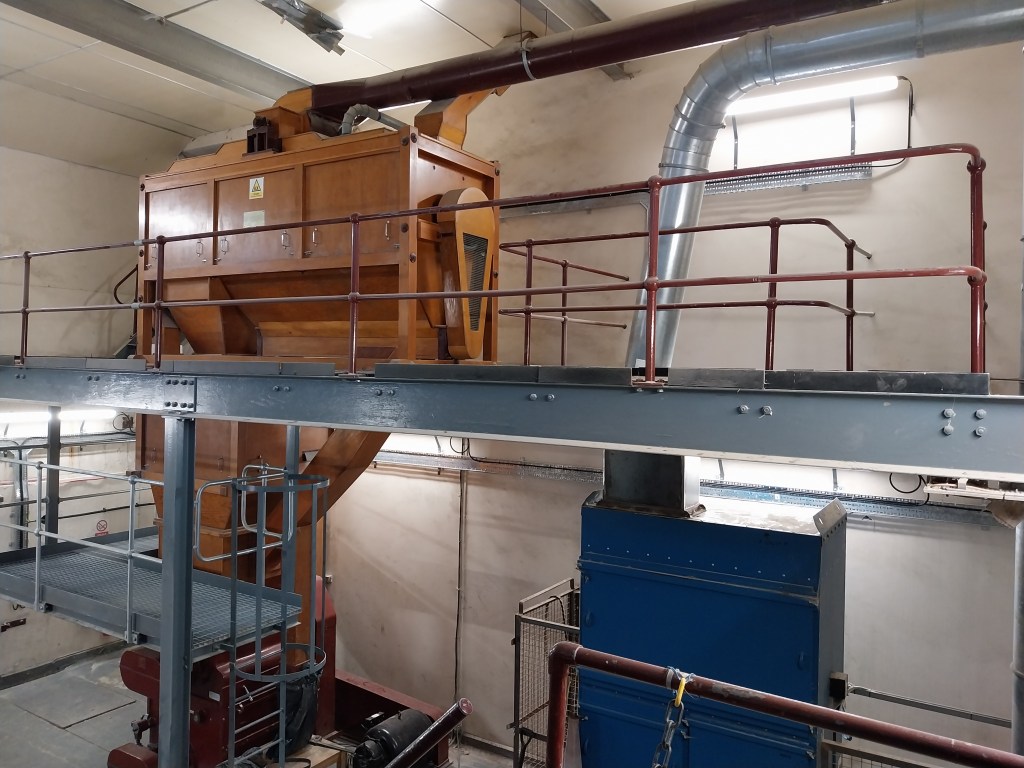
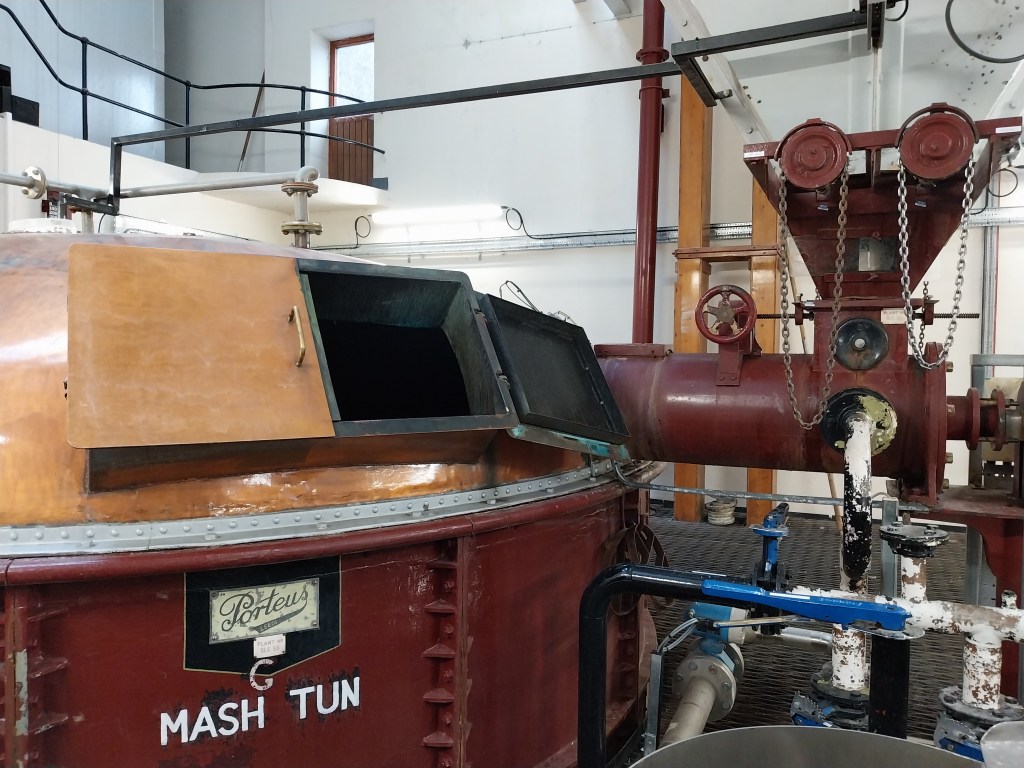
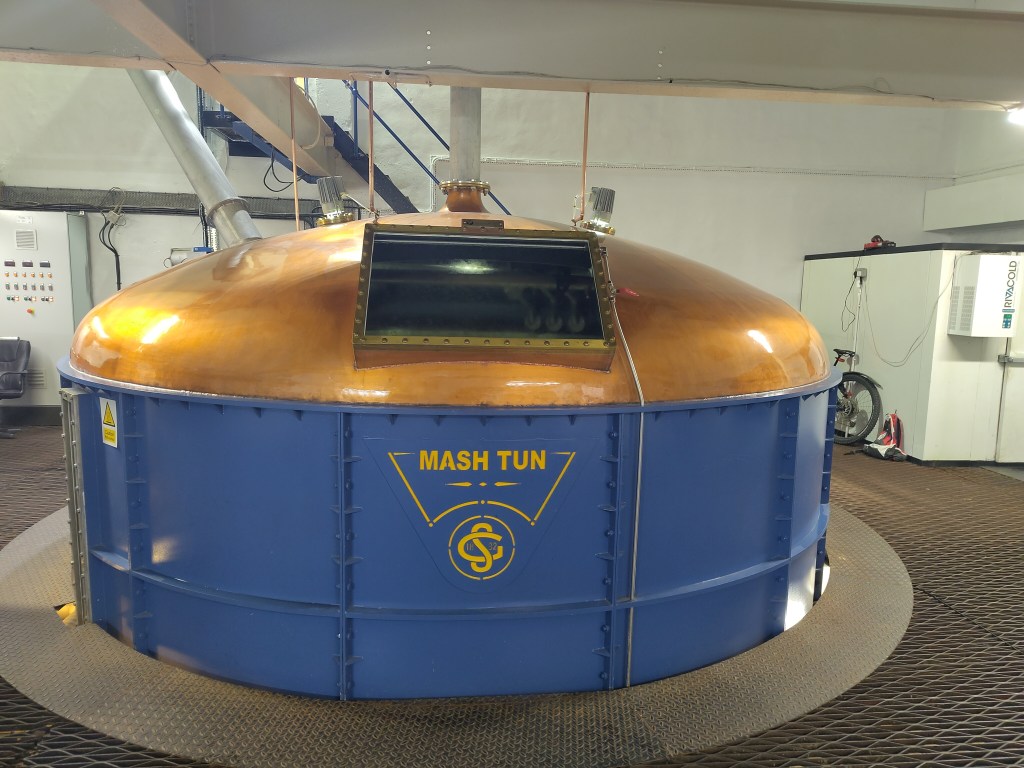
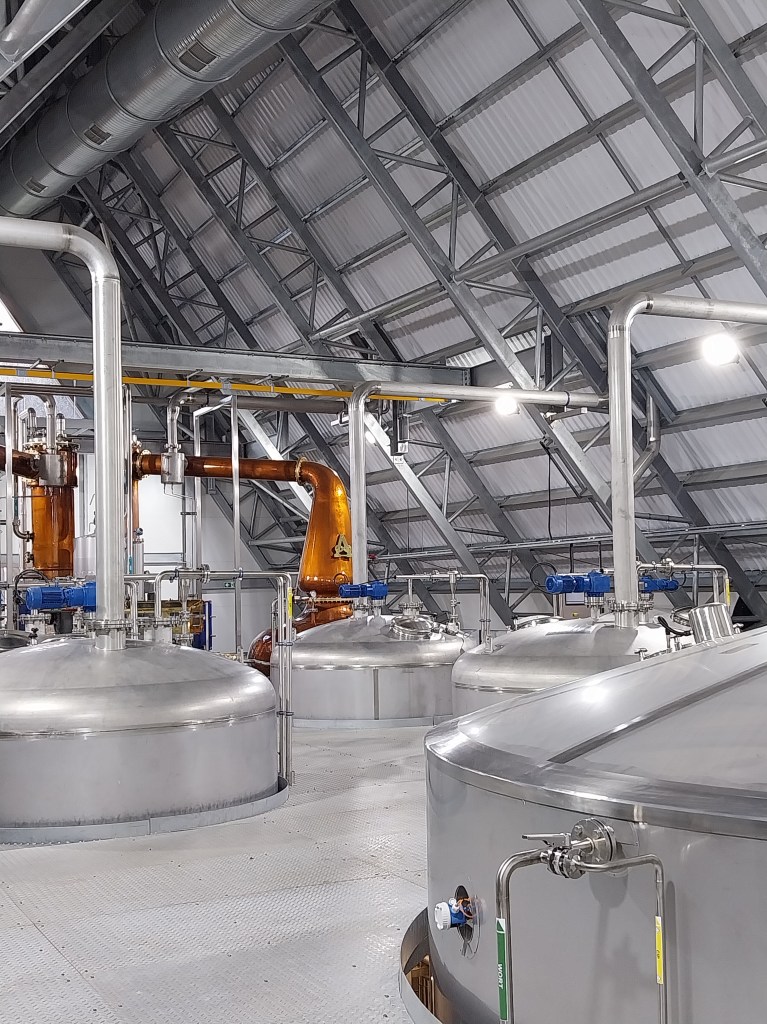
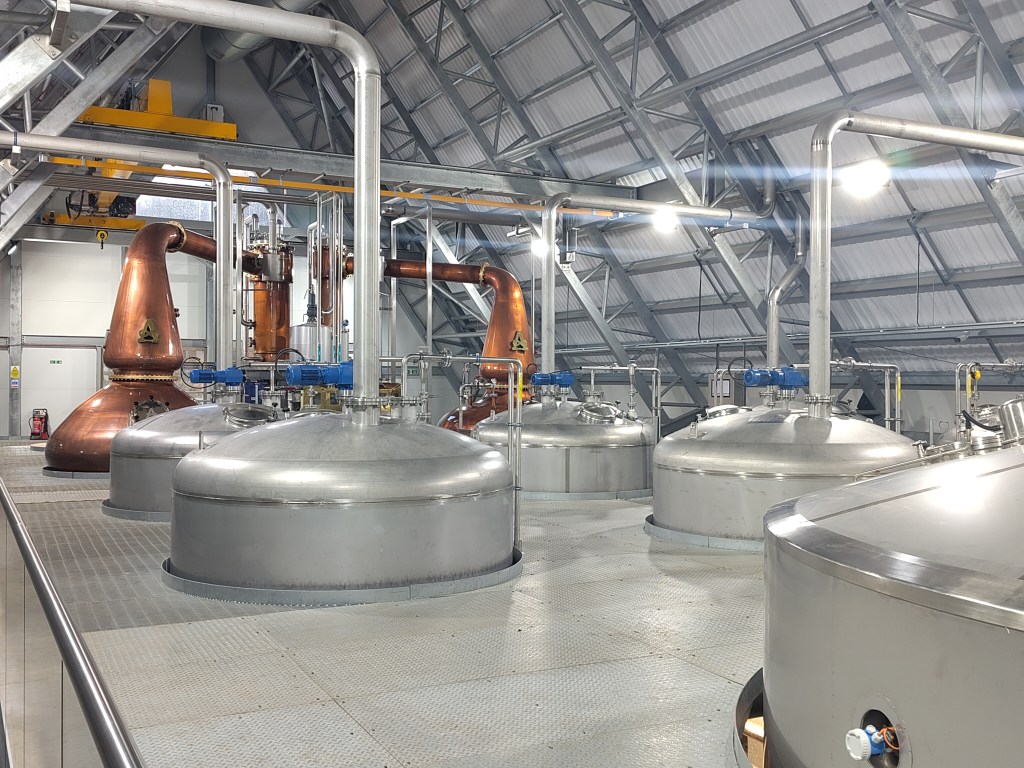
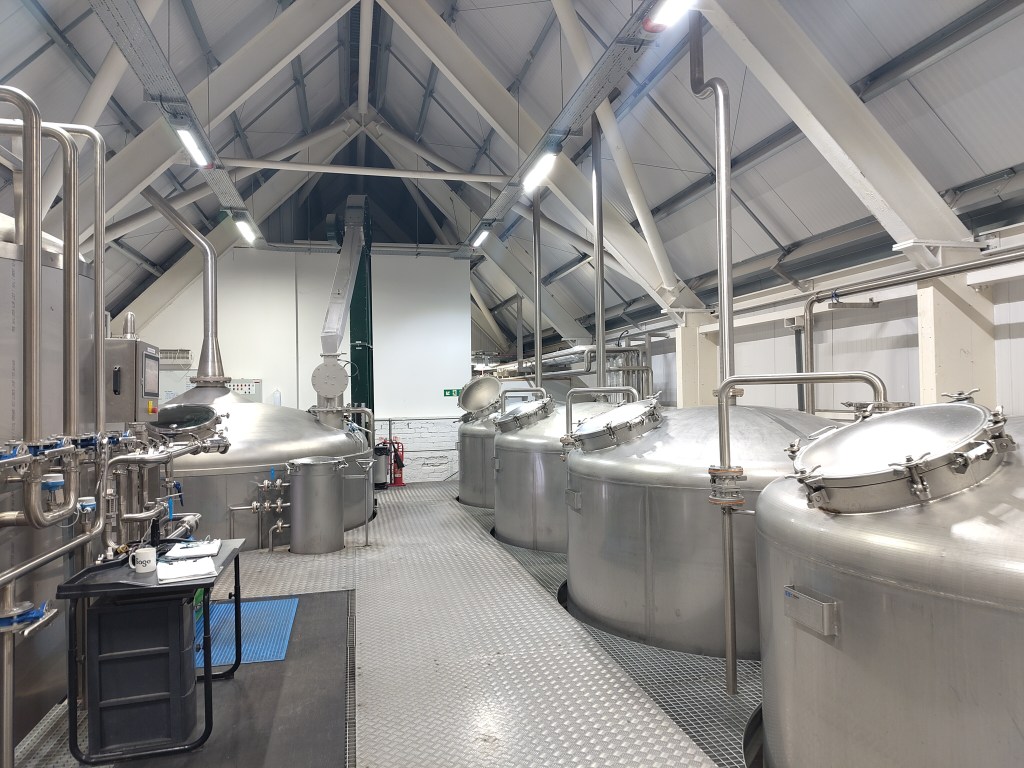
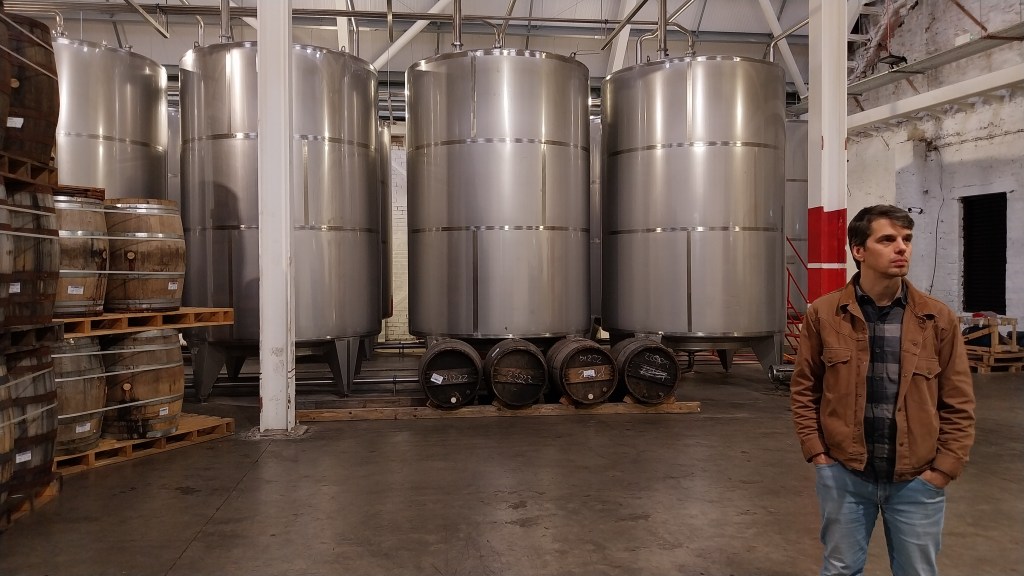
After crossing the old stables, we got inside the new building, in the โ€œfullโ€ bit (part of the building is open, almost looking like they have to complete it, but it is done on purpose). Richie explained us that the water they use comes from a spring water well on site, while the malt is bought up in Inverness. They mash 5 tons of grist at the time with 10,000 litres of water, first at 64ยฐC. The second water, another 25,000 litres, is added at 80ยฐC and the final sparging at 90ยฐC, with the resulting water saved for the next mash. Unlike many distilleries, draff is sent to a biofuel plant rather than sold or given to cattle farmers. Mashing takes about 5.5 hours, and then the wort is moved to one of the six stainless steel washbacks, where distillerโ€™s yeast is added to kickstart fermentation. In our understanding a mash is 20,000 litre, but weโ€™re not very sure about the figures, so take it with a pinch of salt.

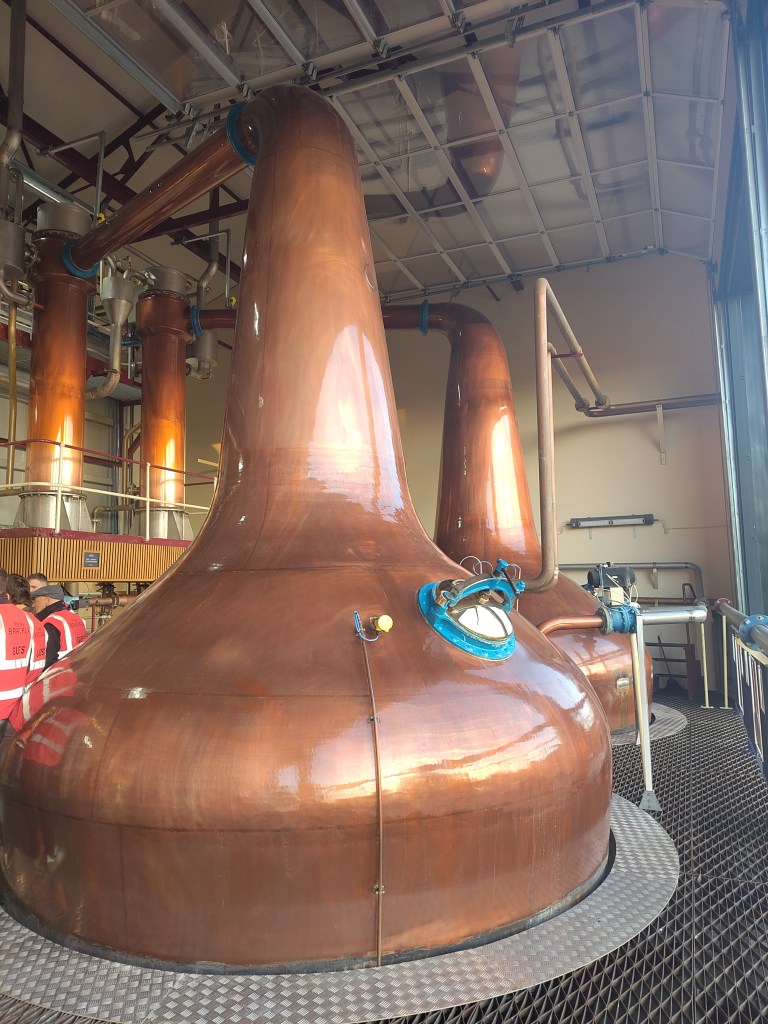
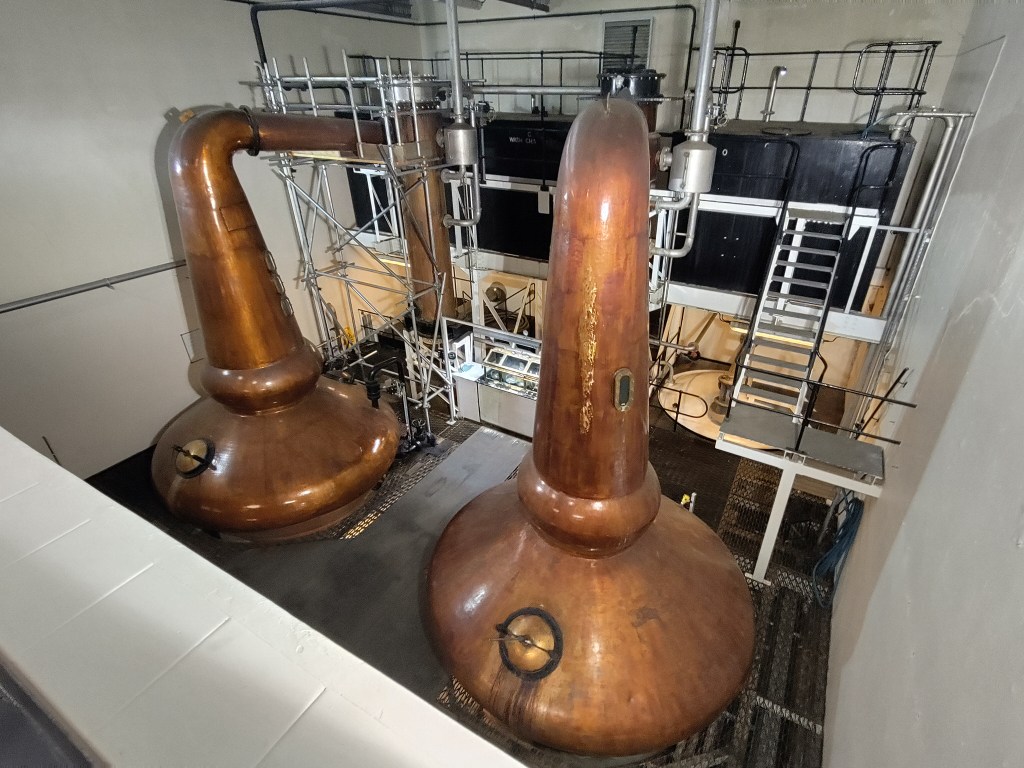
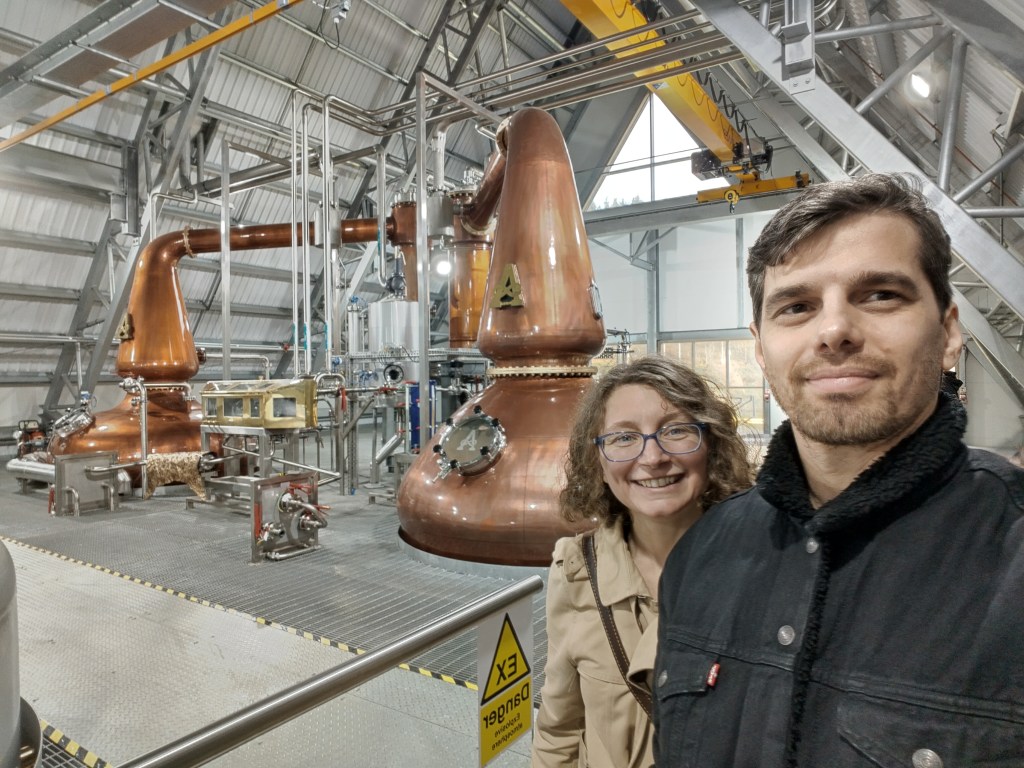
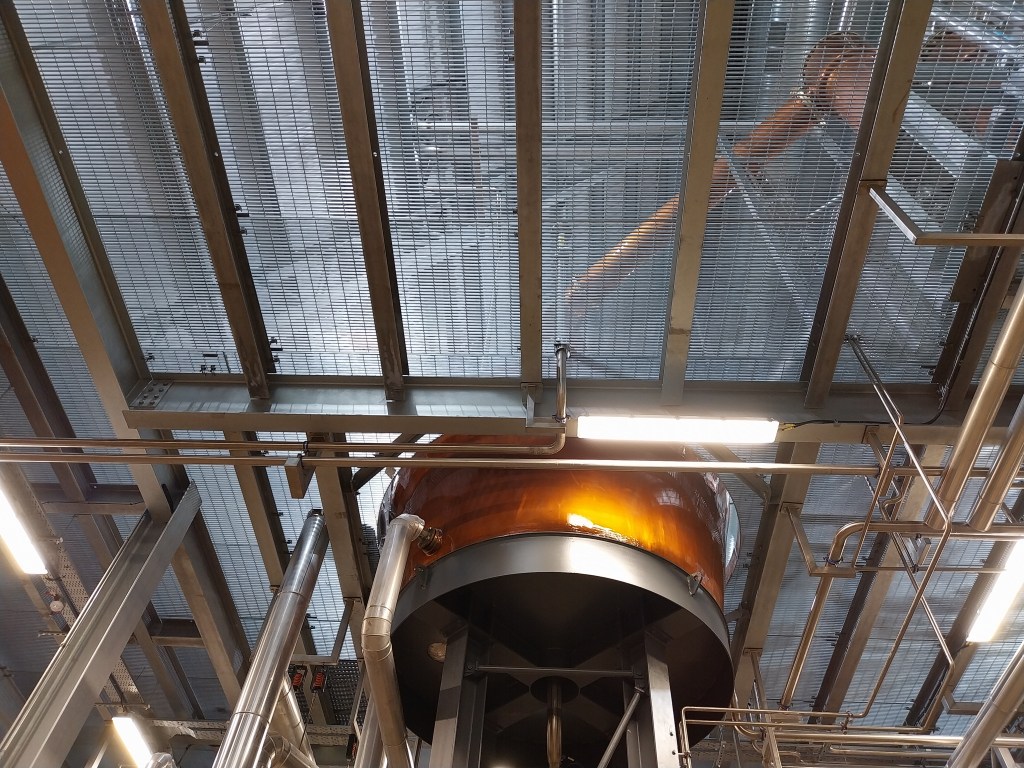
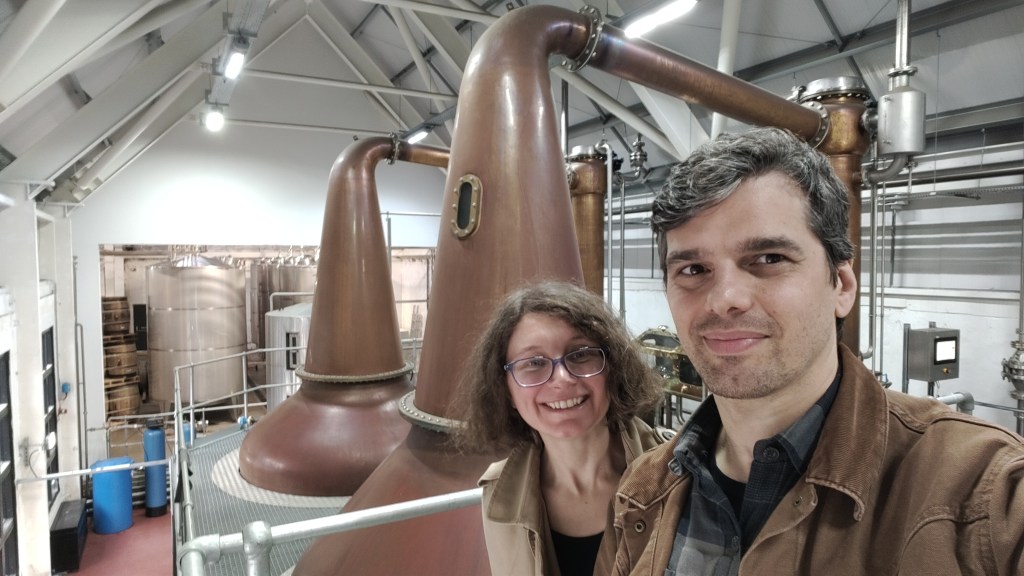
Fermentation lasts 3 days (72 hours), and then the wash is distilled in โ€œLady Octaviaโ€, the 15,000-litre wash still named after a prominent figure of the Clan Stewart. The 9,000-litre spirit still is named after Sara, the founderโ€™s daughter, and from there they take a spirit cut from 68 to 65%abv (a tiny one!). The stills are covered with a golden sheet to increase copper contact, in our understanding.

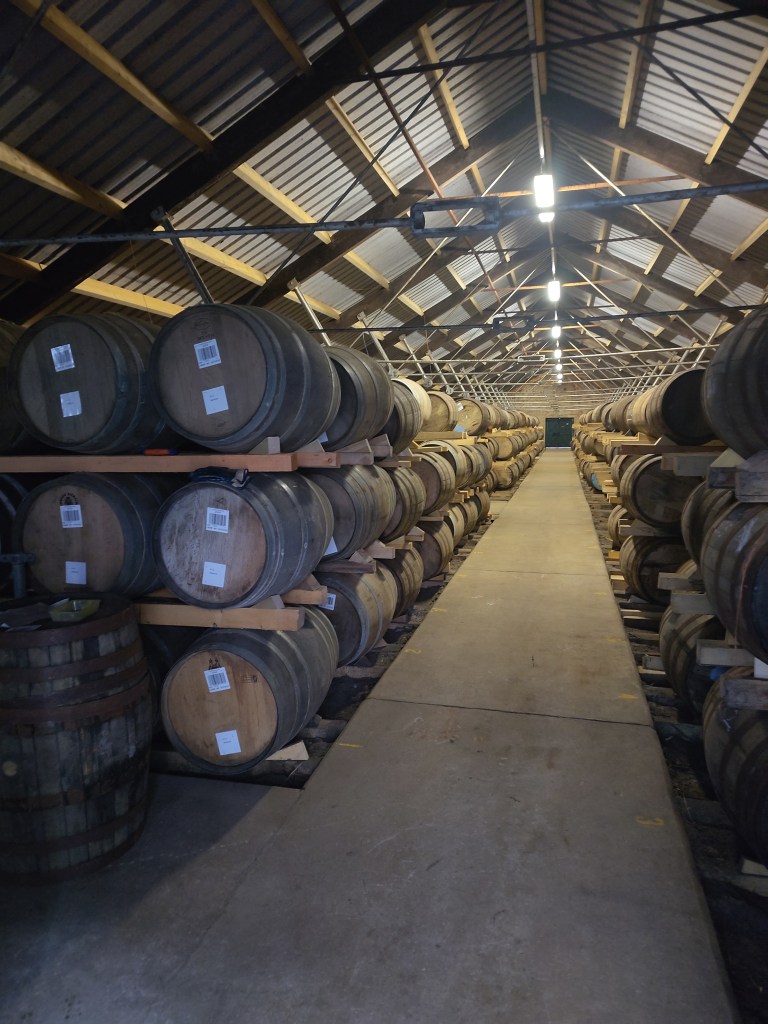
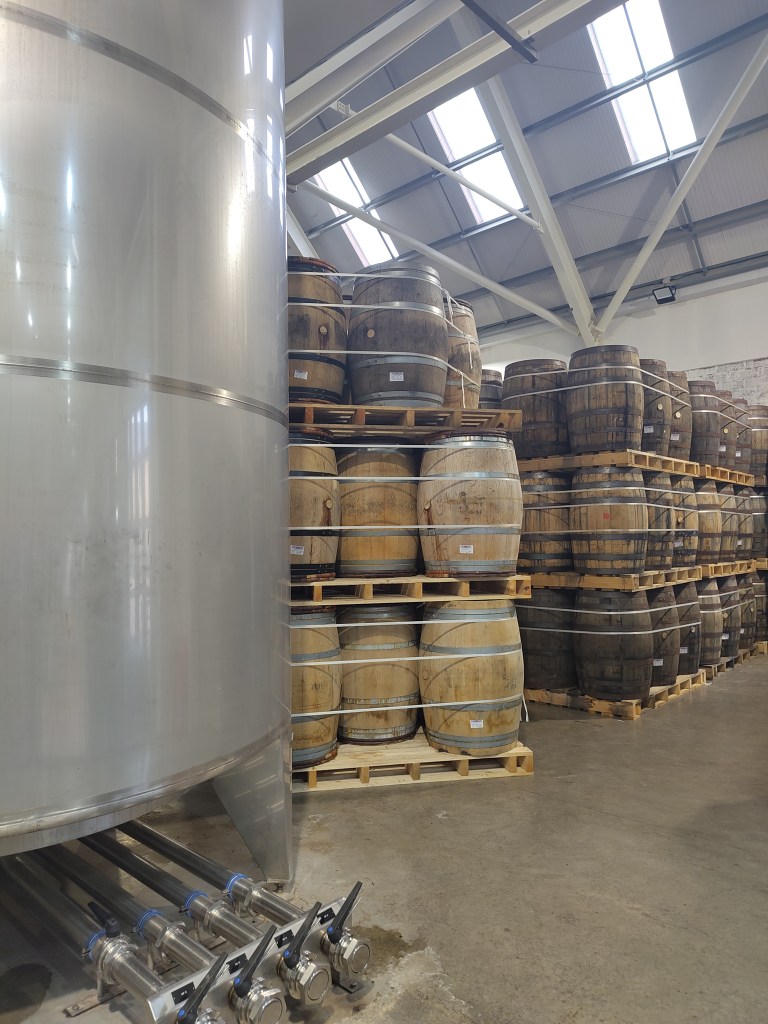
Currently the distillery capacity is about one million of litres of alcohol per year, but it is evident from the layout that there is much space for expansion. Currently the stills are heated by vapour obtained with gas, but the distillery is working together with Herriot Watt researchers to look into hydrogen, to make production even more sustainable. Casks are filled on site, at the usual strength of 63.5%, mainly in sherry seasoned casks, from Bodega Miguel Martin. There is an extension planned for the building itself, which might also include a dram bar and a panoramic balcony overlooking production.

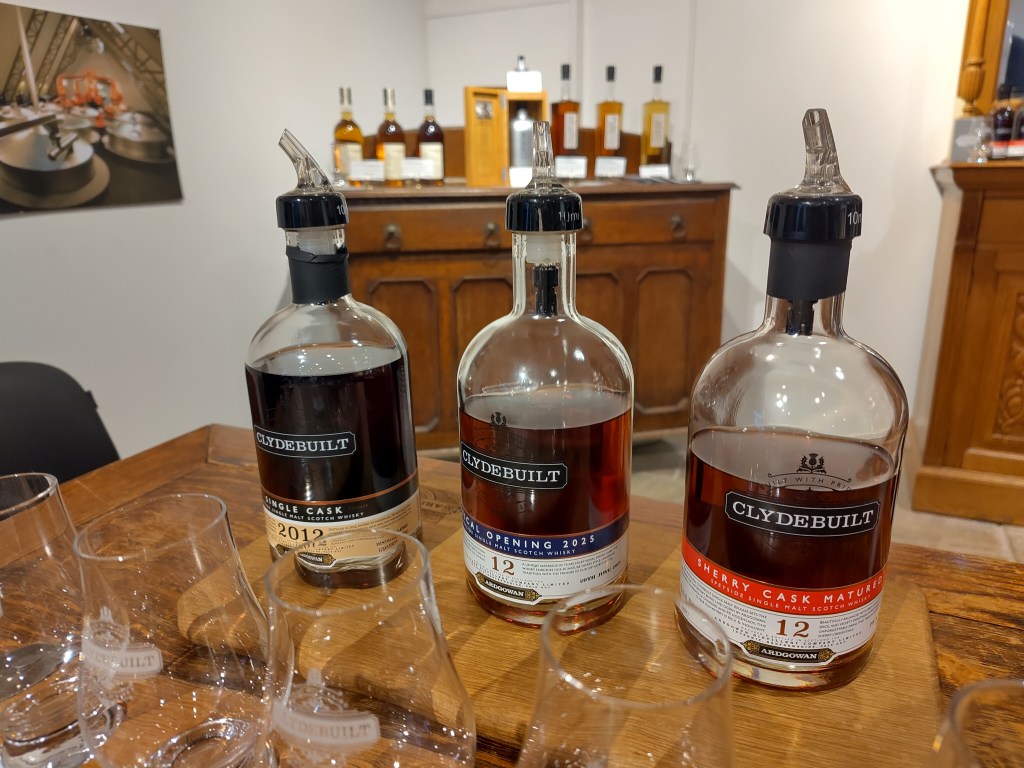
As we approached the end of the production tour, it started โ€œpishing doonโ€, so we had to wait a bit before walking to the visitor centre for the tasting. The tasting consisted of three small measures (10ml) of three of their Clydebuilt. The first was the โ€œstandardโ€ 12-year-old, a sherried dram from and undisclosed distillery: a nice sherried dram, that we were tempted to buy (if only we werenโ€™t trying to work through our stash at homeโ€ฆ), with the same dram at cask strength also available. The second dram was the โ€œOfficalโ€ Open Day dram (yes, OFFICAL!) for the open day that happened earlier in the year, on the 20th of June, a vatting of Oloroso and Pedro Ximenex (PX) sherry casks. Finally, the Distillery Exclusive, a PX single cask, only available at the site. While the measures were a bit stingy, Richie offered a taste of other drams available at the shop, and Gianluigi got a nice single grain in its teen (Teresa was on driving duty). A pity we couldnโ€™t taste the newmake spirit (it always puzzles us that some new distilleries wonโ€™t serve itโ€ฆbut hey ho).

Overall the tour was interesting, itโ€™s always nice to see how things are being set up at new distilleries. However, the building is what really made this visit memorable. As always for new distilleries, weโ€™re looking forward to trying their single malt in a few yearsโ€™ time: weโ€™ll be back!

See you in a couple of weeks for our 2025 wrap-up! Until then, happy holidays, Merry Christmas and, of course, slร inte!


Ardgowan Distillery Tour

Price: ยฃ19.50 pp (November 2025)

Duration: 1hr 30min

Tasting: 3 x 10ml drams, Clydebuilt (undisclosed) single malt 12y (46%, Oloroso + PX), โ€œOfficalโ€ Open Day 2025 (59.5%, Oloroso + PX casks), Distillery exclusive single cask (54.8%, PX HHD)

Distillery Exclusive: Clydebuilt single malt cask (54.8%, PX HHD, ยฃ85)

Target: tourists and whisky novices

Value for money: ok

Highlights: the modern building

Recommended: if you’re in the area, the building deserves a visit

Link: https://www.ardgowandistillery.com/


#67 Bonnington distillery

A distillery next door


TL; DR: Back in October, and thanks to our pal Graham, we visited a distillery that is less than one km from our door: not the one you are probably thinking, rather Bonnington distillery. The manager Gregor welcomed and showed us around the premise. A very interesting project, and a surprisingly maritime single malt. 

Our first contact with the distillery weโ€™re talking about in this blog post was in April 2024, during the Biscuit Factory Beverage Festival (one of the many โ€˜drinksโ€™ events in vibrant Leith), when other than the main festival, we attended a Bonnington & Crabbie tasting, in collaboration with Justine from Kask Whisky. There, we met their responsible for marketing, whom we shared contacts with, hoping for an informal tour of the Bonnington distillery. While we lost contact, our whisky pal Graham Fraser managed to keep in touch, got the details of the distillery manager, Gregor, and arranged a visit for early October this year. Persevere.

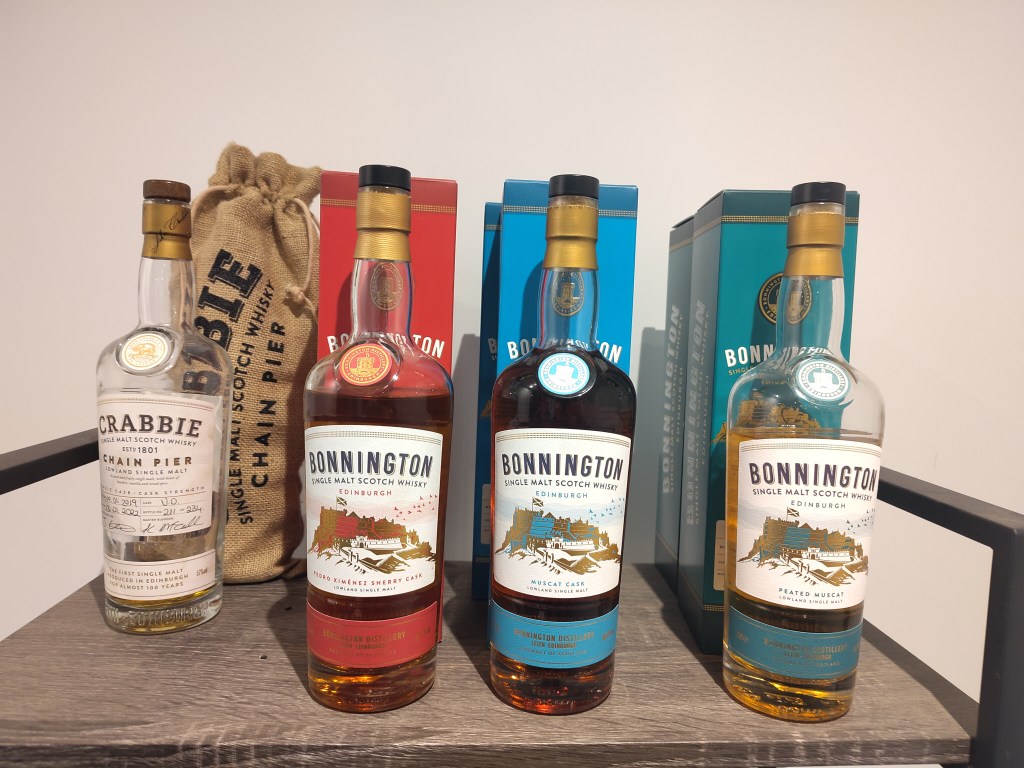
Bonnington can be considered our โ€œlocalโ€ distillery, itโ€™s really not even one km for our place, and itโ€™s next to the Water of Leith Walk, so we often run just next to it. A few times we even smelled either the mash or the wash, which is nice but not a great incentive for a run, eheh! The distillery belongs to the Halewood Artisanal Spirits, together with a sister distillery in England (Bankhall), and our auld acquaintance Aber Falls, in north Wales. The company also owns the popular Whitley Neill gin, and Crabbie, famous for their green alcoholic ginger beer. John Crabbie is a whisky brand with strong ties to Leith, as the man who carried this name, including the now lost Yardheads distillery. For more of the history though, weโ€™d suggest checking out Justine content, in particular her whisky history blogs on Substack. The group also included a smaller and experimental distillery located not too far away, in Granton, called Chain Pier. It was active only for a little while, from 2018 until January 2020, and so far only a handful of bottlings have been released, including by a few independent bottlers. Back to Bonnington distillery, the current site was chosen because it was the largest available in the EH6 postcode area, generally associated with Leith. The site has some history, as it was built as far back as the early 16th century, including the Bonnington Manor House, while the area was also involved in the 1560 Siege of Leith. This delayed the operations by about 6 months, for the inevitable archaeological assessments. To note, there used to be an unrelated short-lived previous Bonnington distillery not too far away, near the Biscuit Factory.

The land was bought in 2017 and construction works started the following year. The distillery was completed in 2019, their first mash in December. They didnโ€™t fill their first cask until the 20th of March 2020: a notable date, as it was the day before the first COVID-19 lockdown. Before starting, they went through the original purchase records to figure the original style of Crabbieโ€™s whisky, finding out that it was a Highland style of whisky โ€“ they decided to reproduce it.

Back to the tour, Gregor started describing production in the courtyard, partly occupied by a few tanks, for draff (sent to anaerobic digestion) and pot ale, and two 30-ton malt silos. They employ 6 operators (out of 11 staff) and run 24/5 with four mashes a day, and each mash uses about 2 tons of malt. The output is about of 750,000 litres of pure alcohol per year, if they were to run 24/7 they could reach about 1.1 million lpa, but thatโ€™s not in the plans right now.

The production water is sourced from a 120-meter-deep borehole, while the malt is sourced from either Beard or Crisp, with 3 deliveries every fortnight. When we visited, theyโ€™d just finished their peated run, which lasts a month and uses 190 tons of malt peated to 50 ppm. The mill is a modern AR2000, coloured bright red, which produces a grist with approximately the โ€œusualโ€ husk/grit/flour split (20%/70%/10%). They mash in a 2.5-ton semi-lauter mashtun with 3 waters at increasing temperature starting at around 63ยฐC, obtaining a partially cloudy worth. They are equipped with 15 washbacks, 9 of which are in the next part of the building, past the stills, and they were added recently to increase capacity. They use MG+ yeast and, depending on the time of the week, fermentation can last either 150 or 80 hours. Gregor told us that the spirit obtained with the two fermentations is matured separately, and while the long distillation produces more stewed fruit notes, the short one enhances the biscuity notes: very interesting.

They have two gas boilers to get the steam for distillation, the wash still is 10,500 litres, while the spirit still โ€œonlyโ€ 7,500. Distillation is fast, to match the same time as mashing and, thus, facilitating the pipeline. The wash is preheated to about 60ยฐC by a heat exchanger used to very cleverly cool down the pot ale in about 25 minutes, saving one hour of distillation time and gas consumption. The wash still produces about 20%abv low wines, which are then mixed with the head and tail of the previous run, which are obtained discarding the liquid above 75% and 62/61.5% abv of the second distillation. From each run, they obtain 1,100-1,200l of newmake spirit, at about 72% abv, which translates into about 130-140 casks per week. These are stored in their warehouses in Kirkaldy, as there isnโ€™t much capacity on site. Casks are stored mainly palletised, as they have limited dunnage space, and are sourced from the Speyside Cooperage, unless they want something more special. Interestingly, they also have a spare gin still, but it hasnโ€™t been used since March 2021, probably to avoid competition with their other gin brands.

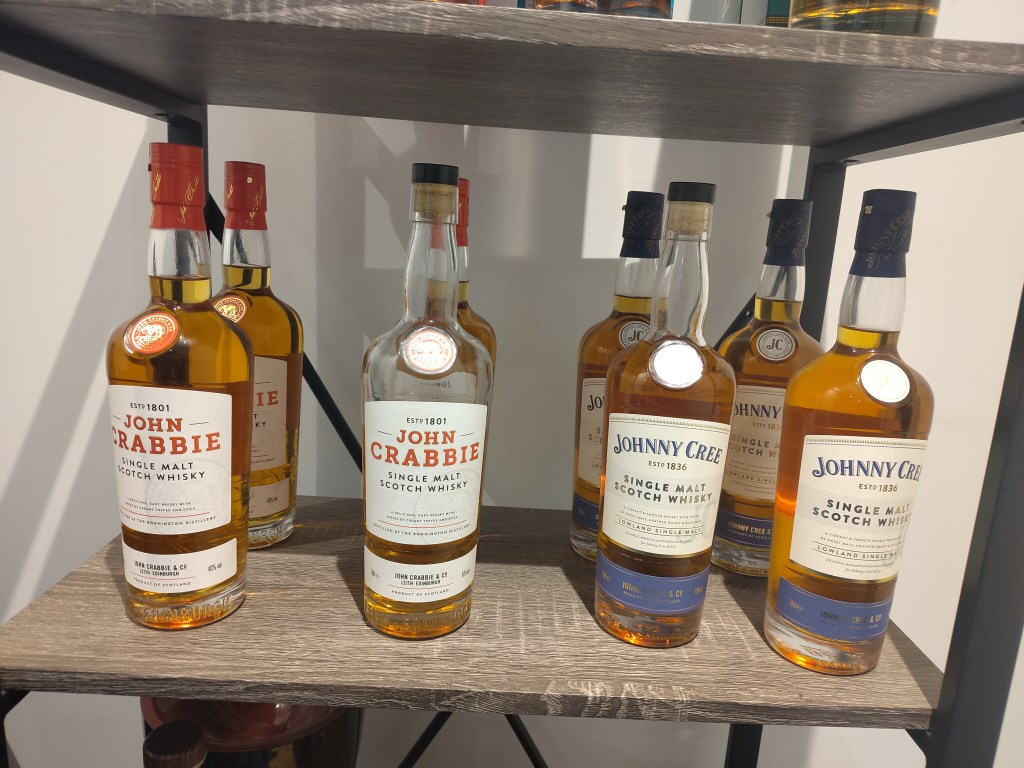
After that, we went to a meeting room underneath the offices, where Gregor gave us a few sips of their products. We tried the John Crabbie and Johnny Cree (both non-age statement, NAS, 40%), which are fully matured in virgin oak and ex-bourbon casks, respectively. The former is not bad at all, just a bit watery due to the low abv. Currently the non-age statement expressions of both brands (the second named after John Crabbieโ€™s business partner) are produced at the distillery, while in the future the aim is also to produced the aged Crabbie (12y and 15y, currently sourced whisky). Then we tried a few Bonnington single malts, a range which is reserved for small batches or single casks: the peated Muscat cask (NAS, 51%) was very tasty, while the unpeated Muscat was good too (NAS, 47%). The other available we didnโ€™t try was the PX casks (NAS, 47%). In general, their whisky has a striking maritime character, which makes sense as weโ€™re not that far away from the Forth, but it is something not usually associated with Lowlands malts.

After these drams it was time to go back home, so we first greeted Gregor, and once outside the distillery, our pal Graham. It was not our first time visiting a distillery with him, but the first in such an intimate tour: it was good that for once we werenโ€™t the only ones asking for nerdy details, which Gregor patiently explained us with competence and knowledge. He said that, when he has time and if asked nicely, he likes showing people around. But he also said that random showups are a strong โ€˜nopeโ€™: it is still a production plant (something some whisky people donโ€™t quite getโ€ฆ). As we walked home, we passed by the massive bonded warehouses built by the Pattison brothers just before their demise, and subsequently acquired by DCL. We are very happy that the whisky industry is returning to Leith, such a pivotal place for the history of our favourite drink.

Stay tuned for our next trip! Until then, slร inte!


Bonnington Distillery Bespoke Visit

Price: free (October 2025)

Duration: 1hr 30min

Tasting: a few sips from currently bottled single malts (see description above)

Target: anyone

Value for money: well…it was free

Highlights: the location and the compact production

Recommended: yes, but do get in touch with them first!

Link: https://crabbiewhisky.com/bonnington-distillery/


#66.3 Something new, something old

Glenkinchie, or the sunny corner of Scotland


TL; DR: Back home, we thought we could fit another whisky experience before officially ending our holidays. The choice was easy, and on paper relatively close: Glenkinchie, a distillery weโ€™d meant to (re)visit for a while after it became one of Diageoโ€™s Four Corners of Scotland. Very interesting to taste whiskies generally not on our radar, but what made the experience even more special was to have a whisky friend as our guide!

(missed Part 2/Part 1?)

As we wrote in the last few posts, our holiday on the Outer Hebrides got literally blown away by high winds, which prevented the ferries to safely sail to destination. As a backup, we visited a new distillery, Toulvaddie, and revisited another one after a revamp, Glenturret, before driving back home, where we arrived, a bit sad, on a Saturday late afternoon.

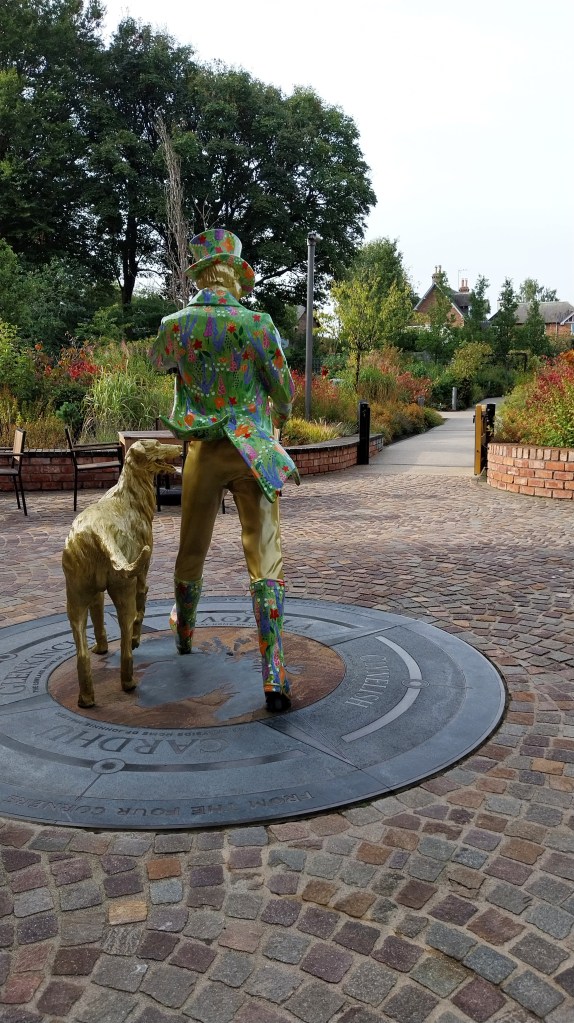
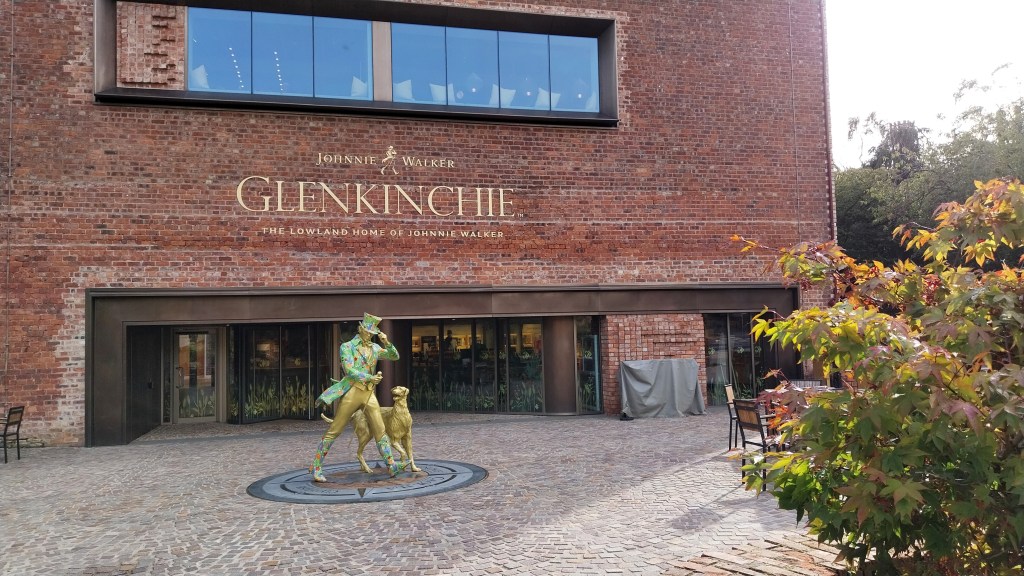
Because we were officially still on holidays, Sunday was open to some extra whisky activity. We didnโ€™t let this go, and we decided to revisit a distillery weโ€™d first visited a long time ago and that meanwhile had undergone some substantial changes: Glenkinchie distillery. When we visited the first time, renovations were under way, as the distillery was due to become one of the Johnny Walkerโ€™s Four Corners of Scotland, together with Clynelish (Highlands), Cardhu (Speyside) and Caol Ila (Islay). In the meantime, we didnโ€™t get much acquainted with this whisky: the basic 12y is ok but not the most flavoursome, other expressions released by Diageo at higher abv are usually very expensive (like the 27y 2023 Special Release or the 16y Four Corners of Scotland). It is also hard to find it from independent bottlers, with the exception of a recent release from Woodrowโ€™s of Edinburgh, a tasty sherry bomb!

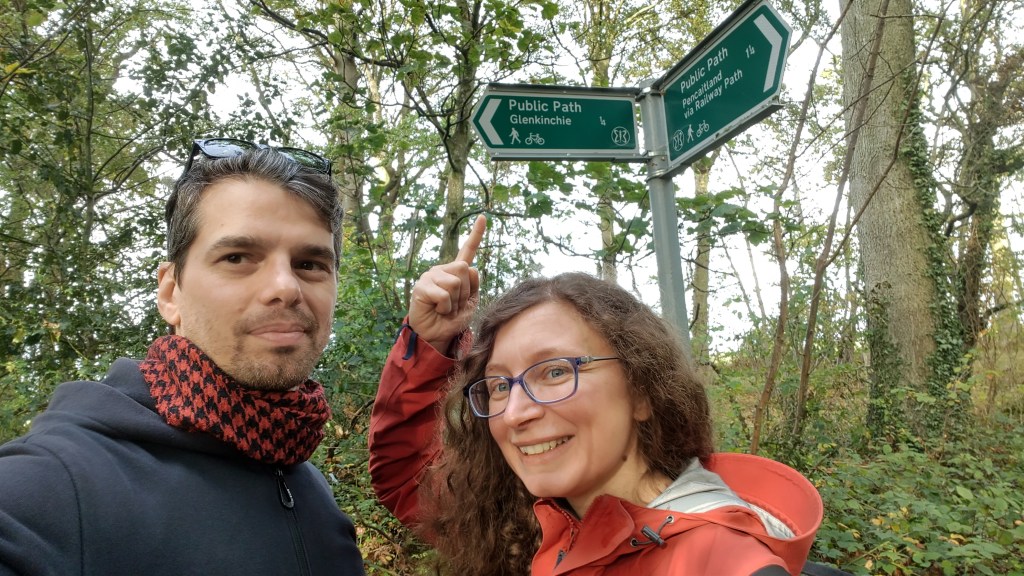
Glenkinchie is one of the closest distilleries to Edinburgh, but itโ€™s not the easiest to reach: located in Peastonbank, near Pencaitland, itโ€™s about 15 miles from the city centre. On the website, in the toursโ€™ description, they advertise an external company offering return trips from St Andrews Square (only certain days of the week) for ยฃ35 per person, which for a couple (or any group bigger than one really) is borderline extortionate: probably it comes cheaper to just get a taxi. During the week there is a bus that brings you there, the East Coast Bus service 123 from Haddington (here the timetable, while here you can check the route, just remember to select โ€œlong loopโ€). On a Sunday, however, the closest bus stop is in Pencaitland, via service 113. However, we realised that there was a path from Pencaitland to the distillery, off the roads and mainly in the woods, and the weather forecasts were looking decentโ€ฆ

So there we were: on a sunny Sunday morning, waiting for the 113 bus in a very quiet Regent Rd (near Calton Hill). In Pencaitland, after just over one hour ride, we got off at the stop near the park, to wait for the new cafe and convenience store The Granny Shop to open: there we got coffee and delicious morning rolls. The walk to the distillery (about 2 miles) took slightly less than 40 minutes, and past the village we easily found the path in the woods. At the end of it, a gravel path set up by the distillery, ending directly in the backyard, near the warehouses. As we approached the distillery, we also saw a sign from the Winton pub (also in Pencaitland), saying theyโ€™d pick you up for free, if you then went there (for a meal, we guess?).

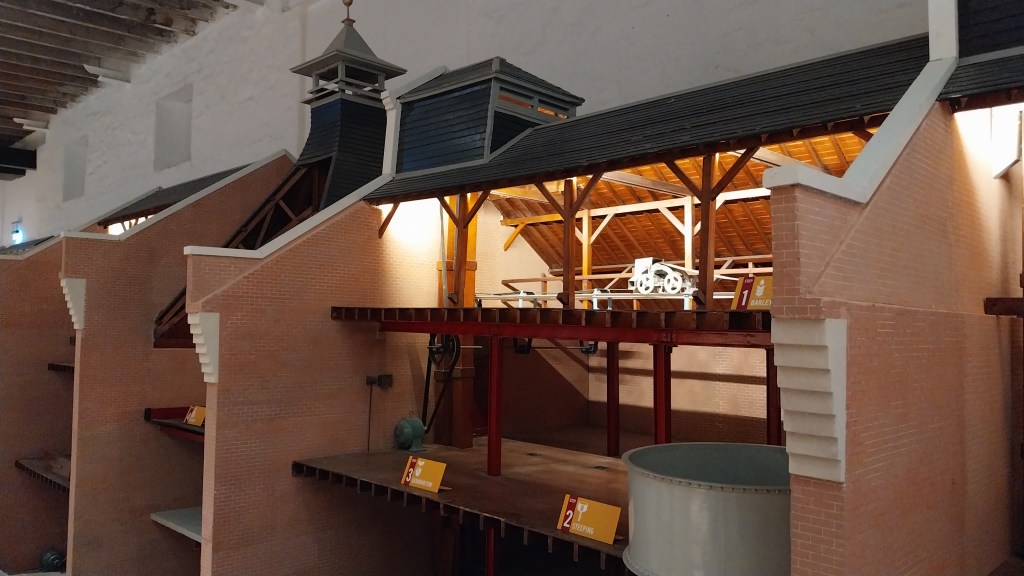
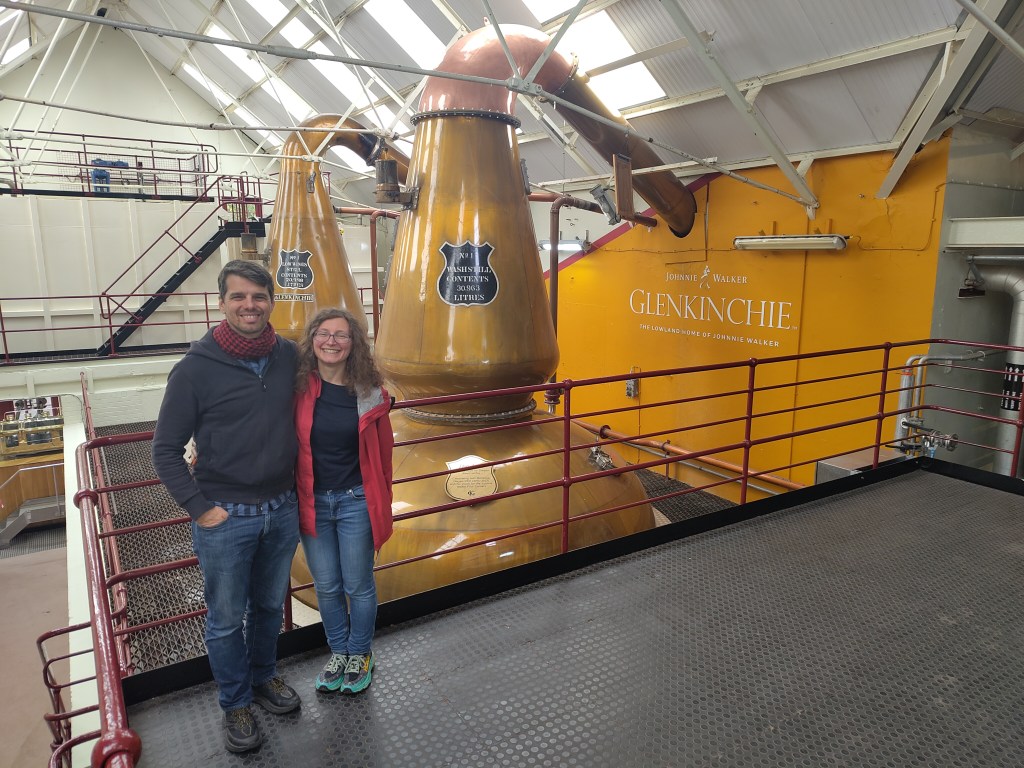
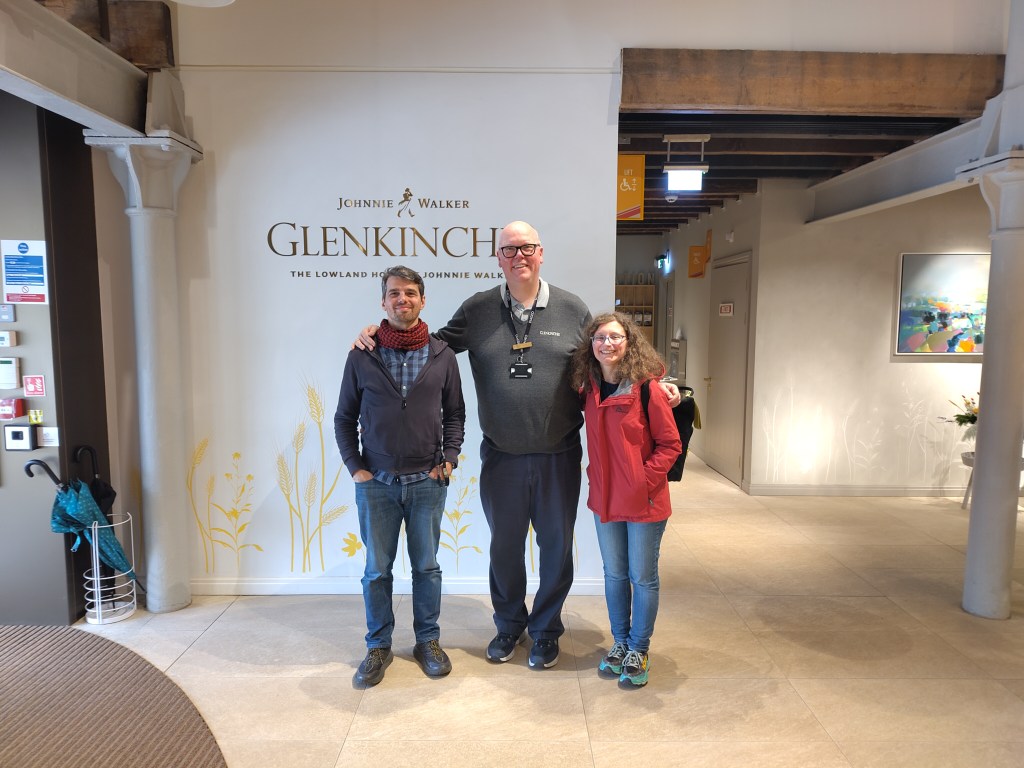
Finally, we were there at opening time, 10am: we were welcomed by our friend John, who recently started working there as a senior tour guide. Heโ€™s part of the Edinburgh Whisky Group, and weโ€™ve been together to tastings and one recent day trip to Glasgow distillery. After a quick catch-up and some pleasantries, it was time to start the tour! We first delved into the history of the distillery, highlighted by panels on the wall with parallel timelines for Glenkinchie and Johnnie Walker. Founded as Milton in 1825, Glenkinchie was registered in 1837 only. Unfortunately a big change saw it turned into a sawmill in 1853 by a local farmer (!!!), only to be reconverted into a distillery in the 1890s. Nowadays its capacity is around 2.5 million litres per year, 90% of which going into Johnnie Walker. Being in East Lothian, the sunniest part of Scotland, Diageo considers it the โ€œgarden distilleryโ€, so they aim for a floral character: this is remarked by a well curated garden in front of the new visitor centre. The maltings used to run on coal but were decommissioned in 1968. The building now hosts, among the other things, a not-so-miniature model of a distillery: originally built for the 1920 London Exhibition, itโ€™s very accurate in showing all the steps of whisky production. Apparently it used to work, even after it was reassembled at Glenkinchie, but because of various reasons (including HMRC), it was decommissioned.

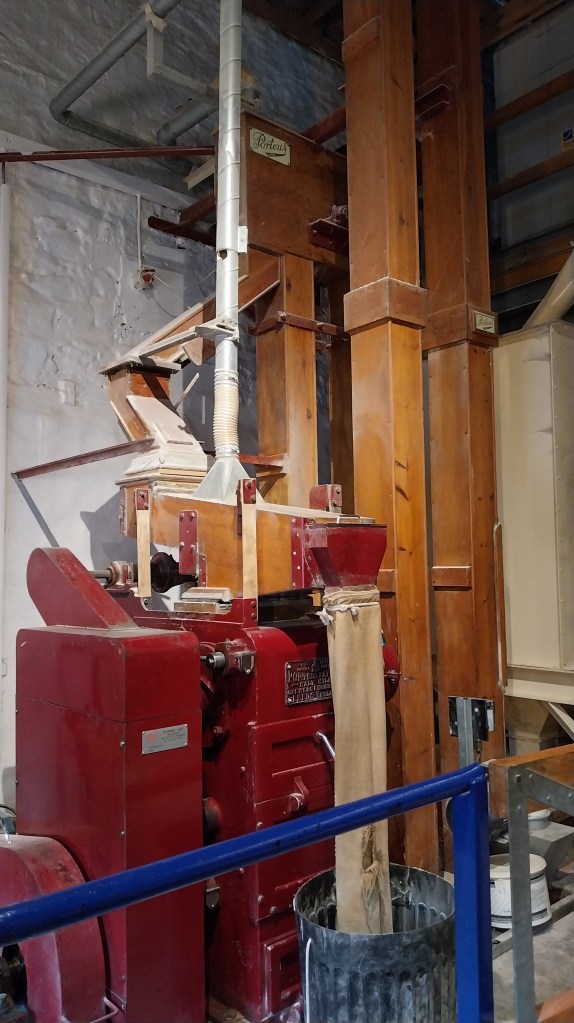
Moving on to the real production, six malt bins feed the Porteus mill (acquired second-hand in the 1960s) almost twice a day when in operation (we visited towards the end of the silent season, which was extended this year to allow some extra repairs). Each batch takes one ton of barley in the full lauter mashtun, and 44,000 litres of water: 33,000 litres for the first run at 64ยฐC; 11,000 litres for the second run at 74ยฐC; finally the third and last run of 33,000 litres at 84ยฐC is used as first water for the next batch, after going through a heat exchanger. Before the silent season the total mashes per week were 13, to leave some space for cleaning, but they are planning on a five-day production going forward. To note, the production water is taken from the Kinchie burn, and sent back there after a passage through cooling ponds, part of a regenerative project.

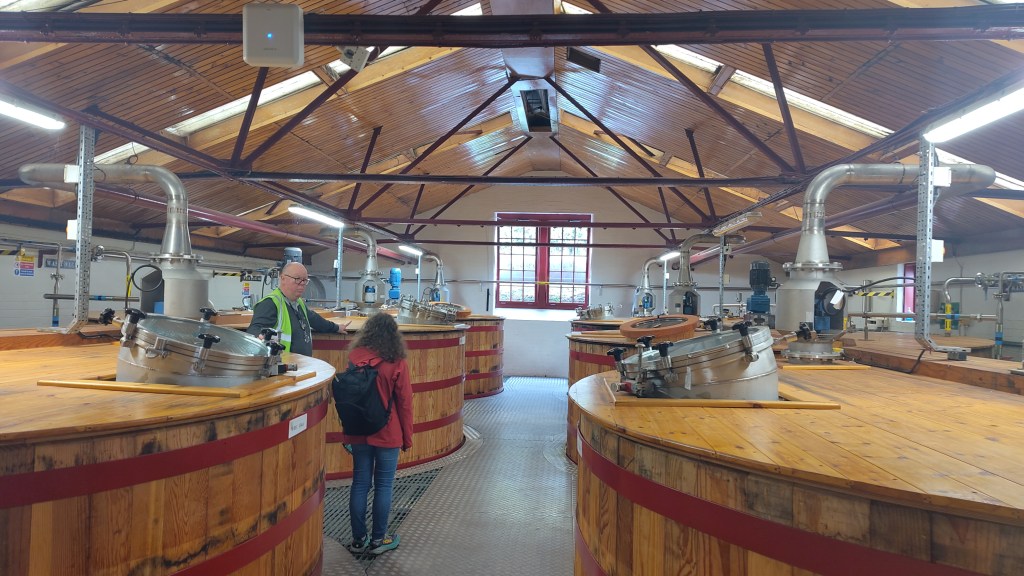
Fermentation is carried out in one of the 6 wooden washbacks (Douglas fir), for about 72 hours to obtain about 8% wash, using distillerโ€™s yeast. Each batch of wash is used to feed two distillation cycles. The wash still (the biggest on the mainland) is charged with about 20,000 litres, to obtain low wines at 23%. The second distillationโ€™s cuts are 75% and 65%, and are done manually, with the leftover foreshots and feints redistilled with the next batch. Both stills work with steam obtained by burning gas, and they have wormtub condensers: it is almost counterintuitive how such floral spirit is obtained with such big stills and wormtubs, usually associated with more robust whisky characters. The other leftovers of the process, pot ale and draff, are sold to local farmers. Finally, the newmake spirit is filled into tankers and sent to Leven (where Cameronbridge is) for cask filling, although they still have about 3-4,000 casks on site in a few warehouses (one is accessible by doing another experience, The Spirit of Warehouse No. 4).

After this very nerdy tour, we were ready for the tasting. First, our tour included a cask sample of choice between four available: two Glenkinchie expressions (2008 American oak first fill ex-bourbon barrel, 58.4%, and 2015 ex-red wine cask, 59.8%), a 2008 Caol Ila (58.7%) and a 2007 Cameronbridge (63.1%), both ex-bourbon barrels. This happened in a narrow corridor with a few other casks as well: it is what remains of their previous warehouse located in what now is the shop and visitor centre. We chose the two Glenkinchie-s, the 2008 in particular was truly an exceptional dram: oily, floral, buttery, with hints of riped fruit and tropical notes – yes, please!

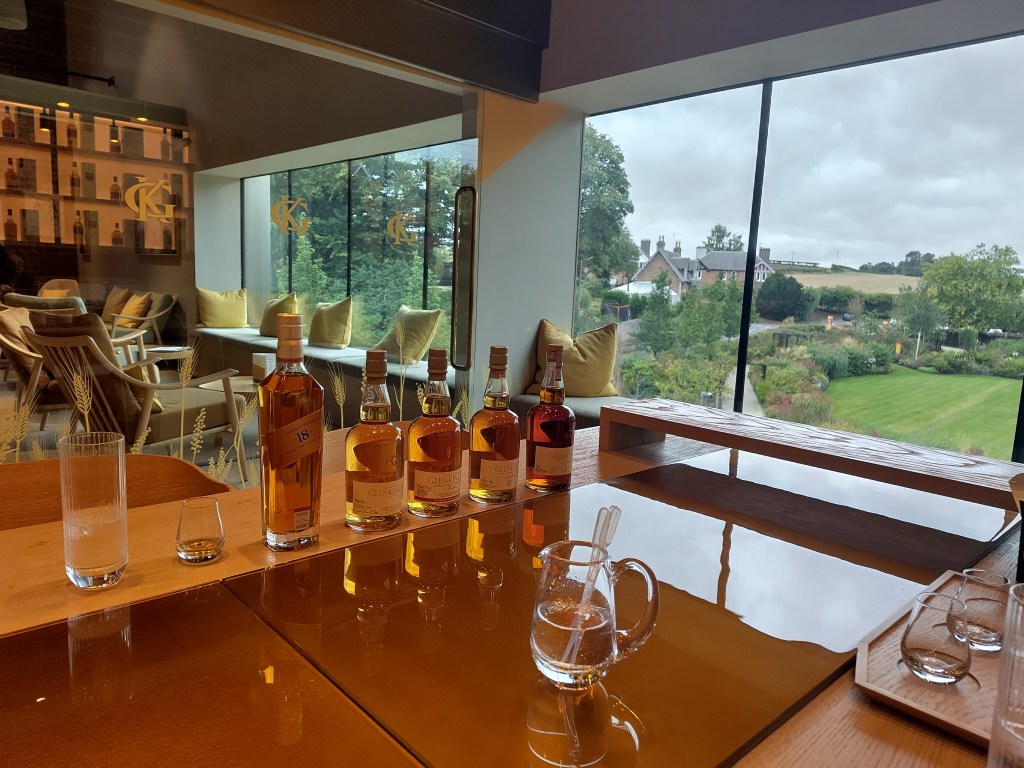
Next, we had a full-flight vertical tasting of the Glenkinchie range, in a tasting room above the entrance and with a great view of the garden: the classic 12y, the Distillers Edition, the Distillery Exclusive, the bottle-your-own (from an ex red wine cask) and finally the Johnnie Walker 18y. This was supposed to be the last dram, but John suggested to start the tasting with it, since it was the only dram bottled at 40%: a very good advice. The tasting was very interesting, and provided some different takes on the Glenkinchie: the ones we liked the most were the Distillers Edition (Amontillado sherry casks really elevate this dram) and the Distillery Exclusive, fresh and fizzy. We confirmed that the standard 12y is a bit bland, while the bottle-your-own was a wine-bomb (weโ€™re not against that like some other whisky fans, but we reckon it is not for all palatesโ€ฆprobably growing up in Italy gave us enhanced tannins tolerance).

After the tasting, we grabbed a coffee and a tasty bite at the distillery cafe, and we slowly walked back to Pencaitland to grab a bus back to the city centre. We went to Diggers to finish up the afternoon with a few drams, before going back to Leith to, this time for real, end our โ€œholidaysโ€.

We usually donโ€™t comment too much on the tour guides, because we know that for many itโ€™s just a job, and there is absolutely nothing wrong with it. However, having someone knowledgeable and passionate like John really elevated the experience to a different level of detail and appreciation, and his guide through the tasting was great.

For the current times we think itโ€™s borderline but still a decent value proposition at ยฃ65 for a 2hr tour, with 6 drams, of which 2 bottled at cask strength, and the 15ml pours are good for us: weโ€™re not there to get pished! Prices in the shop are the usual for Diageo: good for the standard range (including the Distillers Edition), high for the Distillery Exclusive, and nonsensical the bottle-your-own (and the various special releases). There are other experiences available that are not distillery tours, so we might go back at some point: asking for John, first!

Well, that’s it for now. Until next time, slร inte!


Glenkinchie Flavour & Cask Experience

Price: ยฃ65.00 pp (September 2025)

Duration: 2hr

Tasting: Glenkinchie 12 (43%), Distillers Edition (43%, NAS, Amontillado finish), Distillery Exclusive (NAS, 48%, Re-charred and American oak apple brandy casks), Bottle-your-own (12y, 48.4%, American oak California red wine cask), Johnnie Walker 18y (40%), one cask sample of choice (see above for the selection)

Target: whisky fans and geeks

Value for money: good

Highlights: the sample from the cask and the bar overlooking the garden

Recommended: yes, but ask for John!

Link: https://www.malts.com/en-gb/glenkinchie/visit


#66.2 Something new, something old

Back to Glenturret, after the Lalique revamp


TL; DR: On our anticipated travel back to Edinburgh, we decided to revisit a distillery weโ€™d only been once in the middle of the pandemic: Glenturret! In the meanwhile, the distillery went through a revamp, with a new core range and a new mashtun. A solid tour ending with two tasty drams!

(missed Part 1?)

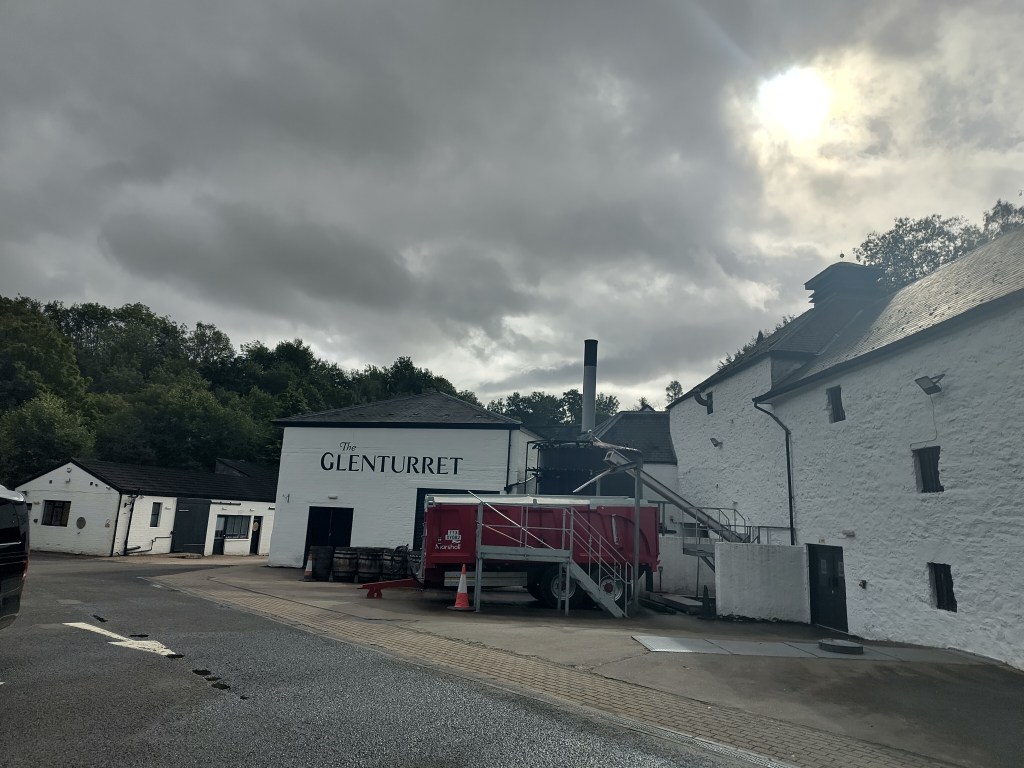
The sky in Inverness was uniformly grey that morning, with hints of rain and puffs of cold air. We took the A9 southward, not stopping until Dalwhinnie: nope, not at the distillery, but at The Apiary, a nice cafe serving the most delicious honey cake ever! So good that we endured the rather expensive coffee. Back on the road, we decided for a last-minute stop at a distillery weโ€™d visited over 5 years ago: Glenturret.

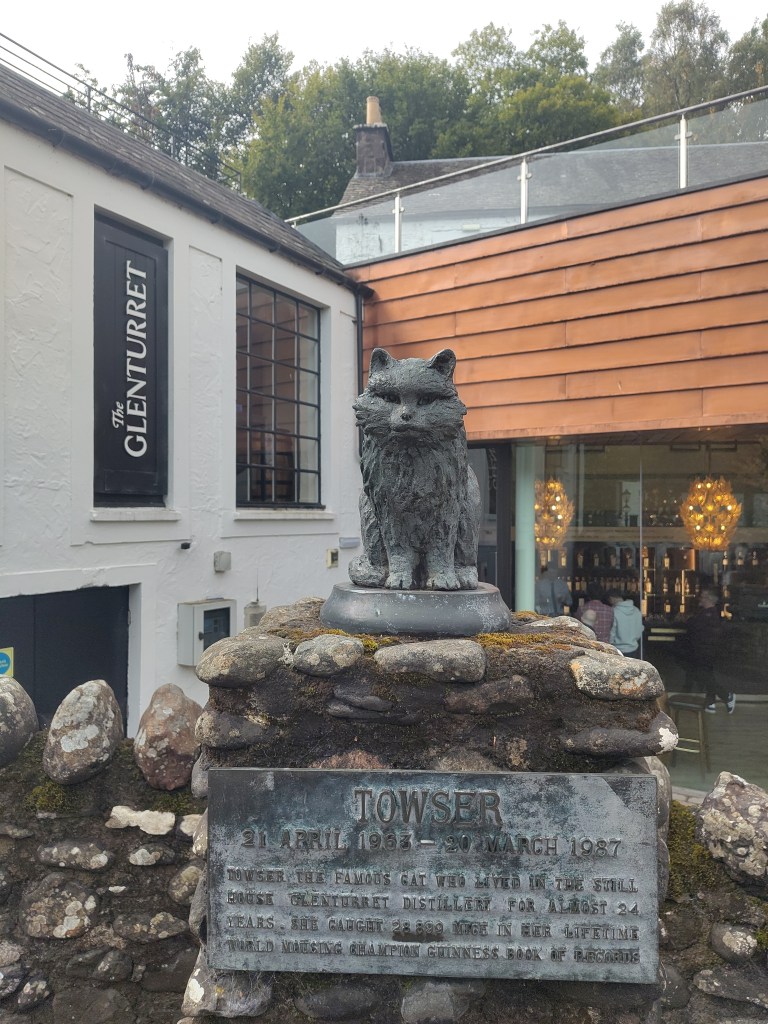
Back in August 2020, it was one of the few distilleries open in that weird summer between lockdowns. Gianluigiโ€™s parents took advantage to come visit as well, and we took them to the magnificent Isle of Skye: the village of Crieff was a perfect stop along the way. The tour with masks and social distancing was really something else, but also having to translate everything for Gianluigiโ€™s parents meant we couldnโ€™t grasp all the details (and the tour guide, while she kindly agreed for us to translate, didnโ€™t make much effort to space her sentences a bit). However, Gianluigiโ€™s mother still remembers Towser the cat, the distilleryโ€™s mice-catching machine, long gone but remembered with a statue.

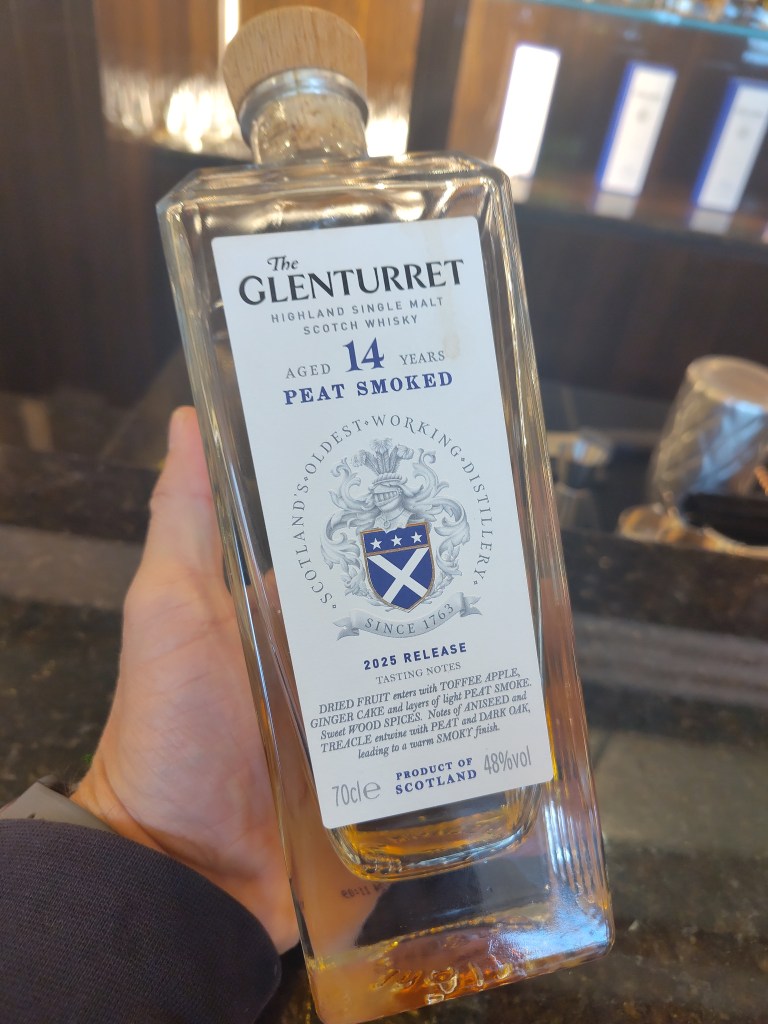
A few weeks after our 2020 visit, a new revamped core range was announced by the new owners, Lalique (decanters, perfumes, etc). During the Edrington period, Glenturret was used as the home of The Famous Grouse, before it was sold to Lalique in 2019. Funnily enough, Edrington now has sold the entire Famous Grouse brand as well! When we first visited the core range was a bit outdated, with all expressions at 43% and without age statements. The new one is released about once a year, in a newly designed decanter-style bottle, and it is curated by their whisky maker Bob Delgarno, who worked many years at the Macallan. This yearโ€™s expressions are the Triple Wood (45%abv, ยฃ62, the only chill-filtered expression), a 7y peated (46%, ยฃ62) a 10y peated (46.6%, ยฃ67), a 12y sherried (46.2%, ยฃ77), a 14y also peated (48%, ยฃ150) and finally a 15y (46%, ยฃ165). The 12y had some success in our whisky bubble, despite its price betrays a move towards the luxury market, even more clear when checking the price of expressions beyond the 12y age statement (including the extra aged stuff, not mentioned here). Other than revamping the core range, Lalique also transformed the distillery: no more a stand-alone cafe, with hot beverages and snacks now available at the whisky bar.

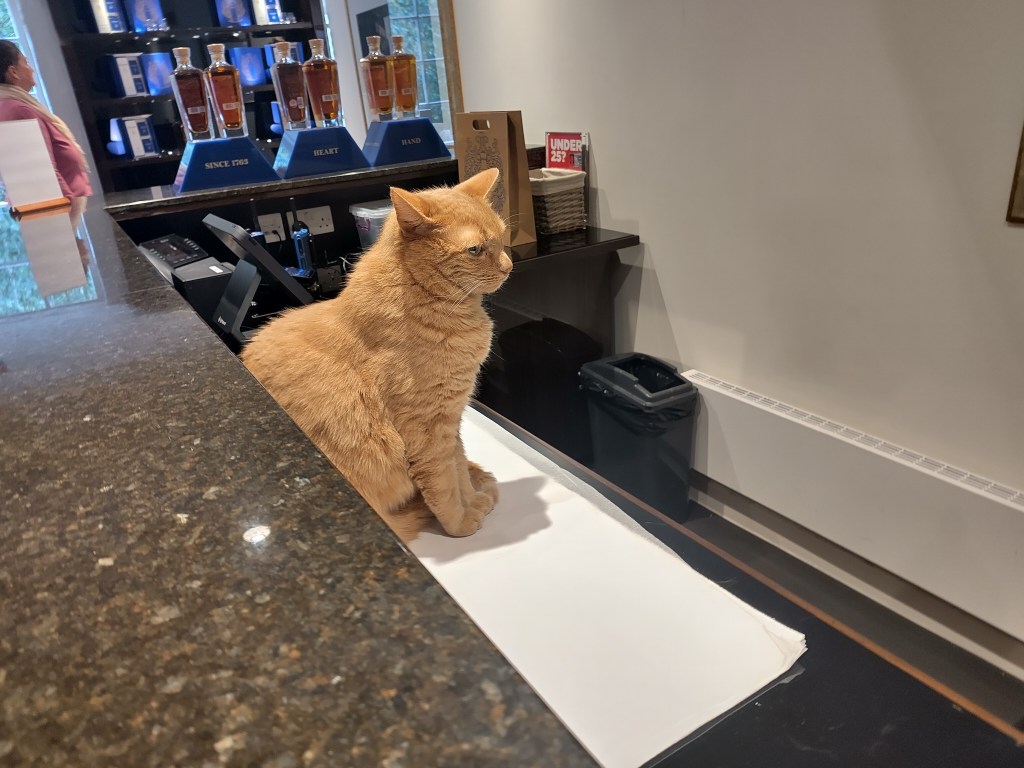
There is also a fine dining restaurant with two Michelin stars, and a Lalique boutique behind the visitorโ€™s centre shop. However, production remained very much traditional, as shown to us by our guide Alan: he looked somehow familiar, but we couldnโ€™t really place him exactly. After the introduction (held in what used to be the malting floor), he explained the recent history of the distillery and how it is the oldest in Scotland as it dates back to 1763. Apparently, this came to a surprise as the previous understood founding date was 1775: in any case, things must have changed quite a bit. What didnโ€™t change is the presence of cats: during the tour we spotted a couple of them, apparently not trying very hard to fill Towserโ€™s shoes.

The distillery now works 7 days a week, doing 12 mashes (not reaching the total capacity of 500,000 litres of alcohol per year), using mostly unpeated barley. To note, a few months back they announced that they will stop using peated barley (usually about 9-14ppm) from next year. Although we can totally see the reasons (sustainability, mostly), itโ€™s a bit of a shame as we love the peated Glenturret, particularly at a young age (in the recent past the Scotch Malt Whisky Society released a good number of those casks!). In line with their sustainability ethos, they are also trying to source the barley locally, for the moment itโ€™s around 30%. The process starts with crushing the barley in their old Porteus mill, but compared to other distilleries their grist has a lower percentage of flour (7% vs the usual 10%), compensated by more grit (73%). Mashing is one of the novelties as they replaced the open mashtun we saw in 2020 with a shiny new 1.9ton one with a copper lid, and a semilauter system inside. Mashing is carried out with three waters at increasing temperature from 64ยฐC to 85ยฐ, and the remaining draff goes to local farmers.

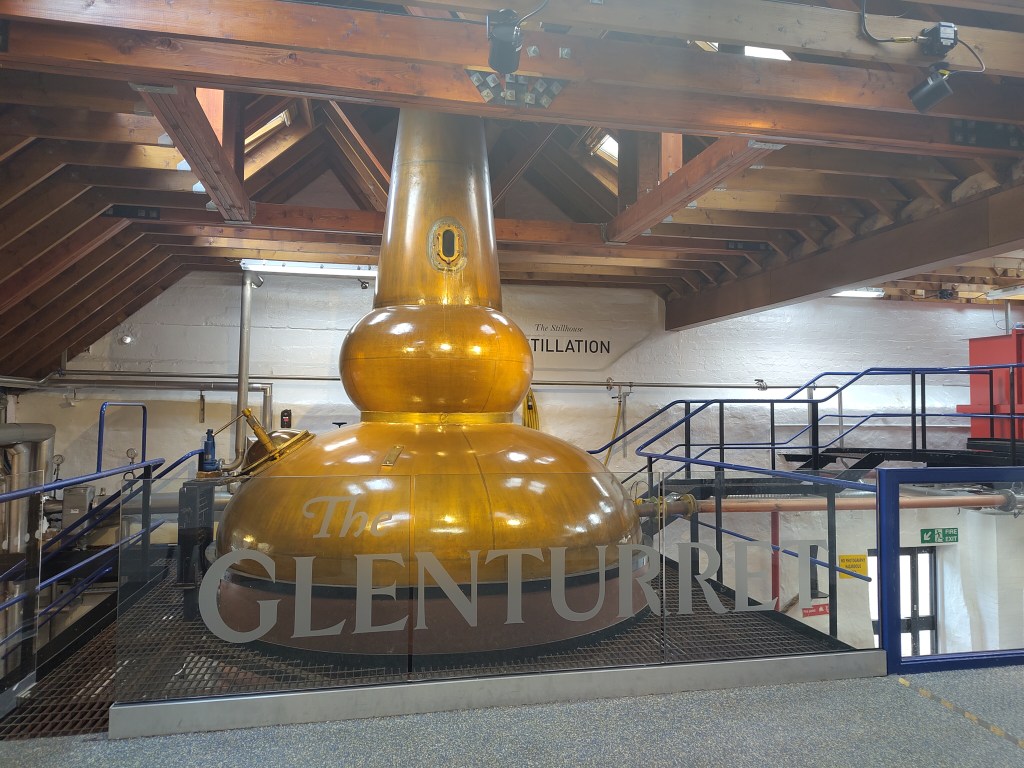
Fermentation happens in one of the eight wooden washbacks, using 37 kg of M yeast per batch, and lasts 100-120 hours. As for the distillation, in the second run the cut they take goes from 69%abv to 63%, with the foreshots and the feints redistilled with the next batch of low wines from the first distillation. Each batch produces about 850 litres of spirit, enough to fill 3 to 4 casks (American standard barrel) at a strength of 64%. Another novelty is that they installed a heat-exchanger that works between the mash and the still: the first still is now filled with pre-heated wash at 70ยฐC and not 17ยฐC as in the past: good for the environment and the wallet.

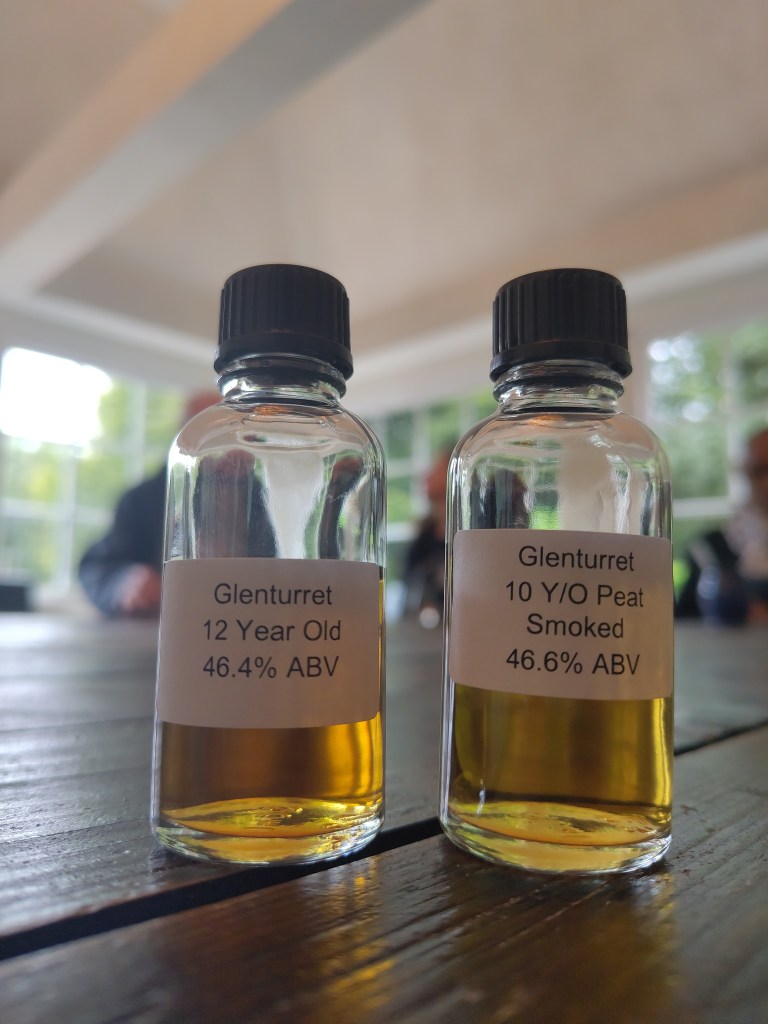
We didnโ€™t visit the filling store, nor the warehouse, but after the tour we went back to the visitor centre. Alan took us to a room on the upper floor, next to the restaurant, for the tasting, including the 10y and the 12y. A pleasant surprise, as we thought theyโ€™d give us drams of the two cheapest expressions like other distilleries did in the recent pastโ€ฆVery good on them! We briefly stopped at the bar, for coffee and to buy a dram to take home: we chose the 14y, a very tasty example of soft and sweet peat smoke, with some decadent notes from the sherry cask (although, not โ€œ150-quid-a-bottleโ€ tasty).

Overall, we were very happy with this visit, the tour was entertaining and interesting, despite being more tailored for people new to whisky: still, probably one of the best โ€œbasic toursโ€ we attended recently. In our opinion, Lalique and the team did a great job to give the whisky and the brand the character it deserved, because Glenturret can be delicious. Moreover, the makeover they gave to the distillery was more discrete and tasteful than we anticipated. Just a shame that some of the expressions are priced out of range for most whisky enthusiasts: hey ho.

We left Glenturret, ready to get home 4 days in advance compared to the initial plans: not great. To cheer us up we did one last stop on the way: we found a table at the Lobster Pot, a nice restaurant next door to the Blackness Bay distillery. It was since the distillery visit last year that we wanted to go back, and finally there we were, enjoying some delicious seafood!

One more distillery visit to go before the end of our โ€œback-upโ€ plan. Until then, slร inte!


Glenturret Distillery Tour

Price: ยฃ20.00 pp (September 2025)

Duration: 1hr

Tasting: two drams, Glenturret 12y (46.2%) and 10y peated (46.6%)

Target: anyone

Value for money: good

Highlights: the traditional production process

Recommended: yes, it’s a good basic tour

Link: https://theglenturret.com/


#66.1 Something new, something old

Toulvaddie distillery: A whisky mystery solved withโ€ฆpizza!


TL; DR: After our trip to the Outer Hebrides was cancelled, we tried our luck driving East, to the Fearn Peninsula. There, we visited another new craft distillery: Toulvaddie. Not our usual tour, but a must-do for the pizza and cocktails lovers!ย 

If you read our last post, youโ€™ll know our holidays to the Outer Hebrides went down the pooper: we barely managed to visit Tiree distillery, on the Isle of Tiree, but then our next ferries were cancelled because of high wind. Oh well, when weโ€™d booked the trip, we knew this could happen, weโ€™ll just need to wait a few months to regroup and try again. However, in the meanwhile we had to decide what to do with our remaining days off, at least during the weekend.

That Friday we woke up at the campsite in Fort William under a gloomy grey sky: a cold, wet and windy day, not putting us in the best mood for outdoor activities. After breakfast, a shower, and a chat with Justine, Karen and Chris, we decided to split. The two of us and Mr. Vantastic left Fort William eastward, hoping the other coast would bring some luck. While Teresa drove, Gianluigi looked at potential whisky activities to do in the area. There was a new distillery that had been on our radar for a while, but we had not managed to visit: Toulvaddie. One reason for not getting there earlier was that tours are available only on Tuesdays and Wednesdays (until a few weeks ago, also on Thursdays). Truth to be told, a few weeks prior weโ€™d tried to plan a visit on our way back from holidays, on a Tuesday. However, the booking system didnโ€™t work, and our queries werenโ€™t replied. After a check on their website, we found out that they do pizza nights on Fridays and Saturdays, so we figured they must have been open (two Sherlocks in action here!). Thus, we decided to drive there and try our luck. Worst case scenario, weโ€™d still get a pizza!

The distillery is located on the Tarbat peninsula (near Fearn, Easter Ross), to the east side of the A9, roughly between Invergordon and Tain. It is on the site of a former naval airbase (HMS Owl) and while part of the surrounding area has been redeveloped for industrial use mostly, there is still an airfield for small private planes. As a matter of fact, Google Maps sent us straight in the middle of the runaway; the area is quite flat though, and not massively built, so we quickly found our way around the airfield to get to the distillery.

We arrived there at 2pm, the opening time, while pizza would have been available from 3pm until 8pm (unless sold out). We left the van next to the gate, and we walked in to find a very nice space: on the left, some vegetation and a container (weโ€™ll learn later thatโ€™s the temporary warehouse, while waiting to build the permanent one), on the right side a nice garden with a fish pond, chairs and a grill: perfect for summer time! In the meantime, the sun came out (for a while), and it gave a great feel to the whole outdoor area.

The production is inside the main building, together with the bar in a big open space. As we walked in, we were welcomed by Heather, the distillery owner together with her husband Bobby (who was busy setting up the pizza oven). The production equipment is past the bar area, with the shiny stills almost in the middle of the building. We sat at the bar, and while splitting a tasty Happy Chappy pale ale (from Cromarty Brewing), we started chatting with Heather about their whisky production. Although the distillery was planned way before, they actually started distilling in April 2024, so their spirit is half-way to become a single malt.

The distillery is operational from Sunday to Thursday, and production is quite scheduled. They donโ€™t have a mill, but they bring in pre-milled Laureate malted barley from Crisp. Other than saving one stage of production, this allows them to reduce the spark risk, so they can have people inside the building. They usually mash on a Wednesday, in a 0.33 ton mashtun, and then ferment the wort for 5 days in one of the 2,000-litre washbacks. Distillation is usually done on the following Monday (first) and Tuesday (second), in a couple of Hoga stills: the spirit one (the second) is only 500 litres, one of the few that is smaller than the Dornoch distilleryโ€™s one! Both stills work with a steam coil, powered by an oil unit, and they are both equipped with a shell and tube condenser. The second distillation cuts are approximately between 70% and 60%. All the casks are filled on site, mostly ex-bourbon barrels, but sherry ones too from time to time. The draff and the pot ale are sold to local farmers. We shared a dram of the newmake spirit (bottled at 63.5%), which was very malty and cereal-y, with the usual green fruits (apple and pear) taking a back sit in this one: nice stuff!

At that point it was about time to order the pizzas, pepperoni and mushroom+ham, which we happily enjoyed, for Gianluigi while tasting one of their newmake spirit-based cocktails. The idea of using the distillery as a pub and pizzeria to get some cash is a very smart one in our opinion, also because there arenโ€™t many other options in the area. They have plans to build a new permanent pizza oven outside the distillery, so they wonโ€™t have to set it up every Friday. Before leaving we signed the guest book, hoping to go back when their single malt will be ready!

We took Mr. Vantastic back on the A9, and decided to stay in Inverness for the night. After we found a suitable parking, we visited the Uile Bheist โ€œbrewstilleryโ€โ€™s pub, as last time we were there, we hadnโ€™t had time to enjoy it after the production tour. We had a couple of drams there and, completely unplanned, we were rejoined by Karen and Chris: the choice is great and prices are very competitive. To end the night, we decided to pay one final visit at a whisky bar weโ€™d heard a lot about but never been before: the Malt Room! The whisky choice is great there too, but probably because it was a tad too busy, and the general rowdiness of the night (Inverness is rowdy on a Friday night!!), it didnโ€™t feel very cosy. Hopefully next time weโ€™ll visit on a quieter day.

The next morning we woke up and, with no rush, drove south towards Leith. Did we drive straight home? Almost. More on this next week. Until then, slร inte!


Toulvaddie Distillery Tour

Price: ยฃ15.00 pp (September 2025)

Duration: 1hr

Tasting: a dram of newmake spirit (63.5%)

Target: anyone

Value for money: N/A*
*we didn’t do the tour as advertised on the website so we don’t know. We went in for the pizza on a Friday

Highlights: the garden and the pizza!

Recommended: nice for a pizza/distillery combo

Link: https://www.toulvaddiedistillery.com/home


#63.3 As north as you can get (on the mainland)

The Wolf(burn) is loose*


TL; DR: After escaping the haar in Jonh Oโ€™Groats, we arrived in Thurso for another long-due visit: Wolfburn distillery. Charlie was a very competent and knowledgeable tour guide, and we really liked the tour. The distillery is lovely, and the malts we tried were delicious: definitely one weโ€™d happily go back to.

(missed Part 2/Part 1?)

We woke up surrounded by the haar. A thick and pervasive fog, obviously coming from the sea. From where Mr. Vantastic was parked, we couldnโ€™t even see the shore, a mere 100-120 meters away. We couldnโ€™t help but think what could have meant for people a few hundred years ago, not knowing what was hiding behind a wall of fog like that: nothing maybe, or merchants, or unfortunately raiders sometimes. Nevertheless, thick fog can also provide a sense of calm and peace, like if everything is slowing down.

That morning we couldnโ€™t slow down really, as we had to shower, fix and eat breakfast, and wrap up the van by 9.15 maximum. Our first destination was about 40 minutes away, and we had to be there at 10am. Somehow we managed to do everything on time, and soon we were on the road, leaving the haar behind as we drove. During the drive we spotted a distillery to-be in the former Castletown Mill, between John Oโ€™Groats and Thurso, set up by the company behind the very popular Rock Rose gin. The single malt will be called Stannergill. The site looked under construction (weโ€™re in July โ€™25), but we could see the still already positioned, so they must be not too far from completion. Another visit for another time.

The first distillery we visited that day was one of the first coming online in the new wave of the 2010s: Wolfburn distillery. They have been around for a while, and in fact their first 12y single malt was released earlier this year. The name comes from a burn that flows near the distillery, which is also their water source. There used to be an older distillery called Wolfburn located roughly in the same area, in the outskirt of Thurso, in what now is a small industrial estate. The old distillery was founded in 1821, licensed in 1823, but closed down in 1858, with all the equipment sold at auction. This was decades before Alfred Barnard visited the area, so no record of it in his book. The new distillery was founded in 2011, and was up and running in 2013. The distillery manager and master blender, Shane Fraser, had previous experience at Glenfarclas, while the two owners were new to the spirits industry. While Wolfburn single malt has been around for a while, it doesnโ€™t seem to be too common: weโ€™d only tried a few expressions in the 2020 lockdown during two online whisky festivals, the Summerton whisky club festival and the Belfast whiskey week. We generally liked it, in particular the peated version (Morven), but since then, we tried Wolfburn only a handful of times, so it started fading a bit from our palate. A first plan to visit the distillery failed in 2021 because of a Covid-related issue, and we couldnโ€™t fit Caithness in the rescheduled trip. No more plans were done to visit themโ€ฆUntil this summer! Hurray!

We arrived at the distillery five minutes earlier, while our soon-to-be guide Charlie was opening the visitor centre. The distillery production is in a warehouse, together with the shop and some offices. As we entered, we could spot all the equipment from the wide hall: malt bin, mill and mashtun on the left, washbacks and stills in front of us, two tanks for water and spent ale, and the shop, on the right. Fun fact, the tanks come from the demolished Caperdonich distillery, from Rothes. So, after Belgian Owl (still) and Falkirk (still and mashtun), Wolfburn is the third distillery we know of that uses equipment from the defunct Caperdonich. The plant was built by Forsyths, and it was the first project Richard Forsyths took on.

As it was just the three of us, the tour started right away, and after some background information, Charlie started describing the production process. Currently they are only producing four days a week, Monday, Tuesday, Thursday and Friday: we wondered if that is because of the current sales slowdown in the whisky market (and potential overproduction in the industry in general). At first, they only had two people working in production, now they are four, and production went from 100,000 litres per annum to 125,000.

They get the malt from Inverness, one lorry every 4 to 5 weeks while, as we said, water comes from the nearby Wolf burn. They aim for a light and floral spirit, mostly unpeated: only 3 out of 11 barley deliveries per year contain lightly peated malt to 10 ppm. To make sure not to mix peated and unpeated runs, the first distillation after their peated period (and cleaning) goes into ex-Islay quarter casks anyway. In general, they mill 1.1ton of malted barley (with the usual split for the grist, 20/70/10) and mash it (twice a day, 8 mashes a week) first with 4,000 litres of water at 64.5ยฐC, and then with another 1,000 litre at 80ยฐC. The third water, 4,000 litres at 90ยฐC, is stored for the following mash. Mashing takes 5.5 hours, and at the end of the process they obtain a clear wort, and sell the draff to cattle farmers. The wort, 5,000 litres, is moved to one of the very tall washbacks: they are so tall that they donโ€™t need defoaming.

Fermentation lasts 72 hours for the Monday and Tuesday batches, while 96 for the Thursday and Friday ones (so 84 hours on average), and is kicked off using distillersโ€™ yeast to obtain an 8.5% wash. At the end of the catwalk between the washbacks there are the two copper stills, both equipped with a steam coil inside, heated by a kerosene boiler. First distillation lasts about 5.5 hours, while the second one only 4.5 hours; during the latter, they take the spirit between 74% and 61%abv, a quite wide cut, discarding the first 40 minutes of foreshots, and the last 1.5 hours as feints.

At that point Charlie walked us to warehouse 1, the first past the distillery, where we could see a number of different cask types and sizes, which they get from the Speyside Cooperage.  Casks are stored horizontally above ground: a proper modern dunnage warehouse. He told us that warehouse 2 (the next one) is identical, while warehouse 3, on the other side, hosts the bottling plant as well (the water to reduce the abv is from the burn as well). There are two more warehouses – Charlie said that on top of the distilling history, land availability was crucial for choosing the site.

Back to the main building, it was time for the tasting, with a branded perfect-dram glass for us to take home. The first dram was Wolfburn Aurora, made with an even split between 1st fill ex-bourbon and 2nd fill sherry casks, bottled at 46%. Itโ€™s a non-age statement whisky, similar to most of the expressions we tried, but Charlie told us that as older stock becomes available, the average age increases, and is now around 8 years. Second up, the Northland (46%, NAS but again around 8y), unpeated spirit aged in ex-Islay cask: peat is there but very subtle, so much that Edoardo bought a 20cl bottles to give to a pal who claims they donโ€™t like peated whiskyโ€ฆWeโ€™re waiting for the response. The third dram, Langskip, was cask strength (57%), from 7y and 8y 1st fill ex-bourbon barrels: a floral deliciousness. The last two drams were the 10y (46%, 2nd fill Oloroso casks) and the Morven (46%, again ex-Islay casks, but peated spirit).

In the shop they have quite a variety of bottlings, other than their core range (in 70cl and 20cl bottlings, and 5cl miniatures): the new 12y (60%ex-bourbon and 40% sherry casks), a small batch Cognac Cask (46%, finished one year in ex-Cognac cask), the Drams on The Burn (a vatting of few casks for a local festival), a couple of small batches (one ex-Rum, another cask strength) and the โ€œfill-your-own-bottleโ€ (details below) single-cask expression. Everything is also very well priced between ยฃ45 and ยฃ75 (for 70cl bottles), except the โ€œfill-your-own-bottleโ€, which is a tenner or two too expensive in our opinion.

As the tasting ended, we quickly left, as we didnโ€™t have much time before our next tour. We had to decide whether to go to Lidl or to try go watch the second half of the first test between Australia and the British and Irish Lions. With Gianluigi and Edoardo being rugby fans, we obviously chose the latter, and we drove back to Top Joeโ€™s, in Thurso. They donโ€™t do food, but we could order some tasty sandwiches from the next door Central cafรฉ menu.

Overall, both the tour and the tasting at Wolfburn were great, one of the best and most satisfactory experiences we did recently in an established Scottish distillery (weโ€™re excluding the new ones that havenโ€™t released their own whisky yet). Charlie was an excellent guide, very knowledgeable, and very engaging too. Their range of malts is very tasty and various, and the delicate, floral (but also very fruity) spirit signature is clearly there in all the different expressions we tried. Definitely one you should keep an eye on, and if youโ€™re in the area, go to.

Next up, the final northern distillery, but with a twist, so stay tuned! Until then, slร inte!


Wolfburn Classic Tour and Tasting

Price: ยฃ19.50 pp (ยฃ18.00 when we visited in July 2025)

Duration: 1hr 30min

Tasting: 5 drams, Wolfburn Aurora (46%, NAS), Northland (46%, NAS), Langskip (58%, NAS), 10y (46%), Morven (46%), and a perfect-dram glass to take home

Distillery exclusive: Fill-your-own-bottle 2018 ex-Bourbon cask (7y, 59.3%, ยฃ89.99)

Highlights: the tasting

Target: everyone, both occasional and seasoned drinkers

Value for money: great

Recommended: yes

Link: https://wolfburn.com/


โ€œThe hero of the gods
The crossing of the threshold
The belly of the whale
Refusal of returnโ€


*The wolf is loose, Blood Mountain (2006), Mastodon

Weโ€™ll miss you Brent, crazy guitar genius.

#63.2 As north as you can get (on the mainland)

Pushing north: 8 Doors distillery


TL; DR: After the morning in Wick, we spent the rest of the day in John Oโ€™Groats. After a trip to a nearby lighthouse, we visited 8 Doors distillery, where Ryan gave us an extremely interesting and geeky tour of their operation. Even though we’ll have to wait for their single malt, it’s definitely a must-do visit! 

(missed Part 1?)

There is a human tendency to order facts and figures, probably thatโ€™s why articles with rankings, billboards, such as โ€œthe X best records of year Yโ€, โ€œQuentin Tarantino movies rankedโ€, and so on, preceded the internet by a long time. For whisky brands, having one of the โ€˜-estโ€™ facts can often be an unmissable chance to make themselves notable, which has become particularly important since the massive wave of new players in the market (are we over 160 distilleries yet? For sure over 150, and just for malt ones). The โ€œbiggestโ€, โ€œoldestโ€, โ€œsouthmostโ€, โ€œhighestโ€, or โ€œthe only distillery on Skyeโ€โ€ฆwhich now became โ€œthe oldest distillery on Skyeโ€. Although some of these traits might actually have a connection with the flavour profile of the whisky advertised, in most cases we wouldnโ€™t read too much into it.

Nonetheless, going back to our long weekend up north, letโ€™s talk about the northmost distilleries in Scotland. The northmost used to be Highland Park on Orkney, although now itโ€™s probably been beaten by Lerwick distillery (assuming itโ€™s online) on Shetland. On the mainland, it was Pulteney for a long time, but then the (imaginary) trophy went to Wolfburn. Nowadays there is a new winner of this race: 8 Doors distillery, in the village of John Oโ€™Groats, which is where we were headed after our tour at Pulteney. The village is only about half hour driving from Wick, almost straight north, along the rugged North Sea coast. We only stopped to put some diesel in the tank, and to save time we ate our pre-prepared sandwiches while driving (the Lidl rosemary focaccia, with grilled aubergines and roast turkey: delicious!). We took advantage of the stunning sunny, warm and breezy weather to visit the Duncansby Head Lighthouse.

It is only a few km away from John Oโ€™Groats, just a short drive on a secondary single-track road. The building is not accessible, but there is a stunning walk starting from the car-park on the cliff near a marine bird nest (we saw puffins here! Unfortunately our phonesโ€™ cameras are too crappy to take decent pictures) and a view on the Duncansby Stacks, a very scenic rock formation. Back to the car park, we drove to the John Oโ€™Groats Campsite to drop Mr. Vantastic before going to the distillery, which is just a couple of minutes away. As a matter of fact, everything in John Oโ€™Groats seems to be two minutes away from everything else: the distillery, the shop, the campsite, the signpost, the pier, the brewery, although the rest of the village is quite spread out.

We arrived at the 8 Doors distillery a few minutes after 3.00pm, the time we originally agreed with Ryan Sutherland, the distillery manager, who moved to 8 Doors after an extensive experience with William Grant & Sons (Glenfiddich, Balvenie, Grantโ€™s). Ryan is a fellow barfly and although weโ€™d never met in person before, weโ€™d chatted online a few times. When we started planning this trip, we asked him if he could give us a tour of the site, which he kindly agreed to. As we entered the visitor centre, we had to move around a swarm of tourists coming from a cruise ship: not a rare occurrence in summer, as Ryan told us later, which can put some pressure on the staff. Fortunately, the shop/cafรจ is wide enough for everyone, it has a big window facing north towards the Pentland Firth and a fireplace – a cosy and relaxing space. Ryan took us to the tasting room, between the shop and production, to drop our bags, but we soon moved to the main production area. The distillery is quite self-contained, and from the main area we could see most of the equipment.

The distillery started production in 2022. Founders Kerry and Derek wanted to bring distilling back to John Oโ€™Groats and its community, and to do so they employed a consultant, John Ramsay (former Edrington), who is now the master blender. A short-lived distillery existed between 1826 and 1838, and illicit distilling was common in the area before. The name of the distillery comes from the founder of the village, John De Groot, which had seven sons and to avoid fights, he built an octagonal house where each of them (him and the sons) had a door and a window. We wondered if, in their shoes, weโ€™d take the south facing one, for the sunlight, or the north facing one, for the view on the Firth.

The distillery is a small operation, producing only about 36,000 litres of spirit per year (in theory they could reach 45,000 litres), and is run by one operator, Andrew, and Ryan himself. Ryan described the setup in great detail, including all the small changes he is implementing to make the process more efficient – his engineering background shone through. There is no mill at the moment, so the malt comes in already milled from Simpson maltster (usual 20/70/10 split for husk/grit/flour), but in the future they are hoping to get the malt locally from Caithness producers. They are also considering using oat, which would be super interesting, as only a handful of Scottish distilleries are using this cereal (Inchdairnie andโ€ฆactually we cannot think of any other).

The mashing equipment comes from a defunct brewery in East Lothian, Archfield Brewhouse, and has been repurposed to work in a distillery. Because of this, together with the usual mashtun, there is also a kettle, that comes in handy to pre-heat the water with the heat exchanger. For each mash they use one 400kg bag of grist together with 1,200 litres of water: the 3-to-1 ratio makes it a thick one, cloudy at first but they let it decant for a while. Between the first and second water they get 1,800 litres of wort, which is then moved to one of the four 2,000-litre stainless steel washbacks (there is a fifth, but itโ€™s not been used). Fermentation lasts about 100 hours on average to get a wash at up to 9%abv. Here is where it gets interesting: depending on the variety of barley, they try to pick a yeast to obtain a determined flavour profile. Among the barley varieties used, Lauriet, Firefox and Diablo, but also Cara Gold, Maris Otter and Golden Promise. Yeast-wise, M1 is the main one, which results in a fruit-forward wash, but they also use XP for red fruits flavours, Norwegian beer yeast Kveik/Hornindal, MW, D23 and MGplus. In general, they produce their house-style for most of the year, while in December and January they run more experimental batches.

The stills and the spirit safe are on a raised floor, and fun fact: from there we spotted Mr Vantastic in the campsite! The stills are from Speyside Copperworks, which is now owned by Forsyths. The first distillation in the 1,700-litre wash still is very slow, about 7 hours, while the second one is carried out in the 1,300-litre spirit still. They run the foreshots for 15 minutes, then the heart (or spirit) is collected within 3 hours, from 71.5% to 64% abv. They aim to produce about one hogshead per day.

After all these technical details, Ryan took us outside to have a quick look at the LPG boiler and head to the warehouse, a low building on the other side of the distillery staff car park. Here we saw a multitude of casks of different sizes. They mostly fill ex-Sherry casks from Casknolia of various sizes (from 50-litre octave to 5,090-litre butts), but also casks previously used for their Seven Sons range. The filling strength is the standard 63.5%, and the type of cask used also depends on the barley/yeast combination: interesting experiments they are running at the moment are an ex-brandy cask filled with spirit obtained from Cara Gold barley and D23 yeast, or a former Bookerโ€™s bourbon cask with spirit fermented with Hornindal yeast. All of these, albeit technical, sounded very cool, and our science-y brains were quite triggered by all these potential permutations.

Back to the tasting room, we were ready for the whisky flight. First off, a small taste of newmake spirit (63.5%), fruity and cereal, as youโ€™d expect for a good one. Then, we moved on to the Seven Sons whisky range (named after John De Groot sons). First, the 10y blended scotch (46.7%), characterised by a high malt content (40%) with the grain component coming from North British. This is one of their โ€œhouseโ€ whiskies – not all batches are identical (this is the 9th), but they aim for a nice-sipping blend, and they nailed it! Edoardo took one home to share with his friends over the next 6 Nations – as Italians we need something good to hang on to. The second dram was a blended malt, a 12y teaspooned Dalrymple from Ailsa Bay, bottled at 57.1% (100 of the old imperial proofs), from a third fill European cask, which provided a mild and delicate flavour. The third dram was a single malt, a 6y sherried (Oloroso) and very vibrant Glen Wyvis from a Firkin cask (52.1%), the cherry on the top. We finished the tasting with their Five Ways whisky liqueur (22%), and a cheeky โ€œManagerโ€™s Dramโ€, a delicious blend produced with the idea of recreating a 1970s Famous Grouse.

What a geeky and awesome tour! We loved everything about the distillery and how they set up their plan, and it was really great to listen to Ryan explaining in detail how the distillery works. 8 Doors is one to keep an eye on, where weโ€™d like to go back to (not just for the beautiful scenery). We are looking forward to the release of their first single malt!

After the distillery, we walked a bit around John Oโ€™Groats, before going back to the van and start a barbecue. It was a bit windy, but nonetheless we managed to grill some massive Hellbent burgers. The evening ended with a pint at the John Oโ€™Groats brewery/pub, a very cosy place just in the middle of the village.

Next up, another former โ€œnorthmostโ€ distillery on mainland Scotland, so stay tuned! Until then, slร inte!


8 Doors Distillery (bespoke tour*)

Price: ยฃ23.33 pp (July 2025)

Duration: 2hr

Tasting: newmake spirit (63.5%) and 4 drams, Seven Sons Blended Whisky (10y, 46%), Blended Malt (12y, Dalrymple, 57.1%), Single Malt Glen Wyvis (6y, 52%), Five Ways Ginger Whisky Liqueur (22%)

Distillery exclusive: bottle-your-own versions of a whisky from the Seven Sons range and Five Ways whisky liqueur (forgot to take note of the prices, sorry)

Highlights: the location and Ryanโ€™s knowledge

Target: casual tourists and whisky geeks alike

Value for money: very good

Recommended: yes

Link: https://www.8doorsdistillery.com/home

(*similar to the Behind the Scenes tour https://www.8doorsdistillery.com/tours, but longer and with extra drams)

#63.1 As north as you can get (on the mainland)

Pulteney: the old one in Wick


TL; DR: Another long weekend this summer, this time up to the Northmost North of the Northern Highlands. And we have a special guest, Edoardo again, Gianluigiโ€™s brother and whisky enthusiast. First off, the oldest distillery in the area: Pulteney. A nice tour ending with a decent 4-dram tasting.ย 

Itโ€™s slightly windy at the Ruthven Barracks, but not cold at all. The night is very clear, and if it wasnโ€™t for the midges we could have spent some time outside. Instead, we retread immediately inside Mr Vantastic, accompanied by the distant noise of vehicles driving on the A9. We arrived directly from Glasgow, the two of us and Edoardo, Gianluigiโ€™s brother. He was supposed to land in Edinburgh around lunchtime, and the idea was to go visit Glasgow where he’d never been despite his many travels to Scotland. However, the flight was delayed by over 90 minutes (thanks Easyjet), plus another 40 to wait for the luggage, which meant that by the time him and Gianluigi parked the van in Glasgow, it was already late afternoon. On top of that, it started pouring rain, so not much sightseeing happened that day. Instead, the two brothers sheltered at the Pot Still, waiting for Teresa to come out of the office. After a spicy meal at the Rosaโ€™s Thai, we left towards the destination for the long weekend: the Northern Highlands.

As we were saying, we stopped for the night at the Ruthven Barracks car park, near Kingussie. It is slightly uneven and there are no facilities, so it was ok for one night, but probably next time weโ€™ll search for an alternative spot. The next day we had an early start anyway: the 3-hour drive was interrupted only by a 15-minute break in Aviemore for coffee and roll. We had an appointment at a very old and popular distillery, that somehow, we never came across during our trips: Pulteney, in Wick. It belongs to Inver House, together with Balblair, Speyburn (both visited), Knockdhu and Balmenach (both closed to visitors, so naye). The single malt, Old Pulteney, is famous for being a coastal dram and their basic expressions are very prevalent in supermarkets (Harbour and 12y, both 40%abv).

Pulteney distillery will turn 200 next year and is currently stretching the silent season to allow some renovations in time for the celebrations. In the mid-1880s Alfred Barnard approached it, and the Royal Bourgh of Wick, from the north, travelling along the rugged coast, on his way south after spending some time on Orkney. Instead, we arrived from the south, on the smooth A99: things must have changed quite a bit in the last 140 years. The distillery is in the southern part of the village, before the Wick River, and between the main road and the coast. We parked Mr Vantastic near the Pulteney community centre, just next door. You can tell the old from the new buildings around, as the former are all blackened by the Baudoinia fungus, digesting away the alcohol in the โ€œangelsโ€™ shareโ€ (i.e. evaporating). We got in a few minutes earlier to check the shop before our tour started: the front part is very small, but in the back, they have a bigger lounge decorated with memorabilia, and a spacious but cosy tasting room. We chose the From the Source tour (ยฃ40.00pp), which has an improved tasting compared to A Taste of Old Pulteney (ยฃ20.00pp, 2 drams), but not as expensive as the Flagship Experience (ยฃ125.00pp!!!, 6 drams).

Our guide was Tim, who used to work in Glasgow before going back to his native Wick during the pandemic, and it was a small tour: the three of us and another person. Tim started with the usual history of the distillery – founded in 1826, initially was only accessible by the sea, and it was acquired by John Dewar & Sons in 1924, which in turn joined the Distillery Company Limited (DCL, Diageoโ€™s precursor) in 1925. After prohibition started in Wick in 1922, the distillery was closed in 1930 and reopened in 1951, four years after prohibition was abolished. The distillery than went to Hiram Walkerโ€™s (1954), Allied Distillers (1961) and finally to Inver House (1995). During the Hiram Walker period, Pulteney malt was a component of Ballantineโ€™s blended Scotch.

The malting floor, dismissed decades ago, was above the visitor centre, while the cooperage used to be in one of the visitor rooms. Nowadays they bring in malted barley from Inverness, in 30ton weekly batches. They have a bright red Porteus mill for grinding the malt, and water comes from Loch Hempriggs (to the south of Wick) in a stream system engineered by Telford, that we’d see later. Each mash is done with 5 tons of grist, in a copper-lidded mashtun, which was replaced about 20 years ago. They do four rounds of water at increasing temperatures (60ยฐ to 90ยฐC), with the last two ready for the next mash. The (cloudy) mash is then pumped into one of the seven washbacks, while the draff is sent away for cattle feed. Fermentation lasts 60 hours normally, 100 for the batches going over the weekend, and is triggered by 25 kg of distillerโ€™s yeast which is added to the 23,500 litres of wort. At the end of the process, they get an approximately 8.5% abv wash, which is then sent to the wash still.

They have two stills: the wash still has the top clearly cut off (it was too tall for the building) and has a massive bulge in the middle, much bigger than usual; and the spirit still lyne arm is almost entangled – definitely a unique pair of stills. Each still is equipped with a stainless-steel squared worm tub condenser, with a 110m copper pipe inside, placed outside the still room. In the second distillation the foreshots usually last 16 minutes and the first cut is taken depending on the temperature, while the second is taken at 68%.

After the still room, we went back outside in the courtyard, and then into the filling store: they cask onsite but also fill tankers, in particular for the distillate that is sold to third parties, mostly for blends (still Ballantineโ€™s? The Inver House blend is the Hanky Bannister though). After checking out the biomass boiler, we visited the warehouses: 10,000 casks are stored on their side in rows 3 high in a warehouse (but not dunnage, as the floor is concrete), while other 14,000 are in the other buildings, mostly racked. However, they are in the process of building another four warehouses, to accommodate for Pulteney production of about 1.2 million litres of alcohol per year. The mostly fill ex-bourbon casks from Jim Beam, but inside the warehouse we spotted other casks too, sherry in particular.

It was time for the tasting, in a very cosy and wide room. We started with the classic Old Pulteney 12 (40%), mostly matured in refill ex-bourbon cask. Itโ€™s a very decent malt, possibly a bit thin. We can’t just help wonder how increasing the abv to 43% or 46%, and not chill-filtering it, would improve it. It was followed by the 15y and the 18y, both bottled at 46% (yay!), and both with a similar double-maturation (or finishing?) concept: they spend 13 and 14 years in ex-bourbon casks, and they are then re-racked into Oloroso sherry casks. Theyโ€™re solid and tasty drams, benefiting from the saltiness of the spirit and the dark fruitness (is this a thing?) of the cask finish. Finally, our last dram was supposed to be the distillery exclusive (as it was advertised on the website, see below for the specs), but apparently they’d finished their โ€œtasting stockโ€ (whatever that means in corporate BS language, they still had many bottles in the shop), so instead they gave us the second expression of their Coastal Series, matured 5-6 years in ex-bourbon and then 5-6 years in Ruby Port seasoned cask. Not bad, but a tad too sweet.

When Teresa and Edoardo finished their drams, we went back to the shop and quickly left. Overall, the distillery was super interesting, the tour was fine, the tasting was decent, and Tim was a knowledgeable guide. Being in such a remote place (about 5hr driving from the Central Belt) youโ€™d think they could do something a bit more special, but it was along the lines of the Balblair tour we did back in 2023. So, unless weโ€™ll be in the area for their 200th anniversary, weโ€™ll hardly go backโ€ฆNever say never, though.

Next up a much much nerdier experience, so stay tuned! Until then, slร inte!


Pulteney ‘From The Source’ Tour

Price: ยฃ40.00 pp (July 2025)

Duration: 2hr

Tasting: 4 drams, Old Pulteney 12 (40%), 15 (46%), 18 (46%) and Coastal Series Port cask matured (46%), plus a complimentary glencairn

Distillery exclusive: D.E. French Cask matured (NAS, 53%, ยฃ85.00); Distillery Hand Bottling ex-Sherry cask (13y, 2010-2024, 62.5%, ยฃ130.00); Distillery Hand Bottling ex-Bourbon cask (18y, 2006-2025, 58.4%, ยฃ150.00)

Highlights: the shape of the stills and the site in general

Target: whisky curious, the tasting was a bit too basic for the enthusiasts

Value for money: ok

Recommended: for Old Pulteney fans

Link: https://oldpulteney.com/visit-pulteney-distillery/

#62 The EWG trips are back

Glasgow is hot!


TL; DR: On a hot Saturday in July the Edinburgh Whisky Group went to Glasgow for two distillery visits. First off, Glasgow distillery, for a preview on the tour that is now open for bookings. A great tour and wonderful drams! Then we visited Jackton distillery, a much younger project, which that day was hosting a nice market.ย 

After the successful trips to Campbeltown in โ€˜21, Speyside in โ€˜22 (the SpeycationTM), the Highlands in โ€˜23, and Yorkshire in โ€˜24, this year the Edinburgh Whisky Group (EWG) trip was different. For who hasnโ€™t read old posts, the EWG group was set up by Justine Hazelhurst (writer, organiser of the Fife Whisky Festival and whisky expert) on Facebook, a few years back, and during the COVID-19 pandemic it exploded to almost 500 members. Some of us started attending online tastings during lockdown, and after the group became a more restricted one (hence more manageable), some of us kept in touch and started the tradition of a whisky trip every year.

For this year (2025) we decided to do something different: not a long weekend away but one (or possibly more) day trip(s) from Edinburgh. These trips are less demanding to both organise and attend, but another reason is also a lack of new destinations. Islay is too complex for such a big group: logistics is awful on the island, you cannot reach many distilleries with public transport, and accommodation is scarce (and possibly too expensive). In the south of Scotland distilleries are too sparse, again requiring some logistic effort. A possibility was to go back to Campbeltown, ideal from many points of view, but for now we decided to skip it (maybe when weโ€™ll go back one or more new distilleries will have openedโ€ฆWho knows?).

Another challenge was to find distilleries within reaching distance that not many of us have visited, which is not trivial. Two logical answers are: distilleries that are not open to public, or newโ€ฆor both! Which is kind of the case for the first distillery we visited on this trip: the Glasgow distillery. Weโ€™re writing โ€œkind of the caseโ€, because Glasgow has been around for over 10 years now and, at the time of our visit, they were about to open to the public (here for more info). Anyway, that morning we all met at Haymarket, in our case after a very nice breakfast (though a bit pricey) at the Haymarket Cafรจ, in front of the station. Around 9.30, the minibus Justine had booked arrived, and our trip officially started: it was a sunny day, and the temperature was already toasty, but nothing compared to what would happen later in the day. The drive to the distillery was uneventful and we behaved on the bus: (almost) no drams were passed around.

The site is located in the south of Glasgow, near the M8, not too far from IKEA and Douglas Laing (impossible to miss the Big Peat sign when driving on the M8!). As you can imagine, the distillery is on an industrial estate, and we could see why they hesitated to open it to visitors (not that we care much though). We were welcomed by Sebastian, who works in the marketing and sales team, and is also one of the blenders. After the usual health and safety instructions, he took us to the warehouse, just a few steps from the courtyard. Currently, they mainly use two buildings facing on the courtyard in a L-shape: a big warehouse (some palletised, some stacked horizontally in rows two-high) with the bottling equipment, and a production building, where the spirits are produced, including an experimental lab, equipped with a small still to do small-scale trials, and a very nice and cosy tasting room. The latter is used for their regular tours, in our understanding limited to 8 people at a time, but we were too many to fit in.

In the warehouse, we were presented with two bottle line-ups: one was their spirit range, which included the Malt Riot blended scotch (40%), the G52 botanical vodka (40%), the Makar gin (43%), and the Banditti spiced rum (44%). On the other barrel, their single malt core range, the Glasgow 1770. The name (1770) comes from the year the original Glasgow distillery was founded, which used to produce unpeated, peated and triple distilled malt whisky, until it closed in 1902. The (current) distillery founders, Mike and Liam, in 2012 decided to follow the footsteps of their predecessors and acquire the name to bring back distilling in Glasgow, at a time when only Strathclyde grain whisky distillery was operating, plus Auchentoshan in the city outskirts. Works on the site began in 2013, in 2014 they had their first product (Makar gin), and finally the first newmake spirit was distilled in 2015. Sebastian joined around that time, right after uni. Later in 2019 they doubled capacity by adding a second pair of stills.

We had a taste of each of the three single malts. The Triple distilled is matured in a combination of 1st and refill ex-bourbon casks, with a touch of virgin American oak barrels. The Original starts its journey in 1st fill ex-bourbon casks, but is then finished in virgin oak casks. The Peated malt, however, is first matured in virgin oak casks and then finished for about 8 months in Pedro Ximรฉnez sherry hogsheads. Other than their core range, they also release cask strength versions of the Original and the Peated malt (we tasted the latter), and a few small batches every year: these can either be from a single cask or a vatting of few casks. Sebastian told us they are introducing a new yearly limited release, based on previous small batches that went well: for this year they picked a Ruby port cask finish. We then moved to the production building, were Sebastian first introduced Tara & Mhairi and Margaret & Francis, the two pairs of stills for whisky, and then Annie, used for gin and other spirits. Then, he took us to the catwalk above the rest of production in two groups. The others, in turn, were left to enjoy another two drams: the current Small Batch Cognac cask (6y, 58%abv, ex-bourbon and finished for over 3y on Cognac casks, both peated and unpeated malt), and the Peated Cask Strength version (same recipe as the core range one, but 60.7%).

The production water is from Loch Katherine, which is the same source as Glasgow tap water. Originally, they used to work 7 days a week (13 mashes), but because they are short of a distiller, at the moment they only work 5 (10 mashes). This translates into about 200,000 litres of alcohol per annum, but with an annual release of โ€œonlyโ€6-7,000 bottles, they are keeping a lot of stock for the coming years: playing the long game here. We didnโ€™t get to see the 27-ton malt bin (refilled twice a week) and the (four rollers) mill, as they are not in the production building. For mashing they use three rounds of water, the last one is sparged and kept for the following mash, as usual. Fermentation lasts at least 72 hours, and they use MG+ yeast for the double-distilled unpeated product, and other types of yeast for the other products. They also devote a few weeks a year for experiments. The second distillation cut depends on the type of product: 85% to 75% for the triple distilled, down to 64% for the unpeated double distilled, and 57% for the peated spirit. Casks are filled on site, but some are transferred in partnersโ€™ warehouses, while they wait to acquire more buildings. Their plan is to keep the adjacent warehouse for finishing casks only. About 20% of the casks are โ€œspecialityโ€, with the remainder being ex-bourbon, virgin oak or sherry. After the tour, we went back to the warehouse where another two drams were waiting for us, both straight from the cask: an unpeated 9y fully matured in an American oak virgin cask, and their Distillery Exclusive, a delicious peated 7y/o malt matured in a Virgin oak cask but finished in an Oloroso cask (60.9%). A great close for a great tour and a wonderful tasting!

After the purchases (of course) and an extra dram we brought to share with the gang (a delicious Glasgow 5y from Fragrant Drops independent bottler) we were back on the bus. We had a quick bite (a very โ€œmehโ€ M&S sandwich for us), before we arrived at our next destination: Jackton distillery, in East Kilbride. We wonโ€™t spend much time describing the tour, since we visited them less than a year ago, and that tour was more geek oriented than this one (and again, a pity we couldn’t try their Raer blended scotch finished in French wine cases, the only one of their range bottled at 46% instead of 40%).ย Different to our first visit, there was a nice wee market at the distillery that day, with the distillery team serving gin cocktails and wine, and food carts and art craft vendors. Gianluigi, obviously, chose the fattiest cookie from the cookie vendor. But mostly, we had some refreshments, as the day became very hot in the meanwhile, and in the warehouse we were all sweating: very rare occurrence in Scotland!

Once back at Haymarket, we all shared a pint at Ryrieโ€™s (a pub we like, but because itโ€™s far away we rarely go to) before everyone went home. What a lovely day, and a lovely visit to these distilleries. While we look forward to the first Jackton single malt, we witnessed how Glasgow distillery is really upping its game, and itโ€™s no surprise that it became one of whisky aficionadosโ€™ favourites. Sebastian was a great host, and very generous with the drams! We loved the 1770 Triple Distilled, so fresh, crisp and sweet, a great dram. However, we took home the Distillery Exclusive, totally on the other side of the spectrum: smoky, rich and bold! This to show the great variety of their products: well done!

Next up a long weekend up in the Highlands, so stay tuned! Until then, slร inte!


The Glasgow Distillery Experience

Price: ยฃ45.00 pp (July 2025)

Duration: 2hr

Tasting: 7 drams, in our case they were Glasgow 1770 Triple Distilled (46%), Original (46%), Peated (46%), Peated Cask Strength (60.7%), Small Batch Cognac Cask (6y, 58%, unpeated), Virgin oak cask sample (9y, about 60%, unpeated), Distillery Exclusive Virgin Oak/Oloroso cask (7y, 60.9%, lightly peated)

Distillery Exclusive: 7y Virgin Oak/Oloroso cask single malt (ยฃ65.00)

Target: whisky enthusiasts and geeks

Value for money: very good!

Highlights: the variety and quality of single malts

Recommended: definitely

Link: https://www.glasgowdistillery.com/


Jackton Distillery Tour

Price: ยฃ35.70 pp (July 2025, it was ยฃ34.00 pp in September 2024, plus ยฃ2.04 transaction fee)

Duration: 1hr

Tasting: Raer Orginal blended scotch (40%), Rarer Oloroso finish, Amontillado finish, PX finish blended scotches (all 40%)

Target: everyone

Value for money: ok

Highlights: the nice setting and the great staff

Recommended: yes

Link: https://raer.co.uk/
#61 Ben Cumhaill distillery (and a peek into Bladnoch)

A rainy day in the south of Scotland


TL; DR: On a weekend in mid-June, we drove to Dumfries and Galloway to check out a couple of distilleries. First, we visited the good folks at Ben Cumhaill, a new distillery (almost) ready to go! Then, we visited Bladnoch for their Wave II release event. Everything good, except for the weather obviously.

This year (2025) has been a busy one so far for us, on both the work and family fronts. We had to call off our usual winter weekend away (2022 Dumfries and Galloway, 2023 Ardnamurchan and Tobermory, 2024 Skye and Raasay), and we didnโ€™t manage to go on a distillery trip together until the Spirit of Speyside (although Gianluigi went back to Campbeltown and Arran with his pal Roberto). Also, we only did another campervan trip with Gianluigiโ€™s parents, around the Scotland/England border. Hence, when Justine (from Kask Whisky) asked us if we wanted to join her for a day away with the campervan, we were very happy! The occasion was provided in mid-June by the event Bladnoch distillery organised for the release of their Wave II expression in the Master Distillerโ€™s collection. The event is a sort of open day, with food vendors, music etc. Because it was on the way, we (meaning Justine) got in touch with Ben Cumhaill distillery (pronounced Ben โ€œCoolโ€) owners, for a cheeky visit before reaching Wigtown.

On the Saturday morning, we left a very quiet Leith early, ready for the two-hour drive. We would meet Justine near Ben Cumhaill, on a lay-by nearby (which is also a secluded enough to maybe sleep one night in the campervan, noted for future occasions). As we (meaning Gianluigi) missed the right exit on the A74/M6, we stretched our trip by about 15 minutes. However, in the detour we found a lovely wee cafรจ near Dalswinton: the coffee was good, and the cake was amazing! While we were there the rain intensified, and by the time we were arrived at destination it was โ€œpishing doonโ€! Which is the reason why Justine was, very unusually, a bit late. As soon as she got there we drove to the distillery: we were welcomed very warmly by Jess and Jeff, the distillery founders and owners. The site is on the A76, in the stretch between Thornhill and Dumfries, immersed in a rural landscape but yet very visible, as the name of the distillery is painted on the main building roof.

They have a sizeable courtyard, between the road and two main buildings: the distillery, which used to be a post office first and a restaurant later, and the house. Right after the gate, to the right, there are two other smaller buildings, a cabin currently storing construction material and a prefab that was supposed to be an office, but itโ€™s currently Jessโ€™ art studio and lounge: she paints and sculpts.

We sat there all together, and had Border cookies (Gianluigiโ€™s favourite and the official Mr Vantastic biscuits) while Jeff went to get coffee for everyone. They started to tell us the story of their project: a few years ago, during the pandemic, they decided to start a distillery after experimenting with a wee still. They sold their house and property in the Cairngorms (a way too expensive area for a distillery) and found this lovely place down in Dumfries, where property prices are more affordable. After acquiring the old building (part of it might date back to the 1700s), they started to renovate the site themselves. They kept a nice record of all the main milestones, including the renovation, on their blog/website.

They had to change plan more than once in our understanding, mainly when they were asked by the Scotch Whisky Association to add another still, as in Scotland it is not allowed to distill using one still only. Therefore, other than the beautiful 1,000litre still (with a cooling jacket) they bought from MacMillan, in East Lothian, they added a Hoga still from a Portuguese company, being the fastest solution. This one will be used as wash still.

They have also a 1ton mashtun, and a wooden washback. To get the steam for the stills they will initially use LPG. But which type of whisky are they aiming for? An interesting thing is that Jess being Irish and Jeff being Scottish, they are aiming for a mix of the two styles. On their website they also talk about triple distillation, which would be very interesting. Overall, they are after a spirit-forward whisky, of course something produced in small quantities, but with lot of care for all the production steps: similar to other distilleries such as Daftmill (but without the farm and the cows).

As the rain calmed down, we walked to the distillery building: part of it, the one dedicated to the future visitor centre (with a window on production) is still very much a work-in-progress, but the production equipment is there. They aim to start distilling around the end of summer, so by the time of writing they should be almost there: exciting times! After that, we went back to the lounge for another wee chat, together with their lovely dogs, before finally saying goodbye. We look forward to going back and seeing the distillery in action!

After Ben Cumhaill, we drove straight to Wigtown, where we parked our vans and walked to Bladnoch distillery, 20-25 minutes away. Unfortunately, we missed the only tasting with Nick Savage, their master distiller, who presented the Wave II expression. While that was the only tasting of the day, the bar in the garden was still open, as well as two food carts. In general, the event seemed a bit subdued, probably because of the heavy rain that kept falling. We paid a visit to their visitor centre and shop, where a very kind tour guide made us try a few drams. As we remembered from our first trip here, it is generally very good whisky, priced a tad too high in our opinion. Standouts were the 13y old, matured in ex-bourbon casks, and the 8y old, fully matured in American oak red wine casks: this reaffirmed what we thought during our Australian trip, that American oak red wine casks might work better than French oak, at least for young-ish single malts.

In the evening, we had a wee meal in the campervan, not before a pint at the pub next to Bladnoch distillery. In the meanwhile, it started raining again, so we spent the evening chatting while sipping samples in the van. The next day was also very wet, so all the hiking plans went in the bin, and we slowly drove back to Leith.

Stay tuned for the next day-trip action, it will be a juicy one! Until then, slainte!


Ben Cumhaill distillery
Link: https://bencumhaill.co.uk/
Bladnoch distillery
Link: https://www.bladnoch.com/