Old stills for a new whisky
TL; DR: On a gloomy Friday afternoon, we visited the Falkirk distillery, guess where? While surrounded by construction sites, the distillery is up and going (well, not when we visited, as it was silent season): one of the most classical distillery layouts among new distilleries we visited so far. The drams we tried reflected this, maybe merit of some old stills being used?
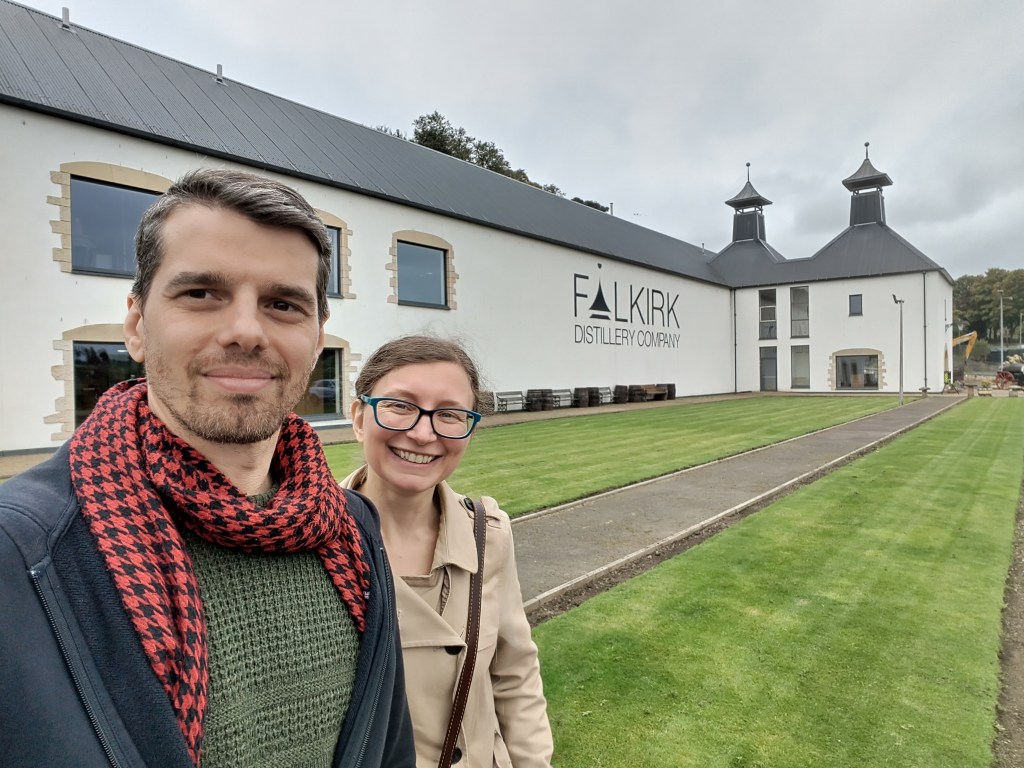
In 2021, on a lazy summer Sunday towards the end of the pandemic, we joined our friend and whisky expert Justine (btw, her new book on the Pattison brothers and their crash is due soon!) on a drive around the Central belt, to visit the site of an old distillery, Kennetpans. After visiting the site, mostly ruins, we did a couple of detours on our way home. One was to check out the construction works at Rosebank distillery, the other one to look at a newly built distillery, the Falkirk distillery indeed! The distillery building was fully up, all white and shiny, with the home brand painted on the side, while some construction was still going on in the car park. This September, over three years later, it was time to go back, and check the distillery out.
The Falkirk whisky got on many whisky people’s radar last year, but for the wrong reason: their first release was priced just south of £200; it surprised many and enraged a few. We don’t know anybody who bought a bottle for themselves, but of course it was sold out, so bottles are probably laying in some collector’s cabinet, or in the storage of some hopeful flipper. That was followed by a more reasonably priced release, named after the distillery founder: George Stewart, for £58. It is still available on their website, and the proceedings are going to Prostate Scotland charity.
Things you can do on a Friday afternoon.
Distillery tours are available through email reservation and only during weekdays, which prompted us to take a few hours off on a Friday afternoon. At the time the tour was £20, now there is an extra option for a three-dram tour instead of two, for £25. The person who answered our email was also the guide for the tour, Zilvinas (or Zi), who has been working at the distillery for a while in different roles.
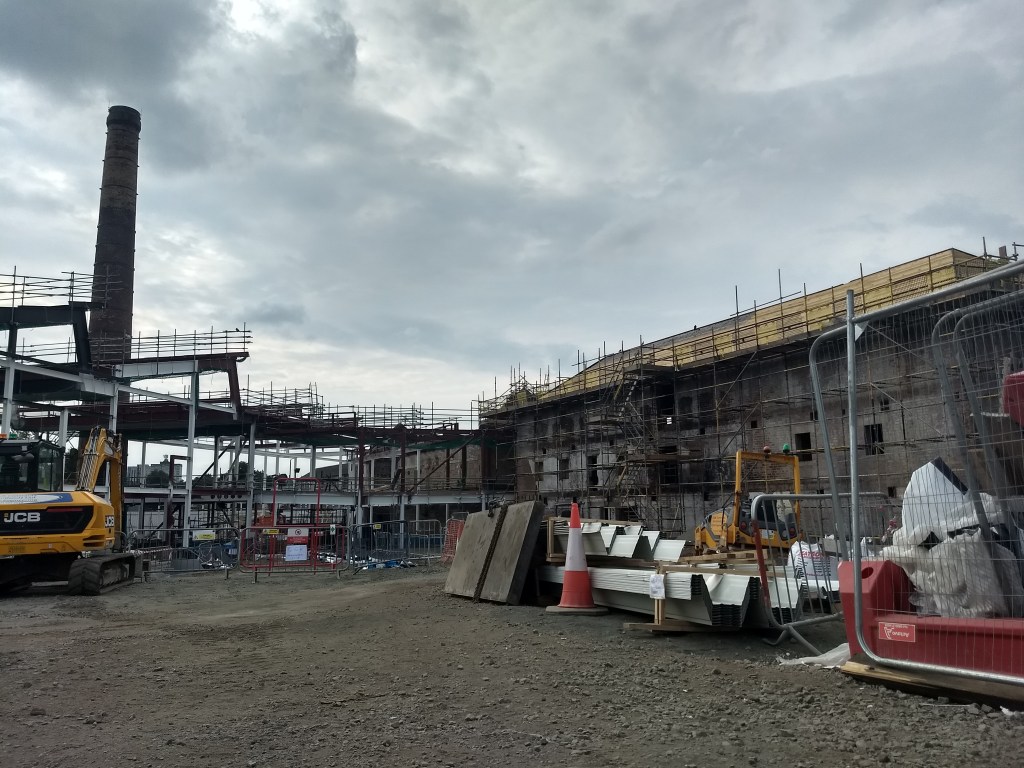
As we arrived at the distillery, we noticed some construction works around the parking lot. Zi told us later that the plan is for a restaurant/cafè next to the distillery, and for commercial units in the building on the other side of the parking lot.
Zi welcomed us very warmly and was a great host throughout the tour. To start, we watched an introductory video with some words from the founder, and some drone footage in the distillery. We then moved to production, of course starting with the milling: they are equipped with a modern 4-roller Buhler mill, so no Porteous, nor Bobby Mill, which makes sense for a fairly new distillery. They use Lauriet malt, from Boortmalt in Speyside, exclusively unpeated as they are aiming for a typical floral, lowlander style. The malt is automatically processed in the mill, and the resulting grist split is the usual 70/20/10 (grit/husk/flour).
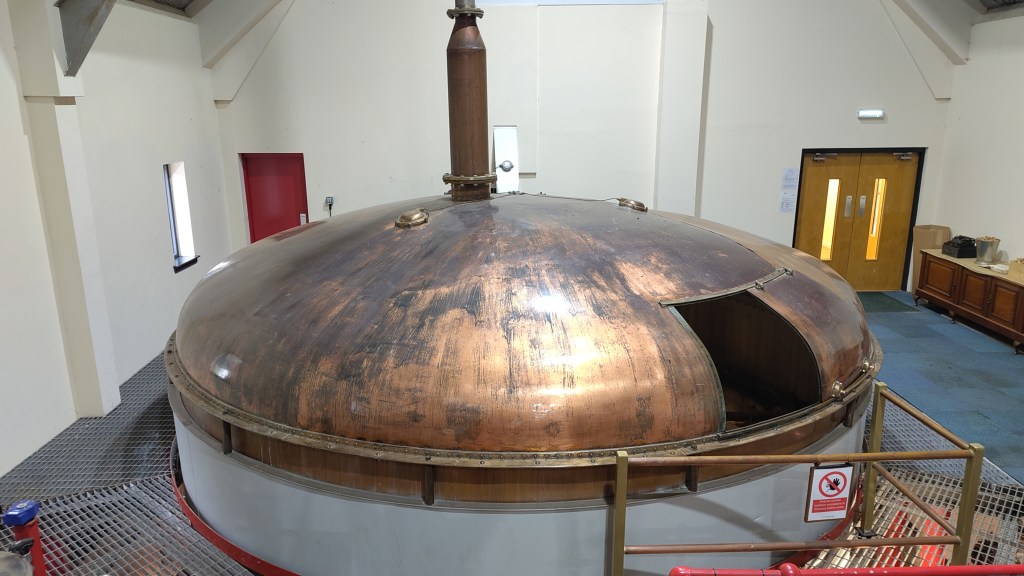
An old mashtun in a new distillery.
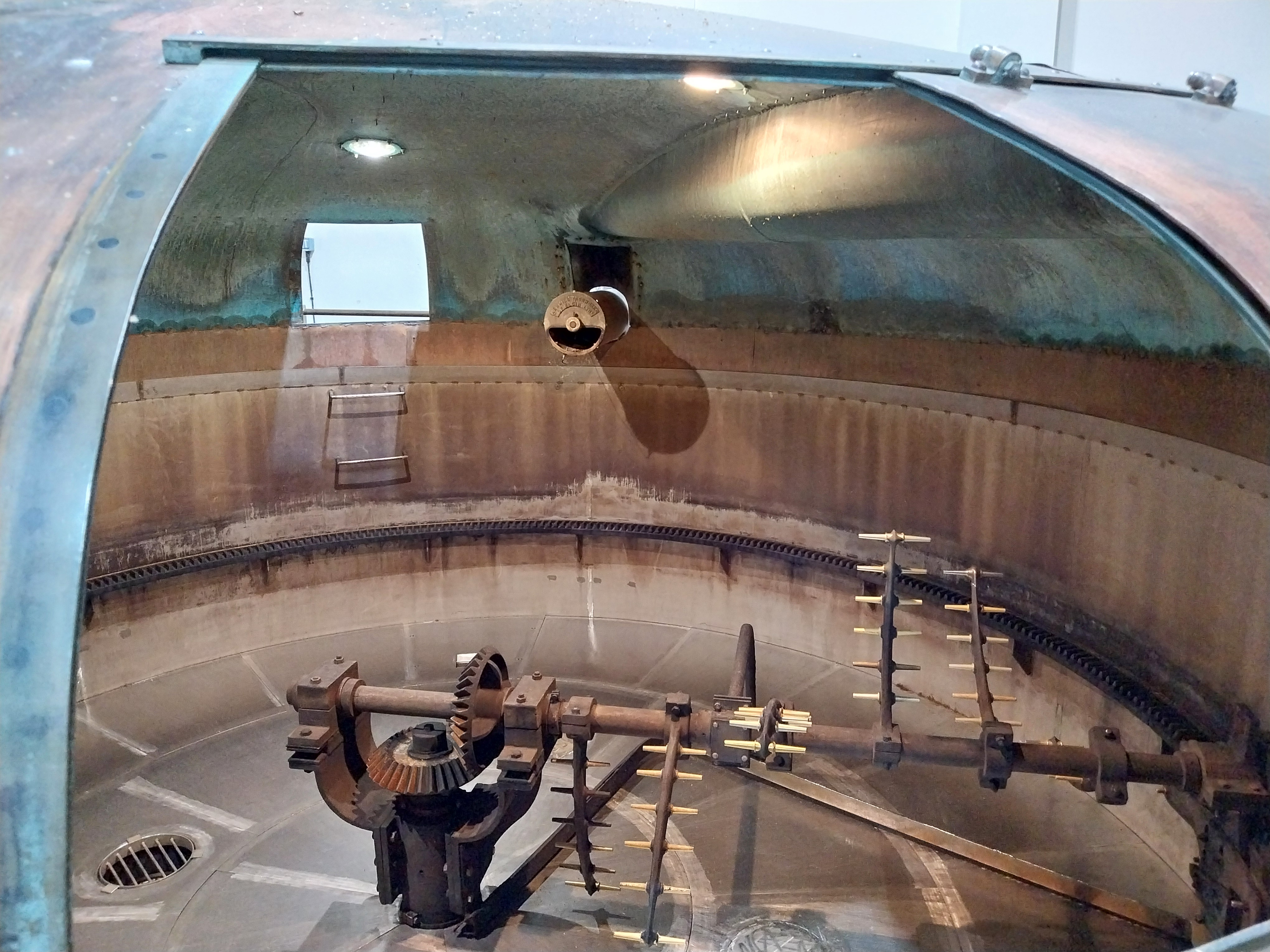
Here, we could see the first piece of old equipment: the mashtun. A massive 4.5t semi-lauter tun, it comes from the defunct Caperdonich distillery. The distillery, also called Glen Grant #2, was closed in 2002 and demolished in 2011 to make space for the stills-maker Forsyths (which we visited in 2023). The only new part is the plates underneath the tun, used to obtain a very clear and filtered wort. They use three waters, which they draw from a 90m deep borehole, at increasing temperatures (60°C, 72°C, and finally 85°C). They do two to three mashes per week, but they’re aiming for 10 a week, for a total of about 750,000 litres of alcohol per annum. The wort then goes into one of the six stainless-steel washbacks, each one with a 34,000-litre capacity (but only filled up to 20,000 litres for safety). Fermentation is kickstarted with 75kg of distillers’ yeast and lasts 100 hours.

New washbacks, with an old mashtun on the back.
And then, the other piece of Caperdonich equipment: the two stills (another couple was sold to Belgium’s Owl Distillery). They are magnificent, and it is great that Falkirk gave them new life. The stills are heated with steam from a gas boiler, and they are run quite slowly to increase the reflux in the spirit. During the second distillation they take a cut from 75-76%abv down to 65%, in about 2.50-3 hours. From two mashes they get about 4,200 litres of spirit before dilution to 63.5% abv to fill the casks.
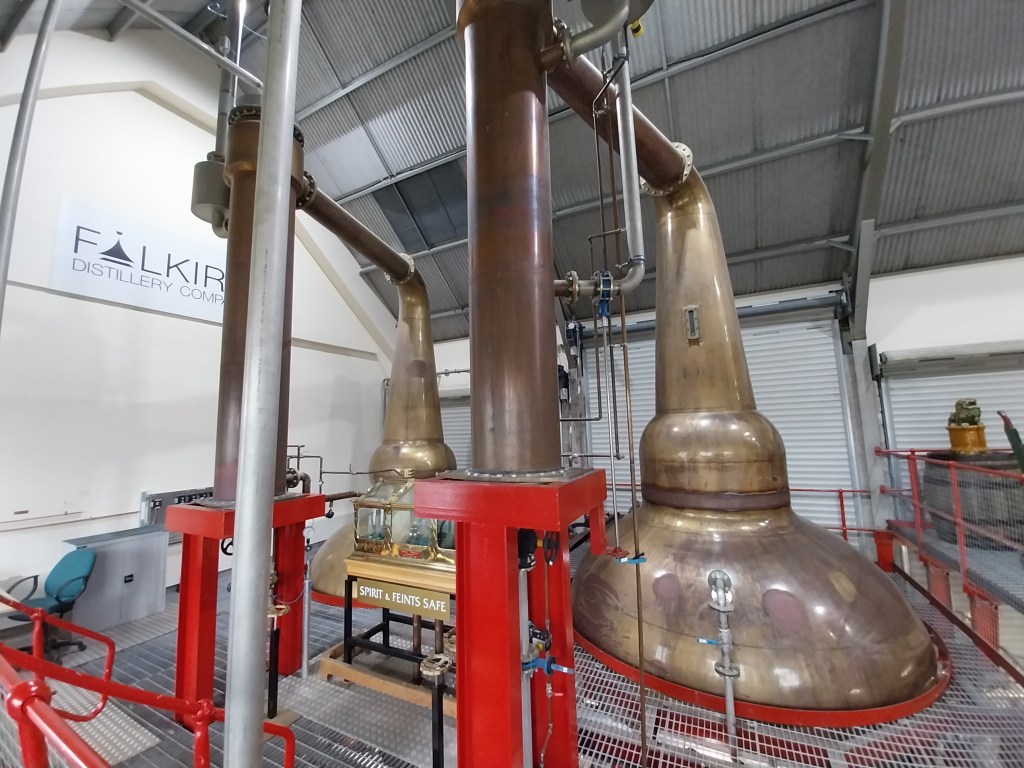
A blast from the past…Caperdonich stills. 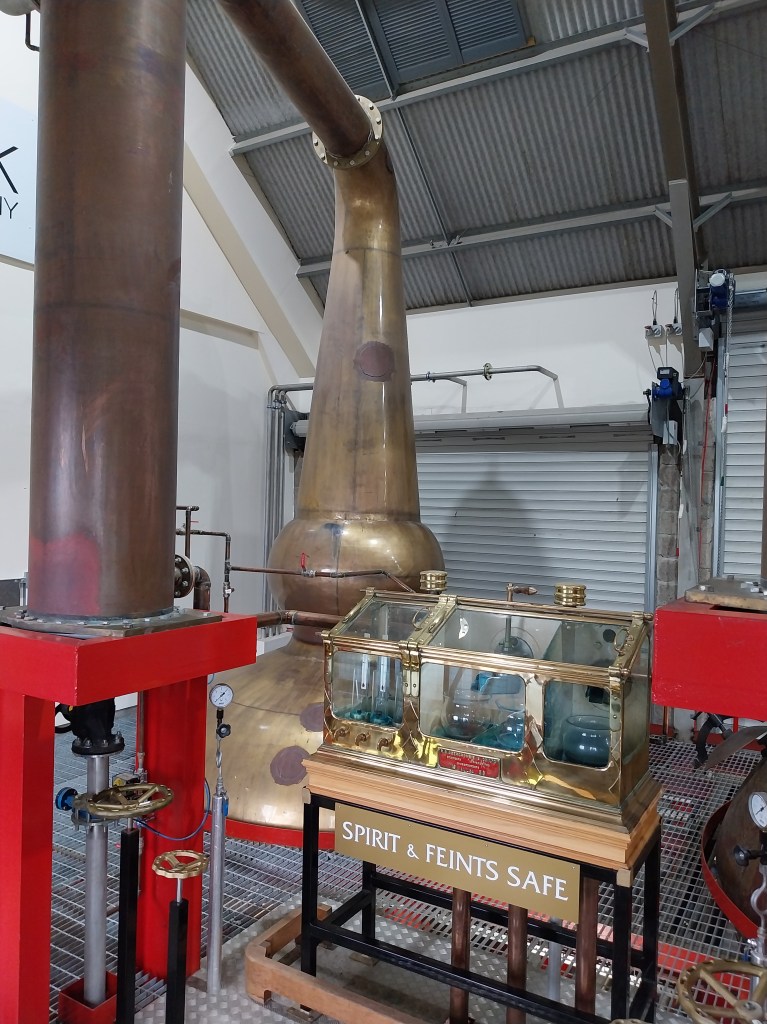
…and safe.
They have two warehouses on site, and they are planning for a third. We visited the first one, which was a “semi-dunnage” on two floors: the cask are stored horizontally three high, but the floor was not earth but concrete. They mostly use ex-bourbon American standard barrels from Heaven Hills, less often from Jack Daniels, and sometime other casks too, like Oloroso sherry.
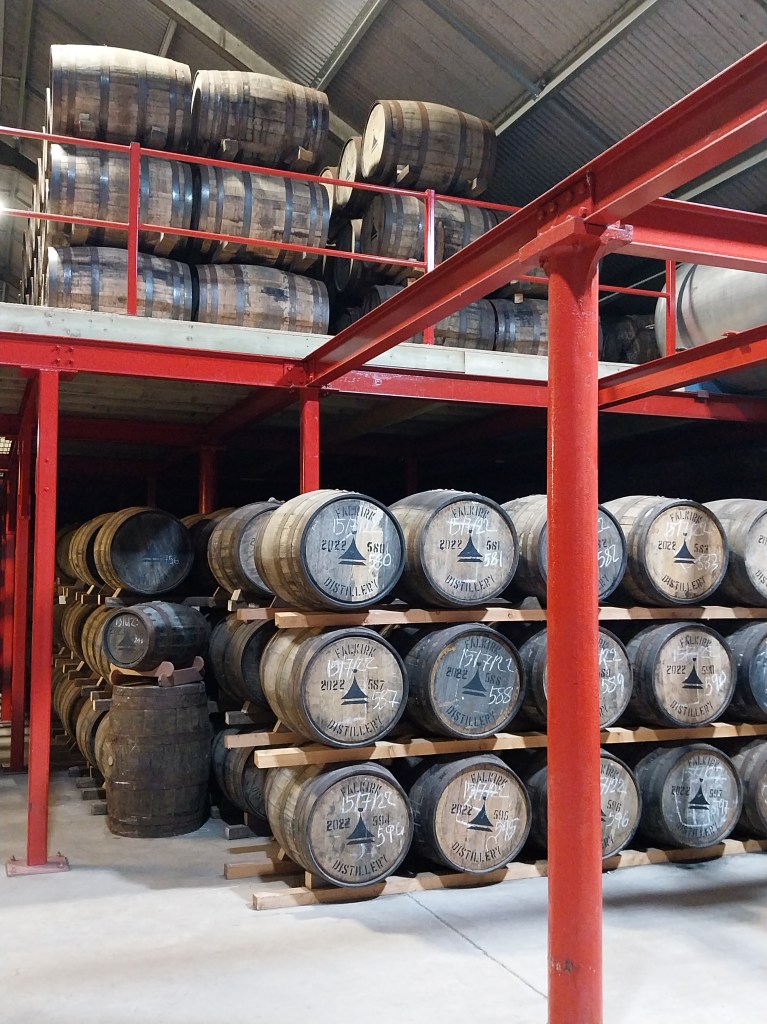
Lot of promising spirit here.
After this, we went to the shop to pick up our drams to go, as we needed to head back home. The two drams were the newmake spirit (63.5%) and the George Stewart expression (48%). We also got an extra dram from a small ex-sherry firkin (about 40 litres), 3.5 years old, at 58-59%. In the shop there was a bit of a mix of stuff on sale: some gift packs with aged spirit (not yet whisky), merchandise, and some random bottles of whisky on sale. We remember spotting a Deanston 12, but also a Laphroaig Select and maybe a Famous Grouse.

Take-home whisky tasting.
A few days later, at home, we tried the drams: overall we found them quite solid, particularly compared to other young distilleries. The newmake spirit was very fruity with notes of pear juice (which we often find in newmake spirit), and a very nice mouthcoating. The George Stewart was very tropical, with bananas, banana bread and honey notes. Overall pleasant, but you could tell it’s very young and the finish was a bit short. Finally, the sherry firkin was obviously a very cask-forward dram, with leather, trifle, pine forest, nuts, Xmas spices, chocolate, oak, and sour cherry. We wouldn’t have said it was that young though.
The spirit we tried is very promising, quite tasty overall. The tour was nice, again Zi was a great and very knowledgeable host…He answered so many questions! However, it felt a bit strange that this year they prolonged the silent season for over two months (at the time of the visit, now we don’t know). Hopefully, things will be on track soon!
Stay tuned for more Central belt action, and until then, slainte!
Private Falkirk Distillery Tour
Price: £20.00 pp (September 2024)
Duration: 1hr
Tasting: newmake spirit (63.5%), George Stewart single malt (3.5-4yr, 46%)
Target: whisky nerds
Value for money: good
Highlights: Zi was an excellent guide
Recommended: yes
Link: : https://www.falkirkdistillery.com/
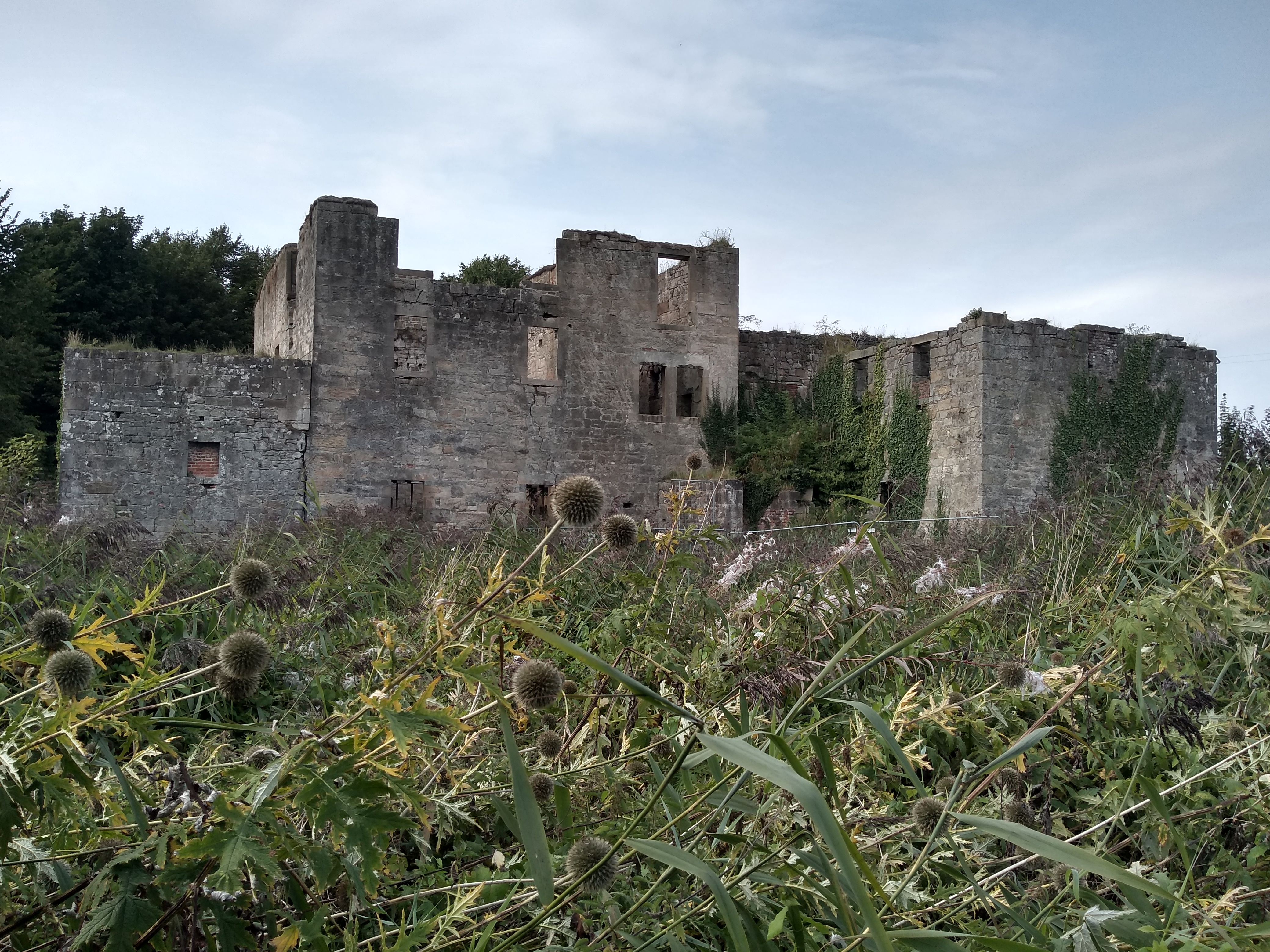
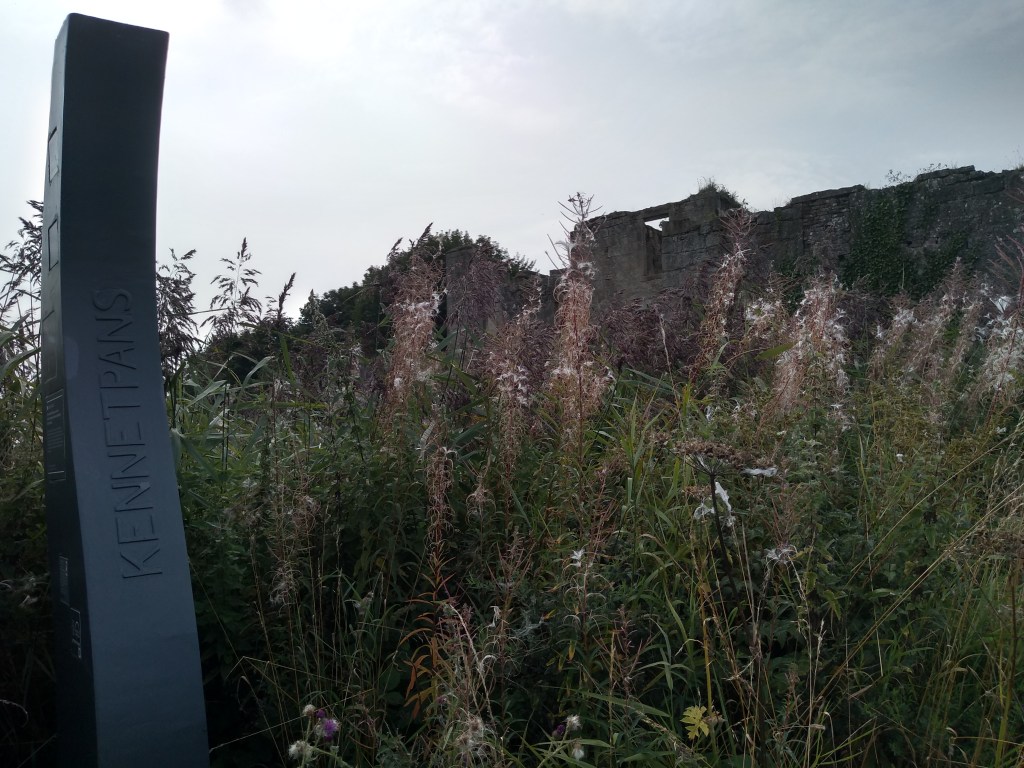



 Dramming around