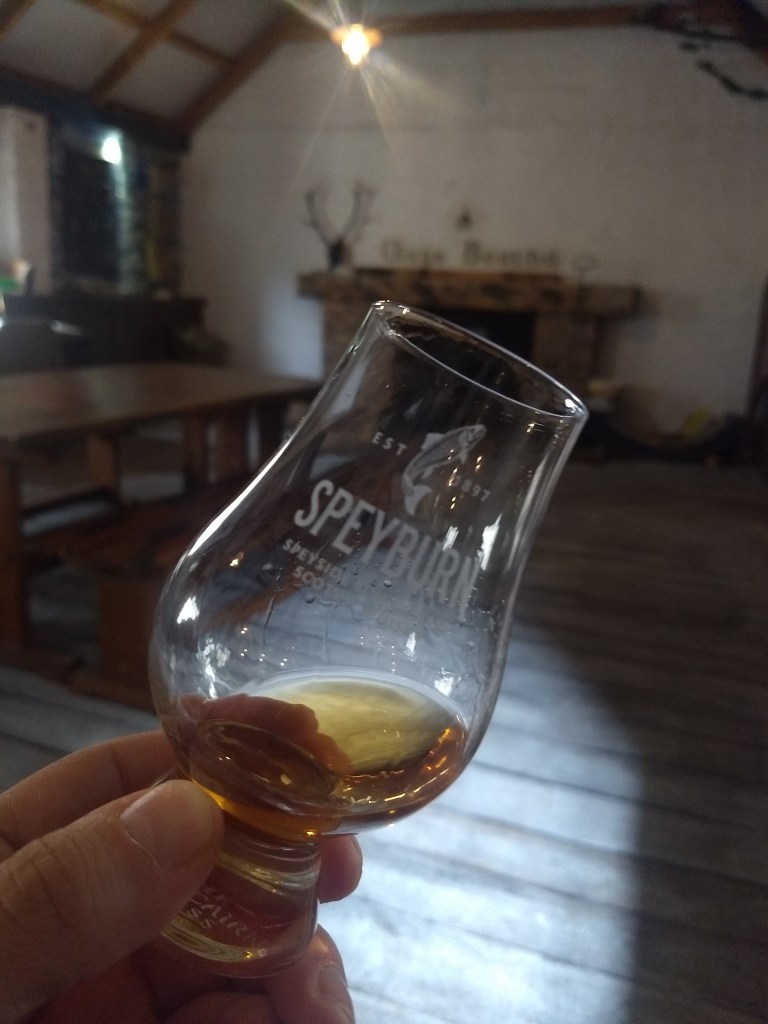
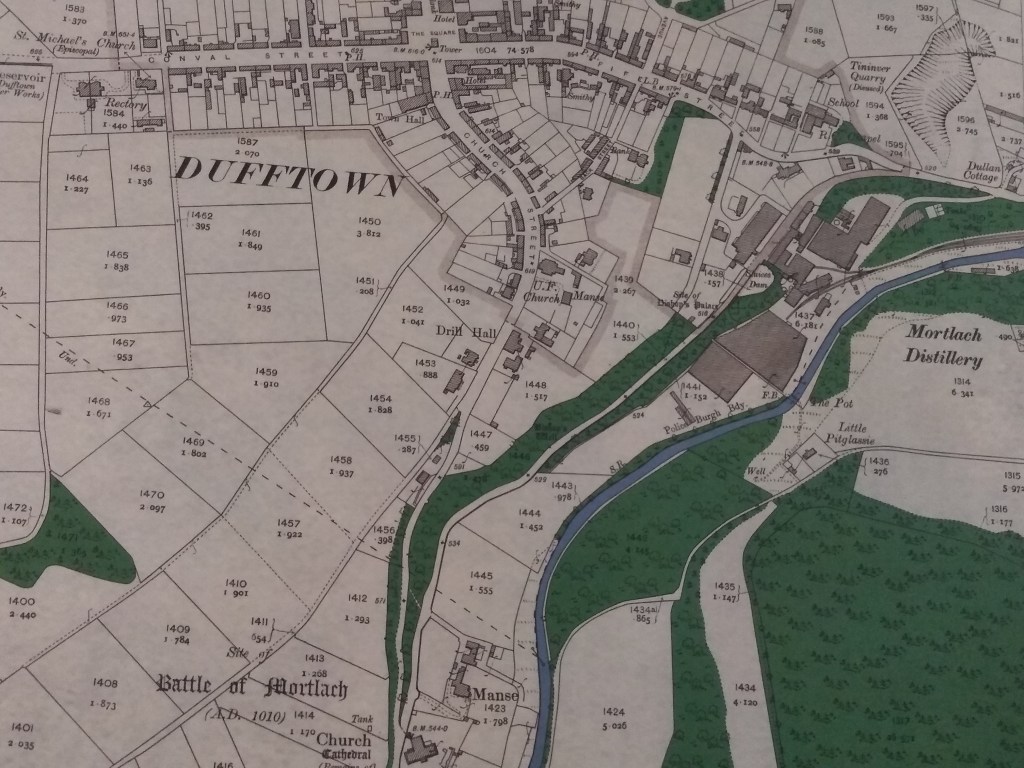
#60.4 Another Spirit of Speyside

Another distillery visit in Dufftown: Glendullan


TL; DR: A visit to another massive Diageo distillery, this time in the well-known village of Dufftown. Glendullan produces some very light spirit, in contrast to the very industrial-looking production plant from the 1960s-70s. A very good tour (followed by an again small tasting at the end), but the highlight of the day was definitely the Whisky Fair: a cosy mini-festival in the middle of Dufftown. Unmissable! 

(missed Part 3/Part 2/Part 1?)

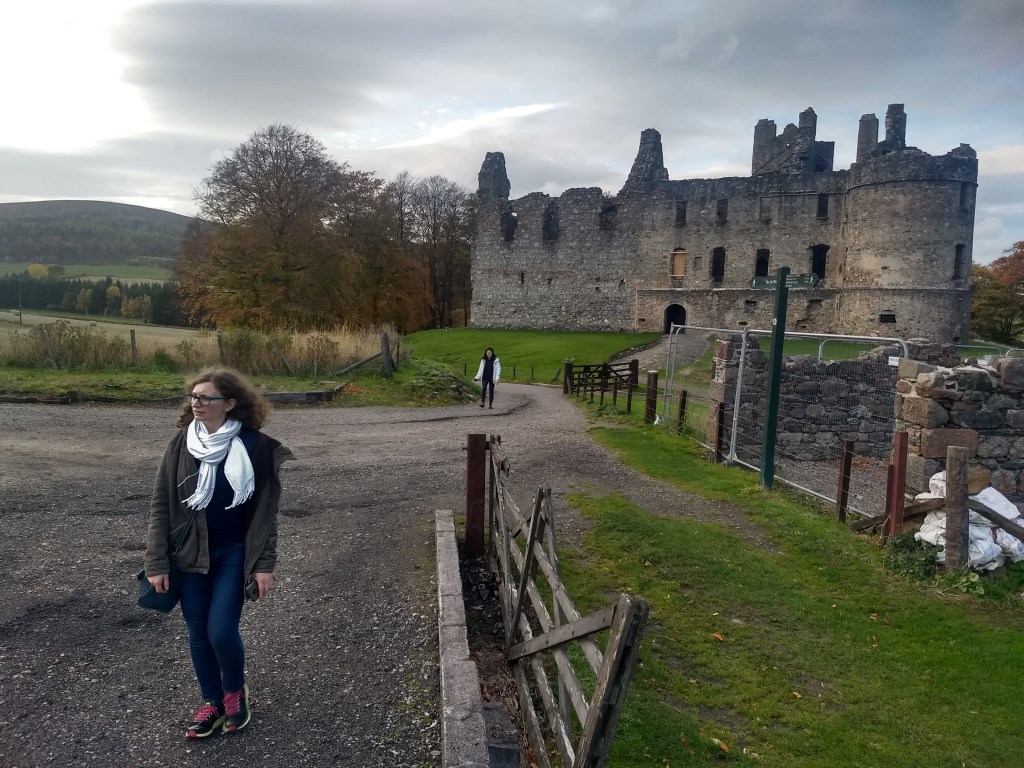
The morning was cloudy, wet, under a dark and overcast sky. Because we had parked next to other vans, we quickly left and postponed breakfast for later, to avoid disturbing our neighbours. The night before, after dinner, weโ€™d attended โ€œDrams under the Starsโ€, a Murray&McDavid event at a bothy near Dufftown, but we will write about this in the next post, where it will become clear why. Back to our morning, we left the car park and went to Dufftown for a wee bite. Soon after we tried to check in at the Parkmore Campsite. The idea was to drop the van there and just walk back to Dufftown. Our spot was still occupied, so we drove instead: maybe for the best, as this saved us from being soaking wet, since in the meanwhile a heavy rain started.
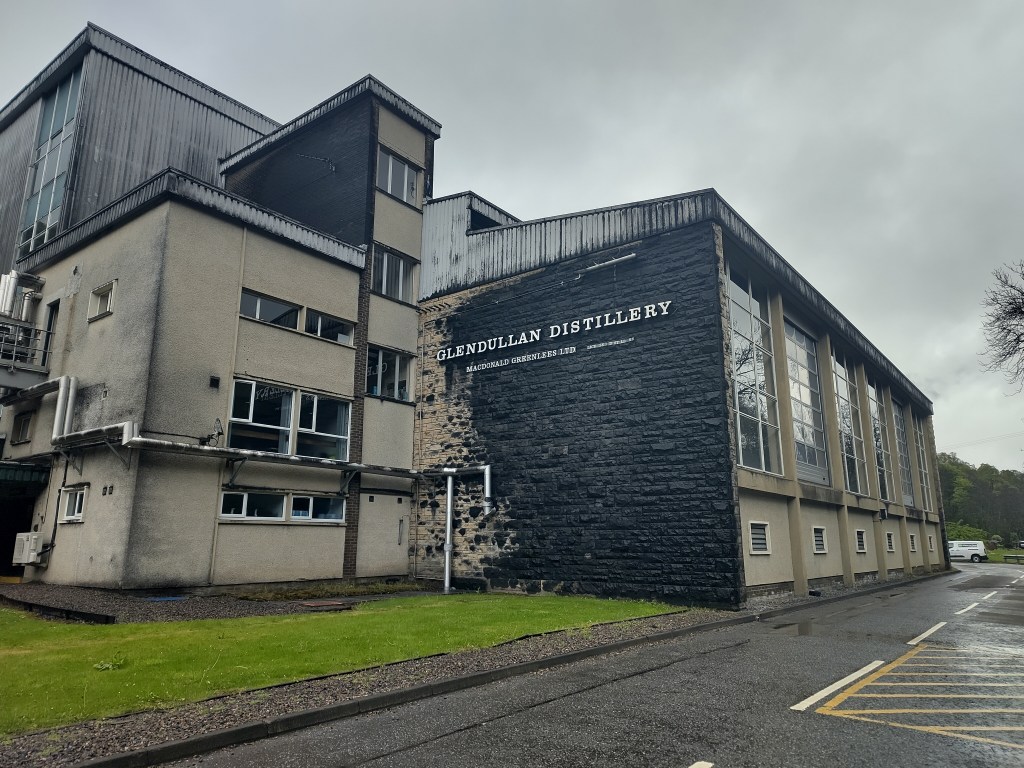
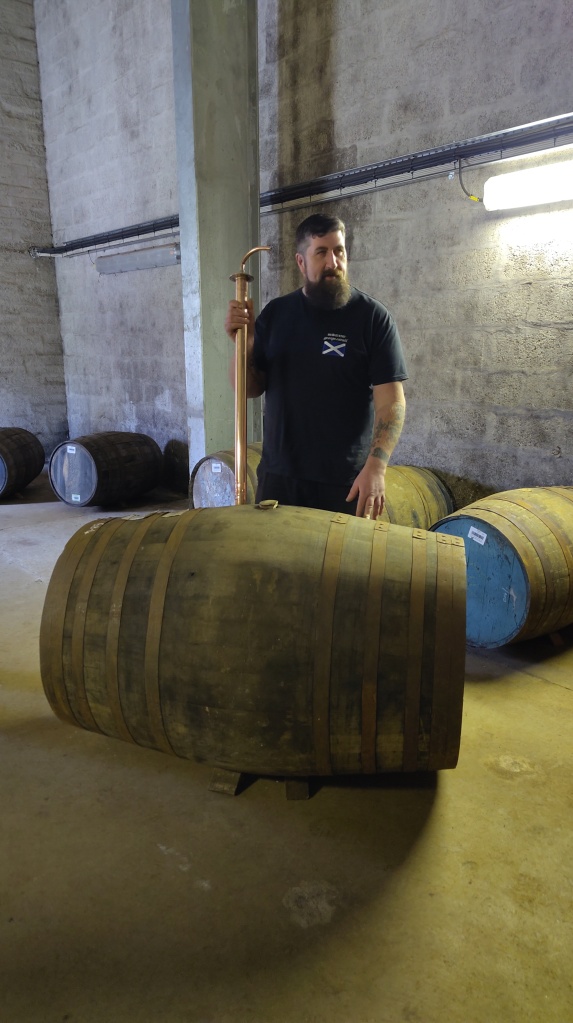
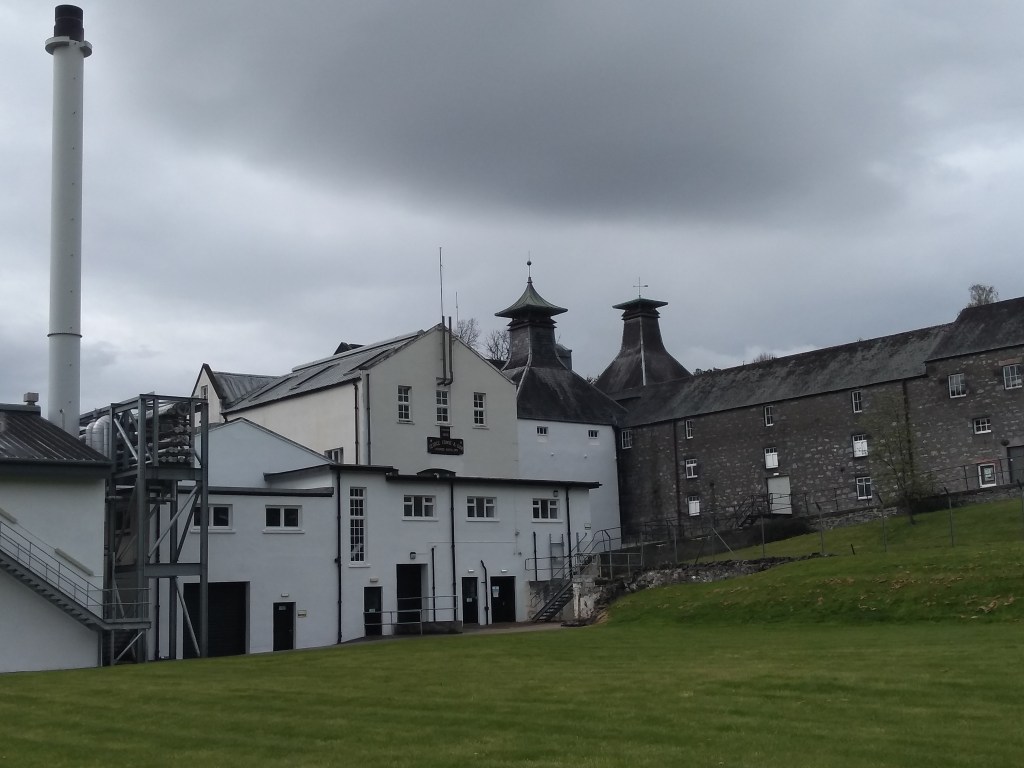
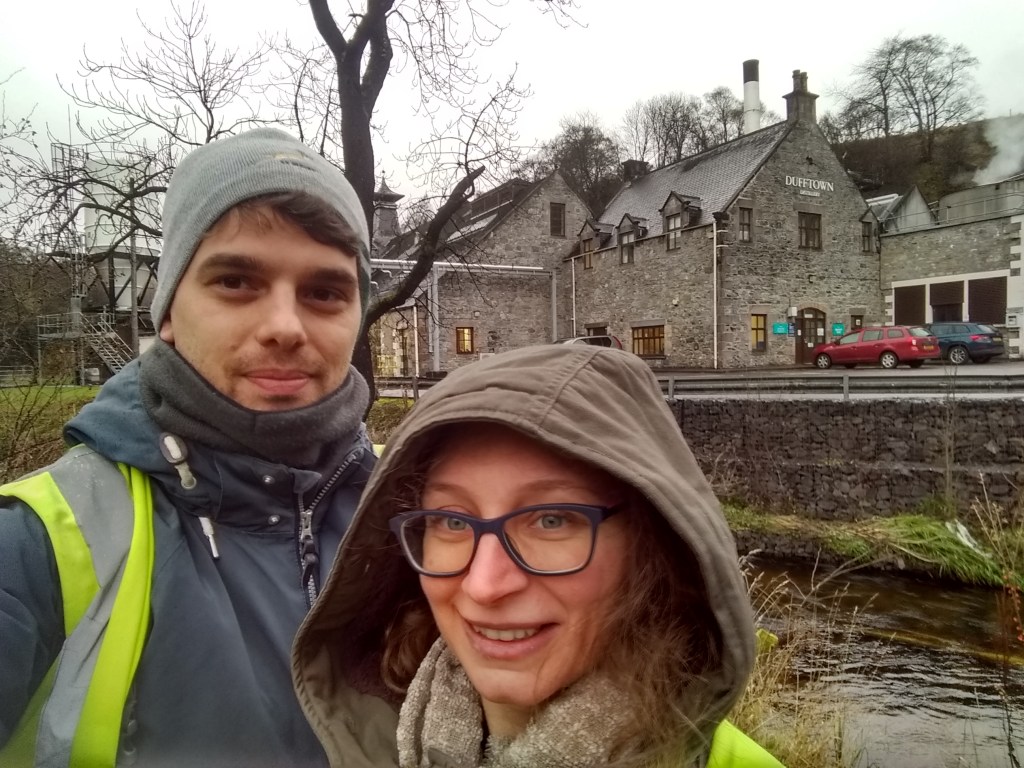
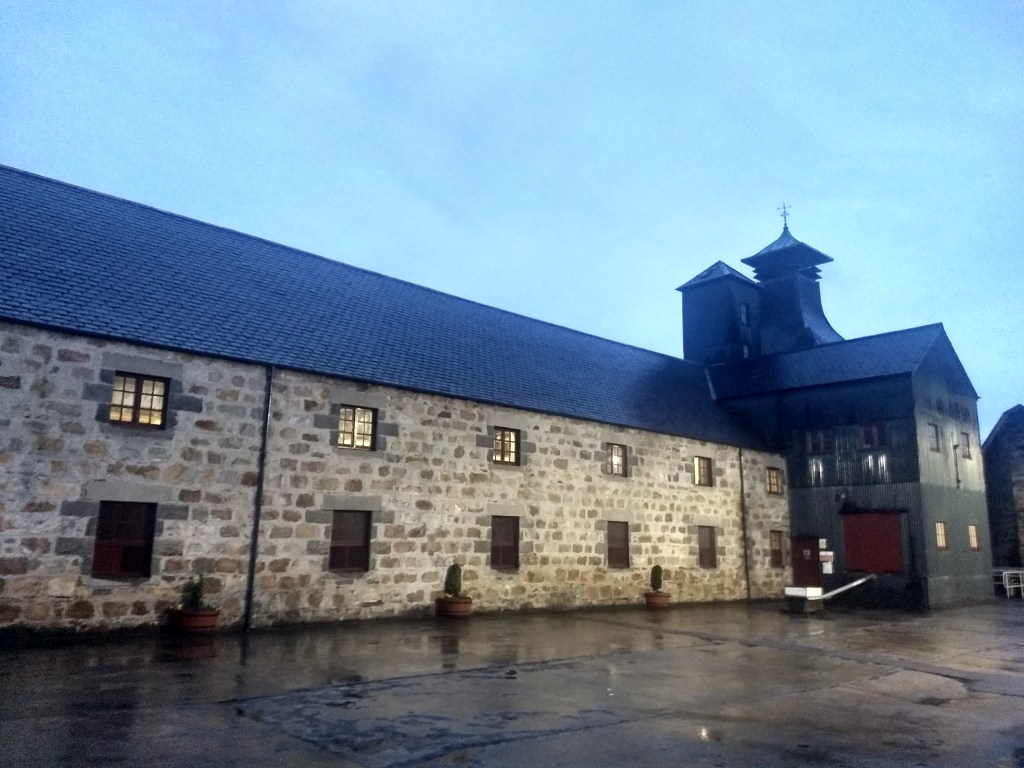
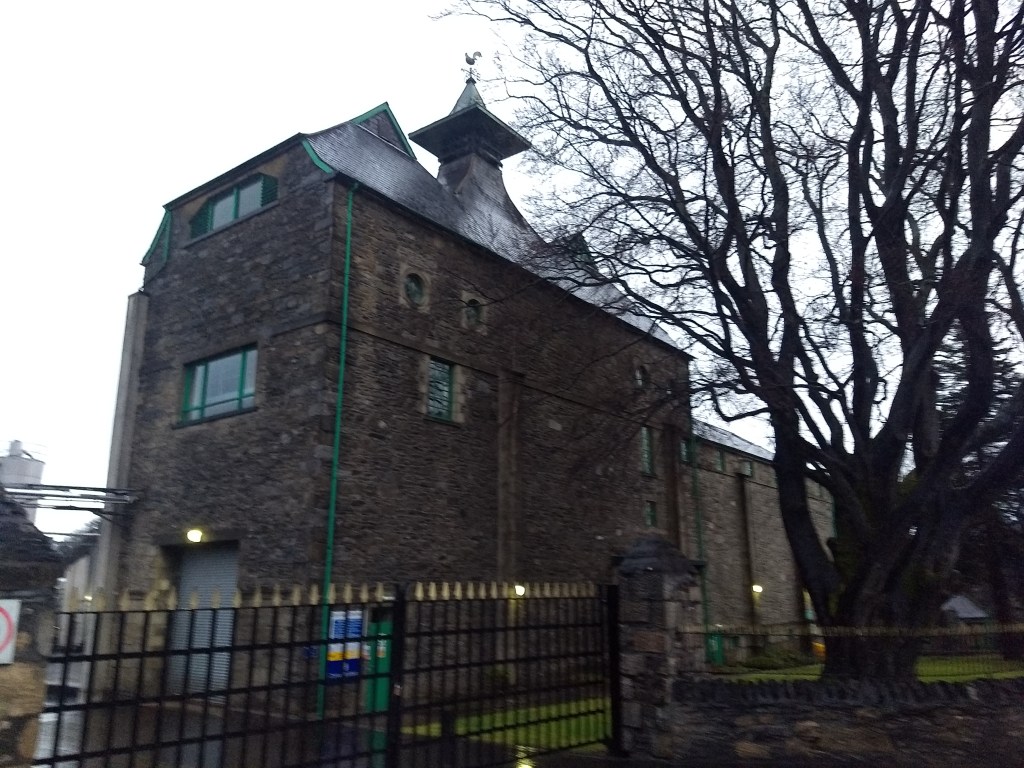
Our first event was the distillery visit at Glendullan. Similar to Inchgower, the event was called โ€œGlendullan through the Decadesโ€. The distillery is along the river Fiddich, and it is another one of the big producing plants owned by Diageo. We walked past it during our walk around the โ€œ9โ€ distilleries of the village, back in December 2019. Their single malt is sold under the Singleton label (brand name originally assigned to Auchroisk, because it was too difficult to pronounce), together with the neighbouring Dufftown distillery (the only one in town we havenโ€™t visited yet) and Glen Ord, in the Highlands. These three single malts, however, are destined to different markets: Glen Ord to Asia, Dufftown to UK and Europe, and Glendullan to America and travel retail.

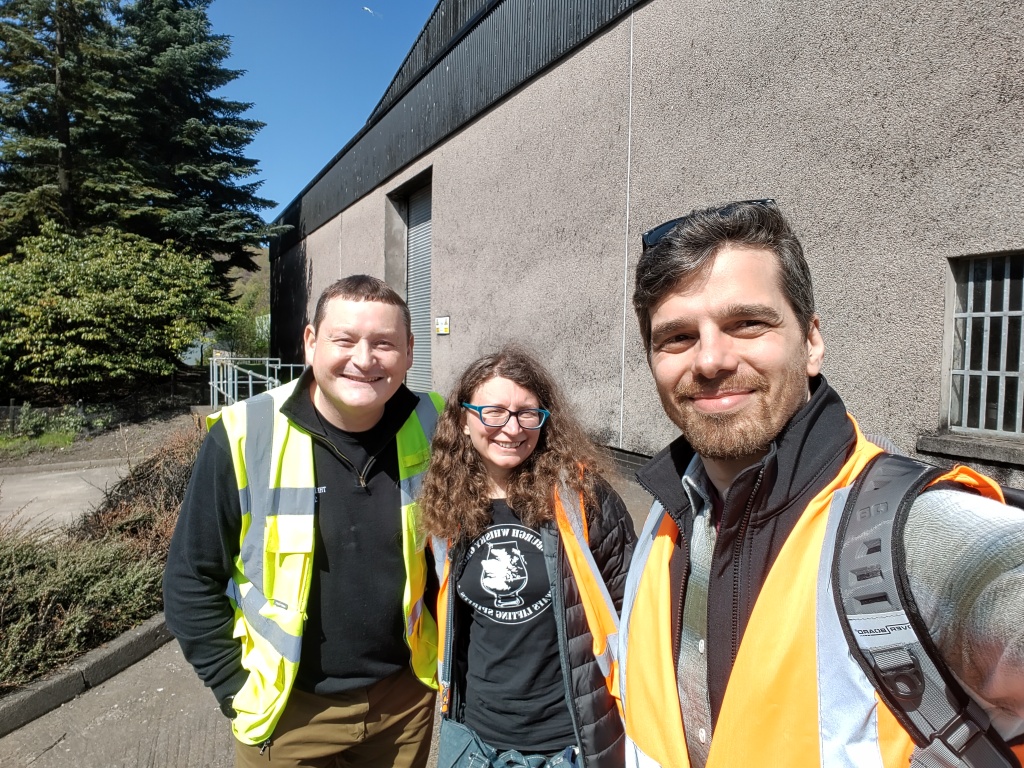
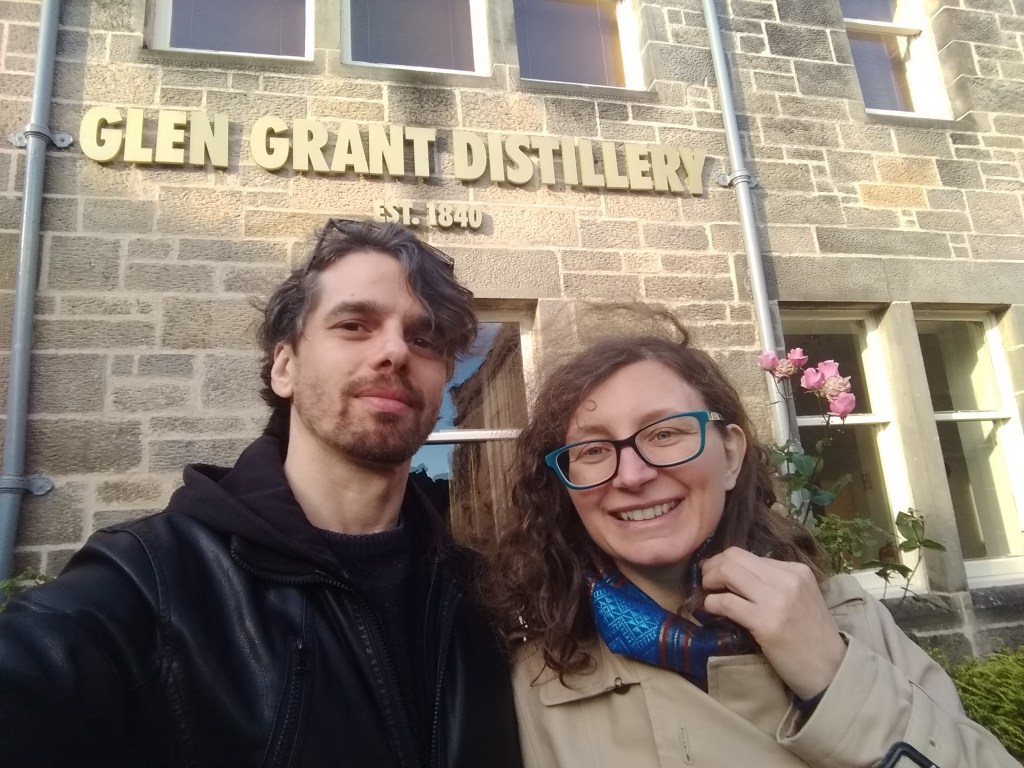
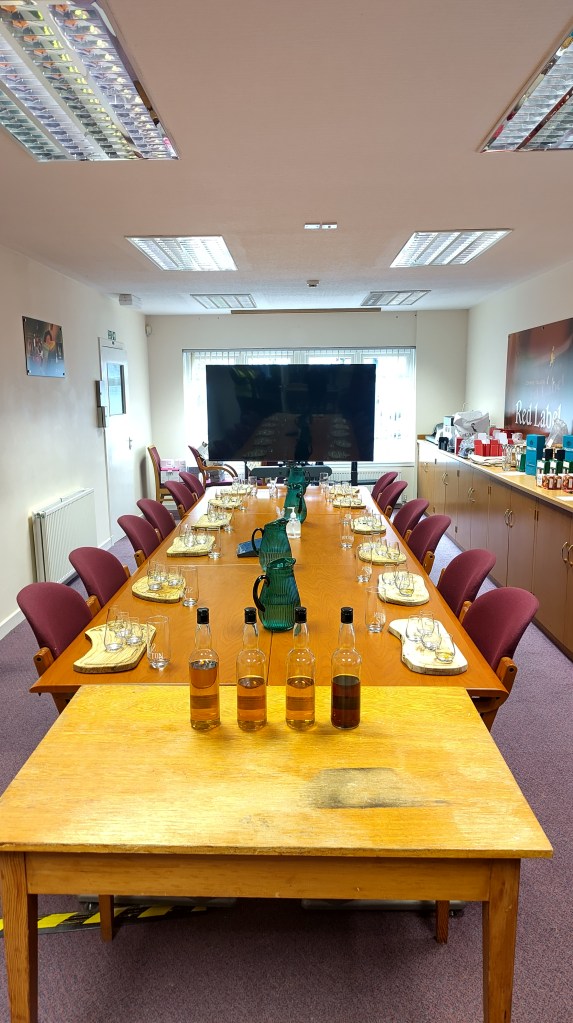
As we got off the van we were โ€œwelcomedโ€ by a very pungent smell, we found out later that it is a bio-energy plant located just next to the distillery. Fortunately, the staff let us in right away: they were Izac, coming for help from Dalwhinnie, Jackie, the distillery manager, and Kirsty, the apprentice (who weโ€™d already met when she was a tour guide at Glen Grant). We sat at the table while the staff introduced themselves and the distillery. Glendullan was founded in 1897 and went under renovation in 1962, but only 10 years later a new site was built. The two sites ran together until the mid-80s, when the old one was shut off (the building is still there though), while in-house malting stopped even earlier, in 1970. At that point, they gave us the first dram: a Singleton Glendullan from the Diageo Special Release 2021 (19y, 54.6% abv) matured in bourbon cask but then finished in American oak casks, seasoned with Cognac (in our understanding different to casks used for Cognac maturation).
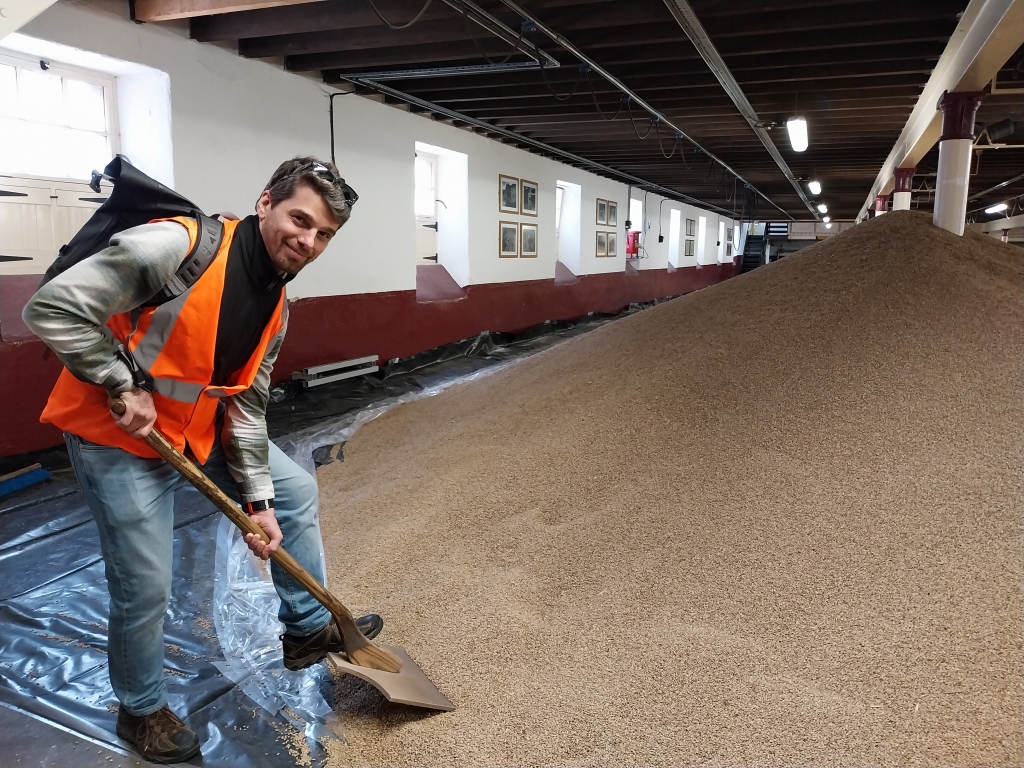
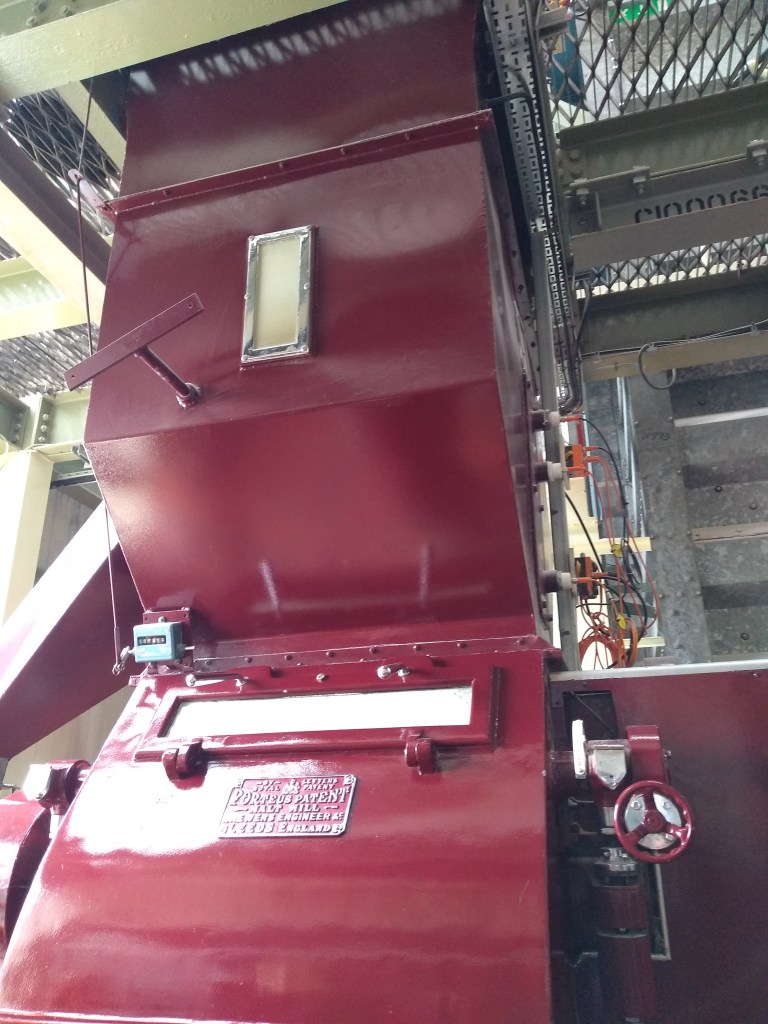
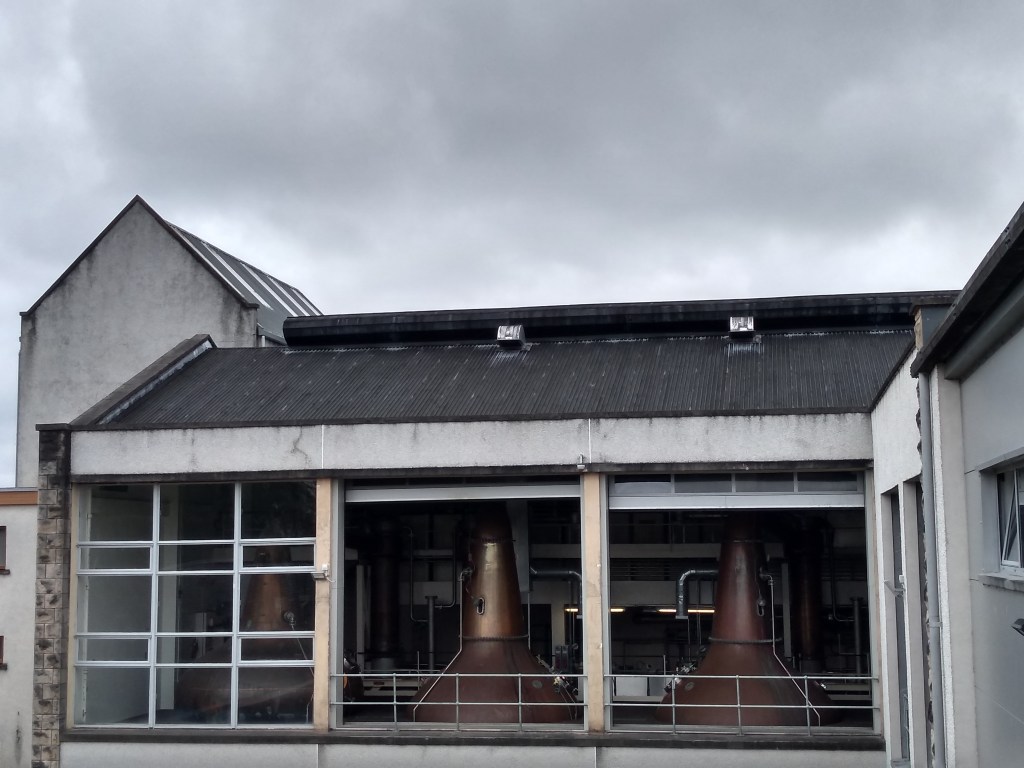
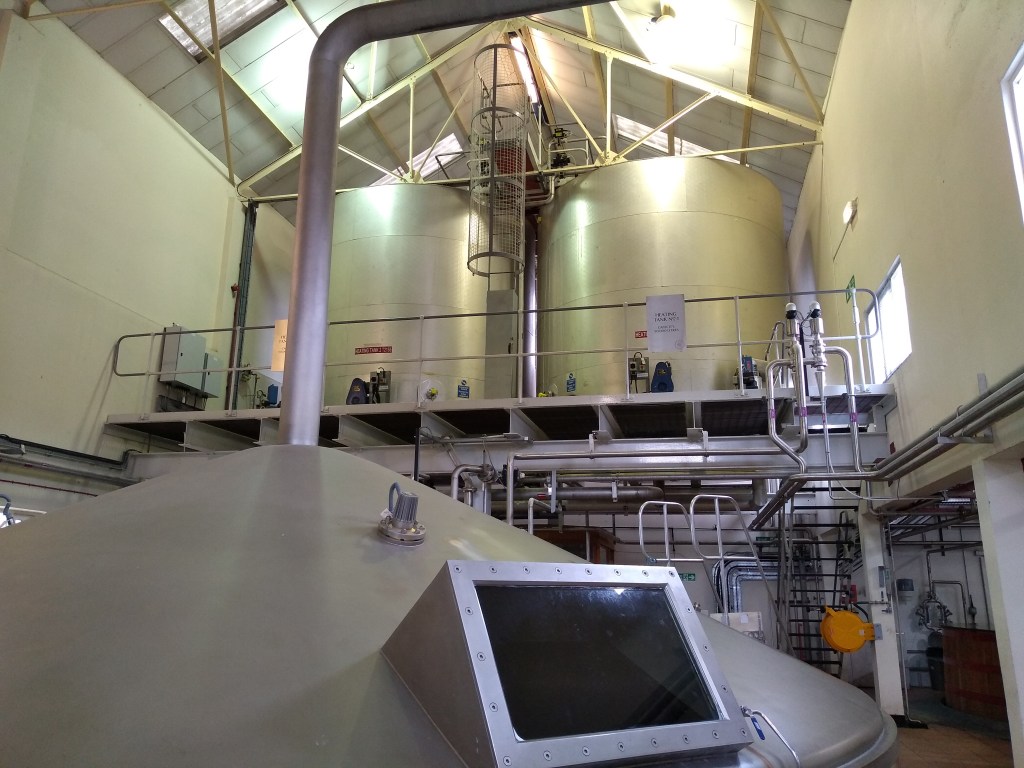
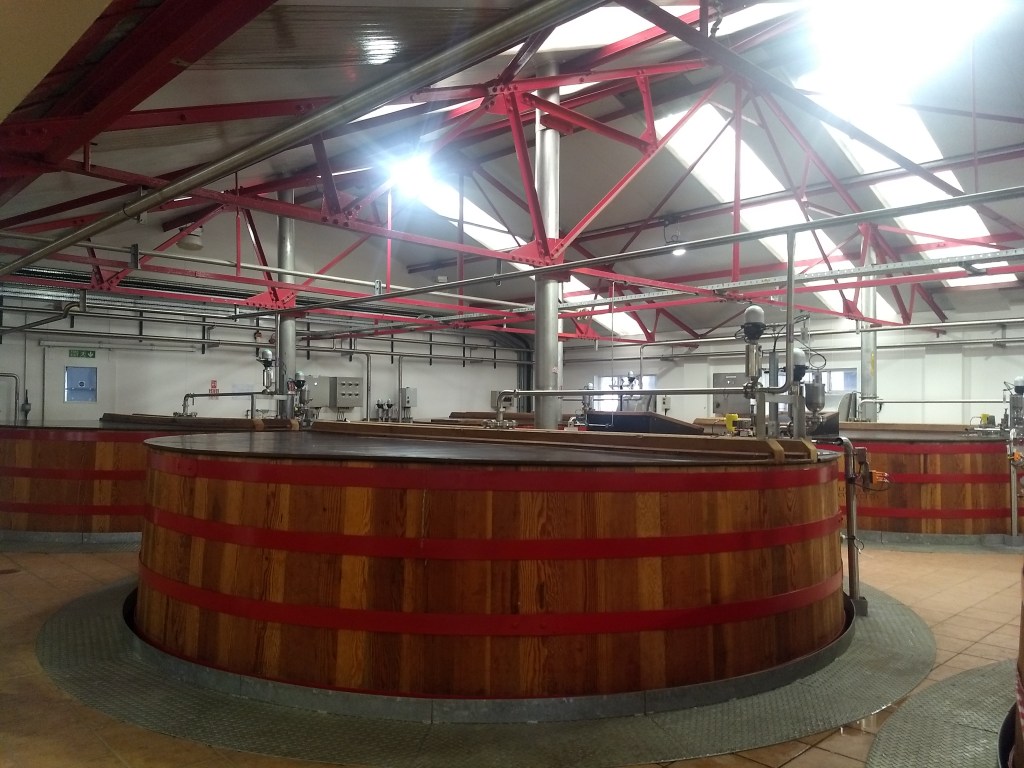
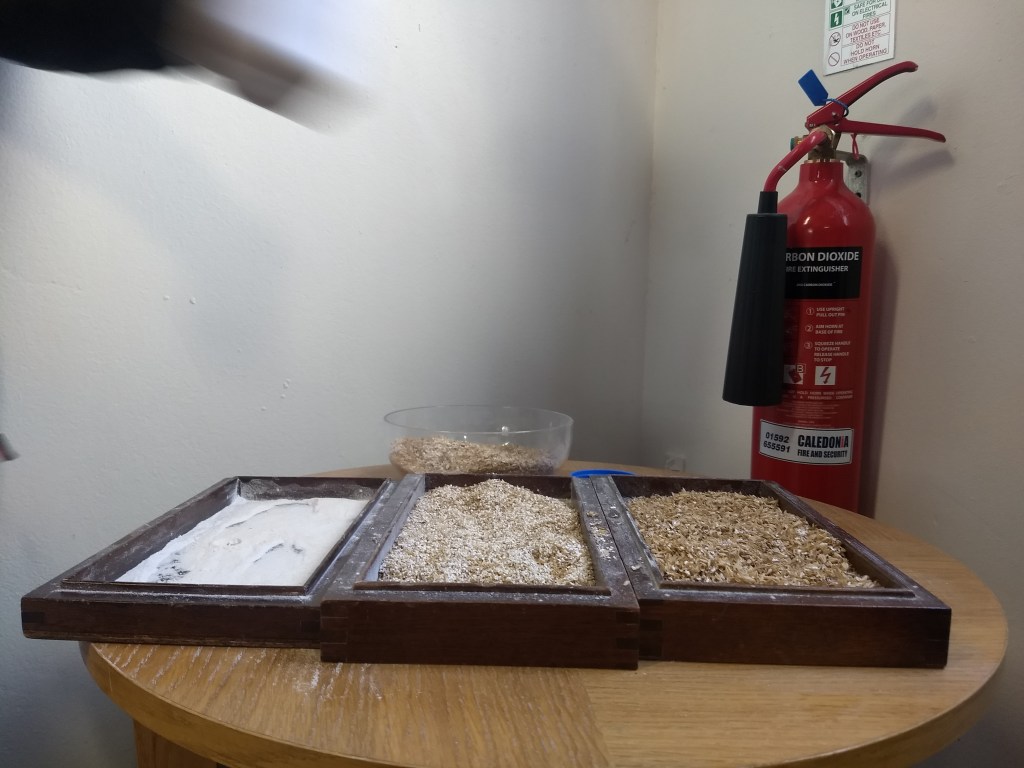
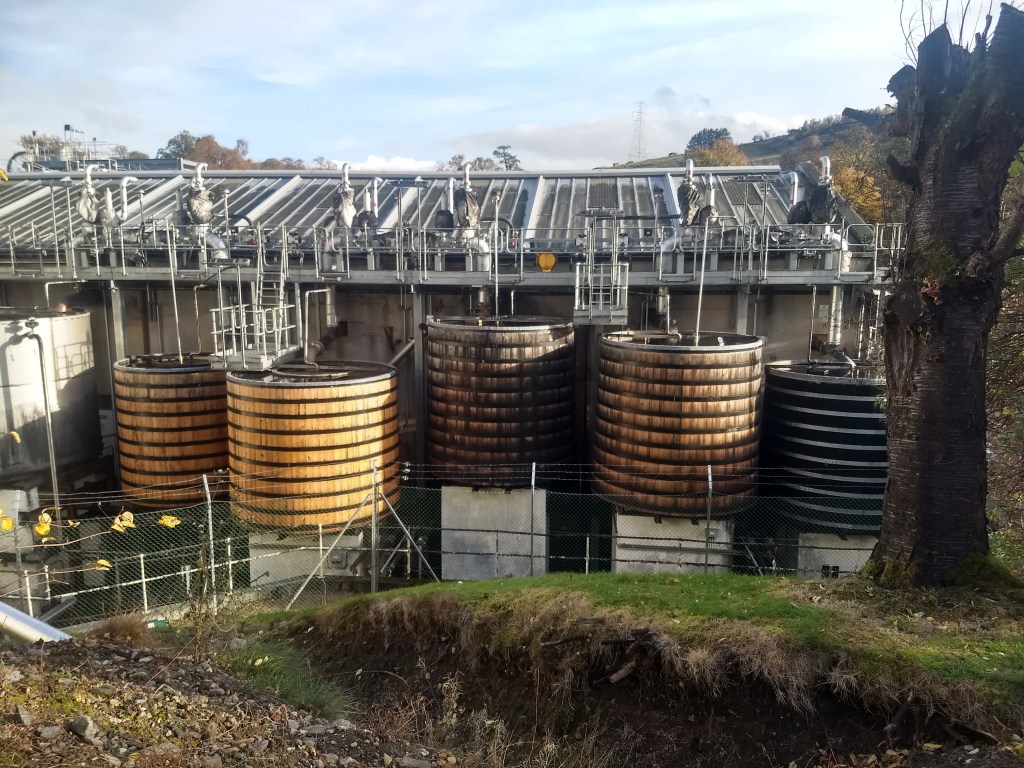
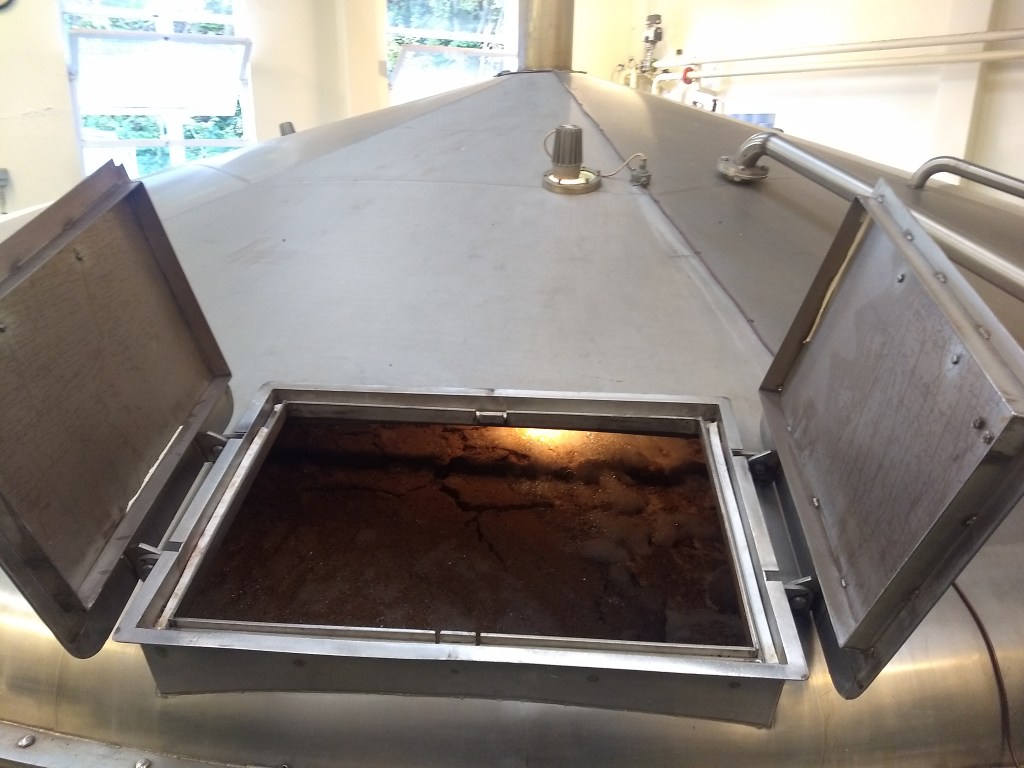
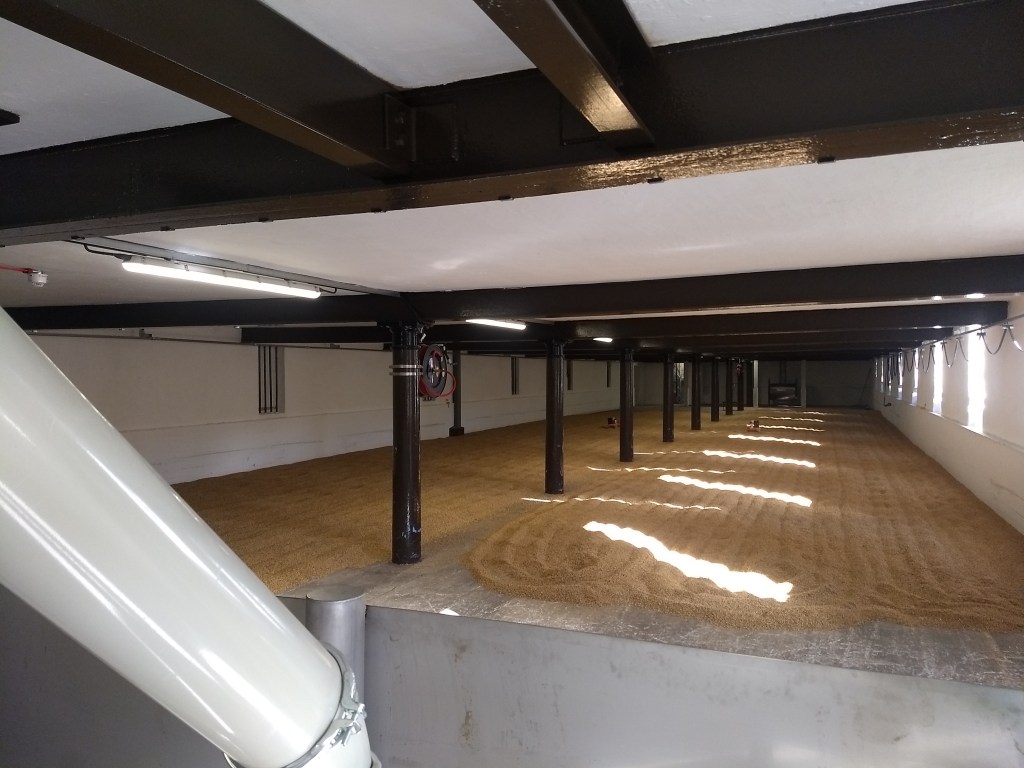
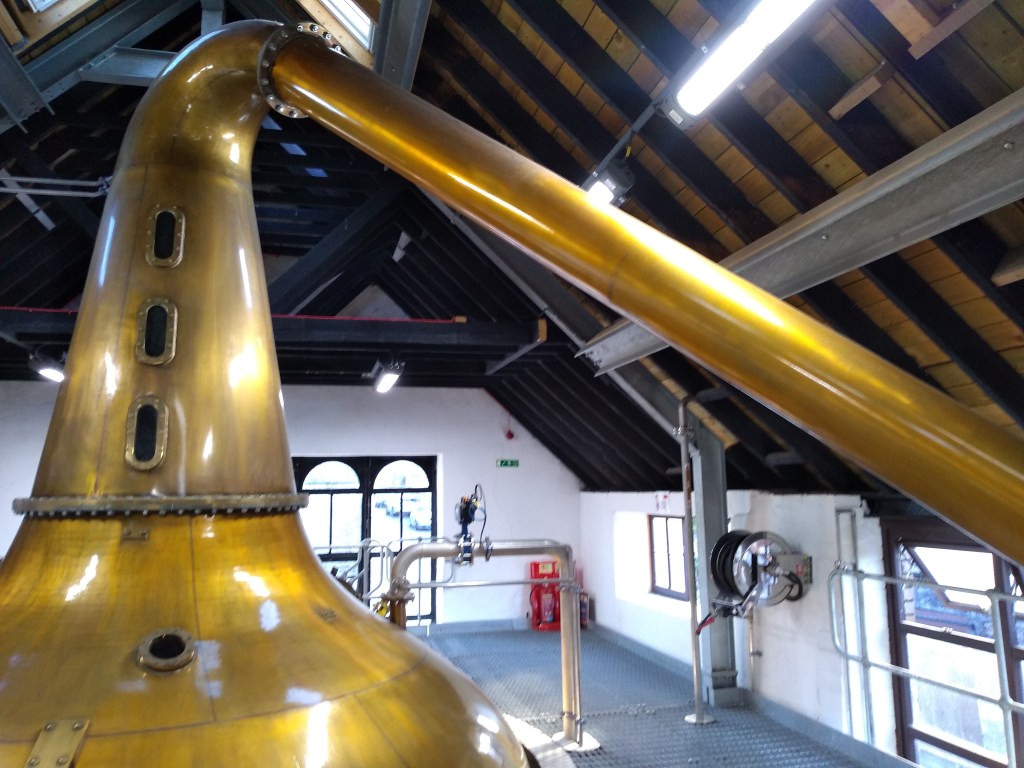
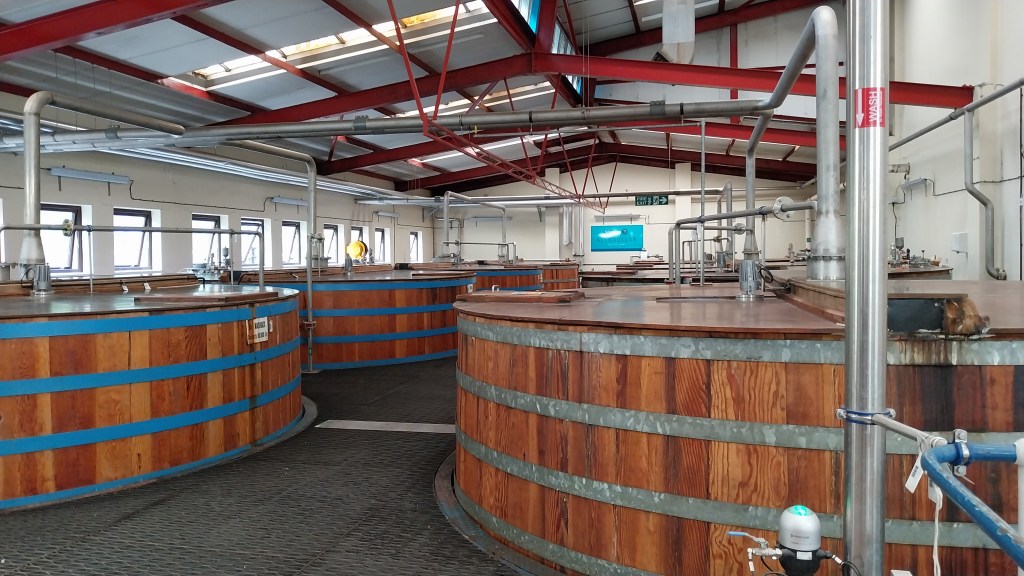
As we got into production, we could clearly see how the distillery was built for a big production – a typical 1960s-70s feeling to it, with a big window in the still room. They get the malt from Buckie, now mostly Lauriet variety, in 28ton deliveries. The mashtun, replaced in 2010, gets filled with 12.4ton of grits, which is milled by a Porteus mill with the usual husk/grit/flour ratio (20/70/10). They do three mashes per day, using one water only, but with continuous sparging, starting at 64ยฐC. They aim for a clear wort, but not by filtering, just by letting it rest. Fermentation is carried out in one of the 10 washbacks, eight wooden and two stainless steel (which are outside), for 75 hours.
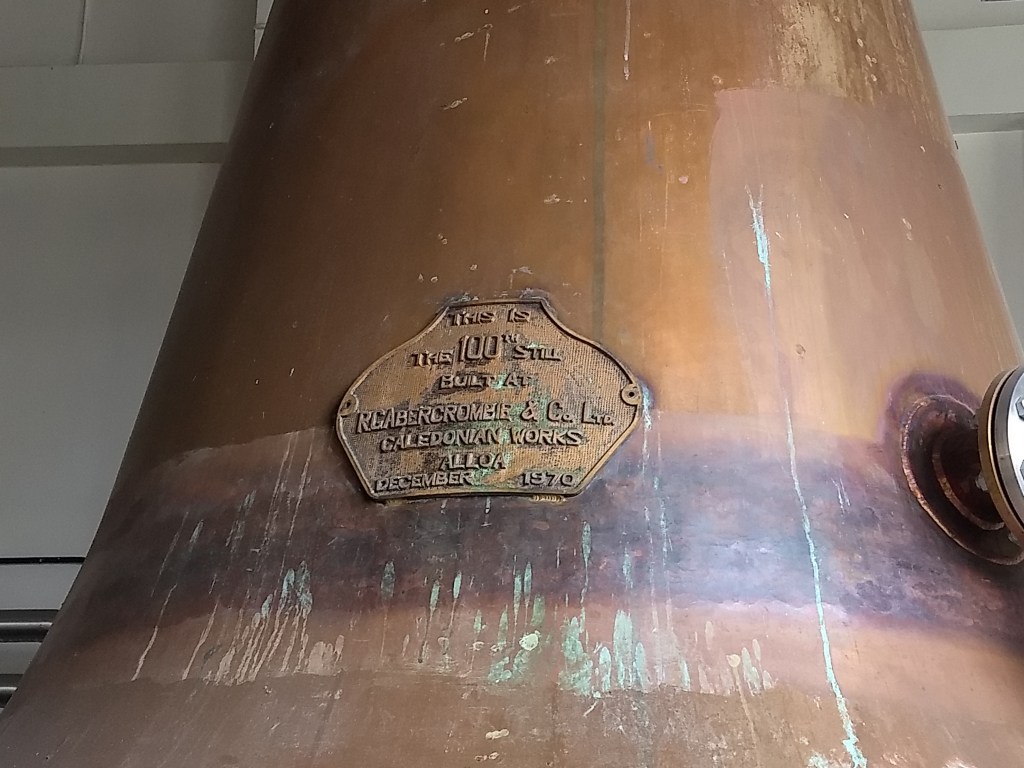
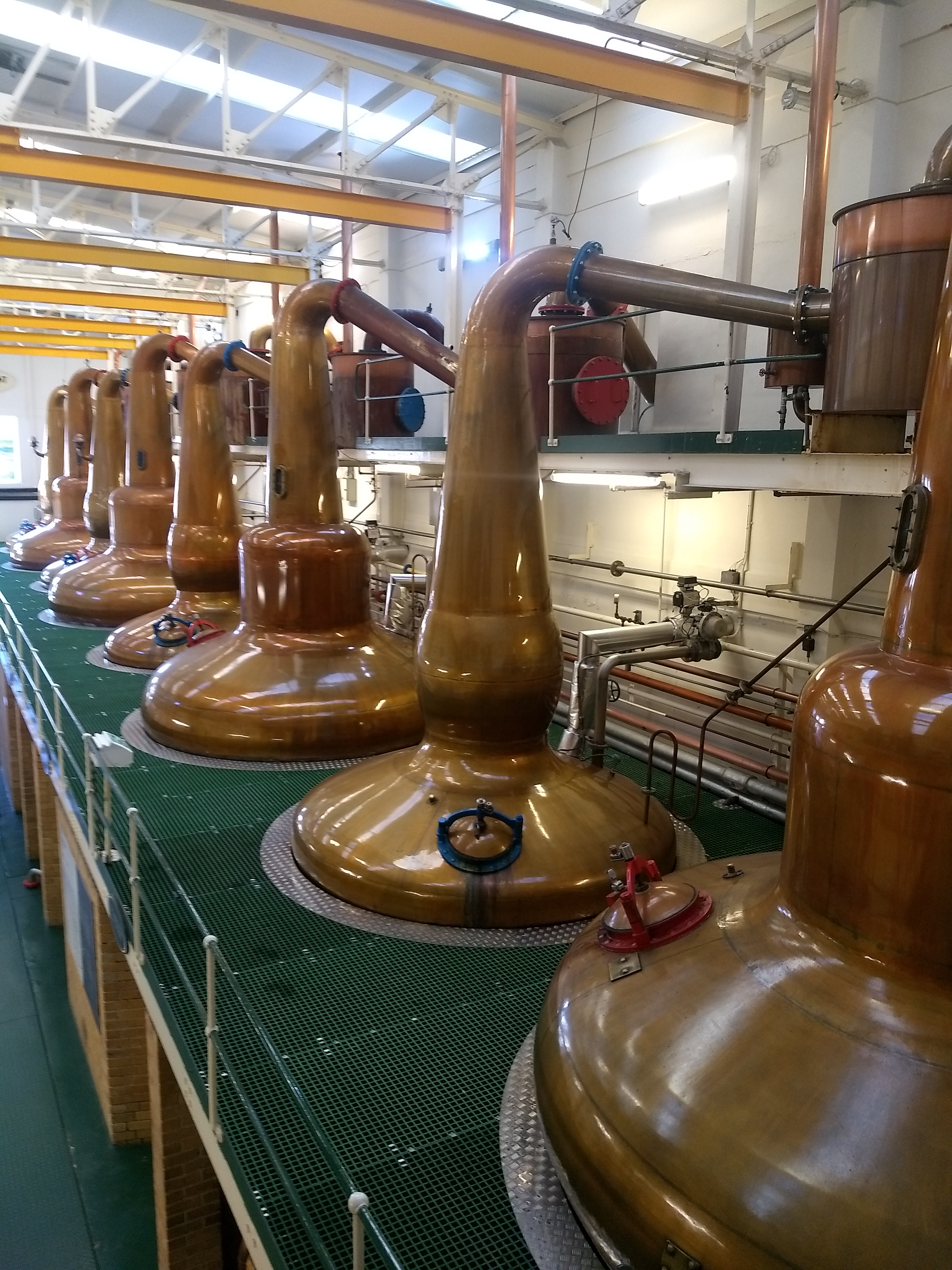
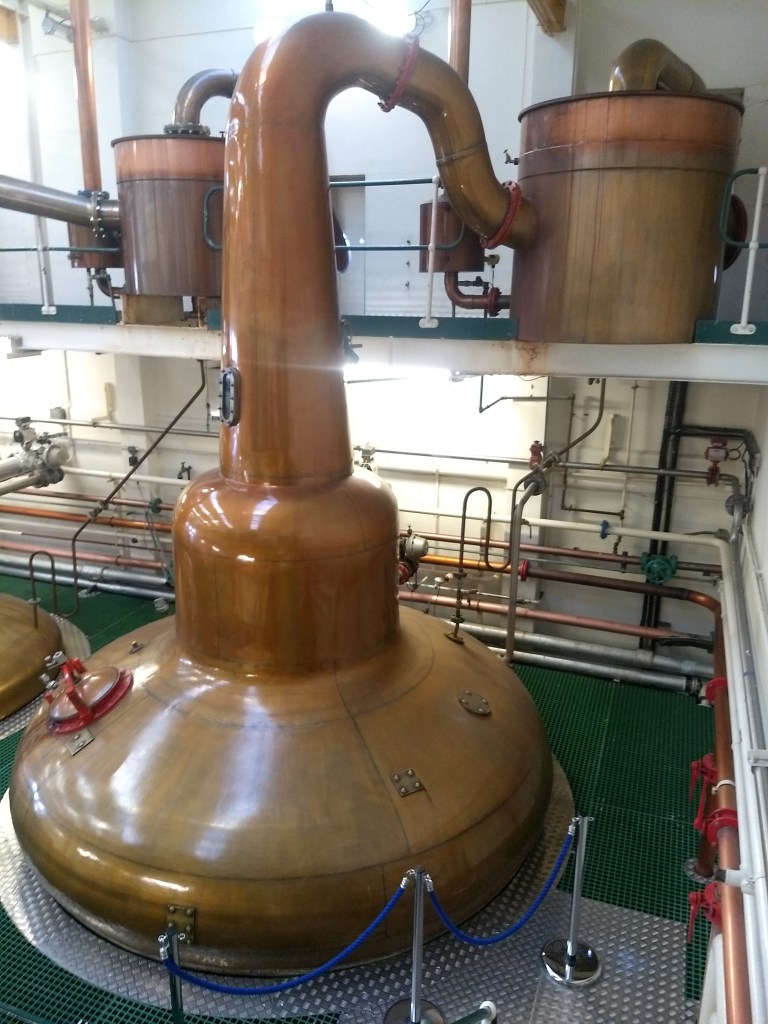
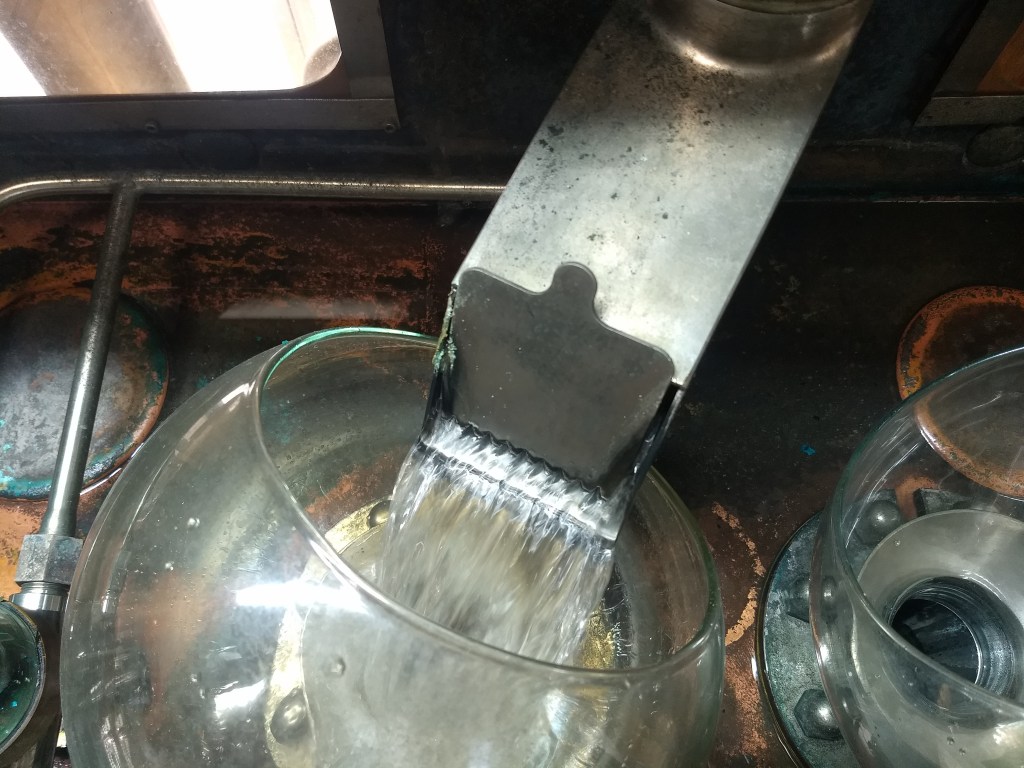
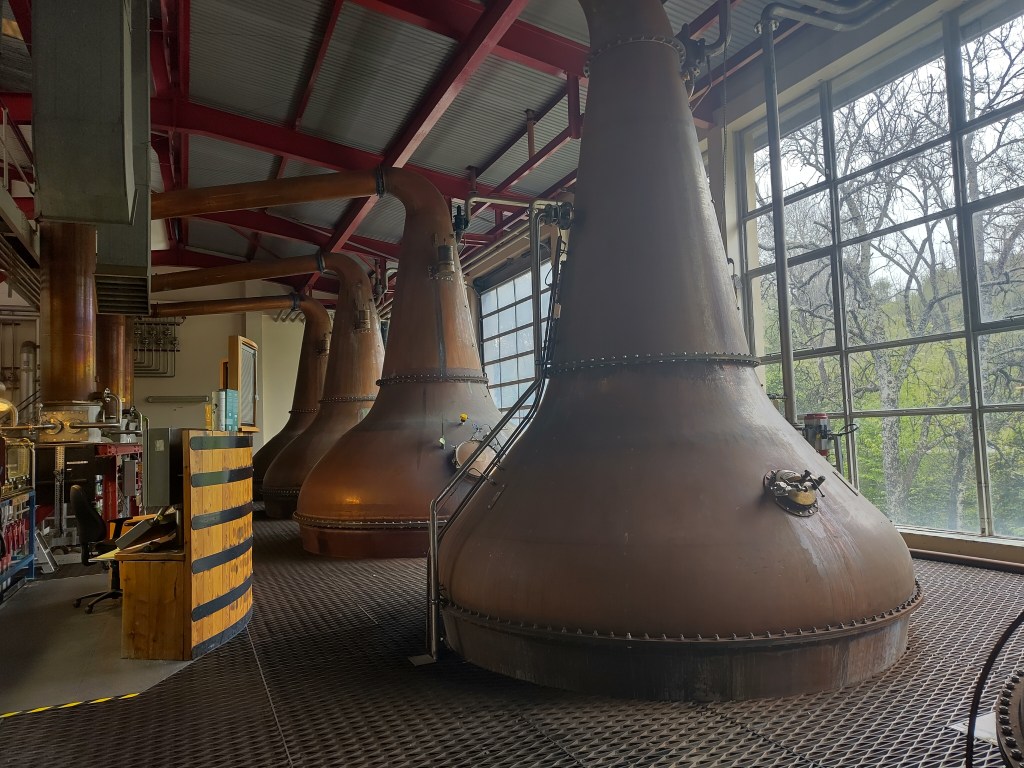
Finally, distillation happens in one of the three pairs of stills – 3.5-4 hours for the first run, while for the second distillation they usually start collecting the spirit after 30 minutes of foreshots, for again 3.5-4 hours. Apparently, they donโ€™t have specific cut points, but the average abv of the distillate is about 68.7%, with a green and grassy character.
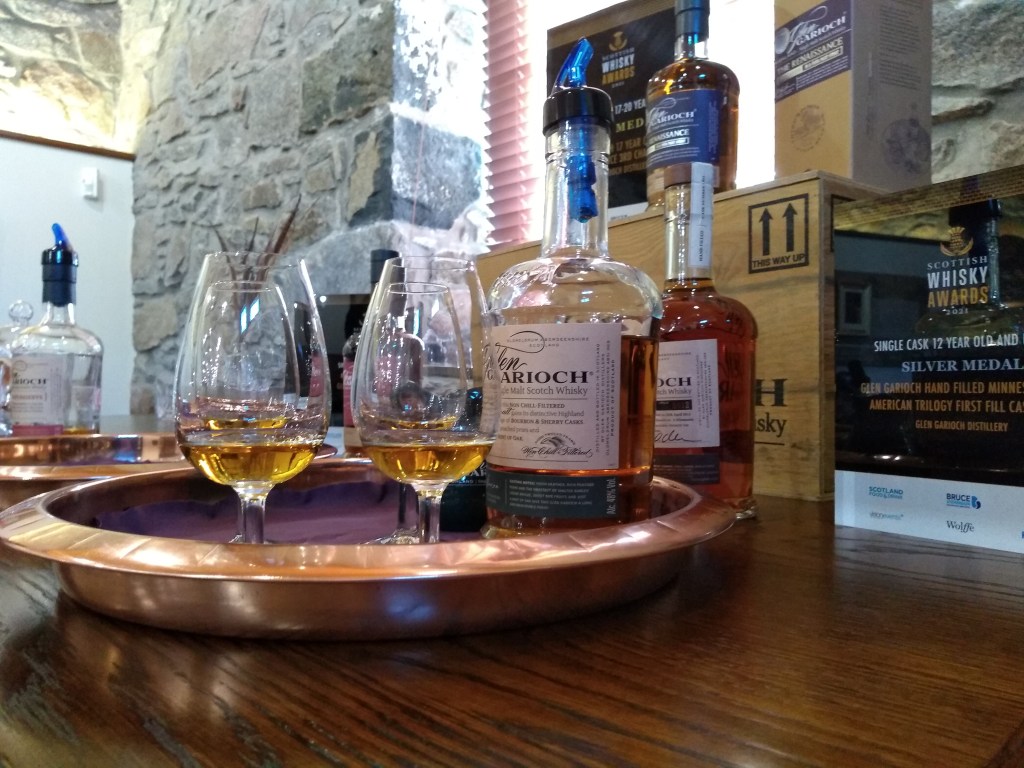
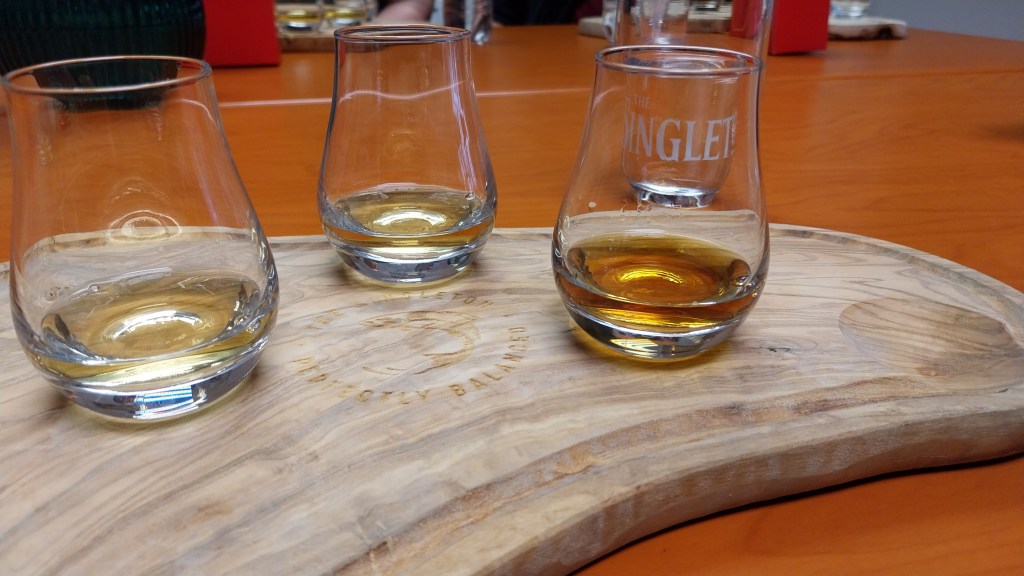
There is no filling store at the distillery, as all the spirit is filled into tankers and sent to be put in casks elsewhere, mostly (80-90%) in ex-bourbon barrels, the remaining in sherry casks. However, there is a small warehouse with the capacity for about 4,000 casks, which we didnโ€™t visit. Instead, we headed back to the office to continue with the tasting. The second dram was a 1989 cask sample from a (if we recall correctly) hogshead (34y, 52.3%), followed by a 1993 sample again from a very active hogshead (31y, diluted to 49.8%) and finally a 2003 matured in a PX cask, very dark and chocolaty (21y, 56.0%). Fortunately, this time the measures were a bit more generous, around 15ml each (maybe some a bit more, even), but four drams for a ยฃ100 tour and tasting is still quite stingy. To their credit, these drams were truly delicious, and we could see how some effort was put into coming up with this line-up. The contrast with the more meaty and heavy spirit from Inchgower was quite obvious, as Glendullan was light and delicate to our palate, even the one in the PX cask. In general, the tour was another good one, it was great to get to know the staff, get a glimpse of their knowledge, and witness their enthusiasm for making whisky!
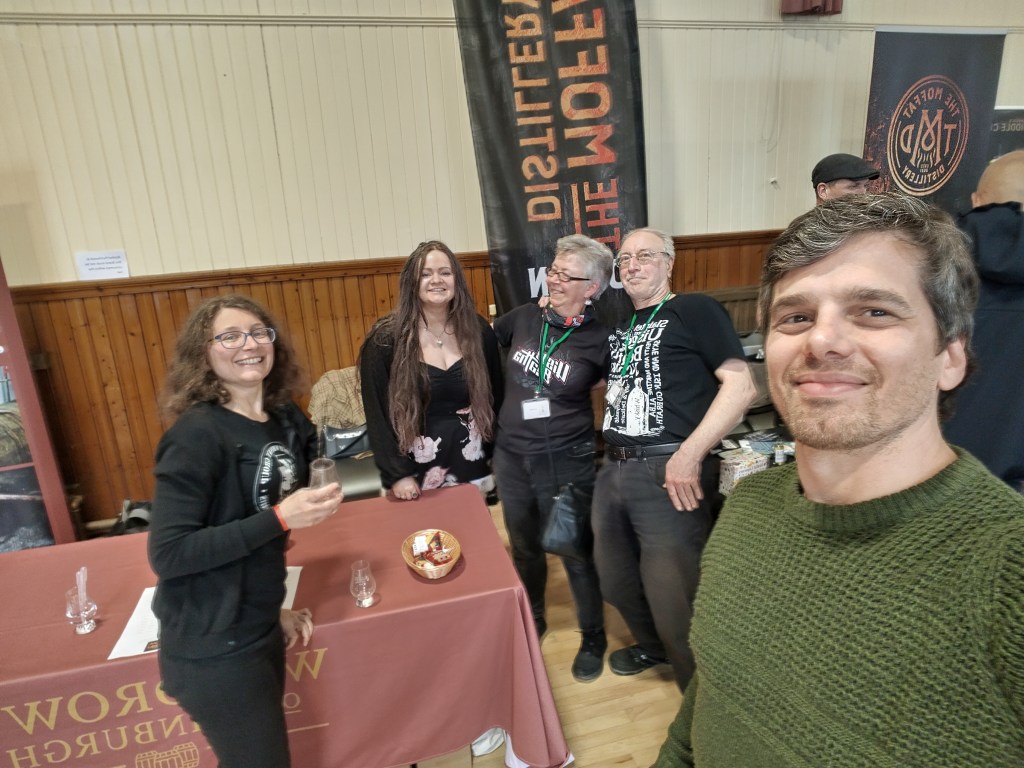
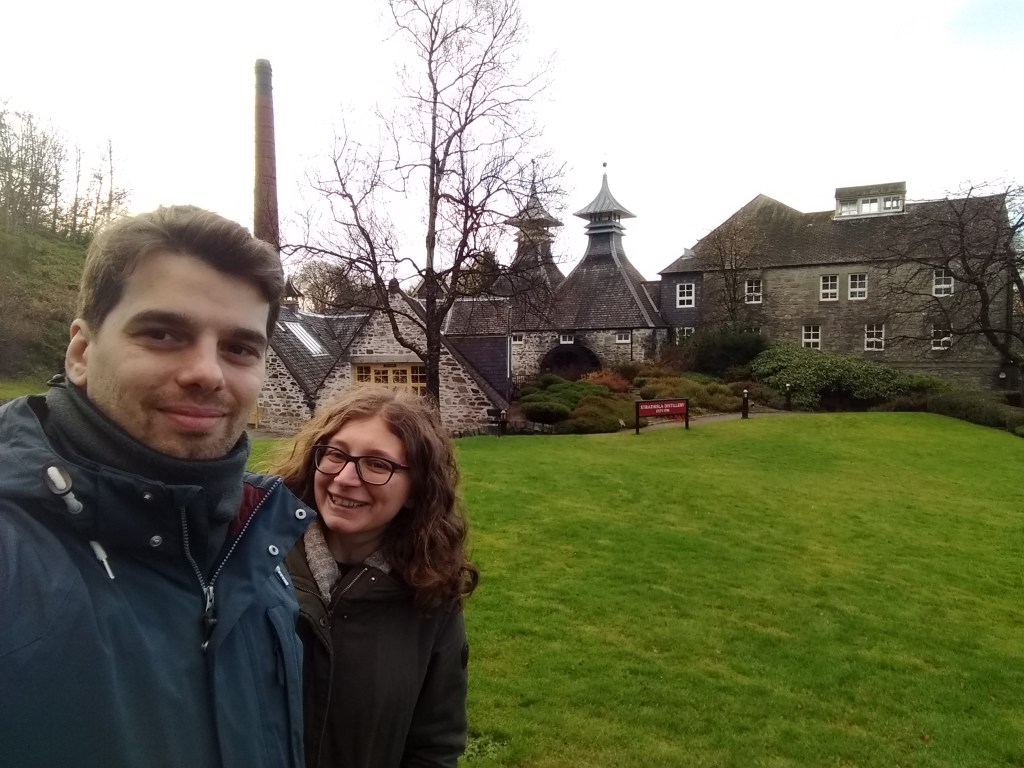
Once we left the distillery, we drove again to the campsite, this time we left the van there and, after a quick meal, we left on foot to get back to Dufftown. The waterproof gear ready to be deployed, too. We thought it would take more, but thanks to a shortcut into the woods (from which we had a great view of Glendullan distillery) it only took 25 minutes to walk to the Mortlach Memorial Hall, where the Whisky Fair was about to start (ticket was ยฃ30pp + SoS fees, including a glass and a voucher for a hot beverage and some food). This was our second year to this event, a sort of small festival, with the money collected for charity. As we arrived, we spotted the van of our pals Megan and Woody of Woodrowโ€™s of Edinburgh parked in front of the hall: some un-pishy drams were about to be tasted! Overall, itโ€™s a great and cosy event, and it was great to catch up with so many whisky pals, in particular with Sue and Gordon, who are among the organisers.
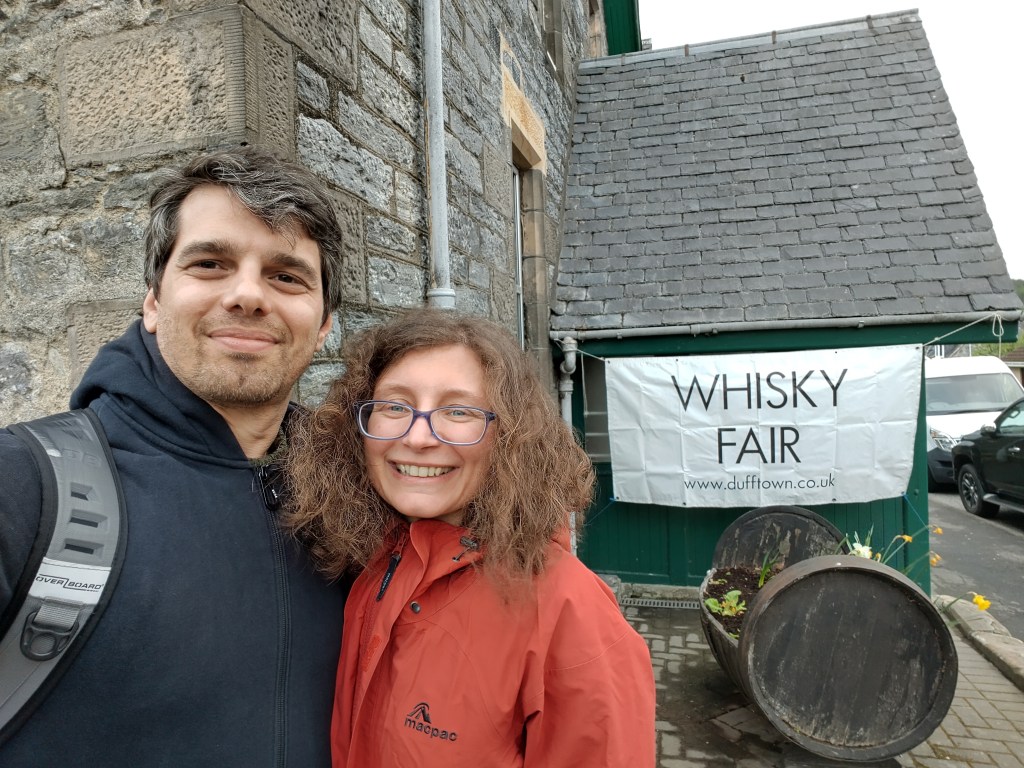
After the fair, we slowly walked back to the campsite, definitely very happy. Unfortunately our evening was much colder than prevented, and we could barely cook dinner on a disposable grill: two massive super greasy but delicious burgers (form Hellbent, some rugby connections as well). We soon went to bed, tired but happy.

Stay tuned our final Spirit of Speyside post! Until next week, slainte!


Glendullan Through the Decades Distillery Tour (Spirit of Speyside 2025)

Price: ยฃ100.00 pp (+ SoS fee)

Duration: 2hr

Tasting: 4 drams, Glendullan 19y (54.6%), Diageo Special Release 2021; cask sample 1989 (34y, 52.3%, refill cask); and 1993 (31y, 49.8%, hogshead cask-very active), cask samples 2003 (21, 56.0%, Pedro Ximenez sherry cask)

Target: whisky enthusiasts and geeks

Value for money: not great

Highlights: the tasting was small but good

Recommended: only if youโ€™re a massive Singleton fan

Link: https://www.spiritofspeyside.com

#44.1 Spirited in Speyside

Catching up Kininvie


TL; DR: May again, which means Spirit of Speyside again! And again, we tried to bag as many distillery tours as we could. First off, the mysterious Kininvie: hidden behind their stablemate Balvenie, itโ€™s a treasure to be foundโ€ฆand weโ€™ll have a pleasant surprise too! 

In the last couple of years, the Spirit of Speyside has become one of the unmissable events for us. Itโ€™s a festival, but it doesnโ€™t feel like one, probably because of the wide area the events are spread around: the whole of Speyside! There are so many events: fairs, walks, tastings, tours, even runs! Of course, for us it is a good opportunity to visit distilleries that are normally closed to public. In 2023 we managed to visit โ€œa fewโ€, this year we tried to do the same.

This year we made our long weekend a wee bit shorter: from Thursday to Sunday only, skipping the Wednesday and the Monday. It was enough, because, unlike last year, we managed to book all the distilleries we wanted to visit over 4 days! The only ones we decided to pass on were Glen Keith (the event is insanely expensive, like  north of ยฃ250โ€ฆ yes, it included Strathisla, which we visited twice already, but still a brainfart) and Glenglassaugh (the event was pricey, ยฃ200, but included visits at Benriach and Glendronach too, transport and lunchโ€ฆnot a bad deal, but still too much considering all the other visits weโ€™d planned).
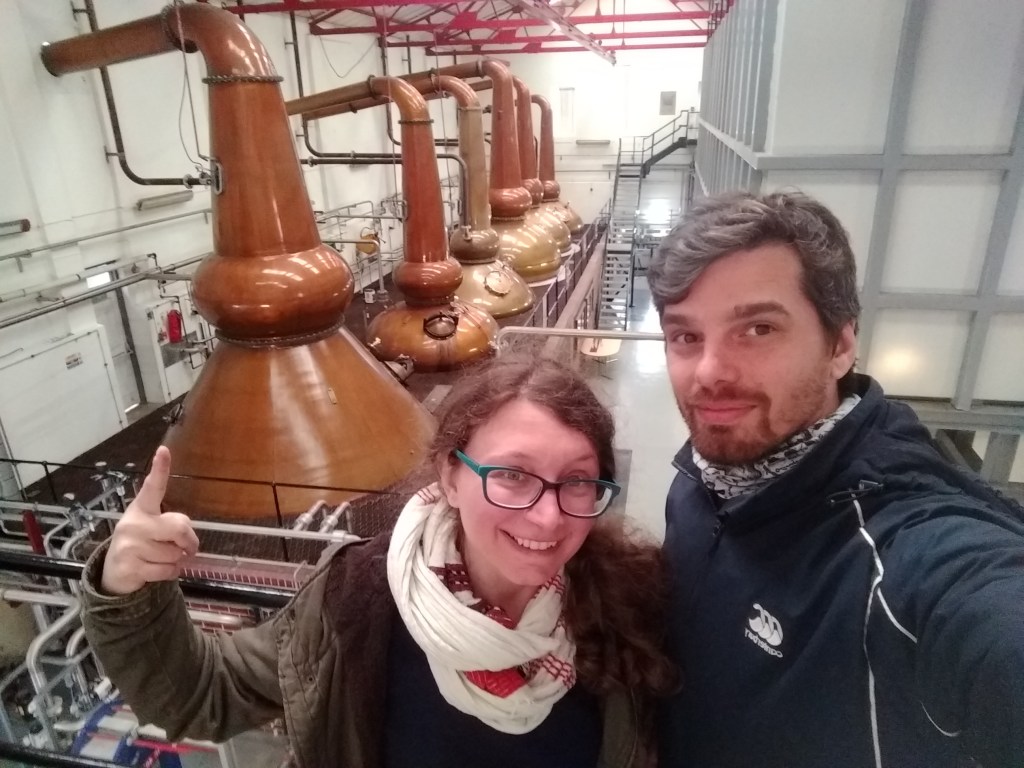
The first distillery we hit this year was Kininvie, in Dufftown. It is owned by W. M. Grants, like Glenfiddich and Balvenie. Actually, weโ€™d already visited most of the distillery during our fantastic tour of Balvenie in 2021, with James. Mash-tun and washbacks are indeed in the same building as Balvenieโ€™s ones, and the mill is actually the same! This time though, we will see everything about Kininvie!

Back to the trip, we left early in the morning, as the tour was at 11am (but also to avoid the silly Edinburghโ€™s rush hour trafficโ€ฆsilly because given the size of the city, it shouldnโ€™t be like that). We also left a bit earlier because weโ€™d planned to leave the van in Craigellachie, get the bus to Dufftown, walk back to Craigellachie after the tour. Everything went according to plan, except that the bus from Craigellachie to Dufftown was, like, over 20 minutes late. No problem though, we were still able to get there in time for our tour, and in the meanwhile we had time to chat to our friend Graham Fraser, who was taking the same bus to go to Glenfiddich instead. He is a fellow vPub barfly and also a โ€œdrammer aroundโ€ like us, but more experienced, with over a 100 Scottish distilleries under his belt: impressive!

After checking in at the Balvenie visitor centre, we had a big surprise: Paul (who we met at Linkwood last year) has recently moved to Balvenie and Kininvie as production manager, and would give us the tour! He is a super nice guy, and thanks to his impressive career in whisky, also extremely knowledgeable, so we were super happy about that!

The history of Kininvie is peculiar: it was built in 1990 to supply malt for blends (Grantโ€™s and later Monkey Shoulder), instead of Glenfiddich and Balvenie, kept to be bottled as single malts. They started producing on the 4th of July of the same year, and nowadays the equipment is also used to experiment with barley and yeast strains, including running a rye campaign every year before the silent season: Paul was very excited about the freedom to experiment.

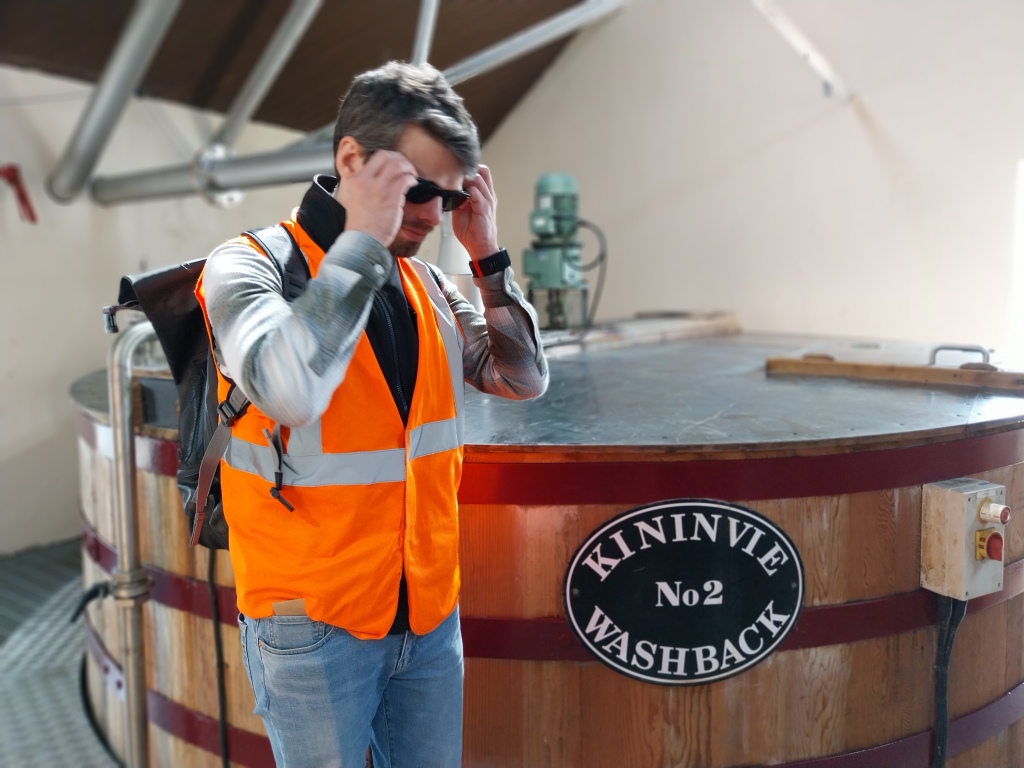
The tour started with a visit of the Balvenie malting floor and kiln, which was under repair waiting for some replacement parts. After a walk in the kiln, we moved to the main production building with mill, mash-tuns and washbacks. On average they do up to 25 mashes per week, using 240 tons of barley. When they donโ€™t experiment, the barley strains used at the moment are Sassie or a mix of Sassie and Diablo, which have mostly replaced Lauriet. The barley is mashed with the usual three waters at increasing temperatures (65, 75 and 85C). Fermentation takes place in one of the 10 wooden washbacks, next door to the Balvenieโ€™s ones. They use Mauri yeast and go for either a short fermentation (60h) to get a cereal-y cloudy wort, or a long one (over 70h) to obtain a lighter and fruitier one: the one we tried was very sweet, and Teresa picked up notes of white chocolate.

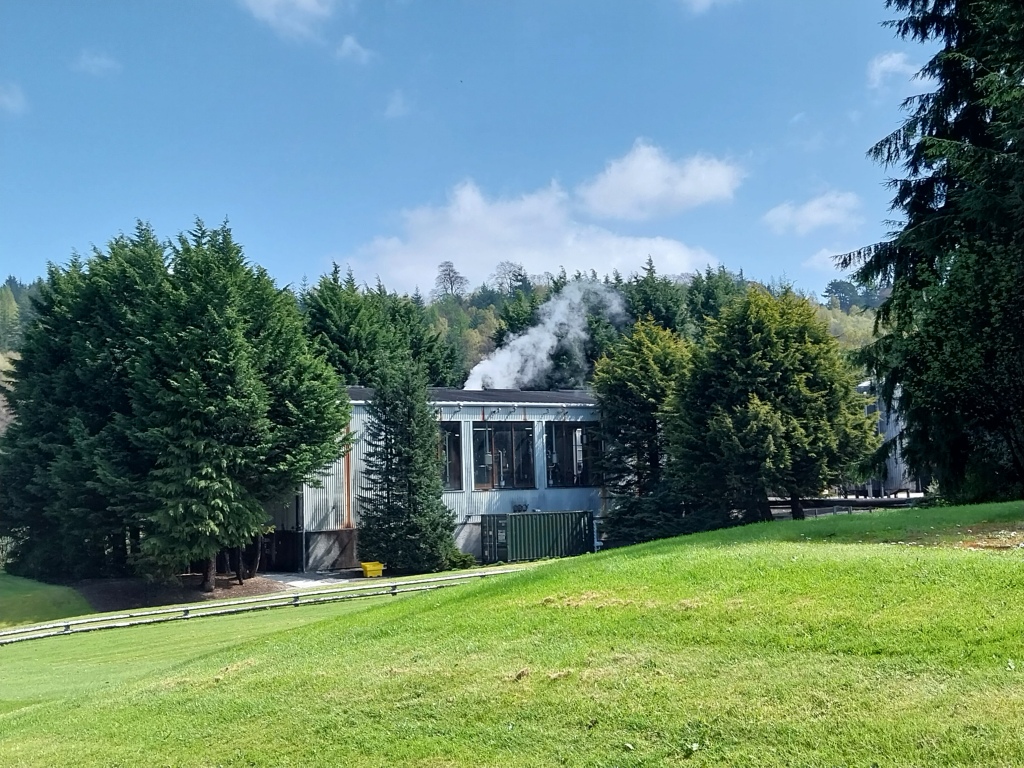
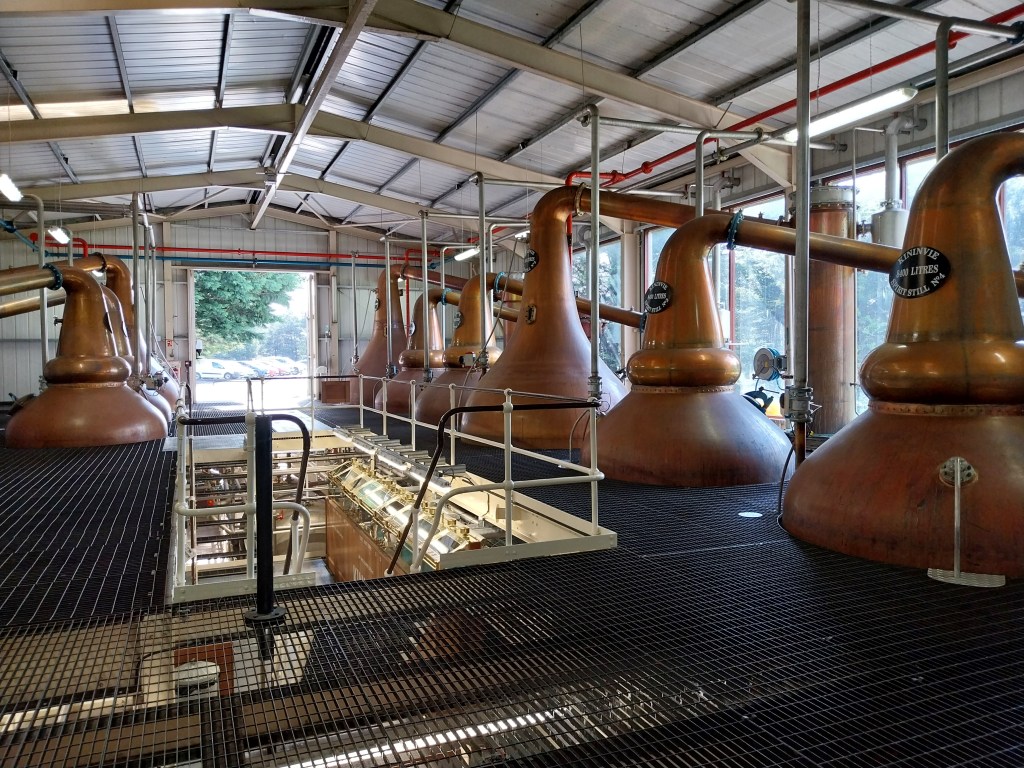
Finally, itโ€™s time to visit the still room, located in a hidden (hence the name of the tour) dedicated building behind Balvenie. They have three triples of stills (with enough space for a fourth, in case of expansion), for a total of nine. Each triplet works as a unit, with one big wash still for the first distillation and two smaller spirit stills for the second one. The cut points are very variable depending on what they are producing, but usually the second distillation takes 10 hours: 1.5 to heat up, 4.5 for heads and tails and 3 for the heart run. Once at the spirit safe (the piece of equipment used to control the cut points of the distillation run), we could try some newmake spirit, at a whooping abv of 70%! A very nice touch!

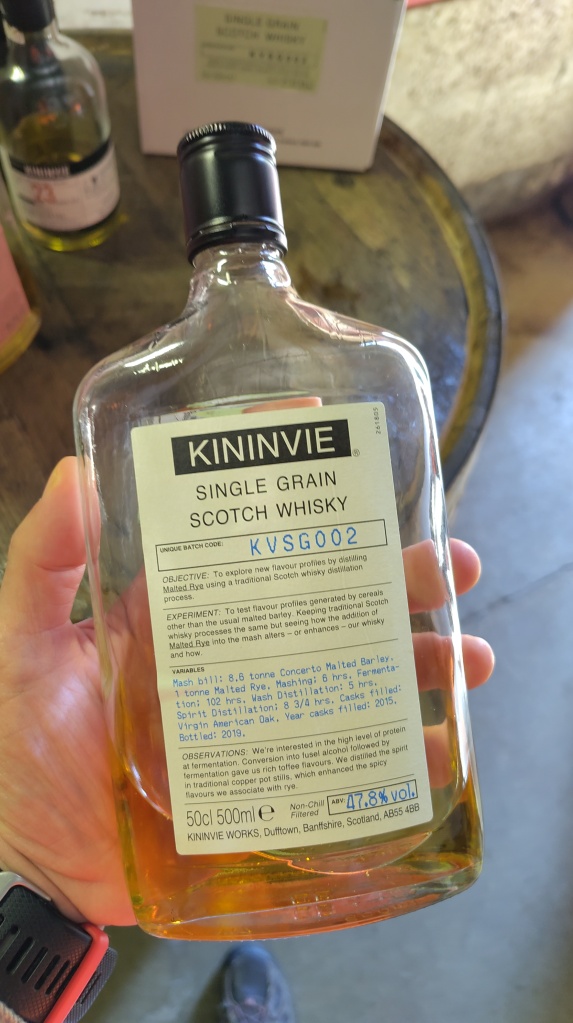
After that, we moved to one of their massive racked warehouses next door, where after a brief, nerdy chat with the warehouse manager George, we tried some drams. Kininvie releases are very rare: the only one weโ€™d tried previously was during an online event in 2020, as part of the Belfast Whisky Week: the KVSM001, a 5yr triple distilled single malt matured in ex-bourbon casks. We had like it back then, so we were now quite excited and curious about the tasting at the distillery. We started with a โ€œsingle distillery blendโ€, KVSB003: a vatting of single malt (matured in European oak casks) and single grain (matured in virgin American oak) produced at the same distillery, 4yr and bottled at 48.2% abv. The second one was a component of this blend, the single grain KVSG002: it is actually a rye whisky (although we think it wouldnโ€™t comply with the American definition of โ€œrye whiskeyโ€ because the rye part was less than 51% of the mashbill, only 1 ton malted rye vs. 8.6 ton malted barley), matured in virgin American oak, distilled in 2015 and bottled in 2019 at 47.8%. These drams were both quite interesting, but we recently find rye whisky a bit too herbaceous, particularly the ones produced in Scotland and Europe. Nonetheless, we were quite excited because the labels on the bottles provided a great deal of information, a real deal for us whisky nerds!

We really appreciate such transparency!
So many details!

We then moved to a single malt, a 23yr distilled in 1991 from a combination of hogshead and sherry butts, bottled at 42.6% (a bit weak to our palate, but nicely tropical and balanced). Finally, the gem was the cask sample: a 10-year single malt from a first refill Sherry butt at 68.4% (the cask filling strength was 70.3% abv!!!): it definitely needed water, but once it opened up it was really fantastic!

About to pour something really delicious.

And with this visit, the Spirit of Speyside festival was officially underway, starting with a bang! Like we noted last year, the staff were so happy to show us around, truly a refreshing experience, and so nice to see Paul in his new role! But it was time to move to our second whisky โ€œadventureโ€ of the day, so we quickly left the distillery on foot.

Stay tuned for more on this. Until then, slainte!


Kininvie Hidden Distillery Tour

Price: ยฃ60.00 pp (Spirit of Speyside 2024)

Duration: 2hr

Tasting: 5 drams, Kininvie single distillery blended KVSB003 (single grain rye whisky and single malt), single grain rye whisky KVSG002, Kininvie 23y Single malt, cask sample (ex-sherry cask, 10y) and newmake spirit (for details see the descriptions above)

Target: whisky nerds

Value for money: good

Highlights: the still room

Recommended: yes

Link: https://tickets.spiritofspeyside.com/sales/events/2024-festival/kininvie-hidden-distillery-tou


#31.8 Spirit of Speyside 2023

The amber swan: Linkwood


TL;DR: Finally, the last day of the Spirit of Speyside came. After a relaxing morning, we visited another Diageoโ€™s workhorse: Linkwood! Very beautiful distillery, tasty whisky, but the tour with the enthusiastic staff itโ€™s what really gave value to this visit!

(missed Part 7 /Part 6/Part 5/Part 4/Part 3/Part 2/Part 1?)

The last morning of the long weekend was a slow one. We woke up in a rainy and gloomy Dufftown, waiting for one of the coffee shops in town to open. After some coffee and cake, we had some free time, so we finally managed to go to the Whisky & Heritage Centre. It is a little place managed by volunteers where whisky memorabilia are on display, plus old pictures and documents that can be checked out. We had a lovely chat with the lady taking care of it, finding out they have plans to increase the size of the centre, and we got a couple of second-hand whisky books for a small donation.

We went to the Dufftown Whisky Shop, as they had scheduled a Benriach pop-up tasting. We tried a couple of their new range (which we are not too familiar with, since we visited the distillery before the core range revamp) and had a chat about it and other Brown-Foreman products with the brand ambassador. He told us that some news was in sight about Glenglassaugh, so we hoped for a reopening of the visitor centre. A few weeks later they revamped the line-up (with a 12y bottled at 45% and two NAS at higher abv), but as we are writing their website has disappeared, soโ€ฆstill hoping!

Left the shop, and Dufftown, we drove to Aberlour toโ€ฆanother shop, this time the Speyside Whisky Shop, for another chat with Matteo and a dram (at the time some saught-after bottles were open so people could purchase by the dram). This was followed by a quick lunch at the usual Gatherโ€™n Cafรจ nearby (we should have taken a punch card long ago!). It was soon time to leave though, direction Elgin, for the next and last distillery visit of the holiday: Linkwood! The road wasnโ€™t very trafficked and the drive was smooth, so we arrived there a few minutes early.

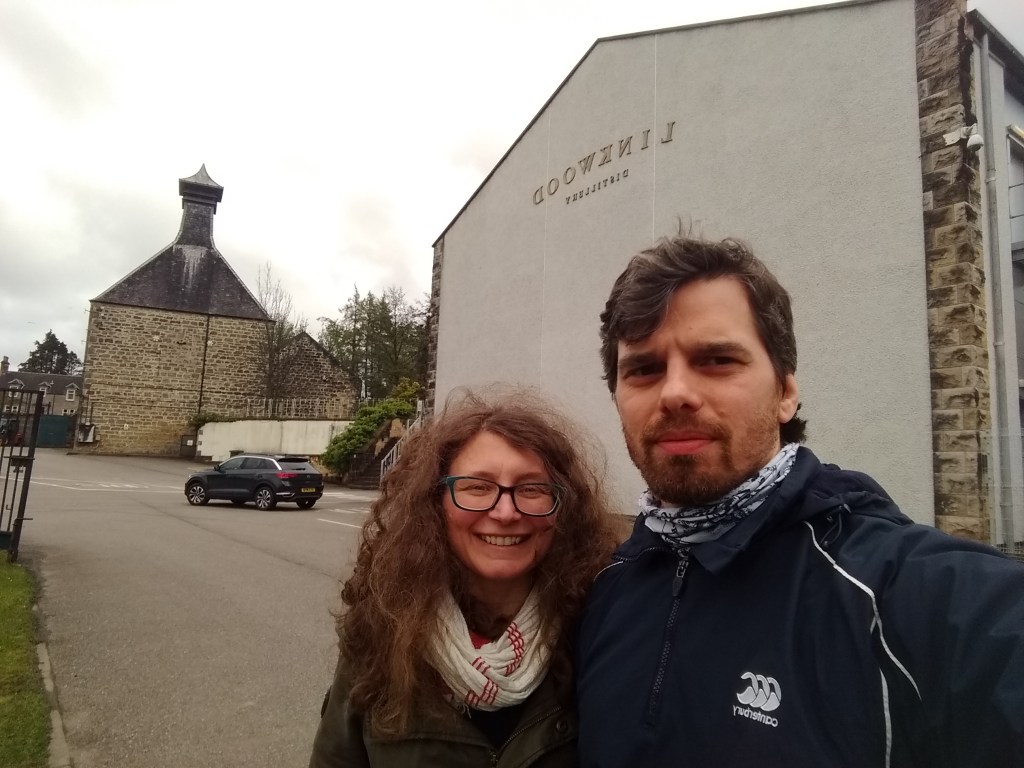
There, we met our friend John from the Edinburgh Whisky Group, and we were welcomed by Paul, the distillery manager. The welcome cocktail was the usual Old-Fashioned, of course made with their own flagship whisky. Hovwere, it feels odd talking about a flagship, since Linkwood 12, part of the Flora and Fauna range, is the only bottling from this distillery (similar to many other Diageoโ€™s distilleries). 

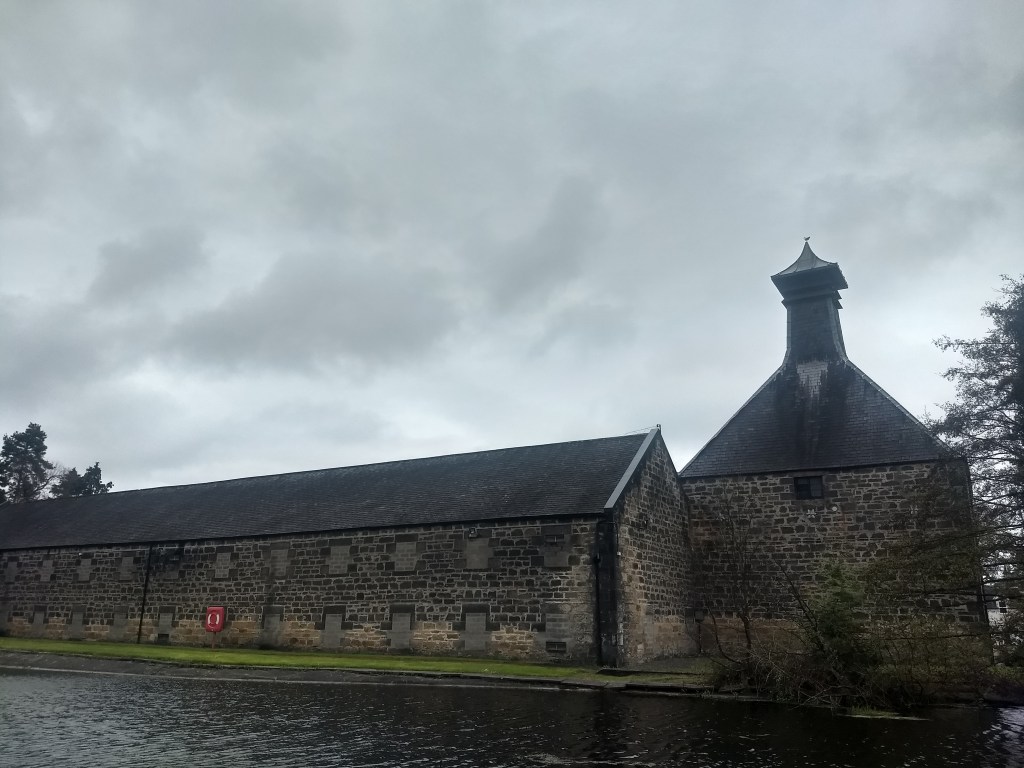
The original Linkwood distillery was founded in 1821 by the Brown family, and started production a few years later. It was sold in the 1930s to Scottish Malt Distillers, which in turn were acquired by United Distillers (a precursor of Diageo). In 1970-71 a new distillery was built, and in spite of that, the old one continued production until the site was mothballed. The old distillery was demolished only in 2012, with all the equipment moved to the new one, which was expanded.

Our knowledge of Linkwood dates back a few years, to our first (and only) bottle of Johnnie Walker Green Label 15y, as this is one of the malts featuring in this blended malt, together with Caol Ila, Talisker and the fellow Speysider Cragganmore. Since then, we tried a few different Linkwood expressions thanks to independent bottlers, mostly the Scotch Malt Whisky Society. Recently, we had a great one, finished in Tokaj wine cask, from the new independent bottler Fragrant Drops: a sweet dram with a hint of grassiness, which is the main character the distillery aims to get. 

Classic piece of equipment.

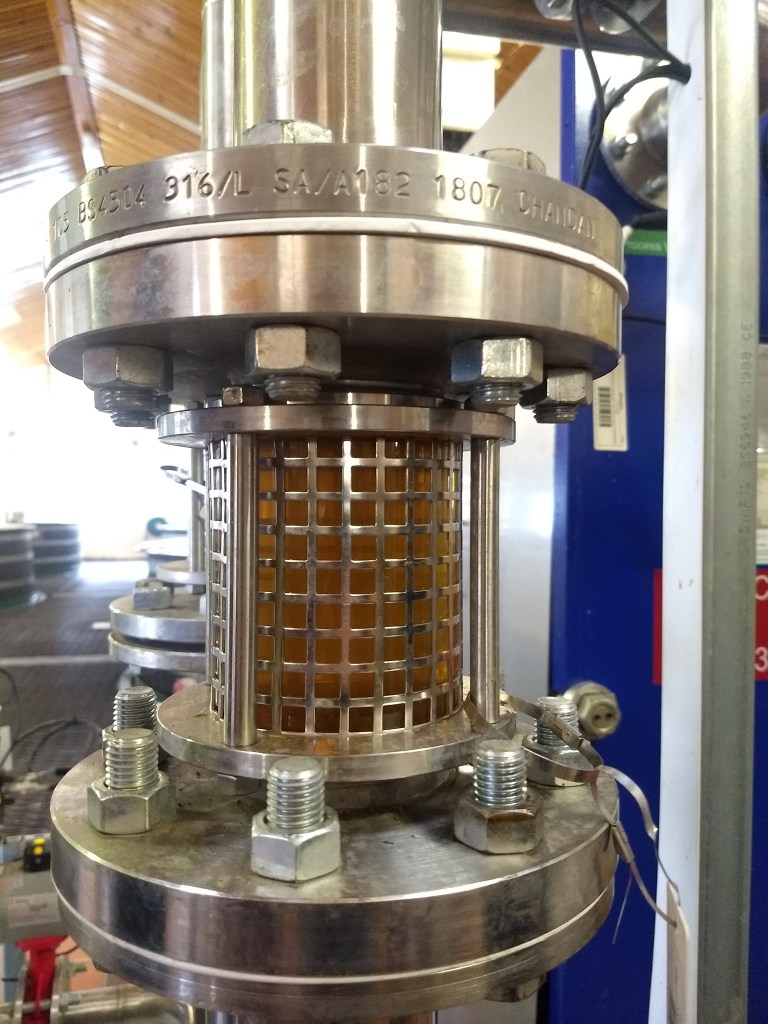
The tour was conducted by Barry and Eilidh, both distillery operators. Near the entrance of the production building, they showed us a small cask that was used back in the day by distillery workers to get their daily dram (or drams, in the past weโ€™ve been told by some guide that usually they were 3 a day). As many other distilleries, they have a Porteus Mill, painted in dark red, but unlike many the proportion of husk/grit/flour is 10/80/10, and they use Lauriet barley. Here the tour became very interesting: they only do two waters during mashing (they call it โ€œcontinuous spargingโ€), and we were shown a cylinder they use to check the wort cloudiness. This is one of the nerdy things we discovered fairly recently, depending on the desired newmake character, when mashing the wort could be more or less filtered. The less filtered mashes (thus, cloudy) give a nuttier character to the newmake. On the contrary, a clearer wort results in more fruity and grassy notes, like Linkwood indeed.

Wort checking!

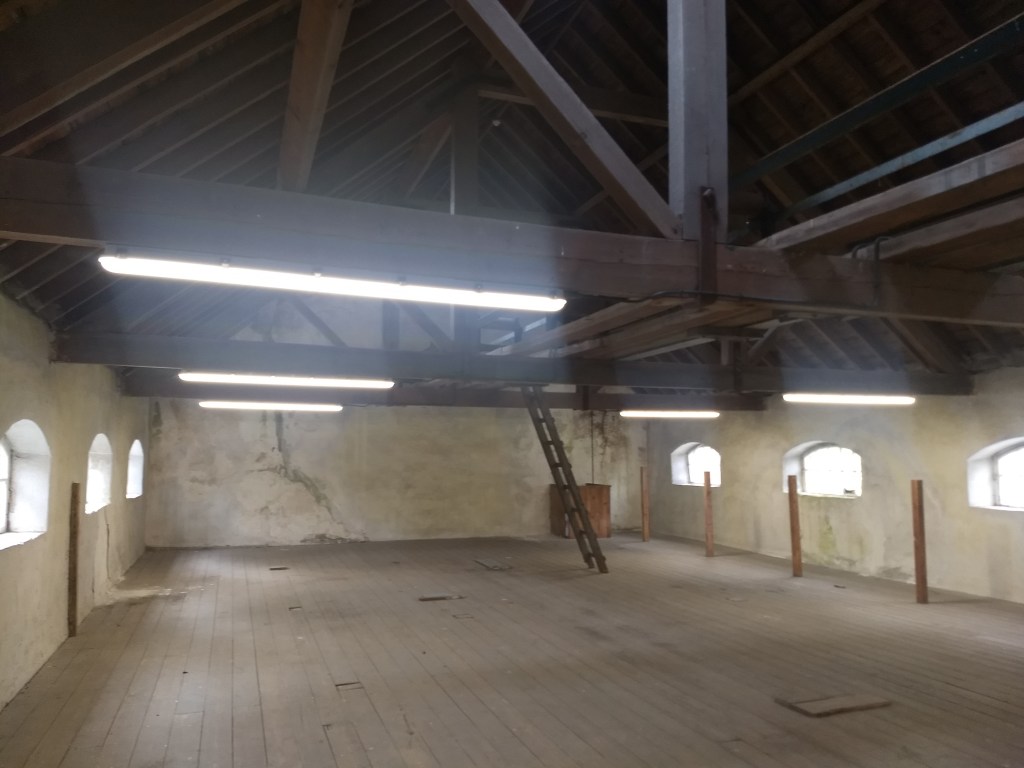
The fermentation in their 5 wooden washbacks from the 70s (and also other 6 installed in 2013) lasts 75 hours. Finally, we went to the still room, where three pairs of very large stills (with straight-ish lyne arms) operate independently. The shell-and-tube condensers are equipped with โ€œturbulatorsโ€, to slow down the water. After the still room, we had a stroll outside around the famous lake, where we saw the swans that inspired the famous label. The water is mainly there as a reserve, used in case of emergency. From there, we could check out the old malting floor (and the pagoda roof), now a warehouse. Unfortunately, no tour inside there. 

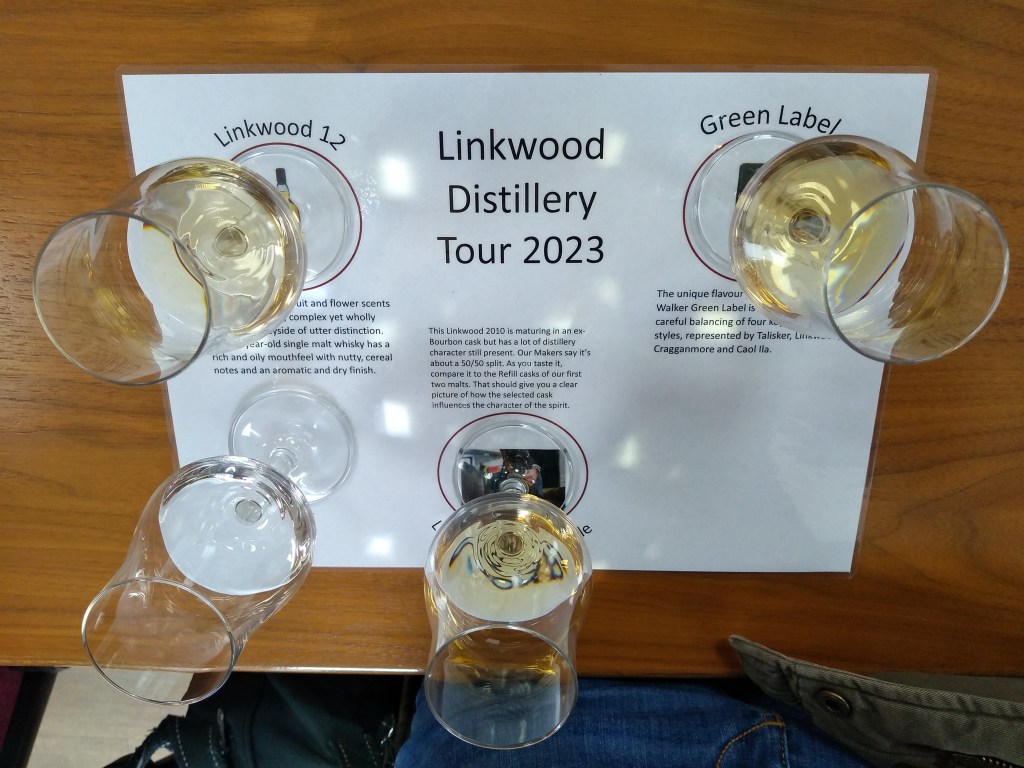
Back to the office, Paul and Scott, another distillery operator, were ready to host the 3-dram tasting: Linkwood 12 (43%abv, one of the best drams from the Flora and Fauna range, in our opinion), Johnnie Walker Green Label 15 (43%), nice to revisit it after some time, and finally a Linkwood cask-sample (similarly to the one at Dailuaine, not on sale and only served at Cardhu distillery in one of their fancy tours). Really a great dram, for sure in our top 5 of the festival. A shame these cask sample bottles were not available for purchase, although knowing Diageoโ€™s pricing policies they would have probably been out of reach.

On the tour there was a group not very happy about that, so they started rudely complaining with the staff about the missing opportunity to buy the cask-sample bottles, showing their cluelessness on how a big multinational company like Diageo works (not that we know much better, but enough to understand that some decisions are not down to the distillery staff). Oh well.

Anyway, one of the things we liked the most of this first time at the Spirit of Speyside was to get to know and talk to people working in distilleries, in particular the ones not usually open to public: the staff friendliness, but more importantly their eagerness to show us around and make us understand their work were amazing. Seeing how passionate they are was really refreshing, in spite of all the cynicism of their mother companies, and in the whisky world in general nowadays. Of course, we donโ€™t want to play down any of the people we met in distilleries usually open to public, however in our many trips sometimes we experienced too edulcorated, almost scripted tours, and a couple of times we were even treated with complacency. And this is fine (well, except for the lastโ€ฆ), it would be silly to expect that every tour is mind-blowing, and that every tour guide is a whisky nerd: at the end of the day, itโ€™s a job as any other. But we cannot help but noticing a certain difference when the tour is done by an operator, like in many cases during this trip. And just for it, we were grateful. 

Until next time, slainte!


The Linkwood Distillery Tour

Price: ยฃ80.00 pp (May 2023)

Duration: 2hr

Tasting: welcome cocktail and 3 drams – Linkwood 10 (43%), Johnnie Walker 15 Green Label (43%), Linkwood cask sample from ex-bourbon (53.4%)

Target: whisky enthusiasts

Value for money: not great

Highlights: the enthusiastic distillery staff

Recommended: not at this price

Link: https://www.spiritofspeyside.com/


#31.7 Spirit of Speyside 2023

Speyburn uncovered!


TL;DR: Another visit to a (thenโ€ฆ) closed-to-public distillery: Speyburn. In 125 years it was open for the first time during the 2023 Spirit of Speyside. A great visit, their own old drum maltings were a highlight, a jump back in time! 

(missed Part 6/Part 5/Part 4/Part 3/Part 2/Part 1?)

From Dufftown to Rothes itโ€™s barely a 15-minute drive, so we could take it easy and stop for a coffee and a soup, to warm up in the cold and rainy day. We then soon arrived at the Speyburn parking lot: in spite of being hidden from the main road, we knew exactly where to go, as during one of the many trips to Speyside we drove on the road just in front, from where the distillery could be admired in all its beauty.

Speyburn is not among the most well-known single malts, although it can now count on the presence on some supermarket shelves (the Bradan Orach and the 10y). They are owned by Inver House (which is in turn owned by Thai Bev, guess where theyโ€™re fromโ€ฆ) together with other four single malt distilleries, two in the Northern Highlands (Pultney and Balblair), another in Speyside (Balmenach) and Knockdhu (producing the AnCnoc whisky) in the Eastern Highlands. We previously only had one bottle of Speyburn, from the Scotch Malt Whisky Society: a 9y old from a refill bourbon. We got it by chance when buying a pack of three bottles during the pandemic, with the Speyburn being the one we were less excited about: it ended up being the best of the trio! Spicy at first, with time in an opened bottle the oxidation played its part, and the whisky mellowed down and became a fruity deliciousness. At this point, it goes without saying we were very curious to know more about Speyburn!

As we parked, we were warmly welcomed by the distillery manager Euan and the global ambassador Stuart (who we knew from some Aqvavitae’s vPubs), who walked us to the visitor centre to check in. Compared to the other โ€œusually closed to publicโ€ distilleries, they seemed to be way more prepared: there was a proper shop (not just a pop-up like at Dailuaine and Mortlach), with bottles and merchandising displayed on the shelves, and also a brand-new bar with big tables, where the tasting would have taken place after the visit inside the production. Weโ€™ll come back on this point.

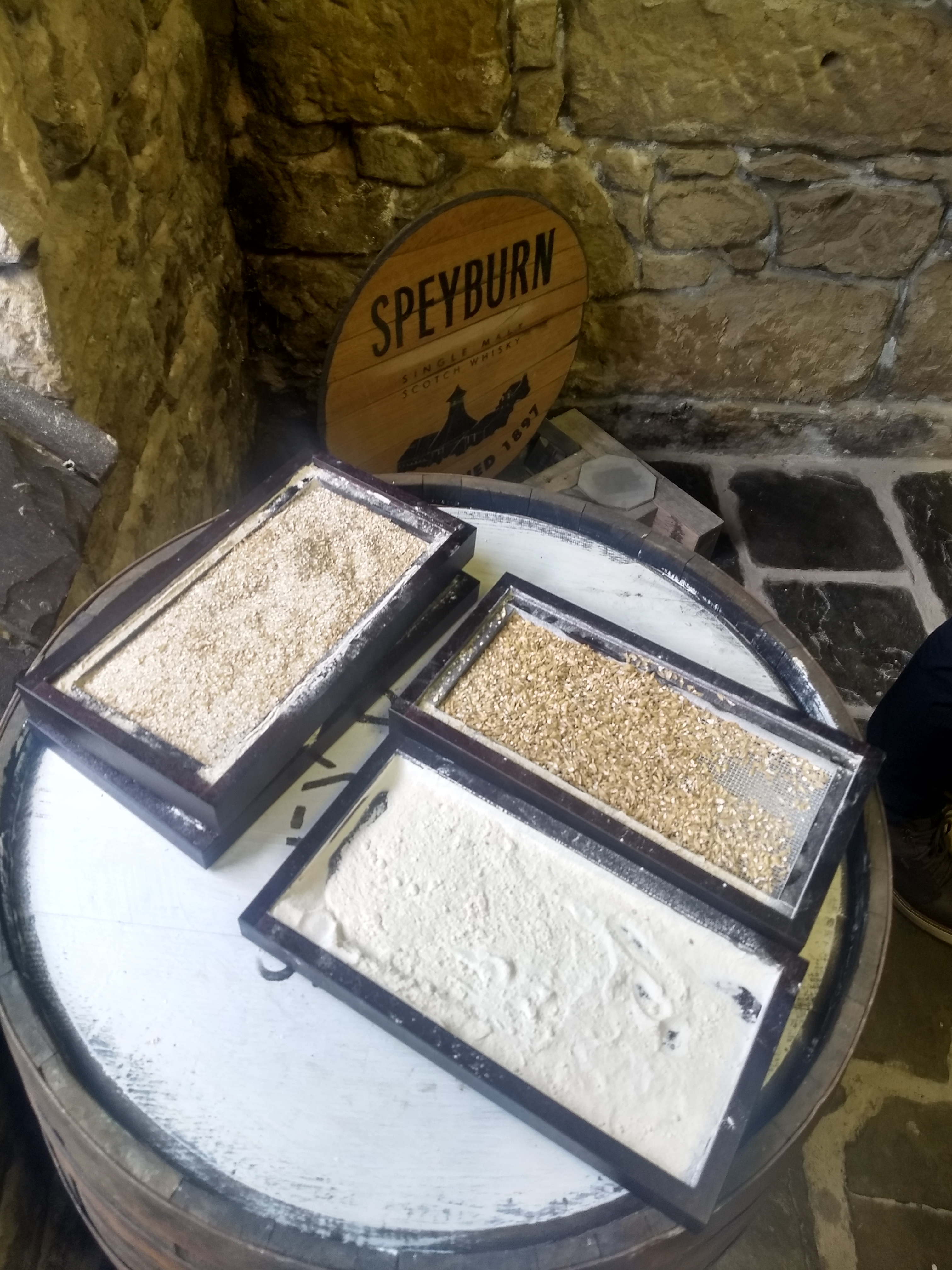
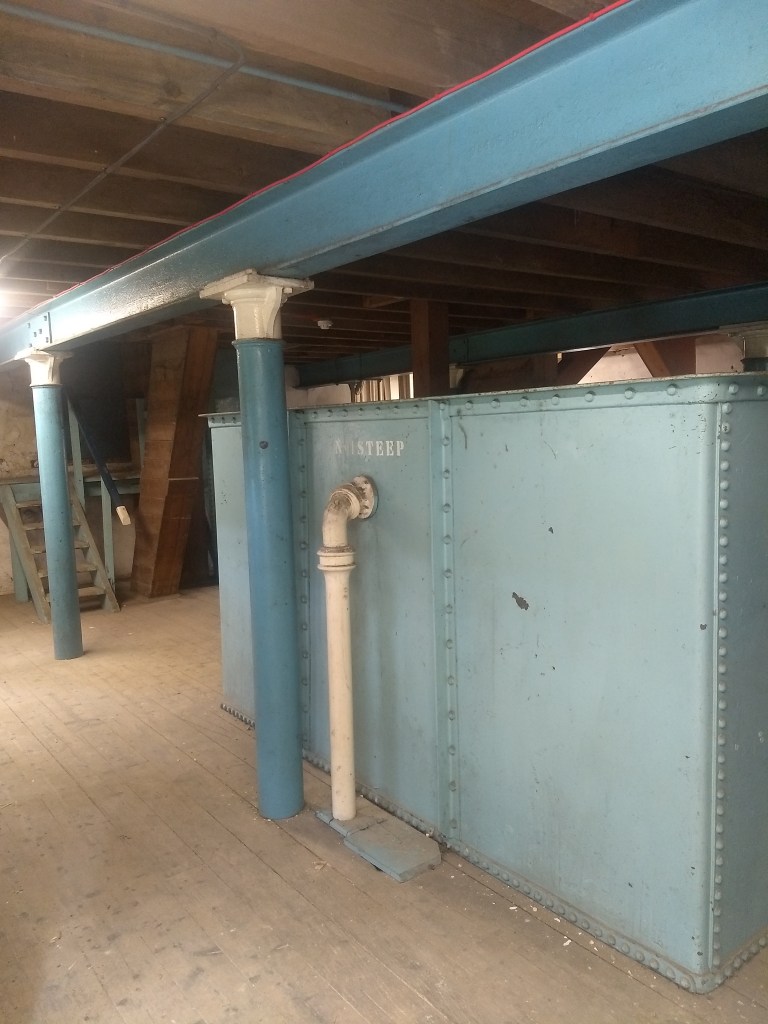
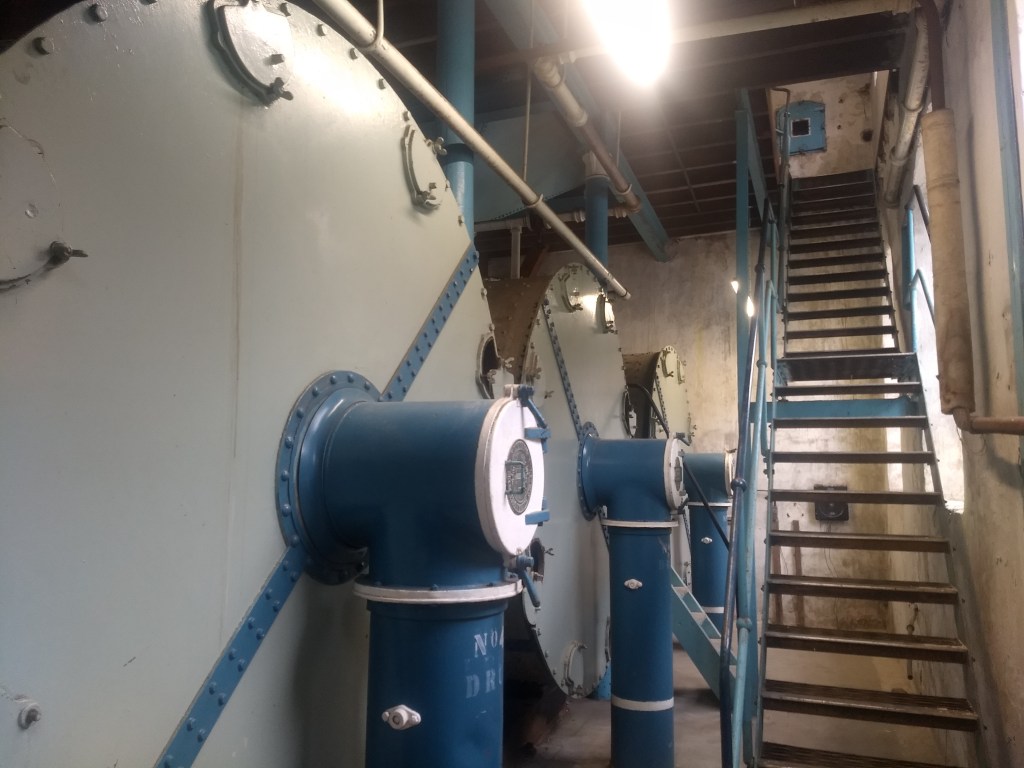
The tour started with some history in the courtyard: the distillery was founded in 1897, and the architect was the famous Charles Doig, who brought the pagoda roofs into the game. This became one of the iconic features of Scotch whisky distilleries, to the extent that distillers in other countries started copying it. It is also on the road signs in Speyside and elsewhere: if you see a white pagoda on a brown background, there must be a distillery close by! The original function was the kilnโ€™s ventilator, as at the time most distilleries were malting their own barley, Speyburn included. A crucial difference, however, early on they installed one of the few on-site drum maltings. They havenโ€™t been used in almost 60 years (after a sudden stop in 1967 following the stop of the near railway the year before), but they are still preserved for nerdy visitors to admire. And in fact, the first part of the tour was dedicated to this unique feature of the distillery.

Time travelling part 2: the steeping tanks.

Euan and Stuart explained us that the place has been made accessible only recently, as testified by the new woodwork to allow people inside: it was like taking a walk in the past. The malting was working on different floors, the top one was where the barley was laid out, steeping tanks at the middle one, while the drums (think of huge tumble driersโ€ฆkind of) on the ground floor. One thing we found interesting was the completely different story compared to the usual one: smaller on-site drum maltings, and similarly Saladin boxes, were intermediate stages between the two extremes that are usually talked about during distillery visits (and on blogs, etc.), the (highly romanticised) labour intensive and not so efficient malting floor, and the modern highly efficient industrial-scale maltings. So fascinating to see what was in between!

We jumped back to the present, moving to the mill room, and from there through the usual layout of the modern plant: the closed stainless-steel mashtun, and the wooden washbacks, where we could sip a bit of their semi-cloudy 72hr-fermented wash (always an experience). One interesting feature is the combination of both shell-and-tube, of which one is horizontal, and two wormtubs condensers (132m in total). The former condenses liquid from the wash still, while the latter two from the spirit-stills, from which they take a cut between 72 and 64% abv. With only 3 stills they manage to produce about four millions of litres of alcohol per year: they get this incredible volume by working 24/7. There is a catwalk on the wormtubs, which are located outside, where we spent a couple of minutesโ€ฆ.we wonder if in Speyside the weather gets warm enough to tempt some people to jump in them.

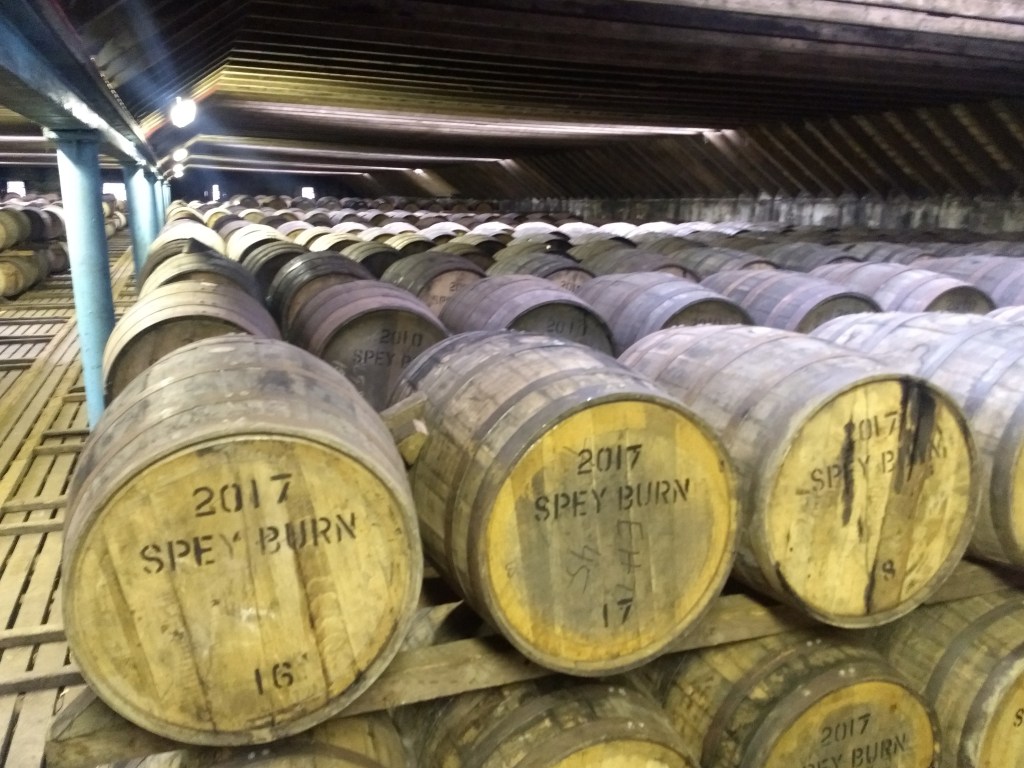
We soon checked out the warehouse, where a surprise was waiting for us: nope, unfortunately we didnโ€™t sample some casks (we were hopeful, considering the hefty 80 quid tickets), but it was almost as good: we had a sample of their 125th Anniversary release, a single cask bottling from a 2nd fill ex-bourbon barrel vintage 2007, similar in style to the one we had but much more balanced, tropical and creamy. A truly delicious dram, probably the best one we tried during the festival.

The last part of the experience was the tasting of their core range, back at the bar. We had four generous drams of their non-age statement (NAS, but they told us it should be about 7-8y) expression Bradan Orach (40%abv, refill ex-bourbon), the 10y (again kind of introductory, 40%, 90% ex-bourbon and 10% ex-sherry casks, mostly second fill), but finally the two gems: the 15y (ex-bourbon before a 2-3y finish in ex-sherry Miguel Martinez casks) and the 18y (14y in ex-bourbon casks, then 4y in second fill oloroso casks), both 46%, natural colour and not chill-filtered. They were both super tasty: Gianluigi preferred the former, Teresa (as most people on the tour) the latter.

You can’t really tell from this picture how nice the bar is…

At this point youโ€™ll be wondering: wait a minute, if they are only open occasionally, how come they have a bar for tastings and a nice shop? Well, as a matter of fact, before the festival weโ€™ve been told by a birdie that Speyburn might have been preparing to open to visitors permanently. At the Spirit of Speyside 2023 they won the award as โ€œbest new experienceโ€ and this might have given the company the nudge to open permanently (although, more realistically it was already planned and not depending on the awardโ€ฆ). Bottom line is that, good news: starting August 2023 (coincidentally the time of writing), you can visit them and go check their very fascinating old drum maltings for the very reasonable price of ยฃ20 (see the link below).

So, overall, it was a great visit (one weโ€™d do again), and as we said earlier, a true deep-dive into the history of whisky production in Speyside. A bit pricey maybe, but at least the tasting was generous (5 healthy drams and a taste of the newmake), unlike some other we visited for the same price.

For the evening we drove first to Aberlour for a chit-chat with Matteo at the Speyside Whisky Shop (from which he just moved on as we are writing), and then to Dufftown where we spent the night. We parked near the Mortlach Hall, which was super quiet. We had dinner at the Commercial Hotel, which has moved the restaurant to the former function hall, together with some tasty Three Ships South-African malts (produced at the James Sedgwick Distillery), very rare to find in Scotland. Not that we were bored of Speyside malts, but it was good to try something different! Slainte!


The Speybirn Distillery Tour (Spirit of Speyside)

Price: ยฃ80.00 pp (April 2023, but now – August 2023 – they’re open to the public and it’s ยฃ20.00)

Duration: 2hr

Tasting: 5 drams, Speyburn 125th Anniversary (vintage 2007, 15y, refill ex-bourbon barrel, 62.6%, NC, NCF), Bradan Orach (40%), 10y (40%), 15y (46%, NC, NCF) and 18y (46%, NC, NCF)

Target: whisky enthusiasts

Value for money: not great

Highlights: the old drum malting equipment

Recommended: better than others, but still hard to justify at this price

Links: https://www.speyburn.com/, https://www.spiritofspeyside.com/


#31.6 Spirit of Speyside 2023

The beast of Dufftown: Mortlach


TL;DR: our fourth day at the festival started with a classic, a distillery particularly known for their complex distillation process: Mortlach. The visit was very interesting indeed, and the distillery manager Kirstie didnโ€™t shy away from nerdy details. 

(missed Part 5/Part 4/Part 3/Part 2/Part 1?)

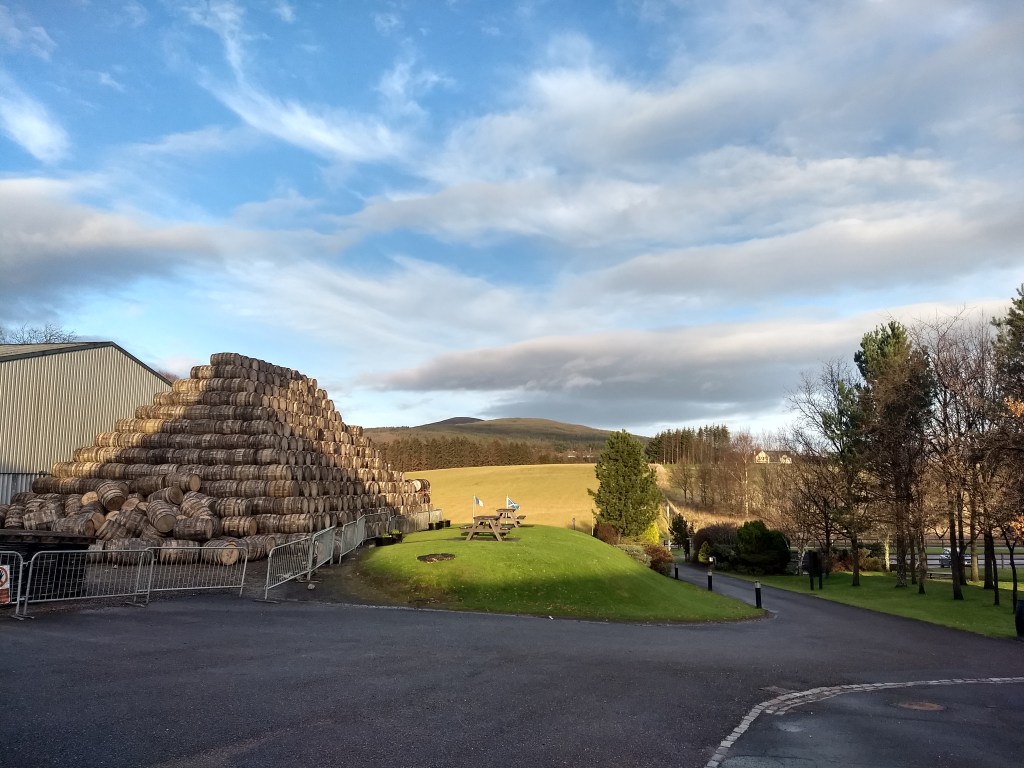
On Sunday morning the sky was still overcast, it would start raining later in the day eventually. Oh well. After breakfast we wrapped up all our stuff: it was the last night in the camping, the following and last night of the holiday we would wild camp again, although we hadnโ€™t figured out where yet. We left the camping driving towards Dufftown, in a backroad that goes past the back of the Speyside Cooperage, from which you can admire their casks pyramids. Being Sunday morning, Dufftown was very quiet, and not all cafes were open yet. We managed to park on the main road, in front of the local CoOp, and tried hunting for a coffee. After finding one, we walked our way towards our first appointment of the day: Mortlach distillery, the so-called beast of Dufftown.

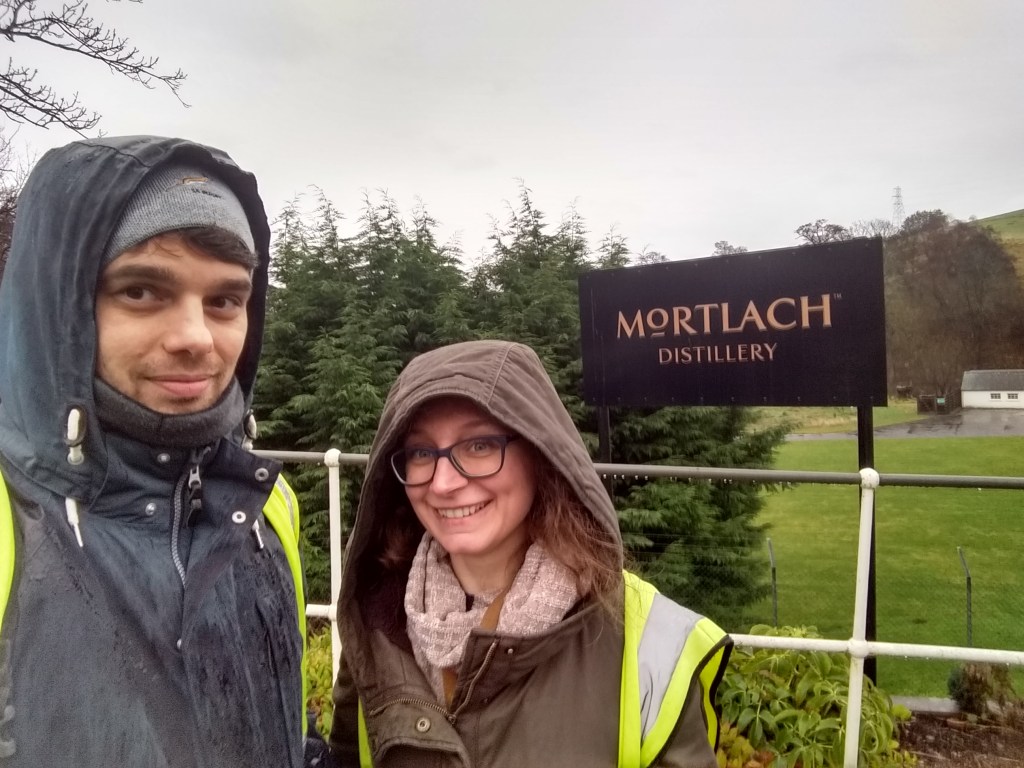
It is a very old one, founded in 1823 after the Excise Act, and it was the only one in town until their manager at the time, William Grant, left to found Glenfiddich. In 1897 the distillery was expanded, and thanks to the work of the famous architect Charles Doig, the pagoda roofs were added. It was acquired by John Walker & Sons in 1923, but the company soon merged with Distillers Company Limited in 1925 (then United Distillers in 1987, Diageo from 1997). Before 2014, the only official bottling of Mortlach was the 16y โ€œFlora and Faunaโ€, now discontinued and dearly celebrated (like most things of the past, the abuse of โ€œโ€™member-berriesโ€ is widespread in whisky-landโ€ฆif you donโ€™t know the reference, check South Park season 20).

A core range was introduced in 2014 (with some controversial 50cl bottles) and revamped in 2018, while the current age-stated range includes a 12y (Wee Witchie), a 16y (Distillerโ€™s Dram), a 20y (Cowieโ€™s Blue Seal) and a 14y travel retail (Alexanderโ€™s Way), plus the occasional Special Releases. The newmake spirit is mainly filled in ex-sherry casks, although you can find some independently bottled ex-bourbon matured expressions (we have an 11y from Signatory Vintage, a marriage of 2 ex-bourbon hogsheads, which is quite tasty). Mortlach whisky is quite famous to be meaty, and thus considered a malt for seasoned drinkers. Fun fact, the 16y (very decent in our opinion) worked quite well every time weโ€™ve given it to friends (both beginners and casual whisky drinkers).

At the distillery we were given a welcome cocktail, a Mortlach-based Old Fashioned (this time with regular angostura, not the orange one like at Dailuaine), and the distillery manager, Kirstie, introduced herself. Sheโ€™s a graduate form the Brewing and Distilling Master at Herriot-Watt University, and of course extremely knowledgeable: her explanations definitely gave value to quite a pricey experience. We also bumped into a couple of barflies at the tour, Angus and Graham, met back in November at the Aqvavitaeโ€™s Blind Challenge in Glasgow.

After the introduction, we started the proper tour: we moved outside in the courtyard, and then near the milling room, which hosts an old red Porteus mill. A notable difference was that they take a smaller cut of flour in their grist (8%) compared to other distilleries (usually 10%). In our understanding, one of the reasons is that their water to grist ratio is higher, 3.8 instead of 3.6. The mashtun looks very new, made of stainless steel and closed, with the usual window to check its inside. They only have two water runs instead of three, with the second being warmed up to get the sugars that are usually obtained in the third run (lasting 6.57 hours in total).

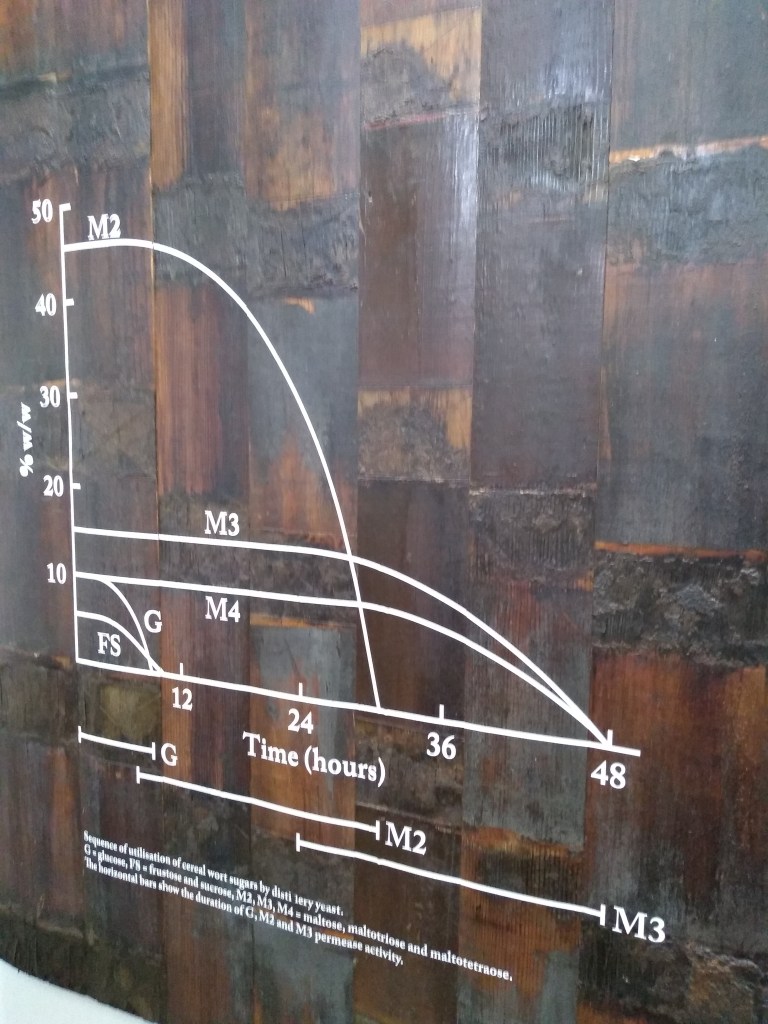
The walls of the fermentation room, where six Douglas Fir washbacks are located (wooden because of a combination of aesthetics and convenience, since they can be disassembled unlike stainless-steel ones, all replaced in 2016), are decorated with some nerdy facts about whisky making, like the formula to calculate the % abv of the wash using the gravity readings, and the graph showing the trends of different types of sugars digestion during fermentation. Their fermentation time is usually between 55 and 59 hours, never less than 50, and they work with yeast that can survive higher temperatures, around 35C.

Knowledge pill on the wall # 2.

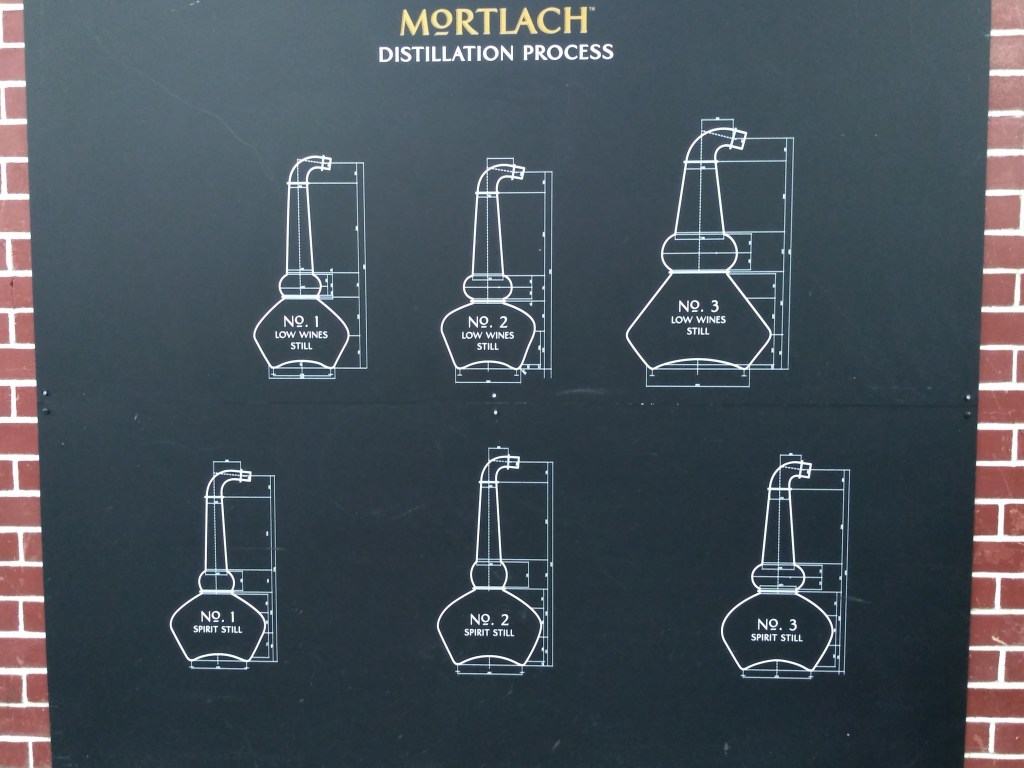
We then moved to the still room with its 6 stills (3 wash- and 3 spirit-), very unusually of different shape and size. The distillation is very complex: wash-still #3 and spirit-still #3 are paired, and they work like in a regular distillery. The other wash-stills (#1 and #2) work together, but their distillation is (unusually) divided into two cuts, the first goes into spirit-still #2, while the second (heavier) gets re-distilled three times (with the other distillations feints) in the other spirit still, the Wee Witchie, and the cut is only taken every third distillation. If you are confused, no worries, we are too, but the idea is to provide different characters to the newmake spirit. Someone in the past made the calculation, and it turned out the spirit is distilled 2.81 times – it would be nice to see those equations (nerd alert! Nerd alert!).

As we moved outside, we could admire one of the other characteristics that made Mortlach popular: the 6 worm tub condensers, one for each still. It is believed this is what provides meatiness to the spirit. They are made of wood, except one which is made of metal because the wooden one started leaking – they told us it might be replaced at some point with a new wooden one. They take the cooling water for the wormtubs from the river Dullan, one of their 6 sources of water for all the process: remember that they produce between 3.5 and 4 million litres of alcohol per year! Finally, we ventured in the warehouse, where casks from many distilleries were resting, including many non-Diageo ones, surprisingly. Kirstie explained us the processes happening in maturation: additive (compounds from the wood affect the liquid), subtractive (compounds from the liquid are removed by the wood contact) and oxidative (the contact with air changes the liquid, as you will know if you ever had a bottle open for more than 4-6 months).

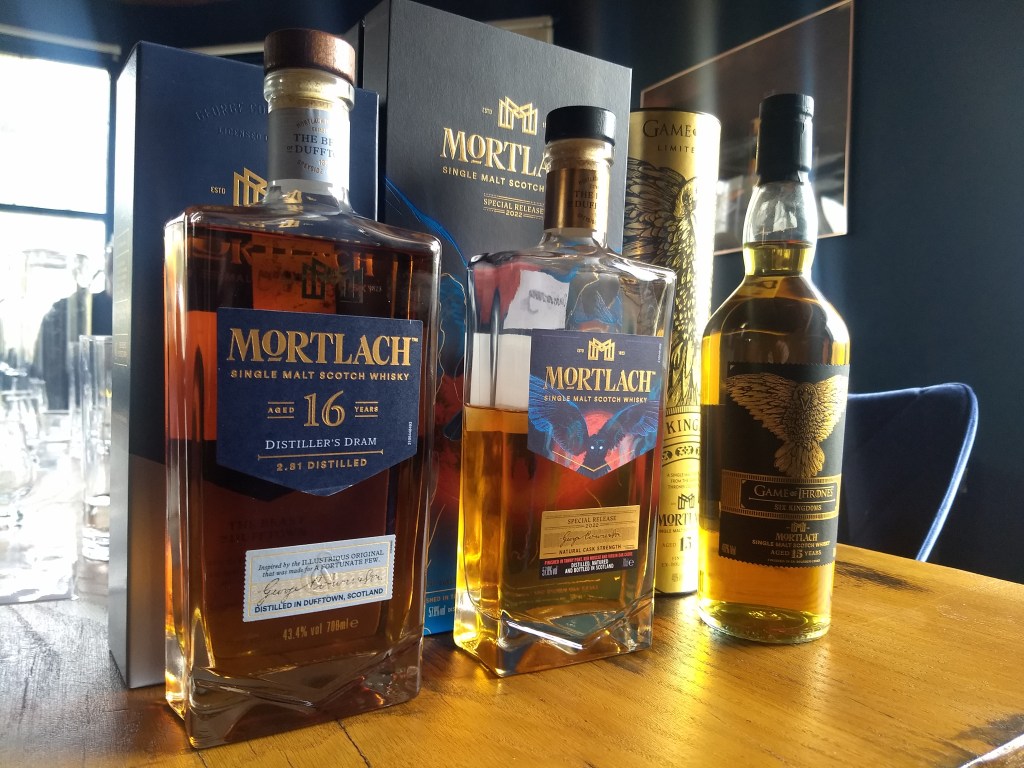
Back outside, Kirstie showed us where some buildings used to be, as well as their still existing but currently unused malting floor, on the other side of the road (at the moment part of it is used as deposit for the Dufftown Whisky & Heritage Centre). We went back to the meeting room to enjoy the (stingy, considering 80 quid) 3-dram tasting. These were the flagship Mortlach 16y (43.4%), Mortlach 15y Game of Thrones Six Kingdoms (finished in ex-bourbon casks and bottled at 46%) and a non-age statement (NAS) from the 2022 Special Release. Weโ€™re quite familiar with the 16y (we used to have it, and gifted some), and we had tried the 15y GoT once (nice to revisit), so we were very curious about the third, mostly because the RRP was insane for a NAS, well above ยฃ200. This expression was finished in Tawny Port, Red Muscato wine, Virgin Oak casks and bottled at cask strength (57.8%). Turned out, it was nice but not mind-blowing by any means, as youโ€™d expect considering the fanfare.

Overall, this was a great visit, and Kirstie contributed to make it as nerdy as expected, for such a peculiar distillery like Mortlach. The price is a bit steep, ยฃ80 for a tour and 3 drams (+ cocktail), so itโ€™s hard to recommend it. However, if youโ€™re at the right moment of your whisky journey, it is definitely one to visit, despite the price. For us, it was worth it, and we look forward to more deep dives like this.


The Mortlach Distillery Tour (Spirit of Speyside)

Price: ยฃ80.00 pp (April 2023)

Duration: 2hr

Tasting: 3 drams and a welcome cocktail, Mortlach 16 (43.4%), Mortlach 15 the Six Kingdoms (46%), Mortlach Special Release 2022 (NAS, 57.8%)

Target: a bit more seasoned whisky geeks and nerds

Value for money: not great

Highlights: the detailed tour and explanation of such a complicated distillation process

Recommended: only if you’re quite ahead in your whisky journey (see last paragraph above)

Link: https://www.malts.com/en-gb/brands/mortlach, https://www.spiritofspeyside.com/

#27.3 Speycation

From Glenallachie to the
blend of Doom


TL;DR: Saturday morning we visited a distillery that is special to us, Glenallachie. After an amazing tour and a few drams, we spent the rest of the day walking around Dufftown, enjoying the sun. We finished the day with a sip of the infamous Blend of Doom and a pizza at the Craigellachie Lodge.

(missed Part 2/Part 1?)

That Saturday morning was a very nice one, warm and shinyโ€ฆWeโ€™re told thatโ€™s unusual for Speyside in October, but itโ€™s not the first time we got one. After breakfast, we jumped on the bus towards Aberlour (the village, not the distillery again) to reach our next destination: GlenAllachie distillery!

Such a beautiful day for a distillery visit!

We were super excited about that. When we visited it in August 2021, on a much colder and wet day (so much that we couldnโ€™t light up our BBQ in the evening!), it wasnโ€™t possible to tour the facility because of Covid, so we only had a tasting while the guide played us an interesting video. It wasnโ€™t one of those โ€˜letโ€™s celebrate Scotlandโ€™ videos with deer, waterfalls, glens, mist, etcโ€ฆ, but literally a worker filming and explaining production with their phone, so much more interesting in our opinion. This time, we could finally visit production. And mostly, we really like their stuff. We know some whisky geeks are put off by the big use of secondary maturation and finishes, but we love their bottlings anyway and we regard the whisky as top notch, so far it never disappointed.

That morning the distillery was (almost) all for us. Sue, Brenda and Karen warmly welcomed us with a dram, a special one to start with, one we hadnโ€™t tried before: a 15y GlenAllachie finished in Virgin Scottish Oak wood (48%, non-chill filtered, NCF, and not artificially coloured NC). Then, they split us into two groups, to have a bit more space while wondering around: our group started with the tour. We had a look at the usual Porteus Mill, and the huge stainless steel closed mashtun.

Milling, safely.

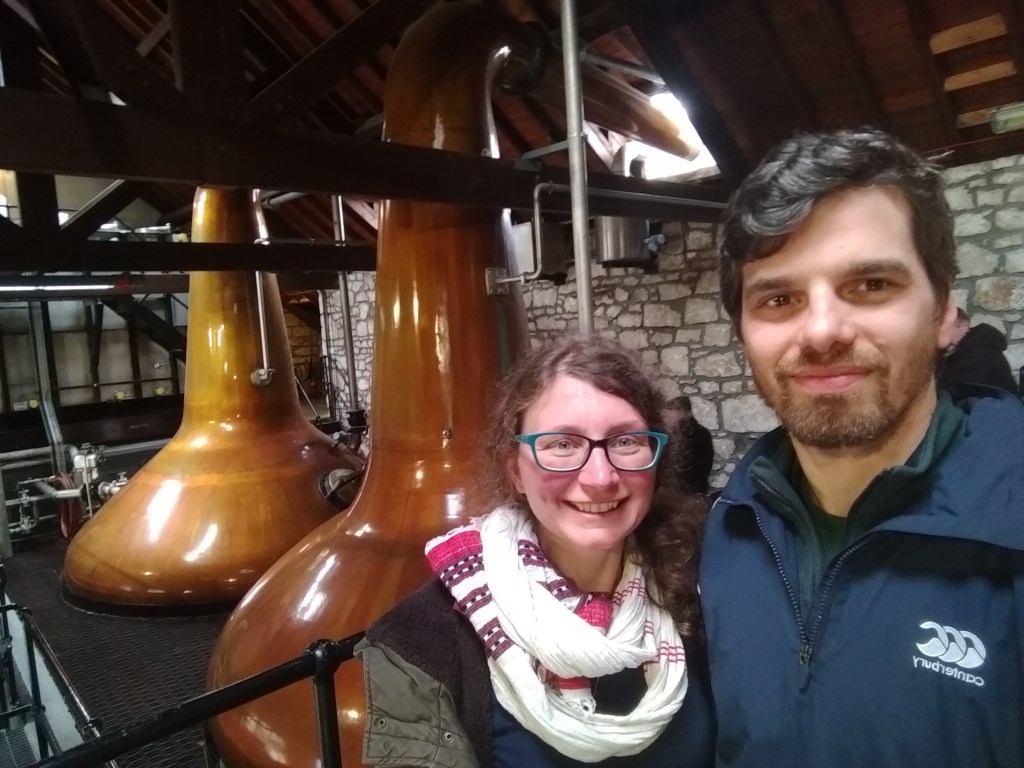
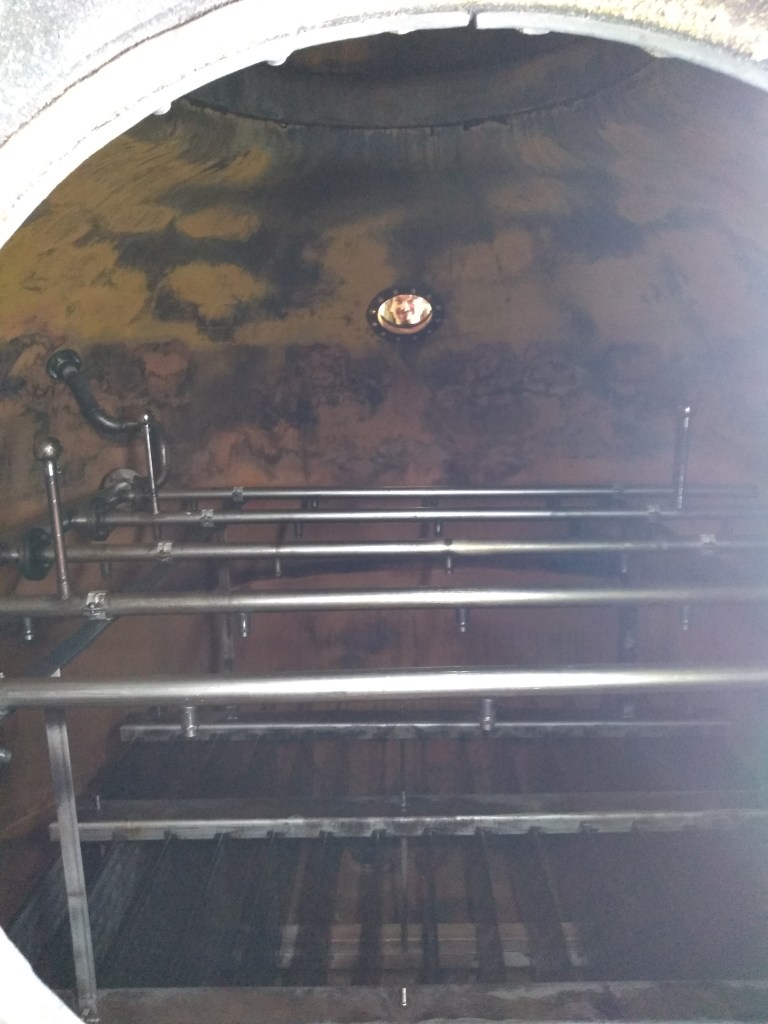
The washbacks are made of steel as well, and there are 6 of them. Currently the distillery is running way below capacity, a bit less than a half in our understanding. This started when Billy Walker bought the distillery in 2017, to improve the produced spirit. In particular, fermentation is now about a week long, and they donโ€™t work during weekends. In the still room, two wash stills and two spirit stills were off for the weekendโ€ฆso we could take a sneak peek inside (just another occasion for a silly photo). Finally, we went to the warehouse to admire the maturing stock and the huge variety of casks (wine, various size of sherry and bourbon, etc.); they laid out not a typical dunnage warehouse, but a racked one.

Fun or creepy? You decide.

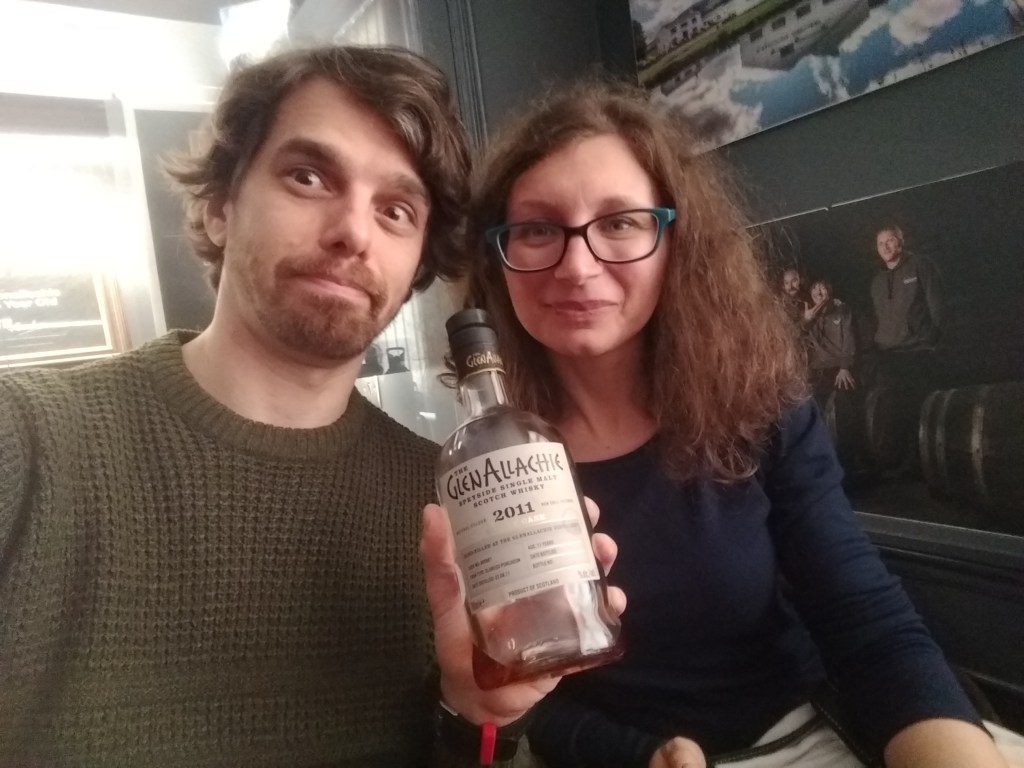
Back at the visitor centre, we had another two delicious drams in the tasting room: the 16y Present Edition (48%, NCF, NC, Mizunara and Virgin oak) released in celebration of Billy Walker 50 years in the business, and the Glenallachie 21y Batch 2 (51.1%, NCF, NC). Well, it looked like that was it. Instead, we moved upstairs to join the other group, to have two last drams all together. Such a nice touch! The two drams were the bottle-your-own (or distillery casks) on sale at the shop at the time: an 11y ex-oloroso puncheon (60.5%, NCF, NC) and a 16y finished in refill ex-bourbon barrel which held peated whisky before (59.5%, NCF, NC), both amazing (and of course, we came back home with one)!

Overall, this was one of our best distillery tours ever: Sue, Brenda and Karen were all very funny and knowledgeable, and we could see how they love their job. Karen even told us that she followed Billy Walker after he acquired the distillery, after Glenglassaugh was sold to Brown Foreman (together with GlenDronach and Benriach).

So delicious!

Here, we have to make a little digression. Speyside is by far the biggest whisky region, not by size but by number of distilleries and production quantity. Therefore, in the planning phase of the trip, at first it looked like we had a plethora of possibilities that we wouldnโ€™t know where to start, like for a kid going to Disneyworld or Legoland. Unfortunately, it didnโ€™t go down like that, and according to Justine filling the schedule was much harder than prevented. In some cases, she was told that there was personnel shortage. Others still have to come back to her (6 months afterโ€ฆahahah). This felt really weird and very much in contrast with our first EWG trip to Campbeltown – the smallest whisky region, and by far the smallest production (according to the 2023 Malt Whisky Yearbook the 3 distilleries combined donโ€™t get to 2.5 million litres per annum of alcohol), so with a limited number of available activities. Still, despite this and Covid restrictions at the time, we managed to have a very full schedule fairly quickly (Cadenheadโ€™s warehouse tasting, Springbank, Glengyle, and tastings with Mark Watt from Watt Whisky, Ian McAllister from Glen Scotia and Kyntire gin).

Things you see if you take a walk in Dufftown.

We discussed a few times about this โ€˜Speyside struggleโ€™ in the group, and probably the main cause was the lack of personnel indeed (thanks Brexit, โ€œthe gift that keeps givingโ€โ€ฆ), but we suspect that some of them just couldnโ€™t be arsed to organise an open day for 22 thirsty whisky enthusiasts. A bit unexpected, but in the end we managed to have a great holiday anyway, as Justine came up with some great surprises for us.

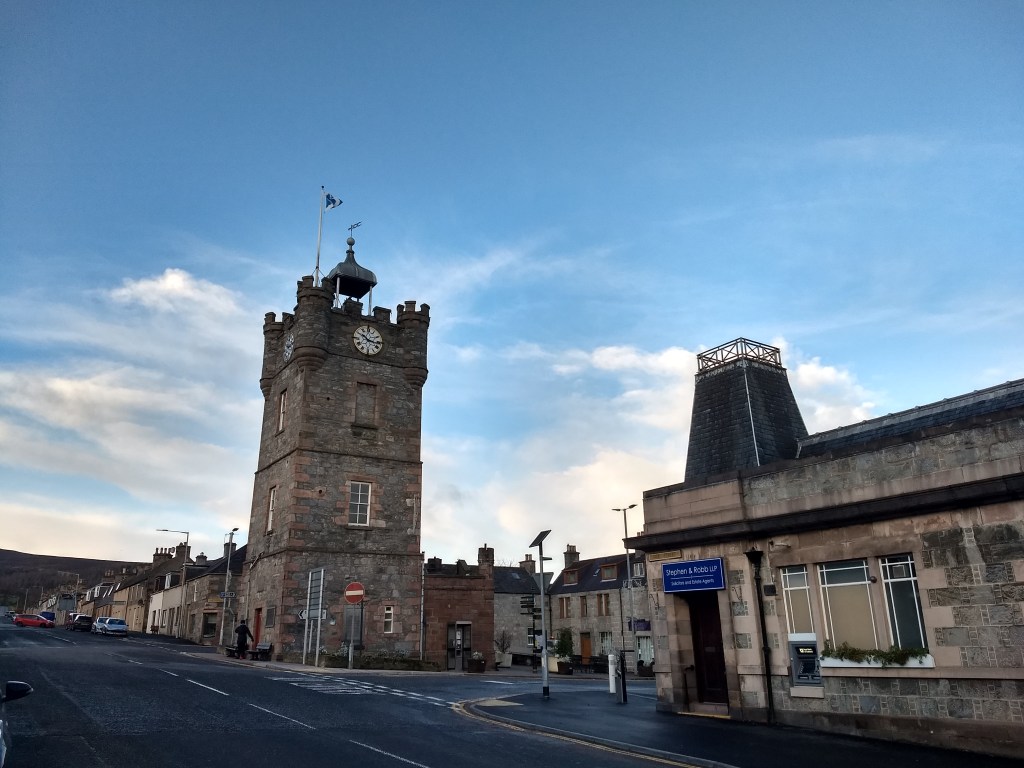
Anyway, all this to say that, as a matter of fact, the Saturday afternoon was free from whisky activities, and we decided to spend it in Dufftown. After a brief lunch in a cafรฉ near the clock tower (characterised by some quite rude staff), the day was still so nice that a group of us decided to walk around, and we basically repeated Michelleโ€™s walking tour we did in 2019: from the clock tower to Dufftown distillery, then Mortlach, Glendullan and we finished off at Glenfiddich. This time, however, we checked out Balvenieโ€™s castle, which unfortunately was still closed (together with a worrying number of Historic Scotland sites, we later found out). Here our pal Joe opened a Glen Scotia Double Cask rum finish, a novelty of that period, and shared it with us.

Balvenie castle, not the distillery.

Back to the bus, we moved to Craigellachie, and as we had some time to kill before dinner at the Craigellachie Lodge, we went down to the Speyโ€™s bridge where Justine had something โ€œvery specialโ€ ready for us: THE BLEND OF DOOM!!!

That’s the Blend of Doom for you.

This is a bottle she filled throughout the years with all the whisky samples she tried but didnโ€™t (or couldnโ€™t) finish. It was very funny to see people faces – to Gianluigi it tasted like old bathroom cleaning products, but most people went directly to โ€œpissโ€. It was truly dire, and almost felt like an initiation ceremony for the Edinburgh Whisky Group. Fortunately, the pizza together with a pint and a dram, bingo and music set things right again in our mouth, so we could go to bed happy again.  


GlenAllachie Connoisseurs Tour*
*ours was a bespoke tour, but from the description and price it looks very similar to this one

Price: ยฃ50.00 (Oct 2022, now ยฃ60)

Duration: 2h

Tasting: 5 drams, 15y Scottish Oak (48%), 16y Mizunara Billy Walker 50th year anniversary (48%), 21y Batch Two (51.1%), Vintage 2011 11y distillery cask ex-oloroso puncheon (60.5%), Vintage 2006 16y distillery cask ex-peated bourbon barrel (59.5%)

Value for money: very good

Highlights: the guide team was superb, knowledgeable and very funny!

Target: whisky enthusiasts and geeks

Distillery exclusives: there are always two distillery cask bottle-your-own available

Recommended: absolutely!

Link: https://theglenallachie.com/


#23.2 On the run again: Dramathon 2022


Back to the Glens
(Grant and Garioch)


TL;DR: The day after the Dramathon we took advantage of being in Speyside to visit two distilleries we’d only had tastings at: Glen Grant, in Rothes, with their unique rectifiers, and Glen Garioch, in Oldmeldrum, which has been recently renovated. Both worth returning. 

(missed Part 1?)

So, after a (not so) resting sleep in Dufftown (guess why), we found ourselves with a spare Sunday (the drive home is about 3 hours only): plenty of time for some whisky stuff! Deciding which distillery to visit in Speyside and its surroundings, however, is becoming more and more difficult. Despite being the biggest single malt producing area, most distilleries are closed to the public, and a bunch of them are closed on weekends. Letโ€™s also say that we already had the opportunity to visit a few of them (ehm, ehm, ehm, ehm).

Nevertheless, because weโ€™ve been there also around Covid times, we only saw the visitor centre or the tasting room of some distilleries, so this was a good occasion to catch up with the production tours we hadnโ€™t done yet. First off: Glen Grant! Weโ€™d been there for the first time in July 2021: at the time we could only visit their marvelous Victorian gardens (if itโ€™s a beautiful day, they are worth the price of the ticket alone), have a quick tasting at the shop, and an Illy espresso at the cafรฉ (spoiler: this time the cafรฉ was closed, so no Illy, ouch!).

It’s dram o’ clock.

The distillery is owned by the Campari group, reason for the Italian flag in the courtyard: after Wild Turkey, this is the second distillery we visited from this owner. Glen Grant is in Rothes, almost in front of the famous copper still-producer Forsyth (also, where Caperdonich, nicknamed Glen Grant 2, was located). Founded in 1839, except for the modern and polished shop/visitor centre, it has maintained a classic distillery feel. A notable fact is that their master distiller, Dennis Malcom, is one of the longest serving workers in the whisky industry, with over 60 years of experience under his belt: impressive!

The guide of the day was Kirstie, very knowledgeable and professional. Since it wasnโ€™t raining, her explanation of the history started in the courtyard. We swiftly (or schwifty) moved to production, where we went through the usual path: milling, mashing (closed stainless still mashtun), and (wooden) washbacks.

Mashing in progress (looks like the first water).

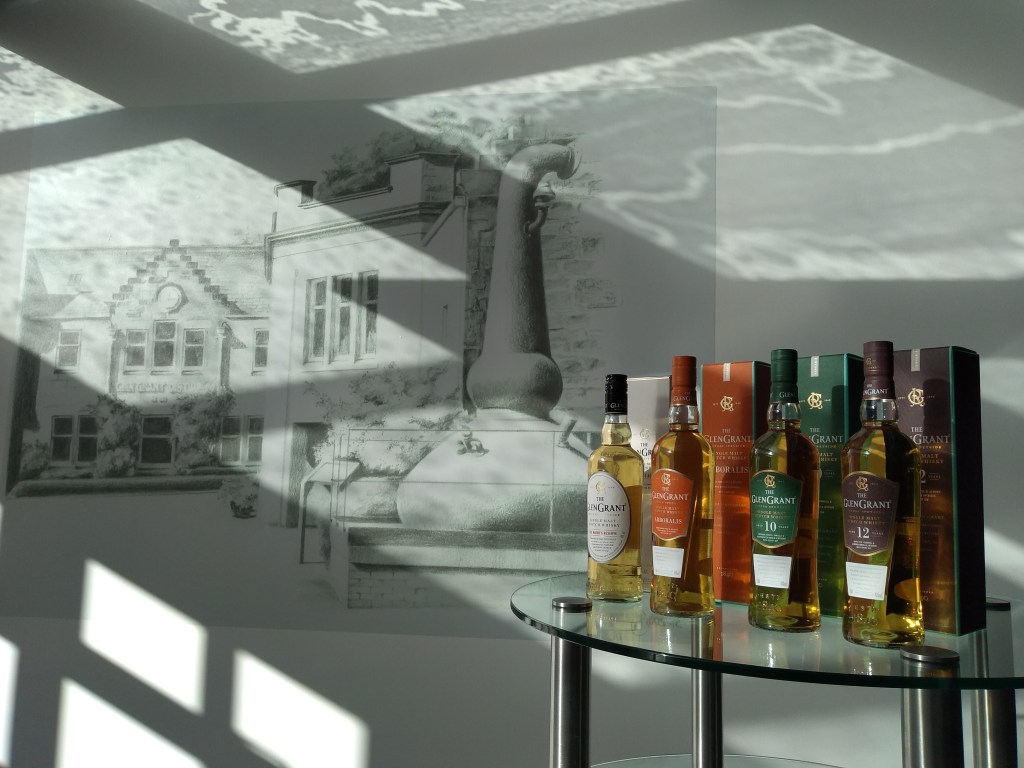
Here came the interesting part: the still room. Like Glenfarclas and others, the room is separated from the rest of the production. As we walked in, we noted the curious shape of the wash stills, with a copper cylinder-ish bulge at the bottom of the neck, rather than the usual round one. The spirit stills have a classic round bulge, but the most fascinating characteristic, however, is the rectifier installed at the end of the lyne arms, looking like another small still. This was an intuition by John โ€œthe Majorโ€ Grant, who took on the business in 1972, and their purpose is to allow only the lightest vapor to be condensed. To produce a light spirit, they also set quite a short and high cut for the spirit heart: from 73% down to 68%.

Have you seen a rectifier like this before?

We then visited the warehouse before the self-guided tasting at the visitor centre. At the time of booking, we asked if we could pay more to upgrade our drams: not because they are bad (because they are not, in our opinion), but just because we had had the very same drams during our 2021 visit (Arboralis and 10y). Unfortunately, it wasnโ€™t possible, which was a pity because it would have been a simple but relevant improvement to the experience, in particular for more experienced drammers (other distilleries do it), but oh well.

Bottles on display (we tasted the middle ones).

After sipping (Teresa) and nosing (Gianluigi) the two drams, we went back to the car and drove towards the Aberdeenshire for the second distillery of the day. While driving we did some distillery spotting, first Glentauchers and then Strathmill, in Keith, reached after a nice short walk along the river Isla (the day was truly gorgeous!).

Not so hidden Strathmill warehouses.

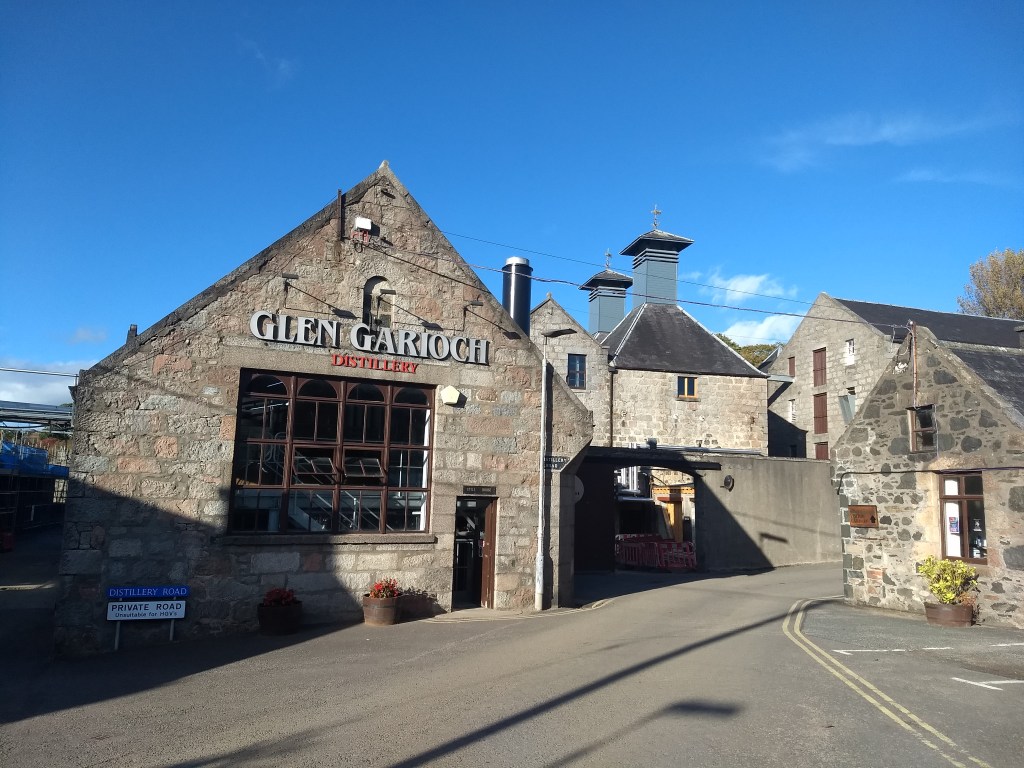
Glen Garioch is in a very different setting: even older than Glen Grant (it was founded 1797), it is almost stuck in the village of Oldmeldrum (near Inverurie): it looks like the village grew around the distillery. Funnily, it was the distillery we visited after our 2021 Dramathon as well, but at the time it wasnโ€™t possible to visit the production due to a combination of Covid safety rules and ongoing renovations, so we were quite excited about the tour!

Look what’s on Distillery Road!

Our guide Iona started the tour from the new malting floor, one of the parts under renovation the previous year. There was one originally, but it was dismissed back in the day when industrial maltings became too convenient to be ignored. This happened across the entire industry, so that now only a handful of distilleries malt their own barley in a malting floor (Benriach, Balvenie, Kilchoman, Laphroaig, Bowmore), and to our knowledge, only Springbank/Kilkerran do it for the 100% of their production (waiting for Dunphail), so bravo Glen Garioch! They also re-introduced the use of peat in their kiln, to get peated malt from time to time.

The renovated malting floor.

We moved on to follow the phases of whisky production: milling (classic red-painted Porteus), mashing (again, closed stainless steel mashtun), and fermenting (stainless steel washbacks). In the still room, we saw the other result of the renovations: they removed one of their three stills, and the spirit still is now directly fired (a flame is burning below, heating the still, instead of the usual steam coil inside it). Again, this modification is a step back into the past of whisky production, as direct-fire stills arenโ€™t usually as efficient as steam coils. Their cut is wide, 73% to 63%, which contributes to giving body to the spirit.

Directly fired, trust us!

This is reflected in the malts that we sipped in the tasting room, back at the visitor centre (after a wee tour in one of the warehouses). The 12y is a solid whisky, but the Foundersโ€™ Reserve (NAS) is good too. Similar to last year, the visitor centre offers a choice from their core range, the Renaissance range (a series of four expressions, the youngest 15y and the oldest 18y), the American cask trilogy (single casks sourced in Missouri, Minnesota and Kentucky), the virgin oak finish (a vatting of multiple casks), and a couple of distillery exclusives (see below).

The Spirit is flowing!

Again, another very interesting visit, to a distillery that made efforts to bring back some features of the original production. We know that, with the re-discovery of flavours in single malts, thereโ€™s a question about the effects of each part of production. While most of the flavour has been attributed to casks, now people started exploring the effect of other factors, such as malting and distilling, and doubts about more recent modernisations have arisen. For us nerds and geeks (and generally consumers), this exploration is quite exciting as it brings us a lot of new (or old?) flavours!

The tasting.

Until next time, slรกinte!


Glen Grant Tour

Price: ยฃ7.50 pp (October 2022), including the Victorian gardens

Duration: 1hr 10min

Tasting: 2 drams, Glen Grant Arboralis (NAS, 40%) and 10y (40%)

Target: Anyone, but geared towards tourists and novices

Value for money: Very good

Highlights: The still room and the rectifiers

Things we did not like: The very limited tasting optionsโ€ฆor โ€œoptionโ€

Distillery Exclusive: Glen Grant 13y (2008-2021), 56.5%, single cask (NCF, NC) 50cl for ยฃ120

Recommended: For the price, definitely yes

Link: https://www.glengrant.com/


Glen Garioch Founder’s Tour

Price: ยฃ15.00 pp (October 2022)

Duration: 1hr

Tasting: 2 drams, Foundersโ€™ Reserve (NAS, 48%, NC, NCF) and Glen Garioch 12y (48%, NC, NCF)

Target: Anyone, but whisky geeks might appreciate it more

Value for money: Good

Highlights: The new malting floor and the direct-fire stills

Distillery Exclusives: Glen Garioch 1991 (single ex-bourbon cask, 46.4%, NC, NCF, ยฃ325) and Sherry Cask 2009 (1st fill ex-sherry butt, 58.3%, NC, NCF, ยฃ130)

Recommended: Yes

Link: https://www.glengarioch.com/

#23.1 On the run again: Dramathon 2022


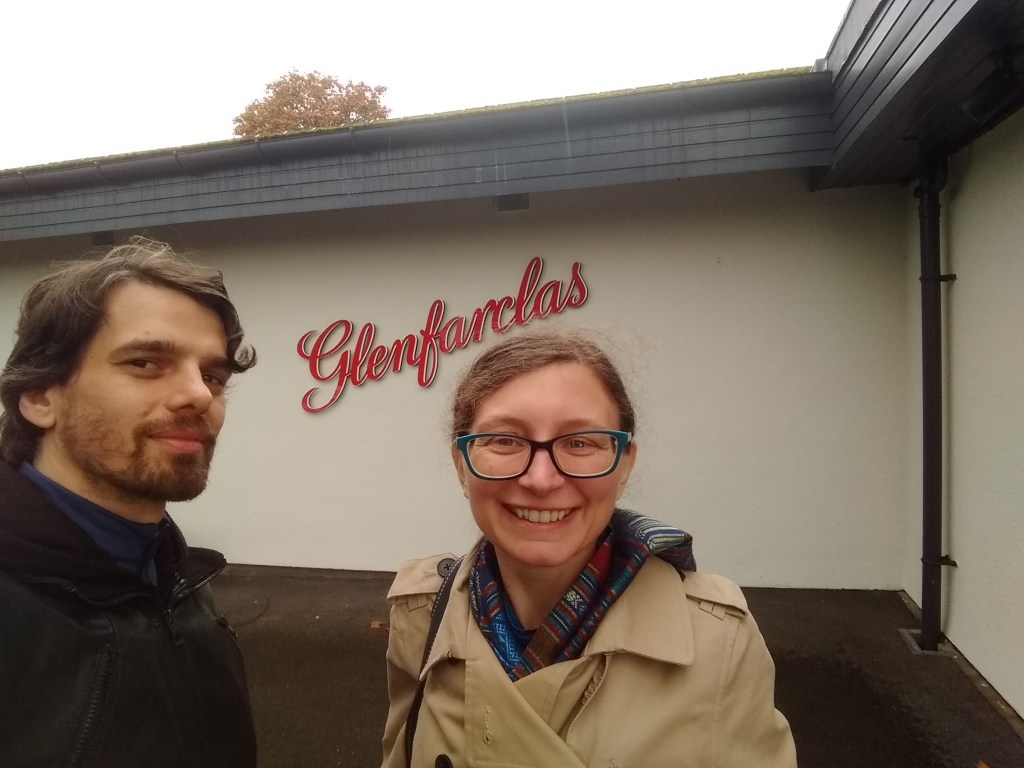
Visiting Glenfarclas before a run-y day


TL;DR: Oops we did it againโ€ฆthe Dramathon! After all the fun we had in 2021, back in October 2022 we participated for the second time. This year we both ran the half-marathon, always quite a challenge, but we rewarded ourselves with 3 distillery visits: first off, Glenfarclas! 

First of all, Happy New Year! We hope you had a great start of 2023 and that your year will be as good as you wish, full of joy and (possibly) great drams! We just started a 4-week dry January-ish which, after a couple of weeks back in Italy and the New Year celebrations, we both felt was much needed.

Last year was full of drams and great whisky experiences, so for the first post of 2023 we are going back a few months, in mid-October. Following the great experience we had in 2021, last year we decided to run the Dramathon again. However, this time we both decided to run the half-marathon: Gianluigi with the objective of improving his 2021 timing, Teresa with the objective of completing her first long race.

Similarly to the previous year, we left on the Friday morning to sneak in a distillery visit in the afternoon. You know, while in Speysideโ€ฆBecause of our multiple trips, there are no many distilleries left to visit in the area, but we were still missing a very special one: Glenfarclas!

This distillery is famous for a few things: still family owned, it was the one that converted Pip Hills, the Scotch Malt Whisky Society founder, to whisky appreciation, which in turn led to the Society foundation. They mature almost all their stock in ex-sherry casks (a few exceptions in ex-bourbon are mostly for independent bottlers), and all their doors are painted in red (and no, we didnโ€™t want to paint them black).

Wee stop to nose around Ballindalloch.

The drive there was mostly uneventful. We only realised too late that on the road from the A9 exit to the distillery, the main Speyside road, there are very few places where you can get a warm meal. Fortunately, another distillery came to our help: the Lagmore Cafรจ at Ballindalloch was open, and it was a very nice one too: lovely staff, good food and reasonable prices (weโ€™ll be back!).

Unfortunately, the distillery is open to visitors only during weekdays, so itโ€™ll have to wait (and tours are a bit pricey too). After lunch, we arrived at the distillery and checked in. We were a bit early, so we had time to scout the shop: we were glad to see that they are maintaining reasonable prices (in spite of the increase of their 25y from ยฃ125 to ยฃ220) and that they are quite competitive compared to the speciality shops prices.

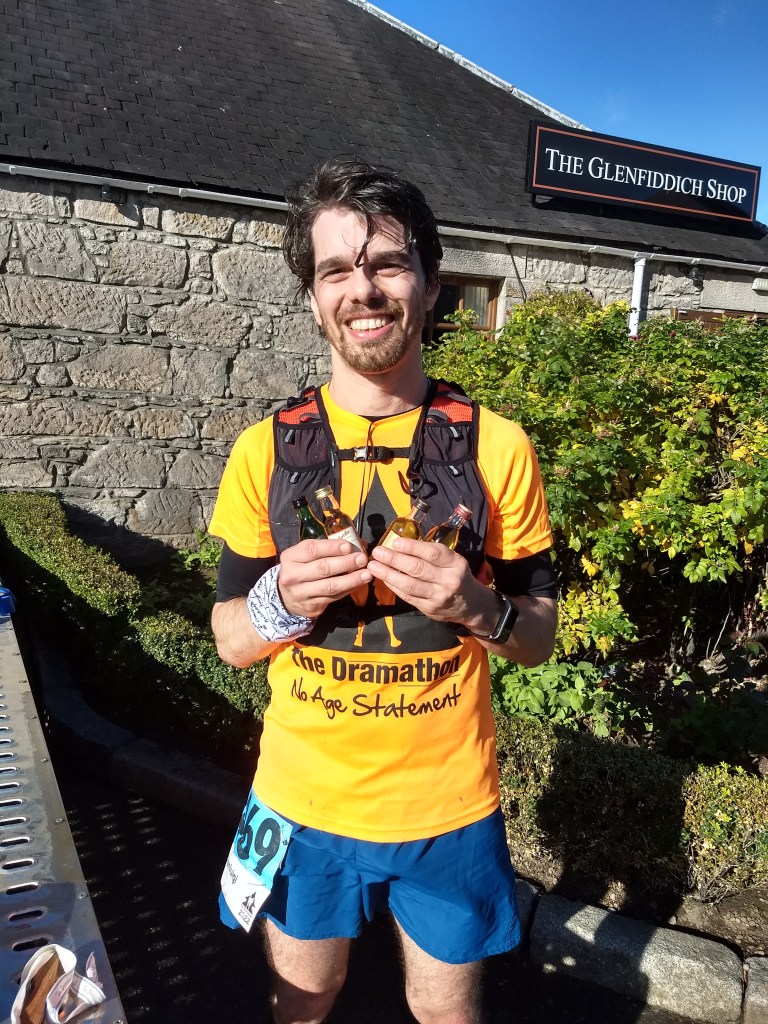
First distillery visit of the weekend, yay! (Yes, one of us needs a haircut.)

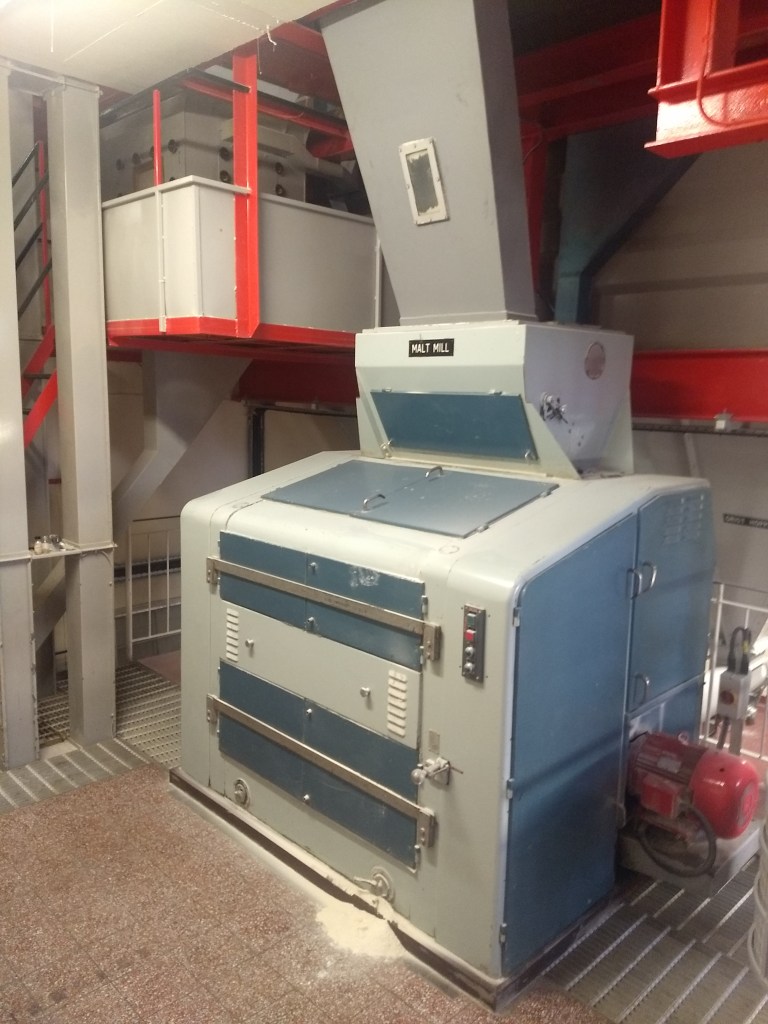
The guide of the day, Rosie, started the tour in the milling room, where barley is grinded into grist (with a usual component of 10% of flour and 20% of husk), in this case by Milly the mill, a more modern looking machine than the usual Porteus ones.

Not a Porteus mill.

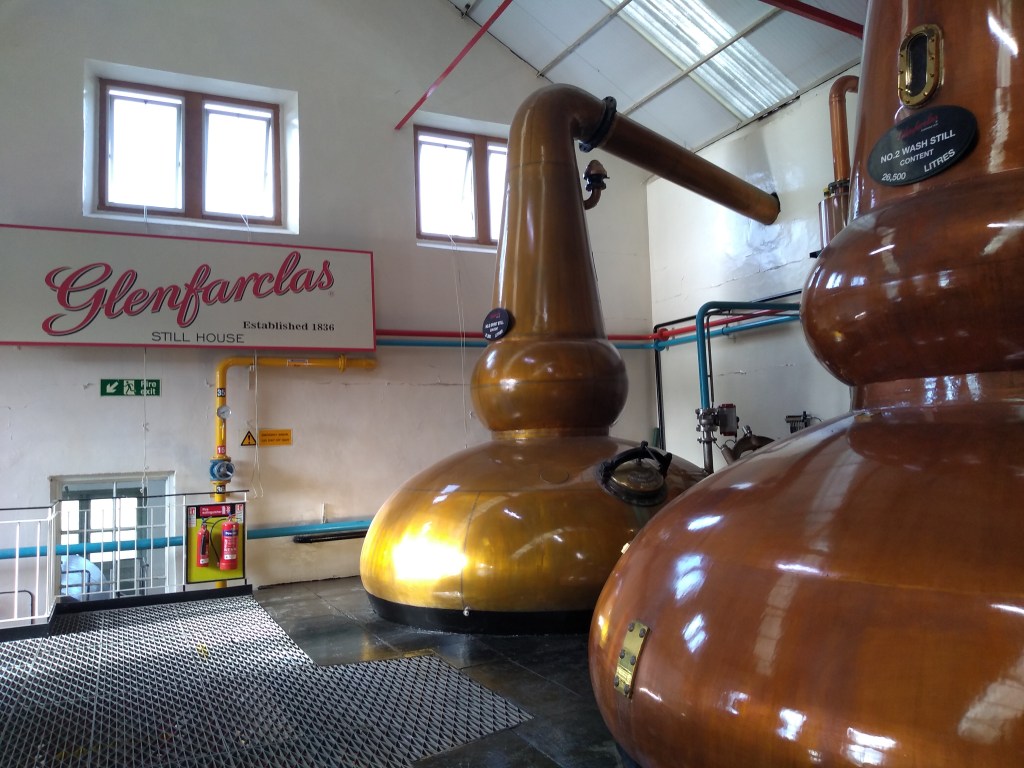
We proceeded to the closed mash tun and the 12 wooden washbacks. The temperature rose substantially as we walked into the huge still room, where some of the 6 bulged directly fired stills were working. Rosie explained that their cut for the distillation โ€œheartโ€ (i.e. the middle part of the run that will be effectively casked) is 74% to 54%, quite large compared to other distilleries we visited.

Two of the six stills.

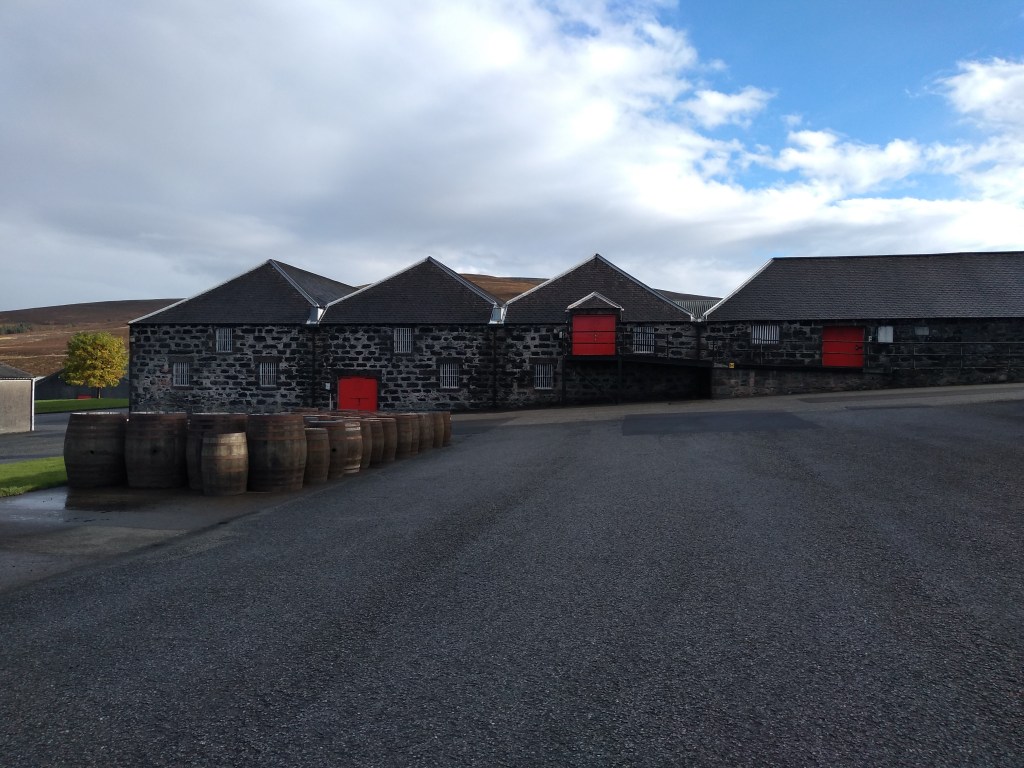
We then moved towards the warehouses, with the signature red doors. At the visitor centre, our tasting was ready with two very well-known drams: their 10y, still today one of the few whiskies bottled at 40% that, in our opinion, still hold, and the 15y, probably the yummiest of their core range, together with the 105โ€ฆwhich of course is not 105 years old, the number refers to the imperial proof (corresponding to 60%abv). Because of the race the next day, we didnโ€™t drink them right away, we put them in our sample bottles brought from home (always with us!) and we went to the shop. There were many of their celebrated โ€œfamily caskโ€ expressions on display, with vintages of every year and bottled at cask strength. Even for recent vintages the prices are a bit steep, but the selection is very bigโ€ฆA pity we couldnโ€™t try any!

So much whisky behind those red doors!

After the visit, we drove to Dufftown, to register for the run and check in at our accommodation, the Commercial Hotel. We decided to have dinner at the hotel (not before a short warm-up run for Gianluigi). In spite of us booking about 9 months in advance (and paying 90 quid per night!!!), we were given the โ€˜cursed roomโ€™, room number 5. No, itโ€™s not the plot of a horror B-movie, and no ancient burial ground was involved: itโ€™s just the room directly above the pub, including their juke-box machine with questionable music selection and no soundproofing whatsoever. That meant that until the bar closed (11pm), we couldnโ€™t sleep. The music wasnโ€™t that loud in the corridor, and in fact in one of the bartenders accused us to be the first complainingโ€ฆwell, not according to other reviews on Booking.com, but we appreciated that the issue might be for this room only.

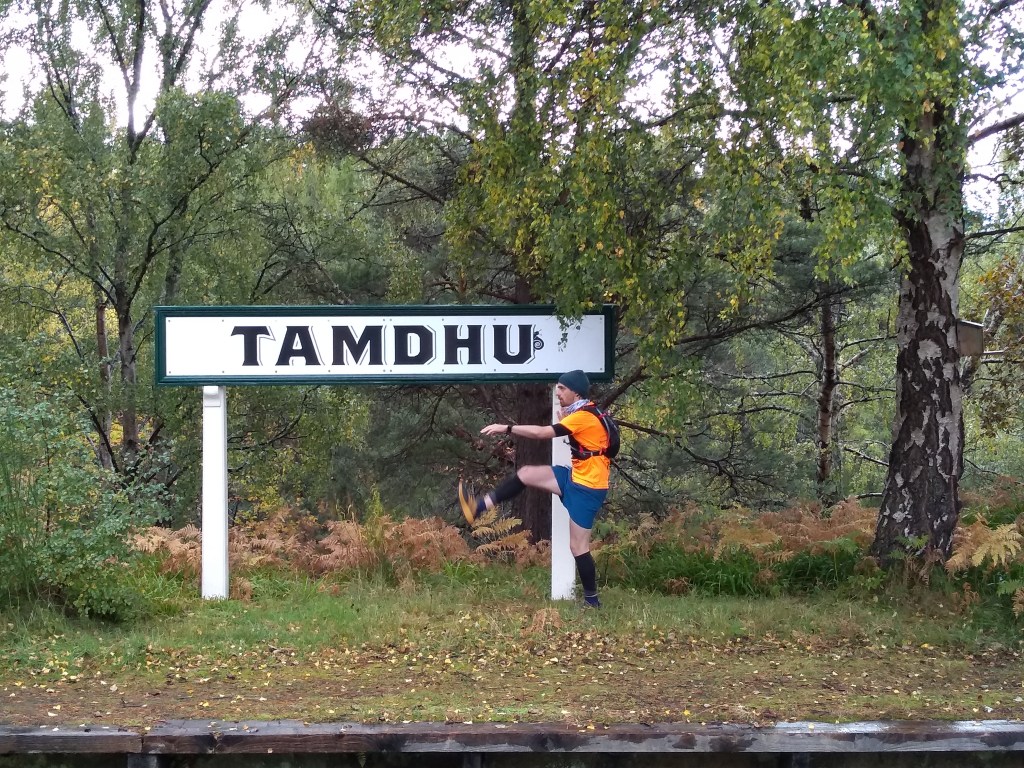
Finally, race day! As we reached the buses that would have brought us to the starting point (the Tamdhu station), it started pouring rain, so we mentally prepared for a wet run.

Warming up…not goose-stepping.

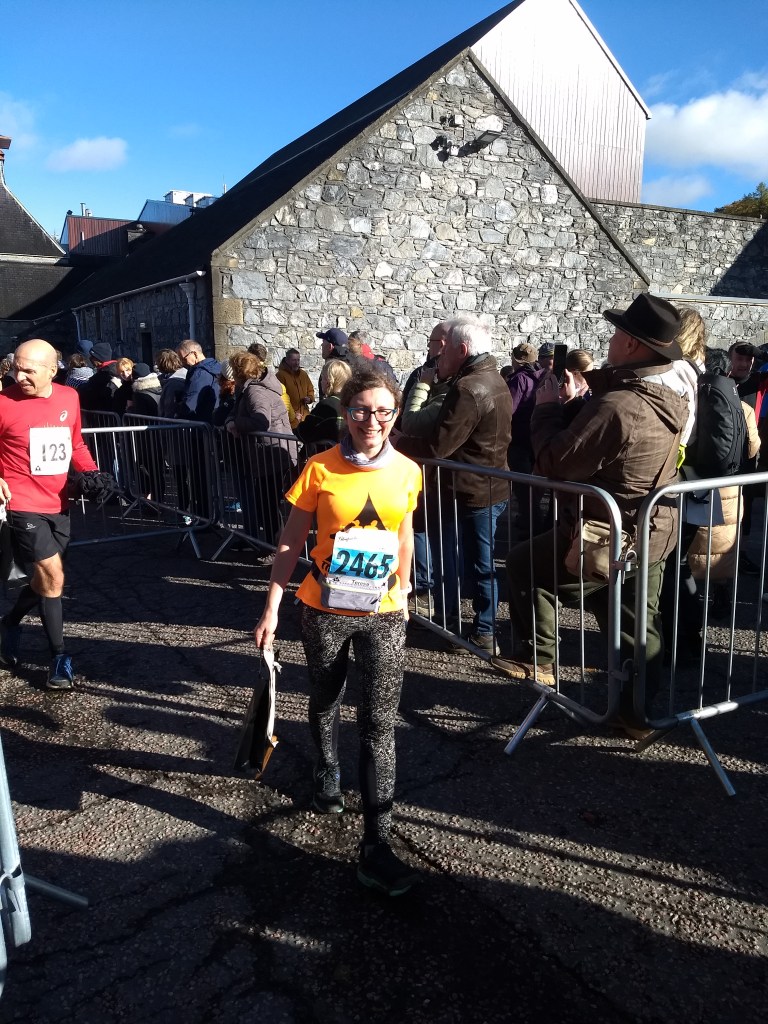
However, as soon as we got there, the rain stopped, and the run was quite pleasant. We both reached our goals, Teresa finishing her first (hopefully not last) half-marathon, and Gianluigi shaving a couple of minutes from his 2021 timing (not getting below 1h and 20m though, one of his goals).

Tired but happy!
Tired but veeeery happy!

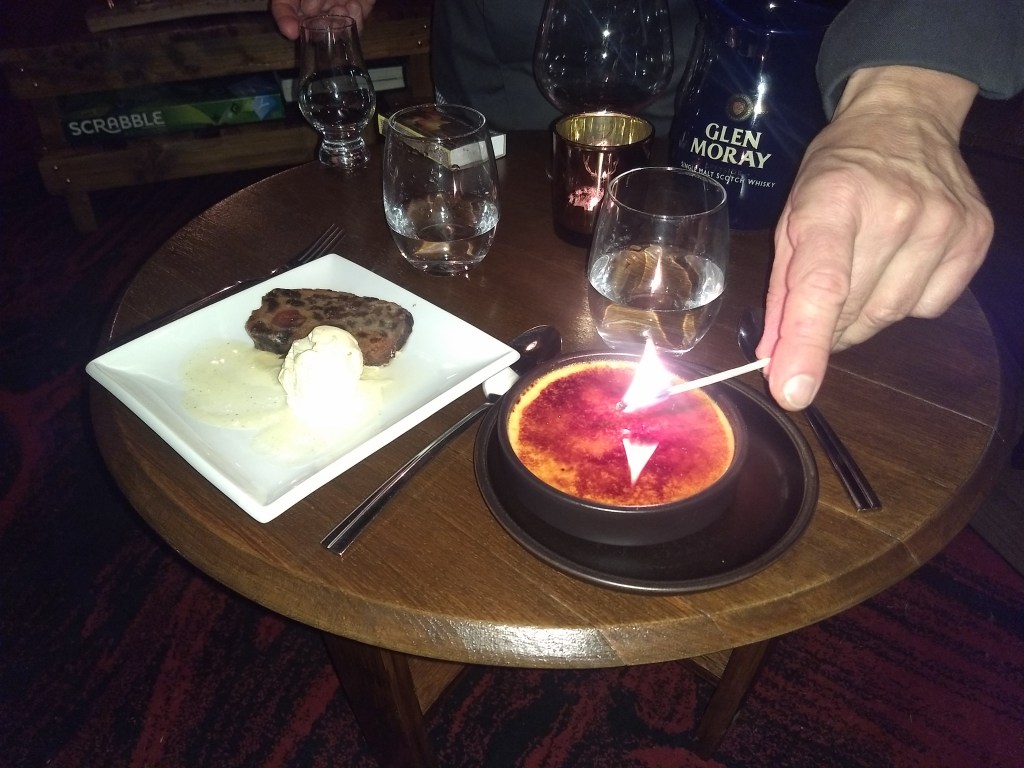
After the run we had a well-deserved early dinner at the local French restaurant, the Seven Stills: it was truly great, yummy food and delicious wine. As a dessert, Gianluigi had a crรจme brulรฉe, with the French chef coming to the table to light it on: bravo!

Lighting up a crรจme brulรฉe with whisky.

We went back to the Commercial hotel for some dramsโ€ฆTeresa was falling asleep in the pub, so we went to bed. The issue of the night before was still there, but Gianluigi decided to go put a few bucks in the juke-box: โ€œif I have to stay awake listening to some sh*t, I want to listen to my sh*t!โ€. Probably some people felt puzzled when Slipknot, Nirvana and Tool started to play, so whoever walloper was in charge decided to skip the rest of the selection (Soundgarden, Alice in Chains, Pearl Jam) only saving No One Knows by the QOTSA. Not cool at all. In the morning we complained with the manager about the noise (not about the skipped songs), who agreed to discounting 15 quid per night. It was nice but still not ideal, so we wonโ€™t be back unless we really have to, in which case we will ask not to be put in room 5.

Anyway, going back to the tour at Glenfarclas, we had selected the basic one because we knew in advance we wouldnโ€™t drink. It was excellent, but we are both very keen to go back and do an experience with a more comprehensive tasting. Slainte!


Glenfarclas Tour

Price: ยฃ7.50 pp (October 2022)

Duration: 1hr 15m

Tasting: 2 drams, Glenfarclas 10y (40%) and 15y (46%)

Target: Anyone

Value for money: Very good

Highlights: One of the prettiest we’ve seen

Distillery Exclusive: Several bottlings of the family cask range, depending on which is available

Recommended: Definitely!

Link: https://glenfarclas.com/our-home/


#17.2 A first taste of Speyside

Walking and blending


TL;DR: The last two days of the trip were dedicated to less standard whisky experiences. First off, a walk through the village of Dufftown and its distilleries. On the last day, we did a blending experience at Strathisla, learning the hard way how difficult it is. Overall, definitely a great trip! 

(missed Part 1?)

The morning of the third day was quite open, so we went back to Aberlour, officially for a walk to the Linn waterfalls, behind the Aberlour distillery, but we sneaked in a second visit toโ€ฆno, not the distillery, to the Walkerโ€™s cookies shop! Just to pick up Christmas gifts for family and friends, and because Gianluigi loves cookies indeed! We had some take-away food from a local shop, before our afternoon activity: a walking tour of the 9 distilleries of Dufftown! If youโ€™re asking yourself why 9, just stick with usโ€ฆ

A cute meeting point for the walking tour.

The tour was organized by Michelle, a local guide living in the village. We and another young couple met her at the clock tower. First, we walked towards her house, where she very professionally gave us a glencairn and a yellow vest: at the end of the day we were about to walk through a few whisky producing plants, most of them not open to visitors. To start with, we walked towards the site where the now demolished Pittyvaich distillery used to be (close to the Mortlach Parish Church). While looking at some of the old warehouses, Michelle poured a taste of a 25y Pittyvaich from a Diageo release. A bit down the road, we then stopped at Dufftown distillery, owned by Diageo.

Best shot at Dufftown distillery.

Thisย is one of the three distilleries making the Singleton (Singleton of Dufftown), sold mostly in the UK and Europe. Moving on with our tour, walking along the Dullan Water, we found the third distillery: Glendullan, another one from the Singleton series (this one distributed in North America, while the third one is from Glen Ord and is distributed in the Asian market). One exception was the House of Tully Singleton, part of the Game of Thrones range, which we had a taste of after a wee look at the still room. Next stop was a popular one, Mortlach, which we were very curious about for their quite complicated 2.71 distillation process. We saw their third still (from the outside), called the Wee Witchie, where the last 0.71 of the distillation happens (in our understanding, but not so sureโ€ฆ).

The beast of Dufftown and us.

In this case, the dram was a Gordon & MacPhail 25y from the distillery label range, paired with homemade shortbreads, which were fantastic! It took a bit to get to the next stop, this time walking along the Foiddich. During the walk Michelle showed us the building where another silent distillery was, Parkmore, closed too long ago to get a sip. We were already acquainted with the next working one, Glenfiddich, but not the next ones: Kininvie and Balvenie.

Balvenie, the beautiful.

Unfortunately, during this trip we hadnโ€™t managed to book the latter (although we caught up almost a couple of years later), so we were very curious to see it. As we walked past the malting floor, we saw smoke coming out of it, meaning it was working! Michelle was very excited as well, she had seen it only a dozen of times. We walked past Kininvie still room (the mashtun and washbacks are at Balvenie). The final distillery was another silent one, Convalmore, now used as warehouses. This is where Michelleโ€™s husband was waiting for us in a van to bring us back (it was quite dark at that stage). It was a great experience, a bit different from a regular distillery visit, definitely worth it! We ended up having dinner at the Commercial Hotel and, again, a couple of drams at the Seven Stills.


Sunday was the last day of our wee holiday. We had a very nice conversation with Linda and her partner, who drove us to Keith for the last whisky activity of the long weekend: Strathisla. The distillery looks very pretty, in particular as you walk in from the parking through the courtyard. Like Aberlour, it is owned by Chivas Brothers (a subsidiary of Pernod Ricard), and it is the core malt of one of their most popular brands, Chivas Regal. The 12 year old expression is present in almost all auntiesโ€™ and grandmothersโ€™ houses back in Italy too.

Iconic Strathisla.

For this tour, Teresa picked something different: the blending experience. So, after the tour of the distillery and the warehouses (where we had a dram of Chivas straight from the cask), we were guided to the blending room. It looked like a fancy version of a high school chemistry lab, with all the glass equipment, but instead of burners there were bottles of whisky. Our task was to create a blend of 5 whiskies: fruity (Strathisla), citrusy (Glen Keith), smoky (Allt Aโ€™Bhaine), creamy (Longmorn) and floral (Strathclyde, a grain whisky distilled in Glasgow). Of course, as we were making it, it was like: โ€œitโ€™s going to be super tastyโ€, but when a few months later we opened our 20cl souvenir bottle of our very own blends, it clearly was kind of crappy. Well, blending is more of an art, and the blenders job is definitely one of the hardest in the sector! Definitely a fun activity though, although we both agreed that one time was plenty.

As we came out, we had over an hour to wait at the Keith โ€œstationโ€ (a porch) for the train to Aberdeen. We couldnโ€™t really walk around because of the backpacks and the heavy rain, so we just sneaked in a walk to Glen Keith distillery, right in front of Strathisla.

Glen Keith distillery under the rain.

On the train back we came up with the idea of a whisky blog. It would have taken over a year to kickstart it, but this trip is the culprit! It substantially improved our knowledge and made us even more enthusiastic about scotch whisky. Speyside is one of those places where every time we visit, we say to each other: โ€œwe should get a house here”. This was the first trip to this magical region, with many more just about to come!

Until the next story, slainte!


Strathisla Distillery Tours
https://www.maltwhiskydistilleries.com/strathisla/

Michelle’s Dufftown Distilleries Walk
https://www.dufftown.co.uk/prov_attr_detail.php?id=153

(Because this trip happened almost 3 years ago, we are not compiling the distillery visit evaluation box.)


#17.1 A first taste of Speyside

A birthday surprise


TL;DR: in December 2019 Teresa organised a surprise weekend for Gianluigiโ€™s birthday, so we travelled to Speyside for the first time. One of the few times we travelled by train, it wasnโ€™t easy to reach all the places we wanted. Nevertheless, in the first couple of days, we managed to visit four distilleries in Elgin, Aberlour and Dufftown.ย 

2019 was a weird year for us. Because of an intense period at work, Gianluigi could take very few leave days throughout the year. But it was also the year where something changed for us about whisky: we became members of the Scotch Malt Whisky Society, we started listening to whisky podcasts, reading books, and visiting distilleries more often. So, when December arrived, going off on a wee whisky holiday was a very easy decision to take. It was also Teresa’s gift to Gianluigi for his birthdayโ€ฆso for him the destination was a surprise!

In the morning, first train to Aberdeen, then another one to Elgin, so Speyside, which weโ€™d never been before! This is home to over 50 distilleries, without doubts the biggest producing single malt whisky region. Although not all of them are open to visitors, a good bunch are. Which ones then? Still a mystery to Gianluigi.

Happy faces, and we were not even drunk!

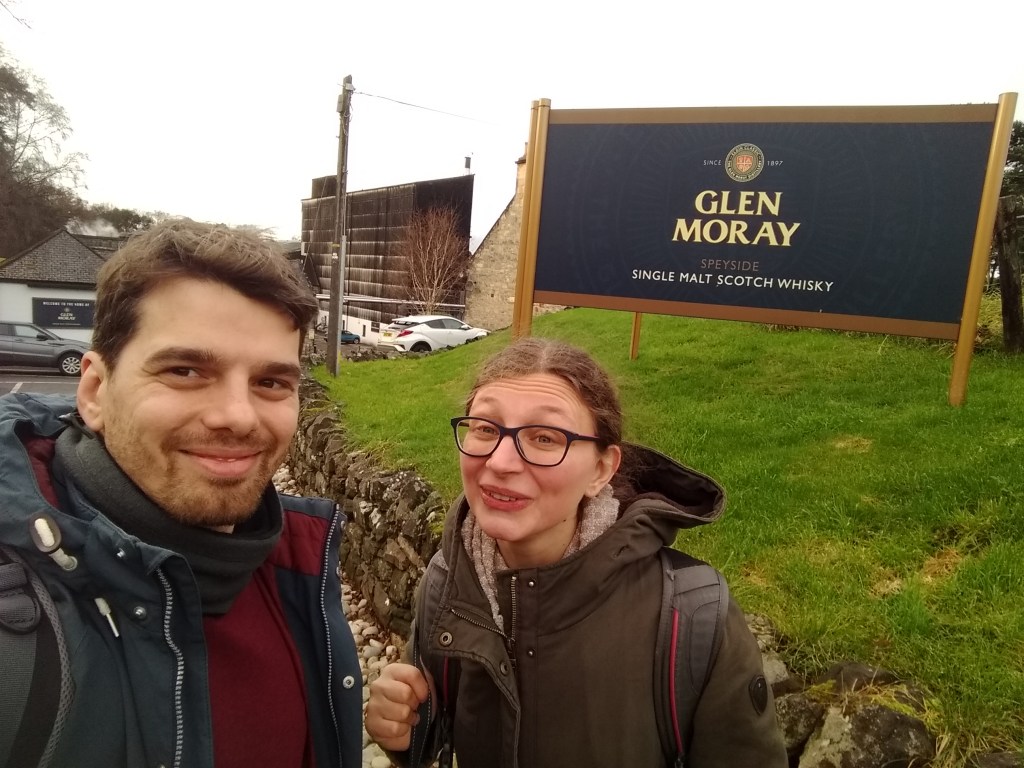
The first distillery was only a 20-minute walk from Elgin train station: Glen Moray. We are now very fond of this one, probably underrated because of their entry-level expressions available in supermarkets. Thanks to a few very tasty SMWS bottlings, however, at the time we had already started to appreciate it, so Gianluigi was very happy! Because of time constraints we only did a tutored tasting at the distilleryโ€™s cafรฉ. We chose different flights, the travel retail (with the Elgin Heritage NAS, 12y and 15y, but all bottled at 48% and not chill-filtered) and the distillery casks (2008 ex-rye cask finish, 2001 2nd fill ex-oloroso, 2014 peated ex-gamay cask). We loved these expressions, in particular the 12y in the travel retail range and the 2008 Rye cask finish, but we felt it was too early in our trip to buy anything (much regretted decision).

Glen Moray tasting.

From there, we took a cab to another distillery, completely unknown to us: Benriach. Together with its sisters GlenDronach and Glenglassaugh, it had been recently sold to Brown-Foreman (aka Jack Daniel’s).

After seeing a malting floor for the first time.

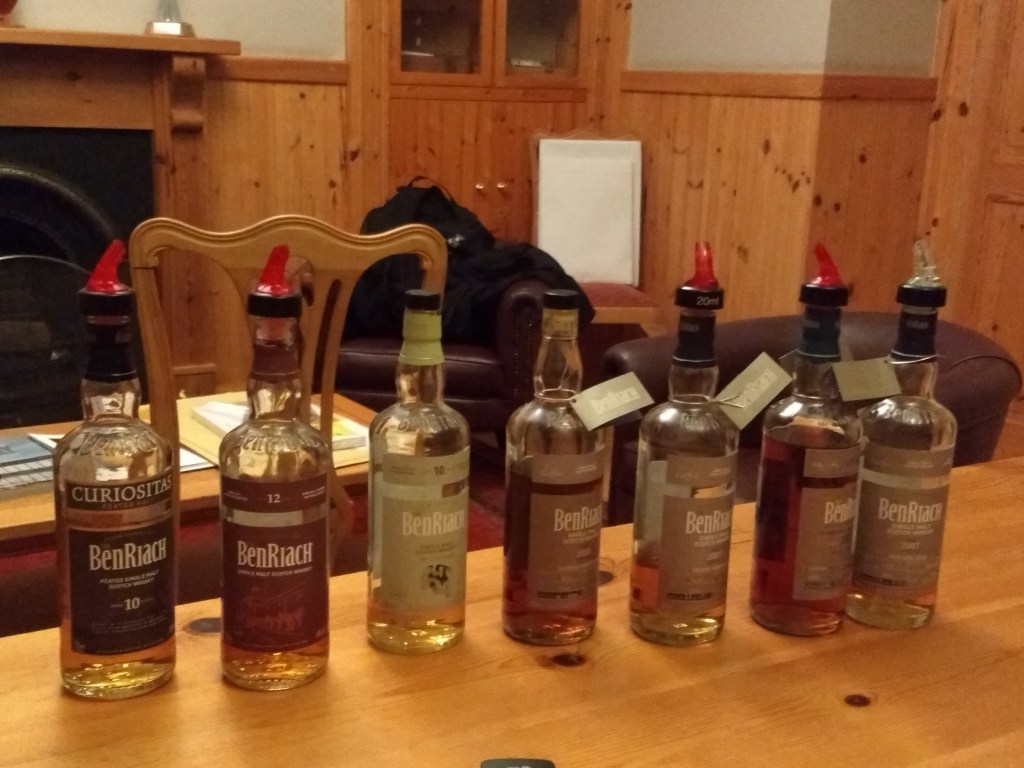
At the time the visitor centre was just a small room with a couple of sofas, table and chairs, and a small shop. The tour was intimate (only 6) and quite in depth. We were guided throughout production, including their malting floor (first time we visited one), and we tasted the wash (someone said: โ€œlike a bland and watery beer, basically an English aleโ€). It was before the revamp of their core range, so we tried their 10y, 10y peated (Curiositas), the magnificent 12y triple-sherry cask, and the travel retail 10y triple distilled (of which we were able to grab a bottle only a few months ago), and another couple of older distillery exclusive expressions, including a peated ex-port cask. Truly a great tasting!

What a line-up at Benriach!

By the end of the tasting, it was dark outside (Decemberโ€ฆ), and we almost missed the last bus to go to our final destination for the day. Fortunately the driver saw us waving at him in the dark. We arrived in Dufftown, where we stayed at the Conval House, a lovely B&B run by the very kind Linda. After the check-in, we had dinner at the Stuart Arms (not open anymore) and a couple of final drams at the Seven Stills.


The next day we woke up a bit dizzy, how so? (wink, wink). This didnโ€™t prevent us to move on with our mission, and after breakfast, Linda generously drove us to the next distillery: Aberlour, in the near village ofโ€ฆ Aberlour!

Ready to start day 2.

It was just us on the tour, definitely not high season for them. The guide gave us a dram straight away (the 12y), which we enjoyed before another really in depth tour. The distillery sits in a marvellous location, surrounded by woods and near the Linn Falls waterfall.

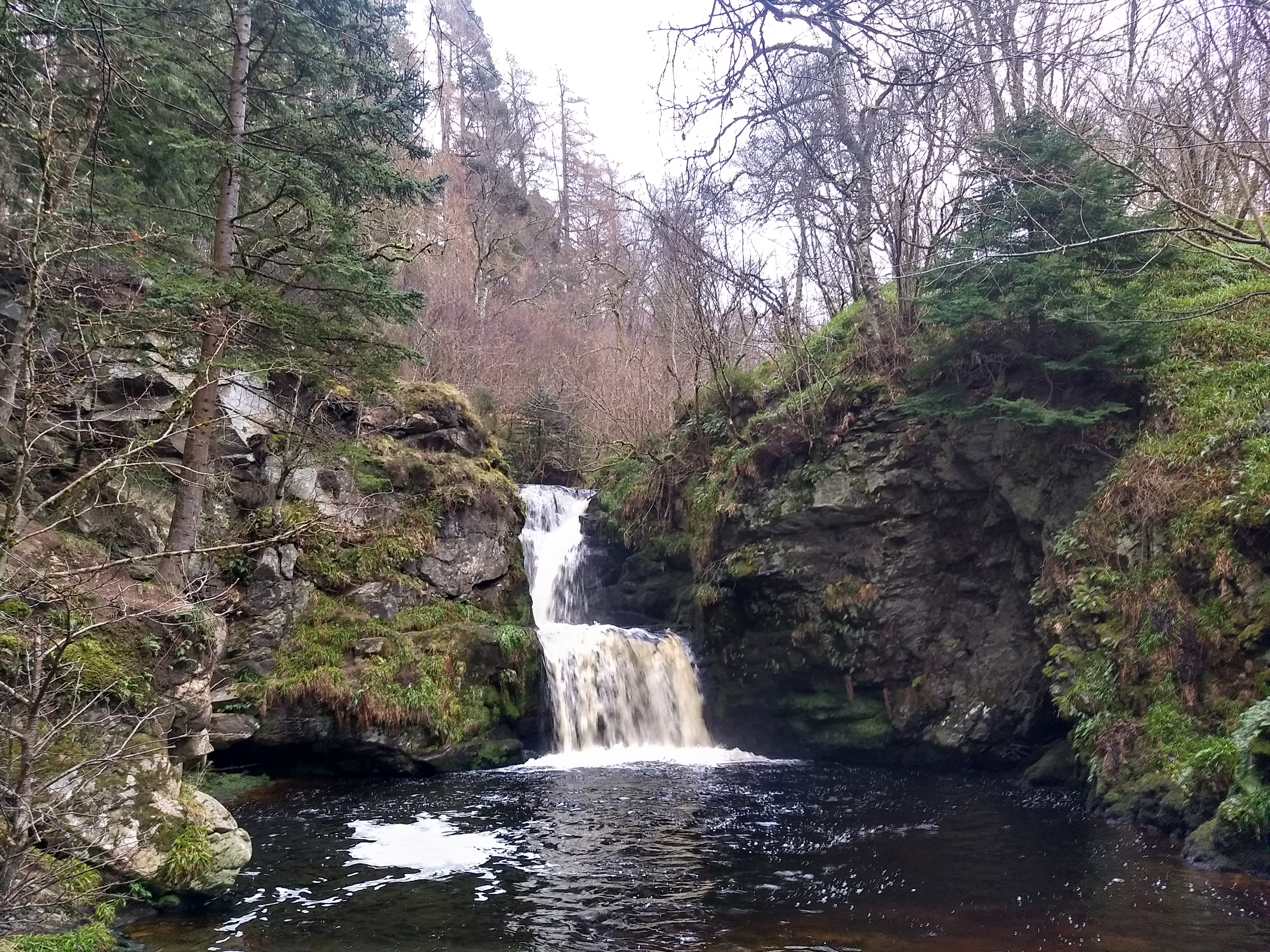
Linn Falls waterfall.

Again, the final tasting was quite generous, with samples of the newmake spirit, the 16y, the Casg Annamh, and two 14y single cask, one from an ex-bourbon barrel and another from an ex-sherry butt. Unfortunately the Aโ€™Bunadh, which we hadnโ€™t tried yet, was not in the line-up, but we would have caught up later that day.

After a quick stop at the Walkerโ€™s cookies shop in Aberlour, we caught the bus, next stop: the Speyside Cooperage. It was a very cool experience, and very different from a distillery. To be honest, the guide did not say much (a bit shy?), but was available to reply any questions. However, as whisky novices we didnโ€™t have that many. The walk in the production area was very interesting: we could admire the toasting process and the coopers doing their magic rebuilding the casks.

The sky is blue above the Speyside Cooperage.

Finally, the last stop for the day: the Glenfiddich distillery. This is a massive operation with a capacity of over 22 million litres of alcohol per year. The tour started with an introduction video. After that, we parted from another quite large group of people, as only the two of us went for the in-depth tour. It was the first time we visited a distillery of that size: the two huge lines of stills striked us!

So many stills at Glenfiddich!

At the end of the tour and after a wee look at the bottling line, we were ready for thetasting. We had the 12y, the 15y, the Project XX (the best of the bunch, in our opinion), the Fire and Cane, the 18y and finally the 21y rum finish. When we visited the warehouses we could try a tiny sip of the 15y cask strength form one of their huge solera-style vatting tubs – very tasty but pricey (at the time 120 quids at the visitor centre).

Our day ended with a nice dinner at A Taste of Speyside restaurant (now unfortunately closed), and another dram, only one this time (the Aberlour Aโ€™Bunadh) at the Seven Stills. What an intense day!


Distillery (tours) links

https://www.glenmoray.com/our-distillery
https://www.benriachdistillery.com/en-gb/distillery-tours/
https://www.maltwhiskydistilleries.com/aberlour/
https://www.glenfiddich.com/en-gb/distillery

Speyside cooperage
https://www.speysidecooperage.co.uk/tours.php

(Because this trip happened almost 3 years ago, we are not compiling the distillery visit evaluation box.)