#40 A last stop on the banks of river Ness

Uile Bheist


TL; DR: After a long whisky weekend in the Highlands, it was time to get home. However, on the Sunday afternoon, we had time for a last stop at Uile Bheist, in Inverness. Very interesting operation, as itโ€™s both a brewery and a distillery. Too early for the single malt, but we could still sip two of their ales.

Our Highlander trip was about to end: we left Clynelish distillery while our pals were still enjoying the drams provided. It was still a very nice and sunny day, and maybe because it was a Sunday afternoon in early November, the A9 towards Inverness was not very busy and the drive was quiet and relaxing. We were approaching Inverness quite early (and Teresa was recovering from her sickness), so we took a swift decision: make a last stop before getting home. Destination: Uile Bheist distillery, in Inverness, one of the newest kids on the block. 

A key feature is the artwork by the artist Ken Taylor (already famous for the many collaborations with rock bands), picturing creatures from old Scottish tales: we found them very well drawn and captivating. โ€œUilebheistโ€ itself means โ€œmonsterโ€ in Scottish Gaelic. 

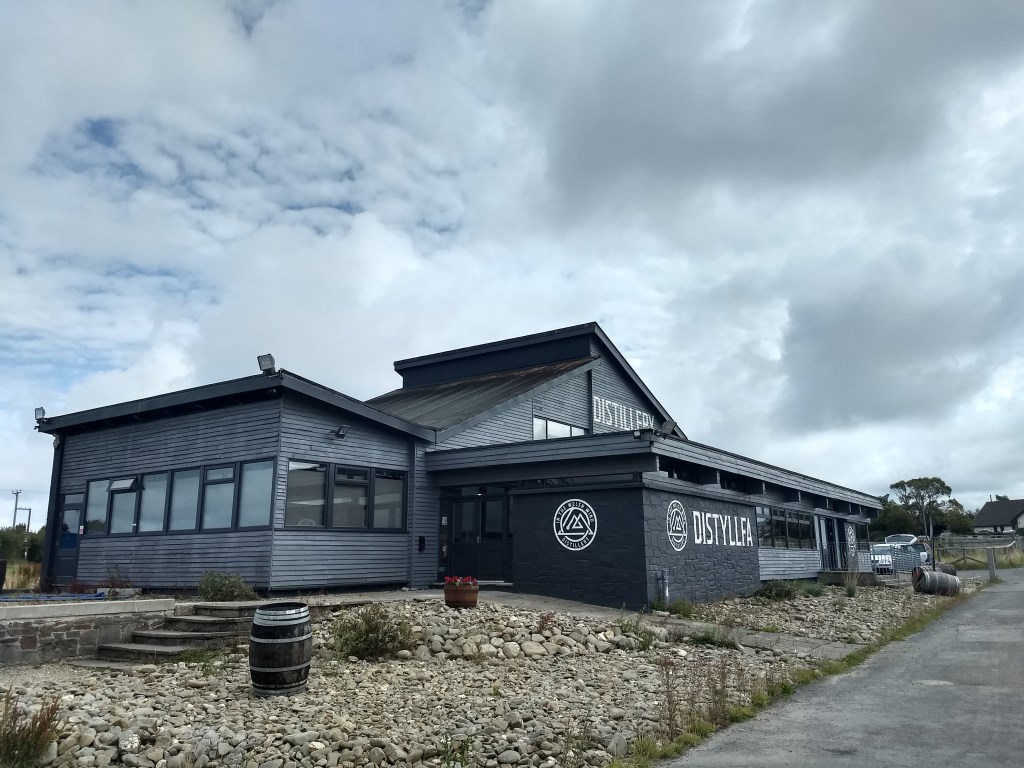
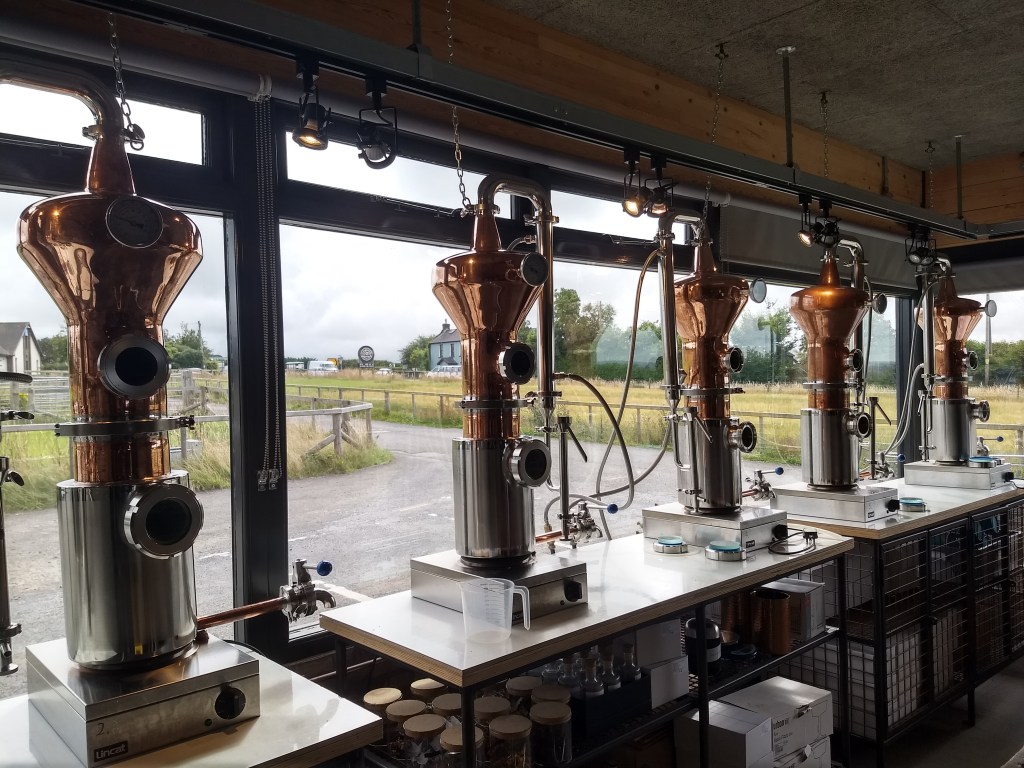
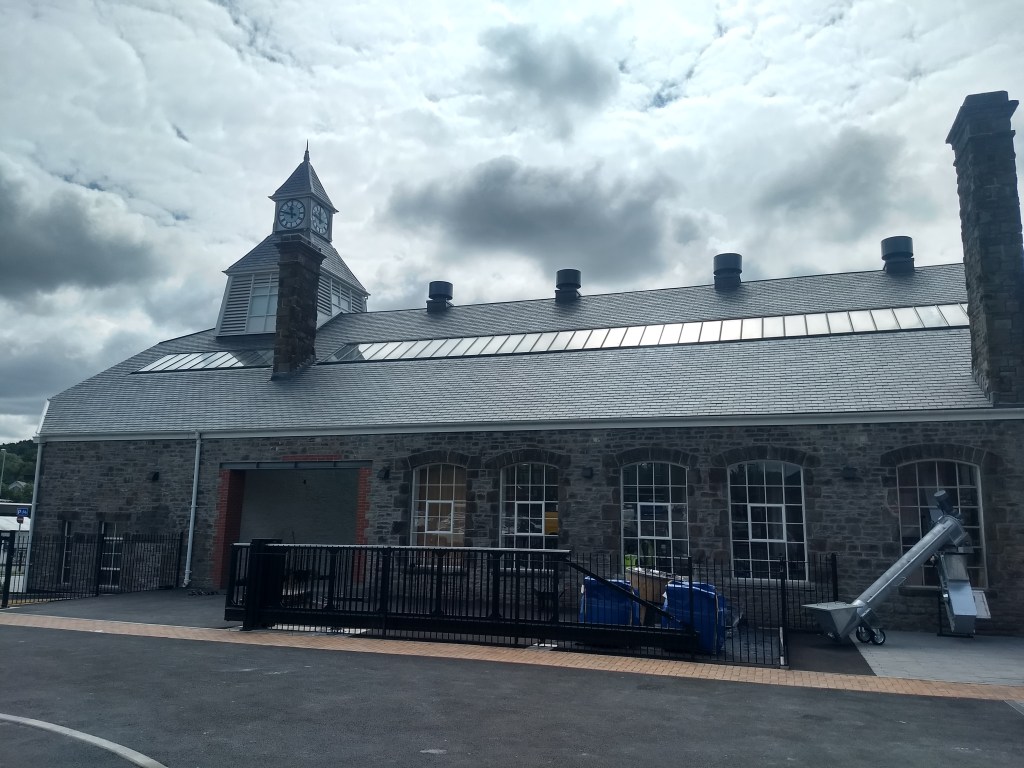
The distillery is located on the banks of the river Ness (duh!), and the entrance is in the same building as a hotel called Glen Mhor (but nope, itโ€™s not the site of the former Glen Mohr distillery, actually at opposite site of the river). As a matter of fact, the founders of the distillery (Jon and Victoria Erasmus) opened their hotel in the mid 2000s first, and added a brewery in 2014. The distillery is the most recent part of their business, with the first newmake spirit distilled in April 2023. It is also the first distillery to open in Inverness in 130 years, and the first to produce whisky since Glen Albyn, Glen Mhor and Millburn closed in the mid-1980s. The beer garden is visible from the street, as well as the distillery building just behind, with the two stills making a triumphant appearance behind the glass windows. 
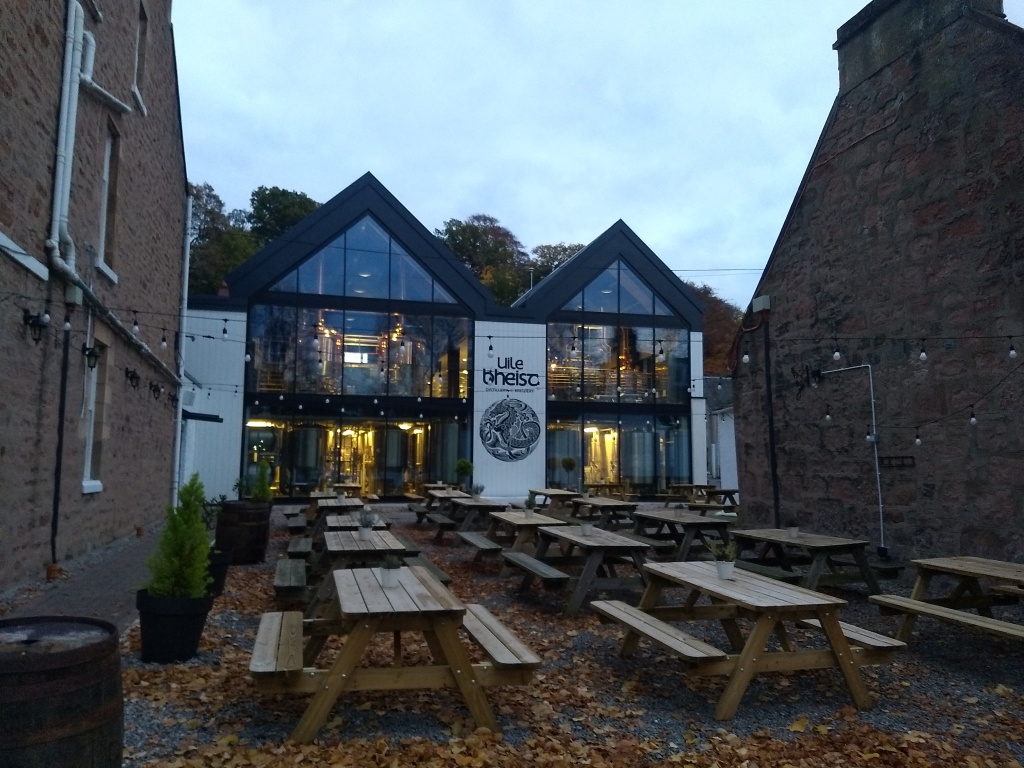
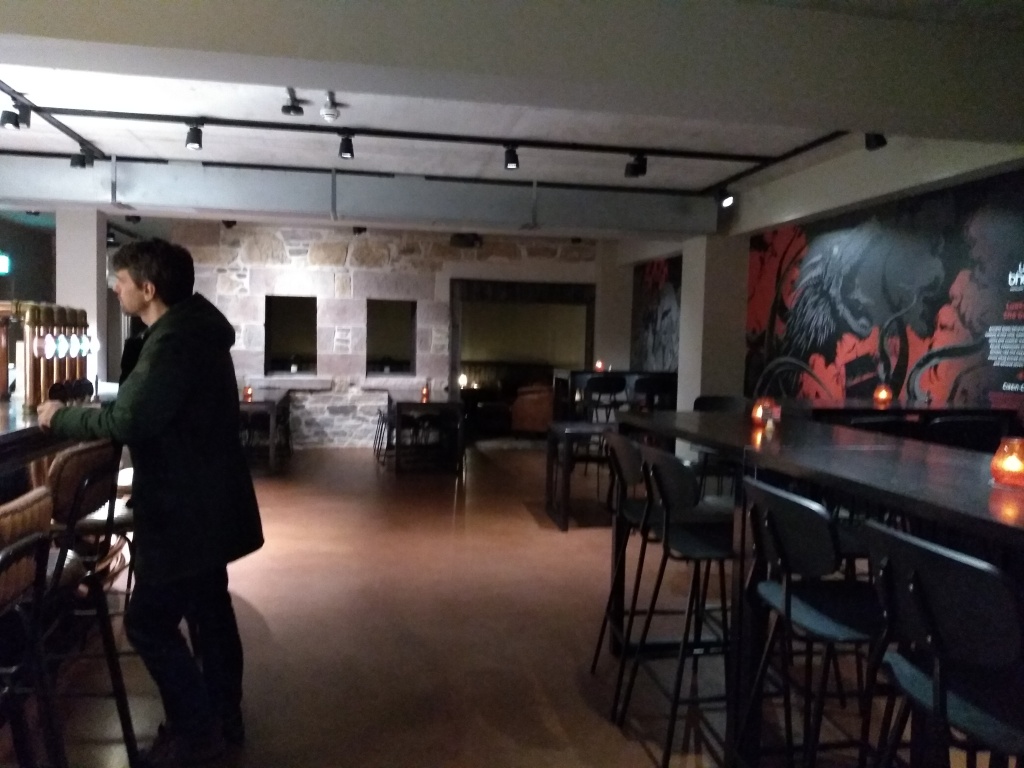
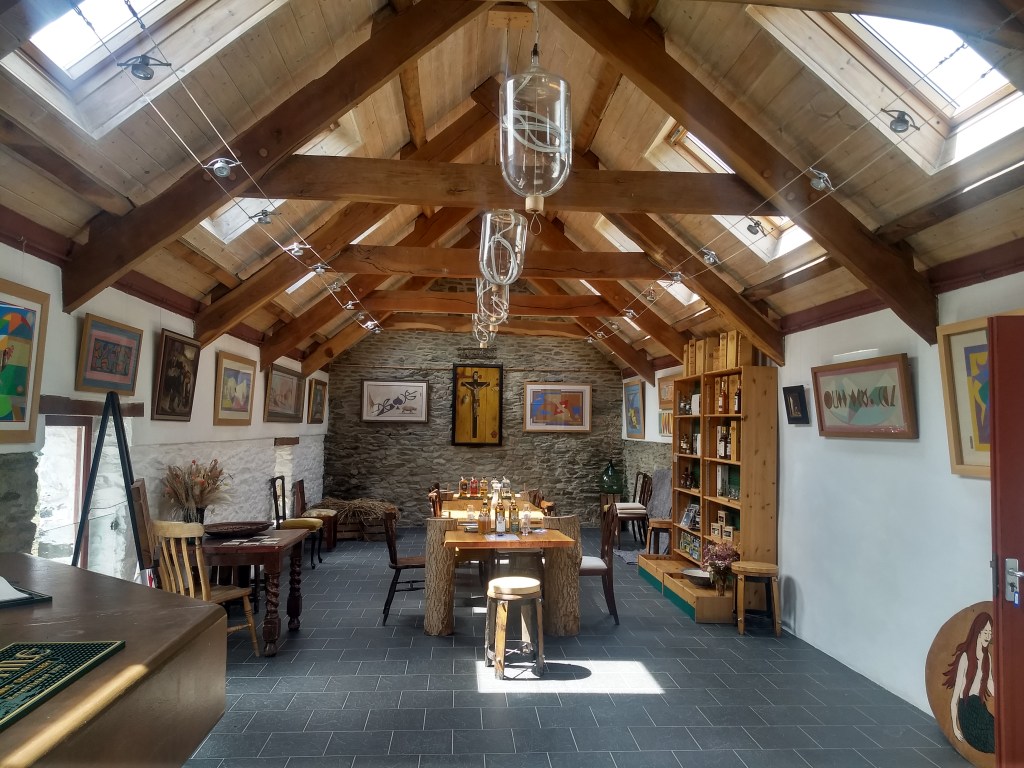
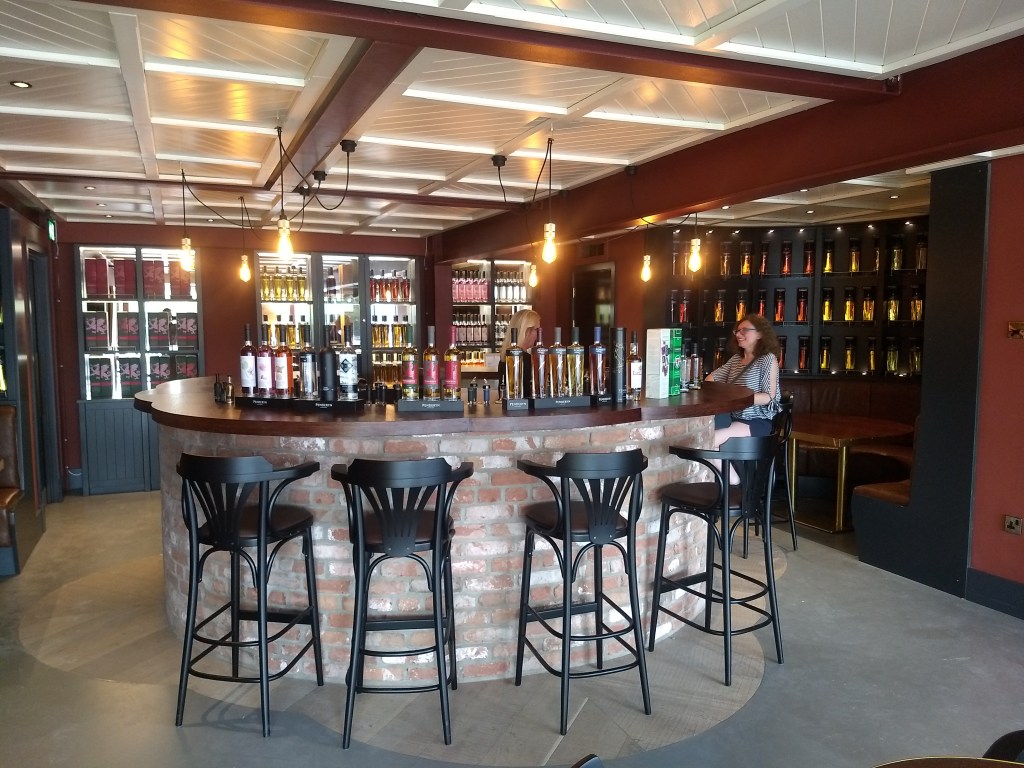
The place is quite dark but cosy, pub-style (a partial excuse for our terrible pictures too) and in line with the artwork. And in fact, because they are a brewery as well, their main room is organised exactly like a pub: a long bar, many malts behind the bartendersโ€™ back, and their beers on tap, named after the creatures: a lager (Uile Bheist), a stout (Dark Horse), a session ale (Highland Storm), an unfiltered (White Witch), and a pale ale (Forest Dweller). We would have never remembered the names, if it wasnโ€™t for the association with the different beer typesโ€ฆClever!

The tour guide for the day was Louis, on training because it was one of his first whisky tours, shadowed by Amy. We entered the production area from a door at the end of the bar, and we climbed the stairs right away. We were soon in the main production room, where all the machinery is: a very modern mill, the mashtun (1.5 tonnes, near the one used for brewing), the washbacks (4 stainless steel), the stills (1000-litre wash still and 500-litre spirit still). The space was completed by a small lounge for visitors. There, they showed us an intuitive schematic of the production plant, including a description of how they get energy –  solar panels and shallow water.

Like many new distilleries, sustainability was in their mind when the plant was designed. Fermentation lasts between 72 and 96 hours, and they take the spirit at around 70% (they didnโ€™t know the precise cuts). The newmake is then transported to their warehouses in Forres to be put into casks. 
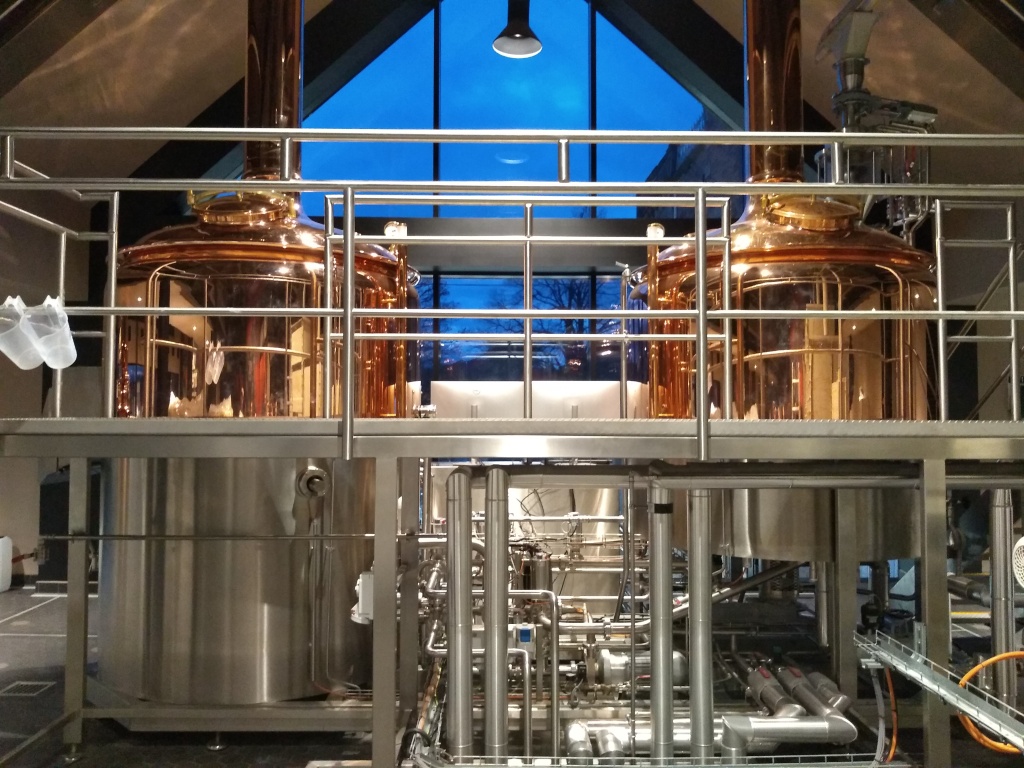
Next, we moved to the lower level, mostly dedicated to beer production: 8 fermentation tanks, and the machine to carbonate with nitrogen and fill the kegs (plus a small bottling line). Back to the bar, it was time for a small tasting: their newmake spirit (which is available to buy in half-litre bottles) and a blended malt they produced (quite tasty!). Teresa also sipped half pint of their lager, as well as Gianluigiโ€™s half pint of pale ale. Very tasty. Unfortunately, at the moment they only sell kegs, so we couldnโ€™t buy any of the beers.

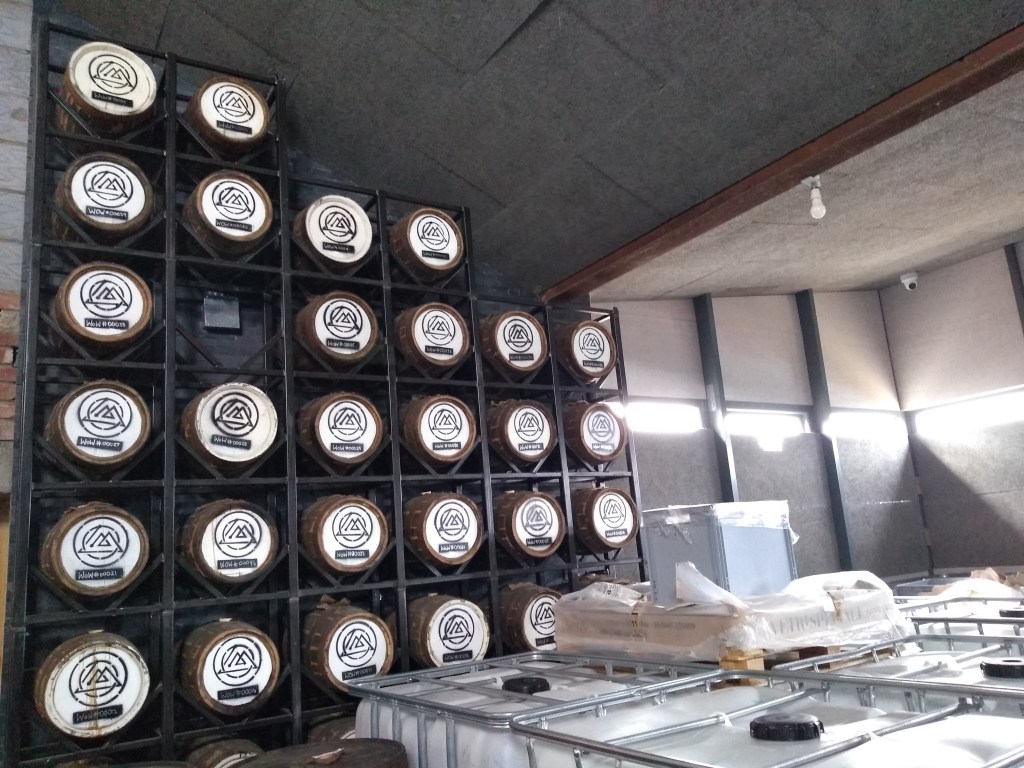
Teresa and the kegs.

We have to say, we really liked this operation, the first โ€œbrewstilleryโ€ (as Amy suggested during the tour) we visited. Because we donโ€™t know Inverness very well, we are planning a weekend there in the near future, and we will definitely go back to Uile Bheist to try more of their beers and enjoy the pubโ€™s cozy atmosphere. We are also very curious about their malt, since the newmake spirit was above average compared to others. For that, though, weโ€™ll have to wait a while. 

A surprisingly interesting blended malt.

This was the perfect epilogue for a very nice whisky weekend, although not the luckiest health-wise. For the records, as expected Gianluigi got the same bug as Teresa two days later, and for more than a couple of days he was KO. It wasnโ€™t Covid (got the month before), it probably wasnโ€™t fluโ€ฆA mystery. Unfortunately, this caused us to miss Roy Aqvavitae blind tasting in Glasgow the following weekend too. But thatโ€™s all gone now, while the memory of such a fun weekend with our pals will stay with us for a long time.

Until next time, slainte!


Uile Bheist Discovery Tour

Price: ยฃ35.00 pp (November 2023)

Duration: 1hr+

Tasting: 2 drams (newmake spirit and Colpach Blended Malt, 46%) and 1 half pint of beer

Distillery Exclusive: Colpach blended malt (ยฃ50)

Target: anyone who likes both whisky and beer (or one of the two)

Value for money: ok

Highlights: the location and the pub

Recommended: if you’re visiting Inverness, definitely!

Link: https://www.uilebheist.com/


#36 The Stirling Distillery

Distilling underneath the castle


TL; DR: Very gloomy Sunday afternoon, we decided for a last-minute distillery visit not far from Edinburgh: the Stirling Distillery. Very close to the Stirling Castle, they distilled only gin until very recently, when they added malt whisky (well, newmake spirit for now) to their portfolio. 

Most of our trips (in particularly whisky trips) are carefully planned in advance, mainly because of the popularity of distillery visits nowadays. Of course, we donโ€™t want to risk travelling to a distillery and being told theyโ€™re fully booked, it happened once during a non-whisky trip and it was disappointing. Careful planning also helps because Scotland is not the easiest country to travel, with ferries, single track roads, etcโ€ฆAnd before we got Mr Vantastic, finding reasonably priced last-minute accommodation was always a challenge.

Sometimes though, we can still sneak in a last-minute whisky trip, and this was the case of todayโ€™s story. On a Sunday at the end of October weโ€™d planned to take the van and go somewhere for a walk. However, as usual when we plan outdoor activities, the weather was dire: dark, gloomy, rainy (we should probably just buy waterproof walking gear at this pointโ€ฆ). So, instead, we went to a new whisky distillery: the Stirling Distillery!

This is one of the newest whisky distilleries in Scotland, and as the name reveals, itโ€™s in Stirling, on the same hill that leads to the magnificent Stirling Castle (one of the most interesting to visit, and where Kings of Scotland stayed until the end of 1500s). Unlike many others, the distillery has not been talked much about in the whisky world, itโ€™s not even mentioned in the very comprehensive Malt Whisky Yearbook 2024, despite the notable feature of starting distilling whisky in the town of Stirling for the first time after more than 170 years. We can think of two possible reasons for this: first, itโ€™s tiny, definitely a craft operation (see later for more details). Second, and more importantly, owners June and Cameron conceived it as a gin distillery in the first place, all the way back in 2015, with the aim to โ€œreflect the Stirlingshire countrysideโ€ in their gin, and only very recently they moved to new make spirit.

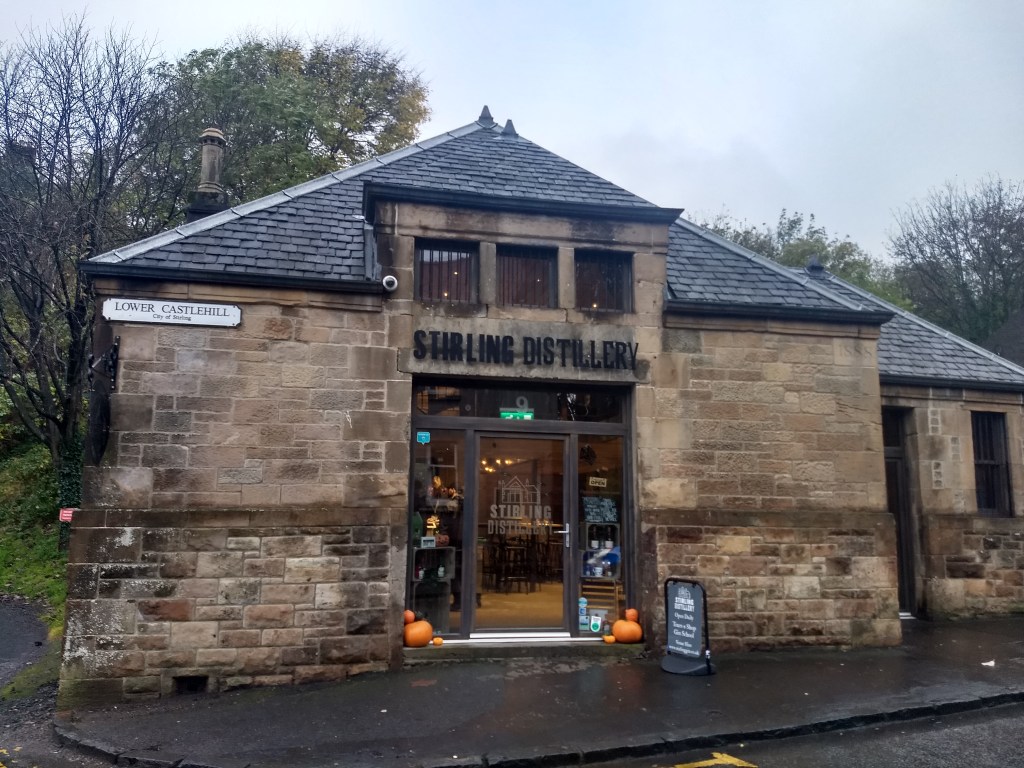
So there we are, under a dire weather, after an almost-hour drive from Leith. The stone building is very beautiful, we will soon find out that it was called โ€œthe Old Smiddyโ€. Built in 1888, funnily enough it used to be a church temperance hall and a blacksmith. The distillery moved there in 2018, although they also have a warehouse and gin production in the Stirling outskirts. They have two experiences, one dedicated to gin and one to whisky, with the latter being very new as whisky production had only started 2-3 weeks before our visit. They also offer a gin school for ยฃ90 (or for ยฃ140 for the couple, quite unusual to find such discounts in the Scottish whisky landscape).

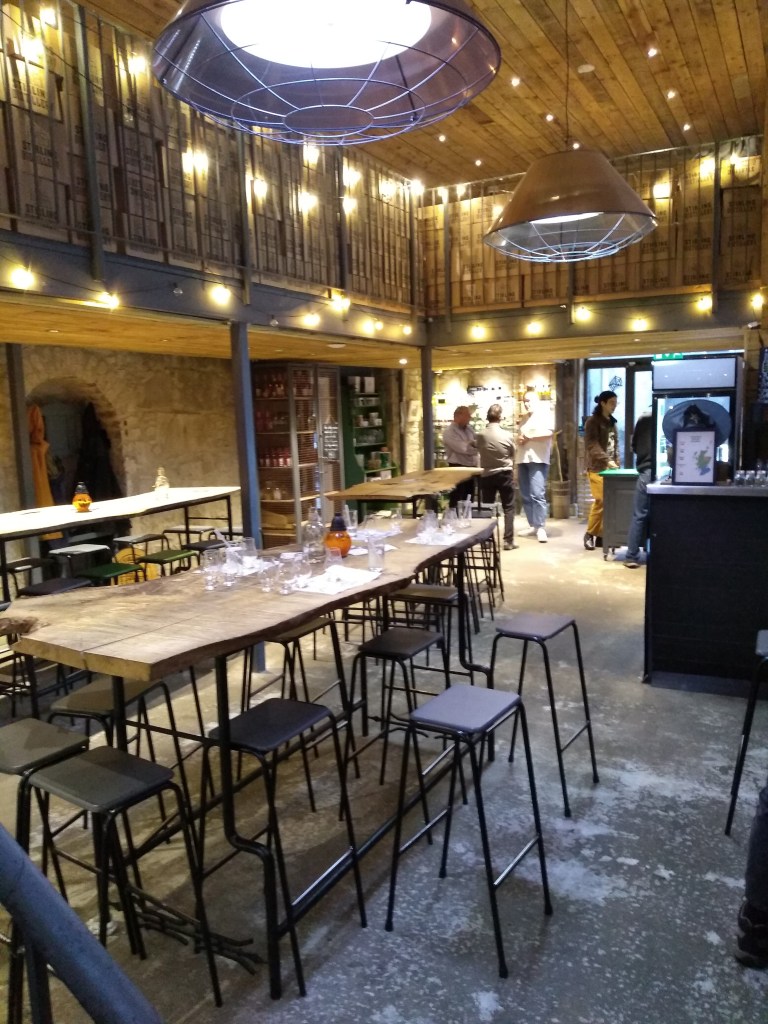
…and inside!

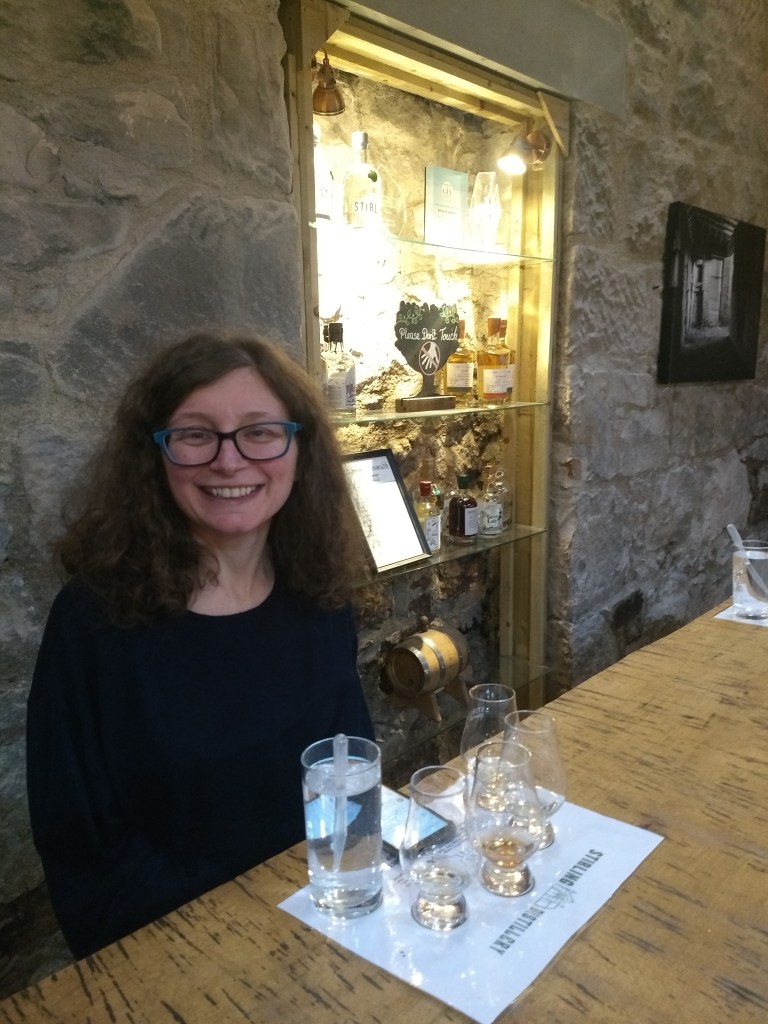
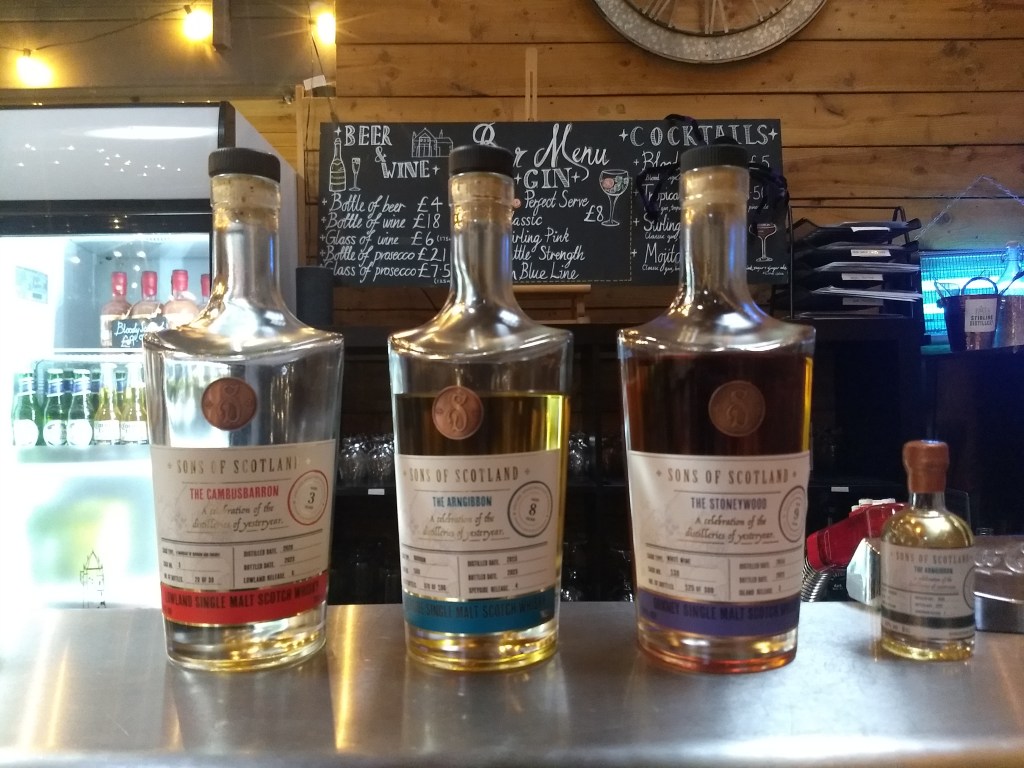
The building is very beautiful inside too, with low lights creating a very peaceful atmosphere. On the right side there is the shop, and on the left the bar, offering a variety of beverages (including soft drinks). There is also a mezzanine where we didnโ€™t go, it looked like an office/warehouse space. The guide for the day, Kiran, told us he was mostly into gin and cocktails, and that was one of his first whisky tastings. When all visitors had checked in, we started the tasting, which included four single malts from their independently bottled range called Sons of Scotland (all non-chill filtered, not artificially coloured and bottled at 50%).

Guess who’s not driving today.

The expressions we (well, Teresa) tried are named after historical distilleries near Stirling. The first (*) was the Cambusbarron (batch 3), a 3y Lowlands whisky (vintage 2020) matured in a combination of ex-bourbon and ex-sherry casks. The second dram was the Arngibbon (batch 4), an 8y Speysider (vintage 2015) matured in ex-bourbon casks. Then we tried the Stoneywood 9y, an Orkney whisky (vintage 2014, we still wonder which distillery this was from), finished or fully matured (we didnโ€™t get it) in ex-white wine casks (batch 3). Finally, we tried a previous batch of the Arngibbon (batch 3), a 14y Speysider matured in ex-bourbon and ex-sherry hogsheads (vintage 2008). Overall a nice string of drams, with the Orkney one being definitely the most interesting.

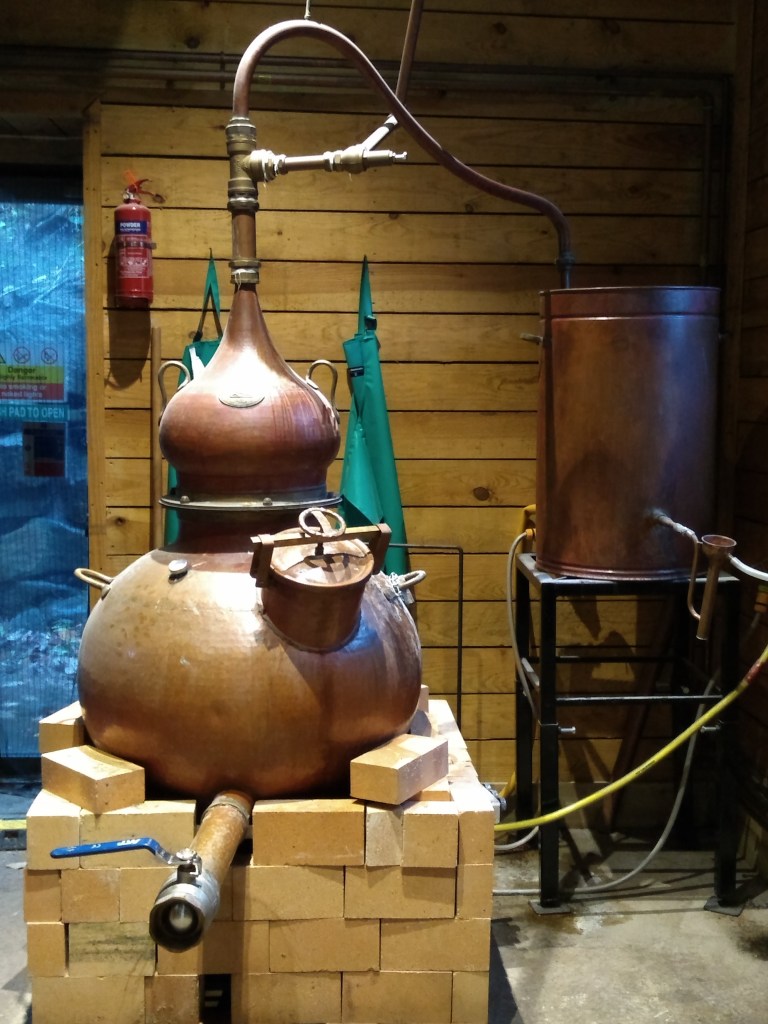
After the tasting, Kiran showed us the whisky production, which is entirely happening in a separate part of the building, all in the same relatively small room! They buy malted barley grist (pre-milled), which they mash on site stirring by hand. Then they move it into two fermentation vessels, where it ferments for 4 days (96 hours approximately, they use distillerโ€™s yeast). They finally distill it twice in the same 170-litre copper pot still, a very beautiful Portuguese still, named Flora after Juneโ€™s mother. The spirit comes out at 70%abv, and it is first put into plastic jugs, only later transferred in casks at the warehouse for maturing. Edit (April 2024): they later installed a second still, to fully comply with the SWA regulations.

The wee distillery shed.

At the time they were producing the newmake to fill the casks for their King James Collection: six casks of different type (bourbon, sherry, rum, etc.) which will be released biannually starting in 2027. They also have a cask sale programme, from 55-litre Firkin to 250-litre hogsheads. They aim for a production of 10,000 litres of alcohol per year, which would put them as the smallest distillery in Scotland (currently the smallest are Dornoch and Moffat, with 12,000 litres each).

And here is Flora.

Some distilleries we visited started gin production as a way to get quick cash (for example Borders, Cotswolds and Holyrood), but they knew from the beginning they mainly wanted to do whisky. Stirling (and others like In the Welsh Wind or Deerness) on the other hand, started with gin, and decided to add whisky along the way. This is definitely reflected in Stirling distilleryโ€™s size and equipment, which makes them a truly craft operation. As we couldnโ€™t try their newmake spirit, we cannot really say much more at this stage, but this left us very curious for the future. Hopefully weโ€™ll come back to try it, or try their single malt too.

Until next time, slainte!


Stirling Distillery Whisky Experience

Price: ยฃ25.00 pp (October 2023, ยฃ12.00 for drivers + ยฃ1.85 fee)

Duration: 1hr

Tasting: four drams from their Sons of Scotland independent bottler range, depending on availability (see * for description)

Target: everyone

Value for money: ok

Highlights: the bar and the distilling “shed”

Recommended: if youโ€™re visiting Stirling and have some spare time, definitely, otherwise we’d suggest waiting for their single malt

Link: https://stirlingdistillery.com/


#34 One last stop before home


A new distillery in Moffat


TL; DR: You would think we visited enough distilleries in our summer holidays, but we managed to stick another one in at the last minute, while on the way home. Moffat, one of the newest in the Scottish Borders. Very experimental at this stage, itโ€™ll be very interesting to see how their malt ends up being! 

After visiting a couple of English distilleries, and a few more down in Wales, we couldnโ€™t end our holidays without a Scottish one, right? However, this distillery visit was not in the plans until the night before. After leaving Wales we briefly stopped in the cute town of Chester, where we had a half pint in a hidden pub called The Cavern of the Curious Gnome (to get there you need to go the balconies, the Rows, and the pub is above a wine bar that you need to cross).

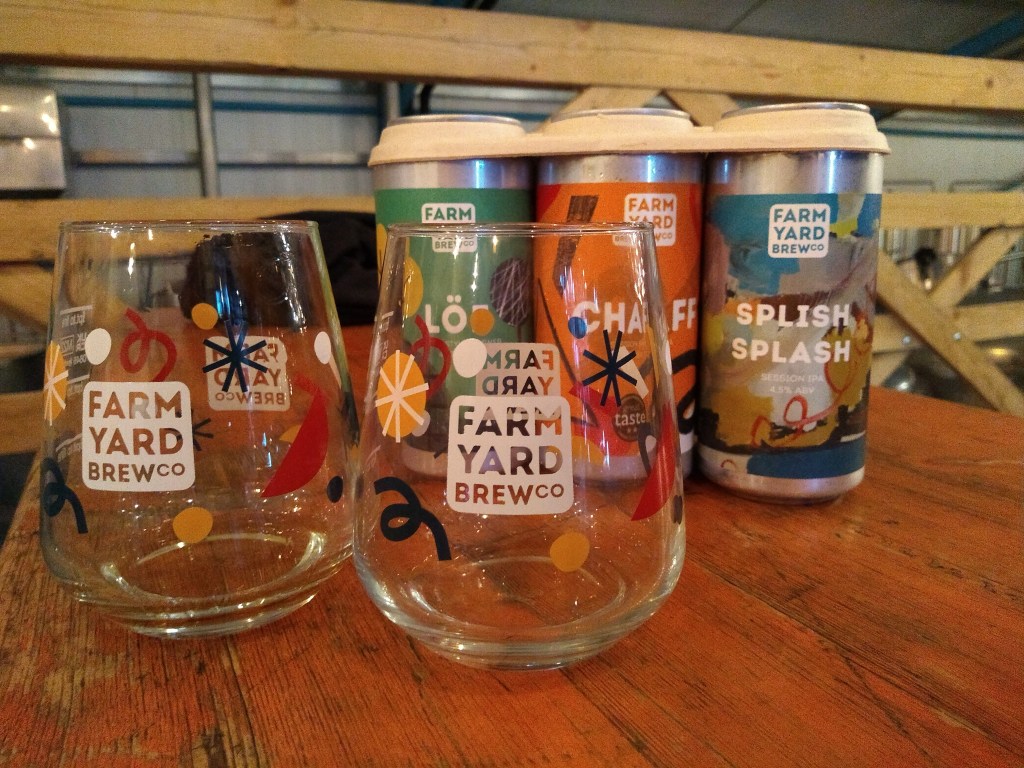
Afterwards, we drove straight north, while having some sandwiches weโ€™d prepared earlier. We spent the night at a farm-brewery, just before Lancaster, the Farm Brew Co (found on SearchForSites): if you have some pints there, they let you stayโ€ฆAnd their beers are delicious, so we had a couple each and bought another few to bring home. While there, we were browsing on our phones, and realised that the Moffat Distillery had just opened to visitors. Weโ€™d already heard about them, and Moffat was on our road back to Leith, so why not? We booked right away!

In the morning we left early, unlike the sunny dusk the day before, it was a very cloudy and grey day. We stopped in rainy Carlisle for breakfast and to pay a visit to the House of Malt (they have very good deals sometimes), and then we drove straight to Moffat. The village looked very nice and quiet, like many others in the south of Scotland, with a large central square with shops, restaurants and cafes. The distillery is just outside the village heading south, in a wide clearing just off Old Carlisle Rd.

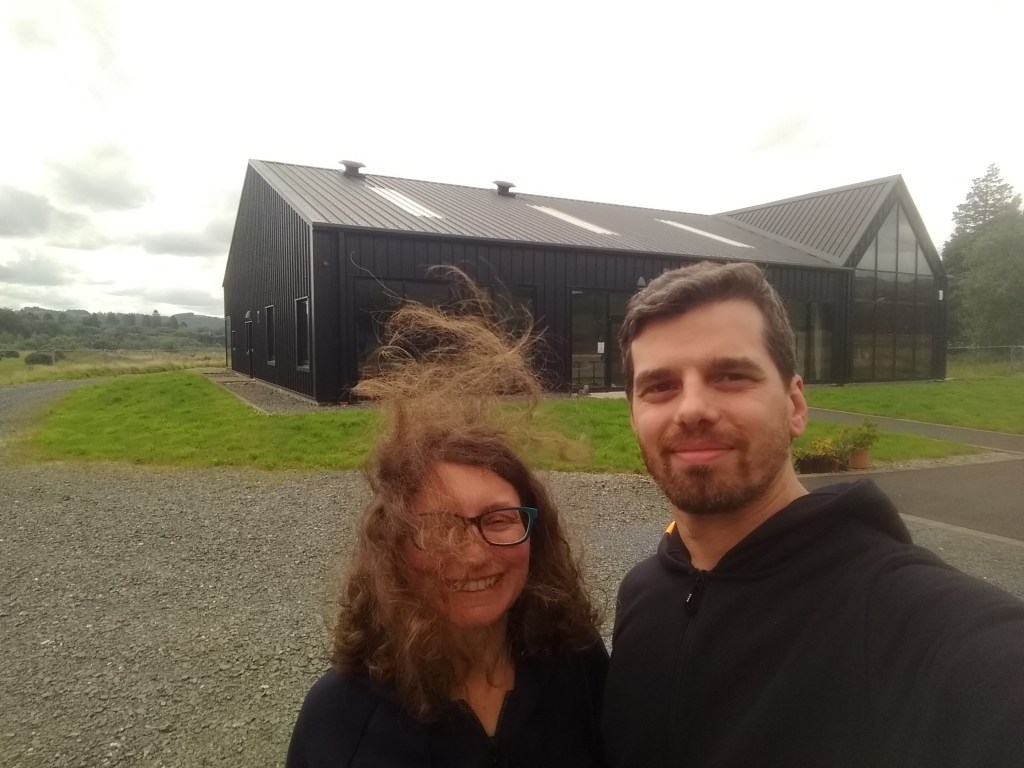
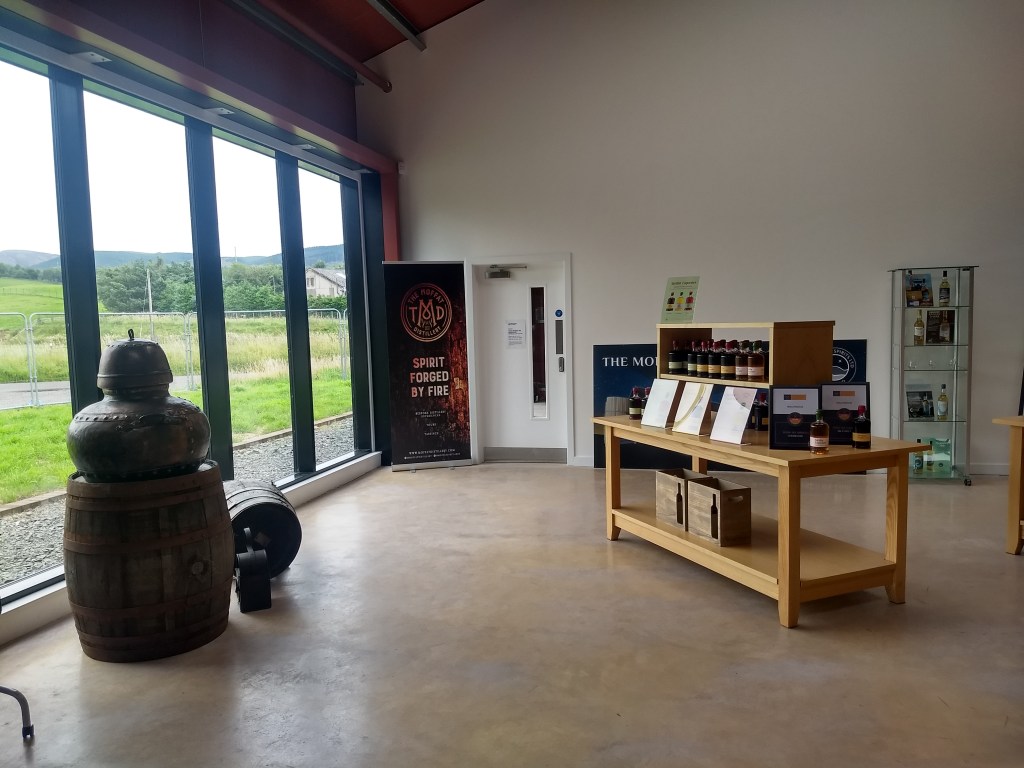
The building is clearly new, a black barn with a glass wall covering all the entrance side. We could see the visitor centre on the right, while on the left we could glimpse at the production area, although we could not see the stills as usually happens with new distilleries. As we entered the building, we realised how everything is new. The main room is very large, at the moment occupied by the visitor centre: a bar in the centre, the bottle shop on the left, some sofas on the right, and a grand piano just behind the bar.

Alex (the bartender/guide) told us about the company, Dark Sky Spirits, founded in 2017 by Nick and Erin Bullard, focusing on sourced products. The name comes from Moffat being one of the first towns in Europe installing low-impact street lighting to decrease light pollution. A few years later they decided to start a distillery: permission was granted and land was purchased in 2020, ground was broken in 2021 and distilling from 2023, really just started. We soon moved to the production area, where Nick (founder and distiller) talked us through the process. They source the barley (Lauriet variety) in Fife, where it is also malted. The operation is very small at the moment (max capacity only about 12,000 litres per annum of alcohol), as they are in an experimental phase. Experiments include mixing regular and toasted/heavily toasted barley, brewer’s mashing (ie lower temperatures to retain sweetness), fermentation times (now fairly short at 39-42hrs, but planning for longer ones), and spirit cut (eg low wines at 29.5%, much higher than the usual ~20% in most distilleries).


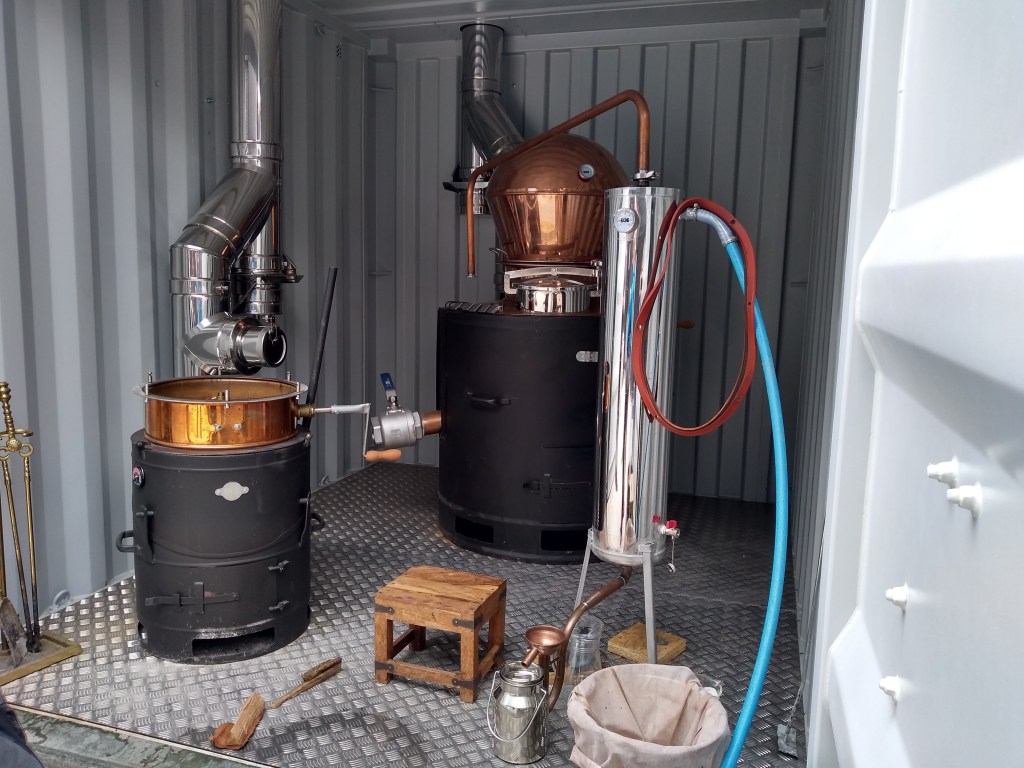
The mash tun and the washbacks are less than 500l (they use American yeast), while the wash and spirit stills are respectively 350 and 60 litres and at the moment, they sit outside in a container. Their main characteristic is that they are wooden fired, a unique feature among Scottish whisky distilleries.  They approximately fill one barrel per week, and mainly source barrels from Tennessee.

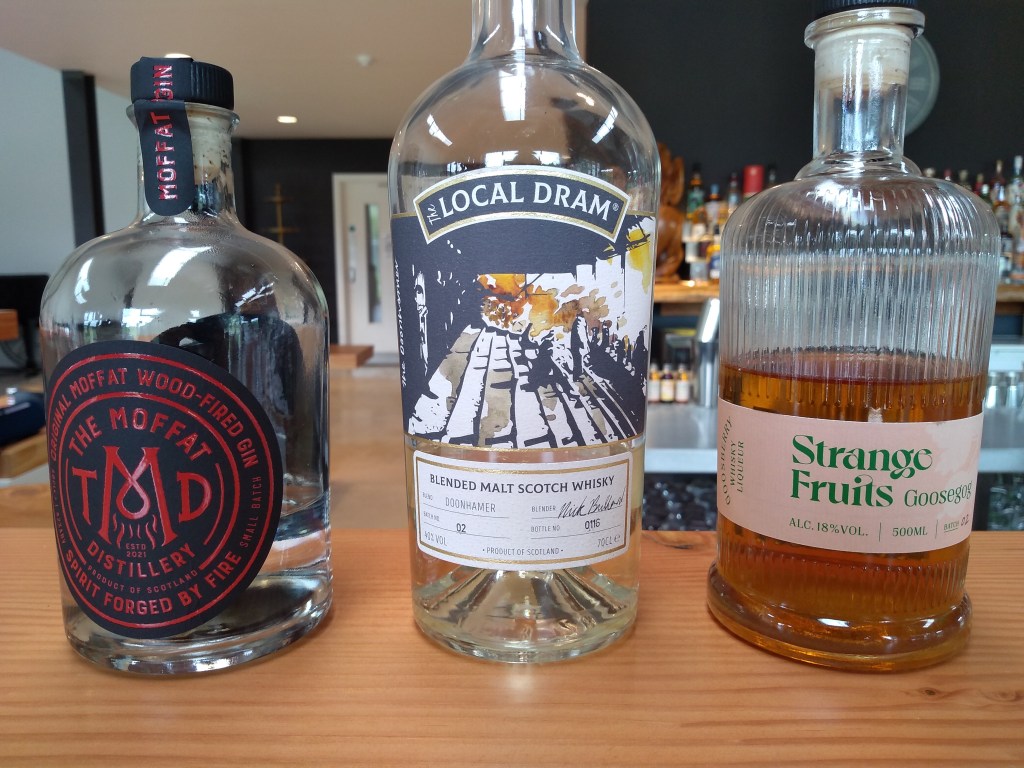
Back inside, we spotted some of their casks in a โ€œtemporary warehouseโ€, and saw where the definitive stills will be in the future โ€“ now there is the gin still (200l) and the bottling equipment. Blending and bottling has been the main activity for Dark Sky Spirits, indeed. In 2020 they developed a range called Auld Special Edition, including two blended malts (#2 Spicy 13y, and #3 Fruity 15y, both 48%) and two single malts (#1 Smoky 16y, 47% and recently a 26y from Speyside Distillery, bottled at 45% and distilled in 1997). They also produce the Moffat blended malt (40%, NAS), recently replaced by the Doorhamer (blended malt, 40%, NAS), the Moffat gin and a series of gin liqueurs. Moreover, they bottle expressions for local events, like the Stranraer Oyster Festival or the Moffat Eagle Festival (this year both blended malts at 46%). All their products seem to be reasonably priced (still now, after the August increase in taxation).

Finally, we had a taster of their products at the bar (the tasting room was not ready, in our understanding): Moffat blended malt, Moffat gin and some gin liqueurs. However, Alex was nice enough to pour us wee samples of their Smoky and Fruity whiskies, the latter being the winner for us. With that our visit finished, and we slowly drove through the south of Scotland to Leith. This distillery was one of the few that left us with more curiosity than before we entered, honestly. It is going to be very interesting in the coming years to see how this distillery will develop, and in particular to understand how the wooden fire still will affect the whisky, in texture and taste.

Until next time, slainte!


Moffat Distillery Tour

Price: ยฃ20.00 pp (July 2023)

Duration: 1hr 15min (on paper, but Nick got carried away and it was actually longer)

Tasting: Moffat gin, the Moffat Blended Malt (40%, NAS, 2536 bottles), and gin liqueurs

Target: tourists and craft distilling geeks

Value for money: ok

Highlights: the wooden fired stills

Recommended: if youโ€™re driving on the A74, a stop wonโ€™t hurt ๐Ÿ˜‰

Link: https://www.moffatdistillery.com/

#33.3 The Welsh Whisky Trail (not TM)

Craft Distillers in the South West: In The Welsh Wind and Dร  Mhรฌle


TL;DR: A relaxed but at the same time full-on day in the south west of Wales. We visited two craft distilleries, In The Welsh Wind and Dร  Mhรฌle. We discovered the existence of iStills in the first one, and got to know more about organic whisky in the second oneโ€ฆBoth very interesting projects, so much information to take in! 

(missed Part 2/Part 1?)

The night at the Lleithyr Farm camping near St. Davids was quiet, and we woke up definitely very rested, with a couple of black pigs snuffling on the other side of the fence and rabbits sprinting around. At that point of the trip we had perfected our morning routine: breakfast, shower, washing dishes, and packing up. So much that soon after we were able to leave the camping towards north, along the Welsh west coastline.

Our next stop was a new distillery: In the Welsh Wind! We were a bit ahead of schedule on the road, but we lost all of our advantage because of tractors and other heavy vehicles on a very narrow highway (also, Mr Vantastic isnโ€™t really good at overtakingโ€ฆ). The distillery is on the A487 near Tan-y-gros, very easy to spot, about five miles past Cardigan towards north, towards Aberystwyth. The building used to be a pub, now itโ€™s all painted black with their logo on the side.

Also, their neighbour is an old small carโ€ฆcollector? Dealer? Deposit? Who knows! The cars are mostly eviscerated (no engine) but painted with bright colours: very peculiar.

As we walked in the distillery, we realised that the staff were busy in a meeting, so James (the distillery manager) came to us asking to wait a couple of minutes. He came back very soon, apologising: they were having this meeting to deal with a new big customer of theirs, Tesco! 

We had chosen the โ€œTour onlyโ€ option, as we were not very interested in the gin tasting coming with the regular tour. James told us the story of the distillery: it was founded by a couple, Ellen and Alex, after a sabbatical period when they walked over 1,000 miles on the Welsh coast and the historic border. They started the distillery in 2018, making gin first, but since 2021, they lay casks down for whisky. So no whisky yet, but they aim for a first release in 2025. Besides whisky, and other than gin (under two different brands, more of that later), they make vodka and rum (mostly spiced, they had some limited wood-matured release which promptly disappeared), as well asโ€ฆmalt vinegar! That was a โ€œpandemic projectโ€, to make use of local breweryโ€™s beer that otherwise would have been wasted. This featured in some TV-shows, and the popularity that followed apparently helped put them โ€œon the mapโ€. 

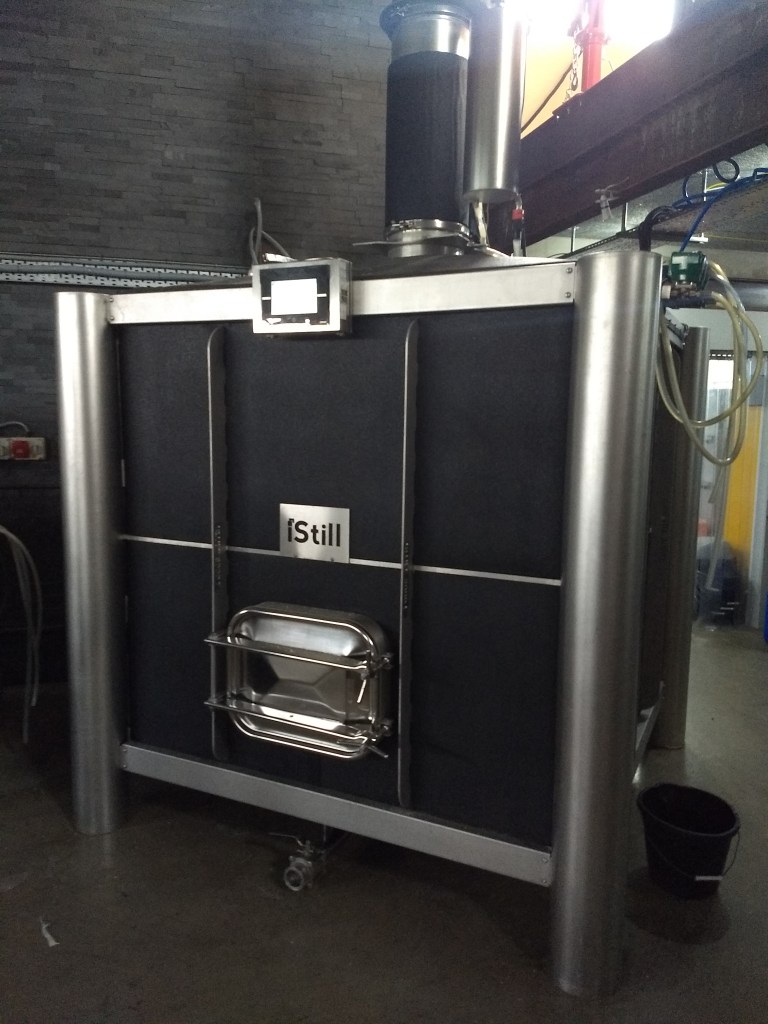
The production area is quite small, and a big part of the surface is dedicated to their own malting floor. A very important aspect is that, for the whisky, they source the barley locally, all from a 10-mile radius, and they malt it themselves (without peat). When we visited it was July, which, because of the heat, is their โ€œoff-seasonโ€, when they donโ€™t malt and donโ€™t make any whisky. Another interesting and distinctive thing is that they have two iStills (the first time we saw them!). This โ€œall-in-oneโ€ still is made by a Dutch maker, and saves on space and personnel: in our understanding, they charge it with milled barley, water and yeast, and it does the whole process, in a very efficient way. They have two iStills, one for big batches and a smaller one for experimental runs.

The iStill. Never seen anything like this!

They use these for whisky (aiming to ~80%abv in the newmake), vodka (higher abv, ~90%) and rum. The whisky is filled in the usual casks (many ex-bourbon, ex-sherry, ex-wine) diluted with local water to ~62%abv. On top of that, they also fill a lot of 30-litre casks to sell to privates (for ยฃ2,000). Some casks were stored there, although James told us they had just bought a warehouse to store most of their products. 

On the other side of the building, near the bar, there are the two gin stills (200 and 50 litre), and also six mini-stills. These are part of the โ€œdistill-your-ownโ€ business, where people can come and choose among the many available botanicals to make their own recipe and redistill a pre-prepared 50% neutral grain spirit. Very clever! They also sell their products to the local trade, in particular a brand called Eccentric Spirit, which they bought and resurrected (this is the one that will go to Tesco). The tour ended at the shop (which in the meantime became quite busy), with a nip of their In the Welsh Wind gins (a dry one and a Palo Cortado cask matured one), and of the whisky they source from Mackmyra distillery, in Sweden (curious choice). 

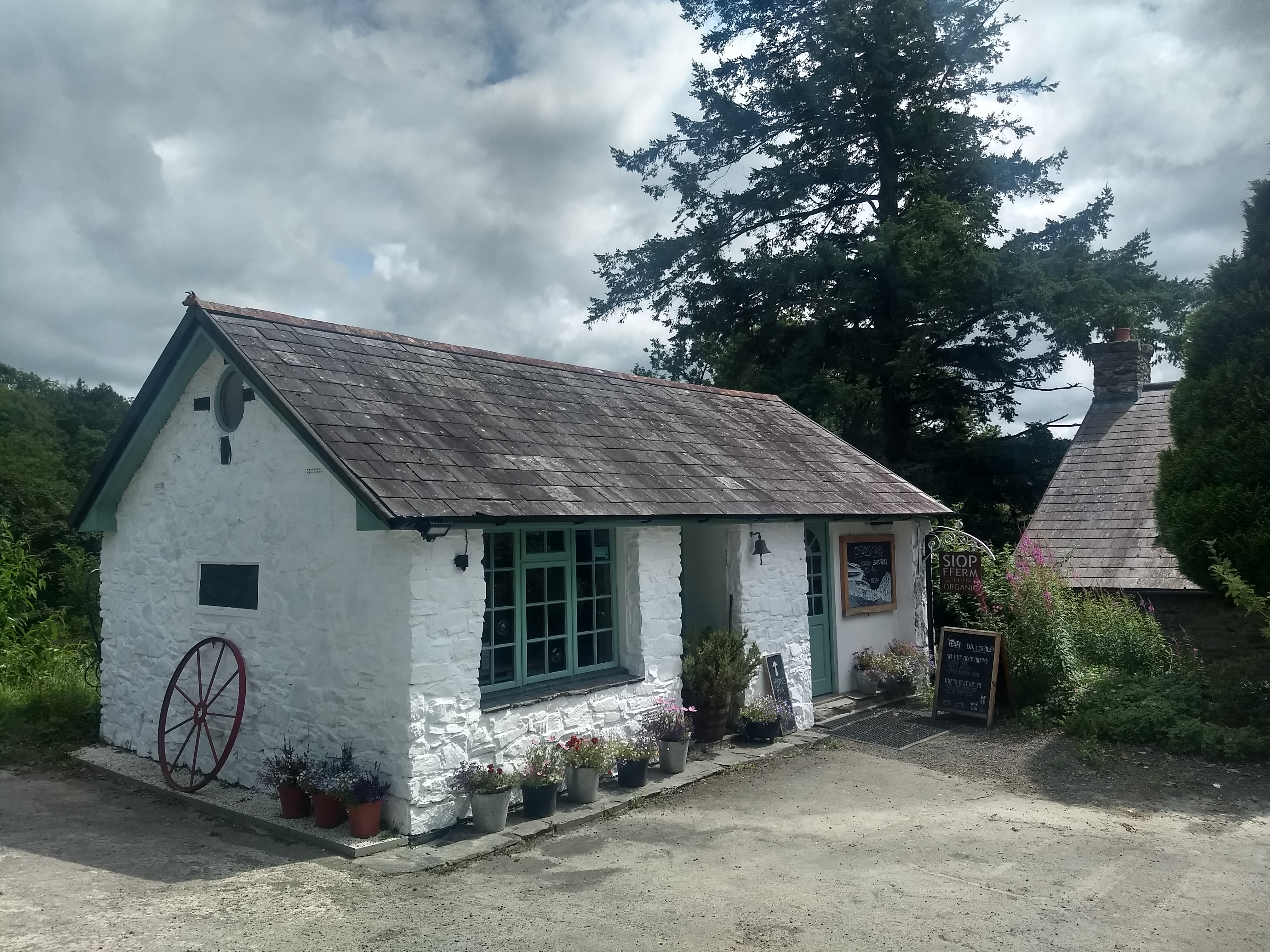
Left the distillery, we had enough time to do groceries and refuel before driving to the next one: Dร  Mhรฌle. This wee distillery is on the Glynhynod farm (in Welsh, โ€œremarkable valleyโ€), in a stunning and hidden place (it reminded Gianluigi the village where his mother grew up, Casali di Morfasso) off the A486. Although a very different business compared to the In The Welsh Wind, the ignition was somehow coming from the same place: the need for a life change. In 1981, John, Patrice and Paula moved to Wales from the Netherlands and purchased the farm, where they started organic farming and in particular organic cheese-making (named Caws Teifi). About a decade later, John went to an organic food festival and spotted a gap in the market: organic whisky. So, they farmed barley on their fields, and looked for someone to produce their organic whisky. After many โ€œno thanksโ€, someone accepted their offer: Springbank! They sent their barley to Campbeltown, where it was turned into newmake spirit by the popular distillers in 1992, and was firstly released in 2000. Although that was the only ever batch of barley produced at the farm (apparently it is not an ideal location for growing barley), they commissioned another batch of organic whisky, this time at Loch Lomond. In 2012, however, after the legalisation of craft stills, Dร  Mhรฌle purchased their own and started producing their own spirits: whisky, rum, gin, brandy, vodka and liqueurs. 

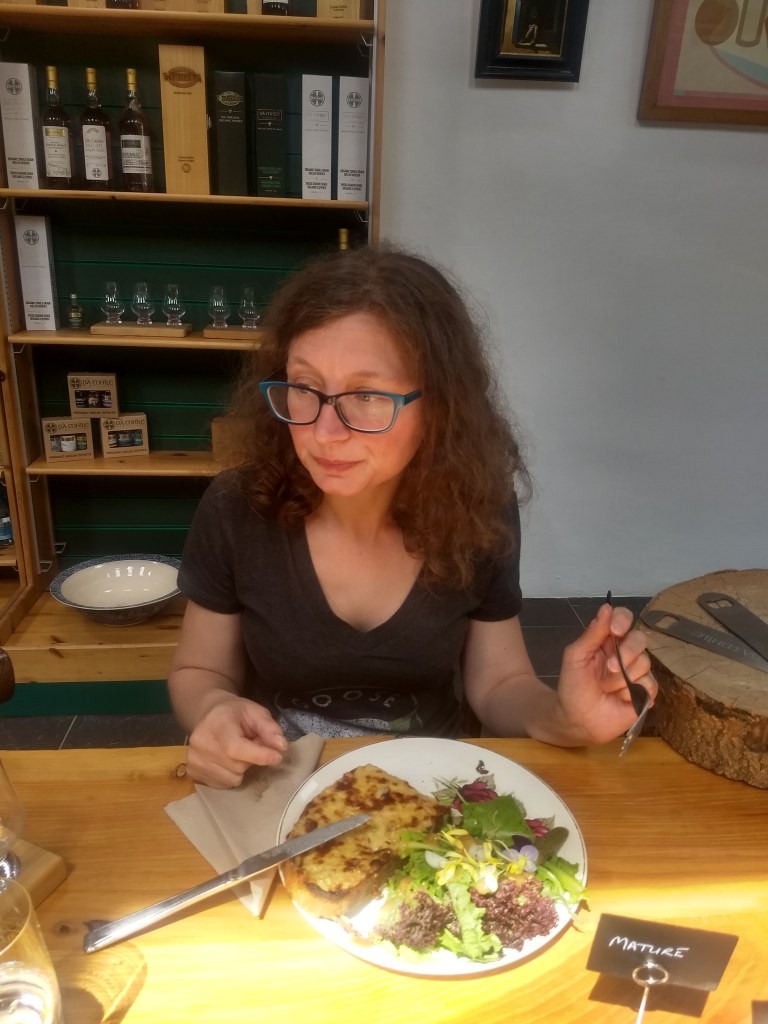
This story was told us while sitting in the lovely tasting room, resembling a mountain cottage, and equipped with a bar and shelves full of their products. The lower level of the same building is the โ€œdistilleryโ€, which consists in a 350-litre German still, with a wood-fired steam boiler. The wash is bought from a local brewery (we couldnโ€™t understand which one), which comes already fermented and ready to be distilled. After this explanation we started the tasting, with the whiskies first. The first dram was the 2023 release of their organic single malt Welsh whisky, vatting of two sherry casks (bottled at 46%abv). The second was an organic single grain Welsh whisky, released in 2022, and finished in ex-Laphroaig quarter casks, a bit smoky and tasty (46%abv). The final dram was a delicious 20 years old organic single grain Scotch whisky (again, 46%abv), from the batch they had commissioned to Loch Lomond in 2000.

After the whisky tasting, we had another one: the cheese tasting! One seasoned with nettle, one with cumin, a mature cheddar and the โ€œCeltic promiseโ€: all tasty, the latter two were delicious! Then, it was time for lunch, a Welsh rarebit, something we had never tried before.

As a final part of the tour, we went outside to check out the warehouse: a small building with concrete floor, where a few dozen casks were resting. The space is quite wide, looks like it was sized for the medium-long term, since they only fill about 22 casks per year. Finally, we visited the shop, where they sell a range of organic products: other than cheesy and boozy goodies, also meat, eggs and produce. 

Teresa and her first rarebit.

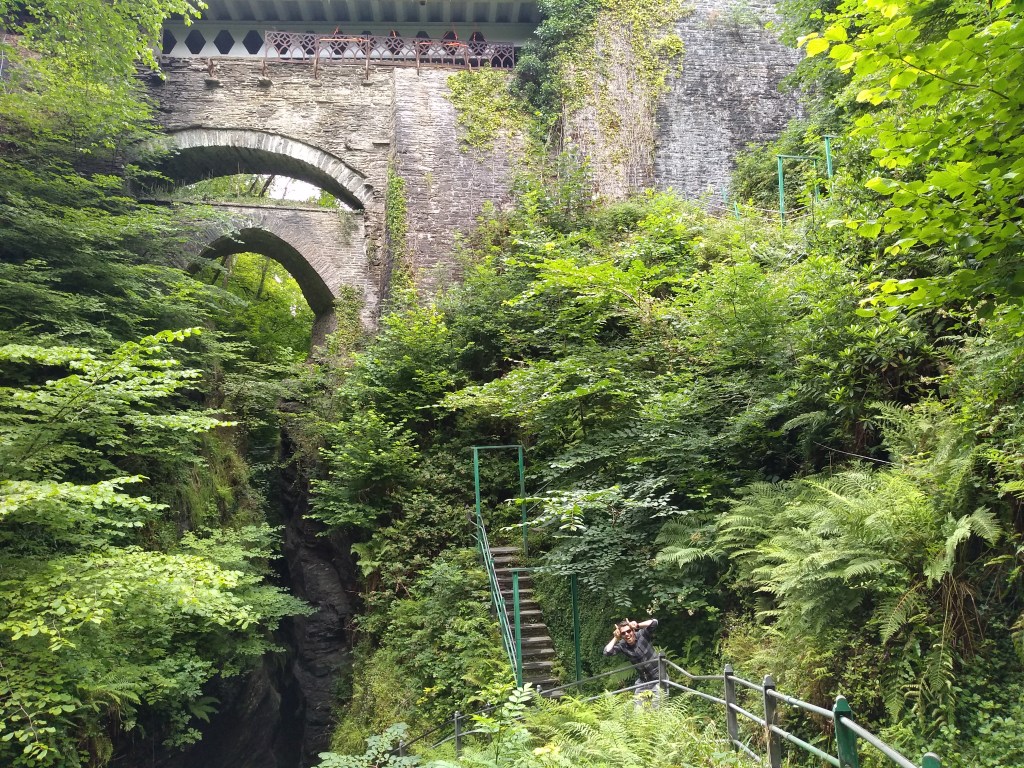
We left the distillery very happy, driving towards Aberystwyth, where we would have spent the night. Before driving into town, we did a detour to visit the Devilโ€™s Bridge, which we remembered from the Hinterland TV show (which we loved).

Once in Aberystwyth, we parked Mr. Vantastic and had a stroll in the centre. We found it very nice, and although quite small, the place gave us โ€œtownyโ€ vibes. After dinner (well, some sandwiches weโ€™d made earlier), we celebrated a day of exciting discoveries about the art of craft distilling in a lovely pub, with craft beers and live acoustic music. Slainte!  


In The Welsh Wind Tour only

Price: ยฃ8.00 pp (July 2023)

Duration: 45min

Tasting: nip of available products

Target: everyone, but still mostly gin lovers

Value for money: good

Highlights: the iStill

Recommended: yes for craft-distilling enthusiasts

Link: https://inthewelshwind.co.uk/


Dร  Mhรฌle Whisky tasting (talk, tasting and lunch)

Price: ยฃ35.00 pp (July 2023)

Duration: 1hr 30min

Tasting: 3-dram from the available range, for us it included 2023 Organic Single Malt (two ex-sherry casks vatting, 46%, natural presentation); 2022 Organic Single Grain (finished in an ex-Laphroaig quarter cask, 46%, natural presentation); 20y Loch Lomond Organic Single Grain (46%, natural presentation), and

Target: everyone, foodies in particular

Value for money: good

Highlights: the bucolic location

Recommended: yes for craft-distilling enthusiasts

Link: https://www.damhile.co.uk/

#33.2 The Welsh Whisky Trail (not TM)

From Cardiff to Pembroke: Penderyn Swansea and Coles


TL;DR: After visiting Cardiff, we spent the next couple of days again on the road in South Wales for a mix of whisky and non-whisky activities: Penderyn Swansea distillery, Gower peninsula and Rhossili, followed by Coles distillery and Pembroke Castle. 

(missed Part 1?)

That morning in Cardiff the sky was a bit moody, but this didnโ€™t stop us going for a morning run (to Teresaโ€™s disappointment). Near the camping there is a huge park, the Bute Park River Side, which continues along the river Taff, with plenty of pedestrian and cycling paths. We took advantage of it – always nicer to run in green areas. We spent the rest of the day in Cardiff, visiting the castle first, buying rugby-related gifts for Gianluigiโ€™s brothers and father, and looking out for some local beers to try: we found a pub we quite liked right in front of the stadium, but we found out soon it wasnโ€™t Welsh: Tiny Rebels, from Bristol (delicious beers!). We liked Cardiff as a city, small but cosy, and seemed very liveable. Definitely a place to go back to!

The following day we left early in the morning, directed to Swansea. No matter how we liked Cardiff, we have to say that the landscape along the road between the two cities was not nice at all, very industrial and a bit decadent. Even Swansea didnโ€™t look that good to be honest, not to their fault: it was quite flattened by the Germans during WWII. We soon managed to find the distillery (although Google Maps pointed us somewhere else): the newest of the Penderyn.

We did the regular tour here as well (pricier, see summary below), as it was the only experience available in July. In fact, the distillery was so new that they hadnโ€™t even started distilling yet (all the equipment was there however). Being built inside a former copperworks, in the first part of the tour they showed us some videos and the reproduction of a little copper mine, showcasing the importance of this material for electricity (and distilling). Very interesting indeed!

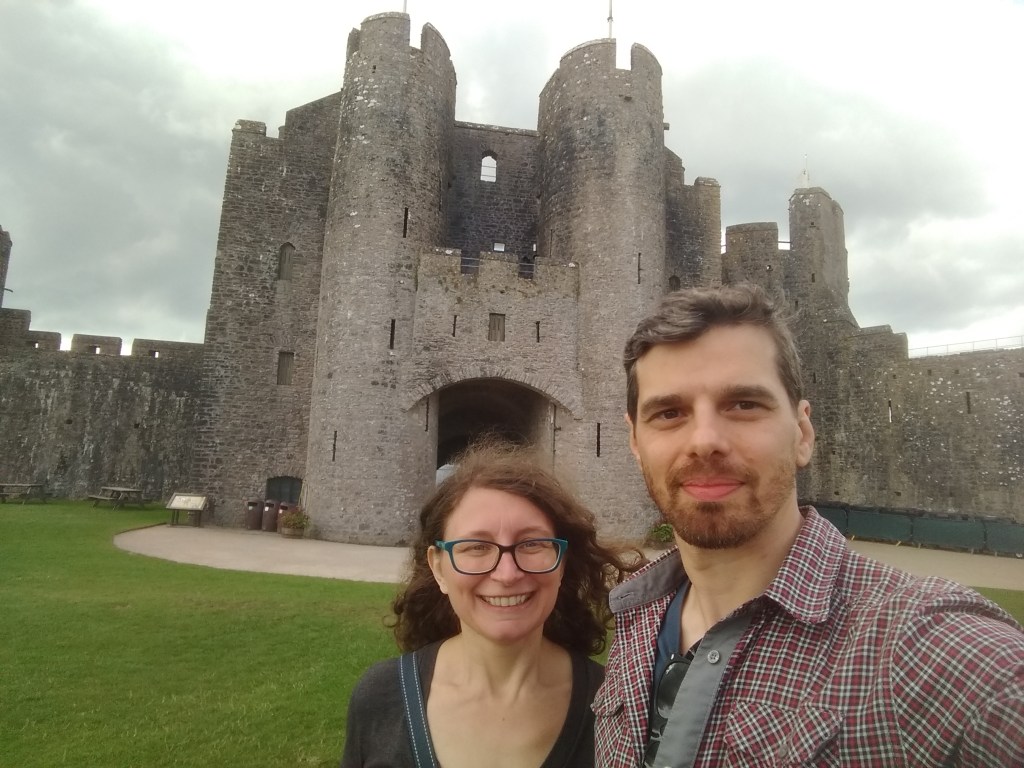
We then visited the soon-to-be active production (again, no pictures allowed), and we realised it is a replica of their Brecon Beacons site. We couldnโ€™t quite get why they made two almost identical distilleries, but our guesses are for tourism (see later) and because it was not possible to increase the size of the original production site. They have a warehouse, however, which we got to after walking on the remains of the copperworks building (covered by glass, hence why we could walk on them). Finally, in the very beautiful tasting bar, we could try two of their expressions each. We picked another two drams from the Icons of Wales series, the #6 Royal Welsh Whisky (43%, peated Portwood finish, to commemorate the original Welsh Whisky distillery at Frongoch) and the #10 YMA O HYD (43%, matured in ex-Rye casks), plus a couple from the core range, the peated ex-Islay cask and the Rich Oak. Despite the fairly basic tour, overall we enjoyed the experience, especially thanks to the very friendly staff.

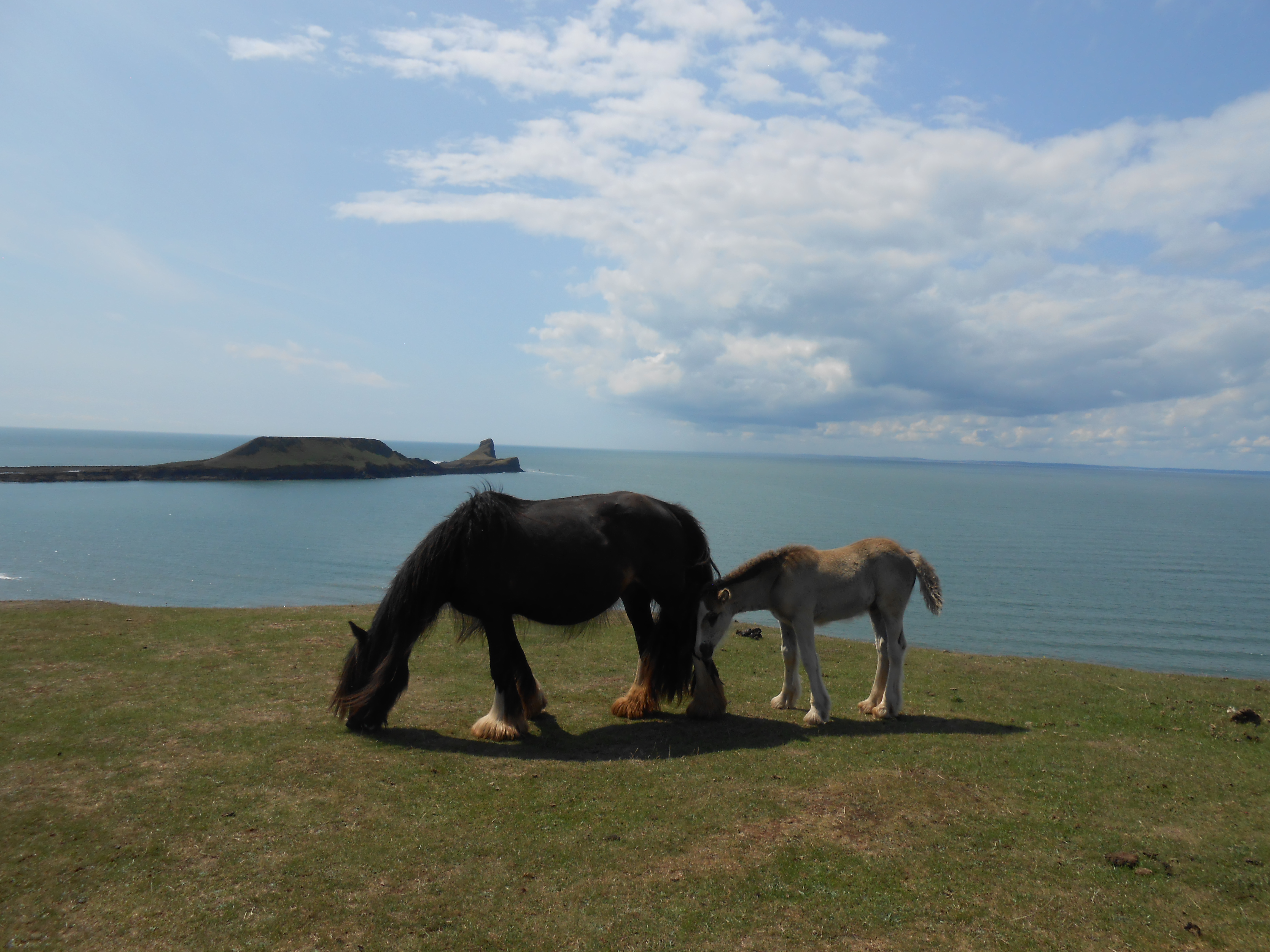
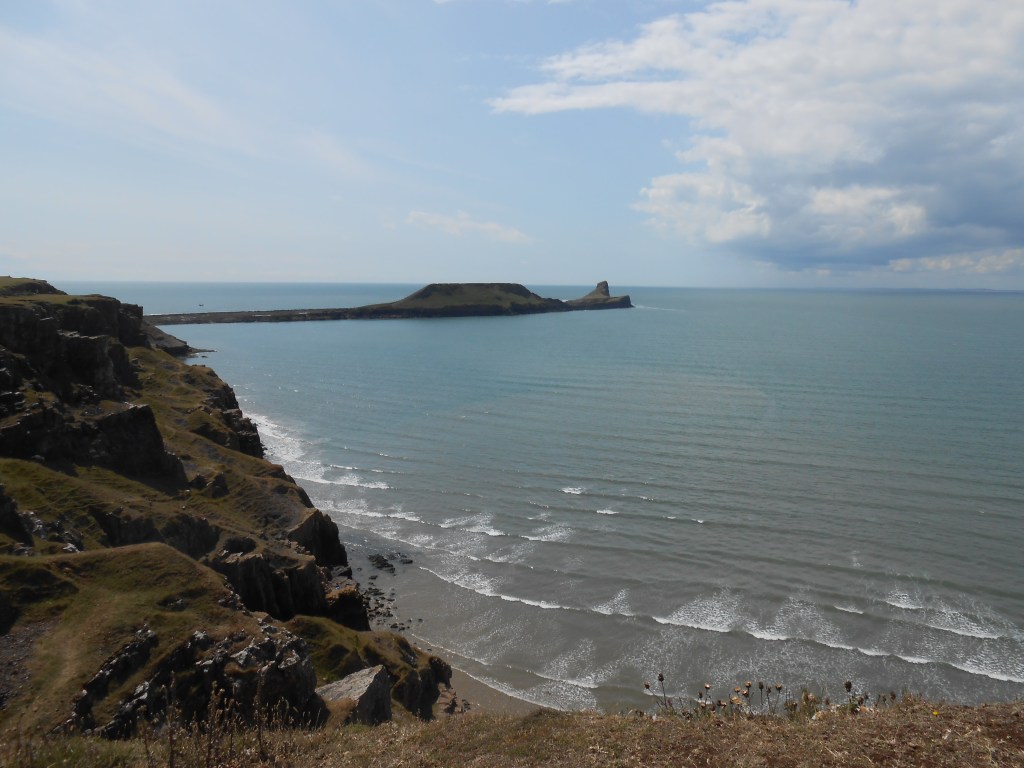
While Swansea didnโ€™t look very beautiful itself, just past it we found a very touristy seaside location, Mumbles, where we stopped for a coffee and a bite. Further ahead, the Gower peninsula. In spite of the narrow and busy roads, we really loved it, in particular Rhossili. We spent the afternoon there, walking to the Ynys Weryn and the Wormโ€™s head before the tide would make it an island again.

For the night we didnโ€™t park much far away, just past Crofty, so we had time for a walk. The spot is popular for dramatic sunsets on the river Loughor estuary.

In the morning we drove towards Llanelli, but only after checking out a nice cafรฉ inside a gym (!!) to get a coffee and a morning roll. One of the peculiarities of this holiday was that the offer of morning rolls in Wales seemed to be less rich than in Scotland (lacking black pudding and haggis, for example), so we always ended up with baconโ€ฆbacon and sausage in this case (delicious!). Anyway, we soon got to the next stop, Coles Distillery, at the historical White Hart Inn pub, in Llandarrog, which dates back to 1371.

As we parked behind the inn, our guide for the day, Tom, approached us. He is a young and enthusiastic fella, who works in both the brewery and the distillery. The Coles family (who took over the pub in 1994) started brewing their own beer in 1999, cider in 2011 and since the craft stills legalisation, they have been making whisky, vodka, gin, brandy and the first ever welsh rum (as you can imagine, all in small batches). Except for the rum, for which they import molasses, they are a proper grain-to-glass distillery (or fruit-to-glass), as even the gin and the vodka are made from scratch using wheat.

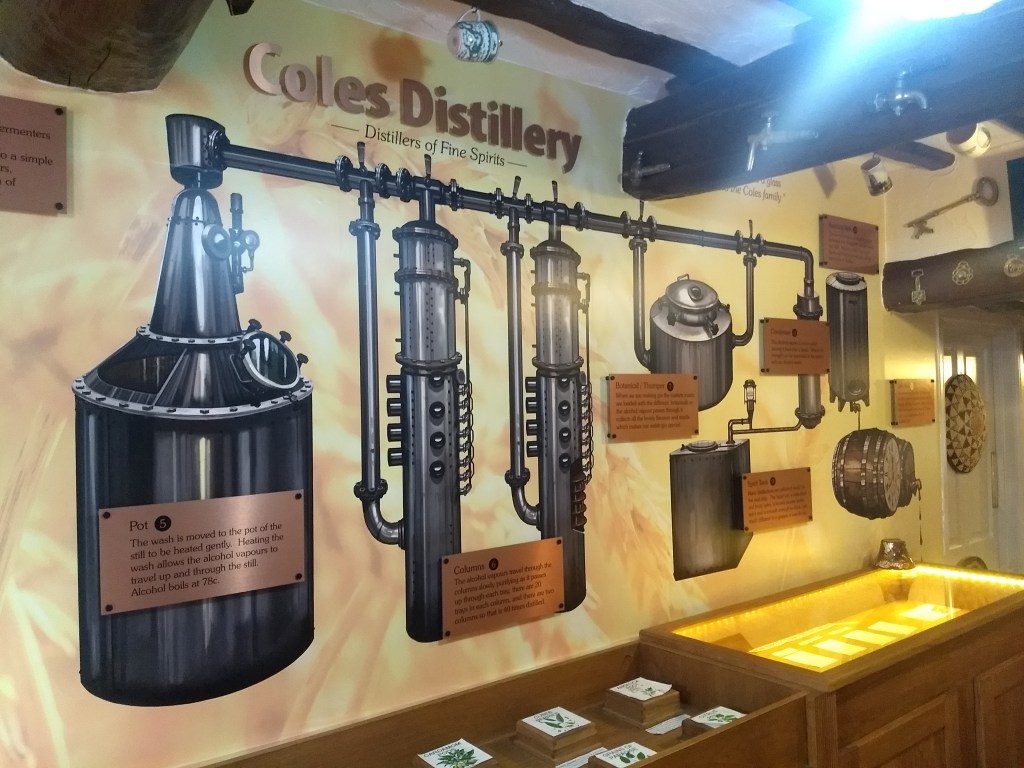
The first part of the tour took place in a hallway, in the pub building, where there is a panel displaying how their distilling operation works, including the botanicals for the gin. They take the water from a well about 90 meters deep, and mashing and fermentation take place in stainless steel tanks (the latter are 6, and fermentation lasts 70 hours). The actual distillation is the interesting part: they have one stainless-steel pot still which takes 3000l wash, and of which only a joint before the lyne arm is made of copper. Then, they have two column stills, each one with 20 copper plates. This setup, all using a steam boiler, gives them lot of flexibility, thanks to which they are able to make different products.

After this very thorough explanation, we moved inside the distillery, just a few steps away from the pub. Because of the craft size of the operation, everything is under one shed, including some maturing casks of whisky and rum. There we could revisit all the steps of their process under Tomโ€™s careful guide, which explained that they mostly use American oak ex-bourbon barrels, in particular for their main whisky.

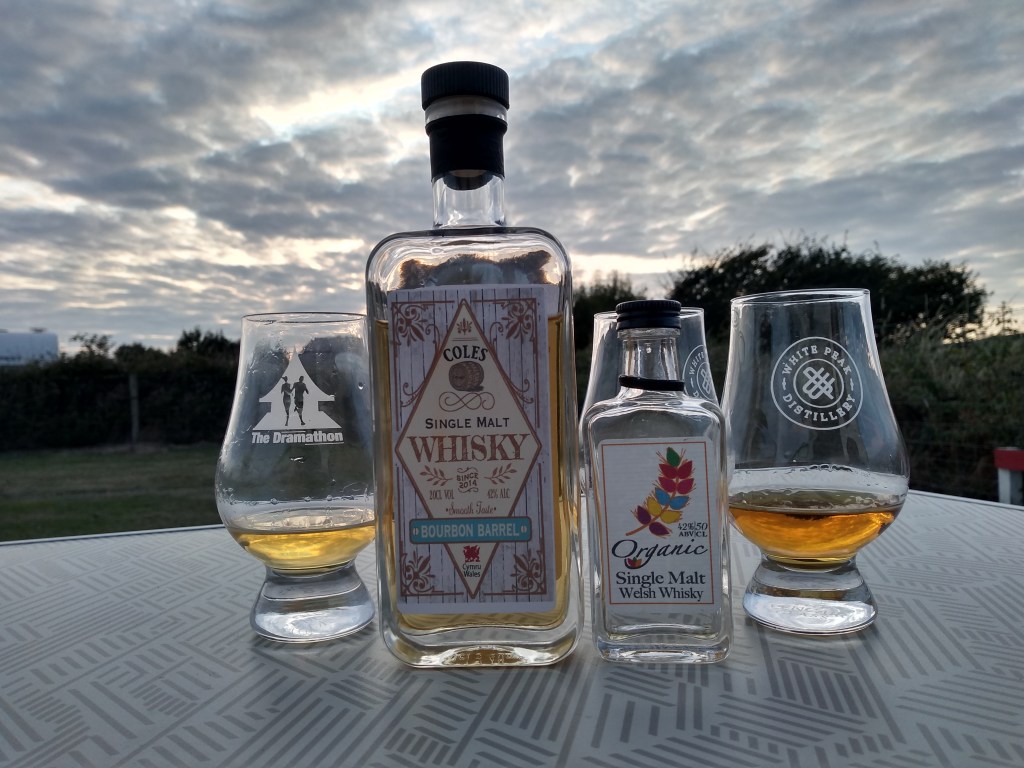
Back to the pub, we sit at the bar to try a few of their spirits. Sips were very tiny, but they also sell almost everything they produce in 5cl miniatures, so we took a few with us for a more in depth tasting in the evening.

Back on the road, we started driving towards Pembrokeshire, to visit the Pembroke Castle, probably our favourite of the holiday. We were able to catch a guided tour, and what an amazing tour that was! The history of the castle is very fascinating too, definitely a must-do if youโ€™re ever in the area. Our camping for the night was still in Pembrokeshire, near St David.

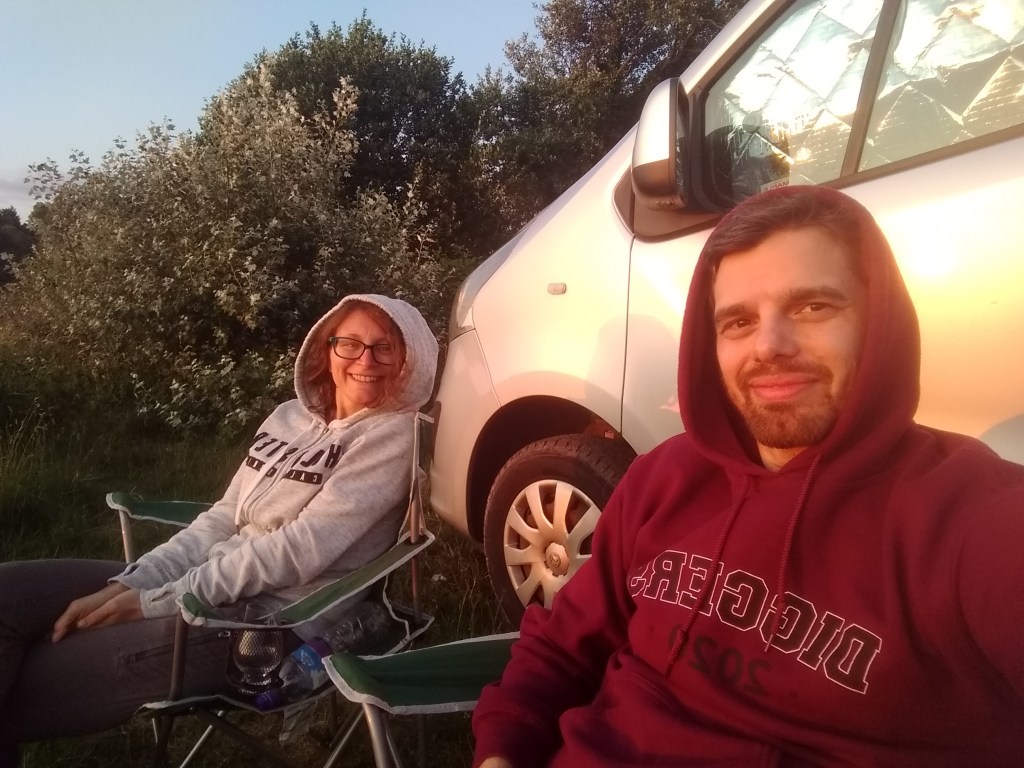
It was on a farm, and because the weather was nice, after dinner (we went โ€œtrue Italianโ€ and made pasta) we could relax and watch the sunset while sipping the Coles distilleryโ€™s miniatures: Welsh single malt (5y, 42%, ex-borubon), Organic single malt (42%), dark rum (oak aged, 40%) and the Plum brandy (40%). The latter was the winner for us, delicious!

See you next week, slainte!


Penderyn Swansea Copperworks Tour

Price: ยฃ19.50 pp (July 2023)

Duration: 1hr

Tasting: 2 drams of choice

Target: everyone

Value for money: less good than Penderyn Brecon Beacons

Highlights: the copperworks history of Swansea

Distillery Exclusive: same as Penderyn Brecon Beacons (except the Fino cask)

Recommended: if you are curious about the copperwork history and/or if you havenโ€™t visited the Brecon Beacons site

Link: https://www.penderyn.wales/tours-swansea-copperworks/


Coles Distillery Tour

Price: ยฃ12.50 pp (July 2023)

Duration: 1hr

Tasting: a nip of anything they produce

Target: everyone

Value for money: good

Highlights: the range of spirits

Recommended: for craft-distilling enthusiasts in particular

Link: https://www.coles.wales/