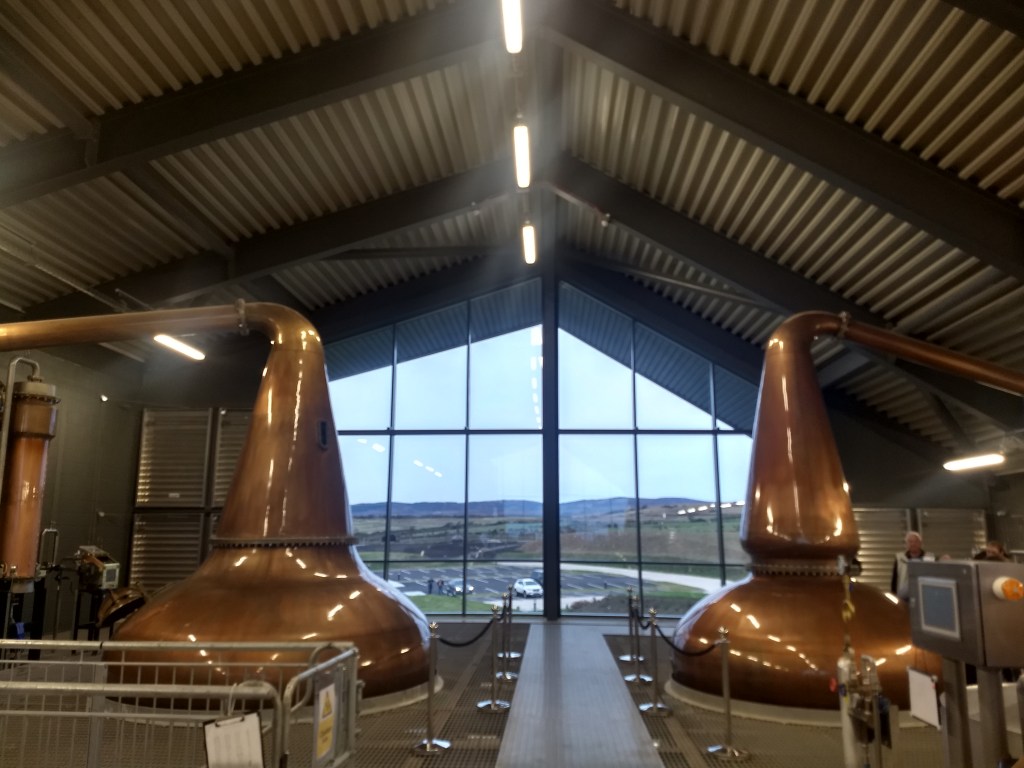
#33.1 The Welsh Whisky Trail (not TM)

Distilling in the park: Penderyn Brecon Beacons


TL; DR: Our first time in Wales, we started the trip with a nice, easy hike through waterfalls in the Brecon Beacons National Park. Right after, we rewarded ourselves for the effort with a visit to the original Penderyn distillery, the first opened among their current three production sites. 

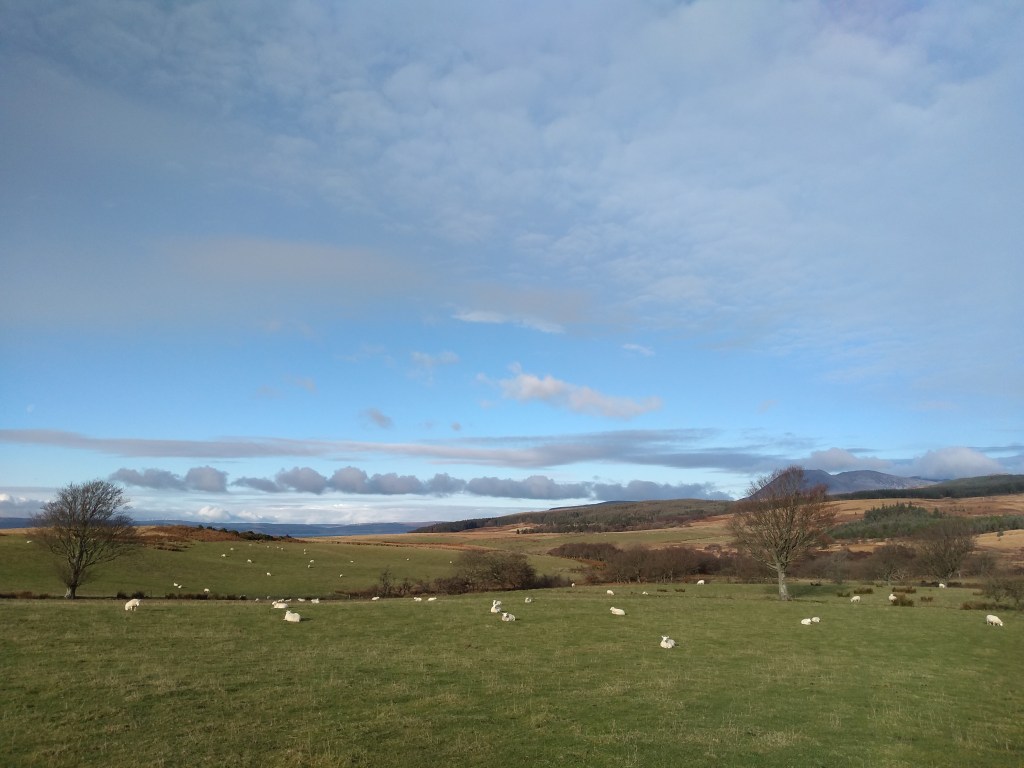
A sunny Monday morning, in a parking spot near a country road. This is how we woke up on our first day in Wales. The night before, after our stop in the Cotswolds, we had entered Wales from the east side, driving straight towards one of the main national parks, Bannau Brycheiniog (or Brecon Beacons). We were very excited! For Gianluigi it was the first time, in spite of his long-standing interest in rugby, a sport that in Wales was more popular than football until very recently (might still be?). For Teresa it was technically the second time, the first being a work trip to Newport, but it was so short that basically this one was the first time for her too.

In recent years, Wales was not spared by the whisky frenzy happening throughout the world, and distilleries started popping up there too. As weโ€™ll find out later in the trip, distilling had already happened much earlier, but unlike Scotland or Ireland, it didnโ€™t pick up. The trailblazers of the current Welsh whisky scene are definitely Penderyn, which started in the year 2000 and now have three production sites in different areas of the country. Because of the liberalization of craft distillation in the mid-2010s, more distilleries opened since, mostly on a very small scale. We were very excited to know better this scene, but letโ€™s go in order.

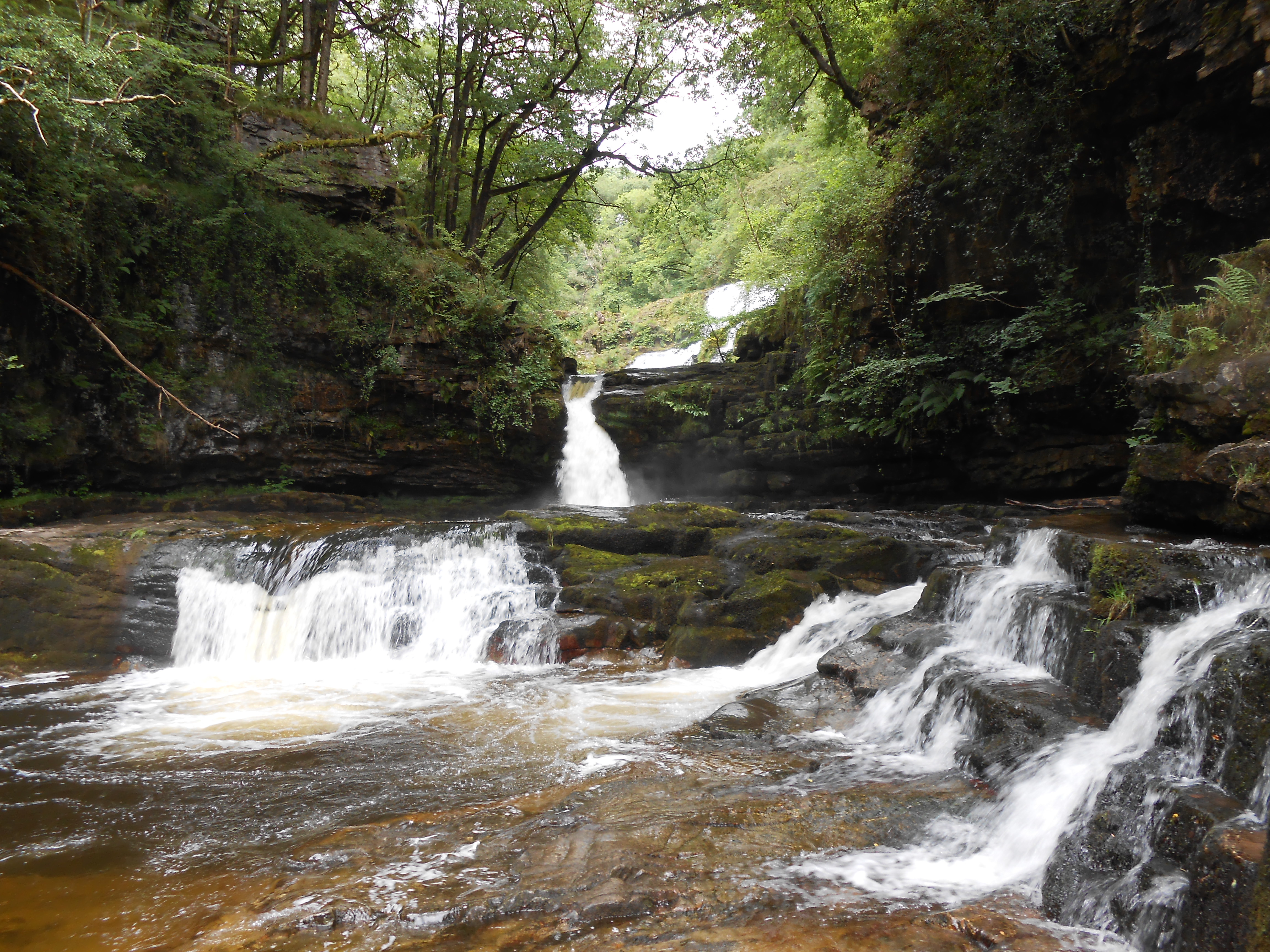
The first activity we did was not visiting a distillery (shocking, isn’t it?), rather the Four Waterfalls Walk in the Brecon Beacons. Before that, we stopped by a cafรจ in Brecon for some warm breakfast, and we soon left to drive in the spectacular park (characterised by a very โ€œScottishโ€ landscape), until the Cwm Porth parking lot (the first of many pricey car parksโ€ฆhard to disagree with them though). The trail was not very difficult, mostly flat (except for a detour to reach the first waterfalls), in a very beautiful wood. The waterfalls were impressive, in particular Sgwd Yr Eira, and in total we hiked for about 12k. Gianluigiโ€™s comment: โ€œwe should have done this runningโ€ was not very well received by Teresa. Back in the car, we drove on a very panoramic road, where the Devilโ€™s Elbow is, before going towards the first distillery: Penderyn Brecon Beacons indeed! We found out at the distillery that they donโ€™t have a cafรจ, only a tasting bar, and there is none at walking distance. But here is where the campervan comes handy: we prepared our own coffee inside! Cracking!

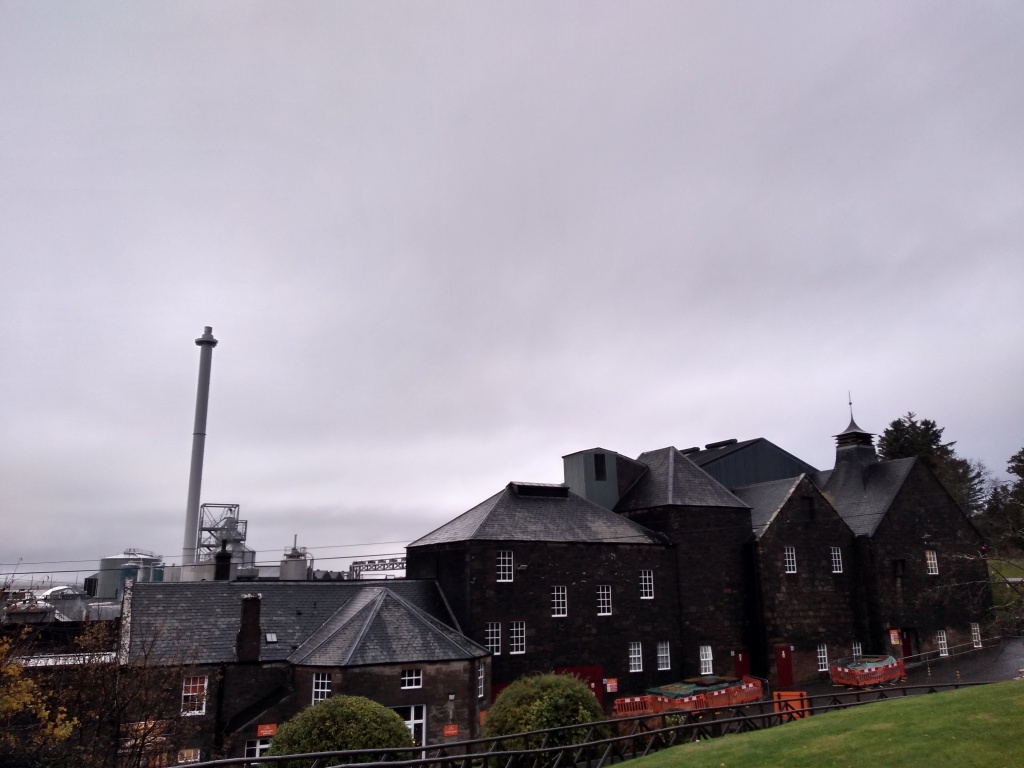
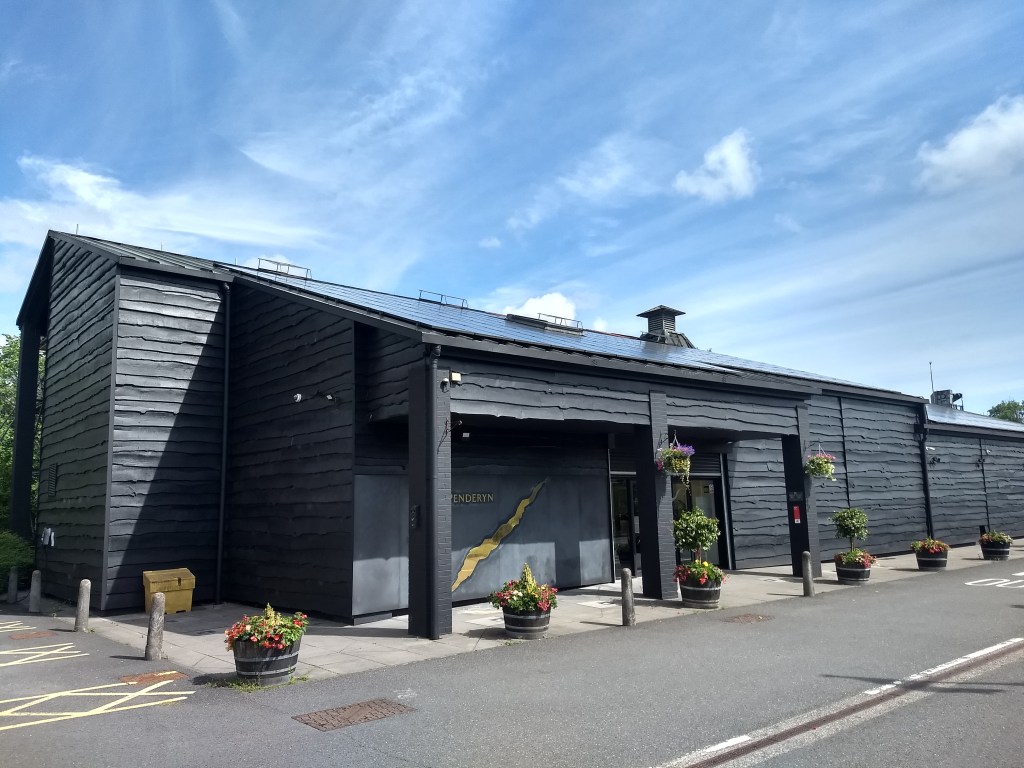
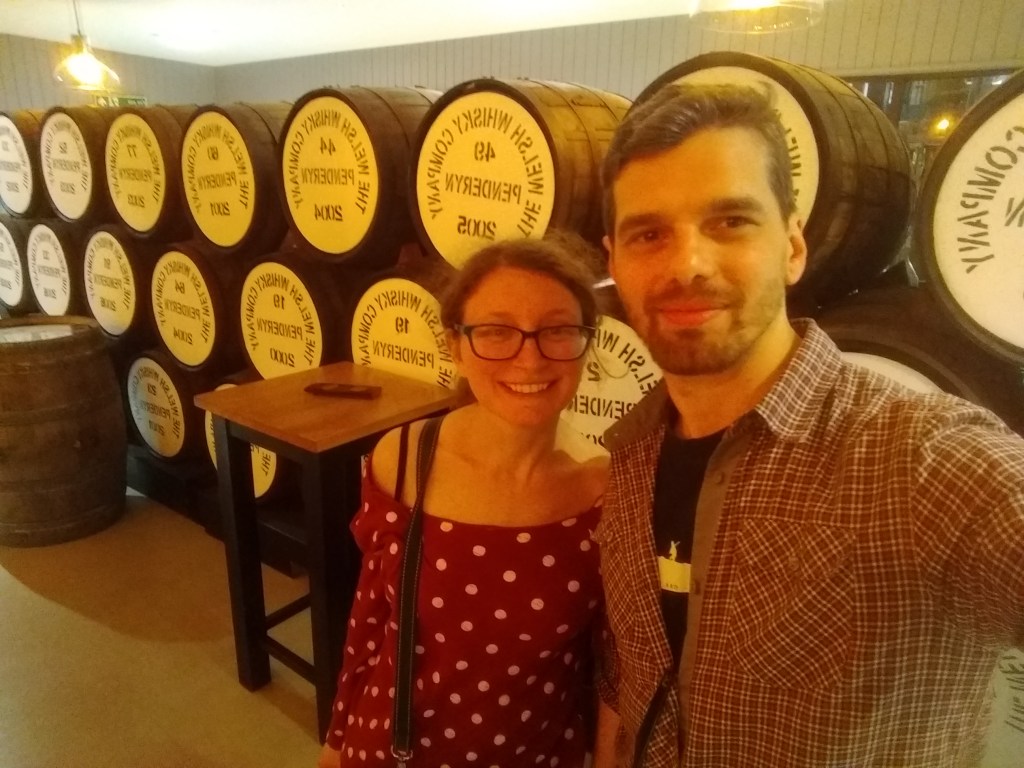
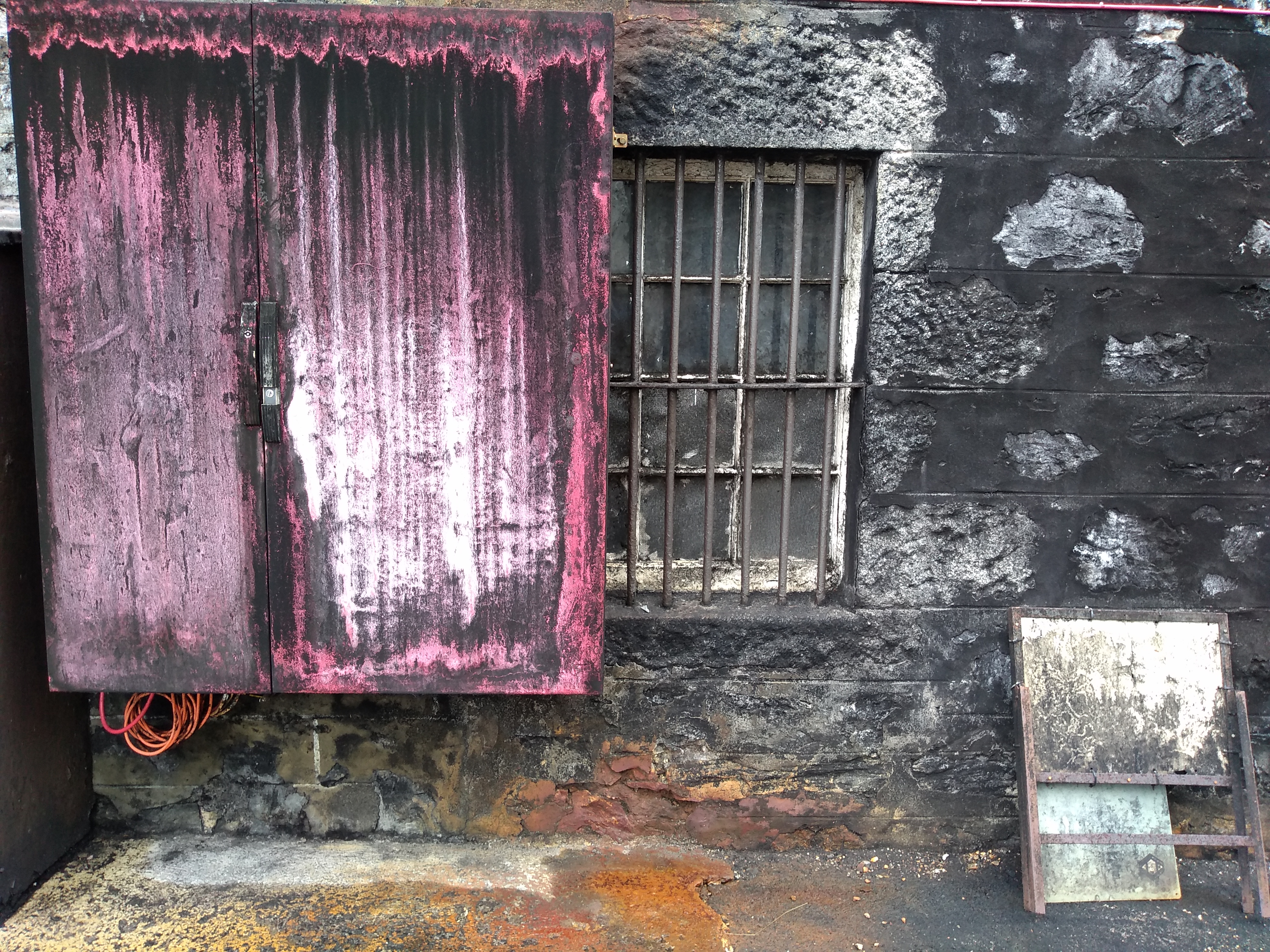
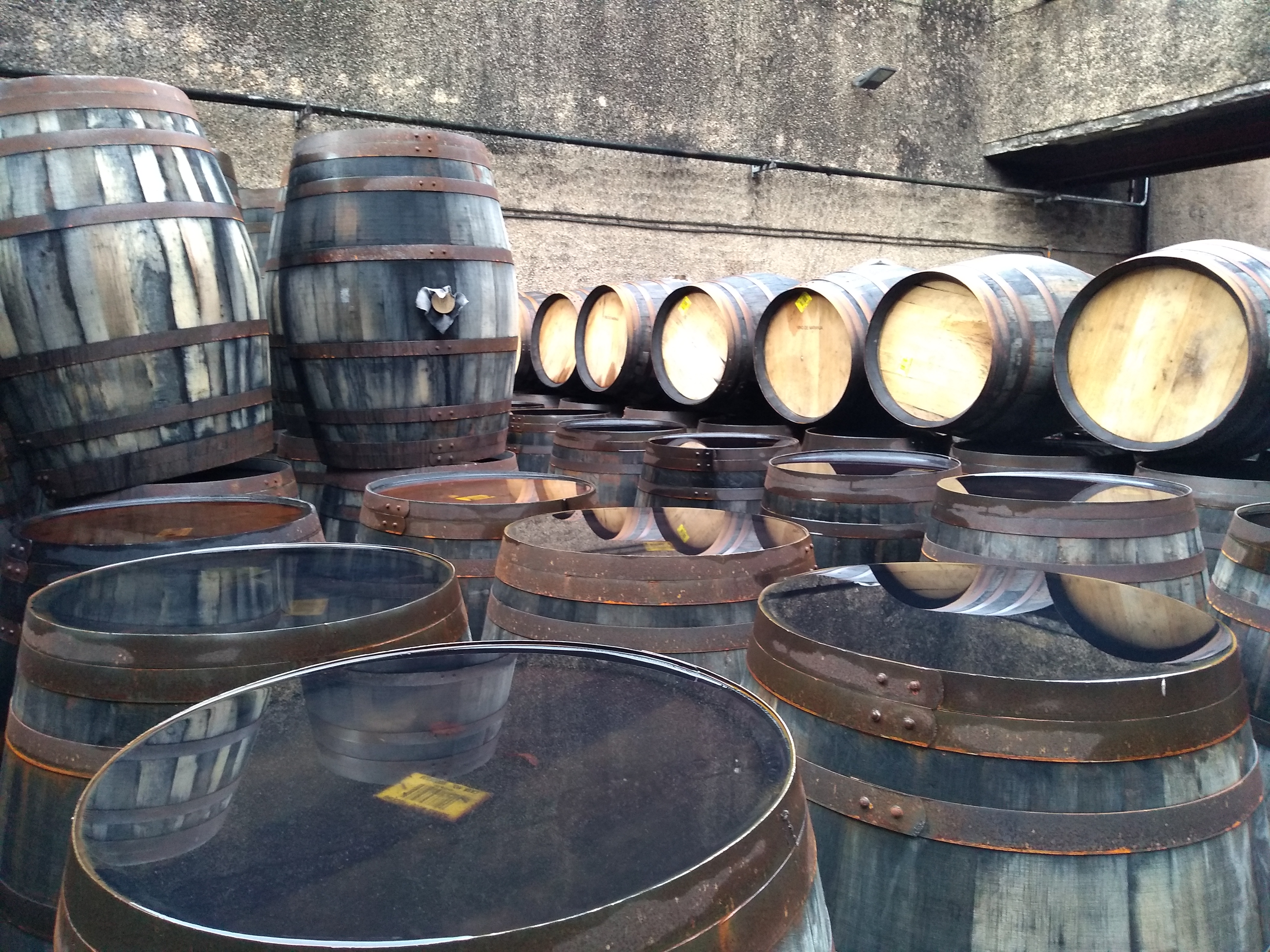
Here, we did the regular tour because the masterclass is only available at weekends. The distillery is quite compact, all painted black externally, so quite easy to spot. Because of the relatively small size of the site, casks are stored elsewhere, 20 minutes down the road.

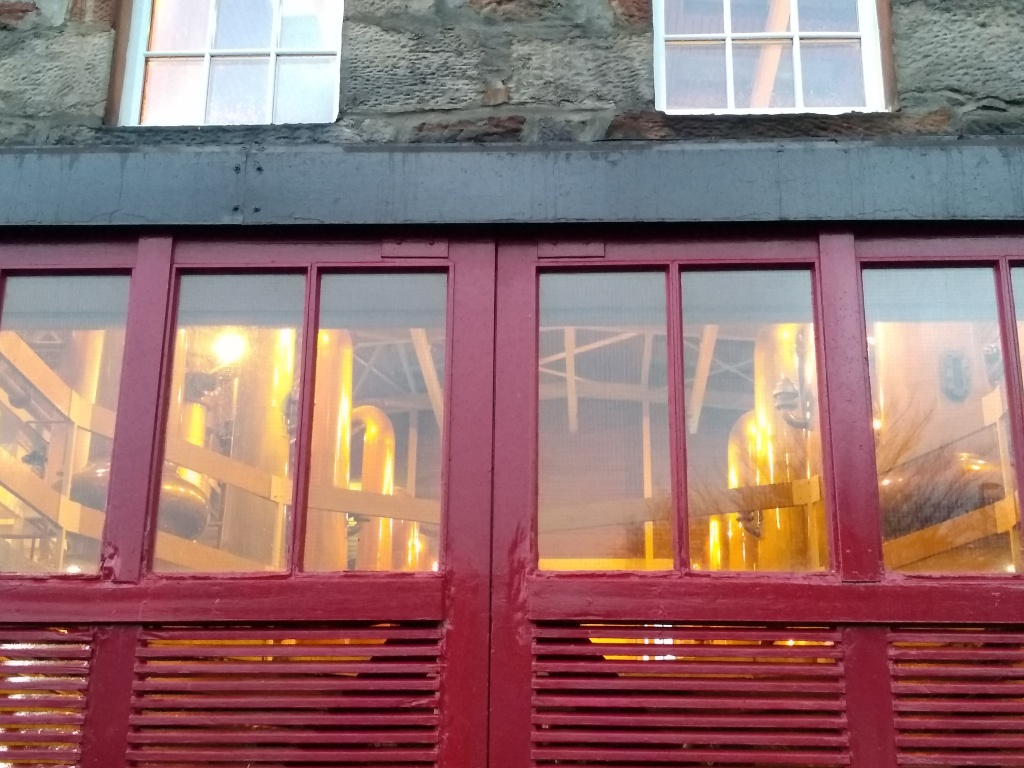
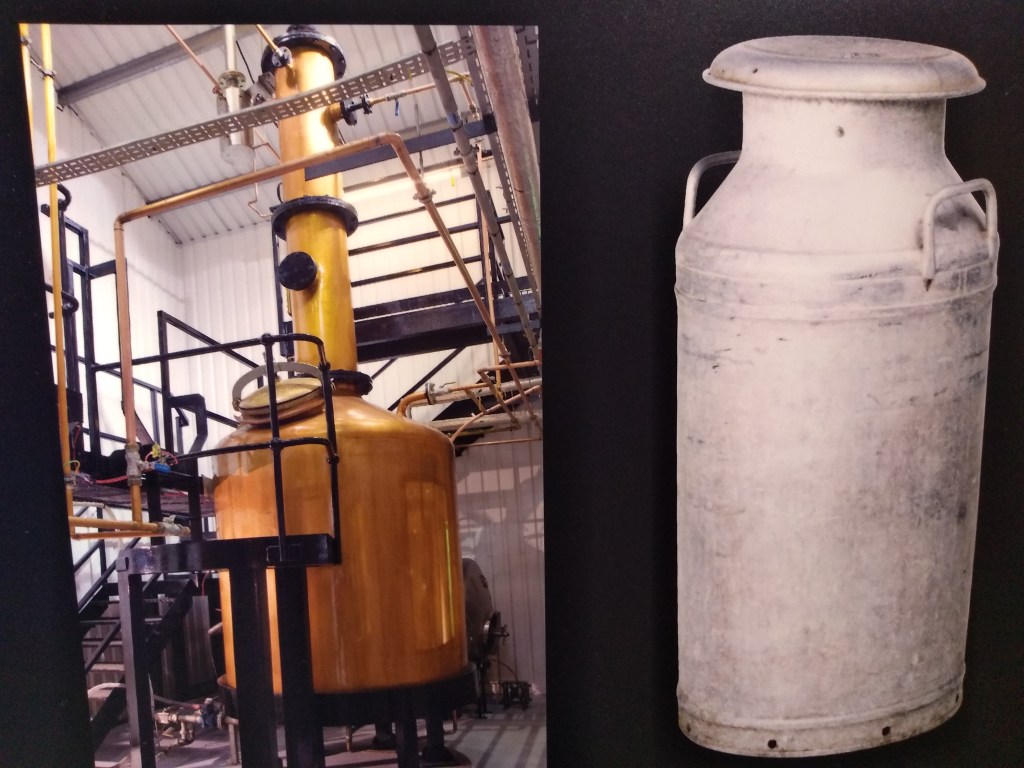
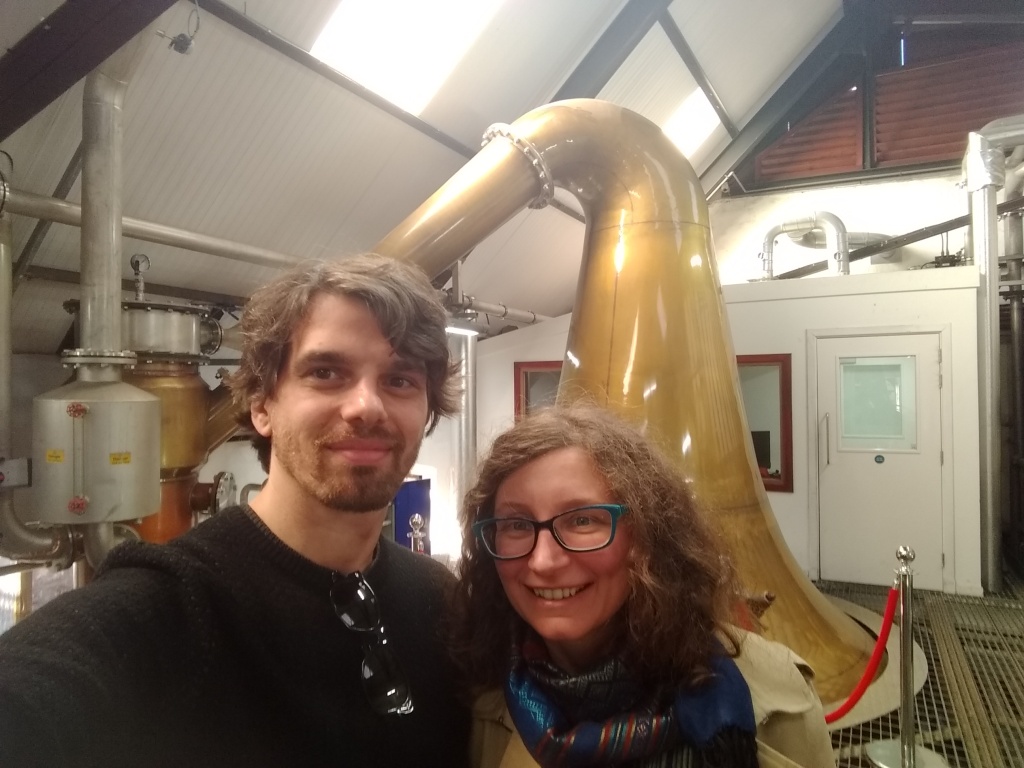
Unfortunately, we couldnโ€™t make any photo inside production, but we have to say that the initial stages are similar to other distilleries: milling, three-water mashing, and a 72-hour fermentation. As many of you might know already, their main feature is to use a Faraday still, quite unique in whisky production. This is a hybrid between a pot and a column still, commissioned to the descendent of the famous Faraday himself! The distillation is in batches but only one is needed: with the copper plates in the stills (one plate is equivalent to one distillation), the resulting spirit is about 90%abv!

Because of this peculiarity, the distillery caught the eye of the late Dr. Jim Swan, a consultant who was pivotal in driving the resurgence of whisky in several countries during the 2000s and 2010s (he also worked for other distilleries such as Kilchoman, Lindores Abbey, Annandale, Kavalan, Cotswolds). He helped Penderyn develop their style of whisky, rich and sweet. After lot of trials, they selected as flagship an expression matured in ex-bourbon casks (mostly from Buffalo Trace), then finished in ex-Madeira wine casks. This is a solid whisky, which fortunately is quite widespread (you can find it regularly at Tesco, Sainsbury and other supermarkets). They have similar expressions, but finished in ex-Laphroaig quarter casks, STR (shaved, toasted, re-charred, called Rich Oak), Sherry wood, and ex-Port wine casks: all non-chill filtered, natural colour and bottled at 46%abv. For three of these they have a lighter version, bottled at 41%abv, and sold mostly in supermarkets, a requested from their French importer. Apparently they were not too keen to bottle at lower abv, until they were told how many bottles the French wanted to buyโ€ฆItโ€™s a business after all!

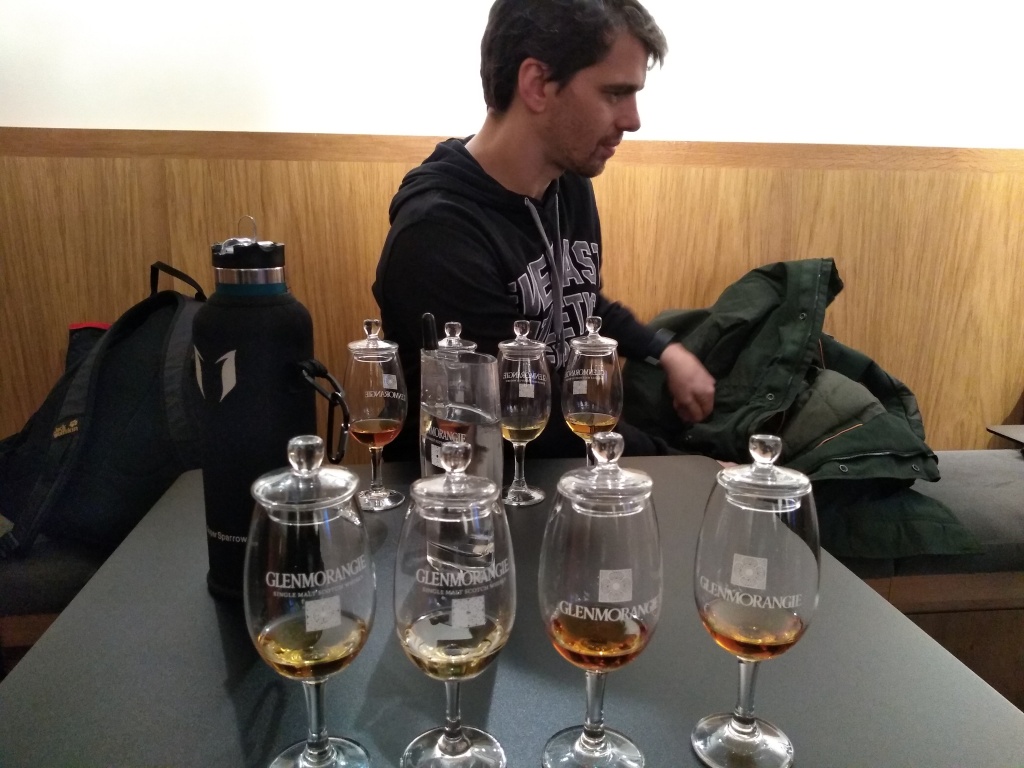
Other than the Faraday stills (two), they also have a pair of pot stills, a wash and a spirit one, similar to many Scottish distilleries, installed in 2014. They use these mostly for special editions, single casks, and for some expressions in their Icons of Wales range. After the tour, we went to the bar for the tasting, where every one could choose two expressions from any of the available ones. This is a great policy, because it allows the visitor to shape their tasting according to their taste and experience. Of course, we tried (Gianluigi right away, Teresa later in the evening) two from the Icons of Wales series, the #8 Hiraeth (46%, a mix of spirit distilled with the Faraday and with the pot stills and matured in ex-bourbon casks) and the #9 Headliner (46%, matured in ex-Jamaican rum and ex-Port casks), and a small batch bottling from ex-Rye casks, and a Distillery Cask ex-Fino sherry. They were all delicious, and a great example of what this distillery can make! At the shop they also had other single casks/small batches bottlings, as well as their spirit range (cream whisky liqueur, vodka and gin) and some “friend” distilleries’ whiskies, in particular from Brittany distillers Armorik (France).

We left the distillery driving towards Cardiff. The landscape is very particular, with small villages scattered along the hills – we guessed these must have been minersโ€™ settlements. As we arrived at our camping in Cardiff, we realised how close we were to the city centre, barely 20 minutes walking from the Cardiff Castle and the Principality (formerly Millenium) Stadium. That night, however, we didnโ€™t go to the city: we took advantage of our portable grill for a little (well, not so little) barbecue, cooking food for the evening but also for the following ones, because well organised ‘campervanners’ (is this a word?) are happy campervanners. Slainte!


Penderyn Brecon Beacons Tour

Price: ยฃ13.50 pp (July 2023)

Duration: 1hr

Tasting: 2 drams of choice

Target: everyone

Value for money: very good

Highlights: the Faraday still

Distillery exclusive: ex-Rye cask Small Batch (2050 bottles, 50%abv, natural colour and non-chill filtered, also available online, ยฃ85.00); Distillery Cask ex-Fino Sherry cask #972 (45.3%, natural colour and non-chill filtered, ยฃ70.00); Rich Madeira (Penderyn Club Exclusive, 50%, ยฃ95); Amontillado Sherry single cask (59.7%, ยฃ130)

Recommended: yes

Link: https://www.penderyn.wales/tours-breconbeacons/

#31.6 Spirit of Speyside 2023

The beast of Dufftown: Mortlach


TL;DR: our fourth day at the festival started with a classic, a distillery particularly known for their complex distillation process: Mortlach. The visit was very interesting indeed, and the distillery manager Kirstie didnโ€™t shy away from nerdy details. 

(missed Part 5/Part 4/Part 3/Part 2/Part 1?)

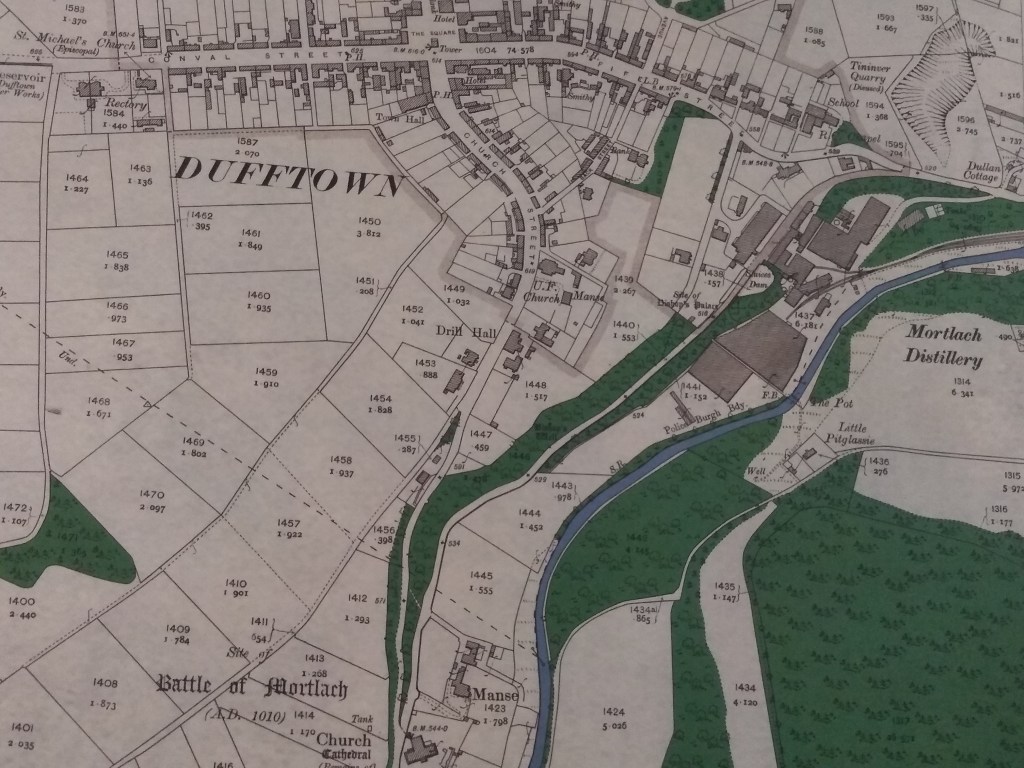
On Sunday morning the sky was still overcast, it would start raining later in the day eventually. Oh well. After breakfast we wrapped up all our stuff: it was the last night in the camping, the following and last night of the holiday we would wild camp again, although we hadnโ€™t figured out where yet. We left the camping driving towards Dufftown, in a backroad that goes past the back of the Speyside Cooperage, from which you can admire their casks pyramids. Being Sunday morning, Dufftown was very quiet, and not all cafes were open yet. We managed to park on the main road, in front of the local CoOp, and tried hunting for a coffee. After finding one, we walked our way towards our first appointment of the day: Mortlach distillery, the so-called beast of Dufftown.

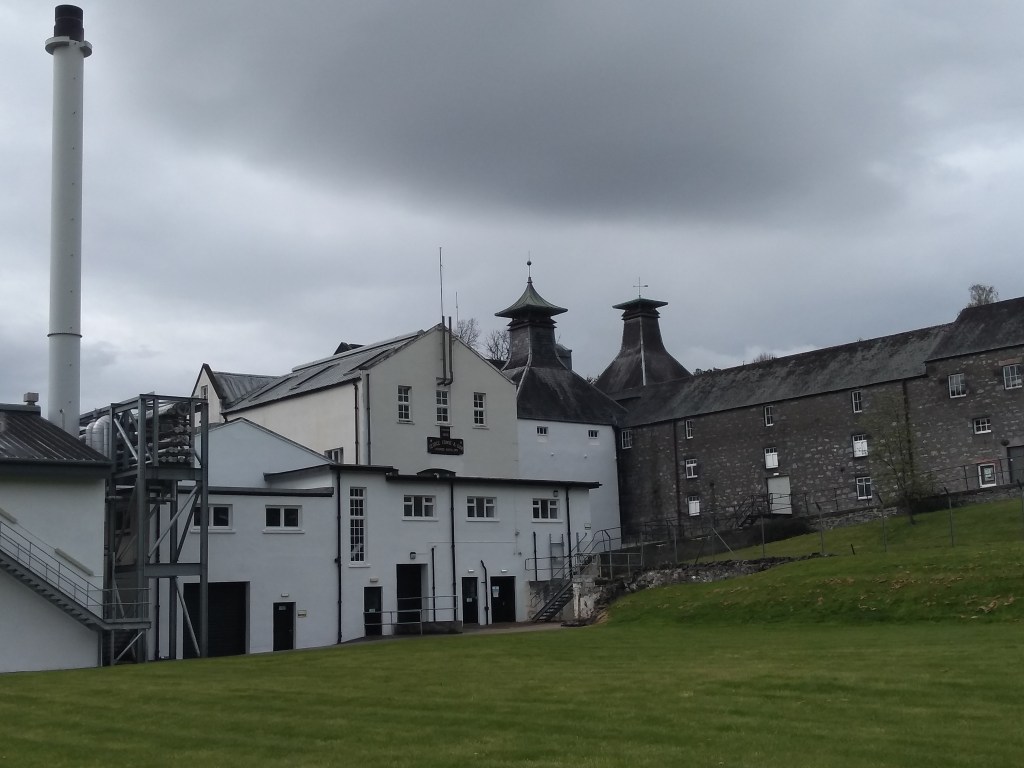
It is a very old one, founded in 1823 after the Excise Act, and it was the only one in town until their manager at the time, William Grant, left to found Glenfiddich. In 1897 the distillery was expanded, and thanks to the work of the famous architect Charles Doig, the pagoda roofs were added. It was acquired by John Walker & Sons in 1923, but the company soon merged with Distillers Company Limited in 1925 (then United Distillers in 1987, Diageo from 1997). Before 2014, the only official bottling of Mortlach was the 16y โ€œFlora and Faunaโ€, now discontinued and dearly celebrated (like most things of the past, the abuse of โ€œโ€™member-berriesโ€ is widespread in whisky-landโ€ฆif you donโ€™t know the reference, check South Park season 20).

A core range was introduced in 2014 (with some controversial 50cl bottles) and revamped in 2018, while the current age-stated range includes a 12y (Wee Witchie), a 16y (Distillerโ€™s Dram), a 20y (Cowieโ€™s Blue Seal) and a 14y travel retail (Alexanderโ€™s Way), plus the occasional Special Releases. The newmake spirit is mainly filled in ex-sherry casks, although you can find some independently bottled ex-bourbon matured expressions (we have an 11y from Signatory Vintage, a marriage of 2 ex-bourbon hogsheads, which is quite tasty). Mortlach whisky is quite famous to be meaty, and thus considered a malt for seasoned drinkers. Fun fact, the 16y (very decent in our opinion) worked quite well every time weโ€™ve given it to friends (both beginners and casual whisky drinkers).

At the distillery we were given a welcome cocktail, a Mortlach-based Old Fashioned (this time with regular angostura, not the orange one like at Dailuaine), and the distillery manager, Kirstie, introduced herself. Sheโ€™s a graduate form the Brewing and Distilling Master at Herriot-Watt University, and of course extremely knowledgeable: her explanations definitely gave value to quite a pricey experience. We also bumped into a couple of barflies at the tour, Angus and Graham, met back in November at the Aqvavitaeโ€™s Blind Challenge in Glasgow.

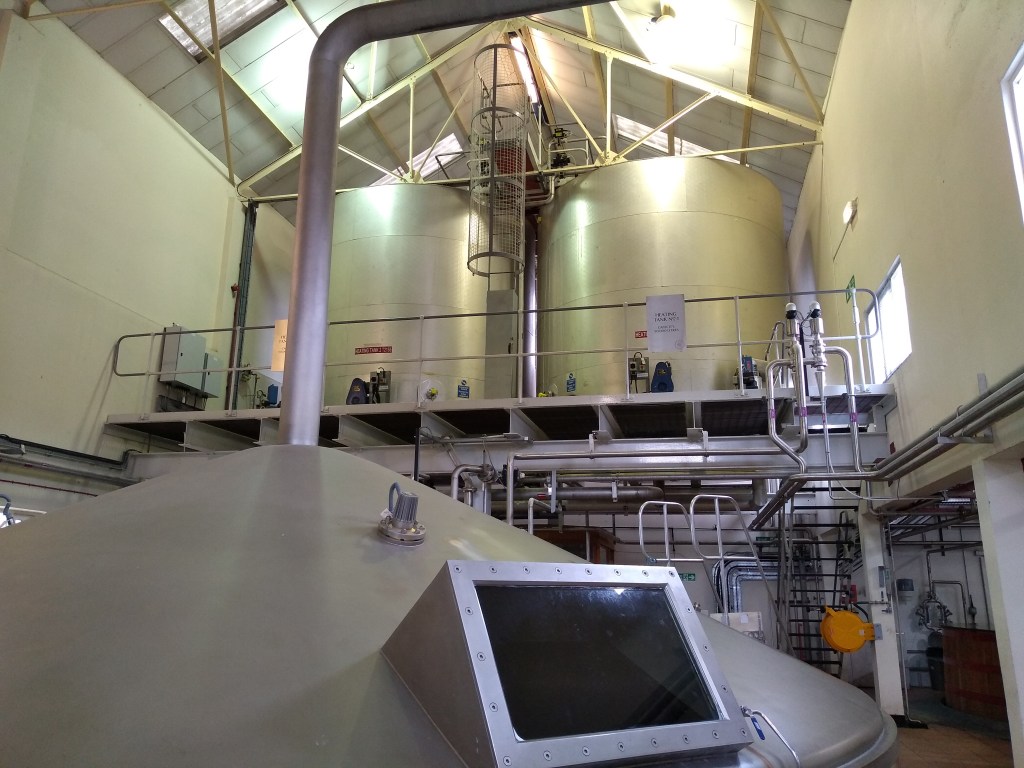
After the introduction, we started the proper tour: we moved outside in the courtyard, and then near the milling room, which hosts an old red Porteus mill. A notable difference was that they take a smaller cut of flour in their grist (8%) compared to other distilleries (usually 10%). In our understanding, one of the reasons is that their water to grist ratio is higher, 3.8 instead of 3.6. The mashtun looks very new, made of stainless steel and closed, with the usual window to check its inside. They only have two water runs instead of three, with the second being warmed up to get the sugars that are usually obtained in the third run (lasting 6.57 hours in total).

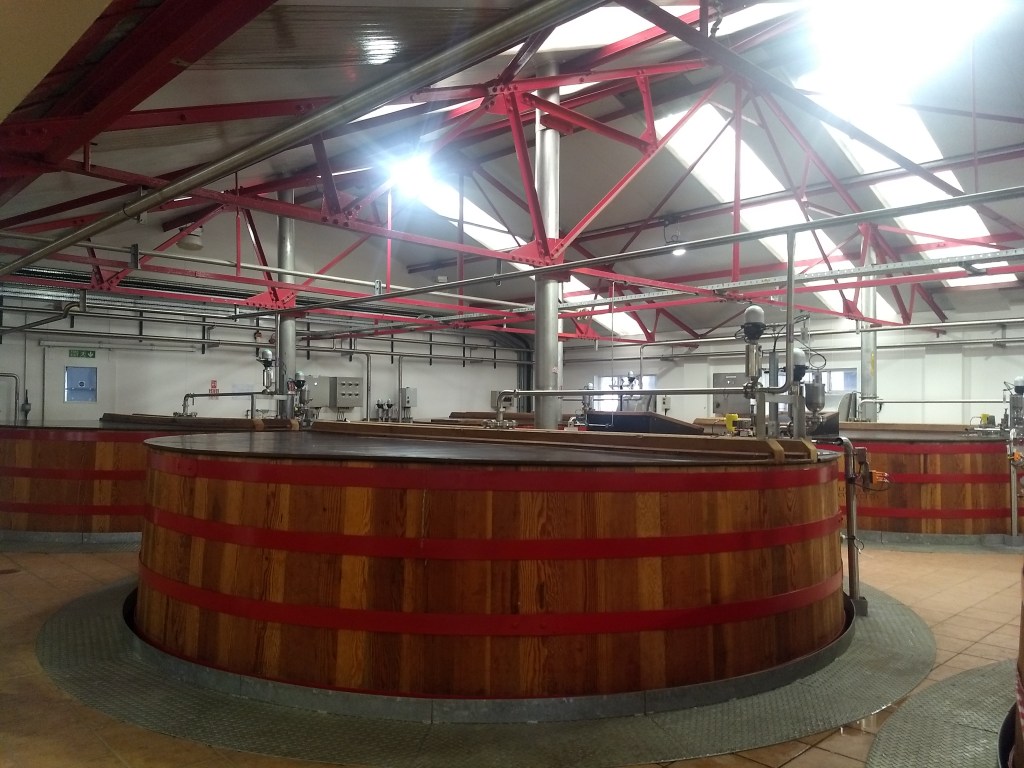
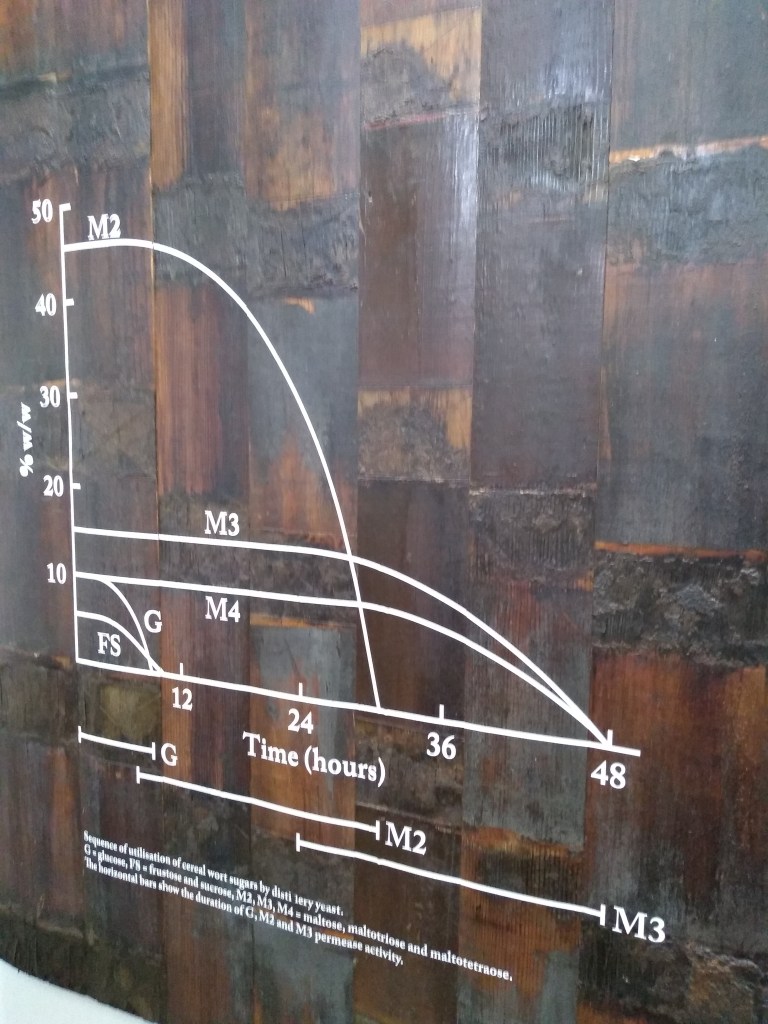
The walls of the fermentation room, where six Douglas Fir washbacks are located (wooden because of a combination of aesthetics and convenience, since they can be disassembled unlike stainless-steel ones, all replaced in 2016), are decorated with some nerdy facts about whisky making, like the formula to calculate the % abv of the wash using the gravity readings, and the graph showing the trends of different types of sugars digestion during fermentation. Their fermentation time is usually between 55 and 59 hours, never less than 50, and they work with yeast that can survive higher temperatures, around 35C.

Knowledge pill on the wall # 2.

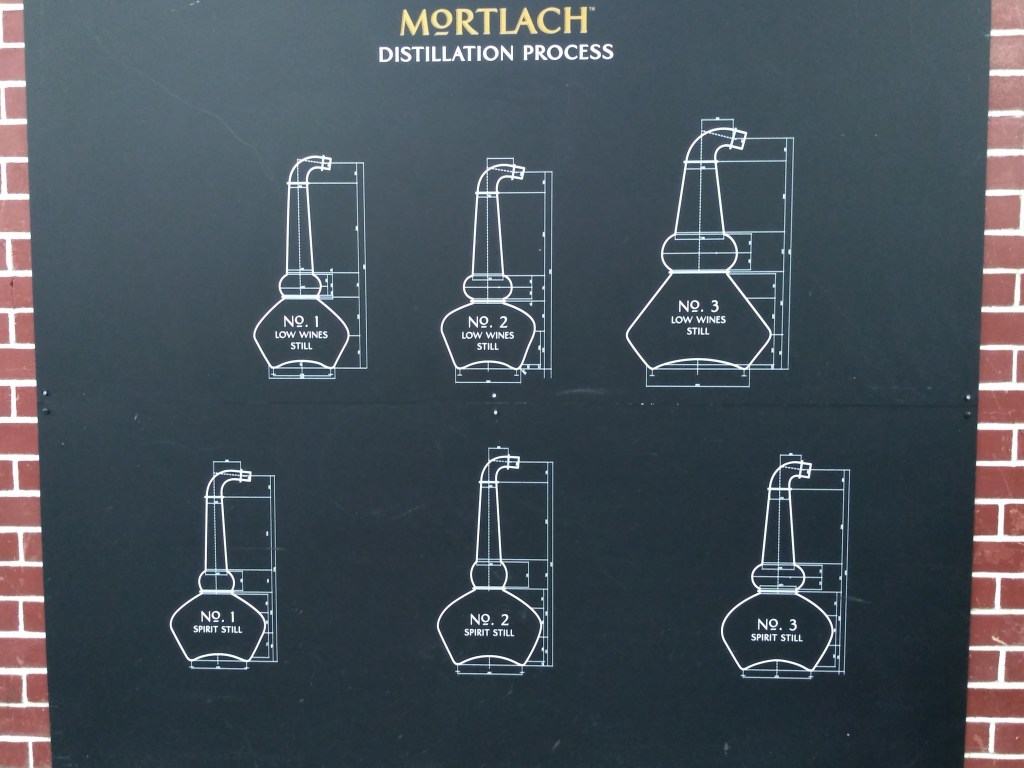
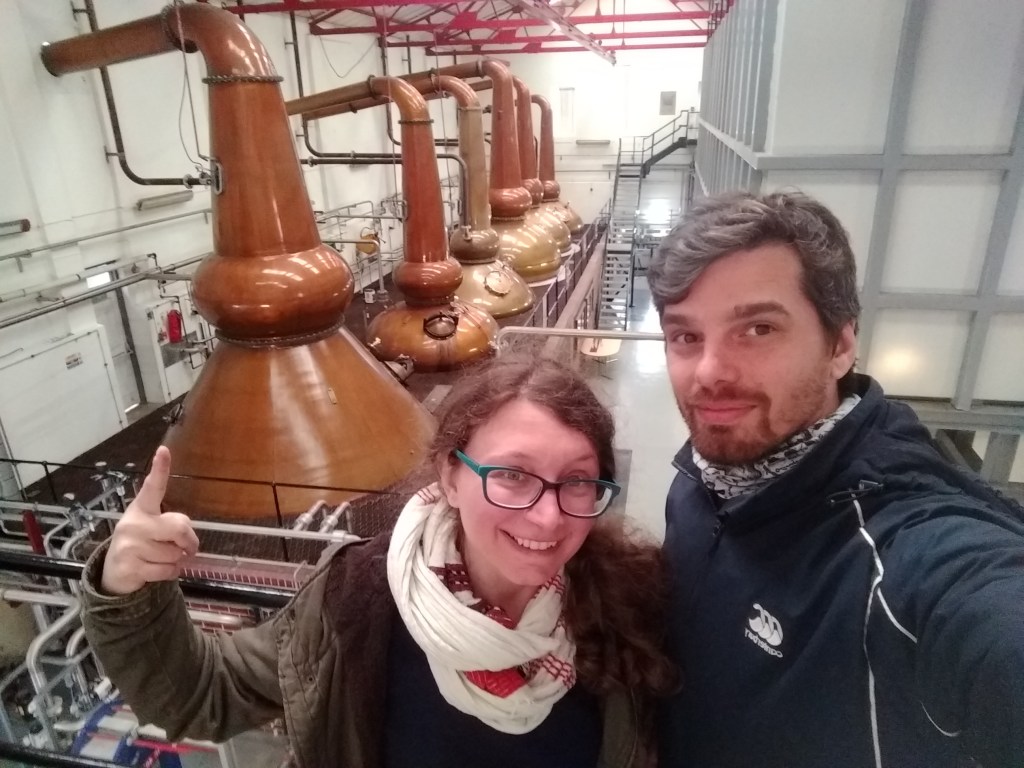
We then moved to the still room with its 6 stills (3 wash- and 3 spirit-), very unusually of different shape and size. The distillation is very complex: wash-still #3 and spirit-still #3 are paired, and they work like in a regular distillery. The other wash-stills (#1 and #2) work together, but their distillation is (unusually) divided into two cuts, the first goes into spirit-still #2, while the second (heavier) gets re-distilled three times (with the other distillations feints) in the other spirit still, the Wee Witchie, and the cut is only taken every third distillation. If you are confused, no worries, we are too, but the idea is to provide different characters to the newmake spirit. Someone in the past made the calculation, and it turned out the spirit is distilled 2.81 times – it would be nice to see those equations (nerd alert! Nerd alert!).

As we moved outside, we could admire one of the other characteristics that made Mortlach popular: the 6 worm tub condensers, one for each still. It is believed this is what provides meatiness to the spirit. They are made of wood, except one which is made of metal because the wooden one started leaking – they told us it might be replaced at some point with a new wooden one. They take the cooling water for the wormtubs from the river Dullan, one of their 6 sources of water for all the process: remember that they produce between 3.5 and 4 million litres of alcohol per year! Finally, we ventured in the warehouse, where casks from many distilleries were resting, including many non-Diageo ones, surprisingly. Kirstie explained us the processes happening in maturation: additive (compounds from the wood affect the liquid), subtractive (compounds from the liquid are removed by the wood contact) and oxidative (the contact with air changes the liquid, as you will know if you ever had a bottle open for more than 4-6 months).

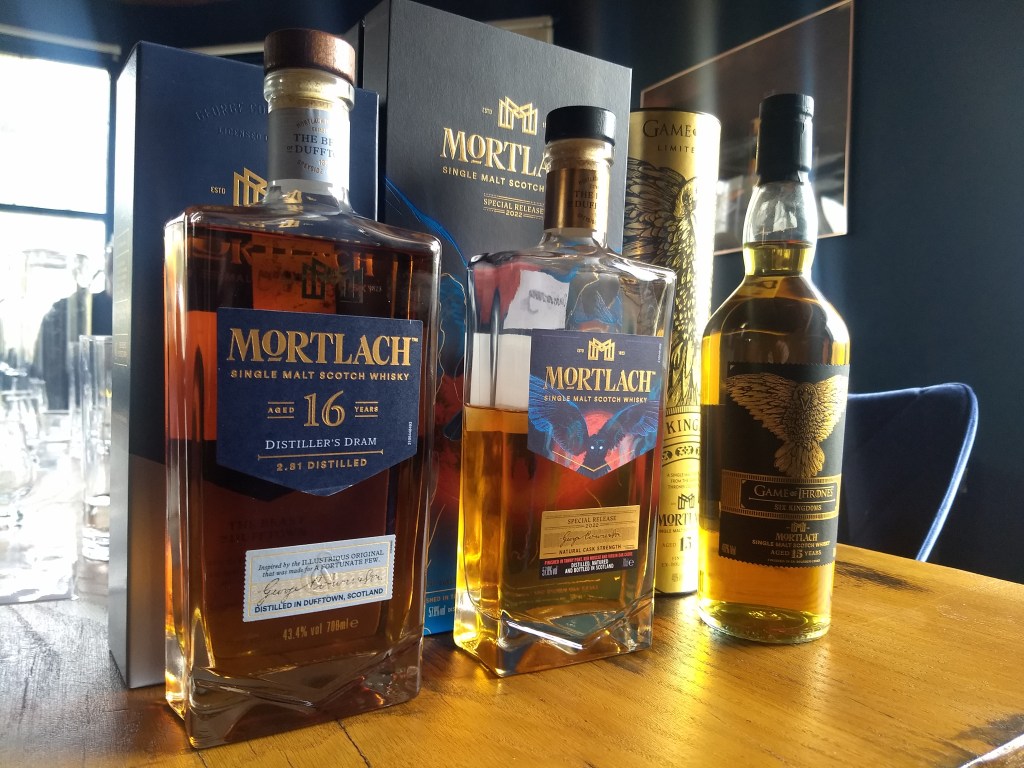
Back outside, Kirstie showed us where some buildings used to be, as well as their still existing but currently unused malting floor, on the other side of the road (at the moment part of it is used as deposit for the Dufftown Whisky & Heritage Centre). We went back to the meeting room to enjoy the (stingy, considering 80 quid) 3-dram tasting. These were the flagship Mortlach 16y (43.4%), Mortlach 15y Game of Thrones Six Kingdoms (finished in ex-bourbon casks and bottled at 46%) and a non-age statement (NAS) from the 2022 Special Release. Weโ€™re quite familiar with the 16y (we used to have it, and gifted some), and we had tried the 15y GoT once (nice to revisit), so we were very curious about the third, mostly because the RRP was insane for a NAS, well above ยฃ200. This expression was finished in Tawny Port, Red Muscato wine, Virgin Oak casks and bottled at cask strength (57.8%). Turned out, it was nice but not mind-blowing by any means, as youโ€™d expect considering the fanfare.

Overall, this was a great visit, and Kirstie contributed to make it as nerdy as expected, for such a peculiar distillery like Mortlach. The price is a bit steep, ยฃ80 for a tour and 3 drams (+ cocktail), so itโ€™s hard to recommend it. However, if youโ€™re at the right moment of your whisky journey, it is definitely one to visit, despite the price. For us, it was worth it, and we look forward to more deep dives like this.


The Mortlach Distillery Tour (Spirit of Speyside)

Price: ยฃ80.00 pp (April 2023)

Duration: 2hr

Tasting: 3 drams and a welcome cocktail, Mortlach 16 (43.4%), Mortlach 15 the Six Kingdoms (46%), Mortlach Special Release 2022 (NAS, 57.8%)

Target: a bit more seasoned whisky geeks and nerds

Value for money: not great

Highlights: the detailed tour and explanation of such a complicated distillation process

Recommended: only if you’re quite ahead in your whisky journey (see last paragraph above)

Link: https://www.malts.com/en-gb/brands/mortlach, https://www.spiritofspeyside.com/

#31.4 Spirit of Speyside 2023

Not “A”, but “The” Speyside distillery


TL;DR: left Tamdhu, we drove along a very beautiful road, all the way to Kingussie. Here, we visited the Speyside distillery, home of the Spey single malt. A very nice visit in a spectacular distillery, one of the most charming sites visited so far. 

(missed Part 3/Part 2/Part 1?)

After the visit at Tamdhu, we sprinted to Mr Vantastic and left right away. Because the booking tickets process on the Spirit of Speyside website was so convoluted, we had to make some adjustments to our trip. One was visiting the Speyside Distillery, near Kingussie, after Tamdhu. Between the end of the first tour and the beginning of the second there were two hours, with about 1h10m drive. We prepared sandwiches ahead, so we could have a snack while driving and arrive there with something in our stomach.

The drive was not so bad actually, we drove along the road just north of the river Spey, instead of the usual A95, a first for us. The landscape along the road was beautiful, very rural with smooth hillsโ€ฆHowever, we couldnโ€™t be too distracted, as we had to pay attention to the road in order not to kill the few pheasants we met. Past Grantown-on-Spey, we re-joined the main road to Aviemore. We decided to stay on minor roads, so we avoided the A9. This led us into Kincraig, where we stopped at the Old Post Office Cafรจ, a truly lovely spot, we were just sorry to have little time to spend in it. After a wee coffee, we were back on the van to finally get to the Speyside Distillery.

We were not very familiar with their whisky, the main range being marketed as Spey, we had only one or two before. However, they were on our radar for a while, the only problem being that they normally do a few tours every week, usually mid-week (Wednesday or Thursday). Thus, the Spirit of Speyside Festival was the perfect occasion to get to this distillery. As we parked, we realised how beautiful the spot was: all stone buildings, it didnโ€™t even look like a booze factory (which ultimately, every distillery is), rather a mountain cottage. Very romantically, the river Tromie runs along the site. We checked in the distillery office, where Susan was waiting for all the guests to kick-start the tour. As soon as everyone arrived, she started telling us about their distillery and their business, and gave us a wee taste of the newmake.

The Speyside Distillery took 25 years to be completed, as it was the โ€œsummer projectโ€ of Alex Fairlie. He purchased the building in 1965, which was a 1760 barley mill, and renovated it by hand. Production started in 1990, a time when scotch whisky was not so popular (and in fact, only them and Arran, 1995, started in that period). The name was chosen because there once was another โ€œSpeyside Distilleryโ€ in the same village, built in 1895 and demolished in 1912. The distillery changed hands twice, in 2000 and 2012, being acquired by the Harveyโ€™s of Edinburgh, which soon revamped the range and started selling the malt as Spey, an old brand dating back to the 1815. Before they purchased the Speyside distillery, the whisky (including the Chairman Choice) would come from a number of other Speyside distilleries.

We then toured the distillery, of course starting in the mill room, located in the same building as the office where we started. They mainly use Lauret barley. We moved to the main building where, mashing (or sparging), fermenting and distilling happen. They have six stainless-steal washbacks, for an up to 120-hour long fermentation, with living fresh yeast. The stills are only two, one wash and one spirit still, heated by steam produced by oil. The cut they take is from 72% to 65% as the heart. Warehouses are located near Glasgow, but plans are to relocate them in Speyside. This does apply to the distillery itself: because it is located in the Cairngorms National Park, they cannot expand it. So, to increase production (nowadays 850,000 mlpa) as they intend to, they have to move and the distillery is going to be closed. In case it is purchased by someone else, theyโ€™ll need to change the name, as Speyside will go with them.

Memorabilia from Harvey’s times.

After production, Susan led us into a memorabilia room, where lots of pictures and empty bottles and stuff about the Harveyโ€™s family are showcased, like a family museum. The next part was the tasting, where Teresa got her driverโ€™s pack while Gianluigi tried a few drams. The first one was their Trutina, one of the main expressions, matured in ex-bourbon barrels for 6-7 years (non-age statement, NAS) and bottled very pale (rightfully so!) at 46%. It was followed by the Tenne, finished for 6-9 months in ex-Tawny Port casks. The next was a weird one, called Beinn Dubh (โ€œblack mountainโ€ in Gaelic) is kind of an experiment: matured in ex-bourbon casks, then finished for a year in double-charred casks then conditioned with Ruby Port, definitely a strange combination (just a shame they add caramel colouring to make it darker) but interesting nonetheless. Finally, we could choose between one of their three peated releases: Fumare (NAS 46%), Fumare cask strength (60.4%) and Fumare 10y (46%). Gianluigi chose the cask strength, which was delicious. Except for the Beinn Dubh, generally their whiskies are bottled at natural colour and are not chill filtered.

As the tasting finished, we drove off back to the heart of Speyside, at the camping near Aberlour where we spent the night. We were happy to have finally visited the Speyside distillery: usually overlooked by many, it actually deserves more credit for the variety of expressions they are bringing to the table. And on top of that, the distillery is in a quite unique scenery, glad we visited it before they move elsewhere.


The Speyside Distillery Tour (Spirit of Speyside)

Price: ยฃ35.00 pp (April 2023)

Duration: 1hr 30min

Tasting: 4 drams, the Spey Trutina (NAS, 46%), Tenne (NAS 46%), BeinnDubh (NAS, 43%) and Fumare Cask Strength (NAS, 60%)

Target: whisky curious and tourists

Value for money: good

Highlights: the dreamy distillery location

Recommended: yes

Link: https://speysidedistillery.co.uk/, https://www.spiritofspeyside.com/

#31.1 Spirit of Speyside 2023

To the mill on the hill


TL;DR: This year we finally managed to go to the Spirit of Speyside Festival! We were very excited because during this event, some distilleries usually closed to the public open their doors. We started with a very well known one (especially if you buy whisky in supermarkets too): Tamnavulin!

Among the regional events or festivals, there was one that we were eager to attend. Nope, not the Feis Ile: while some tastings look fantastic, the idea of so many people on such a small island (Islay) makes us feel claustrophobic. Not the Campbeltown Malt Festival either, more or less for the same reason. Donโ€™t get us wrong, it would be great to attend both of them at some point, letโ€™s just say that we donโ€™t feel ready yet.

So, by exclusion (and of course, because of the title of this post), by now youโ€™ll have guessed that we are talking about the Spirit of Speyside. It is a huge festival, lasting one week, with plenty of events happening in the constellation of villages and distilleries that form the biggest whisky region (not in size, but in volume produced). Other than the obviously expected tastings at various venues (hotels, bars, distilleries, warehouses, shops, etc.) and distillery tours, there are runs, whisky fairs, bonfires, walks, truck tripsโ€ฆReally a plethora of whisky-related activities. If you know what our trips (and thus blog) are about, you probably stopped at โ€œdistillery toursโ€, wondering which ones we visited this time. And youโ€™ll be right, one of the beauties of this festival is that many distilleries that are normally closed to the public (at the moment at least), open their doors to visitors just for these few days. Because most of the experiences are not cheap, we decided to focus our attention on these (but not exclusively).

Because the booking system on the website is not the most straightforward nor really smart, and because of the huge crowd trying to buy tickets as they came out, we had to change our plan twice because some tours were sold out at our preferred time/date. We came out with a decent plan anyway, although that meant driving around a bit more than we would have liked. We intended to stay away 4 days, but because of some late addition, we ended up with 5 days, Thursday to Monday! Hurray!

When the day came, we left very early in the morning, mostly to avoid the traffic outgoing the city (one of the few down sides of leaving in Leith, it takes 30-40 minutes to leave the city independently of where we want to go). There wasnโ€™t much traffic on route, and once arrived in Perth, instead of following the A9, we drove straight up through the Cairngorms, always gifting nice views. The first appointment in this trip was in the village of Tomnavoulin, of course at the Tamnavulin distillery. This one, at the moment, is only open during the festival, they donโ€™t have a bar nor shop nor visitor centre. So, because we were half-hour early, we kept driving towards Glenlivet distillery, to have a peek at nearby Blairfindy Castle. One day weโ€™ll have a rant about the loose definition of โ€œcastleโ€ in Scotland, but this one looked nice enough (a very small one, it wasnโ€™t possible to enter). Because it started raining (of course), we quickly went back to the van and drove back to Tamnavulin.

The wee Blairfindy castle.

The distillery (built during the mid-20th century whisky boom, in 1966) is quite a popular one, mostly because of their presence on supermarkets shelves. As a matter of fact, the Tamnavulin double cask was Gianluigiโ€™s second whisky purchase after he moved to Scotland, for a โ€œwhoopingโ€ 20 quid. Other than this expression, youโ€™ll easily find the Sherry cask finish, a range of red wine cask finishes (it seems they have different wines finishes in different supermarkets, French Cabernet Sauvignon at Morrison and Asda, German Pinot Noir at Tesco, Spanish Grenache at Sainsbury). More recently, they added a Sauvignon Blanc cask finish. As you can imagine, to support this heavy supermarket presence the distillery is quite big, with a capacity of 4 million litres per annum of alcohol. In spite of this huge production, they lack expressions suited to more experienced drinkers, with everything being bottled at 40% (and probably artificially coloured with E150 and chill filtered). This, together with the fact that it is super rare among independent bottlers, made us even more curious to visit this โ€œworkhorseโ€ distillery.

As we arrived, we checked in just outside the gates with Anne Marie, who usually works at Dalmore distillery (another one of the Whyte and Mackay group, together with Tamnavulin, Jura, Fettercairn and Invergordon grain distillery). The tour started there, outside the gates, with Leon (distillery manager) and others from the team. First, we walked down to a path outside the gate, to reach an old mill: Tamnavulin is the Gaelic for โ€œmill on the hillโ€ indeed! Inside, the old mill had that โ€œAlps cottageโ€ feeling, and currently it is not used. It used to be a visitor centre, which closed in 1997, two years after the distillery was mothballed (1995). When they restarted production in 2007, the visitor centre was not revived, although we understood it might be in the plans. We were served a small cocktail there, with a fruit soda and Tamnavulin Double Cask (for Gianluigi only apple soda, driver duties).

…next to a much more charming old mill.

After the mill, we walked back to the gate and then behind the distillery, where malted barley comes in from three different places. The actual mill is not an old Portheus, rather a much modern Buhler, from Switzerland. As usual, we followed production, so next we went to the mashtun room, where Leon showed us how they check the wort cloudiness: they aim for a clear one. We walked through the nine stainless steel washbacks (around 52hr maturation, longer on weekends) and the six stills. In the still room, we couldnโ€™t take pictures but we could take a tiny sip of the newmake, nice touch!

Next, we checked out the filling store, and finally we entered a big warehouse, where some of their stock (together with other spirit from the Whyte & Mackay portfolio) is resting. First, we were given a cask sample: a refill bourbon barrel from 2007, the first year of production after they restarted. It was a very nice dram, clean and fruity, very similar to the only independently bottled Tamnavulin we have tried so far, from Gordon and Macphailโ€™s Connoisseur Choice range (bought to celebrate our 70th distillery visit during the Speycation, and one of the few we ever saw around). Then, we tried three of their usually bottlings (see below) paired with amazing chocolates (that Gianluigi could try!).

Overall, it was a very satisfying visit, and definitely good value for money. Very interesting was the mill, and we would definitely go back for another peek when and if they reopen the visitor centre. The whisky was OK, quite inoffensive, a quintessential โ€œsupermarket dramโ€. We hope that, similarly to what happened at Fettercairn Warehouses bottlings, the company will decide to bring out some more interesting expressions, aimed to whisky enthusiasts, although we wonโ€™t hold our breath. Having tried two delicious cask strength expressions now, in our opinion the potential is definitely there.


Tamnavulin Tour (Spirit of Speyside)

Price: ยฃ30.00 pp (April 2023)

Duration: 2hr

Tasting: a cocktail and 4 drams, cask sampled (2007 vintage, refill ex-bourbon barrel, cask strength), ex-Sherry cask finish (NA, 40%), ex-Sauvignon Blanc cask finish (NAS, 40%) and ex-French Cabernet Sauvignon finish (NAS, 40%), the last three paired with delicious chocolate

Target: whisky enthusiasts and curious

Value for money: very good

Highlights: the mill and the cask sample

Recommended: yes

Link: https://www.tamnavulinwhisky.com/


#27.1 Speycation

Dramming in Elgin


TL;DR: After the fun of the Edinburgh Whisky Group trip to Campbeltown in 2021, a year later we replicated with another one, but to Speyside! Plenty of whisky activities and fun, starting from Elgin, where we attended a bespoke tasting at G&M and we visited Glen Moray distillery, both great experiences. 

During the pandemic, one of the things that helped keep us sane was the very nice people we met after joining the Edinburgh Whisky Group, on Facebook. While the group grew almost exponentially in numbers, during the lockdown a small part of it, mostly spread all over the Lothians (with some exceptions in London andโ€ฆNorway!), started having regular Zoom whisky tastings. When the restrictions slowly phased out, we started meeting in person for drams, which was very nice and at times surprising (on Zoom we hadnโ€™t figured out that John and Joe were that tall!). And in October 2021, we even went all together to Campbeltown. Storming the Wee Toon was very fun and therefore a big success, so we obviously replicated the experience in 2022. This time, however, the idea came from our brilliant friend Cath (part of the group, of course), to do a Speycation! So, Speyside it shall be!

Left Edinburgh very early, and we still managed to be late!

The plan Justine organised was easy: staying in Elgin (most of us booked a room at the Premier Inn, a good solution to keep us all together although a bit pricier than expected and not that close to the centre), spending the first day there, and then travelling around the region with a rented bus that could fit the entire group of 22 people. The appointment was at 11am for the first activity of the holiday, a tasting at Gordon & MacPhail old shop in Elgin in South St (now undergoing renovation, in our understanding). The travel from Edinburgh or elsewhere was done by car or car sharing. We travelled with Justine and because of a wee late start, a break a wee too long, and a freaking huge and slow truck on the road, we got there late, fortunately just a few minutes.

“Breakfast” drams.

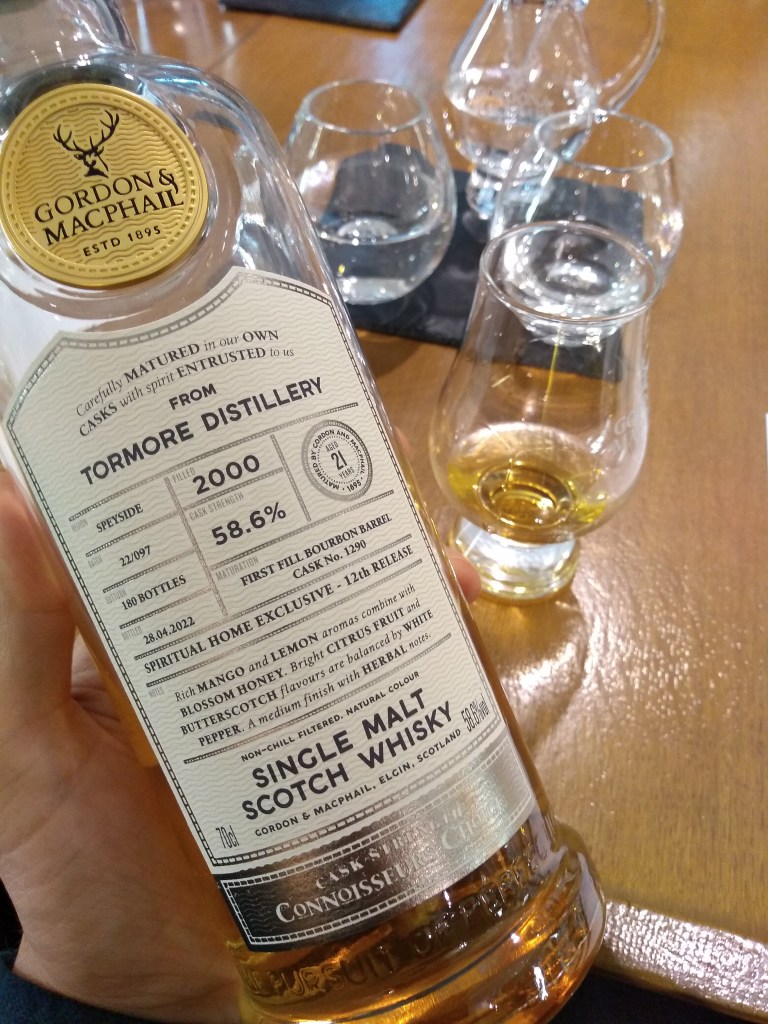
The tasting was a bespoke one Justine had agreed with them: 5 20ml drams for 50 quid. The drams came from their Connoisseur Choice range, except for the last one, and of course, were all non-chill filtered (NCF), not artificially coloured (NC) and cask strength (CS). We kicked the day off with a delicious 13y Strathmill from a refill ex-bourbon barrel, distilled in 2008 (57.3% abv). This is one of those Diageoโ€™s workhorse distilleries whose product mostly goes into blends (there is a big J&B sign on the road leading to Strathmill distillery in Keith), but we are starting to appreciate it more and more thanks to the Scotch Malt Whisky Society and other independent bottlers. The following dram was again a 13y, distilled in 2008 and from a refill barrel, but was a lightly peated Ardmore (whooping 62.5%), another distillery with little core range these days, but fortunately very prevalent with indy bottlers. The third dram was the best for both of us, a Tormore distilled in 2000, matured for 21y in a first fill ex-bourbon barrel and bottled in 2022 at 58.6%. Tormore is another of those distilleries weโ€™d love to visit. It changed owner recently, from Chivas Brothers (Pernod Ricard) to Elixir Distillers, so we are hoping theyโ€™ll open to the public at some point.

Our favourite!

The fourth dram was from a demolished distillery in Dufftown: Pittyvaich, distilled in 1993, matured in a refill American hogshead for 29y and bottled in 2022 at 48.6%. Finally, a sherried dram, a Speymalt from Macallan distillery, 20y and 55.9%. A nice one, but it didnโ€™t blow our socks off as we were expecting. Overall it was great tasting, with a good overview of the whisky produced in the area (Ardmore is just outside Speyside), and we particularly appreciated the ex-bourbon casks heavy line-up, which gave us a better idea of the distilleries character.

What a line-up!

Lunch was โ€œfreeโ€, so we walked towards Elgin main square, where many diners and cafes looked full. We had a very average lunch in a quite anonymous one on the square (we chose a half-empty to be quickโ€ฆprobably it was half-empty for a reason), and we soon walked towards the next destination: Glen Moray distillery.

Glen Moray is one of those we initially underestimated due to their cheap expressions in supermarkets, but that now we are big fan of! And actually, we like them more because of their ability to provide cheap but still decent quality drams, as well as more serious stuff for the whisky nerds, like their Warehouse 1 series, featuring the amazing 8y peated whisky from an ex-PX cask we bought a couple of years ago: a treat! Weโ€™d been at the distillery in 2019, only for a (not so) quick tasting though, so visiting the production was a real novelty for us.

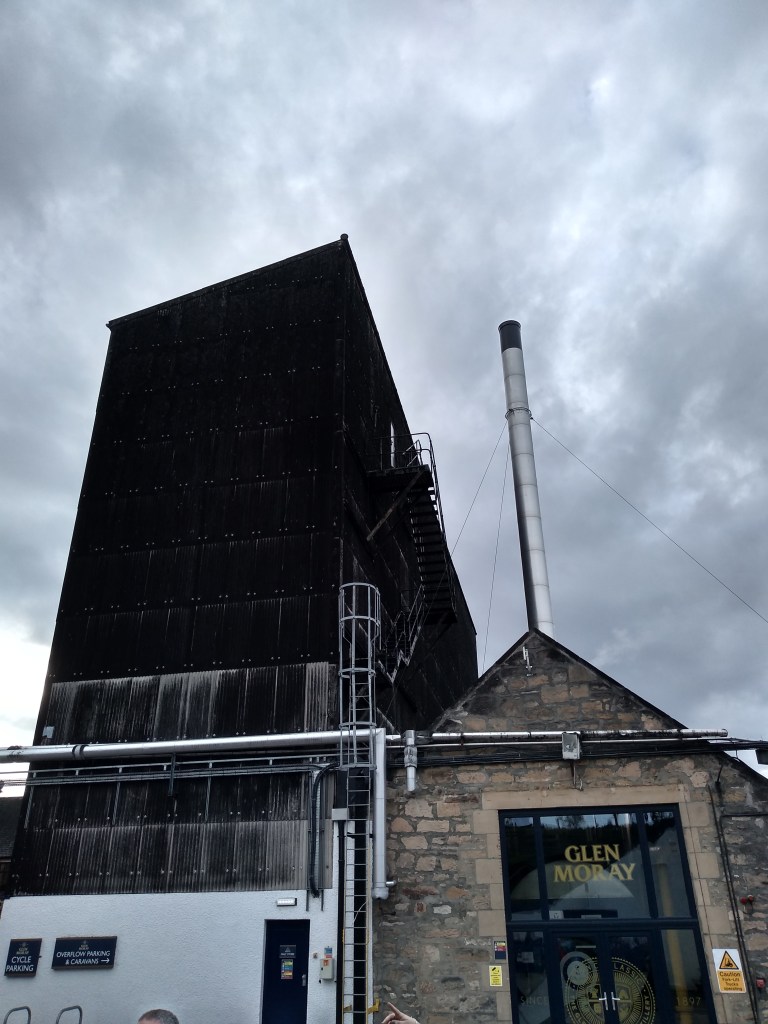
Clouds over the big silo.

We had booked the Intermediate Tour, which included an in-depth visit of the production, followed by a tasting of three of their bottle-your-own casks (all NCF, NC and CS). Emma took us around the distillery, which combines old and new elements, as it underwent recent renovations, including the addition of new shiny mash-tuns. The courtyard is dominated by a huge black silo used as malt storage, which can be spotted from far away, including from the near highway.

Someone is listening very carefully!

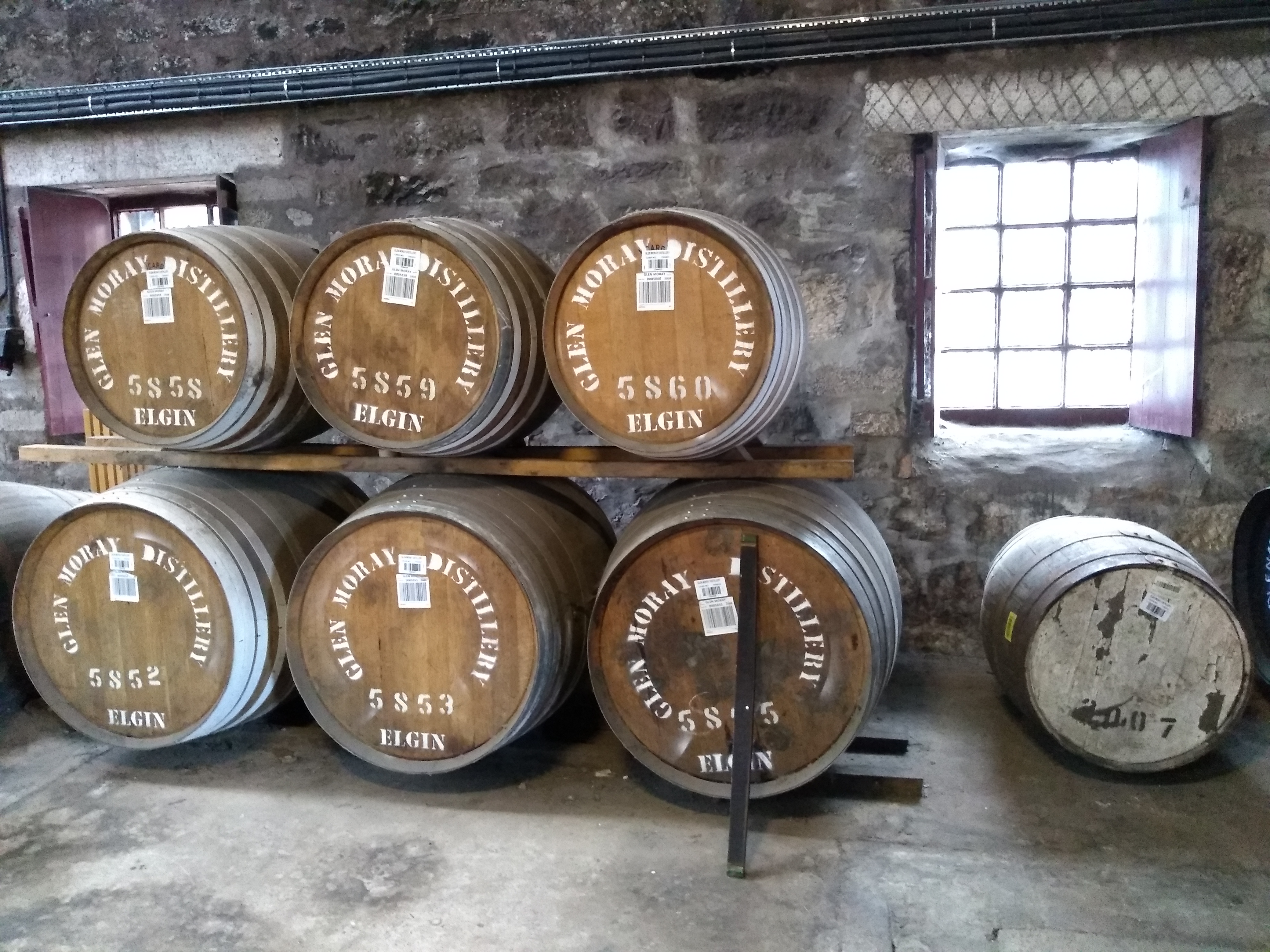
A peculiarity is that the wash stills in the old stillhouse, the one right in front of the entrance, have all been converted into spirit stills. The tour ended in the warehouse, where a number of empty (dโ€™oh!) casks were aligned. They used to contain various types of sherry, Sauternes, Bordeaux, Rioja, bourbon, and many others. We nosed all of them, it was definitely interesting to understand how different they can be!

Yes, we nosed them all!

In the cafรฉ, the three drams were waiting for us: first, a controversial (some people loved it, some definitely didnโ€™t, including us) vintage 2014 (bottled 2022, so 7 or 8y) unpeated whisky from an ex-cognac cask (60.2%). It was followed by a vintage 2006 (so 15 or 16y) in an ex-oloroso sherry cask, definitely a sherry bomb (60.9%). Finally, a 2012 (so 9 or 10y) peated matured in an ex-Rioja red wine cask, another delicious one (58.4%). As a bonus dram, we got another peated, but matured in an ex-Sauternes cask (vintage 2013, 58.9%), of which they still had a few bottles.

Happy after a great whisky day!

After walking back to the centre, we finished the day with a nice meal at the Drouthy Cobbler, a cute restaurant hidden in a small lane near the main square. We finally got to Premier Inn after a quick cab ride, where we had a restful night looking forward to the following days!


Gordon & MacPhail

Link: https://www.gordonandmacphail.com/#

(No summary because this was a bespoke experience)


Glen Moray Intermediate Tour

Price: ยฃ35.00 pp (October 2022)

Duration: 1h 30min

Tasting: 3 drams from the current bottle-your-own range, for us Glen Moray Vintage 2014 (7-8y) ex-cognac cask (60.2%), Vintage 2006 (15-16y) ex-oloroso sherry cask(60.9%), Vintage 2012 (9-10y) peated ex-Rioja red wine cask (58.4%)

Target: Whisky enthusiasts and geeks

Value for money: Very good

Highlights: Smelling the empty casks in the warehouse

Distillery Exclusives: Three bottle-your-own casks (see above), and the travel retail range (Elgin Classic, 12y and 15y but bottled at 48%, NCF and NC, and one litre bottles)

Recommended: Yes!

Link: https://www.glenmoray.com/
#22 Goodbye 2022, see you soon 2023

A very dramming year


TL;DR: As usual this period gives us a chance to reflect on the year about to end. It has been an intense one for us, particularly the second half. Whisky-wise, we had some very fantastic experiences, some disappointing, and a few average ones. While we are looking forward to โ€œdramming aroundโ€ in 2023, here our 2022 highlights.  

Aaaandโ€ฆItโ€™s December, and we are finally on holidays. By the time you will be reading this, another Christmas will have just passed, we hope you had a great day of celebrations with your loved ones, and that you are now bloated and relaxing on Boxing Day (or St. Stephen, as it is known in Italy).

Because of our jobs, we both arrived at the end of the year very tired. However, it was also a year full of fantastic whisky experiences, that we hope to repeat next year. In 2022, we visited 19 (Gianluigi) and 20 (Teresa) new distilleries (17 in Scotland and one in England together, Gianluigi visited one in Canada, Teresa one in Ireland and one in England). We also had the chance to revisit some good old acquaintances, like GlenAllachie and Deanston (amongst our favourites). We were able to go to Orkney (hurray!) to catch up with both Scapa (aye!) and Highland Park (nay!).

Sheep grazing with Scapa in the back.

And, finally (FINALLY), we visited Islay for the first time, after our March 2020 trip was cancelled by you-know-what. What a crazy holiday that one, our rented campervan broke down on day 1, half-hour away from the ferry terminal. Although we had to get last-minute accommodations and move around by taxi, we managed anyway! And what a visit, we have to say that whisky tourism on Islay is something really different. Take the Laphroaig tour for example, the token system to pick the drams for your tasting at the end makes it much more flexible than most of the other tours, so that can be enjoyed by both novices and experts. Moreover, Bunnahabhain (best warehouse tasting everโ€ฆjust the bottling prices a bit too steep), Lagavulin, and Kilchoman rewarded us travelling there by including no-core range drams, all limited ones, which made the experience truly special. We wished other distilleries on far-away islands would do the sameโ€ฆ We canโ€™t wait to go back to Islay, to catch up with the other distilleries, and revisit some.

Moments before the best warehouse tasting ever.

Other than Islay we had some incredible whisky experiences, like the Deanston Winter Fest (coming up soon in the blog), or the GlenAllachie tour during the โ€œSpeycationโ€ (coming up soon too).

Deanston WinterFest: that’s happiness after three tastings.

This word was brilliantly created by our friend Cath, and greatly implemented byย  Justine (Kask Whisky): over the weekend we visited 5 distilleries (+ 1 being built) and did a few tastings, including one in the now closed Coleburn distillery, and one in the Strathislaโ€™s warehouse. A couple of weeks earlier, we were again in Speyside for the Dramathon, and of course we visited (or revisited) a few distilleries: Glenfarclas (new visit), Glen Grant and Glen Garioch on the way back (both revisits).

The direct-fired Glen Garioch spirit still.

Some of the tours we did were OK, a bit standard but nothing to complain about: weโ€™d say that usually you get what you pay for. Disappointments came from distillery-exclusive bottling prices. In some cases, instead of rewarding you for visiting the distillery (and already paying for a tasting or a tour), they put a 20-30 quid premium on those. Not nice. The only distillery experience that was really a disappointment and we regret paying for was Highland Park. Despite avoiding the basic tour (ยฃ30, already not cheap) we opted for the improved one (ยฃ75, the most expensive tour we did so far) to be denied any dram of distillery exclusives or other limited bottlings, and just taste the core range which we could have done in Edinburgh anytime. An expensive tourist trap, we wonโ€™t go back there (sorry James, you were a superstar guide though!).

A nice but waaaaay to pricey Blair Athol (ยฃ120!!!).

With the Covid19 restrictions behind our back, we could attend our very first whisky festivals, the Fife whisky festival in March and the Whisky Fringe in August – we had a lot of fun, let’s see if it’ll be the same with bigger events.

Enjoying a break between the two Fife Whisky Festival sessions.

In-person tastings came back too. We did a few organised by our friend Justine, of course, as well as others by Mark, Murray (both at Kilderkin) and Colin at Tipsy Midgie. We had some cracking drams, including a 20y Dutch single malt from Zuidam, a fantastic Doorlyโ€™s rum (from Foursquare distillery) and some cracking Daftmill-s and Bruichladdich-s. Also, SMWS events came back, including our favourites: Outturns and Distillery Visits (an event where you can taste whiskies brought by a distillery representative together with some provided by the SMWS). This year we did the Glen Moray distillery visit with Iain Allan connected remotely and the Distell one (Deanston/Tobermory) with the very funny Brendan McCarron: both cracking events with awesome whiskies! Gianluigi also decided to become an Aqvavite Youtube Channel Patreon: Royโ€™s content and entertainment are really priceless, and this was long overdue. We also attended a very funny blind tasting in Glasgow where we finally met all those whisky folks weโ€™d only seen on screen until then.

Awesome Aquavitae event in Glasgow!!!

By writing this up, we realised 2022 was intense not only because of work, but because of whisky too! We hope to bag more distilleries in 2023, although weโ€™ll probably try to be more selective when picking tours and experiences. We are also starting to organise whisky tastings: the first will be towards the end February and will be Port-cask related (we got the idea during our fantastic trip in Portugalโ€ฆtickets here), but the following ones will involve bottles we picked up in our travels, not necessarily at distilleries, ehehโ€ฆStay tuned! Overall, itโ€™s still a very long way to become whisky geeks, but weโ€™ve learned a lot this year and we hope to continue the trend!

Not just whisky for us…coming to a tasting soon!

Happy holidays and see you next year! Slainte!


#16 A Canadian single malt with a Scottish soul

Visiting Glenora Distillery


TL;DR: Gianluigi went on a work trip to Nova Scotia, Canada, and sneaked in a visit to the first single malt distillery in North America: Glenora! Although a bit expensive (compared to Scotland prices) the visit was definitely worth it and the whisky had its own very fruity character. If you find yourself in the area, itโ€™s strongly suggested. 

(This post is written in first person by Gianluigi, since he was the only one on this trip)

In the academic world, one of the last things to come back after Covid were in-person international conferences, of course. Hundreds of researchers coming from all over the world and staying together in closed spaces for a week, what could go wrong?!? In my field of study, infectious diseases epidemiology, people have been particular cautiousโ€ฆguess why. So after 2020 and 2021 without meetings, in August 2022 I finally went to my first in-person conference in Halifax, a quite touristy city in Nova Scotia, on the Atlantic coast of Canada.

Once flight and accommodation were booked, I looked for activities to do in the couple of days before the conference. And what I really mean, is โ€œwhisky activitiesโ€, or even better โ€œwhisky distilleries to visitโ€. I found out that Nova Scotia has some relative recent ones (Caldera, Authentic Seacoast, among others), but the one that grabbed my attention was Glenora Distillery, located in Cape Breton Island, the north of Nova Scotia province. The mighty David taking down the Scotch Whisky Association (SWA) Goliath.

Slowly getting there…

For those who donโ€™t know the story: Glenora Distillery was founded by Bruce Jardine, a local entrepreneur, and it was the first North-American single malt distillery, during a time when distilleries in Scotland were still shutting down following the whisky loch. He decided to go back to his Scottish roots, and start producing the most iconic Scottish product in a province literally called โ€œNew Scotlandโ€. He moved for over a year in Scotland to learn the nitty and gritty about distilling, in particular at Bowmore, and after coming back to Nova Scotia he acquired the land and built the distillery. After an unfortunate start which saw the distillery change owner twice, in 2000 they released their first single malt (an 8-year old), the Glen Breton Rare. Proudly advertising it as the โ€œonly/first single malt in Canada/North Americaโ€ didnโ€™t prevent the SWA to sue them over the use of the world โ€œGlenโ€. But well, they are literally located in a โ€œglenโ€, and the village is called Glenville. After 9 years of trials and appeals, they had the last word and could keep the โ€œGlenโ€.

Almost there…

So, you could understand my excitement to visit them! However, the visit almost didnโ€™t happen, because of the shortage of cars for rental in the whole region. That meant zero cars available at the airport, despite looking 4 months ahead. After bothering a number of people through emails (taxi/shuttle companies, Nova Scotia tourist service, hotels, etc.), I was about to give up the trip, but then I decided to try Turo. This is a company that hires private car, like Goboony does for campervan, but they arenโ€™t a scam like the latter. So, I booked a car, not cheap but what the hell, when will I be in the area again?

Unfortunately, another challenge was behind the corner: the disastrous situation of Toronto International airport, where I had my layover, which I learned a mere 10 days before the trip. And in fact, my first flight was almost 2 hours late, but the second was 75 minutes late as well, so I didnโ€™t lose the coincidence. This meant to change the time of the rented car pick up though, and when I called the owner to ask him to come later, he blathered some excuse and said he wasnโ€™t allowed to hire cars anymore. I called Turo, which very professionally (unlike Goboony, sorry if I stress this but they are really terrible) provided me a different car and covered most of the price difference. So, finally, at 9.20pm local time, I was on a car directed to a B&B not too far from the airport.

Finally there!

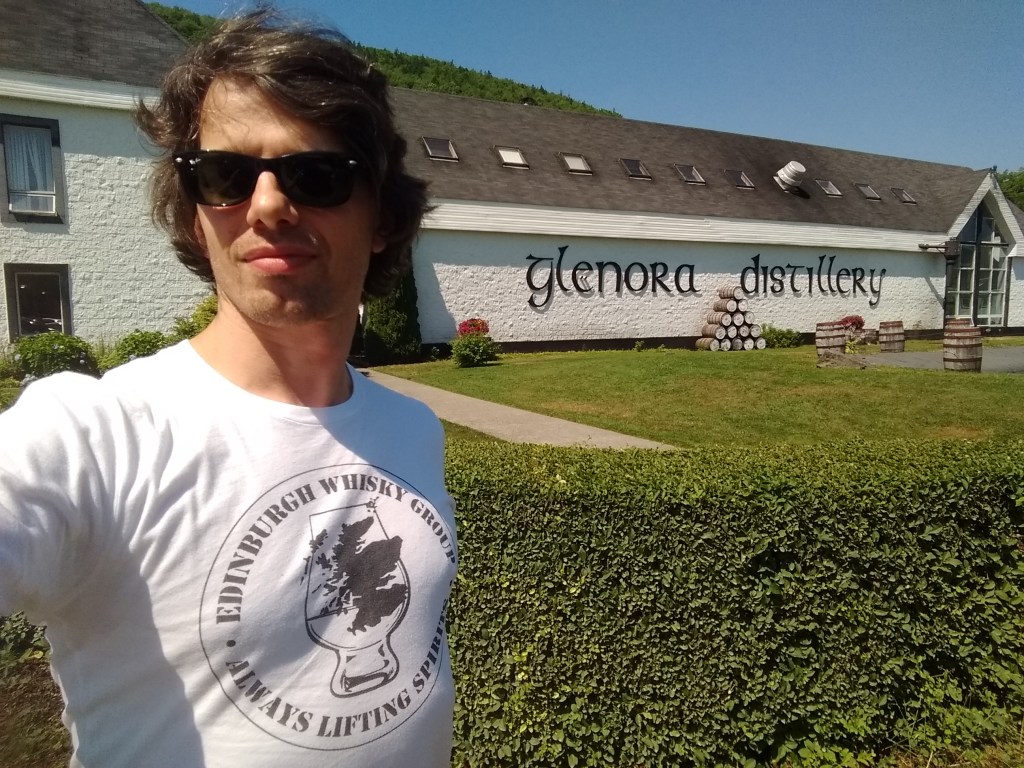
Because of the jet lag, I woke up quite early, and after a good breakfast I was already on my way to Cape Breton Island. I arrived at the site around 2.30pm, ready to check in for the night: I didnโ€™t tell you already, but at Glenora they have a hotel on site and a lodge just up the road, where I stayed. They also run a pub and a fine dining restaurant on site, so I was all sorted. The distillery offers two tours, the regular (CAD 7.00 + taxes, one dram) and the VIP, which I signed up for.

The tour started at 3pm, and it was conducted by Donnie, the manager of the hospitality side of the business. He is a huge malt whisky fan, so the tour was extremely entertaining and all the information really in depth. We started outside the shop building near the stream where they source their water from (first time I am bothered by bugs during a distillery tour).

The source wee stream.

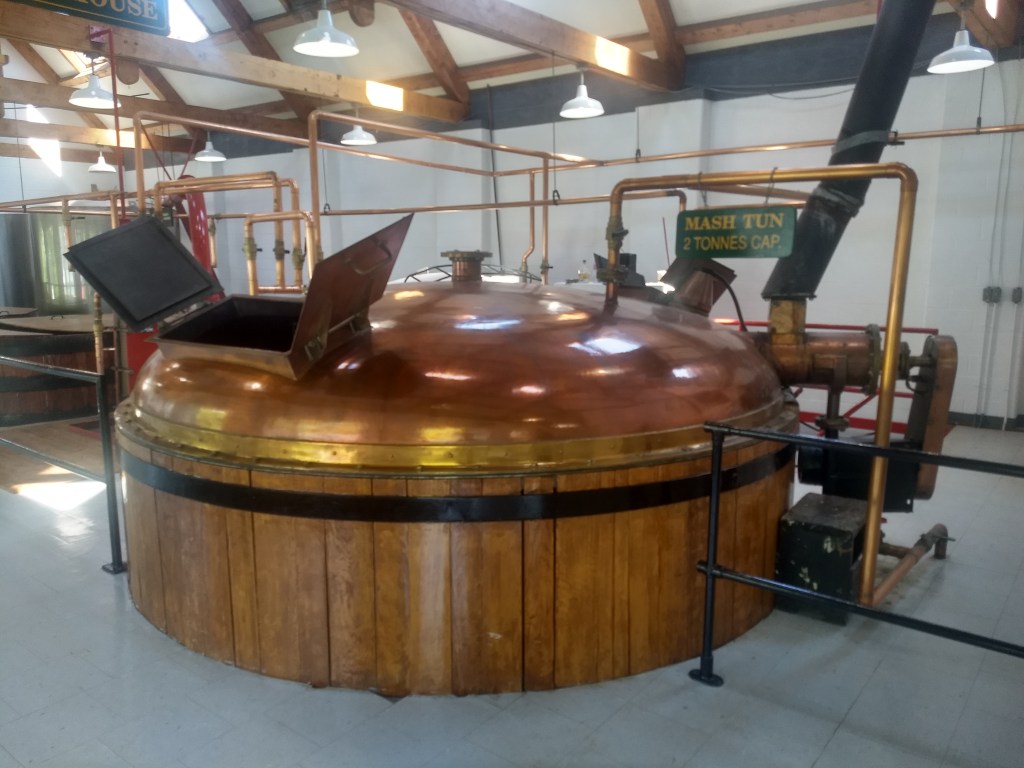
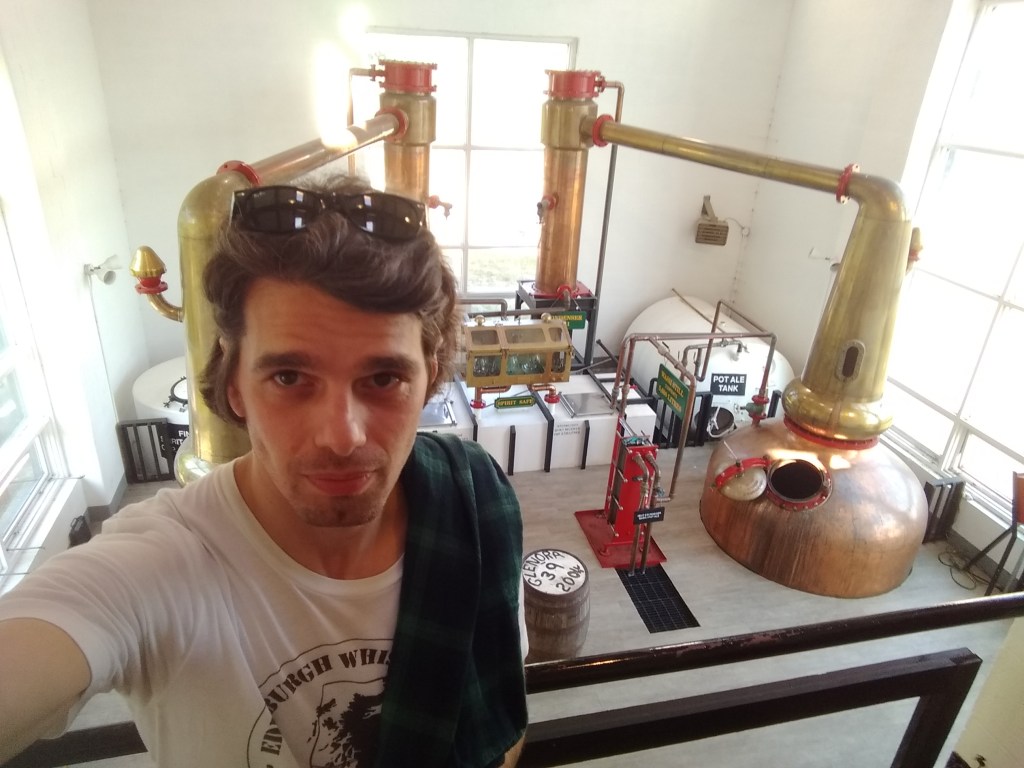
The shop is topped by a pagoda roof, but it is just for aesthetic purposes and was never meant to be a kiln. In fact they source their malted barley from Sasquetwchan, but until the early 2000s they were buying it inScotland (some peated as well). My visit happened in their silent season, which goes from the late spring to the Fall, and during which they mostly run the hospitality side. For this reason their production is currently about 50,000 mlpa, although Donnie later told me that they could easily crank it up. All their equipment came from Scotland, including the two Forsyths stills. Differently to many distilleries, the wash and spirit still are of the same size, approximately 5,600 litres. A particular difference is that they fill their barrels with 70% newmake spirit, unlike the greatest majority of distilleries we visited which fill at the standard 63.5%.

Scottish equipment on Canadian soil.
The still I’m hiding looks the same as the other one, I promise!

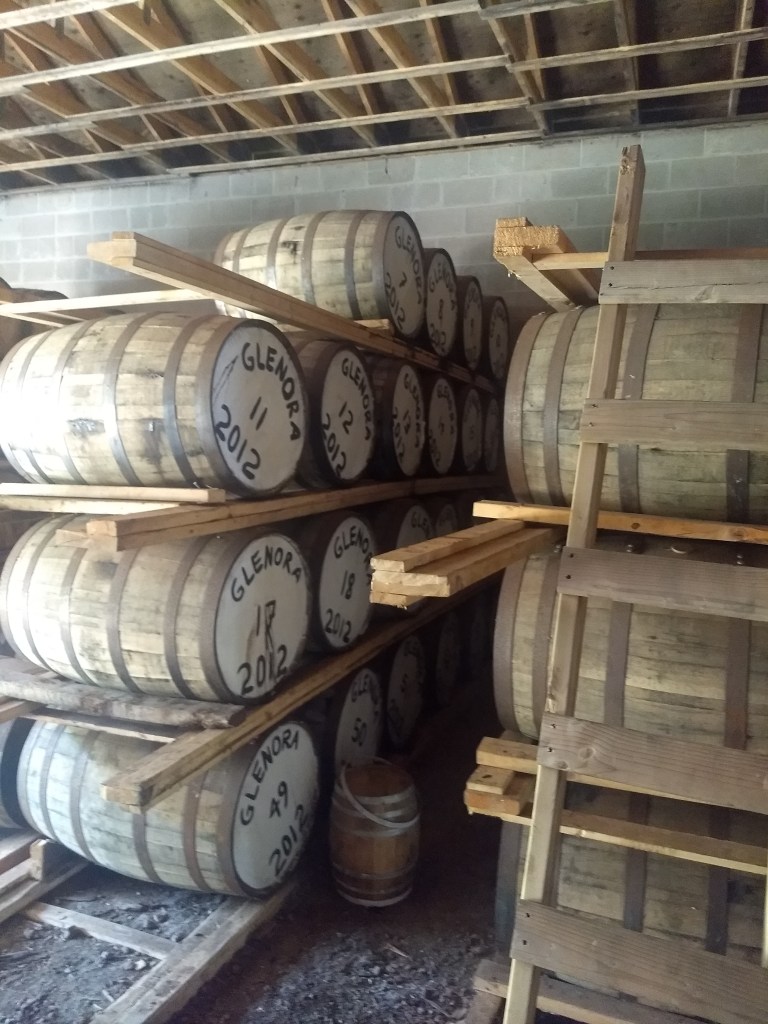
We moved to the dunnage warehouse, one of their three, and for the first time the air was warm and humid instead of cold and humid: what a difference! Donnie explained us their maturation process: they source the barrels from Kentucky (we could see many Buffalo Traceโ€™s ones) and they rarely mature for less than 10 years. Apparently they donโ€™t re-use them, so all their barrels are first fill ex-bourbon. They had used sherry and other casks in the past, but for very specific releases. We tried one sample from the cask of a 26y/o, which was very creamy and quite fruity, in particular after adding water (collected from the stream!): after 26 years it was still 64%! Donnie said their angelsโ€™ share (the % lost to evaporation) is still 2%, similar to Scotland, although with huge seasonal variation. They bottle everything on site, without adding artificial colouring nor chill filtering.

The dunnage warehouse.

We moved the tasting room, near the restaurant, where 5 drams were ready in front of us: we started with the newmake spirit (at 70%!), which after the 64% in the warehouse wasnโ€™t too hard to drink, followed by the Battle of the Glen, a very sweet and balanced 15y (43%) celebrative of the victory of the trial vs. the SWA. We moved on to the 12y Ice (43%), finished for a short time (average 3 months) in ice wine casks. I was totally unaware about ice wine before this tasting: it is wine made with grapes harvested in February, and the frozen water allows the sugar to be retained to make a very sweet dessert wine (I bought a 5cl at the airport, Iโ€™m very curious to try it!). They also have 10y and 15y cask strength versions of the Ice in 25cl bottles (the latter available at the Halifax Airport). The final two drams were distillery casks: a peated 18y old, still made with Scottish barley, and an unpeated 12y, both cask strength. These two were the standout of the line-up, in particular the peated one.

Happy kid with the tasting.

As I was by myself, Donnie joined me over dinner for a nice chat, where I bought another couple of their drams (they were selling by the half-ounce, 15 ml): their main expression (the Glen Breton Rare 10y, 43%), and the 14y, which was truly delicious (still 43%). Not too late, we called it a day and a driver took me to the lodge.

I was very satisfied with the visit to Glenora, it was a very different experience to our usual trips around Scotland. Being a very touristy area, and isolated from other whisky distilleries, I could see how this makes them more of a tourist attraction, almost a โ€œboutique distilleryโ€, if you want. I could fully appreciate how good their single malt can be though, starting from one of the best newmake spirits I tried so far. The hot/cold maturation process definitely influences the whisky compared to most Scottish malts, but probably other factors are important too, like filling the barrels at 70%. I am really having a hard time comparing their prices with other tours or other whiskies, as during the whole time I spent in Nova Scotia, I felt that the cost of living is just much higher. Nonetheless, if you are travelling to the area or nearby, as I did, it is a must-do experience for any whisky lover.

Until next time, slainte!


Glenora VIP Tour and Tasting

Price: CAD 125.00 pp + taxes (total CAD 143.75, August 2022)

Duration: 2-3 hours

Tasting: in the warehouse, sample from the cask (26y, ex-bourbon barrel); in the tasting room, new make spirit (70%), the Battle of the Glen (15y, 43%, *NC, NCF), ICE 12y (43%, NC, NCF), Barrel #67 2010 (12y, 59%, NC, NCF), Barrel #132 2004 (12y, 59.0%, NC, NCF)

Target: whisky lovers and geeks

Value for money: Good+

Highlights: everything

Distillery Exclusive: Barrel #67 2010, Barrel #132 2004 (see above, CAD 125/375 for 25/75cl), Barrel #129 1995 (27y, 65.4%, NC, NCF, CAD 250/750 for 25/75cl)

Link: https://www.glenoradistillery.com/
*NC: not artificially coloured, NCF: non chill-filtered
+at the time of the visit 1 GBP = 1.55 CAD. If compared to Scottish distilleries tours it was pricey, but after a few days in Nova Scotia and on Cape Breton Island I think that it reflects the high prices in the province.


#15.2 Exploring Port(ugal)

Taking the country road


Moving away from the city, we visited the magnificent Avelada vineyard on the hills near Penafiel! 

(missed Part 1?)

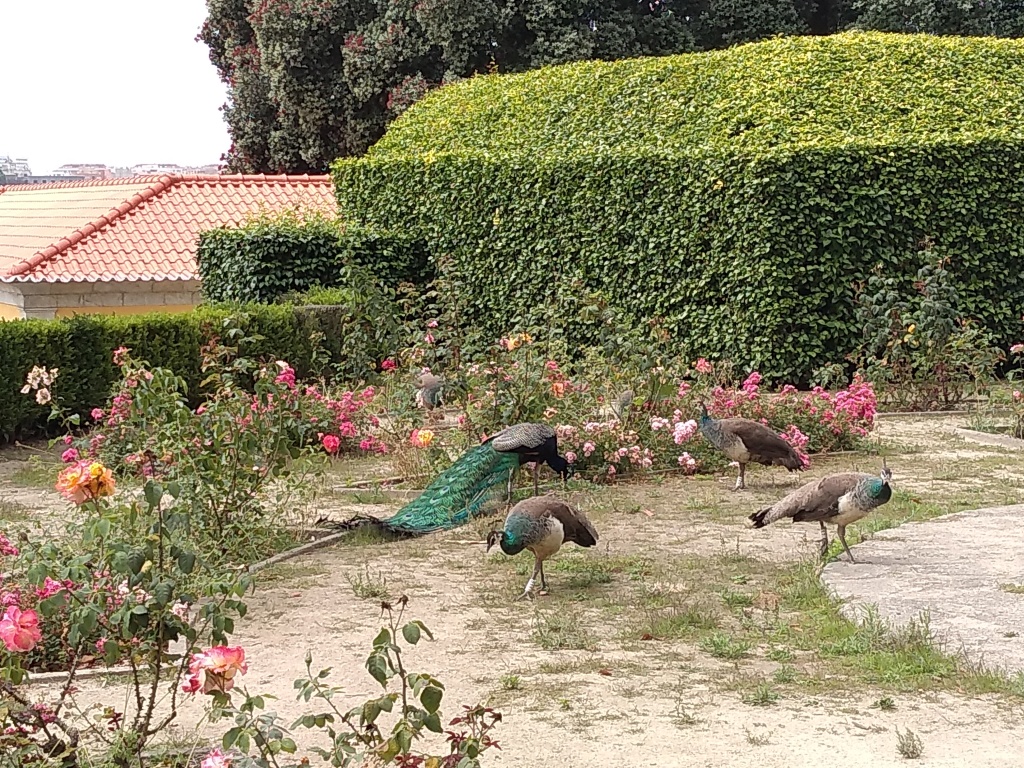
In the morning we woke up a bit dizzy, but nothing that the abundant and delicious Serra do Pilar B&B breakfast couldnโ€™t fix, bravo to them. We spent the morning visiting parts of town we hadnโ€™t seen the day before, the Jardins do Palacio de Cristal among them (loads of peacocks, and for some reason, chickens). Right after lunch we went to pick up the car near the airport, and then we left the city to go to Penafiel, the village where the wedding was.

Four peacocks in a single picture, that’s a record.

The village is about 40 minutes from the airport, which gave us enough time in the afternoon to visit the Quinta da Aveleda vineyard, in the Vinho verde DOC area. The Quinta was funded by Manoel Pedro Guedes about 150 years ago, and has been with the same family for 5 generations. They own at least four vineyards in Portugal, one of them in the Douro region as well. They produce many types of wine, Port and brandy. The vineyard is adjacent to a huge and really beautiful Victorian garden, full of stories and anecdotes about the family. We were surprised to find a statue of the green men inside, other than the peacocks (againโ€ฆnoisy, but still better than Leithโ€™s out-of-control seagulls).

Victorian gardens at Quinta da Aveleda.

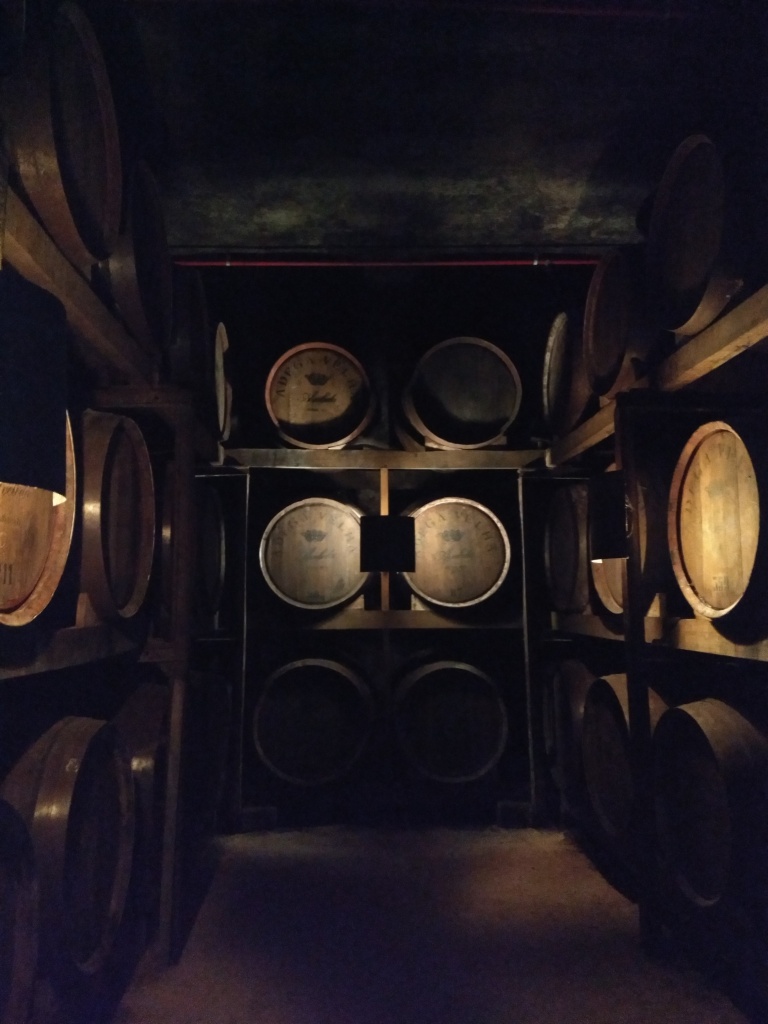
After visiting the estate and mostly the garden, the guide conducted us in the warehouse where they mature brandy: curious Gianluigi asked, but none of these casks are shipped to Scotland afterwards (dโ€™oh!), although some of their brandy is finished in former Port casks. The tasting comprised 3 glasses of wine: a vinho verde, a white wine from the Bairrada region and a red from the Douro Valley. The latter two were quite exquisite, but we took the first with us: it had some very unusual and interesting citrousy notes, and we could totally see it paired with grilled squids or Scottish scallops. Plus, it was the local one so it made more sense. We also got a tasting box of their brandys (the 5y, 12y and 30y), something we were very curious about (not tried yet, weโ€™ll let you know!).

A small warehouse.
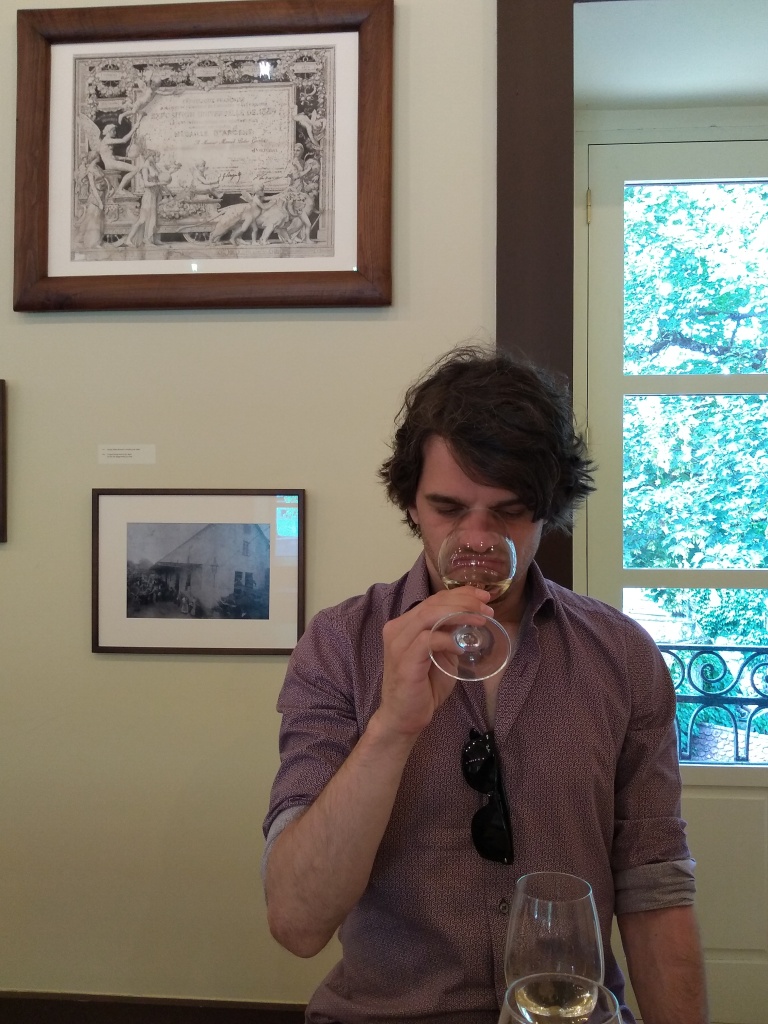
Gianluigi trying to come up with non-whisky tasting notes.

In the evening we had a pre-wedding party with the young attending the wedding, and with โ€œyoungโ€ meaning 30 to 40 more or less. It was very nice to see Paul and Nelly, Gianluigi hadnโ€™t seen them for a few years, and for Teresa it was the first time.

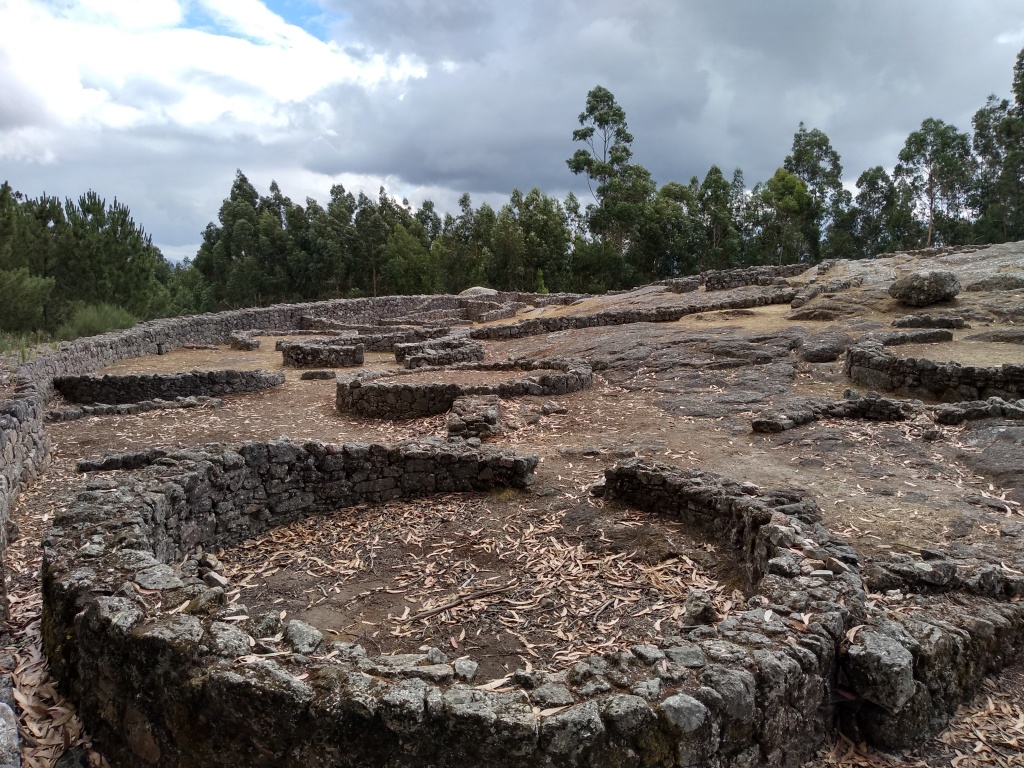
The wedding was at 4pm on the day after, so we had all the morning to treat us asโ€ฆold people. We went to a thermal pool near Penafiel, and afterwards to the Castro of Monte Mozinho, a Roman archaeological site.

An unimpressive picture of an impressive archaeological site.

The wedding was celebrated in an old monastery, followed by a luscious dinner at a close by estate and a lot of partying. At the end we tried a J&B blended scotch 15y at the bar, which wasnโ€™t as bad as we expected. It was not the first blended scotch we saw in Portugal with an unusual age statement: Grantโ€™s 8y, J&B 15y, William Lawson 12y, other than the Old Parr (12y), which are not sold at all in Scotland. We were very restrained with drinking, so in the morning we woke up refreshed and we could drive straight to Porto to return the car. The airport, the centre of the city, Vila Nova de Gaia and the train stations are all very well connected by a quick subway train, which allowed us to carve out another couple of hours in the city. Do you really need to ask what we did?

Ooops, we did it again!

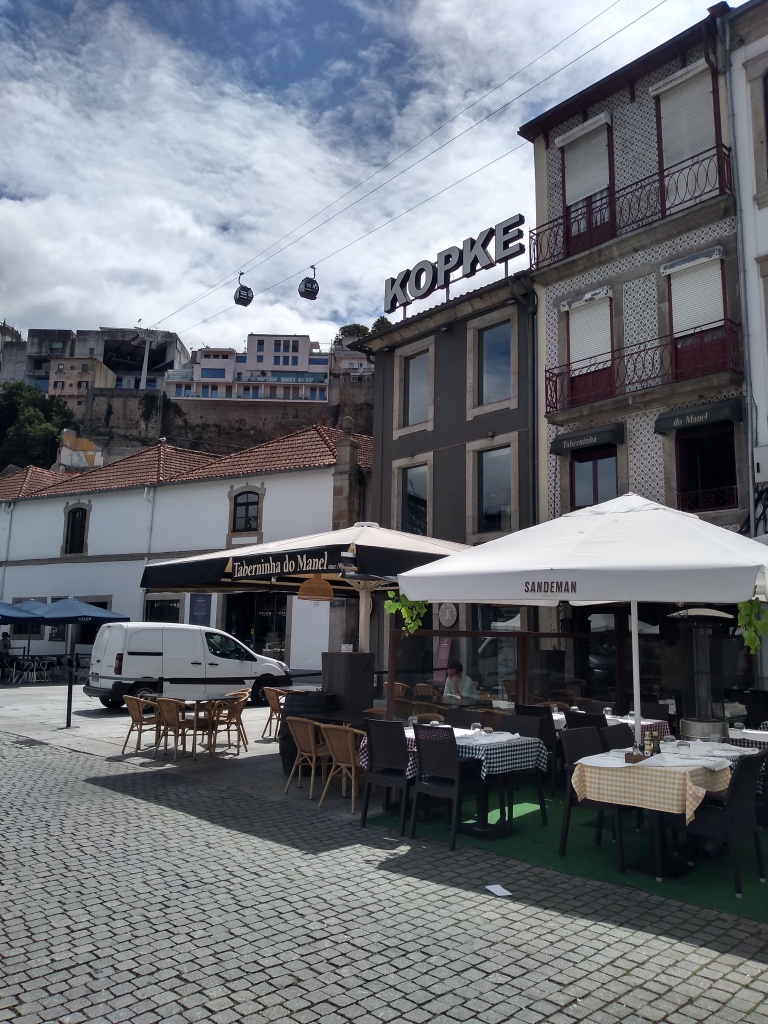
This time we went to Kopke (randomly chosen because Gianluigi found an unopened bottle of it in his late grandmotherโ€™s basement). They had no warehouse there, but we could choose over a range of tastings in their three-story venue. We chose a nicer one, which started with a dry white port: this is a variant to the regular whites, with the aguardente being added later during formation, after 7-8 days, so the sugars are almost gone (hence โ€œdryโ€): we found it much better than the regular whites. Then we had a 2004 vintage ruby, a 10y white and two delicious tawny-s, a 20y and a 1978 Colehita. All paired with chocolate, which was a plus!

Delicious tasting at Kopke.

We finally took a train to Lisbon, where we spent the last few days of the holiday, trying wines and sightseeing. The city is a must visit if youโ€™re around Europe (although we liked Porto better!). We walked a lot and did the ‘classics’: went to Belem for its famous tower and monastery and for its even more famous pasteleria, got lost in the charming Alfama neighbourhood, checked out as many miradouros (viewpoints) as possible, and even squeezed in half a day at the beach in Cascais. All this while enjoying great meat and seafood. Wine-wise, we found out that the area near the capital is home of great reds as well, some as good as the Douro Valley ones.

A windy day…
…followed by another windy day.
And just the night before going back home, another excellent wine!

So, the mystery: where do ruby port casks come from? We asked a few times, even the guy at Kopke couldnโ€™t reply. Our best guess is that they are seasoned with ruby port, similar to what they do with sherry in the majority of cases today. We couldnโ€™t really understand if ruby ports could be matured in small casks instead of large vats, maybe for smaller producers? No clue. We will post updates, if we find out! [August 2022 update: a whisky expert told us that yes, ruby port casks are seasoned casks.]

Port can be an excellent type of cask to mature or finish whisky, although still a try-before-buying for us. Similar to what we did when we visited Grattamacco in Tuscany, understanding a bit more the drink that contributes to give a certain character to the casks was very interesting, and we are happy to share some of the little knowledge we acquired with you!

Until the next time, slainte!


Visit to the Quinta de Aveleda and its Gardens, Premium Tasting

Price: 40.00 Euros pp (June 2022)

Duration: 1h 30m

Tasting: Vinho verde Parcela do Convento 2019, Douro Superior Vinhas do Sabor 2018, Arco dโ€™Aguieira 2018

Target: tourists and gardens lovers

Value for money: Ok

Highlights: the Victorian gardens

Link: https://www.aveleda.com/en


Kopke Tasting

Price: 43.00 Euros pp (June 2022)

Duration: 45m

Tasting: dry white port, 2004 vintage ruby, 10y white, 20y tawny, 1978 Coheita

Target: tourists and port wine lovers

Value for money: very good

Highlights: the 1978 Colheita

Link: https://kopke1638.com/
#13 A weekend on the Isle of Arran

Arran, the beautiful


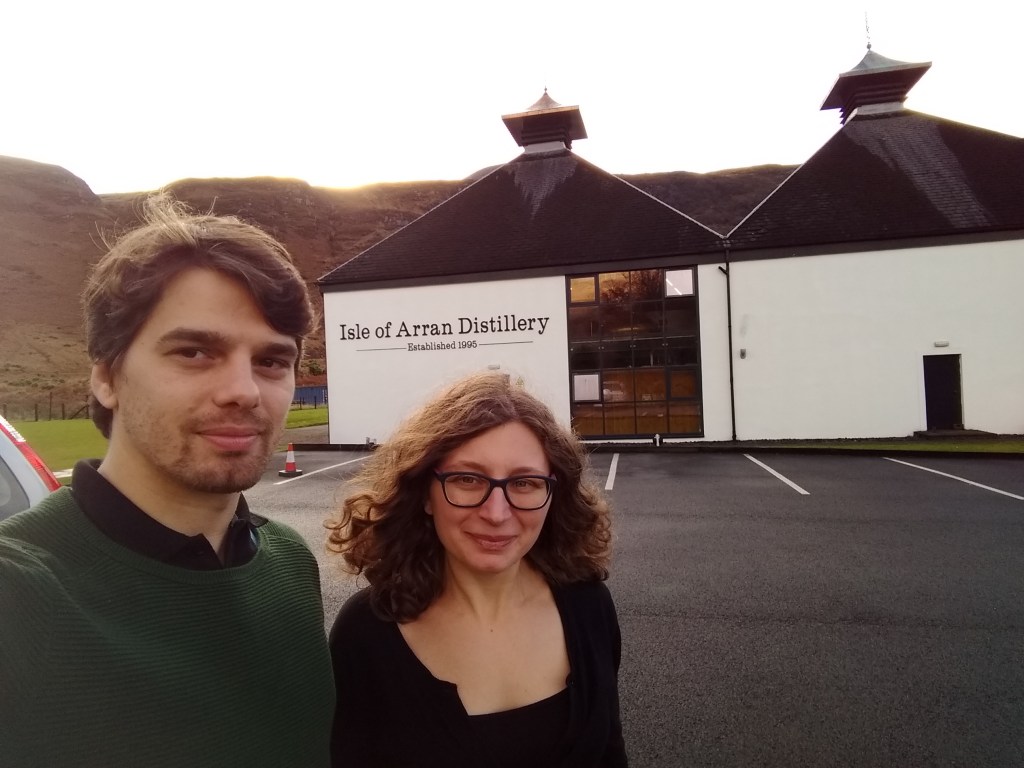
Back in 2019, when you didnโ€™t have to sell a kidney to rent a car, we organised a last-minute weekend on the iconic Isle of Arran. 

The Autumn of 2019 was a very different time. Thinking of that period makes us feel a bit naรฏve and unaware, a bit like pigeons pecking on the road before being run over by a bus.

Things were different also regarding our whisky journey. It had started, but it was still at a larval stage. We had already visited a few distilleries in the US back in 2016 and 2017, in Campbeltown (a year earlier) and up in the Highlands (a few months earlier). We were still in our first year of SMWS membership, and we had barely just found out about their awesome tastings in the city venues. A few months earlier Gianluigi had found out about Mark Gillespieโ€™s WhiskyCast, which became the soundtrack for his runs on the Pentlands. The idea of starting a blog wasnโ€™t there yet. So, we were getting there, slowly but steadily. Things were definitely moving at a much slower pace with respect to the pandemic first wave when, ironically, our knowledge and awareness sped up quite a bit.

Ready to go!

It’s in this context that one day, we decided on a whim to book a mid-November weekend on the isle of Arran. At the time renting a car was much cheaper, so we got a compact (we are quite compact ourselves), we booked one night in a B&B (it wasnโ€™t exactly high-season) and, more importantly, the tours to two distilleries: Lagg and Lochranza! These distilleries are both owned by the Isle of Arran Distillers Ltd. While Lagg was very new at the time, we were already familiar with the Lochranza’s Arran 10yr, having tried it once or twice in bars before. To be completely honest, we hadnโ€™t connected with it right away. We think it was (past tense, very important!) because, as beginners, we were chasing big and bold flavours such as peat or heavily sherry influence, rather than gentle and balanced drams like Arran or Deanston. Nevertheless, it sparked enough curiosity to jump in a car and get to see them!

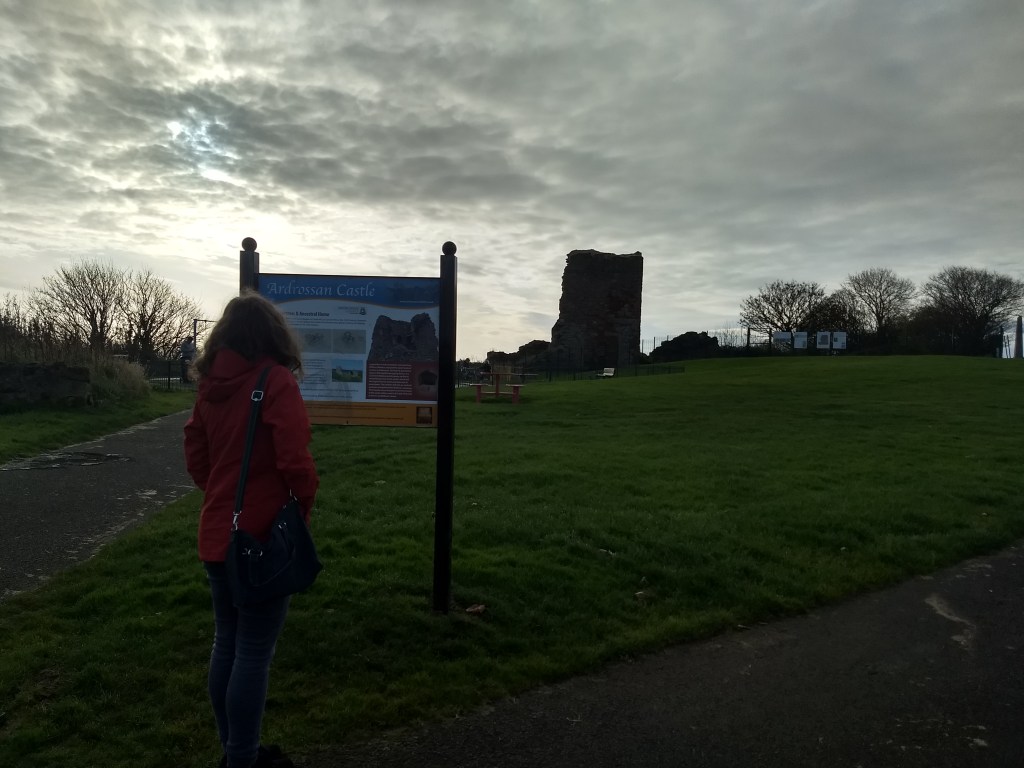
Teresa studying Ardrossan Castle’s ruins.

The drive from Edinburgh to Ardrossan on a Saturday morning was easy and smooth, not too much traffic. We stopped briefly to check out the Ardrossan Castle ruins (not much is left, to be honest), before getting to the pier. On the boat, we got that melancholic feeling of visiting an off-season tourist destination. And indeed it is, as many people from the mainland, Glaswegians in particular, choose it for their holidays.

The Isle of Arran is called โ€œScotland in miniatureโ€, because of the very different landscapes in the north, resembling the Highlands, and the south, more similar to the Lowlands. It is roughly shaped like an oval and its main roads draw an โ€œ8โ€, which we intended to drive all along to explore the island. So, as we landed in Brodick, we drove first north, then west, then towards the south-west corner of the island where Lagg is located. This distillery was very new at the time, they had started producing only a few months earlier. They focus on peated spirit, and while their single malt was not available of course (it still isnโ€™t at the time of writing), the available peated range Machrie Moor was produced at the Lochranza distillery.

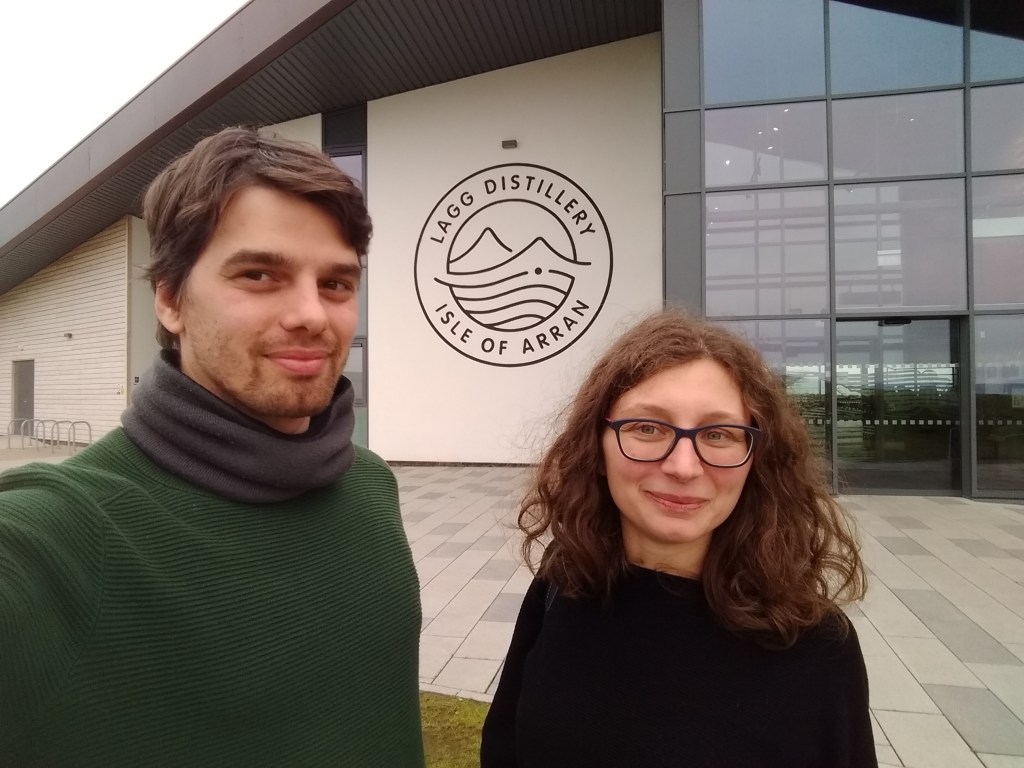
Inexperienced whisky enthusiasts at Lagg distillery.

The building is beautiful, with the shop on the ground floor and a good cafรฉ upstairs from which we could see young orchards (we found out later that they were planning to produce cider). Before starting the tour, we admired old pictures showing how life on the island used to be. Then the guide welcomed us and, after covering the history of the distillery and the island, made us try the new make โ€“ that was a nice surprise! The tour of the production was good and fairly short, mostly because everything was in one large room, one of the first (but definitely not last) times we had seen this.

Lagg stills.

From the big window behind the mashtun, the view on the sea was just stunning. In the tasting room, we tried some Machrie Moor (the main expression and the cask strength), but the guide also kindly gave us a wee sip of the sherry-finished Fingalโ€™s Cut.

Sorry you can’t see the sea behind the mashtun!

Tired but happy, we took the south road to Whiting Bay, had dinner and, finally, a couple of drams in a bar before going to bed.


It was very sunny when we woke up in the morning. This and a generous breakfast with sea view put us in a very good mood, and we were ready to explore the island! We decided to take full advantage of the nice weather and go for a short hike. We first drove along the coast to get to a car-park where we could take the path to Machrie Moor (yes, itโ€™s not just whisky).

Encounters on the path to Machrie Moor.

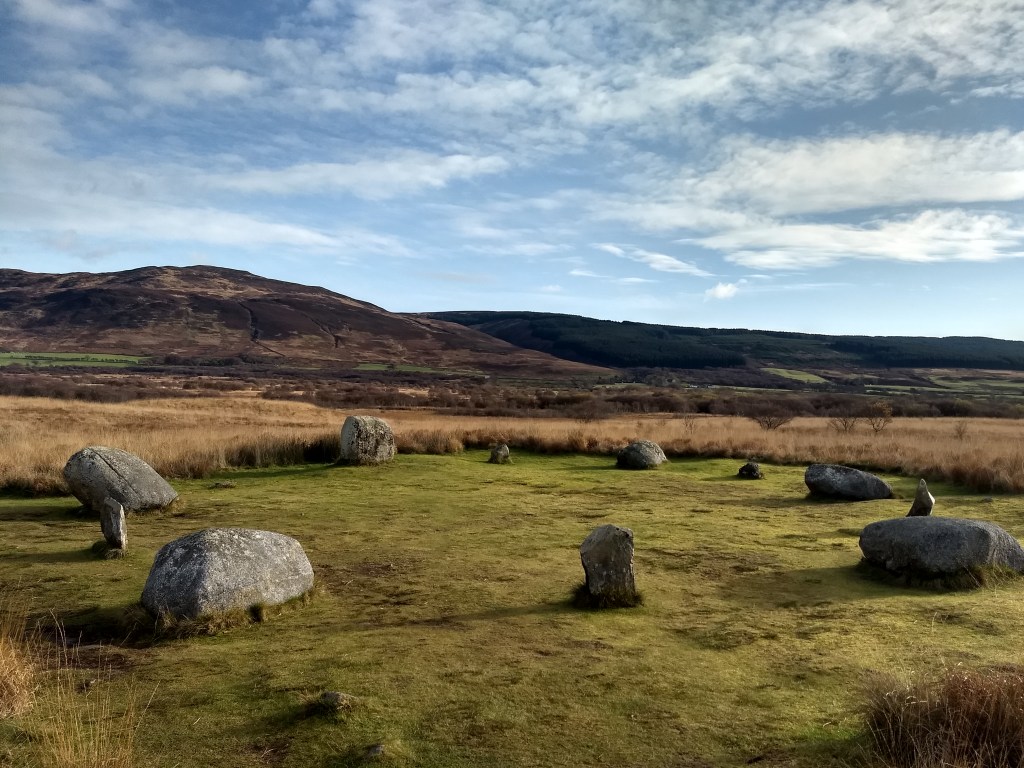
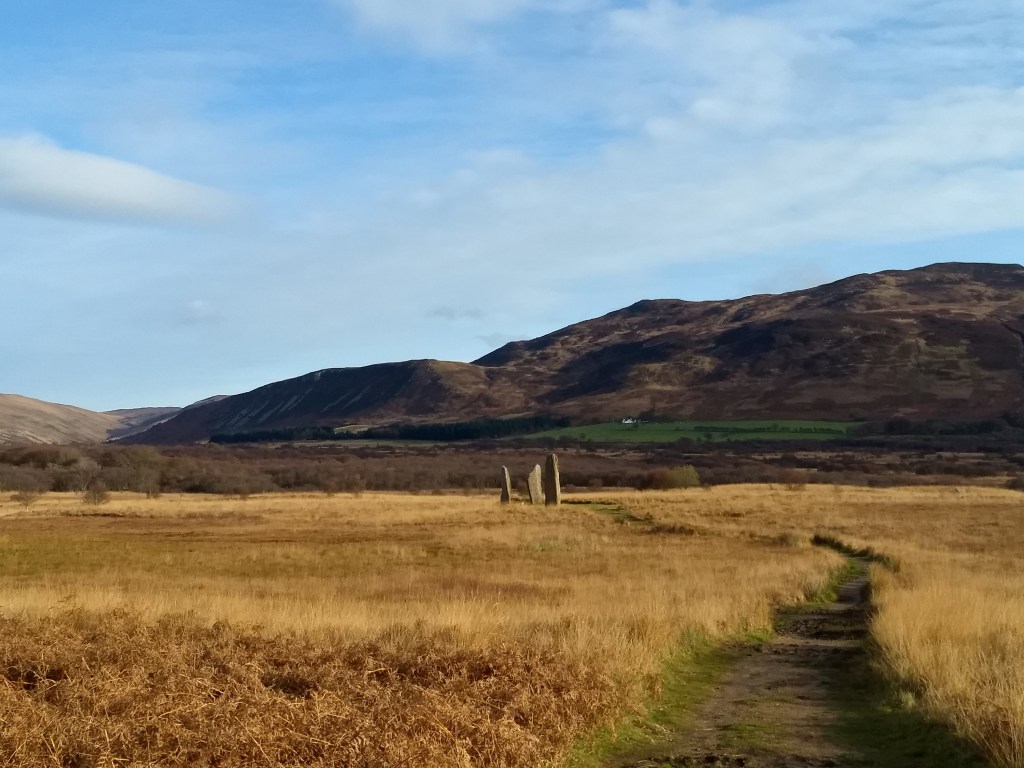
The walk was easy and the landscape just beautiful, and at that stage it was so warm that we took our jackets off (who said that the weather is always bad in November?!?). It was fascinating to walk around the archaeological site dating to between 3500 and 1500 BC and admire the circle and standing stones.

Circle stones…
…and standing stones.

Back in the car, we headed north towards the last stop of the day, Lochranza distillery. Formerly known as the Isle of Arran Distillery, it can be considered the trailblazing distillery in this new golden age of Scotch whisky, dating back to 1995. Other than being the first to open on the island in a very long time, it was built in a period when, elsewhere in Scotland, some distilleries were still being decommissioned or demolished following the whisky loch of the 80s.

The same inexperience whisky enthusiasts at Lochranza distillery.

The visit started with a short video about the history of the distillery, its connection with the location and a bit about production. While watching the video, we enjoyed a dram of Arran 10yr. After that, our guide Richard gave us a very entertaining, informative tour. He also spent some time in the courtyard to show us the variety of casks they use, thanks to which we finally started to understand the difference between barrel, hogshead, butt, etc. (again, it was the early days of our whisky journey).

Washbacks at Lochranza distillery… and a wee guest!

At the bar, we were given a sip of their cream liqueur (great gift for non-whisky drinkers), but then we separated from the rest of the group to do a more in-depth tasting. We enjoyed having the tasting room all to ourselves while Richard talked us through an excellent selection of drams: Amarone and Port finishes, Bodega (sherry finish), the Bothy (ex-bourbon quarter cask finished), 18yrโ€ฆ.

After the tasting (and the purchaseโ€ฆ), we sat at a table outside the distillery for a bite (Italian salami, cheese and bread), with Richard joining us for a few minutes. We would have stayed more, but it was time to get the ferry back to mainland.

And there it happened, we connected with Arran whiskies, confirming how a good distillery experience can make a difference: now we always have an Arran on our shelf! The quarter-cask expression also made us realise how good bourbon-matured casks can be, a type of flavour that since then we have been chasing more and more!

Beautiful Arran, weโ€™ll be back.  


Links :
(No distillery box because we visited these distilleries more than two years ago.)

https://www.laggwhisky.com

https://www.arranwhisky.com


#12.2 From Islay with love

Pouring down rain…and drams

(Day 1)

 Despite the campervan breakdown we made it on the Isle of Islay! Not a postcard day (euphemismโ€ฆ), but that didnโ€™t prevent us to enjoy some awesome drams! 

(missed what happened first? Here’s the Prologue. Curious to know how it continued? Day 2, Day 3, Epilogue)

In spite of the bad luck with the campervan, we were on Islay! , On the ferry we managed to book a taxi to get to our first destination. This distillery is a very favourite of ours, so much that their 12y is the only bottle we replaced: Bunnahabhain!

We made it to Bunnahabhain!!!

On the way to the first distillery, we could admire the Port Ellen maltings and some piles of peat. We were a few minutes early, so while Teresa arranged the payment with the taxi driver (we found out at our destination that they didnโ€™t take cardโ€ฆnote for next time: bring cash), Gianluigi started browsing the shop, which featured the core range, some limited releases, and to our surprise last year (still) and this year (already!) Feis Ile bottlings. As the time for the tasting arrived, we followed Colin through the distillery to the mythical Warehouse 9 (although there arenโ€™t 9 warehouses on the site now, only 6).

The Warehouse 9 line-up!

We were quite a large group, 13 people, which coming out of 2 years of pandemic seemed even bigger! But of course, there was place for everyone on the benches around the 4 casks. The mood was already up to the sky and we both had smiles larger than our faces. Colin was very knowledgeable and funny, he definitely played a big part in our experience. We later found out that he is the co-host of the Attic Islay podcastโ€ฆ we wish we would have known before that! (We also learned from his social media that he moved on soon after, so the best of luck to him!) The first sample was one of the last few bottles from a cask that was just replaced: a beautiful and pale 17y malt from an ex-manzanilla sherry butt. As a starter dram, it set the bar quite high! Second off, a weirdly pale ex-PX Noe which was extremely silkie and sweet, another belter. According to Colin, the reason why the whisky came out so pale after 17 years in an ex-PX cask is because this might have been the one on โ€œtopโ€ of a solera system โ€œpyramidโ€, so the sherry might not have had the time to give the typical dark colour, which in some cases can be as deep as coke (note: solera systems casks are not necessarily physically on top of each other, but itโ€™s easier to explain it this way). Teresa won a sample of the ex-PX Noe by being the closest to guess the year in which the Bunnahabhain flagship expression 12y went on sale: 1979 (Teresaโ€™s guess was 1981, Gianluigiโ€™s 1972). The last couple of casks were very new in the line-up, and since Colin was still recovering from his Covid-caused loss of smell and taste he told us he had no idea about how they tastedโ€ฆ what a shame for him! The third dram was a peated matured for 17y in an Oloroso butt, this time a dark, very earthy and oily dirty dram, like chainsaw fuel but in a good way. The final dram was truly one of the best whiskies we tried: 19 years of age, the first decade spent in a refill ex-bourbon hogshead, the final 9 years in an ex-Heaven Hill barrel. Truly wonderful stuff.

Happy kids in the Bunna’s warehouse!

Because their cafeteria at their visitor centre is still closed, we decided to move on to the next distillery, despite we had the tour booked for much later in the afternoon: Ardnahoe. The distillery is only a half-hour walking distance, so we went out to take a few pictures before moving on. The cloudy day, which earlier dissuaded us from pursuing other walks, turned into a downpour. As we walked in Ardnahoe, we were totally wet: excluding the times we were physically inside a body of water, probably the wettest we had ever been. The visitor centre is unusually big (it almost makes the distillery looking like a side feature), with a shop and a cafe. In spite of its size, the first available table was at 2pm, a good hour and a half away. During this time we browsed several times the Hunter Laing collections (including Old Malt Cask and Hepburn Choice, among others) and did a few trips to the restroom to try dry ourselves under the hand-driers. The soup and the chowder (we needed to warm up!) were quite tasty, and after a good coffee we indulged in a couple of their very fairly priced drams: an independently bottled 9y Talisker (first time we tried an independently bottled one) and a 25y North British, both 5 quids each.

Ardnahoe still room (on a very dark day)…try to picture Jura’s Paps behind the fog!

Finally, 4pm. The tour started in a room adjacent to the visitor centre, where our guide explained the history behind the distillery, which started producing new make spirit only in 2019. We quickly moved to the production area, where we admired their Bobby mill, one of the very few existing. It was followed by the copper covered mash tun, their wooden washbacks, and in particular their stills, which have the longest lyne arms in the Scottish industry (they are really long!). These arms take the distillate to worm tubs condensers, a unique feature among Islay distilleries. Unfortunately the tour didnโ€™t include the warehouse. We were brought back in a tasting room, where we could choose a dram among four: the Islay and Highland Journeys (two regional blended malts), a Hunter Laing Glengoyne and the Scarabus single malt (from an undisclosed Islay distillery). We chose the two blended malts, which were ok but not very memorable. More interestingly, we got offered a taste of the new make spirit: on top of the usual pear and green apple aromas we tasted in other mew makes, this one also had lot whiff of bananas and, of course, smoke.

The tasting at Ardnahoe

After the tour we unsuccessfully tried to call a few taxi companies to pick us up. Fortunately, we spotted a father-and-son duo, and asked them for a lift to the hotel. Fortunately, they accepted, as the hotel was on the way to their camping. That really saved us, as the rain didnโ€™t seem to want to stop any time soon (we were again very wet just crossing the Ardnahoe parking lot!). We rewarded their kindness with a tasting set of the Scarabus once at our destination: the Skerrols House hotel.

We were very warmly welcomed by Thomas, the hotel manager. He showed us the amenities of the hotel (including a warm room where we could dry our clothes and shoes!) and offered us a cup of tea. As he learned about our trip, and that we wouldnโ€™t have left the hotel before the next morning, he and his wife offered us a couple of sandwiches for dinner. The hotel was quite great, just outside our house there was a small โ€œreading roomโ€, and downstairs, where we had the tea, a very comfortable hang out room (with TV). Everything in the room was great too: soft towels, comfy bed and pillows, and a nice view. We are not definitely used to such fancy places! We couldnโ€™t relax as we wished however, and we had again little sleep, because of the uncertainty around our plansโ€ฆ but there was nothing to do until the morning.


Bunnahabhain Warehouse 9 Tasting

Price: ยฃ40.00 pp (April 2022)

Tasting (all samples from the cask, so NC, NCF and CS*): 17y unpeated ex-manzanilla butt (56.5%), 17y unpeated 2004 ex-PX Noe cask (52%), 17y peated Oloroso butt (52.9%), 19y double ex-bourbon maturation (10y hogshead, 9y 1st fill Heaven Hills barrel, 53.7%)

Target: whisky enthusiasts, geeks, and experts

Value for money: great

Highlights: the drams, the distillery scenery and Colin’s enterteing tasting

Distillery exclusive: most of the above (they decided to stop selling the Warehouse 9 releases on their website, as tour re-started)

Link: https://bunnahabhain.com/


Ardnahoe Distillery Tour

Price: ยฃ15.00 pp (Apr 2022)

Tasting: one dram from the following, the Islay and Highland Journey (blended malts, NAS, 46%, NC, NCF), Scarabus (single malt, NAS, 46%, NC, NCF) and a Hepburn Choice Glengoyne

Target: casual tourists and whisky novices

Value for money: Good

Highlights: the distillery scenery (still nice despite the weather)

Things we did not like: very “vanilla” tour

Distillery exclusive: 11y Jura (NC, NCF, CS*) from Hunter Laing

Link: https://ardnahoedistillery.com/

*NC: not artificially colored, NCF: not chill0filtered, CS: cask strength