#65 Tiree distillery

One windy leg of the Hebridean Whisky Festival


TL; DR: This September we embarked in an odyssey to attend the Hebridean Whisky Festival. Unfortunately, we couldnโ€™t reach most of the distilleries we’d planned to visit due to a storm, but we still managed to visit the island of Tiree and its distillery. A tiny and craft operation, with already two releases under their belt: a single malt and a rye whisky.ย 

In the last few years, especially since we got Mr. Vantastic, we travelled quite a bit throughout Scotland. However, while we have (roughly) been all over the country, there are mainly two places we havenโ€™t been yet: the Outer Hebrides and Shetland, the latter despite our passion for the namesake crime TV show. This was supposed to change this year though, as together with our friends Justine, Karen and Chris, we decided to go on a campervan holiday to the Outer Hebrides, to attend the Hebridean Whisky Festival. The festival is structured similarly to the Islay and Campbeltown ones, with each distillery having a different open day. The challenge is, obviously, that most distilleries are located on different islands, some of which connected by ferry crossings lasting a few hours. The festival started on the first weekend of September in the inner islands, with Talisker, Torabhaig (both on Skye) and Raasay: as we already visited all three, and not long ago, we skipped this part (follow the links for our great February 2024 trip!). Then, after a break-day wisely set up by the organisation to allow people to travel, it was the Isle of Tiree distillery turn, our first visit.

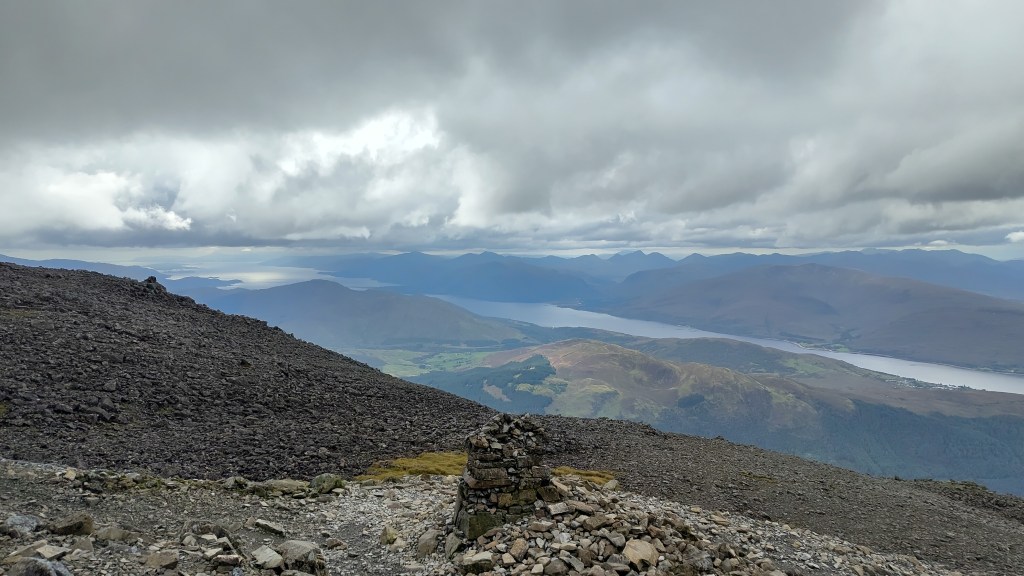
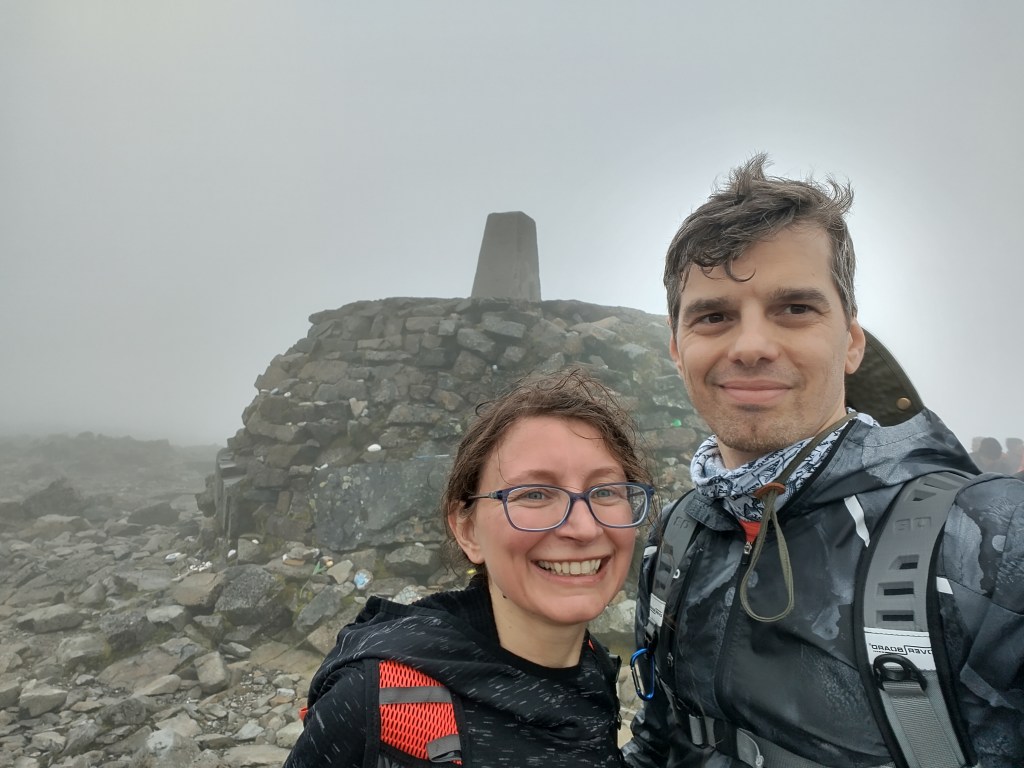
The Tiree distillery day was on a Tuesday, so we booked a ferry leaving from Oban on the Monday. The weekend before, we decided to avoid whisky stuff for once, but rather climb the tallest mountain in Great Britain: Ben Nevis. We left Leith in the morning, and after a first quick break in Callander to pick up some delicious pies at Mohr Bakery, we arrived at the main visitor car park around 11am. We went up from the easy (but still steep) route: we had an initial doubt whether to go for a more challenging route, but we really didnโ€™t want to be the eejits on the news that injured themselves on a path beyond their capabilities (we are decently fit, but still, we hike about half a dozen times a year, not on mountains). The path was a bit crowded, but the view quite spectacular, except on the top: a thick fog welcomed us.

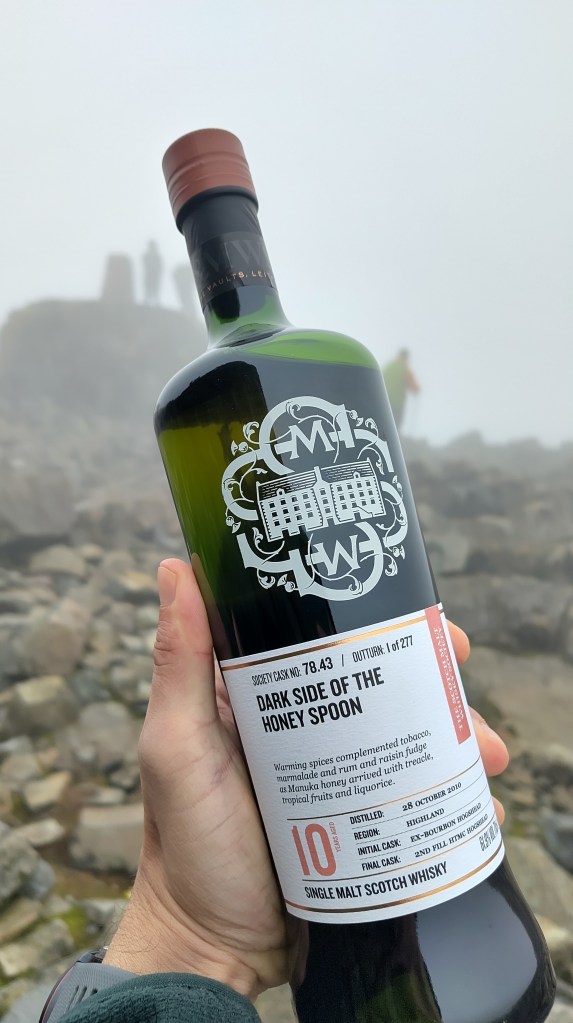
We still celebrated the achievement by opening a bottle of Scotch Malt Whisky Society Ben Nevis bought during the pandemic, high abv but delicious nonetheless. The descent was much faster, and afterwards we stayed at the Glen Nevis campsite, just next door. After a nice meal at the Glen Nevis restaurant (with a decent whisky selection too), we slept like rocks!

The next day we slowly drove towards Oban, where weโ€™d meet with our friends, just after a fantastic seafood lunch in Port Appin at the Pierhouse Hotel, an auld acquaintance from a few years back.

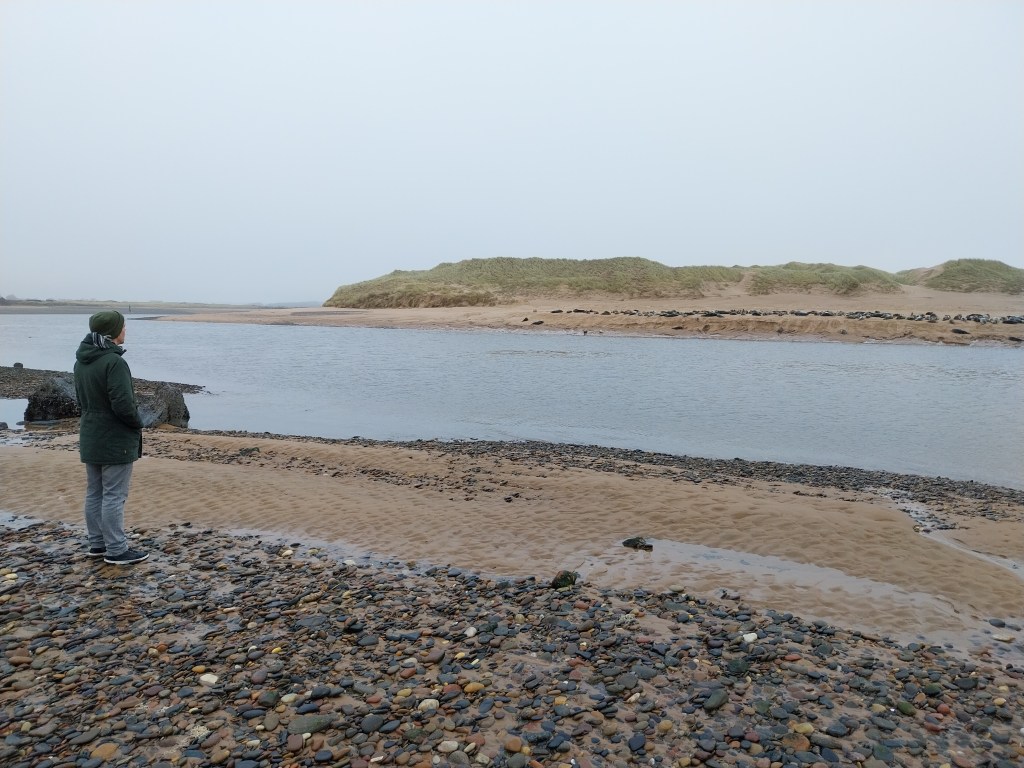
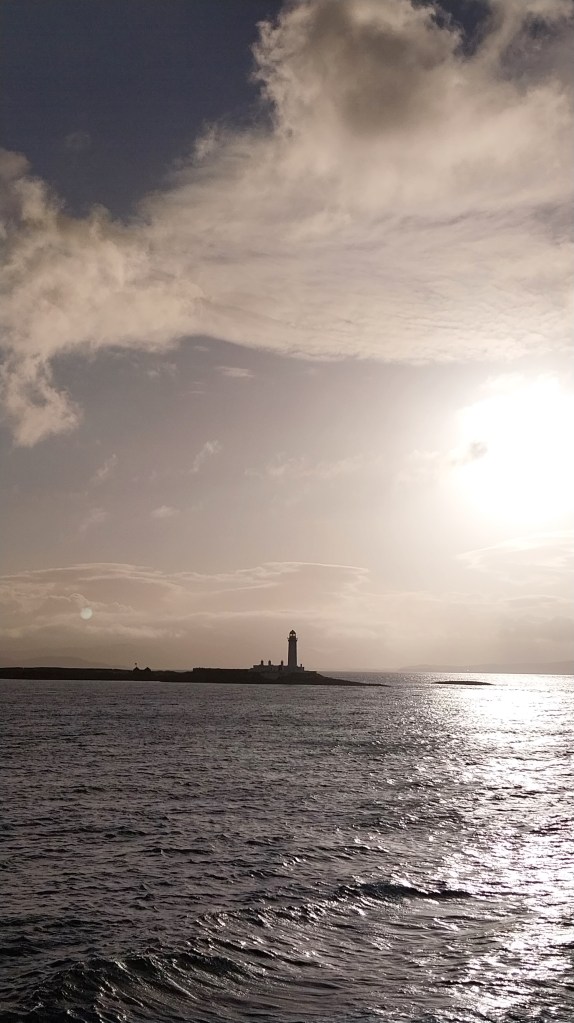
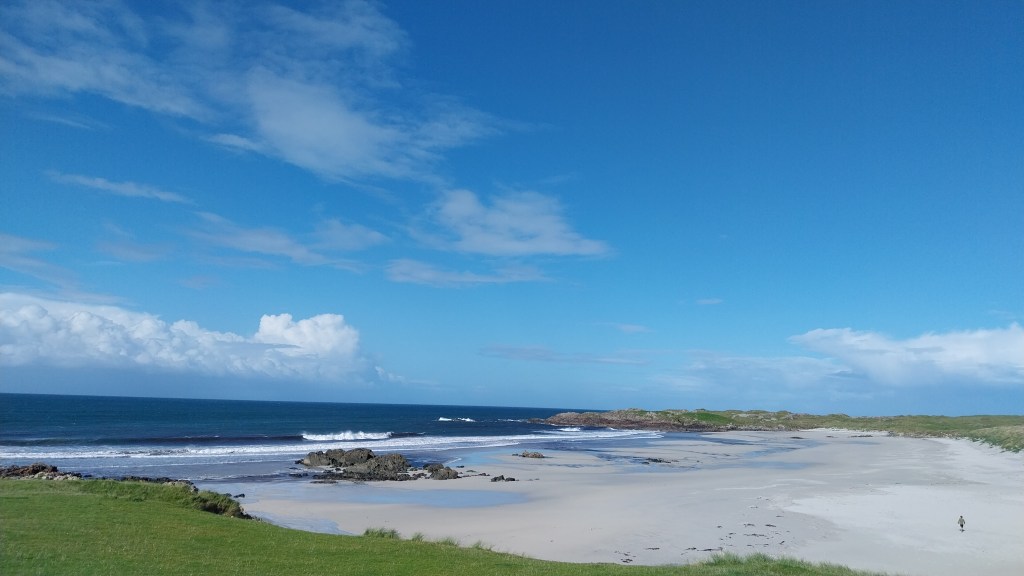
We met with the others at a car park near the Oyster Inn, 10 minutes away from Oban, as they allowed overnight stays for campervans. Meanwhile, the weather had turned rainy and windy, and rumours were that the next day ferries wouldnโ€™t be able to sail, reinforced by an alert message from CalMac (the ferryโ€™s company). Because of this (and the wind) we struggled to sleep that night, but fortunately, in the morning the ferry sailed: we were much relieved (for nowโ€ฆ). It took about four hours to go from Oban to Tiree, and along the sail we spotted Ncโ€™Nean distillery and Tobermory, on a day that turned sunny. As we got off the ferry and drove towards the only campsite, we realised that there isnโ€™t a proper village. The biggest settlement is Scarinish, where the ferry pier is. Also, the island is very flat (the highest hill is 140 meters high, with a radar station (the โ€˜Golf Ballโ€™) on top of it dominating the landscape. This makes it a paradise for surfers, and we found many of them at the campsite and around the island. After we checked in, we spent the rest of the day exploring the surroundings.

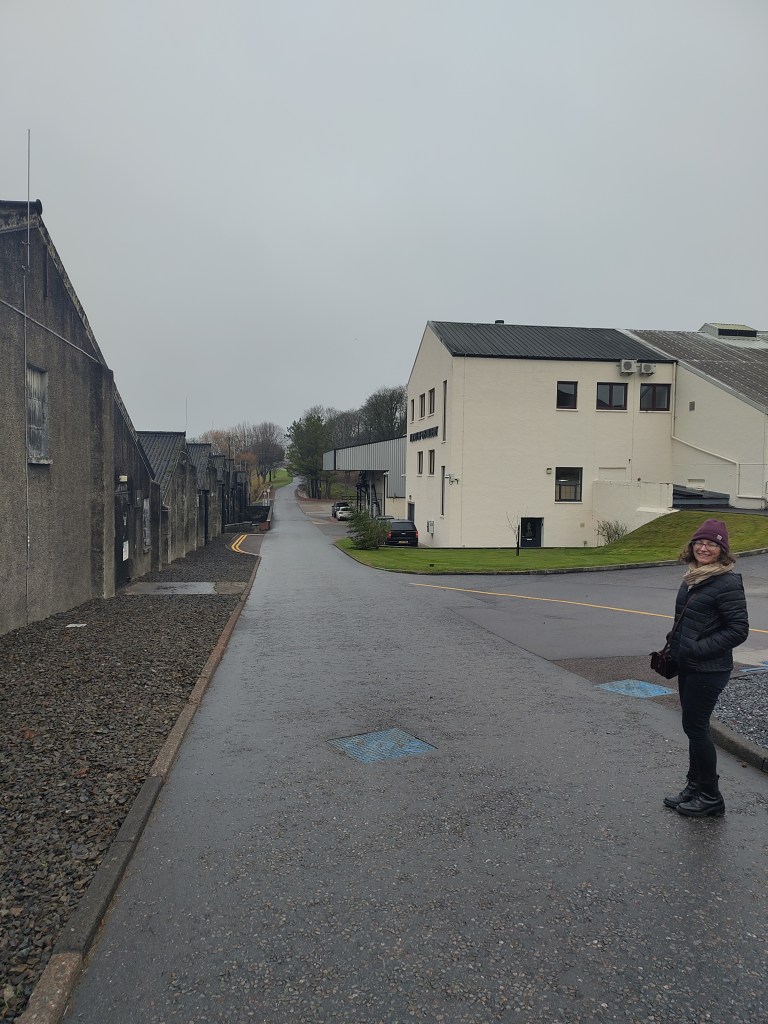
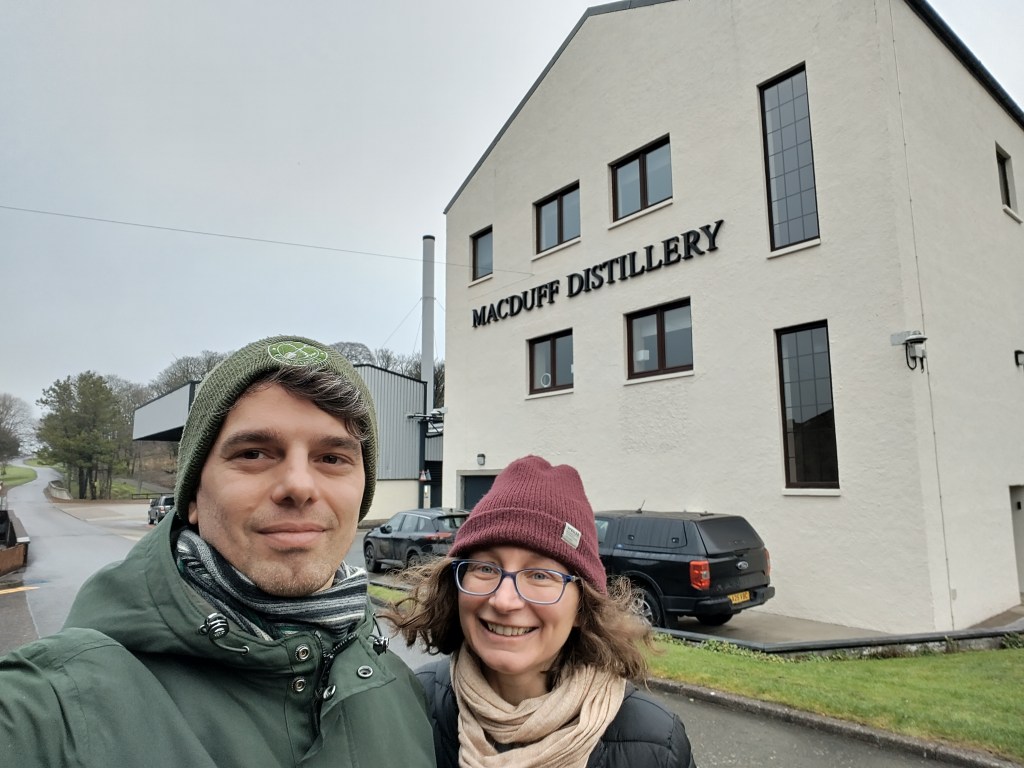
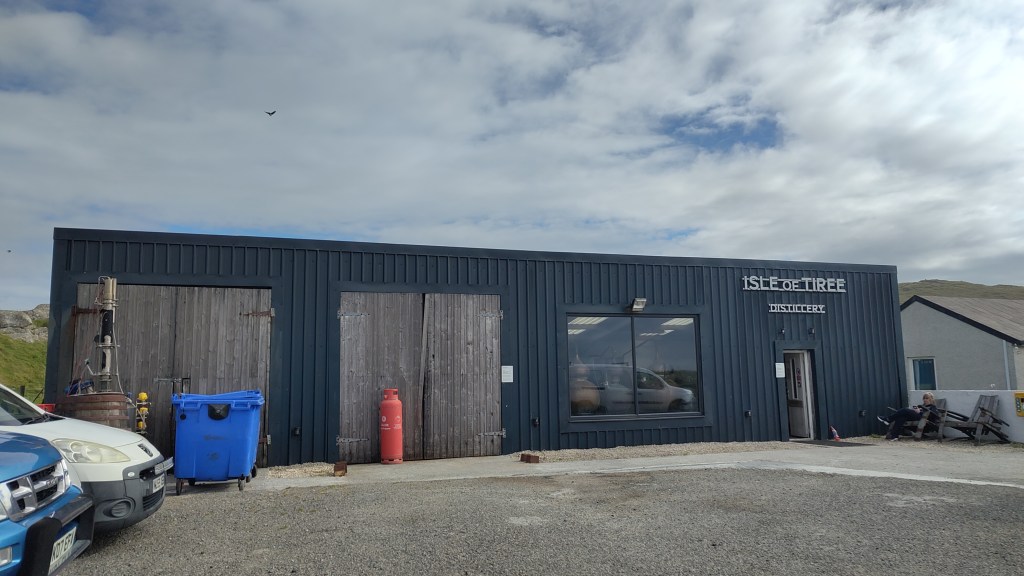
The next morning we left the campsite, and after a stop to a very disappointing diner, we drove towards the distillery, in the south-west of the island. We parked the vans in a field nearby that weโ€™d booked for the night via the Tiree Croft Camping Service. It was supposed to be 10 minutes on foot to the distillery, turned out to be about half hourโ€ฆFortunately we had plenty of time. The distillery is inside a small, blue warehouse. On the right, in a separate building past a courtyard, there is the visitor centre and bar. Itโ€™s very small but very cosy, and since it wasnโ€™t raining (yet), we enjoyed a Tiree gin and tonic on the porch before going back to the distillery for the tour.

There, we were served a sample of newmake spirit as a welcome. Ian and Allan, the founders, started the tour talking about the history of distilling in Tiree. The historical records from 1768 report about 50 stills, however they decreased to only three legal stills by 1783, before the final clearance operated by the British government to depopulate the country. Finally, in 1802 distilling was temporarily banned, but between 1814 and 1882 a couple of short-lived distilleries were in operation, too unprofitable to resist. And here comes Tiree Distillery, operational from 2020, aiming to reconnect with the distilling heritage of the island.

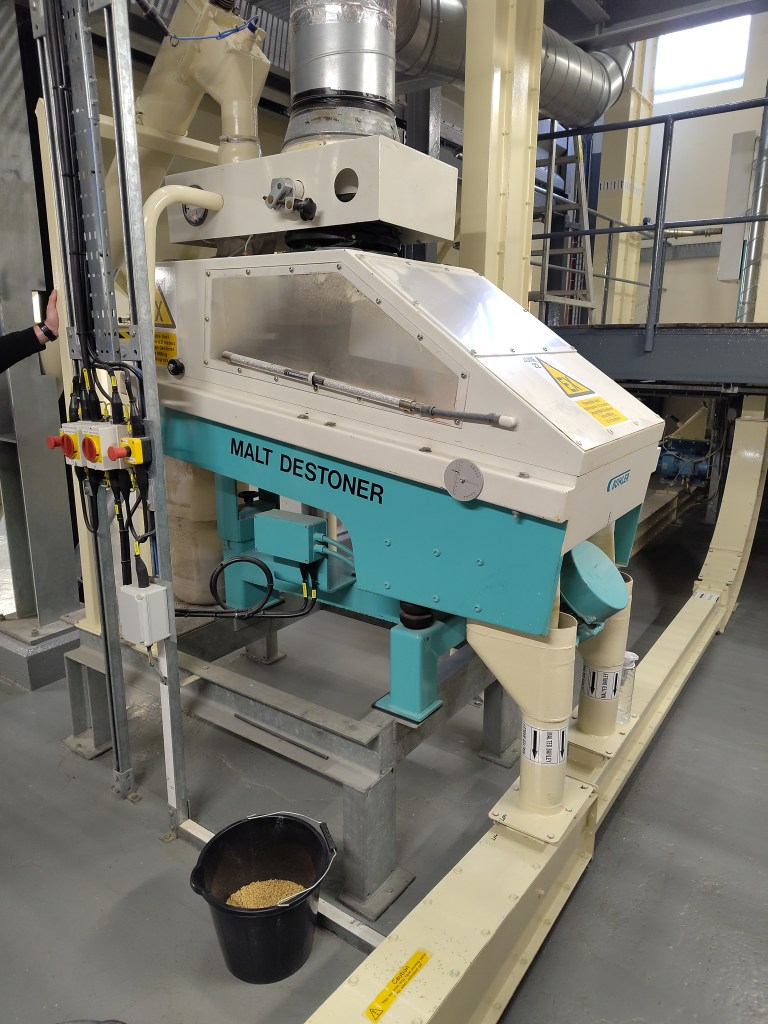
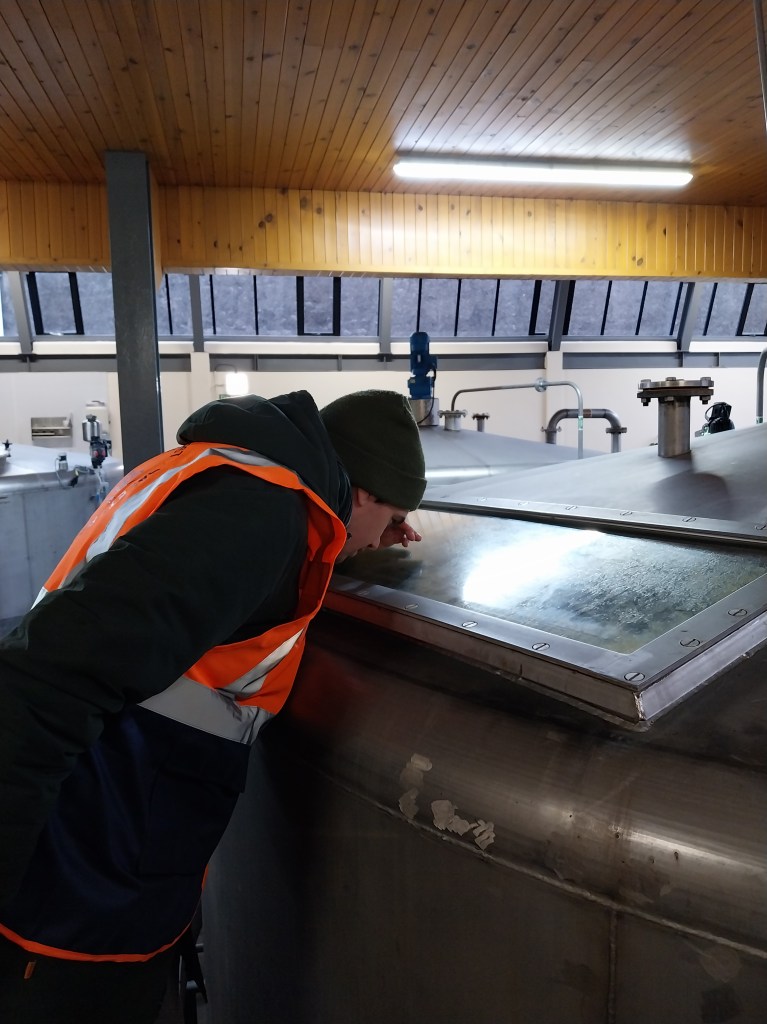
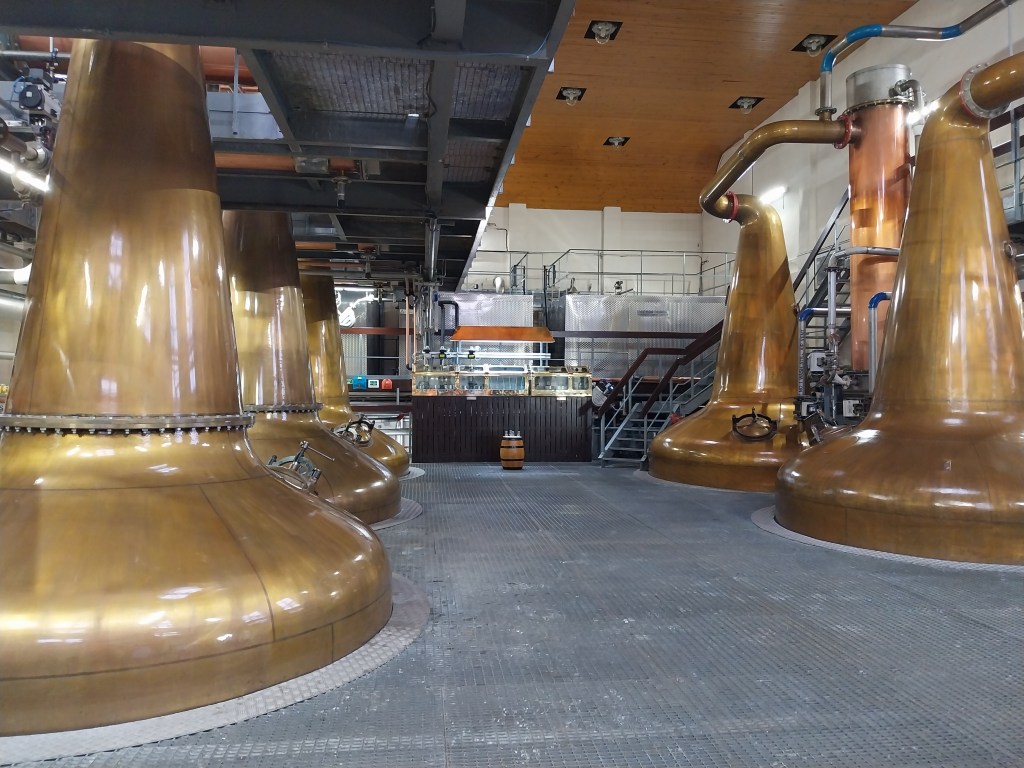
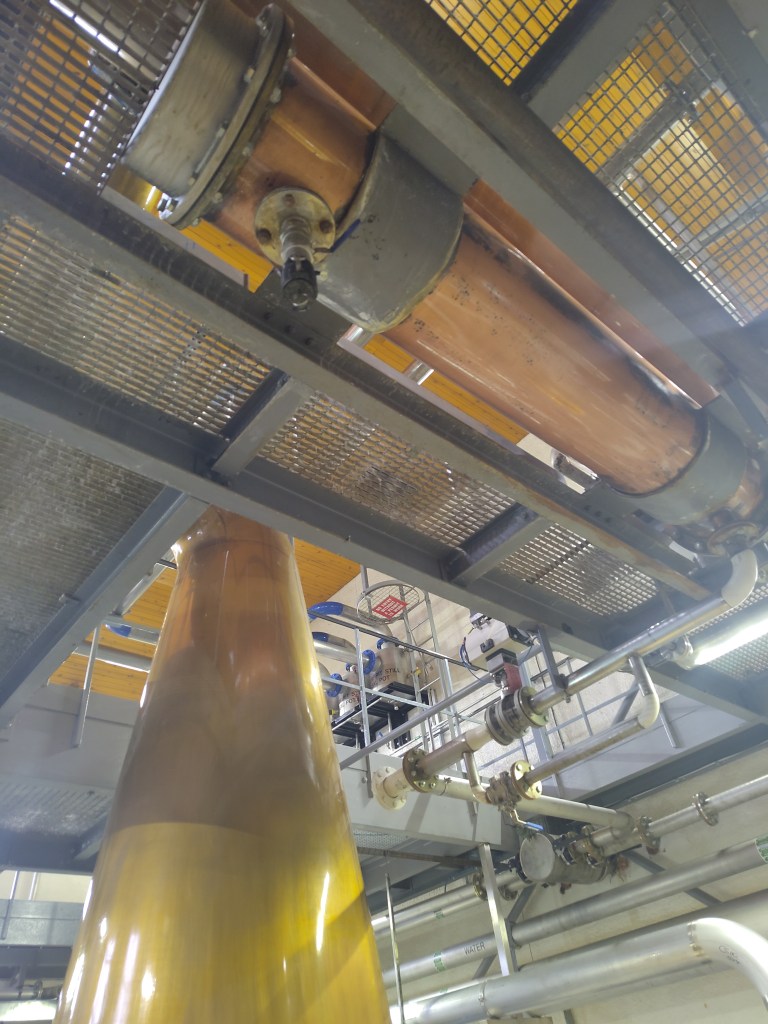
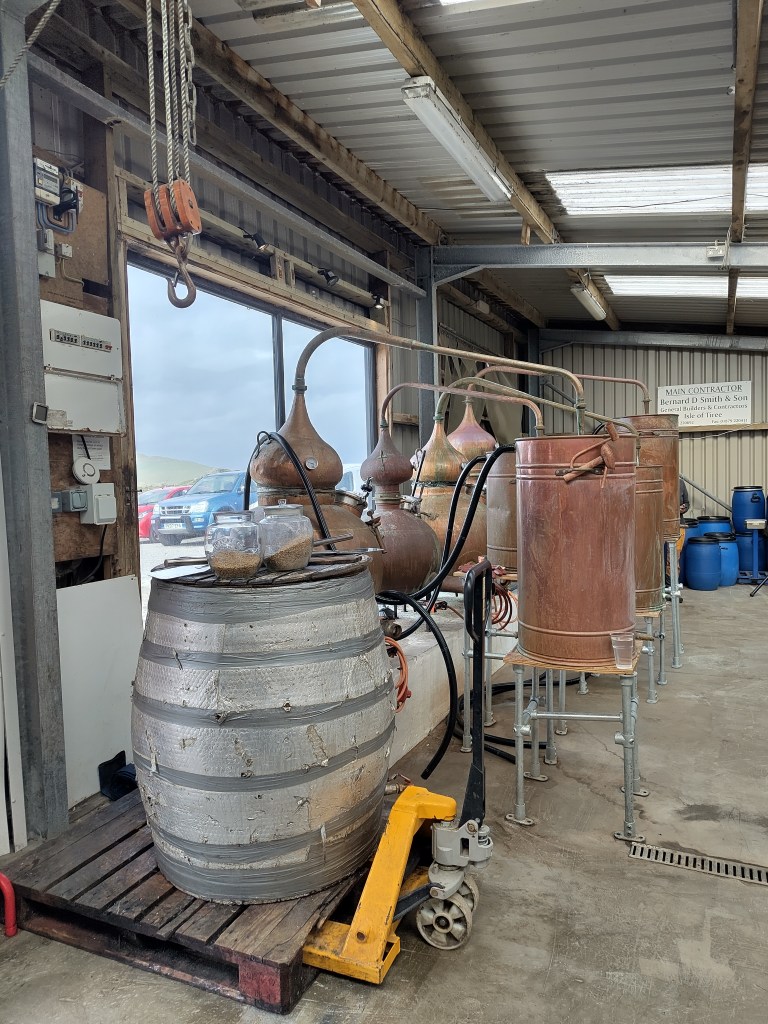
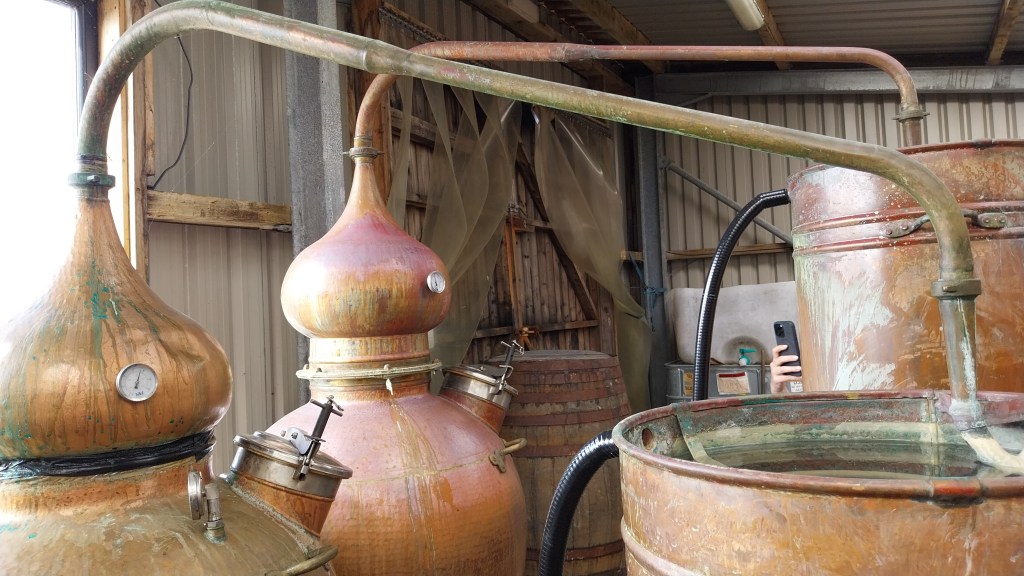
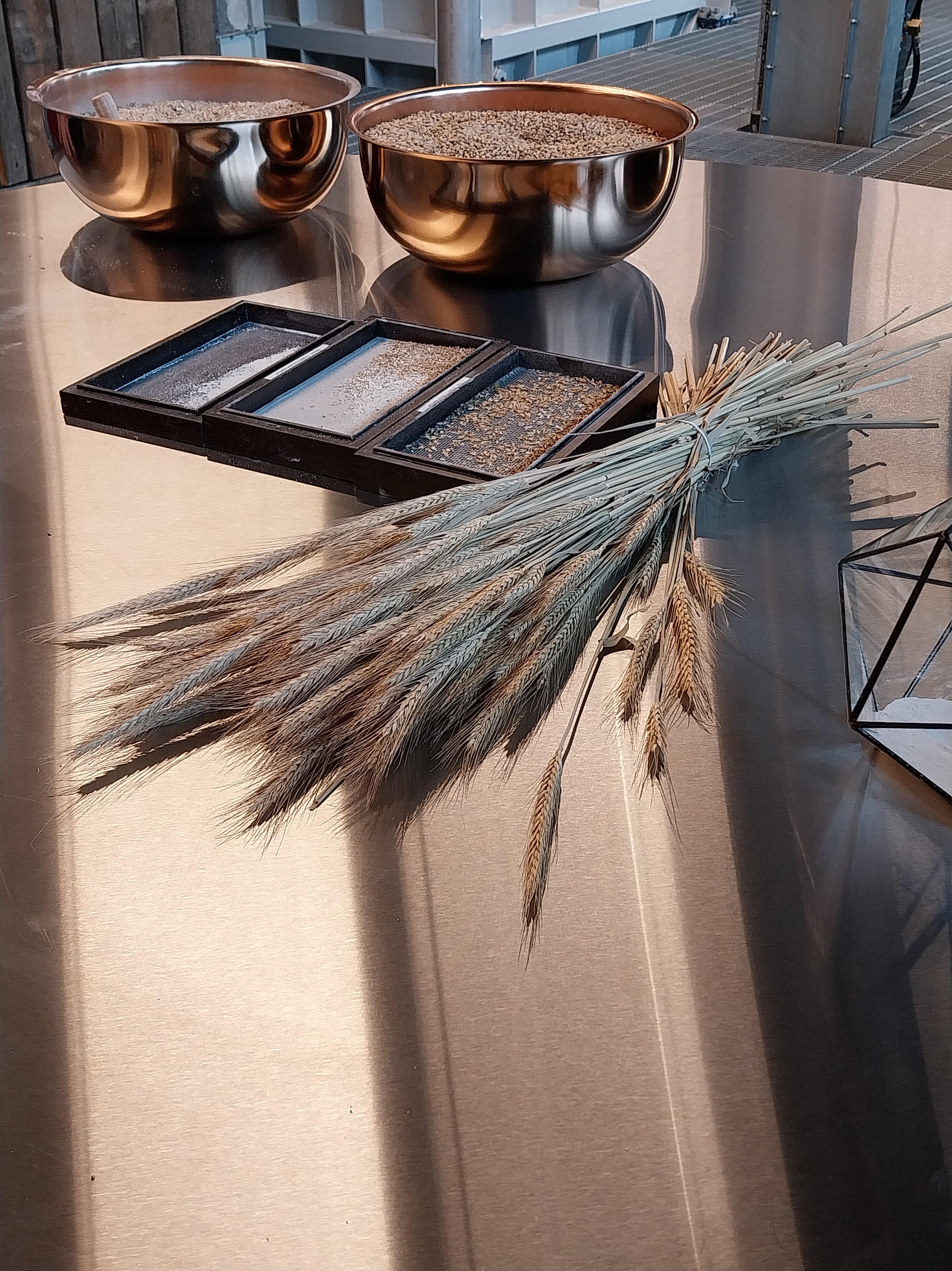
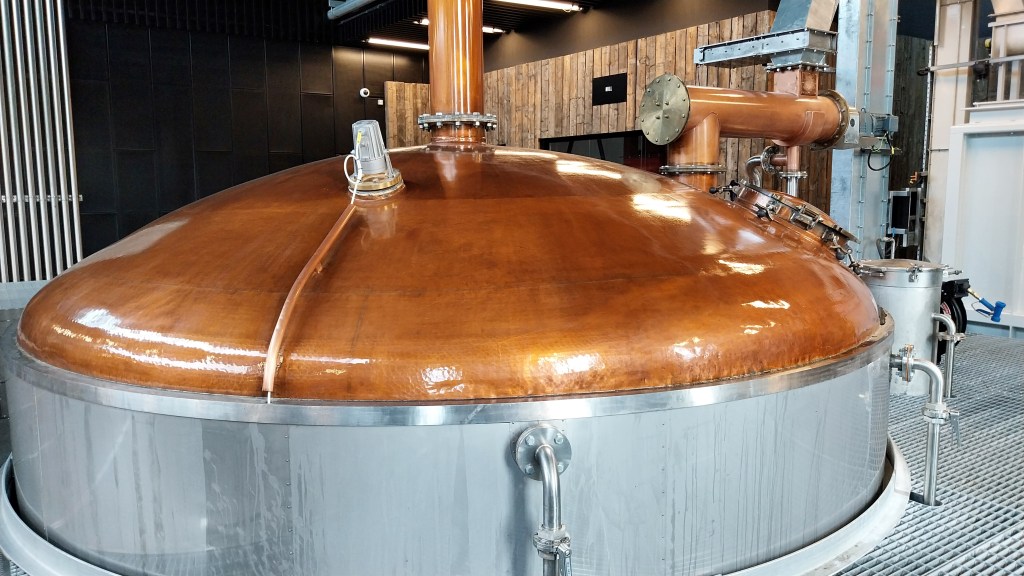
A very small operation, they bring in pre-milled malted barley (mostly Laureate) and rye from Crisp maltings, which they mash in batches of 100 kg with 400 litres of water into a wooden mashtun which used to be a sherry butt (that was a first for us!). They tried to grow local barley, which was possible but then the challenge was malting, requiring the malting to be shipped off the island and then back. They have four washbacks for the fermentation stage, two made of stainless steel and two of oak, former butts like the mashtun. Fermentation normally lasts 4 to 5 days, but it can go up to 2 weeks for experimental runs. The 6-7%abv wash is then distilled in one of the two wash stills, to get 23-25% low wines, distilled again in the spirit still. The stills are Portuguese Hoga stills with worm-tub condensers. A fourth still is used for the gin (they bring in neutral grain spirit). During the second distillation, the first cut point is 70-74%, made by smell and taste, while the lower one is around 63-64%, with the discarded feints and foreshots redistilled in the following batch. From each distillation they obtain about 60 litres of newmake spirit at 70% – it takes them two runs to fill a quarter cask.

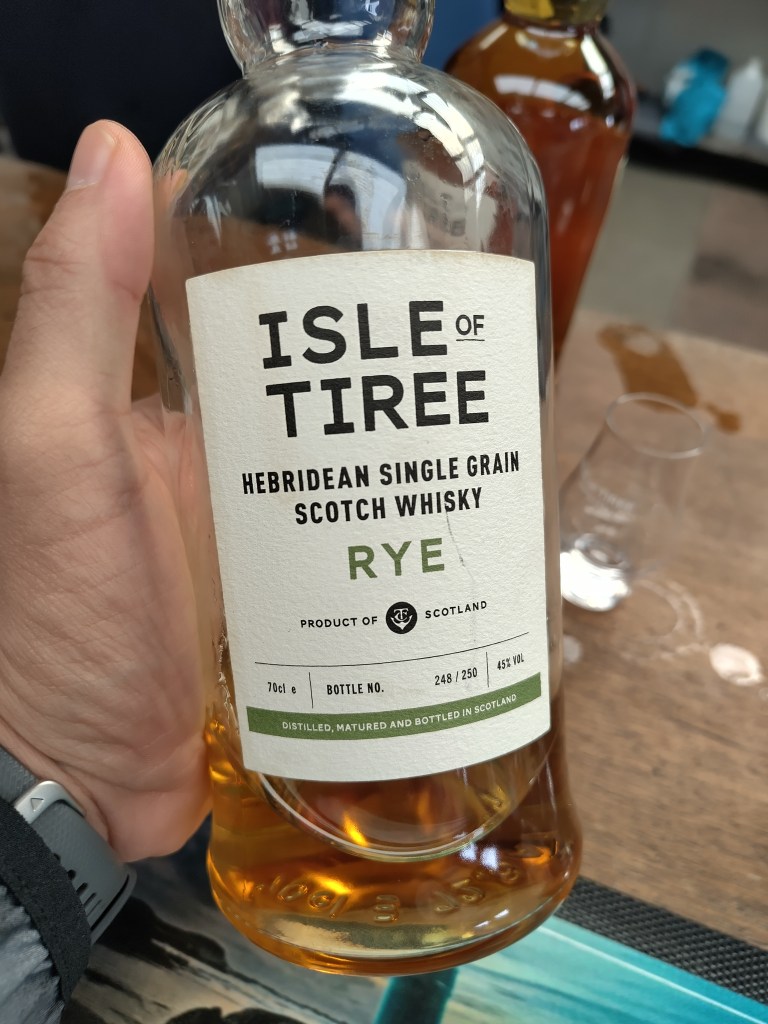
The warehouse is in the same building for the moment, with casks mostly sourced from Speyside Cooperage, especially from Heaven Hills distillery in Kentucky. The plan is to have at some point a separate building for maturation. This would solve also the high evaporation they have at the moment, caused by the production heat. We shared a dram of their newest release (ยฃ8, ยฃ125 for the bottle), the second in total after their first Single Malt release last year (not on sale anymore, but it was sold for ยฃ200). This one is a single grain, with 75% rye and 25% barley, aged four years in virgin oak and ex-bourbon casks: one of the best Scottish ryes we tried so far. They also produced a high-corn mash spirit, which is still maturing in the warehouse.

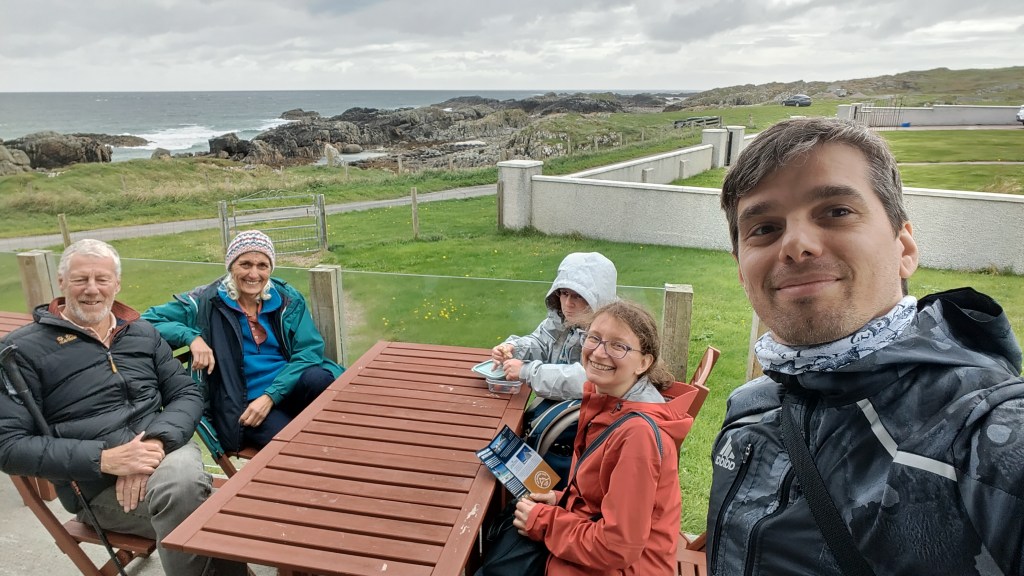
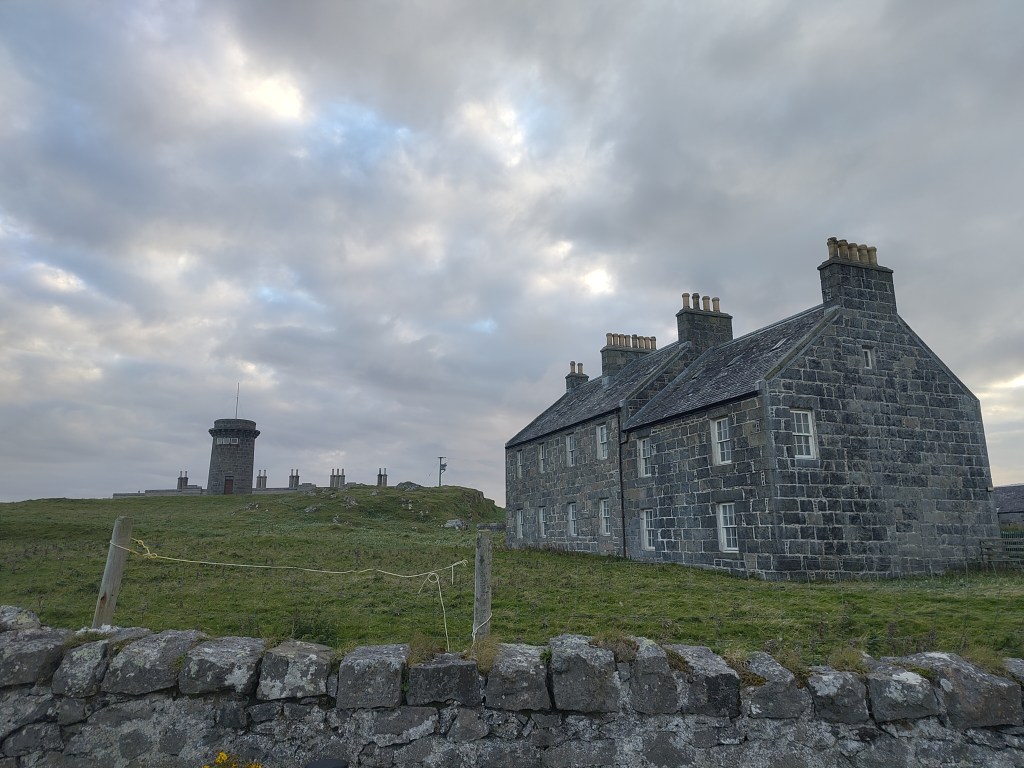
After leaving the distillery and walking back to the vans, we realised the field where weโ€™d parked was too exposed to the wind, so we called the cooperative managing those fields and we were able to swap for another one slightly less exposed. Still no facilities, which left a sour taste as we had paid ยฃ15 for one night. At least this one was at a walking distance to one of the very few bar/restaurants on the island. The very cozy Alan Stevenson House is in Hynish, a settlement that used to serve the Skerryvore lighthouse. We walked there to grab a dram, before retiring in our campervans for dinner and for a final dram, all together inside Gladys, Karen and Chrisโ€™ campervan, the biggest of the three. When we left the bar, the Tiree Distillery dinner was about to start: we didnโ€™t have tickets for the event (ยฃ65), which we regretted a bit because first, they were serving the first single malt release too, impossible to try elsewhere. Second, we didnโ€™t know yet what would happen in the following days.

The day after came with a bad surprise, as our ferry for Barra was cancelled (sad trombone). Instead, we got another one back to Oban, as the day after there was an early ferry from Mallaig to South Uist. If that went ahead, we would have had still time to attend all the other distillery visits of the holiday. That wasnโ€™t the case: in the evening, when we were already in Mallaig, this ferry was also rerouted from Oban (dโ€™oh!), but in the morning that was cancelled too. The last chance would have meant to travel to Uig, on Skye, but there were no spaces for vehicles and there was no assurance that the ferry would sail. So, after a regroup in Mallaig, we decided to drive back to Fort William and abandon the plan. From the campsite we booked we walked to the Ben Nevis distillery, where Hazel, the lead tour guide and whisky IG friend, gave us a warm welcome and some tasty drams. That was a nice consolation.

While weโ€™re happy that we visited Tiree distillery and to learn about their crafty setup, we were a bit disappointed that we couldnโ€™t make it to the other islands. The distilleries personnel were very understanding and all of our tastings and tours were refunded, and it was the same for the ferry tickets. Unfortunately, when storms happen thereโ€™s nothing anyone can do, we just hope to be able to go back soon (and be a bit luckier with the weather).

Stay tuned to learn more about our โ€œplan Bโ€, in a couple of weeks. Until then, slร inte!


Tiree Distillery Open Day Tour

Price: free* (September 2025)

Duration: 45min

Tasting: 15ml of newmake spirit (63.5%)

Distillery Exclusive: on the day, the Tiree Single Grain Rye Whisky (45%, ยฃ125)

Target: anyone

Value for money: of course very good, as it was free

Highlights: the cosy setup

Recommended: if you’re already on the island, definitely

*the regular whisky tour is ยฃ20, but according to the website there are no tours scheduled in the next 6 months

Link: https://www.tyreegin.com/


#56.4 Dramming Down Under

Back to the city:
Starward distillery


TL; DR: After driving back to Melbourne, we visited another distillery: Starward. It is one of the few Australian whiskies weโ€™d tried before the trip, and the distillery is modern and dynamic. The tour was very informative, and they had a great range of drams to try at the bar. A nice visit! 

(missed Part 3/Part 2/Part 1?)

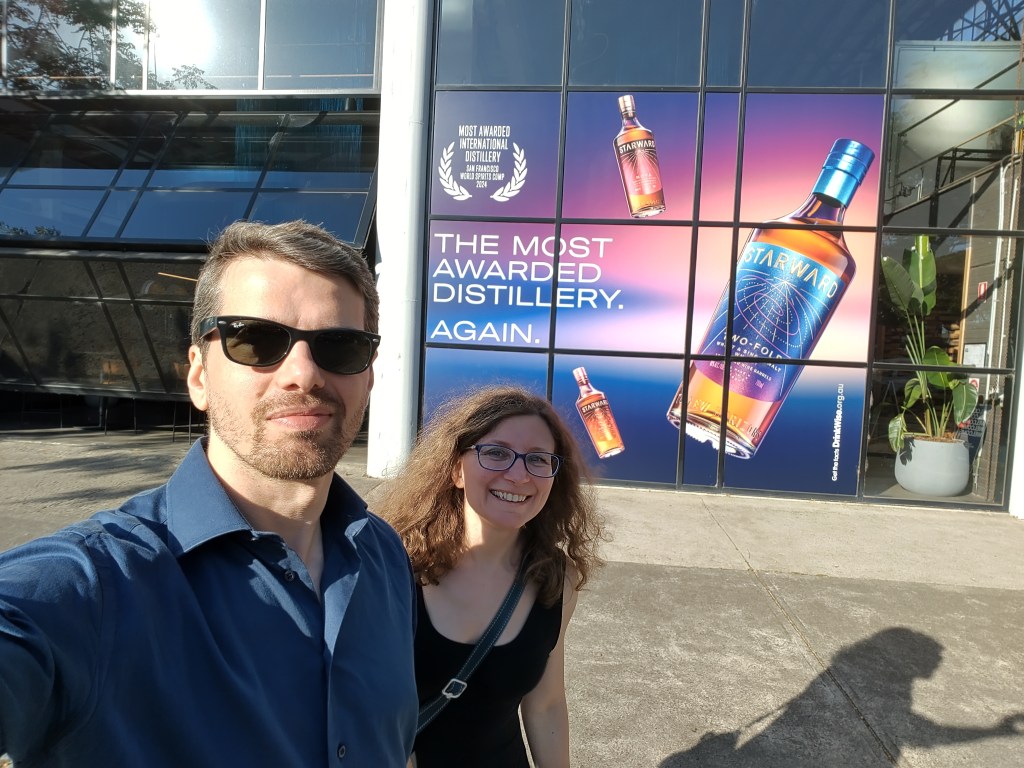
The drive back from Kinglake was uneventful, although as we approached Melbourne roads were busy, which we didnโ€™t expect on a Thursday early afternoon. Despite the traffic, we got back to our hotel in time to park the car, refresh ourselves at the hotel, and grab a cab to get to our next destination in Port Melbourne, south-west from the central business district: Starward, one of the most well-known distilleries in Victoria and Australia. Despite being in what looked like a mostly business area, it can be reached by bus (although we didnโ€™t have enough time that day). From the outside the distillery looks like an industrial warehouse, its presence is only given away by some advertisement panels at the front, where the predominant colour is an electric purple-ish blue.

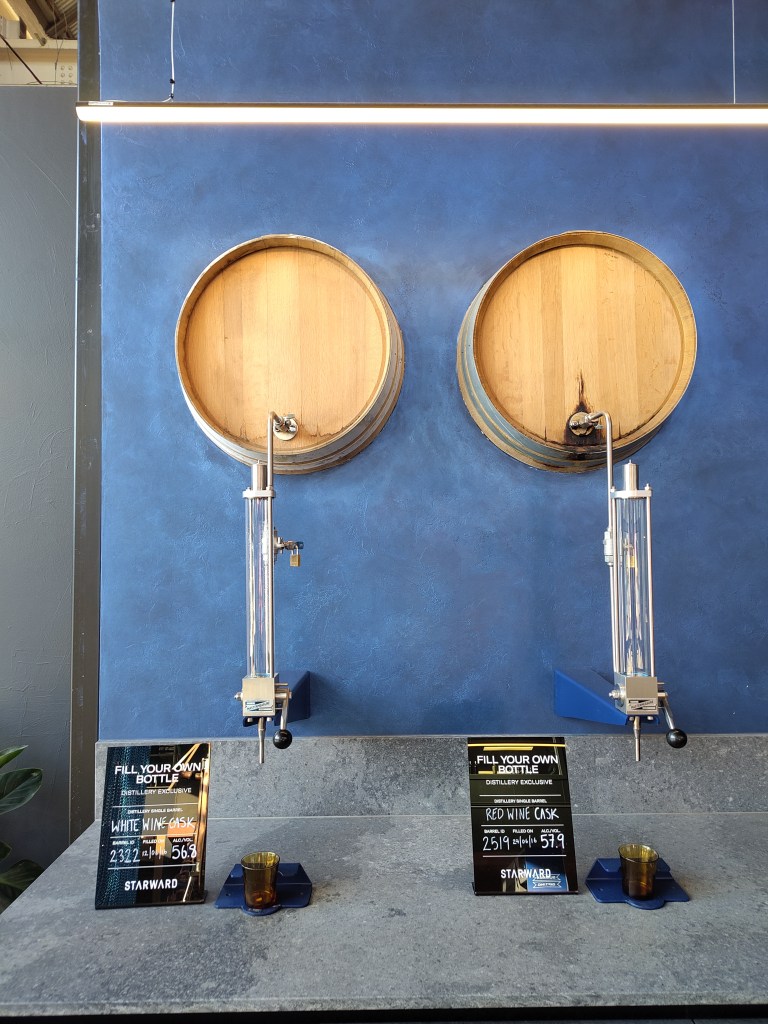
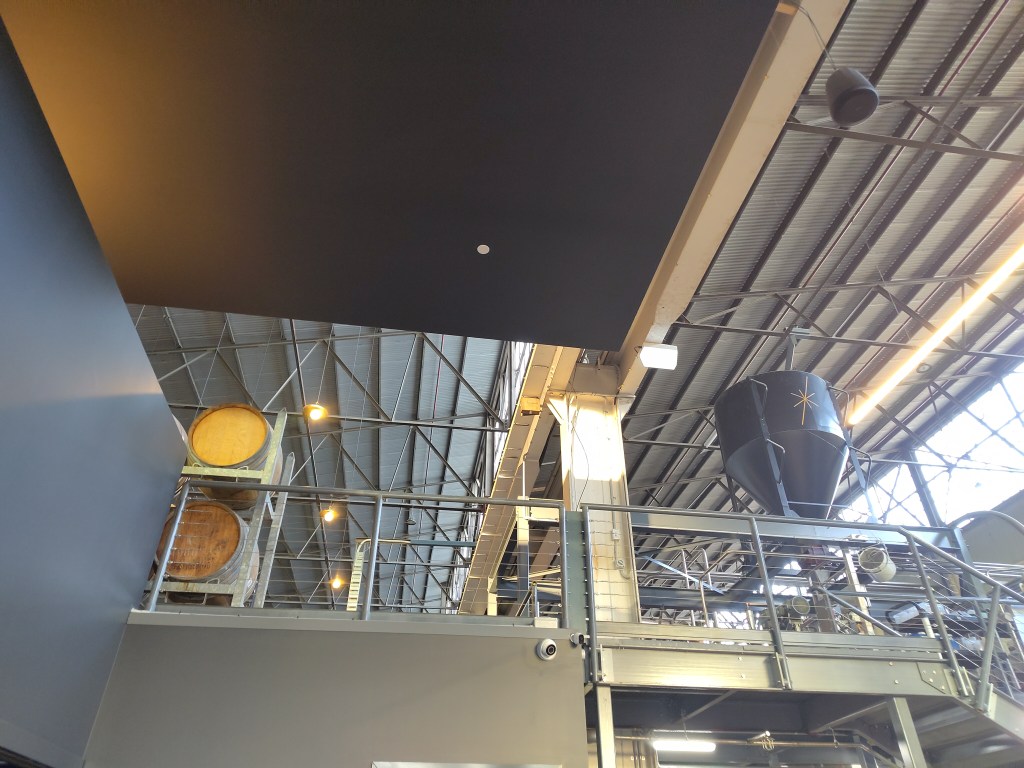
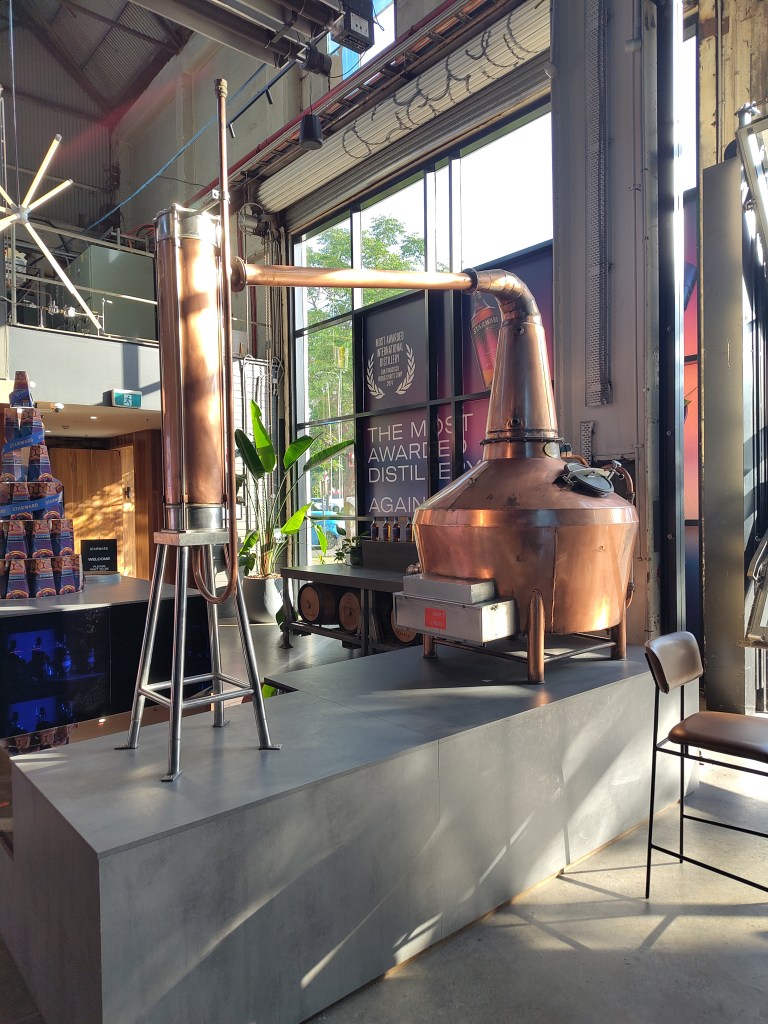
Inside the building, the blue is still the main colour: the space is very wide, with the shop right after the entrance, as well as one of the old stills. On the left side there is a long bar, showcasing two bottle-your-own casks: the price tag betrayed the Diageoโ€™s involvement in the distillery ($250.00). The distillery production is past the hospitality area, which has both low tables and barrels used for tastings. In the 5-10 minutes before the tour started, we mostly checked out the shop, and the many expressions available for purchase.

Pricey bottle-your-own.

Our guide for the day was Felix, who was very knowledgeable and promptly replied to all our questions. The first thing he asked us, though, was to leave our phones in a locker, for โ€˜safetyโ€™ and to avoid taking picture of production: a very weird company policy. Because of that, we donโ€™t have any pictures of production, and we couldnโ€™t take notes on our phones as we usually do. Instead, the day after we recorded everything in agent Cooper-style vocal messages while driving, to be used by our future selves rather than Diane.

The distillery was founded in the 2000s by David Vitale, who used to be a brewer: because of this, he was keen to maintain some brewing elements in his whisky. Thus, the malted barley they use is a pale ale malt from New South Wales. The malt is then mashed with water coming from Melbourne city aqueduct and, once done, put into one of the stainless steel washbacks. Here fermentation is kickstarted with a (secret) yeast recipe composed by mostly brewer and some distiller yeasts. It usually lasts five days, but it can go ahead to up to eight, continuing the trend of long fermentations we observed in this trip.

The spirit is double distilled in a pair of stills from the Italian maker Frilli (like Raasay and Teeling). The spirit still has a cooling jacket, to help regulate the temperature when the weather is too hot (itโ€™d be harder to regulate the temperature of the entire massive open space). The spirit cut point is high, and for the newmake spirit they donโ€™t use anything below the mid-sixties (64-67%), with the rest recycled as feints and mixed with the foreshots. The newmake spirit is then diluted to 55% before casks are filled. It is a lower abv compared to many distilleries, in particular in Scotland – this is because the climate causes the abv to increase while maturing, similarly to other distilleries in Australia, but also in other temperate areas like Kentucky.

Regarding the cask choice, they aimed for a distinctive Australian signature, thus they mature their core whiskies in ex-red wine casks, mostly French oak, but they also use some American oak barrique. The reason why they did not choose Australian fortified wines casks was that there are not enough to maintain a core range (they didnโ€™t say, but probably another reason is that wine casks are cheaper, as reflected in the fair price of the entry expressions). So, they still use fortified wine casks, together with a variety of other casks, but mostly for small batches or single cask bottlings.

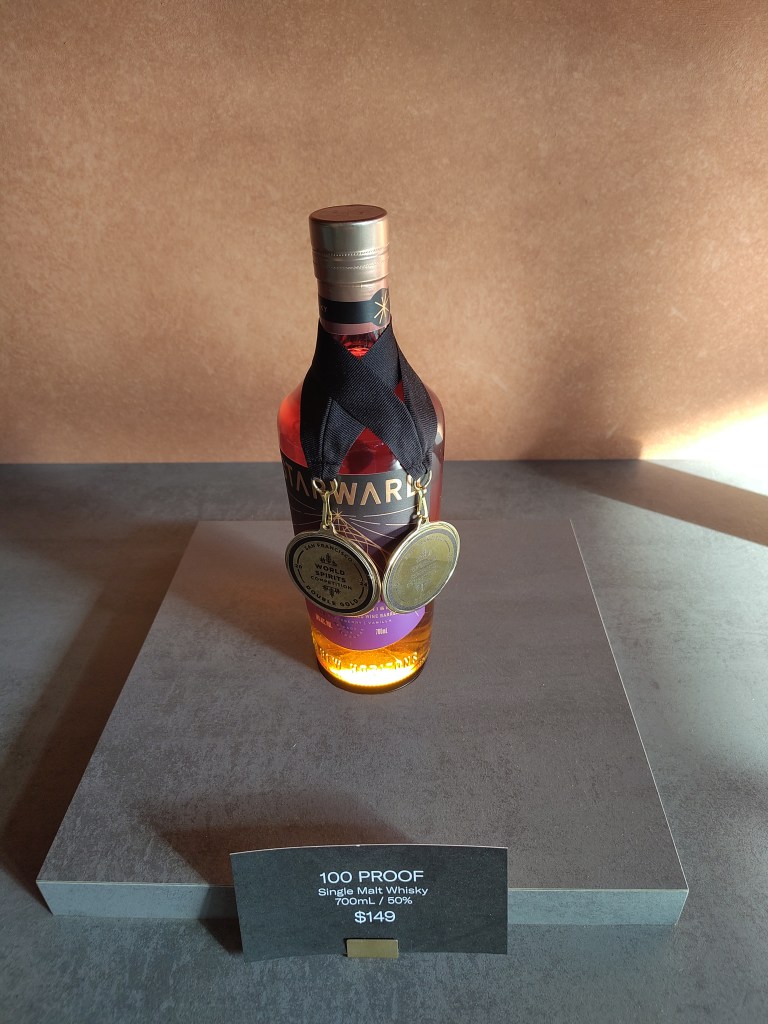
After the tour of production, it was time for the tasting: Starward was one of the few Australian whiskies weโ€™d tried before this trip. Specifically, we’d tried the Fortis, thanks to our subscription to Whisky Me. The tasting started with a blended whisky, the Two-Fold (they have another one, Honeycomb). For this blend of wheat and malted barley, they source the wheat newmake spirit from elsewhere, and they mature it on site. Itโ€™s a very basic offering, mostly marketed as a cocktail component, but we found it punchy above its weight, considering it is bottled at 40%, and unexpectedly oily. The second dram was the Nova, matured in ex-red wine casks (French oak) and bottled at 41%. It was our least favourite. Finally, we tried the 100 Proof (name coming from its abv of 50%, so American proof), matured in American oak ex-Pinot Noir casks: this one was delicious, with creamy and red fruits notes, and not too tannic (although, compared to the average single malt drinker, our tolerance for tannins is probably much higherโ€ฆWe โ€œblameโ€ our Italian upbringing).

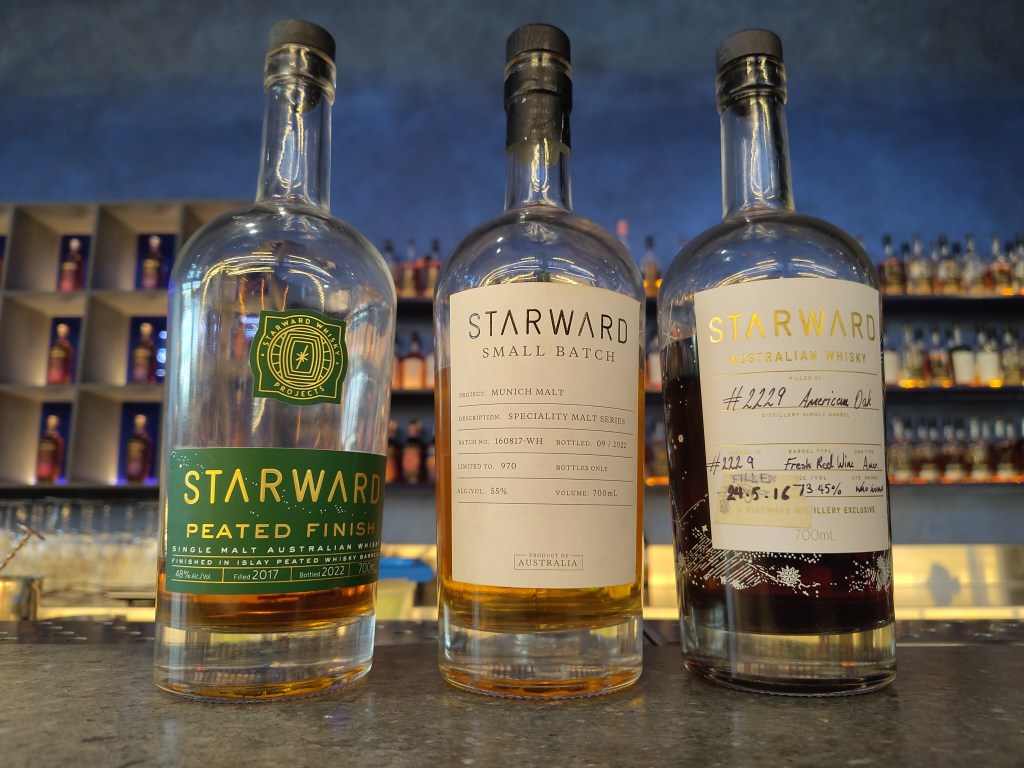
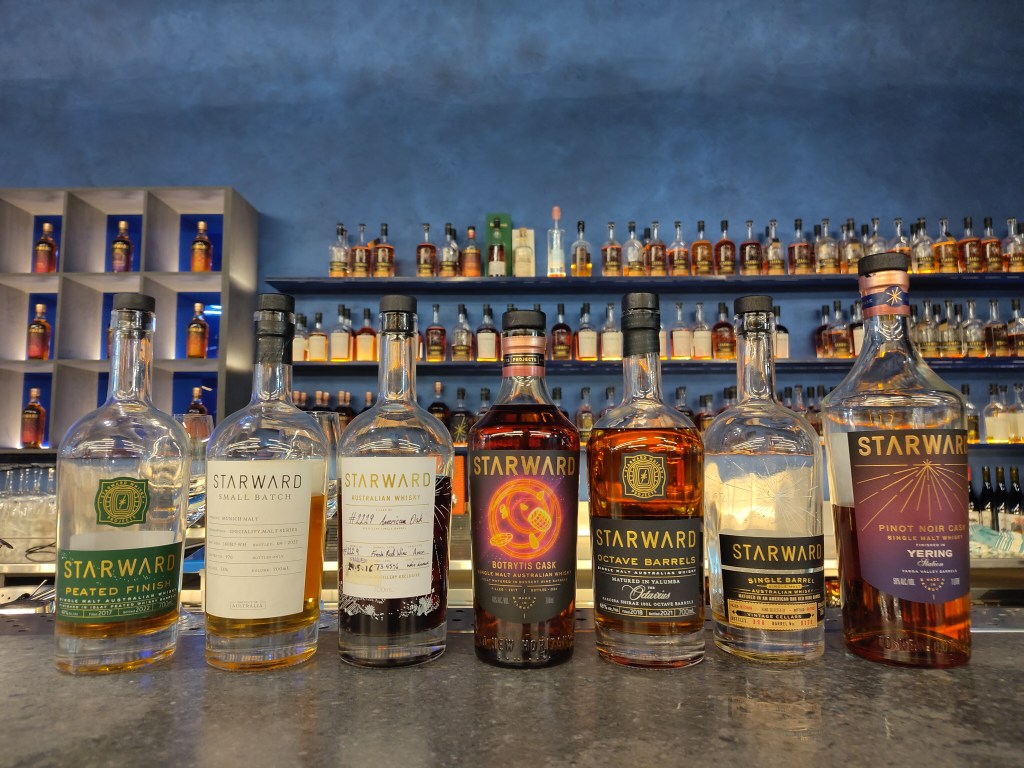
By the time the tasting ended their kitchen was closed, but we decided to stay at the bar anyway to try more expressions – not only bottlings available to purchase, but also curiosities and the odd ones. Here, we found the highest abv whisky we ever tried: 73.45%, first fill American oak red wine. Almost like chewing wood, but some water tamed it, and it was delicious. We also tried some of their peated cask finished whiskies, but not the Lagavulin edition whose price carried a premium: $199, compared to the $149 for another undisclosed Islay distillery, weโ€™ll leave you to guess which (just remember who partially owns Starwardโ€ฆ). The dram was good, but it didnโ€™t blow our socks off. Another we tried was the Yering Station Pinot Noir finish (the same winery we’d visited that same morning). This one was tasty, but with a similar profile to the 100 Proof. We also tried the Munich malt whisky, the Botryties matured (Australian โ€œsauternesโ€), the Shiraz octave cask finish, and finally, the one we liked the most: one matured in a single American oak barrel, previously holding red wine. Really delicious, a shame it wasnโ€™t on sale.

Tasting those drams made us realise how, to our palate, Starward works best with American oak wine barrels. Overall, the quality of whisky was surprisingly good, and it was a very interesting tour (in spite of the awkward phone policy), and Felix a great guide. It was a shame we couldnโ€™t do their Masterclass and Barrel Tasting ($160.00pp), but is runs only once a week on a Saturday, and it clashed with the rest of our plans.

After the drams, we needed some food: so we got a table at a nearby restaurant, the Railway Club Hotel, where we had one of the best beef steaks ever! After dinner, we took it easy and enjoyed a 40-minute walk back to our hotel.

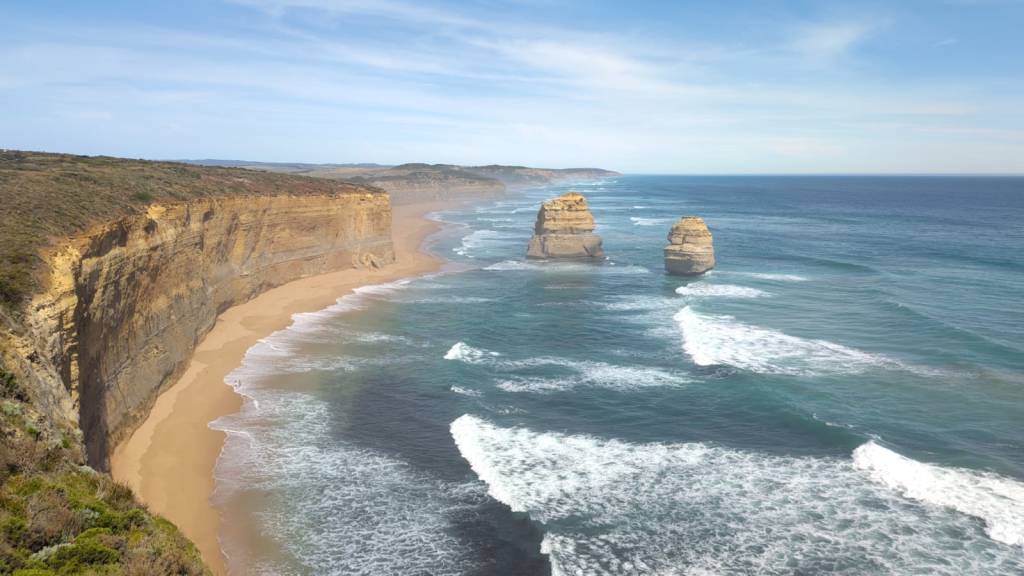
The next day we finally left Melbourne, driving towards Adelaide on the Great Ocean Road. In spite of the short stay, we had fun in the city, and we were pleasantly surprised by the great whisky scene! Definitely a lot of stuff to do for whisky geek visiting. We wonโ€™t bother you much with the rest of our non-whisky holiday (wellโ€ฆmaybe a pic or two), but the drive was amazing and we spotted some very cool animals!

This was not the last whisky story of our holidays, stay tuned for the last one! Until next time, slainte!


Starward Distillery Tour

Price: AUD 60.00 pp (November 2024)

Duration: 1hr

Tasting: 3 drams, Two-Fold blended whisky (40%), Nova Single Malt (41%), 100 Proof (50%)

Target: tourists and whisky novices

Value for money: ok

Highlights: the variety of expressions available at the bar

Recommended: if you’re in Melbourne, why not?

Link: https://starward.com.au/


#56.1 Dramming Down Under


An old “new distillery” in Sydney


TL; DR: A few months ago, we went on holiday in Australia. This, of course, was the perfect occasion to explore the Australian whisky scene. First off, we visited Archie Rose distillery, in Sydney. The tour was on their old site, now a bar and function venue, but all the equipment is still there. A bit of a touristy experience, but nice to visit nonetheless. 

One of the few remaining perks of working in academia, in particular during these lean years, is the possibility to travel to meet colleagues and attend conferences. Gianluigi was particularly โ€œluckyโ€ in 2024, as the main conference he attended was in Sydney (Australia, not Sydney, Florida)! It was a first for Gianluigi, who never been down under before. Teresa, on the other hand, visited Australia about 10 years before but only briefly. So, all the planets aligned for an Australian holiday after Gianluigiโ€™s conference. And whatโ€™s better than going on some whisky exploration, while on holiday?

Before the trip, we didnโ€™t know much Australian whisky, for two main reasons. First, only a few expressions make it to Scotland. Second, some Australian bottlings (in particular from Tasmania) can be quite pricey, and itโ€™s hard to try them before buying, making them risky purchases. So, we were really excited to go on this trip and uncover some new flavours and drams!

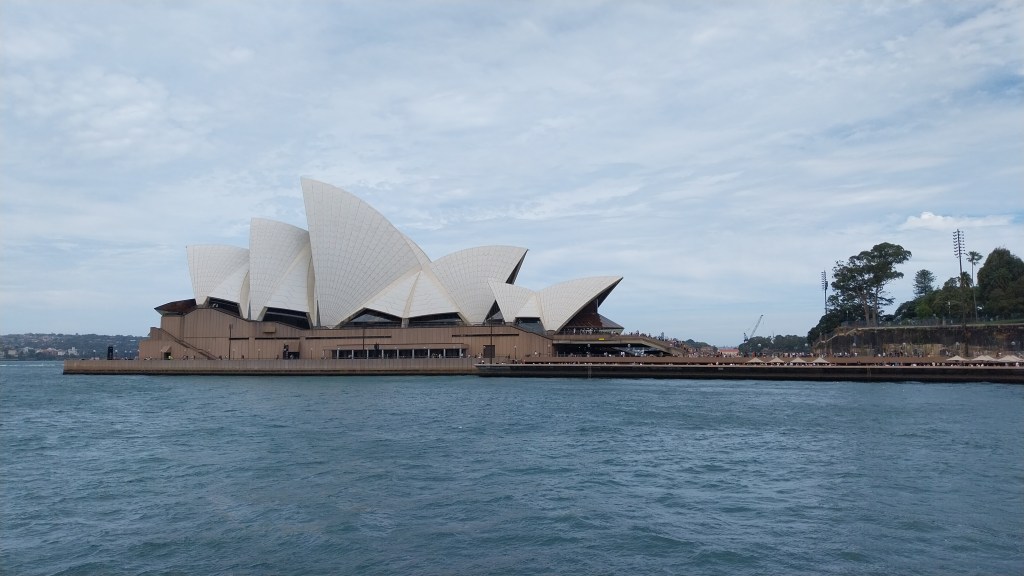
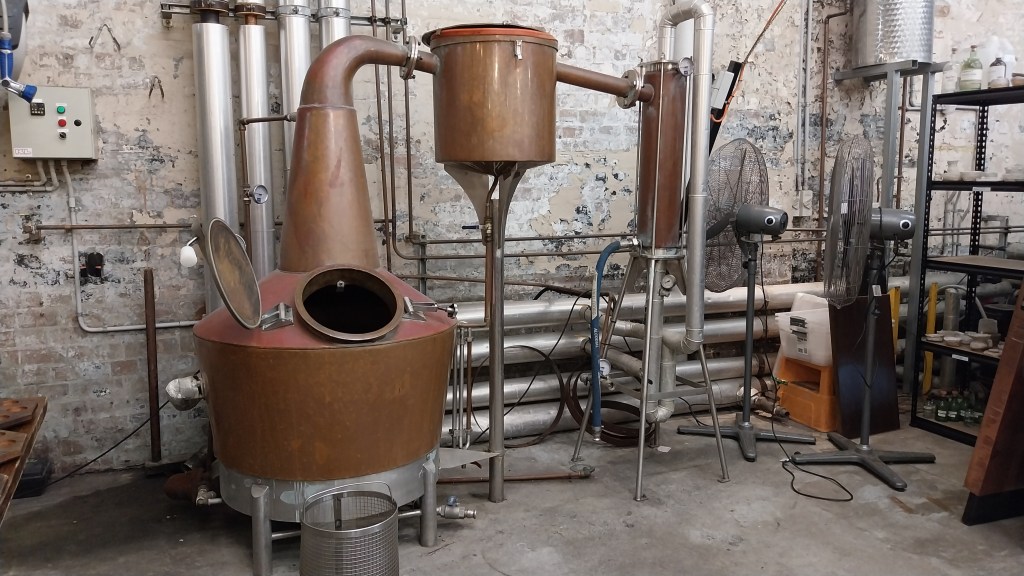
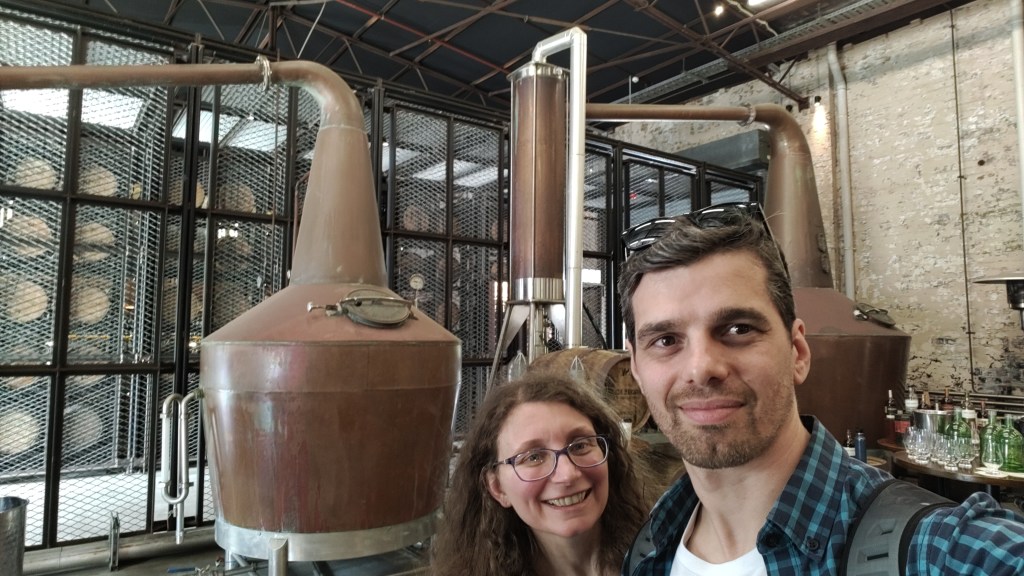
Our trip started in Sydney, with Teresa landing on a sunny Sunday morning, a day after the conference ended. We didnโ€™t want to spend many days in the city (Gianluigi had been there a week, Teresa already visited), and because our first distillery wasnโ€™t open for tours on Mondays, it was Sunday or (probably) never. Fortunately, Teresa landed early, so after checking in at the hotel, shower and a coffee (one of several), we were on the bus on our way to Archie Rose distillery. The distillery is located at the end of the Cannery Rosebery, a former cannery warehouse in the Sydneyโ€™s centre-south (between the centre and the airport), now hosting independent cafes, restaurants, shops (including a liquor store) and a gym: a very nice place. We were early, as usual, so while waiting we had a bite and a(nother) coffee in one of the cafes. When the time came, we entered the โ€œdistilleryโ€ through a narrow corridor, with casks behind fences from both sides. The word distillery is in quote because, as weโ€™ll find out soon, it isnโ€™t in production anymore – their production site is now in an industrial area of the city. All the equipment is still there and ready for use (so mothballed?), but the venue is now only used as a bar and for functions, hosting โ€œdistilleryโ€ tours and tastings.

The tour guide, Caleb, welcomed us and, when everyone arrived (we were a large group, about twenty), started the tour. First, he introduced the business, that does not only distil whisky, but also gin, rum and vodka. They run some experiments too, like the Archiemite, a liquor flavoured like the Vegemite (we decided that trying the latter was plenty, though). The distillery was founded in 2014 by Will Edwards, in Sydney. In 2018 they moved to the new site, which is operational since 2020, and as we anticipated, the old site was โ€œmothballedโ€. The first part of the tour focused on gin, which they produce from wheat-based neutral grain spirit. They use one-shot distillation (the still is called Juniper Lopez) with a botanical basket. Each botanical is distilled in isolation, and then the different spirits are blended together: a peculiar approach for gin, given most producers distil the botanicals together (as far as we know).

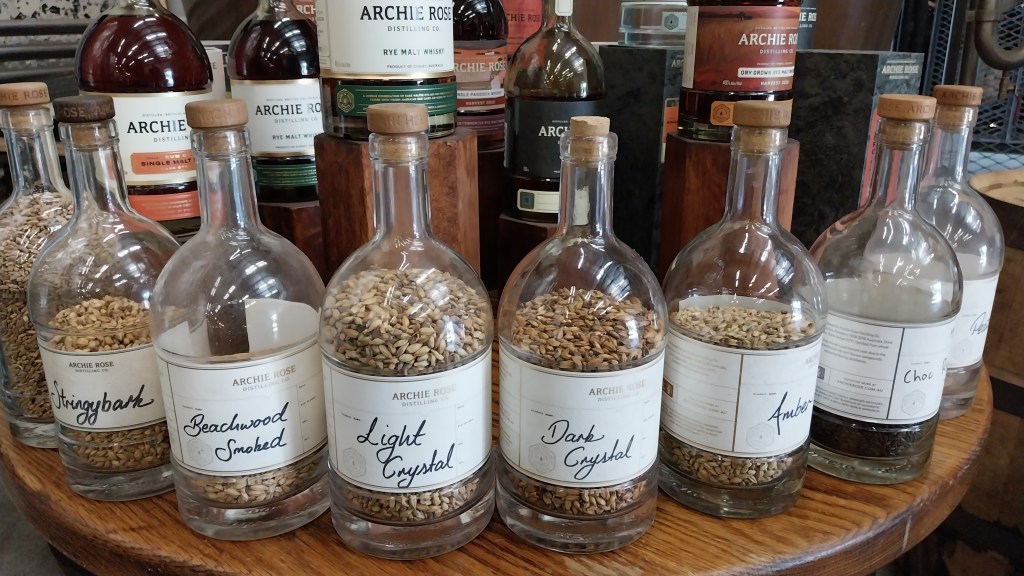
We soon moved to whisky (yay!): the grains, malted barley and malted rye, are mashed in their mashtun (spectacularly named Danzel Mashington!), before undergoing a 2-week fermentation. They had two stills (although the current distillery has many more), called Biggie and Small, with cut points in the second distillation depending on the grain type. One peculiarity of this distillery is that they use six varieties of malted barley, including (but not limited to): pale, peated pale, amber, chocolate, caramel, aromatic roasted, light and dark crystal. They used to mash them together in one mashbill, but they changed approach and now go for individual mashing, fermentation, distillation and maturation before blending the spirits together later on. This process is similar to what Canadians do with their blends, in our understanding.

Cask-wise, they mostly use ex-bourbon, ex-rye, ex-apera (a sherry-like fortified wine produced in Australia, renamed to avoid issues with Sherry GI, which has to be produced in Southern Spain), and virgin oak for the rye whisky. Exceptions are river red-gum tree casks and those used to mature their own rum (obtained from different molasses type, hence โ€œtriple rumโ€).

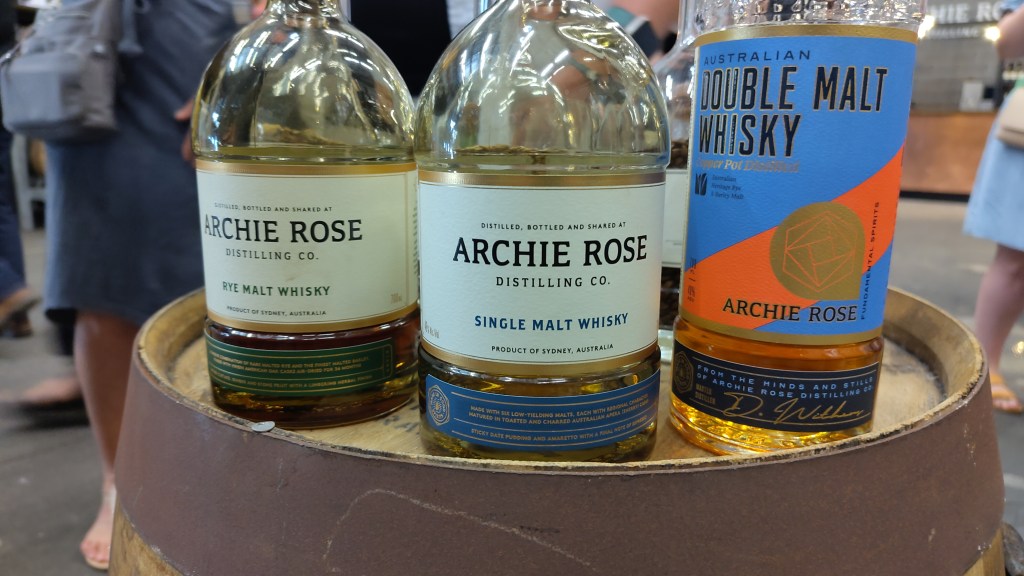
After the production tour, it was time for the tasting: we first tried 3 gins (see below), and then moved to whisky. First off, the Double Malt whisky, which is a blend of rye and single malts, bottled at 40% abv and made with cocktails in mind. Then, we tried both the Single malt and the Rye malt (both 46%): they were good, but both had some herbaceous/bitter notes that are not right up our street.

A wee taster of Aussie whisky.

Once the tour was over, we decided to visit their bigger bar (just next to the distillery) for a flight of their other bottlings. We tried the AR x ST Ali Blasphemy Coffee whisky (40%), a very interesting experimental whisky liquor with coffee used to dilute the abv instead of water. Then, we tried the Heritage Red Gum Cask Single malt (46%, Limited Edition #11), and the Rum Cask Single malt (58%, Limited Edition #10), with the latter being the winner for us. Finally, we had the two Opera House bottlings, the Classical whisky (ex-bourbon and apera casks, all NSW pale malt, bottled at 46%, 5,000 bottles), and the Contemporary whisky (same casks, NSW pale malt, ancient black malt, amber malt, Chocolate malt, again 46%, 3,000 bottles). The classical was our second favourited, after the rum cask. Side note, lots of geeky details on the bottles, nice!

Overall a pleasant visit, although the tour felt a bit corporate and too scripted. However, it was really great to try their whiskies, as the experimentation with malt varieties makes them very interesting. In Scotland only few distilleries embrace such level of experimentation, so for us it was good to try something different. 

Stay tuned for our next story, from another Australian state! Until the next time, slainte!


Archie Rose (former) Distillery Tour and Tasting

Price: 29.00AUD pp (November 2024)

Duration: 1hr

Tasting: Signature Dry gin (42%), Emerald Finger Lime gin (40%), Raw Honey gin (40%); Double malt whisky (40%, malted rye and barley), Single malt (46%), Rye malt (46%)

Target: tourists and whisky curious

Value for money: good

Highlights: the full-on experimentation approach

Recommended: if you have some time to spare in Sydney, why not?

Link: https://archierose.com.au/


#52 Rosebank Distillery

28 (+2) years later


TL; DR: Nope, not a post zombie-apocalypse story here, but the distillery we visited this time really came back from the dead: Rosebank. On a gloomy Saturday morning we paid it a visit: it was very interesting, we were particularly intrigued by how they rebuilt the distillery. The tour was a bit โ€œcorporateโ€, but hey ho, you cannot win them all. 

Yes, some things, entities if you want, come back from the dead for real. No, we are not talking about zombies, ghosts (or elseโ€ฆ), of course. In the last few years, we witnessed a number of distilleries being rebuilt, after being closed for decades. Most of them were closed because of a company strategy, following the downturn in whisky in the 1980s. Many of them were outdated at the time, like Brora, or not very highly regarded, like Port Ellen. We could add Annandale to the mix, although the original one was closed much earlier, in 1927.

Anyway, the protagonist of todayโ€™s post is another one, located in the Central belt: Rosebank. While Brora and Port Ellen have been rebuilt by the same company that closed them down (DCL/Diageo), in 2017 Rosebank was bought by Ian McLeods distillers (owners of Glengoyne and Tamdhu, plus a number of blends), who decided to rebuild it. After years of construction, in 2023 newmake spirit was flowing through its stills once again.

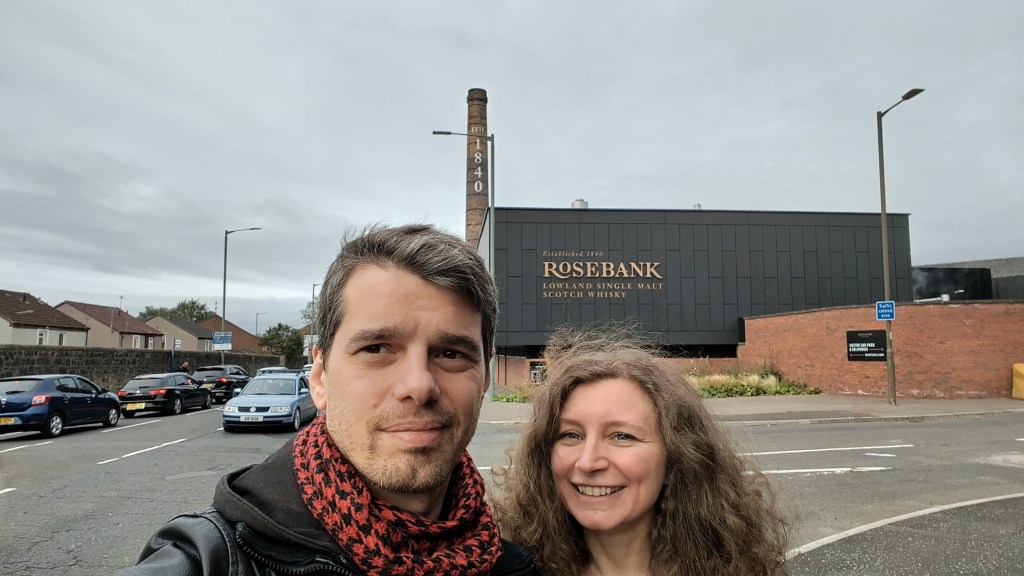
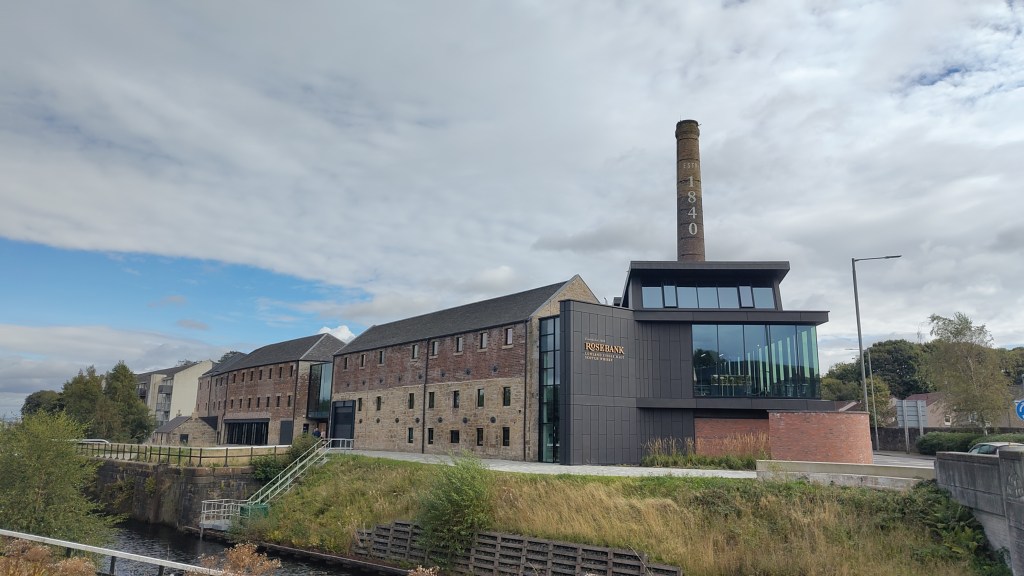
Earlier this year (2024), they also opened to the public. We didnโ€™t go right away – being relatively close and easy to get to for us, we could wait. The perfect occasion came in September: Roy Aquavitae organised the โ€œBarflies gatheringโ€ in Glasgow (or Leg-fest IIโ€ฆIYKYK). The event started in the early afternoon, so instead of taking the train straight to Glasgow, we did a cheeky detour to Falkirk. The train ride from Waverley to Falkirk was quick, less than 45 minutes, and from Falkirk High station it was only a 20-minute walk to the distillery (well, according to Google, turned out to be closer to 15 minutes). We arrived at Rosebank distillery a few minutes earlier, enough time to take a few pictures, a nip to the loo, and check the building from the outside. From afar, the distillery looks like a black block, except for the very recognisable chimney. Getting closer, we realised that it is a beautiful building, very tastefully done, with a big window in the stillroom. The entrance to the visitor centre, though, reminded us of some hotels. The visitor centre also looks like an hotel lobby, while the shop is more akin to a high street boutique.

Our guide for the day was Jack, a nice young fella, but clearly following a script probably set up by management. We started with a visit to the old warehouse, in the same building as the visitor centre (in part still a warehouse). Most of the wood finish around there and the rest of the distillery was reclaimed wood from the old buildings. We watched a video explaining the history of the distillery. It is located near the Clyde canal, very close to a lock as well. The cottage for the lock keeper is still in existence: it is now part of the distillery, used as storage previously. Very funnily, it was found out that, somehow, contractors installed a tap bringing spirit directly from the old distillery! Another curiosity was that, in the past, when water from the worm tub condenser was put back into the canal without cooling it (which now environmental regulations donโ€™t allow), locals were enjoying a swim in the warm water.

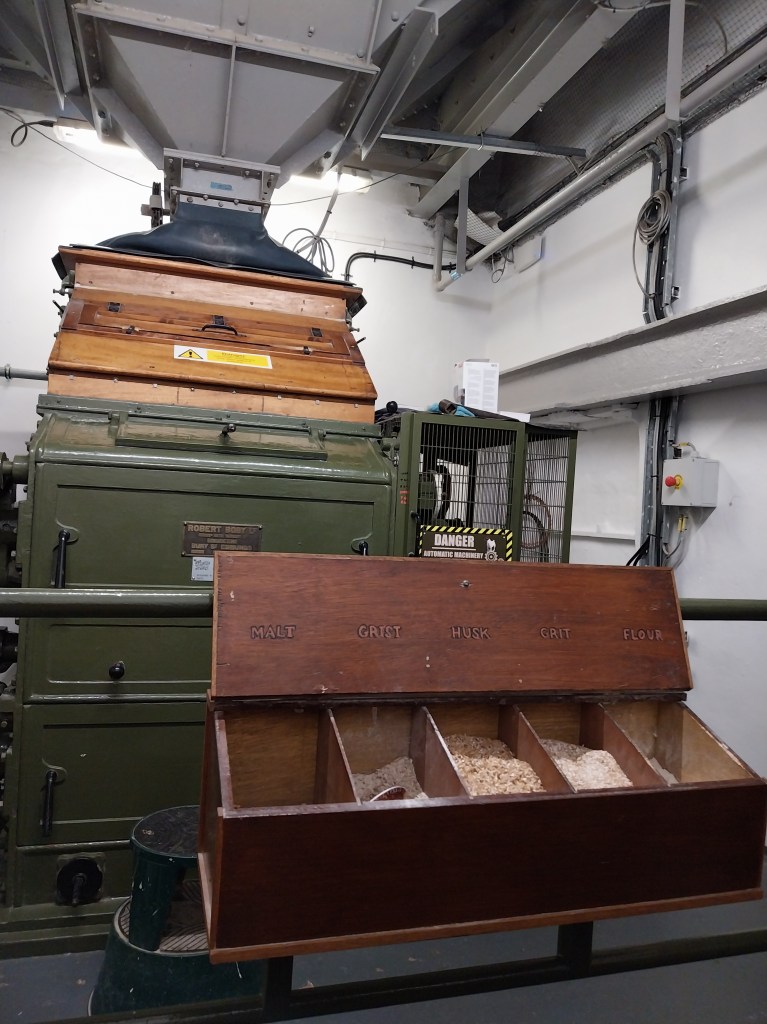
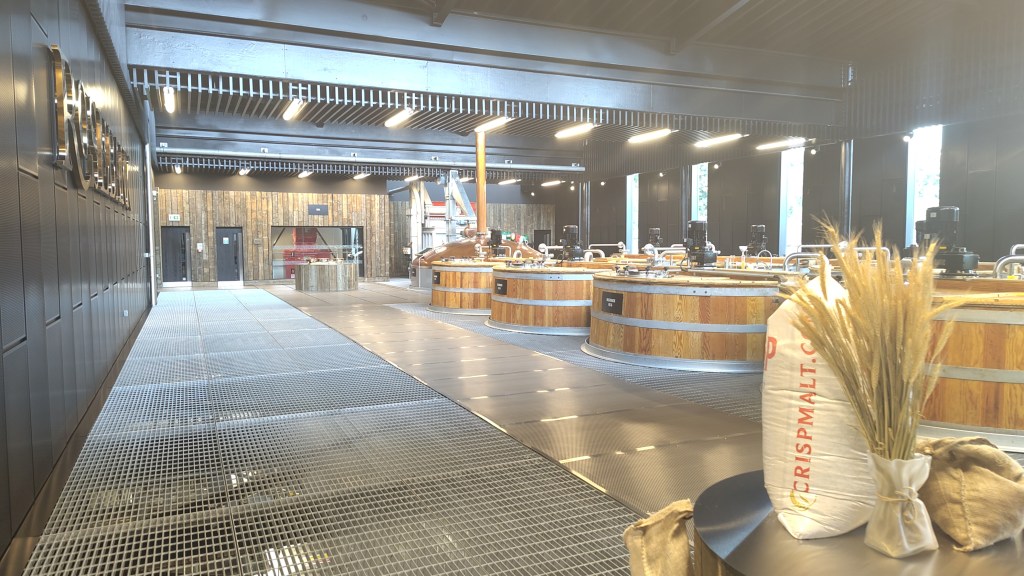
The equipment was completely refurbished, as nothing had remained of the old distillery. The production space is quite wide, probably to accommodate a potential future expansion. The Porteus mill dates back to 1933, and it was previously located at Port Ellen distillery. Malted barley is sourced from Crisp, in Alloa, and they get 28 tons twice a week (apparently, the variety can change). The mill produces a grist with a slightly higher percentage of husk (22% instead of the usual 20%), thus lower in grit (68% instead of 70%), and the usual flour (10%). The mash takes 3.2 tons of malt, to which they add the first water, 10,000 litres at 68ยฐC. It is followed by the second water, 5,000 litres at 80ยฐC, while the final one (used for the next mash) is around 90ยฐC. They do 17 mashes per week, each taking about 6 hours in total. Here Jack gave us a barley sugar candy: it was nice touch, being foreigner, we finally understood what people mean when this comes up as a tasting note!

The resulting wort is moved to one of the 8 washbacks, where it is fermented for 62 hours, using distillersโ€™ yeast. But it is with distillation that Rosebank brings something special: it is a triple distillation, and they use worm tub condensers, a unique combination of these features. The first distillation is very similar to the usual first distillation in Scottish distilleries. The second one, in the intermediate still, is divided in two cuts, the first sent for the third and final distillation, one sent back to be redistilled (the low wines below 1%). The last distillation, in the spirit still, produces 1,700 litres of spirit between 82% and 69% abv, on average 77%. Jack sprayed our wrists with newmake, which was very floral, reminding us of lavender. We finally visited the remaining bonded warehouse on site, which only held about 100 casks. Among these, both the eldest (1989) and the youngest (1993) of the old distillery.

Finally, we did a tasting in the Clyde Tasting Room, a very cozy space. Having bought the regular tour (ยฃ25), we got to try the newmake spirit and a dram of Tamdhu and Glengoyne, both 12 (both 43%: despite this reduction, Tamdhu was still very viscous and not watery: amazing how it takes reduction so much better than Glengoyne). Unfortunately, no old Rosebank: that one (together with an upgrade to Tamdhu and Glengoyne 15 as well) comes with the upgraded tour, for the upgraded cost of ยฃ95. By reading the description on their website, we got the impression that the two tours are actually very similar, meaning the Rosebank dram costs ยฃ70: a bit too much for the one dram.

As the tour finished, we quickly walked to the closest station to get the train to Glasgow. There, we had an awesome time, getting to know a bunch of barflies from all over the place (some came from Canada!), and hanging out with whisky pals (including Ally from Cadenheadโ€™s). The dinner at Rishiโ€™s Indian restaurant organised by Roy was fantastic, as well as the drams shared at the Bon Accord. We even met Ralfy, the legend himself! His videos really helped to keep us sane during the pandemic, as well as enhancing our whisky curiosity. What a day, on the train back to Edinburgh we were tired but very happy.

This is the last of our Central belt distillery tours for now, we closed with the most popular among those four. Overall, the visit at Rosebank was fine, but too corporate for our taste. Unfortunately it seems that Ian McLeods is going toward premiumisation of their products, but kudos to them to set a reasonable option to visit the distillery (Brora anyone?) and check this piece of whisky history coming back to life. We just hope that in a few years, when Rosebank single malt will be back on the shelf, itโ€™s going to sell for a reasonable price. With the industry going towards overproduction, however, sometimes we ask ourselves whether reopening these celebrated distilleries doesnโ€™t hide some nostalgia element, of people struggling to let go of the past. But well, we love the current whisky variety, so the more the merrierโ€ฆ. hopefully?

Until the next time, slainte!


Rosebank Distillery Reawakening

Price: ยฃ25.00 pp (September 2024), plus ยฃ2.50 transaction fee

Duration: 1hr

Tasting: Rosebank newmake spirit (63.5%), Glengoyne 12 (43%), Tamdhu (43%)

Target: everyone

Value for money: ok

Highlights: the history of the distillery

Recommended: for historical reasons

Link: https://www.rosebank.com/


#48.2 Islagain

In the Jack Russellโ€™s den: Ardbeg


TL; DR: Among the Islay distilleries, we left a good one for last: Ardbeg! Together with our pals, we went there for a tour and a snack: we were not disappointed, the tour was good, and very relaxed. We even got a special gift!ย 

(missed Part 1?)

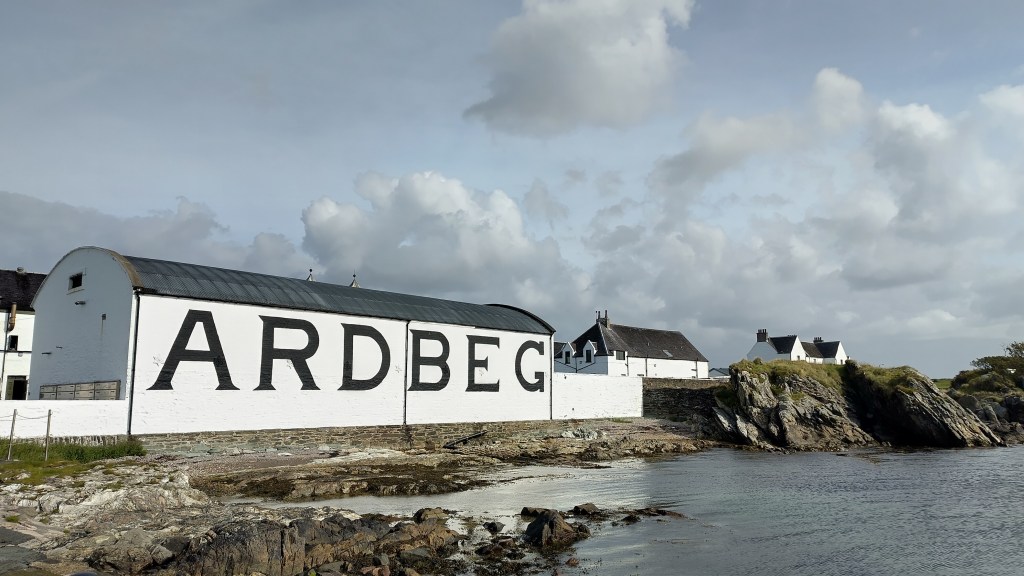
After our Saturday celebrations, we had an โ€œearlyโ€ start on Sunday: we had booked a distillery tour at 10.30, and we had a 40-min drive from Bowmore to get there. It was a sunny day, so during our drive we enjoyed a great view of the islandโ€™s landmarks: peat bogs, the Laggan Bay, the Oa, Port Ellen maltings and village, the Kildalton coastโ€ฆOur destination? Ardbeg! We arrived a few minutes early, just enough to browse the shop and take pictures in front of the distillery to mark an achievement: our 10th on Islay, the 90th Scottish one, 109 in total.

As weโ€™re not that seasoned in our whisky journey, we havenโ€™t experienced legendary Ardbeg drams like the Uigedailโ€™s first batch (although, the current one is still pretty delicious) or the original 17yr old (weโ€™re not very excited about the clumsy attempt at reviving it, as itโ€™s silly expensive). However, in our early whisky days, Ardbeg 10 was one of the first serious drams we tried, and still a safe bet nowadays: there might be some batch variation, but in general itโ€™s pretty solid. When we started exploring the range, we found other excellent expressions as well: Uigedail as we said, Corryvreckan and the more recent For Discussion are great, while An Oa and Wee Bestie are fine. While we donโ€™t mind too much the silly marketing, we are a bit put off by the high prices of limited releases. But we reckon, if they sell, good for them: weโ€™re happy to stick we the solid core range.

Back to present, our tour guide was Becca, who took us to the pier and gave us a dram while explaining the history of the distillery: of course it was their flagship, Ardbeg 10 (bottled at 46%, matured in first fill and refill ex-bourbon casks). The distillery was founded by the MacDougallโ€™s family in 1815, and saw some ups and downs, it was even closed for some periods. In recent times, after the LVMH/Glenmorangie acquisition (for ยฃ5.5m), they had to release younger whisky because of the lack of stock of the 10yr old. They used to have two malting floors, dismissed in 1981, which are now used as visitor centre, restaurant and warehouse.

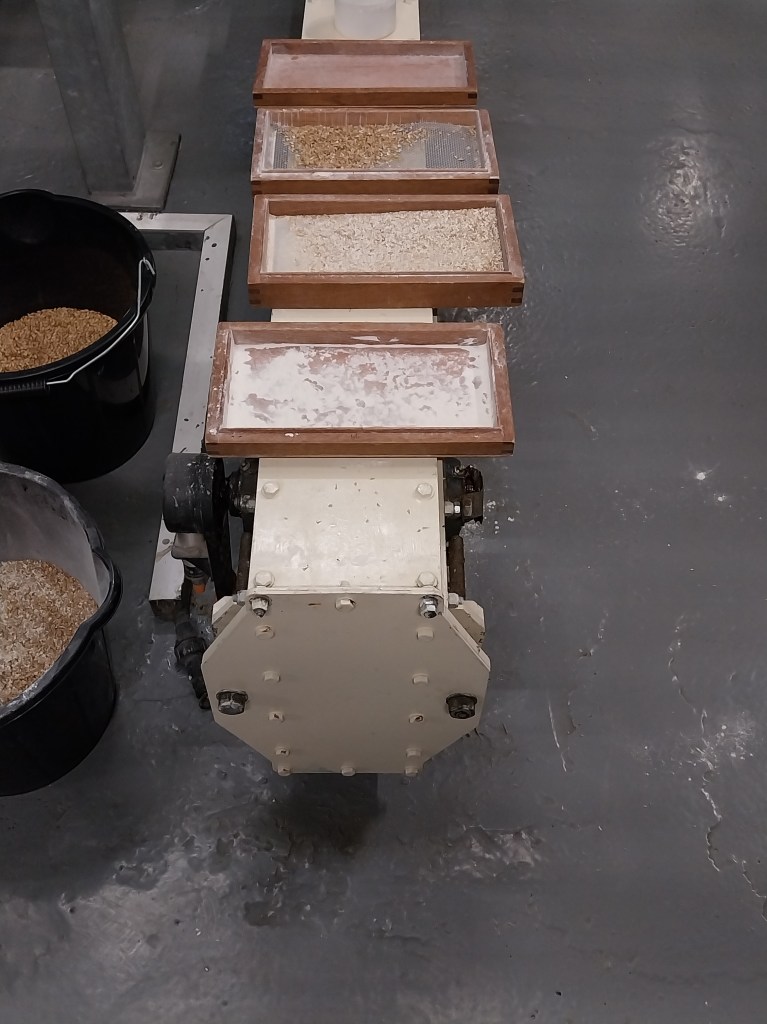
Once inside the distillery, we first got into the mill room, where the Bobby mill is still going strong (btw, it’s one of the 17 currently working Bobby mills in Scotland, including Ardnahoe and Bruichladdich). The grist split is the usual, and once milled the barley is moved into the mashtun, where 18,000 litres of water at 65ยฐC are added for the mashing.

Their water source is the Loch Uigedail, located 3 miles away, which then goes into the Charlieโ€™s dam, at the distillery. The second water (8,000 litres at 80-85ยฐC) is then added to complete the mash, while 18,000 litres of the third water (90-95ยฐC) are used as first water for the following mash. They used to do 22 mashes per week, now they cut back to 16. For fermentation, they have 12 washbacks, six original made of Oregon pine (Douglas Fir), plus the new ones. At this point in the tour, Becca gave us the second dram, a glass of Uigedail. Fermentation lasts 66 hours and, once fully fermented, the wash is split in two to fill up the two new wash stills for the first distillation.

We visited both the new and the old still room, the latter being quite tight and very traditional, with the two dismissed stills: apparently one reached its end of life as the new stillroom was built. There, Becca explained us the role of peat and she gifted us a small block! Teresa was not so keen, but Gianluigi was: now itโ€™s on display in our kitchen! We moved on to the new stillroom and its two pairs of new shiny stills, shaped exactly like the old ones. Itโ€™s a very modern build, where everything is computerised, including a huge window that was open to get some fresh air. During the second distillation, the newmake spirit is collected after 10 minutes of foreshots, from an abv of 74%, for five hours down to 69%: the rest (feints) is put together with the foreshots and redistilled with the next batch of low wines from the first distillation. Here, Becca gave us the third dram, a Corryvreckan. The tour ended at the pier again, where everyone could finish their dram at their leisureโ€ฆExcept Gianluigi, who went back to the visitor centre to collect his driver drams pack (in a tube, quite distinctively). Other than the glass, they also gave us a five-pound voucher each to be used for merchandising or on the core-range bottlings (min ยฃ40).

After the tour, we had a snack: unfortunately the restaurant was closed for a private event, but we could get some tasty food at the cart in the courtyard, and the weather (although windy) was good enough to eat outside. We then drove back to Bowmore, where we dropped our friends at their accommodation.

Our intention was to go for a walk, but as it was starting to rain, we jumped back in the van instead and we visited a bit of Islay we hadnโ€™t been before: the Rhinns. We drove to Portnahaven, where we had some seafood at the An Tigh Seinnse, a local pub. It was truly delicious, and we left the village very happy, also because we spotted seals in the bay. Overall, another good day on Islay.

The day after we just had a walk and a coffee in Bowmore, before driving first to Bunnahabhain (Gianluigi had to catch up the tour he’d missed on the Saturday) and then to Port Askaig for our ferry back to the mainland.

Another nice wee holiday on Islay. While Bunnahabhain unfortunately dropped the ball, Ardbeg was great, with a very good tour that could fit both newbies and more seasoned whisky geeks (just a shame we didnโ€™t get to see the warehouses). In our experience so far, we think Ardbeg, Laphroaig, Bowmore, Bruichladdich and Lagavulin offer the best โ€œregularโ€ distillery tours on the island (full disclosure: we havenโ€™t done the regular tour at Kilchoman).

If we combine the two previous trips on Islay, overall we managed to โ€œbagโ€ nine distilleries, out of the ten currently working distilleries on the Island (plus Jura!), and we got to 10 with Ardbeg on this trip. As we are writing this post, we heard the news that the construction company building the 11th one, Portintruan, filed for administration, and we are wondering if this is going to delay the project. Finally, there is a 12th distillery in the pipeline: Laggan Bay, a collaboration between the Islay Boys and Ian McLeods (Glengoyne, Tamdhu and now Rosebank), but as far as we know works havenโ€™t started yet. So, probably for a while weโ€™ll be able to claim that we have visited all distilleries on Islay. Yay!

Stay tuned for some Lowland action! Until then, slainte!


Ardbeg Quintessential Tour

Price: ยฃ20.00 pp (August 2024)

Duration: 1hr 15min

Tasting: 3 drams, Ardbeg 10 (46% ex-bourbon casks), Uigedail (54.2%, ex-bourbon and Oloroso casks), Corryvreckan (57.1%, ex-bourbon and French oak)

Target: both casual and more seasoned drinkers

Value for money: very good

Highlights: the new still room

Recommended: yes

Link: https://www.ardbeg.com/en-int/visitus.html


#42.1 A weekend on Skye

From the vPub to Torabhaig


TL; DR: For our traditional wee February Highlands escape, this year we picked the isle of Skye. The first distillery we visited was Torabhaig โ€“ a beautiful location and an interesting tour, definitely a great start to the weekend! 

In the last few years, we started a new small โ€œtraditionโ€: a trip to the Highlands, visiting some distilleries, in February. This not only comes after the dreaded dry (past years) or half-dry and half-moderated (this year) January, but it is also a great time to go because of the low season, unlike the summer months when a mass of tourists is swarming this beautiful region. Everything is quieter and more relaxed, the way we like it, probably not coincidentally the same way we started to truly enjoy whisky. There are downsides too of course, but weโ€™ll come to these later.

In 2022, we did a daytrip to Pitlochry, to which we attached an in-depth tour at Blair Athol distillery. Last year, we went to the West Highlands, to a spot that has a place in our hearts: the Ardnamurchan peninsula. The trip included a short visit to Tobermory too (weโ€™ll let you guess which distillery we visited). This year, the original choice was Islay, but in addition to the fact that there were no campings open or โ€œofficialโ€ spots to stay with the campervan (speaking of off-season downsides), one of the four distilleries we havenโ€™t visited yet was closed (Caol Ila), so we decided to postpone. The other choice was another banger of a place that has been on our wish list for a long time: Skye! Weโ€™ve been there in the summer 2020, but because it was pandemic time, we couldnโ€™t visit any distillery.

As usual, we planned to leave in the late afternoon evening, so to be ready to get to the first distillery in the late morning the day after. However, a couple of weeks before the trip we had a very pleasant surprise: Roy, from the Aqvavitae YouTube channel, asked us if we could be part of that week vPub. It was a 6 Nations themed blind challenge, where we would sip six drams, one from each nation. It goes without saying, we would participate as the Italy representatives. It was a super fun night, we truly enjoyed the blind tasting, and we found some very interesting new drams (the Armorik 10 in particular, a proper dram). To be able to attend the online event, we booked a B&B near Fort William, as many campsites are closed in February (another downsides of off-season) and the couple that were open had mixed reviews on the WiFi quality, something we couldnโ€™t risk. In the morning, we had a huge breakfast, after which we were ready for a nice day of whisky visits!

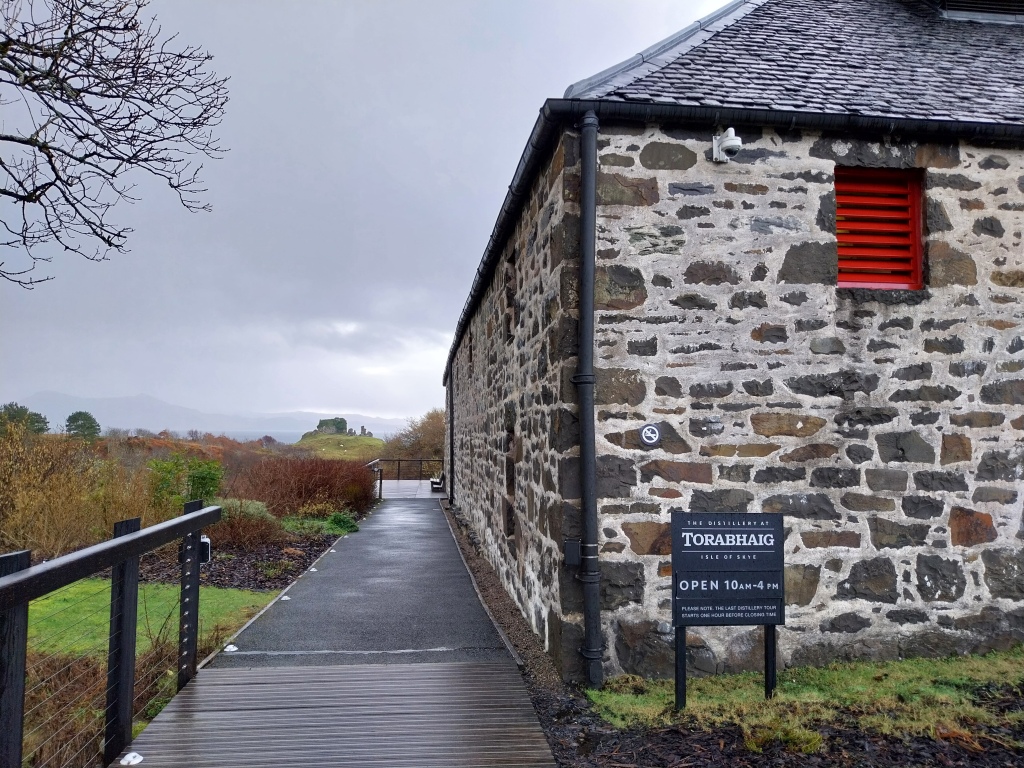
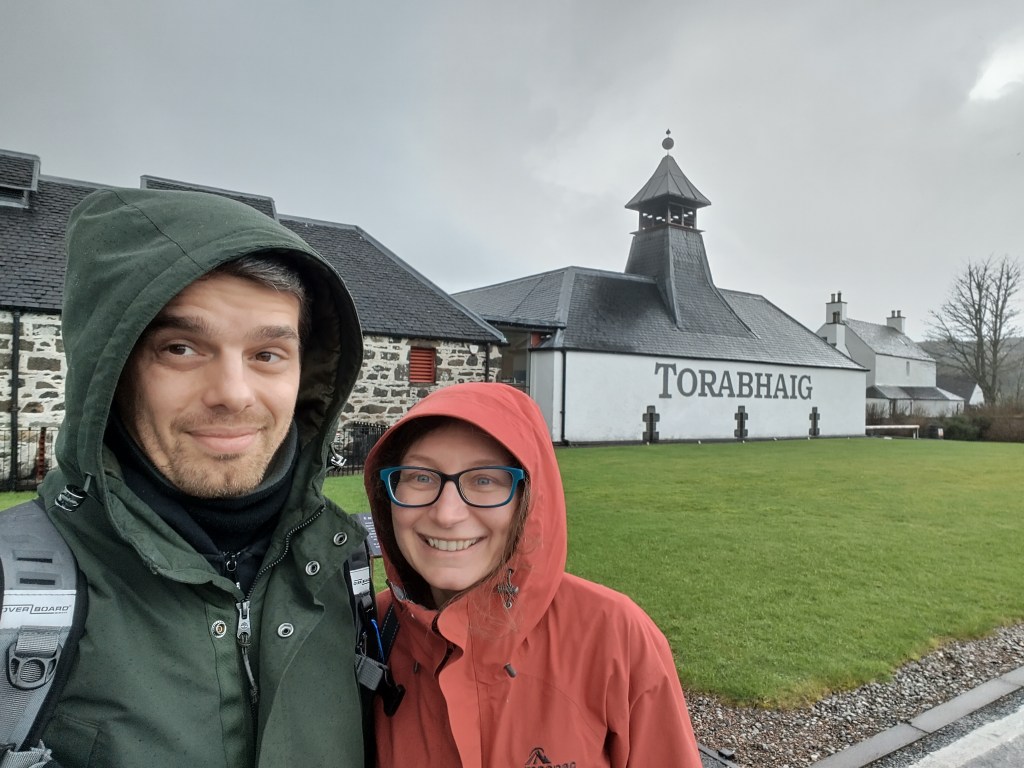
The first distillery we hit was Torabhaig, after a spectacular drive on the A87. We arrived there 10-15 minutes in advance, so we could take some pictures (not many, as the weather was quite dire at that point). The distillery is in a very nice spot, very isolated, in the south of the island. The building was completed in January 2017, from restoring the ruins of an 1820s farmstead that in turn used stones from the nearby Caisteal Chamuis. The castle also gives the name to a blended malt sold by the independent distiller Mossburn, owner of the distillery.

The guide for the day was Lesley, who turned out to be very precise and on-point, making the basic tour very enjoyable also for whisky enthusiasts like us (the fancier tours were not available at the time, another off-season downside). Their production capacity is of about half-million litres of alcohol per annum, and their barley intake is about 28 tonnes every 10 days. It comes from Crisp on the Moray coast, and is usually 77ppm.  

After milling, mashing takes place in a copper-closed mashtun, with the usual three waters increasing in temperature. They do up to three mashes/day for a total of 17/week, after which the liquid goes into one of the eight 10,000-litre washbacks (although they fill it up to 8,000), where fermentation lasts about 72 hours. They have one pair of stills (probably the size of the B-listed building wouldnโ€™t allow more), 8,000 and 5,000 litres for respectively the wash and the spirit still. They are called Sir Ian and Lady Noble, from the couple who conceived the distillery project in the first place. From the spirit still they take a cut around 70% abv on average, and a peculiarity is that, similarly to distilleries characterised by a waxy spirit, they mix feints and low wines in the same receiving tank. Very interestingly, for two weeks a year, the two distillers are free to experiment, and these batches will make future releases.

After the production tour (where photos were not allowed), we went to the tasting room โ€“ no warehouse visit as on site they donโ€™t keep many casks because of limited space. We tried the newmake and the Allt Gleann, their second released single malt (ex-bourbon casks, 46%). Their first bottling, released in 2020, disappeared in a typical โ€œpandemic frenzyโ€. Since then, they also released a cask strength version of the Allt Gleann (61.1%, mainly ex-bourbon) and, about a month after we visited, the last of the Legacy Series, the sherried Cnoc Na Moine (46%), which we havenโ€™t tried yet.

After the tour, we went back to the shop to try a tiny sip of the Mossburn 12y, and then we had a coffee and a tasty cake at their cafรจ, before leaving towards our next stop. At the cafรจ they also sell some of their other whiskies by the dram, in particular the Mossburn range. Overall, we really liked the experience (and great value for money) and this distillery, not just because itโ€™s truly beautiful. The whisky still tastes a bit young in general (well, the few we tried at least), but we can see great things coming from them.


Torabhaig Regular Tour

Price: ยฃ12.00 pp (February 2024)

Duration: 1hr

Tasting: newmake and a dram, Torabhaig Allt Gleann (46%, ex-bourbon casks, peated)

Target: everyone

Value for money: very good

Highlights: the building and the scenery

Recommended: yes

Link: https://torabhaig.com/


#7.2 Dramming around begins


Back to Kentucky


A weekend to complete our Bourbon Trail passport!

(missed the first episode?)

When we stop and think about it, itโ€™s incredible how this all started, almost by chance. Someone would say โ€œserendipityโ€. Roy Aquavitae centered one of his vPubs around this concept, telling the story of how he stumbled upon whisky (scotch in his case) at some point in his life, almost by chance. We are no different.

Back in August 2016, we had picked up the Bourbon Trail Passport at Heaven Hill, the first whisky distillery we ever visited. At the time, to complete the passport, there were only 9 distilleries to visit. Just to give you an idea on how quickly things are changing in the world of whisk(e)y, now there are 18 (and, on top of that, there is also an alternative Craft Bourbon Trail). Had there been that many at the time, we probably wouldnโ€™t have completed it. However, with only 6 to go after our roadtrip in the South, we thought it was doable in a weekend, so there we go!

March 2017, Teresa was back in Illinois to visit. We were coming out of a quite cold winter, at least for our standards – earlier in January the temperature wouldnโ€™t have gone above -10C for an entire week, with peaks (well, drops) at around -23C. One Friday, we rented a car and drove straight to Louisville, where we had our hotel booked.

The Saturday was particularly challenging, with four distilleries visits planned. This is still the maximum number of distilleries we visited in a single day, and to be honest, we wouldnโ€™t do that again, but rather take an extra day. The driver of the day was Gianluigi, and that meant he only took a sniff from the samples and a few tiny sips, planning to fully enjoy the stuff later at the hotel.

First off, Maker’s Mark, joining the first tour of the day. The distillery is in a very nice location, with rolling green hills (like many places in Kentucky), wood, and black and red buildings.

Beautiful morning at Maker’s Mark.

As for Jim Beam earlier in August, in the tasting at the end of the tour we appreciated the range of flavours a single distillery could produce, and although their flagship product was not our favourite, some of the other drams were truly excellent (we wish we could remember what they wereโ€ฆ).

After we were done with the Makerโ€™s Mark and their very generous tasting, we headed North-East towards Woodford Reserve. There, we only did a tasting, a couple of drams paired with chocolate for about 10 dollars.

Wee tasting at Woodford Reserve.

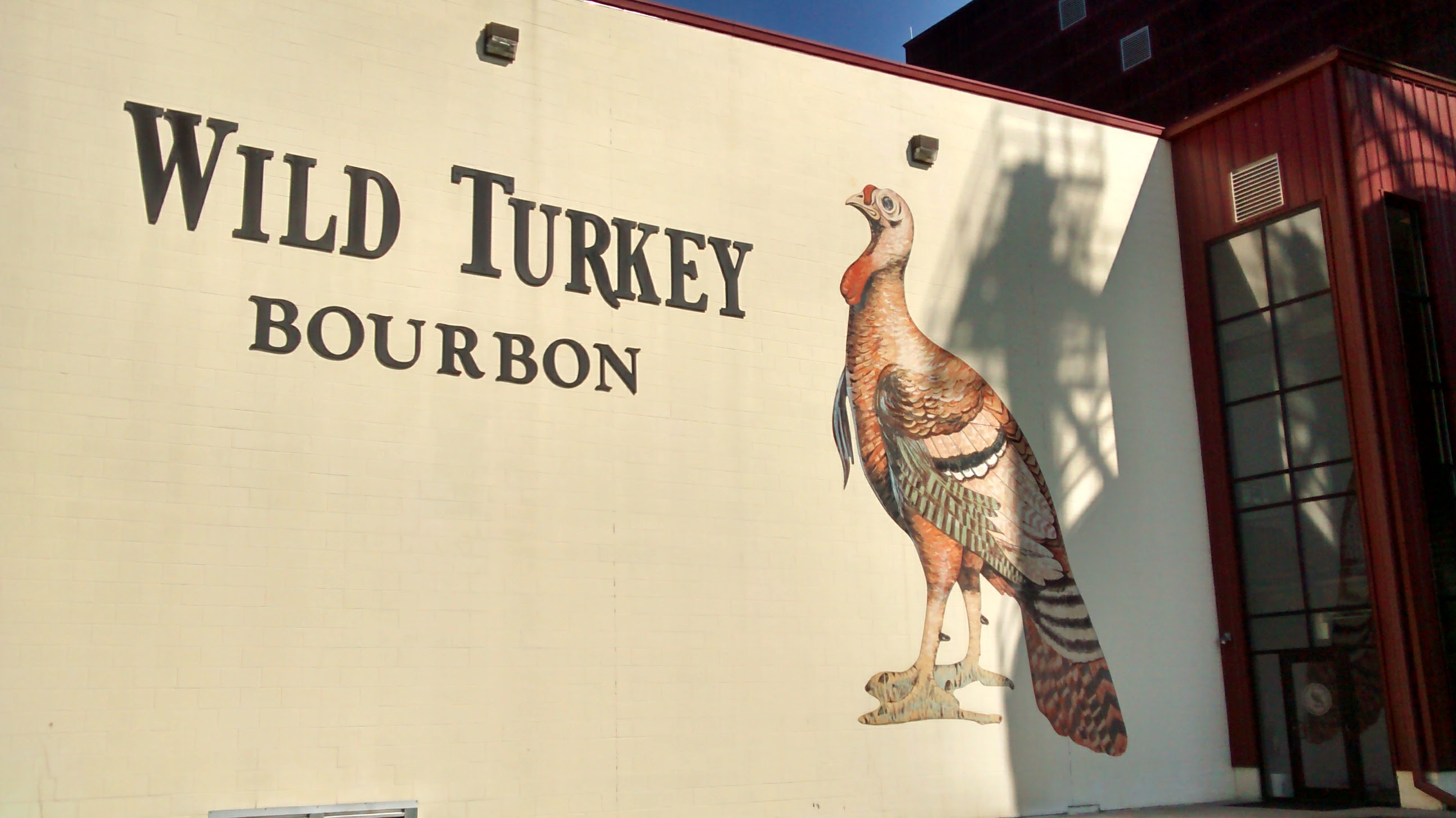
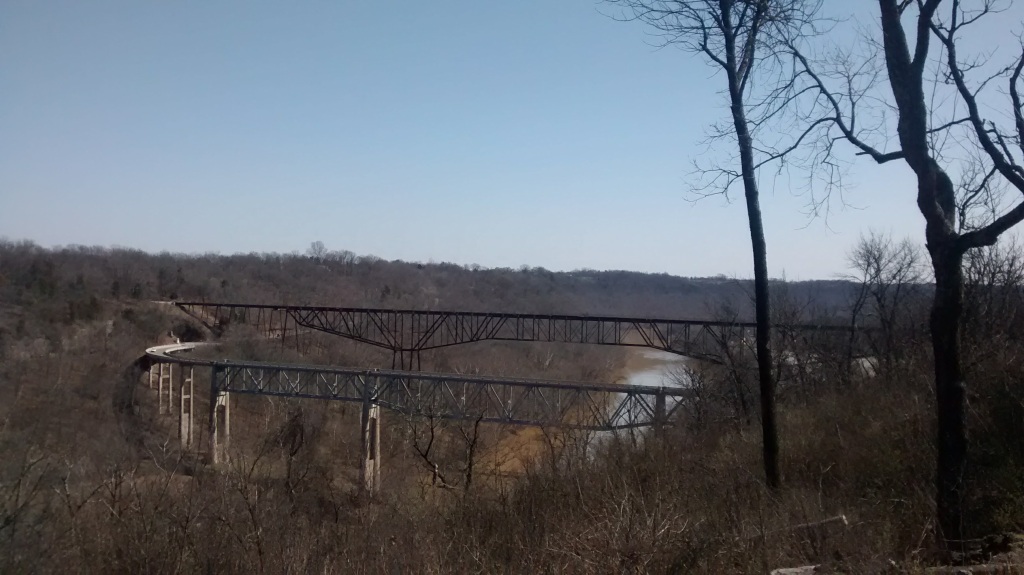
As the previous distillery, it looked quite nicely immersed in the rural landscape. A bit of a change would have come later, at Wild Turkey. Compared to the other ones, the Campari-owned distillery looked more like an industrial plant (or maybe the other ones are just better at hiding this, considering they all produce a huge amount of spirit). This not to say we did not like it, on the contrary we loved it! Also, the tasting room was in a very scenic spot, overlooking an old rail bridge. Here they gave us four drams, including a delicious Rye whiskey and a less so honey liquor (some things you just canโ€™t unlearnโ€ฆdefinitely not a drink for us). The other stuff was great however, and Wild Turkey is now one of our โ€œnever without at least a bottle in the cabinetโ€ (at the moment: the 101 and the Rare Breed).

Wild Turkey tasting (yes, they gave us the glasses!) and…
…the view from the tasting room.

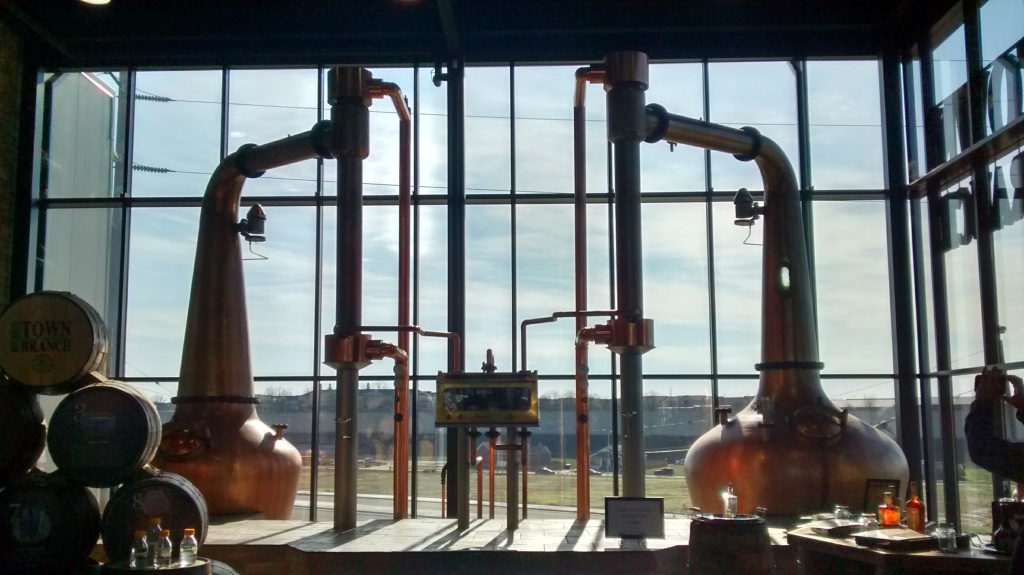
We moved on to the last distillery of the day: Town Branch. Located in downtown Lexington, it marked the move from the rural landscape of the early part of the day, to a nice and vibrant urban atmosphere. We picked the distillery tour only, skipping the brewery part, which brought us into the whiskey making plant. Particularly notable was the still room with the two long-necked copper stills, and a big window overlooking the landscape.

What a still room they have at Town Branch!

We enjoyed the view while enjoying the tasting at the end of the tour. We drove back to Louisville for dinner, which we had at the Feast BBQโ€ฆguess what we had? Weโ€™ll just say that the beef brisket was spectacular.


Sunday started slowly, taking advantage of the hotelโ€™s facilities, including a (first) light breakfast. We drove towards downtown Louisville to have a (second) bigger breakfast, which we had in a local restaurant called Wild Eggs: holy molly that quesadilla (yes, Gianluigi does still rememberโ€ฆ)! We then moved to the first of the two distilleries of the day: the Evan Williams experience, in the middle of the city. Although the main Evan Williams production is at Jim Beamโ€™s, here they have a little experimental distillery with a capacity of one barrel per week. We chose the tasting experience, which was organised as a tour in a speak-easy bar, with the guide dressed as a bartender of the 1920s-30s. The drams here were pretty awesome, we still fondly remember a 12y/o (which we hugely regret not buyingโ€ฆwhat newbies!) and a 22y/o bourbon that blowed our socks off! Unfortunately for Teresa, she was the designated driver for the day, but she eagerly packeted the samples for later.

We proceeded to the last distillery of the trip where weโ€™d have (finally!) our Bourbon Trail Passport completed: Bulleit!

No longer newbies (well…), Bourbon Trail done!

To this day this is still one of our favourite bourbons, probably also because of the high rye content of the mashbill. Their Rye whiskey is also a favourite of ours, and we’re not the only ones: months later the bottle of Bulleit Rye that Gianluigi had gifted to his parents evaporated in mysterious circumstances (a dinner party, apparently…or maybe angel share?).

Our trip was over, and we finally headed back to Illinois, tired but happy to have done something special (including the fact that in all tours we were the only non-Americans). Thinking back to this experience today, it seems like ages ago. Maybe itโ€™s because of the pandemic, or maybe the years have really gone by, or maybe it’s just that so many ‘whisk(e)y things’ have happend afterwards.

Today whysk(e)y is not just our hobby, it’s our gateway to a world of flavour and experiences. Visiting distilleries is by far our favourite holiday-type, we love getting to know whisk(e)y and the people making it. Every distillery has its own story and is embedded in its own unique atmosphere, which cannot be replicated anywhere else. We are never tired of learning, and with 50 and counting distilleries visited now, we still feel there is not enough time to learn and see all the things we would like to! And all started with a โ€œwhy notโ€โ€ฆ.serendipity?


Kentucky Bourbon Distilleries – Links

https://www.makersmark.com/
https://www.woodfordreserve.com/en-uk/
https://www.wildturkeybourbon.com/
https://www.lexingtonbrewingco.com/distilleries-tours
https://evanwilliams.com/plan-your-trip
https://www.bulleit.com/en-gb/

[Again, no summary box. We visited these distilleries 5 years ago, our feedback would be too out of date!]


#7.1 Dramming around begins

Road-trippin in the US

How a bad weather day throwed us into the world of whisk(e)y!

So, how did a couple of Italians, whose families’ drink of choice has been wine for (probably) generations, get caught into the fabulous world of whisky? Well, thanks to a road trip in the United States South and to a very nice host. But letโ€™s not go ahead of ourselves and proceed in order.

Before 2016, we did not have much idea about what whisk(e)y was nor how it was made. In 2015 Gianluigi moved to Illinois, right in the middle of mid-west. One evening, a friend poured him something that he never forgot, something new: a Laphroaig. That prompted him to purchase a couple of scotch bottles (two because he first bought a Glenfiddich 12y, thinking that it would have been the sameโ€ฆhow dare him!). Besides that, not muchโ€ฆwhisk(e)y was just another spirit. Teresa was a bit more experienced (so to speak), as from time to time she would end an evening with friends with peated whisky instead of amaro.

Comes 2016, Teresa arrived to Illinois for the summer holidays. We had decided to take a road-trip, our favourite style of vacation. This time, a really big one: the mighty South! From Illinois down to Kentucky (through Indiana), Nashville, the Appalachian Mountains, Charleston SC, Savannah GA, then straight West to New Orleans, up to Memphis, St. Louis, and back to Illinois.

First stop: Louisville, Kentucky (KY)…you probably already see where this is going. At the time we were still using AirBnB (later we decided to stop because of the increasing cost of living that this and other short-term rent companies are causing to locals, who struggle to find affordable flats, in particular in cities like Edinburgh) and we stayed in a typical American suburbia house, hosted by a very nice couple. While having a relaxed chat in the evening, he poured us some bourbon and suggested us to take the exit 112 from the Interstate 65, because there were a few open distilleries just 10 to 15 minutes away. We looked at each other and thought: “why not”?

The day after came, and the weather was not exactly a delight. So, a further reason to take a few hours for the โ€œbourbon detourโ€. First, we tried the farthest from the highway, the Heaven Hill Bourbon Heritage Center, in Bardstown. We were unlucky there, as the tour had just left, but a tasting would have started soon enough. In the meantime, we could admire the huge rickhouses on the rolling hills outside the visitor centre.

Rickhouses at Heaven Hill.

The tasting was very informative, covering the history of the distillery and all the brands they had acquired, in particular after the prohibition era. The line-up was made of four drams, the first one (a rye) promptly necked by Teresa despite the guide telling us to take a wee sipโ€ฆ of course Gianluigi shared his afterwards. There was also an Elijah Craig bourbon, while the final dram was a very “woody” example of how, sometimes, too long maturation can go wrong. At the visitor centre, we spotted the Kentucky Bourbon passport, which we both took and put the Heaven Hill stamp on.

A new challenge ahead: getting all the distillery stamps!

We tried our luck at the next distillery: Four Roses (actually, the warehouse and bottling plant in Cox’s Creek). Again, no luck, the tour had just started, so we did the tasting, again. We had their three main bourbons for the (ridiculous) price of $5.00: the Four Roses Bourbon, Small Batch and Single Barrel. While Teresa loved the latter, Gianluigi preferred the middle one, but overall we were surprised by how good it was (Gianluigi in particular, as he remembered a drunken night of over a decade earlier fuelled by an unpleasant Four Roses bourbon).

Back in the car, we headed towards the third and last distillery (for now), Jim Beam. Here we were finally able to take the tour (hurray!).

Our very first distillery tour!

It was a great experience, the guide was very funny and prepared, a great start for newbies like us. We could understand how whiskey is made, and walk inside one of these huge rickhouses we kept seeing around, and all the rules of bourbon and rye (>50% corn/rye, new oak barrels, etc). At the end we could choose two or three drams in their huge product range (great favourites, Bakerโ€™s and Knob Creek).

What we could choose from.

Here, by trying several expressions next to each other, we could fully appreciate how bourbons (and whisky in general) can be very different despite being produced on the same site. And in this moment, folks, the seed of our curiosity towards whisk(e)y was first planted in our mind, taste buds, and heart, paving the way to what would have happened next.

[If you are only interested in our whisk(e)y journey, you can skip the rest and go to the second episode. Otherwise keep reading about our road trip]


The trip continued not as smoothly as we would have liked. Nashville was great, although the Music Broadway was a bit too fake for us (in three out of four bars we entered the band played โ€œSweet Home Alabamaโ€, in all four โ€œTake me Home, Country Roadsโ€). That was compensated by an early morning visit to Jack Whiteโ€™s Third Man Records store and a delicious fried chicken lunch!

Happy guy at Third Man Records.

The Appalachians and the Smokey Mountains were also great. After driving through Chattanooga and before the Blue Ridge Highway, we stayed near Sylva (NC) where our friend Matt (if you want to know all the coolest things about plant ecology, he is the guy! here his website and podcast) brought us to taste delicious beers at the local Innovation Brewing.

After a detour to Charlotte (NC) to pick up two Pearl Jam tickets and before visiting the stunning Charlestone (SC), we had our first setback: bed bugs! We left the motel (clearly too randomly picked) in the middle of the night to avoid being eaten alive (fortunately we had not opened our luggage to avoid our clothes smelling like cigarette…not sure about calling that luck). But the real issue happened the day after: 10 minutes before reaching our (more carefully picked) motel right outside Savannah (GA), we got rear-ended by a distracted lady on the highway! We were intact, the car not so much, and we had to spend half of the next day trying to get another one from the closest open (it was Saturdayโ€ฆ) car rental branch. Thankfully this didn’t translate into a huge financial issue, as we were covered by the roadside assistance insurance. Since then we have always included it in our rentals!

That was the last bad thing happened to us during the trip (hurray!).

Teresa hugging the King in Nashville!

Savannah was truly gorgeous, a shame we could not stay more. At one point we were having a beer on the river side, and a guy asked Gianluigi if he could take a picture him and his gilrfriend. โ€œOf courseโ€, the prompt reply. The phone was filming a video, however, and when Gianluigi was about to tell the guy, he realized that the guy was proposing to his (soon) fiancรฉ. Gianluigi could not hold back a loud “holy s**t!”, ruining the proposal video forever. Teresa laughed at the idea of the two showing it at the wedding.

After driving through the Florida Panhandle (if for any reason you happen to be in Fernandina Beach, close to Jacksonville, get a sandwich at the Hola! Cuban Cafรจ: OMG!!!), we finally arrived at the most awaited stop-over: New Orleans.

Amazing live music in NOLA!

We both fell in love with the city, its atmosphere and the music which seems to permeate every bit of life. Even Gianluigi, contrary to Teresa not a big jazz fan, couldnโ€™t stop speaking of how great that was, in particular after a concert at the Preservation Hall. Following NOLA, another music city: Memphis, one of the cradles of Blues, with a capital โ€œBโ€ (and the best pulled-pork we have ever had!).

Spectacular Missisipi river side in Memphis!

Final stop: St. Louis, once an important industrial centre, now a tale of two sides: it is staggering, and frankly very sad, the difference of livelihood between neighbourhoods, sign of deep inequalities (to be fair, that was a constant of all cities we visited during this and other trips in the US).

What about the other KY distilleries? Well, youโ€™ll have to wait until next week. Stay tuned and slรกinte!


Kentucky Bourbon Distilleries – Links
https://heavenhilldistillery.com/#3
https://fourrosesbourbon.com/
https://www.beamdistilling.com/
[No summary box this time. We visited these distilleries almost 6 years ago, so we figured it’d have been too out of date.]