#31.7 Spirit of Speyside 2023

Speyburn uncovered!


TL;DR: Another visit to a (thenโ€ฆ) closed-to-public distillery: Speyburn. In 125 years it was open for the first time during the 2023 Spirit of Speyside. A great visit, their own old drum maltings were a highlight, a jump back in time! 

(missed Part 6/Part 5/Part 4/Part 3/Part 2/Part 1?)

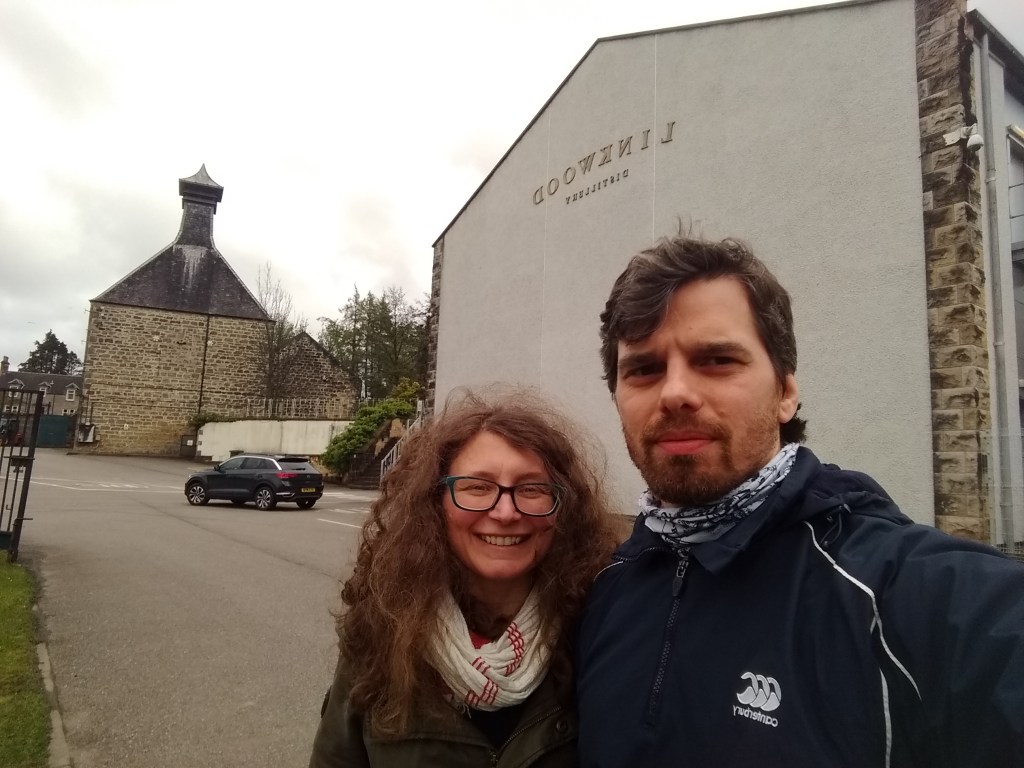
From Dufftown to Rothes itโ€™s barely a 15-minute drive, so we could take it easy and stop for a coffee and a soup, to warm up in the cold and rainy day. We then soon arrived at the Speyburn parking lot: in spite of being hidden from the main road, we knew exactly where to go, as during one of the many trips to Speyside we drove on the road just in front, from where the distillery could be admired in all its beauty.

Speyburn is not among the most well-known single malts, although it can now count on the presence on some supermarket shelves (the Bradan Orach and the 10y). They are owned by Inver House (which is in turn owned by Thai Bev, guess where theyโ€™re fromโ€ฆ) together with other four single malt distilleries, two in the Northern Highlands (Pultney and Balblair), another in Speyside (Balmenach) and Knockdhu (producing the AnCnoc whisky) in the Eastern Highlands. We previously only had one bottle of Speyburn, from the Scotch Malt Whisky Society: a 9y old from a refill bourbon. We got it by chance when buying a pack of three bottles during the pandemic, with the Speyburn being the one we were less excited about: it ended up being the best of the trio! Spicy at first, with time in an opened bottle the oxidation played its part, and the whisky mellowed down and became a fruity deliciousness. At this point, it goes without saying we were very curious to know more about Speyburn!

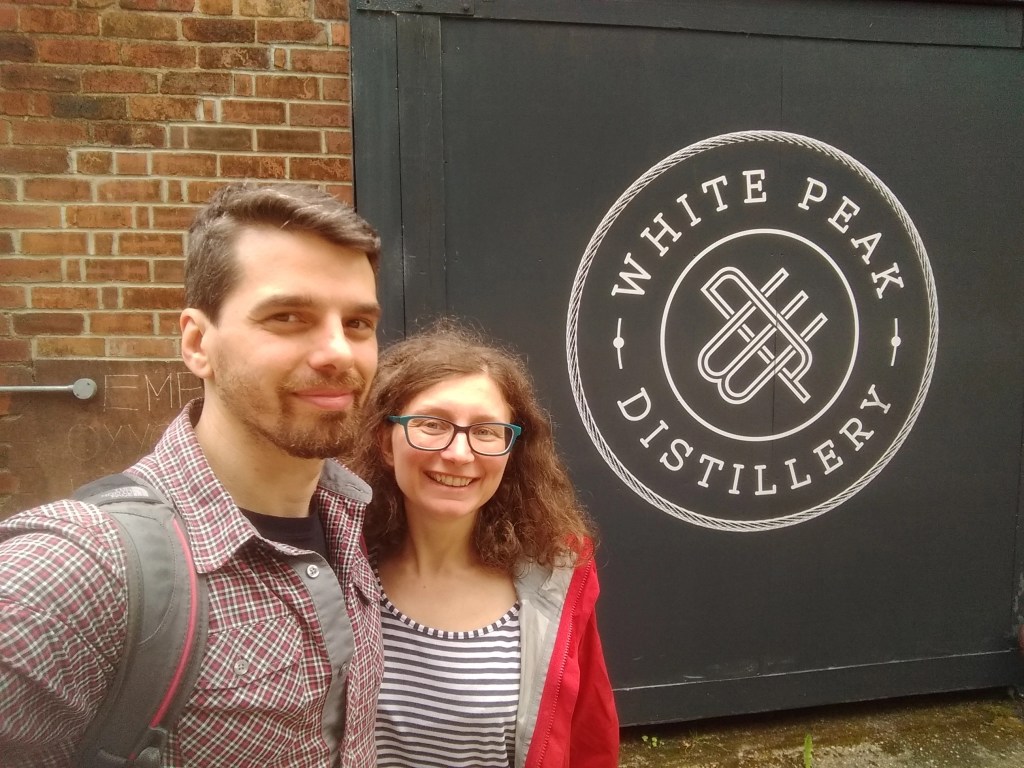
As we parked, we were warmly welcomed by the distillery manager Euan and the global ambassador Stuart (who we knew from some Aqvavitae’s vPubs), who walked us to the visitor centre to check in. Compared to the other โ€œusually closed to publicโ€ distilleries, they seemed to be way more prepared: there was a proper shop (not just a pop-up like at Dailuaine and Mortlach), with bottles and merchandising displayed on the shelves, and also a brand-new bar with big tables, where the tasting would have taken place after the visit inside the production. Weโ€™ll come back on this point.

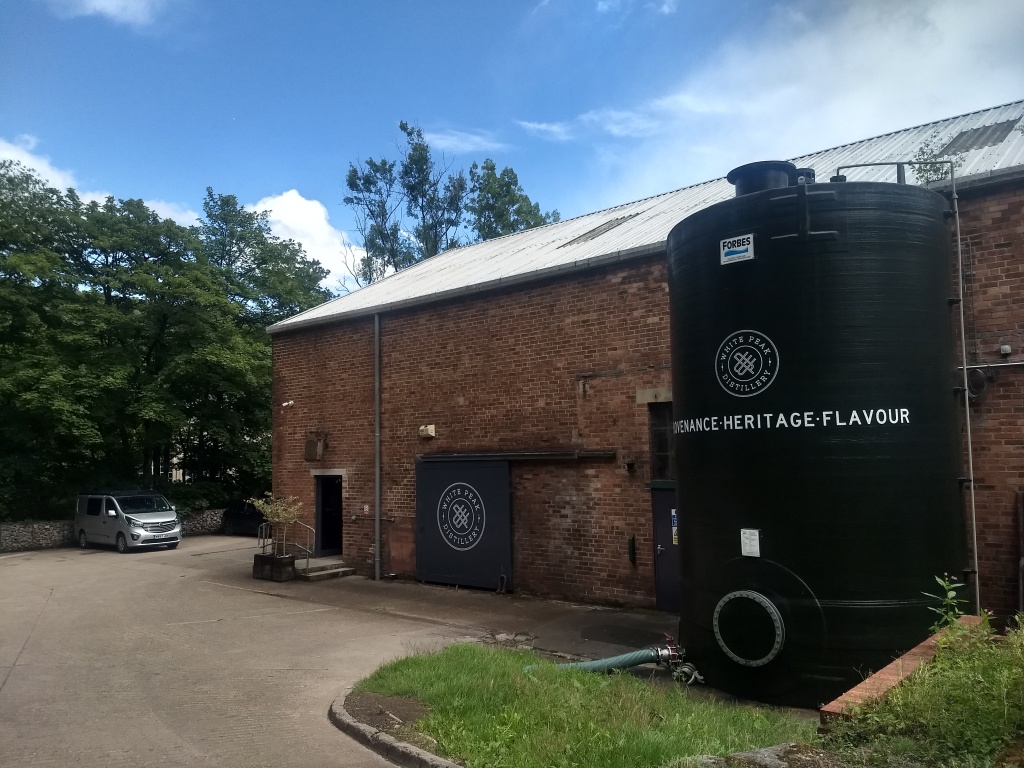
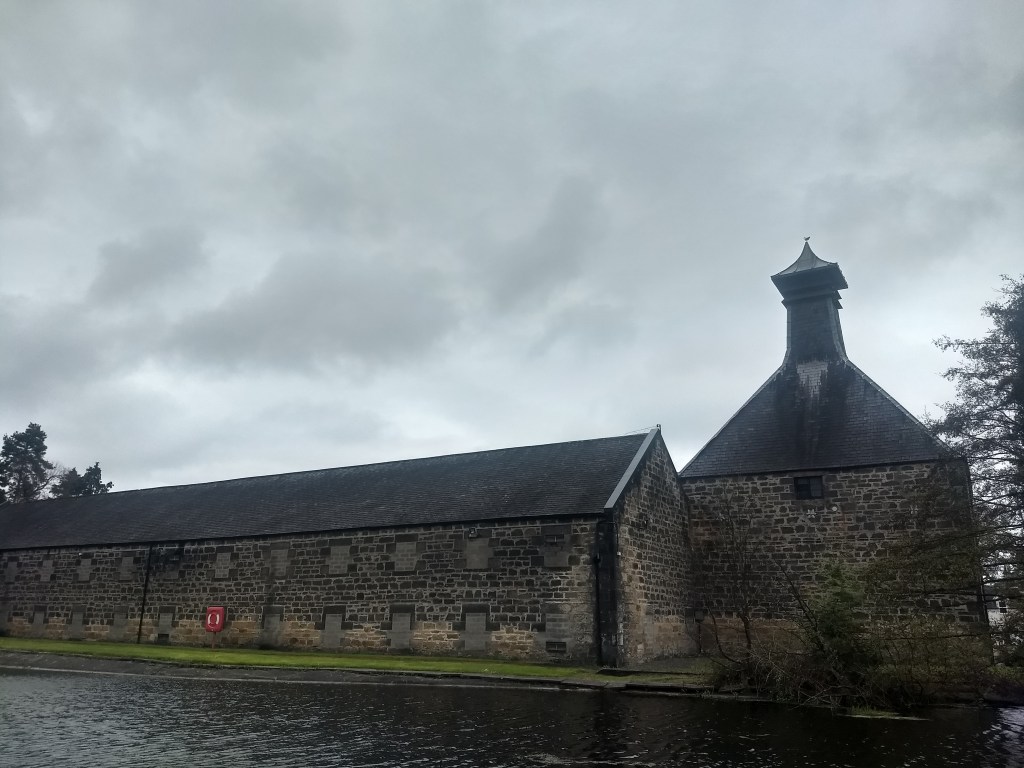
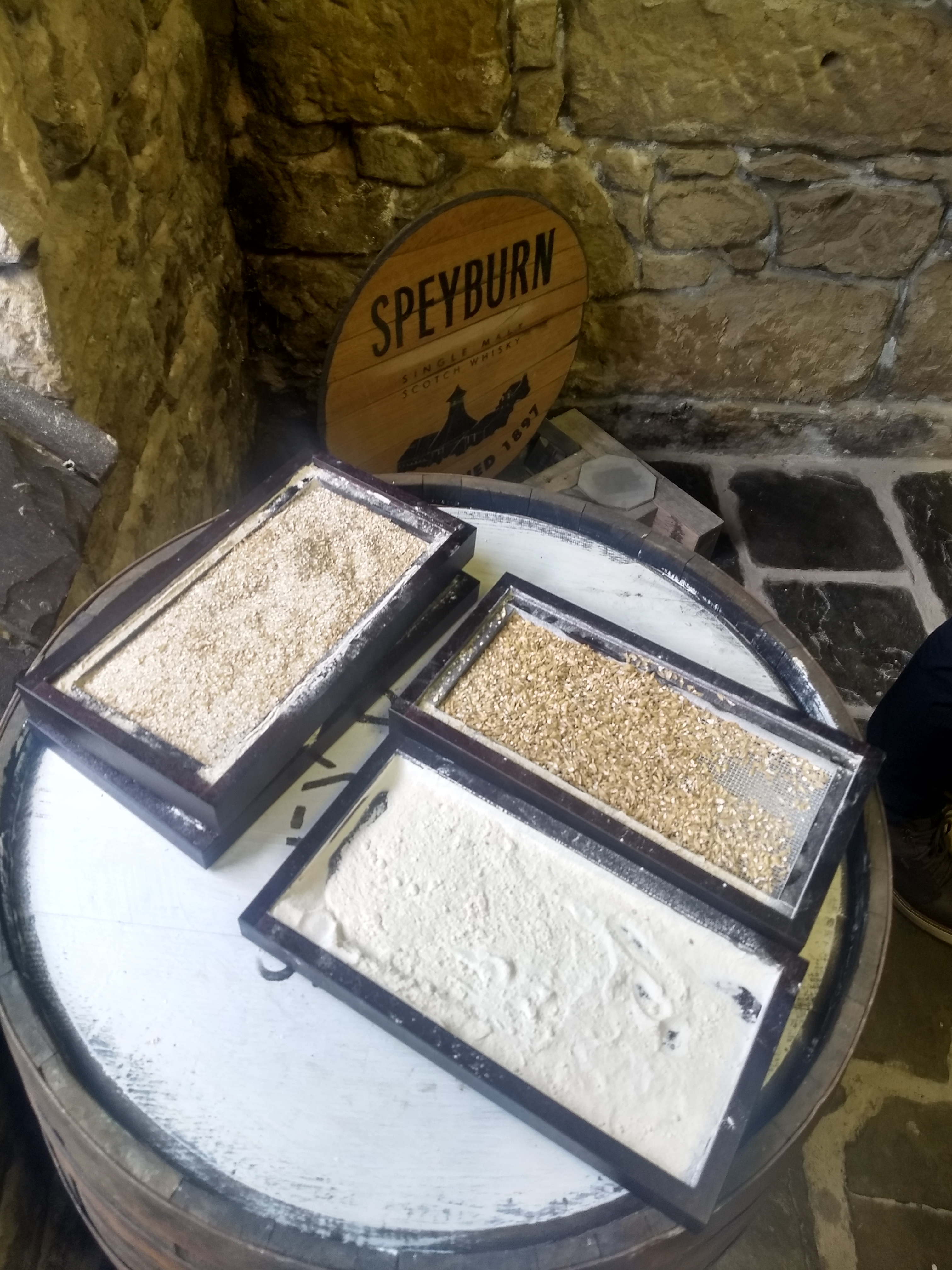
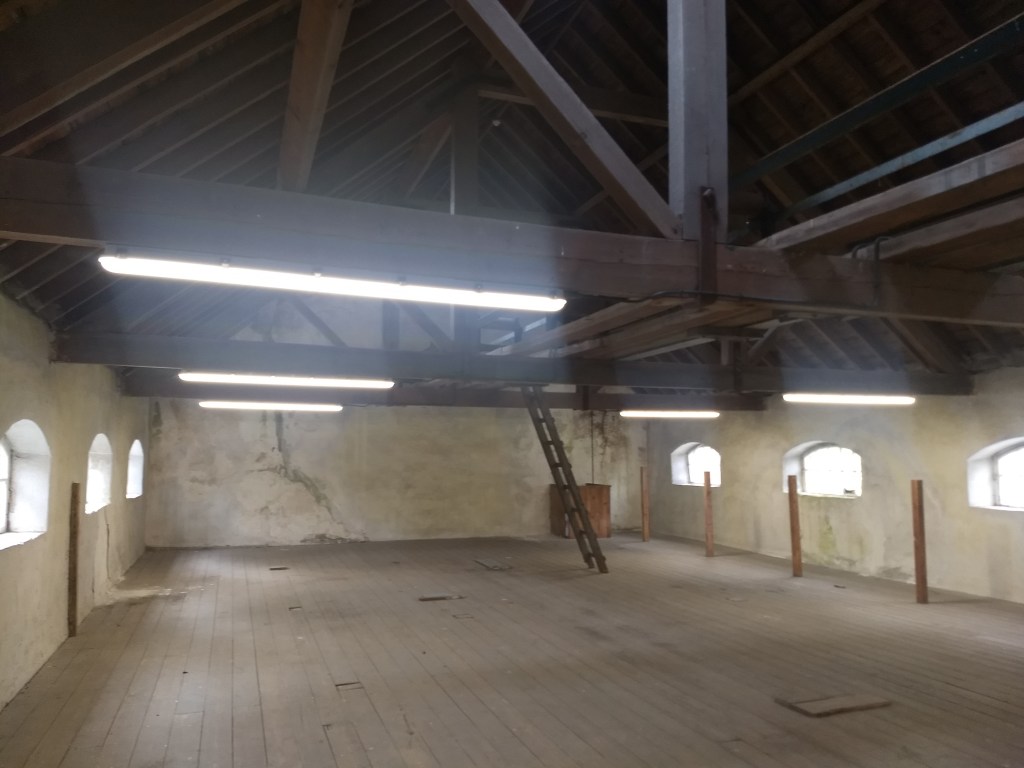
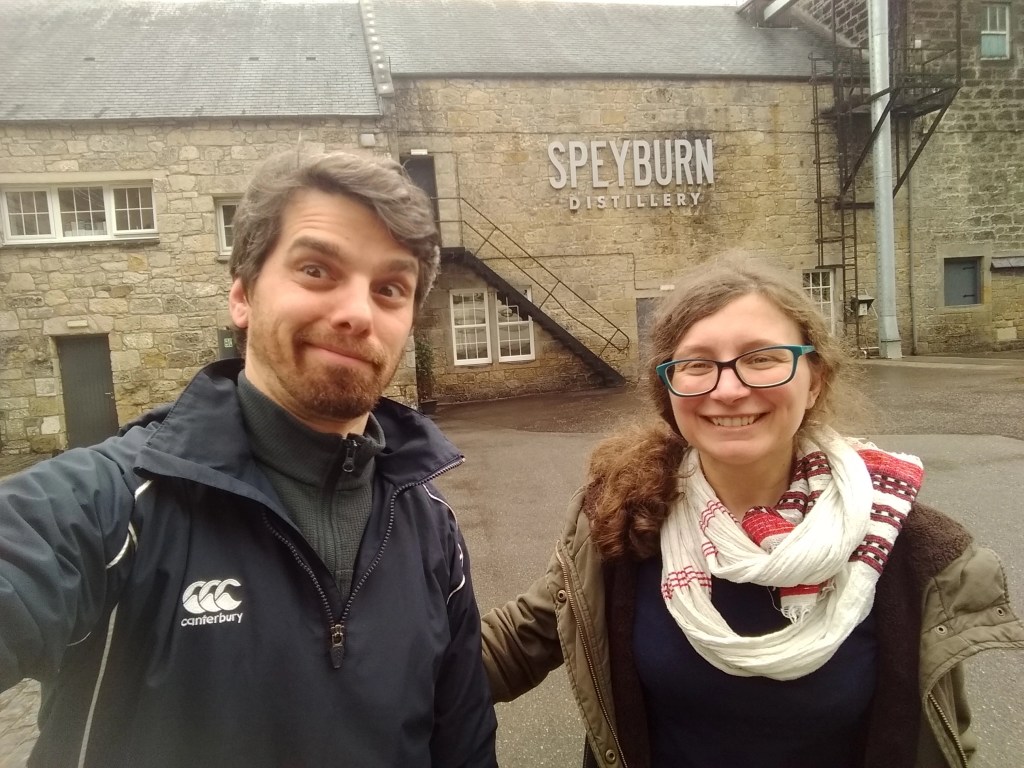
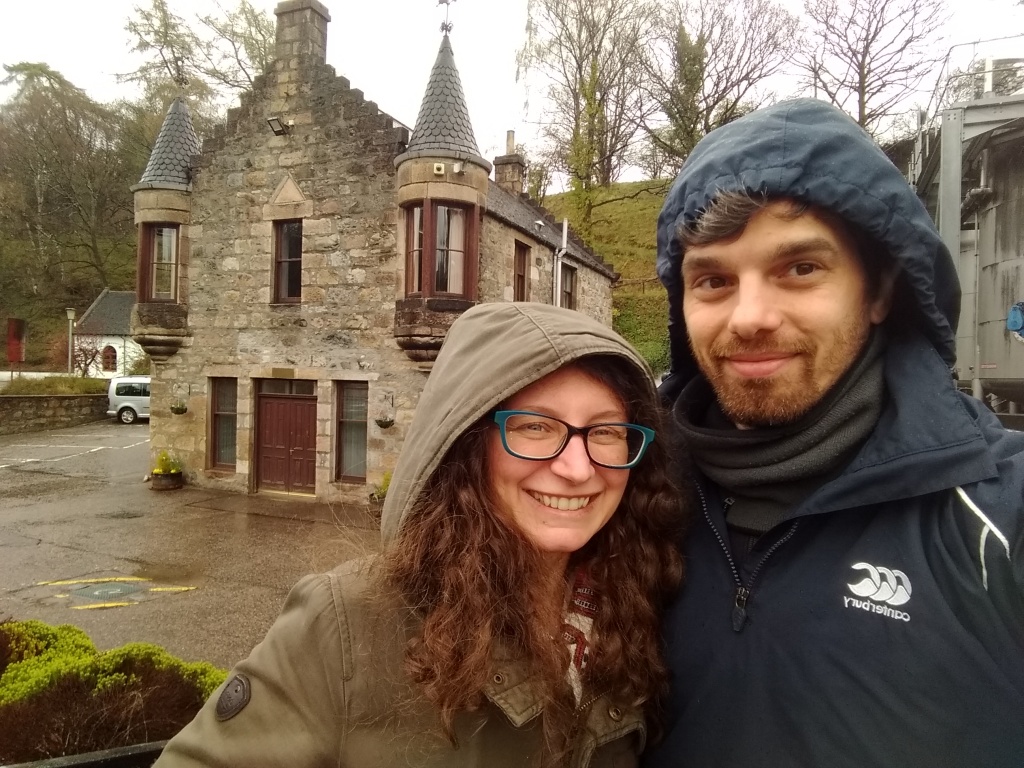
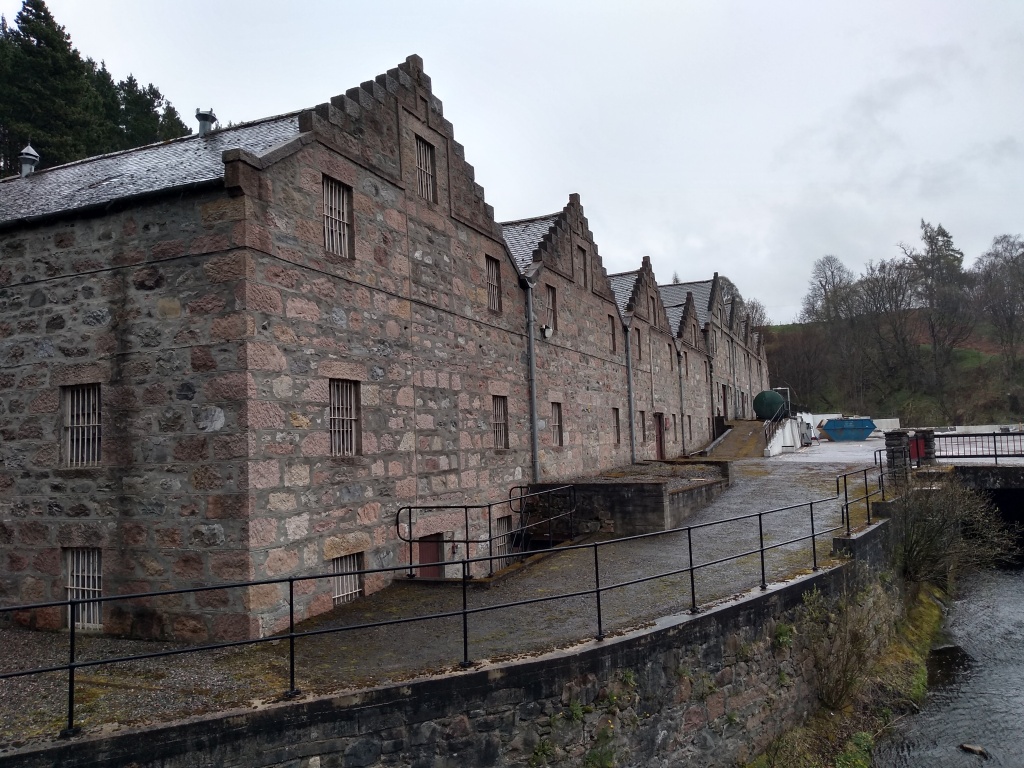
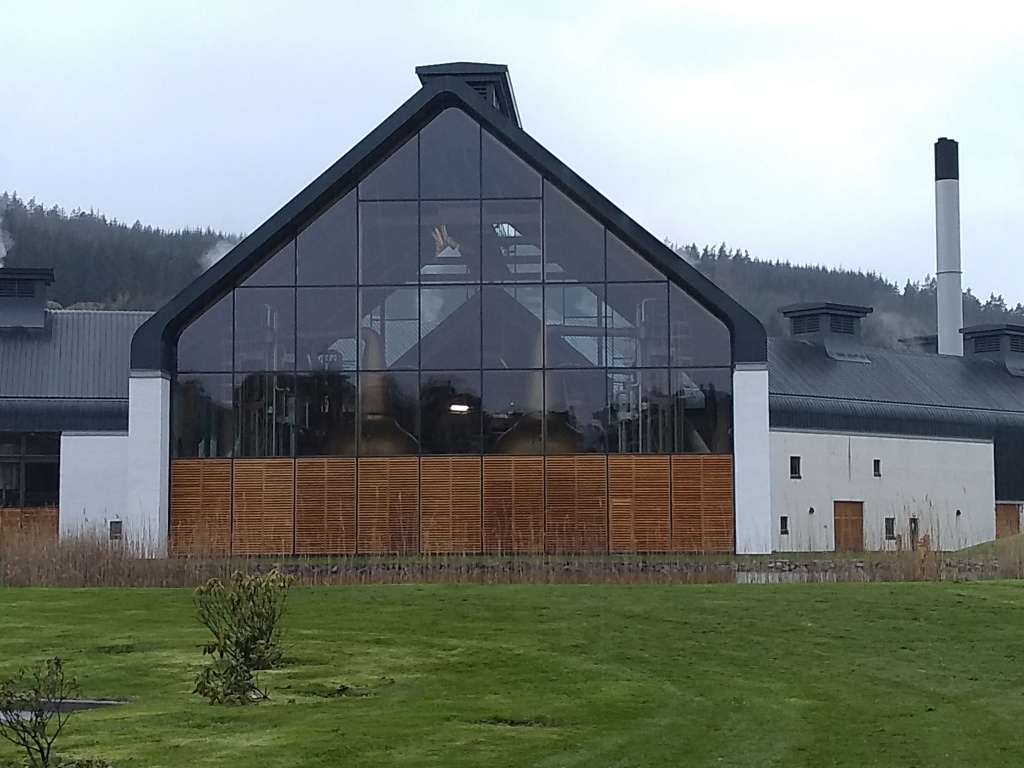
The tour started with some history in the courtyard: the distillery was founded in 1897, and the architect was the famous Charles Doig, who brought the pagoda roofs into the game. This became one of the iconic features of Scotch whisky distilleries, to the extent that distillers in other countries started copying it. It is also on the road signs in Speyside and elsewhere: if you see a white pagoda on a brown background, there must be a distillery close by! The original function was the kilnโ€™s ventilator, as at the time most distilleries were malting their own barley, Speyburn included. A crucial difference, however, early on they installed one of the few on-site drum maltings. They havenโ€™t been used in almost 60 years (after a sudden stop in 1967 following the stop of the near railway the year before), but they are still preserved for nerdy visitors to admire. And in fact, the first part of the tour was dedicated to this unique feature of the distillery.

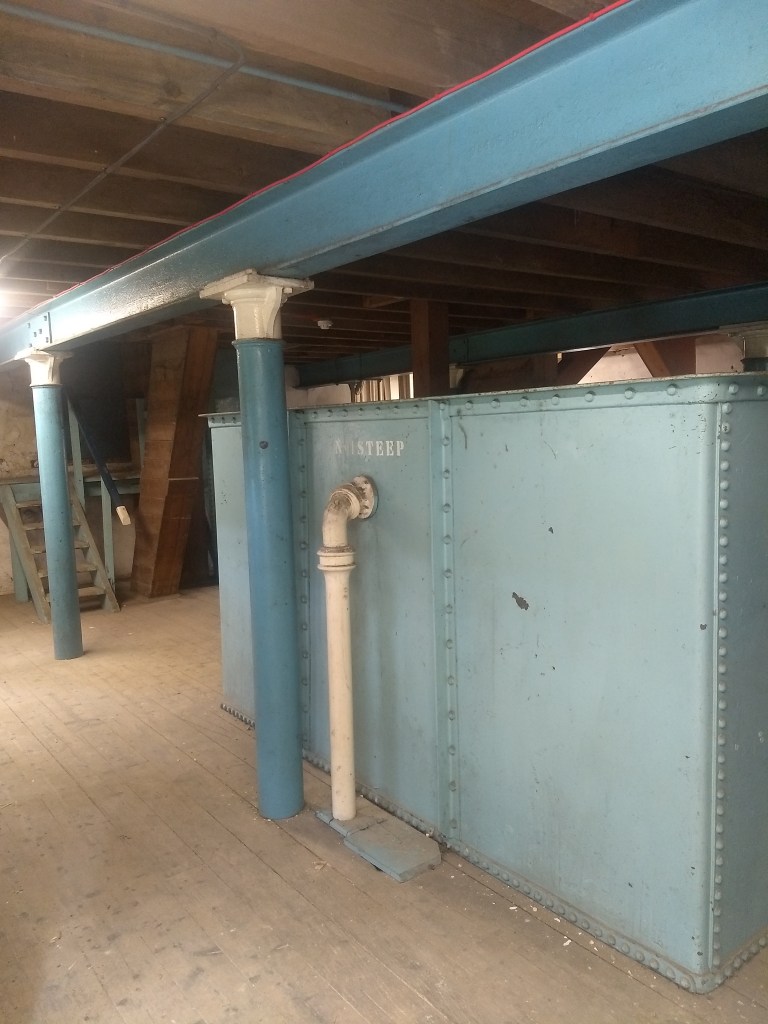
Time travelling part 2: the steeping tanks.

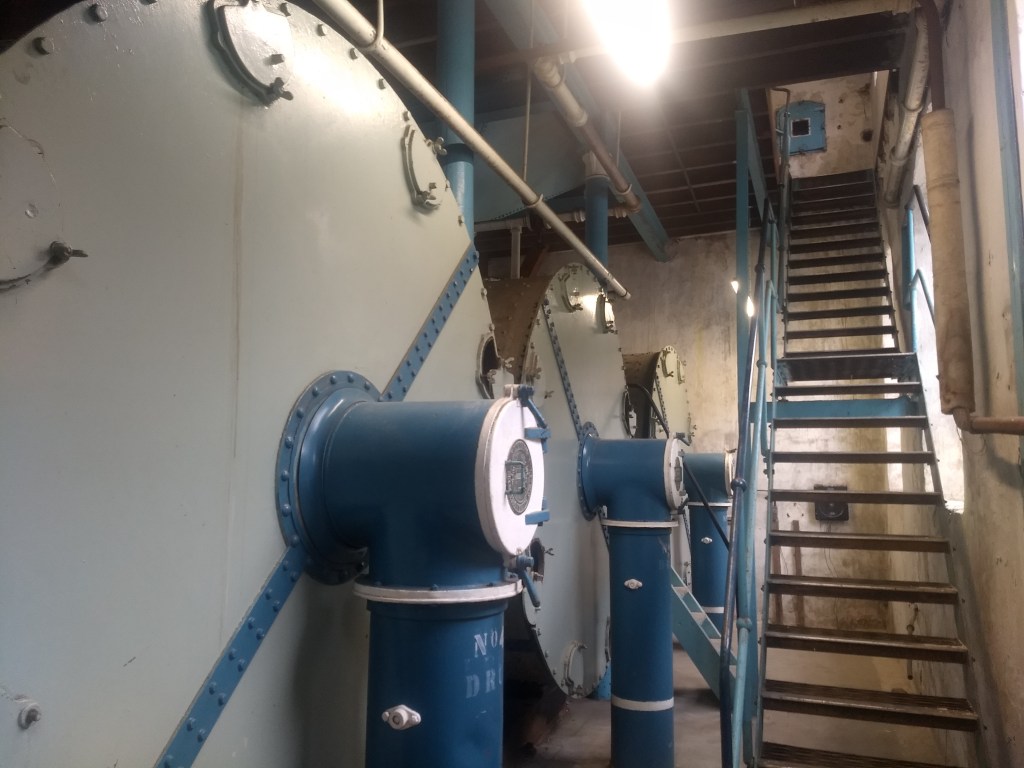
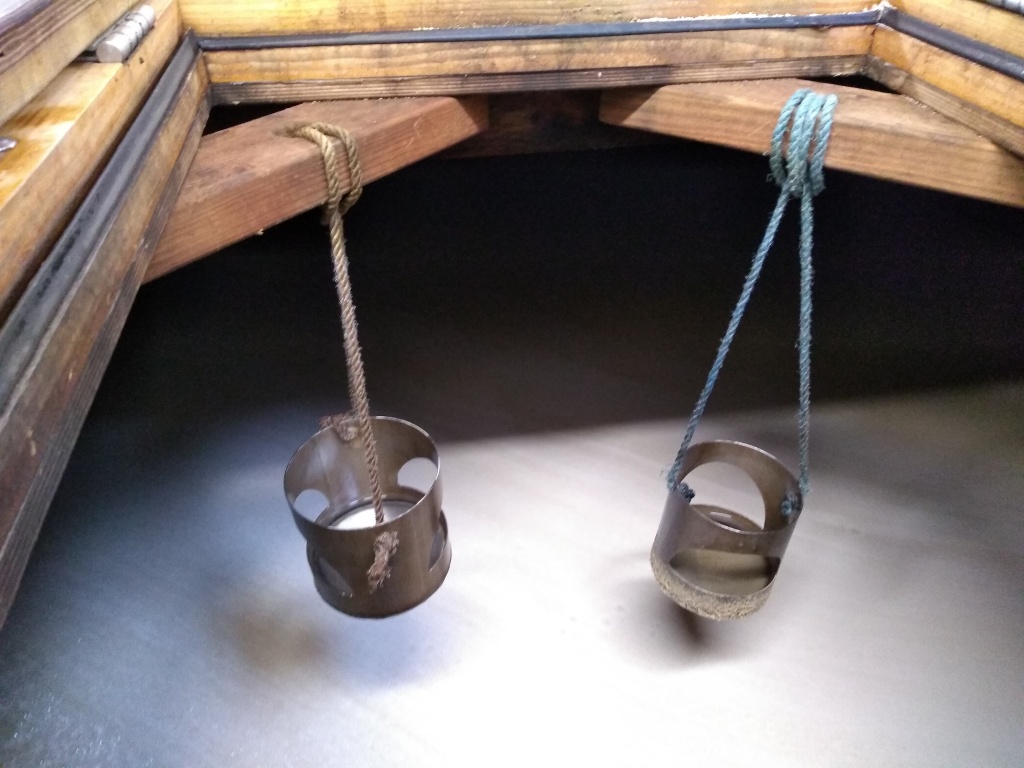
Euan and Stuart explained us that the place has been made accessible only recently, as testified by the new woodwork to allow people inside: it was like taking a walk in the past. The malting was working on different floors, the top one was where the barley was laid out, steeping tanks at the middle one, while the drums (think of huge tumble driersโ€ฆkind of) on the ground floor. One thing we found interesting was the completely different story compared to the usual one: smaller on-site drum maltings, and similarly Saladin boxes, were intermediate stages between the two extremes that are usually talked about during distillery visits (and on blogs, etc.), the (highly romanticised) labour intensive and not so efficient malting floor, and the modern highly efficient industrial-scale maltings. So fascinating to see what was in between!

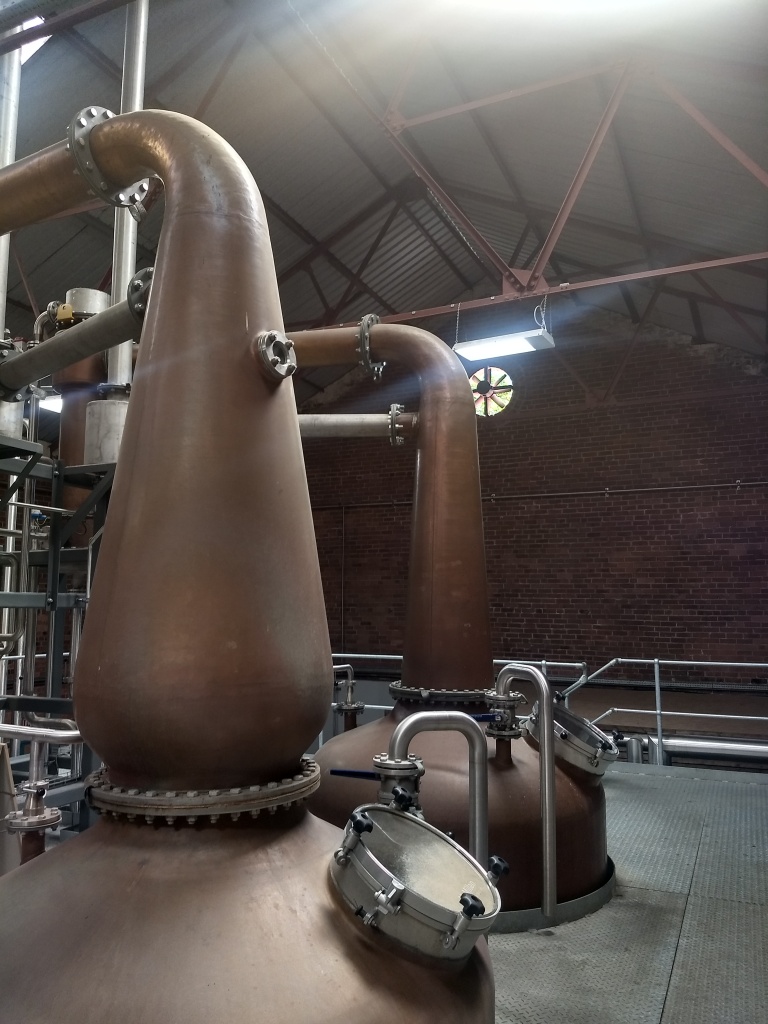
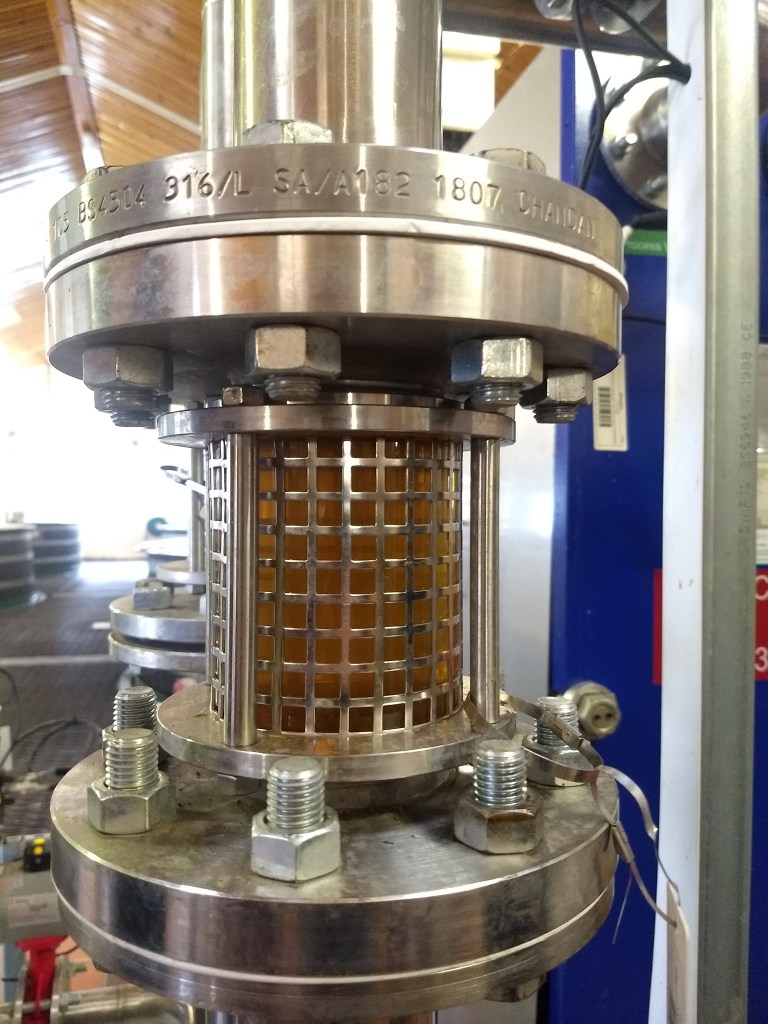
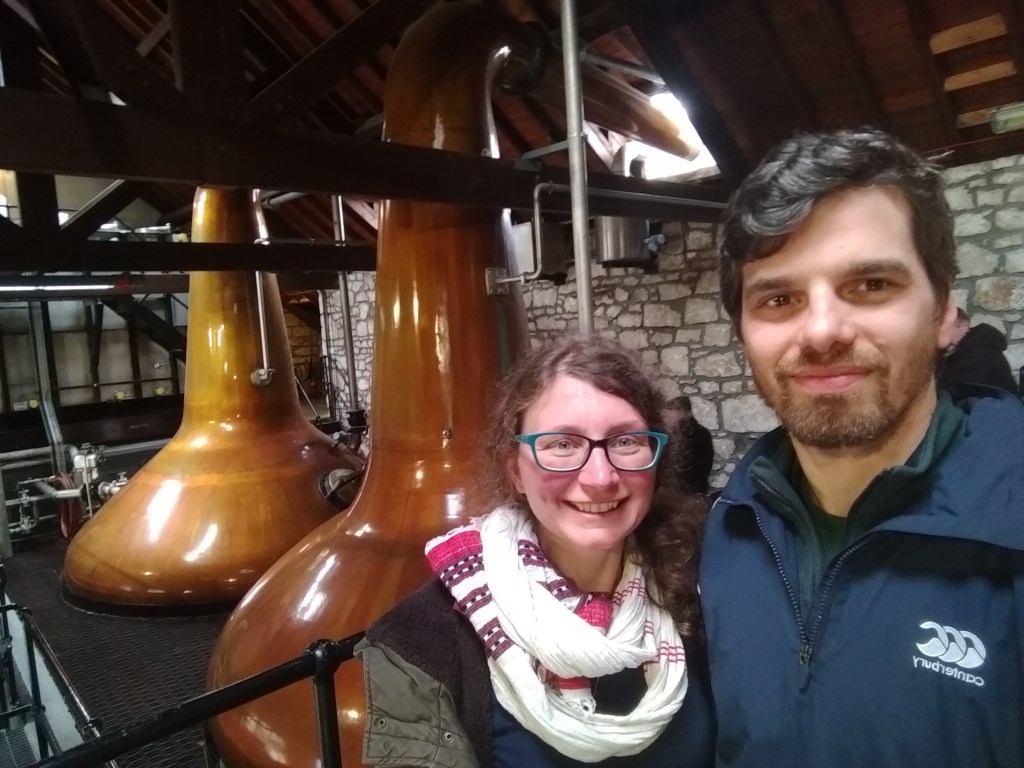
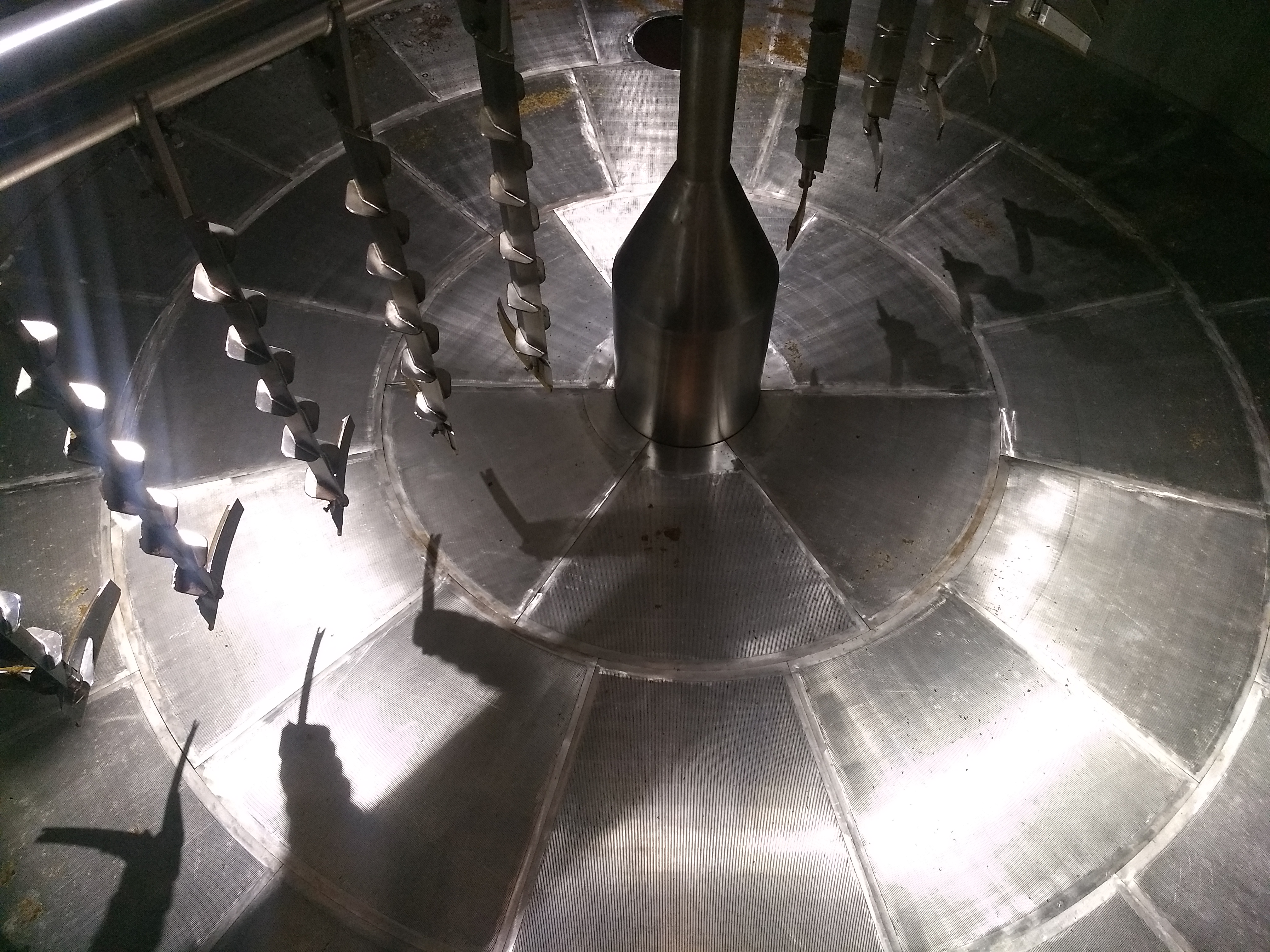
We jumped back to the present, moving to the mill room, and from there through the usual layout of the modern plant: the closed stainless-steel mashtun, and the wooden washbacks, where we could sip a bit of their semi-cloudy 72hr-fermented wash (always an experience). One interesting feature is the combination of both shell-and-tube, of which one is horizontal, and two wormtubs condensers (132m in total). The former condenses liquid from the wash still, while the latter two from the spirit-stills, from which they take a cut between 72 and 64% abv. With only 3 stills they manage to produce about four millions of litres of alcohol per year: they get this incredible volume by working 24/7. There is a catwalk on the wormtubs, which are located outside, where we spent a couple of minutesโ€ฆ.we wonder if in Speyside the weather gets warm enough to tempt some people to jump in them.

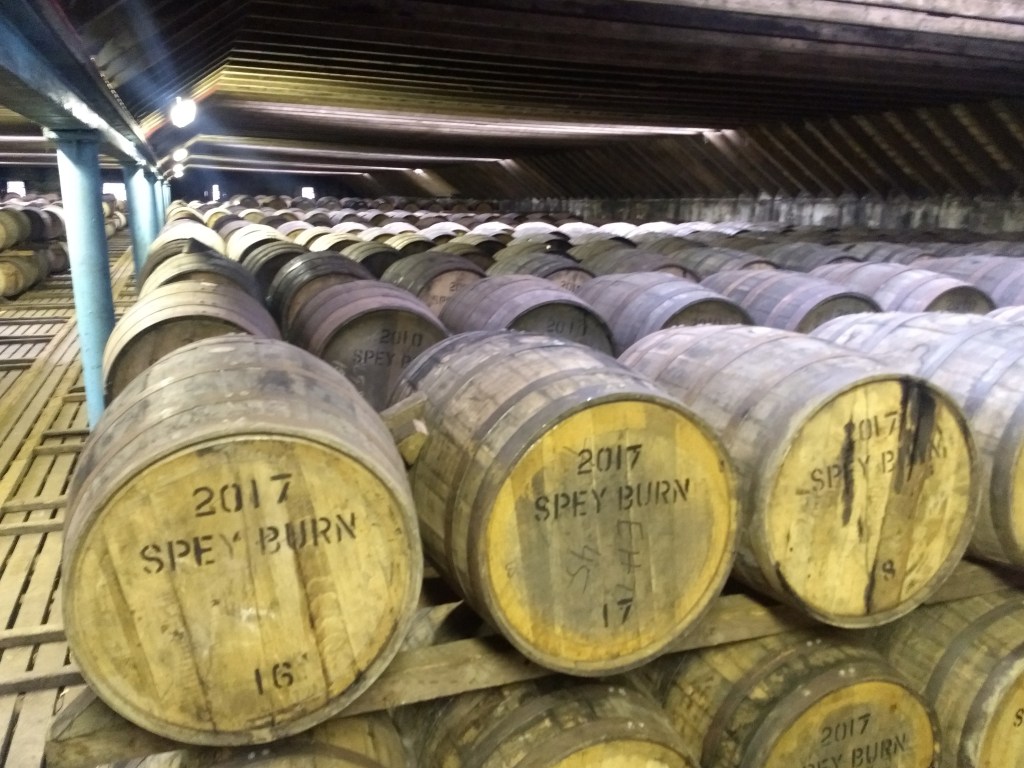
We soon checked out the warehouse, where a surprise was waiting for us: nope, unfortunately we didnโ€™t sample some casks (we were hopeful, considering the hefty 80 quid tickets), but it was almost as good: we had a sample of their 125th Anniversary release, a single cask bottling from a 2nd fill ex-bourbon barrel vintage 2007, similar in style to the one we had but much more balanced, tropical and creamy. A truly delicious dram, probably the best one we tried during the festival.

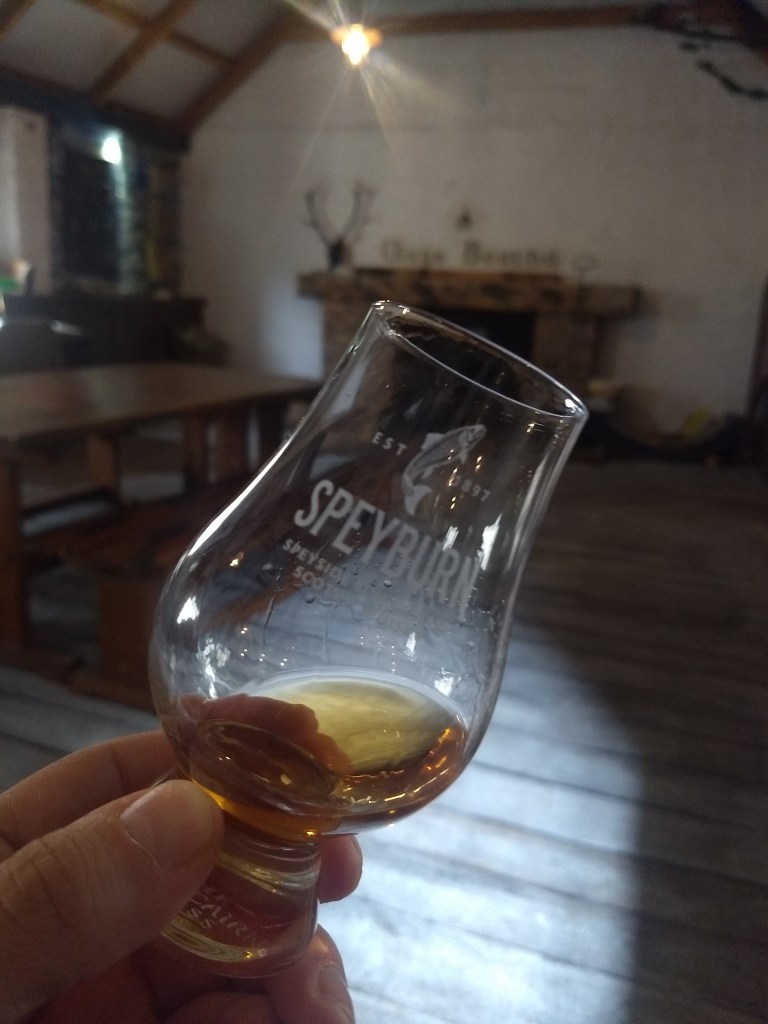
The last part of the experience was the tasting of their core range, back at the bar. We had four generous drams of their non-age statement (NAS, but they told us it should be about 7-8y) expression Bradan Orach (40%abv, refill ex-bourbon), the 10y (again kind of introductory, 40%, 90% ex-bourbon and 10% ex-sherry casks, mostly second fill), but finally the two gems: the 15y (ex-bourbon before a 2-3y finish in ex-sherry Miguel Martinez casks) and the 18y (14y in ex-bourbon casks, then 4y in second fill oloroso casks), both 46%, natural colour and not chill-filtered. They were both super tasty: Gianluigi preferred the former, Teresa (as most people on the tour) the latter.

You can’t really tell from this picture how nice the bar is…

At this point youโ€™ll be wondering: wait a minute, if they are only open occasionally, how come they have a bar for tastings and a nice shop? Well, as a matter of fact, before the festival weโ€™ve been told by a birdie that Speyburn might have been preparing to open to visitors permanently. At the Spirit of Speyside 2023 they won the award as โ€œbest new experienceโ€ and this might have given the company the nudge to open permanently (although, more realistically it was already planned and not depending on the awardโ€ฆ). Bottom line is that, good news: starting August 2023 (coincidentally the time of writing), you can visit them and go check their very fascinating old drum maltings for the very reasonable price of ยฃ20 (see the link below).

So, overall, it was a great visit (one weโ€™d do again), and as we said earlier, a true deep-dive into the history of whisky production in Speyside. A bit pricey maybe, but at least the tasting was generous (5 healthy drams and a taste of the newmake), unlike some other we visited for the same price.

For the evening we drove first to Aberlour for a chit-chat with Matteo at the Speyside Whisky Shop (from which he just moved on as we are writing), and then to Dufftown where we spent the night. We parked near the Mortlach Hall, which was super quiet. We had dinner at the Commercial Hotel, which has moved the restaurant to the former function hall, together with some tasty Three Ships South-African malts (produced at the James Sedgwick Distillery), very rare to find in Scotland. Not that we were bored of Speyside malts, but it was good to try something different! Slainte!


The Speybirn Distillery Tour (Spirit of Speyside)

Price: ยฃ80.00 pp (April 2023, but now – August 2023 – they’re open to the public and it’s ยฃ20.00)

Duration: 2hr

Tasting: 5 drams, Speyburn 125th Anniversary (vintage 2007, 15y, refill ex-bourbon barrel, 62.6%, NC, NCF), Bradan Orach (40%), 10y (40%), 15y (46%, NC, NCF) and 18y (46%, NC, NCF)

Target: whisky enthusiasts

Value for money: not great

Highlights: the old drum malting equipment

Recommended: better than others, but still hard to justify at this price

Links: https://www.speyburn.com/, https://www.spiritofspeyside.com/

#31.6 Spirit of Speyside 2023

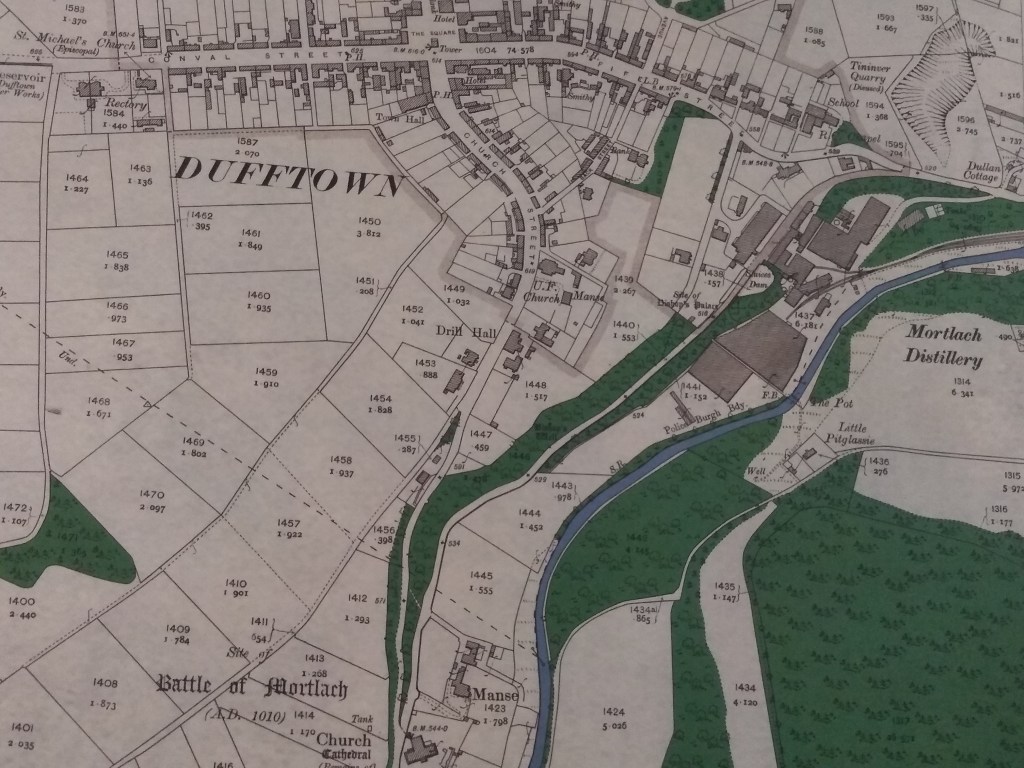
The beast of Dufftown: Mortlach


TL;DR: our fourth day at the festival started with a classic, a distillery particularly known for their complex distillation process: Mortlach. The visit was very interesting indeed, and the distillery manager Kirstie didnโ€™t shy away from nerdy details. 

(missed Part 5/Part 4/Part 3/Part 2/Part 1?)

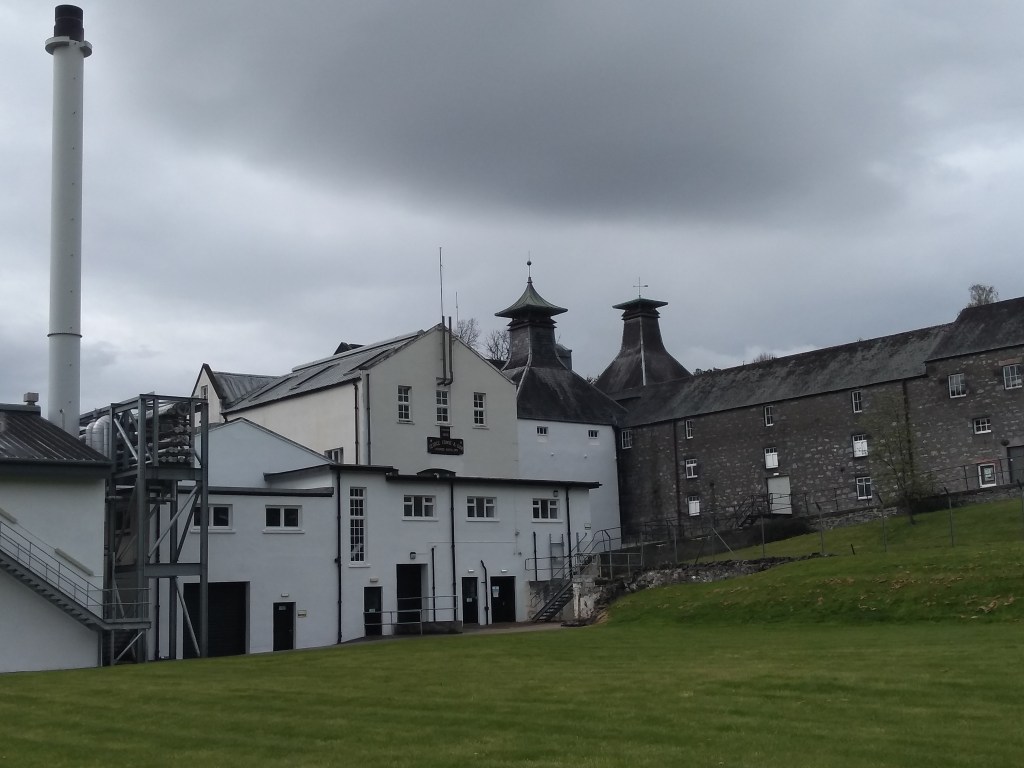
On Sunday morning the sky was still overcast, it would start raining later in the day eventually. Oh well. After breakfast we wrapped up all our stuff: it was the last night in the camping, the following and last night of the holiday we would wild camp again, although we hadnโ€™t figured out where yet. We left the camping driving towards Dufftown, in a backroad that goes past the back of the Speyside Cooperage, from which you can admire their casks pyramids. Being Sunday morning, Dufftown was very quiet, and not all cafes were open yet. We managed to park on the main road, in front of the local CoOp, and tried hunting for a coffee. After finding one, we walked our way towards our first appointment of the day: Mortlach distillery, the so-called beast of Dufftown.

It is a very old one, founded in 1823 after the Excise Act, and it was the only one in town until their manager at the time, William Grant, left to found Glenfiddich. In 1897 the distillery was expanded, and thanks to the work of the famous architect Charles Doig, the pagoda roofs were added. It was acquired by John Walker & Sons in 1923, but the company soon merged with Distillers Company Limited in 1925 (then United Distillers in 1987, Diageo from 1997). Before 2014, the only official bottling of Mortlach was the 16y โ€œFlora and Faunaโ€, now discontinued and dearly celebrated (like most things of the past, the abuse of โ€œโ€™member-berriesโ€ is widespread in whisky-landโ€ฆif you donโ€™t know the reference, check South Park season 20).

A core range was introduced in 2014 (with some controversial 50cl bottles) and revamped in 2018, while the current age-stated range includes a 12y (Wee Witchie), a 16y (Distillerโ€™s Dram), a 20y (Cowieโ€™s Blue Seal) and a 14y travel retail (Alexanderโ€™s Way), plus the occasional Special Releases. The newmake spirit is mainly filled in ex-sherry casks, although you can find some independently bottled ex-bourbon matured expressions (we have an 11y from Signatory Vintage, a marriage of 2 ex-bourbon hogsheads, which is quite tasty). Mortlach whisky is quite famous to be meaty, and thus considered a malt for seasoned drinkers. Fun fact, the 16y (very decent in our opinion) worked quite well every time weโ€™ve given it to friends (both beginners and casual whisky drinkers).

At the distillery we were given a welcome cocktail, a Mortlach-based Old Fashioned (this time with regular angostura, not the orange one like at Dailuaine), and the distillery manager, Kirstie, introduced herself. Sheโ€™s a graduate form the Brewing and Distilling Master at Herriot-Watt University, and of course extremely knowledgeable: her explanations definitely gave value to quite a pricey experience. We also bumped into a couple of barflies at the tour, Angus and Graham, met back in November at the Aqvavitaeโ€™s Blind Challenge in Glasgow.

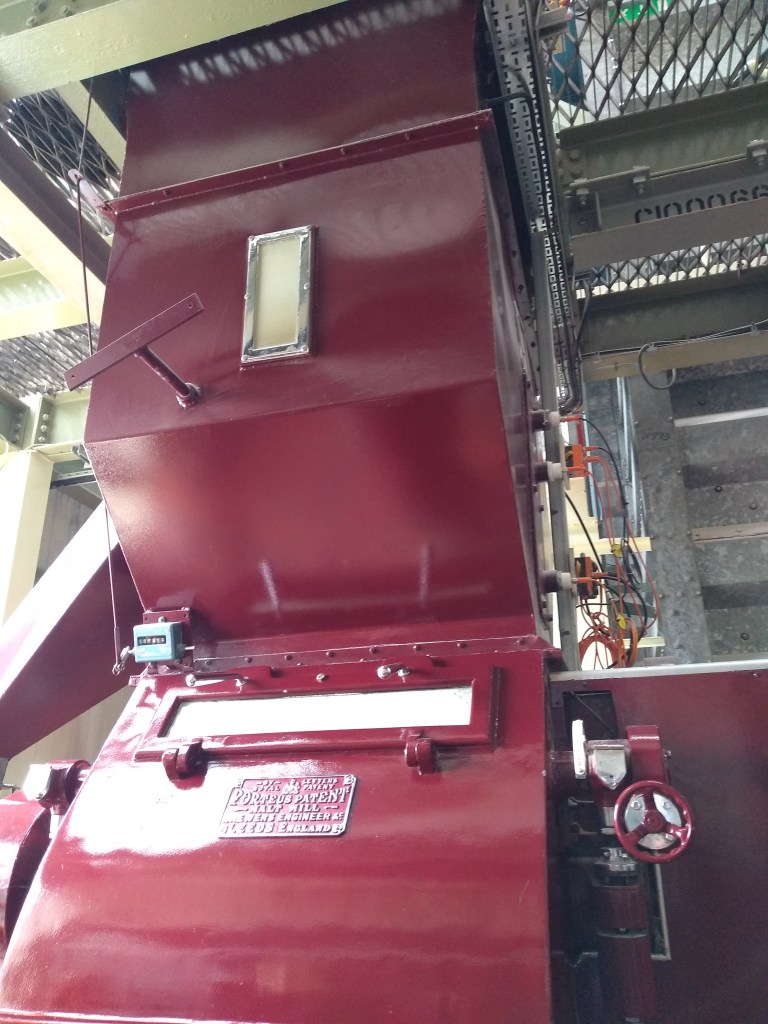
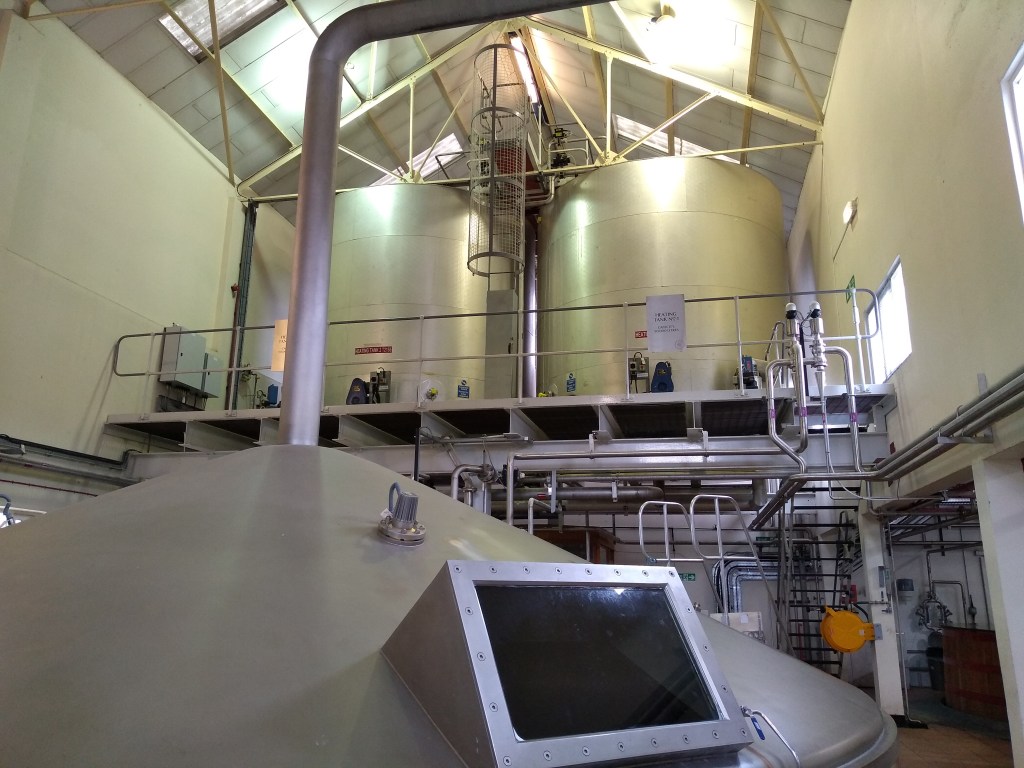
After the introduction, we started the proper tour: we moved outside in the courtyard, and then near the milling room, which hosts an old red Porteus mill. A notable difference was that they take a smaller cut of flour in their grist (8%) compared to other distilleries (usually 10%). In our understanding, one of the reasons is that their water to grist ratio is higher, 3.8 instead of 3.6. The mashtun looks very new, made of stainless steel and closed, with the usual window to check its inside. They only have two water runs instead of three, with the second being warmed up to get the sugars that are usually obtained in the third run (lasting 6.57 hours in total).

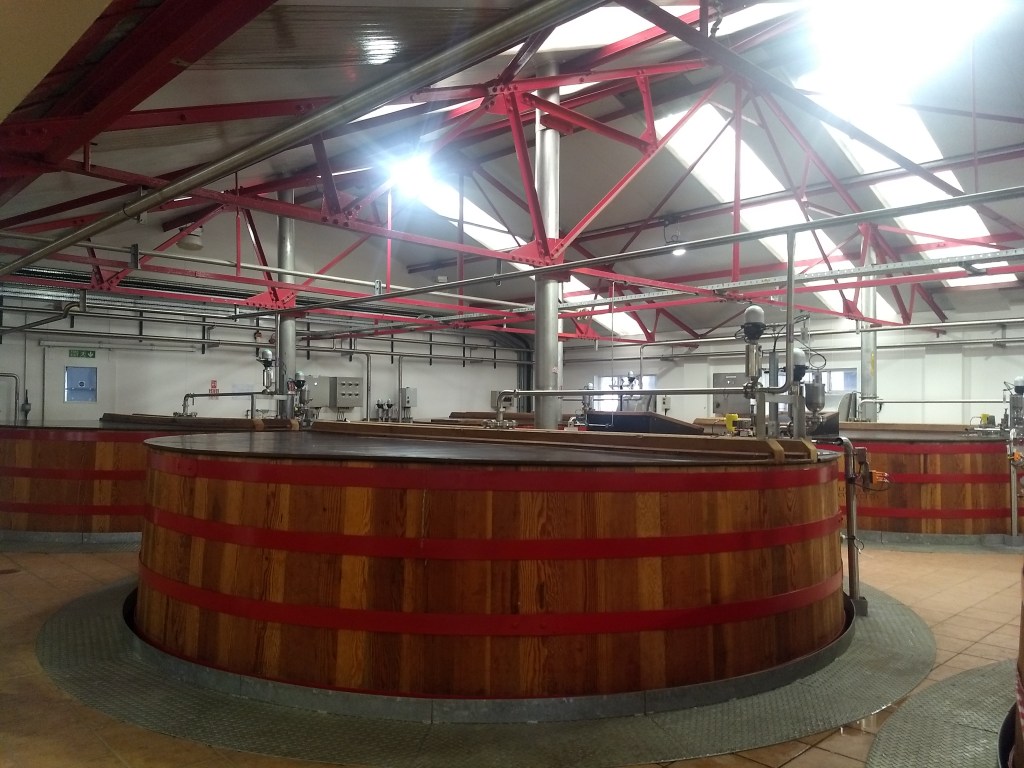
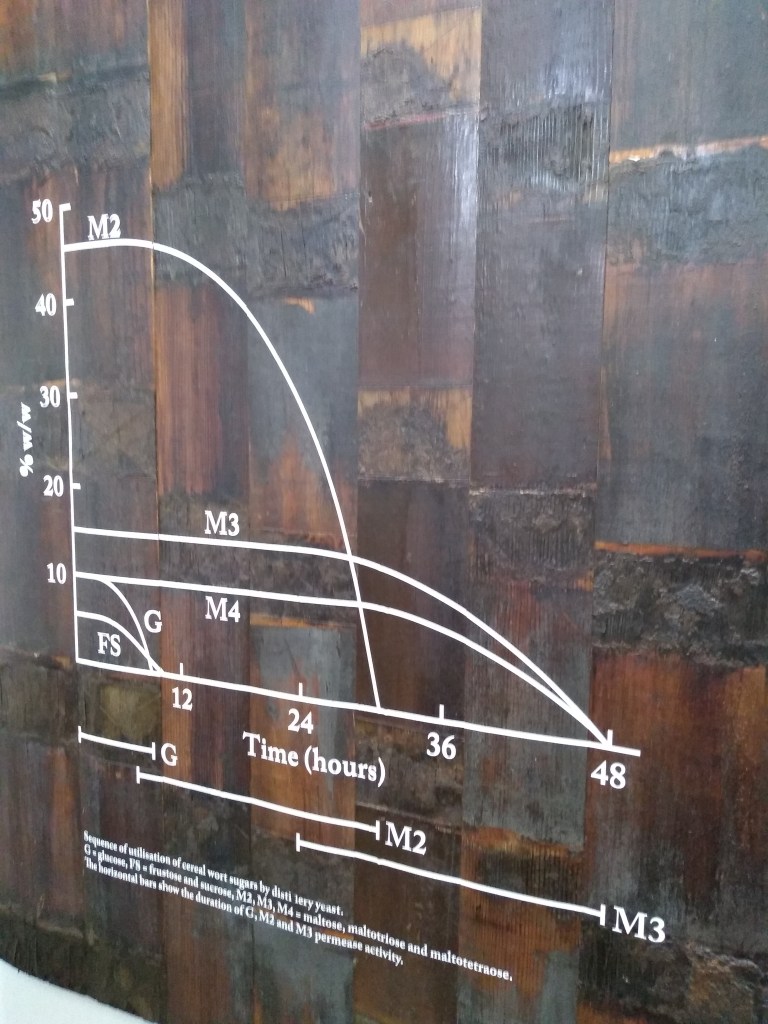
The walls of the fermentation room, where six Douglas Fir washbacks are located (wooden because of a combination of aesthetics and convenience, since they can be disassembled unlike stainless-steel ones, all replaced in 2016), are decorated with some nerdy facts about whisky making, like the formula to calculate the % abv of the wash using the gravity readings, and the graph showing the trends of different types of sugars digestion during fermentation. Their fermentation time is usually between 55 and 59 hours, never less than 50, and they work with yeast that can survive higher temperatures, around 35C.

Knowledge pill on the wall # 2.

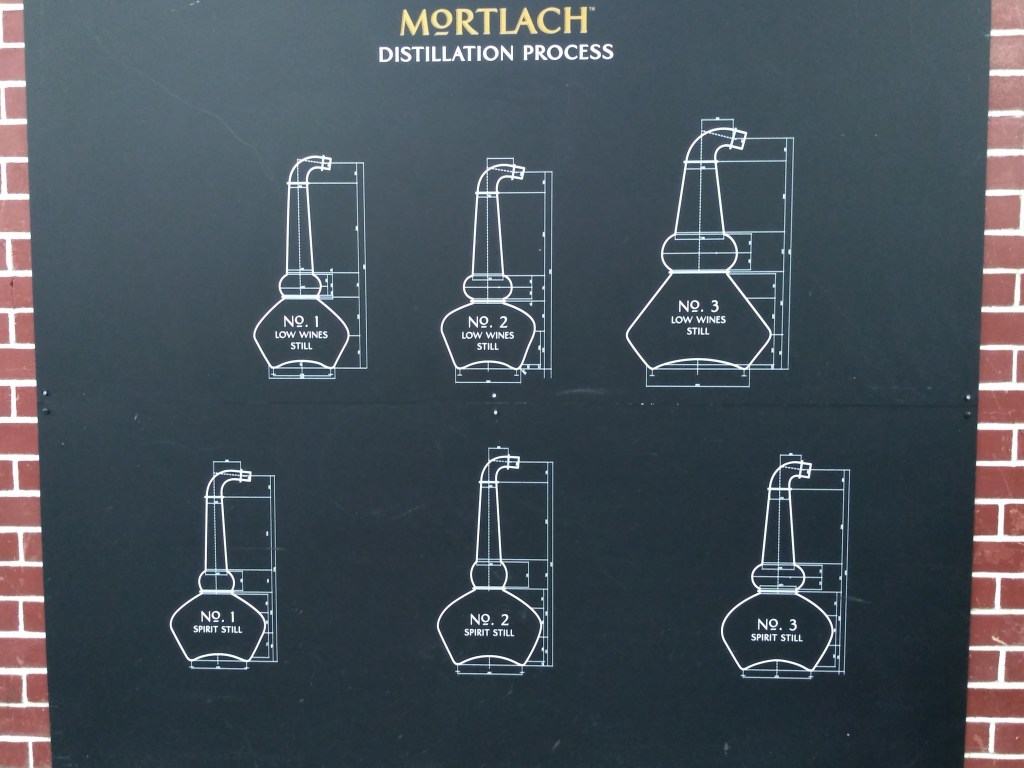
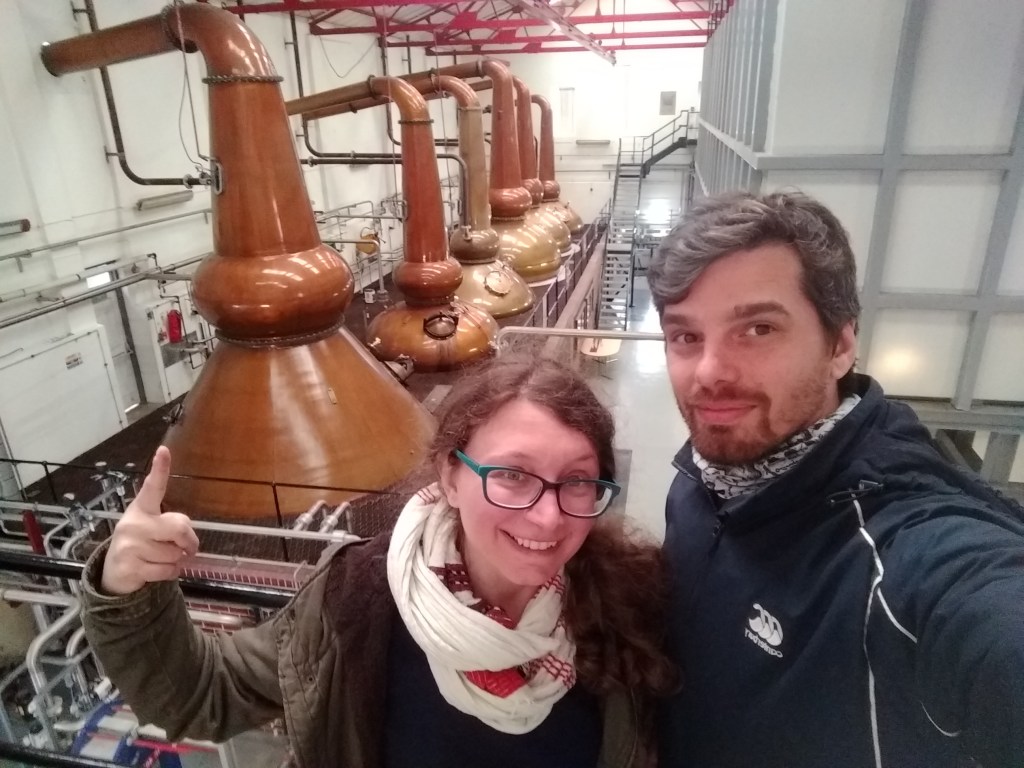
We then moved to the still room with its 6 stills (3 wash- and 3 spirit-), very unusually of different shape and size. The distillation is very complex: wash-still #3 and spirit-still #3 are paired, and they work like in a regular distillery. The other wash-stills (#1 and #2) work together, but their distillation is (unusually) divided into two cuts, the first goes into spirit-still #2, while the second (heavier) gets re-distilled three times (with the other distillations feints) in the other spirit still, the Wee Witchie, and the cut is only taken every third distillation. If you are confused, no worries, we are too, but the idea is to provide different characters to the newmake spirit. Someone in the past made the calculation, and it turned out the spirit is distilled 2.81 times – it would be nice to see those equations (nerd alert! Nerd alert!).

As we moved outside, we could admire one of the other characteristics that made Mortlach popular: the 6 worm tub condensers, one for each still. It is believed this is what provides meatiness to the spirit. They are made of wood, except one which is made of metal because the wooden one started leaking – they told us it might be replaced at some point with a new wooden one. They take the cooling water for the wormtubs from the river Dullan, one of their 6 sources of water for all the process: remember that they produce between 3.5 and 4 million litres of alcohol per year! Finally, we ventured in the warehouse, where casks from many distilleries were resting, including many non-Diageo ones, surprisingly. Kirstie explained us the processes happening in maturation: additive (compounds from the wood affect the liquid), subtractive (compounds from the liquid are removed by the wood contact) and oxidative (the contact with air changes the liquid, as you will know if you ever had a bottle open for more than 4-6 months).

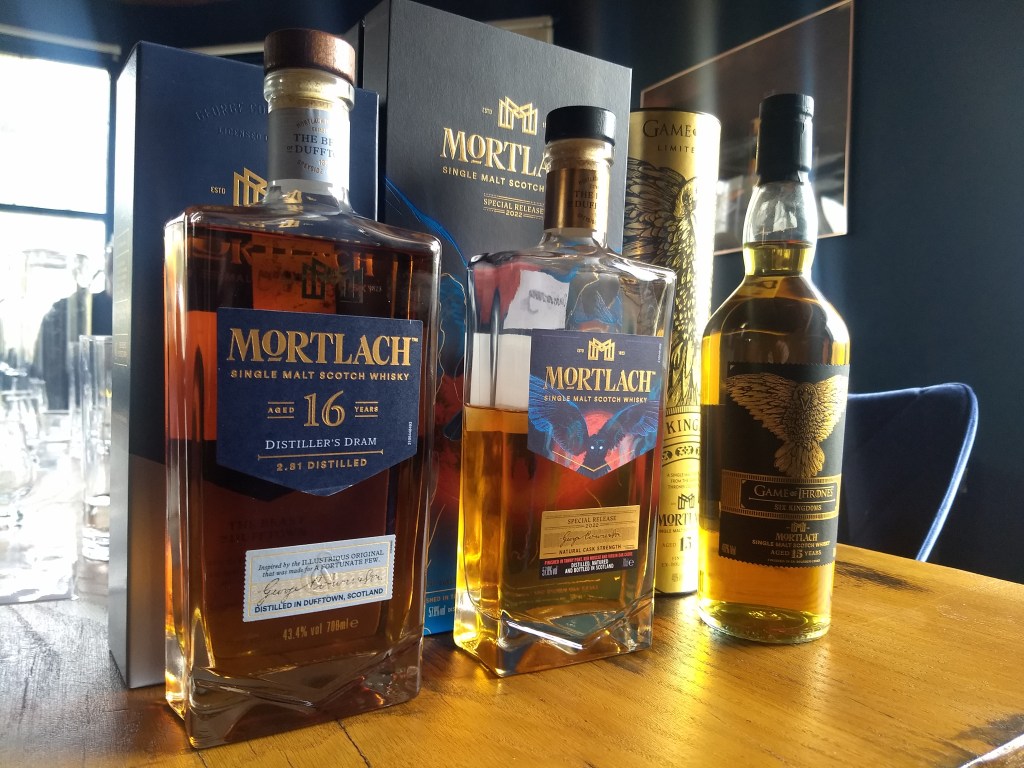
Back outside, Kirstie showed us where some buildings used to be, as well as their still existing but currently unused malting floor, on the other side of the road (at the moment part of it is used as deposit for the Dufftown Whisky & Heritage Centre). We went back to the meeting room to enjoy the (stingy, considering 80 quid) 3-dram tasting. These were the flagship Mortlach 16y (43.4%), Mortlach 15y Game of Thrones Six Kingdoms (finished in ex-bourbon casks and bottled at 46%) and a non-age statement (NAS) from the 2022 Special Release. Weโ€™re quite familiar with the 16y (we used to have it, and gifted some), and we had tried the 15y GoT once (nice to revisit), so we were very curious about the third, mostly because the RRP was insane for a NAS, well above ยฃ200. This expression was finished in Tawny Port, Red Muscato wine, Virgin Oak casks and bottled at cask strength (57.8%). Turned out, it was nice but not mind-blowing by any means, as youโ€™d expect considering the fanfare.

Overall, this was a great visit, and Kirstie contributed to make it as nerdy as expected, for such a peculiar distillery like Mortlach. The price is a bit steep, ยฃ80 for a tour and 3 drams (+ cocktail), so itโ€™s hard to recommend it. However, if youโ€™re at the right moment of your whisky journey, it is definitely one to visit, despite the price. For us, it was worth it, and we look forward to more deep dives like this.


The Mortlach Distillery Tour (Spirit of Speyside)

Price: ยฃ80.00 pp (April 2023)

Duration: 2hr

Tasting: 3 drams and a welcome cocktail, Mortlach 16 (43.4%), Mortlach 15 the Six Kingdoms (46%), Mortlach Special Release 2022 (NAS, 57.8%)

Target: a bit more seasoned whisky geeks and nerds

Value for money: not great

Highlights: the detailed tour and explanation of such a complicated distillation process

Recommended: only if you’re quite ahead in your whisky journey (see last paragraph above)

Link: https://www.malts.com/en-gb/brands/mortlach, https://www.spiritofspeyside.com/

#31.2 Spirit of Speyside 2023

Shut it, badger!


TL;DR: Second distillery visit during the Spirit of Speyside: another workhorse, owned by Diageo this time, Dailuaine! Contrary to Tamnavulin, we know their malt mostly thanks to independent bottlers, as most of the production goes into blends. The tour was great, although it felt like visiting a distillery after a zombie apocalypse.

(missed Part 1?)

After the visit at Tamnavulin, we had only 45 minutes before our second visit of the day at another distillery usually closed to public: Dailuaine. Fortunately, the drive was only 25-ish minutes, and because we knew we were tight with time, in the morning we had prepared sandwiches, so we could have a quick lunch. Everything went fine, we drove from Tamnavulin to Ballindalloch, and before Aberlour we turned left, with the distillery being mid-way between the main road and the village of Carron. We had run through this village during the Dramathon, admiring the recently built Dalmunach distillery (on the site where Imperial used to be), but despite being the n-th time in Speyside, we had never driven there, so we didnโ€™t quite know what to expect. As we drove downhill form the A95, we found Dailuaine distillery on the left, spotting their big warehouses, almost terraced to cope with the slope. 

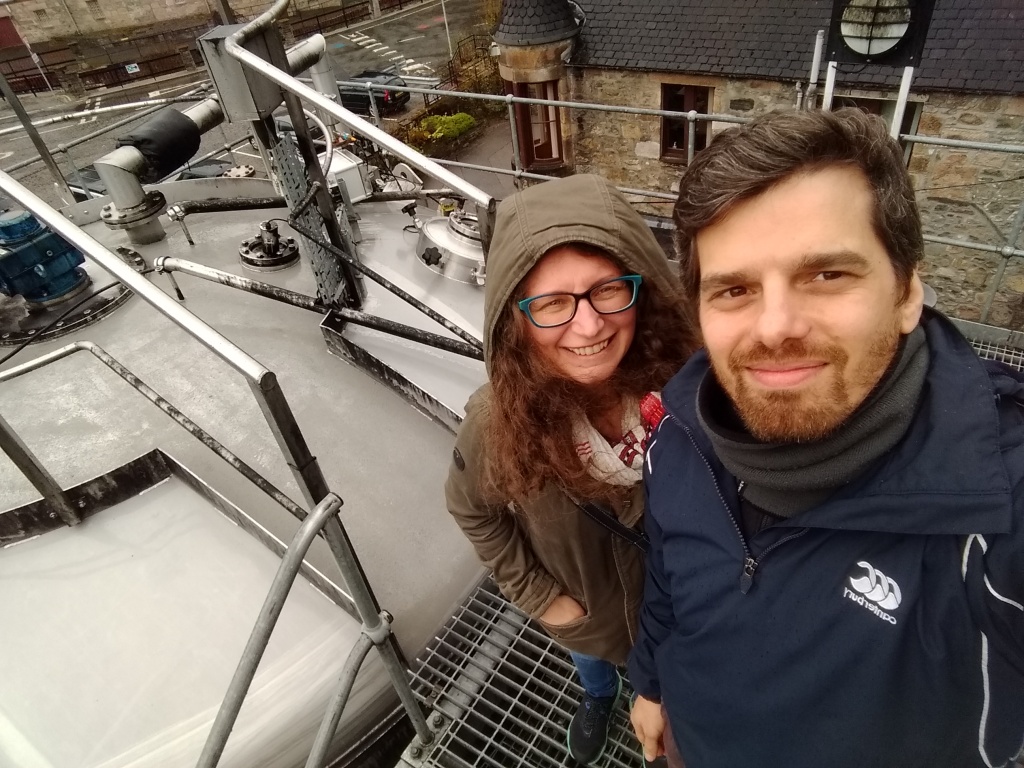
In the courtyard, we noted how massive is the site: the warehouses on the left, a small house (will turn out to be offices) on the right, and behind it the huge production building. As soon as we parked, a guy asked us if we were there for the tour, and because it was starting to rain, he told us to go inside and wait for him. He turned out to be Archie, the distillery manager, quite a character who made our visit unique! In the office, all visitors could sit around a table, and as we started, Archie poured some filter coffee and gave us some brownie squares – a very nice touch. He told us about his career before landing on this job, a few years before, and explained the history of the distillery. It was founded in 1852, and in 1925 it was acquired by Distillery Company Limited (or DCL, one of Diageo previous incarnations). He showed old pictures of the distillery, which testified how the staff numbers decreased over time, to the current handful of operators (2.5). Sad but understandable. He also told us that the warehouses on site are empty, quite a surprise to us given their size. 

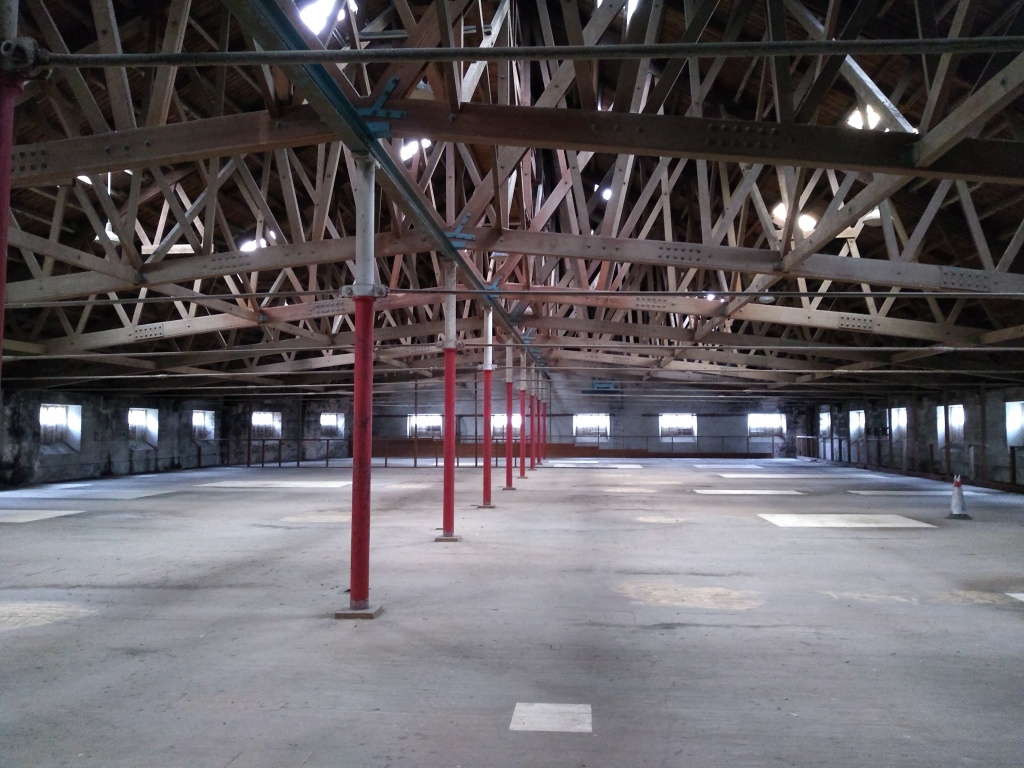
Soon after we went back outside and started the tour. On site, there is still a dark grain plant, which until 2018, when it was closed, used to process draff and pot ale (leftovers from mashing and distilling) to make cattle feed. As we moved inside the production building, we couldnโ€™t help but notice how big the spaces are, and how empty they look too! As technology advanced, less and less space was required for the production. Also, part of it moved away, in particular malting and cask filling, as currently all the newmake spirit is put in tankers and shipped to Diageoโ€™s sites in the central belt. As a matter of fact, one of the most surprising parts was the huge malting floor, so big you could use it for a sizeable concert! They used to have Saladin boxes, a short-lived mid-20th century innovation replacing the need of hand-shovel the barley while malting, which was soon replaced by maltings drums. These big empty spaces gave us almost an eerie feeling, maybe we were influenced by The Last of Us TV series, but this really looked like a distillery in the post zombie apocalypse era. Decadent, but fascinating. 

Empty spaces apart, the production is very modern and all controlled by computers (although they still carry out manual checks). They have a closed mash-tun, 8 wooden and 2 steel washbacks (the latter outside the building), and 3 pair of pot stills (with copper shell-and-tube condensers). The distillery produces over 3 million litres of alcohol per year, placing it among the medium-big ones.

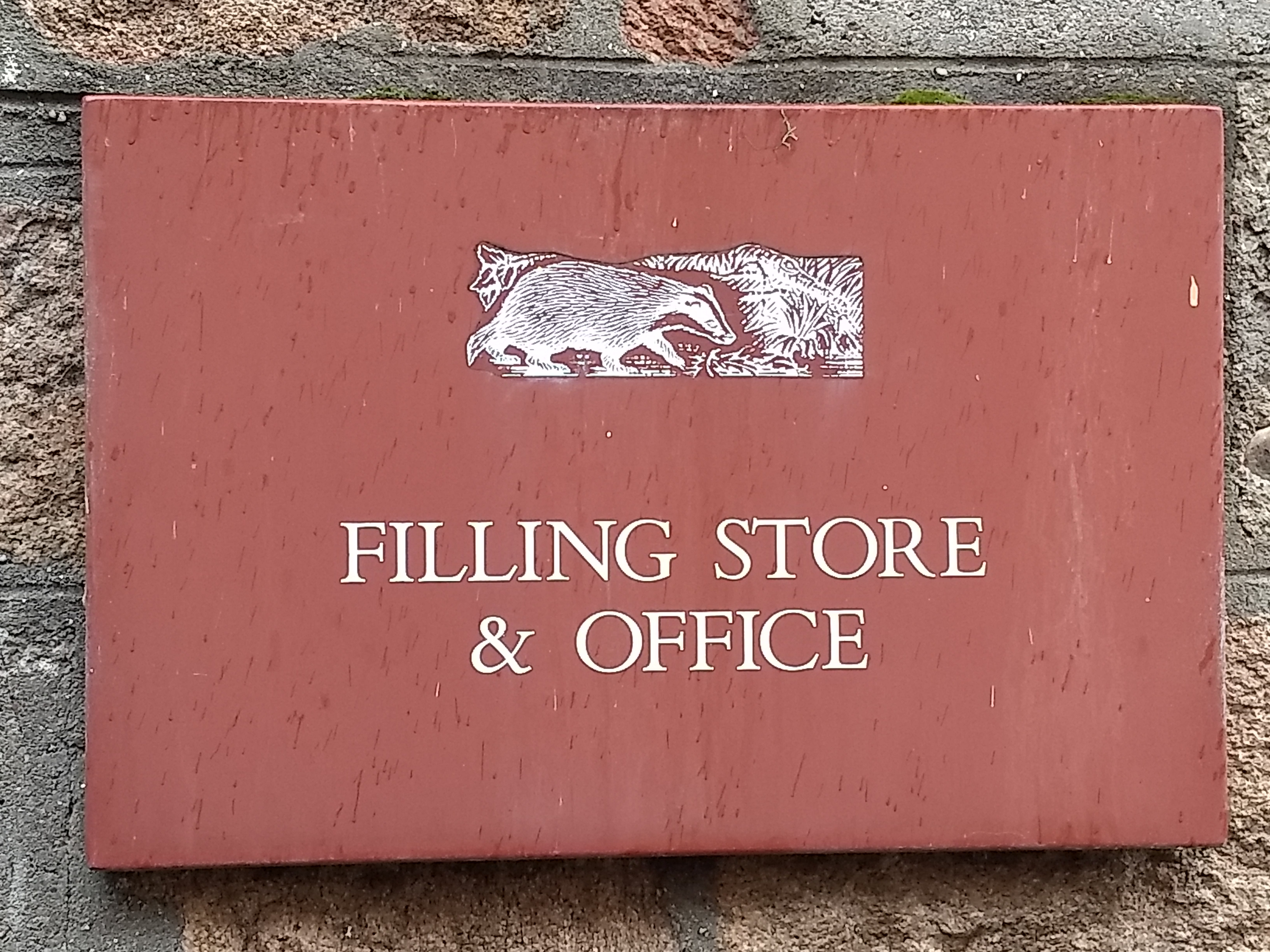
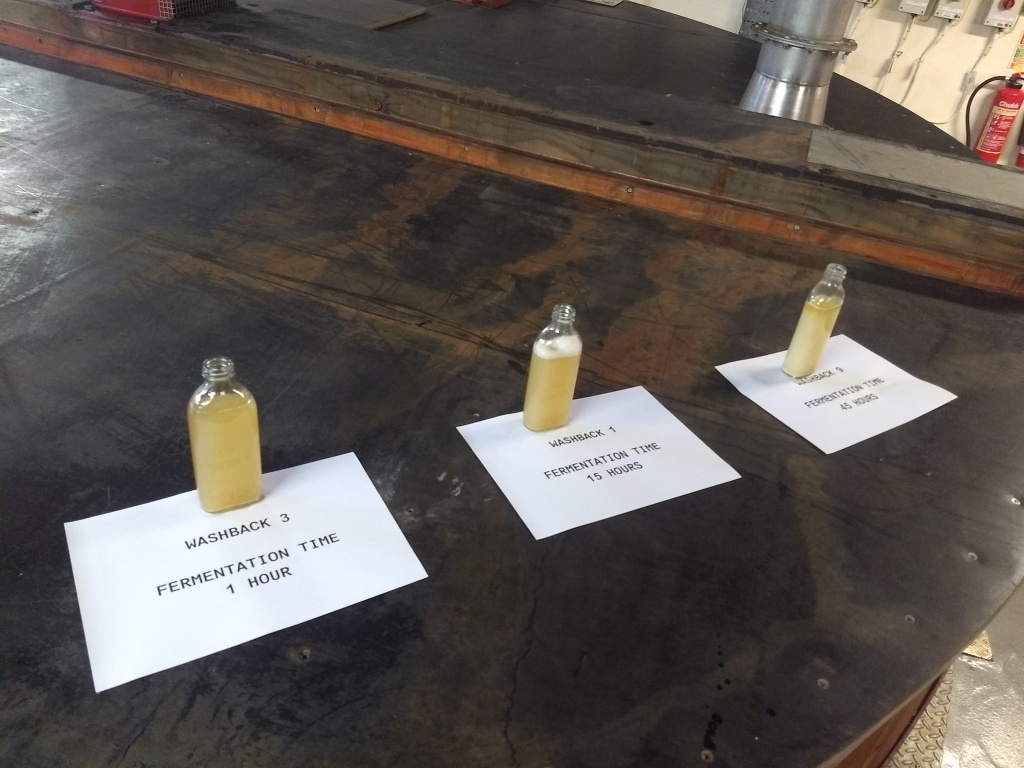
As we visited the fermentation room, Archie made us find three samples of wash for us to smell (not to drink!!), collected at different times: 1, 15 and 45 hours after fermentation started (overall fermentation is about 46 hours for a nutty style). Very nerdy and interesting. There, he was helped by Kyle, a distillery operator from Knockando distillery, deployed at Dailuaine as Knockando is currently closed. He also explained us how the system works in the stills room, answering all our (many) questions. We finally visited the โ€œfilling storeโ€, basically a tank with newmake spirit waiting for tanker truck to take it away. 

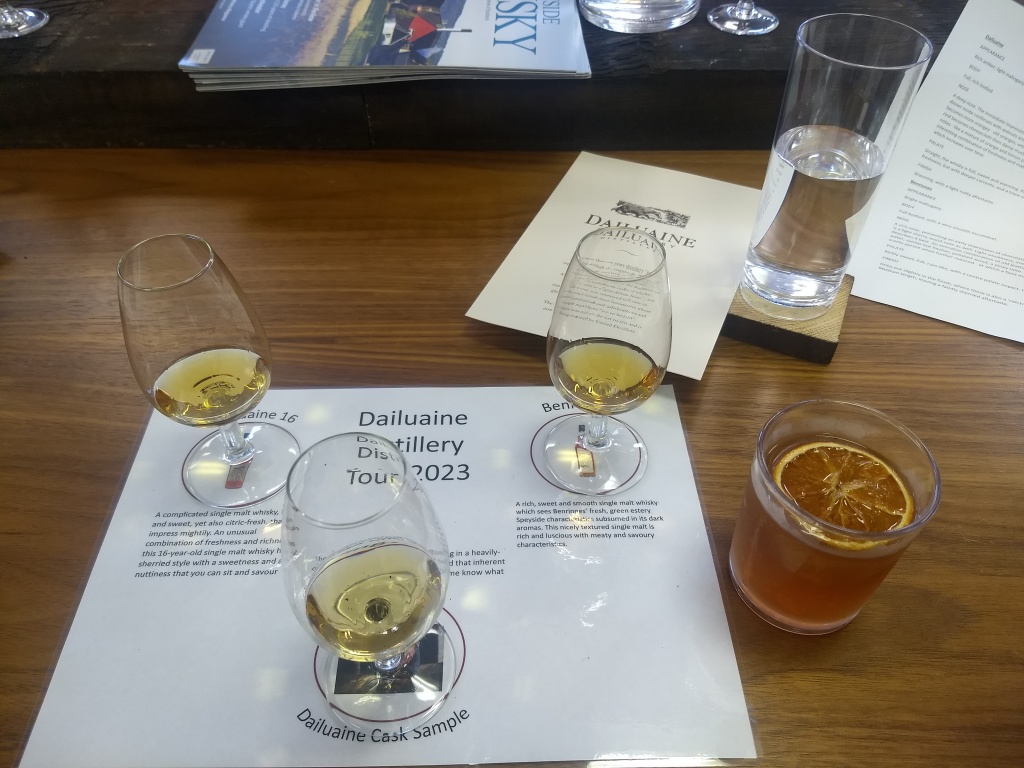
After the tour, it was time for the tasting! One of the offices was set up as a tasting room with a pop-up shop too (which turned out to be common to all Diageo distilleries we visited during the festival). As we got in, we were offered a cocktail: a variation of the Old-fashioned, made with Dailuaine 16 (of course) and orange bitters (instead of Angostura): very tasty! The drams at the tasting were three (four including the cocktail), a bit stingy for an 80-quid tour. We started with the Dailuaine 16 (43%), the Flora and Fauna bottle with the badger on the label. Second dram, another Dailuaine, a cask sample vintage 2010 usually offered in tastings at Cardhu distillery: a truly delicious dram, one of the best we tried during the festival. Finally, for some reason there was a Benrinnes 15, again from the Flora and Fauna range. 

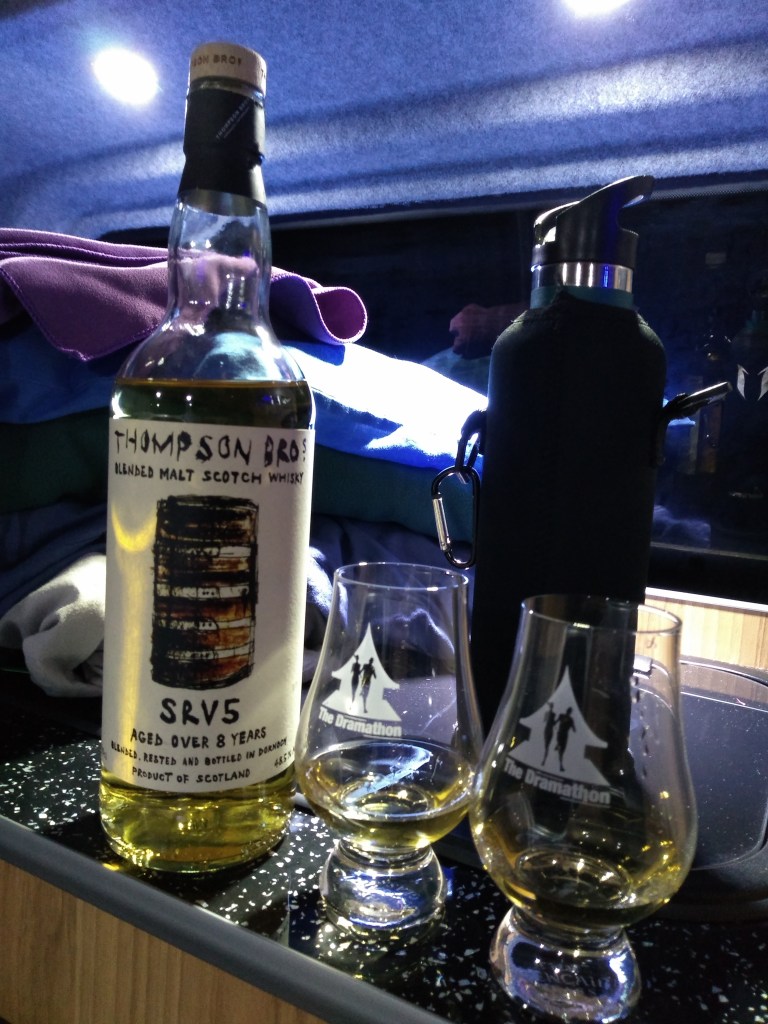
As we came out from the distillery we drove to another, Dalmunach, just to take a couple of pictures: we already knew from the glimpse while running the Dramathon, but that is a stunning one! After paying a visit to the GlenAllachie shop (we didnโ€™t have any event booked there, soโ€ฆ.), we found a spot for the night, a small parking lot near a church. The weather was a bit crappy, so we cooked something in the campervan and caught up with the drivers drams collected during the day: both the Tamnavulin and Dailuaine cask samples were quite great. 

Dailuaine distillery really impressed us, it was like experiencing tradition and progress at the same time, and Archie was truly a great host! Throughout the festival, we also noted that, there is something different about distilleries normally closed to the public compared to the others: they are not โ€œsweetenedโ€ to look like tourist attractions. The ultimate whisky nerd paradise!


Dailuaine Tour (Spirit of Speyside)

Price: ยฃ80.00 pp (April 2023)

Duration: 2hr

Tasting:  a cocktail and 3 drams, Dailuaine 16 (43%), cask sample and Benrinnes 15 (43%)

Target: whisky enthusiasts

Value for money: too pricey

Highlights: Archie was a great host!

Recommended: if you are really really keen to visit

Link: https://www.spiritofspeyside.com/
https://en.wikipedia.org/wiki/Dailuaine_distillery


#30.2 Back to the West

A deep dive in Tobermory


TL;DR: After we (somehow) managed to dry up, the morning after we left the campervan in Kilchoan and hopped on a ferry to Tobermory. Some important business there: shower, lunch, and a visit to Tobermory distillery! That was so nice that we almost missed the return ferryโ€ฆ

(missed Part 1?)

We woke up on Saturday morning, almost dry. Before preparing breakfast, we drove to the Kilchoan ferry pier, as we didnโ€™t want to take advantage of the Kilchoan Hotel ladyโ€™s kindness more than necessary. The original plan would have seen us taking the ferry to Mull, visiting the distillery, and then taking the return ferry to the mainland from Craignure to Oban. However, because we loved the peninsula so much, we changed the plan: we took the ferry on foot, and we would return back to Kilchoan with the last ferry of the day.

The weather was much better, still a bit cloudy but sunny at times, very windy. We had a nice breakfast outside, with the salty sea-breeze hitting us. Before the ferry, we managed to wash the dishes, tidy up the campervan, and prepare a backpack with a change of clothes and towels. This was because in Tobermory, near the aquarium, there are public showers. Unfortunately, this time of the year both campsites in Kilchoan and Tobermory are closed, and a third one in Kilchoan doesnโ€™t have toilettes and showers (only for motorhomes, we guess?). Hence, a shower was really needed (FYI, there should be showers at the Kilchoan community centre too, but they do short hours: opened after we took the ferry to Mull, and closed before we were back).

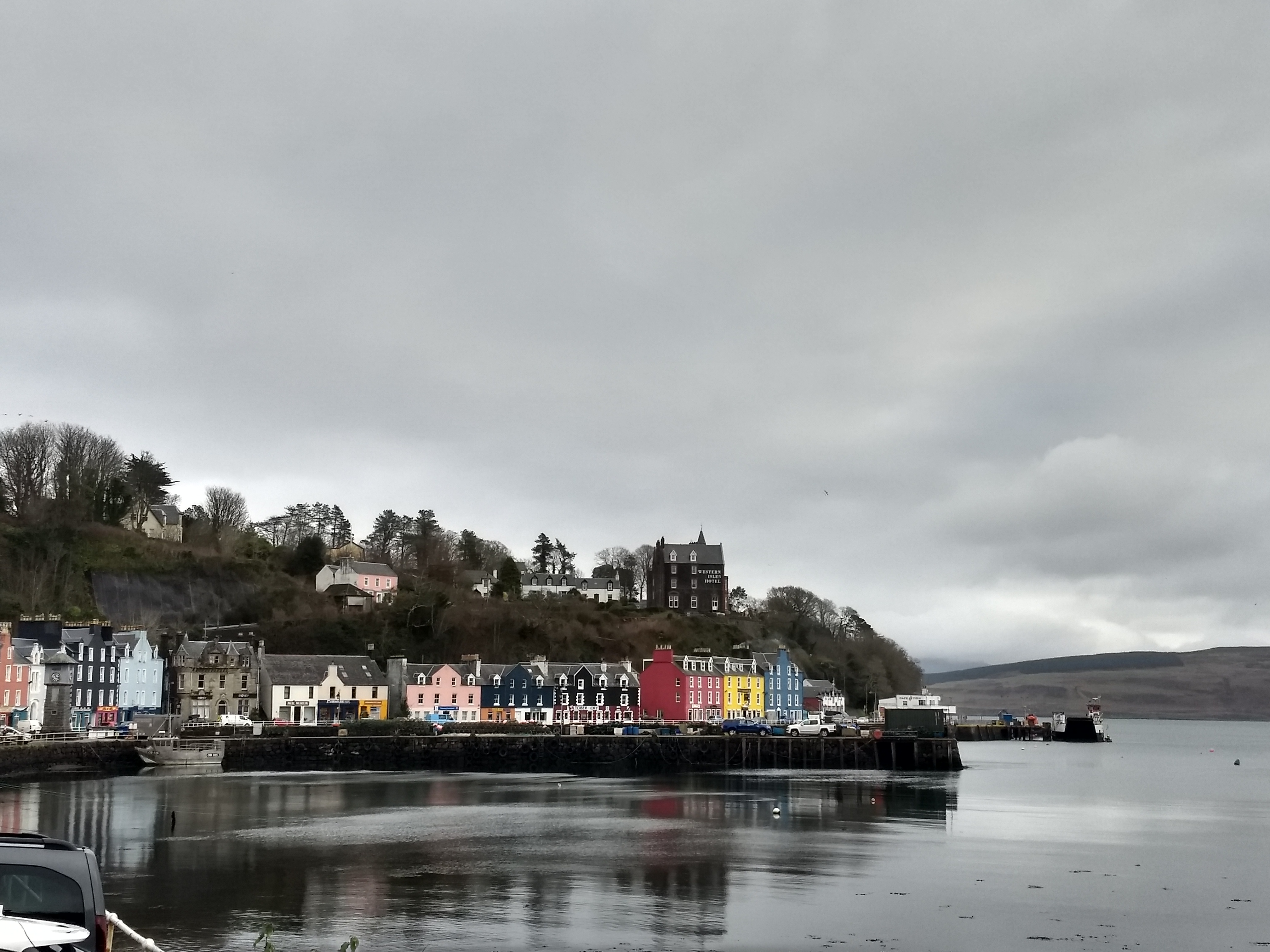
The ferry crossing was fast, slightly more than half hour, after which we found ourselves walking on the Tobermory pier. At the aquarium, which was closed, showers were available indeed! But first we had to go back to the local Coop to get coins. What a feeling, to be clean again! Gianluigi even managed to wash his hair and dry himself up with the hairdryer: cosy! Before our distillery visit we had to get lunch though. We chose one of the restaurants on the pier, between the aquarium and the distillery, the MacGochans. Food was OK, although very abundant: we left over half pizza, which we brought with us. 

Finally, distillery time! We were very excited, we had visited Tobermory in summer 2019, but we couldnโ€™t see production because renovation works were going on. Not this time though, and after a quick check-in, we were in one of the distilleryโ€™s courtyards. We chose the โ€œalternativeโ€ Warehouse 1 experience: because there were renovations in the warehouse (apparently still now, at the time of writing), weโ€™d get a distillery tour instead, before the tasting at the visitor centre. Our guide for the day was Robert, new in the whisky industry, and previously working as a shoe-maker. We liked his approach, a bit different from the usual one: he introduced himself and asked about us, to create a connection, so that during the tour he was โ€œtailoringโ€ the experience to make it more personal. A very nice touch. 

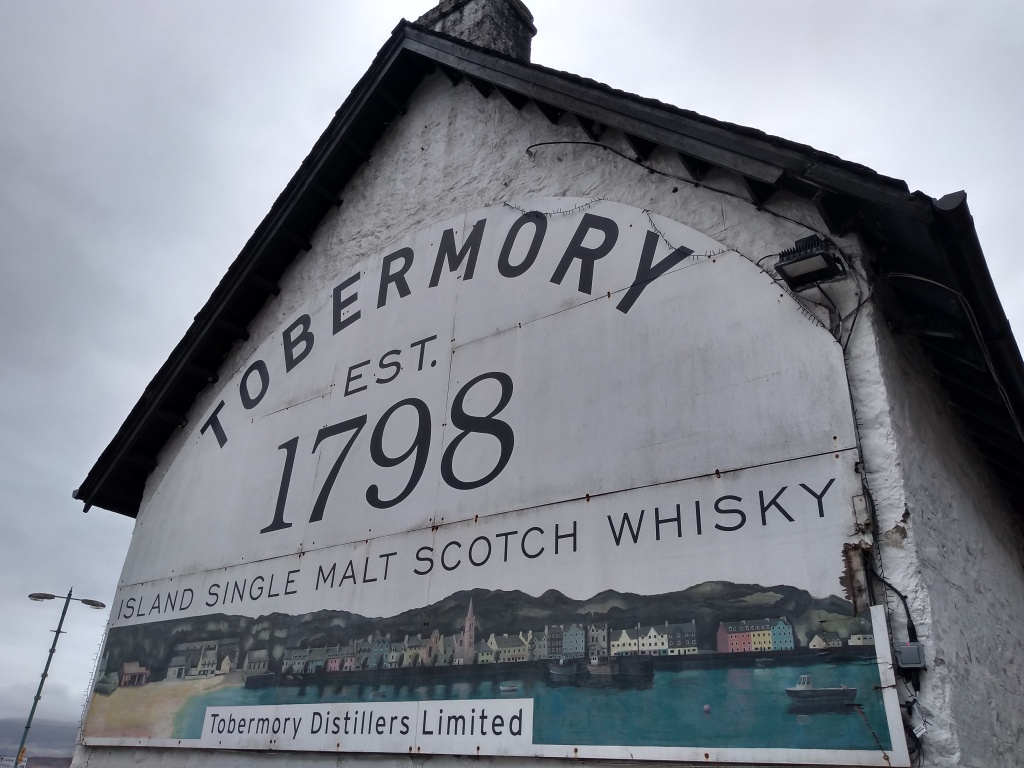
The distillery is one of the oldest, built in 1798, and they produce two main single malts: Tobermory (unpeated) and Ledaig (peated). Production used to be split 50/50, but the master distiller, Brendan McCarron, at an event we attended in December 2022 said that they are going to change it and focus mostly on the Ledaig side. As usual, we went through production like a grain of barley: milling (very old malt mill), mashing (very new mashtun), fermenting (wooden washbacks) and distilling (2 pairs of shiny stills).

All rooms were very narrow, reflecting the little space available to build the distillery. Robert pointed us to a building on the other side of the road, which used to be a warehouse, now flats (almost like being in Leith!). Nowadays, they have only little warehouse space on the island, and most stock is matured on mainland together with stocks from the other sister distilleries, Bunnahabhain and Deanston (both among our favourites). 

After a quick look at the courtyard, we headed back to the visitor centre and started the tasting of the selected distillery casks: first off, a couple of Tobermoryโ€™s, a 2012 ex-bourbon one and a sublime 1995 ex-Manzanilla (although it spent more or less half of its life in an ex-bourbon hogshead before). The Ledaigโ€™s didnโ€™t disappoint either, an ex-bourbon matured (also 2012) and a 2009 finished in a French red wine cask. There is something about Ledaig (and other peated malts) in red wine casks that we like a lot, and we loved this one very much (we took it over a similarly priced 19y ex-oloroso, which we tried a nip of). Like our 2019 visit, the tasting was great overall, and we just would have liked to have some more time to hang around and try more things (we still managed to try a lot, thanks Robert!).

Unfortunately, the time for the last ferry came (actually, we almost missed it), so we sailed back to the Ardnamurchan peninsula with our ransack: a bottled of Ledaig and half pizza. Only off-note of the evening, we realised that the time of sensible deals for Distell bottlings outside the core range is definitely gone, in particular for the distillery exclusives (and this is reinforced by some Deanston bottlings prices we saw floating around the web recently, like ยฃ50 for a 10y 20cl bottle!). A shame, but hey ho, weโ€™ll pick something else. 

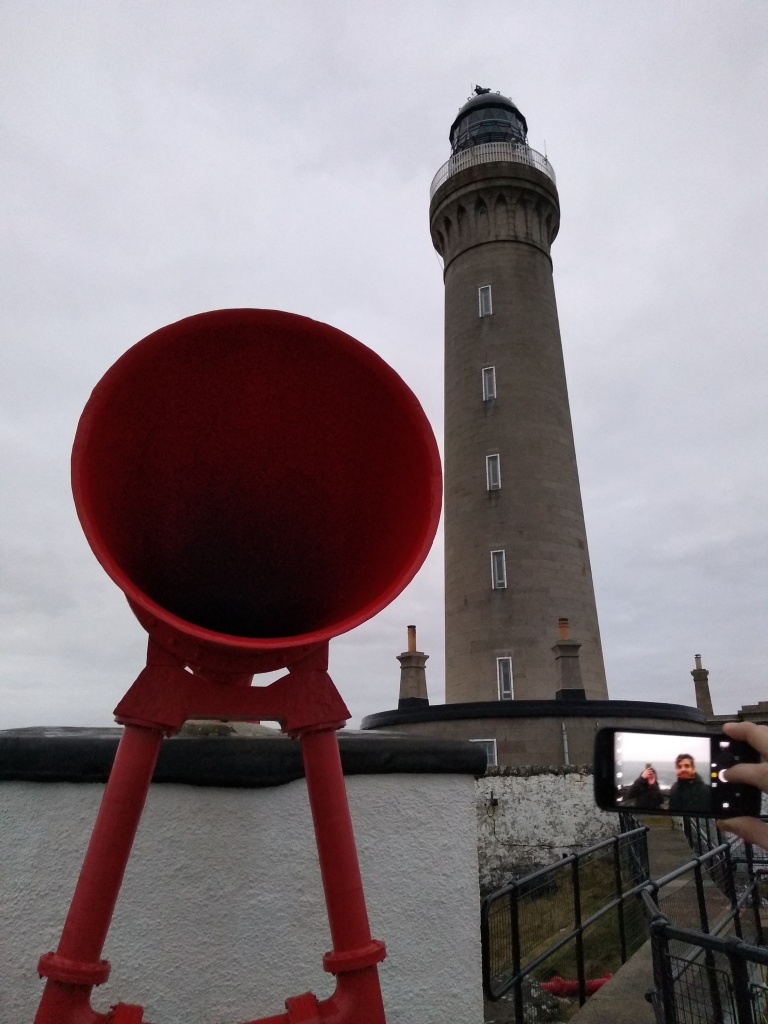
Back at the van, we picked up our (no more) wet shoes from under the vehicle, where we had placed them to dry, and left. We took advantage of the last hour or so of light (sunshine would be an overstatement) to visit the lighthouse. It is a magnificent place, that we loved at first sight. We could have just spent hours there, but the day was ending (painfully soon, but hey, itโ€™s Scotland in February!), and it was not permitted to stay there for the night. On the way back we detoured to Sanna beach, but it was already dark to walk there, and all the potential spots for the night along the road were already busy. We then drove back to the spot facing McLeanโ€™s nose, for a nice sleep. 

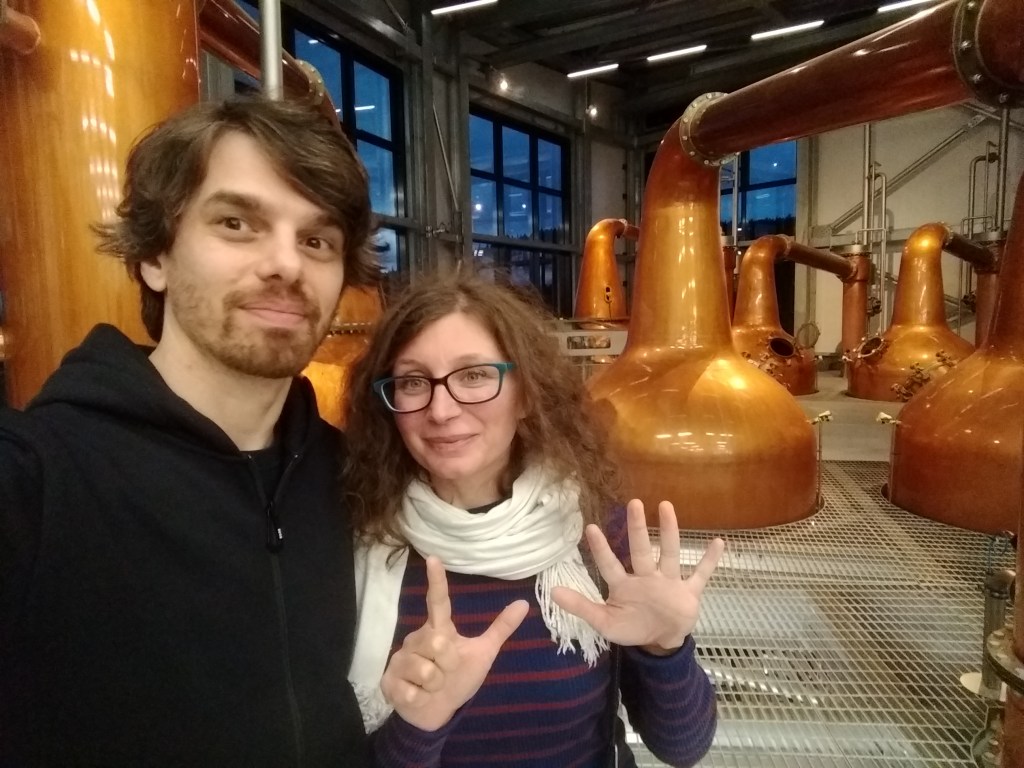
Find us in the picture!

In the morning, after breakfast we were soon on the road towards Edinburgh. The roads were very quiet, and the villages too: we didnโ€™t find anything open to get a coffee, just the automatic machine at the little store in Strontian. Only then we realised: we have a moka, coffee, and a stove on the van! What a coupled of dum-dums! Back on the road, we drove to Corran, took the ferry, but instead of driving towards Glencoe, we turned left to Fort Williams, and we decided to take the road towards Spean Bridge. We stopped there for a quick meal, and then drove on the A86 towards Dalwhinnie. So, once we were there, why not a quick stop? Just enough time to go to the loo and get half dram of their distillery exclusive and bottled-your-own (overpriced both by the dram, ยฃ10 each, and by the bottle, respectively ยฃ90 for a non-age statement at 48% and ยฃ125 for a 12y cask strength, 53.6%), with the other half in the sample bottle for Teresa (she had picked the short straw this time) to enjoy at home. 

So, our first whisky adventure with the Mr. Vantastic was almost a success, bar the unwanted shower we got on the Friday. That taught us two things: check the weather more carefully (in particular in February on the Highlands), and be ready to change your plan quickly. Clearly, a steep learning curve. Slainte! 


Tobermory (alternative) Warehouse 1 Experience

Price: ยฃ40.00 pp (February 2023)

Duration: 1hr (in theory!)

Tasting: 4 drams, 2 Tobermory’s (2012 ex-bourbon cask, 1995 ex-Manzanilla double matured) and 2 Ledaig’s (2012 ex-bourbon cask and 2009 ex-French wine cask)

Target: whisky enthusiasts and geeks

Value for money: good

Highlights: the drams were spectacular

Distillery Exclusives: the 4 mentioned above, plus other bottles from casks of previous tours

Recommended: yes

Link: https://tobermorydistillery.com/


#30.1 Back to the West

Ardnagain


TL;DR: After a very dry January, we are on the road again, direction: West Coastโ€ฆof Scotland, of course. It is also the first whisky trip with our new vehicle: Mr. Vantastic! First destination of the trip is an โ€œoldโ€ acquaintance, the Ardnamurchan distillery. Such a great place, a must-do for every whisky enthusiast!

The year 2023 started similarly to 2022, and 2021: dry. Not exactly the entire January, but still 4 weeks, from the 3rd to the 1st or 2nd of February. Gianluigi managed to sneak in a blood donation right before boozing again: perfect timing!

Because of this, the first whisky trip of the year couldnโ€™t be before February. We were quite impatient, mostly because of a big novelty in our life in Scotland, our first vehicle: Mr. Vantastic, the campervan! We bought this second-hand van, newly converted to campervan in December, after a 1-2 months search. Unfortunately, being December, it had to stay in the parking space for a couple of weeks while we were stuffing ourselves with food in Italy. In January, our maiden trip (to try it out) was a dry one: we went visit the Bamburgh Castle, just south of the border, inspired by The Last Kingdom series, which we thoroughly watched a few months back (โ€œI am Uthred, son of Uthredโ€!). We learned a thing: sleeping in the pop-up roof is like sleeping in a tent on top of a car, strongly advised against in early January.

Finally, February came, and we could take Mr. Vantastic out for a more serious trip: the West of Scotland, more precisely Ardnamurchan and Mull! We prepared ourselves and left on the Thursday evening after dinner, so to avoid the morning outbound road traffic from Leith. We actually drove a bit more than planned, until right past Callander. In spite of having a few more hours of sleep in the morning, we woke up quite early because of the excitement: itโ€™s the first time we were going to visit the Ardnamurchan Distillery after they released their single malt! During our previous trip, we could only try their spirit and the Adelphi blend.

The drive was quite amazing: Tyndrum, Bridge of Orchy, Glencoe, and then the short ferry crossing at Carron: actually very short, as we managed to get on the boat just a few seconds before it left the pier. After the crossing, we drove towards the Ardnamurchan peninsula, on the usual single-track road. We drove past the distillery, because we had decided to park in a spot a couple of miles ahead, where we could just spend the night or at least give us some time and a โ€œniceโ€ recovery walk after the tasting and before driving again. This was a sensible idea in theory (we felt so wise!), but weโ€™ll see how it terribly backfired. By the way, the spot is quite amazing, in front of McLeanโ€™s Nose (we were not aware of the new Adelphi blended whisky at the time), a truly stunning view: in spite of the cloud and wind, we could have stayed hours there just enjoying the landscape.

The walk to the distillery took about 35-40 minutes, but we still arrived a bit early. Julie welcomed us, and we browsed the shop for a while before DJ picked us up for the tour. In the meanwhile, we found out that there was no distillery exclusive/bottle your own because paperwork was not there yet, ouch! The curse of bureaucracy haunting us! Tour-wise, we had chosen the โ€œBehind the scenesโ€ tour, a more in depth experience compared to the one we did in 2019, and it also came with a discount because Gianluigi is member of the distillery AD/Venturers club. We were the only ones on the tour, so that meant โ€œfree question timeโ€ (sorry, DJ!).

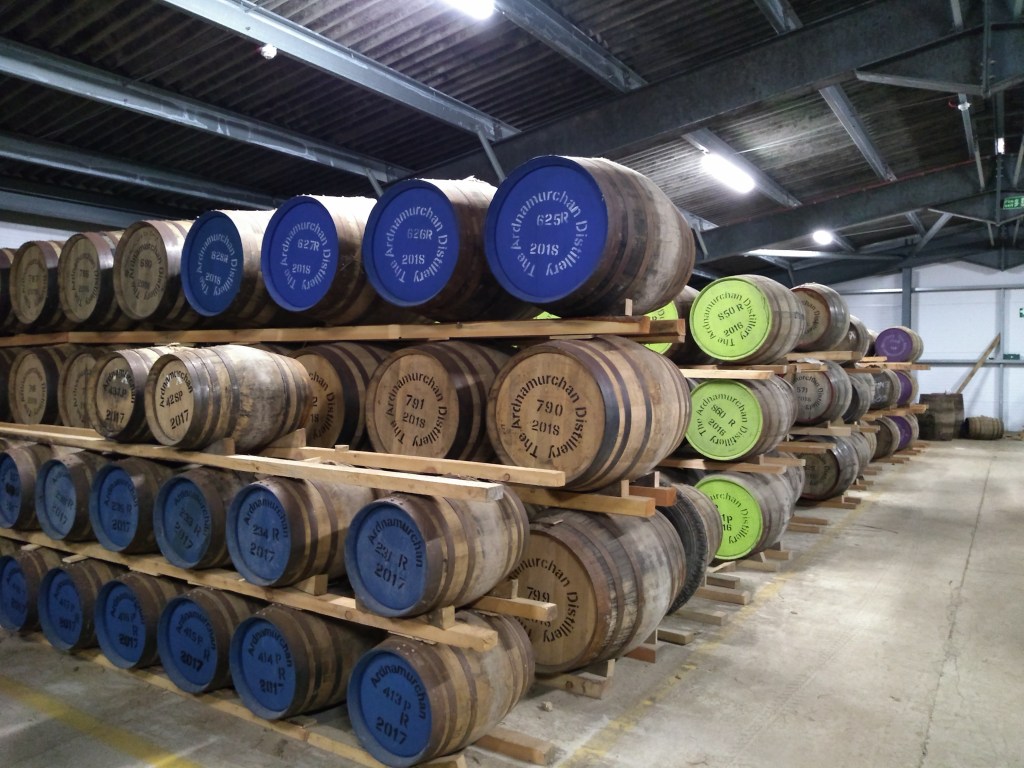
We started in the dunnage warehouses behind the main building, on two levels. DJ explained us the (very eye-pleasing) colour coding of the casks and gave us some anticipations about future annual releases, which will join the Paul Launois, Madeira, and cask strength expressions. We then moved back to the main building, where we went through production. We hadnโ€™t forgotten how compact the distillery is, and how tiny the stills are, and the boiler fuelled with biomass from the area: all very sustainable.

Teresa admiring where some of the magic happens.

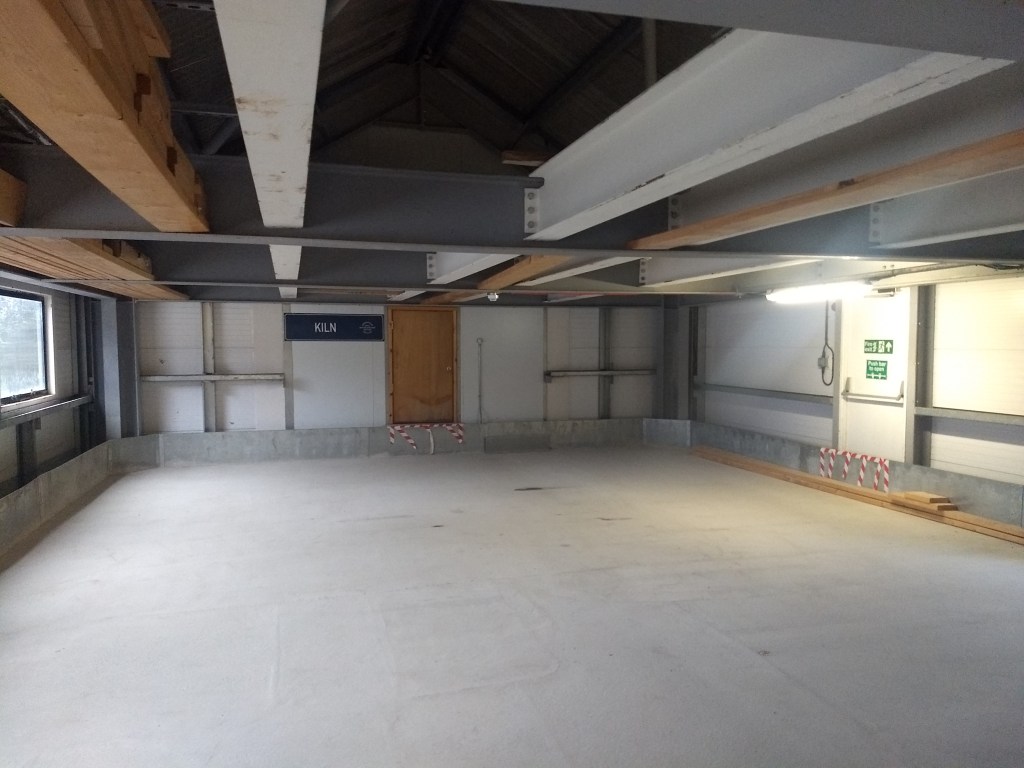
Surprise of this tour, we discovered that not both pagoda roofs are just for aesthetics: a malting floor is being set up and, at some point in the future they will malt some of their barley, with and without local peat: really looking forward to it!

DJ then walked us to the tasting room above the shop, where he started pouring us drams: first, the special for the AD/Venture club (a very nice 7y matured in an ex-bourbon barrel, the alternative was a sherried one). The three drams served as part of the tour were the Bruce-McLean bottled by Adelphi, the Paul-Launois 2021 (which we hadnโ€™t tried) and the single cask CK.339 (unpeated), all three quite amazing, so very difficult to single one out. On that day maybe the Bruce-McLean, but on another day we would have probably picked a different one.

One of our favourites.

Then the mess happened. What we did not took into consideration was the weather. On the way to the distillery, it had started raining but not that much. We thought โ€œoh well, it will go awayโ€. It didnโ€™t. Actually, by the end of the tour it was pouring down. So after the tour we waited a bit, but then we gave up and just left. Of course, by the time we were into the campervan, we were soaked. We spent the next hour drying ourselves up with the diesel-heater and fortunately we had an extra change of clothes and shoes. Teresa just before leaving Edinburgh had asked: โ€œis a second pair of shoes really necessary?โ€ Oh, yes it was.

After some hours drying and warming up, we decided to go get some food in the only local โ€œpubโ€, the Kilchoan House Hotel bar, in Kilchoan. In spite of the many options on their menu, everything is more or less deep fried, including the sausage Gianluigi ordered, to his surprise. We had a nice wee chat with some locals, although some of them soon left for an event at the community centre club. Again to our surprise, the bar was closed on the next day, which meant no Scotland-Wales 6 Nations game for us. The bartender was very nice though, she kindly allowed us to sleep in the hotel parking lot. Thanks to that we could relax and enjoy a pint.

A night cap after a tough afternoon.

Despite us almost ruining the day because of our dumbness, we had a great time again on the Ardnamurchan peninsula. The landscape is amazing as we remembered it from our trip back in 2019. There is a feeling of calm and peace when visiting such remote spots. About the distillery, they are one of the few producers we really admire, for their dedication and their ethos, and their ability to supply us with incredible single malt (and blends too!) at still reasonable prices. Their club is run properly, it is obvious that they are whisky enthusiasts and, thus, it is made for whisky enthusiasts, not just another money-making machine. We believe other companies should definitely take notes.


Ardnamurchan Behind the scenes

Price: ยฃ50.00 pp (February 2023, ยฃ35 for the AD/venturers)

Duration: 2hr

Tasting: 3 drams chosen from what available at the bar

Target: whisky enthusiasts and geeks

Value for money: good

Highlights: the walk in the warehouse

Distillery Exclusive: not available when we were there (due to delay in paperworkโ€ฆdโ€™oh!)

Recommended: even have to ask?

Link: https://www.adelphidistillery.com/


#28 Visiting Glenturret

A stop in Crieff on the way to Skye


TL;DR: In summer 2020, in the brief period it was possible to travel, Gianluigiโ€™s parents came to Scotland. We decided to go visit the Isle of Skye, with a quick stopover in Crieff. A nice visit at Glenturret distillery, just before their complete range revamp. 

(Another pandemic story…Sorry, it will be the last one!)

It was 2020, summer. After the first wave, the daily macabre count of cases/hospitalised/deaths from the dreadful virus slowed down. As a consequence, for a brief couple of months, borders reopened, some flights were restored and it looked like life was going back to normal (fun fact: the day pubs reopened, we went to Diggers to have a couple of drams and not think about the pandemic, just to find out that Gianluigiโ€™s boss was on BBC talking about it, ah-ah!). Unfortunately, it wasnโ€™t the case: by early autumn pubs closed again, and we entered another long lockdown. Thanks, science, for vaccines!

However, between lockdowns, we managed to book a flight for Gianluigiโ€™s parents to come to Scotland for a week-long visit in the middle of August. It goes without saying, we involved them in a couple of whisky activities during those days. First of all, we booked one of Justineโ€™s tours (a slightly different version of her current Edinburgh Whisky Trail): from the silent Cameronbridge Distillery, behind Haymarket train station, to the lovely Stockbridge neighbourhood passing along some closed distilleries (like the Dean), former DCL offices, and some other historical landmarks. The day was sunny and the walk very nice. It ended at the Whisky Forager restaurant (now closed, but Colin is now running the Tipsy Midgie bar near Holyrood) for a great meal and some fantastic drams. Not sure how much Gianluigiโ€™s parents grasped (their English is not thatโ€ฆproficient), but they enjoyed the day out anyway.

But it was already their fourth time in Auld Reekie, so we decided to drove them to the Highlands, destination: the magnificent Isle of Skye! Of course, depending on the route, there are a number of distilleries available to visit. To bag a new one, choosing among the ones opened at the time (not many), we opted for Glenturret. Back then we were not very acquainted with this whisky, we had only tried one or two of their core range expressions (which at the time included the Triple Wood, Peated, Sherry Cask and a discontinued 10 years old, all bottled at 43%) and some excellent bottlings from the SMWS, mostly peated whisky in re-charred casks. We didnโ€™t know that they were about to revamp their entire core range, which only a few months later came out with different expressions: a non-age statement Triple Cask (similar to the previous one), a peated 10y, a sherried 12y and a high-abv 15y. Oh well, weโ€™ll go back sometimes.

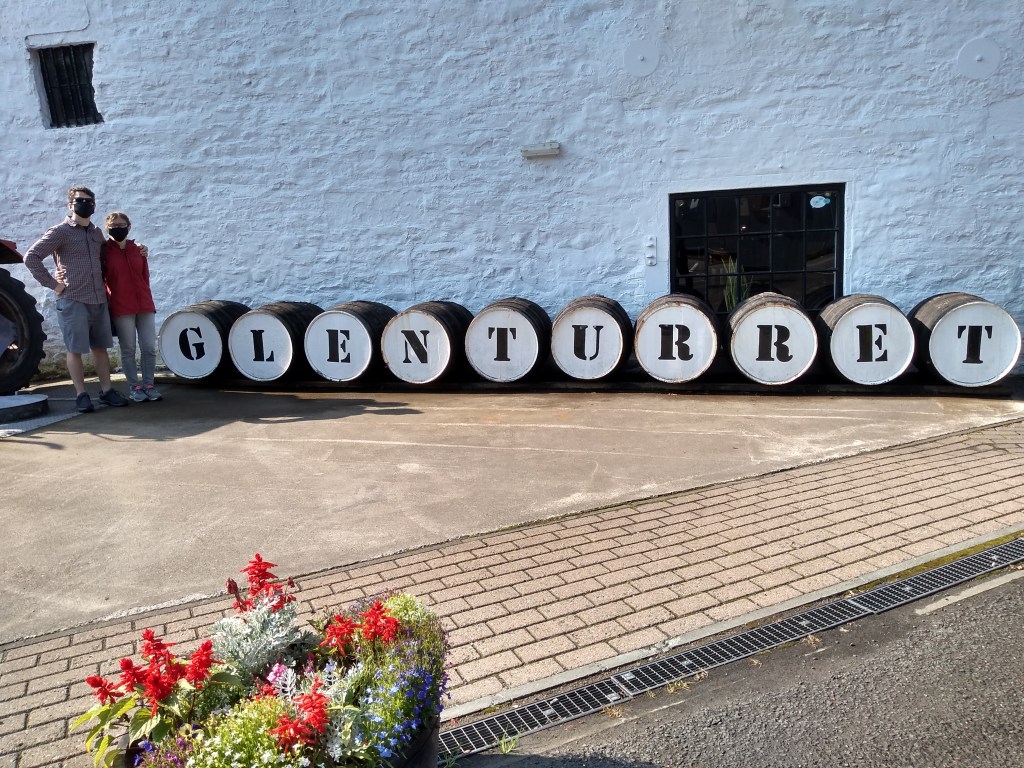
The drive from Edinburgh to Crieff was quite nice. We left the main road in Crieff and took a very nice wee one passing through a wood, it was almost like driving to the Shire. We finally got to the distillery well ahead the first tour at 10am. Owned by a joint venture led by The Lalique Group since 2019, Glenturret is allegedly the oldest working distillery in Scotland (earliest record dating 1763). Definitely not a big one (around 340,000 lpa), the distillery used to be home of the Famous Grouse.

A tribute to the legendary distillery cat.

The distillery tour was socially distanced, with markers where we needed to stand, and only 6 people: the four of us and a couple. The guide kindly agreed to leave us some time after her explanations to translate for Gianluigiโ€™s parents (which, truth to be said, took away some of the enjoyment from the whole experience). We couldnโ€™t take pictures inside the production, but we were generally surprised by how manual everything was, from mashing to distilling.

At the end of the tour, near the filling room, we got our dram: a taste of their Triple Wood, but at the shop we also got two tiny samples of their Peated and Sherry expressions. Both solid, but not mind-blowing: we now totally understand why they felt the need to revamp their range – at the time it was OK but a bit dull. After the visit, we stopped for a coffee and a bite at their cafรฉ (now there is also a Michelin starred restaurant) before hitting the road again.

A nice wee stream near the distillery.

The drive through Bridge of Orchy and Glencoe was amazing as usual (we stopped a few times to let Gianluigiโ€™s mum take a gazillion pics), and we managed to stop to Ben Nevis distillery to pick up a great (now unfortunately discontinued) bottle of Glencoe 8y blended malt. We had not been on Skye before, and thanks to that visit we now understand all the frenzy about it: it is truly incredible.

The landscape is amazing, and something incredible at every turn. Some not-so-great stuff as well, like the difficulty of finding a place to eat in Portree without a reservation (although a late dinner at Dulse and Brose was worth the wait), and being almost eaten alive by midges at the Fairy Pools. The day we visited the Fairy Pools was also the day Talisker distillery reopened: the website reported that you could either call or send an email. We tried to call all morning to see if we could get in, but no reply. We got there anyway (it was only a 10 minutes drive), where we found a queue and another Italian couple explaining us that we should have sent an emailโ€ฆStill wondering why they wrote โ€œcallโ€ on the website, but hey ho.

We left Skye driving along the north coast through Applecross, Torridon and Ullapool, then heading south from Elphin to Tain, where we booked a last minute B&B. The evening program was to take a cab and go to have dinner and drams at the Dornoch Castle Hotel, a 10-minute drive away. Unfortunately, Gianluigiโ€™s dad injured his eye in the hotel (something very minor, turned out), so we spent the night at Inverness ER instead: bummer. The final day we managed to visit Cawdor Castle and its nice gardens, and we crossed the Cairngorms (always a great view) before driving through Peth, Fife and finally getting to Edinburgh. Another distillery bagged, while exploring another bit of this incredible country.

Until next time, slainte!


Glenturret Distillery*

https://www.theglenturret.com/

* No summary because everything changed dramatically since then


#27.5 Speycation

The one when we made it to 70 distilleries


TL;DR: And finally, we got to 70 distilleries! The lucky one was the Cairn, a new and very modern distillery in the Cairngorms, right outside Grantown on Spey. We went back to Edinburgh the day after, but only after a visit to Dunphail distillery, at the time still a building site. 

(missed Part 4/Part 3/Part 2/Part 1?)

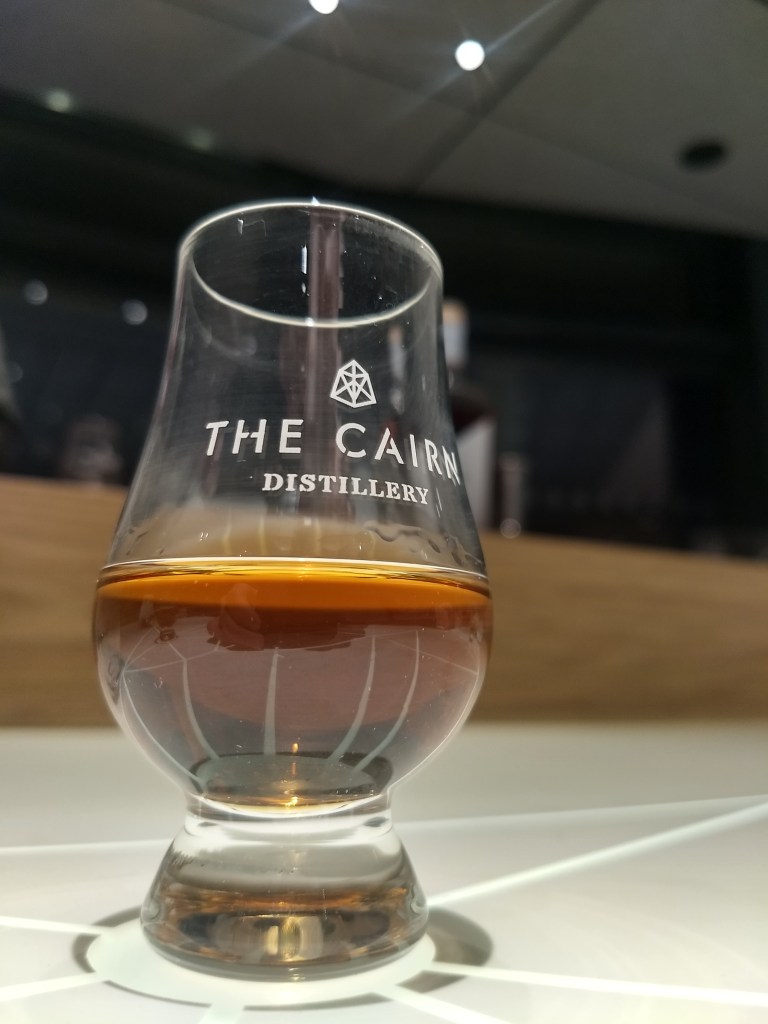
Sunday was a long day, we started with Glendronach, followed by a Chivas Regal tasting at Strathisla. In the last post we left you off on the bus, as we were leaving Keith. The last (and final) activity of the day, was a visit to a new distillery (spoiler: it wonโ€™t be the newest in this post): the Cairn. It is located in a very beautiful flat spot in the Cairngorms Park, and the building concept is to โ€œmixโ€ with the landscape. It is owned by Gordon & MacPhail (remember the first tasting of the holiday?), and because itโ€™s inside a national park, there are no warehouses on site, they are at Benromach distillery, in Forres (also owned by G&M).

We arrived there 20-30 minutes late on the schedule, it was almost dark outside, but the team were very kindly waiting for us (they will be rewarded, at the end…wink, wink). The building is very modern, almost futuristic, substantially departing from what youโ€™d expect from a typical Speyside distillery. Here the group split in two: some only had drams at the bar, while others (including us) toured the distillery.

By wondering around it, we could see how everything is computerised, so they can run the production with minimal effort. The tour guide, John, was very nice: he took this job recently after a past in the ski industry. Gianluigi (who used to enjoy skiing before rugby took his ACL awayโ€ฆtwice) chatted with him a bit about Dolomites ski locations – there are some truly memorable tracks over there!
The touristy part of the distillery, including the video, was a bit cheesy (do they really need a clock to mark how long are we away from a 10-year Cairn whisky?), but thankfully not as much as others we visited in the past.

A nice dram ๐Ÿ™‚

After the tour we had two drams, both from the range of CRN 57 (57 being the latitude) blended malts, the 12y and 18y. They are bottled at 43%, which at our arrival discouraged us, but we have to admit they are both quite good, in particular the 18y. As a matter of fact, we brought back a bottle of it to share with Gianluigiโ€™s family at Christmas: velvety and easy drinking, chocolate and dried fruit notes, the perfect dram for such an occasion (full disclosure: in Teresaโ€™s family almost no one drinks alcohol, hence no bottle). The range is only available at the distillery, and it is completed by a 25y (43%) and a 30y (51.1%). They were (and hopefully still are) all very well priced, and in fact almost everyone bought a bottle, and quite a few 30y were sold (proving that the distilleries who didnโ€™t reply to our visit requests definitely missed out!).

Celebration time!

The Cairn is the 70th distillery we visited (well, 71st for Teresa, ahah): hooray! To celebrate we had bought a bottle the day before, a very rare independently bottled Tamnavulin from the Connoisseurs Choice range (by G&M), which we shared with the gang on the bus. We chose it because it ticked all the boxes: cask strength, not chill-filtered, not artificially coloured, 14y of age, full maturation in a refill bourbon barrel, which makes the distillery character emerge (unlike the many Tamnavulin offerings in supermarkets). Creamy, light fruit, vanilla: a great clean and crisp dram! This confirmed our theory, that most scotch single malt distilleries can produce great whisky, and if things go wrong it is usually at bottlingโ€ฆ
Back to the hotel, because it was late, we all had dinner at the Fayre Brewer, next door from the hotel. One of our pals, Mark, was disgusted by Gianluigiโ€™s choice to have mashed potatoes instead of chips with his battered fish. That brought lot of laughs, and we even found a name: THE FISHY MASHY! Oh well, that might resemble what we feel as Italians when they put weird toppings ion the pizza!!!

An almost ready distillery, yay!

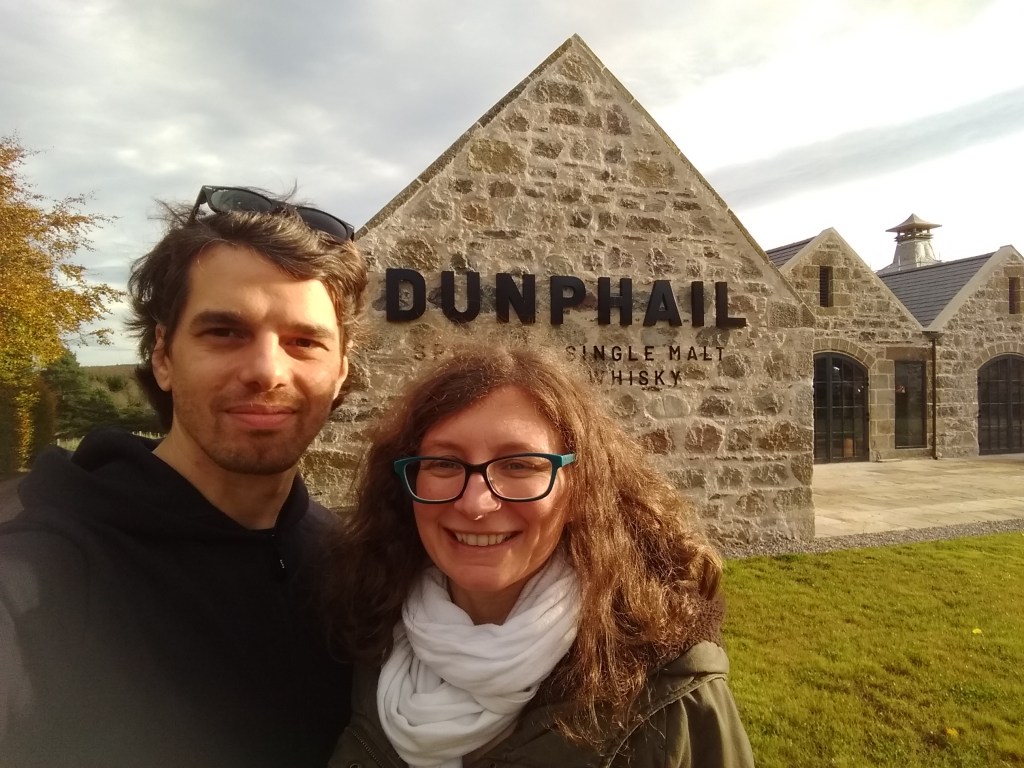
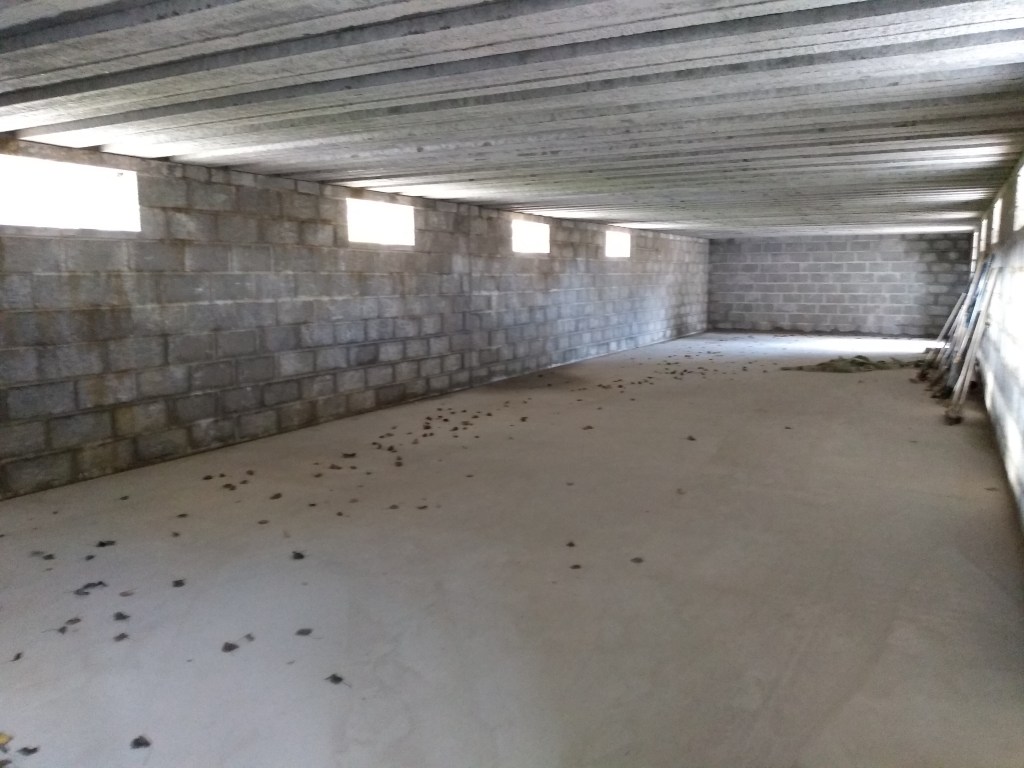
Well, thatโ€™s all for our Speycationโ€ฆoh no, wait! Justine the maverick didnโ€™t leave anything untried, so we had an activity for the Monday morning, on the way back to Edinburgh: the visit to the Dunphail distillery! This is located in, you guess where, Dunphail, just a few miles south of Forres. It is owned by the same company owning the very successful London boutique distillery Bimber. At the time, it was being built: we visited a construction site or โ€œthe embryoโ€ of a distillery, if we want to be poetic. We were greeted by Dariusz, who started showing us around. The buildings, which used to be an old farm, were renovated already, and about to be completed (well, structurally speaking): the main distillery building, the malting floor (more about this later) and the shop/visitor centre. A warehouse was there already, where at the time they were keeping their equipment.

The future malting floor, so exciting!

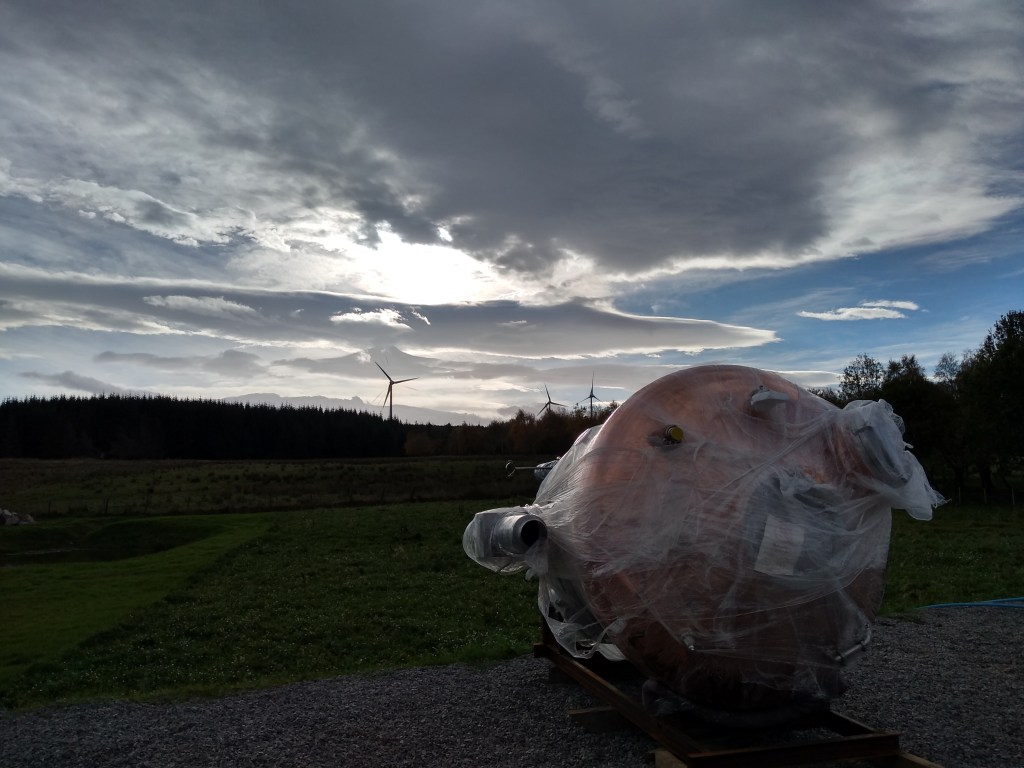
There are many reasons to be excited about this project. First, they will have their own malting floor. Considering the current malt shortage (in particular peated malt) this is a very smart move, and they plan to produce both peated and unpeated malt. In the main distillery building, the equipment was about to be fitted inside. They aim for long fermentation (hurray!), and there are going to be three stills: two wash stills (first distillation) and a directly fired spirit still. The reason for the two wash stills is that a single one was too big to fit inside the farmhouse building. At the time, however, the equipment was laying around so we could take a sneak peek at it. We really canโ€™t wait to visit the distillery and try their new-make spirit!

A still to be…

After this, we all said โ€œgoodbyeโ€ to each other and everyone left towards Edinburgh. It was a very different experience compared to visiting distilleries on our own. While on the one hand we didnโ€™t have much time to explore the area as we usually do, the tours and tastings with such a good bunch of people were definitely much more fun and (because the knowledge of the crowd is always bigger than the individualsโ€™ one) more interesting. We are really looking forward to the next Edinburgh Whisky Group trip.

Until next time, slainte!

The Cairn Explorer Experience

Price: ยฃ25.00 pp (October 2022)

Duration: 1hr 30min

Tasting: 2 drams, CRN57 blended malt 12y (43%) and 18y (43%)

Target: Anyone, but whisky geeks might appreciate it more

Value for money: Good

Highlights: the distillery setting

Distillery Exclusives: all the CRN57 blended malt range, 12y (43%), 18y (43%), 25y (43%), 30y (51.9%)

Recommended: only if curious to visit a modern and totally automated distillery

Link: https://www.thecairndistillery.com/


Dunphail Distillery*

Link: https://www.dunphaildistillery.com/

*No summary because it is not open yet!

#27.4 Speycation

Out of Speyside and back:
Elgin-Huntly-Keith


TL;DR: Sunday was a busy day: we started off with a trip to Huntly, to check out Glendronach distillery. After the tour and a very nice (but stingy) tasting, we jumped on the bus again to go to Strathisla, a beautiful distillery where we tried some cask strength Chivas Regal. 

(missed Part 3/Part 2/Part 1?)

Sunday was a big day: not one, not two, but three distilleries! Not all of them were in Speyside though. Because of the planning issues we wrote about last week, we had to go outside, but just: Glendronach, in Huntly. This distillery is very popular although some of the recent choices they made, plus a price increase in the releases, are making them being less on geeksโ€™ radars (at least the ones we follow). Nevertheless, their stuff can be really superb โ€“ for example, when we visited the distillery in 2021, we tried some great expressions. Similar to Glenallachie, at the time it wasnโ€™t possible to do a tour of the production because of Covid, so the possibility to visit their production this time was definitely a bonus for us. 

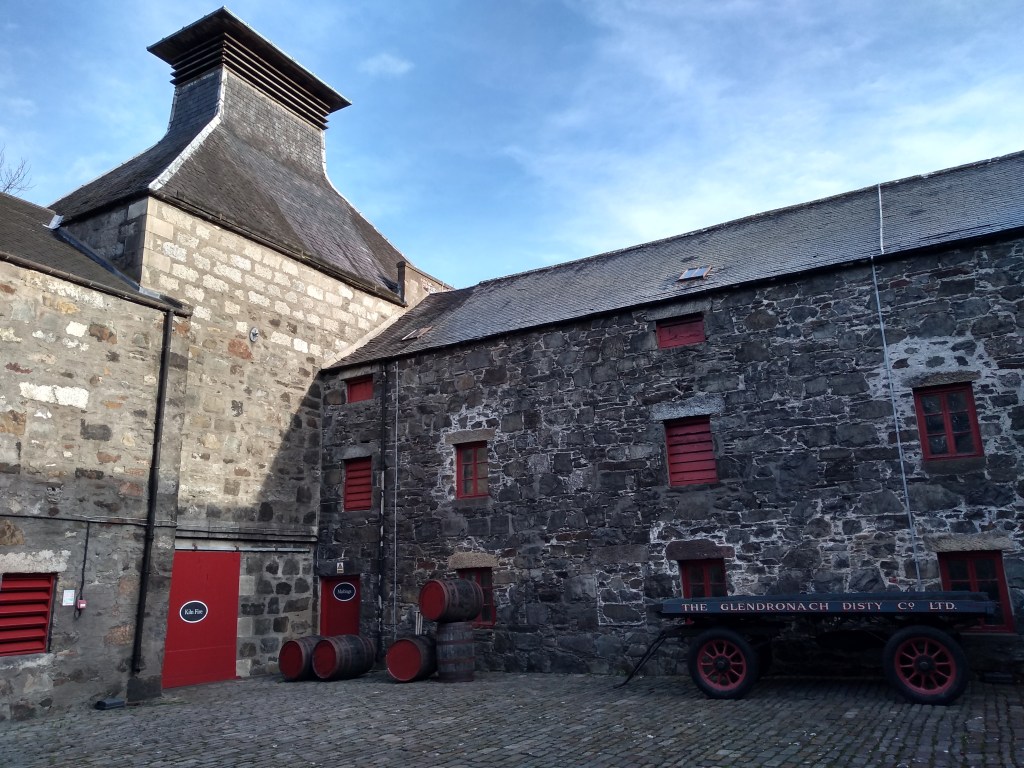
The picturesque courtyard.

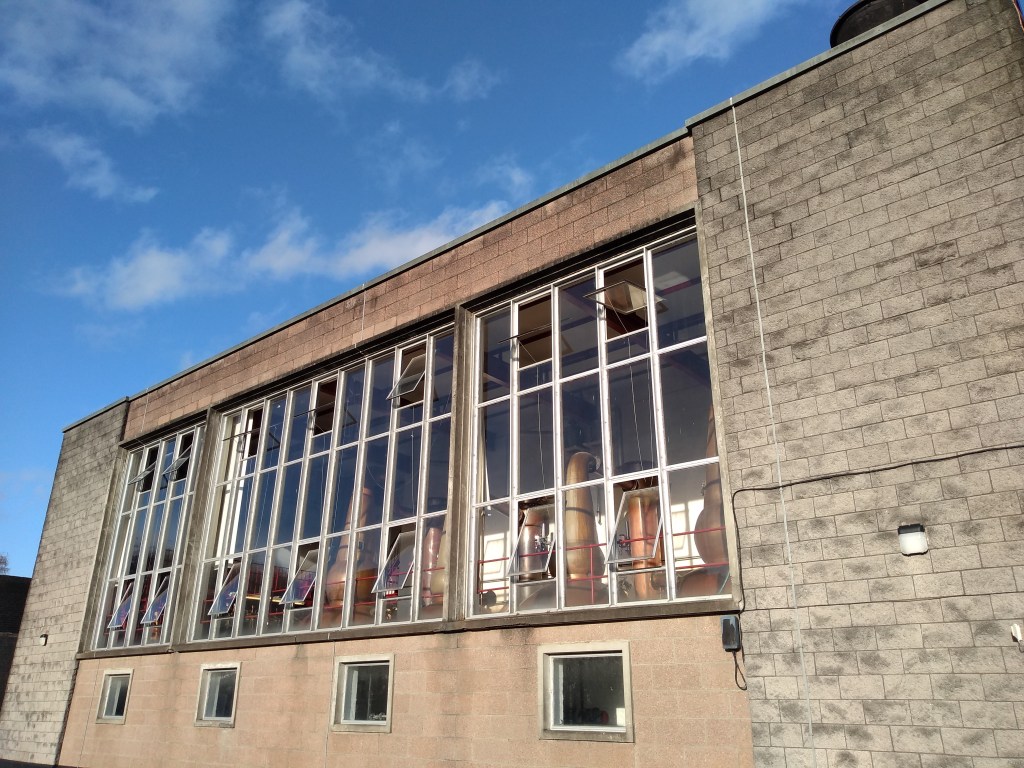
When we arrived, the weather was still very nice and sunny. They split us up in two groups, one starting off with the tasting, the other with the tour: we were in the latter. Our guide was Vicky, a very funny and knowledgeable lady who had also hosted the sherry masterclass tasting we did in August 2021. The tour started in front of a very old building in the corner on the right with respect to the road coming in. In our understanding, it is one of the first buildings on the site, with a very nice internal courtyard. There, we took a quick look at the milling room with its old malt mill. We moved to the rest of production, which is mostly located in the big windowed building right in front of the parking lot, characterised by a more modern (and not particularly nice) architecture, with the bonus that the stills can be seen from the outside. At the moment they have six stills, with the last four installed in the 60s. However, there are currently plans to have more to increase the production capacity. They have six warehouses on site – we visited one of the three dunnage, just next to the visitor centre.

The still room, from outside the room.

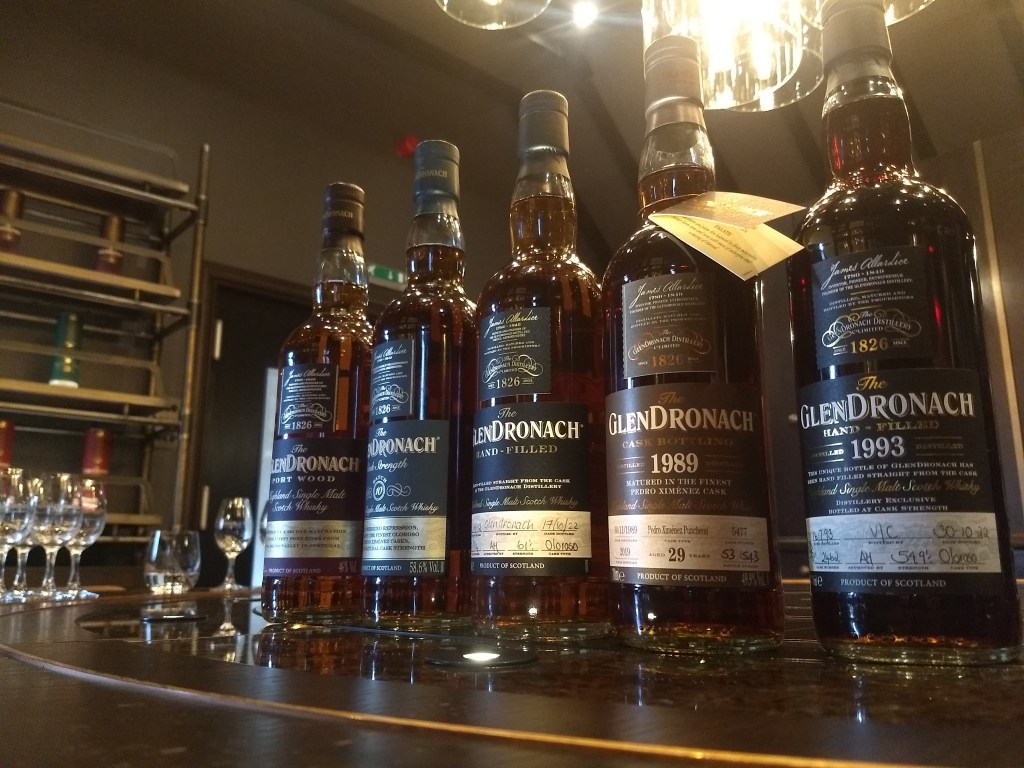
After the tour, the tasting was waiting for us: five drams, at Justineโ€™s request without any of their regular core range (so NOT the 12, 15, 18 and 21). We started with the Portwood (46%) and the cask strength batch 10 (58.6%). Moving on, we tried one of the distillery bottlings (or fill your own) at the time: a vintage 2012, 10y, matured in an ex-oloroso puncheon (61%, ยฃ105). The fourth dram was a 1989 vintage (29y, bottled in 2019), from an ex-PX puncheon (49.9%), while the final was the second distillery bottling: a 1993 vintage (again 29y) from an ex-oloroso puncheon (54.9%, costing an eyewatering ยฃ550). The drams were all delicious, however while decanting an extra set that was poured by mistake (to gift the bus driver) we realised that they were only 10ml measuresโ€ฆa bit stingy for the ยฃ50 we had paid. At the bar, most of us took another dram: we got one finished in virgin oak (definitely one of the strangest drams we had) and a 12y (vintage 2007) matured in ex-PX cask which was delicious.

A special tasting!

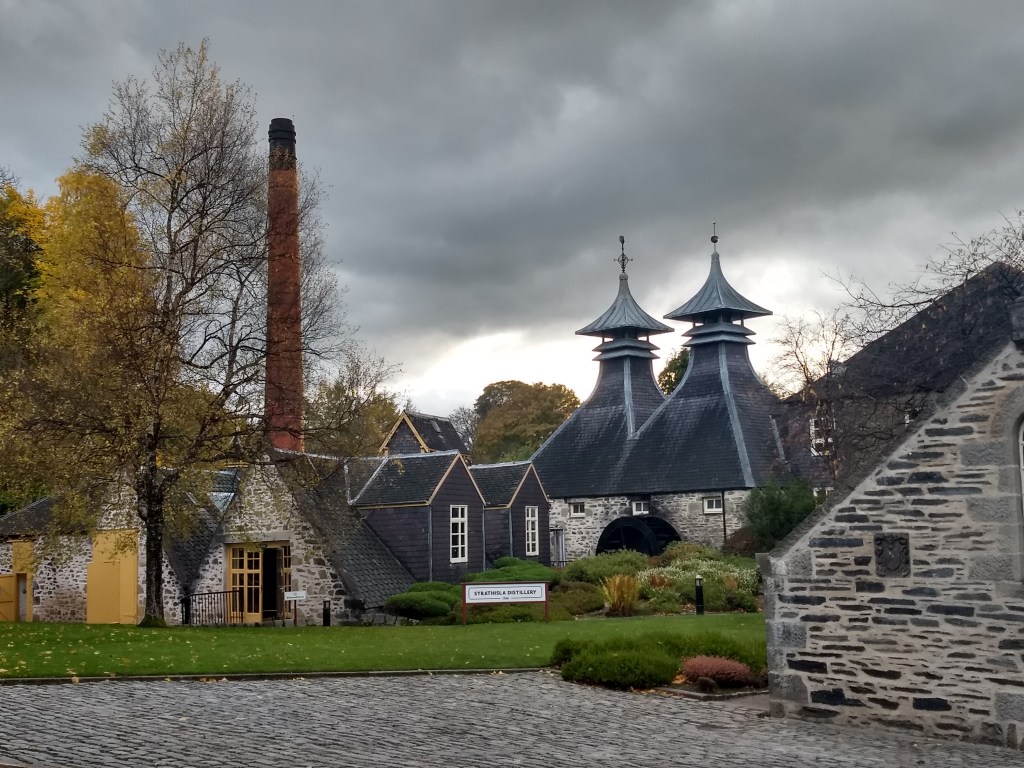
Back on the bus, we only had time to grab a meal deal at a big Tesco on the way to our next destination, Strathisla! As we arrived, we remembered how beautiful it was, one of the prettiest distilleries in our opinion. This time we didnโ€™t do a tour (which we had already done it in 2019, together with a blending experience), but a tasting of Chivas Regal, in the warehouse number 3.

Cute, sooo cute.

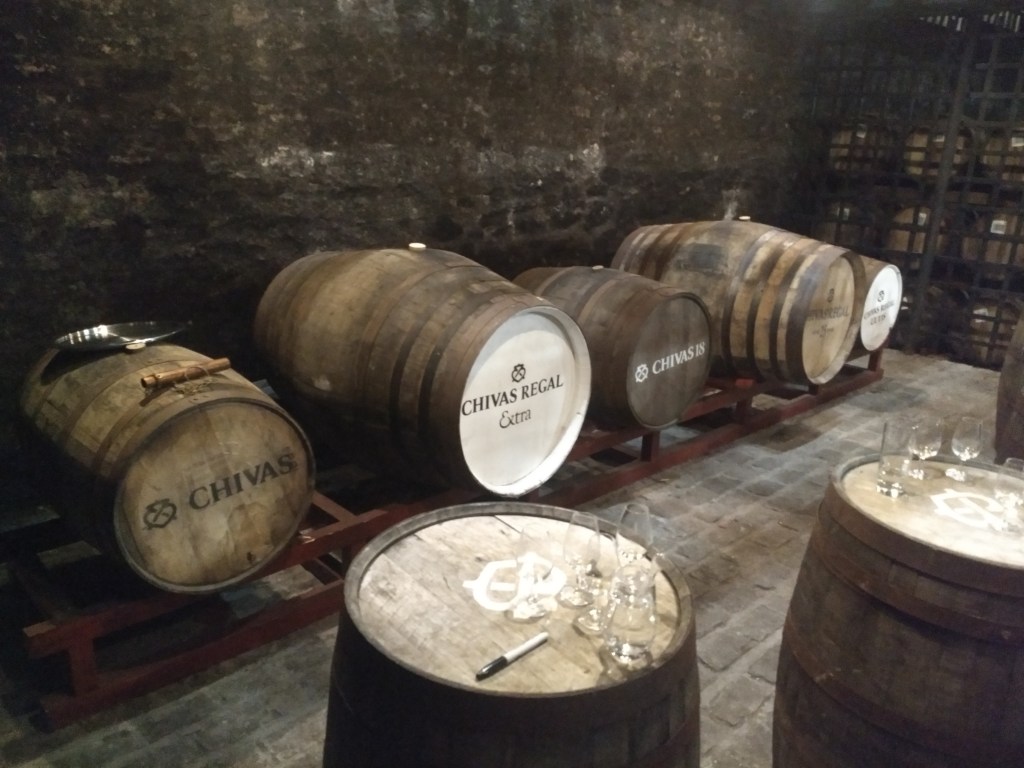
The guide gave us a brief introduction about the distillery and its role in being at the core of this very popular blended whisky. Chivas 12 is very popular indeed, in Italy is omnipresent at grannies/aunties houses, and it was during our trips back home that we realised that, compared to its peers (ie โ€value blended whiskiesโ€), it is actually not a bad offering. After the introduction, we moved to a caged part of the warehouse, where 5 casks were laid out. We knew these already: as part of our tour in 2019, we could choose two of them to try. These were cask strength expressions of the main Chivas Regal bottlings: the 12y, the Extra (13y), the 18y, the 25y, and the Ultis, which is a blended malt (so without a grain component). However, because of the pandemic, these casks lasted much longer, so weโ€™ve been told by the guide that we needed to add 5 years to each of them…quite a great deal!

A wee treasure in the warehouse.

The drams were all very good, the 18y (actually a 23y) very chocolatey, reminding us how blended whisky can be great. Unfortunately, none of these were on saleโ€ฆat the shop the offering was a bit pricey (as in most Pernod Ricard owned distilleries), and because we couldnโ€™t try any, we just gave it a pass. We were surprised that some bottles of 12y single grain from Strathclyde we bought after our visit in 2019 were still there: a sign of how grain whisky is underrated sometimes.

You wouldnโ€™t say we just had 5 cask-strength whiskiesโ€ฆ

Back to the bus, we finally headed to the last working distillery visit of the holiday. More about this in our next post, just a tiny clue: the distillery is in Grantown on Spey. Until next week, slainte!


Glendronach Distillery*: https://www.glendronachdistillery.com/
Strathisla Distillery โ€“ Home of Chivas*: https://www.maltwhiskydistilleries.com/strathisla/

* No summaries because there experiences were bespoke


#26 Winterfest or Dramfest?

A day out at Deanston


TL;DR: In early December 2022, we spent a day at Deanston distillery for their Winterfest. Many drams were sipped throughout lots of fun whisky activities. Definitely a day to remember, and hopefully to repeat next year! 

The first weekend of December, right after Gianluigiโ€™s birthday and to celebrate the passing of huge deadlines for both, we were looking for some whisky activity. At first, we thought about going to the West Highlands, Ardnamurchan or Mull, but then we decided to postpone this trip: we would have had to rent a car, book accommodationsโ€ฆWe wanted something simpler. However, having visited most of the distilleries in the area, it wasnโ€™t easy to pick something new. But well, who said that it had to be new? The solution was there all along: Deanston, Warehouse 4 tasting. We figured the casks would have definitely been different from the ones we had sampled from in May 2021. When we checked out their website though, there was no availability for the day. Unlikely, a bit strange, but oh well. Itโ€™s after some snooping on their website that we found out that something different was going on: the Winterfest! Tickets were ยฃ50 pp, for a tour and some tastings, plus a snack and a meal. Couldnโ€™t believe it, so off we went!

Third time, lucky again.

So, there we were, on a cold Saturday morning, jumping on train at Waverley (train we almost missed, thanks for the n-th time to Lothian Buses), direction Stirling, similar to our January 2020 trip. And if here you are asking: โ€œwait, January 2020, May 2021โ€ฆis it the third time you visit Deanston?โ€, the answer is yes, and probably wonโ€™t be the last. Anyway, we had some time to kill before the bus to Doune, so we had a quick pie and a coffee. The bus was on time and in about 20 minutes it brought us to Deanston (on the bus we bumped into Rachel from The Grail Tastings, which weโ€™d seen only on screen before!).

When we arrived, the shop and cafรฉ were already full of people ready to start the day at the distillery, some were from the Friends of Deanston Facebook group, others from the East Linton Whisky Society. We checked in (to find out that our badge names were Teresaโ€ฆand Teresa 2, ahah) and joined one of the three groups. Ours headed off to the production plant, where we did an in-depth visit, including the water turbine.

This time we paid more attention to the open mashtun and to one interesting characteristic: there is only one receiver where low wines, foreshots, and feints mix together. For the non-geeks: the low wines are the result of the first distillation (usually around 20%abv) in the wash still. The second distillation, in the spirit still, is what produces the new make spirit, which will be put into cask and matured. However, not all the product is kept, only the middle part (or โ€œheartโ€). At Deanston, it is taken between the abv of 75% and 67% (the โ€œcutsโ€ or โ€œcut pointsโ€). The foreshot (or โ€œheadโ€) is the first part of the distillation which contains a lot of methanol so no good for drinking, while the feints (or โ€œtailโ€) are the end of the second distillation, too low in abv and containing some undesirable compounds. These two donโ€™t go to waste, they are distilled again. At Deanston, they mix it with the next batch of low wines, and the receiver tank never goes empty: according to their master distiller, this is the reason why the spirit is so waxy. Very fascinating.

When the tour finished, the guide took us back to the cafรฉ, where breakfast was served: coffee (or tea) and a yummy morning roll. After this half-hour break, we started the second activity of the day, a warehouse tastingโ€ฆnope, not the usual Warehouse 4, but Warehouse 2. Here, they gave us a tote bag with plenty of gifts (funnels, glasses, etc.) and we started the tasting. Unlike the Warehouse 4, the Warehouse 2 tasting consisted of three bourbon-matured drams of Deanston directly from the cask: one young-ish (5y old, canโ€™t remember the abv), one a bit older (12y, 57.2%), and finally a 21y (54.3%). The aim was to understand how the cask affects the whisky, which was a great purpose, very educational (similar to what we did at Lagavulin). The 12y old sample probably came from a very active cask, as it was much darker than expected, darker than the 21y as a matter of fact, but all three were delicious.

Bourbon bombs in Warehouse 2.

After a short break, we went to Warehouse 4, for yet another tasting: this time the drams were four, and they were all matured or finished in sherry or other casks. We started with a 10y finished in an ex-Lepanto brandy cask (59%), followed by a vintage 2004 in an ex-amontillado butt (58.7%) and an organic distilled in 2001 and matured in an ex-fino hogshead (55.3%). We finished with a sublime 29y (vintage 1993) which spent 11y in an ex-bourbon cask and 18y in an ex-port wine cask (47.5%).

They were all delicious, and very happy to have tried them (unfortunately, once back to the visitor centre, we noted a steep increase in single cask bottling prices since our 2021 visitโ€ฆprobably a bit more than what would be caused by inflation alone). The variety of the drams we tried was huge, and we could see how Deanstonโ€™s spirit can deliver in ex-bourbon casks, and how it holds up in stronger casks, like port or sherry: a chameleon of a spirit, and we’re very happy to confirm so after these tastings.

Valinch ready to go in Warehouse 4.

Then, the three groups got together, and we headed to a big tent outside (someone joked: โ€œlike the Dothraki in Game of Thronesโ€) where we enjoyed a full meal, including a delicious soup, coffee, etc. Once finished, we were asked to wait a few minutes to clean the tables and prepare the final tasting (yes, another one!). This time, the tasting was hosted by the Master Distiller Brendan McCarron, whoโ€™s always very funny and insightful to listen to. We tried four cask-strength drams (this time 10ml only, fortunately for our livers). We started with the (at the time) newly released Deanston Virgin Oak cask strength (57.5%), a celebration for the 10th anniversary of the visitor centre. It was followed by an Organic 2000 vintage (50.9%), a 2009 Bunnahabhain Coterie (Winter 2022), finished in Amarone casks (59.7%), and by a peated dram, a Ledaig Ink Doublewood (Winter 2022, 53.8%).

We left the distillery soon after the tasting (thanks Ronnie for the lift back to Edinburgh!), not that tired, but definitely happy. What a day, probably one of our best whisky-days so far. Deanston is one of those distilleries that we didn’t fully appreciate at the beginning, it was not immediate โ€œloveโ€ like Tobermory/Ledaig or Glen Scotia. However, over time it grew on us, so much to become one of our favourites.

Until next time, slainte!


Deanston Winterfest

Price: ยฃ50 (December 2022, inclusive of tour, three tastings, breakfast, and lunch)

Duration: All day

Tasting: SO MANY DRAMS (see above)

Value for money: Very, very good

Highlights: Great atmosphere, great whisky, very friendly staff

Recommended: Absolutely

Link: https://www.deanstonmalt.com/


#25.3 Highlands trip bonanza!

Back to Edinburgh through Aberfeldy and Pitlochry


TL;DR: The final day of the trip was dedicated to slowly driving back to Edinburgh. Still, we were able to fill the day with a few distillery visits: Aberfeldy first, followed by Edradour and Blair Athol! Phew

(missed Part 2/Part 1?)

We woke up early that day, skipped breakfast, and drove straight to the ferry terminal at Fishnish, on the Isle of Mull, to catch the ferry back to the mainland under the morning sun. After a quick ferry trip (we believe itโ€™s the quickest Mull route), we arrived in Lochaline, on the Morvern peninsula (home to another distillery, Ncโ€™Nean, which at that time we didn’t even know existed). We had breakfast, finally, at the Lochaline Snack Bar, which serves delicious sandwiches, rolls, and other goodies at very reasonable prices. We enjoyed our breakfast in the good company of a nice English couple, who told us how they decided to spend their retirement on Mullโ€ฆnot a bad idea at all!

Not a bad morning!

Back in the car, we soon arrived in Corran for another quick ferry (this time just to save us over an hour drive), and then drove for the first time through Glencoe: what an incredible place! It felt like being in the middle of American canyons, but green.

We followed the road to Bridge of Orchy and Tyndrum, then we turned left (eastward) and drove almost straight towards the first distillery of the day: Aberfeldy! It was not a new name for us, we had seen it in supermarkets and at the airport, but we had never tried it before, so we were quite curious. The distillery is in the village ofโ€ฆ.yep, you guessed it: Aberfeldy! Lovely place, the landscape was not as dramatic as the ones we had crossed earlier in the morning, but hilly and cosy. The distillery itself sits in quite a beautiful spot, almost like a postcard, with a small walking bridge to cross before entering the visitor centre.

Teresa wasn’t ready for the picture.

The distillery is owned by Bacardi, together with Dewarโ€™s, one of the most prominent blended scotch whiskies, and a few other single malt distilleries (Craigellachie, Royal Brackla, Aultmore and Macduff). Before the tour, we could take a look at the museum on site, with lots of memorabilia and documents about the history of John Dewar and related brands.

Then, we started the tour of this very pretty distillery. Around production, the signals of being owned by a big corporation were obvious, with a lot of signs that reminded Gianluigi of his environmental consulting days (not a bad thing, on the contrary: emphasis on environment and safety are a must!). It is on this tour that we realised that we could remember all the stages of productionโ€ฆafter all, that was the 5th distillery in 4 days.

At the time we didn’t really know what it was…

Then, we moved on to the warehouse, where a dram taken from a cask was served, but only to those with a more expensive ticket (3-4 people on the tour, including Teresa). It was a 1999 (so almost 20y old) Aberfeldy ex-sherry cask, and it was truly delicious. The fact that it was served with people with the regular ticket just waiting and watching was not the best however, a bit awkward. Anyway, back at the visitor centre, we could try a dram each: we chose the Aberfeldy 12 and the Dewar’s White Label. Not very memorable the first one, more memorable (but not in a good way) the second one.

We had lunch at the cafรฉ in the visitor centre, but we soon left to get to the next distillery of the day: Edradour! It is a very small distillery, located near the village of Pitlochry. It used to be one of the smallest, if not the smallest in Scotland (called โ€˜the little gemโ€™), but then they lost the record because a few smaller distilleries opened and because they built a second production line in a separate building on site, increasing the stills from 2 to 4. Edradour is owned by Signatory Vintage, an independent bottler, and indeed the shop stocks quite some of their range.

Ready for the second tour of the day.

This time, drams were served at the beginning of the tour (so Gianluigi could sip a tiny bit of it): we picked the flagship Edradour 10 (40%) and the peated version Ballechin 10y (46%), and decided not to go for the whisky cream liqueur. We started the tour with a big German group, but after a while, we and another 3-4 people branched off to get the tour in English. As usual, the tour guide went through the story of the distillery, which was founded in 1825, although their first single malt was only released in 1982! We visited the new distillery first, while the old production plant was showed to us from the courtyard as we walked back to the visitor centre. It is on this tour that we discovered what the โ€˜monkey shoulderโ€™ is. At the shop, we found out that for a few extra quid, we could get the Signatory Vintage version of Edradour, still 10y old and vintage 2019, bottled at 46%, non-coloured and not chill-filtered: a very delicious treat to ourselves! We also got the whisky cream liqueur for a friend, who gave absolutely positive feedback!

Back in the car, we drove towards the final stop of the trip, the neighbouring Blair Athol distillery, in Pitlochry. We went first for a coffee in the village (the early start was catching up on us), and then checked in at the distillery. After a bit, our host for the day, the very knowledgeable Calum, took us to the table for the tasting (after two tours in a day, we didnโ€™t feel like going for the third oneโ€ฆWell, we would catch up later on).

We can’t remember whether this was before or after the tasting…

We hadnโ€™t had any Blair Athol before, and actually rarely heard anything about it, so we werenโ€™t surprised when Calum explained to us that the majority of the whisky produced there goes into blends. Now that we are a bit more experienced, we can say that Blair Athol drams can be fantastic, but mostly the independently bottled ones. There, we were given Blair Athol 12y and Distillers edition 2019, followed by a range of Diageo products: Cragganmore, Caol Ila and Lagavulin Distiller Editions, and a wee tiny sip of Johnnie Walker Blue Label – the first and only time we tried it, not impressed (instead, we determined that the much cheaper Green Label we had at home was more enjoyable). After collecting โ€œourโ€ driverโ€™s drams and a quick stop at the shop, we finally drove home.

It was a cracking weekend, one of the most memorable ones, and we took so much in from all these distillery visits. Itโ€™s when we switched from being whisky curious to whisky enthusiasts! Some of the experiences were quite touristy, which was OK with us at the time, but would not suit us well today after n more distilleries tours and tastingsโ€ฆWe really appreciated Ardnamurchan for their environmental forward thinking (well, now we appreciate them ALSO for the stunning quality of their whiskies), while the range we tried at Tobermory was incredible. Edradour and Ben Nevis were unknown to us previously but revealed themselves as little gems in the scotch whisky landscape. Overall, a fantastic trip!

Until next time, slainte!


Distillery Links

Aberfeldy: https://www.dewars.com/gl/en/aberfeldydistillery/
Edradour: https://www.edradour.com/
Blair Athol: https://www.malts.com/en-gb/distilleries/blair-athol