#23.2 On the run again: Dramathon 2022


Back to the Glens
(Grant and Garioch)


TL;DR: The day after the Dramathon we took advantage of being in Speyside to visit two distilleries we’d only had tastings at: Glen Grant, in Rothes, with their unique rectifiers, and Glen Garioch, in Oldmeldrum, which has been recently renovated. Both worth returning. 

(missed Part 1?)

So, after a (not so) resting sleep in Dufftown (guess why), we found ourselves with a spare Sunday (the drive home is about 3 hours only): plenty of time for some whisky stuff! Deciding which distillery to visit in Speyside and its surroundings, however, is becoming more and more difficult. Despite being the biggest single malt producing area, most distilleries are closed to the public, and a bunch of them are closed on weekends. Letโ€™s also say that we already had the opportunity to visit a few of them (ehm, ehm, ehm, ehm).

Nevertheless, because weโ€™ve been there also around Covid times, we only saw the visitor centre or the tasting room of some distilleries, so this was a good occasion to catch up with the production tours we hadnโ€™t done yet. First off: Glen Grant! Weโ€™d been there for the first time in July 2021: at the time we could only visit their marvelous Victorian gardens (if itโ€™s a beautiful day, they are worth the price of the ticket alone), have a quick tasting at the shop, and an Illy espresso at the cafรฉ (spoiler: this time the cafรฉ was closed, so no Illy, ouch!).

It’s dram o’ clock.

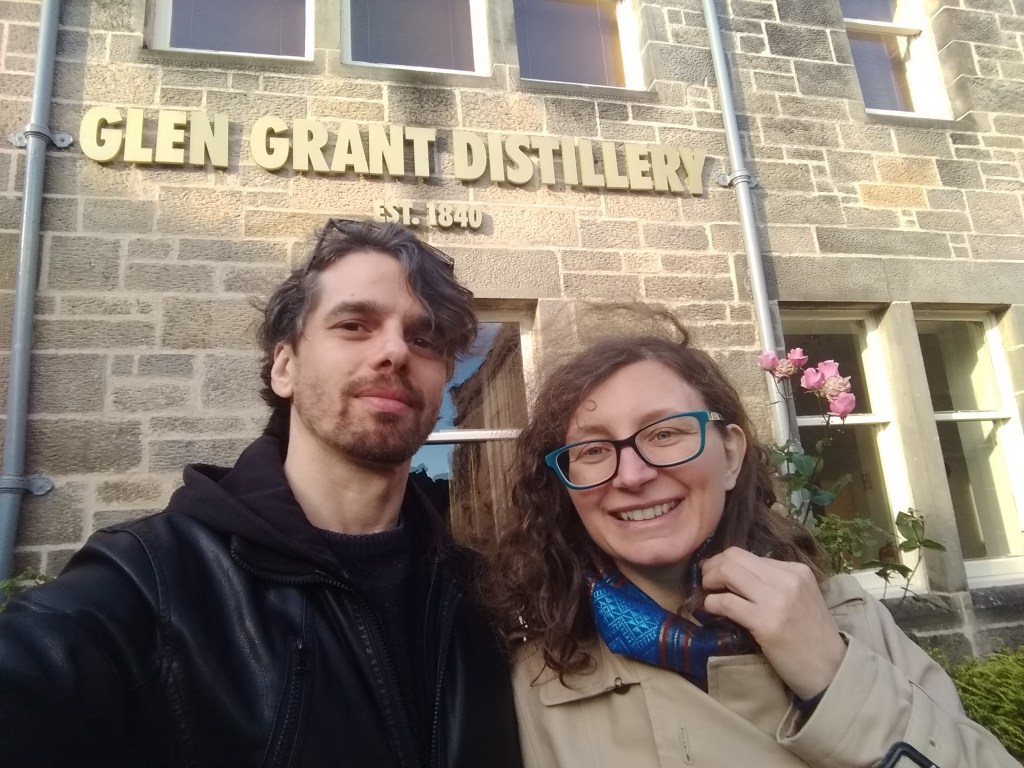
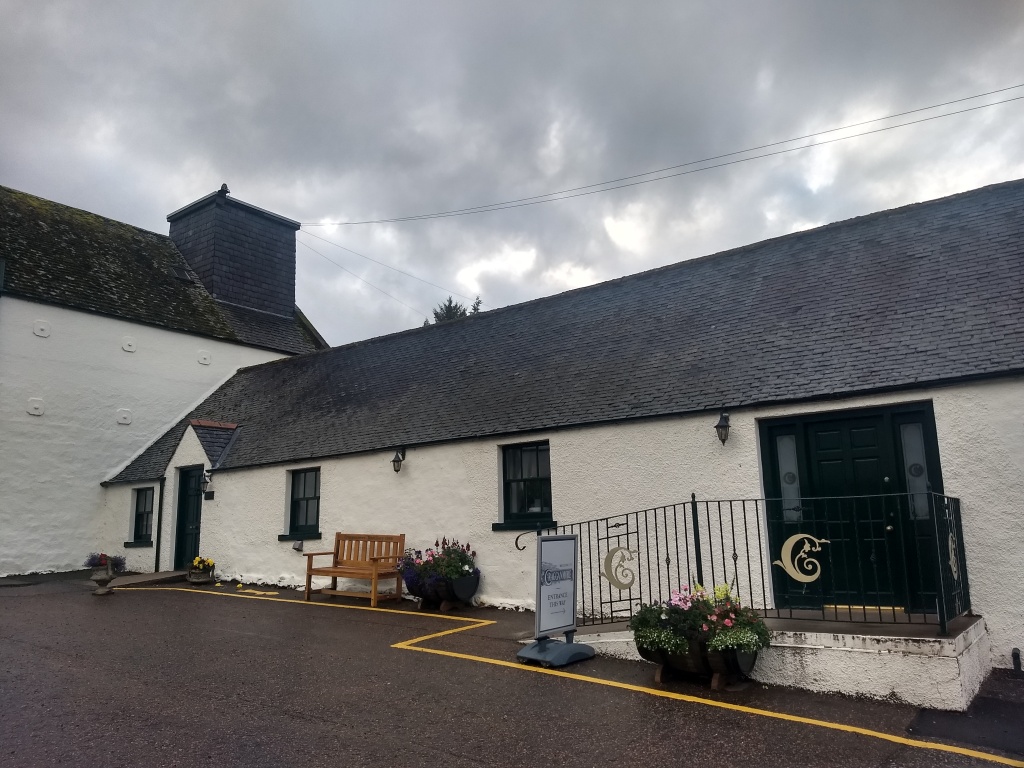
The distillery is owned by the Campari group, reason for the Italian flag in the courtyard: after Wild Turkey, this is the second distillery we visited from this owner. Glen Grant is in Rothes, almost in front of the famous copper still-producer Forsyth (also, where Caperdonich, nicknamed Glen Grant 2, was located). Founded in 1839, except for the modern and polished shop/visitor centre, it has maintained a classic distillery feel. A notable fact is that their master distiller, Dennis Malcom, is one of the longest serving workers in the whisky industry, with over 60 years of experience under his belt: impressive!

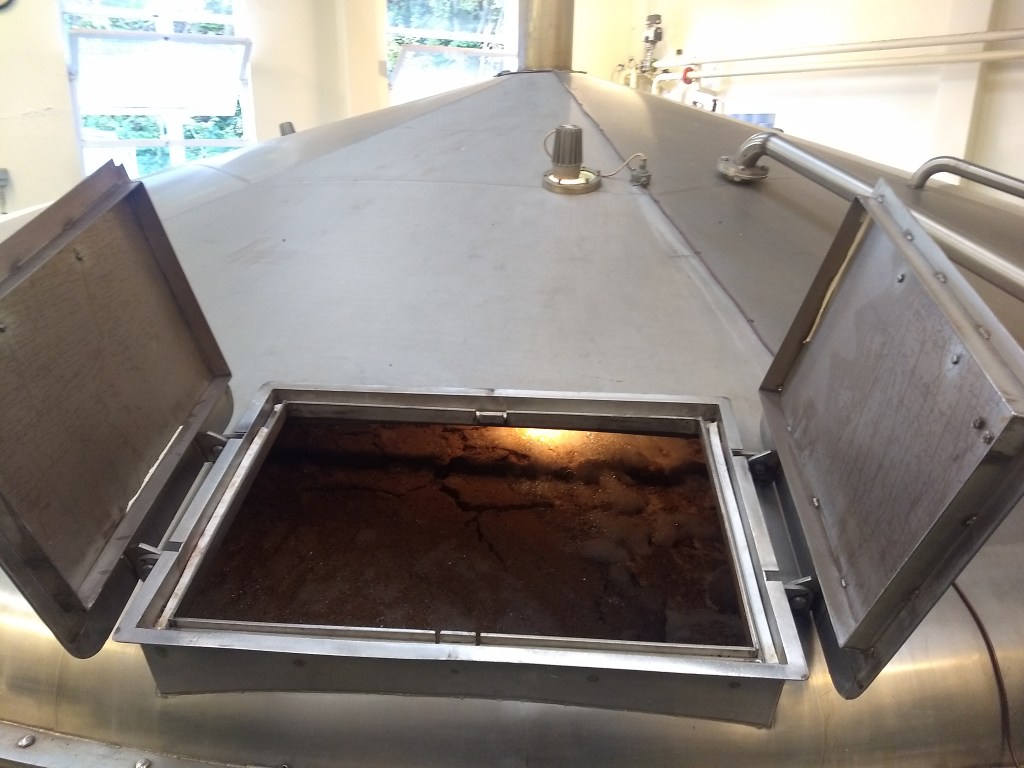
The guide of the day was Kirstie, very knowledgeable and professional. Since it wasnโ€™t raining, her explanation of the history started in the courtyard. We swiftly (or schwifty) moved to production, where we went through the usual path: milling, mashing (closed stainless still mashtun), and (wooden) washbacks.

Mashing in progress (looks like the first water).

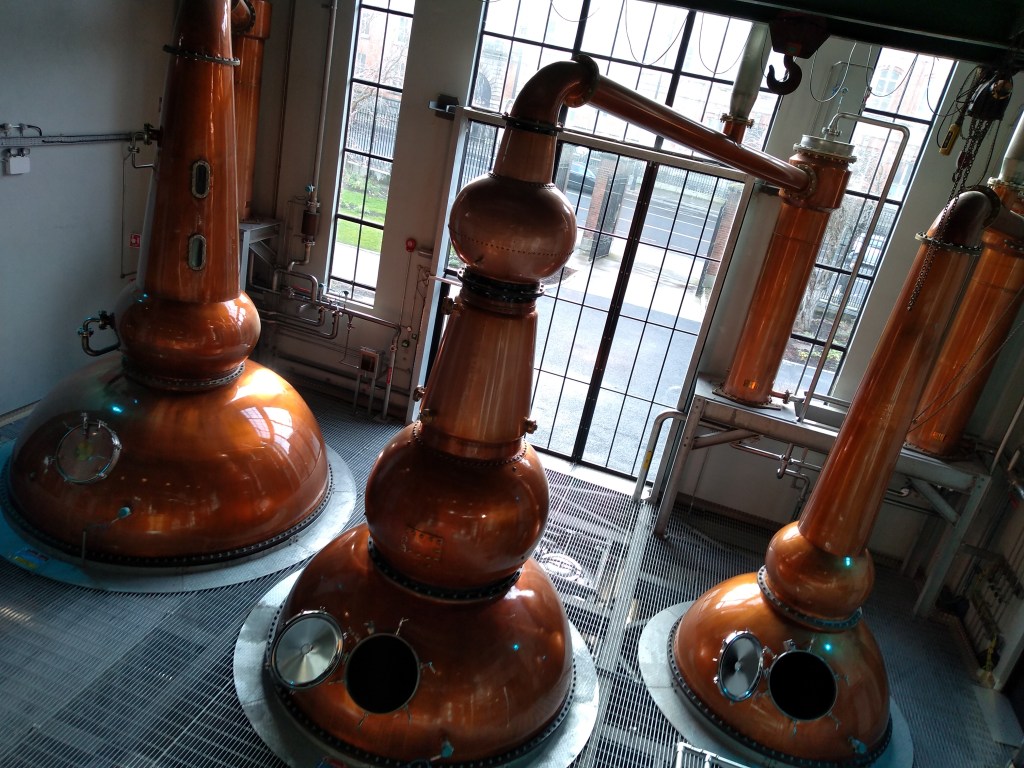
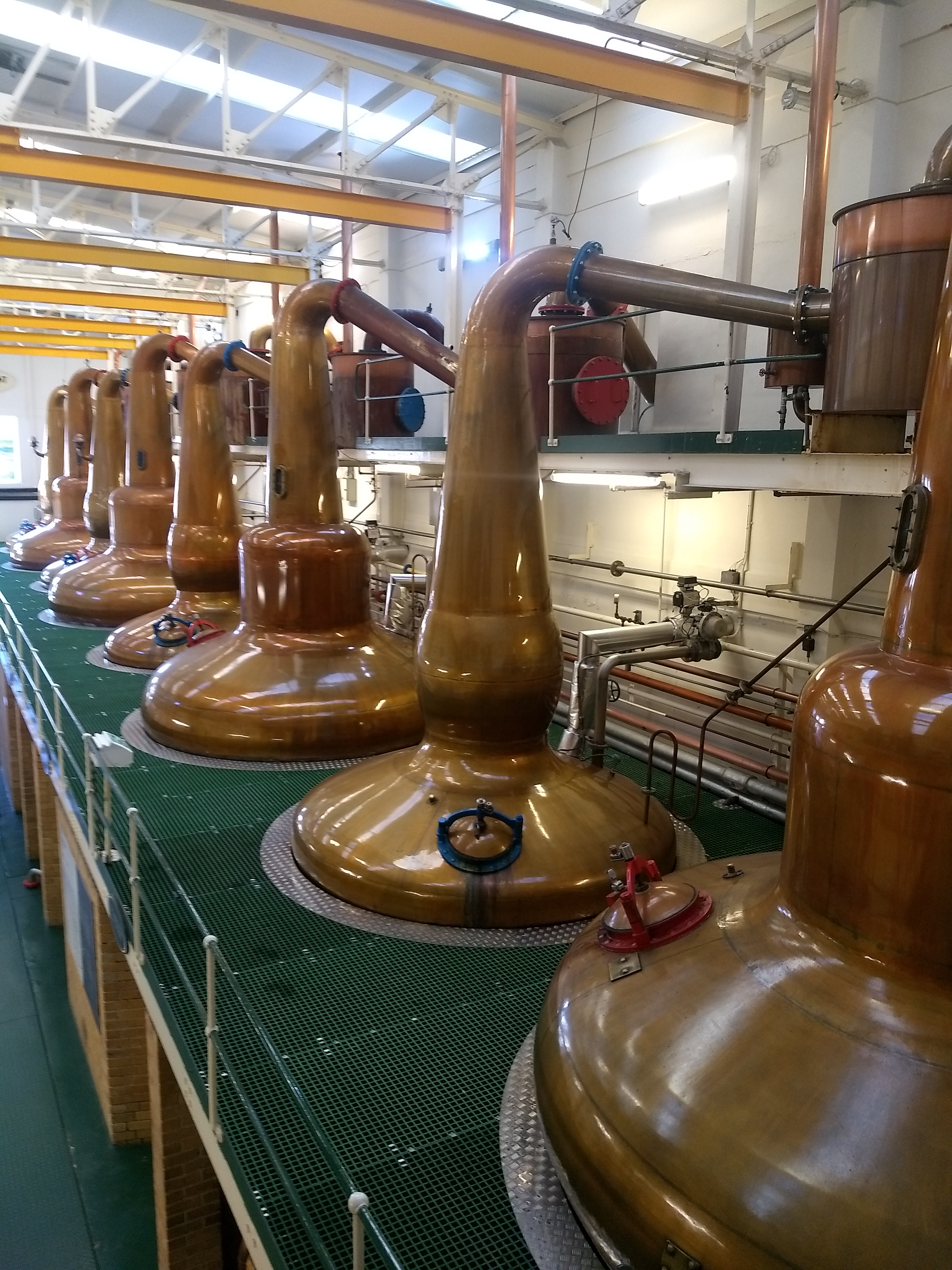
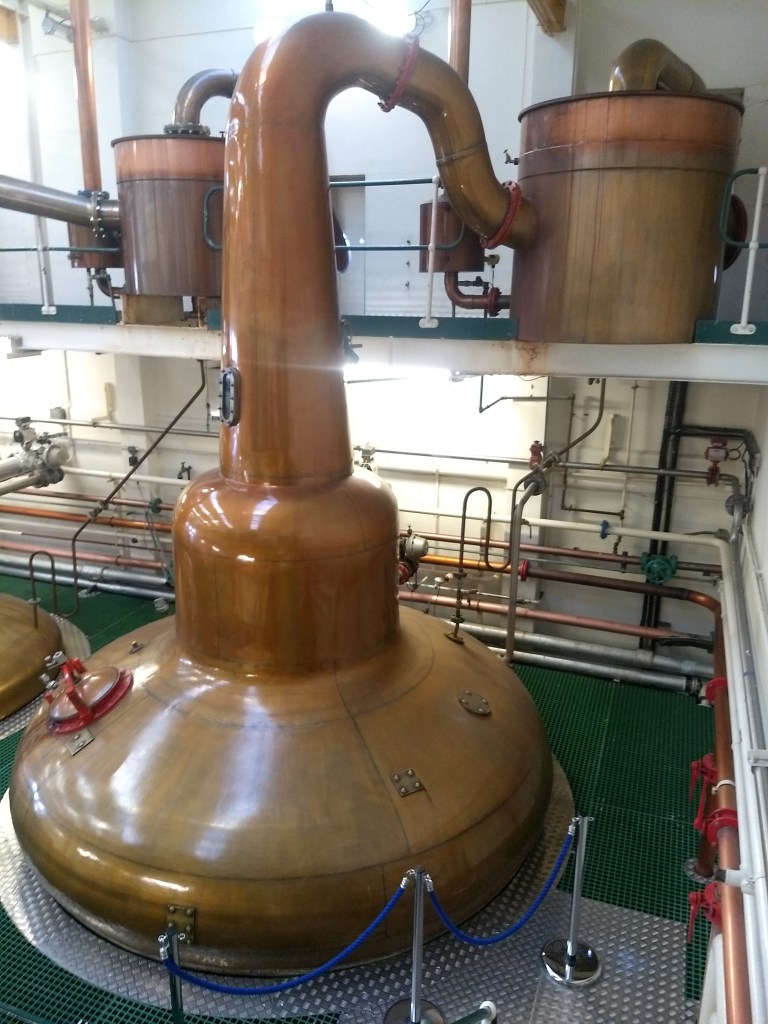
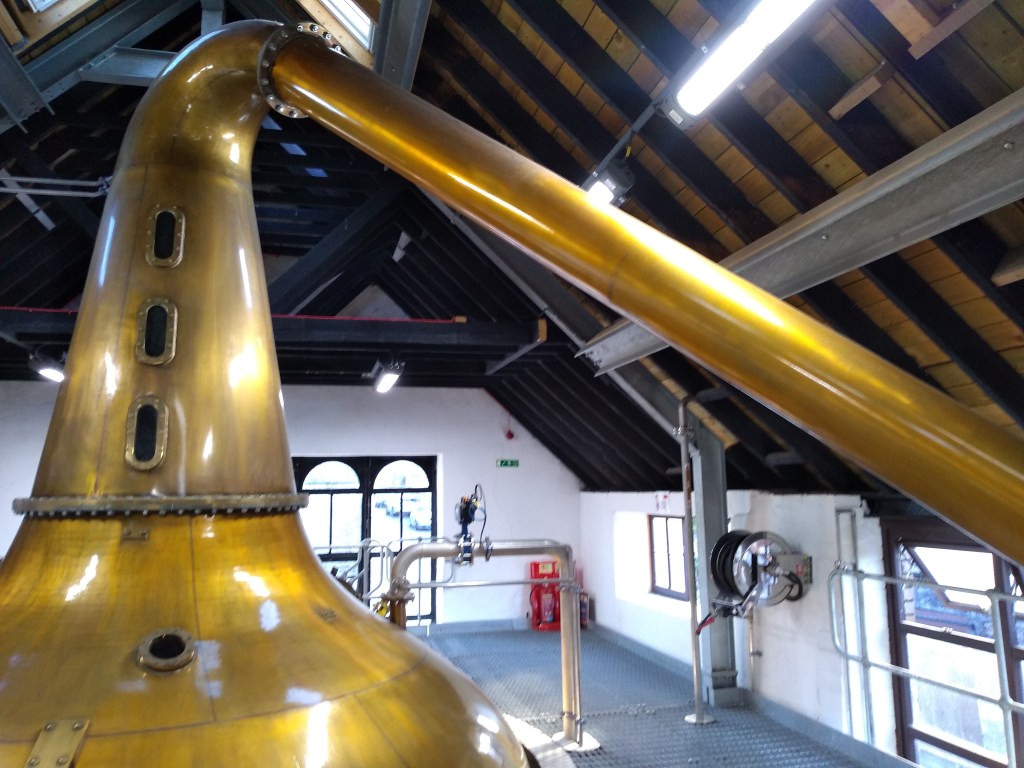
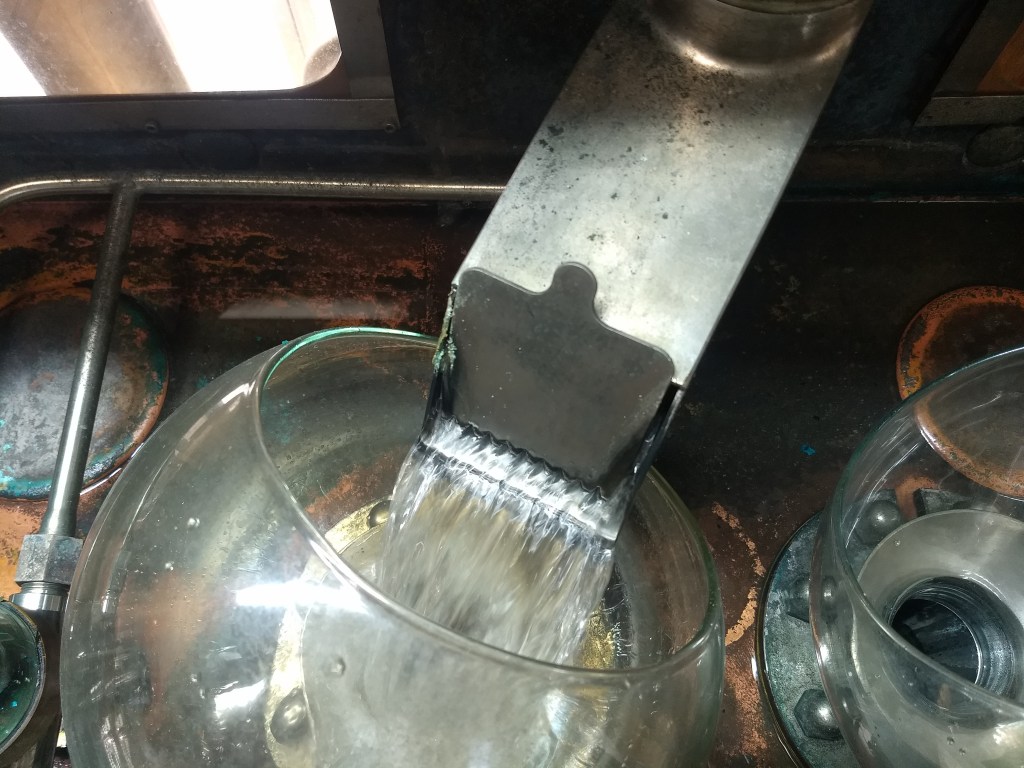
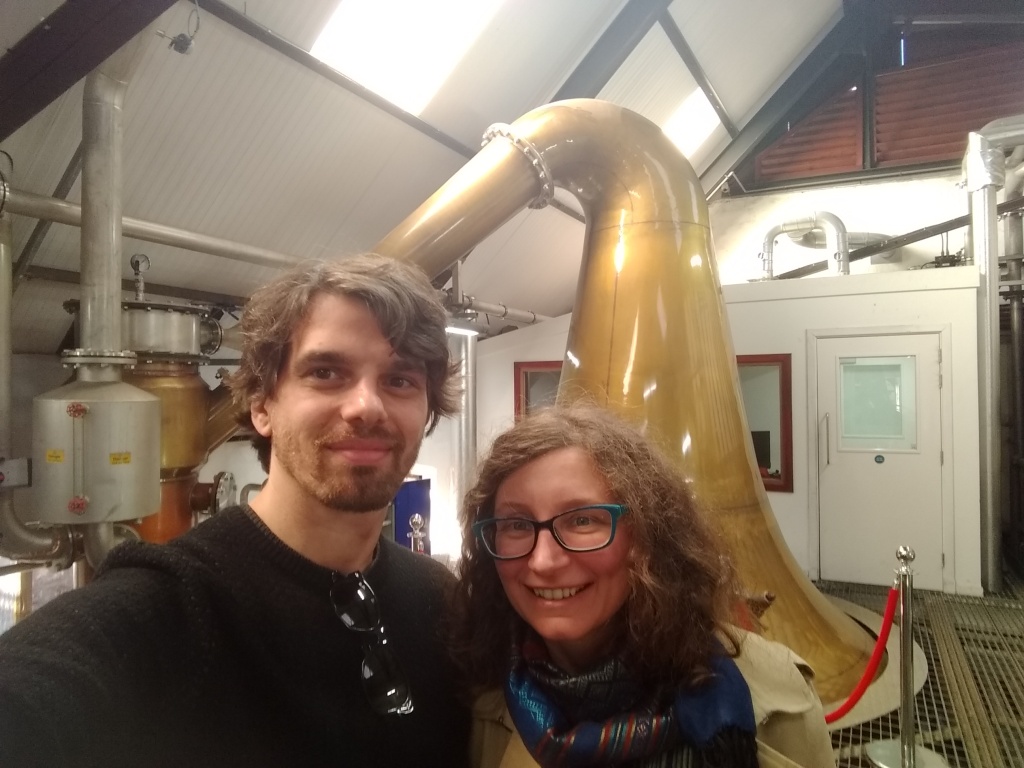
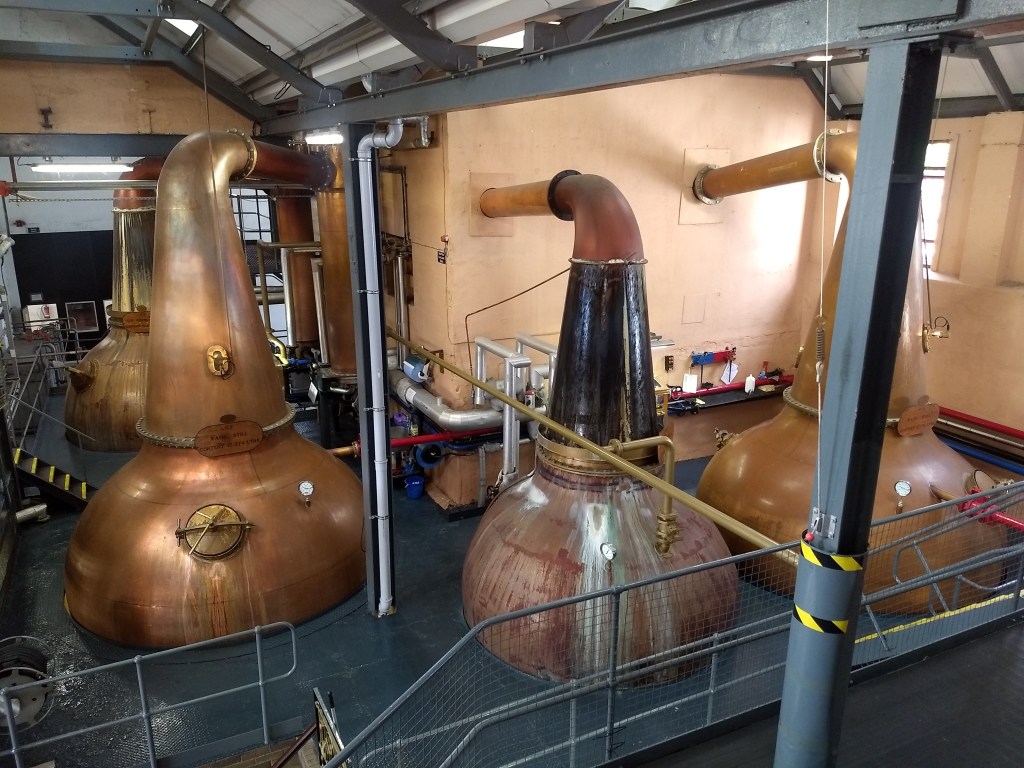
Here came the interesting part: the still room. Like Glenfarclas and others, the room is separated from the rest of the production. As we walked in, we noted the curious shape of the wash stills, with a copper cylinder-ish bulge at the bottom of the neck, rather than the usual round one. The spirit stills have a classic round bulge, but the most fascinating characteristic, however, is the rectifier installed at the end of the lyne arms, looking like another small still. This was an intuition by John โ€œthe Majorโ€ Grant, who took on the business in 1972, and their purpose is to allow only the lightest vapor to be condensed. To produce a light spirit, they also set quite a short and high cut for the spirit heart: from 73% down to 68%.

Have you seen a rectifier like this before?

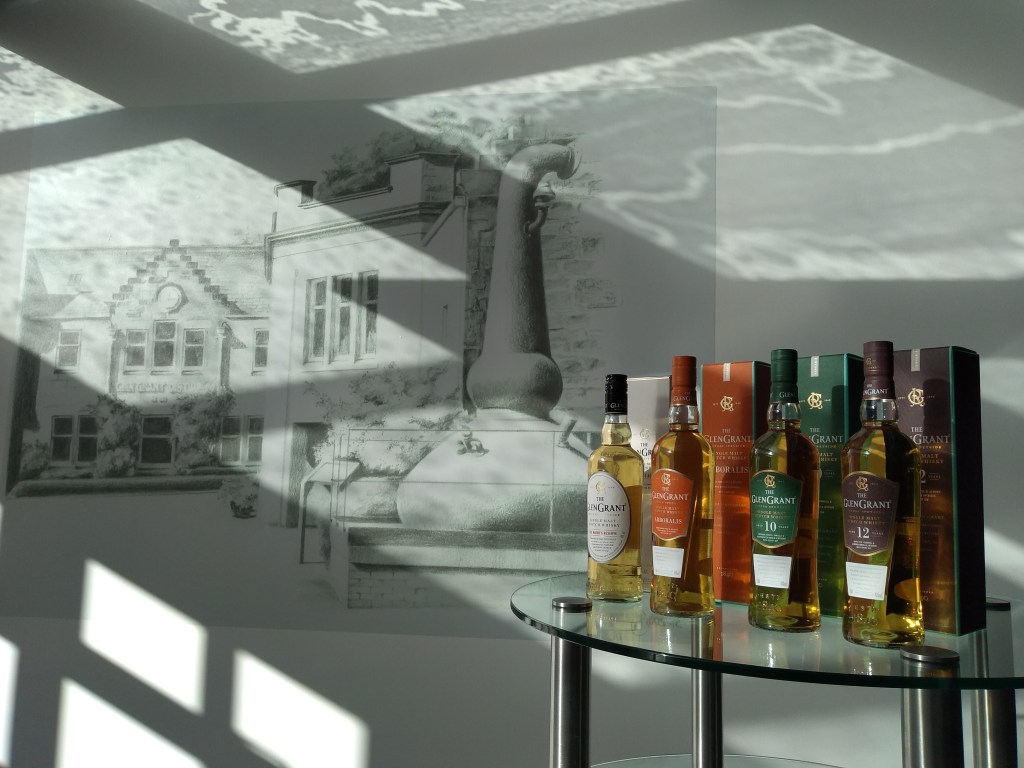
We then visited the warehouse before the self-guided tasting at the visitor centre. At the time of booking, we asked if we could pay more to upgrade our drams: not because they are bad (because they are not, in our opinion), but just because we had had the very same drams during our 2021 visit (Arboralis and 10y). Unfortunately, it wasnโ€™t possible, which was a pity because it would have been a simple but relevant improvement to the experience, in particular for more experienced drammers (other distilleries do it), but oh well.

Bottles on display (we tasted the middle ones).

After sipping (Teresa) and nosing (Gianluigi) the two drams, we went back to the car and drove towards the Aberdeenshire for the second distillery of the day. While driving we did some distillery spotting, first Glentauchers and then Strathmill, in Keith, reached after a nice short walk along the river Isla (the day was truly gorgeous!).

Not so hidden Strathmill warehouses.

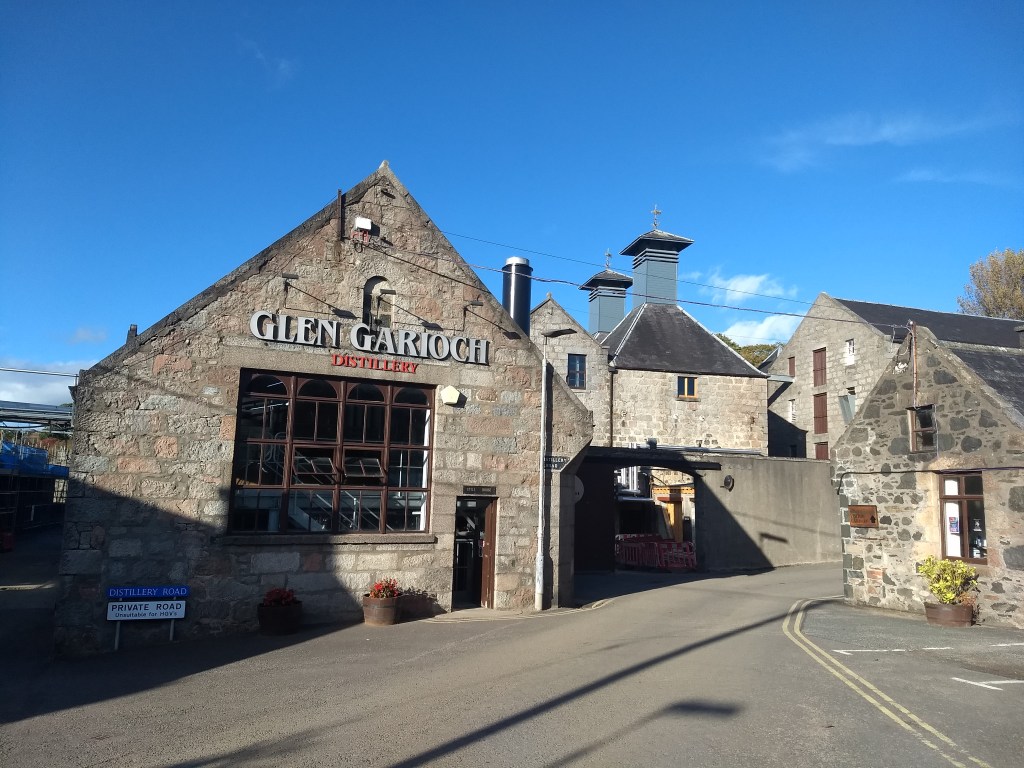
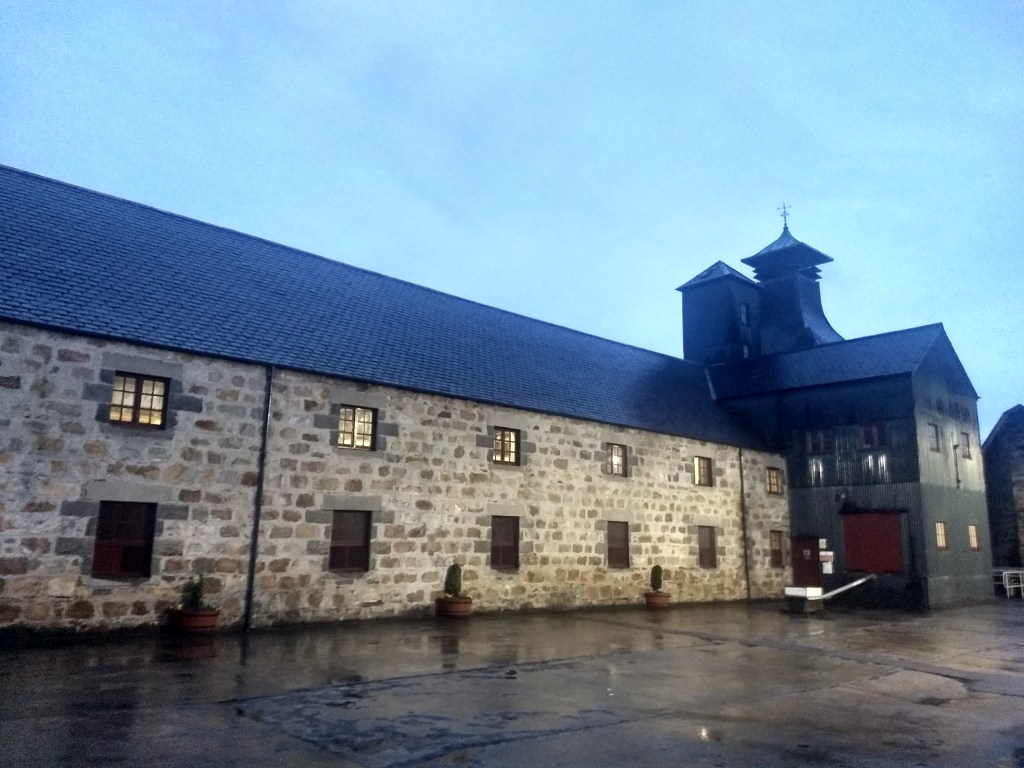
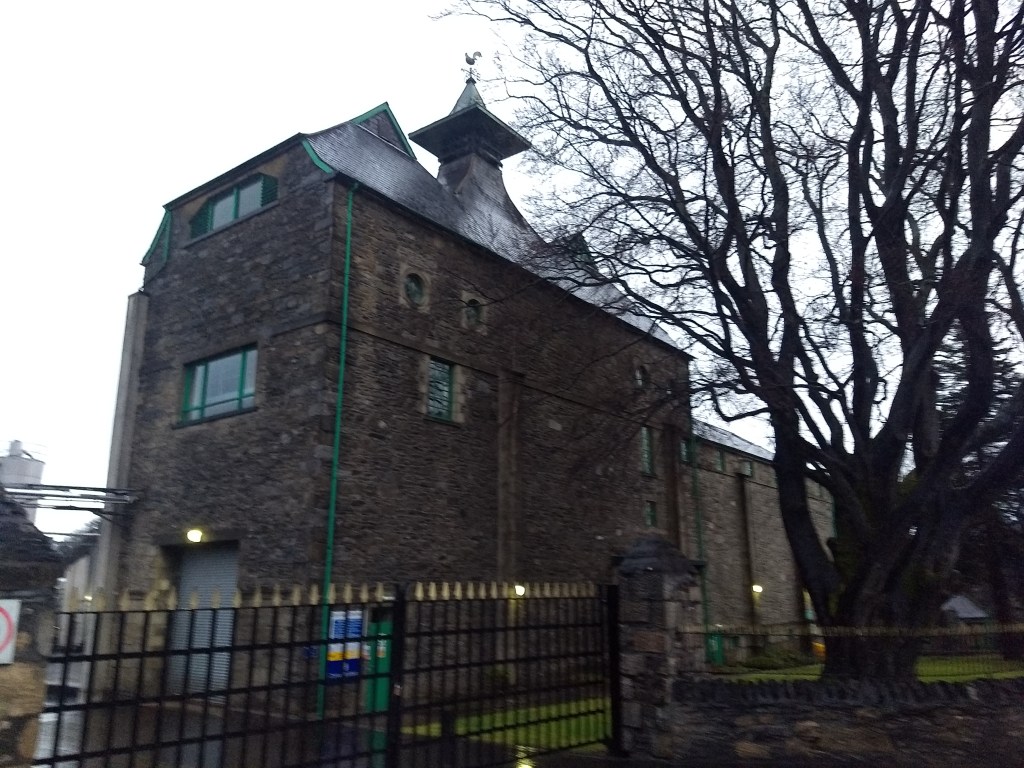
Glen Garioch is in a very different setting: even older than Glen Grant (it was founded 1797), it is almost stuck in the village of Oldmeldrum (near Inverurie): it looks like the village grew around the distillery. Funnily, it was the distillery we visited after our 2021 Dramathon as well, but at the time it wasnโ€™t possible to visit the production due to a combination of Covid safety rules and ongoing renovations, so we were quite excited about the tour!

Look what’s on Distillery Road!

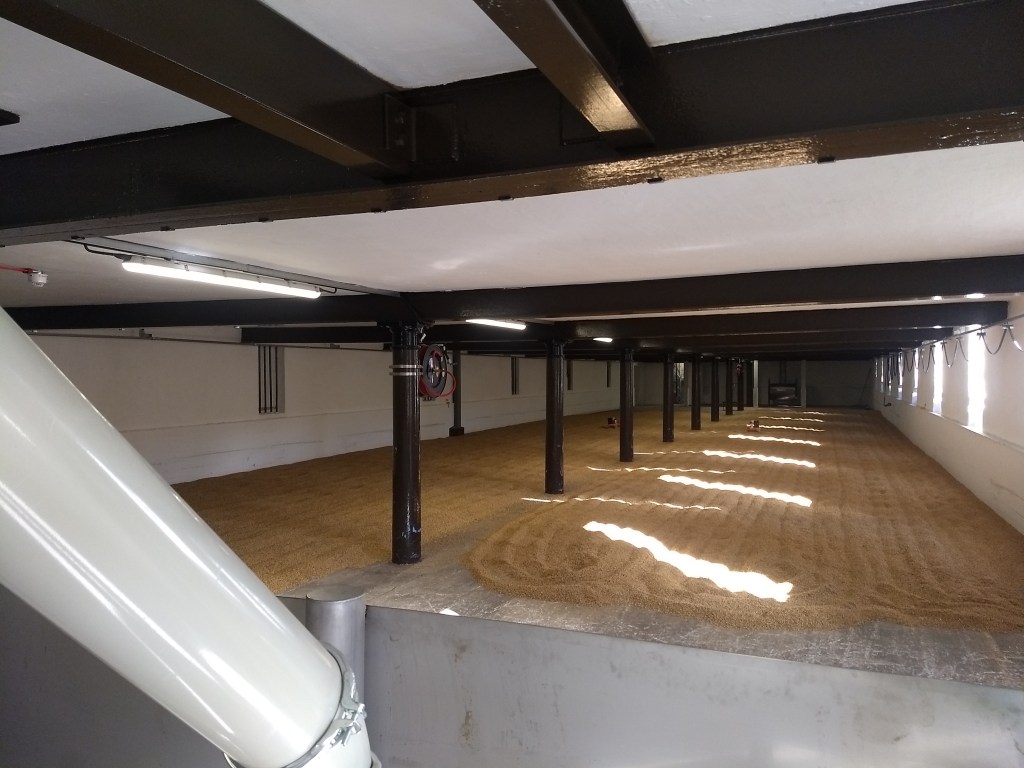
Our guide Iona started the tour from the new malting floor, one of the parts under renovation the previous year. There was one originally, but it was dismissed back in the day when industrial maltings became too convenient to be ignored. This happened across the entire industry, so that now only a handful of distilleries malt their own barley in a malting floor (Benriach, Balvenie, Kilchoman, Laphroaig, Bowmore), and to our knowledge, only Springbank/Kilkerran do it for the 100% of their production (waiting for Dunphail), so bravo Glen Garioch! They also re-introduced the use of peat in their kiln, to get peated malt from time to time.

The renovated malting floor.

We moved on to follow the phases of whisky production: milling (classic red-painted Porteus), mashing (again, closed stainless steel mashtun), and fermenting (stainless steel washbacks). In the still room, we saw the other result of the renovations: they removed one of their three stills, and the spirit still is now directly fired (a flame is burning below, heating the still, instead of the usual steam coil inside it). Again, this modification is a step back into the past of whisky production, as direct-fire stills arenโ€™t usually as efficient as steam coils. Their cut is wide, 73% to 63%, which contributes to giving body to the spirit.

Directly fired, trust us!

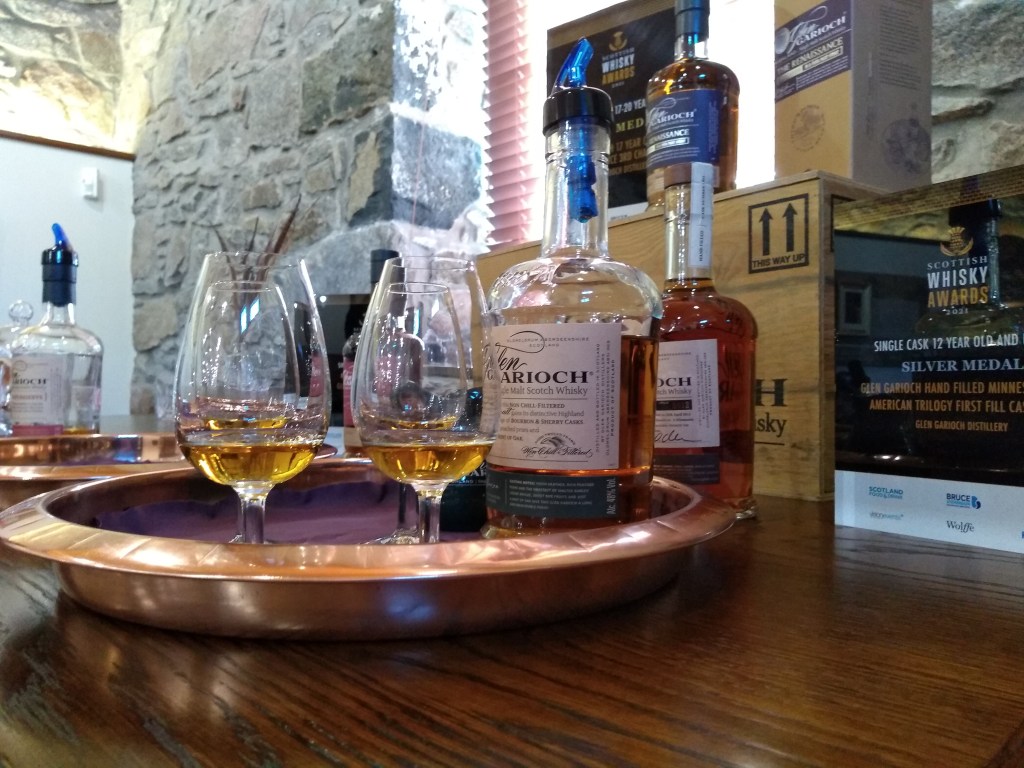
This is reflected in the malts that we sipped in the tasting room, back at the visitor centre (after a wee tour in one of the warehouses). The 12y is a solid whisky, but the Foundersโ€™ Reserve (NAS) is good too. Similar to last year, the visitor centre offers a choice from their core range, the Renaissance range (a series of four expressions, the youngest 15y and the oldest 18y), the American cask trilogy (single casks sourced in Missouri, Minnesota and Kentucky), the virgin oak finish (a vatting of multiple casks), and a couple of distillery exclusives (see below).

The Spirit is flowing!

Again, another very interesting visit, to a distillery that made efforts to bring back some features of the original production. We know that, with the re-discovery of flavours in single malts, thereโ€™s a question about the effects of each part of production. While most of the flavour has been attributed to casks, now people started exploring the effect of other factors, such as malting and distilling, and doubts about more recent modernisations have arisen. For us nerds and geeks (and generally consumers), this exploration is quite exciting as it brings us a lot of new (or old?) flavours!

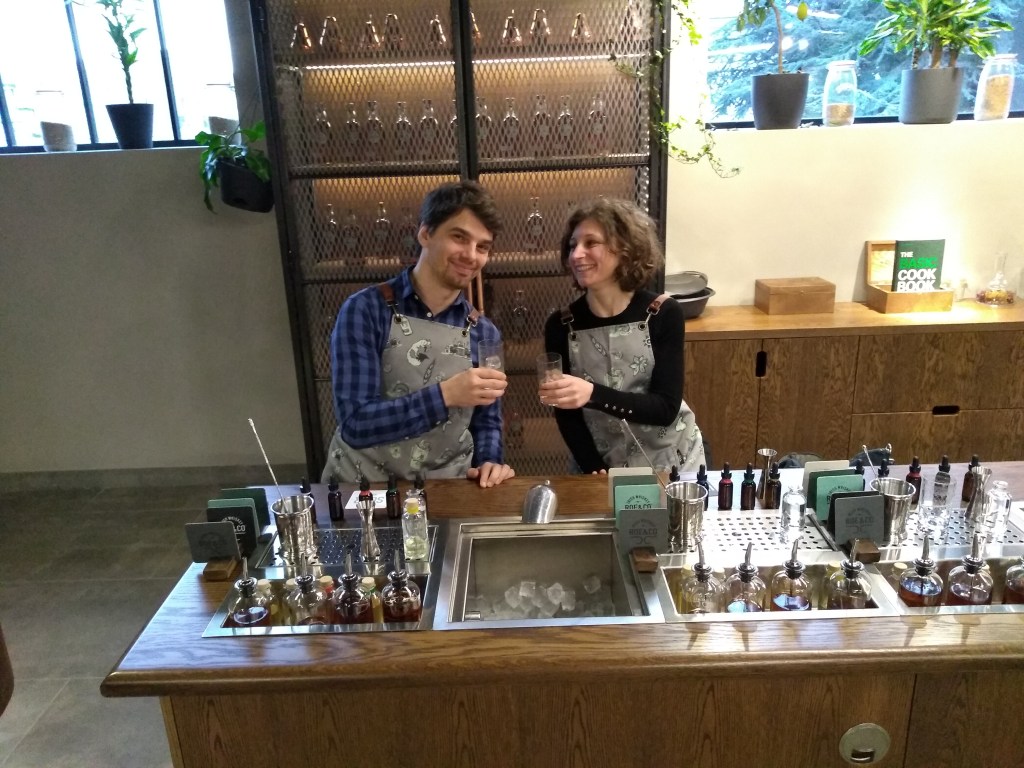
The tasting.

Until next time, slรกinte!


Glen Grant Tour

Price: ยฃ7.50 pp (October 2022), including the Victorian gardens

Duration: 1hr 10min

Tasting: 2 drams, Glen Grant Arboralis (NAS, 40%) and 10y (40%)

Target: Anyone, but geared towards tourists and novices

Value for money: Very good

Highlights: The still room and the rectifiers

Things we did not like: The very limited tasting optionsโ€ฆor โ€œoptionโ€

Distillery Exclusive: Glen Grant 13y (2008-2021), 56.5%, single cask (NCF, NC) 50cl for ยฃ120

Recommended: For the price, definitely yes

Link: https://www.glengrant.com/


Glen Garioch Founder’s Tour

Price: ยฃ15.00 pp (October 2022)

Duration: 1hr

Tasting: 2 drams, Foundersโ€™ Reserve (NAS, 48%, NC, NCF) and Glen Garioch 12y (48%, NC, NCF)

Target: Anyone, but whisky geeks might appreciate it more

Value for money: Good

Highlights: The new malting floor and the direct-fire stills

Distillery Exclusives: Glen Garioch 1991 (single ex-bourbon cask, 46.4%, NC, NCF, ยฃ325) and Sherry Cask 2009 (1st fill ex-sherry butt, 58.3%, NC, NCF, ยฃ130)

Recommended: Yes

Link: https://www.glengarioch.com/

#23.1 On the run again: Dramathon 2022


Visiting Glenfarclas before a run-y day


TL;DR: Oops we did it againโ€ฆthe Dramathon! After all the fun we had in 2021, back in October 2022 we participated for the second time. This year we both ran the half-marathon, always quite a challenge, but we rewarded ourselves with 3 distillery visits: first off, Glenfarclas! 

First of all, Happy New Year! We hope you had a great start of 2023 and that your year will be as good as you wish, full of joy and (possibly) great drams! We just started a 4-week dry January-ish which, after a couple of weeks back in Italy and the New Year celebrations, we both felt was much needed.

Last year was full of drams and great whisky experiences, so for the first post of 2023 we are going back a few months, in mid-October. Following the great experience we had in 2021, last year we decided to run the Dramathon again. However, this time we both decided to run the half-marathon: Gianluigi with the objective of improving his 2021 timing, Teresa with the objective of completing her first long race.

Similarly to the previous year, we left on the Friday morning to sneak in a distillery visit in the afternoon. You know, while in Speysideโ€ฆBecause of our multiple trips, there are no many distilleries left to visit in the area, but we were still missing a very special one: Glenfarclas!

This distillery is famous for a few things: still family owned, it was the one that converted Pip Hills, the Scotch Malt Whisky Society founder, to whisky appreciation, which in turn led to the Society foundation. They mature almost all their stock in ex-sherry casks (a few exceptions in ex-bourbon are mostly for independent bottlers), and all their doors are painted in red (and no, we didnโ€™t want to paint them black).

Wee stop to nose around Ballindalloch.

The drive there was mostly uneventful. We only realised too late that on the road from the A9 exit to the distillery, the main Speyside road, there are very few places where you can get a warm meal. Fortunately, another distillery came to our help: the Lagmore Cafรจ at Ballindalloch was open, and it was a very nice one too: lovely staff, good food and reasonable prices (weโ€™ll be back!).

Unfortunately, the distillery is open to visitors only during weekdays, so itโ€™ll have to wait (and tours are a bit pricey too). After lunch, we arrived at the distillery and checked in. We were a bit early, so we had time to scout the shop: we were glad to see that they are maintaining reasonable prices (in spite of the increase of their 25y from ยฃ125 to ยฃ220) and that they are quite competitive compared to the speciality shops prices.

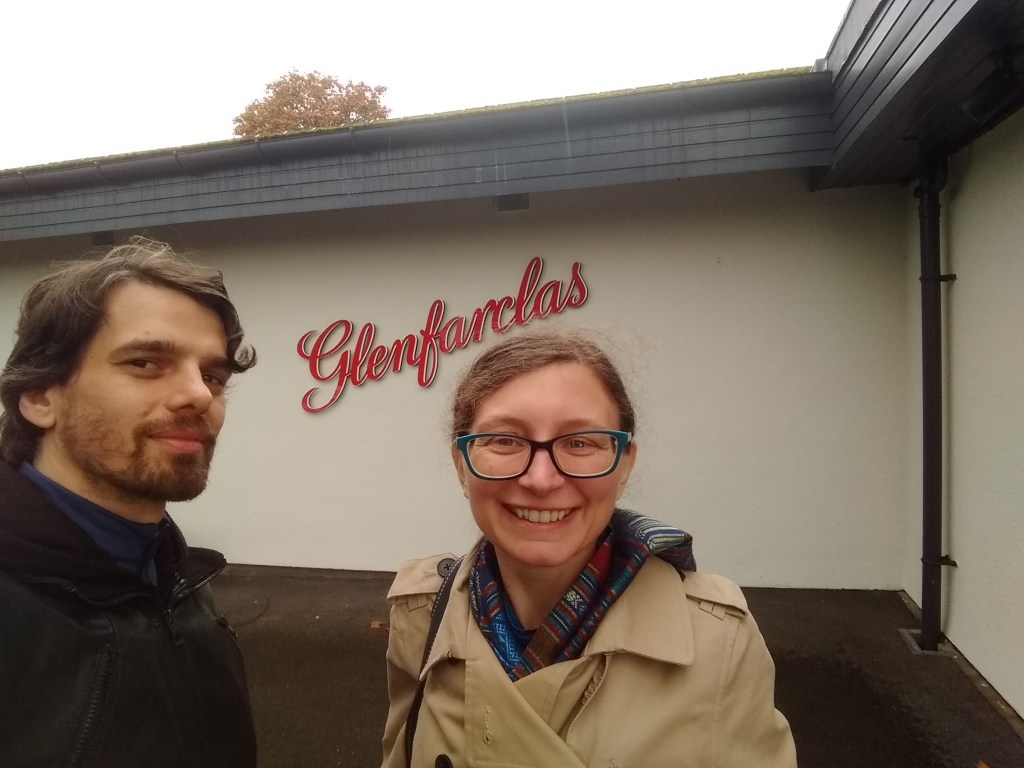
First distillery visit of the weekend, yay! (Yes, one of us needs a haircut.)

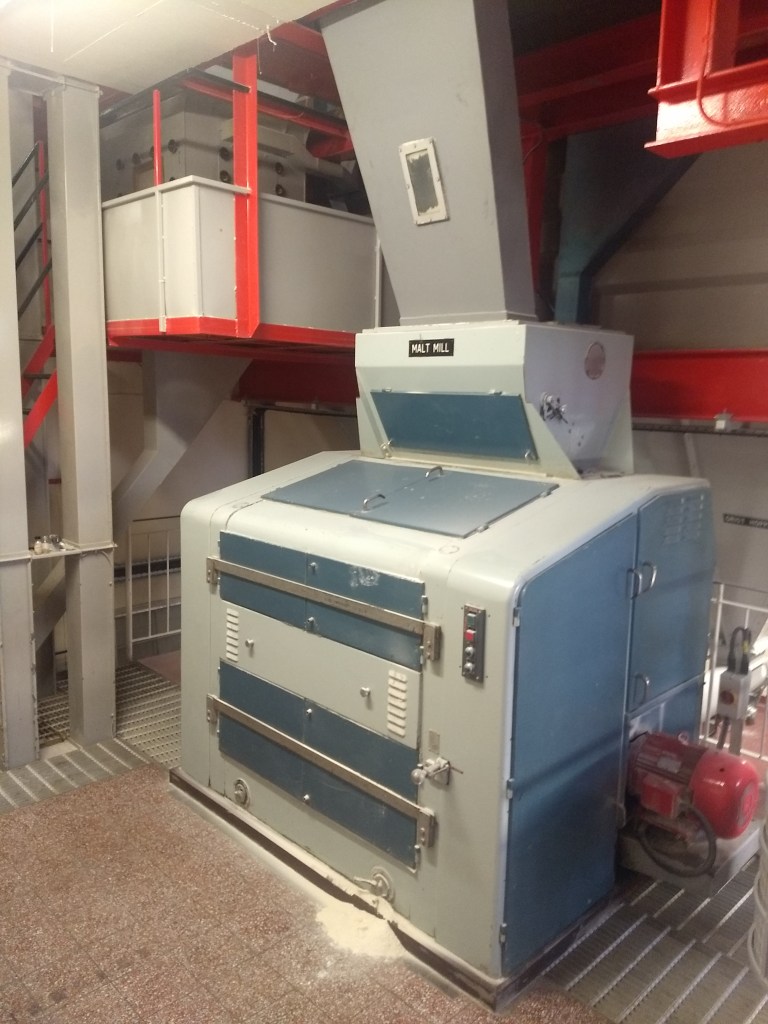
The guide of the day, Rosie, started the tour in the milling room, where barley is grinded into grist (with a usual component of 10% of flour and 20% of husk), in this case by Milly the mill, a more modern looking machine than the usual Porteus ones.

Not a Porteus mill.

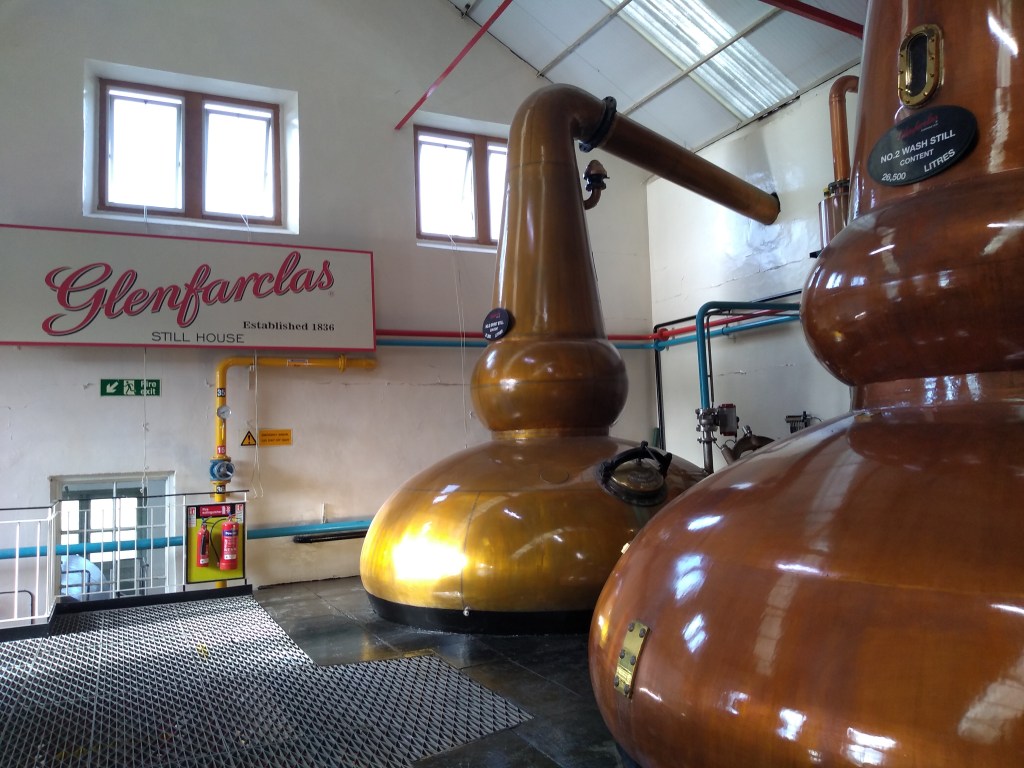
We proceeded to the closed mash tun and the 12 wooden washbacks. The temperature rose substantially as we walked into the huge still room, where some of the 6 bulged directly fired stills were working. Rosie explained that their cut for the distillation โ€œheartโ€ (i.e. the middle part of the run that will be effectively casked) is 74% to 54%, quite large compared to other distilleries we visited.

Two of the six stills.

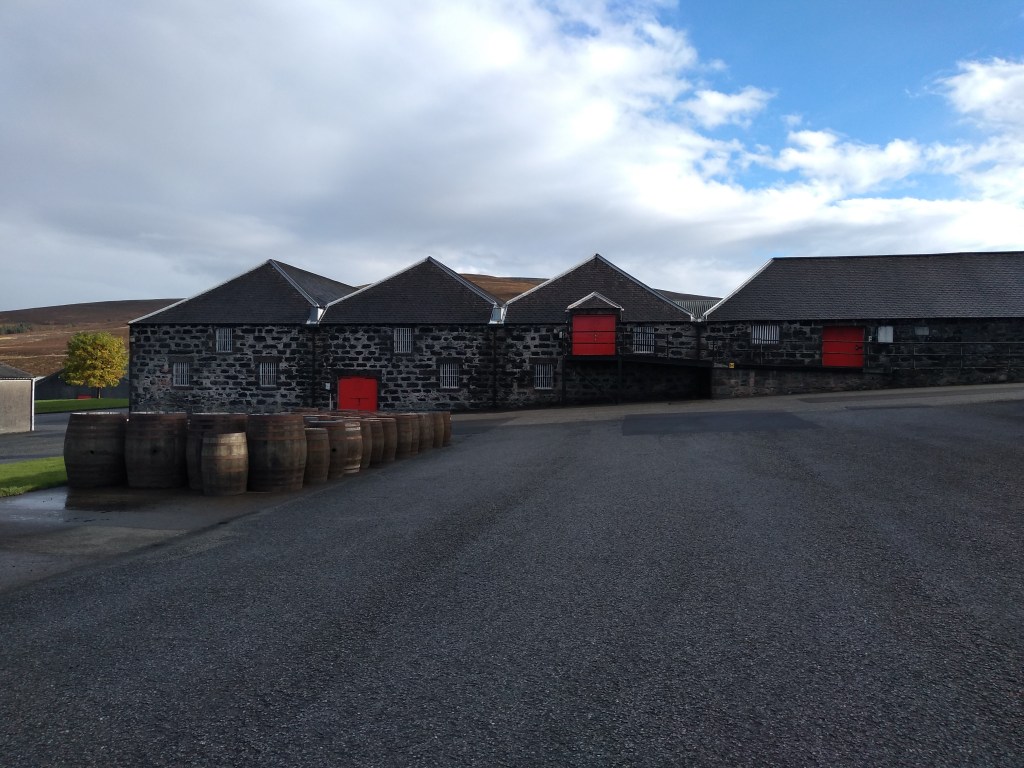
We then moved towards the warehouses, with the signature red doors. At the visitor centre, our tasting was ready with two very well-known drams: their 10y, still today one of the few whiskies bottled at 40% that, in our opinion, still hold, and the 15y, probably the yummiest of their core range, together with the 105โ€ฆwhich of course is not 105 years old, the number refers to the imperial proof (corresponding to 60%abv). Because of the race the next day, we didnโ€™t drink them right away, we put them in our sample bottles brought from home (always with us!) and we went to the shop. There were many of their celebrated โ€œfamily caskโ€ expressions on display, with vintages of every year and bottled at cask strength. Even for recent vintages the prices are a bit steep, but the selection is very bigโ€ฆA pity we couldnโ€™t try any!

So much whisky behind those red doors!

After the visit, we drove to Dufftown, to register for the run and check in at our accommodation, the Commercial Hotel. We decided to have dinner at the hotel (not before a short warm-up run for Gianluigi). In spite of us booking about 9 months in advance (and paying 90 quid per night!!!), we were given the โ€˜cursed roomโ€™, room number 5. No, itโ€™s not the plot of a horror B-movie, and no ancient burial ground was involved: itโ€™s just the room directly above the pub, including their juke-box machine with questionable music selection and no soundproofing whatsoever. That meant that until the bar closed (11pm), we couldnโ€™t sleep. The music wasnโ€™t that loud in the corridor, and in fact in one of the bartenders accused us to be the first complainingโ€ฆwell, not according to other reviews on Booking.com, but we appreciated that the issue might be for this room only.

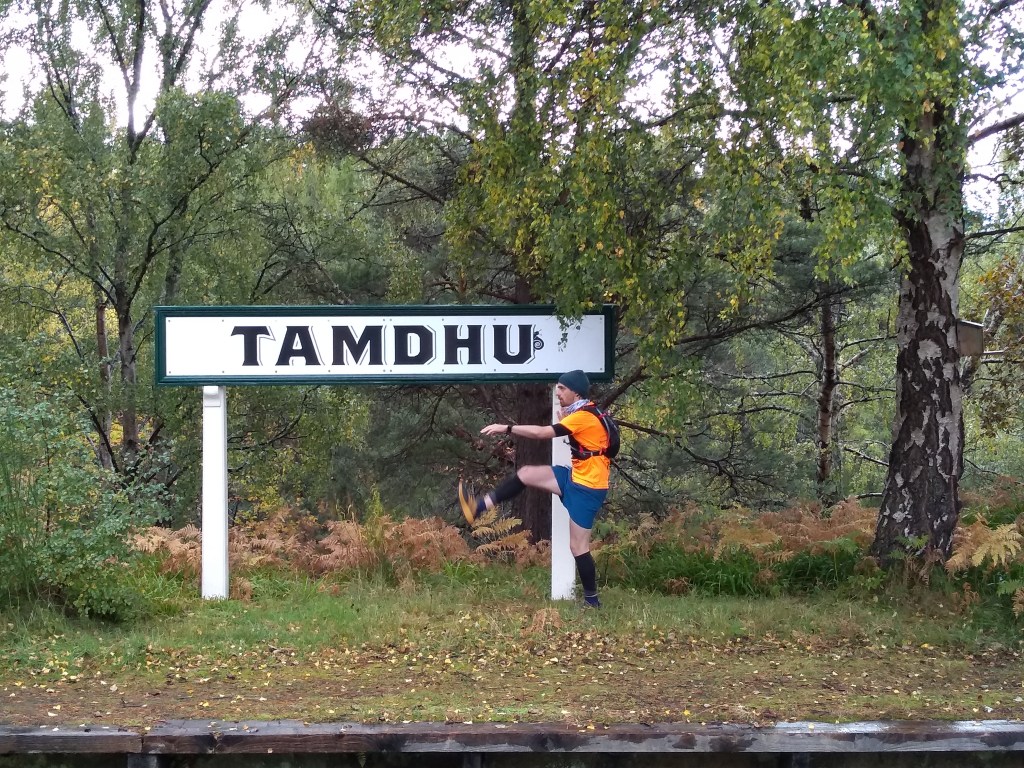
Finally, race day! As we reached the buses that would have brought us to the starting point (the Tamdhu station), it started pouring rain, so we mentally prepared for a wet run.

Warming up…not goose-stepping.

However, as soon as we got there, the rain stopped, and the run was quite pleasant. We both reached our goals, Teresa finishing her first (hopefully not last) half-marathon, and Gianluigi shaving a couple of minutes from his 2021 timing (not getting below 1h and 20m though, one of his goals).

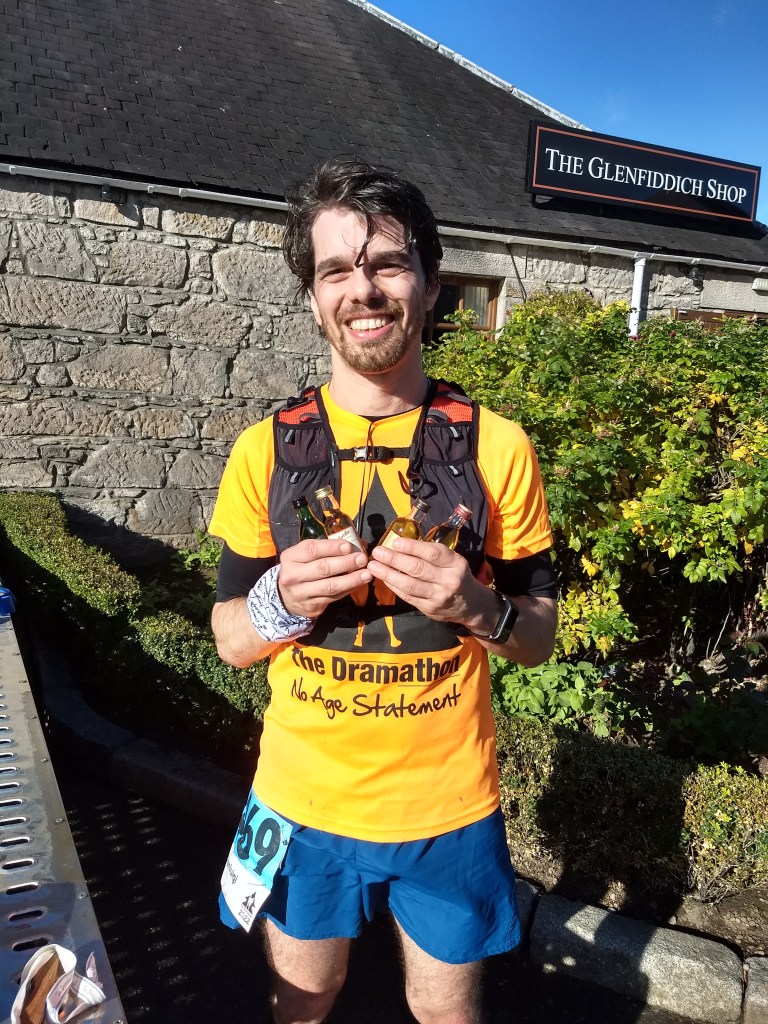
Tired but happy!
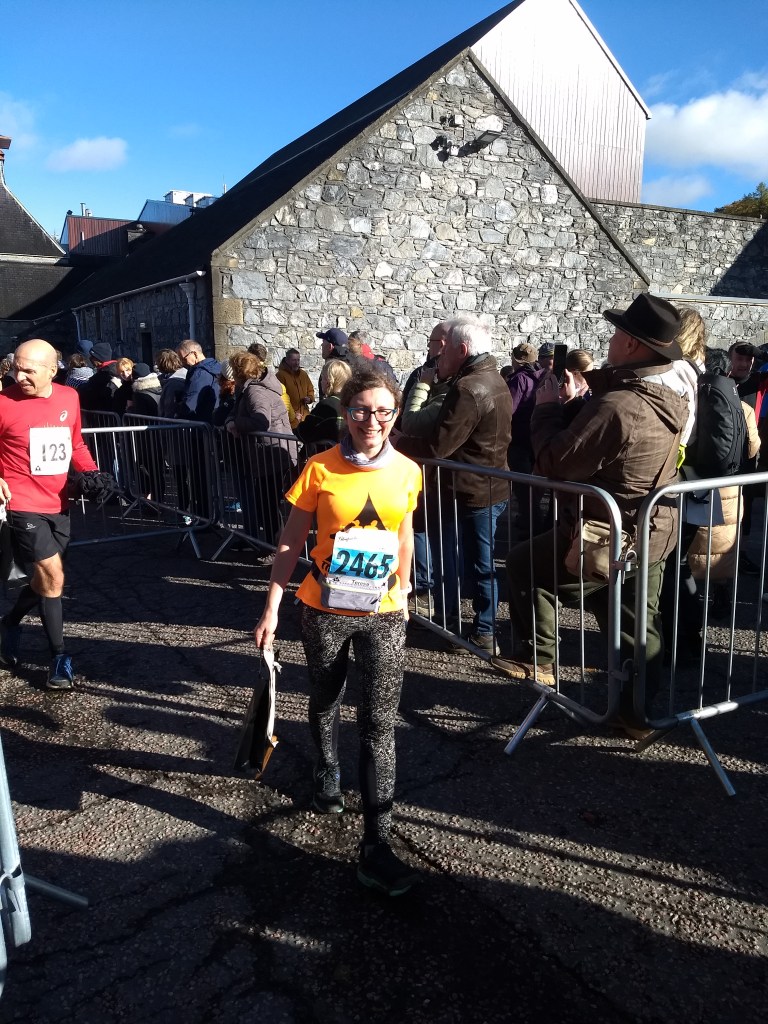
Tired but veeeery happy!

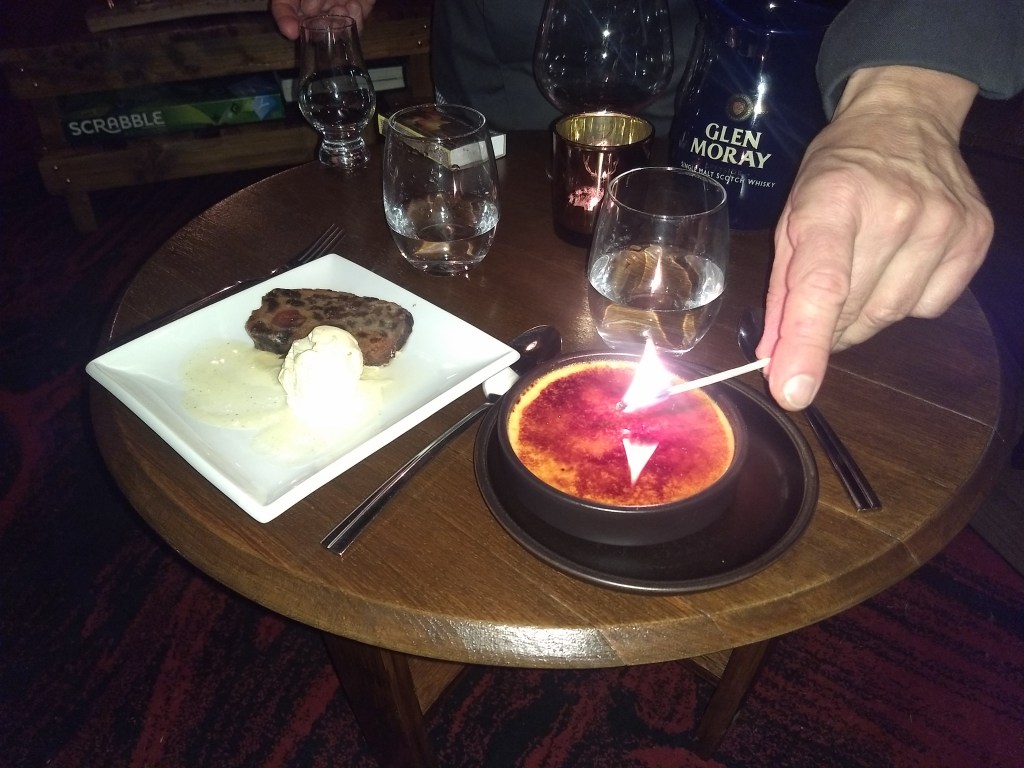
After the run we had a well-deserved early dinner at the local French restaurant, the Seven Stills: it was truly great, yummy food and delicious wine. As a dessert, Gianluigi had a crรจme brulรฉe, with the French chef coming to the table to light it on: bravo!

Lighting up a crรจme brulรฉe with whisky.

We went back to the Commercial hotel for some dramsโ€ฆTeresa was falling asleep in the pub, so we went to bed. The issue of the night before was still there, but Gianluigi decided to go put a few bucks in the juke-box: โ€œif I have to stay awake listening to some sh*t, I want to listen to my sh*t!โ€. Probably some people felt puzzled when Slipknot, Nirvana and Tool started to play, so whoever walloper was in charge decided to skip the rest of the selection (Soundgarden, Alice in Chains, Pearl Jam) only saving No One Knows by the QOTSA. Not cool at all. In the morning we complained with the manager about the noise (not about the skipped songs), who agreed to discounting 15 quid per night. It was nice but still not ideal, so we wonโ€™t be back unless we really have to, in which case we will ask not to be put in room 5.

Anyway, going back to the tour at Glenfarclas, we had selected the basic one because we knew in advance we wouldnโ€™t drink. It was excellent, but we are both very keen to go back and do an experience with a more comprehensive tasting. Slainte!


Glenfarclas Tour

Price: ยฃ7.50 pp (October 2022)

Duration: 1hr 15m

Tasting: 2 drams, Glenfarclas 10y (40%) and 15y (46%)

Target: Anyone

Value for money: Very good

Highlights: One of the prettiest we’ve seen

Distillery Exclusive: Several bottlings of the family cask range, depending on which is available

Recommended: Definitely!

Link: https://glenfarclas.com/our-home/


#22 Goodbye 2022, see you soon 2023

A very dramming year


TL;DR: As usual this period gives us a chance to reflect on the year about to end. It has been an intense one for us, particularly the second half. Whisky-wise, we had some very fantastic experiences, some disappointing, and a few average ones. While we are looking forward to โ€œdramming aroundโ€ in 2023, here our 2022 highlights.  

Aaaandโ€ฆItโ€™s December, and we are finally on holidays. By the time you will be reading this, another Christmas will have just passed, we hope you had a great day of celebrations with your loved ones, and that you are now bloated and relaxing on Boxing Day (or St. Stephen, as it is known in Italy).

Because of our jobs, we both arrived at the end of the year very tired. However, it was also a year full of fantastic whisky experiences, that we hope to repeat next year. In 2022, we visited 19 (Gianluigi) and 20 (Teresa) new distilleries (17 in Scotland and one in England together, Gianluigi visited one in Canada, Teresa one in Ireland and one in England). We also had the chance to revisit some good old acquaintances, like GlenAllachie and Deanston (amongst our favourites). We were able to go to Orkney (hurray!) to catch up with both Scapa (aye!) and Highland Park (nay!).

Sheep grazing with Scapa in the back.

And, finally (FINALLY), we visited Islay for the first time, after our March 2020 trip was cancelled by you-know-what. What a crazy holiday that one, our rented campervan broke down on day 1, half-hour away from the ferry terminal. Although we had to get last-minute accommodations and move around by taxi, we managed anyway! And what a visit, we have to say that whisky tourism on Islay is something really different. Take the Laphroaig tour for example, the token system to pick the drams for your tasting at the end makes it much more flexible than most of the other tours, so that can be enjoyed by both novices and experts. Moreover, Bunnahabhain (best warehouse tasting everโ€ฆjust the bottling prices a bit too steep), Lagavulin, and Kilchoman rewarded us travelling there by including no-core range drams, all limited ones, which made the experience truly special. We wished other distilleries on far-away islands would do the sameโ€ฆ We canโ€™t wait to go back to Islay, to catch up with the other distilleries, and revisit some.

Moments before the best warehouse tasting ever.

Other than Islay we had some incredible whisky experiences, like the Deanston Winter Fest (coming up soon in the blog), or the GlenAllachie tour during the โ€œSpeycationโ€ (coming up soon too).

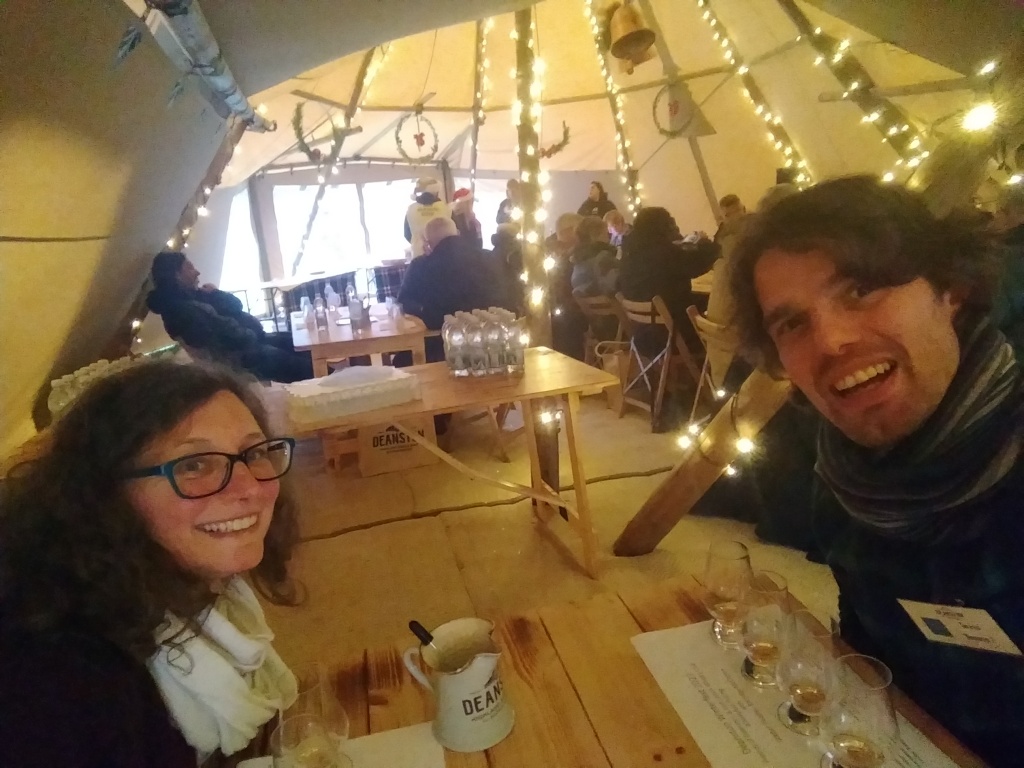
Deanston WinterFest: that’s happiness after three tastings.

This word was brilliantly created by our friend Cath, and greatly implemented byย  Justine (Kask Whisky): over the weekend we visited 5 distilleries (+ 1 being built) and did a few tastings, including one in the now closed Coleburn distillery, and one in the Strathislaโ€™s warehouse. A couple of weeks earlier, we were again in Speyside for the Dramathon, and of course we visited (or revisited) a few distilleries: Glenfarclas (new visit), Glen Grant and Glen Garioch on the way back (both revisits).

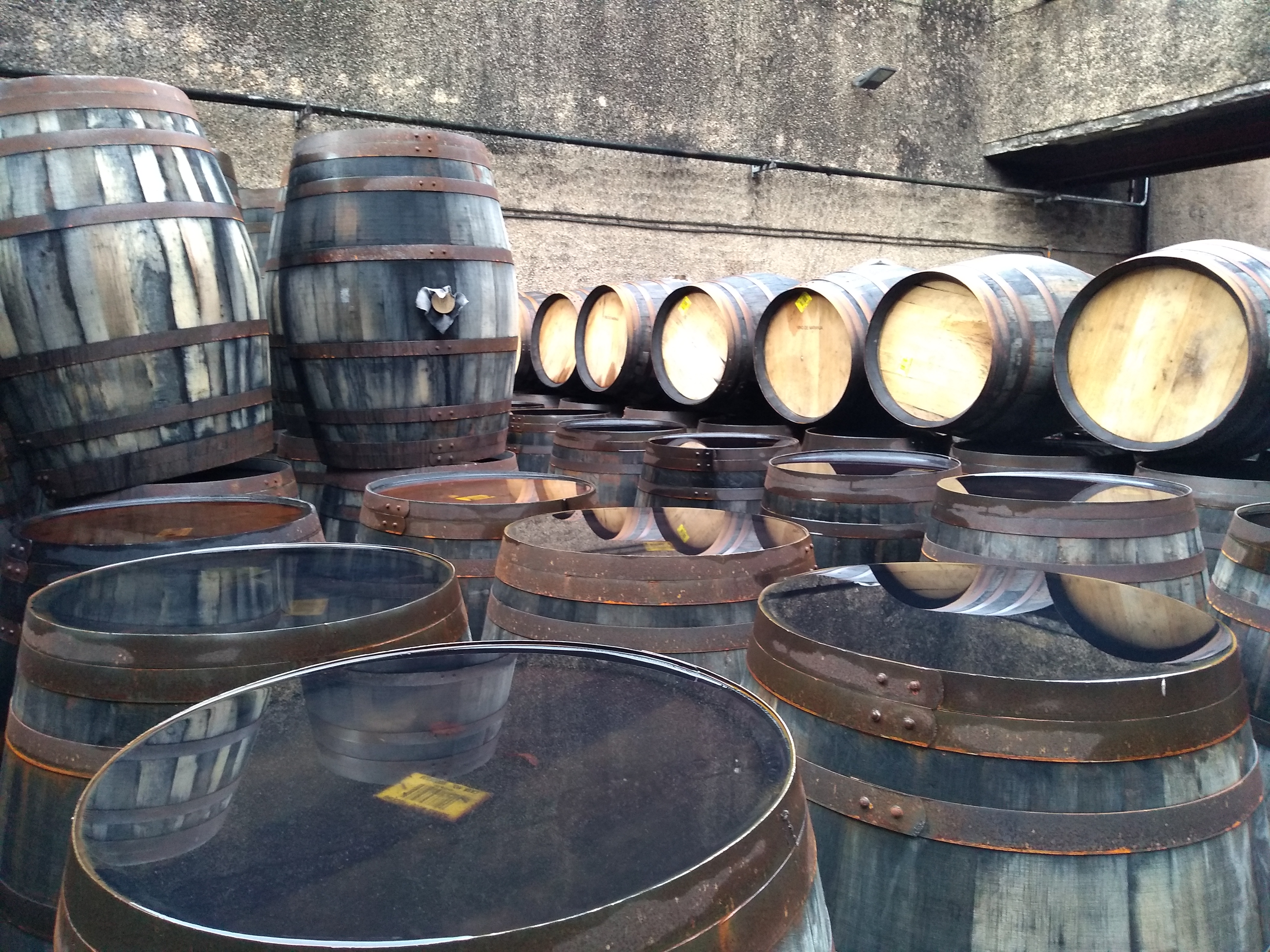
The direct-fired Glen Garioch spirit still.

Some of the tours we did were OK, a bit standard but nothing to complain about: weโ€™d say that usually you get what you pay for. Disappointments came from distillery-exclusive bottling prices. In some cases, instead of rewarding you for visiting the distillery (and already paying for a tasting or a tour), they put a 20-30 quid premium on those. Not nice. The only distillery experience that was really a disappointment and we regret paying for was Highland Park. Despite avoiding the basic tour (ยฃ30, already not cheap) we opted for the improved one (ยฃ75, the most expensive tour we did so far) to be denied any dram of distillery exclusives or other limited bottlings, and just taste the core range which we could have done in Edinburgh anytime. An expensive tourist trap, we wonโ€™t go back there (sorry James, you were a superstar guide though!).

A nice but waaaaay to pricey Blair Athol (ยฃ120!!!).

With the Covid19 restrictions behind our back, we could attend our very first whisky festivals, the Fife whisky festival in March and the Whisky Fringe in August – we had a lot of fun, let’s see if it’ll be the same with bigger events.

Enjoying a break between the two Fife Whisky Festival sessions.

In-person tastings came back too. We did a few organised by our friend Justine, of course, as well as others by Mark, Murray (both at Kilderkin) and Colin at Tipsy Midgie. We had some cracking drams, including a 20y Dutch single malt from Zuidam, a fantastic Doorlyโ€™s rum (from Foursquare distillery) and some cracking Daftmill-s and Bruichladdich-s. Also, SMWS events came back, including our favourites: Outturns and Distillery Visits (an event where you can taste whiskies brought by a distillery representative together with some provided by the SMWS). This year we did the Glen Moray distillery visit with Iain Allan connected remotely and the Distell one (Deanston/Tobermory) with the very funny Brendan McCarron: both cracking events with awesome whiskies! Gianluigi also decided to become an Aqvavite Youtube Channel Patreon: Royโ€™s content and entertainment are really priceless, and this was long overdue. We also attended a very funny blind tasting in Glasgow where we finally met all those whisky folks weโ€™d only seen on screen until then.

Awesome Aquavitae event in Glasgow!!!

By writing this up, we realised 2022 was intense not only because of work, but because of whisky too! We hope to bag more distilleries in 2023, although weโ€™ll probably try to be more selective when picking tours and experiences. We are also starting to organise whisky tastings: the first will be towards the end February and will be Port-cask related (we got the idea during our fantastic trip in Portugalโ€ฆtickets here), but the following ones will involve bottles we picked up in our travels, not necessarily at distilleries, ehehโ€ฆStay tuned! Overall, itโ€™s still a very long way to become whisky geeks, but weโ€™ve learned a lot this year and we hope to continue the trend!

Not just whisky for us…coming to a tasting soon!

Happy holidays and see you next year! Slainte!


#20.3 Feast on the East


Back to a traditional experience: Cragganmore


TL;DR: The last distillery in this trip was Cragganmore, producing a malt we were not too familiar with. It was the most traditional whisky experience of the weekend, of course in a good way. We just wish theyโ€™d improve the whisky presentation and move away from the 40% and chill-filtering, to allow this good dram to fully express! 

(missed Part 1/Part 2?)

After the visit to Macallan, we were almost bamboozled by being back in the daylight. We drove to Aberlour and had a soup and a coffee at the Gatherโ€™n Cafe, officially our go-to place when we are in the area. We also sneaked in the Walkerโ€™s cookies shop a few meters down the road, another one of our must-go in the village.

These didn’t last long!

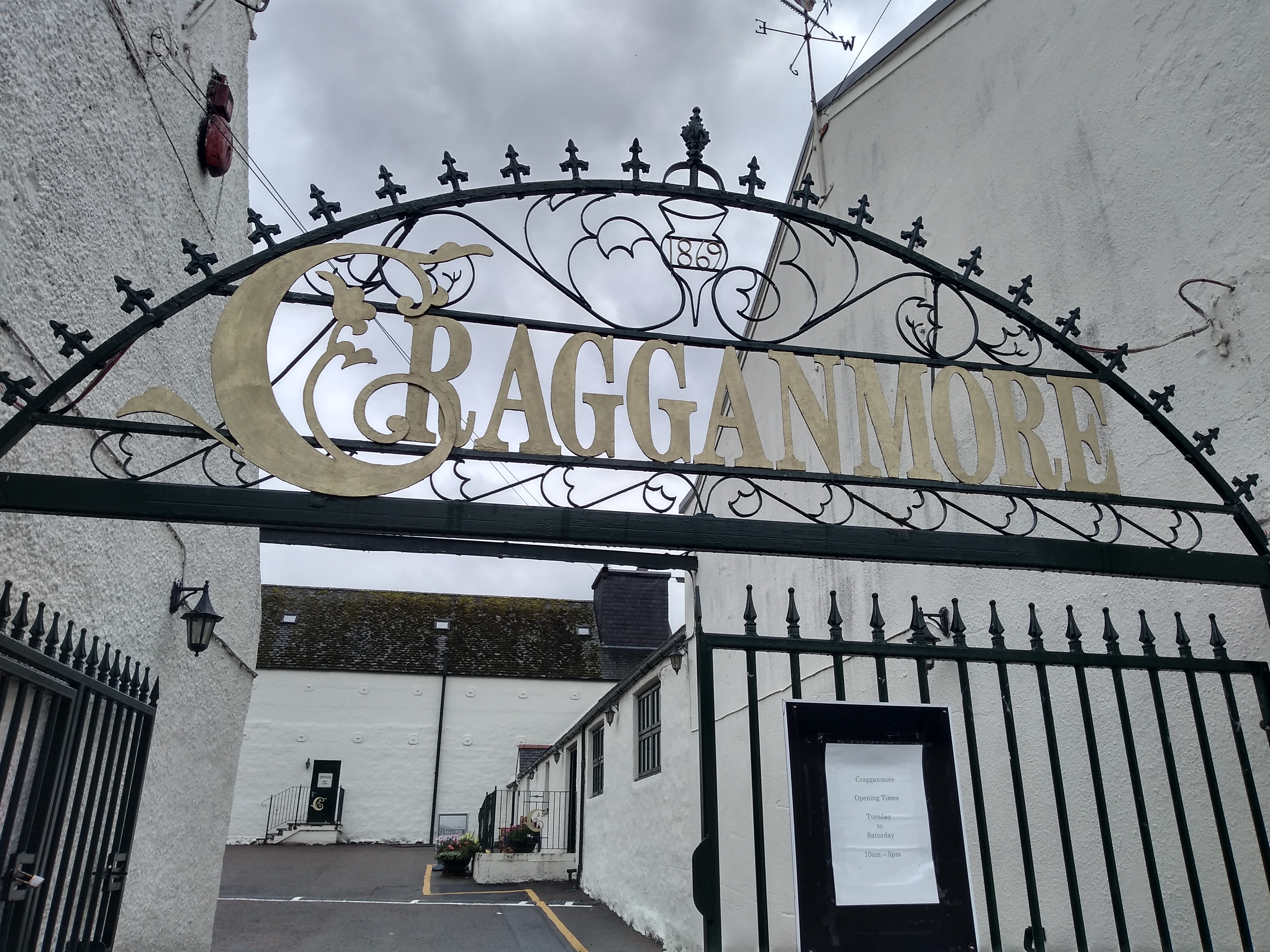
Back to the car, we drove directly to Cragganmore distillery, in Ballindalloch. Unlike Tormore, or the new Cairns (which we spotted several times just driving around Speyside), Cragganmore is quite hidden in a narrow valleyโ€ฆyou really want to be there to see it (well, not as much as Ncโ€™Nean!). It does make sense, however, that so many distilleries in Speyside popped up in such hidden places, given the history of distilling in the region, in particular pre-1823 (date of the Excise Act, for more info check out the dedicated episode of the Liquid Antiquarian on YouTube).

Second distillery of the day, of course we’re happy!

We didnโ€™t know what to expect: Cragganmore is one of those many drams we came in contact with after the beginning of our whisk(e)y journey, when we were already members of the SMWS and had already visited a few distilleries. Because of this, and because of its 40% presentation (and itโ€™s probably artificially coloured and chill-filtered) we never got into it, we had just tried it once or maybe twice in bars. Well, itโ€™s kind of nice to discover a new whisky, isnโ€™t it?

We arrived at the distillery 10 minutes before the tour start, so we took a look around to admire old-style buildings. The visitor centre didnโ€™t go through much renovation (unlike other Diageoโ€™s distilleries, like this and these two), just enough to make it pretty.

The wee visitor centre.

Albeit much smaller, it reminded us a bit of Lagavulinโ€™s one, as it mainly consists of a shop and a very cozy tasting room, with a fireplace, sofas and chairs. The tour we had booked is โ€œA Taste of Speysideโ€, and it is still the only available one (for the very reasonable price of ยฃ16, still at the time of writing). Our guide for the day was Gary, a former firefighter which instead of dully retiring, decided to work part-time at the visitor centre (something we observed a few times around distilleries). Anyway, we started the tour by gathering at the centre of the courtyard, and after the usual health and safety instructions, we moved to the production area.

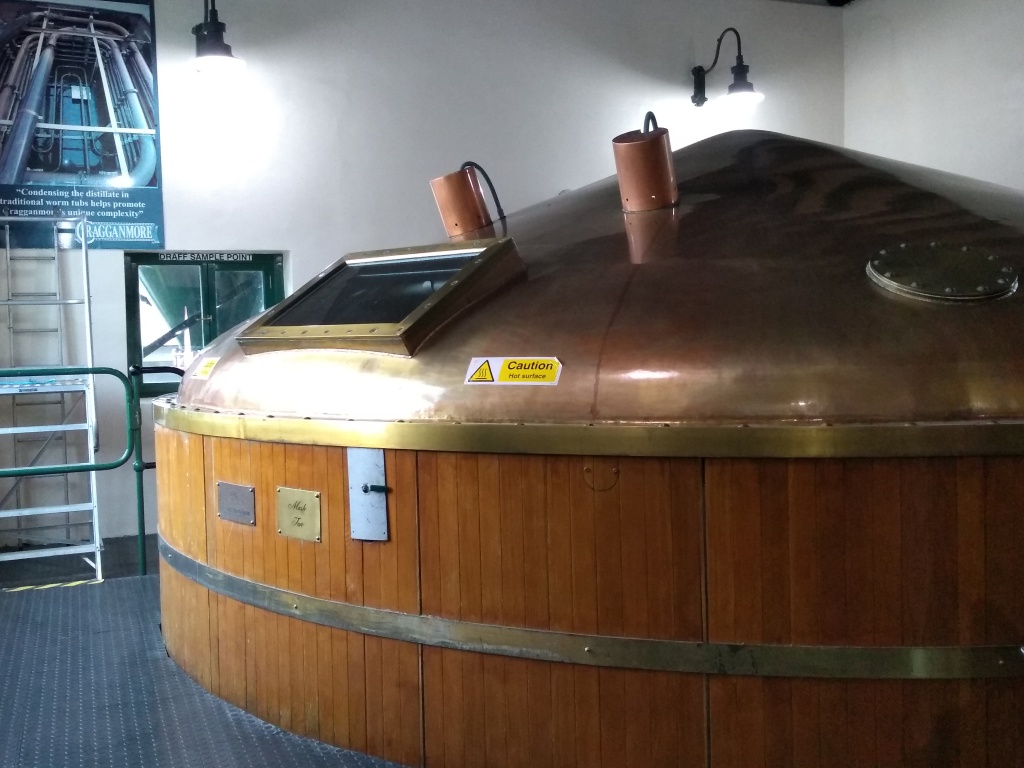
The mashtun.

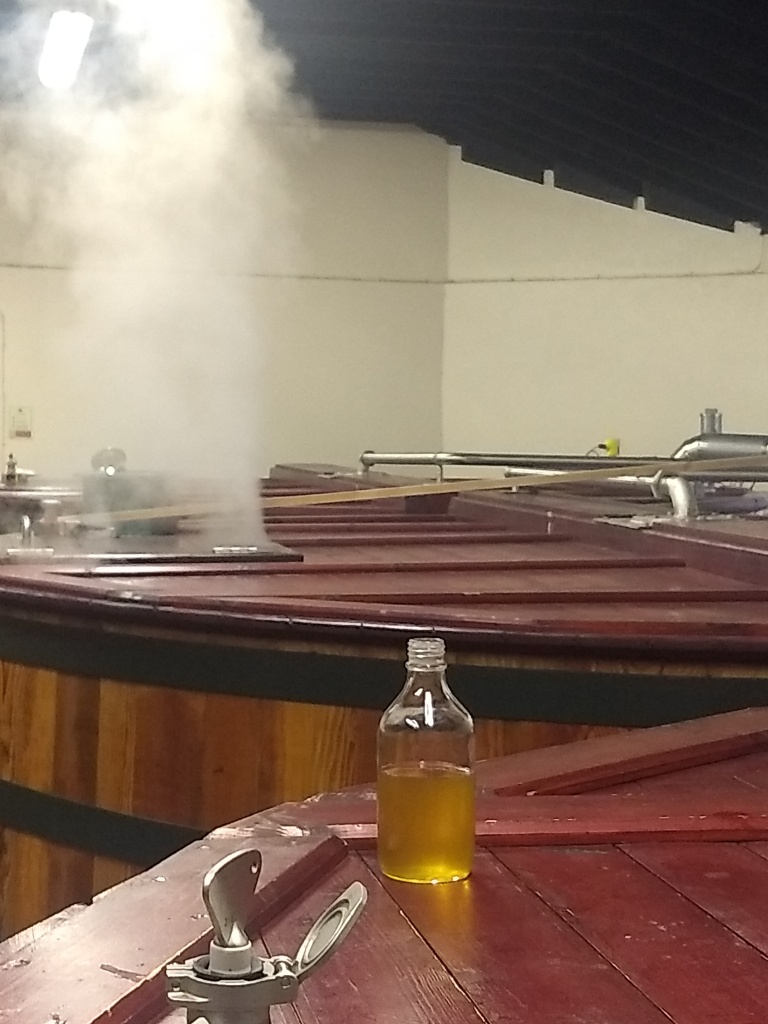
As usual, we started from the milling room with its red Porteus mill (and as usual, we got told the story of Porteus company running out of business because their machines were too robust and never brokeโ€ฆ maybe at the time the evil programmed obsolescence was not a thing). We rapidly moved on to the copper-lidded mashtun and the washbacks, where the distiller on shift โ€œfishedโ€ a sample of fermented wash for us to see and smell (not drink, fortunately).

Too scared to drink it!

Before moving to the stillroom we could spot from the window the box containing the worm-tub condenser, one of the features of the distillery. The distiller came with us to the whisky safe, where the spirit from the 4 stills goes through and gets checked. There, he gave us a very detailed explanation of the distillation process. Although it is computerised now, the lever to start collecting the second distillation heart (from 68% to 62%, much lower than Macallan!) is still manualโ€ฆInteresting! We then moved outside to check the warehouse, only from the outside, unfortunately.

Partial (very partial) view of the still room.

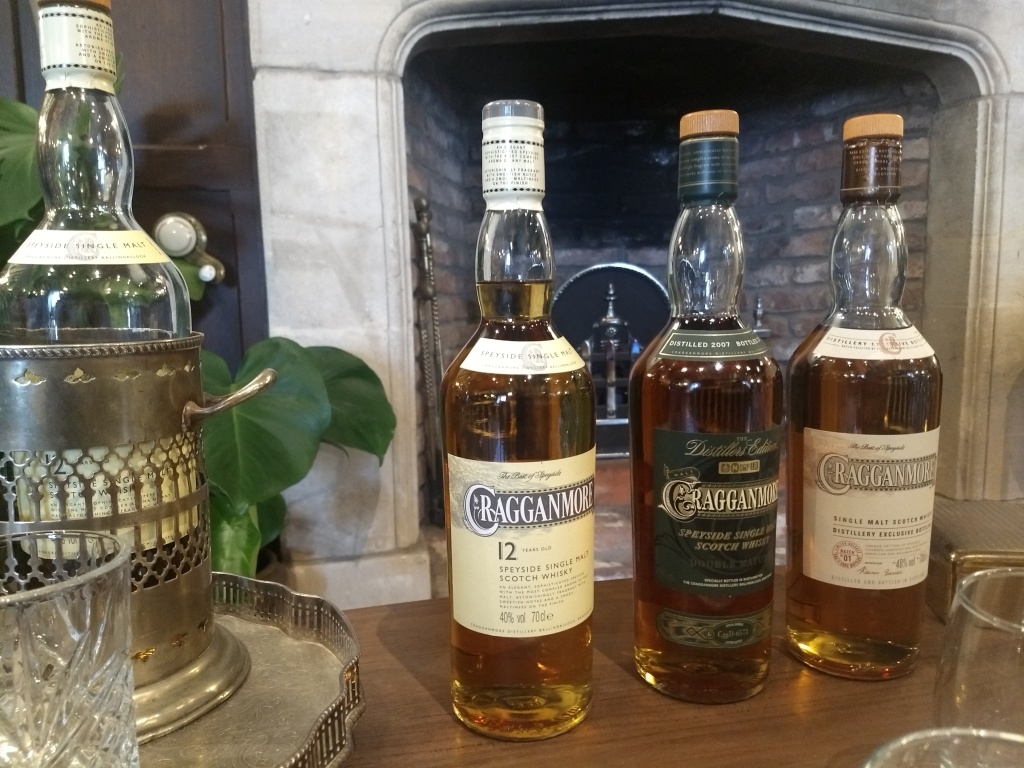
In the tasting room, three drams were already waiting for us, poured in tiny glasses: their flagship, Cragganmore 12, the Distillers Edition (commonly across Diageoโ€™s distillery, this is the same age of the main core release but finished in a different cask, ex-Port cask for Cragganmore), and the Distillery Edition (a more recent release quite common across all Diageo distilleries, usually a batch of few-thousand bottles non-age stated, bottled at 48% and priced between 85 and 100 quid, a bit pricey, but apparently casks are selected by the distillery personnel). The drams were quite nice, despite the watery presentations (in our opinion): a shame for such a potentially robust and rich of flavour malt. We even got something to include in a future tastingโ€ฆwe wonโ€™t say anything else, but stay tuned in 2023 for more!

Tasting by the fireplace.

Overall, it was a pleasant visit, and Gary was super nice as a tour guide, and of course him involving the distiller on shift was the cherry on top. Compared to the other distilleries we visited during the same trip this was the most traditional one, what probably youโ€™d expect when thinking of Scottish single malt distilleries. It was a very interesting comparison though, with Fettercairn being still old-style at core, but with a more modern visitor centre, and Arbikie and Macallan being definitely among the most modern we visited. We believe that this is reflected in the philosophy of the whisky production, and indeed Cragganmore feels very traditional, in every sense.

Until the next time, Slainte!


Cragganmore: A Taste of Speyside

Price: ยฃ16.00 pp (September 2022)

Duration: 1h

Tasting: 3 drams, Cragganmore 12y (40%), Distillers Edition (40%), Distillery Exclusive (NAS, 48%)

Value for money: good (10% off on anything in the shop if you attended the tour)

Highlights: the old-style distillery atmosphere

Target: anyone

Recommended: yes

Things we did not like: samples are super tiny (10ml? Definitely no more than 15)

Distillery only expressions: Distillery Exclusive (NAS, 48%), ยฃ85

Link: https://www.malts.com/en-gb/distilleries/cragganmore


#20.2 Feast on the East

The Macallan experience!


TL;DR: we had planned this trip around the visit to Macallan, which we managed to book well in advance despite the low availability of their tours. To sum up: a modern art museum inside a Teletubbies house, but the production part is cool!ย 

(missed Part 1?)

Something we didnโ€™t say in the first part of the story, this trip was kind of a last-minute plan. The reason being, we planned it around a specific distillery visit which we had booked a few months before, and because of this, we were not sure we’d be able to make it. The distillery is Macallan: because they only do 6-people tours twice a day (at 10.00 and 11.00), twice or four times a week (always on Saturday and Sunday, on Thursday and Friday too in summer), it is very hard to find a spot. Back in June we somehow managed to find two places in September, so here we are. And of course, because Macallan is not exactly around the corner, when we decided to go for it, we also booked Fettercairn and Arbikie the day before, and Cragganmore for the afternoon of the same day.

Truth to be said, we arenโ€™t huge fans of this single malt. First and foremost, the distillery expressions we tried so far (mostly their 12y) were always a bit dull, a bit better the independently bottled ones but not better than many other sherried Speyside drams. This aside, the company’s marketing towards the super-rich customers is on the edge of ridiculousness, similar to all products marketed in the same way (whether cars, watches or whatever). As we both come from working-class families, we are quite indifferent to (most) marketing BS, we canโ€™t really figure out how someone would pay 300 quid for a 43% and probably chill-filtered 18y. This said, we were very curious to visit the distillery because of its strange and unique architecture, in particular after our โ€œcoffee experienceโ€ last year. And, at the end of the day, it is still a Scottish single malt distillery, so sooner or later a visit was due.

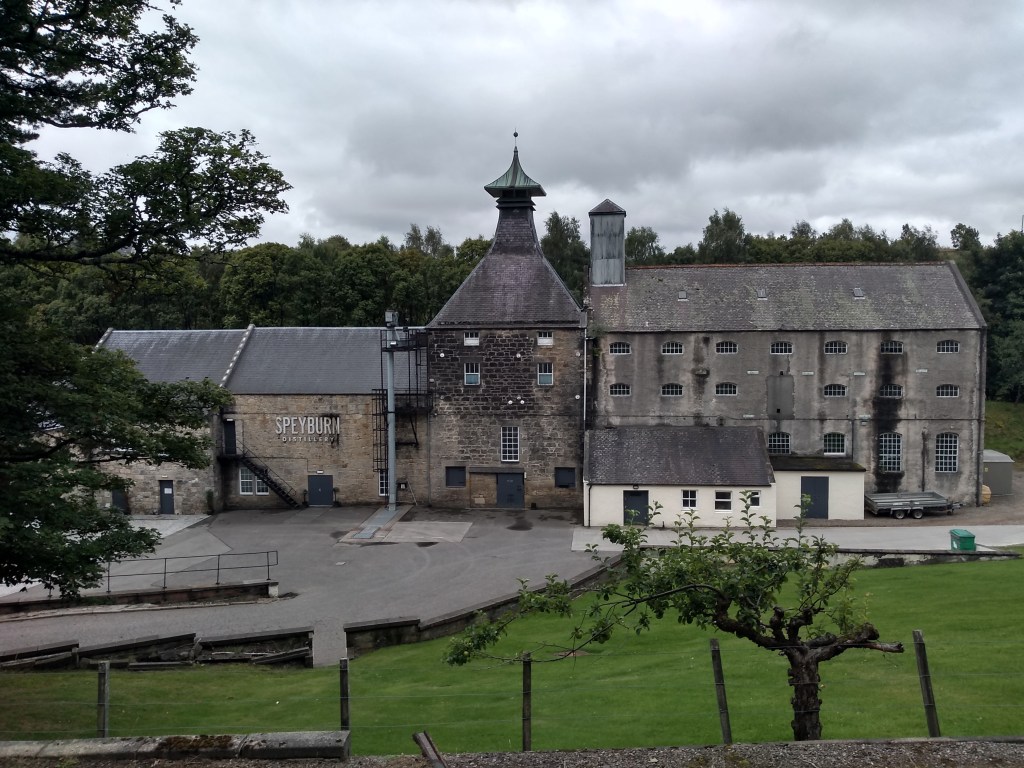
A wee detour before Macallan, Speyburn!

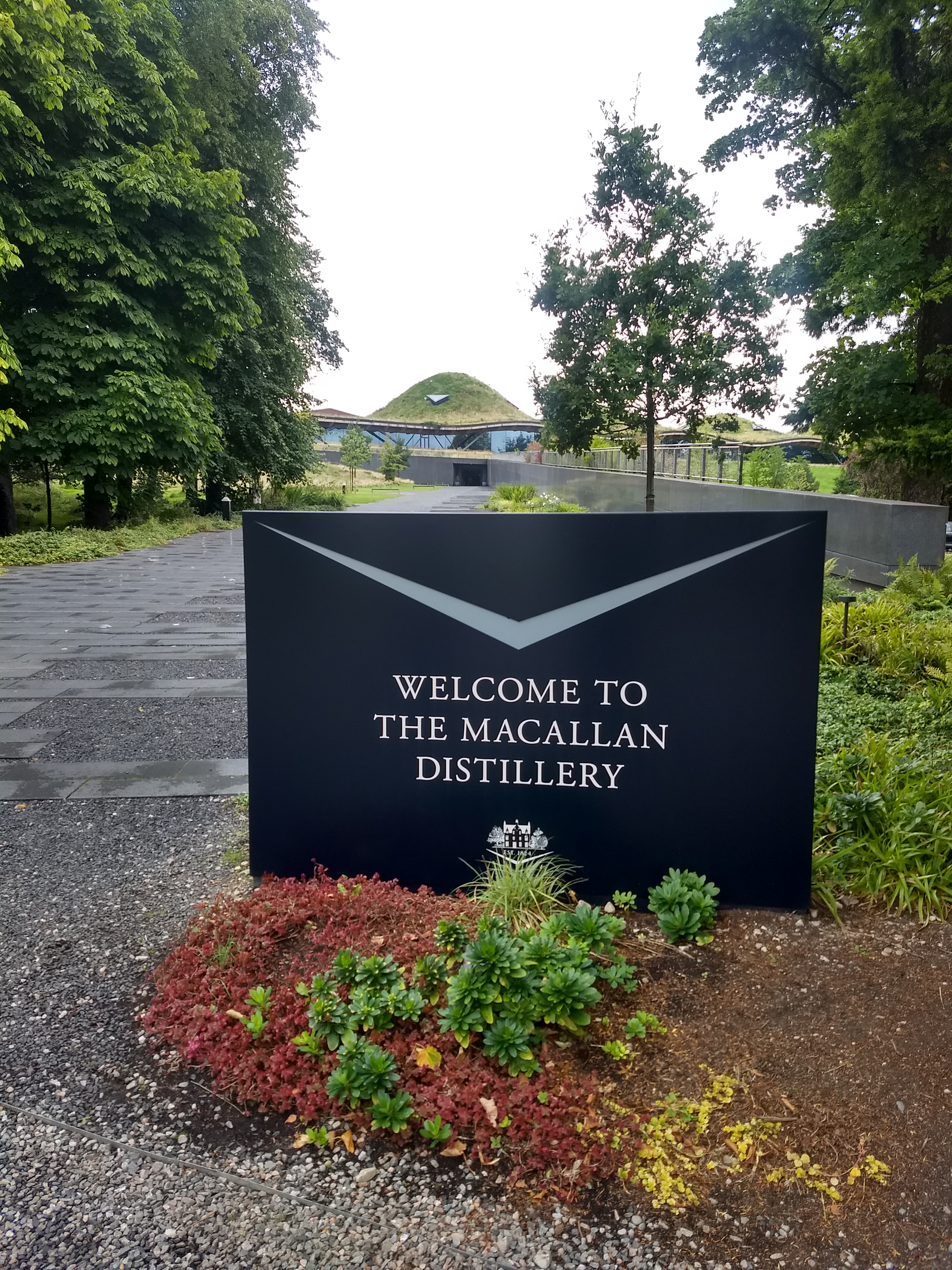
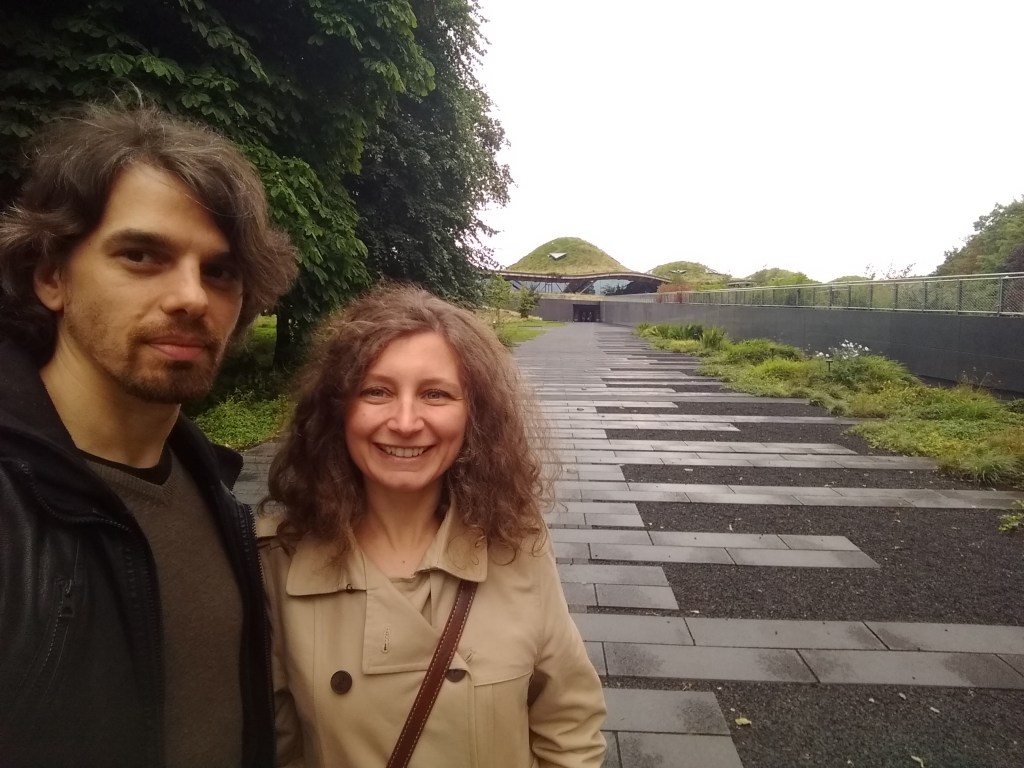
So, after a typical Scottish breakfast in the hotelโ€™s pub (the dining room was under renovation), we drove past Rothes, where we stopped for a quick sneak peek at Speyburn distillery (closed to the public, sadly), and we reached Macallan parking lot. The distillery is something very different from any other we visited so far: dim lights and soft piano music, and a very high ceiling giving the impression of a big open space. It reminded us of a modern art museum, kind of Bilbao’s Guggenheim.

About to see what’s in the Teletubbies house.

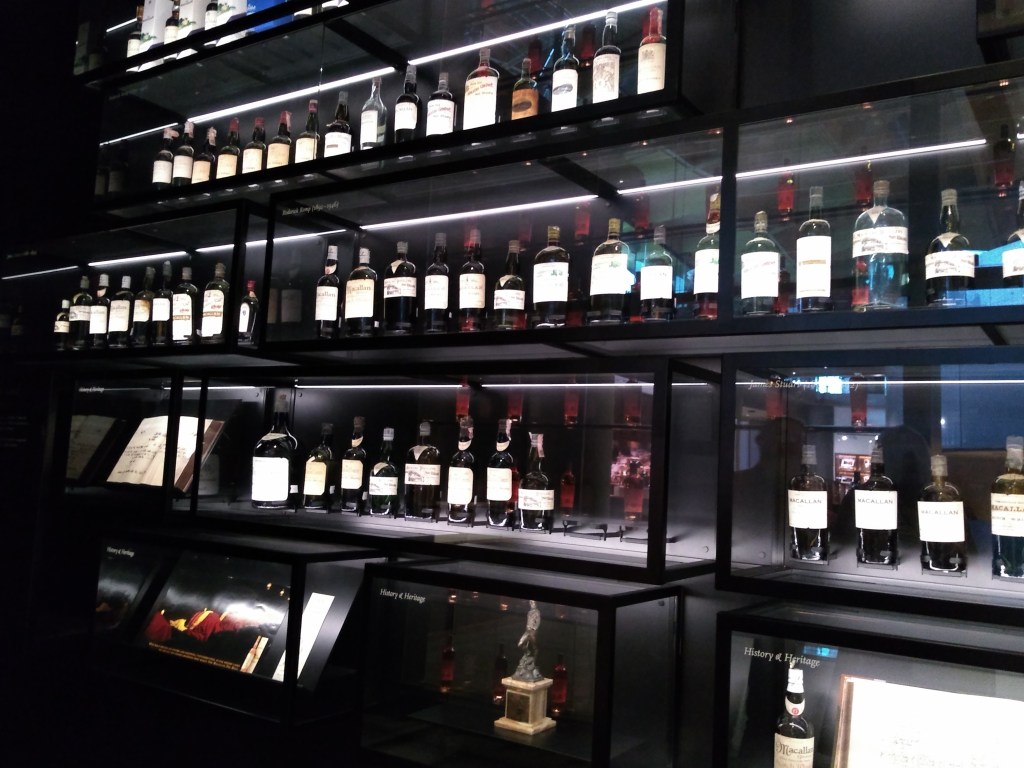
At the check-in, our guide Colin (who later we discovered to be very knowledgeable) welcomed us very warmly. He took our jackets (bad sign, as it probably meant no visit to the warehouse) and told us that we could check out the shop in the meanwhileโ€ฆoh sorry, not the shop, the โ€œboutiqueโ€. A few minutes later, we were brought to the cafรฉ where a few tables were reserved for us. Everyone got a coffee and a (quite delicious) scone, a nice touch. When the tour started, we were walked to the Macallan collection, where Colin explained to us the history of the distillery and the brand, including all the various collections that came out throughout the years. Quite interesting overall.

A bad picture of the interesting collection.

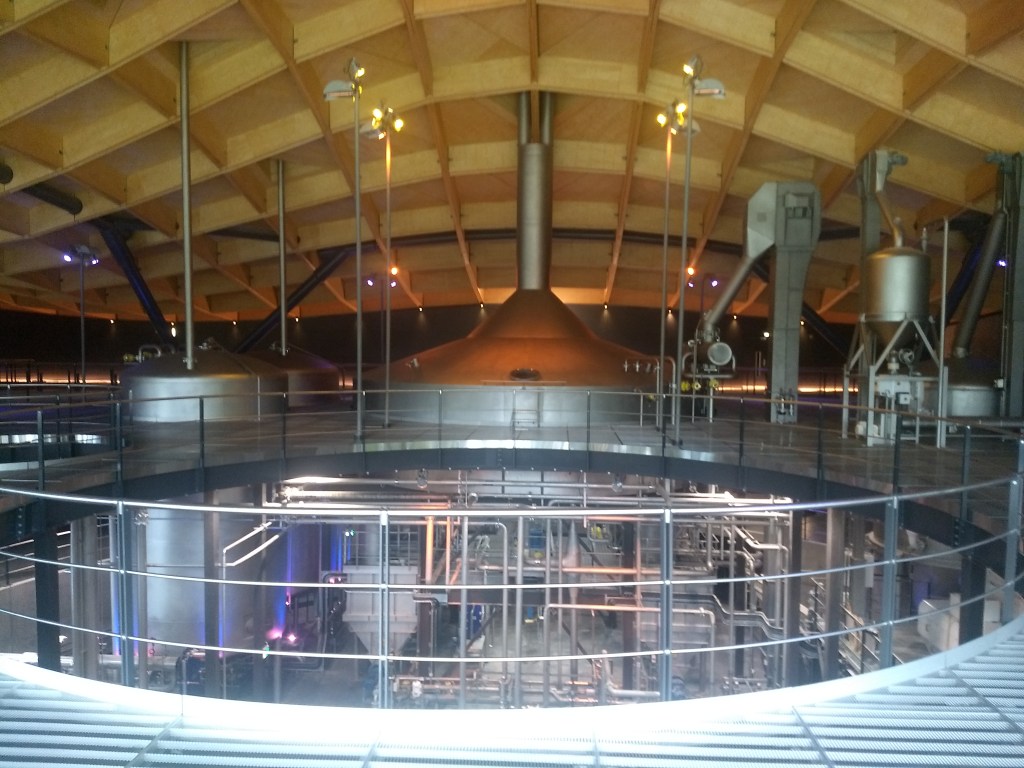
We then moved to the first floor towards the production area, separated from the bar by glass doors. Colin explained how this distillery came to be, and the underlying sustainability concept, like the vegetation on the roof (they probably should also ditch the huge and useless bottles boxes to really go green…). There we didnโ€™t see any operators, as the production is 100% computerised. They installed a huge mashtun (17 ton mash!), probably the biggest we have ever seen, and there is an empty hole with space for a second one, in case theyโ€™ll need it in the future…or for a shark tank, maybe?

Absolutely massive mashtun…and empty space for a second one!
One of the three “isles”.

The rest of the production is divided into three โ€œislesโ€ with 7 washbacks and 8 stills in a circle. The stills are quite small and of the same shape as the โ€œold Macallanโ€ ones. At this point Colin made us taste a sample of newmake spirit, taken from a very narrow cut (from 72% to 68%, if we recall correctly) and then reduced to the industry standard of 63.5%. Quite nice, and less green-apples-and-pears forward than others. After this, we were shown a display of the main estate house, a nice example of Victorian architecture but at the moment not possible to visit.

We then went to a room, where we watched a video about how the Spanish wood is harvested and treated to make their barrels (no new information, but still OK to see), and then to another room for a second video about the art of blending (this one not very insightful to be honest).

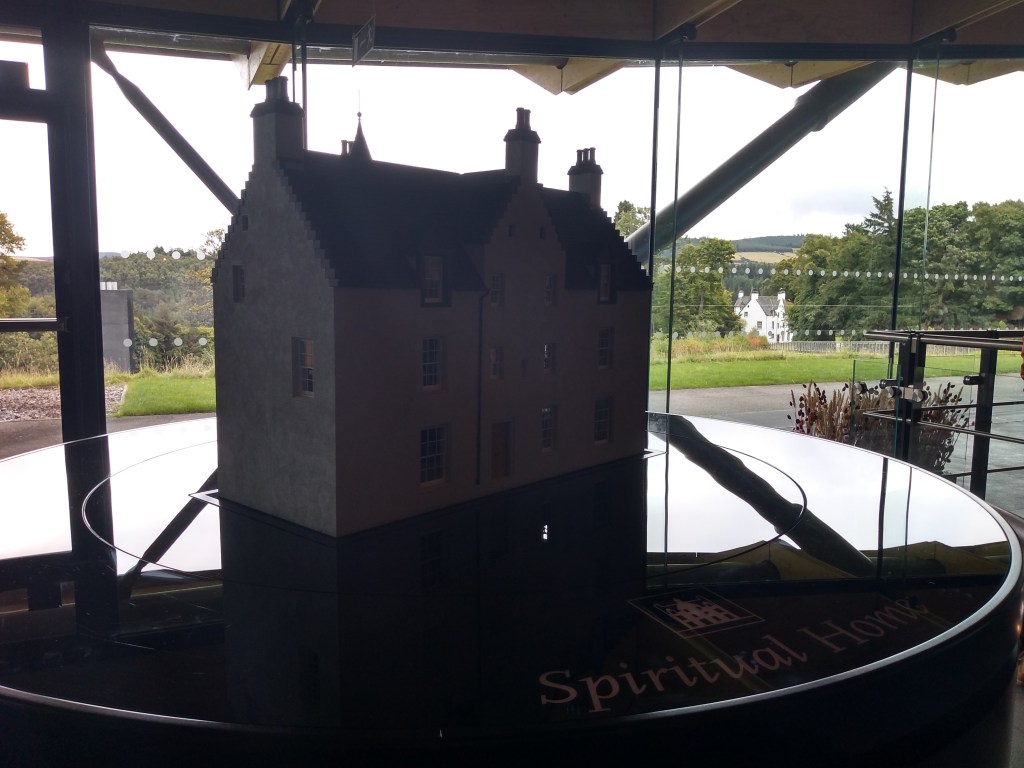
A model of the “Spiritual Home”, and the real one in the back.

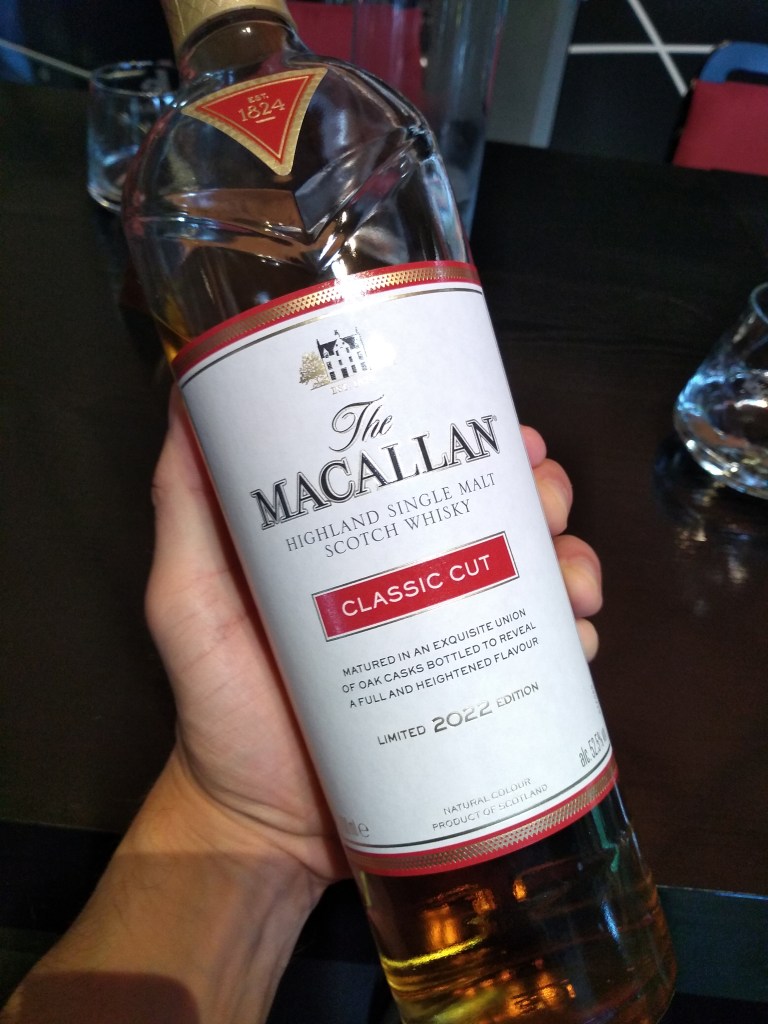
Finally, it was time for the tasting, which took place in a warehouse that sits underneath the bar, kind of in between a crypt and the Bat Cave. Initially this was just a display, it is now officially a maturing warehouse, with a few casks for each year since the new distillery started production. We tried two expressions: the Macallan 15y Double cask (a mix of sherry casks from American and European Oak) and the Home Edition, both at 43% and very drinkable but not outstanding (also, both 10ml, not much to taste anyway). We moved to the bar, where Colin gave us one last dram: the 2022 Classic Cut, a NAS expression bottled at 52.5%abv. This was definitely a step up in flavour and complexity, but for a price of ยฃ120 it disqualified itself as a potential purchase.

This one was good!

Overall, it was nice to get to know this distillery, and try a few expressions one after the other. It would have been great to visit one of their proper warehouses or the old distillery, which at the moment is actually mothballed (in our understanding, all the equipment is still in place). Just there in case of future needs (eg training)? It doesnโ€™t look like there are plans to open it to visitors, but it would be really nice to be able to visit the production plant that made Macallan famous. Maybe in the future? We certainly do hope so.


The Macallan “Discovery Experience”

Price: ยฃ50.00 pp (booked in June 2022)

Duration: 2h 30min

Tasting: 3 drams, 15y Double cask (43%), Home Edition (NAS, 43%), Classic Cut (NAS, 52.5%), plus a coffee and a delicious scone

Target: whisky nerds

Value for money: a bit pricey

Highlights: the futuristic distillery layout

Recommended: only if you’re interested in modern architecture and not in “classic” distilleries

Link: https://www.themacallan.com/en


#20.1 Feast on the East

East of Scotland bonanza: Fettercairn and Arbikie


TL;DR: On our way to Speyside, we stopped by two distilleries along the way. One old, Fettercairn, and one new, Arbikie. We liked both tours: while Fettercairn was more of a classical distillery experience, we appreciated Arbikie forward-thinking and innovative spirit. Fettercairn Warehouse 2 drams were outstanding! 

Here we are again, mid-September, early Friday morning, on a bus to Lochrin Place, near Tollcross, where a car is waiting for us. We had booked it at McNicoll – following the increase in rental car prices due to the pandemic, they are now quite competitive and their service is generally much better than most of the other ones. That morning Teresa, the designated driver for the weekend (Gianluigi: โ€œAH-AHโ€), drove us up north towards the Highlands, but then turned eastward on the road to Aberdeen.

Our first appointment of the day was with Fettercairn distillery, at the bottom of the Cairngorms mountains (which is the meaning of the name). This distillery is owned by White and Mackay and has a long history. Founded in 1824, it was one of the first to get a distilling license.

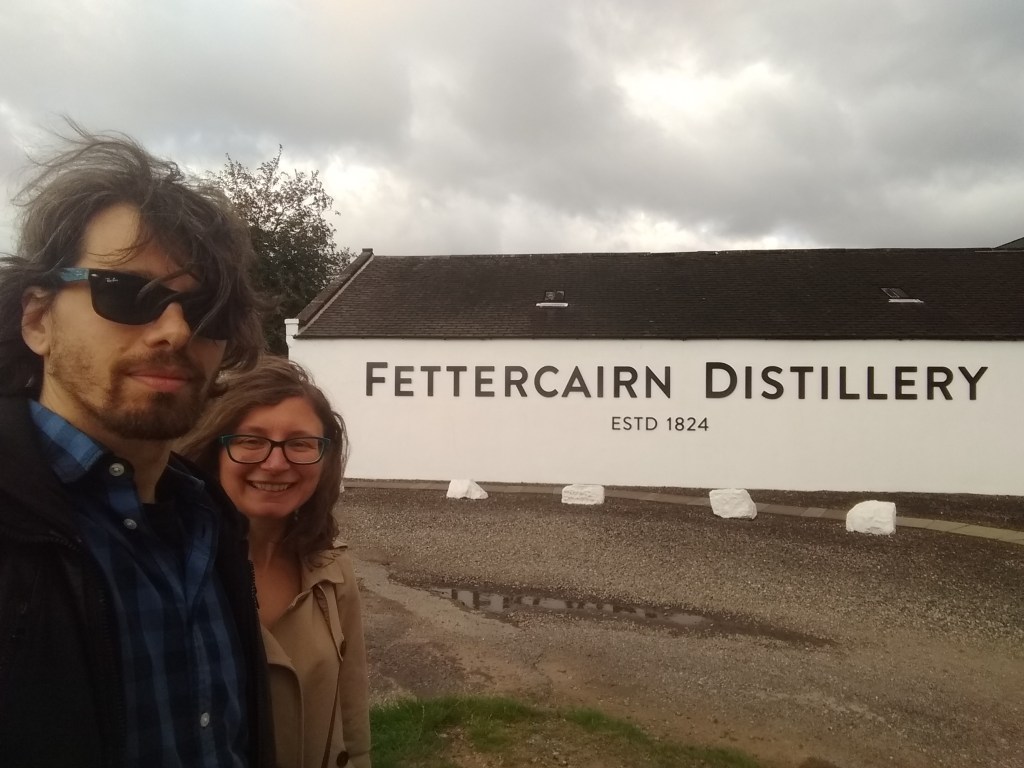
Here we are, ready for the tour (not so much for the wind).

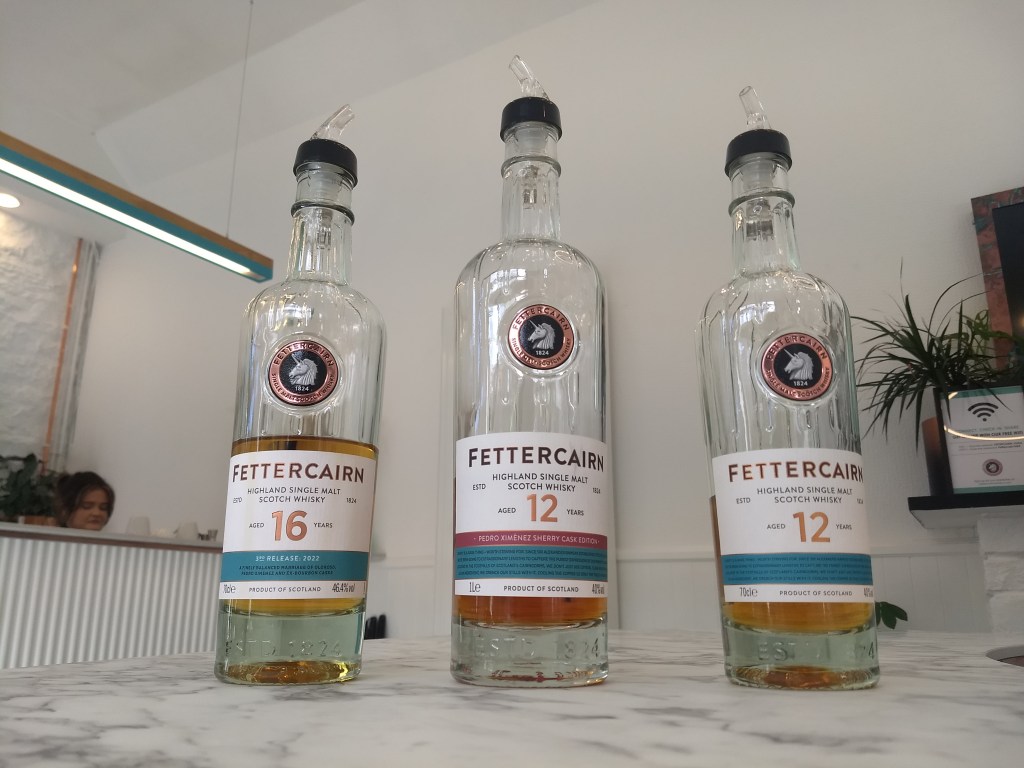
Recently the brand underwent a restyling, so although the 12y and the 12y ex-PX cask (a travel retail expression) stayed at 40%, the 16y moved to a more natural presentation: from 40 to 46%, not chill-filtered and no artificial colour additions, just what we enthusiasts want! They also added the Warehouse 2 series to their portfolio, usually younger expressions at a higher abv from a vatting of casks selected by the distillery manager, each different from the previous one.

As we get to the (renewed) visitor centre, we are welcomed by our guide for the day: Kirsty. She illustrated very clearly the historical context of the late 1700s and early 1800s, around the time that Fettercairn got its license.

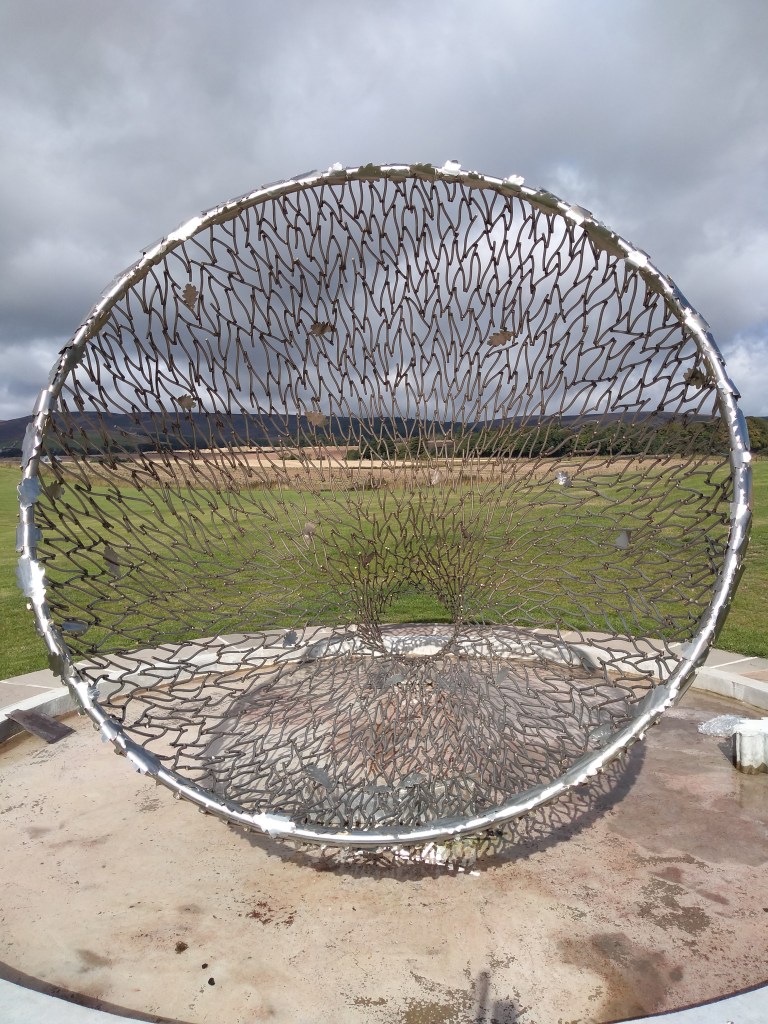
We then moved to the Forest Flow monument outside the visitor centre, a testimony of the distilleryโ€™s sustainability plans. For example, they planted oak trees on the Fasque Estate, an 8,500 acres land nearby. Another long-term but extremely interesting plan is a collaboration with the farmers in the area around the distillery, which will lead to single-farm expressions: exciting times!

The Forest Flow.

 Moving to production, Kirsty showed us the water recycle system they have in place to minimise water waste.We were then shown their copper lidded mashtun, their Douglas Fir washbacks, and finally, their 2 pairs of (vapour coil heated) stills with their cooling ring. This was one of the most interesting features: the ring is a circular tube spraying water on the neck of the still, cooling it and therefore increasing the reflux. In our understanding, this makes some particles drop back into the still, allowing only the lighter ones to go up. So cool(ing)!

Isn’t it cool?

We checked out the warehouse and finally went back to the visitor centre for a taste of the two 12y expressions and the 16y (we opted to pay and extra fiver for a third sample). The two 12y were tasty compared to other 40% basic drams, but the stand-out was the 16y: a nutty storm, truly delicious. Kirsty was very kind and gave us also two wee samples of the Warehouse 2 collection, batch 3 and 4 (1 and 2 were gone): the #4 is a more classical, rich and fruity dram, while the ex-rum cask influence on #3 gives it a tropical and flowery perfume, one of the most floral drams we ever tried. Both amazing.

Yummy drams!

Overall, a nice visit, which weโ€™d repeat, particularly because Kirsty told us that they are planning to offer new tours, including warehouse tastings and some Warehouse 2 series focused, looking forward to it!

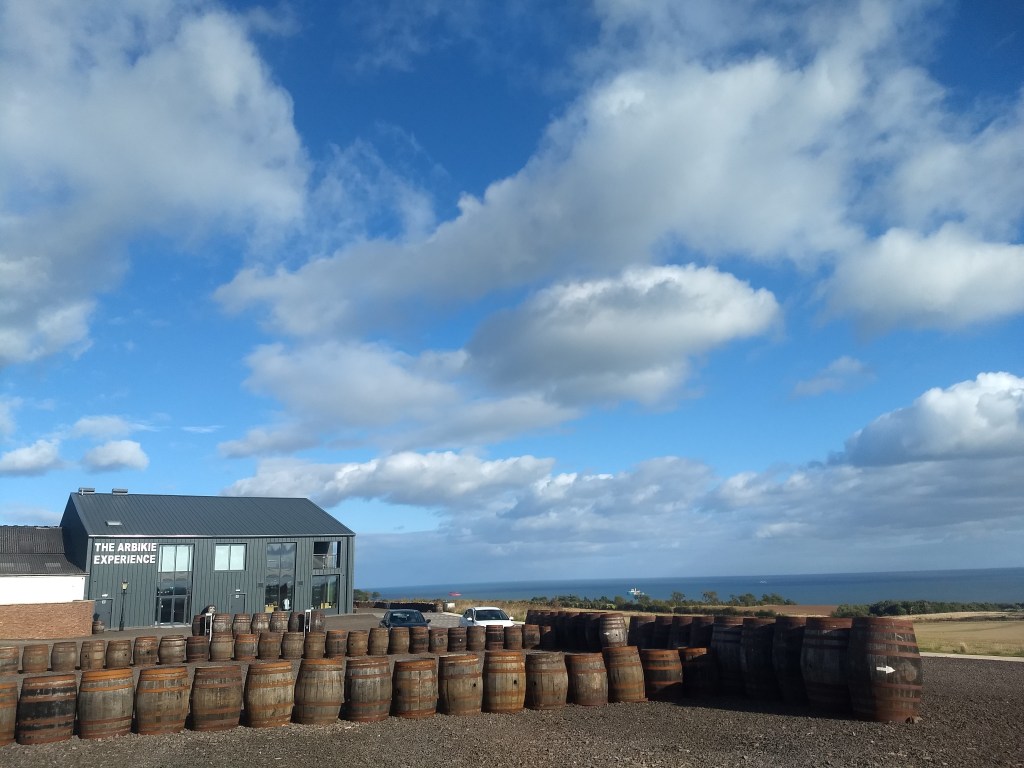
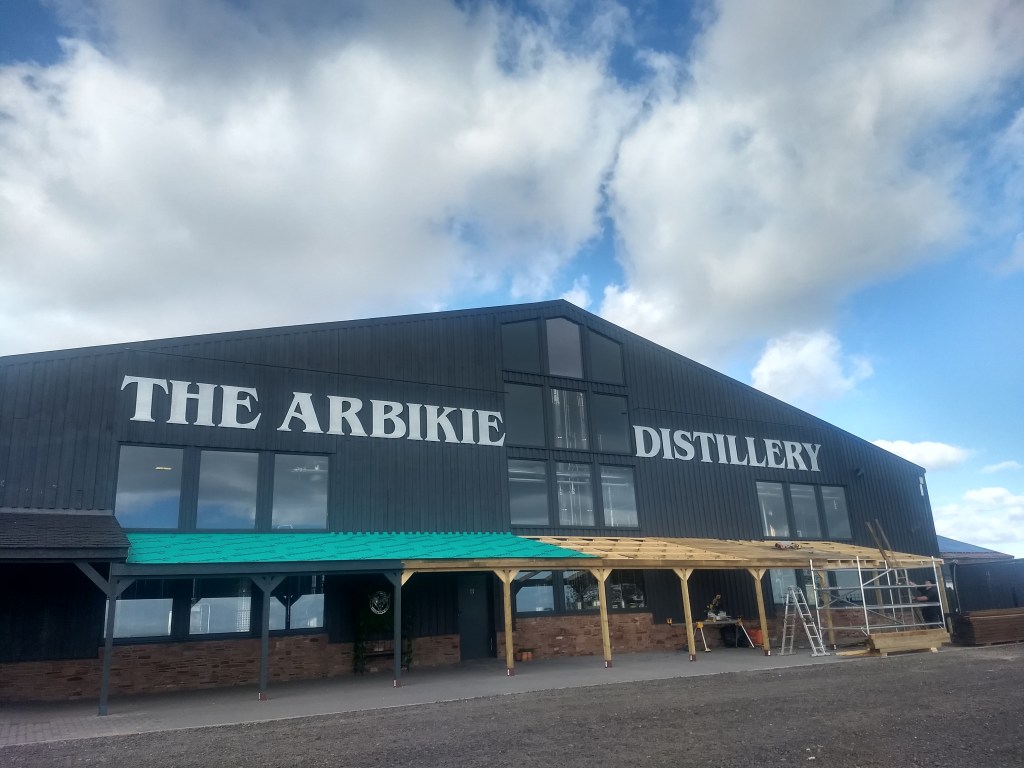
We had lunch in a cafรฉ close to the famous arch in Fettercairn, and then moved to the next distillery: Arbikie. This is a quite new distillery, founded in 2013 by the Stirling brothers, originally farmers in the area. They started by producing vodka with potatoes they cultivate, and soon moved to gin and later to whisky. An interesting characteristic is that they produce whisky from 3 different grains: oat, rye and, of course, malted barley. As we parked, we were welcomed by a stunning view of the fields and the sea, truly a beautiful spot! The amazing landscape can also be enjoyed from the very nice cafรฉ and restaurant.

Amazing view from Arbikie.

There were works going on to build a new semi-open conservatory to improve visitorsโ€™ experience, particularly in sunny days. Itโ€™s just the two of us on the whisky tour (they have also a gin-focused and a general tour). Our guide was Andy, very knowledgeable and whose great-grandfather worked for the Stirling family.

Lots still going on at the distillery!

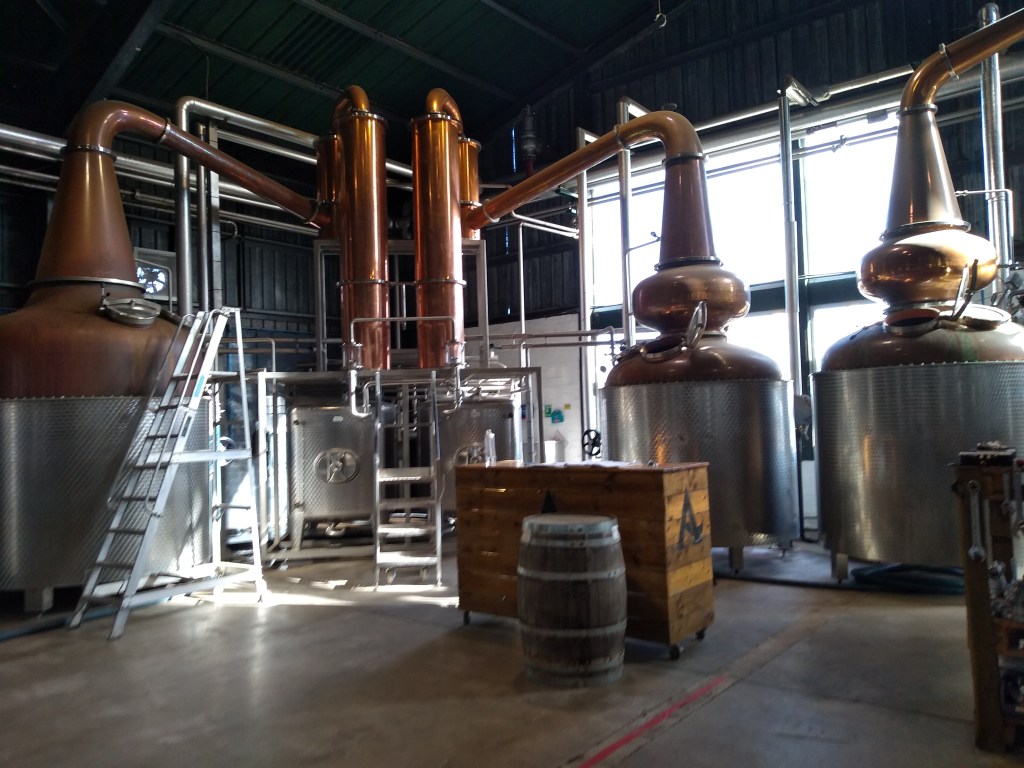
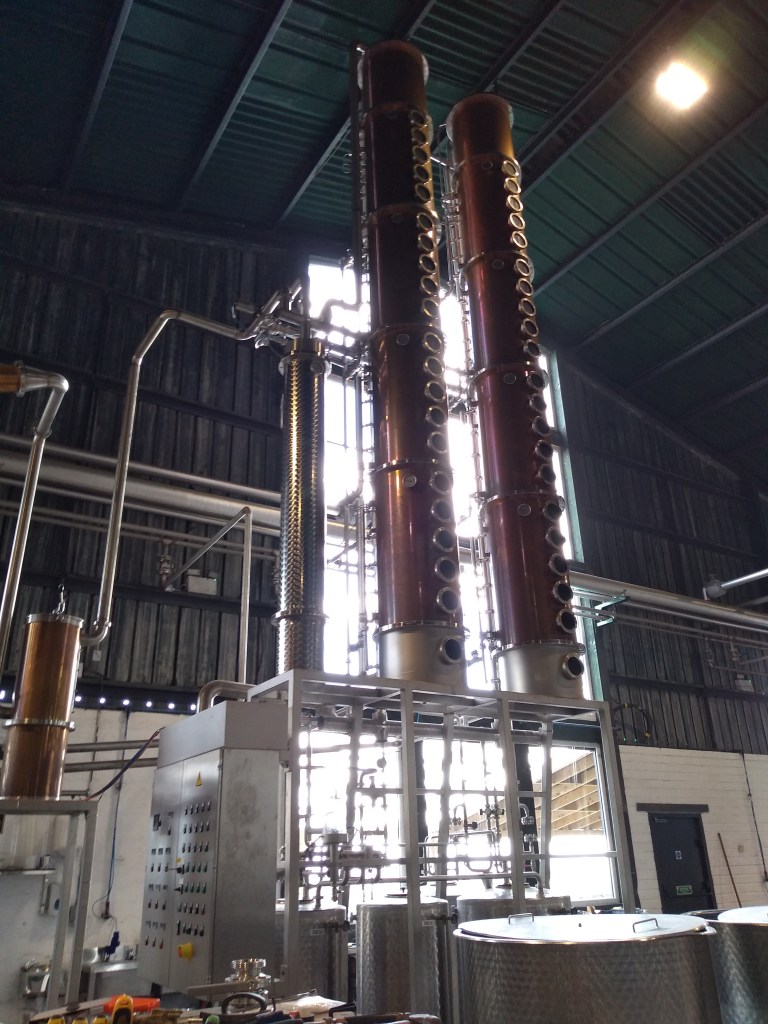
Everything in the distillery is oriented towards sustainability, with heat-exchangers and other features in place to minimise energy consumption. Some peculiarities are their stainless washback silos (more similar to those in breweries) and their stills: three pot stills (one for wash and two for spirit) and the column stills. While gin and vodka are exclusively distilled in the column still, for the whisky they can play with a combination of the two. For example, we’ve been told that some of their rye newmake spirit recently underwent the second distillation in the columns, as the spirit stills (normally used for the second distillation) were under repair. Unlike most distilleries, they currently donโ€™t have a dunnage warehouse, everything is palletized. On top of the usual ones, they have a variety of casks, including ex-Armagnac, ex-rum, and ex-red wine.

Pot and…
…column stills.

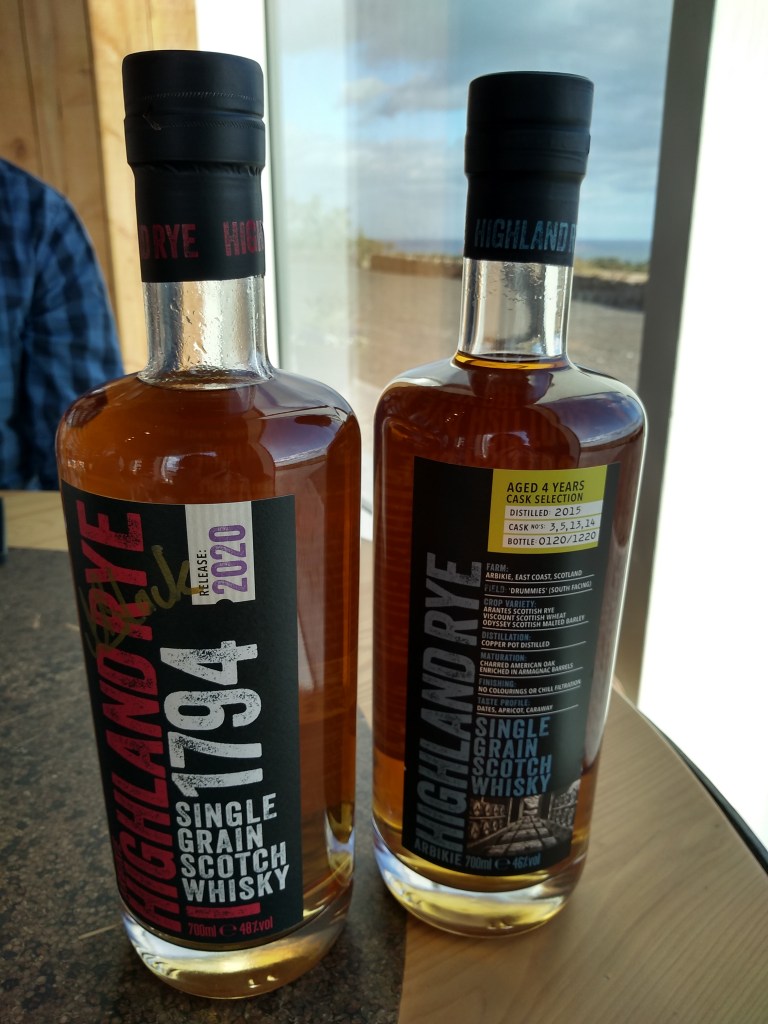
Back at the shop we tried some of their rye whiskies, the first ones officially released in Scotland in over 100 years. We had two expressions, the one that can be defined their core range (which we had already tried via Whisky-Me), and a single cask finished in ex-Armagnac casks. The second was better, but we werenโ€™t huge fan of either: too herbal, almost a hybrid between a gin and a young rum. Very pricey too, ยฃ90 for the first and ยฃ250 for the second. It must not be easy to find your feet for something so uncommon as a Scottish rye whisky, where, unlike single malts, there is no โ€œblueprintโ€. So, we are confident that their product will improve over time, in particular as more aged stock becomes available. Also, weโ€™ll be very curious to try their single malt, once released.

The rye tasting.

Back to the car, we took the โ€œslowโ€ but very scenic road across Speyside to reach Fochabers, where we had our hotel booked. After a nice dinner at the Gordon Arms Hotel, we went to bed ready for the next day.


Fettercairn Tour (with extra dram)

Price: ยฃ20.00 pp (September 2022, ยฃ15 without the extra dram)

Duration: 1h 30min

Tasting: 3 drams, 12y (40%), 12y PX-finish (travel exclusive, 40%), 16y (46.4%, NC, NCF)

Target: anyone

Value for money: Very good

Highlights: the cooling ring system on the stills

Recommended: definitely!

Link: https://www.fettercairnwhisky.com/


Arbikie Whisky Tour

Price: ยฃ25.00 pp (September 2022)

Tasting: 2 drams, Arbikie rye (48%, NC, NCF), Arbikie single cask rye ex-Armagnac finish (46%, NC, NCF)

Target: anyone

Value for money: Ok

Highlights: the view and the distillery setting

Recommended: mainly to fans of all spirits

Link: https://arbikie.com/
#18 Two festivals adventures

Festival!


TL;DR: With the relaxation of Covid restrictions (thanks vaccines!), public events started coming back, including whisky festivals! In 2022 we attended a couple of wee ones, the Fife Whisky Festival in March and the Whisky Fringe in August. In both cases, we are already looking forward to the next editions!

Until a few years ago, the word โ€œfestivalโ€ meant a very specific situation to us: (mostly) summer, a few thousand people around, and music blasting your ears. Northern Italy wasnโ€™t short of these events, so during our teenage and 20s we indulged in what the national and international rock scene offered. Fast forward a few years, we are still going to concerts, even to international festivals, despite the older age making it more difficult: sleeping in a tent in our mid-20s was feasible, doing it in our mid-30s, it just wonโ€™t happen again (thanks a lot, Bluetooth speakers!).

Us going to festivals before getting into whisky!

In the meantime, we collected a new hobby: whisky! As you probably know if you read this blog, we started by visiting distilleries around US and Scotland. We have been enjoying the usually remote location of many distilleries, and the often intimate type of experience. Thatโ€™s why, when first heard about whisky festivals, we weren’t too convinced. This changed in 2019, when we learned about a couple of them that seemed a great opportunity to know more about our beloved amber liquid.

After missing out on a couple of events in 2019 (Whisky Fringe was already sold-out when we learned about it) and 2020 (we only managed to attend a Fife Whisky Festival side-event at Kingsbarns distillery), the time of our first whisky festival finally arrived, in March 2022: the Fife Whisky Festival, for real! Because of our friendship with one of the organizers (Kask Whisky Justine), we were recruited as volunteers to help out during the day. The festival actually started the evening before, with a dinner at the Lindores Abbey distillery.

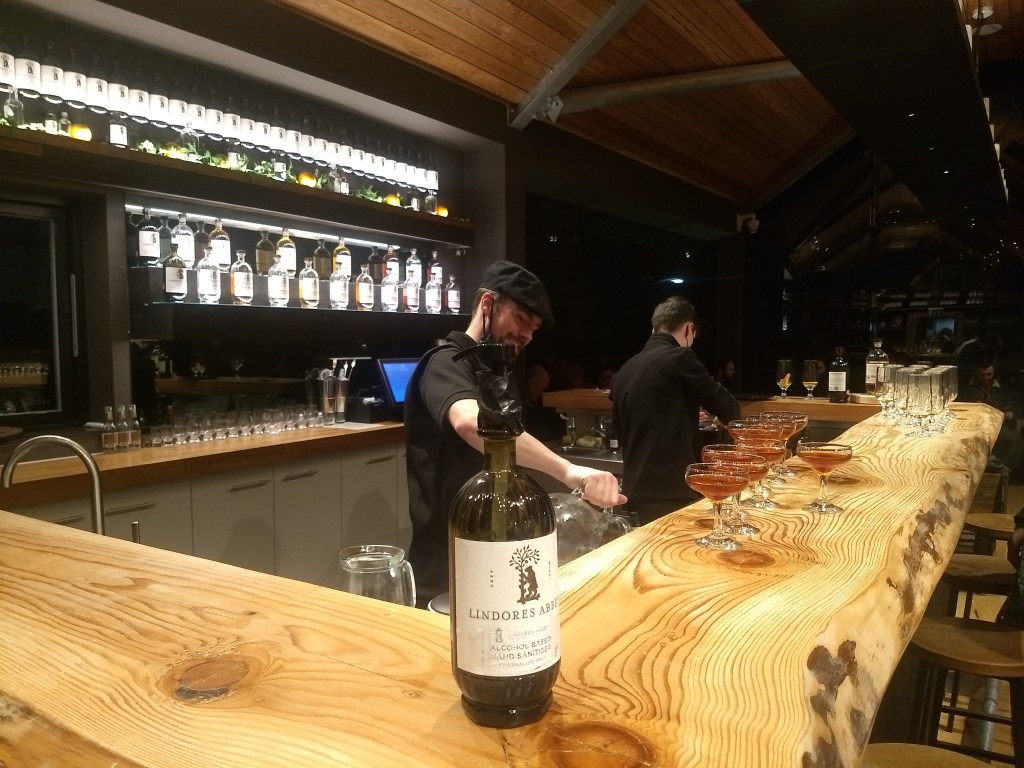
Welcome cocktails on the way at Lindores Abbey…
…followed by a welcome dram.

A very tasty 3-course dinner, entertained by the radio host Vic Galloway (to note, heโ€™s curating a very interesting podcast for the Scotch Malt Whisky Society, tasting drams with guests from the Scottish artist scene and pairing them with music). The dinner was accompanied by four tasty drams: a wine-matured Lindores, the Glen Scotia Victoriana, a 25y Glenfarclas, and finally a peated Kilchoman, UK exclusive batch 3, each one presented by one of the respective distillery ambassadors.

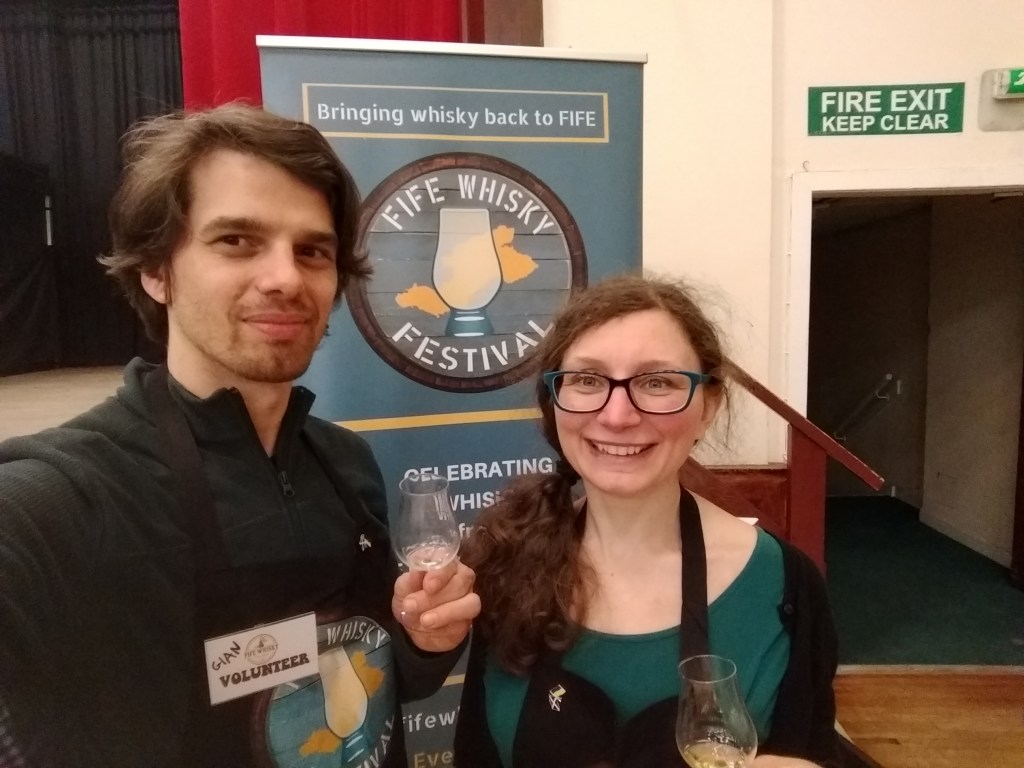
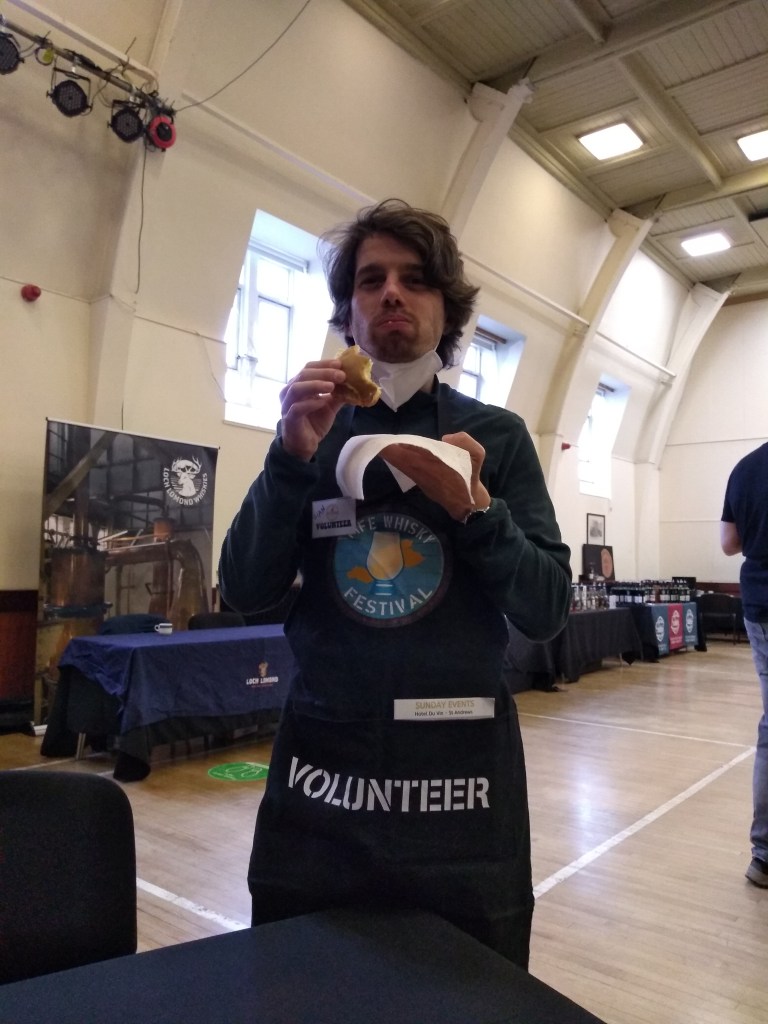
Archived the dinner, the day of the festival arrived, at the Corn Exchange in Cupar. We were given aprons and instructions: we were going to be at the door, Gianluigi scanning tickets (with Kath, a friend from the Edinburgh Whisky Group) and Teresa putting bracelets and giving away scratch cards (with Kathโ€™s partner, Craig) to get the chance to buy one of the festival bottles, a single cask Lindores Abbey and a highly sought-after single cask Daftmill. The scratch card was actually a very smart move by the organisers, because it avoided tons of chancers going straight to the shop and buying a limited edition bottle to be put on auctions. Of course, someone complained, but there is no remedy against self-entitlement and selfishnessโ€ฆor is there?

Hard life volunteering ๐Ÿ˜›

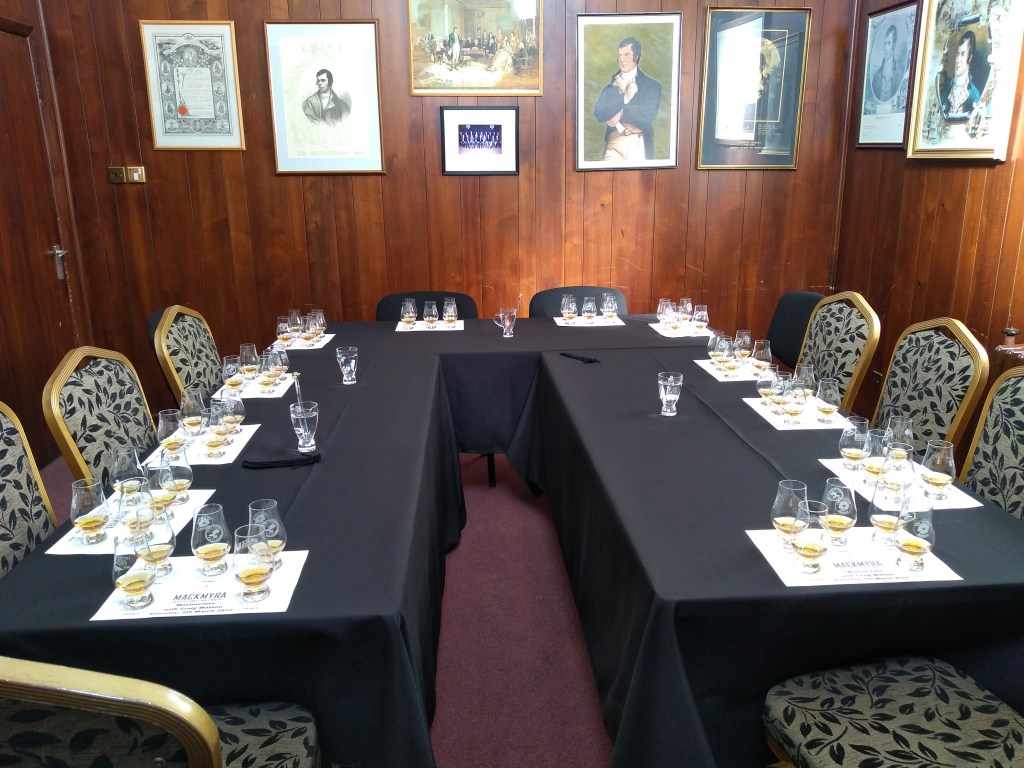
After the entrance operation, our task was to set up the room for the two masterclasses, Mackmyra and Loch Lomond. During these, we could do little breaks, which we exploited to taste a couple of drams each. We spent the rest of the session walking around the stands assisting brand ambassadors and chatting with friends.

All set for the master class!

At the end of the first session, we and the other volunteers quickly cleaned everything up, and had a little lunch break. This is when Justine brought in the mystical fudge donuts: a beast of a dessert, probably hundreds of Kcal per bite. After checking that everyone had one, Gianluigi decided to show his true animal nature and ate a second one.

Happy two-fudge-donut guy.

The second session went almost as smoothly as the first one: a few more drunken fellas, but fortunately no one outrageously pished. Overall we loved the atmosphere, so relaxed and friendly, it was a great day that we are looking forward to repeating.


A few months went by, until we got to the middle of August. Gianluigi had just come back from a conference in Canada (and a distillery trip he managed to sneak in, wink wink), just in time to attend the Whisky Fringe. โ€œJustโ€: his flight from Toronto landed in Edinburgh around 9am. Fortunately, the festival location, the beautiful Mansfield Traquair, is only about 30 minutes walking from Leith, and the festival was starting at 2pm. After an abundant brunch and a bit of unpacking, we were on our way to the festival.

Ready to taste whisky!

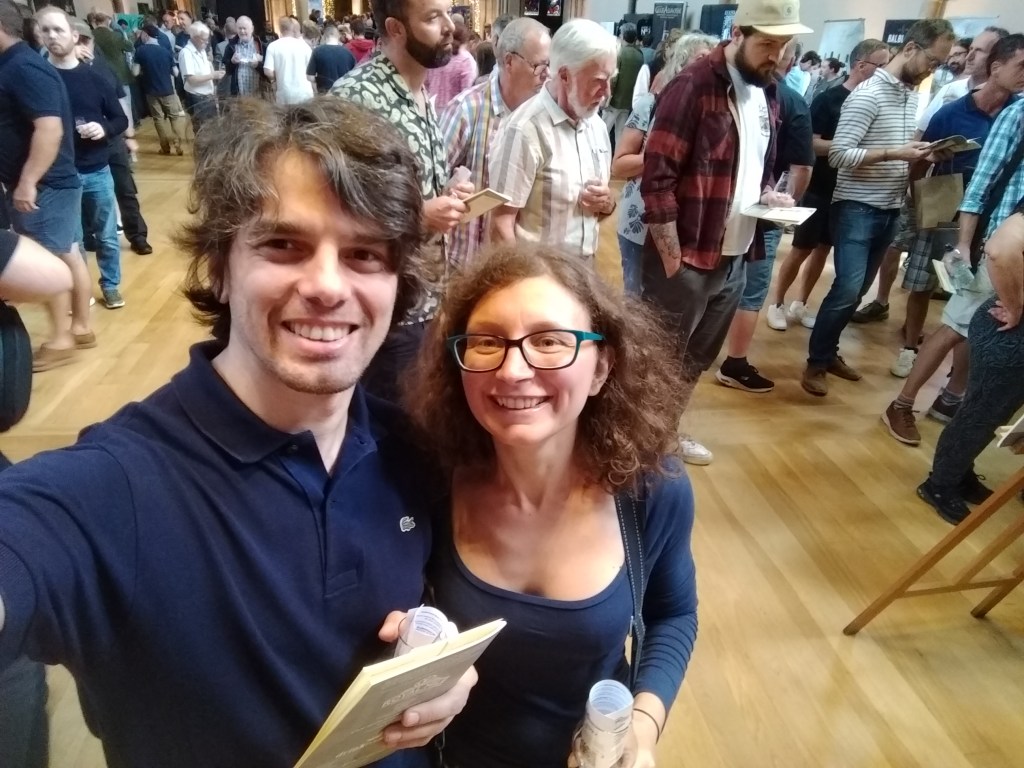
The number of participants for each session was limited to 500, which seems a lot, but because of the festival layout on different floors, and the space around, never really felt very crowded. The first stand we hit was the Uncle Nearest one. We were already aware of their fascinating history (Green Nearest was the person, at the time enslaved, who taught Jack Daniels how to distill). We tried two of their Tennessee whiskies, both quite delicious. We then went to say hi to our friends at Ardnamurchan (Gianluigi is part of their AD/Ventures club), and to taste one of their fabulous drams. We met several friends, some from the Edinburgh Whisky Group, some from past tastings, some just friends. Feature of the festival, a half-time dram: at 4pm, each person could choose a special dram from one of the stands. Gianluigi went for a 16y Port Charlotte from Thompson Brothers, Teresa for an old Glen Moray, both very tasty!

Blurred picture (ooops) of Uncle Nearest whiskeys.

Choosing what to buy with our 10-quid voucher was hard, of course you canโ€™t get all the delicious Thompson Brothers’, Glenallachie’s, Springbank’s/Kilkerran’s, Ardnamurchan’s at once. We finally opted for a bottle of White Heather 15, a stunning blended scotch from the Glenallachie company, very different from most whiskies we tried, and which we had been after for a while. The night ended with a meal with some friends at the Leith Depot, and a last dram at Nauticus.

Both experiences challenged our prejudice of whisky festivals being messy and noisy. They were both quite relaxed, lively experiences, where we could enjoy some delicious drams (well, not so many at the Fife Whisky Festival, as we were helping out) without spending lot of time queuing. We already signed up to help at the 2023 Fife Whisky Festival, and we will keep an eye on the Whisky Fringe tickets. Are we ready for bigger events? Not really sure, but who knows. 

Until next time, slainte!


Whisky Festivals Links

https://www.fifewhiskyfestival.com/
https://www.royalmilewhiskies.com/whisky-fringe/


#17.2 A first taste of Speyside

Walking and blending


TL;DR: The last two days of the trip were dedicated to less standard whisky experiences. First off, a walk through the village of Dufftown and its distilleries. On the last day, we did a blending experience at Strathisla, learning the hard way how difficult it is. Overall, definitely a great trip! 

(missed Part 1?)

The morning of the third day was quite open, so we went back to Aberlour, officially for a walk to the Linn waterfalls, behind the Aberlour distillery, but we sneaked in a second visit toโ€ฆno, not the distillery, to the Walkerโ€™s cookies shop! Just to pick up Christmas gifts for family and friends, and because Gianluigi loves cookies indeed! We had some take-away food from a local shop, before our afternoon activity: a walking tour of the 9 distilleries of Dufftown! If youโ€™re asking yourself why 9, just stick with usโ€ฆ

A cute meeting point for the walking tour.

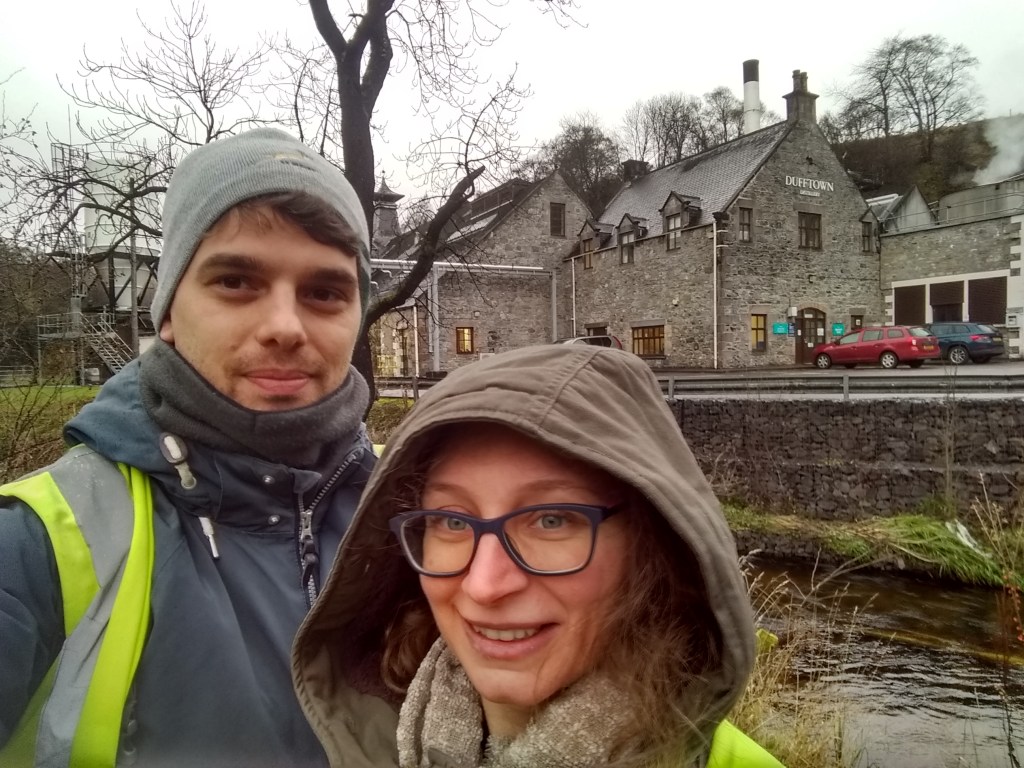
The tour was organized by Michelle, a local guide living in the village. We and another young couple met her at the clock tower. First, we walked towards her house, where she very professionally gave us a glencairn and a yellow vest: at the end of the day we were about to walk through a few whisky producing plants, most of them not open to visitors. To start with, we walked towards the site where the now demolished Pittyvaich distillery used to be (close to the Mortlach Parish Church). While looking at some of the old warehouses, Michelle poured a taste of a 25y Pittyvaich from a Diageo release. A bit down the road, we then stopped at Dufftown distillery, owned by Diageo.

Best shot at Dufftown distillery.

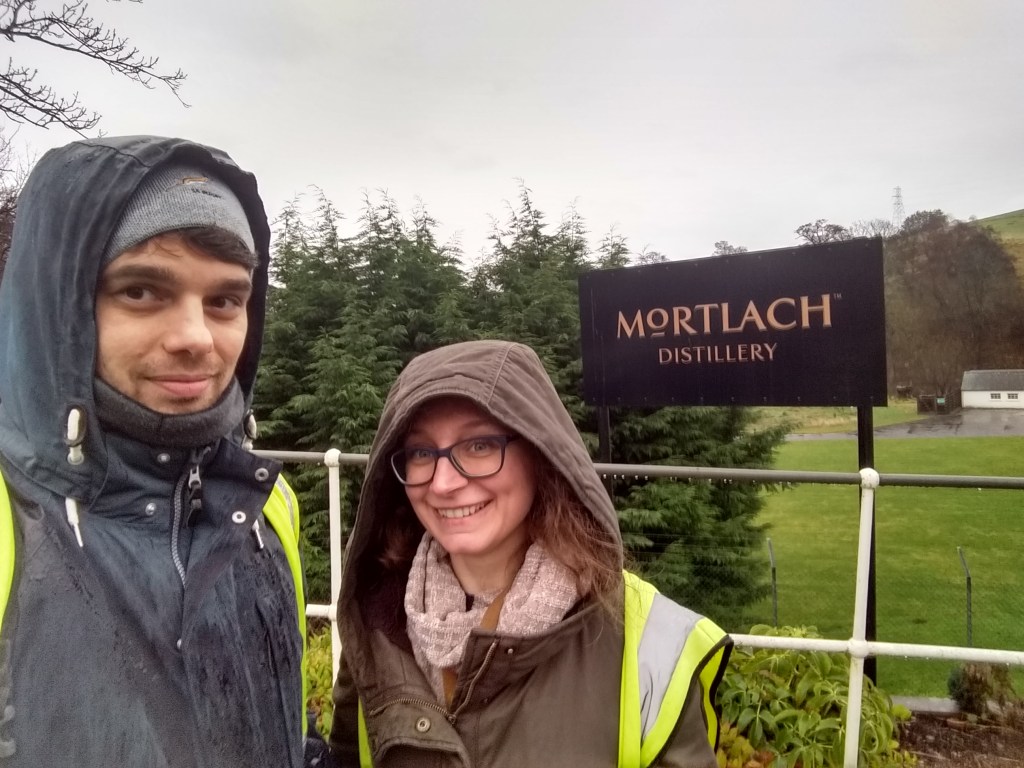
Thisย is one of the three distilleries making the Singleton (Singleton of Dufftown), sold mostly in the UK and Europe. Moving on with our tour, walking along the Dullan Water, we found the third distillery: Glendullan, another one from the Singleton series (this one distributed in North America, while the third one is from Glen Ord and is distributed in the Asian market). One exception was the House of Tully Singleton, part of the Game of Thrones range, which we had a taste of after a wee look at the still room. Next stop was a popular one, Mortlach, which we were very curious about for their quite complicated 2.71 distillation process. We saw their third still (from the outside), called the Wee Witchie, where the last 0.71 of the distillation happens (in our understanding, but not so sureโ€ฆ).

The beast of Dufftown and us.

In this case, the dram was a Gordon & MacPhail 25y from the distillery label range, paired with homemade shortbreads, which were fantastic! It took a bit to get to the next stop, this time walking along the Foiddich. During the walk Michelle showed us the building where another silent distillery was, Parkmore, closed too long ago to get a sip. We were already acquainted with the next working one, Glenfiddich, but not the next ones: Kininvie and Balvenie.

Balvenie, the beautiful.

Unfortunately, during this trip we hadnโ€™t managed to book the latter (although we caught up almost a couple of years later), so we were very curious to see it. As we walked past the malting floor, we saw smoke coming out of it, meaning it was working! Michelle was very excited as well, she had seen it only a dozen of times. We walked past Kininvie still room (the mashtun and washbacks are at Balvenie). The final distillery was another silent one, Convalmore, now used as warehouses. This is where Michelleโ€™s husband was waiting for us in a van to bring us back (it was quite dark at that stage). It was a great experience, a bit different from a regular distillery visit, definitely worth it! We ended up having dinner at the Commercial Hotel and, again, a couple of drams at the Seven Stills.


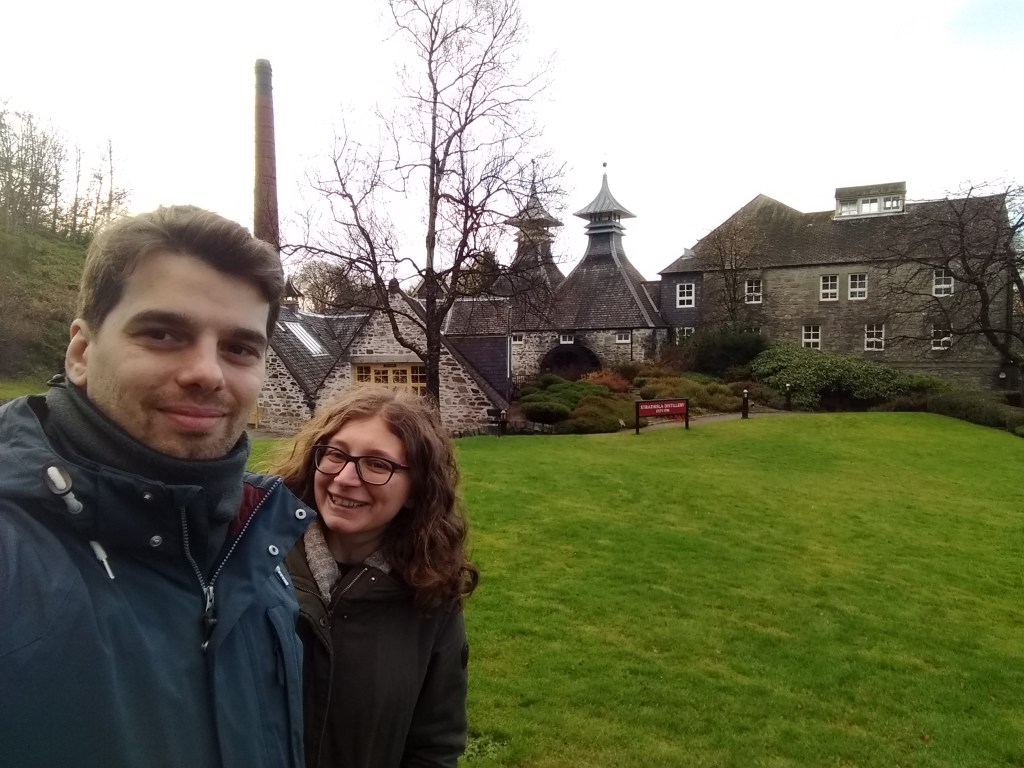
Sunday was the last day of our wee holiday. We had a very nice conversation with Linda and her partner, who drove us to Keith for the last whisky activity of the long weekend: Strathisla. The distillery looks very pretty, in particular as you walk in from the parking through the courtyard. Like Aberlour, it is owned by Chivas Brothers (a subsidiary of Pernod Ricard), and it is the core malt of one of their most popular brands, Chivas Regal. The 12 year old expression is present in almost all auntiesโ€™ and grandmothersโ€™ houses back in Italy too.

Iconic Strathisla.

For this tour, Teresa picked something different: the blending experience. So, after the tour of the distillery and the warehouses (where we had a dram of Chivas straight from the cask), we were guided to the blending room. It looked like a fancy version of a high school chemistry lab, with all the glass equipment, but instead of burners there were bottles of whisky. Our task was to create a blend of 5 whiskies: fruity (Strathisla), citrusy (Glen Keith), smoky (Allt Aโ€™Bhaine), creamy (Longmorn) and floral (Strathclyde, a grain whisky distilled in Glasgow). Of course, as we were making it, it was like: โ€œitโ€™s going to be super tastyโ€, but when a few months later we opened our 20cl souvenir bottle of our very own blends, it clearly was kind of crappy. Well, blending is more of an art, and the blenders job is definitely one of the hardest in the sector! Definitely a fun activity though, although we both agreed that one time was plenty.

As we came out, we had over an hour to wait at the Keith โ€œstationโ€ (a porch) for the train to Aberdeen. We couldnโ€™t really walk around because of the backpacks and the heavy rain, so we just sneaked in a walk to Glen Keith distillery, right in front of Strathisla.

Glen Keith distillery under the rain.

On the train back we came up with the idea of a whisky blog. It would have taken over a year to kickstart it, but this trip is the culprit! It substantially improved our knowledge and made us even more enthusiastic about scotch whisky. Speyside is one of those places where every time we visit, we say to each other: โ€œwe should get a house here”. This was the first trip to this magical region, with many more just about to come!

Until the next story, slainte!


Strathisla Distillery Tours
https://www.maltwhiskydistilleries.com/strathisla/

Michelle’s Dufftown Distilleries Walk
https://www.dufftown.co.uk/prov_attr_detail.php?id=153

(Because this trip happened almost 3 years ago, we are not compiling the distillery visit evaluation box.)


#17.1 A first taste of Speyside

A birthday surprise


TL;DR: in December 2019 Teresa organised a surprise weekend for Gianluigiโ€™s birthday, so we travelled to Speyside for the first time. One of the few times we travelled by train, it wasnโ€™t easy to reach all the places we wanted. Nevertheless, in the first couple of days, we managed to visit four distilleries in Elgin, Aberlour and Dufftown.ย 

2019 was a weird year for us. Because of an intense period at work, Gianluigi could take very few leave days throughout the year. But it was also the year where something changed for us about whisky: we became members of the Scotch Malt Whisky Society, we started listening to whisky podcasts, reading books, and visiting distilleries more often. So, when December arrived, going off on a wee whisky holiday was a very easy decision to take. It was also Teresa’s gift to Gianluigi for his birthdayโ€ฆso for him the destination was a surprise!

In the morning, first train to Aberdeen, then another one to Elgin, so Speyside, which weโ€™d never been before! This is home to over 50 distilleries, without doubts the biggest producing single malt whisky region. Although not all of them are open to visitors, a good bunch are. Which ones then? Still a mystery to Gianluigi.

Happy faces, and we were not even drunk!

The first distillery was only a 20-minute walk from Elgin train station: Glen Moray. We are now very fond of this one, probably underrated because of their entry-level expressions available in supermarkets. Thanks to a few very tasty SMWS bottlings, however, at the time we had already started to appreciate it, so Gianluigi was very happy! Because of time constraints we only did a tutored tasting at the distilleryโ€™s cafรฉ. We chose different flights, the travel retail (with the Elgin Heritage NAS, 12y and 15y, but all bottled at 48% and not chill-filtered) and the distillery casks (2008 ex-rye cask finish, 2001 2nd fill ex-oloroso, 2014 peated ex-gamay cask). We loved these expressions, in particular the 12y in the travel retail range and the 2008 Rye cask finish, but we felt it was too early in our trip to buy anything (much regretted decision).

Glen Moray tasting.

From there, we took a cab to another distillery, completely unknown to us: Benriach. Together with its sisters GlenDronach and Glenglassaugh, it had been recently sold to Brown-Foreman (aka Jack Daniel’s).

After seeing a malting floor for the first time.

At the time the visitor centre was just a small room with a couple of sofas, table and chairs, and a small shop. The tour was intimate (only 6) and quite in depth. We were guided throughout production, including their malting floor (first time we visited one), and we tasted the wash (someone said: โ€œlike a bland and watery beer, basically an English aleโ€). It was before the revamp of their core range, so we tried their 10y, 10y peated (Curiositas), the magnificent 12y triple-sherry cask, and the travel retail 10y triple distilled (of which we were able to grab a bottle only a few months ago), and another couple of older distillery exclusive expressions, including a peated ex-port cask. Truly a great tasting!

What a line-up at Benriach!

By the end of the tasting, it was dark outside (Decemberโ€ฆ), and we almost missed the last bus to go to our final destination for the day. Fortunately the driver saw us waving at him in the dark. We arrived in Dufftown, where we stayed at the Conval House, a lovely B&B run by the very kind Linda. After the check-in, we had dinner at the Stuart Arms (not open anymore) and a couple of final drams at the Seven Stills.


The next day we woke up a bit dizzy, how so? (wink, wink). This didnโ€™t prevent us to move on with our mission, and after breakfast, Linda generously drove us to the next distillery: Aberlour, in the near village ofโ€ฆ Aberlour!

Ready to start day 2.

It was just us on the tour, definitely not high season for them. The guide gave us a dram straight away (the 12y), which we enjoyed before another really in depth tour. The distillery sits in a marvellous location, surrounded by woods and near the Linn Falls waterfall.

Linn Falls waterfall.

Again, the final tasting was quite generous, with samples of the newmake spirit, the 16y, the Casg Annamh, and two 14y single cask, one from an ex-bourbon barrel and another from an ex-sherry butt. Unfortunately the Aโ€™Bunadh, which we hadnโ€™t tried yet, was not in the line-up, but we would have caught up later that day.

After a quick stop at the Walkerโ€™s cookies shop in Aberlour, we caught the bus, next stop: the Speyside Cooperage. It was a very cool experience, and very different from a distillery. To be honest, the guide did not say much (a bit shy?), but was available to reply any questions. However, as whisky novices we didnโ€™t have that many. The walk in the production area was very interesting: we could admire the toasting process and the coopers doing their magic rebuilding the casks.

The sky is blue above the Speyside Cooperage.

Finally, the last stop for the day: the Glenfiddich distillery. This is a massive operation with a capacity of over 22 million litres of alcohol per year. The tour started with an introduction video. After that, we parted from another quite large group of people, as only the two of us went for the in-depth tour. It was the first time we visited a distillery of that size: the two huge lines of stills striked us!

So many stills at Glenfiddich!

At the end of the tour and after a wee look at the bottling line, we were ready for thetasting. We had the 12y, the 15y, the Project XX (the best of the bunch, in our opinion), the Fire and Cane, the 18y and finally the 21y rum finish. When we visited the warehouses we could try a tiny sip of the 15y cask strength form one of their huge solera-style vatting tubs – very tasty but pricey (at the time 120 quids at the visitor centre).

Our day ended with a nice dinner at A Taste of Speyside restaurant (now unfortunately closed), and another dram, only one this time (the Aberlour Aโ€™Bunadh) at the Seven Stills. What an intense day!


Distillery (tours) links

https://www.glenmoray.com/our-distillery
https://www.benriachdistillery.com/en-gb/distillery-tours/
https://www.maltwhiskydistilleries.com/aberlour/
https://www.glenfiddich.com/en-gb/distillery

Speyside cooperage
https://www.speysidecooperage.co.uk/tours.php

(Because this trip happened almost 3 years ago, we are not compiling the distillery visit evaluation box.)


#16 A Canadian single malt with a Scottish soul

Visiting Glenora Distillery


TL;DR: Gianluigi went on a work trip to Nova Scotia, Canada, and sneaked in a visit to the first single malt distillery in North America: Glenora! Although a bit expensive (compared to Scotland prices) the visit was definitely worth it and the whisky had its own very fruity character. If you find yourself in the area, itโ€™s strongly suggested. 

(This post is written in first person by Gianluigi, since he was the only one on this trip)

In the academic world, one of the last things to come back after Covid were in-person international conferences, of course. Hundreds of researchers coming from all over the world and staying together in closed spaces for a week, what could go wrong?!? In my field of study, infectious diseases epidemiology, people have been particular cautiousโ€ฆguess why. So after 2020 and 2021 without meetings, in August 2022 I finally went to my first in-person conference in Halifax, a quite touristy city in Nova Scotia, on the Atlantic coast of Canada.

Once flight and accommodation were booked, I looked for activities to do in the couple of days before the conference. And what I really mean, is โ€œwhisky activitiesโ€, or even better โ€œwhisky distilleries to visitโ€. I found out that Nova Scotia has some relative recent ones (Caldera, Authentic Seacoast, among others), but the one that grabbed my attention was Glenora Distillery, located in Cape Breton Island, the north of Nova Scotia province. The mighty David taking down the Scotch Whisky Association (SWA) Goliath.

Slowly getting there…

For those who donโ€™t know the story: Glenora Distillery was founded by Bruce Jardine, a local entrepreneur, and it was the first North-American single malt distillery, during a time when distilleries in Scotland were still shutting down following the whisky loch. He decided to go back to his Scottish roots, and start producing the most iconic Scottish product in a province literally called โ€œNew Scotlandโ€. He moved for over a year in Scotland to learn the nitty and gritty about distilling, in particular at Bowmore, and after coming back to Nova Scotia he acquired the land and built the distillery. After an unfortunate start which saw the distillery change owner twice, in 2000 they released their first single malt (an 8-year old), the Glen Breton Rare. Proudly advertising it as the โ€œonly/first single malt in Canada/North Americaโ€ didnโ€™t prevent the SWA to sue them over the use of the world โ€œGlenโ€. But well, they are literally located in a โ€œglenโ€, and the village is called Glenville. After 9 years of trials and appeals, they had the last word and could keep the โ€œGlenโ€.

Almost there…

So, you could understand my excitement to visit them! However, the visit almost didnโ€™t happen, because of the shortage of cars for rental in the whole region. That meant zero cars available at the airport, despite looking 4 months ahead. After bothering a number of people through emails (taxi/shuttle companies, Nova Scotia tourist service, hotels, etc.), I was about to give up the trip, but then I decided to try Turo. This is a company that hires private car, like Goboony does for campervan, but they arenโ€™t a scam like the latter. So, I booked a car, not cheap but what the hell, when will I be in the area again?

Unfortunately, another challenge was behind the corner: the disastrous situation of Toronto International airport, where I had my layover, which I learned a mere 10 days before the trip. And in fact, my first flight was almost 2 hours late, but the second was 75 minutes late as well, so I didnโ€™t lose the coincidence. This meant to change the time of the rented car pick up though, and when I called the owner to ask him to come later, he blathered some excuse and said he wasnโ€™t allowed to hire cars anymore. I called Turo, which very professionally (unlike Goboony, sorry if I stress this but they are really terrible) provided me a different car and covered most of the price difference. So, finally, at 9.20pm local time, I was on a car directed to a B&B not too far from the airport.

Finally there!

Because of the jet lag, I woke up quite early, and after a good breakfast I was already on my way to Cape Breton Island. I arrived at the site around 2.30pm, ready to check in for the night: I didnโ€™t tell you already, but at Glenora they have a hotel on site and a lodge just up the road, where I stayed. They also run a pub and a fine dining restaurant on site, so I was all sorted. The distillery offers two tours, the regular (CAD 7.00 + taxes, one dram) and the VIP, which I signed up for.

The tour started at 3pm, and it was conducted by Donnie, the manager of the hospitality side of the business. He is a huge malt whisky fan, so the tour was extremely entertaining and all the information really in depth. We started outside the shop building near the stream where they source their water from (first time I am bothered by bugs during a distillery tour).

The source wee stream.

The shop is topped by a pagoda roof, but it is just for aesthetic purposes and was never meant to be a kiln. In fact they source their malted barley from Sasquetwchan, but until the early 2000s they were buying it inScotland (some peated as well). My visit happened in their silent season, which goes from the late spring to the Fall, and during which they mostly run the hospitality side. For this reason their production is currently about 50,000 mlpa, although Donnie later told me that they could easily crank it up. All their equipment came from Scotland, including the two Forsyths stills. Differently to many distilleries, the wash and spirit still are of the same size, approximately 5,600 litres. A particular difference is that they fill their barrels with 70% newmake spirit, unlike the greatest majority of distilleries we visited which fill at the standard 63.5%.

Scottish equipment on Canadian soil.
The still I’m hiding looks the same as the other one, I promise!

We moved to the dunnage warehouse, one of their three, and for the first time the air was warm and humid instead of cold and humid: what a difference! Donnie explained us their maturation process: they source the barrels from Kentucky (we could see many Buffalo Traceโ€™s ones) and they rarely mature for less than 10 years. Apparently they donโ€™t re-use them, so all their barrels are first fill ex-bourbon. They had used sherry and other casks in the past, but for very specific releases. We tried one sample from the cask of a 26y/o, which was very creamy and quite fruity, in particular after adding water (collected from the stream!): after 26 years it was still 64%! Donnie said their angelsโ€™ share (the % lost to evaporation) is still 2%, similar to Scotland, although with huge seasonal variation. They bottle everything on site, without adding artificial colouring nor chill filtering.

The dunnage warehouse.

We moved the tasting room, near the restaurant, where 5 drams were ready in front of us: we started with the newmake spirit (at 70%!), which after the 64% in the warehouse wasnโ€™t too hard to drink, followed by the Battle of the Glen, a very sweet and balanced 15y (43%) celebrative of the victory of the trial vs. the SWA. We moved on to the 12y Ice (43%), finished for a short time (average 3 months) in ice wine casks. I was totally unaware about ice wine before this tasting: it is wine made with grapes harvested in February, and the frozen water allows the sugar to be retained to make a very sweet dessert wine (I bought a 5cl at the airport, Iโ€™m very curious to try it!). They also have 10y and 15y cask strength versions of the Ice in 25cl bottles (the latter available at the Halifax Airport). The final two drams were distillery casks: a peated 18y old, still made with Scottish barley, and an unpeated 12y, both cask strength. These two were the standout of the line-up, in particular the peated one.

Happy kid with the tasting.

As I was by myself, Donnie joined me over dinner for a nice chat, where I bought another couple of their drams (they were selling by the half-ounce, 15 ml): their main expression (the Glen Breton Rare 10y, 43%), and the 14y, which was truly delicious (still 43%). Not too late, we called it a day and a driver took me to the lodge.

I was very satisfied with the visit to Glenora, it was a very different experience to our usual trips around Scotland. Being a very touristy area, and isolated from other whisky distilleries, I could see how this makes them more of a tourist attraction, almost a โ€œboutique distilleryโ€, if you want. I could fully appreciate how good their single malt can be though, starting from one of the best newmake spirits I tried so far. The hot/cold maturation process definitely influences the whisky compared to most Scottish malts, but probably other factors are important too, like filling the barrels at 70%. I am really having a hard time comparing their prices with other tours or other whiskies, as during the whole time I spent in Nova Scotia, I felt that the cost of living is just much higher. Nonetheless, if you are travelling to the area or nearby, as I did, it is a must-do experience for any whisky lover.

Until next time, slainte!


Glenora VIP Tour and Tasting

Price: CAD 125.00 pp + taxes (total CAD 143.75, August 2022)

Duration: 2-3 hours

Tasting: in the warehouse, sample from the cask (26y, ex-bourbon barrel); in the tasting room, new make spirit (70%), the Battle of the Glen (15y, 43%, *NC, NCF), ICE 12y (43%, NC, NCF), Barrel #67 2010 (12y, 59%, NC, NCF), Barrel #132 2004 (12y, 59.0%, NC, NCF)

Target: whisky lovers and geeks

Value for money: Good+

Highlights: everything

Distillery Exclusive: Barrel #67 2010, Barrel #132 2004 (see above, CAD 125/375 for 25/75cl), Barrel #129 1995 (27y, 65.4%, NC, NCF, CAD 250/750 for 25/75cl)

Link: https://www.glenoradistillery.com/

*NC: not artificially coloured, NCF: non chill-filtered
+at the time of the visit 1 GBP = 1.55 CAD. If compared to Scottish distilleries tours it was pricey, but after a few days in Nova Scotia and on Cape Breton Island I think that it reflects the high prices in the province.