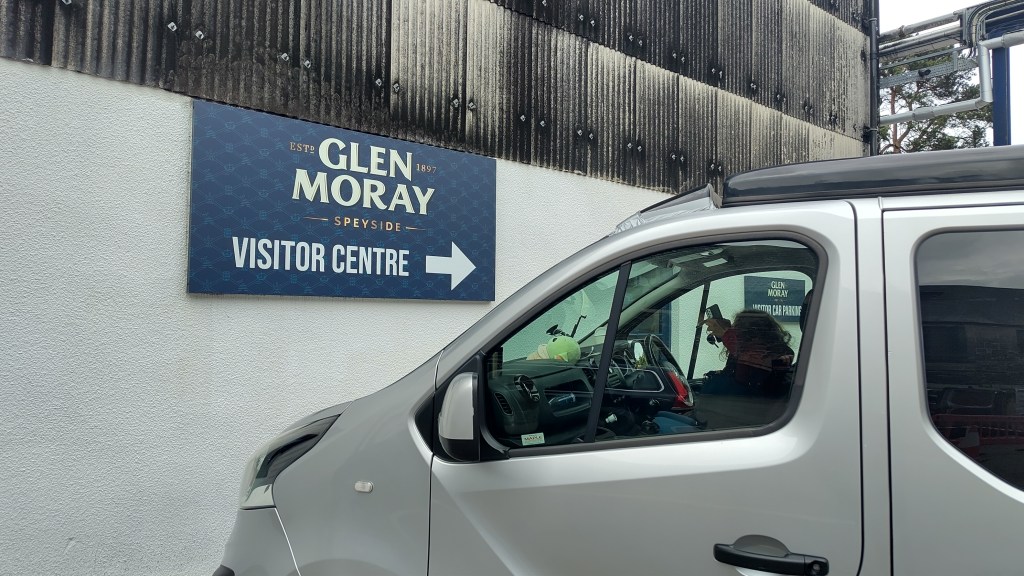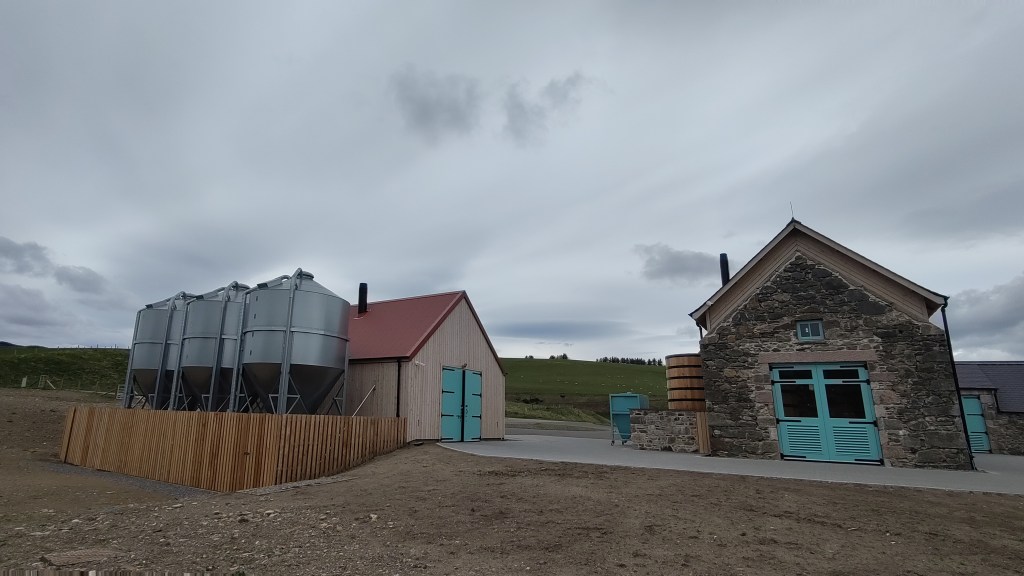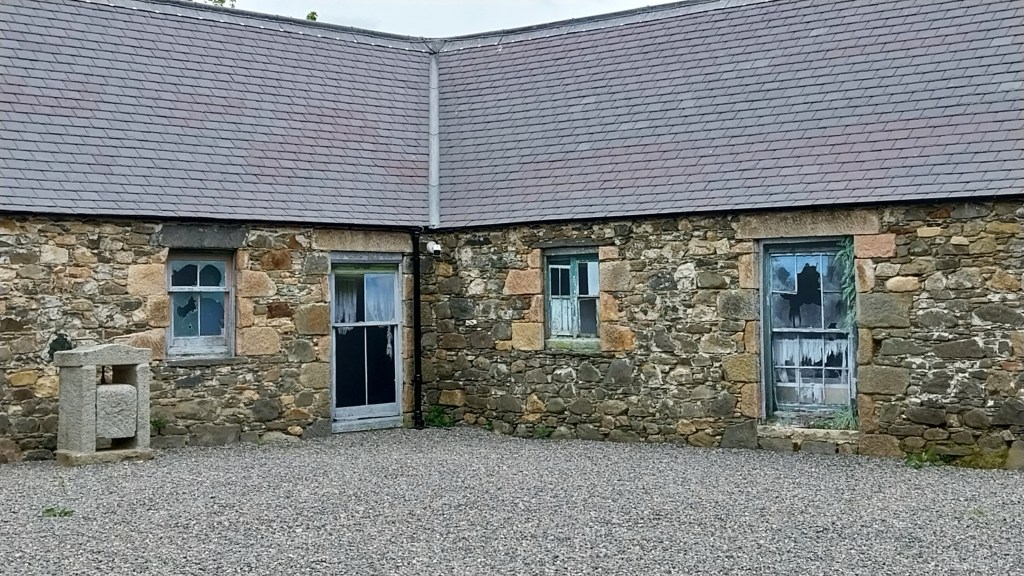
#69 Farewell to 2025

Another whisky year under our belt


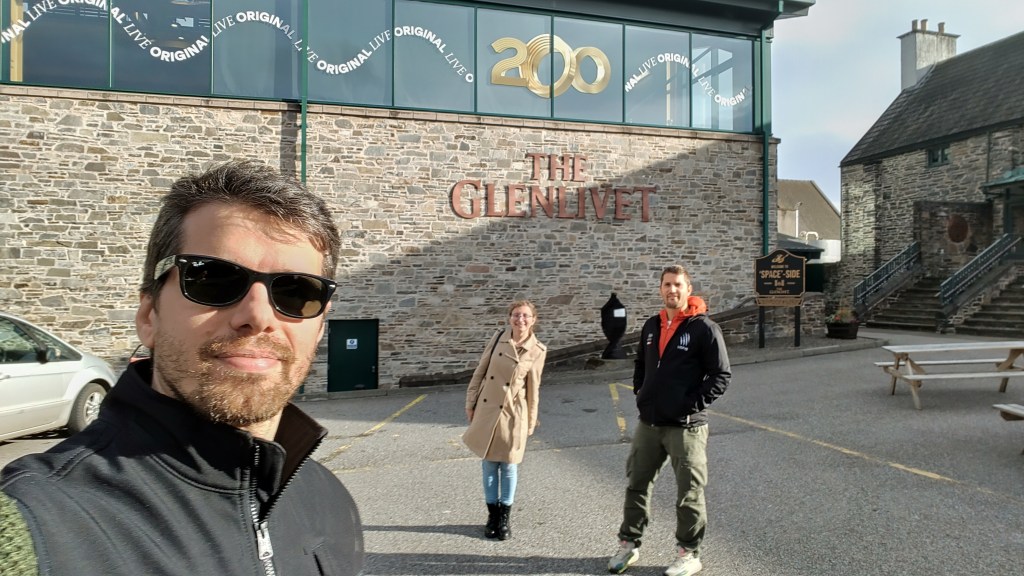
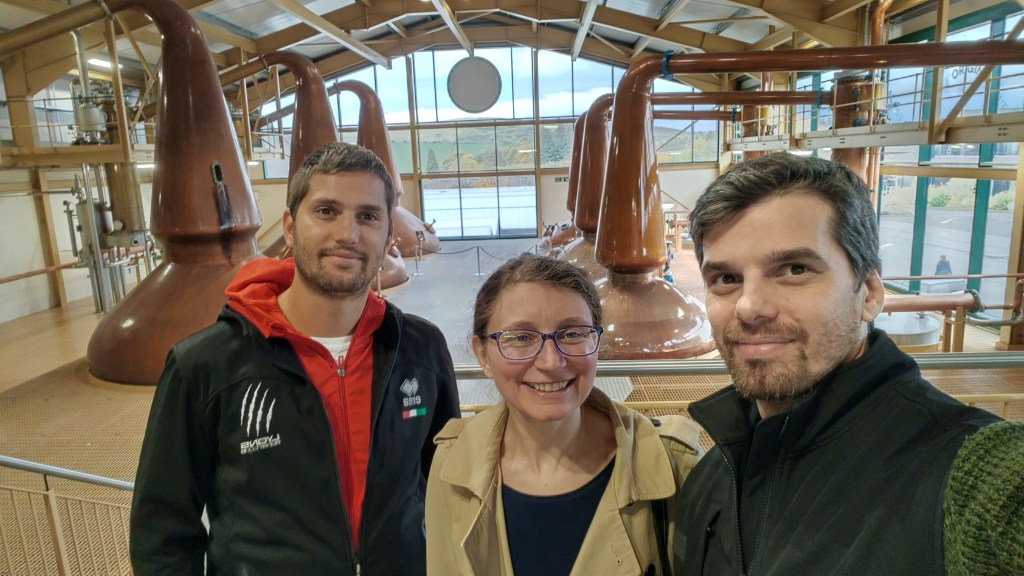
TL; DR: What another great whisky year! It started quietly but it ended on a treble! Our highlights were the north of Scotland trip (especially Wolfburn, 8 Doors, and North Point), the Independent Spirit, Fife and Dornoch Whisky festivals, a Brora tasting, and the final long weekend in the Wee Toon!

Here we are, ready for our last blog post of the year for you to enjoy before the New Yearโ€™s bells. With our Christmas celebrations almost over, and some fantastic meals behind us, itโ€™s time to reflect a bit on this year, while listening to a very soothing early 2000s acoustic live from Pearl Jam. We hope you are cozy as we are, and that you could spend the holidays with your loved ones, and possibly a few good drams!

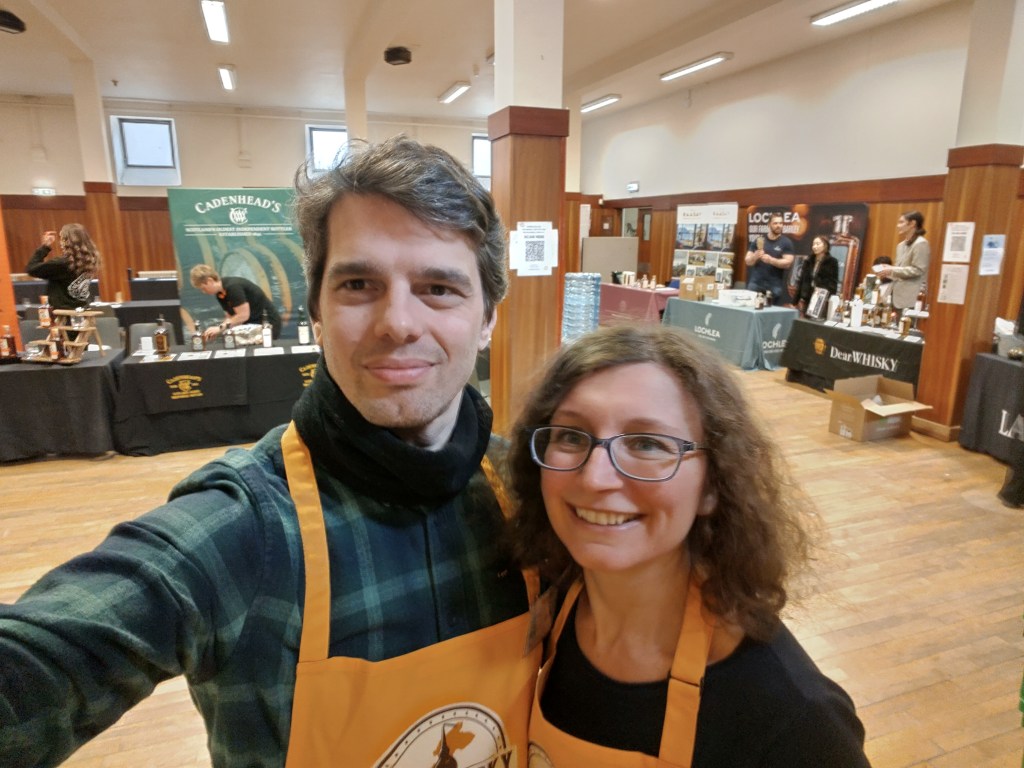
This year started slow for us, we didnโ€™t visit any distillery between our 2024 trip to Australia and April 2025: just over 4 months without setting foot in a distillery! That was because of a combination of work and family commitments, we couldnโ€™t even do our usual late-winter trip (Borderlands in 2022, Ardnamurchan & Mull in 2023, Skye and Raasay in 2024). However, we had lot of material from last year to ramble about on the blog, like our trip to Yorkshire and the one to Australia, both excellent adventures where we had great tastes of non-Scotch malt whiskies. In March, though, we managed to attend the Fife Whisky Festival in Cupar and the Independent Spirits Festival in Leith: these are two excellent festivals that should be on the radar of all whisky enthusiasts! A bit different from each other, the latter smaller and focused on independent bottlers, obviously, but very fun as well. Our plan is to attend them both again in 2026, we already secured tickets.
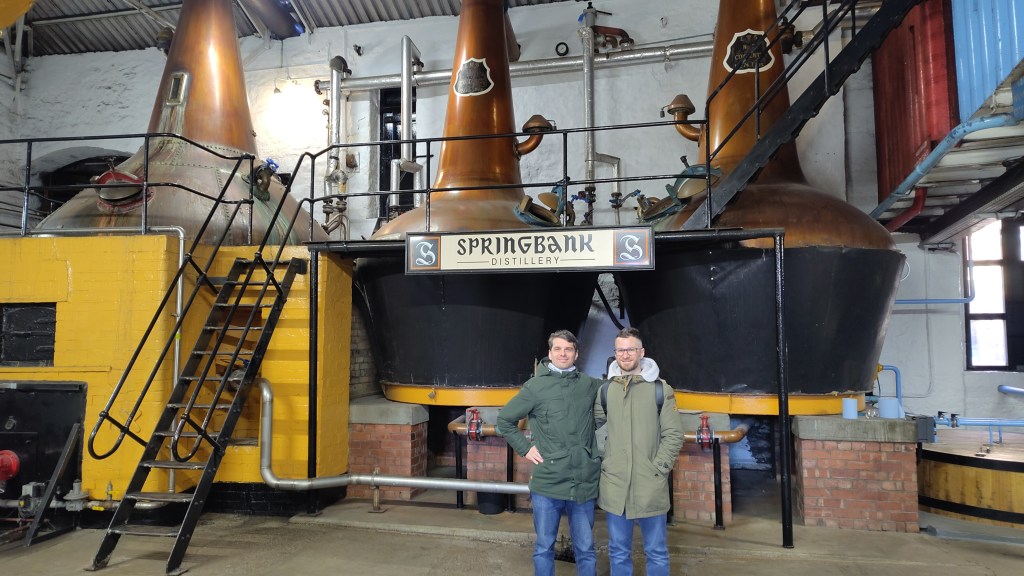
In early April Roberto, one of Gianluigiโ€™s best pals, came for a long weekend. The two went on a bromance trip in Campbeltown, followed by a hike on Arran. For Gianluigi, revisiting Springbank since 2021 was really a great and refreshing experience, with Findlay as a fantastic tour guide!
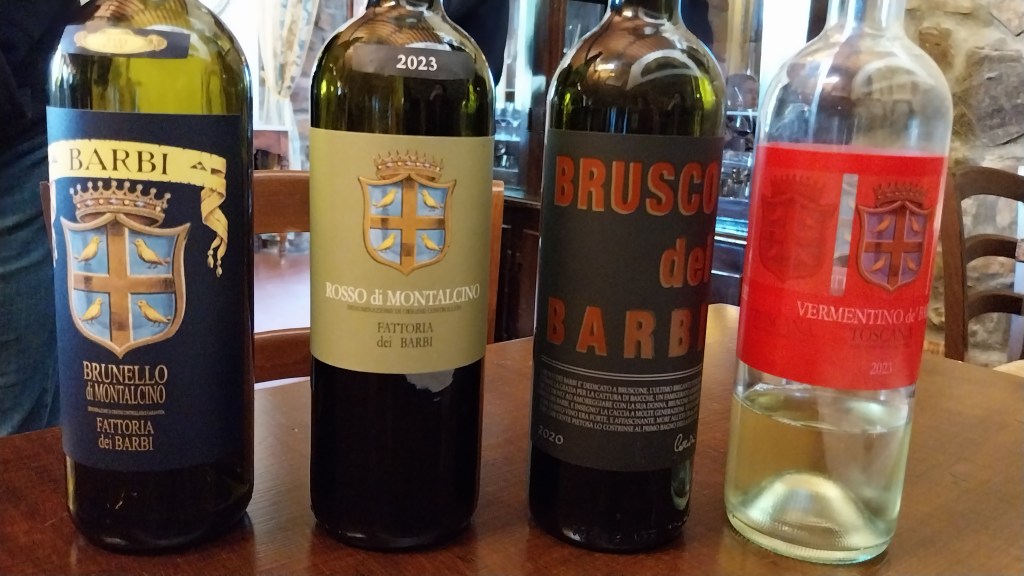
The first visit the two of us did together was not in a distillery, but in a winery: during one of our many trips to Italy we visited the Montalcino area, so we could indulge in visit to a historic winery: Fattoria dei Barbi. We thought the wine was excellent, even if an important disclaimer is that we know next to squat about wine.
It then came the time for the Spirit of Speyside, the week-long festival celebrating the many distilleries and producers of the region. As usual, we hit all the distilleries we hadnโ€™t visited yet (Teresa also hit something else, but youโ€™ll have to ask her, ahah), most of them closed to public (Inchgower, Glendullan, the first opening of the Cabrach). We also did two great tastings events, the Casks of Glen Moray and the Murray McDavid Drams under the stars. Overall, we always enjoy these events, and their variety. Our only complaint is the price for some distillery tours compared to the number/size of drams served. While the ยฃ100 tours at Diageoโ€™s distilleries are bad enough, we just refused to pay ยฃ200 to visit two Chivas Brothers distilleries, one of which you can visit for around ยฃ25 in normal times. Thumbs down.

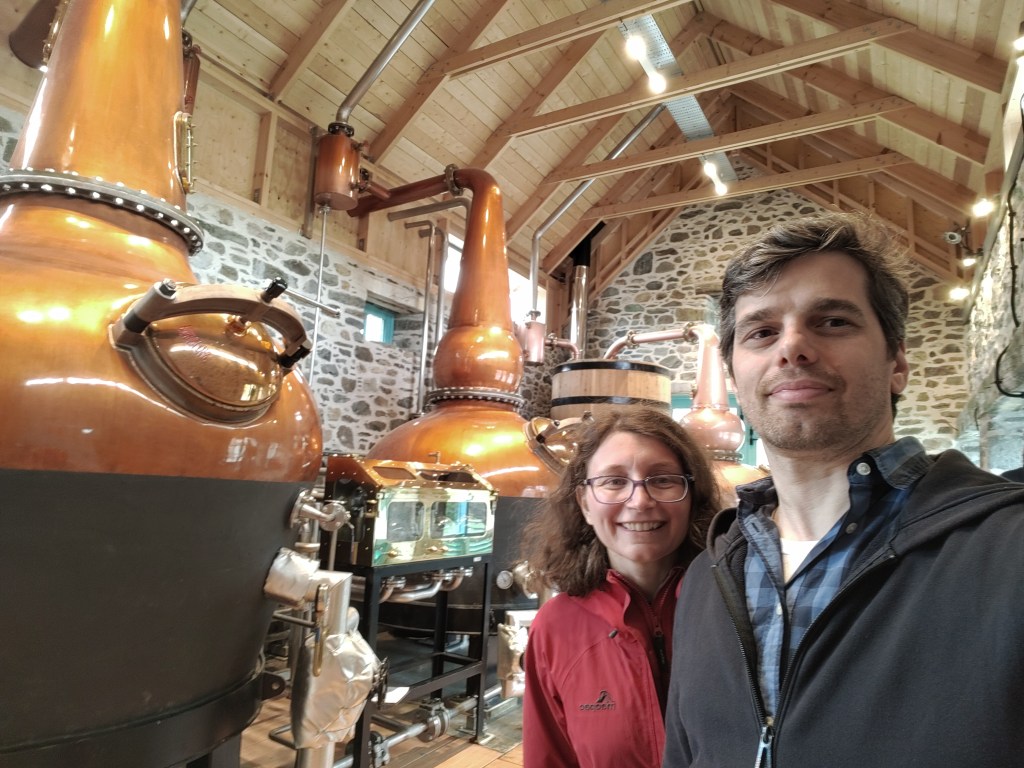
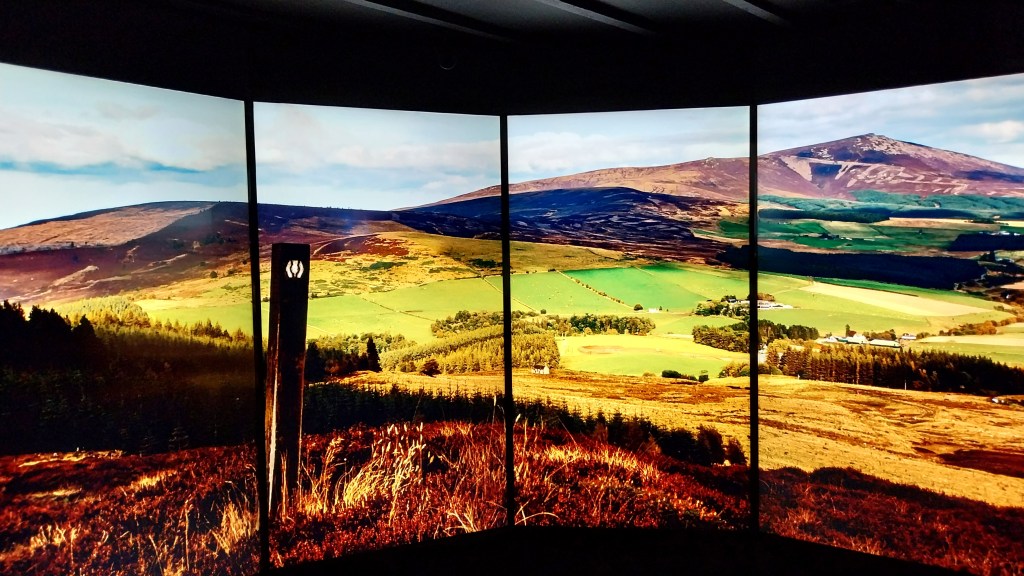
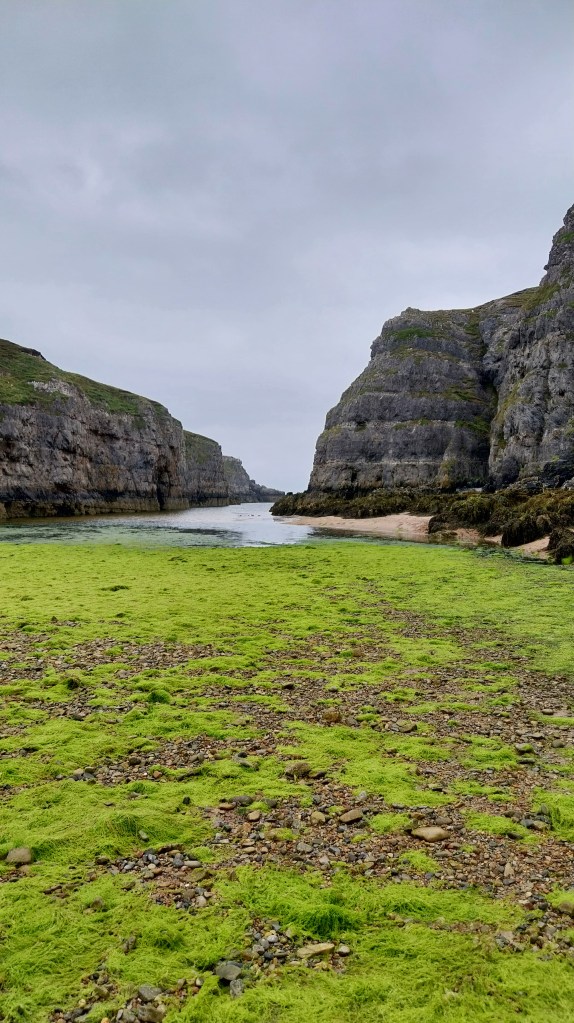
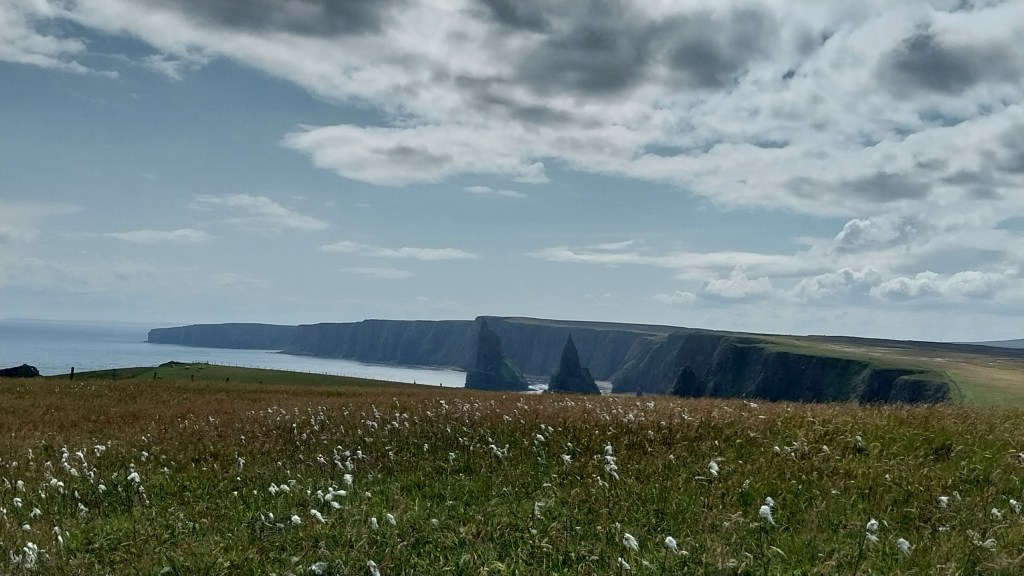
During the summer our highlight was a short trip to the northern Highlands we did with Edoardo, Gianluigiโ€™s brother. We visited Pulteney, Wolfburn, 8 Doors and North Point: except the first one (which was fine but not outstanding), the other three visits were just incredible! Wolfburn drams were above our expectations, and we are looking forward to the single malts from the other two! Also, the landscape in this part of Scotland is just phenomenal!
In July we also visited the Glasgow distillery for the first time, which just turned 10 and is one of the most exciting new producers in the game!

September was a bit of a disappointment, as we couldnโ€™t make it to the Outer Hebrides for the Hebridean Whisky Festival. That was nobodyโ€™s fault, but with 3-4 consecutive days of high winds, it was just impossible for us to travel there. Despite the poor weather we still managed to sail to Tiree, home to a veeeeery tiny distillery.
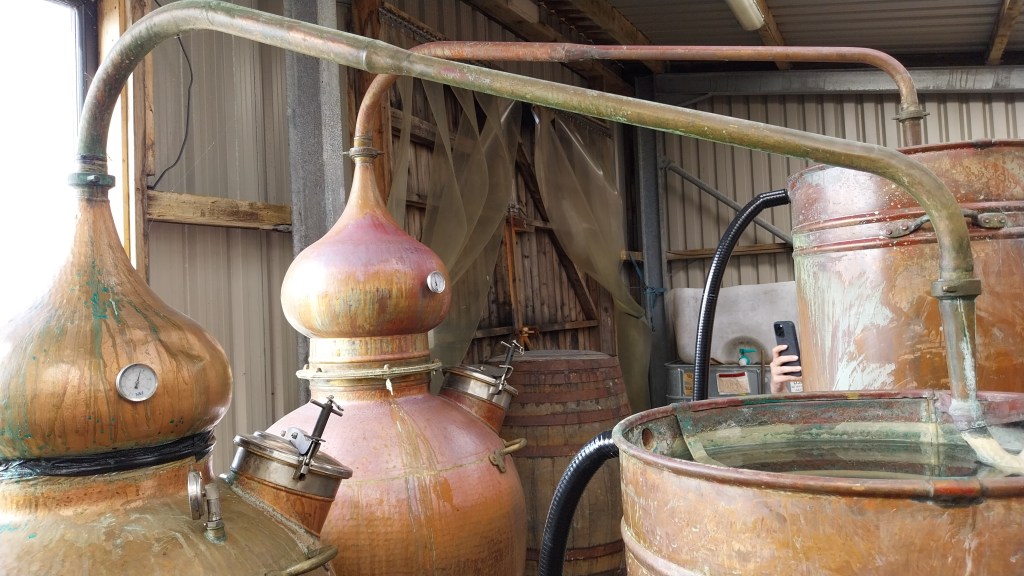
We made up for the missing trip by visiting another new small distillery in the Tain area, Toulvaddie, and by revisiting some old acquaintances, Glenturret and Glenkinchie, which both went through a remake since weโ€™d visited the first time. The Glenkinchie tour was particularly great, also thanks to our pal and whisky geek John who works there as a tour guide!

The last part of the year was very busy. First, we finally got inside our local distillery: Bonnington, a real workhorse in the heart of Leith! Then, we spent some time in the eastern Highlands: the team at Bacardi/Dewarโ€™s decided to open two of their distilleries for charity, Royal Brackla and Macduff (and who are we to say โ€œnoโ€ to visit a distillery for charity?), and we also managed to get into the recently reopened Glenglassaugh and Glencadam (dedicated posts to come next year).

This year we ditched the Dramathon to attend the Dornoch Whisky Festival instead (they usually happen in two following weekends, too close to each other to attend both). This was a lot of fun, weโ€™re definitely adding it to our (short) list of whisky festivals that we enjoy. An event was a memorable dinner where each course was paired with an Ardnamurchan dram, with Carl from the sales team introducing them. The lineup included their soon-to-be-released (now it is) 10-year-old, different from the previous version but more true to the distillery character.

Tasting-wise, the main highlight was a pricey but fantastic tasting at the Belfry: Brora and Clynelish, hosted by the great Jolly Toper Mark and Patrick Brossard, who wrote a book about Brora. It was our first time trying the old distillery malt, so it was very special as you can imagine.

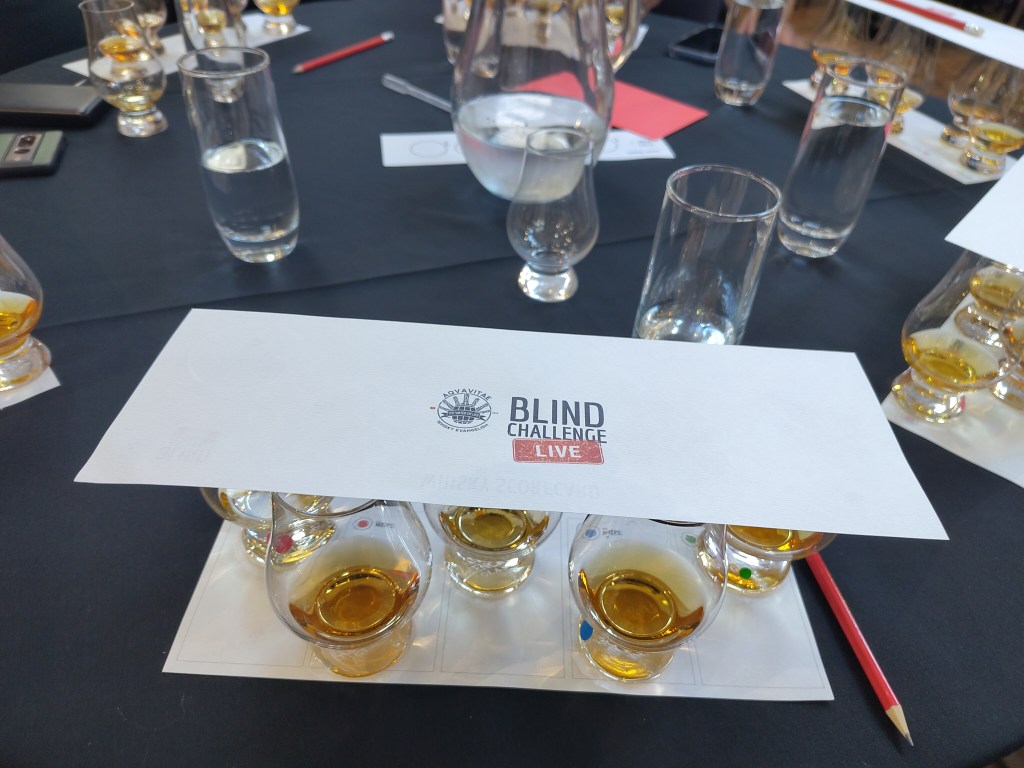
Another great event was the Aquavitae Blind Challenge in Glasgow, which we finally attended again after missing it in 2023 (flu) and 2024 (away): organised by Roy, it was a great opportunity to meet and chat with fellow barflies. The following week we attended the Kilchoman celebration for their 20years, at the Edinburgh Academy. We thought it would have been a tasting but was more akin to a small Kilchoman-only festival, with present and past bottlings to try โ€“ a nice surprise. Also, the Edinburgh Whisky Group was very well represented: a cracking time!
Our whisky year finished off with a long weekend in Campbeltown: we didnโ€™t tour any of the distilleries, but we had a few very interesting tastings (and again, next year there will be more about that).
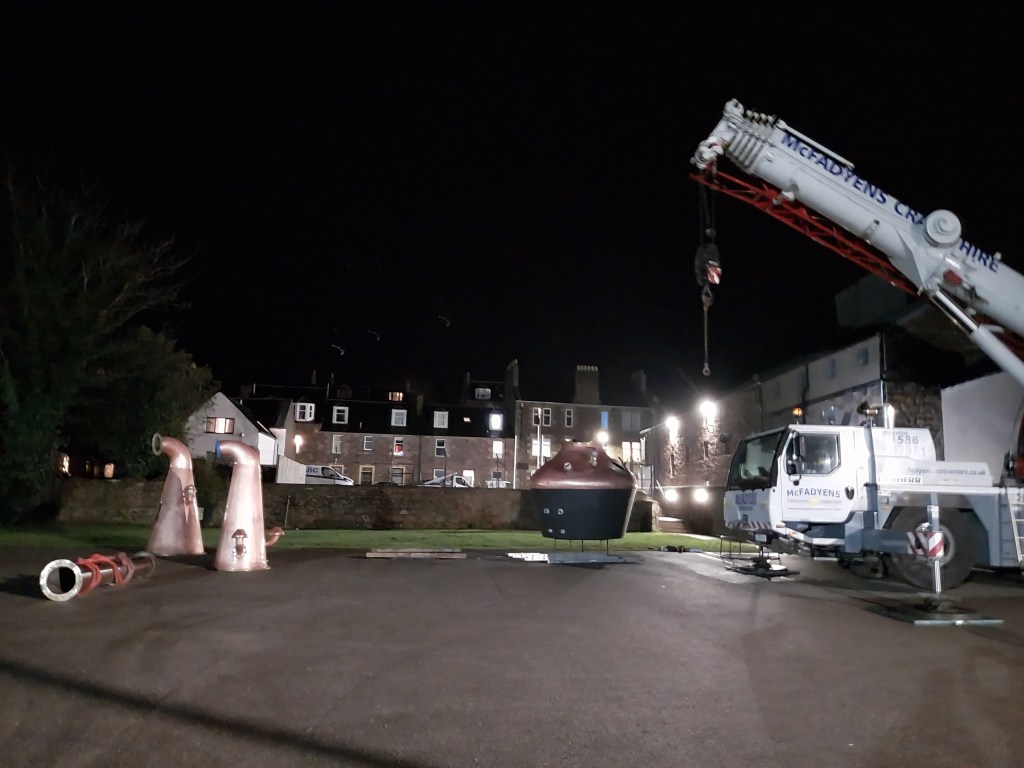
Obviously, we canโ€™t ignore the elephant in the room: the state of the whisky industry, with respect to both production and hospitality. The great uncertainties around the economy on both sides of the Atlantic ocean make it hard to predict how the industry will be in 5, 10 or 15 years. Weโ€™re already seeing a big impact in the short term, with many distilleries pausing or reducing production. For example, as we are writing, we heard about Jim Beam pausing production at their Kentucky distillery (Mitch McConnell will be happy about that), which felt weird because it was our first full distillery tour back in 2016. On the other hand, some of the production expansion plans, in particular announced by some big players, now seem to be ludicrous and anachronistic: while we love whisky, it is still a โ€œdrugโ€, and you can only push it to some extent. We are also left wondering about the destiny of most of the new distilleries โ€“ often relatively small projects, we hope theyโ€™ll manage.

We heard the term โ€œadjustmentโ€, which makes a lot of sense at this stage. We hope one of the positive implications is that the dodgy investment schemes will gradually leave the market, avoiding the overinflation of casks and bottles prices. This โ€œadjustmentโ€ might also make some producers rethink their plan to destroy historical distilleries to make space for theme parks (yes, we are talking about a distillery on Skye), and maybe rethink their tour prices. And finally, prices cooling down a bit (we already saw this being the case, especially with independent bottlers) might make them more realistic, allowing us to stash a few cracking malts for the year to come!

We hope you have some gems stashed as well, and that youโ€™re sharing them with your loved ones to celebrate great moments in the year to come! Have a great 2026 and, as always, slร inte mhรฒr!


#60.5 Another Spirit of Speyside

About to be re-awakened:
Dallas Dhu


TL; DR: On our final day at the Spirit of Speyside, we visited a gem about to be re-awakened: Dallas Dhu! Closed in 1983, it became a museum, but thanks to Murray McDavid, it will restart production in the coming years. A few days before we also attended the Drams under the Star event, organised by the same folks, another must-do of the festival.ย 

(missed Part 4/Part 3/Part 2/Part 1?)

And finally, it was Sunday, the final day at the Spirit of Speyside 2025 festival. We took the morning very slow: a shower at the campsite, a small breakfast and some tidy-up of the campervan. The weather was slightly better than the night before, but still not great, so we didnโ€™t risk a hike. Instead, after a quick stop at Glenallachie, we slowly drove to the location of our final event, the village of Forres. At noon, we got into the White Hart Restaurant, just off High St – Gianluigi had discovered the place on a work trip in the area. While the lower floor looks like a pretty standard pub, the upper floor is a restaurant serving fantastic Latvian dishes and beers: a hidden treasure!

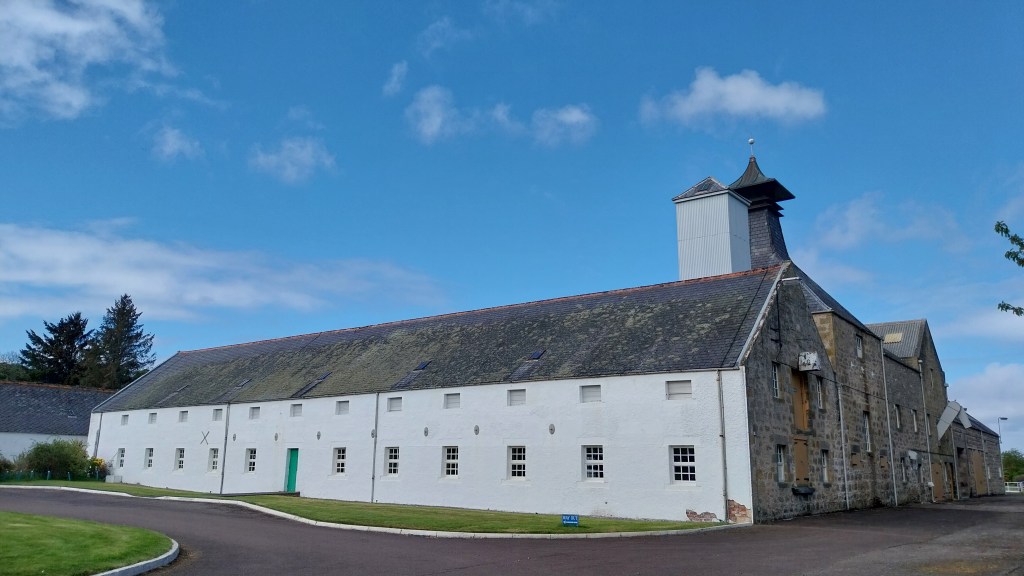
At 1pm, we were at Dallas Dhu distillery, on the outskirt of the village. While we drove Mr Vantastic into the large adjacent parking lot, we admired how beautiful the distillery is, and how you couldnโ€™t mistake it for anything else. We will learn later that Charles Doig himself was involved in the building drawing. We were warmly welcomed by Dean from Murray McDavid, the independent bottler which recently took over the distillery.

A little detour here: weโ€™d already met Dean on the Friday evening, after the David Stirk tasting in Dufftown, at the Drams Under the Stars tasting. It was obviously organised by Murray McDavid, and it was quite convenient for us, as for an extra fiver we could reserve a spot for either a tent or a campervan (ยฃ50.00pp w/o camping, ยฃ55pp with camping, plus the usual SoS fees).

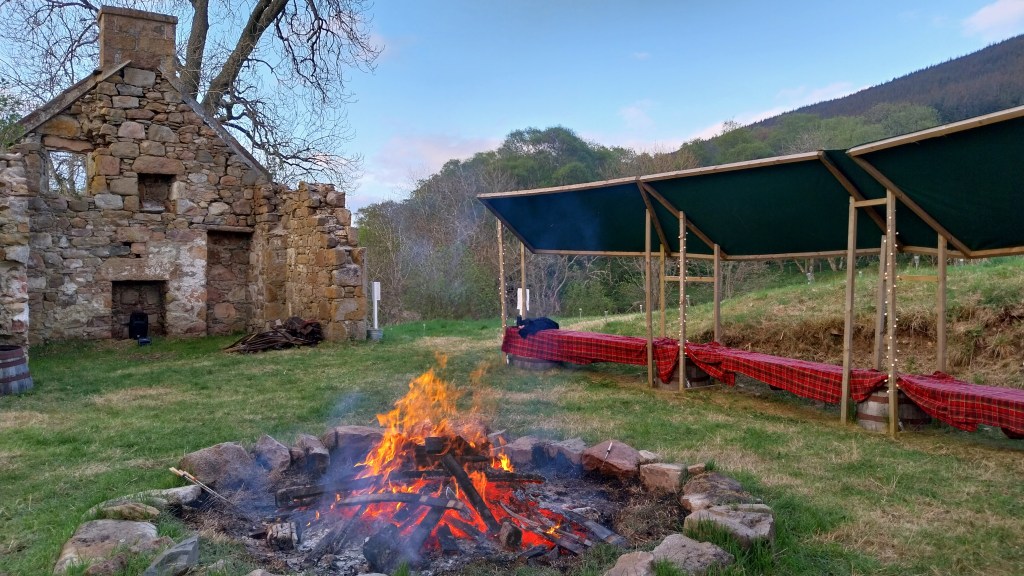
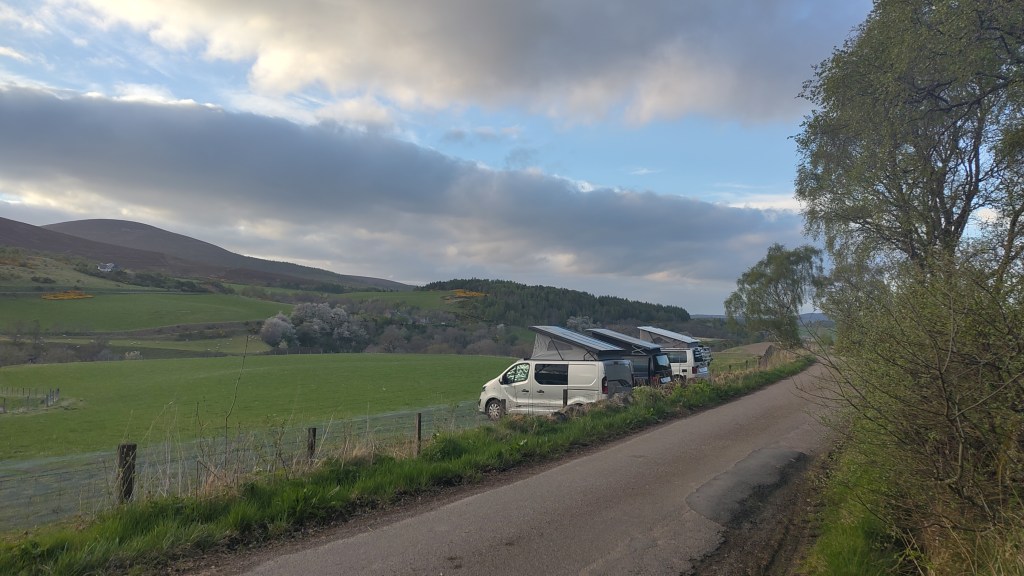
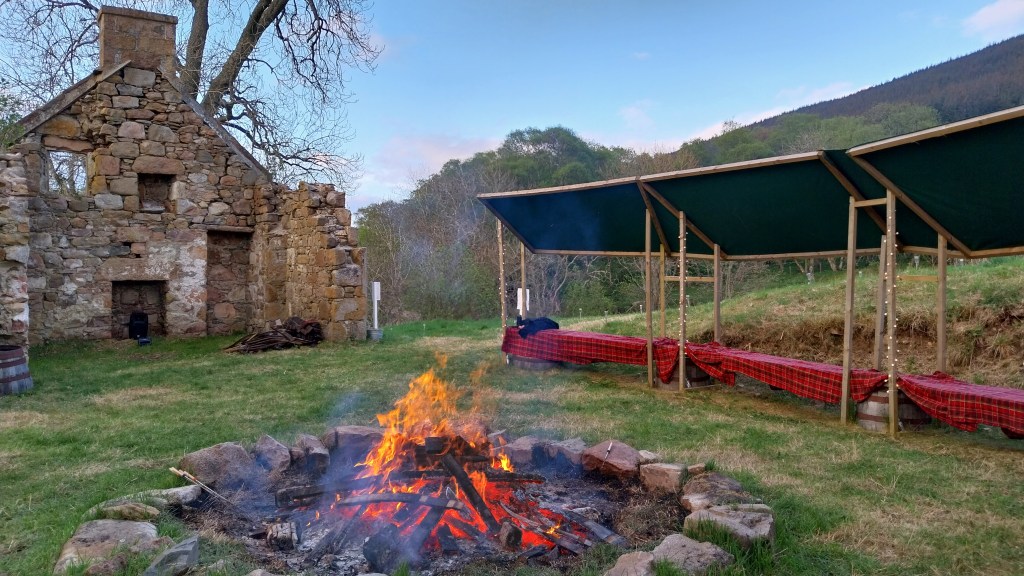
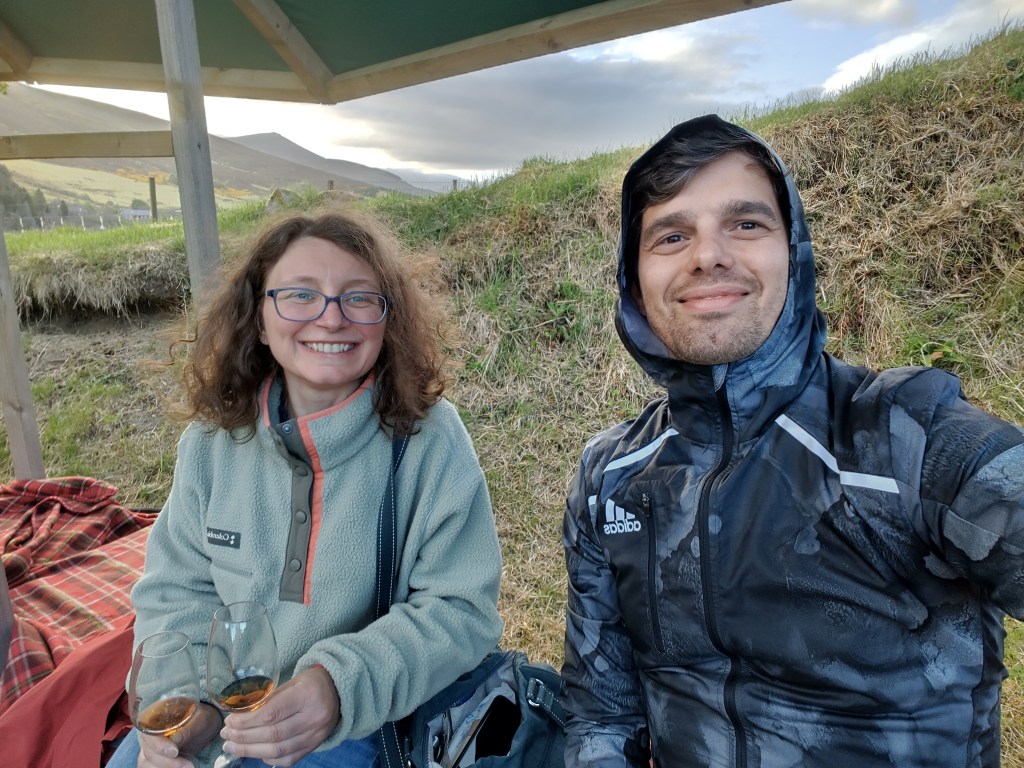
The event was just outside Dufftown, about 5 minutes driving, near an abandoned and ruined bothy. They set up a big bonfire in the middle of a clearing and set benches with canopies. At the bothy, a gazebo was placed with a pop-up bar underneath. We arrived when it was still light, and at first it was hard to decide where to sit: we found spots with either the wind blowing in our back, or with the very same wind blowing smoke in our face. However, as drams were poured, we and most people just stood up by the fire and enjoyed the evening. We were pleasantly surprised by the informal, chilled out atmosphere, where everybody could enjoy the drams in their own time, with Dean serving them and chatting to each small group of people (about whisky or not).

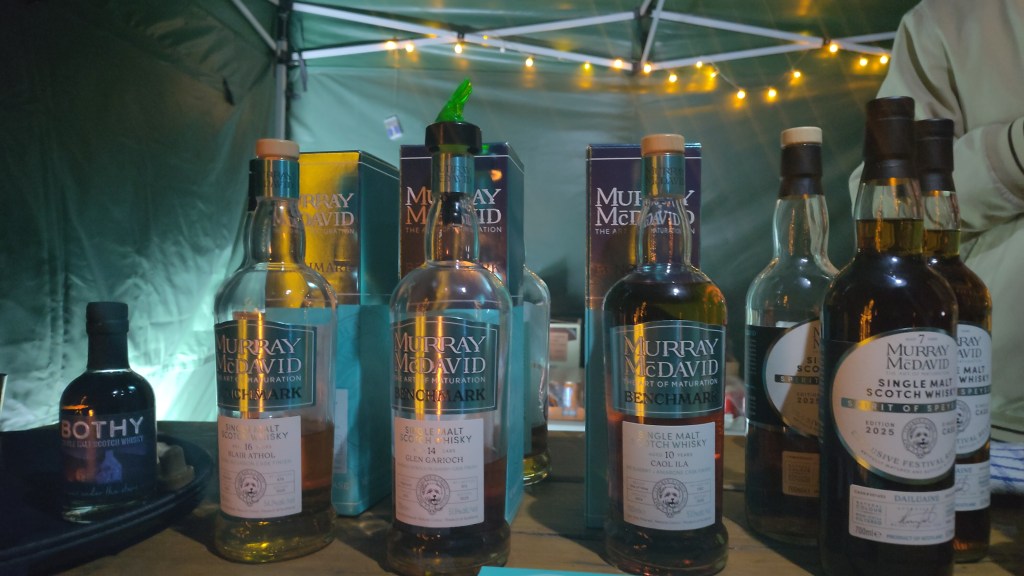
The first dram was The Bothy, specifically bottled (in 20cl bottles) for the event: a young sherried Speyside single malt (46% abv). The other drams were a 15y Blair Athol (54.2%, finished in Koval ex-bourbon casks), a 14y Glen Garioch (51.6%, ex-PX cask finish), a 10y Caol Ila (53.1%, ex-Amarone and PX Sherry cask finish) and finally the MMcD Spirit of Speyside 2025 release (Dailuaine, 7y, ex-Oloroso cask, 57.8%). Overall, a great, chilled out event that weโ€™d definitely like to repeat.

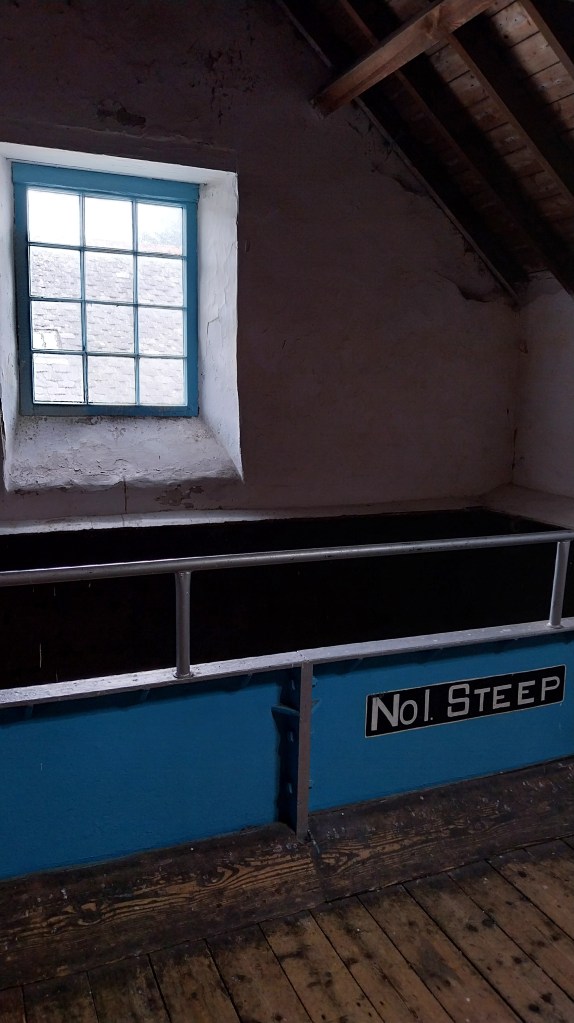
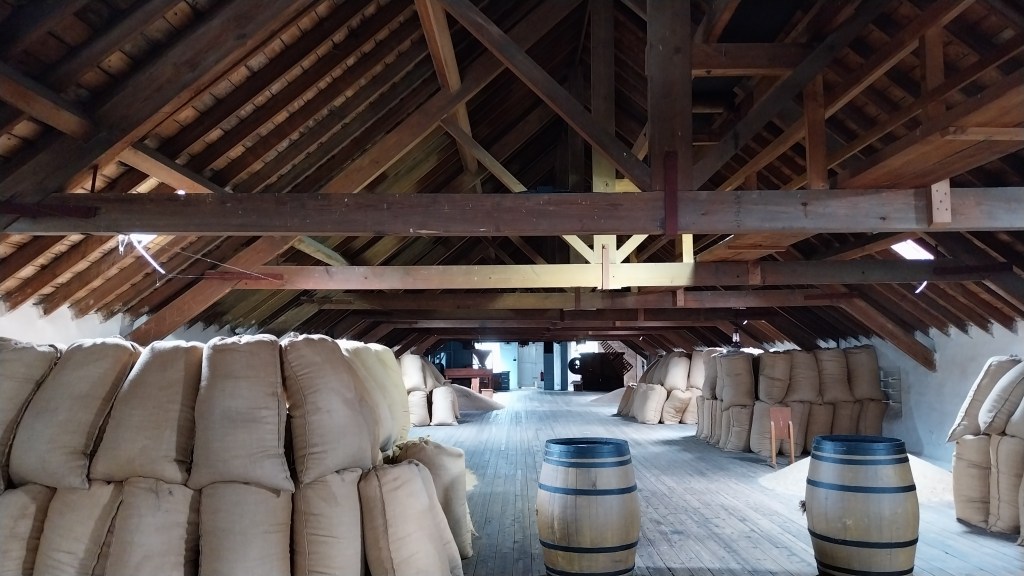
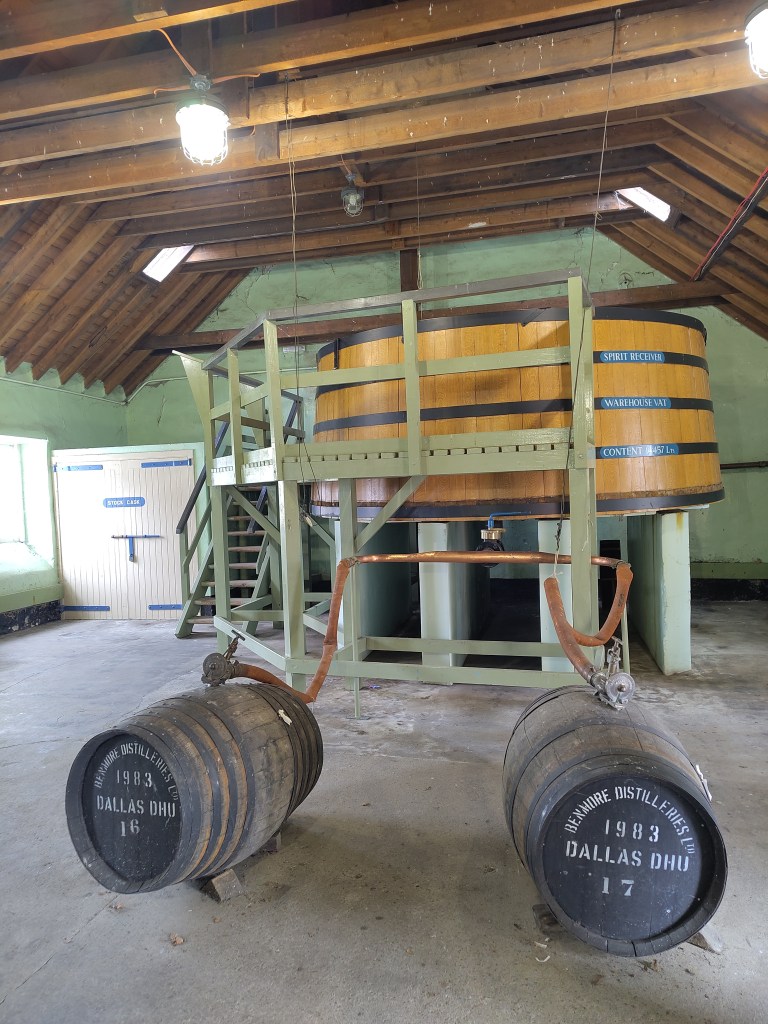
Back at Dallas Dhu: the Saturday was their open day, so the staff were understandably a bit tired on the Sunday. Nevertheless, Dean gave us a great and very detailed tour, which lasted longer than the scheduled time. The distillery was founded in 1898 by Alexander Edward and started production in 1899, originally as Dallasmore (later changed to Dallas Dhu to avoid confusion with other brands). It closed during WWI, and again in 1930 for 6 years. In 1939 it was partially destroyed by a fire, and it resumed production only in 1947, until 1983 when it was closed. In-house malting was stopped before then, in 1958, although the current steeping tank was only fitted in the 1950s, around the time also electricity was fitted in. The distillery was finally sold to Historic Environment Scotland in 1986, which turned it into a museum. Because this happened shortly after ceasing production, the distillery is incredibly well preserved, and it looks like it could resume production anytime (which it couldnโ€™t, of course). In recent years, Murray McDavid bought it. This was after an initial attempt to buy Parkmore, which failed because of the non-availability of the nearby warehouses. They are now in the process of finalising the deal with Diageo (which still owns the Dallas Dhu brand), and to get ready to restart production (although works havenโ€™t started yet).

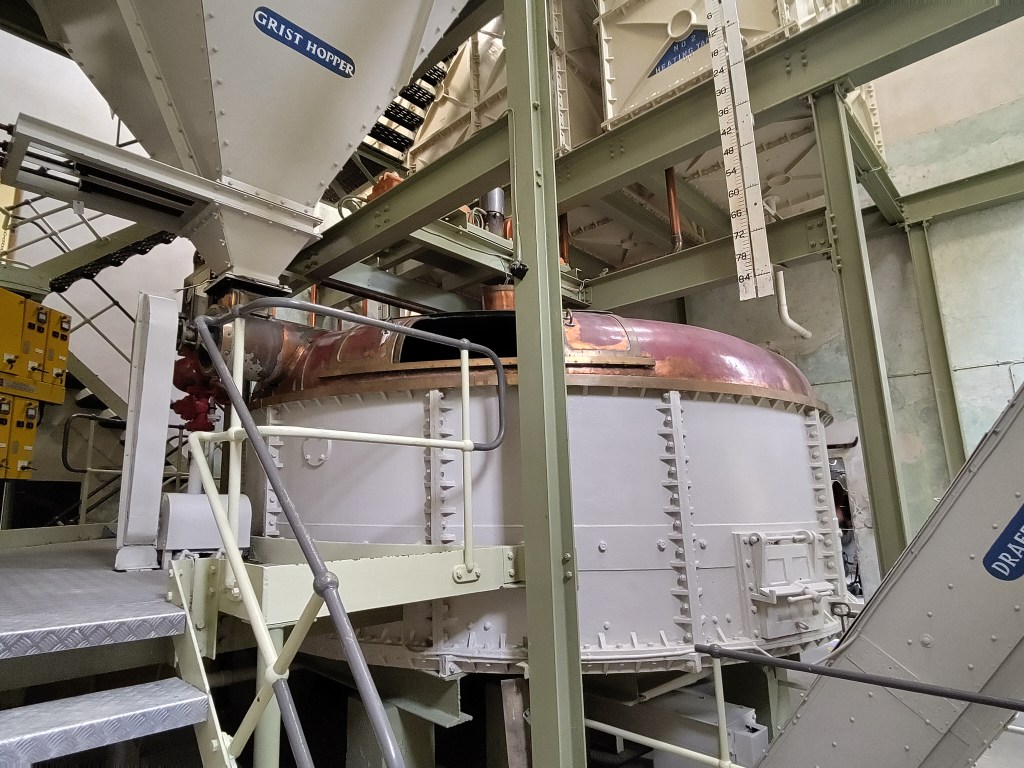
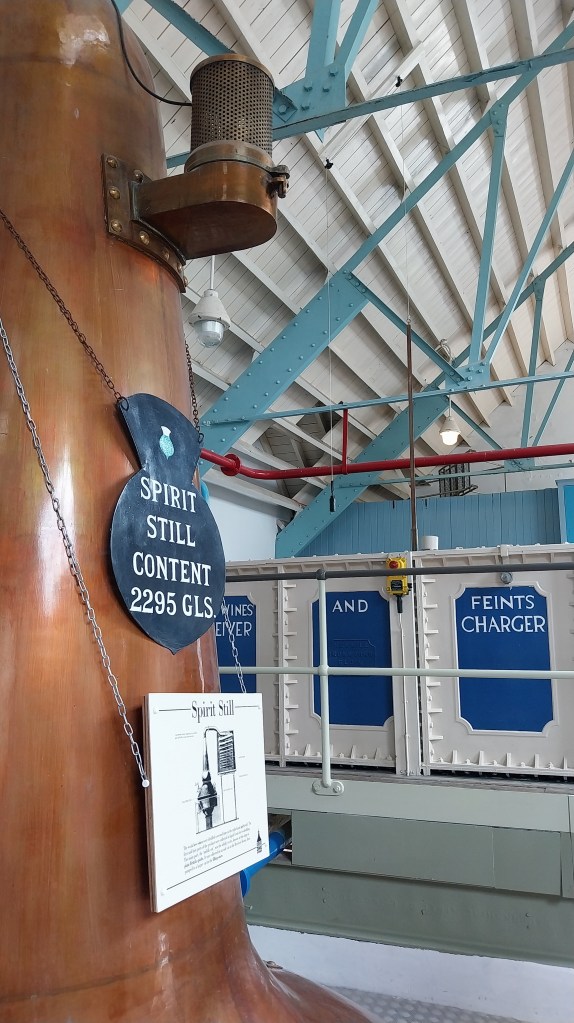
As we walked through the building, from the malting floor to the mill room (one of the last Bobby mills ever produced, apparently), and then to the copper-lidded mashtun, the washback and still room, we could see how everything is really in a great state.

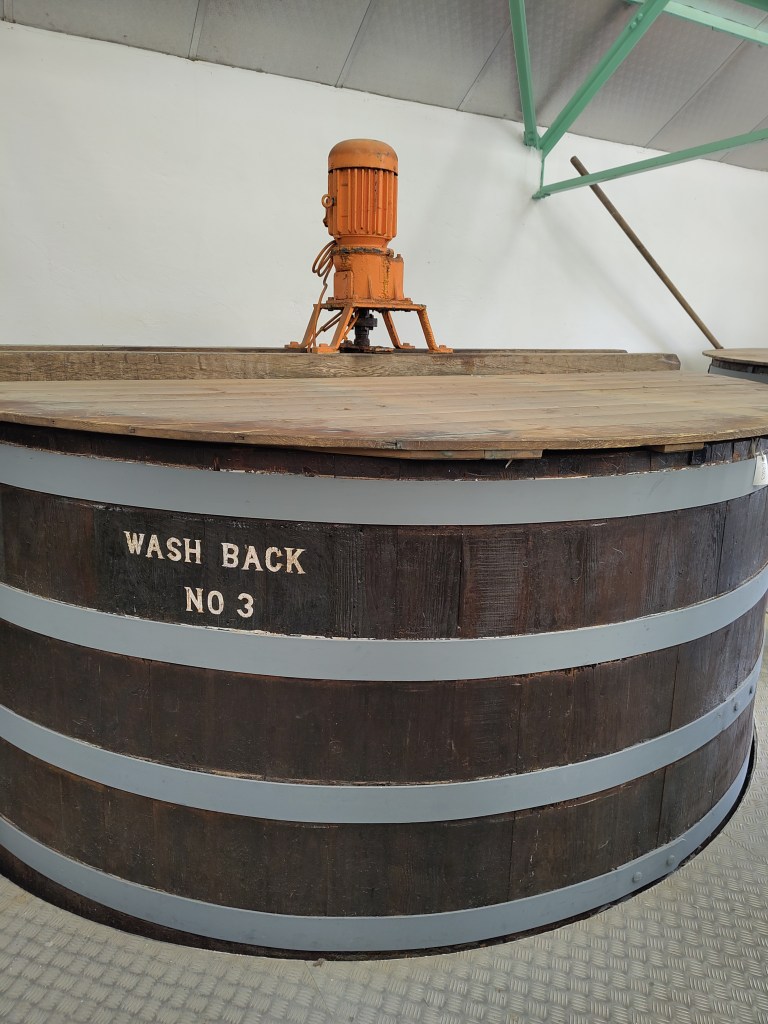
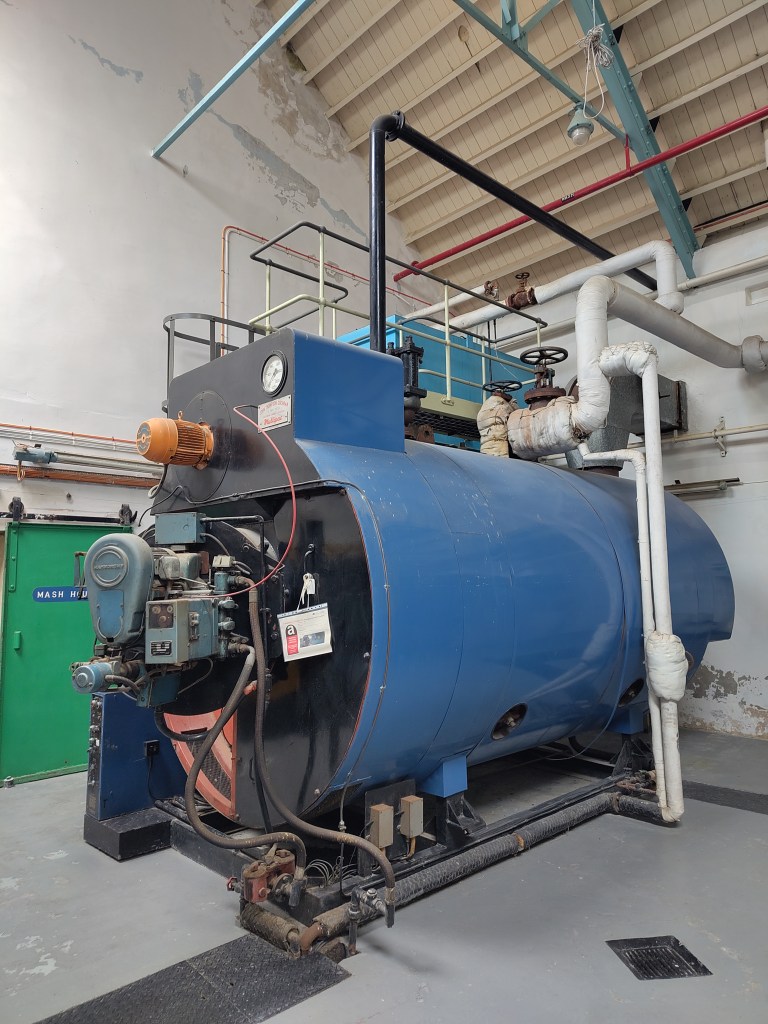
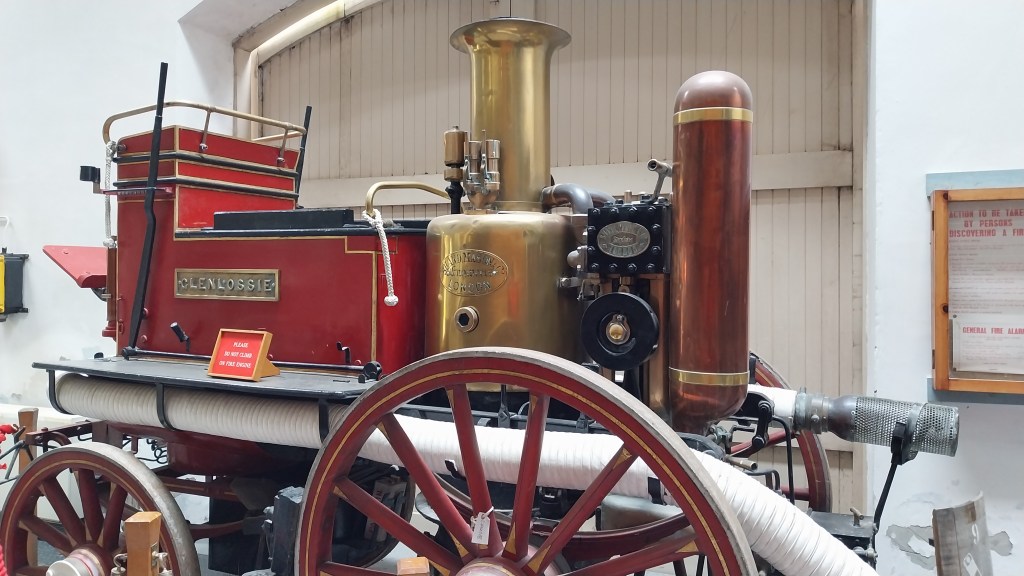
The six 14,000-litre wooden washbacks have been constantly filled and emptied with water to preserve the wood, and in the still rom an ancient fire-engine found also home (probably it will be moved), next to the massive boiler. The distillery has only two stills, but at full regime it can produce about 800,000 litres of alcohol per year, similar size as Glen Scotia, to give you an idea.

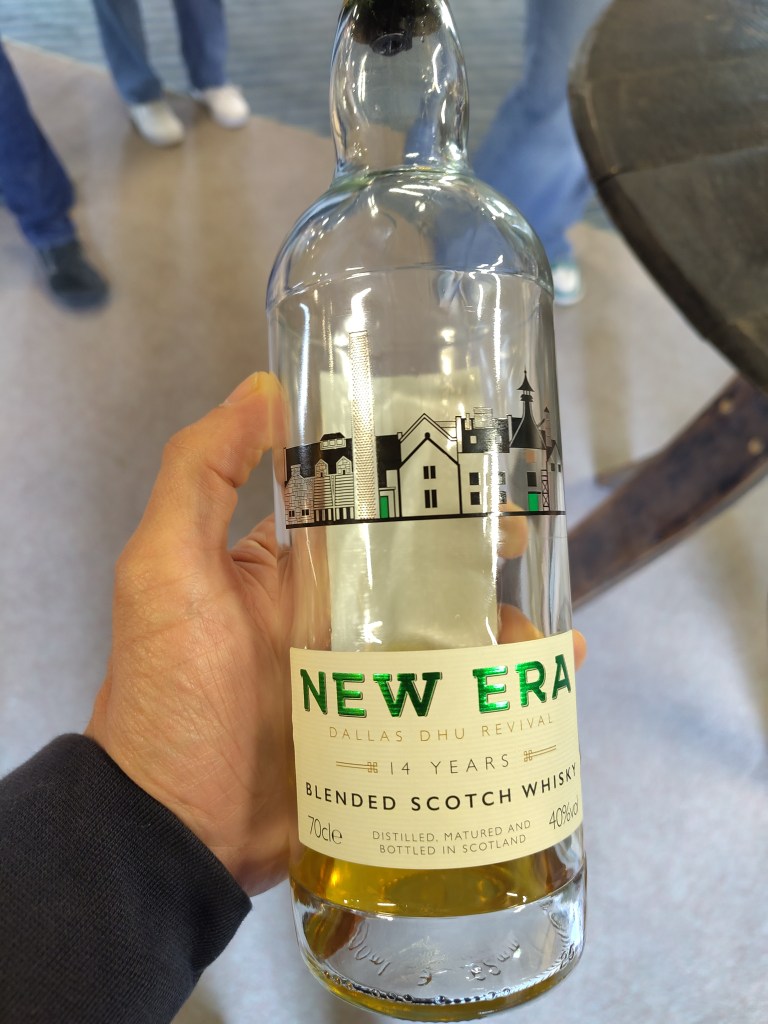
The tour finished in the shop, where we had a dram Murray McDavid created for the occasion: a 14y blended scotch named โ€œA New Eraโ€. We were told that among the components there are Port Dundas and Cameronbridge as grain whiskies, and Glenrothes, Glengoyne, Tamdhu and a tad of Bunnahabhain for the malts. Itโ€™s a pleasant dram, a bit thin as it is bottled at 40%. After that, we could get sips of other bottlings available for purchase โ€“ so good to find places where โ€˜try before you buyโ€™ is actually possible! ย ย 

Overall an excellent afternoon at Dallas Dhu; the enthusiasm of Dean and the rest of the team for this new beginning was contagious. This was definitely a great ending to another great Spirit of Speyside, and we cannot wait for this beauty of a distillery to officially reopen.

And after this, weโ€™ll take a couple of weeks off! Until next post, slainte!


A New Era: The Dallas Dhu Distillery Tour (Spirit of Speyside 2025)

Price: ยฃ15.00 pp (+ SoS fees)

Duration: 1hr 10min (45min on paper)

Tasting: 1 dram, A New Era blended scotch whisky (14y, 40%)

Target: whisky and history geeks

Value for money: good

Highlights: the whole distillery is absolutely stunning

Recommended: yes

Link: https://www.spiritofspeyside.com

#60.4 Another Spirit of Speyside

Another distillery visit in Dufftown: Glendullan


TL; DR: A visit to another massive Diageo distillery, this time in the well-known village of Dufftown. Glendullan produces some very light spirit, in contrast to the very industrial-looking production plant from the 1960s-70s. A very good tour (followed by an again small tasting at the end), but the highlight of the day was definitely the Whisky Fair: a cosy mini-festival in the middle of Dufftown. Unmissable! 

(missed Part 3/Part 2/Part 1?)

The morning was cloudy, wet, under a dark and overcast sky. Because we had parked next to other vans, we quickly left and postponed breakfast for later, to avoid disturbing our neighbours. The night before, after dinner, weโ€™d attended โ€œDrams under the Starsโ€, a Murray&McDavid event at a bothy near Dufftown, but we will write about this in the next post, where it will become clear why. Back to our morning, we left the car park and went to Dufftown for a wee bite. Soon after we tried to check in at the Parkmore Campsite. The idea was to drop the van there and just walk back to Dufftown. Our spot was still occupied, so we drove instead: maybe for the best, as this saved us from being soaking wet, since in the meanwhile a heavy rain started.

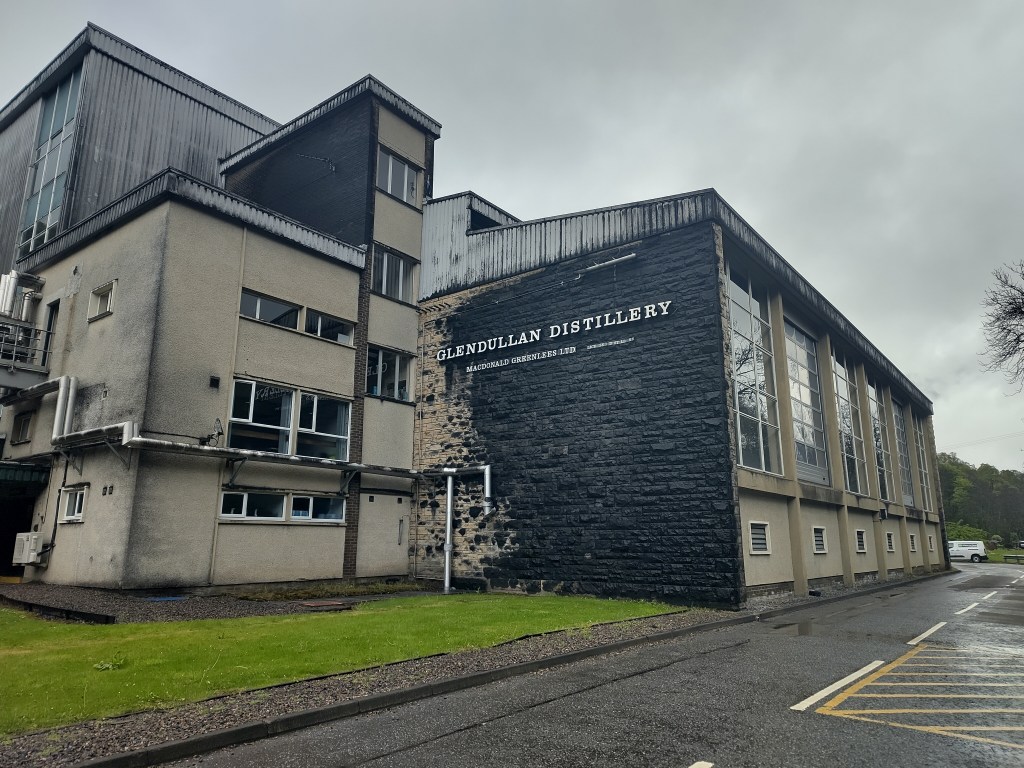
Our first event was the distillery visit at Glendullan. Similar to Inchgower, the event was called โ€œGlendullan through the Decadesโ€. The distillery is along the river Fiddich, and it is another one of the big producing plants owned by Diageo. We walked past it during our walk around the โ€œ9โ€ distilleries of the village, back in December 2019. Their single malt is sold under the Singleton label (brand name originally assigned to Auchroisk, because it was too difficult to pronounce), together with the neighbouring Dufftown distillery (the only one in town we havenโ€™t visited yet) and Glen Ord, in the Highlands. These three single malts, however, are destined to different markets: Glen Ord to Asia, Dufftown to UK and Europe, and Glendullan to America and travel retail.

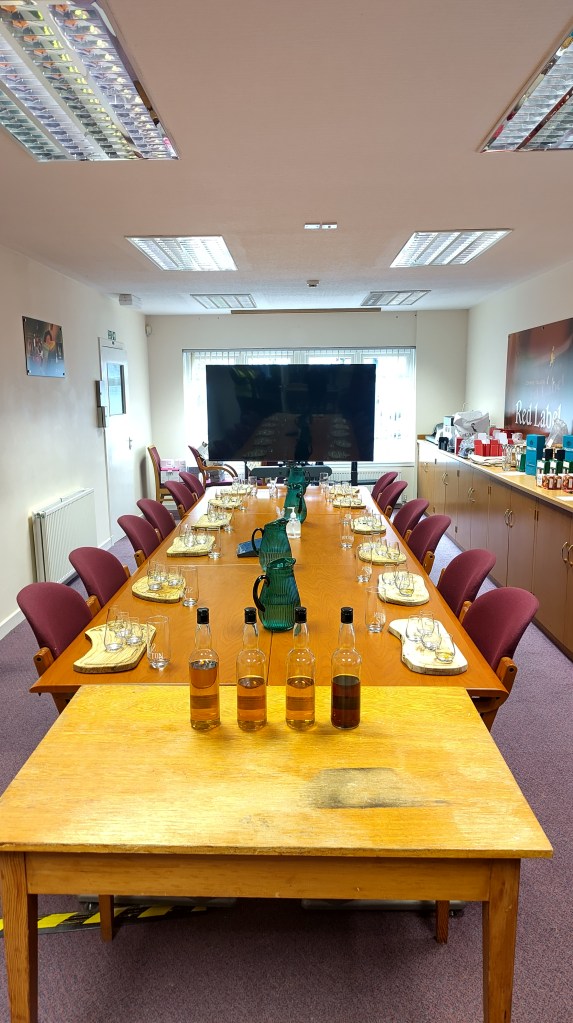
As we got off the van we were โ€œwelcomedโ€ by a very pungent smell, we found out later that it is a bio-energy plant located just next to the distillery. Fortunately, the staff let us in right away: they were Izac, coming for help from Dalwhinnie, Jackie, the distillery manager, and Kirsty, the apprentice (who weโ€™d already met when she was a tour guide at Glen Grant). We sat at the table while the staff introduced themselves and the distillery. Glendullan was founded in 1897 and went under renovation in 1962, but only 10 years later a new site was built. The two sites ran together until the mid-80s, when the old one was shut off (the building is still there though), while in-house malting stopped even earlier, in 1970. At that point, they gave us the first dram: a Singleton Glendullan from the Diageo Special Release 2021 (19y, 54.6% abv) matured in bourbon cask but then finished in American oak casks, seasoned with Cognac (in our understanding different to casks used for Cognac maturation).

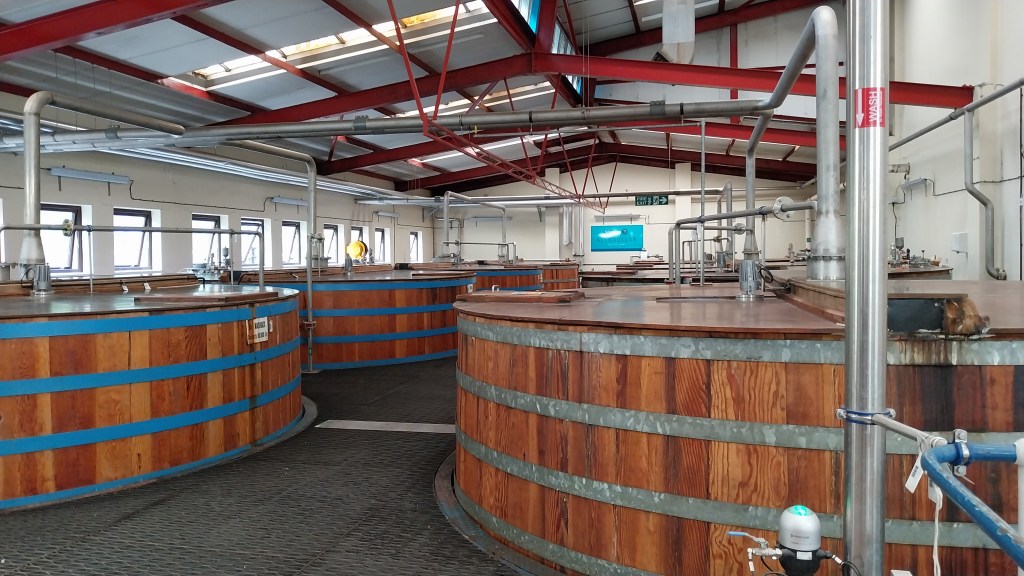
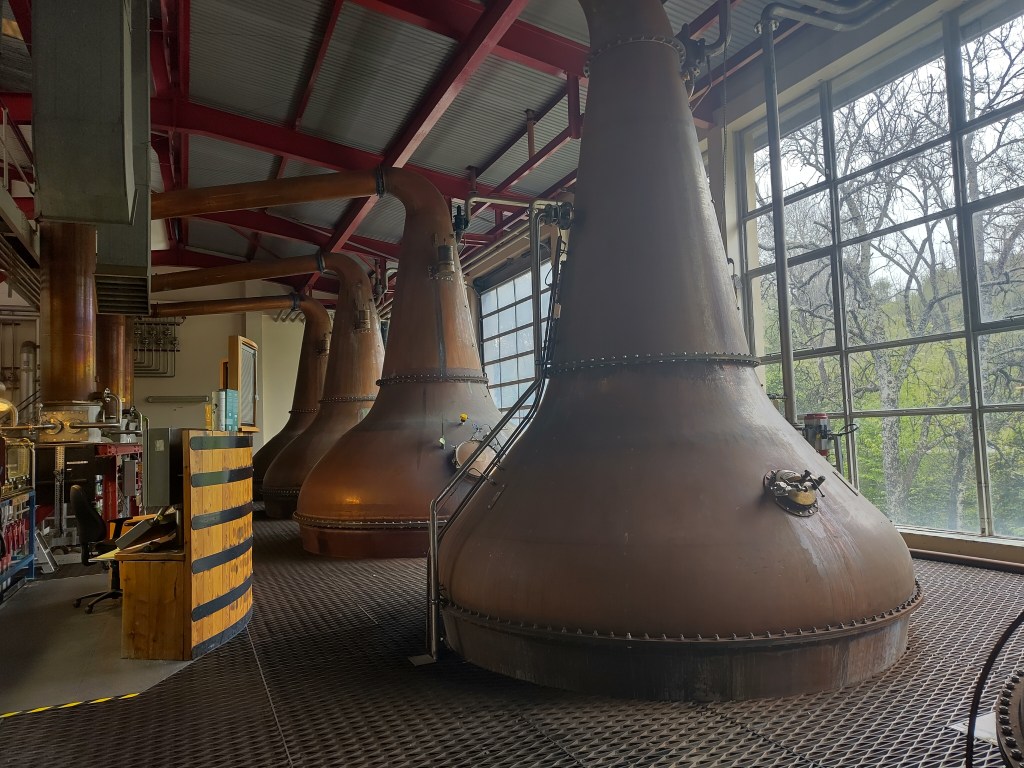
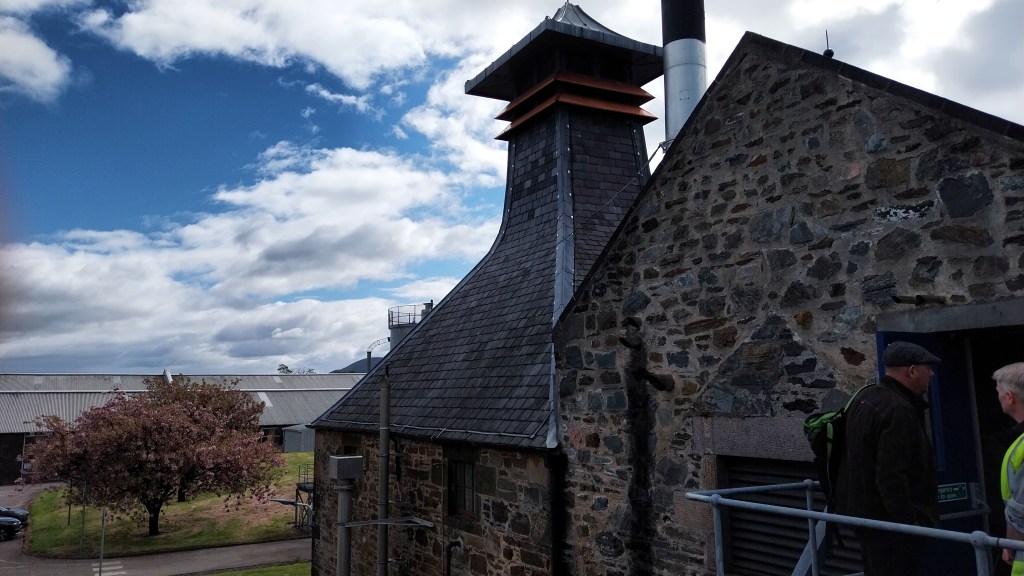
As we got into production, we could clearly see how the distillery was built for a big production – a typical 1960s-70s feeling to it, with a big window in the still room. They get the malt from Buckie, now mostly Lauriet variety, in 28ton deliveries. The mashtun, replaced in 2010, gets filled with 12.4ton of grits, which is milled by a Porteus mill with the usual husk/grit/flour ratio (20/70/10). They do three mashes per day, using one water only, but with continuous sparging, starting at 64ยฐC. They aim for a clear wort, but not by filtering, just by letting it rest. Fermentation is carried out in one of the 10 washbacks, eight wooden and two stainless steel (which are outside), for 75 hours.

Finally, distillation happens in one of the three pairs of stills – 3.5-4 hours for the first run, while for the second distillation they usually start collecting the spirit after 30 minutes of foreshots, for again 3.5-4 hours. Apparently, they donโ€™t have specific cut points, but the average abv of the distillate is about 68.7%, with a green and grassy character.

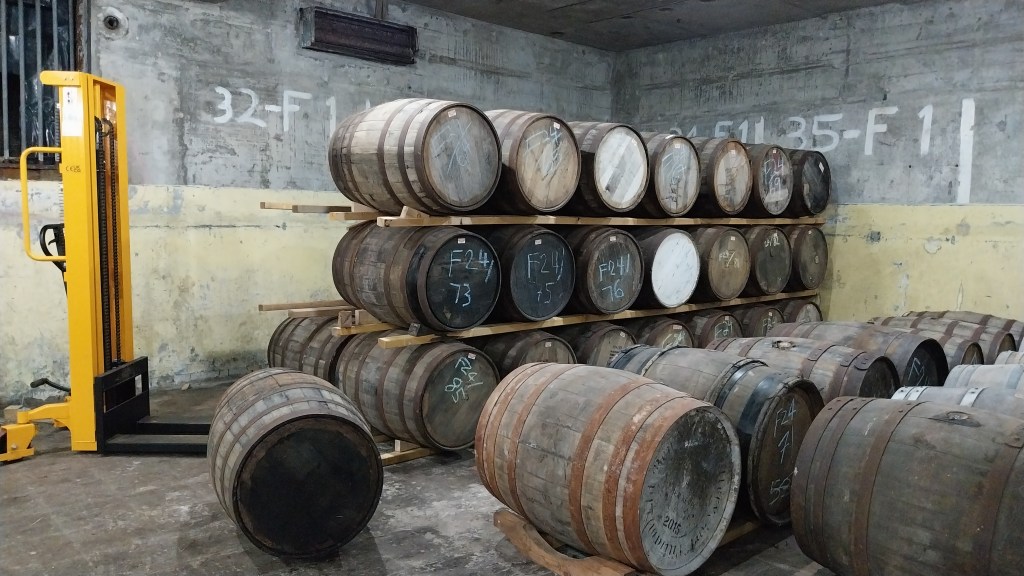
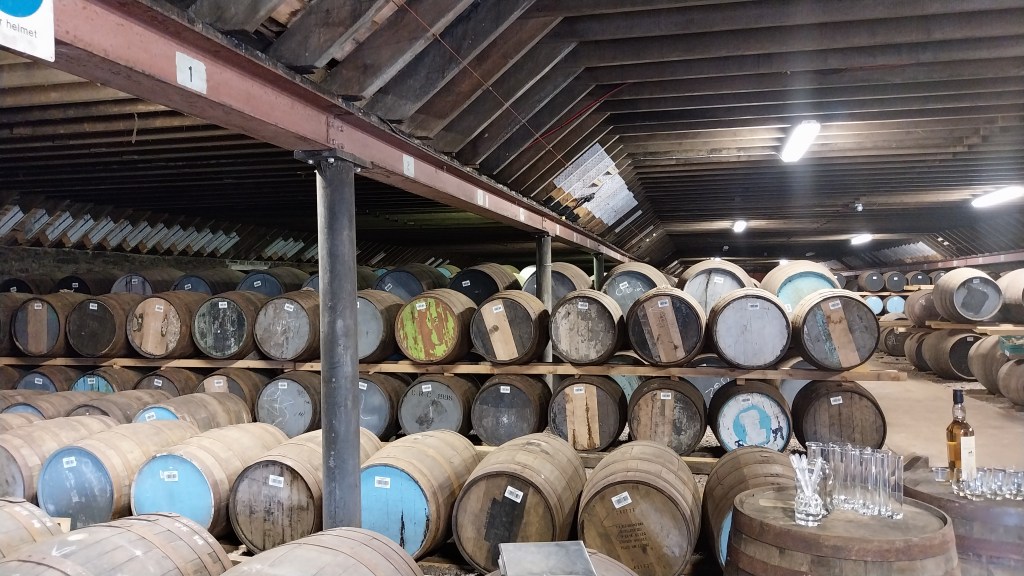
There is no filling store at the distillery, as all the spirit is filled into tankers and sent to be put in casks elsewhere, mostly (80-90%) in ex-bourbon barrels, the remaining in sherry casks. However, there is a small warehouse with the capacity for about 4,000 casks, which we didnโ€™t visit. Instead, we headed back to the office to continue with the tasting. The second dram was a 1989 cask sample from a (if we recall correctly) hogshead (34y, 52.3%), followed by a 1993 sample again from a very active hogshead (31y, diluted to 49.8%) and finally a 2003 matured in a PX cask, very dark and chocolaty (21y, 56.0%). Fortunately, this time the measures were a bit more generous, around 15ml each (maybe some a bit more, even), but four drams for a ยฃ100 tour and tasting is still quite stingy. To their credit, these drams were truly delicious, and we could see how some effort was put into coming up with this line-up. The contrast with the more meaty and heavy spirit from Inchgower was quite obvious, as Glendullan was light and delicate to our palate, even the one in the PX cask. In general, the tour was another good one, it was great to get to know the staff, get a glimpse of their knowledge, and witness their enthusiasm for making whisky!

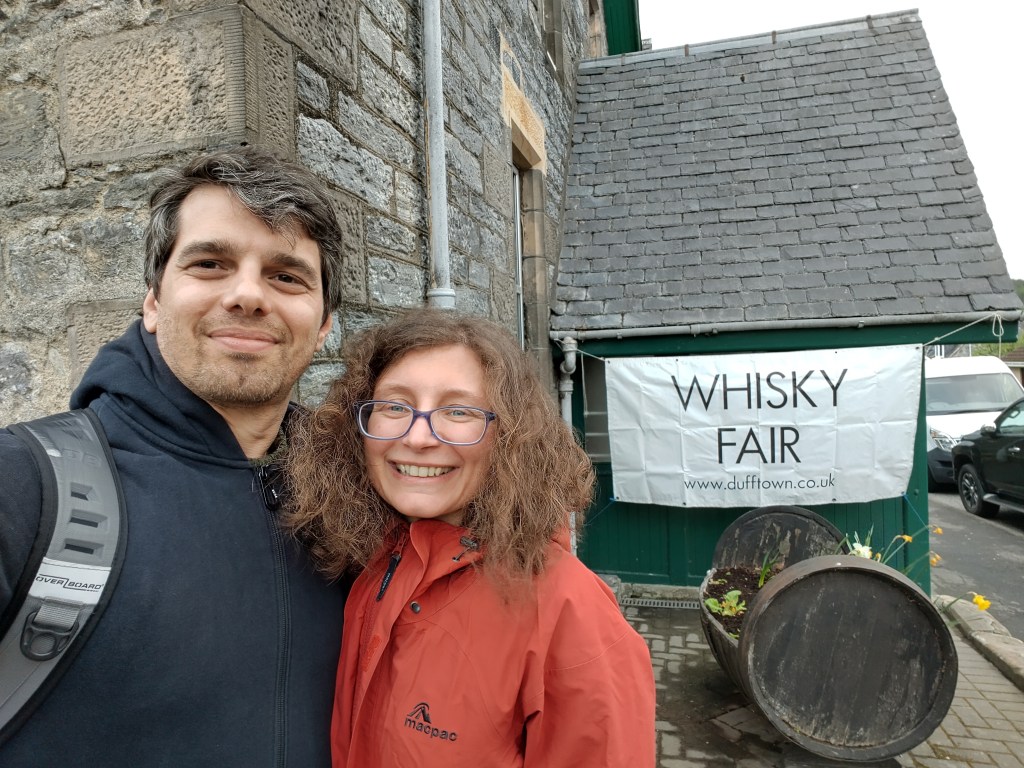
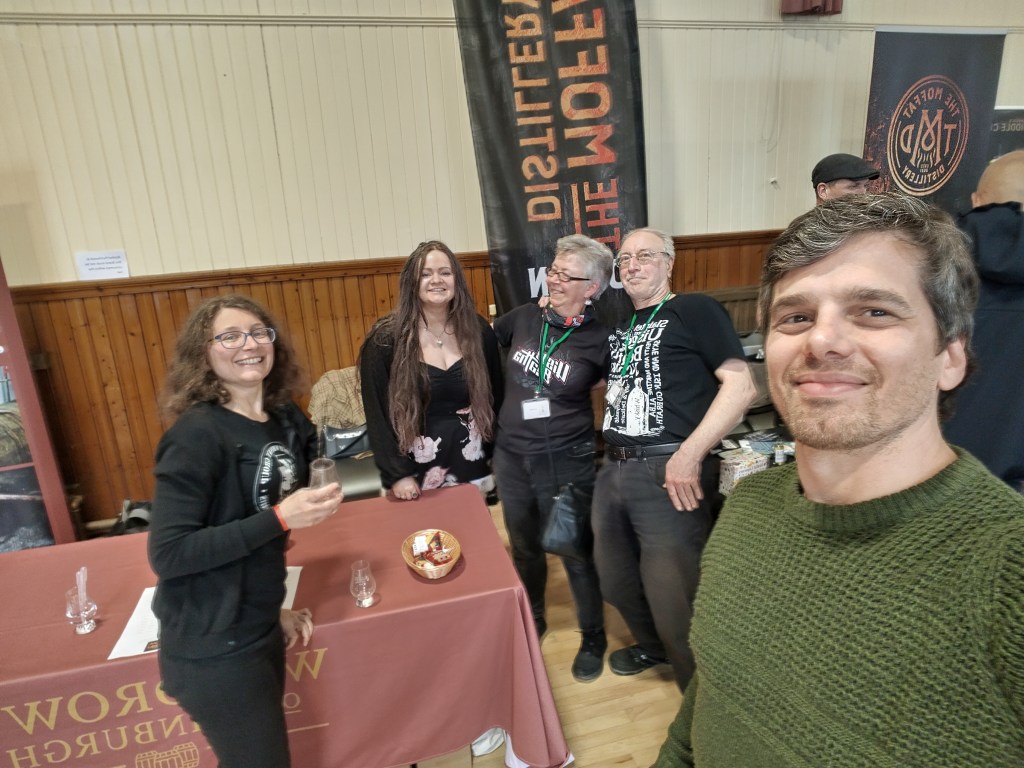
Once we left the distillery, we drove again to the campsite, this time we left the van there and, after a quick meal, we left on foot to get back to Dufftown. The waterproof gear ready to be deployed, too. We thought it would take more, but thanks to a shortcut into the woods (from which we had a great view of Glendullan distillery) it only took 25 minutes to walk to the Mortlach Memorial Hall, where the Whisky Fair was about to start (ticket was ยฃ30pp + SoS fees, including a glass and a voucher for a hot beverage and some food). This was our second year to this event, a sort of small festival, with the money collected for charity. As we arrived, we spotted the van of our pals Megan and Woody of Woodrowโ€™s of Edinburgh parked in front of the hall: some un-pishy drams were about to be tasted! Overall, itโ€™s a great and cosy event, and it was great to catch up with so many whisky pals, in particular with Sue and Gordon, who are among the organisers.

After the fair, we slowly walked back to the campsite, definitely very happy. Unfortunately our evening was much colder than prevented, and we could barely cook dinner on a disposable grill: two massive super greasy but delicious burgers (form Hellbent, some rugby connections as well). We soon went to bed, tired but happy.

Stay tuned our final Spirit of Speyside post! Until next week, slainte!


Glendullan Through the Decades Distillery Tour (Spirit of Speyside 2025)

Price: ยฃ100.00 pp (+ SoS fee)

Duration: 2hr

Tasting: 4 drams, Glendullan 19y (54.6%), Diageo Special Release 2021; cask sample 1989 (34y, 52.3%, refill cask); and 1993 (31y, 49.8%, hogshead cask-very active), cask samples 2003 (21, 56.0%, Pedro Ximenez sherry cask)

Target: whisky enthusiasts and geeks

Value for money: not great

Highlights: the tasting was small but good

Recommended: only if youโ€™re a massive Singleton fan

Link: https://www.spiritofspeyside.com

#60.3 Another Spirit of Speyside

A workhorse in Buckie: Inchgower distillery


TL; DR: Another festival day, with a morning visit to another Diageoโ€™s workhorse, Inchgower in Buckie. The distillery tour was good but, with only four tiny drams at the end, we cannot say it was good value for money. We then continued the day with a relaxing walk in Spey Bay and an independent bottlersโ€™ tasting in Dufftown. 

(missed Part 2/Part 1?)

On the seafront near Portgordon, where we slept, the morning was cosy and sunny. We felt quite rested, thanks to the quietness of the place: only a few dog walkers showed up while we had a small breakfast and got ready for the day. Disappointingly, we didnโ€™t spot any sealsโ€ฆHopefully next time. Anyway, we were soon on our way to Buckie, another village on the Moray coast, on a hunt for a coffee and a scone. It took us some time to find a place open early, but then we landed at Pozzi on High Street.

The reason why we needed something open early was that we had to be at Inchgower distillery at 10 am, for our first whisky activity (or โ€œexperienceโ€, if you want more exclusivity). The distillery is just outside Buckie, on the A98, the road that stretches from Fochabers all the way to Fraserburgh. The distillery sits on a big complex, with a lot of warehouses around (weโ€™ll learn later that they can hold up to 36,000 casks). As we drove to the visitors parking lot, we noticed the numerous houses (some of which still owned by Diageo) originally built for the workers: it was obvious which one was the distillery managerโ€™s. We also noticed the stonework, quite dark, possibly because of the Baudoinia fungus, that digests the alcohol in the air.

We were really tight with time, so when we entered the offices, most of the other visitors were already seated around a large table, including our pals John and Jeeves. The staff offered us a coffee, which is always a nice touch. We said โ€œofficeโ€ and not โ€œvisitor centreโ€ because this distillery doesnโ€™t have one, as it is generally closed to the public. They are owned by Diageo, and needless to say, they are one of their hidden workhorses, and other than their Flora and Fauna release, we only know it thanks to independent bottlers.

As the last people came in, we started our visit with the distillery manager, Gary, who introduced himself. He is fairly new, as he came in a couple of years ago when the distillery was reopened, after some years of refurbishment. The distillery was founded in 1871, using the equipment from another one, Tochineal distillery. The first notable event we were told of is the acquisition of the distillery by Buckie council in 1936 after the founders, Alexander Wilson & Co, went bankrupt. It was then bought by Arthur Bell & Sons in 1938, and in 1966 it doubled capacity. Guinness took over Bellโ€™s in 1985, and eventually the company became Diageo.

After this introduction, Gary and his team walked us outside, and because it was a decent day (cloudy but not rainy, yet), we climbed the malt bins stairs to have almost an aerial visual of the big distillery. The three silos can contain up to 60 tons of malt, enough for nine days of production.

We then moved inside the production building, where we saw a Bobby mill, according to them one of the oldest around (although they couldnโ€™t tell us a precise date). The malt currently used is Diablo, for a fully unpeated production. The 8.36 tons leuter mashtun is one of those big stainless-steel ones, where mashing is done with the usual three waters at increasing temperature, for about 7-7.5 hours. Fermentation, activated by liquid distillerโ€™s yeast, usually lasts about 46-48 hours, but can range from 40 to 100 (they work five days, so the longer ones are the ones going over the weekend). All this happens in wooden washbacks that can contain 37,000 litres.

They have two wash stills and two spirit stills, and from the latter they take a large spiritโ€™s cut (the โ€œheartโ€) from 72% to 55%. As usual, they discard the foreshots (or โ€œheadโ€) coming before, and the feints (or โ€œtailโ€) coming after, and they mix it together with the low wines from the first distillation, to eventually redistill it. The newmake spirit is usually around 65-68% abv, and it is filled in tankers and sent to one of Diageoโ€™s โ€œcaskingโ€ facilities.

After production, we visited one of the warehouses, located in front of the row of houses for the tasting. The drams were on top of four casks lined up in front of us. We obviously started with the Flora and Fauna 14y (43%), as it is their flagship dram. The other three were cask samples: a 15y (vintage 2009, 56.6%) from an ex-bourbon cask, a more interesting version of the 14y we could say. The other two were a 35y (from 1989, 44.1%) from a refill cask, and a 28y (from 1996, 53.7%) from a sherry cask, which was obvious by looking at the colour. It was a good showcase of the distilleryโ€™s malt, where we could appreciate the heavy and meaty character of this whisky, which worked well with both cask types. At that point the tour was finished, we went back to the offices to pick up our bags and our gifts (one Cardhu branded highball glass and one cookie stamp eachโ€ฆno comment) and leave.

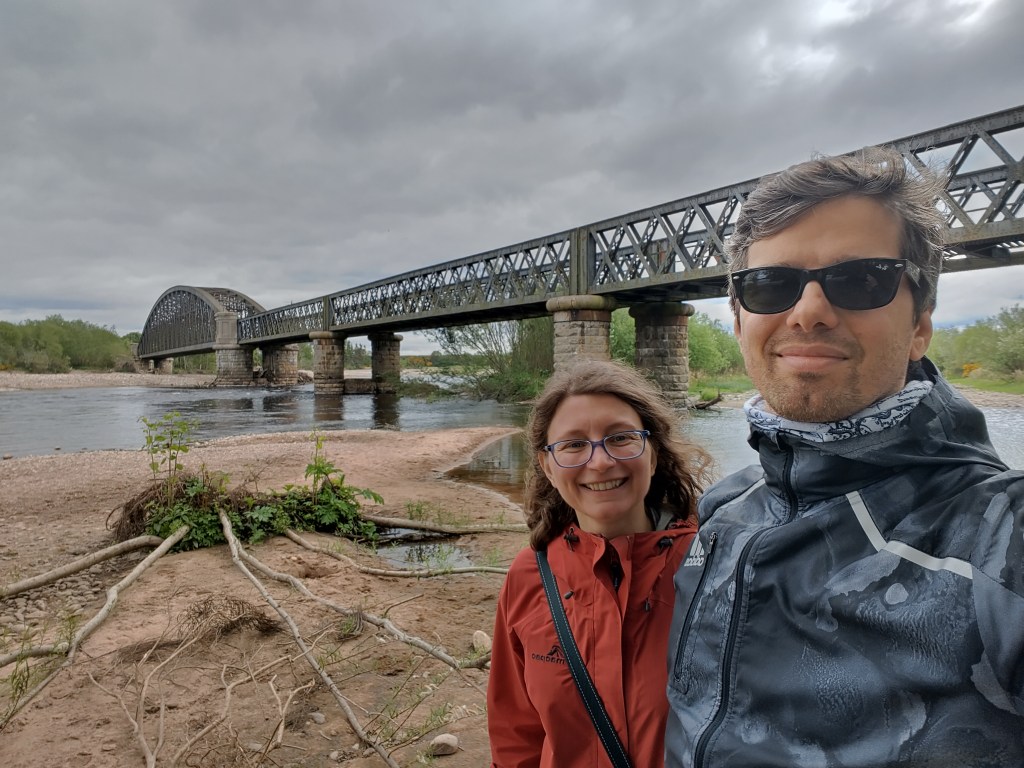
We had a few hours before the next event, so we drove to Spey Bay to check out the Scottish Dolphin Centre (spoiler: zero spotted dolphins). There, we had a nice walk around the mouth of the river Spey, and a tasty soup at the cafรจ/visitor centre.

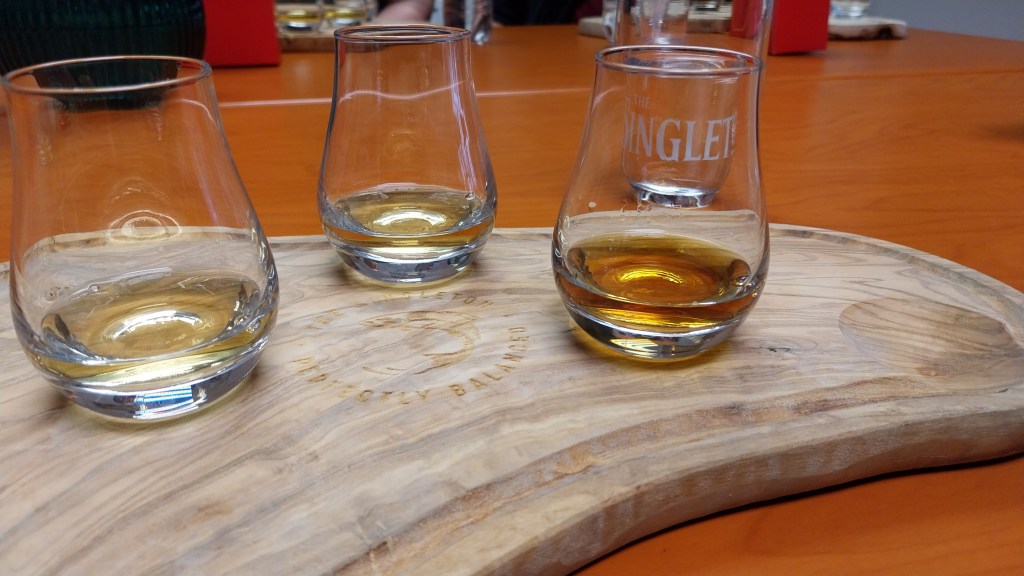
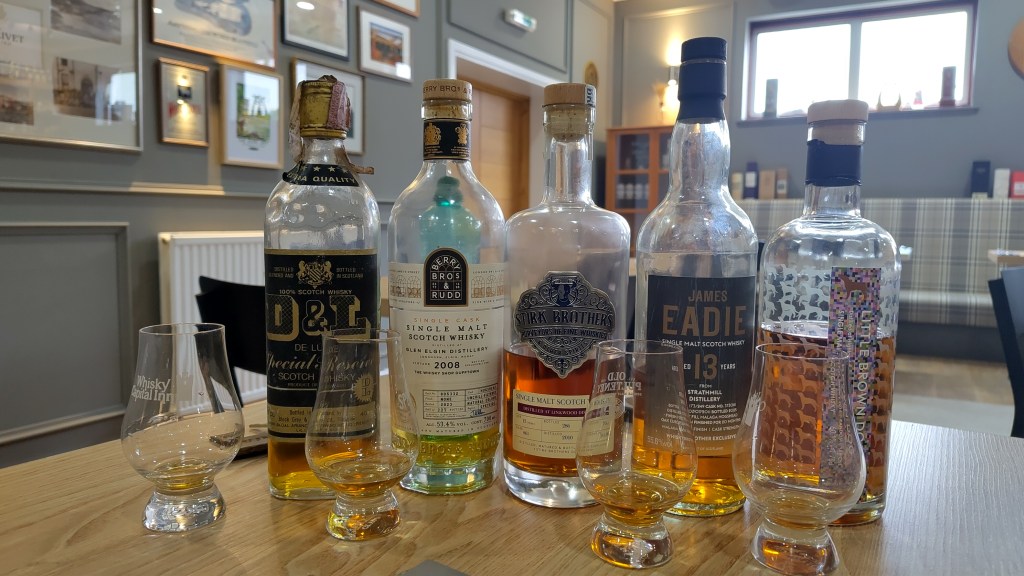
After that, we drove to Dufftown, as our next event was starting soon. It was the Independent Scotch tasting, hosted by David Stirk (for ยฃ30pp + Spirit of Speyside fee), at the Whisky Capital Inn: a great whisky bar and restaurant (and hotel as well) right in the centre of the small town. The tasting went through a bit of history as well, so we started with an old blend. It made sense, as if you think of it, blenders used to be the original โ€œindy bottlersโ€. The blend was an Italian import D&L Deluxe Special Reserve (not telling much), bottled at 40% by a company called Block Grey & Block. Then, we moved on to a Berry Bros & Rudd Glen Elgin (2008, 53.4%, hogshead), followed by a Stirk Brothers Linkwood (2010, 13y, 50.0%) and a James Eadie Strathmill (2011, 13y, 55.6%, finished for 20 months in a 1st fill Malaga hogshead). Finally, a Little Brown Dog Highland Park (2014, 10y, 60.1%, from a random barrique), for the usual peated ending. Overall an interesting line-up, showcasing different cask types. After the tasting, we stayed at the Whisky Capital Inn for a delicious venison burger, before heading off.

Another good whisky day, with some good drams and some great banter! Unfortunately, the Inchgower tour, while very interesting and hosted by enthusiastic and passionate staff, was not good value for money: for ยฃ100, we expected at least 6 drams instead of four (although well aged, definitely better than the Johnny Walker that was served in previous Diageoโ€™s Spirit of Speyside tours). What was even more awkward was the size of the drams: when Teresa filled her driverโ€™s pack, we realised some of the drams filled less than a half of a 20ml sample bottle. Not very well played from Diageo.

Anyway, stay tuned for more Spirit of Speyside action! Until next week, slainte!

Inchgower Through the Decades Distillery Tour (Spirit of Speyside 2025)

Price: ยฃ100.00 pp + SoS transaction fee

Duration: 2hr

Tasting: 4 drams, Inchgower โ€œFlora and Faunaโ€ 14y (43%); cask samples 2009 (15, 56.6%, ex-bourbon cask; cask sample 1989 (35y, 44.1%, refill cask); and 1996 (28y, 53.7%, sherry cask)

Target: whisky geeks (and people trying to visit as many distilleries as possible)

Value for money: not great

Highlights: the climb to the malt silos

Recommended: only if you’re a massive Inchgower fan

Link: https://www.spiritofspeyside.com

#60.2 Another Spirit of Speyside

The casks of Glen Moray


TL; DR: After the Cabrach, we drove straight to Elgin, for a last-minute tasting: Cask Origin Stories at Glen Moray! The distillery is an old acquaintance (fourth visit!), and as the previous three times, we had a great time with a range of delicious whiskies paired with a glass of what was in the cask before newmake or whisky. One for real whisky nerds! 

(missed Part 1?)

The tour at the Cabrach lasted less than we thought, so after a short stroll around the distillery under an overcast sky, we were on the road again. Since the afternoon unexpectedly opened up, as soon as we had some phone signal, we phoned a well known distillery to ask if they still had places for a tasting weโ€™d spotted, but until that moment we thought we could not make it on time. The tasting was the Cask Origin Stories, at Glen Moray, in Elgin.

Glen Moray is an old acquaintance. At the start of our whisky journey, we mostly saw their entry level expressions at supermarkets, a brand among many, possibly anonymous. However, thanks to Scotch Malt Whisky Society (SMWS), it didnโ€™t take long to mark the distillery as one of our first great โ€œdiscoveriesโ€. We found some of their single casks remarkable, and our second bottle ever from the SMWS was indeed a Glen Moray – St Bernardโ€™s barrel, 35.232, finished in an ex-wine barrique, hidden in the elusive Spicy & Dry category. We were definitely sold after we visited the distillery during our first trip to Speyside in December 2019. There, we had two whisky flights: the travel retail version of the core range (Elgin Classic, NAS, the 12y and the 15y: all not chill-filtered and bottled at 48%) and the bottle-your-own drams. It was a wee while ago, so we donโ€™t remember all the details, but Gianluigi still regrets not buying a delicious ex-Rye whiskey finished expression. We went back there in 2022, during the Speycation with the Edinburgh Whisky Group, for a full distillery tour and tasting, and again last year for a Star Wars themed tasting on May the fourth.

One of the great things about Glen Moray, other than the variety of casks they like to experiment with, is that they always have three bottle-your-own expressions available at the distillery. But mostly, that two of the three are kept at a very reasonable price, conversely to most distilleries that like to charge extra for distillery exclusive bottlings. Last time we were there, two were nicely priced at ยฃ60, while the third, a more aged one, was ยฃ99 (still very affordable for a 20y malt!). This makes all the new visits interesting, and hence, once we realised we had enough time, buying the tickets for this event was a no-brainer!

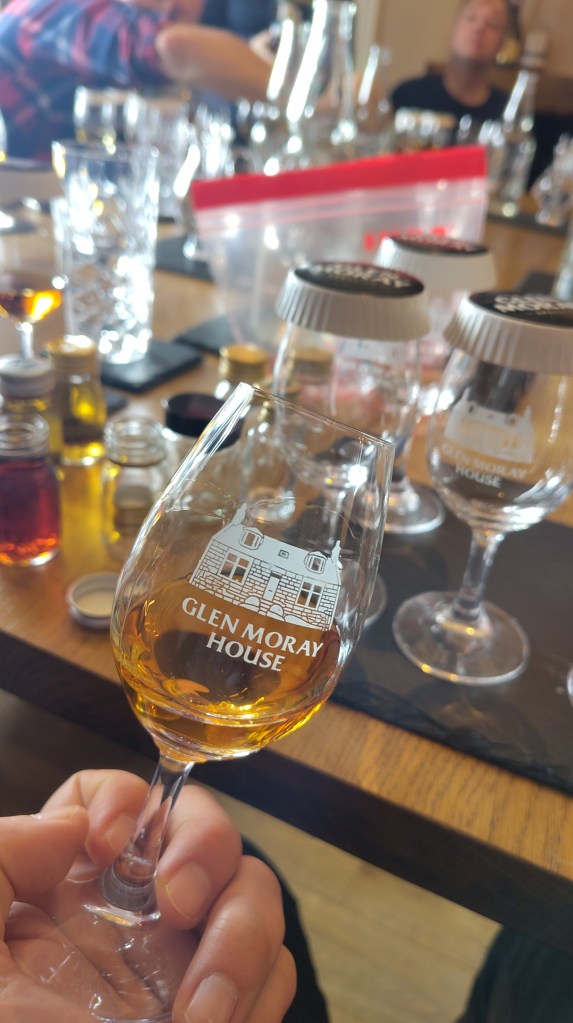
As we arrived at the distillery, we greeted our pal Iain, the brand ambassador and visitor centre manager. We met him during an online tasting organised by Justine (Kask Whisky), and since then we had many tastings with him (and we are also acquainted by a similar taste in music). After a nice chat, it was the time for the tasting to start, not with him, but with Fiona, who led us to the Glen Moray House. This is a lovely cottage to the right of the entrance, a multi-functional space that has been used as a tasting room as well. First, she showed us some old registers, reporting dates and type of casks filled: among the many โ€œrefillโ€ and โ€œsherryโ€, we spotted a few different wines, fortified or not.

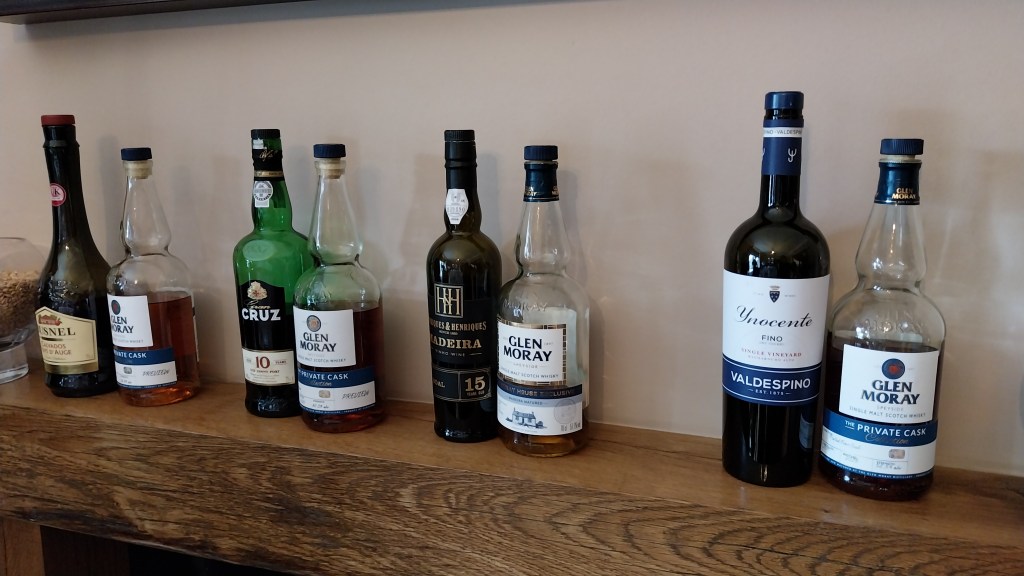
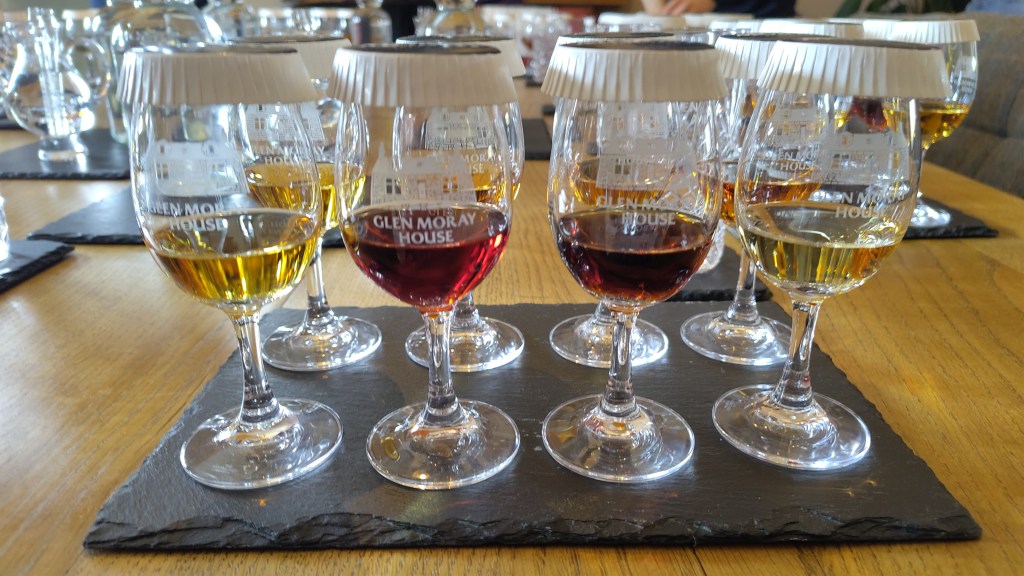
We started the tasting with an unusual one, a Busnel Calvados (40%), followed by a vintage 2017 Glen Moray single malt finished in Calvados casks (56.9%). We moved on to the second pairing, a 10y Tawny Port from Cruz, with a 2008 (17y) single malt fully matured in a Tawny port cask (at the impressive abv of 60.2%!). These two drams were available as โ€œbottle your ownโ€, so it might be that at the time of writing (June โ€™25) they are still available at the distillery visitor centre. The third drink was a 15y Boal Madeira wine from Henriques & Henriques, followed by the Glen Moray House Exclusive whisky, a 13y Madeira matured whisky (57.8%). As the name suggests, this one is only available if you attend an event at the house. Finally, the last pairing was a single-vineyard Valdespino Inocente Fino sherry, and a peated, fully matured Fino cask whisky from 2015 (58.5%), this one available at the distillery.

It was a great line-up, and Fiona did a great job to walk us through the drinks and the drams, in spite of an unusually โ€˜seriousโ€™ audience of northern European men (other than Fiona, Teresa was the only woman in the room). Drink-wise, we were not too keen on the Calvados, too sweet for our taste, but otherwise we liked them all, especially the Madeira! The drams were all very tasty, showcasing a range of flavours from fruitiness, savoury and smoke. The Port-finished dram and Glen Moray House Exclusive were the two we liked the most, while in the last one the peat was โ€˜turned to 11โ€™, which masked a bit the savoury notes of the Fino caskโ€ฆOne for true peat lovers!

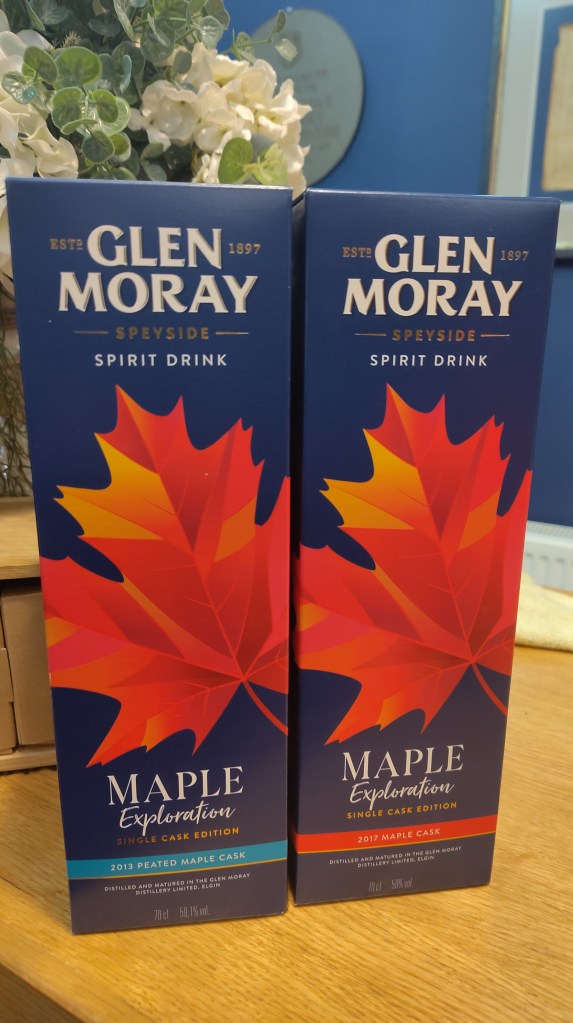
Back at the visitor centre we tried some of the new releases: โ€œspirit drinkโ€ finished in Maple syrup casks, one peated (11y) and one unpeated (8y, both ยฃ90). Obviously, it cannot be โ€œsingle maltโ€ because the SWA doesnโ€™t allow such experimental casks (but who knows? maybe Diageo or Pernod Ricard will buy a maple syrup producer at some pointโ€ฆ). They were both less sweet than expected, in particular the peated one: was more like a BBQ-y meaty thing.

We soon left the distillery to find a spot for the night, which we did next to Portgordon, on the sea. There we made ourself dinner and relaxed (and Gianluigi powered through his drams, since he had bottled them all in sample bottles). It was nice to fall asleep to the sound of the waves, after such a nice day and cracking drams.

Stay tuned for more Spirit of Speyside action! Until the next week, slainte!

Glen Moray Cask Origin Stories tasting (Spirit of Speyside 2025)

Price: ยฃ50.00 pp + SoS transaction fee

Duration: 1h30m-2h

Tasting: 4 drams paired with the previous content of the cask (see above).

Distillery exclusives: bottle-your-own 2017 Port cask finish (59.4%), ยฃ60; 2005 Chianti cask finish (53%), ยฃ99; 2015 peated Fino Cask (58.5%), ยฃ60 (at some point the first two drams of the tasting)

Target: whisky geeks

Value for money: very good

Highlights: a few of the drams were excellentโ€ฆand Fiona was a great host!
Recommended: absolutely

Links: https://www.glenmoray.com/ https://www.spiritofspeyside.com/


#60.1 Another Spirit of Speyside

Discovering the Cabrach


TL; DR: Andโ€ฆWeโ€™re back in Speyside, to celebrate whisky at the Spirit of Speyside! This year we started off with a new distillery, located in the very remote namesake area: the Cabrach! A beautiful project by great people in a stunning area, definitely one to look out for when theyโ€™ll release a single malt, in a few years.ย 

Like the past two years (2023 and 2024), the time came for the Spirit of Speyside festival: a great opportunity to visit distilleries usually closed to public. Tickets went on sale in early February. It was the usual scrum, and at the check out the tickets for two events disappeared from our cart: the visits to Cabrach and Aultmore distilleries. We also missed out on Dalmunach and Braeval, but for another reason: Chivas Brothers used the very cheeky (not to say โ€œshittyโ€) approach to couple each of them with another distillery tour (respectively Aberlour and Glenlivet, that we already visited twice, both) and put the price at an insane ยฃ200. Silly. But anyway, thanks to our friend Lenka, we understood that Cabrach could organise extra tours – she put us in contact with Euan, the distiller, and the tour happened indeed!

We left on Thursday morning, looked like we had a cloudy day ahead. Gianluigi was back from a conference in Rome the night before, so we didn’t have much time to prepare. However, Mr Vantastic is born ready, so in the morning we showered and quickly left Leith, direction Speyside. On the way, we stopped only for a coffee and a delicious bacon roll at the Glamis Corner Shop (in Glamis, recommended!), after we realised that Flour (in Meigle) was not open yet. The rest of the drive was uneventful, we left the main road to Aberdeen near Fettercairn (we crossed the village), and we stopped for a sandwich just before arriving at the Cabrach. We also had a quite hilarious small accident, but youโ€™ll have to ask Teresa about that.

Our tour was scheduled at 1pm, we arrived a bit early, so we parked at the Cabrach community hall, and we walked to the distillery. The landscape is very relaxing, some crops, hills and woodlands. Definitely a place to consider if you want to escape chaos. At the distillery, John, one of the operators, welcomed us and alerted Euan, who introduced himself and started the tour. Heโ€™d previously worked at the Dornoch Distillery, with the Thompson Bros, and before that at the Scotch Whisky Experience (hence the connection with our friend Lenka).

The distillery is community owned, by the Cabrach Trust. This was set up by Grant Gordon in 2013, with the objective to revive the area and preserve its cultural heritage. At the turn of the 20th century about 1,200 people lived there, while now not even 100. WWI played an important role in the depopulation, but these trends are common to rural areas throughout Europe. Whisky was a part of Cabrach cultural heritage, as the area was famous for its illicitly distilled whisky. Now they hope to bring back people and interest, and the distillery is only a part of a bigger project: a cafรจ and a museum should be added in the coming years, together with a visitor centre. All of these will be fitted in the unused buildings on the site – the distillery only takes part of the original square farm built in 1849. The only intervention they had to do is to increase the height of the roof, but with wood, as the buildings are B-listed. They are also planning to use the barley grown in the big field in front of the distillery as main source for their malt, so to become (almost) a grain-to-glass distillery. At the moment they only use it for the 20% of their production (the variety was Lauriet first, now Firefox, bur Bere is in the cards as well). The malt is lightly peated (12 phenols part per million) by the Glen Esk maltings.

The production area is very self-contained, on one of the sides of the square: only the mill (a modern AR2000) and the boiler are located in another building, with pipes going underneath. The malt silos can hold 17 tons each, but now they are only filled to 13 tons. The mill returns a grist with the very common 20/70/10 split of husks/grit/flour, but theyโ€™re looking to increase the latter. They use three waters for their mashing (in a half-ton mashtun), at increasing temperatures (65, 75 and 85ยฐC), aiming for a clear wort.

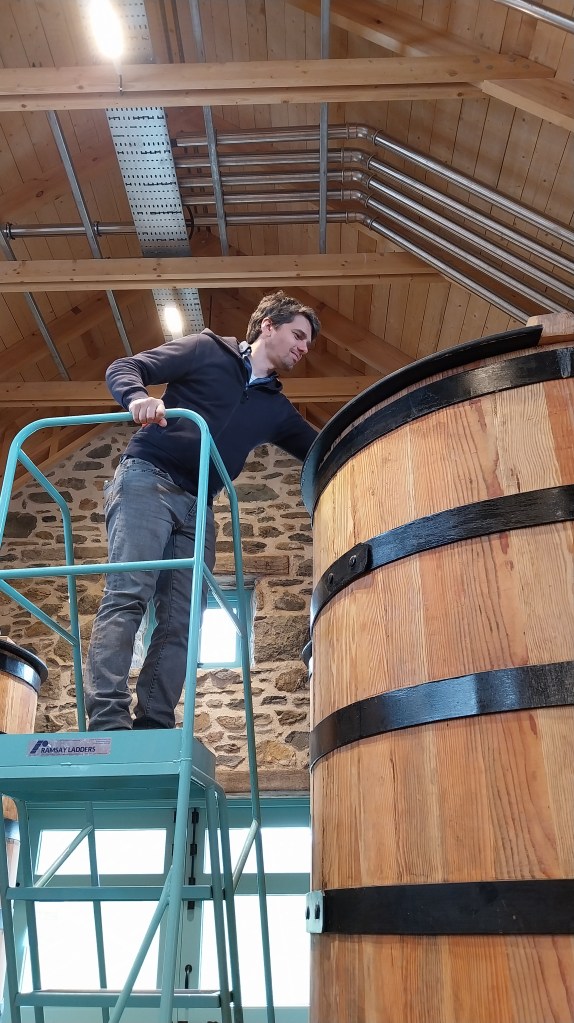
Fermentation is at least 160 hours, but it can go for up to a week in one of the four wooden washbacks. They allowed us to climb a ladder to have a peek inside one, nice! Distillation is where things get very interesting: first, they have two stills (wash- and spirit still) with worm tubs outside the building. Cuts are still in the experimental phase, but they were taking a large one (a spread of about 15% abv between the two, if we recall correctly).

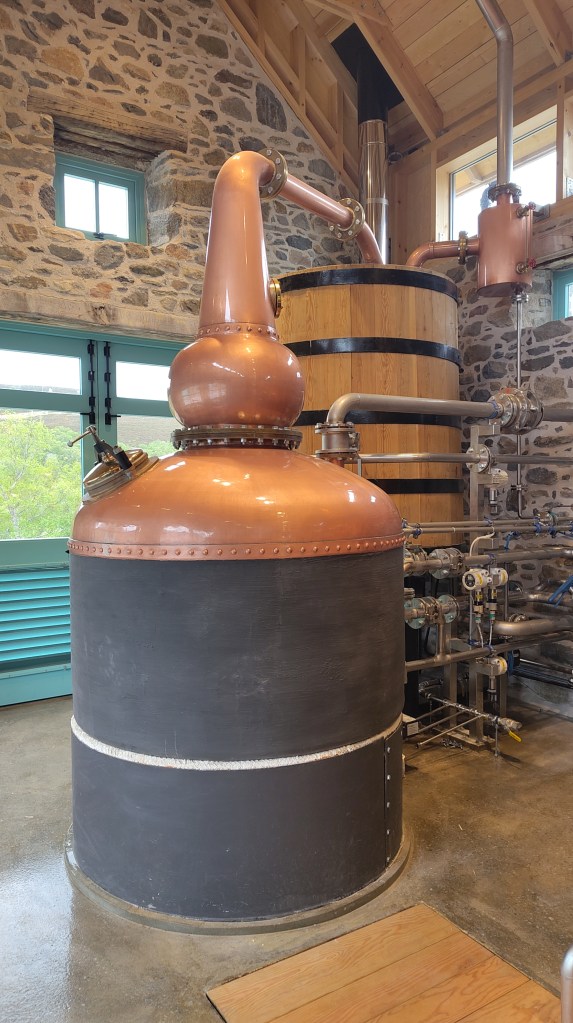
However, they have a third โ€œspecialโ€ still, commissioned to imitate the illicit stills that were so popular in the area. In our understanding it can be used as wash still, a spirit still or independently to run both distillations. Very intriguing project, which saw the collaboration with Alan Winchester, former distiller at Glenlivet and expert on illicit distilling.

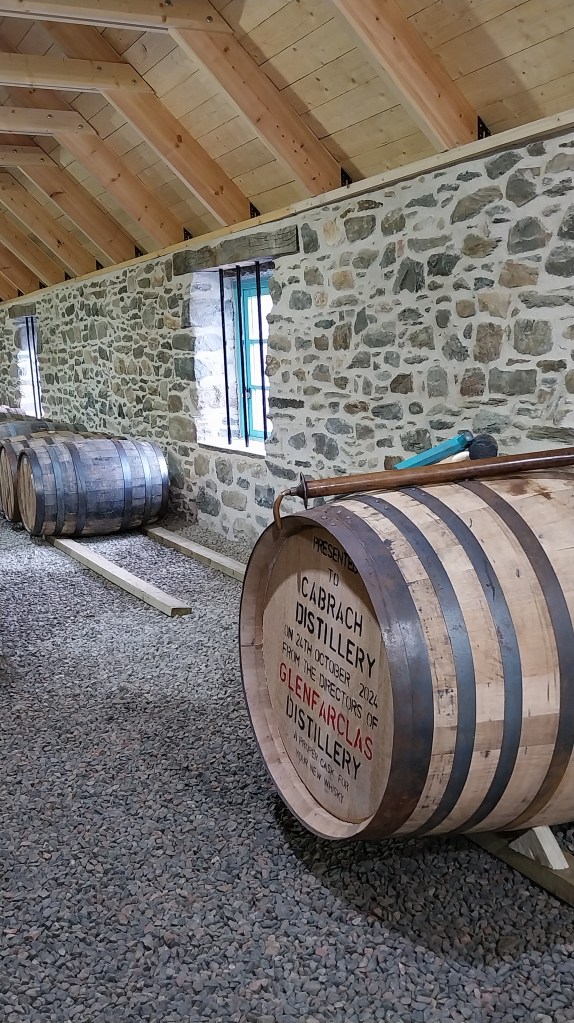
Finally, we visited the filling station and the cute, very small dunnage warehouse, with a capacity of only a few dozen casks. There, Euan gave us a nip of the newmake spirit to try: very oily, lots of caramel and hazelnut.

The tour ended there, and we thanked Euan for showing us around, and the flexibility he and the management showed, when they realised that many people were left out at the ticket sale (such flexibility is not easy to find in the whisky hospitality sector, unfortunately). So kudos to the Cabrach, weโ€™re looking forward to their whisky!

Stay tuned for more Spirit of Speyside action! Until the next week, slainte!


Cabrach Private Tour

Price: ยฃ30.00 pp (May 2025) + ยฃ4.80 fee (per transaction) [now the tour is ยฃ25 pp, offered every Friday]

Duration: 50min

Tasting: a sip of the newmake spirit (70%) [the current tour offers a dram of the Feering โ€œEarly Harvestโ€ Blended malt, NAS, 46%]

Target: whisky enthusiasts

Value for money: ok

Highlights: the community project and the experimental still

Recommended: yes

Link: https://www.thecabrach.com/

#54 Another whisky year under our belt

What a 2024 it was!


TL; DR: The recap of our whisky year: 33 distillery visits, 28 visited for the first time, and 9 not in Scotland (a record for us?)! Also, 5 festivals attended (3 as volunteers), and 1 non-whisky focused. But more importantly, a lot of drams with a lot of friends, who really made our year special!ย 

Another year about to end, we hope you are enjoying these last few very mild days (at least, mild in the Central Belt) of the year with some good drams, possibly in a cozy room, by a nice wood fire. For us it’s like that, minus the wood fire.

These quieter days come with some reflections and thoughts, as is usual for this period. Nowadays we give for granted these recurring events like New year, but it being established on January 1st has more to do with cultural traditions coming from ancient Rome, rather than astronomical events. This said, the fewer hours of light (particularly at higher latitudes like in Scotland) bring some natural peace and tranquillity, helped by things slowing down due to most people being on holiday.

This year has been another good one: we visited over 30 distilleries, most of them for the first time. We started with a bang during our usual trip around February, this year on Skye and Raasay. The latter in particular was quite spectacular – the 3-hour tour at the distillery and at the warehouse was great, but it was also amazing to drive around this pearl of an island, definitely one of the best we visited so far. That weekend also marked our appearance in Royโ€™s Aqvavitae vPub, as Italian guests in a 6-Nation themed blind tasting (which we both horribly failed). We had so much fun, it was one of the whisky highlights of the year!

A few weeks later, we visited Aberargie distillery, in Fife, thanks to an event organised by the Fife Whisky Festival crew. The distillery, which hasnโ€™t released any single malt yet, is run by the Morrison Distillers Company, who also own very tasty brands like the sherried blended malts Old Perth, the Islay single malts Mac-Talla, and Carn Mor range (usually single casks or small batches). The Mac-Talla Mara (cask strength edition) was Teresaโ€™s whisky of the year.

The next appointment was, for the second year in a row, the Spirit of Speyside Festival. This festival is great because it includes visits to some distilleries that are usually closed to public – this year we visited Auchroisk, Tormore, Craighellachie, and Kininvie (where we met our friend Paul, who used to work at Linkwood and other Diageo distilleries). We also attended the Whisky Fair, a mini-festival at the Mortlach Memorial Hall in the familiar Dufftown, and a very fun and nerdy Start Wars themed tasting at Glen Moray!

In the summer we managed to visit Islay twice, first with our pal Justine and Gianluigiโ€™s brother Edoardo, and then with our pals Clay and Glaire. Between the two visits, we managed to finish visiting all distilleries on the island, including Jura (another awesome location weโ€™d like to go back to) and the newly reopened Port Ellen, during one of their monthly open days (spoiler, you donโ€™t get any dram, but the visit is free). After the first trip, we also somehow managed to sneak in a visit to Campbeltown, for a cheeky Cadenheadโ€™s Warehouse tastingโ€ฆWhat else?

During the nice season we also visited a handful of distilleries around the Central Belt, including the newly reopened Rosebank, Crafty in Galloway and Glengoyne (Teresa had never visited production before) in the southern Highlands, almost all single-day trips. Edoardo was back in October to run the Dramathon, and in that weekend we visited production at Glenlivet, and had a tasting at Glenallachie, with our friend Sue pouring some super tasty drams!

Our yearly trip with our pals from the Edinburgh Whisky Group was inโ€ฆEngland! Yorkshire precisely, where we visited three distilleries, two breweries, and a tasting room in Scarabourgh (The Distillerโ€™s Lounge, also likely harbouring the most complete English whisky collection). Our longest holiday was in Australia, where we visited five distilleries and three wineries. We wonโ€™t talk much about these trips here as we still have to write the blog posts, but we were surprised by the quality of some of the whiskies we tried, particularly in Australia, but mostly by the incredible hospitality. In Yorkshire, all the distilleries offered in-depth tastings for (relatively) cheap, and they went above and beyond to accommodate our 15-people group. Similarly, in Australia some of the visits were arranged at the very last minute, but still, everyone was happy to show us around and was very welcoming. In our opinion, thatโ€™s something that the Scottish whisky tourism in general needs to learn, or maybe re-learn? In the past, with the EWG we struggled to find activities, we almost needed to beg for a chance to spend our money in some distilleries. Both in Yorkshire and Australia, things were so effortless that it left us wondering if Scotland is resting on its laurels.

A good opportunity to meet nice whisky people are whisky festivals, in particular the small ones! The year started with Funky Booze, organised in January by our pal Francesco, right here in town: small sized, very focused on Edinburgh companies, with a funk band playing in the background. It was very fun, with a younger and more diverse crowd compared to most festivals. March was the month of the unmissable Fife Whisky Festival, third time in a row for us volunteering there. The team behind this festival organised another event in October, for the first time with a different name and location: the Borderlands Whisky Festival, in Lockerbie. In August we attended the Whisky Fringe for the third time as well, almost in Leith, and earlier in the year (March) the same company organised the Drinkmonger Spirits Festival, in the same location: it was fun to try different spirits for once, we were impressed with some of the rums and Mezcals.

It was a very busy year also for tastings. Edinburghโ€™s offer is huge, with many tastings representing a great value for money. Markโ€™s Jolly Toper tastings, now happening at different locations and no longer at Kilderkin, are a good example. The Belfry pub is also hosting many tastings, for example the ones of the newly formed Edinburgh Drammerโ€™s Club (IG profile here), a new whisky club inspired by the Glasgow Whisky Club. Gianluigi attended the initial meeting, but other commitments got on the wayโ€ฆLetโ€™s see if we manage next year. Other great tastings were the Springbank Society new releases early in the year, Robโ€™s (aka Quasidrams and Marshall Spirits) Adelphi tasting at the Worldโ€™s End, and Murrayโ€™s (aka One Malt at a Time) Springbank, again at the Belfry.

Weโ€™re looking forward to next year: no detailed plans for now, but weโ€™ll definitely go back to the Fife Whisky Festival and, depending on the events, weโ€™ll likely attend the Spirit of Speyside again. On our wish list there are the northern Highlands, particularly the area around Wick and Thurso, and the Outer Hebrides, which would be quite exciting (they look quite spectacular, not just because of whisky, of course). But mostly, weโ€™re looking forward to having drams with the new people weโ€™re going to meet, as well as with our many pals around Scotland: that is what really makes whisky a great experience!

So, until the next year, slainte mhath!


#53 Dramathon and Glenlivet

On the run yet again


TL; DR: After last year debacle due to storm Babet, this year we finally managed to run the Wee Dram, the Dramathon 10k. And while we were in Speyside, we stopped by Glenlivet distillery and visited production for the first time. The tour was a bit impersonal and very scripted, but nice to check it out anyway. Fortunately, we also went to Glenallachie, where our whisky friend Sue treated us like VIPs!ย 

Like for the last three years, in 2024 too the second half of October meant Dramathon for us! After running it in 2021 (Wee Dram, 10k, for Teresa and the Half Dram, half marathon, for Gianluigi), and again in 2022 (Half Dram for both), last year we decided to take it easy and run the Wee Dram only, with a special guest: Gianluigiโ€™s brother, Edo. Unfortunately, storm Babet got in the way, and although the Speyside area was not hit too badly, a red-alert flood risk in Aberlour resulted in the eventโ€™s cancellation (btw, we never received a refund from the B&B, as according to the despicable owner a red alert from the Met Office was not enough to cancel the reservation for an apartment about 150 meters from the river).

Because the race was cancelled, we could pass our tickets to this year for free. Or, we should have to – Edo unfortunately half read the email and thought it was automatic. It was not, and it was too late when we realised it, so the organiser could not sneak him into the race last minute because of insurance. Hey ho, these things can happen, so Edo ran on his own, since the path was open to the public during the race.

But letโ€™s get back to the day before the race: we picked Edo up at the airport, back to Scotland after the successful trip to Islay in July, and drove straight to Speyside. We only stopped at the KJโ€™s Bothy Bakery, near Grantown-on-Spey, to have lunch with a few tasty treats (the focaccia was greasy-ly awesome). For the afternoon, we had booked the Glenlivet Distillery Original Tour, their basic one. Among the open distilleries in Speyside, it was the only one we hadnโ€™t fully visited yet, except for a tasting in summer 2021 (when production was still off limits because of Covid). The single-cask tasting was great, although prices of their bottlings were already quite high (and they were all 50cl bottles!). As the distillery is such a Juggernaut, with a production of 21 million litre of pure alcohol per year, we were very curious to check out the production site.

Our guide Emma met us in a space just below the (very nice and cosy) distillery shop and bar. After some basic information (Glenlivet means โ€œthe valley of the river Livetโ€), we got an introduction about the history of the distillery, and all the people that made that possible. It was George Smith that decided to get a distilling licence back in 1823 (the first one in Scotland), and to protect from the illicit distillers, he also got a pair of Innes guns, which are now on display at the distillery. Production started in 1824, marking 2024 as their 200th anniversary: quite impressive. This introduction was almost repeated in the next room, where we watched a series of videos: some very informative, while others very marketing oriented. We then followed Emma in another room, where production was explained. We were a bit puzzled at that point, as we started to suspect that there wouldnโ€™t be a visit to production (it was almost mid-way through the visit).

Fortunately, we were wrong, and we soon moved to the production area. The distillery saw two fairly recent expansions, in 2009 and 2018, but we only got to see a part of that. We didnโ€™t either get to see the mill room, where they have a Bulher mill with three sets of rollers to crush the malted barley (all sourced within 70 miles from the distillery) to grist. Mashing happens in one of the massive 13.5 tons mashtuns, with the usual three waters at increasing temperature (65ยฐC, 82ยฐC and 92ยฐC). The sugary wort is then moved to one of the 60,000-litre washbacks, made of either stainless steel or Oregon pine, where it ferments for 56 hours with distillersโ€™ yeast. Then, the fermented wash is sent to one of the 14 wash stills, where it undergoes the first distillation. From the second distillation in the spirit stills, they take a cut between 74% and 62% abv. They have 28 stills in total, spread across three still rooms, and to achieve such massive production, the distillery works 24/7.

We followed Emma in a dunnage warehouse near the car park. They have also racked ones on site, less romantic but more efficient to manage casks. In the warehouse, we saw the usual exhibitions to explain maturation, but we could also smell the whisky maturing in different cask types, which was nice.

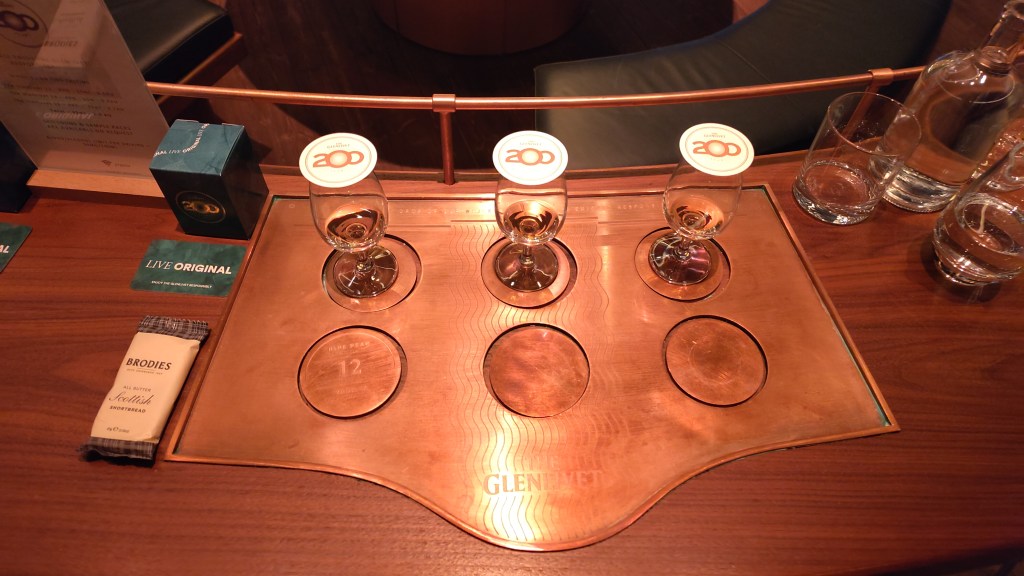
Finally, it was time for the tasting, which was a bit rushed since we were slightly late. We got three drams: the flagship Glenlivet 12 (40%), a 14y from 1st fill American oak which was bottled to celebrate the 200th anniversary of the distillery (48%, the best of the bunch), and finally a double matured 16y, Distillery exclusive (nice, but not as the 14y in our opinion). Back at the visitor centre, we didnโ€™t stay long as we drove straight to Dufftown to the register for the race. The day ended at the Parkmore campsite, where we had dinner and went to bed early.

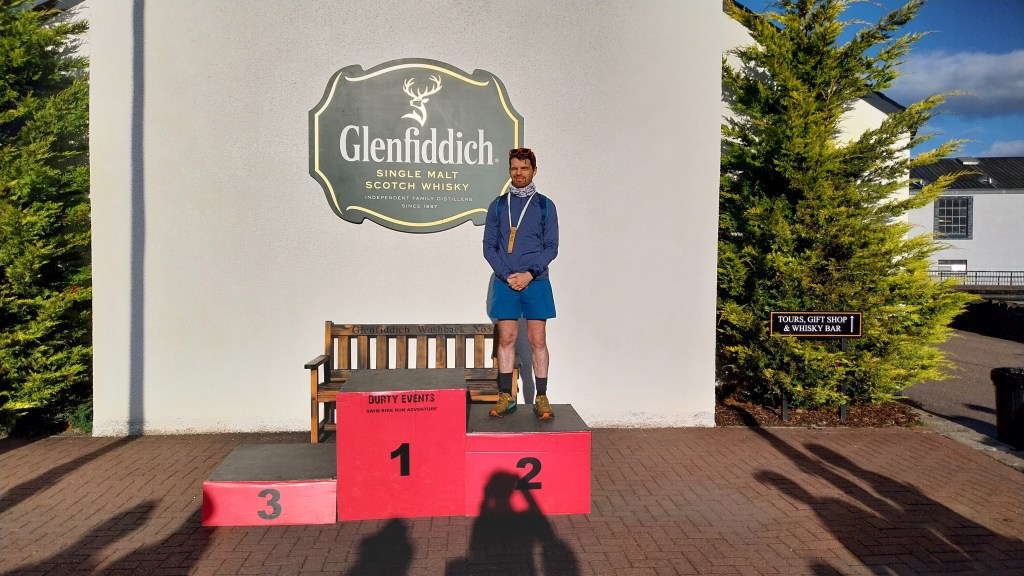
In the morning the weather was quite nice, so after breakfast we slowly walked to the Glenfiddich car park, where the bus would pick us up to go to the starting line, in Aberlour. Edo got a public bus instead, and we met him at the starting line. The race went quick (itโ€™s only 10k after all), and although at the awards Gianluigi was announced as second in his age category (40-49โ€ฆ although he was still 39 at the time and wants to remark this!), it turned out a few days later that he actually got first, second total. He picked up his prize, a bottle of Glen Moray Sherry cask, weeks later at Royal Mile Whiskies, and he happily shared with his colleagues at his work Xmas party.

After the race, we went to Dufftown CoOp to buy some meat to grill, as weโ€™d decided that the weather was perfect for a barbecue! By the time we had dinner it got quite chilly, so we sheltered inside Mr Vantastic, while enjoying some Springbank tasting packs. A great way to end the day!

As opposed to the sunny Saturday, Sunday was rainy and miserable. After breakfast, we went to the Glenallachie distillery under a heavy rain, to try some drams at the new distillery bar! Our friend Sue, who works there as a tour guide, gave us great recommendations, and we had a great time. She also kindly offered Teresa some coffee, as she was on driving duties (*sad trumpet*…but we got some drams for her to enjoy home).

That was another successful Dramathon weekend under our belt! Probably next year weโ€™ll skip it, as there are other whisky events weโ€™d like to attend in the same period, one up in the Highlands in particular. Good we could finally visit Glenlivet production. The tour was not memorable, mostly because visiting only part of the site, we didn’t fully appreciate how big it really is. Anyway, at least we got to try different expressions, definitely tasty.

Until the next time, slainte!


Glenlivet Original Distillery Tour

Price: ยฃ25.00 pp (October 2024)

Duration: 1hr 30min

Tasting: 3 drams, Glenlivet 12 (40%), 200th Celebration 14y (48%, 1st fill ex-American oak, ยฃ75), Distillery exclusive 16y (48%, 1st fill American oak finished in refill European oak, ยฃ95), and a complimentary wee glass

Distillery Exclusive: Glenlivet 16y (see above), Fill-your-own (12y, ยฃ55; 15y, ยฃ70; 18y, ยฃ140, all cask strength), various 50cl single cask bottlings from Glenlivet and other Chivas Brothers distilleries

Target: tourists and whisky novices

Value for money: ok

Highlights: the massive production site

Recommended: if we could choose a basic tour in the area, it wouldnโ€™t be this one

Link: https://www.theglenlivet.com/en-gb/

#44.3 Spirited in Speyside

From Ben Rinnes to Tomintoul


TL; DR: Another sunny day in Speyside, so we finally did what weโ€™d wanted to do for a long time: climb Ben Rinnes! In the afternoon we visited Tomintoul, attending a Spirit of Speyside tour and (quite generous) tasting. We were not very familiar with this malt, which turned out to be a very solid and sweet Speysider!

(missed Part 2/Part 1?)

We woke up well rested, under the trees and with birds chirping all around us. We had breakfast in our van: coffee, yogurt, fruits, and we indulged in a couple of cookies as well. Again, it was a magnificent sunny day, so we could go ahead with our plan: go for a walk before starting our whisky activities.

Weโ€™d decided to climb Ben Rinnes, the hill in the middle of Speyside, whose slopes provide water to many distilleries around it. It was not a long walk, less than 8km, but it was quite steep, a 550-metre ascent in total from the parking lot to the top of the hill. We started early, around 8.30am, when not many others were hiking (we only met about 4-5 people while going up). The climb started quite uphill right away, and the ascent was interrupted by a couple of short plateaus, before the last climb of more than 300 metres.

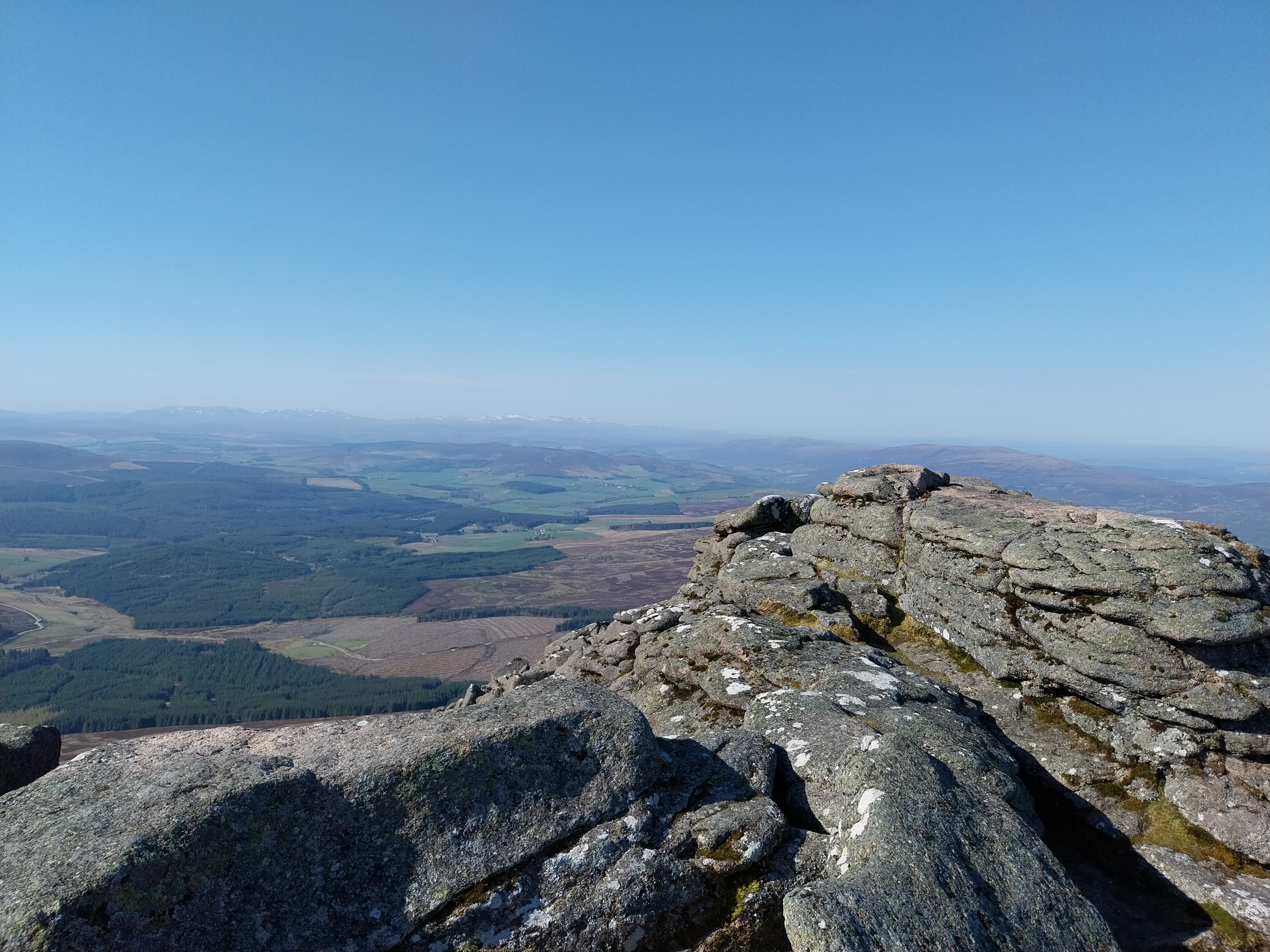
Once on top, though, we got rewarded, as the view is quite amazing. As were going up, on our left, we spotted a distillery very close to the top โ€“ we guessed Benrinnes but we were wrong, it was Allt aโ€™Bhainne. Others could be seen (well, mostly the vapours) once on the top. Our plans to have a snack at the top were ruined by the strong wind, so we quickly started descending back to the parking lot. We bumped into a lot of people, probably because of the time, although the sky was clouded when we got to the van. On the Walk Highlands website the hike (back and forth) was estimated around 3-4 hours, but it took us only 2, so we had some spare time!

Back in the van, we started looking for a place for coffee and a bite, possibly in the direction of our next destination, Tomintoul. We were unlucky at first: some cafes were still closed until summer, some were opening later in the day. We were saved by Bike Glenlivet, a cafรจ inside an outdoor centre, less than 10 minutes past the distillery. There we could enjoy a sandwich and, past midday, a warm soup.

We arrived at Tomintoul distillery a few minutes early, just the time to park, take some photos and check in. The distillery is tucked at the bottom of a woody hill, along the road, with another hill in front of it: we were told later that during the heather flowering season it becomes all purple, which is why purple is one of the flag colours.

The visitor centre actually consists in a room with the shop and a big table for tastings. Fun fact: in the room there is also a giant bottle (over 100 litres!) of Tomintoul 14: the Guinness World Record holder for biggest whisky bottle, in our understanding. The distillery is usually open to public, but their regular tours are on Mondays, Tuesdays and Thursdays, making it a bit hard to schedule a visit. This was one of the reasons to visit them during the Spirit of Speyside, the other being that we were not very familiar with their whisky, so an enhanced event could have made us know them betterโ€ฆand it did, indeed!

Teresa losing the ‘who’s the tallest’ contest again.

The tour was hosted by Rob, the distillery manager, and Iain, the master blender who gave us a dram of their 16yr (40%abv), one of their flagship expressions. We always appreciate the tours where they give you a dram at the beginning, well done! The distillery was founded in 1964, so it is โ€œyoungโ€ compared to their peers, and they produce unpeated (marketed as Tomintoul), lightly peated (peated Tomintoul) and heavily peated (Old Ballantruan) single malt. The latter takes name from the spring where they source water. The peated run lasts about 6 weeks per year, much less compared to the 40 weeks of the unpeated one. They use Crisp malt, which is stored in 8 malt bins before processing through a dresser and the classic Porteus mill. The grist is then moved 12.2 tons at a time to the mashtun, with 48,000 litres of water at 65ยฐC, followed by the usual two other waters at increasing temperature, to maximise the sugar intake.

Once the wort (clear after the first water, cloudier after the second) is cooled down to 20ยฐC, it is moved to one of the 6 washbacks, where they add solid distillersโ€™ yeast. Fermentation lasts about 60 hours, then the wash is distilled in one of the two wash stills, and then again in one of the spirit stills. Cut points are usually from 72% to 61.8%, and it takes more or less two hours. Originally the distillery had only two stills, the second pair was added in 1974. Rob showed us one of the byproducts of the first distillation, a syrup with almost 0% alcohol, which is sold to farmers.

Tall stills.

Still in the still room (pun sort of intended), Iain joined us again, this time to give us a dram of the 25yr (43%), a very sweet and delicious one! We then visited one of the warehouses, a racked one (the most common from the distilleries built in that era). They can store up to 150,000 casks on site, while the rest is shipped to the main site in the Lowlands. There, Iain demonstrated us the use of a (leaky!) copper dog, although the whisky inside it came from a bottle, not straight from a cask: a single cask from a Bordeaux wine barrique, vintage 2008 (14yr), bottled at 60.7%.

A 25yr dram after visiting the still room. Nice surprise!

We headed back to the visitor centre for the remainder of the tasting: first, a couple of Madeira matured expressions, a 15yr limited release (46%) and a single hogshead from 1998, bottled in 2022 at 24 years of age (50.2%). The next dram was their Cigar Malt, a quite delicious sherry cask matured expression, lightly peated, and very solid despite the 43% strength (a shame it was a bit pricey). We finished with an Old Ballantruan from the core range: the 15yr (the other two are the non-age statement and the 10yr, all bottled at 50%): a sweet and smoky dram. At that point, a group of Spanish who were on the tour (one of them was a London-based employee of Angus-Dundee, the distillery owners) brought out some Jamon Iberico, which paired perfectly with the last two drams!

We left the distillery very happy (not just because of the drams, Gianluigi was dry!), taking one of their bottle with us: as most of their core range is bottled at 40% or 43% and the limited expressions were a bit pricey, the perfect one for was the 14yr: not only unchill-filtered and bottled at 46%, but also from ex-bourbon casks, which in our opinion is the best type of cask to grasp the distillery character.

We arrived at our destination, the Parkmore Cottage and Camping in Dufftown, where our friend Justine (from Kask Whisky) was waiting for us. We had a beer, dinner and a few drams with her, to conclude the day on a high. And what a great day was that, first the climb to Ben Rinnes, and then Tomintoul. With 7 drams their tour was one of the most generous as well (compared to higher priced tours with less than half of the dramsโ€ฆ), giving us a chance to fully appreciate the potential of their very solid and fruity (gentle, as they like saying) whisky.

Stay tuned to know about our day at another Speyside whisky distilleryโ€ฆuntil then, slainte!


Tomintoul Distillery: Behind the Scenes Tour and Tasting

Price: ยฃ70.00 pp (Spirit of Speyside 2024)

Duration: 2hrs (actually, almost 3!)

Tasting: Tomintoul 16yr (40%), Tomintoul 25yr (43%), single cask from a Bordeaux wine barrique (2008, 14yr, 60.7%), Madeira 15yr limited release (46%), Madeira single hogshead (1998, 24 yr, 50.2%), Cigar Malt (43%), 15yr Old Ballantruan (50%)

Target: whisky geeks

Value for money: very good!

Highlights: the tasting (including drams during the tour)

Recommended: yes

Link: https://tours.tomintoulwhisky.com/


#44.2 Spirited in Speyside

A walk to Craigellachie


TL; DR: After Kininvie and a very nice walk, it was time for Craigellachie distillery, the โ€˜queen of worm tubsโ€™! Weโ€™d been waiting over 4 years to visit it, we finally made it and it didnโ€™t disappoint. A great tour with very knowledgeable staff, for a very reasonable price (other producers, take note!)

(missed Part 1?)

As the tour at Kininvie came to an end, it was time to move to our next destination for the day. It was a gorgeous day, probably one of the best (if not the best) we had in all our visits in Speyside (so much better than the dreaded August โ€™21, when it was so wet that we couldnโ€™t ignite the self-igniting charcoal to grill). The weather so was nice and warm that we both ended up in short sleeves – perfect for our walk back to Craigellachie along the Old Speyside Railway. We knew the path, itโ€™s where we ran the Dramathon Half Dram (half-marathon) in 2022 (and 2021), and where weโ€™ll hopefully run the Wee Dram (10k) later this year. The walk turned out to be over 6 km, on a peaceful path surrounded by vegetation and buzzing insectsโ€ฆa very refreshing and enjoyable moment, in particular considering the poor spring we had this year (and still having at the time of writing).

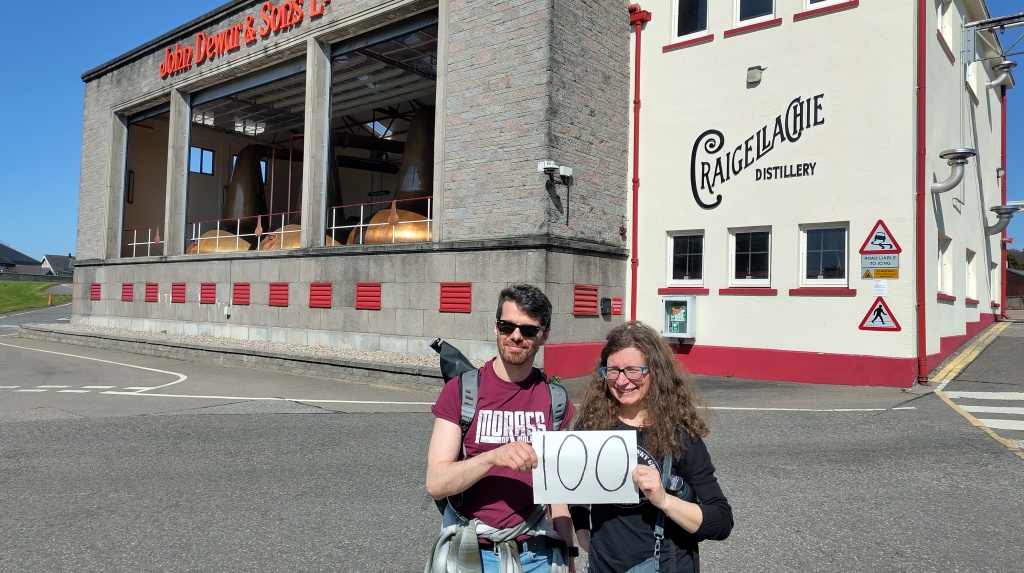
We arrived at Craigellachie distillery only a few minutes early, just the time to take a few photos in front of the distillery. In the past two years Teresa visited a couple of distilleries that Gianluigi hasnโ€™t (Liberties in Dublin and Copper Rivet in England), while Gianluigi only visited one that Teresa hasnโ€™t (Glenora in Canada), so we both celebrated our personal 100th distillery in separate occasions (Aberargie for Teresa, Kininvie for Gianluigi). Craigellachie though, was our 100th distillery visit together, yay! Next target: 100th Scottish distillery, which will hopefully happen in 2025โ€ฆmaybe?

The distillery is unmissable, as it is right on the road from Craigellachie to Dufftown. They donโ€™t have a visitor centre, something we learned back in 2019 when we visited a sister distillery, Aberfeldy. They are both owned by Dewarโ€™s/Bacardi, together with Royal Brackla, Aultmore, and Macduff (whisky marketed as Deveron/Glen Deveron). The distillery was built in 1891, during the pre-Pattinson crash whisky boom, and expanded in 1964, while malting stopped in 1968.

Back to today, the tour was given by Stephen, the distillery manager, together with Matthew (brand ambassador) and Gary (cask supply specialist, and โ€œgrainmanโ€), a fun dynamic trio. In the mill room (hosting a classic Porteus installed in 1964), they told us they mostly use Lauriet barley, never peated, with the usual grist split (10% flour, 70% grit and 20% husk). The mashtun is more recent, as it was replaced in 2001. They work 24/7, and they do 20 mashes per week, each one lasting 6h, aiming for a clear wort. They only close for 3 weeks in the summer to clean-up everything. The washbacks are made of Siberian larch, installed in the 60s, and they use Laland as yeast strain (not to be confused with La-la-land), with fermentation lasting about 60h. They used to have direct fire stills, but they were replaced in the 60s with steam coil ones, as many other distilleries.

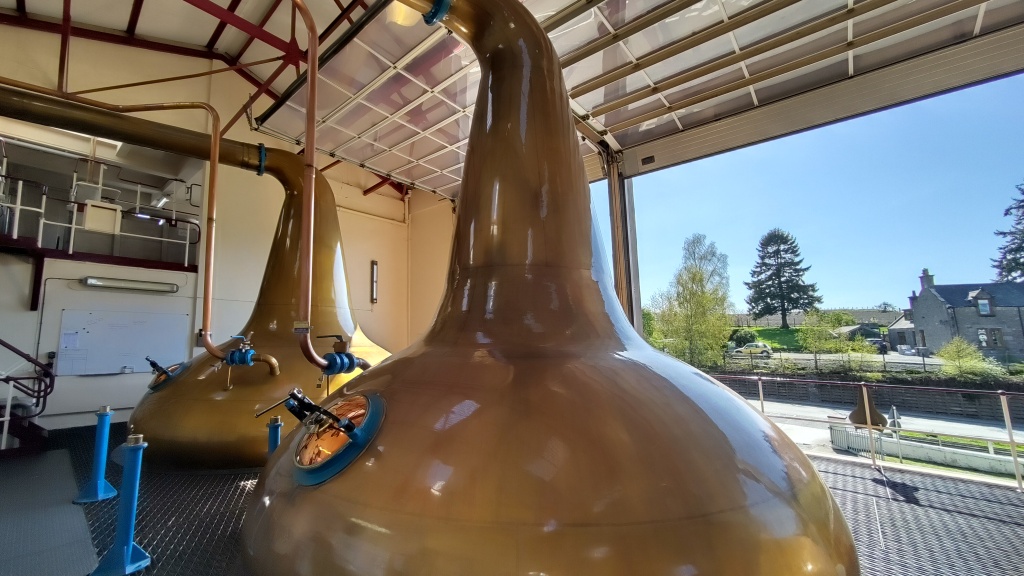
After the stillroom, they showed us one of their most iconic feature: the worm tub condensers! This is an old way of condensing the spirit, as simple as โ€œa worm in a tubโ€, as they jokingly pointed out. Compared to the more โ€œmodernโ€ tube and shells (well, still over 100-year old), the reduced contact between the copper and the spirit should result in a heavier spirit, loved by many. Craigellachie is one of the best examples of this feature, together with Mortlach, but there are many other distilleries we visited that have worm tubs: Speyburn, Oban, Edradour, Cragganmore, Springbank (which uses a mix, except for Longrow, which is 100% worm tub condenser) and even some newer distilleries, notably Ardnahoe on Islay and Ballindalloch in Speyside. Itโ€™s a very fascinating topic, and if you want to know more there is a recent Aquavitae vPub focusing on this.

After the production, it was time for the tasting, which was held in a shed, previously a space for in-house cooperage. The line-up was quite comprehensive, considering we only paid 20 quid (!!!) for the whole thing. We started with the distillery flagship, the Craigellachie 13 (46% abv), matured in a combination of ex-bourbon and ex-sherry casks: having tried it years ago, weโ€™d forgotten how good it is! We then tried a more recent bottling, again 13 years old (46%), but finished in Bas-Armagnac casks, less sherry influence, brighter and super fruity. Then, a treat, the 19yr (again 46%), very well balanced and delicious, matured in ex-bourbon casks, and finished in 1st fill both ex-bourbon and ex-sherry casks. Finally, they also let us try their Spirit of Speyside 2024 exclusive: cask strength (54.9%), vintage 2005 (so 18-19yr), finished for over 3 years in red wine casks. The jump in ABV was there, but also in flavour compared to the other (still very tasty) drams.

As the tasting ended, we went to the office/pop-up shop to pick up a โ€œsouvenirโ€, and we slowly walked back towards the van, not before stopping at the Craigellachie Hotel. Unfortunately, the whisky bar was busy with a tasting, so we just had a half-pint at the bar downstairs, before finally heading to the van where we had dinner and spent the night.

What a day, Kininvie first (making 4/6 of the Dufftown distilleries for usโ€ฆ Glendullan and Dufftown, some day we will come!), and then this great tour at the โ€˜queen of worm tubsโ€™ distillery! Also, kudos to Dewarโ€™s: not only the team that took us around was super knowledgeable and very nice, they also gave us a very nice tasting for a very reasonable price, unlike some other producers.

Stay tuned for the rest of our Spirit of Speyside trip, still 3 days (and 3 distilleries) to go! Until then, slainte!


Craigellachie Distillery Tour

Price: ยฃ20.00 pp (Spirit of Speyside 2024)

Duration: 1hr (a bit more actually)

Tasting: 4 drams, Craigellachie 13y (46%), 13y Bas-Armagnac finish (46%), 19y (46%) and Spirit of Speyside 2024 Edition (54.9%)

Target: whisky curious and nerds

Value for money: extremely good!

Highlights: the worm tubs, of course!

Recommended: yes

Link: https://www.dewars.com/