#50 Falkirk distillery

Old stills for a new whisky


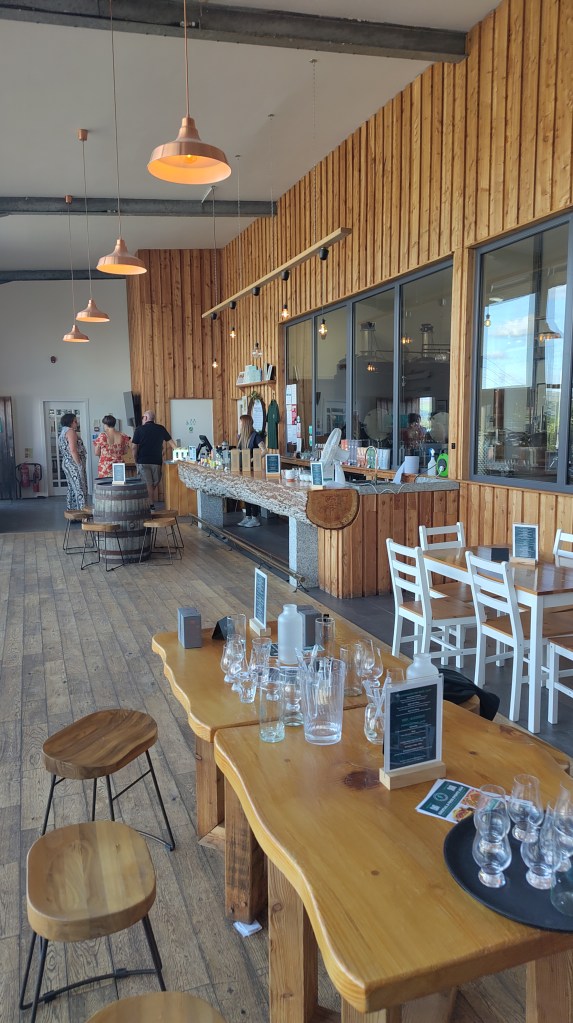
TL; DR: On a gloomy Friday afternoon, we visited the Falkirk distillery, guess where? While surrounded by construction sites, the distillery is up and going (well, not when we visited, as it was silent season): one of the most classical distillery layouts among new distilleries we visited so far. The drams we tried reflected this, maybe merit of some old stills being used?ย 

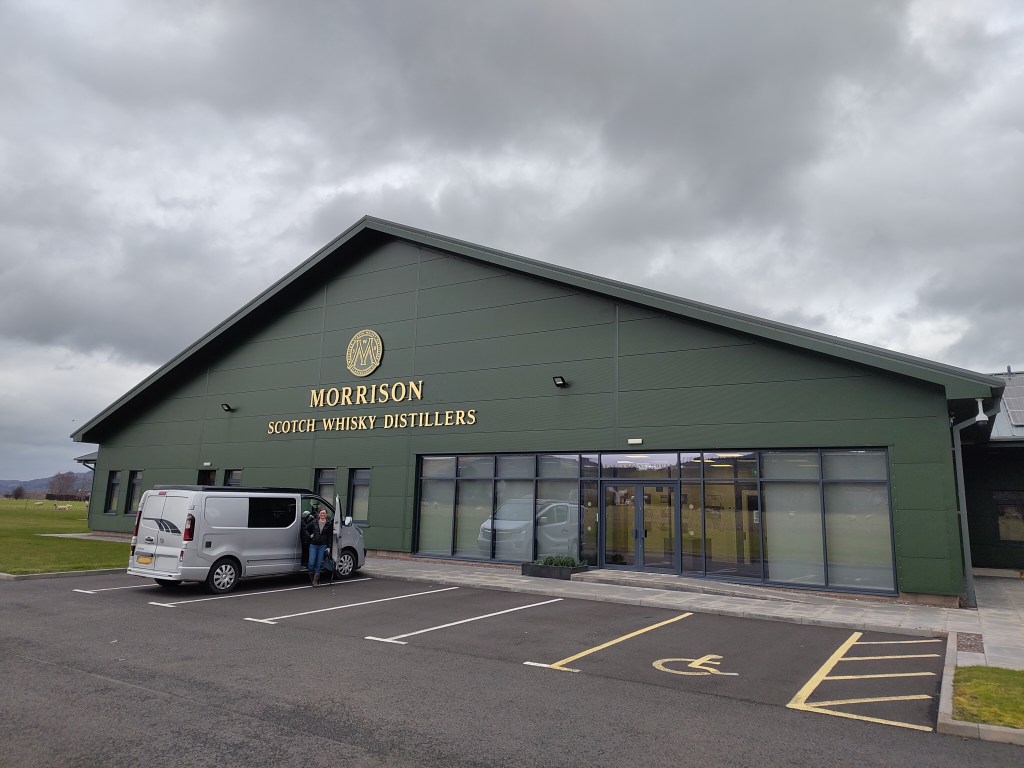
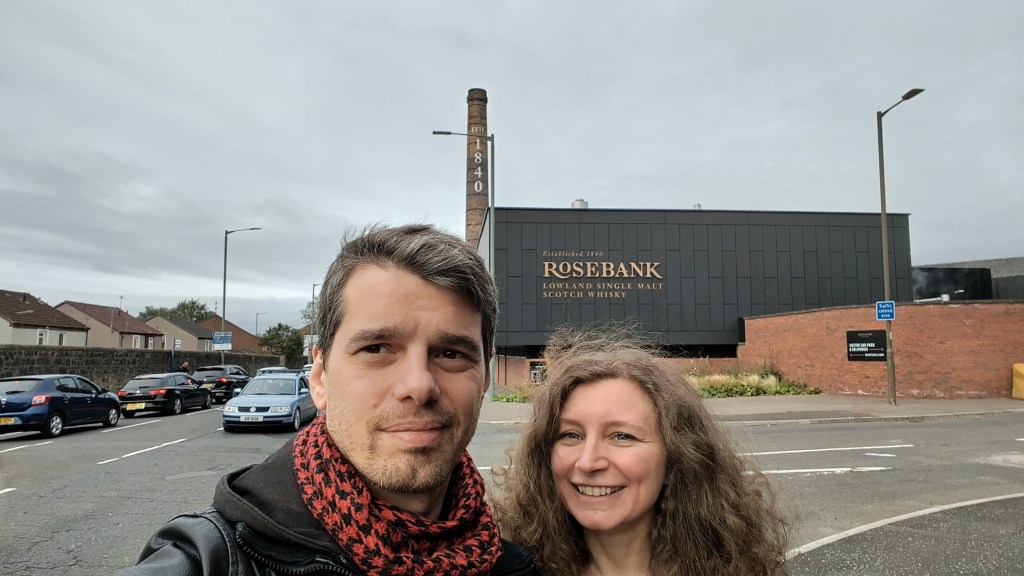
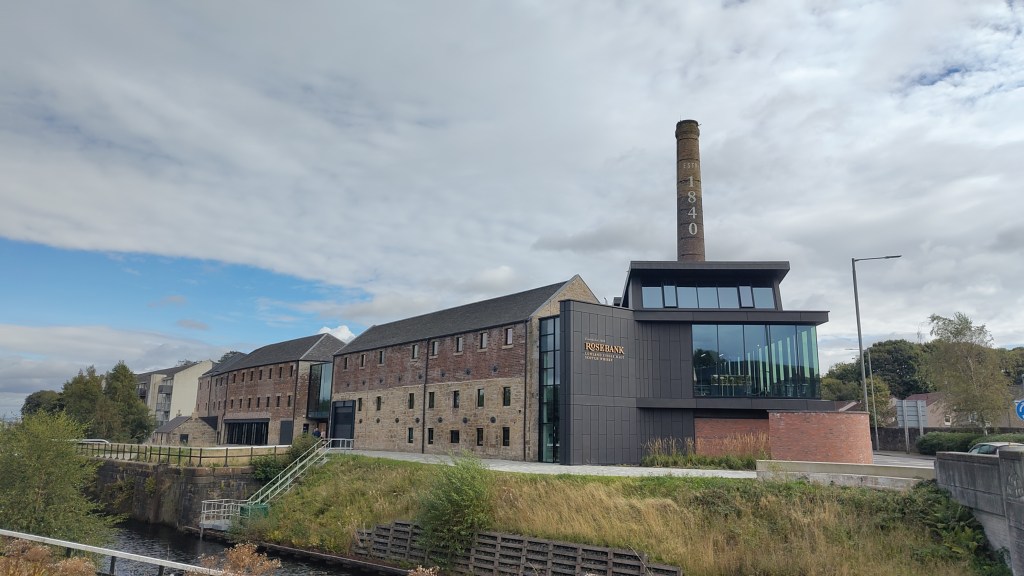
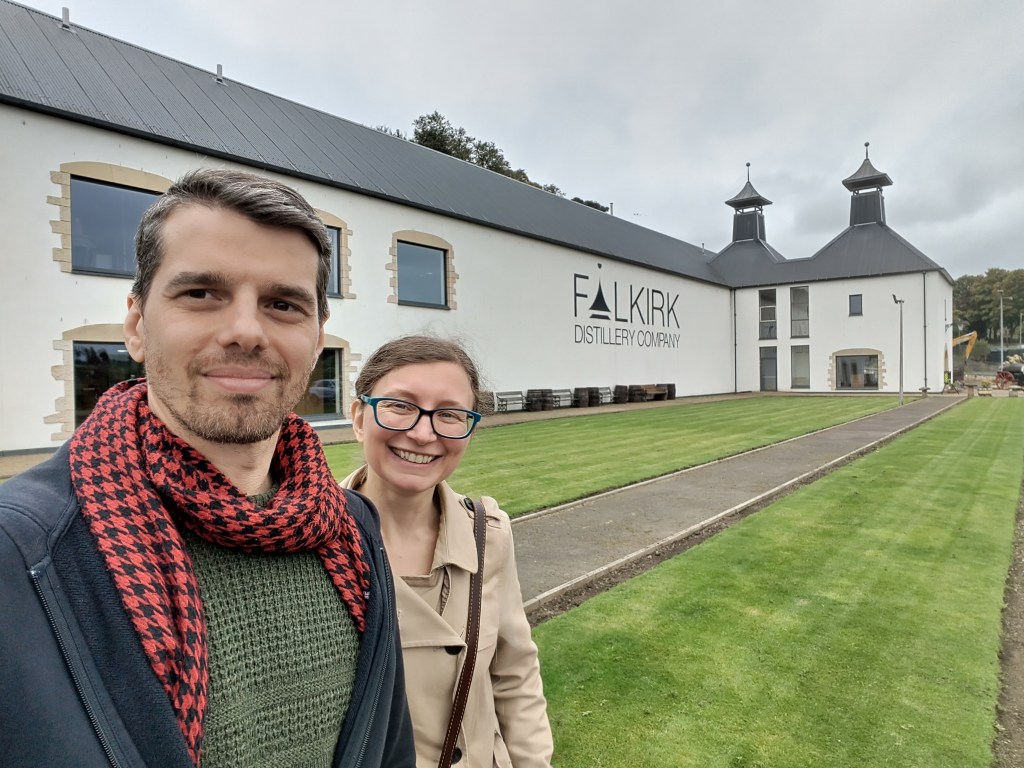
In 2021, on a lazy summer Sunday towards the end of the pandemic, we joined our friend and whisky expert Justine (btw, her new book on the Pattison brothers and their crash is due soon!) on a drive around the Central belt, to visit the site of an old distillery, Kennetpans. After visiting the site, mostly ruins, we did a couple of detours on our way home. One was to check out the construction works at Rosebank distillery, the other one to look at a newly built distillery, the Falkirk distillery indeed! The distillery building was fully up, all white and shiny, with the home brand painted on the side, while some construction was still going on in the car park. This September, over three years later, it was time to go back, and check the distillery out.

The Falkirk whisky got on many whisky peopleโ€™s radar last year, but for the wrong reason:ย  their first release was priced just south of ยฃ200; it surprised many and enraged a few. We donโ€™t know anybody who bought a bottle for themselves, but of course it was sold out, so bottles are probably laying in some collectorโ€™s cabinet, or in the storage of some hopeful flipper. That was followed by a more reasonably priced release, named after the distillery founder: George Stewart, for ยฃ58. It is still available on their website, and the proceedings are going to Prostate Scotland charity.

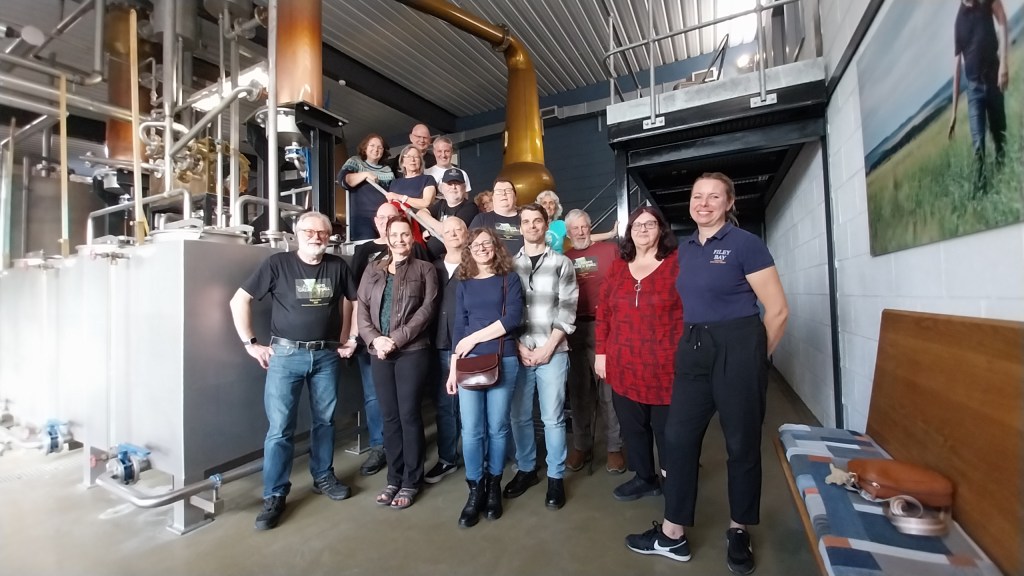
Distillery tours are available through email reservation and only during weekdays, which prompted us to take a few hours off on a Friday afternoon. At the time the tour was ยฃ20, now there is an extra option for a three-dram tour instead of two, for ยฃ25. The person who answered our email was also the guide for the tour, Zilvinas (or Zi), who has been working at the distillery for a while in different roles.

As we arrived at the distillery, we noticed some construction works around the parking lot. Zi told us later that the plan is for a restaurant/cafรจ next to the distillery, and for commercial units in the building on the other side of the parking lot.

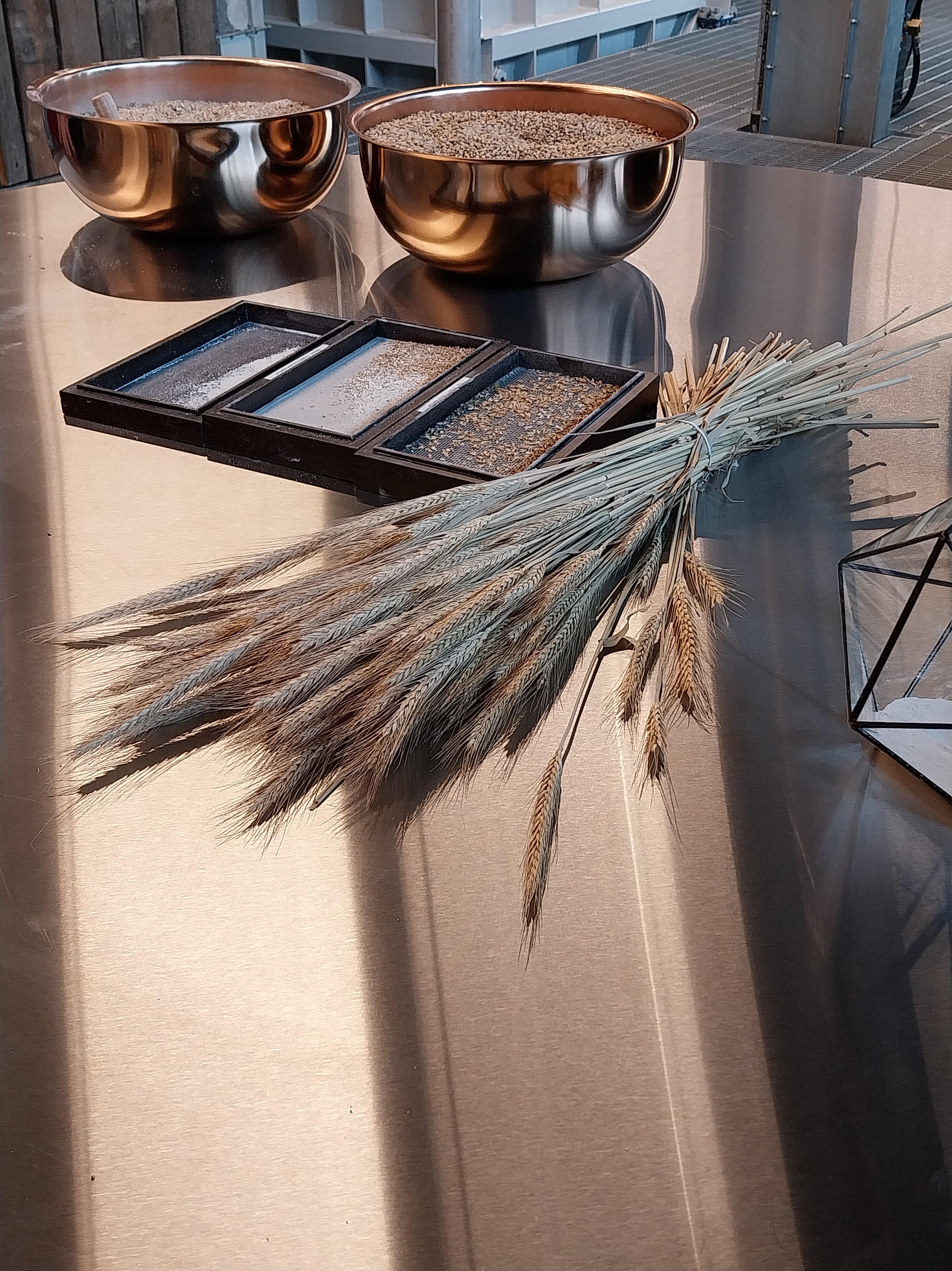
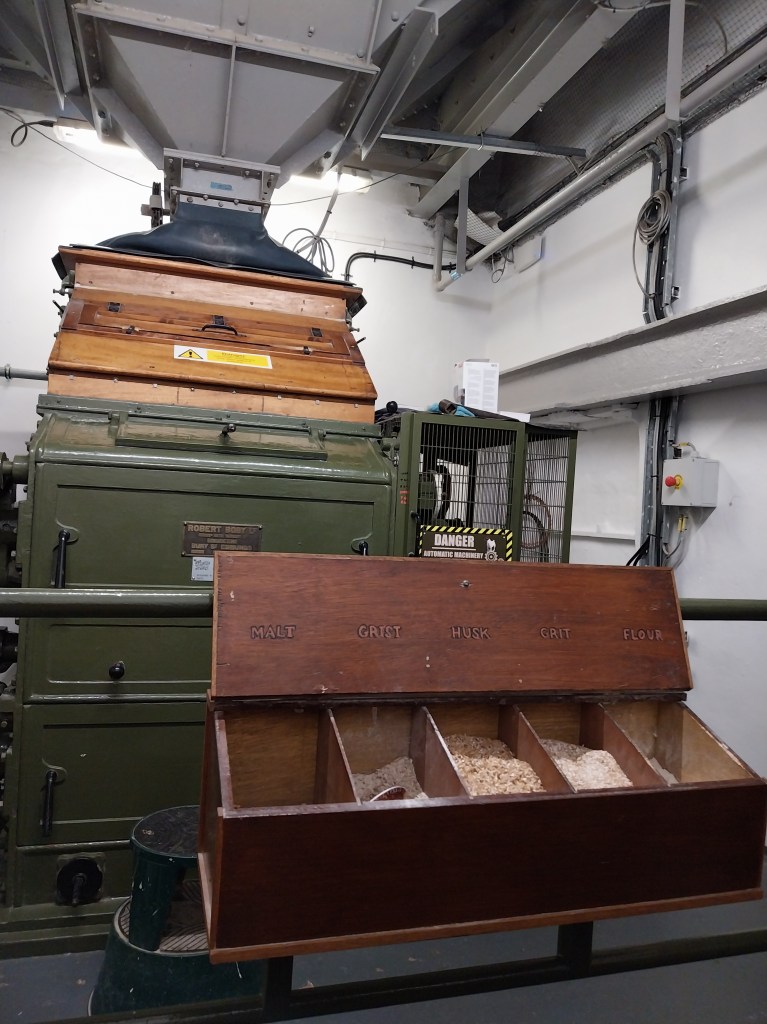
Zi welcomed us very warmly and was a great host throughout the tour. To start, we watched an introductory video with some words from the founder, and some drone footage in the distillery. We then moved to production, of course starting with the milling: they are equipped with a modern 4-roller Buhler mill, so no Porteous, nor Bobby Mill, which makes sense for a fairly new distillery. They use Lauriet malt, from Boortmalt in Speyside, exclusively unpeated as they are aiming for a typical floral, lowlander style. The malt is automatically processed in the mill, and the resulting grist split is the usual 70/20/10 (grit/husk/flour).

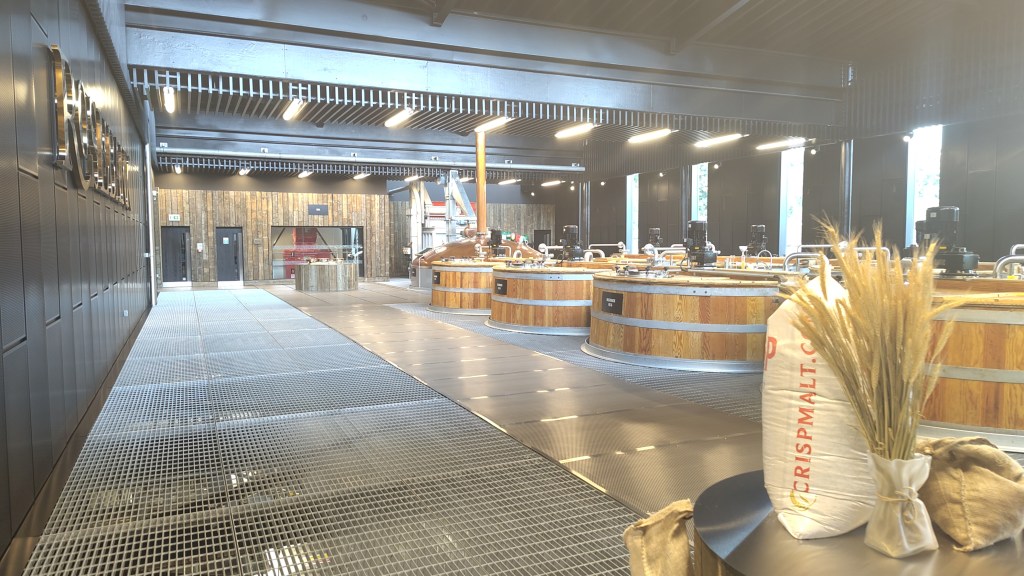
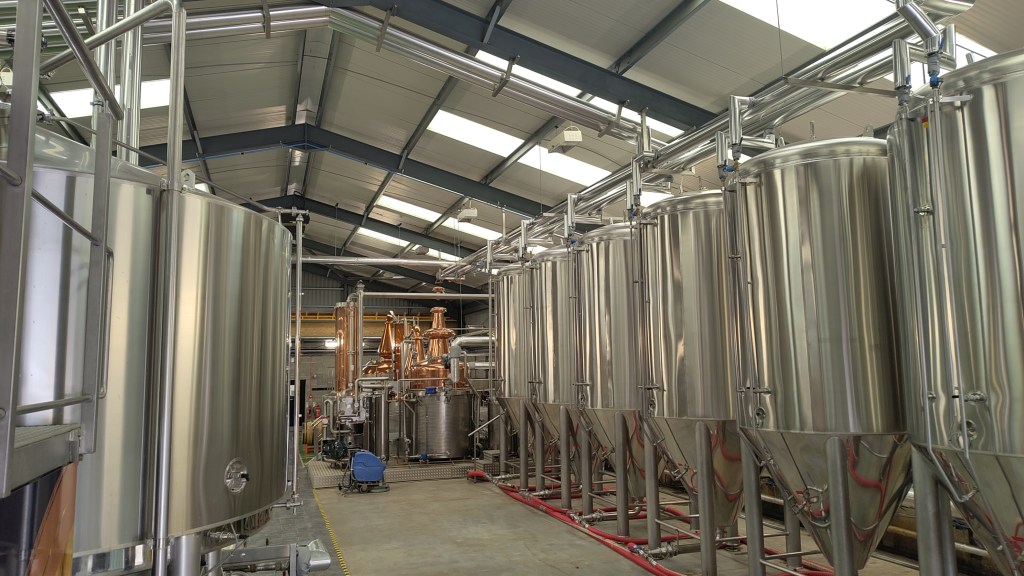
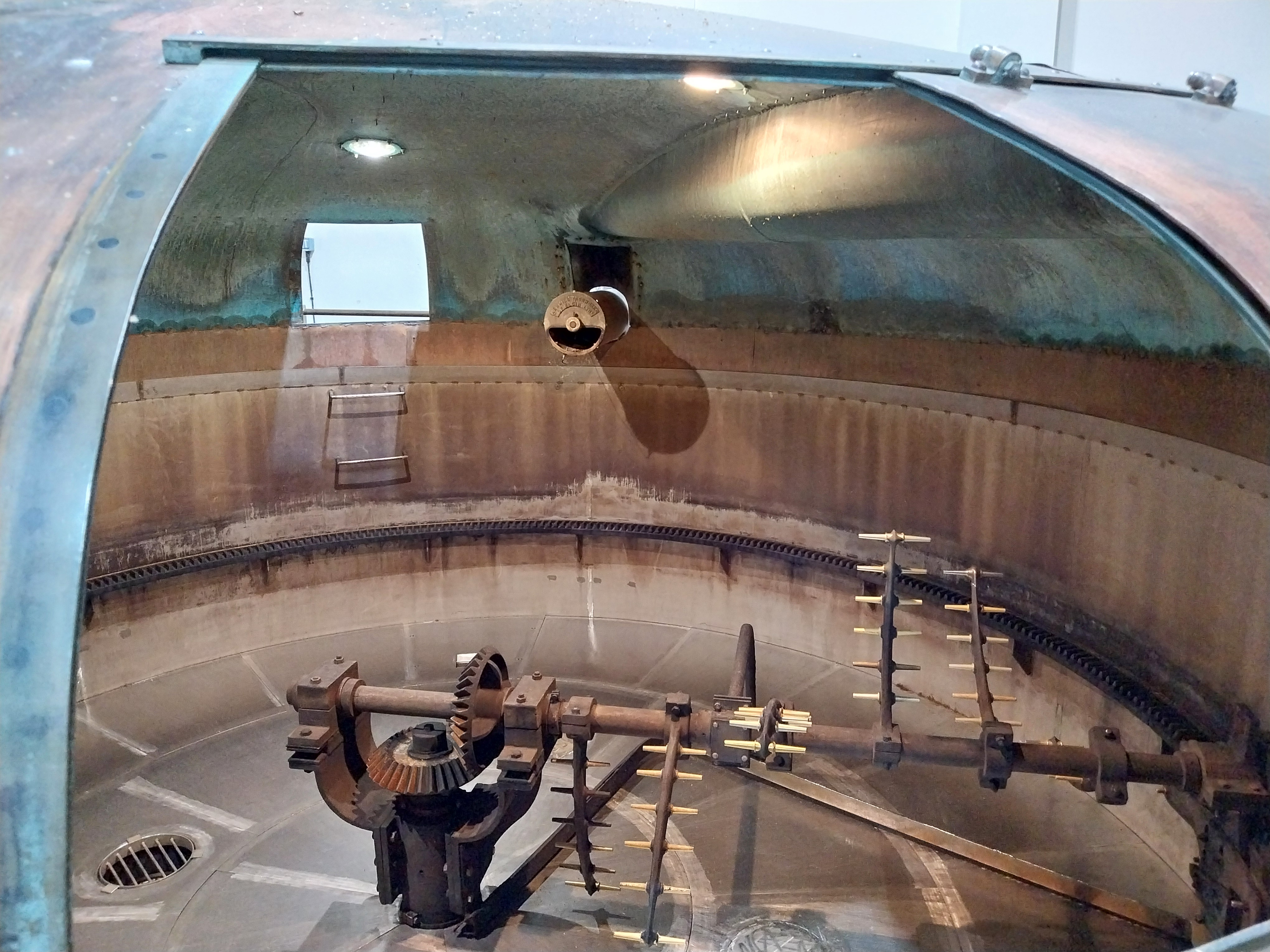
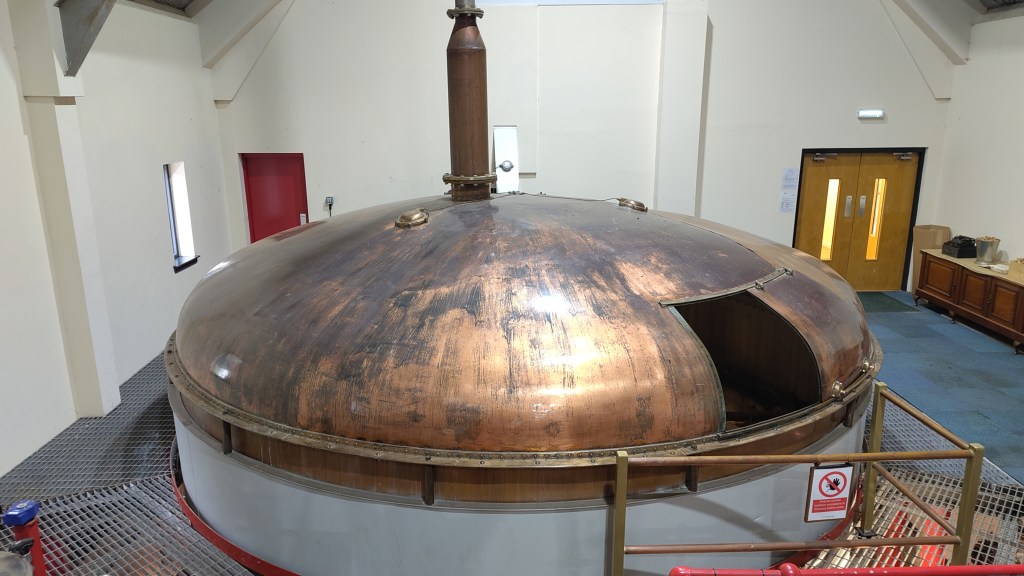
Here, we could see the first piece of old equipment: the mashtun. A massive 4.5t semi-lauter tun, it comes from the defunct Caperdonich distillery. The distillery, also called Glen Grant #2, was closed in 2002 and demolished in 2011 to make space for the stills-maker Forsyths (which we visited in 2023). The only new part is the plates underneath the tun, used to obtain a very clear and filtered wort. They use three waters, which they draw from a 90m deep borehole, at increasing temperatures (60ยฐC, 72ยฐC, and finally 85ยฐC). They do two to three mashes per week, but theyโ€™re aiming for 10 a week, for a total of about 750,000 litres of alcohol per annum. The wort then goes into one of the six stainless-steel washbacks, each one with a 34,000-litre capacity (but only filled up to 20,000 litres for safety). Fermentation is kickstarted with 75kg of distillersโ€™ yeast and lasts 100 hours.

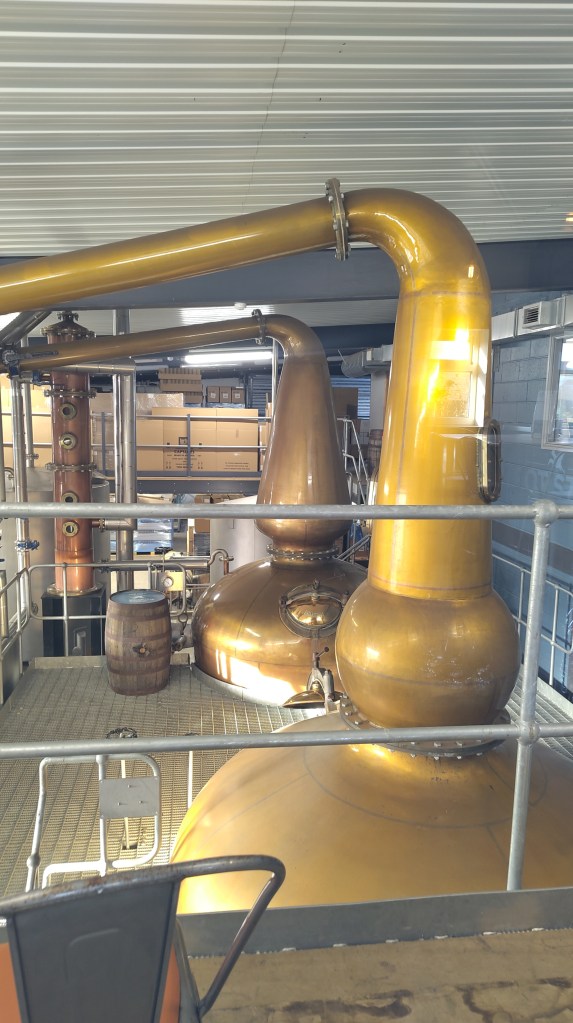
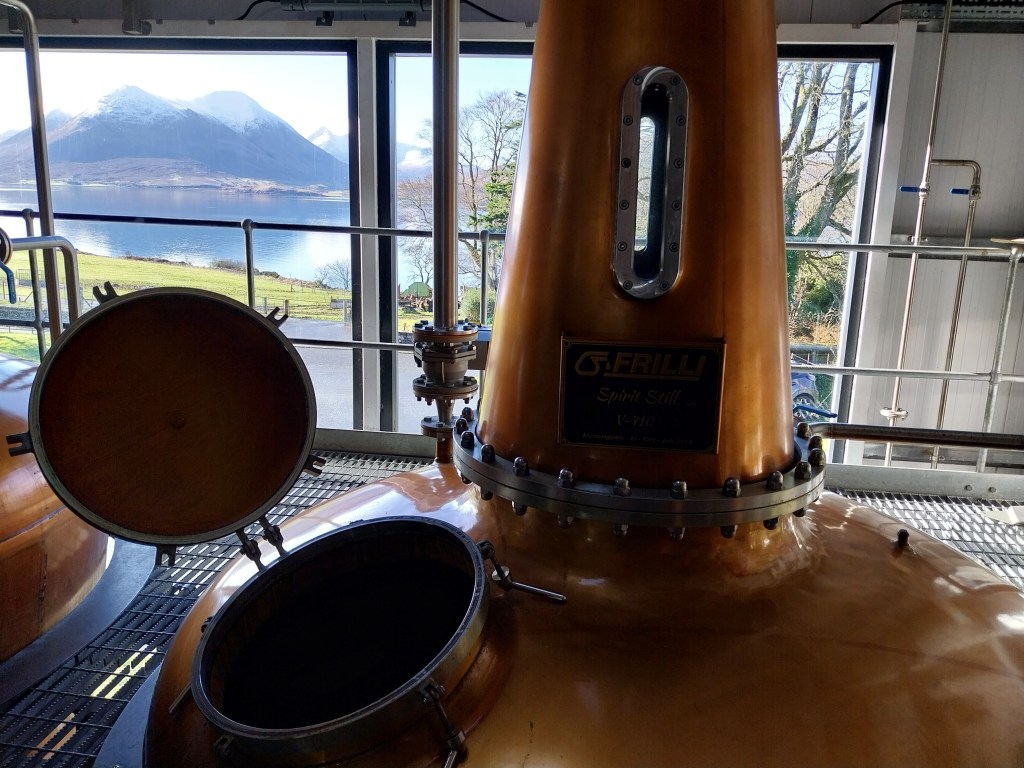
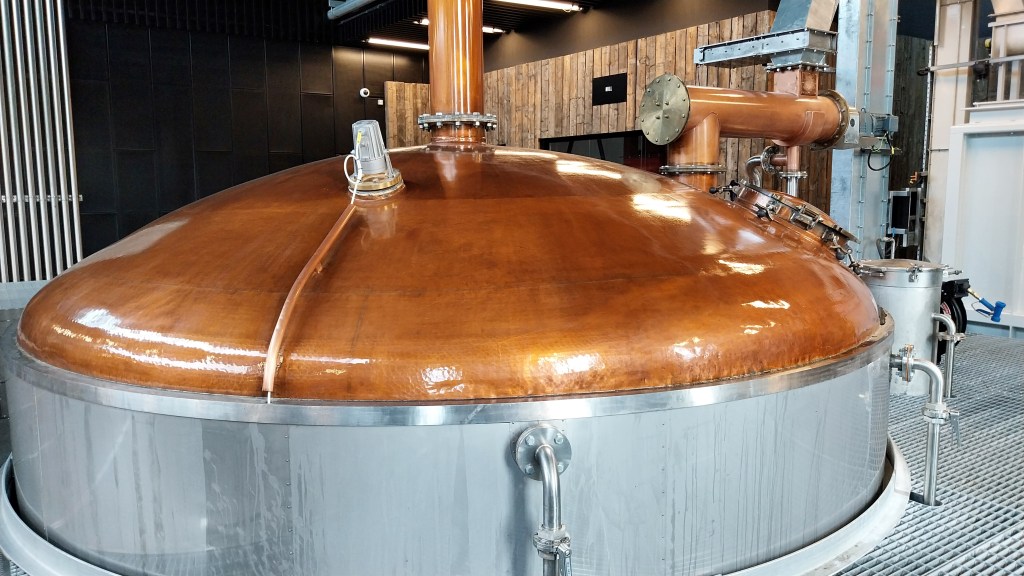
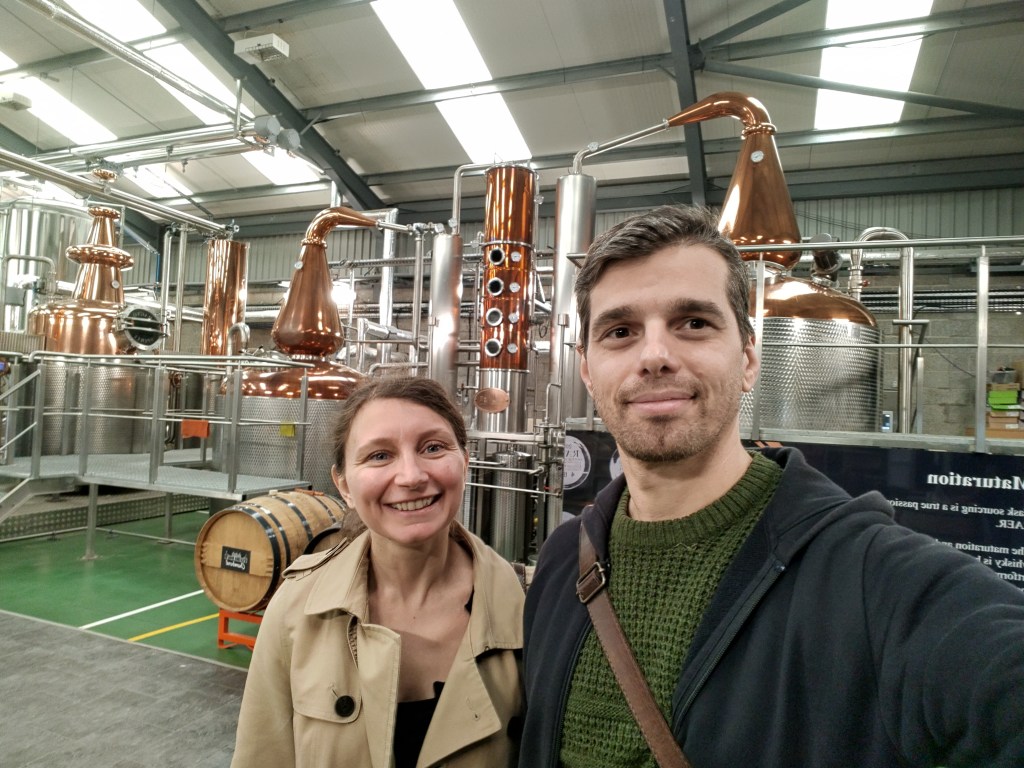
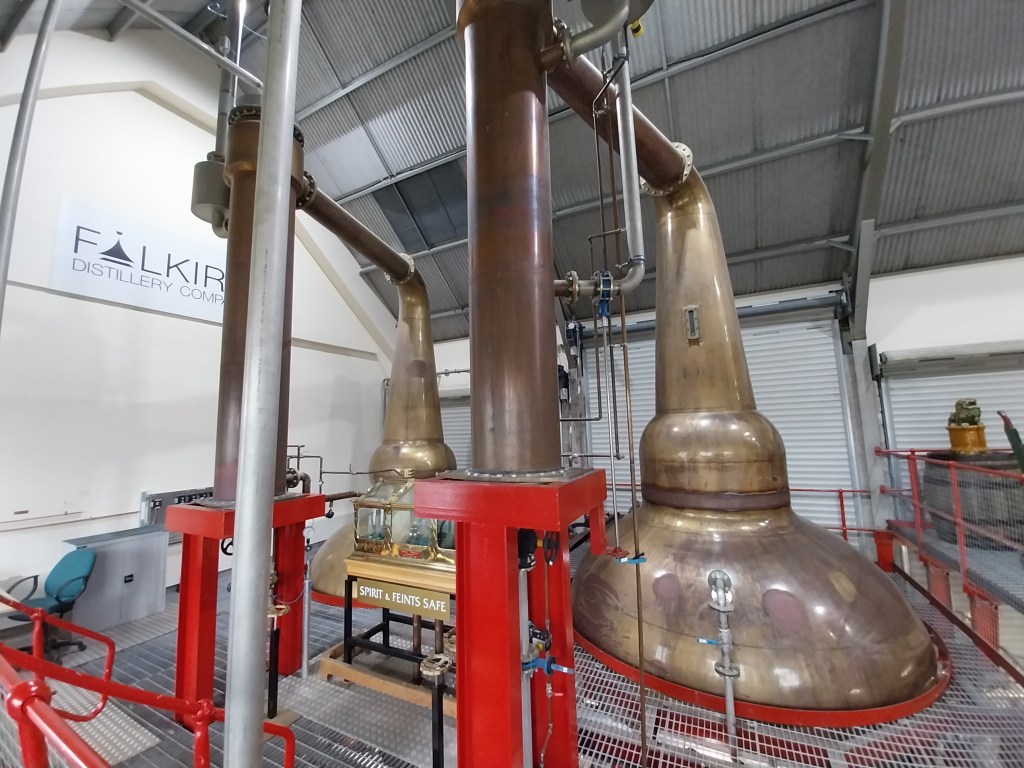
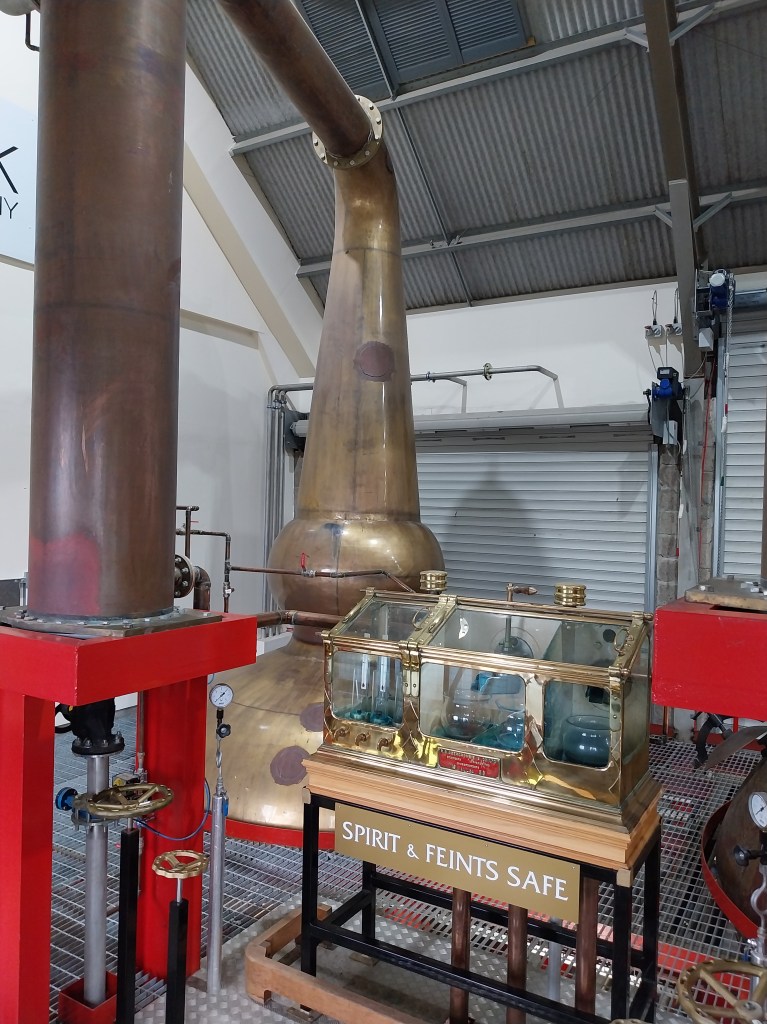
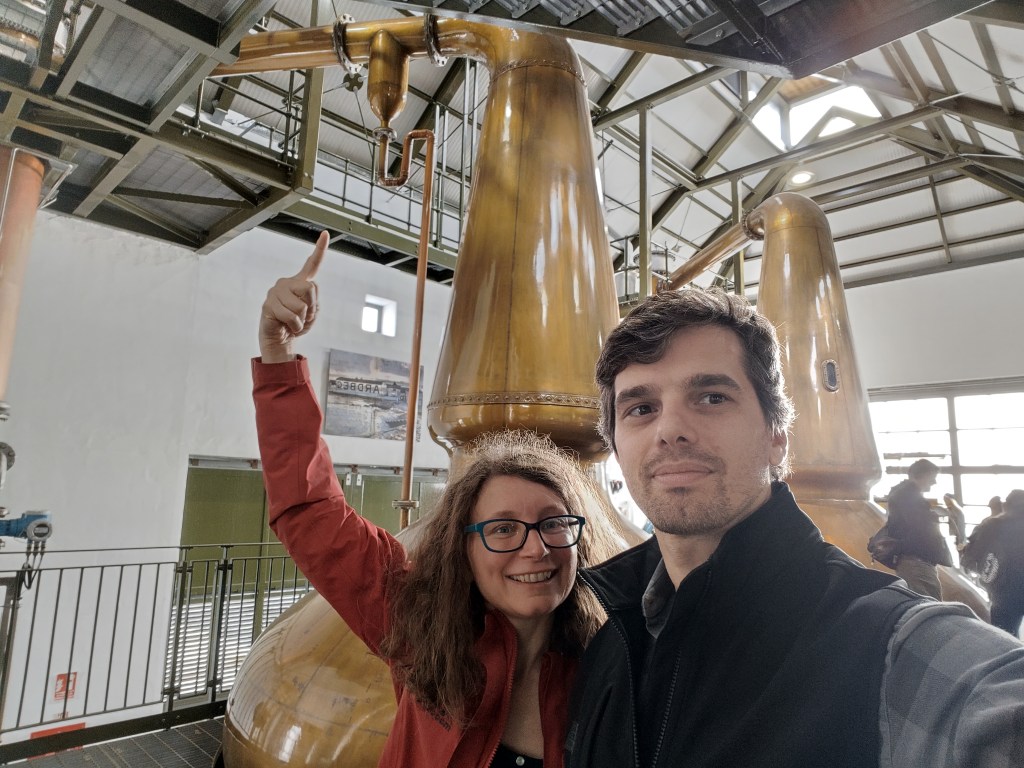
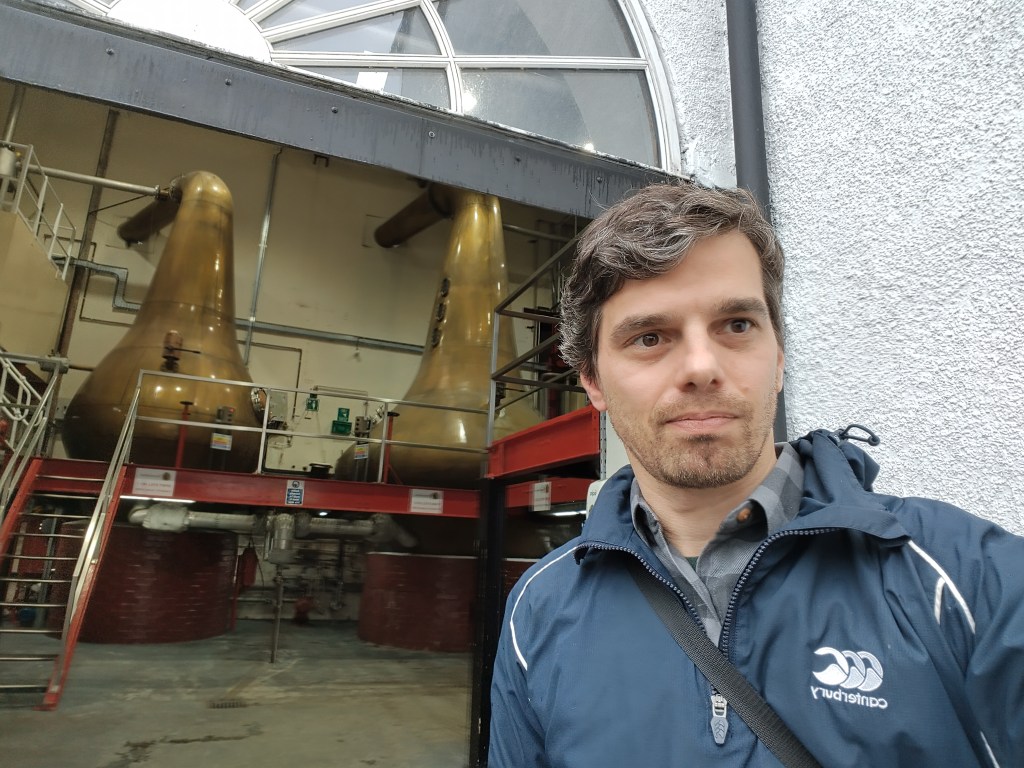
And then, the other piece of Caperdonich equipment: the two stills (another couple was sold to Belgiumโ€™s Owl Distillery). They are magnificent, and it is great that Falkirk gave them new life. The stills are heated with steam from a gas boiler, and they are run quite slowly to increase the reflux in the spirit. During the second distillation they take a cut from 75-76%abv down to 65%, in about 2.50-3 hours. From two mashes they get about 4,200 litres of spirit before dilution to 63.5% abv to fill the casks.

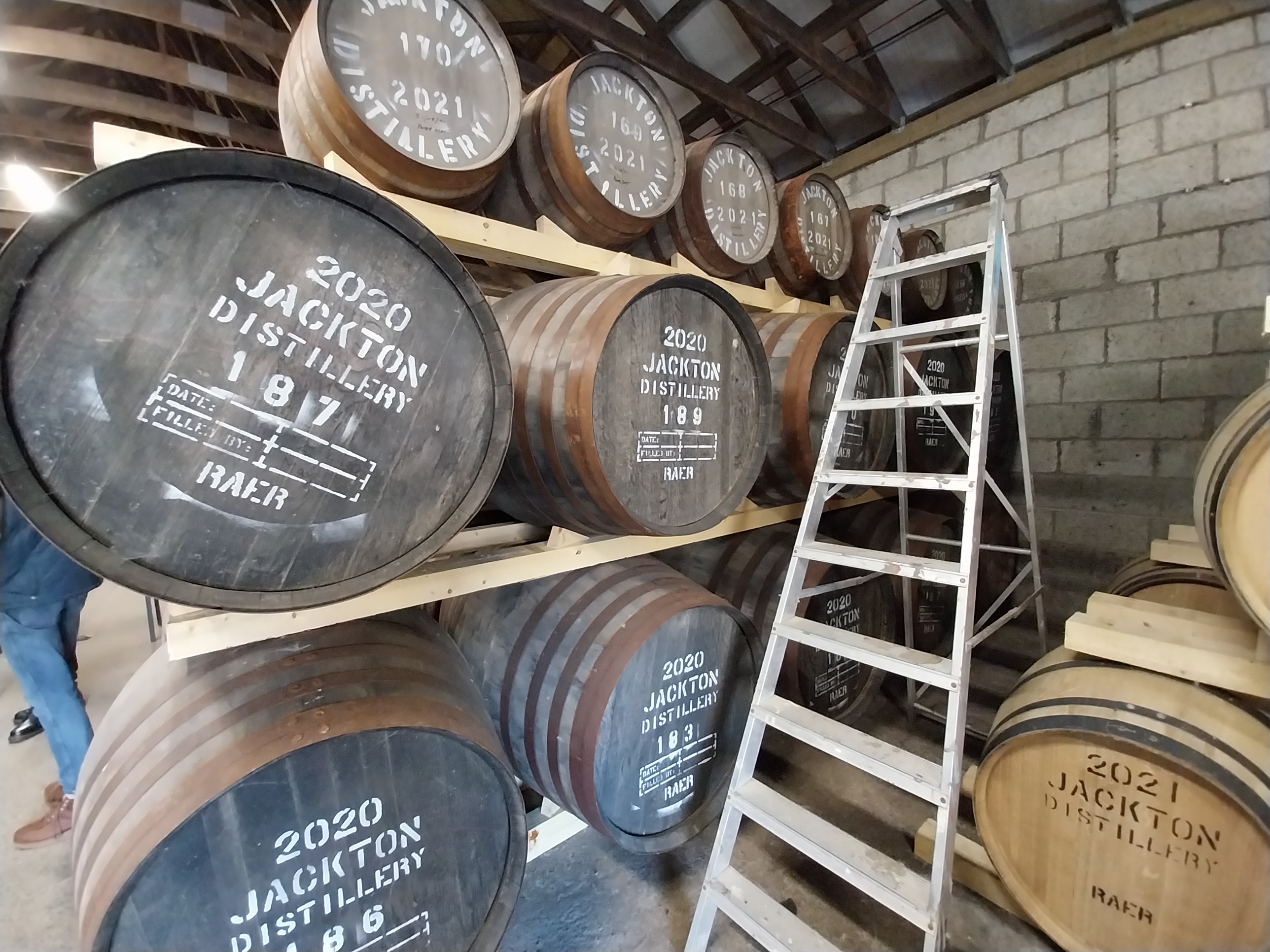
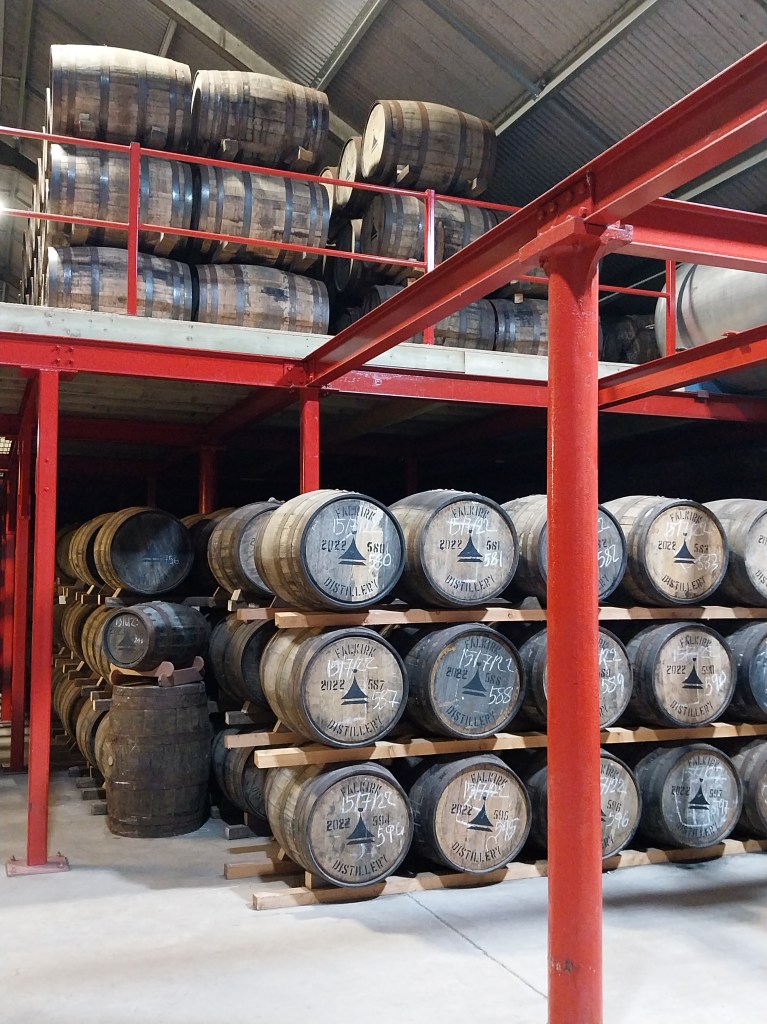
They have two warehouses on site, and they are planning for a third. We visited the first one, which was a โ€œsemi-dunnageโ€ on two floors: the cask are stored horizontally three high, but the floor was not earth but concrete. They mostly use ex-bourbon American standard barrels from Heaven Hills, less often from Jack Daniels, and sometime other casks too, like Oloroso sherry.

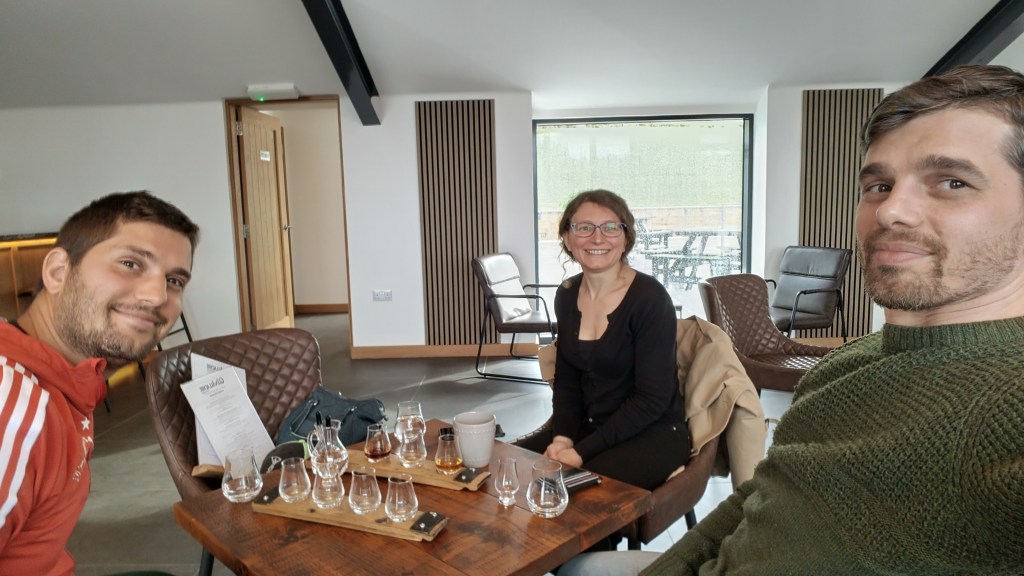
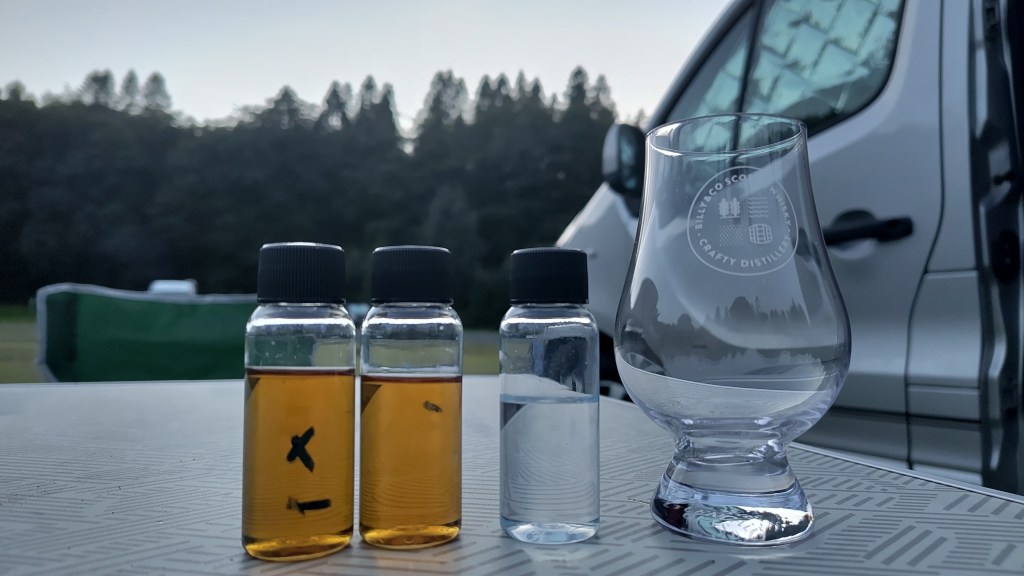
After this, we went to the shop to pick up our drams to go, as we needed to head back home. The two drams were the newmake spirit (63.5%) and the George Stewart expression (48%). We also got an extra dram from a small ex-sherry firkin (about 40 litres), 3.5 years old, at 58-59%. In the shop there was a bit of a mix of stuff on sale: some gift packs with aged spirit (not yet whisky), merchandise, and some random bottles of whisky on sale. We remember spotting a Deanston 12, but also a Laphroaig Select and maybe a Famous Grouse.

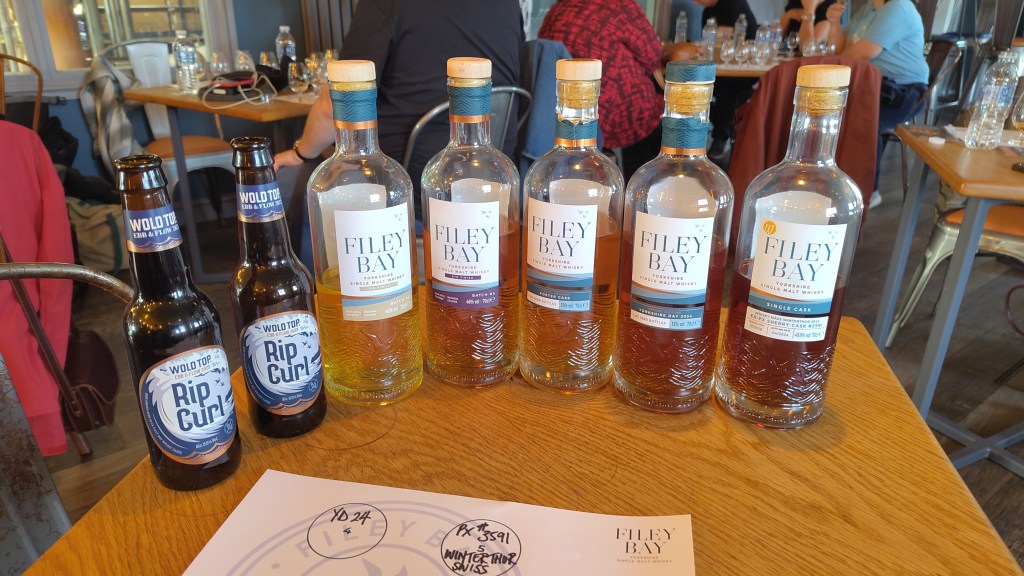
A few days later, at home, we tried the drams: overall we found them quite solid, particularly compared to other young distilleries. The newmake spirit was very fruity with notes of pear juice (which we often find in newmake spirit), and a very nice mouthcoating. The George Stewart was very tropical, with bananas, banana bread and honey notes. Overall pleasant, but you could tell it’s very young and the finish was a bit short. Finally, the sherry firkin was obviously a very cask-forward dram, with leather, trifle, pine forest, nuts, Xmas spices, chocolate, oak, and sour cherry. We wouldnโ€™t have said it was that young though.

The spirit we tried is very promising, quite tasty overall. The tour was nice, again Zi was a great and very knowledgeable hostโ€ฆHe answered so many questions! However, it felt a bit strange that this year they prolonged the silent season for over two months (at the time of the visit, now we donโ€™t know). Hopefully, things will be on track soon!

Stay tuned for more Central belt action, and until then, slainte!


Private Falkirk Distillery Tour

Price: ยฃ20.00 pp (September 2024)

Duration: 1hr

Tasting: newmake spirit (63.5%), George Stewart single malt (3.5-4yr, 46%)

Target: whisky nerds

Value for money: good

Highlights: Zi was an excellent guide

Recommended: yes

Link: : https://www.falkirkdistillery.com/

#49 Blackness Bay

The craft distillery with a pirate twist


TL; DR: On a lazy mid-September Saturday afternoon, we did a last-minute trip to a distillery we’d only recently found out about: Blackness Bay, near the famous castle.It was a very fun tour, one of a kind, and the distillery is a little gem.ย 

The resurgence of the scotch whisky industry, started towards the end of the 90s after the downturn of the 80s, led to a high number of distilleries being built. It was, and in some extent it still is, a boom of new distilleries in almost every part of Scotland, including the most remote ones like the Shetland islands.

Among the whisky regions, as defined by the SWA, one that saw the biggest increase in the number of distilleries is the Lowlands. Until a few years ago only two malt distilleries were constantly producing, Auchentoshan and Glenkinchie, with a third one seeing periods of alternate fortune, Bladnoch. Nowadays, both Edinburgh and Glasgow could theoretically claim the โ€œregionโ€ status as both have more than three malt distilleries each (Bonnington, Holyrood, Port of Leith, and the nearby Glenkinchie the first; Auchentoshan, Glasgow, and Clydeside the latter). Similarly, Fife went from one grain distillery only (Cameronbridge) to one grain and six malt distilleries currently producing, or about to (Kingsbarn, Inchdairnie, Lindores Abbey, Daftmill, Aberargie, Eden Mill). The Central Belt, stretching between Edinburgh and Glasgow, where a lot of the Scottish industrial production is concentrated, is no exception: a lot of new distilleries came online decades after the closure of St Magdalene (1983) and Rosebank (1993, now rebuilt). In this and the next few posts weโ€™ll talk about some of these new distilleries in this area, all visited in September 2024.

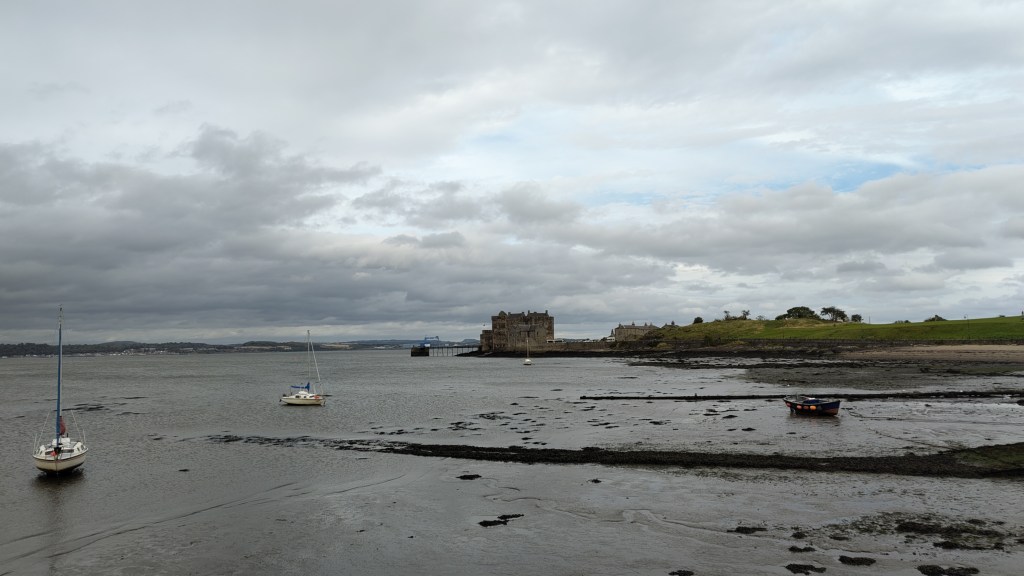
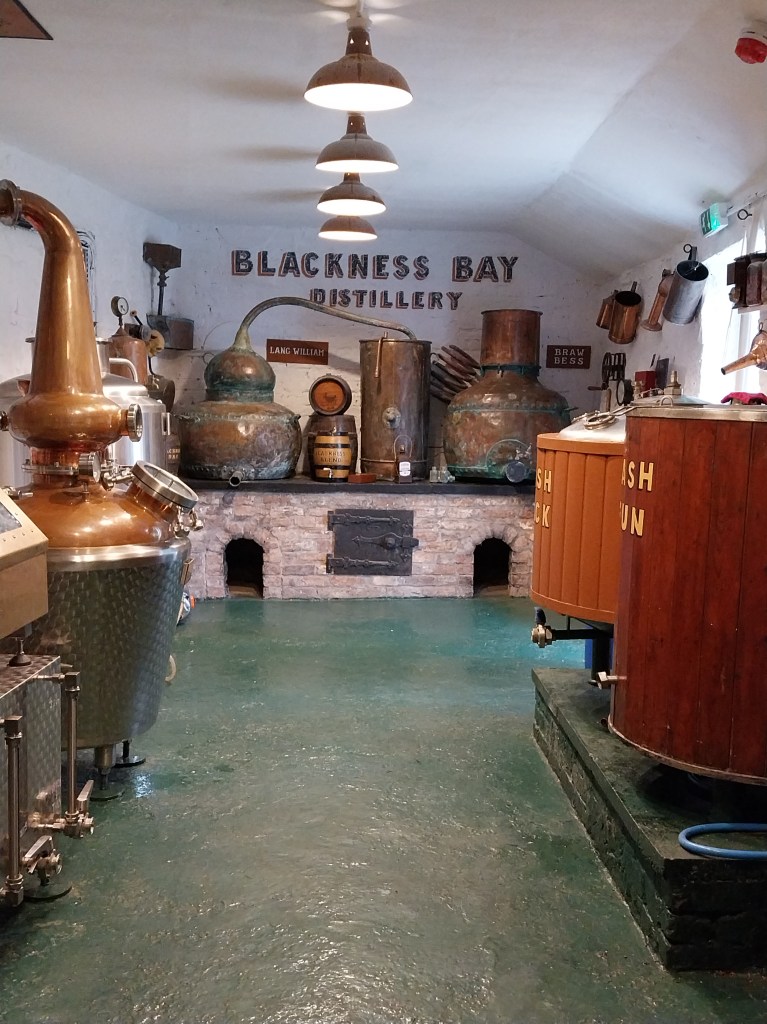
The first one is by far the smallest one of the bunch, as a matter of fact one of the smallest in Scotland: Blackness Bay distillery. It is quite a novelty, as they started producing whisky only about a year ago (October 2023), while also making rum. Being that new, it doesn’t feature in the SWA map yet nor in the malt whisky yearbook. The distillery is in the middle of the Blackness village, home to the famous Blackness Castle is (we still have to watch Outlander, btw), but not much else. Despite being relatively close to Edinburgh, reaching it by public transports is a nightmare, so we just drove there (Teresa got the short straw that day). We arrived at destination a bit early, just enough time for a stroll along the beach to get some of the refreshing sea breeze.

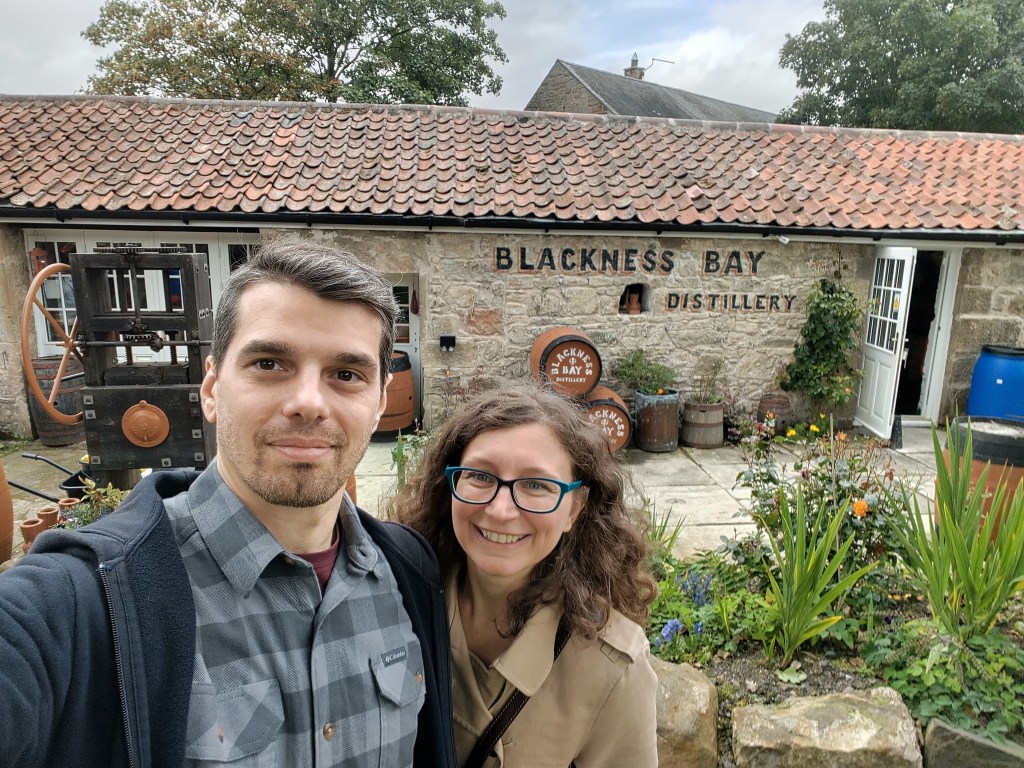
The distillery, a long and low building, is part of a complex including a pub, the Lobster Pot, a big stone house, and a large garden in the middle of the three. The two founders, Colm and Sheena, acquired the whole complex about 15 years ago. More recently they stopped managing the pub/restaurant, so they decided to set up this small distillery, in the shed that used to be a bakery and brewery for the pub. It took two years for the project to complete.

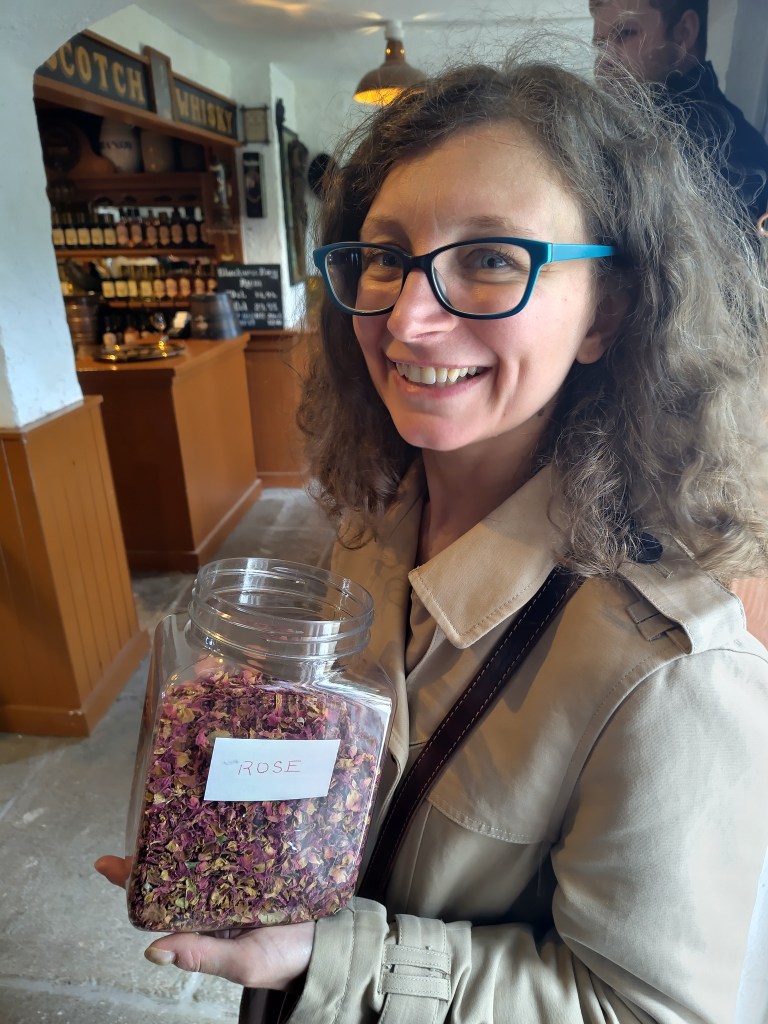
Sheena was the one who gathered us, about a dozen people, in the pubโ€™s courtyard. We could already hear Colm playing the bagpipe, that accompanied us in the short walk from the pub backyard to the distillery. That was unexpected! Then, he welcomed us and started telling a very peculiar version of the history of Blackness, all the way from the Roman settlements, the castle, and whisky in Scotland. It was genuinely funny and entertaining, and we all had a good laugh. This happened inside the distillery building, a cozy area with a bar and the shop. While Colm gave us his introduction, we had a sip of their products, starting with the Blackness Bay Flowers of Scotland Pink Rum, then the Jacobite Spice Rum, the White Rum, the 6-month-old oak-aged malt spirit: this is called Virgin Mary, a hint to the future realises of scotch whisky that will be called โ€œMary Queen of Scotchโ€, name that caused some dispute with the trademark office.

We soon moved to the production area, located in the same building, all in a big space. They get pre-milled barley from Crisp, in Alloa, so they donโ€™t have a mill (it would be hard to fit one in there). So they proceed directly to mashing, with local tap water first warmed up to 70ยฐC in the kettle, before sparging (done by hand) Fermentation lasts 6 to 7 days, and the wash is then distilled in the wash still, Lucifer, and re-distilled in the spirit still, Lilith. From the second distillation they take a cut from 80%abv to about 63%, in our understanding. Rum production is similar, with molasses brought in, fermented for longer (10 days) and distilled in the same pair of stills twice, or three times for the ones with botanicals, after cleaning the equipment. At this point, we got some new make spirit to try, which tasted very caramelly, with a good mouthfeel a not too much burn despite its high abv.ย 

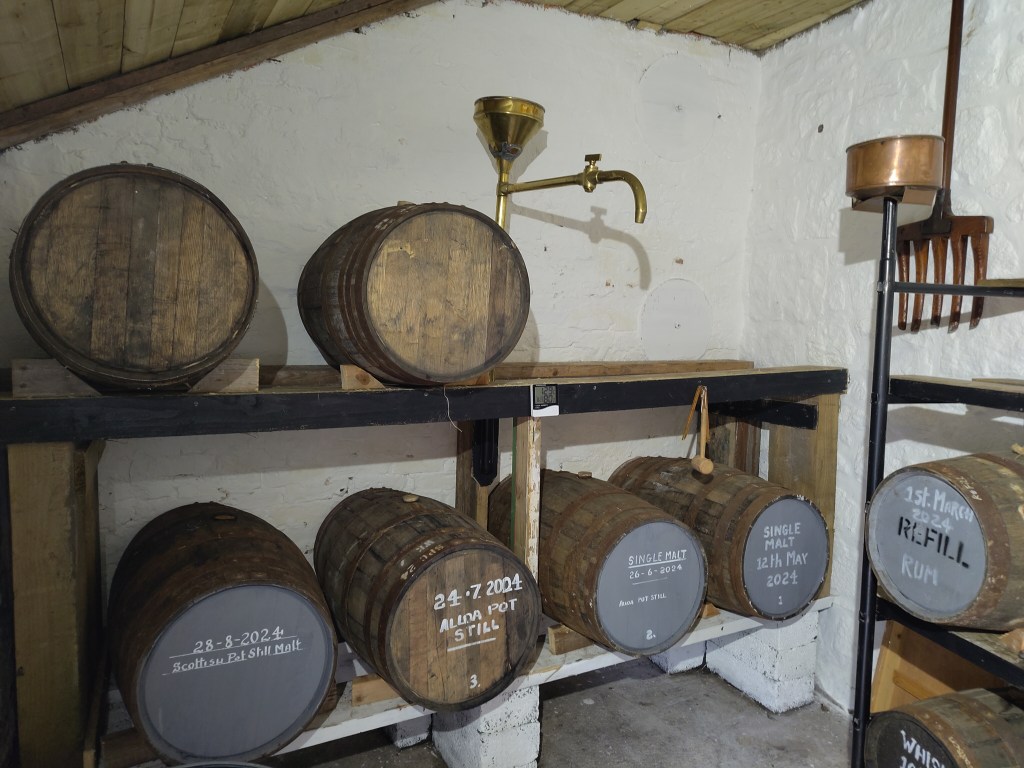
We then moved next door to check out the small warehouse where casks are kept: mostly ex-bourbon barrels, some ex-Islay to introduce some smoky element, and some hogshead and quarter casks. At this point the tour was mostly ended, with people slowly moving towards the Lobster Pot pub, while we had a chit-chat with Colm and Sheena. Unfortunately, we didnโ€™t book the tour with the dinner included, so after finding out that there was no free table at the pub, we went back to our van and left.

A very interesting visit overall, they are a lovely couple, and their tour was definitely an experience. Their spirit is nice too, but of course we need another couple of years before trying their scotch whisky, so weโ€™ll patiently wait. In the meanwhile, we might pop in again at the Lobster Pot, possibly with a booked table, to enjoy what looked like a very nice pub!

In two weeks, another Central Belt distillery, this time a bit more far away. Until then, slainte!

Blackness Bay Distillery

Price: ยฃ20.00 pp (September 2024), ยฃ10.00 pp for drivers

Duration: 1hr

Tasting: Flowers of Scotland Pink Rum (43%), Jacobite Spiced Rum (43%), White Rum (43%), Virgin Mary aged spirit (50%)

Target: everyone

Value for money: very good

Highlights: Colm and Sheena are great

Recommended: yes

Link: https://www.blacknessbaydistillery.co.uk/


#48.2 Islagain

In the Jack Russellโ€™s den: Ardbeg


TL; DR: Among the Islay distilleries, we left a good one for last: Ardbeg! Together with our pals, we went there for a tour and a snack: we were not disappointed, the tour was good, and very relaxed. We even got a special gift!ย 

(missed Part 1?)

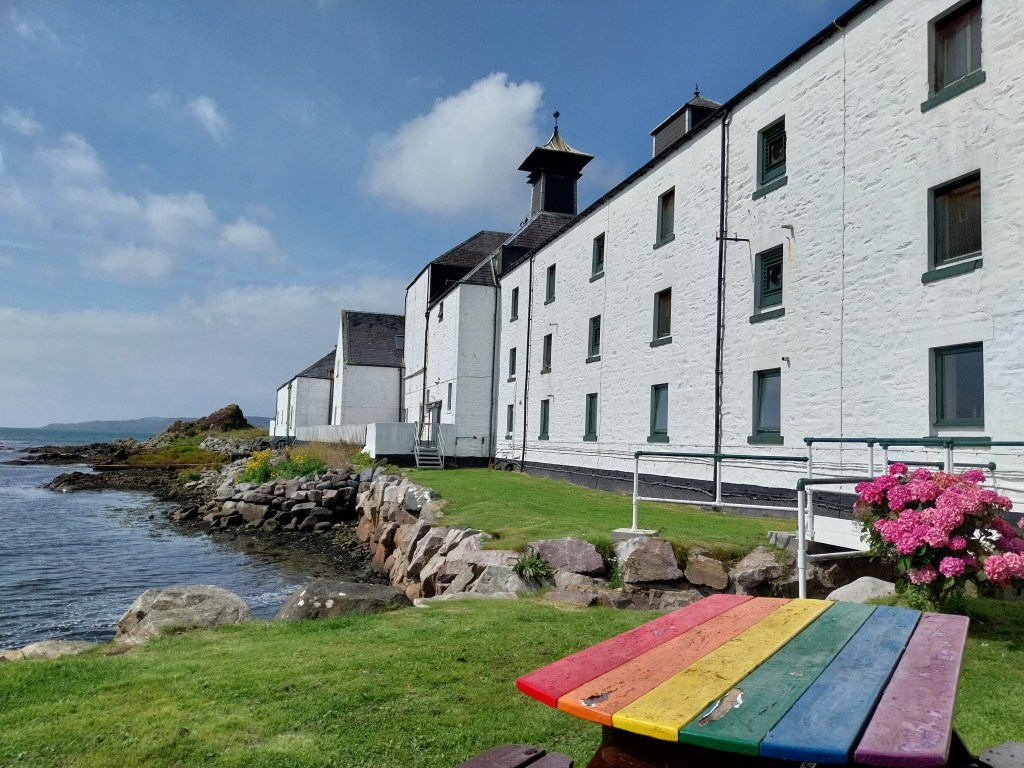
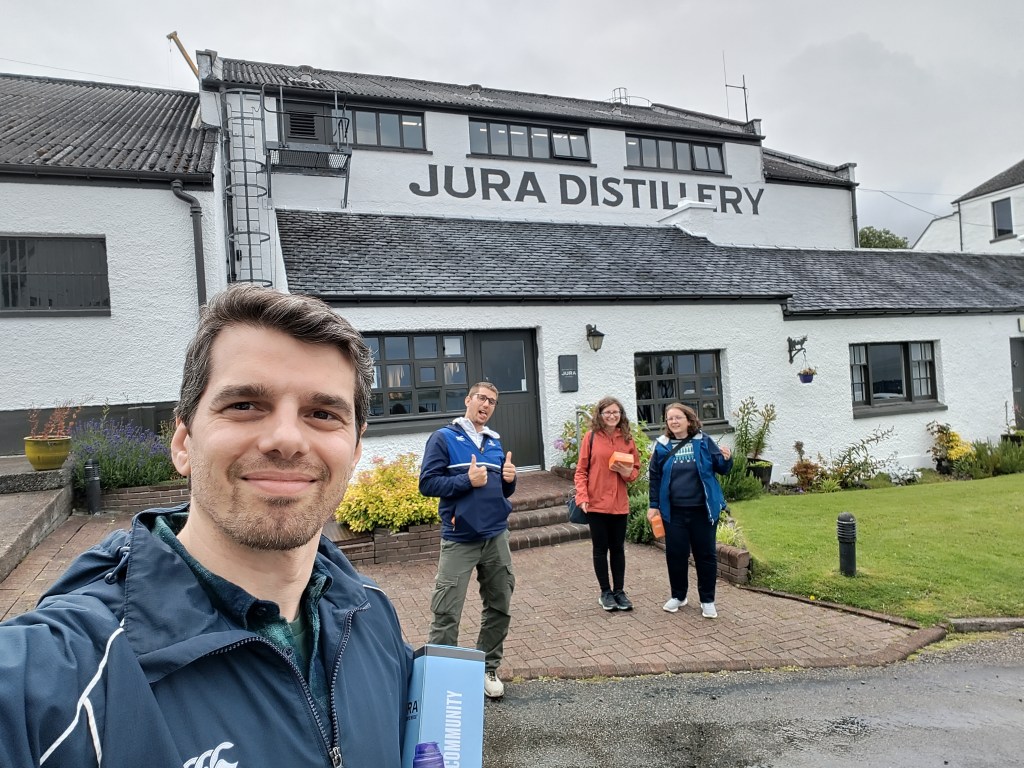
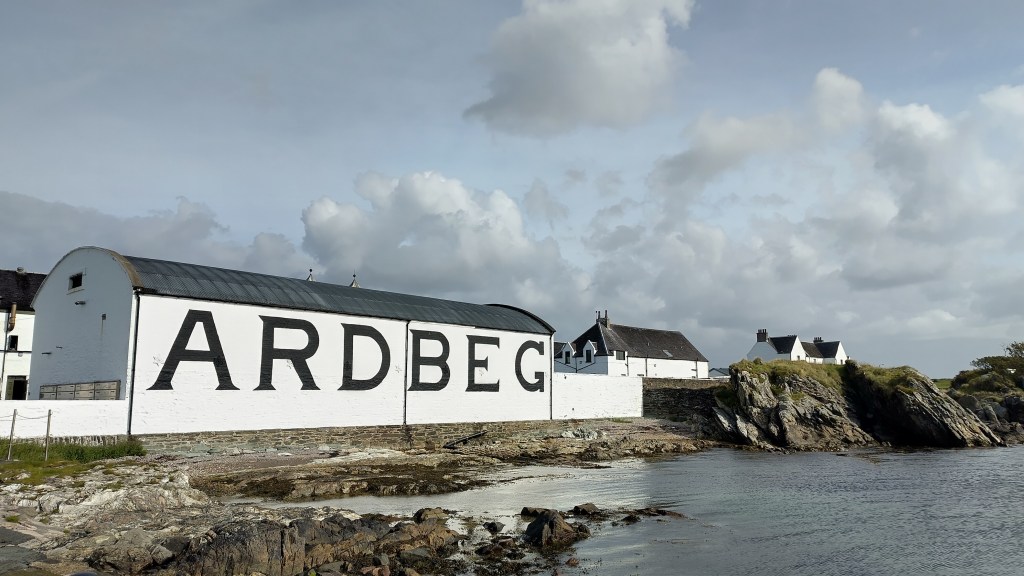
After our Saturday celebrations, we had an โ€œearlyโ€ start on Sunday: we had booked a distillery tour at 10.30, and we had a 40-min drive from Bowmore to get there. It was a sunny day, so during our drive we enjoyed a great view of the islandโ€™s landmarks: peat bogs, the Laggan Bay, the Oa, Port Ellen maltings and village, the Kildalton coastโ€ฆOur destination? Ardbeg! We arrived a few minutes early, just enough to browse the shop and take pictures in front of the distillery to mark an achievement: our 10th on Islay, the 90th Scottish one, 109 in total.

As weโ€™re not that seasoned in our whisky journey, we havenโ€™t experienced legendary Ardbeg drams like the Uigedailโ€™s first batch (although, the current one is still pretty delicious) or the original 17yr old (weโ€™re not very excited about the clumsy attempt at reviving it, as itโ€™s silly expensive). However, in our early whisky days, Ardbeg 10 was one of the first serious drams we tried, and still a safe bet nowadays: there might be some batch variation, but in general itโ€™s pretty solid. When we started exploring the range, we found other excellent expressions as well: Uigedail as we said, Corryvreckan and the more recent For Discussion are great, while An Oa and Wee Bestie are fine. While we donโ€™t mind too much the silly marketing, we are a bit put off by the high prices of limited releases. But we reckon, if they sell, good for them: weโ€™re happy to stick we the solid core range.

Back to present, our tour guide was Becca, who took us to the pier and gave us a dram while explaining the history of the distillery: of course it was their flagship, Ardbeg 10 (bottled at 46%, matured in first fill and refill ex-bourbon casks). The distillery was founded by the MacDougallโ€™s family in 1815, and saw some ups and downs, it was even closed for some periods. In recent times, after the LVMH/Glenmorangie acquisition (for ยฃ5.5m), they had to release younger whisky because of the lack of stock of the 10yr old. They used to have two malting floors, dismissed in 1981, which are now used as visitor centre, restaurant and warehouse.

Once inside the distillery, we first got into the mill room, where the Bobby mill is still going strong (btw, it’s one of the 17 currently working Bobby mills in Scotland, including Ardnahoe and Bruichladdich). The grist split is the usual, and once milled the barley is moved into the mashtun, where 18,000 litres of water at 65ยฐC are added for the mashing.

Their water source is the Loch Uigedail, located 3 miles away, which then goes into the Charlieโ€™s dam, at the distillery. The second water (8,000 litres at 80-85ยฐC) is then added to complete the mash, while 18,000 litres of the third water (90-95ยฐC) are used as first water for the following mash. They used to do 22 mashes per week, now they cut back to 16. For fermentation, they have 12 washbacks, six original made of Oregon pine (Douglas Fir), plus the new ones. At this point in the tour, Becca gave us the second dram, a glass of Uigedail. Fermentation lasts 66 hours and, once fully fermented, the wash is split in two to fill up the two new wash stills for the first distillation.

We visited both the new and the old still room, the latter being quite tight and very traditional, with the two dismissed stills: apparently one reached its end of life as the new stillroom was built. There, Becca explained us the role of peat and she gifted us a small block! Teresa was not so keen, but Gianluigi was: now itโ€™s on display in our kitchen! We moved on to the new stillroom and its two pairs of new shiny stills, shaped exactly like the old ones. Itโ€™s a very modern build, where everything is computerised, including a huge window that was open to get some fresh air. During the second distillation, the newmake spirit is collected after 10 minutes of foreshots, from an abv of 74%, for five hours down to 69%: the rest (feints) is put together with the foreshots and redistilled with the next batch of low wines from the first distillation. Here, Becca gave us the third dram, a Corryvreckan. The tour ended at the pier again, where everyone could finish their dram at their leisureโ€ฆExcept Gianluigi, who went back to the visitor centre to collect his driver drams pack (in a tube, quite distinctively). Other than the glass, they also gave us a five-pound voucher each to be used for merchandising or on the core-range bottlings (min ยฃ40).

After the tour, we had a snack: unfortunately the restaurant was closed for a private event, but we could get some tasty food at the cart in the courtyard, and the weather (although windy) was good enough to eat outside. We then drove back to Bowmore, where we dropped our friends at their accommodation.

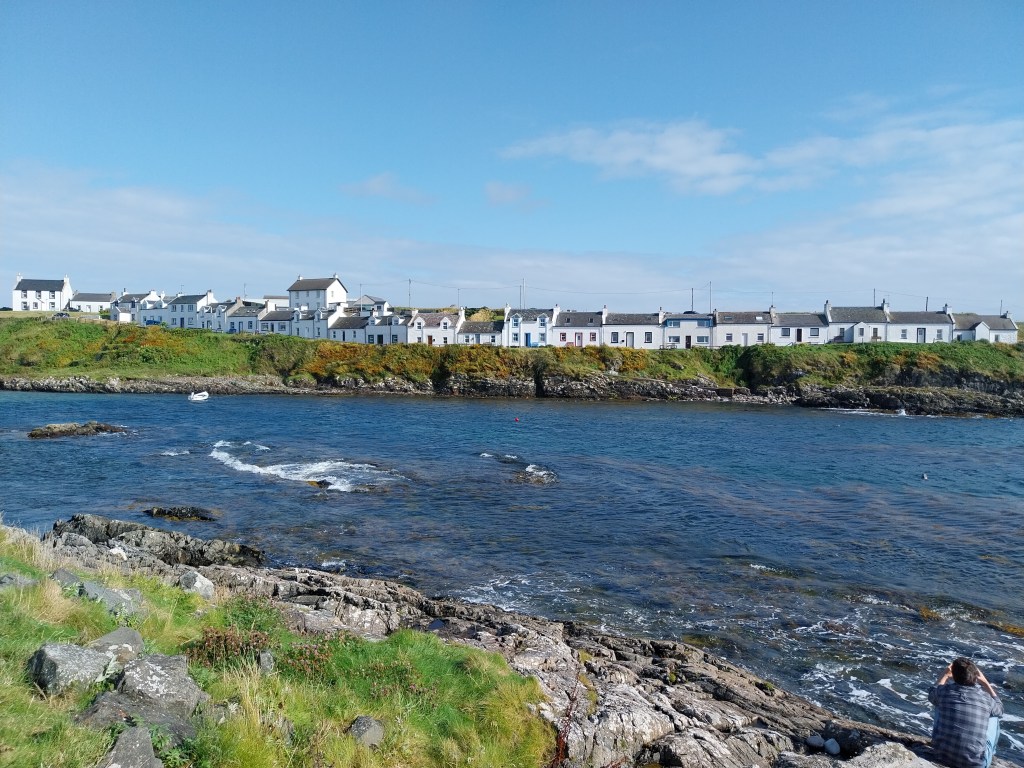
Our intention was to go for a walk, but as it was starting to rain, we jumped back in the van instead and we visited a bit of Islay we hadnโ€™t been before: the Rhinns. We drove to Portnahaven, where we had some seafood at the An Tigh Seinnse, a local pub. It was truly delicious, and we left the village very happy, also because we spotted seals in the bay. Overall, another good day on Islay.

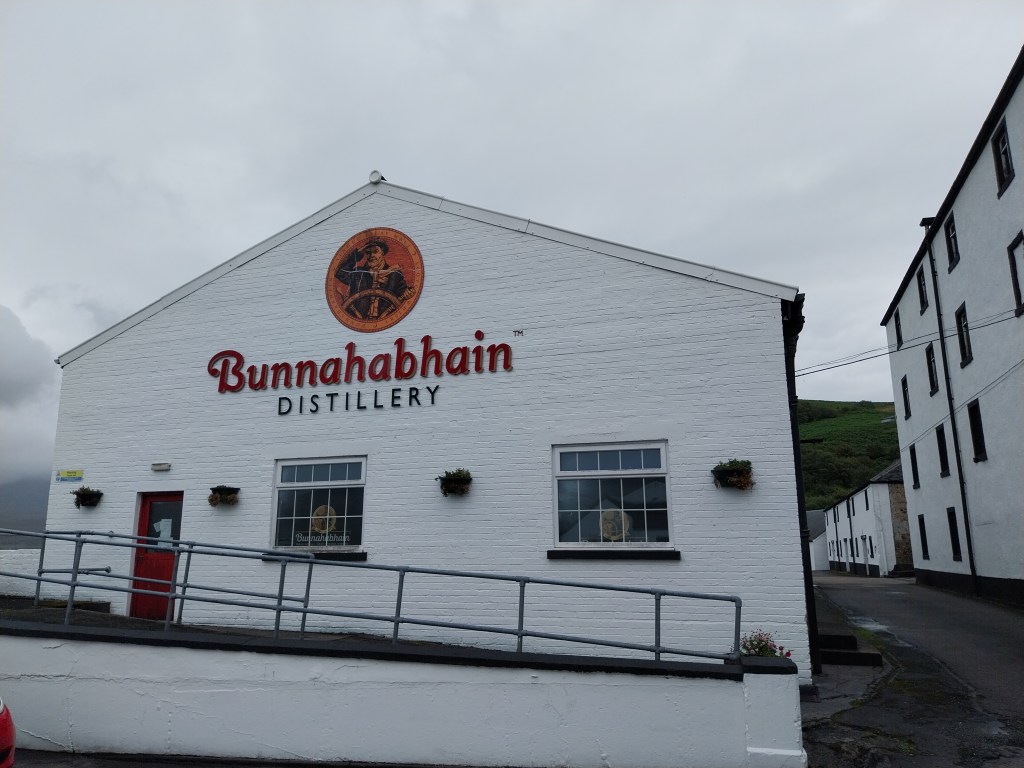
The day after we just had a walk and a coffee in Bowmore, before driving first to Bunnahabhain (Gianluigi had to catch up the tour he’d missed on the Saturday) and then to Port Askaig for our ferry back to the mainland.

Another nice wee holiday on Islay. While Bunnahabhain unfortunately dropped the ball, Ardbeg was great, with a very good tour that could fit both newbies and more seasoned whisky geeks (just a shame we didnโ€™t get to see the warehouses). In our experience so far, we think Ardbeg, Laphroaig, Bowmore, Bruichladdich and Lagavulin offer the best โ€œregularโ€ distillery tours on the island (full disclosure: we havenโ€™t done the regular tour at Kilchoman).

If we combine the two previous trips on Islay, overall we managed to โ€œbagโ€ nine distilleries, out of the ten currently working distilleries on the Island (plus Jura!), and we got to 10 with Ardbeg on this trip. As we are writing this post, we heard the news that the construction company building the 11th one, Portintruan, filed for administration, and we are wondering if this is going to delay the project. Finally, there is a 12th distillery in the pipeline: Laggan Bay, a collaboration between the Islay Boys and Ian McLeods (Glengoyne, Tamdhu and now Rosebank), but as far as we know works havenโ€™t started yet. So, probably for a while weโ€™ll be able to claim that we have visited all distilleries on Islay. Yay!

Stay tuned for some Lowland action! Until then, slainte!


Ardbeg Quintessential Tour

Price: ยฃ20.00 pp (August 2024)

Duration: 1hr 15min

Tasting: 3 drams, Ardbeg 10 (46% ex-bourbon casks), Uigedail (54.2%, ex-bourbon and Oloroso casks), Corryvreckan (57.1%, ex-bourbon and French oak)

Target: both casual and more seasoned drinkers

Value for money: very good

Highlights: the new still room

Recommended: yes

Link: https://www.ardbeg.com/en-int/visitus.html


#48.1 Islagain


Nice drams with a sour aftertaste: Bunnahabhain


TL; DR: And weโ€™re back to Islay for the second time this summer! After a quiet Friday afternoon, the next morning we had our first tasting, followed by a tour at one of our favourite distilleries: Bunnahabhain. The tasting was great as usual, but what happened afterwards was a major let down for us.ย 

Driving to Islay is always a big trip: it takes about four hours to drive from Leith to the Kennacraig ferry terminal, and then the ferry trip is another couple of hours. However, once youโ€™re on the island, you forget about all of this as the atmosphere in which youโ€™re immersed is something else. Everything slows down and there is a sense of quiet and tranquillity. Itโ€™s a strange mix between feeling energised and relaxed, with the mind finally off the million thoughts of everyday life. Maybe this a feature of all remote places.

The excuse for this trip came when our friends Glaire and Clay asked us to join them on their trip to celebrate their friendโ€™s birthday. That was a proposition too good to be true, so we happily accepted. On a Friday morning, we picked them up and started driving westward, first to Glasgow and then up along Loch Lomond, past Arrochar south-west, and along the Argyllโ€™s lochs (as we write, we can almost visualise the trip). We had a wee stop for a coffee (well, and a wee) in Inveraray, at the George Hotel. We also enjoyed their morning rolls, unbelievably tasty. A pity we didnโ€™t manage to meet our friend Ivan. The rest of the drive was uneventful, everything was on time, and we got safely to Bowmore where our friends had booked a small apartment. We parked our van not too far away and hanged out with them. In the evening, after dinner at the Lochside, we met their friends for a drink at the Duffieโ€™s, just next door. It was a nice evening but we were very tired, so after a while we just went back to sleep.

The day after we were very excited: our first time back to Bunnahabhain, after our visit in spring 2022. Bunna is one of our favourite whiskies, and it rarely disappoints us: we both love the unpeated sherried stuff, and the peated one too (itโ€™s actually one of the best peated malts in our opinion). So, the jolly party of three (Glaire skipped this one) left Bowmore on Mr Vantastic, and after a quick stop to check out the Ardnahoe shop, we got to our destination. The day was cloudy, a tad windy but not enough to keep the midges away, which in the minute we spent outside the visitor centre destroyed us!

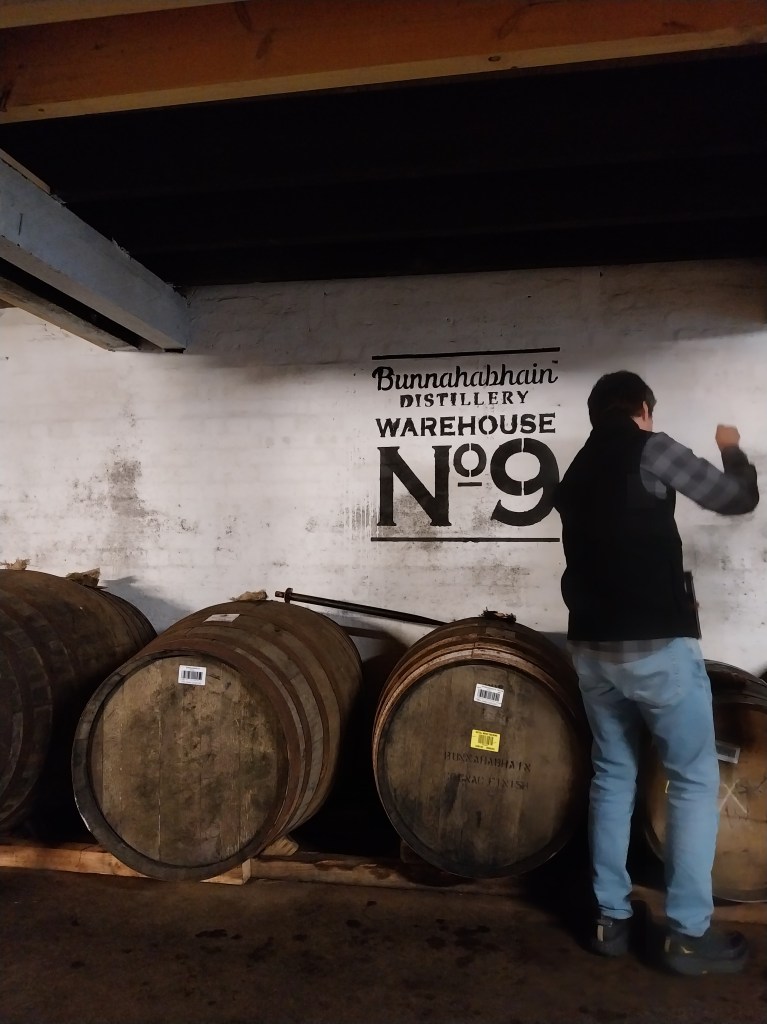
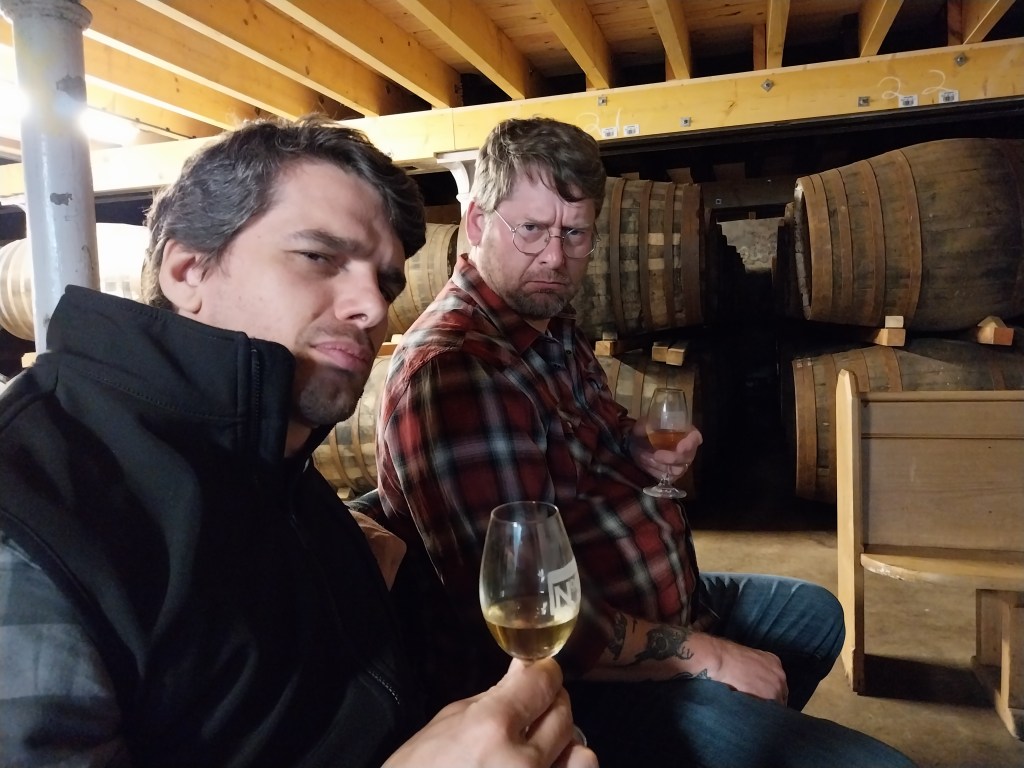
Once safely inside, we met the guide for the tasting: Matthew, which after a brief introduction walked us to Warehouse 9, the former malting floor. We were 5 people in total, so quite an intimate tour – the first time it was 13 people and felt like a crowd in comparison. The tasting was fun, as usual, Matthew was a good entertainer and very knowledgeable, and let people draw the whisky from the cask (Gianluigi tried too).

The first dram was an unpeated one, a 2007 ex-Muscat cask (16y), bottled at 53.7%. A very sweet and delicious dram. It was followed by a 2014 (9y) ex-Canasta sherry cask: this is a brand of cream sherry, which is a mix of Oloroso and PX. This dram was bottled at 58.4%, stronger at the palate as well. We moved on to the peated drams, first a 2011 vintage fully matured in a refill ex-Cognac cask (58.9%); the cask was used for a finish first, so the Cognac influence wasnโ€™t too strong. It was followed by a 2013 (10y) ex-Bordeaux red wine cask (57.9%), re-casked into this only after two years, in 2015. The last one was truly stunning, a real dirty belter of a dram.

However, here is where things went wrong. Back at the visitor centre, we were told that we could participate in the tour because weโ€™d drunk before at the tasting, and they could allow inebriated people in production. While we could see where this rule comes from (after all, we both did the 2-hour Scottish Training for Alcohol Retailers and Servers training, so we can see the logic), we really didnโ€™t expect this to happen: it wasnโ€™t written anywhere and in other distilleries (including Deanston, of the same company) we’d visited production after a tasting. There, they mentioned the T&C, which is always an โ€œout-of-jailโ€ card, but later that day we verified and that was not true (at the time, more on this later). We asked if we could have a refund, and here is the annoying part: they told us they couldnโ€™t issue any! Thus, to avoid losing ยฃ40 we decided for Teresa to go on the tour on her own (she was the driver that day, so sheโ€™d not drunk at the tasting), while Gianluigi would come back on the Monday to catch up, just before the ferry back to the mainland. The following tour description is a summary of both our tours, which were given by the same guide. They were probably in training, as both tours only covered the basics, but as we said in other occasions, you need to start somewhere.

The distillery, whose name means the Mouth of the River, was founded in 1881, originally doing peated malt, but turned to unpeated later: nowadays they do both. Their flagship malt, the Bunnahabhain 12, was first released in 1979, almost a hundred years after founding. What is really hard to wrap our head around, is that until the 60s there was no road to the distillery, so everything that went there and back was by boat, quite incredible! They have one of the iconic Porteus mills since 1964, which grinds the barley usually sourced from Simpson, on the mainland. In the resulting grist, the husk/grit/flour split is 20/70/10, as usual. It is then sent to a big mashtun (full leuter and covered by a copper lid), 8.6 tonnes at the time, where it is mashed with the usual three waters at increasing temperatures, to maximise the sugar extraction in their cloudy wort. The draff, discard from mashing, is used for their biomass plant, as opposed to many distilleries that sell or give it to farmers to feed cows.

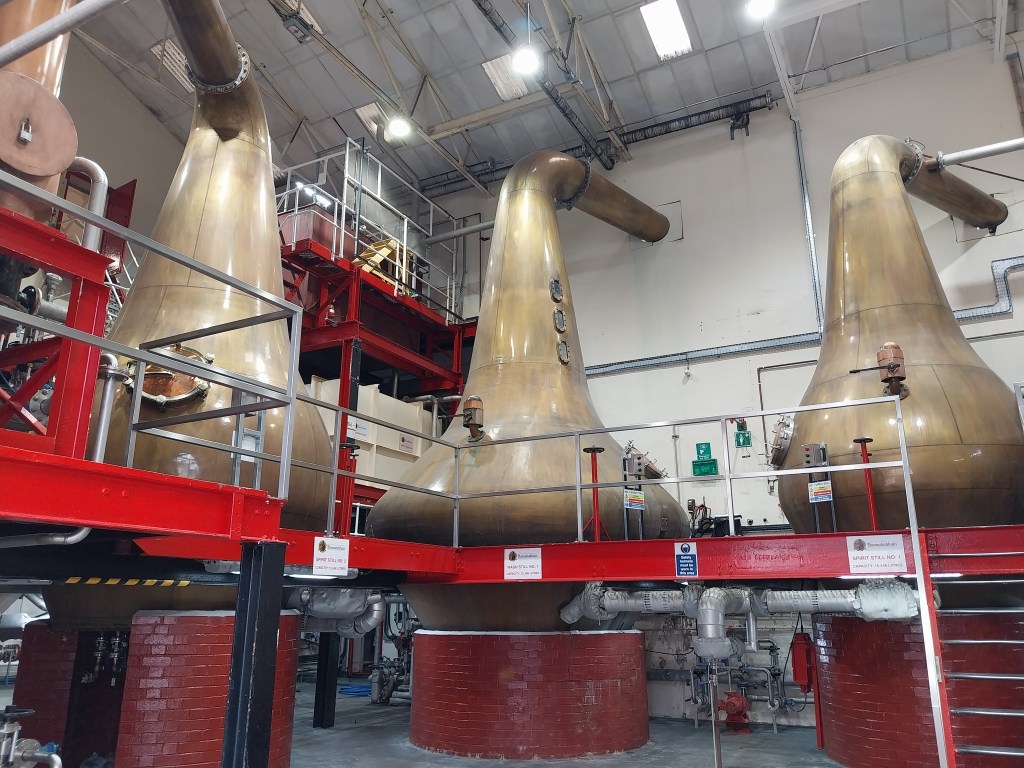
Currently, they do 23 mashes per week, which are then moved to ferment into one of the six Oregon pine washbacks for 52 hours to reach about 8%abv. They have only one pair of stills, and during the second distillation they take a cut from 74% to 64%, discarding and redistilling the head (above the first cut point) and the tails (after the second one). After a quick nip to the warehouse and a look at the pier, we walked back to the visitor centre for the two-dram tasting. Surprisingly, there wasnโ€™t their flagship 12-year old, but a dram each of the two non-age statement expressions: Stiuireadair (unpeated), and Toiteach A Dhร  (peated). Meh.

A bit deflated, we left the distillery and drove back to Bowmore, where we had a quick meal before driving to the birthday party. There, we met some very nice people and had lot of fun, playing garden games and having delicious food. In the evening, we had a final couple of drams at our friendsโ€™ flat, before retiring in the campervan.

Honestly, this was one of the most disappointing distillery visits we had recently, which made us sad as Bunnahabhain is one of our favourite whiskies. We excused the increase in ยฃ10 for the Warehouse 9 tasting compared to 2022, although for four drams it is has became quite steep. Someone could argue that they are expensive drams, they are indeed, but the reason is that they are almost insanely priced: the 20cl bottle of the whiskies we tried ranged between ยฃ45 and ยฃ60, which is ยฃ145 to ยฃ195 for a full 70cl bottle, out of touch. Also, the choice to replace the Bunnahabhain 12 with the Stiuireadair (maybe the only bad Bunna we ever tried) in the tasting after the tour is quite a strange and cheap move. Would you imagine going to Lagavulin/Caol Ila/Ardbeg/Bruichladdich, paying for the basic tour and not getting a dram of their flagship 16/12/10/Classic Laddie? Yep, not even the Evil Empire does that.

But of course, what we really did not like was the way we were treated, and the lack of flexibility or willingness to try to fix a problem that wasn’t our fault in the first place. It’s true the staff gave Gianluigi and Clay “reparation” drams while Teresa was doing the tour, but at the same time we felt we were treated like we had done something wrong, which wasn’t true at all. At that time, it wasnโ€™t written anywhere that we couldnโ€™t do the tour after the warehouse tasting. Fortunately they recently changed the website (we wonder whether it wasn’t just us having this problem). Since the reservations were made under the same name/email, it would have costed the staff 5 minutes to touch base via email before. But what really made them unprofessional was that someone could have just told us before the tasting, when we checked in (and said weโ€™d booked both tasting and tour). We would have both got drivers drams. We later complained via email, and they promised a refund for the tours (refund still not received, at the time of writing over a month later).

To wrap up this rant: will we still drink Bunnahabhain? Definitely, itโ€™s too delicious to let go. Will we still buy from the distillery? Maybe, there are many indies out there with great Bunnas. Will we go back for another tasting or visit? Probably not for a very long time.

Stay tuned for some happier action the next day, a visit to the only Islay distillery we hadnโ€™t visited yetโ€ฆCan you guess which one? Until then, slainte!

Bunnahabhain Warehouse Tour

Price: ยฃ50.00 pp (August 2024)

Duration: 1hr 30min

Tasting: 4 drams (25ml, all natural colour and unchillfiltered), 2007, 16y, ex-Muscat cask, 53.7% (70/20cl bottles for ยฃ195/ยฃ60); 2014, 9y, ex-Canasta sherry cask, 58.4% (ยฃ145/ยฃ45); 2011 Moine (peated) fully matured in a refill ex-Cognac cask, 58.9% (ยฃ155/ยฃ55); 2013, 10y, Moine ex-Bordeaux red wine cask, 57.9% (ยฃ145/ยฃ50), and a copita to take home

Distillery Exclusive: see above

Target: whisky nerds

Value for money: a tad pricey

Highlights: Warehouse 9 is always special

Recommended: yes

Link: https://bunnahabhain.com/

Bunnahabhain Production Tour

Price: ยฃ20.00 pp (August 2024)

Duration: 1hr (almost)

Tasting: 2 drams (20ml), Bunnahabhain Stiuireadair (46.3%), Toiteach A Dhร  (46.3%)

Distillery Exclusive: see box above

Target: casual drinkers and tourists

Value for money: ok

Highlights: the still room

Recommended: if youโ€™re looking for a basic distillery tour, there are better options on the island

Link: https://bunnahabhain.com/
#47 A dip in the south

A trip to Crafty distillery


TL; DR: Since our first trip to Dumfries and Galloway, there is a new kid on the block down there: Crafty distillery. Previously producing gin and vodka, now they added whisky (well, newmake for the time being) to their portfolio. As the name suggests, their operation is quite small andโ€ฆโ€craftyโ€ indeed, very interesting. 

Part of the fun of having a campervan is to have the freedom to decide on a trip at the very last minute, without worrying about accommodation (which in Scotland can be quite tricky, both in terms of availability and price). As usual, the idea for the trip came from a newly available whisky distillery tour, this time in Newton Stewart, in Galloway. Weโ€™d already been in the area, in 2022 for Teresa birthdayโ€™s trip, when we visited Bladnoch (and later Annandale and the Lakes distilleries). However, back then we didnโ€™t hike nor enjoy much the beautiful landscape (also, it was Marchโ€ฆand rainy). This time instead, we planned a few non-whisky activities too.

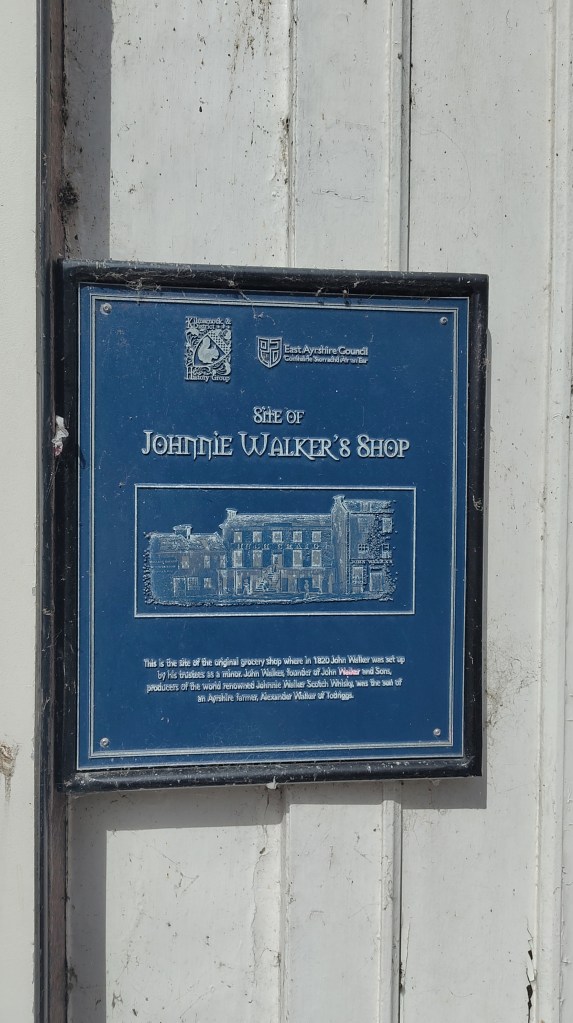
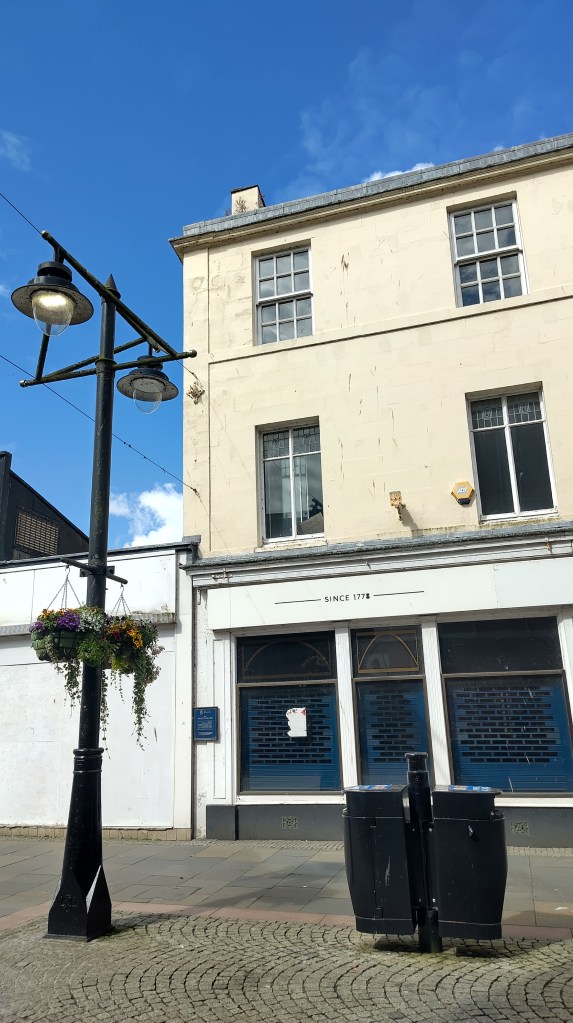
We left early on the Saturday morning, leaving a quiet and still traffic-free Leith. The first stop of the trip, just to grab a coffee and a bite, was Kilmarnock, the town that gave birth to John Walker and its 200 years old legacy. We found a nice spot on the high street (the Courtyard Artisan Bakery, delicious rolls!!), after which we had a short walk to snoop aroundโ€ฆafter all, this stop wasnโ€™t exactly random. And it paid off, we found what we were looking for: JW original shop building!

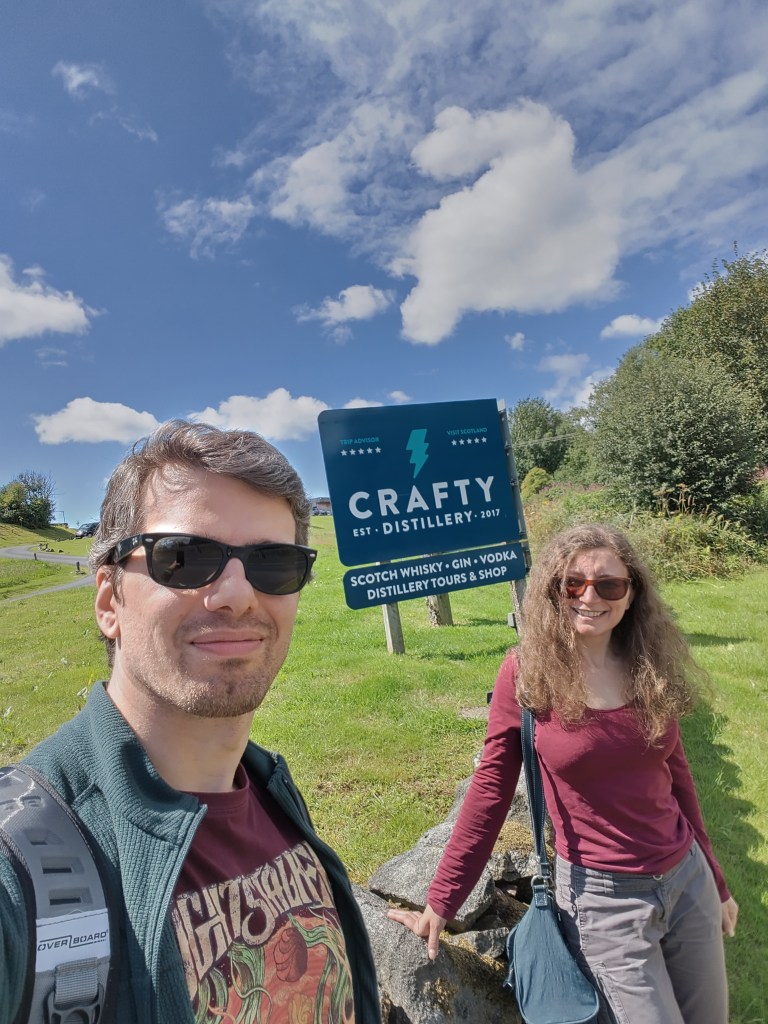
Back in the van, we drove towards Glen Trool, where weโ€™d planned to hike around the namesake Loch before going to our scheduled tour in Newton Stewart. We drove south, towards Ayr, and then in Maybole we turned slightly eastward on a narrow road (between the A713 and A714). Unfortunately, this turned out to be a bad choice (thanks Google!), as the road was interrupted with no previous signage before. So, we had to detour on even narrower roads, through North Balloch, Glengennet and Barr, to rejoin the A714 in Pinmore. It was an adventure, but it meant we were way too late to attempt a hike, so we drove directly to Newton Stewart instead, for a bite before the tour at Crafty distillery. Nothing really inspired us among the options we could find online, so we decided to park at the distillery, which is just outside the village, walk back and choose a place on the fly. However, we were in luck: that day the distillery had a special guest in the courtyard, Trikoโ€™s Deli (from Thornhill) with their delicious bagels: lunch was sorted! We still walked to the village for a coffee and to move our legs.

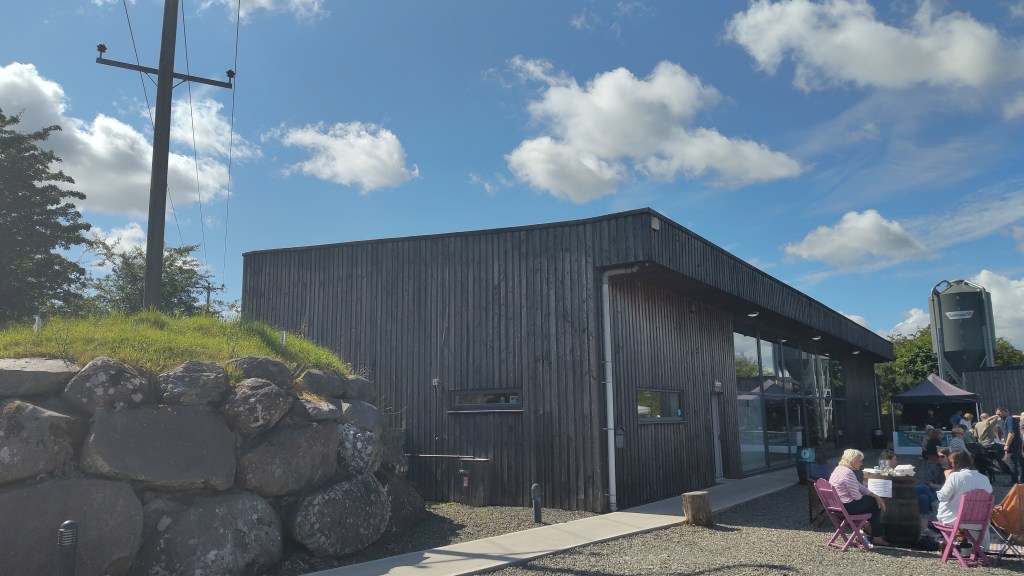
Back at the distillery, it was time for the tour. The distillery is an all-in-one building, with the production just behind the shop. Given the limited space, there are no warehouses on site, but they send their casks to mature a few miles south to Whiskybrokerโ€™s warehouses, in Creetown. The tour was very small, six people including us, plus Nicky, the distillery manager, who showed us around.

The distillery was founded in 2017, and at first they made gin (Hills&Harbour, quite popular) and vodka (24 Seven), plus a gin liqueur. Contrary to other small and craft gin brands, they do everything from scratch, and donโ€™t buy the neutral grain spirit to be redistilled. They have a column still for that purpose, from which, approximately once every 10 days, they distil a wash obtained from 100% wheat, getting a ~95%abv spirit. For the vodka, the wash is filtered and reduced, while for the gin it is redistilled with 11 botanicals from the coast and the forests around (hence, the name). Back to whisky, they get malted barley from Bairds in 15ton batches. As whisky production was a recent addition, the equipment is not placed in a way to follow the production stages โ€“ for example, the two stills are not next to each other. They do 2 mashes per week in a half-ton semi-lauter mashtun, starting with water at 63.5ยฐC. The wort is recirculated in the mashtun to allow filtration by the grist bed, so to get a clear wort. The second water is sparged, in a process similar to brewing. The wort is then moved in one of the two iStill washbacks, each one with a 2,000-litre capacity. Fermentation is quite long, seven days, and it is activated using three types of yeast: distillers, German wheat beer and Champaign. The washbacks are equipped with a cooling jacket to stabilise the fermentation temperature, which made sense given the small building, easy to warm up. They have two stills, a 1,000-litre wash still and a 250-litre spirit still, both with tube-and-shells condensers. The second distillation starts with a 10-minute foreshots run (the head), followed by a spirit cut between 77% and 69% abv, giving about 120 litres of spirit. It is then reduced to 63.5% and put into casks. Every fermentation provides wash for two distillations, from which they get about 250 litres of newmake spirit at filling strength. Other than the usual cask types, they use small American barrels, 110-litre only, provided by the Texas Whitmeyer distillery (now closed?).

After the production tour, we moved back into the bar/shop for the 3-dram tasting. First, the newmake spirit (63.5%), followed by two aged spirits: a 7-month old from an ex-PX octave cask (~62%), and a 6-month old from an experimental 5-litre Madeira caskโ€ฆThis reminded us of the approach Ardnamurchan had at the beginning, to mature spirit in smaller casks to have a rough idea of how it would be later. As a matter of fact, Nicky worked there before moving to the south of Scotland! The samples were good, of course very cask-forward, but still quite promising.

After the distillery, it was time to catch up our hike at Loch Trool. It was just a 30-minute drive from the distillery, so in less than an hour we were already on the path that loops around the Loch. Despite the car park being almost full, the path was not at all busy, so it ended up being a quiet walk. After the first bit, mostly inside a forest, the path opened up and the view on the loch was quite spectacular. It only rained for a few minutes, luckily so, as we were in the middle of the almost 11k walk when it happened!

For the night, weโ€™d found a great place to stay: Kirroughtree, managed by Forestry and Land Scotland. It is a leisure centre, with different trails, a mountain bike hire shop, and a cafรฉ/gift shop. However, it is possible to spend the night there (for ยฃ7.00/vehicle), and from the morning there are public toilets open with showers (well, ยฃ3 for a cold shower was not ideal, but better than nothing!). If it sounds simple, itโ€™s because it is: almost everything can be paid by card, at any time. We wonder why other places cannot have something like this (yes, we have mainly Islay in mind, but Dornoch and elsewhere too). Weโ€™re sure there are difficulties that we cannot think of in managing a night parking, but to be honest it doesnโ€™t look impossible. 

Unfortunately, there were also some midges, not too many but enough for us to spend the evening inside the van, sipping the leftover drams from Crafty. In the morning, we went for a short run on the hill (Teresa wasnโ€™t too happy about that) before a nice (and cold) shower and a good breakfast (Teresa was much happier then), once the cafรจ opened. One the way back, we did one further stop at the A.D. Rattray shop, in Maybole, becauseโ€ฆwhy not.

It was a nice trip, we really enjoyed the beauty of this part of Scotland, not as popular as other ones but still fantastic, while visiting a nice wee distillery at the same time. Crafty looks on a good trajectory spirit-wise, so we are looking forward to trying their single malt once ready.

Next week itโ€™s going to be a pause weekend, but then weโ€™ll be back on Islay! Until then, slainte!


Crafty Whisky Distillery Tour

Price: ยฃ20.00 pp + ยฃ2 booking fee (July 2024)

Duration: 1hr 15min

Tasting: 3 drams newmake spirit (63.5%), 7-month old from an ex-PX octave cask (~62%), and a 6-month old from an experimental 5-litre Madeira cask, plus a glencairn to take home

Target: everyone, but probably mostly suited for whisky curious

Value for money: good

Highlights: a nice place to chill out even if you’re not a whisky fan

Recommended: yes if you’re a whisky curious

Link: https://craftydistillery.com/
Other points of interest in the area

Loch Trool trail: https://www.walkhighlands.co.uk/galloway/loch-trool.shtml

Kirroughtree, Galloway Forest Park’s getaway centre: https://forestryandland.gov.scot/visit/forest-parks/galloway-forest-park/kirroughtree

Whiskybroker, Creetown: https://www.whiskybroker.co.uk/?age_consent=1

A.D. Rattray shop, Maybole: https://www.adrattray.com/


#46.5 The return of the smoke

Lagavulin and the rest of Kildalton


TL; DR: Final day on the island, it was time to visit the Kildalton coast and its distilleries. First, a tour at Lagavulin, followed by a nice lunch at Ardbeg. We closed the trip on Islay with a dram at Laphroaig, just before taking the ferry at Port Ellen.

(missed Part 4/Part 3/Part 2/Part 1?)

As usual, we woke up very early when the morning light entered Mr Vantastic. We stayed in bed and, somehow, we managed to sleep a bit longer. When we finally woke up, Justine was already up, and offered us some food. Despite being parked on the main road connecting Bowmore to Bridgend, the vehicles noise had not bothered us. We actually felt rested. We took turns to go to the public restrooms at the Bowmore square, and Gianluigi took advantage of his โ€œtripโ€ to stop at the Co-Op for some fruit and croissants.

We soon jumped on the van and drove all the way down the island, past Port Ellen, to the Kildalton coast. There, we had our first (and only) tour booked for the day, at the Lagavulin distillery. We had visited it before, but for one of their warehouse tastings, at the time (May 2022) hosted by the legendary Iain McArthur, who recently retired. This time, we were going to visit production, to find out how they make the stuff. Before the tour started, and after Justineโ€™s White Horse miniature photoshoot, we had a coffee at the Malt Mill bar, in the building of the former namesake distillery. This was a โ€œshort-livedโ€ (well, still over 50 years!) distillery built by Peter Mackie in 1908, who aimed to replicate Laphroaig after he lost control of it following a court case loss. However, it quite never made it, so in 1962 the distillery was closed. After the coffee Justine said her goodbyes, as she was going to get an earlier ferry.

The production tour started in a very cosy room with nice chairs and old memorabilia, which is just along the hall, past the shop and the tasting room. Alice, our guide, started telling us about the history and anecdotes of distilling on Islay: like that the island was the first recorded place of whisky-making in Scotland, and that the first attempt of sending an excise man from the mainland almost resulted in a hanging. Lagavulin officially started distilling in 1816, when John Johnson decided to go legal after he was caught by an excise man. We soon moved to the old kiln, where a dram of Lagavulin 16, their flagship, was waiting for us (and a sample for the driver, Gianluigi today). There, we found out that their maltings closed in 1973. The peat currently used comes from Castle Hill, near the Islay Airport, and the barley is peated to 36 ppm (phenol parts per million), a lower peat level compared to other Islay distilleries, usually around 50-55 ppm. The water source is the same as the nearby Ardbeg, brown because it is โ€œpeatedโ€, but then filtered before entering production (and no, despite the urban legends, the peaty water doesnโ€™t give the whisky any additional smokiness).

They use 24 tons of barley per day, which is first milled in a 1963 Porteus mill (usual split husk/grit/flour of 20/70/10%), before being mashed in a full leuter mashtun. There, the grist is mixed with 19,000 litres of water at 64ยฐC, while the second (and last) water is first sparged and then heated up to 84ยฐC. They currently run 4 mashes per day for 7 days a week, for a total production of 3.5 million litres of pure alcohol. The wash is then transferred in one of the 10 washbacks, 4 made of larch, 6 made of Oregon pine (or Douglas Fir). On one of the washbacks there was an โ€intruderโ€โ€ฆWe couldnโ€™t understand why it was there, but it was funny.

Fermentation is short, 55 hours only, and kickstarted with Mauri liquid yeast. At that point, one of the operation managers, Grant, โ€œjoinedโ€ the tour and contributed to the already quite exhaustive explanations that Alice gave us. They have four stills, two wash and two spirit stills. The cut they take from the second distillation is exceptionally wide, from 75% to 59-60%, taking 10 hours, plus other 5 hours of feints run (which are then mixed in the same tank and redistilled in the next batch of low wines). Together with the first distillation, that takes over 9 hours, Lagavulin features the longest distillation on Islay and one of the longest in Scotland.

After a brief stop at the beautiful pier, we went back to the visitor centre for the tasting. The first dram was Lagavulin 8y (48%): as the 16y became more expensive in the last few years, this one became more and more prevalent, now available in supermarkets as well. We had a bottle at Teresaโ€™s mother house, it is a solid dram, matured in ex-bourbon casks from the Bulleit distillery. Next up, the Distillers Edition: like the other ones in this series, it is finished in fortified wine casks, Pedro Ximรฉnex sherry for this one. The Distillers Edition used to have a vintage year, but apparently itโ€™s disappearing: Alice told us this one is around 14 years of age. As predictable, this was a sweet and decadent take on Lagavulin. Finally, a surprise: the Feis Ile 2024 edition. This year they released a heavily peated (55 ppm instead of 35) malt, aged for 10 years in refill bourbon casks: delicious smokiness, a shame it was so expensive (ยฃ175). We were also surprised by how they aligned the price of older Lagavulin 12 cask strength editions (2020 and 2021 for sure) to the most recent releases: they were all ยฃ150, for some a jump of ยฃ20 compared to the RRP at release!

Overall we really liked the Lagavulin tour, and it confirmed us that it is one of the best distilleries to visit, for sure the best in the Diageo portfolio, at least based on our experience. Alice was knowledgeable, and Grant contribution was the cherry on top: the tour was really informative! They served us four drams, more than most basic tours, although the size was a bit small (around 10-15ml).

After Lagavulin, we drove to Ardbeg for lunch. We had a nice meal and a coffee at the cafรจ inside the distillery, as the cart in the courtyard was closed. We also got some of their limited releases drams: some very tasty, a pity the bottles were a bit overpriced.

Finally, at that point we had to complete the Kildalton distilleries: so we stopped at Laphroaig, not to get the free coffee (although Gianluigi was tempted). As he is in the Friends of Laphroaig club, he could get a free dram, which was extended to Teresa and Edo by the very nice staff (and offered in a sample bottle to Gianluigi). We also bought a tasting pack: 4x15ml samples from batches of Laphroaig 10 cask strength for only ยฃ15, a steal! It was a brief stop, and once left, we drove straight to the Port Ellen ferry terminal. The sail was uneventful, we took advantage of the upper lounge to get some rest.

Next up, a last detour before driving homeโ€ฆ until then, slainte!


Lagavulin Classic Tour

Price: ยฃ22.00 pp (July 2024)

Duration: 1hr 30min

Tasting: welcome dram Lagavulin 16 (43%), plus 3 drams, Lagavulin 8 (48%), Distillers Edition (43%, PX cask finish), Feis Ile 2024 (heavily peated, refill ex-bourbon casks, 56.7%)

Distillery Exclusives: Distillery Exclusive (NAS, 53.5%, ยฃ110.00)

Target: whisky enthusiasts and casual drinkers

Value for money: good

Highlights: the pier

Recommended: yes, the best Diageo distillery tour so far

Link: https://www.malts.com/en-gb/distilleries/lagavulin


#46.4 The return of the smoke

The gentle side of the smoke: Bowmore


TL; DR: We visited a โ€œclassicโ€ Islay distillery: Bowmore! Located in the centre of the namesake village, itโ€™s very recognisable with its typical white buildings, directly facing the sea. The tour was extremely interesting, particularly the part around the malting floor, and it ended with two cask samples. What else?

(missed Part 3/Part 2/Part 1?)

Our plan for the day was a good one in principle, and we were looking forward to it: after returning on Islay from Jura, weโ€™d visit Finlaggan (check!) and Caol Ila distillery (check!), then drive to Bowmore for a tour at the local distillery, get a shower at the leisure centre (interesting fact: it is built in a former Bowmore distillery warehouse, and the pool is heated by the distillery), a few drams at the Bowmore Hotel and dinner at Peatzeria.

The tour at Caol Ila went quite long, so we had to drive fast to our next destination. During the tour we got bad news from Justine: the showers in Bowmoreโ€™s leisure centre were broken, so no showers for us that dayโ€ฆunless we went for a shower outside (oh well). We knew that it probably meant no shower for the day. We parked the van just outside the village, on the sea front, a very nice spot. As we were late, we had just enough time to warm up some “beefy bake”, a couple of pies and a sausage roll we bought the day before at the shop on Jura. A bit rushed, but not bad (the mince pies were particularly tasty).

The distillery was then 10 minutes away, and it is in front of Bowmore main square. At the check-in, the staff offered to keep Gianluigiโ€™s backpack for the tour (nice of them!), and we had just enough time to peek at the shop: other than the regular expressions (Bowmore 12y, 15y, 18y, decently priced) and some travel retails, the only other expressions on sale were 20+ years old (and very pricey). We didnโ€™t have to wait long though, because our guide Margaret (25 years in the job!) gathered us and the others (mostly a group of American tourists) to start the tour.

In the courtyard, she told us that the distillery is the oldest on Islay (and one of the oldest in Scotland), dating back to 1779. Similarly to Laphroaig (owned by the same company, formerly Beam Suntory, now just Suntory), they kept their malting floor, where they malt enough barley to cover 25% of their yearly 2.15 mlpa (million litres pure alcohol) production. They soak the barley for 26 hours, then they move it to one of the three malting floors with a chariot, 140kg at the time (100 times, for a total of 14 tons), and it stays there for 24 hours, after which they start turning it every 8 hours.

The whole process takes between 5 and 7 days, depending on the season and the barley (in our understanding, the low carbon one germinates faster). The barley is then dried in the only remaining kiln, including 10 hours with peat smoke, to reach a phenol part per million (ppm) of around 25-30. Thanks to some improvements, they moved from using 15 tons of peat per week to only 3. The kiln is run for a total of 44 hours (including the previously mentioned 10), before the malt is finally milled. To note, all the peat is machine cut and, contrary to other distilleries, theyโ€™ve been using it for 40 years. Suntory also started a peat restoration project, to achieve a sustainable peat usage, but this we knew from our first visit to Glen Garioch in October 2021. While she explained the malting process, we followed Margaret in the building, also walking on the spread barleyโ€ฆthe other attendants were eager to try a couple of runs with the rake, but we were all set (we remembered how hard it was from our visit at Dunphail).

Each mash comprises 6 tons of sourced malt and 2 tons of their own, and the grist is milled to the usual split 20/70/10% between husk, grit and flour. The malt is then transferred into a semi-leuter mashtun (for over five hours), where three runs of water are added at increasing temperatures to absorb as much sugar as possible, with the third one used as first water in the following mash. Their water source is the same as in the 1800s, although with recent improvements (which we donโ€™t remember, sorry), they reduced consumption by 70%. Fermentation, kickstarted with solid yeast, takes place in one of the 7 washbacks and lasts about 70 hours. Finally, the fermented wash is distilled twice in one of the two pairs of stills, two 30,000-litre wash stills and two ~15,000 spirit stills. The spirit cut from the second distillation is between 74% and 61-60%abv.

After visiting production, we went to the mythical Nยฐ1 Vaults, one of the warehouses on site, where we had the first part of the tasting. Other available experiences are the Nยฐ1 Vaults warehouse tasting (ยฃ65), which doesnโ€™t include a tour, and one that combines the tour and the warehouse tasting (ยฃ85), plus a few other very pricey ones. As we walked in, we saw two casks, a 2010 (13y) ex-bourbon barrel (54.3%) and a 2010 (again, 13y) sherry hogshead (53.6%). We had a dram from each, and they were both delicious. We got similar notes in the third dram, their core range 18y, very tasty despite the low abv (43%), which was served in the tasting bar. Nice touch, we could keep one of the two small glencairn glasses they’d given us in the warehouse.

Justine joined us at the tasting bar, while we were almost finished with our dram. As we came out, Gianluigi tried to get into the leisure centre, on the fence whether to risk the outside showersโ€ฆHowever, the centre was closed, despite being over one hour from the closing time indicated online (5.30pm). So, we decided to go back to the vans to drop some stuff, and then head towards the Bowmore Hotel bar, for a dram or two (it ended being one, prices were a bit high). It was finally time for dinner, which weโ€™d booked at the local pizzeria: the PEATzeria! While the fritto misto we had as a starter was quite tasty, the pizzas were a bit disappointing: the topping choice was clearly aimed to American tourists, and the pizzas were a bit uncooked. Because we were hungry, and well, it was still pizza, we ate without making any fuss, maybe we were just unlucky.

After dinner we moved to the bar next door, the Lochside. Drams were better priced there, so we had a few, including some stunning like the Mac Talla Rum cask 2024 Feis Ile: delicious stuff! But the day had been a long one, so we soon walked back to the vans for the night.

Anyway, the tour at Bowmore was very good, and Margaret was a great host. Even if itโ€™s not the cheaper among the basic tours on the island, because of the drams in the warehouse (plus the 18y), it was definitely worth every cent.

The only โ€œmehโ€ note was not about the distillery, rather about the facilities on Islay. It is always incredible to realise how little there is and in which conditions (the public toilets in Port Ellen, Bowmore and Jura are quite old), in particular when thinking how much money whisky brings in. Other than the Bowmore leisure centre, the only other available shower was at the Port Charlotte community centre, but only after 2pm. On the contrary, in other trips we found all-day open showers: in Tobermory (Mull) they were open from 9 to 5pm (cash only), but in Carbost, in front of Talisker distillery, the toilets/showers are open 24/7, and you can access after a card payment (and weโ€™ll have an even better story in the coming weeks!). We wonder why facilities like these are not on Islay.ย 

Stay tuned for our last distillery tour on Islay (for the moment)! Until then, slainte!


Bowmore Distillery Tour (with Cask Exclusive Tasting)

Price: ยฃ25.00 pp (July 2024)

Duration: 1hr 15min

Tasting: 3 drams, 2 samples from the cask, 2010 ex-bourbon barrel (54.3%) and 2010 ex-sherry hogshead (53.6%), Bowmore 18y (43%), and a complimentary mini glencairn

Distillery Exclusives: none

Target: whisky curious

Value for money: good

Highlights: the building and the cask samples

Recommended: pricier than other tours, but worth it

Link: https://www.bowmore.com/en


#46.3 The return of the smoke

Islay’s Juggernaut: Caol Ila


TL; DR: Back on Islay, we first visited Finlaggan, the site of the castle of the Lords of the Isles, in the middle of a loch: a charming place. We then drove to Caol Ila distillery for the first visit of the day. Itโ€™s the biggest on Islay, recently renovated, definitely worth visiting on a good day for the view from the tasting room.

(missed Part 2/Part 1?)

We rarely sleep past 8am in the campervan, but this was one of the rare occasions. A combination of cozy and nice temperature, and not too much light (also thanks to a truck protecting us from direct sunlight!). We felt well rested, and after a nip at the loos (public toilets were just on the other side of the very narrow street), we had breakfast. There wasnโ€™t enough time to do anything else, so we jumped in the vans and managed to take the first available Caolin Ferry back to Islay.

Caol Ila distillery is very close to the Port Askaig pier, and we had over an hour before the tour. Instead of hanging around, together with Justine we decided to visit Finlaggan, less than 10 minutes up the road towards Bowmore, with the last bit on a single-track road.

This is the historic seat of the Lords of the Isles, the ancient rulers of the area, before it was absorbed by the Scottish crown. Itโ€™s in the middle of Loch Finlaggan, just a few minutes walking from the visitor centre (still closed when we arrived). There used to be a castle/fortified house there, built over different centuries, but the ruins we can see today are from the 13th century. Itโ€™s a very beautiful and quiet place, definitely worth a visit if you have some time to spare. While we were visiting the site, the visitor centre opened, but we didnโ€™t have time to check it out: it was time to go visit Caol Ila distillery.

It took just a few minutes to drive back from Finlaggan, after which we left Mr Vantastic in the new parking lot, next to the electric vehiclesโ€™ charging points. From there, we walked on a very nice wooden footbridge to enter the new visitor centre, from which you get some very nice views of the production site and the Paps of Jura (to note, for accessibility you can drive closer to the building). The visitor centre is โ€œcarvedโ€ inside a warehouse, of which they sacrificed a portion for visitors. Itโ€™s clearly new, with a typical Diageoโ€™s style shop, not as nice as the Lagavulin one, but fortunately without that airport duty-free look as Taliskerโ€™s. At the bottom of the shop, there is a very long bar, and behind it, the โ€œtasting roomโ€: a few tables in front of a very large glass window with a magnificent view. On that day, the sunshine definitely made the experience memorable!

As we walked in, they offered us a welcome dram: a choice between the blended malt Johnny Walker Islay Origin (a blend of Lagavulin and Caol Ila) and the Caol Ila 14y Four Corners of Scotland (the expression they brought in, together with Cardhu, Glenkinchie and Clynelish ones, to celebrate the โ€œJohnny Walkerโ€-ification of these distilleries). A few minutes later, we gathered at the tour starting point with our guide. Our guide was very new to the job (apparently ours was their second tour ever), so it wasnโ€™t the most informative of the experiences: oh well, everyone needs to start somewhere (and we complemented the info with the Malt Whisky Yearbook 2024)!

We started in a room one floor below the visitor centre with a nosing experience of some aromas (as far as we remember, peat, supposed-sweet, sea and maritime spice?). It was followed by an 8-minute video about the history of the distillery and the crucial role it plays in DCL/Diageoโ€™s blends, accompanied by animations on a relief map, with wee boats moving from Islay to the mainland and back. There was also a very informative wall display, with the parallel histories of Caol Ila and Johnny Walker. Overall, we felt this introductory part was a bit too long (slightly over half an hour), to the point that Gianluigi started doubting that thereโ€™d be a tour of production!

It was included indeed: we went down the stairs, crossed a courtyard to the distillery building, walking past the usual Johnny Walker statue and the old visitor centre (a small office on the ground floor). First, we visited the mill room, where a Porteus mill has been grinding malted barley since 1979, when the distillery was rebuilt. The husk/grit/flour split in the grist is the usual 20/70/10%, and the grist is then moved to the full Leuter mashtun for a slow mashing process to obtain a clear wort. They are equipped with eight wooden washbacks and two stainless steel ones, where fermentation lasts around 55-60 hours. This space, where mashtun and washbcks are, is very clean and tidy and looks very similar to other Diageo distilleries, including a table where all the processes are showcased โ€œin miniatureโ€.

The still room is quite spectacular, with six stills aligned next to the glass windows. Of course, three of them are wash stills, for the first distillation (with descending lyne arms) and three are spirit stills, with straight lyne arms for the second distillation. After this, we went back to the warehouse/visitor centre, and we visited a part of the warehouse that is half-way between the two: many casks are still lying there, but the space is mainly used for other visits or tastings. There, we got to smell a few different casks from the bunghole.

Finally, it was time for the tasting, in the area the back of the bar. We knew the drill, 3x15ml drams, drivers package ready to be filled with a small funnel, and a cocktail (the alcohol-free version for Gianluigi was based on a smoky tea, quite interesting, while for the others the base was Johnny Walker Black Label 12y). We got there a bit late, so by the time the tour was supposed to end, the guide had just finished to introduce the drams (and in fact, they left us to sip on our own). We started with the Caol Ila 12y, the distillery flagship: there is a reason why this distillery is called โ€œMr Consistentโ€, as even this widely available expression (watered down to 43% and probably chill-filtered) is a nice one. The next two were the two expressions only available at the distillery: the Distillery Exclusive and the Bottle-your-own (see below for specs). Both yummy, as usual, although they were way too pricey for what they are.

Caol Ila is by far the biggest distillery on Islay, with 6.5 million of alcohol litre per annum production, and because of this it tends to be one of the go-to peated expressions for independent bottlers, at much more reasonable prices. As a confirmation, the last three Feis Ile bottlings (2022, 2023 and 2024) were available at the shop, literally gathering dust. For example, the 2024 expression is a 13y sold at ยฃ185 – who would buy it considering that indies Caol Ila’s of similar age sell for about half that price?

Once Teresa and Edo finished their drams, we had to leave very quickly, as we didnโ€™t have all the time we thought we’d have before the next visit, and we needed to get lunch too! Anyway, it was nice to finally get to see Caol Ila: probably, among Diageoโ€™s whiskies, it is the one we drank the most throughout the years. Also, this was the only Diageo distillery we hadnโ€™t visited yet (among the ones open to the public, plus Mortlach, Linkwood, Dailuaine and Auchroisk) โ€“ a six-year journey since we started with Oban in 2018. Of course, Brora is still missing – do you think theyโ€™ll will allow us in with a discount since we visited all the other ones???

Coming next, another of Islayโ€™s classic: Bowmore! Until then, slainte!


Caol Ila Flavour Journey Tour

Price: ยฃ21.00 pp (July 2024)

Duration: 1hr 30min

Tasting: a welcome dram, choice between Johnny Walker 12y Islay Origin blended malt (42%) and Caol Ila 14y Four Corners of Scotland (53%), plus 3 drams at the end, Caol Ila 12y (43%), Distillery Exclusive (NAS, first and refill ex-bourbon and first fill re-charred California red wine, 57.4%) and Fill-your-own batch 2023/003 (10y, 1st fill ex-bourbon cask, 55.1%)

Distillery Exclusives: Distillery Exclusive Caol Ila (NAS, 47.4%, ยฃ100) and Fill-your-own batch 2023/003 (10y, 55.1%, ยฃ130)

Target: tourists and beginners

Value for money: good

Highlights: the tasting room facing the sound of Islay and Jura

Recommended: only if youโ€™re really keen, but we think there are better options on the island for a standard tour (the view makes it worth though)

Link: https://www.malts.com/en-gb/distilleries/caol-Ila


#46.2 The return of the smoke

Off to Jura


TL; DR: After Port Ellen, we drove to Port Askaig to catch the Feolin ferry to Jura. Very different landscape here, except for the main settlement it feels very remote. The Jura distillery is tucked between the hill and the sea. Despite its not great reputation, we had some very good drams, and a great time overall.

(missed Part 1?)

The tour at Port Ellen overran slightly, about 10-15 minutes, which eroded the time we had to get to Port Askaig to catch the Feolin ferry and get to our next destination: the Isle of Jura. We sprinted in the vans, us first and Justine behind, and got there at the exact time it was scheduled to leave, just to see the ferry leavingโ€ฆto our surprise, as it doesnโ€™t happen often with Scottish and British public transport to be so on time. We were so close to make it that we joked about โ€œStarsky and Hutch-ingโ€ our way into the boat with a sprint, but it would have been a big ask to Mr. Vantastic. Oh well, the next ferry was only an hour later, still on time for our tour. We started fixing ourselves some foodโ€ฆbut the ferry came back right away, and the staff decided for an extra trip (probably they needed it to accommodate two big lorries coming the other way). While Gianluigi drove on the ferry and then from the pier to Craighouse (the main settlement on the island), Teresa and Edo were holding the half-cooked food in the back (thankfully there are no pictures of this clumsy moment).

The landscape looked different from Islay: more trees, less buildings, and the presence of the two Paps (the hills that can be seen from the north-eastern side of Islay) is certainly very notable. Fun fact, on the island there are more deer than people (nowadays about 250). Jura is also famous for being the place where Orwell wrote his masterpiece 1984.

Anyway, once in Craighouse, we parked the vans in a nice spot Justine had found, behind a multipurpose warehouse (including the Deer Island Rum distillery, closed unfortunately) and next to an old pier. A great spot, quiet and with some tables and benches tooโ€ฆ just a shame that as soon as the wind calmed down, midges appeared to torment us. We just had time to walk to the Antlers Bistro for a coffee before going to Jura distillery for the tour.

The visitor centre is quite small, only a small entrance hall and a wee shop. Other than some merchandise and their full range of whiskies, they also have some special editions, a couple of distillery casks, bottlings, and the travel retail range. The guide for the day was Fiona, a local who has worked there for many years. She walked us through the shop and some offices to the courtyard, where she started introducing the distillery history, from its establishment (1810) to the first license (1831), and the troubled late 19th and early 20th century, when it closed. In 1960, the distillery was acquired by Charles Mackinlay & Co (of the famous Mackinley blend), rebuilt and extended, and in 1963 they restarted distilling. Since then, the distillery has never stopped producing (except for maintenance of course), not even during the whisky loch (when they just reduced production to 3 days per week).

Their main malt supplier is Crisp, mainly Sassie and Lauriet, and they do heavily peated runs four weeks per year. The mill, a classic Porteous, was bought second hand in 1963, and never changed since. Their grist ratios are a bit different compared to others, with 15% flour, 25% husk and only 60% of grit. They do 28 5-ton mashes per week, working 24/7, and use the typical three waters at increasing temperatures (64.5, 75 and 85ยฐC) in a semi-leuter mashtun. Each washback (six in total, all stainless steel) takes two full mashes, to which they add 150kg of Mauri yeast, left fermenting for about 60 hours. The two pairs of stills are heated by steam coils and used for a typical double distillation (7 hours the first one, 8 the second one), with a cut between 72% and 64% abv. Some casks are filled on site, usually the ones destined to stay in one of the four warehouses on the island (total capacity of 24,500 casks), while all the vatting and bottling (including re-racking for finishes) happens at Whyte and Mackayโ€™s mainland sites in Invergordon and Grangemouth. To note, they recently demolished part of a warehouse to make space for a biomass boiler, so to decrease their environmental impact.

After the tour, it was finally time for the tasting! A few words here: Jura whiskies, despite being best sellers in the UK, tend not to have the greatest reputation among whisky enthusiasts. Sales are probably driven by the notable number of expressions available at supermarkets (the Bourbon Cask, formerly known as โ€œJourneyโ€, the 10y, 12y, 14y Rye Cask, Seven Woods, Rum Cask, Red Wine Cask, Pale Ale Caskโ€ฆhave we forgotten any?), so well played to them. But quality-wise? Well, letโ€™s say that in our opinion itโ€™s not the best whisky you can find, not even for the money probably (when on sale, these expressions can be quite cheap). We had one bottle of Jura Journey a few years ago and tried very few independently bottled whiskies (maybe 2 or 3), so we were very curious to taste other expressions and didnโ€™t really know what to expect. This is why, when we booked this tour, we went for the extended, fancier tasting.

A micro-warehouse for the tasting.

The tasting was set up in a dedicated warehouse-ish space (a damp room with a few dozen casks). Because weโ€™d already parked for the night, we could all drink, yay! First dram, a 15y whisky finished for 1-2 years in oloroso sherry (42.8%), bottled for the south-east Asian market. Very sweet, a good start but not our thing (and the colour was suspiciously dark, which made sense given the target market). The second dram was definitely better, a travel retail 19y โ€œThe Papsโ€ (45.6%), finished in a PX sherry butt (40 years old!). However, the third dram was the one where things started to get serious. It was a distillery cask, 1st fill ex-bourbon barrel, vintage 2016 (7.5y) and bottled at 60% – a very fruity dram, not too hot despite the high abv, and it took water very well too. The fourth dram was another distillery cask, same cask but a bit older (vintage 2008, 15y) at a slightly lower abv (55.5%), a very nice dram too. Finally, we had a choice between an unpeated 33y (distilled 1990, bottled in 2023) from a PX hogshead (44.8%), and an 18y heavily peated ex-bourbon barrel (distilled 2005, bottled 2023) at 53.7% – being four of us, we got two of each and we shared. They were both delicious in their own very different way.

…with this one quite delicious.

After the distillery we went for dinner at the Jura Hotel. Our attempt to enjoy a pre-dinner pint outside lasted about 3 minutes, before the midges swarmed and made us run for a table inside. We had good time, good food, tasty pints and, worth noting, we found very clean bathrooms and strong Wi-Fi too! We soon retired to our campervans, to enjoy a last dram before a good night sleep (no wind this time!).

Overall, we loved the visit and the tasting, and Fiona was a great host, so money totally well spent. During the tasting we realised Jura can produce very tasty whisky, so probably the issue with their range is downstream. What is a bit strange, to us, is that all the supermarket expressions (all well below 46%, probably chill-filtered and with E15Oa too) seem to be aimed for the casual or novice drinker, none of them targets non-beginners. Other distilleries/brands (Glen Scotia, Loch Lomond, Laphroaig, Pultney, Tomatin, just to name a few) tend to target a wider range of drinkers, itโ€™d be interesting to understand what drives Juraโ€™s different approach.

Stay tuned for our time back on Islay! Until then, slainte!


Jura Distillery Exclusives Tour

Price: ยฃ50.00 pp (July 2024)

Duration: 2hr

Tasting: 5 drams, Jura 15 Sherry cask East Asia exclusive (42.8%); 19y The Paps travel retail (45.6%); Distillery cask 7y (60%); Distillery cask 15y (55.5%); choice between 33y ex-PX cask (44.8%) and 19y heavily peated ex-bourbon cask (53.7%), and a complimentary glencairn

Distillery Exclusives: Distillery cask ex-Bourbon 7y (60%, ยฃ90.00); Distillery cask ex-Bourbon 15y (55.5%, ยฃ120.00)

Target: whisky geeks

Value for money: good

Highlights: the island and the tasting

Recommended: if you want to try some good Juraโ€™s, definitely!

Link: https://www.jurawhisky.com/en/


#46.1 The return of the smoke

The not-so-new guy on the block


TL; DR: More than two years after our first trip to Islay, we are finally back! This time, with Mr Vantastic and two special companions, we visited (almost) all the distilleries we didnโ€™t manage the first time, starting with one that, 2 years ago, was still a building site: Port Ellen! A very beautiful site, with an experimental twist. 

It is not by coincidence that Islay is called the Queen of the Hebrides. There is something magical about this island, and it is not just the whisky. Maybe it has to do with the effort and the long trip to get there (well, unless you fly from Glasgow), that will take you through the west of Scotland and then, after a 2-hour ferry trip, finally on the island! But yeah, once you know, you know.

Our last trip, in spring 2022, was quite unfortunate: the rented campervan broke, so we had to book last-minute accommodations and cabs. During the only walk we did, it pished down rain, so we were also wet and smelly. But somehow, we managed to visit all the six distilleries weโ€™d scheduled (Bunnahabhain, Ardnahoe, Kilchoman, Bruichladdich, Lagavulin and Laphroaig).

This trip was a long time coming, we would have liked to make it back in 2023,  but we couldnโ€™t. Another idea was to go earlier this year  (2024, if youโ€™re reading in the future) but the plan fell apart (well, we went to the stunning Raasay instead!). What finally made us take the step was the reopening of Port Ellen distillery. It originally opened in 1825, and the whisky was mainly used in blends. It was closed down by DCL (Distillery Company Ltd) during the whisky loch of the 80s, so together with many others, it didnโ€™t make it to the new millennium. In the meantime, however, the whisky became a cult among single malt lovers, particularly the well-aged expressions (according to some experts, their malt was not well regarded at young ages, one of the reasons for closing it down). Therefore, similarly to Brora (and Rosebank, by Ian McLeod), Diageo decided to revive it: basically, it was rebuilt from scratch, near the Port Ellen maltings, to the west of Port Ellen village. It started production earlier this year. It is open to visitors, but with Diageo being Diageo, the tour is astonishingly priced at ยฃ200 (two-fricking-hundred)! Unlike Brora though (where the two available tours costed respectively ยฃ350 and ยฃ600 the first time we drove by, now -July โ€™24- changed to ยฃ225 and ยฃ900, ludicrous), they offer a once-a-month open day (first Friday or Saturday of the month), running several free tours per day: yay!

We took advantage of it as soon as we could, and we booked a spot for the July open day, for us and our friend Justine (Kask Whisky). Because it was on a Friday, we organised the whole weekend around it, with visits to other distilleries too. A couple of weeks after we’d booked everything, Edo (Gianluigiโ€™s youngest brother) told us he wanted to come visit in July, so he joined us too. He likes whisky, and according to Gianluigi, he has the best palate of the family (heโ€™s an exceptional cook!). So there we were, on a Thursday morning, ready for our trip: at first the two of us, Edo, and Mr Vantastic, on the road.

Our ferry was booked for the evening, so we did a few stops in between: Fyne Ales brewery (always very tasty pints) and for lunch at Loch Fyne Oysters, pricey but the array of seafood we ate was exceptional! We also briefly stopped at the George Hotel, Inveraray, to say โ€œhiโ€ to our friend Ivan (and for Gianluigi and Edo to get a dramโ€ฆTeresa was driving at that point). As we drove towards Kennacraig, the weather got worse, so much that they changed our destination, Port Askaig instead of Port Ellen (sad trombone sound). The wind was howling on Islay as well, but we drove straight to our parking for the night, while admiring some piles of peat drying out along the way. We parked our van next to Justineโ€™s Post Dram Prat and had a small meal and a few drams (the Ardray, a new Suntory blended scotch, was the surprise of the evening), before slowly drifting to bed.

Because of the wind, which was still blowing in the morning, we couldnโ€™t get much sleepโ€ฆespecially Edo, who slept in the pop-up roof. We woke up early and had breakfast at the van with Justine. We were a tad slow, so before our visit we didnโ€™t do anything except packing up the van, but we still arrived early at the distillery. Indeed, we were the first ones there, and at first everything looked closed. Fortunately, about 10 minutes before the tour starting time, someone opened the door and checked us in: for the first tour they were waiting for other 14 people, so 18 in total!

As everybody arrived, we started the tour with Allan, the distillery manager. He is very experienced, as he worked on all the four Diageo sites on the island (3 distilleries and the maltings), so we were quite excited. He started by showcasing the installations in the visitor centre hall. A note here: we call it โ€œvisitor centreโ€, but it is clearly different from what we are used to, even in comparison to other Diageo recently renovated distilleries. It is very modern looking and bright, and there is no shop (unless it is upstairs, where we didnโ€™t go). The clear intention was to set up something classyโ€ฆHowever, in a clumsy way, as to us it looked like a fancy residence or office lobby.

One great feature, instead, is their use of mostly renewable sources for energy. The distillery was (re)built with the intention of making it as carbon neutral as possible, which is very valuable. As we moved to production, Allan showed us their permanent lab, which is quite unique: here, a full-time analyst checks the peat levels in the barley and the spirit, thus serving both the distillery and the maltings.

We then took a look at the mill room, a very large space with a very modern mill, which we expected as the site has been totally rebuilt (so no Porteous here!). Back to the main production room, we were right in front of the mashtun: a stainless-steel big baby, semi-Leuter, with a shiny lid.

Look what’s mashing!

At the moment, they do 11 mashes per week, mainly with Concerto barley but really with โ€œwhatever comes inโ€, and they have no silent season (except for maintenance, when required). They do mashes of different sizes, one of 5.5 tons for the experimental stills, and one of 7.5 tons for the regular stills (more on that later). With less water runs per mash, this is one of the steps where they save on water, which is common to many Diageo distilleries nowadays. The process is like sparging when brewing beer, in our understanding, with only one water gradually heated up. The wort is then moved to one of the six Oregon pine washbacks, each one with a capacity of 52,000 litres, but they never reach these levels. Fermentation lasts between 92 to 130 hours, quite a long one. Allan allowed us to nose the wash, and if we wanted taste it, but none of our party did.

Here is the interesting bit: the old stills that were in the distillery at the times of closing down in the 80s disappeared: they were sent to India and from there they lost track. So, the engineers at Diageoโ€™s Abercrombie had to rely on drawings and sketches to recreate the new ones with the exact same shape. With these stills, the process is the usual: they run a double distillation, with the second cut taken after 25-30 minutes of foreshots, from 72-73% down to 60% (a large one!). The spirit is filled in both tankers and casks on site, usually diluted at 63.5%. However, they also have a second pair of stills, similar but smaller, that they use to experiment. The most interesting part is that instead of having the usual 3-part second distillation (foreshots or head, middle cut or heart, and low wines or tail; the first and last discarded and usually redistilled), the safe can separate out up to 10 different cuts, other than the discarded parts. These donโ€™t get mixed together, and they are used to study and experiment how different cuts provide different flavours to the whisky, and in particular how this relates to the whisky peatiness and smokiness. We got to nose samples, and (maybe the power of suggestion) the difference was definitely there, in particular when comparing the first sample to the last.

…and experimental spirit safe on the other side.

After this, the tour ended. In general, the distillery manager giving the tour, and in particular the last bit, made the visit really worth it, even if we didnโ€™t manage to try any sample (which we kind of expected). Overall, it was great to see this very beautiful new old distilleryโ€ฆWeโ€™d say weโ€™re looking forward to the whisky in the coming years, but we know weโ€™ll hardly be able to get it, if things stay the way they are now in terms of prices.

Stay tuned for more whisky action, and a little spoiler: we had to take another ferry! Until then, slainte!


Port Ellen Open Day

Price: free (open day, July 2024)

Duration: 1hr

Tasting: nope

Distillery exclusive: none

Target: locals and whisky nerds

Value for money: well, it’s freeee…

Highlights: the beautiful new architecture and the experimental stills

Recommended: yes if it’s the open day

Link: https://www.malts.com/en-row/distilleries/port-ellen