#23.1 On the run again: Dramathon 2022


Visiting Glenfarclas before a run-y day


TL;DR: Oops we did it againโ€ฆthe Dramathon! After all the fun we had in 2021, back in October 2022 we participated for the second time. This year we both ran the half-marathon, always quite a challenge, but we rewarded ourselves with 3 distillery visits: first off, Glenfarclas! 

First of all, Happy New Year! We hope you had a great start of 2023 and that your year will be as good as you wish, full of joy and (possibly) great drams! We just started a 4-week dry January-ish which, after a couple of weeks back in Italy and the New Year celebrations, we both felt was much needed.

Last year was full of drams and great whisky experiences, so for the first post of 2023 we are going back a few months, in mid-October. Following the great experience we had in 2021, last year we decided to run the Dramathon again. However, this time we both decided to run the half-marathon: Gianluigi with the objective of improving his 2021 timing, Teresa with the objective of completing her first long race.

Similarly to the previous year, we left on the Friday morning to sneak in a distillery visit in the afternoon. You know, while in Speysideโ€ฆBecause of our multiple trips, there are no many distilleries left to visit in the area, but we were still missing a very special one: Glenfarclas!

This distillery is famous for a few things: still family owned, it was the one that converted Pip Hills, the Scotch Malt Whisky Society founder, to whisky appreciation, which in turn led to the Society foundation. They mature almost all their stock in ex-sherry casks (a few exceptions in ex-bourbon are mostly for independent bottlers), and all their doors are painted in red (and no, we didnโ€™t want to paint them black).

Wee stop to nose around Ballindalloch.

The drive there was mostly uneventful. We only realised too late that on the road from the A9 exit to the distillery, the main Speyside road, there are very few places where you can get a warm meal. Fortunately, another distillery came to our help: the Lagmore Cafรจ at Ballindalloch was open, and it was a very nice one too: lovely staff, good food and reasonable prices (weโ€™ll be back!).

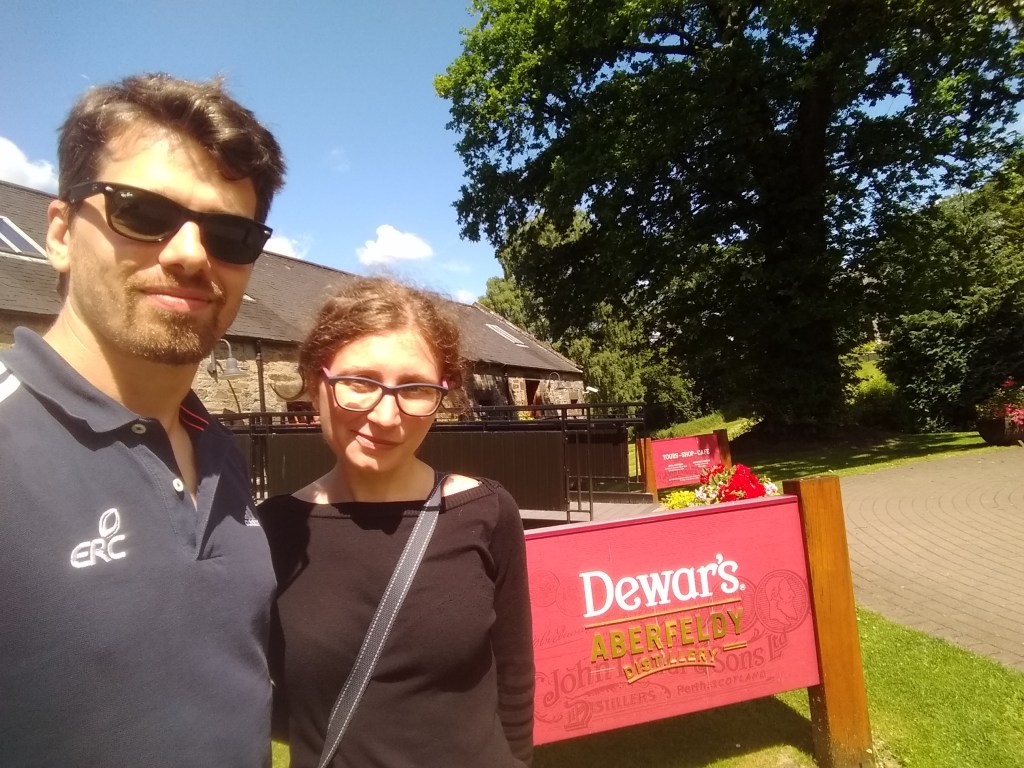
Unfortunately, the distillery is open to visitors only during weekdays, so itโ€™ll have to wait (and tours are a bit pricey too). After lunch, we arrived at the distillery and checked in. We were a bit early, so we had time to scout the shop: we were glad to see that they are maintaining reasonable prices (in spite of the increase of their 25y from ยฃ125 to ยฃ220) and that they are quite competitive compared to the speciality shops prices.

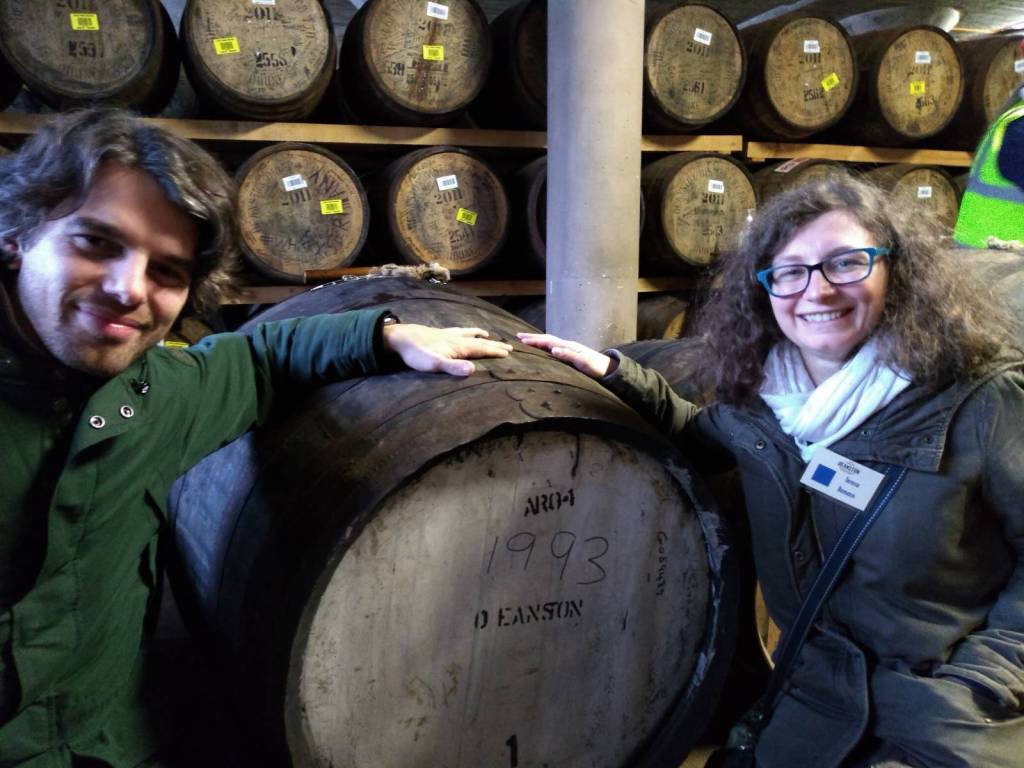
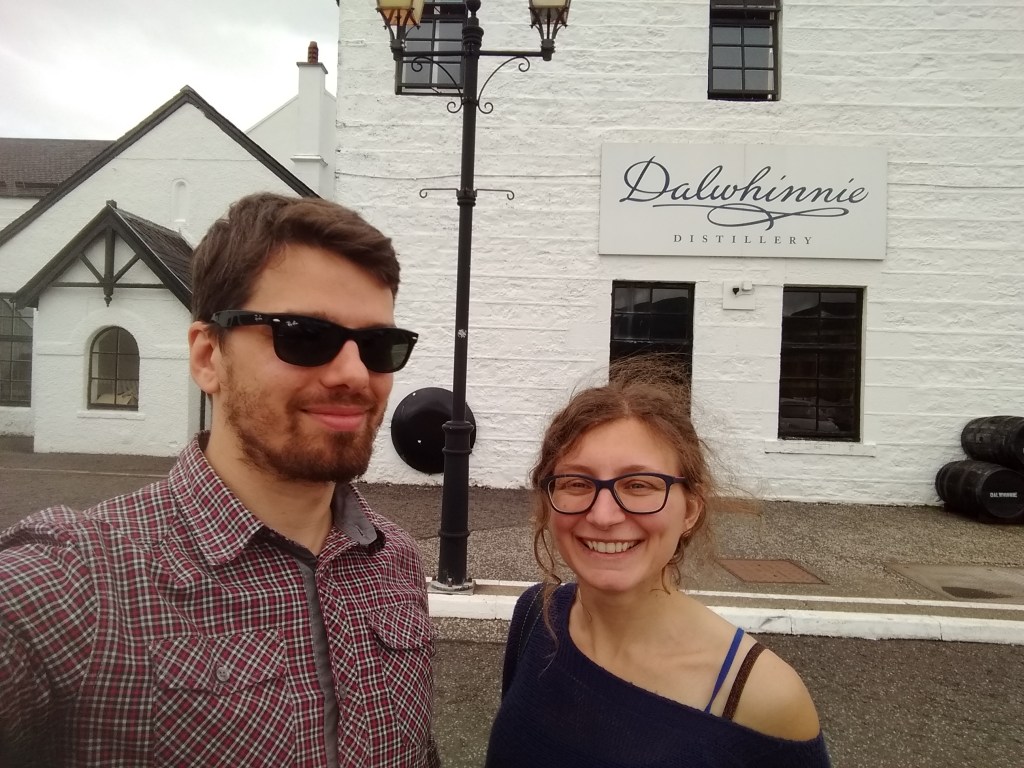
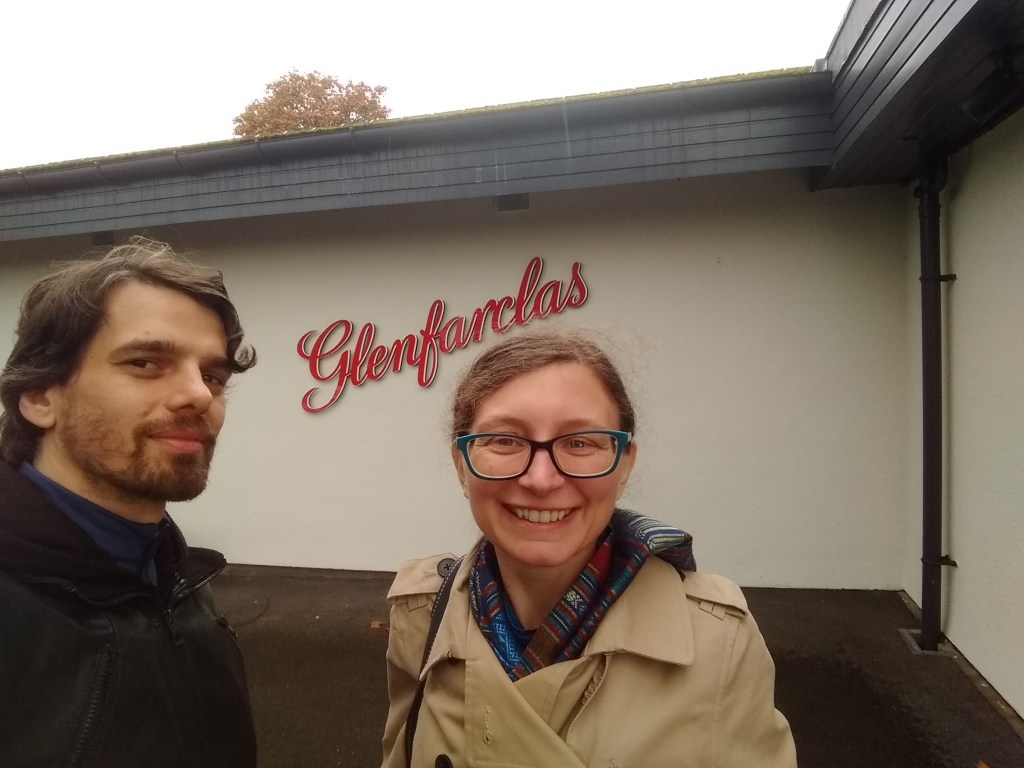
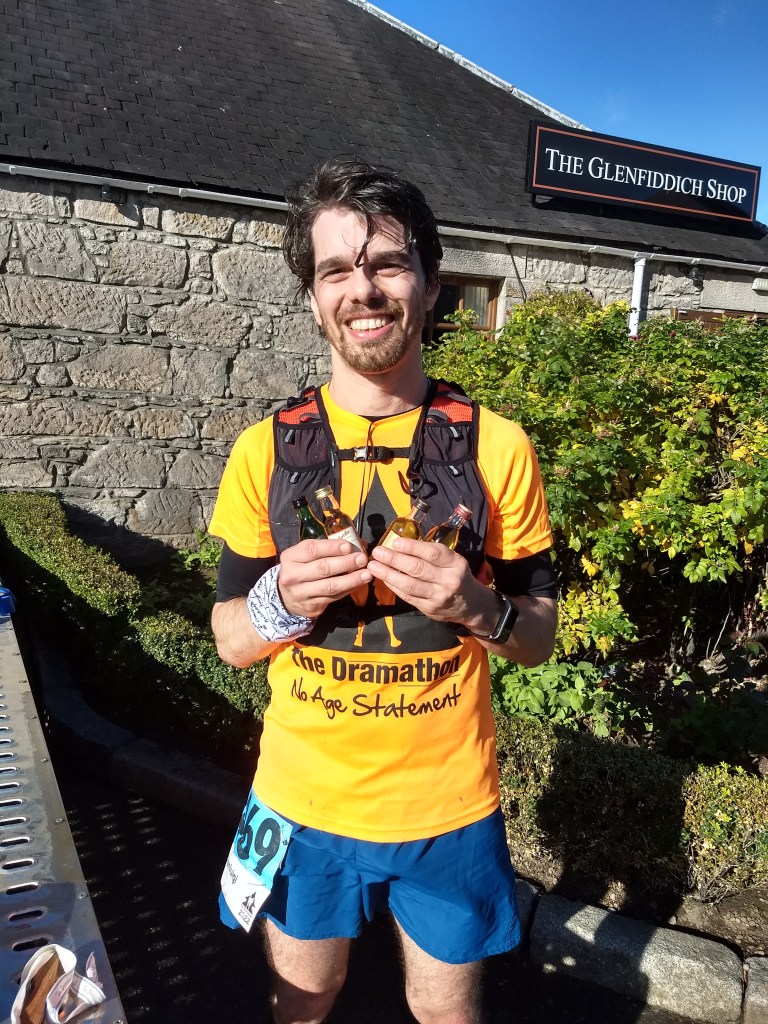
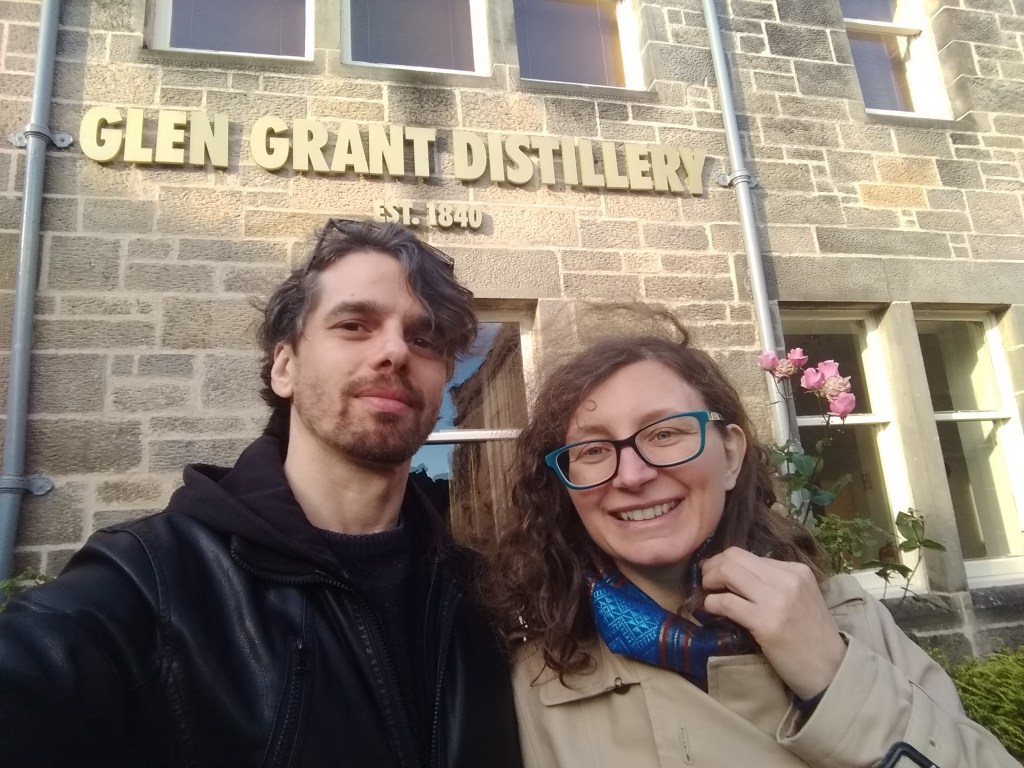
First distillery visit of the weekend, yay! (Yes, one of us needs a haircut.)

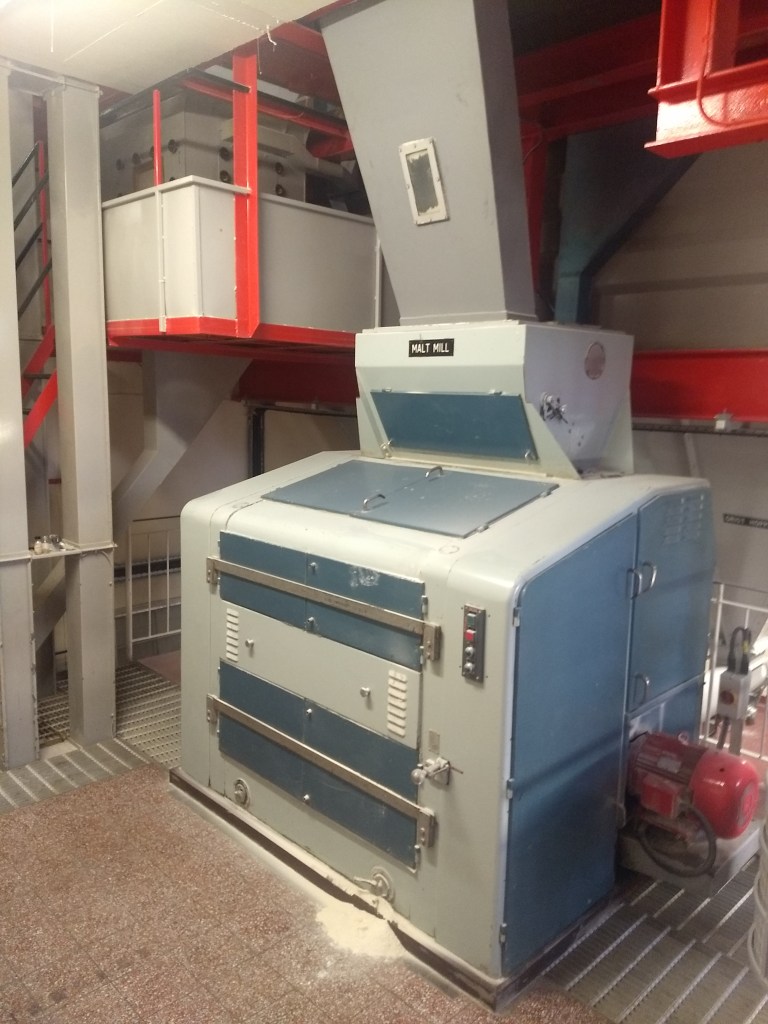
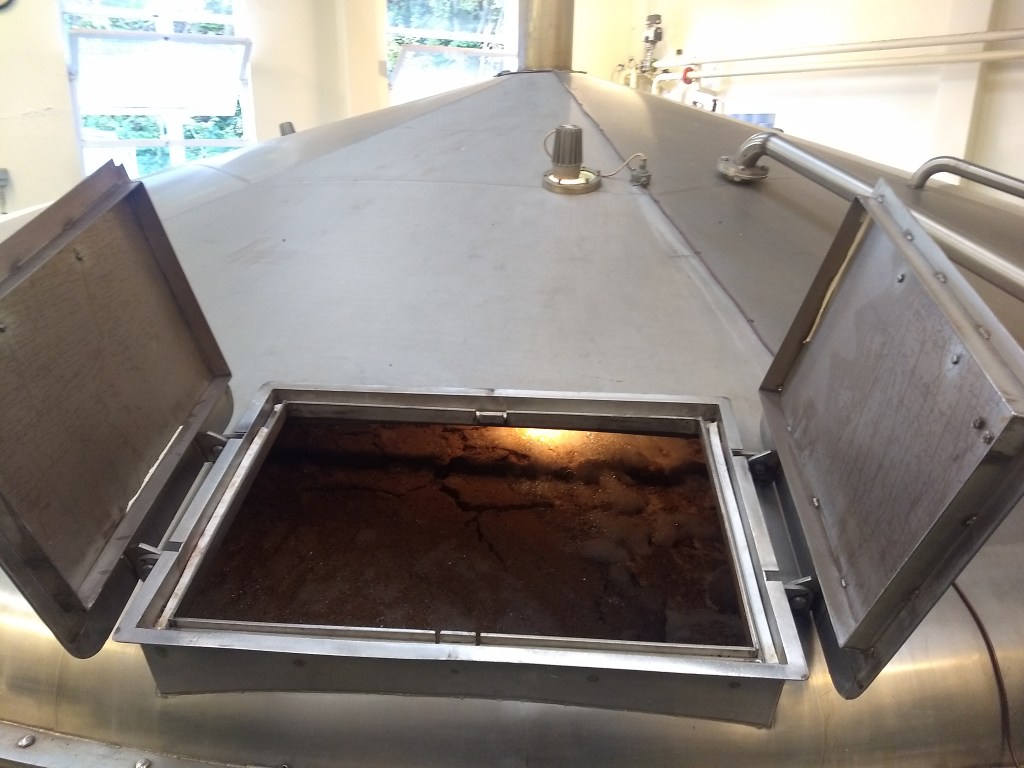
The guide of the day, Rosie, started the tour in the milling room, where barley is grinded into grist (with a usual component of 10% of flour and 20% of husk), in this case by Milly the mill, a more modern looking machine than the usual Porteus ones.

Not a Porteus mill.

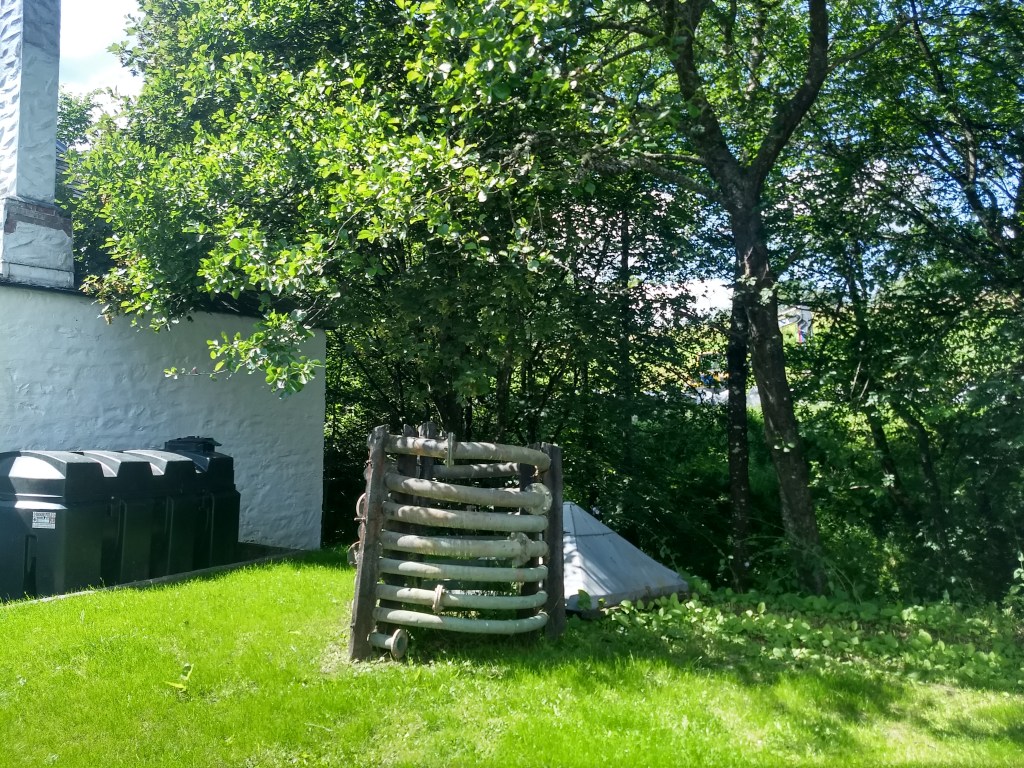
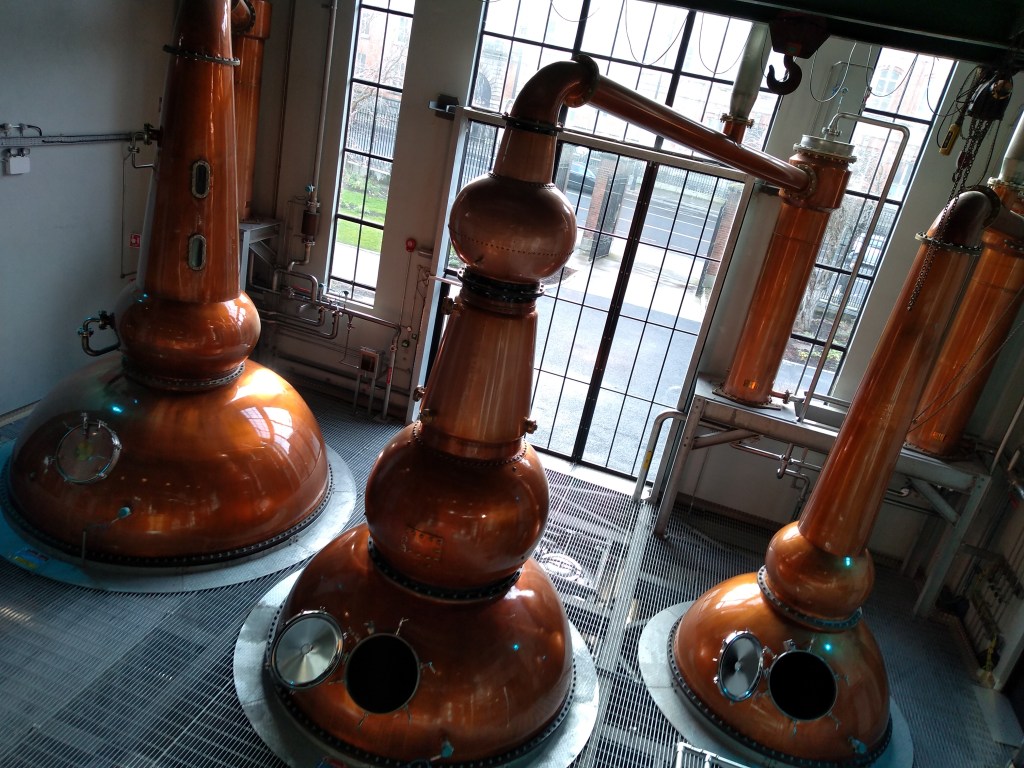
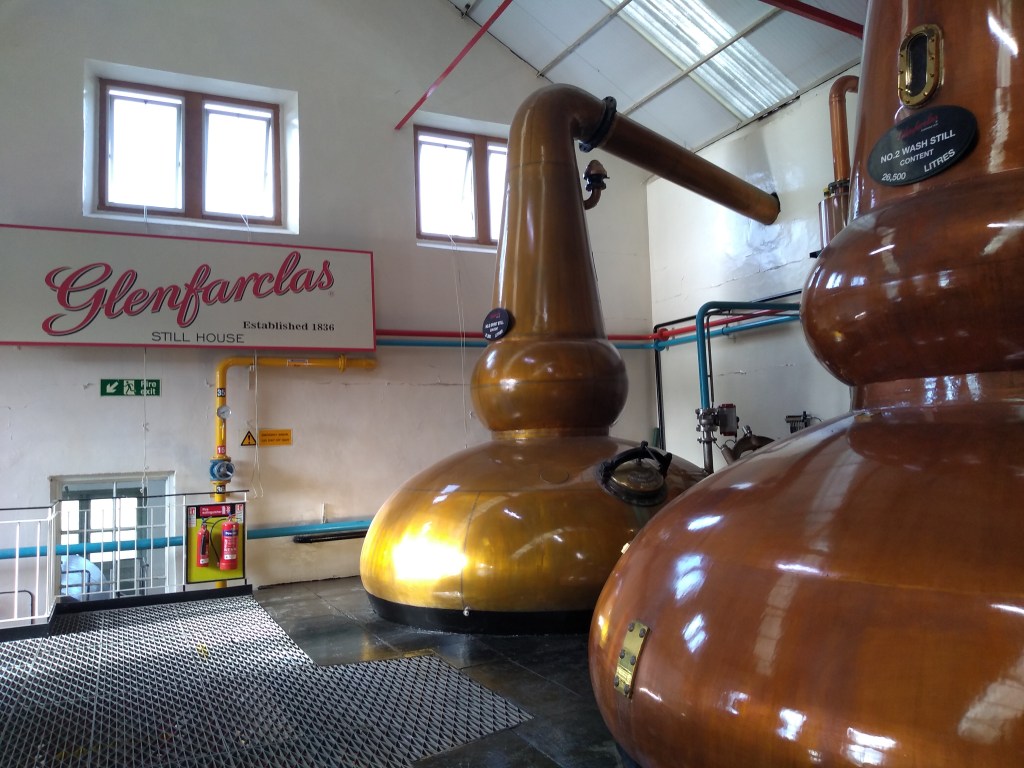
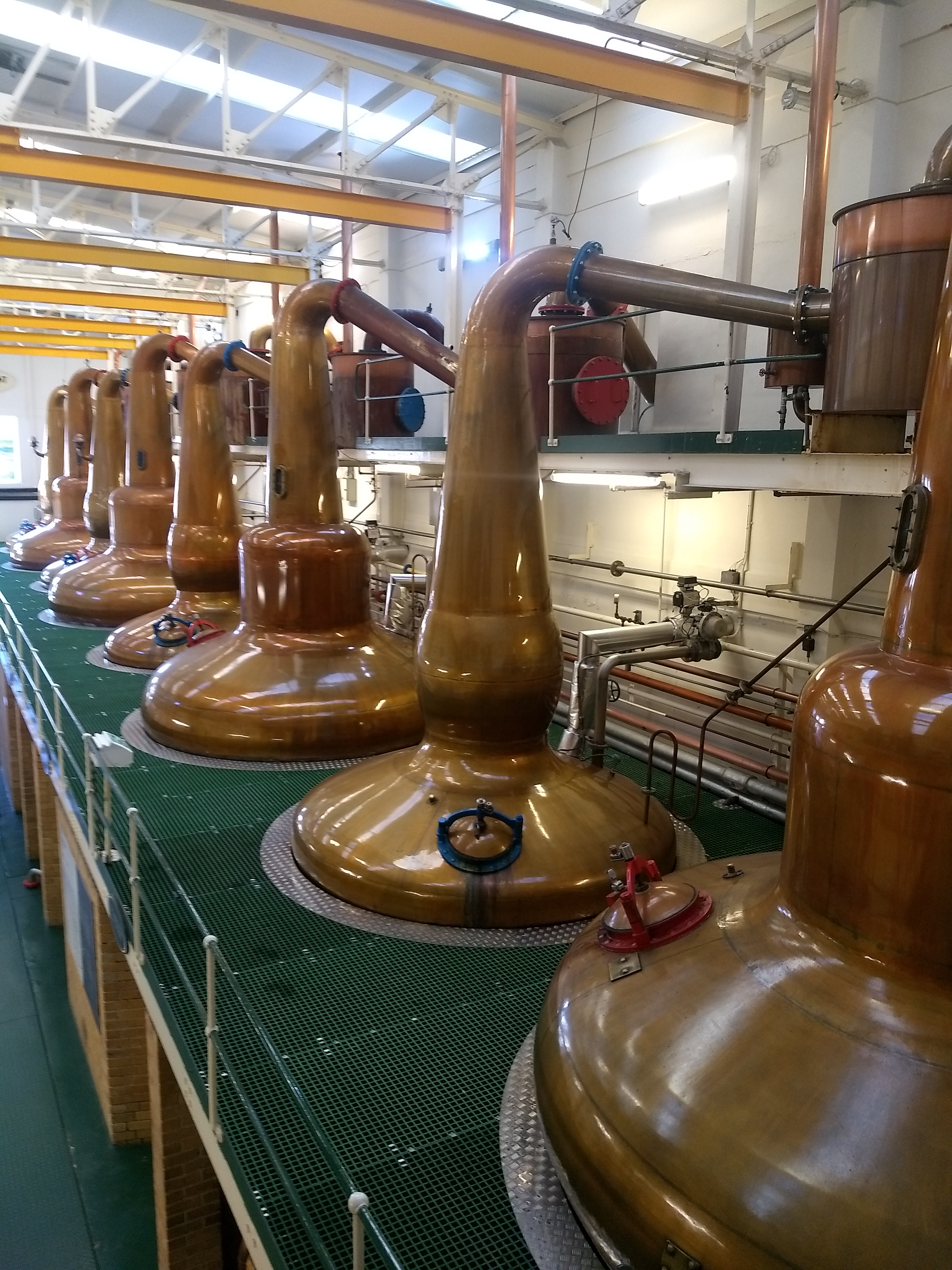
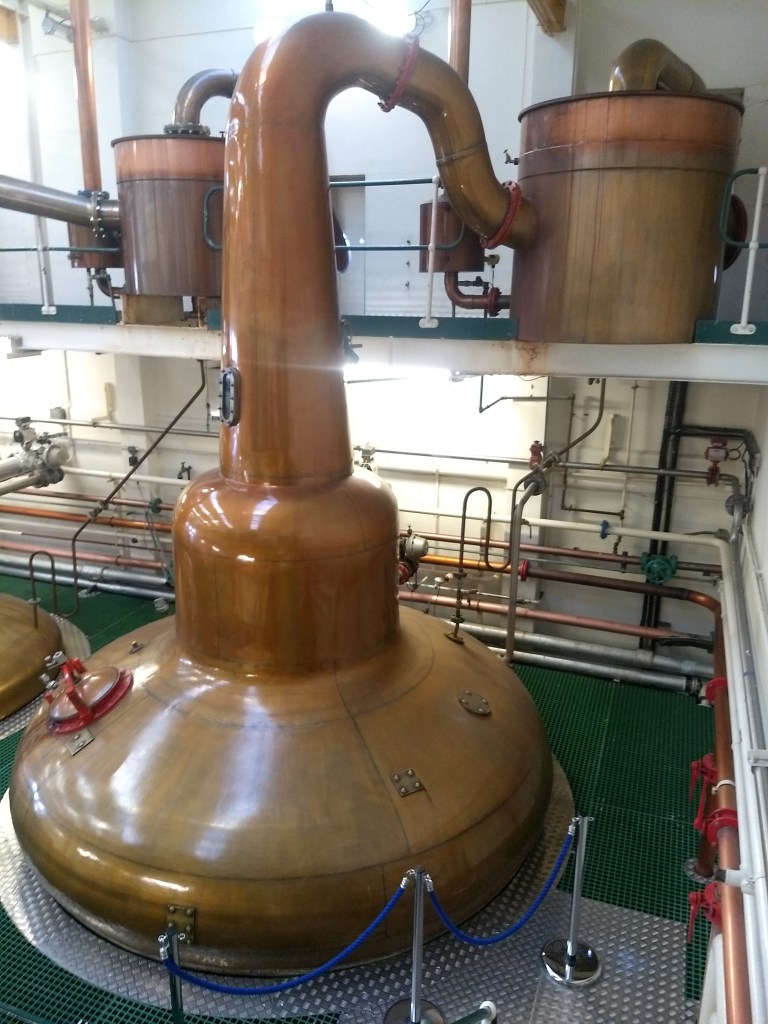
We proceeded to the closed mash tun and the 12 wooden washbacks. The temperature rose substantially as we walked into the huge still room, where some of the 6 bulged directly fired stills were working. Rosie explained that their cut for the distillation โ€œheartโ€ (i.e. the middle part of the run that will be effectively casked) is 74% to 54%, quite large compared to other distilleries we visited.

Two of the six stills.

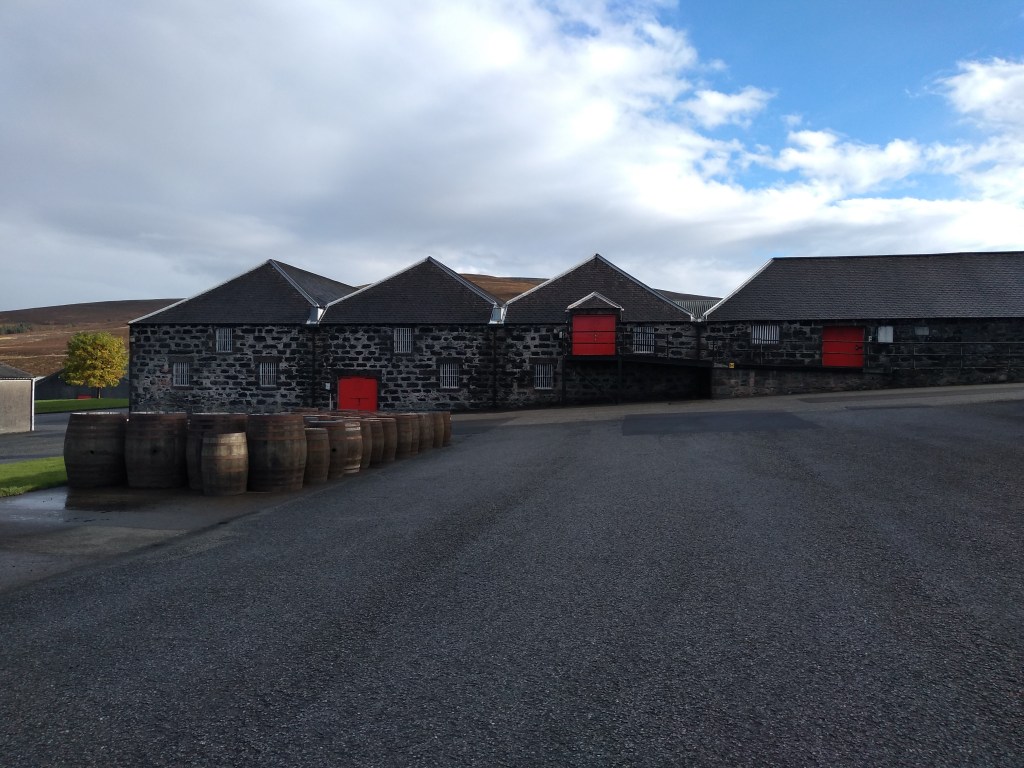
We then moved towards the warehouses, with the signature red doors. At the visitor centre, our tasting was ready with two very well-known drams: their 10y, still today one of the few whiskies bottled at 40% that, in our opinion, still hold, and the 15y, probably the yummiest of their core range, together with the 105โ€ฆwhich of course is not 105 years old, the number refers to the imperial proof (corresponding to 60%abv). Because of the race the next day, we didnโ€™t drink them right away, we put them in our sample bottles brought from home (always with us!) and we went to the shop. There were many of their celebrated โ€œfamily caskโ€ expressions on display, with vintages of every year and bottled at cask strength. Even for recent vintages the prices are a bit steep, but the selection is very bigโ€ฆA pity we couldnโ€™t try any!

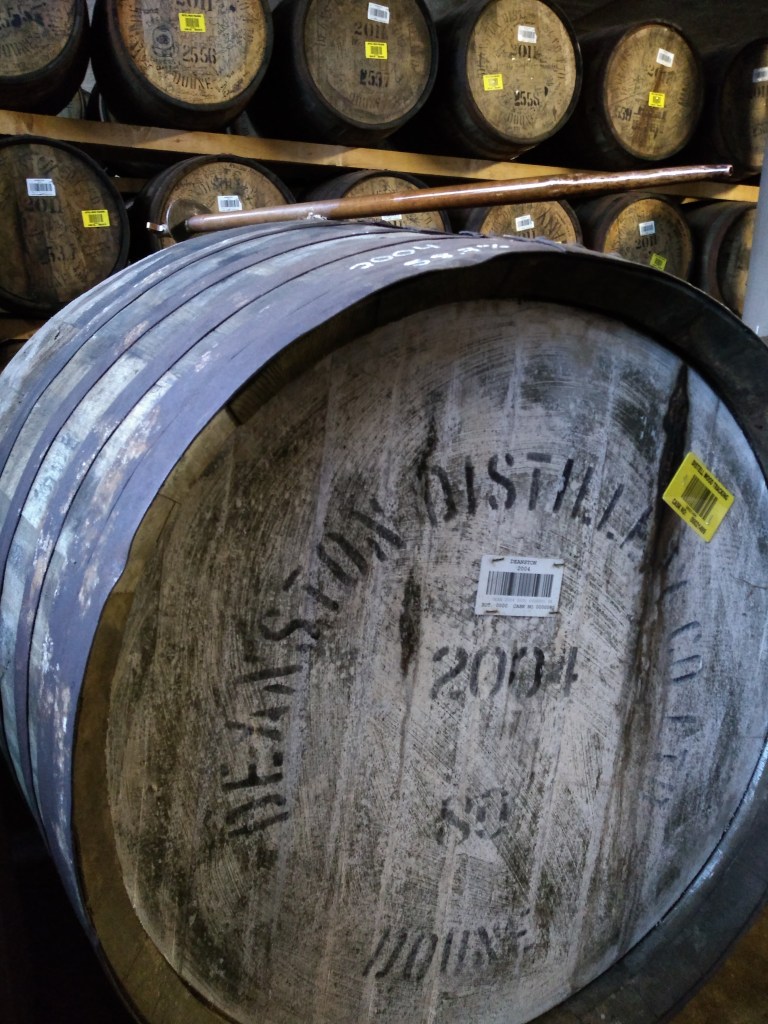
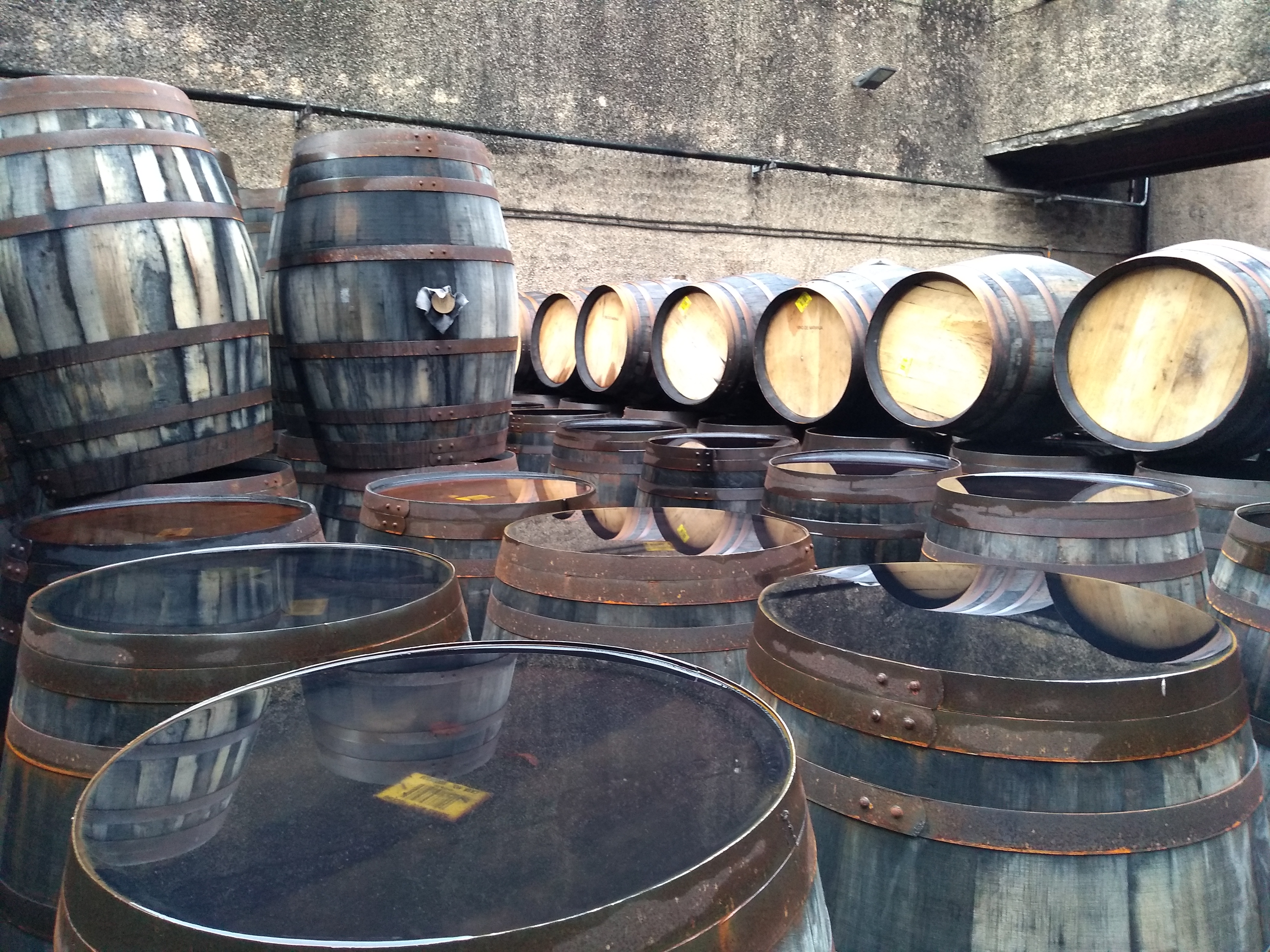
So much whisky behind those red doors!

After the visit, we drove to Dufftown, to register for the run and check in at our accommodation, the Commercial Hotel. We decided to have dinner at the hotel (not before a short warm-up run for Gianluigi). In spite of us booking about 9 months in advance (and paying 90 quid per night!!!), we were given the โ€˜cursed roomโ€™, room number 5. No, itโ€™s not the plot of a horror B-movie, and no ancient burial ground was involved: itโ€™s just the room directly above the pub, including their juke-box machine with questionable music selection and no soundproofing whatsoever. That meant that until the bar closed (11pm), we couldnโ€™t sleep. The music wasnโ€™t that loud in the corridor, and in fact in one of the bartenders accused us to be the first complainingโ€ฆwell, not according to other reviews on Booking.com, but we appreciated that the issue might be for this room only.

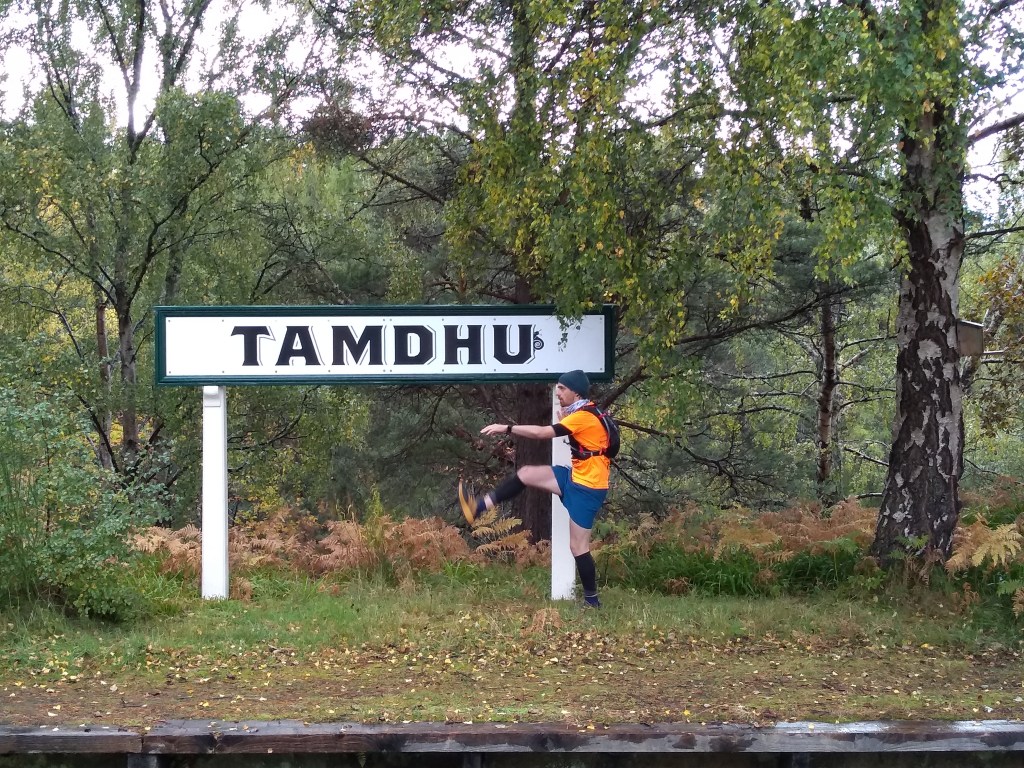
Finally, race day! As we reached the buses that would have brought us to the starting point (the Tamdhu station), it started pouring rain, so we mentally prepared for a wet run.

Warming up…not goose-stepping.

However, as soon as we got there, the rain stopped, and the run was quite pleasant. We both reached our goals, Teresa finishing her first (hopefully not last) half-marathon, and Gianluigi shaving a couple of minutes from his 2021 timing (not getting below 1h and 20m though, one of his goals).

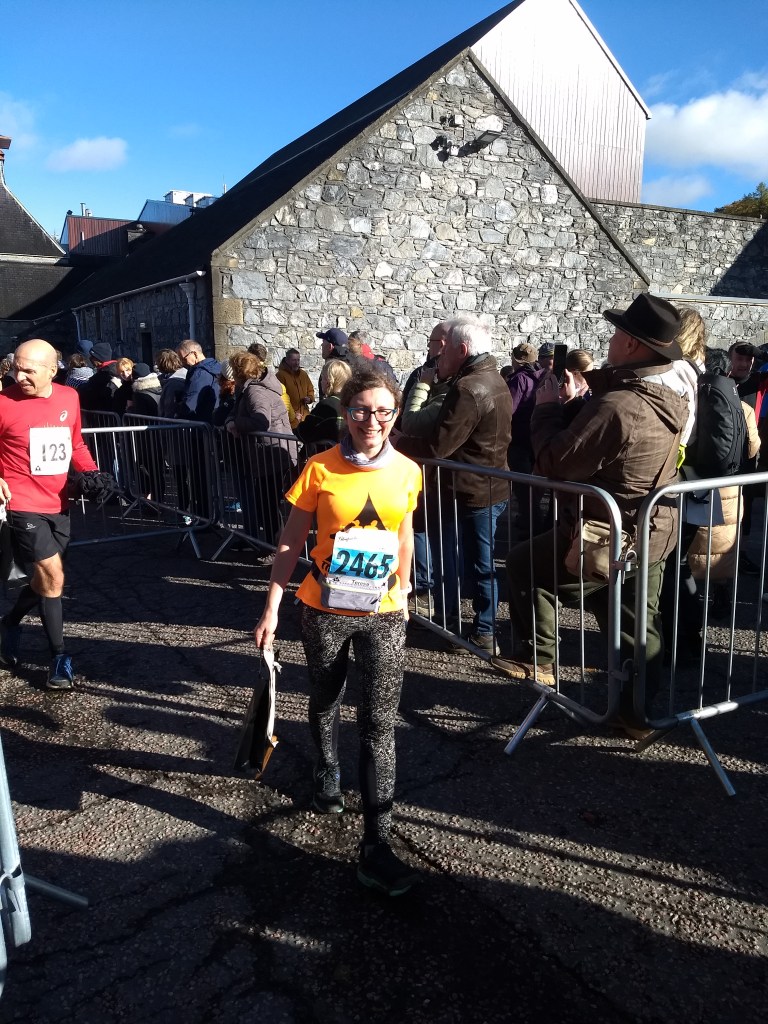
Tired but happy!
Tired but veeeery happy!

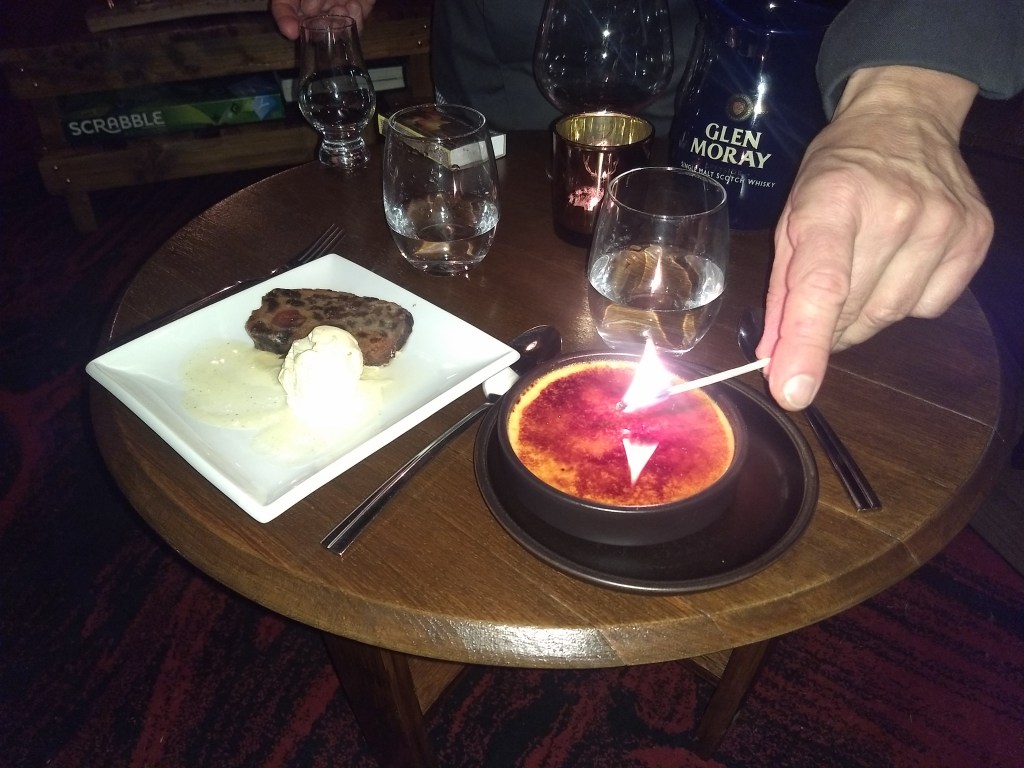
After the run we had a well-deserved early dinner at the local French restaurant, the Seven Stills: it was truly great, yummy food and delicious wine. As a dessert, Gianluigi had a crรจme brulรฉe, with the French chef coming to the table to light it on: bravo!

Lighting up a crรจme brulรฉe with whisky.

We went back to the Commercial hotel for some dramsโ€ฆTeresa was falling asleep in the pub, so we went to bed. The issue of the night before was still there, but Gianluigi decided to go put a few bucks in the juke-box: โ€œif I have to stay awake listening to some sh*t, I want to listen to my sh*t!โ€. Probably some people felt puzzled when Slipknot, Nirvana and Tool started to play, so whoever walloper was in charge decided to skip the rest of the selection (Soundgarden, Alice in Chains, Pearl Jam) only saving No One Knows by the QOTSA. Not cool at all. In the morning we complained with the manager about the noise (not about the skipped songs), who agreed to discounting 15 quid per night. It was nice but still not ideal, so we wonโ€™t be back unless we really have to, in which case we will ask not to be put in room 5.

Anyway, going back to the tour at Glenfarclas, we had selected the basic one because we knew in advance we wouldnโ€™t drink. It was excellent, but we are both very keen to go back and do an experience with a more comprehensive tasting. Slainte!


Glenfarclas Tour

Price: ยฃ7.50 pp (October 2022)

Duration: 1hr 15m

Tasting: 2 drams, Glenfarclas 10y (40%) and 15y (46%)

Target: Anyone

Value for money: Very good

Highlights: One of the prettiest we’ve seen

Distillery Exclusive: Several bottlings of the family cask range, depending on which is available

Recommended: Definitely!

Link: https://glenfarclas.com/our-home/


#22 Goodbye 2022, see you soon 2023

A very dramming year


TL;DR: As usual this period gives us a chance to reflect on the year about to end. It has been an intense one for us, particularly the second half. Whisky-wise, we had some very fantastic experiences, some disappointing, and a few average ones. While we are looking forward to โ€œdramming aroundโ€ in 2023, here our 2022 highlights.  

Aaaandโ€ฆItโ€™s December, and we are finally on holidays. By the time you will be reading this, another Christmas will have just passed, we hope you had a great day of celebrations with your loved ones, and that you are now bloated and relaxing on Boxing Day (or St. Stephen, as it is known in Italy).

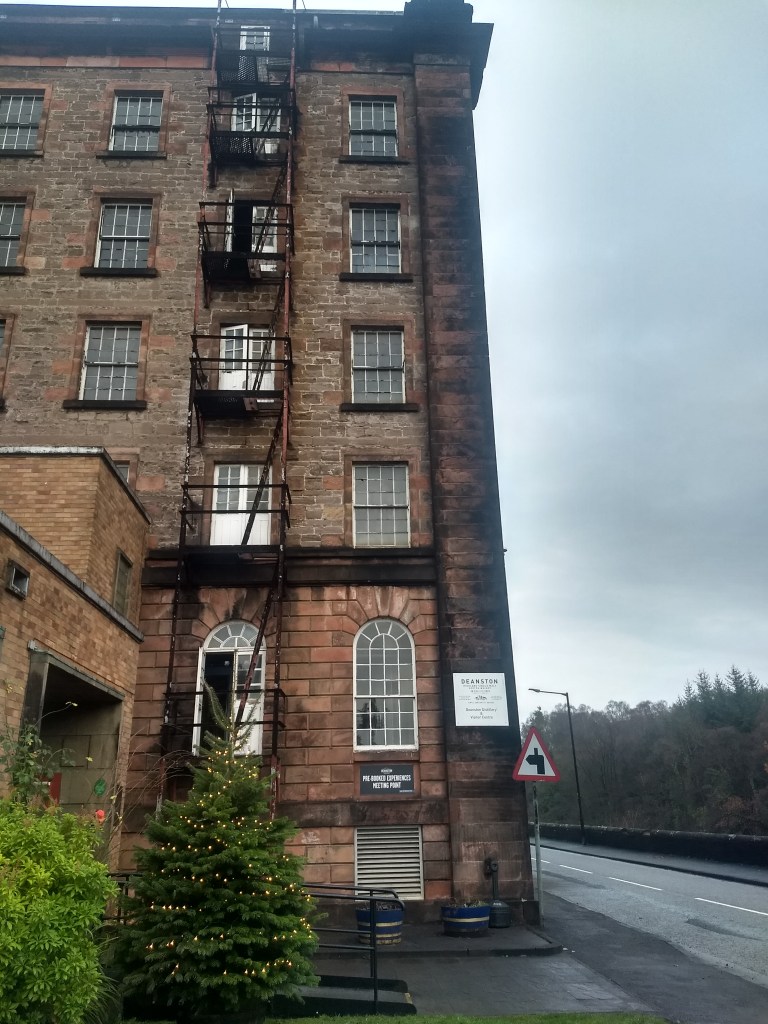
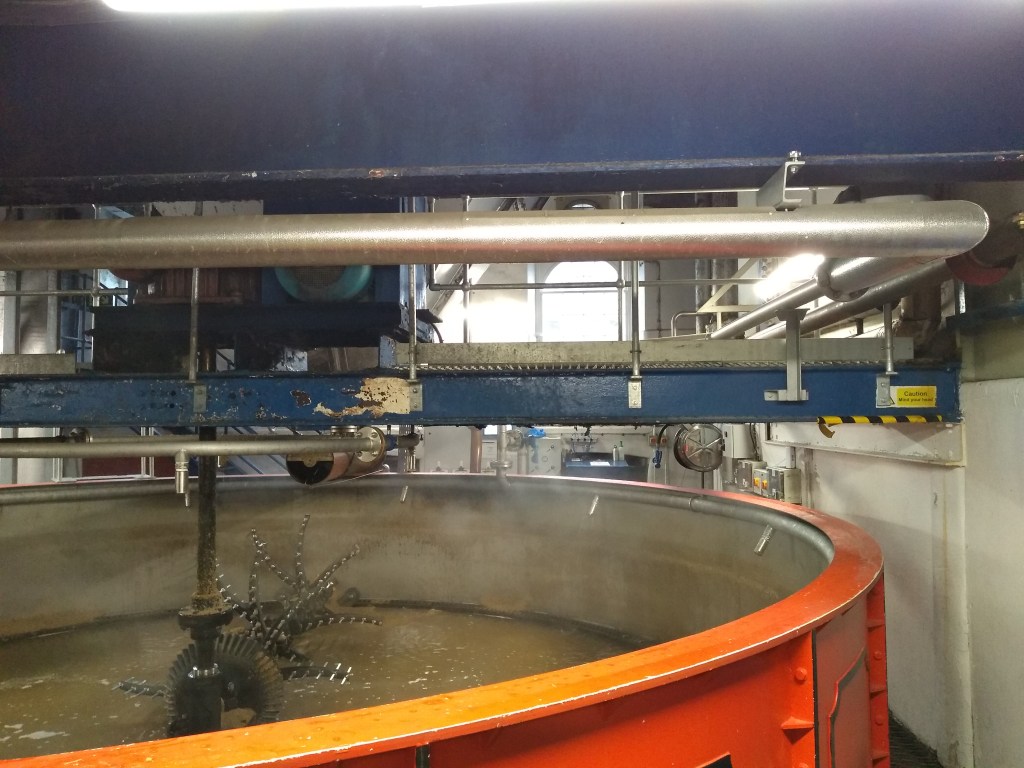
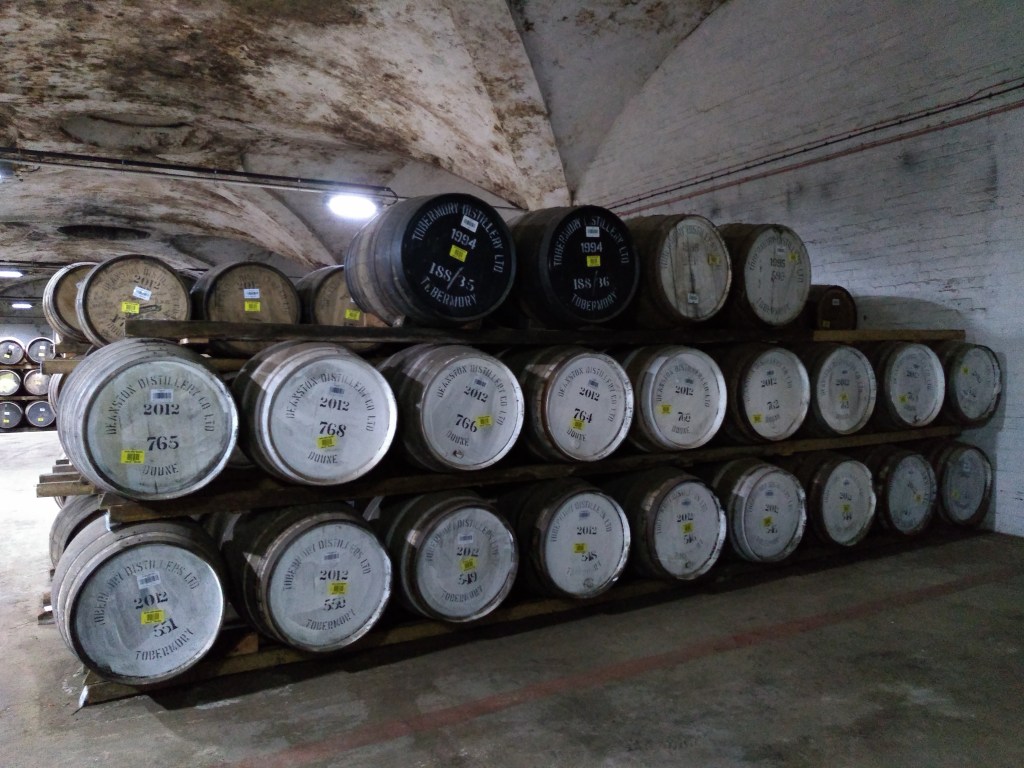
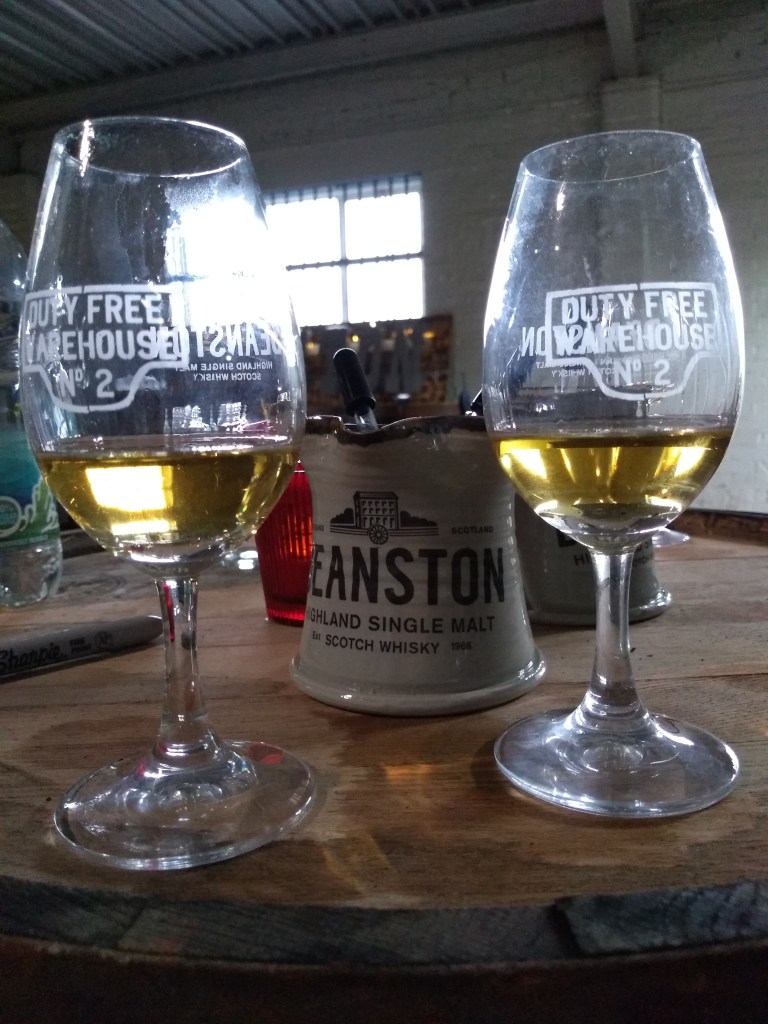
Because of our jobs, we both arrived at the end of the year very tired. However, it was also a year full of fantastic whisky experiences, that we hope to repeat next year. In 2022, we visited 19 (Gianluigi) and 20 (Teresa) new distilleries (17 in Scotland and one in England together, Gianluigi visited one in Canada, Teresa one in Ireland and one in England). We also had the chance to revisit some good old acquaintances, like GlenAllachie and Deanston (amongst our favourites). We were able to go to Orkney (hurray!) to catch up with both Scapa (aye!) and Highland Park (nay!).

Sheep grazing with Scapa in the back.

And, finally (FINALLY), we visited Islay for the first time, after our March 2020 trip was cancelled by you-know-what. What a crazy holiday that one, our rented campervan broke down on day 1, half-hour away from the ferry terminal. Although we had to get last-minute accommodations and move around by taxi, we managed anyway! And what a visit, we have to say that whisky tourism on Islay is something really different. Take the Laphroaig tour for example, the token system to pick the drams for your tasting at the end makes it much more flexible than most of the other tours, so that can be enjoyed by both novices and experts. Moreover, Bunnahabhain (best warehouse tasting everโ€ฆjust the bottling prices a bit too steep), Lagavulin, and Kilchoman rewarded us travelling there by including no-core range drams, all limited ones, which made the experience truly special. We wished other distilleries on far-away islands would do the sameโ€ฆ We canโ€™t wait to go back to Islay, to catch up with the other distilleries, and revisit some.

Moments before the best warehouse tasting ever.

Other than Islay we had some incredible whisky experiences, like the Deanston Winter Fest (coming up soon in the blog), or the GlenAllachie tour during the โ€œSpeycationโ€ (coming up soon too).

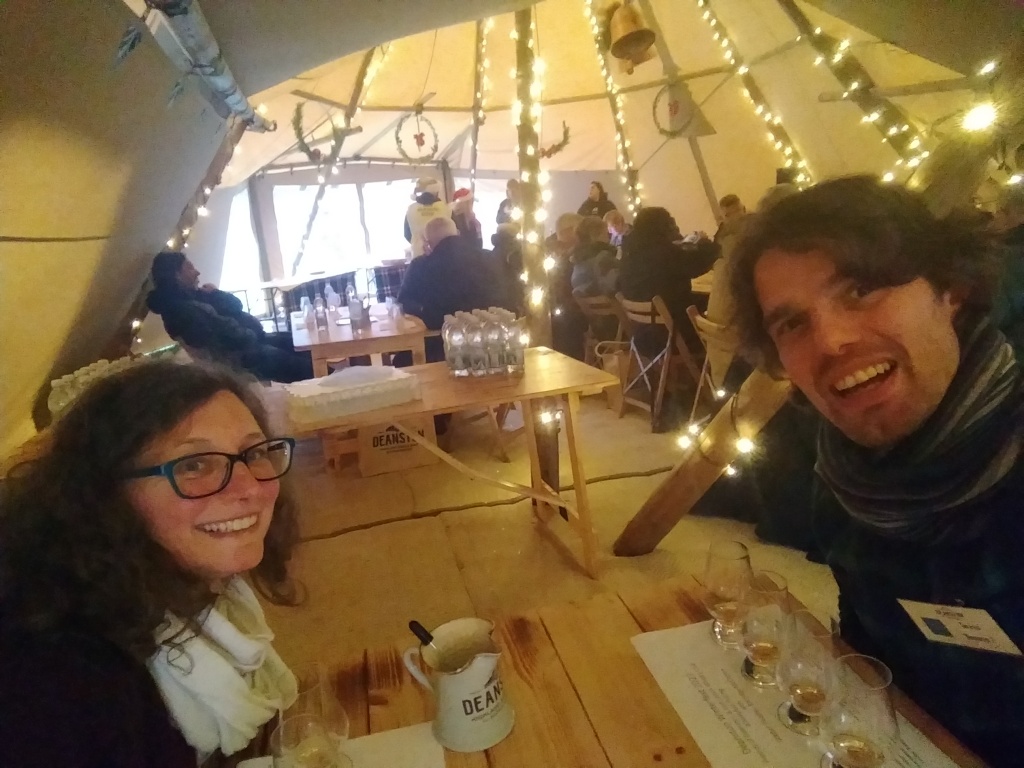
Deanston WinterFest: that’s happiness after three tastings.

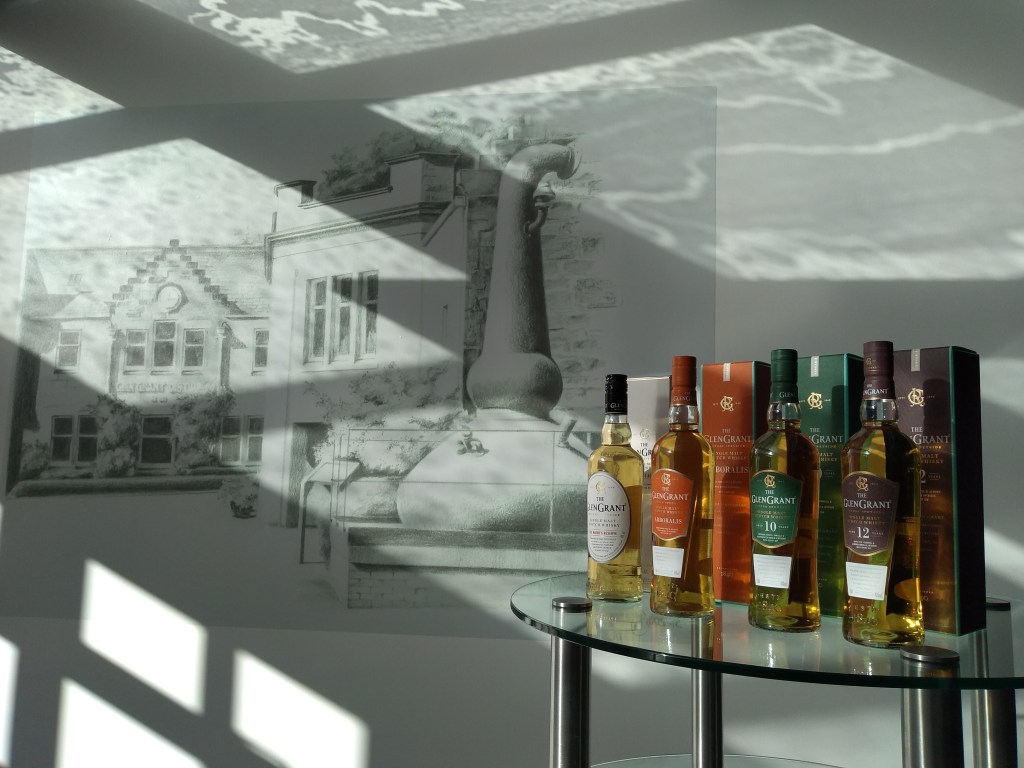
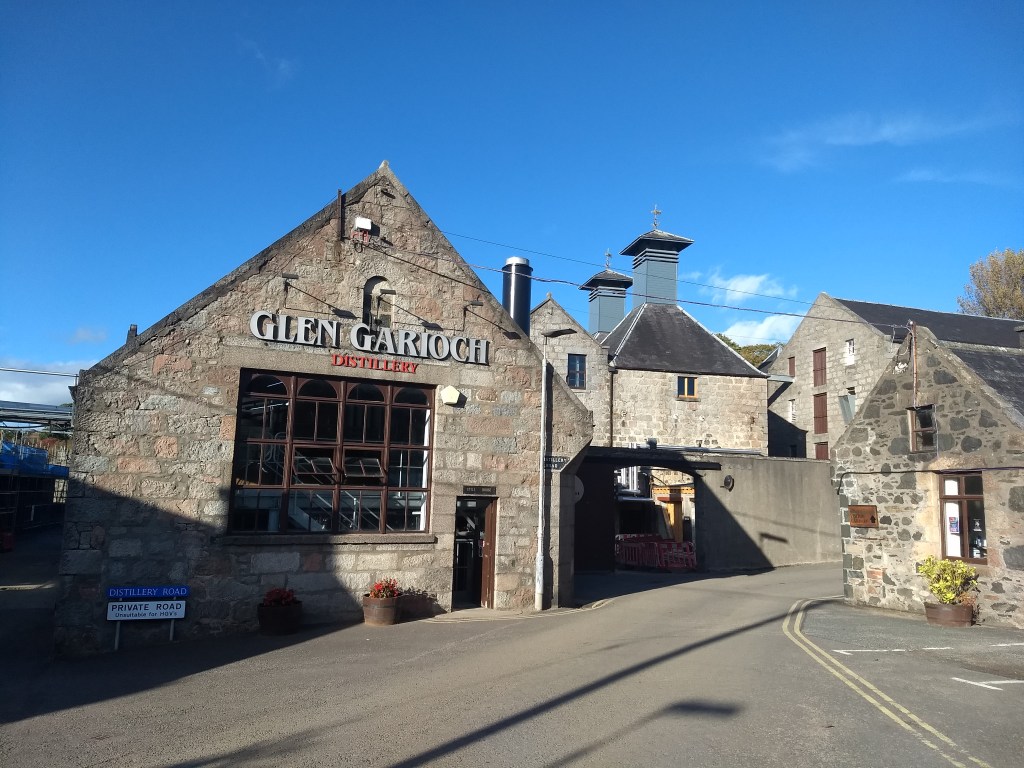
This word was brilliantly created by our friend Cath, and greatly implemented byย  Justine (Kask Whisky): over the weekend we visited 5 distilleries (+ 1 being built) and did a few tastings, including one in the now closed Coleburn distillery, and one in the Strathislaโ€™s warehouse. A couple of weeks earlier, we were again in Speyside for the Dramathon, and of course we visited (or revisited) a few distilleries: Glenfarclas (new visit), Glen Grant and Glen Garioch on the way back (both revisits).

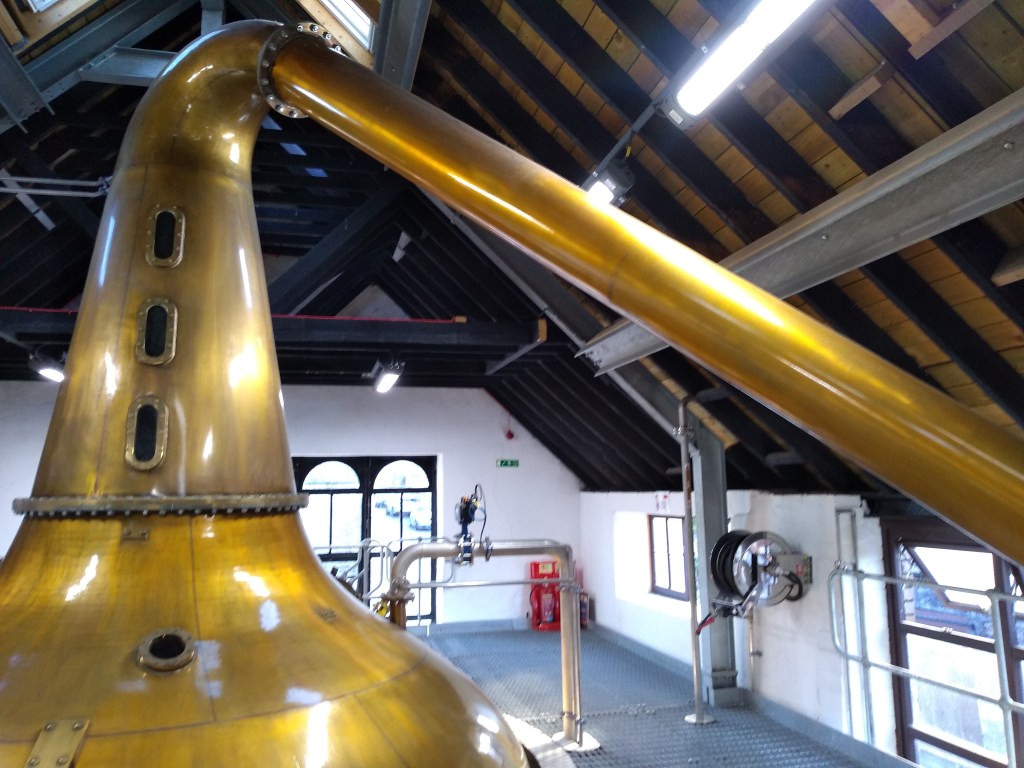
The direct-fired Glen Garioch spirit still.

Some of the tours we did were OK, a bit standard but nothing to complain about: weโ€™d say that usually you get what you pay for. Disappointments came from distillery-exclusive bottling prices. In some cases, instead of rewarding you for visiting the distillery (and already paying for a tasting or a tour), they put a 20-30 quid premium on those. Not nice. The only distillery experience that was really a disappointment and we regret paying for was Highland Park. Despite avoiding the basic tour (ยฃ30, already not cheap) we opted for the improved one (ยฃ75, the most expensive tour we did so far) to be denied any dram of distillery exclusives or other limited bottlings, and just taste the core range which we could have done in Edinburgh anytime. An expensive tourist trap, we wonโ€™t go back there (sorry James, you were a superstar guide though!).

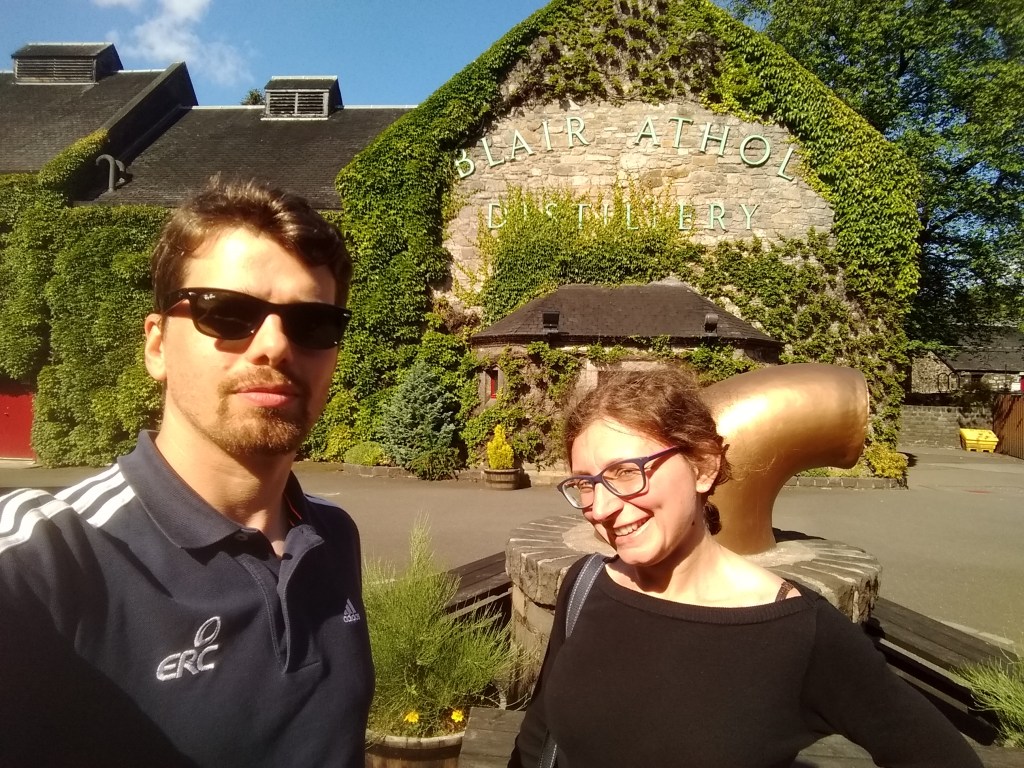
A nice but waaaaay to pricey Blair Athol (ยฃ120!!!).

With the Covid19 restrictions behind our back, we could attend our very first whisky festivals, the Fife whisky festival in March and the Whisky Fringe in August – we had a lot of fun, let’s see if it’ll be the same with bigger events.

Enjoying a break between the two Fife Whisky Festival sessions.

In-person tastings came back too. We did a few organised by our friend Justine, of course, as well as others by Mark, Murray (both at Kilderkin) and Colin at Tipsy Midgie. We had some cracking drams, including a 20y Dutch single malt from Zuidam, a fantastic Doorlyโ€™s rum (from Foursquare distillery) and some cracking Daftmill-s and Bruichladdich-s. Also, SMWS events came back, including our favourites: Outturns and Distillery Visits (an event where you can taste whiskies brought by a distillery representative together with some provided by the SMWS). This year we did the Glen Moray distillery visit with Iain Allan connected remotely and the Distell one (Deanston/Tobermory) with the very funny Brendan McCarron: both cracking events with awesome whiskies! Gianluigi also decided to become an Aqvavite Youtube Channel Patreon: Royโ€™s content and entertainment are really priceless, and this was long overdue. We also attended a very funny blind tasting in Glasgow where we finally met all those whisky folks weโ€™d only seen on screen until then.

Awesome Aquavitae event in Glasgow!!!

By writing this up, we realised 2022 was intense not only because of work, but because of whisky too! We hope to bag more distilleries in 2023, although weโ€™ll probably try to be more selective when picking tours and experiences. We are also starting to organise whisky tastings: the first will be towards the end February and will be Port-cask related (we got the idea during our fantastic trip in Portugalโ€ฆtickets here), but the following ones will involve bottles we picked up in our travels, not necessarily at distilleries, ehehโ€ฆStay tuned! Overall, itโ€™s still a very long way to become whisky geeks, but weโ€™ve learned a lot this year and we hope to continue the trend!

Not just whisky for us…coming to a tasting soon!

Happy holidays and see you next year! Slainte!


#21 Exploring down South


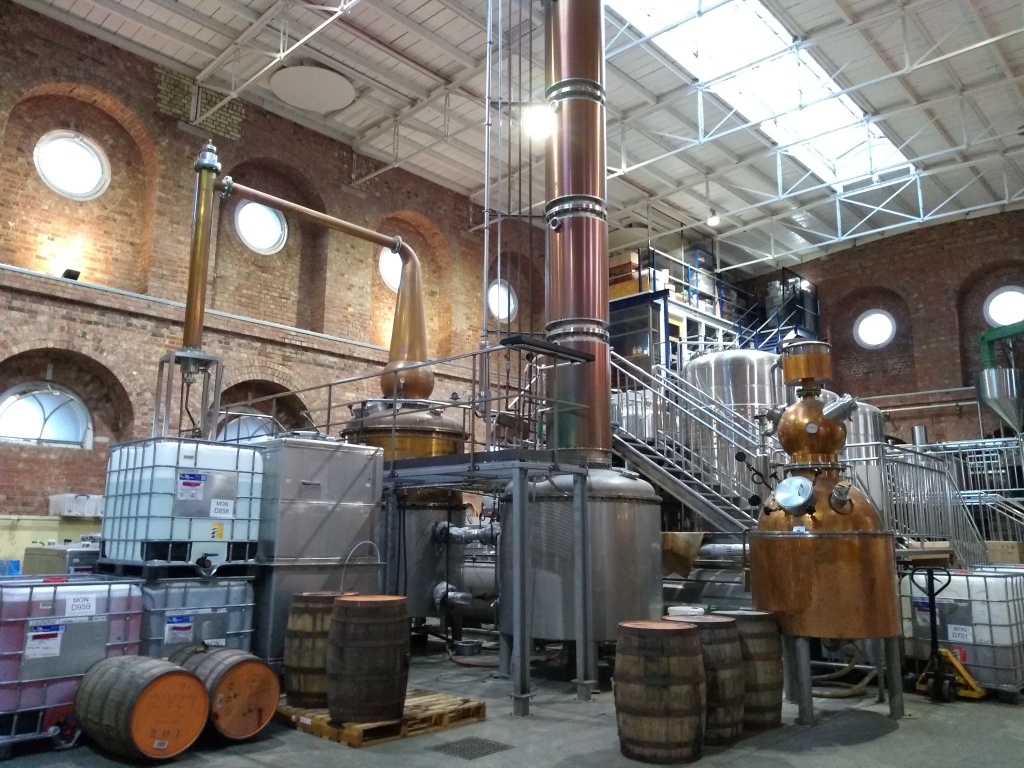
On the banks of river Medway: Copper Rivet distillery


TL;DR: Although some of them have been around for many years, English whiskies still feel like the new kid on the block, but what a kid! On this trip, Teresa visited Copper Rivet distillery, in Chatham, and what a nice visit! 

In recent discussions, probably around WhiskyTube or somewhere else on the web, we heard statements like this a few times: โ€œif thereโ€™s something to keep scotch whisky producers on their toes, it will be the rising of English whiskyโ€, more or less. Jokes aside, the growth of whisky production South of the border is quite impressive. Last time we checked the English whisky map there were forty (4-0!!) distilleries, seven more since the previous time.

Our experience with English whisky has been quite good so far. Among the first ones we tried there was Bimber, whose crispy and nice character (at least, the ex-bourbon cask matured ones we tried) made it quite sought after recently (also, stay tuned to the blog for our visit to the same ownersโ€™ new distillery in Speyside, Dunphailโ€ฆcoming soon!!!). Earlier this year, we visited the Lakes Distillery: its product is very cask forward, but very tasty and balanced as well. One of the best we tried so far is definitely the Cotswold single malt – the bottle we had evaporated quite quickly. It is produced in small batches (5-6,000 bottles), 46%, unchill-filtered, no colour added, vintage year mentioned on the bottle, reasonably priced and available everywhere: what more to ask? We also tried the ex-bourbon cask matured cask strength, quite yummy too!

Something we liked about the English distilleries we encountered so far is that they tend to be very transparent: while their single malt whisky is not ready, they market something else (gin, vodka), and if they use other whiskies, they are quite clear about it (such as The One blended whisky series). Unfortunately not all producers make it clear which is their own spirit and which is sourcedโ€ฆpointing westward.

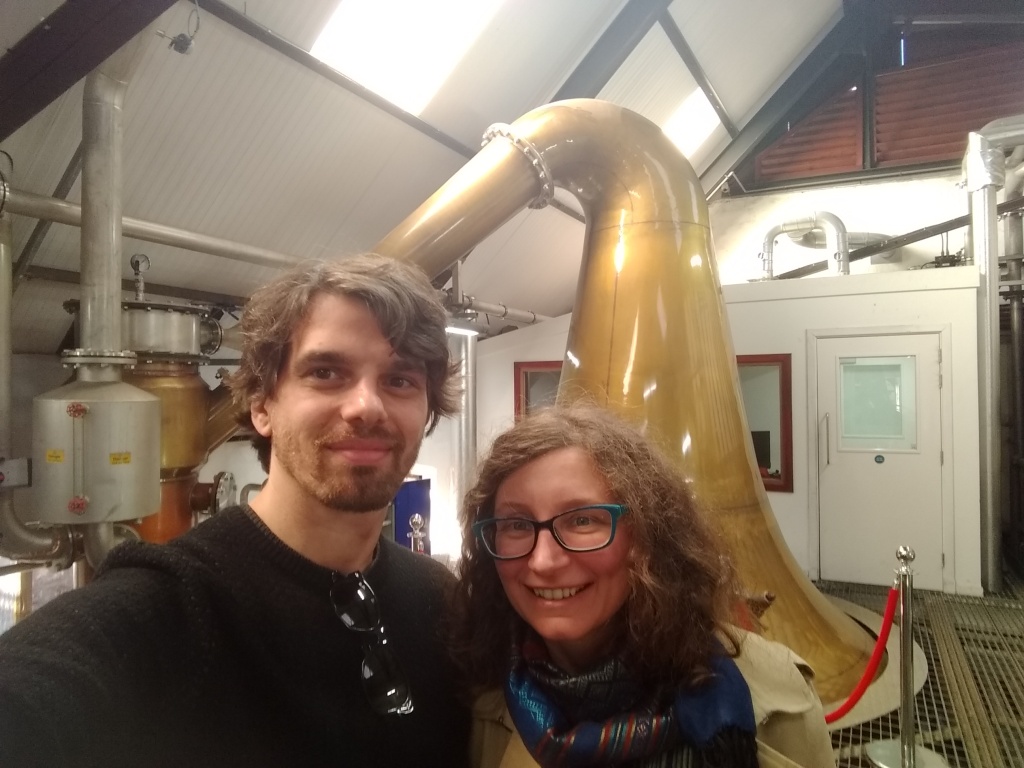
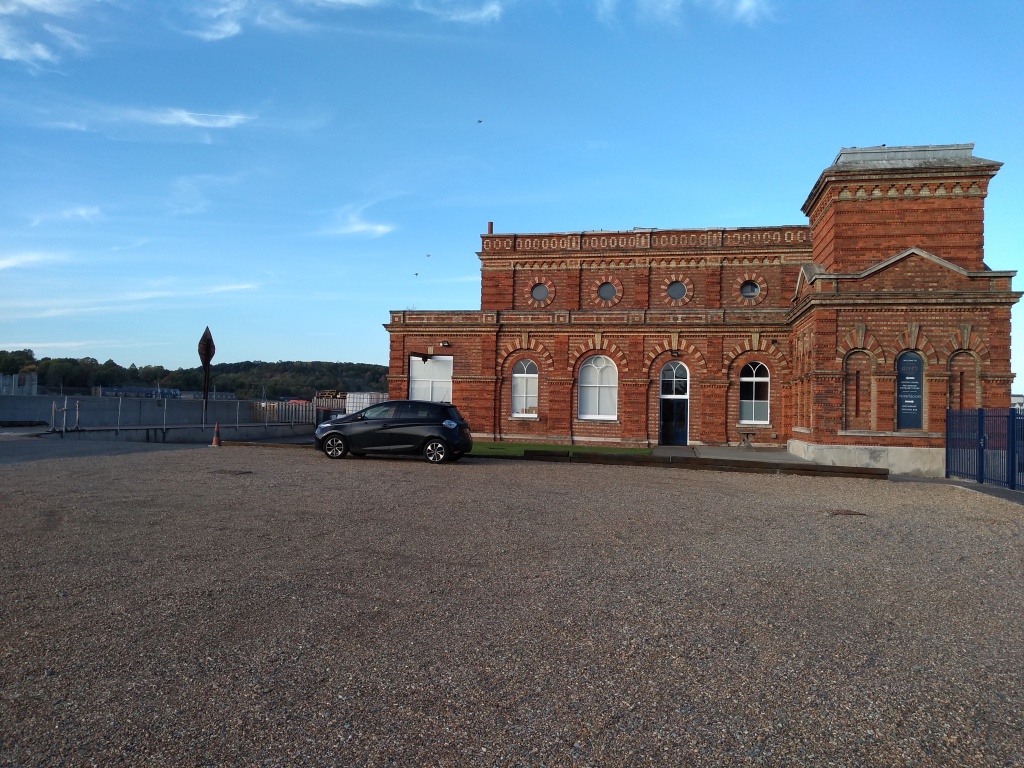
When a Victorian pump house becomes a distillery: Copper Rivet.

It was also because of these positive experiences that we were very happy when Stephen Russel from Copper Rivet distillery invited us to visit them. Copper Rivet is the only spirit maker in Kent, so an opportunity not to be missed. In October, a couple of months after Stephen’s email, I (Teresa) went to London for work, so why not try to make it there?

I took a train from St. Pancras late on a late afternoon, direction Chatham. Not a very long train ride (40 mins or so), but long enough to enjoy the landscape on this very sunny, almost summery day. The bus stop was right outside the station, but I had to wait quite a bit for the right bus to arrive, which afterwards made me wonder whether taking a long stroll wouldnโ€™t have been easier. Anyway, the Dockside area was in sight, finally!

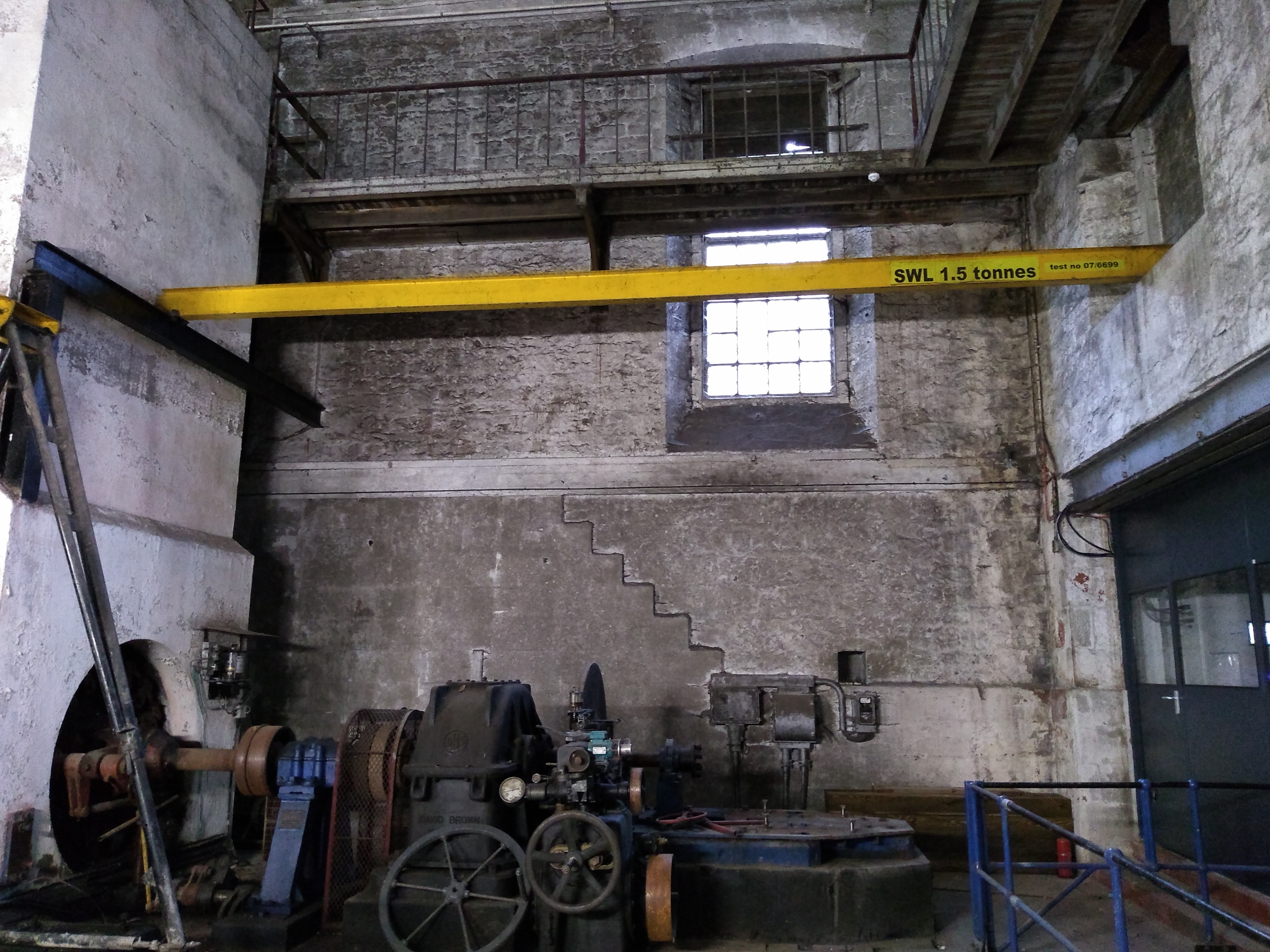
Once a flourishing industrial harbour, Chatham Dockyard closed in the 80s. Later on, it underwent a revamp and is now home of residential buildings, shops and restaurants, as well as a living museum under the Chatham Historic Dockyard Trust. At the end of dock 5, I recognised the brick building I had seen on the distillery website โ€“ good, I was in the right place! Stephen later explained that it used to be a Victorian pump house, a masterpiece of hydraulic engineering.

The entire distillery in one shot.

I was welcomed in the small reception (and shop), and I realised no one else was there (well, I could have guessed it from the late hour and the empty car park). So a private distillery visit, yay! Stephen brought me outside and started telling me the story of Copper Rivet. The distillery is essentially a family venture and, quite a peculiar feature, almost a DIY project. They started production in 2016, and everything from grain to bottle is built around a โ€˜low and slowโ€™ concept, which also implies staying local whenever possible. They source barley from farmers in the area (within 2o miles), which is then malted at Muntons, of course separately from everything else for full traceability.

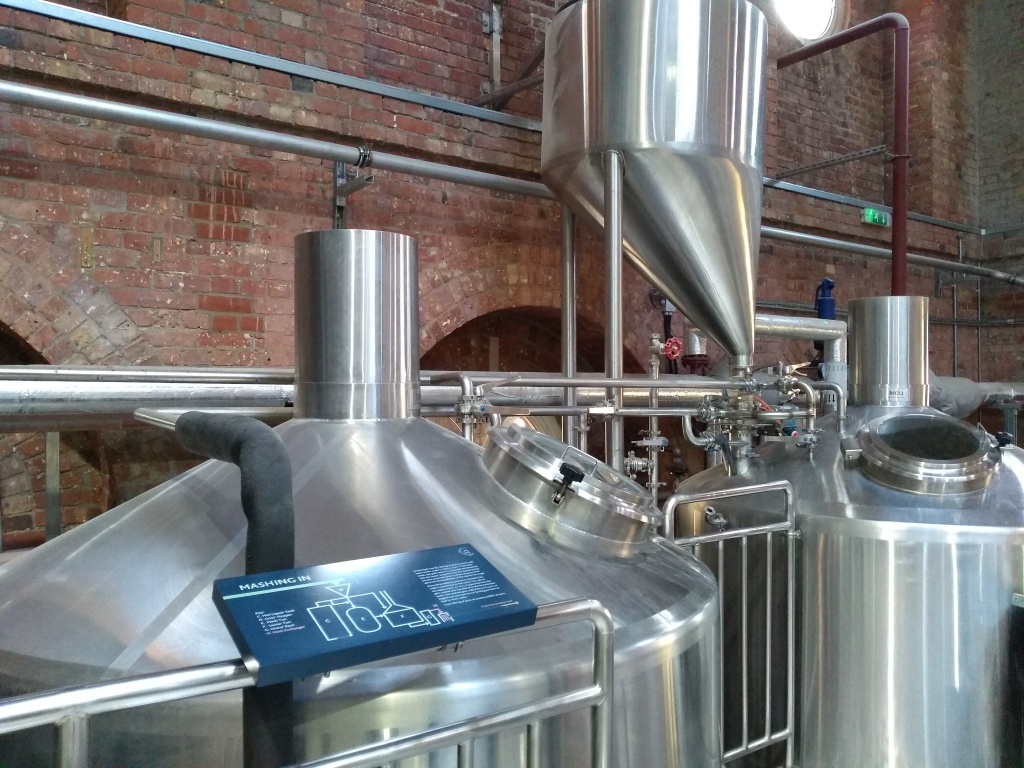
Stephen then showed me the production area, a big space with a part-glass roof. Mashing is done in brewersโ€™ mash tuns at a low temperature, followed by a very long fermentation (around a week) โ€“ again, โ€˜low and slowโ€™.

Mashing station.

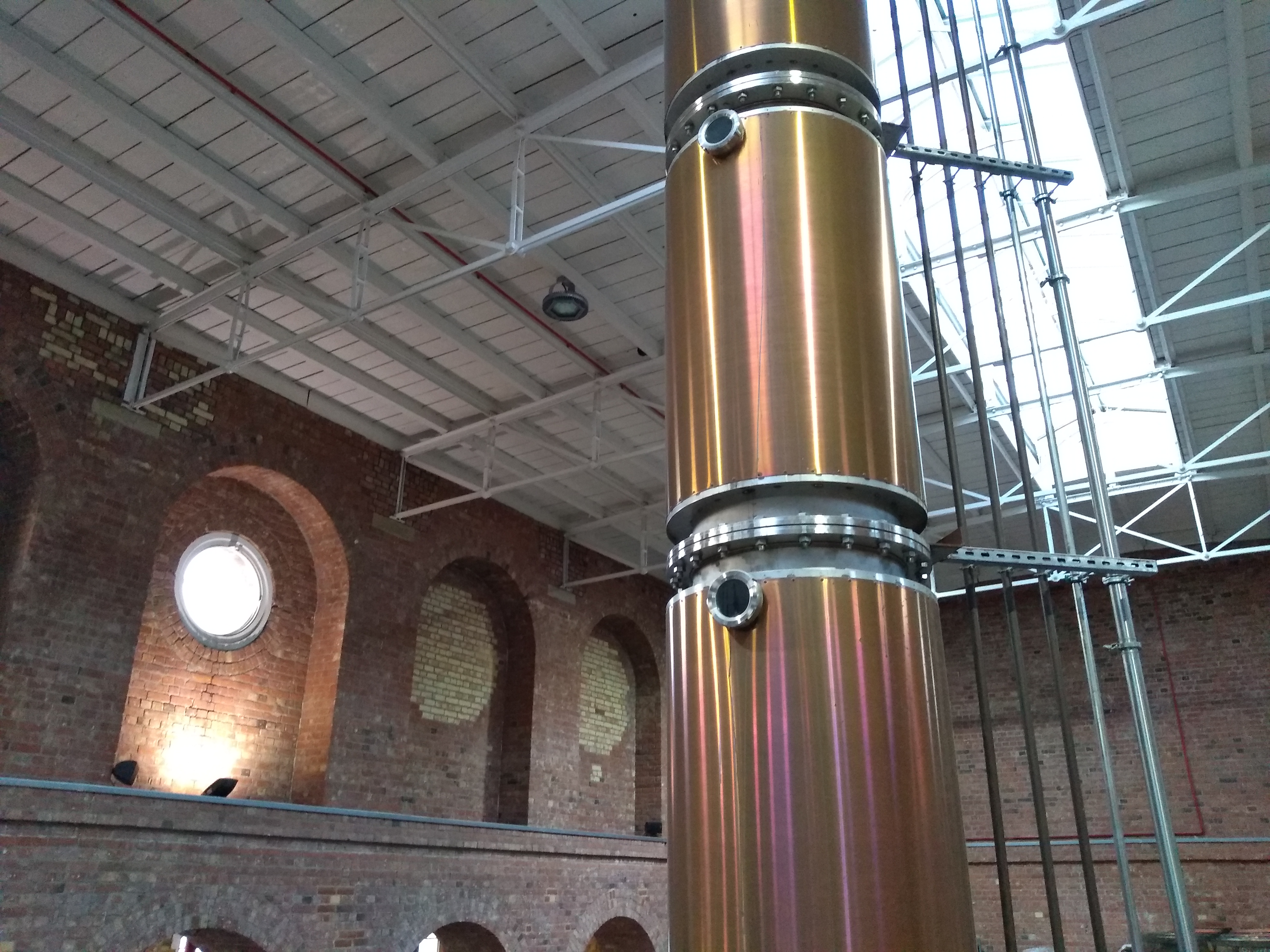
Interestingly, they are equipped with a pot still and a column still, which gives them the opportunity to experiment with distillation. Different from all distilleries Gianluigi and I visited so far, the stills were built by coppersmiths in the area (so no classic Forsyth or Frilli).

Meet Sandy, the pot still.

Stephen remembered, almost amused, how assembling the column still was quite the challenge! For maturation, they use ex-bourbon casks, sometimes in combination with virgin American oak, because the idea is to produce a gentle, very drinkable whisky, even at a young age. Before moving on to the tasting, I noticed another still, which they use to make gin. Another interesting craft project.

Meet…the gin still (sorry I forgot your name!).

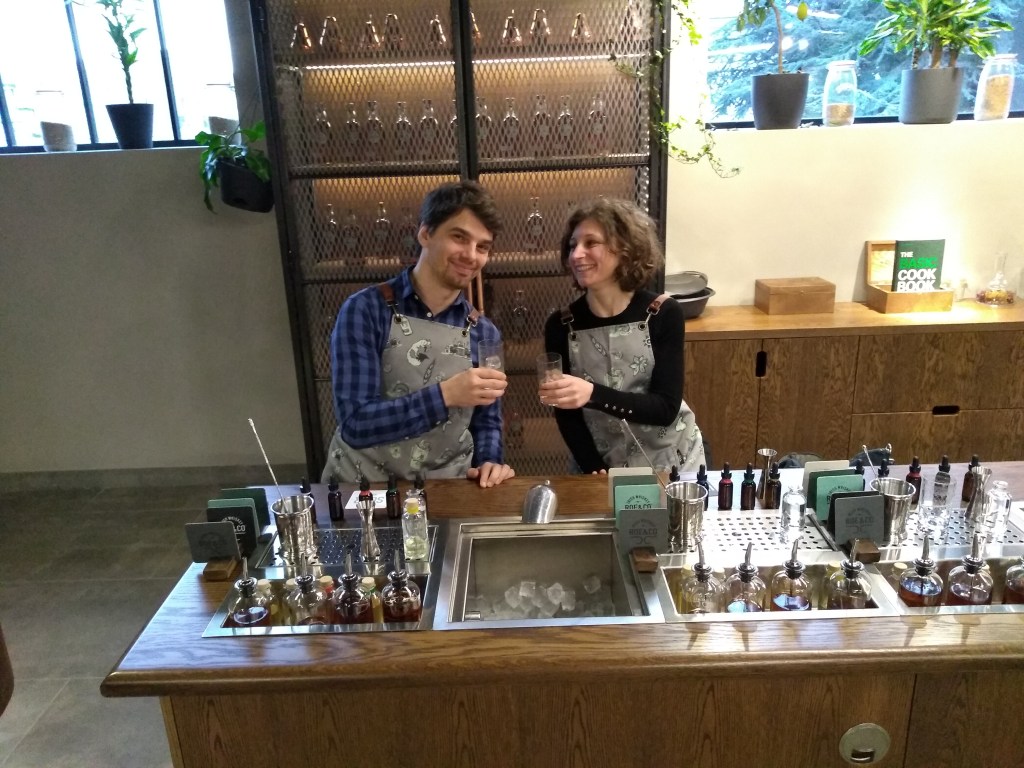
From the production area, we entered the cocktail bar and restaurant they run alongside the distillery, the Pumproom. A big but nonetheless very cosy place, with a beautiful view on the marinaโ€ฆNot bad at all as a place for the tasting! First off, a wee taste of vodka (yes, they also produce vodka from scratch like Arbikie, although not from potatoes but from grains) and of their briefly aged spirit (Son of a Gun, reduced at 47.4%), to get a sense of the spirit produced โ€“ very fruity in my opinion.

To warm up the palate.

Then, the whiskies: a single malt whisky (~5y, classic double pot distilled, 45%), a column malt whisky (~3y, mix of column and pot distillation, 45%) and a grain whisky (~3y, combination of wheat, barley and rye, 42%). All uncoloured and unchilled filtered, as clearly stated on the labels, together with information on grains provenance and barrels composition โ€“ big shout out for such transparency! My favourite was the column malt whisky because to me it better brought out the fruity character of the spirit, but actually, theyโ€™re all very good sippers.

Young whiskies, yummy whiskies.

Overall, a great experience with an excellent host. Also, a unique opportunity to start filling our gap of knowledge about English whisky, a more and more interesting and bustling world. This calls for more trips down South, definitely. Until then, slainte!


Copper Rivet distillery tour and tasting

Price: ยฃ15.00 pp (October 2022, but I was invited)

Duration: 1h

Tasting: Vela Vodka (mix of wheat, barley and rye, 40%), Son of a Gun spirit (mix of wheat, barley and rye, 47.4%), Masthouse single malt whisky (~5y, classic double pot distilled, 45%), Masthouse column malt whisky (~3y, mix of column and pot distillation, 45%) and Masthouse grain whisky (~3y, mix of wheat, barley and rye, 42%)

Target: anyone

Value for money: very good (assuming the public tour is similar to the one I had)

Highlights: the beautiful location and the experimental production process

Link: https://copperrivetdistillery.com/

#20.3 Feast on the East


Back to a traditional experience: Cragganmore


TL;DR: The last distillery in this trip was Cragganmore, producing a malt we were not too familiar with. It was the most traditional whisky experience of the weekend, of course in a good way. We just wish theyโ€™d improve the whisky presentation and move away from the 40% and chill-filtering, to allow this good dram to fully express! 

(missed Part 1/Part 2?)

After the visit to Macallan, we were almost bamboozled by being back in the daylight. We drove to Aberlour and had a soup and a coffee at the Gatherโ€™n Cafe, officially our go-to place when we are in the area. We also sneaked in the Walkerโ€™s cookies shop a few meters down the road, another one of our must-go in the village.

These didn’t last long!

Back to the car, we drove directly to Cragganmore distillery, in Ballindalloch. Unlike Tormore, or the new Cairns (which we spotted several times just driving around Speyside), Cragganmore is quite hidden in a narrow valleyโ€ฆyou really want to be there to see it (well, not as much as Ncโ€™Nean!). It does make sense, however, that so many distilleries in Speyside popped up in such hidden places, given the history of distilling in the region, in particular pre-1823 (date of the Excise Act, for more info check out the dedicated episode of the Liquid Antiquarian on YouTube).

Second distillery of the day, of course we’re happy!

We didnโ€™t know what to expect: Cragganmore is one of those many drams we came in contact with after the beginning of our whisk(e)y journey, when we were already members of the SMWS and had already visited a few distilleries. Because of this, and because of its 40% presentation (and itโ€™s probably artificially coloured and chill-filtered) we never got into it, we had just tried it once or maybe twice in bars. Well, itโ€™s kind of nice to discover a new whisky, isnโ€™t it?

We arrived at the distillery 10 minutes before the tour start, so we took a look around to admire old-style buildings. The visitor centre didnโ€™t go through much renovation (unlike other Diageoโ€™s distilleries, like this and these two), just enough to make it pretty.

The wee visitor centre.

Albeit much smaller, it reminded us a bit of Lagavulinโ€™s one, as it mainly consists of a shop and a very cozy tasting room, with a fireplace, sofas and chairs. The tour we had booked is โ€œA Taste of Speysideโ€, and it is still the only available one (for the very reasonable price of ยฃ16, still at the time of writing). Our guide for the day was Gary, a former firefighter which instead of dully retiring, decided to work part-time at the visitor centre (something we observed a few times around distilleries). Anyway, we started the tour by gathering at the centre of the courtyard, and after the usual health and safety instructions, we moved to the production area.

The mashtun.

As usual, we started from the milling room with its red Porteus mill (and as usual, we got told the story of Porteus company running out of business because their machines were too robust and never brokeโ€ฆ maybe at the time the evil programmed obsolescence was not a thing). We rapidly moved on to the copper-lidded mashtun and the washbacks, where the distiller on shift โ€œfishedโ€ a sample of fermented wash for us to see and smell (not drink, fortunately).

Too scared to drink it!

Before moving to the stillroom we could spot from the window the box containing the worm-tub condenser, one of the features of the distillery. The distiller came with us to the whisky safe, where the spirit from the 4 stills goes through and gets checked. There, he gave us a very detailed explanation of the distillation process. Although it is computerised now, the lever to start collecting the second distillation heart (from 68% to 62%, much lower than Macallan!) is still manualโ€ฆInteresting! We then moved outside to check the warehouse, only from the outside, unfortunately.

Partial (very partial) view of the still room.

In the tasting room, three drams were already waiting for us, poured in tiny glasses: their flagship, Cragganmore 12, the Distillers Edition (commonly across Diageoโ€™s distillery, this is the same age of the main core release but finished in a different cask, ex-Port cask for Cragganmore), and the Distillery Edition (a more recent release quite common across all Diageo distilleries, usually a batch of few-thousand bottles non-age stated, bottled at 48% and priced between 85 and 100 quid, a bit pricey, but apparently casks are selected by the distillery personnel). The drams were quite nice, despite the watery presentations (in our opinion): a shame for such a potentially robust and rich of flavour malt. We even got something to include in a future tastingโ€ฆwe wonโ€™t say anything else, but stay tuned in 2023 for more!

Tasting by the fireplace.

Overall, it was a pleasant visit, and Gary was super nice as a tour guide, and of course him involving the distiller on shift was the cherry on top. Compared to the other distilleries we visited during the same trip this was the most traditional one, what probably youโ€™d expect when thinking of Scottish single malt distilleries. It was a very interesting comparison though, with Fettercairn being still old-style at core, but with a more modern visitor centre, and Arbikie and Macallan being definitely among the most modern we visited. We believe that this is reflected in the philosophy of the whisky production, and indeed Cragganmore feels very traditional, in every sense.

Until the next time, Slainte!


Cragganmore: A Taste of Speyside

Price: ยฃ16.00 pp (September 2022)

Duration: 1h

Tasting: 3 drams, Cragganmore 12y (40%), Distillers Edition (40%), Distillery Exclusive (NAS, 48%)

Value for money: good (10% off on anything in the shop if you attended the tour)

Highlights: the old-style distillery atmosphere

Target: anyone

Recommended: yes

Things we did not like: samples are super tiny (10ml? Definitely no more than 15)

Distillery only expressions: Distillery Exclusive (NAS, 48%), ยฃ85

Link: https://www.malts.com/en-gb/distilleries/cragganmore


#20.2 Feast on the East

The Macallan experience!


TL;DR: we had planned this trip around the visit to Macallan, which we managed to book well in advance despite the low availability of their tours. To sum up: a modern art museum inside a Teletubbies house, but the production part is cool!ย 

(missed Part 1?)

Something we didnโ€™t say in the first part of the story, this trip was kind of a last-minute plan. The reason being, we planned it around a specific distillery visit which we had booked a few months before, and because of this, we were not sure we’d be able to make it. The distillery is Macallan: because they only do 6-people tours twice a day (at 10.00 and 11.00), twice or four times a week (always on Saturday and Sunday, on Thursday and Friday too in summer), it is very hard to find a spot. Back in June we somehow managed to find two places in September, so here we are. And of course, because Macallan is not exactly around the corner, when we decided to go for it, we also booked Fettercairn and Arbikie the day before, and Cragganmore for the afternoon of the same day.

Truth to be said, we arenโ€™t huge fans of this single malt. First and foremost, the distillery expressions we tried so far (mostly their 12y) were always a bit dull, a bit better the independently bottled ones but not better than many other sherried Speyside drams. This aside, the company’s marketing towards the super-rich customers is on the edge of ridiculousness, similar to all products marketed in the same way (whether cars, watches or whatever). As we both come from working-class families, we are quite indifferent to (most) marketing BS, we canโ€™t really figure out how someone would pay 300 quid for a 43% and probably chill-filtered 18y. This said, we were very curious to visit the distillery because of its strange and unique architecture, in particular after our โ€œcoffee experienceโ€ last year. And, at the end of the day, it is still a Scottish single malt distillery, so sooner or later a visit was due.

A wee detour before Macallan, Speyburn!

So, after a typical Scottish breakfast in the hotelโ€™s pub (the dining room was under renovation), we drove past Rothes, where we stopped for a quick sneak peek at Speyburn distillery (closed to the public, sadly), and we reached Macallan parking lot. The distillery is something very different from any other we visited so far: dim lights and soft piano music, and a very high ceiling giving the impression of a big open space. It reminded us of a modern art museum, kind of Bilbao’s Guggenheim.

About to see what’s in the Teletubbies house.

At the check-in, our guide Colin (who later we discovered to be very knowledgeable) welcomed us very warmly. He took our jackets (bad sign, as it probably meant no visit to the warehouse) and told us that we could check out the shop in the meanwhileโ€ฆoh sorry, not the shop, the โ€œboutiqueโ€. A few minutes later, we were brought to the cafรฉ where a few tables were reserved for us. Everyone got a coffee and a (quite delicious) scone, a nice touch. When the tour started, we were walked to the Macallan collection, where Colin explained to us the history of the distillery and the brand, including all the various collections that came out throughout the years. Quite interesting overall.

A bad picture of the interesting collection.

We then moved to the first floor towards the production area, separated from the bar by glass doors. Colin explained how this distillery came to be, and the underlying sustainability concept, like the vegetation on the roof (they probably should also ditch the huge and useless bottles boxes to really go green…). There we didnโ€™t see any operators, as the production is 100% computerised. They installed a huge mashtun (17 ton mash!), probably the biggest we have ever seen, and there is an empty hole with space for a second one, in case theyโ€™ll need it in the future…or for a shark tank, maybe?

Absolutely massive mashtun…and empty space for a second one!
One of the three “isles”.

The rest of the production is divided into three โ€œislesโ€ with 7 washbacks and 8 stills in a circle. The stills are quite small and of the same shape as the โ€œold Macallanโ€ ones. At this point Colin made us taste a sample of newmake spirit, taken from a very narrow cut (from 72% to 68%, if we recall correctly) and then reduced to the industry standard of 63.5%. Quite nice, and less green-apples-and-pears forward than others. After this, we were shown a display of the main estate house, a nice example of Victorian architecture but at the moment not possible to visit.

We then went to a room, where we watched a video about how the Spanish wood is harvested and treated to make their barrels (no new information, but still OK to see), and then to another room for a second video about the art of blending (this one not very insightful to be honest).

A model of the “Spiritual Home”, and the real one in the back.

Finally, it was time for the tasting, which took place in a warehouse that sits underneath the bar, kind of in between a crypt and the Bat Cave. Initially this was just a display, it is now officially a maturing warehouse, with a few casks for each year since the new distillery started production. We tried two expressions: the Macallan 15y Double cask (a mix of sherry casks from American and European Oak) and the Home Edition, both at 43% and very drinkable but not outstanding (also, both 10ml, not much to taste anyway). We moved to the bar, where Colin gave us one last dram: the 2022 Classic Cut, a NAS expression bottled at 52.5%abv. This was definitely a step up in flavour and complexity, but for a price of ยฃ120 it disqualified itself as a potential purchase.

This one was good!

Overall, it was nice to get to know this distillery, and try a few expressions one after the other. It would have been great to visit one of their proper warehouses or the old distillery, which at the moment is actually mothballed (in our understanding, all the equipment is still in place). Just there in case of future needs (eg training)? It doesnโ€™t look like there are plans to open it to visitors, but it would be really nice to be able to visit the production plant that made Macallan famous. Maybe in the future? We certainly do hope so.


The Macallan “Discovery Experience”

Price: ยฃ50.00 pp (booked in June 2022)

Duration: 2h 30min

Tasting: 3 drams, 15y Double cask (43%), Home Edition (NAS, 43%), Classic Cut (NAS, 52.5%), plus a coffee and a delicious scone

Target: whisky nerds

Value for money: a bit pricey

Highlights: the futuristic distillery layout

Recommended: only if you’re interested in modern architecture and not in “classic” distilleries

Link: https://www.themacallan.com/en


#20.1 Feast on the East

East of Scotland bonanza: Fettercairn and Arbikie


TL;DR: On our way to Speyside, we stopped by two distilleries along the way. One old, Fettercairn, and one new, Arbikie. We liked both tours: while Fettercairn was more of a classical distillery experience, we appreciated Arbikie forward-thinking and innovative spirit. Fettercairn Warehouse 2 drams were outstanding! 

Here we are again, mid-September, early Friday morning, on a bus to Lochrin Place, near Tollcross, where a car is waiting for us. We had booked it at McNicoll – following the increase in rental car prices due to the pandemic, they are now quite competitive and their service is generally much better than most of the other ones. That morning Teresa, the designated driver for the weekend (Gianluigi: โ€œAH-AHโ€), drove us up north towards the Highlands, but then turned eastward on the road to Aberdeen.

Our first appointment of the day was with Fettercairn distillery, at the bottom of the Cairngorms mountains (which is the meaning of the name). This distillery is owned by White and Mackay and has a long history. Founded in 1824, it was one of the first to get a distilling license.

Here we are, ready for the tour (not so much for the wind).

Recently the brand underwent a restyling, so although the 12y and the 12y ex-PX cask (a travel retail expression) stayed at 40%, the 16y moved to a more natural presentation: from 40 to 46%, not chill-filtered and no artificial colour additions, just what we enthusiasts want! They also added the Warehouse 2 series to their portfolio, usually younger expressions at a higher abv from a vatting of casks selected by the distillery manager, each different from the previous one.

As we get to the (renewed) visitor centre, we are welcomed by our guide for the day: Kirsty. She illustrated very clearly the historical context of the late 1700s and early 1800s, around the time that Fettercairn got its license.

We then moved to the Forest Flow monument outside the visitor centre, a testimony of the distilleryโ€™s sustainability plans. For example, they planted oak trees on the Fasque Estate, an 8,500 acres land nearby. Another long-term but extremely interesting plan is a collaboration with the farmers in the area around the distillery, which will lead to single-farm expressions: exciting times!

The Forest Flow.

 Moving to production, Kirsty showed us the water recycle system they have in place to minimise water waste.We were then shown their copper lidded mashtun, their Douglas Fir washbacks, and finally, their 2 pairs of (vapour coil heated) stills with their cooling ring. This was one of the most interesting features: the ring is a circular tube spraying water on the neck of the still, cooling it and therefore increasing the reflux. In our understanding, this makes some particles drop back into the still, allowing only the lighter ones to go up. So cool(ing)!

Isn’t it cool?

We checked out the warehouse and finally went back to the visitor centre for a taste of the two 12y expressions and the 16y (we opted to pay and extra fiver for a third sample). The two 12y were tasty compared to other 40% basic drams, but the stand-out was the 16y: a nutty storm, truly delicious. Kirsty was very kind and gave us also two wee samples of the Warehouse 2 collection, batch 3 and 4 (1 and 2 were gone): the #4 is a more classical, rich and fruity dram, while the ex-rum cask influence on #3 gives it a tropical and flowery perfume, one of the most floral drams we ever tried. Both amazing.

Yummy drams!

Overall, a nice visit, which weโ€™d repeat, particularly because Kirsty told us that they are planning to offer new tours, including warehouse tastings and some Warehouse 2 series focused, looking forward to it!

We had lunch in a cafรฉ close to the famous arch in Fettercairn, and then moved to the next distillery: Arbikie. This is a quite new distillery, founded in 2013 by the Stirling brothers, originally farmers in the area. They started by producing vodka with potatoes they cultivate, and soon moved to gin and later to whisky. An interesting characteristic is that they produce whisky from 3 different grains: oat, rye and, of course, malted barley. As we parked, we were welcomed by a stunning view of the fields and the sea, truly a beautiful spot! The amazing landscape can also be enjoyed from the very nice cafรฉ and restaurant.

Amazing view from Arbikie.

There were works going on to build a new semi-open conservatory to improve visitorsโ€™ experience, particularly in sunny days. Itโ€™s just the two of us on the whisky tour (they have also a gin-focused and a general tour). Our guide was Andy, very knowledgeable and whose great-grandfather worked for the Stirling family.

Lots still going on at the distillery!

Everything in the distillery is oriented towards sustainability, with heat-exchangers and other features in place to minimise energy consumption. Some peculiarities are their stainless washback silos (more similar to those in breweries) and their stills: three pot stills (one for wash and two for spirit) and the column stills. While gin and vodka are exclusively distilled in the column still, for the whisky they can play with a combination of the two. For example, we’ve been told that some of their rye newmake spirit recently underwent the second distillation in the columns, as the spirit stills (normally used for the second distillation) were under repair. Unlike most distilleries, they currently donโ€™t have a dunnage warehouse, everything is palletized. On top of the usual ones, they have a variety of casks, including ex-Armagnac, ex-rum, and ex-red wine.

Pot and…
…column stills.

Back at the shop we tried some of their rye whiskies, the first ones officially released in Scotland in over 100 years. We had two expressions, the one that can be defined their core range (which we had already tried via Whisky-Me), and a single cask finished in ex-Armagnac casks. The second was better, but we werenโ€™t huge fan of either: too herbal, almost a hybrid between a gin and a young rum. Very pricey too, ยฃ90 for the first and ยฃ250 for the second. It must not be easy to find your feet for something so uncommon as a Scottish rye whisky, where, unlike single malts, there is no โ€œblueprintโ€. So, we are confident that their product will improve over time, in particular as more aged stock becomes available. Also, weโ€™ll be very curious to try their single malt, once released.

The rye tasting.

Back to the car, we took the โ€œslowโ€ but very scenic road across Speyside to reach Fochabers, where we had our hotel booked. After a nice dinner at the Gordon Arms Hotel, we went to bed ready for the next day.


Fettercairn Tour (with extra dram)

Price: ยฃ20.00 pp (September 2022, ยฃ15 without the extra dram)

Duration: 1h 30min

Tasting: 3 drams, 12y (40%), 12y PX-finish (travel exclusive, 40%), 16y (46.4%, NC, NCF)

Target: anyone

Value for money: Very good

Highlights: the cooling ring system on the stills

Recommended: definitely!

Link: https://www.fettercairnwhisky.com/

Arbikie Whisky Tour

Price: ยฃ25.00 pp (September 2022)

Tasting: 2 drams, Arbikie rye (48%, NC, NCF), Arbikie single cask rye ex-Armagnac finish (46%, NC, NCF)

Target: anyone

Value for money: Ok

Highlights: the view and the distillery setting

Recommended: mainly to fans of all spirits

Link: https://arbikie.com/
#19.2 Dramming Around Orkney

The other side of Kirkwall


TL; DR: The second day on Orkney was dedicated to visiting historical sites like the Ring of Brodgar and the incredible village of Skara Brae. On the third day, we finally managed to visit Highland Park distillery. It was a very interesting and in-depth tour (mostly thanks to the outstanding guide, James), however followed by a disappointing tasting, which made the overall experience mostly a tourist trap. 

(missed Part 1?)

On the second day on Orkney, we decided to put on hold our whisky curiosity and focus on the history of the island instead. After a brief run to the foot of Wideford hill, shower and breakfast, we left the camping westward. First, we visited the quite spectacular standing stones of Stenness and the Ring of Brodgar. Fortunately, it was a sunny day, albeit very windy, we even spotted a sunbathing seal!

Wind and stones at Stenness.

Around lunch, we moved on to Skara Brae. This is one of the sites we liked the most in Scotland, so far. Reading about the discovery of this 5,000-year old village was very interesting, as well as finding out about all the insights on the life of our ancestors. Being a nice day, we also took advantage of the splendid view on the beach just behind the site. After our visit, we drove first to the nearby Orkney brewery, not in time to enjoy a beer there but still in time to buy some for dinner. This was after a stop at Birsay beach, where the splendid landscape was saddened by the presence of a half-dozen dead seabirds: avian flu striking again. Back at the camping, it was grilling time! The only thing we did not account for was the number of midges assaulting us: the food intake was barely enough to compensate for the blood loss (sorry, we like to be dramaticโ€ฆ)!

The magnificent Skara Brae.
Romantic view of the Brough of Birsay.

On the third day, it was finally Highland Park time. Our friends Roberto and Cecilia are not whisky nerds, but they enjoy a dram once in a while, so they were very keen to visit the distillery. Because kids below a certain age are not allowed, we had to do the tour in two shifts so that there’d always be someone with the wee one: first, Teresa and Gianluigi, later Roberto and Cecilia. Our friends opted for the basic (but not cheap) one: Honour and Pride (and prejudice?) experience (30 quid, 3 drams). After excluding the two high-end offers (eye-watering price of 125 and 325 quid), we chose the upgraded Wild Harmony Experience, 75 quid with 5 drams, placing it as one of the most expensive tours we ever didโ€ฆ actually THE most expensive (unfortunately, the price jumped from 60 to 75 around May). Because of this, and of the history of the distillery, we had great expectations.

Two happy kids in front of a candy shop.

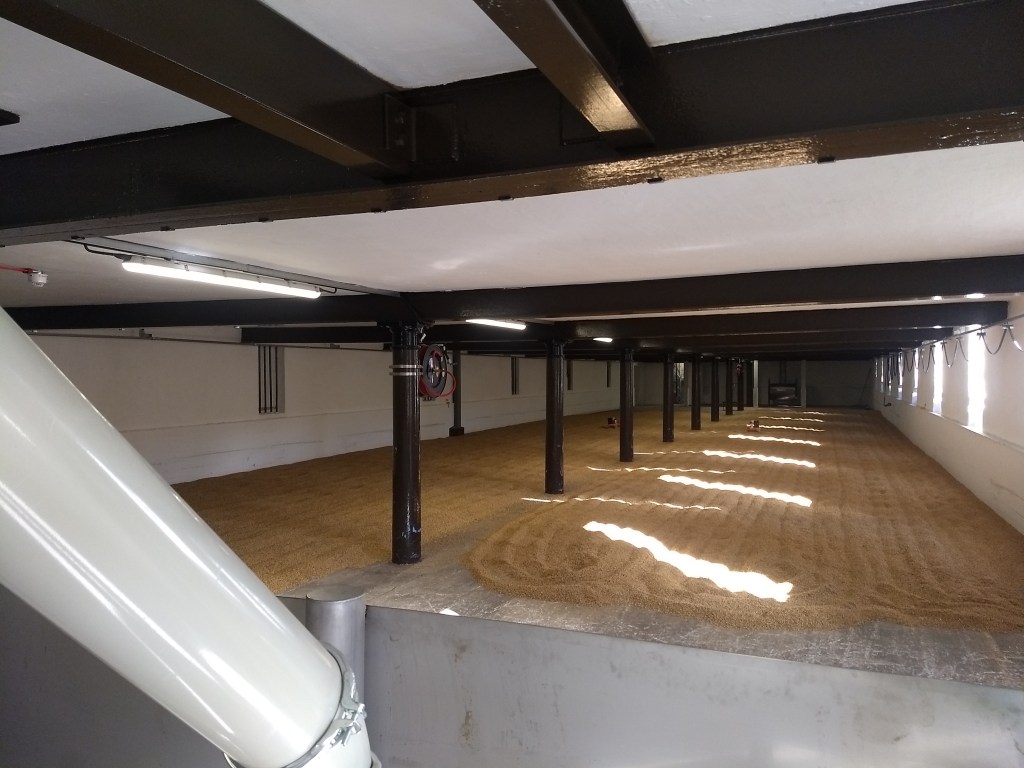
They picked us up at the St. Magnus cathedral, in Kirkwall centre, saving us the 15-20 mins walk to the distilleryโ€™s gate. Our tour guide was James, a true whisky geek and expert, who didnโ€™t limit himself to answering all the questions, but went above and beyond to provide more context and deeper explanations. The tour started with a short video, during which we tasted their most basic expression, the HP 10y (40%, chill filtered, but according to them not artificially coloured, available in supermarkets). After that, we moved on to the distillery, starting with the malting floor: similar to other distilleries we visited (so far Laphroaig, Kilchoman, Glen Garioch, Benriach and Balvenie), they malt some of their barley in house (about 20%), using peat from Orkney, resulting in a quite distinctive flavour compared to Islay or Highland peat.

The malting floor.

The distillery has a very interesting history, and a curious layout, almost like a tiny village. It was founded in 1798 and now it belongs to the Edrington group, with a production of 2.5 millions litre per annum. They used to fill almost exclusively ex-sherry cask, although now they have several ex-bourbon cask expressions (the 10y, 15y and the Full Volume).

The excellent tour guide James explaining us Highland Park distillation.

The tasting took place in the Eunson room, named after the founder, above the visitor centre. To our surprise, the line-up was actually the core range: the widely available 12y (40% abv), the new 15y in the ceramic bottle (44% abv), the 18y (43% abv), and the 21y (2019 bottling, 46% abv). Except for the 21y, which was really good (but unfortunately overpriced at 240 pound), the others were OK drams: not dislikeable, but quite inoffensive as well. At the end, they gave us a bunch of (quite unnecessary) gifts: other than the usual glass, a booklet about the distillery (OK as well we guessโ€ฆbut what are we going to do with two of these?), the (n-th) tote bag and a postcard-size frame with a tour attendance certificate (probably more of a gullibility certificate for having spent 75 quid each on this tour).

The core range tasting.

We were hopeful until the end, but nope: no distillery exclusive or limited bottling in the tasting. Back to the shop, we spotted a couple of interesting expressions that we thought could be a good buy: a 10y bottled at 46% (ambassador choice) and a cask strength bottled to raise money for a local rowing club, both around the ยฃ60 mark. We didnโ€™t even bother to ask for the distillery exclusive: 170 quid for a 14y cask strength seemed a bit ridiculous (at the SMWS you can them for less than half of this), while the Full Volume at ยฃ80 was definitely overpriced for a non-age statement whisky (probably you pay for the Marshall amplifier shaped boxโ€ฆGianlugi always preferred Orange and Fender). We asked if we could purchase a dram of the two. We were told it was not allowed because they are an off-sale only (soโ€ฆwhat about the 5 drams they had just given us? Mystery), but we could try them at the shop in Kirkwall. Once down at the shop, they said the same, but that we could try at the Kirkwall Hotelโ€™s bar. At the hotel, of course, they did not have those 2 drams. We went back to the shop, asking them again, but no chance we could try.

Outside the distillery.

(rant mode: on)

We like to be positive in our posts, but seriously: how detached from reality do you have to be to think that whisky enthusiasts would prefer the bag of cra…ehm, unnecessary gifts to, for example, some more limited/special drams?

We usually like vertical tastings, but in this case it was very poor value for money. We were OK with getting the 12y, as it is their flagship, but the inclusion of the 10y as well was not great, as it is a mostly supermarket release (please donโ€™t misinterpret us: the single malt selection in most supermarkets in Scotland is far better than some liquor shops in other countries, we just found strange to get that after travelling all the way to distillery). Not only the tour was super-expensive for no apparent reason (no samples from the cask, or distillery bottling, or some limited-edition release) but the fact that you couldnโ€™t try try any other drams at the distillery nor at the shop was almost ridiculous. We believe that the only reason they can get away with it is the hordes of tourists from the cruise ships, which guarantee them some cash flow no-matter-what.

Highland’s Park bunch of (mostly) “unnecessary” gifts…definitely not worth 75 quid!

Ironically, the more basic tour was definitely better value for money: our friends did a very similar tour (albeit, not with James), and they still got to try the 12y and 18y, but instead of the 10y they got the Full Volume release. So, if you want to tick off Highland Park from the distillery list, the Honour and Pride tour is the one to go for.  

As for the whisky itself, thanks to the SMWS, Cadenheadโ€™s, Watt Whisky and other independent bottlers, we know how good Highland Park can be, so the offer at the distillery was a bit disappointing. This is a shame for all the nice people working there, first and foremost the guide James, which was one of the best ones we ever had.

(rant mode: off)

Dramatic cliff at the Gloup!

Anyway, not being able to buy a bottle at Highland Park left us with a problem: no Orcadian whisky for the rest of the trip! Gianluigi solved the situation by getting a Douglas Laing blended malt Rock Island form the local CoOp: not only very tasty (and not-chill filtered and bottled at 46%), but also with some Highland Park in it, so 2 birds with one stone and a great value for money!

The day after we explored the east: a wee coffee break at the Deerness gin distillery (soon to produce single malt), a stroll in the Gloup reserve, and a stop at the J Gow rum distillery, on our way to the Italian Chapel. We went to the shop, and guess what: they let us try their (quite delicious) rums before buying!

Oooops, we bought some rum!

We really liked Orkney: we expected a quieter and eerie place, more similar to some areas in the north of the Highlands with mosses and peat bogs. Instead, it turned out to be a lovely, very rural landscape. Next time weโ€™ll definitely try to cross to the other islands as well, but for a first taste it was a great visit!

Until next time, slainte!


Highland Park: A Wild Harmony Experience

Price: ยฃ75.00 pp (August 2022)

Duration: 2h

Tasting: 5 drams from the core range, 10y (40% abv) 12y (40% abv), 15y (44% abv), 18y (43% abv), and 21y (2019 bottling, 46% abv), probably all chill-filtered (but according to our guide, no artificial colour added)

Target: Gullible whisky enthusiasts

Value for money: Quite bad

Highlights: our guide James was outstanding, chapeu!

Things we did not like: see rant above

Distillery exclusive: 14y single cask (ยฃ170)

Recommended: NO!

Link: https://www.highlandparkwhisky.com/en

Bonus: Highland Park Honour and Pride Experience (thanks to Roberto and Cecilia)

Price: ยฃ30 (August 2022)

Duration: 1h 15m

Tasting: 3 drams, Full Volume (48% abv NAS), 12y (40% abv) and 18y (43% abv)

Value for money: Acceptable

Target:
Everyone

Recommended: Only if you want to visit the distillery really badly


#19.1 Dramming around Orkney

A visit to Scapa distillery


TL; DR: We were finally able to visit Orkney and its malt distilleries. First off, Scapa, home of quite a โ€œmysteriousโ€ single malt, that we learned to appreciate during an in-depth distillery tour and a great tasting of mostly single cask expressions. Definitely a must-go for whisky fans visiting Orkney! 

In summer 2021, we had carefully planned a trip to the North of Scotland, including a few days on Orkney, which we were very eager to visit. For various reasons (actually, one reason, guess which one!) we had to cancel it. The occasion to catch up presented itself this year thanks to a couple of friends from Parma, Roberto and Cecilia (and their wee one, Flora). They wanted to visit the Highlands since their first visit in 2019, but things happened in between. This year they finally made it, and halfway into their holiday we joined them in Inverness and continued together: direction, Orkney!

We travelled in a campervan, which was meant to be an adventure. It was indeed, although with way more midges than expected: that was our first unfortunate discovery of the holiday: the Northeast coast is full of midges, almost as much as in the West, at least around Thurso where we spent the first night.

On the way to Thurso, where midges were waiting for us!

We woke up early however, and not for the midges, our ferry from Thurso to Stromness was around 8am. The cafe on the boat had a very Scottish menu, which meant a roll-based second breakfast. The view was quite spectacular, in particular we could admire the Old Man of Hoy during the cross.

The (misty) Old Man of Hoy.

Once on the island, we explored the village of Stromness. It looked like a very peaceful place, and not overwhelmingly touristy. After the stroll we had a quick lunch in a cafe and drove towards East, direction Orphir, where we stopped for a walk to the beach, taking advantage of the nice weather. On the beach we found half a jaw of some animalโ€ฆcow? Sheep? Seal? And, more worrying, some dead birds, likely because of avian influenza. This wasnโ€™t the only time during the holiday, it happened later at the Brough of Birsay and at Dingyshowe beaches.

Peaceful Stromness.

Moving on, it was finally time for our first visit to an Orcadian distillery, Scapa, right outside the “capital”, Kirkwall! Before the tour, Scapa was quite a โ€œmysteriousโ€ single malt to us: until then, we were only aware of two official bottlings, the Skiren and the Glansa, the latter finished in ex-peated casks (since the distillery belongs to Chivas Brothers, we guess Allt-A Bhainne). We also never came across an expression from independent bottlers (the SMWS has a code for Scapa, #17, but as far as we know no recent bottlings).

Gianluigi exploring Orphir beach…
…Look what we found!

Our friends dropped us at the visitor centre, where the tour guide Maria Letizia warmly welcomed us. Because she is Italian, she gave us a personalised tour in Italian, the very first time for us! The distillery is going through some renovations. They’re building a new tasting room, making sure it’s not pointing towards a certain buoy in the Scapa Flow. Maria Letizia explained that this is a sign of respect, because that’s the place where the Royal Oak, a ship with about 800 novices in training, mostly teenagers, was sunk by a German submarine during WW2, which was lucky enough to get to the Flow avoiding all old ships positioned as hurdles.

Scapa distillery, here we are!

After this quite sad historical anecdote, the tour moved on as usual: we got told the history of the distillery, which was founded in 1885, and partially destroyed in 1919 by a fire. More recently, in 1994, it was mothballed and for a few years, personnel from the neighbouring Highland Park were turning it on for a few weeks every year to make sure that everything was still working. They get all the malted barley from the mainland, totally unpeated, and that was from the foundation in our understanding, which is very uncommon for an Island distillery. Unfortunately, we couldnโ€™t take any photos in the production area, so we cannot show you a very peculiar detail: their wash still is a Lomond still, similar to the Ugly Betty at Bruichladdich (which is used for gin, however). They also donโ€™t have any filling station, so the newmake spirit is stored into tankers and transported to Glasgow to be put in casks, at 63.5% if first-fill casks, while at a higher strength, 68.8%, if refills. Some of these return back to the island, together with casks from other Chivasโ€™ distilleries, to mature on site. We could take a sneak peek at the warehouses, but photos from the outside only.

The warehouse.

Back to the visitor centre, everything was ready for the tasting. When we booked the tour (which alone was 5 quids only!!!), we could choose three tastings: the Land (a core range expression and 3 from the 10-16y range, ยฃ30), the Sea (four drams from the 15-19y range, ยฃ35) and the Air (four drams from the above 20y range, ยฃ45). These tastings were not bookable from the website, which only offers 3 unspecified drams forยฃ25, we had learned about them by contacting the distillery via email. Except for the two core range expressions, all the other ones are available as 50cl bottles, as is typical of Chivas Brothersโ€™ distilleries. Like the ones we saw in the other distilleries, they are a bit pricey too – company policy.

The delicious Air tasting.

We chose the fancier ones, Sea and Air, although in the first one we decided to include two drams below 15y (more approachable price-wise). All very tasty drams, in particular a couple of sherry cask matured ones (very cask forward, though). In general, we found the distillery character very citrusy, oily, crispy and honey/vanilla forward. They were all single casks, except an 18y, a marriage of 5 ex-bourbon barrels from the small production of 2000, when the distillery was run for a few days by Highland Park operators.

Sooo curious about this tasting!

We were very happy to finally get to know this distillery and its character. After dinner, we tried the two core range expressions, Skiren and Glansa, which we had tasted a long time before. Quite inoffensive sweet drams, definitely not comparable with the juicy and tasty ones we had had earlier at the distillery. Just a shame Chivas donโ€™t bottle more geek-forward expressions at a reasonable price (donโ€™t have to be all single casks, btw).

The night ended at the Kirkwall camping, trying to avoid the midges. Stay tuned for the second and last part of this trip!


Scapa Tour and Tasting

Price: ยฃ5 tour (August 2022) + tasting (ยฃ25 3 drams, bookable online in the summer season; ยฃ30 Land 1 dram from the core range and 3 distillery bottlings 10-16y; ยฃ35 Sea 4 distillery bottlings 15-19y; ยฃ45 Air 4 distillery bottlings 20+y)

Duration: 1-1.5 hours

Tasting: depending on tasting choice and available expressions

Target: anyone really, the experience can be easily customised

Value for money: very good

Highlights: the still room and the Lomond still

Recommended: YES!

Link: https://www.scapawhisky.com/

#17.2 A first taste of Speyside

Walking and blending


TL;DR: The last two days of the trip were dedicated to less standard whisky experiences. First off, a walk through the village of Dufftown and its distilleries. On the last day, we did a blending experience at Strathisla, learning the hard way how difficult it is. Overall, definitely a great trip! 

(missed Part 1?)

The morning of the third day was quite open, so we went back to Aberlour, officially for a walk to the Linn waterfalls, behind the Aberlour distillery, but we sneaked in a second visit toโ€ฆno, not the distillery, to the Walkerโ€™s cookies shop! Just to pick up Christmas gifts for family and friends, and because Gianluigi loves cookies indeed! We had some take-away food from a local shop, before our afternoon activity: a walking tour of the 9 distilleries of Dufftown! If youโ€™re asking yourself why 9, just stick with usโ€ฆ

A cute meeting point for the walking tour.

The tour was organized by Michelle, a local guide living in the village. We and another young couple met her at the clock tower. First, we walked towards her house, where she very professionally gave us a glencairn and a yellow vest: at the end of the day we were about to walk through a few whisky producing plants, most of them not open to visitors. To start with, we walked towards the site where the now demolished Pittyvaich distillery used to be (close to the Mortlach Parish Church). While looking at some of the old warehouses, Michelle poured a taste of a 25y Pittyvaich from a Diageo release. A bit down the road, we then stopped at Dufftown distillery, owned by Diageo.

Best shot at Dufftown distillery.

Thisย is one of the three distilleries making the Singleton (Singleton of Dufftown), sold mostly in the UK and Europe. Moving on with our tour, walking along the Dullan Water, we found the third distillery: Glendullan, another one from the Singleton series (this one distributed in North America, while the third one is from Glen Ord and is distributed in the Asian market). One exception was the House of Tully Singleton, part of the Game of Thrones range, which we had a taste of after a wee look at the still room. Next stop was a popular one, Mortlach, which we were very curious about for their quite complicated 2.71 distillation process. We saw their third still (from the outside), called the Wee Witchie, where the last 0.71 of the distillation happens (in our understanding, but not so sureโ€ฆ).

The beast of Dufftown and us.

In this case, the dram was a Gordon & MacPhail 25y from the distillery label range, paired with homemade shortbreads, which were fantastic! It took a bit to get to the next stop, this time walking along the Foiddich. During the walk Michelle showed us the building where another silent distillery was, Parkmore, closed too long ago to get a sip. We were already acquainted with the next working one, Glenfiddich, but not the next ones: Kininvie and Balvenie.

Balvenie, the beautiful.

Unfortunately, during this trip we hadnโ€™t managed to book the latter (although we caught up almost a couple of years later), so we were very curious to see it. As we walked past the malting floor, we saw smoke coming out of it, meaning it was working! Michelle was very excited as well, she had seen it only a dozen of times. We walked past Kininvie still room (the mashtun and washbacks are at Balvenie). The final distillery was another silent one, Convalmore, now used as warehouses. This is where Michelleโ€™s husband was waiting for us in a van to bring us back (it was quite dark at that stage). It was a great experience, a bit different from a regular distillery visit, definitely worth it! We ended up having dinner at the Commercial Hotel and, again, a couple of drams at the Seven Stills.


Sunday was the last day of our wee holiday. We had a very nice conversation with Linda and her partner, who drove us to Keith for the last whisky activity of the long weekend: Strathisla. The distillery looks very pretty, in particular as you walk in from the parking through the courtyard. Like Aberlour, it is owned by Chivas Brothers (a subsidiary of Pernod Ricard), and it is the core malt of one of their most popular brands, Chivas Regal. The 12 year old expression is present in almost all auntiesโ€™ and grandmothersโ€™ houses back in Italy too.

Iconic Strathisla.

For this tour, Teresa picked something different: the blending experience. So, after the tour of the distillery and the warehouses (where we had a dram of Chivas straight from the cask), we were guided to the blending room. It looked like a fancy version of a high school chemistry lab, with all the glass equipment, but instead of burners there were bottles of whisky. Our task was to create a blend of 5 whiskies: fruity (Strathisla), citrusy (Glen Keith), smoky (Allt Aโ€™Bhaine), creamy (Longmorn) and floral (Strathclyde, a grain whisky distilled in Glasgow). Of course, as we were making it, it was like: โ€œitโ€™s going to be super tastyโ€, but when a few months later we opened our 20cl souvenir bottle of our very own blends, it clearly was kind of crappy. Well, blending is more of an art, and the blenders job is definitely one of the hardest in the sector! Definitely a fun activity though, although we both agreed that one time was plenty.

As we came out, we had over an hour to wait at the Keith โ€œstationโ€ (a porch) for the train to Aberdeen. We couldnโ€™t really walk around because of the backpacks and the heavy rain, so we just sneaked in a walk to Glen Keith distillery, right in front of Strathisla.

Glen Keith distillery under the rain.

On the train back we came up with the idea of a whisky blog. It would have taken over a year to kickstart it, but this trip is the culprit! It substantially improved our knowledge and made us even more enthusiastic about scotch whisky. Speyside is one of those places where every time we visit, we say to each other: โ€œwe should get a house here”. This was the first trip to this magical region, with many more just about to come!

Until the next story, slainte!


Strathisla Distillery Tours
https://www.maltwhiskydistilleries.com/strathisla/
Michelle’s Dufftown Distilleries Walk
https://www.dufftown.co.uk/prov_attr_detail.php?id=153

(Because this trip happened almost 3 years ago, we are not compiling the distillery visit evaluation box.)


#17.1 A first taste of Speyside

A birthday surprise


TL;DR: in December 2019 Teresa organised a surprise weekend for Gianluigiโ€™s birthday, so we travelled to Speyside for the first time. One of the few times we travelled by train, it wasnโ€™t easy to reach all the places we wanted. Nevertheless, in the first couple of days, we managed to visit four distilleries in Elgin, Aberlour and Dufftown.ย 

2019 was a weird year for us. Because of an intense period at work, Gianluigi could take very few leave days throughout the year. But it was also the year where something changed for us about whisky: we became members of the Scotch Malt Whisky Society, we started listening to whisky podcasts, reading books, and visiting distilleries more often. So, when December arrived, going off on a wee whisky holiday was a very easy decision to take. It was also Teresa’s gift to Gianluigi for his birthdayโ€ฆso for him the destination was a surprise!

In the morning, first train to Aberdeen, then another one to Elgin, so Speyside, which weโ€™d never been before! This is home to over 50 distilleries, without doubts the biggest producing single malt whisky region. Although not all of them are open to visitors, a good bunch are. Which ones then? Still a mystery to Gianluigi.

Happy faces, and we were not even drunk!

The first distillery was only a 20-minute walk from Elgin train station: Glen Moray. We are now very fond of this one, probably underrated because of their entry-level expressions available in supermarkets. Thanks to a few very tasty SMWS bottlings, however, at the time we had already started to appreciate it, so Gianluigi was very happy! Because of time constraints we only did a tutored tasting at the distilleryโ€™s cafรฉ. We chose different flights, the travel retail (with the Elgin Heritage NAS, 12y and 15y, but all bottled at 48% and not chill-filtered) and the distillery casks (2008 ex-rye cask finish, 2001 2nd fill ex-oloroso, 2014 peated ex-gamay cask). We loved these expressions, in particular the 12y in the travel retail range and the 2008 Rye cask finish, but we felt it was too early in our trip to buy anything (much regretted decision).

Glen Moray tasting.

From there, we took a cab to another distillery, completely unknown to us: Benriach. Together with its sisters GlenDronach and Glenglassaugh, it had been recently sold to Brown-Foreman (aka Jack Daniel’s).

After seeing a malting floor for the first time.

At the time the visitor centre was just a small room with a couple of sofas, table and chairs, and a small shop. The tour was intimate (only 6) and quite in depth. We were guided throughout production, including their malting floor (first time we visited one), and we tasted the wash (someone said: โ€œlike a bland and watery beer, basically an English aleโ€). It was before the revamp of their core range, so we tried their 10y, 10y peated (Curiositas), the magnificent 12y triple-sherry cask, and the travel retail 10y triple distilled (of which we were able to grab a bottle only a few months ago), and another couple of older distillery exclusive expressions, including a peated ex-port cask. Truly a great tasting!

What a line-up at Benriach!

By the end of the tasting, it was dark outside (Decemberโ€ฆ), and we almost missed the last bus to go to our final destination for the day. Fortunately the driver saw us waving at him in the dark. We arrived in Dufftown, where we stayed at the Conval House, a lovely B&B run by the very kind Linda. After the check-in, we had dinner at the Stuart Arms (not open anymore) and a couple of final drams at the Seven Stills.


The next day we woke up a bit dizzy, how so? (wink, wink). This didnโ€™t prevent us to move on with our mission, and after breakfast, Linda generously drove us to the next distillery: Aberlour, in the near village ofโ€ฆ Aberlour!

Ready to start day 2.

It was just us on the tour, definitely not high season for them. The guide gave us a dram straight away (the 12y), which we enjoyed before another really in depth tour. The distillery sits in a marvellous location, surrounded by woods and near the Linn Falls waterfall.

Linn Falls waterfall.

Again, the final tasting was quite generous, with samples of the newmake spirit, the 16y, the Casg Annamh, and two 14y single cask, one from an ex-bourbon barrel and another from an ex-sherry butt. Unfortunately the Aโ€™Bunadh, which we hadnโ€™t tried yet, was not in the line-up, but we would have caught up later that day.

After a quick stop at the Walkerโ€™s cookies shop in Aberlour, we caught the bus, next stop: the Speyside Cooperage. It was a very cool experience, and very different from a distillery. To be honest, the guide did not say much (a bit shy?), but was available to reply any questions. However, as whisky novices we didnโ€™t have that many. The walk in the production area was very interesting: we could admire the toasting process and the coopers doing their magic rebuilding the casks.

The sky is blue above the Speyside Cooperage.

Finally, the last stop for the day: the Glenfiddich distillery. This is a massive operation with a capacity of over 22 million litres of alcohol per year. The tour started with an introduction video. After that, we parted from another quite large group of people, as only the two of us went for the in-depth tour. It was the first time we visited a distillery of that size: the two huge lines of stills striked us!

So many stills at Glenfiddich!

At the end of the tour and after a wee look at the bottling line, we were ready for thetasting. We had the 12y, the 15y, the Project XX (the best of the bunch, in our opinion), the Fire and Cane, the 18y and finally the 21y rum finish. When we visited the warehouses we could try a tiny sip of the 15y cask strength form one of their huge solera-style vatting tubs – very tasty but pricey (at the time 120 quids at the visitor centre).

Our day ended with a nice dinner at A Taste of Speyside restaurant (now unfortunately closed), and another dram, only one this time (the Aberlour Aโ€™Bunadh) at the Seven Stills. What an intense day!


Distillery (tours) links

https://www.glenmoray.com/our-distillery
https://www.benriachdistillery.com/en-gb/distillery-tours/
https://www.maltwhiskydistilleries.com/aberlour/
https://www.glenfiddich.com/en-gb/distillery

Speyside cooperage
https://www.speysidecooperage.co.uk/tours.php

(Because this trip happened almost 3 years ago, we are not compiling the distillery visit evaluation box.)