#71.3 The North-eastern Highlands

Lost in Brechin: Glencadam distillery


TL; DR: Another weekend, another trip to the northeast, destination: Brechin, home to Glencadam distillery! They just opened a new visitor centre after a substantial upgrade, and it is very cozy and charming: well done! We enjoyed the basic but informative tour, and a warm and hearty soup afterwards.ย 

(missed Part 2/Part 1?)

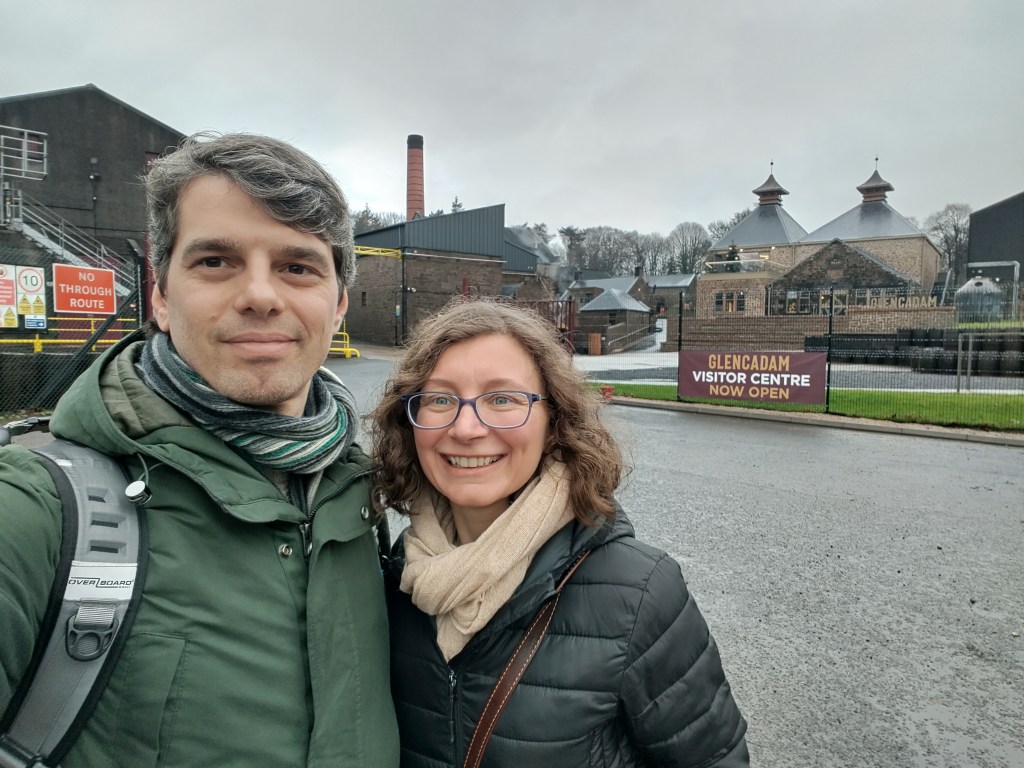
The weekend after our trip to Royal Brackla it was time again to hit the road with Mr Vantastic. And again, our destination was the northeast of Scotland. This time we had two distilleries to visit, so we stayed away for the night, hoping not to freeze. We left Leith mid-morning, the weather was not as good as during our trip to Royal Brackla, but not as wet as the one to Glenglassaugh: overcast and some rain here and there. We didnโ€™t stop for lunch, as weโ€™d prepared two sandwiches with the delicious rock salt and rosemary focaccia from Lidl: when itโ€™s fresh, truly good stuff! Our first stop was Glencadam distillery, in Brechin. We arrived in town at around 1.30pm, but we parked away from the distillery, in what was marked as a potential stopover for the night. It is near the river South Esk but it didnโ€™t look that great, so we postponed the decision to after the tour. It took us about 20 minutes to cross the town, walk alongside a football ground and a cemetery, to then arrive at the distillery.

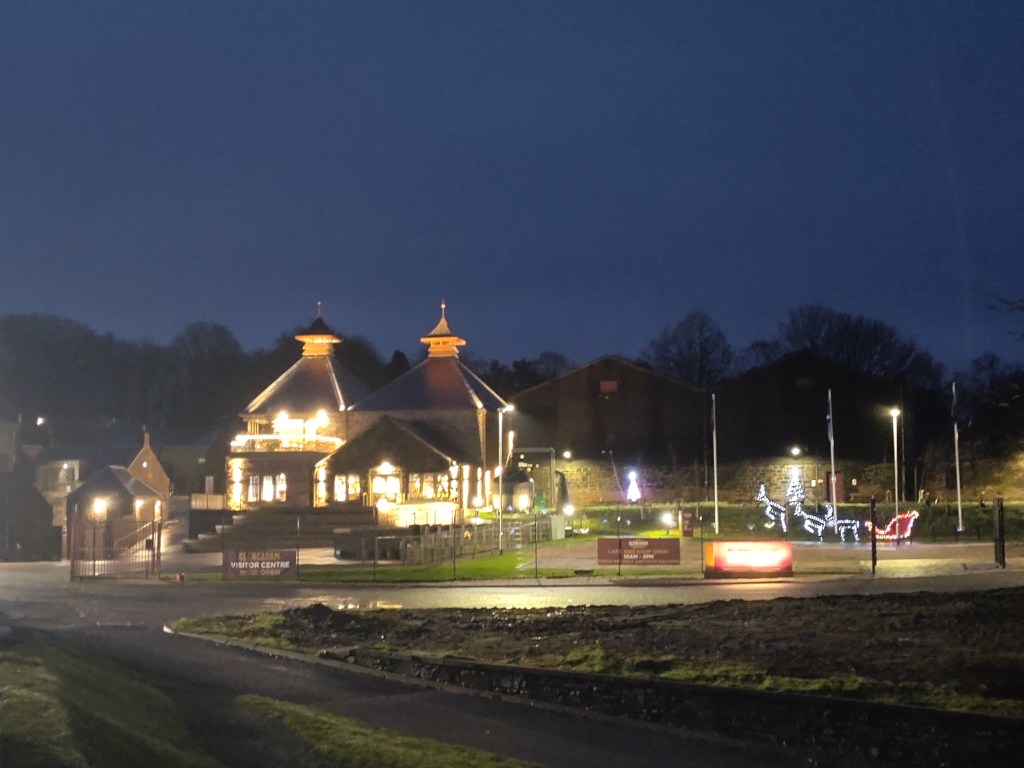
Glencadam has been on our radar for a while, as their single malts became very popular among whisky enthusiasts: other than delicious, many of their expressions (except for a couple available in supermarkets) are naturally presented (non-chill filtered and natural colour), and mostly well priced: if you havenโ€™t tried it yet, get a bottle of the 10-year-old, great stuff! After the pandemic the distillery has been mostly closed to public, with tours only available on Tuesdays and Thursdays, previous direct contact, but for a short period of time. When they closed again (to visitors, the distillery was still in production), it was for an important reason: works started to build a visitor centre, including a cafe and a dram bar. It was also to celebrate their 200th anniversary, so an opening was expected in 2025. Almost at the end, but they finally opened in November! As we arrived, we noticed the all new and tidy exterior, with an old still used as decoration and, given the period, a couple of cask-stave made Christmas trees.
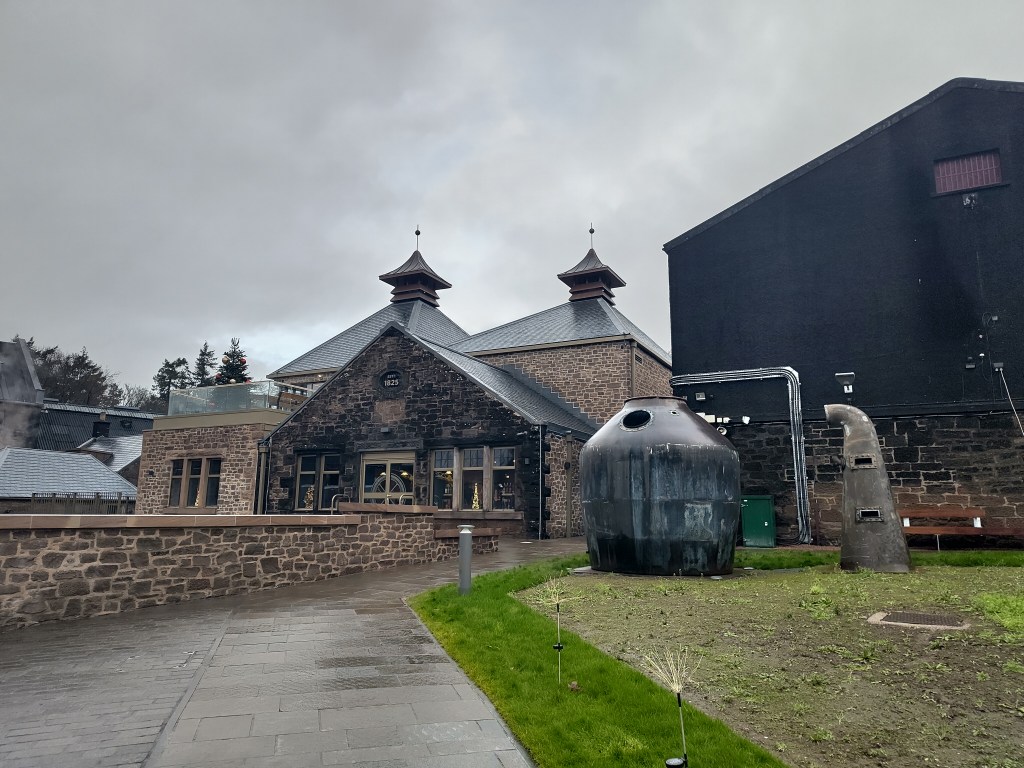
In the visitor centre we were welcomed by Michael, the manager, an old acquaintance as he used to work at Kingsbarn distillery, and we met him many times at the Fife Whisky Festival. While waiting for the tour to start, we browsed the shop: other than the known expressions, everything was set up for a couple of bottle-your-own bottlings, but they were not available yet.

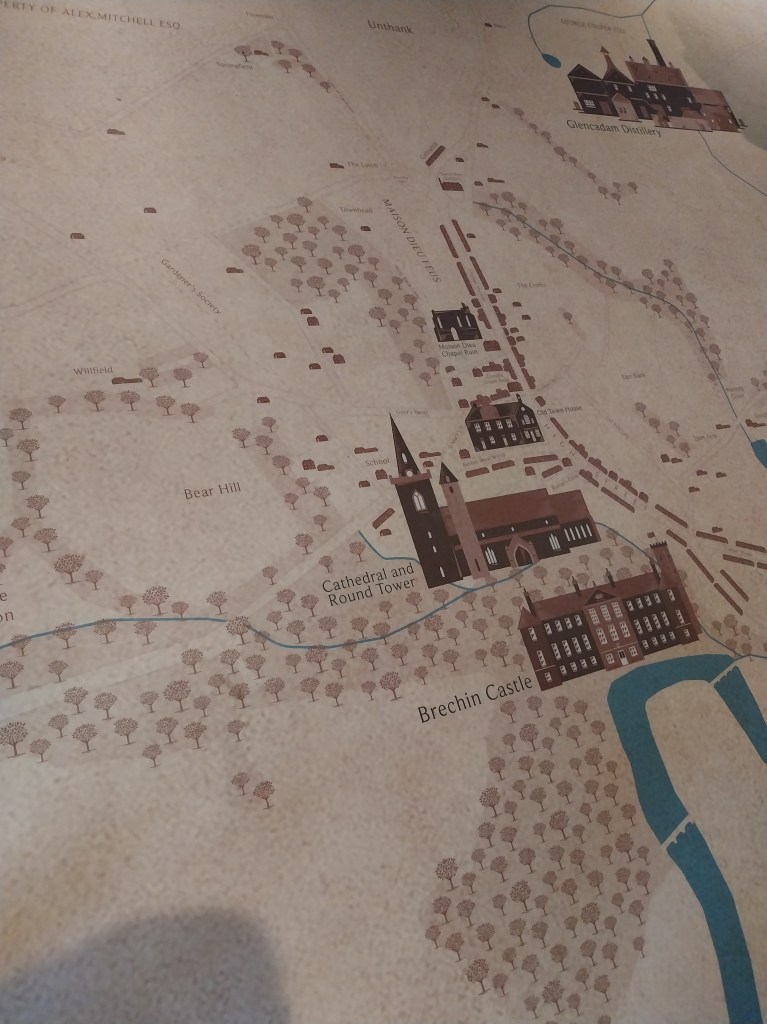
Our guide was Brian Townsend, local from Brechin, the whisky historian who wrote Scotch Missed, a book about lost distilleries (here a review by Kate Watt, of Watt Whisky independent bottler). It was us and another two couples on the tour, which started in a room with panels about the history of the distillery and a big map of Brechin on the floor. The distillery was founded in 1825 by George Cooper, who sold it only two years later. Between the mid-1800s and the early 1900s it changed hands a few times, until it was purchased by Hiram Walker in 1954, which in turn was acquired by Allied Domecq in 1987. The distillery was mothballed in 2000, but finally bought by Angus Dundee, the current owner, in 2003. The history and a high-level explanation of how whisky is made was covered (possibly too extensively) in an exhibition with a series of videos that preceded the actual tour of production.
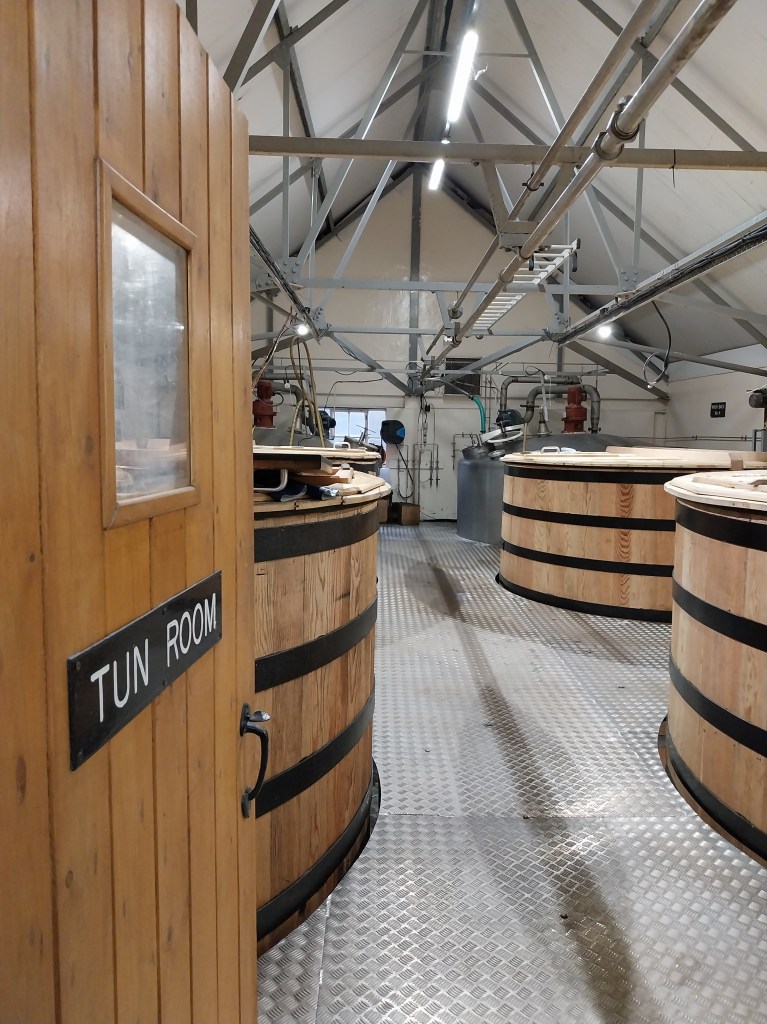
Going into the nerdy production details, they get 30 tons of fully unpeated barley three times a week mainly from Bairds, sometimes from Crisp: in both cases, they aim for Scottish barley. The mill, built in the 1920s, was acquired in 1965 and produces grist with the usual components split (husk/grit/flour 20/70/10). Five tons of grist are added to each mash, first with 20,000 litres of water at 65ยฐC, then another 8,500 litre for the second water, and finally the third water (another 20,000 litres) captures the remaining sugars and is used as first water in the next mash. The draff is collected by local farmers once or twice a day, to feed cattle. Of the six washbacks, only two are made of stainless steel, but they will be replaced next year by Oregon pine ones, like the other four.
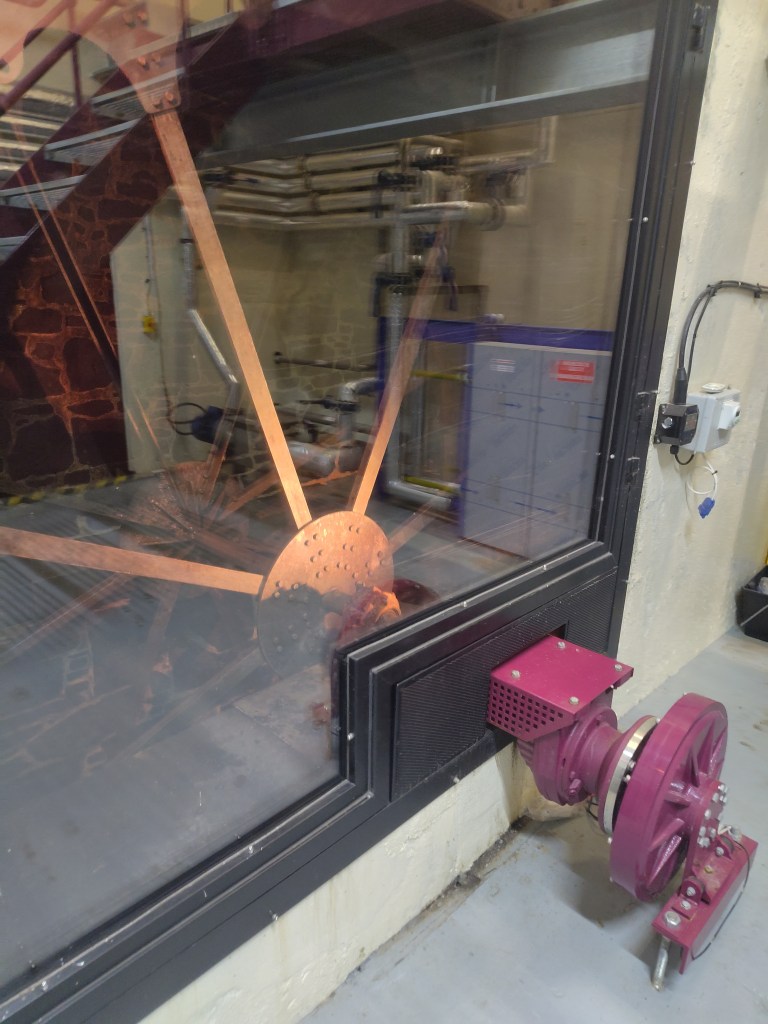
Another improvement was to get the water wheel to generate some of the electricity, replacing the original one dating back to 1824-25 that worked for over a century. The new one can be observed behind glass. Instead, a feature that is gone forever, is the original Doig ventilator, aka the pagoda, which was destroyed in a fire.
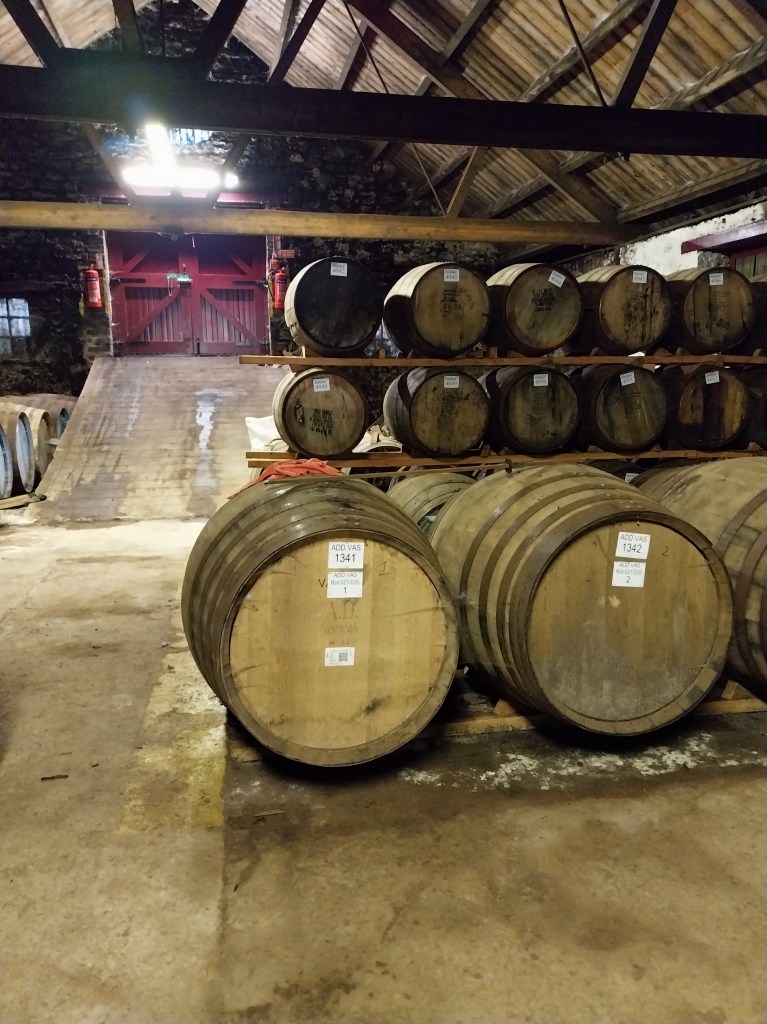
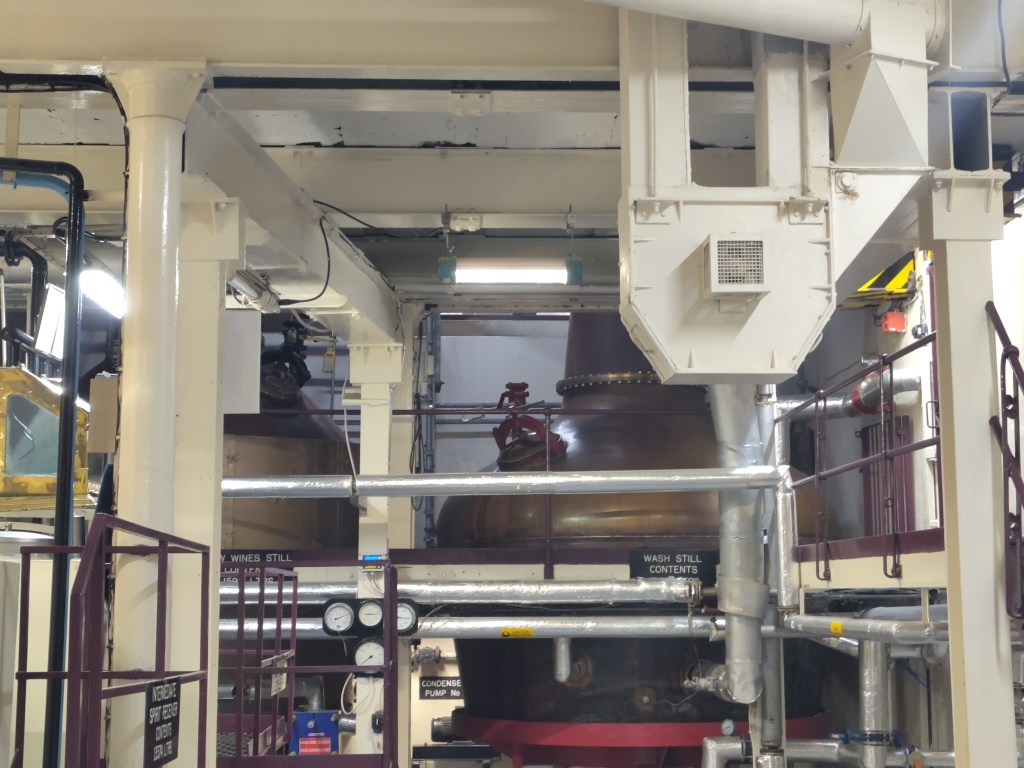
Back to production, we learned that fermentation lasts 48 hours, a short one, and is triggered by 13kg of distillersโ€™ yeast. They only have one pair of stills, and in the second distillation, they start collecting the spirit after 10 minutes of foreshots (we didnโ€™t get the cut points though). Coming out of the still room, we were in a small yard where the draff truck comes in, and from there we reached one of the six warehouses on site, to the right of the visitor centre. Two of these are dunnage style and date back to the 1800s, while three are from the 1950s and one is a modern racked warehouse.
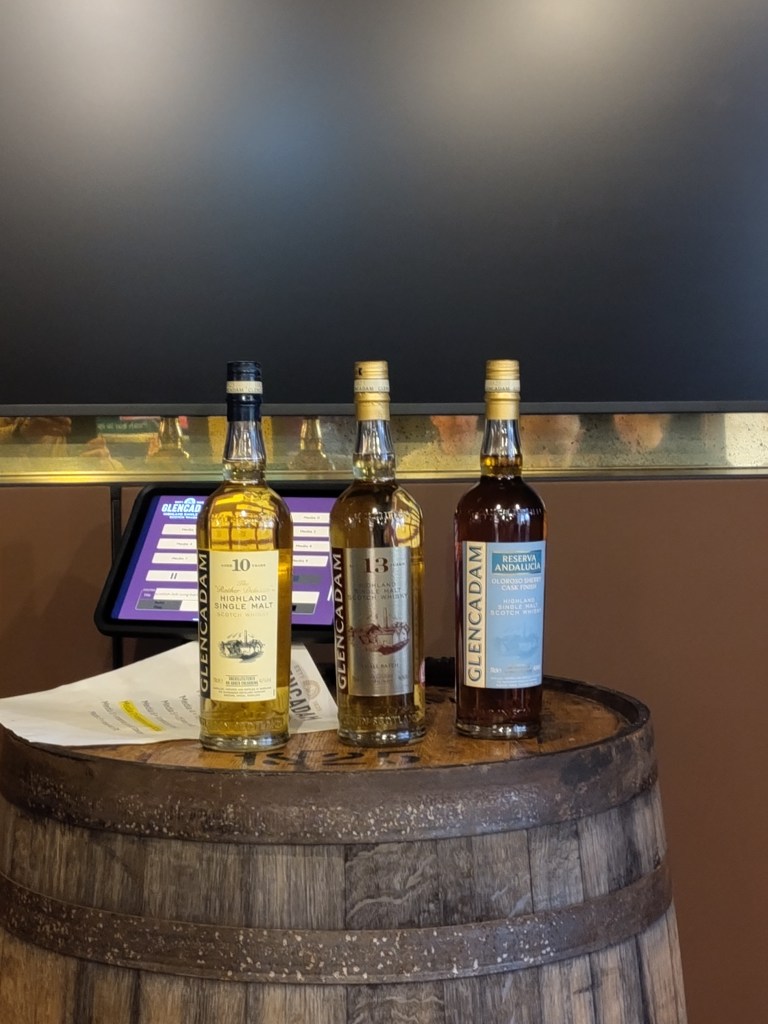
It was then time to go back to the visitor centre for the tasting: we had three drams in front of us, the Glencadam 10y (46%, fully ex-bourbon casks), its bigger brother 13y (46%, same casks), and the Reserva Andalucia, a non-age statement expression finished for a year in ex-sherry casks (46%). Recently, this became part of a series of many cask finishes expressions (white Port, tawny Port, Amarone, PX sherry, etc). It was a basic tasting, but enjoyable nonethelessโ€ฆWhen we were about to finish, Micheal brought us another dram: a 17y โ€œtriple Portโ€ cask, a nice and delicious touch!

After the tasting, we went upstairs to the cafe for a warm soup, but Gianluigi got tempted by the dram bar (they have most Glencadam and Tomintoul expressions available) and got another dram (a delicious 15y finished in Madeira wine cask, 46%). It was a very pleasant moment, the cafe is a very cozy space to relax with bites and drams. Because in the meanwhile weโ€™d decided to leave Brechin, we didnโ€™t indulged in more drams at the bar (hopefully next time), and we left the premise, not before getting a signed copy of Brianโ€™s book.

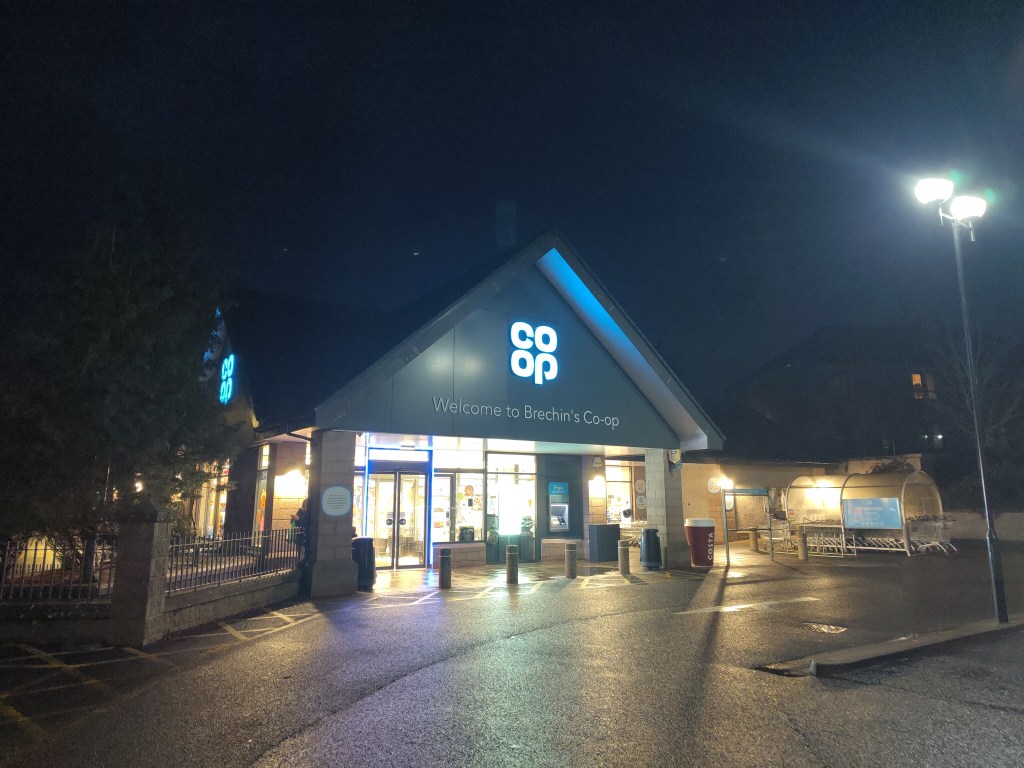
We walked a bit around Brechin, but it was dark already and the visit to the cathedral was not that satisfying. We visited the site where the North Port (or Brechin) distillery used to be, now a CoOp (*sad trumpet*). We left town and arrived at the Cock and Bull pub, north of Aberdeen, a pub that lets campervans stay if a meal is consumed there. Despite arriving early (not even 6pm) they sent us away asking to come back at 8pm. We did, but we had to wait almost another hour to order as they admitted that they thought we wouldnโ€™t come back (in spite of us leaving our names for a table). What a shite way to treat customers, probably we wonโ€™t be back.

Overall, our visit at Glencadam distillery was very good, we had a nice time. The new visitor centre looks great, and while the experience we chose was very basic, especially the tasting, it was interesting nonetheless (to note, they offer a pricier experience, maybe next time). Weโ€™d definitely suggest visiting the distillery to friends, in particular for those early into their whisky journey. The only thing we didnโ€™t like was the pricing of the bottles in the shop: above retail, including some shops on the Royal Mile (obviously weโ€™re not considering the big online retailers), but in general everything beyond the core range was slightly pricy, with no discounts available to those taking the tour. It always puzzles us how some producers seem to punish instead of rewarding the enthusiasts making the effort to travel to the distillery.

Stay tuned for the last tour around the northeast of Scotland, coming next week! Until then, slร inte!


The GlenCadam Distillery Tour

Price: ยฃ23.58 pp (ยฃ22.50 + fee, December 2025)

Duration: 1hr 30min

Tasting: 3 drams, Glencadam 10y (46%), Glencadam 13y (46%), Reserva Andalucia (NAS, 46%)

Target: everyone

Value for money: very good

Highlights: the cafe above the visitor centre

Recommended: yes

Link: https://www.glencadamwhisky.com/

#71.2 The North-eastern Highlands

Feeling like royals at Brackla


TL; DR: Another tour in the north east, this time at the mighty Royal Brackla. Tucked away near Inverness, itโ€™s usually closed to the public, so when the chance to visit arrived, we couldnโ€™t say no. It paid off, the tour was great, and it finished with a fantastic tasting!ย 

(missed Part 1?)

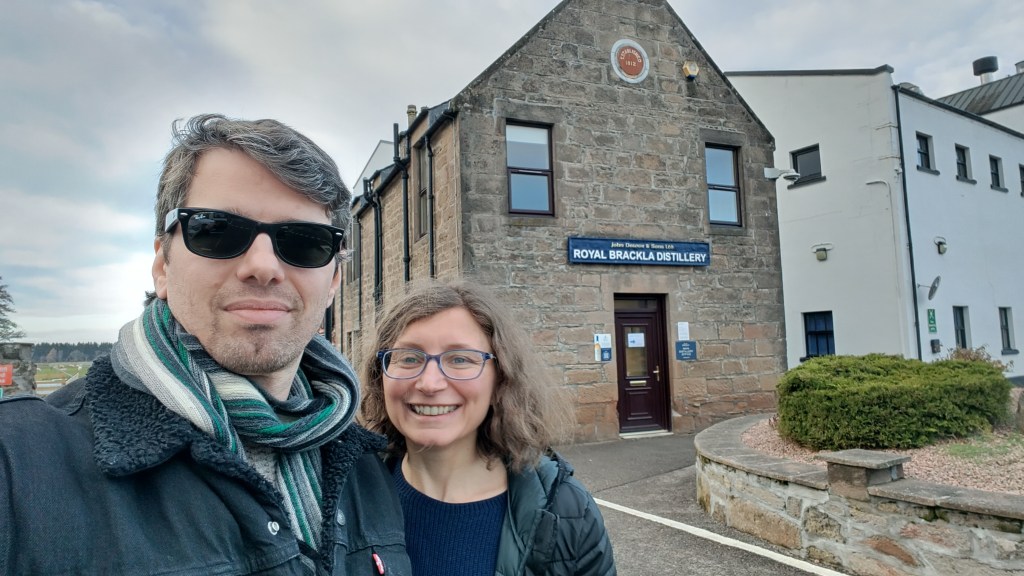
About a month after our trip to Glenglassaugh, we were on the road again, and again in the East Highlands! This time, however, our destination was much closer to the A9 and to Inverness: Royal Brackla Distillery. This distillery, owned by the Bacardi/Dewarโ€™s group (together with Aberfeldy, Craigellachie, Macduff and Aultmore) is usually closed to the public: how come we visited it, then? Well, the answer is: charity! The company decided to run two open weekends, one at Royal Brackla, the other at Macduff distillery, and donate the revenues to local charities. And who are we to say โ€œnoโ€ to visiting a distillery for charity? Once we learned about this on the Edinburgh Whisky Group chat, we snatched two tickets for each distillery right away.

The first of the two weekends was at Royal Brackla, which opened for two days (Saturday and Sunday), with three tours each day. We picked the last tour on the Saturday, at 2pm, thinking we might spend the night away (spoiler, at the end we didnโ€™t). We left the city in the morning, aiming to get lunch near the distillery. After an uneventful drive on the A9, we went to the Hillhead Cafรจ in Tornagrain: Gianluigi had stopped there previously after fieldtrips to a nearby farm, so already knew it was a nice one. From there, we drove a few extra minutes, as the distillery is right after Cawdor, on the left, past the burgh where the popular Cawdor Castle is. Visiting the distillery (when they are open) and the castle could actually be a nice combo.

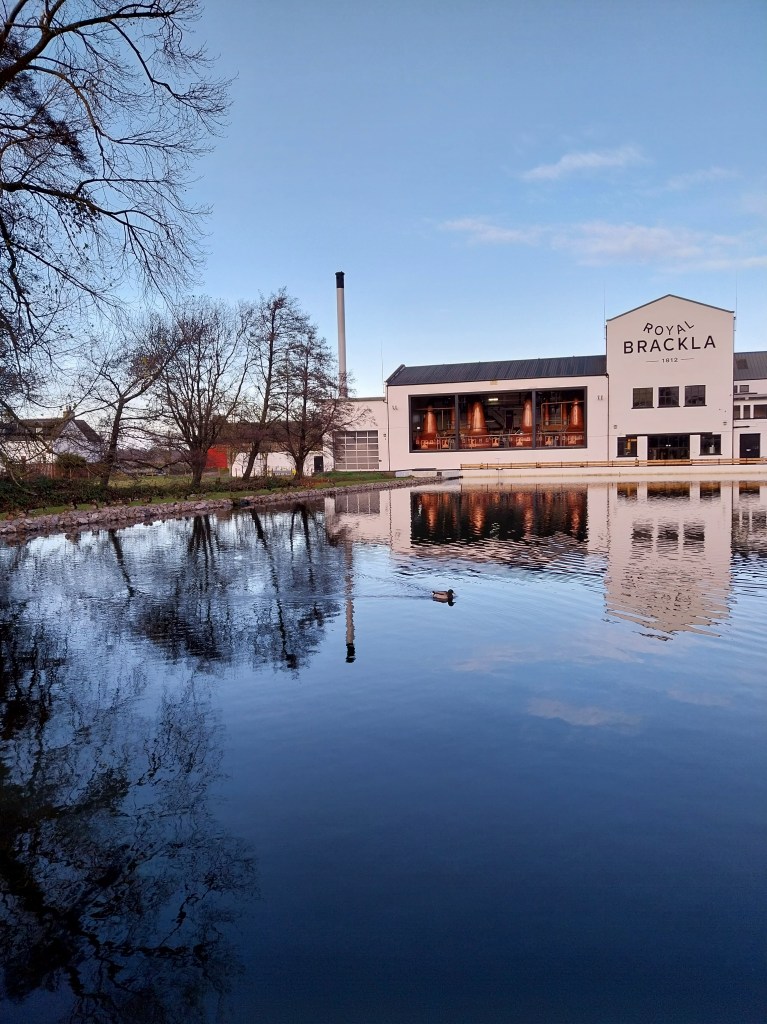
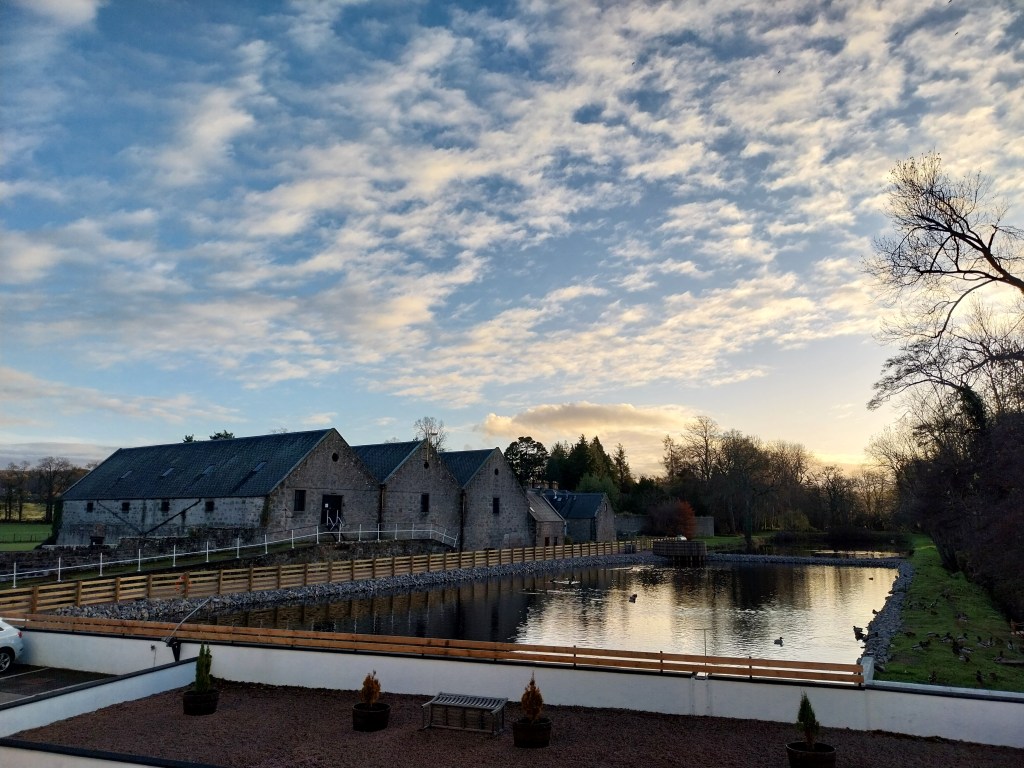
It was a cold and sunny day, with some clouds, and being the end of November in the Highlands, at 2pm the sun was already starting to go down. When we arrived at the distillery, it was still caressing the landscape with a beautiful light – a fantastic atmosphere. We parked near a lovely old brick building, which hosts the distillery offices. The staff set up a room in a building just next door, with a big screen and a pop-up shop; as we checked in, they gave us a high visibility vest. We were accompanied on tour by Mike, Matthew, Luke and the distillery manager, who walked us to two recently renovated ponds, holding the water for cooling. At the end of the second one there is a wooden deck made from a former washback. From there, we could see a flock of mallards, permanent residents of the pond.

While on the deck, Mike talked about the history of the distillery: founded in 1812 as Brackla by Captain William Fraser, formerly in the military, but born locally. Thatโ€™s quite early, compared to the many distilleries founded between 1823-24. Because of the resentment of the illicit distillers in the area, he struggled to sell his whisky locally, so he took advantage of the near Inverness port and of his connections in the army, to send it all over Great Britain, as far as London. The royal warrant, the first one in scotch whisky, was given by king Willian IV, apparently very fond of Brackla. The distillery was shut during both World Wars, and for five years during the Whisky Loch of the 1980s. When Diageo was formed in the late 1990s, they sold Dewarโ€™s to Bacardi, including Royal Brackla and the other four aforementioned distilleries.

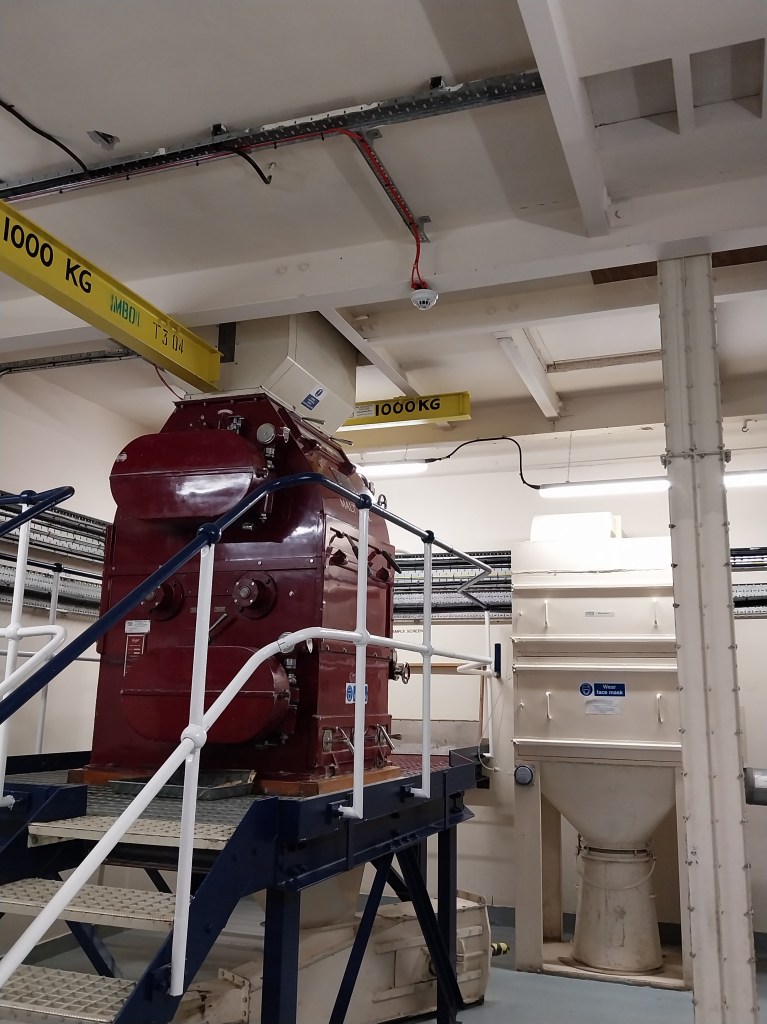
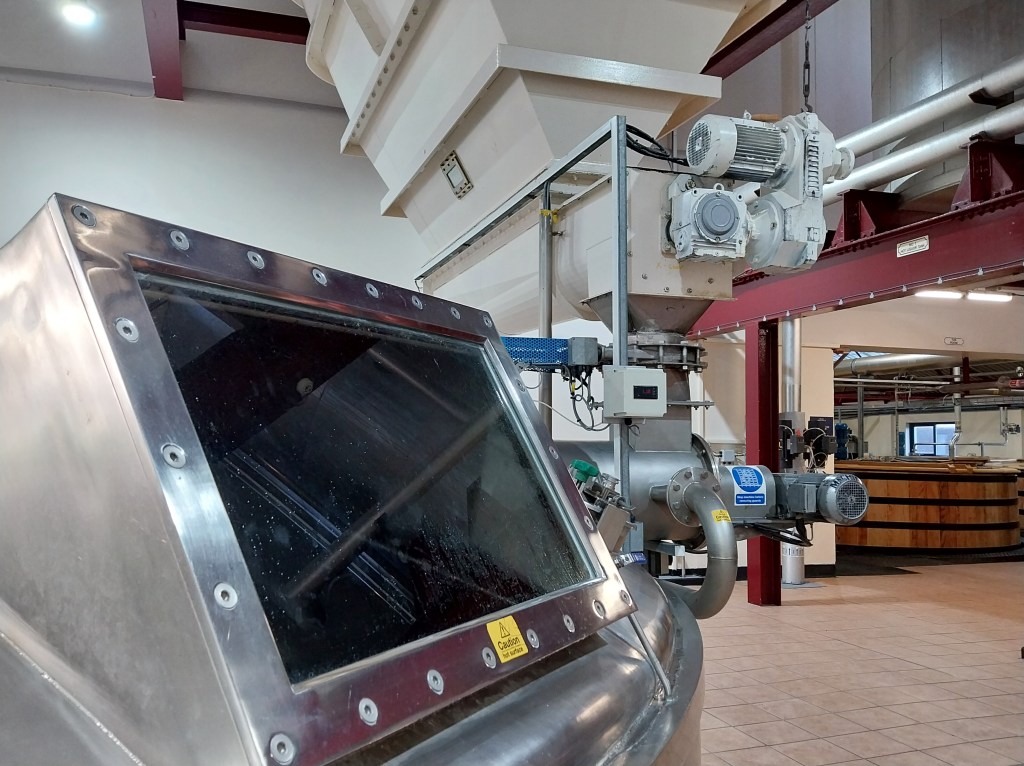
Back at the distillery, we started on the nerdy production details right away: the malt, fully unpeated, comes from Beards, mostly sourced in the Black Isle, and stored in one of the 14 malt bins. Currently it is a 50/50 blend of Laureate and Sassie, crushed into grist by an old Porteus mill, in the usual husk/grit/flour ratio of 20/70/10. They mill for 2-3 hours, twice a day, to run 11 mashes per 5-day week. They scaled production down from 7 days because of the current climate, but before they used to distil 4.4 million litres per annum. They also reduced personnel from 10 to 8 operators. Each mash uses 13-ton of grist, and the two waters (as usual, the third is used as first water in the next mash) result in about 58,000 litres of wort, which is then split into three washbacks. There are eight washbacks in total, two stainless steel ones outside the building and six wooden ones inside. Apparently the latter provide better yield.

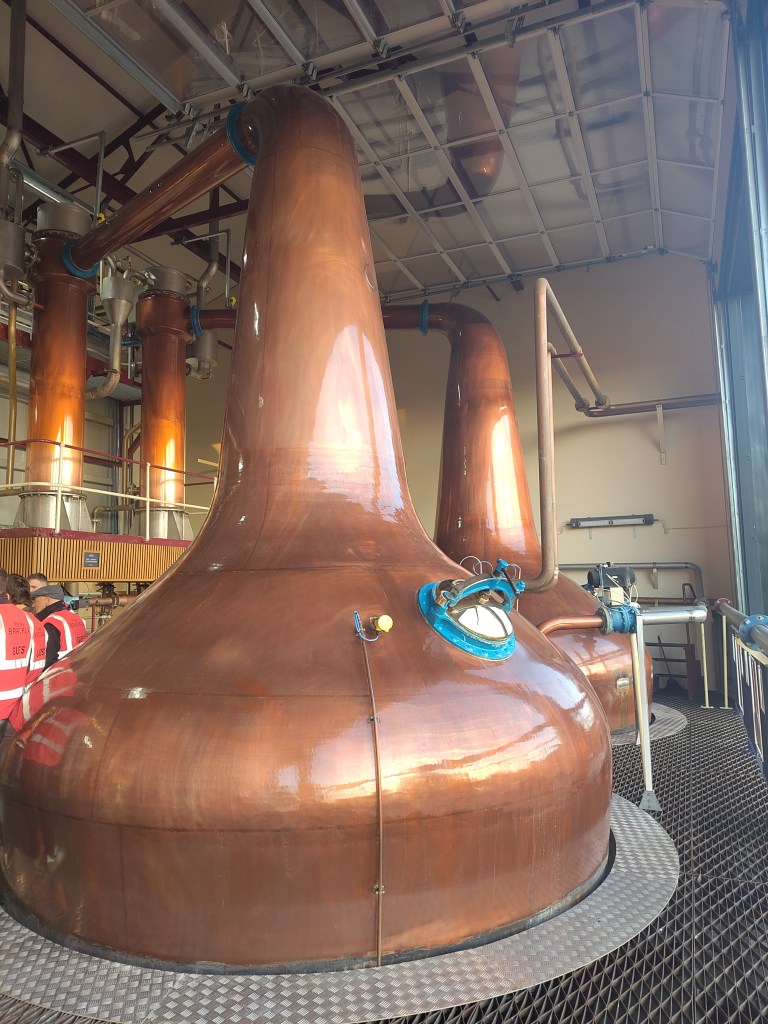
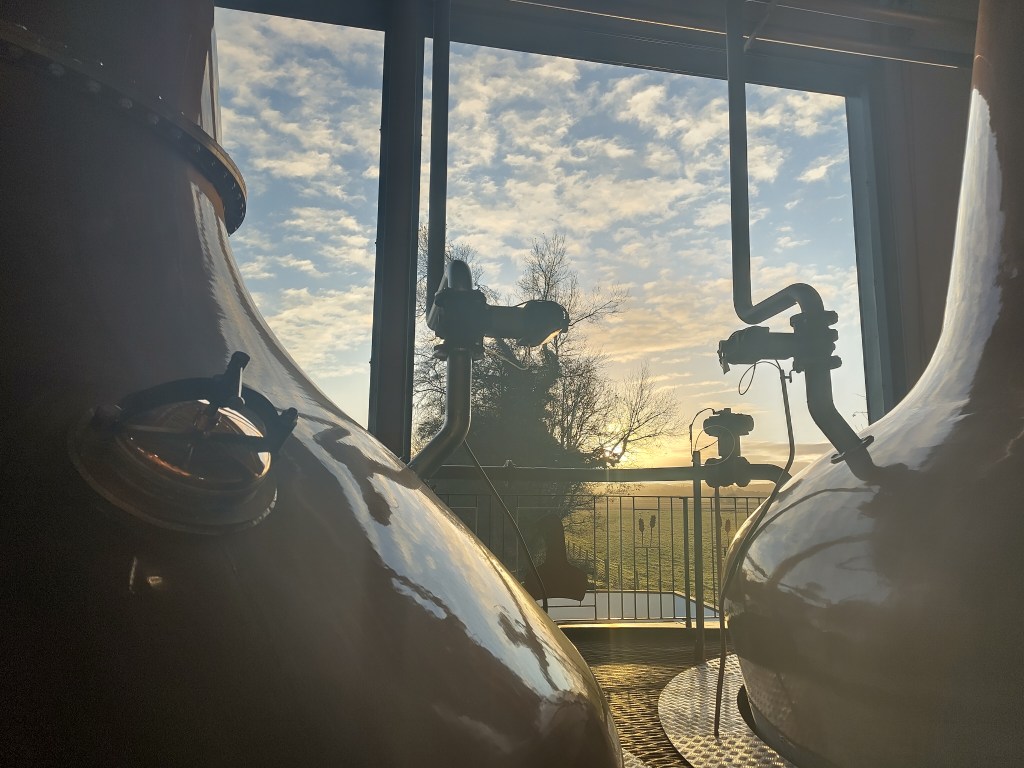
Fermentation is kickstarted by Lallemand cream yeast and lasts 60 hours minimum, but it can be around 115 hours if it goes over the weekend (considering they are working five days). The still room was probably the best part, with the four stills (two wash and two spirit stills) aligned behind the window, from which we could see the ponds. Again, because of the light, the view from there was spectacular.

Back to technicalities, the stillsโ€™ steam is generated with either an LPG or a biomass boiler (they have one of each). About the latter, they commented that while it reduces their carbon footprint substantially, it is hard work to make it run. In the second distillation, after about 30 minutes of foreshots, they start collecting the spirit from 76%abv down to 64%, and it takes 5 hours to get about 5,000 litres of spirit. Everything is put into tankers and shipped to Glasgow for maturation, where it is filled into casks at a strength of 64% (a slight departure from the usual 63.5%). The fact that they donโ€™t store any cask on site surprised us, as weโ€™d seen a big warehouse on the road to get to the distillery. That is actually owned by ACEO Spirits (also owning Dallas Dhu distillery) โ€“ mystery solved.

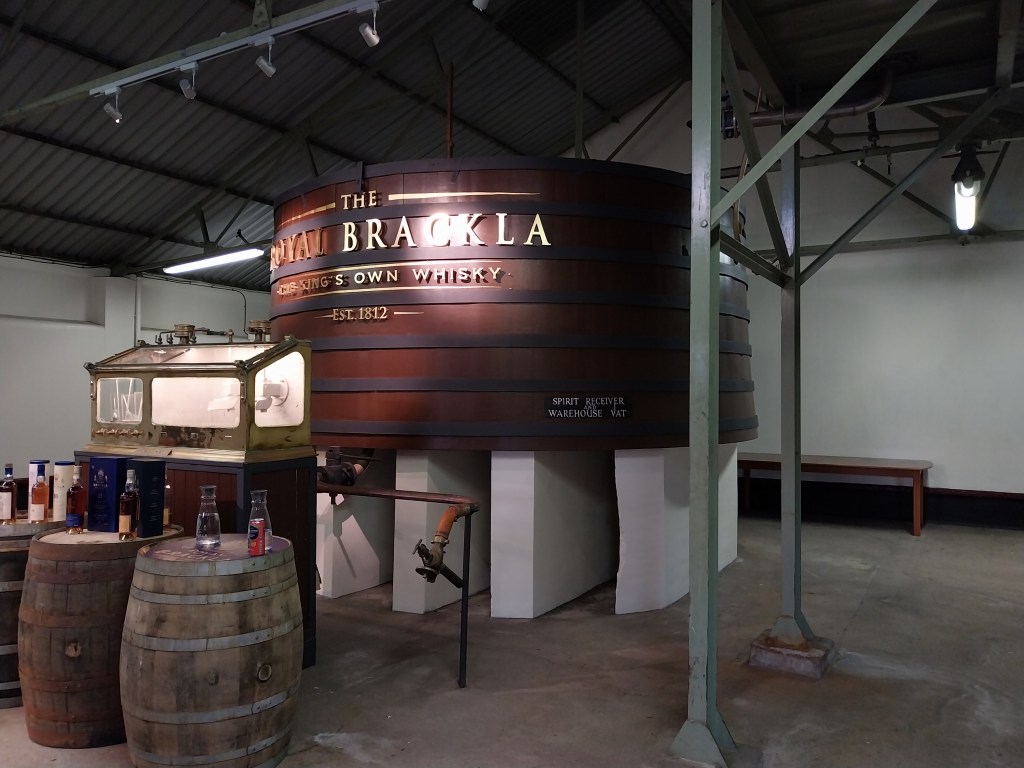
We then entered a building that used to be a filling station, with a big dominating the space. This is where we had the tasting. To note, their single malt range underwent a revamp in 2020, moving away from fully oloroso sherry matured whisky and all bottled at 40%, with everything now at 46% (or above) and natural (no chill-filtered, no added colouring).

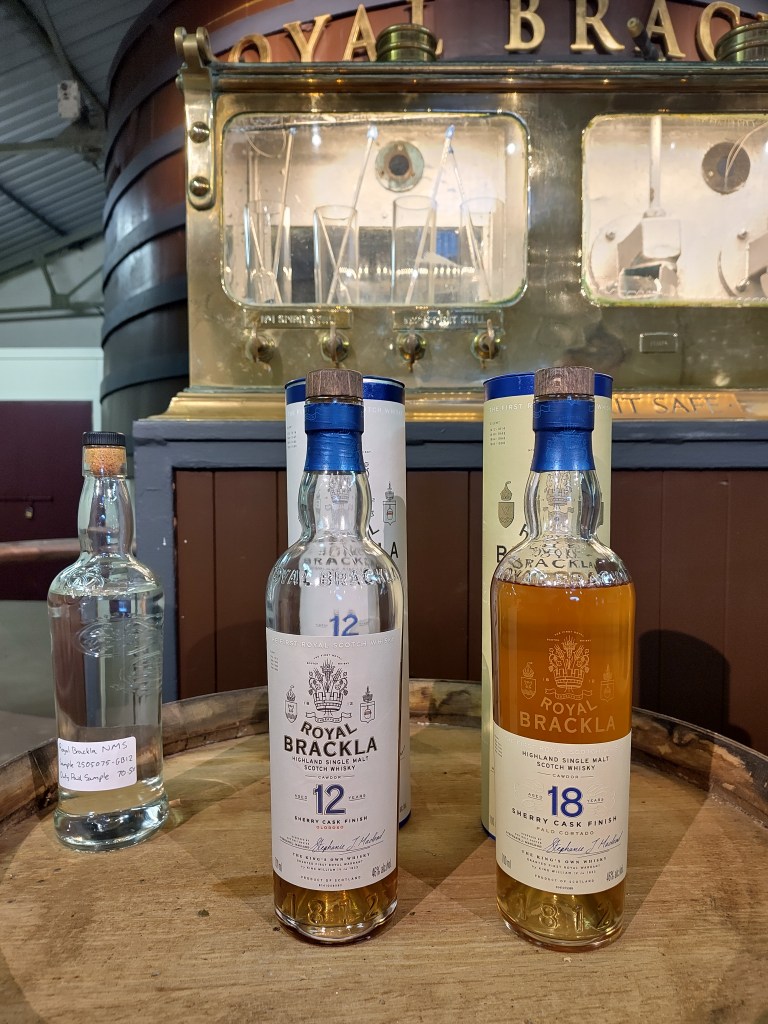
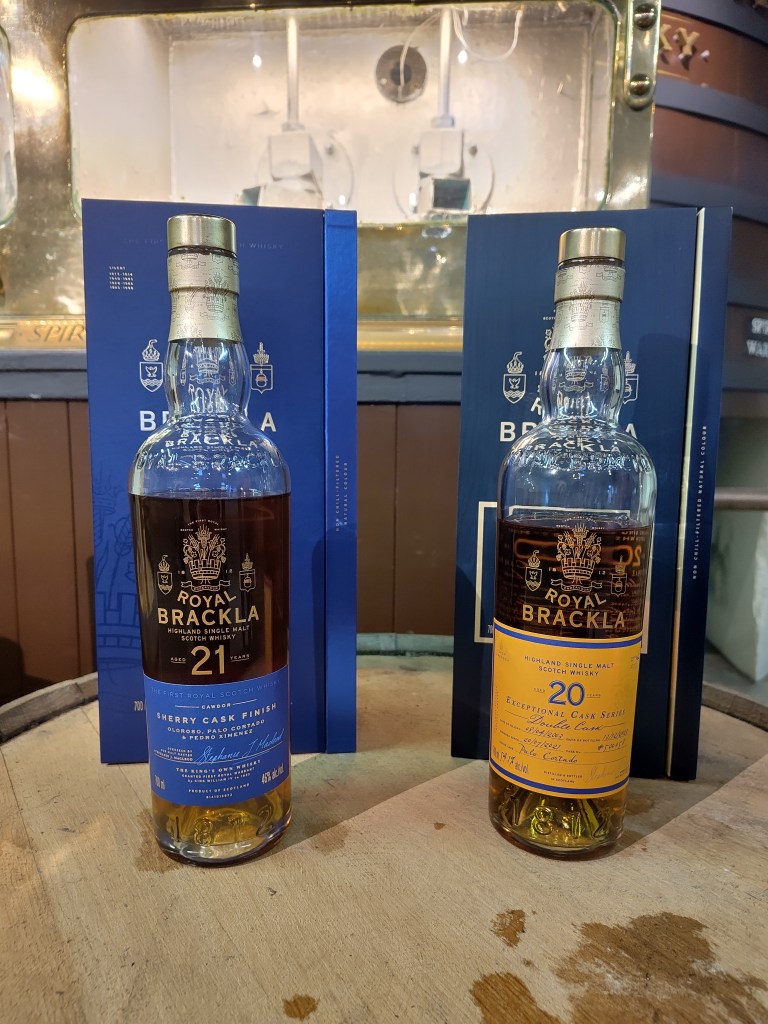
We started with the current 12y (46%), a mix of ex-bourbon and finished in Oloroso casks, a very solid dram. Then, we tried the 18y (46%, finished in Palo Cortado), which was stunning, and then we tried the 21y (46%), from three types of sherry casks: Oloroso, Pedro Ximenex and Palo Cortado. With the final dram, we went up in abv: 54.1%, a 20y Exceptional Cask bottling, matured in refill sherry casks but finished (again) in Palo Cortado. All great drams, but the 18y won it for both!

That was the end of our day, as we slowly drove back to Edinburgh. When we first learned about these tours, we were a bit worried about the price, especially considering some recent expensive distillery visits. The fact that it was ยฃ20 per person (in line with the other Dewarโ€™s tours at Craigellachie and Aultmore during the Spirit of Speyside) shows how other producers are literally taking the piss! On top of a fantastic tour of a very pretty distillery, with a great team showing us around and answering our nerdy questions, they offered us a fantastic tasting with an array of delicious drams. We were already aware of how good Royal Brackla could be, but it now has a special place in our hearts (and livers).

Stay tuned for another distillery visit in the north east, this time much eastern, coming next week! Until then, slร inte!


Royal Brackla Distillery Tour

Price: ยฃ20.00 pp (November 2025)

Duration: 2hr

Tasting: Royal Brackla 12y (46%, Oloroso finish), 18y (46%, Palo Cortado finish), 21y (46%, Oloroso, Palo Cortado, PX finish), Exceptional Cask 20y (54.1%, refill Oloroso + 2y Palo Cortado finish)

Target: everyone

Value for money: great!

Highlights: the view from the still room, but the distillery in general

Recommended: absolutely, keep an eye on their socials

Link: https://www.royalbrackla.com/


#71.1 The North-eastern Highlands

Dramming on to the North Sea: Glenglassaugh


TL; DR: This year we finally made it to the Dornoch Whisky Festival, where we had a blast! On the road there we did a quite long detour to Glenglassaugh, in the Aberdeenshire, for a distillery tour. The distillery is very interesting and the tour was good, but it was one of the most overpriced experiences we had recently.ย 

A few months back, towards the end of 2025, we visited a few distilleries in the north-eastern Highlands: east to the A9 (the stub between Perth and Inverness), but not Speyside. In fact, almost like a horseshoe around Speyside. There used to be many more distilleries in this region back in the day – from Alfred Barnardโ€™s book The Distilleries of The United Kingdom: Bennachie, Glenaden, Glenugie, Bon Accord, Devanha, Strathdee, Glenury Royal, Brechin/North Port, Banff and others. Some still stand, and while we already visited a few (Glen Garioch, Glendronach, Royal Lochnagar, Fettercairn & Arbikie), for a reason or another we kept missing some others.

The first of these trips happened in October, a month that for us used to mean Dramathon. While itโ€™s a fun event, after 4 years (in which we ran 3 because the 2023 one was cancelled due to a flood red warning) we definitely needed a change, so we decided to attend the Dornoch Whisky Festival instead, an event weโ€™d wanted to check out for a while. On the way up there, we took a (not so) short detour, to visit Glenglassaugh distillery. In the pandemic aftermath it was closed to the public, except for possibly some events during the Spirit of Speyside (even if technically itโ€™s not considered a Speyside distillery). However, earlier in the year we discovered that tours became available.

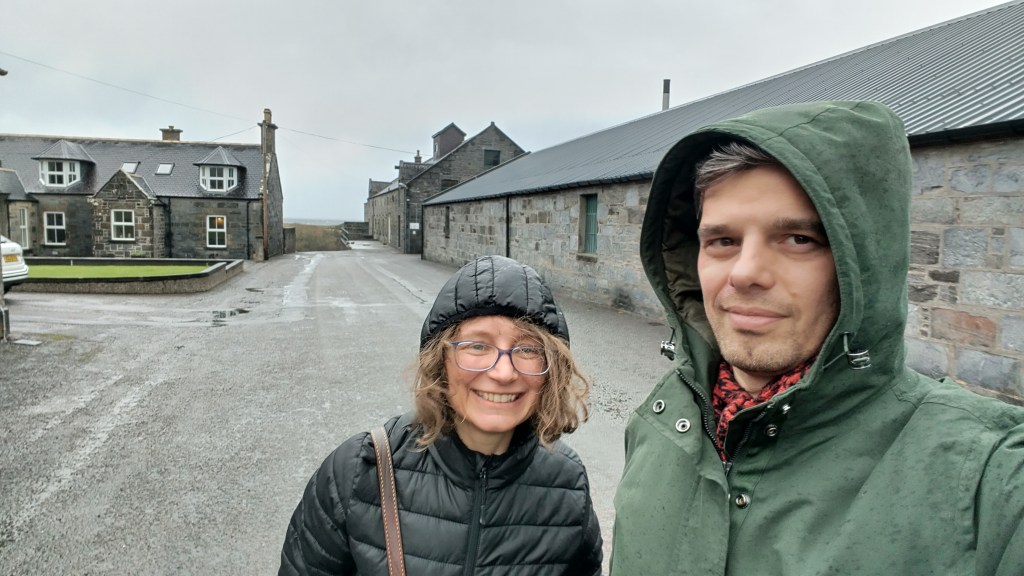
The distillery is on the coast between Aberdeen and Inverness, not exactly behind the corner, going there on our way to the Dornoch Whisky Festival (even if it meant an hour of extra driving) saved an extra trip. We split the drive in two by leaving the city on the Thursday night: the perks of Mr Vantastic. We spent the night near Stonehaven, and in the morning, we drove along the coast: the weather was not great, so it wasnโ€™t the smartest of the plans. After a coffee and a roll in Peterhead, we went straight to the distillery.

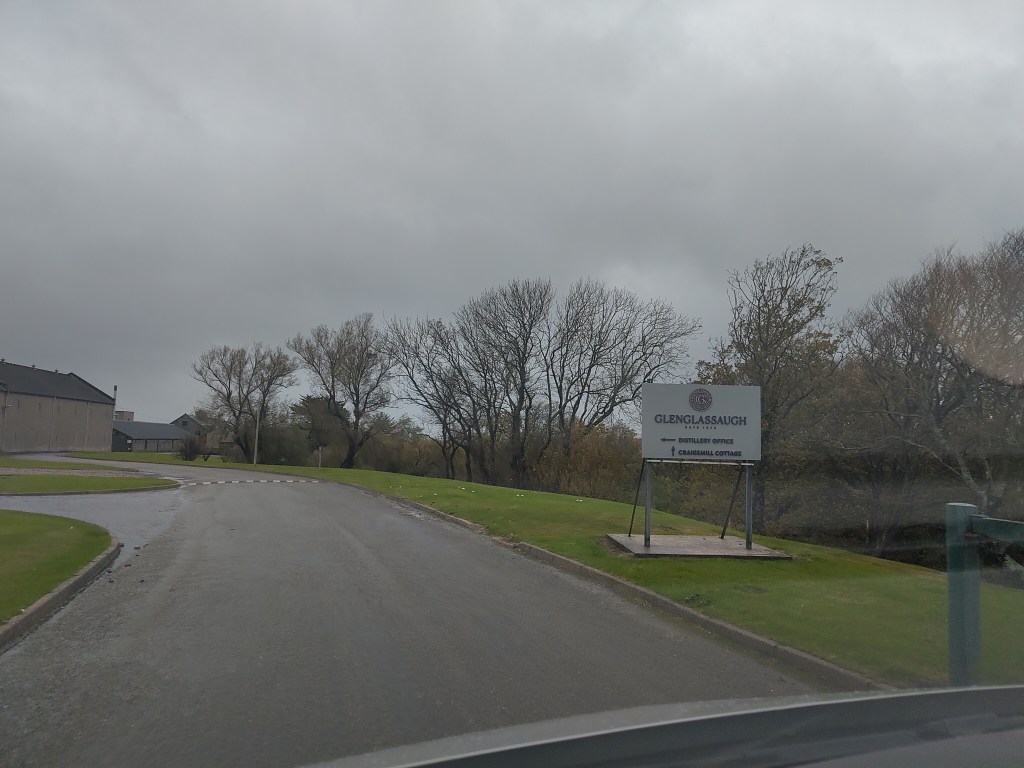
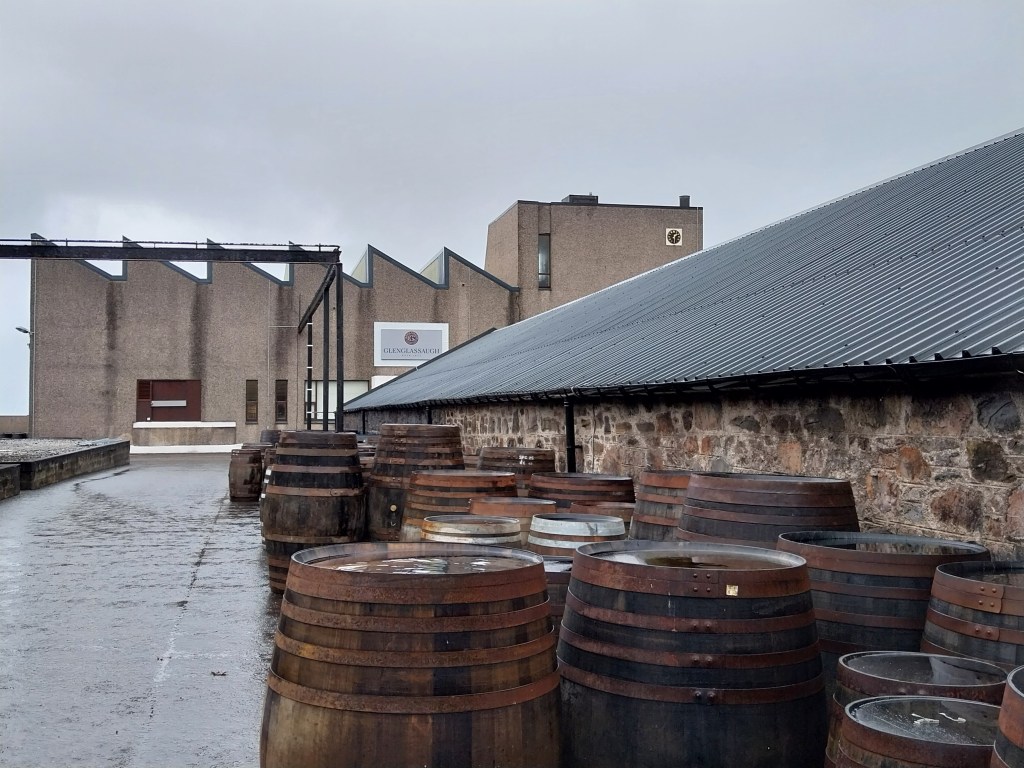
Coming from Portsoy, Glenglassaugh is tucked between the A98 and the North Sea, just before Sandend Bay: an old windmill stands just past the entrance road, almost to signal it (well, if you know). We turned right into a small downhill road, next to a large warehouse complex, to reach the visitorsโ€™ car park. Next to it, a building marked as โ€œvisitor centreโ€ but looking disused. We then realised that the actual visitor centre was the next building, an old and beautiful mansion.

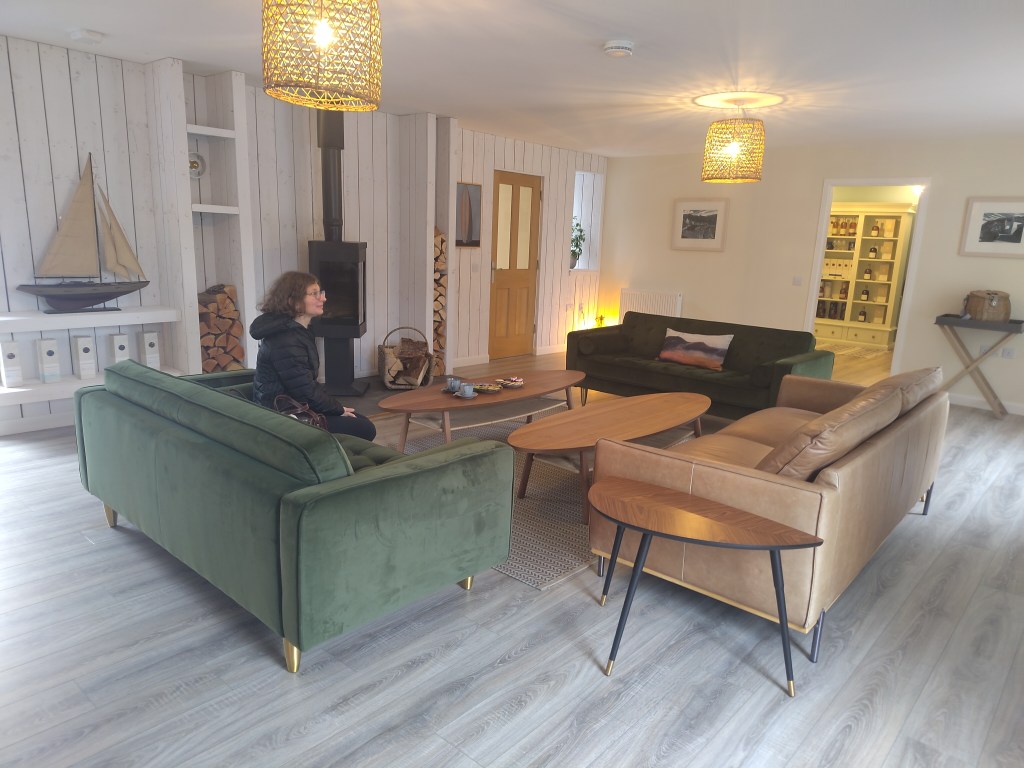
Our guide, Marie, welcomed us inside and made us coffee, a nice touch. Unfortunately, the chimney was not on, but the large room was very cozy nonetheless. After a pleasant chat, Marie delved into the history of the distillery and how it is now part of the Brown Forman portfolio, together with Benriach and Glendronach (not the same link as before for the latter, because we visited it twice!) in Scotland, and also Jack Danielโ€™s, Woodford Reserve, and other brands. The distillery started production on the 4th of December 1875 by an entrepreneur called James Muir, who had connections with the engineering world and owned a wine shop in Portsoy. The name Glassaugh comes from the nearby burn, which starts about 8 miles uphill from a spring. After Muir deathโ€™s, the distillery fell in the hands of their nephews, but it was eventually sold to Highland Distillers in 1892, and later mothballed in 1907. It was reopened once again in 1959, with a substantial revamp, while some of the old original buildings used as warehouses. The aim was to use the malt as a component for the Famous Grouse: however, the spirit was too overpowering, and in between then and 1986, when it closed, a number of changes were made to try to “tameโ€ it.

The distillery was reopened by another company in 2008, while in 2012 they launched the whisky Revival. It was then bought by Billy Walker in 2013 and sold, together with Benriach and Glendronach, to Brown Forman in 2017. Recently, production has slowed down, and at the time of our visit Glenglassaugh was running at about 50%, sharing the same production staff with Benriach.

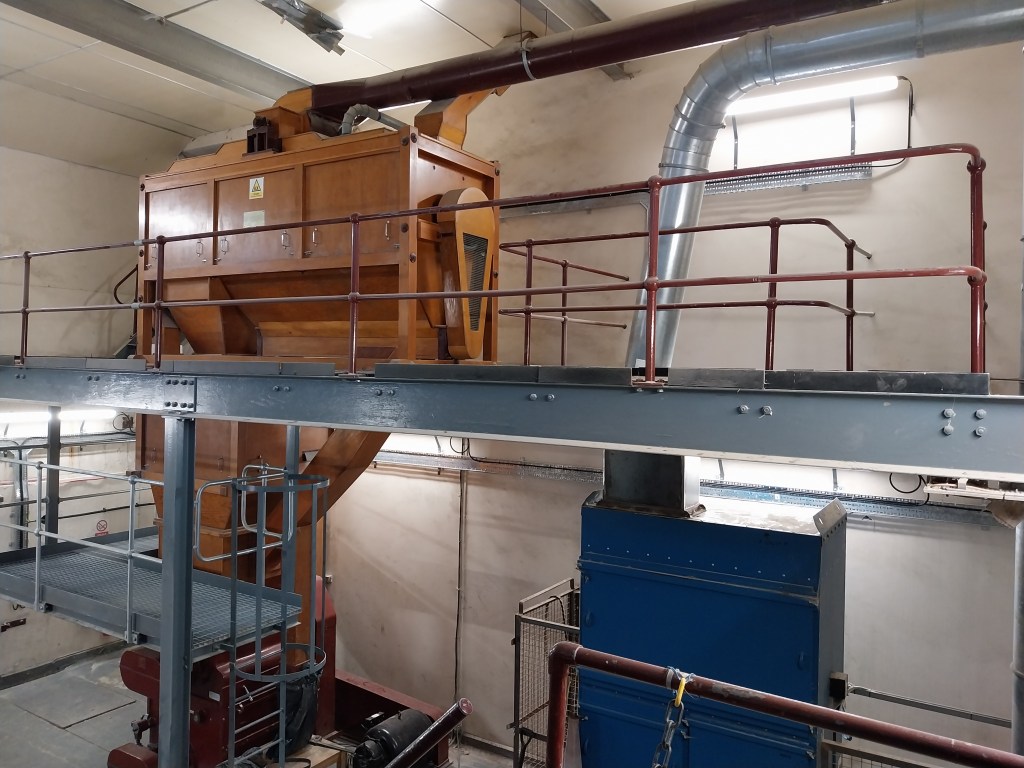
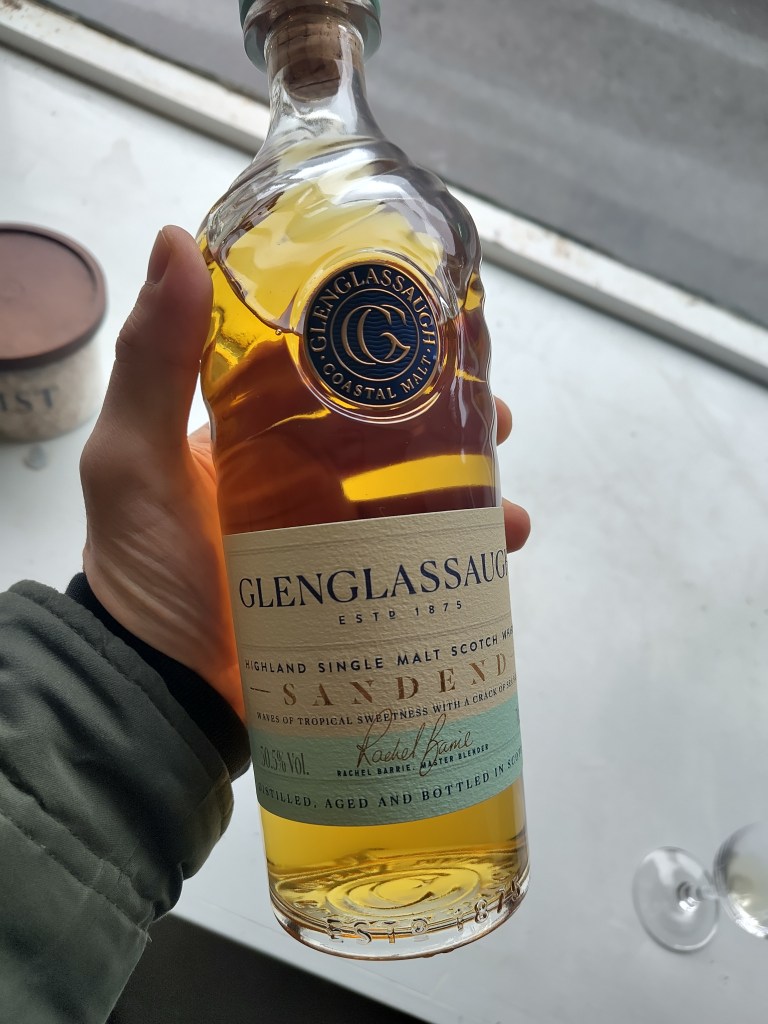
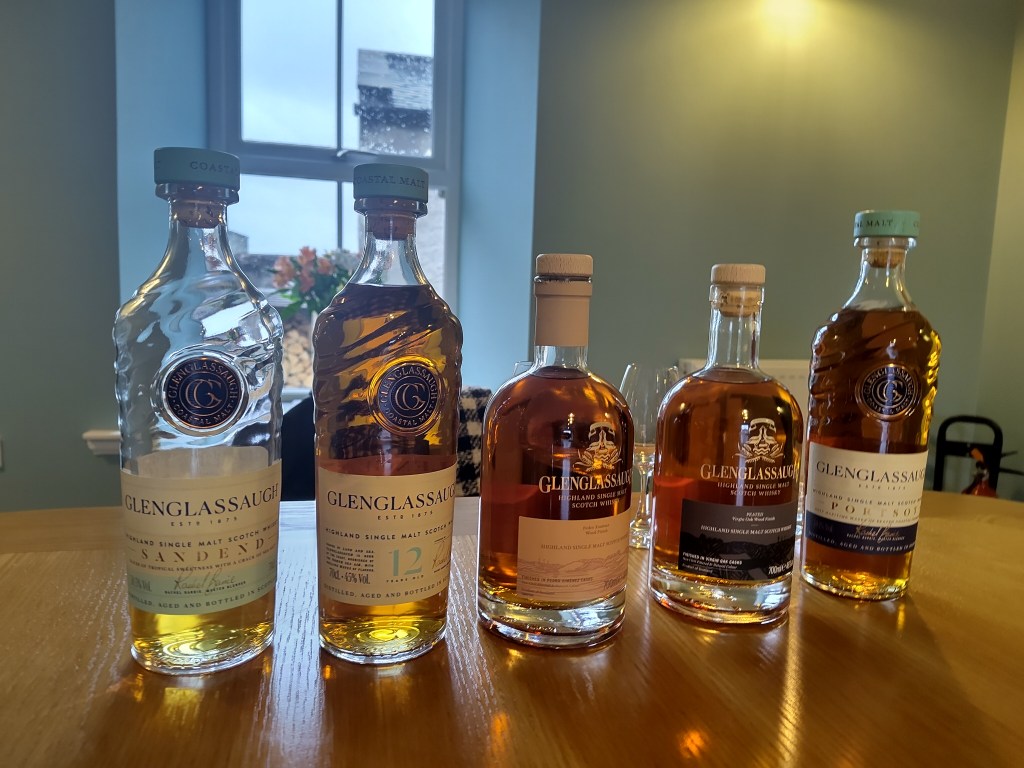
After this detailed introduction, we went outside to check out the production. We started with the malt bins and the mill room, in a stone building alongside the road that goes downhill towards the Sandend beach. We were supposed to have a short walk to the beach, and have there our first dram, the Glenglassaugh Sandend. This is a higher abv (50.5%) non-age stated whisky, mostly from ex-bourbon casks, but with Manzanilla and Oloroso sherry as well: probably, the best dram of their core range. Unfortunately, it was still โ€œpishing doonโ€, so we tasted the dram in the mill room instead, admiring the old Porteus mill crashing malted barley into grist (usual shares for husk/grit/flour, 20/70/10). Different to most distilleries, at Glenglassaugh, most of the โ€œnewโ€ equipment was made by Porteus, implying that Ronnie Lee, the Welsh engineer who maintains Porteus machines, spends there about 2 weeks every time.

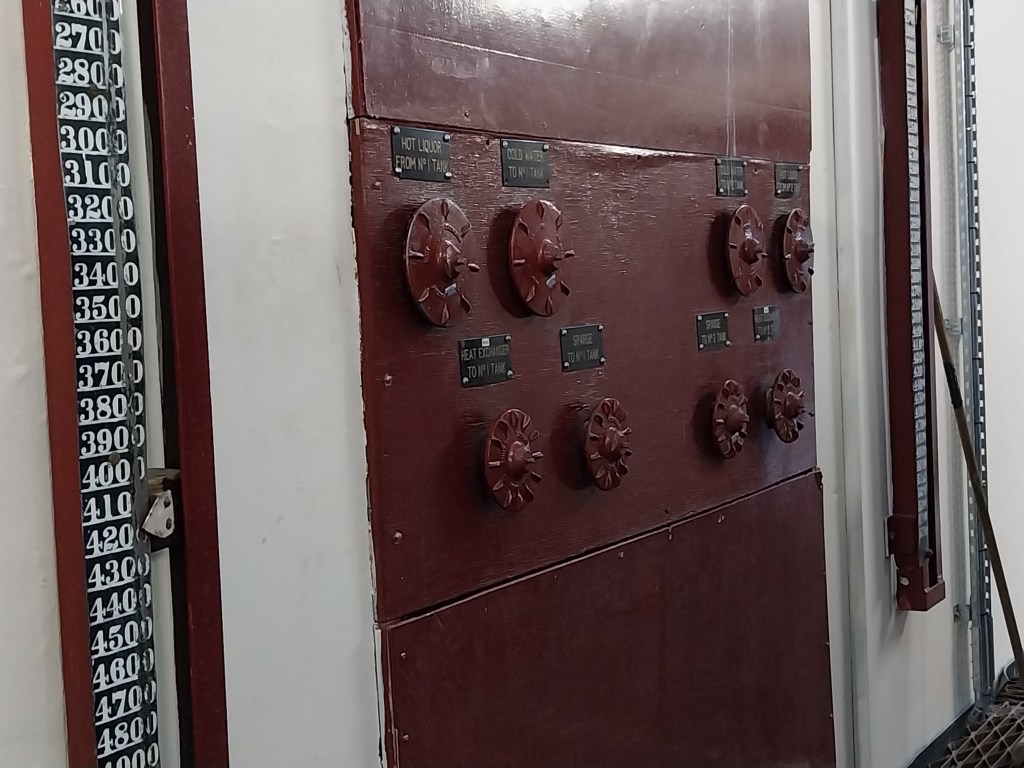
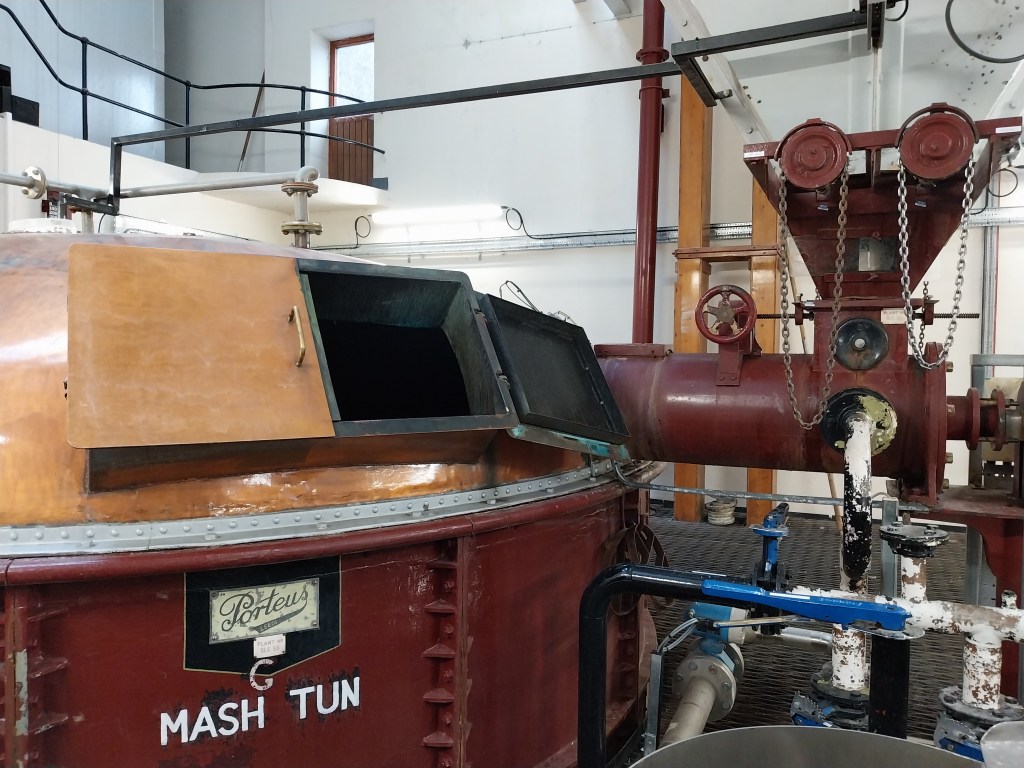
After the dram, we went to the โ€œnewโ€ (i.e. 1959) building, clearly a product of the (bad?) taste of that age. The mashtun is 20,000 litres, made of cast iron and with a copper lid, which resisted a robbery attempt during the last mothballing period (not the same luck for some of the copper pipes though). Between the first and second water, they collect 24,000 litres only. The third and last water amount to 17,000 litres, used as first water for the following batch.

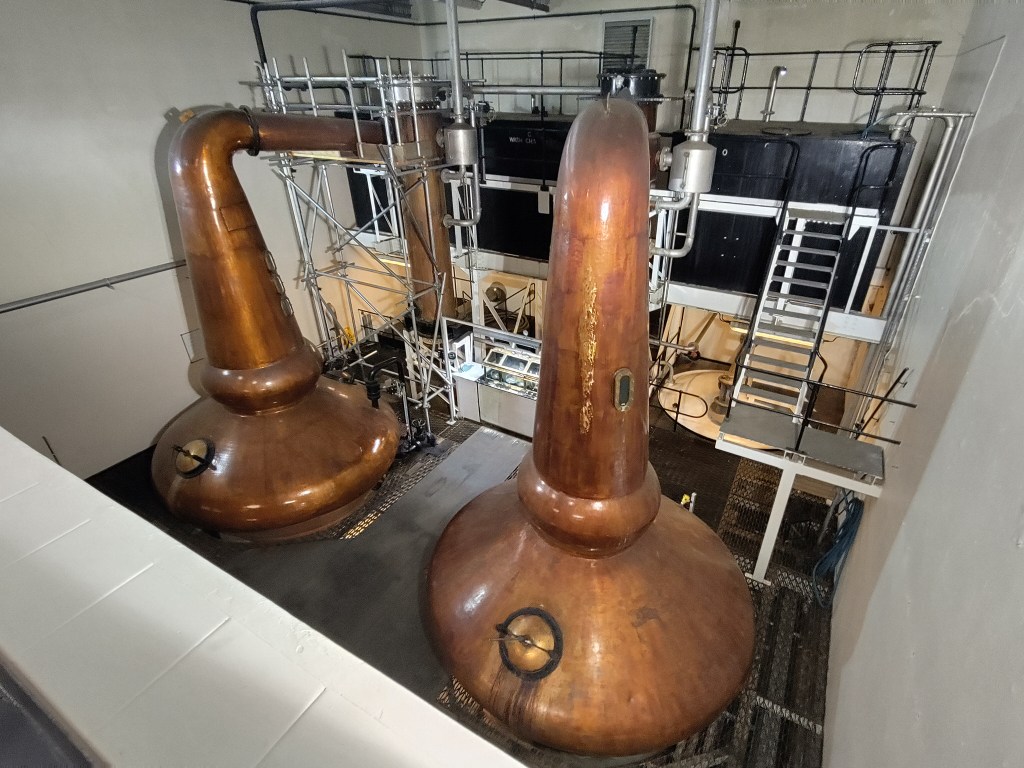
Mashing lasts 7 hours, and they aim for a cloudy wort, which is then moved to one of the 6 washbacks (4 Douglas Fir, 2 stainless steel). There, fermentation lasts about 60 hours, before the wash is distilled twice: first 12,000 litres go through the wash still (so, each mashing and fermentation produce enough wash for two distillations), then 7,000 litres of low wines (at 25%abv) are distilled again in the spirit still. The wash still is externally heated by a steam jacket, while the spirit still has a steam coil inside. The stills were installed in 1974: one of the many attempts to โ€œtameโ€ the spirit. The spirit cut is between 75% and 63%, for an average of about 68.8%, which is filled into casks.

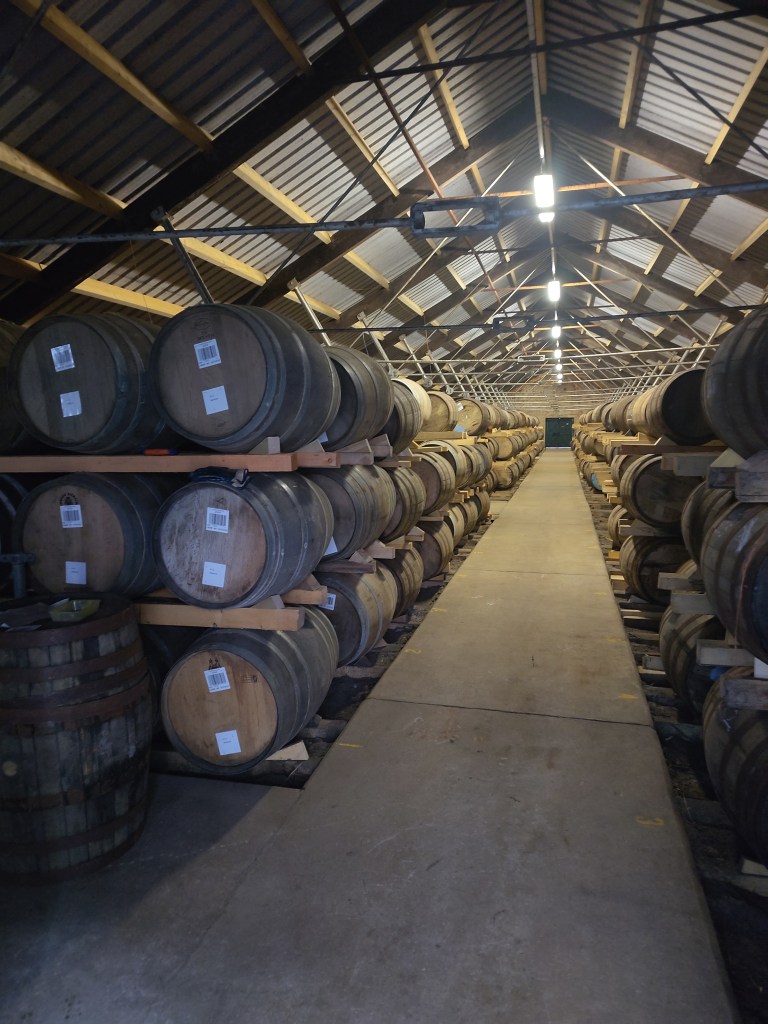
After that, we visited a dunnage warehouse, one of the three on site, together with three palletised ones. They also own some warehouses a few miles down the road, at Macduff distillery (owned by Bacardi). They use a variety of casks, some going back to the late 1960s, including a new for us: a Missandra cask form a very old winery in Crimea.

Back at the visitor centre, four drams were waiting for us in a cosy tasting room. The first two drams are part of the latest Glenglassaugh revamp from 2023, together with the Sandend we tried before: a 12 year old (45%), from a selection of ex-bourbon, sherry and red wine casks; and a peated (30-45ppm) non-age stated single malt finished in port casks (49%), the Portsoy (named after the nearby village). Finally, we tried two expressions from a wood-finish range that came out in 2017, right after Brown Forman took over. Both started their life in 1st fill ex-bourbon casks, but one was finished for two years in a PX sherry cask (46%), while the other one, peated, was finished in an American oak virgin cask (46%). The latter one was the one Gianluigi liked the most, unusual as for him virgin oak finishes can be a hit-or-miss. Teresa liked the Portsoy as well, very leathery and decadent, while we both enjoyed the Sandend, crisp and lively.

Said that, we were expecting more from this experience. Marie was a perfect host, very competent, knowledgeable, kind, and enthusiastic: she really was great and we learned a lot about the distillery. We donโ€™t mind either having 1 or 2 drams from the core range (which we can find pretty much anywhere in whisky shops and some bars) to set the benchmark, nor 15ml drams, which we think itโ€™s enough to taste. However, for ยฃ90, we expected something else from the rest of the tasting: possibly some drams from the cask, or some older expressions. Or at least, a reason that makes you want to go back and say: โ€œwell, it was pricey, but it was worth itโ€. Unfortunately, none of that was on the menu, probably because of corporate greediness or for a push to โ€œpremiumisationโ€. Well, at least there wasnโ€™t one of those grossly overpriced bottle-your-own expressions like at other distilleries (Diageo anyone? CVH?), but we donโ€™t know if this is a positive or a negative at this point. The distillery is in a great location, with an interesting story, and the whisky is tasty, such a shame to misuse its potential like this.

Because this post is long enough, we wonโ€™t delve into the fantastic Dornoch Whisky Festival, weโ€™ll save it for another occasion. Stay tuned for our next distillery visit in the North East, coming next week! Until then, slร inte!


Glenglassaugh Distillery Tour

Price: ยฃ90.00 pp (October 2025, ยฃ95 at the time of writing)

Duration: 2hr 30min

Tasting: 5 Glenglassaugh single malts, the 12y (45%, chill-filtered); Sandend (50.5%, NAS, ex-bourbon casks); Portsoy (49.1%, finished in Port casks); small batch PX cask finish (NAS, 46%); small batch Peated virgin oak cask (NAS, 46%).

Target: whisky fans and distillery baggers like us

Value for money: not great

Highlights: the location

Recommended: only if youโ€™re desperate to visit it, otherwise there are more sensibly priced options nearby

Link: https://www.glenglassaugh.com/