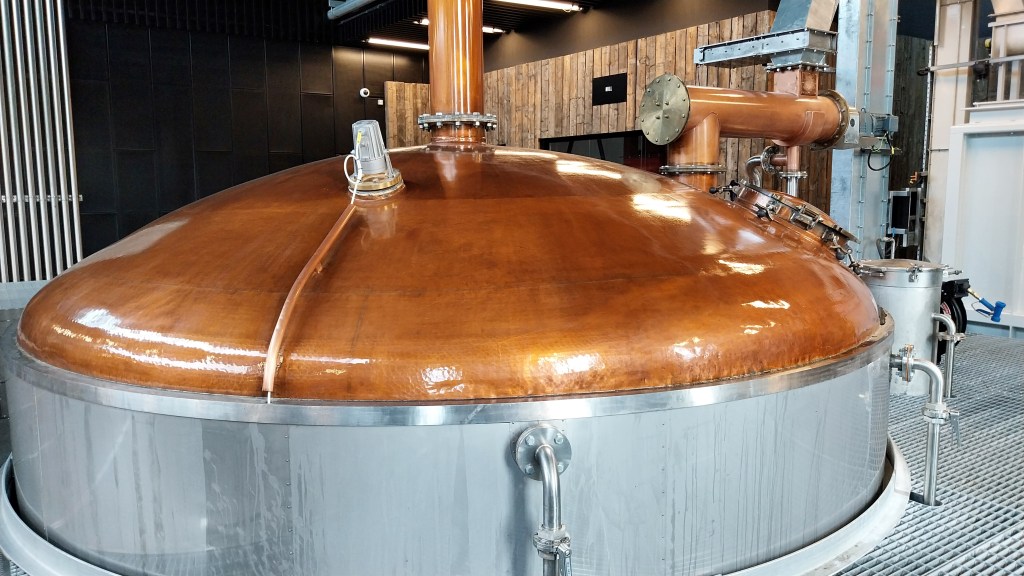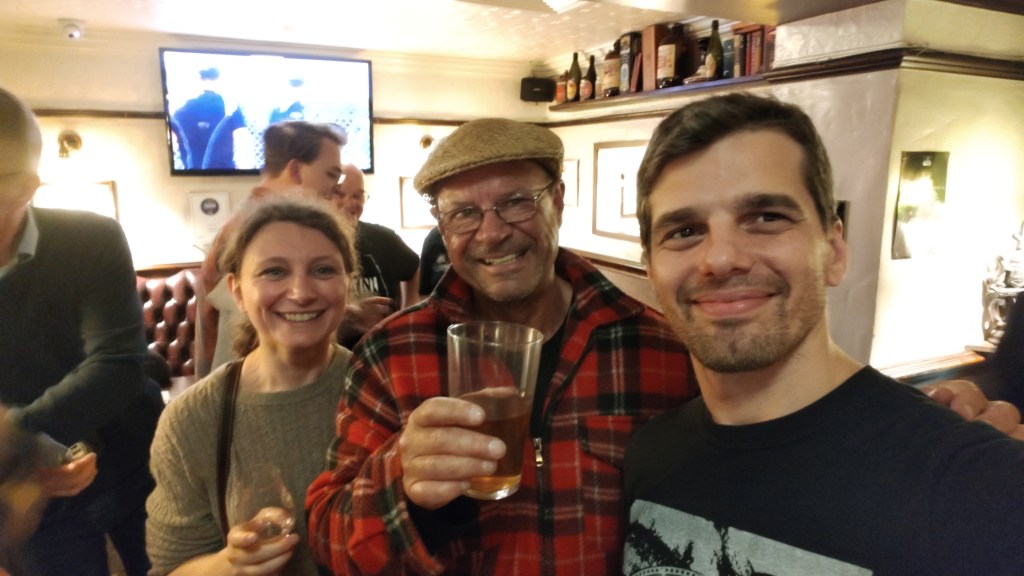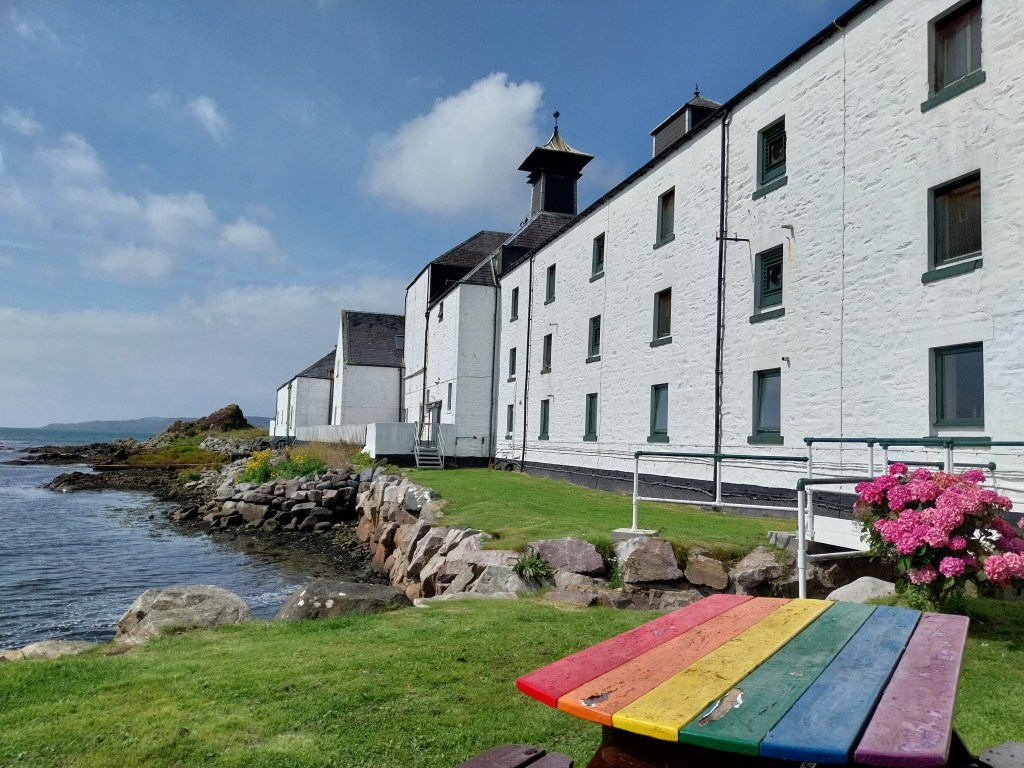
#54 Another whisky year under our belt

What a 2024 it was!


TL; DR: The recap of our whisky year: 33 distillery visits, 28 visited for the first time, and 9 not in Scotland (a record for us?)! Also, 5 festivals attended (3 as volunteers), and 1 non-whisky focused. But more importantly, a lot of drams with a lot of friends, who really made our year special!ย 

Another year about to end, we hope you are enjoying these last few very mild days (at least, mild in the Central Belt) of the year with some good drams, possibly in a cozy room, by a nice wood fire. For us it’s like that, minus the wood fire.

These quieter days come with some reflections and thoughts, as is usual for this period. Nowadays we give for granted these recurring events like New year, but it being established on January 1st has more to do with cultural traditions coming from ancient Rome, rather than astronomical events. This said, the fewer hours of light (particularly at higher latitudes like in Scotland) bring some natural peace and tranquillity, helped by things slowing down due to most people being on holiday.
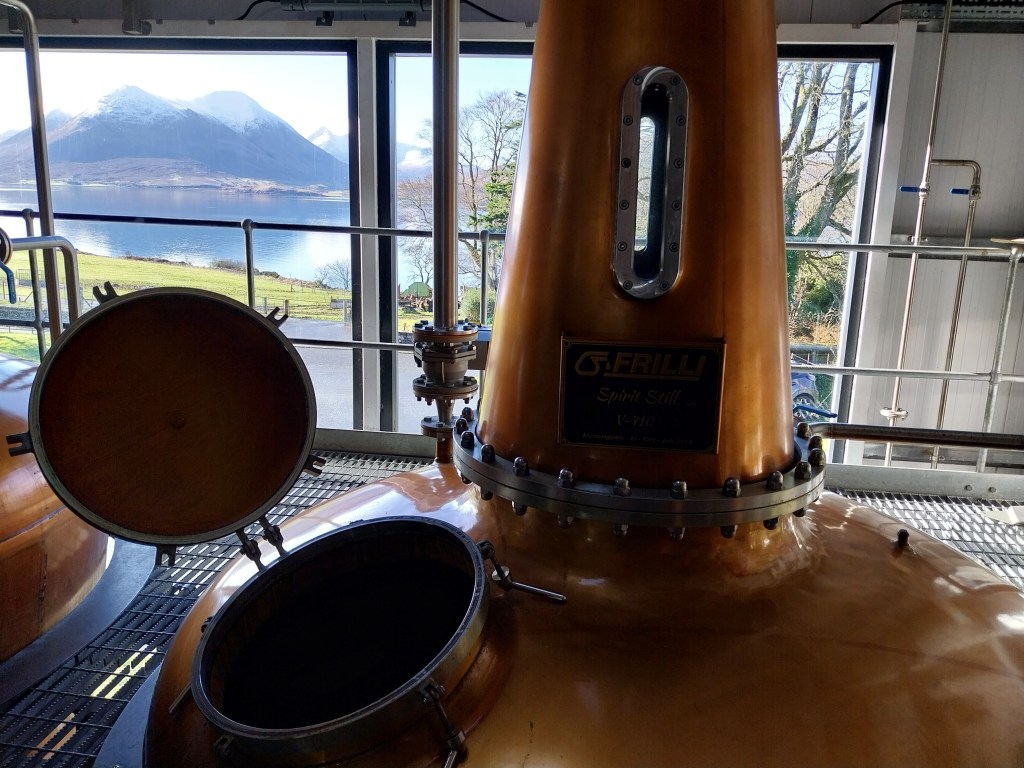
This year has been another good one: we visited over 30 distilleries, most of them for the first time. We started with a bang during our usual trip around February, this year on Skye and Raasay. The latter in particular was quite spectacular – the 3-hour tour at the distillery and at the warehouse was great, but it was also amazing to drive around this pearl of an island, definitely one of the best we visited so far. That weekend also marked our appearance in Royโ€™s Aqvavitae vPub, as Italian guests in a 6-Nation themed blind tasting (which we both horribly failed). We had so much fun, it was one of the whisky highlights of the year!

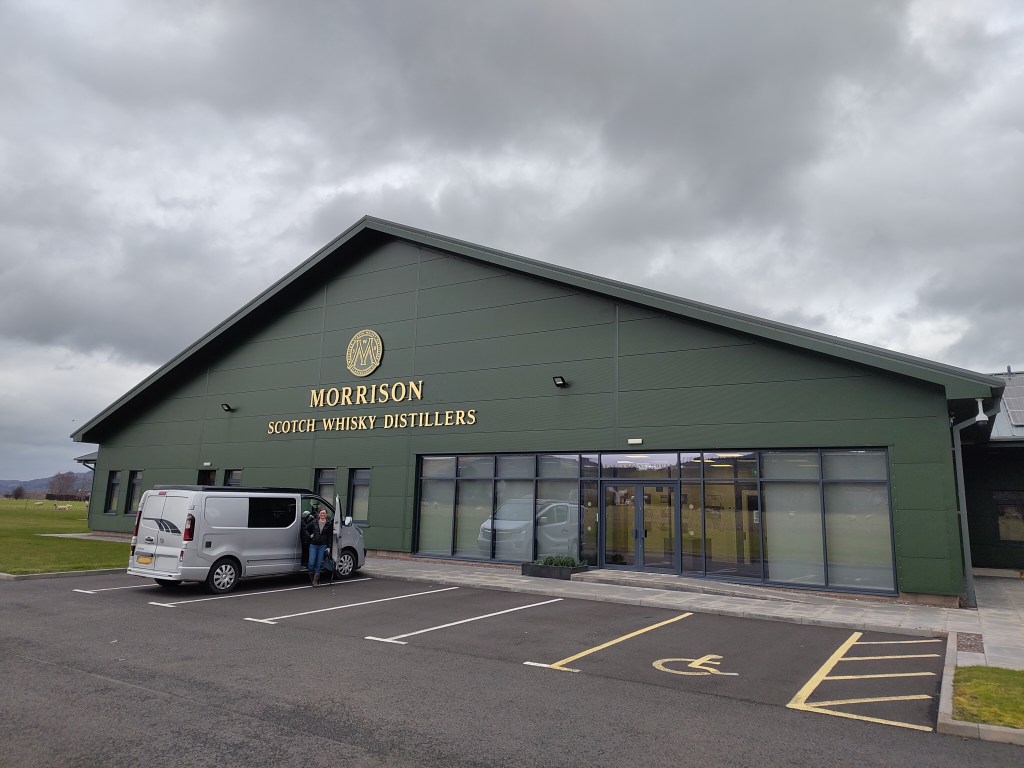
A few weeks later, we visited Aberargie distillery, in Fife, thanks to an event organised by the Fife Whisky Festival crew. The distillery, which hasnโ€™t released any single malt yet, is run by the Morrison Distillers Company, who also own very tasty brands like the sherried blended malts Old Perth, the Islay single malts Mac-Talla, and Carn Mor range (usually single casks or small batches). The Mac-Talla Mara (cask strength edition) was Teresaโ€™s whisky of the year.

The next appointment was, for the second year in a row, the Spirit of Speyside Festival. This festival is great because it includes visits to some distilleries that are usually closed to public – this year we visited Auchroisk, Tormore, Craighellachie, and Kininvie (where we met our friend Paul, who used to work at Linkwood and other Diageo distilleries). We also attended the Whisky Fair, a mini-festival at the Mortlach Memorial Hall in the familiar Dufftown, and a very fun and nerdy Start Wars themed tasting at Glen Moray!

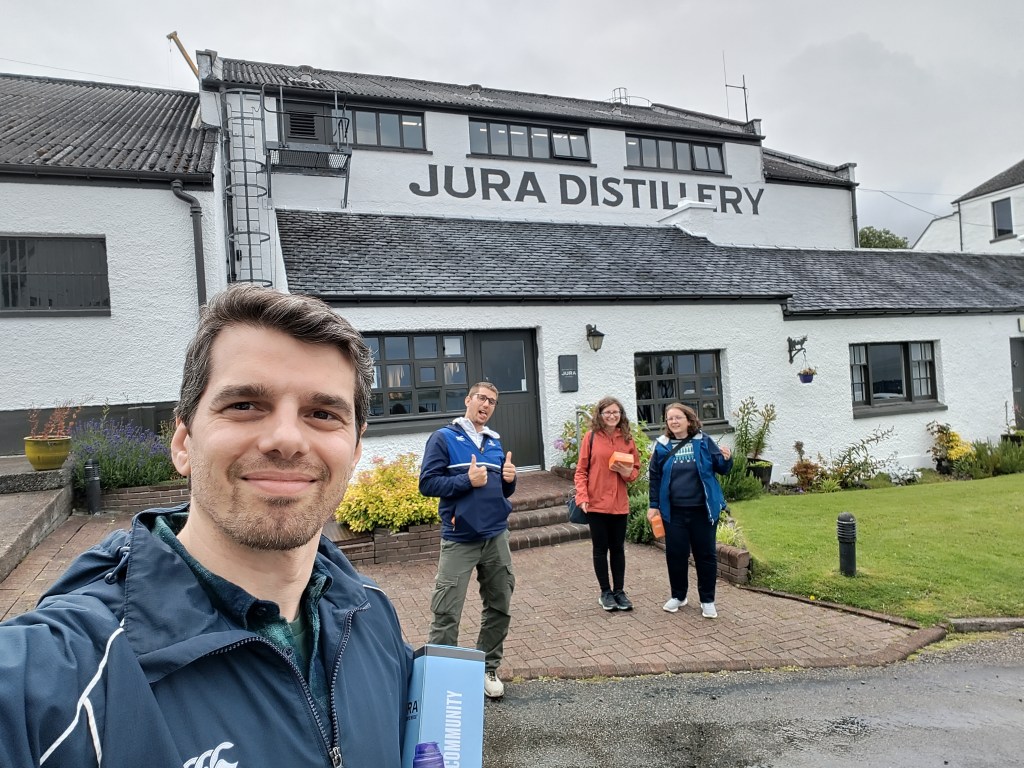
In the summer we managed to visit Islay twice, first with our pal Justine and Gianluigiโ€™s brother Edoardo, and then with our pals Clay and Glaire. Between the two visits, we managed to finish visiting all distilleries on the island, including Jura (another awesome location weโ€™d like to go back to) and the newly reopened Port Ellen, during one of their monthly open days (spoiler, you donโ€™t get any dram, but the visit is free). After the first trip, we also somehow managed to sneak in a visit to Campbeltown, for a cheeky Cadenheadโ€™s Warehouse tastingโ€ฆWhat else?

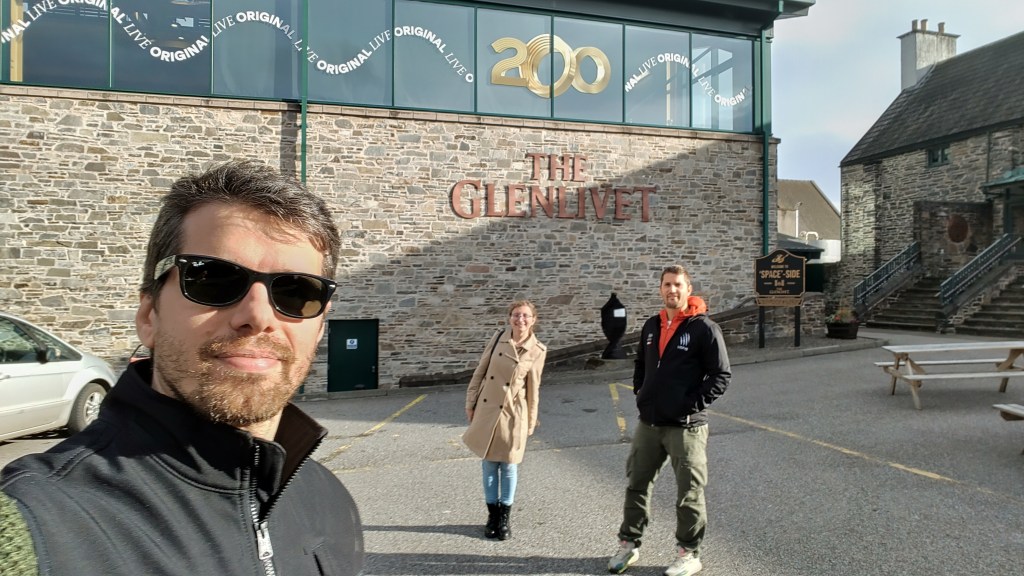
During the nice season we also visited a handful of distilleries around the Central Belt, including the newly reopened Rosebank, Crafty in Galloway and Glengoyne (Teresa had never visited production before) in the southern Highlands, almost all single-day trips. Edoardo was back in October to run the Dramathon, and in that weekend we visited production at Glenlivet, and had a tasting at Glenallachie, with our friend Sue pouring some super tasty drams!

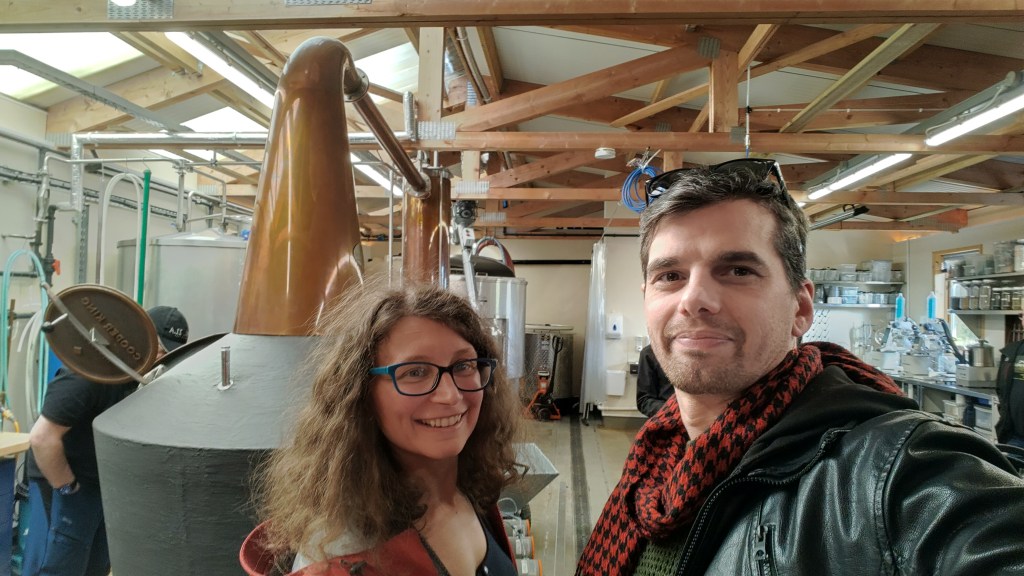
Our yearly trip with our pals from the Edinburgh Whisky Group was inโ€ฆEngland! Yorkshire precisely, where we visited three distilleries, two breweries, and a tasting room in Scarabourgh (The Distillerโ€™s Lounge, also likely harbouring the most complete English whisky collection). Our longest holiday was in Australia, where we visited five distilleries and three wineries. We wonโ€™t talk much about these trips here as we still have to write the blog posts, but we were surprised by the quality of some of the whiskies we tried, particularly in Australia, but mostly by the incredible hospitality. In Yorkshire, all the distilleries offered in-depth tastings for (relatively) cheap, and they went above and beyond to accommodate our 15-people group. Similarly, in Australia some of the visits were arranged at the very last minute, but still, everyone was happy to show us around and was very welcoming. In our opinion, thatโ€™s something that the Scottish whisky tourism in general needs to learn, or maybe re-learn? In the past, with the EWG we struggled to find activities, we almost needed to beg for a chance to spend our money in some distilleries. Both in Yorkshire and Australia, things were so effortless that it left us wondering if Scotland is resting on its laurels.
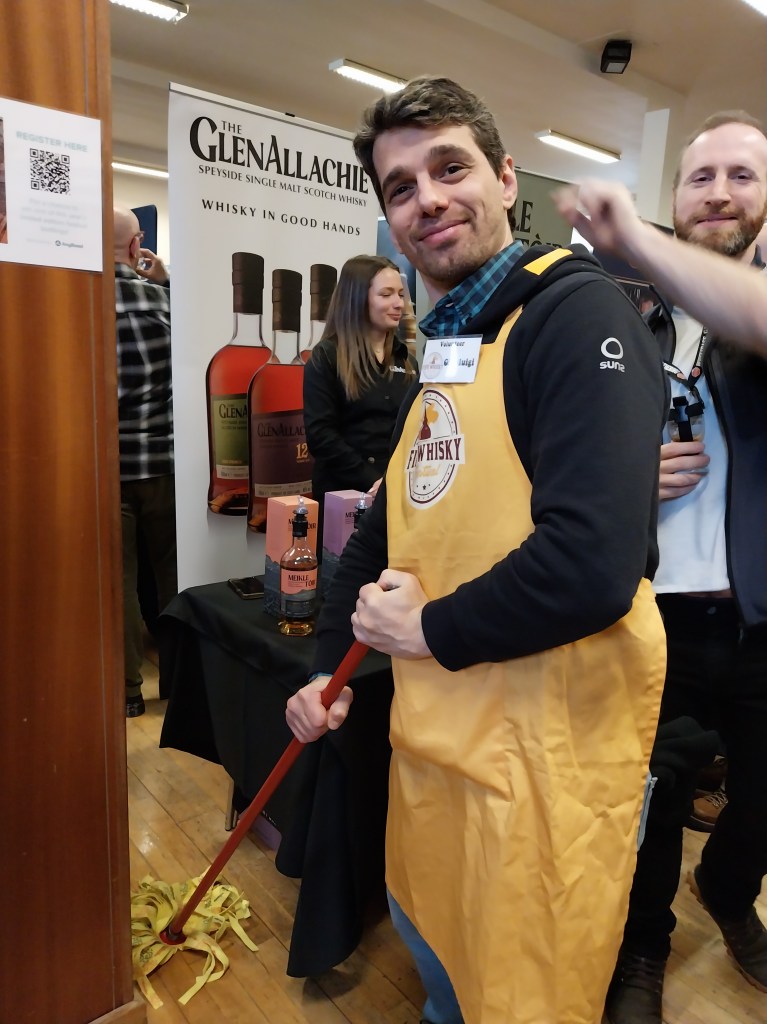
A good opportunity to meet nice whisky people are whisky festivals, in particular the small ones! The year started with Funky Booze, organised in January by our pal Francesco, right here in town: small sized, very focused on Edinburgh companies, with a funk band playing in the background. It was very fun, with a younger and more diverse crowd compared to most festivals. March was the month of the unmissable Fife Whisky Festival, third time in a row for us volunteering there. The team behind this festival organised another event in October, for the first time with a different name and location: the Borderlands Whisky Festival, in Lockerbie. In August we attended the Whisky Fringe for the third time as well, almost in Leith, and earlier in the year (March) the same company organised the Drinkmonger Spirits Festival, in the same location: it was fun to try different spirits for once, we were impressed with some of the rums and Mezcals.
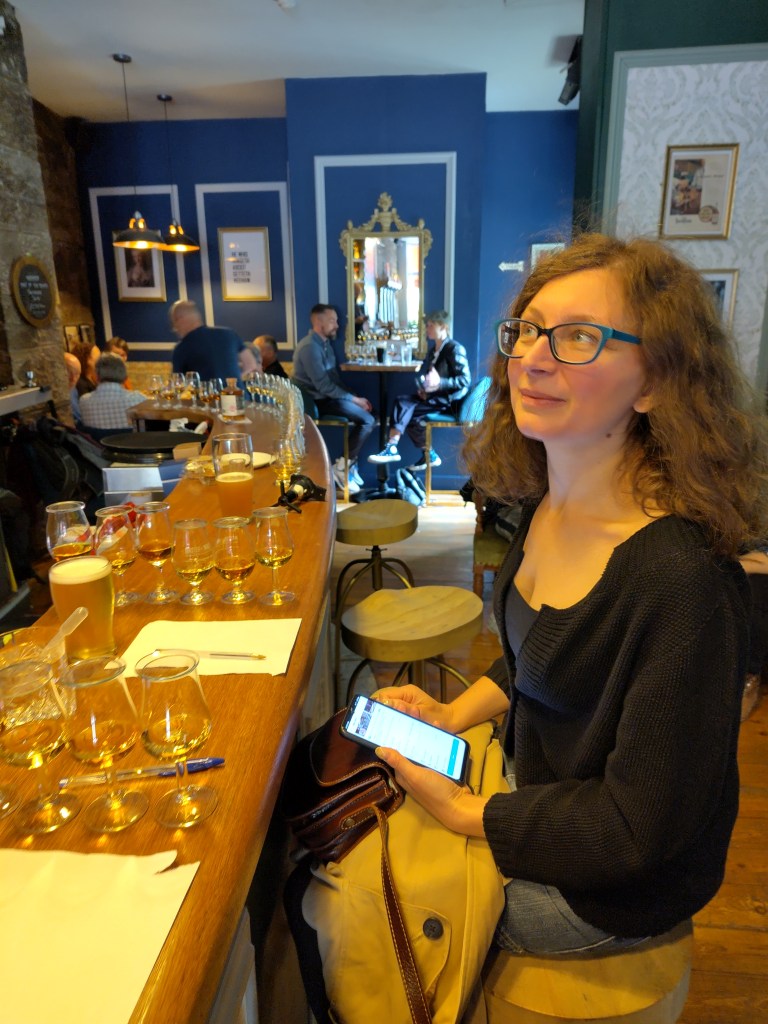
It was a very busy year also for tastings. Edinburghโ€™s offer is huge, with many tastings representing a great value for money. Markโ€™s Jolly Toper tastings, now happening at different locations and no longer at Kilderkin, are a good example. The Belfry pub is also hosting many tastings, for example the ones of the newly formed Edinburgh Drammerโ€™s Club (IG profile here), a new whisky club inspired by the Glasgow Whisky Club. Gianluigi attended the initial meeting, but other commitments got on the wayโ€ฆLetโ€™s see if we manage next year. Other great tastings were the Springbank Society new releases early in the year, Robโ€™s (aka Quasidrams and Marshall Spirits) Adelphi tasting at the Worldโ€™s End, and Murrayโ€™s (aka One Malt at a Time) Springbank, again at the Belfry.
Weโ€™re looking forward to next year: no detailed plans for now, but weโ€™ll definitely go back to the Fife Whisky Festival and, depending on the events, weโ€™ll likely attend the Spirit of Speyside again. On our wish list there are the northern Highlands, particularly the area around Wick and Thurso, and the Outer Hebrides, which would be quite exciting (they look quite spectacular, not just because of whisky, of course). But mostly, weโ€™re looking forward to having drams with the new people weโ€™re going to meet, as well as with our many pals around Scotland: that is what really makes whisky a great experience!

So, until the next year, slainte mhath!

#53 Dramathon and Glenlivet

On the run yet again


TL; DR: After last year debacle due to storm Babet, this year we finally managed to run the Wee Dram, the Dramathon 10k. And while we were in Speyside, we stopped by Glenlivet distillery and visited production for the first time. The tour was a bit impersonal and very scripted, but nice to check it out anyway. Fortunately, we also went to Glenallachie, where our whisky friend Sue treated us like VIPs!ย 

Like for the last three years, in 2024 too the second half of October meant Dramathon for us! After running it in 2021 (Wee Dram, 10k, for Teresa and the Half Dram, half marathon, for Gianluigi), and again in 2022 (Half Dram for both), last year we decided to take it easy and run the Wee Dram only, with a special guest: Gianluigiโ€™s brother, Edo. Unfortunately, storm Babet got in the way, and although the Speyside area was not hit too badly, a red-alert flood risk in Aberlour resulted in the eventโ€™s cancellation (btw, we never received a refund from the B&B, as according to the despicable owner a red alert from the Met Office was not enough to cancel the reservation for an apartment about 150 meters from the river).

Because the race was cancelled, we could pass our tickets to this year for free. Or, we should have to – Edo unfortunately half read the email and thought it was automatic. It was not, and it was too late when we realised it, so the organiser could not sneak him into the race last minute because of insurance. Hey ho, these things can happen, so Edo ran on his own, since the path was open to the public during the race.

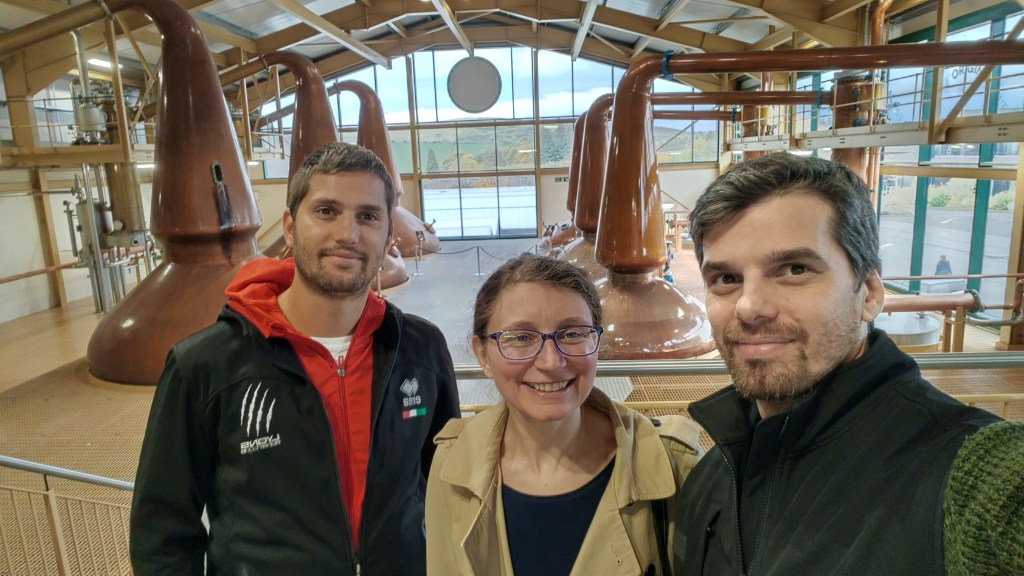
But letโ€™s get back to the day before the race: we picked Edo up at the airport, back to Scotland after the successful trip to Islay in July, and drove straight to Speyside. We only stopped at the KJโ€™s Bothy Bakery, near Grantown-on-Spey, to have lunch with a few tasty treats (the focaccia was greasy-ly awesome). For the afternoon, we had booked the Glenlivet Distillery Original Tour, their basic one. Among the open distilleries in Speyside, it was the only one we hadnโ€™t fully visited yet, except for a tasting in summer 2021 (when production was still off limits because of Covid). The single-cask tasting was great, although prices of their bottlings were already quite high (and they were all 50cl bottles!). As the distillery is such a Juggernaut, with a production of 21 million litre of pure alcohol per year, we were very curious to check out the production site.

Our guide Emma met us in a space just below the (very nice and cosy) distillery shop and bar. After some basic information (Glenlivet means โ€œthe valley of the river Livetโ€), we got an introduction about the history of the distillery, and all the people that made that possible. It was George Smith that decided to get a distilling licence back in 1823 (the first one in Scotland), and to protect from the illicit distillers, he also got a pair of Innes guns, which are now on display at the distillery. Production started in 1824, marking 2024 as their 200th anniversary: quite impressive. This introduction was almost repeated in the next room, where we watched a series of videos: some very informative, while others very marketing oriented. We then followed Emma in another room, where production was explained. We were a bit puzzled at that point, as we started to suspect that there wouldnโ€™t be a visit to production (it was almost mid-way through the visit).

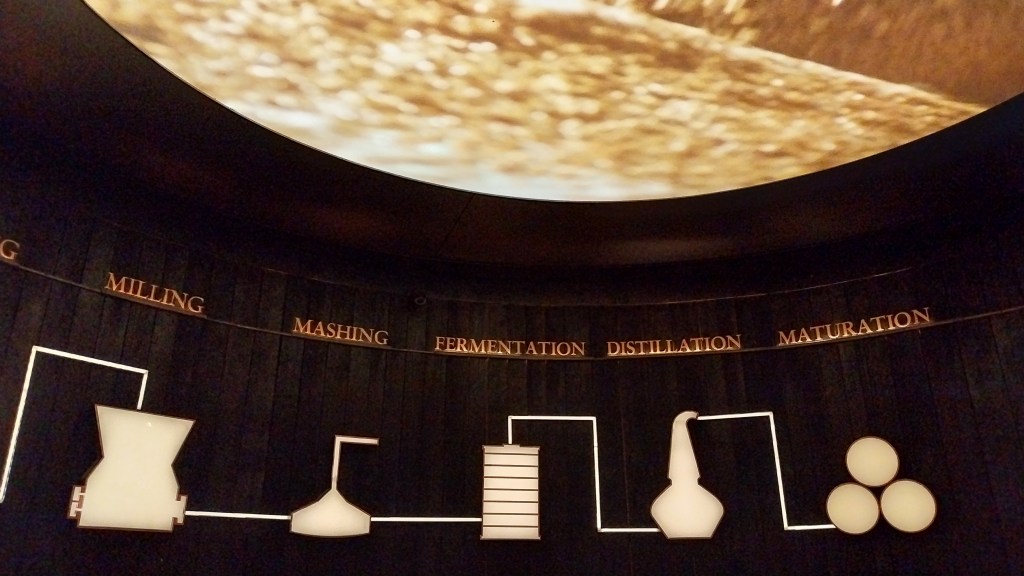
Fortunately, we were wrong, and we soon moved to the production area. The distillery saw two fairly recent expansions, in 2009 and 2018, but we only got to see a part of that. We didnโ€™t either get to see the mill room, where they have a Bulher mill with three sets of rollers to crush the malted barley (all sourced within 70 miles from the distillery) to grist. Mashing happens in one of the massive 13.5 tons mashtuns, with the usual three waters at increasing temperature (65ยฐC, 82ยฐC and 92ยฐC). The sugary wort is then moved to one of the 60,000-litre washbacks, made of either stainless steel or Oregon pine, where it ferments for 56 hours with distillersโ€™ yeast. Then, the fermented wash is sent to one of the 14 wash stills, where it undergoes the first distillation. From the second distillation in the spirit stills, they take a cut between 74% and 62% abv. They have 28 stills in total, spread across three still rooms, and to achieve such massive production, the distillery works 24/7.

We followed Emma in a dunnage warehouse near the car park. They have also racked ones on site, less romantic but more efficient to manage casks. In the warehouse, we saw the usual exhibitions to explain maturation, but we could also smell the whisky maturing in different cask types, which was nice.

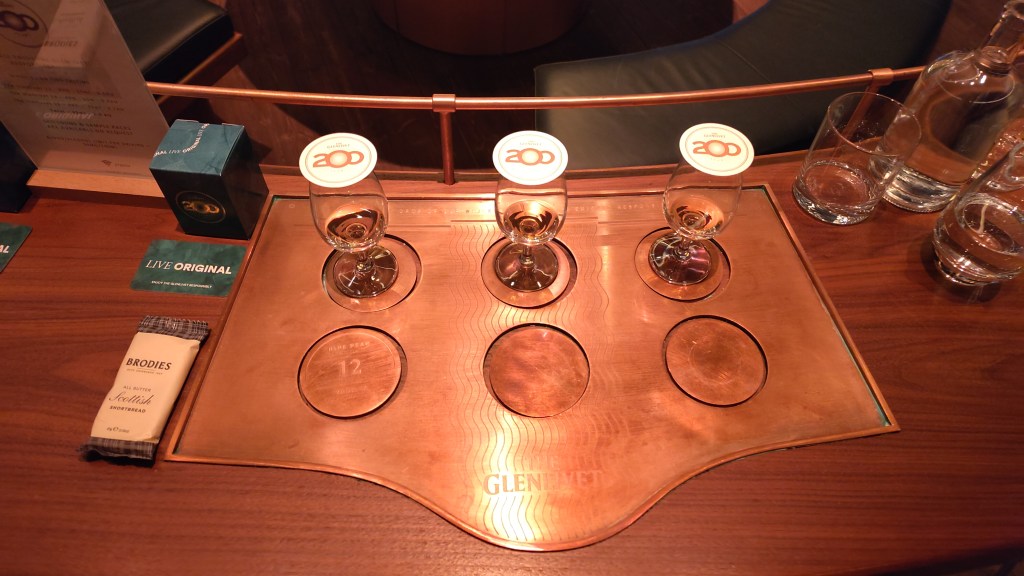
Finally, it was time for the tasting, which was a bit rushed since we were slightly late. We got three drams: the flagship Glenlivet 12 (40%), a 14y from 1st fill American oak which was bottled to celebrate the 200th anniversary of the distillery (48%, the best of the bunch), and finally a double matured 16y, Distillery exclusive (nice, but not as the 14y in our opinion). Back at the visitor centre, we didnโ€™t stay long as we drove straight to Dufftown to the register for the race. The day ended at the Parkmore campsite, where we had dinner and went to bed early.

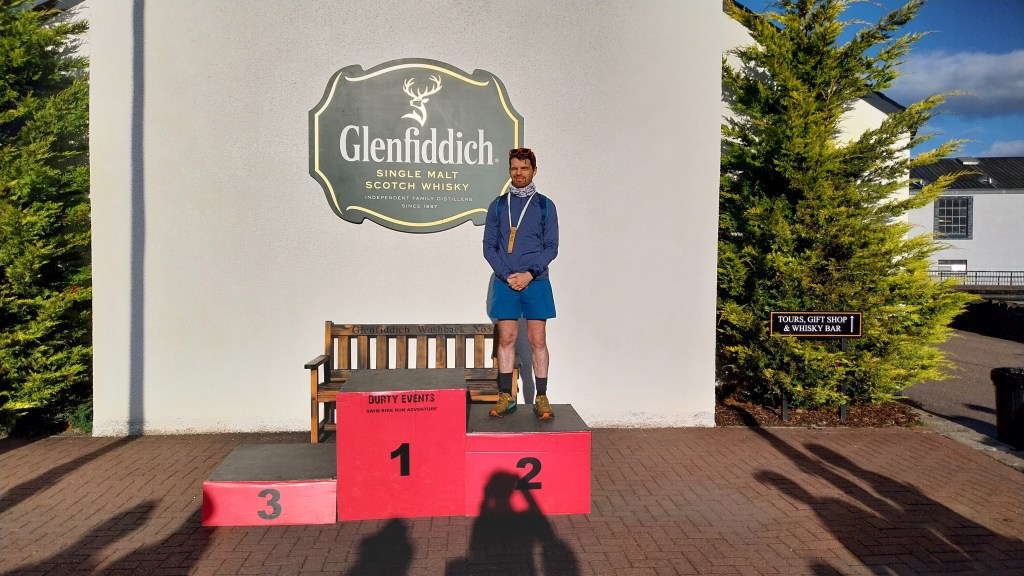
In the morning the weather was quite nice, so after breakfast we slowly walked to the Glenfiddich car park, where the bus would pick us up to go to the starting line, in Aberlour. Edo got a public bus instead, and we met him at the starting line. The race went quick (itโ€™s only 10k after all), and although at the awards Gianluigi was announced as second in his age category (40-49โ€ฆ although he was still 39 at the time and wants to remark this!), it turned out a few days later that he actually got first, second total. He picked up his prize, a bottle of Glen Moray Sherry cask, weeks later at Royal Mile Whiskies, and he happily shared with his colleagues at his work Xmas party.

After the race, we went to Dufftown CoOp to buy some meat to grill, as weโ€™d decided that the weather was perfect for a barbecue! By the time we had dinner it got quite chilly, so we sheltered inside Mr Vantastic, while enjoying some Springbank tasting packs. A great way to end the day!

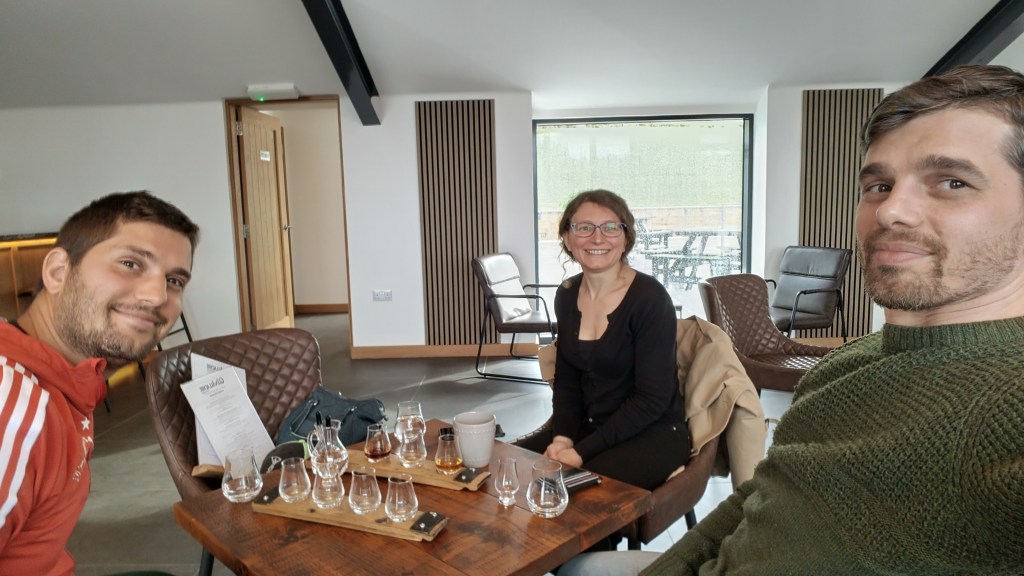
As opposed to the sunny Saturday, Sunday was rainy and miserable. After breakfast, we went to the Glenallachie distillery under a heavy rain, to try some drams at the new distillery bar! Our friend Sue, who works there as a tour guide, gave us great recommendations, and we had a great time. She also kindly offered Teresa some coffee, as she was on driving duties (*sad trumpet*…but we got some drams for her to enjoy home).

That was another successful Dramathon weekend under our belt! Probably next year weโ€™ll skip it, as there are other whisky events weโ€™d like to attend in the same period, one up in the Highlands in particular. Good we could finally visit Glenlivet production. The tour was not memorable, mostly because visiting only part of the site, we didn’t fully appreciate how big it really is. Anyway, at least we got to try different expressions, definitely tasty.

Until the next time, slainte!


Glenlivet Original Distillery Tour

Price: ยฃ25.00 pp (October 2024)

Duration: 1hr 30min

Tasting: 3 drams, Glenlivet 12 (40%), 200th Celebration 14y (48%, 1st fill ex-American oak, ยฃ75), Distillery exclusive 16y (48%, 1st fill American oak finished in refill European oak, ยฃ95), and a complimentary wee glass

Distillery Exclusive: Glenlivet 16y (see above), Fill-your-own (12y, ยฃ55; 15y, ยฃ70; 18y, ยฃ140, all cask strength), various 50cl single cask bottlings from Glenlivet and other Chivas Brothers distilleries

Target: tourists and whisky novices

Value for money: ok

Highlights: the massive production site

Recommended: if we could choose a basic tour in the area, it wouldnโ€™t be this one

Link: https://www.theglenlivet.com/en-gb/

#52 Rosebank Distillery

28 (+2) years later


TL; DR: Nope, not a post zombie-apocalypse story here, but the distillery we visited this time really came back from the dead: Rosebank. On a gloomy Saturday morning we paid it a visit: it was very interesting, we were particularly intrigued by how they rebuilt the distillery. The tour was a bit โ€œcorporateโ€, but hey ho, you cannot win them all. 

Yes, some things, entities if you want, come back from the dead for real. No, we are not talking about zombies, ghosts (or elseโ€ฆ), of course. In the last few years, we witnessed a number of distilleries being rebuilt, after being closed for decades. Most of them were closed because of a company strategy, following the downturn in whisky in the 1980s. Many of them were outdated at the time, like Brora, or not very highly regarded, like Port Ellen. We could add Annandale to the mix, although the original one was closed much earlier, in 1927.

Anyway, the protagonist of todayโ€™s post is another one, located in the Central belt: Rosebank. While Brora and Port Ellen have been rebuilt by the same company that closed them down (DCL/Diageo), in 2017 Rosebank was bought by Ian McLeods distillers (owners of Glengoyne and Tamdhu, plus a number of blends), who decided to rebuild it. After years of construction, in 2023 newmake spirit was flowing through its stills once again.

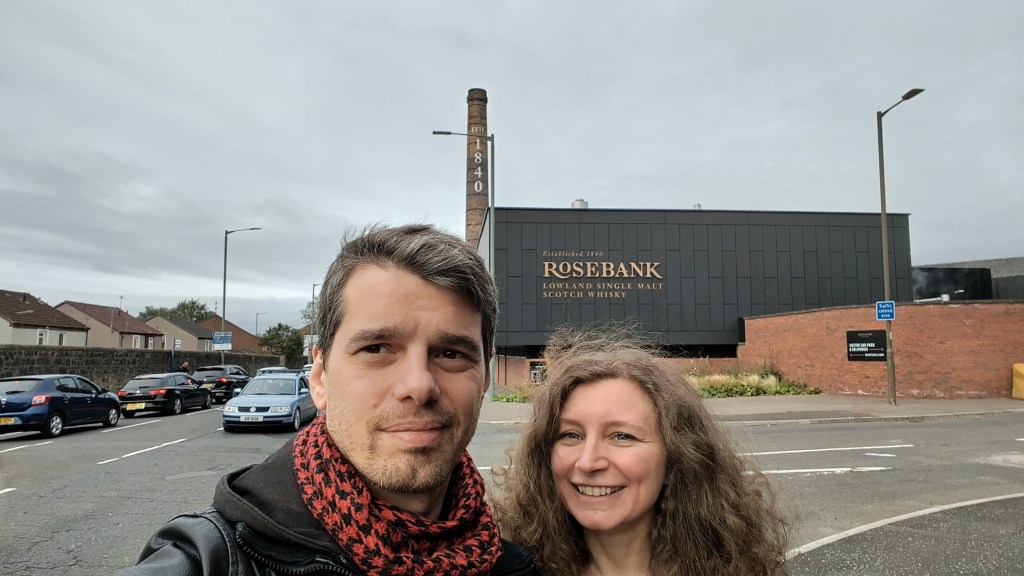
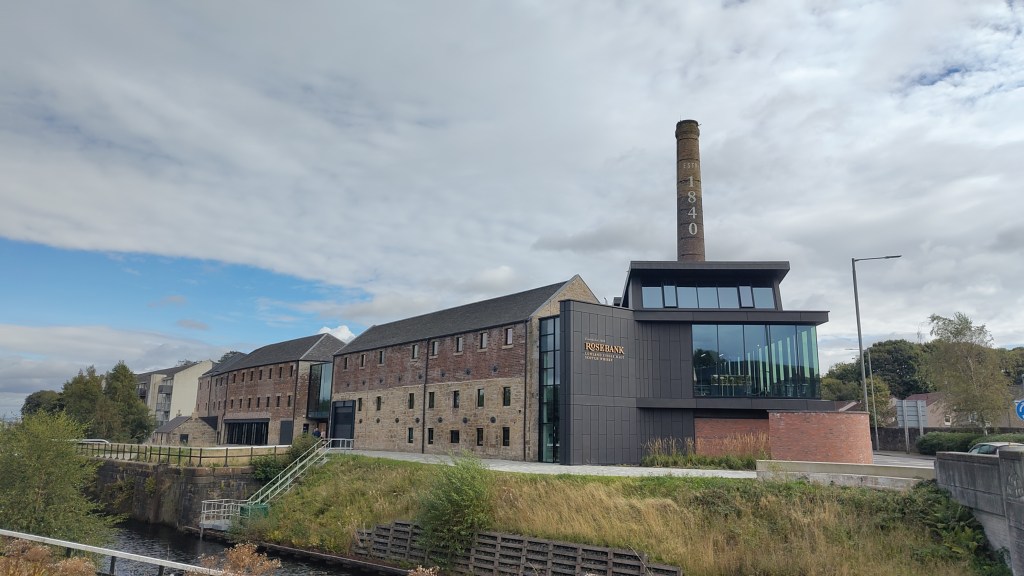
Earlier this year (2024), they also opened to the public. We didnโ€™t go right away – being relatively close and easy to get to for us, we could wait. The perfect occasion came in September: Roy Aquavitae organised the โ€œBarflies gatheringโ€ in Glasgow (or Leg-fest IIโ€ฆIYKYK). The event started in the early afternoon, so instead of taking the train straight to Glasgow, we did a cheeky detour to Falkirk. The train ride from Waverley to Falkirk was quick, less than 45 minutes, and from Falkirk High station it was only a 20-minute walk to the distillery (well, according to Google, turned out to be closer to 15 minutes). We arrived at Rosebank distillery a few minutes earlier, enough time to take a few pictures, a nip to the loo, and check the building from the outside. From afar, the distillery looks like a black block, except for the very recognisable chimney. Getting closer, we realised that it is a beautiful building, very tastefully done, with a big window in the stillroom. The entrance to the visitor centre, though, reminded us of some hotels. The visitor centre also looks like an hotel lobby, while the shop is more akin to a high street boutique.

Our guide for the day was Jack, a nice young fella, but clearly following a script probably set up by management. We started with a visit to the old warehouse, in the same building as the visitor centre (in part still a warehouse). Most of the wood finish around there and the rest of the distillery was reclaimed wood from the old buildings. We watched a video explaining the history of the distillery. It is located near the Clyde canal, very close to a lock as well. The cottage for the lock keeper is still in existence: it is now part of the distillery, used as storage previously. Very funnily, it was found out that, somehow, contractors installed a tap bringing spirit directly from the old distillery! Another curiosity was that, in the past, when water from the worm tub condenser was put back into the canal without cooling it (which now environmental regulations donโ€™t allow), locals were enjoying a swim in the warm water.

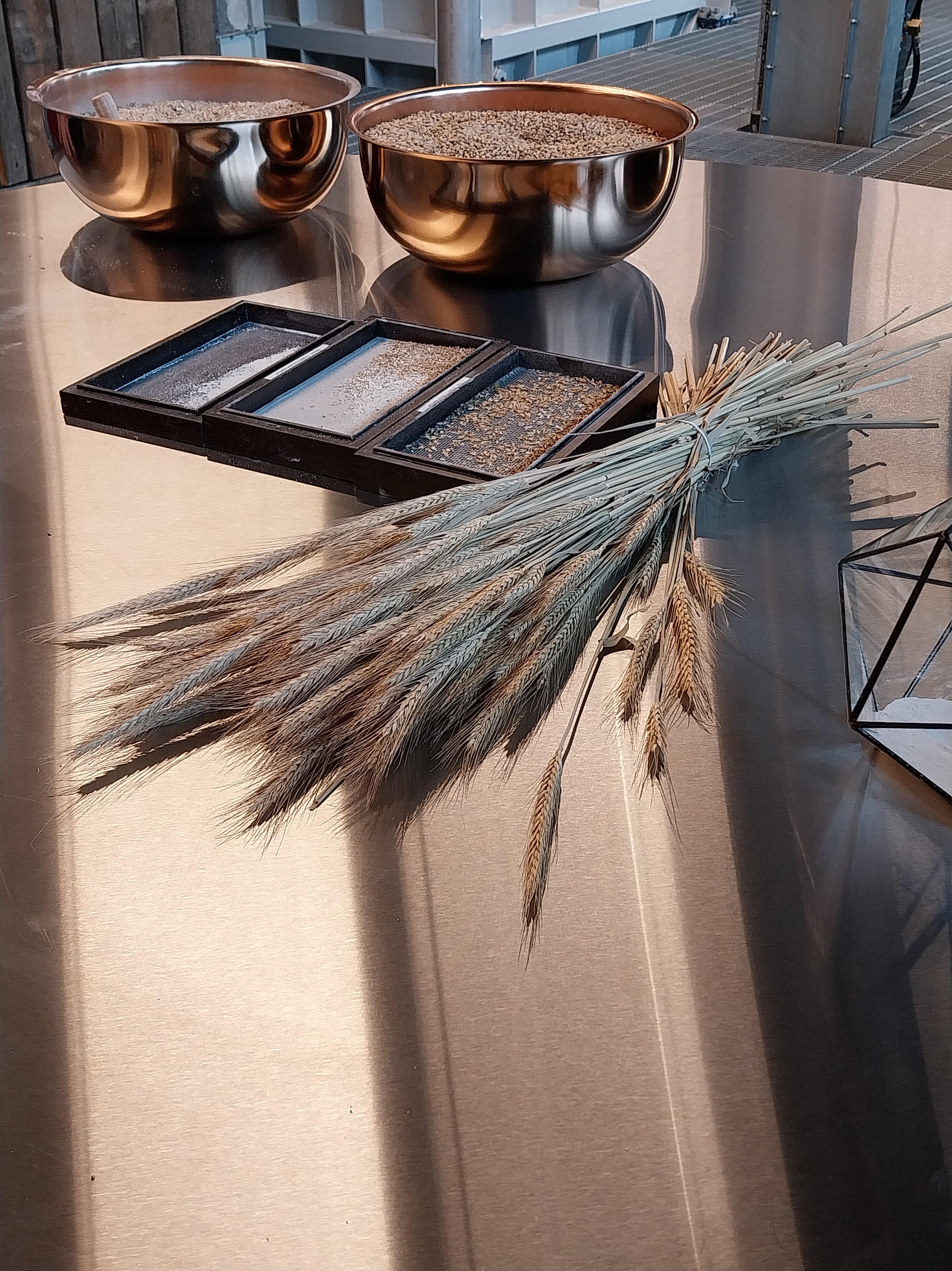
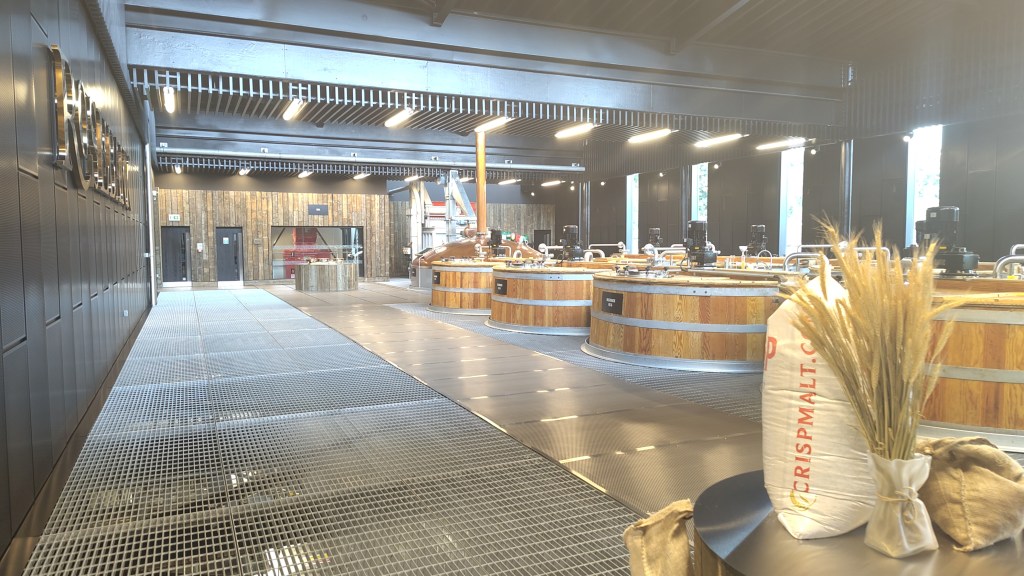
The equipment was completely refurbished, as nothing had remained of the old distillery. The production space is quite wide, probably to accommodate a potential future expansion. The Porteus mill dates back to 1933, and it was previously located at Port Ellen distillery. Malted barley is sourced from Crisp, in Alloa, and they get 28 tons twice a week (apparently, the variety can change). The mill produces a grist with a slightly higher percentage of husk (22% instead of the usual 20%), thus lower in grit (68% instead of 70%), and the usual flour (10%). The mash takes 3.2 tons of malt, to which they add the first water, 10,000 litres at 68ยฐC. It is followed by the second water, 5,000 litres at 80ยฐC, while the final one (used for the next mash) is around 90ยฐC. They do 17 mashes per week, each taking about 6 hours in total. Here Jack gave us a barley sugar candy: it was nice touch, being foreigner, we finally understood what people mean when this comes up as a tasting note!

The resulting wort is moved to one of the 8 washbacks, where it is fermented for 62 hours, using distillersโ€™ yeast. But it is with distillation that Rosebank brings something special: it is a triple distillation, and they use worm tub condensers, a unique combination of these features. The first distillation is very similar to the usual first distillation in Scottish distilleries. The second one, in the intermediate still, is divided in two cuts, the first sent for the third and final distillation, one sent back to be redistilled (the low wines below 1%). The last distillation, in the spirit still, produces 1,700 litres of spirit between 82% and 69% abv, on average 77%. Jack sprayed our wrists with newmake, which was very floral, reminding us of lavender. We finally visited the remaining bonded warehouse on site, which only held about 100 casks. Among these, both the eldest (1989) and the youngest (1993) of the old distillery.

Finally, we did a tasting in the Clyde Tasting Room, a very cozy space. Having bought the regular tour (ยฃ25), we got to try the newmake spirit and a dram of Tamdhu and Glengoyne, both 12 (both 43%: despite this reduction, Tamdhu was still very viscous and not watery: amazing how it takes reduction so much better than Glengoyne). Unfortunately, no old Rosebank: that one (together with an upgrade to Tamdhu and Glengoyne 15 as well) comes with the upgraded tour, for the upgraded cost of ยฃ95. By reading the description on their website, we got the impression that the two tours are actually very similar, meaning the Rosebank dram costs ยฃ70: a bit too much for the one dram.

As the tour finished, we quickly walked to the closest station to get the train to Glasgow. There, we had an awesome time, getting to know a bunch of barflies from all over the place (some came from Canada!), and hanging out with whisky pals (including Ally from Cadenheadโ€™s). The dinner at Rishiโ€™s Indian restaurant organised by Roy was fantastic, as well as the drams shared at the Bon Accord. We even met Ralfy, the legend himself! His videos really helped to keep us sane during the pandemic, as well as enhancing our whisky curiosity. What a day, on the train back to Edinburgh we were tired but very happy.

This is the last of our Central belt distillery tours for now, we closed with the most popular among those four. Overall, the visit at Rosebank was fine, but too corporate for our taste. Unfortunately it seems that Ian McLeods is going toward premiumisation of their products, but kudos to them to set a reasonable option to visit the distillery (Brora anyone?) and check this piece of whisky history coming back to life. We just hope that in a few years, when Rosebank single malt will be back on the shelf, itโ€™s going to sell for a reasonable price. With the industry going towards overproduction, however, sometimes we ask ourselves whether reopening these celebrated distilleries doesnโ€™t hide some nostalgia element, of people struggling to let go of the past. But well, we love the current whisky variety, so the more the merrierโ€ฆ. hopefully?

Until the next time, slainte!


Rosebank Distillery Reawakening

Price: ยฃ25.00 pp (September 2024), plus ยฃ2.50 transaction fee

Duration: 1hr

Tasting: Rosebank newmake spirit (63.5%), Glengoyne 12 (43%), Tamdhu (43%)

Target: everyone

Value for money: ok

Highlights: the history of the distillery

Recommended: for historical reasons

Link: https://www.rosebank.com/