#55.4 All drams great and small

A dram-y day at the Distillers Lounge, in Scarborough


TL; DR: On the (almost) final day of our trip we didnโ€™t visit any whisky distillery, but a rum one. It is located inside the Distillers Lounge, in Scarborough, where we had a full-on English whisky tasting and a great meal, before turning our attention to rum. It was a very fun day, and we have to say the quality of English whisky is really improving! 

(missed Part 3/Part 2/Part 1?)

On the Sunday morning, in spite of the very busy Saturday (two distillery tours, a brewery visit and the quiz), we woke up surprisingly rested. The morning was easy, we had breakfast in the van and a short stroll in Hunmanby, before gathering with the troop (except for some, who headed back home earlier) at the train station. Our destination was not far away: Scarborough, on the Yorkshire coast. In our understanding, Scarborough used to be a popular seaside destination for rich people to clear their lungs during the Industrial Revolution, in particular around the Victorian era. Nowadays, it doesnโ€™t look as glorious, with a lot of closed up units on the high street, we guess one of the many victims of the massive deindustrialisation of the 80s and 90s.

Now, one could ask: โ€œWhat were you doing there, then?โ€, which is a more than legit question, given the above. Well, itโ€™s easy: because of the Distiller’s Lounge. This is a venue, conveniently located at walking distance from the train station, with a restaurant, a tasting bar and a spiced rum distillery.

The whisky tasting bar is managed by Whiskyside, a small company run by Matt, promoting and selling English whiskies. As you can guess, the plan was a full-on English single malt whisky tasting. The location was a room underneath the main bar, looking a lot like a cellar. There, the biggest collection of English whiskies we ever saw was on display. It included pretty much everything you could think of, from limited releases and from independent bottlers. We even spotted a Bimber bottled by the guys behind Whisky Facile, an Italian whisky review website and blog.
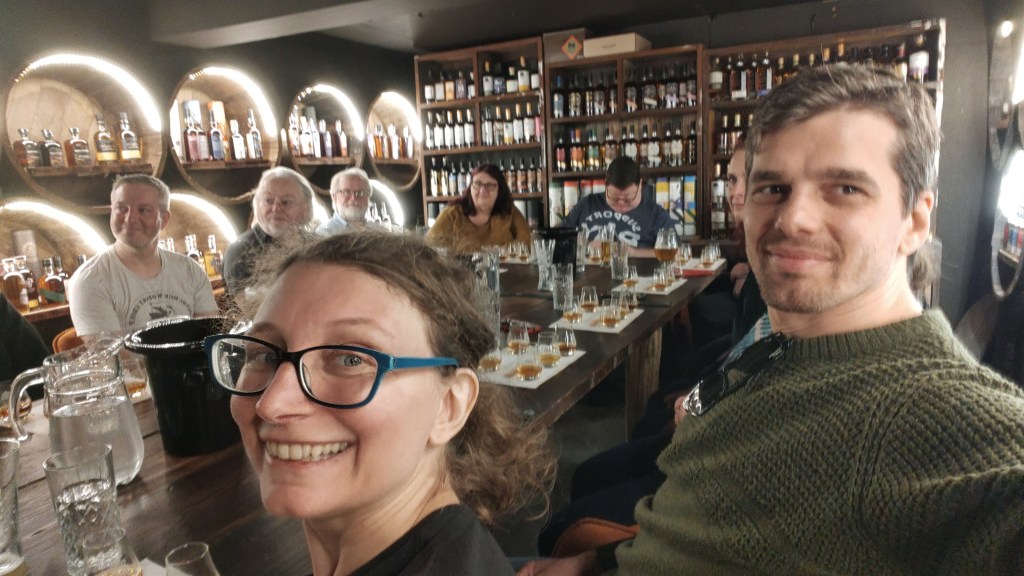
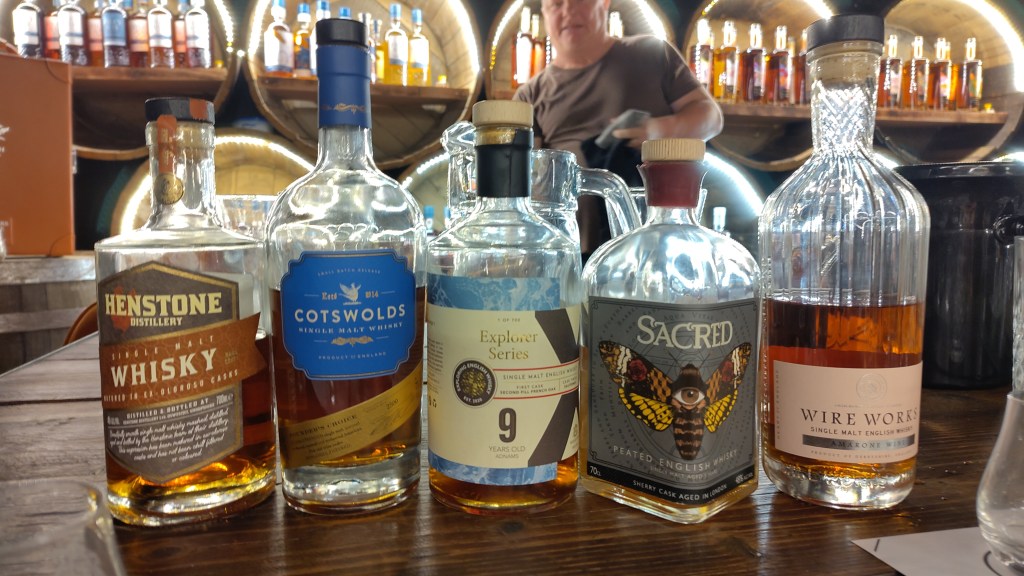
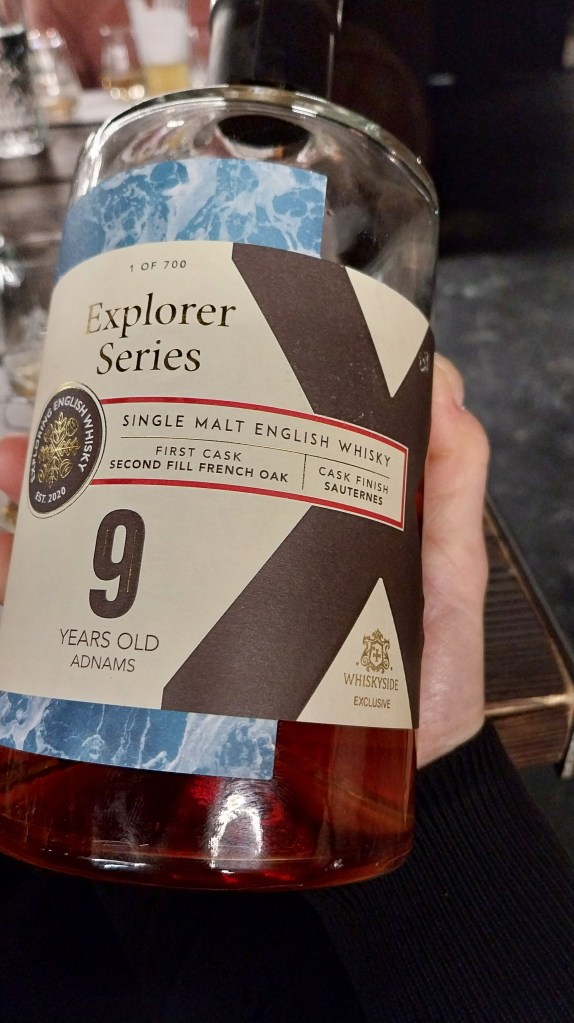
The tasting started with a first for us, a Henstone single malt, from a distillery in the Shropshire (near the Welsh border) established in 2017. A young expression, but quite round despite the age, matured in ex-oloroso sherry casks. The second dram was an old acquaintance, the Cotswolds (visited in Summer 2023) Founderโ€™s Choice, a small batch release (in this case 2,500 bottles), fully matured in STR casks (former wine casks, shaved, toasted and recharred). It comes from the Cotswoldโ€™s small batches of the same cask type, ranging from ex-bourbon to ex-sherry, ex-peated whisky, etc. A very nice dram, very drinkable, but it didnโ€™t impress us, contrary to the one that followed. This was from Adnams, a brewery and distillery in Southwold, which we had tried one or twice before. This expression was a 9-year old bottled for Whiskyside, bottled at 55%, part of their Explorers Series. The combination of casks is quite unusual: matured in second-fill French oak casks, and then finished in ex-Sauternes barriques (for two years), a finish that we generally struggle to appreciate. This one, however, smashed all our prejudice on Sauternes casks, as it was delicious, full of sweet, cream and chocolaty notes: tiramisรน in a glass. What was weird is that we came across the same tasting notes independently, before sharing them.
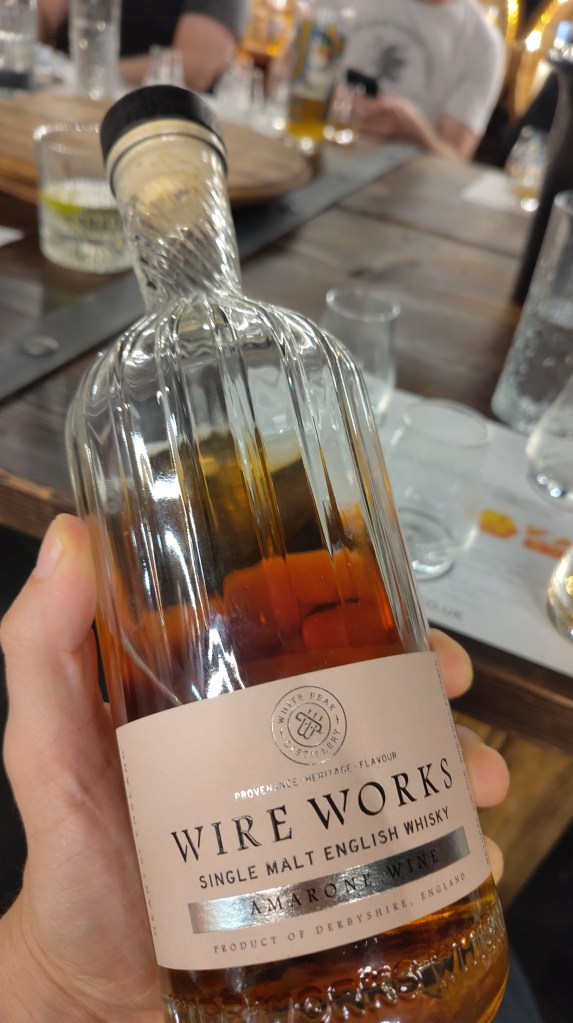
The fourth dram marked the introduction of peat. First off, a 5y single malt finished in ex-PX casks (from Bodega Navarro, previously in ex-bourbon hogsheads). In our understanding this one was from the English distillery, but bottled in 2019 by Sacred Spirits (or Sacred Gin), after the second maturation in London (donโ€™t know why it is important, but it is stressed on both the label and the website). It was a decent dram, but again we were blown off by the final one: a lightly peated Wireworks (from White Peak distillery, one of our favourite tours in 2023) matured in ex-Amarone red wine casks, bottled at 54.1% and made in a small batch of 662 bottles. Grilled berries notes, an excellent dram. Overall, it was an impressive tasting, it showed how good English whisky can be, even at young age.
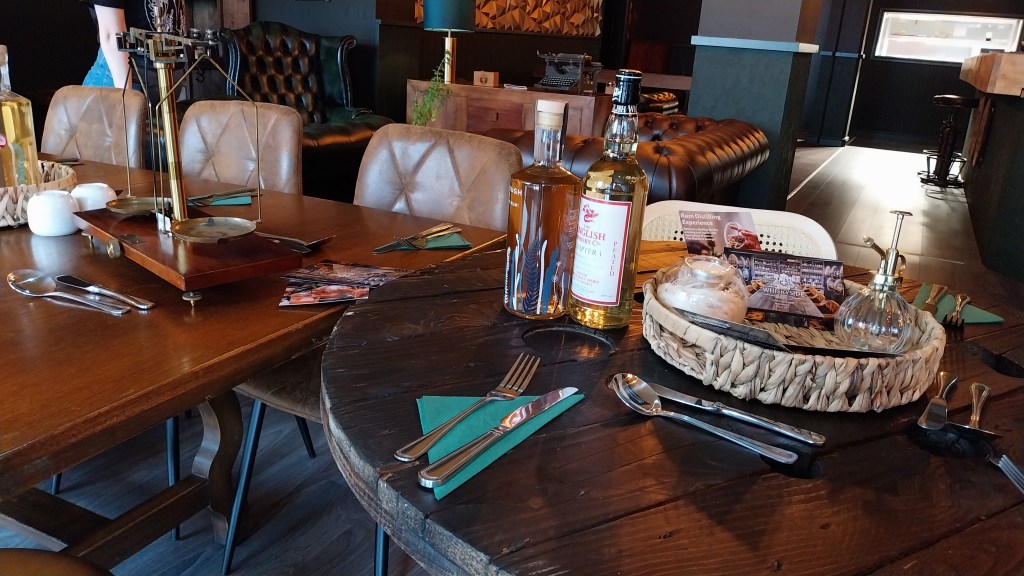
After the tasting, we moved back upstairs for the meal, which included two courses for slightly less than 30 quid. When we saw the price, weeks before (one of the necessary evils of these group holidays is that we have to choose our meals weeks in advance), we were not so convinced. Truth be told, it was a fantastic meal, in particular the lamb was one of the best we ever had since we moved to the UK.
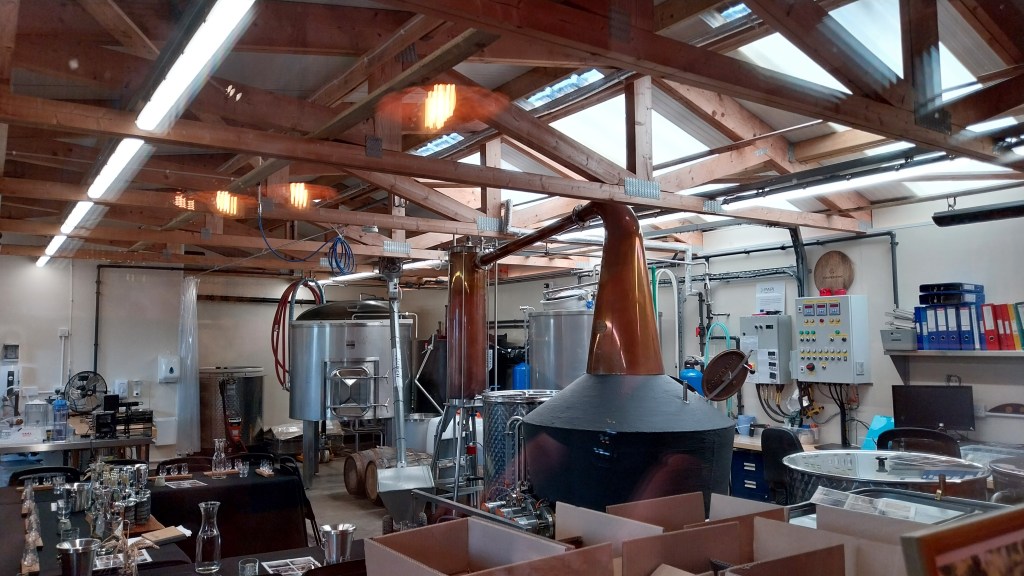
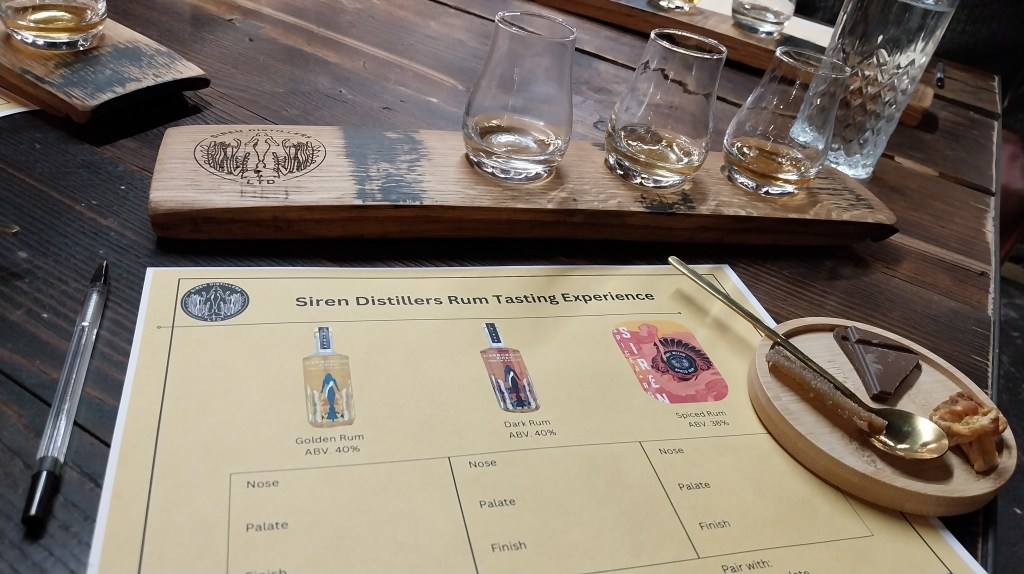
After this tasty lunch, we went back to the cellar, this time for another tasting: a rum one, with mainly tots from the local Siren Distillers company, run by Jamie and Anna. The distillery is in the Distiller’s Lounge itself, right upstairs, with the still in the window. (Update March 2025: we learned from posts on social media that the collaboration between the Distillers Lounge and Siren Distillers ceased, so they moved to a different location).

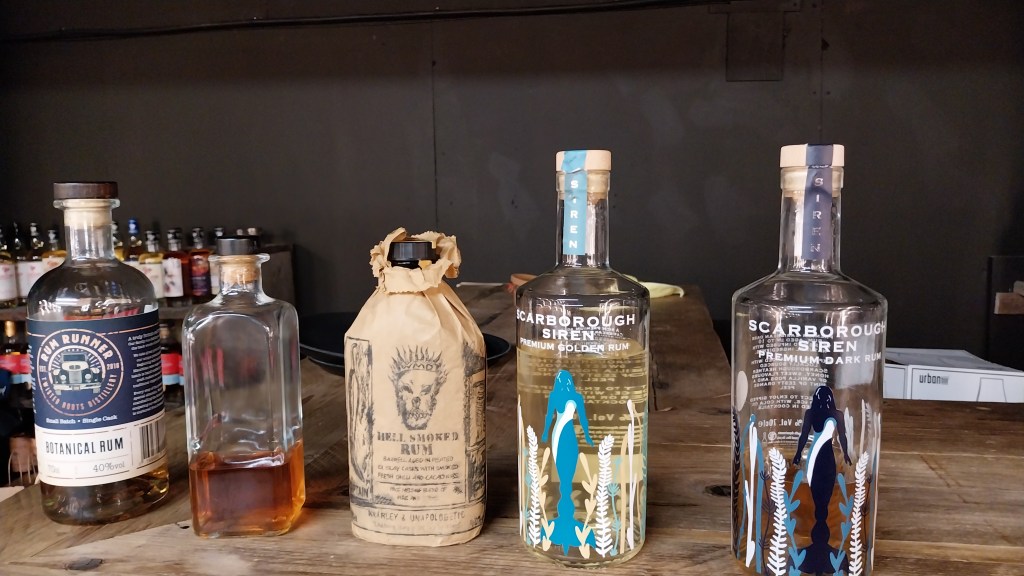
Their main activity is to source rum, and then redistill or infuse it with their spices of choice. From their range, we tried the Golden rum (40%, blend of 5y Caribbean rums, infused with honey, orange peel and vanilla), the Dark rum (40%, blend of Caribbean rums, including a 10y Jamaican one, and again infused with honey, orange peel and vanilla), and a preview sample of their Spiced rum (38%, redistilled with a number of spices), respectively paired with candied ginger, dried pineapple and dark chocolate.
We also tried the Botanical rum from Rum Runner (40%, distilled at Twisted Roots Distillery, aged in ex-red wine French oak cask), and a spicy (yes, spiced, but also SPICY) rum, the Hell Smoked Rum (40%, barrel-aged in peated ex-Islay Whisky casks with fresh chili peppers and cacao nibs). It was an interesting tasting, although we are not really into spiced rum, so we didnโ€™t (and still donโ€™t) have much basis for comparisons.

After the train back to Hunmanby, we had a last pint at the Piebald Inn (to Gianluigiโ€™s disappointment, the kitchen was already closed) before retiring to the van. Overall, it was a very fun day, and we were particularly impressed with the English whiskies we tried. One popular Glaswegian whisky youtuber said (more than once) that there is nothing like good English whisky to keep Scottish producers on their toesโ€ฆTrue or not, we can definitely say that the quality of these malts is good in general, fantastic at times! And hospitality-wise, many Scottish producers should take example from their neighbours.

It was the last โ€œofficialโ€ day of the All Drams Great and Small tour, but we saved one last whisky experience for the following day. Until then, slainte!


The Distiller’s Lounge
Link: https://www.jspubcompany.co.uk/distillers-lounge/

Whiskyside
Link: https://whiskyside.co.uk/

Siren Distillers
Link: https://www.sirendistillersltd.com/
#55.3 All drams great and small

An English malt with a Tasmanian twist and an eye for sustainability


TL; DR: From Ellers Farm, we went directly to another distillery: Cooper King. Inspired by Tasmanian craft distilleries, they produce other spirits other than single malt, with a very interesting set up. And, everything is done in the most sustainable way possible, kudos! After the visit, we went to Brew York, for a tour, dinner, and a quiz! 

(missed Part 2/Part 1?)

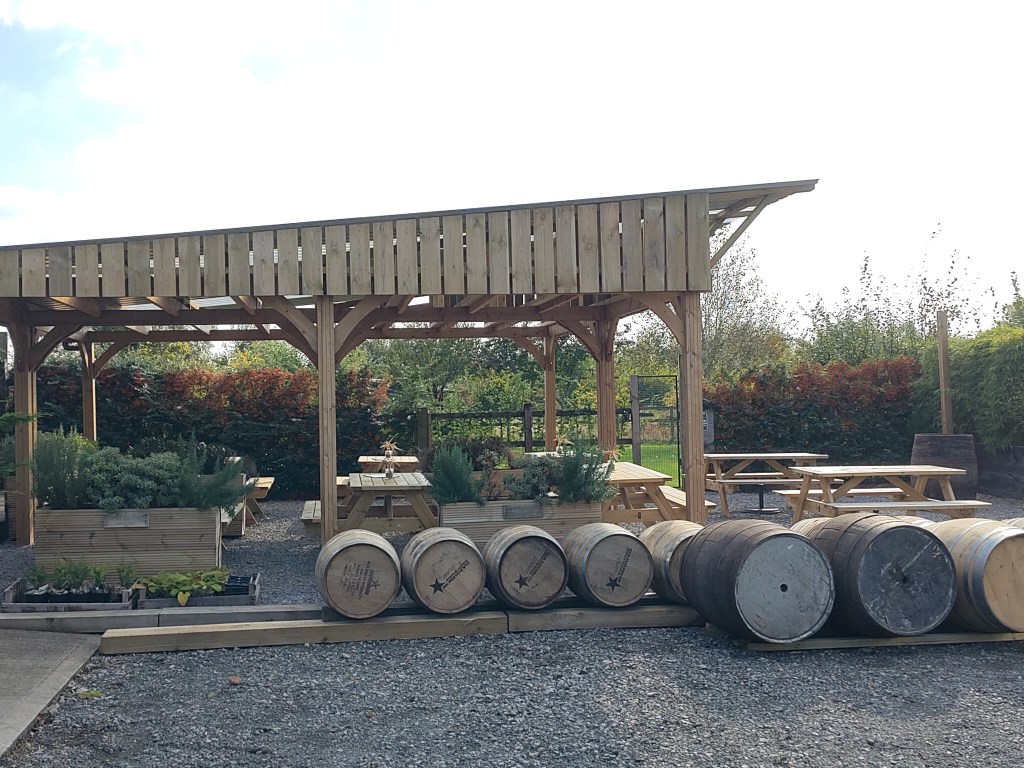
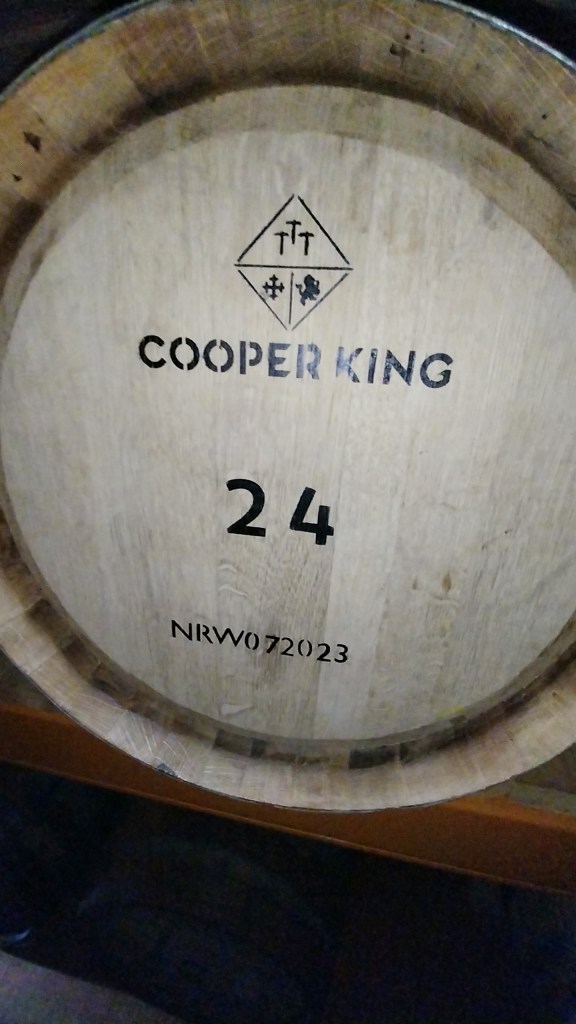
After the visit at Ellers Farm, we jumped back on the minibus. Our next destination was only about half hour away driving north-west, approximately 13 km north from the city of York, in the village of Sutton-on-Forest. The distillery is called Cooper King, just outside the village. It was founded by Abbie and Chris, a couple who got the inspiration while travelling in Australia and visiting local distilleries. The distillery is named after Charles Cooper King, Chrisโ€™ great-great-grandfather. The main building is just a few meters from the gravel parking lot, and it harbours a bar/shop and production. There is also a nice wee garden outside, with wooden tables and benches, which we took advantage of after the tour. It was a nice sunny day!

We were welcomed by Mark, tour guide and assistant distiller. Like others, he came on board as a crowdfunder. At some point (in our understanding) the two founders Abbie and Chris asked who among the crowdfunders wanted to be more involved, and Mark answered the call. We could clearly see his passion for the project. He explained that, in 2014, Abbie and Chris, once a biochemist and an architect, moved to Australia to travel, and started working as fruit pickers. Then, they went to Tasmania, and after getting in contact with Sullivanโ€™s Cove and Lark, they decided to go back to England and produce a Tasmanian-style whisky. Back in Yorkshire, they bought the land thanks to a crowdfunding, as well as a 900-litre pot still (Neilson) straight from Australia.

Another principle they had in mind when setting up the distillery was sustainability. The electricity comes from renewable sources, of which 60% is produced on site with solar panels: this contributed to make them the first net-zero distillery in England. They also have a programme for planting trees and restoring woodland and wildflowers habitat for each bottle they sell. Moreover, they chose lighter bottles, and offer refills at the distillery, for a few quid less.

Production-wise, they use Maris Otter barley malted in middle England. They pre-heat the small mashtun before mashing the malt. After that, the remaining draff goes out to local farmers to feed cows. Fermentation takes place in a 1750-litre plastic vessel (usually only half full to avoid foam accidents) and lasts seven days. Both distillations happen in the same still, which is different to what we saw in all the Scottish distilleries we visited so far. At first, Neilson the still was heated externally, but to make the process more efficient it was sent to Scotland for modifications and is now internally heated and insulated.

The wash gets distilled to 25% abv, while the heart of the second distillation comes out on average at 75%, before getting diluted by filtered tap-water. Needless to say, everything in the distillery is very manual, except for the gin and vodka very modern cold-distillation machines (which take only about 10% of energy compared to a classic copper pot distillation).

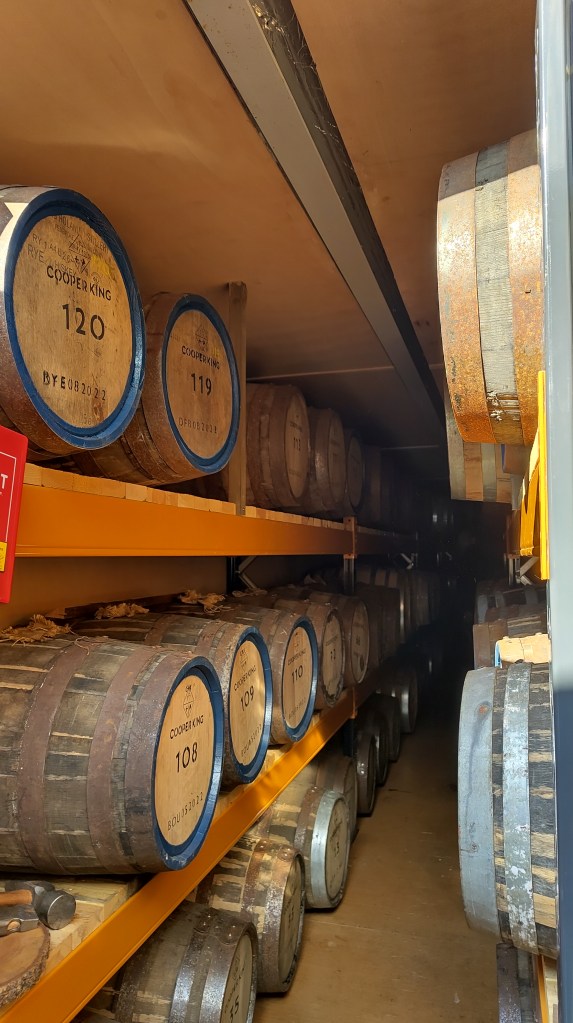
They use a variety of casks from all over the world, and their main American cask supplier is the Garrison Brothers distillery, in Texas. Casks are kept in a safe container behind the distillery, while waiting to get a proper warehouse. They started distilling newmake spirit in 2018, and their first whisky was released in October 2023, about a year before our visit.

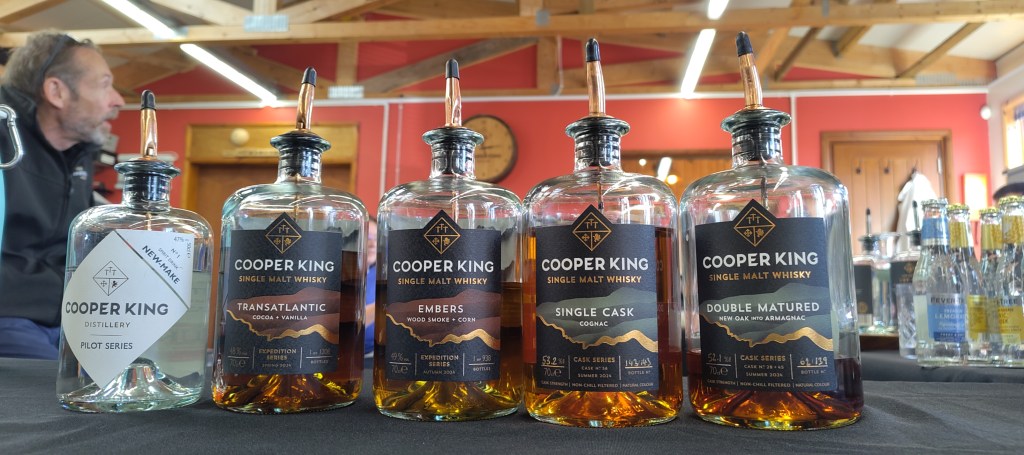
While we were outside checking out the casks, another member of staff set up the tasting in the main production room, which also serves as a tasting location. First, we went through five liquors and gins (see below), but as itโ€™s not really our focus, we wonโ€™t spend many words on it. We were really interested in their whiskies. The first one was not exactly that: a newmake spirit, from the โ€œPilot Seriesโ€ and bottled at 47%. It was followed by two single malts from their โ€œExpedition Seriesโ€, Transatlantic (ex-bourbon and ex-wine casks, 48%), and Embers (charred ex-bourbon casks, 49%). Then, two single casks: first, an ex-Cognac matured single malt, bottled at the 53.2% natural cask strength; second, a dram first matured in virgin oak casks, then re-racked into an ex-Armagnac cask, again cask strength at 52.1%. The evaporation (or โ€œangel shareโ€) is higher compared to Scotland, about 4%, which combined with other specific conditions, might cause the abv to be lower for such young whisky. Overall, we could tell the degree of experimentation at this distillery is high.

After the tasting we had a few minutes to spend in the sunny patio, sipping on our leftover drinks, before getting back on the mini-bus. We headed towards York, precisely the Brew York Brewery. Despite the city location is not their main production facility anymore (that one is in Yorkโ€™s outskirts), itโ€™s still a massive place. We did a production tour (ยฃ15, including four tastes) and then had dinner there (they do a range of Asian-inspired dishes, which were delicious, albeit heavy on spring onion). Unfortunately, the place was too noisy for the next scheduled activity, a whisky-based quiz, so we had to move to a quieter pub nearby. The quiz, organised by our whisky veteran pal Charlie, was great fun, and we went back to base all very happy.

What a great afternoon and evening we had! At that time, we had tried very few craft Australian whiskies (and even less Tasmanian ones), so the link between them and Cooper King was not evident to us. At the time of writing however (after a serendipitous trip to Australiaโ€ฆStay tuned in the coming weeks for more), the connection is quite obvious: we spotted a very typical herbaceous note in Cooper King drams, the same we found in most whiskies down under. Overall, itโ€™s a very interesting project, which we are very glad we got to know more of.

Next up, another Yorkshire whisky day, but not a distillery! Until next time, slainte!


Cooper King Distillery Bespoke Tour

Price: ยฃ20.00 pp (October 2024)

Duration: 1hr 30min

Tasting: 5 spirits (Dry Gin, 42%; Herb Gin, 40%; Smoked+Spice Dry Gin, 41%; Black Cardamom Vodka, 40%; Berry+Basil liqueur, 25%) and 4 drams: Transatlantic (48%, ex-bourbon and ex-wine, 1208 bottles), Embers (ex-bourbon, 49%, 938 bottles), ex-Cognac matured single cask (53.2%), virgin oak/ex-Armagnac cask (52.1%)

Target: whisky and spirit enthusiasts

Value for money: very good

Highlights: the distillery set up

Recommended: yes

Link: https://www.cooperkingdistillery.co.uk/


#55.2 All drams great and small

Compares apples with malt: Ellers Farm


TL; DR: After a good night sleep, it was time for another couple of Yorkshire distilleries, starting from Ellers Farm. Initially only a vodka distillery, they soon moved into gin and other liquors and spirits. The plan is to release a single malt in 2025. A very different take on whisky distillation, even compared to other English distilleries.ย 

(missed Part 1?)

Done with the distillery tour at the Spirit of Yorkshire distillery, we slowly walked back to the Pie Bald Inn, and to Mr Vantastic. After some rest, it was time for dinner: we were eager to try the renowned pies. They did not disappoint, the pies were very good, and portions quite big, so big that we both had some leftovers (which rarely happens with Gianluigi)!

ย We woke up feeling well rested and ready for the day ahead. For breakfast we had the leftovers from the night before, warmed up in a pan in the campervan – great smell afterwards. We needed a big breakfast, as the programme of the day was ambitious: two distillery visits and a brewery tour. To make things easier for everyone, Justine had booked a small coach for the day.

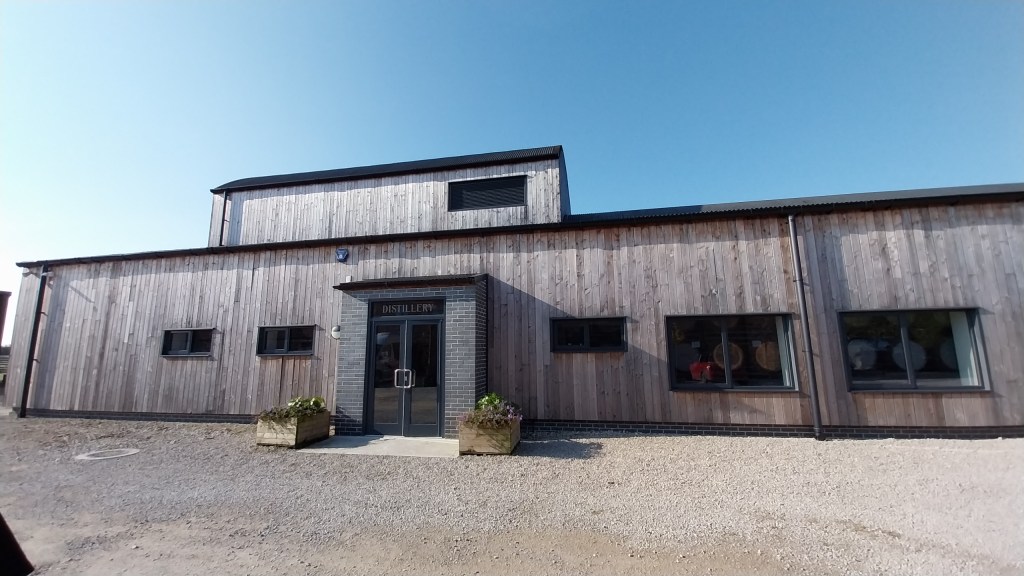
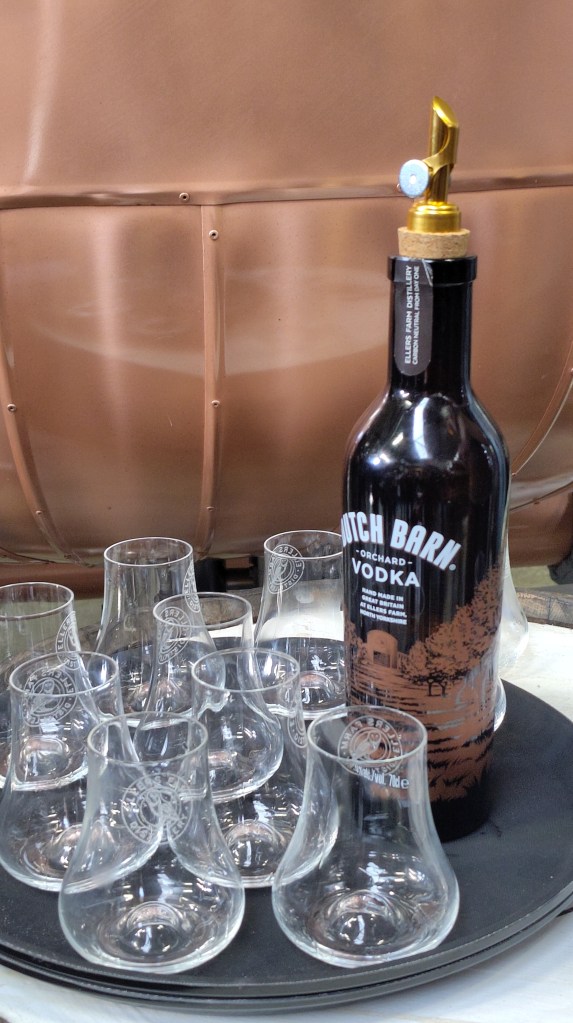
After about 50 minutes driving inland in the sunny Yorkshire countryside, we arrived at our first destination: Ellers Farm Distillery, in Stamford Bridge. This distillery might be popular because of a certain comedian coming on board, but more on that later. The site is an old farm, with one of the buildings now hosting the visitor centre and shop, a tasting room and some offices. We were welcomed by Ollie who, after a brief introduction, showed us around. The founder, Chris Fraser, started getting into drinks in 2014 after spotting an apple orchard whose fruits were not getting picked but instead left to rot on or under the trees. He started using the apples to make cider, followed by brandy and โ€œcalvados-styleโ€ spirits using a small still. He then came up with the idea to distill to high proof to make an apple vodka. So the Dutch Barn Vodka was born! The name comes from the type of barn that there used to be on the site before the conversion into a distillery โ€“ to us, despite the โ€œDutchโ€ adjective, the building looked more of American style. Later on, the Y-gin (Y for Yorkshire) was added to the portfolio. Today, 20% of the (B Corp) company is owned by employees, and there are plans to reach net zero by 2040. In 2023, Ricky Gervais was asked to feature in an advertisement, but instead he came on board as co-owner.ย 

A Dutch barn converted into a distillery.

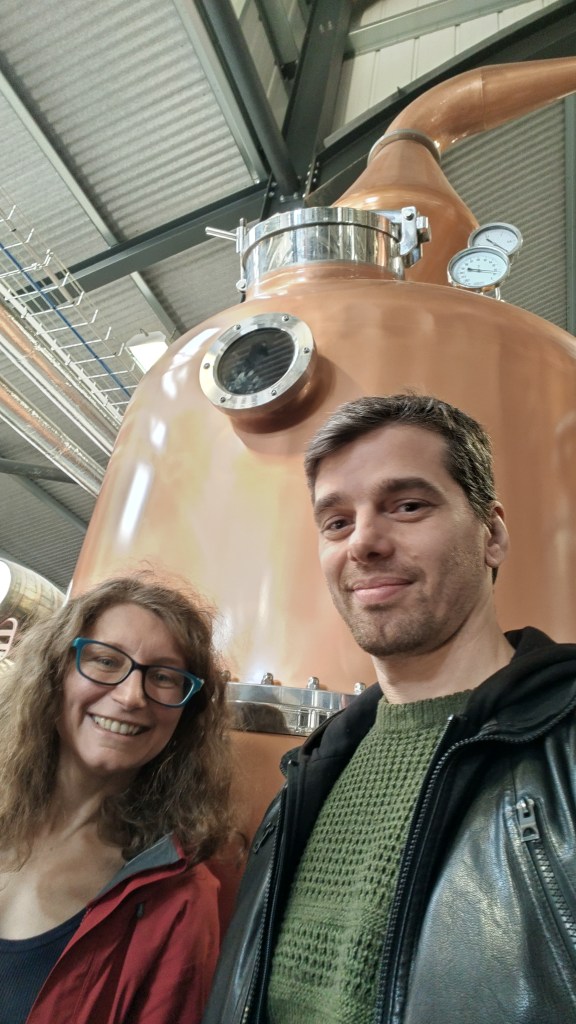
Production takes place in the building on the other side of the courtyard. They use water coming from a 263-meter-deep borehole, and put the apples in a 8,000-litre fermenter with their own strain of yeast, to get a 12-15% abv โ€œwashโ€ (not sure if this is the nameโ€ฆ). The distillation happens first in a column still (‘Magic Mike’, great name) made in Italy, but also in a pot still (see below) and two rectification stills (with 26 and 25 distillation plates) for a total of 70 distillations: apparently, the two parts combined would make it one of the tallest stills in Europe (please if you work at the distillery and thing we got this wrong let us know, our notes were a bit foggy). Within the stills, about 70% of the liquid is recirculating, while 30% comes out as vodka. To note, they also have another mini-still, โ€˜Crystalโ€™ to reduce the level of methanol.

Success came right after their launch in 2022, with Waitrose being one of the first clients (for those not living in the UK, a very posh supermarket chain). When Asda (a bigger chain) also wanted to distribute their vodka, they increased production. At the time of our visit, they were about to launch in the American market, which meant further expansion from the current 1.3 millions of litres per year production.

Still in 2022, they started a collaboration with Theakston Brewery, producer of the popular (but unknown to us before this visit) Old Peculier beer, to make English single malt. The brewery provides the fermented wash: it is made with 100% malted barley (from Muntons maltster) and is fermented for 96 hours with two different yeasts, one at the bottom and one at the top of the vessel. They also let it reast for another 12 days, to get to 16 days in total.ย Once at the distillery, it goes first into an 8.5m-tall column still (‘Magic Mike’, great name) to get to 40%, and then in a 2,500-litre copper pot still (โ€˜Granny Smithโ€™, another brilliant name), described by Ollie as their distiller Jamieโ€™s โ€œbrain childโ€.

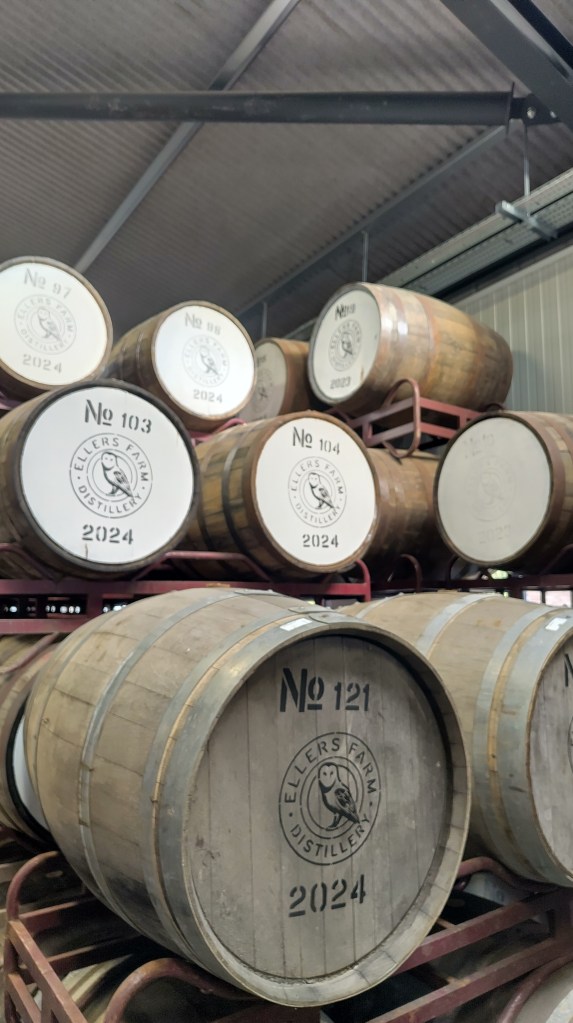
For every distillation run, they produce about 7 casks worth of newmake spirit, mostly filled at 63% after diluting from the original strength of 80%, with the borehole water. Their most prevalent casks are ex-bourbon barrels from Heaven Hill distillery, in the US. Some of the casks are kept in the production shed, but the majority rests in another building on site which we didnโ€™t visit. The first cask was laid out in August 2022, and they aim to have their first malt ready in November this year (2025). In the meanwhile, to follow the journey of the spirit, they have setup the Evolution Collection: a set of 50cl bottle spirits, taken every six months from 0 to 24, and the final first single malt whisky, all bottled at 46% (the whole set for the not cheap, but not unreasonable either, price of ยฃ500).

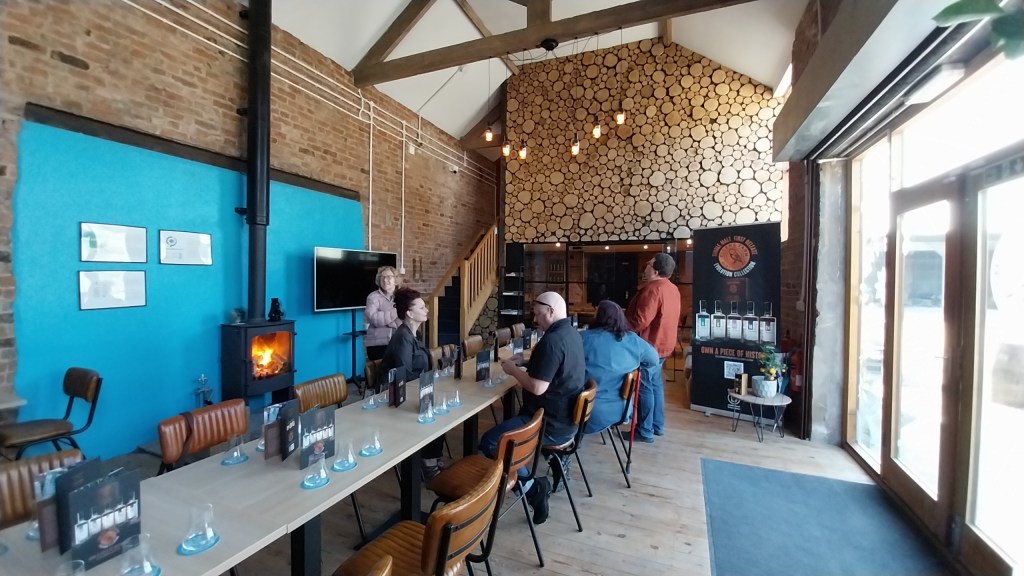
After the visit of the production area (and a sip of the Dutch Barn Vodka) we went back to the visitor centre for the tasting: the 3-dram lineup started with the newmake spirit, followed by the 6- and 12-month spirits. The three samples were very interesting and very promising, all three at 46% and characterised by notes of grilled pineapple and other tropical fruits. The second dram had notes of banana and, surprisingly, of burnt (in a good way), while we got apple pie but some herbal ones too from the last one. As the tasting was turning to an end, Ollie took out the โ€œliqueurs cartโ€ with several gins, coffee liqueurs and others to try. Some of them were definitely very nice, although itโ€™s not really our scene, but perfect for those friends or family members who like lower abv and sweet drinks.

This visit was really good, we could feel the enthusiasm around this project, and how much thought is put in every aspect of production. Also, this was probably one of the most generous tours we have done so far, which is not a given these days, in particular given the silly prices of whisky experiences (at the time of writing, the Spirit of Speyside 2025 program was just out, with many companies really taking the proverbial piss). The one from Ellers Farm is definitely a single malt release weโ€™re going to keep an eye on!

Stay tuned with us for the rest of our Yorkshire boozy day! Until the next time, slainte!


Ellers Farm Distillery Bespoke Tour

Price: ยฃ10.00 pp (October 2024)

Tasting: newmake spirit โ€œThe Bairnโ€ (46%), 6 months-old spirit (46%), 12 months-old spirit (46%)

Target: whisky and spirits enthusiasts

Value for money: very good

Highlights: the staff enthusiasm and friendliness, and also a paradise for those interested in different types of distillation

Recommended: yes!

Link: https://www.ellersfarmdistillery.com/

#55.1 All drams great and small

The Top of the Wold and the Spirit of Yorkshire


TL; DR: This year the jolly gang of the Edinburgh Whisky Group chose a controversial destination for the annual trip: Yorkshire, in England! Plenty of distilleries and other destinations, starting from one of the most celebrated English whisky distilleries: the Spirit of Yorkshire! The tour(s) and tasting exceeded our expectations: this distillery is a strongly suggested destination for whisky lovers!ย 

With the start of the autumn (or fall, for those of you on the other side of the pond), it was time again for the Edinburgh Whisky Group annual trip. Our first destination was Campbeltown, in 2021: plenty of whisky activities, all at walking distance from each other, just perfect. The trips that followed, Speyside in 2022 and Northern Highlands in 2023, were logistically harder to organise for Justine, as they required getting a coach, and playing Tetris with the various distilleriesโ€™ availability. One thing Justine had to face, despite her huge effort and the number of distilleries in those areas, was the unwillingness of many to accommodate a large group (with exceptions, such as Glen Moray and Glenallachie), open their doors for the ones usually closed to visitors (again some exceptions, like Dornoch), or just arrange something different for usโ€ฆIn some cases even replying to emails seemed to be too big of an effort!

For the 2024 trip, Justine had a great idea up her sleeves: going south of the border, to England! Specifically, to Yorkshire. English whisky has seen a renaissance in the past decade, going from one distillery (The English distillery, in East Anglia), to a few tenths, as testified by the ever changing map maintained by Cooper King (a caveat though, some of them are gin distilleries possibly laying cask of newmake spirit, so take this number with a pinch of saltโ€ฆNevertheless, 55 is quite impressive!). We had already โ€œdrammed aroundโ€ England, with visits to the Lakes Distillery (March โ€™22), Copper Rivet (October โ€™22), White Peaks, and Cotswolds (both July โ€™23), with White Peaks being the most impressive, in terms of location, quality of the whisky and, last but not least, company ethos. Because weโ€™d enjoyed these โ€˜tastersโ€™, we were quite curious of this deep dive in the English whisky scene, so when October came, we were really excited!

We left Leith on the Thursday night, sleeping half-way between there and the โ€œbase campโ€ of our trip, the Piebald Inn, in Hunmamby. This is a quite famous hotel and restaurant, in particular for the number (and quality) of their piesโ€ฆAlthough Gianluigi was a bit disappointed when he learned that the Quarter Horse or the Chestnut Horse pies were not really made with horsemeat, dโ€™oh! We got there in the morning, just in time for the group meet-up. For our first day, we had a brewery and a distillery tour: Wold Top Brewery and Spirit of Yorkshire Distillery, both owned by the Mellor family.

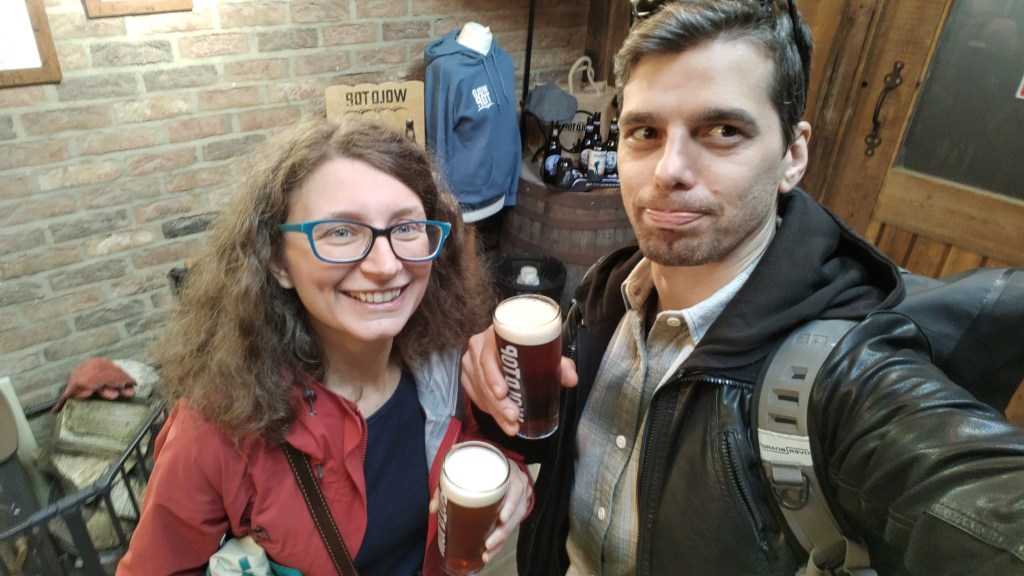
We started from the brewery, called Wold Top because Wolds are the hills where the brewery is located (itโ€™s not a typo!). We got there by taxi, and as we settled in the brewery visitor centre and bar, they offered us a half pint (with a pint glass to keep), nice welcome! Sam, our guide, put on a well-made video about the brewery history. It was founded in 2003 by Tom and Gill Mellor on their farm, and it’s currently run by their daughter Kate and her husband Alex. Knowing that this part of Yorkshire is ideal to grow brewersโ€™ and distillersโ€™ barley, and realising that the farm sits on a great water source, they decided to cut the middleman and start producing their own beer, farm-to-glass. At first the biggest issue was distribution (they started with farmers markets), because of the remoteness of the area. In 2008 they installed their own bottling plant, and in 2012 and 2016 they expanded with new kits and started doing contract brews as well. For a while, the location could also be hired as a wedding venue, but that stopped a few years ago. In 2016, they also started distilling, but weโ€™ll talk more about that later. For the beer, they mainly use Lauriet barley, which is sent to Muntons for malting. The barley is malted to eight different โ€œcoloursโ€, but sometimes they also use wheat and, more rarely, corn. They use over 40 varieties of hops from all over the world.

A welcome half pint, nice!

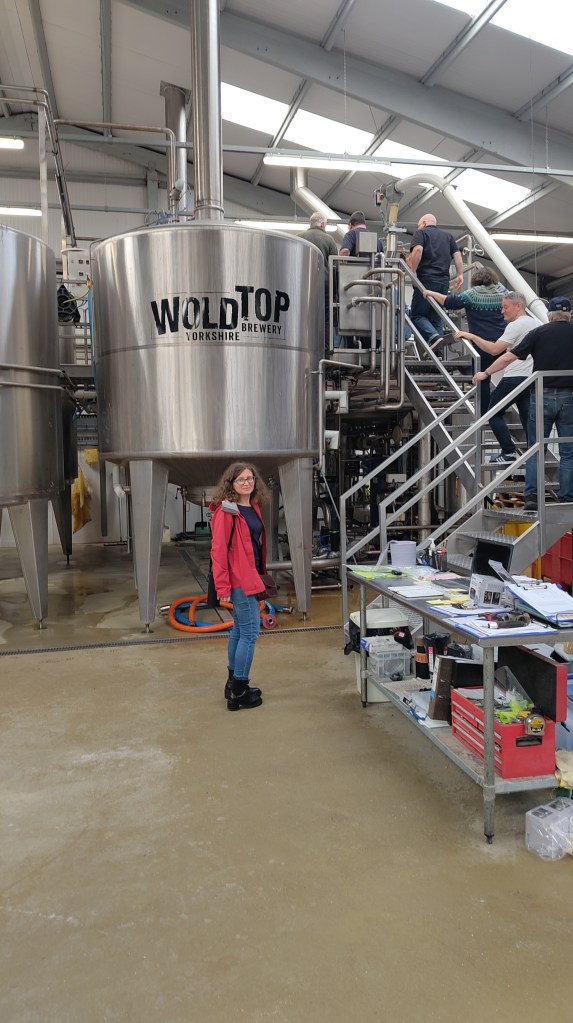
After the video, we moved to the production area next door, also used as an extension for their events (and indeed, decorations from the October Fest were still hanging around). In this location they produce both the beer and the fermented wash for the distillery. After checking out the modern malt mill, we climbed a stair to get on top of a catwalk and check out the mushtuns, including the kettle to boil the beer (one of the main differences between making beer and whisky, beside the addition of hops), where the beer wash is boiled for 75 minutes. Next to the catwalk, the stainless steel washbacks for fermentation. The beer is kept in conditioning tanks for 2 to 4 weeks before going straight into casks (i.e. unfiltered), then chilled, filtered and finally put into kegs or bottles. We headed back to the (cosy) bar for another half pint, while our pal Stephen (after asking permission to the staff) served us a dram of a Filey Bay single malt finished in a Wold Top beer barrel (Ex-IPA finish, Whisky Exchange exclusive bottled for the 2024 Whisky Show, 51.5%) – a preview of what was about to come.

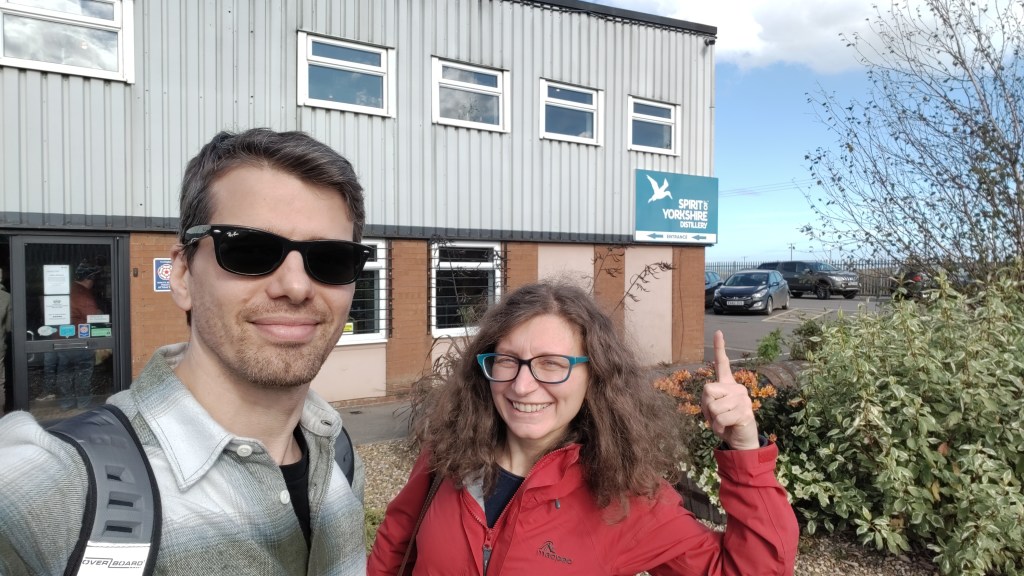
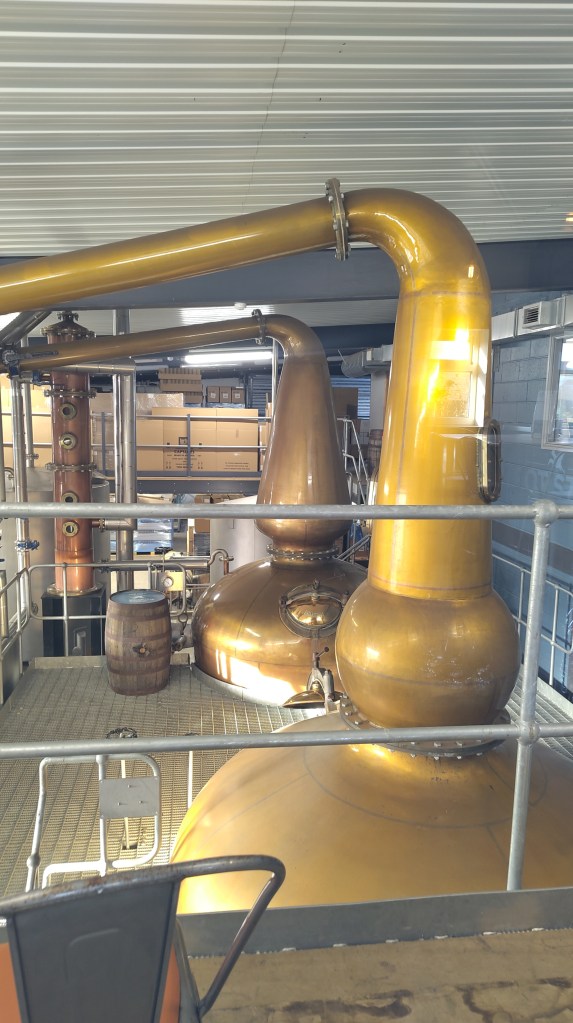
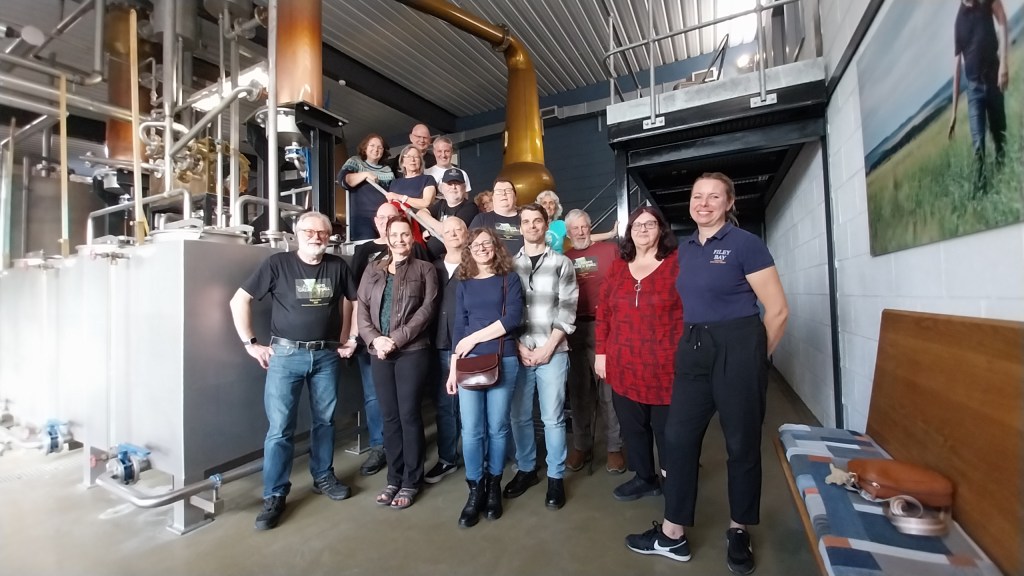
We headed back to Hunmamby (again by taxi), to the Spirit of Yorkshire distillery. The building is in a small industrial estate, and other than distilling they also have a shop and a bar/cafรฉ (The Pot Still) overlooking the still room. We had tables booked for lunch, and after the (nice) meal, we started the tour with our guide Justina. She gave us a welcome dram (the Flagship) while telling us the history of the distillery, which was built in 2016 and opened to visitors in 2017, with many options for tours and tastings.

The fermented wash comes twice a week from the brewery on a tractor, 20,000 litres in total. For the whisky, they usually use Concerto barley in spring, and Vessel in winter. Fermentation lasts 75 to 95 hours, and the yeast is added twice, at different temperatures (two types of yeast, we missed which varieties though). The first pot still holds 5,000 litres, which are reduced to 1,700 after the first distillation. The second pot still is 3,500 litres, and after 10-15 minutes of foreshots, they collect 500 litres of spirit for about 1-1.5 hours, with cuts between 77-76% and 69% abv. Here is the novelty, they also have a small column still, which they use for 6 months a year in tandem with the pot still. For the column still, the 400 litres cut is taken between 86 and 85%. This system, as for many other new distilleries, was suggested by the late Dr Jim Swan, and because we are in England, and the grain used is barley, they can call it single malt whisky. The newmake spirits from the column and pot stills are put into casks separately, and then blended before bottling to get the required flavour profile: their flagship product is 50/50 column and pot still whisky, and it is fractionally married aiming for consistency; everything else they produce is made in small batches.

The full capacity would be 450,000 litres of alcohol per year, but their usual production is between 12 casks per week (about 82,000 litres) which are stored in a bonded warehouse off site, but near the farm. Casks are then moved back to the distillery for bottling, in their new automated bottling line, able to make 600 bottles per hour. Everything is non-chill filtered and no colouring is added.

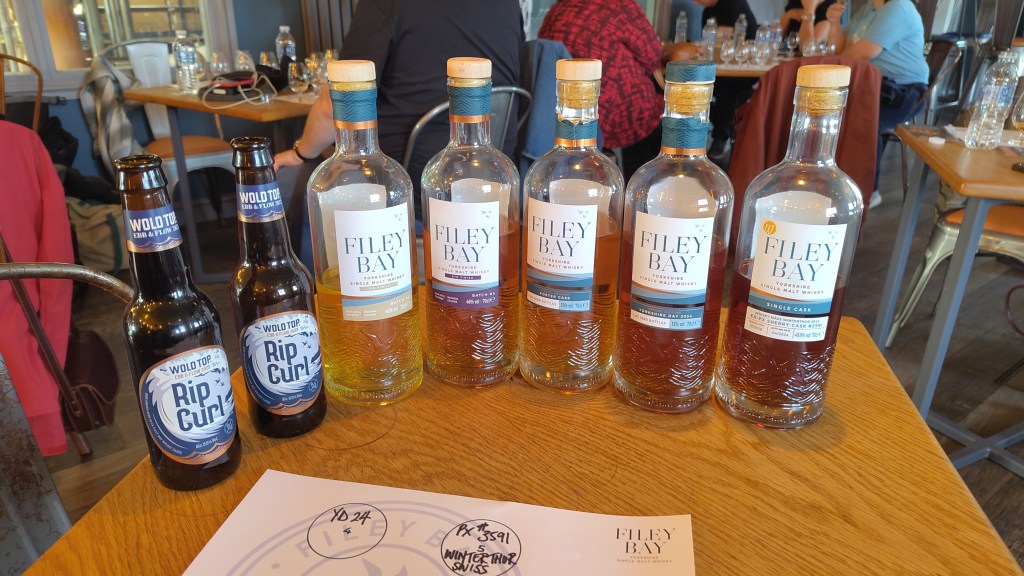
After the very comprehensive tour, for the tasting we went back to the cafe, which they closed for the occasion. We explored their current range of single malts and variety of cask they use, including two expressions from beer casks (full tasting description below). At the shop they offered us another nip of things we might want to try (peated and Moscatel cask finish for us, to complete their range). Happy, we then headed back to the Pie Bald Inn.

It was a great visit, we learned how things can be done differently compared to Scotch whisky, and still obtain a great result in such a short time (first release was in 2019 only) – the distillery is not even 10 years old! The array of whiskies we tried was very interesting, showcasing a great variety of flavours.

Stay tuned with us for more English whisky action! Until the next time, slainte!


Wold Top Brewery Tour + Spirit of Yorkshire Distillery Tour

Price: ยฃ12.50 pp + ยฃ30.00 (October 2024, our experience was a combination of the Brewery and Distillery tour, ยฃ25.00, and the Distillery tour & Deep Dive tasting, ยฃ30.00)

Duration: 1hr 30min + 2hrs

Tasting: 2 half pints of choice at the brewery and 6 Filey Bay drams at the distillery: the Flagship (46%, NAS, ยฃ55); IPA finish Batch 2 (46%, 6-7 months finish in a barrel that hold an IPA for 7-8 months, ยฃ65), STR Batch 4 (46%, finished for 7-8 months, ยฃ65); Porter Cask (50%, similar to their flagship, but finished for over a year in barrel that held Rip Curl porter for 14 months, sold out); Yorkshire Special Release 2024 (55%, matured in STR, then re-casked in ex-Madeira, ex-Sherry and finally virgin oak casks, ยฃ95); and a single cask bottled for the whisky marked (49.9% cask strength!, fully matured in ex-PX casks, distilled in December 2018, bottled in 2024)

Distillery exclusive: the Yorkshire Special Release 2024 (see above)

Target: beer and whisky enthusiasts

Value for money: very good

Highlights: the whisky and the welcoming staff

Recommended: absolutely

Link: https://www.woldtopbrewery.co.uk/, https://www.spiritofyorkshire.com/