#67 Bonnington distillery

A distillery next door


TL; DR: Back in October, and thanks to our pal Graham, we visited a distillery that is less than one km from our door: not the one you are probably thinking, rather Bonnington distillery. The manager Gregor welcomed and showed us around the premise. A very interesting project, and a surprisingly maritime single malt. 

Our first contact with the distillery weโ€™re talking about in this blog post was in April 2024, during the Biscuit Factory Beverage Festival (one of the many โ€˜drinksโ€™ events in vibrant Leith), when other than the main festival, we attended a Bonnington & Crabbie tasting, in collaboration with Justine from Kask Whisky. There, we met their responsible for marketing, whom we shared contacts with, hoping for an informal tour of the Bonnington distillery. While we lost contact, our whisky pal Graham Fraser managed to keep in touch, got the details of the distillery manager, Gregor, and arranged a visit for early October this year. Persevere.
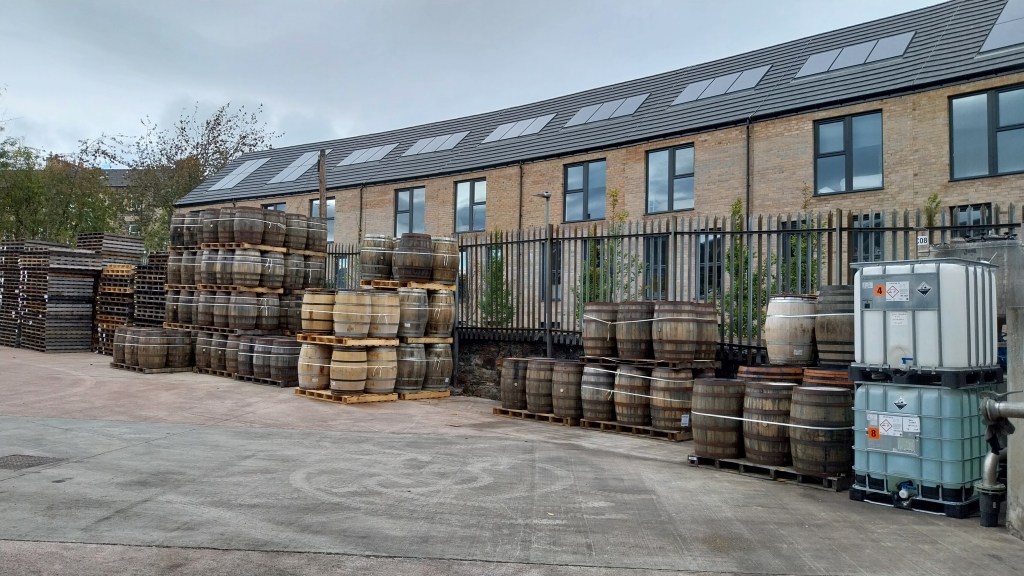
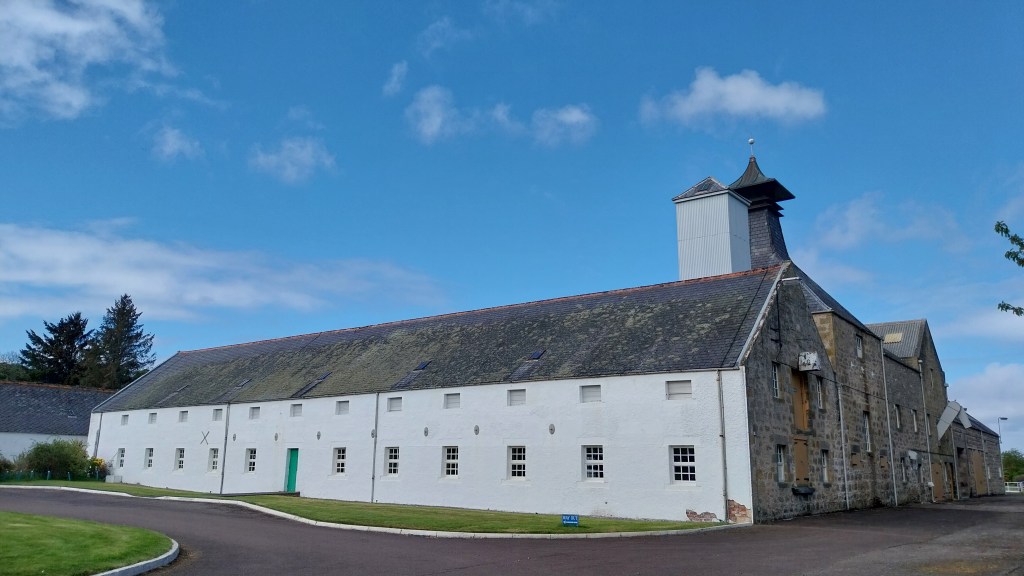
Bonnington can be considered our โ€œlocalโ€ distillery, itโ€™s really not even one km for our place, and itโ€™s next to the Water of Leith Walk, so we often run just next to it. A few times we even smelled either the mash or the wash, which is nice but not a great incentive for a run, eheh! The distillery belongs to the Halewood Artisanal Spirits, together with a sister distillery in England (Bankhall), and our auld acquaintance Aber Falls, in north Wales. The company also owns the popular Whitley Neill gin, and Crabbie, famous for their green alcoholic ginger beer. John Crabbie is a whisky brand with strong ties to Leith, as the man who carried this name, including the now lost Yardheads distillery. For more of the history though, weโ€™d suggest checking out Justine content, in particular her whisky history blogs on Substack. The group also included a smaller and experimental distillery located not too far away, in Granton, called Chain Pier. It was active only for a little while, from 2018 until January 2020, and so far only a handful of bottlings have been released, including by a few independent bottlers. Back to Bonnington distillery, the current site was chosen because it was the largest available in the EH6 postcode area, generally associated with Leith. The site has some history, as it was built as far back as the early 16th century, including the Bonnington Manor House, while the area was also involved in the 1560 Siege of Leith. This delayed the operations by about 6 months, for the inevitable archaeological assessments. To note, there used to be an unrelated short-lived previous Bonnington distillery not too far away, near the Biscuit Factory.
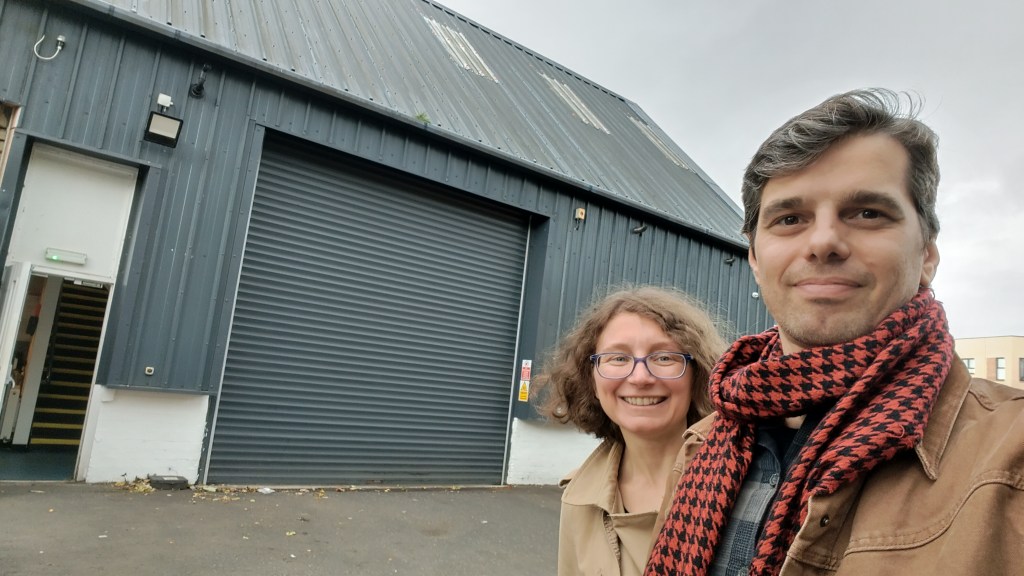
The land was bought in 2017 and construction works started the following year. The distillery was completed in 2019, their first mash in December. They didnโ€™t fill their first cask until the 20th of March 2020: a notable date, as it was the day before the first COVID-19 lockdown. Before starting, they went through the original purchase records to figure the original style of Crabbieโ€™s whisky, finding out that it was a Highland style of whisky โ€“ they decided to reproduce it.

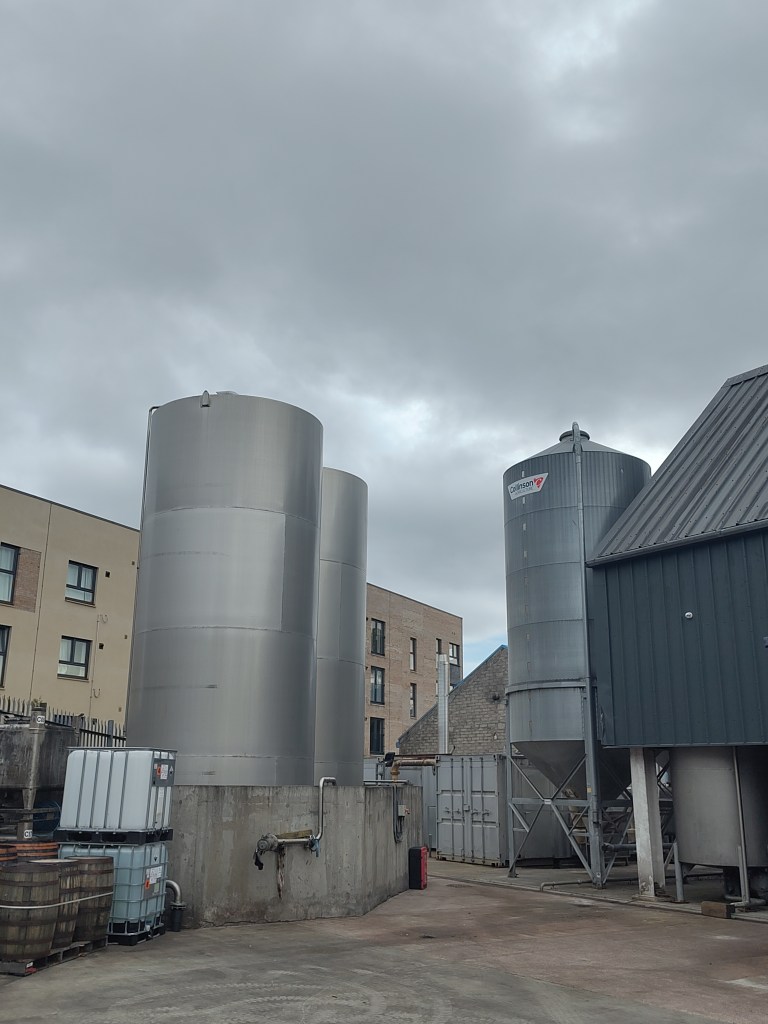
Back to the tour, Gregor started describing production in the courtyard, partly occupied by a few tanks, for draff (sent to anaerobic digestion) and pot ale, and two 30-ton malt silos. They employ 6 operators (out of 11 staff) and run 24/5 with four mashes a day, and each mash uses about 2 tons of malt. The output is about of 750,000 litres of pure alcohol per year, if they were to run 24/7 they could reach about 1.1 million lpa, but thatโ€™s not in the plans right now.

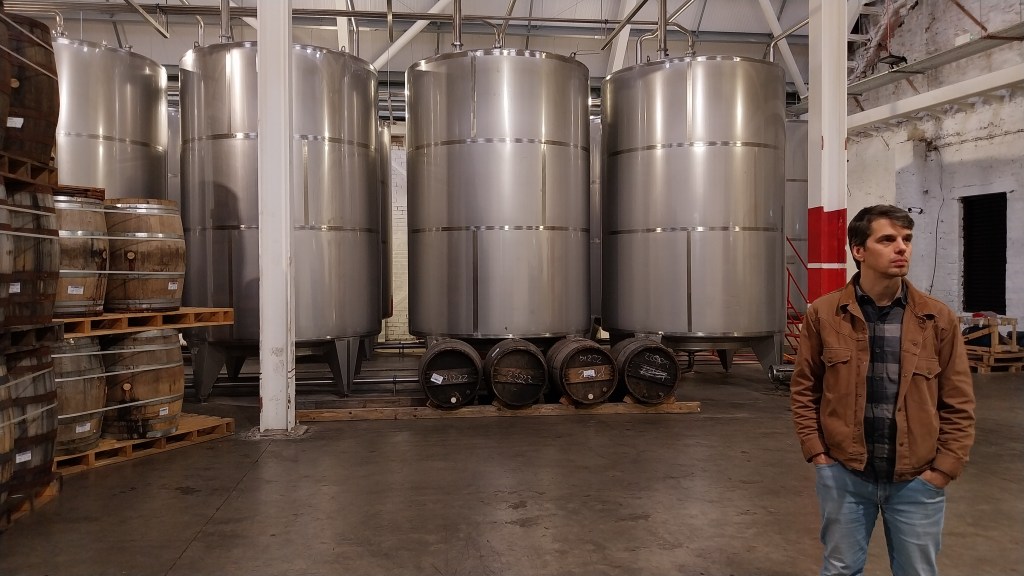
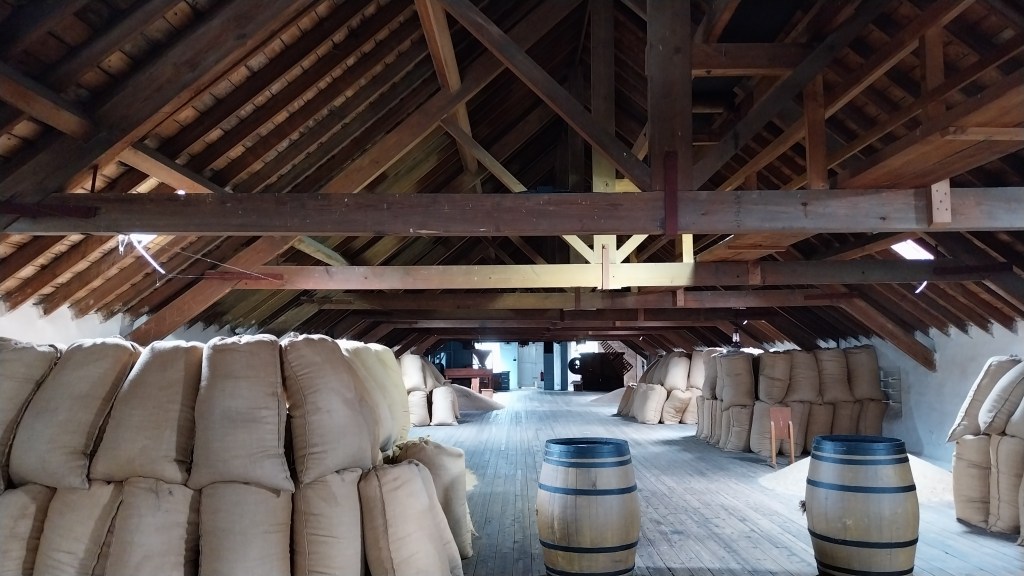
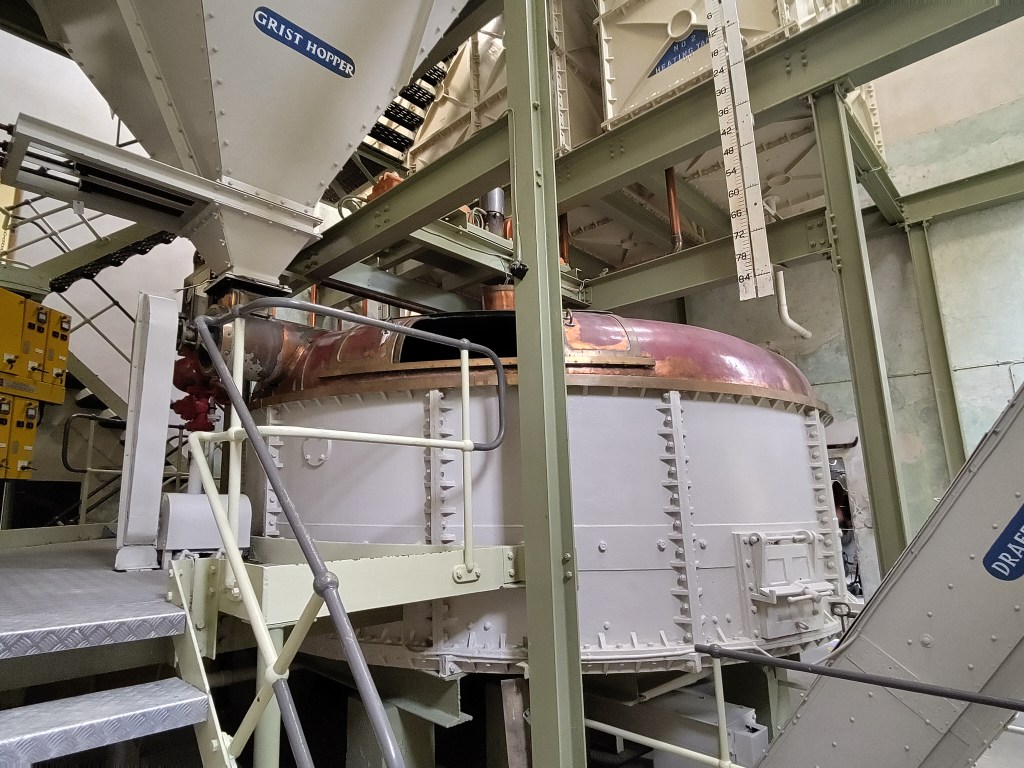
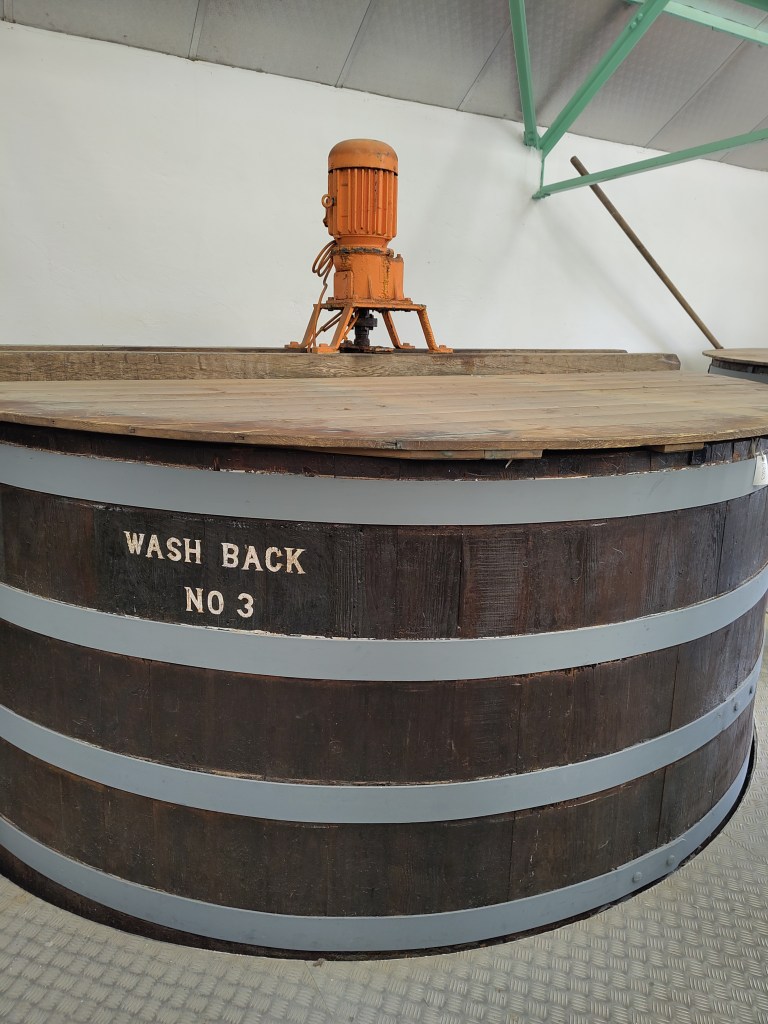
The production water is sourced from a 120-meter-deep borehole, while the malt is sourced from either Beard or Crisp, with 3 deliveries every fortnight. When we visited, theyโ€™d just finished their peated run, which lasts a month and uses 190 tons of malt peated to 50 ppm. The mill is a modern AR2000, coloured bright red, which produces a grist with approximately the โ€œusualโ€ husk/grit/flour split (20%/70%/10%). They mash in a 2.5-ton semi-lauter mashtun with 3 waters at increasing temperature starting at around 63ยฐC, obtaining a partially cloudy worth. They are equipped with 15 washbacks, 9 of which are in the next part of the building, past the stills, and they were added recently to increase capacity. They use MG+ yeast and, depending on the time of the week, fermentation can last either 150 or 80 hours. Gregor told us that the spirit obtained with the two fermentations is matured separately, and while the long distillation produces more stewed fruit notes, the short one enhances the biscuity notes: very interesting.
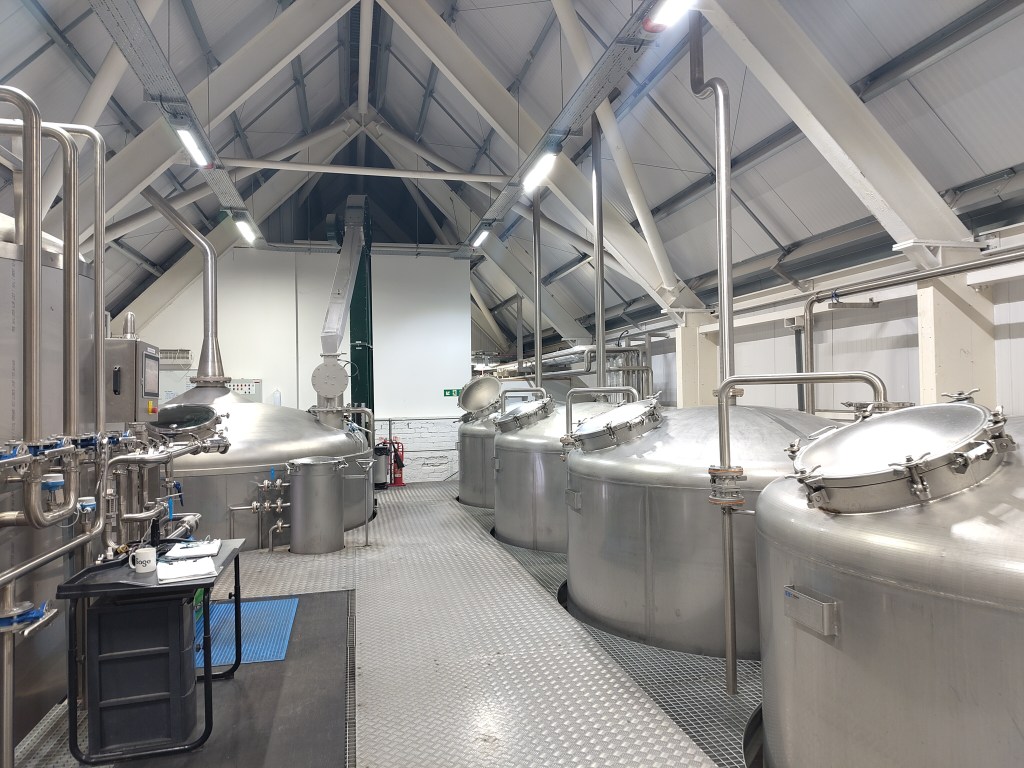
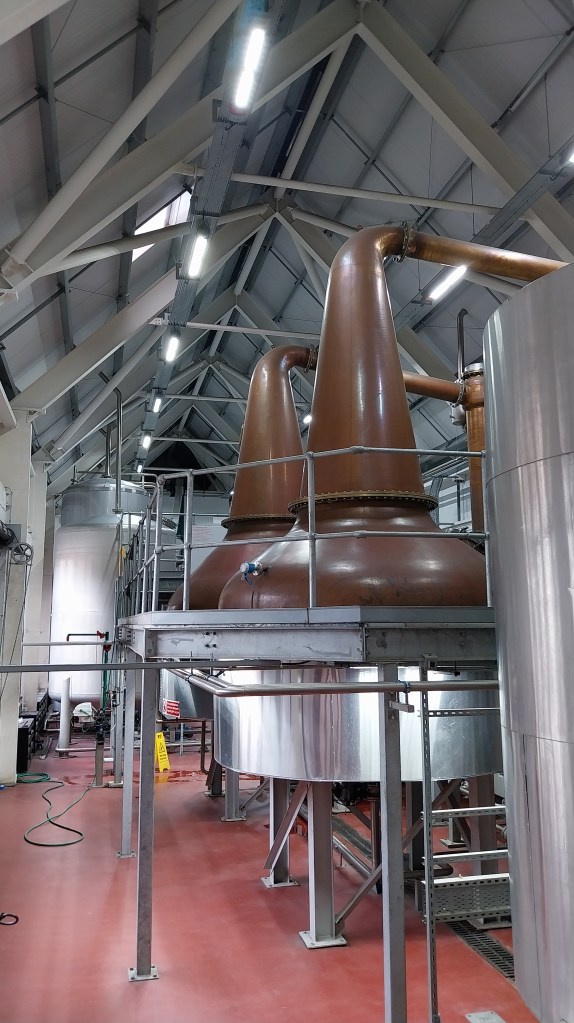
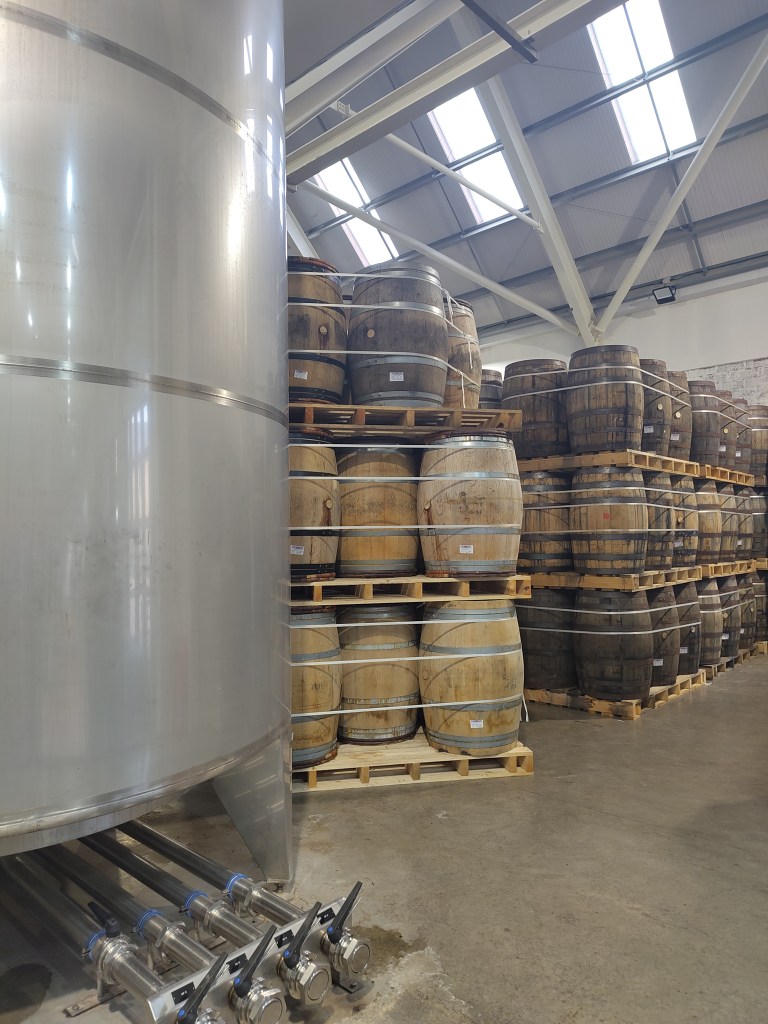
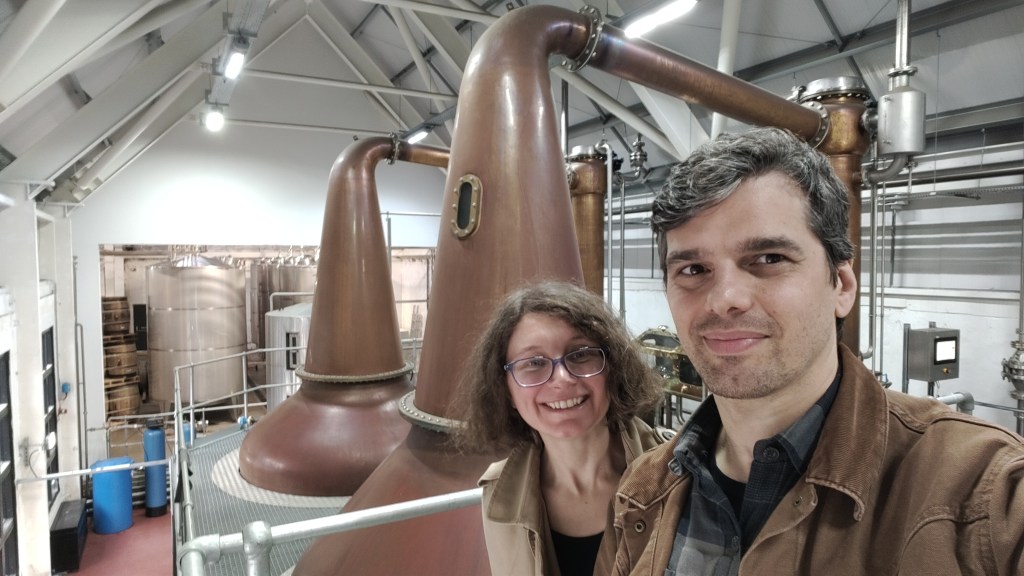
They have two gas boilers to get the steam for distillation, the wash still is 10,500 litres, while the spirit still โ€œonlyโ€ 7,500. Distillation is fast, to match the same time as mashing and, thus, facilitating the pipeline. The wash is preheated to about 60ยฐC by a heat exchanger used to very cleverly cool down the pot ale in about 25 minutes, saving one hour of distillation time and gas consumption. The wash still produces about 20%abv low wines, which are then mixed with the head and tail of the previous run, which are obtained discarding the liquid above 75% and 62/61.5% abv of the second distillation. From each run, they obtain 1,100-1,200l of newmake spirit, at about 72% abv, which translates into about 130-140 casks per week. These are stored in their warehouses in Kirkaldy, as there isnโ€™t much capacity on site. Casks are stored mainly palletised, as they have limited dunnage space, and are sourced from the Speyside Cooperage, unless they want something more special. Interestingly, they also have a spare gin still, but it hasnโ€™t been used since March 2021, probably to avoid competition with their other gin brands.
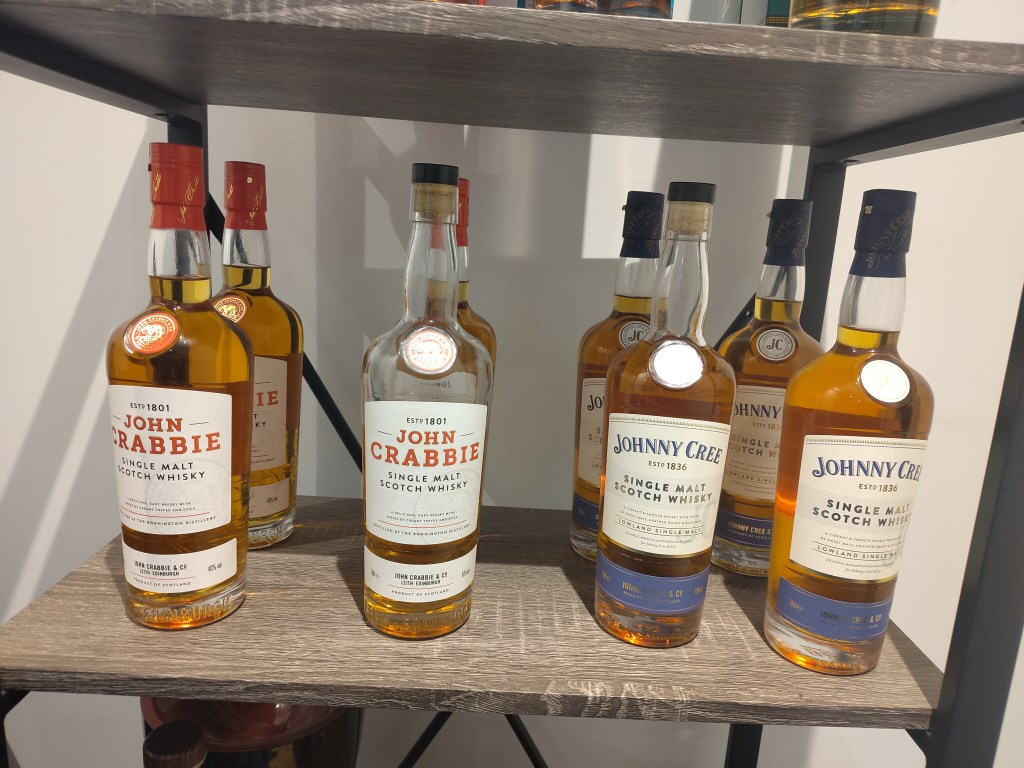
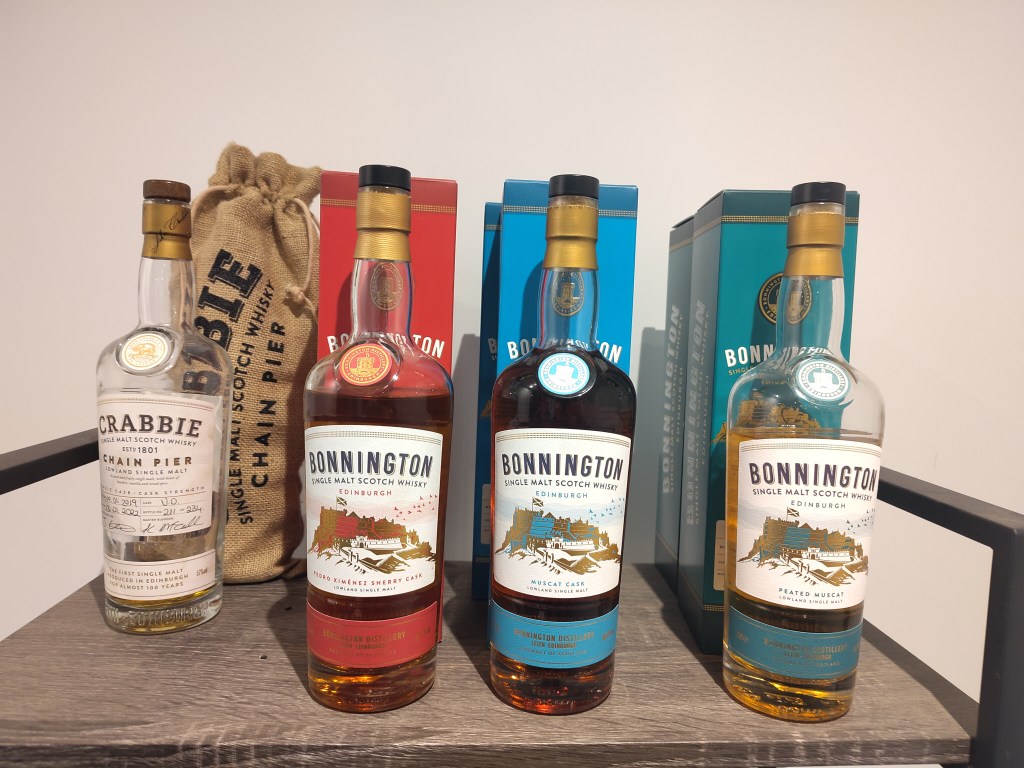
After that, we went to a meeting room underneath the offices, where Gregor gave us a few sips of their products. We tried the John Crabbie and Johnny Cree (both non-age statement, NAS, 40%), which are fully matured in virgin oak and ex-bourbon casks, respectively. The former is not bad at all, just a bit watery due to the low abv. Currently the non-age statement expressions of both brands (the second named after John Crabbieโ€™s business partner) are produced at the distillery, while in the future the aim is also to produced the aged Crabbie (12y and 15y, currently sourced whisky). Then we tried a few Bonnington single malts, a range which is reserved for small batches or single casks: the peated Muscat cask (NAS, 51%) was very tasty, while the unpeated Muscat was good too (NAS, 47%). The other available we didnโ€™t try was the PX casks (NAS, 47%). In general, their whisky has a striking maritime character, which makes sense as weโ€™re not that far away from the Forth, but it is something not usually associated with Lowlands malts.
After these drams it was time to go back home, so we first greeted Gregor, and once outside the distillery, our pal Graham. It was not our first time visiting a distillery with him, but the first in such an intimate tour: it was good that for once we werenโ€™t the only ones asking for nerdy details, which Gregor patiently explained us with competence and knowledge. He said that, when he has time and if asked nicely, he likes showing people around. But he also said that random showups are a strong โ€˜nopeโ€™: it is still a production plant (something some whisky people donโ€™t quite getโ€ฆ). As we walked home, we passed by the massive bonded warehouses built by the Pattison brothers just before their demise, and subsequently acquired by DCL. We are very happy that the whisky industry is returning to Leith, such a pivotal place for the history of our favourite drink.

Stay tuned for our next trip! Until then, slร inte!


Bonnington Distillery Bespoke Visit

Price: free (October 2025)

Duration: 1hr 30min

Tasting: a few sips from currently bottled single malts (see description above)

Target: anyone

Value for money: well…it was free

Highlights: the location and the compact production

Recommended: yes, but do get in touch with them first!

Link: https://crabbiewhisky.com/bonnington-distillery/

#60.5 Another Spirit of Speyside

About to be re-awakened:
Dallas Dhu


TL; DR: On our final day at the Spirit of Speyside, we visited a gem about to be re-awakened: Dallas Dhu! Closed in 1983, it became a museum, but thanks to Murray McDavid, it will restart production in the coming years. A few days before we also attended the Drams under the Star event, organised by the same folks, another must-do of the festival.ย 

(missed Part 4/Part 3/Part 2/Part 1?)

And finally, it was Sunday, the final day at the Spirit of Speyside 2025 festival. We took the morning very slow: a shower at the campsite, a small breakfast and some tidy-up of the campervan. The weather was slightly better than the night before, but still not great, so we didnโ€™t risk a hike. Instead, after a quick stop at Glenallachie, we slowly drove to the location of our final event, the village of Forres. At noon, we got into the White Hart Restaurant, just off High St – Gianluigi had discovered the place on a work trip in the area. While the lower floor looks like a pretty standard pub, the upper floor is a restaurant serving fantastic Latvian dishes and beers: a hidden treasure!

At 1pm, we were at Dallas Dhu distillery, on the outskirt of the village. While we drove Mr Vantastic into the large adjacent parking lot, we admired how beautiful the distillery is, and how you couldnโ€™t mistake it for anything else. We will learn later that Charles Doig himself was involved in the building drawing. We were warmly welcomed by Dean from Murray McDavid, the independent bottler which recently took over the distillery.

A little detour here: weโ€™d already met Dean on the Friday evening, after the David Stirk tasting in Dufftown, at the Drams Under the Stars tasting. It was obviously organised by Murray McDavid, and it was quite convenient for us, as for an extra fiver we could reserve a spot for either a tent or a campervan (ยฃ50.00pp w/o camping, ยฃ55pp with camping, plus the usual SoS fees).

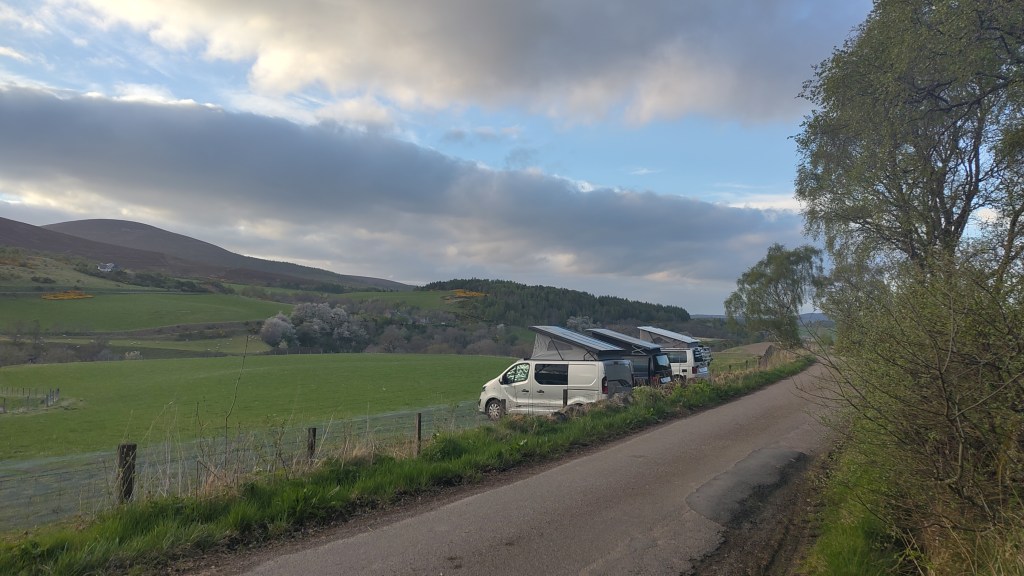
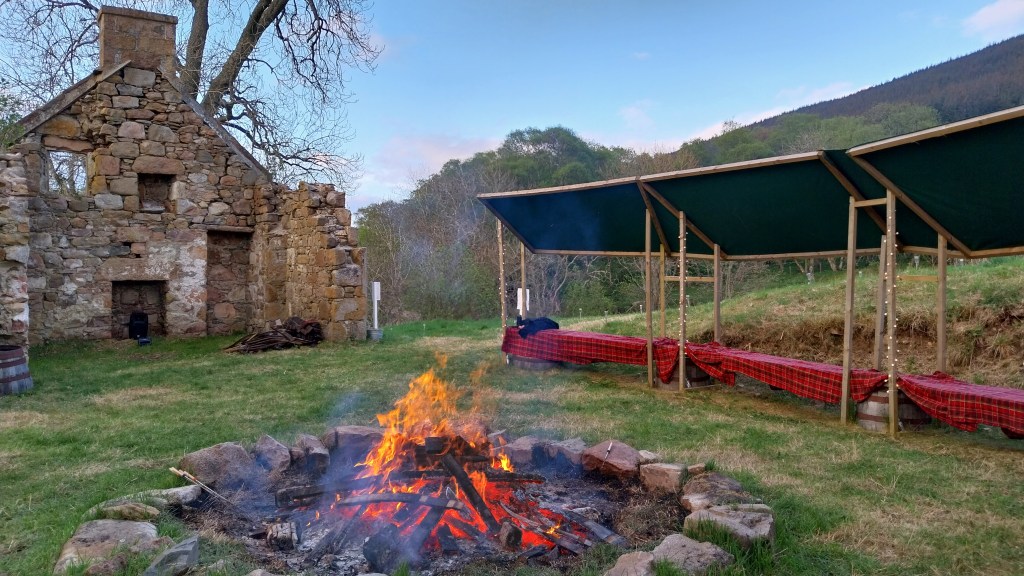
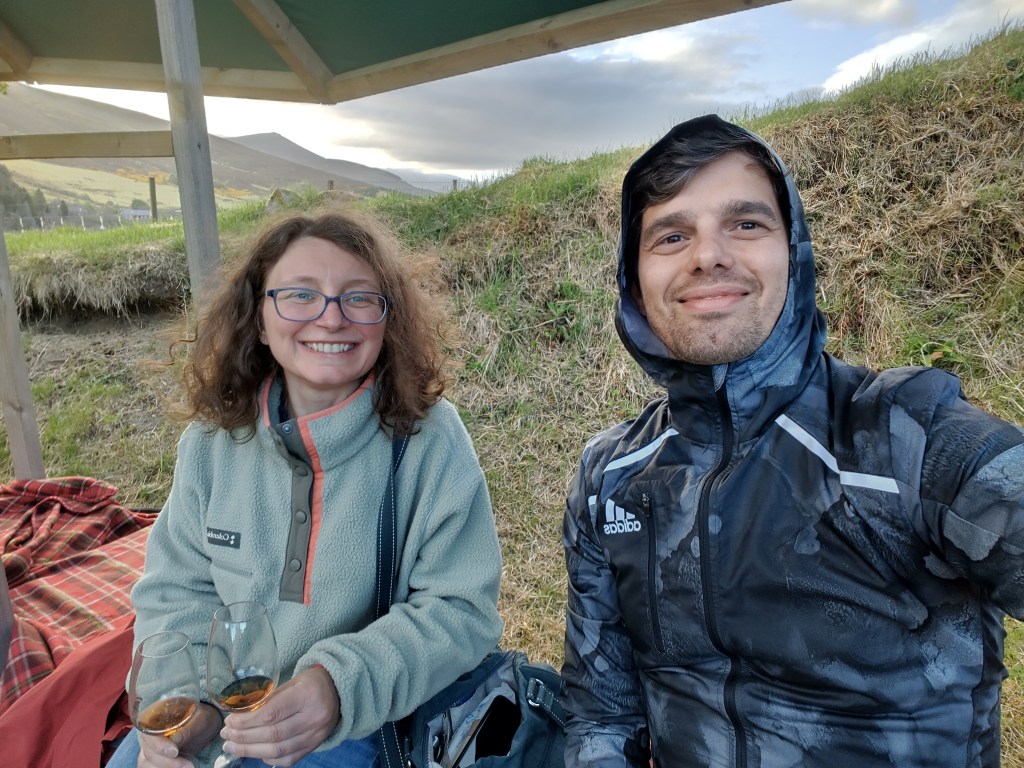
The event was just outside Dufftown, about 5 minutes driving, near an abandoned and ruined bothy. They set up a big bonfire in the middle of a clearing and set benches with canopies. At the bothy, a gazebo was placed with a pop-up bar underneath. We arrived when it was still light, and at first it was hard to decide where to sit: we found spots with either the wind blowing in our back, or with the very same wind blowing smoke in our face. However, as drams were poured, we and most people just stood up by the fire and enjoyed the evening. We were pleasantly surprised by the informal, chilled out atmosphere, where everybody could enjoy the drams in their own time, with Dean serving them and chatting to each small group of people (about whisky or not).

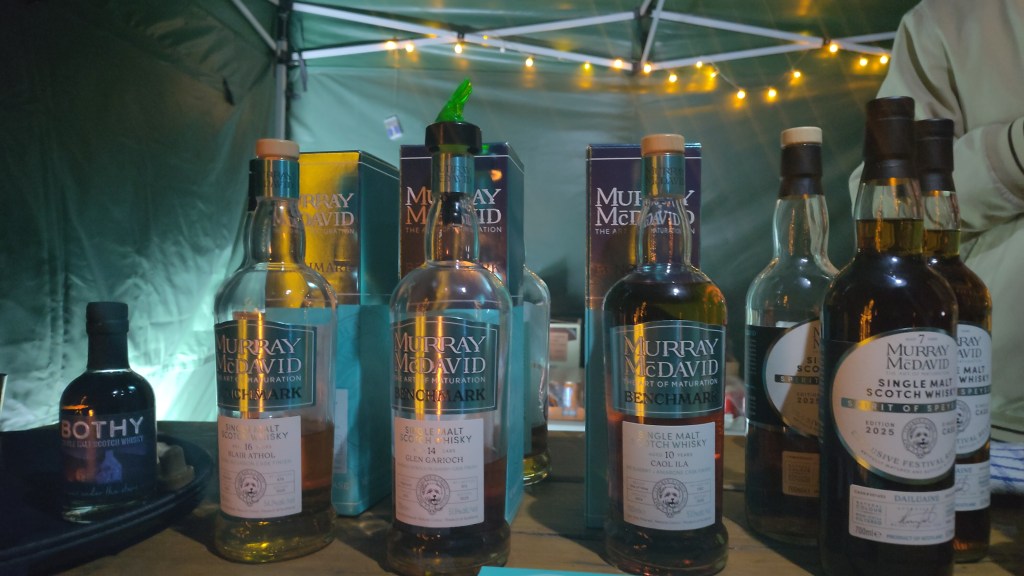
The first dram was The Bothy, specifically bottled (in 20cl bottles) for the event: a young sherried Speyside single malt (46% abv). The other drams were a 15y Blair Athol (54.2%, finished in Koval ex-bourbon casks), a 14y Glen Garioch (51.6%, ex-PX cask finish), a 10y Caol Ila (53.1%, ex-Amarone and PX Sherry cask finish) and finally the MMcD Spirit of Speyside 2025 release (Dailuaine, 7y, ex-Oloroso cask, 57.8%). Overall, a great, chilled out event that weโ€™d definitely like to repeat.

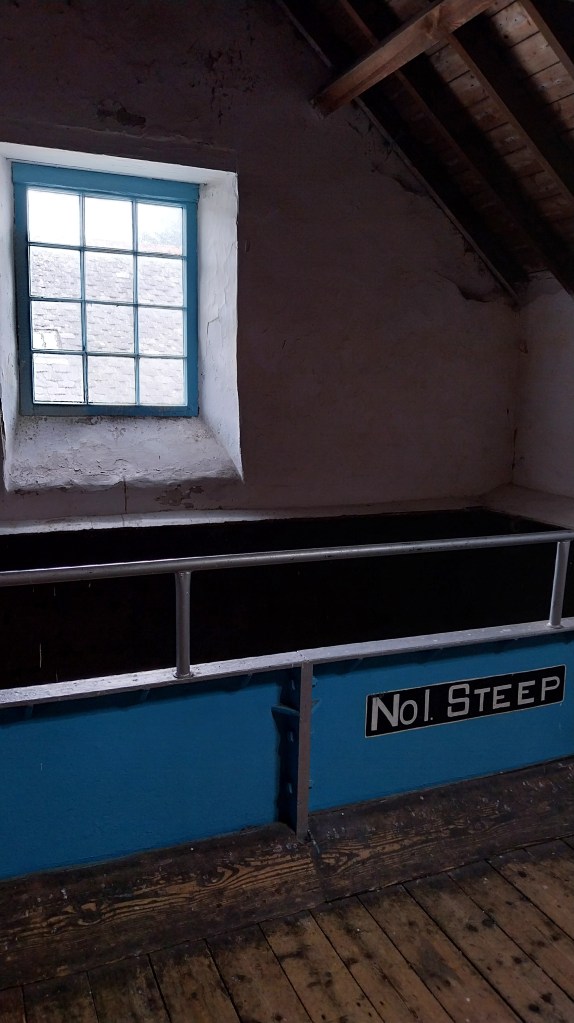
Back at Dallas Dhu: the Saturday was their open day, so the staff were understandably a bit tired on the Sunday. Nevertheless, Dean gave us a great and very detailed tour, which lasted longer than the scheduled time. The distillery was founded in 1898 by Alexander Edward and started production in 1899, originally as Dallasmore (later changed to Dallas Dhu to avoid confusion with other brands). It closed during WWI, and again in 1930 for 6 years. In 1939 it was partially destroyed by a fire, and it resumed production only in 1947, until 1983 when it was closed. In-house malting was stopped before then, in 1958, although the current steeping tank was only fitted in the 1950s, around the time also electricity was fitted in. The distillery was finally sold to Historic Environment Scotland in 1986, which turned it into a museum. Because this happened shortly after ceasing production, the distillery is incredibly well preserved, and it looks like it could resume production anytime (which it couldnโ€™t, of course). In recent years, Murray McDavid bought it. This was after an initial attempt to buy Parkmore, which failed because of the non-availability of the nearby warehouses. They are now in the process of finalising the deal with Diageo (which still owns the Dallas Dhu brand), and to get ready to restart production (although works havenโ€™t started yet).

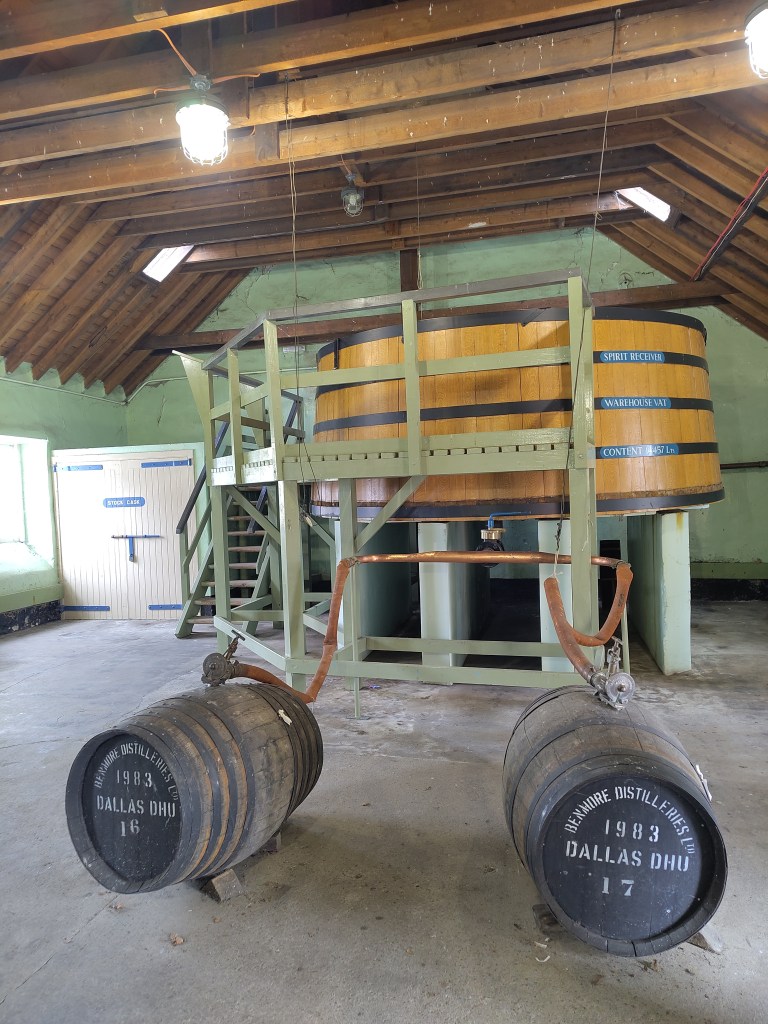
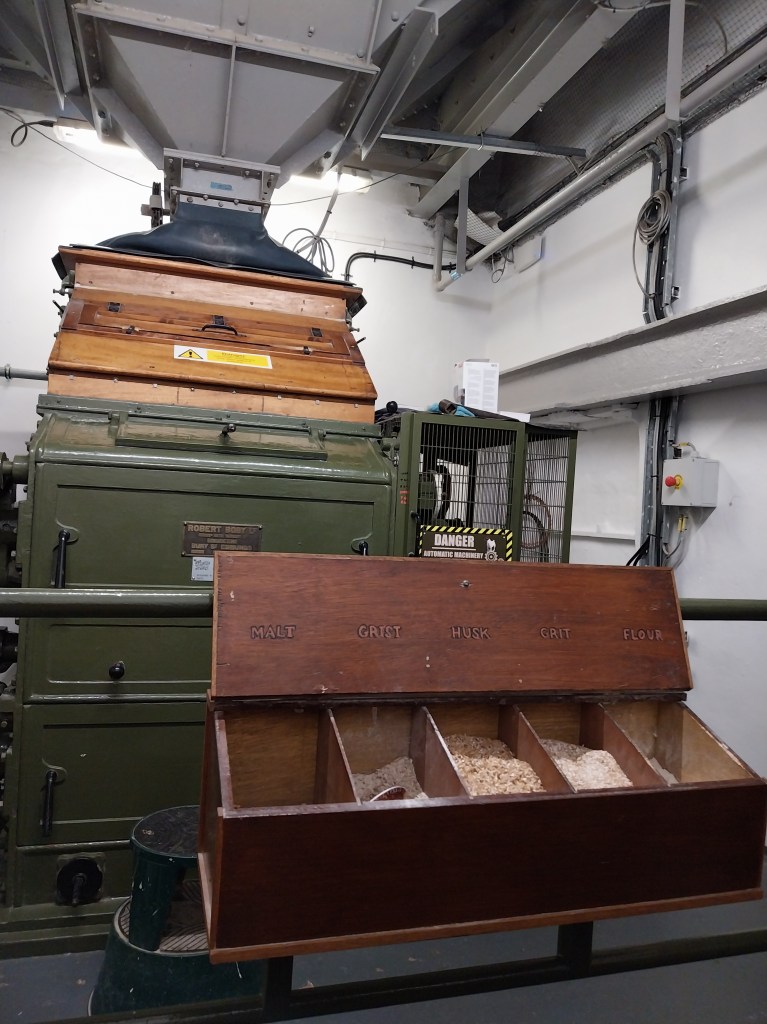
As we walked through the building, from the malting floor to the mill room (one of the last Bobby mills ever produced, apparently), and then to the copper-lidded mashtun, the washback and still room, we could see how everything is really in a great state.

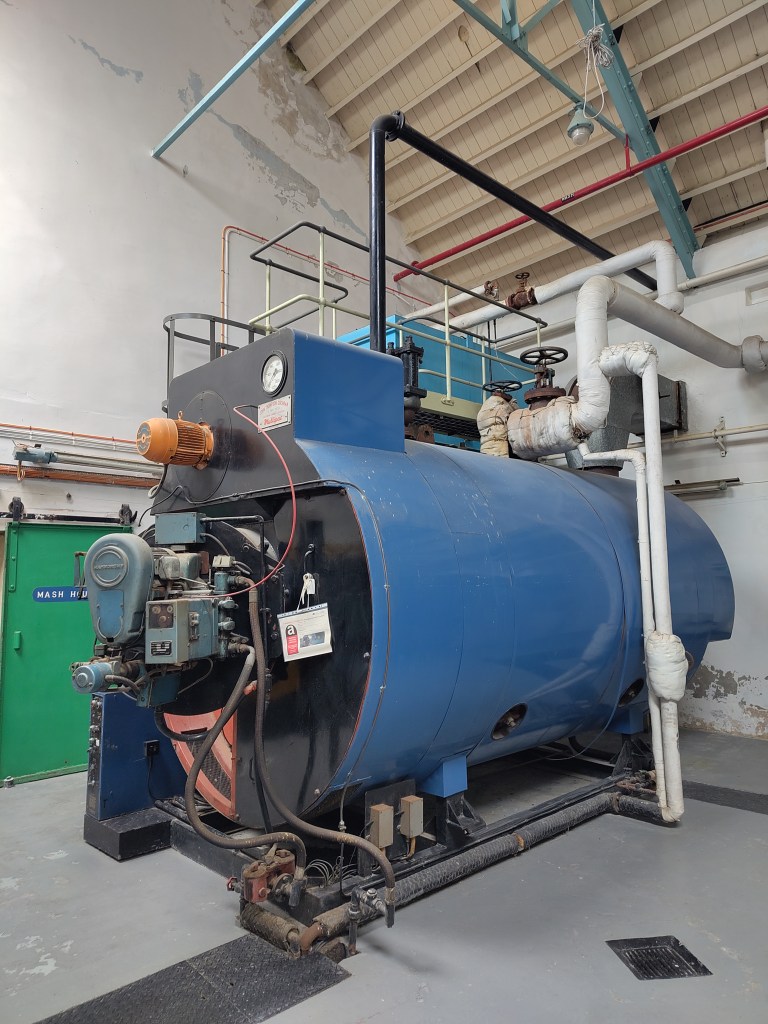
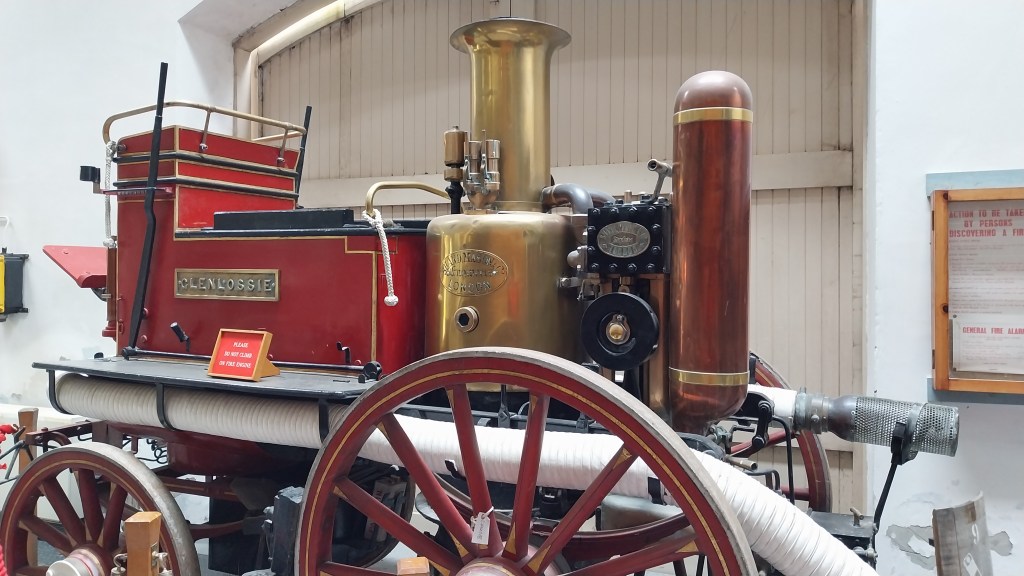
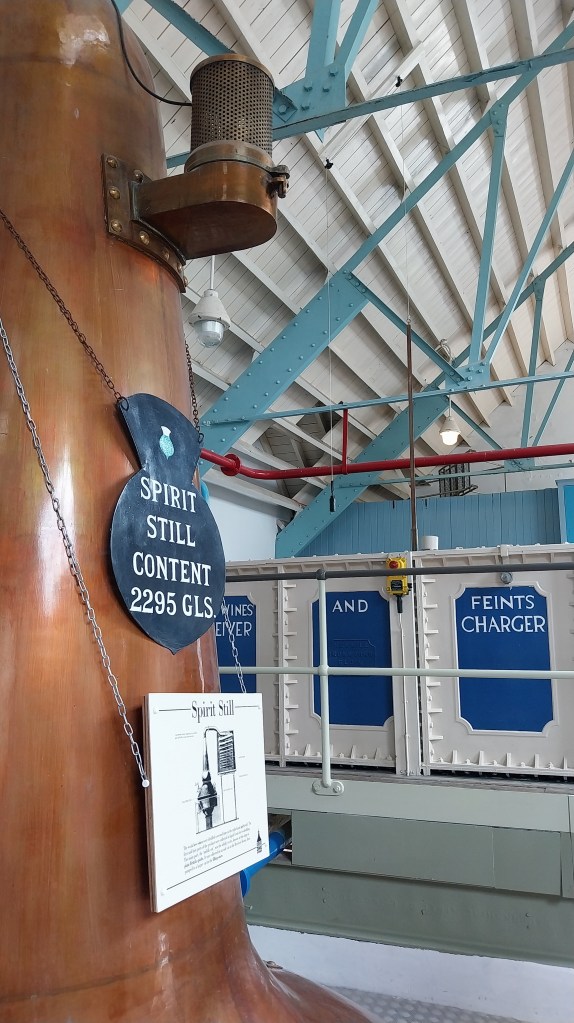
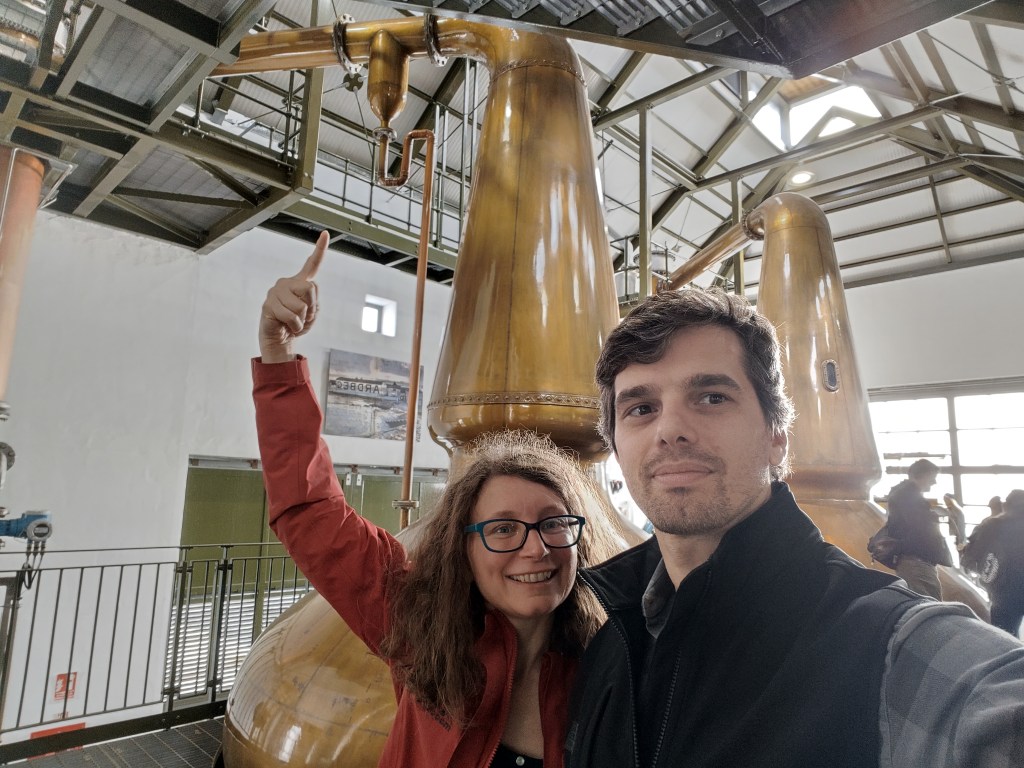
The six 14,000-litre wooden washbacks have been constantly filled and emptied with water to preserve the wood, and in the still rom an ancient fire-engine found also home (probably it will be moved), next to the massive boiler. The distillery has only two stills, but at full regime it can produce about 800,000 litres of alcohol per year, similar size as Glen Scotia, to give you an idea.

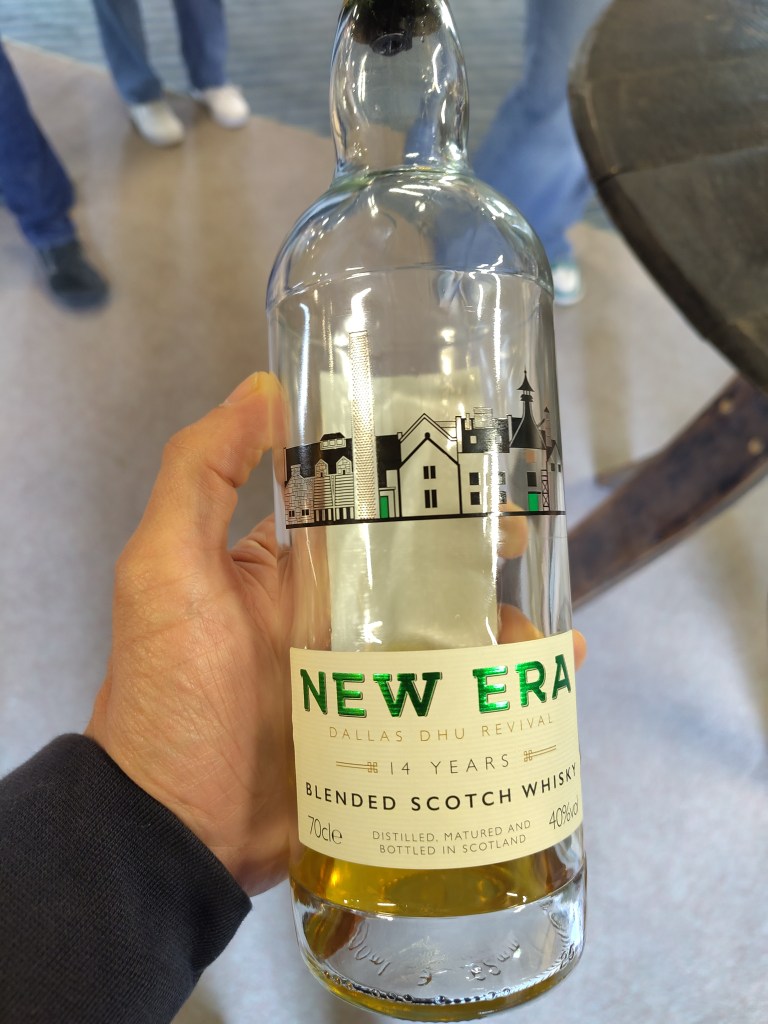
The tour finished in the shop, where we had a dram Murray McDavid created for the occasion: a 14y blended scotch named โ€œA New Eraโ€. We were told that among the components there are Port Dundas and Cameronbridge as grain whiskies, and Glenrothes, Glengoyne, Tamdhu and a tad of Bunnahabhain for the malts. Itโ€™s a pleasant dram, a bit thin as it is bottled at 40%. After that, we could get sips of other bottlings available for purchase โ€“ so good to find places where โ€˜try before you buyโ€™ is actually possible! ย ย 

Overall an excellent afternoon at Dallas Dhu; the enthusiasm of Dean and the rest of the team for this new beginning was contagious. This was definitely a great ending to another great Spirit of Speyside, and we cannot wait for this beauty of a distillery to officially reopen.

And after this, weโ€™ll take a couple of weeks off! Until next post, slainte!


A New Era: The Dallas Dhu Distillery Tour (Spirit of Speyside 2025)

Price: ยฃ15.00 pp (+ SoS fees)

Duration: 1hr 10min (45min on paper)

Tasting: 1 dram, A New Era blended scotch whisky (14y, 40%)

Target: whisky and history geeks

Value for money: good

Highlights: the whole distillery is absolutely stunning

Recommended: yes

Link: https://www.spiritofspeyside.com

#48.2 Islagain

In the Jack Russellโ€™s den: Ardbeg


TL; DR: Among the Islay distilleries, we left a good one for last: Ardbeg! Together with our pals, we went there for a tour and a snack: we were not disappointed, the tour was good, and very relaxed. We even got a special gift!ย 

(missed Part 1?)

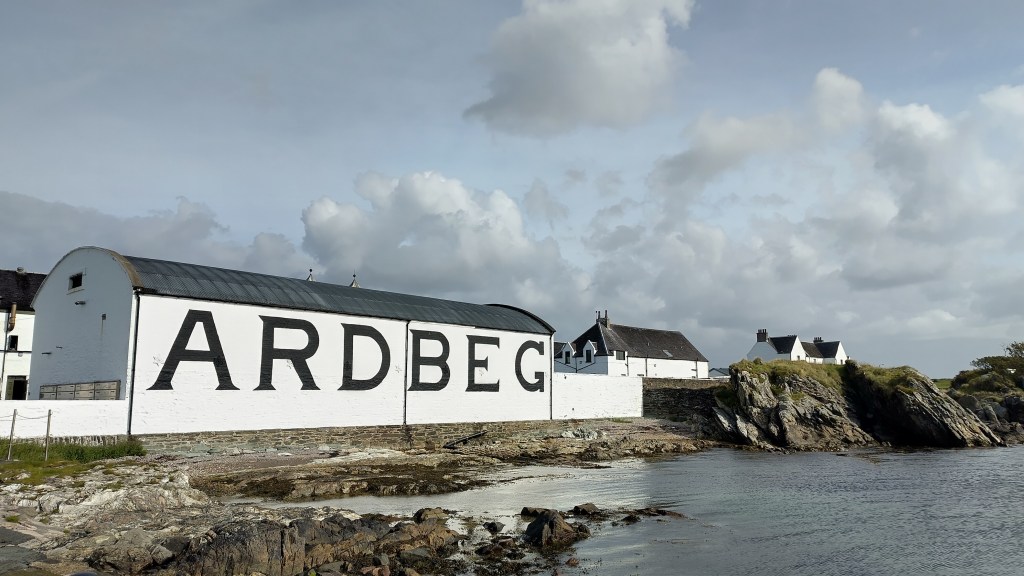
After our Saturday celebrations, we had an โ€œearlyโ€ start on Sunday: we had booked a distillery tour at 10.30, and we had a 40-min drive from Bowmore to get there. It was a sunny day, so during our drive we enjoyed a great view of the islandโ€™s landmarks: peat bogs, the Laggan Bay, the Oa, Port Ellen maltings and village, the Kildalton coastโ€ฆOur destination? Ardbeg! We arrived a few minutes early, just enough to browse the shop and take pictures in front of the distillery to mark an achievement: our 10th on Islay, the 90th Scottish one, 109 in total.

As weโ€™re not that seasoned in our whisky journey, we havenโ€™t experienced legendary Ardbeg drams like the Uigedailโ€™s first batch (although, the current one is still pretty delicious) or the original 17yr old (weโ€™re not very excited about the clumsy attempt at reviving it, as itโ€™s silly expensive). However, in our early whisky days, Ardbeg 10 was one of the first serious drams we tried, and still a safe bet nowadays: there might be some batch variation, but in general itโ€™s pretty solid. When we started exploring the range, we found other excellent expressions as well: Uigedail as we said, Corryvreckan and the more recent For Discussion are great, while An Oa and Wee Bestie are fine. While we donโ€™t mind too much the silly marketing, we are a bit put off by the high prices of limited releases. But we reckon, if they sell, good for them: weโ€™re happy to stick we the solid core range.

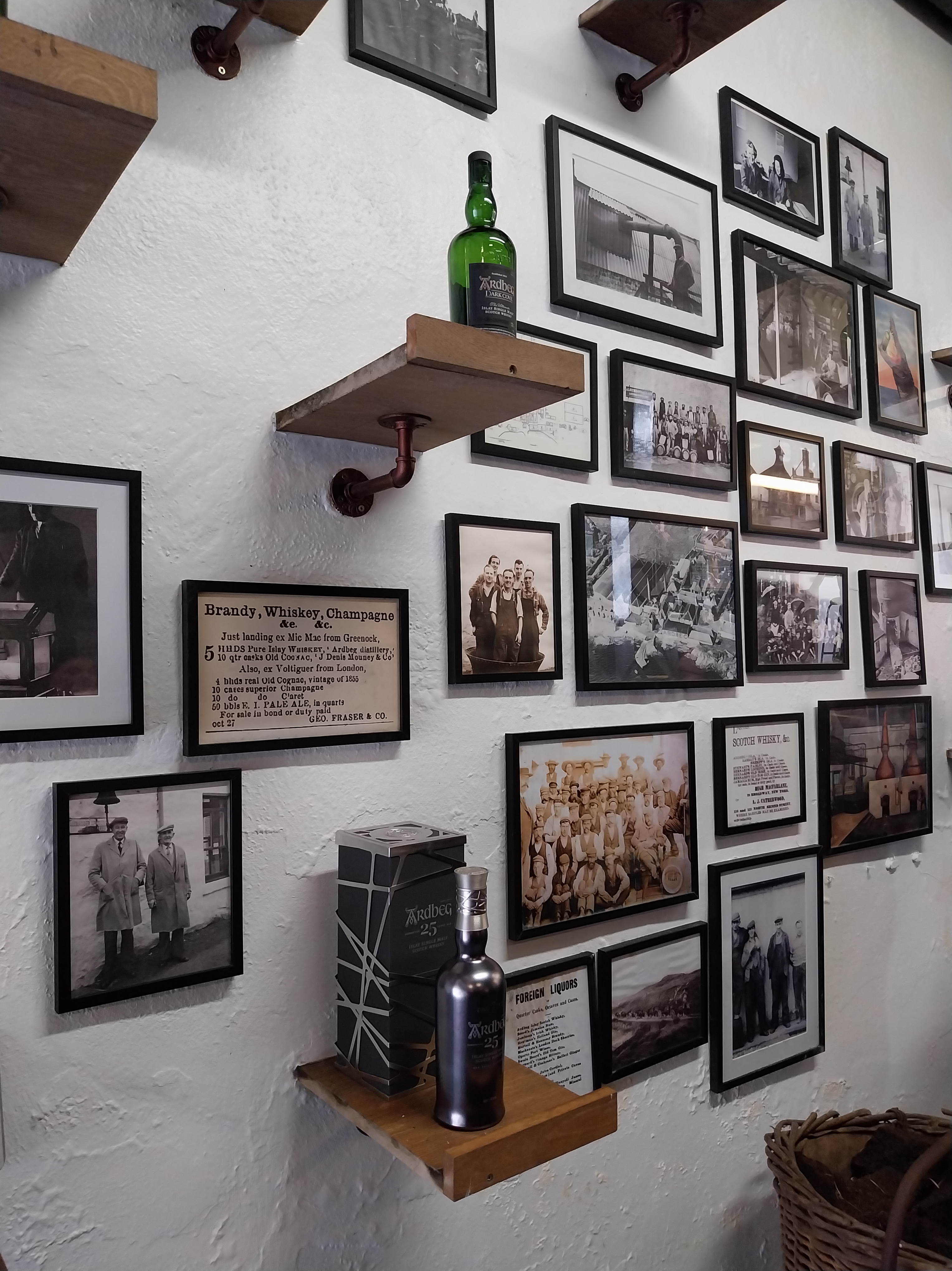
Back to present, our tour guide was Becca, who took us to the pier and gave us a dram while explaining the history of the distillery: of course it was their flagship, Ardbeg 10 (bottled at 46%, matured in first fill and refill ex-bourbon casks). The distillery was founded by the MacDougallโ€™s family in 1815, and saw some ups and downs, it was even closed for some periods. In recent times, after the LVMH/Glenmorangie acquisition (for ยฃ5.5m), they had to release younger whisky because of the lack of stock of the 10yr old. They used to have two malting floors, dismissed in 1981, which are now used as visitor centre, restaurant and warehouse.

Once inside the distillery, we first got into the mill room, where the Bobby mill is still going strong (btw, it’s one of the 17 currently working Bobby mills in Scotland, including Ardnahoe and Bruichladdich). The grist split is the usual, and once milled the barley is moved into the mashtun, where 18,000 litres of water at 65ยฐC are added for the mashing.

Their water source is the Loch Uigedail, located 3 miles away, which then goes into the Charlieโ€™s dam, at the distillery. The second water (8,000 litres at 80-85ยฐC) is then added to complete the mash, while 18,000 litres of the third water (90-95ยฐC) are used as first water for the following mash. They used to do 22 mashes per week, now they cut back to 16. For fermentation, they have 12 washbacks, six original made of Oregon pine (Douglas Fir), plus the new ones. At this point in the tour, Becca gave us the second dram, a glass of Uigedail. Fermentation lasts 66 hours and, once fully fermented, the wash is split in two to fill up the two new wash stills for the first distillation.

We visited both the new and the old still room, the latter being quite tight and very traditional, with the two dismissed stills: apparently one reached its end of life as the new stillroom was built. There, Becca explained us the role of peat and she gifted us a small block! Teresa was not so keen, but Gianluigi was: now itโ€™s on display in our kitchen! We moved on to the new stillroom and its two pairs of new shiny stills, shaped exactly like the old ones. Itโ€™s a very modern build, where everything is computerised, including a huge window that was open to get some fresh air. During the second distillation, the newmake spirit is collected after 10 minutes of foreshots, from an abv of 74%, for five hours down to 69%: the rest (feints) is put together with the foreshots and redistilled with the next batch of low wines from the first distillation. Here, Becca gave us the third dram, a Corryvreckan. The tour ended at the pier again, where everyone could finish their dram at their leisureโ€ฆExcept Gianluigi, who went back to the visitor centre to collect his driver drams pack (in a tube, quite distinctively). Other than the glass, they also gave us a five-pound voucher each to be used for merchandising or on the core-range bottlings (min ยฃ40).

After the tour, we had a snack: unfortunately the restaurant was closed for a private event, but we could get some tasty food at the cart in the courtyard, and the weather (although windy) was good enough to eat outside. We then drove back to Bowmore, where we dropped our friends at their accommodation.

Our intention was to go for a walk, but as it was starting to rain, we jumped back in the van instead and we visited a bit of Islay we hadnโ€™t been before: the Rhinns. We drove to Portnahaven, where we had some seafood at the An Tigh Seinnse, a local pub. It was truly delicious, and we left the village very happy, also because we spotted seals in the bay. Overall, another good day on Islay.

The day after we just had a walk and a coffee in Bowmore, before driving first to Bunnahabhain (Gianluigi had to catch up the tour he’d missed on the Saturday) and then to Port Askaig for our ferry back to the mainland.

Another nice wee holiday on Islay. While Bunnahabhain unfortunately dropped the ball, Ardbeg was great, with a very good tour that could fit both newbies and more seasoned whisky geeks (just a shame we didnโ€™t get to see the warehouses). In our experience so far, we think Ardbeg, Laphroaig, Bowmore, Bruichladdich and Lagavulin offer the best โ€œregularโ€ distillery tours on the island (full disclosure: we havenโ€™t done the regular tour at Kilchoman).

If we combine the two previous trips on Islay, overall we managed to โ€œbagโ€ nine distilleries, out of the ten currently working distilleries on the Island (plus Jura!), and we got to 10 with Ardbeg on this trip. As we are writing this post, we heard the news that the construction company building the 11th one, Portintruan, filed for administration, and we are wondering if this is going to delay the project. Finally, there is a 12th distillery in the pipeline: Laggan Bay, a collaboration between the Islay Boys and Ian McLeods (Glengoyne, Tamdhu and now Rosebank), but as far as we know works havenโ€™t started yet. So, probably for a while weโ€™ll be able to claim that we have visited all distilleries on Islay. Yay!

Stay tuned for some Lowland action! Until then, slainte!


Ardbeg Quintessential Tour

Price: ยฃ20.00 pp (August 2024)

Duration: 1hr 15min

Tasting: 3 drams, Ardbeg 10 (46% ex-bourbon casks), Uigedail (54.2%, ex-bourbon and Oloroso casks), Corryvreckan (57.1%, ex-bourbon and French oak)

Target: both casual and more seasoned drinkers

Value for money: very good

Highlights: the new still room

Recommended: yes

Link: https://www.ardbeg.com/en-int/visitus.html