#55.3 All drams great and small

An English malt with a Tasmanian twist and an eye for sustainability


TL; DR: From Ellers Farm, we went directly to another distillery: Cooper King. Inspired by Tasmanian craft distilleries, they produce other spirits other than single malt, with a very interesting set up. And, everything is done in the most sustainable way possible, kudos! After the visit, we went to Brew York, for a tour, dinner, and a quiz! 

(missed Part 2/Part 1?)

After the visit at Ellers Farm, we jumped back on the minibus. Our next destination was only about half hour away driving north-west, approximately 13 km north from the city of York, in the village of Sutton-on-Forest. The distillery is called Cooper King, just outside the village. It was founded by Abbie and Chris, a couple who got the inspiration while travelling in Australia and visiting local distilleries. The distillery is named after Charles Cooper King, Chris’ great-great-grandfather. The main building is just a few meters from the gravel parking lot, and it harbours a bar/shop and production. There is also a nice wee garden outside, with wooden tables and benches, which we took advantage of after the tour. It was a nice sunny day!
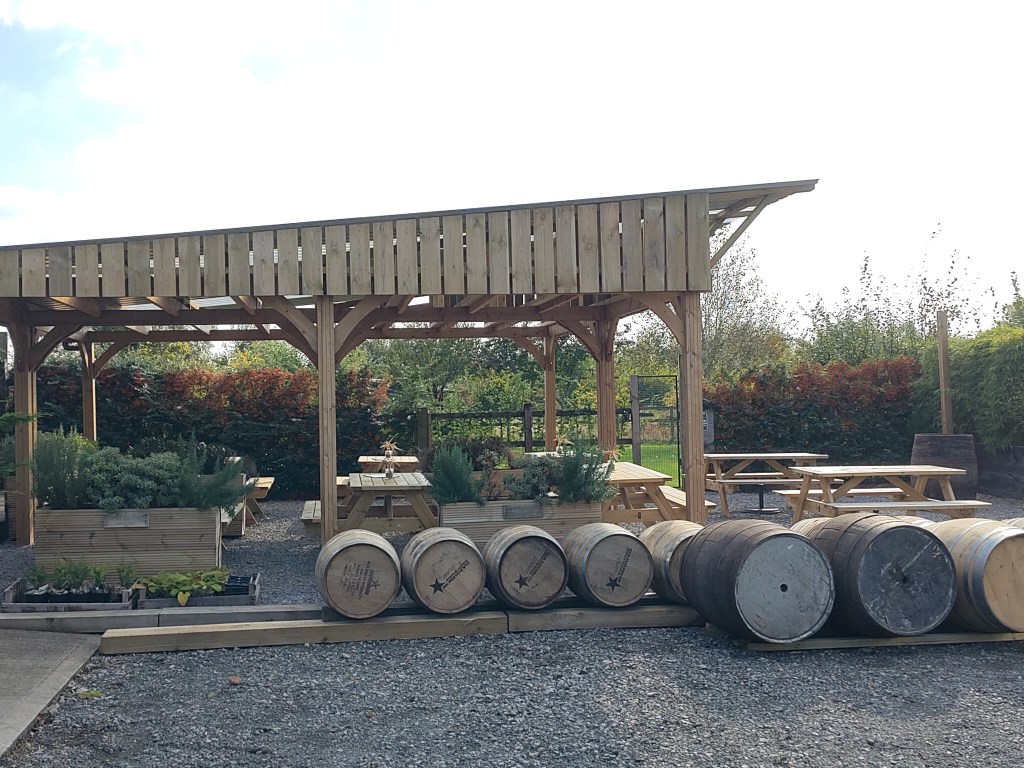
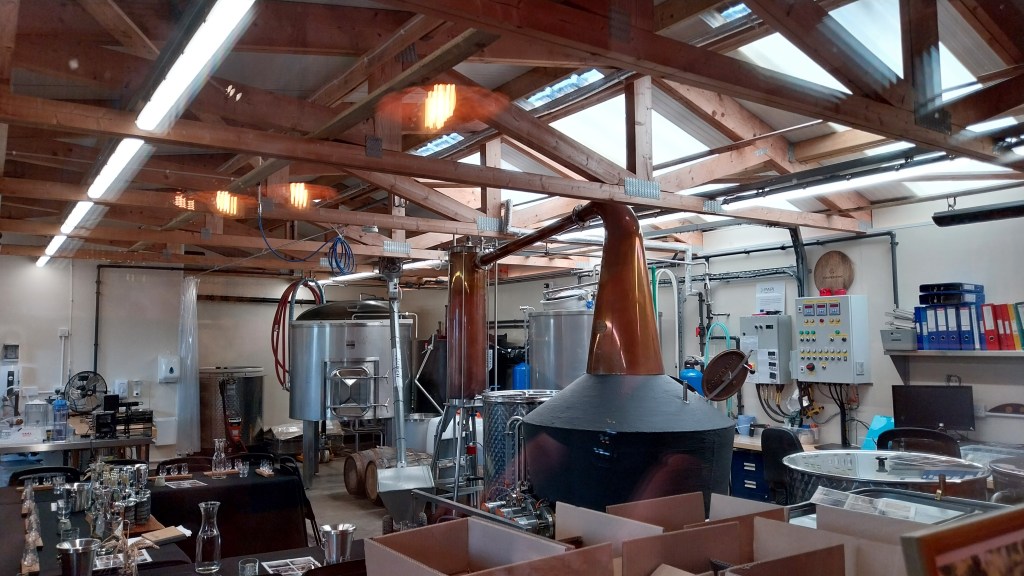
We were welcomed by Mark, tour guide and assistant distiller. Like others, he came on board as a crowdfunder. At some point (in our understanding) the two founders Abbie and Chris asked who among the crowdfunders wanted to be more involved, and Mark answered the call. We could clearly see his passion for the project. He explained that, in 2014, Abbie and Chris, once a biochemist and an architect, moved to Australia to travel, and started working as fruit pickers. Then, they went to Tasmania, and after getting in contact with Sullivan’s Cove and Lark, they decided to go back to England and produce a Tasmanian-style whisky. Back in Yorkshire, they bought the land thanks to a crowdfunding, as well as a 900-litre pot still (Neilson) straight from Australia.
Another principle they had in mind when setting up the distillery was sustainability. The electricity comes from renewable sources, of which 60% is produced on site with solar panels: this contributed to make them the first net-zero distillery in England. They also have a programme for planting trees and restoring woodland and wildflowers habitat for each bottle they sell. Moreover, they chose lighter bottles, and offer refills at the distillery, for a few quid less.

Production-wise, they use Maris Otter barley malted in middle England. They pre-heat the small mashtun before mashing the malt. After that, the remaining draff goes out to local farmers to feed cows. Fermentation takes place in a 1750-litre plastic vessel (usually only half full to avoid foam accidents) and lasts seven days. Both distillations happen in the same still, which is different to what we saw in all the Scottish distilleries we visited so far. At first, Neilson the still was heated externally, but to make the process more efficient it was sent to Scotland for modifications and is now internally heated and insulated.

The wash gets distilled to 25% abv, while the heart of the second distillation comes out on average at 75%, before getting diluted by filtered tap-water. Needless to say, everything in the distillery is very manual, except for the gin and vodka very modern cold-distillation machines (which take only about 10% of energy compared to a classic copper pot distillation).

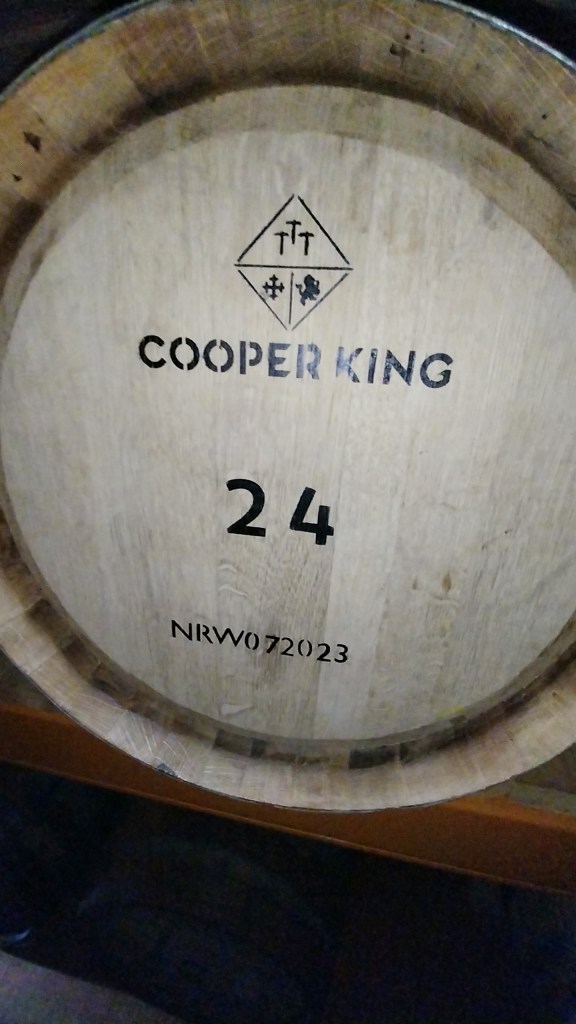
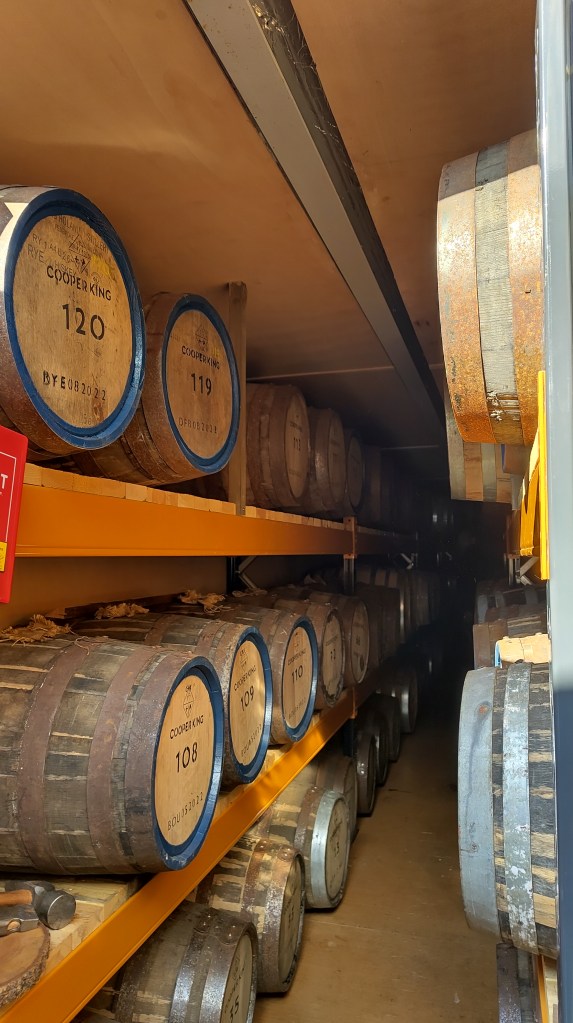
They use a variety of casks from all over the world, and their main American cask supplier is the Garrison Brothers distillery, in Texas. Casks are kept in a safe container behind the distillery, while waiting to get a proper warehouse. They started distilling newmake spirit in 2018, and their first whisky was released in October 2023, about a year before our visit.
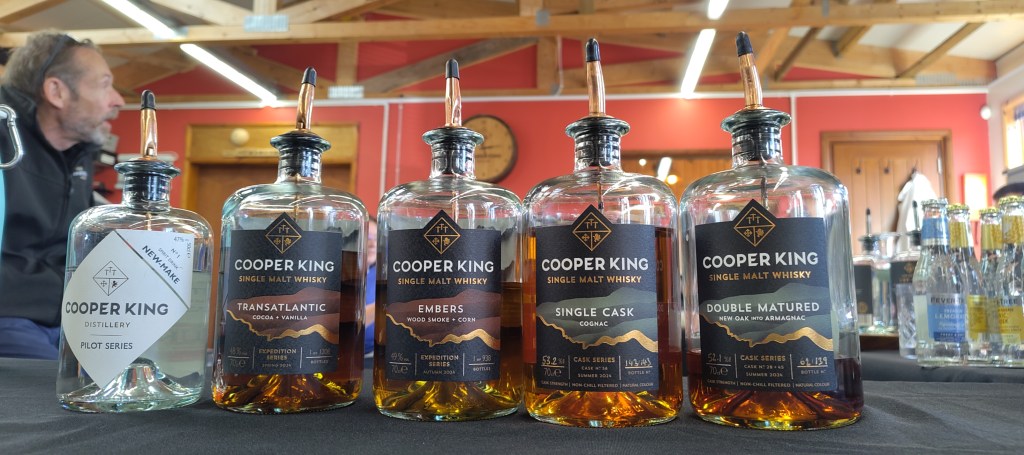
While we were outside checking out the casks, another member of staff set up the tasting in the main production room, which also serves as a tasting location. First, we went through five liquors and gins (see below), but as it’s not really our focus, we won’t spend many words on it. We were really interested in their whiskies. The first one was not exactly that: a newmake spirit, from the “Pilot Series” and bottled at 47%. It was followed by two single malts from their “Expedition Series”, Transatlantic (ex-bourbon and ex-wine casks, 48%), and Embers (charred ex-bourbon casks, 49%). Then, two single casks: first, an ex-Cognac matured single malt, bottled at the 53.2% natural cask strength; second, a dram first matured in virgin oak casks, then re-racked into an ex-Armagnac cask, again cask strength at 52.1%. The evaporation (or “angel share”) is higher compared to Scotland, about 4%, which combined with other specific conditions, might cause the abv to be lower for such young whisky. Overall, we could tell the degree of experimentation at this distillery is high.
After the tasting we had a few minutes to spend in the sunny patio, sipping on our leftover drinks, before getting back on the mini-bus. We headed towards York, precisely the Brew York Brewery. Despite the city location is not their main production facility anymore (that one is in York’s outskirts), it’s still a massive place. We did a production tour (£15, including four tastes) and then had dinner there (they do a range of Asian-inspired dishes, which were delicious, albeit heavy on spring onion). Unfortunately, the place was too noisy for the next scheduled activity, a whisky-based quiz, so we had to move to a quieter pub nearby. The quiz, organised by our whisky veteran pal Charlie, was great fun, and we went back to base all very happy.

What a great afternoon and evening we had! At that time, we had tried very few craft Australian whiskies (and even less Tasmanian ones), so the link between them and Cooper King was not evident to us. At the time of writing however (after a serendipitous trip to Australia…Stay tuned in the coming weeks for more), the connection is quite obvious: we spotted a very typical herbaceous note in Cooper King drams, the same we found in most whiskies down under. Overall, it’s a very interesting project, which we are very glad we got to know more of.

Next up, another Yorkshire whisky day, but not a distillery! Until next time, slainte!


Cooper King Distillery Bespoke Tour

Price: £20.00 pp (October 2024)

Duration: 1hr 30min

Tasting: 5 spirits (Dry Gin, 42%; Herb Gin, 40%; Smoked+Spice Dry Gin, 41%; Black Cardamom Vodka, 40%; Berry+Basil liqueur, 25%) and 4 drams: Transatlantic (48%, ex-bourbon and ex-wine, 1208 bottles), Embers (ex-bourbon, 49%, 938 bottles), ex-Cognac matured single cask (53.2%), virgin oak/ex-Armagnac cask (52.1%)

Target: whisky and spirit enthusiasts

Value for money: very good

Highlights: the distillery set up

Recommended: yes

Link: https://www.cooperkingdistillery.co.uk/


#39.4 The Highlander Trip

A quiz, a tasting and a distillery visit


TL; DR: Saturday was a “rest” day, after three distillery visits (actually five in two days!). However, we still had some whisky activities scheduled: a whisky-themed quiz and a tasting at the Carnegie Whisky Cellars. It was a great day, and it was followed by a visit (re-visit for us) at Clynelish on the Sunday. 

(missed Part 3/Part 2/Part 1?)

On Saturday we woke up not that rested: Teresa’s cough was getting worse, the humidity inside Mr. Vantastic not helping. Gianluigi wasn’t at his 100% either, with a bit of hangover hanging there. In normal conditions we would have got a warm drink and a good breakfast right away, but unfortunately Dornoch is a bit of a ghost town before 9-10, so we couldn’t find an open cafè nearby, nor open public restrooms. Eventually, the latter opened (thankfully). A few minutes later we met Justine, and took a walk to the beach with her.

It was a very sunny day, not that cold, and Gianluigi even dipped his feet in the North Sea waters. We walked back to the village, where we could take a quick shower at our friends AirBnB. As a “thank you” Gianluigi went to the Harry Gow Bakery and got yummy morning rolls for everyone! Teresa felt adventurous and tried the macaroni pie – better than expected, although not sure she’ll have it again.

There were no distillery visits scheduled for the day, it was like a rest day, but we’d have had an early evening tasting at the Carnegie Whisky Cellars shop, and a very fun activity was waiting for us before then: a whisky quiz! It was our friend Charlie, a whisky enthusiast more seasoned than us, to organise it. As a location, we went to the Dornoch Castle Whisky bar. Space was a bit narrow, so we were all around the same long table and with little chance to mix: we ended up in the same team, the Home Office (because of our working from home patterns, but also as a political mockery). We had a lot of fun, but we didn’t win: we tried to gamble our last round for a high reward, but we didn’t make it to the top. Afterwards, we went to the Cocoa Mountain to get a warm (and yummy) chocolate. Unfortunately, Teresa kept getting worse, so we decided to get a hotel for the night instead of sleeping in the campervan. Because this was a last-minute decision, we had to scramble back, and we ended up being late for the tasting…d’oh! Fortunately, our pals were all very understanding.

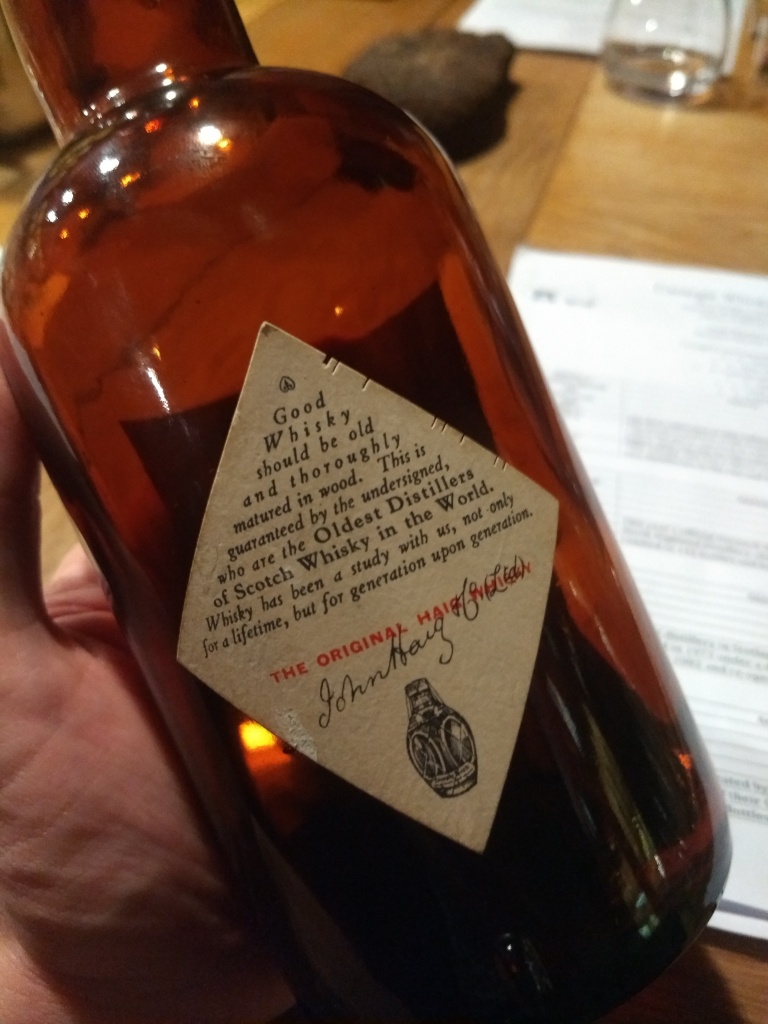
The Carnegie Whisky Cellars is a shop on the main street in Dornoch, on the same block as the castle. It is run by Michael, the manager, who started there in 2016, and by his assistant David. Beside the shop, there is a very nice room with low ceiling (ehm, the cellar?), and a long table around which we had the tasting. It was a very good one, Michael’s knowledge was impressive, and the choice of drams hit the spot. The lineup started with an old Haig blend, followed by a delicious Thompson Brothers Teaninich (bottled for the shop), a single cask 21y Braveal, a cask strength Campbeltown blended malt Gauldrons (probably mostly Glen Scotia), and two cask samples, one from a local distillery (don’t know if we can disclose it, but it wasn’t Dornoch) and another one from a Campbeltown distillery. While Gianluigi enjoyed his drams, Teresa mostly saved them as she wasn’t feeling well, so after the tasting she went back to the hotel to rest. She revisited the tasting recently, and she loved it as well! Gianluigi instead joined the others for a very nice dinner at Greens (just next to the shop), followed by drams at the Dornoch Castle Whisky bar, and a final pint at the Coach House, before joining Teresa back at the hotel. 

In the morning we were both feeling much better, and as soon as we could we had our breakfast (Scottish full, of course) at the hotel, where we said goodbye to our pals Fiona and Mike, who left soon after. We met with the rest of the gang in the main square, but we didn’t join them on the minibus: we were both working the day after, so the plan was to drive back to Leith straight after the visit at Clynelish distillery

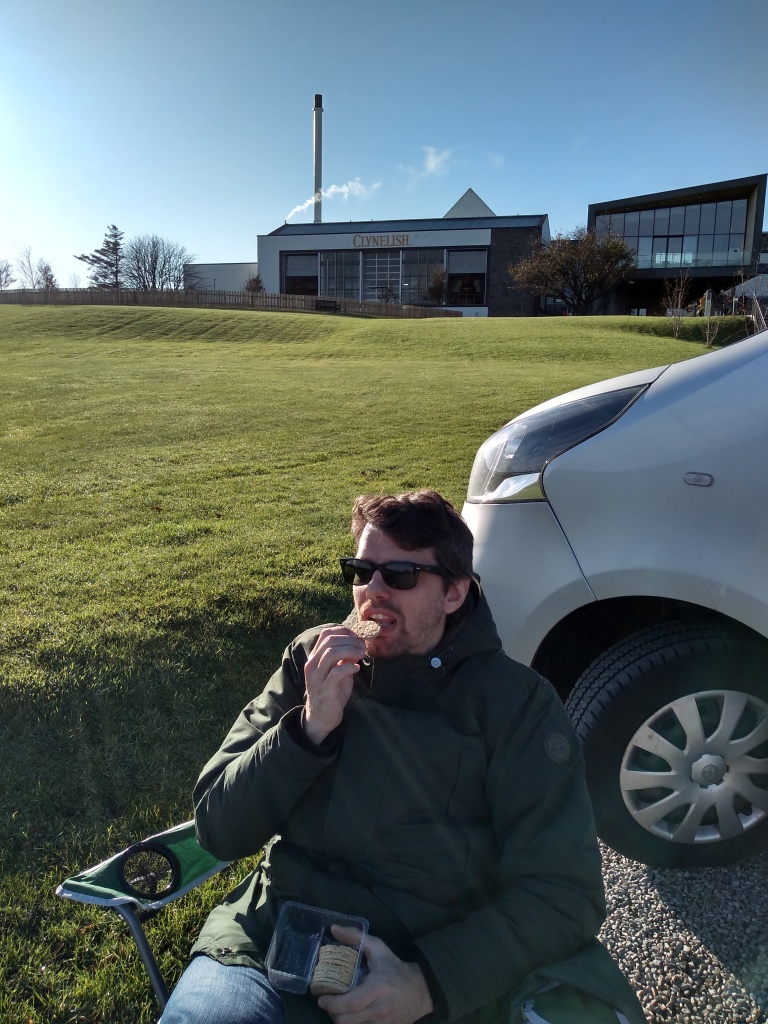
The joys of foldable chairs.

This was the second time there for us, with the first in May 2021 right after the lockdown. While we really like the whisky, the distillery visit was a bit of a bummer: too expensive and too focused on Johnnie Walker (you can read about it here). Fortunately, things changed since then, they have various experiences, and we chose the Production Tour and Premium Tasting, more suited to whisky enthusiasts (£30). The others are the Flavour Journey (sounds very Johnnie Walker-esque, £19), the Express Tasting (£15) and the Premium Tasting (£65).

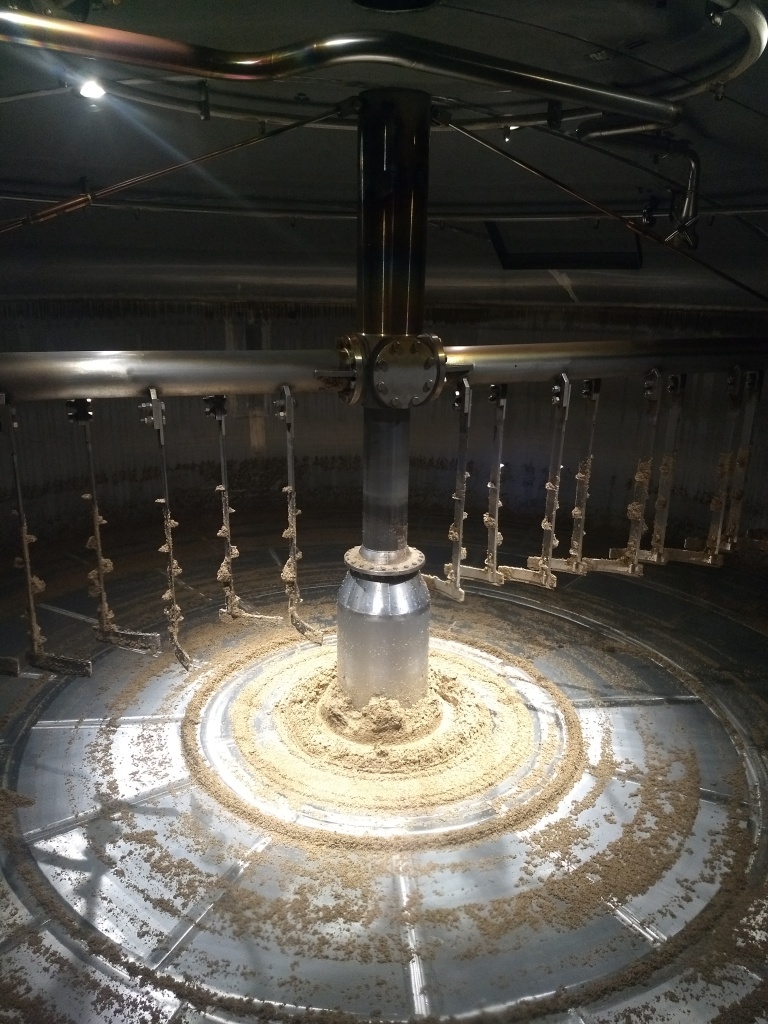
The guide for the tour was Shirley, and she was way more knowledgeable than the guide we had in 2021 (to be fair, we are now more knowledgeable too). The tour scheme was the usual, although it was a lot richer in information. They get their malt from Glen Ord maltings, unless Talisker is in high demand, in which case they get it from Buckie. The mill (as usual, Porteus) is the only piece of equipment they didn’t refurbish in 2016, and they set the usual 20/70/10 split in the grist (husk/grit/flour). With the mashing (common to many Diageo distillery, two waters: raising the first one from 62°C to 84°C) they aim for a very clear wort, which then undergoes about 80-85 hours of fermentation.

An empty mashtun.

They recently changed yeast strain, they now use Lalamond. They only do unpeated whisky, but for their neighbour distillery Brora, the peat comes from near Montrose. The stills are a copy of the original 1960s ones, replaced in 2016, and they are fired with steam produced with oil and gas. Similar to our previous tour, however, we couldn’t visit the warehouse (it’s in the Brora area…). Anyway, most of the whisky is shipped away in tankers.

The tasting was supposed to be 3 drams, but because we were a big group, Justine managed to negotiate an extra one (yay!). We had the tasting in the bar upstairs, with a magnificent view down towards the sea. Today it was Teresa’s time to enjoy her drams, Gianluigi behind the wheel. We started with the Clynelish 14y (the flagship!), followed by the Distillers Edition, finished in Oloroso Seco for 6 months (we had a bottle of this). It was followed by the Distillery Exclusive, a non-age statement, full ex-bourbon matured whisky bottled at 48% – no mention or colouring or chill-filtering, but given the colour, we think it is unlikely they used caramel colourant. It was good, but not £105 good (this was batch 2, batch 1 in 2021 was ***only*** £90). Finally, we tried the Four Corners of Scotland, a bottling they made to celebrate four iconic distilleries (together with Caol Ila, Cardhu and Glenkinchie) for making Johnnie Walker. Again, quite good but at over £200, insanely priced. A shame these prices, but hey ho, life goes on. 

Anyway, we were happy with this distillery visit, much happier than after the first time. Nonetheless, excluding Friday’s tour de force, the real highlights of the couple of days were the whisky quiz (thanks Charlie) and the tasting at the Carnegie Whisky Cellars. Some very good memories to bring home, which is where we headed afterwards, not before a stop in Inverness.

Stay tuned, and until next time, Slainte!


Clynelish Production Tour and Premium Tasting

Price: £30.00 pp (November 2023)

Duration: 1hr 30min

Tasting: 3 (+1) drams, Clynelish 14y (46%), Distillers Edition (vintage 2006, bottled 2021, 46%, Oloroso finish), Distillery Exclusive (NAS, 48%), Four Corners of Scotland 16y (49.3%)

Distillery exclusive: NAS (48%), mostly ex-bourbon cask

Target: everyone

Value for money: good, definitely better value than the flavour journey we did in 2021

Highlights: the bar/tasting room and the view from it

Recommended: yes

Link: https://www.malts.com/en-gb/distilleries/clynelish


#39.2 The Highlander Trip

In the footsteps of the Angel’s Share


TL; DR: A classic highlander both in terms of malt produced (fruity and honeyed) and appearance: it definitely looks like a Scottish whisky distillery a very good AI algorithm would draw. 

(missed Part 1?)

The bus picked us up at the Dornoch Whisky shop. It was a 20-seater, more than enough for the 15 of us. During the wee ride on the wee bus we had a wee lunch (ok, we’re stopping it…), sandwiches prepared earlier in the van, complemented by our pal John’s homemade Scottish tablet, which he’d prepared using local malts, as usual. The drive to Balblair (yes, that’s where we were headed!) was quite uneventful in the gloomy day, a very Scottish rain was falling over us. To be honest, we didn’t expect anything different when deciding to visit the Highlands in November. 

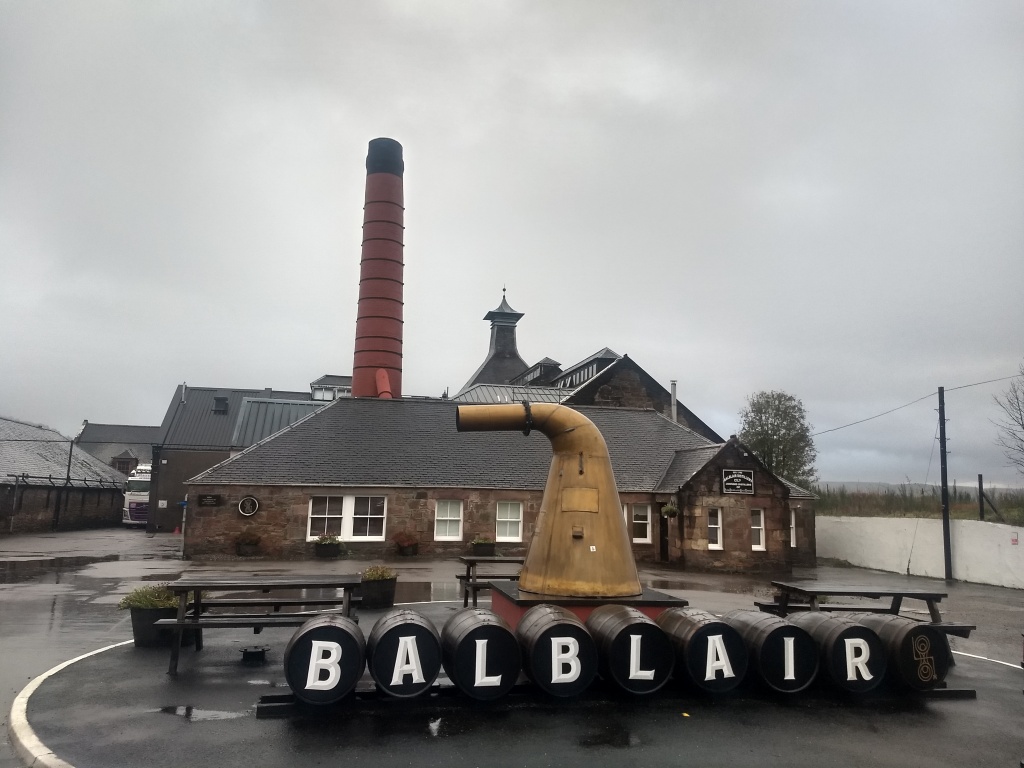
As we approached Balblair it was pishing doon! The distillery is very picturesque: typical Highlands’ barren hills on the background, it is a combination of low dark buildings (including many warehouses) with a tall red chimney emerging in the middle. In the parking lot there is a shiny copper still behind a row of black barrels with the distillery’s name written on. The distillery was chosen to feature in the movie The Angel’s Share, by Ken Loach. They shot here some of the scenes during the auction of a rare whisky cask from Malt Mill, with Charles McLean playing himself, under a different name of course (for the records, others scenes were filmed in the warehouse of the distillery we visited most times…can you guess which? Here the link in case you want the answer). Although the movie probably isn’t the best among Loach’s filmography, for once it’s one a bit less depressing, and genuinely funny at times. 

The Balblair distillery was built in 1790, one of the oldest in Scotland, and is now owned by Inverhouse (together with Speyburn, Pultney, Knocdhu/Ancnoc and Balmenach), whose parent company (ThaiBev) also owns the wicked Hong Thong ‘whisky’ (which btw we bought during a boring evening in Thailand years ago, such a mistake!). Despite not being new, this is not a brand we were very familiar with. Before our visit, we’d only tried two core expressions (12 and maybe 15), a 10y Gordon&MacPhail Gianluigi’s parents bought during a 2015 family trip in Scotland (just about a year before the whisky bug bit us), one from the Scotch Malt Whisky Society and the one we’d bought that same morning from Thompson Brothers. Overall not many, and we tried them at very different times, which is not ideal to form an opinion on the distillery character. Also, because we got into whisky in the last 5-6 years only, we missed the period when Balblair used to have a vintage core range instead of an age-stated one, so we are alien to the debate on which was better. 

The visitor centre looked recently renewed, nice and tidy, with a low ceiling and dimmed lights. There were a few bottlings (unfortunately mostly overpriced) and some branded merchandise on display, with the counter on the right, and the tasting room and toilettes on the left. Gianluigi remembers this last detail, as he lingered a bit so when he got to the tasting room everyone was waiting for him….Ooops. The guide for the day was Nigel, who turned out to be a competent guide when replying to all the numerous questions (kudos). However, we felt that at times he was pushing it too much, providing some unsolicited political opinions. After a brief introductory video, we moved to production, where we couldn’t take pictures, sadly.

They source barley from the area (40 miles radius), which for the current production of 1.5 million litres of pure alcohol per year is not trivial (full capacity is a little higher, 1.8mlpa). Their water source is located 4-5 miles away, near the hills. Compared to other distilleries, they aim for a higher percentage of husk in the milling process, 30% instead of the usual 20%, with less grist (60% compared to 70%) and the usual share of flour (10%). They are equipped with a semi-Lauter mashtun (three waters), from which they get an unfiltered cloudy wort, and 6 Oregon pine washbacks of 23,000-litre capacity. They usually fill the washbacks with 9,000 litres of wort only, and fermentation lasts around 60 hours. 

Balblair logo.

They have a pair of shiny copper stills, and until the 70s they used to have wormtubs, then replaced by tube-and-shell condensers. A laser system checks when to take the cut from the spirit still, between 69% abv and 59.9%. In our understanding, most of the production is sent to Chivas in tankers. They used to keep about 10% on site, but now more given the success of their single malt (and of single malt in general) they increased the share. The newmake is filled into casks (mostly barrels) at 68% (which considering their cut, seems high). 

Work in progress in the warehouse.

As the production tour ended, we moved back into the visitor centre for the tasting, and to avoid the even heavier rain. The line-up consisted of 4 drams, 3 from the core range plus the distillery bottle-your-own. It was a solid line-up: only the 12y (ex-bourbon cask only) to many of us seemed a bit bland, although well priced. Both the 15y and 18y (both finished in sherry casks) were very good, as well as the very juicy (and buttery, toffee, honeyd) distillery bottle-your-own, just a shame for the prices (the 15y just below £100, the latter two well north of it).

Overall, it was a nice distillery visit, quite standard, and the tasting was a nice overview on Balblair whisky style, which definitely helped us put it finally on the map, flavour-wise. 

Stay tuned to hear more about this whisky day, and until next week, Slainte!


Balblair Signature Tour

Price: £45.00 pp (November 2023)

Duration: 1hr 30min

Tasting: 4 drams, Balblair 12y, 15y and 18y, plus the distillery exclusive bottle-your-own (see below)

Target: everyone

Value for money: Ok

Distillery Exclusive: vintage 2007(~15y), ex-bourbon barrel, 51.6%, cask #422 (£130.00)

Highlights: the picturesque location and buildings

Recommended: the distillery is beautiful, but there might be better value-for-money tours not far away

Link: https://www.balblair.com/