Talisker distillery, second attempt
TL; DR: After the visit at Torabhaig, we drove north-west towards Carbost for the second distillery tour of the day, Talisker. A slightly less corporate experience than we expected, in a really beautiful spot.
(missed Part 1?)
As we came out of Torabhaig distillery, the weather was slightly nicer: still no breaks in the clouds (those will come later), but at least it wasn’t raining anymore. We gave ourselves just the time for couple of pictures, before quickly jumping on Mr. Vantastic and starting to drive north-west, back towards the main road. We did one stop in the very picturesque village of Isleornsay, near the sea, to visit the shop of the Gaelic Whisky company, Pràban na Linne. It is a small independent bottler, which we learned about when a few years ago a friend gifted us a bottle of Mac Na Mara rum cask finish blended whisky. The Mac Na Mara range also also includes the expressions Classic, Madeira finish and Port finish, all bottled at 40% and non chill-filtered. They also offer another blended scotch, Tè Bheag (40%, non chill-filtered and high proportion of malt whisky), and the Poit Dhubh blended malt range (8y, 12y and 21y), all 43% and, again, non chill-filtered. After browsing the shop (where they also sell gin, food, and souvenirs), we took a Poit Dhubh trio miniatures (which we still have to try).

Isleornsay, a nice wee spot.
Back on the road, it didn’t take us much to get to our final destination for the day: Carbost, home of Talisker distillery. We had a sound plan: park at the Carbost pier (where we could spend the night at the cost of £10.00 in the honesty box), visit the distillery and then dinner at the Old Inn.
We knew the road already, as it wasn’t our first time there: we’ve been there when we visited Skye in the summer of 2020, with Gianluigi’s parents, during that short time window where international flights were weirdly allowed without much complication. Back then, we drove to Carbost after a stroll at the Fairy Pools, where we learned that midgies don’t care for long-sleeve t-shirts. By pure coincidence, the night before we’d found out that Talisker was reopening the next day, and that you could book a visit if you “called or wrote an email”. We tried to call several times, but in a typical Diageo disorganised shenanigans it turned out they were only replying to emails (with such short notice, we would have bet the other way round to be honest). So no distillery visit then, but we enjoyed anyway the view and the nice afternoon in the village, before driving back to Portree. This time, however, we are ready to rock!

Second time here, this time ready to visit!
We parked the van at the pier, nor far from another van (and by the time we went to sleep, eight campervans were parked there despite the sign said max 5…guess why “campervanistas” are not very welcome in some places). Next to the distillery we noted a new building, right on the shore: a wooden cottage-ish building, which would have looked more appropriate in a skiing station. We’ll later find out that it is a fairly new space, part of the visitor centre renovaions, and includes a bar and a pop-up restaurant. After the usual selfies and photos, we checked in at the visitor centre. It is quite spacious and modern, with a round fireplace in the middle of it: again, that makes you feel like in a skiing resort hotel, but it’s cosy, nonetheless. In contrast, the shop area was super bright, almost looking like an airport duty free or a department store.
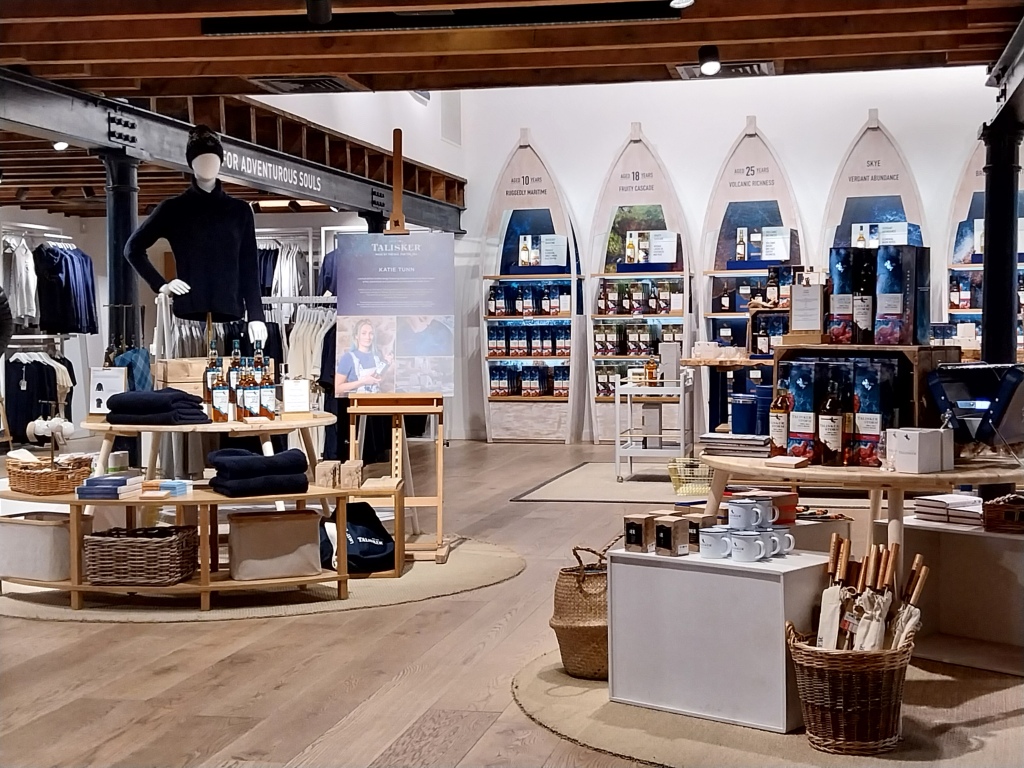
Visitor centre or duty free?
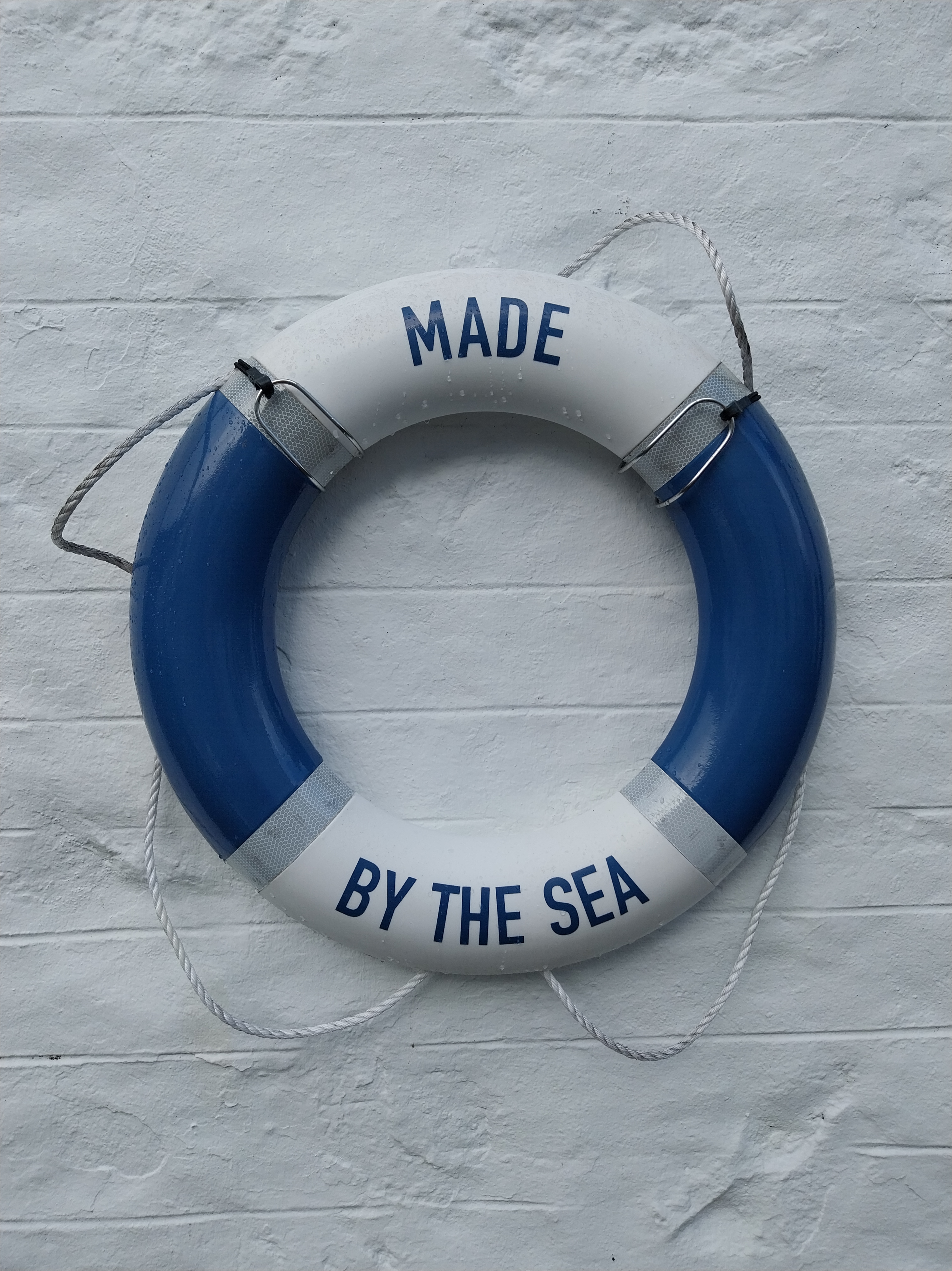
The guide for the day was Florian, who despite the heavily scripted tour, made lot of efforts to make it personal, with some dad jokes but also some “tell-like-it-is” moments. One we appreciated: “’made by the sea’ is marketing language for ‘manufactured in the proximity of the sea’”. Kudos. He gathered us around near the entrance when the time came, starting with the usual safety instructions. In spite being only February, the tour looked fully booked, which surprised us. We left the visitor centre to enter the production building. First, a “demonstration” room where Florian explained the basics of whisky distillation, showed us some peat, and where we could smell some elements associated with the most typical Talisker aromas: pepper, salt and honeycomb.
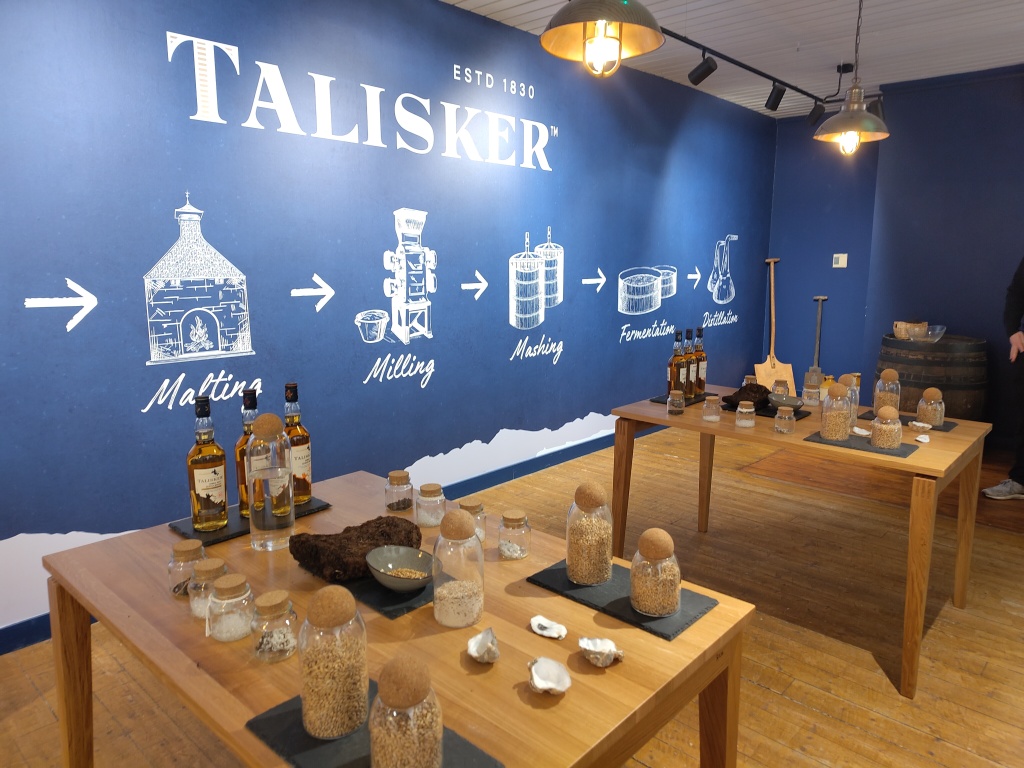
Covering the basics of whisky production.
Florian also showed us the barley they use, lightly peated, mostly from the Black Isle on the east coast, and malted at Glen Ord maltings. Trucks come in with 30-tonnes of barley (which explains also the terrible state of the tarmac in Carbost…almost Edinburgh-worthy). Once there, the malt gets milled by Milly, a sturdy Porteus machine dating back to 1962.
We moved to the huge mashtun, where barley gets mashed with only two waters (one increasing temperature), similarly to many other Diageo distilleries. This is one of the industry practices to make whisky production more environmentally friendly. We couldn’t visit the fermentation room (where fermentation lasts on average 72 hours but can be anywhere between 65 and 85 hours) because of the carbon dioxide level: first time since we started visiting distilleries, but better safe than sorry we guess. Thus, we moved straight to the very nice stillroom, equipped with two large wash stills for the first distillation, and three smaller spirit stills for the second. The cut they take from the second distillation is from 75% abv to 65%.
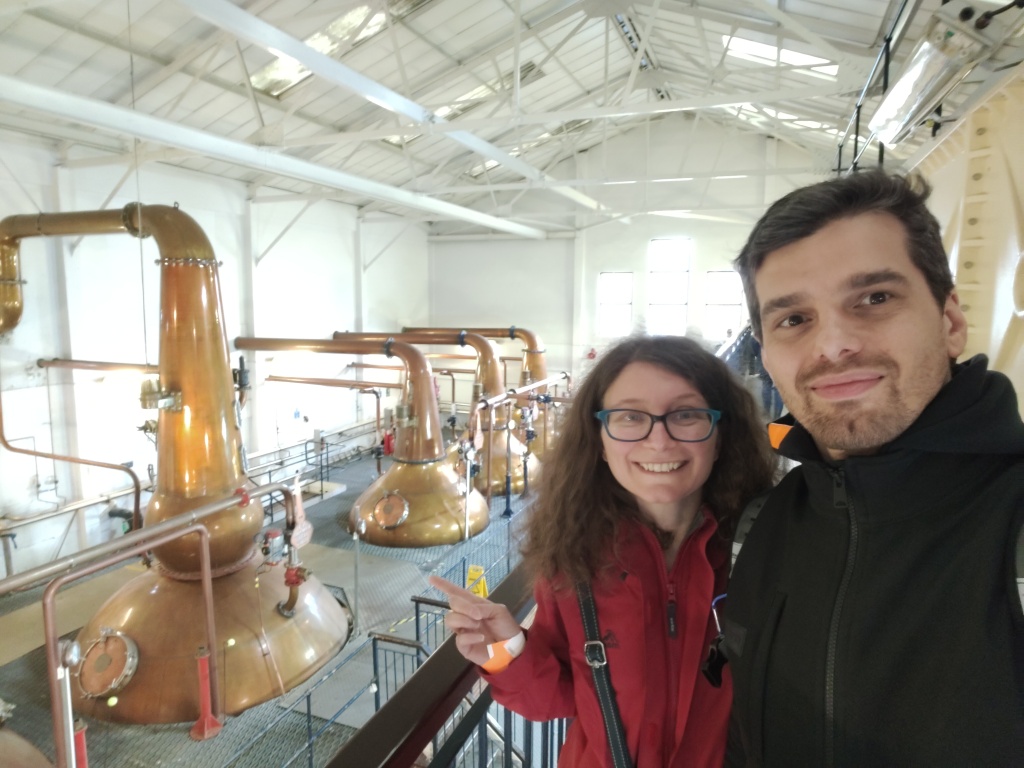
Only spot where we could take a picture in the still room.
They have some warehousing space on site, but we couldn’t visit it, as a matter of fact Florian told us he hadn’t been in there himself…not too surprisingly. Anything they produce, though, is put into tankers and shipped to be moved to casks at one of the Diageo’s sites in the Central Belt. We went back to the visitor centre for the tasting, in a purpose built room just behind the bar. We started with the Talisker Storm, one of their non-age statement releases, finished in wine casks: drinkable but not memorable. We then moved on to the Talisker 10, which is a very solid dram in our opinion (some might say that it’s not as good as it was X years ago, but being relatively new in our whisky journey, we have no clue… samples welcome, in case!). We finished with a Distillery Exclusive: this range is quite interesting (not to be confused with the Distillers Edition), as (apparently) distillery staff have some freedom in deciding what to bottle, and it is usually bottled at 48% or above (and whispers says non chill-filtered…). In general, across the distilleries we visited, we had some very good ones (Royal Lochnagar, Lagavulin, Cardhu) and many average ones – the Talisker DE (batch 02) we tried fell into the latter category.
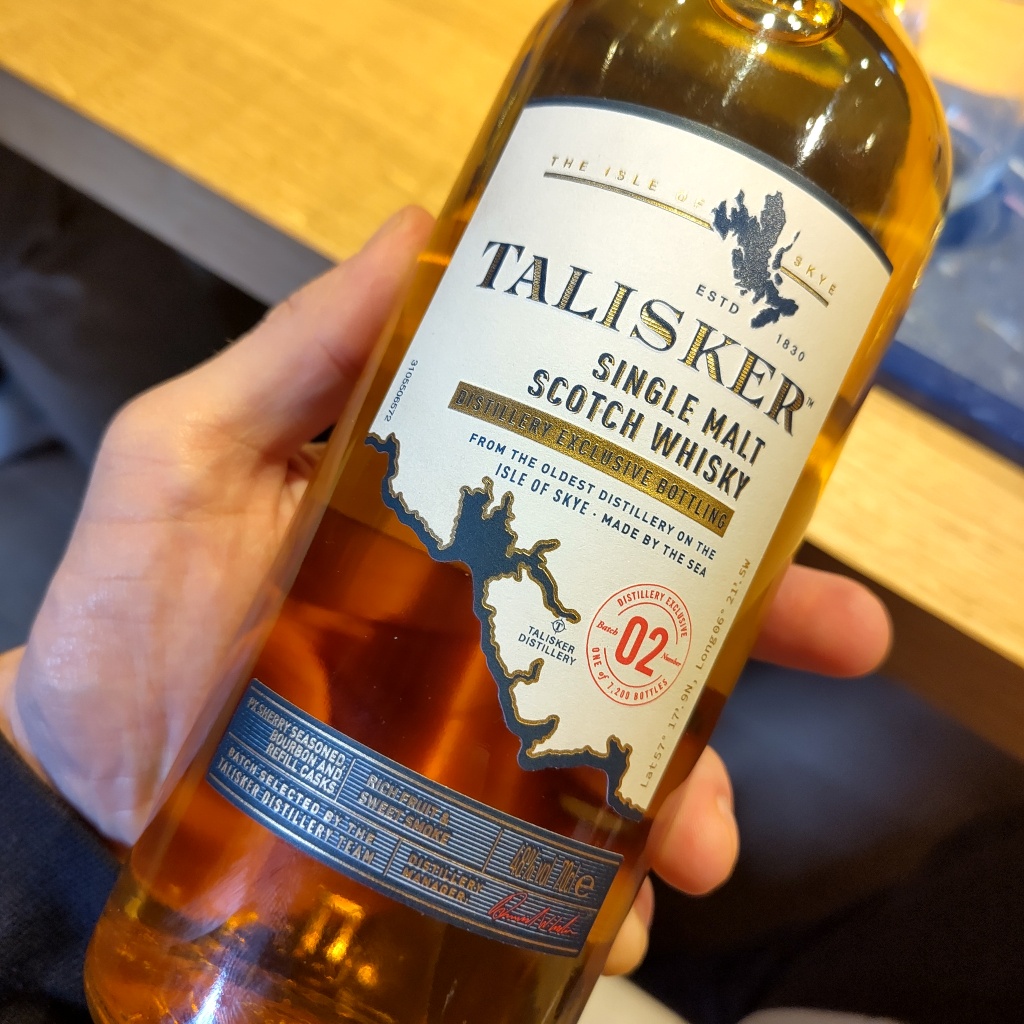
Before leaving the distillery, we got a couple of drams at the bar, Port Ruighe (finished in port casks) and the Distillers Edition (this one finished in Amoroso Sherry seasoned casks), both quite nice.

Not a bad spot to spend the night.
After the distillery, we went straight to the Old Inn, a hotel and pub just a few steps away. The pub is very nice and cosy, despite being in a very touristy spot it maintains a “local pub” atmosphere. There we met up with Tommy, Gianluigi’s former bandmate who recently moved to Skye, before having dinner and retiring to the campervan after a long, nice day.
Until next time, slainte.
Talisker Distillery Tour
Price: £20.00 pp (February 2024)
Duration: 1hr 15min
Tasting: 3 drams, Talisker 10 (45.8%), Talisker Storm (wine cask finish, 45.8%) and Talisker Distillery Exclusive (48%)
Distillery Exclusives: Talisker DE (batch 02, NAS, 48%, PX-seasoned ex-bourbon and refill casks, £105.00), Bottle-your-own (9y, 54.5%, rejuvenated ex-red wine cask -STR?-, £130.00)
Target: everyone, but mostly tourists
Value for money: good
Highlights: the scenery
Recommended: if you want to tick the box, yes
Link: https://www.malts.com/en-gb/distilleries/talisker
 Dramming around