#65 Tiree distillery

One windy leg of the Hebridean Whisky Festival


TL; DR: This September we embarked in an odyssey to attend the Hebridean Whisky Festival. Unfortunately, we couldnโ€™t reach most of the distilleries we’d planned to visit due to a storm, but we still managed to visit the island of Tiree and its distillery. A tiny and craft operation, with already two releases under their belt: a single malt and a rye whisky.ย 

In the last few years, especially since we got Mr. Vantastic, we travelled quite a bit throughout Scotland. However, while we have (roughly) been all over the country, there are mainly two places we havenโ€™t been yet: the Outer Hebrides and Shetland, the latter despite our passion for the namesake crime TV show. This was supposed to change this year though, as together with our friends Justine, Karen and Chris, we decided to go on a campervan holiday to the Outer Hebrides, to attend the Hebridean Whisky Festival. The festival is structured similarly to the Islay and Campbeltown ones, with each distillery having a different open day. The challenge is, obviously, that most distilleries are located on different islands, some of which connected by ferry crossings lasting a few hours. The festival started on the first weekend of September in the inner islands, with Talisker, Torabhaig (both on Skye) and Raasay: as we already visited all three, and not long ago, we skipped this part (follow the links for our great February 2024 trip!). Then, after a break-day wisely set up by the organisation to allow people to travel, it was the Isle of Tiree distillery turn, our first visit.

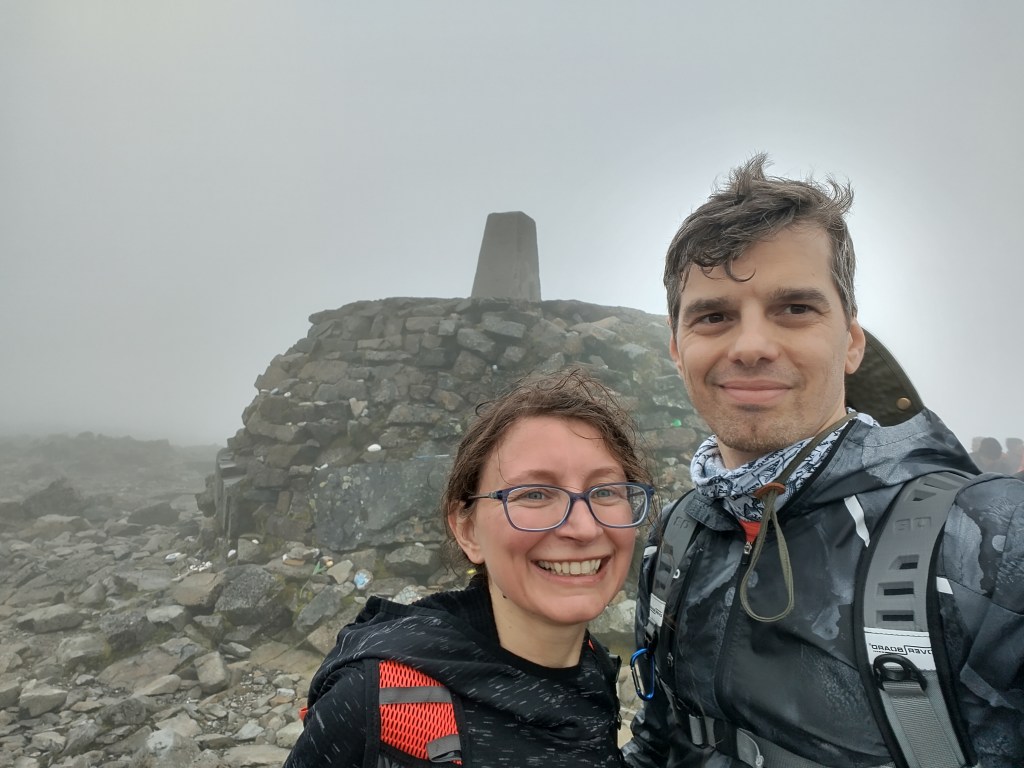
The Tiree distillery day was on a Tuesday, so we booked a ferry leaving from Oban on the Monday. The weekend before, we decided to avoid whisky stuff for once, but rather climb the tallest mountain in Great Britain: Ben Nevis. We left Leith in the morning, and after a first quick break in Callander to pick up some delicious pies at Mohr Bakery, we arrived at the main visitor car park around 11am. We went up from the easy (but still steep) route: we had an initial doubt whether to go for a more challenging route, but we really didnโ€™t want to be the eejits on the news that injured themselves on a path beyond their capabilities (we are decently fit, but still, we hike about half a dozen times a year, not on mountains). The path was a bit crowded, but the view quite spectacular, except on the top: a thick fog welcomed us.
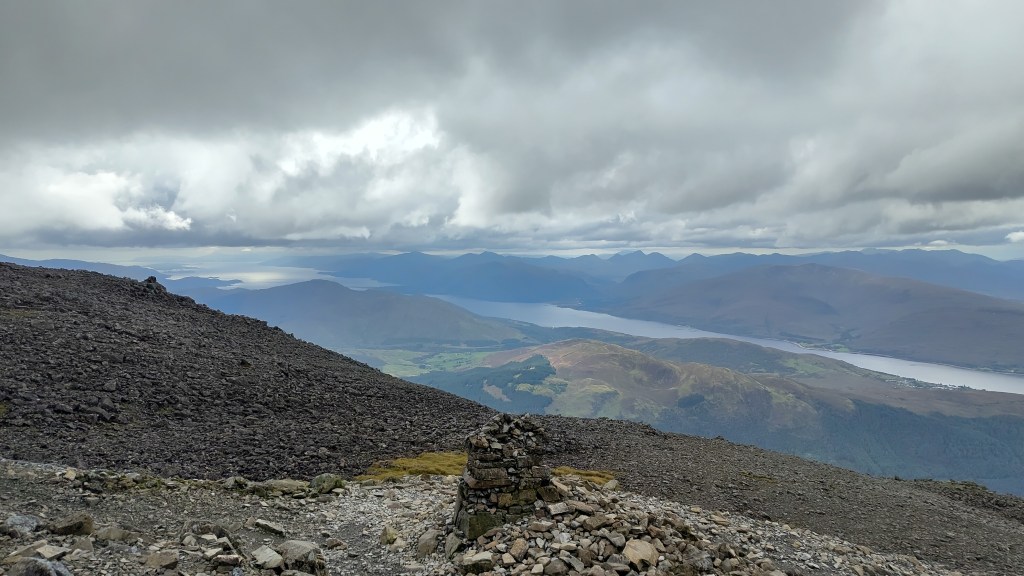
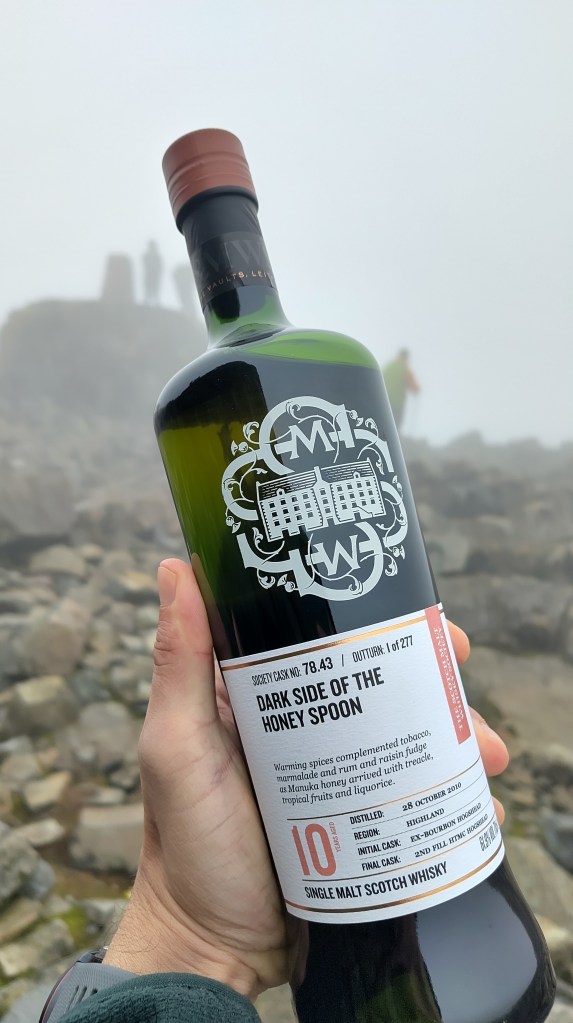
We still celebrated the achievement by opening a bottle of Scotch Malt Whisky Society Ben Nevis bought during the pandemic, high abv but delicious nonetheless. The descent was much faster, and afterwards we stayed at the Glen Nevis campsite, just next door. After a nice meal at the Glen Nevis restaurant (with a decent whisky selection too), we slept like rocks!
The next day we slowly drove towards Oban, where weโ€™d meet with our friends, just after a fantastic seafood lunch in Port Appin at the Pierhouse Hotel, an auld acquaintance from a few years back.

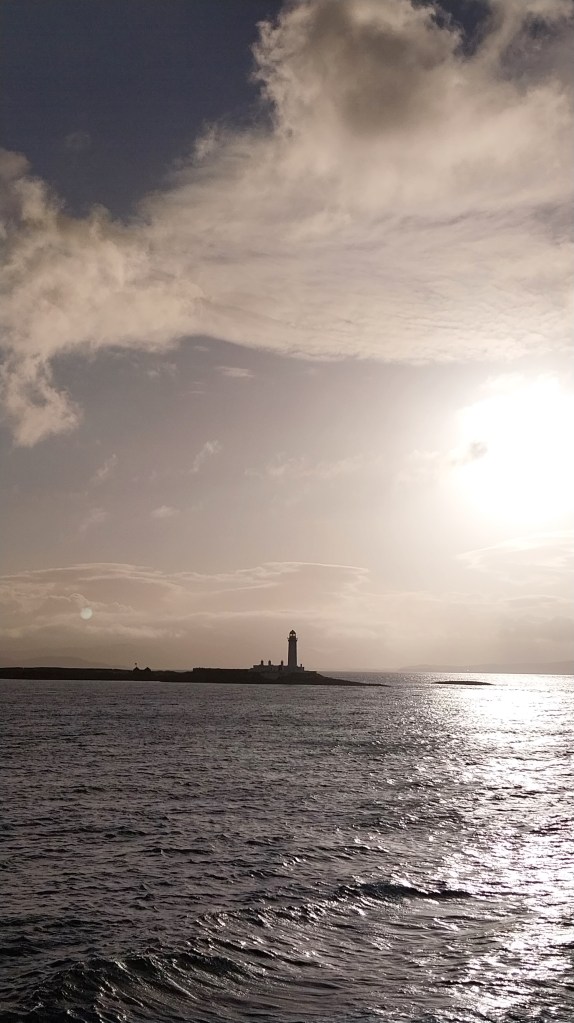
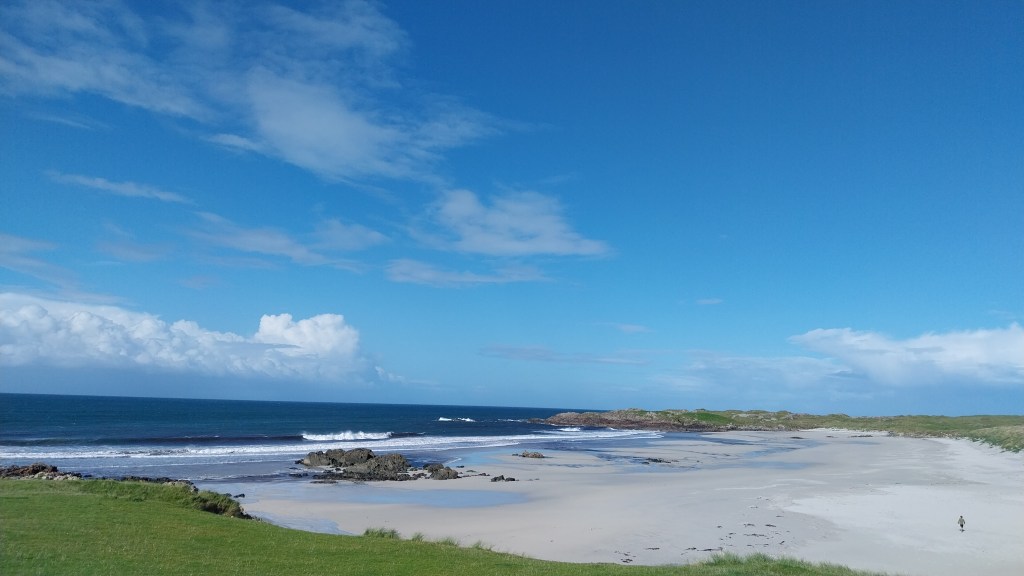
We met with the others at a car park near the Oyster Inn, 10 minutes away from Oban, as they allowed overnight stays for campervans. Meanwhile, the weather had turned rainy and windy, and rumours were that the next day ferries wouldnโ€™t be able to sail, reinforced by an alert message from CalMac (the ferryโ€™s company). Because of this (and the wind) we struggled to sleep that night, but fortunately, in the morning the ferry sailed: we were much relieved (for nowโ€ฆ). It took about four hours to go from Oban to Tiree, and along the sail we spotted Ncโ€™Nean distillery and Tobermory, on a day that turned sunny. As we got off the ferry and drove towards the only campsite, we realised that there isnโ€™t a proper village. The biggest settlement is Scarinish, where the ferry pier is. Also, the island is very flat (the highest hill is 140 meters high, with a radar station (the โ€˜Golf Ballโ€™) on top of it dominating the landscape. This makes it a paradise for surfers, and we found many of them at the campsite and around the island. After we checked in, we spent the rest of the day exploring the surroundings.
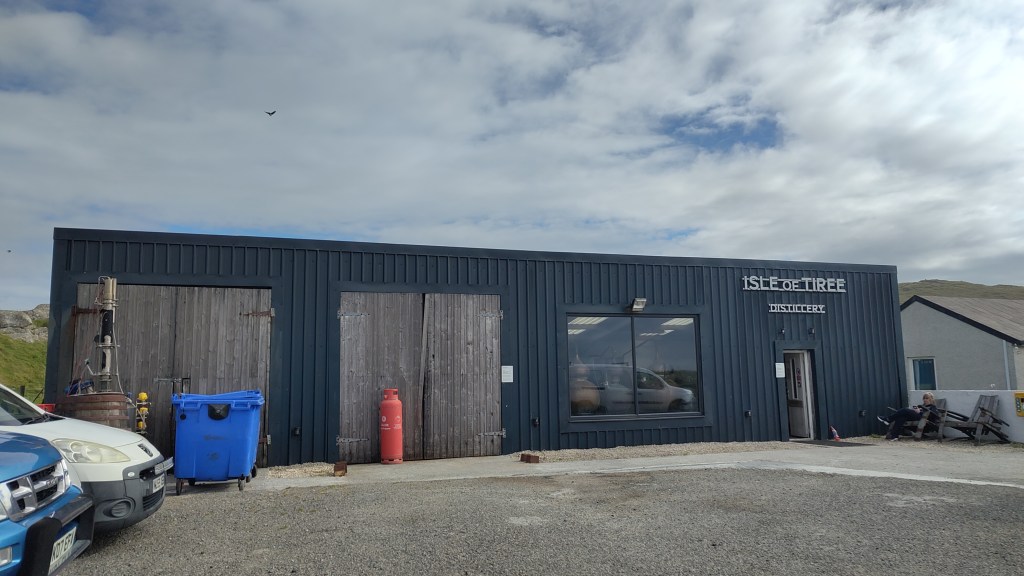
The next morning we left the campsite, and after a stop to a very disappointing diner, we drove towards the distillery, in the south-west of the island. We parked the vans in a field nearby that weโ€™d booked for the night via the Tiree Croft Camping Service. It was supposed to be 10 minutes on foot to the distillery, turned out to be about half hourโ€ฆFortunately we had plenty of time. The distillery is inside a small, blue warehouse. On the right, in a separate building past a courtyard, there is the visitor centre and bar. Itโ€™s very small but very cosy, and since it wasnโ€™t raining (yet), we enjoyed a Tiree gin and tonic on the porch before going back to the distillery for the tour.
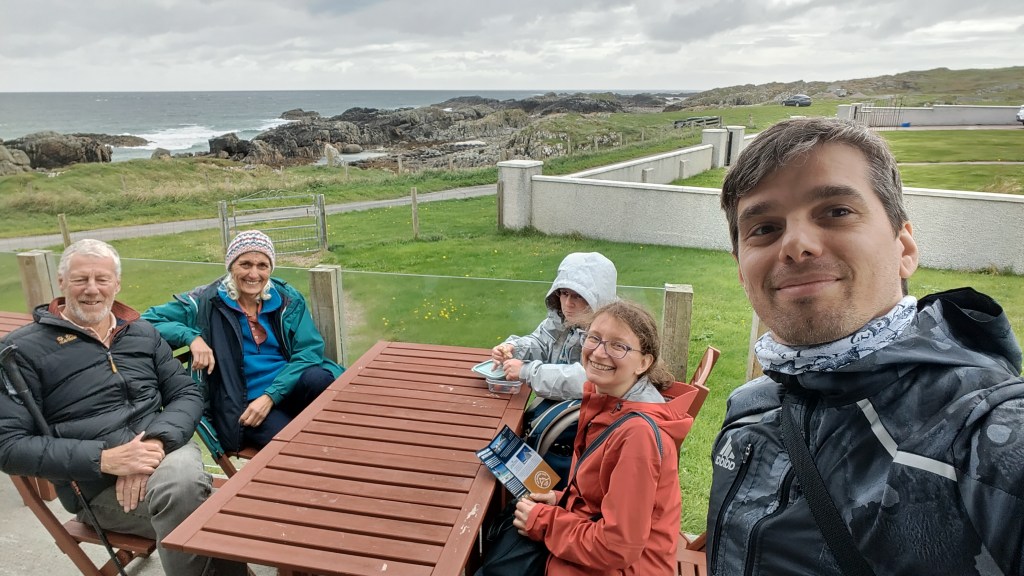
There, we were served a sample of newmake spirit as a welcome. Ian and Allan, the founders, started the tour talking about the history of distilling in Tiree. The historical records from 1768 report about 50 stills, however they decreased to only three legal stills by 1783, before the final clearance operated by the British government to depopulate the country. Finally, in 1802 distilling was temporarily banned, but between 1814 and 1882 a couple of short-lived distilleries were in operation, too unprofitable to resist. And here comes Tiree Distillery, operational from 2020, aiming to reconnect with the distilling heritage of the island.
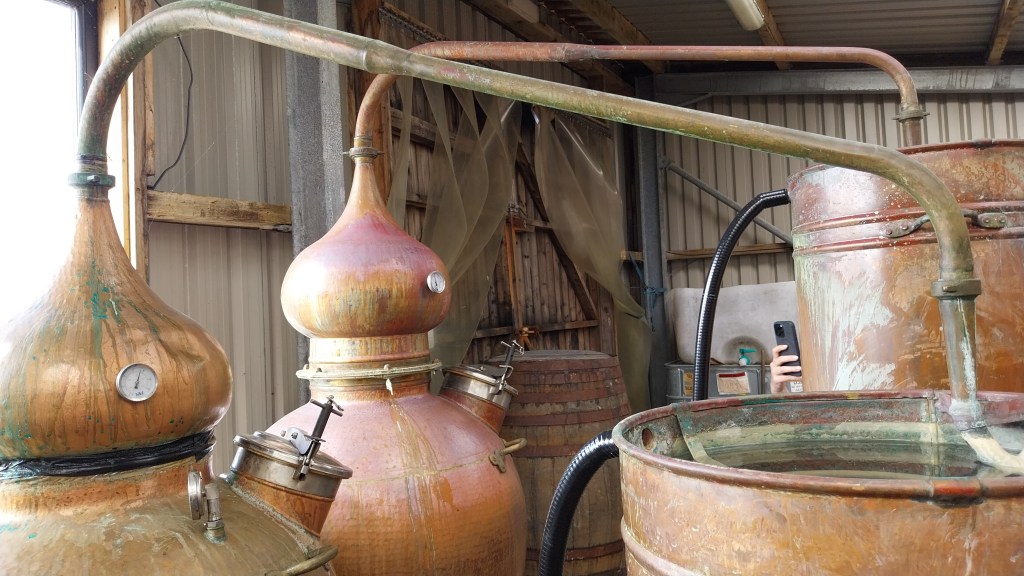
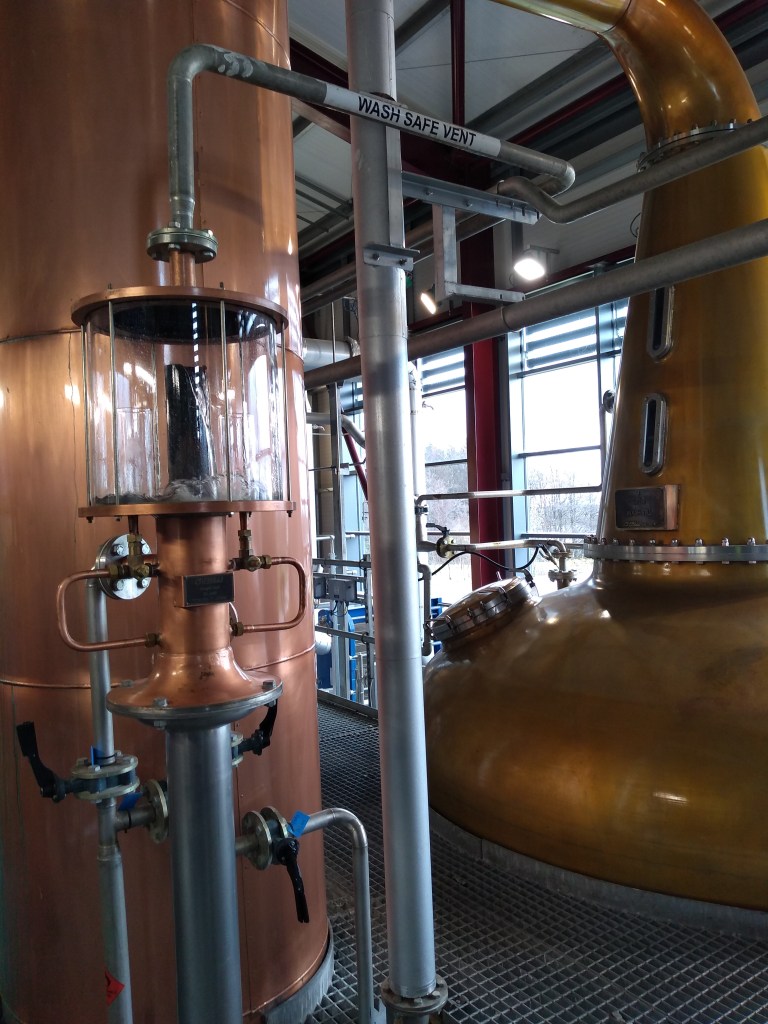
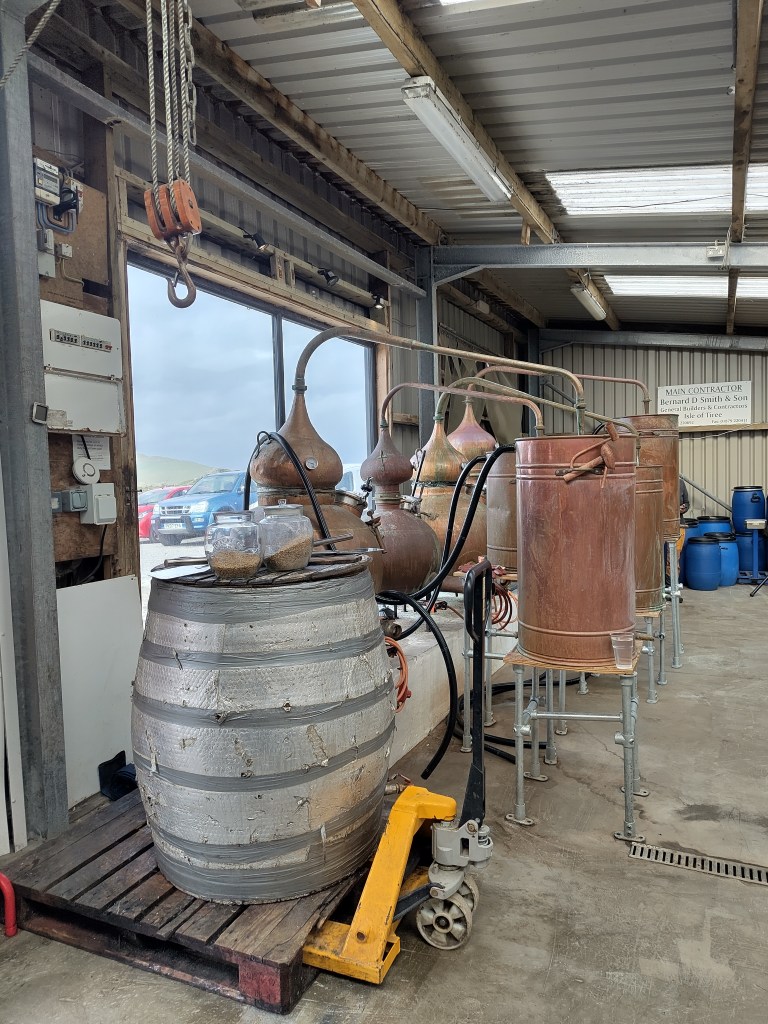
A very small operation, they bring in pre-milled malted barley (mostly Laureate) and rye from Crisp maltings, which they mash in batches of 100 kg with 400 litres of water into a wooden mashtun which used to be a sherry butt (that was a first for us!). They tried to grow local barley, which was possible but then the challenge was malting, requiring the malting to be shipped off the island and then back. They have four washbacks for the fermentation stage, two made of stainless steel and two of oak, former butts like the mashtun. Fermentation normally lasts 4 to 5 days, but it can go up to 2 weeks for experimental runs. The 6-7%abv wash is then distilled in one of the two wash stills, to get 23-25% low wines, distilled again in the spirit still. The stills are Portuguese Hoga stills with worm-tub condensers. A fourth still is used for the gin (they bring in neutral grain spirit). During the second distillation, the first cut point is 70-74%, made by smell and taste, while the lower one is around 63-64%, with the discarded feints and foreshots redistilled in the following batch. From each distillation they obtain about 60 litres of newmake spirit at 70% – it takes them two runs to fill a quarter cask.
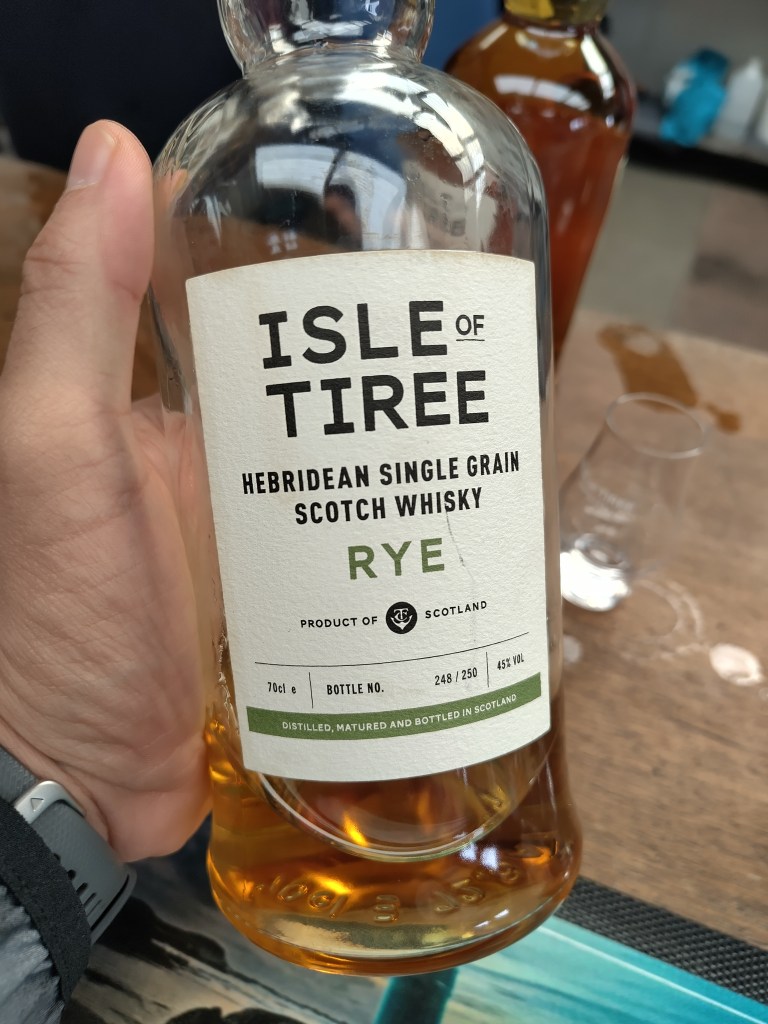
The warehouse is in the same building for the moment, with casks mostly sourced from Speyside Cooperage, especially from Heaven Hills distillery in Kentucky. The plan is to have at some point a separate building for maturation. This would solve also the high evaporation they have at the moment, caused by the production heat. We shared a dram of their newest release (ยฃ8, ยฃ125 for the bottle), the second in total after their first Single Malt release last year (not on sale anymore, but it was sold for ยฃ200). This one is a single grain, with 75% rye and 25% barley, aged four years in virgin oak and ex-bourbon casks: one of the best Scottish ryes we tried so far. They also produced a high-corn mash spirit, which is still maturing in the warehouse.

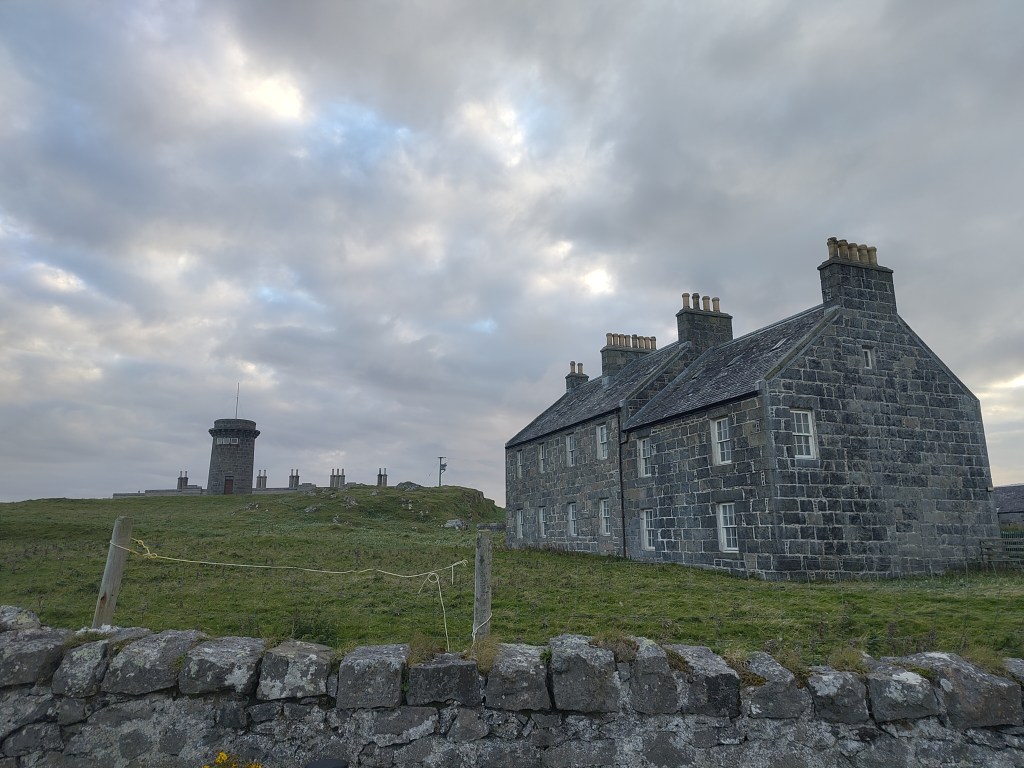
After leaving the distillery and walking back to the vans, we realised the field where weโ€™d parked was too exposed to the wind, so we called the cooperative managing those fields and we were able to swap for another one slightly less exposed. Still no facilities, which left a sour taste as we had paid ยฃ15 for one night. At least this one was at a walking distance to one of the very few bar/restaurants on the island. The very cozy Alan Stevenson House is in Hynish, a settlement that used to serve the Skerryvore lighthouse. We walked there to grab a dram, before retiring in our campervans for dinner and for a final dram, all together inside Gladys, Karen and Chrisโ€™ campervan, the biggest of the three. When we left the bar, the Tiree Distillery dinner was about to start: we didnโ€™t have tickets for the event (ยฃ65), which we regretted a bit because first, they were serving the first single malt release too, impossible to try elsewhere. Second, we didnโ€™t know yet what would happen in the following days.
The day after came with a bad surprise, as our ferry for Barra was cancelled (sad trombone). Instead, we got another one back to Oban, as the day after there was an early ferry from Mallaig to South Uist. If that went ahead, we would have had still time to attend all the other distillery visits of the holiday. That wasnโ€™t the case: in the evening, when we were already in Mallaig, this ferry was also rerouted from Oban (dโ€™oh!), but in the morning that was cancelled too. The last chance would have meant to travel to Uig, on Skye, but there were no spaces for vehicles and there was no assurance that the ferry would sail. So, after a regroup in Mallaig, we decided to drive back to Fort William and abandon the plan. From the campsite we booked we walked to the Ben Nevis distillery, where Hazel, the lead tour guide and whisky IG friend, gave us a warm welcome and some tasty drams. That was a nice consolation.
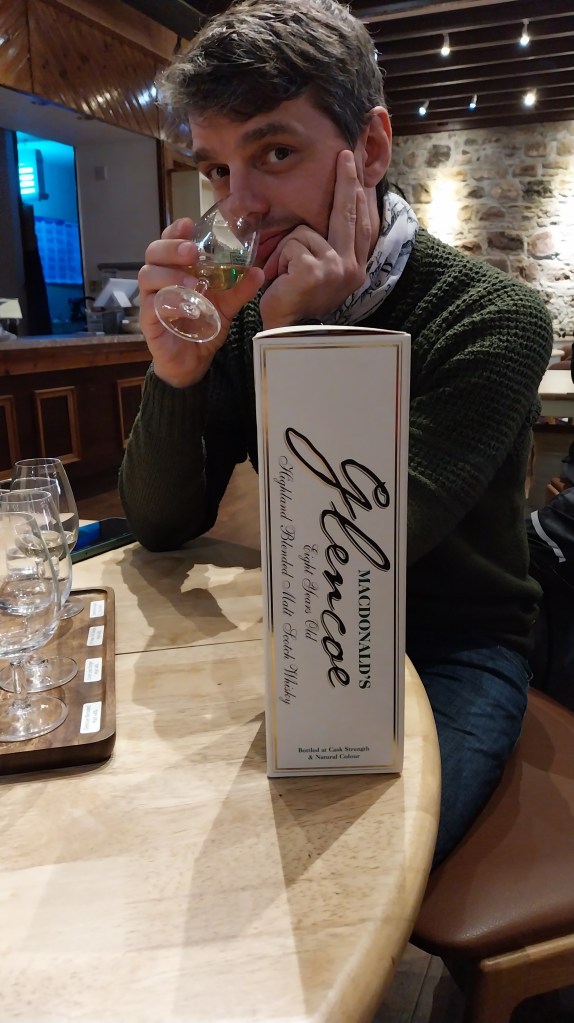
While weโ€™re happy that we visited Tiree distillery and to learn about their crafty setup, we were a bit disappointed that we couldnโ€™t make it to the other islands. The distilleries personnel were very understanding and all of our tastings and tours were refunded, and it was the same for the ferry tickets. Unfortunately, when storms happen thereโ€™s nothing anyone can do, we just hope to be able to go back soon (and be a bit luckier with the weather).

Stay tuned to learn more about our โ€œplan Bโ€, in a couple of weeks. Until then, slร inte!


Tiree Distillery Open Day Tour

Price: free* (September 2025)

Duration: 45min

Tasting: 15ml of newmake spirit (63.5%)

Distillery Exclusive: on the day, the Tiree Single Grain Rye Whisky (45%, ยฃ125)

Target: anyone

Value for money: of course very good, as it was free

Highlights: the cosy setup

Recommended: if you’re already on the island, definitely

*the regular whisky tour is ยฃ20, but according to the website there are no tours scheduled in the next 6 months

Link: https://www.tyreegin.com/


#29 Fife again

Back to the festival, with a visit to Inchdairnie


TL;DR: And the time for one of our favourite appointments came again: The Fife Whisky Festival, where we and a bunch of Edinburgh Whisky Group folks volunteered again to help Justine and Karen. As part of the festival, we visited the very modern Inchdairnie Distillery, usually closed to visitors.

One of our favourite events of the โ€œwhisky-yearโ€ is a relatively small festival, expertly organised by the entrepreneurial duo of Justine (Kask Whisky) and Karen (Angelโ€™s Share Glass): the Fife Whisky Festival. It starts on a Friday in early March (carefully chosen to avoid clashes with the 6 Nations) with an opening dinner, followed by two sessions on the Saturday at the Corn Exchange in Cupar, and it ends on the Sunday with a few events at local distilleries or other venues. Simple and effective, and this year edition was no different.

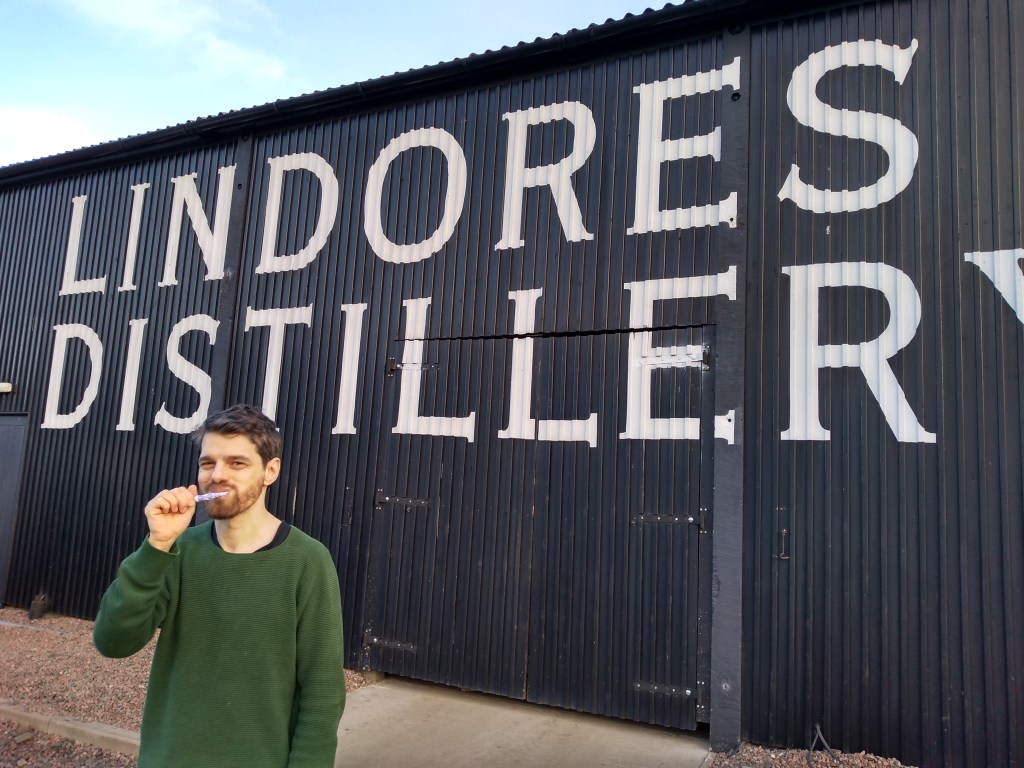
Like in 2022, this year the opening dinner was at the Lindores Abbey distillery, in Newburgh. We were welcomed at the bar with a cocktail based on their Aqua Vitae, which we enjoyed in the adjacent production room (not working during the evening). Dinner was served downstairs, in the โ€œhuge table hallwayโ€.

As last year, we had four drams, an opening one and three paired with the delicious courses. This year we started with a Lindores Abbey (Friar John Cor cask strength), and then we had a Ncโ€™Nean (The Huntress 2022 edition), a Loch Lomond and finally another Lindores Abbey (the leftover of their inaugural release, reserved to the members of the 1494 Club). Before the event, Justine kindly asked the distillery staff if we could sleep in our campervan in the parking lot, which they agreed (thanks again!). We are not sure that everyone was up to speed though, as in the morning we spotted some puzzled faces among the workersโ€ฆoops. As we woke up, we quickly dressed and drove towards Cupar to grab some breakfast. For the second night we had booked a B&B, and fortunately we could check in early.

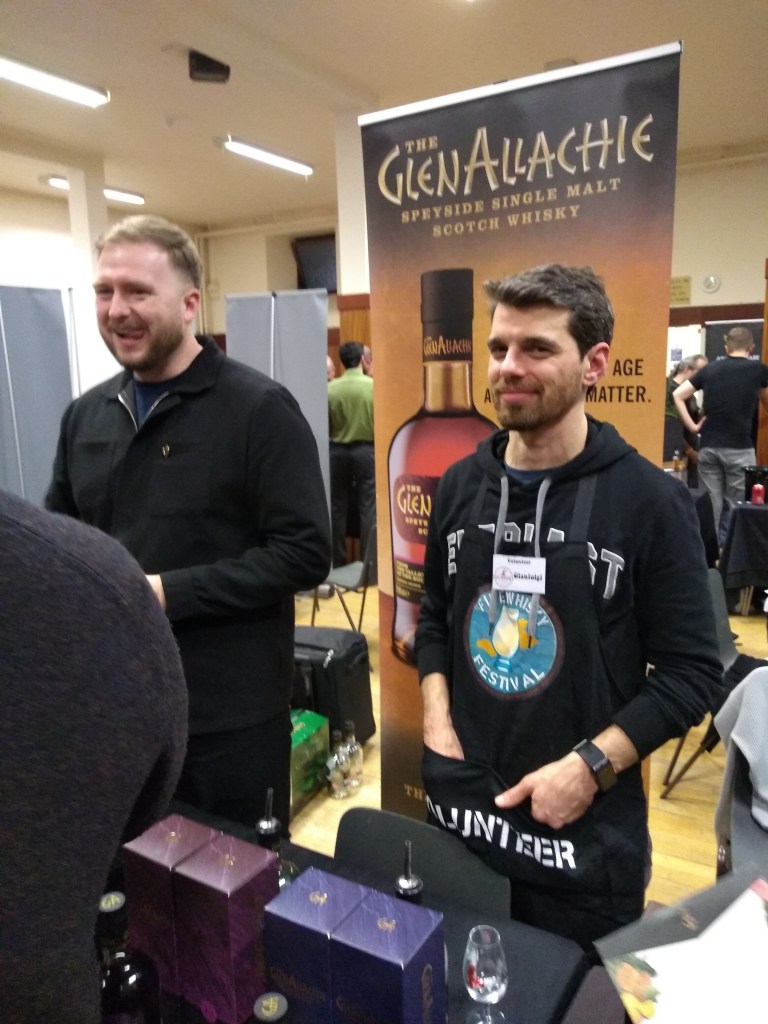
The festival went very smoothly. We were on tickets duties at first, and during the second session we also checked in Roy Duff (from the Aqvavitae Youtube channel) and other whisky-pals from Glasgow, among others. During each session, after most of the attendants got in, we helped the standers by bringing coffee, tea, etc. Gianluigi even replaced temporarily Declan from Glenallachie to let him have a break, as he was alone at the stand. For a minute it was nice to โ€œplay brand ambassadorโ€ for one of our favourite brands! There were many volunteers, so work was not excessive, and it was nice to take a break from time to time to get a wee dram and chat about whisky with old and new friends. After cleaning and wrapping up everything, the night ended at a local restaurant with a good curry. 

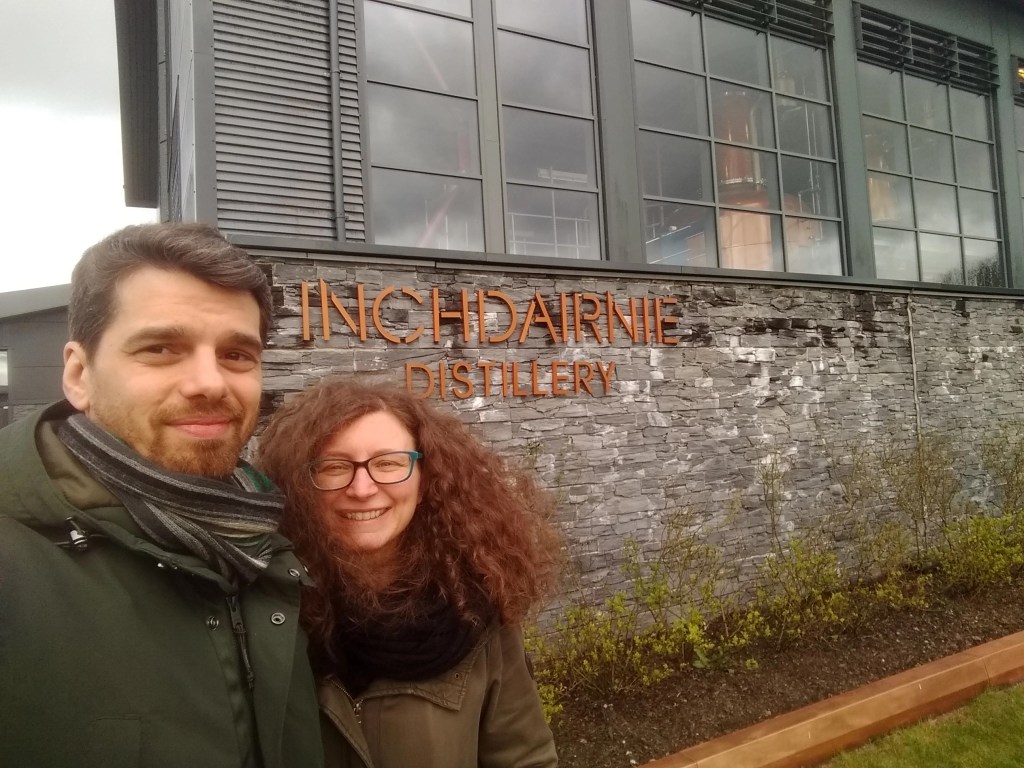
On Sunday, after a sizeable Scottish breakfast at the B&B, we picked up our friend Stephen and drove to one of the events of the day: the visit to Inchdairnie distillery (the other was a Lady of the Glen tasting at Dalgety Bay). We were very excited about that, for a number of reasons. First, it was a rare occasion to visit a distillery usually closed to public. Second, we knew they were producing some very interesting spirits that we tried at the virtual Fife Festival whisky tasting in 2021 (the only year when the actual festival didnโ€™t go ahead), including some rye, which we both quite liked. 

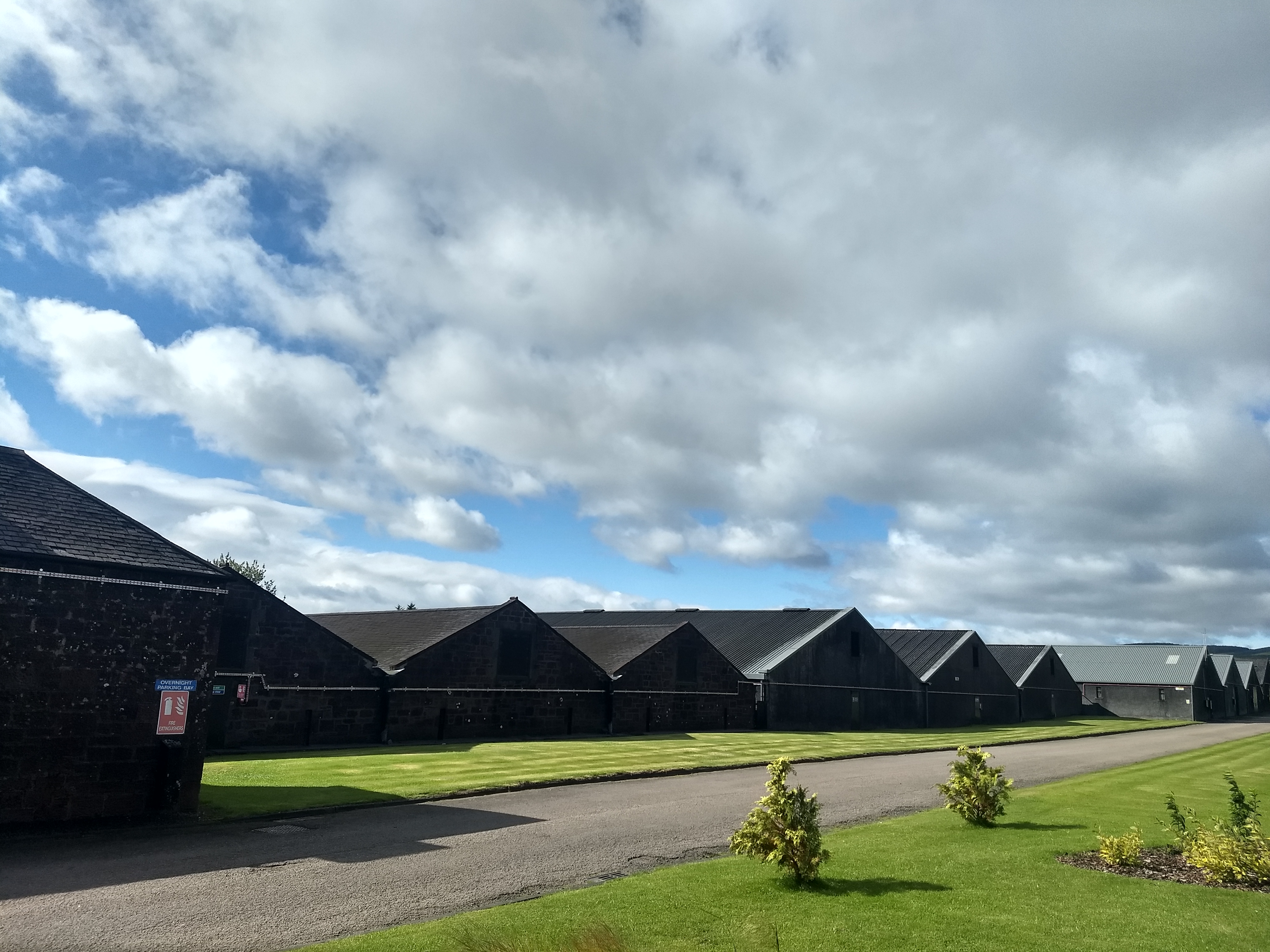
The distillery is in an industrial estate near Glenrothes. The parking lot is in front of two modern buildings, one for production and the other one for he offices (with warehouses behind the latter), and the entire (very tidy) area is surrounded by a green lawn. After a little wait, we were welcomed inside the offices, in the conference room. As we sat around the table, Ian Palmer (the managing director) introduced himself and started describing the distillery vision and production, soon delving into technical details (so much that we both started taking notes on our phones). 

Production started in 2016, with a capacity of 2 million litres per annum, soon to be doubled. Because of this big capacity, they experiment with different mashes of malted barley, rye and oat. Thus, they have lot of different products in their portfolio and, unlike most new distilleries, they are keeping some to release themselves and selling the rest to blenders (including Macduff International, whose portfolio includes Grand Macnish, Islay Mist, Lauders and Waterproof whiskiesโ€ฆmany of theese bottles were on display). Current plans will see their single malt (Inchdairnie, unpeated) released in 2029, and will be the result of Fife malted barley, from both spring and winter crops. Depending on the season it is distilled, the newmake will be put in different casks (here a scheme of the pairing between season and cask type).

At the moment, they are also producing an unpeated single malt, Strathenry, as their trading whisky (a few independent bottled ones already came out). There are also two peated malts: Kinglassie and Finglassie. The former is produced using Fife barley, while the latter is sold as a trading malt (to blenders and independent bottlers). A range of unique distillations, varied every year, will be released under the name of Prinlaws, and they will be experimental runs. Finally, the first product they released is the Ryelaw: a mash of malted rye (53%) and malted barley (47%), with second distillation in a Lomond still (the third we saw, after the Ugly Betty used to produce the Botanist gin at Bruichladdich, and Scapaโ€™s wash still). Because there isnโ€™t a definition for rye whisky in Scotland, it is classified as a single grain whisky. However, it satisfies all the criteria for American rye whiskey, except not being produced in USA, of course. It is currently available for the not wallet-friendly price of ยฃ110. 

A passionate Scott with a passionate audience.

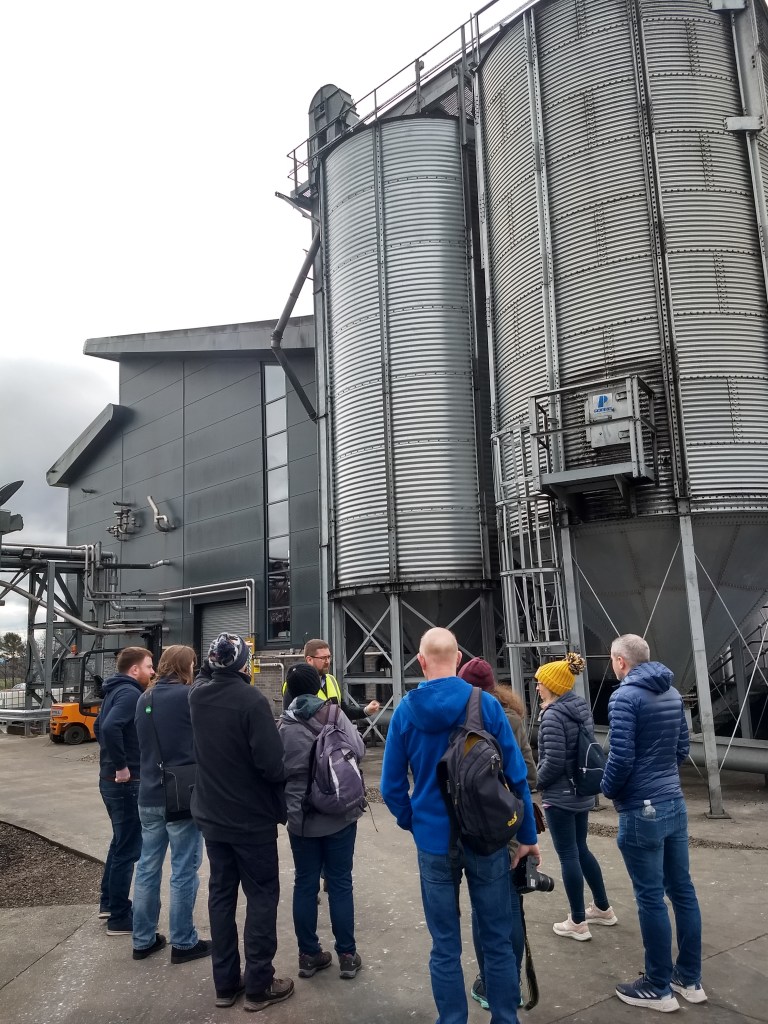
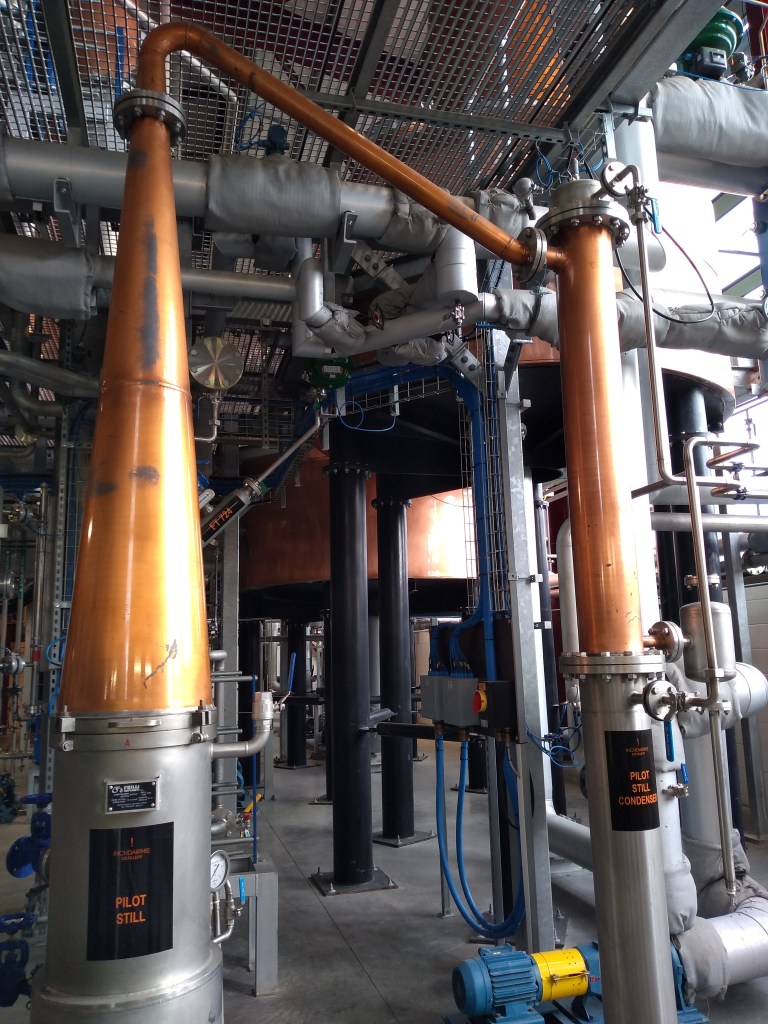
After the thorough introduction by Ian, Scott Sneddon (the distillery manager) took us around the production plant. We first saw the boiler, currently running on natural gas, which will be replaced with a hydrogen fuelled one. Being so new, they donโ€™t have neither a Bobby nor a Portheus mill, and the milling is done with slightly different percentages compared to the most common 70% grist, 20% husks, and 10% flour mix. This is to maximise the sugar production in the mash, which is obtained through a mash-filter, as opposed to the majority of distilleries that have a mashtun. Fermentation happens in stainless steel washbacks outside the production building. Other than the three stills (wash, spirit, and Lomond) used for production, they also have a wee pilot still, which they used to decide the various parameters for their spirit. Of course, everything in the distillery is highly automatic, as testified by the equipment in the control room. Outside, we saw silos utilised as spirit receivers, and a row of palletized warehouses, with barrels patiently waiting to be ready for bottling. They have also a small warehouse in a separate building for their cask club.

Main distillation and…
…experimental distillation.

Back inside, we had a very nice buffet lunch and a nosing experience of some of their spirits (including some oat newmake spirit, veeery different). To our surprise, no tasting on site, which was actually better for us as we didnโ€™t have to pick a designated driver. Instead, they gave us a very generous tasting pack with four drams: 2018 Inchdairnie Palo Cortado, 2017 peated Kinglassie (probably ex-bourbon cask), Ryelaw newmake spirit and Ryelaw (distilled 2017). A very nice touch, and as we later found out, the drams are all delicious. 

Overall, one of the most peculiar distilleries we visited so far. While most of the new distilleries went down the road of a traditional building and process, others like the Cairn definitely embraced modernity. Inchdairnie, however, seems to push this to another level, and only with time we will see if their efforts will be rewarded. For now, everything looks very promising. 

Until next time, slainte!


Fife Whisky Festival
https://www.fifewhiskyfestival.com/

Inchdairnie Distillery (not generally open to visitors)
https://www.inchdairniedistillery.com/


#20.1 Feast on the East

East of Scotland bonanza: Fettercairn and Arbikie


TL;DR: On our way to Speyside, we stopped by two distilleries along the way. One old, Fettercairn, and one new, Arbikie. We liked both tours: while Fettercairn was more of a classical distillery experience, we appreciated Arbikie forward-thinking and innovative spirit. Fettercairn Warehouse 2 drams were outstanding! 

Here we are again, mid-September, early Friday morning, on a bus to Lochrin Place, near Tollcross, where a car is waiting for us. We had booked it at McNicoll – following the increase in rental car prices due to the pandemic, they are now quite competitive and their service is generally much better than most of the other ones. That morning Teresa, the designated driver for the weekend (Gianluigi: โ€œAH-AHโ€), drove us up north towards the Highlands, but then turned eastward on the road to Aberdeen.

Our first appointment of the day was with Fettercairn distillery, at the bottom of the Cairngorms mountains (which is the meaning of the name). This distillery is owned by White and Mackay and has a long history. Founded in 1824, it was one of the first to get a distilling license.

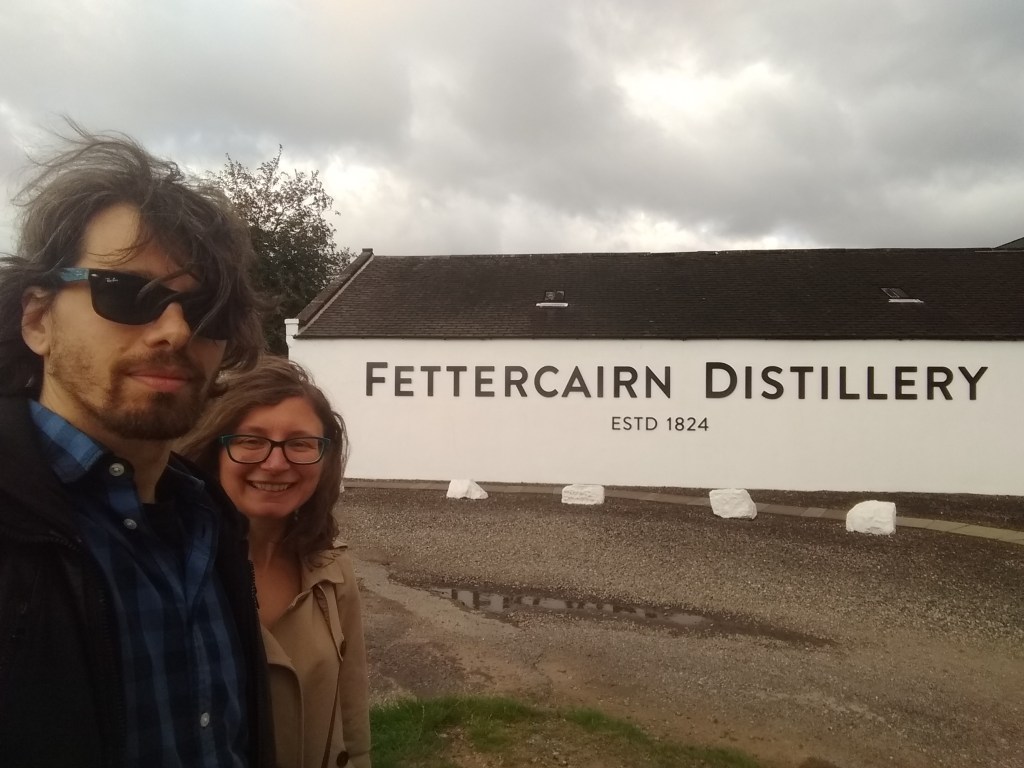
Here we are, ready for the tour (not so much for the wind).

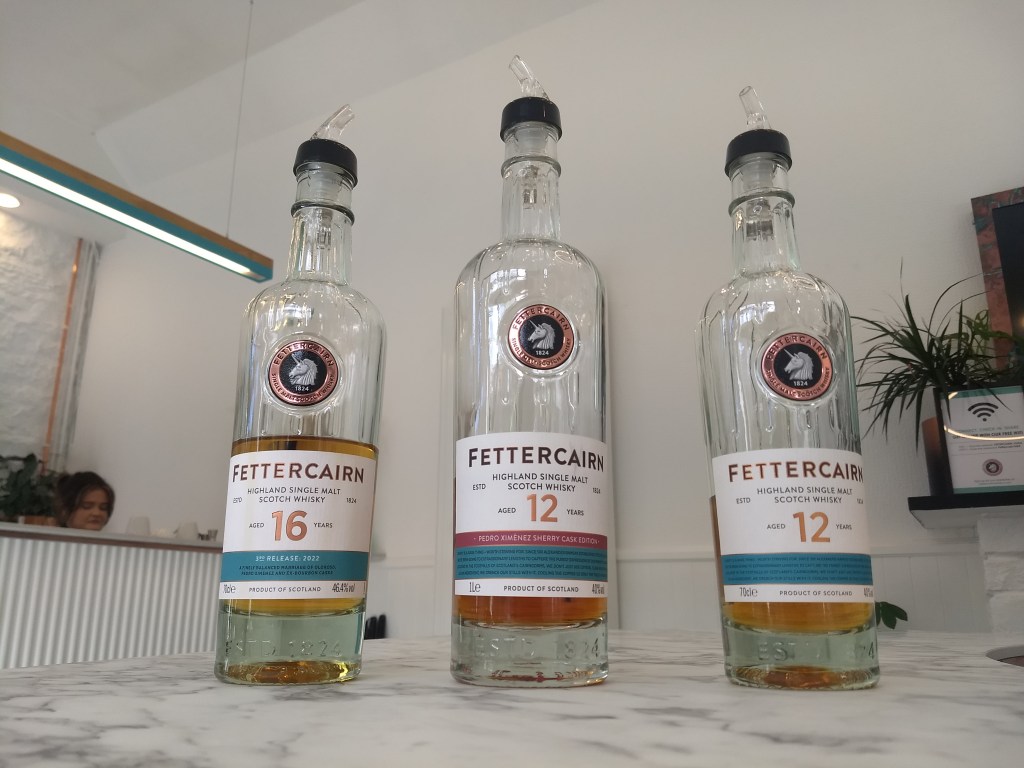
Recently the brand underwent a restyling, so although the 12y and the 12y ex-PX cask (a travel retail expression) stayed at 40%, the 16y moved to a more natural presentation: from 40 to 46%, not chill-filtered and no artificial colour additions, just what we enthusiasts want! They also added the Warehouse 2 series to their portfolio, usually younger expressions at a higher abv from a vatting of casks selected by the distillery manager, each different from the previous one.

As we get to the (renewed) visitor centre, we are welcomed by our guide for the day: Kirsty. She illustrated very clearly the historical context of the late 1700s and early 1800s, around the time that Fettercairn got its license.

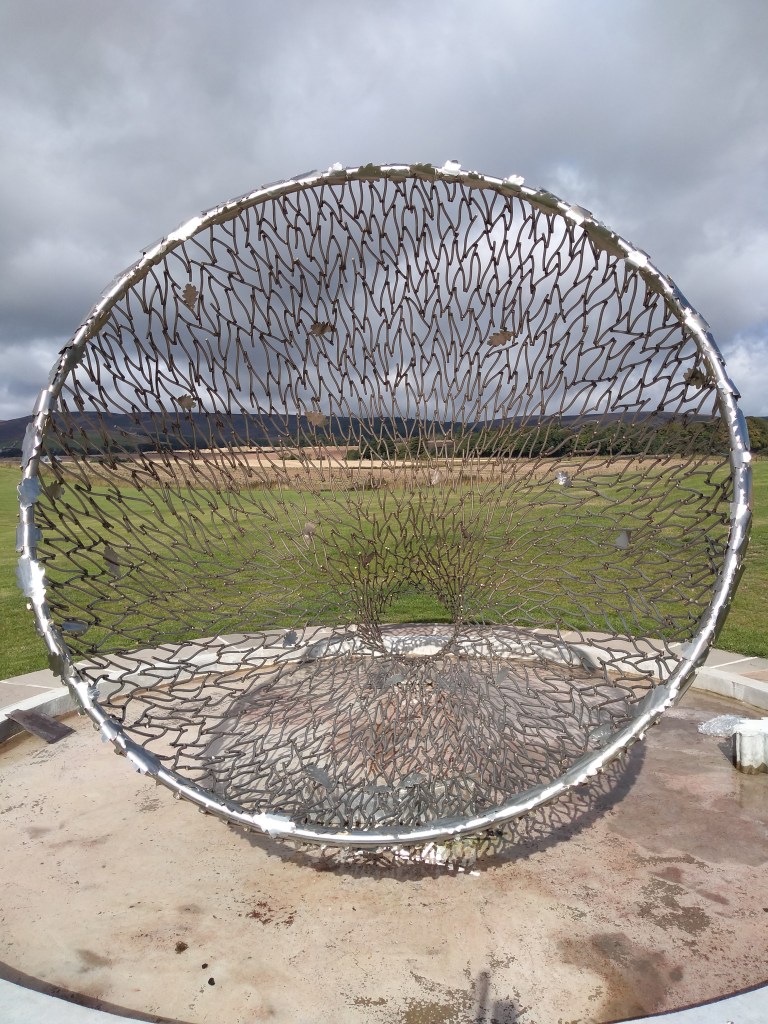
We then moved to the Forest Flow monument outside the visitor centre, a testimony of the distilleryโ€™s sustainability plans. For example, they planted oak trees on the Fasque Estate, an 8,500 acres land nearby. Another long-term but extremely interesting plan is a collaboration with the farmers in the area around the distillery, which will lead to single-farm expressions: exciting times!

The Forest Flow.

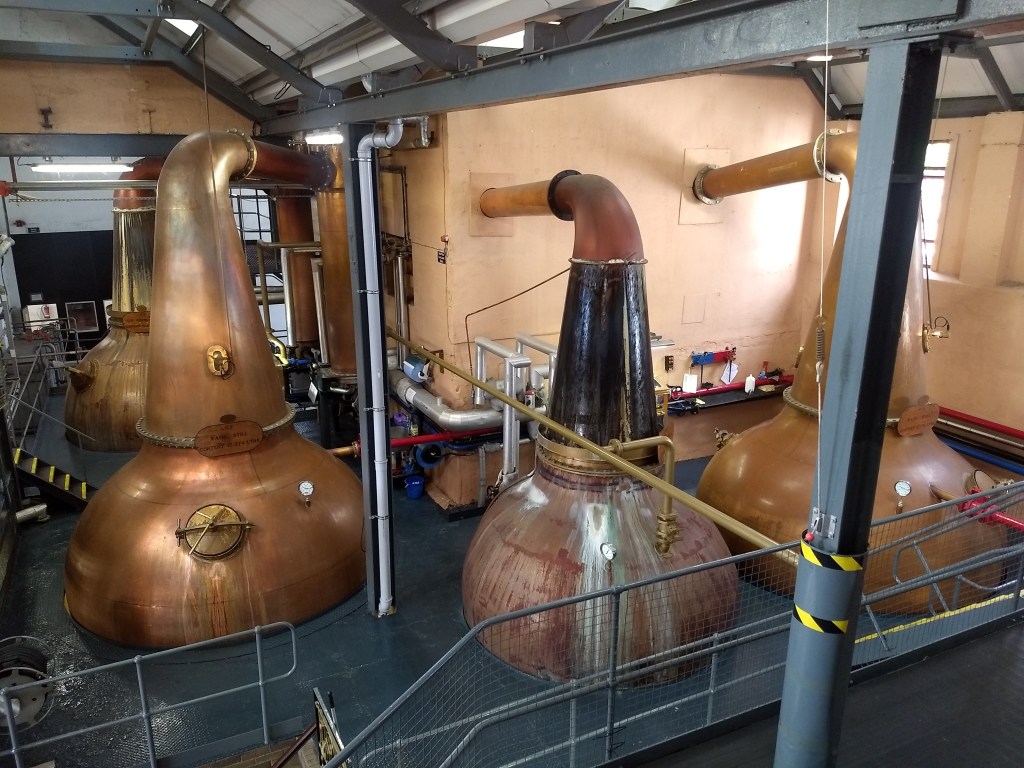
 Moving to production, Kirsty showed us the water recycle system they have in place to minimise water waste.We were then shown their copper lidded mashtun, their Douglas Fir washbacks, and finally, their 2 pairs of (vapour coil heated) stills with their cooling ring. This was one of the most interesting features: the ring is a circular tube spraying water on the neck of the still, cooling it and therefore increasing the reflux. In our understanding, this makes some particles drop back into the still, allowing only the lighter ones to go up. So cool(ing)!

Isn’t it cool?

We checked out the warehouse and finally went back to the visitor centre for a taste of the two 12y expressions and the 16y (we opted to pay and extra fiver for a third sample). The two 12y were tasty compared to other 40% basic drams, but the stand-out was the 16y: a nutty storm, truly delicious. Kirsty was very kind and gave us also two wee samples of the Warehouse 2 collection, batch 3 and 4 (1 and 2 were gone): the #4 is a more classical, rich and fruity dram, while the ex-rum cask influence on #3 gives it a tropical and flowery perfume, one of the most floral drams we ever tried. Both amazing.

Yummy drams!

Overall, a nice visit, which weโ€™d repeat, particularly because Kirsty told us that they are planning to offer new tours, including warehouse tastings and some Warehouse 2 series focused, looking forward to it!

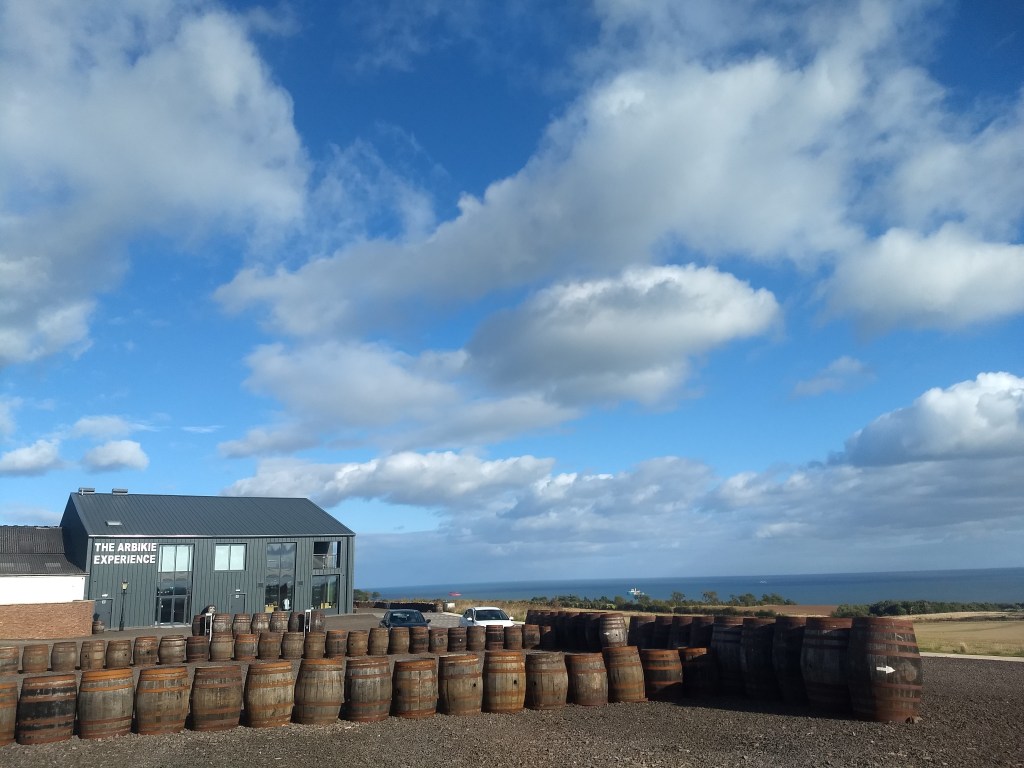
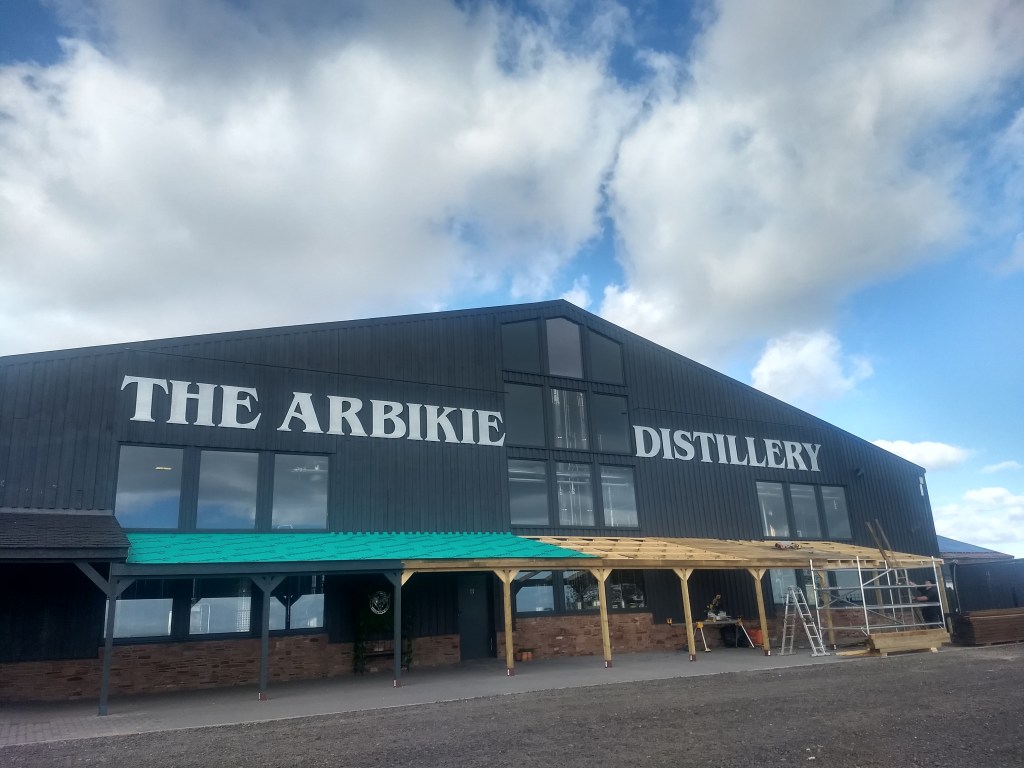
We had lunch in a cafรฉ close to the famous arch in Fettercairn, and then moved to the next distillery: Arbikie. This is a quite new distillery, founded in 2013 by the Stirling brothers, originally farmers in the area. They started by producing vodka with potatoes they cultivate, and soon moved to gin and later to whisky. An interesting characteristic is that they produce whisky from 3 different grains: oat, rye and, of course, malted barley. As we parked, we were welcomed by a stunning view of the fields and the sea, truly a beautiful spot! The amazing landscape can also be enjoyed from the very nice cafรฉ and restaurant.

Amazing view from Arbikie.

There were works going on to build a new semi-open conservatory to improve visitorsโ€™ experience, particularly in sunny days. Itโ€™s just the two of us on the whisky tour (they have also a gin-focused and a general tour). Our guide was Andy, very knowledgeable and whose great-grandfather worked for the Stirling family.

Lots still going on at the distillery!

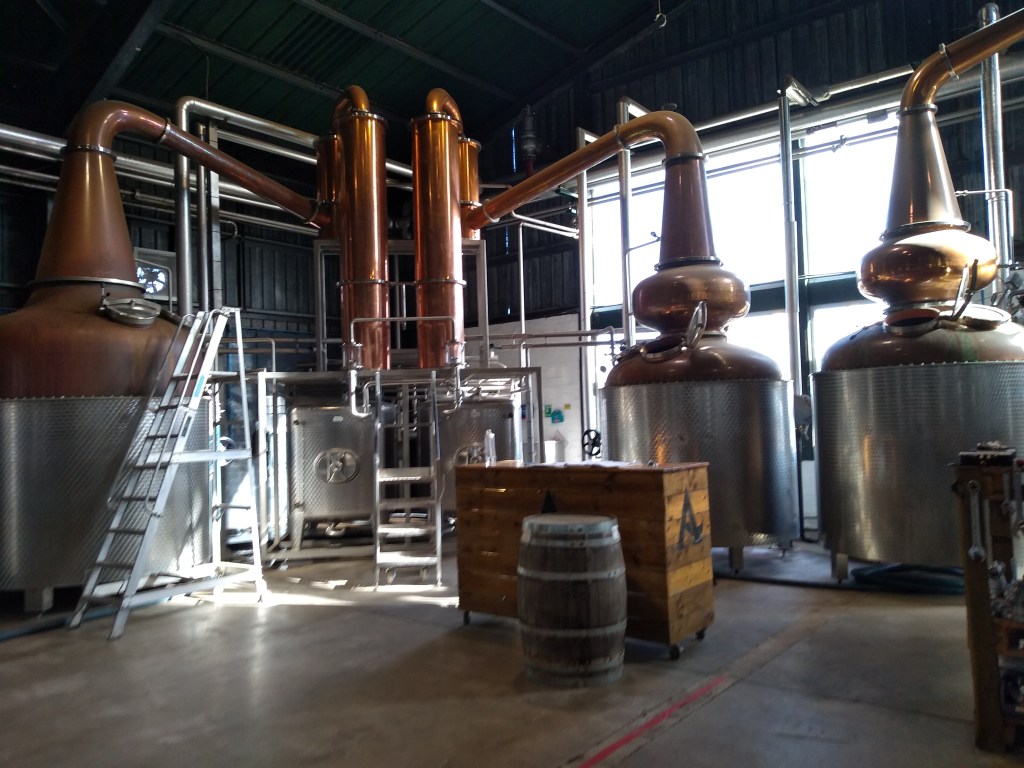
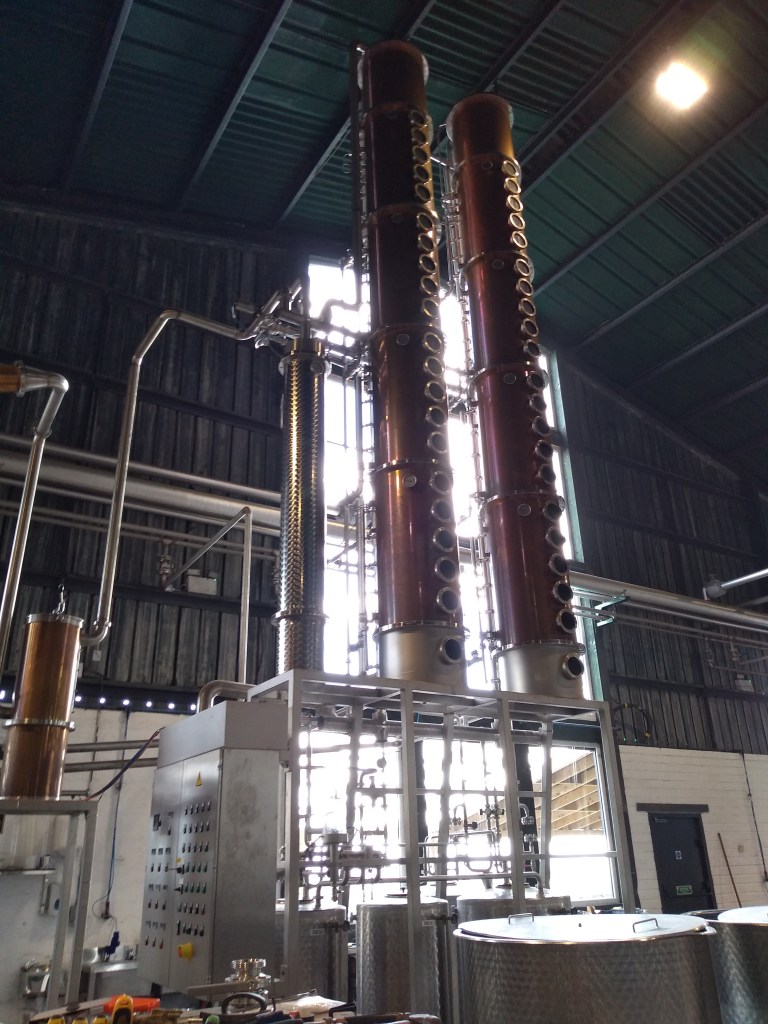
Everything in the distillery is oriented towards sustainability, with heat-exchangers and other features in place to minimise energy consumption. Some peculiarities are their stainless washback silos (more similar to those in breweries) and their stills: three pot stills (one for wash and two for spirit) and the column stills. While gin and vodka are exclusively distilled in the column still, for the whisky they can play with a combination of the two. For example, we’ve been told that some of their rye newmake spirit recently underwent the second distillation in the columns, as the spirit stills (normally used for the second distillation) were under repair. Unlike most distilleries, they currently donโ€™t have a dunnage warehouse, everything is palletized. On top of the usual ones, they have a variety of casks, including ex-Armagnac, ex-rum, and ex-red wine.

Pot and…
…column stills.

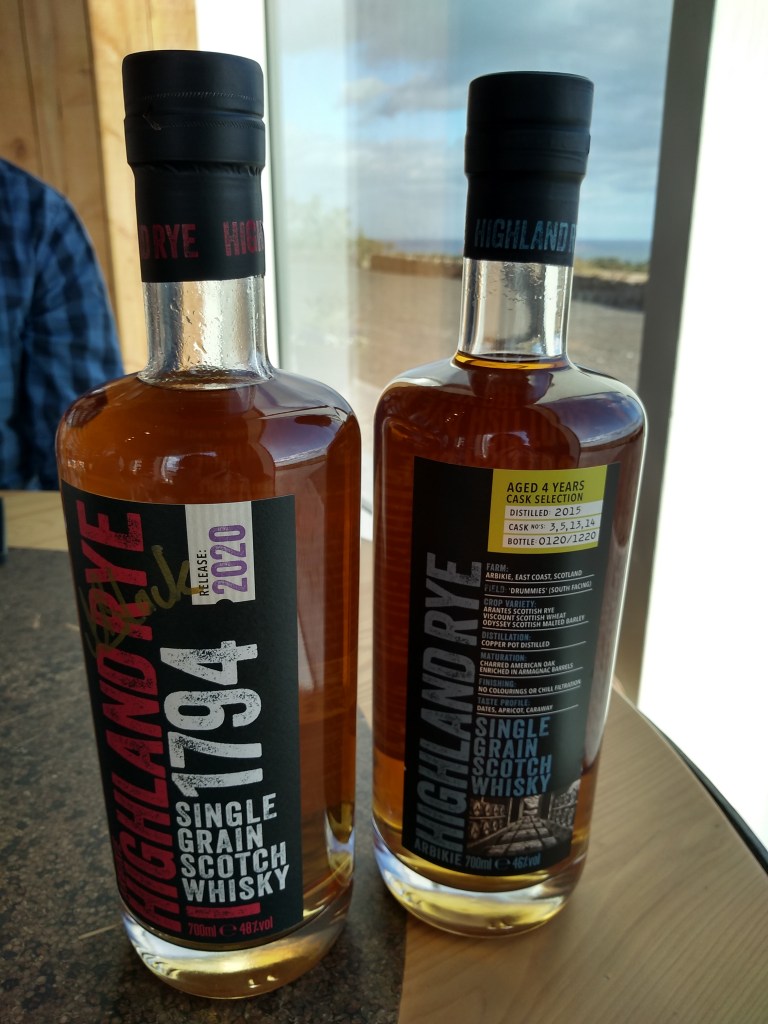
Back at the shop we tried some of their rye whiskies, the first ones officially released in Scotland in over 100 years. We had two expressions, the one that can be defined their core range (which we had already tried via Whisky-Me), and a single cask finished in ex-Armagnac casks. The second was better, but we werenโ€™t huge fan of either: too herbal, almost a hybrid between a gin and a young rum. Very pricey too, ยฃ90 for the first and ยฃ250 for the second. It must not be easy to find your feet for something so uncommon as a Scottish rye whisky, where, unlike single malts, there is no โ€œblueprintโ€. So, we are confident that their product will improve over time, in particular as more aged stock becomes available. Also, weโ€™ll be very curious to try their single malt, once released.

The rye tasting.

Back to the car, we took the โ€œslowโ€ but very scenic road across Speyside to reach Fochabers, where we had our hotel booked. After a nice dinner at the Gordon Arms Hotel, we went to bed ready for the next day.


Fettercairn Tour (with extra dram)

Price: ยฃ20.00 pp (September 2022, ยฃ15 without the extra dram)

Duration: 1h 30min

Tasting: 3 drams, 12y (40%), 12y PX-finish (travel exclusive, 40%), 16y (46.4%, NC, NCF)

Target: anyone

Value for money: Very good

Highlights: the cooling ring system on the stills

Recommended: definitely!

Link: https://www.fettercairnwhisky.com/


Arbikie Whisky Tour

Price: ยฃ25.00 pp (September 2022)

Tasting: 2 drams, Arbikie rye (48%, NC, NCF), Arbikie single cask rye ex-Armagnac finish (46%, NC, NCF)

Target: anyone

Value for money: Ok

Highlights: the view and the distillery setting

Recommended: mainly to fans of all spirits

Link: https://arbikie.com/