#66.1 Something new, something old

Toulvaddie distillery: A whisky mystery solved withโ€ฆpizza!


TL; DR: After our trip to the Outer Hebrides was cancelled, we tried our luck driving East, to the Fearn Peninsula. There, we visited another new craft distillery: Toulvaddie. Not our usual tour, but a must-do for the pizza and cocktails lovers!ย 

If you read our last post, youโ€™ll know our holidays to the Outer Hebrides went down the pooper: we barely managed to visit Tiree distillery, on the Isle of Tiree, but then our next ferries were cancelled because of high wind. Oh well, when weโ€™d booked the trip, we knew this could happen, weโ€™ll just need to wait a few months to regroup and try again. However, in the meanwhile we had to decide what to do with our remaining days off, at least during the weekend.

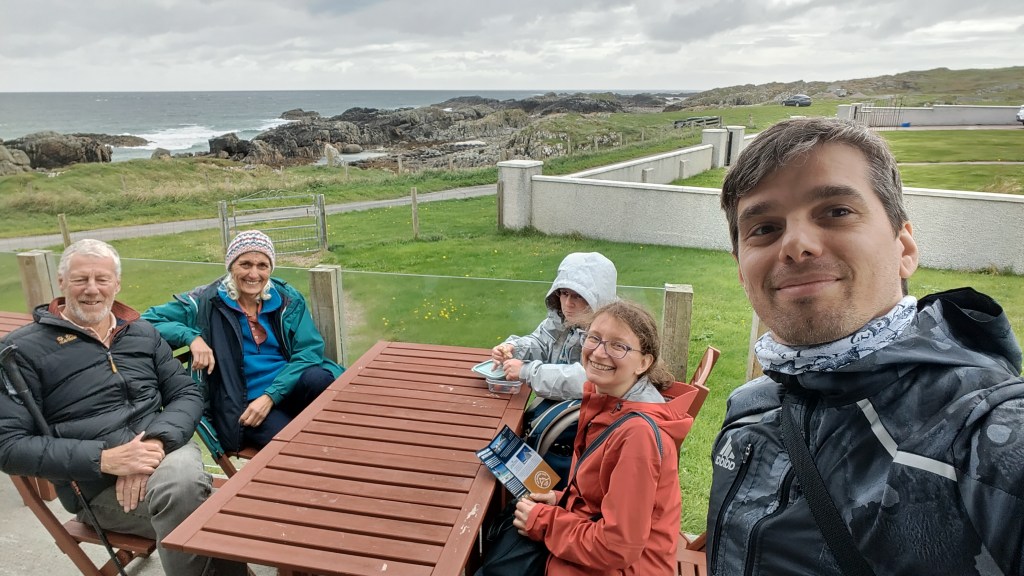
That Friday we woke up at the campsite in Fort William under a gloomy grey sky: a cold, wet and windy day, not putting us in the best mood for outdoor activities. After breakfast, a shower, and a chat with Justine, Karen and Chris, we decided to split. The two of us and Mr. Vantastic left Fort William eastward, hoping the other coast would bring some luck. While Teresa drove, Gianluigi looked at potential whisky activities to do in the area. There was a new distillery that had been on our radar for a while, but we had not managed to visit: Toulvaddie. One reason for not getting there earlier was that tours are available only on Tuesdays and Wednesdays (until a few weeks ago, also on Thursdays). Truth to be told, a few weeks prior weโ€™d tried to plan a visit on our way back from holidays, on a Tuesday. However, the booking system didnโ€™t work, and our queries werenโ€™t replied. After a check on their website, we found out that they do pizza nights on Fridays and Saturdays, so we figured they must have been open (two Sherlocks in action here!). Thus, we decided to drive there and try our luck. Worst case scenario, weโ€™d still get a pizza!

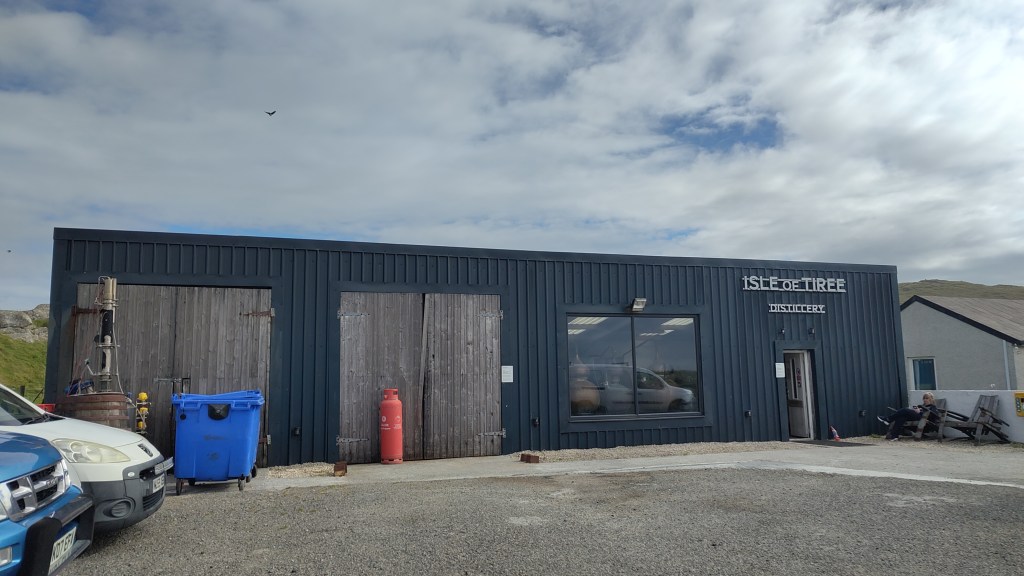
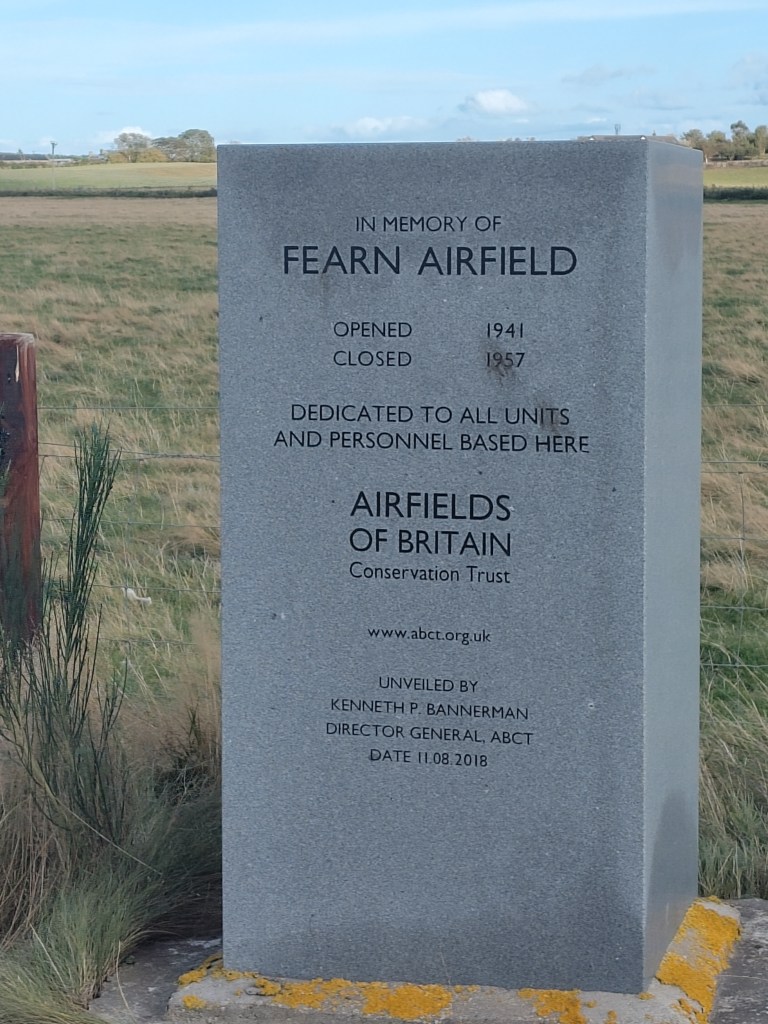
The distillery is located on the Tarbat peninsula (near Fearn, Easter Ross), to the east side of the A9, roughly between Invergordon and Tain. It is on the site of a former naval airbase (HMS Owl) and while part of the surrounding area has been redeveloped for industrial use mostly, there is still an airfield for small private planes. As a matter of fact, Google Maps sent us straight in the middle of the runaway; the area is quite flat though, and not massively built, so we quickly found our way around the airfield to get to the distillery.
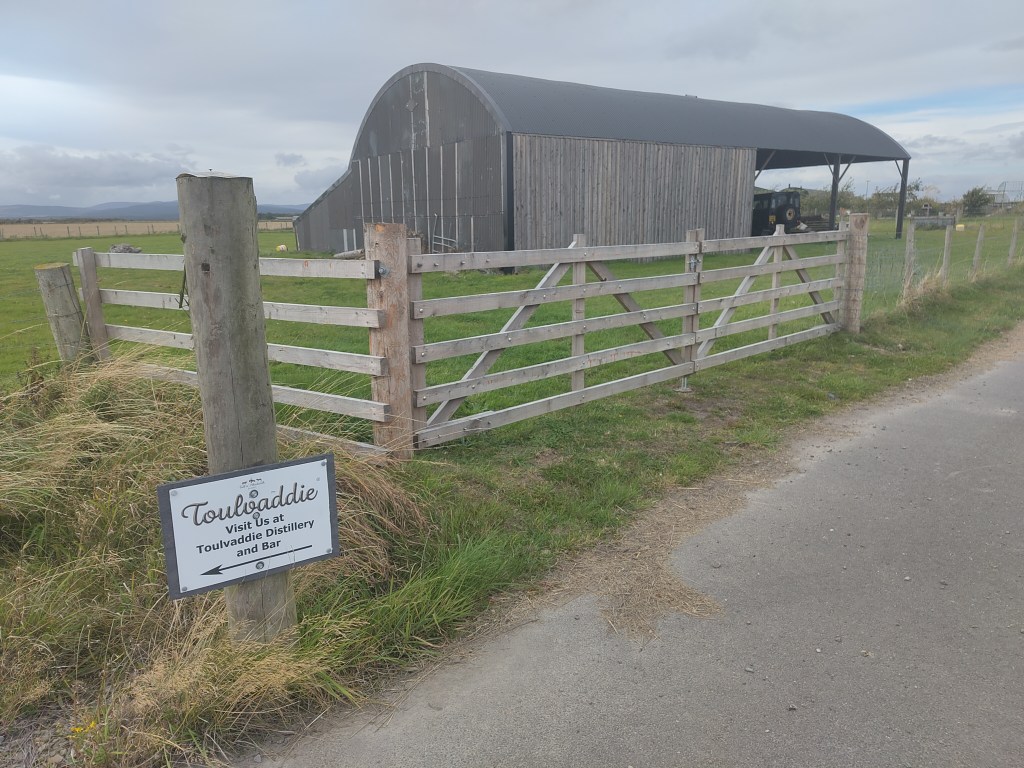
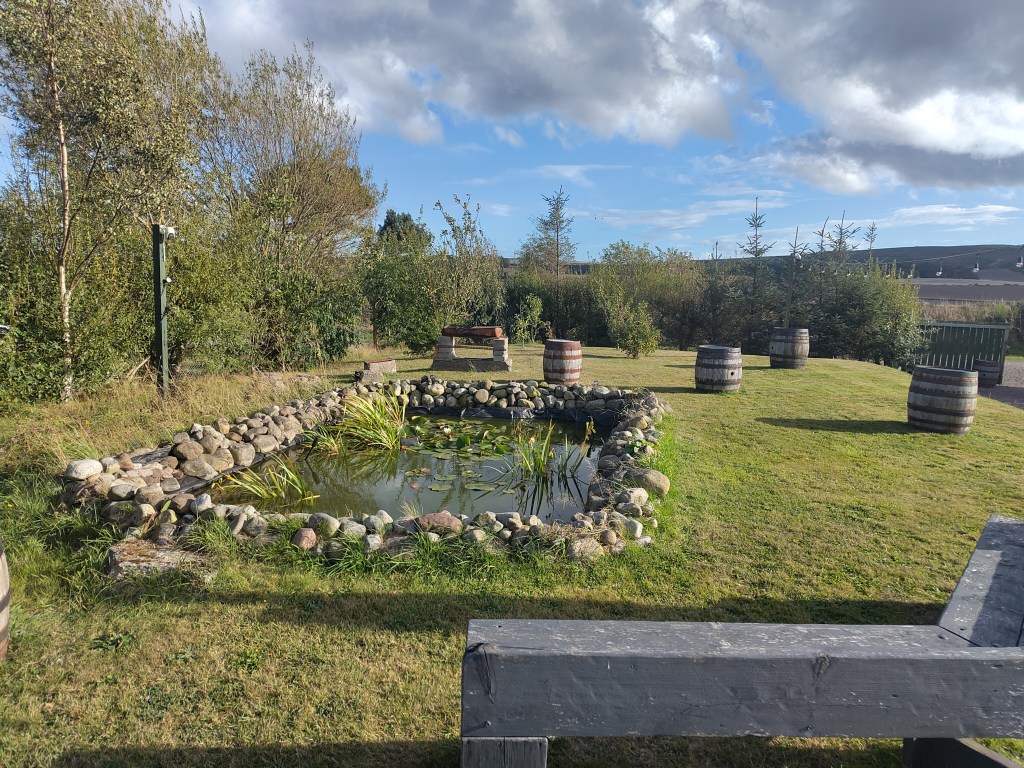
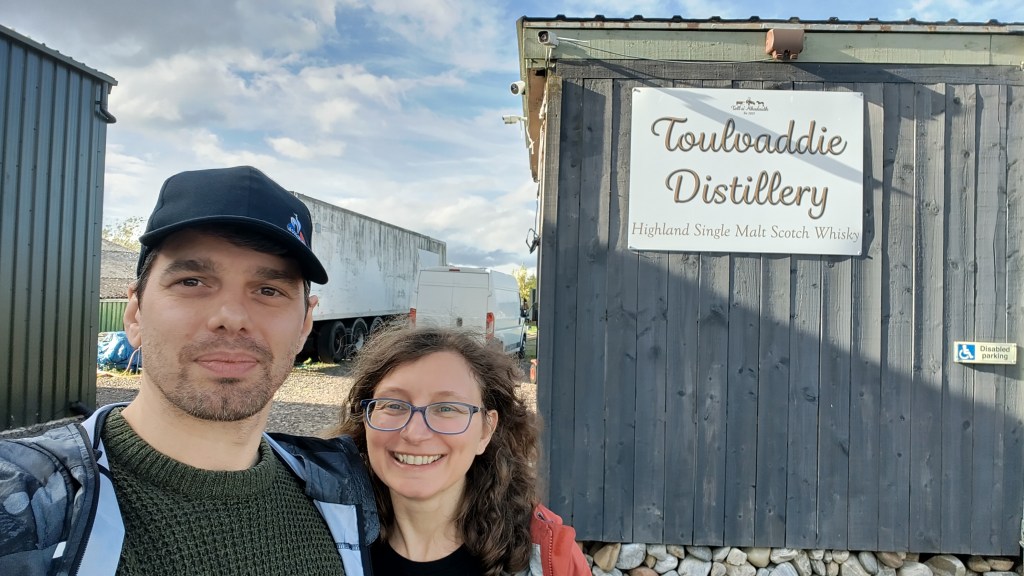
We arrived there at 2pm, the opening time, while pizza would have been available from 3pm until 8pm (unless sold out). We left the van next to the gate, and we walked in to find a very nice space: on the left, some vegetation and a container (weโ€™ll learn later thatโ€™s the temporary warehouse, while waiting to build the permanent one), on the right side a nice garden with a fish pond, chairs and a grill: perfect for summer time! In the meantime, the sun came out (for a while), and it gave a great feel to the whole outdoor area.
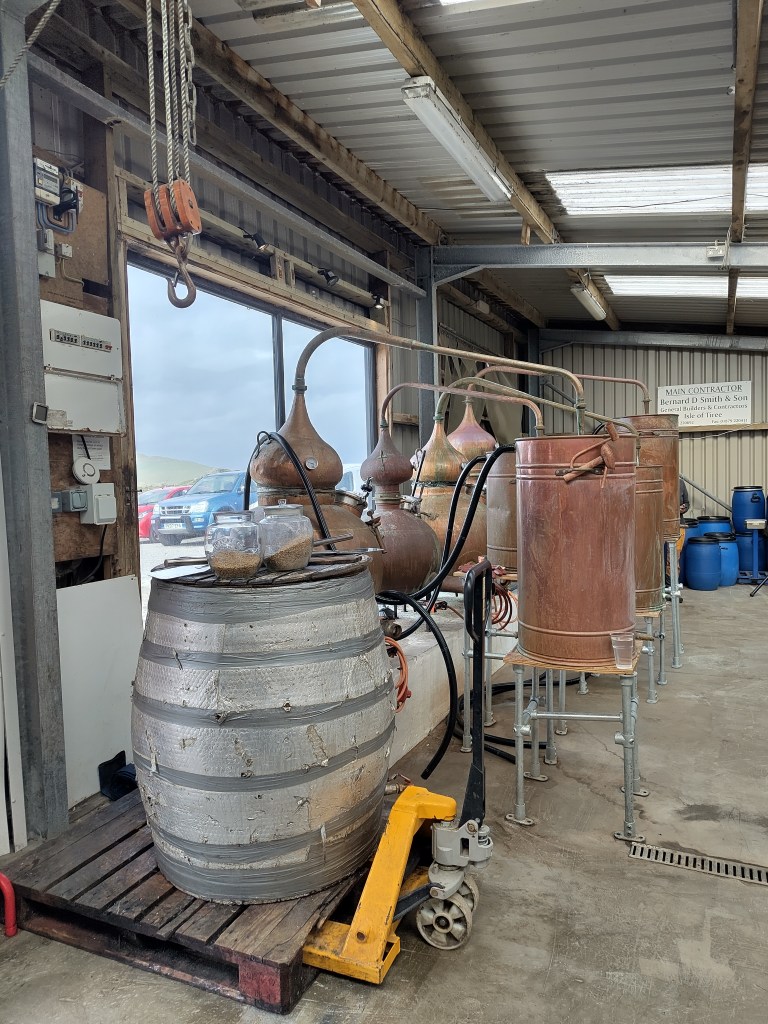
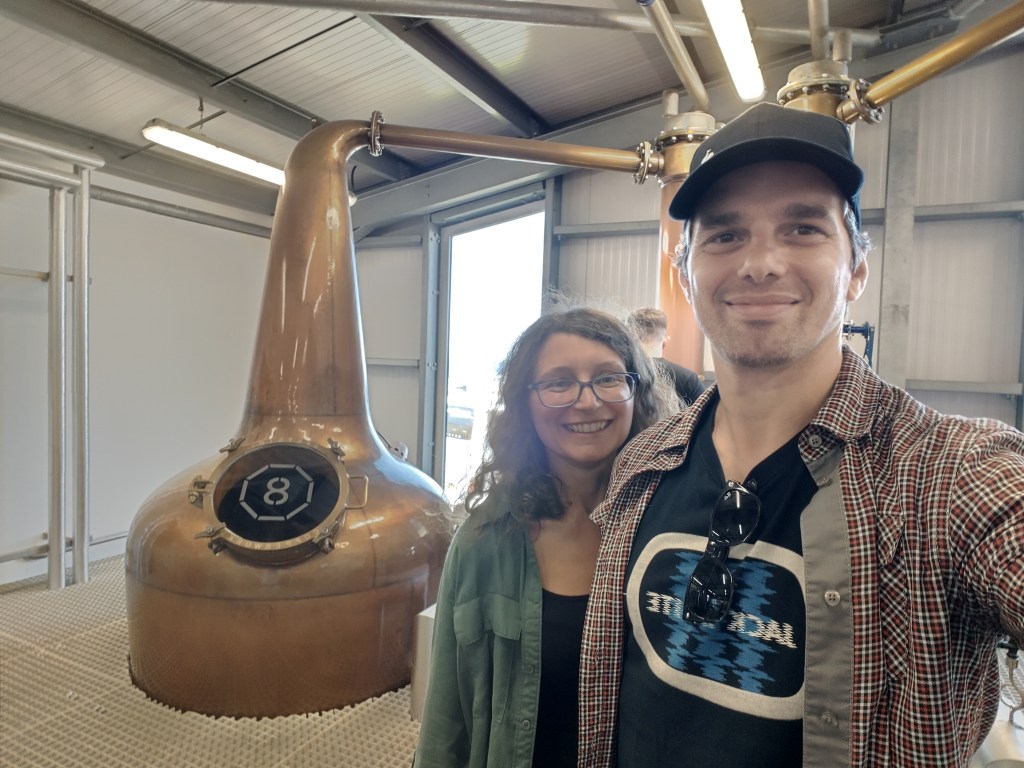
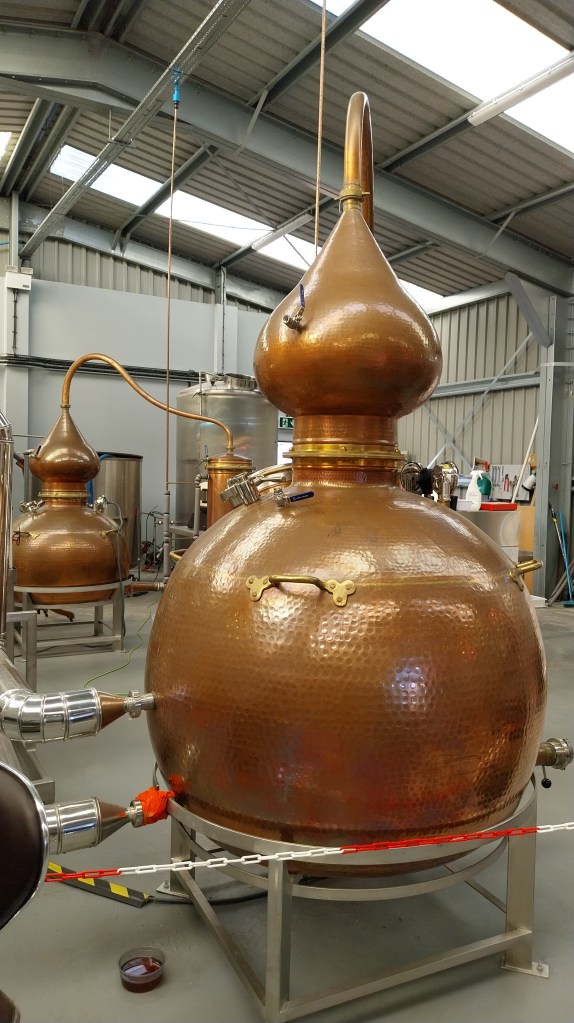
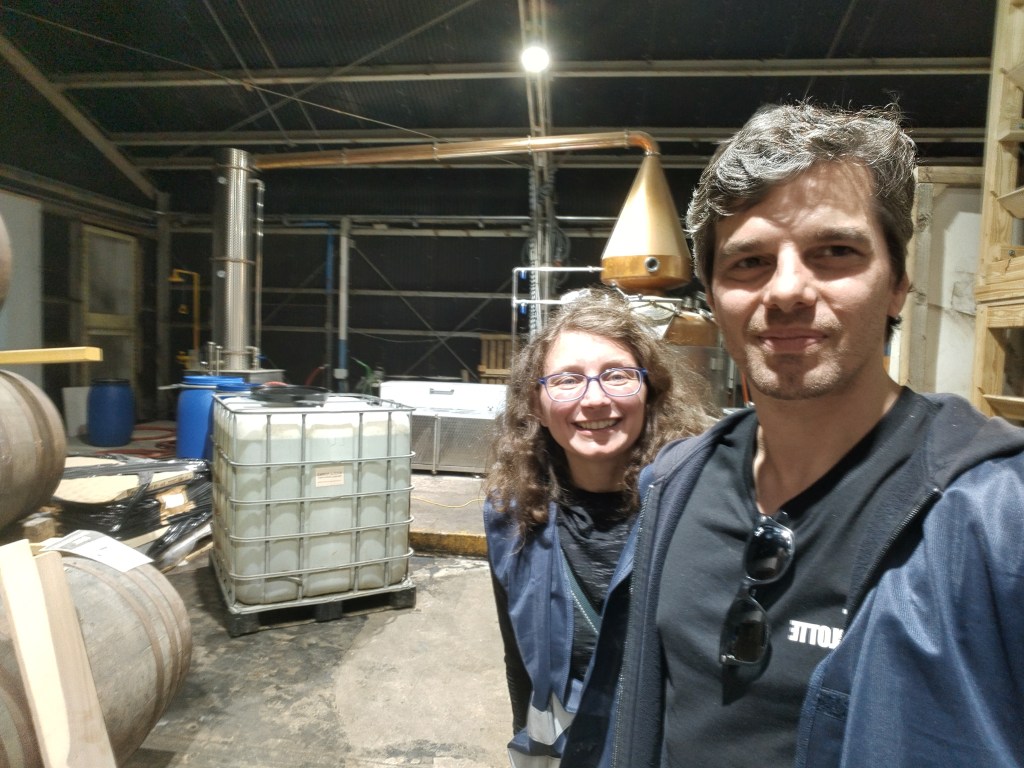
The production is inside the main building, together with the bar in a big open space. As we walked in, we were welcomed by Heather, the distillery owner together with her husband Bobby (who was busy setting up the pizza oven). The production equipment is past the bar area, with the shiny stills almost in the middle of the building. We sat at the bar, and while splitting a tasty Happy Chappy pale ale (from Cromarty Brewing), we started chatting with Heather about their whisky production. Although the distillery was planned way before, they actually started distilling in April 2024, so their spirit is half-way to become a single malt.

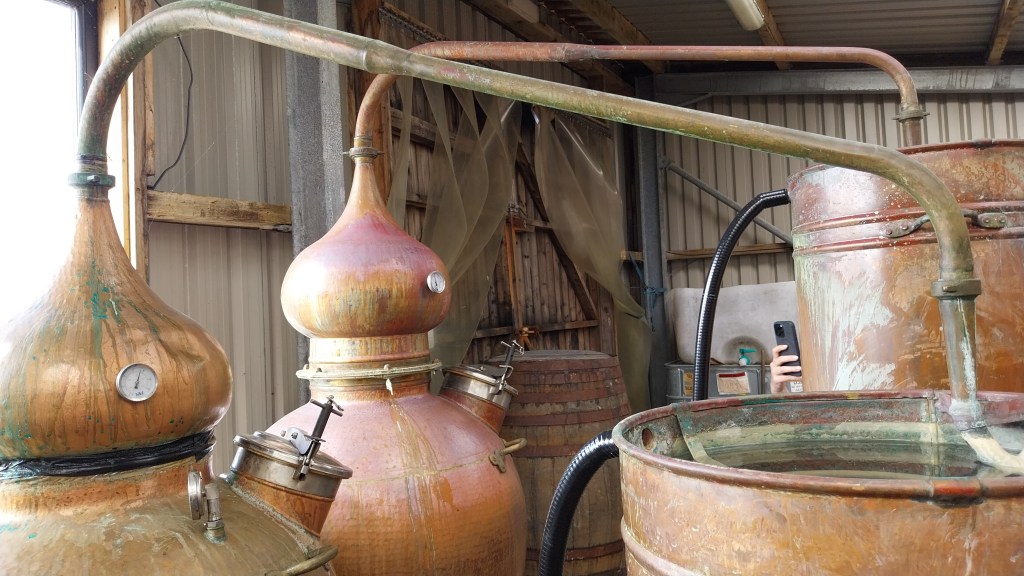
The distillery is operational from Sunday to Thursday, and production is quite scheduled. They donโ€™t have a mill, but they bring in pre-milled Laureate malted barley from Crisp. Other than saving one stage of production, this allows them to reduce the spark risk, so they can have people inside the building. They usually mash on a Wednesday, in a 0.33 ton mashtun, and then ferment the wort for 5 days in one of the 2,000-litre washbacks. Distillation is usually done on the following Monday (first) and Tuesday (second), in a couple of Hoga stills: the spirit one (the second) is only 500 litres, one of the few that is smaller than the Dornoch distilleryโ€™s one! Both stills work with a steam coil, powered by an oil unit, and they are both equipped with a shell and tube condenser. The second distillation cuts are approximately between 70% and 60%. All the casks are filled on site, mostly ex-bourbon barrels, but sherry ones too from time to time. The draff and the pot ale are sold to local farmers. We shared a dram of the newmake spirit (bottled at 63.5%), which was very malty and cereal-y, with the usual green fruits (apple and pear) taking a back sit in this one: nice stuff!
At that point it was about time to order the pizzas, pepperoni and mushroom+ham, which we happily enjoyed, for Gianluigi while tasting one of their newmake spirit-based cocktails. The idea of using the distillery as a pub and pizzeria to get some cash is a very smart one in our opinion, also because there arenโ€™t many other options in the area. They have plans to build a new permanent pizza oven outside the distillery, so they wonโ€™t have to set it up every Friday. Before leaving we signed the guest book, hoping to go back when their single malt will be ready!
We took Mr. Vantastic back on the A9, and decided to stay in Inverness for the night. After we found a suitable parking, we visited the Uile Bheist โ€œbrewstilleryโ€โ€™s pub, as last time we were there, we hadnโ€™t had time to enjoy it after the production tour. We had a couple of drams there and, completely unplanned, we were rejoined by Karen and Chris: the choice is great and prices are very competitive. To end the night, we decided to pay one final visit at a whisky bar weโ€™d heard a lot about but never been before: the Malt Room! The whisky choice is great there too, but probably because it was a tad too busy, and the general rowdiness of the night (Inverness is rowdy on a Friday night!!), it didnโ€™t feel very cosy. Hopefully next time weโ€™ll visit on a quieter day.

The next morning we woke up and, with no rush, drove south towards Leith. Did we drive straight home? Almost. More on this next week. Until then, slร inte!


Toulvaddie Distillery Tour

Price: ยฃ15.00 pp (September 2025)

Duration: 1hr

Tasting: a dram of newmake spirit (63.5%)

Target: anyone

Value for money: N/A*
*we didn’t do the tour as advertised on the website so we don’t know. We went in for the pizza on a Friday

Highlights: the garden and the pizza!

Recommended: nice for a pizza/distillery combo

Link: https://www.toulvaddiedistillery.com/home

#65 Tiree distillery

One windy leg of the Hebridean Whisky Festival


TL; DR: This September we embarked in an odyssey to attend the Hebridean Whisky Festival. Unfortunately, we couldnโ€™t reach most of the distilleries we’d planned to visit due to a storm, but we still managed to visit the island of Tiree and its distillery. A tiny and craft operation, with already two releases under their belt: a single malt and a rye whisky.ย 

In the last few years, especially since we got Mr. Vantastic, we travelled quite a bit throughout Scotland. However, while we have (roughly) been all over the country, there are mainly two places we havenโ€™t been yet: the Outer Hebrides and Shetland, the latter despite our passion for the namesake crime TV show. This was supposed to change this year though, as together with our friends Justine, Karen and Chris, we decided to go on a campervan holiday to the Outer Hebrides, to attend the Hebridean Whisky Festival. The festival is structured similarly to the Islay and Campbeltown ones, with each distillery having a different open day. The challenge is, obviously, that most distilleries are located on different islands, some of which connected by ferry crossings lasting a few hours. The festival started on the first weekend of September in the inner islands, with Talisker, Torabhaig (both on Skye) and Raasay: as we already visited all three, and not long ago, we skipped this part (follow the links for our great February 2024 trip!). Then, after a break-day wisely set up by the organisation to allow people to travel, it was the Isle of Tiree distillery turn, our first visit.

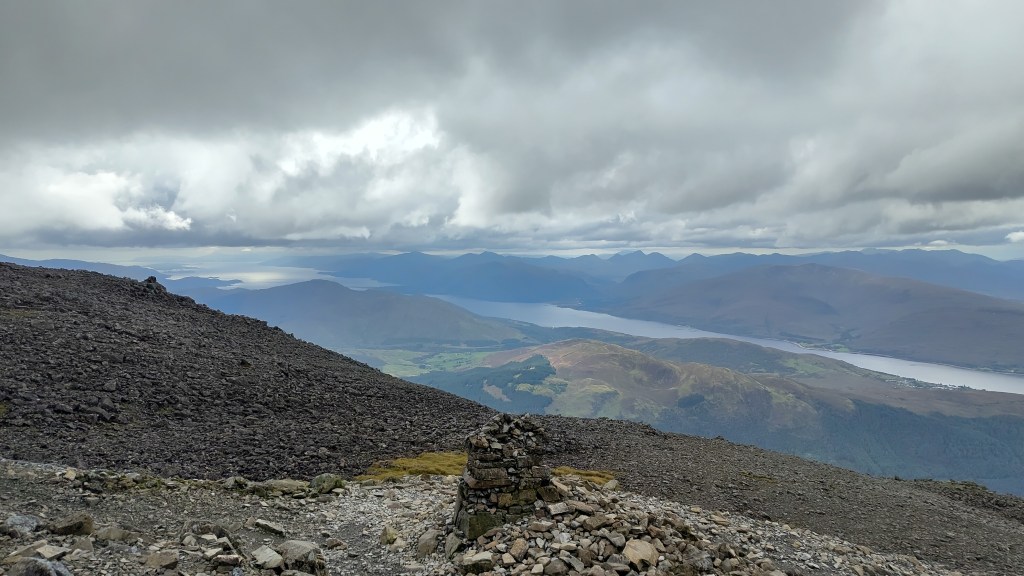
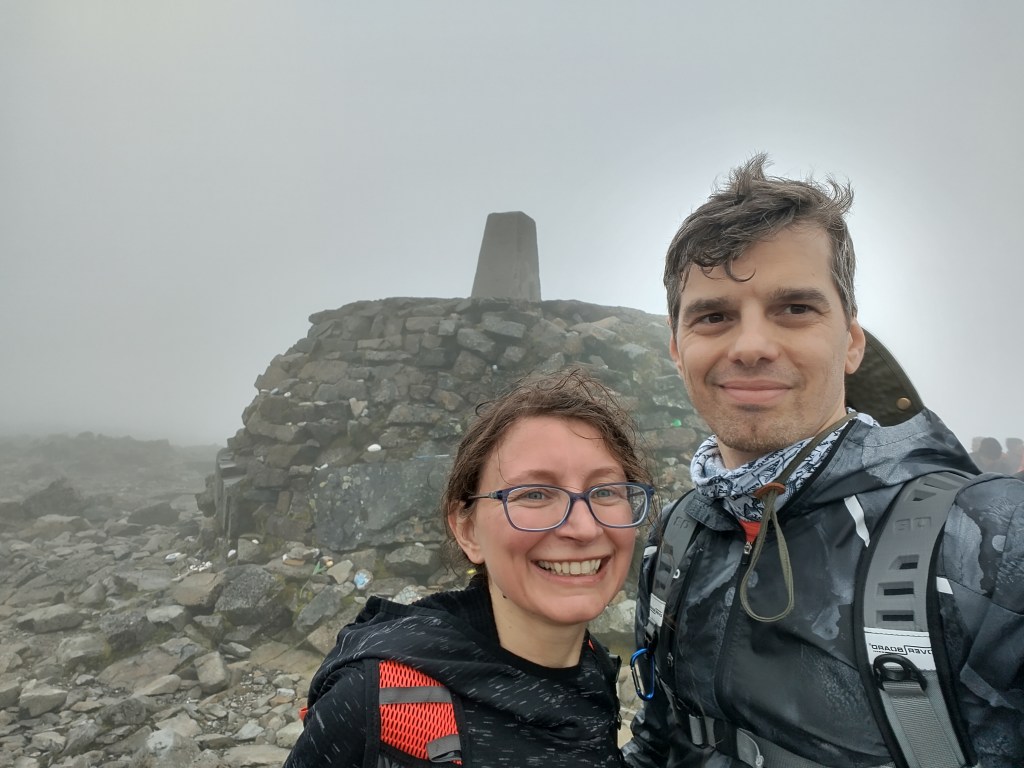
The Tiree distillery day was on a Tuesday, so we booked a ferry leaving from Oban on the Monday. The weekend before, we decided to avoid whisky stuff for once, but rather climb the tallest mountain in Great Britain: Ben Nevis. We left Leith in the morning, and after a first quick break in Callander to pick up some delicious pies at Mohr Bakery, we arrived at the main visitor car park around 11am. We went up from the easy (but still steep) route: we had an initial doubt whether to go for a more challenging route, but we really didnโ€™t want to be the eejits on the news that injured themselves on a path beyond their capabilities (we are decently fit, but still, we hike about half a dozen times a year, not on mountains). The path was a bit crowded, but the view quite spectacular, except on the top: a thick fog welcomed us.

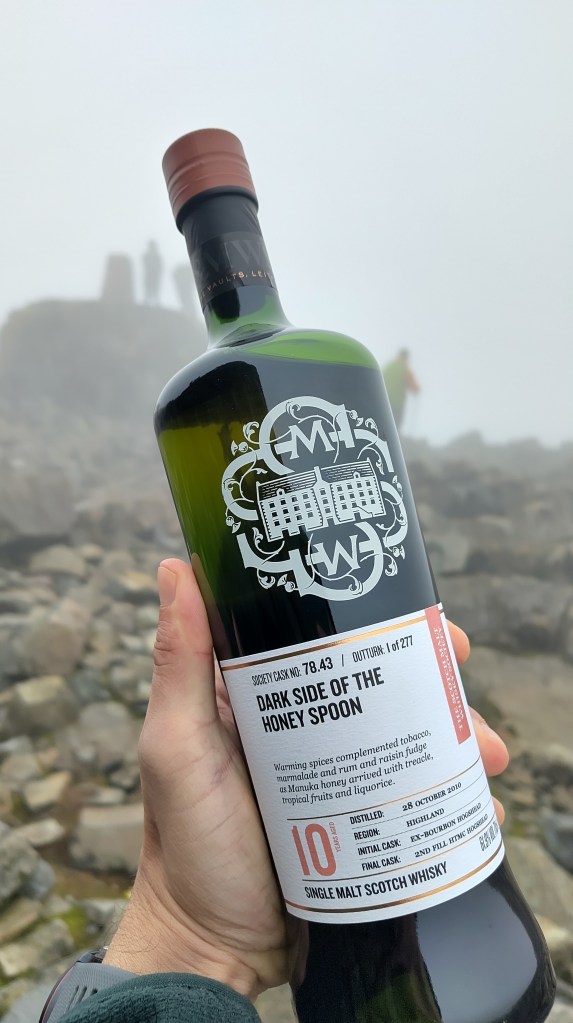
We still celebrated the achievement by opening a bottle of Scotch Malt Whisky Society Ben Nevis bought during the pandemic, high abv but delicious nonetheless. The descent was much faster, and afterwards we stayed at the Glen Nevis campsite, just next door. After a nice meal at the Glen Nevis restaurant (with a decent whisky selection too), we slept like rocks!

The next day we slowly drove towards Oban, where weโ€™d meet with our friends, just after a fantastic seafood lunch in Port Appin at the Pierhouse Hotel, an auld acquaintance from a few years back.

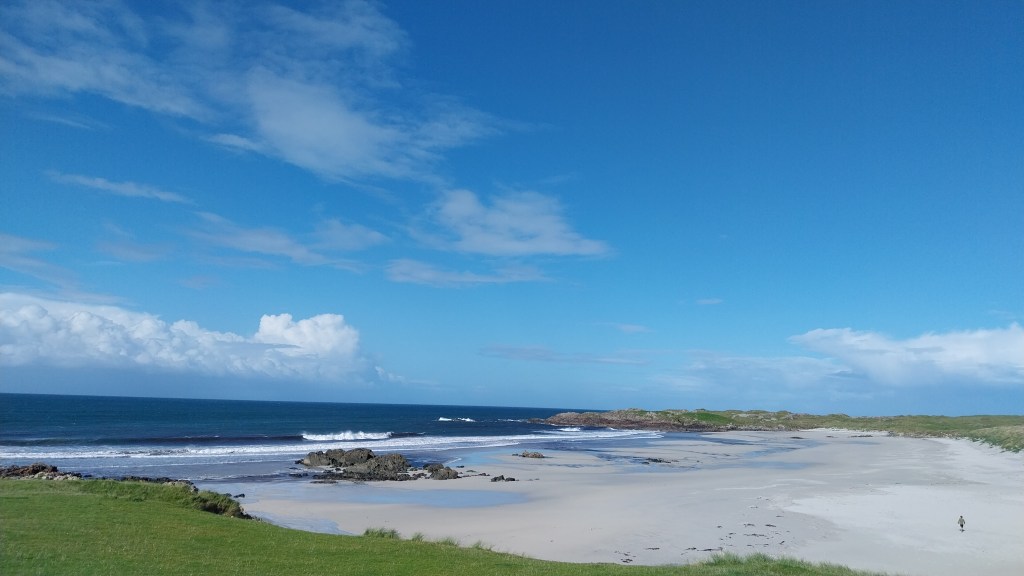
We met with the others at a car park near the Oyster Inn, 10 minutes away from Oban, as they allowed overnight stays for campervans. Meanwhile, the weather had turned rainy and windy, and rumours were that the next day ferries wouldnโ€™t be able to sail, reinforced by an alert message from CalMac (the ferryโ€™s company). Because of this (and the wind) we struggled to sleep that night, but fortunately, in the morning the ferry sailed: we were much relieved (for nowโ€ฆ). It took about four hours to go from Oban to Tiree, and along the sail we spotted Ncโ€™Nean distillery and Tobermory, on a day that turned sunny. As we got off the ferry and drove towards the only campsite, we realised that there isnโ€™t a proper village. The biggest settlement is Scarinish, where the ferry pier is. Also, the island is very flat (the highest hill is 140 meters high, with a radar station (the โ€˜Golf Ballโ€™) on top of it dominating the landscape. This makes it a paradise for surfers, and we found many of them at the campsite and around the island. After we checked in, we spent the rest of the day exploring the surroundings.

The next morning we left the campsite, and after a stop to a very disappointing diner, we drove towards the distillery, in the south-west of the island. We parked the vans in a field nearby that weโ€™d booked for the night via the Tiree Croft Camping Service. It was supposed to be 10 minutes on foot to the distillery, turned out to be about half hourโ€ฆFortunately we had plenty of time. The distillery is inside a small, blue warehouse. On the right, in a separate building past a courtyard, there is the visitor centre and bar. Itโ€™s very small but very cosy, and since it wasnโ€™t raining (yet), we enjoyed a Tiree gin and tonic on the porch before going back to the distillery for the tour.

There, we were served a sample of newmake spirit as a welcome. Ian and Allan, the founders, started the tour talking about the history of distilling in Tiree. The historical records from 1768 report about 50 stills, however they decreased to only three legal stills by 1783, before the final clearance operated by the British government to depopulate the country. Finally, in 1802 distilling was temporarily banned, but between 1814 and 1882 a couple of short-lived distilleries were in operation, too unprofitable to resist. And here comes Tiree Distillery, operational from 2020, aiming to reconnect with the distilling heritage of the island.

A very small operation, they bring in pre-milled malted barley (mostly Laureate) and rye from Crisp maltings, which they mash in batches of 100 kg with 400 litres of water into a wooden mashtun which used to be a sherry butt (that was a first for us!). They tried to grow local barley, which was possible but then the challenge was malting, requiring the malting to be shipped off the island and then back. They have four washbacks for the fermentation stage, two made of stainless steel and two of oak, former butts like the mashtun. Fermentation normally lasts 4 to 5 days, but it can go up to 2 weeks for experimental runs. The 6-7%abv wash is then distilled in one of the two wash stills, to get 23-25% low wines, distilled again in the spirit still. The stills are Portuguese Hoga stills with worm-tub condensers. A fourth still is used for the gin (they bring in neutral grain spirit). During the second distillation, the first cut point is 70-74%, made by smell and taste, while the lower one is around 63-64%, with the discarded feints and foreshots redistilled in the following batch. From each distillation they obtain about 60 litres of newmake spirit at 70% – it takes them two runs to fill a quarter cask.

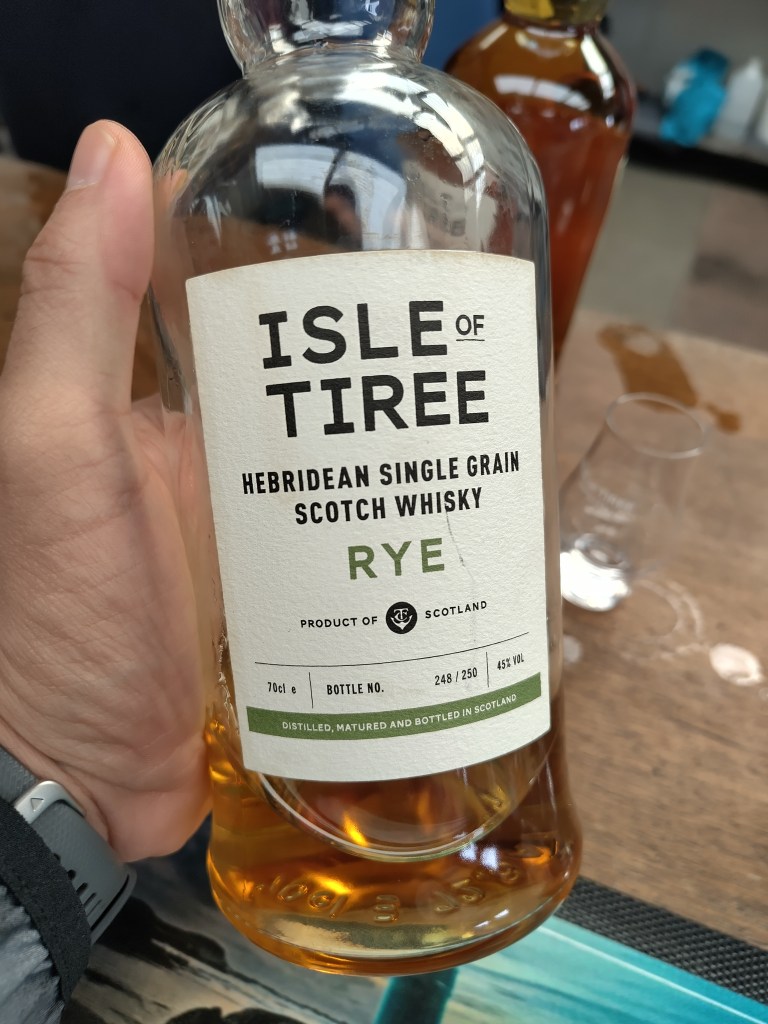
The warehouse is in the same building for the moment, with casks mostly sourced from Speyside Cooperage, especially from Heaven Hills distillery in Kentucky. The plan is to have at some point a separate building for maturation. This would solve also the high evaporation they have at the moment, caused by the production heat. We shared a dram of their newest release (ยฃ8, ยฃ125 for the bottle), the second in total after their first Single Malt release last year (not on sale anymore, but it was sold for ยฃ200). This one is a single grain, with 75% rye and 25% barley, aged four years in virgin oak and ex-bourbon casks: one of the best Scottish ryes we tried so far. They also produced a high-corn mash spirit, which is still maturing in the warehouse.

After leaving the distillery and walking back to the vans, we realised the field where weโ€™d parked was too exposed to the wind, so we called the cooperative managing those fields and we were able to swap for another one slightly less exposed. Still no facilities, which left a sour taste as we had paid ยฃ15 for one night. At least this one was at a walking distance to one of the very few bar/restaurants on the island. The very cozy Alan Stevenson House is in Hynish, a settlement that used to serve the Skerryvore lighthouse. We walked there to grab a dram, before retiring in our campervans for dinner and for a final dram, all together inside Gladys, Karen and Chrisโ€™ campervan, the biggest of the three. When we left the bar, the Tiree Distillery dinner was about to start: we didnโ€™t have tickets for the event (ยฃ65), which we regretted a bit because first, they were serving the first single malt release too, impossible to try elsewhere. Second, we didnโ€™t know yet what would happen in the following days.

The day after came with a bad surprise, as our ferry for Barra was cancelled (sad trombone). Instead, we got another one back to Oban, as the day after there was an early ferry from Mallaig to South Uist. If that went ahead, we would have had still time to attend all the other distillery visits of the holiday. That wasnโ€™t the case: in the evening, when we were already in Mallaig, this ferry was also rerouted from Oban (dโ€™oh!), but in the morning that was cancelled too. The last chance would have meant to travel to Uig, on Skye, but there were no spaces for vehicles and there was no assurance that the ferry would sail. So, after a regroup in Mallaig, we decided to drive back to Fort William and abandon the plan. From the campsite we booked we walked to the Ben Nevis distillery, where Hazel, the lead tour guide and whisky IG friend, gave us a warm welcome and some tasty drams. That was a nice consolation.

While weโ€™re happy that we visited Tiree distillery and to learn about their crafty setup, we were a bit disappointed that we couldnโ€™t make it to the other islands. The distilleries personnel were very understanding and all of our tastings and tours were refunded, and it was the same for the ferry tickets. Unfortunately, when storms happen thereโ€™s nothing anyone can do, we just hope to be able to go back soon (and be a bit luckier with the weather).

Stay tuned to learn more about our โ€œplan Bโ€, in a couple of weeks. Until then, slร inte!


Tiree Distillery Open Day Tour

Price: free* (September 2025)

Duration: 45min

Tasting: 15ml of newmake spirit (63.5%)

Distillery Exclusive: on the day, the Tiree Single Grain Rye Whisky (45%, ยฃ125)

Target: anyone

Value for money: of course very good, as it was free

Highlights: the cosy setup

Recommended: if you’re already on the island, definitely

*the regular whisky tour is ยฃ20, but according to the website there are no tours scheduled in the next 6 months

Link: https://www.tyreegin.com/


#63.4 As north as you can get (on the mainland)

Pointing north to the bunker


TL; DR: Our final distillery visit in this North Highland trip was to another new distillery: North Point! The location is very fascinating, and during the engaging tour, Alex walked us through their process in a distinctive visit that left us excited. After the visit, we visited peat bogs, beaches, and waterfalls, an ended the trip with a cheeky visit at Tomatin. 

(missed Part 3/Part 2/Part 1?)

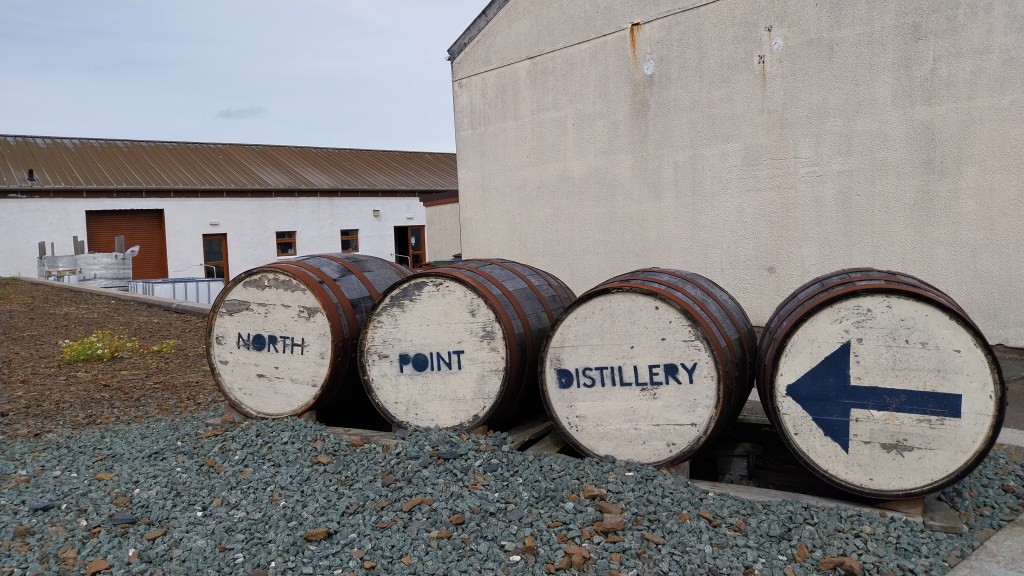
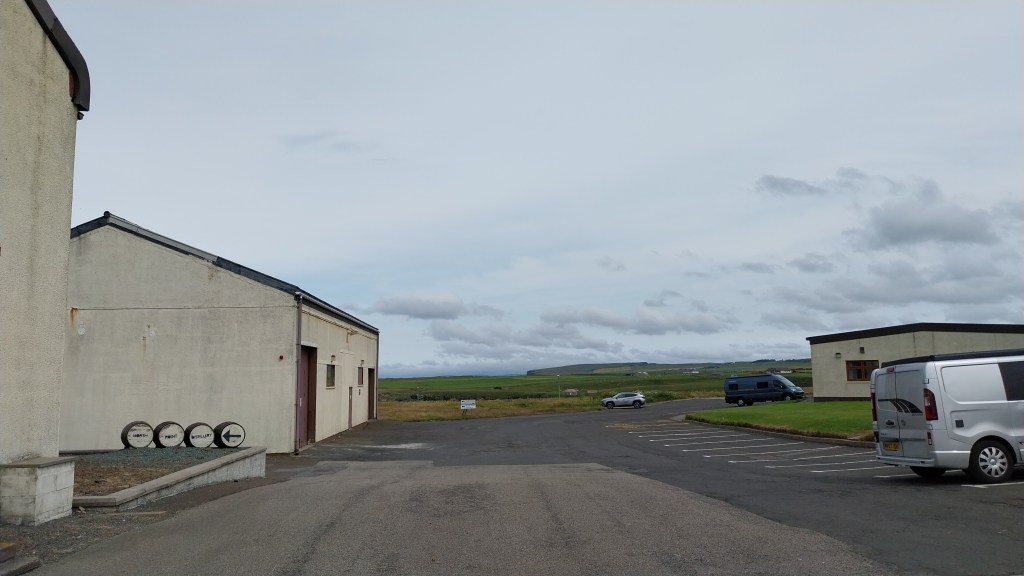
The Forss Technology Business and Energy Park is only a few minutes driving from Thurso, the access road is on the right side of the A836, if youโ€™re driving westward. As we approached it, the site looked more like a wind farm, as it’s surrounded by turbines. We’d done our homework before, and we learned that the site, built in the early 1960s, used to be a U.S. Navy radio station active during the Cold War. Not only that, but after the closure of NAVCOMMSTA Londonderry in 1977, it became crucial to monitor the North Atlantic and the North Sea until November 1992, when it ceased operation and the Americans left. The site maintained some activity because of some of the existing facilities (basketball court, bowling alley, swimming pool, baseball diamond), but then in 2003 it was transformed into a business park. And in 2020, North Point Distillery moved in!

We learned about North Point because of their other spirits (more on this later), but their inclusion in the 2025 Malt Whisky Yearbook meant that they started distilling newmake spirit for whisky, sparking our curiosity. The visit almost didnโ€™t happen, because the Foundersโ€™ tour (the in-depth one, but they also have a shorter option for ยฃ12) was not scheduled on Saturdays. However, we’d noticed that the shop was open, so we got in contact and they agreed to give us a tour! This kindness is not a given, as other distilleries would have just turned us away, so many thanks to them! As we arrived Alex MacDonald, one of the founders and our guide for the afternoon, spotted us right away, and introduced himself while we entered the Murkle building. This is where their offices, shop and part of production are. Despite his surname, Alex is Canadian, and came to Scotland to play rugby. After getting an MSc in Business, he founded the distillery with Struan Mackie (native of the North Coast). The company is independently owned, and they recently obtained the B Corp Certification, to testify their effort in sustainability.

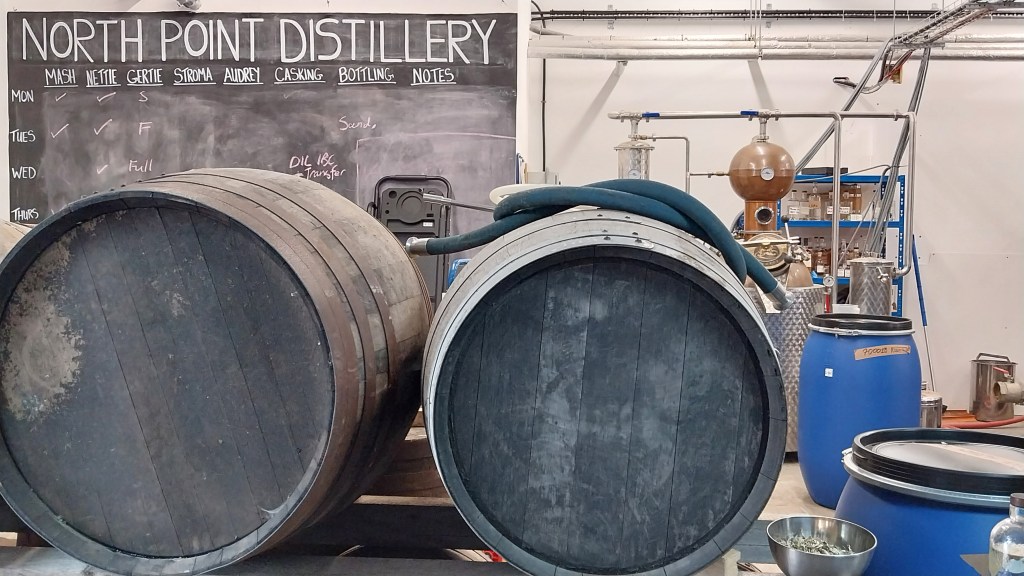
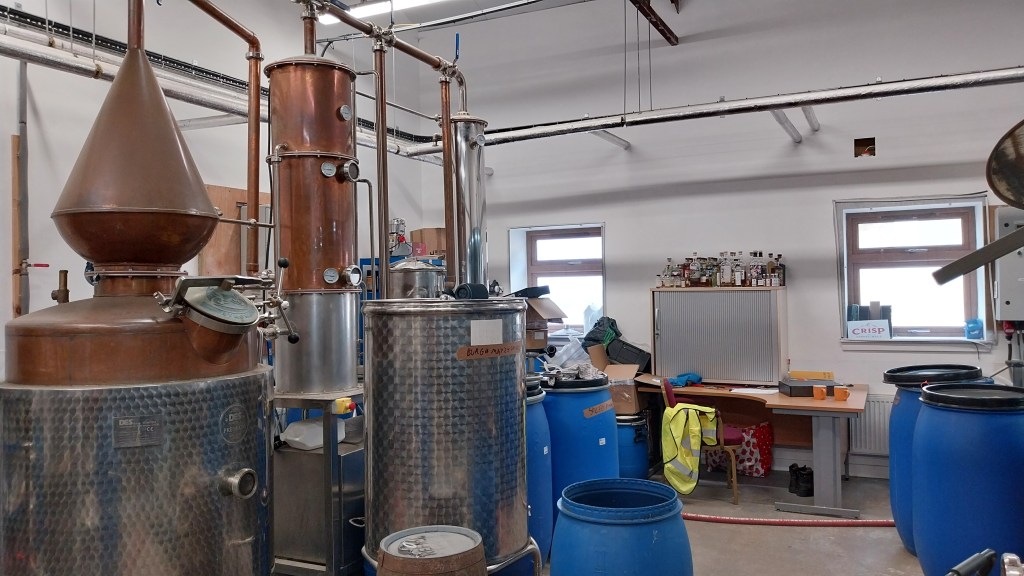
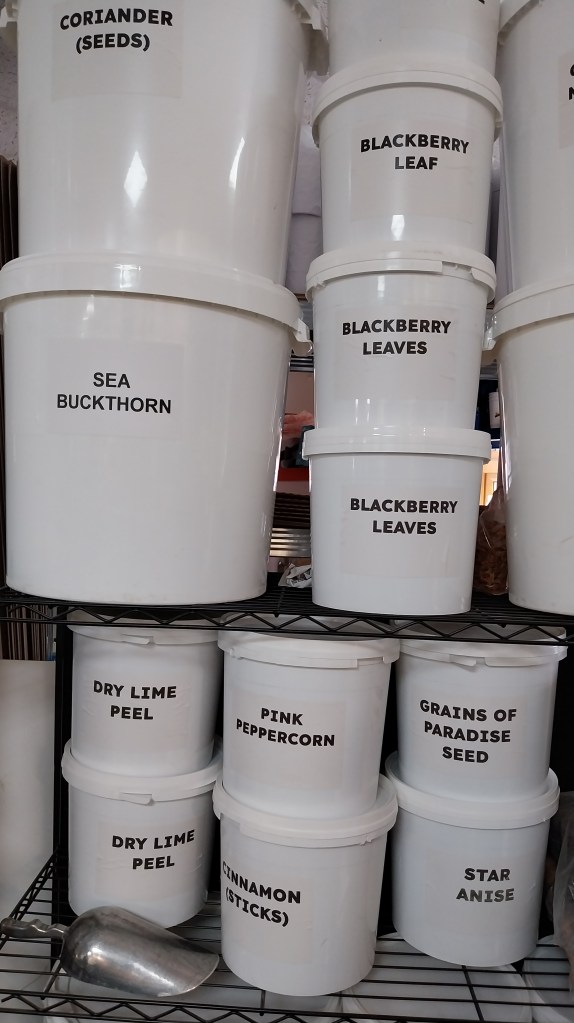
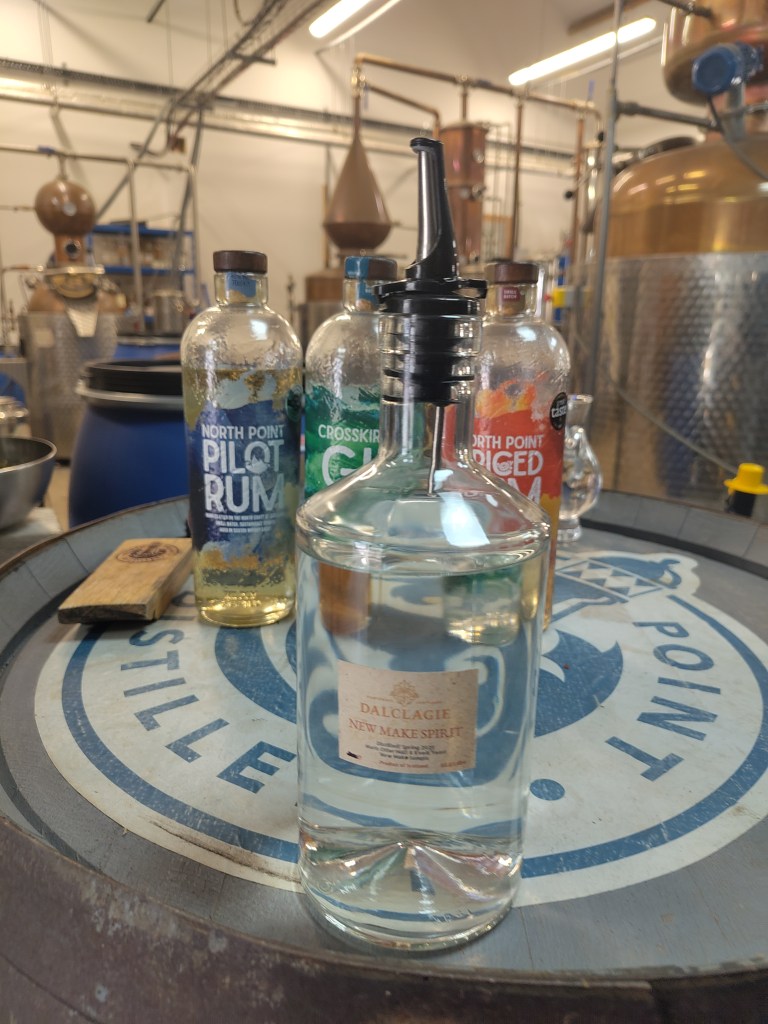
The part of production near the offices is mostly dedicated to the other spirits, although one of the whisky stills is also there. The stills are all named after members of their families (some still alive, who apparently complained) and they are custom made by a Serbian company. They are all electric, not very common in Scotland. Right in front of the stills, we could check out their massive collection of botanicals, while tasting three spirit samples each (excluding Gianluigi, the driver). They started in 2020 with one 500-litre still, Sandy Stroma, to produce their Highland Rum and their gin, and they later added Audrey, a small experimental one (for smaller batches as well, including for clients).

For the rum they buy molasses from Barbados, and they ferment them with Kviek Norwegian ale yeast for a week, before running it through the still. Their main product, delicate and sweet, is the Pilot Rum (aged for 1-year in ex-whisky casks), named after the pilots of the Pentland Firth, who used to guide bigger ships through those dangerous waters. They later added the Spice Rum (43%): for this, they found a recipe (including cocoa, orange, vanilla pods, and other 18 botanicals) that tries to replicate the experience of drinking rum while eating a Terryโ€™s Orange. In the same stills, they also produce the Crosskirk Bay Gin, made with juniper imported from Tuscany (because of a higher concentration in oils), Szechuan and pink peppers, and other botanicals. Edoardo particularly appreciated the gin and its oiliness, the last of the three-spirit flight.

As we were saying, one of the whisky stills is also in the same building: Gertie, the 1000-litre spirit still. While Alex explained that they obtained the license for whisky in 2021, he gave us a newmake spirit sample of what will become Dalclagie Single malt. Until 2023 they mostly did research and development, including 40+ mashbills before finding the one they wanted for their malt.

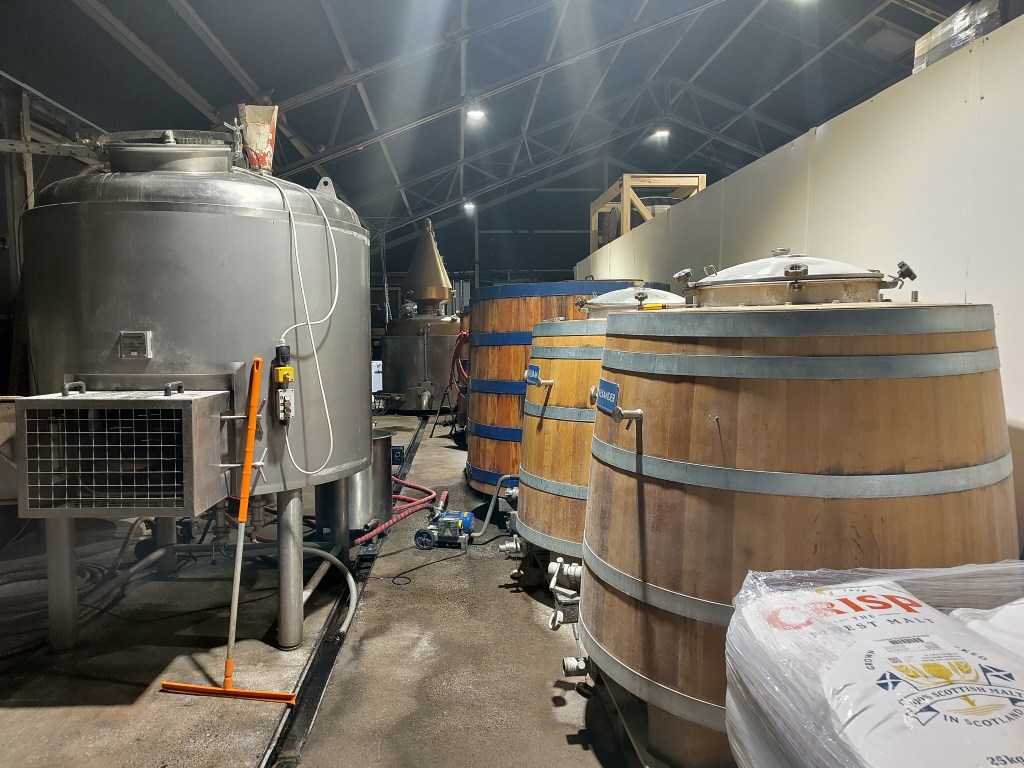
Alex then walked us to where the rest of whisky production is, inside an adjacent, much bigger building. They get pre-milled malted barley from Crisp, mostly Maris Otter, processing 4 tons every two weeks. They are still experimenting a lot, in particular around Christmas, with both barley and yeast: a fun time for their distiller Greg. They also have plans to trial some heritage โ€œbourbon-styleโ€ mash recipes. Mashing is carried out in a 2000-litre mashtun for 9 hours, while they have six wooden washbacks: two Wilhelm Elder, and four former vatting used by Diageo for the Johnny Walker Blue label (one of them is called Angus). We wondered if they were still haunted by the whisky of the ghost distilleries that went into that. After 7 to 10 days of fermentation with Kviek yeast, they finally run the first distillation in the 2000-litre wash still, Nettie.

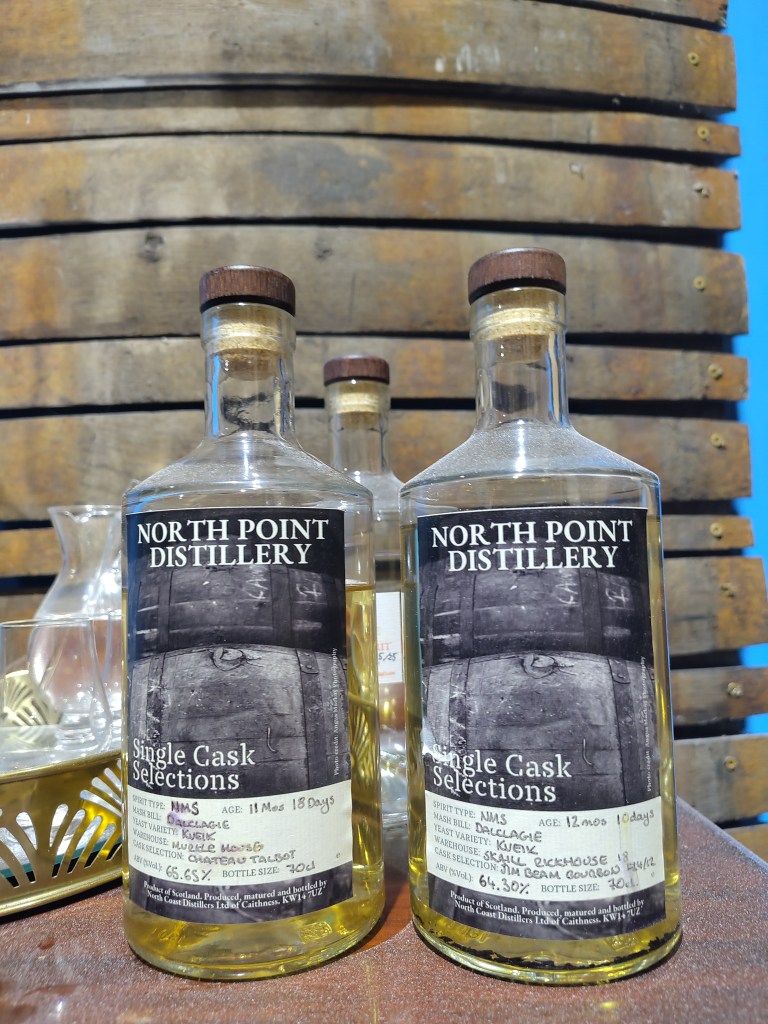
Then it is moved into the building we were in before, for the final distillation, with Gertie: cut points are always made based on aroma and taste. At the moment they store most casks (palletised) in the same main production building. Among the casks, a small cabinet with some bottles: in fact, the Foundersโ€™ experience included a sample of three aging malt spirits, one chosen by each of the co-founders, and one chosen by the distiller. Two of them were an 11-month-old Chateau Talbot red wine cask (at ~65%), and a 12-month-old ex-Jim Beam bourbon cask (~64%). Despite the young age they were very different, the first one richer, the latter carrying a lot of hints of newmake spirit. The third cask sample was not available on the day, so instead Alex treated us with a delicious E.H. Taylor Bottle-in-bond bourbon (50%abv).

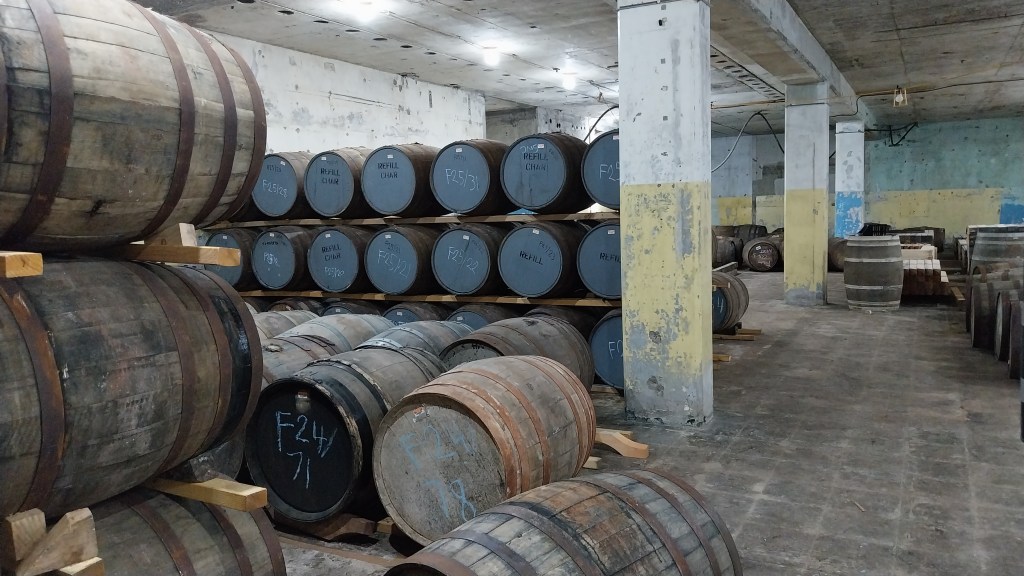
Then, before the tour ended, it was time for a surprise: a trip to the bunker. Being former military buildings, most of them come with a bunker, and they didnโ€™t let go the opportunity to use it for cask maturation (stored horizontally there). We’d never been to a bunker before, so it was a great experience, and we’re very curious to see how the whisky will mature there, compared to the main warehouse.

As we left the production/warehouse to go back where we started, Alex pointed us to some buildings they are trying to acquire for potential expansion: exciting times for them. Back at the shop we had a rugby chit chat: despite Alex used to be a hooker, Edoardo a fullback, and Gianluigi a referee, they seem to have (surprisingly) gotten along, eheh. Overall, we really enjoyed the time spent there, and Alex gave us a great tour. The project is interesting and considering how well they are doing with the current spirits, their single malt will be one to keep an eye out for. The tasting in the warehouse and the visit to the bunker were the cherry on the top, which made this tour a bit different and innovative.

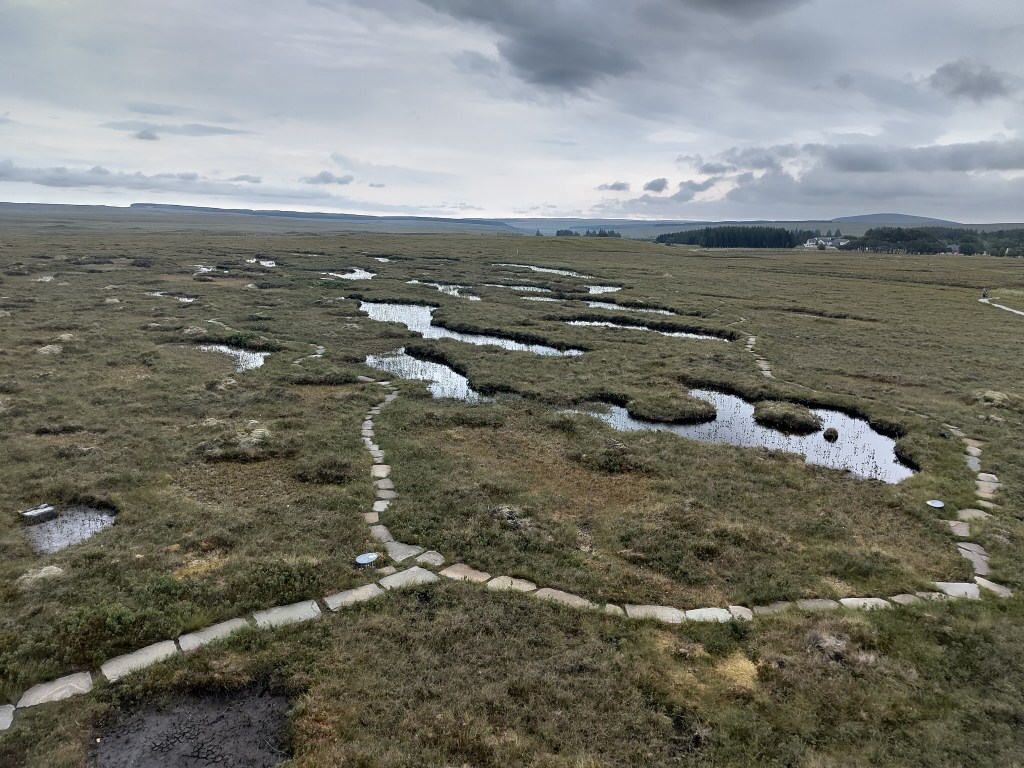
We soon left the site, under an overcast sky, driving towards the Forsinard RSPB in the Flow Country. This is a truly majestic landscape, one of the biggest peatlands in Western Europe, now a conservation area: peat bogs are more efficient than forests to capture carbon dioxide. We also got soaked by a storm, so we rested a bit inside the RSPB visitor centre, getting some warm drinks in exchange for donations, and watching the full half-hour video. Back on the road, we drove south inland, and then north-west towards Tongue. We looked for a place to stay trying to avoid the midges: we failed.

The day after we continued on the North Coast 500, stopping at the Smoo Cave and in Durness for some shopping, and then for a fantastic seafood late lunch at the Kylesku Hotel, in the namesake village. We finally stayed in a quite pricey (ยฃ50 for one night!) but scenic campsite just north of Ullapool. We managed to have dinner outside, but as soon as the wind calmed, midges came back, so we had to retreat in the campervan where we spent the night sipping some Springbank samples: one of Edoardoโ€™s favourite, so weโ€™re always sure to have some for when he comes over.

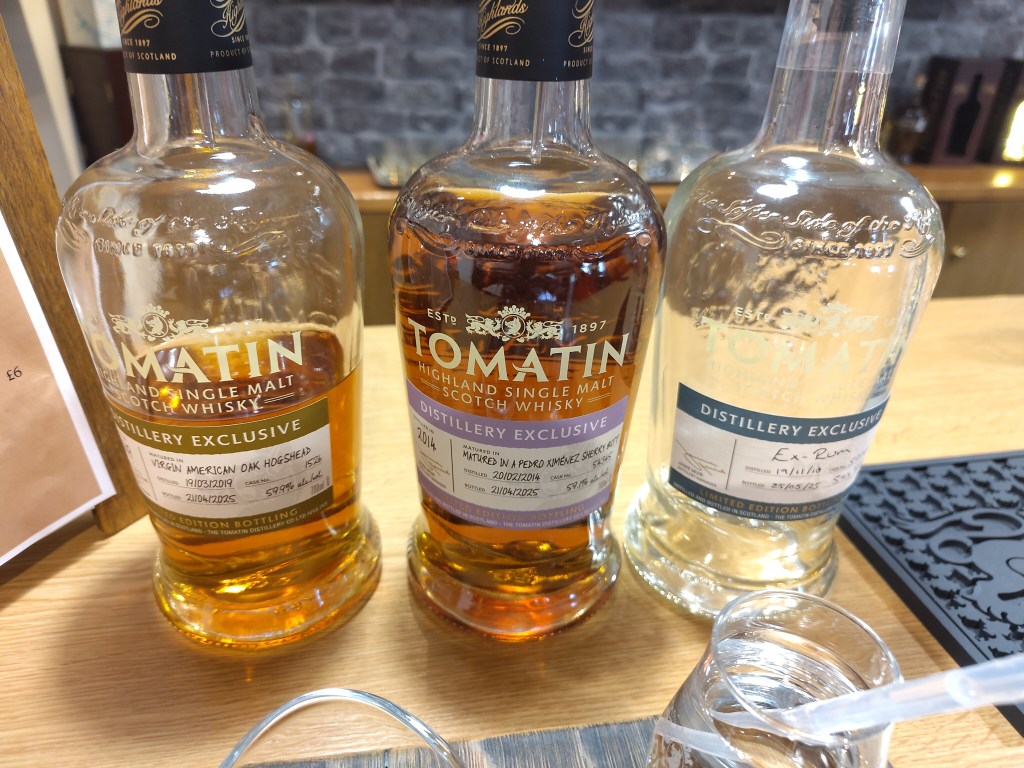
The final day, after a hot breakfast in Ullapool, we drove straight back to Edinburgh, with a stop for a walk at the Corrieshalloch Gorge (very scenic, just a shame for theโ€ฆmidges!), and a final last stop at Tomatin distillery. There, Edoardo and Gianluigi shared a flight of their bottle-your-own drams (pricey, but generally good) and one of Cu Bocan (their lightly peated malt), plus a couple of sherry expressions: the Manzanilla and the PX finished ones were particularly delicious. After that, we slowly drove back to Leith, where we arrived in time for a quiet dinner and a final dram.

First, we loved this trip, and we had a fantastic time up in the Highlands. Landscapes are fantastic, and although we had been there before, this time we really appreciated why it became so popular. Itโ€™s really a magic place. Second, the distilleries: we had a very good time up north. Apart from Pulteney, which was a bit too corporate and impersonal (not the guideโ€™s fault), Wolfburn, which was the other one well established, was just fantastic. The two new distilleries, 8 Doors and North Point, were both great as well – we were walked through the detail of their projects, and people’s passion was contagious. During both visits we could try their newmake spirit, and although someone might think that it is a given for new distilleries, after visiting a number we can say that it really isnโ€™t. Kudos to them, and weโ€™ll patiently wait for their single malt whiskies.

After a pause, weโ€™ll be back with a Fife experience! Until then, slร inte!


North Point Founders’ Tour

Price: ยฃ30.00 pp (July 2025)

Duration: 1hr (in theory, but it was longer)

Tasting: Pilot Rum (40%), Crosskirk Bay Gin (45.1%), Spiced Rum (43%), Dalclagie Newmake spirit (63,5%), 11m spirit ex-wine cask (~65%), 12m spirirt ex-bourbon cask (~65%), and we had a dram to replace the third spirit sample (not available on the day, see text)

Highlights: the bunker and the warehouse tasting

Target: whisky and spirits enthusiasts, and Cold War nerds

Value for money: good

Recommended: absolutely

Link: https://www.northpointdistillery.com/

#63.2 As north as you can get (on the mainland)

Pushing north: 8 Doors distillery


TL; DR: After the morning in Wick, we spent the rest of the day in John Oโ€™Groats. After a trip to a nearby lighthouse, we visited 8 Doors distillery, where Ryan gave us an extremely interesting and geeky tour of their operation. Even though we’ll have to wait for their single malt, it’s definitely a must-do visit! 

(missed Part 1?)

There is a human tendency to order facts and figures, probably thatโ€™s why articles with rankings, billboards, such as โ€œthe X best records of year Yโ€, โ€œQuentin Tarantino movies rankedโ€, and so on, preceded the internet by a long time. For whisky brands, having one of the โ€˜-estโ€™ facts can often be an unmissable chance to make themselves notable, which has become particularly important since the massive wave of new players in the market (are we over 160 distilleries yet? For sure over 150, and just for malt ones). The โ€œbiggestโ€, โ€œoldestโ€, โ€œsouthmostโ€, โ€œhighestโ€, or โ€œthe only distillery on Skyeโ€โ€ฆwhich now became โ€œthe oldest distillery on Skyeโ€. Although some of these traits might actually have a connection with the flavour profile of the whisky advertised, in most cases we wouldnโ€™t read too much into it.

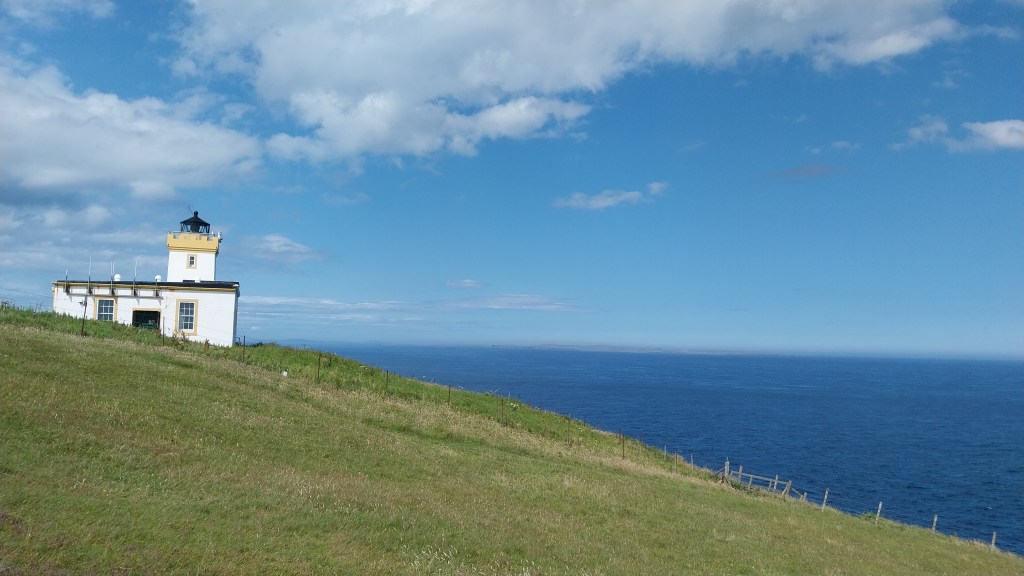
Nonetheless, going back to our long weekend up north, letโ€™s talk about the northmost distilleries in Scotland. The northmost used to be Highland Park on Orkney, although now itโ€™s probably been beaten by Lerwick distillery (assuming itโ€™s online) on Shetland. On the mainland, it was Pulteney for a long time, but then the (imaginary) trophy went to Wolfburn. Nowadays there is a new winner of this race: 8 Doors distillery, in the village of John Oโ€™Groats, which is where we were headed after our tour at Pulteney. The village is only about half hour driving from Wick, almost straight north, along the rugged North Sea coast. We only stopped to put some diesel in the tank, and to save time we ate our pre-prepared sandwiches while driving (the Lidl rosemary focaccia, with grilled aubergines and roast turkey: delicious!). We took advantage of the stunning sunny, warm and breezy weather to visit the Duncansby Head Lighthouse.

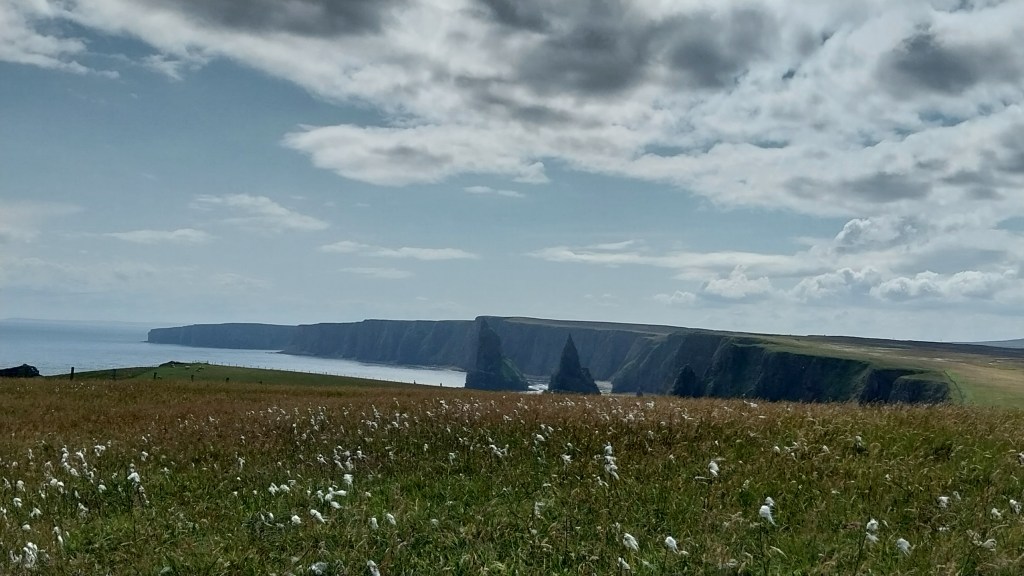
It is only a few km away from John Oโ€™Groats, just a short drive on a secondary single-track road. The building is not accessible, but there is a stunning walk starting from the car-park on the cliff near a marine bird nest (we saw puffins here! Unfortunately our phonesโ€™ cameras are too crappy to take decent pictures) and a view on the Duncansby Stacks, a very scenic rock formation. Back to the car park, we drove to the John Oโ€™Groats Campsite to drop Mr. Vantastic before going to the distillery, which is just a couple of minutes away. As a matter of fact, everything in John Oโ€™Groats seems to be two minutes away from everything else: the distillery, the shop, the campsite, the signpost, the pier, the brewery, although the rest of the village is quite spread out.

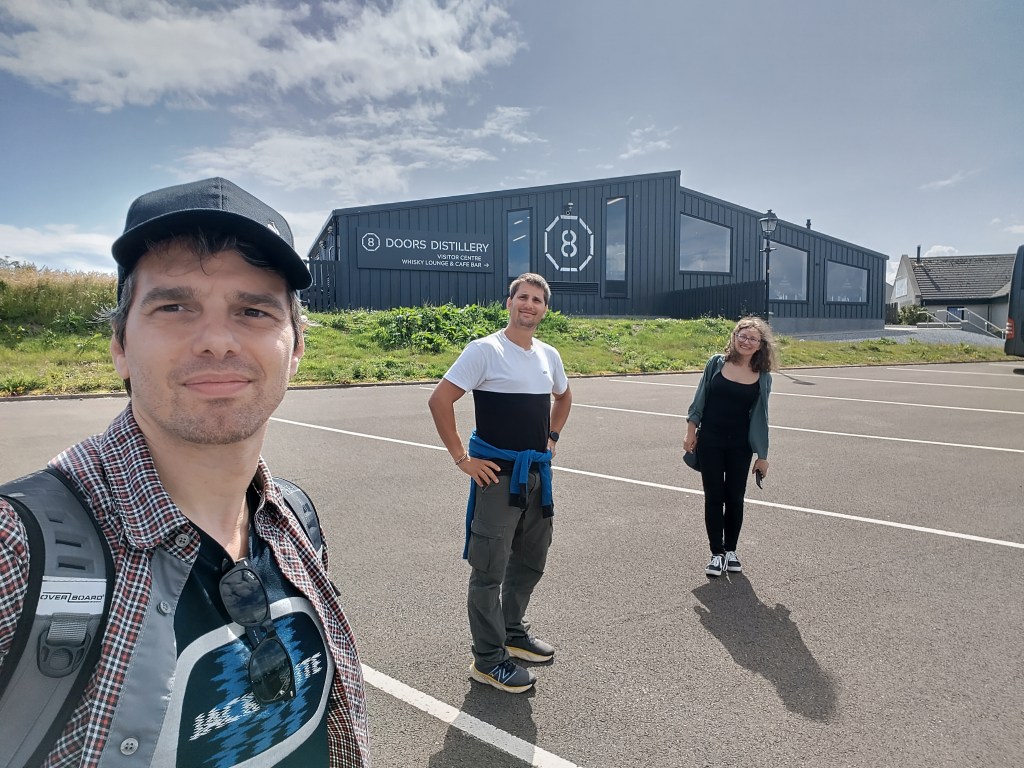
We arrived at the 8 Doors distillery a few minutes after 3.00pm, the time we originally agreed with Ryan Sutherland, the distillery manager, who moved to 8 Doors after an extensive experience with William Grant & Sons (Glenfiddich, Balvenie, Grantโ€™s). Ryan is a fellow barfly and although weโ€™d never met in person before, weโ€™d chatted online a few times. When we started planning this trip, we asked him if he could give us a tour of the site, which he kindly agreed to. As we entered the visitor centre, we had to move around a swarm of tourists coming from a cruise ship: not a rare occurrence in summer, as Ryan told us later, which can put some pressure on the staff. Fortunately, the shop/cafรจ is wide enough for everyone, it has a big window facing north towards the Pentland Firth and a fireplace – a cosy and relaxing space. Ryan took us to the tasting room, between the shop and production, to drop our bags, but we soon moved to the main production area. The distillery is quite self-contained, and from the main area we could see most of the equipment.

The distillery started production in 2022. Founders Kerry and Derek wanted to bring distilling back to John Oโ€™Groats and its community, and to do so they employed a consultant, John Ramsay (former Edrington), who is now the master blender. A short-lived distillery existed between 1826 and 1838, and illicit distilling was common in the area before. The name of the distillery comes from the founder of the village, John De Groot, which had seven sons and to avoid fights, he built an octagonal house where each of them (him and the sons) had a door and a window. We wondered if, in their shoes, weโ€™d take the south facing one, for the sunlight, or the north facing one, for the view on the Firth.

The distillery is a small operation, producing only about 36,000 litres of spirit per year (in theory they could reach 45,000 litres), and is run by one operator, Andrew, and Ryan himself. Ryan described the setup in great detail, including all the small changes he is implementing to make the process more efficient – his engineering background shone through. There is no mill at the moment, so the malt comes in already milled from Simpson maltster (usual 20/70/10 split for husk/grit/flour), but in the future they are hoping to get the malt locally from Caithness producers. They are also considering using oat, which would be super interesting, as only a handful of Scottish distilleries are using this cereal (Inchdairnie andโ€ฆactually we cannot think of any other).

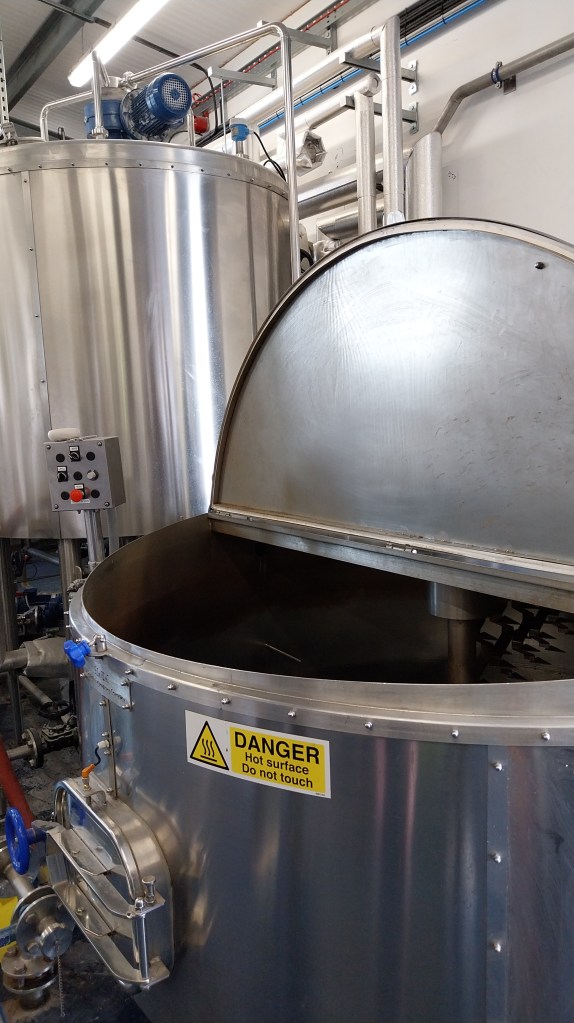
The mashing equipment comes from a defunct brewery in East Lothian, Archfield Brewhouse, and has been repurposed to work in a distillery. Because of this, together with the usual mashtun, there is also a kettle, that comes in handy to pre-heat the water with the heat exchanger. For each mash they use one 400kg bag of grist together with 1,200 litres of water: the 3-to-1 ratio makes it a thick one, cloudy at first but they let it decant for a while. Between the first and second water they get 1,800 litres of wort, which is then moved to one of the four 2,000-litre stainless steel washbacks (there is a fifth, but itโ€™s not been used). Fermentation lasts about 100 hours on average to get a wash at up to 9%abv. Here is where it gets interesting: depending on the variety of barley, they try to pick a yeast to obtain a determined flavour profile. Among the barley varieties used, Lauriet, Firefox and Diablo, but also Cara Gold, Maris Otter and Golden Promise. Yeast-wise, M1 is the main one, which results in a fruit-forward wash, but they also use XP for red fruits flavours, Norwegian beer yeast Kveik/Hornindal, MW, D23 and MGplus. In general, they produce their house-style for most of the year, while in December and January they run more experimental batches.

The stills and the spirit safe are on a raised floor, and fun fact: from there we spotted Mr Vantastic in the campsite! The stills are from Speyside Copperworks, which is now owned by Forsyths. The first distillation in the 1,700-litre wash still is very slow, about 7 hours, while the second one is carried out in the 1,300-litre spirit still. They run the foreshots for 15 minutes, then the heart (or spirit) is collected within 3 hours, from 71.5% to 64% abv. They aim to produce about one hogshead per day.

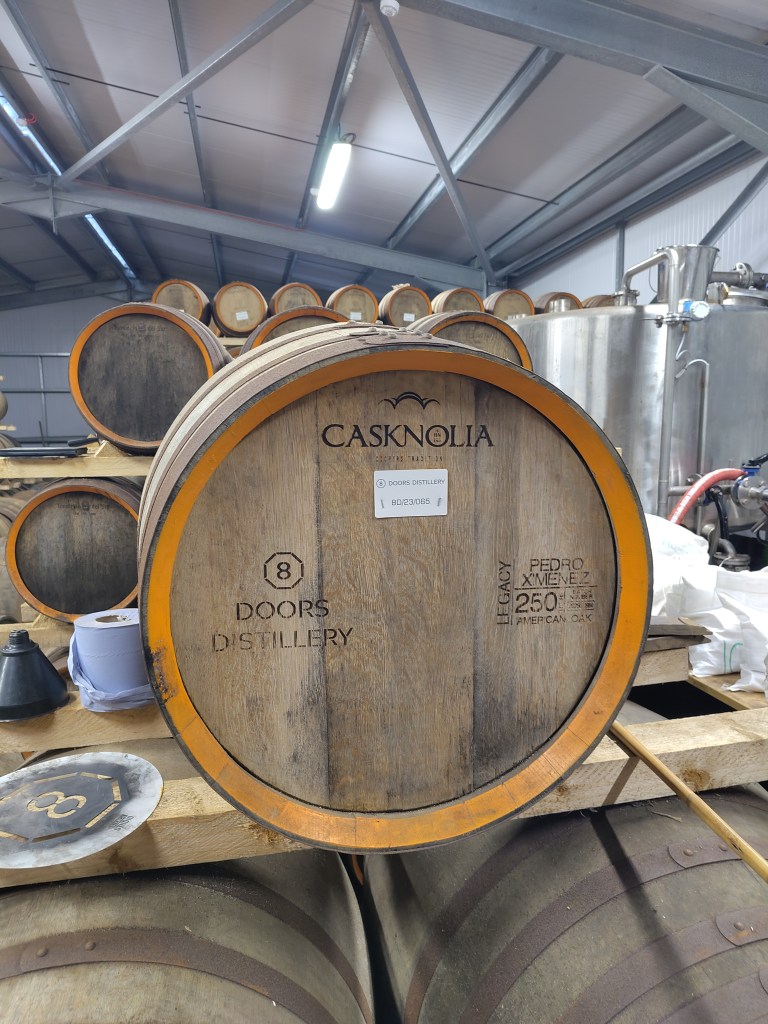
After all these technical details, Ryan took us outside to have a quick look at the LPG boiler and head to the warehouse, a low building on the other side of the distillery staff car park. Here we saw a multitude of casks of different sizes. They mostly fill ex-Sherry casks from Casknolia of various sizes (from 50-litre octave to 5,090-litre butts), but also casks previously used for their Seven Sons range. The filling strength is the standard 63.5%, and the type of cask used also depends on the barley/yeast combination: interesting experiments they are running at the moment are an ex-brandy cask filled with spirit obtained from Cara Gold barley and D23 yeast, or a former Bookerโ€™s bourbon cask with spirit fermented with Hornindal yeast. All of these, albeit technical, sounded very cool, and our science-y brains were quite triggered by all these potential permutations.

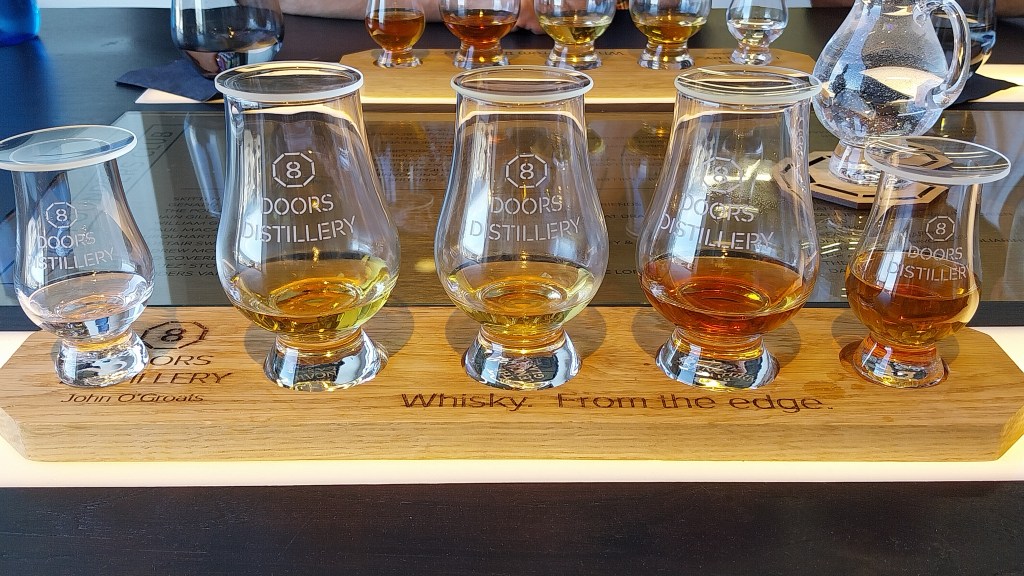
Back to the tasting room, we were ready for the whisky flight. First off, a small taste of newmake spirit (63.5%), fruity and cereal, as youโ€™d expect for a good one. Then, we moved on to the Seven Sons whisky range (named after John De Groot sons). First, the 10y blended scotch (46.7%), characterised by a high malt content (40%) with the grain component coming from North British. This is one of their โ€œhouseโ€ whiskies – not all batches are identical (this is the 9th), but they aim for a nice-sipping blend, and they nailed it! Edoardo took one home to share with his friends over the next 6 Nations – as Italians we need something good to hang on to. The second dram was a blended malt, a 12y teaspooned Dalrymple from Ailsa Bay, bottled at 57.1% (100 of the old imperial proofs), from a third fill European cask, which provided a mild and delicate flavour. The third dram was a single malt, a 6y sherried (Oloroso) and very vibrant Glen Wyvis from a Firkin cask (52.1%), the cherry on the top. We finished the tasting with their Five Ways whisky liqueur (22%), and a cheeky โ€œManagerโ€™s Dramโ€, a delicious blend produced with the idea of recreating a 1970s Famous Grouse.

What a geeky and awesome tour! We loved everything about the distillery and how they set up their plan, and it was really great to listen to Ryan explaining in detail how the distillery works. 8 Doors is one to keep an eye on, where weโ€™d like to go back to (not just for the beautiful scenery). We are looking forward to the release of their first single malt!

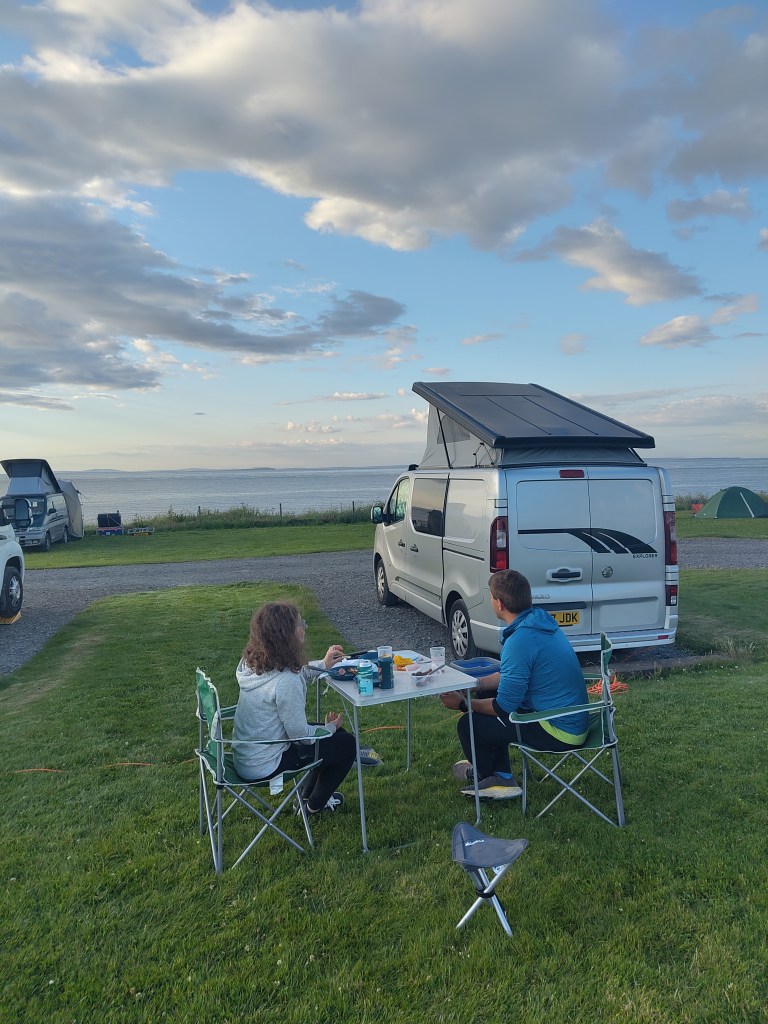
After the distillery, we walked a bit around John Oโ€™Groats, before going back to the van and start a barbecue. It was a bit windy, but nonetheless we managed to grill some massive Hellbent burgers. The evening ended with a pint at the John Oโ€™Groats brewery/pub, a very cosy place just in the middle of the village.

Next up, another former โ€œnorthmostโ€ distillery on mainland Scotland, so stay tuned! Until then, slร inte!


8 Doors Distillery (bespoke tour*)

Price: ยฃ23.33 pp (July 2025)

Duration: 2hr

Tasting: newmake spirit (63.5%) and 4 drams, Seven Sons Blended Whisky (10y, 46%), Blended Malt (12y, Dalrymple, 57.1%), Single Malt Glen Wyvis (6y, 52%), Five Ways Ginger Whisky Liqueur (22%)

Distillery exclusive: bottle-your-own versions of a whisky from the Seven Sons range and Five Ways whisky liqueur (forgot to take note of the prices, sorry)

Highlights: the location and Ryanโ€™s knowledge

Target: casual tourists and whisky geeks alike

Value for money: very good

Recommended: yes

Link: https://www.8doorsdistillery.com/home
(*similar to the Behind the Scenes tour https://www.8doorsdistillery.com/tours, but longer and with extra drams)