#66.1 Something new, something old

Toulvaddie distillery: A whisky mystery solved withโ€ฆpizza!


TL; DR: After our trip to the Outer Hebrides was cancelled, we tried our luck driving East, to the Fearn Peninsula. There, we visited another new craft distillery: Toulvaddie. Not our usual tour, but a must-do for the pizza and cocktails lovers!ย 

If you read our last post, youโ€™ll know our holidays to the Outer Hebrides went down the pooper: we barely managed to visit Tiree distillery, on the Isle of Tiree, but then our next ferries were cancelled because of high wind. Oh well, when weโ€™d booked the trip, we knew this could happen, weโ€™ll just need to wait a few months to regroup and try again. However, in the meanwhile we had to decide what to do with our remaining days off, at least during the weekend.

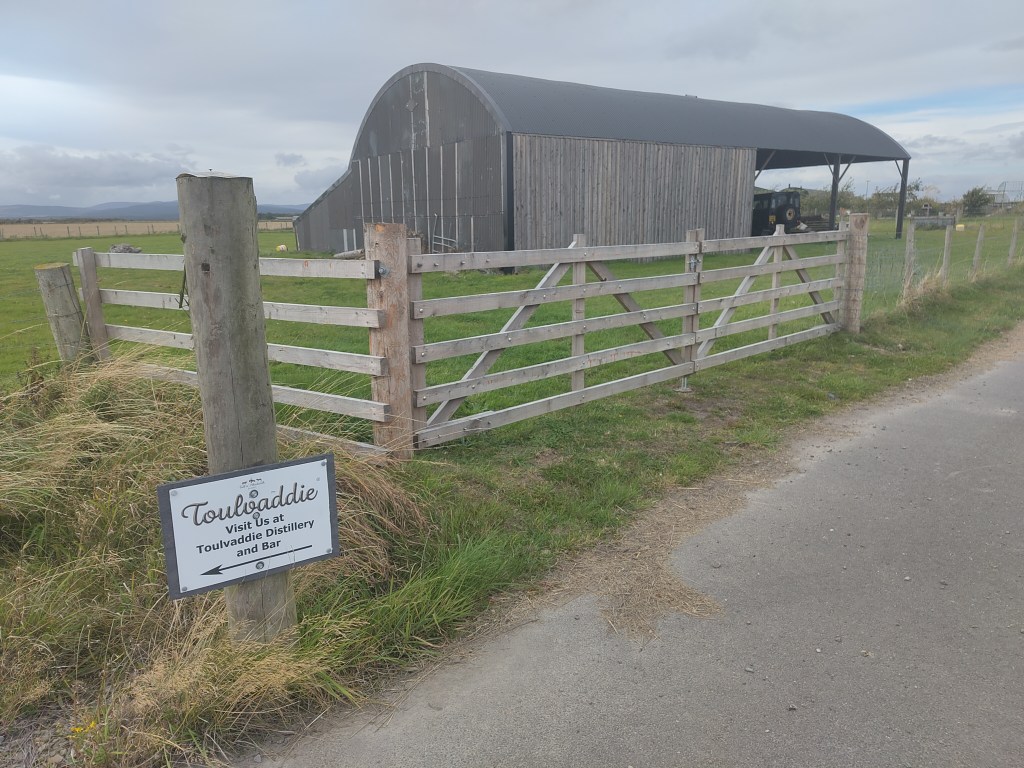
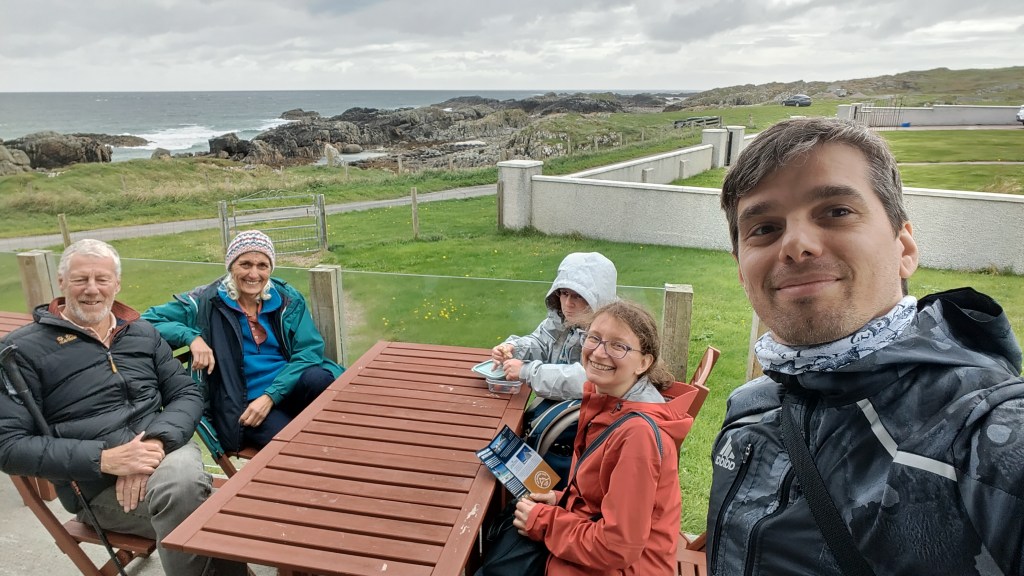
That Friday we woke up at the campsite in Fort William under a gloomy grey sky: a cold, wet and windy day, not putting us in the best mood for outdoor activities. After breakfast, a shower, and a chat with Justine, Karen and Chris, we decided to split. The two of us and Mr. Vantastic left Fort William eastward, hoping the other coast would bring some luck. While Teresa drove, Gianluigi looked at potential whisky activities to do in the area. There was a new distillery that had been on our radar for a while, but we had not managed to visit: Toulvaddie. One reason for not getting there earlier was that tours are available only on Tuesdays and Wednesdays (until a few weeks ago, also on Thursdays). Truth to be told, a few weeks prior weโ€™d tried to plan a visit on our way back from holidays, on a Tuesday. However, the booking system didnโ€™t work, and our queries werenโ€™t replied. After a check on their website, we found out that they do pizza nights on Fridays and Saturdays, so we figured they must have been open (two Sherlocks in action here!). Thus, we decided to drive there and try our luck. Worst case scenario, weโ€™d still get a pizza!

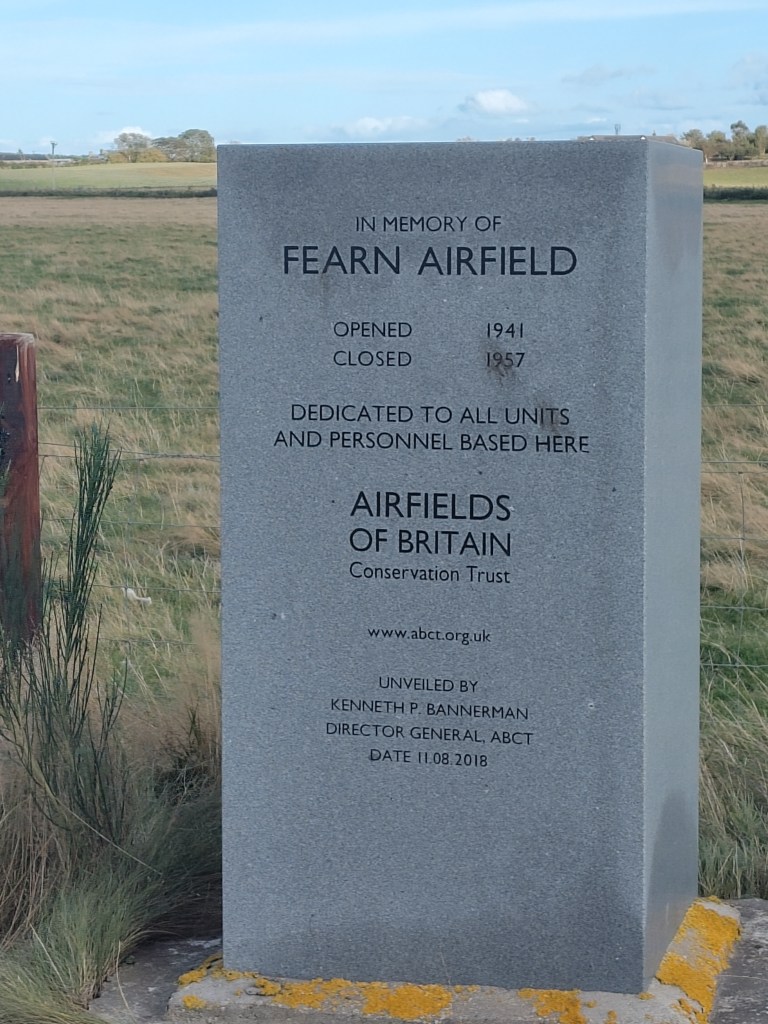
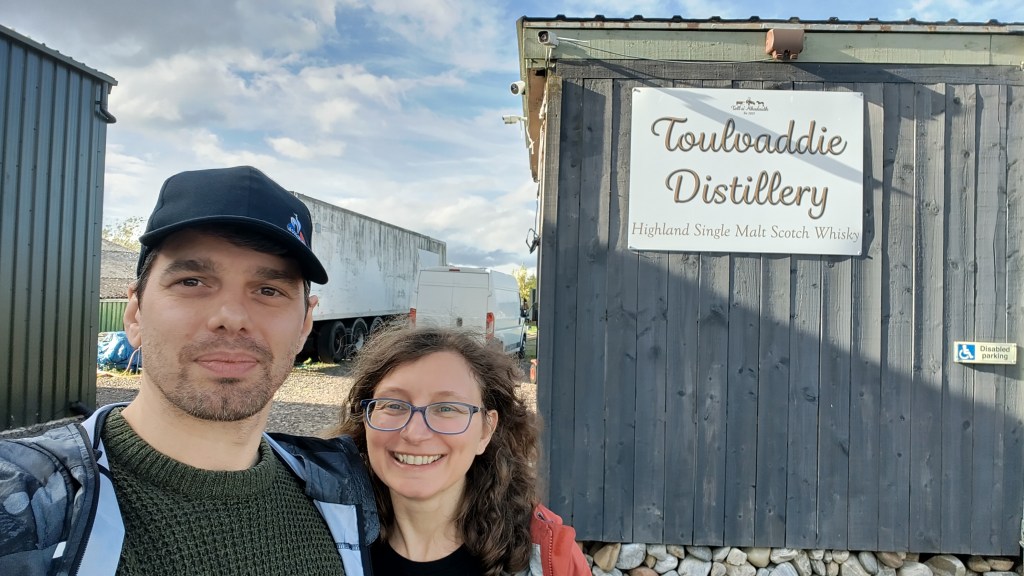
The distillery is located on the Tarbat peninsula (near Fearn, Easter Ross), to the east side of the A9, roughly between Invergordon and Tain. It is on the site of a former naval airbase (HMS Owl) and while part of the surrounding area has been redeveloped for industrial use mostly, there is still an airfield for small private planes. As a matter of fact, Google Maps sent us straight in the middle of the runaway; the area is quite flat though, and not massively built, so we quickly found our way around the airfield to get to the distillery.
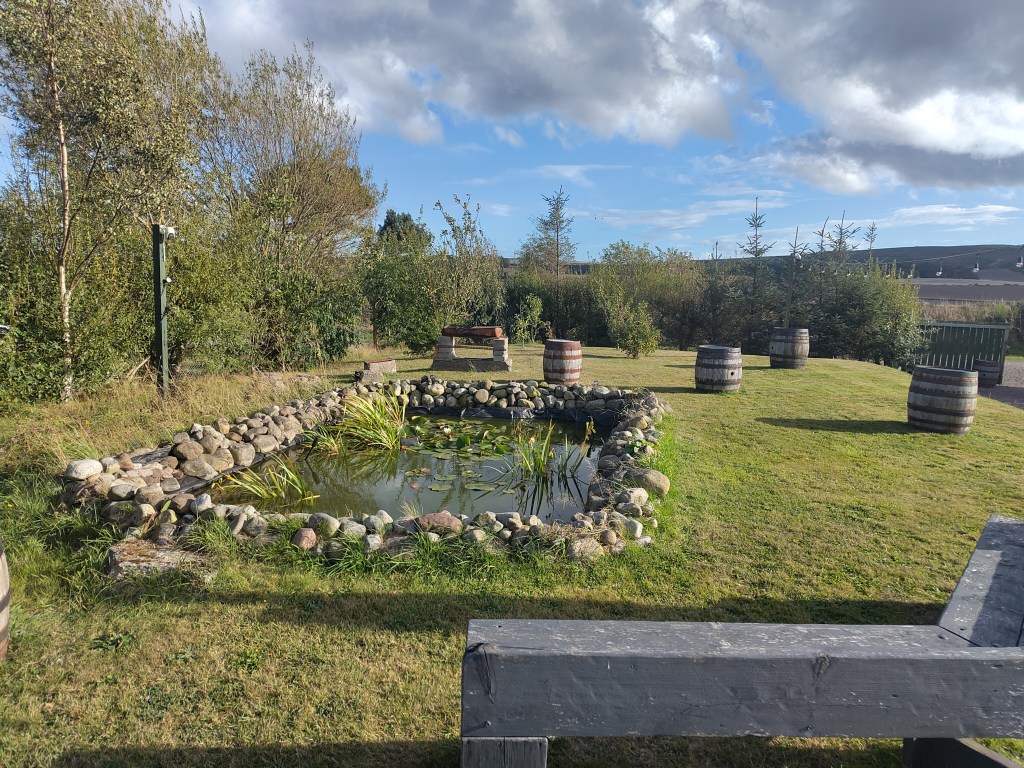
We arrived there at 2pm, the opening time, while pizza would have been available from 3pm until 8pm (unless sold out). We left the van next to the gate, and we walked in to find a very nice space: on the left, some vegetation and a container (weโ€™ll learn later thatโ€™s the temporary warehouse, while waiting to build the permanent one), on the right side a nice garden with a fish pond, chairs and a grill: perfect for summer time! In the meantime, the sun came out (for a while), and it gave a great feel to the whole outdoor area.
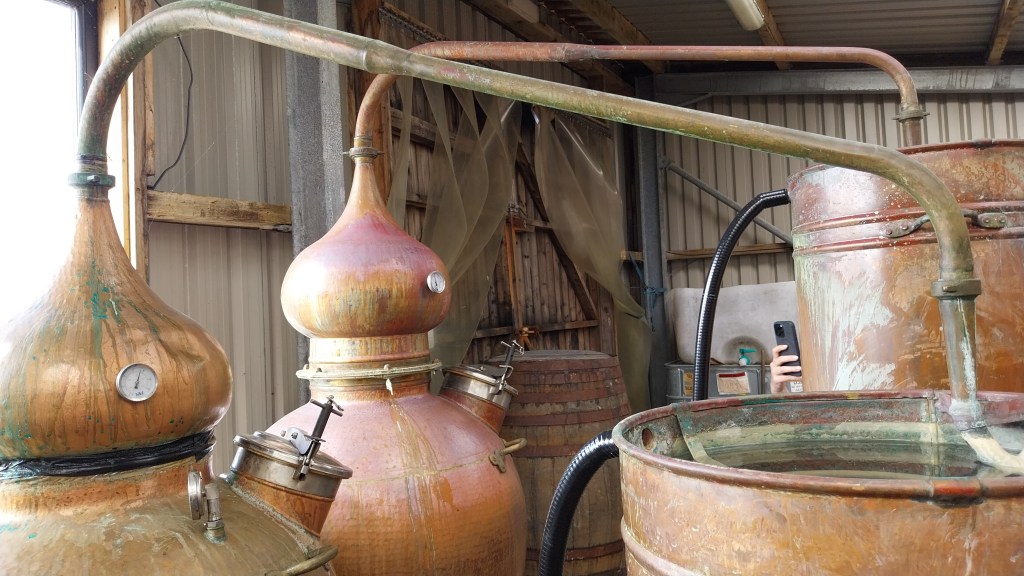
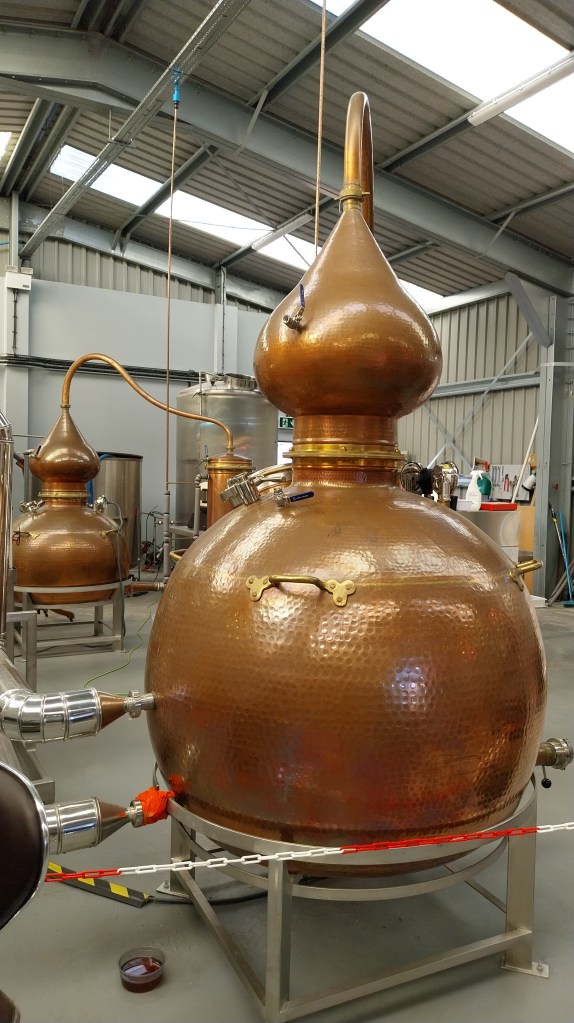
The production is inside the main building, together with the bar in a big open space. As we walked in, we were welcomed by Heather, the distillery owner together with her husband Bobby (who was busy setting up the pizza oven). The production equipment is past the bar area, with the shiny stills almost in the middle of the building. We sat at the bar, and while splitting a tasty Happy Chappy pale ale (from Cromarty Brewing), we started chatting with Heather about their whisky production. Although the distillery was planned way before, they actually started distilling in April 2024, so their spirit is half-way to become a single malt.

The distillery is operational from Sunday to Thursday, and production is quite scheduled. They donโ€™t have a mill, but they bring in pre-milled Laureate malted barley from Crisp. Other than saving one stage of production, this allows them to reduce the spark risk, so they can have people inside the building. They usually mash on a Wednesday, in a 0.33 ton mashtun, and then ferment the wort for 5 days in one of the 2,000-litre washbacks. Distillation is usually done on the following Monday (first) and Tuesday (second), in a couple of Hoga stills: the spirit one (the second) is only 500 litres, one of the few that is smaller than the Dornoch distilleryโ€™s one! Both stills work with a steam coil, powered by an oil unit, and they are both equipped with a shell and tube condenser. The second distillation cuts are approximately between 70% and 60%. All the casks are filled on site, mostly ex-bourbon barrels, but sherry ones too from time to time. The draff and the pot ale are sold to local farmers. We shared a dram of the newmake spirit (bottled at 63.5%), which was very malty and cereal-y, with the usual green fruits (apple and pear) taking a back sit in this one: nice stuff!
At that point it was about time to order the pizzas, pepperoni and mushroom+ham, which we happily enjoyed, for Gianluigi while tasting one of their newmake spirit-based cocktails. The idea of using the distillery as a pub and pizzeria to get some cash is a very smart one in our opinion, also because there arenโ€™t many other options in the area. They have plans to build a new permanent pizza oven outside the distillery, so they wonโ€™t have to set it up every Friday. Before leaving we signed the guest book, hoping to go back when their single malt will be ready!
We took Mr. Vantastic back on the A9, and decided to stay in Inverness for the night. After we found a suitable parking, we visited the Uile Bheist โ€œbrewstilleryโ€โ€™s pub, as last time we were there, we hadnโ€™t had time to enjoy it after the production tour. We had a couple of drams there and, completely unplanned, we were rejoined by Karen and Chris: the choice is great and prices are very competitive. To end the night, we decided to pay one final visit at a whisky bar weโ€™d heard a lot about but never been before: the Malt Room! The whisky choice is great there too, but probably because it was a tad too busy, and the general rowdiness of the night (Inverness is rowdy on a Friday night!!), it didnโ€™t feel very cosy. Hopefully next time weโ€™ll visit on a quieter day.

The next morning we woke up and, with no rush, drove south towards Leith. Did we drive straight home? Almost. More on this next week. Until then, slร inte!


Toulvaddie Distillery Tour

Price: ยฃ15.00 pp (September 2025)

Duration: 1hr

Tasting: a dram of newmake spirit (63.5%)

Target: anyone

Value for money: N/A*
*we didn’t do the tour as advertised on the website so we don’t know. We went in for the pizza on a Friday

Highlights: the garden and the pizza!

Recommended: nice for a pizza/distillery combo

Link: https://www.toulvaddiedistillery.com/home

#65 Tiree distillery

One windy leg of the Hebridean Whisky Festival


TL; DR: This September we embarked in an odyssey to attend the Hebridean Whisky Festival. Unfortunately, we couldnโ€™t reach most of the distilleries we’d planned to visit due to a storm, but we still managed to visit the island of Tiree and its distillery. A tiny and craft operation, with already two releases under their belt: a single malt and a rye whisky.ย 

In the last few years, especially since we got Mr. Vantastic, we travelled quite a bit throughout Scotland. However, while we have (roughly) been all over the country, there are mainly two places we havenโ€™t been yet: the Outer Hebrides and Shetland, the latter despite our passion for the namesake crime TV show. This was supposed to change this year though, as together with our friends Justine, Karen and Chris, we decided to go on a campervan holiday to the Outer Hebrides, to attend the Hebridean Whisky Festival. The festival is structured similarly to the Islay and Campbeltown ones, with each distillery having a different open day. The challenge is, obviously, that most distilleries are located on different islands, some of which connected by ferry crossings lasting a few hours. The festival started on the first weekend of September in the inner islands, with Talisker, Torabhaig (both on Skye) and Raasay: as we already visited all three, and not long ago, we skipped this part (follow the links for our great February 2024 trip!). Then, after a break-day wisely set up by the organisation to allow people to travel, it was the Isle of Tiree distillery turn, our first visit.

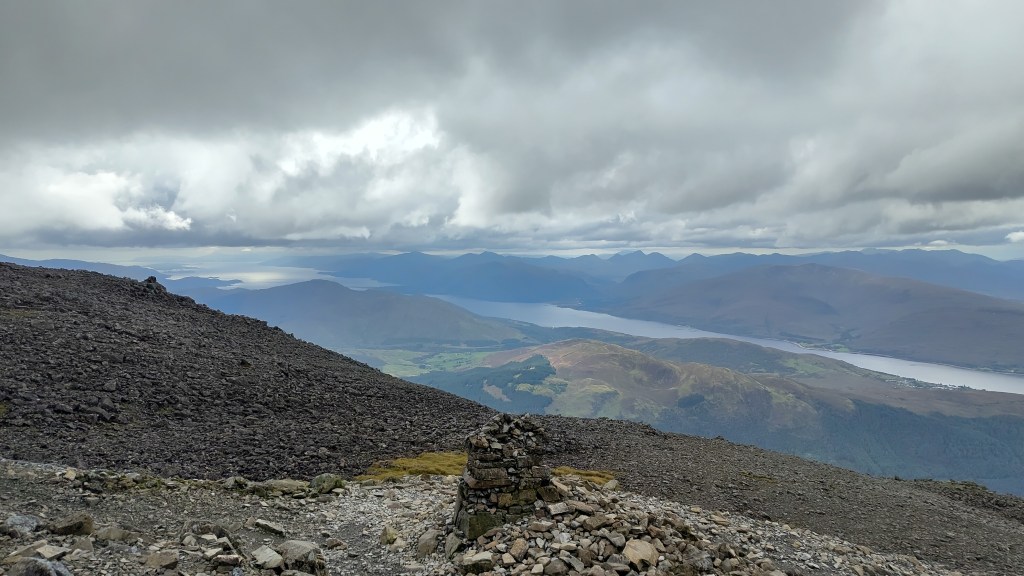
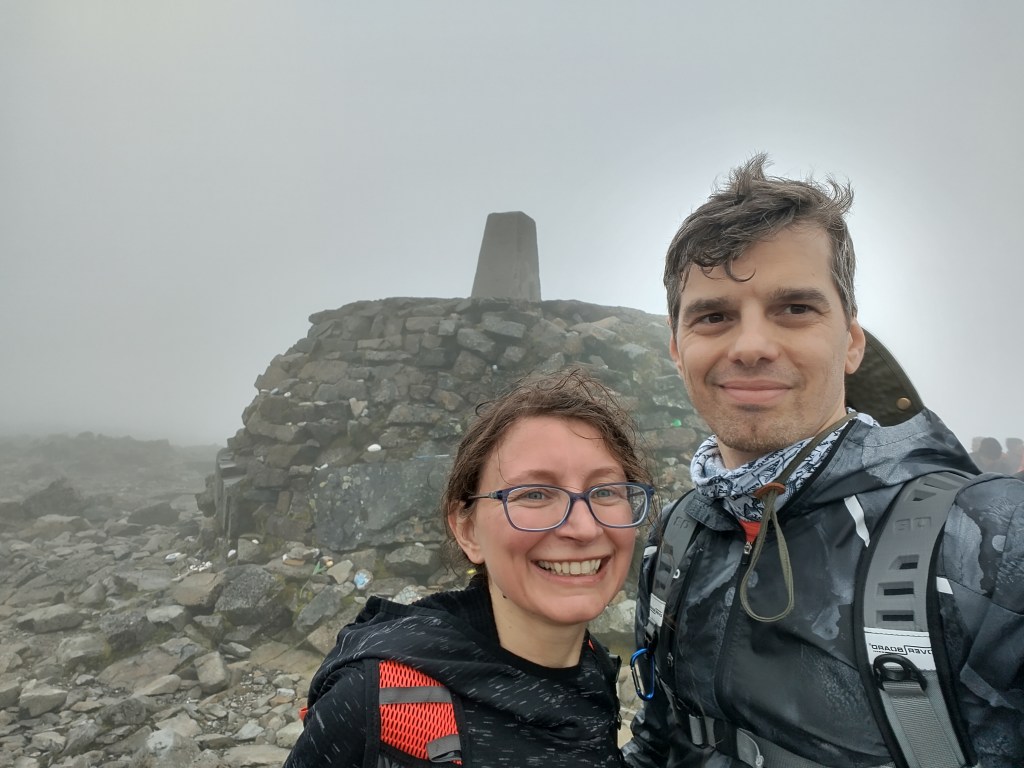
The Tiree distillery day was on a Tuesday, so we booked a ferry leaving from Oban on the Monday. The weekend before, we decided to avoid whisky stuff for once, but rather climb the tallest mountain in Great Britain: Ben Nevis. We left Leith in the morning, and after a first quick break in Callander to pick up some delicious pies at Mohr Bakery, we arrived at the main visitor car park around 11am. We went up from the easy (but still steep) route: we had an initial doubt whether to go for a more challenging route, but we really didnโ€™t want to be the eejits on the news that injured themselves on a path beyond their capabilities (we are decently fit, but still, we hike about half a dozen times a year, not on mountains). The path was a bit crowded, but the view quite spectacular, except on the top: a thick fog welcomed us.

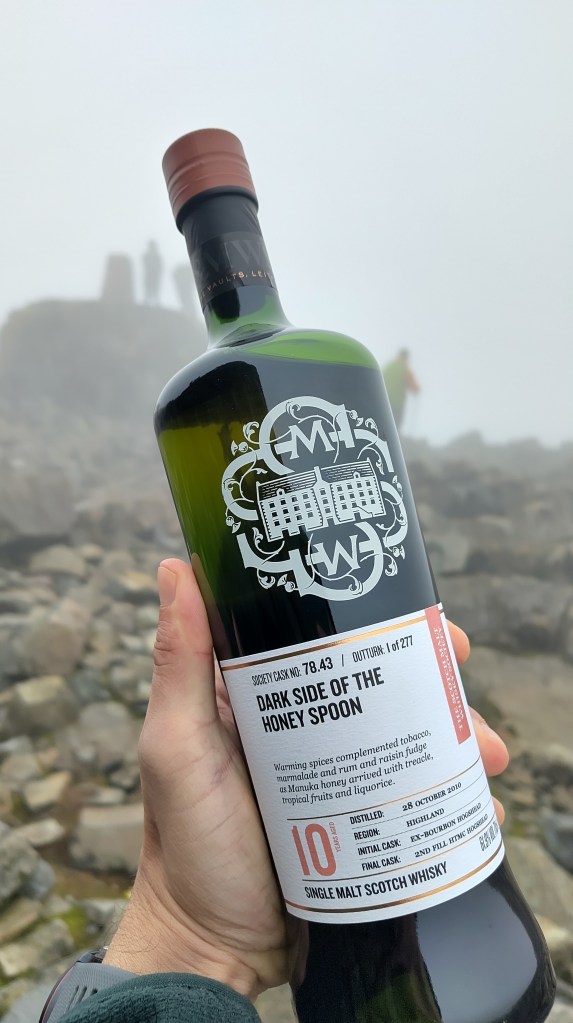
We still celebrated the achievement by opening a bottle of Scotch Malt Whisky Society Ben Nevis bought during the pandemic, high abv but delicious nonetheless. The descent was much faster, and afterwards we stayed at the Glen Nevis campsite, just next door. After a nice meal at the Glen Nevis restaurant (with a decent whisky selection too), we slept like rocks!

The next day we slowly drove towards Oban, where weโ€™d meet with our friends, just after a fantastic seafood lunch in Port Appin at the Pierhouse Hotel, an auld acquaintance from a few years back.

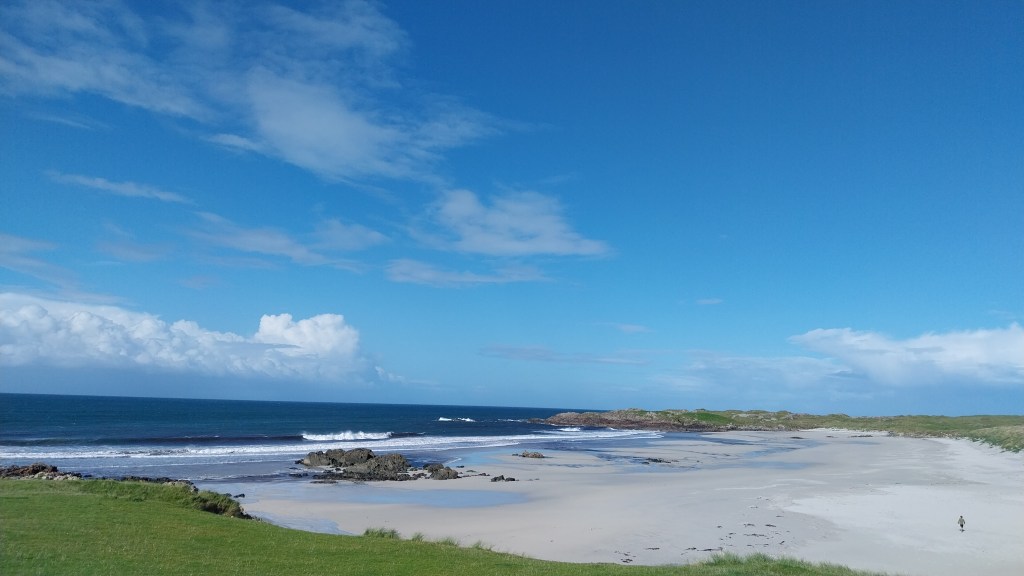
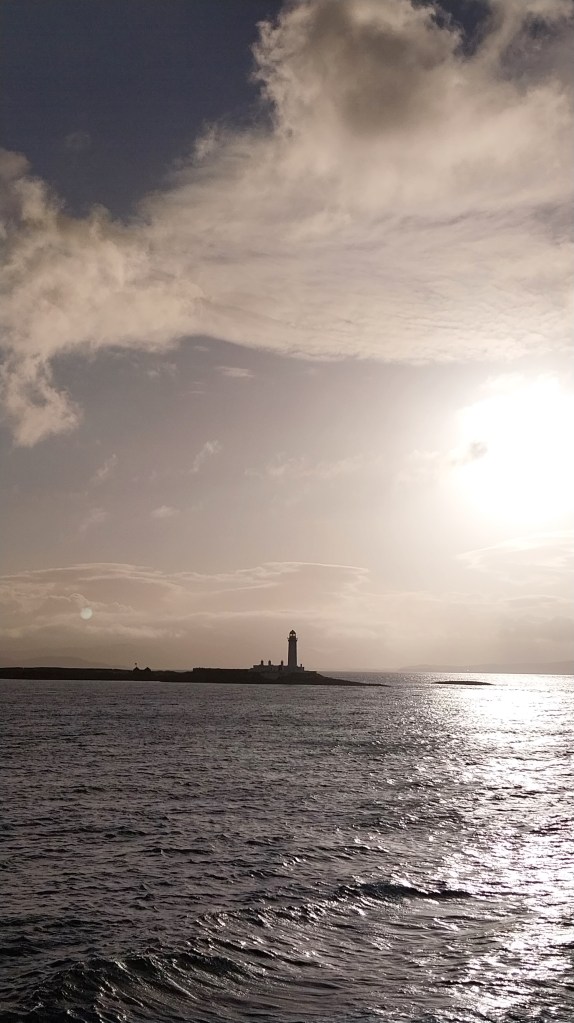
We met with the others at a car park near the Oyster Inn, 10 minutes away from Oban, as they allowed overnight stays for campervans. Meanwhile, the weather had turned rainy and windy, and rumours were that the next day ferries wouldnโ€™t be able to sail, reinforced by an alert message from CalMac (the ferryโ€™s company). Because of this (and the wind) we struggled to sleep that night, but fortunately, in the morning the ferry sailed: we were much relieved (for nowโ€ฆ). It took about four hours to go from Oban to Tiree, and along the sail we spotted Ncโ€™Nean distillery and Tobermory, on a day that turned sunny. As we got off the ferry and drove towards the only campsite, we realised that there isnโ€™t a proper village. The biggest settlement is Scarinish, where the ferry pier is. Also, the island is very flat (the highest hill is 140 meters high, with a radar station (the โ€˜Golf Ballโ€™) on top of it dominating the landscape. This makes it a paradise for surfers, and we found many of them at the campsite and around the island. After we checked in, we spent the rest of the day exploring the surroundings.

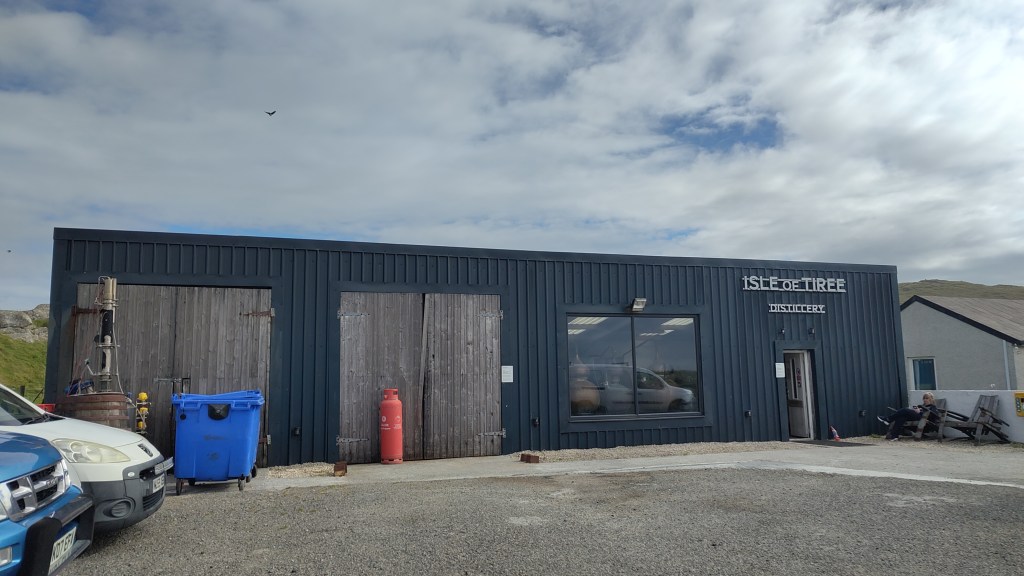
The next morning we left the campsite, and after a stop to a very disappointing diner, we drove towards the distillery, in the south-west of the island. We parked the vans in a field nearby that weโ€™d booked for the night via the Tiree Croft Camping Service. It was supposed to be 10 minutes on foot to the distillery, turned out to be about half hourโ€ฆFortunately we had plenty of time. The distillery is inside a small, blue warehouse. On the right, in a separate building past a courtyard, there is the visitor centre and bar. Itโ€™s very small but very cosy, and since it wasnโ€™t raining (yet), we enjoyed a Tiree gin and tonic on the porch before going back to the distillery for the tour.

There, we were served a sample of newmake spirit as a welcome. Ian and Allan, the founders, started the tour talking about the history of distilling in Tiree. The historical records from 1768 report about 50 stills, however they decreased to only three legal stills by 1783, before the final clearance operated by the British government to depopulate the country. Finally, in 1802 distilling was temporarily banned, but between 1814 and 1882 a couple of short-lived distilleries were in operation, too unprofitable to resist. And here comes Tiree Distillery, operational from 2020, aiming to reconnect with the distilling heritage of the island.

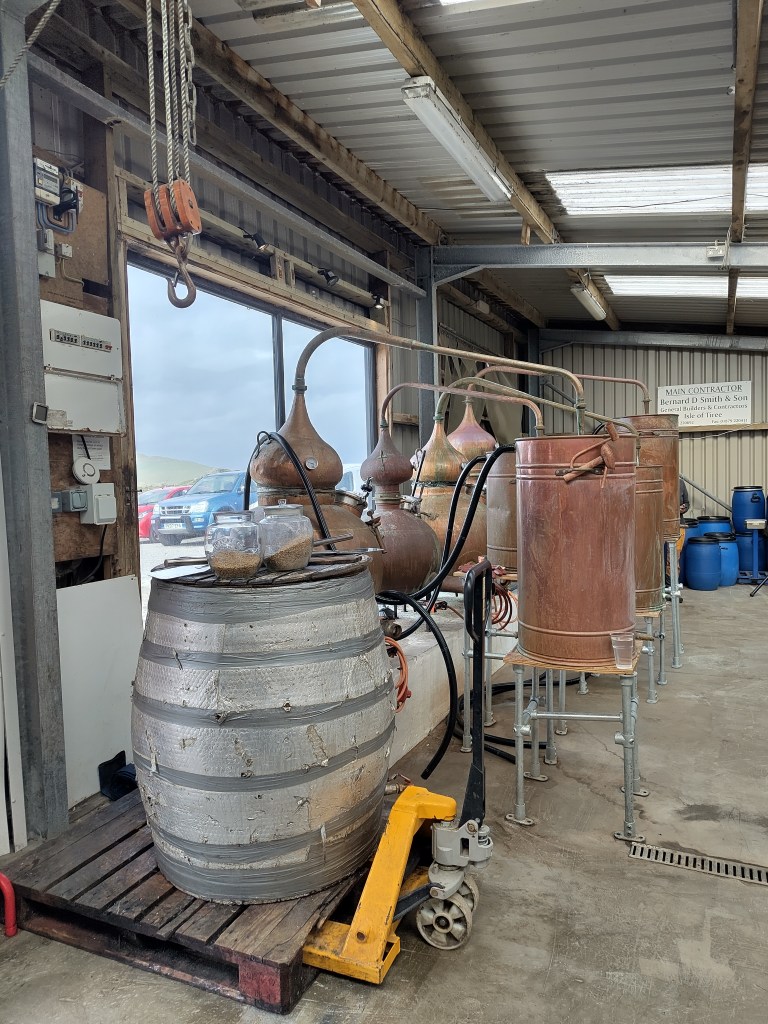
A very small operation, they bring in pre-milled malted barley (mostly Laureate) and rye from Crisp maltings, which they mash in batches of 100 kg with 400 litres of water into a wooden mashtun which used to be a sherry butt (that was a first for us!). They tried to grow local barley, which was possible but then the challenge was malting, requiring the malting to be shipped off the island and then back. They have four washbacks for the fermentation stage, two made of stainless steel and two of oak, former butts like the mashtun. Fermentation normally lasts 4 to 5 days, but it can go up to 2 weeks for experimental runs. The 6-7%abv wash is then distilled in one of the two wash stills, to get 23-25% low wines, distilled again in the spirit still. The stills are Portuguese Hoga stills with worm-tub condensers. A fourth still is used for the gin (they bring in neutral grain spirit). During the second distillation, the first cut point is 70-74%, made by smell and taste, while the lower one is around 63-64%, with the discarded feints and foreshots redistilled in the following batch. From each distillation they obtain about 60 litres of newmake spirit at 70% – it takes them two runs to fill a quarter cask.

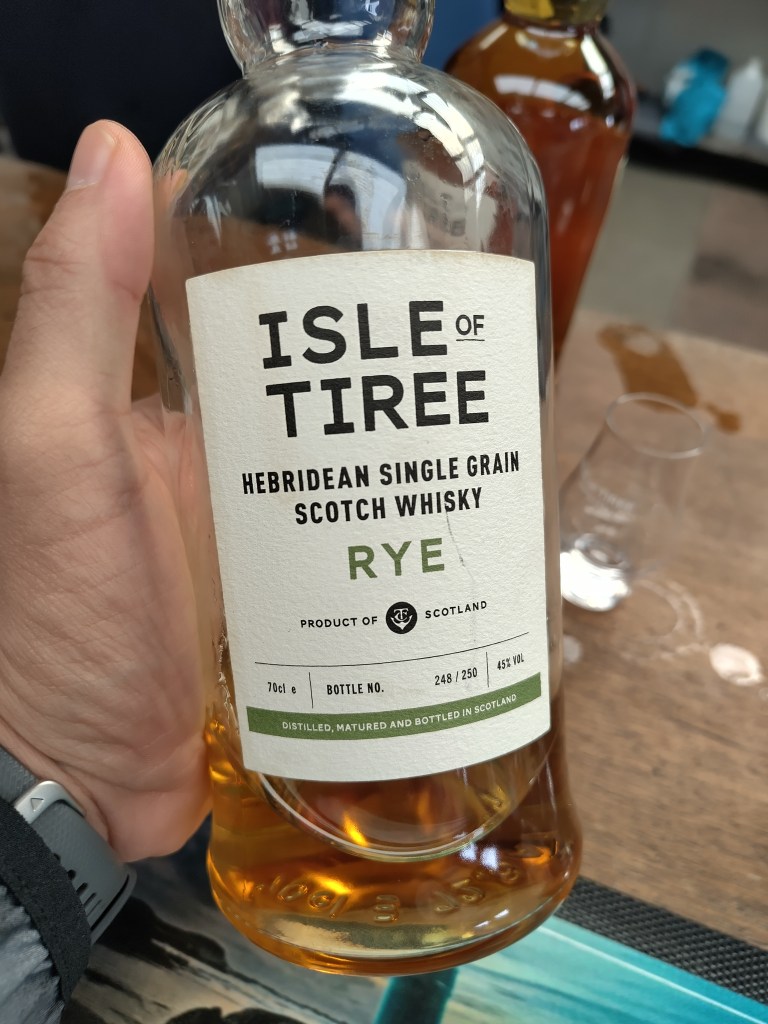
The warehouse is in the same building for the moment, with casks mostly sourced from Speyside Cooperage, especially from Heaven Hills distillery in Kentucky. The plan is to have at some point a separate building for maturation. This would solve also the high evaporation they have at the moment, caused by the production heat. We shared a dram of their newest release (ยฃ8, ยฃ125 for the bottle), the second in total after their first Single Malt release last year (not on sale anymore, but it was sold for ยฃ200). This one is a single grain, with 75% rye and 25% barley, aged four years in virgin oak and ex-bourbon casks: one of the best Scottish ryes we tried so far. They also produced a high-corn mash spirit, which is still maturing in the warehouse.

After leaving the distillery and walking back to the vans, we realised the field where weโ€™d parked was too exposed to the wind, so we called the cooperative managing those fields and we were able to swap for another one slightly less exposed. Still no facilities, which left a sour taste as we had paid ยฃ15 for one night. At least this one was at a walking distance to one of the very few bar/restaurants on the island. The very cozy Alan Stevenson House is in Hynish, a settlement that used to serve the Skerryvore lighthouse. We walked there to grab a dram, before retiring in our campervans for dinner and for a final dram, all together inside Gladys, Karen and Chrisโ€™ campervan, the biggest of the three. When we left the bar, the Tiree Distillery dinner was about to start: we didnโ€™t have tickets for the event (ยฃ65), which we regretted a bit because first, they were serving the first single malt release too, impossible to try elsewhere. Second, we didnโ€™t know yet what would happen in the following days.

The day after came with a bad surprise, as our ferry for Barra was cancelled (sad trombone). Instead, we got another one back to Oban, as the day after there was an early ferry from Mallaig to South Uist. If that went ahead, we would have had still time to attend all the other distillery visits of the holiday. That wasnโ€™t the case: in the evening, when we were already in Mallaig, this ferry was also rerouted from Oban (dโ€™oh!), but in the morning that was cancelled too. The last chance would have meant to travel to Uig, on Skye, but there were no spaces for vehicles and there was no assurance that the ferry would sail. So, after a regroup in Mallaig, we decided to drive back to Fort William and abandon the plan. From the campsite we booked we walked to the Ben Nevis distillery, where Hazel, the lead tour guide and whisky IG friend, gave us a warm welcome and some tasty drams. That was a nice consolation.

While weโ€™re happy that we visited Tiree distillery and to learn about their crafty setup, we were a bit disappointed that we couldnโ€™t make it to the other islands. The distilleries personnel were very understanding and all of our tastings and tours were refunded, and it was the same for the ferry tickets. Unfortunately, when storms happen thereโ€™s nothing anyone can do, we just hope to be able to go back soon (and be a bit luckier with the weather).

Stay tuned to learn more about our โ€œplan Bโ€, in a couple of weeks. Until then, slร inte!


Tiree Distillery Open Day Tour

Price: free* (September 2025)

Duration: 45min

Tasting: 15ml of newmake spirit (63.5%)

Distillery Exclusive: on the day, the Tiree Single Grain Rye Whisky (45%, ยฃ125)

Target: anyone

Value for money: of course very good, as it was free

Highlights: the cosy setup

Recommended: if you’re already on the island, definitely

*the regular whisky tour is ยฃ20, but according to the website there are no tours scheduled in the next 6 months

Link: https://www.tyreegin.com/


#56.5 Dramming Down Under

A hidden gem in Southern Australia: Fleurieu


TL; DR: The drive on the Great Ocean Road was really great, plenty of beautiful landscapes and some nice wildlife. Before getting to Adelaide though, we did one last stop in Goolwa, to visit Fleurieu distillery. Another craft family business, we learned how they went from brewing to distilling, and had a taste of their amazing malts.ย 

(missed Part 4/Part 3/Part 2/Part 1?)

This post starts with us on the road again, specifically on the Great Ocean Road, which stretches from Melbourne to Warrnambool. We did a few stops along the way: Lorne, for breakfast at a nice cafรฉ and art gallery called QDOS, the Kennett River Koala Walk (where, despite the name, we almost didnโ€™t see a koala on a tree), the stunning Cape Otway lighthouse, the famous 12 Apostoles, and past Port Campbell, for a quick swim in the Southern Ocean before stopping in Portland for the night.

The next day the weather was not great, so we kept driving along the coast and visited a few other villages (Beachport, Robe, Meningie) before crossing the river Murray at Wellington, with the small boat watched by a flock of resting pelicans. Pelicans were not the first encounter of the day, as during the drive an emu and a kangaroo crossed the road! After the very short crossing, we drove through Langhorne Creek and Currency Creek wine regions (not stopping this time), straight to Goolwa, just about one hour away from Adelaide, on the Fleurieu Peninsula. This is a nice wee town, next to the estuary of the Murray river.

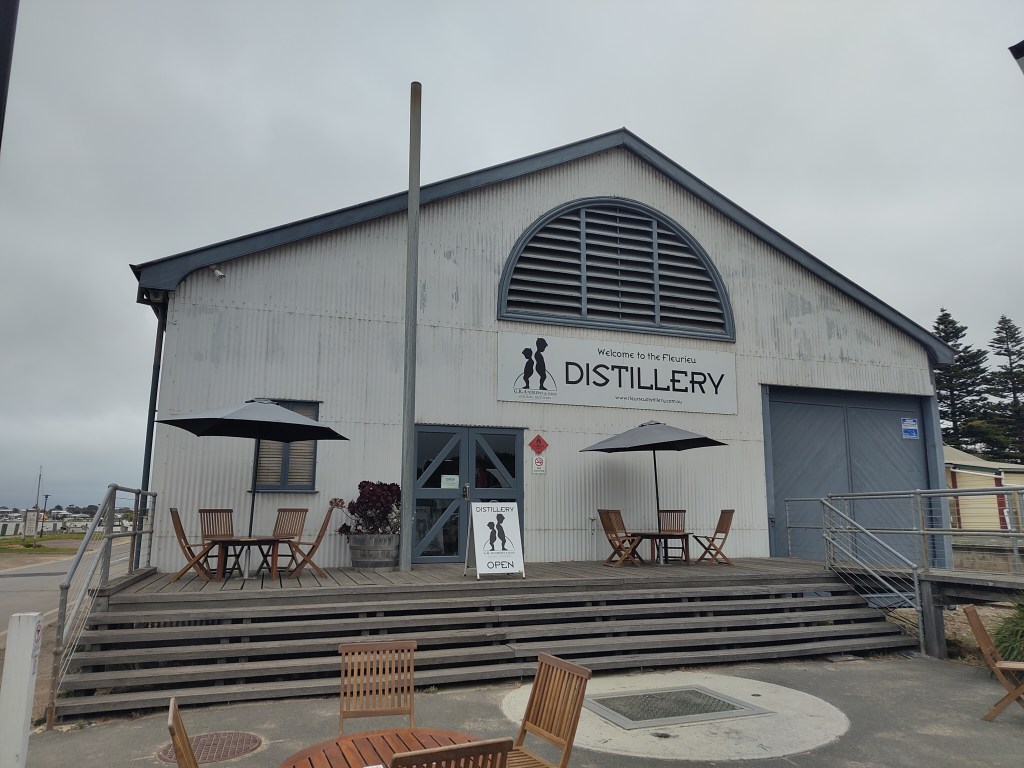
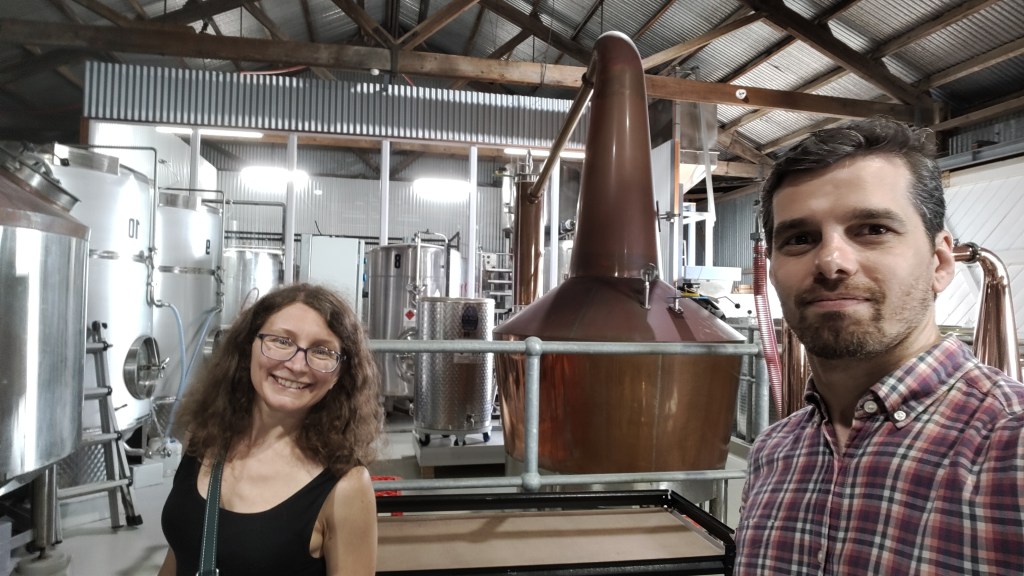
The next morning we went for a run (the only one we did together in Australia), first along the river and then to the beach, and back to the motel. We were excited, because we had an appointment at a distillery, the last one of our holiday: Fleurieu. The distillery is on the riverside, in a listed building next to the train tracks (reasons why they cannot expand). We learned about them while visiting Melbourneโ€™s whisky bars, and when we realised that they were almost on our itinerary, we contacted them and asked if we could visit. Gareth, one of the founders and head distiller, very kindly agreed and gave us an appointment for half hour before the bar would open to the public โ€“ nice gesture! Before the distillery, Gareth and his wife Angela were running the Steam Exchange brewery, founded in 2004, and located in the same building they are still using. However, after the boom of craft brewing, they decided to move to whisky, to differentiate themselves from the crowd. They started planning this change back in 2013, and for a while they produced both whisky and beer. They later phased out beer, which is now produced by another company on commission, using their recipes.

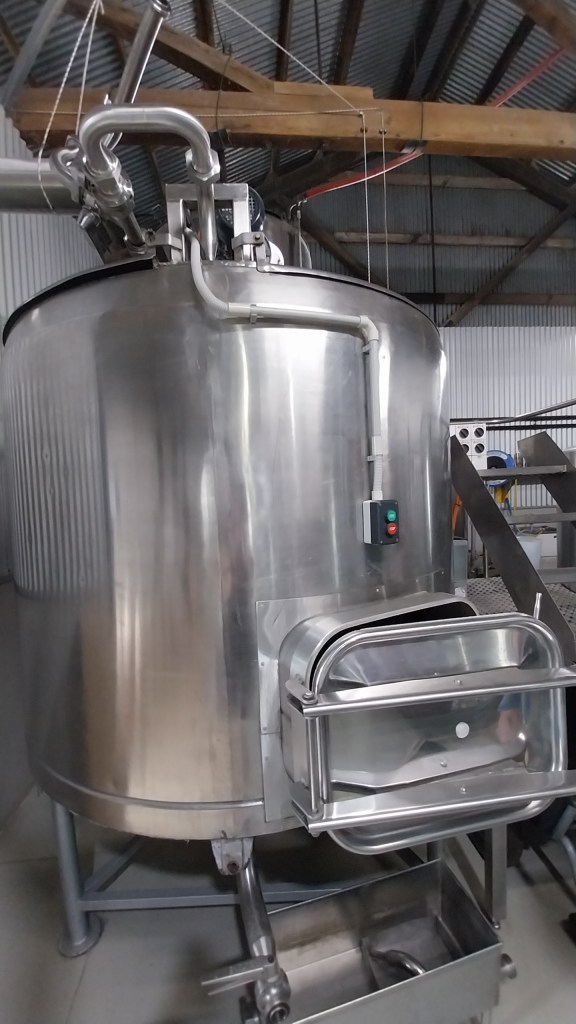
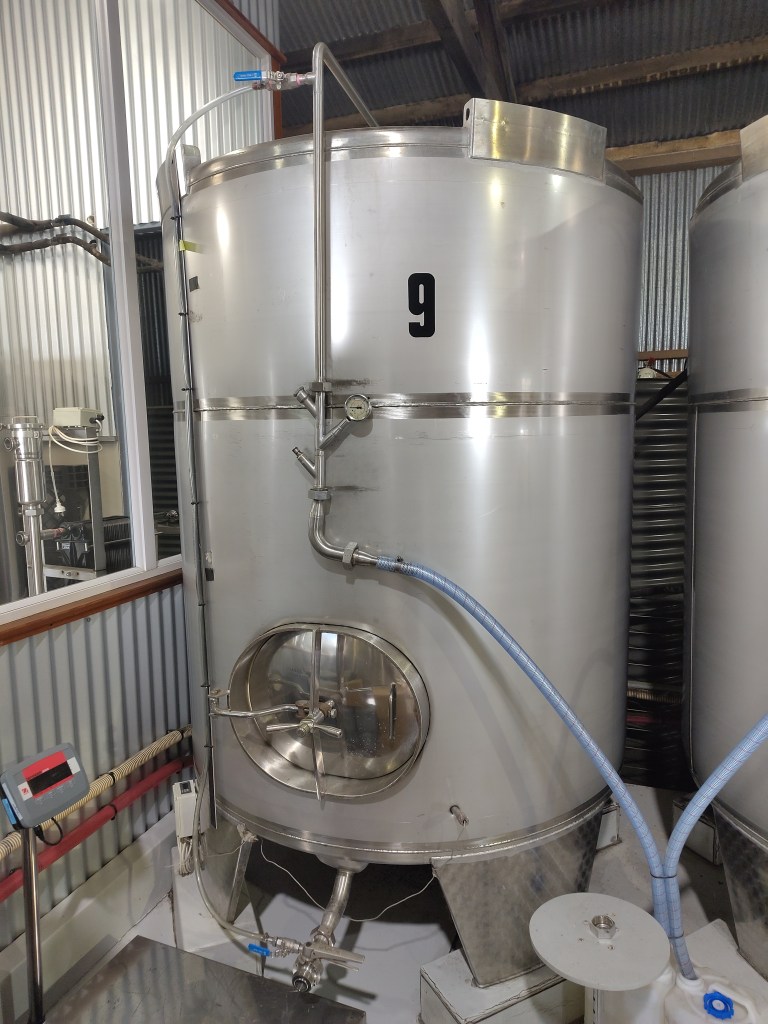
As Gareth welcomed us, he delved into the features of their whisky production. They start from local aqueduct water, which goes through a 10,000 carbon filter to clean it before mashing. The mashtuns used to be manual (they have two small ones), but then they added a mechanic stirring system. They aim for a clear wort, which is then passed down to one of the shallow fermenters, together with brewerโ€™s yeast (some of their brewersโ€™ heritage remains). In between these stages, they use a portable heat exchanger, to recover the heat lost from taking down the wash temperature to allow yeast to do its job under the best conditions. Fermentation lasts at least 8 days, once again a very long one! They use the โ€œdouble dropโ€ fermentation technique, which allows for a second fermentation – this is a brewing technique we are not too familiar with, definitely first time we heard about it in a distilling context.

The fermented wash is then transferred into the 3,600-litre wash still, and then to the 1,200-litre spirit still, both coming from Tasmania. To charge the spirit still, they use 600 litres of low wines from the previous wash still run, 300 litres of tails from the previous distillation and 300 litres of water. The first distillation is mostly run at night, to save energy; similarly, the second usually starts around 5am, and by 8am they are ready to take the cuts, done according to taste. Just before their silent season (December to January, when the weather is too hot), they produce some peated spirit, while they make unpeated spirit during the rest of the year.

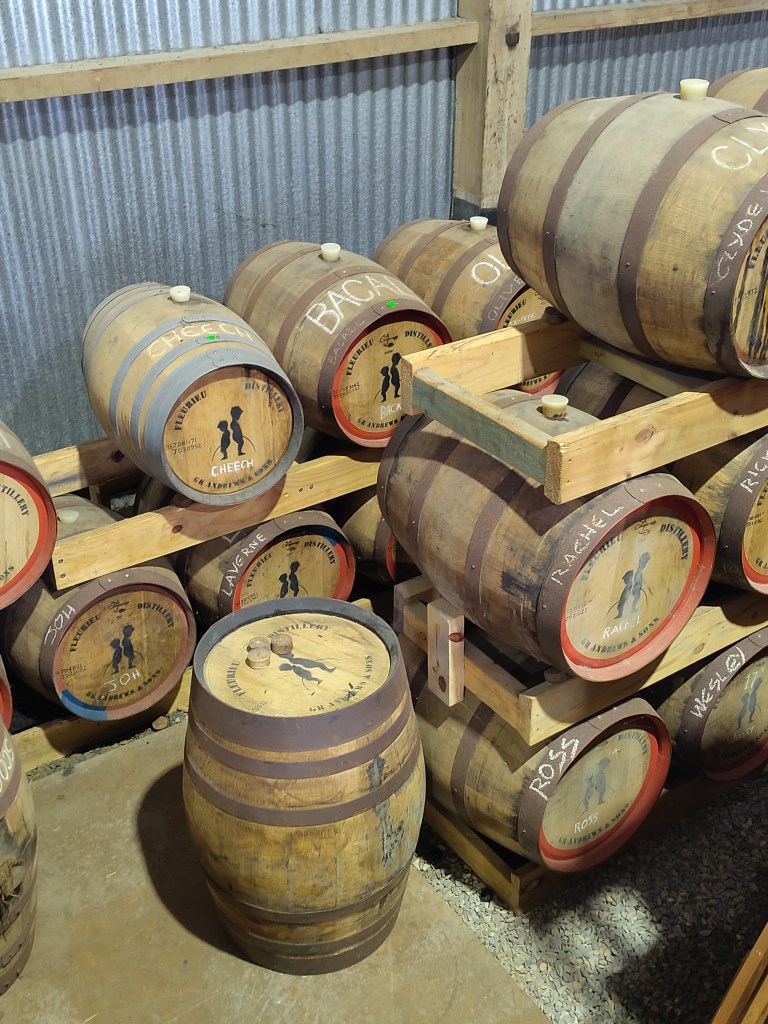
The cask filling strength is very similar to most Scottish distilleries, 63.4%abv, and in contrast to most of the other Australian distilleries but, again, similarly to Scotland, the abv goes down in this corner of the world. Thatโ€™s because of the humid climate, influenced by the Southern Ocean. They fill many types of casks: ex-bourbon, Apera, Australian tawny, and of various sizes (we noticed a number of smaller size casks around). One practice that showed us their care for details: if they see that a cask is too active, they rerack the spirit (or whisky) into a less active cask, to slow the maturation process and allow a mellower maturation. This is because climate is still hotter than places like Scotland or Ireland, thus some casks might give too much too quickly.

Finally, it was time to try some drams. We started with โ€œNever a dull momentโ€: this is a vatting of Apera casks named after women in their families. Yes, every cask has a name, including some American oak casks named after United States presidents (until the 60s, then it became too controversial). This expression is a small batch (1,320 bottles, bottled at 47.6%abv). Small batches is what they mostly do, sometimes taking only part of certain casks. Another thing denoting their attention to detail, if you ask us. Moreover, despite some lower abvs, none of their whiskies are chill filtered or artificially coloured.

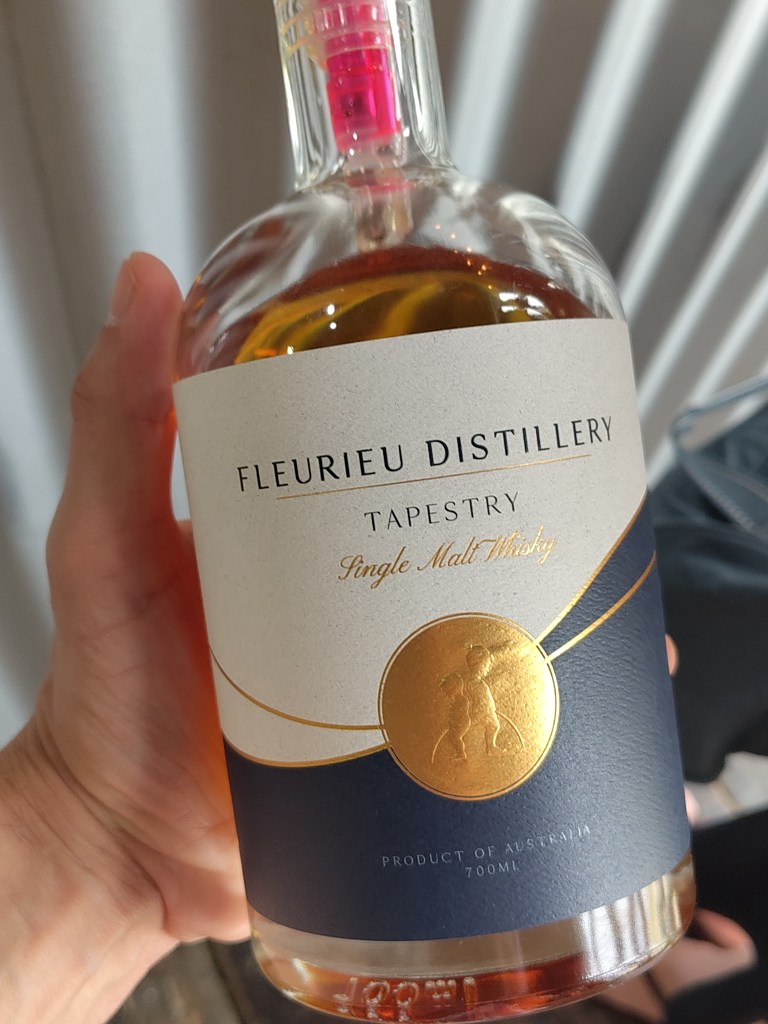
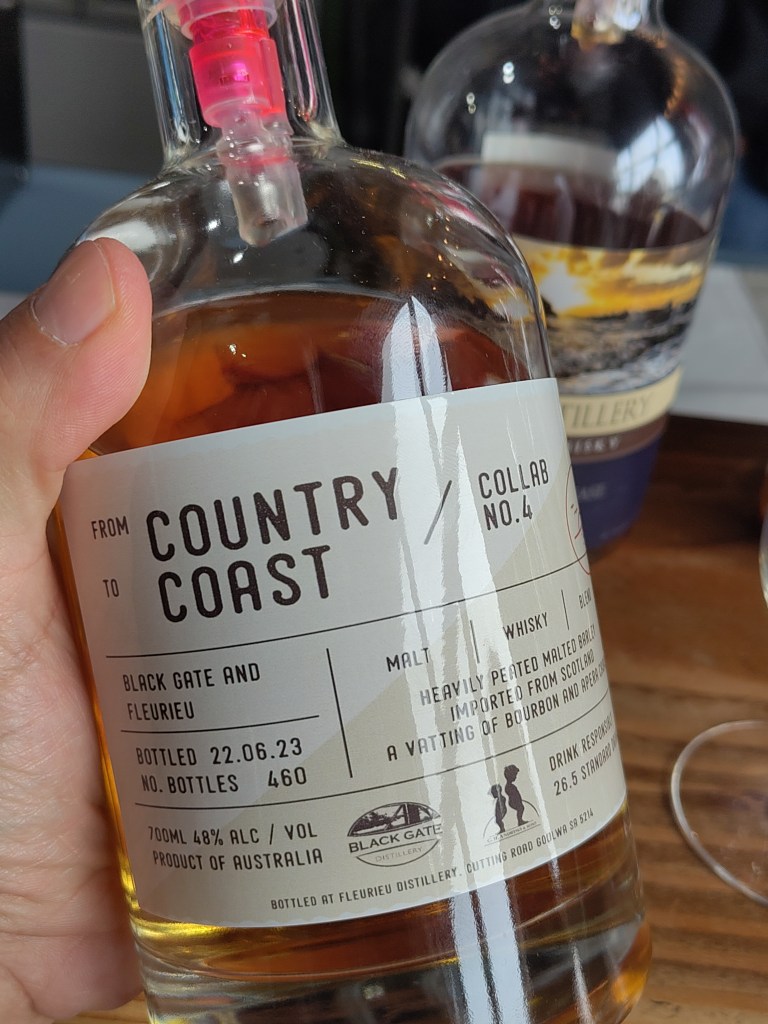
Anyway, moving on, the second dram was โ€œTapestryโ€ (850 bottles at 45.2%), a mix of ex-bourbon and Apera casks. We then tried their first release, dating a few years back, in 2017: a Port cask whisky matured (600 bottles, 52%). Finally, we tried two editions of their blended malt collaboration with another craft distillery, Black Gate, from New South Wales. The bottling is called From Country to Coast, we tried Edition 4 (460 bottles, 48%, already tried back in Melbourne) and Edition 5 (240 bottles, 46%). We liked Edition 4 the most, but unfortunately it was not available to buy (which probably saved us a second bottle purchase, after Tapestry).

We loved the whisky we tried at Fleurieu, definitely among the best of the holiday, and Gareth’s friendliness wa the cherry on the top. We also loved the attention to detail they put in everything they do, just a shame finding their whisky here in Scotland is so hard (the only bottling we found is this one, hefty!).

After leaving the distillery, we had some food and drove to Adelaide. We stopped briefly to say hi to a fellow barfly who was on shift in a liquor store that day. Itโ€™s always great to chat to whisky nerds during our trips!

Adelaide is a lovely city, a shame we stayed for only a day and a half. After that, we visited the Barossa and Eden Valleys (while we were thereโ€ฆamazing wines!), before the long drive back to Melbourne through the stunning Grampians National Park. There, we got a flight to Uluru, where we spent a few days before heading back home: definitely one of the highlights of our holiday (despite no whiskies thereโ€ฆwe wonโ€™t put too many pictures here).

In general, the whisky scene in mainland Australia (we left Tasmania for another time) really surprised us, we had some amazing drams down under! But what we loved the most is the ethos and how people really care about what theyโ€™re doing there.

Stay tuned for some festival action, this time in Scotland, coming in a couple of weeks! Until next time, slainte!


Fleurieu Distillery Tour

Price: free (November 2024)

Duration: 1hr 30min

Tasting: Never a Dull Moment (vat of Apera casks, 47.6%), Tapestry (ex-bourbon and Apera casks, 45.2%), First release 3yr Port Cask (52%), From Country to Coast Edition 4 and 5 (blended malt, 48% and 46%)

Target: everyone, but whisky geeks especially

Value for money: NA

Highlights: the drams were really good

Recommended: a must visit if you are in the area!

Link: https://fleurieudistillery.com.au

#49 Blackness Bay

The craft distillery with a pirate twist


TL; DR: On a lazy mid-September Saturday afternoon, we did a last-minute trip to a distillery we’d only recently found out about: Blackness Bay, near the famous castle.It was a very fun tour, one of a kind, and the distillery is a little gem.ย 

The resurgence of the scotch whisky industry, started towards the end of the 90s after the downturn of the 80s, led to a high number of distilleries being built. It was, and in some extent it still is, a boom of new distilleries in almost every part of Scotland, including the most remote ones like the Shetland islands.

Among the whisky regions, as defined by the SWA, one that saw the biggest increase in the number of distilleries is the Lowlands. Until a few years ago only two malt distilleries were constantly producing, Auchentoshan and Glenkinchie, with a third one seeing periods of alternate fortune, Bladnoch. Nowadays, both Edinburgh and Glasgow could theoretically claim the โ€œregionโ€ status as both have more than three malt distilleries each (Bonnington, Holyrood, Port of Leith, and the nearby Glenkinchie the first; Auchentoshan, Glasgow, and Clydeside the latter). Similarly, Fife went from one grain distillery only (Cameronbridge) to one grain and six malt distilleries currently producing, or about to (Kingsbarn, Inchdairnie, Lindores Abbey, Daftmill, Aberargie, Eden Mill). The Central Belt, stretching between Edinburgh and Glasgow, where a lot of the Scottish industrial production is concentrated, is no exception: a lot of new distilleries came online decades after the closure of St Magdalene (1983) and Rosebank (1993, now rebuilt). In this and the next few posts weโ€™ll talk about some of these new distilleries in this area, all visited in September 2024.

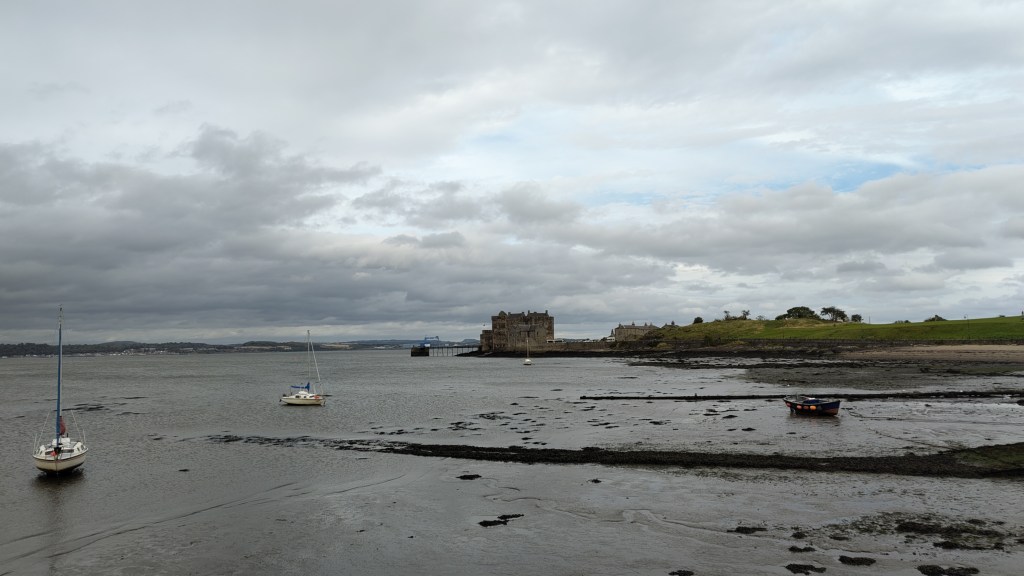
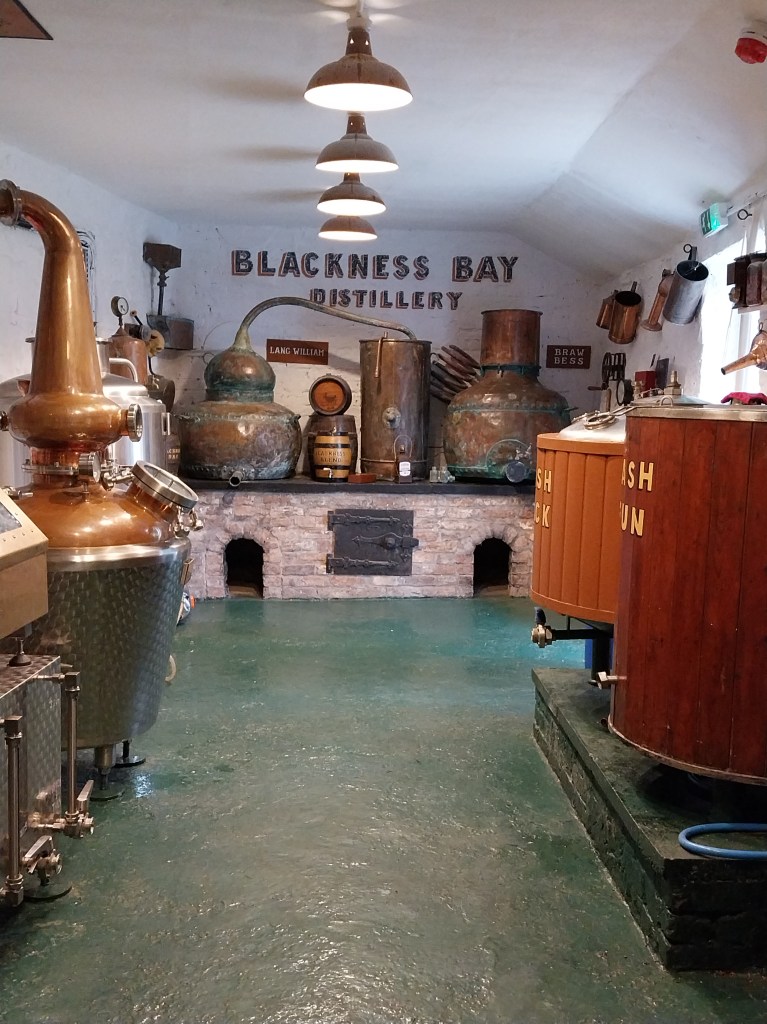
The first one is by far the smallest one of the bunch, as a matter of fact one of the smallest in Scotland: Blackness Bay distillery. It is quite a novelty, as they started producing whisky only about a year ago (October 2023), while also making rum. Being that new, it doesn’t feature in the SWA map yet nor in the malt whisky yearbook. The distillery is in the middle of the Blackness village, home to the famous Blackness Castle is (we still have to watch Outlander, btw), but not much else. Despite being relatively close to Edinburgh, reaching it by public transports is a nightmare, so we just drove there (Teresa got the short straw that day). We arrived at destination a bit early, just enough time for a stroll along the beach to get some of the refreshing sea breeze.

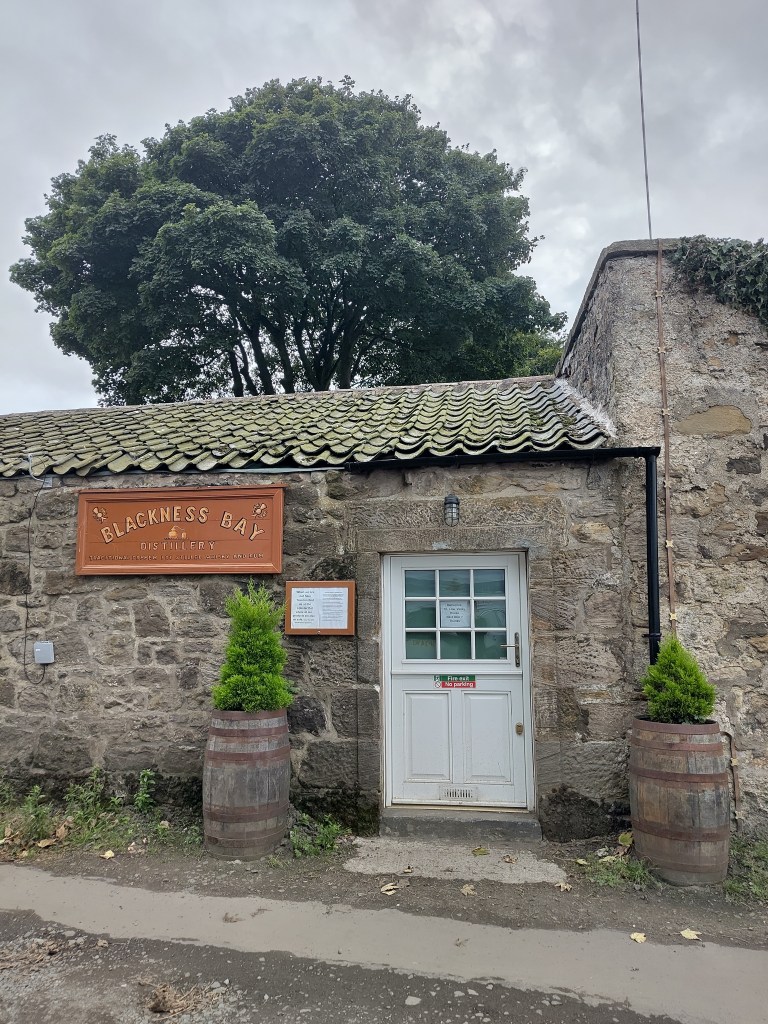
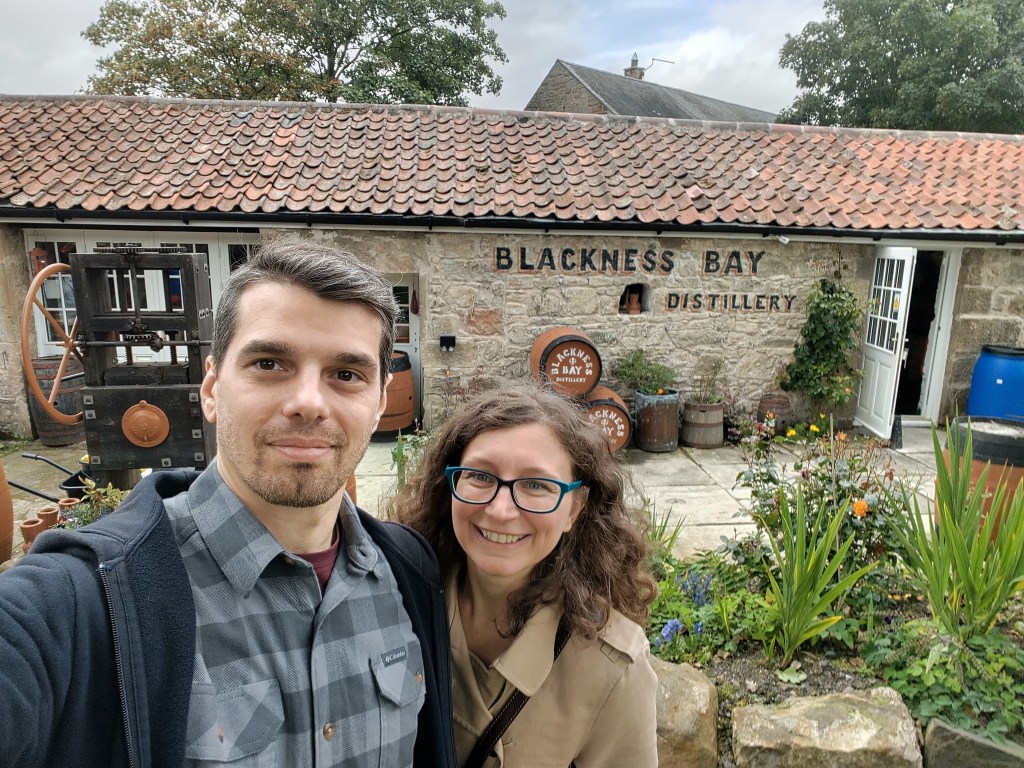
The distillery, a long and low building, is part of a complex including a pub, the Lobster Pot, a big stone house, and a large garden in the middle of the three. The two founders, Colm and Sheena, acquired the whole complex about 15 years ago. More recently they stopped managing the pub/restaurant, so they decided to set up this small distillery, in the shed that used to be a bakery and brewery for the pub. It took two years for the project to complete.

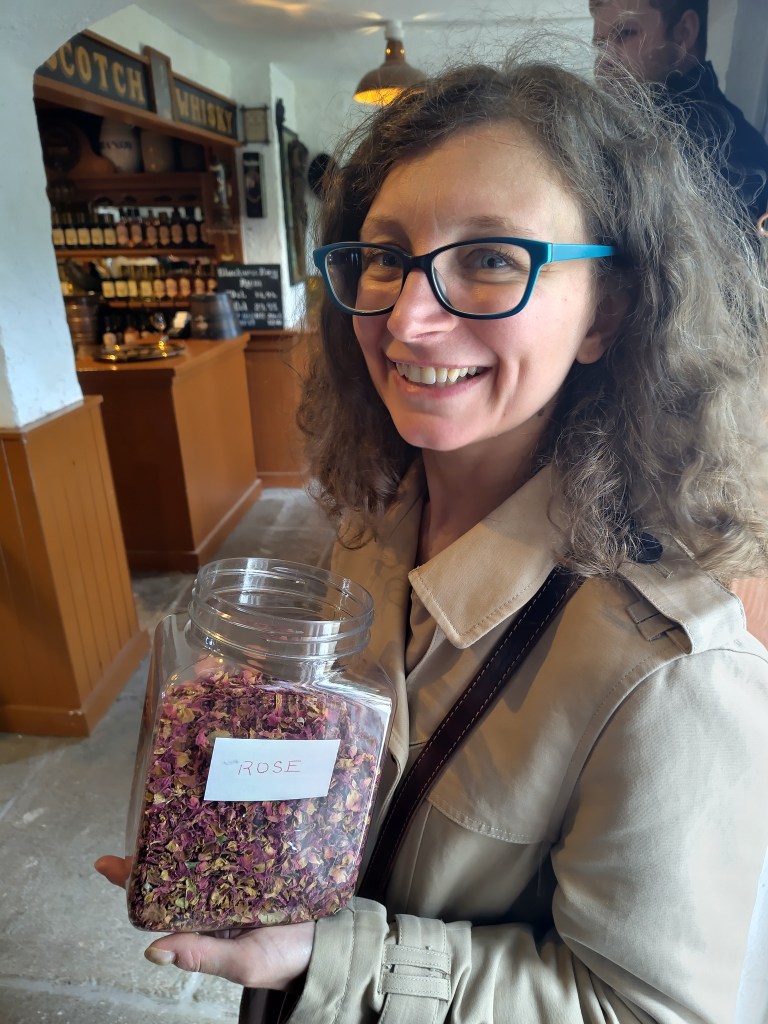
Sheena was the one who gathered us, about a dozen people, in the pubโ€™s courtyard. We could already hear Colm playing the bagpipe, that accompanied us in the short walk from the pub backyard to the distillery. That was unexpected! Then, he welcomed us and started telling a very peculiar version of the history of Blackness, all the way from the Roman settlements, the castle, and whisky in Scotland. It was genuinely funny and entertaining, and we all had a good laugh. This happened inside the distillery building, a cozy area with a bar and the shop. While Colm gave us his introduction, we had a sip of their products, starting with the Blackness Bay Flowers of Scotland Pink Rum, then the Jacobite Spice Rum, the White Rum, the 6-month-old oak-aged malt spirit: this is called Virgin Mary, a hint to the future realises of scotch whisky that will be called โ€œMary Queen of Scotchโ€, name that caused some dispute with the trademark office.

We soon moved to the production area, located in the same building, all in a big space. They get pre-milled barley from Crisp, in Alloa, so they donโ€™t have a mill (it would be hard to fit one in there). So they proceed directly to mashing, with local tap water first warmed up to 70ยฐC in the kettle, before sparging (done by hand) Fermentation lasts 6 to 7 days, and the wash is then distilled in the wash still, Lucifer, and re-distilled in the spirit still, Lilith. From the second distillation they take a cut from 80%abv to about 63%, in our understanding. Rum production is similar, with molasses brought in, fermented for longer (10 days) and distilled in the same pair of stills twice, or three times for the ones with botanicals, after cleaning the equipment. At this point, we got some new make spirit to try, which tasted very caramelly, with a good mouthfeel a not too much burn despite its high abv.ย 

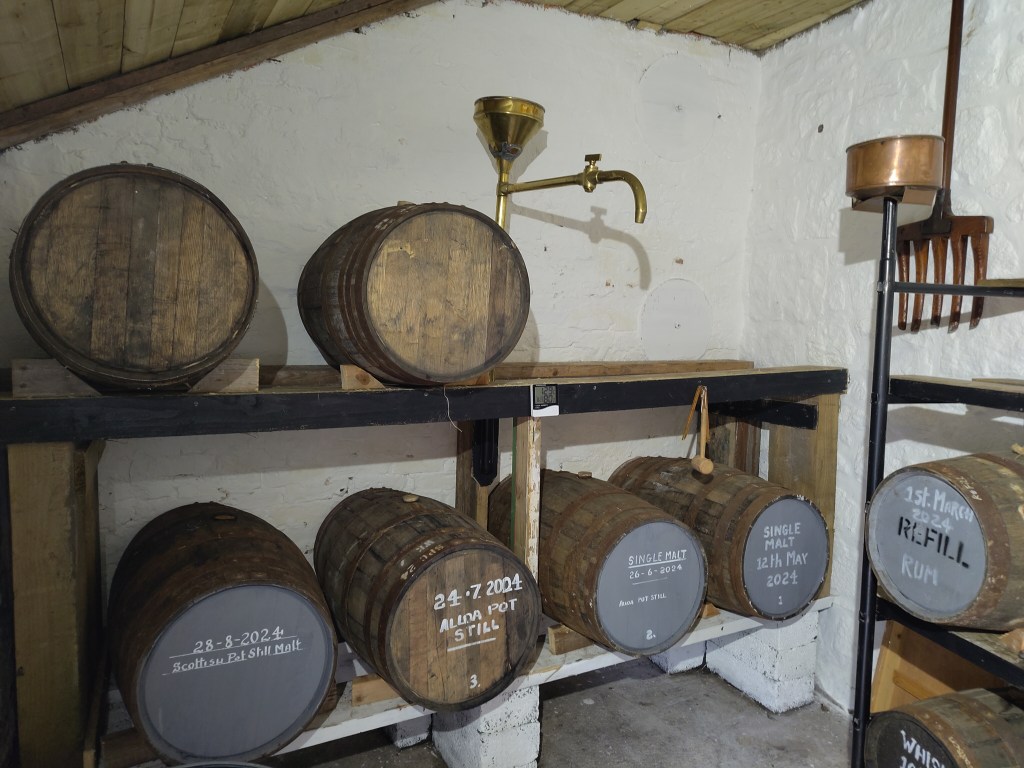
We then moved next door to check out the small warehouse where casks are kept: mostly ex-bourbon barrels, some ex-Islay to introduce some smoky element, and some hogshead and quarter casks. At this point the tour was mostly ended, with people slowly moving towards the Lobster Pot pub, while we had a chit-chat with Colm and Sheena. Unfortunately, we didnโ€™t book the tour with the dinner included, so after finding out that there was no free table at the pub, we went back to our van and left.

A very interesting visit overall, they are a lovely couple, and their tour was definitely an experience. Their spirit is nice too, but of course we need another couple of years before trying their scotch whisky, so weโ€™ll patiently wait. In the meanwhile, we might pop in again at the Lobster Pot, possibly with a booked table, to enjoy what looked like a very nice pub!

In two weeks, another Central Belt distillery, this time a bit more far away. Until then, slainte!

Blackness Bay Distillery

Price: ยฃ20.00 pp (September 2024), ยฃ10.00 pp for drivers

Duration: 1hr

Tasting: Flowers of Scotland Pink Rum (43%), Jacobite Spiced Rum (43%), White Rum (43%), Virgin Mary aged spirit (50%)

Target: everyone

Value for money: very good

Highlights: Colm and Sheena are great

Recommended: yes

Link: https://www.blacknessbaydistillery.co.uk/