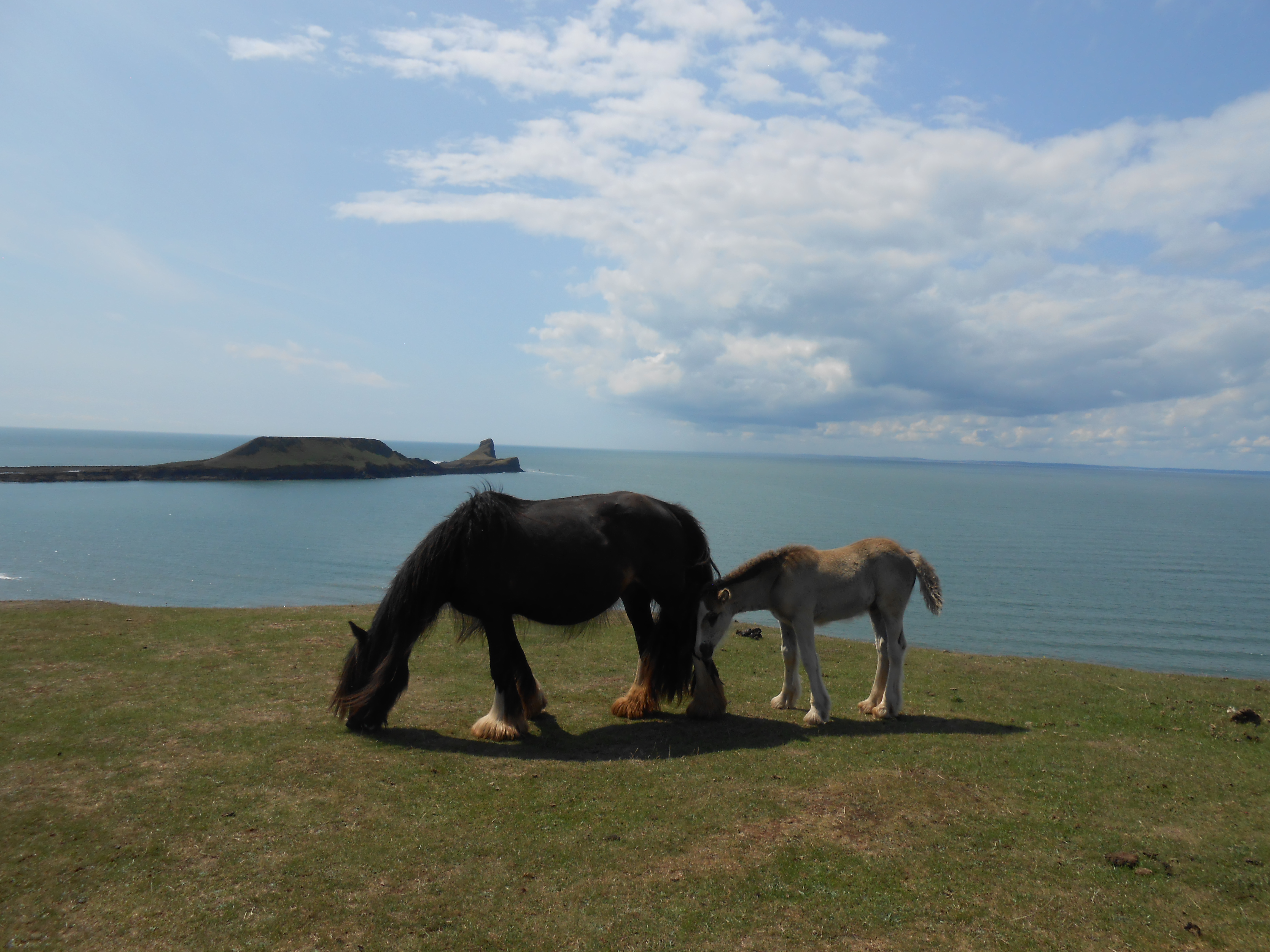
From Cardiff to Pembroke: Penderyn Swansea and Coles
TL;DR: After visiting Cardiff, we spent the next couple of days again on the road in South Wales for a mix of whisky and non-whisky activities: Penderyn Swansea distillery, Gower peninsula and Rhossili, followed by Coles distillery and Pembroke Castle.
(missed Part 1?)
That morning in Cardiff the sky was a bit moody, but this didn’t stop us going for a morning run (to Teresa’s disappointment). Near the camping there is a huge park, the Bute Park River Side, which continues along the river Taff, with plenty of pedestrian and cycling paths. We took advantage of it – always nicer to run in green areas. We spent the rest of the day in Cardiff, visiting the castle first, buying rugby-related gifts for Gianluigi’s brothers and father, and looking out for some local beers to try: we found a pub we quite liked right in front of the stadium, but we found out soon it wasn’t Welsh: Tiny Rebels, from Bristol (delicious beers!). We liked Cardiff as a city, small but cosy, and seemed very liveable. Definitely a place to go back to!

Inside Cardiff Castle.
The following day we left early in the morning, directed to Swansea. No matter how we liked Cardiff, we have to say that the landscape along the road between the two cities was not nice at all, very industrial and a bit decadent. Even Swansea didn’t look that good to be honest, not to their fault: it was quite flattened by the Germans during WWII. We soon managed to find the distillery (although Google Maps pointed us somewhere else): the newest of the Penderyn.
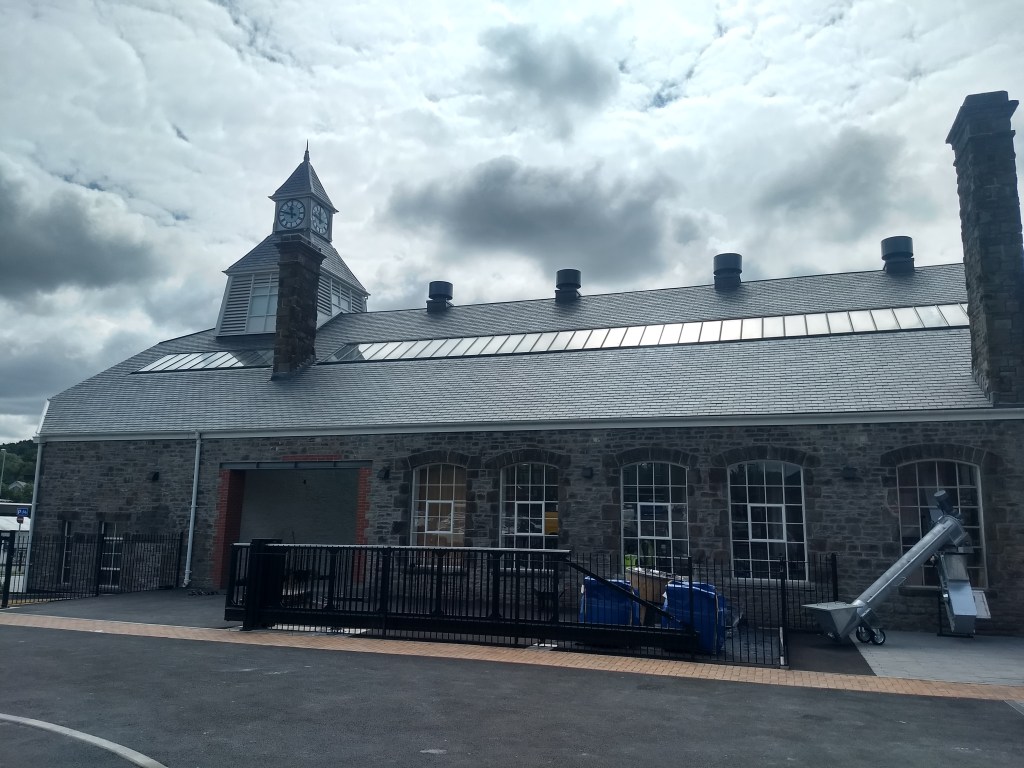
A beautiful building – Penderyn Swansea
We did the regular tour here as well (pricier, see summary below), as it was the only experience available in July. In fact, the distillery was so new that they hadn’t even started distilling yet (all the equipment was there however). Being built inside a former copperworks, in the first part of the tour they showed us some videos and the reproduction of a little copper mine, showcasing the importance of this material for electricity (and distilling). Very interesting indeed!

About the importance of copper.
We then visited the soon-to-be active production (again, no pictures allowed), and we realised it is a replica of their Brecon Beacons site. We couldn’t quite get why they made two almost identical distilleries, but our guesses are for tourism (see later) and because it was not possible to increase the size of the original production site. They have a warehouse, however, which we got to after walking on the remains of the copperworks building (covered by glass, hence why we could walk on them). Finally, in the very beautiful tasting bar, we could try two of their expressions each. We picked another two drams from the Icons of Wales series, the #6 Royal Welsh Whisky (43%, peated Portwood finish, to commemorate the original Welsh Whisky distillery at Frongoch) and the #10 YMA O HYD (43%, matured in ex-Rye casks), plus a couple from the core range, the peated ex-Islay cask and the Rich Oak. Despite the fairly basic tour, overall we enjoyed the experience, especially thanks to the very friendly staff.
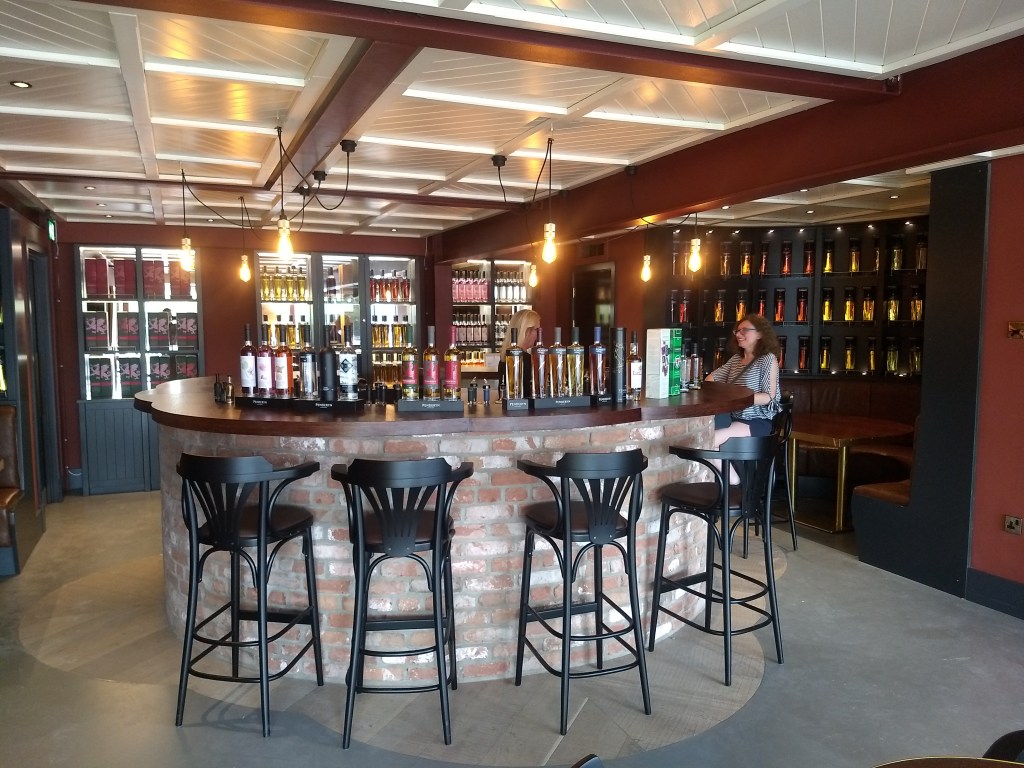
Teresa is ready for the tasting.
While Swansea didn’t look very beautiful itself, just past it we found a very touristy seaside location, Mumbles, where we stopped for a coffee and a bite. Further ahead, the Gower peninsula. In spite of the narrow and busy roads, we really loved it, in particular Rhossili. We spent the afternoon there, walking to the Ynys Weryn and the Worm’s head before the tide would make it an island again.
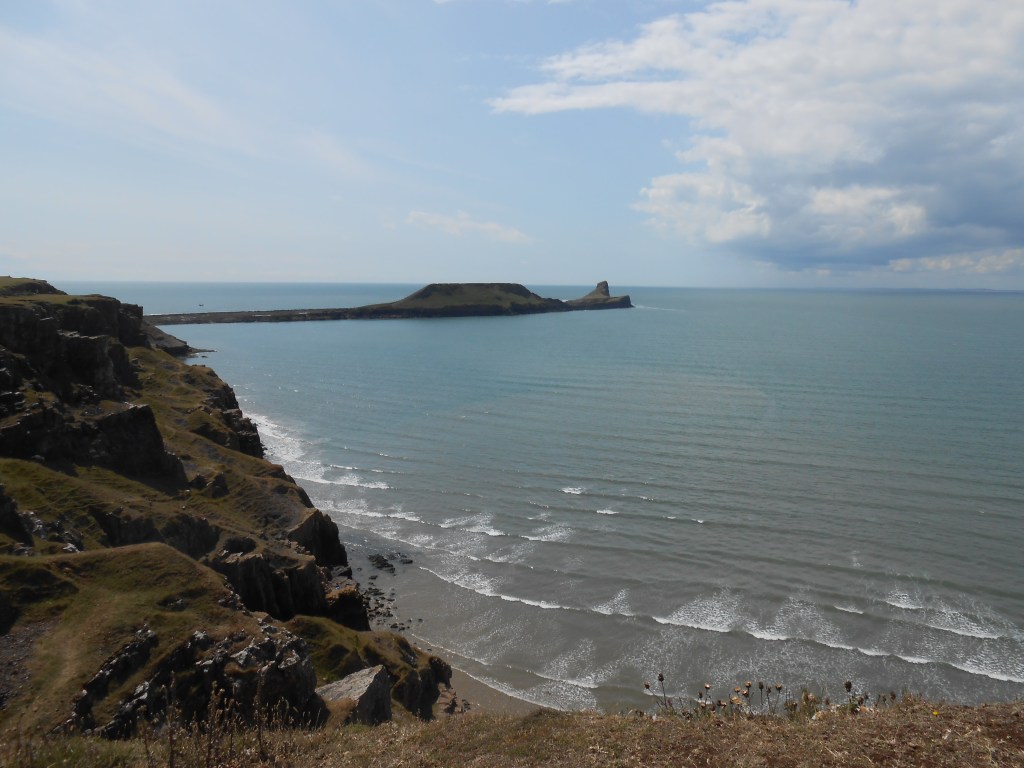
Rhossili, probably our favourite spot in this part of Wales.
For the night we didn’t park much far away, just past Crofty, so we had time for a walk. The spot is popular for dramatic sunsets on the river Loughor estuary.
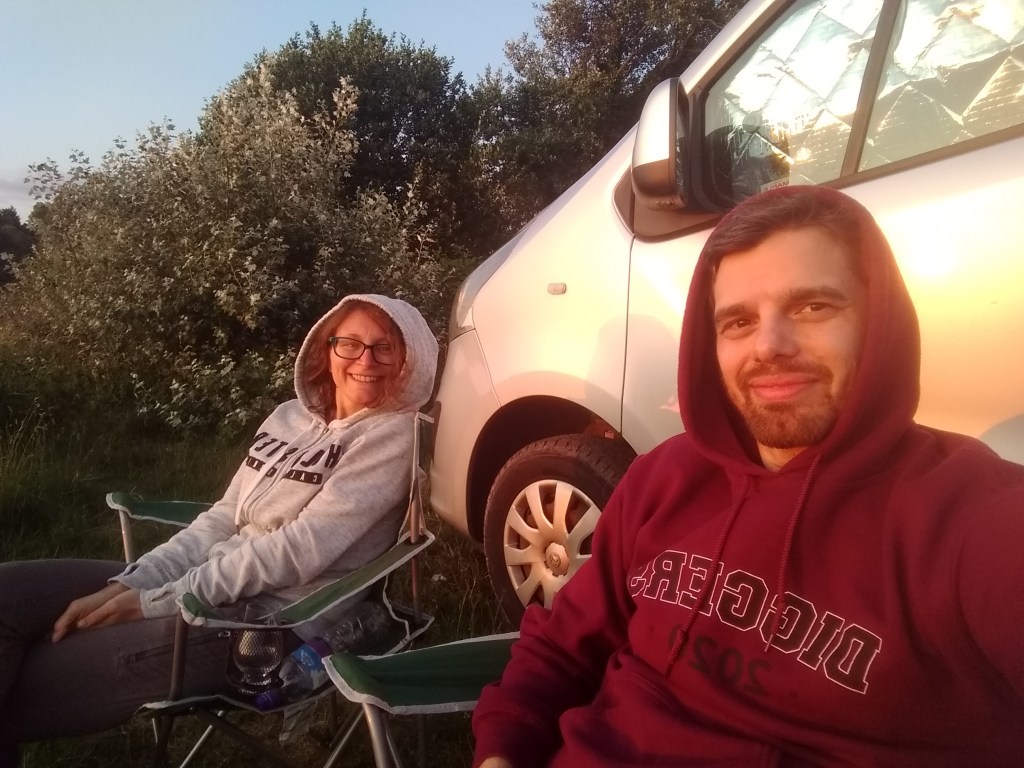
Enjoying the sunset – a bit chilly, but worth it.
In the morning we drove towards Llanelli, but only after checking out a nice café inside a gym (!!) to get a coffee and a morning roll. One of the peculiarities of this holiday was that the offer of morning rolls in Wales seemed to be less rich than in Scotland (lacking black pudding and haggis, for example), so we always ended up with bacon…bacon and sausage in this case (delicious!). Anyway, we soon got to the next stop, Coles Distillery, at the historical White Hart Inn pub, in Llandarrog, which dates back to 1371.
As we parked behind the inn, our guide for the day, Tom, approached us. He is a young and enthusiastic fella, who works in both the brewery and the distillery. The Coles family (who took over the pub in 1994) started brewing their own beer in 1999, cider in 2011 and since the craft stills legalisation, they have been making whisky, vodka, gin, brandy and the first ever welsh rum (as you can imagine, all in small batches). Except for the rum, for which they import molasses, they are a proper grain-to-glass distillery (or fruit-to-glass), as even the gin and the vodka are made from scratch using wheat.
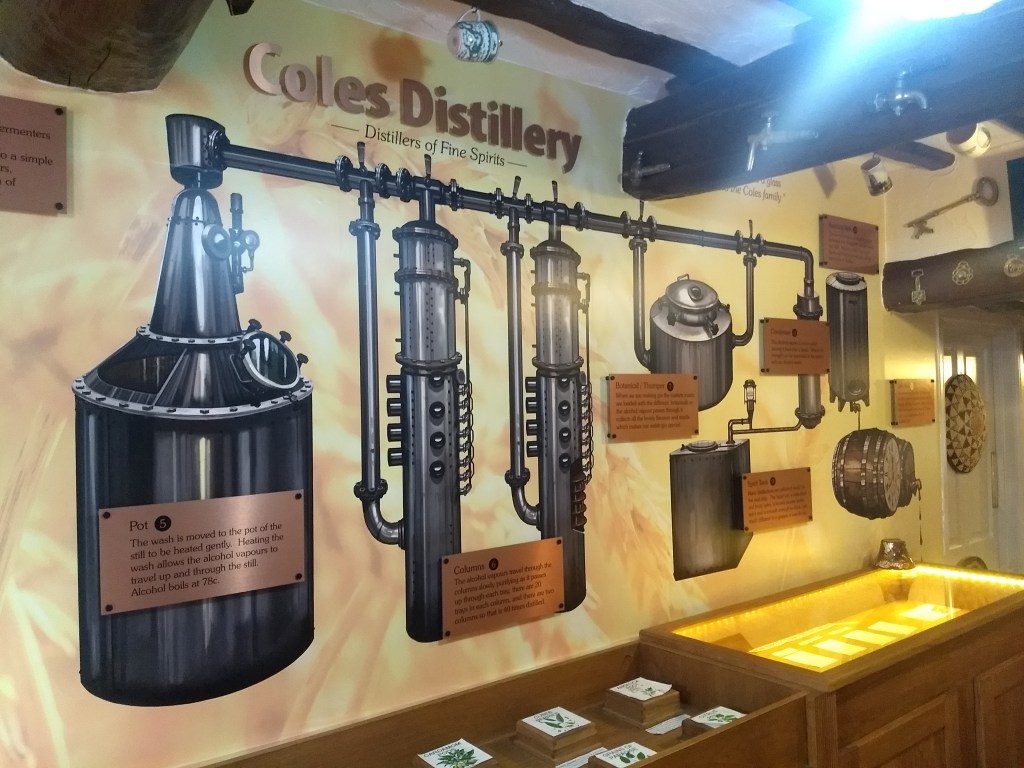
Understanding the theory…
The first part of the tour took place in a hallway, in the pub building, where there is a panel displaying how their distilling operation works, including the botanicals for the gin. They take the water from a well about 90 meters deep, and mashing and fermentation take place in stainless steel tanks (the latter are 6, and fermentation lasts 70 hours). The actual distillation is the interesting part: they have one stainless-steel pot still which takes 3000l wash, and of which only a joint before the lyne arm is made of copper. Then, they have two column stills, each one with 20 copper plates. This setup, all using a steam boiler, gives them lot of flexibility, thanks to which they are able to make different products.

…Still understanding the theory.
After this very thorough explanation, we moved inside the distillery, just a few steps away from the pub. Because of the craft size of the operation, everything is under one shed, including some maturing casks of whisky and rum. There we could revisit all the steps of their process under Tom’s careful guide, which explained that they mostly use American oak ex-bourbon barrels, in particular for their main whisky.
Back to the pub, we sit at the bar to try a few of their spirits. Sips were very tiny, but they also sell almost everything they produce in 5cl miniatures, so we took a few with us for a more in depth tasting in the evening.
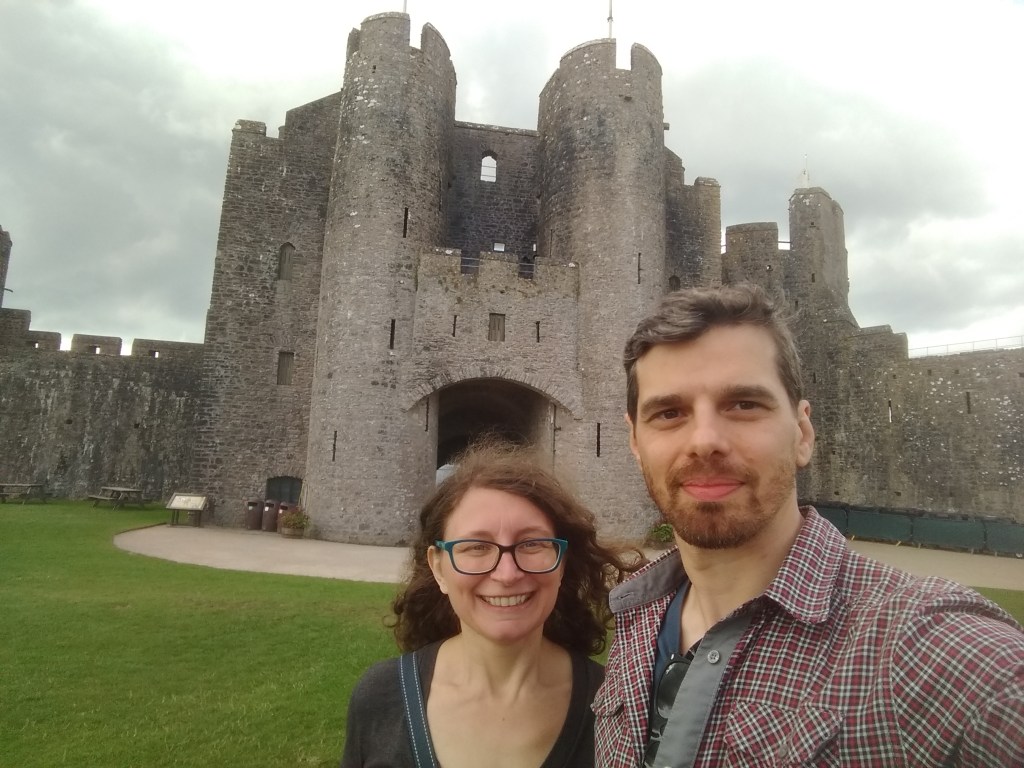
For once, not a distillery behind us.
Back on the road, we started driving towards Pembrokeshire, to visit the Pembroke Castle, probably our favourite of the holiday. We were able to catch a guided tour, and what an amazing tour that was! The history of the castle is very fascinating too, definitely a must-do if you’re ever in the area. Our camping for the night was still in Pembrokeshire, near St David.
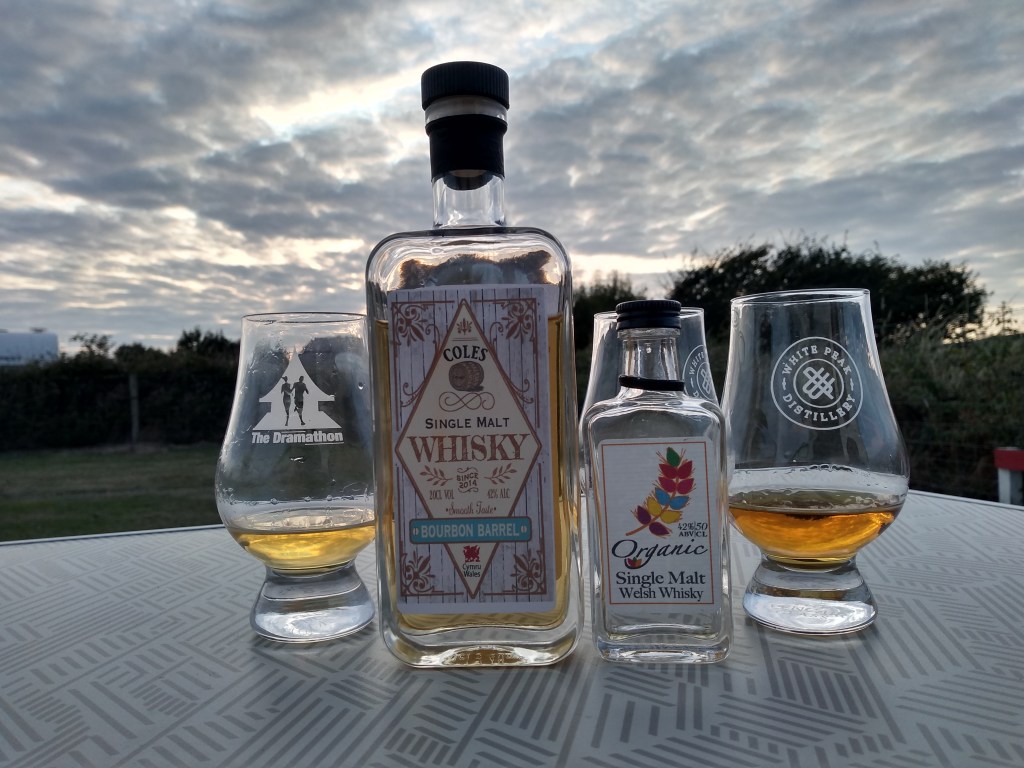
Sunset tasting.
It was on a farm, and because the weather was nice, after dinner (we went “true Italian” and made pasta) we could relax and watch the sunset while sipping the Coles distillery’s miniatures: Welsh single malt (5y, 42%, ex-borubon), Organic single malt (42%), dark rum (oak aged, 40%) and the Plum brandy (40%). The latter was the winner for us, delicious!
See you next week, slainte!
Penderyn Swansea Copperworks Tour
Price: £19.50 pp (July 2023)
Duration: 1hr
Tasting: 2 drams of choice
Target: everyone
Value for money: less good than Penderyn Brecon Beacons
Highlights: the copperworks history of Swansea
Distillery Exclusive: same as Penderyn Brecon Beacons (except the Fino cask)
Recommended: if you are curious about the copperwork history and/or if you haven’t visited the Brecon Beacons site
Link: https://www.penderyn.wales/tours-swansea-copperworks/
Coles Distillery Tour
Price: £12.50 pp (July 2023)
Duration: 1hr
Tasting: a nip of anything they produce
Target: everyone
Value for money: good
Highlights: the range of spirits
Recommended: for craft-distilling enthusiasts in particular
Link: https://www.coles.wales/
 Dramming around