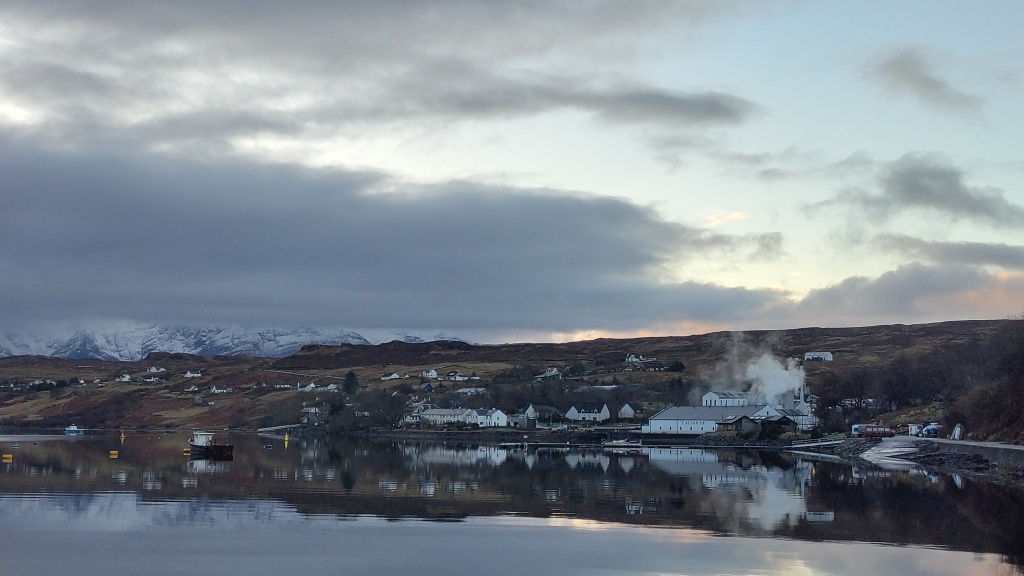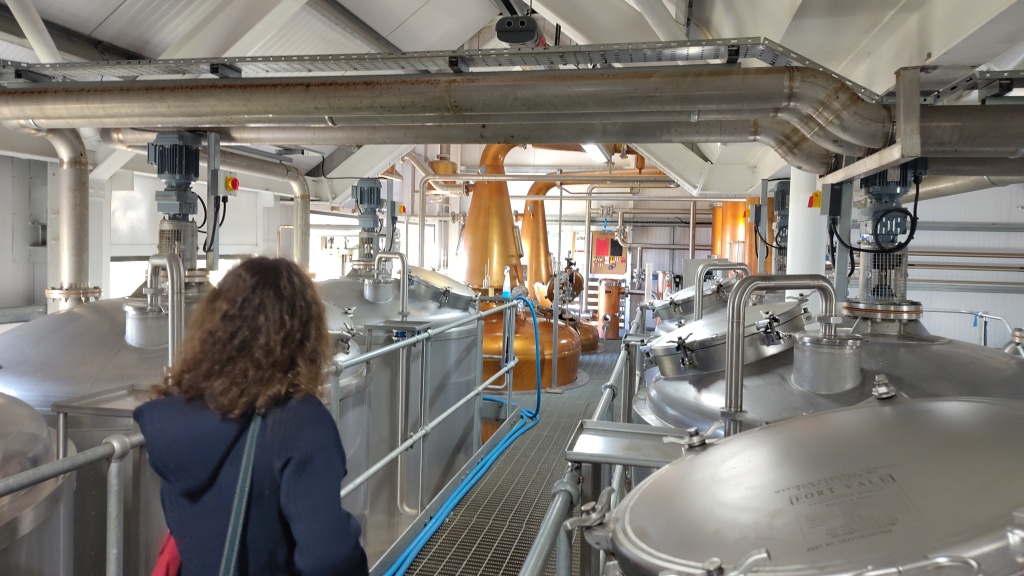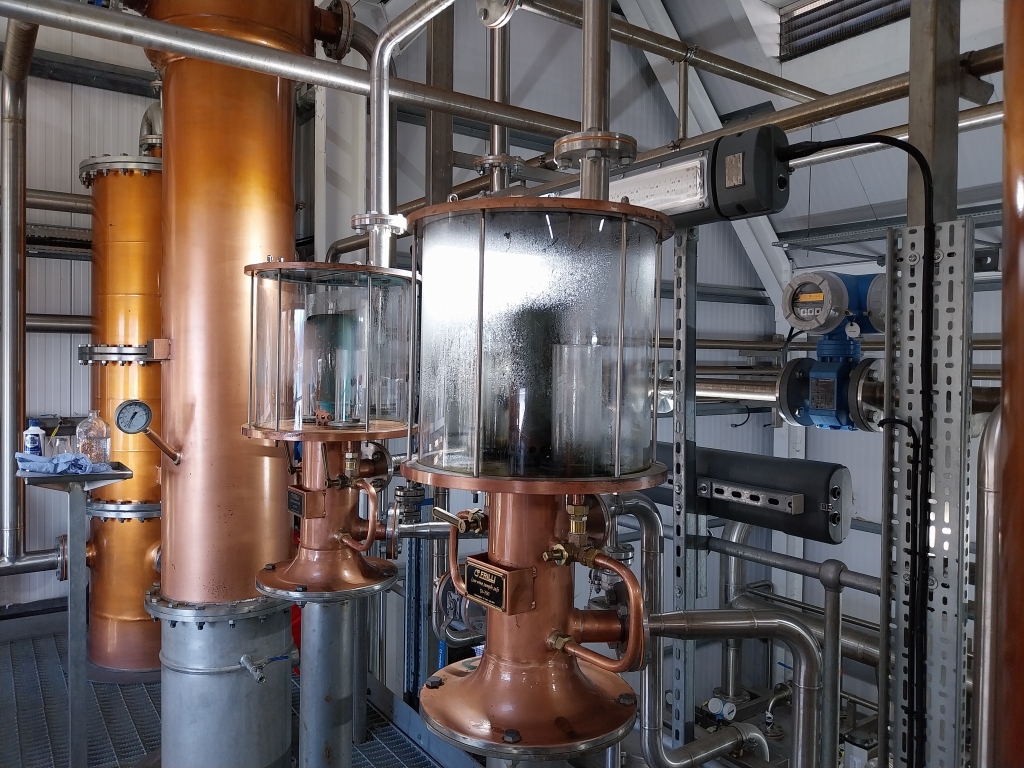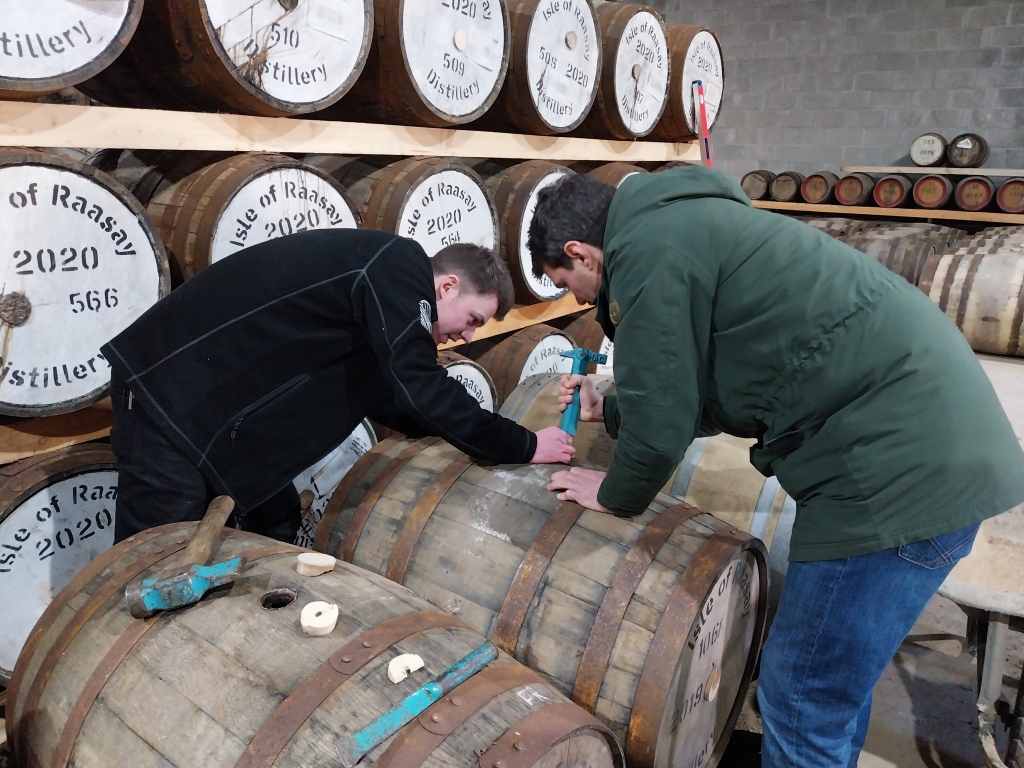
#39.3 The Highlander Trip

Down the neck of the giraffe


TL; DR: Third and final distillery of the day (not of the trip), Glenmorangie. The behemoth of the north, producing one of the best-selling malts, a visit weโ€™d postponed for some time. A visit weโ€™ll remember as one of the funniest we had in a while.

(missed Part 2/Part 1?)

The tour and tasting at Balblair ended under a heavy rain. We were quick in jumping back on the bus, which drove us to the next distillery: Glenmorangie! The distillery is located next to the A9 just passed Tain (you canโ€™t see it from the highway), a mere 10 minutes away from Balblair. Weโ€™d never had the chance to visit it before, despite driving past it more than a few times. 

Despite its popularity, we havenโ€™t tried many Glenmorangie expressions. Probably one of the reasons is that it doesnโ€™t appear often at independent bottlers, and when it does it usually carries a high price premium (unless itโ€™s marked as โ€œsecret Highlandsโ€, of course). Other than the omnipresent 10y โ€œthe Originalโ€, we tried the 12y Lasanta (sherry cask finished) and 14y Quinta Ruban (Port cask finished) in a tasting back in 2020, both solid. About other popular expressions, we recently tried the 18y – delicious and very drinkable (the 43% ABV helped), while because of our lack of enthusiasm for Sauternes finishes in general, we never gave a chance to โ€œthe Nectarโ€, the expression formerly known as Nectar Dโ€™Or. We also tasted the โ€œA Tale of Cakeโ€ (Tokaj wine finish) in a tasting, sweet but truly delicious, but until our distillery visit that was the only one in the โ€œA Tale ofโ€ฆโ€ range weโ€™d tried. To note, not long ago, Glenmorangie have also brought up a โ€œBarrel Selectโ€ range, including expressions finished in Malaga, Cognac, Palo Cortado, Amontillado, and more recently Calvados (and similar to the โ€œA Tale ofโ€ฆโ€ range, originally priced around ยฃ75-80).

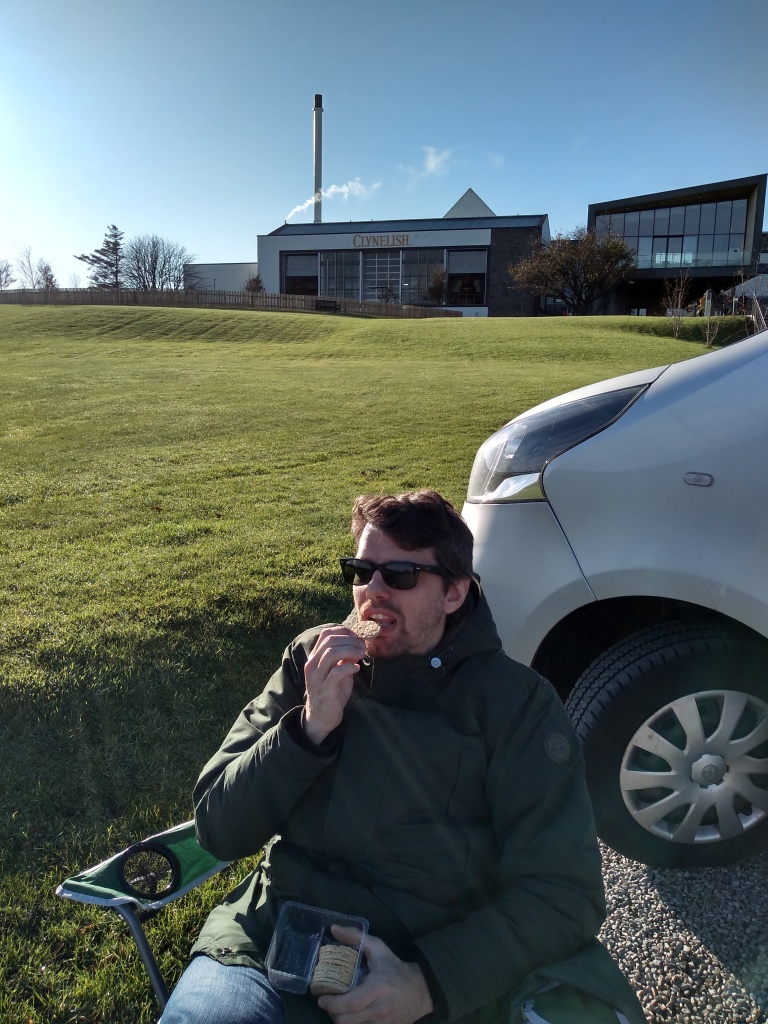
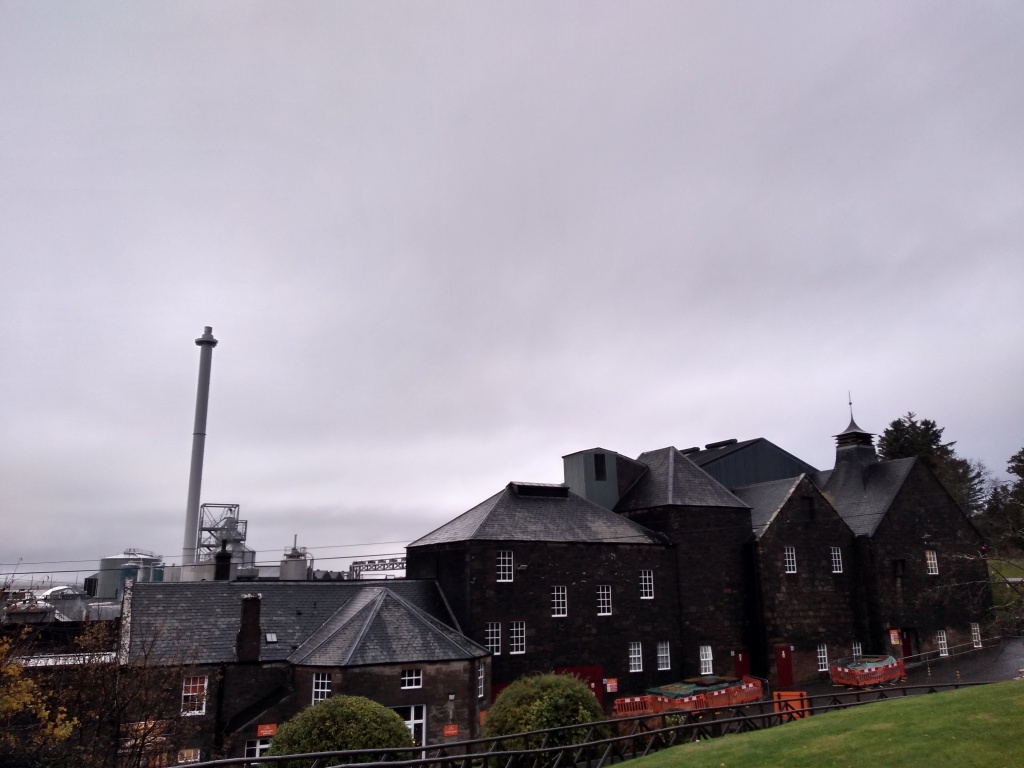
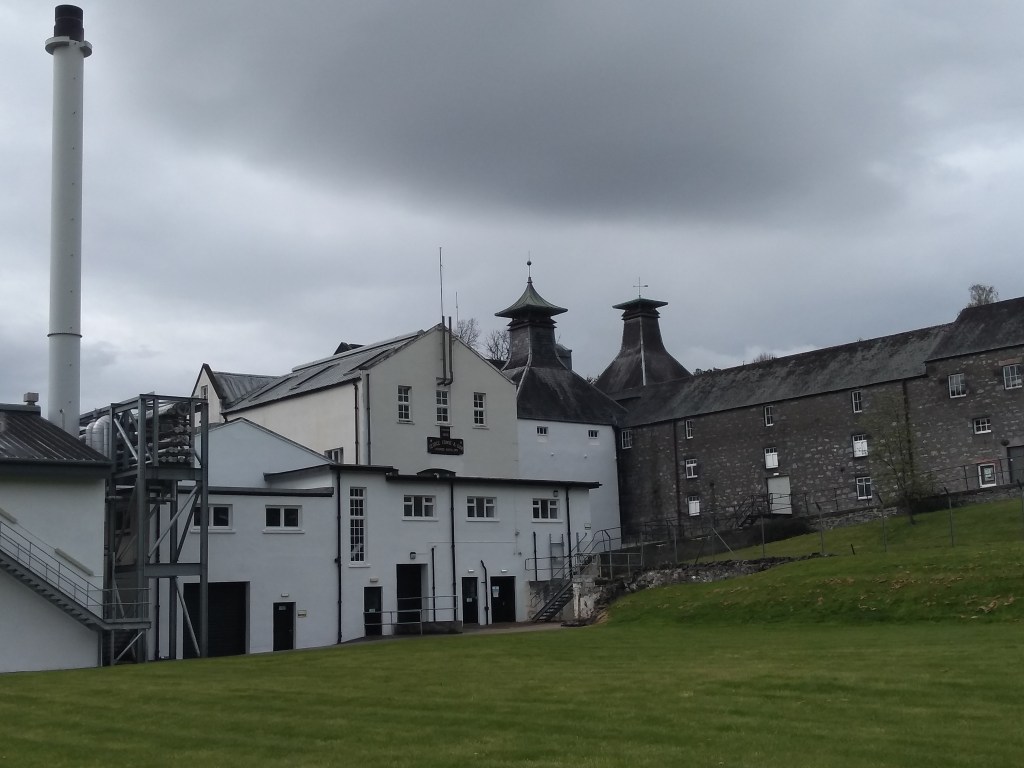
Anyway, back to the trip! The driver left us in the parking lot, from which the 7-mlpa size of the distillery can be fully appreciated. We took a few pics, and then we started walking down a short path to the visitor centre, which is in front of the main distillery building, on the other side of a small lane. There is also an orange giraffe statue on the path: it is associated to the brand because of the height of Glenmorangie pot stills, the tallest in Scotland. These are considered to contribute to the lightness of this spirit by allowing only light molecules to climb up the tall stillsโ€™ necks and leap over to the lyne arms and the condensers. 

Contrary to Balblair, the visitor centre is very brightly lighted, almost like an airport duty free and, in general, it felt very โ€œcorporateโ€. On display, other than the usual merchandise, there were most of their recent bottlings, but also some older expressions: we spotted some bottles of the โ€œA Tales of Cakeโ€, priced at ยฃ350 (the RRP in 2020 was ยฃ75!). Needless to say, they stayed on the shelf. 

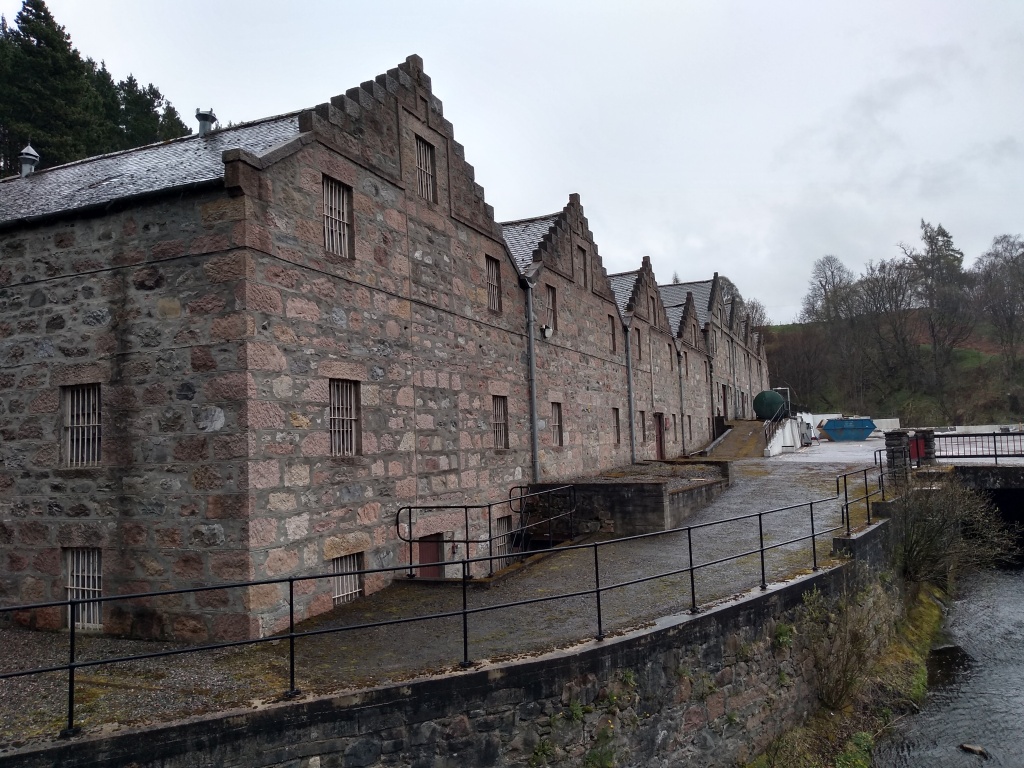
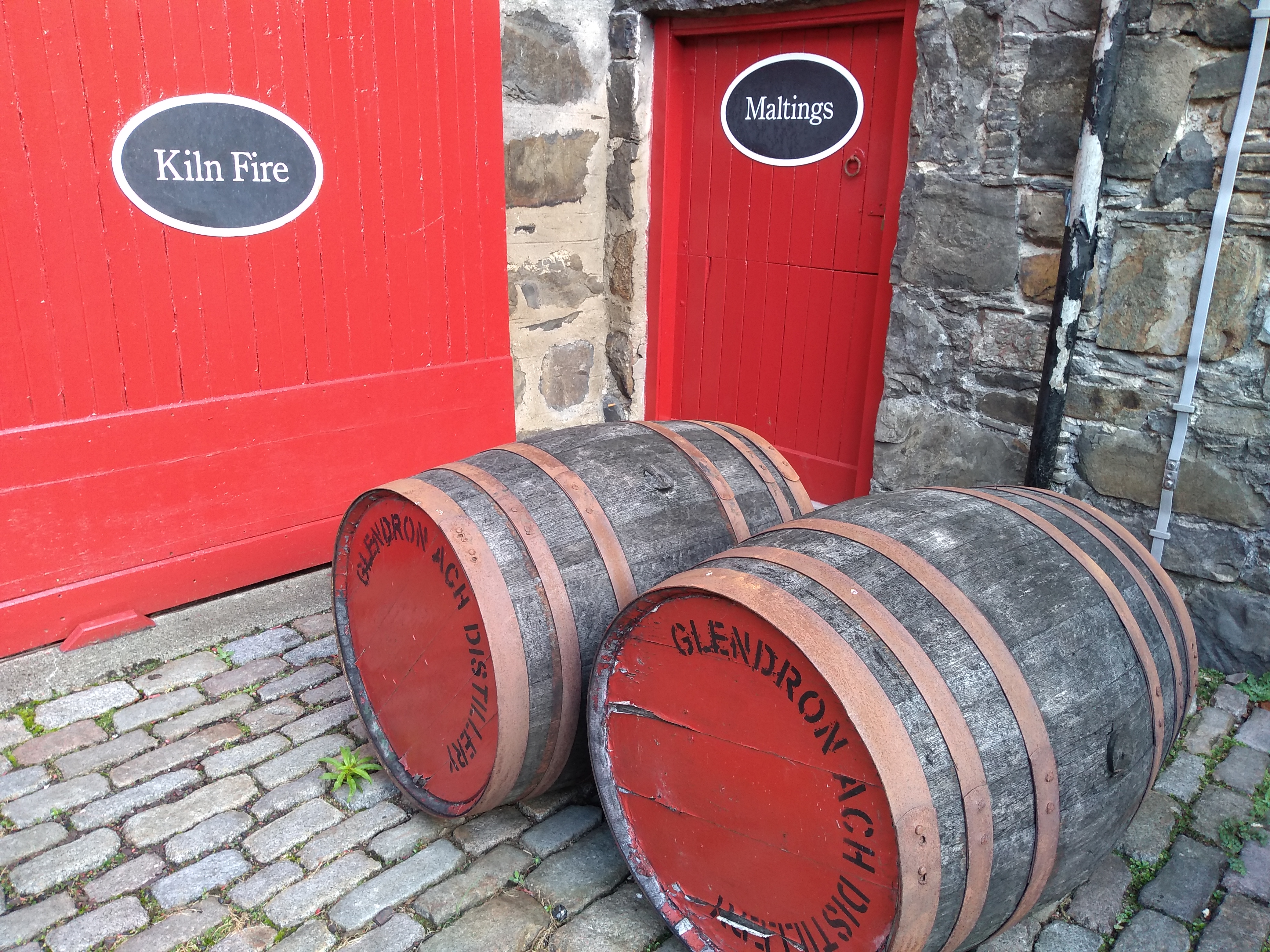
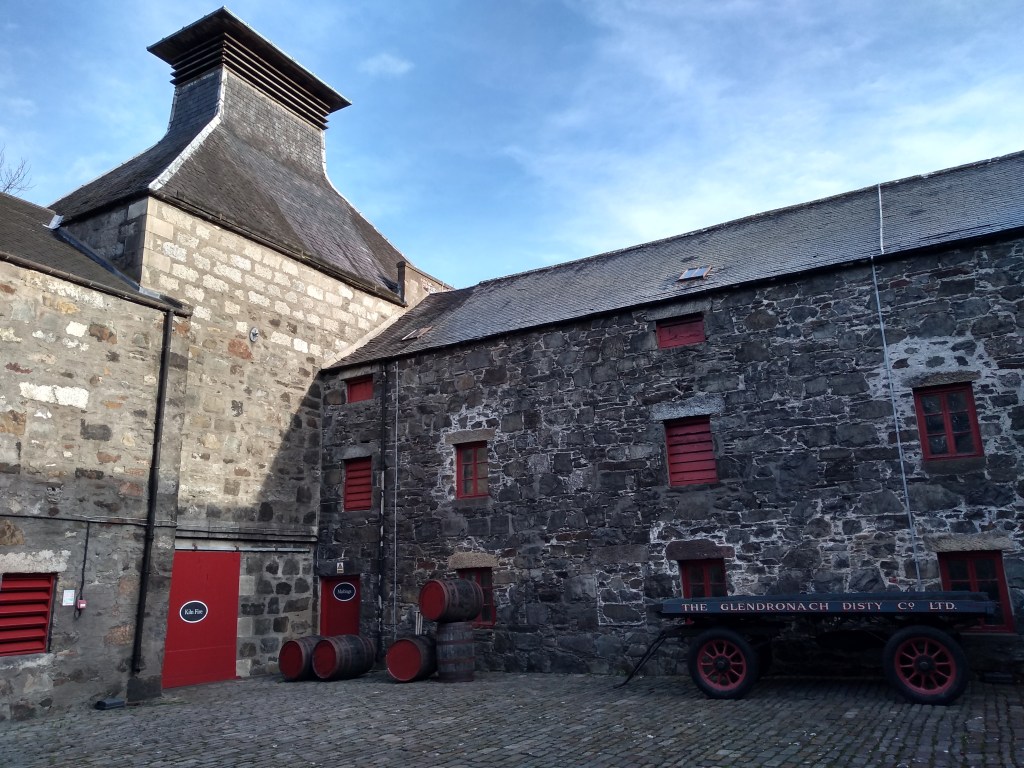
The charm of old buildings.

We were given a few minutes to check the shop and for a neep in the loo, after which our guide Lewis walked us outside the visitor centre and into the distillery building to start the tour. We gathered in a small room (which we filled quite quickly), where a very expensive Renovo bike made with some leftover wood from old casks was displayed, for a short introduction. We immediately realised Lewis was a great character, definitely one of the most entertaining guides we had in recent years. He quickly picked up that we were whisky nerds, so instead of describing all the phases of production (which all of us knewโ€ฆprobably too well) he sat back and replied to all our gazillion questions with a very dry humour. When he was asked โ€œwhat about the 12 men of Tain?โ€ (in front of a picture of them on the wall) he answered โ€œwell, they were 12โ€ฆand they came from Tainโ€. 

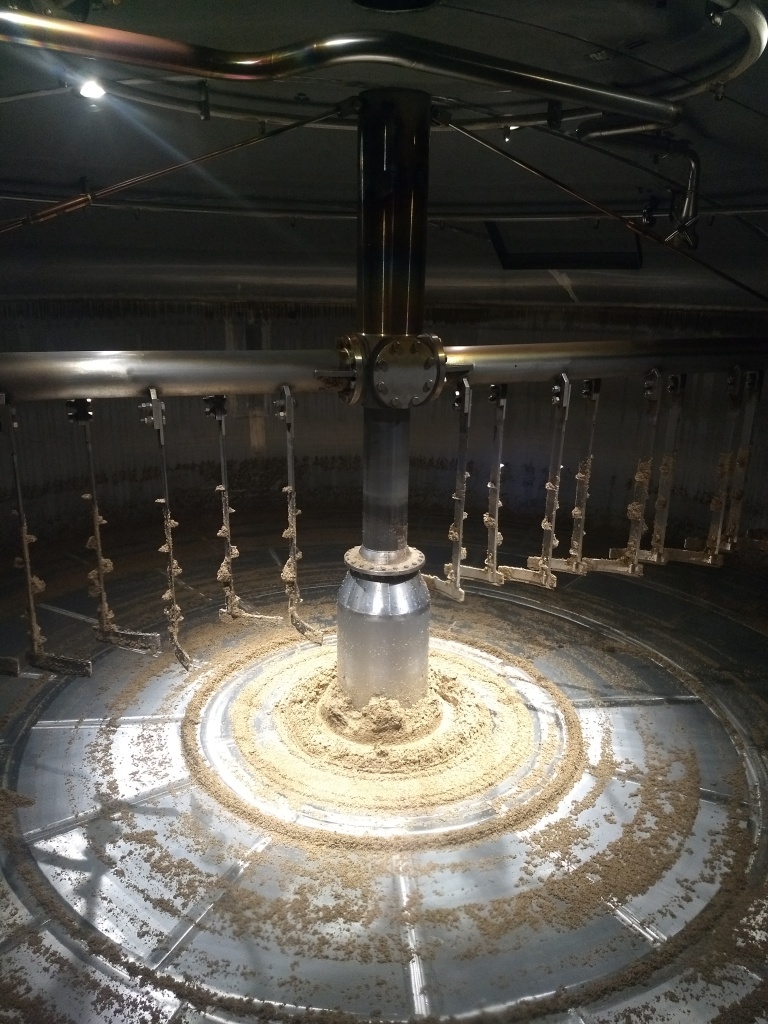
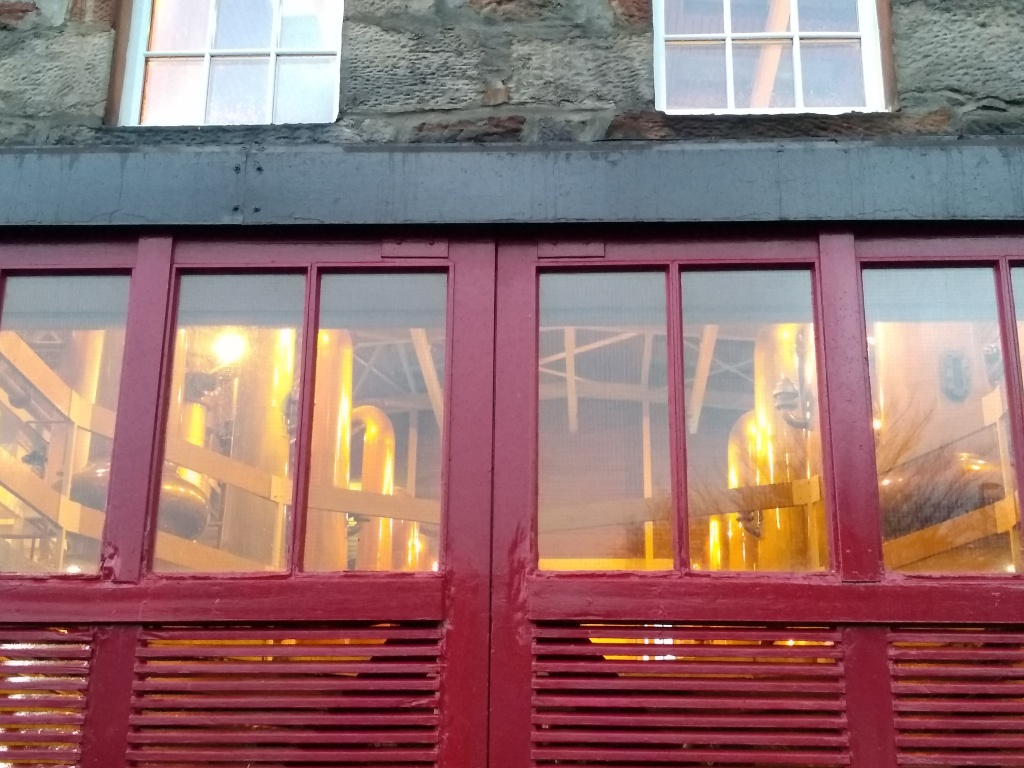
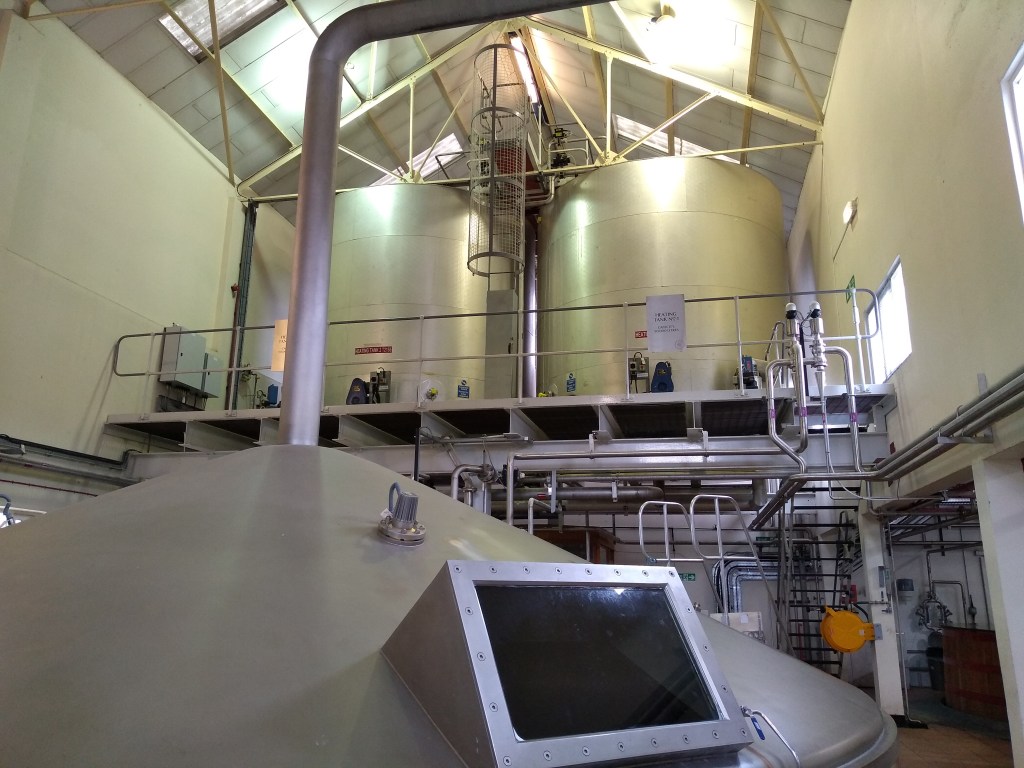
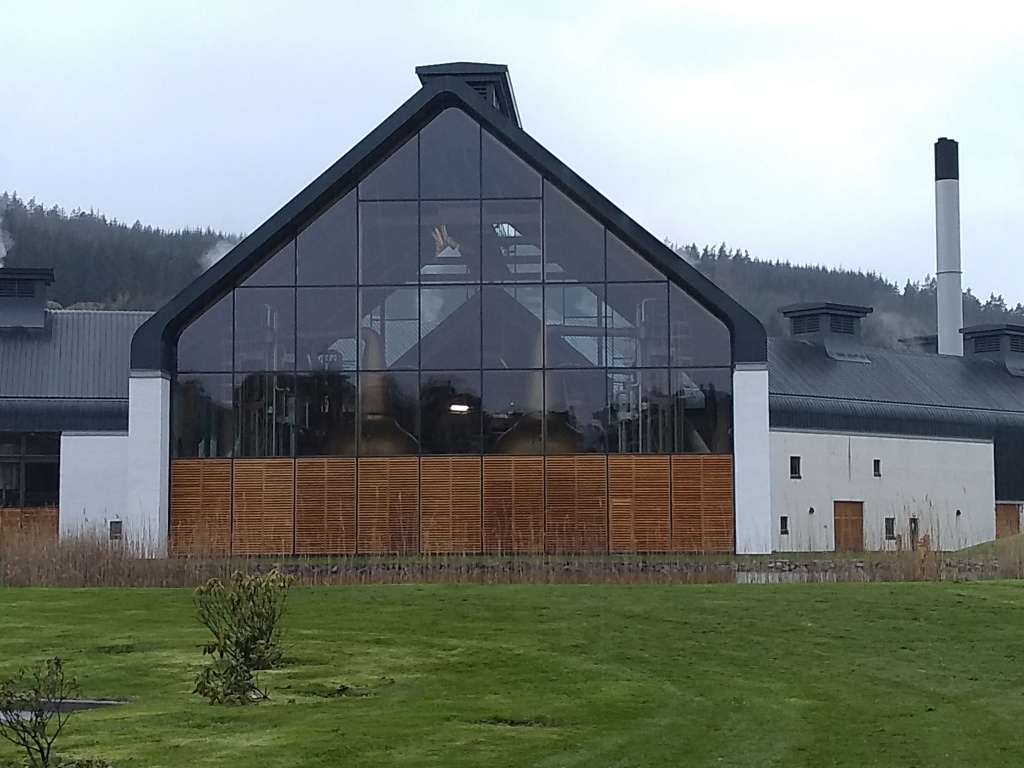
Because of this, and because pictures were not allowed inside the distillery, we donโ€™t have many notes about Glenmorangie. The tour inside was quite standard – milling, mashing, and fermenting – but we could try the wort, a nice touch. The still room is really huge, almost looking like a cathedral. After that, we went back to the courtyard, where we could look at (but unfortunately not go inside) the Lighthouse: a new small fully equipped distillery next to the old one, where Dr Bill Lumsden, the Head of Distillation for both Glenmorangie and Ardbeg (one of the great innovators in current times) can run small batches and experiments. The building in itself is very beautiful, and somehow fits nicely next to the old buildings. 

We can see why they called it the Lighthouse.

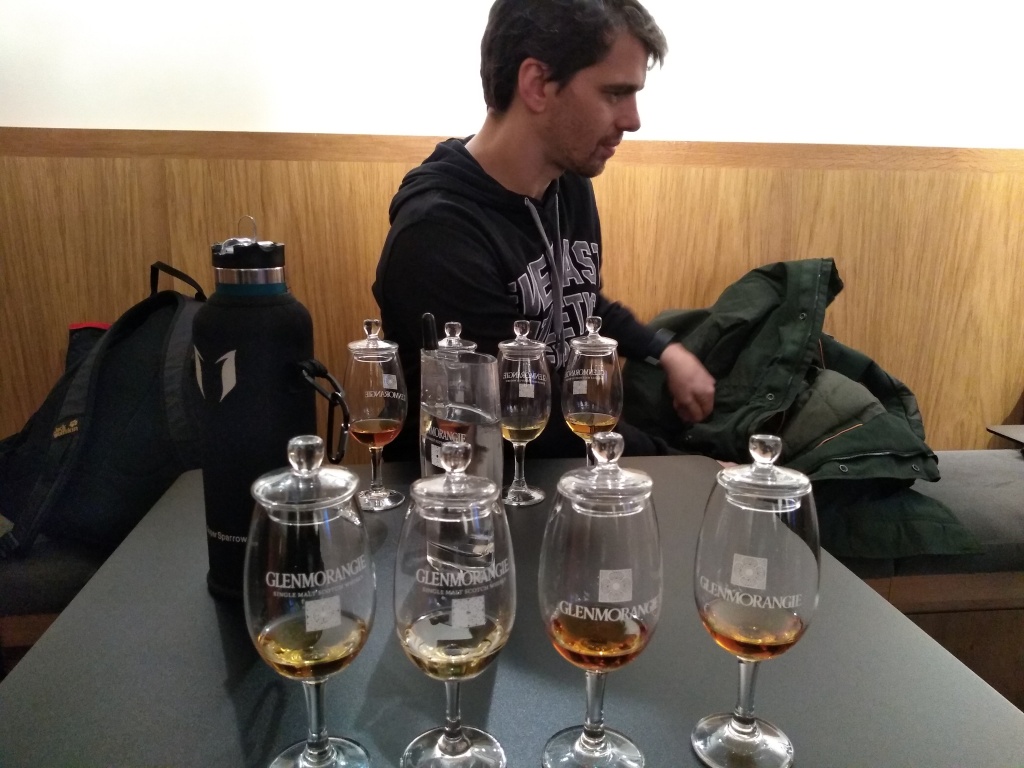
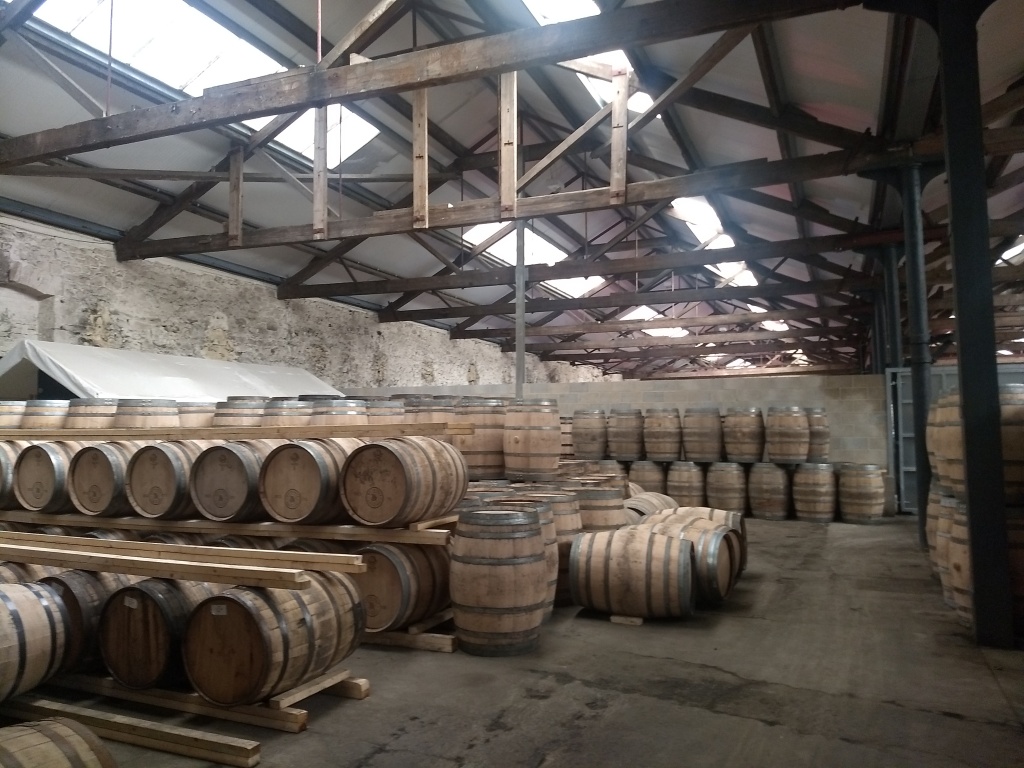
After wee look at a warehouse, it was finally time for the tasting, prepared in a room just behind the visitor centre. It was a bespoke tasting, so to minimise the chances that someone already had some of the drams, our friend Justine (who organised the trip) chose one recent expression and 3 distillery exclusives. We started with the last of the โ€œA Tale ofโ€ releases, โ€œA Tale of Tokyoโ€ (46%), finished in Mizunara oak. It was good but not memorable: all the whiskies finished in Mizunara oak that we tried (3 or 4) were interesting but thatโ€™s it, not something weโ€™d go for. The other three drams were sublime: two single casks, one matured in a custom oak barrel and one in red wine, and the last a vatting of two ex-Pedro Ximenex sherry casks. Really great drams, just a shame that the price tag was a bit too high for us. 

Lewis humour (well, and these last three whiskies) made our tour at Glenmorangie quite unique, and it didnโ€™t feel corporate at all (which some of us were worried about). Experiences like this are the ones that really stay in our memory, and we are so grateful for.  

We left the distillery empty-handed, but very happy nonetheless, and after a brief bus drive to Dornoch, it was time for dinner, after which we went back to the van for a good sleep (spoiler: it was not!).

Stay tuned to hear about it, and until next week, Slainte!


Glenmorangie Tour & Bespoke Tasting

Price: ยฃ65.00 pp (November 2023)

Duration: 1hr 30min

Tasting: 4 drams, Tales of Tokyo (46%, NAS), Distillery Managerโ€™s Selection (2nd fill custom cask, 56.1%), Distillery Exclusive Release Cask 12835 (12y, vintage 2006, bottled 2019, ex-red wine cask, 55.1%), Distillery Exclusive Release Cask 1784 (16y, vintage 2003, bottled 2019, PX sherry, 55%)

Distillery Exclusives: see above

Target: everyone

Value for money: pricey, but at least we tried something new

Highlights: Lewis really made this tour memorable

Recommended: yes

Link: https://www.glenmorangie.com/


#32.1 Driving through Englandshire

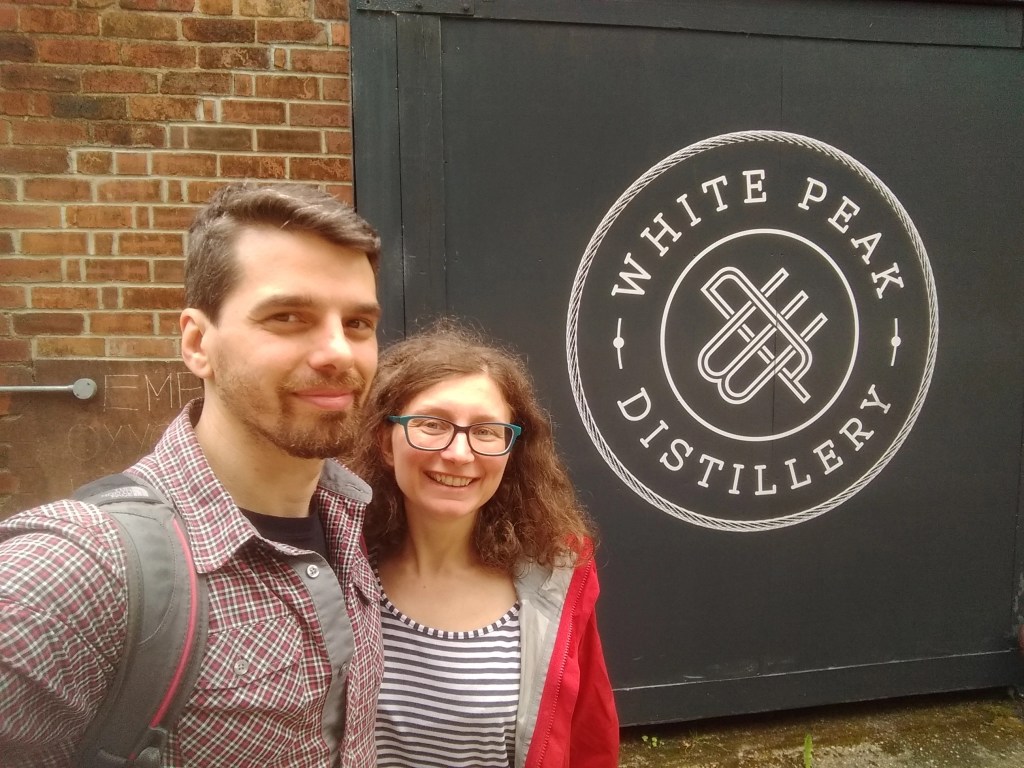
A peek into White Peak Distillery


TL;DR: On the road to Wales for our summer holidays, we drove through England, and we got to two distilleries: first of the two, White Peak. We had heard great things about their whisky, but had never tried. Our visit confirmed their good reputation, and we probably had the best distillery tour outside Scotland. 

The decision on where to go for our summer holidays was quite easy. First, we wanted to use the campervan for the first time for over a long weekend, but because of some mileage limitation on our insurance we couldnโ€™t go too far, so here Ireland and Cornwall were not an option. Also, after our 2022 North of Scotland and Orkney trip, we definitely wanted to avoid midgies, so we excluded the West Coast of Scotland and Outer Hebrides too. Finally, we wanted to see something new: at this point, excluding the overpriced Lakes District, there was almost only one destination left: Wales! But to get to Wales, weโ€™d need to cross a good chunk of the country south of the border, otherwise known as Englandshire.

Not too bad honestly, the recent world-wide whisky revamp touched England as well, and there are now over 40 distilleries on the English Whisky Map. Many of them are very young, and some were born as gin distilleries and only afterwards they switched to whisky. Others, however, are now quite established, with well-matured and tasty products. We already visited two, the Lakes Distillery, in Cumbria, and Copper Rivet, in Kent.

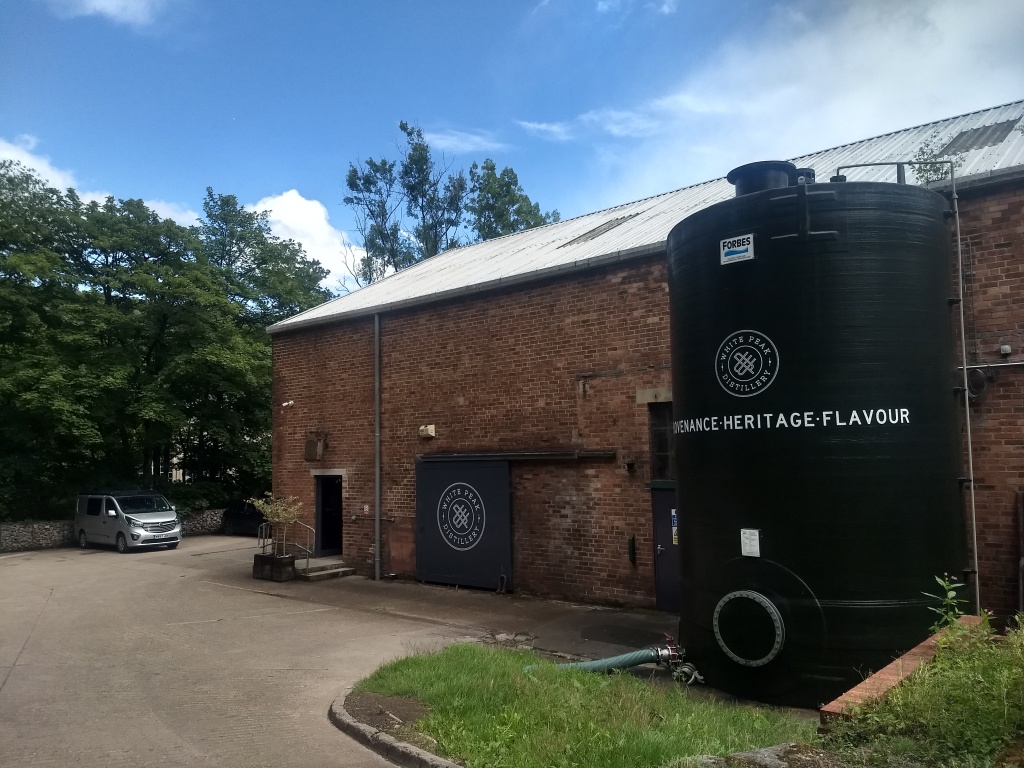
Anyway, we left Edinburgh and, after a first stop in Leeds (to meet friends who recently became parents and their new-born kiddo), we drove straight to the first distillery we wanted to visit: White Peak. The distillery is in Derbyshire, near the Peaks District National Park, in Ambergate. It was funded by the Vaughn family, Max and Claire, in 2016, and their first single malt was released in February 2022. The chosen name for the whisky is Wireworks, because the distillery is located in a very beautiful former industrial estate on the river Derwent, a former wirework indeed! The industry complex dating back to 1876, closed in 1996: a lovely industrial revolution style building.

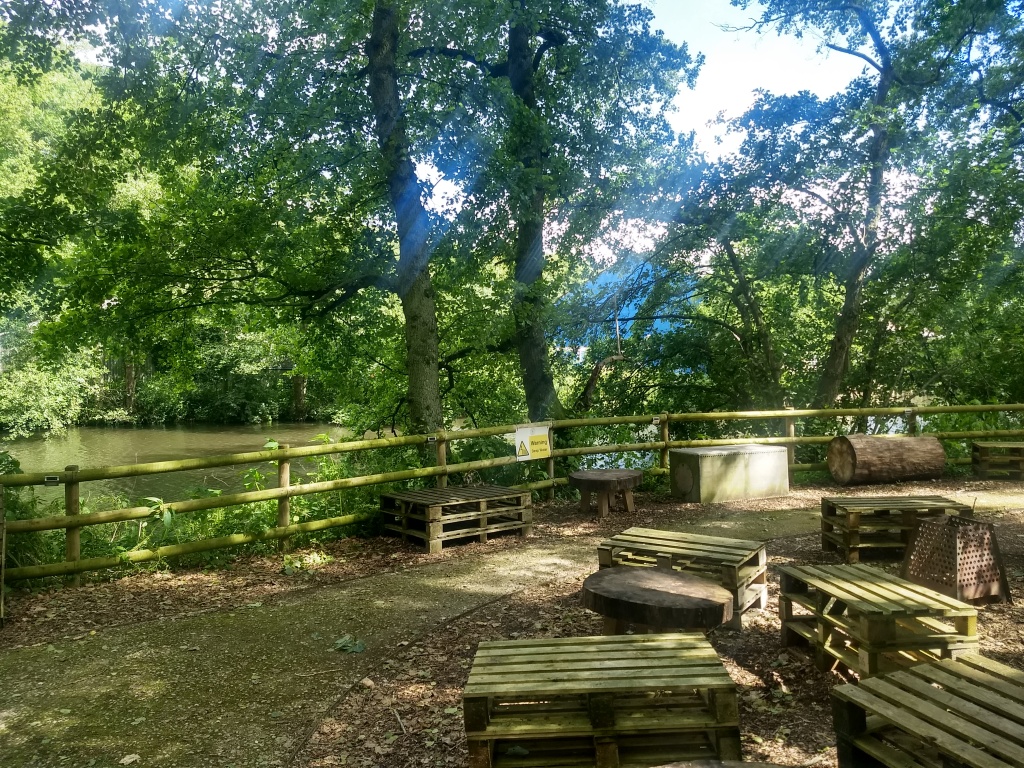
We were very curious to visit this distillery. We had heard good things but we hadnโ€™t had the chance to try this malt before, so here we go! Once there, we quickly checked in, but being early, we had time for a coffee and a stroll outside: a few meters away from the entrance they set up a nice summer garden, with lots of old industrial bits and bobs.

Back to the bar, we started our Warehouse Tour with Dave. He works there as a distillery manager and distiller, which was great as he gave us lots of insights! So, first off, he told us that although they make gin and rum too, the 90% of their business is the production of single malt. In contrast with the industrial revolution style budling, the equipment is very modern, and bar the stills, it looks like a modern brewery. They buy their malted barley from Crisp, and they then process it in a very modern brewing-style mill. This only applies to the unpeated malt however: the peated one, which constitutes 10% of their mash, is pre-milled. A thing in common with many distilleries is the use of three waters, from which they obtain a clear wort for a fruity character. The long fermentation, 6 days, is done with two types of yeast, dry distiller and brewerโ€™s. The latter is live yeast from the Thornbridge brewery, in particular the one used to make the Jaipur IPA. This is both to provide a twist to their flavour, and to honour the Derbyshire brewing history.

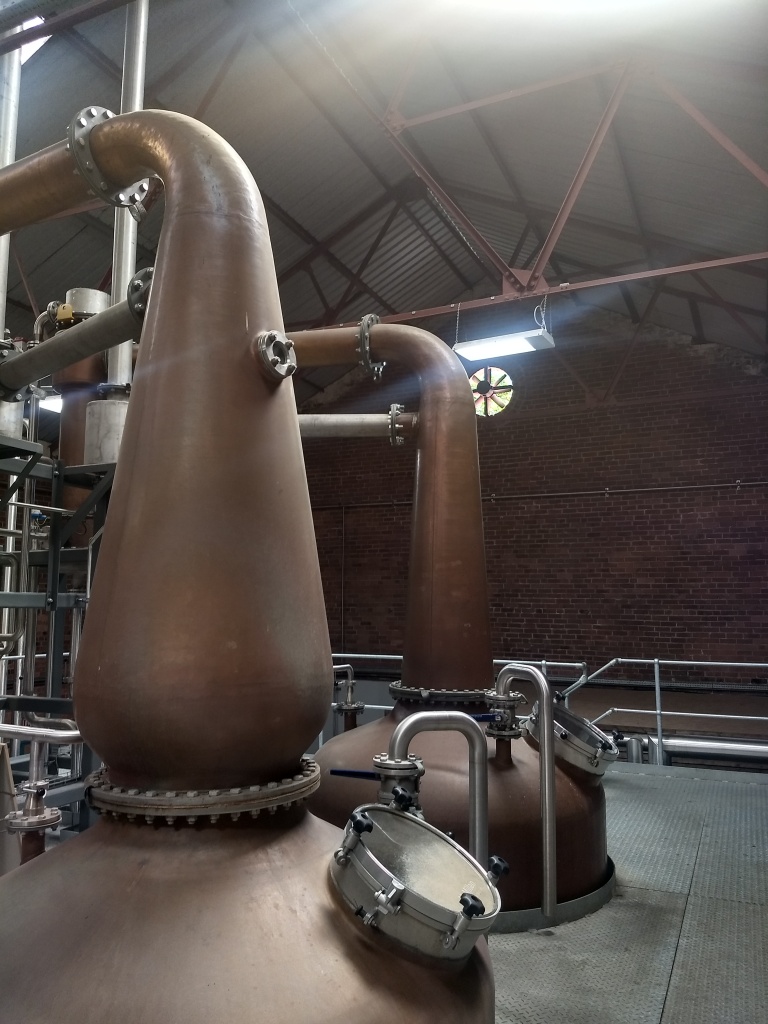
The two wee stills.

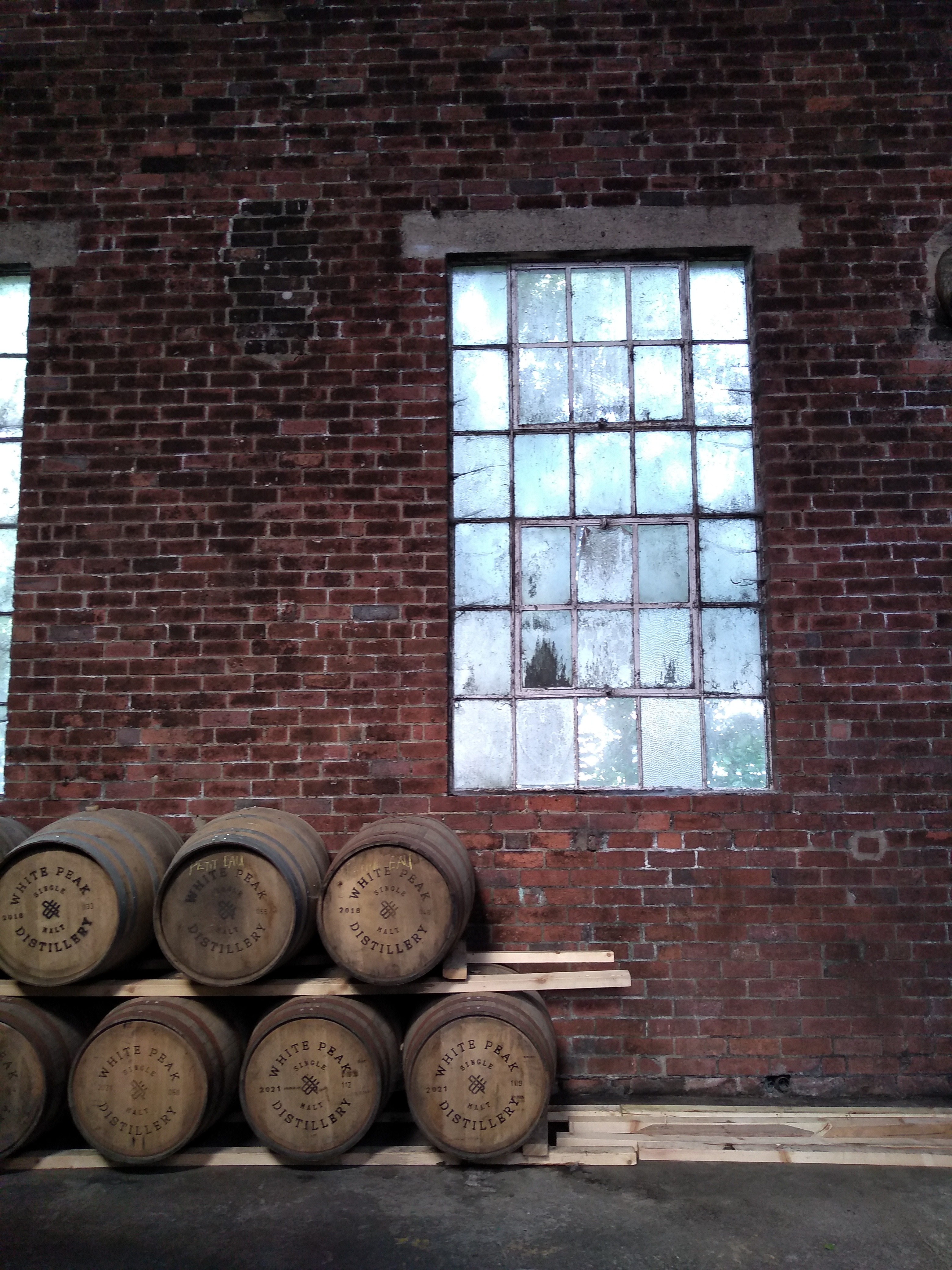
Distillation is made in two small Scottish-style copper pot stills, and the usual cut points for the heart (ie what is kept from the second distillation) are 78% and 67%, quite wide indeed! They produce more or less 10 casks per week, mostly into ex-bourbon barrels from Heaven Hill or ex-wine shaved-toasted-recharred (STR) casks. They produce about 60,000 litres of alcohol per annum, putting them in the top 5 of English malt distilleries. After trying the newmake spirit, we moved to the warehouse, just next-door. Technically not a dunnage warehouse (the industrial building original floor is concrete), although the barrels are stored horizontally in a typical dunnage way. Their โ€œangel shareโ€ (the percentage lost to evaporation) is about 10% over 3-4 years. David explained us their barrels policy, as we said, mostly ex-bourbon and STR, but with many exceptions: red-wine, Port, rum, virgin oak, etc, typical of young distilleries wanting to experiment. We also saw the casks for their next release, the Necessary Evil, in collaboration (again) with Thornbridge brewery. This year they used ex-PX casks which previously held stour beer. 

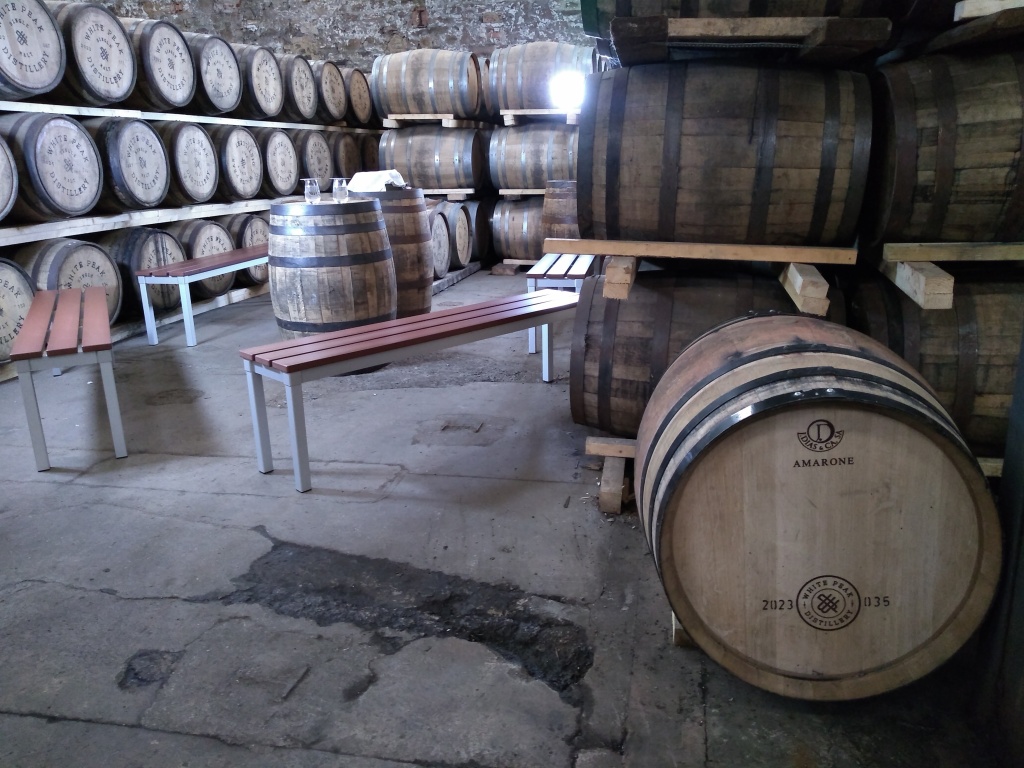
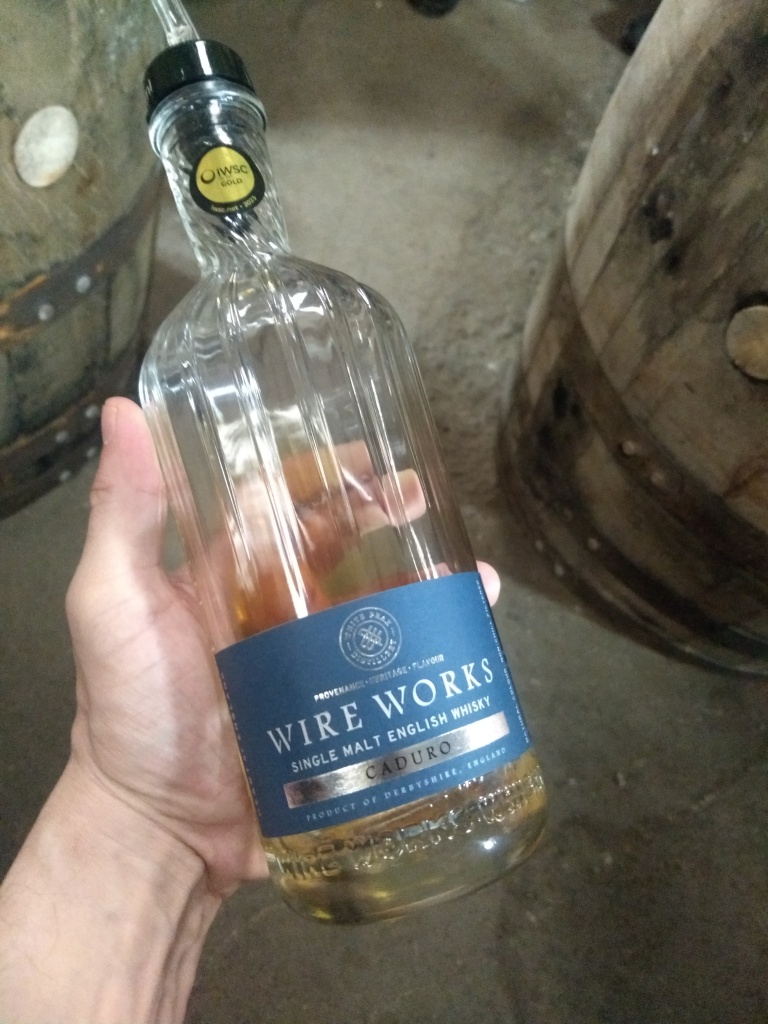
Still in the warehouse, a table with empty glasses and benches was prepared for us, for the tasting! The first dram was the Caduro, released a few days before our visit, a marriage of ex-bourbon (33%) and STR casks (67%), bottled at 46.8%. Itโ€™s a lightly peated malt, quite fruity, sweet and very tasty. The other two samples were both from the cask, a 4yr-ish ex bourbon cask filled at around 72%, and a slightly older ex American oak cask (but with French oak ends) filled at 64.5%. We have to say that they were both delicious – a shame they werenโ€™t on sale.

…a very nice tasting.

Back to the shop, as the buying queue disappeared, we asked Dave if we could try their other release: the Alter Ego (51.5%). For this, the cask make-up is similar to Caduro, but inverted (33% STR and 67% ex-bourbon barrels), and with different cut points too. It was tasty as well, but we felt that the Caduro was a bit more balanced.

The day finished with us driving towards Stratford-upon-Avon to get to the camping, to rest and get ready for another day and another distillery visit. Overall, the visit to White Peak was a great experience, probably one of the best we had recently, and for a very reasonable price. Of course, Dave was excellent, and as we said many times, doing the tour with a person involved in production is often more engaging.

Until next time, slainte!


White Peak Distillery Warehouse Tour

Price: ยฃ40.00 pp (July 2023)

Duration: 1hr 30min

Tasting: 3 drams, single cask ex-bourbon cask (4yr, filling strength 72%), single cask STR American oak cask with French oak ends (around 4.5yr, filling strength 63.5%), Caduro (46.8%abv), all not chill filtered and natural colour, and a complimentary glencairn

Target: whisky enthusiasts

Value for money: good

Highlights: the industrial site and the nerdy tour

Recommended: yes

Link: https://www.whitepeakdistillery.co.uk/

#31.6 Spirit of Speyside 2023

The beast of Dufftown: Mortlach


TL;DR: our fourth day at the festival started with a classic, a distillery particularly known for their complex distillation process: Mortlach. The visit was very interesting indeed, and the distillery manager Kirstie didnโ€™t shy away from nerdy details. 

(missed Part 5/Part 4/Part 3/Part 2/Part 1?)

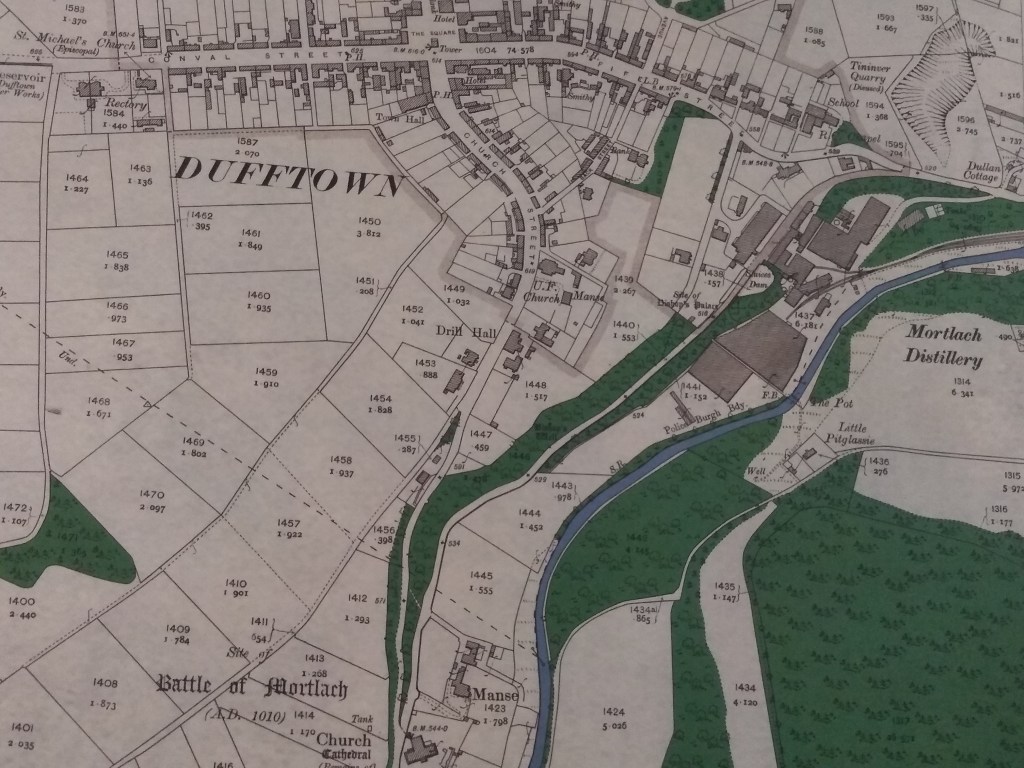
On Sunday morning the sky was still overcast, it would start raining later in the day eventually. Oh well. After breakfast we wrapped up all our stuff: it was the last night in the camping, the following and last night of the holiday we would wild camp again, although we hadnโ€™t figured out where yet. We left the camping driving towards Dufftown, in a backroad that goes past the back of the Speyside Cooperage, from which you can admire their casks pyramids. Being Sunday morning, Dufftown was very quiet, and not all cafes were open yet. We managed to park on the main road, in front of the local CoOp, and tried hunting for a coffee. After finding one, we walked our way towards our first appointment of the day: Mortlach distillery, the so-called beast of Dufftown.

It is a very old one, founded in 1823 after the Excise Act, and it was the only one in town until their manager at the time, William Grant, left to found Glenfiddich. In 1897 the distillery was expanded, and thanks to the work of the famous architect Charles Doig, the pagoda roofs were added. It was acquired by John Walker & Sons in 1923, but the company soon merged with Distillers Company Limited in 1925 (then United Distillers in 1987, Diageo from 1997). Before 2014, the only official bottling of Mortlach was the 16y โ€œFlora and Faunaโ€, now discontinued and dearly celebrated (like most things of the past, the abuse of โ€œโ€™member-berriesโ€ is widespread in whisky-landโ€ฆif you donโ€™t know the reference, check South Park season 20).

A core range was introduced in 2014 (with some controversial 50cl bottles) and revamped in 2018, while the current age-stated range includes a 12y (Wee Witchie), a 16y (Distillerโ€™s Dram), a 20y (Cowieโ€™s Blue Seal) and a 14y travel retail (Alexanderโ€™s Way), plus the occasional Special Releases. The newmake spirit is mainly filled in ex-sherry casks, although you can find some independently bottled ex-bourbon matured expressions (we have an 11y from Signatory Vintage, a marriage of 2 ex-bourbon hogsheads, which is quite tasty). Mortlach whisky is quite famous to be meaty, and thus considered a malt for seasoned drinkers. Fun fact, the 16y (very decent in our opinion) worked quite well every time weโ€™ve given it to friends (both beginners and casual whisky drinkers).

At the distillery we were given a welcome cocktail, a Mortlach-based Old Fashioned (this time with regular angostura, not the orange one like at Dailuaine), and the distillery manager, Kirstie, introduced herself. Sheโ€™s a graduate form the Brewing and Distilling Master at Herriot-Watt University, and of course extremely knowledgeable: her explanations definitely gave value to quite a pricey experience. We also bumped into a couple of barflies at the tour, Angus and Graham, met back in November at the Aqvavitaeโ€™s Blind Challenge in Glasgow.

After the introduction, we started the proper tour: we moved outside in the courtyard, and then near the milling room, which hosts an old red Porteus mill. A notable difference was that they take a smaller cut of flour in their grist (8%) compared to other distilleries (usually 10%). In our understanding, one of the reasons is that their water to grist ratio is higher, 3.8 instead of 3.6. The mashtun looks very new, made of stainless steel and closed, with the usual window to check its inside. They only have two water runs instead of three, with the second being warmed up to get the sugars that are usually obtained in the third run (lasting 6.57 hours in total).

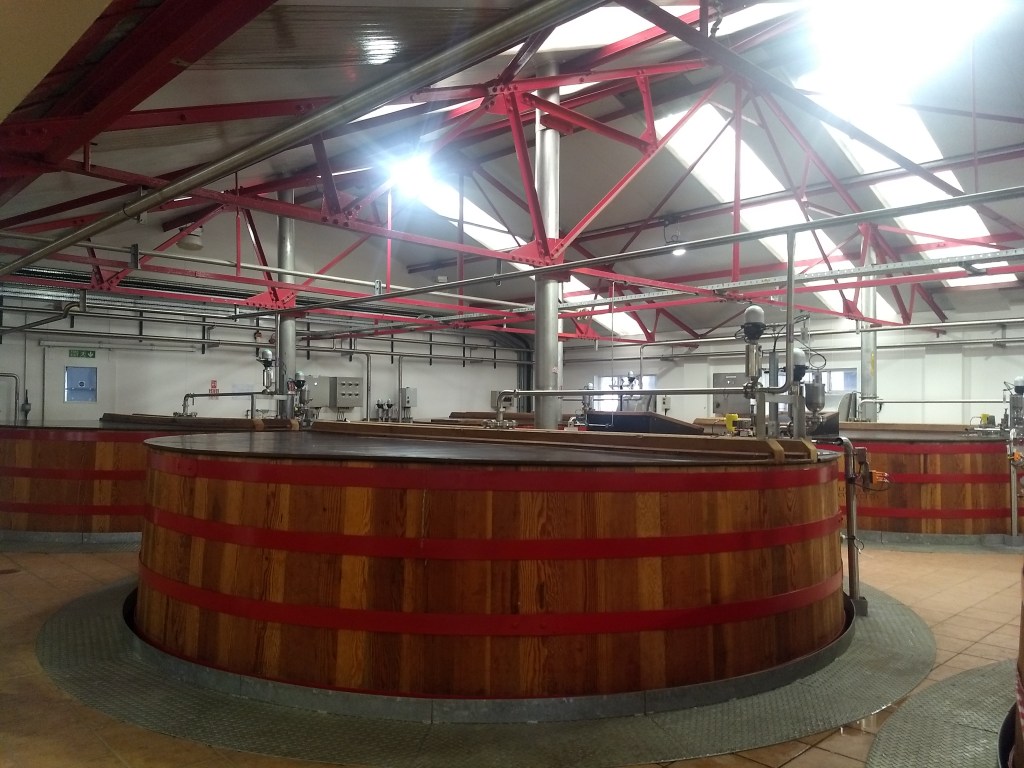
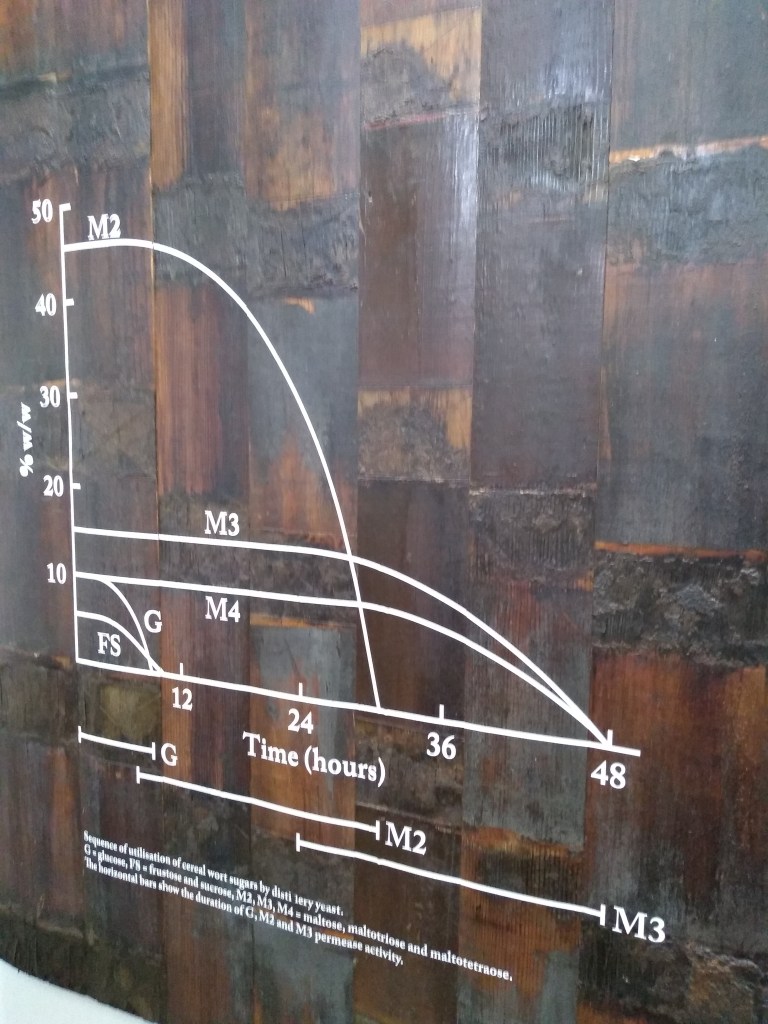
The walls of the fermentation room, where six Douglas Fir washbacks are located (wooden because of a combination of aesthetics and convenience, since they can be disassembled unlike stainless-steel ones, all replaced in 2016), are decorated with some nerdy facts about whisky making, like the formula to calculate the % abv of the wash using the gravity readings, and the graph showing the trends of different types of sugars digestion during fermentation. Their fermentation time is usually between 55 and 59 hours, never less than 50, and they work with yeast that can survive higher temperatures, around 35C.

Knowledge pill on the wall # 2.

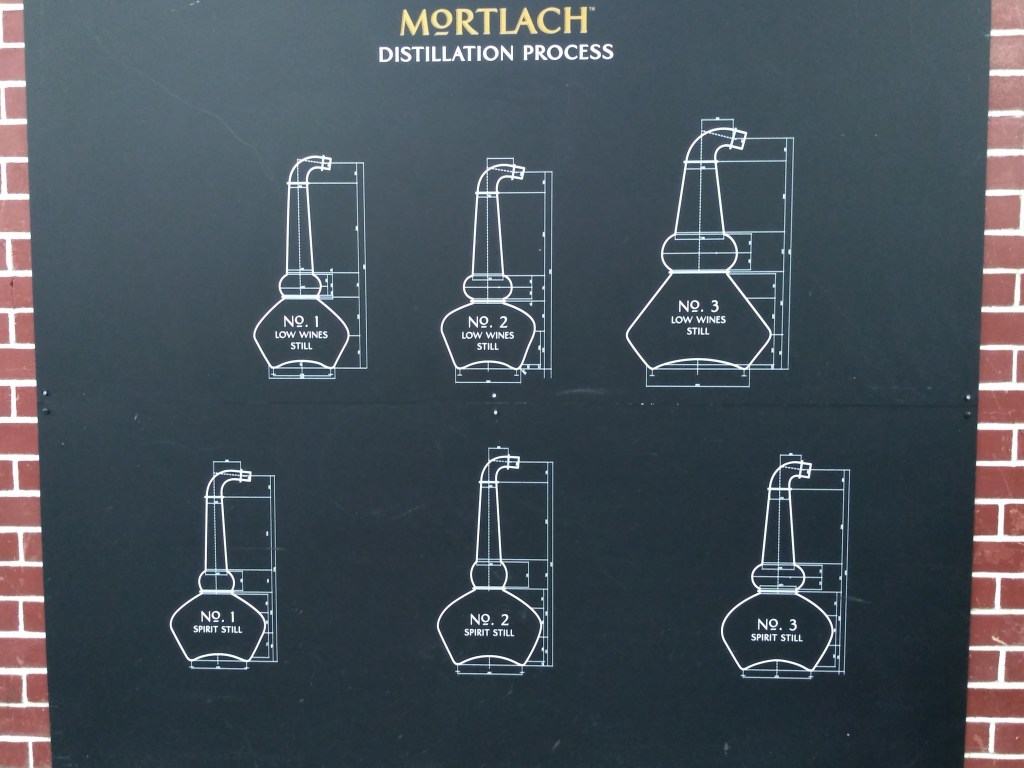
We then moved to the still room with its 6 stills (3 wash- and 3 spirit-), very unusually of different shape and size. The distillation is very complex: wash-still #3 and spirit-still #3 are paired, and they work like in a regular distillery. The other wash-stills (#1 and #2) work together, but their distillation is (unusually) divided into two cuts, the first goes into spirit-still #2, while the second (heavier) gets re-distilled three times (with the other distillations feints) in the other spirit still, the Wee Witchie, and the cut is only taken every third distillation. If you are confused, no worries, we are too, but the idea is to provide different characters to the newmake spirit. Someone in the past made the calculation, and it turned out the spirit is distilled 2.81 times – it would be nice to see those equations (nerd alert! Nerd alert!).

As we moved outside, we could admire one of the other characteristics that made Mortlach popular: the 6 worm tub condensers, one for each still. It is believed this is what provides meatiness to the spirit. They are made of wood, except one which is made of metal because the wooden one started leaking – they told us it might be replaced at some point with a new wooden one. They take the cooling water for the wormtubs from the river Dullan, one of their 6 sources of water for all the process: remember that they produce between 3.5 and 4 million litres of alcohol per year! Finally, we ventured in the warehouse, where casks from many distilleries were resting, including many non-Diageo ones, surprisingly. Kirstie explained us the processes happening in maturation: additive (compounds from the wood affect the liquid), subtractive (compounds from the liquid are removed by the wood contact) and oxidative (the contact with air changes the liquid, as you will know if you ever had a bottle open for more than 4-6 months).

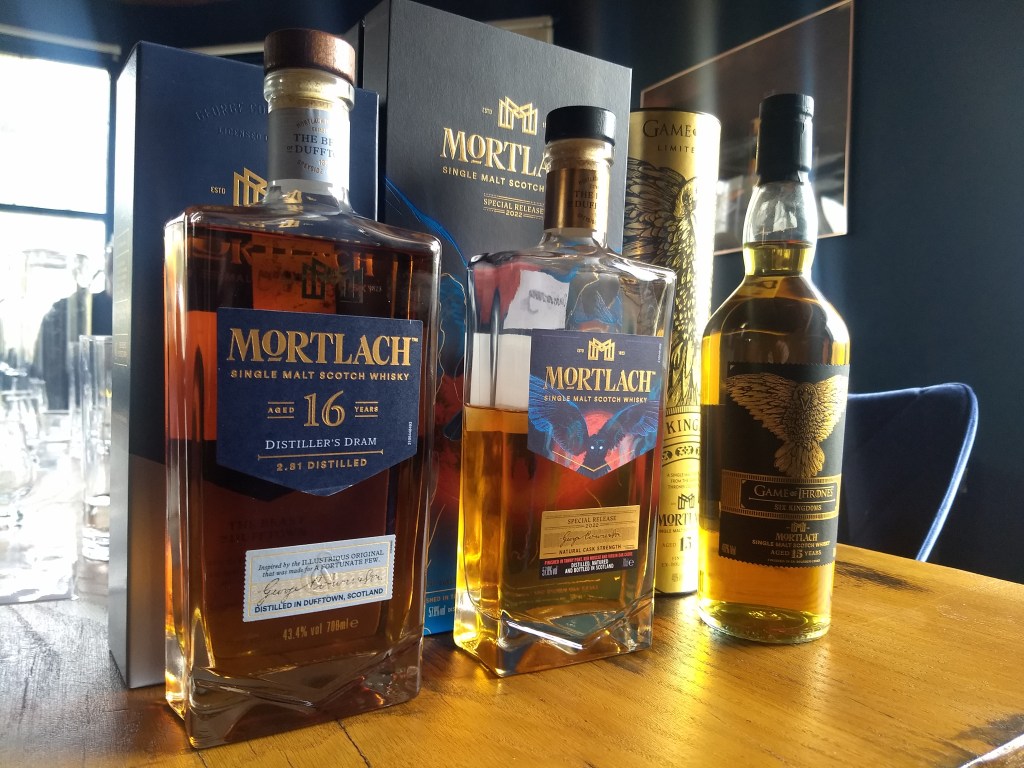
Back outside, Kirstie showed us where some buildings used to be, as well as their still existing but currently unused malting floor, on the other side of the road (at the moment part of it is used as deposit for the Dufftown Whisky & Heritage Centre). We went back to the meeting room to enjoy the (stingy, considering 80 quid) 3-dram tasting. These were the flagship Mortlach 16y (43.4%), Mortlach 15y Game of Thrones Six Kingdoms (finished in ex-bourbon casks and bottled at 46%) and a non-age statement (NAS) from the 2022 Special Release. Weโ€™re quite familiar with the 16y (we used to have it, and gifted some), and we had tried the 15y GoT once (nice to revisit), so we were very curious about the third, mostly because the RRP was insane for a NAS, well above ยฃ200. This expression was finished in Tawny Port, Red Muscato wine, Virgin Oak casks and bottled at cask strength (57.8%). Turned out, it was nice but not mind-blowing by any means, as youโ€™d expect considering the fanfare.

Overall, this was a great visit, and Kirstie contributed to make it as nerdy as expected, for such a peculiar distillery like Mortlach. The price is a bit steep, ยฃ80 for a tour and 3 drams (+ cocktail), so itโ€™s hard to recommend it. However, if youโ€™re at the right moment of your whisky journey, it is definitely one to visit, despite the price. For us, it was worth it, and we look forward to more deep dives like this.


The Mortlach Distillery Tour (Spirit of Speyside)

Price: ยฃ80.00 pp (April 2023)

Duration: 2hr

Tasting: 3 drams and a welcome cocktail, Mortlach 16 (43.4%), Mortlach 15 the Six Kingdoms (46%), Mortlach Special Release 2022 (NAS, 57.8%)

Target: a bit more seasoned whisky geeks and nerds

Value for money: not great

Highlights: the detailed tour and explanation of such a complicated distillation process

Recommended: only if you’re quite ahead in your whisky journey (see last paragraph above)

Link: https://www.malts.com/en-gb/brands/mortlach, https://www.spiritofspeyside.com/

#31.4 Spirit of Speyside 2023

Not “A”, but “The” Speyside distillery


TL;DR: left Tamdhu, we drove along a very beautiful road, all the way to Kingussie. Here, we visited the Speyside distillery, home of the Spey single malt. A very nice visit in a spectacular distillery, one of the most charming sites visited so far. 

(missed Part 3/Part 2/Part 1?)

After the visit at Tamdhu, we sprinted to Mr Vantastic and left right away. Because the booking tickets process on the Spirit of Speyside website was so convoluted, we had to make some adjustments to our trip. One was visiting the Speyside Distillery, near Kingussie, after Tamdhu. Between the end of the first tour and the beginning of the second there were two hours, with about 1h10m drive. We prepared sandwiches ahead, so we could have a snack while driving and arrive there with something in our stomach.

The drive was not so bad actually, we drove along the road just north of the river Spey, instead of the usual A95, a first for us. The landscape along the road was beautiful, very rural with smooth hillsโ€ฆHowever, we couldnโ€™t be too distracted, as we had to pay attention to the road in order not to kill the few pheasants we met. Past Grantown-on-Spey, we re-joined the main road to Aviemore. We decided to stay on minor roads, so we avoided the A9. This led us into Kincraig, where we stopped at the Old Post Office Cafรจ, a truly lovely spot, we were just sorry to have little time to spend in it. After a wee coffee, we were back on the van to finally get to the Speyside Distillery.

We were not very familiar with their whisky, the main range being marketed as Spey, we had only one or two before. However, they were on our radar for a while, the only problem being that they normally do a few tours every week, usually mid-week (Wednesday or Thursday). Thus, the Spirit of Speyside Festival was the perfect occasion to get to this distillery. As we parked, we realised how beautiful the spot was: all stone buildings, it didnโ€™t even look like a booze factory (which ultimately, every distillery is), rather a mountain cottage. Very romantically, the river Tromie runs along the site. We checked in the distillery office, where Susan was waiting for all the guests to kick-start the tour. As soon as everyone arrived, she started telling us about their distillery and their business, and gave us a wee taste of the newmake.

The Speyside Distillery took 25 years to be completed, as it was the โ€œsummer projectโ€ of Alex Fairlie. He purchased the building in 1965, which was a 1760 barley mill, and renovated it by hand. Production started in 1990, a time when scotch whisky was not so popular (and in fact, only them and Arran, 1995, started in that period). The name was chosen because there once was another โ€œSpeyside Distilleryโ€ in the same village, built in 1895 and demolished in 1912. The distillery changed hands twice, in 2000 and 2012, being acquired by the Harveyโ€™s of Edinburgh, which soon revamped the range and started selling the malt as Spey, an old brand dating back to the 1815. Before they purchased the Speyside distillery, the whisky (including the Chairman Choice) would come from a number of other Speyside distilleries.

We then toured the distillery, of course starting in the mill room, located in the same building as the office where we started. They mainly use Lauret barley. We moved to the main building where, mashing (or sparging), fermenting and distilling happen. They have six stainless-steal washbacks, for an up to 120-hour long fermentation, with living fresh yeast. The stills are only two, one wash and one spirit still, heated by steam produced by oil. The cut they take is from 72% to 65% as the heart. Warehouses are located near Glasgow, but plans are to relocate them in Speyside. This does apply to the distillery itself: because it is located in the Cairngorms National Park, they cannot expand it. So, to increase production (nowadays 850,000 mlpa) as they intend to, they have to move and the distillery is going to be closed. In case it is purchased by someone else, theyโ€™ll need to change the name, as Speyside will go with them.

Memorabilia from Harvey’s times.

After production, Susan led us into a memorabilia room, where lots of pictures and empty bottles and stuff about the Harveyโ€™s family are showcased, like a family museum. The next part was the tasting, where Teresa got her driverโ€™s pack while Gianluigi tried a few drams. The first one was their Trutina, one of the main expressions, matured in ex-bourbon barrels for 6-7 years (non-age statement, NAS) and bottled very pale (rightfully so!) at 46%. It was followed by the Tenne, finished for 6-9 months in ex-Tawny Port casks. The next was a weird one, called Beinn Dubh (โ€œblack mountainโ€ in Gaelic) is kind of an experiment: matured in ex-bourbon casks, then finished for a year in double-charred casks then conditioned with Ruby Port, definitely a strange combination (just a shame they add caramel colouring to make it darker) but interesting nonetheless. Finally, we could choose between one of their three peated releases: Fumare (NAS 46%), Fumare cask strength (60.4%) and Fumare 10y (46%). Gianluigi chose the cask strength, which was delicious. Except for the Beinn Dubh, generally their whiskies are bottled at natural colour and are not chill filtered.

As the tasting finished, we drove off back to the heart of Speyside, at the camping near Aberlour where we spent the night. We were happy to have finally visited the Speyside distillery: usually overlooked by many, it actually deserves more credit for the variety of expressions they are bringing to the table. And on top of that, the distillery is in a quite unique scenery, glad we visited it before they move elsewhere.


The Speyside Distillery Tour (Spirit of Speyside)

Price: ยฃ35.00 pp (April 2023)

Duration: 1hr 30min

Tasting: 4 drams, the Spey Trutina (NAS, 46%), Tenne (NAS 46%), BeinnDubh (NAS, 43%) and Fumare Cask Strength (NAS, 60%)

Target: whisky curious and tourists

Value for money: good

Highlights: the dreamy distillery location

Recommended: yes

Link: https://speysidedistillery.co.uk/, https://www.spiritofspeyside.com/


#31.2 Spirit of Speyside 2023

Shut it, badger!


TL;DR: Second distillery visit during the Spirit of Speyside: another workhorse, owned by Diageo this time, Dailuaine! Contrary to Tamnavulin, we know their malt mostly thanks to independent bottlers, as most of the production goes into blends. The tour was great, although it felt like visiting a distillery after a zombie apocalypse.

(missed Part 1?)

After the visit at Tamnavulin, we had only 45 minutes before our second visit of the day at another distillery usually closed to public: Dailuaine. Fortunately, the drive was only 25-ish minutes, and because we knew we were tight with time, in the morning we had prepared sandwiches, so we could have a quick lunch. Everything went fine, we drove from Tamnavulin to Ballindalloch, and before Aberlour we turned left, with the distillery being mid-way between the main road and the village of Carron. We had run through this village during the Dramathon, admiring the recently built Dalmunach distillery (on the site where Imperial used to be), but despite being the n-th time in Speyside, we had never driven there, so we didnโ€™t quite know what to expect. As we drove downhill form the A95, we found Dailuaine distillery on the left, spotting their big warehouses, almost terraced to cope with the slope. 

In the courtyard, we noted how massive is the site: the warehouses on the left, a small house (will turn out to be offices) on the right, and behind it the huge production building. As soon as we parked, a guy asked us if we were there for the tour, and because it was starting to rain, he told us to go inside and wait for him. He turned out to be Archie, the distillery manager, quite a character who made our visit unique! In the office, all visitors could sit around a table, and as we started, Archie poured some filter coffee and gave us some brownie squares – a very nice touch. He told us about his career before landing on this job, a few years before, and explained the history of the distillery. It was founded in 1852, and in 1925 it was acquired by Distillery Company Limited (or DCL, one of Diageo previous incarnations). He showed old pictures of the distillery, which testified how the staff numbers decreased over time, to the current handful of operators (2.5). Sad but understandable. He also told us that the warehouses on site are empty, quite a surprise to us given their size. 

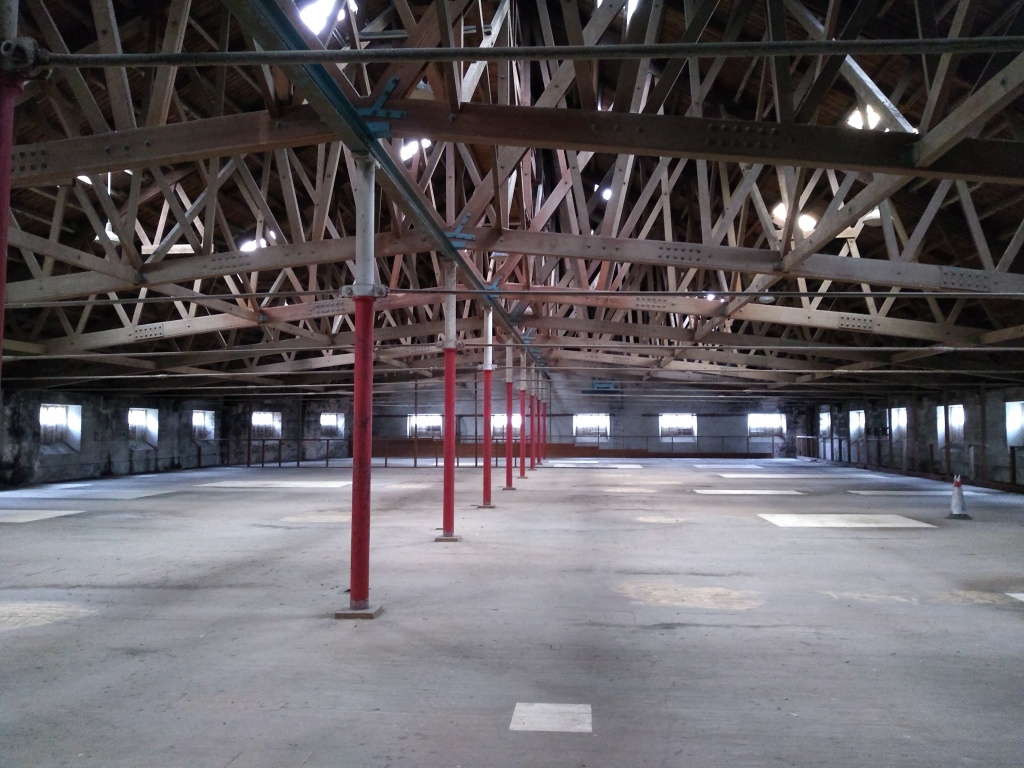
Soon after we went back outside and started the tour. On site, there is still a dark grain plant, which until 2018, when it was closed, used to process draff and pot ale (leftovers from mashing and distilling) to make cattle feed. As we moved inside the production building, we couldnโ€™t help but notice how big the spaces are, and how empty they look too! As technology advanced, less and less space was required for the production. Also, part of it moved away, in particular malting and cask filling, as currently all the newmake spirit is put in tankers and shipped to Diageoโ€™s sites in the central belt. As a matter of fact, one of the most surprising parts was the huge malting floor, so big you could use it for a sizeable concert! They used to have Saladin boxes, a short-lived mid-20th century innovation replacing the need of hand-shovel the barley while malting, which was soon replaced by maltings drums. These big empty spaces gave us almost an eerie feeling, maybe we were influenced by The Last of Us TV series, but this really looked like a distillery in the post zombie apocalypse era. Decadent, but fascinating. 

Empty spaces apart, the production is very modern and all controlled by computers (although they still carry out manual checks). They have a closed mash-tun, 8 wooden and 2 steel washbacks (the latter outside the building), and 3 pair of pot stills (with copper shell-and-tube condensers). The distillery produces over 3 million litres of alcohol per year, placing it among the medium-big ones.

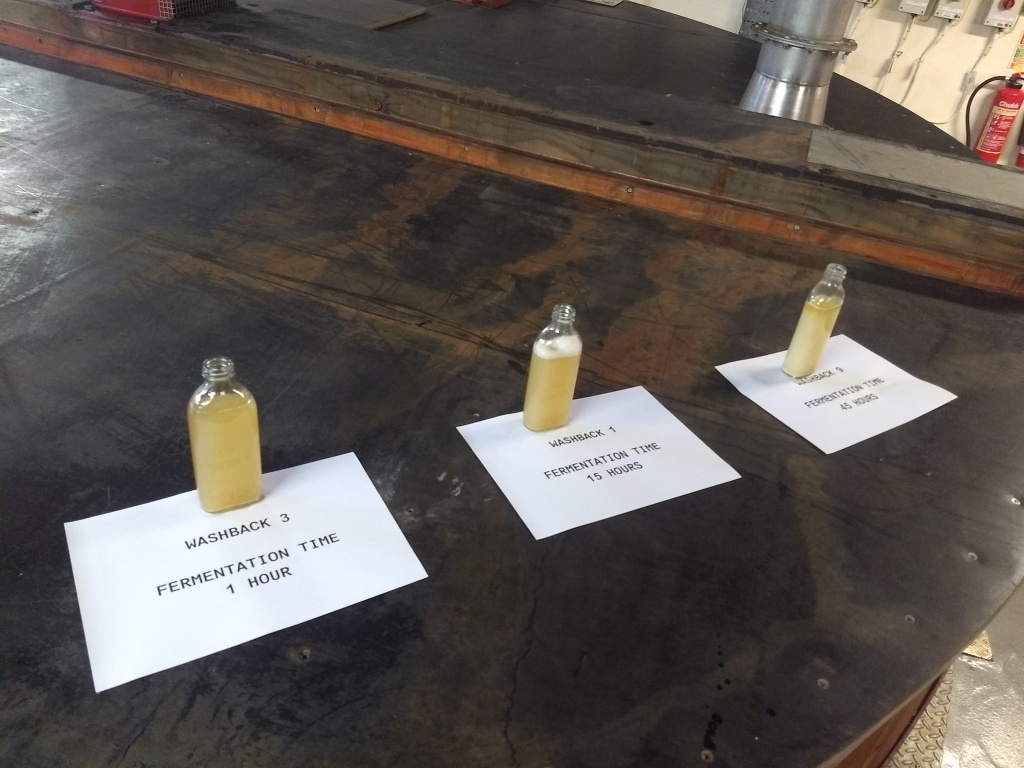
As we visited the fermentation room, Archie made us find three samples of wash for us to smell (not to drink!!), collected at different times: 1, 15 and 45 hours after fermentation started (overall fermentation is about 46 hours for a nutty style). Very nerdy and interesting. There, he was helped by Kyle, a distillery operator from Knockando distillery, deployed at Dailuaine as Knockando is currently closed. He also explained us how the system works in the stills room, answering all our (many) questions. We finally visited the โ€œfilling storeโ€, basically a tank with newmake spirit waiting for tanker truck to take it away. 

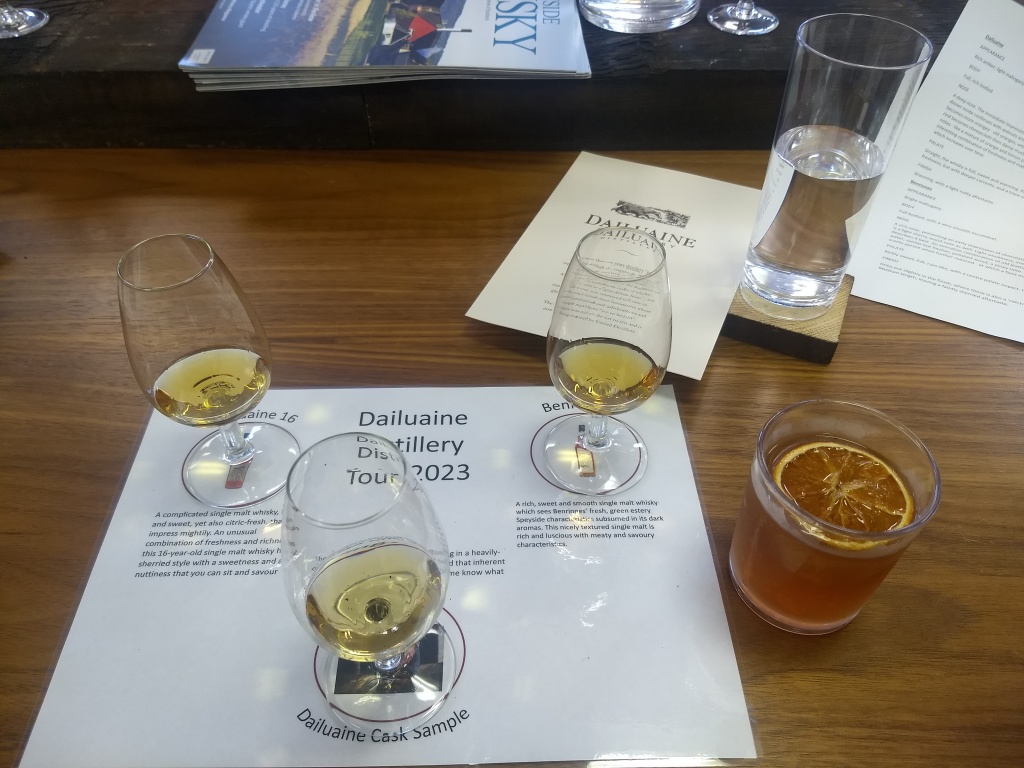
After the tour, it was time for the tasting! One of the offices was set up as a tasting room with a pop-up shop too (which turned out to be common to all Diageo distilleries we visited during the festival). As we got in, we were offered a cocktail: a variation of the Old-fashioned, made with Dailuaine 16 (of course) and orange bitters (instead of Angostura): very tasty! The drams at the tasting were three (four including the cocktail), a bit stingy for an 80-quid tour. We started with the Dailuaine 16 (43%), the Flora and Fauna bottle with the badger on the label. Second dram, another Dailuaine, a cask sample vintage 2010 usually offered in tastings at Cardhu distillery: a truly delicious dram, one of the best we tried during the festival. Finally, for some reason there was a Benrinnes 15, again from the Flora and Fauna range. 

As we came out from the distillery we drove to another, Dalmunach, just to take a couple of pictures: we already knew from the glimpse while running the Dramathon, but that is a stunning one! After paying a visit to the GlenAllachie shop (we didnโ€™t have any event booked there, soโ€ฆ.), we found a spot for the night, a small parking lot near a church. The weather was a bit crappy, so we cooked something in the campervan and caught up with the drivers drams collected during the day: both the Tamnavulin and Dailuaine cask samples were quite great. 

Dailuaine distillery really impressed us, it was like experiencing tradition and progress at the same time, and Archie was truly a great host! Throughout the festival, we also noted that, there is something different about distilleries normally closed to the public compared to the others: they are not โ€œsweetenedโ€ to look like tourist attractions. The ultimate whisky nerd paradise!


Dailuaine Tour (Spirit of Speyside)

Price: ยฃ80.00 pp (April 2023)

Duration: 2hr

Tasting:  a cocktail and 3 drams, Dailuaine 16 (43%), cask sample and Benrinnes 15 (43%)

Target: whisky enthusiasts

Value for money: too pricey

Highlights: Archie was a great host!

Recommended: if you are really really keen to visit

Link: https://www.spiritofspeyside.com/
https://en.wikipedia.org/wiki/Dailuaine_distillery


#31.1 Spirit of Speyside 2023

To the mill on the hill


TL;DR: This year we finally managed to go to the Spirit of Speyside Festival! We were very excited because during this event, some distilleries usually closed to the public open their doors. We started with a very well known one (especially if you buy whisky in supermarkets too): Tamnavulin!

Among the regional events or festivals, there was one that we were eager to attend. Nope, not the Feis Ile: while some tastings look fantastic, the idea of so many people on such a small island (Islay) makes us feel claustrophobic. Not the Campbeltown Malt Festival either, more or less for the same reason. Donโ€™t get us wrong, it would be great to attend both of them at some point, letโ€™s just say that we donโ€™t feel ready yet.

So, by exclusion (and of course, because of the title of this post), by now youโ€™ll have guessed that we are talking about the Spirit of Speyside. It is a huge festival, lasting one week, with plenty of events happening in the constellation of villages and distilleries that form the biggest whisky region (not in size, but in volume produced). Other than the obviously expected tastings at various venues (hotels, bars, distilleries, warehouses, shops, etc.) and distillery tours, there are runs, whisky fairs, bonfires, walks, truck tripsโ€ฆReally a plethora of whisky-related activities. If you know what our trips (and thus blog) are about, you probably stopped at โ€œdistillery toursโ€, wondering which ones we visited this time. And youโ€™ll be right, one of the beauties of this festival is that many distilleries that are normally closed to the public (at the moment at least), open their doors to visitors just for these few days. Because most of the experiences are not cheap, we decided to focus our attention on these (but not exclusively).

Because the booking system on the website is not the most straightforward nor really smart, and because of the huge crowd trying to buy tickets as they came out, we had to change our plan twice because some tours were sold out at our preferred time/date. We came out with a decent plan anyway, although that meant driving around a bit more than we would have liked. We intended to stay away 4 days, but because of some late addition, we ended up with 5 days, Thursday to Monday! Hurray!

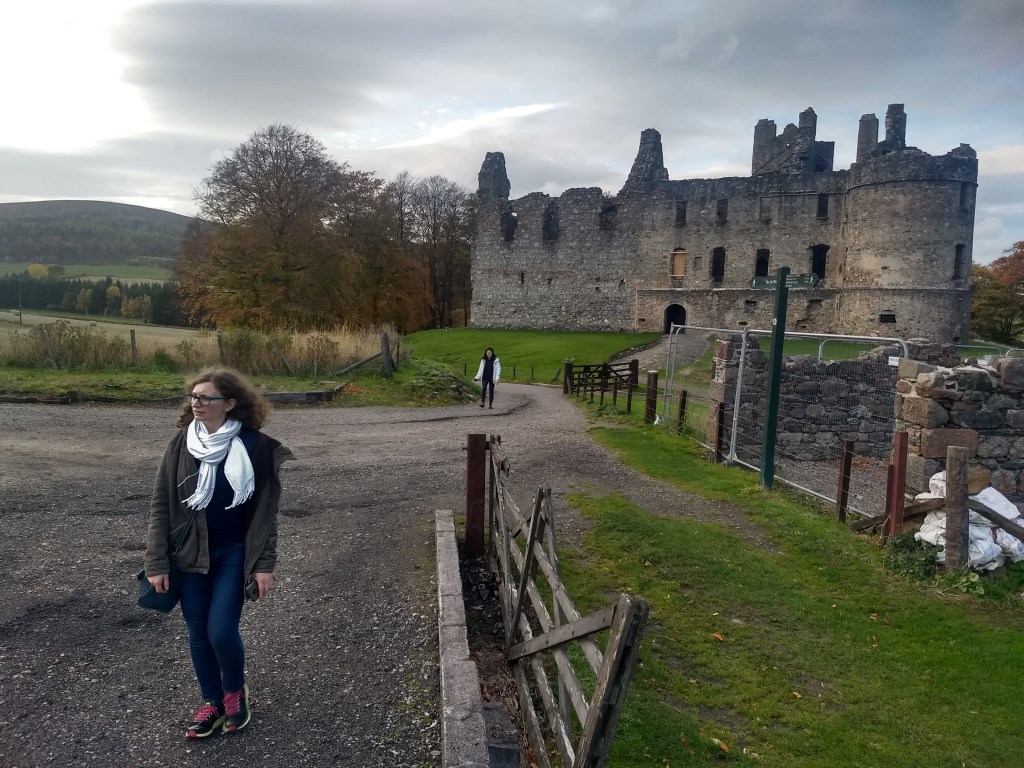
When the day came, we left very early in the morning, mostly to avoid the traffic outgoing the city (one of the few down sides of leaving in Leith, it takes 30-40 minutes to leave the city independently of where we want to go). There wasnโ€™t much traffic on route, and once arrived in Perth, instead of following the A9, we drove straight up through the Cairngorms, always gifting nice views. The first appointment in this trip was in the village of Tomnavoulin, of course at the Tamnavulin distillery. This one, at the moment, is only open during the festival, they donโ€™t have a bar nor shop nor visitor centre. So, because we were half-hour early, we kept driving towards Glenlivet distillery, to have a peek at nearby Blairfindy Castle. One day weโ€™ll have a rant about the loose definition of โ€œcastleโ€ in Scotland, but this one looked nice enough (a very small one, it wasnโ€™t possible to enter). Because it started raining (of course), we quickly went back to the van and drove back to Tamnavulin.

The wee Blairfindy castle.

The distillery (built during the mid-20th century whisky boom, in 1966) is quite a popular one, mostly because of their presence on supermarkets shelves. As a matter of fact, the Tamnavulin double cask was Gianluigiโ€™s second whisky purchase after he moved to Scotland, for a โ€œwhoopingโ€ 20 quid. Other than this expression, youโ€™ll easily find the Sherry cask finish, a range of red wine cask finishes (it seems they have different wines finishes in different supermarkets, French Cabernet Sauvignon at Morrison and Asda, German Pinot Noir at Tesco, Spanish Grenache at Sainsbury). More recently, they added a Sauvignon Blanc cask finish. As you can imagine, to support this heavy supermarket presence the distillery is quite big, with a capacity of 4 million litres per annum of alcohol. In spite of this huge production, they lack expressions suited to more experienced drinkers, with everything being bottled at 40% (and probably artificially coloured with E150 and chill filtered). This, together with the fact that it is super rare among independent bottlers, made us even more curious to visit this โ€œworkhorseโ€ distillery.

As we arrived, we checked in just outside the gates with Anne Marie, who usually works at Dalmore distillery (another one of the Whyte and Mackay group, together with Tamnavulin, Jura, Fettercairn and Invergordon grain distillery). The tour started there, outside the gates, with Leon (distillery manager) and others from the team. First, we walked down to a path outside the gate, to reach an old mill: Tamnavulin is the Gaelic for โ€œmill on the hillโ€ indeed! Inside, the old mill had that โ€œAlps cottageโ€ feeling, and currently it is not used. It used to be a visitor centre, which closed in 1997, two years after the distillery was mothballed (1995). When they restarted production in 2007, the visitor centre was not revived, although we understood it might be in the plans. We were served a small cocktail there, with a fruit soda and Tamnavulin Double Cask (for Gianluigi only apple soda, driver duties).

…next to a much more charming old mill.

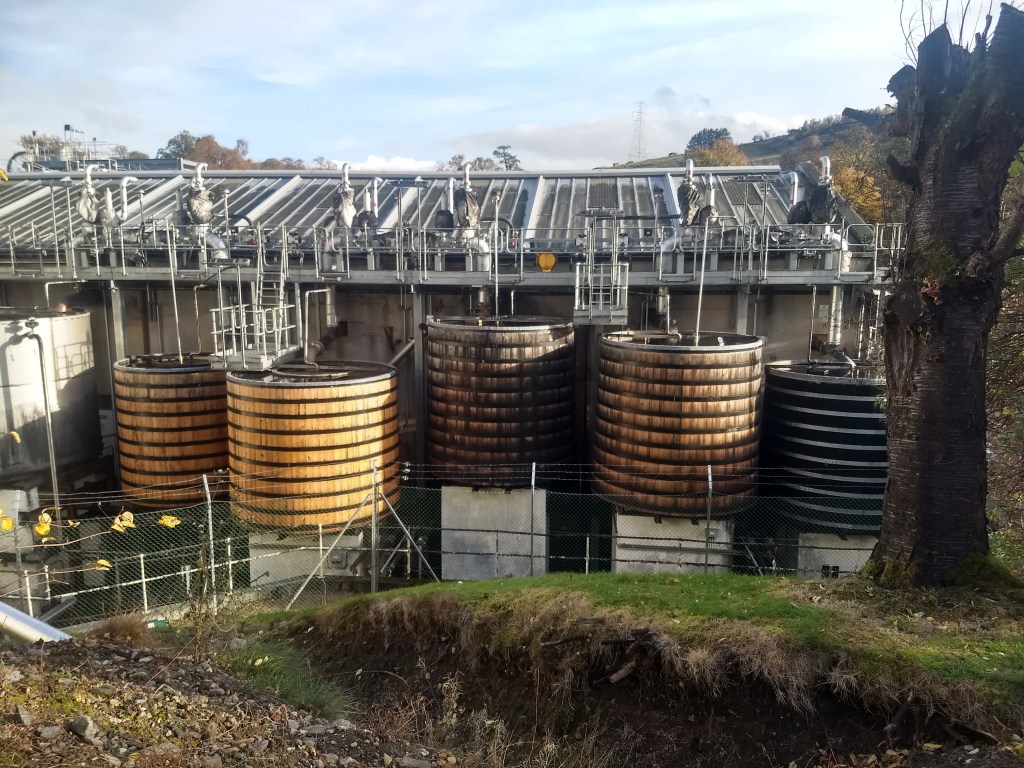
After the mill, we walked back to the gate and then behind the distillery, where malted barley comes in from three different places. The actual mill is not an old Portheus, rather a much modern Buhler, from Switzerland. As usual, we followed production, so next we went to the mashtun room, where Leon showed us how they check the wort cloudiness: they aim for a clear one. We walked through the nine stainless steel washbacks (around 52hr maturation, longer on weekends) and the six stills. In the still room, we couldnโ€™t take pictures but we could take a tiny sip of the newmake, nice touch!

Next, we checked out the filling store, and finally we entered a big warehouse, where some of their stock (together with other spirit from the Whyte & Mackay portfolio) is resting. First, we were given a cask sample: a refill bourbon barrel from 2007, the first year of production after they restarted. It was a very nice dram, clean and fruity, very similar to the only independently bottled Tamnavulin we have tried so far, from Gordon and Macphailโ€™s Connoisseur Choice range (bought to celebrate our 70th distillery visit during the Speycation, and one of the few we ever saw around). Then, we tried three of their usually bottlings (see below) paired with amazing chocolates (that Gianluigi could try!).

Overall, it was a very satisfying visit, and definitely good value for money. Very interesting was the mill, and we would definitely go back for another peek when and if they reopen the visitor centre. The whisky was OK, quite inoffensive, a quintessential โ€œsupermarket dramโ€. We hope that, similarly to what happened at Fettercairn Warehouses bottlings, the company will decide to bring out some more interesting expressions, aimed to whisky enthusiasts, although we wonโ€™t hold our breath. Having tried two delicious cask strength expressions now, in our opinion the potential is definitely there.


Tamnavulin Tour (Spirit of Speyside)

Price: ยฃ30.00 pp (April 2023)

Duration: 2hr

Tasting: a cocktail and 4 drams, cask sampled (2007 vintage, refill ex-bourbon barrel, cask strength), ex-Sherry cask finish (NA, 40%), ex-Sauvignon Blanc cask finish (NAS, 40%) and ex-French Cabernet Sauvignon finish (NAS, 40%), the last three paired with delicious chocolate

Target: whisky enthusiasts and curious

Value for money: very good

Highlights: the mill and the cask sample

Recommended: yes

Link: https://www.tamnavulinwhisky.com/


#27.4 Speycation

Out of Speyside and back:
Elgin-Huntly-Keith


TL;DR: Sunday was a busy day: we started off with a trip to Huntly, to check out Glendronach distillery. After the tour and a very nice (but stingy) tasting, we jumped on the bus again to go to Strathisla, a beautiful distillery where we tried some cask strength Chivas Regal. 

(missed Part 3/Part 2/Part 1?)

Sunday was a big day: not one, not two, but three distilleries! Not all of them were in Speyside though. Because of the planning issues we wrote about last week, we had to go outside, but just: Glendronach, in Huntly. This distillery is very popular although some of the recent choices they made, plus a price increase in the releases, are making them being less on geeksโ€™ radars (at least the ones we follow). Nevertheless, their stuff can be really superb โ€“ for example, when we visited the distillery in 2021, we tried some great expressions. Similar to Glenallachie, at the time it wasnโ€™t possible to do a tour of the production because of Covid, so the possibility to visit their production this time was definitely a bonus for us. 

The picturesque courtyard.

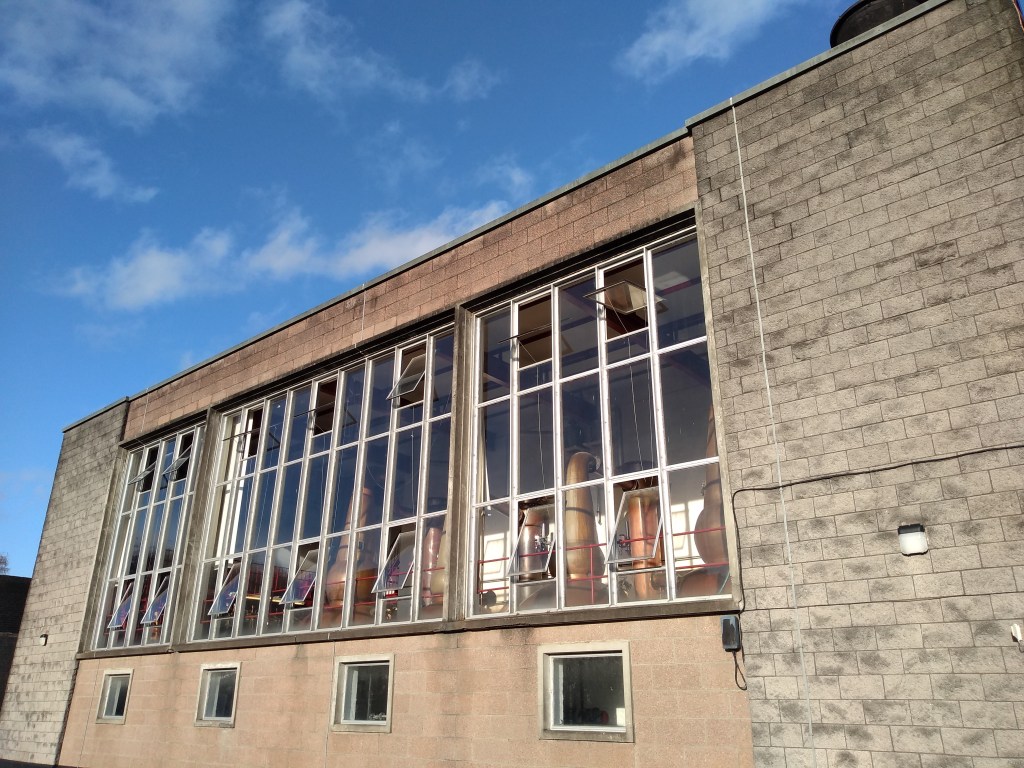
When we arrived, the weather was still very nice and sunny. They split us up in two groups, one starting off with the tasting, the other with the tour: we were in the latter. Our guide was Vicky, a very funny and knowledgeable lady who had also hosted the sherry masterclass tasting we did in August 2021. The tour started in front of a very old building in the corner on the right with respect to the road coming in. In our understanding, it is one of the first buildings on the site, with a very nice internal courtyard. There, we took a quick look at the milling room with its old malt mill. We moved to the rest of production, which is mostly located in the big windowed building right in front of the parking lot, characterised by a more modern (and not particularly nice) architecture, with the bonus that the stills can be seen from the outside. At the moment they have six stills, with the last four installed in the 60s. However, there are currently plans to have more to increase the production capacity. They have six warehouses on site – we visited one of the three dunnage, just next to the visitor centre.

The still room, from outside the room.

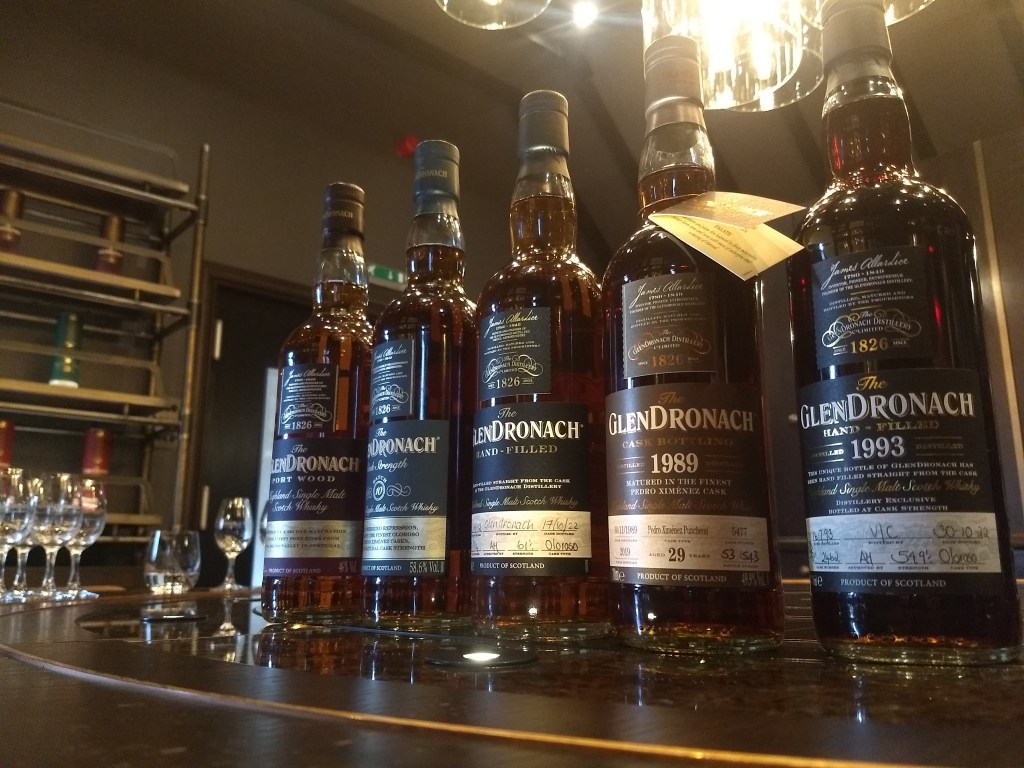
After the tour, the tasting was waiting for us: five drams, at Justineโ€™s request without any of their regular core range (so NOT the 12, 15, 18 and 21). We started with the Portwood (46%) and the cask strength batch 10 (58.6%). Moving on, we tried one of the distillery bottlings (or fill your own) at the time: a vintage 2012, 10y, matured in an ex-oloroso puncheon (61%, ยฃ105). The fourth dram was a 1989 vintage (29y, bottled in 2019), from an ex-PX puncheon (49.9%), while the final was the second distillery bottling: a 1993 vintage (again 29y) from an ex-oloroso puncheon (54.9%, costing an eyewatering ยฃ550). The drams were all delicious, however while decanting an extra set that was poured by mistake (to gift the bus driver) we realised that they were only 10ml measuresโ€ฆa bit stingy for the ยฃ50 we had paid. At the bar, most of us took another dram: we got one finished in virgin oak (definitely one of the strangest drams we had) and a 12y (vintage 2007) matured in ex-PX cask which was delicious.

A special tasting!

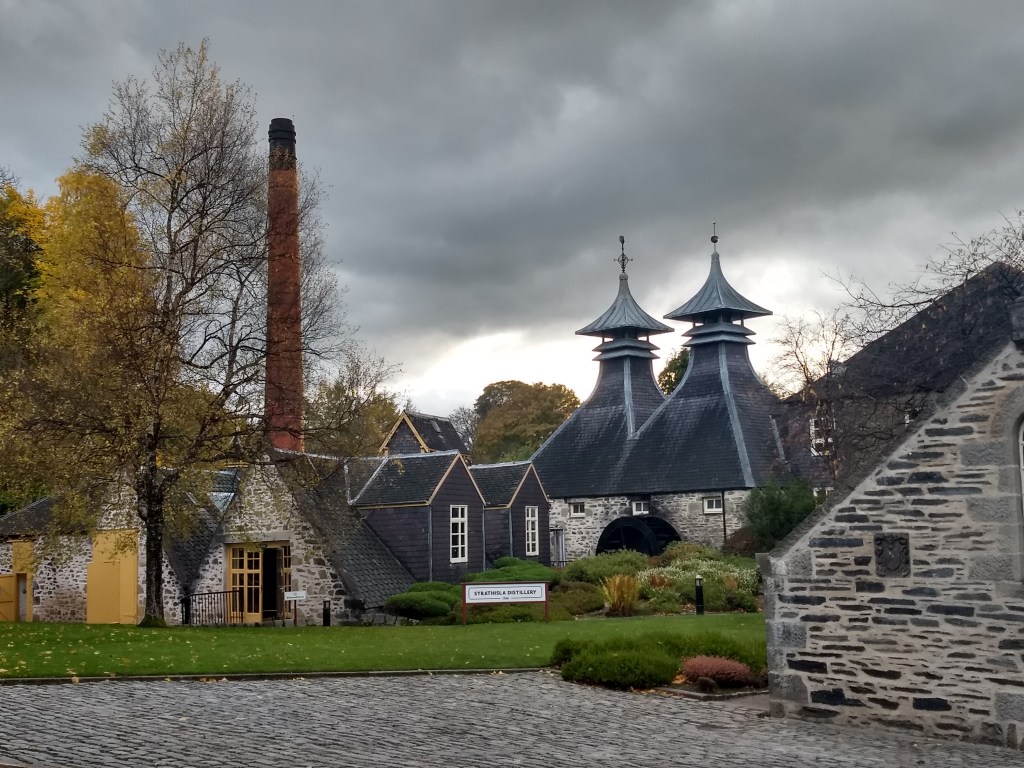
Back on the bus, we only had time to grab a meal deal at a big Tesco on the way to our next destination, Strathisla! As we arrived, we remembered how beautiful it was, one of the prettiest distilleries in our opinion. This time we didnโ€™t do a tour (which we had already done it in 2019, together with a blending experience), but a tasting of Chivas Regal, in the warehouse number 3.

Cute, sooo cute.

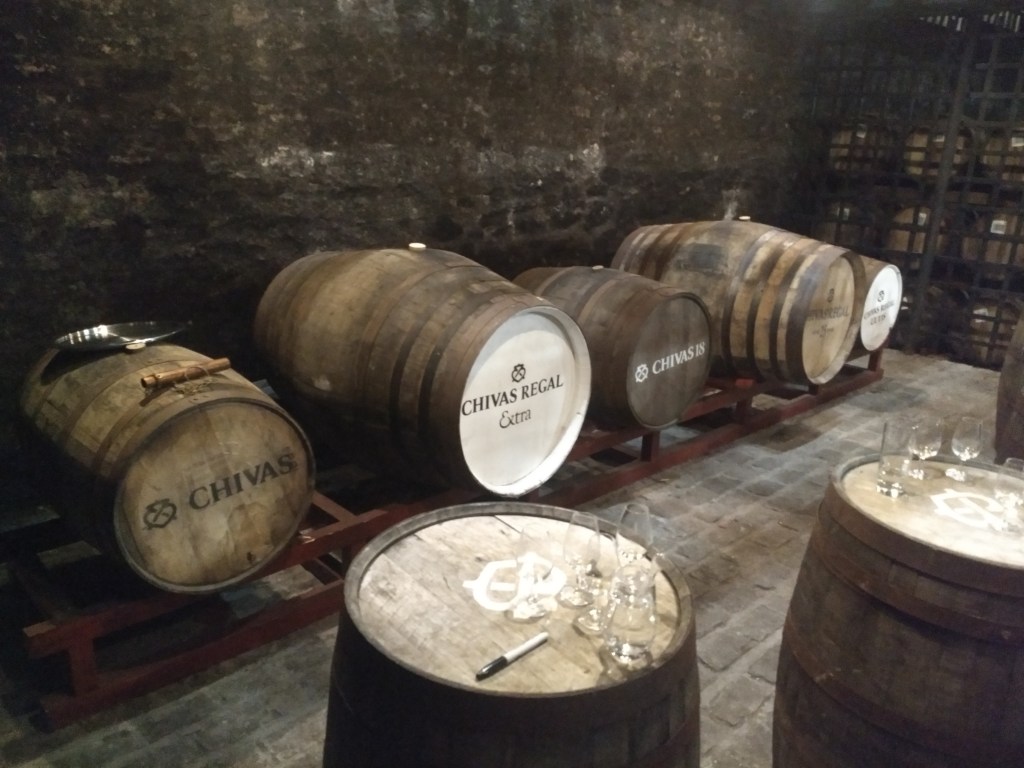
The guide gave us a brief introduction about the distillery and its role in being at the core of this very popular blended whisky. Chivas 12 is very popular indeed, in Italy is omnipresent at grannies/aunties houses, and it was during our trips back home that we realised that, compared to its peers (ie โ€value blended whiskiesโ€), it is actually not a bad offering. After the introduction, we moved to a caged part of the warehouse, where 5 casks were laid out. We knew these already: as part of our tour in 2019, we could choose two of them to try. These were cask strength expressions of the main Chivas Regal bottlings: the 12y, the Extra (13y), the 18y, the 25y, and the Ultis, which is a blended malt (so without a grain component). However, because of the pandemic, these casks lasted much longer, so weโ€™ve been told by the guide that we needed to add 5 years to each of them…quite a great deal!

A wee treasure in the warehouse.

The drams were all very good, the 18y (actually a 23y) very chocolatey, reminding us how blended whisky can be great. Unfortunately, none of these were on saleโ€ฆat the shop the offering was a bit pricey (as in most Pernod Ricard owned distilleries), and because we couldnโ€™t try any, we just gave it a pass. We were surprised that some bottles of 12y single grain from Strathclyde we bought after our visit in 2019 were still there: a sign of how grain whisky is underrated sometimes.

You wouldnโ€™t say we just had 5 cask-strength whiskiesโ€ฆ

Back to the bus, we finally headed to the last working distillery visit of the holiday. More about this in our next post, just a tiny clue: the distillery is in Grantown on Spey. Until next week, slainte!


Glendronach Distillery*: https://www.glendronachdistillery.com/
Strathisla Distillery โ€“ Home of Chivas*: https://www.maltwhiskydistilleries.com/strathisla/

* No summaries because there experiences were bespoke


#27.3 Speycation

From Glenallachie to the
blend of Doom


TL;DR: Saturday morning we visited a distillery that is special to us, Glenallachie. After an amazing tour and a few drams, we spent the rest of the day walking around Dufftown, enjoying the sun. We finished the day with a sip of the infamous Blend of Doom and a pizza at the Craigellachie Lodge.

(missed Part 2/Part 1?)

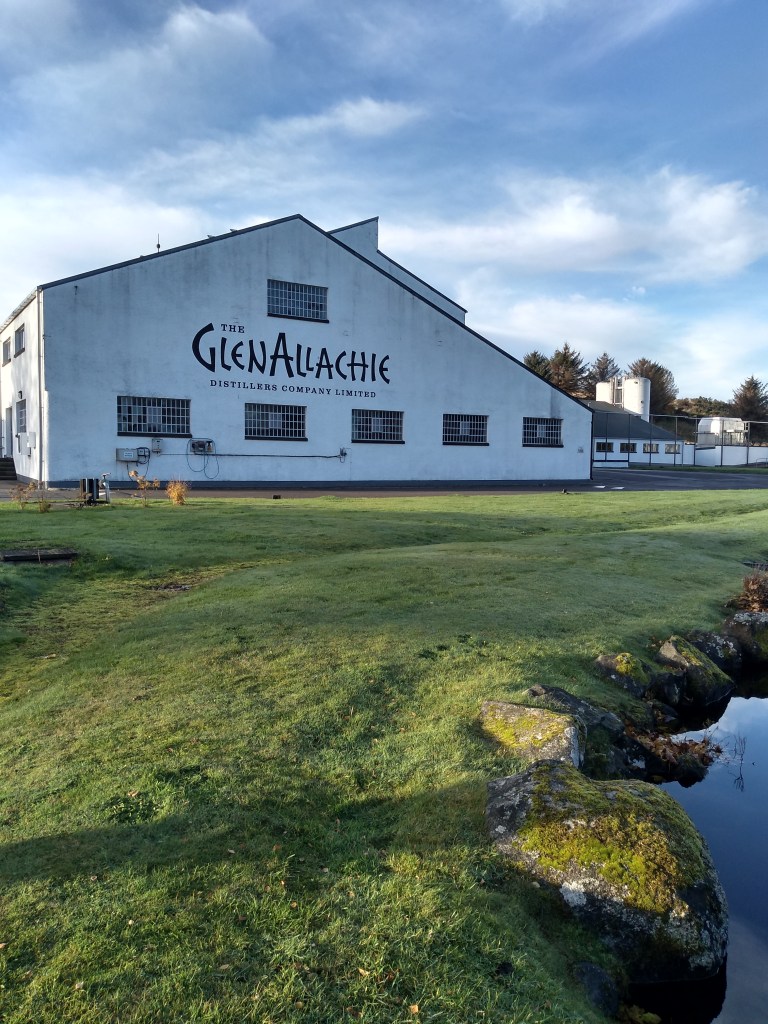
That Saturday morning was a very nice one, warm and shinyโ€ฆWeโ€™re told thatโ€™s unusual for Speyside in October, but itโ€™s not the first time we got one. After breakfast, we jumped on the bus towards Aberlour (the village, not the distillery again) to reach our next destination: GlenAllachie distillery!

Such a beautiful day for a distillery visit!

We were super excited about that. When we visited it in August 2021, on a much colder and wet day (so much that we couldnโ€™t light up our BBQ in the evening!), it wasnโ€™t possible to tour the facility because of Covid, so we only had a tasting while the guide played us an interesting video. It wasnโ€™t one of those โ€˜letโ€™s celebrate Scotlandโ€™ videos with deer, waterfalls, glens, mist, etcโ€ฆ, but literally a worker filming and explaining production with their phone, so much more interesting in our opinion. This time, we could finally visit production. And mostly, we really like their stuff. We know some whisky geeks are put off by the big use of secondary maturation and finishes, but we love their bottlings anyway and we regard the whisky as top notch, so far it never disappointed.

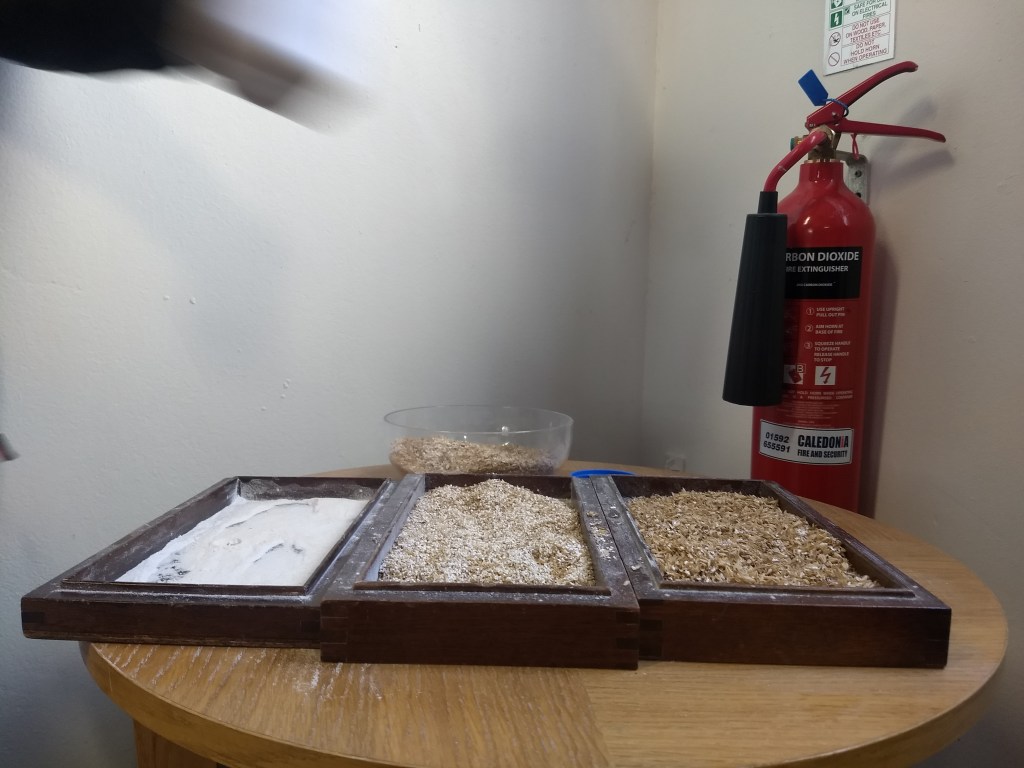
That morning the distillery was (almost) all for us. Sue, Brenda and Karen warmly welcomed us with a dram, a special one to start with, one we hadnโ€™t tried before: a 15y GlenAllachie finished in Virgin Scottish Oak wood (48%, non-chill filtered, NCF, and not artificially coloured NC). Then, they split us into two groups, to have a bit more space while wondering around: our group started with the tour. We had a look at the usual Porteus Mill, and the huge stainless steel closed mashtun.

Milling, safely.

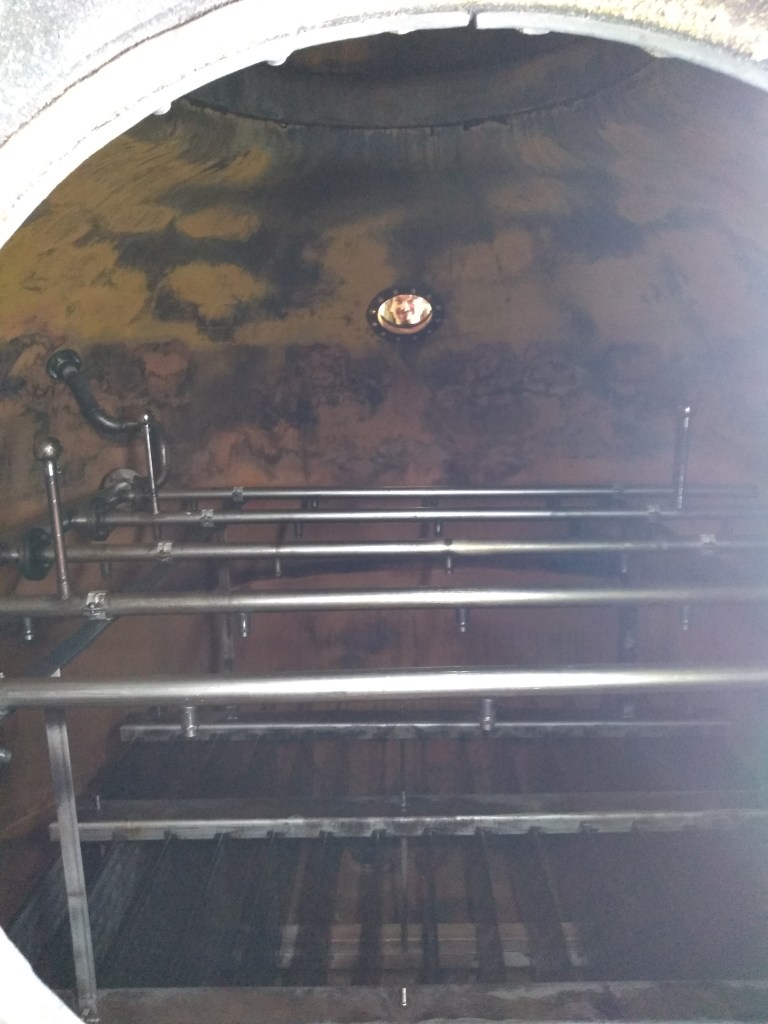
The washbacks are made of steel as well, and there are 6 of them. Currently the distillery is running way below capacity, a bit less than a half in our understanding. This started when Billy Walker bought the distillery in 2017, to improve the produced spirit. In particular, fermentation is now about a week long, and they donโ€™t work during weekends. In the still room, two wash stills and two spirit stills were off for the weekendโ€ฆso we could take a sneak peek inside (just another occasion for a silly photo). Finally, we went to the warehouse to admire the maturing stock and the huge variety of casks (wine, various size of sherry and bourbon, etc.); they laid out not a typical dunnage warehouse, but a racked one.

Fun or creepy? You decide.

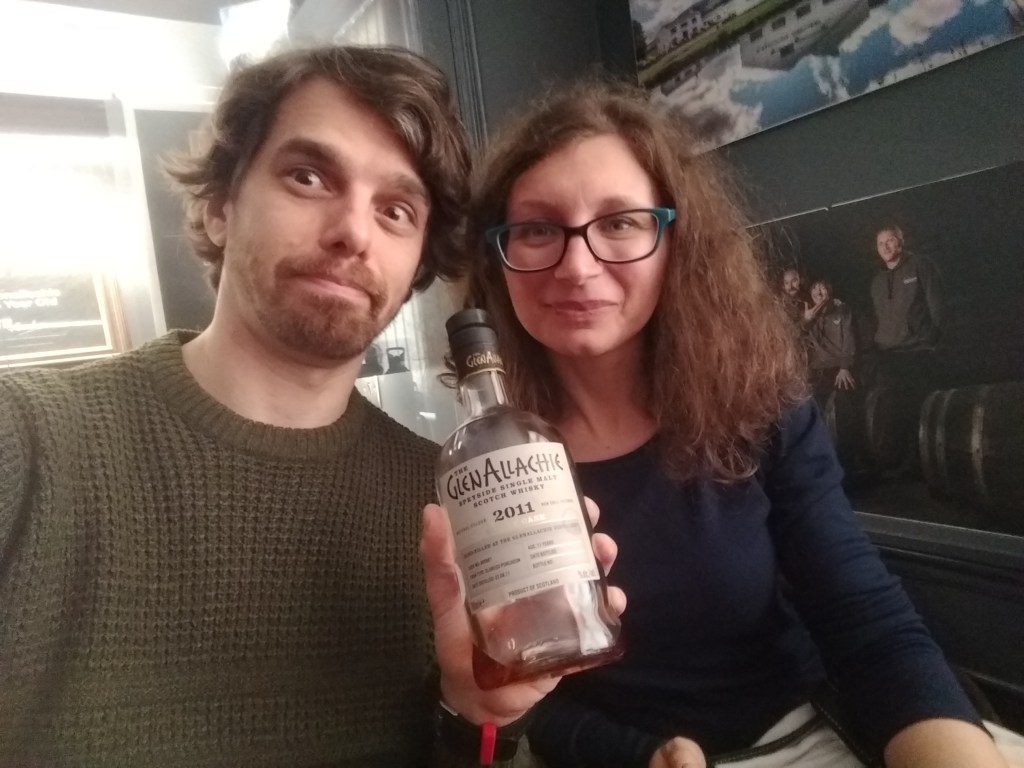
Back at the visitor centre, we had another two delicious drams in the tasting room: the 16y Present Edition (48%, NCF, NC, Mizunara and Virgin oak) released in celebration of Billy Walker 50 years in the business, and the Glenallachie 21y Batch 2 (51.1%, NCF, NC). Well, it looked like that was it. Instead, we moved upstairs to join the other group, to have two last drams all together. Such a nice touch! The two drams were the bottle-your-own (or distillery casks) on sale at the shop at the time: an 11y ex-oloroso puncheon (60.5%, NCF, NC) and a 16y finished in refill ex-bourbon barrel which held peated whisky before (59.5%, NCF, NC), both amazing (and of course, we came back home with one)!

Overall, this was one of our best distillery tours ever: Sue, Brenda and Karen were all very funny and knowledgeable, and we could see how they love their job. Karen even told us that she followed Billy Walker after he acquired the distillery, after Glenglassaugh was sold to Brown Foreman (together with GlenDronach and Benriach).

So delicious!

Here, we have to make a little digression. Speyside is by far the biggest whisky region, not by size but by number of distilleries and production quantity. Therefore, in the planning phase of the trip, at first it looked like we had a plethora of possibilities that we wouldnโ€™t know where to start, like for a kid going to Disneyworld or Legoland. Unfortunately, it didnโ€™t go down like that, and according to Justine filling the schedule was much harder than prevented. In some cases, she was told that there was personnel shortage. Others still have to come back to her (6 months afterโ€ฆahahah). This felt really weird and very much in contrast with our first EWG trip to Campbeltown – the smallest whisky region, and by far the smallest production (according to the 2023 Malt Whisky Yearbook the 3 distilleries combined donโ€™t get to 2.5 million litres per annum of alcohol), so with a limited number of available activities. Still, despite this and Covid restrictions at the time, we managed to have a very full schedule fairly quickly (Cadenheadโ€™s warehouse tasting, Springbank, Glengyle, and tastings with Mark Watt from Watt Whisky, Ian McAllister from Glen Scotia and Kyntire gin).

Things you see if you take a walk in Dufftown.

We discussed a few times about this โ€˜Speyside struggleโ€™ in the group, and probably the main cause was the lack of personnel indeed (thanks Brexit, โ€œthe gift that keeps givingโ€โ€ฆ), but we suspect that some of them just couldnโ€™t be arsed to organise an open day for 22 thirsty whisky enthusiasts. A bit unexpected, but in the end we managed to have a great holiday anyway, as Justine came up with some great surprises for us.

Anyway, all this to say that, as a matter of fact, the Saturday afternoon was free from whisky activities, and we decided to spend it in Dufftown. After a brief lunch in a cafรฉ near the clock tower (characterised by some quite rude staff), the day was still so nice that a group of us decided to walk around, and we basically repeated Michelleโ€™s walking tour we did in 2019: from the clock tower to Dufftown distillery, then Mortlach, Glendullan and we finished off at Glenfiddich. This time, however, we checked out Balvenieโ€™s castle, which unfortunately was still closed (together with a worrying number of Historic Scotland sites, we later found out). Here our pal Joe opened a Glen Scotia Double Cask rum finish, a novelty of that period, and shared it with us.

Balvenie castle, not the distillery.

Back to the bus, we moved to Craigellachie, and as we had some time to kill before dinner at the Craigellachie Lodge, we went down to the Speyโ€™s bridge where Justine had something โ€œvery specialโ€ ready for us: THE BLEND OF DOOM!!!

That’s the Blend of Doom for you.

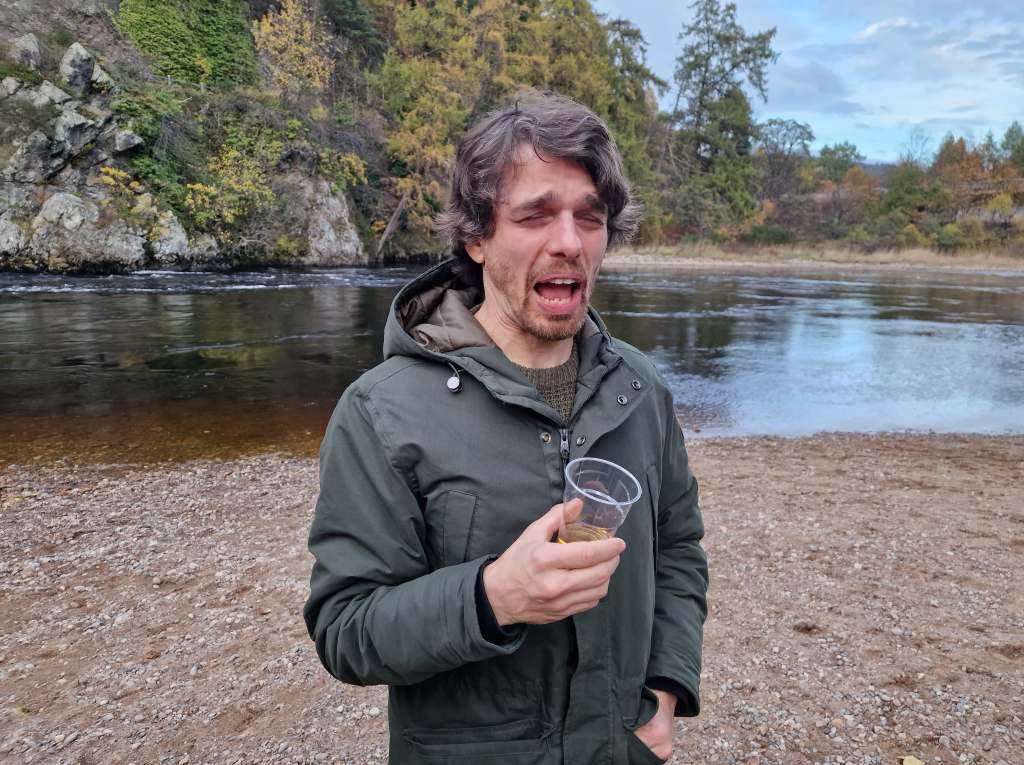
This is a bottle she filled throughout the years with all the whisky samples she tried but didnโ€™t (or couldnโ€™t) finish. It was very funny to see people faces – to Gianluigi it tasted like old bathroom cleaning products, but most people went directly to โ€œpissโ€. It was truly dire, and almost felt like an initiation ceremony for the Edinburgh Whisky Group. Fortunately, the pizza together with a pint and a dram, bingo and music set things right again in our mouth, so we could go to bed happy again.  


GlenAllachie Connoisseurs Tour*
*ours was a bespoke tour, but from the description and price it looks very similar to this one

Price: ยฃ50.00 (Oct 2022, now ยฃ60)

Duration: 2h

Tasting: 5 drams, 15y Scottish Oak (48%), 16y Mizunara Billy Walker 50th year anniversary (48%), 21y Batch Two (51.1%), Vintage 2011 11y distillery cask ex-oloroso puncheon (60.5%), Vintage 2006 16y distillery cask ex-peated bourbon barrel (59.5%)

Value for money: very good

Highlights: the guide team was superb, knowledgeable and very funny!

Target: whisky enthusiasts and geeks

Distillery exclusives: there are always two distillery cask bottle-your-own available

Recommended: absolutely!

Link: https://theglenallachie.com/

#27.2 Speycation

Single casks tasting vs. warehouse tasting


TL;DR: Second day of the Edinburgh Whisky Group Speycation! In the morning, we headed to Aberlour distillery where we split into two groups for a single casks tasting. In the afternoon, we went to the (dismissed) Coleburn distillery for a warehouse tasting with Murray & McDavid. We ended the evening at the Windswept brewery, in Lossiemouth, enjoying pints, music, and good company. 

(missed Part 1?)

We woke up quite rested on the Friday morning. The day looked very interesting: a tasting at an already known distillery, followed by a warehouse tasting (as we said a few times, always our favourite) and a visit to a breweryโ€ฆNot bad, eh?

We had a quick breakfast in the room with some food bought the day before. The alternative was a heavy breakfast at the near Brewers Fayre, but we left it for another day, considering we wouldnโ€™t workout nor run for four days, as we are used to. For this and the next couple of days Justine had arranged a bus: Speyside is a big area to cover, and of course if we used our vehicles, at least 5 of us couldnโ€™t have enjoyed the drams along with the others, defeating the purpose of the trip. There werenโ€™t many others options, as public transport in the area isโ€ฆehmโ€ฆ(euphemism alert) not the best? And with cabs it would have been way more expensive. The company sent us a young driver, Lyndsay, which was super nice and it turned out she was a whisky fan too (must have been a torture to watch over 20 people getting pished for three days and not being able to have a sip!).

Ready for the first tasting of the day!

The first visit of the morning was at a distillery we already knew, Aberlour, but that we have overlooked since our visit in 2019, except for a bottle of Aโ€™Bunadh which for a while was our โ€œTeresaโ€™s mother house dramโ€. Reasons being, their other core releases are a bit dull in our opinion, and there are not many independently bottled. The distillery, however, offers many single cask bottlings (the Distillery Collection). This is a feature of all distilleries owned by Chivas Brothers/Pernod Ricard (Glenlivet, Scapa and Strathisla): they have many bottlings from the distillery and sometimes from the others. Only down side: they are 50cl bottles priced like 70cl ones. We personally have nothing against smaller bottles – we like exploring, so smaller bottles allows us to get more variety, in theory a win-win. However, in some cases (included this) we feel like they are just an excuse to sell less at a higher price.

The group had to split in two because they couldnโ€™t accommodate us all at the same time, and we happened to be in the second, so as usual when we are in Aberlour, we had a coffee and a snack at the Gatherโ€™n cafรฉ. Back at the distillery, we were welcomed in a very nice tasting room overlooking the distillery, some of us on chairs, some of us on comfy sofas.

Even more ready!

The four drams were in front of us, as well as a small gift: a set of three branded black glasses, very useful for blind tastings. Gianluigi was super happy, Teresa not so much (you have to know that Teresa thinks we have too many whisky glasses in the house and sheโ€™s not too keen on more, but no worries Aberlour, you made at least one of us super happy!). The tasting was hosted by Shirley (that’s her name, if memory serves us well!), initially a bit shy, but ultimately very funny and knowledgeable (also, with a family heritage in the whisky industry). The first dram was a 10y from a first fill ex-sherry butt. It was cask strength (CS, 58.3%), of course not-chill filtered (NCF) and not artificially coloured (NCF), like all the drams. It was followed by a delicious 18y from a 2nd fill (probably ex-bourbon) hogshead (51.6%), a 17y from a first fill ex-sherry butt (58.5%), and finally a quite nice 21y from a 2nd fill ex-sherry butt (58.9%). A good reminder about how delicious Aberlour can be.

The single casks tasting.

We came out from the distillery quite satisfied, had lunch at a nice cafรฉ nearby, and after a bit the bus picked us up in the village. The next stop was the now not operational distillery of Coleburn, on the road between Rothes and Elgin. The former distilleryโ€™s warehouse is now used by the good folks at Murray McDavid (independent bottler) to store some of their casks. So of course, we were going to do a warehouse tasting, hurray! This is the same type of experience they offer during the Spirit of Speyside festival (by the way, if you look at the picture on the festival webpage, thatโ€™s us in the photo in the orange vests!).

What once was Coleburn distillery.

So, we spent the following hour and a half wondering around the warehouse, stopping in front of certain casks where Dan and Steve would get some whisky and fill our glasses with a mighty valinch, and happily drinking the drams. First off, a young Caol Ila (about 5y), followed by an old Alltโ€™A-Bhaine, 22y, finished in an octave from Koval distillery. They have a great relationship with this producer from Chicago, and we could see many of their octave casks lying around. After another bit of wandering, we had the third dram, a magnificent Glentauchers from a wine cask (continuing the series of โ€œnoโ€ answer to the question โ€œhave you ever had a bad Glentauchers?โ€). Finally, a Glenburgie from a sherry cask (oloroso? We donโ€™t remember exactly), another tasty dram, albeit the winner for both of us was the third one.

A lot of valinch work!
Who are you, little one?

Unfortunately, they had no shop on site, so we returned the vests and jumped back on the bus, this time heading to the Windswept Brewery in Lossiemouth. The day was nice, so instead of going straight inside, a small group of us decided to walk to the nearby beach. It was a very nice and relaxed stroll, and at the beach we could see the anti-landing concrete blocks from WWII.

Beautiful early evening in Lossiemouth.

Back at the brewery, we had a couple of nice pints and a not-so-good meal from a local burger joint (wonโ€™t name names here, but someone told us they have closed). Spending the evening chit-chatting inside, we realised too late that there was a band playing outsideโ€ฆouch! Overall, it was a nice close to a very nice day, and we went back to the hotel in Elgin very happy!


Aberlour Single Casks Explored tasting

Price: ยฃ40.00 pp (October 2022)

Duration: 1hr

Tasting: 4 drams, all CS, NCF and NC: 10y from a first fill ex-sherry butt (58.3%), 18y from a 2nd fill (probably ex-bourbon) hogshead (51.6%), 17y from a first fill ex-sherry butt (58.5%), and 21y from a 2nd fill ex-sherry butt (58.9%), plus three black copitas

Target: Whisky enthusiasts

Value for money: Good

Distillery Exclusive: Most single casks Aberlour bottlings

Recommended: if curious to try non-standard Aberlour’s

Link: https://www.maltwhiskydistilleries.com/aberlour/


Murray McDavid warehouse tasting

Link: https://murray-mcdavid.com/
(No summary because this was a bespoke experience)

#27.1 Speycation

Dramming in Elgin


TL;DR: After the fun of the Edinburgh Whisky Group trip to Campbeltown in 2021, a year later we replicated with another one, but to Speyside! Plenty of whisky activities and fun, starting from Elgin, where we attended a bespoke tasting at G&M and we visited Glen Moray distillery, both great experiences. 

During the pandemic, one of the things that helped keep us sane was the very nice people we met after joining the Edinburgh Whisky Group, on Facebook. While the group grew almost exponentially in numbers, during the lockdown a small part of it, mostly spread all over the Lothians (with some exceptions in London andโ€ฆNorway!), started having regular Zoom whisky tastings. When the restrictions slowly phased out, we started meeting in person for drams, which was very nice and at times surprising (on Zoom we hadnโ€™t figured out that John and Joe were that tall!). And in October 2021, we even went all together to Campbeltown. Storming the Wee Toon was very fun and therefore a big success, so we obviously replicated the experience in 2022. This time, however, the idea came from our brilliant friend Cath (part of the group, of course), to do a Speycation! So, Speyside it shall be!

Left Edinburgh very early, and we still managed to be late!

The plan Justine organised was easy: staying in Elgin (most of us booked a room at the Premier Inn, a good solution to keep us all together although a bit pricier than expected and not that close to the centre), spending the first day there, and then travelling around the region with a rented bus that could fit the entire group of 22 people. The appointment was at 11am for the first activity of the holiday, a tasting at Gordon & MacPhail old shop in Elgin in South St (now undergoing renovation, in our understanding). The travel from Edinburgh or elsewhere was done by car or car sharing. We travelled with Justine and because of a wee late start, a break a wee too long, and a freaking huge and slow truck on the road, we got there late, fortunately just a few minutes.

“Breakfast” drams.

The tasting was a bespoke one Justine had agreed with them: 5 20ml drams for 50 quid. The drams came from their Connoisseur Choice range, except for the last one, and of course, were all non-chill filtered (NCF), not artificially coloured (NC) and cask strength (CS). We kicked the day off with a delicious 13y Strathmill from a refill ex-bourbon barrel, distilled in 2008 (57.3% abv). This is one of those Diageoโ€™s workhorse distilleries whose product mostly goes into blends (there is a big J&B sign on the road leading to Strathmill distillery in Keith), but we are starting to appreciate it more and more thanks to the Scotch Malt Whisky Society and other independent bottlers. The following dram was again a 13y, distilled in 2008 and from a refill barrel, but was a lightly peated Ardmore (whooping 62.5%), another distillery with little core range these days, but fortunately very prevalent with indy bottlers. The third dram was the best for both of us, a Tormore distilled in 2000, matured for 21y in a first fill ex-bourbon barrel and bottled in 2022 at 58.6%. Tormore is another of those distilleries weโ€™d love to visit. It changed owner recently, from Chivas Brothers (Pernod Ricard) to Elixir Distillers, so we are hoping theyโ€™ll open to the public at some point.

Our favourite!

The fourth dram was from a demolished distillery in Dufftown: Pittyvaich, distilled in 1993, matured in a refill American hogshead for 29y and bottled in 2022 at 48.6%. Finally, a sherried dram, a Speymalt from Macallan distillery, 20y and 55.9%. A nice one, but it didnโ€™t blow our socks off as we were expecting. Overall it was great tasting, with a good overview of the whisky produced in the area (Ardmore is just outside Speyside), and we particularly appreciated the ex-bourbon casks heavy line-up, which gave us a better idea of the distilleries character.

What a line-up!

Lunch was โ€œfreeโ€, so we walked towards Elgin main square, where many diners and cafes looked full. We had a very average lunch in a quite anonymous one on the square (we chose a half-empty to be quickโ€ฆprobably it was half-empty for a reason), and we soon walked towards the next destination: Glen Moray distillery.

Glen Moray is one of those we initially underestimated due to their cheap expressions in supermarkets, but that now we are big fan of! And actually, we like them more because of their ability to provide cheap but still decent quality drams, as well as more serious stuff for the whisky nerds, like their Warehouse 1 series, featuring the amazing 8y peated whisky from an ex-PX cask we bought a couple of years ago: a treat! Weโ€™d been at the distillery in 2019, only for a (not so) quick tasting though, so visiting the production was a real novelty for us.

Clouds over the big silo.

We had booked the Intermediate Tour, which included an in-depth visit of the production, followed by a tasting of three of their bottle-your-own casks (all NCF, NC and CS). Emma took us around the distillery, which combines old and new elements, as it underwent recent renovations, including the addition of new shiny mash-tuns. The courtyard is dominated by a huge black silo used as malt storage, which can be spotted from far away, including from the near highway.

Someone is listening very carefully!

A peculiarity is that the wash stills in the old stillhouse, the one right in front of the entrance, have all been converted into spirit stills. The tour ended in the warehouse, where a number of empty (dโ€™oh!) casks were aligned. They used to contain various types of sherry, Sauternes, Bordeaux, Rioja, bourbon, and many others. We nosed all of them, it was definitely interesting to understand how different they can be!

Yes, we nosed them all!

In the cafรฉ, the three drams were waiting for us: first, a controversial (some people loved it, some definitely didnโ€™t, including us) vintage 2014 (bottled 2022, so 7 or 8y) unpeated whisky from an ex-cognac cask (60.2%). It was followed by a vintage 2006 (so 15 or 16y) in an ex-oloroso sherry cask, definitely a sherry bomb (60.9%). Finally, a 2012 (so 9 or 10y) peated matured in an ex-Rioja red wine cask, another delicious one (58.4%). As a bonus dram, we got another peated, but matured in an ex-Sauternes cask (vintage 2013, 58.9%), of which they still had a few bottles.

Happy after a great whisky day!

After walking back to the centre, we finished the day with a nice meal at the Drouthy Cobbler, a cute restaurant hidden in a small lane near the main square. We finally got to Premier Inn after a quick cab ride, where we had a restful night looking forward to the following days!


Gordon & MacPhail

Link: https://www.gordonandmacphail.com/#

(No summary because this was a bespoke experience)


Glen Moray Intermediate Tour

Price: ยฃ35.00 pp (October 2022)

Duration: 1h 30min

Tasting: 3 drams from the current bottle-your-own range, for us Glen Moray Vintage 2014 (7-8y) ex-cognac cask (60.2%), Vintage 2006 (15-16y) ex-oloroso sherry cask(60.9%), Vintage 2012 (9-10y) peated ex-Rioja red wine cask (58.4%)

Target: Whisky enthusiasts and geeks

Value for money: Very good

Highlights: Smelling the empty casks in the warehouse

Distillery Exclusives: Three bottle-your-own casks (see above), and the travel retail range (Elgin Classic, 12y and 15y but bottled at 48%, NCF and NC, and one litre bottles)

Recommended: Yes!

Link: https://www.glenmoray.com/