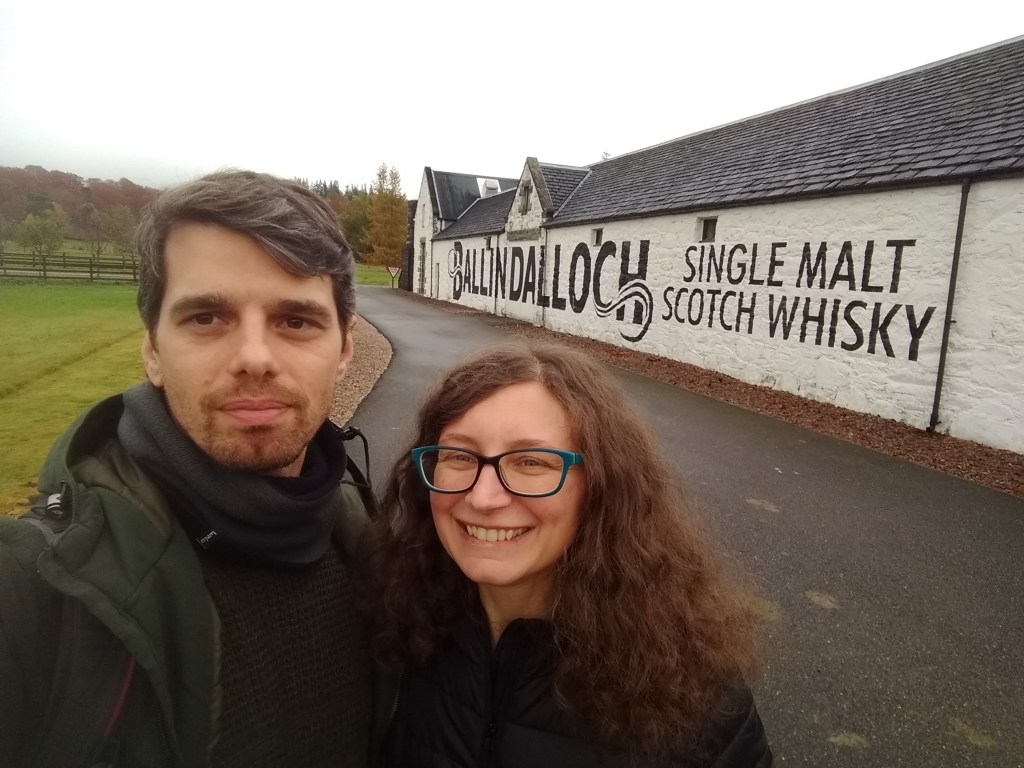
#38.2 Warming up for the Highlands, in Speyside

The Dunphail Distillery


TL; DR: After visiting Ballindalloch distillery (and an almost random encounter) we drove up almost until Forres, to the Dunphail distillery. We had already visited it during construction, but this time newmake spirit was flowing through their stills!

(missed Part 1?)

We left you last week at Ballindalloch, after a very satisfying visit to this new and very promising distillery. Unfortunately, the nice wee cafe behind the distillery was closed for the season, so we were about to jump back on Mr Vantastic and go look for another place for lunch. As we approached our van, however, a surprise: Post Dram Prat materialised in front of us, with our friend Justine! Sheโ€™d just popped in at the distillery to browse the shop and for lunch, but for the latter we had to regroup together. We first tried Grantown East former station, but it was closed too, so we ended up in Grantown-on-Spey. There, we had a lovely soup-and-sandwich and a chit-chat at the High Street Merchants, a very nice cafe. Justine then drove to Tomatin to join some other Edinburgh Whisky Group friends, while we had another stop before driving up north: the Dunphail Distillery.

If youโ€™ve been following us for a while this name will be familiar, as we already visited it back in October 2022. At that time, however, they were still building it, and Dariusz (founder, master distillerโ€ฆand builder!) gave us an in-depth preview of his plans. This time around, however, the distillery is fully built and, at the time of visit, theyโ€™d been filling casks for just a few weeks! Serendipity.

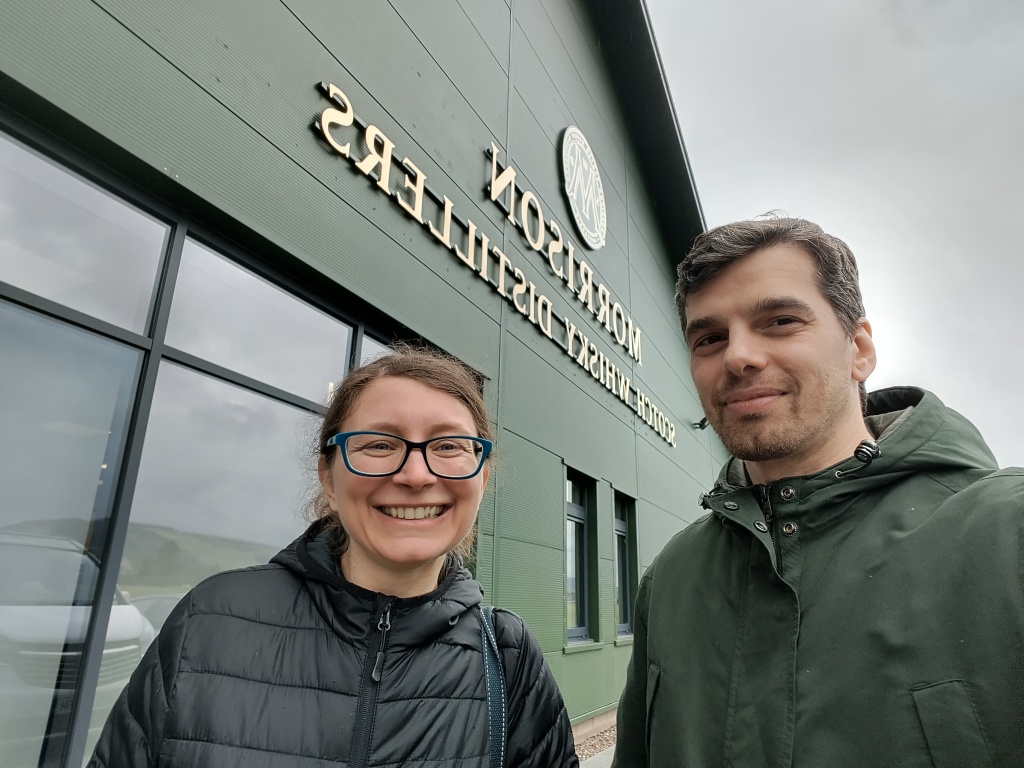
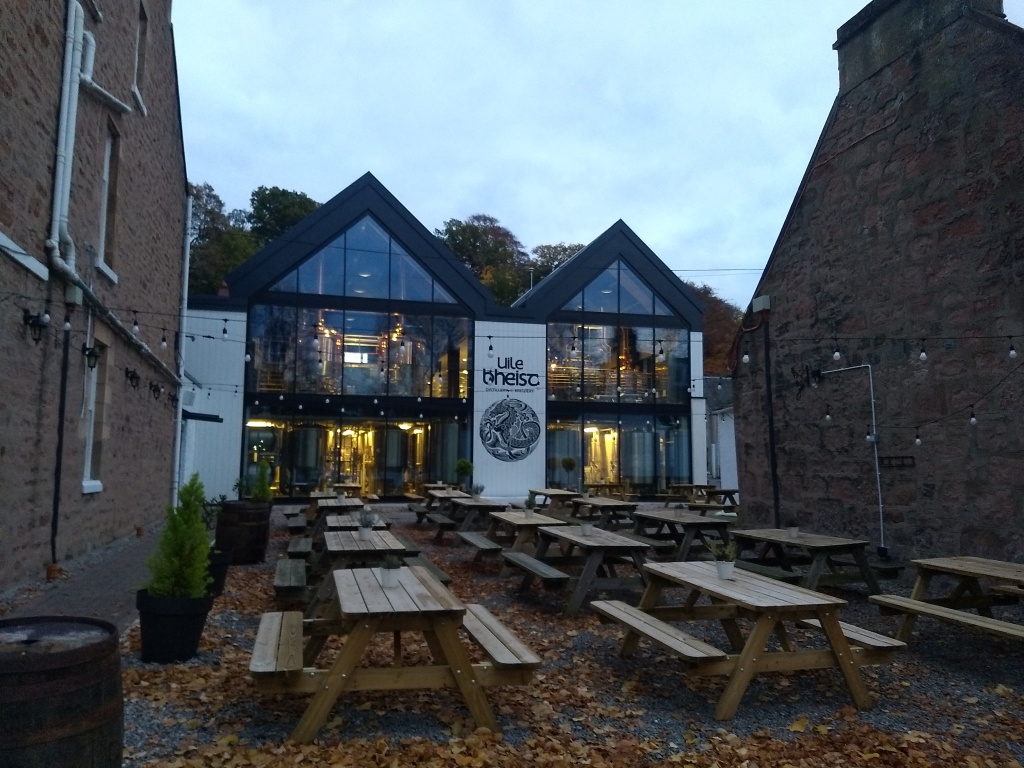
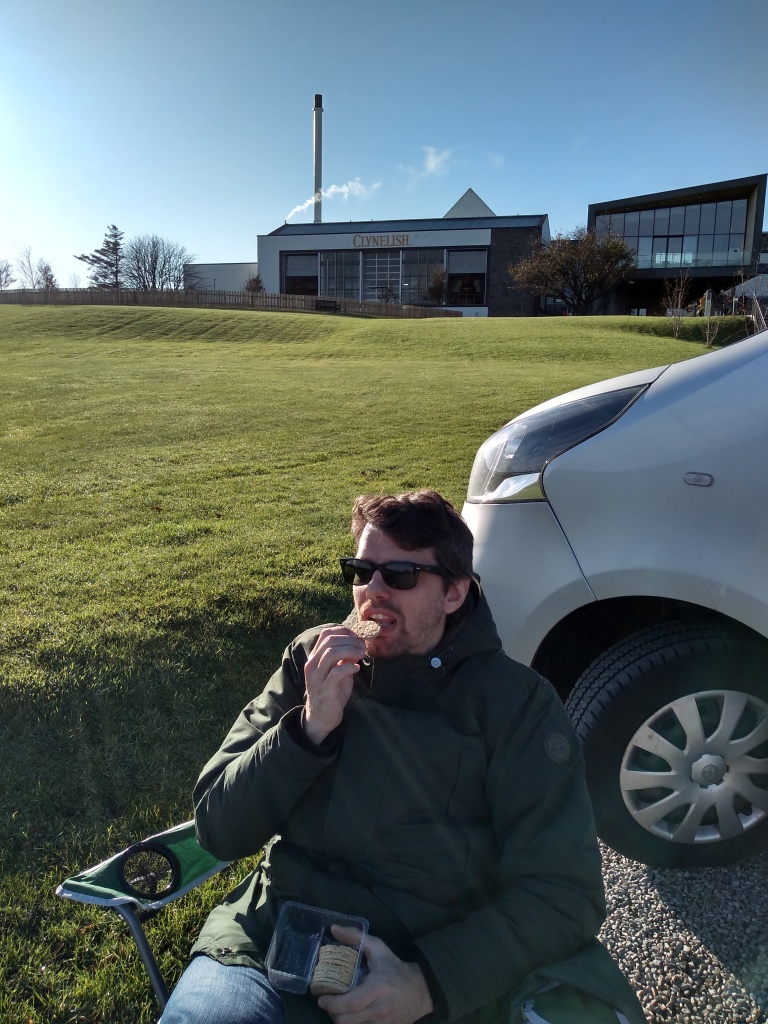
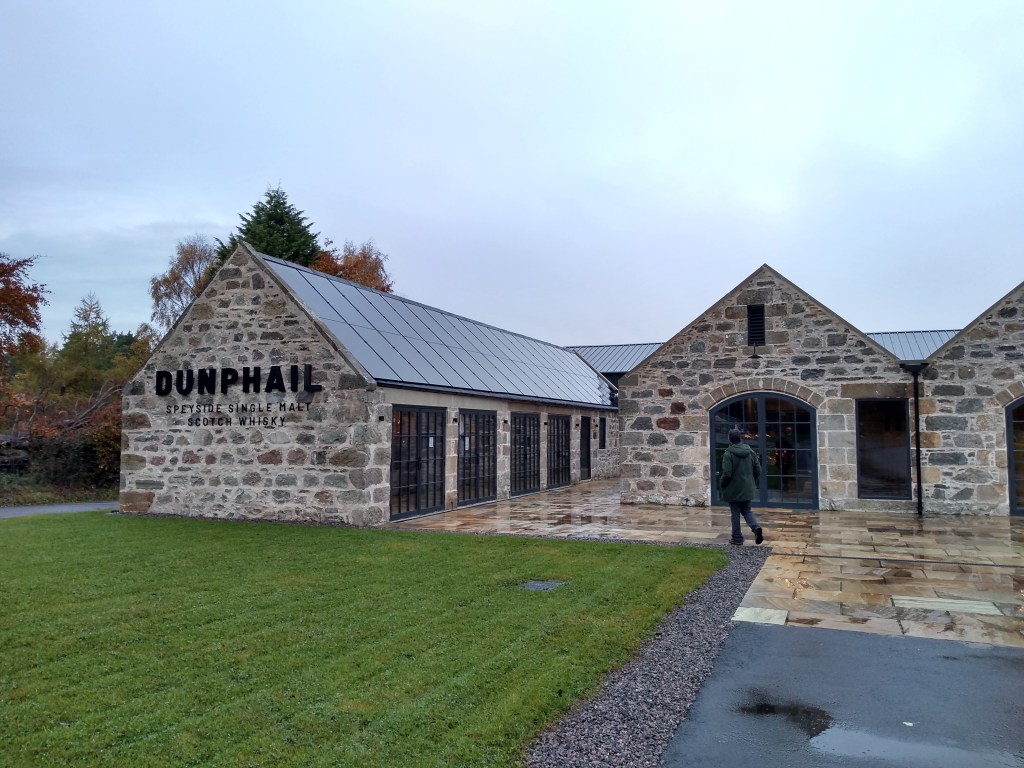
The distillery is located just off the road connecting Grantown-on-Spey to Forres, almost mid-way. We arrived at the parking mid-afternoon, we just had time for a couple of photos before going in. At the new visitor centre, Mike welcomed us with a coffee (nice touch!) and a good chat. We found out he moved to the area a few years ago, and started working at the distillery earlier in 2023, while things were getting ready to start.

Similar to other distilleries (many othersโ€ฆ the data analyst in us is starting to notice a pattern), the visitor centre and main production buildings used to be barns, while the warehouse (soon to be two) and the malting floor were purposedly built. Yes, the malting floor: a big difference between Dunphail and most new distilleries is that they are malting on site the barley, which they source from the area. At the moment they are using Lauriet and Sassy barley varieties, and the process to bring it from 42% (after steeping) to 5% humidity (after the kiln) lasts about 33 hours. They dry the barley with a combination of air, anthraciteโ€ฆand peat, so to produce both peated and unpeated newmake spirit.

Teresa earning her drams.

Mike showed us how to turn the barley by hand with a rake, and also made us try itโ€ฆ so hard, a full-body workout for sure! One of the reasons is that the rake is made heavier by a hammer attached at the base of the handle, to make it stay lower on the ground, otherwise itโ€™d unhelpfully pop up on top of the barley. This โ€˜adjustmentโ€™ was made by the staff, as this type of equipment has been out of production since industrial malting started: learning by experience at play!

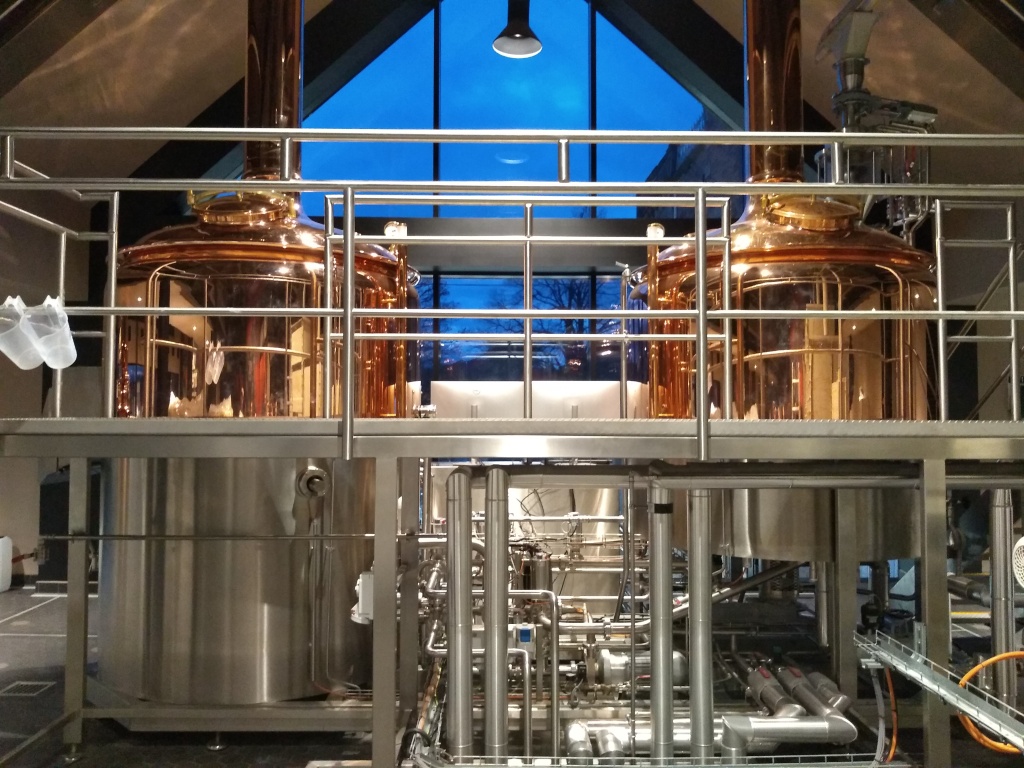
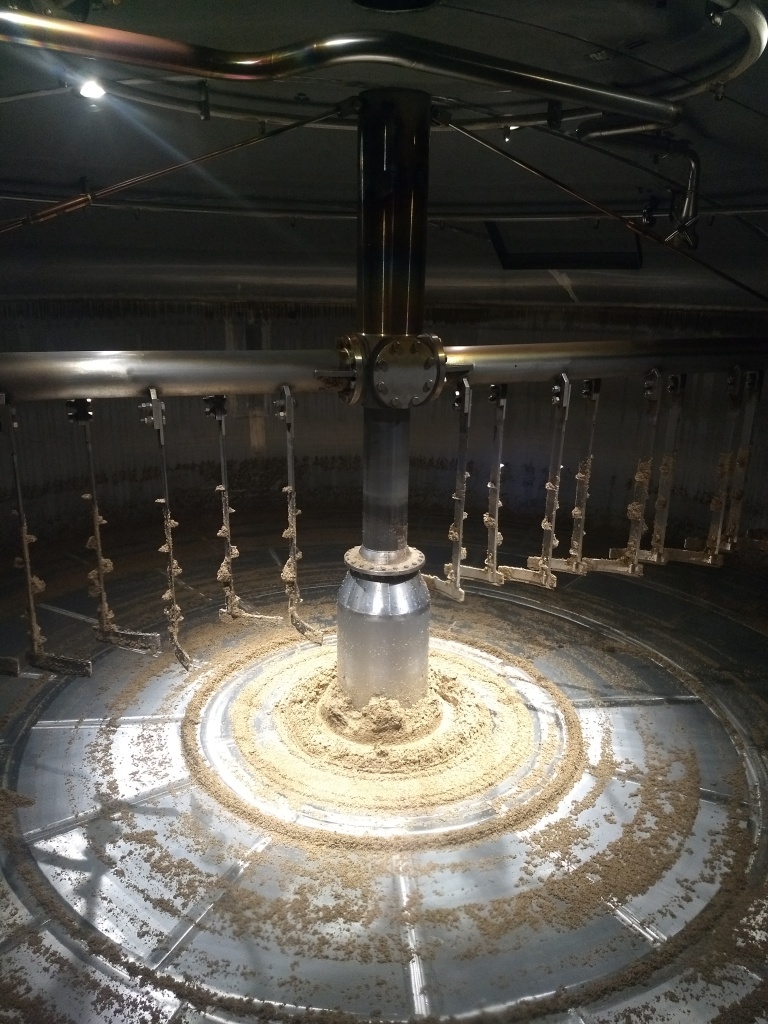
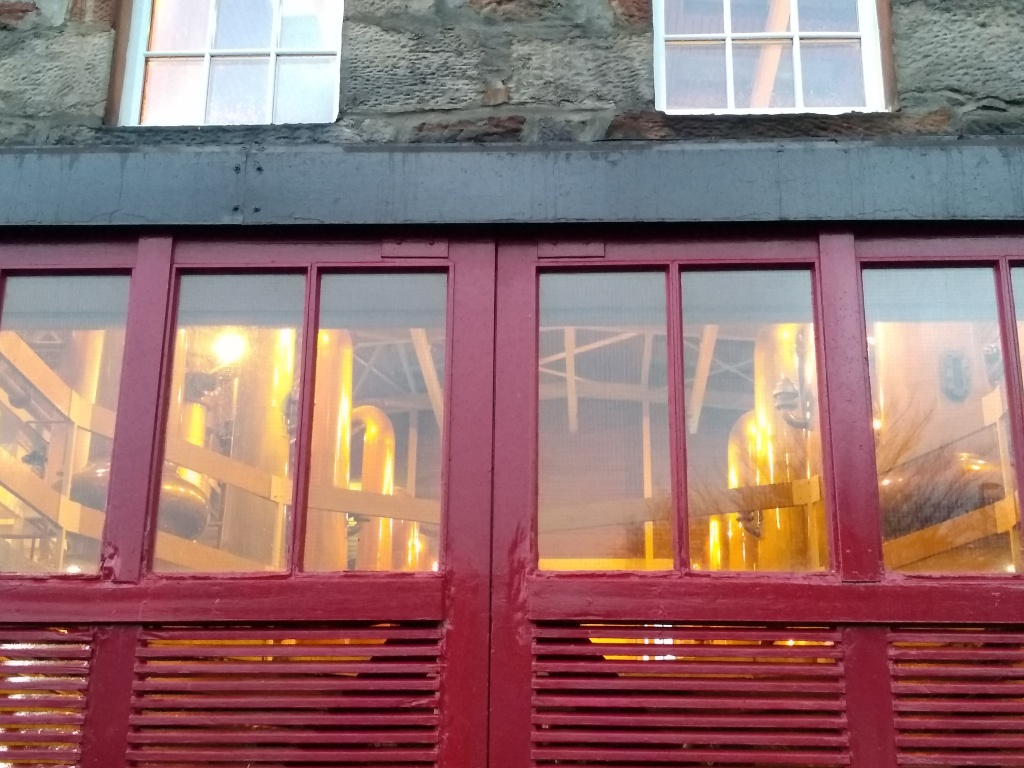
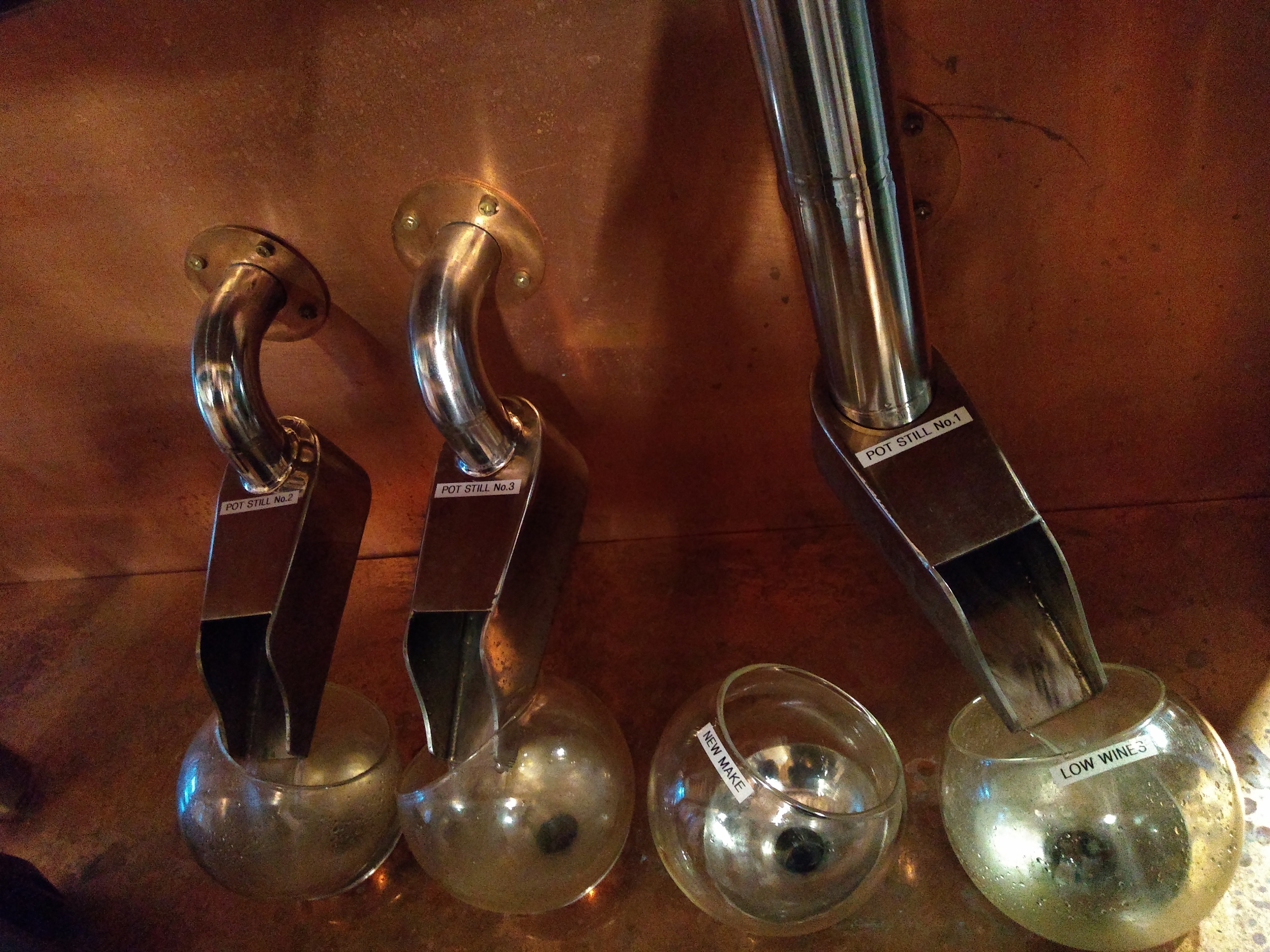
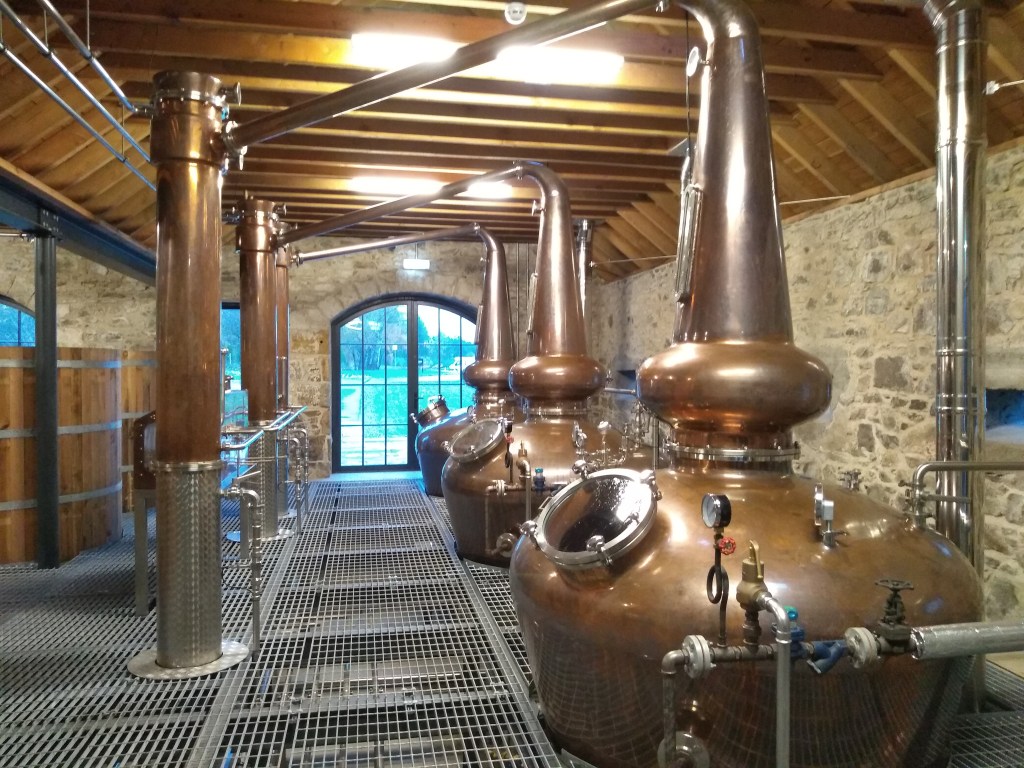
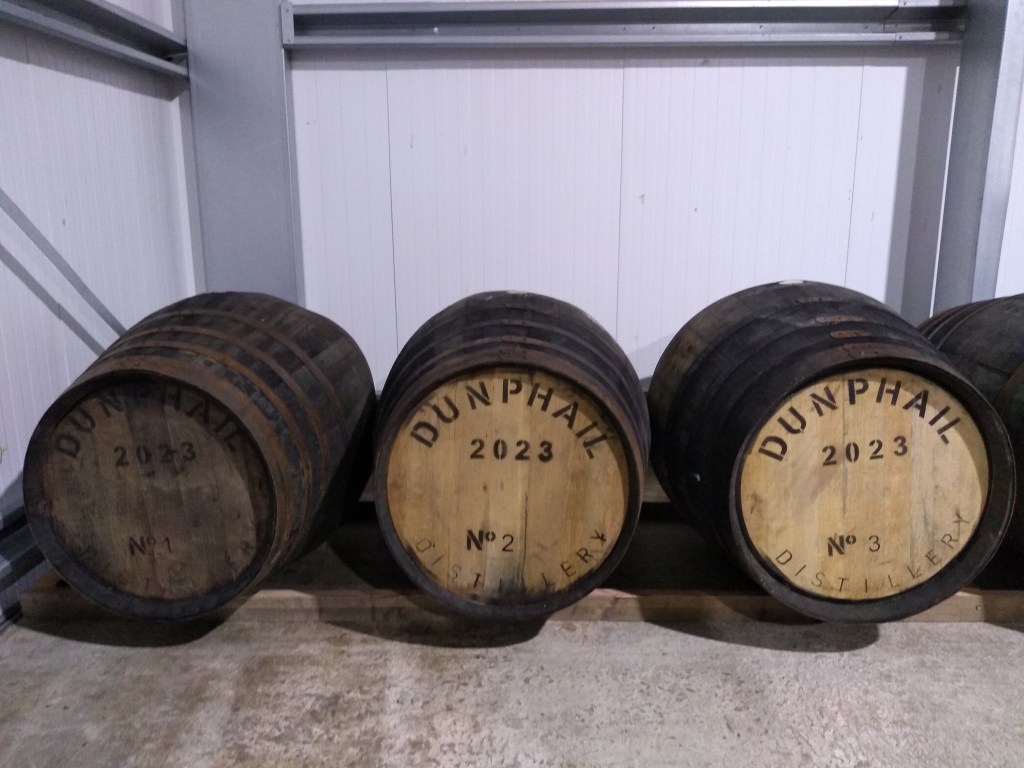
The malt is mashed one ton at the time in a semi-Leuter mashtun (3 waters at different temperatures, as usual), aiming for a clear worth, which is then moved to one of their 12 Douglas Fir washbacks for a long fermentation: 144h (6 days). The distillery is equipped with three stills (remember these?), all same size, two wash stills and one spirit still: all three are directly fired, however to save energy and improve efficiency they are initially warmed up with steam coils. They are aiming for a 200,000 litres-per-annum capacity, which is small but still reasonable production size. In the warehouse (not dunnage, the floor is concrete), we could take a look at the first batch of casks they filled: history in the making!

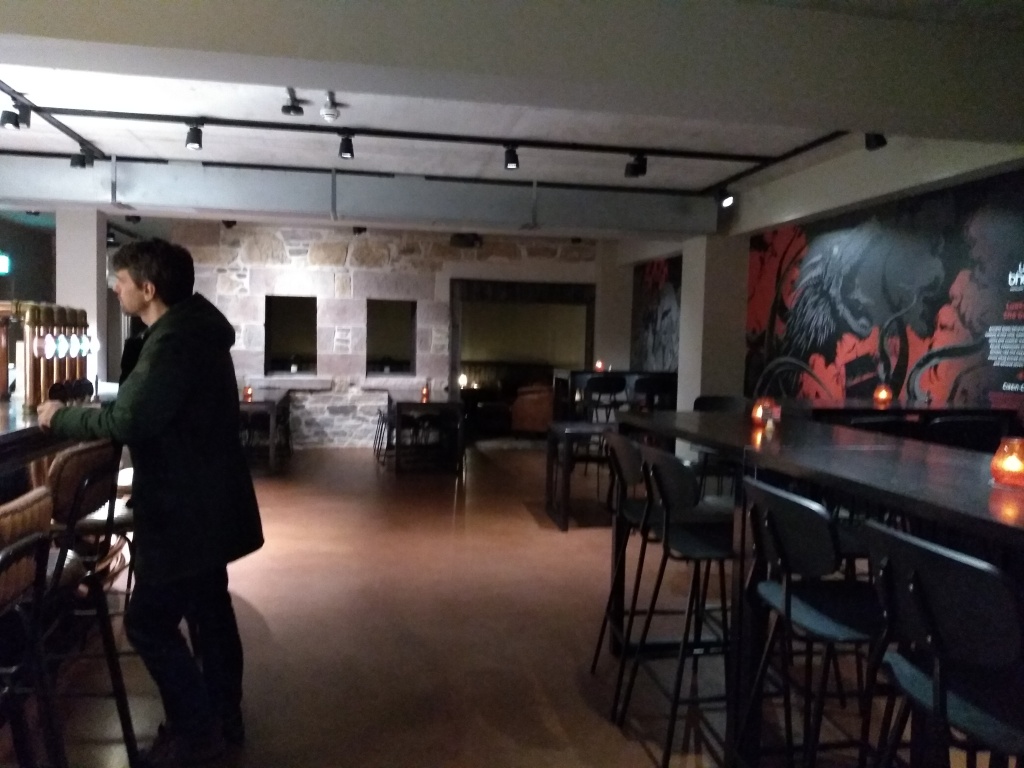
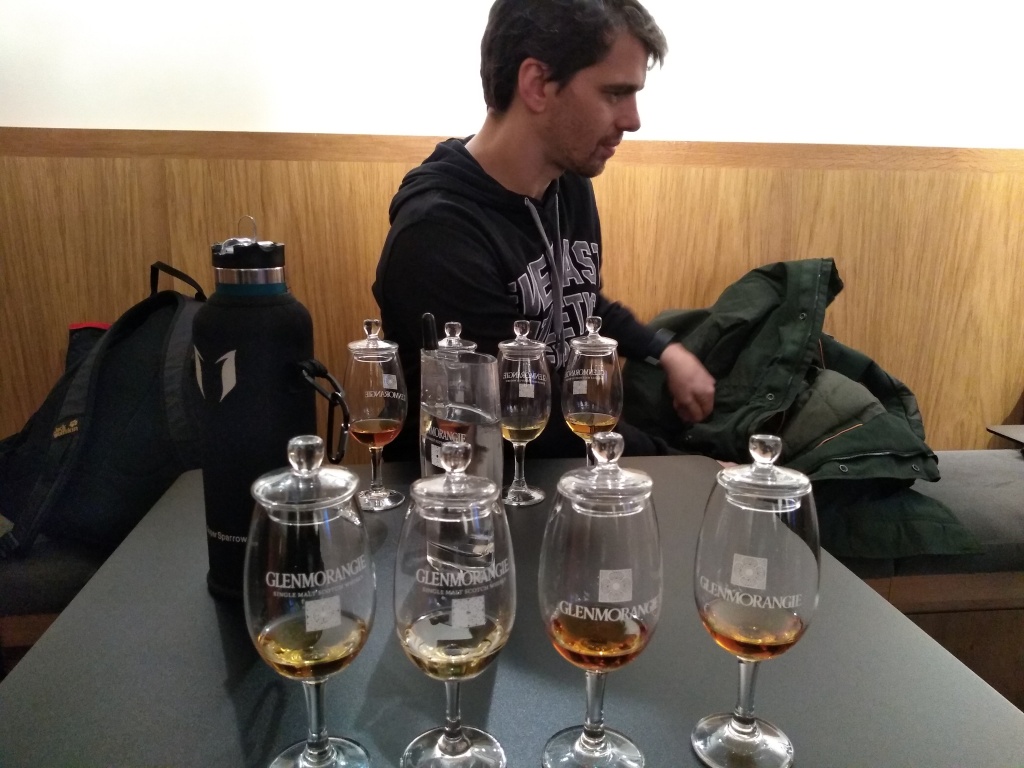
After the production tour we went back to the visitor centre for the tasting, where we (ehm, Teresa) tried the newmake spirit. It seems trivial for a distillery who just started production to at least make you try the newmake spirit. However, in a few instances this didnโ€™t happen, so well played Dunphail! The other drams were all scotch whiskies coming from the Dava Way range, named after the historical 38km trail from Forres to Grantown-on-Spey. They were a 13y Teaninich from a hogshead, probably ex-bourbon, a 12y Caol Ila from a hogshead, and a sublime 28y North British grain whisky from a 1st fill ex-bourbon barrel. At the visitor centre, other than merchandise, the available Dava Way bottlings were on sale, as well as some Bimber and the Apogee XII pure (blended) malt. They also had many drams to try at the bar!

Unfortunately to get to Dornoch we had an over 90-minute drive, and the Dunphail visitor centre was closing too, so we left right after the tasting. We arrived to Dornoch just in time for a nice dinner with our friends from the Edinburgh Whisky Group, and another couple of drams of course, ready for the following days adventures!

Visiting Dunphail was a great experience, a really good deep-dive into this new distillery and whisky production from green barley to newmake spirit. It was clear from how the tour was conducted by Mike that it was set up by whisky enthusiasts for whisky enthusiasts, so a must-do detour from the main roads in our opinion. We are looking forward to enjoying their single malt, when ready!

Until next time, slainte!


Dunphail Distillery Experience

Price: ยฃ30.00 pp (November 2023)

Duration: 1hr 30min

Tasting: 3 drams for their Dava Way range and the newmake spirit

Target: everyone, but particularly whisky enthusiasts and geeks

Value for money: good

Highlights: the production

Recommended: yes

Link: https://www.dunphaildistillery.com/


#38.1 Warming up for the Highlands, in Speyside

The Ballindalloch Distillery


TL; DR: On our way to the Northern Highlands, we couldnโ€™t help but stop in Speyside for a couple of visits. First off, a distillery weโ€™d driven past several times but yet to visit: Ballindalloch. Bonus, when we visited theyโ€™d just released their first few bottlings! 

Important things first: happy New Year! We hope you are well rested after the Christmas and New Year holidays, and had plenty of good drams. We absolutely did – our (Italian) Christmas dram was a very tasty Glen Moray 18y (47.3%) grabbed at the airport, while as a last dram of 2023 and first dram of 2024 we chose the delicious Kilchoman 100% Islay 10th Edition (bottled in 2020, 50%). We are looking forward to another year of tasty drams to share with you, lovely lot!

Back to 2023, one of our last whisky trips was in early November, with the mighty Edinburgh Whisky Group, organised by the mightier Justine from Kask Whisky. After the Campbeltown Jolly (2021) and the Speycation (2022), it was time for the Highlands: Who Wants to Dram Forever? โ€œHighlandsโ€ is quite a broad whisky region (both in terms of area and flavour), we chose the North, and we were based in Dornoch. Of course, to get there you need to take the A9 (unless you go for some insane detour), and the A9 does run kind of close to Speyside as wellโ€ฆso why not doing a quick detour on the way there?

And it goes without saying, we detoured indeedy. We decided to visit two distilleries, both quite new, starting with Ballindalloch. Weโ€™d driven past the this distillery many many times during our multiple Speyside holidays, and once we even stopped for lunch at the cafe just behind it. The distillery was founded in 2014 by the Macpherson-Grant family, who owns the entire estate with the castle (where theyโ€™ve been living since 1546!), pastures and barley fields. Before becoming a distillery in 2011, the building was a run-down farm originally built in 1848.

At the time of our visit, they offered various tours (now they changed a bit), but the only one available on the day weโ€™d be there (Thursday) was quite pricey (ยฃ75pp), as it included old drams from Cragganmore casks (a distillery to which the family is linked). We asked if we could do the simpler (and cheaper, ยฃ20pp) tour they were offering on Wednesdays (now it is offered most days), which included a taste of their two distillery-exclusive single malts. To our big surprise they agreed, in our experience (not only in visiting distilleries), this kind of flexibility has been rarely seen: kudos to them! Just FYI, on Thursdays they also offer an in-depth all-day experience for ยฃ275, learning from the manager and the staff. 

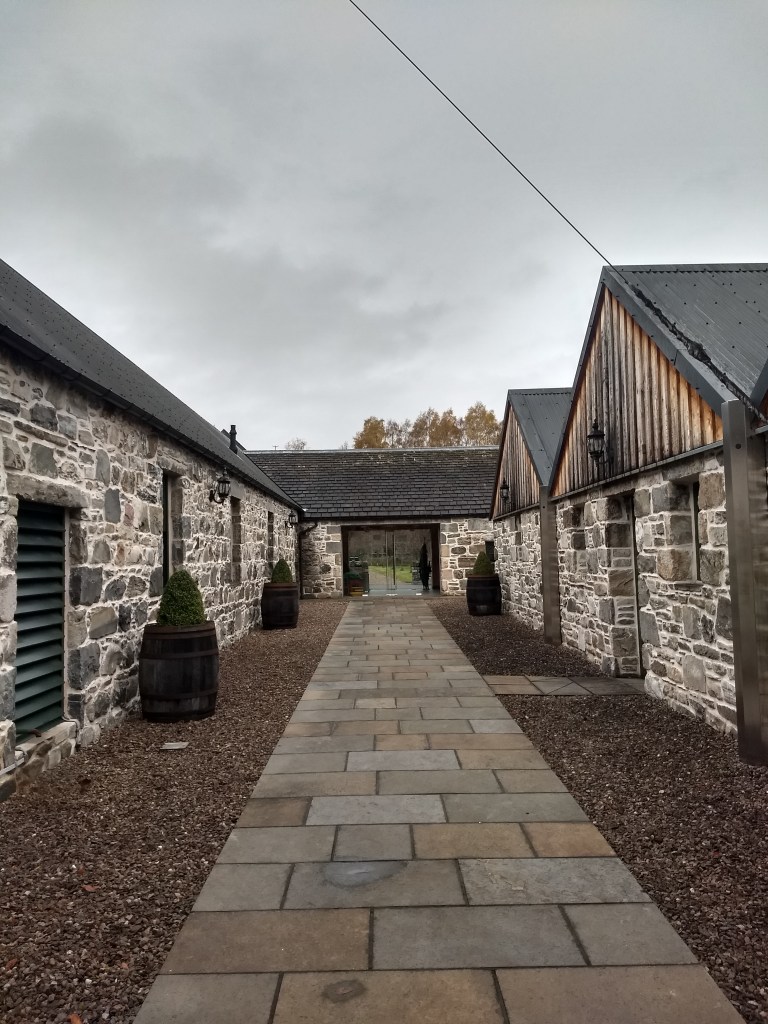
How an old steading can become a beautiful distillery.

The trip there was uneventful, under a grey sky, and fortunately we didnโ€™t find any road closures due to rain along our route. At the distillery, we were welcomed by Evan, who later told us he was already working for the family but in their fishing range and had very recently switched to the distillery for the off-season. Being in an old stead building, the distillery follows a square layout: the side of the visitor centre entrance is occupied by a lounge (where the tasting took place) and offices, while the remainder is mostly for production

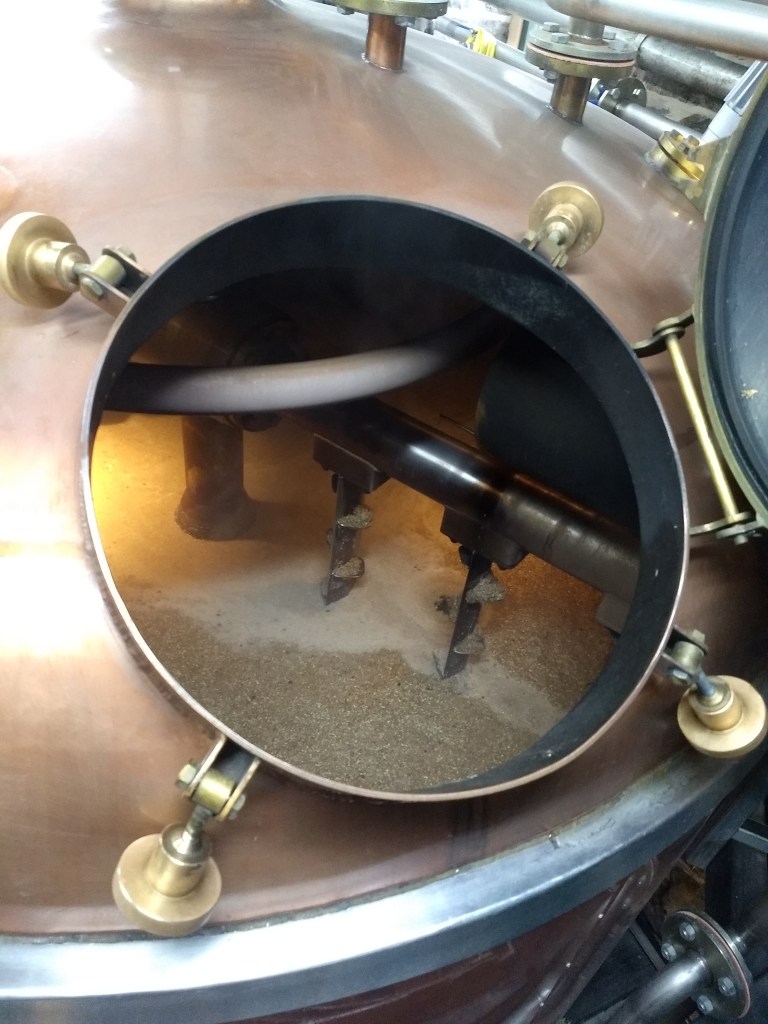
After a brief introduction, we moved to the milling room, equipped with a modern mill. They process about 1 ton of malted barley every day, which after milling is moved to their semi-lauter mashtun, where one mash is done every day from Monday to Friday.

Mashing hard.

Every piece of equipment is clearly sized to fit into the building: as the latter is a listed building (and thus can’t be reshaped or expanded) and because of the barley provenance, expansion beyond their current production (100,000 litres of alcohol per year) is not under consideration. As a matter of fact, the barley comes from the family estate, which produces about 350 ton/year, just over their requirement for whisky production (a bit over 300), and it is sent away for malting (the only stage not happening at the distillery).

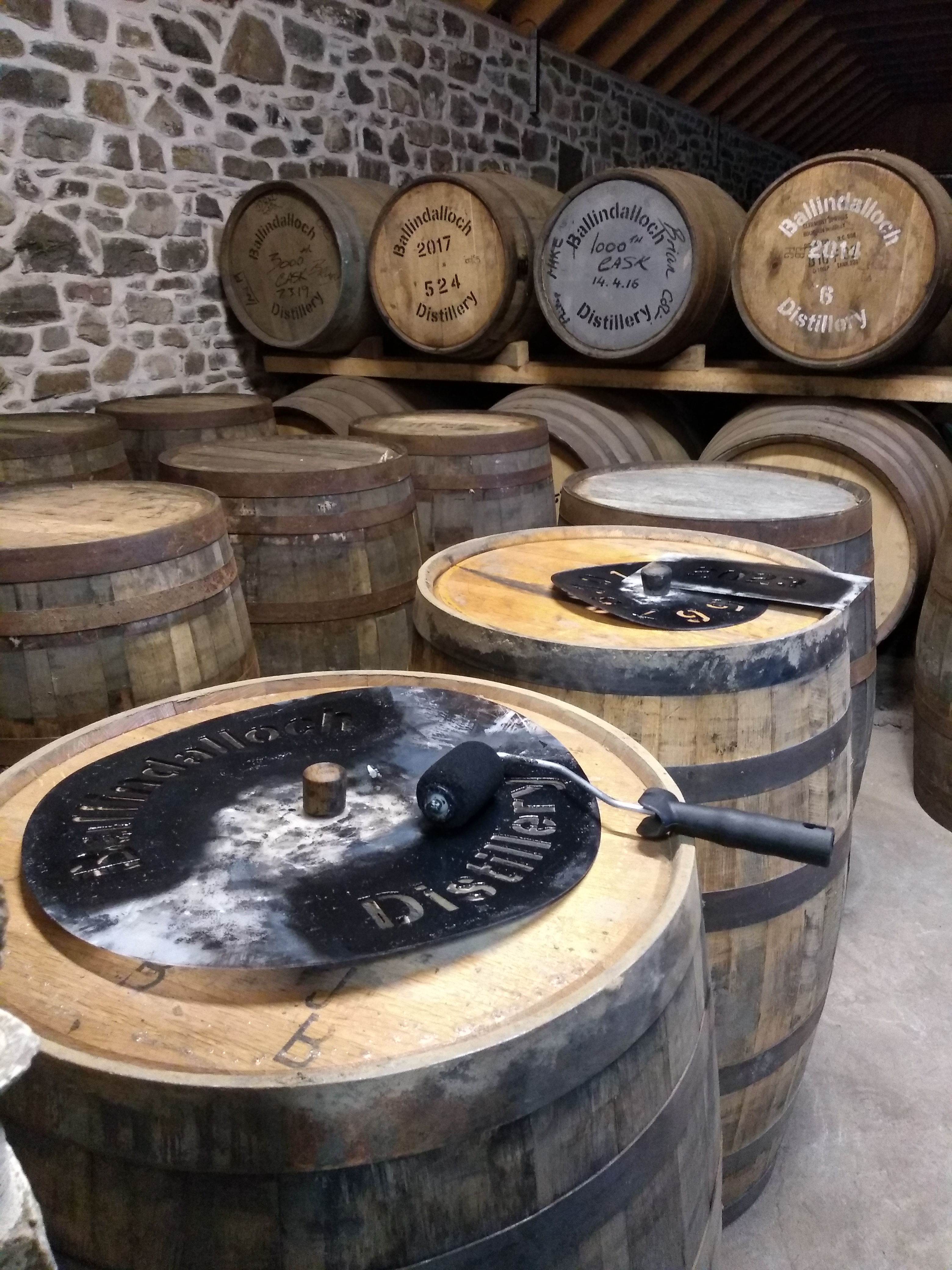
We kept walking along the buildings, and next we found the four wooden (Oregon pine) washbacks, where fermentation lasts between 92 or 140 hours (fermention over the weekend is longer, of course). Next, right in the corner, the two stills, a 5,000-litre wash-still and a 3,600-litre spirit still, connected to two wormtubs located outside the building, each one with 70m of copper tubes inside. From the second distillation, they take a cut between 75% and 68% abv. They cask everything on site, and the casks are stored in a warehouse in the courtyard. Surprisingly, their (wee) bottling line is on site too!

Finally, we went back to the lounge/tasting room for our drams. We were lucky as theyโ€™d released they first single malts just a few months before, and we could try their second batch of distillery exclusives: both cask strength and single cask, one matured in an ex-bourbon barrel and the other in an ex-sherry butt. They are both approximately 7.5 years of age (see below for more details) and very tasty for their age, not too sweet and with the robust and thick spirit character clearly coming through.

One of the two tasty drams.

At the shop, they also had their first small batch bottling, called Seven Springs Collection, Edition #1: a vatting of five ex-bourbon casks (1203 bottles in total, cask strength at 60.2%abv). Evan kindly gave us a sip, tasty but a bit up in price (ยฃ150.00). 

Overall we really liked this distillery. It looks like they paced themselves and took their time to do things, including releasing their first whisky, which was indeed more robust and tastier compared to others from fairly new distilleries. Yes, their bottlings are pricey, but considering the scale of their operation it kind of makes senseโ€ฆ? Hopefully weโ€™ll see a widely available and better priced expression soon. 


Ballindalloch Short Tour and Drams

Price: ยฃ20.00 pp (November 2023)

Duration: 45min-1hr

Tasting: 2 drams of their new distillery exclusive bottlings

Distillery Exclusives: Single Malt Distillery Exclusive ex-Bourbon barrel (distilled 21/1/2016, bottled 28/8/2023, cask 29/2015, 62.3%abv) and ex-Sherry butt (distilled 3/12/2015, bottled 28/8/2023, cask 600/2015, 62.3%abv), both 50cl at ยฃ89.00

Target: everyone

Value for money: very good

Highlights: the distillery layout and building

Recommended: yes

Link: https://www.ballindallochdistillery.com/


#35 A(nother) distillery next door


Exploring Port of Leith


TL; DR: This last October we were supposed to run the Wee dram (10k) at the Dramathon, but because of adverse weather conditions we had to cancel our weekend. Weekend in Speyside gone, we made it up with local attractions, in particular our first visit to the brand-new Port of Leith distillery!

Finally, it came that period of the year again, towards August, where we start training a bit more seriously to prepare for the Dramathon. This year, however, we had decided to run the 10k only, for two reasons: too much stuff going on at work so not a lot of time to train for a half marathon, and because last year we ended up very tired. Another difference, Gianluigiโ€™s brother would come from Italy to join us for the 10k. Because of that, the following day we had planned to visit one of our favourite distilleries in the area: Glenallachie!

Well, things didnโ€™t exactly go as planned, as a storm of (not only) bad luck hit us. First, a couple of weeks before the run, we found out that the original accommodation we booked for Gianluigiโ€™s brother and his girlfriend had ceased activity, but neither they (in spite a few emails from us to inform of late check-in) nor Booking.com told us. Then, during the week before the race we both got Covid. Being the third time, it wasnโ€™t that badโ€ฆso we just rested for a few days. But then, the straw that breaks the camel’s back: storm Babet. The area of the race was deemed safe at first, until the late evening before the event: the Scottish Environmental Protection Agency communicated a red alert for flood of the river Spey in Aberlour. This was not only where the 10k was starting and all the other races were supposed to run through, but also where the alternative accommodation was located (less than 150 metres from the riverโ€ฆ). So, at that stage we could only give up. Bummer!

In the morning, we cheered ourselves up with a big breakfast at the Up the Junction cafe, in Leith (one of our favourites). As a back-up plan, we took advantage of the emptied day to go visit our brand-new local distillery: Port of Leith! It is actually not the first distillery in the neighbourhood, as the Bonnington distillery (owned by Crabbieโ€™s) is not far from our flat. It is very close to the Water of Leith walkway, our usual running ground, so itโ€™s not uncommon for us to smell some mashing or fermenting while running. The distillery is closed to visitors, so smelling is indeed the closest thing we can do.

Around midday, we walked towards Ocean Terminal and then to the Port of Leith distillery, where our friends from the Edinburgh Whisky Group were celebrating one of our palsโ€™ birthday. As we joined the jolly bunch in the rooftop bar, we realised how beautiful this place is, with an amazing view of our lovely neighbourhood, including the docks, and the rest of Edinburgh! We ordered a flight with their โ€œcreationsโ€: the Table Whisky (a blended grain), the Perpetuity blend Batch 1 and 2, and a dram from Woven, a local small blending company. All decent drams, the Perpetuity Batch 2 won for all the three of us. We then joined the 1pm distillery tour: btw, we were surprised by the number of tours available!

How it all started with a wee still.

The tour started on a lower floor, where the guide Ellie told us the history of the company, born from the vision of Ian and Paddy, who started experimenting with a small Portuguese copper still (now on display) in their back garden. Their pursue of flavour, in particular the effect of yeast and barley strains, led them to partner with the International Centre for Brewing and Distilling, at the Herriot Watt University. After some stop-and-go that saw them losing the original plot where the distillery was supposed to be, they started Lind and Lime gin production, but then their vision finally came to life when they built the first vertical distillery in Scotland, and the highest in the world (42m, vs, Swedenโ€™s Mackmyra 37m).

In the production area, everything is brand new: in fact at the time of our visit they hadnโ€™t started distilling yet. The mill is on the floor right below the hospitality ones, while the mashtun (semi-lauter) and seven 7,500 litres washbacks are located on the one just below. Ellie explained us that they use water from both Edinburgh tap and from a 132m deep borehole. They aim for a 1.5 hour mash, and a fermentation between 42 and 72 hours, and with of course lot of yeast experimentation. Further down, the two stills for the double distillation, behind a big window facing Newhaven. The spirit safe, conversely to many other distilleries (old and new) is made of stainless steel, and looks completely manual.

We finished the tour with a tasting, as usual. We got served two newmake spirits they did in collaboration with the Glasgow Distillery, made with two different yeasts, one was a Norwegian ale yeast. Then we had a sip of their Oloroso Sherry and Twany Port, which they bottle in Spain and Portugal (a good introduction to these fortified wines, but not great compared to other brands) and finally a dram of Bruichladdich Classic Laddie. Given that they have their range of blended whiskies, we felt this was an odd choice: in our understanding it is because of their admiration for the popular Islay distillery ethosโ€ฆ although we hope they wonโ€™t follow the โ€œethosโ€ in pricing as well (wink wink!).

The tour ended in the shop, but not before bottling a 5cl of 40% newmake spirit to take home: a nice touch. Our afternoon continued with another couple of drams at the bar with our friends, before going home and then to watch the Rugby World Cup semi-final at the Dukes, which used to be our favourite fried chicken burger place in Leith (now they donโ€™t do burgers anymore).

Overall, it was a nice tour in a spectacular building, although similarly to Penderyn Swansea, it was a bit weird to visit a distillery that has not started production yet: no mash and wash smell, no liquid flowing through the safe (well, the latter can happen also when visiting distilleries in the weekend, to be fair)… Hopefully they will be distilling soon, so all their experience and research can be finally put into practice!

Until next time, slainte!


Port of Leith Distillery Tour

Price: ยฃ26.00 pp (October 2023)

Duration: 1hr 15min

Tasting: two new make spirits with different yeast (produced at Glasgow distillery), Port of Leith Oloroso Sherry and Tawny Port, Bruichladdich Classic Laddie (and 5cl of newmake spirit to take home)

Target: everyone

Value for money: good

Highlights: the vertical production and the rooftop bar

Recommended: once theyโ€™ll start production, yes

Link: https://www.leithdistillery.com/


#31.8 Spirit of Speyside 2023

The amber swan: Linkwood


TL;DR: Finally, the last day of the Spirit of Speyside came. After a relaxing morning, we visited another Diageoโ€™s workhorse: Linkwood! Very beautiful distillery, tasty whisky, but the tour with the enthusiastic staff itโ€™s what really gave value to this visit!

(missed Part 7 /Part 6/Part 5/Part 4/Part 3/Part 2/Part 1?)

The last morning of the long weekend was a slow one. We woke up in a rainy and gloomy Dufftown, waiting for one of the coffee shops in town to open. After some coffee and cake, we had some free time, so we finally managed to go to the Whisky & Heritage Centre. It is a little place managed by volunteers where whisky memorabilia are on display, plus old pictures and documents that can be checked out. We had a lovely chat with the lady taking care of it, finding out they have plans to increase the size of the centre, and we got a couple of second-hand whisky books for a small donation.

We went to the Dufftown Whisky Shop, as they had scheduled a Benriach pop-up tasting. We tried a couple of their new range (which we are not too familiar with, since we visited the distillery before the core range revamp) and had a chat about it and other Brown-Foreman products with the brand ambassador. He told us that some news was in sight about Glenglassaugh, so we hoped for a reopening of the visitor centre. A few weeks later they revamped the line-up (with a 12y bottled at 45% and two NAS at higher abv), but as we are writing their website has disappeared, soโ€ฆstill hoping!

Left the shop, and Dufftown, we drove to Aberlour toโ€ฆanother shop, this time the Speyside Whisky Shop, for another chat with Matteo and a dram (at the time some saught-after bottles were open so people could purchase by the dram). This was followed by a quick lunch at the usual Gatherโ€™n Cafรจ nearby (we should have taken a punch card long ago!). It was soon time to leave though, direction Elgin, for the next and last distillery visit of the holiday: Linkwood! The road wasnโ€™t very trafficked and the drive was smooth, so we arrived there a few minutes early.

There, we met our friend John from the Edinburgh Whisky Group, and we were welcomed by Paul, the distillery manager. The welcome cocktail was the usual Old-Fashioned, of course made with their own flagship whisky. Hovwere, it feels odd talking about a flagship, since Linkwood 12, part of the Flora and Fauna range, is the only bottling from this distillery (similar to many other Diageoโ€™s distilleries). 

The original Linkwood distillery was founded in 1821 by the Brown family, and started production a few years later. It was sold in the 1930s to Scottish Malt Distillers, which in turn were acquired by United Distillers (a precursor of Diageo). In 1970-71 a new distillery was built, and in spite of that, the old one continued production until the site was mothballed. The old distillery was demolished only in 2012, with all the equipment moved to the new one, which was expanded.

Our knowledge of Linkwood dates back a few years, to our first (and only) bottle of Johnnie Walker Green Label 15y, as this is one of the malts featuring in this blended malt, together with Caol Ila, Talisker and the fellow Speysider Cragganmore. Since then, we tried a few different Linkwood expressions thanks to independent bottlers, mostly the Scotch Malt Whisky Society. Recently, we had a great one, finished in Tokaj wine cask, from the new independent bottler Fragrant Drops: a sweet dram with a hint of grassiness, which is the main character the distillery aims to get. 

Classic piece of equipment.

The tour was conducted by Barry and Eilidh, both distillery operators. Near the entrance of the production building, they showed us a small cask that was used back in the day by distillery workers to get their daily dram (or drams, in the past weโ€™ve been told by some guide that usually they were 3 a day). As many other distilleries, they have a Porteus Mill, painted in dark red, but unlike many the proportion of husk/grit/flour is 10/80/10, and they use Lauriet barley. Here the tour became very interesting: they only do two waters during mashing (they call it โ€œcontinuous spargingโ€), and we were shown a cylinder they use to check the wort cloudiness. This is one of the nerdy things we discovered fairly recently, depending on the desired newmake character, when mashing the wort could be more or less filtered. The less filtered mashes (thus, cloudy) give a nuttier character to the newmake. On the contrary, a clearer wort results in more fruity and grassy notes, like Linkwood indeed.

Wort checking!

The fermentation in their 5 wooden washbacks from the 70s (and also other 6 installed in 2013) lasts 75 hours. Finally, we went to the still room, where three pairs of very large stills (with straight-ish lyne arms) operate independently. The shell-and-tube condensers are equipped with โ€œturbulatorsโ€, to slow down the water. After the still room, we had a stroll outside around the famous lake, where we saw the swans that inspired the famous label. The water is mainly there as a reserve, used in case of emergency. From there, we could check out the old malting floor (and the pagoda roof), now a warehouse. Unfortunately, no tour inside there. 

Back to the office, Paul and Scott, another distillery operator, were ready to host the 3-dram tasting: Linkwood 12 (43%abv, one of the best drams from the Flora and Fauna range, in our opinion), Johnnie Walker Green Label 15 (43%), nice to revisit it after some time, and finally a Linkwood cask-sample (similarly to the one at Dailuaine, not on sale and only served at Cardhu distillery in one of their fancy tours). Really a great dram, for sure in our top 5 of the festival. A shame these cask sample bottles were not available for purchase, although knowing Diageoโ€™s pricing policies they would have probably been out of reach.

On the tour there was a group not very happy about that, so they started rudely complaining with the staff about the missing opportunity to buy the cask-sample bottles, showing their cluelessness on how a big multinational company like Diageo works (not that we know much better, but enough to understand that some decisions are not down to the distillery staff). Oh well.

Anyway, one of the things we liked the most of this first time at the Spirit of Speyside was to get to know and talk to people working in distilleries, in particular the ones not usually open to public: the staff friendliness, but more importantly their eagerness to show us around and make us understand their work were amazing. Seeing how passionate they are was really refreshing, in spite of all the cynicism of their mother companies, and in the whisky world in general nowadays. Of course, we donโ€™t want to play down any of the people we met in distilleries usually open to public, however in our many trips sometimes we experienced too edulcorated, almost scripted tours, and a couple of times we were even treated with complacency. And this is fine (well, except for the lastโ€ฆ), it would be silly to expect that every tour is mind-blowing, and that every tour guide is a whisky nerd: at the end of the day, itโ€™s a job as any other. But we cannot help but noticing a certain difference when the tour is done by an operator, like in many cases during this trip. And just for it, we were grateful. 

Until next time, slainte!


The Linkwood Distillery Tour

Price: ยฃ80.00 pp (May 2023)

Duration: 2hr

Tasting: welcome cocktail and 3 drams – Linkwood 10 (43%), Johnnie Walker 15 Green Label (43%), Linkwood cask sample from ex-bourbon (53.4%)

Target: whisky enthusiasts

Value for money: not great

Highlights: the enthusiastic distillery staff

Recommended: not at this price

Link: https://www.spiritofspeyside.com/

#31.7 Spirit of Speyside 2023

Speyburn uncovered!


TL;DR: Another visit to a (thenโ€ฆ) closed-to-public distillery: Speyburn. In 125 years it was open for the first time during the 2023 Spirit of Speyside. A great visit, their own old drum maltings were a highlight, a jump back in time! 

(missed Part 6/Part 5/Part 4/Part 3/Part 2/Part 1?)

From Dufftown to Rothes itโ€™s barely a 15-minute drive, so we could take it easy and stop for a coffee and a soup, to warm up in the cold and rainy day. We then soon arrived at the Speyburn parking lot: in spite of being hidden from the main road, we knew exactly where to go, as during one of the many trips to Speyside we drove on the road just in front, from where the distillery could be admired in all its beauty.

Speyburn is not among the most well-known single malts, although it can now count on the presence on some supermarket shelves (the Bradan Orach and the 10y). They are owned by Inver House (which is in turn owned by Thai Bev, guess where theyโ€™re fromโ€ฆ) together with other four single malt distilleries, two in the Northern Highlands (Pultney and Balblair), another in Speyside (Balmenach) and Knockdhu (producing the AnCnoc whisky) in the Eastern Highlands. We previously only had one bottle of Speyburn, from the Scotch Malt Whisky Society: a 9y old from a refill bourbon. We got it by chance when buying a pack of three bottles during the pandemic, with the Speyburn being the one we were less excited about: it ended up being the best of the trio! Spicy at first, with time in an opened bottle the oxidation played its part, and the whisky mellowed down and became a fruity deliciousness. At this point, it goes without saying we were very curious to know more about Speyburn!

As we parked, we were warmly welcomed by the distillery manager Euan and the global ambassador Stuart (who we knew from some Aqvavitae’s vPubs), who walked us to the visitor centre to check in. Compared to the other โ€œusually closed to publicโ€ distilleries, they seemed to be way more prepared: there was a proper shop (not just a pop-up like at Dailuaine and Mortlach), with bottles and merchandising displayed on the shelves, and also a brand-new bar with big tables, where the tasting would have taken place after the visit inside the production. Weโ€™ll come back on this point.

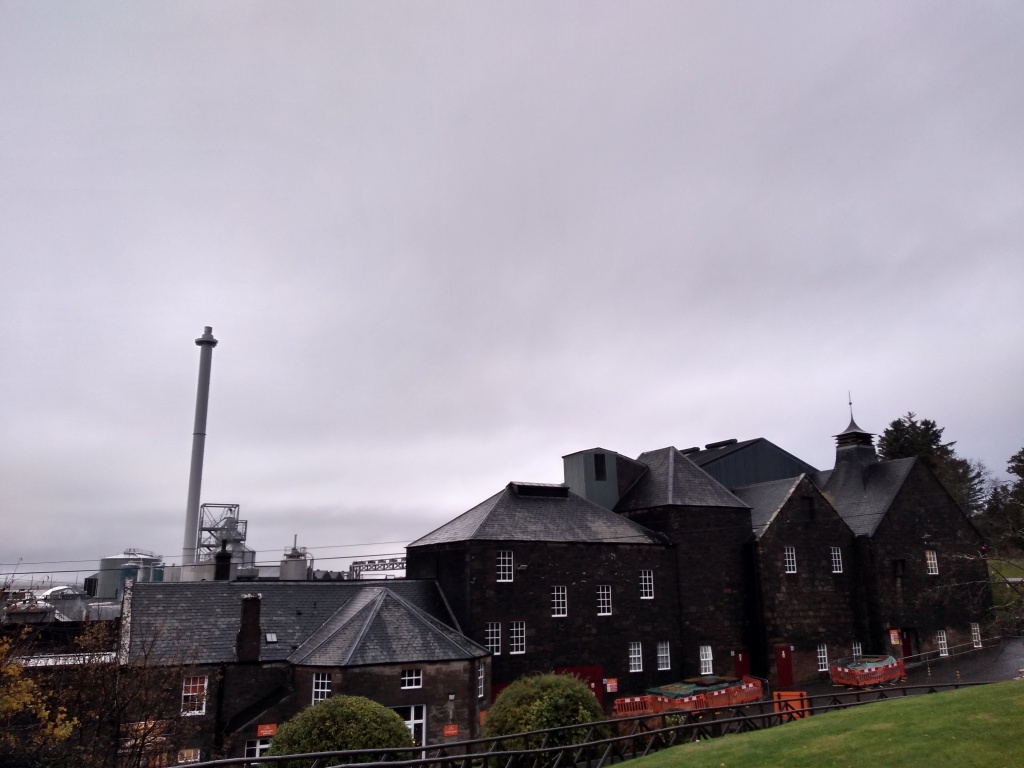
The tour started with some history in the courtyard: the distillery was founded in 1897, and the architect was the famous Charles Doig, who brought the pagoda roofs into the game. This became one of the iconic features of Scotch whisky distilleries, to the extent that distillers in other countries started copying it. It is also on the road signs in Speyside and elsewhere: if you see a white pagoda on a brown background, there must be a distillery close by! The original function was the kilnโ€™s ventilator, as at the time most distilleries were malting their own barley, Speyburn included. A crucial difference, however, early on they installed one of the few on-site drum maltings. They havenโ€™t been used in almost 60 years (after a sudden stop in 1967 following the stop of the near railway the year before), but they are still preserved for nerdy visitors to admire. And in fact, the first part of the tour was dedicated to this unique feature of the distillery.

Time travelling part 2: the steeping tanks.

Euan and Stuart explained us that the place has been made accessible only recently, as testified by the new woodwork to allow people inside: it was like taking a walk in the past. The malting was working on different floors, the top one was where the barley was laid out, steeping tanks at the middle one, while the drums (think of huge tumble driersโ€ฆkind of) on the ground floor. One thing we found interesting was the completely different story compared to the usual one: smaller on-site drum maltings, and similarly Saladin boxes, were intermediate stages between the two extremes that are usually talked about during distillery visits (and on blogs, etc.), the (highly romanticised) labour intensive and not so efficient malting floor, and the modern highly efficient industrial-scale maltings. So fascinating to see what was in between!

We jumped back to the present, moving to the mill room, and from there through the usual layout of the modern plant: the closed stainless-steel mashtun, and the wooden washbacks, where we could sip a bit of their semi-cloudy 72hr-fermented wash (always an experience). One interesting feature is the combination of both shell-and-tube, of which one is horizontal, and two wormtubs condensers (132m in total). The former condenses liquid from the wash still, while the latter two from the spirit-stills, from which they take a cut between 72 and 64% abv. With only 3 stills they manage to produce about four millions of litres of alcohol per year: they get this incredible volume by working 24/7. There is a catwalk on the wormtubs, which are located outside, where we spent a couple of minutesโ€ฆ.we wonder if in Speyside the weather gets warm enough to tempt some people to jump in them.

We soon checked out the warehouse, where a surprise was waiting for us: nope, unfortunately we didnโ€™t sample some casks (we were hopeful, considering the hefty 80 quid tickets), but it was almost as good: we had a sample of their 125th Anniversary release, a single cask bottling from a 2nd fill ex-bourbon barrel vintage 2007, similar in style to the one we had but much more balanced, tropical and creamy. A truly delicious dram, probably the best one we tried during the festival.

The last part of the experience was the tasting of their core range, back at the bar. We had four generous drams of their non-age statement (NAS, but they told us it should be about 7-8y) expression Bradan Orach (40%abv, refill ex-bourbon), the 10y (again kind of introductory, 40%, 90% ex-bourbon and 10% ex-sherry casks, mostly second fill), but finally the two gems: the 15y (ex-bourbon before a 2-3y finish in ex-sherry Miguel Martinez casks) and the 18y (14y in ex-bourbon casks, then 4y in second fill oloroso casks), both 46%, natural colour and not chill-filtered. They were both super tasty: Gianluigi preferred the former, Teresa (as most people on the tour) the latter.

You can’t really tell from this picture how nice the bar is…

At this point youโ€™ll be wondering: wait a minute, if they are only open occasionally, how come they have a bar for tastings and a nice shop? Well, as a matter of fact, before the festival weโ€™ve been told by a birdie that Speyburn might have been preparing to open to visitors permanently. At the Spirit of Speyside 2023 they won the award as โ€œbest new experienceโ€ and this might have given the company the nudge to open permanently (although, more realistically it was already planned and not depending on the awardโ€ฆ). Bottom line is that, good news: starting August 2023 (coincidentally the time of writing), you can visit them and go check their very fascinating old drum maltings for the very reasonable price of ยฃ20 (see the link below).

So, overall, it was a great visit (one weโ€™d do again), and as we said earlier, a true deep-dive into the history of whisky production in Speyside. A bit pricey maybe, but at least the tasting was generous (5 healthy drams and a taste of the newmake), unlike some other we visited for the same price.

For the evening we drove first to Aberlour for a chit-chat with Matteo at the Speyside Whisky Shop (from which he just moved on as we are writing), and then to Dufftown where we spent the night. We parked near the Mortlach Hall, which was super quiet. We had dinner at the Commercial Hotel, which has moved the restaurant to the former function hall, together with some tasty Three Ships South-African malts (produced at the James Sedgwick Distillery), very rare to find in Scotland. Not that we were bored of Speyside malts, but it was good to try something different! Slainte!


The Speybirn Distillery Tour (Spirit of Speyside)

Price: ยฃ80.00 pp (April 2023, but now – August 2023 – they’re open to the public and it’s ยฃ20.00)

Duration: 2hr

Tasting: 5 drams, Speyburn 125th Anniversary (vintage 2007, 15y, refill ex-bourbon barrel, 62.6%, NC, NCF), Bradan Orach (40%), 10y (40%), 15y (46%, NC, NCF) and 18y (46%, NC, NCF)

Target: whisky enthusiasts

Value for money: not great

Highlights: the old drum malting equipment

Recommended: better than others, but still hard to justify at this price

Links: https://www.speyburn.com/, https://www.spiritofspeyside.com/


#31.6 Spirit of Speyside 2023

The beast of Dufftown: Mortlach


TL;DR: our fourth day at the festival started with a classic, a distillery particularly known for their complex distillation process: Mortlach. The visit was very interesting indeed, and the distillery manager Kirstie didnโ€™t shy away from nerdy details. 

(missed Part 5/Part 4/Part 3/Part 2/Part 1?)

On Sunday morning the sky was still overcast, it would start raining later in the day eventually. Oh well. After breakfast we wrapped up all our stuff: it was the last night in the camping, the following and last night of the holiday we would wild camp again, although we hadnโ€™t figured out where yet. We left the camping driving towards Dufftown, in a backroad that goes past the back of the Speyside Cooperage, from which you can admire their casks pyramids. Being Sunday morning, Dufftown was very quiet, and not all cafes were open yet. We managed to park on the main road, in front of the local CoOp, and tried hunting for a coffee. After finding one, we walked our way towards our first appointment of the day: Mortlach distillery, the so-called beast of Dufftown.

It is a very old one, founded in 1823 after the Excise Act, and it was the only one in town until their manager at the time, William Grant, left to found Glenfiddich. In 1897 the distillery was expanded, and thanks to the work of the famous architect Charles Doig, the pagoda roofs were added. It was acquired by John Walker & Sons in 1923, but the company soon merged with Distillers Company Limited in 1925 (then United Distillers in 1987, Diageo from 1997). Before 2014, the only official bottling of Mortlach was the 16y โ€œFlora and Faunaโ€, now discontinued and dearly celebrated (like most things of the past, the abuse of โ€œโ€™member-berriesโ€ is widespread in whisky-landโ€ฆif you donโ€™t know the reference, check South Park season 20).

A core range was introduced in 2014 (with some controversial 50cl bottles) and revamped in 2018, while the current age-stated range includes a 12y (Wee Witchie), a 16y (Distillerโ€™s Dram), a 20y (Cowieโ€™s Blue Seal) and a 14y travel retail (Alexanderโ€™s Way), plus the occasional Special Releases. The newmake spirit is mainly filled in ex-sherry casks, although you can find some independently bottled ex-bourbon matured expressions (we have an 11y from Signatory Vintage, a marriage of 2 ex-bourbon hogsheads, which is quite tasty). Mortlach whisky is quite famous to be meaty, and thus considered a malt for seasoned drinkers. Fun fact, the 16y (very decent in our opinion) worked quite well every time weโ€™ve given it to friends (both beginners and casual whisky drinkers).

At the distillery we were given a welcome cocktail, a Mortlach-based Old Fashioned (this time with regular angostura, not the orange one like at Dailuaine), and the distillery manager, Kirstie, introduced herself. Sheโ€™s a graduate form the Brewing and Distilling Master at Herriot-Watt University, and of course extremely knowledgeable: her explanations definitely gave value to quite a pricey experience. We also bumped into a couple of barflies at the tour, Angus and Graham, met back in November at the Aqvavitaeโ€™s Blind Challenge in Glasgow.

After the introduction, we started the proper tour: we moved outside in the courtyard, and then near the milling room, which hosts an old red Porteus mill. A notable difference was that they take a smaller cut of flour in their grist (8%) compared to other distilleries (usually 10%). In our understanding, one of the reasons is that their water to grist ratio is higher, 3.8 instead of 3.6. The mashtun looks very new, made of stainless steel and closed, with the usual window to check its inside. They only have two water runs instead of three, with the second being warmed up to get the sugars that are usually obtained in the third run (lasting 6.57 hours in total).

The walls of the fermentation room, where six Douglas Fir washbacks are located (wooden because of a combination of aesthetics and convenience, since they can be disassembled unlike stainless-steel ones, all replaced in 2016), are decorated with some nerdy facts about whisky making, like the formula to calculate the % abv of the wash using the gravity readings, and the graph showing the trends of different types of sugars digestion during fermentation. Their fermentation time is usually between 55 and 59 hours, never less than 50, and they work with yeast that can survive higher temperatures, around 35C.

Knowledge pill on the wall # 2.

We then moved to the still room with its 6 stills (3 wash- and 3 spirit-), very unusually of different shape and size. The distillation is very complex: wash-still #3 and spirit-still #3 are paired, and they work like in a regular distillery. The other wash-stills (#1 and #2) work together, but their distillation is (unusually) divided into two cuts, the first goes into spirit-still #2, while the second (heavier) gets re-distilled three times (with the other distillations feints) in the other spirit still, the Wee Witchie, and the cut is only taken every third distillation. If you are confused, no worries, we are too, but the idea is to provide different characters to the newmake spirit. Someone in the past made the calculation, and it turned out the spirit is distilled 2.81 times – it would be nice to see those equations (nerd alert! Nerd alert!).

As we moved outside, we could admire one of the other characteristics that made Mortlach popular: the 6 worm tub condensers, one for each still. It is believed this is what provides meatiness to the spirit. They are made of wood, except one which is made of metal because the wooden one started leaking – they told us it might be replaced at some point with a new wooden one. They take the cooling water for the wormtubs from the river Dullan, one of their 6 sources of water for all the process: remember that they produce between 3.5 and 4 million litres of alcohol per year! Finally, we ventured in the warehouse, where casks from many distilleries were resting, including many non-Diageo ones, surprisingly. Kirstie explained us the processes happening in maturation: additive (compounds from the wood affect the liquid), subtractive (compounds from the liquid are removed by the wood contact) and oxidative (the contact with air changes the liquid, as you will know if you ever had a bottle open for more than 4-6 months).

Back outside, Kirstie showed us where some buildings used to be, as well as their still existing but currently unused malting floor, on the other side of the road (at the moment part of it is used as deposit for the Dufftown Whisky & Heritage Centre). We went back to the meeting room to enjoy the (stingy, considering 80 quid) 3-dram tasting. These were the flagship Mortlach 16y (43.4%), Mortlach 15y Game of Thrones Six Kingdoms (finished in ex-bourbon casks and bottled at 46%) and a non-age statement (NAS) from the 2022 Special Release. Weโ€™re quite familiar with the 16y (we used to have it, and gifted some), and we had tried the 15y GoT once (nice to revisit), so we were very curious about the third, mostly because the RRP was insane for a NAS, well above ยฃ200. This expression was finished in Tawny Port, Red Muscato wine, Virgin Oak casks and bottled at cask strength (57.8%). Turned out, it was nice but not mind-blowing by any means, as youโ€™d expect considering the fanfare.

Overall, this was a great visit, and Kirstie contributed to make it as nerdy as expected, for such a peculiar distillery like Mortlach. The price is a bit steep, ยฃ80 for a tour and 3 drams (+ cocktail), so itโ€™s hard to recommend it. However, if youโ€™re at the right moment of your whisky journey, it is definitely one to visit, despite the price. For us, it was worth it, and we look forward to more deep dives like this.


The Mortlach Distillery Tour (Spirit of Speyside)

Price: ยฃ80.00 pp (April 2023)

Duration: 2hr

Tasting: 3 drams and a welcome cocktail, Mortlach 16 (43.4%), Mortlach 15 the Six Kingdoms (46%), Mortlach Special Release 2022 (NAS, 57.8%)

Target: a bit more seasoned whisky geeks and nerds

Value for money: not great

Highlights: the detailed tour and explanation of such a complicated distillation process

Recommended: only if you’re quite ahead in your whisky journey (see last paragraph above)

Link: https://www.malts.com/en-gb/brands/mortlach, https://www.spiritofspeyside.com/

#31.5 Spirit of Speyside 2023

To Forres and back to Rothes: Benromach & Forsyths


TL;DR: A nice day, started with an early visit at the Benromach distillery, which produces one of our favourite malts. Then, quickly back to the heart of Speyside, Rothes, for a visit at the Forsyths copperworks, to check out how they create the stills where the magic happens! 

(missed Part 4/Part 3/Part 2/Part 1?)

Say what you want, but compared to wild camping, we always wake up more rested in a camping. This time was no different, and although the sky was still overcast, it wasnโ€™t raining. We fixed ourselves breakfast, fruit and eggs with bacon. We mostly cook breakfast when we sleep in a camping (much easier to do the dishes afterwards). No coffee though: we had run out, ouch! Anyway, we left as soon as we could, direction Forres. This is a nice town between Inverness and Elgin, the red chimney of the Benromach distillery can be seen from the motorway crossing the town. The drive was easy, not much traffic around. Because we were early, we were determined to get a much needed coffee. Unfortunately, we drove to the distillery not finding any, so we had to go back until the centre, and by the time we were back we were barely on time for the tour.

We checked in with our guide, Gale, before starting the tour: she is an ex-police officer, at her first experiences as a tour guide. The distillery is much smaller than we thought: it was funded in 1898, and after a few phases (it was owned by DCL for a while, as testified by their โ€œFlora and Faunaโ€ release), it was bought by Gordon & MacPhail (G&M) in 1993. They restarted production in 1997, and since then they never stopped. We couldnโ€™t take pictures in the production area, but if youโ€™re curious you can find a virtual tour on their website here. The tour was very basic (it was free!) and Gale was in training, which is fair enough. It was very informative, nonetheless. Similar to many family owned distilleries, they work from Monday to Friday, doing 18 runs.

They donโ€™t have a Porteus mill, but a smaller brewery mill. Another peculiarity is their four Scottish larch washbacks (inside the building), while the other nine stainless-steal ones are outside, and their fermentation time is between 70 and 120 hours. Surprisingly, they only have a pair of stills which are directly fired with gas, and their distillation heart goes into a wooden spirit receiver. Warehouses are behind the production building. These warehouses also store casks from the G&M independent bottler side, and from the Cairn. The latter is a newly built distillery (which we visited during our Speycation) by the same company, and because it sits inside a national park, there can’t be warehouses on site.

Back at the visitor centre, Gale gave us two drams each, the Benromach 10y and 15y: both quite nice, in spite of the 43% abv. Unfortunately, we couldnโ€™t check out other expressions, as they are not allowed to sell other whiskies by the dram. We purchased one of their cask strength releases, only to find it 10 quid cheaper in another whisky shop later (well, the tour was free, so karma evened things out). Overall, it was a nice visit, but we would like to go back for one of their experiences geared towards whisky connoisseurs, as we know their stuff can be sublime!

Back in the van, we headed towards Rothes (again having a sandwich while driving), directly to the Forsyths parking lot. This was the first time we visited a copperworks. And not a random one, one of the most popular, creating the stills for many of our beloved distilleries, in Scotland and beyond. They are so popular that they own The Station Hotel and Restaurant on site (and dram bar of course), where we had a well-deserved delicious dinner after our 2021 Dramathon. Also, not being a distillery (nor a cooperage), we didnโ€™t quite know what to expect.

The visit didnโ€™t start with a tour, but with a tasting, at least for half of the many attendants (around 50-60-ish?). We were presented with 8 small drams (10 or 15 ml we believe), for a blind tasting. We had to judge them without knowing anything but the age bracket: two 12y and under, two 13-20y, two 21y and over (although there were mistakes in the tasting mats, as these two categories were marked as 13-17y and 18y and over), and two non-age statement (NAS). For each pair we had to decide the best of the two, and the best overall. A very nice โ€œtasteโ€ on how hard is to judge a whisky. They didnโ€™t tell us what they were right away, but they published the results here a few weeks later. Of course, one of the oldest drams was the overall favourite: 25y Glenlivet Single Cask.

Once done with the tasting, we moved outside where we were divided in two groups and started a guided tour of the site. They showed us the machine used to cut copper sheets, and the machine to roll them into the required cylinders or cones. Also, a machine that automatically welds pieces together, with the flame from both sides (doing a job in a few hours that would take a person more than a day). Notably, part of the warehouses used to belong to Caperdonich distillery (built to be Glen Grant #2), closed in 2002 and demolished almost a decade later to make space for other warehouses.

…and a Laphroaig still.

It was a very interesting experience overall, only flaw was that it was a bit of a random tour walking around the courtyard and pointing to machines and equipment as we saw them, not exactly following the order with which stills and condensers are made during production. But oh well, we would do it again, definitely. Definitely on the nerdy side as an experience, but it was still quite fascinating to see so many finished and unfinished stills and condensers in one place.

A still half-way…

After the tour, we jumped back on the van, and drove first to Aberlour, where we stopped at the Speyside Whisky Shop. We found out that the owner, Matteo, is Italian, so we had a good chat with him, about whisky of course.

We later had a half-pint at the Aberlour Hotel pub (one of our favourite stops in the area), not before stopping to the local CoOp to buy coffee. Back to the camping, we cooked dinner, and in spite of the cloudy and cold weather, enjoyed one last pint outside at the end of a fine whisky day.


The Benromach Distillery Tour (Spirit of Speyside)

Price: free (April 2023, Spirit of Speyside 2023, the regular tour is ยฃ10.00)

Duration: 1hr

Tasting: 2 drams, Benromach 10y and 15y (both 43%)

Target: whisky curious and tourists

Value for money: great of course, it would be very good even at ยฃ10/15

Highlights: the manual settings

Recommended: yes!

Link: https://www.benromach.com/, https://www.spiritofspeyside.com/


#31.4 Spirit of Speyside 2023

Not “A”, but “The” Speyside distillery


TL;DR: left Tamdhu, we drove along a very beautiful road, all the way to Kingussie. Here, we visited the Speyside distillery, home of the Spey single malt. A very nice visit in a spectacular distillery, one of the most charming sites visited so far. 

(missed Part 3/Part 2/Part 1?)

After the visit at Tamdhu, we sprinted to Mr Vantastic and left right away. Because the booking tickets process on the Spirit of Speyside website was so convoluted, we had to make some adjustments to our trip. One was visiting the Speyside Distillery, near Kingussie, after Tamdhu. Between the end of the first tour and the beginning of the second there were two hours, with about 1h10m drive. We prepared sandwiches ahead, so we could have a snack while driving and arrive there with something in our stomach.

The drive was not so bad actually, we drove along the road just north of the river Spey, instead of the usual A95, a first for us. The landscape along the road was beautiful, very rural with smooth hillsโ€ฆHowever, we couldnโ€™t be too distracted, as we had to pay attention to the road in order not to kill the few pheasants we met. Past Grantown-on-Spey, we re-joined the main road to Aviemore. We decided to stay on minor roads, so we avoided the A9. This led us into Kincraig, where we stopped at the Old Post Office Cafรจ, a truly lovely spot, we were just sorry to have little time to spend in it. After a wee coffee, we were back on the van to finally get to the Speyside Distillery.

We were not very familiar with their whisky, the main range being marketed as Spey, we had only one or two before. However, they were on our radar for a while, the only problem being that they normally do a few tours every week, usually mid-week (Wednesday or Thursday). Thus, the Spirit of Speyside Festival was the perfect occasion to get to this distillery. As we parked, we realised how beautiful the spot was: all stone buildings, it didnโ€™t even look like a booze factory (which ultimately, every distillery is), rather a mountain cottage. Very romantically, the river Tromie runs along the site. We checked in the distillery office, where Susan was waiting for all the guests to kick-start the tour. As soon as everyone arrived, she started telling us about their distillery and their business, and gave us a wee taste of the newmake.

The Speyside Distillery took 25 years to be completed, as it was the โ€œsummer projectโ€ of Alex Fairlie. He purchased the building in 1965, which was a 1760 barley mill, and renovated it by hand. Production started in 1990, a time when scotch whisky was not so popular (and in fact, only them and Arran, 1995, started in that period). The name was chosen because there once was another โ€œSpeyside Distilleryโ€ in the same village, built in 1895 and demolished in 1912. The distillery changed hands twice, in 2000 and 2012, being acquired by the Harveyโ€™s of Edinburgh, which soon revamped the range and started selling the malt as Spey, an old brand dating back to the 1815. Before they purchased the Speyside distillery, the whisky (including the Chairman Choice) would come from a number of other Speyside distilleries.

We then toured the distillery, of course starting in the mill room, located in the same building as the office where we started. They mainly use Lauret barley. We moved to the main building where, mashing (or sparging), fermenting and distilling happen. They have six stainless-steal washbacks, for an up to 120-hour long fermentation, with living fresh yeast. The stills are only two, one wash and one spirit still, heated by steam produced by oil. The cut they take is from 72% to 65% as the heart. Warehouses are located near Glasgow, but plans are to relocate them in Speyside. This does apply to the distillery itself: because it is located in the Cairngorms National Park, they cannot expand it. So, to increase production (nowadays 850,000 mlpa) as they intend to, they have to move and the distillery is going to be closed. In case it is purchased by someone else, theyโ€™ll need to change the name, as Speyside will go with them.

Memorabilia from Harvey’s times.

After production, Susan led us into a memorabilia room, where lots of pictures and empty bottles and stuff about the Harveyโ€™s family are showcased, like a family museum. The next part was the tasting, where Teresa got her driverโ€™s pack while Gianluigi tried a few drams. The first one was their Trutina, one of the main expressions, matured in ex-bourbon barrels for 6-7 years (non-age statement, NAS) and bottled very pale (rightfully so!) at 46%. It was followed by the Tenne, finished for 6-9 months in ex-Tawny Port casks. The next was a weird one, called Beinn Dubh (โ€œblack mountainโ€ in Gaelic) is kind of an experiment: matured in ex-bourbon casks, then finished for a year in double-charred casks then conditioned with Ruby Port, definitely a strange combination (just a shame they add caramel colouring to make it darker) but interesting nonetheless. Finally, we could choose between one of their three peated releases: Fumare (NAS 46%), Fumare cask strength (60.4%) and Fumare 10y (46%). Gianluigi chose the cask strength, which was delicious. Except for the Beinn Dubh, generally their whiskies are bottled at natural colour and are not chill filtered.

As the tasting finished, we drove off back to the heart of Speyside, at the camping near Aberlour where we spent the night. We were happy to have finally visited the Speyside distillery: usually overlooked by many, it actually deserves more credit for the variety of expressions they are bringing to the table. And on top of that, the distillery is in a quite unique scenery, glad we visited it before they move elsewhere.


The Speyside Distillery Tour (Spirit of Speyside)

Price: ยฃ35.00 pp (April 2023)

Duration: 1hr 30min

Tasting: 4 drams, the Spey Trutina (NAS, 46%), Tenne (NAS 46%), BeinnDubh (NAS, 43%) and Fumare Cask Strength (NAS, 60%)

Target: whisky curious and tourists

Value for money: good

Highlights: the dreamy distillery location

Recommended: yes

Link: https://speysidedistillery.co.uk/, https://www.spiritofspeyside.com/


#31.3 Spirit of Speyside 2023

Next stop, Tamdhu station


TL;DR: On our second day at the Spirit of Speyside, we checked out the Pictish Stones before driving to the first distillery of the day. This is a famous one for sherry cask maturation: Tamdhu! Not the prettiest one, but an interesting visit nonetheless.

(missed Part 2/Part 1?)

We woke up early (campervan life!) but well rested. Because the weather was still a bit cold (3ยฐC in the morning!), and also because we still needed to get a comfortable mattress for the pop-up roof (the basic self-inflatable ones provided at purchase were โ€œnot greatโ€, letโ€™s just say), we slept โ€œdownstairsโ€ in the van. This means you canโ€™t basically do nothing before putting the rock-and-roll bed bad together. Once done that, we could have breakfast: black coffee (weโ€™re still Italian), fruits, yogurt and crumpets. The latter is becoming one of our official campervan breakfast supplies, after we โ€discoveredโ€ them during our 2022 Orkney trip.

Being a sunny morning (the only one in the holiday), the temperature quickly raised, so before hitting the road we had a wee walk. There was a church there, with a porch hosting the Inveravon Pictish stones, uncovered in 1878 and dating back to the 7th-9th century. These are carved with animals and other symbols, quite a nice small bonus for the morning. Back to the van, we left directed towards the first distillery of the day: Tamdhu!

We didnโ€™t have to travel much, and as we were a few minutes early, we drove to Knockando distillery (at the moment not operational), just a stoneโ€™s throw away, for a quick snoop. Tamdhu distillery is located near the river Spey, quite hidden from the main road. We parked at the (former) train station, a familiar spot for us: it is where the Dramathon half-marathon starts. For the festival, the wee building was turned into a the visitor centre, with a pop-up shop, while another building was renovated into a โ€œsnugโ€ for tastings (we just took a look from the outside). Our tour guides were Jackie and Mike, respectively guide at the sister distillery Glengoyne (the other owned by Ian McLeodโ€™s, soon to be three with Rosebank), and brand ambassador. They gave us (well, they gave Teresa) a dram, the Tamdhu 12 (43%), a nice one to start with.

The distillery started producing in 1897, it isnโ€™t the prettiest, having a very industrial look, with some parts even a bit run down (and missing the popular pagoda roof, destroyed in 1919 and never rebuilt). During its history it has been mothballed a few times, the last one between 2010 and 2013, when it was sold from Edrington to Ian McLeod (in 2011). As usual, we started the production tour from the milling room, where a big green-painted old Porteus mill was located. It was not the original, it was purchased in the mid-70s from an unknown location. One peculiarity is that they have two silent (i.e. not producing) seasons, March and September, where they switch fuel from gas to diesel. As the other two distilleries we visited, you could definitely see that it is not a place geared for tourists.

We soon moved to the tun room with its closed stainless-steel mash tun. Next, we checked out the 9 wooden washbacks where the wash is fermented for 59 hours. Jackie and Mike kindly opened a few of them to make us smell the wash at different stages of fermentation. As usual, it was then time for the stills: they have 3 pairs of wash and spirit stills. As we always do, we asked for the cuts of the โ€œheartโ€ (what goes in the casks), but they explicitly said they could not tell usโ€ฆmaybe they were afraid we open our distillery to copy them, ahah!

Traditional washbacks in a not that traditional room.

We then took a walk in the courtyard, before visiting a dunnage warehouse, one of the 28 warehouses across all their sites. They have also racked and palletised warehouses, but for their single malt they only use dunnage and racked. Sandy, the distillery manager, was waiting for us in the warehouse. It was a very nice part of the tour: he told some stories about the distillery, their commitment to source only the best sherry casks (wellโ€ฆlike most distilleries, so we wonder who gets all the crappy ones).

Finally, after a wee walk back to the visitor centre, it was time for the other two drams, both very delicious sherried ones: Tamdhu 15 and Tamdhu 18. Itโ€™s just a shame that prices for these are slowly creeping up, probably moving their target towards the high-end market. As a confirmation, their Spirit of Speyside exclusive, the Dalbeallie Dram (which we could not try there), was ยฃ100. When Gianluigi asked information about it, including the age, the guides started a mini-rant about how age is not important and whisky can be delicious at young age. We definitely agree, but if you want to sell us a whisky for 100 quid โ€œblindโ€ (meaning, without letting us try it), the minimum you can do is telling us about everything on the liquid. They were very generous with the driverโ€™s drams however, a pack of three 5cl miniatures – Tamdhu 12, 15 and 18. Hooray!!!

Well, another distillery under our belt. Overall, we enjoyed the tour, and we learned a lot about Tamdhu, definitely a dram to try for all sherry bombs aficionados (although, itโ€™s more delicate than most sherry bomb drams, very balanced). Stay tuned to learn about the rest of the day. Slaintรจ!


Tamdhu Tour (Spirit of Speyside)

Price: ยฃ35.00 pp (April 2023)

Duration: 1hr 30min

Tasting: 3 drams, Tamdhu 12 (43%), 15 (46%) and 18 (48%)

Target: whisky enthusiasts

Value for money: good (if not very good, considering how expensive Tamdhu 18 is)

Highlights: a real working site

Recommended: if you’re a fan of sherried whiskies

Link: https://www.tamdhu.com/, https://www.spiritofspeyside.com/


#31.2 Spirit of Speyside 2023

Shut it, badger!


TL;DR: Second distillery visit during the Spirit of Speyside: another workhorse, owned by Diageo this time, Dailuaine! Contrary to Tamnavulin, we know their malt mostly thanks to independent bottlers, as most of the production goes into blends. The tour was great, although it felt like visiting a distillery after a zombie apocalypse.

(missed Part 1?)

After the visit at Tamnavulin, we had only 45 minutes before our second visit of the day at another distillery usually closed to public: Dailuaine. Fortunately, the drive was only 25-ish minutes, and because we knew we were tight with time, in the morning we had prepared sandwiches, so we could have a quick lunch. Everything went fine, we drove from Tamnavulin to Ballindalloch, and before Aberlour we turned left, with the distillery being mid-way between the main road and the village of Carron. We had run through this village during the Dramathon, admiring the recently built Dalmunach distillery (on the site where Imperial used to be), but despite being the n-th time in Speyside, we had never driven there, so we didnโ€™t quite know what to expect. As we drove downhill form the A95, we found Dailuaine distillery on the left, spotting their big warehouses, almost terraced to cope with the slope. 

In the courtyard, we noted how massive is the site: the warehouses on the left, a small house (will turn out to be offices) on the right, and behind it the huge production building. As soon as we parked, a guy asked us if we were there for the tour, and because it was starting to rain, he told us to go inside and wait for him. He turned out to be Archie, the distillery manager, quite a character who made our visit unique! In the office, all visitors could sit around a table, and as we started, Archie poured some filter coffee and gave us some brownie squares – a very nice touch. He told us about his career before landing on this job, a few years before, and explained the history of the distillery. It was founded in 1852, and in 1925 it was acquired by Distillery Company Limited (or DCL, one of Diageo previous incarnations). He showed old pictures of the distillery, which testified how the staff numbers decreased over time, to the current handful of operators (2.5). Sad but understandable. He also told us that the warehouses on site are empty, quite a surprise to us given their size. 

Soon after we went back outside and started the tour. On site, there is still a dark grain plant, which until 2018, when it was closed, used to process draff and pot ale (leftovers from mashing and distilling) to make cattle feed. As we moved inside the production building, we couldnโ€™t help but notice how big the spaces are, and how empty they look too! As technology advanced, less and less space was required for the production. Also, part of it moved away, in particular malting and cask filling, as currently all the newmake spirit is put in tankers and shipped to Diageoโ€™s sites in the central belt. As a matter of fact, one of the most surprising parts was the huge malting floor, so big you could use it for a sizeable concert! They used to have Saladin boxes, a short-lived mid-20th century innovation replacing the need of hand-shovel the barley while malting, which was soon replaced by maltings drums. These big empty spaces gave us almost an eerie feeling, maybe we were influenced by The Last of Us TV series, but this really looked like a distillery in the post zombie apocalypse era. Decadent, but fascinating. 

Empty spaces apart, the production is very modern and all controlled by computers (although they still carry out manual checks). They have a closed mash-tun, 8 wooden and 2 steel washbacks (the latter outside the building), and 3 pair of pot stills (with copper shell-and-tube condensers). The distillery produces over 3 million litres of alcohol per year, placing it among the medium-big ones.

As we visited the fermentation room, Archie made us find three samples of wash for us to smell (not to drink!!), collected at different times: 1, 15 and 45 hours after fermentation started (overall fermentation is about 46 hours for a nutty style). Very nerdy and interesting. There, he was helped by Kyle, a distillery operator from Knockando distillery, deployed at Dailuaine as Knockando is currently closed. He also explained us how the system works in the stills room, answering all our (many) questions. We finally visited the โ€œfilling storeโ€, basically a tank with newmake spirit waiting for tanker truck to take it away. 

After the tour, it was time for the tasting! One of the offices was set up as a tasting room with a pop-up shop too (which turned out to be common to all Diageo distilleries we visited during the festival). As we got in, we were offered a cocktail: a variation of the Old-fashioned, made with Dailuaine 16 (of course) and orange bitters (instead of Angostura): very tasty! The drams at the tasting were three (four including the cocktail), a bit stingy for an 80-quid tour. We started with the Dailuaine 16 (43%), the Flora and Fauna bottle with the badger on the label. Second dram, another Dailuaine, a cask sample vintage 2010 usually offered in tastings at Cardhu distillery: a truly delicious dram, one of the best we tried during the festival. Finally, for some reason there was a Benrinnes 15, again from the Flora and Fauna range. 

As we came out from the distillery we drove to another, Dalmunach, just to take a couple of pictures: we already knew from the glimpse while running the Dramathon, but that is a stunning one! After paying a visit to the GlenAllachie shop (we didnโ€™t have any event booked there, soโ€ฆ.), we found a spot for the night, a small parking lot near a church. The weather was a bit crappy, so we cooked something in the campervan and caught up with the drivers drams collected during the day: both the Tamnavulin and Dailuaine cask samples were quite great. 

Dailuaine distillery really impressed us, it was like experiencing tradition and progress at the same time, and Archie was truly a great host! Throughout the festival, we also noted that, there is something different about distilleries normally closed to the public compared to the others: they are not โ€œsweetenedโ€ to look like tourist attractions. The ultimate whisky nerd paradise!


Dailuaine Tour (Spirit of Speyside)

Price: ยฃ80.00 pp (April 2023)

Duration: 2hr

Tasting:  a cocktail and 3 drams, Dailuaine 16 (43%), cask sample and Benrinnes 15 (43%)

Target: whisky enthusiasts

Value for money: too pricey

Highlights: Archie was a great host!

Recommended: if you are really really keen to visit

Link: https://www.spiritofspeyside.com/
https://en.wikipedia.org/wiki/Dailuaine_distillery