Feeling like royals at Brackla
TL; DR: Another tour in the north east, this time at the mighty Royal Brackla. Tucked away near Inverness, it’s usually closed to the public, so when the chance to visit arrived, we couldn’t say no. It paid off, the tour was great, and it finished with a fantastic tasting!
(missed Part 1?)
About a month after our trip to Glenglassaugh, we were on the road again, and again in the East Highlands! This time, however, our destination was much closer to the A9 and to Inverness: Royal Brackla Distillery. This distillery, owned by the Bacardi/Dewar’s group (together with Aberfeldy, Craigellachie, Macduff and Aultmore) is usually closed to the public: how come we visited it, then? Well, the answer is: charity! The company decided to run two open weekends, one at Royal Brackla, the other at Macduff distillery, and donate the revenues to local charities. And who are we to say “no” to visiting a distillery for charity? Once we learned about this on the Edinburgh Whisky Group chat, we snatched two tickets for each distillery right away.
The first of the two weekends was at Royal Brackla, which opened for two days (Saturday and Sunday), with three tours each day. We picked the last tour on the Saturday, at 2pm, thinking we might spend the night away (spoiler, at the end we didn’t). We left the city in the morning, aiming to get lunch near the distillery. After an uneventful drive on the A9, we went to the Hillhead Cafè in Tornagrain: Gianluigi had stopped there previously after fieldtrips to a nearby farm, so already knew it was a nice one. From there, we drove a few extra minutes, as the distillery is right after Cawdor, on the left, past the burgh where the popular Cawdor Castle is. Visiting the distillery (when they are open) and the castle could actually be a nice combo.
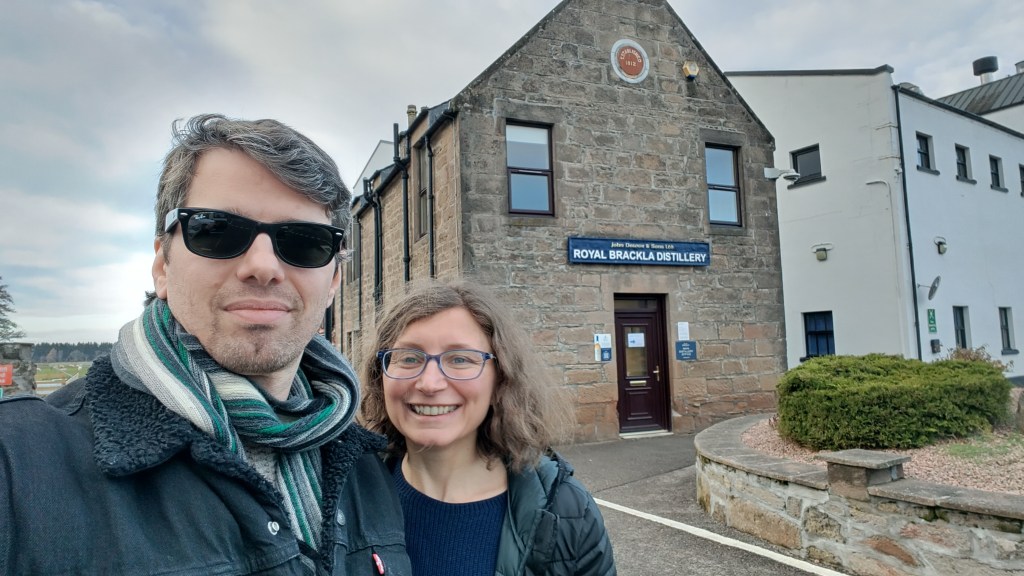
Here we are, ready for the tour.
It was a cold and sunny day, with some clouds, and being the end of November in the Highlands, at 2pm the sun was already starting to go down. When we arrived at the distillery, it was still caressing the landscape with a beautiful light – a fantastic atmosphere. We parked near a lovely old brick building, which hosts the distillery offices. The staff set up a room in a building just next door, with a big screen and a pop-up shop; as we checked in, they gave us a high visibility vest. We were accompanied on tour by Mike, Matthew, Luke and the distillery manager, who walked us to two recently renovated ponds, holding the water for cooling. At the end of the second one there is a wooden deck made from a former washback. From there, we could see a flock of mallards, permanent residents of the pond.
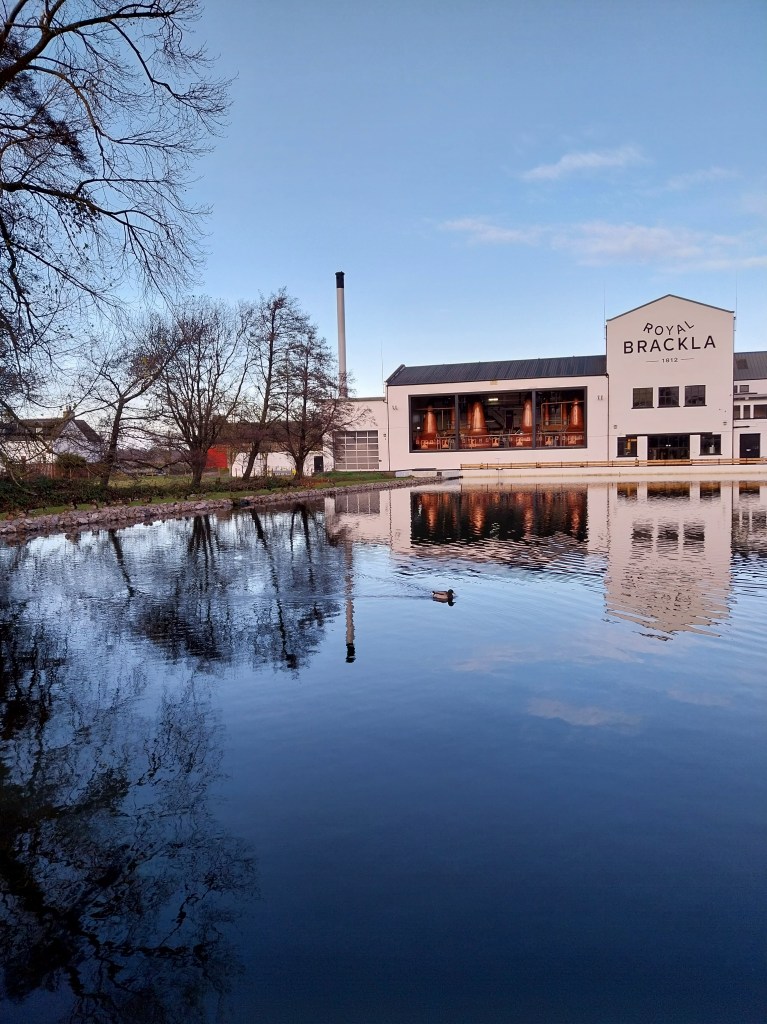
Such a beautiful day.
While on the deck, Mike talked about the history of the distillery: founded in 1812 as Brackla by Captain William Fraser, formerly in the military, but born locally. That’s quite early, compared to the many distilleries founded between 1823-24. Because of the resentment of the illicit distillers in the area, he struggled to sell his whisky locally, so he took advantage of the near Inverness port and of his connections in the army, to send it all over Great Britain, as far as London. The royal warrant, the first one in scotch whisky, was given by king Willian IV, apparently very fond of Brackla. The distillery was shut during both World Wars, and for five years during the Whisky Loch of the 1980s. When Diageo was formed in the late 1990s, they sold Dewar’s to Bacardi, including Royal Brackla and the other four aforementioned distilleries.
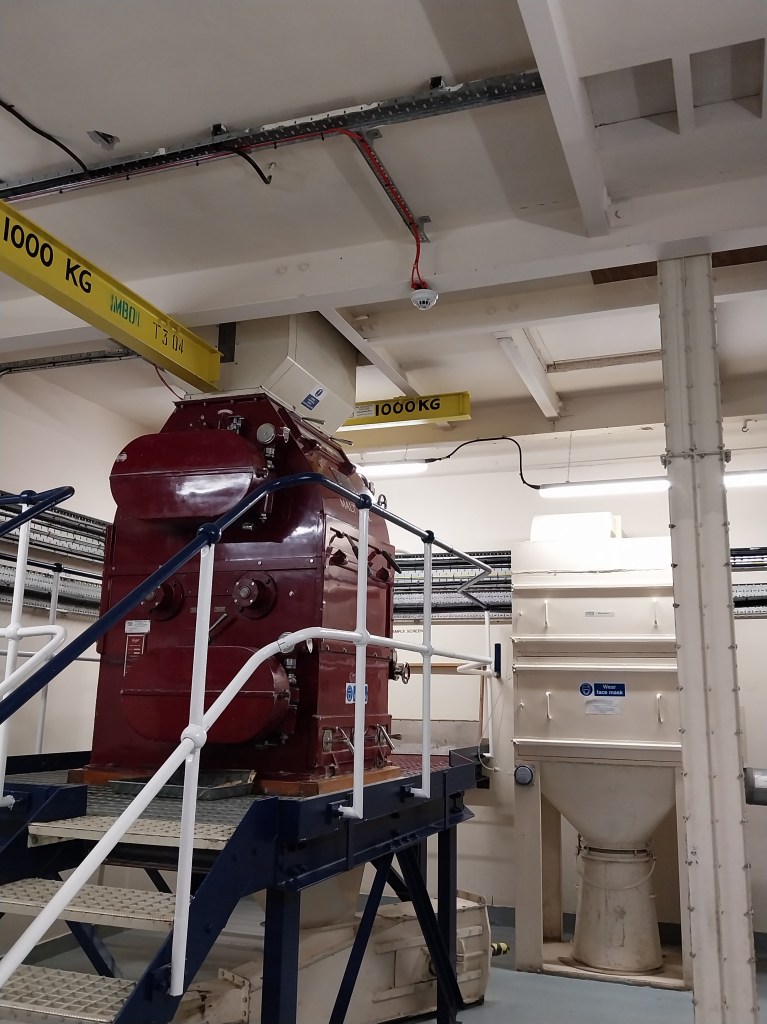
Porteus mill still going strong.
Back at the distillery, we started on the nerdy production details right away: the malt, fully unpeated, comes from Beards, mostly sourced in the Black Isle, and stored in one of the 14 malt bins. Currently it is a 50/50 blend of Laureate and Sassie, crushed into grist by an old Porteus mill, in the usual husk/grit/flour ratio of 20/70/10. They mill for 2-3 hours, twice a day, to run 11 mashes per 5-day week. They scaled production down from 7 days because of the current climate, but before they used to distil 4.4 million litres per annum. They also reduced personnel from 10 to 8 operators. Each mash uses 13-ton of grist, and the two waters (as usual, the third is used as first water in the next mash) result in about 58,000 litres of wort, which is then split into three washbacks. There are eight washbacks in total, two stainless steel ones outside the building and six wooden ones inside. Apparently the latter provide better yield.
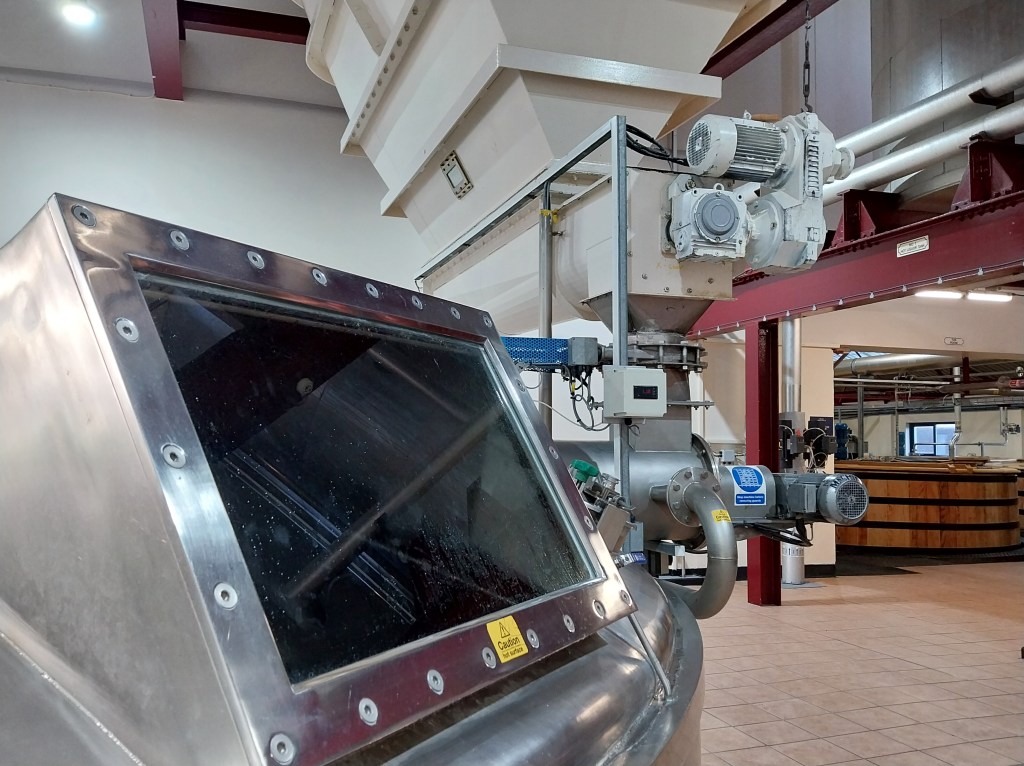
A clumsy attempt to get mashtun and washbacks in the same picture.
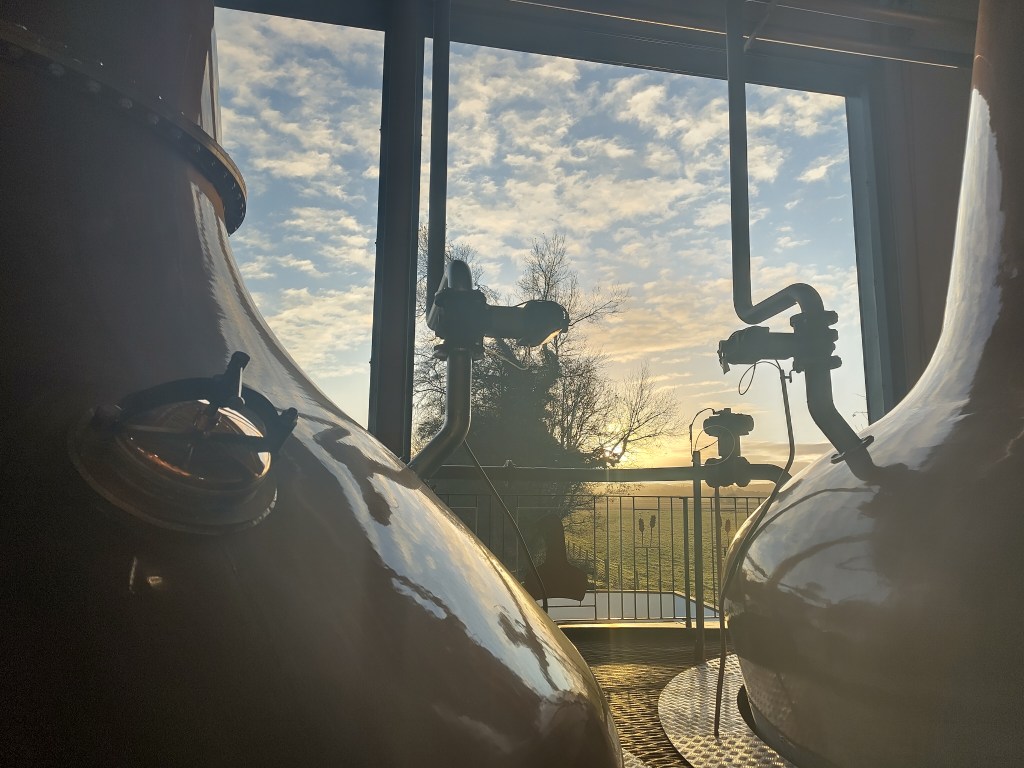
Fermentation is kickstarted by Lallemand cream yeast and lasts 60 hours minimum, but it can be around 115 hours if it goes over the weekend (considering they are working five days). The still room was probably the best part, with the four stills (two wash and two spirit stills) aligned behind the window, from which we could see the ponds. Again, because of the light, the view from there was spectacular.
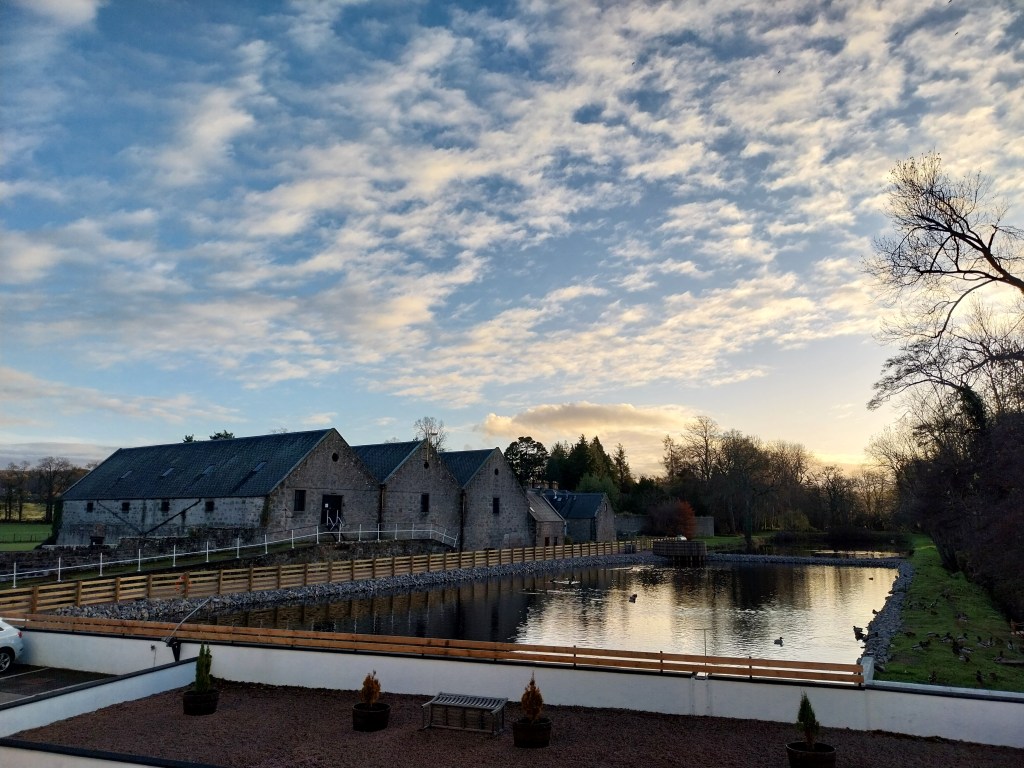
Magnificent view from the still room.
Back to technicalities, the stills’ steam is generated with either an LPG or a biomass boiler (they have one of each). About the latter, they commented that while it reduces their carbon footprint substantially, it is hard work to make it run. In the second distillation, after about 30 minutes of foreshots, they start collecting the spirit from 76%abv down to 64%, and it takes 5 hours to get about 5,000 litres of spirit. Everything is put into tankers and shipped to Glasgow for maturation, where it is filled into casks at a strength of 64% (a slight departure from the usual 63.5%). The fact that they don’t store any cask on site surprised us, as we’d seen a big warehouse on the road to get to the distillery. That is actually owned by ACEO Spirits (also owning Dallas Dhu distillery) – mystery solved.
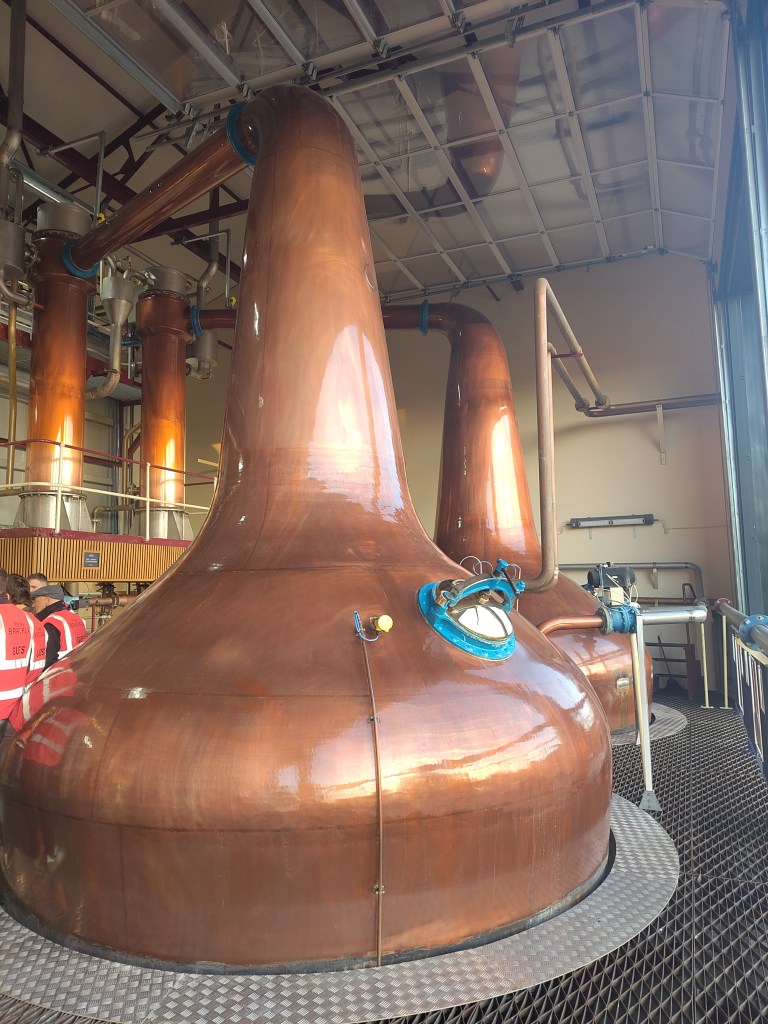
The view inside is good too.
We then entered a building that used to be a filling station, with a big dominating the space. This is where we had the tasting. To note, their single malt range underwent a revamp in 2020, moving away from fully oloroso sherry matured whisky and all bottled at 40%, with everything now at 46% (or above) and natural (no chill-filtered, no added colouring).
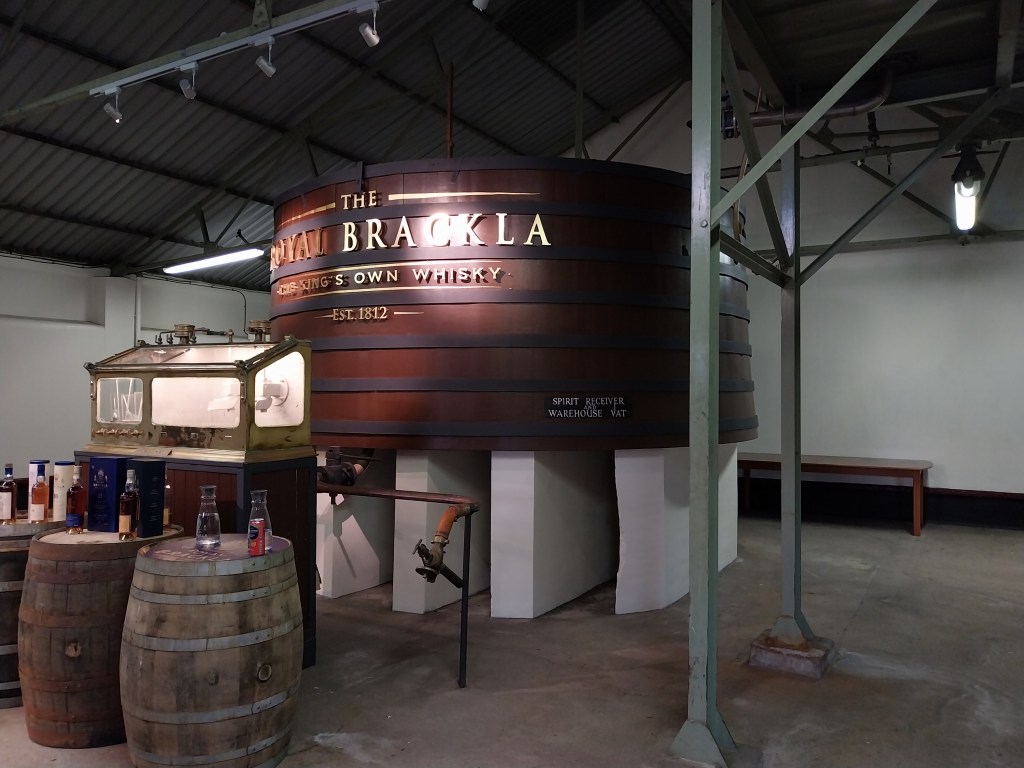
A filling station turned into a tasting room.
We started with the current 12y (46%), a mix of ex-bourbon and finished in Oloroso casks, a very solid dram. Then, we tried the 18y (46%, finished in Palo Cortado), which was stunning, and then we tried the 21y (46%), from three types of sherry casks: Oloroso, Pedro Ximenex and Palo Cortado. With the final dram, we went up in abv: 54.1%, a 20y Exceptional Cask bottling, matured in refill sherry casks but finished (again) in Palo Cortado. All great drams, but the 18y won it for both!
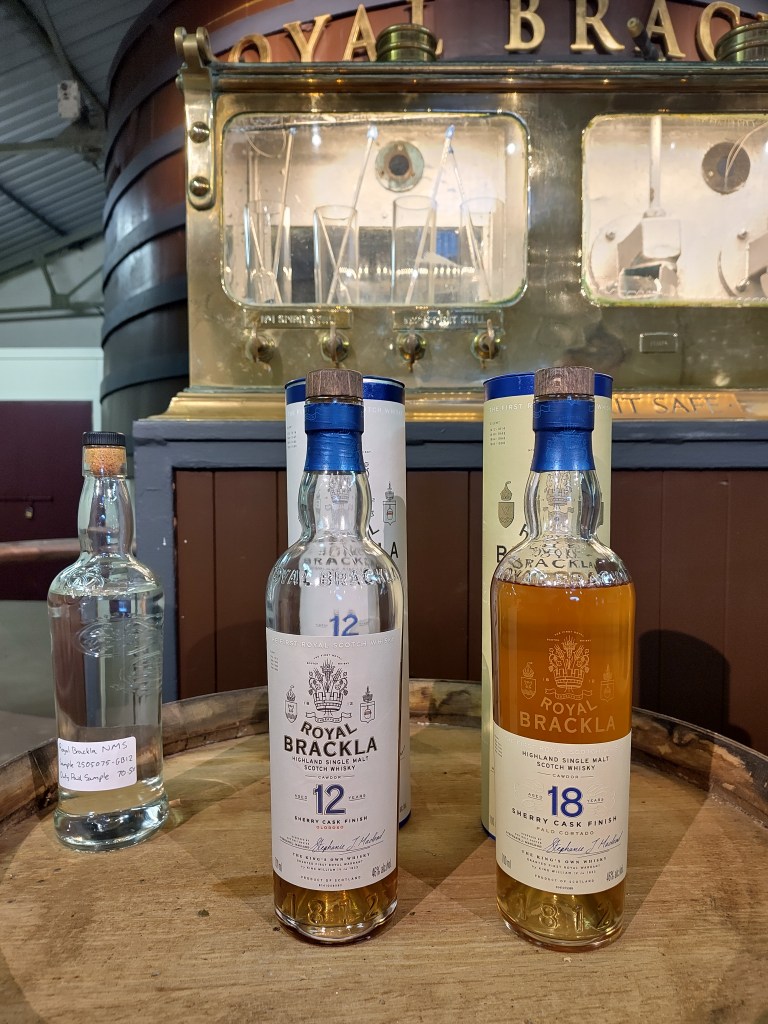
Strong start of the tasting.
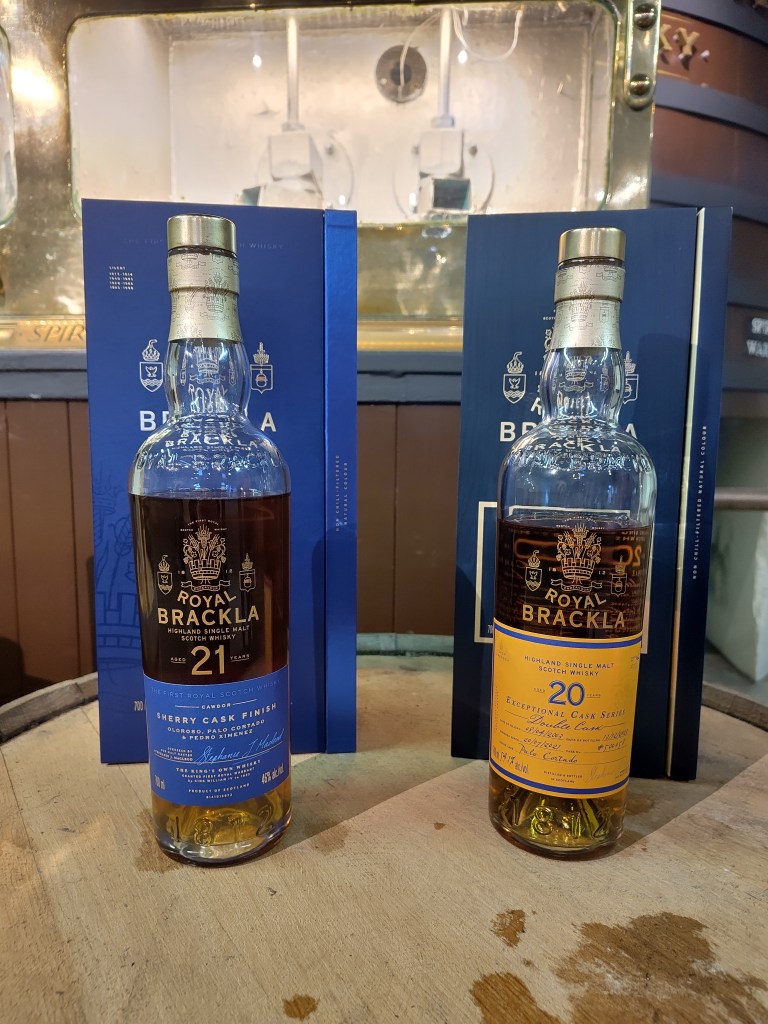
…and we couldn’t complain about the end either.
That was the end of our day, as we slowly drove back to Edinburgh. When we first learned about these tours, we were a bit worried about the price, especially considering some recent expensive distillery visits. The fact that it was £20 per person (in line with the other Dewar’s tours at Craigellachie and Aultmore during the Spirit of Speyside) shows how other producers are literally taking the piss! On top of a fantastic tour of a very pretty distillery, with a great team showing us around and answering our nerdy questions, they offered us a fantastic tasting with an array of delicious drams. We were already aware of how good Royal Brackla could be, but it now has a special place in our hearts (and livers).
Stay tuned for another distillery visit in the north east, this time much eastern, coming next week! Until then, slàinte!
Royal Brackla Distillery Tour
Price: £20.00 pp (November 2025)
Duration: 2hr
Tasting: Royal Brackla 12y (46%, Oloroso finish), 18y (46%, Palo Cortado finish), 21y (46%, Oloroso, Palo Cortado, PX finish), Exceptional Cask 20y (54.1%, refill Oloroso + 2y Palo Cortado finish)
Target: everyone
Value for money: great!
Highlights: the view from the still room, but the distillery in general
Recommended: absolutely, keep an eye on their socials
Link: https://www.royalbrackla.com/

 Dramming around