#64 Eden Mill distillery

Born again in Guardbridge


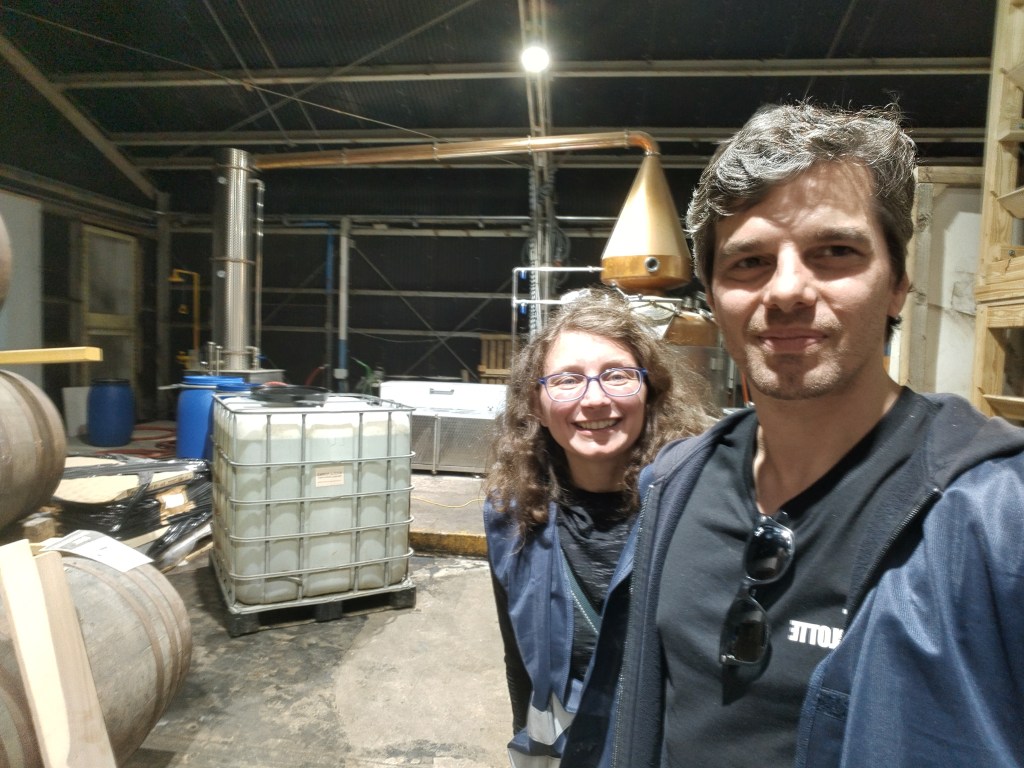
TL; DR: Another blog post with a special guest, this time our friend Isotta. She arrived a day before the Whisky Fringe, and before that we visited the rebuilt Eden Mill distillery, just outside St. Andrews. The new building is stunning, and the process has radically changed compared to the original configuration. The tour ended with a dram to go, as the visitor centre was still WIP then.ย 

It’s always nice to have friends and family overโ€ฆAnd when they donโ€™t mind a dram or two, even better! That was the case for Gianluigiโ€™s youngest brother, Edoardo, who came with us on a few trips already, on Islay & Jura, Speyside and recently, in the Northern Highlands. Another great trip was Gianluigiโ€™s weekend in Campbeltown with his pal Roberto, back in April. Although weโ€™re comfortable in our bubble of whisky enthusiasm, visiting a distillery, or more generally discussing about whisky with people who like it but are not nerds is often refreshing and helps gain new perspectives.

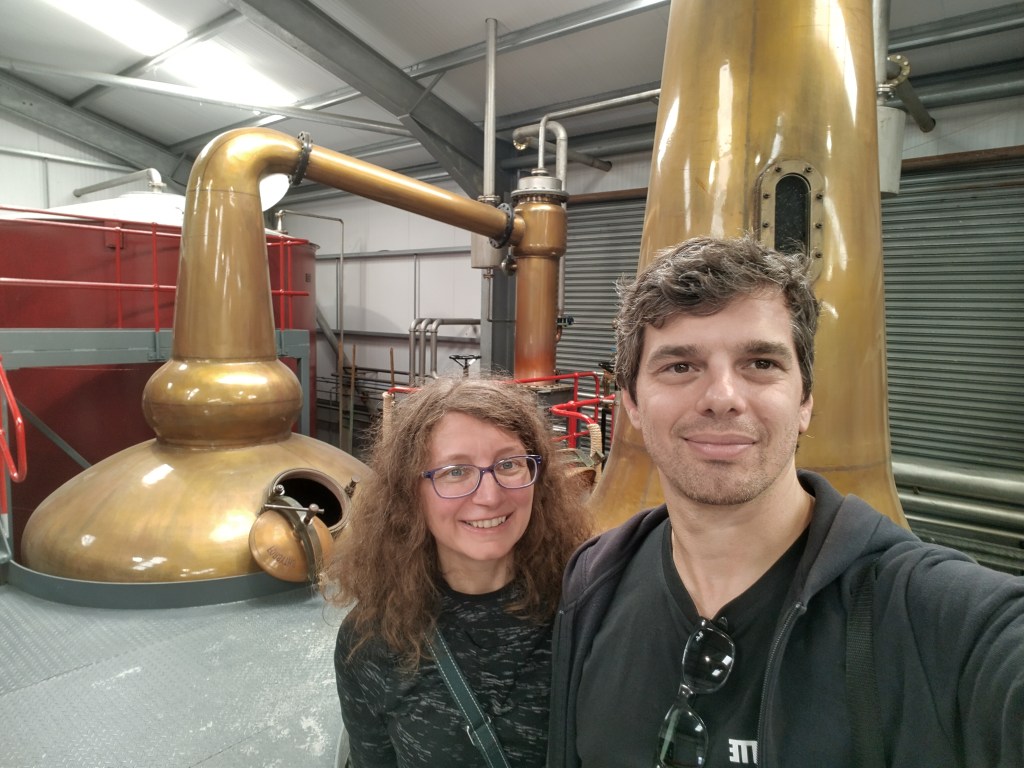
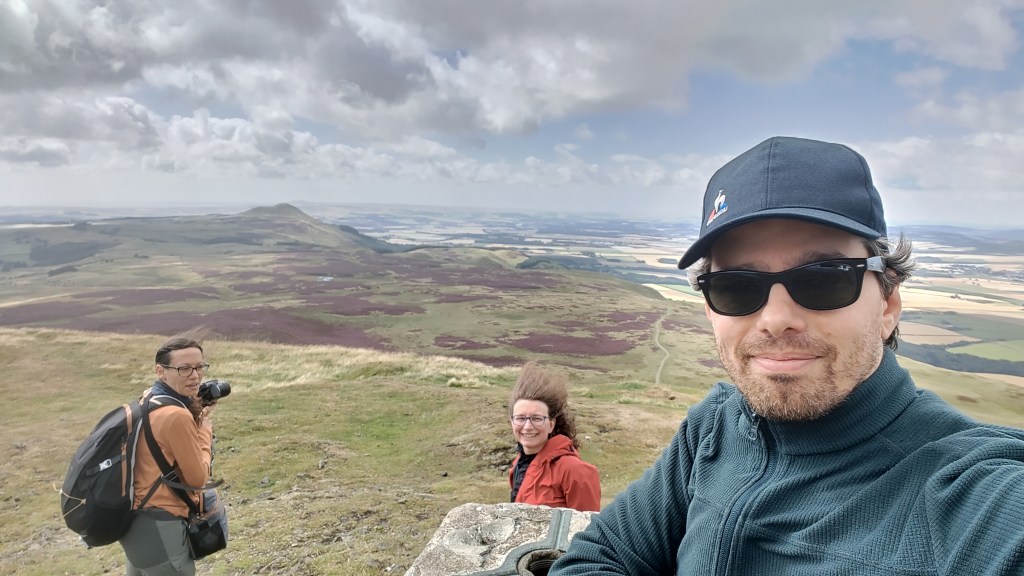
Another good friend who enjoys her drams is Isotta: like Edoardo, sheโ€™s a teacher, so she can only come over for holidays in summer. This one wasnโ€™t the first time we did something related to whisky with her: a few years ago, we went to a very boozy dinner at the Vaults. Two years ago, we opted for a classic warehouse tasting at Deanston. This year we planned something different: we met in Fife and spent one night in Falkland, a very cute wee village at the bottom of the Lomond Hills. We had a good meal at the Covenanter Hotel, the only pub currently operating in town, ended with a flight of the new and local independent bottler Saltire Rare Malts. In the morning, we woke up early and climbed the West Lomond Hill after a nice walk, although the strong wind on the summit make it less enjoyable. Back to Mr. Vantastic, we drove 35 minutes to reach our destination: the newly built Eden Mill distillery.
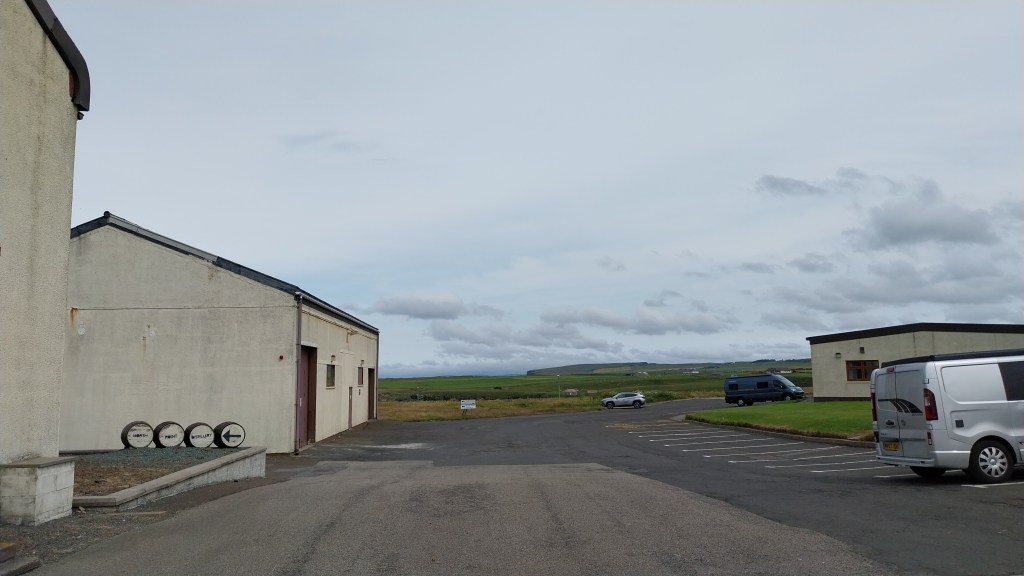
We reached it quickly in time for the tour, despite Google sending us to the wrong entrance. The site is near the mouth of the river Eden, in a village called Guardbridge, to the north of St. Andrews, near Leuchars. Before the modern redevelopment, the whole area was a paper mill, but before that, itโ€™s here that the Haig family produced whisky until around 1860. Today the site is mostly occupied by the University of St. Andrews, including a biomass plant, part of ongoing research into alternative fuels and carbon capture. The old distillery used to be on the same site, in a building which now hosts university offices.
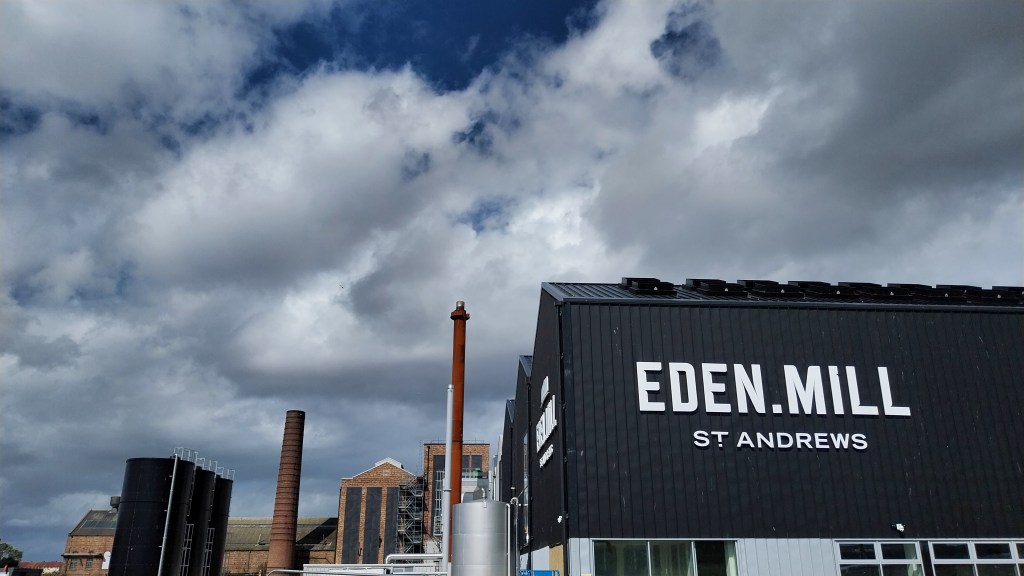
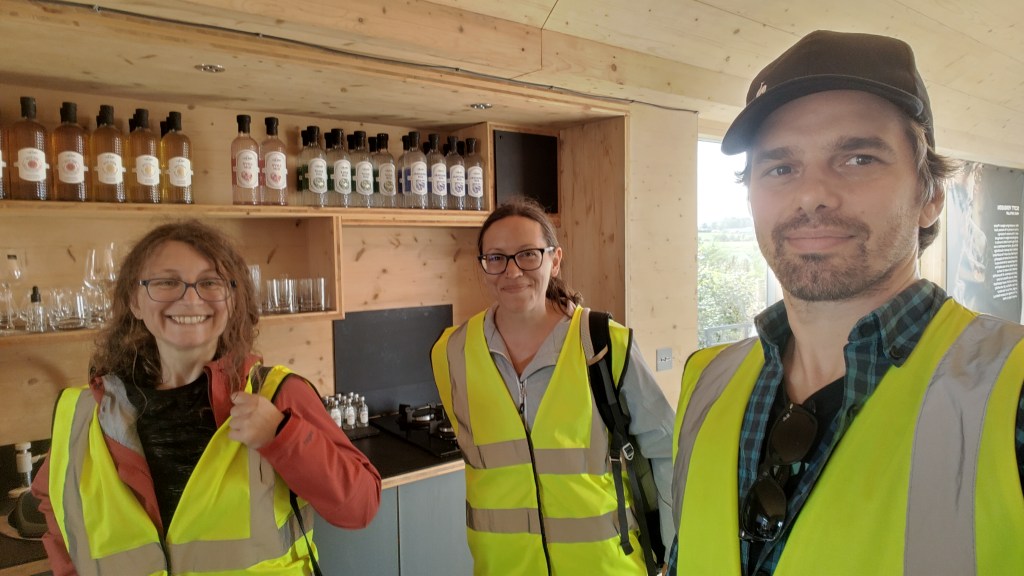
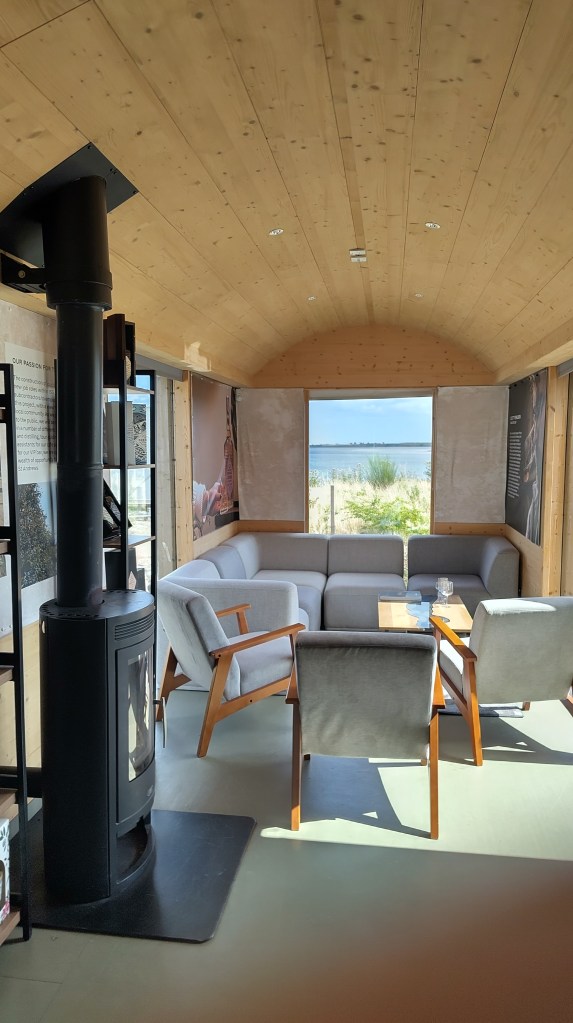
We did the Behind the Scenes tour, the only experience available at the time as the visitor centre was not ready yet (August 2025). It included a tour of the distillery, a whiff of the newmake spirit and a 5cl of their blended malt Guardbridge, which has Eden Mill malt from the old distillery in it (and it looks like itโ€™s mostly from ex-bourbon casks). They now (September 2025) have new experiences, a couple for gin lovers, and various for whisky enthusiasts, ranging from ยฃ26 to ยฃ150pp. We were welcomed inside a bothy (both a small office and a pop-up shop), by Finlay and Jude: the former was our guide for the day, the latter the driver who took us inside an Eden Mill branded van to the courtyard of the distillery, on the other side of the complex (the same side Google had erroneously sent us before).
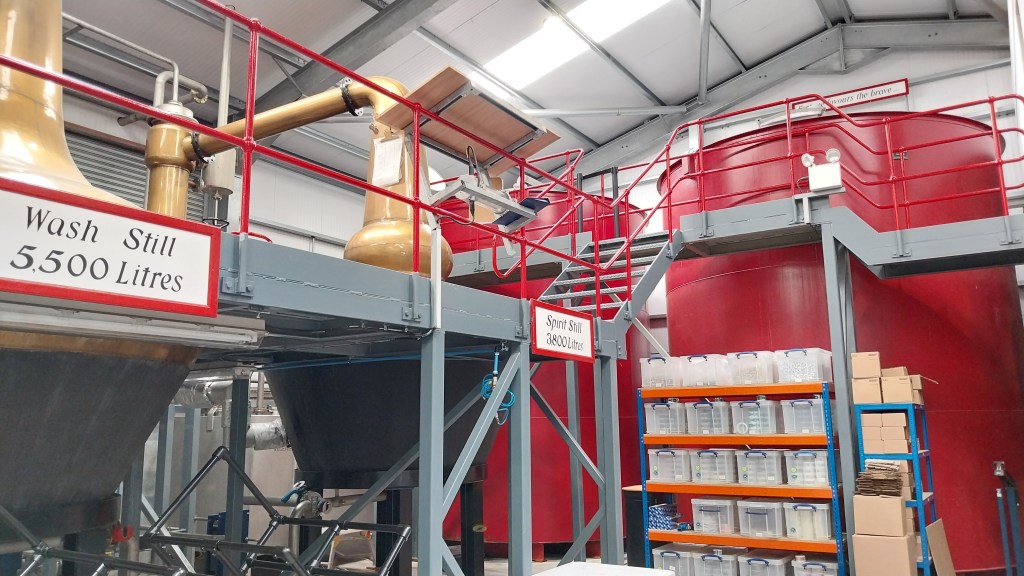
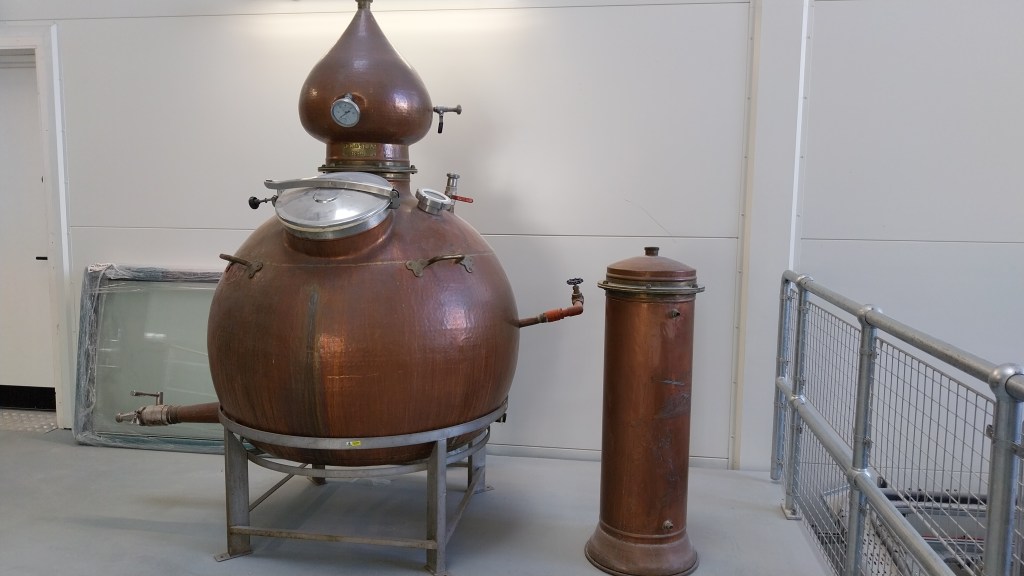
The distilleryโ€™s goal with the new setโ€‘up is a fruitier, more floral spirit than before, and that intention is reflected in the production choices. For comparison, they kept the old 900-litre still, which is dwarfed by the new ones. The theoretical capacity could reach up to 1 million litres of alcohol per annum, but Finlay told us this is unlikely. At first, they were running 3 distillations a week to catch up with the casks they sold before, but it is now only one per week. One distillation, however, can fill up to 68 casks at 68.5%, which means that in about a month and a half they can produce the same amount of whisky that was produced in the old distillery between 2014 and 2018 (about 420 casks).
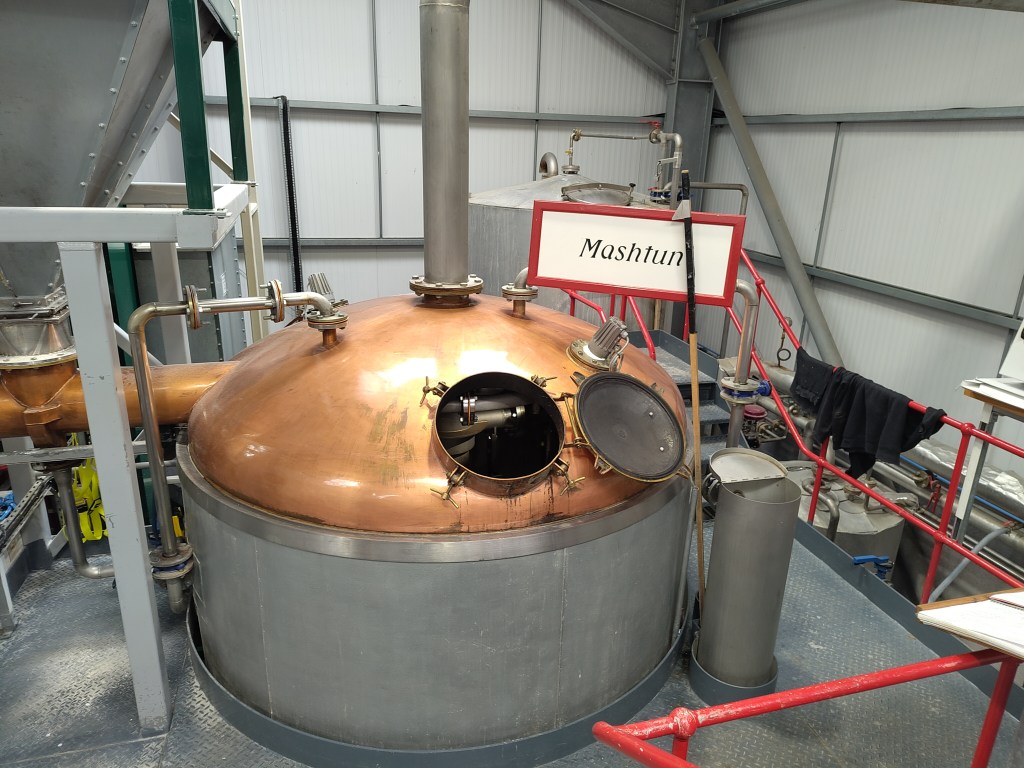
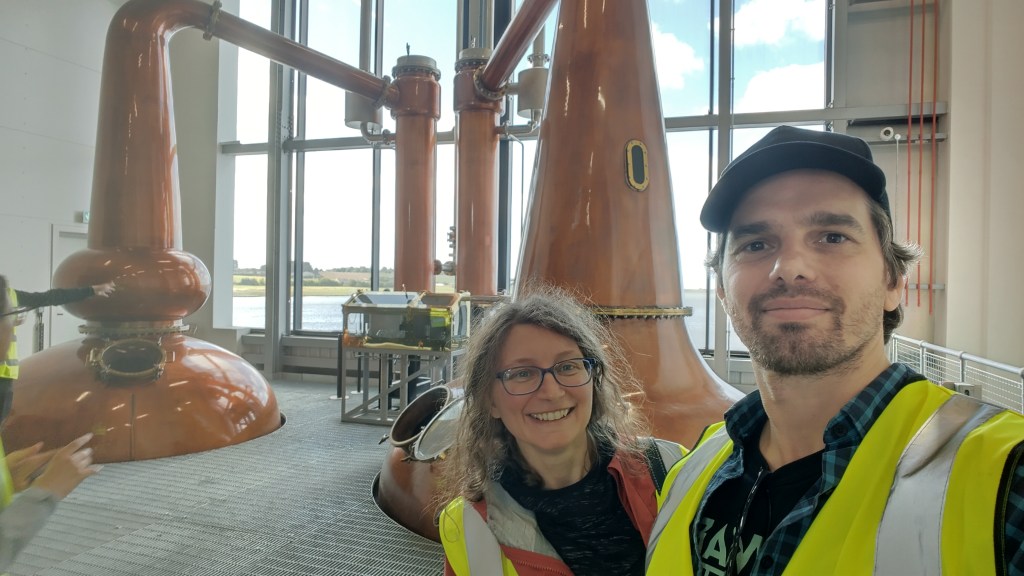
The barley variety is Laureate and is grown in Fife, sourced within a 50-mile radius to keep things local. Mashing is done with three runs of water at increasing temperature, and the draff is sent to local farmers. Fermentation is run in one of the six stainless 15,000-litre washbacks and is longer than before, around 72 hours, using Type M distillersโ€™ yeast supplied by Kerry via a local distributor. The extra time is to let fruity esters develop, to get the fruitier spirit theyโ€™re aiming for. The new stills are steamโ€‘heated via a gas-fired boiler, with a 15,000-litre onionโ€‘shaped wash still and an 11,500-litre spirit still with a pronounced boiler bulb to enhance reflux. In the second distillation, the cuts are between 72% and 63.5%abv.
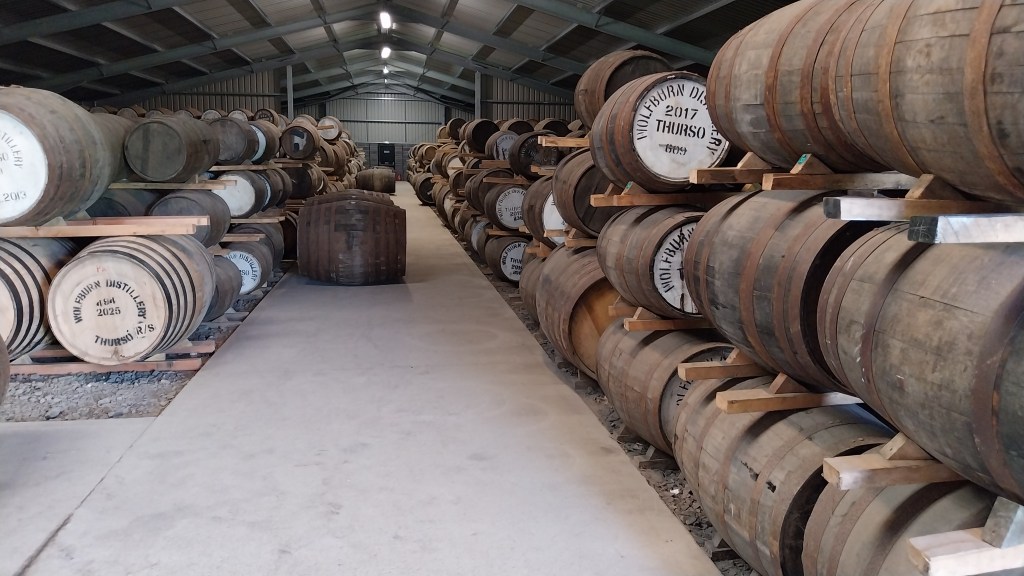
Three external water tanks help with cooling and process resilience. Casks are filled on site and then moved off site for insurance reasons. Long-term storage is palletised, with one of the warehouses in Glenrothes. The cask makeโ€‘up is mostly exโ€‘bourbon with sherry casks used more for finishing, roughly a 70/30 split for now. However, the first two casks were Scottish virgin oak. Worth noting that theyโ€™re collaborating with the Scotch Malt Whisky Society, and theyโ€™re releasing a small number of casks for private sale. They also produce gin from neutral grain spirit distilled with botanicals. There are three gins in the range, leaning on locally sourced botanicals in line with the whiskyโ€™s localโ€‘first ethos.

At the end of the tour there was no tasting, because โ€œthe bothyโ€ didnโ€™t have the required license to serve alcohol, so we got our sample of Guardbridge Blended malt to go. The other expressions on sale were an ex-Bourbon and a Sherry matured single malts, and a range of limited releases (in fancy boxes), some of which single casks. For a proper tasting, Finlay and Jude suggested us their shops in St Andrews or ย Edinburgh, near the Johnny Walker Experience, but we passed on that occasion. We were quite happy anyway: we were impressed with the new distillery, and what they are doing seems very promising. We were not massive fans of their previous releases (at least, the few we tried), but judging from the newmake spirit, the direction of travel is very good.
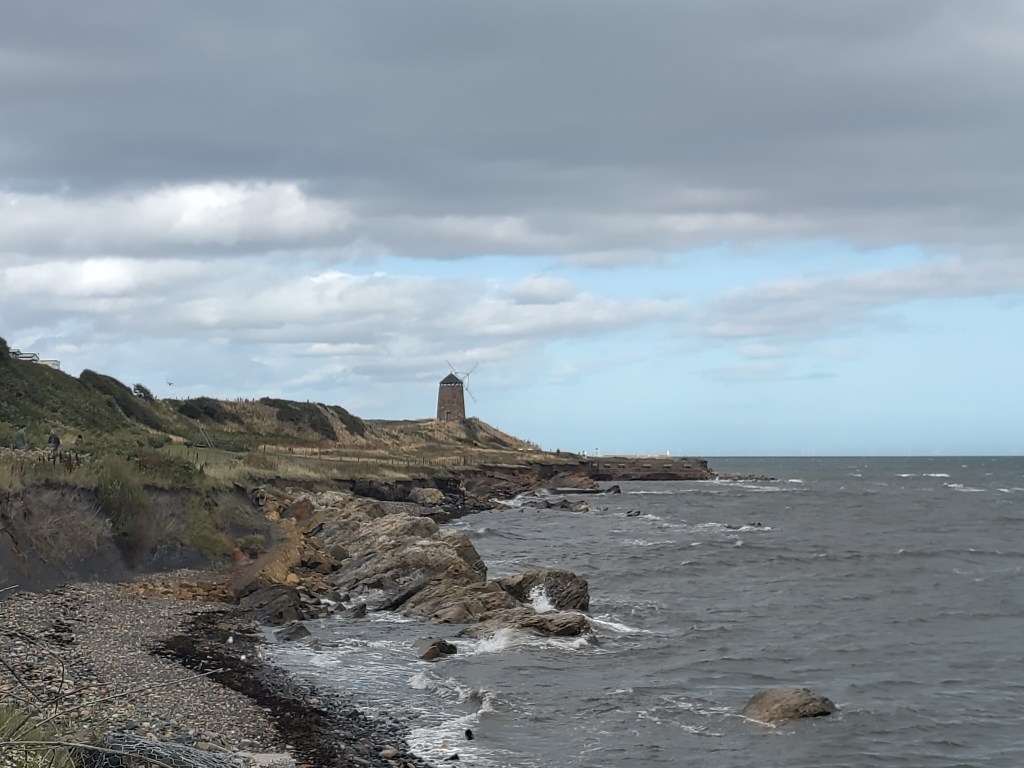
After the distillery, we kept driving along the Fife coast, on the East Neuk: the weather was decent, so we enjoyed the wee coastal villages, in particular St. Monans, where we stopped for tea and cake. Thankfully we drove back to Leith when the Oasis crowd were already settling at Murrayfield, so we didnโ€™t find much traffic. To close off a good whisky weekend, the day after we went to the Whisky Fringe festival. A first for Isotta, who really enjoyed it. As always, it was a joyful and great whisky experience.

Stay tuned for our attempt to attend the Hebridean Whisky festival, in a couple of weeks! Until then, slร inte!


Eden Mill Behind The Scenes Tour

Price: ยฃ15.00 pp (August 2025)

Duration: 1hr

Tasting: 5cl miniature of Guardbrige Blended Malt (46%)

Target: anyone

Value for money: good

Highlights: the new distillery

Recommended: yes, but this tour is not available anymore, follow the link for more alternatives

Link: https://www.edenmill.com/

#63.4 As north as you can get (on the mainland)

Pointing north to the bunker


TL; DR: Our final distillery visit in this North Highland trip was to another new distillery: North Point! The location is very fascinating, and during the engaging tour, Alex walked us through their process in a distinctive visit that left us excited. After the visit, we visited peat bogs, beaches, and waterfalls, an ended the trip with a cheeky visit at Tomatin. 

(missed Part 3/Part 2/Part 1?)

The Forss Technology Business and Energy Park is only a few minutes driving from Thurso, the access road is on the right side of the A836, if youโ€™re driving westward. As we approached it, the site looked more like a wind farm, as it’s surrounded by turbines. We’d done our homework before, and we learned that the site, built in the early 1960s, used to be a U.S. Navy radio station active during the Cold War. Not only that, but after the closure of NAVCOMMSTA Londonderry in 1977, it became crucial to monitor the North Atlantic and the North Sea until November 1992, when it ceased operation and the Americans left. The site maintained some activity because of some of the existing facilities (basketball court, bowling alley, swimming pool, baseball diamond), but then in 2003 it was transformed into a business park. And in 2020, North Point Distillery moved in!

We learned about North Point because of their other spirits (more on this later), but their inclusion in the 2025 Malt Whisky Yearbook meant that they started distilling newmake spirit for whisky, sparking our curiosity. The visit almost didnโ€™t happen, because the Foundersโ€™ tour (the in-depth one, but they also have a shorter option for ยฃ12) was not scheduled on Saturdays. However, we’d noticed that the shop was open, so we got in contact and they agreed to give us a tour! This kindness is not a given, as other distilleries would have just turned us away, so many thanks to them! As we arrived Alex MacDonald, one of the founders and our guide for the afternoon, spotted us right away, and introduced himself while we entered the Murkle building. This is where their offices, shop and part of production are. Despite his surname, Alex is Canadian, and came to Scotland to play rugby. After getting an MSc in Business, he founded the distillery with Struan Mackie (native of the North Coast). The company is independently owned, and they recently obtained the B Corp Certification, to testify their effort in sustainability.

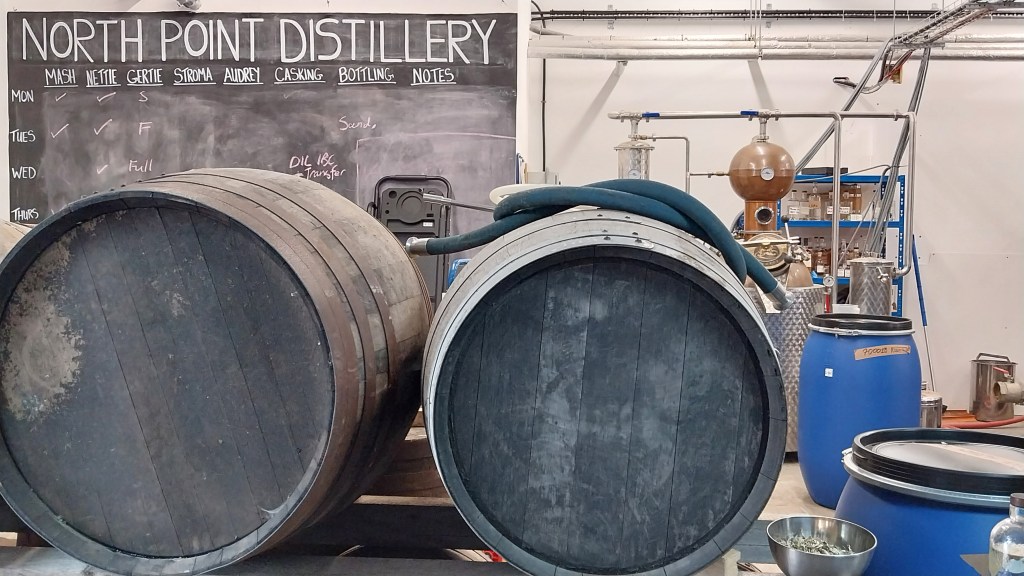
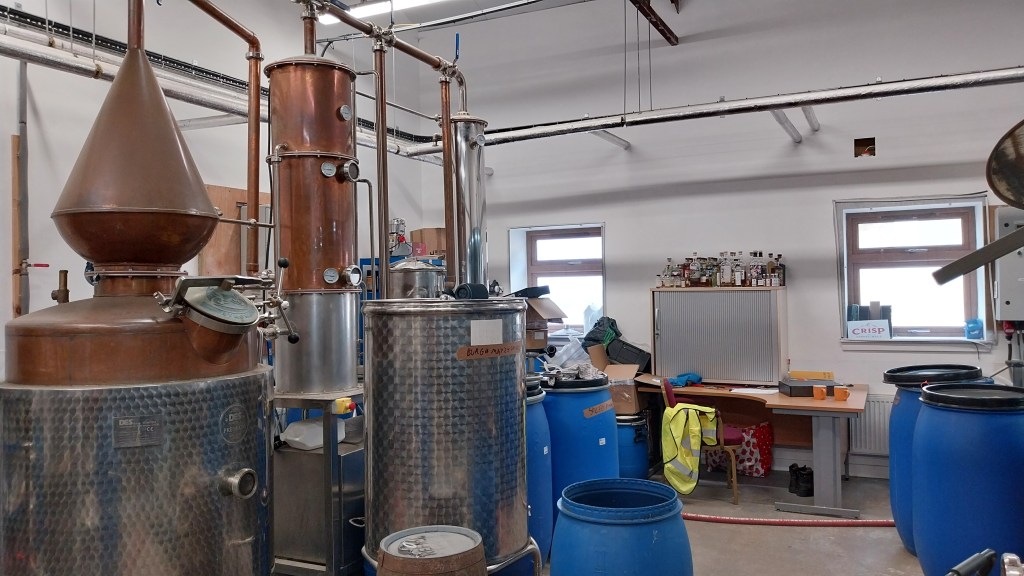
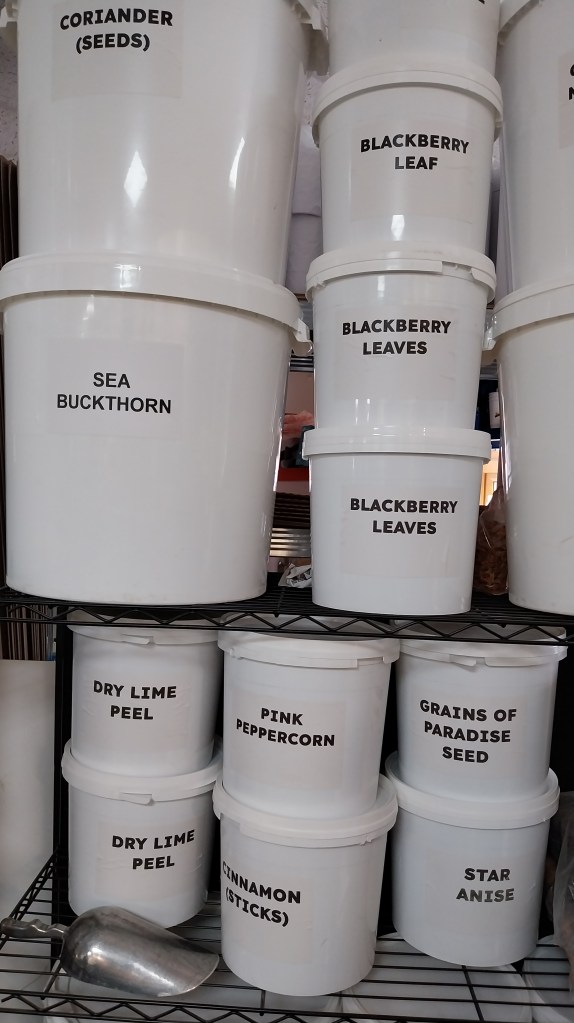
The part of production near the offices is mostly dedicated to the other spirits, although one of the whisky stills is also there. The stills are all named after members of their families (some still alive, who apparently complained) and they are custom made by a Serbian company. They are all electric, not very common in Scotland. Right in front of the stills, we could check out their massive collection of botanicals, while tasting three spirit samples each (excluding Gianluigi, the driver). They started in 2020 with one 500-litre still, Sandy Stroma, to produce their Highland Rum and their gin, and they later added Audrey, a small experimental one (for smaller batches as well, including for clients).

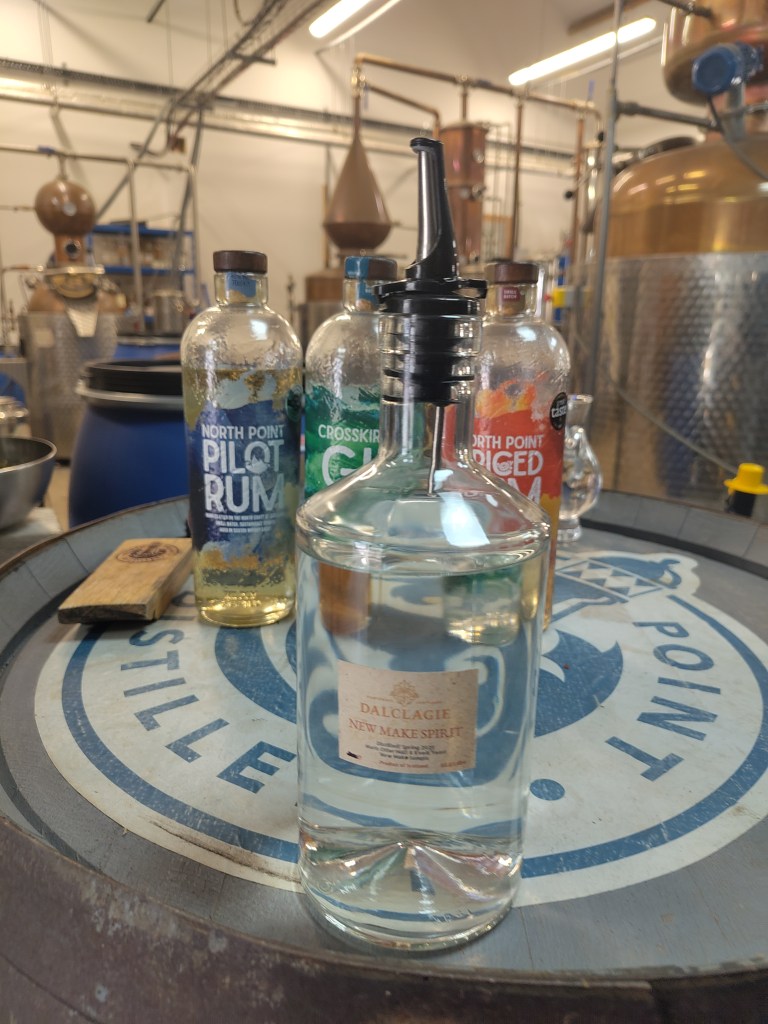
For the rum they buy molasses from Barbados, and they ferment them with Kviek Norwegian ale yeast for a week, before running it through the still. Their main product, delicate and sweet, is the Pilot Rum (aged for 1-year in ex-whisky casks), named after the pilots of the Pentland Firth, who used to guide bigger ships through those dangerous waters. They later added the Spice Rum (43%): for this, they found a recipe (including cocoa, orange, vanilla pods, and other 18 botanicals) that tries to replicate the experience of drinking rum while eating a Terryโ€™s Orange. In the same stills, they also produce the Crosskirk Bay Gin, made with juniper imported from Tuscany (because of a higher concentration in oils), Szechuan and pink peppers, and other botanicals. Edoardo particularly appreciated the gin and its oiliness, the last of the three-spirit flight.

As we were saying, one of the whisky stills is also in the same building: Gertie, the 1000-litre spirit still. While Alex explained that they obtained the license for whisky in 2021, he gave us a newmake spirit sample of what will become Dalclagie Single malt. Until 2023 they mostly did research and development, including 40+ mashbills before finding the one they wanted for their malt.

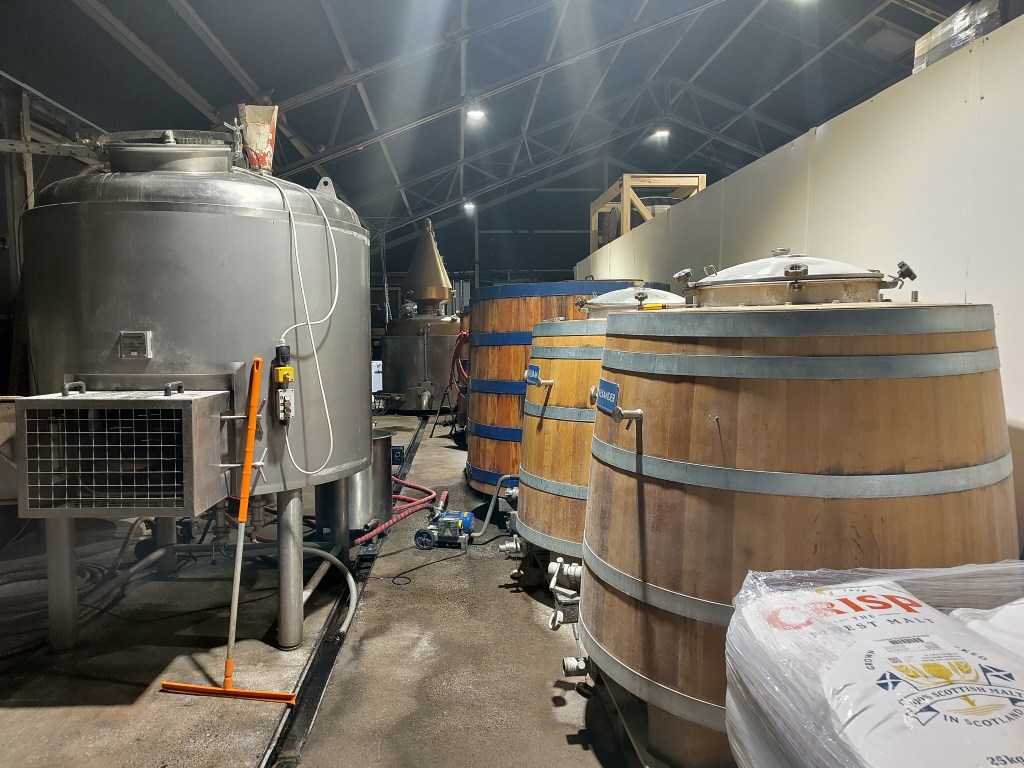
Alex then walked us to where the rest of whisky production is, inside an adjacent, much bigger building. They get pre-milled malted barley from Crisp, mostly Maris Otter, processing 4 tons every two weeks. They are still experimenting a lot, in particular around Christmas, with both barley and yeast: a fun time for their distiller Greg. They also have plans to trial some heritage โ€œbourbon-styleโ€ mash recipes. Mashing is carried out in a 2000-litre mashtun for 9 hours, while they have six wooden washbacks: two Wilhelm Elder, and four former vatting used by Diageo for the Johnny Walker Blue label (one of them is called Angus). We wondered if they were still haunted by the whisky of the ghost distilleries that went into that. After 7 to 10 days of fermentation with Kviek yeast, they finally run the first distillation in the 2000-litre wash still, Nettie.

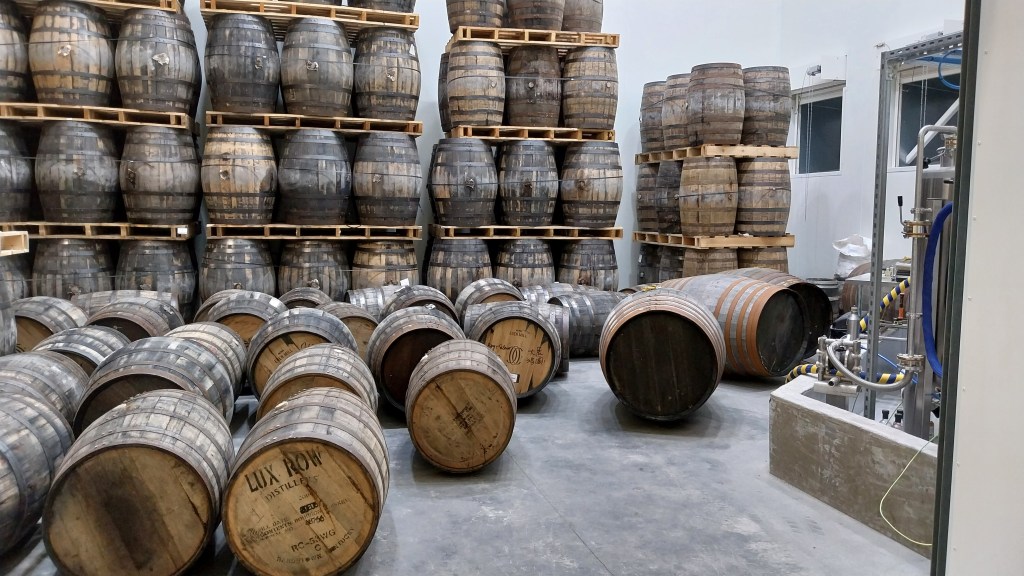
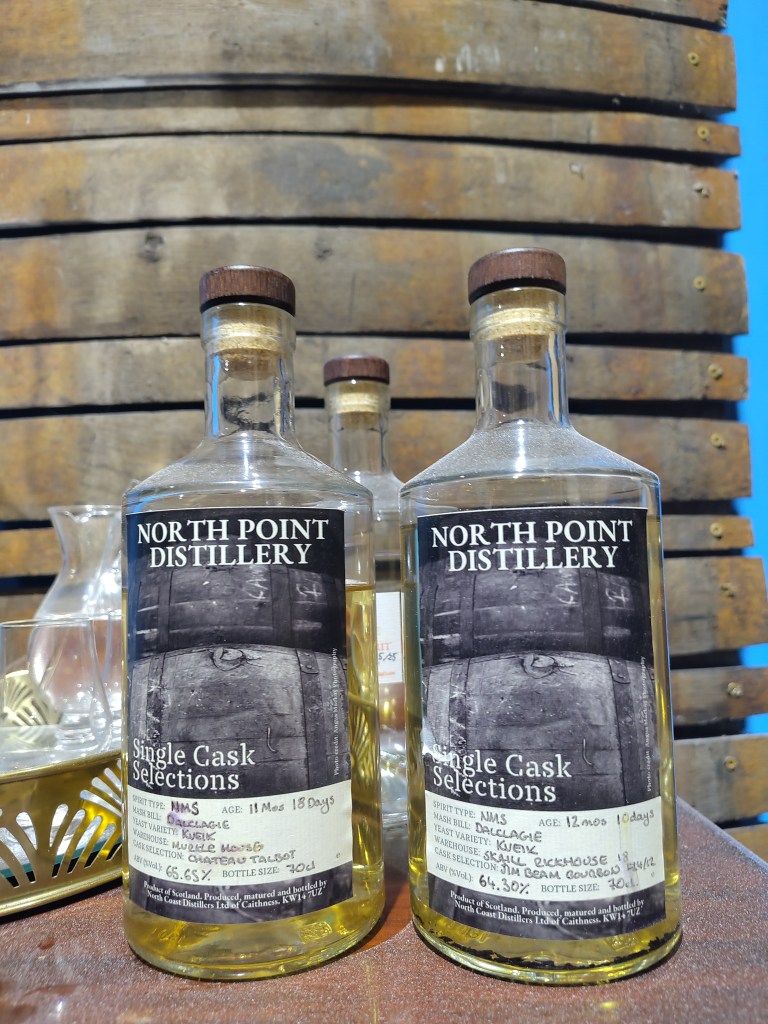
Then it is moved into the building we were in before, for the final distillation, with Gertie: cut points are always made based on aroma and taste. At the moment they store most casks (palletised) in the same main production building. Among the casks, a small cabinet with some bottles: in fact, the Foundersโ€™ experience included a sample of three aging malt spirits, one chosen by each of the co-founders, and one chosen by the distiller. Two of them were an 11-month-old Chateau Talbot red wine cask (at ~65%), and a 12-month-old ex-Jim Beam bourbon cask (~64%). Despite the young age they were very different, the first one richer, the latter carrying a lot of hints of newmake spirit. The third cask sample was not available on the day, so instead Alex treated us with a delicious E.H. Taylor Bottle-in-bond bourbon (50%abv).

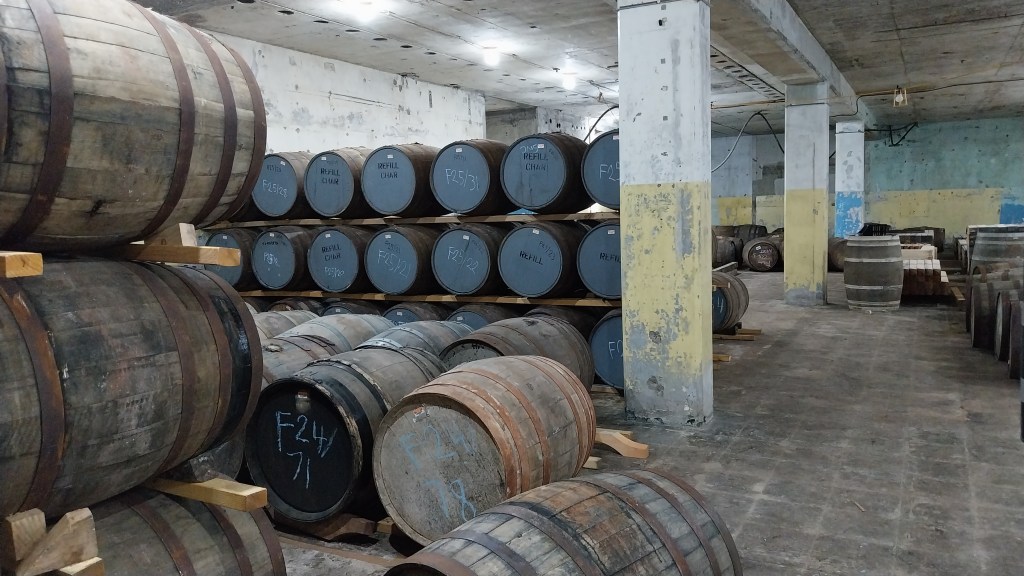
Then, before the tour ended, it was time for a surprise: a trip to the bunker. Being former military buildings, most of them come with a bunker, and they didnโ€™t let go the opportunity to use it for cask maturation (stored horizontally there). We’d never been to a bunker before, so it was a great experience, and we’re very curious to see how the whisky will mature there, compared to the main warehouse.

As we left the production/warehouse to go back where we started, Alex pointed us to some buildings they are trying to acquire for potential expansion: exciting times for them. Back at the shop we had a rugby chit chat: despite Alex used to be a hooker, Edoardo a fullback, and Gianluigi a referee, they seem to have (surprisingly) gotten along, eheh. Overall, we really enjoyed the time spent there, and Alex gave us a great tour. The project is interesting and considering how well they are doing with the current spirits, their single malt will be one to keep an eye out for. The tasting in the warehouse and the visit to the bunker were the cherry on the top, which made this tour a bit different and innovative.

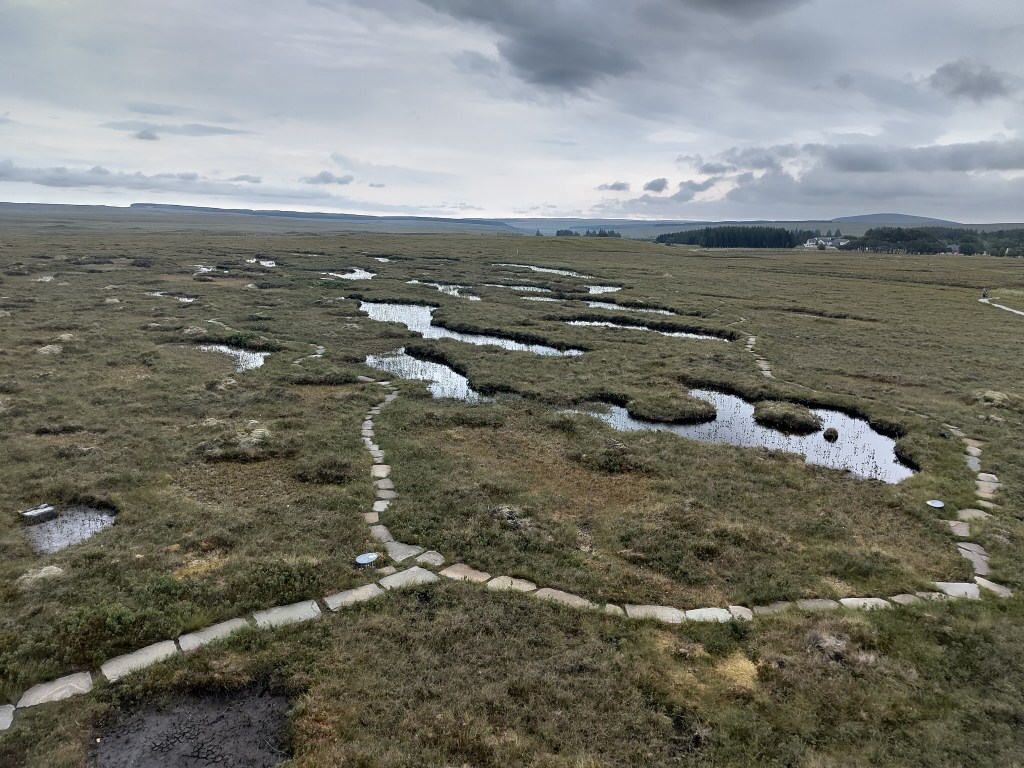
We soon left the site, under an overcast sky, driving towards the Forsinard RSPB in the Flow Country. This is a truly majestic landscape, one of the biggest peatlands in Western Europe, now a conservation area: peat bogs are more efficient than forests to capture carbon dioxide. We also got soaked by a storm, so we rested a bit inside the RSPB visitor centre, getting some warm drinks in exchange for donations, and watching the full half-hour video. Back on the road, we drove south inland, and then north-west towards Tongue. We looked for a place to stay trying to avoid the midges: we failed.

The day after we continued on the North Coast 500, stopping at the Smoo Cave and in Durness for some shopping, and then for a fantastic seafood late lunch at the Kylesku Hotel, in the namesake village. We finally stayed in a quite pricey (ยฃ50 for one night!) but scenic campsite just north of Ullapool. We managed to have dinner outside, but as soon as the wind calmed, midges came back, so we had to retreat in the campervan where we spent the night sipping some Springbank samples: one of Edoardoโ€™s favourite, so weโ€™re always sure to have some for when he comes over.

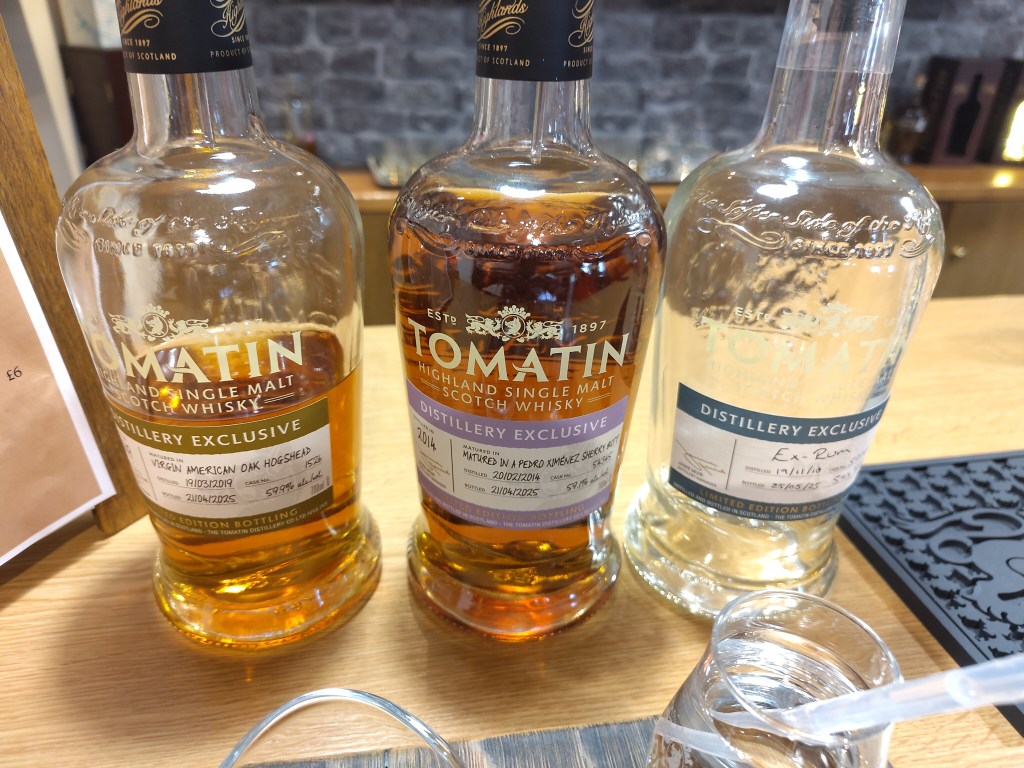
The final day, after a hot breakfast in Ullapool, we drove straight back to Edinburgh, with a stop for a walk at the Corrieshalloch Gorge (very scenic, just a shame for theโ€ฆmidges!), and a final last stop at Tomatin distillery. There, Edoardo and Gianluigi shared a flight of their bottle-your-own drams (pricey, but generally good) and one of Cu Bocan (their lightly peated malt), plus a couple of sherry expressions: the Manzanilla and the PX finished ones were particularly delicious. After that, we slowly drove back to Leith, where we arrived in time for a quiet dinner and a final dram.

First, we loved this trip, and we had a fantastic time up in the Highlands. Landscapes are fantastic, and although we had been there before, this time we really appreciated why it became so popular. Itโ€™s really a magic place. Second, the distilleries: we had a very good time up north. Apart from Pulteney, which was a bit too corporate and impersonal (not the guideโ€™s fault), Wolfburn, which was the other one well established, was just fantastic. The two new distilleries, 8 Doors and North Point, were both great as well – we were walked through the detail of their projects, and people’s passion was contagious. During both visits we could try their newmake spirit, and although someone might think that it is a given for new distilleries, after visiting a number we can say that it really isnโ€™t. Kudos to them, and weโ€™ll patiently wait for their single malt whiskies.

After a pause, weโ€™ll be back with a Fife experience! Until then, slร inte!


North Point Founders’ Tour

Price: ยฃ30.00 pp (July 2025)

Duration: 1hr (in theory, but it was longer)

Tasting: Pilot Rum (40%), Crosskirk Bay Gin (45.1%), Spiced Rum (43%), Dalclagie Newmake spirit (63,5%), 11m spirit ex-wine cask (~65%), 12m spirirt ex-bourbon cask (~65%), and we had a dram to replace the third spirit sample (not available on the day, see text)

Highlights: the bunker and the warehouse tasting

Target: whisky and spirits enthusiasts, and Cold War nerds

Value for money: good

Recommended: absolutely

Link: https://www.northpointdistillery.com/

#63.3 As north as you can get (on the mainland)

The Wolf(burn) is loose*


TL; DR: After escaping the haar in Jonh Oโ€™Groats, we arrived in Thurso for another long-due visit: Wolfburn distillery. Charlie was a very competent and knowledgeable tour guide, and we really liked the tour. The distillery is lovely, and the malts we tried were delicious: definitely one weโ€™d happily go back to.

(missed Part 2/Part 1?)

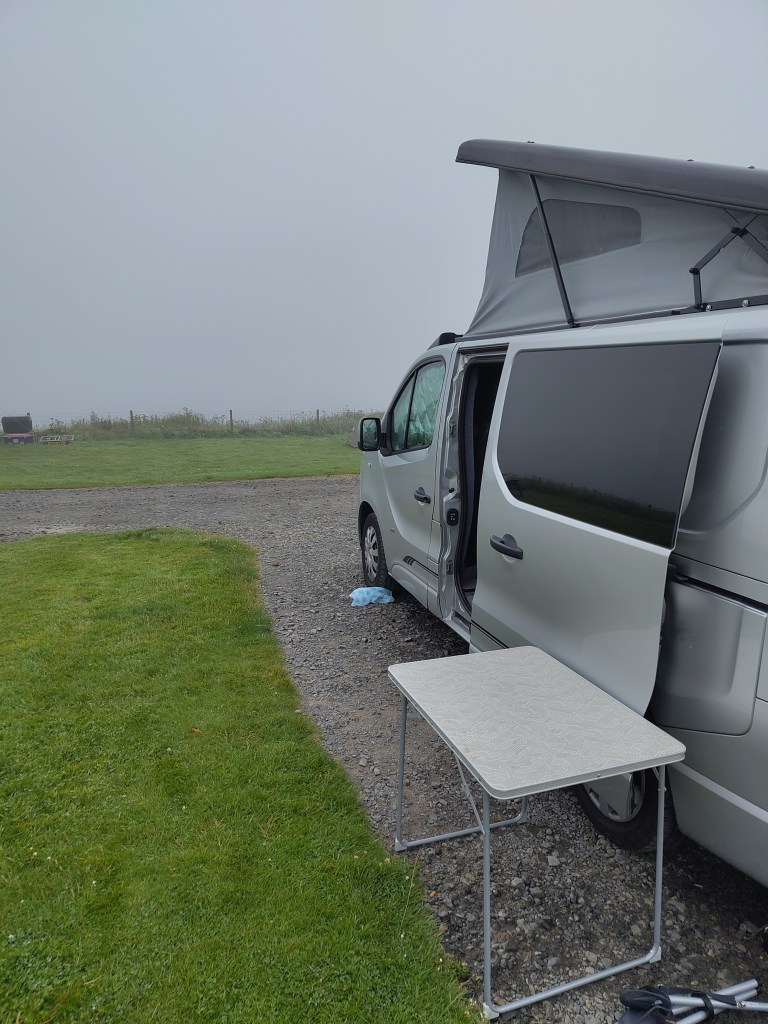
We woke up surrounded by the haar. A thick and pervasive fog, obviously coming from the sea. From where Mr. Vantastic was parked, we couldnโ€™t even see the shore, a mere 100-120 meters away. We couldnโ€™t help but think what could have meant for people a few hundred years ago, not knowing what was hiding behind a wall of fog like that: nothing maybe, or merchants, or unfortunately raiders sometimes. Nevertheless, thick fog can also provide a sense of calm and peace, like if everything is slowing down.

That morning we couldnโ€™t slow down really, as we had to shower, fix and eat breakfast, and wrap up the van by 9.15 maximum. Our first destination was about 40 minutes away, and we had to be there at 10am. Somehow we managed to do everything on time, and soon we were on the road, leaving the haar behind as we drove. During the drive we spotted a distillery to-be in the former Castletown Mill, between John Oโ€™Groats and Thurso, set up by the company behind the very popular Rock Rose gin. The single malt will be called Stannergill. The site looked under construction (weโ€™re in July โ€™25), but we could see the still already positioned, so they must be not too far from completion. Another visit for another time.

The first distillery we visited that day was one of the first coming online in the new wave of the 2010s: Wolfburn distillery. They have been around for a while, and in fact their first 12y single malt was released earlier this year. The name comes from a burn that flows near the distillery, which is also their water source. There used to be an older distillery called Wolfburn located roughly in the same area, in the outskirt of Thurso, in what now is a small industrial estate. The old distillery was founded in 1821, licensed in 1823, but closed down in 1858, with all the equipment sold at auction. This was decades before Alfred Barnard visited the area, so no record of it in his book. The new distillery was founded in 2011, and was up and running in 2013. The distillery manager and master blender, Shane Fraser, had previous experience at Glenfarclas, while the two owners were new to the spirits industry. While Wolfburn single malt has been around for a while, it doesnโ€™t seem to be too common: weโ€™d only tried a few expressions in the 2020 lockdown during two online whisky festivals, the Summerton whisky club festival and the Belfast whiskey week. We generally liked it, in particular the peated version (Morven), but since then, we tried Wolfburn only a handful of times, so it started fading a bit from our palate. A first plan to visit the distillery failed in 2021 because of a Covid-related issue, and we couldnโ€™t fit Caithness in the rescheduled trip. No more plans were done to visit themโ€ฆUntil this summer! Hurray!

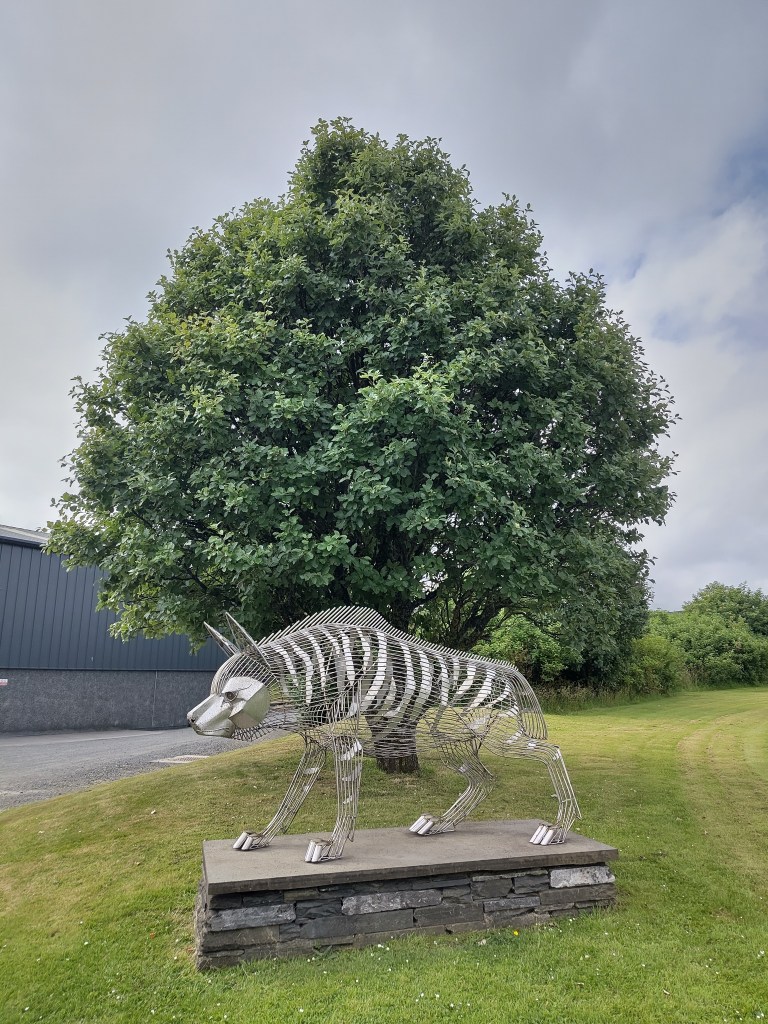
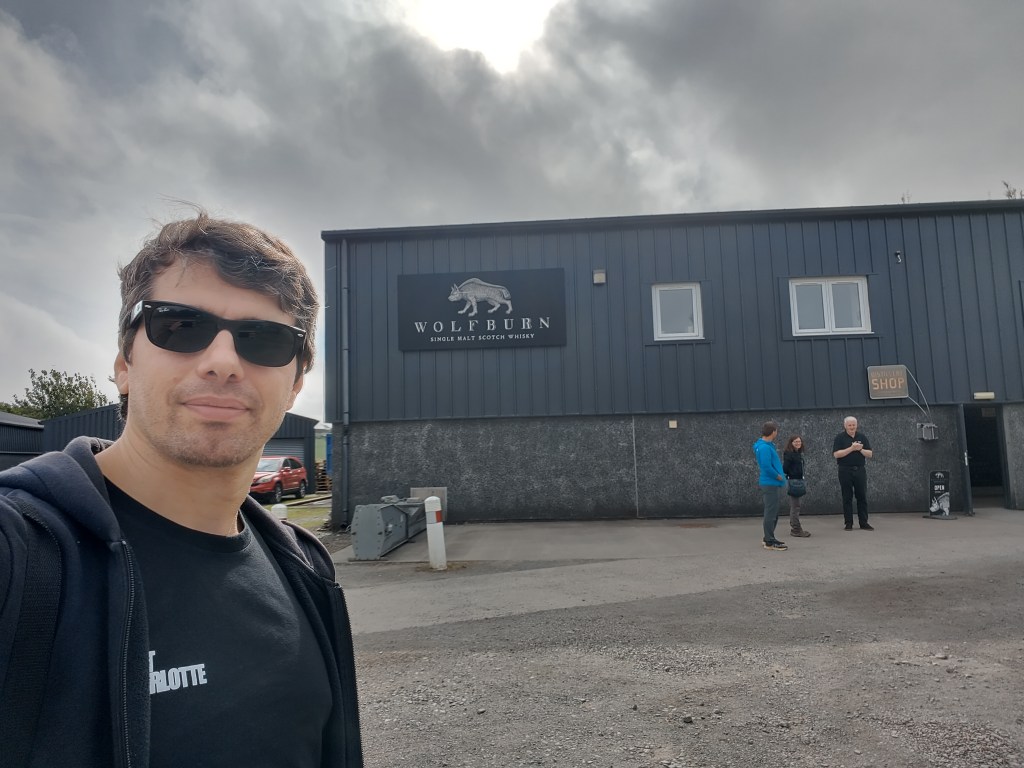
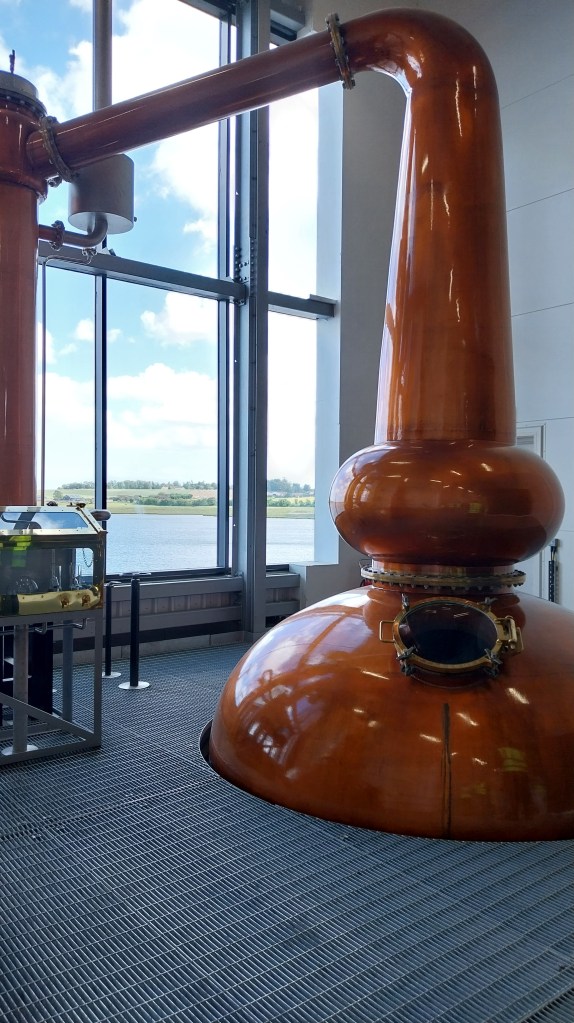
We arrived at the distillery five minutes earlier, while our soon-to-be guide Charlie was opening the visitor centre. The distillery production is in a warehouse, together with the shop and some offices. As we entered, we could spot all the equipment from the wide hall: malt bin, mill and mashtun on the left, washbacks and stills in front of us, two tanks for water and spent ale, and the shop, on the right. Fun fact, the tanks come from the demolished Caperdonich distillery, from Rothes. So, after Belgian Owl (still) and Falkirk (still and mashtun), Wolfburn is the third distillery we know of that uses equipment from the defunct Caperdonich. The plant was built by Forsyths, and it was the first project Richard Forsyths took on.

As it was just the three of us, the tour started right away, and after some background information, Charlie started describing the production process. Currently they are only producing four days a week, Monday, Tuesday, Thursday and Friday: we wondered if that is because of the current sales slowdown in the whisky market (and potential overproduction in the industry in general). At first, they only had two people working in production, now they are four, and production went from 100,000 litres per annum to 125,000.

They get the malt from Inverness, one lorry every 4 to 5 weeks while, as we said, water comes from the nearby Wolf burn. They aim for a light and floral spirit, mostly unpeated: only 3 out of 11 barley deliveries per year contain lightly peated malt to 10 ppm. To make sure not to mix peated and unpeated runs, the first distillation after their peated period (and cleaning) goes into ex-Islay quarter casks anyway. In general, they mill 1.1ton of malted barley (with the usual split for the grist, 20/70/10) and mash it (twice a day, 8 mashes a week) first with 4,000 litres of water at 64.5ยฐC, and then with another 1,000 litre at 80ยฐC. The third water, 4,000 litres at 90ยฐC, is stored for the following mash. Mashing takes 5.5 hours, and at the end of the process they obtain a clear wort, and sell the draff to cattle farmers. The wort, 5,000 litres, is moved to one of the very tall washbacks: they are so tall that they donโ€™t need defoaming.

Fermentation lasts 72 hours for the Monday and Tuesday batches, while 96 for the Thursday and Friday ones (so 84 hours on average), and is kicked off using distillersโ€™ yeast to obtain an 8.5% wash. At the end of the catwalk between the washbacks there are the two copper stills, both equipped with a steam coil inside, heated by a kerosene boiler. First distillation lasts about 5.5 hours, while the second one only 4.5 hours; during the latter, they take the spirit between 74% and 61%abv, a quite wide cut, discarding the first 40 minutes of foreshots, and the last 1.5 hours as feints.

At that point Charlie walked us to warehouse 1, the first past the distillery, where we could see a number of different cask types and sizes, which they get from the Speyside Cooperage.  Casks are stored horizontally above ground: a proper modern dunnage warehouse. He told us that warehouse 2 (the next one) is identical, while warehouse 3, on the other side, hosts the bottling plant as well (the water to reduce the abv is from the burn as well). There are two more warehouses – Charlie said that on top of the distilling history, land availability was crucial for choosing the site.

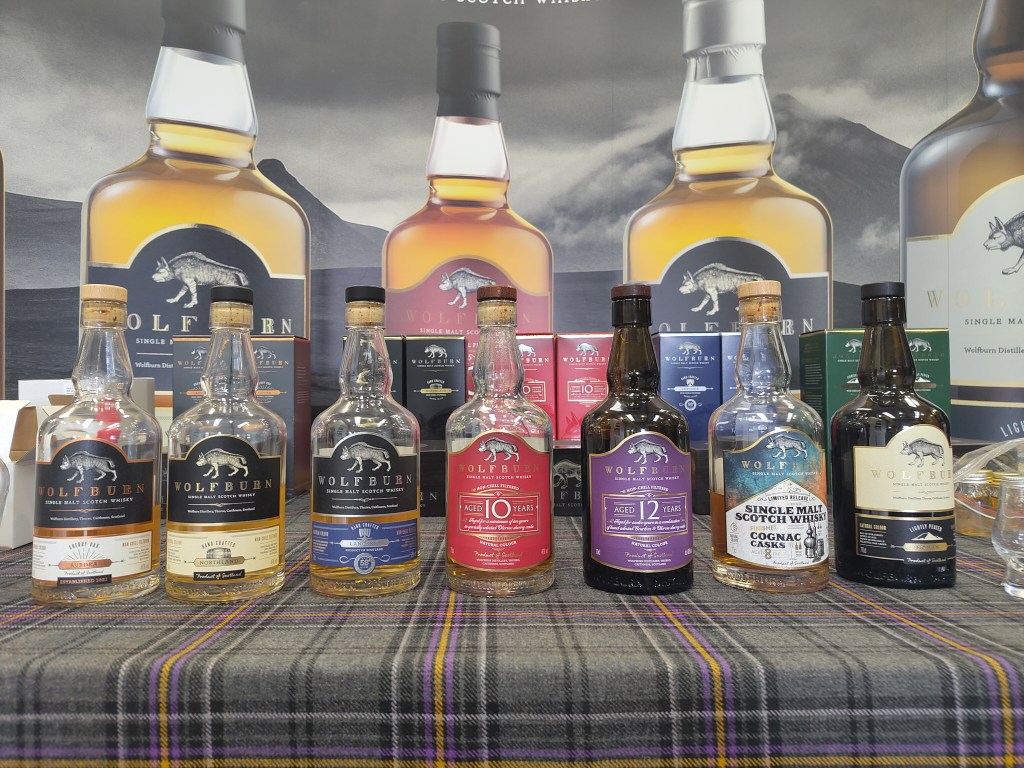
Back to the main building, it was time for the tasting, with a branded perfect-dram glass for us to take home. The first dram was Wolfburn Aurora, made with an even split between 1st fill ex-bourbon and 2nd fill sherry casks, bottled at 46%. Itโ€™s a non-age statement whisky, similar to most of the expressions we tried, but Charlie told us that as older stock becomes available, the average age increases, and is now around 8 years. Second up, the Northland (46%, NAS but again around 8y), unpeated spirit aged in ex-Islay cask: peat is there but very subtle, so much that Edoardo bought a 20cl bottles to give to a pal who claims they donโ€™t like peated whiskyโ€ฆWeโ€™re waiting for the response. The third dram, Langskip, was cask strength (57%), from 7y and 8y 1st fill ex-bourbon barrels: a floral deliciousness. The last two drams were the 10y (46%, 2nd fill Oloroso casks) and the Morven (46%, again ex-Islay casks, but peated spirit).

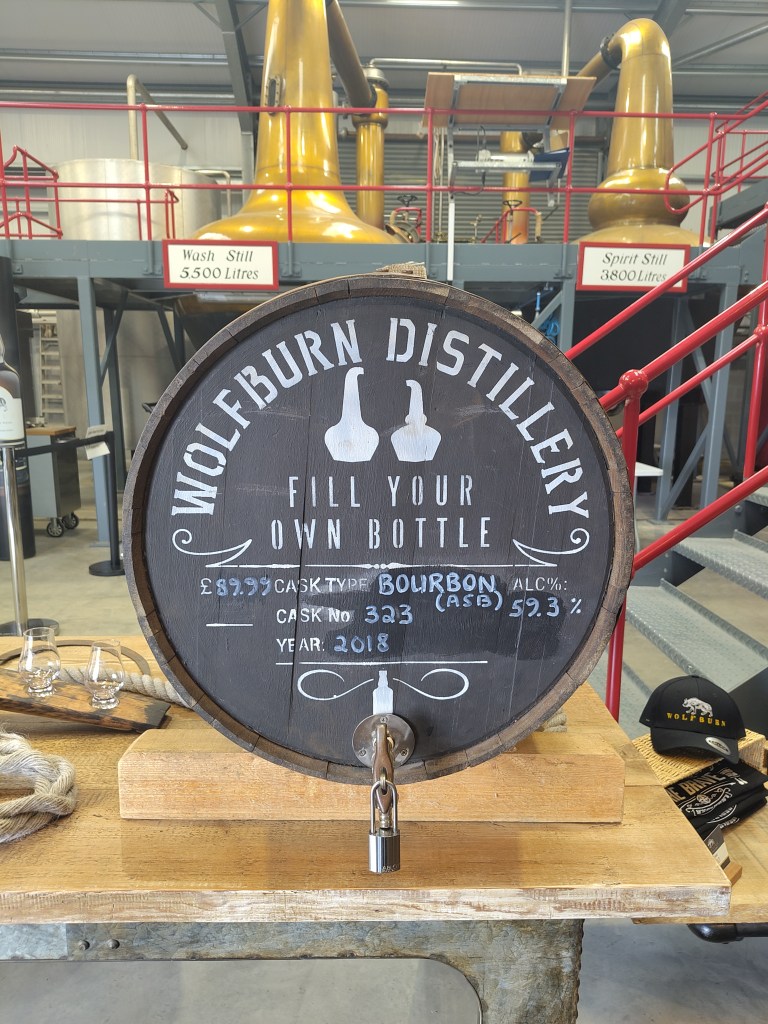
In the shop they have quite a variety of bottlings, other than their core range (in 70cl and 20cl bottlings, and 5cl miniatures): the new 12y (60%ex-bourbon and 40% sherry casks), a small batch Cognac Cask (46%, finished one year in ex-Cognac cask), the Drams on The Burn (a vatting of few casks for a local festival), a couple of small batches (one ex-Rum, another cask strength) and the โ€œfill-your-own-bottleโ€ (details below) single-cask expression. Everything is also very well priced between ยฃ45 and ยฃ75 (for 70cl bottles), except the โ€œfill-your-own-bottleโ€, which is a tenner or two too expensive in our opinion.

As the tasting ended, we quickly left, as we didnโ€™t have much time before our next tour. We had to decide whether to go to Lidl or to try go watch the second half of the first test between Australia and the British and Irish Lions. With Gianluigi and Edoardo being rugby fans, we obviously chose the latter, and we drove back to Top Joeโ€™s, in Thurso. They donโ€™t do food, but we could order some tasty sandwiches from the next door Central cafรฉ menu.

Overall, both the tour and the tasting at Wolfburn were great, one of the best and most satisfactory experiences we did recently in an established Scottish distillery (weโ€™re excluding the new ones that havenโ€™t released their own whisky yet). Charlie was an excellent guide, very knowledgeable, and very engaging too. Their range of malts is very tasty and various, and the delicate, floral (but also very fruity) spirit signature is clearly there in all the different expressions we tried. Definitely one you should keep an eye on, and if youโ€™re in the area, go to.

Next up, the final northern distillery, but with a twist, so stay tuned! Until then, slร inte!


Wolfburn Classic Tour and Tasting

Price: ยฃ19.50 pp (ยฃ18.00 when we visited in July 2025)

Duration: 1hr 30min

Tasting: 5 drams, Wolfburn Aurora (46%, NAS), Northland (46%, NAS), Langskip (58%, NAS), 10y (46%), Morven (46%), and a perfect-dram glass to take home

Distillery exclusive: Fill-your-own-bottle 2018 ex-Bourbon cask (7y, 59.3%, ยฃ89.99)

Highlights: the tasting

Target: everyone, both occasional and seasoned drinkers

Value for money: great

Recommended: yes

Link: https://wolfburn.com/


โ€œThe hero of the gods
The crossing of the threshold
The belly of the whale
Refusal of returnโ€


*The wolf is loose, Blood Mountain (2006), Mastodon

Weโ€™ll miss you Brent, crazy guitar genius.