#63.2 As north as you can get (on the mainland)

Pushing north: 8 Doors distillery


TL; DR: After the morning in Wick, we spent the rest of the day in John Oโ€™Groats. After a trip to a nearby lighthouse, we visited 8 Doors distillery, where Ryan gave us an extremely interesting and geeky tour of their operation. Even though we’ll have to wait for their single malt, it’s definitely a must-do visit! 

(missed Part 1?)

There is a human tendency to order facts and figures, probably thatโ€™s why articles with rankings, billboards, such as โ€œthe X best records of year Yโ€, โ€œQuentin Tarantino movies rankedโ€, and so on, preceded the internet by a long time. For whisky brands, having one of the โ€˜-estโ€™ facts can often be an unmissable chance to make themselves notable, which has become particularly important since the massive wave of new players in the market (are we over 160 distilleries yet? For sure over 150, and just for malt ones). The โ€œbiggestโ€, โ€œoldestโ€, โ€œsouthmostโ€, โ€œhighestโ€, or โ€œthe only distillery on Skyeโ€โ€ฆwhich now became โ€œthe oldest distillery on Skyeโ€. Although some of these traits might actually have a connection with the flavour profile of the whisky advertised, in most cases we wouldnโ€™t read too much into it.

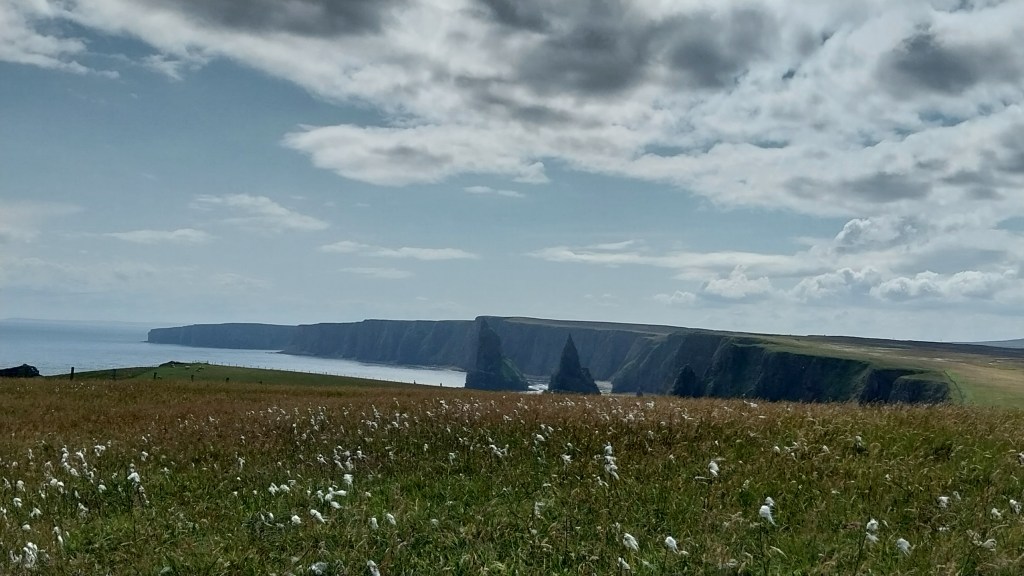
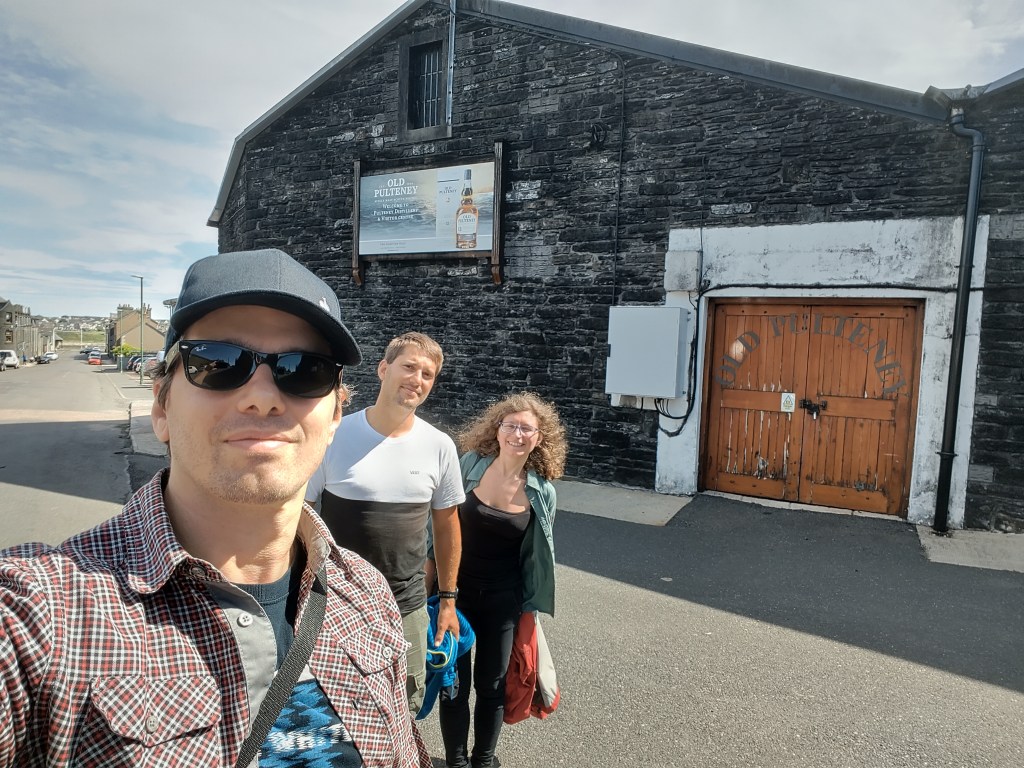
Nonetheless, going back to our long weekend up north, letโ€™s talk about the northmost distilleries in Scotland. The northmost used to be Highland Park on Orkney, although now itโ€™s probably been beaten by Lerwick distillery (assuming itโ€™s online) on Shetland. On the mainland, it was Pulteney for a long time, but then the (imaginary) trophy went to Wolfburn. Nowadays there is a new winner of this race: 8 Doors distillery, in the village of John Oโ€™Groats, which is where we were headed after our tour at Pulteney. The village is only about half hour driving from Wick, almost straight north, along the rugged North Sea coast. We only stopped to put some diesel in the tank, and to save time we ate our pre-prepared sandwiches while driving (the Lidl rosemary focaccia, with grilled aubergines and roast turkey: delicious!). We took advantage of the stunning sunny, warm and breezy weather to visit the Duncansby Head Lighthouse.
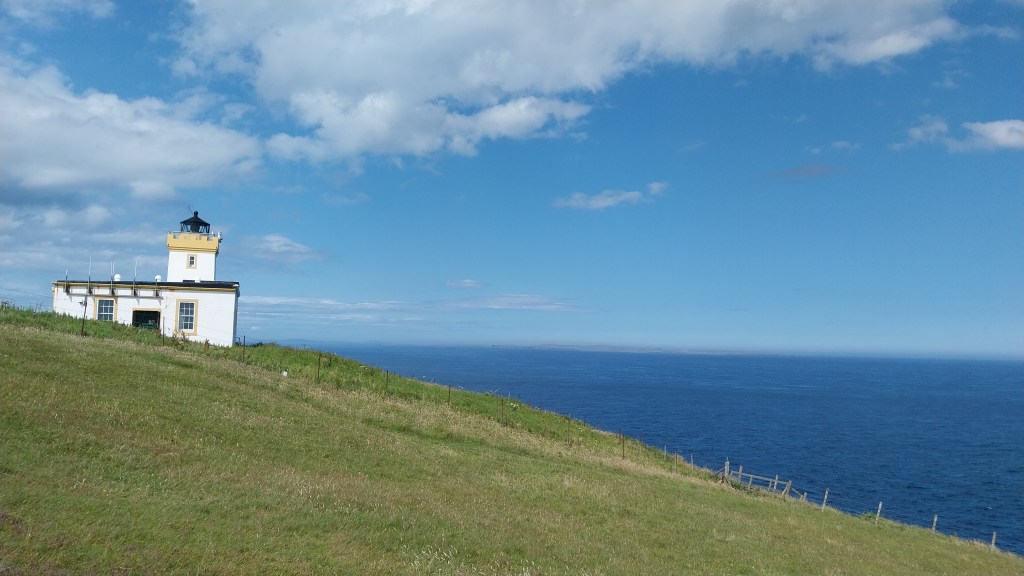
It is only a few km away from John Oโ€™Groats, just a short drive on a secondary single-track road. The building is not accessible, but there is a stunning walk starting from the car-park on the cliff near a marine bird nest (we saw puffins here! Unfortunately our phonesโ€™ cameras are too crappy to take decent pictures) and a view on the Duncansby Stacks, a very scenic rock formation. Back to the car park, we drove to the John Oโ€™Groats Campsite to drop Mr. Vantastic before going to the distillery, which is just a couple of minutes away. As a matter of fact, everything in John Oโ€™Groats seems to be two minutes away from everything else: the distillery, the shop, the campsite, the signpost, the pier, the brewery, although the rest of the village is quite spread out.
We arrived at the 8 Doors distillery a few minutes after 3.00pm, the time we originally agreed with Ryan Sutherland, the distillery manager, who moved to 8 Doors after an extensive experience with William Grant & Sons (Glenfiddich, Balvenie, Grantโ€™s). Ryan is a fellow barfly and although weโ€™d never met in person before, weโ€™d chatted online a few times. When we started planning this trip, we asked him if he could give us a tour of the site, which he kindly agreed to. As we entered the visitor centre, we had to move around a swarm of tourists coming from a cruise ship: not a rare occurrence in summer, as Ryan told us later, which can put some pressure on the staff. Fortunately, the shop/cafรจ is wide enough for everyone, it has a big window facing north towards the Pentland Firth and a fireplace – a cosy and relaxing space. Ryan took us to the tasting room, between the shop and production, to drop our bags, but we soon moved to the main production area. The distillery is quite self-contained, and from the main area we could see most of the equipment.
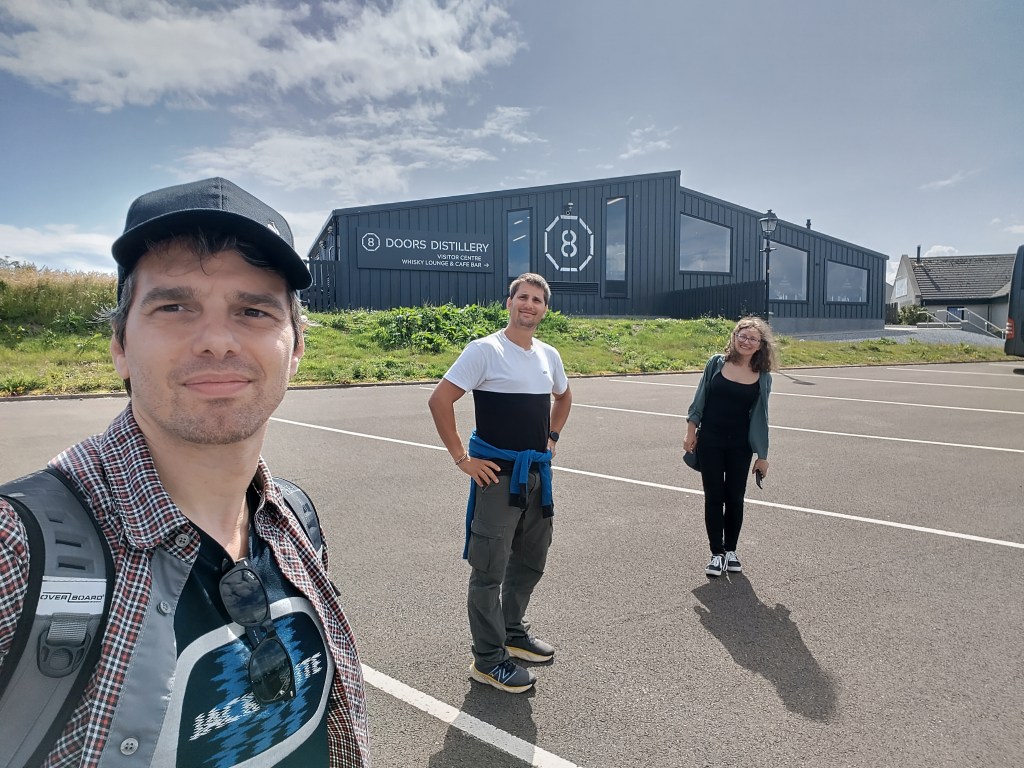
The distillery started production in 2022. Founders Kerry and Derek wanted to bring distilling back to John Oโ€™Groats and its community, and to do so they employed a consultant, John Ramsay (former Edrington), who is now the master blender. A short-lived distillery existed between 1826 and 1838, and illicit distilling was common in the area before. The name of the distillery comes from the founder of the village, John De Groot, which had seven sons and to avoid fights, he built an octagonal house where each of them (him and the sons) had a door and a window. We wondered if, in their shoes, weโ€™d take the south facing one, for the sunlight, or the north facing one, for the view on the Firth.

The distillery is a small operation, producing only about 36,000 litres of spirit per year (in theory they could reach 45,000 litres), and is run by one operator, Andrew, and Ryan himself. Ryan described the setup in great detail, including all the small changes he is implementing to make the process more efficient – his engineering background shone through. There is no mill at the moment, so the malt comes in already milled from Simpson maltster (usual 20/70/10 split for husk/grit/flour), but in the future they are hoping to get the malt locally from Caithness producers. They are also considering using oat, which would be super interesting, as only a handful of Scottish distilleries are using this cereal (Inchdairnie andโ€ฆactually we cannot think of any other).
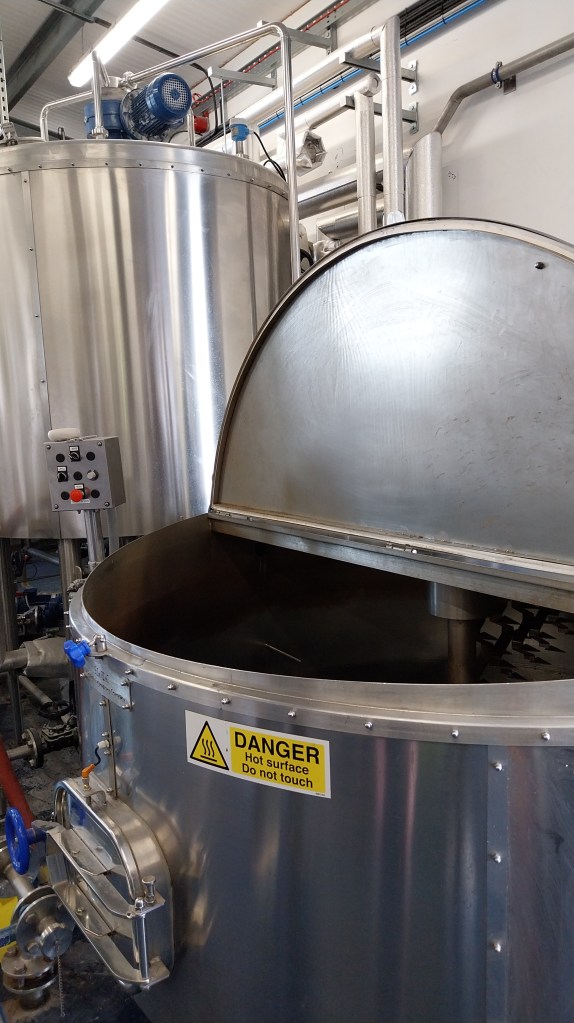
The mashing equipment comes from a defunct brewery in East Lothian, Archfield Brewhouse, and has been repurposed to work in a distillery. Because of this, together with the usual mashtun, there is also a kettle, that comes in handy to pre-heat the water with the heat exchanger. For each mash they use one 400kg bag of grist together with 1,200 litres of water: the 3-to-1 ratio makes it a thick one, cloudy at first but they let it decant for a while. Between the first and second water they get 1,800 litres of wort, which is then moved to one of the four 2,000-litre stainless steel washbacks (there is a fifth, but itโ€™s not been used). Fermentation lasts about 100 hours on average to get a wash at up to 9%abv. Here is where it gets interesting: depending on the variety of barley, they try to pick a yeast to obtain a determined flavour profile. Among the barley varieties used, Lauriet, Firefox and Diablo, but also Cara Gold, Maris Otter and Golden Promise. Yeast-wise, M1 is the main one, which results in a fruit-forward wash, but they also use XP for red fruits flavours, Norwegian beer yeast Kveik/Hornindal, MW, D23 and MGplus. In general, they produce their house-style for most of the year, while in December and January they run more experimental batches.

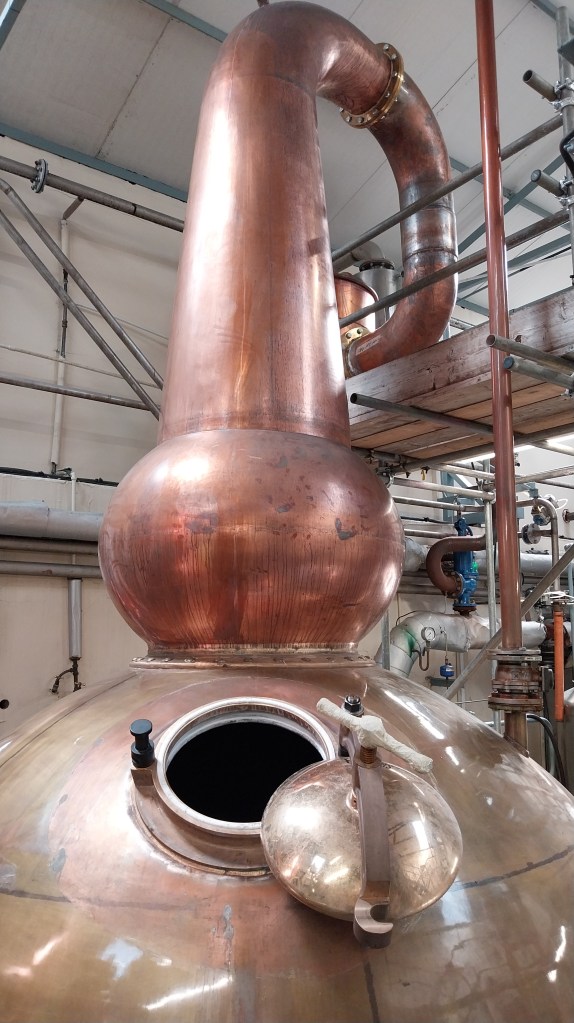
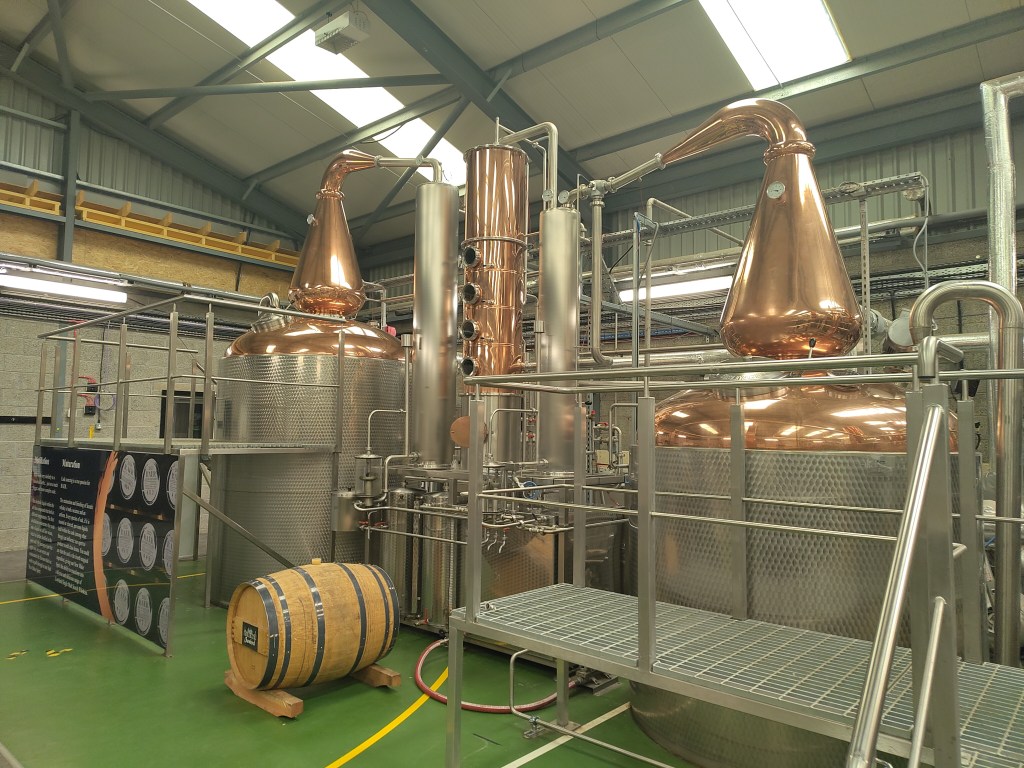
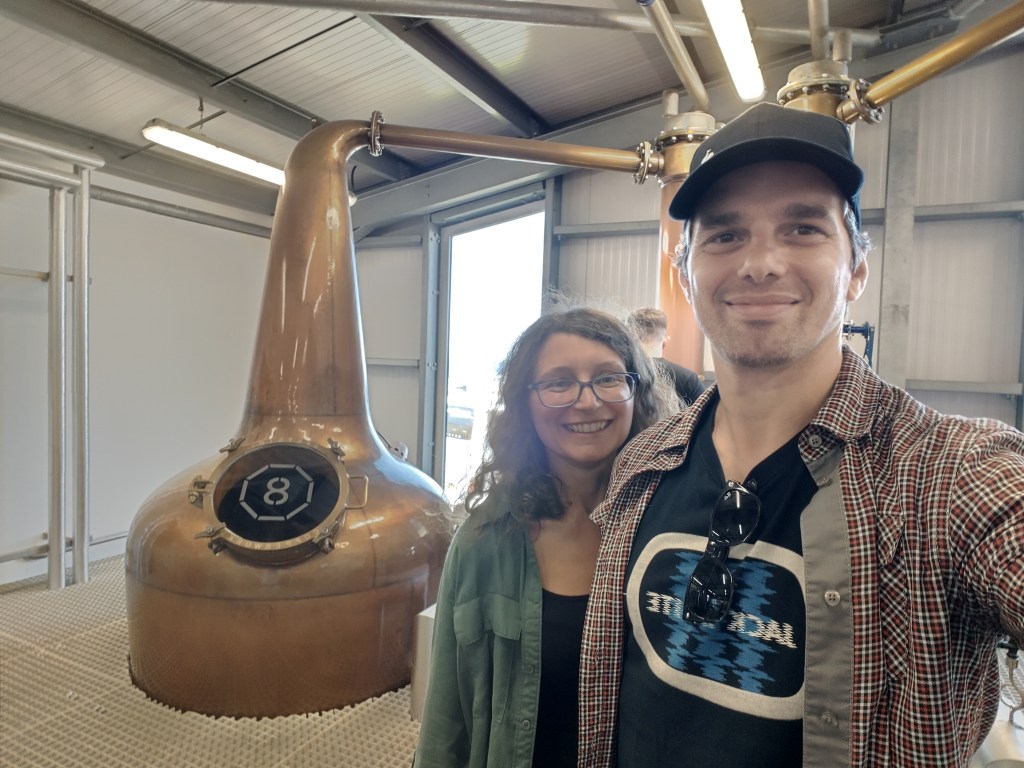
The stills and the spirit safe are on a raised floor, and fun fact: from there we spotted Mr Vantastic in the campsite! The stills are from Speyside Copperworks, which is now owned by Forsyths. The first distillation in the 1,700-litre wash still is very slow, about 7 hours, while the second one is carried out in the 1,300-litre spirit still. They run the foreshots for 15 minutes, then the heart (or spirit) is collected within 3 hours, from 71.5% to 64% abv. They aim to produce about one hogshead per day.
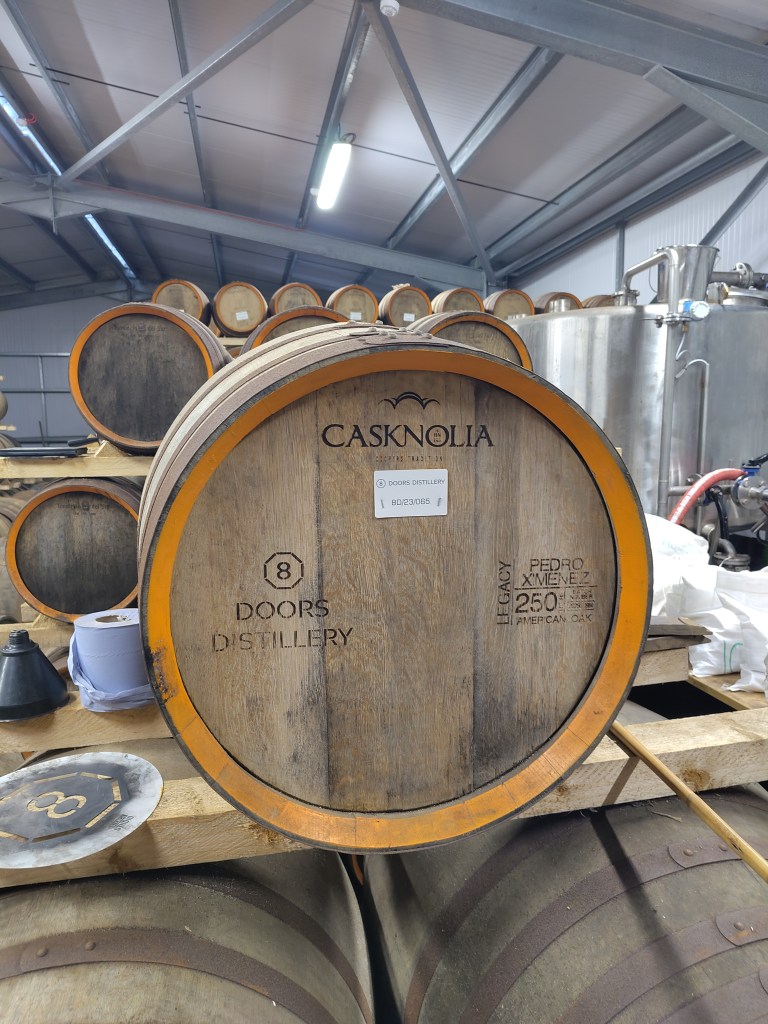
After all these technical details, Ryan took us outside to have a quick look at the LPG boiler and head to the warehouse, a low building on the other side of the distillery staff car park. Here we saw a multitude of casks of different sizes. They mostly fill ex-Sherry casks from Casknolia of various sizes (from 50-litre octave to 5,090-litre butts), but also casks previously used for their Seven Sons range. The filling strength is the standard 63.5%, and the type of cask used also depends on the barley/yeast combination: interesting experiments they are running at the moment are an ex-brandy cask filled with spirit obtained from Cara Gold barley and D23 yeast, or a former Bookerโ€™s bourbon cask with spirit fermented with Hornindal yeast. All of these, albeit technical, sounded very cool, and our science-y brains were quite triggered by all these potential permutations.
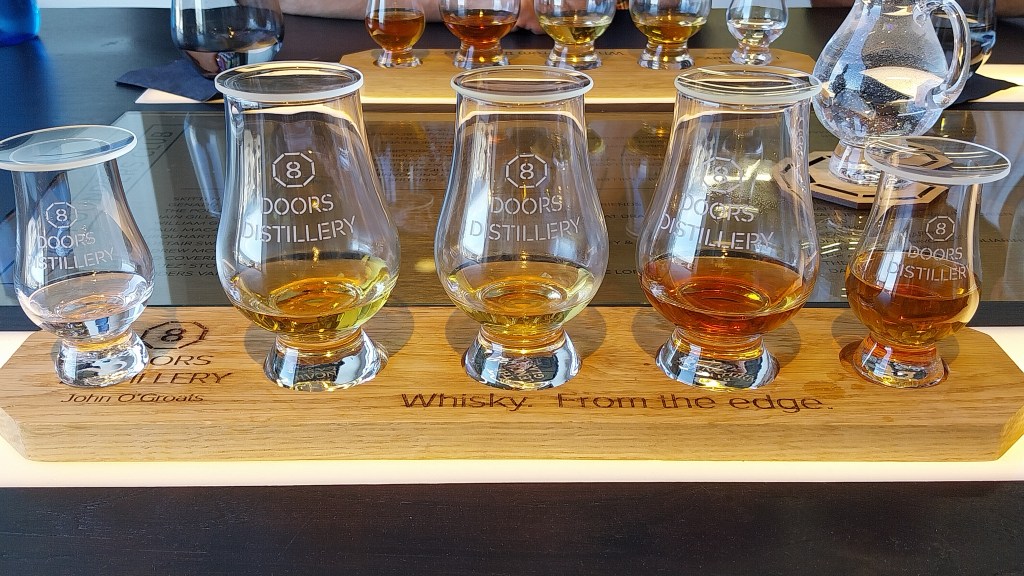
Back to the tasting room, we were ready for the whisky flight. First off, a small taste of newmake spirit (63.5%), fruity and cereal, as youโ€™d expect for a good one. Then, we moved on to the Seven Sons whisky range (named after John De Groot sons). First, the 10y blended scotch (46.7%), characterised by a high malt content (40%) with the grain component coming from North British. This is one of their โ€œhouseโ€ whiskies – not all batches are identical (this is the 9th), but they aim for a nice-sipping blend, and they nailed it! Edoardo took one home to share with his friends over the next 6 Nations – as Italians we need something good to hang on to. The second dram was a blended malt, a 12y teaspooned Dalrymple from Ailsa Bay, bottled at 57.1% (100 of the old imperial proofs), from a third fill European cask, which provided a mild and delicate flavour. The third dram was a single malt, a 6y sherried (Oloroso) and very vibrant Glen Wyvis from a Firkin cask (52.1%), the cherry on the top. We finished the tasting with their Five Ways whisky liqueur (22%), and a cheeky โ€œManagerโ€™s Dramโ€, a delicious blend produced with the idea of recreating a 1970s Famous Grouse.
What a geeky and awesome tour! We loved everything about the distillery and how they set up their plan, and it was really great to listen to Ryan explaining in detail how the distillery works. 8 Doors is one to keep an eye on, where weโ€™d like to go back to (not just for the beautiful scenery). We are looking forward to the release of their first single malt!
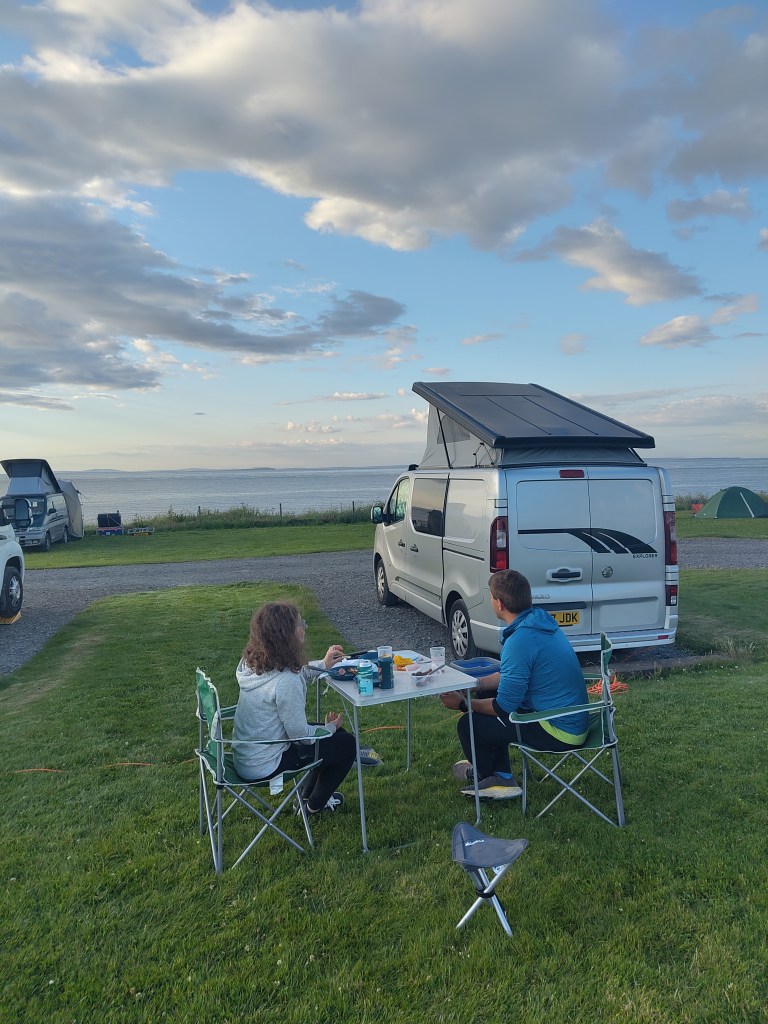
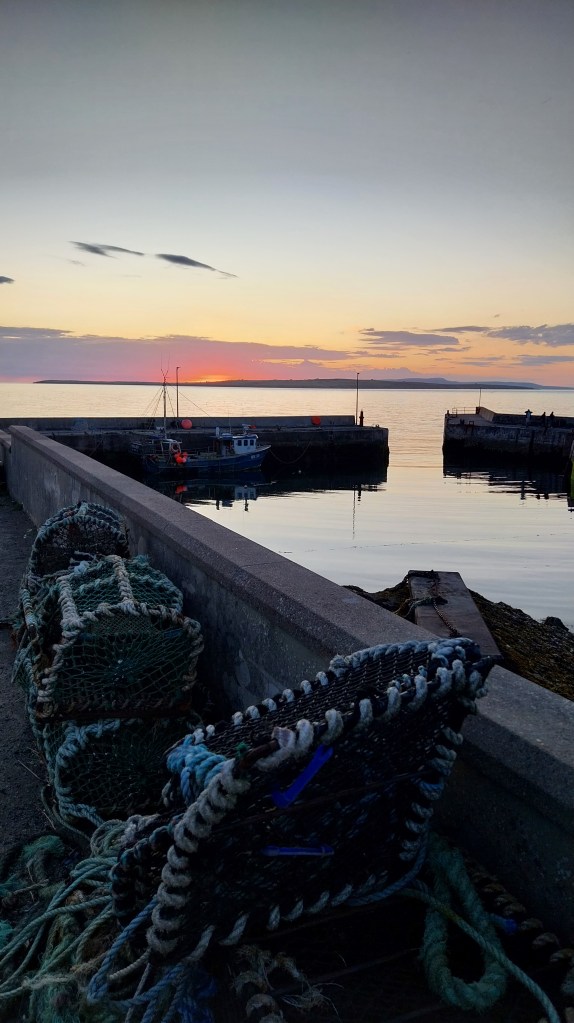
After the distillery, we walked a bit around John Oโ€™Groats, before going back to the van and start a barbecue. It was a bit windy, but nonetheless we managed to grill some massive Hellbent burgers. The evening ended with a pint at the John Oโ€™Groats brewery/pub, a very cosy place just in the middle of the village.

Next up, another former โ€œnorthmostโ€ distillery on mainland Scotland, so stay tuned! Until then, slร inte!


8 Doors Distillery (bespoke tour*)

Price: ยฃ23.33 pp (July 2025)

Duration: 2hr

Tasting: newmake spirit (63.5%) and 4 drams, Seven Sons Blended Whisky (10y, 46%), Blended Malt (12y, Dalrymple, 57.1%), Single Malt Glen Wyvis (6y, 52%), Five Ways Ginger Whisky Liqueur (22%)

Distillery exclusive: bottle-your-own versions of a whisky from the Seven Sons range and Five Ways whisky liqueur (forgot to take note of the prices, sorry)

Highlights: the location and Ryanโ€™s knowledge

Target: casual tourists and whisky geeks alike

Value for money: very good

Recommended: yes

Link: https://www.8doorsdistillery.com/home

(*similar to the Behind the Scenes tour https://www.8doorsdistillery.com/tours, but longer and with extra drams)
#63.1 As north as you can get (on the mainland)

Pulteney: the old one in Wick


TL; DR: Another long weekend this summer, this time up to the Northmost North of the Northern Highlands. And we have a special guest, Edoardo again, Gianluigiโ€™s brother and whisky enthusiast. First off, the oldest distillery in the area: Pulteney. A nice tour ending with a decent 4-dram tasting.ย 

Itโ€™s slightly windy at the Ruthven Barracks, but not cold at all. The night is very clear, and if it wasnโ€™t for the midges we could have spent some time outside. Instead, we retread immediately inside Mr Vantastic, accompanied by the distant noise of vehicles driving on the A9. We arrived directly from Glasgow, the two of us and Edoardo, Gianluigiโ€™s brother. He was supposed to land in Edinburgh around lunchtime, and the idea was to go visit Glasgow where he’d never been despite his many travels to Scotland. However, the flight was delayed by over 90 minutes (thanks Easyjet), plus another 40 to wait for the luggage, which meant that by the time him and Gianluigi parked the van in Glasgow, it was already late afternoon. On top of that, it started pouring rain, so not much sightseeing happened that day. Instead, the two brothers sheltered at the Pot Still, waiting for Teresa to come out of the office. After a spicy meal at the Rosaโ€™s Thai, we left towards the destination for the long weekend: the Northern Highlands.

As we were saying, we stopped for the night at the Ruthven Barracks car park, near Kingussie. It is slightly uneven and there are no facilities, so it was ok for one night, but probably next time weโ€™ll search for an alternative spot. The next day we had an early start anyway: the 3-hour drive was interrupted only by a 15-minute break in Aviemore for coffee and roll. We had an appointment at a very old and popular distillery, that somehow, we never came across during our trips: Pulteney, in Wick. It belongs to Inver House, together with Balblair, Speyburn (both visited), Knockdhu and Balmenach (both closed to visitors, so naye). The single malt, Old Pulteney, is famous for being a coastal dram and their basic expressions are very prevalent in supermarkets (Harbour and 12y, both 40%abv).

Pulteney distillery will turn 200 next year and is currently stretching the silent season to allow some renovations in time for the celebrations. In the mid-1880s Alfred Barnard approached it, and the Royal Bourgh of Wick, from the north, travelling along the rugged coast, on his way south after spending some time on Orkney. Instead, we arrived from the south, on the smooth A99: things must have changed quite a bit in the last 140 years. The distillery is in the southern part of the village, before the Wick River, and between the main road and the coast. We parked Mr Vantastic near the Pulteney community centre, just next door. You can tell the old from the new buildings around, as the former are all blackened by the Baudoinia fungus, digesting away the alcohol in the โ€œangelsโ€™ shareโ€ (i.e. evaporating). We got in a few minutes earlier to check the shop before our tour started: the front part is very small, but in the back, they have a bigger lounge decorated with memorabilia, and a spacious but cosy tasting room. We chose the From the Source tour (ยฃ40.00pp), which has an improved tasting compared to A Taste of Old Pulteney (ยฃ20.00pp, 2 drams), but not as expensive as the Flagship Experience (ยฃ125.00pp!!!, 6 drams).

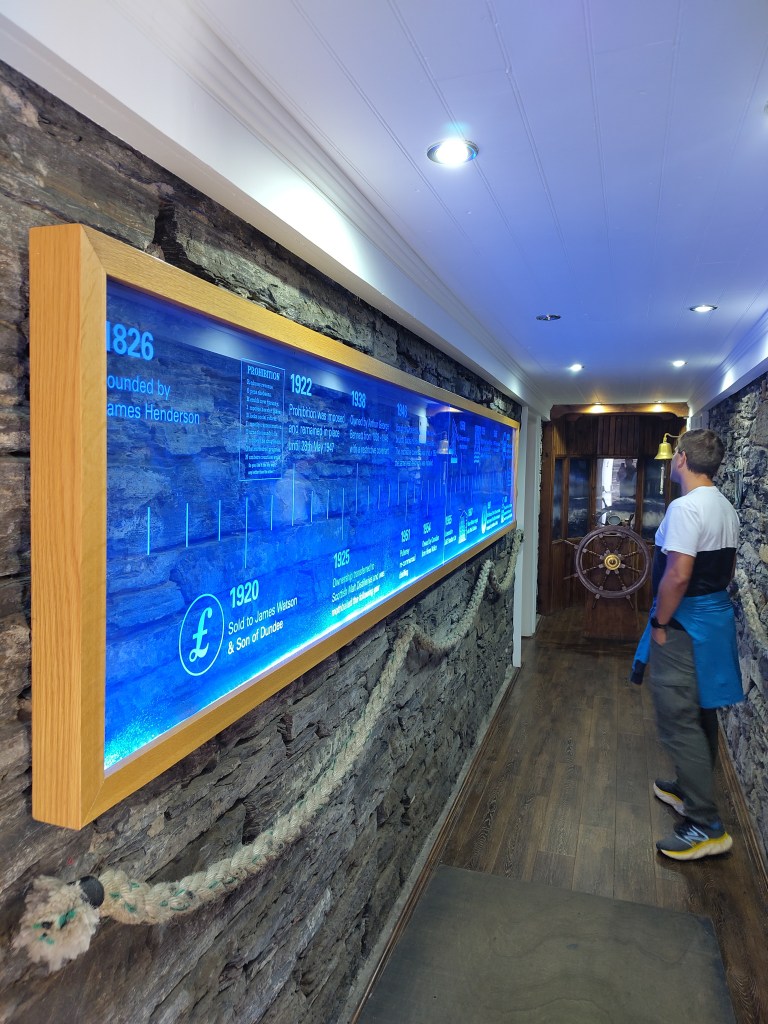
Our guide was Tim, who used to work in Glasgow before going back to his native Wick during the pandemic, and it was a small tour: the three of us and another person. Tim started with the usual history of the distillery – founded in 1826, initially was only accessible by the sea, and it was acquired by John Dewar & Sons in 1924, which in turn joined the Distillery Company Limited (DCL, Diageoโ€™s precursor) in 1925. After prohibition started in Wick in 1922, the distillery was closed in 1930 and reopened in 1951, four years after prohibition was abolished. The distillery than went to Hiram Walkerโ€™s (1954), Allied Distillers (1961) and finally to Inver House (1995). During the Hiram Walker period, Pulteney malt was a component of Ballantineโ€™s blended Scotch.

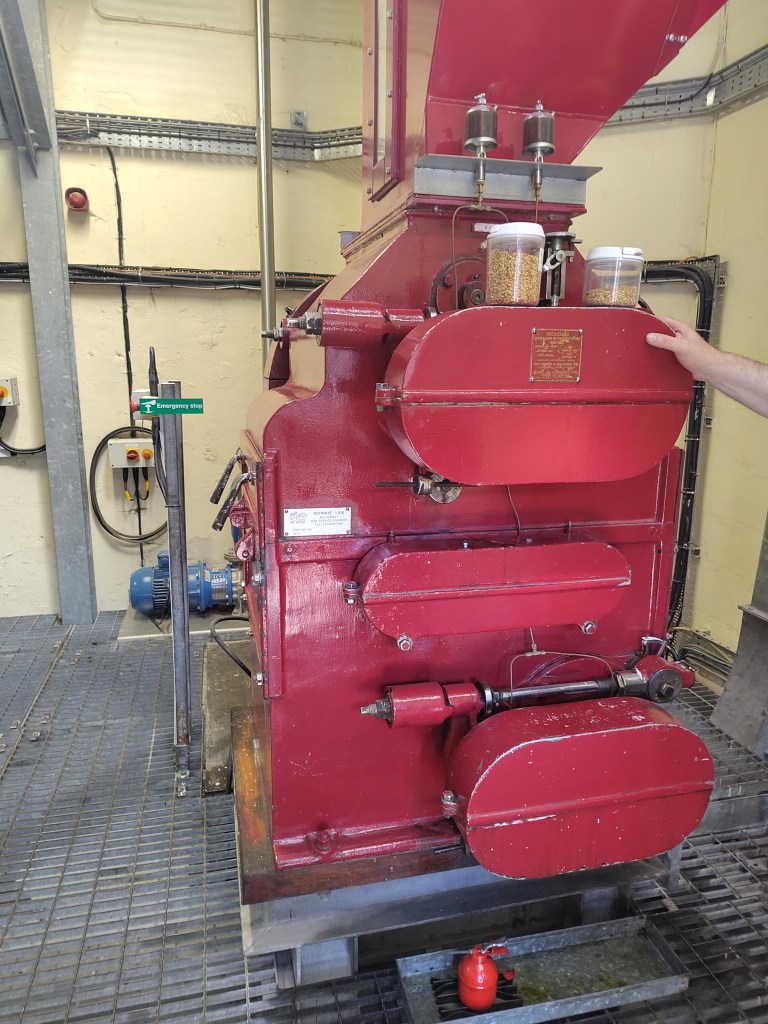
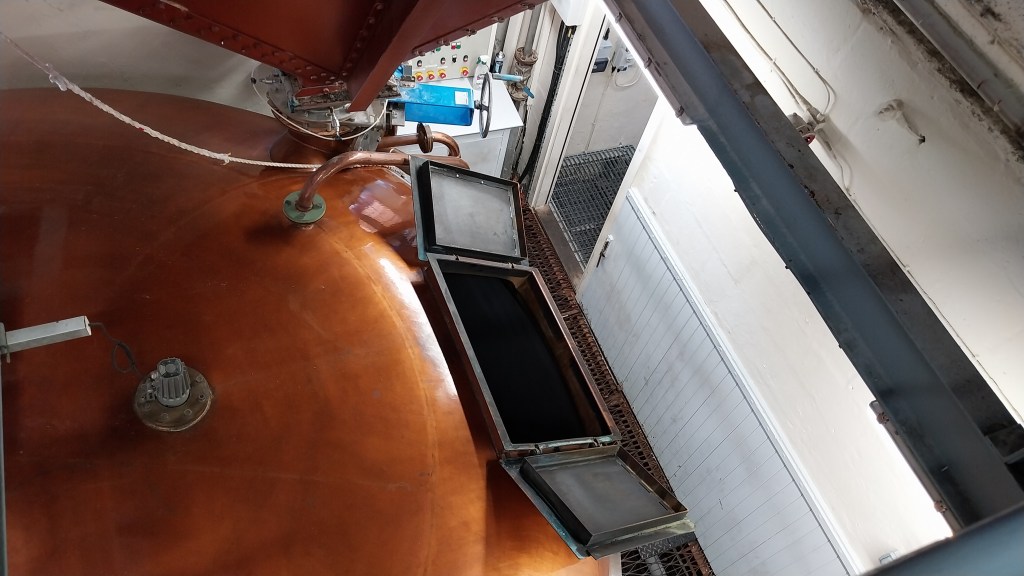
The malting floor, dismissed decades ago, was above the visitor centre, while the cooperage used to be in one of the visitor rooms. Nowadays they bring in malted barley from Inverness, in 30ton weekly batches. They have a bright red Porteus mill for grinding the malt, and water comes from Loch Hempriggs (to the south of Wick) in a stream system engineered by Telford, that we’d see later. Each mash is done with 5 tons of grist, in a copper-lidded mashtun, which was replaced about 20 years ago. They do four rounds of water at increasing temperatures (60ยฐ to 90ยฐC), with the last two ready for the next mash. The (cloudy) mash is then pumped into one of the seven washbacks, while the draff is sent away for cattle feed. Fermentation lasts 60 hours normally, 100 for the batches going over the weekend, and is triggered by 25 kg of distillerโ€™s yeast which is added to the 23,500 litres of wort. At the end of the process, they get an approximately 8.5% abv wash, which is then sent to the wash still.

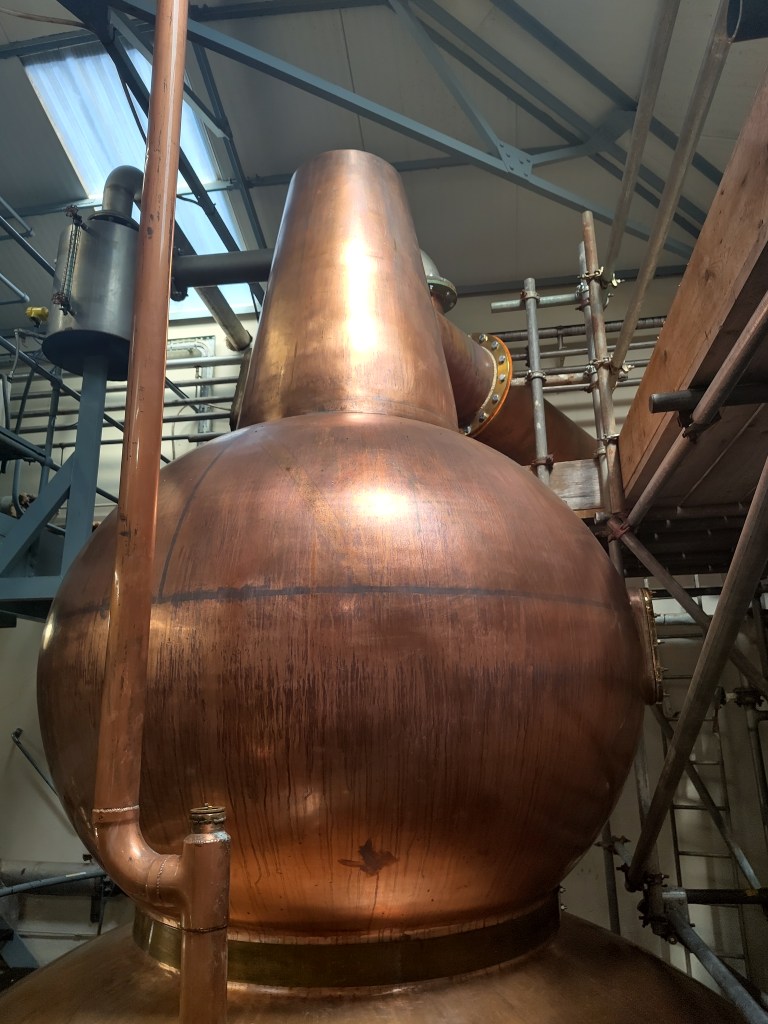
They have two stills: the wash still has the top clearly cut off (it was too tall for the building) and has a massive bulge in the middle, much bigger than usual; and the spirit still lyne arm is almost entangled – definitely a unique pair of stills. Each still is equipped with a stainless-steel squared worm tub condenser, with a 110m copper pipe inside, placed outside the still room. In the second distillation the foreshots usually last 16 minutes and the first cut is taken depending on the temperature, while the second is taken at 68%.

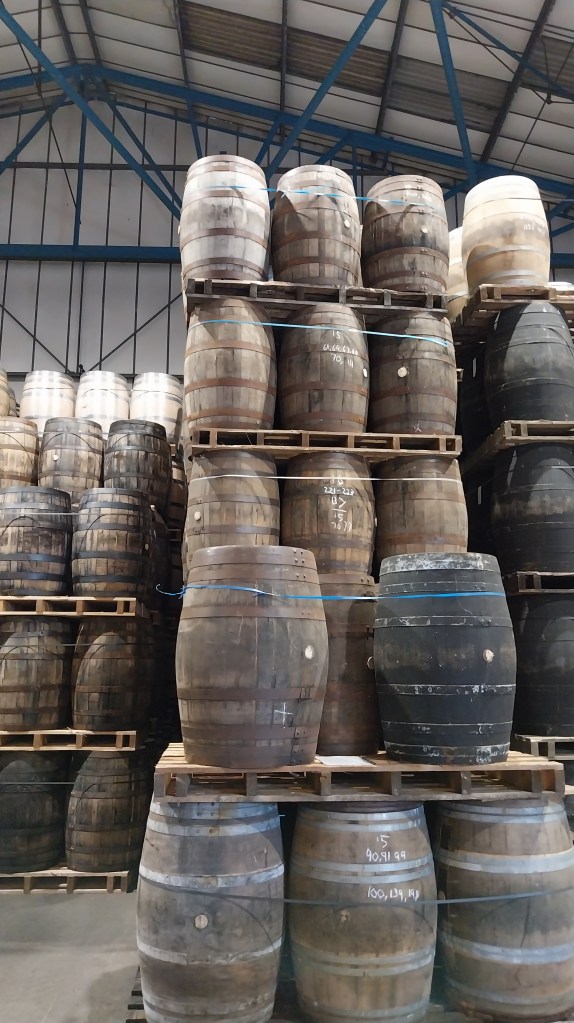
After the still room, we went back outside in the courtyard, and then into the filling store: they cask onsite but also fill tankers, in particular for the distillate that is sold to third parties, mostly for blends (still Ballantineโ€™s? The Inver House blend is the Hanky Bannister though). After checking out the biomass boiler, we visited the warehouses: 10,000 casks are stored on their side in rows 3 high in a warehouse (but not dunnage, as the floor is concrete), while other 14,000 are in the other buildings, mostly racked. However, they are in the process of building another four warehouses, to accommodate for Pulteney production of about 1.2 million litres of alcohol per year. The mostly fill ex-bourbon casks from Jim Beam, but inside the warehouse we spotted other casks too, sherry in particular.

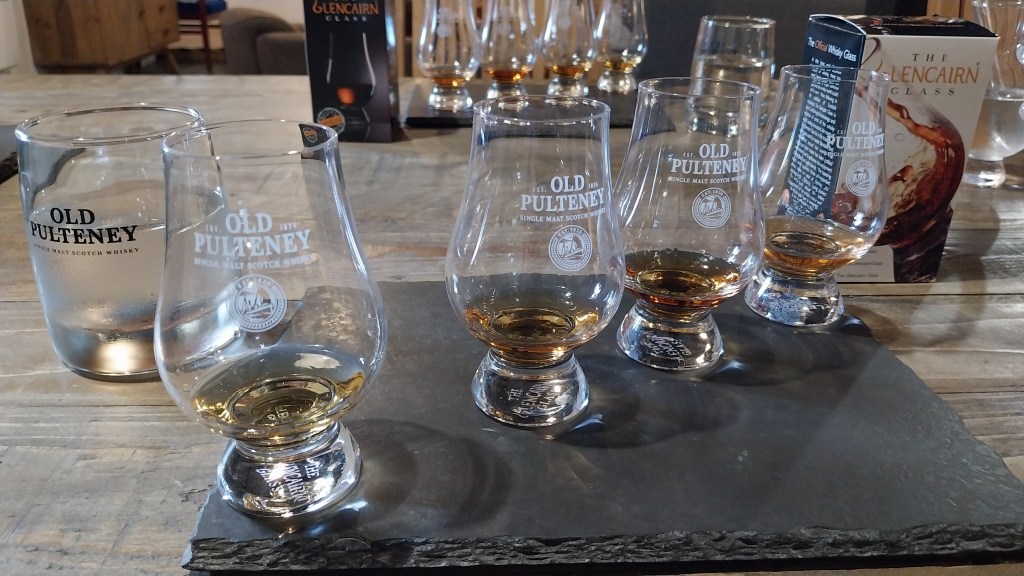
It was time for the tasting, in a very cosy and wide room. We started with the classic Old Pulteney 12 (40%), mostly matured in refill ex-bourbon cask. Itโ€™s a very decent malt, possibly a bit thin. We can’t just help wonder how increasing the abv to 43% or 46%, and not chill-filtering it, would improve it. It was followed by the 15y and the 18y, both bottled at 46% (yay!), and both with a similar double-maturation (or finishing?) concept: they spend 13 and 14 years in ex-bourbon casks, and they are then re-racked into Oloroso sherry casks. Theyโ€™re solid and tasty drams, benefiting from the saltiness of the spirit and the dark fruitness (is this a thing?) of the cask finish. Finally, our last dram was supposed to be the distillery exclusive (as it was advertised on the website, see below for the specs), but apparently they’d finished their โ€œtasting stockโ€ (whatever that means in corporate BS language, they still had many bottles in the shop), so instead they gave us the second expression of their Coastal Series, matured 5-6 years in ex-bourbon and then 5-6 years in Ruby Port seasoned cask. Not bad, but a tad too sweet.

When Teresa and Edoardo finished their drams, we went back to the shop and quickly left. Overall, the distillery was super interesting, the tour was fine, the tasting was decent, and Tim was a knowledgeable guide. Being in such a remote place (about 5hr driving from the Central Belt) youโ€™d think they could do something a bit more special, but it was along the lines of the Balblair tour we did back in 2023. So, unless weโ€™ll be in the area for their 200th anniversary, weโ€™ll hardly go backโ€ฆNever say never, though.

Next up a much much nerdier experience, so stay tuned! Until then, slร inte!


Pulteney ‘From The Source’ Tour

Price: ยฃ40.00 pp (July 2025)

Duration: 2hr

Tasting: 4 drams, Old Pulteney 12 (40%), 15 (46%), 18 (46%) and Coastal Series Port cask matured (46%), plus a complimentary glencairn

Distillery exclusive: D.E. French Cask matured (NAS, 53%, ยฃ85.00); Distillery Hand Bottling ex-Sherry cask (13y, 2010-2024, 62.5%, ยฃ130.00); Distillery Hand Bottling ex-Bourbon cask (18y, 2006-2025, 58.4%, ยฃ150.00)

Highlights: the shape of the stills and the site in general

Target: whisky curious, the tasting was a bit too basic for the enthusiasts

Value for money: ok

Recommended: for Old Pulteney fans

Link: https://oldpulteney.com/visit-pulteney-distillery/

#62 The EWG trips are back

Glasgow is hot!


TL; DR: On a hot Saturday in July the Edinburgh Whisky Group went to Glasgow for two distillery visits. First off, Glasgow distillery, for a preview on the tour that is now open for bookings. A great tour and wonderful drams! Then we visited Jackton distillery, a much younger project, which that day was hosting a nice market.ย 

After the successful trips to Campbeltown in โ€˜21, Speyside in โ€˜22 (the SpeycationTM), the Highlands in โ€˜23, and Yorkshire in โ€˜24, this year the Edinburgh Whisky Group (EWG) trip was different. For who hasnโ€™t read old posts, the EWG group was set up by Justine Hazelhurst (writer, organiser of the Fife Whisky Festival and whisky expert) on Facebook, a few years back, and during the COVID-19 pandemic it exploded to almost 500 members. Some of us started attending online tastings during lockdown, and after the group became a more restricted one (hence more manageable), some of us kept in touch and started the tradition of a whisky trip every year.

For this year (2025) we decided to do something different: not a long weekend away but one (or possibly more) day trip(s) from Edinburgh. These trips are less demanding to both organise and attend, but another reason is also a lack of new destinations. Islay is too complex for such a big group: logistics is awful on the island, you cannot reach many distilleries with public transport, and accommodation is scarce (and possibly too expensive). In the south of Scotland distilleries are too sparse, again requiring some logistic effort. A possibility was to go back to Campbeltown, ideal from many points of view, but for now we decided to skip it (maybe when weโ€™ll go back one or more new distilleries will have openedโ€ฆWho knows?).

Another challenge was to find distilleries within reaching distance that not many of us have visited, which is not trivial. Two logical answers are: distilleries that are not open to public, or newโ€ฆor both! Which is kind of the case for the first distillery we visited on this trip: the Glasgow distillery. Weโ€™re writing โ€œkind of the caseโ€, because Glasgow has been around for over 10 years now and, at the time of our visit, they were about to open to the public (here for more info). Anyway, that morning we all met at Haymarket, in our case after a very nice breakfast (though a bit pricey) at the Haymarket Cafรจ, in front of the station. Around 9.30, the minibus Justine had booked arrived, and our trip officially started: it was a sunny day, and the temperature was already toasty, but nothing compared to what would happen later in the day. The drive to the distillery was uneventful and we behaved on the bus: (almost) no drams were passed around.

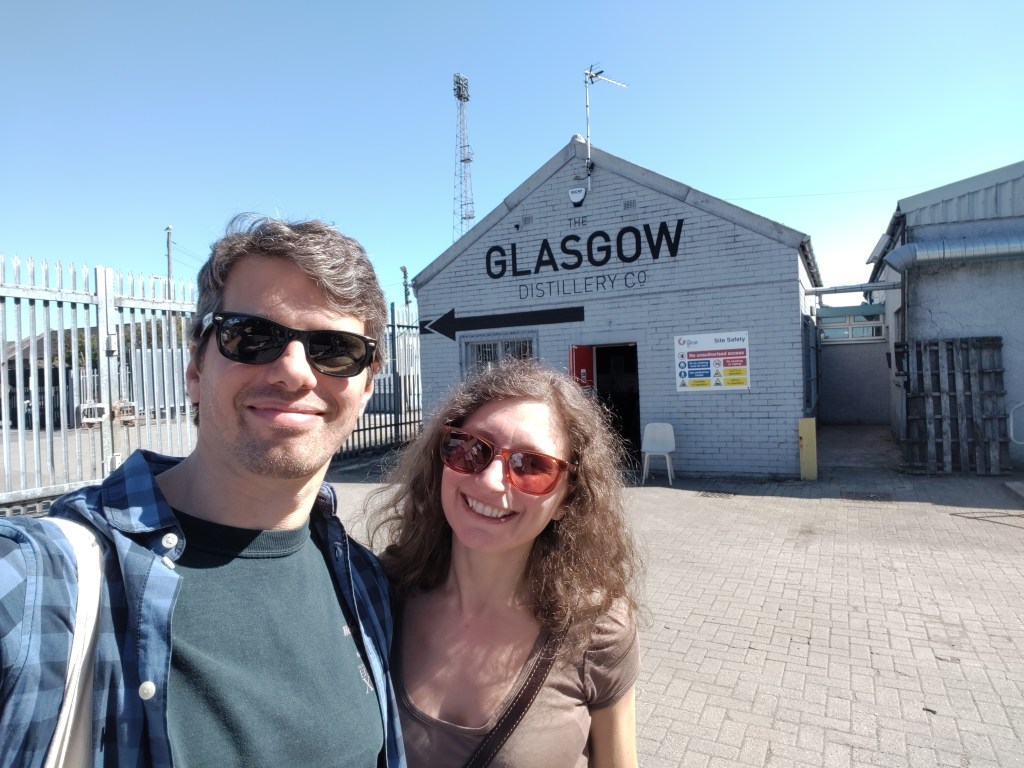
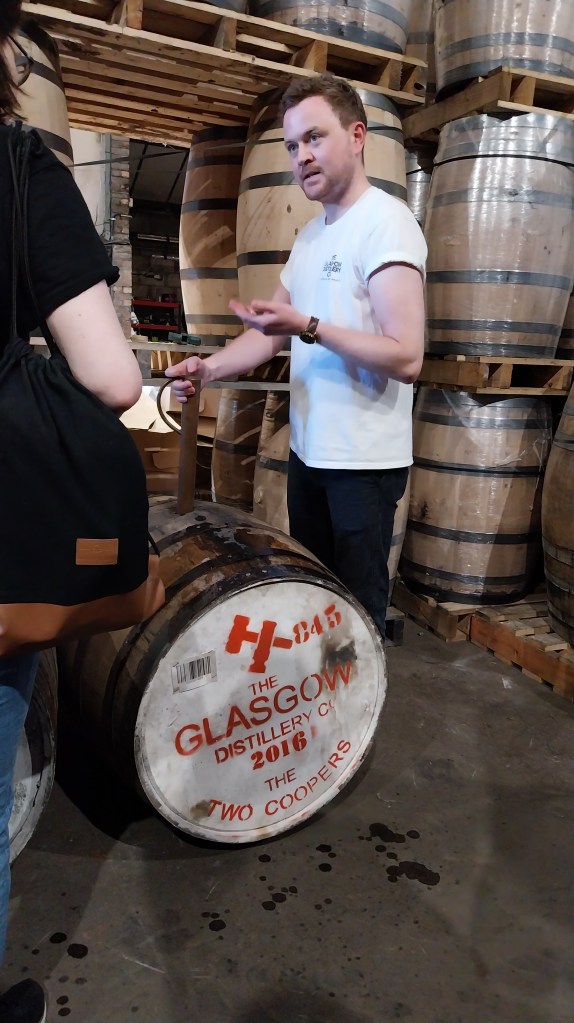
The site is located in the south of Glasgow, near the M8, not too far from IKEA and Douglas Laing (impossible to miss the Big Peat sign when driving on the M8!). As you can imagine, the distillery is on an industrial estate, and we could see why they hesitated to open it to visitors (not that we care much though). We were welcomed by Sebastian, who works in the marketing and sales team, and is also one of the blenders. After the usual health and safety instructions, he took us to the warehouse, just a few steps from the courtyard. Currently, they mainly use two buildings facing on the courtyard in a L-shape: a big warehouse (some palletised, some stacked horizontally in rows two-high) with the bottling equipment, and a production building, where the spirits are produced, including an experimental lab, equipped with a small still to do small-scale trials, and a very nice and cosy tasting room. The latter is used for their regular tours, in our understanding limited to 8 people at a time, but we were too many to fit in.

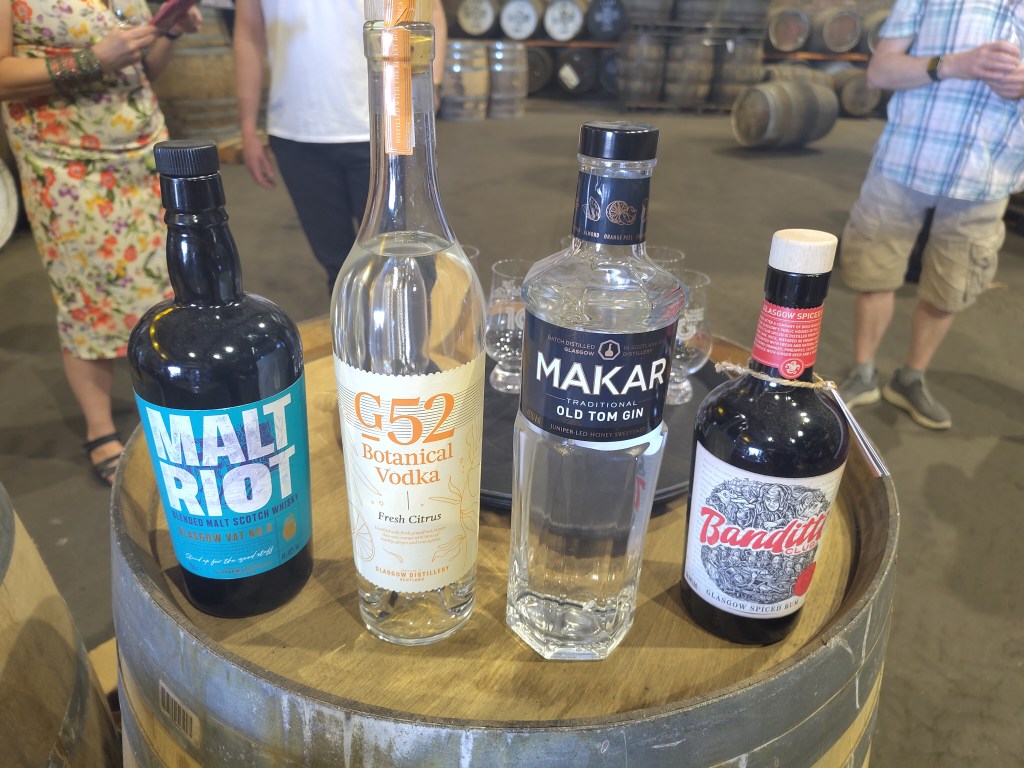
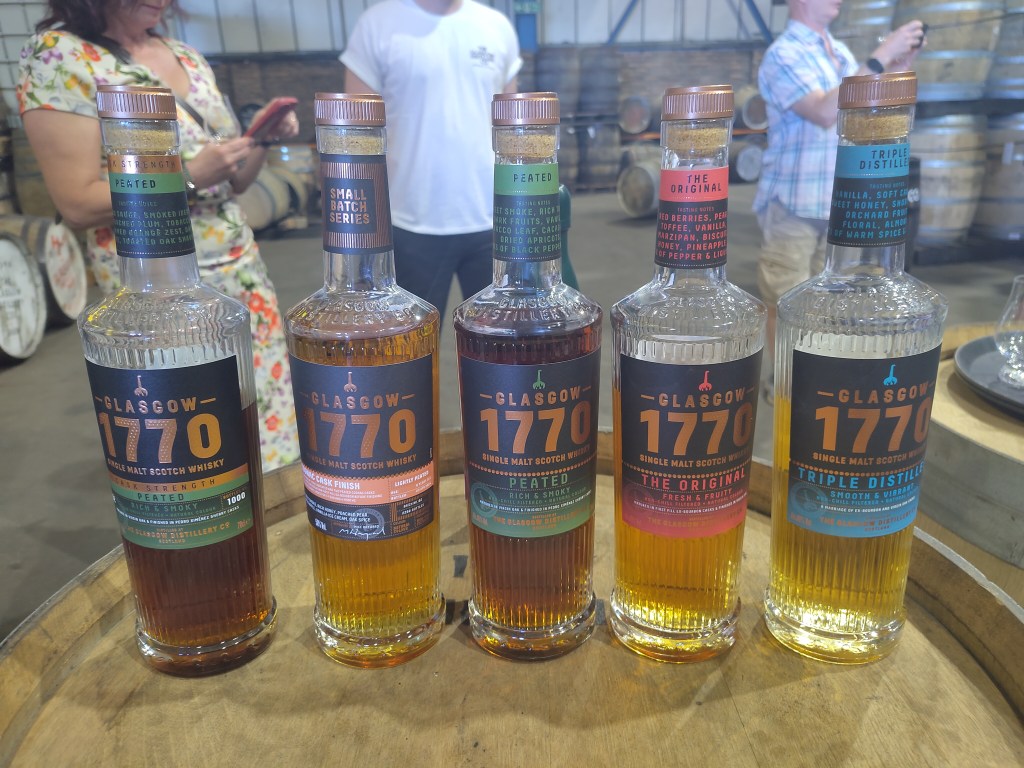
In the warehouse, we were presented with two bottle line-ups: one was their spirit range, which included the Malt Riot blended scotch (40%), the G52 botanical vodka (40%), the Makar gin (43%), and the Banditti spiced rum (44%). On the other barrel, their single malt core range, the Glasgow 1770. The name (1770) comes from the year the original Glasgow distillery was founded, which used to produce unpeated, peated and triple distilled malt whisky, until it closed in 1902. The (current) distillery founders, Mike and Liam, in 2012 decided to follow the footsteps of their predecessors and acquire the name to bring back distilling in Glasgow, at a time when only Strathclyde grain whisky distillery was operating, plus Auchentoshan in the city outskirts. Works on the site began in 2013, in 2014 they had their first product (Makar gin), and finally the first newmake spirit was distilled in 2015. Sebastian joined around that time, right after uni. Later in 2019 they doubled capacity by adding a second pair of stills.

We had a taste of each of the three single malts. The Triple distilled is matured in a combination of 1st and refill ex-bourbon casks, with a touch of virgin American oak barrels. The Original starts its journey in 1st fill ex-bourbon casks, but is then finished in virgin oak casks. The Peated malt, however, is first matured in virgin oak casks and then finished for about 8 months in Pedro Ximรฉnez sherry hogsheads. Other than their core range, they also release cask strength versions of the Original and the Peated malt (we tasted the latter), and a few small batches every year: these can either be from a single cask or a vatting of few casks. Sebastian told us they are introducing a new yearly limited release, based on previous small batches that went well: for this year they picked a Ruby port cask finish. We then moved to the production building, were Sebastian first introduced Tara & Mhairi and Margaret & Francis, the two pairs of stills for whisky, and then Annie, used for gin and other spirits. Then, he took us to the catwalk above the rest of production in two groups. The others, in turn, were left to enjoy another two drams: the current Small Batch Cognac cask (6y, 58%abv, ex-bourbon and finished for over 3y on Cognac casks, both peated and unpeated malt), and the Peated Cask Strength version (same recipe as the core range one, but 60.7%).

The production water is from Loch Katherine, which is the same source as Glasgow tap water. Originally, they used to work 7 days a week (13 mashes), but because they are short of a distiller, at the moment they only work 5 (10 mashes). This translates into about 200,000 litres of alcohol per annum, but with an annual release of โ€œonlyโ€6-7,000 bottles, they are keeping a lot of stock for the coming years: playing the long game here. We didnโ€™t get to see the 27-ton malt bin (refilled twice a week) and the (four rollers) mill, as they are not in the production building. For mashing they use three rounds of water, the last one is sparged and kept for the following mash, as usual. Fermentation lasts at least 72 hours, and they use MG+ yeast for the double-distilled unpeated product, and other types of yeast for the other products. They also devote a few weeks a year for experiments. The second distillation cut depends on the type of product: 85% to 75% for the triple distilled, down to 64% for the unpeated double distilled, and 57% for the peated spirit. Casks are filled on site, but some are transferred in partnersโ€™ warehouses, while they wait to acquire more buildings. Their plan is to keep the adjacent warehouse for finishing casks only. About 20% of the casks are โ€œspecialityโ€, with the remainder being ex-bourbon, virgin oak or sherry. After the tour, we went back to the warehouse where another two drams were waiting for us, both straight from the cask: an unpeated 9y fully matured in an American oak virgin cask, and their Distillery Exclusive, a delicious peated 7y/o malt matured in a Virgin oak cask but finished in an Oloroso cask (60.9%). A great close for a great tour and a wonderful tasting!

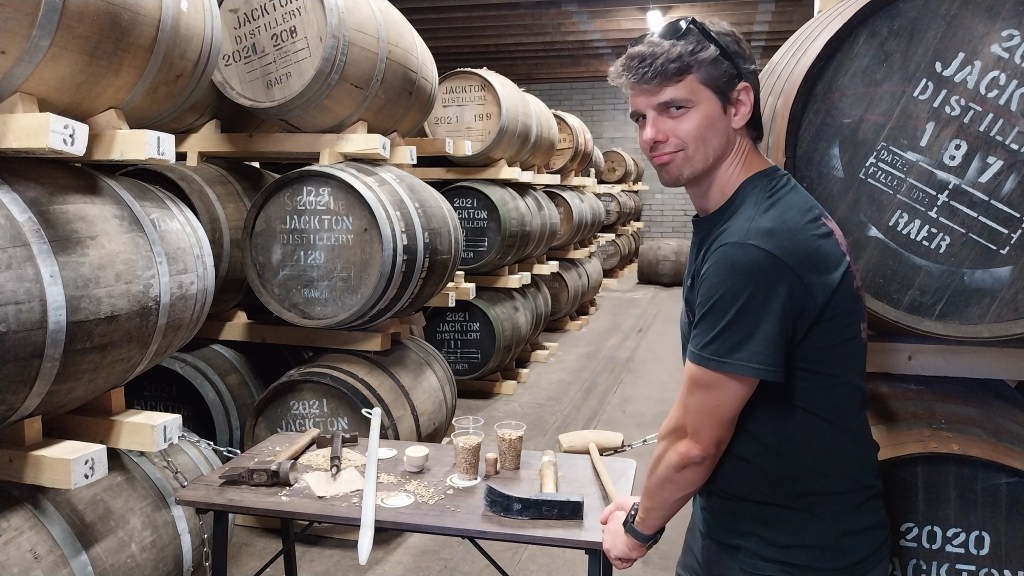
After the purchases (of course) and an extra dram we brought to share with the gang (a delicious Glasgow 5y from Fragrant Drops independent bottler) we were back on the bus. We had a quick bite (a very โ€œmehโ€ M&S sandwich for us), before we arrived at our next destination: Jackton distillery, in East Kilbride. We wonโ€™t spend much time describing the tour, since we visited them less than a year ago, and that tour was more geek oriented than this one (and again, a pity we couldn’t try their Raer blended scotch finished in French wine cases, the only one of their range bottled at 46% instead of 40%).ย Different to our first visit, there was a nice wee market at the distillery that day, with the distillery team serving gin cocktails and wine, and food carts and art craft vendors. Gianluigi, obviously, chose the fattiest cookie from the cookie vendor. But mostly, we had some refreshments, as the day became very hot in the meanwhile, and in the warehouse we were all sweating: very rare occurrence in Scotland!

Once back at Haymarket, we all shared a pint at Ryrieโ€™s (a pub we like, but because itโ€™s far away we rarely go to) before everyone went home. What a lovely day, and a lovely visit to these distilleries. While we look forward to the first Jackton single malt, we witnessed how Glasgow distillery is really upping its game, and itโ€™s no surprise that it became one of whisky aficionadosโ€™ favourites. Sebastian was a great host, and very generous with the drams! We loved the 1770 Triple Distilled, so fresh, crisp and sweet, a great dram. However, we took home the Distillery Exclusive, totally on the other side of the spectrum: smoky, rich and bold! This to show the great variety of their products: well done!

Next up a long weekend up in the Highlands, so stay tuned! Until then, slร inte!


The Glasgow Distillery Experience

Price: ยฃ45.00 pp (July 2025)

Duration: 2hr

Tasting: 7 drams, in our case they were Glasgow 1770 Triple Distilled (46%), Original (46%), Peated (46%), Peated Cask Strength (60.7%), Small Batch Cognac Cask (6y, 58%, unpeated), Virgin oak cask sample (9y, about 60%, unpeated), Distillery Exclusive Virgin Oak/Oloroso cask (7y, 60.9%, lightly peated)

Distillery Exclusive: 7y Virgin Oak/Oloroso cask single malt (ยฃ65.00)

Target: whisky enthusiasts and geeks

Value for money: very good!

Highlights: the variety and quality of single malts

Recommended: definitely

Link: https://www.glasgowdistillery.com/


Jackton Distillery Tour

Price: ยฃ35.70 pp (July 2025, it was ยฃ34.00 pp in September 2024, plus ยฃ2.04 transaction fee)

Duration: 1hr

Tasting: Raer Orginal blended scotch (40%), Rarer Oloroso finish, Amontillado finish, PX finish blended scotches (all 40%)

Target: everyone

Value for money: ok

Highlights: the nice setting and the great staff

Recommended: yes

Link: https://raer.co.uk/