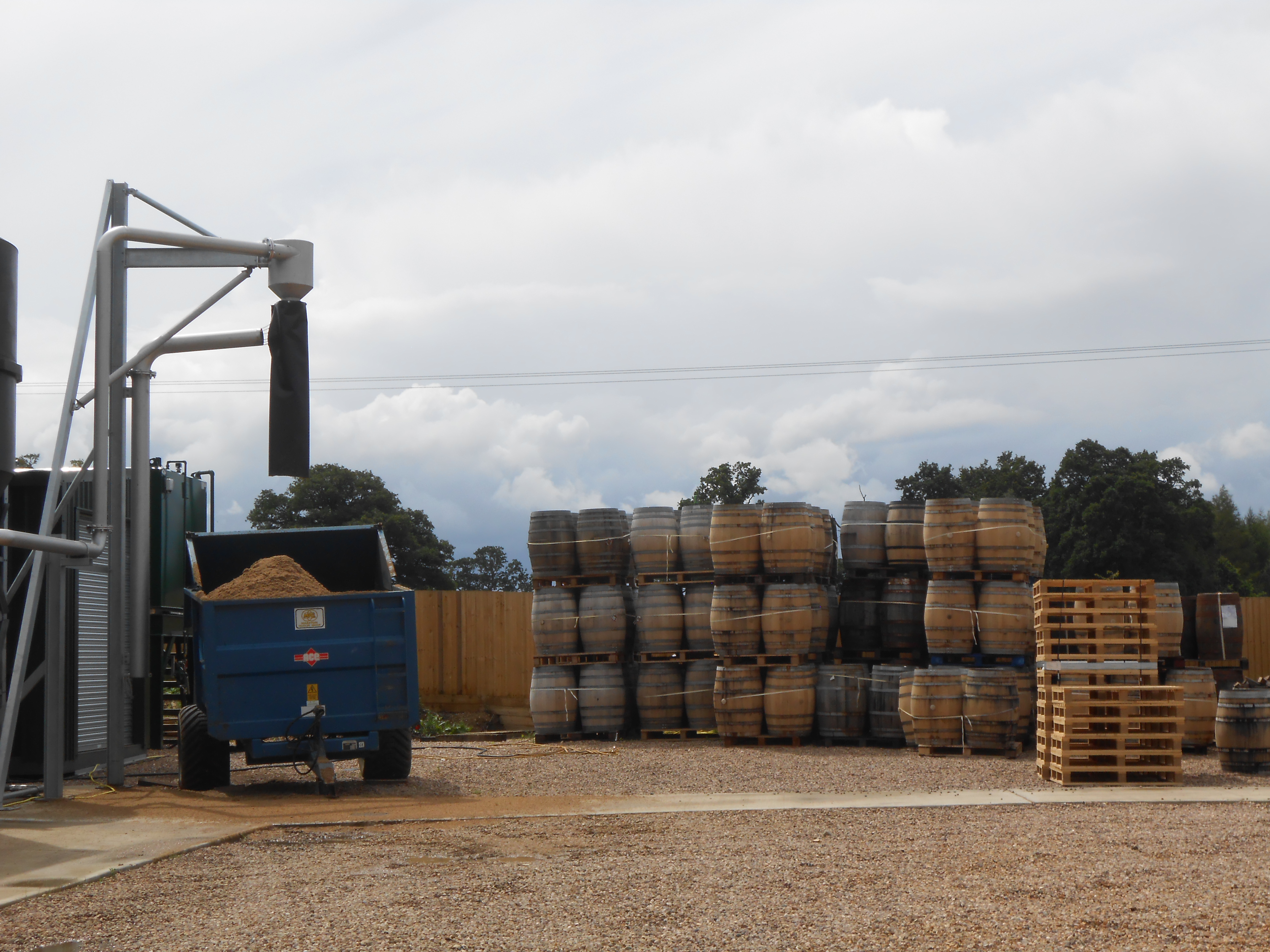
A non-hiking tour in the Cotswolds
TL;DR: The second English distillery we hit on our way to Wales is a popular one, the Cotswolds. Producing also gin (and soon rum), their main whisky expression has been on the supermarkets’ shelves for a few years now. Their visitor centre and the experiences offered make it obvious that they mainly target tourists.
(missed Part 1?)
We woke up in cloudy England, but because the camping was behind some fields the view was quite nice anyway. After a shower and a quick breakfast, we packed up our stuff and drove towards Stratford-upon-Avon: as we were so close, we felt like paying a visit to Willian Shakespeare birthplace (“shake spear” or “shakes pear”? The spear on the emblem suggests the former, but we want to believe!). The village is clearly a big tourist-trap, nonetheless, it’s a nice one, and we enjoyed a couple of hours walking around and checking out the market, although finding a pub open before noon was quite challenging (also because we avoid Wetherspoon like the plague).
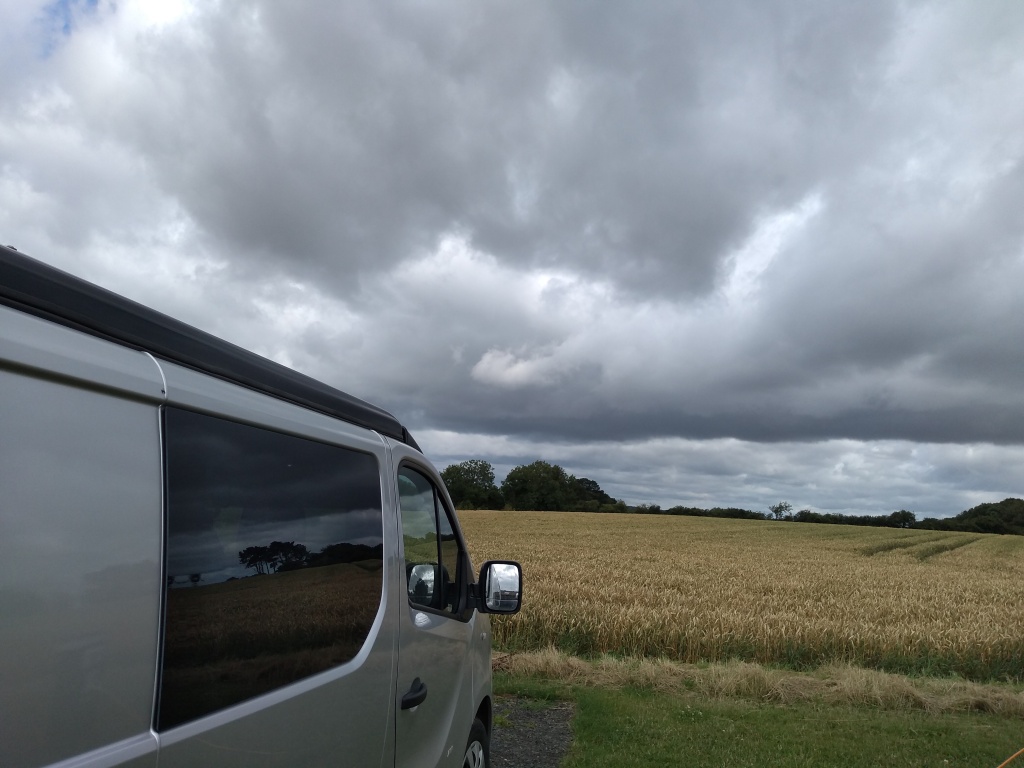
Waking up gently…
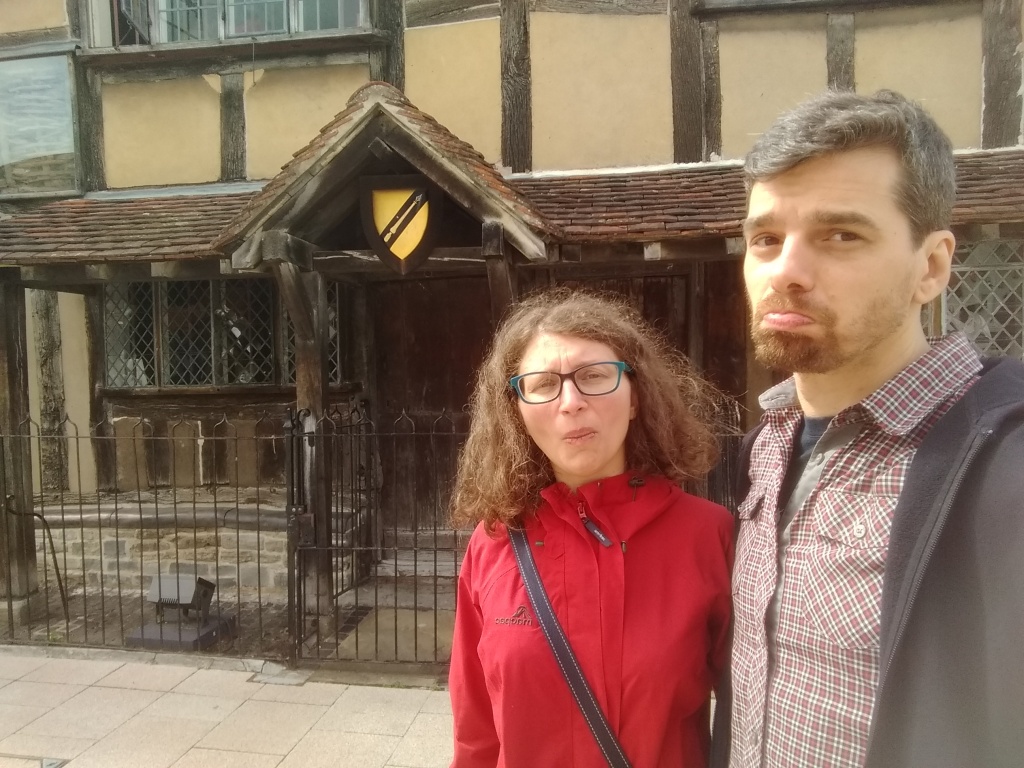
…Before checking out Shakespear’s birthplace.
The Cotswolds distillery is only half hour away from the village, so the drive was quite quick. As we entered the gate to the parking lot, we realised how beautiful the setting is. Part of it is an old farm building (B-listed), where they have offices, the shop, a small restaurant and the tasting room. We were early, but it was calculated: we had a lunch there (well, Teresa, Gianluigi the second part of his, since it started with a slow-cooked pork sandwich at the market in Stratford…as he smelled it, he couldn’t say no). The food was quite tasty, in particular Gianluigi’s bacon and rocket focaccia.
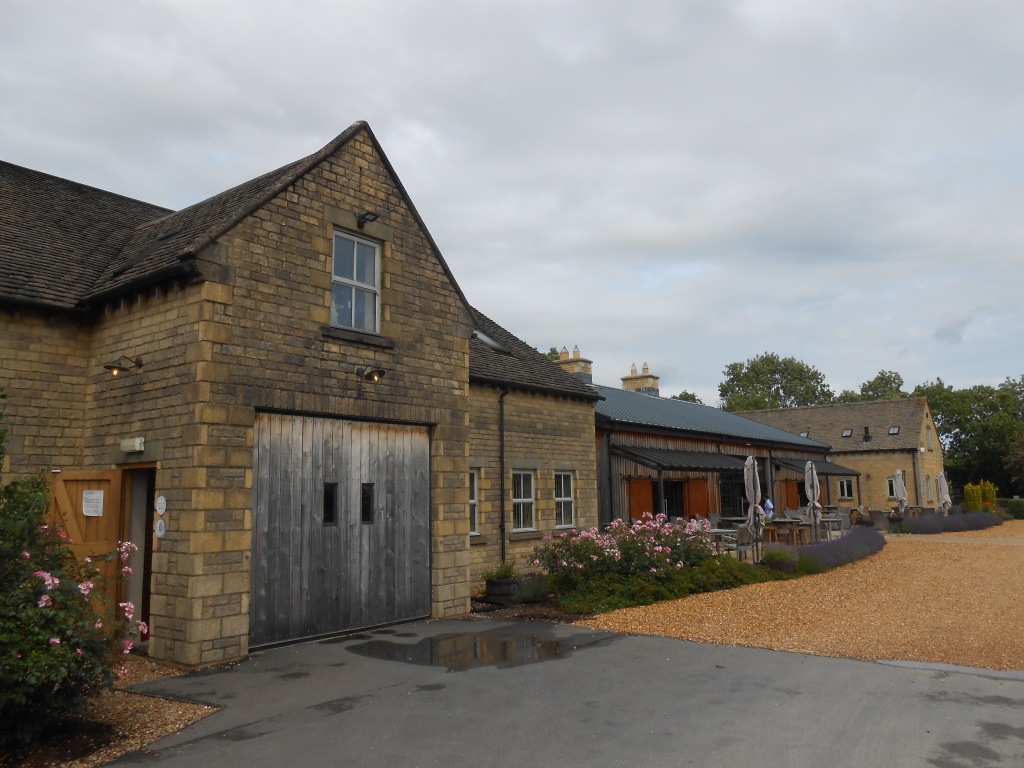
B-listed buildings at Cotswolds Distillery.
We finished lunch just before starting the tour. Our guide was Charlotte, a nice Canadian lady who did a good job, just a tiny too theatrical for our taste (a result of the tour being geared towards tourists, we guess). The tour started with a video about the history of the distillery, funded by Dan Szor, an American from New York who used to work in investment banking. Motivated by the beauty of this part of England and by his love for whisky, he decided to build a distillery, which was completed in 2014. As many other new distilleries, in particular in England, they also produce gin, which ensured cash in during the first years. The gin production is located in a former barn attached to the visitor centre, where there are two columns stills for gin rectification (Lorelai and Dolly, the first for the experimental small batch products…yeah, as many others they like to name things), as they buy the neutral grain spirit. Some of their main botanicals are juniper (of course), coriander, bay leave and angelica.
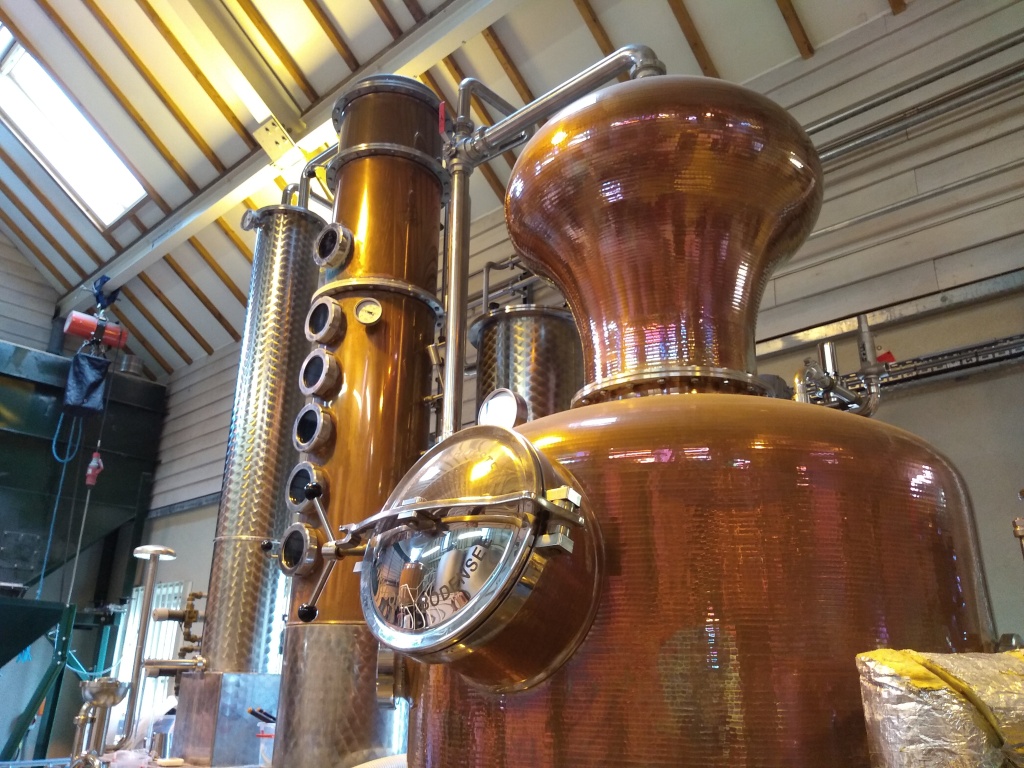
Lorelei or Dolly? Can’t remember.
There is also the “old” single malt whisky equipment (mashtun, fermenters and two pot stills). At the time of our visit they were using it to produce rum (for which they bought molasses from the Caribbean), and the room was full of a funky tropical smell. After describing the distillery equipment, Charlotte left us some time to take pictures before moving to the new distillery. In fact, since January 2023 they increased production, and because the old distillery buildings are listed, they had to build a new one from scratch. It is just a few meters away, and it is brand new, very compact.
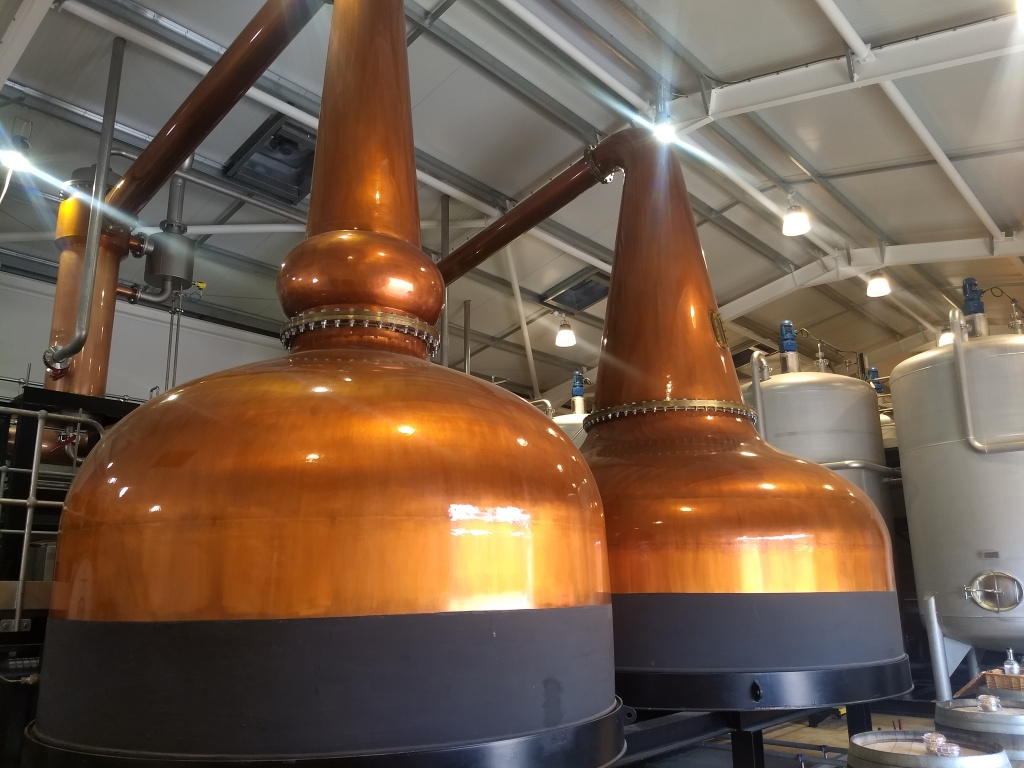
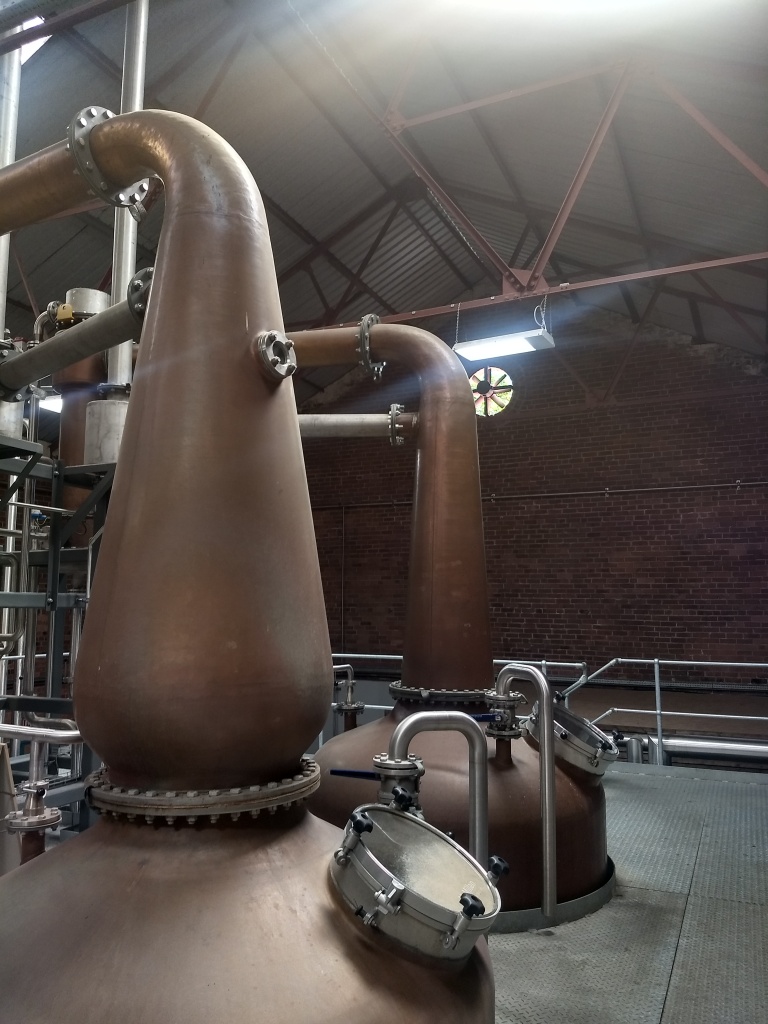
Huge stills in the new distillery!
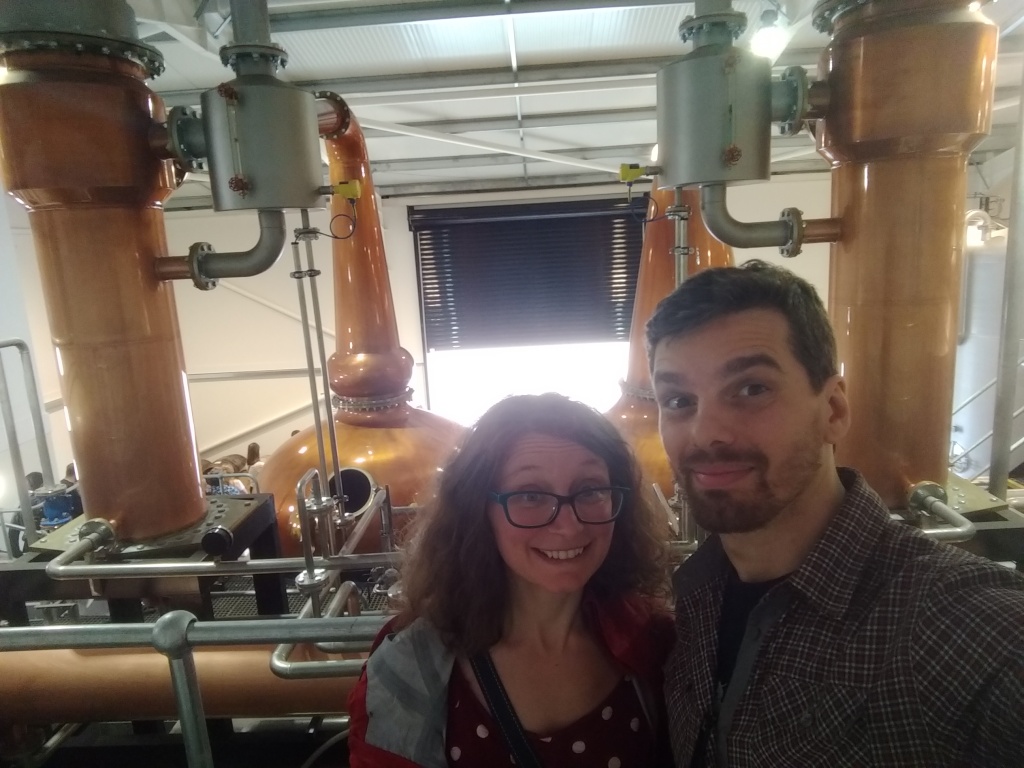
Huge stills – take 2.
Here Charlotte explained the distillation process (remember it was a basic tour), before taking a walk on the catwalk around production and trying their newmake (very scotchy). The fermentation time is 96 hours generally, and their stills (Rosie the wash still and Fanny the spirit still) are quite big and dumpy, built on site by Forsyths. They are equipped with a steam coil at the bottom, and with tube-and-shell condensers (some of which are horizontal, we asked but it went unexplained). They take a cut at around 67.3% on average, and the cask filling strength is the industry standard of 63.5%. Interestingly, they made sure that the production was as similar as possible to the old plant with a combination of sensory and lab testing.
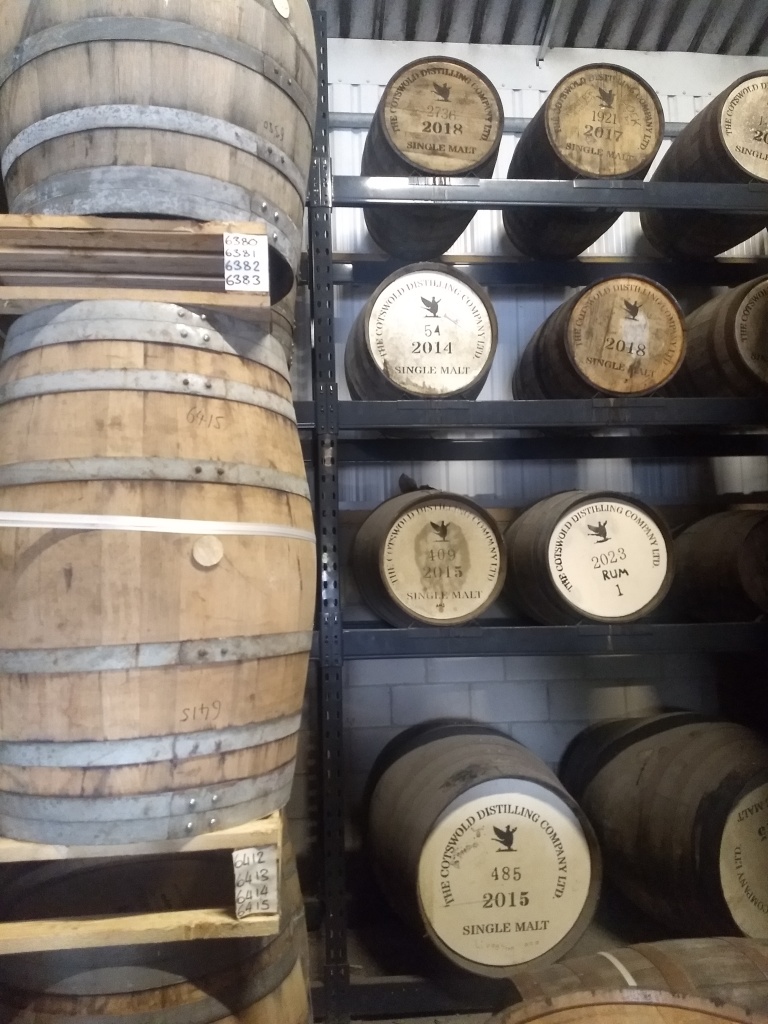
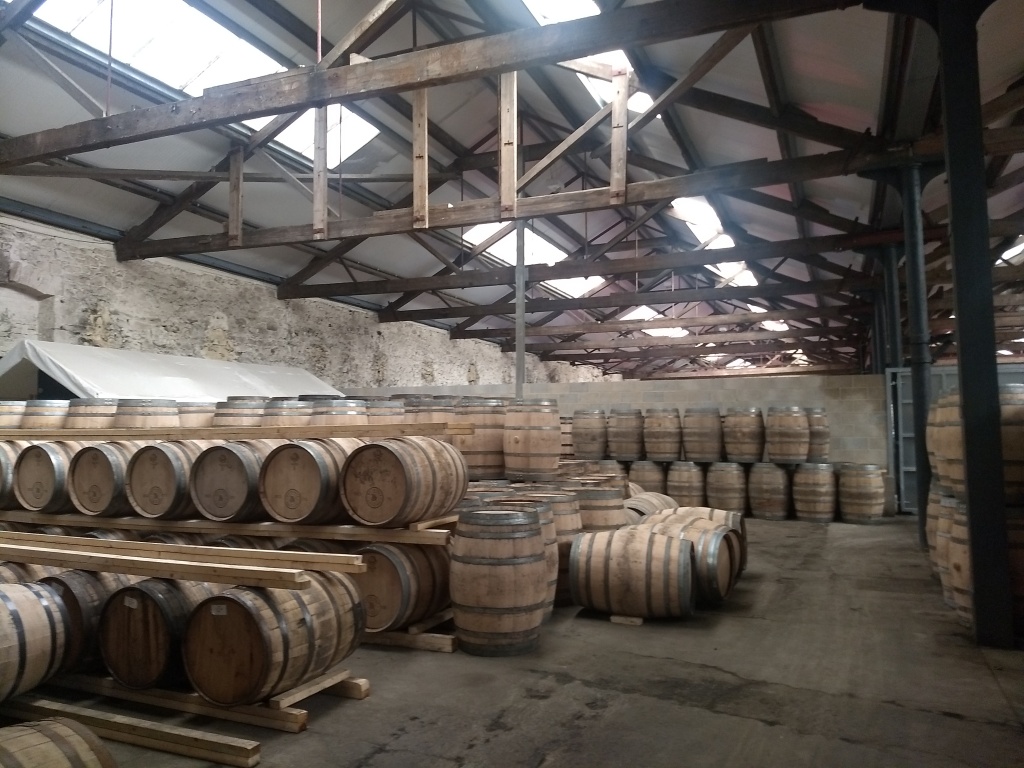
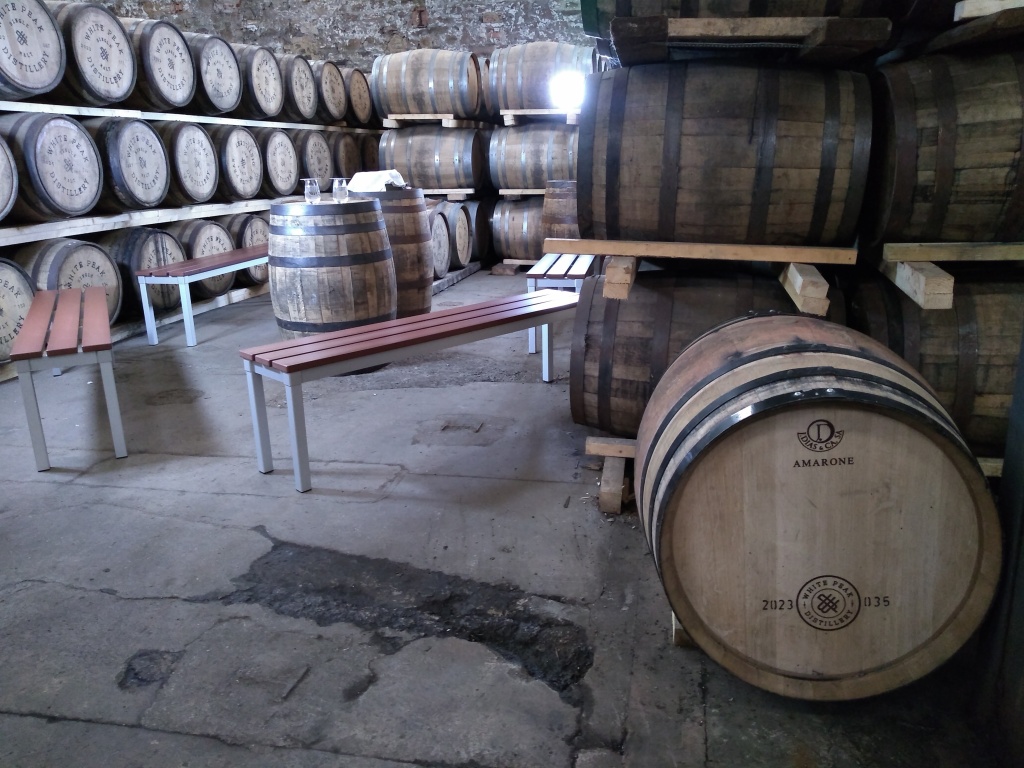
The other two buildings on site are the bottling plant, and the warehouse, where they stock a variety of casks (not a huge building, as most of them are not kept on site).
Then, time for the tasting, back at the visitor centre, inside a quite cozy tasting room. For non-drivers (Teresa today) the tasting consisted in small measures of a variety of expressions, including their main product, the Signature Single malt, an expression made with ex-bourbon and shaved-toasted-recharred casks (STR, for the record we also heard “stripped-toasted-recharred”), bottled at 46%, presented naturally (not-chill filtered nor artificially coloured). We had a bottle of this a couple of years ago, it is very good stuff, in particular considering the price (usually £30-40), and on the label they also provide interesting information like the batch size (our was 5,000 bottles) and the barley strain, Odyssey. The second drink was their main gin, but after that, everyone could go at the bar and ask to taste whatever (in small measures).
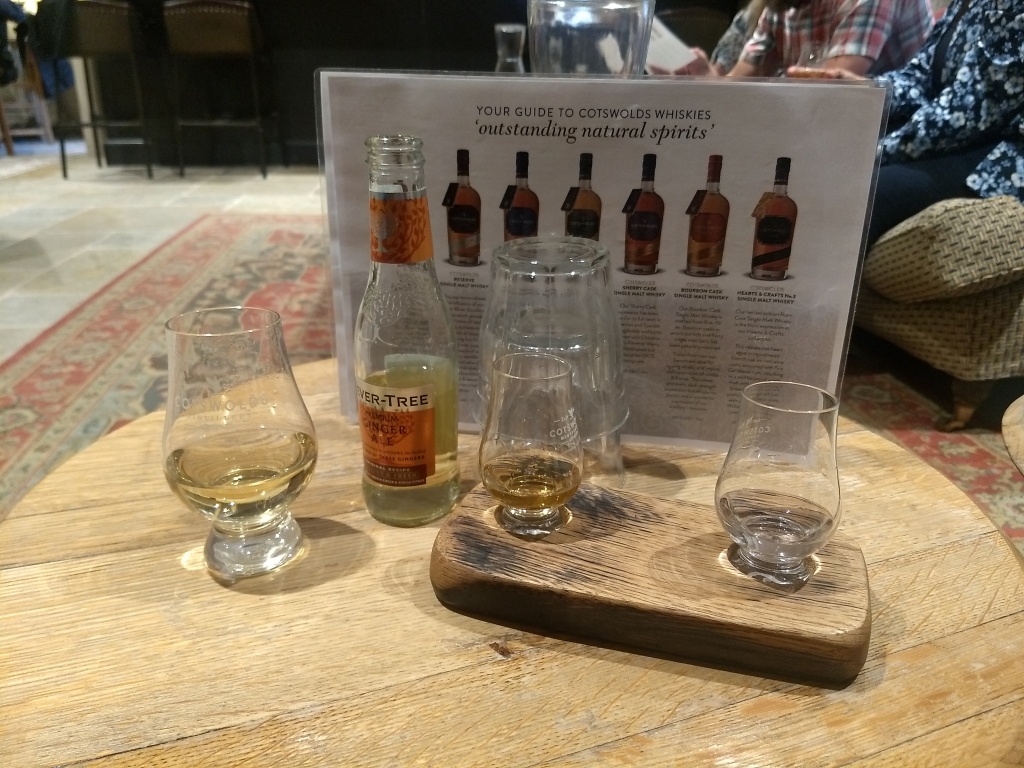
A wee taste of whisky and gin.
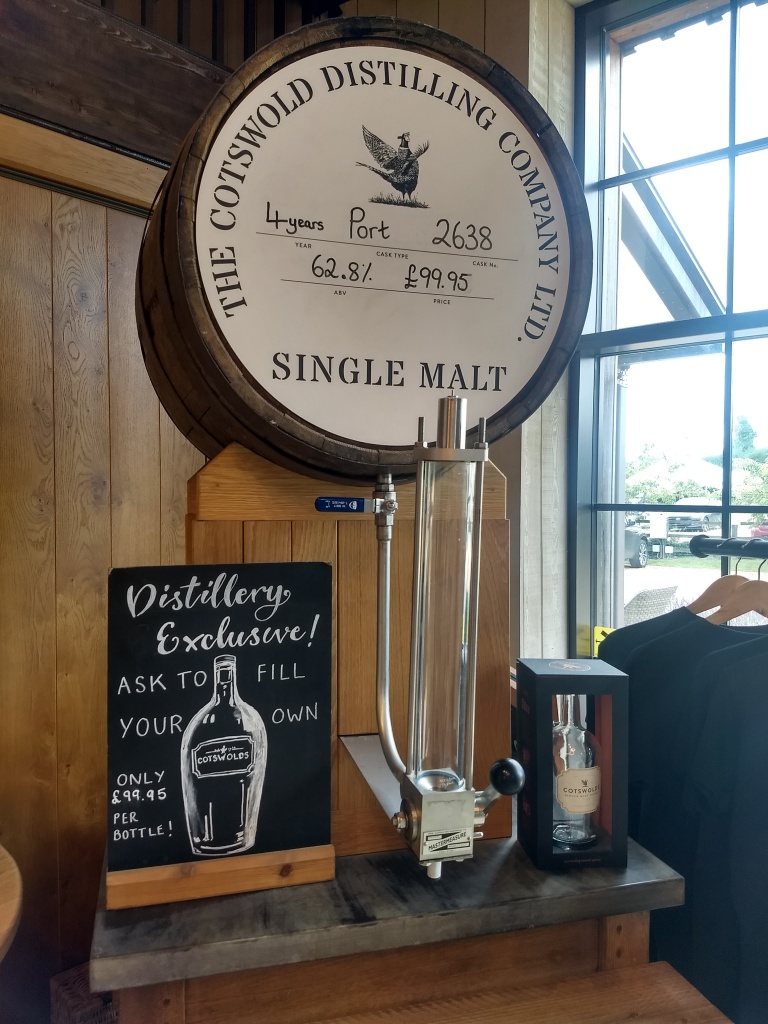
They have an interesting range of cask strength expressions, made in smaller batches (900-2,000-ish bottles) and all matured in the same type of cask. These are: ex-bourbon sherry, peated (ex-Laphroaig quarter casks) and the Founder’s choice (all STR casks), all priced between £60 and £70. They also have another expression called Reserve (bottled at 50%abv,), an annual release (Harvest Series, 52.5%, £100), a Banylus single-cask matured (55.1%, £95) and the bottle-your-own. At the time of visit it was a 4y single malt, ex-Port cask (62.8%abv) – £100/bottle, with no possibility to try it…probably someone went to Diageo’s school).
Overall, it was a pleasant visit. A bit touristy maybe, of course tailored to a broad audience, given the vicinity to the park and other tourist attractions like Stratford. If we have to point to something missing, it would be an experience tailored to whisky drinkers to showcase their tasty malts without busting the bank. The only other available were the Whisky Blending Masterclass (£100, available a couple of times a month) and the Founder’s Tour (£60, but it looked like it wasn’t available at the time). However, the rather basic experience didn’t prevent us from enjoying some tasty whisky.
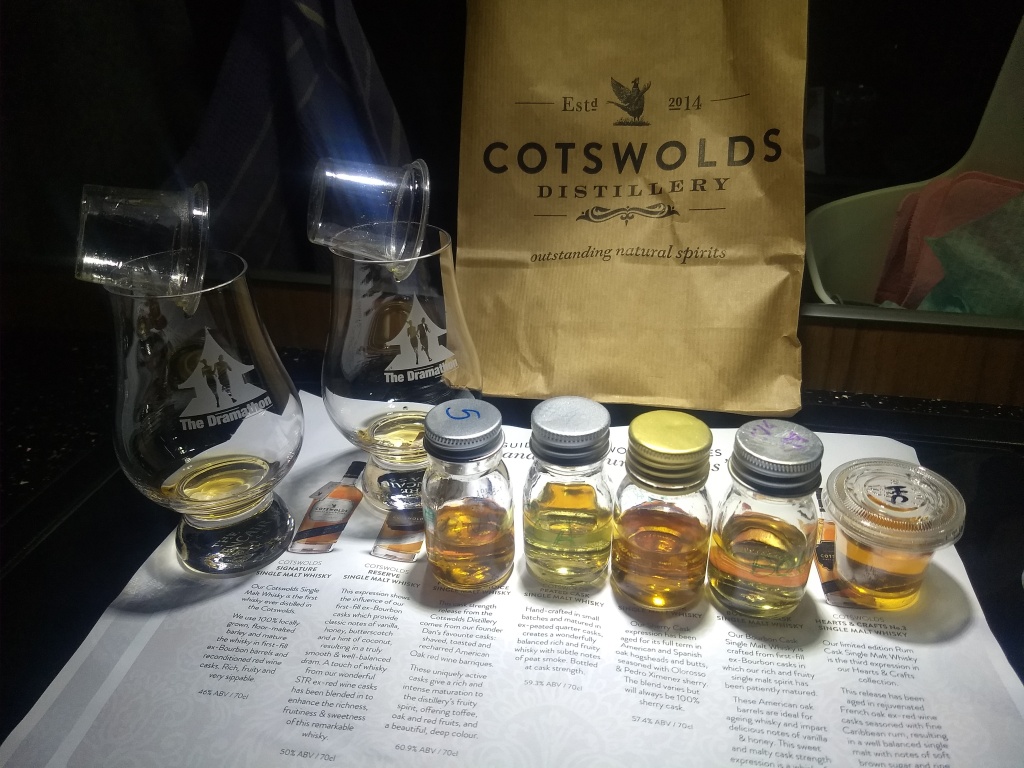
End-of-the-day rewards, driver’s drams!
Away from the distillery, we visited a little medieval village called Burford, and we then started driving to the real destination of our holiday: Wales! If you’re curious, stay tuned on the blog, as the Wales Whisky Trail will be here soon! Until then, slainte!
The Cotswolds Distillery Tour
Price: £25.00 pp (July 2023)
Duration: 2hr
Tasting: 2 drinks (Cotswolds single malt and Cotswolds Gin) and a taste of the newmake, plus tastes on request from their range
Target: casual whisky drinkers and tourists
Value for money: good
Highlights: the range of malts
Distillery exclusive: bottle-your-own Cotswold Single Malt Port matured (62.8%, 4y, £99.95)
Recommended: if you’re not in the area, why not?
Link: https://www.cotswoldsdistillery.com/
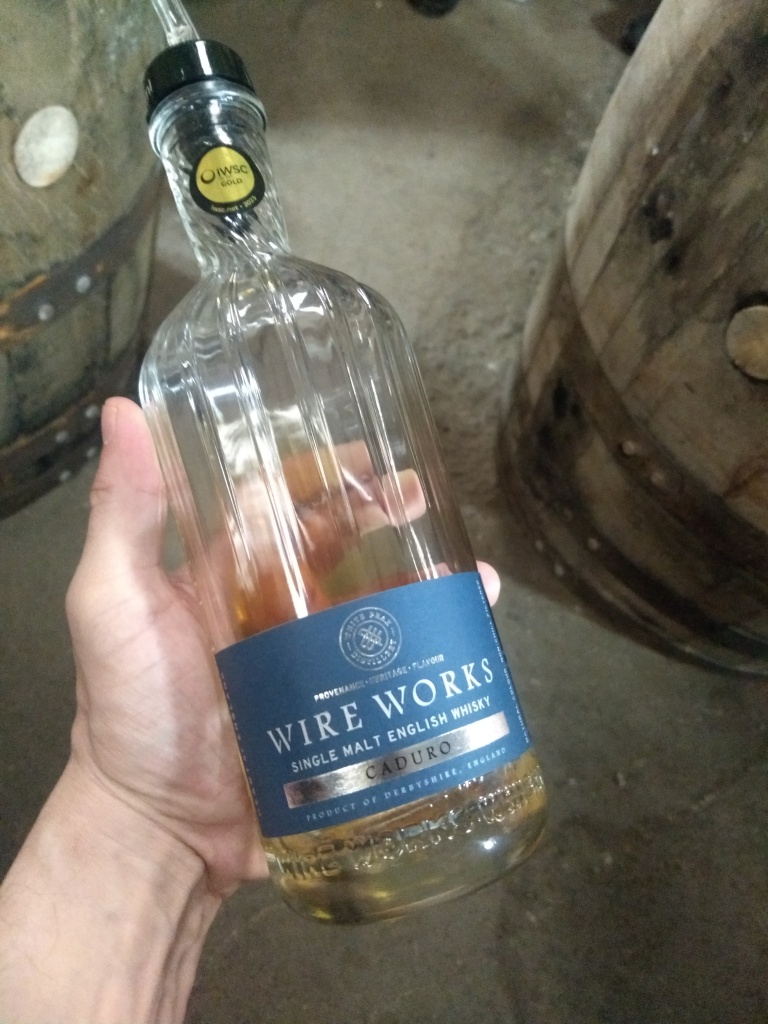
 Dramming around